FOMC Statement: No Change to Fed Funds Rate - Fed Chair Powell press conference video here or on YouTube here, starting at 2:30 PM ET. FOMC Statement: Although swings in net exports have affected the data, recent indicators suggest that economic activity has continued to expand at a solid pace. The unemployment rate remains low, and labor market conditions remain solid. Inflation remains somewhat elevated. The Committee seeks to achieve maximum employment and inflation at the rate of 2 percent over the longer run. Uncertainty about the economic outlook has diminished but remains elevated. The Committee is attentive to the risks to both sides of its dual mandate. In support of its goals, the Committee decided to maintain the target range for the federal funds rate at 4-1/4 to 4-1/2 percent. In considering the extent and timing of additional adjustments to the target range for the federal funds rate, the Committee will carefully assess incoming data, the evolving outlook, and the balance of risks. The Committee will continue reducing its holdings of Treasury securities and agency debt and agency mortgage‑backed securities. The Committee is strongly committed to supporting maximum employment and returning inflation to its 2 percent objective. In assessing the appropriate stance of monetary policy, the Committee will continue to monitor the implications of incoming information for the economic outlook. The Committee would be prepared to adjust the stance of monetary policy as appropriate if risks emerge that could impede the attainment of the Committee's goals. The Committee's assessments will take into account a wide range of information, including readings on labor market conditions, inflation pressures and inflation expectations, and financial and international developments.
FOMC Projections: GDP Revised Down, Inflation Revised Up - Statement here. Fed Chair Powell press conference video here or on YouTube here, starting at 2:30 PM ET. Here are the projections. The projections are pretty bearish. The BEA's advance estimate for Q1 GDP showed real growth at -0.2% annualized. There is a wide range of estimates for Q2 GDP, but it is forecast to be over 3.0% (as Q1 distortions reverse). That would put real growth on pace to be at the low end of the March FOMC projections for Q4 over Q4. So, GDP was revised down for 2025.GDP projections of Federal Reserve Governors and Reserve Bank presidents, Change in Real GDP1(table) 1 Projections of change in real GDP and inflation are from the fourth quarter of the previous year to the fourth quarter of the year indicated. The unemployment rate was at 4.2% in May after averaging 4.1% for Q1. The unemployment rate was revised up.Unemployment projections of Federal Reserve Governors and Reserve Bank presidents, Unemployment Rate2(table) 2 Projections for the unemployment rate are for the average civilian unemployment rate in the fourth quarter of the year indicated.As of April 2025, PCE inflation increased 2.1 percent year-over-year (YoY). There will likely be some increase in PCE inflation from trade policy.Without policy changes (tariffs) it appears inflation would be well below the FOMC forecast! The projections for Q4 2025 PCE inflation were revised up.Inflation projections of Federal Reserve Governors and Reserve Bank presidents, PCE Inflation1 (table) PCE core inflation increased 2.5 percent YoY in April. The projections for core PCE inflation Q4 2025 were revised up.
Fed likely to keep rates steady amid trade war, Middle East conflict - The Federal Reserve looks set to maintain its pause on interest rate cuts at its meeting this week amid President Trump’s ongoing trade war and geopolitical tensions that are roiling commodity markets. Markets expect the Fed to keep interbank lending rates steady at a range of 4.25 to 4.5 percent, where they’ve been since January. The CME FedWatch tool put the chances of a pause at 99.8 percent on Tuesday. The mix of touchy economic data, frequent trade policy developments and international tensions will justify the expected pause, economists say. “Uncertainty around the direction of inflation, a relatively stable labor market and fluctuating tariff policy are enough for the Federal Reserve to keep interest rates unchanged,” Jerry Tempelman, vice president of fixed income research at Mutual of America Capital Management, wrote in a commentary Tuesday. “Conflict in the Middle East presents another worry.” Major economic indicators have been in a holding pattern for the past few months, with consumers and businesses behaving cautiously as President Trump’s trade war has played out. Up Next - DC Bureau: Israel, Iran latest The unemployment rate has held at 4.2 percent in its last three readings after ticking up slightly in February and March. There are about 7 million people looking for a job out of a U.S. labor force of 170 million. Inflation has hovered between 2.3 and 2.4 percent since March. Price increases cooled from 3 percent down to 2.3 percent between January and April but ticked up to 2.4 percent in May — possibly the first upward move in the price level attributable to tariffs. U.S. inventories take about three months to clear. Many economists have been predicting tariffs will show up in prices some time this summer, though they have yet to make a clear impression in the overall data. Whether companies decide to respond to margin pressures from tariffs by increasing prices or lowering costs could be the motivating factor behind the Fed’s wait-and-see stance. “The Fed finds itself waiting to see whether tariffs pose a greater risk to the employment or inflation side of its mandate,” Daniel Hornung, former deputy director of the National Economic Council, wrote in a commentary Tuesday. While bilateral negotiations on trade and commerce are continuing with dozens of countries, the groundwork for an overall deal with China appears to have been laid. President Trump said last week the deal is “done,” though a formal announcement is still pending. According to various reports, the overall tariff level on China looks to be set at 55 percent, encompassing a 10-percent general tariff, a 20-percent China tariff and a previous tariff on the country of 25 percent set during Trump’s first term that the Biden administration left in place. As the Fed has kept rates elevated relative to historic lows, the higher price of financing has weighed on consumers and households. Consumer debt levels are at record highs, close to $1.1 trillion. Delinquency rates on credit card loans are up above 3 percent, and delinquency on residential mortgages rose through last year and into the first quarter. Thirty-year mortgage rates are at 6.84 percent, off a recent high of more than 7 percent reached in January. The overall macroeconomic picture is one of gradually slowing growth, according to various predictions. Global growth for 2025 was expected to drop to 2.3 percent from a 2.7-percent projection in the latest outlook from the World Bank released last week. The outlook for U.S. growth declined to 1.4 percent from 1.8 percent. The Fed and the International Monetary Fund put long-term growth for the U.S. economy at 1.8 percent in their latest projections, a sizable downgrade from the 2.8-percent growth of 2024. Little change is expected as a result of tax and spending reductions that are now moving their way through Congress, according to an estimate from the Joint Committee on Taxation. “We are in a slowing economy. We’ve got consumer debt at all-time highs, we’ve got delinquencies rising. You’ve got all the telltale signs,” Al Rabil, CEO of investment firm Kayne Anderson, told Bloomberg News on Tuesday. President Trump has put pressure on Federal Reserve Chair Jerome Powell to lower rates in order to stimulate the economy and reduce interest costs on sky-high public debt levels as clouds have gathered on the horizon. “If we cut our interest by 1 point … we save $300 billion. If we cut it by 2 points, [we] save … $600 billion a year — $600 billion because of one numbskull that sits here, [saying] ‘I don’t see enough reason to cut the rates,’” Trump said last week. Adding another variable to the Fed’s policy mix is the current conflict between Israel and Iran, which saw a huge escalation over the weekend after Israel launched strikes against Iranian nuclear facilities and killed top military personnel and scientists. This led to a major spike in oil and gas prices that could translate to general price increases more quickly than tariff levies. After hovering since April between $60 and $65 per barrel, West Texas Intermediate crude oil shot up to more than $73 a barrel last week and is pushing higher. Brent crude was just less than $72 per barrel in Tuesday trading. Tensions have been flaring in the region since the Oct. 7, 2023, attack on Israel by the political and military group Hamas, which prompted a large-scale assault on the Gaza enclave by Israel that has left tens of thousands of civilians dead and caused a humanitarian crisis. In Gaza City last week, a bag of flour was sold for 1,600 shekels, or about $450, United Nations officials said Monday. The conflict has involved Iranian-backed groups in Yemen and Lebanon. Security and political dynamics in the region led to regime change in Syria last year, where longtime leader Bashar Assad was ousted by opposition fighting forces.
Watch Live: Fed Chair Powell Explains Why He's Not "Stupid" | ZeroHedge Having been accused of being "stupid" and "too late", Fed Chair Powell's decision to hold rates (not cut as Trump is demanding), will likely prompt more abuse from The White House, especially as US macro data is significantly weakening. And despite all the tariff derangement anxiety, the worse they expect is PCE at 3.1% this year before fading back next year... In fact, Powell may have to explain why he cut rates by 50bps the last time the US Macro Surprise Index was this weak... What's different this time? As Trump said: "I guess he's a political guy..." Let's see if the reporters in the room are brave enough to ask. Watch the press conference live here (due to start at 1430ET): (1.51.35 video)
Donald Trump floats firing Jerome Powell again --President Trump on Friday floated the possibility of firing Federal Reserve Chair Jerome Powell as part of his latest round of intense criticism of the leader of the central bank over its decision not to lower interest rates.Trump, in a lengthy post on Truth Social, railed against Powell, labeling him a “numbskull,” “a dumb guy,” “and an obvious Trump Hater.” Trump appointed Powell to the post in 2017.“I fully understand that my strong criticism of him makes it more difficult for him to do what he should be doing, lowering Rates, but I’ve tried it all different ways,” Trump posted. “I’ve been nice, I’ve been neutral, and I’ve been nasty, and nice and neutral didn’t work!”The post included a graphic showing how the United States’s central bank rate compared to other nations.“I don’t know why the Board doesn’t override this Total and Complete Moron!” Trump added. “Maybe, just maybe, I’ll have to change my mind about firing him? But regardless, his Term ends shortly!”Powell’s term ends in 2026. He said last November he would not step down if Trump asked and that it is “not permitted under the law” for the president to fire or demote him or any of the other Fed governors with leadership positions.Trump in April said he had no intention of firing Powell, though he has in recent days ratcheted up his criticism amid frustration over the Fed’s handling of interest rates.Fed officials kicked off the year expecting to continue cutting interest rates as inflation drifted back toward its ideal annual level of 2 percent. But the bank has held off through the first half of 2025 amid the uncertainty driven by Trump’s tariff plans.
Trump tax bill would widen deficits by $2.8T after factoring in economic impacts, CBO says -(AP) — President Donald Trump’s tax cuts package would increase deficits by $2.8 trillion over the next decade after including other economic effects, according to a fuller analysis of the House-passed measure released Tuesday by the Congressional Budget Office. The report, produced by the nonpartisan CBO and the Joint Committee on Taxation, factors in expected debt service costs and finds that the bill would increase interest rates and boost interest payments on the baseline projection of federal debt by $441 billion. The analysis comes at a crucial moment as Trump is pushing the GOP-led Congress to act on what he calls his “big, beautiful bill.” It passed the House last month on a party-line vote, and now faces revisions in the Senate. Vice President JD Vance urged Senate Republicans during a private lunch meeting Tuesday to send the final package to the president’s desk. “We’re excited to get this bill out,” said Senate Majority Leader John Thune afterward. Tuesday’s report uses dynamic analysis by estimating the budgetary impact of the tax bill by considering how changes in the economy might affect revenues and spending. This is in contrast to static scoring, which presumes all other economic factors stay constant. The CBO released its static scoring analysis earlier this month, estimating that Trump’s bill would unleash trillions in tax cuts and slash spending, but also increase deficits by $2.4 trillion over the decade and leave some 10.9 million more people without health insurance. Republicans have repeatedly argued that a more dynamic scoring model would more accurately show how cutting taxes would spur economic growth — essentially overcoming any lost revenue to the federal government. But the larger deficit numbers in the new analysis gave Democrats, who are unified against the big bill, fresh arguments for challenging the GOP position that the tax cuts would essentially pay for themselves. “The Republican claim that this bill does not add to the debt or deficit is laughable, and the proof is in the numbers,” said Sen. Jeff Merkley of Oregon, the top Democrat on the Senate Budget Committee. “The cost of these tax giveaways for billionaires, even when considering economic growth, will add even more to the debt than we previously expected,” he said.
Senate Republicans unveil central piece of Trump's 'big, beautiful bill'- Senate Finance Committee Chair Mike Crapo (R-Idaho) on Monday released the Senate’s long-awaited version of President Trump’s tax agenda, which would make the 2017 corporate tax cuts permanent, cut hundreds of billions of dollars in Medicaid spending and phase out renewable-energy tax cuts enacted under President Biden. The legislative text crafted by Senate Finance Committee Republicans represents the core of Trump’s “big, beautiful bill” and includes the populist tax breaks that the president campaigned on, including provisions to shield tipped income from taxation. But it includes several changes that puts Senate Republicans on a collision course with the House. The measure encompasses the most controversial sections of the bill, such as proposals to impose stricter work and eligibility requirements for Medicaid and to reduce the federal government’s share of Medicaid spending in states. It would raise the debt ceiling by $5 trillion, instead of the $4 trillion, the increase adopted by House Republicans. The debt-ceiling language is a major problem for Sen. Rand Paul (R-Ky.), who has told his leadership he won’t support the bill if it includes such a large extension of federal borrowing authority. Sen. Ron Johnson (R-Wis.), an outspoken fiscal conservative, told reporters Monday evening that he would oppose the bill if it came to the floor in its current form because it doesn’t go far enough to cut the $2.2 trillion annual deficit. “We’re not doing anything to significantly to alter the course of the financial future of this country,” he said. “We’re not seriously addressing our long-term deficit and debt issues.” With Paul and Johnson opposed to the measure, Senate Republicans can afford only one more defection from their caucus and still pass the bill. Crapo presented the newly drafted provisions in the bill to Republican colleagues at a meeting Monday evening. Two Republican aides familiar with the legislation drafted by the Finance panel say it will go further than House-passed language to tighten Medicaid eligibility requirements and to restrict states from using health care provider taxes to collect more federal Medicaid funding. “It’s still f’d up,” a GOP aide said of the Senate’s changes to the House-passed Medicaid provisions. The text includes a provision that would require states to conduct eligibility redeterminations every six months for individuals enrolled in Medicaid under the 2010 Affordable Care Act’s Medicaid expansion. The Senate Finance panel has also drafted a provision that would prevent states that didn’t expand Medicaid under the Affordable Care Act from increasing the rate of health care provider taxes to gain more federal funding. And, beginning in 2027, the legislation would lower health care provider taxes in states that chose to expand Medicaid to 3.5 percent. Like the House bill, the Senate legislation imposes work requirements on Medicaid beneficiaries beginning at 19 years old. But the Senate version says adults with dependent children older than 14 will also have to prove they work, attend school or perform community service for 80 hours a month, while the House-passed version would exempt all adults with dependent children Several Republican senators have raised concerns about the Medicaid spending cuts endorsed by the House, including Sens. Susan Collins (Maine), Josh Hawley (Mo.), Jerry Moran (Kan.) and Lisa Murkowski (Alaska). Hawley said he was not happy about the language in the bill to cap states’ use of health care provider taxes to attract federal funding for rural hospitals. And he took a shot at the bill for extending the time for phasing out clean-energy tax credits enacted under President Biden. “It sounds like to me like we’re going to keep the Biden ‘green new deal’ subsidies and we’re going to pay for that by defunding rural hospitals. That’s going to be hard argument to make in Missouri,” he told reporters. He said the language in the bill to require some people on Medicaid to pay higher co-pays is “not good.”
Inside the Senate GOP plan to advance Trump’s agenda -- The House narrowly passed its version of the legislation last month. Here’s what’s in the Senate’s bill.
- 2017 tax cuts: The bill makes many of the core elements of their 2017 tax cuts permanent but scales back additional cuts from what the House passed. The Senate bill locks in existing federal tax brackets, boosts the standard deduction and maintains the termination of personal exemptions — all without sunsets. In contrast with the House version, the bill sets a lower increase for the child tax credit, raising it to $2,200 per child as opposed to the House’s $2,500.
- Taxes on tips: The bill creates new deductions for taxes on tips, overtime pay and car loan interest — a priority of Trump’s that he campaigned on — but doesn’t make them fully deductible. Tips are deductible up to $25,000 through 2028. Overtime pay is deductible up to $12,500, or $25,000 for joint filers, through 2028. Auto loan interest is deductible up to $10,000, also through 2028.
- Medicaid funding: Senate Republicans are taking a bigger swing at Medicaid in their version of the bill. The legislation would effectively cap provider taxes at 3.5 percent by 2031, down from the current 6 percent, but only for the states that expanded Medicaid under the Affordable Care Act.The cap would be phased in by lowering it 0.5 percent annually, starting in 2027. Nonexpansion states would also be prohibited from imposing new taxes, but as was true in the House-passed version, their rates would be frozen at current levels. The lower cap would not apply to nursing homes or intermediate care facilities.
Here’s what’s in the Senate GOP’s version of Trump’s ‘big, beautiful bill’ - The Senate Finance Committee on Monday unveiled its portion of President Trump’s “big, beautiful bill,” containing provisions on Medicaid, taxes and green energy tax credits. The committee’s text is the final piece of the upper chamber’s version of the bill to be released, and was the most highly anticipated. It contains some of the thorniest provisions that Senate GOP holdouts have expressed concerns about, and the issues that could set the upper chamber on a collision course with the House. The House narrowly passed its version of the legislation last month. Here’s what’s in the Senate’s bill.
- 2017 tax cuts -The bill makes many of the core elements of their 2017 tax cuts permanent but scales back additional cuts from what the House passed. The Senate bill locks in existing federal tax brackets, boosts the standard deduction and maintains the termination of personal exemptions — all without sunsets. In contrast with the House version, the bill sets a lower increase for the child tax credit, raising it to $2,200 per child as opposed to the House’s $2,500.
- Taxes on tips - The bill creates new deductions for taxes on tips, overtime pay and car loan interest — a priority of Trump’s that he campaigned on — but doesn’t make them fully deductible. Tips are deductible up to $25,000 through 2028. Overtime pay is deductible up to $12,500, or $25,000 for joint filers, through 2028. Auto loan interest is deductible up to $10,000, also through 2028.
- Medicaid funding - Senate Republicans are taking a bigger swing at Medicaid in their version of the bill. The legislation would effectively cap provider taxes at 3.5 percent by 2031, down from the current 6 percent, but only for the states that expanded Medicaid under the Affordable Care Act. The cap would be phased in by lowering it 0.5 percent annually, starting in 2027. Non-expansion states would be prohibited from imposing new taxes, but as was true in the House-passed version, their rates would be frozen at current levels. The lower cap would not apply to nursing homes or intermediate care facilities. Limiting provider taxes is a long-held conservative goal, as they argue states are gaming the current system and driving up federal Medicaid spending. The policies are designed to inflate Medicaid spending on paper to allow states to receive more federal reimbursement dollars. The Senate bill also cuts certain existing state-directed payments to hospitals, which would be a significant hit to the hospitals’ bottom line. The House version in contrast limited future payments but grandfathered existing arrangements.
- Medicaid eligibility - Like the House bill, the Senate legislation imposes work requirements on Medicaid beneficiaries beginning at 19 years old. But the Senate version says adults with dependent children older than 14 will also have to prove they work, attend school or perform community service for 80 hours a month, while the House-passed version would exempt all adults with dependent children.
- Green energy tax credits The bill includes changes to green energy tax credits that are more flexible than those passed by the House — but would still be a significant rollback. The Senate text appears to eliminate the most stringent provision in the House bill, deleting a measure that would have required climate-friendly energy sources to start construction within 60 days of the bill’s enactment to qualify for the credits at all. Instead, things such as solar panels and wind farms would need to begin construction this year in order to receive the full credit amount. Projects that begin construction in 2026 would get 60 percent of the credit, while projects that begin construction in 2027 would receive 20 percent. Projects constructed in 2028 or later would not be eligible for the credit. This, too, appears to be more flexible than the House text, which required projects to not just start construction but actually be producing electricity by the end of 2028 to qualify for the credit. . The Senate text also adds carve-outs for hydro, nuclear and geothermal power, allowing them to receive the full credit if they begin construction before 2034.
- SALT The Senate bill as drafted would keep the cap on state and local tax (SALT) deductions at $10,000 a year, rolling back the deal that Speaker Mike Johnson (R-La.) painstakingly cut with blue state Republicans to raise the limit on SALT deductions to $40,000 a year for households earning less than $500,000 annually. It would permanently extend the $10,000 cap, which is scheduled to expire at the end of this year. Senate Majority Leader John Thune (R-S.D.) told reporters Monday afternoon that the $10,000 deduction cap is a “marker” for talks with House Republicans, and that they will find a number in the middle that satisfies both camps. But the House’s SALT Caucus Republicans are insisting on the $40,000 number.
- Debt ceiling The bill would raise the debt ceiling by $5 trillion, instead of the $4 trillion increase adopted by House Republicans. The debt-ceiling language is a major problem for Sen. Rand Paul (R-Ky.), who has told his leadership he won’t support the bill if it includes such a large extension of federal borrowing authority.
The Senate bill also cuts certain existing state-directed payments to hospitals, which would be a significant hit to the hospitals’ bottom line. The House version in contrast limited future payments but grandfathered existing arrangements. “These harmful proposals will impact access to all patients who are served by our nation’s hospitals and health systems. These cuts will strain emergency departments as they become the family doctor to millions of newly uninsured people. Finally, the proposal will force hospitals to reconsider services or potentially close, particularly in rural areas,” said Rick Pollack, CEO of the American Hospital Association. Like the House bill, the Senate legislation imposes work requirements on Medicaid beneficiaries beginning at 19 years old. But the Senate version says adults with dependent children older than 14 will also have to prove they work, attend school or perform community service for 80 hours a month, while the House-passed version would exempt all adults with dependent children.
Senate GOP's bill faces criticism over Medicaid cuts and spending - Several Senate Republicans who have withheld their support for the party’s massive tax and spending package signaled on Monday that they weren’t swayed by details unveiled by GOP leaders earlier in the day. The text released by the Senate Finance Committee Monday included some of the most controversial issues Republicans have been wrestling with — including Medicaid, taxes and green energy tax credits — and contained a number of departures from the House-passed version of the legislation. But Sens. Ron Johnson (R-Wis.) and Josh Hawley (R-Mo.), two preeminent critics of the bill, made clear they are dissatisfied by changes. Johnson, who has been perhaps the most vocal critic of the emerging package, did not sugarcoat his feelings after emerging from a meeting of the Senate GOP conference held to brief members on the bill. “We’re not doing anything to significantly alter the course of the financial future of this country,” Johnson said, noting that he plans to release a report of his own in the coming days to explain “why I’m not particularly uplifting” about the financial state of the nation. “It just simply doesn’t meet the moment. It’s inadequate,” he continued. Johnson has consistently panned the bill for not cutting enough spending, having called for a return to pre-pandemic levels. He has also been subject to intense lobbying by the White House as he holds many of the cards over the potential passage of the bill. But he argued the legislation nowhere near ready for prime time and will likely slip past the party’s self-imposed July 4 deadline. Hawley, meanwhile, has constantly drawn a red line around Medicaid cuts, saying he would oppose any bill that cut benefits.On Monday he complained that the bill included delays to the phaseouts of renewable energy subsidies while also containing Medicaid cuts that would impact rural hospitals. The Senate bill took a more flexible approach to the phaseout of the tax credits included in President Biden’s Inflation Reduction Act that the House-passed bill did, but took a bigger swing at Medicaid. “That’s going to be a hard argument to make in Missouri,” Hawley said.Of the text writ large, he added, “It sounds to me like this needs some work.”
42-percent plurality opposes GOP megabill: Poll - More than 40 percent of U.S. adults shared their disapproval of the GOP’s “big, beautiful bill” — legislation full of President Trump’s tax cut and spending priorities.The Washington-Ipsos poll, released Tuesday, shows that 42 percent of respondents said they either “somewhat” or “strongly” opposed the legislation, which includes sweeping cuts to Medicaid, expands Trump’s 2017 tax cuts and raises the debt limit.Another 23 percent said they either “strongly” or “somewhat” supported the bill, while 34 percent said they had “no opinion,” according to the survey.Republicans were more likely than Democrats to back the bill. Just under 50 percent of GOP respondents said they support the megabill, 13 percent said they oppose and 38 percent had no opinion. On the other side, three-quarters of Democrats said they were against it, per the poll.Roughly 40 percent of independents also oppose the spending package compared to 17 percent who backed it. Another 40 percent said they had no opinion on the bill, the survey shows.The results come after the Senate unveiled its version of the bill on Monday. The upper chamber’s blueprint is similar to the House-passed bill, but includes steeper cuts to welfare programs, makes the 2017 corporate tax cuts permanent and largely phases out renewable-energy tax cuts put in place under the Biden administration.The legislative text, released by Senate Finance Committee Republicans, represents the center of the president’s “big, beautiful bill” and features tax breaks Trump campaigned on, including provisions to protect tipped income from taxation.
Senate megabill more lenient with some climate law credits - The Senate Finance Committee version of the Republicans’ budget megabill would delay the end of some tax incentives from the Democrats’ climate law, according to text released Monday evening. The legislation, however, would not save incentives for renewable energy sources as some companies and groups have been lobbying for. It would accelerate the phasedown of solar and wind production and investment tax credits beginning in 2026. The legislation instead favors energy sources like geothermal, hydropower and nuclear. Gone is a House requirement forcing projects across energy sources to start construction within 60 days of the bill’s enactment, something that may help renewables. But the new text would keep supply chain mandates opposed by industry. The bill would eliminate the $7,500 consumer tax credit for electric vehicles that are purchased 180 or more days after enactment. Hydrogen incentives would also be phased out. The Senate Finance Committee would extend biofuel incentives until the end of 2031, but would reduce the value of credits for certain fuel types. The bill would phase out credits for residential energy efficiency, including for the construction of energy-efficient homes and the installation of solar panels, heat pumps and battery storage. The legislation does not include a House-passed provision that would impose fees on EVs and hybrids. Republicans had been expecting the Senate parliamentarian to issue a ruling on the provision’s eligibility under budget reconciliation rules. It was not immediately clear if the parliamentarian had issued such a ruling.
What new Senate megabill text means for clean energy credits - The Senate Finance Committee’s portion of the Republican megabill, released Monday evening, is not the language renewable energy advocates were looking for. Senators have been saying for weeks that they would be more lenient than the House-passed “One Big Beautiful Bill Act” when dealing with tax credits from the 2022 Inflation Reduction Act. But even though the new text is friendly to geothermal, nuclear and hydropower, it doesn’t do much to protect incentives for wind, solar and hydrogen. The Senate bill also includes supply chain requirements to prevent the use of Chinese products, though observers say the language appears more permissive than the House package. “It looks a lot like the House bill, really,” Sen. Kevin Cramer (R-N.D.) said of the Finance text. “They did good work on ending the longtime credits and technologies and we pretty much stuck to that, so I think it’ll be fine.” The Senate resurrected a policy favored by companies, called transferability, which allows energy project sponsors to transfer their credits to a third party. The new legislation would also allow renewable energy projects more time to begin construction. However, it would target wind and solar for quick phase-downs beginning next year. The Finance Committee said its bill “achieves significant savings by slashing Green New Deal spending and targeting waste, fraud and abuse in spending programs while preserving and protecting them for the most vulnerable.” The committee’s top Democrat, Oregon Sen. Ron Wyden, who helped write the tax credit language in the 2022 climate law, said the Republican proposal “would endanger hundreds of thousands of clean energy jobs.” With tight margins in both the House and Senate, leaders have been working toward a product that gives moderates some of their demands while also not alienating the right. It’s unclear they will succeed. Shortly after Finance unveiled its text, Sen. Josh Hawley (R-Mo.) complained about new savings coming from Medicaid helping pay for renewable energy benefits. “I don’t know why we would defund rural hospitals in order to pay for Chinese solar panels,” he told reporters. “It sounds like to me we are going to keep the Biden Green New Deal subsidies, and we’re going to pay for that by defunding rural hospitals. That’s going to be a hard sell in Missouri.” Pro-fossil fuel advocate Alex Epstein wrote on X a “Sad update” that the Finance Committee was extending solar and wind subsidies. Rep. Chip Roy (R-Texas) responded, “Yeah, I will not vote for this.”But Sen. Thom Tillis (R-N.C.), among the group of lawmakers calling for more flexibility for climate law credits, said he was “generally satisfied” with the text.“I think you have to look at every individual provision because it’s not just solar — it’s rooftop solar, it’s leasing in solar, it’s commercial, so you gotta [look] through every one of them,” Tillis said. The Senate bill would extend technology-neutral production and investment tax credits for geothermal, hydropower and nuclear to projects that begin construction by 2033.But the bill would begin phasing out such incentives for wind and solar in 2026. At the same time, it would nix a House requirement forcing projects to begin construction within 60 days of the law’s enactment.Notably, the Senate product would not revive the House’s strict phase-down of the hydrogen production credit, known as 45V, which would be gone by the end of the year. Senate Environment and Public Works Chair Shelley Moore Capito (R-W.Va.) has been a defender of the credit and a hydrogen production hub in Appalachia. Her office did not return a request for comment. The new text would amend the federal 45Q tax credit, a top carbon capture incentive, by proposing “parity” between different possible uses of CO2 — something that made Cramer happy. “My biggest interest is the carbon capture pieces, and there’s some pretty good news,” he said. “You never get everything you want, but I feel pretty good about it.”Another provision being pushed by Sen. James Lankford (R-Okla.), which was not in the House bill, offers midsize oil and gas producers deductions for intangible drilling costs.The left-leaning group Public Citizen quickly declared the bill “simply obscene to cut the social safety need in order to send polluters another handout.”
Senate Republicans double down and target clean energy in draft tax bill --Tax credits for clean energy and home energy efficiency would still be phased out, albeit less quickly, under Senate Republicans’ latest proposed changes to a massive tax bill. Electric vehicle incentives and other provisions intended to move the United States away from fossil fuels would be gutted rapidly. Senate Republicans cast their version of the bill as less damaging to the clean energy industry than the version House Republicans passed last month, but Democrats and advocates criticized it, saying it would still have significant consequences for wind, solar and other projects. Ultimately, wherever Congress ends up could have a big impact on consumers, companies and others that were depending on tax credits for green energy investments. It could also impact long-term how quickly America transitions to renewable energies. “They want everybody to believe that after the flawed House bill, that they have come up with a much more moderate climate approach,” said Sen. Ron Wyden of Oregon, the top Democrat on the finance committee, during a conference call with reporters Tuesday. “The reality is, if the early projections on the clean energy cuts are accurate, the Senate Republican bill does almost 90%” as much damage as the House proposal, added Wyden, who authored clean energy tax credits included in the 2022 Inflation Reduction Act passed during former President Joe Biden’s term. “Let’s not get too serious about this new Senate bill being a kinder, gentler approach.” The Edison Electric Institute, a trade association representing investor-owned electric companies, issued a statement applauding the Senate proposal for including “more reasonable timelines for phasing out energy tax credits.” “These modifications are a step in the right direction,” said the statement from Pat Vincent-Collawn, the institute’s interim chief executive officer, adding that the changes balance “business certainty with fiscal responsibility.” Whether all of the changes will be enacted into law isn’t clear yet. The Senate can still modify its proposals before they go to a vote. Any conflicts in the draft legislation will have to be sorted out with the House as the GOP looks to fast-track the bill for a vote by President Donald Trump’s imminent Fourth of July target. Notably, many Republicans in Congress have advocated to protect the clean-energy credits, which have overwhelmingly benefited Republican congressional districts. A report by the Atlas Public Policy research firm found that 77% of planned spending on credit-eligible projects are in GOP-held House districts. The clean energy tax credits stem from Biden’s climate law, which aimed to boost to the nation’s transition away from planet-warming greenhouse gas emissions and toward renewable energy such as wind and solar power. The House version of the bill took an ax to many of the credits and effectively made it impossible for wind and solar providers to meet the requirements and timelines necessary to qualify for the incentives. After the House vote, 13 House Republicans lobbied the Senate to preserve some of the clean energy incentives that GOP lawmakers had voted to erase. Language included Monday in the reconciliation bill from the Senate Finance Committee would still phase out — though more slowly than House lawmakers envisioned — some Biden-era green energy tax breaks. The Senate proposal further “achieves significant savings by slashing Green New Deal spending and targeting waste, fraud and abuse in spending programs while preserving and protecting them for the most vulnerable,” said Sen. Mike Crapo, R-Idaho and chairman of the committee. On the chopping block are tax credits for residential rooftop solar installations, ending within 180 days of passage, and a subsidy for hydrogen production. Federal credits for wind and solar would have a longer phaseout than in the House version, but it would still be difficult for developers to meet the rules for beginning construction in order to receive the credit. At the same time, it would boost support for geothermal, nuclear and hydropower projects that begin construction by 2033. The bill would also cancel incentives such as the Energy Efficient Home Improvement credit — which helps homeowners make improvements such as insulation or heating and cooling systems that reduce their energy usage and energy bills — 180 days after enactment. An incentive for builders constructing new energy-efficient homes and apartments would end 12 months after signing. The House’s proposed end date for both is Dec. 31.
Senate, House GOP poised for clash on green energy tax credits -- The Senate’s more flexible approach to rolling back green energy subsidies is putting the upper chamber on a collision course with the conservative House Freedom Caucus. The Freedom Caucus, a powerful right wing bloc, has said it will “not accept” any changes that “water down” the dramatic cuts to the tax credits passed by the House.And while draft legislation from the Senate this week does still deliver significant reductions in these subsidies, at least one key Freedom Caucus leader is already saying it’s not good enough. “Yeah, I will not vote for this,” wrote Rep. Chip Roy (R-Texas) in a post on X, referring to the Senate bill’s tax credit provisions.On a call with reporters on Tuesday afternoon, Roy indicated that he was willing to play hardball.”They either fix it or they don’t have my vote,” he said. “The president rightly campaigned on terminating the Green New Scam subsidies. It’s destroying our grid. It’s subsidizing China.”He added that he wants to end “not just the solar and wind credits, but all of them,” including credits for emerging technologies such as carbon capture and sequestration. Roy did say he’d be open to a “possible exception” for nuclear, given the level of regulation faced by that industry. “The only reason I voted for the House bill in the end was that we got those significant wins on the Inflation Reduction Act Green New Scam subsidies. You take thoseaway and water those down, and I’m out,” Roy said. With the House version of the bill passing by just a one-vote margin, any further fractures in the lower chamber could jeopardize the bill’s future.Both Senate and House moderates have argued that the House bill goes too far in its repeal of the Biden-era tax credits for climate-friendly energy sources.Despite the push from House moderates, Roy and his Freedom Caucus colleagues successfully pushed the bill rightward in the lower chamber.
Burchett says he’s ‘probably’ a no on Trump bill if it means ‘more deficit spending’ -- Rep. Tim Burchett (R-Tenn.) said in a Monday interview that he would “probably” vote against President Trump’s tax agenda if it means more deficit spending. In an interview on NewsNation’s “The Hill,” Chris Stirewalt asked the congressman — who voted reluctantly for the bill when it passed the House last month — whether he thinks he will be able to “get to a yes on what comes back from the Senate,” noting indications so far suggest, “this legislation is not moving in your direction.’ “If it’s more deficit spending, then probably not. I think we need to really take that serious,” Burchett told Stirewalt. The Senate Finance Committee on Monday released its long-awaited version of the “big, beautiful bill,” which includes provisions to make the 2017 corporate tax cuts permanent, cut hundreds of billions of dollars in Medicaid spending and phase out renewable-energy tax cuts enacted under President Biden. The Senate version includes several changes to the House-passed version, including a provision to raise the debt ceiling by $5 trillion instead of the $4 trillion increase adopted by House Republicans. Burchett, in the interview, suggested that the legislation “would slow the rate of growth,” adding, “but it’s still growing.” “I would hope we can slow it to zero and go the opposite direction at some point. America’s got to take this serious, or we’re going to become a third world country,” he added.Ron Johnson opposes Senate bill over deficit reduction-Wisconsin Sen. Ron Johnson (R) says he cannot support the Senate bill to enact President Trump’s agenda to cut taxes, secure the border and boost defense spending because it doesn’t do enough to reduce the federal deficit, telling reporters he’s a “no” on the legislation.Johnson said the bill needs a lot more work after the Senate Finance Committee released 549 pages of text covering changes to the tax code and Medicaid. Senate Finance Committee Chair Mike Crapo (R-Idaho) went beyond the House in cutting Medicaid spending by further tightening eligibility requirements and restricting states’ use of health care provider taxes to receive more federal funding.But Johnson says the bill doesn’t go far enough to cut the federal deficit, which is projected to exceed $2.2 trillion annually over the next decade.Asked if he’s satisfied with the level of deficit reduction in the bill, Johnson replied: “No.” “We’ve got a ways to go on this one,” he said. Asked if he would vote for the legislation as drafted if it came to the floor, Johnson responded bluntly: “No.”
Trump’s megabill hits more trouble as Senate conservatives demand changes -The Senate version of legislation to enact President Trump’s agenda is hitting new turbulence as conservatives led by Sens. Ron Johnson (R-Wis.), Rick Scott (R-Fla.) and Mike Lee (R-Utah) are demanding deeper spending cuts to address the nation’s $2.2 trillion annual deficit. Senate Majority Leader John Thune (R-S.D.) has focused this week on addressing the concerns of Senate GOP colleagues such as Sens. Josh Hawley (Mo.) and Lisa Murkowski (Alaska), who raised alarms about cuts to federal Medicaid spending. But Thune has to worry about his right flank as Johnson and his allies are threatening to hold up the bill unless GOP leaders agree to deeper cuts to federal Medicaid spending and a faster rollback of the renewable energy tax credits enacted under former President Biden. Johnson, Lee and Scott are threatening to vote as a bloc against the bill next week unless it undergoes significant changes. Thune plans to bring the bill to the floor Wednesday or Thursday next week, but he may not have enough votes to proceed on the legislation, Republican senators say. “There’s no way I vote for this thing next week,” Johnson told reporters. “I don’t want to go the Nancy Pelosi route, ‘You got to pass this bill to know what’s in it,’” he added, referring to the Democratic Speaker emerita who represents California. Johnson noted senators are taking a closer look at a proposal offered by Scott to significantly reduce the Federal Medical Assistance Percentage (FMAP), or the federal government’s share of Medicaid spending, in states that expanded the program under former President Obama’s Affordable Care Act (ACA). Lee is pushing for a fuller phaseout of the renewable energy subsidies enacted by Democrats in the Inflation Reduction Act (IRA). “Mike is handling the IRA provisions of this, Rick Scott is handling the Medicaid. You need to satisfy those two, too. All three of us have to be yes or none of us are yes,” Johnson said. Scott, who founded the Columbia Hospital Corp. and went on to run Columbia/HCA Healthcare Corp., one of the world’s largest health care companies, wants to dramatically cut the 90 percent federal match for states that expanded Medicaid under the ACA. “The focus should be on: How do we take care of what Medicaid’s original purpose was? It’s children and the chronically ill,” he said. Scott argues able-bodied low-income adults are drawing far too much of Medicaid spending in states that expanded the program, such as California and New York. “Half the people, half the adults that are on Medicaid under the expanded FMAP are not working,” he said, adding they are also nondisabled. “We’re running $2 trillion deficits.”
Impasse over SALT cap deepens as House moderates stand firm --The impasse over the state and local tax (SALT) deduction cap is deepening as Senate Republicans and House moderates from high-tax blue states remain at a loggerheads, a stalled state of play that is threatening to thwart leadership’s goal of enacting the party’s “big, beautiful bill” by July 4. Sen. Markwayne Mullin (R-Okla.) — a former House member and key liaison between Republicans in both chambers — spoke with a group of House GOP lawmakers in the SALT Caucus on Wednesday to discuss the issue, two sources familiar with the matter told The Hill, as top lawmakers hunt for a consensus on the cross-Capitol debate. Reps. Mike Lawler (R-N.Y.), Andrew Garbarino (R-N.Y.), Young Kim (R-Calif.) and Tom Kean Jr. (R-N.J.) were present, according to one of the sources. Leaders are trying to bridge the gap between the House’s $40,000 SALT deduction cap for individuals making $500,000 or less and the Senate’s proposal for a $10,000 cap, which matches the number in current law. SALT Caucus members have deemed the Senate’s offer a nonstarter and are demanding that the House deal — — which was the product of months-long negotiations with Speaker Mike Johnson (R-La.) — remains in the final product. After Wednesday’s call, progress appeared elusive. “We’re still working on a deal. We’re still running numbers on things. … A little premature, and I hope [the leaks] didn’t damage us moving forward,” Mullin told The Hill on Thursday. “We’re not there. … We’re in a good spot. We’re not in a final spot.” The leak Mullin referred to was a report from Punchbowl News that the senator and SALT Caucus Republicans discussed keeping the $40,000 deduction cap in place but decreasing the income threshold from $500,000 — which would still allow filers a larger SALT deduction but limit it for higher-income earners, bringing down the price tag for the provision. Key SALT Caucus Republicans, however, are rejecting that idea, showing zero appetite for tampering with the deal they landed last month. “The bottom line here is the Senate has a position of $10,000 — we’re not accepting that,” Lawler told The Hill on Thursday. “That’s the reality. Never gonna vote for that bill.” Asked if he was open to negotiating to bring down the $500,000 income cap, Lawler responded: “No. Look, we negotiated our deal. This is the deal.” “They need to just accept that this is the deal,” he added. “This is the deal that we negotiated, and they should abide by it.” Rep. Nick LaLota (R-N.Y.), another vocal member of the SALT Caucus, sounded a similar note, telling The Hill that the compromise the group closed in June “shouldn’t be touched.” “It earned the votes of Republicans with very different world views, and to change it is to risk losing votes and tanking the whole bill,” he added. The New York Republican shut down any chance of changing the $500,000 income cap: “I am done negotiating,” he said when pressed on if it was open to discussion. Senate Majority Leader John Thune (R-S.D.), to be sure, has said the $10,000 cap in the Finance Committee’s part of the megabill is a “marker” for negotiations going forward, noting the House and Senate will “figure out a landing spot.”
Parliamentarian rules against IRA, permitting provisions in megabill - Major energy and climate components of Republicans’ party-line bill could fall out in the coming days after the Senate parliamentarian ruled those provisions would run afoul of budget reconciliation rules. Senate Budget Committee Democrats said late Thursday that the parliamentarian, the referee of the upper chamber’s reconciliation rules, has advised that eight sections — including three under the Environment and Public Works Committee’s jurisdiction — would not meet the strict budget-related requirements. The decision clarifies that those provisions would be subject to a 60-vote threshold rather than the simple-majority vote that makes the reconciliation process so appealing for the majority party. Among the sections in limbo are ones that would target Inflation Reduction Act programs, repeal EPA vehicle emissions rules and amend the National Environmental Policy Act to streamline certain permitting processes. “As much as Senate Republicans would prefer to throw out the rule book and advance their families lose and billionaires win agenda, there are rules that must be followed and Democrats are making sure those rules are enforced,” said Sen. Jeff Merkley (D-Ore.), ranking member on the Senate Budget Committee, in a statement. “We will continue examining every provision in this Great Betrayal of a bill and will scrutinize it to the furthest extent,” Merkley said. Reconciliation rules require clear and direct impacts on the budget and that the effect on revenues or spending not be “merely incidental.” Senate Republicans must now decide what to do with the sections in question. They could drop the language from their bill entirely or rework them to comply with the Byrd rule, named after former Senate Majority Leader Robert Byrd (D-W.Va.). Republican leaders are hustling to iron out wrinkles and pass their megabill before their self-imposed deadline of Independence Day, all while Democrats look to poke holes in the legislation ahead of a marathon series of amendment votes that could take place as soon as next week./
Senate parliamentarian knocks pieces out of Trump’s megabill - Senate Parliamentarian Elizabeth MacDonough has ruled that several key pieces of the massive bill to implement President Trump’s agenda run afoul of the Byrd Rule and must be taken out of the package to allow it to pass with a simple majority vote on a special procedural fast track. The parliamentarian ruled against several provisions under the jurisdictions of the Senate committees on Banking, Environment and Public Works, and Armed Services. These included a provision that would have placed a funding cap on the Consumer Financial Protection Bureau (CFPB), which would have cut $6.4 billion from the agency by reducing its maximum funding to zero percent of the Federal Reserve’s operating expenses. The funding cut would have eliminated the agency. The creation of the CFPB was one of the central reforms of the Dodd-Frank Act that Democrats passed in the wake of the 2008 financial crisis. She also ruled against language cutting $1.4 billion in costs by reducing the pay of Federal Reserve staff, cutting $293 million by reducing the Office of Financial Research funding and cutting $771 million by eliminating the Public Company Accounting Oversight Board. Sen. Jeff Merkley (Ore.), the ranking Democrat on the Senate Budget Committee, touted the parliamentary rulings. “The Senate Parliamentarian advised that certain provisions in the Republicans’ One Big, Beautiful Betrayal will be subject to the Byrd Rule – ultimately meaning they will need to be stripped from the bill to ensure it complies with the rules of reconciliation,” Merkley said. “As much as Senate Republicans would prefer to throw out the rule book and advance their families lose and billionaires win agenda, there are rules that must be followed and Democrats are making sure those rules are enforced,” he added. Senate Republicans will need to remove the provisions from the bill or otherwise would have to muster 60 voters to overcome a point of order against the bill. Senate Republicans hold a 53-47 seat majority.It’s the first meeting of the Advisory Committee on Immunization Practices (ACIP) since Kennedy fired all 17 members and appointed eight new panelists, several of whom are vocal vaccine critics. As part of its scaled-down two-day meeting beginning Wednesday, the committee is set to vote on influenza vaccines that contain thimerosal — an ingredient wrongly linked to autism. Kennedy has long advocated for banning thimerosal, a preservative that was widely used for decades in a number of biological and drug products, including many vaccines. In his 2014 book, Kennedy said thimerosal was “toxic to brain tissue” and likely caused autism. Thimerosal, a compound that contains mercury, is used as a preservative to prevent harmful bacteria in multidose vials of vaccines. The compound has been largely phased out as manufacturers have shifted toward single-use vials that contain little or no thimerosal, according to the Centers for Disease Control and Prevention (CDC). Thimerosal was largely removed from pediatric vaccines by 2001, amid concerns that it could be linked to autism in children. But according to the CDC, “a robust body of peer-reviewed scientific studies conducted in the U.S. and other countries support the safety of thimerosal-containing vaccines.” The draft agenda for next week’s ACIP meeting revisits issues that scientists and public health experts have long considered to be settled, including the use of the measles mumps, rubella and varicella vaccine in children under 5 years old. It’s unclear yet what the panel will discuss regarding the shot. The current CDC childhood vaccine schedule recommends two doses for children, with the first dose at age 12-15 months and the second at age 4-6 years. CDC suggests that the MMR vaccine be given rather than MMRV for the first dose, but both shots have been on the schedule for decades. How to phase out Biden-era green energy tax credits is emerging as a key flashpoint among Senate Republicans as they seek to advance their version of the “big, beautiful bill.” The Senate is taking an approach to the credits for climate friendly energy that is less aggressive than the House but still represents a major rollback of the incentives. Members who have opposed a full repeal of the credits have signaled that the upper chamber’s approach still goes too far. But Sen. Josh Hawley (R-Mo.) has emerged as a leading voice calling for the subsidies to be phased out more quickly. Hawley told reporters this week that solar tax credits cost “a gob of money.” “Funding the Green New Deal is like the least conservative thing I could think of to do,” he said. The dynamic sets up a difficult task for leadership, as President Trump has said he hopes to sign the legislation by July 4. The discord also comes amid similar policy differences on Medicaid and federal tax deductions in areas with high state and local taxes. While Hawley, who opposes Medicaid cuts pressed by the right, says the green subsidies should be reduced, lawmakers who have called for leniency said they generally approve of the current approach — but they’d like to see further changes. “I think that Sen. [Mike] Crapo did a really good job, but there’s more work to be done,” Sen. John Curtis (R-Utah) told The Hill, referring to the Idaho Republican chair of the Senate Finance Committee. Curtis declined to elaborate. Sen. Thom Tillis (R-N.C.) — who, like Curtis, has called for a “targeted, pragmatic approach” toward the tax credits and not a “full repeal” — told reporters he was generally pleased with what Senate leaders came up with. “They’ve moved substantially in the right direction,” Tillis, who faces a closely watched reelection race next year, said Wednesday. He added that he expected to see “a few more adjustments,” particularly in terms of restrictions on energy projects’ reliance on China. Meanwhile, West Virginia Sen. Shelley Moore Capito (R) said she’s pushing for more flexibility for tax credits for hydrogen energy. Capito, whose state is home to one of several “hydrogen hubs” set up under the Biden administration, told The Hill on Wednesday that she’s wants to “push the dates back” since the bill would require projects to be under construction by the end of this year to qualify for the credit. “That’s a pretty tight timeline,” she said. “I’m trying to get the date pushed back. I don’t know if I’ll be successful.” However, she also said that she’s not willing to torpedo the entire bill over the issue. “It’s not a hard line for me, but I’m not the only one who has an interest in this,” she said. The disagreements emerging within the Senate GOP come on top of an impending clash with the House, where the conservative Freedom Caucus says it will not accept changes that water down the House-passed cuts to the tax credits. The House version included provisions that were expected to kneecap access to some credits, particularly for wind and solar, such as language saying projects could only be eligible if they began construction within 60 days of the bill’s enactment. The Senate version removed this provision and some others passed by the House, generating pushback among some hard-line conservatives. “They either fix it or they don’t have my vote,” Rep. Chip Roy (R-Texas) told reporters this week. “The president rightly campaigned on terminating the Green New Scam subsidies. It’s destroying our grid. It’s subsidizing China.” In the House, a contingent of moderate members were also pushing for leniency on the tax credits, but most of them still lined up to vote for the bill’s more dramatic cuts. It’s not clear which faction will win out in the Senate. The 2022 Inflation Reduction Act passed by Democrats included hundreds of billions of dollars’ worth of tax incentives for climate friendly energy sources including wind, solar and nuclear energy, as well as emerging technologies such as hydrogen and carbon capture. Republicans have set out the goal to repeal these credits — partly as a pay-for for tax cuts and partly due to ideological opposition to them.
Israel Kills Senior Iranian Official Who Wanted a Nuclear Deal With the US - Among the senior Iranian officials who were killed in Israel’s initial wave of airstrikes on Iran on Friday was Ali Shamkhani, a senior advisor to Iranian Supreme Leader Ayatollah Ali Khamenei who wanted to strike a nuclear deal with the US.In an interview with NBC News in May, Shamkhani said Iran was willing to recommit to its pledge to never build a nuclear weapon, reduce uranium enrichment to low levels, and get rid of its stockpiles of highly enriched uranium in exchange for sanctions relief from the US.“It’s still possible. If the Americans act as they say, for sure we can have better relations,” Shamkhani said at the time. “It can lead to a better situation in the near future.”President Trump shared the NBC News interview on his Truth Social account, suggesting that he was open to such a deal. But the president and his administration continued to demand that Tehran eliminate its nuclear enrichment program altogether, a condition Iran made clear was a non-starter.On June 5, Shamkhani reaffirmed that Iran wouldn’t give up its nuclear enrichment program and said Iran was preparing its counter-proposal to the US. Another round of US-Iran nuclear negotiations was supposed to be held on Sunday, but they’ve been canceled in the wake of the US-backed Israeli attack on Iran, which Prime Minister Benjamin Netanyahu launched on Friday.Trump celebrated the death of high-level Iranian officials following the initial wave of Israeli airstrikes. “Certain Iranian hardliner’s spoke bravely, but they didn’t know what was about to happen. They are all DEAD now, and it will only get worse!” he wrote on Truth Social.
Trump grapples with prospect of all-out Israel-Iran war - President Trump faces a volatile, fast-moving global crisis as Israel and Iran teeter on the brink of all-out war. The situation is shifting by the moment in the wake of Israel’s attack on multiple sites in Iran in the early hours of Friday local time. Iran launched a retaliatory barrage against Israel later on Friday. Iran’s ambassador to the United Nations said that Israel’s initial attacks had killed 78 people and injured more than 320. Iranian officials have said they regard Israel’s actions as a declaration of war. There has been no such explicit declaration from the Israeli side, but clearly the two nations are in the middle of a grave clash that could easily spiral even further. Such a confrontation has the potential to scramble American politics, too. In some ways, it already has. The price of oil spiked as soon as the Israeli attack happened, rising by more than 8 percent at one point on Friday. An elevated oil price for any significant length of time could feed inflation and dampen economic growth. That unpleasant combination is one reason why the Dow Jones Industrial Average fell by roughly 1.8 percent on Friday. The broader-based S&P 500 declined by more than 1 percent. To be sure, a cooling of tensions between Israel and Iran could happen, calming oil prices and producing an instant rebound on the financial markets. But such a de-escalation is far from certain. The more negative scenario — military actions by two foreign nations causing economic trouble in the U.S. — would be an especially galling development for Trump. Then there are the intertwined issues of Trump’s general attitude toward Israel, his pursuit of a fresh nuclear deal with Iran, and his broader skepticism of interventionist military policies overseas. Trump is on one level a fervent supporter of Israel. He often boasts to pro-Israel crowds about the actions he took in his first term, including moving the U.S. Embassy from Tel Aviv to Jerusalem and facilitating agreements to normalize relations between Israel and two Gulf nations, Bahrain and the United Arab Emirates. But Trump has had a checkered relationship with Israeli Prime Minister Benjamin Netanyahu. Trump reportedly took umbrage at Netanyahu accepting former President Biden’s victory in the 2020 presidential election. In a 2023 speech, Trump complained that Netanyahu had “let us down” by backing out of what Trump said was a planned joint action to kill Gen. Qassem Soleimani, a commander of the Iranian Quds Force. The U.S. went ahead and killed Soleimani. In Trump’s second term, the president pressed Israel to agree to a ceasefire in the first few months of his term. But he also outraged Palestinians and their supporters by suggesting Gazans could be pushed out of the strip of land that is home — which Trump proposed could be redeveloped as a tourist destination. Similar complexities surround Trump’s suggestion that there could be a new nuclear deal with Iran.
Greene hits those 'slobbering' for US involvement in Israel-Iran conflict -- Rep. Marjorie Taylor Greene (R-Ga.) on Sunday criticized “fake” supporters of President Trump’s “Make America Great Again” (MAGA) movement who want to see U.S. involvement in Israel’s war with Iran. “Everyone is finding out who are real America First/MAGA and who were fake and just said it (because) it was popular,” Greene wrote in a 355-word post on the social platform X. “Unfortunately the list of fakes are becoming quite long and exposed themselves quickly.” “Anyone slobbering for the U.S. to become fully involved in the Israel/Iran war is not America First/MAGA,” she added. Greene’s post highlights a split in MAGA World over the Iran-Israel conflict and on foreign policy more generally between those who want to offer aggressive support for Israel and back an assertive national security policy in general, and those concerned that doing so could draw the U.S. into a larger war.Greene’s message was posted after Trump told ABC News “it’s possible” the U.S. will get involved in the escalating conflict between Iran and Israel.“We’re not involved in it. It’s possible we could get involved. But we are not, at this moment, involved,” Trump told ABC News. The conflict has essentially upended the Trump administration’s ongoing efforts to hash out a new nuclear deal with Iranian leaders. Trump has continued to urge Iran to come back to the table to negotiate an agreement. Greene wrote that voters who elected Trump want peace, and any U.S. involvement would harm Americans more than it is worth. “Real America First/MAGA wants world peace for all people and doesn’t want our military killed and forever injured physically and mentally,” she wrote on X. “We love our U.S. military and love them helping to secure our borders and our cities for the defense of OUR PEOPLE AND OUR COUNTRY.” She also stressed that her position is “not antisemitic,” an accusation she has faced in the past after promoting conspiracy theories about Jewish people and causes. “We are $36+ TRILLION in debt and have mountains of our own problems,” she wrote Sunday. “We have giant planks sticking out of our own eyes while we complain about splinters in other’s eyes.” Greene followed with another post about an hour later that clocked in at more than 100 words defending “fair critical thinking and honest dialogue,” along with a table of Iran nuclear capabilities projections over the years.
Iran's Foreign Minister Says Trump Can Stop Israel's Attacks With 'One Phone Call' - Iranian Foreign Minister Abbas Aragchi said on Monday that President Trump could end Israel’s attacks on Iran and pave the way for diplomacy with “one phone call” to Israeli Prime Minister Benjamin Netanyahu.“Benjamin Netanyahu is a wanted war criminal. He is also a con man who has duped successive US Presidents into fighting his own wars for almost three decades,” Aragchi wrote on X.The Iranian diplomat said that the “purpose of Netanyahu’s criminal attack on Iran—killing hundreds of innocent civilians, including women and children—is to scuttle a DEAL between Iran and the US, which we were on the right path to achieve.”Israel launched its campaign in Iran two days before the US and Iran were set to hold another round of nuclear talks, where Iranian officials were expected to present a counter-proposal to an American offer.Aragchi said Iran would halt its strikes on Israel if Israel stopped its attacks. “Israel must halt its aggression, and absent a total cessation of military aggression against us, our responses will continue. It takes one phone call from Washington to muzzle someone like Netanyahu. That may pave the way for a return to diplomacy,” he said.The Wall Street Journal reported on Monday that Tehran would be willing to return to talks with the Trump administration if the US doesn’t join in on Israel’s attacks, but it’s unlikely Iran would do that without an end to the Israeli bombardment. Israeli Prime Minister Benjamin Netanyahu has shown no indication that he’d be ready to end the war, and he rejected the idea of the US and Iran resuming talks.“They want to continue to have these fake talks in which they lie, they cheat, they string the US along,” Netanyahu said.For his part, President Trump has said that he wants to see a deal with Iran, though there’s no indication he’s putting any pressure on Israel to stop the attacks. Trump has also said that it’s “possible” that the US will join the war directly, and his military appears to be preparing for that eventuality.The US has supported Israel’s attacks by providing weapons, intelligence, and helping intercept missiles and drones, but so far, there have been no US airstrikes on Iran. For the time being, Tehran has also refrained from targeting US bases in the region.
Sen. Tim Kaine Introduces War Powers Resolution To Prevent War With Iran - Sen. Tim Kaine (D-VA) on Monday introduced a War Powers Resolution that would require a debate and a vote in Congress before the US enters Israel’s war against Iran with offensive support.“It is not in our national security interest to get into a war with Iran unless that war is absolutely necessary to defend the United States. I am deeply concerned that the recent escalation of hostilities between Israel and Iran could quickly pull the United States into another endless conflict,” Kaine said.“The American people have no interest in sending servicemembers to fight another forever war in the Middle East. This resolution will ensure that if we decide to place our nation’s men and women in uniform into harm’s way, we will have a debate and vote on it in Congress,” the Virginia senator added.War Powers resolutions are privileged, meaning Kaine’s bill will force the Senate to consider and vote on the measure quickly. Contact your senatorand urge them to support Kaine’s legislation. If you’re a resident of Virginia,contact Kaine and thank him for his efforts to prevent the US from entering a war with Iran.Kaine’s resolution comes amid signs that the US may enter the war by launching airstrikes on Iran, which could provoke Iranian missile attacks on US bases across the region and result in significant US casualties.A similar effort will be launched in the House, as Rep. Thomas Massie (R-KY) announced that he would be introducing his own resolution on Tuesday. “This is not our war. But if it were, Congress must decide such matters according to our Constitution,” Massie wrote on X. “I’m introducing a bipartisan War Powers Resolution tomorrow to prohibit our involvement. I invite all members of Congress to cosponsor this resolution.”Rep. Marjorie Taylor Greene (R-GA) has also been strongly critical of the US support for Israel’s war. “Anyone slobbering for the U.S. to become fully involved in the Israel/Iran war is not America First/MAGA,” she wrote on Xon Sunday. “Wishing for murder of innocent people is disgusting. We are sick and tired of foreign wars. All of them.”
US Sends Refueling Aircraft, Additional Aircraft Carrier To Bolster Middle East Force - The US has deployed a significant number of refueling aircraft to Europe to give President Trump more options in the Middle East related to the Iran-Israel war, another sign that the US may directly enter the war and launch strikes on Iran, Reuters has reported.On Sunday, 31 KC-135s, KC-46s, and other tanker aircraft were spotted departing the US and heading east, fueling speculation online that the US may be preparing for military action against Iran. The aircraft could also support Israel’s attack by refueling Israeli planes that are bombing Iran.On top of the massive refueling deployment, the US also redirected the aircraft carrier USS Nimitz to the region, which will join the USS Carl Vinson, making it the second aircraft carrier strike group in the region. The US recently had two aircraft carriers in the Middle East when it was engaged in a heavy bombing campaign in Yemen, which President Trump ended on May 6.The US has also maintained a buildup of B-52 bombers and other aircraft at its base in Diego Garcia in the Indian Ocean. According to Fox News reporter Jennifer Griffin, the US used B-2 bombers that were previously deployed to Diego Garcia in attacks on Yemen. Last month, the US replaced the B-2 bombers with B-52s.Israel has requested that the US support its war by launching airstrikes on Iran, and sources have indicated to Antiwar.com Editorial Director Scott Horton that the US is poised to begin attacks soon. President Trump himself has said it’s “possible” the US will directly join the war, but has also been claiming he wants a deal despite Israel’s assault disrupting his earlier diplomatic efforts.
US Embassy branch in Tel Aviv slightly damaged due to Iranian missiles -- A U.S. Embassy branch in Tel Aviv was slightly damaged due to shock wavers from Iranian missiles that hit the city, according to U.S. Ambassador to Israel Mike Huckabee. Huckabee said no personnel were hurt, and the property damage was minor.“Our @usembassyjlm US Embassy in Israel & Consulate will officially remain closed today as shelter in place still in effect. Some minor damage from concussions of Iranian missile hits near Embassy Branch in @TelAviv but no injuries to US personnel,” Huckabee said in a post on the social platform X early Monday.Huckabee later followed up his earlier post with another stating that “there were NO INJURIES to US Personnel at US Embassy Branch–the minor damage to property were from the shock waves (i.e. ‘concussions’) from the nearby blast.” “Not human concussions. Repeat–NO INJURIES thank God!” he added.
Trump urges immediate evacuation of Tehran - President Trump on Monday warned that those in Tehran should “immediately evacuate” as he lamented Iran’s decision not to sign an agreement with the United States limiting its nuclear program.“Iran should have signed the ‘deal’ I told them to sign. What a shame, and waste of human life,” Trump posted on Truth Social. “Simply stated, IRAN CAN NOT HAVE A NUCLEAR WEAPON. I said it over and over again! Everyone should immediately evacuate Tehran!”Trump’s warnings echo those earlier in the day from Israeli officials, who urged hundreds of thousands of people in the Iranian capital to evacuate ahead of strikes in its escalating military campaign against Iran. Tehran has a population of nearly 10 million people.The president’s post could also be seen as something of a tacit endorsement of Israel’s increasingly aggressive campaign to go after Iran. It marks a shift in tone from just days ago, when the president had indicated Iran may have a “second chance” to come to the negotiating table.Israeli Prime Minister Benjamin Netanyahu earlier in the day declined to rule out targeting Iran’s supreme leader, something Trump had reportedly cautioned him against doing. Israeli forces have also said they have damaged Iran’s air defense systems, giving Israel air superiority and the ability to essentially strike at will.
Trump: 'Everyone Should Immediately Evacuate Tehran' - President Trump on Monday appeared to threaten Iran, writing on his Truth Social account that Iran should have signed a “deal” and calling for the “immediate” evacuation of the Iranian capital of Tehran, a city of about 10 million people.“Iran should have signed the ‘deal’ I told them to sign. What a shame, and waste of human life. Simply stated, IRAN CAN NOT HAVE A NUCLEAR WEAPON. I said it over and over again! Everyone should immediately evacuate Tehran!” the president wrote.He made the threat while attending the G7 summit in Canada. White House Press Secretary Karoline Leavitt said after Trump’s post that the president would be leaving the summit “because of what’s going on in the Middle East.” According to media reports, the president ordered his National Security Council to convene in the Situation Room at the White House for an emergency meeting.US officials have denied rumors that the US began striking Iran and havesaid that the US remains in a “defensive posture” in the Middle East.Trump’s post came after Secretary of Defense Pete Hegseth said that he ordered the deployment of additional US capabilities to the Middle East. US officials confirmed that a massive deployment of tanker aircraft was related to the Israel-Iran war, and the US also redirected a second aircraft carrier to the region. Sources familiar with the matter have told Antiwar.com Editorial Director Scott Horton that the Trump administration is poised to enter Israel’s aggressive war against Iran directly by launching airstrikes, which will almost certainly provoke attacks on US bases in the region.
US aircraft, warships headed to Middle East amid Israel-Iran conflict --Defense Secretary Pete Hegseth announced Monday that he has directed “the deployment of additional capabilities” to the Middle East amid escalating tensions in the region. “Protecting US forces is our top priority and these deployments are intended to enhance our defensive posture in the region,” Hegseth said in a post on social platform X. He did not name the additional capabilities, though earlier on Monday, a U.S. official confirmed to NewsNation, The Hill’s sister network, that the U.S. military has moved a large number of refueling tanker aircraft to Europe. The move is intended to “provide options” to Trump amid the escalating tensions, the official added. A Defense official also confirmed to The Hill that Hegseth directed the USS Nimitz Carrier Strike Group be sent to the Middle East “to sustain our defensive posture and safeguard American personnel.” Multiple outlets have reported that the action was a pre-planned deployment that had been expedited. The vessel is able to hold some 5,000 personnel and more than 60 aircraft, including fighter jets. U.S. European Command also deployed two destroyers to the eastern Mediterranean Sea on Friday. The vessels can help defend against guided missile strikes. The shifted U.S. military assets and personnel comes as the conflict between Israel and Iran has entered its fourth day, with both sides intensifying their assaults following Israel’s initial strike on Tehran on Friday. Israel and Iran have taken part in tit-for-tat attacks, open warfare that Israeli officials have said could last “weeks, not days” and threatens to spark a wider war in the Middle East. Israel last week moved forward with its strikes after accusing Iran of being on the verge of building a nuclear bomb. Since then, the two sides have traded large scale missile attacks back and forth in what has become the deadliest confrontation between the countries, with at least 24 people killed in Israel and more than 220 killed in Iran.
Democrat moves to prevent Trump from striking Iran without congressional approval -- Sen. Tim Kaine (D-Va.) introduced a resolution Monday seeking to prevent the U.S. from getting involved in a military conflict with Iran without congressional approval. The resolution reaffirms existing law, directing the president to end any use of the U.S. armed forces “for hostilities” against Iran “unless explicitly authorized by a declaration of war or specific authorization for use of military force against Iran.” The resolution expresses concern about the potential for U.S. involvement in the escalating military crisis between Iran and Israel, but it specifies that the U.S. can still defend itself “from imminent attack.” “It is not in our national security interest to get into a war with Iran unless that war is absolutely necessary to defend the United States,” Kaine, who sits on the Senate Armed Services and Foreign Relations committees, said in a statement. “I am deeply concerned that the recent escalation of hostilities between Israel and Iran could quickly pull the United States into another endless conflict,” he continued. “The American people have no interest in sending servicemembers to fight another forever war in the Middle East.” “This resolution will ensure that if we decide to place our nation’s men and women in uniform into harm’s way, we will have a debate and vote on it in Congress,” the Democratic senator added. The resolution is privileged, so the Republican-controlled Senate cannot block it from consideration or a vote.br>
Trump to depart G7 early due to Middle East conflict - President Trump will depart the Group of Seven (G7) summit on Monday night, a day earlier than planned, because of the growing conflict in the Middle East. “President Trump had a great day at the G7, even signing a major trade deal with the United Kingdom and Prime Minister Keir Starmer,” White House press secretary Karoline Leavitt posted on the social platform X. “Much was accomplished, but because of what’s going on in the Middle East, President Trump will be leaving tonight after dinner with Heads of State.” The White House announced Trump’s altered schedule shortly after a series of posts he made on Truth Social that struck an ominous tone toward Iran, including one calling for everyone in the capital city of Tehran to “immediately evacuate.” “AMERICA FIRST means many GREAT things, including the fact that, IRAN CAN NOT HAVE A NUCLEAR WEAPON,” Trump wrote in a separate post. Spokespeople for both the Pentagon and the White House on Monday night said U.S. forces were maintaining a defensive posture in the region. “American Forces are maintaining their defensive posture & that has not changed. We will protect American troops & our interests,” Pentagon spokesperson Sean Parnell posted on X. Israel and Iran have exchanged strikes since Friday, when Israeli missiles targeted Iranian nuclear facilities and killed multiple top military leaders.
Trump knocks ‘publicity seeking’ Macron over Israel-Iran ceasefire remarks - President Trump took a swipe at French President Emmanuel Macron on Tuesday morning, accusing his European counterpart of inaccurately suggesting he abruptly returned to Washington from the Group of Seven (G7) summit to bolster peace talks between Iran and Israel.“Publicity seeking President Emmanuel Macron, of France, mistakenly said that I left the G7 Summit, in Canada, to go back to D.C. to work on a ‘cease fire’ between Israel and Iran. Wrong!” Trump wrote in a post on Truth Social. “He has no idea why I am now on my way to Washington, but it certainly has nothing to do with a Cease Fire. Much bigger than that,” he added, echoing comments he made earlier on Air Force One. “Whether purposely or not, Emmanuel always gets it wrong. Stay Tuned!”The exchange comes days after Israel launched a missile strike targeting Iranian nuclear facilities and missile sites, which killed several top military leaders. Iran hit back, launching a counterattack that has led to five consecutive days of warfare.During a press conference at the G7, Macron said, “There is indeed an offer to meet and exchange.
G7 leaders try to salvage summit after Trump exit (AP) — Six of the Group of Seven leaders were trying. as their summit wraps up Tuesday, to show the wealthy nations’ club still has the clout to shape world events despite the early departure of U.S. President Donald Trump. Canadian Prime Minister Mark Carney and his counterparts from the U.K., France, Germany, Italy and Japan were joined by Ukrainian President Volodymyr Zelenskyy and NATO chief Mark Rutte to discuss Russia’s relentless war on its neighbor at what has conspicuously become just the G6. Zelenskyy said overnight Russian attacks that authorities said had killed 15 people and injured 150-plus in his country affected “just people” and “our families had a very difficult night, one of the biggest attacks from the very beginning of this war.” “We need support from allies and I’m here,” Zelenskyy said. World leaders had gathered in Canada with the specific goal of helping to defuse a series of pressure points, only to be disrupted by a showdown over Iran’s nuclear program that could escalate in dangerous and uncontrollable ways. Israel launched an aerial bombardment campaign against Iran on Friday, and Iran has hit back with missiles and drones. Trump departed a day early from the summit in the Canadian Rocky Mountain resort of Kananaskis. As conflict between Israel and Iran intensified, he declared that Tehran should be evacuated “immediately” — while also expressing optimism about a deal to stop the violence. Before departing late Monday evening, Trump joined the other leaders in issuing a statement saying Iran “can never have a nuclear weapon” and calling for a “de-escalation of hostilities in the Middle East, including a ceasefire in Gaza.” Getting unanimity — even on a short and broadly worded statement — was a modest measure of success for the group.
U.S. military positions for potential Iran attack --The U.S. military is positioning itself to potentially join Israel’s assault on Iran, as President Trump weighs direct action against Tehran to deal a permanent blow to its nuclear program. Trump on Tuesday urged residents of Tehran to flee and suggested he was weighing action against Iran, less than 12 hours after he had publicly pressed the country to accept his terms for a nuclear deal. Perhaps the biggest question facing Trump is whether the U.S. will drop bunker buster bombs, known as GBU-57, on Iran’s Fordow nuclear site, a move Iran hawks say is necessary to eliminate Tehran’s nuclear threat. Israel does not possess such a bomb, believed to be the only armament capable of destroying the highly protected nuclear plant buried deep in an Iranian mountain, nor the U.S. B-2 stealth bomber to drop it from. That has former and current Israeli officials pressing the U.S. to enter the conflict. “The United States is much stronger than us. It has capabilities that we don’t possess,” former Israeli Defense Minister Benny Gantz told CNN’s Anderson Cooper on Monday. “I am sure that the United States, if it decides to act, will do it for its own interests and not our interests only.” Another former Israeli defense minister, Yoav Gallant, also told CNN that Trump has “an obligation to make sure that the region is going to a positive way and that the world is free from Iran that possesses [a] nuclear weapon.” Trump — who on Monday cut short his visit to the Group of Seven summit in Canada to return to Washington to huddle with his national security team — has already authorized several military capabilities to the Middle East for defensive purposes. Those include more than 30 refueling tanker aircraft sent to Europe, the USS Nimitz carrier strike group ordered to the Middle East and two destroyers sent to the eastern Mediterranean Sea to help Israel defend against guided missile strikes.
US surges warships and aircraft to Middle East, as Trump says “evacuate Tehran” The US military is surging warships and aircraft to the Middle East amid the escalating Israeli onslaught against Iran. On Monday, US President Donald Trump posted on Truth Social, “IRAN CAN NOT HAVE A NUCLEAR WEAPON … Everyone should immediately evacuate Tehran!” Shortly after making that post, Trump left the G7 summit in Canada for Washington D.C., where he instructed US national security staff to convene in the Situation Room. White House Press Secretary Karoline Leavitt said that “because of what’s going on in the Middle East, President Trump will be leaving tonight after dinner with Heads of State.” Earlier in the day, Trump told reporters, “as soon as I leave here, we’re going to be doing something.” CNN reported that Trump had refused to sign a joint G7 communique that would have called for a negotiated settlement of Israel’s war against Iran. On Monday, Reuters reported that the USS Nimitz aircraft carrier strike group had left the Pacific and was steaming for the Middle East. The Nimitz is part of a strike group of destroyers and submarines and carries more than 60 aircraft and over 5,000 personnel. The US also sent 31 aircraft refueling tankers, including KC-135s and KC-46s, to Europe from where they could operate in the skies over the Middle East. Reuters commented that the deployments “suggest the United States is greatly strengthening its air power for potentially sustained operations.” It cited Eric Schouten at Dyami Security Intelligence as saying, “The sudden eastward deployment of over two dozen U.S. Air Force tankers is not business as usual. It’s a clear signal of strategic readiness … this move shows the U.S. is positioning itself for rapid escalation.” Israel has been relentlessly bombarding Iran since Friday and claims to have achieved total air superiority in the skies over Iran after having destroyed its missile defense systems. Israel used nuclear negotiations perfidiously initiated by the US as cover to assassinate top Iranian civilian and military leaders, including a senior nuclear negotiator. The US has over 40,000 troops deployed in the Middle East, together with hundreds of aircraft and dozens of warships. Critically, last month, the US deployed B-52 bombers, which are capable of carrying large bunker-busting munitions, within striking distance of Iran. On Monday, Israeli bombs and missiles struck a wider range of targets in Iran, including an attack on journalists at the Iranian news agency ISNA in Tehran as they were on the air. At least 224 people have been killed in Iran and 1,481 wounded. These figures, however, are broadly seen as a significant underestimation. Following Trump’s post, streets were clogged in Tehran as people rushed to evacuate despite widespread fuel shortages. In an article published Monday, the New York Times reported on the degree of advanced planning involved in using the US bunker-busting bombs to attack Iran’s deeply-buried uranium enrichment plant at Fordo. The Times reported, “over the past two years the U.S. military has refined the operation, under close White House scrutiny. The exercises led to the conclusion that one bomb would not solve the problem; any attack on Fordo would have to come in waves, with B-2s releasing one bomb after another down the same hole. And the operation would have to be executed by an American pilot and crew.”
Donald Trump brushes away Tulsi Gabbard's intel on Iran's nuclear capabilities -President Trump rejected his own director of national intelligence’s assessment of Iran’s nuclear capabilities in remarks as he returned from the Group of Seven summit in Alberta, Canada, a day early to weigh America’s response to escalating airstrikes between Israel and Iran. Tulsi Gabbard testified before Congress in March that while Iran had an “unprecedented” stockpile of weapons-grade uranium, the country did not appear to be building a nuclear weapon.“I don’t care what she said. I think they were very close to having one,” Trump told reporters on Air Force One in the wee hours of Tuesday morning in response to a direct question about Gabbard’s testimony.The intelligence community, Gabbard said in March, “continues to assess that Iran is not building a nuclear weapon and Supreme Leader Khamenei has not authorized the nuclear weapons program that he suspended in 2003.”“In the past year, we’ve seen an erosion of a decades-long taboo in Iran on discussing nuclear weapons in public, likely emboldening nuclear weapons advocates within Iran’s decision-making apparatus,” Gabbard said. “Iran’s enriched uranium stockpile is at its highest levels and is unprecedented for a state without nuclear weapons.”CNN reported Tuesday that American intelligence assessments continued to say Iran was not actively pursuing a nuclear weapon and was up to three years out from being able to launch one. Israel has claimed Iran was approaching a crucial tipping point for developing nuclear capabilities as justification for its airstrikes.Trump’s remarks come as the White House weighs whether to wade into the conflict. While the United States could assist Israel in other ways, American “bunker-buster” bombs are believed to be necessary to significantly damage a key Iranian uranium enrichment plant that Israel is targeting.
JD Vance defends Tulsi Gabbard after Donald Trump brushes off Iran comments - Vice President Vance came to Director of National Intelligence Tulsi Gabbard’s defense Tuesday amid criticism over her past comments about Iran, as the administration weighs U.S. involvement in Tehran’s conflict with Israel. “Tulsi is a veteran, a patriot, a loyal supporter of Pres Trump and a critical part of the coalition he built in 2024,” Vance said in a statement obtained by NewsNation. “She’s an essential member of our nat sec team, & we’re grateful for her tireless work to keep America safe from foreign threats.”His comments come after President Trump seemingly rejected Gabbard’s assessment of Iran’s nuclear capabilities in remarks on his return from the Group of Seven summit in Canada — which he left a day early amid the unrest in the Middle East.Earlier this year, Gabbard — a former Democratic lawmaker from Hawaii who switched parties in 2022 — testified before Congress that Iran had an “unprecedented” stockpile of weapons-grade uranium, but did not seem to be building weapons.“I don’t care what she said,” Trump told reporters Tuesday. “I think they were very close to having one.”Conflict between Israel and Iran broke out last week following long-simmering tensions in the region over Israel’s war with Hamas in Gaza and Iran’s nuclear capacity. Iranian Supreme Leader Ayatollah Ali Khamenei said early Wednesday in a slew of social media posts that the Islamic republic will “never surrender” to threats from Israel or its allies, including the U.S. He also issued a warning that U.S. involvement in the conflict could lead to an “all-out war.”
US Intelligence: Iran Was Not Pursuing Nuclear Bomb Before Israel's Attack - Ahead of Israel’s attacks on Iran, US intelligence assessed that Iran was not pursuing nuclear weapons and that even if it chose to do so, it would take up to three years for Tehran to be able to produce and deliver a nuclear bomb against a target of its choosing, CNN reported on Tuesday, citing people familiar with the intelligence.The US assessment goes against the claims from Israeli Prime Minister Benjamin Netanyahu, who launched the war under the pretext of preventing Iran from obtaining a nuclear weapon. But President Trump appears to be taking Israel’s word over his own intelligence agencies, as he told reporters that he didn’t care about his director of national intelligence’s assessment on the issue.In March, DNI Tulsi Gabbard said that “Iran is not building a nuclear weapon and Supreme Leader Khamenei has not authorized the nuclear weapons program he suspended in 2003.” Her assessment was reflected in the Intelligence Community’s annual threat assessment.When asked about this assessment, President Trump said, “I don’t care what she said. I think they’re very close to having [a nuclear weapon].” Netanyahu claimed in an interview on Sunday that he shared intelligence with the US that Iran could have developed a nuclear weapon within months or a year, although that was not the conclusion of US intelligence agencies, based on the CNN report. But even based on Netanyahu’s own timeline, the US would have had time to continue negotiations with Iran.
IAEA Chief Says There's 'No Proof' Iran Working Toward a Nuclear Bomb - Rafael Grossi, the head of the International Atomic Energy Agency (IAEA), reaffirmed on Tuesday that his organization had “no proof” that Iran decided to build a nuclear bomb ahead of Israel’s attacks on the country.Grossi made the comments in an interview with CNN host Christiane Amanpour, who brought up the fact that US intelligence had also assessed there was no evidence Iran was working toward a nuclear weapon.“What we informed and what we reported was that we did not have — as in coincidence with some of the sources you mentioned there, that we did not have any proof of a systematic effort to move into a nuclear weapon,” Grossi said.He added that the IAEA couldn’t say whether or not there was “clandestine” activity that it wasn’t aware of, but based on available evidence, there was no indication that Iran was attempting to weaponize its nuclear program.Israeli Prime Minister Benjamin Netanyahu launched his war with Iran based on the claim that Iran was advancing toward nuclear weapons. According to a report from The Wall Street Journal, the US was not convincedby Israel’s intelligence that Iran had made the decision to build a nuclear bomb, and other reports say the US still assessed Tehran wasn’t seeking one ahead of Israel’s attacks.Grossi brought up the fact that Iran has a stockpile of uranium enriched at the 60% level, but it has not attempted to enrich at the 90% level needed for weapons-grade, and Iranian officials had made clear they were willing to reduce enrichment levels and get rid of the stockpile of highly enriched uranium in exchange for sanctions relief as part of a deal with the US.Israel’s bombing campaign in Iran has targeted the country’s civilian nuclear sites, including the Natanz facility in the Isfahan province of central Iran. Grossi said on Monday that Israel’s strikes failed to destroy the underground centrifuges at Natanz but did destroy above-ground facilities. Israel is hoping that the US joins the war by dropping its heavy bunker-busting bombs on underground facilities.
Bipartisan House members to introduce resolution to prohibit US involvement in Iran -A bipartisan group of House members on Tuesday introduced a war powers resolution to prohibit U.S. involvement in Iran as its conflict with Israel intensifies, signaling they may force a vote on the matter. Rep. Thomas Massie (R-Ky.), who is one of the most outspoken libertarian-leaning Republicans advocating against U.S. military intervention abroad, posted on the social media site X on Monday that he would introduce such a resolution on Tuesday. “This is not our war. But if it were, Congress must decide such matters according to our Constitution,” Massie said. “I’m introducing a bipartisan War Powers Resolution tomorrow to prohibit our involvement. I invite all members of Congress to cosponsor this resolution.” Rep. Ro Khanna (D-Calif.) said he would co-lead the resolution with Massie and that the resolution would be privileged — a designation that can allow the members to circumvent leadership to force a full House vote. “No war in Iran. It’s time for every member to go on record. Are you with the neocons who led us into Iraq or do you stand with the American people?” Khanna said in a post on X. “I am proud to co-lead this bipartisan War Powers Resolution with Rep. Massie that is privileged and must receive a vote.” The text of the resolution says “Congress hereby directs the President to terminate the use of United States Armed Forces from hostilities against the Islamic Republic of Iran or any part of its government or military, unless explicitly authorized by a declaration of war or specific authorization for use of military force against Iran.” It clarifies, though, that the resolution should not be used to disrupt intelligence gathering or “the sharing of intelligence between the United States and any coalition partner if the President determines such sharing is appropriate and in the national security interests of the United States.”
Reps. Massie and Khanna Introduce Bipartisan War Powers Resolution To Prevent War With Iran - On Tuesday, Rep. Thomas Massie (R-KY) and Ro Khanna (D-CA) introduced a bipartisan War Powers Resolution in an effort to prevent President Trump from going to war with Iran without authorization from Congress.Sen. Tim Kaine (D-VA) introduced a similar War Powers Resolution in the Senate. Americans can contact their House Representative and Senators and urge them to join the efforts to prevent war with Iran.“The Constitution does not permit the executive branch to unilaterally commit an act of war against a sovereign nation that hasn’t attacked the United States,” Massie said in a statement on the bill.“Congress has the sole power to declare war against Iran. The ongoing war between Israel and Iran is not our war. Even if it were, Congress must decide such matters according to our Constitution,” Massie added.Khanna said that “no president should be able to bypass Congress’s constitutional authority over matters of war” and that the “American people do not want to be dragged into another disastrous conflict in the Middle East.” A new YouGov poll shows that 60% of Americans and 53% of Trump voters oppose the US getting involved in the Israel-Iran war, and only 16% support the idea.Fourteen other Democrats are original co-sponsors of the bill, including Rep. Don Beyer (D-VA), Rep. Gregorio Casar (D-TX), Rep. Alexandria Ocasio-Cortez (D-NY), Rep. Lloyd Doggett (D-TX), Rep. Chuy Garcia (D-IL), Rep. Val Hoyle (D-OR), Rep. Pramila Jayapal (D-WA), Rep. Summer Lee (D-PA), Rep. Jim McGovern (D-MA), Rep. Ilhan Omar (D-MN), Rep. Ayanna Presley (D-MA), Rep. Delia Ramirez (D-IL), Rep. Rashida Tlaib (D-MI), and Rep. Nydia Velazquez (D-NY).
Republicans divided on use of bunker-buster bombs in Iran - A massive bomb known as a “bunker buster” — and the ability to deliver it — is at the center of the Republican divide over direct U.S. involvement in striking Iran. Supporters of U.S. involvement point to Iran’s underground Fordow nuclear facility, warning that the U.S. cannot allow the uranium-enrichment facility to stay intact, absent a deal that would ensure Iran could never develop a nuclear weapon. But Israel, which launched a military campaign against Iran on Thursday, is limited in its ability to go after Fordow alone, and the U.S. has the unique capabilities to most effectively target it — capabilities that Israel does not have. The latest and biggest 30,000-pound GBU-57A/B Massive Ordnance Penetrator bomb, or “bunker buster,” would be most capable of reaching the nuclear site, which is believed to sit 80 meters below ground. And while Israel has smaller bunker busters that it can deploy, only American B-2 Spirit stealth bomber planes have been configured to lift and deliver such a large weapon. To ensure the latest conflict ends with Iran’s nuclear capabilities getting wiped out, some Republicans argue the U.S. needs to step in with the bombers and bunker busters and target the Fordow site if other options are exhausted. “If President Trump does not believe that negotiations are going to be fruitful, then we either have to fly that B-2 bomber or we‘ve got to give the Israelis the ability to fly the B-2 bomber and drop these bombs,” Rep. David Kustoff (R-Tenn.), one of the few Jewish Republicans in Congress, said Tuesday on CNN. Sen. Pete Ricketts (R-Neb.) said Tuesday morning on Fox News that Trump would “absolutely” have his support to use the B-2 bomber to take out the Fordow facility if talks failed. Trump and his administration initially distanced the U.S. from Israel’s strikes on Iran, saying they provided only defensive support. But now, the possibility of targeting Fordow has moved from being a suggestion to a live question. The New York Times and Axios reported Tuesday that Trump is seriously considering trying to take out the Fordow nuclear site. Some of Trump’s most ardent supporters, though, are warning against getting directly involved in the conflict at all. The worst-case scenario to them is a repeat of past U.S. posture in neighboring Iraq, where U.S.-driven regime change spurred by concerns over weapons of mass destruction turned into a failed nation-building exercise that thrust the region into a period of instability, giving rise to terrorist groups like the Islamic State group, commonly known as ISIS. Asked about the arguments that the U.S. should use its capabilities to bomb the Fordow site, Rep. Marjorie Taylor Greene (R-Ga.) — who has been one of the loudest Republican voices advocating against U.S. involvement in Iran — reiterated her position. “My office has been monitoring calls from constituents in my district and they overwhelmingly support my stance on staying out of this conflict and foreign wars,” Greene said in a statement. “Getting involved in another conflict won’t bring down gas prices, lower grocery bills, or make rent more affordable. Me and my district support President Trump and his MAGA agenda, it’s what we voted for in November, and foreign wars weren’t a part of it.” Conservative commentator Charlie Kirk, a major figure in MAGA World who is close with Trump, was more explicit in his warning. “America bombing Iran would be a direct escalation. Now, it would not be the same as bombing their oil fields, or even bombing the supreme leader. The most basic action would be, drop a bunker buster on their underground nuclear plant — and some claim that’s the only thing we have to do,” Kirk said. “I’ll say this to anyone that will listen: It’s very hard to stop a war when you want, and it’s hard to stop a war once you’re in the midst of a war,” Kirk said. “If we were to bomb Fordow, Iran would likely and probably consider this to be an act of war. Would they respond and try to target U.S. bases? Would they try and target U.S. troops? Would they activate sleeper cells within the interior of the United States?” Fueling the fears of the MAGA doves, some more hawkish Republicans have broached the subject of regime change — taking out Iran’s Supreme Leader Ayatollah Ali Khamenei — while talking about the prospect of assisting Israel in bombing Iran.
Trump Shares Private Text From Mike Huckabee That Compared Iran Situation To Truman in 1945 - President Trump on Tuesday shared a private text message from US Ambassador to Israel Mike Huckabee that compared the president’s decision related to Iran with President Truman’s situation in 1945, the year he dropped two nuclear bombs on Japan.Huckabee, a Christian Zionist who believes God gave historic Palestine to the modern state of Israel — a view that’s rejected by the majority of Christian denominations — told the president that he believes God “spared” him for this moment.“God spared you in Butler, PA to be the most consequential President in a century—maybe ever. The decisions on your shoulders I would not want to be made by anyone else. You have many voices speaking to you Sir, but there is only ONE voice that matters. HIS voice,” Huckabee wrote.“I am your appointed servant in this land and am available for you but I do not try to get in your presence often because I trust your instincts. No President in my lifetime has been in a position like yours. Not since Truman in 1945. I don’t reach out to persuade you. Only to encourage you,” the US ambassador added.Huckabee continued, “I believe you will hear from heaven and that voice is far more important than mine or ANYONE else’s. You sent me to Israel to be your eyes, ears and voice and to make sure our flag flies above our embassy. My job is to be the last one to leave. I will not abandon this post. Our flag will NOT come down! You did not seek this moment. This moment sought YOU!”
Trump Says He Knows Location of Iran's Leader, Demands 'Unconditional Surrender' - President Trump said on Tuesday that the US knows the location of Iranian Supreme Leader Ayatollah Ali Khamenei and that he wouldn’t be killed, at least for now.“We know exactly where the so-called ‘Supreme Leader’ is hiding. He is an easy target, but is safe there – We are not going to take him out (kill!), at least not for now,” Trump wrote on Truth Social. “But we don’t want missiles shot at civilians, or American soldiers. Our patience is wearing thin. Thank you for your attention to this matter!”In a follow-up post, Trump wrote, “UNCONDITIONAL SURRENDER!” The president’s threats toward Khamenei come as Israeli Prime Minister Benjamin Netanyahu has been pushing for the Iranian leader’s assassination, claiming that killing him would “end the conflict.” Netanyahu was also a major proponent of taking out former Iraqi leader Saddam Hussein. The US appears poised to formally enter the Israel-Iran war by launching strikes on Iran, specifically the Fordow nuclear site, which is buried deep underground. According to Axios, Trump was holding a meeting of his national security team this afternoon where he could approve strikes.
Intense Israeli strikes hit Tehran after Trump demands ‘unconditional surrender’ (AP) — Intense Israeli airstrikes targeted Iran’s capital early Wednesday a day after U.S. President Donald Trump demanded “unconditional surrender.” As the U.S. sent warplanes to the Middle East, Trump made a series of statements about the conflict, including warning Supreme Leader Ayatollah Ali Khamenei that the U.S. knows where he is hiding but that there were no plans to kill him “at least not for now.” His statements fueled confusion about the U.S.’s role in the conflict as Tehran residents flee their homes on the sixth day of Israel’s air campaign aimed at Iran’s military and nuclear program. Israel asserts its sweeping assault is necessary to prevent Iran from getting any closer to building an atomic weapon. The strikes have killed at least 224 people in Iran. Iran has retaliated by launching some 400 missiles and hundreds of drones at Israel. So far, 24 people have been killed in Israel. The conflict erupted as Israel continues to fight in the Gaza Strip, where there have been near-daily shootings since last week near hubs where desperate Palestinians are being directed to collect food. A major explosion could be heard around 5 a.m. in Tehran Wednesday morning, following other explosions that boomed earlier in the predawn darkness. Authorities in Iran offered no acknowledgement of the attacks, which has become increasingly common as the Israeli airstrike campaign has intensified since they began on Friday. At least one strike appeared to target Tehran’s eastern neighborhood of Hakimiyeh, where the paramilitary Revolutionary Guard has an academy. The Israelis earlier warned they could strike a neighborhood south of Mehrabad International Airport, which includes residential neighborhoods, military installations, pharmaceutical companies and industrial firms. Israel also claimed that it had killed Iran’s Gen. Ali Shadmani, whom Israel described as the country’s most senior remaining military commander, in Tehran. Shadmani was little known in the country before being appointed last week to a chief-of-staff-like role as head of the paramilitary Revolutionary Guard’s Khatam al-Anbiya Central Headquarters following the killing of his predecessor, Gen. Gholam Ali Rashid, in an Israeli strike. Trump left the Group of Seven summit in Canada a day early to deal with the conflict between Israel and Iran, telling reporters: “I’m not looking at a ceasefire. We’re looking at better than a ceasefire.” When asked to explain, he said the U.S. wanted to see “a real end” to the conflict that could involve Iran “giving up entirely.” He added: “I’m not too much in the mood to negotiate.” But he also indicated that diplomatic talks remained an option, and said he could send Vice President JD Vance and special envoy Steve Witkoff to meet with the Iranians. Meanwhile, the U.S. is shifting military aircraft and warships into and around the Middle East to protect Israel from Iranian attacks and respond to Iran’s threats to target U.S. military installations. Satellite images analyzed Wednesday by The Associated Press appeared to show no vessels anchored off the headquarters of the U.S. Navy’s 5th Fleet in Bahrain. Dispersing ships is a common safety technique employed by navies around the world in times of trouble.
Iran's Khamenei Rejects Trump's Demand for Surrender, Warns US Against Entering War -Iranian Supreme Leader Ayatollah Ali Khamenei on Wednesday rejected President Trump’s demand for an “unconditional surrender” and warned the US against entering the war by launching strikes on Iran, saying the US would suffer “irreparable harm.”Trump has also threatened Khamenei, claiming the US was aware of his location but wasn’t going to kill him for the time being. “[Trump] has threatened us. Not only does he make threats, but he also uses absurd, unacceptable rhetoric to openly demand that the Iranian people surrender to him. When a person hears such things, it’s truly surprising,” Khamenei said in a televised address.“It isn’t wise to tell the Iranian nation to surrender. Wise people who know Iran, the Iranian people, and Iran’s history would never utter such words. What should the Iranian nation surrender to? The Iranian nation isn’t a nation that surrenders. We haven’t attacked anyone, and we definitely won’t tolerate anyone attacking us, and we will never surrender in response to the attacks of anyone,” Khamenei said.
President Trump Told Netanyahu To 'Keep Going' in Iran - President Trump said on Wednesday that he told Israeli Prime Minister Benjamin Netanyahu in a phone call a day earlier to “keep going” with his attacks on Iran. The president told reporters that Netanyahu, who is wanted by the International Criminal Court for his role in war crimes in Gaza, is a “good man” who has been treated “very unfairly” by his own country. “He’s a wartime president. Going through this nonsense — ridiculous,” Trump said.Trump’s comments about Netanyahu come amid anticipation over whether or not the US will enter Israel’s war with Iran directly by launching airstrikes. The US has supported the assault by providing weapons and intelligence and intercepting Iranian missiles and drones, but so far hasn’t launched direct strikes of its own.The president also said on Wednesday that “nobody knows” whether he’ll enter the war or not. When asked if he was moving closer on a decision to bomb Iranian nuclear facilities, Trump said, “You don’t know that I’m going to even do it. You don’t know. I may do it. I may not do it. I mean, nobody knows what I’m going to do. I can tell you this, that Iran’s got a lot of trouble.”
Germany's Merz: Israel Is 'Doing Dirty Work for Us' In Iran - German Chancellor Friedrich Merz has strongly backed Israel’s war on Iranand said on Tuesday that Israel was “doing dirty work” for the West by launching the assault.“This is the dirty work Israel is doing for all of us. We are also victims of this regime. This mullah regime has brought death and destruction to the world,” Merz said.The German leader also said that Iran’s nuclear program must be destroyed and suggested that the US should do it since it has heavy bunker-busting bombs that the Israeli military doesn’t possess. “The Israeli army is obviously unable to accomplish that. It lacks the necessary weapons. But the Americans have them,” he said.When Israel first launched its aggressive war against Iran on Friday, Germany’s Foreign Ministry released a statement condemning the Iranian counterattack. “We strongly condemn the indiscriminate Iranian attack on Israeli territory,” the ministry said.Germany, France, and the UK, the three European signatories to the 2015 Iran nuclear deal, known as the JCPOA, worked against the chances of a diplomatic solution between the Trump administration and Tehran by joining the US in introducing a resolution against Iran at the International Atomic Energy Agency’s (IAEA) Board of Governors.The resolution claimed Iran was not fulfilling its obligations under the Non-Proliferation Treaty, a charge based mainly on uranium traces and nuclear activity that allegedly occurred over 20 years ago.While Germany, France, and the UK have criticized Israel’s genocidal war in Gaza in recent months, the three countries have all backed Israel’s assault on Iran, though French President Emmanuel Macron has said regime change, which increasingly appears to be Israel’s goal, would be a “strategic mistake.”
US Organizing Cruise Ship Evacuations Of Americans From Israel - The US Embassy in Jerusalem is working on dispatching evacuation flights and cruise ships for American citizens who are seeking to leave the country, following several recent State Department travel alerts and warnings.US Ambassador to Israel Mike Huckabee announced Wednesday, amid five days of Iranian ballistic missiles raining down on Israeli cities in response to Israel attacking Iranian nuclear sites, that cruise ship departures are also being lined up."Urgent notice! American citizens wanting to leave Israel- US Embassy in Israel ... is working on evacuation flights & cruise ship departures," Huckabee wrote on X. "You must enroll in the Smart Traveler Enrollment Program (STEP). You will be alerted w/ updates."It marks the first announcement from the US government of a federally assisted evacuation program for American citizens from Israel.On Monday, the US State Department elevated its travel advisory for Israel to Level 4, the highest level, urging Americans not to travel there.Already, going back to the Hamas terror attack of Oct. 7, 2023 - and Israeli military assault on Gaza - there have been a steady stream of Americans and foreigners departing Israel.Some 600,000 Americans had lived in Israeli prior to the start of the Gaza war, however, most are residents and have dual citizenship. Interestingly, China, which lately condemned Israel's aerial assault on Iran, has also started urgent evacuations, and has even encouraged citizens to find land routes for themselves.Airspace over Israel remains closed to all commercial aviation. "The ministry and embassies are making every effort to protect the safety of Chinese nationals in Iran and Israel and to swiftly organize the evacuation of Chinese nationals," Guo said.
Report: Trump Privately Approved Plans To Attack Iran But Has Withheld Final Order - The Wall Street Journal reported on Wednesday that President Trump has told his top officials that he approved plans to attack Iran but is holding off on giving the final order for now.Sources told the Journal that Trump was waiting to see if Iran would agree to give up its nuclear program, which is almost certainly not going to happen. Iranian Supreme Leader Ayatollah Ali Khamenei has rejected the US president’s calls for surrender, and Tehran’s position is that it won’t negotiate while under Israeli attack.Iran also has no reason to trust the US at the moment since Trump backed Israel’s attack amid negotiations between Washington and Tehran. Trump has refused to say if he will launch airstrikes on Iran, telling reporters on Wednesday, “I have ideas on what to do, but I haven’t made a final—I like to make the final decision one second before it’s due.”The Journal report didn’t specify what attack plans Trump approved, but it would likely involve US airstrikes on the Fordow nuclear plant, which is buried deep underground, making it impossible to do significant damage without US bunker buster bombs and the US heavy bombers needed to drop them.Iran has made clear it would hit back if the US launches airstrikes, and many US bases in the region are in range of Iranian missiles. Trump could be planning to launch limited airstrikes to damage Fordow, but American casualties could lead the US into deeper involvement in the war.
Only 16% Of Americans, 19% Of Trump Voters Want US To Join Israel's War On Iran --As President Trump reportedly considers issuing an unconstitutional order to commit the US military to Israel's war on Iran, a new poll finds very little public support for an American attack on Iran -- even among those who voted for Trump in 2024. According to an Economist/YouGov poll taken between June 13 and 16, only 16% of Americans "think the US military should get involved in the conflict between Israel and Iran. In an even more significant finding, only 19% of people who voted for Trump in 2024 support American military involvement. (23% of all self-identified Republicans support going to war.) Similarly, 56% of all Americans say the United States should engage in negotiations with Iran. That avenue has even greater support among Trump supporters -- with 63% advocating negotiations. On the other hand, some of the poll's findings illustrate the effectiveness of decades of government propagandizing about Iran that's been echoed by establishment media. For example, 61% of Americans say Iran's nuclear program poses either an "immediate, serious threat" or "somewhat serious threat" to the United States. In 2007, the US intelligence community issued a National Intelligence Estimate that concluded with "high confidence" that Iran was not developing a nuclear weapon. That same conclusion has been periodically reiterated by the intelligence community ever since, including just three months ago. Similarly, 50% of Americans and 68% of Trump voters classify Iran as an "enemy" of the United States. A quarter of Americans categorize Iran as "unfriendly."
The Brits & Ukrainians Are Plotting To Manipulate Trump Into Escalating Against Russia | ZeroHedge -- Russia’s Foreign Intelligence Agency (SVR) warned that the Brits and Ukrainians are preparing two false flag scenarios in the Baltic Sea.The first one would see Ukrainian-transferred Soviet/Russian torpedoes explode near a US ship there and a supposedly malfunctioning one will then be found to implicate Russia in the alleged attackThe second, meanwhile, will involve Ukrainian-transferred Soviet/Russian mines fished out of the Baltic Sea and presented as proof of a Kremlin plot to sabotage international shipping.These perfidious provocations are being employed to manipulate Trump into escalating against Russia after Secretary of Defense Pete Hegseth announced in mid-February that the US won’t extend Article 5 mutual defense guarantees to NATO countries’ troops that might deploy to Ukraine. That scenario was the initial one that was planned for getting him to pull out of talks with Putin and then double down on support for Ukraine, but his team preemptively scuttled it through Hegseth’s announcement.That’s why efforts are now underway to organize a false flag attack against a US ship in the Baltic and/or frame Russia as a threat to international shipping through the fishing out of its mines there. The Baltic has already been a so-called “NATO lake” since even before Finland and Sweden’s joined NATO given their prior shadow membership in the bloc, however, so it’s unrealistic that Russia could really carry out either of these two operations undetected even if it wanted to.
US Launches Another Airstrike in Somalia's Puntland Region, Says ISIS Targeted - US Africa Command has announced that its forces launched another airstrike in Somalia’s Puntland region as the Trump administration continues its air war in the country at a record pace, with virtually no media coverage.As usual, the command offered no details on the strikes, only claiming that it targeted the small ISIS affiliate to the southeast of the port city of Bossaso. “Specific details about units and assets will not be released to ensure continued operations security,” AFRICOM said.Based on the count from AFRICOM, the strike marks the 39th time the US bombed Somalia this year. New America, which tracks the US air war, counted the attack as the 40th US strike this year, as it includes airstrikes that have been reported but not confirmed by AFRICOM.
US Africa Command Launches Airstrike in Somalia Targeting al-Shabaab - US Africa Command has announced that its forces launched an airstrike in Somalia on June 16 as the Trump administration continues to bomb the country at a record pace.AFRICOM offered no details about the strike, only saying that it was launched near Bullo Xajji, a town in southern Somalia, and that it targeted al-Shabaab. “Specific details about units and assets will not be released to ensure continued operations security,” the command said.Al-Shabaab has been on the offensive in southern and central Somalia against the US-backed Federal Government, which is based in Mogadishu but controls little territory in the country. Al-Shabaab has made significant gains in recent months, putting pressure on the fracturing government.There have been growing calls for the government to engage diplomatically with al-Shabaab. Last month, Ben Saul, the UN Special Rapporteur for human rights and counter-terrorism, visited Somalia and stated that he believed the government couldn’t defeat al-Shabaab. But the US has doubled down on its policy of propping up a weak federal government and supporting it with airstrikes. The US has also been launching a significant number of airstrikes against an ISIS affiliate in Somalia’s northeastern Puntland region, where the US is backing local forces who are fighting on the ground.Based on the count from AFRICOM, the June 16 strike marks the 40th time the US bombed Somalia this year. New America, which tracks the US air war, counted the attack as the 41st US strike this year, as it includes airstrikes that have been reported but not confirmed by AFRICOM.
Trump Admin Considers Expanding Travel Restrictions To 36 Additional Countries -President Donald Trump’s administration is considering substantially expanding travel restrictions to include nationals from 36 countries, adding to existing travel bans on 12 countries. “The [State] Department has identified 36 countries of concern that might be recommended for full or partial suspension of entry if they do not meet established benchmarks and requirements within 60 days,” Secretary of State Marco Rubio said in an internal memo to American diplomats. A source familiar confirmed the memo, and said that discussions were ongoing. Those 36 countries being considered, many of which are located in Africa, have been given until June 18 to respond before facing travel sanctions, the source said. These sanctions could include total bans, such as those already instituted on a dozen other countries, or they could include lesser restrictions. The reasoning, according to the diplomatic memo, was that the countries being considered for a ban have demonstrated “a lack of a competent or cooperative government,” including failing to produce reliable and authentic identity documents and records. Rubio specifically listed “questionable security” around passports from targeted countries. Some of the countries being considered have also reportedly been uncooperative in working with the federal government to facilitate the return of their nationals in the United States illegally. The full list of countries being considered for restrictions include Angola, Antigua and Barbuda, Benin, Bhutan, Burkina Faso, Cabo Verde, Cambodia, Cameroon, Cote D'Ivoire, Democratic Republic of Congo, Djibouti, Dominica, Ethiopia, Egypt, Gabon, The Gambia, Ghana, Kyrgyzstan, Liberia, Malawi, Mauritania, Niger, Nigeria, Saint Kitts and Nevis, Saint Lucia, Sao Tome and Principe, Senegal, South Sudan, Syria, Tanzania, Tonga, Tuvalu, Uganda, Vanuatu, Zambia, and Zimbabwe.
Omar: US being turned into 'one of the worst countries' --Rep. Ilhan Omar (D-Minn.) criticized the Trump administration’s use of the military, saying the U.S. is turning into “one of the worst countries.” In an interview late last week, Omar noted the deployment of U.S. troops to quell protests in Los Angeles took place in the same week that the administration held the military parade, which celebrated 250 years of the U.S. Army’s existence, and which happened to fall on President Trump’s birthday and Flag Day. “Can you imagine that image that is going to be coming out of our country? I mean, I grew up in a dictatorship, and I don’t even remember ever witnessing anything like that,” Omar said, referring to her early childhood in Somalia. “To have a democracy, a beacon of hope for the world, to now be turned into one of the, you know, one of the worst countries, where the military are in our streets without any regard for people’s constitutional rights, while our president’s spending millions of dollars propping himself up like a failed dictator with a military parade — it is really shocking,” she continued. Omar said that image should inspire Americans to speak out publicly. “It should be a wake-up call for all Americans to say, ‘This is not the country we were born in. It’s not the country we believe in. This is not the country our Founding Fathers imagined, and this is not the country that is supported by our Constitution, our ideals, our values.'” “And we should all collectively be out in the streets, rejecting what is taking place this week,” she added.
Donald Trump directs ICE to expand deportation efforts in Democratic-run cities - President Trump on Sunday night directed U.S. Immigration and Customs Enforcement (ICE) to expand deportation efforts in cities run by Democrats following protests in Los Angeles over his immigration policies.The president called on ICE “to do all in their power” to help reach the administration’s mass deportation goals, singling out Los Angeles, Chicago and New York for ramped-up enforcement efforts.White House aide Stephen Miller said last month that the administration’s goals were a minimum of 3,000 ICE arrests per day. “Our Nation’s ICE Officers have shown incredible strength, determination, and courage as they facilitate a very important mission, the largest Mass Deportation Operation of Illegal Aliens in History. Every day, the Brave Men and Women of ICE are subjected to violence, harassment, and even threats from Radical Democrat Politicians, but nothing will stop us from executing our mission, and fulfilling our Mandate to the American People,” Trump wrote on Truth Social. “ICE Officers are herewith ordered, by notice of this TRUTH, to do all in their power to achieve the very important goal of delivering the single largest Mass Deportation Program in History,” the president added.
Pentagon authorizes up to 700 troops to support ICE in Louisiana, Florida and Texas -Defense Secretary Pete Hegseth last week authorized the mobilization of up to 700 troops to assist federal immigration officials in Florida, Louisiana and Texas in processing detainees at Immigration and Customs Enforcement (ICE) facilities, the Pentagon said Tuesday. “These service members, drawn from all components and operating in a Title 10 duty status, will provide logistical support, and conduct administrative and clerical functions associated with the processing of illegal aliens at ICE detention facilities,” officials wrote in the press release. “They will not directly participate in law enforcement activities,” they added. Title 10 of the U.S. Code outlines the structure and scope of the armed forces, including the president’s power to federalize state National Guard units in certain situations, such as rebellion. President Trump and Hegseth have cited the same power in mobilizing up to 700 Marines to support ICE agents in California, where thousands protested against the Trump administration’s workplace immigration raids and many were arrested.
Texas farmers hit hard as migrant workers avoid ICE — Farmers in Texas’s Rio Grande Valley say they are feeling the pinch of workers failing to show up due to the ongoing U.S. Immigration and Customs Enforcement (ICE) raids.Farmer Nick Billman of Donna told Nexstar’s KVEO that the raids are keeping employees from coming to work, leaving farmers without any help. He said things started getting worse just weeks ago.“I would say within the last three weeks, it started to slow, but this last week has been huge,” Billman said. “That is when it has been zero people wanting to come out and be exposed, to be able to be picked up, whether they are legal or illegal.”However, there is some optimism as President Trump acknowledged that his immigration policies are affecting U.S. farmers, prompting him to say he’s considering an executive order to help farmers stay afloat. Last week, the Trump administration directed immigration officers to pause arrests at farms, restaurants, and hotels, an official confirmed. “One hundred percent. One hundred percent don’t want to come out of fear of being picked up even if they are doing it the right way,” Billman said. Billman was left alone, cleaning up debris from a storm that moved through on Thursday. While storm debris cleanup is easy, Billman told KVEO that he believes the country’s food supply could be impacted if the pressure on farms continues.“It could be to the point where we lose our planting and having the ground ready, and even then, why plan if we cannot even harvest?” the farmer said. “My family and I can harvest by hand ourselves, but the amount we need in order to cover that cost of growing, we have to have much broader personnel than just family hands-on.”Farm bureaus in California have shared similar sentiments, saying raids at packing houses and fields in their state are threatening businesses that supply much of the country’s food.
ICE walks back limits on raids targeting farms, restaurants and hotels (Reuters) - U.S. immigration officials have walked back limits on enforcement targeting farms, restaurants, hotels and food processing plants just days after putting restrictions in place, two former officials familiar with the matter said, an abrupt shift that followed contradictory public statements by President Donald Trump. U.S. Immigration and Customs Enforcement leadership told field office heads during a call on Monday that it would roll back a directive issued last week that largely paused raids on the businesses, the former officials said, requesting anonymity to discuss the new guidance. ICE officials were told a daily quota to make 3,000 arrests per day - 10 times the average last year during former President Joe Biden's administration - would remain in effect, the former officials said. ICE field office heads had raised concerns they could not meet the quota without raids at the businesses that had been exempted, one of the sources said. It was not clear why last week's directive was reversed. Some ICE officials left the call confused, and it appeared they would still need to tread carefully with raids on the previously exempted businesses, the former officials said. U.S. Department of Homeland Security spokesperson Tricia McLaughlin said ICE would continue to make arrests at worksites but did not respond to questions about the new guidance. "There will be no safe spaces for industries who harbor violent criminals or purposely try to undermine ICE’s efforts," she said in a statement on Tuesday.The Washington Post first reported the reversal. Trump took office in January aiming to deport record numbers of immigrants in the U.S. illegally. ICE doubled the pace of arrests under Trump compared with last year but still remains far below what would be needed to deport millions of people.Top White House aide Stephen Miller ordered ICE in late May to dramatically increase arrests to 3,000 per day, leading to intensified raids that prominently targeted some businesses.Trump said in a Truth Social post on Thursday that farms and hotel businesses had been suffering from the ramped up enforcement but also said, without evidence or explanation, that criminals were trying to fill those jobs.
ICE officials instructed to resume hospitality, farming raids after pause - Agents at Immigration and Customs Enforcement (ICE) have been ordered to resume workplace raids at hotels, restaurants and farms after the Trump administration briefly paused such operations. ICE agents have been under tremendous pressure to meet a White House goal to arrest 3,000 migrants per day and comes on the heels of controversial raids in Los Angeles that sparked widespread protests. “The president has been incredibly clear. There will be no safe spaces for industries who harbor violent criminals or purposely try to undermine ICE’s efforts,” Tricia McLaughlin, the Department of Homeland Security’s assistant secretary for public affairs, said in a statement. “Worksite enforcement remains a cornerstone of our efforts to safe guard public safety, national security and economic stability. These operations target illegal employment networks that undermine American workers, destabilize labor markets and expose critical infrastructure to exploitation.” The White House over the weekend suspended the raids, with President Trump backing the idea. “Our great Farmers and people in the Hotel and Leisure business have been stating that our very aggressive policy on immigration is taking very good, long time workers away from them, with those jobs being almost impossible to replace,” the president wrote Thursday. “This is not good. We must protect our Farmers, but get the CRIMINALS OUT OF THE USA. Changes are coming!” he added.
Trump suggests farmers may get to keep undocumented workers after all - In a week where his administration has paused, and then unpaused, immigration raids on farms and agricultural businesses, President Trump indicated on Friday that he would support a system where farms could continue to employ undocumented workers so long as they took “responsibility” for those they hired.“We’re looking at doing something where, in the case of good reputable farmers, they can take responsibility for the people that they hire and let them have responsibility becausewe can’t put the farms out of business,” Trump told reporters Friday.Trumppaused immigration raids at farms, restaurants, and hotels last week after authorities apparently began ramping upenforcement actions at those locations. The Washington Post then reported Monday that the Department of Homeland Security (DHS) told its staff to resume raids, a move border czar Tom Homan confirmed yesterday. It was not clear what such a system of responsibility might look like.In the meantime, the changing guidance has left many workers feeling uneasy, with some failing to show up to job sites for fear of being arrested and subject to deportation proceedings. The raids have also drawn pushback from farm, hotel, and restaurant owners, some of whom have asked the administration to exempt their businesses from the raids. Brooke Rollins, the secretary of agriculture, was among the people close to Trump who urged him to change course. Stephen Miller, one of Trump’s closest advisors, has put DHS and its subsidiary agency, Immigration and Customs Enforcement, under significant pressure to step up the number of arrests it carries out to 3,000 a day.Trump reiterated that he wanted to focus on deporting those with a criminal record, and that he and Miller were on the same page.
Gardeners reportedly taken by ICE agents while mowing outside California home -- Neighbors are concerned after a Southern California man said his two gardeners were reportedly taken by federal immigration agents as they were working outside his home.On Thursday morning, Christopher Ames said his gardeners were mowing the lawn outside his house in Ontario, Calif. His neighbors, who had witnessed the men being taken into custody, quickly alerted him to the incident.“They left the lawnmower running right here on the front lawn,” Ames said. “They threw my gardeners’ phones in their [work truck], along with the car keys, left everything open and just took off.” Neighbors who learned of the arrests said they were a bit stunned.“I just think that’s wrong,” Ames told Nexstar’s KTLA. “This is not the way we treat people, and this is not the way this country should be acting.”The reported incident comes amid mass Immigration and Customs Enforcement (ICE) raids across the region as protests have roiled Los Angeles this month.Around 200 Marines have been deployed to the city and over 2,000 California National Guard troops are also on the ground amid the unrest. At least 330 immigrants have been arrested since the raids began, according to the White House.
Padilla tears up recounting incident at Noem event, says escorts ‘stood by silently’ -- Sen. Alex Padilla (D-Calif.) teared up during a Tuesday speech on the Senate floor while recounting being “physically” and “aggressively forced out” of last week’s Department of Homeland Security (DHS) press conference in Los Angeles. The Democratic lawmaker said his federal escorts “stood by silently” as he was wrestled to the ground for interrupting DHS Secretary Kristi Noem on Thursday. “I was physically and aggressively forced out of the room, even as I repeatedly announced I was a United States senator and I had a question for the secretary. Even as the National Guardsman and the FBI agent who served as my escorts and brought me into that press briefing room stood silently, knowing full well who I was,” Padilla said on the floor. He said agents forced him to the ground flat on his chest, while his thoughts raced. “I pray you never have a moment like this,” Padilla said, with a choked voice, as he referenced Noem. Rep. Ansari: "The People of Iran Largely... Are DESPERATE For A FREE Country | CAP TALK! “In that moment, a lot of questions came to mind. First of all, ‘Where are they taking me, because I know I’m not just being escorted out of the building? Am I being arrested here?’” he asked. “And, ‘What will a city already on edge from being militarized think when they see their United States senator handcuffed just for trying to ask a question?’”
ICE puts limits on visits by lawmakers after clashes - The Department of Homeland Security (DHS) is placing new limitations on lawmakers seeking to visit detention facilities, releasing guidelines in the wake of visits from Democrats that have turned confrontational. Members of Congress have the legal right to make unannounced visits to U.S. Immigration and Customs Enforcement (ICE) facilities. But new guidance posted by ICE seeks to rein in that power, asking lawmakers to give 72 hours notice before any visits, while requiring their staff to give 24 hours notice. Though lawmakers retain the ability to make unannounced visits to ICE detention facilities, the new policy blocks them from visiting field offices, where most agency action takes place. “[DHS Secretary] Kristi Noem’s new policy to block congressional oversight of ICE facilities is not only unprecedented, it is an affront to the Constitution and Federal law. Noem is now not only attempting to restrict when Members can visit, but completely blocking access to ICE Field Offices – even if Members schedule visits in advance. No matter how much she and [President] Trump want to force us to live under their authoritarian rule, ICE is not above oversight and the Department must follow the law,” Rep. Bennie Thompson (D-Miss.) said in a statement. “This unlawful policy is a smokescreen to deny Member visits to ICE offices across the country, which are holding migrants – and sometimes even U.S. citizens – for days at a time. They are therefore detention facilities and are subject to oversight and inspection at any time. DHS pretending otherwise is simply their latest lie.” Recent Democratic visits have resulted in clashes with DHS personnel.
ICE arrests New York City comptroller and Democratic mayoral candidate for “obstruction”- In an escalation of Donald Trump’s drive to dictatorship, Immigration and Customs Enforcement (ICE) agents on Tuesday arrested Brad Lander on charges of obstruction. Lander is the comptroller of New York, the city’s second-highest elected official, and a candidate in the upcoming Democratic primary election for mayor. A member of the Democratic Socialists of America (DSA), Lander is one of several self-styled “progressives” running in the primary election. He was escorting a migrant in the city’s main immigration courthouse, at 26 Federal Plaza, where ICE has been active in recent weeks, abducting immigrant workers as they appear in court for routine business. There have been demonstrations for several weeks by opponents of the ICE Gestapo against the abduction of immigrants at Federal Plaza. The illegal arrest by ICE was video-recorded by a reporter from the City and posted on X shortly afterwards. Masked ICE agents could be seen in the hallway pushing through protesters who impeded but did not obstruct them. The protesters repeatedly asked the agents for their names. As the agents attempted to drag the migrant away, Lander kept his hand on the man’s shoulder. The agents could be heard telling Lander to let go and Lander repeatedly asked the agents to show them a judicial warrant. (A warrant signed by a judge is required to take an undocumented immigrant into custody, although ICE has dispensed with using them on many, if not most, occasions.) One of the agents shouted, “take him in.” The agents pushed Lander against a wall and handcuffed him as he told them they did not have the authority to arrest a US citizen. He was held on the tenth floor of 26 Federal Plaza, where ICE detains immigrants. In a related development, Zohran Mamdani, New York state assemblyman from Queens, the other DSA candidate seeking the Democratic mayoral nomination, announced that he was stepping up his security in light of increased death threats against him and his family. Mamdani is now running second in the polls to former governor Andrew Cuomo. One such phone message to his office in Albany released by his campaign said: “Hey Zohran, you should go back to f—ing Uganda, before I shoot you in the head and your whole family too... You piece of s— Muslims don’t belong here.”
A snapshot into how deportations affect health - Katelyn Jetelina, Your Local Epidemiologist - Every night, I ask my girls about their day. Most of the time, their answers reflect their innocence and uncomplicated lives (“Someone cut in front of me in the lunch line.”) But my daughter’s response stopped me.
- Daughter: Aiden* was being really mean today.
- Me: Well, sometimes when someone is mean, that means they are really sad inside.
- Daughter: That makes sense because he was crying all day.
- Me: Why was he crying?
- Daughter: Because his parents had to go back to Mexico.
- Me: For a summer vacation?
- Daughter: No, forever. He doesn’t know when he will see them again. He has to live with his grandma. [pause] Are you going to have to go to Mexico?
One in eight students in states like California have at least one undocumented parent. So I suppose it was only a matter of time before my daughters’ world collided with the reality of immigration policy. But nothing prepares you for the conversation. Regardless of where you stand politically on immigration, it’s essential to understand that policy changes impact not just individuals who are deported, but the communities they leave behind, especially children.And this isn’t just anecdotal. The data backs it up. Here’s a snapshot:
- “Mixed families” tend to behave according to the person with the least documentation. Living in a state of fear, uncertainty, or insecurity, or the actual family separation, can trigger toxic stress—an ongoing activation of the body’s stress response system that disrupts healthy brain development, especially in children. Over time, this can elevate heart rate, blood pressure, and cortisol levels, leading to long-term health and developmental consequences.
- In 2008, 400 people at an Iowa factory were detained after a raid, and the news spread throughout Iowa communities. A study found that in the 37 weeks following the raid, there were more Hispanic American babies born with low birth weight due to stress in mothers across Iowa.
- In Los Angeles, fear of immigration raids led people to delay seeking care for tuberculosis. Pathogens don’t care about immigration status, and when fear deters care for contagious illnesses, it affects everyone’s health.
- In 2023, after Florida passed a law to require hospitals to ask for immigration status, 66% of noncitizens reported increased hesitation to go to the hospital (compared to just 27% of citizens). Delayed care will increase costs.
But amid the policy shifts, communities can still be a source of strength. Children like Aiden need extra care, support, and stability. Caregivers, educators, neighbors, and clinical teams all have a role to play. Marisa, YLE’s correspondent in New York, pulled together resources for you to help support the children and families quietly carrying this burden. She also took a deeper dive into the data and noted the recent rollback of protections for sensitive locations. Check it out here:
Judge extends block on Trump passport policy to all trans, nonbinary Americans -A federal judge on Tuesday extended an order blocking the Trump administration from enforcing a policy requiring identity documents to reflect an individual’s sex “at conception” to all transgender, nonbinary and intersex Americans who want to change the sex designation on their passports. A previous ruling, handed down in April, had ordered the State Department to allow only six trans and nonbinary plaintiffs named in a federal lawsuit to obtain passports with sex designations matching their gender identity while the case proceeds. The lawsuit, filed in February in the U.S. District Court for the District of Massachusetts, argues the administration’s policy “is motivated by impermissible animus.” The plaintiffs’ legal team at the American Civil Liberties Union (ACLU), the ACLU of Massachusetts and the law firm Covington & Burling LLP asked the court in April to certify a class of people adversely affected by the passport policy and extend the preliminary injunction to those who are currently impacted or may be impacted in the future. Judge Julia E. Kobick, an appointee of former President Biden, granted that request on Tuesday. She wrote in her ruling that the six named plaintiffs and the new class of plaintiffs “face the same injury: they cannot obtain a passport with a sex designation that aligns with their gender identity.” In granting the initial preliminary injunction in April, Kobick wrote that the federal government had failed “to demonstrate that its actions are substantially related to an important governmental interest.”
Schwarzenegger: If you’re an immigrant in the US you should ‘behave like a guest’ - Arnold Schwarzenegger says immigrants in America need to treat the country as if they’re houseguests and do everything they can to “keep things clean.” “I just think the world of the great kind of history that we have with immigrants in America,” the bodybuilder-turned “Terminator” star-turned-California’s former Republican governor said Tuesday on ABC’s “The View.” “But the key thing also is, at the same time, that we got to do things legal — that is the important thing,” Schwarzenegger, who was born in Austria before immigrating to the U.S. in 1968, said when asked by “View” co-host Joy Behar whether he had a “visceral reaction” to Immigration and Customs Enforcement (ICE) raids. “Those people that are doing illegal things in America, and they’re the foreigners, they are not smart,” Schwarzenegger, 77, said. “Because when you come to America, you’re a guest, and you have to behave like a guest,” he continued. “Like when I go to someone’s house and I’m a guest, then I will do everything I can to keep things clean, and to make my bed and to do everything that is the right thing to do rather than committing a crime, or being abusive or something like that,” the “FUBAR” actor said. Immigrants come to the country, Schwarzenegger said, to “use America for the great opportunities that America has in education, in jobs, creating a family, all of those kind of things.”
Lutnick Says Nearly 70,000 Have Signed Up For $5 Million 'Trump Card' Investor Visa --Nearly 70,000 people have signed up for the “Trump Card,” a proposed U.S. visa program that would offer legal residency to foreign nationals willing to pay a $5 million fee to the United States, according to Commerce Secretary Howard Lutnick.Lutnick, who’s spearheading the initiative, told the Financial Times on June 17 that 68,703 individuals—and counting—had joined the waiting list via a website launched just a week ago. The Trump Card, which he said “will be made of gold,” prominently features President Donald Trump’s image and the $5 million figure.The initiative is being pitched as a dual-purpose policy: a strategy to attract high-net-worth business leaders who would live in the United States, create jobs, and pay taxes, and a revenue-generating tool to help reduce the nation’s nearly $37 trillion debt.“They’ll be wealthy, and they’ll be successful, and they’ll be spending a lot of money and paying a lot of taxes and employing a lot of people, and we think it’s going to be extremely successful,” Trump said in February when he first announced the plan. Lutnick has suggested that the Trump Card could eventually replace the existing EB-5 Immigrant Investor Program, which allows foreigners to apply for a green card by investing at least $1.05 million—or $800,000 in designated high-unemployment or rural areas—and creating at least 10 full-time U.S. jobs.
Supreme Court asked to hear Donald Trump tariff legality --A group of plaintiffs suing President Trump over his reciprocal “Liberation Day” tariffs said they asked the Supreme Court to leapfrog a lower court to immediately take up whether the levies are legal. Two federal courts found Trump unlawfully invoked the International Emergency Economic Powers Act (IEEPA) to justify his tariffs, but both rulings are on hold as the administration appeals. Insisting the dispute will inevitably fall to the Supreme Court, two education businesses that are suing asked the justices to hear the case now. It marks the first time the Supreme Court has been called on to get involved in the battle, which has caused turmoil in financial markets and shifts in global trade flows. “In light of the tariffs’ massive impact on virtually every business and consumer across the Nation, and the unremitting whiplash caused by the unfettered tariffing power the President claims, challenges to the IEEPA tariffs cannot await the normal appellate process (even on an expedited timeline),” the petition reads.Agreeing to the request would mark a rare step for the justices, as it would effectively pluck the case out of the lower courts before they finish resolving the administration’s appeals in normal course. The businesses, Learning Resources and hand2mind, asked the justices to schedule the written briefing deadlines during their summer recess so the case can be argued when they return in October. The plaintiffs also floated the justices consider holding a special September session to decide it quicker. “Even as these punishing tariffs cause American businesses and consumers to bleed billions of dollars each month, there will be no relief any time soon,” their attorneys at law firm Atkin warned.
White House says Trump will push TikTok deadline another 90 days -- President Trump will sign another executive order this week extending the deadline for TikTok’s parent company to divest the video sharing app, White House press secretary Karoline Leavitt said Tuesday. “As he has said many times, President Trump does not want TikTok to go dark,” Leavitt said in a statement shared with The Hill. “This extension will last 90 days, which the Administration will spend working to ensure this deal is closed so that the American people can continue to use TikTok with the assurance that their data is safe and secure.” Leavitt’s confirmation came just hours after Trump said earlier in the day he would likely extend the divesture deadline to prevent a ban on TikTok from taking effect in the United States. When asked whether he would give the popular video-sharing platform another extension, the president told reporters aboard Air Force One, “Probably, yeah.” “Probably have to get China approval, but I think we’ll get it,” Trump said as he traveled back from the Group of Seven summit in Canada. “I think President Xi [Jinping] will ultimately approve it.” The expected order will mark the third extension from Trump since he took office in January. The law requiring TikTok’s China-based parent company ByteDance to divest from the platform or face a ban on U.S. networks and app stores was signed by former President Biden last year.
China could be accessing browsing data on VPNs: Watchdog -- More than a dozen private browsing apps on Apple and Google’s app stores have undisclosed ties to Chinese companies, leaving user data at risk of exposure to the Chinese government, according to a new report from the Tech Transparency Project. Thirteen virtual private network (VPN) apps on Apple’s App Store and 11 apps on Google’s Play Store have ties to Chinese companies, the tech watchdog group said in the report released Thursday. Chinese law requires Chinese companies to share data with the government upon request, creating privacy and security risks for American users. Several of the apps, including two on both app stores and two others on Google Play Store, have ties to Chinese cybersecurity firm Qihoo 360, which has been sanctioned by the U.S. government, according to the report. The Tech Transparency Project previously identified more than 20 VPN apps on Apple’s App Store with Chinese ties in an April report. The iPhone maker has since removed three apps linked to Qihoo 360.
Democrats demand details from Palantir on federal contracts after Social Security, IRS report - A coalition of Democratic lawmakers are asking tech giant Palantir to turn over details of their contracts with the Trump administration amid reports the data company has been given lucrative contracts that could allow it to assemble a database on Americans.The New York Times reported last month that Palantir is in discussions with numerous government agencies for use of its technology that analyzes data, including the Social Security Administration and the Internal Revenue Service (IRS). According to the lawmakers, the company “is enabling and profiting from serious violations of Federal law by the Trump Administration, which is amassing troves of data on Americans to create a government-wide, searchable ‘mega-database’ containing the sensitive taxpayer data of American citizens.” According to the Times, Palantir has taken in more than $113 million in federal government spending under President Trump, as its Foundry data and analytics technology is already in use at the Department of Homeland Security and the Department of Health and Human Services. “The unprecedented possibility of a searchable, ‘mega-database’ of tax returns and other data that will potentially be shared with or accessed by other federal agencies is a surveillance nightmare that raises a host of legal concerns, not least that it will make it significantly easier for Donald Trump’s Administration to spy on and target his growing list of enemies and other Americans,” Sen. Ron Wyden (D-Ore.) and Rep. Alexandria Ocasio-Cortez (D-N.Y.) wrote in a letter signed by six other colleagues. “This potential ‘mega-database’ at the IRS and elsewhere also raises myriad potential violations of privacy laws designed to strictly limit those who can access the tax return records of individuals and businesses.” The letter goes on to cite prohibitions in both the Internal Revenue Code and the Privacy Act of 1974, noting that tax returns can only be access for limited purposes while privacy laws also limit information sharing between agencies.
Sanders asks Cassidy to launch investigation into RFK Jr.’s purge of vaccine panel --Sen. Bernie Sanders (I-Vt.) is calling for the Senate Health Committee to launch a bipartisan investigation into Health and Human Services Secretary Robert F. Kennedy Jr’s recent firing of every member of a key vaccine advisory committee. In a letter sent to committee chairman Sen. Bill Cassidy (R-La.), Sanders said purging members of the Centers for Disease Control and Prevention’s Advisory Committee on Immunization practices (ACIP) was “a dangerous and unprecedented decision that will have a profoundly negative impact on the lives of the American people.” “I am requesting that we immediately initiate a bi-partisan investigation into these firings and conduct serious oversight into the actions Secretary Kennedy has taken to mislead the American people about the safety and effectiveness of vaccines and erode public health,” Sanders said in the letter. A spokesperson for the Senate Health, Education, Labor and Pensions (HELP) Committee did not immediately respond to a request for comment on the letter. Kennedy, who has a long history as an anti-vaccine activist, fired the entire 17-member panel last week, arguing a “clean sweep” was needed to purge conflicts of interest and help restore trust in vaccinations and public health. He replaced them with eight of his own handpicked members, including several vocal vaccine critics. The move was an unprecedented escalation in Kennedy’s quest to reshape the nation’s vaccine policy. Sanders noted it “directly contradicts” one of the key promises Cassidy said he extracted from the HHS chief to secure his confirmation vote. Before being elected to Congress, Cassidy was a physician who gained prominence by vaccinating low-income children. He publicly wavered over Kennedy’s confirmation, sharply criticizing his views on vaccines before eventually voting for him.
CDC respiratory virus official resigns as former ACIP members warn of immunization progress rollback - A Center for Disease Control and Prevention (CDC) scientist who leads the team that tracks respiratory virus hospitalizations abruptly resigned yesterday, based on concerns that the data won’t be used objectively or with scientific rigor following recent changes to the CDC’s vaccine advisory group. Fiona Havers, MD, who led the RESP-NET Hospitalization Surveillance Team, is the latest in a series of top CDC scientists to exit the agency. She laid out her reasons for leaving the CDC in an email to CDC colleagues first reported by Reuters. The resignation comes a week before the newly appointedCDC Advisory Committee on Immunization Practices (ACIP) meets for the first time. The group includes vaccine skeptics and others who don’t have extensive expertise in vaccines, and Havers typically briefs ACIP—as recently as its April meeting—on the latest respiratory virus hospitalization surveillance data. Several vaccine discussions and votes are on the agenda, but it’s not clear if the group will be reversing any of its recent recommendations. Health and Human Services (HHS) secretary Robert F. Kennedy, Jr. last month revised CDC vaccine recommendations to remove advice that children, those not at high risk, and pregnant receive the vaccine. Instead, he sent a long rationale to Congress that contained several errors and misrepresentations, according to KFF Health News. Following the HHS announcement, Lakshmi Panagiotakopoulos, MD, a CDC medical officer who co-led the CDC COVID-19 vaccine work group resigned saying the current situation made it longer possible to protect some of the most vulnerable members of the population. Following Havers’ resignation, and HHS spokesperson told Reuters that the agency is committed to “gold standard science” and that it will base vaccine policy on objective data, transparent analysis, and evidence.
ACIP draft agenda revives anti-vaccine boilerplate topics -In closely watched developments ahead of next week’s meeting of the Centers for Disease Control and Prevention (CDC) vaccine advisory panel, the CDC today posted a draft meeting agenda, which adds hot-button topics that have become common talking points of vaccine critics. Last week Health and Human Service secretary Robert F. Kennedy, Jr., scrapped the CDC’s 17-member Advisory Committee on Immunization Practices (ACIP) and a few days later replaced them with 8 new members, some of whom are closely aligned with his anti-vaccine views. It’s unclear if Kennedy will add any more members to the group.An earlier Federal Register notice said ACIP would meet virtually June 25 through June 27, with plans to discuss a wide range of vaccines, including those for COVID-19. It was expected to vote on recommendations for COVID-19, human papilloma virus (HPV), influenza, and meningococcal vaccines, as well as respiratory syncytial virus (RSV) vaccines for adults, and RSV vaccine for maternal and pediatric populations. It was also slated to hold related votes for the Vaccines for Children program. The notice included the caveat that the agenda items are subject to change as priorities dictate. The draft agenda posted today reflects a shortened 2-day meeting, with input from a few CDC scientists and one from Sanofi Pasteur, who will discuss the safety and immunogenicity of Flublok for older children and adolescents. The agenda also includes two topics that haven’t recently been the focus of ACIP work groups and discussions, thimerosal as a vaccine ingredient and measles, mumps, rubella, varicella (MMRV) vaccine in children younger than 5 years old. The agenda doesn’t say who will present data on the two topics. Thimerosal is a vaccine preservative for multidose vials that was eliminated from most vaccines in 1999 as a precaution, despite no evidence of harm from the low levels included in vaccines, except for minor local reactions. Extensive research has found no link between thimerosal and autism. Currently, only a limited number of flu vaccines contains the preservative. Jeremy Faust, MD, an emergency medicine physician with Brigham and Women's Hospital, wrote today in his Inside Medicine newsletter on Substack, that thimerosal has long been an obsession of the anti-vaccine movement, despite robust evidence of its safety. If the group votes to remove the ingredient, the step won’t improve vaccine safety but will undermine confidence in other vaccines, he added. Regarding the MMRV vaccine discussion, the group will discuss its use in children younger than 5 years old and offer a proposed recommendation, though it doesn’t appear the group will vote on it. The MMRV vaccine is a live-attenuated product that is typically administered to children ages 12 months to 12 years old. The first dose is usually given between 12 and 15 months, with the second dose given between 4 to 6 years of age. The vaccine carries a slightly higher risk of febrile seizures when given as the first dose compared to separate measles, mumps, and rubella (MMR) and varicella vaccines, especially among younger children.The added scrutiny of the MMRV vaccine on the ACIP agenda comes against the backdrop of brisk measles activity, fueled by multiple outbreaks, which has put the nation on pace to pass the record for the most cases since the United States eliminated measles in 2000.Faust wrote that though the group isn’t expected to vote on the MMRV vaccine, the appearance of the topic on the meeting agenda is concerning.According to the agenda, the group is also expected to vote on RSV vaccines for maternal and pediatric populations. Noticeably absent is a vote on COVID vaccine recommendations. In late May and without revealing the data to the public behind the decision, Kennedy announced that the CDC removed its COVID recommendations for healthy children and pregnant women.
Judge orders many NIH grants restored, calling cancellation unlawful -- A federal judge on Monday ruled that the Trump administration’s canceling of federal health grants over their connections to “gender ideology” and “diversity, equity, and inclusion” was unlawful and void. U.S. District Court Judge William Young, a Reagan appointee, ruled on Monday that targeting research funded by the National Institutes of Health (NIH) based on certain topics was unlawful and arbitrary. The federal government has been directed to immediately make the funds available to grant recipients again.In February, the NIH issued directives terminating grants relating to LGBTQ issues; gender identity; and diversity, equity and inclusion (DEI).In response, several organizations including the American Public Health Association (APHA), the American Civil Liberties Union, Ibis Reproductive Health and others sued to reverse the directives.“The ideologically motivated directives to terminate grants alleged to constitute DEI, ‘gender ideology,’ or other forbidden topics were, in fact, arbitrary and capricious, and have now been ruled unlawful,” said Peter G. Lurie, president of the Center for Science in the Public Interest and a plaintiff in the case.
Biden Judge Blocks Trump's Two Genders On US Passports, But Supreme Court Says 'No' On Trans Treatments For Minors | ZeroHedge -Autopen-appointed judge Julia Kobick... ...issued a ruling Tuesday that temporarily blocks the Trump administration from allowing only two genders, male and female, that align with biological sex, on US passports.Kobick, a US District Court judge for the District of Massachusetts, expanded a preliminary injunction on Tuesday after she ruled in favor of six plaintiffs who identified as transgender or nonbinary in April.The plaintiffs were challenging a Trump administration rule change that restricted passport sex to align with birth sex, overturning a State Department policy that allowed people to choose the sex displayed on their passport, including an “X” option for individuals who identify as intersex and non-binary. Kobick stated in her ruling that the suit against the Trump administration is likely to succeed because in her opinion, it discriminates on the basis of sex, and is "rooted in irrational prejudice toward transgender Americans."She wrote that "transgender and non-binary people who possess passports bearing sex markers that conflict with their gender identity and expression are… significantly more likely to experience psychological distress, suicidality, harassment, discrimination, and violence." In her April ruling, only the six plaintiffs were allowed to receive passports aligning with their gender identity. Tuesday’s ruling expands that order to grant class certification, pausing enforcement of the rule change nationwide, according to the Epoch Times - which notes further: The Trump administration is likely to appeal the decision. In the interim, Kobick’s order prevents the State Department from enforcing the administration’s revised rules.The U.S. has permitted individuals who identify as transgender and intersex to choose a different sex for their passport than their birth sex since 1992, pending submission of medical documentation, until the rules were changed in 2021 under President Joe Biden. The Biden administration allowed people to self-select their passport sex marker based on gender identity, while non-binary, intersex, and other individuals were allowed to select an “X” marker rather than “M” or “F.”Executive Order 14168, signed by Trump, set guidelines for his administration’s broad policy toward sex and gender issues: “It is the policy of the United States to recognize two sexes, male and female,” which “are not changeable and are grounded in fundamental and incontrovertible reality.”Following the executive order, the State Department changed the rules governing passports. Passport sex was restricted by the rule change to align solely with sex assigned at birth, while it removed the “X” passport option entirely.Meanwhile, the US Supreme Court ruled in a 6-3 decision to uphold Tennessee's ban on gender-affirming care for transgender minors, finding that the law doesn't violate the 14th Amendment. Syllabus Screenshot via @adorientem. The Associated Press characterized the ruling as a "stunning setback to transgender rights."
Death row in Trump’s America: Four executions in four days - Four death row inmates were executed last week over a span of four days, with prisoners sent to their deaths in Florida, Alabama, Oklahoma and South Carolina. If two more executions proceed as planned before the end of June—one each in Florida and Mississippi—the same number of executions will have taken place in June than in all of 2024. This uptick comes as the Trump administration seeks to resume executions at the federal level and promote a fascistic escalation of the barbaric practice that remains on the books in 27 US states, the federal government and the military. State officials in death-penalty states have been emboldened by Trump’s blood-thirsty stance on executions. On Inauguration Day, January 20, President Donald Trump issued an executive order titled “Restoring the Death Penalty and Protecting Public Safety,” which directed the US attorney general to “pursue the death penalty for all crimes of a severity demanding its use.” The order specifically calls for the attorney general to seek the death penalty for capital crimes involving the murder of law-enforcement officers and capital crimes committed by undocumented immigrants. Trump was responding in part to the outgoing Biden administration’s commutation of the death sentences of 37 federal prisoners. Although the president cannot legally reinstate the death sentences of these individuals, he has called for the attorney general to “take all lawful and appropriate action to ensure that these offenders are imprisoned in conditions consistent with the monstrosity of their crimes and the threats they pose.” This under conditions in which prisoners incarcerated in Federal Bureau of Prisons (BOP) institutions suffer brutally inhumane conditions and suicides are rampant. Seeking to promote capital punishment at the state level, the White House called for the attorney general to ensure that each state practicing capital punishment has a “sufficient supply of drugs needed to carry out lethal injection” and to “encourage state attorneys general and district attorneys to bring State capital charges for all capital crimes.” The executive directive is aimed at encouraging states officials to ramp up executions if they want to align themselves with Trump. Of the 23 executions carried out so far this year, three were carried out by states that resumed the practice after hiatuses—one each in Arizona, Louisiana and Tennessee. The remaining executions took place in Alabama (3), Florida (6), Indiana (1), Oklahoma (2), South Carolina (4) and Texas (4). The firing squad was utilized in two executions in South Carolina, while nitrogen gas asphyxia was used to kill two in South Carolina. The execution of one of this week’s condemned inmates was expedited by Trump’s Department of Justice, which ordered that he be transferred from federal custody in Louisiana, where he was serving a life sentence, to Oklahoma, where he was put to death.
American Bar Association Sues Trump Admin Over Alleged Campaign To Intimidate Law Firms --The American Bar Association (ABA) has filed a federal lawsuit against the Trump administration, alleging that the White House and dozens of federal agencies are orchestrating an unconstitutional campaign of “blizzard proportions” to intimidate lawyers and law firms.The lawsuit, filed on June 16 in the U.S. District Court for the District of Columbia, alleges that the Trump administration has adopted a “Law Firm Intimidation Policy” that violates First Amendment protections for free speech and association, viewpoint discrimination, the right to petition the government, and the separation of powers.“This is the time to stand up, speak out and seek relief from our courts,” ABA President William Bay said in a statement. “There has never been a more urgent time for the ABA to defend its members, our profession and the rule of law itself.”The suit, which seeks to block enforcement of the alleged policy, names the Executive Office of the President, more than two dozen federal departments and agencies, and their top officials. The United States is also named as a defendant in a bid to ensure that any relief would apply government wide, including any federal agencies not specifically listed as defendants.Since taking office, President Donald Trump has issued a number of executive actions targeting major law firms, including moves like revoking security clearances at Perkins Coie or canceling federal contracts with Susman Godfrey, arguing these are necessary to prevent abuses of the legal system and federal courts. “President Trump believes that lawyers and law firms must be held accountable when they engage in illegal or unethical conduct, especially when their misconduct threatens our national security, homeland security, public safety, or election integrity,” states a White House fact sheet detailing the rationale behind some of Trump’s actions with respect to law firms.One example of “egregious conduct” raised in the fact sheet is the involvement of a former Perkins Coie attorney in “creating a false ‘dossier’ to interfere with the 2016 presidential election,” describing such behavior as “too common in the legal profession.”In 2016, while representing then-Secretary of State Hillary Clinton, Perkins Coie played a role in commissioning the Steele dossier, which made now-discredited claims that Trump had colluded with Russia to influence the outcome of the presidential election. The White House fact sheet also alleged that some law firms undermined immigration enforcement by coaching clients to lie about their past or their circumstances when applying for asylum.However, the ABA’s complaint alleges that Trump’s actions are based not on substantive factors related to national security or election integrity but because these law firms have represented clients or policy positions he opposes. “The President’s attacks on law firms through the Law Firm Orders are thus not isolated events, but one component of a broader, deliberate policy designed to intimidate and coerce law firms and lawyers to refrain from challenging the President or his Administration in court, or from even speaking publicly in support of policies or causes that the President does not like,” the 93-page filing states. The ABA argues that the Trump administration’s measures against the law firms—including suspending security clearances, blacklisting firm employees for government jobs, and restricting access to federal buildings—aim not only to punish but to deter legal representation that challenges the administration, creating a chilling effect across the legal profession.
Supreme Court rules against FDA, EPA -The Supreme Court weighed in on six cases this morning. In several, it was a tough day for federal agencies.The court sided against both the Food and Drug Administration (FDA) and the Environmental Protection Agency (EPA).The opinions getting the most attention:
- 🔷 Vaping: The court sided with the vaping industry, rejecting the FDA’s bid to limit where companies can challenge product marketing denials. The decision was 7-2 with two of the court’s liberal justices dissenting. Read more
- 🔷 Nixing EPA standards: The Supreme Court revived an effort to axe California’s strict vehicle emissions standards approved by the EPA. The decision was 7-2. Read more
- 🔷 Suing Palestinian leadership groups: The court ruled to allow victims of terrorist attacks to sue Palestinian leadership groups for damages in U.S. court. The decision was unanimous. Read more
- 📝 List of today’s opinions
While today’s decisions have sweeping impacts, the Supreme Court left several of its biggest-ticket cases for the coming weeks. There are 10 cases left for the high court to decide before the summer break.Some of those remaining cases: Birthright citizenship, TikTok, age verification for porn sites and racial redistricting.“Supreme Court Justice Clarence Thomas’s shunning of “experts” defending gender-affirming care is delighting conservatives in their assault on liberal influence in academics and medicine, a mission now reaching the courts,”
Supreme Court allows challenge on EPA pollution waiver - The Supreme Court ruled in favor of a group of fuel producers, allowing a lawsuit that seeks to block California’s ability to set tighter vehicle emissions standards to move forward.The justices Friday ruled in a 7-2 decision that the fossil fuel and biofuel companies had shown that federal courts had the power to address their concerns that the state’s ability to set stricter limits than the federal government was unfairly tilting the market against them.“Based on this Court’s precedents and the evidence in the record, we hold that the fuel producers have standing,” said Justice Brett Kavanaugh, writing the majority opinion for the court. “We therefore reverse the contrary judgment of the U.S. Court of Appeals for the D.C. Circuit and remand for that court to consider the merits of the fuel producers’ legal claims.”Justices Sonia Sotomayor and Ketanji Brown Jackson filed separate dissenting opinions.EPA granted the California waiver in dispute in 2013, and it has been the subject of several years of legal and regulatory back-and-forth. The case, Diamond Alternative Energy v. EPA, did not address the legality of the waiver itself but whether the parties had the legal standing to bring the case before a judge.The U.S. Court of Appeals for the District of Columbia Circuit had dismissed the lawsuit for lack of standing, finding that the challengers failed to show that their injuries would be remedied by favorable ruling.Congress used the Congressional Review Act in recent weeks to repeal EPA waivers from the Biden administration for three California vehicle emissions rules, including one meant to phase out gasoline-powered cars. The state is suing to undo the repeals.
Supreme Court raises bar for future curbs on industrial air pollution - The Supreme Court on Wednesday sided with two Republican states on a venue question that could hamper future EPA efforts to combat dangerous air pollution that crosses state lines.The case pertained to a crucial procedural underpinning of the agency’s 2023 federal “good neighbor” plan that sought to strengthen limits on smog-forming emissions from coal-fired power plants and other industries in 23 states.In its 8-0 opinion, the high court found that states can contest EPA’s earlier decision to first disapprove state “good neighbor” plans in regional appellate courts instead of the U.S. Court of Appeals for the District of Columbia Circuit, which is the usual venue for bringing challenges to nationally applicable rules.Particularly in Republican-leaning areas, those regional courts are often seen as friendlier to state and industry interests.The Supreme Court’s opinion, written by Justice Clarence Thomas, overturns a ruling by the 10th U.S. Circuit Court of Appeals in litigation brought by Oklahoma and Utah. Justice Samuel Alito recused himself from the opinion without explanation.The ruling’s immediate repercussions may be limited, given that the high court stayed implementation of the federal plan last June and President Donald Trump’s administration now plans to repeal it.But it could complicate any future bid by EPA to comply with the Clean Air Act provision that bars states from allowing industrial pollution that undercuts compliance in downwind areas beyond their borders, said Victor Flatt, a professor in Case Western Reserve University School of Law.“It is just getting harder and harder to do it,” Flatt said. The court’s Wednesday ruling means that EPA cannot tackle a nationwide good neighbor plan “along with any other state non-compliance issues at the same time,” he added.
Supreme Court sides with states in ‘good neighbor’ pollution case - The Supreme Court has dealt a further blow to a Biden-era “good neighbor” rule intended to limit the spread of smog-forming emissions across state lines.In an 8-0 opinion released Wednesday, the high court found that states can contest EPA’s earlier decision to first disapprove state good neighbor plans in regional appellate courts instead of the U.S. Court of Appeals for the District of Columbia Circuit, which is the usual venue for bringing challenges to nationally applicable rules.Particularly in Republican-leaning areas, those regional courts are often seen as friendlier to state and industry interests.The Supreme Court’s opinion, written by Justice Clarence Thomas, overturns a ruling by the 10th U.S. Circuit Court of Appeals in litigation brought by Oklahoma and Utah. Justice Samuel Alito recused himself from the opinion without explanation.Under the Clean Air Act’s good neighbor provision, states are barred from allowing releases of smog-forming emissions from power plants and other industrial sources that contribute to downwind compliance problems outside of their borders. EPA’s disapproval of the state plans in early 2023 was a prerequisite for release of the federal alternative soon after by then-President Joe Biden’s administration.The Supreme Court last year stayed implementation of the federal plan, which EPA under current President Donald Trump now plans to repeal. The agency is reviewing the opinion, a spokesperson said in an email.
Supreme Court upholds license for nuclear fuel storage facility - The Supreme Court on Wednesday reversed a lower court ruling that struck down a federal license for a temporary nuclear waste storage site in Texas’ Permian Basin.In a 6-3 ruling led by Justice Brett Kavanaugh, the high court rejected a lower bench’s argument that the Nuclear Regulatory Commission had improperly authorized the private company Interim Storage Partners to build the facility in the prolific Texas oil patch, located far from any nuclear reactor.Neither Texas nor Fasken Land and Minerals had properly participated in proceedings before the commission, and so neither party was eligible for judicial review, Kavanaugh found.“For that reason, we reverse the judgment of the Court of Appeals and do not decide the underlying statutory dispute over whether the Nuclear Regulatory Commission possesses authority to license private off-site storage facilities,” he wrote.Justice Neil Gorsuch wrote a dissent, joined by Justices Clarence Thomas and Samuel Alito.The decision in the consolidated case NRC v. Texas and Interim Storage Partners v. Texas is a blow for the Lone Star State, which had argued that federal law did not allow the commission to license a private company to store thousands of metric tons of spent fuel that would be transported hundreds of miles from nuclear power plants.Texas had also warned that after efforts to deposit waste in Nevada’s Yucca Mountain fell apart, the spent fuel could be kept in aboveground storage in the temporary facility for decades.The NRC had claimed that Texas did not have grounds to challenge the approval because it had not formally participated in licensing proceedings before the commission.
GOP squares off over AI ban. AI moratorium sparks GOP battle over states’ rights -- A push to ban state regulation of artificial intelligence for 10 years is setting off a debate among Republicans, further complicating its path towards passage in President Trump’s “one, big, beautiful bill.” The AI provision has divided Republicans into two camps: one touting the party’s traditional support of states’ rights, and another concerned with overbearing regulation. As the Senate works out its own changes to the larger tax and spending package, an increasing number of Republicans from both chambers are coming out against the AI provision, which calls for a 10-year moratorium on state laws regulating AI models and systems. Republicans opposed to the measure differ in their opinions of AI and how beneficial it could be, but share concerns with the federal government stifling the ability of states to set their own rules for it. Sen. Ron Johnson (R-Wis.), one of the most vocal GOP critics of Trump’s broader bill, said Tuesday he is “not a real fan of the federal government” and is against the provision. “I personally don’t think we should be setting a federal standard right now and prohibiting the states from doing what we should be doing in a federated republic. Let the states experiment,” Johnson said. While Sen. Josh Hawley (R-Mo.) has expressed concerns about the economic impact of AI, he said he is willing to introduce an amendment to eliminate the provision during the Senate’s marathon vote-a-rama if it is not taken out earlier. “I’m only for AI if it’s good for the people,” he told reporters, citing AI’s potential disruptive impact on the job market. “I think we’ve got to come up with a way to put people first.” Even some House Republicans who already voted to pass the bill in the lower chamber are speaking out against the provision. A group of hardline conservatives argued in a letter last week to Senate Republicans that Congress is still “actively investigating” AI and “does not fully understand the implications” of the technology. This was shortly after Rep. Marjorie Taylor Greene (R-Ga.) confirmed she would be a “no” on the bill if it comes back to the House with the provision included. “I am 100 percent opposed and I will not vote for any bill that destroys federalism and takes away states’ rights, ability to regulate and make laws when it regards humans and AI,” the Georgia Republican said. Sen. Rick Scott (R-Fla.) declined to say whether he would support the moratorium but noted he “likes states’ rights.” Sen. Ted Cruz (R-Texas), the chair of the Senate Committee on Commerce, Science and Transportation, rejected concerns the moratorium could encroach on states’ rights, pointing to the Commerce Clause in the Constitution. “The Constitution,” Cruz said, “gives Congress the authority to regulate commerce between the states and AI is quintessentially commerce between the states and having a patchwork of 50 different standards crippling the development of AI.” The battle comes just over a month after OpenAI CEO Sam Altman and other tech leaders appeared before Cruz’s committee and voiced their opposition to state-by-state regulation of AI.
NAACP planning to sue Musk AI company over supercomputer pollution --- The NAACP and an environmental group are planning to sue Elon Musk’s artificial intelligence company xAI, amid concerns that its supercomputer facility is prompting air pollution in Memphis, the groups announced Tuesday. The Southern Environmental Law Center (SELC), on behalf of the NAACP, sent a letter to xAI and its affiliates on Tuesday notifying the company of their intent to sue over its alleged continued use of methane gas turbines in southwest Memphis, SELC attorney Patrick Anderson told reporters Tuesday. The facility, which opened in June of last year, is located near predominantly Black communities in Memphis, according to the NAACP. The turbines, Anderson said, have pumped hazardous materials into the air for the past year and are in violation of the Clean Air Act. “The law is abundantly clear. XAI needed to get an air permit before installing and operating any of the turbines at their facility,” Anderson said during the Tuesday press conference. “Over the last year, these turbines have pumped out pollution that threatens the health of Memphis families.” Some local officials claimed that an exemption allowed xAI to operate the turbines for up to 364 days without a permit, but Anderson argued that there is no such exemption for turbines and that no official has been able to point to a specific exemption. “We cannot afford to normalize this kind of environmental injustice — where billion-dollar companies set up polluting operations in Black neighborhoods without any permits and think they’ll get away with it because the people don’t have the power to fight back. We will not allow xAI to get away with this,” said NAACP President and CEO Derrick Johnson.The NAACP pointed to studies showing Boxtown, the neighborhood closest to the xAI data center, faces a cancer risk four times the national average.A spokesperson for xAI said the company’s temporary power generation units are “operating in compliance with all applicable laws” in response to the announcement.
ChatGPT use linked to cognitive decline: MIT research -- ChatGPT can harm an individual’s critical thinking over time, a study released this month suggests.Researchers at MIT’s Media Lab asked subjects to write several SAT essays and separated subjects into three groups — using OpenAI’s ChatGPT, using Google’s search engine and using nothing, which they called the “brain‑only” group. Each subject’s brain was monitored through electroencephalography (EEG), which measured the writer’s brain activity through multiple regions in the brain.They discovered that subjects who used ChatGPT over a few months had the lowest brain engagement and “consistently underperformed at neural, linguistic, and behavioral levels,” according to the study. The study found that the ChatGPT group initially used the large language model (LLM) to ask structural questions for their essay, but near the end of the study, they were more likely to copy and paste their essay entirely.Those who used Google’s search engine were found to have moderate brain engagement, but the “brain-only” group showed the “strongest, wide-ranging networks.”The findings suggest using LLMs can harm a user’s cognitive function over time, especially in younger users. It comes as educators continue to navigate teaching when artificial intelligence (AI) is increasingly accessible for cheating.“What really motivated me to put it out now before waiting for a full peer review is that I am afraid in 6-8 months, there will be some policymaker who decides, ‘let’s do GPT kindergarten.’ I think that would be absolutely bad and detrimental,” the study’s main author Nataliya Kosmyna told Time magazine. “Developing brains are at the highest risk.”However, using AI in education doesn’t appear to be slowing down. In April, President Trump signed an executive order that aims to incorporate AI into U.S. classrooms. “The basic idea of this executive order is to ensure that we properly train the workforce of the future by ensuring that school children, young Americans, are adequately trained in AI tools, so that they can be competitive in the economy years from now into the future, as AI becomes a bigger and bigger deal,” White House staff secretary Will Scharf said at the time.
NAACP launches lawsuit over pollution from Musk’s xAI - The NAACP intends to sue Elon Musk over the pollution caused by artificial intelligence company xAI’s turbines in South Memphis.The group filed an intent to sue letter Tuesday against Musk’s artificial intelligence company, xAI, citing the public health risks posed by 35 unpermitted turbines and their pollution to nearby Black and minority communities.The Southern Environmental Law Center (SELC) is representing the NAACP in raising their concerns to the Shelby County Health Department. The group’s attorneys said that xAI is in violation of numerous prongs of the Clean Air Act and the Shelby County Local Implementation Plan, including constructing and operating a major energy source without acquiring permits, not using best available control technology and failing to comply with regulatory limits on hazardous air pollution.The turbines, in operation since last year, are located at xAI’s Colossus site and help to power their supercomputer and data center. Their permit application takes into account only 15 of the 35 turbines the SELC and NAACP said are located at the facility, citing a flyover they did of the facility with environmental pilots from Southwings.
Senate expected to pass crypto bill without addressing Trump's investments (AP) — The Senate is expected to approve legislation Tuesday that would regulate a form of cryptocurrency known as stablecoins, the first of what is expected to be a wave of crypto legislation from Congress that the industry hopes will bolster its legitimacy and reassure consumers. The fast-moving legislation, which will be sent to the House for potential revisions, comes on the heels of a 2024 campaign cycle in which the crypto industry ranked among the top political spenders in the country, underscoring its growing influence in Washington and beyond. Eighteen Democratic senators have shown support for the legislation as it has advanced, siding with the Republican majority in the 53-47 Senate. If passed, it would become the second major bipartisan bill to advance through the Senate this year, following the Laken Riley Act on immigration enforcement in January. Still, most Democrats oppose the bill. They have raised concerns that the measure does little to address President Donald Trump’s personal financial interests in the crypto space. “We weren’t able to include certainly everything we would have wanted, but it was a good bipartisan effort,” said Sen. Angela Alsobrooks, D-Md., on Monday. She added, “This is an unregulated area that will now be regulated.” Known as the GENIUS Act, the bill would establish guardrails and consumer protections for stablecoins, a type of cryptocurrency typically pegged to the U.S. dollar. The acronym stands for “Guiding and Establishing National Innovation for U.S. Stablecoins.” It’s expected to pass Tuesday, since it only requires a simple majority vote — and it already cleared its biggest procedural hurdle last week in a 68-30 vote. But the bill has faced more resistance than initially expected.
Senate passes stablecoin framework in major crypto milestone --The Senate on Tuesday passed legislation creating a regulatory framework for payment stablecoins in a major milestone for the crypto industry. Lawmakers voted 68-30 to pass the GENIUS Act, which seeks to establish rules of the road for the dollar-backed cryptocurrencies. It marks the first time that major crypto legislation has cleared the upper chamber. The bill now heads to the House. “With the GENIUS Act, we’re bringing clarity to a sector that’s been clouded by uncertainty and proving that bipartisan, principled leadership can still deliver real results for the American people,” Senate Banking Chair Tim Scott (R-S.C.) said in a statement. “This did not happen by accident,” he continued. “It happened because we led – across the aisle and with purpose.” Eighteen Democrats joined with most Republicans to pass the legislation, which has trudged forward through a series of procedural hurdles on the Senate floor over the past four weeks. Sen. Ruben Gallego (D-Ariz.), who was a lead negotiator for Democrats on the GENIUS Act, touted its passage as “proof of what can be achieved through honest negations and a willingness to work across the aisle.” The stablecoin bill appeared to be sailing forward this spring after passing out of the Senate Banking Committee with the support of five Democrats.
DOJ seizes record $225 million in crypto tied to scams - The Justice Department announced Wednesday the largest-ever U.S. seizure of cryptocurrency linked to so-called "pig butchering" scams that have cost victims billions globally.Federal prosecutors filed a civil forfeiture action targeting more than $225 million in cryptocurrency traced to a sprawling web of fraudulent investment platforms. Victims were tricked into believing they were investing in legitimate crypto ventures, only to be scammed by criminal networks often operating overseas."This seizure of $225.3 million in funds linked to cryptocurrency investment scams marks the largest cryptocurrency seizure in U.S. Secret Service history," said Shawn Bradstreet, special agent in charge of the U.S. Secret Service's San Francisco Field Office, in a statement.Authorities said the network was connected to at least 400 suspected victims worldwide, including dozens in the U.S. Crypto fraud was responsible for more than $5.8 billion in reported losses last year, according to FBI data. The seized funds are now subject to forfeiture proceedings aimed at eventually returning money to victims.The U.S. Secret Service and FBI used blockchain analysis and other tools to trace the cryptocurrency back to stolen assets. The DOJ credited Tether, the world's largest stablecoin issuer, for assisting in the operation.According to the complaint, the funds were linked to the theft and laundering of money from victims of cryptocurrency investment fraud schemes, commonly known as confidence scams that often involve romance.The network relied on hundreds of thousands of transactions to obscure the origin of the funds, using sophisticated blockchain maneuvers to conceal the flow of stolen assets.
Housing June 16th Weekly Update: Inventory up 2.1% Week-over-week, Up 33.1% Year-over-year -Altos reports that active single-family inventory was up 2.1% week-over-week. Inventory is now up 32.2% from the seasonal bottom in January and is increasing. Usually, inventory is up about 18% from the seasonal low by this week in the year. So, 2025 is seeing a larger than normal pickup in inventory.The first graph shows the seasonal pattern for active single-family inventory since 2015.The red line is for 2025. The black line is for 2019. Inventory was up 33.1% compared to the same week in 2024 (last week it was up 32.2%), and down 12.4% compared to the same week in 2019 (last week it was down 13.0%). It now appears inventory will be close to 2019 levels towards the end of 2025. This second inventory graph is courtesy of Altos Research. As of June 13th, inventory was at 826 thousand (7-day average), compared to 809 thousand the prior week. Mike Simonsen discusses this data regularly on Youtube
Realtor.com Reports Most Active "For Sale" Inventory since December 2019 - On a weekly basis, Realtor.com reports the year-over-year change in active inventory and new listings. On a monthly basis, they report total inventory. For May, Realtor.com reported inventory was up 31.5% YoY, but still down 14.4% compared to the 2017 to 2019 same month levels. Here is their weekly report: Weekly Housing Trends: Latest as of June 14
• Active inventory climbed 28.1% year over year. The number of homes actively for sale remains on a strong upward trajectory, now 28.1% higher than this time last year. This represents the 84th consecutive week of annual gains in inventory. There were more than 1 million homes for sale again last week, marking the seventh week in a row over the threshold and the highest inventory level since December 2019.
• New listings—a measure of sellers putting homes up for sale—rose 5.7% year over year
New listings rose again last week on an annual basis, up 5.7% compared with the same period last year, a slightly faster growth compared with the previous two weeks.
• The median list price was unchanged year over year. The median list price was flat (0% change) year over year this week and is down 0.4% year to date. The median list price per square foot—which adjusts for changes in home size—rose 0.7% year over year.
With inventory climbing, and sales depressed, months-of-supply is at the highest level since 2016 (excluding start of pandemic) putting downward pressure on house prices in an increasing number of areas.
Waste Of The Day: Unused COVID Quarantine Pods --Nashville spent $1.2 million to buy 108 quarantine housing pods in 2021 during the Covid-19 pandemic, but the shelters were never used. Now the city plans to give 25 of them away to local nonprofits to be used as homeless shelters while covering the cost of renovating them. The combined municipality of Metropolitan Government of Nashville and Davidson County bought the pods using federal funds from the Centers for Disease Control and Prevention. Part of the $1.2 million price tag was for certified nursing assistants and 24-hour security at the pods — which was obviously unnecessary because the pods were never used, Nashville Scene reported.Nashville started installing 25 of the quarantine pods in 2021 but could not use them until the Tennessee Fire Marshall’s Office gave its approval. The fire marshal told Nashville Scene they required a letter signed by an engineer declaring the pods were safe, but Nashville did not send the letter for almost a year.The remaining 86 pods have been in storage in an unknown location. The Nashville Scene could not even confirm whether the pods are still in Tennessee.Metro Nashville has been trying to find a way to repurpose the pods since 2023 and is currently accepting applications to give away the pods for homeless housing. The government will pay for the cost of transporting the pods, renovating them, buying replacement parts and installing thermal barriers.Critics say the city is taking too long to put the pods into use, which were approved for use as homeless shelters in late 2024. Dede Byrd, a founding member of local nonprofit Reclaim Brookmeade Park, told FOX17 Nashville “It is unacceptable to me that it takes this long.”
Housing Starts Decreased to 1.256 million Annual Rate in May From the Census Bureau: Permits, Starts and Completions: Privately-owned housing starts in May were at a seasonally adjusted annual rate of 1,256,000. This is 9.8 percent below the revised April estimate of 1,392,000 and is 4.6 percent below the May 2024 rate of 1,316,000. Single-family housing starts in May were at a rate of 924,000; this is 0.4 percent above the revised April figure of 920,000. The May rate for units in buildings with five units or more was 316,000. Privately-owned housing units authorized by building permits in May were at a seasonally adjusted annual rate of 1,393,000. This is 2.0 percent below the revised April rate of 1,422,000 and is 1.0 percent below the May 2024 rate of 1,407,000. Single-family authorizations in May were at a rate of 898,000; this is 2.7 percent below the revised April figure of 923,000. Authorizations of units in buildings with five units or more were at a rate of 444,000 in May. The first graph shows single and multi-family housing starts since 2000. Multi-family starts (blue, 2+ units) decreased sharply month-over-month in May. Multi-family starts were up 4.1% year-over-year. Single-family starts (red) increased slightly in May and were down 7.3% year-over-year. The second graph shows single and multi-family housing starts since 1968. Total housing starts in May were below expectations; however, starts in March and April were revised up, combined.
Newsletter: Housing Starts Decreased to 1.256 million Annual Rate in May Today, in the Calculated Risk Real Estate Newsletter: Housing Starts Decreased to 1.256 million Annual Rate in May A brief excerpt: Total housing starts in May were below expectations; however, starts in March and April were revised up, combined. The third graph shows the month-to-month comparison for total starts between 2024 (blue) and 2025 (red). Total starts were down 4.6% in May compared to May 2024. Year-to-date (YTD) starts are down 1.5% compared to the same period in 2024. Single family starts are down 7.1% YTD and multi-family up 14.5% YTD.
Housing Market Index and Single Family Starts -- Today, in the Calculated Risk Real Estate Newsletter: Housing Market Index and Single Family Starts. A brief excerpt: This morning, the National Association of Home Builders (NAHB) released their monthly housing market index: Builder Sentiment at Third Lowest Reading Since 2012 ...There are several negatives for new home builders now. The NAHB lists the following: rising inventory levels (this is true for both new homes and existing homes that compete with new homes), price declines for existing home sales in a “growing number of markets”, buyer hesitancy due to “elevated mortgage rates and tariff and economic uncertainty”. In addition, margins are being squeezed by rising costs (both material and labor), and price cuts. This will be a difficult period for homebuilders.The following graph shows the NAHB HMI and single family starts since 1985.There is much more in the article.
NAHB: "Builder Sentiment at Third Lowest Reading Since 2012" in June --The National Association of Home Builders (NAHB) reported the housing market index (HMI) was at 32, down from 34 last month. Any number below 50 indicates that more builders view sales conditions as poor than good. From the NAHB: Builder Sentiment at Third Lowest Reading Since 2012 - In a further sign of declining builder sentiment, the use of price incentives increased sharply in June as the housing market continues to soften. Builder confidence in the market for newly built single-family homes was 32 in June, down two points from May, according to the National Association of Home Builders (NAHB)/Wells Fargo Housing Market Index (HMI) released today. The index has only posted a lower reading twice since 2012 – in December 2022 when it hit 31 and in April 2020 at the start of the pandemic when it plunged more than 40 points to 30. “Buyers are increasingly moving to the sidelines due to elevated mortgage rates and tariff and economic uncertainty,” “To help address affordability concerns and bring hesitant buyers off the fence, a growing number of builders are moving to cut prices.” Indeed, the latest HMI survey also revealed that 37% of builders reported cutting prices in June, the highest percentage since NAHB began tracking this figure on a monthly basis in 2022. This compares with 34% of builders who reported cutting prices in May and 29% in April. Meanwhile, the average price reduction was 5% in June, the same as it’s been every month since last November. The use of sales incentives was 62% in June, up one percentage point from May.“Rising inventory levels and prospective home buyers who are on hold waiting for affordability conditions to improve are resulting in weakening price growth in most markets and generating price declines for resales in a growing number of markets,” . “Given current market conditions, NAHB is forecasting a decline in single-family starts for 2025.” .. All three of the major HMI indices posted losses in June. The HMI index gauging current sales conditions fell two points in June to a level of 35, the component measuring sales expectations in the next six months dropped two points lower to 40 while the gauge charting traffic of prospective buyers posted a two-point decline to 21, the lowest reading since November 2023.Looking at the three-month moving averages for regional HMI scores, the Northeast fell one point to 43, the Midwest moved one point higher to 41, the South dropped three points to 33 and the West declined four points to 28.This graph shows the NAHB index since Jan 1985.This was well below the consensus forecast.
AIA: "Architecture firm billings continued to decline in May" -- Note: This index is a leading indicator primarily for new Commercial Real Estate (CRE) investment.
From the AIA: ABI May 2025: Despite persistent softness, fewer firms report declining billings The modest uptick in the AIA/Deltek Architecture Billings Index (ABI) score to 47.2 for the month means that fewer firms reported a decrease than in April. In addition, inquiries into new work increased this month for the first time since January, reflecting the modest degree of stabilization in the economy recently. However, the value of new signed design contracts continued to decline, indicating that while clients are starting to explore new projects, they remain hesitant to sign a contract committing to them.
Business conditions remained soft at firms in all regions of the country in May, although firms located in the South came close to reporting growth. The pace of the decline in that region has slowed over recent months, and firms in that region may be the first to experience growth again. However, firms of all specializations reported declining billings this month, although the pace of the decline slowed at firms with a multifamily residential specialization. Firms specializing in that type of work, as well as in institutional work, look like they’ll be the first ones to turn the corner to growth when conditions start to improve. ...
The ABI score is a leading economic indicator of construction activity, providing an approximately nine-to-twelve-month glimpse into the future of nonresidential construction spending activity. The score is derived from a monthly survey of architecture firms that measures the change in the number of services provided to clients.
• Northeast (43.6); Midwest (43.5); South (49.2); West (44.3)
• Sector index breakdown: commercial/industrial (43.8); institutional (46.2); multifamily residential (46.1)
This graph shows the Architecture Billings Index since 1996. The index was at 47.2 in May, down from 43.2 in April. Anything below 50 indicates a decrease in demand for architects' services. This index has indicated contraction for 30 of the last 32 months. Note: This includes commercial and industrial facilities like hotels and office buildings, multi-family residential, as well as schools, hospitals and other institutions. This index usually leads CRE investment by 9 to 12 months, so this index suggests a slowdown in CRE investment throughout 2025 and into 2026. Multi-family billings have been below 50 for the 34 consecutive months. This suggests we will see continued weakness in multi-family starts.
Retail Sales Decreased 0.9% in May - On a monthly basis, retail sales decreased 0.9% from April to May (seasonally adjusted), and sales were up 3.3 percent from May 2024. From the Census Bureau report: Advance estimates of U.S. retail and food services sales for May 2025, adjusted for seasonal variation and holiday and trading-day differences, but not for price changes, were $715.4 billion, down 0.9 percent from the previous month, and up 3.3 percent rom May 2024. ... The March 2025 to April 2025 percent change was revised from up 0.1 percent to down 0.1 percent.This graph shows retail sales since 1992. This is monthly retail sales and food service, seasonally adjusted (total and ex-gasoline).Retail sales ex-gasoline was down 0.8% in May.The second graph shows the year-over-year change in retail sales and food service (ex-gasoline) since 1993.Retail and Food service sales, ex-gasoline, increased by 4.4% on a YoY basis. The change in sales in May were below expectations and the previous two months were revised down. A weak report.
May retail sales drop as tariffs loom - Retail sales slid in May amid an ongoing reset in U.S. trade policy that has consumers and businesses watching what they spend. U.S. retail and food services sales were $715.4 billion in May, down 0.9 percent from April, the Commerce Department reported Tuesday. The drop was more than the 0.6 percent decrease economists expected. It’s the second month in a row of declines and the sharpest monthly contraction since March 2023. Sales were up from the previous year by 3.3 percent. Sales of motor vehicles and auto parts were down 3.5 percent on the month. Autos have been a target of President Trump’s tariffs, which were levied at 25 percent before being scaled back. President Trump threatened additional tariffs on autos last week in the context of boosting domestic production in the sector. “I might go up with that tariff in the not-too-distant future,” Trump said at an event. “The higher you go, the more likely it is they build a plant here.” Food and beverage sales were down 0.7 percent in May. Purchases at gas stations were down 2 percent on the month, and electronics and appliances sales were down 0.6 percent. Spending popped at the end of last year and at the beginning of 2025 as consumers made purchases ahead of expected tariffs, but that pull-forward is now being matched by hesitance. Tariffs haven’t shown up in the price data yet, but many economists are bracing for a wave of tariff-induced inflation. “We expect to see a larger impact in the summer when the levies will pass through into consumer prices. Third quarter retail sales will likely paint a dimmer picture than Q2 data,”
LA Ports: Traffic Down Sharply in May -Container traffic gives us an idea about the volume of goods being exported and imported - and usually some hints about the trade report since LA area ports handle about 40% of the nation's container port traffic.The following graphs are for inbound and outbound traffic at the ports of Los Angeles and Long Beach in TEUs (TEUs: 20-foot equivalent units or 20-foot-long cargo container).The first graph is the monthly data (with a strong seasonal pattern for imports).Usually imports peak in the July to October period as retailers import goods for the Christmas holiday and then decline sharply and bottom in the Winter depending on the timing of the Chinese New Year. Imports were down 11% YoY in May and exports were also down 11% YoY. To remove the strong seasonal component for inbound traffic, the second graph shows the rolling 12-month average. On a rolling 12-month basis, inbound traffic decreased 0.8% in May compared to the rolling 12 months ending the previous month. Outbound traffic decreased 0.9% compared to the rolling 12 months ending the previous month. Earlier this year, importers rushed to beat the tariffs. Port traffic will likely be much slower for the remainder of this year.
TSA: Airline Travel Down Slightly YoY -Here are the daily travel numbers from the TSA.This data is as of June 17, 2025. This data shows the 7-day average of daily total traveler throughput from the TSA for the last 6 years.Air travel is essentially unchanged YoY (down about 1.1% YoY). The red line is the seven-day average for 2025. Air travel is down slightly from last year.
Industrial Production Decreased 0.2% in May --From the Fed: Industrial Production and Capacity Utilization - Industrial production (IP) fell 0.2 percent in May after increasing 0.1 percent in April. Manufacturing output ticked up 0.1 percent in May, driven by a gain of 4.9 percent in the index for motor vehicles and parts; the index for manufacturing excluding motor vehicles and parts fell 0.3 percent. The index for mining increased 0.1 percent, and the index for utilities decreased 2.9 percent. At 103.6 percent of its 2017 average, total IP in May was 0.6 percent above its year-earlier level. Capacity utilization moved down to 77.4 percent, a rate that is 2.2 percentage points below its long-run (1972–2024) average. This graph shows Capacity Utilization. This series is up from the record low set in April 2020, and close to the level in February 2020 (pre-pandemic). Capacity utilization at 77.4% is 2.2% below the average from 1972 to 2023. This was below consensus expectations. The second graph shows industrial production since 1967. Industrial production decreased to 103.6. This is above the pre-pandemic level. Industrial production was below consensus expectations and the previous months were revised down.
Prison heat program halted after EPA gutted its grant - A project to address extreme heat in California prisons has been stopped after its EPA grant was canceled last month. The $1.7 million grant was being used to train people in seven prisons on how to advocate for themselves when they’re exposed to dangerous conditions like extreme heat. Two of the prisons house older and infirm inmates. The funding, which was awarded to the nonprofit Land Together, was also supposed to be used to create an “environmental advisory board” that would have recommended how the state could improve prison conditions.EPA’s move follows the death of a woman who was incarcerated in a Chowchilla, California, facility during a heat wave last summer.“The cancellation of Land Together’s EPA grant puts lives at risk,” Andrew Winn, the group’s executive director, wrote in an email to the affected communities. “Incarcerated people have very little agency over most aspects of their lives, including their exposure to harmful and even potentially lethal conditions.”
University of California San Francisco medical professor fired for opposing genocide - On May 20, the University of California fired Dr. Rupa Marya, a longtime professor at its San Francisco medical campus (UCSF), in retaliation for speaking out against the ongoing genocide in Gaza. Dr. Marya has since filed a federal lawsuit challenging her termination as a violation of her First Amendment rights. In her lawsuit, Dr. Marya exposes the close ties between the University of California, the Democratic Party and the ultra-wealthy Zionist donors who bankroll them both. Born in California to South Asian parents, Dr. Marya is a highly accomplished internal medicine physician and scholar, with 23 years at UCSF, including 17 years as a research professor. Her research, which has been published in The Lancet and a Nature-branded journal, focuses on understanding the impact of inequalities and power imbalances on health outcomes. Dr. Marya co-authored Inflamed: Deep Medicine & the Anatomy of Injustice with writer Raj Patel. She is also an accomplished composer and musician. Dr. Marya spoke with the World Socialist Web Site about her case. “I was fired for saying, ‘Stop bombing hospitals,’” she explained. “Hospitals are protected under international law.” She began speaking out against the genocide on her personal social media account in October 2023, as Israel launched its onslaught on the population of Gaza. That same month, Dr. Marya was interrogated by UCSF Executive Vice Chancellor Catherine Lucey about her posts. Describing the vitriolic reaction of Zionist forces on social media, Dr. Marya explained that after one post went viral, “I received death threats and rape threats.” She requested that UC defend her against these attacks, as it had in 2020 when she received similar threats for advocating for public health measures during the COVID-19 pandemic. Instead of defending Dr. Marya, however, the UCSF Dean of Medicine informed her in late November that the university was investigating her social media activity for potential violations of UC policy. As she explains in her lawsuit, “none of her posts targeted criticism at Judaism or Jewish people. Indeed, her posts make clear that her criticisms are directed at the policies, actions, and political ideologies of the Israeli government, and are not grounded in any antipathy toward Jewish people or their religious beliefs.” On January 4, California State Senator Scott Wiener (Democrat–San Francisco) publicly slandered Dr. Marya as “antisemitic” in response to a thread she had posted two days earlier on X. He falsely claimed that her remarks—made in a personal capacity and protected by the First Amendment—concerned her employment at UCSF. On January 6, within two days, UCSF made a public statement on social media accusing Dr. Marya of promoting a “racist” and “antisemitic” “conspiracy theory.” Although the initial post did not name her, UCSF confirmed in an email that it was a response to her posts. Within two hours, Wiener publicly thanked UCSF over social media. As her lawsuit documents, “Upon information and belief Wiener did so intentionally and maliciously in coordination with others, and as a direct result the website Canary Mission doxxed Dr. Marya, posting her information online, unleashing a flood of defamatory statements, hate mail, and threats against Dr. Marya.” Dr. Marya’s lawsuit shows that State Senator Wiener, UCSF and the Canary Mission are all funded by the same group of ultra-wealthy oligarchs. These include major real estate developers, who have helped drive the Bay Area’s housing crisis. Their financial influence has contributed to skyrocketing rents and the displacement of working class communities throughout the region.
ChatGPT use linked to cognitive decline: MIT research -- ChatGPT can harm an individual’s critical thinking over time, a study released this month suggests.Researchers at MIT’s Media Lab asked subjects to write several SAT essays and separated subjects into three groups — using OpenAI’s ChatGPT, using Google’s search engine and using nothing, which they called the “brain‑only” group. Each subject’s brain was monitored through electroencephalography (EEG), which measured the writer’s brain activity through multiple regions in the brain.They discovered that subjects who used ChatGPT over a few months had the lowest brain engagement and “consistently underperformed at neural, linguistic, and behavioral levels,” according to the study. The study found that the ChatGPT group initially used the large language model (LLM) to ask structural questions for their essay, but near the end of the study, they were more likely to copy and paste their essay entirely.Those who used Google’s search engine were found to have moderate brain engagement, but the “brain-only” group showed the “strongest, wide-ranging networks.”The findings suggest using LLMs can harm a user’s cognitive function over time, especially in younger users. It comes as educators continue to navigate teaching when artificial intelligence (AI) is increasingly accessible for cheating.“What really motivated me to put it out now before waiting for a full peer review is that I am afraid in 6-8 months, there will be some policymaker who decides, ‘let’s do GPT kindergarten.’ I think that would be absolutely bad and detrimental,” the study’s main author Nataliya Kosmyna told Time magazine. “Developing brains are at the highest risk.”However, using AI in education doesn’t appear to be slowing down. In April, President Trump signed an executive order that aims to incorporate AI into U.S. classrooms. “The basic idea of this executive order is to ensure that we properly train the workforce of the future by ensuring that school children, young Americans, are adequately trained in AI tools, so that they can be competitive in the economy years from now into the future, as AI becomes a bigger and bigger deal,” White House staff secretary Will Scharf said at the time.
COVID-19 variant 'Nimbus' causes painful 'razor blade throat' - Patients and doctors say the latest COVID-19 variant spreading in the U.S. in some cases causes a sore throat so painful it has earned the nickname “razor blade throat.” The nimbus variant, which is officially known as NB.1.8.1., is a descendant of the omicron and is being monitored by the World Health Organization. “Your throat is so dry, so cracked, it’s so painful, it’s even hard to drink sometimes,” Muhammad Azam, a physician with Sharp Community Medical Group in California, told ABC 10. The variant was first identified in January. It has since been found around the globe, including in Canada and at least 13 states in the U.S. A part from razor blade throat, it causes symptoms similar to other omicron variants of the virus, like cough, fever, fatigue, muscle aches, congestion, headache, nausea, vomiting and loss of smell or taste, according to the Centers for Disease Control and Prevention. “Sore throat has been a part of the spectrum of COVID from the beginning,” said Amesh Adalja, senior scholar at the Johns Hopkins Center for Health Security. “It is something that we know occurs just like it occurs with many other respiratory viruses.” Most cases of COVID-19 in the U.S. are still caused by the LP.8.1. strain, but the NB.1.8.1 variant is becoming increasingly prominent. According to CDC data, 38 percent of COVID-19 cases stem from the LP.8.1 strain while 37 percent of COVID-19 cases now stem from the nimbus variant. The agency notes on its website that, given the low number of virus sequences being reported, its precision is low. NB.1.8.1 does not appear to be any more of a global threat than other variants, according to the WHO. The organization also said that the existing COVID-19 vaccines provide adequate protection against severe illness and hospitalization caused by the new variant. Dr. Peter Chin-Hong, a professor of medicine and infectious disease specialist at the University of California, San Francisco, told ABC Newsthat most COVID-19 patients are reporting sore throat.“I think it’s certainly amongst the spectrum of symptoms that you can get, and we know that sore throat is reported by about 70% of patients now with COVID, so it’s not unusual, and like with everything in medicine, there’s always a spectrum,” he said.
Cytomegalovirus reactivates in significant proportion of COVID-19 patients -A new preprint study suggests reactivation of CMV, or cytomegalovirus, is prevalent in COVID-19 patients treated in the intensive care units (ICUs). The authors of the study said this finding should prompt consideration of early antiviral treatment in ICU patients.CMV reactivation is tied to severe illness, immunosuppression, and dysregulated inflammation, but most commonly studied in the context of sepsis. The authors said the influx of intensive care needed for COVID patients since the first year of the pandemic likely resulted in significant CMV reactivation numbers.The study is based on a prospective cohort of concomitant ICU patients with and without COVID-19, who were monitored for CMV DNA during their hospitalization. In total 160 adult ICU (78 COVID-19, and 82 concomitant non-COVID-19) patients were monitored weekly for CMV DNA.“Overall, 30.6% of ICU patients experienced CMV reactivation, with 10% exhibiting clinically-significant reactivation,” the authors said. COVID-19 ICU patients had significantly higher rates of any CMV reactivation (41% vs. 20.7%) and CMV disease (8.9% vs. 1.2%) compared to concomitant non-COVID-19 patients. COVID-19 patients treated with high-dose steroids were particularly at risk for CMV reactivation, which may be related to the central role of T-cells in CMV immune control.
Study: Vaccinated COVID patients with kidney injury less likely to require dialysis - A recent study published in Kidney Medicine suggests COVID-19 patients who developed acute kidney injury (AKI) during infection stayed on dialysis for shorter durations and were less likely to die if they were vaccinated against COVID-19, compared with patients with AKI who were unvaccinated.The research was completed by scientists at the University California-Los Angeles. Researchers assessed outcomes among 3,527 patients hospitalized with COVID-19 between March 1, 2020, and March 30, 2022. AKI can be a common development in the course of severe COVID-19 infections, with the National Institutes of Health estimating 20% to 40% of critically ill patients develop AKI and require intensive care to manage the condition.Among the participants in the present study, 972 developed acute kidney injury, with 411 (42.3%) unvaccinated and 467 (48%) having received at least two doses of the Pfizer or Moderna mRNA vaccines or one dose of Johnson & Johnson’s vaccine. They found that 65 (15.8%) unvaccinated patients were more likely to need a type of dialysis for critically ill patients called continuous renal replacement therapy (CRRT), compared with 51 (10.9%) vaccinated patients. The researchers also found unvaccinated patients had 2.56 times the odds of needing CRRT after hospital discharge, 5.54 times the risk of dying in the hospital, and 4.78 times higher risk of dying during long-term follow-up compared with vaccinated patients.
Poor sleep and long COVID linked in UK study * Having a history of poor sleep quality prior to COVID-19 infection may increase the likelihood of developing post-COVID condition, or long COVID, according to data from the COVIDENCE UK study recently published in BLJ Open Respiratory Research. The research was based on information from non-hospitalized participants with evidence of SARS-CoV-2 infection. The study authors assessed sleep quality via participant answers to a subset of questions from the Pittsburgh Sleep Quality Index. Long COVID was defined as unresolved symptoms at least 12 weeks after infection.In total, 3,994 participants were included in the study, of whom 327 (8.2%) reported long COVID. Participants were followed up for a median of 13.1 months after infection.Overall, sleep duration increased slightly in the month immediately following a SARS-CoV-2 infection, with no increase for people who were asymptomatic or had mild disease.The data showed an inverse relationship between pre-infection sleep quality and risk of long COVID (odds ratio 1.37; 95% confidence interval, 1.04 to 1.81). Greater variability in pre-infection sleep efficiency was also associated with long COVID when adjusted for infection severity, the study authors wrote.When looking at participants with pre-infection sleep data from October 2020, the authors saw a greater reduction and more extended fluctuations in sleep duration among people reporting long COVID with sleep problems."While the mechanisms behind long COVID remain unknown, sleep quality and disturbances are known to play a part in many of the candidate mechanisms under investigation, such as persistent inflammation, changes to the gut microbiota and autoimmunity," the authors concluded. "Sleep problems are additionally linked to poor mental health, which has been shown to predict long COVID."
Health officials track more travel-linked measles exposures across US - Summer travel season amid brisk global measles activity is keeping health officials in several states busy investigating potential measles exposures, including several new ones at some of the United States’ busiest airports. The measles activity also comes amid rising domestic cases in the United States, with the number of outbreaks increasing and nearing a record high since the disease was eliminated the United States in 2000.The District of Columbia Department of Health (DC Health)said it has been notified of a confirmed measles case in an international traveler who arrived at Dulles International Airport on June 8. Immediately afterward, the patient took a train from the airport to a location in Chevy Chase, Md., and a few days later took a bus trip to a DC neighborhood where he or she sought medical care. Meanwhile, health officials in Boston reported that a person with measles visited Boston from June 7 through June 8 and visited several locations in the city while infectious, including a hotel and the Museum of Fine Art. The patient then flew from Logan Airport to Miami.The Boston Public Health Commission said Massachusetts officials are working with the Centers for Disease Control and Prevention (CDC) to identify and notify air passengers who may have been exposed.The New Mexico Department of Health on June 13 warned that two patients who were traveling separately were diagnosed with measles during their visits to the state, which may have resulted in exposures in three counties: Bernalillo, Santa Fe, and Sandoval. One of the patients is an adult with an unknown vaccination status and the other is an 18-month-old child with age-appropriate vaccination. In Arizona, the Maricopa County Department of Public Health today said that a person infectious with measles traveled through Phoenix Sky Harbor Airport on June 10 and that the health department is working with federal, state, and airport officials to protect people who may have been exposed. Elsewhere, the Colorado Department of Public Health and Environment and their partners in Denver and Boulder have confirmed a measles case in a Boulder County resident who had recently traveled to Europe. The patient is a vaccinated adult. Potential exposures occurred on a bus trip between Denver and Boulder, as well as at a coffee shop, markets, and a restaurant.
States with links to West Texas measles outbreak announce more cases -In a large measles outbreak centered in West Texas, Texas and other states with linked cases—Kansas and Oklahoma — have reported a few more infections, according to the latest updates from health departments. In Texas, cases continue a downward trend. Yesterday theTexas Department of State Health Services (TDSHS)reported 6 more cases since its last update on June 10, lifting the outbreak total to 750 across 35 counties. However, the number of counties with ongoing transmission has declined to three, including the original epicenter Gaines, along with Lamar and Lubbock. Of the 750 cases, 707 people were unvaccinated or had unknown vaccination status, 22 had received one dose, and 21 had gotten two or more doses.Like other states, Texas has reported sporadic cases in other counties that aren’t linked to the larger outbreak. So far, the TDSHS has reported 32 such cases, while adding that ongoing investigations might link some to the larger outbreak.The Kansas Department of Health and Environment (KDHE), which is battling an outbreak in the southwestern part of the state, has reported a total of three new cases in its last two updates, two of them linked to the outbreak. The new cases push the state’s overall total to 79, of which 76 are linked to the outbreak across nine counties in the southwestern region. Of those, 70 were unvaccinated or had unknown vaccination statuses. The majority of cases involve children ages 10 years old and younger.The Oklahoma State Department of Health reported one new cases in its outbreak, bringing the state’s overall total to 20, including 17 confirmed and 3 listed as probable. Nineteen people were either unvaccinated or had unknown vaccination status, and one had received two more measles, mumps, and rubella (MMR) doses.New Mexico has also reported cases linked to the West Texas outbreak, and though the health department hasn’t reported any new cases, yesterday it announced that measles has been detected in a wastewater sample collected on June 10 in Deming, located in the central part of the state.
Study: Early antibiotics tied to higher risk of childhood infections, antibiotic use, and asthma - A study of more than 20,000 children in Iceland found those who had early exposure to antibiotics had higher risk of infections and antibiotic use later in childhood. The study, published recently in The Pediatric Infectious Disease Journal, found that children with early antibiotic exposure had a significantly higher risk of several types of infections and antibiotic use compared with those who had no early exposure, with the highest risk observed in children who received antibiotics during the first week of life. Children with early antibiotic exposure also had a significantly higher risk of being diagnosed with asthma. Antibiotics are the most commonly used medications in young children, but they are frequently overused. The study adds to agrowing body of scientific literature that suggests early exposure to antibiotics is associated with an increased risk of a variety of diseases and conditions outcomes later in childhood, including infections, immune-mediated diseases, obesity, and neurodevelopmental disorders. While no causal link has yet been identified, the hypothesis is that early exposure to antibiotics might disrupt the developing microbiome and immune system in a way that makes children more susceptible to infections and other ailments as they get older. The study authors say that while the mechanism that would explain the association between early antibiotic exposure and childhood infections and immune-mediated diseases is largely unknown, it's clear that antibiotics disrupt the "healthy state" microbiome, which is important for development of the immune system."This might lead to an immune system less capable of dealing with common infections in the first years of life," they wrote, adding that studies have shown that infant mice with early antibiotic exposure and a disrupted microbiome have been found to mount weaker immune responses that control mice.While other factors that couldn't be corrected for in the study could be playing a role—such as breastfeeding, socioeconomics, genetics, and family history—and further research in larger groups of children is needed, the authors say the observed late side-effects of early antibiotic exposure provide another argument for judicious antibiotic use in children."Antibiotics are very widely used drugs around the globe and while essential in treating life-threatening conditions, there are clear signs of overuse with impact on global health," they concluded. "It is therefore vital to examine this relationship further with clinical studies and promote cautious antibiotic treatment in young children."
Quick takes: Chikungunya in France, screwworm myiasis in Mexico, Shigella vaccine candidate | CIDRAP
- France has reported its second mainland case of chikungunya virus, according to French media reports. The case was detected in the commune of Prades-le-Lez in the Herault department, which is in the south of France. English language website The Connexion, citing a press release from regional health officials, said more than 50 cases of the mosquito-borne virus have been detected in the region since May 1, but all of the other cases have been linked to travel abroad, mainly the French overseas territory Reunion, where a large chikungunya outbreak was reported earlier this year. Officials say the individual is expected to recover, and door-to-door surveys will be conducted to check for symptoms in other commune residents.
- Mexico's Ministry of Health last week reported five new cases of screwworm myiasis, bringing the country's total to 13 cases, according to El Pais. The new cases of the parasitic infection, which is spread by the fly Cochliomyia hominivora, are in Chiapas, where 11 of the 13 cases have occurred. The flies deposit larvae that burrow into the flesh of livestock, wildlife, pets, and sometimes people, causing severe damage. Four of the 13 case-patients have required hospitalization due to the severity of their infection. The northward movement of the parasite prompted the US Department of Agriculture on May 12 to suspend the import of live cattle, horses, and bison across the US border with Mexico.
- British drugmaker GSK last week announced an agreement with India's Bharat Biotech International to advance development of a Shigella vaccine candidate. The company says the licensing agreement paves the way for ongoing development and potential distribution of altSonflex1-2-3 in low- and middle-income countries where Shigella poses a significant health threat to young children. Phase 1 and 2 clinical trials have demonstrated positive results for the vaccine, which uses a novel platform to deliver antigens that trigger the immune system, and the companies will now collaborate on the design of a phase 3 trial. "With young children in lower-income countries disproportionately impacted by Shigella, the development of a low-cost vaccine is an important goal for global public health," GSK Chief Global Health Officer Thomas Breuer said in a press release.
H5N1 avian flu infects a fifth patient in Cambodia - Cambodia’s health ministry has reported the country’s fifth human H5N1 avian flu case of the year. The patient is a 65-year-old woman who had no known contact with poultry, according to an official post on its Facebook page translated and posted by Avian Flu Diary, an infectious disease news blog. Her infection was confirmed by the Pasteur Institute in Cambodia on May 12, and she is still receiving medical care. The woman is from Takeo province in the far southern part of the country. One of her neighbors owns 10 chickens, but no deaths or illnesses were reported in the flock. Cambodia’s four earlier cases this year were all fatal. The last was reported in late May, in an 11-year-old boy from Kampong Speu province in the south central region. The country has been experiencing a rise in human H5N1 infections since late 2023. Some have been linked to a novel reassortment between an older 2.3.2.1c clade known to circulate in Southeast Asia's poultry and genes from the newer 2.3.4.4b clade spreading globally. So far, it's not known what clade infected the woman or the boy.
USDA plans sterile fly facility in Texas to combat screwworm (Reuters) - U.S. Agriculture Secretary Brooke Rollins announced plans on Wednesday to open a sterile fly dispersal facility in Hidalgo County, Texas, as part of the country's effort to fight the encroachment of New World screwworm.The pest, a species of fly that has been eradicated in the U.S. for decades, has been moving northward in Mexico, leading the USDA to close the nation's southern border to cattle imports in May.The Department of Agriculture is also planning to design a sterile fly production facility at Moore Air Base, co-located with the dispersal facility, but that is likely to take two to three years, Rollins said at a press conference at the air base.Rollins also said the USDA is working with state animal health officials to create emergency plans and to stockpile therapeutics in the case of the screwworm crossing into the country.Mexico has also taken efforts to limit the spread of the pest, which can infest livestock and kill within weeks.Rollins said she and her team are working closely with the Mexican government and that USDA staff have been working in Mexico on a collaborative response.One key tool to fighting screwworm is the release of sterile flies, which reduce the mating population of the wild flies.Currently, the only sterile fly production facility in North America is in Panama. The Hidalgo County facility would receive fly larvae from that plant, and raise and disperse the flies by plane, Rollins said.Eighty members of the U.S. Congress, led by Glenn 'GT' Thompson of Pennsylvania, chair of the House Agriculture Committee, sent a letter to Rollins on Tuesday encouraging the USDA to build a domestic sterile fly production plant. Fighting screwworm in the U.S. would require 400-500 million flies per week, while the Panama plant can produce just 100 million per week, the letter said.
Amazon scorpion toxin kills breast cancer cells -The venom of a common species of Amazonian scorpion may give rise to a potential drug for treating a cancer that is one of the leading causes of death in women.Researchers at the University of São Paulo's Ribeirão Preto School of Pharmaceutical Sciences (FCFRP-USP) in Brazil have identified a molecule in the toxin of Brotheas amazonicus that acts against breast cancer cells similarly to a common chemotherapy drug. Preliminary results of the study, carried out in collaboration with researchers from the National Institute for Amazonian Research (INPA) and the Amazonas State University (UEA), were presented during FAPESP Week France, which took place from June 10–12 in the capital of the Occitanie region in southern France."Through bioprospecting, we were able to identify a molecule in the species of this Amazonian scorpion that is similar to that found in the venoms of other scorpions and that acts against breast cancer cells," Eliane Candiani Arantes, a professor at FCFRP-USP and the project's coordinator, told Agência FAPESP.Researchers affiliated with the institution are dedicated to cloning and expressing bioactive molecules—such as proteins from rattlesnake and scorpion venom—through projects within the scope of the Center for Translational Science and Development of Biopharmaceuticals (CTS), located at the Center for the Study of Venoms and Venomous Animals (CEVAP) of São Paulo State University (UNESP), in its Botucatu campus.This work has resulted in the development of a patented CEVAP product called fibrin sealant, a "biological glue" made from serineproteinase extracted from snake venom (such as from Bothrops neuwiedi pauloensis and Crotalus durissus terrificus) and cryoprecipitate rich in fibrinogen extracted from the blood of buffalo, cattle, or sheep.
Where the wild bees thrive: Combining agricultural and environmental measures can offer more protection -The global decline of wild bee populations is alarming. Landscapes characterized by intensive agriculture offer hardly any suitable habitats. Isolated local efforts are often not enough to counteract this loss. Now, researchers from the Universities of Göttingen and Halle show that combining certain agricultural and environmental measures at the landscape level can offer more protection for wild bees.Their findings show that organic farming combined with multi-year natural habitats—such as meadows planted with long-lasting, perennial plants—is particularly effective. These two types of habitats together support significantly more wild bees than either does on its own.The results were published in the Journal of Applied Ecology.The researchers analyzed the impact of three large-scale environmental measures in 32 agricultural landscapes: the creation of organic farmland; areas planted with flowers that bloom annually; and near-natural habitats using plants that return year after year. This enabled them to determine how different habitat combinations influenced wild bee abundance and species diversity.They found that not every habitat combination is equally successful. The results show that many wild bees benefit most from a combination of organic farming and perennial, near-natural habitats. This is particularly true for wild bee species other than bumblebees. The reason: the areas complement each other by providing different food sources and nesting sites over longer periods of time.Bumblebees, on the other hand, benefit from both organic farming areas and near-natural habitats, regardless of whether the two occur together in the landscape or not.A less successful combination, however, is organic farmland paired with areas filled with plants that flower annually. These habitats offer similar flowers as afood source at the same time, but no additional variety—meaning the positives do not increase the total benefits to bees. "Our findings show that a well-designed mix of habitat types is key. When areas complement each other in terms of food and nesting resources, they can support a wider range of wild bee species,"
US proposes pangolins receive Endangered Species Act protections - The Trump administration is proposing giving pangolins Endangered Species Act protections. The scaly mammals come from Asia and Africa, not the U.S., so the protections would be related to importing them from abroad and preventing people under U.S. jurisdiction from harming them where they are. In a press release, the U.S. Fish and Wildlife Service said pangolins are threatened by poaching, smuggling and illegal trade. It also said proceeds from sales of these animals can be used to “fund serious crimes, including drug and arms trafficking.” “It is a critical conservation concern with significant impacts on the interests of the United States and its partners,” the agency said. The listing was met with cheers from environmental advocates, who say pangolins are close to going extinct. “I’m delighted the United States is doing its part to save these adorably odd creatures,” Sarah Uhlemann, international program director at the Center for Biological Diversity, said in a written statement. “Pangolins are on the razor’s edge of extinction, and we need to completely shut down any U.S. market for their scales,” Uhlemann added.
Saving species starts at home: Conservationists share how to help 1,000 threatened invertebrates --When we think about animals, we tend to think of furry four-legged mammals. But 95% of all animal species are invertebrates—bees, butterflies, beetles, snails, worms, octopuses, starfish, corals, spiders and many many more. These creatures make us happy, pollinate flowers, keep soils healthy, clean water, build reefs, maintain oceans and bring color and wonder to our homes, cities, farms and wild places. Sadly, almost 1,000 Australian invertebrates are threatened with extinction and need protecting. These species are on one or more official lists, including the International Union for the Conservation of Nature's Red List of Species IUCN Red List, Australia's national list of threatened fauna, and state and territory lists. Many more unnamed and unassessed species are likely in trouble. When a mammal or bird goes extinct in Australia, it's big news. But invertebrates have gone extinct much more frequently—and with much less attention. Since colonization, an estimated9,000 invertebrates have gone extinct—and one or two more go extinct every week.Invertebrates face five big challenges: climate change, habitat destruction, natural resource extraction, pollution and invasive species. For the most part, efforts to conserve them are in their infancy in Australia, likely due to thehistoric undervaluing of smaller animals and little critters. There are shining exceptions such as the incredible conservation success of the Lord Howe Island stick insect, but such examples are vanishingly rare. The good news? Because invertebrates live everywhere, the opportunity to help is often literally on our doorsteps. Simple actions can help, such as planting native species, leaving logs in the garden and avoiding insecticides.Threatened invertebrates live in every Australian state and territory and in our major cities. Of the almost 1,000 threatened species, 27% are snails and slugs, 25% are insects, 19% are corals, 17% are crayfish and 5% are spiders. Here are some you may come across.
Sandwich Recall Update as FDA Issues Most Severe Risk Warning – The U.S. Food and Drug Administration (FDA) has given its highest risk level, Class I, to a recall of Big Y made-to-order sandwiches linked to a potential salmonella contamination.A Class I classification represents "a situation in which there is a reasonable probability that the use of or exposure to a violative product will cause serious adverse health consequences or death," according to the FDA.The recall was issued over fears of salmonella, a type of bacteria that can cause serious gastrointestinal illness, particularly in young children, the elderly, and individuals with weakened immune systems. Symptoms typically include fever, diarrhea, nausea, vomiting, and abdominal pain.The affected products include made-to-order subs, wraps, and paninis prepared at the deli counters of Big Y locations.An estimated 6,447 units of the now-recalled sandwiches were sold on May 20 and May 21 at retailers in Connecticut and Massachusetts. The FDA released its risk classification on June 16. According to the FDA, the recall, which was voluntary and initiated by the company, was prompted by the use of cucumbers that may be contaminated with Salmonella.
Salmonella outbreak tied to pistachio cream sickens people in 2 states - The US Centers for Disease Control and Prevention (CDC) on June 13 announced a SalmonellaOraneinburg outbreak linked to pistachio cream that has so far sickened four patients in two states, Minnesota and New Jersey. One of the patients was hospitalized. Pistachio cream is a sweet spread that typically contains pistachios, sugar, and oil. Illness onsets range from March 10 to May 19, and PulseNet, the nation’s database of foodborne illness DNA fingerprints, showed that samples from the sick patients were closely genetically related. Interviews with patients about what they ate in the week before they got sick revealed that all reported pistachio cream, three of them at the same restaurant. The Minnesota Department of Agriculture tested pistachio cream from the restaurant where sick people reported eating. Whole genome sequencing revealed that the Salmonella in the pistachio cream was closely related to the bacteria from sick people. The CDC urged retailers, restaurants, and distributors that bought Emek brand pistachio cream to not sell, serve, or distribute a specific lot of the product. In an investigation update, the Food and Drug Administration (FDA) said the pistachio cream was produced in Turkey and imported into the United State. The agency is investigating whether other lots or products made by the company are impacted.
Analysis highlights bacterial contamination, multidrug-resistance, in retail meat samples - Over one-third of US retail meat samples tested positive for at least one type of potentially harmful bacteria, and nearly 1 in 4 bacterial isolates collected were multidrug-resistant (MDR), according to an analysis of Food and Drug Administration (FDA) data. The review by TraceOne, a company that makes regulatory compliance software for the food and beverage industry, analyzed data for 2019 through 2021 from the FDA's National Antimicrobial Resistance Monitoring System (NARMS), which collects data on enteric bacteria found in people, retail meat samples, and animals at slaughter. NARMS focuses on bacteria that are associated with foodborne illness, such as Salmonella, Escherichia coli, and Campylobacter. It also collects data on Enterococcus, which can indicate fecal contamination. "Meat can become contaminated with these bacteria at several points during the production process—most often during slaughter, handling, or packaging," the report notes. "Bacteria from the animal’s intestinal tract can spread to the meat surface if sanitation procedures are not strictly followed." The data show that 36 % of meat samples (ground beef, ground turkey, chicken, and pork chops) tested positive for bacteria. Chicken samples harbored the highest rates of Salmonella and Campylobacter(17.9% and 17.1%, respectively), the two bacterial pathogens most commonly associated with foodborne illness, while ground turkey had the highest rate of E coli (67.2%) and notably high levels of Salmonella(11.4%). The analysis also found that nearly a quarter (22.8%) of bacterial isolates obtained from the retail meat samples were resistant to three or more antibiotic classes. Ground turkey had the highest overall MDR rate (29.7%), while chicken meat had the highest rate of MDR Salmonella (39.1%) and an overall MDR rate of 25.6%. Among all bacteria, Salmonella had the highest overall MDR rate at 35.5%, followed by E coli (26.0%), Enterococcus (15.3%), and Campylobacter (13.6%). Analysis of geographic differences in food safety, based on meat-bacteria combinations consistently tested across all states, revealed that the top five states for overall contamination risk were Georgia, South Carolina, Tennessee, Minnesota, and Pennsylvania.
The Most Consumed Veggie In The U.S. Is Full Of Pesticides - You've probably heard of the "Dirty Dozen" list. Each year, the Environmental Working Group (EWG) uses data from the USDA to pinpoint the produce with the most pesticides. Last year, strawberries took the lead. But in the new Shopper's Guide to Pesticides in Produce, which was released on June 12, strawberries have been knocked out of their number one spot. And there are two newcomers to the list. So what's the "dirtiest" fruit or veggie? In this year's list, spinach swapped places with strawberries for the number one spot. The leafy green was found to have "more pesticide residues by weight than any other type of produce," according to the site. And the samples contained more pesticides by weight than any other produce. 75% of non-organic samples contained permethrin, a neurotoxic insecticide banned in Europe. New to the list are blackberries, which were tested by the USDA for the first time in 2023. And, potatoes, the most-consumed vegetable in the country, also made it to the Dirty Dozen. 90% of potato samples tested positive for chlorpropham, a chemical that prevents sprout growth—and a chemical that's banned in the European Union.
Kraft Heinz phases out artificial dyes in U.S. products - Kraft Heinz, one of the country’s largest food and beverage companies, said Tuesday it will stop using artificial dyes in its U.S. products by 2027 and will not launch new products that contain them. “As a food company with a 150+ year heritage, we are continuously evolving our recipes, products, and portfolio to deliver superiority to consumers and customers,” Kraft Heinz North America President Pedro Navio said in a statement, adding “the vast majority of our products use natural or no colors.” The shift will affect about 10 percent of Kraft Heinz products sold — most prominently the company’s vibrant Kool-Aid brand drink mixes and Jell-O brand flavored gelatin dessert mixes.The shift comes amid a growing public aversion to artificial food dyes, including ones that have been approved for use by the U.S. Food and Drug Administration (FDA) for decades, and an anti-dye push from key officials in President Trump’s administration.Consumer research group Civic Science released survey data last month that showed 67 percent of U.S. adults polled said they are concerned about food dyes in what they eat, and several states have approved bans on specific dyes in foods. Health and Human Services Secretary Robert F. Kennedy Jr. and other officials announced an effort in April to pressure producers to phase out petroleum-based artificial colors.
8-mile manure spill in Monroe County kills hundreds of fish -- At least eight miles of a Southwest-Wisconsin stream were polluted by a manure spill earlier this month. The spill killed hundreds of fish, including many wild brown trout. The affected waterways — Spring Valley Creek, Moore Creek and the Kickapoo River — have long been remarkable for their healthy water quality, healthy enough to sustain naturally-reproducing trout populations. The source of the spill appears to be manure applied to fields by a 600-head dairy operation near Norwalk, Ben Uvaas, who works at the Wisconsin Department of Natural Resources (DNR), tells Sentient. A “gully washer,” or massive rain event, appears to have triggered the runoff, he says. Though the farmer of the dairy operation took measures to protect soil health, the combination of heavy rains and 11,500 gallons of applied manure per acre were enough to trigger a spill.This year, there have been at least 9 documented manure spills in Wisconsin, according to the DNR. The Kickapoo River, where some of this manure was observed, eventually carries water all the way to the Gulf of Mexico. Contaminants like manure and other agricultural byproducts contribute to an oxygen-depleted area known as the “dead zone” that can kill marine life. In 2024, the dead zone spanned 6,705 square miles.On May 17, the DNR received a call about this spill to their violation tip line. The warden who received the call — a law enforcement official tasked with enforcing natural resources laws — went out to the stream, where they observed the hundreds of dead fish.Uvaas works on the state DNR’s non-point source pollution program, referring to the kind of pollution that tends to be carried by rain or snowfall, according to the Environmental Protection Agency. The warden was able to track the source back to a farm field in Monroe County, southwest of Norwalk, Uvaas says. Wisconsin Public Radio reported the farm as Brueggen Dairy Farm, a 600-head cow operation.On Monday, May 19, the DNR fisheries team examined most of the area — collecting hundreds of dead fish along the way. Spring Valley Creek, Moore Creek and the Kickapoo River, where the spill occurred, are prized trout habitats in a region that is a destination for fishers and other recreationalists.
Homeowners Worried About Chemicals Being Spread In Sewage Fertilizer - Rural landowners say America’s farms have become dumping grounds for sludge from the wastewater treatment plants of larger cities. They complain of foul odors, contaminated soil, health problems, and stormwater runoff contaminating streams, lakes, and groundwater with possibly dangerous chemicals.The treated sewage sludge—known as “biosolids”— is the solid matter left from the wastewater treatment process. The sludge is removed from the bottom of the sewage plant tanks then treated to reduce pathogens for use as a soil amendment or fertilizer.The biosolids industry promotes the treated sludge as an environmentally friendly way to recycle waste that would otherwise end up in a landfill while saving farmers money on fertilizer. Critics believe the less tangible costs of the sludge far outweigh any benefits.Luther, Oklahoma, property owners Walt and Saundra Traywick, say they were first introduced to biosolids by a sickening stench outside their home in 2018. They say they have been dealing with the impact of the treated sewage and the PFAS chemicals they carry ever since then. “It’s that rotting carcass smell, but more metallic,” Walt told The Epoch Times. Saundra Traywick said a neighbor was spreading biosolids from wastewater treatment plants in Oklahoma City and Tulsa on his land. She and some of her neighbors were able to get the practice banned in their town of Luther. And the company spreading the materials agreed to include buffer zones around their work area.But, when she contacted the cities to complain, she was told “you shouldn’t have moved here if you didn’t like it, because we’ve been doing this for 40 years.”Using biosolids as fertilizer has been controversial since the early part of this decade when per- and polyfluoroalkyl substances (PFAS), also called forever chemicals, were found in the sludge. The state of Maine has banned the practice over public health and safety concerns.PFAS are called “forever chemicals” because they don’t degrade easily and can remain in soil, air, water, plants and animals even years after exposure.The controversy was further heightened when the new head of the Environmental Protection Agency (EPA) announced he was tapping the brakes on a regulatory process begun under former President Joe Biden.On May 14, EPA Administrator Lee Zeldin said the agency is maintaining its current guidelines for levels of PFAS in drinking water.The EPA set drinking water limits of 4 parts per trillion for Perfluorooctanoic acid (PFOA) and Perfluorooctanesulfonate (PFOS) in March 2023. The agency also proposed a non-enforceable Maximum Contaminant Level Goals of zero for the chemicals because “there is no dose below which either chemical is considered safe.”The EPA is also extending the deadline for water utilities to comply with the guidelines from 2029 to 2031.
Federal judge tasks Port of Los Angeles with cleaning up contaminated water --The Port of Los Angeles will need to clean up widespread water contamination in the city’s harbor by shoring up sewage treatment operations, according to a settlement approved by a federal judge.The settlement was the result of a lawsuit filed by the organization Environment California last summer accusing the port of violating the Clean Water Act by unleashing toxic pollutants into the San Pedro Bay.The group maintained that the port had conducted more than 2,000 illegal wastewater discharges in the previous five years alone — release that routine surpassed limits on fecal bacteria, copper and other contaminants.“Californians count on having a clean, vibrant coastline, but that’s not compatible with contaminated effluent that can lap up on our world-renowned shores,” Laura Deehan, Environment California’s state director, said in a statement on Wednesday. The settlement approved on Tuesday tasks the port with improving its management and treatment of stormwater and groundwater, through provisions requiring the elimination of fecal bacteria from the groundwater. The document also calls for the redirection of groundwater contaminated with toxic pollutants to the Terminal Island Water Reclamation Plant, so that the water can be cleaned for beneficial reuse.
Whale mortality rises in San Francisco Bay with 22 confirmed carcasses in 2025 – video -Gray whale deaths in San Francisco Bay reached 22 as of mid-June 2025, with data showing continued population decline and signs of ecosystem stress and malnutrition. At least 22 whale carcasses have been confirmed in the San Francisco Bay Area so far in 2025, including 19 gray whales (Eschrichtius robustus), two unidentified baleen whales, and one minke whale. This is the highest number reported in the region since 2021, when an Unusual Mortality Event (UME) affected gray whales along the Eastern North Pacific. Data collected by local observers and the Marine Mammal Center indicate that more than 30 gray whales have been seen alive in San Francisco Bay over the same period. This represents an increase from just 6 whales observed by May 2024. Approximately one-third of those whales remained in the bay for more than 20 days, with visible signs of varied health that ranged from normal to emaciated condition. YouTube video The National Oceanic and Atmospheric Administration (NOAA) reported a total of 47 gray whale strandings along the U.S. West Coast by mid-June 2025. These include 27 in California, 13 in Washington, and 7 in Oregon. NOAA had previously documented 690 strandings between December 2018 and November 2023 wherein the primary causes of the mortality were linked to malnutrition. Necropsies revealed that many whales had poor or depleted blubber reserves. Factors contributing to nutritional stress included changes in Arctic feeding ecosystems, decreased prey availability, and increasing sea ice loss. Other possible contributing causes included vessel strikes and entanglement in fishing gear. Limited evidence of biotoxin exposure was also found.
Plastics threaten ecosystems and human health, but evidence-based solutions are under political fire - Negotiations toward a global, legally binding plastics treaty are set to resume this summer, with the United Nations Environment Programme announcing that the Intergovernmental Negotiating Committee on plastic pollution will reconvene in August.The committee was established to develop an international legally binding instrument—known as the plastics treaty—to end plastic pollution, one of the fastest-growing environmental threats.Globally, 40% of plastics production goes into the production of single-use plastic packaging, which is the single largest source of plastic waste and is a threat to wildlife and human health. Without meaningful action, global plastic waste is projected to nearly triple by 2060, reaching an estimated 1.2 billion tonnes.As the world prepares for another round of talks, Canada's own plastic problem reveals what's at stake, and what's possible for the future.Canada is no exception to the global plastic crisis. Nearly half (47%) of all plastic waste in Canada comes from the food and drink sector, contributing 3,268 million tonnes annually. Canadians use 15 billion plastic bags annually and nearly 57 million straws daily, yet only 9% of plastics are recycled—a figure that is not expected to improve.Most of Canada's plastic—except for plastic bottles made of PET (polyethylene terephthalate)—are uneconomical or difficult to recycle because of the complexity of mixed plastics used in our economy. As a result, 2.8 million tonnes of plastic waste—equivalent to the weight of 24 CN Towers—end up in landfills every year.This is not a trivial problem, as Ontario is projected to run out of landfill space by 2035. Plastic pollution poses growing risks to both urban and rural infrastructure.In addition to landfill overflow, around 1% of Canada's plastic waste leaks into the environment. In 2016, this was 29,000 tonnes of plastic pollution. Once in the environment, plastics disintegrate into tiny particles, called microplastics (small pieces of plastic less than five millimeters long).We drink those tiny microplastic particles in our tap water, and eat them in our fish dinners. Some are even making their way into farmland.
EPA reconsidering ban on asbestos -- The Trump administration will reconsider a Biden-era regulation that aims to ban or phase out ongoing uses of asbestos, revealing its plans regarding the rule in a court filing Monday.The filing did not provide additional details on what changes the Trump administration could make, if any, but not much was done to tackle the issue during Trump’s first term.Exposure to asbestos causes lung cancer and mesothelioma, a rare cancer that occurs in the lining of the lung, chest and the abdomen and heart. Asbestos-related diseases are estimated to kill thousands of Americans each year. Last year, the Environmental Protection Agency (EPA) said it would require companies to phase out their uses of a type of asbestos known as chrysotile asbestos, which is the only known type of asbestos used in the U.S.Under its rule, companies making automotive breaks would have six months to stop making products with asbestos, while other industries would have more time. Most sheet gaskets, a type of seal, that contain asbestos will be banned after two years, while the chlor-alkali sector, which makes chemicals like chlorine for treating water, would have up to 12 years to make the change.The chemical industry sued the EPA over the rule. When Trump took office, his administration asked the court to pause the case while it decided what it wanted to do. The administration now says it plans to reconsider the Biden rule through a formal rulemaking process. It said this process, “including any regulatory changes,” could take about 2 1/2 years.
Pilot attempted to avoid turtle on runway before deadly NC plane crash, NTSB report says – The pilot of a plane that crashed in North Carolina earlier this month had attempted to avoid a turtle on the runway just before the deadly accident, according to a preliminary report from the National Transportation Safety Board (NTSB). On June 3, a Stinson 108 Voyager carrying a pilot and two passengers crashed at Sugar Valley Airport in Mocksville. The pilot and one passenger were fatally injured; the other passenger suffered serious injuries. Earlier findings from the NTSB indicated that the crash occurred during a go-around. “A go-around would be an attempt to land … then break off the landing and turn it into a takeoff and just continue flying up the runway to try again or go somewhere else,” Robert Katz, a commercial pilot and flight instructor, explained. In its latest preliminary report, the NTSB said a UNICOM operator informed the pilot of a turtle on the runway during the maneuver, causing the pilot to lift “the right main wheel.” Another witness, doing landscaping work at the airport, had also seen the turtle. “A man cutting the grass at the end of runway 2 reported that he saw the turtle on the runway and the pilot raised the right wheel to avoid the turtle. After that, the wings began to rock back and forth. Then the airplane took off again, but he lost [sight] of the airplane when it passed behind a hangar,” the report reads. “The airplane disappeared just over the trees on the northeast side of the runway and then he heard a loud crash and saw smoke.” The pilot and a passenger were killed when the plane crashed into a “heavily forested area” about 250 feet away from the runway, sparking a fire. The plane, parts of which were melted or destroyed by fire, was collected for the investigation.
Here are national monuments Trump could dismantle -
During his sole term in office, former President Joe Biden claimed a place among the nation’s most prolific creators of national monuments. Now President Donald Trump could set a new kind of record as the first president to abolish monuments. Environmentalists and Democratic lawmakers are casting a wary eye on where, and when, Trump might aim a new legal directive that argues he has the power to wipe out national monuments created by his predecessors in the White House. The Justice Department’s Office of Legal Counsel (OLC) recently published an opinion overturning nearly 90-year-old guidance that said presidents could not revoke monument status.“We’ve never lived in a world where the president at his whim can abolish a monument and what that means exactly; we will have to see,” said Justin Pidot, a law professor at the University of Arizona who previously worked at the White House’s Council on Environmental Quality. “But it massively scales back the protective power of the Antiquities Act.”The White House did not respond to questions about whether Trump will follow the guidance and, if so, which of the nearly 140 national monuments he plans to target.Interior Secretary Doug Burgum said this spring that resizing national monuments is “not … a top priority of the administration,” noting that the process would include a thorough review.But the Justice Department document states that the Trump administration asked for a review of whether the president can revoke both the Sáttítla Highlands and the Chuckwalla national monuments in California, which were created by Biden in January. The Trump administration is also looking closely at other monuments. Six total appeared in April on a short list of monuments that could see reductions after the Bureau of Land Management conducted an internal review of areas with existing mineral withdrawals. At that time, a draft review of the Interior Department’s strategic plan indicated the administration would seek to “right-size” national monuments, although that language was taken out of the latest version of the plan.The potential erasure or significant reduction of those sites — which include Chuckwalla and Sáttítla Highlands, as well as monuments in New Mexico, Arizona and Utah — would mark a major change in public lands. Congress itself has abolished fewer than a dozen monuments since it adopted the Antiquities Act of 1906. During his first term, Trump did not move to abolish any monuments, although he did sign a proclamation shrinking two large monuments in Utah. Biden reversed that move in 2021.There is also the possibility Trump could further target marine national monuments. He opened a vast site in the Pacific Ocean to commercial fishing earlier this year, and ordered reviews for potential access to the other four marine monuments.Here are a look at some of the sites the Trump administration could alter or erase:Study: Colorado River 'water market' could help conservation - Applying a market-based approach to Colorado River management could ensure more robust and reliable supplies for farmers, communities and the environment, a new study has found. Without considerable cutbacks in basin-wide water consumption, fish populations could face dire consequences for at least one month of the irrigation season, scientists warned in the study, published Friday in Nature Sustainability. But if action were taken to deploy strategic water transactions among the basin’s stakeholders, resultant reductions in usage could improve the situation of more than 380 miles of restorable segments, per the research. “By strategically directing river water to the right places, even under drought conditions, fish can be saved with targeted restoration at nominal additional cost,” said senior author Steven Gorelick, a hydrologist at Stanford University, in a statement. The 1,450-mile Colorado River provides drinking water and agricultural irrigation to about 40 million people across seven U.S. states, 30 tribal nations and two states in Mexico. On the domestic side, the region is divided into the Upper Basin — Colorado, Wyoming, Utah and New Mexico — and the Lower Basin — California, Nevada and Arizona. As the West becomes increasingly arid and a growing population consumes more water, this critical transboundary artery is dwindling. Meanwhile, the U.S. basin states are currently negotiating an update to the river’s operational guidelines, which expire at the end of 2026. Stakeholders across the region adhere to a century-old Colorado River Compact that allocated 7.5 million acre-feet annually to each of the two basins. The average suburban household consumes about half an acre-foot of water per year. Also at play is a historic U.S. West “water rights” system, a “first in time, first in right” approach to water that stems from the mid-19th century homesteading and gold rush era. At the time, farmers and miners secured and diverted water according to their arrival, rather than their geographical position along the river — creating a prioritization structure that is still in effect today.
6 dead in West Virginia flooding, 2 still missing --Six people have been killed, including a 3-year-old child, and two people are still missing after heavy rains and devastating flash flooding struck the northern part of West Virginia on Sunday.Between 3 and 4 inches of rain fell in less than an hour, drenching the already saturated ground in parts of West Virginia, just west and south of Pittsburgh, Pennsylvania.The rain caused massive flooding along creeks and into the city of Wheeling, West Virginia, where people were trapped in their cars and homes. Many people were rescued from trees that they had to climb to escape the floodwaters.Homes were completely destroyed and water could be seen flowing over the tops of cars that were abandoned as people climbed trees or the sides of hills to get out of the water’s way.Farther south, another storm system devastated Fairmont and much of Marion, causing additional flooding. A three-story apartment building collapsed. Videos posted on Facebook show water gushing out of windows and air conditioning vents and finally pouring like a waterfall over the roof of the building before the wall collapses. Residents of the building have been taken to the nearby university for temporary shelter.Roads and bridges have been damaged, some completely washed out. Power lines, telephone and gas lines have been knocked out and severely damaged. West Virginia Governor Patrick Morrisey has declared a state of emergency for Ohio and Marion counties where the flooding occurred.“As flash floods continue throughout North Central West Virginia, emergency officials are on the scene in Marion County at a partial apartment collapse,” Morrisey said in his emergency declaration. He added, “State resources are being dispatched to the region immediately. Please—stay off the roads. Do not underestimate the strength and speed of these floods.”The Federal Emergency Management Agency has yet to provide assistance and the Trump administration has not yet declared the region a disaster area.The National Weather Service is warning that widespread thunderstorms early this week may produce excessive rainfall across portions of the Ohio Valley and Mid-Atlantic, which could lead to more flooding in the region.
Severe storms kill six in Wheeling, West Virginia - Flash floods claimed at least six lives in Wheeling, West Virginia, on June 14, 2025, prompting a declaration of a State of Emergency for Ohio County. Extensive damage has been reported throughout the area, with state authorities seeking assistance from the National Guard. Deadly flash floods struck Wheeling in Ohio County on June 14 following heavy torrential rains. At least three fatalities were confirmed by Lou Vargo, Director of the Wheeling–Ohio County Emergency Management Agency (EMA), on June 15. The number increased to six on June 16. Multiple people have also been reported missing, but the exact number has not been released. West Virginia Governor Patrick Morrissey declared a State of Emergency for Ohio County on June 15. Around 50 to 100 mm (2 to 4 inches) of rain fell within a 30-minute period after 20:00 local time (LT) on the night of June 14, causing rivers and streams in the area to overflow. Numerous Flash Flood Warnings and a rare Flash Flood Emergency were issued by the National Weather Service (NWS) on the night of June 14 and the morning of June 15. “Flash flooding occurred in the City of Wheeling and in Ohio County last night. There is extensive damage to roads and bridges. Many roads are closed. People have lost their homes due to this flooding. Heavy equipment will be brought in today as we start the recovery. Drones will be seen in the air,” said the Wheeling–Ohio County EMA. Multiple routes across the area were flooded. Big Wheeling Creek, on the Washington Avenue Bridge, was completely submerged. Numerous other routes have been closed due to washed-out roads and debris. “PLEASE avoid these areas, especially on Route 40 in Triadelphia and Valley Grove. It is a disaster area and extremely dangerous,” the EMA said. Officials stated that heavy equipment is being brought in to begin the recovery process, and drones will be used to assess the destruction from above. Assistance from the National Guard has also been requested due to the extensive damage caused by the flooding.
Severe weather outbreak produces 16 tornadoes across the Midwest -– videos - A severe weather outbreak across the U.S. Midwest on June 16, 2025, produced 16 confirmed tornadoes, including 14 in Minnesota, along with damaging winds and large hail. A massive tornado spinning near Dickens, Nebraska, on Monday, June 16, 2025. A mesoscale convective vortex (MCV) centered over the northern Plains generated a widespread severe weather outbreak across the U.S. Midwest on June 16. The Storm Prediction Center (SPC) confirmed a total of 16 tornadoes, with 14 in Minnesota, one in eastern Wisconsin, and one in northern Michigan. The Minnesota tornadoes occurred within a five-hour window, from 14:40 to 19:40 UTC, affecting counties including Crow Wing, Wright, Nicollet, Scott, and Hennepin. Storm cells exhibited high reflectivity and strong rotation signatures, with multiple tornado warnings issued by the National Weather Service (NWS) Twin Cities and La Crosse offices. Ad ends in 23 Radar-confirmed debris signatures and video evidence confirmed touchdowns near Nisswa, East Gull Lake, Hutchinson, and Chaska. Multiple short-lived tornadoes were embedded within linear convective structures and cyclic supercells. The severe weather threat extended into north-central Nebraska, where scattered supercells coalesced into a squall line, particularly around sunset, according to the Storm Prediction Center (SPC). Radar data and local sources confirm at least one tornado touchdown north of Dickens, Nebraska, captured on video near Lincoln County. The storm complex delivered not only tornadic activity but also hail up to half‑dollar size and wind gusts exceeding 113 km/h (70 mph) along the squall line. Severe weather persisted in the vicinity on June 17, as the outflow from Nebraska storms and an advancing cold front triggered additional thunderstorms across the central Plains. Although further tornado confirmations for Nebraska during that timeframe are not yet in SPC logs, the environment remained conducive to supercells and embedded tornadoes, supported by ongoing Tornado Watches and local NWS alerts. An additional tornado was confirmed in Manitowoc County, Wisconsin, around 20:05 UTC, and one in Otsego County, Michigan, near Gaylord, at 20:20 EDT. Both produced minor structural or tree damage. Local reports and real-time radar data indicate that up to 14 additional tornadoes likely occurred across central and southern Minnesota. These unconfirmed tornadoes were reported near Blue Earth, Waconia, Le Sueur, Nicollet, and Scott Counties. The NWS continues to assess storm surveys in these areas. Severe hail accompanied the tornadic storms, with diameters reaching up to 7 cm (2.75 inches) in Crow Wing and Meeker Counties. Wind gusts measured up to 115 km/h (71 mph) caused treefall, powerline disruption, and scattered structural damage. The Minnesota Department of Public Safety (DPS) reported structural damage to agricultural buildings in Meeker County and partial roof loss in rural zones west of the Twin Cities. There were no confirmed fatalities as of June 17, and only minor injuries were reported. Xcel Energy confirmed power outages affecting over 7 500 customers at peak outage time.
Severe storms leave nearly 1.2 million without power across central U.S. on June 18 - – videos - Severe storms and isolated tornadoes caused widespread power outages and infrastructure damage across the Central U.S. on June 18, 2025, leaving nearly 500 000 homes and businesses (approximately 1.2 million people) without electricity. The most significant impacts were reported in Missouri, Illinois, Indiana, and Ohio, where a powerful convective system produced wind gusts exceeding 100 km/h (62 mph), heavy rainfall, and at least one confirmed tornado. Utility companies and emergency management agencies reported extensive infrastructure damage, with electricity providers working through the night to restore service to nearly 1.2 million people. The largest concentrations of outages occurred in Indiana and Illinois. In Jacksonville, Illinois, storm damage included destruction of commercial buildings and power infrastructure, resulting in service loss for approximately 11 700 customers, which is 76 % of the county’s grid. In Missouri, the National Weather Service (NWS) confirmed an EF‑1 tornado touched down near Clarksville in Pike County at 10:55 local time (LT). The tornado caused damage to at least one home, downed trees, and severed power lines before crossing into Illinois and dissipating four minutes later. A Tornado Watch was issued for portions of Missouri, Illinois, and Indiana earlier in the day. Several severe thunderstorm warnings followed, with widespread damaging wind gusts recorded, including 108 km/h (67 mph) near Warren Park, Indiana. The Storm Prediction Center (SPC) received reports of at least 10 tornadoes across four states during the outbreak. The most affected was Illinois, with 7 confirmed tornadoes across Morgan, Cass, Mason, Tazewell, and De Witt counties. A brief landspout tornado occurred near Park View in Scott County, Iowa. Emergency managers in Morgan County, Illinois, advised residents to avoid storm-damaged areas, particularly on the west side of Jacksonville, due to ongoing hazard from downed power lines and debris. Local officials confirmed structural damage to the Future Champions Sports Complex and nearby residential zones.
77 killed, over 100 missing after severe storms capsize boats and cause flash floods in DR Congo - – video - Heavy rainfall affecting the Democratic Republic of the Congo from June 14 to 16, 2025, caused severe flash floods in Kinshasa and capsized boats on Lake Tumba in Equateur Province, resulting in at least 77 fatalities and over 100 people missing. Heavy rainfall between June 14 and 16 led to multiple extreme weather-related disasters in the Democratic Republic of the Congo (DRC), including fatal flash floods in Kinshasa and boat accidents on Lake Tumba in Equateur Province. At least 77 people have been confirmed dead, and over 100 remain missing. In the capital city of Kinshasa, heavy rains caused rapid flooding and landslides in communes including Ngaliema, Lemba, Masina, and Matete. Reports confirmed at least 29 casualties so far, with infrastructure damage across residential neighborhoods, public buildings, and a local police camp. Moreover, storms on Lake Tumba led to the sinking of three packed wooden boats in DRC’s Equateur Province. Recovery teams have found 48 bodies, about 107 people are still missing. Around 50 survivors are being treated medically. Authorities have mobilized emergency response units to assist survivors and recover bodies. Kinshasa’s local governments have initiated evacuation measures and deployed temporary shelters for displaced residents.
25 killed in lightning strikes across 14 districts of Uttar Pradesh, India - At least 25 people were killed in lightning strikes across 14 districts of Uttar Pradesh, India, on June 14 and 15, 2025, coinciding with the arrival of early monsoon activity in the region. The fatalities include eight women and seven children. Districts affected include Prayagraj, Jaunpur, Gorakhpur, Basti, Bareilly, Bijnor, Kanpur Dehat, Kushinagar, Shahjahanpur, Hardoi, Sambhal, Lalitpur, Jhansi, Jalaun, and Lucknow. Several of the victims were reported to be farmers working in the fields, or children caught outdoors during storms. In Prayagraj’s Sonbarsa village, a lightning strike killed a family of four inside their hut, two parents and their daughters aged 2 and 3. In Jaunpur, three boys aged between 10 and 12 died while picking mangoes from an orchard. A farmer was also killed in a separate incident in the same district. Further casualties were reported in Kushinagar, where two individuals died while working in agricultural fields. Other isolated deaths occurred in Jalaun, Jhansi, Lalitpur, and Shahjahanpur. Injuries were also reported in some districts, though precise figures have not been released by state authorities. Chief Minister Yogi Adityanath expressed condolences and directed officials to provide ex-gratia compensation of ₹300 000 (USD 3 600) to the families of each deceased victim. The government also ordered medical assistance, housing support for orphaned children, scholarship assistance, and damage assessments for crops and property affected by the storm systems.
Dalila brings widespread flooding and damage, prompting emergency response in Mexico - Tropical Storm Dalila caused heavy rainfall, flooding, and infrastructure damage across Guerrero, Mexico, prompting activation of the Plan DN‑III‑E emergency protocol before transitioning into a post-tropical system on June 16, 2025. The system brought between 100 and 150 mm (4 to 6 inches) of rain to parts of Guerrero, Colima, and Michoacán, including Acapulco. The Civil Protection agency of Guerrero reported localized flooding, uprooted trees, and infrastructure damage. Urban flooding was observed in Acapulco, where emergency services cleared debris and opened blocked drainage systems. In Acapulco and surrounding municipalities, authorities reported at least six landslides, including four on the Escénica Highway and one on the Metlapil–La Venta route. A separate rockfall was recorded near the Pichilingue sector. Federal Highway 200 experienced blockages, and multiple low-water crossings collapsed due to erosion and flooding. Around 20 cm (8 inches) of standing water was reported in the Casa Ara area near Casa Sendero. . Heavy rains also caused severe flooding in the Luis Donaldo Colosio housing complex, with around 30 to 40 cm (12 to 16 inches) of standing water being reported in the areas. Flooding was also reported in the Misión del Mar area, while large sinkholes formed in urban zones. In the Hogar Moderno neighborhood, the auditorium of the public DIF facility suffered a roof collapse. Additional residential roof damage was reported in multiple neighborhoods. Multiple tree falls occurred across Emiliano Zapata, Mozimba, and the Naval Base, obstructing traffic and downing power lines. Power outages were reported in Acapulco, Juchitán, and Tecpan. At sea, local civil protection officials confirmed the sinking of three to five small fishing vessels along beaches such as Tlacopanocha and Dominguillo. Strong wave activity destroyed at least 38 beachside restaurants and shelters near Revolcadero.s
Tropical Storm Erick forms, forecast to reach hurricane strength while approaching Mexico -Tropical Storm Erick formed on June 17, 2025, as the 5th named storm of the 2025 eastern Pacific hurricane season. Erick is forecast to continue strengthening, reaching hurricane strength by June 18, as it brings heavy rains and a threat of floods and landslides to Mexico.
- Erick is expected to strengthen significantly before reaching the coast of southern Mexico, where a Hurricane Watch is in effect.
- Erick will likely produce heavy rainfall across portions of Central America and southern Mexico through this week. Life-threatening flooding and mudslides are possible, especially in areas of steep terrain.
- A storm surge could produce coastal flooding near where the center crosses the coast.
Tropical Depression 5-E strengthened into Tropical Storm Erick on June 17. It is the fifth named storm of the 2025 eastern Pacific hurricane season. As of 12:00 UTC (06:00 CST) on June 17, Erick was located roughly 695 km (430 miles) southeast of Punta Maldonado in Mexico and had maximum sustained winds of 65 km/h (40 mph). It was moving west-northwest at 19 km/h (12 mph), with an estimated minimum central pressure of 1 005 hPa.
Hurricane Erick strengthens on approach to Mexico's Pacific coast -- Hurricane Erick raced toward Mexico's Pacific coast on Wednesday as a Category 2 storm, the US National Hurricane Center said, warning of the risk of deadly floods. The NHC said it expected Erick to bring "damaging winds and life-threatening flash floods to portions of southern Mexico" when it makes landfall early Thursday. Erick was 165 kilometers (105 miles) from the town of Puerto Angel in the southern Mexican state of Oaxaca, packing maximum sustained winds of 155 kilometers an hour, the meteorological center said. It had strengthened into a Category 2 hurricane after reaching Category 1 on Wednesday morning. "Rapid strengthening is expected to continue today, and Erick is forecast to reach major hurricane strength tonight or early Thursday as it approaches the coast of southern Mexico," the NHC said. Forecasters warned of intense rainfall across the Mexican states of Oaxaca and Guerrero, bringing "life-threatening flooding and mudslides." Mexican authorities said they were also expecting heavy rain in Chiapas state. President Claudia Sheinbaum urged people to avoid going out and advised those living in low-lying areas or near rivers to move to shelters. In Acapulco, a major port and resort famous for its nightlife, police with bullhorns walked the beach and drove around town warning residents and holidaymakers of the storm's arrival. Some shops boarded up their windows and operators of tourist boats brought their vessels ashore. Laura Velazquez, national coordinator of civil protection, said the government was using the preventive patrols and social media to warn people. Around 2,000 temporary shelters have been set up in Chiapas, Guerrero and Oaxaca, and hundreds of troops and electricity workers have been deployed to help in any clean-up effort. Local authorities have suspended classes and closed ports along the coast, including the port of Acapulco, to shipping. Mexico sees major storms every year, usually between May and November, on both its Pacific and Atlantic coasts. In October 2023, Acapulco was pummeled by Hurricane Otis, a powerful Category 5 storm that killed at least 50 people.
Two fatalities reported following Hurricane Erick’s historic landfall in Oaxaca, Mexico - – video --At least two people were reported dead following Hurricane Erick’s historic landfall over the coast of Oaxaca on June 19, 2025. Heavy rains associated with the storm triggered floods and landslides across multiple Mexican states, causing widespread damage and leaving around 276 000 without power in Guerrero and Oaxaca alone. A man was electrocuted while assisting with debris removal in southern Oaxaca, while handling high-voltage cables near a stream. A one-year-old child was reported deceased in Guerrero after being swept away by a swollen stream while his mother attempted to carry him across in the town of San Marcos, according to civil protection authorities. Erick made landfall as a Category 3 hurricane, bringing maximum sustained winds of up to 201 km/h (125 mph) to the region. It weakened into a post-tropical system as it moved inland, with wind speeds decreasing to 80 km/h (50 mph). Coastal waves reached heights of up to 10 m (33 feet) in some locations.
Climate change and depopulation confirmed as main concerns affecting mountain areas in Europe -In Europe, mountain areas account for about 36% of the total territory and are home to 16% of the population, but they are crucial for the continent as a whole. The availability of basic commodities, like water, depends on them; they play a key role in carbon sequestration, and are areas of biodiversity.And, as if that were not enough, the value chains of different consumer products, especially foodstuffs, are developed in these mountain systems. Therefore, they are complex and valuable socio-ecological systems that are threatened by diverse factors diverging from those affecting other areas.To shed light on these specificities and devise adaptation strategies to address them, a team at the University of Cordoba turned to those who know these mountain areas best: the local actors who live and work in them. The research is published in the journal Ambio.As part of the MOVING project, coordinated by the University of Cordoba, the team analyzed the vulnerability of 23 mountainous areas in 16 European countries using a participatory methodology that engages the communities in each area related to the value chains of their most representative products."In each territory, a multi-stakeholder platform was created in which the agricultural and livestock sector, research center staff, political representatives, companies, associations and institutions were invited to participate," The results of this work, pioneering at the European level due to the scope of the territory analyzed, indicate that, although the elements that affect these spaces vary according to the characteristics of each one, changes in climate and demography are having the greatest impact on mountain areas.As explained by researcher Pablo González, with the Department of Forestry Engineering at the UCO, "aspects such as the lack of rainfall, or extreme weather events, as well as the depopulation of rural areas and changes in land use, are significantly affecting the value chains of products from mountain areas."The study shows that the mountain areas of Turkey and Bulgaria, Sierra Morena, and certain mountain ranges in Portugal, are having the greatest impact.In the case of Andalucía, the project focused on the Sierra Morena and its value chain of Iberian products, and the Sierras Béticas, with its olive oil-producing mountain olive groves. In both cases, the most important element highlighted by local agents was drought or changes in precipitation patterns. In the case of the Sierra Morena, pests, invasive species and the overexploitation of resources due to excessive livestock were also major concerns. As for mountain olive groves, another of the elements pointed out was population loss in rural areas.
EU has no plan for rising climate-related deaths, scientists warn - Europe is increasingly grappling with illness and deaths from extreme weather and the arrival of tropical diseases, but it has no plan to prevent and cope with rising climate-related health problems, experts have warned.Scientists fear mosquito-borne diseases dengue and chikungunya that were once confined to tropical regions could become endemic in Europe due to the northward spread of tiger mosquitoes, which have made it as far as Brussels and 20 other towns in Belgium.Meanwhile, heat-related deaths are projected to increase threefold by the end of the century, while deaths caused by extreme events including floods and wild fires are rising.With temperatures in Europe rising faster than anywhere else and no rapid wind down of lethal burning of fossil fuels in sight, public health leaders are trying to push the crisis to the top of the policy agenda.
Global carbon emissions on track to exhaust 1.5°C budget in three years, study warns -The central estimate of the remaining carbon budget for 1.5°C is 130 billion tons of carbon dioxide (CO2) (from the beginning of 2025). This would be exhausted in a little more than three years at current levels of CO2 emissions, according to the latest Indicators of Global Climate Change study published in the journal Earth System Science Data, and the budget for 1.6°C or 1.7°C could be exceeded within nine years. "Our third annual edition of Indicators of Global Climate Change shows that both warming levels and rates of warming are unprecedented. "Continued record-high emissions of greenhouse gases mean more of us are experiencing unsafe levels of climate impacts. Temperatures have risen year-on-year since the last IPCC report in 2021, highlighting how climate policies and pace of climate action are not keeping up with what's needed to address the ever-growing impacts." This year's update of key climate system indicators carried out by a team of over 60 international scientists included two additional indicators, sea-level rise and global land precipitation, to give a total of 10 indicators1. This information is crucial for decision-makers seeking a current, comprehensive picture of the state of the global climate system. In 2024, the best estimate of observed global surface temperature rise was 1.52°C, of which 1.36°C can be attributed to human activity2. The high level of human-induced warming and its high warming rate are due to global greenhouse gas emissions remaining at an all-time high in recent years. According to the study, 2024's high temperatures are "alarmingly unexceptional," given the level of human-caused climate change. This human influence is at an all-time high and, combined with natural variability in the climate system (which causes temperatures to vary naturally year-to-year), has pushed global average temperature rise to record levels. When analyzing longer-term temperature change, best estimates show that between 2015–2024, average global temperatures were 1.24°C higher than in pre-industrial times, with 1.22°C caused by human activities, meaning that, essentially, our best estimate is that all of the warming we have seen over the last decade has been human-induced. Human activities have resulted in the equivalent of around 53 billion tons of CO2 (Gt CO2e) being released into the atmosphere each year over the last decade, primarily due to increasing emissions from burning fossil fuels and deforestation. In 2024, emissions from international aviation—the sector with the steepest drop in emissions during the pandemic—also returned to pre-pandemic levels. GHG emissions have also led to higher levels of greenhouse gases accumulating in the atmosphere. Combined with declines in emissions of sulfur dioxide (SO2) leading to planet-cooling aerosols, the outcome is that the planet is continuing to heat up. The damage caused by aerosols to human health far outweighs any minimal cooling "gains," and there are other short-lived GHGs that can and should be tackled alongside CO2, such as methane (CH4), which could provide short-term cooling to compensate for the aerosol decline.
How air pollution shapes the methane budget -Methane is one of the most powerful greenhouse gases, significantly contributing to global warming. It also affects the formation of other climate-relevant substances like ozone and water vapor—particularly in the stratosphere. However, methane's atmospheric lifetime depends not only on how much is emitted, but also on how efficiently it is removed.An international research collaboration, including scientists from the Institute of Climate and Energy Systems—Stratosphere at Forschungszentrum Jülich in Germany, has revealed how air pollutants such as carbon monoxide, ozone, and nitrogen oxides influence the natural breakdown of methane in the atmosphere.The study, published in Nature, highlights how changes in air pollution alter key chemical processes that determine the lifetime of methane—a potent greenhouse gas.At the center of this removal process is the hydroxyl radical (OH)—a highly reactive molecule responsible for removing about 90% of methane in the lower atmosphere. The availability of OH, however, depends on a complex chemical balance. For instance, pollutants like carbon monoxide (CO) and methane itself can suppress OH formation, while ozone (O₃), water vapor (H₂O) and nitrogen oxides (NOₓ) tend to increase OH concentrations."The atmosphere is a highly non-linear and complex chemical system," says Dr. Michaela Hegglin from Forschungszentrum Jülich's Institute of Climate and Energy Systems, who contributed to the study. "Even small changes in its composition can have a large impact on how long methane persists."Using a combination of atmospheric observations and modeling data, the research team analyzed how changing pollutant levels influenced OH concentrations from 2005 to 2021. Their results show that falling carbon monoxide emissions—for example, due to cleaner combustion technologies—enhanced the breakdown of methane. At the same time, increases in ozone and water vapor also boosted OH levels. Altogether, these shifts strengthened the global methane sink by 1.3 to 2.0 teragrams per year—an increase of 10% to 20%.But the trend isn't linear. Events such as widespread wildfires or the COVID-19 pandemic caused sharp drops in OH levels. For instance, during the pandemic, NOₓ emissions fell rapidly due to reduced human activity, leading to lower ozone levels and, in turn, a weaker methane sink. As a result, methane accumulated in the atmosphere more quickly.The study highlights a crucial link: air pollutants not only harm human health and ecosystems—they also determine how much methane the atmosphere retains. This creates a challenge for policy: while reducing ozone precursors improves air quality, it can unintentionally slow down the removal of methane.To avoid such unintended consequences, the researchers argue that links between air quality and methane removal must be considered in climate strategies. This is especially relevant in tropical regions, where ozone and water vapor play an outsized role in boosting OH levels.Climate change itself influences this system in opposing ways: on the one hand, rising temperatures lead to more water vapor, which promotes methane breakdown. On the other hand, increasing wildfires—a result of climate change—raise carbon monoxide emissions, which in turn suppress OH levels and slow methane removal.
Sea ice plays important role in variability of carbon uptake by Southern Ocean -- New research reveals the importance of winter sea ice in the year-to-year variability of the amount of atmospheric CO2 absorbed by a region of the Southern Ocean.In years when sea ice lasts longer in winter, the ocean will overall absorb 20% more CO2 from the atmosphere than in years when sea ice forms late or disappears early. This is because sea ice protects the ocean from strong winter winds that drive mixing between the surface of the ocean and its deeper, carbon-rich layers.The findings, based on data collected in a coastal system along the west Antarctic Peninsula, show that what happens in winter is crucial in explaining this variability in CO2 uptake.The study was led by scientists at the University of East Anglia (UEA), in collaboration with colleagues from the Alfred Wegener Institute, Helmholtz Center for Polar and Marine Research (AWI, Germany), British Antarctic Survey (BAS, UK) and Institute of Marine Research (IMR, Norway)."Sea ice controls net ocean uptake of carbon dioxide by regulating wintertime stratification" is published in the journal Communications Earth & Environment.The global ocean takes up about a quarter of all CO2 that humans emit into the atmosphere. The Southern Ocean is responsible for about 40% of this and the researchers wanted to know why it varies so much from year to year.Lead author Dr. Elise Droste, of UEA's School of Environmental Sciences, said, "Our picture of the Southern Ocean's carbon cycle is incomplete, and so we cannot predict whether its atmospheric CO2 uptake—and therefore its contribution to climate change mitigation—will increase, decrease, or remain the same in the future."Whatever it does, it will affect what our climate will look like and how fast it will change. To improve predictions, our work suggests that we need to look at how sea ice affects the exchange of carbon between the deep and shallow parts of the ocean. To do this, we need more wintertime observations in the Southern Ocean."
Sulfur dioxide emissions rise again at Kanlaon volcano in Philippines - Kanlaon volcano in the central Philippines emitted 2 679 tons of sulfur dioxide on June 16, 2025, with five volcanic earthquakes recorded in the same 24-hour period. The volcano remains at Alert Level 3 as signs of elevated unrest persist. Kanlaon volcano, located on Negros Island in the central Philippines, emitted 2 679 tons of sulfur dioxide (SO2) on June 16, consistent with elevated degassing levels observed in recent weeks. Five volcanic earthquakes were recorded during the same period. Alert Level 3 remains in effect due to ongoing unrest. From May 28 to June 3, daily sulfur dioxide emissions ranged between 300 and 1 844 tons. This increased to a range of 1 355–5 324 tons per day between June 4 and June 10. After briefly subsiding to around 1 326 tons on June 15, SO2 emissions surged again on June 17. Seismic activity remains moderate, with 3 to 26 small earthquakes detected daily over the past week. The latest report from the Philippine Institute of Volcanology and Seismology (PHIVOLCS), published on June 17, reported five volcanic earthquakes during the preceding 24-hour observation period. Continuous degassing from the summit crater has been producing steam-laden plumes rising up to 300 m (980 feet), dispersing toward the north-northwest, north, and northeast. Ground deformation data indicate persistent inflation of the volcanic edifice, indicating pressure buildup at shallow depth. PHIVOLCS warns that hazardous volcanic activity, including sudden explosions, lava effusion, ashfall, pyroclastic density currents, and lahars during periods of intense rainfall, remains possible. Communities within the 6 km (3.75 miles) Permanent Danger Zone (PDZ) have been urged to evacuate, and authorities have banned entry into this zone. Civil aviation is also advised to avoid flying near the summit due to the risk of explosive eruption.
Major eruption at Lewotobi Laki-laki sends ash up to 16 km (53 000 feet) above sea level, Indonesia – video - A major eruption started at Lewotobi Laki-laki volcano in Indonesia’s East Nusa Tenggara province at 09:45 UTC (17:45 local time) on June 17, 2025, ejecting an ash column up to 16 km (52 500 feet) above sea level and prompting authorities to raise the alert level to the highest. A significant explosive eruption began at Mount Lewotobi Laki-laki, located on Flores Island in Indonesia’s East Nusa Tenggara province, at 09:45 UTC on June 17. The eruption ejected a large mushroom-shaped ash plume that reached an altitude of approximately 16 km (53 000 feet) above sea level. The Aviation Color Code was raised to Red. Indonesia’s Geological Agency raised the eruption alert to Level IV (Awas), the highest on the country’s scale, and extended the exclusion zone around the volcano to 8 km (5 miles). This decision follows a dramatic increase in seismic activity at the volcano, with more than 50 volcanic earthquakes recorded within two hours after the eruption began, significantly above the average baseline of 8 to 10 per day. The ash plume was visible from cities located between 90 km (56 miles) and 150 km (93 miles) from the volcano, forming a prominent cloud structure over the region. Despite the scale of the eruption, no casualties were reported as of June 17. Geology Agency head Muhammad Wafid advised residents and tourists to avoid activities within at least 7 km (4.3 miles) of the crater. He also warned communities near rivers about the potential for lahar flows, volcanic mudflows triggered by heavy rainfall, which may transport volcanic material and debris downstream. Authorities urged residents to wear face masks to reduce health risks associated with ash inhalation.
Volcanic eruption in Indonesia forces evacuations and flight cancelations -- Indonesia's Mount Lewotobi Laki Laki erupted with giant ash and smoke plumes again Wednesday after forcing evacuations of villages and flight cancelations, including to and from the resort island of Bali. Several eruptions sent ash up to 5,000 meters (16,400 feet) into the sky Tuesday evening to Wednesday afternoon. An eruption Tuesday afternoon sent thick, gray clouds 10,000 meters (about 32,800 feet) into the sky that expanded into a mushroom-shaped ash cloud visible as much as 150 kilometers (nearly 93 miles) away.The eruption alert was raised Tuesday to the highest level and the danger zone where people are recommended to leave was expanded to 8 kilometers (about 5 miles) from the crater.Officers also evacuated from the Mount Lewotobi Laki Laki monitoring post 7 kilometers (4.3 miles) from the crater to avoid falling gravel released in the eruption. No casualties have been reported.Ash and debris fell in a number of places outside the danger zone, including the villages of Boru, Hewa and Watobuku. Some residents from Nurabelen village in Ile Bura subdistrict fled to evacuation sites in Konga to avoid the impact of the eruption, the National Disaster Management Agency said in a statement."Some residents have also evacuated to Nileknoheng village, which is 12 kilometers (7.4 miles) from the crater," said Abdul Muhari, the National Disaster Management Agency's spokesperson. Dozens of flights Wednesday were canceled, including those connecting Bali to cities in Australia, Malaysia, India and China, according to the website of Bali's I Gusti Ngurah Rai International Airport. Volcanic ash can pose a risk to plane engines.Flights also were canceled to and from the international airport in Labuan Bajo another tourist destination in Flores Island, East Nusa Tenggara province. The airport is still operating.The cancelations and delays affected thousands of travelers. Australian carrier Jetstar, which flies daily between the tourist hotspot and several Australian cities, said the ash cloud was forecast to clear by late Wednesday and its services would be rescheduled.Air New Zealand cancelled one return trip to Auckland and would rebook customers on the next available service, the airline said in a statement Wednesday. Flights to New Delhi, Singapore and Pudong, China, were also cancelled due to the volcano, according to information on the website for Denpasar airport in Bali.The 1,584-meter (5,197-foot) Mount Lewotobi Laki Laki is a twin volcano with Mount Lewotobi Perempuan in the district of Flores Timur.The volcano has had several eruptions, and its danger level and no-go zone have changed several times before being raised again to the highest level Tuesday. An eruption of Mount Lewotobi Laki Laki in November killed nine people and injured dozens. It also erupted in March.
Diminishing night sky: Light pollution from cities and satellites is making stars harder to see -- This week, Aotearoa New Zealand officially celebrates Matariki for the fourth time, marked by the reappearance in the night sky of the star cluster also known as the Pleiades.Yet, ironically, the accompanying celebrations and the legislation that declares Matariki a public holiday miss the mark. They fail to promote and protect the country's dark skies, which are crucial to seeing the stars in this small constellation.While the law recognizes Matariki's significance to Māori culture and heritage as the beginning of the Māori New Year, it does not acknowledge that it is predicated on the visual presence of the star cluster.Even where Matariki is not visible owing to weather conditions, the ability to see other celestial markers is important (for example Puanga/Puaka, also known as Rigel). Light pollution is a visual barrier to experiencing these important stars.Since the passage of the legislation, local councils across the country have marked the public holiday with various light displays. This year will be no different, with illuminated artworks, projections and lightboxes at Matariki festivals in several cities. Tirama Mai (bringing the light) will return to Ōtautahi Christchurch with brightly lit displays. Tāmaki Makaurau Auckland will see some of its most popular sites, including Queen Street, lit up as part of Tūrama, a series of large-scale, illuminated art installations. In Rotorua, Whakatū Nelson and Ōtepoti Dunedin, Matariki festivities include spectacular drone light shows which will light up the night sky.After initially ignoring Māori advice that fireworks are not appropriate to celebrate Matariki, many local councils have now abandoned them. But festivities will no doubt continue to contribute to light pollution and ignore the need to protect dark skies at night.These ill-conceived festivities are not surprising given the legislation fails to even mention dark skies. This is exacerbated by New Zealand emerging as a major player in the increasingly commercialized space sector which has developed rapidly since the first rocket lifted off from Mahia peninsula in 2017.
Strong M8.4 solar flare erupts from AR 4114, CME produced - A strong M8.4 solar flare erupted from Active Region 4114 at 18:07 UTC on June 15, 2025. This event began at 17:45 UTC, peaked at 18:07 UTC, and ended at 18:25 UTC. A Type IV Radio Emission was registered at 18:00 UTC, suggesting a strong coronal mass ejection (CME) was produced. A Type II Radio Emission with an estimated velocity of 397 km/s was registered at 18:19 UTC. In addition, a 10cm Radio Burst (tenflare) lasting 15 minutes and with peak flux of 1 800 sfu was registered from 17:55 to 18:10 UTC. This indicates that the electromagnetic burst associated with a solar flare at the 10cm wavelength was double or greater than the initial 10cm radio background. This can be indicative of significant radio noise in association with a solar flare. This noise is generally short-lived but can cause interference for sensitive receivers, including radar, GPS, and satellite communications. Radio frequencies were forecast to be most degraded over North America at the time of the flare. In addition to M8.4 flare from region 4114, an M2.2 flare erupted from region 4105 at 07:56 UTC today followed by an M1.9 from the same region at 10:47 UTC. A CME was associated with the M2.2 flare, originating off the west limb, and remains under analysis for any potential Earth-directed component. Solar activity is likely to be moderate (R1-R2, Minor-Moderate) with a slight chance for X-class flares (R3-Strong) through June 17. There are currently 8 numbered active regions on the Earth-side of the Sun. Active regions 4114, 4110, and 4116 all showed some growth over the past 24 hours.
Impulsive X1.2 solar flare erupts from geoeffective Active Region 4114 - An impulsive solar flare measuring X1.2 erupted from Active Region 4114 at 21:49 UTC on June 17, 2025. The event started at 21:38 and ended at 21:54 UTC. A 10cm Radio Burst lasting 1 minute and with a peak flux of 200 sfu was detected starting at 21:46 UTC. This noise can cause interference for sensitive receivers, including radar, GPS, and satellite communications. Type II or IV radio emissions were not detected, suggesting that a strong or major coronal mass ejection (CME) was unlikely to have been associated with this event. Radio frequencies were forecast to be most degraded over the Pacific Ocean at the time of the flare. The flare erupted from Active Region 4114 (Beta-Gamma-Delta), currently located near the center of the solar disk and capable of producing more strong to major solar flares. This position increases the likelihood of Earth-directed CMEs in the coming days. There is a 75% chance of M-class and a continued 10% chance of X-class solar flares through June 19, mainly from AR 4114 and AR 4115.
Impulsive X1.9 solar flare erupts from Region 4114 - An impulsive solar flare measuring X1.9 erupted from Active Region 4114 at 23:50 UTC on June 19, 2025. The event started at 23:37 and ended at 23:54 UTC. There were no radio signatures that would suggest a coronal mass ejection (CME) was produced. A 10cm Radio Burst lasting 1 minute and with a peak flux of 250 sfu was associated with this event. This noise can cause interference for sensitive receivers, including radar, GPS, and satellite communications. Radio frequencies were forecast to be most degraded over the Pacific Ocean at the time of the flare.This is the second X-class solar flare from Region 4114 since X1.2 at 21:49 UTC on June 17.The Region 4114 remained the most complex on the disk over the past 24 hours despite being in a decay phase. The other numbered spotted regions on the visible disk were either mostly stable or in gradual decay.
Surprising discovery shows a strong link between Earth's magnetic field and atmospheric oxygen levels -- Every breath we take in contains 21% oxygen, the gas that makes life on Earth possible. Oxygen, in its combined oxide state, has always been abundant in Earth's crust, but elemental diatomic oxygen became part of our atmosphere around 2.4 to 2.5 billion years ago as a gift from cyanobacteria, which triggered the Great Oxidation Event and breathed life into Earth.A joint venture between NASA Goddard Space Flight Center and the University of Leeds discovered that the Earth's magnetic field strength and atmospheric oxygen levels over the past 540 years have seemed to spike and dip at the same time, showing a strong, statistically significant correlation between the two.This correlation could arise from unexpected connections between geophysical processes in Earth's deep interior, redox reactions on Earth's surface, and biogeochemical cycling.According to findings published in Science Advances, both magnetic field strength and atmospheric oxygen levels reached their peak intensities between 330 and 220 million years ago. Previous simulations have shown that the magnetic field may be responsible for preventing the atmosphere from being stripped away or eroded by space activity, such as ionization and ohmic heating, arising from solar winds and solar energetic particles. The findings reveal the highest correlation, 0.72, between Earth's geomagnetic dipole and atmospheric oxygen levels over the last 540 million years. The highest value occurred when there was no time gap between the two, and even after removing long-term trends, the connection remained strong, with only a slight lag of about 1 million years, which is considered negligible on a colossal geological timescale.This link suggests a deep, previously unrecognized connection between Earth's interior and the surface environment that supports life.These findings enhance our understanding of Earth's evolutionary history and provide deeper insight into what makes our planet habitable, offering valuable clues in the search for life beyond Earth.
Fossil fuels cost more than unsubsidized wind and solar, Lazard says - Renewable energy doesn’t need subsidies to compete with fossil fuels when it comes to building new power plants. That’s a key takeaway in Lazard’s annual report on electricity generation costs. The investment bank’s report measures the levelized cost of energy for various forms of electricity generation. The report is closely watched, and often criticized, in the energy industry, where it helps guide investment decisions.This year’s edition, which was released Monday, is notable because it comes as President Donald Trump and congressional Republicans are trying to eliminate tax credits for wind and solar. The political debate is playing out at a time when energy forecasters are projecting a rapid increase in electricity demand due to data centers and artificial intelligence.Lazard calculates an energy resource’s levelized cost, or LCOE, by dividing a project’s lifetime energy production by its cost. This year’s report concludes that renewables are the “most cost-competitive form of generation,” even without subsidies.
Power plant rollback could compel clampdown on other polluters ---EPA’s newly proposed rollback of stricter power industry air toxics regulations could carry a ricochet effect: states having to toughen controls on other pollution sources to meet required air quality goals, according to an in-house analysis released this week.Under the draft rule published Tuesday, the agency would scrap regulations updated last year primarily to tighten emission limits on mercury, arsenic and other hazardous metals from coal-fired power plants.But as a side benefit, those regulations were also expected to cut concentrations of smog and soot in parts of the United States, possibly including some that were flunking ambient air quality standards for one or both of those pollutants, the regulatory impact analysis says.“As these emissions reductions will not occur under this proposed repeal action, states may need to pursue emissions reductions from other sources to reach the standards, incurring costs for those sources,” the analysis says.
Supreme Court allows challenge on EPA pollution waiver - The Supreme Court ruled in favor of a group of fuel producers, allowing a lawsuit that seeks to block California’s ability to set tighter vehicle emissions standards to move forward.The justices Friday ruled in a 7-2 decision that the fossil fuel and biofuel companies had shown that federal courts had the power to address their concerns that the state’s ability to set stricter limits than the federal government was unfairly tilting the market against them.“Based on this Court’s precedents and the evidence in the record, we hold that the fuel producers have standing,” said Justice Brett Kavanaugh, writing the majority opinion for the court. “We therefore reverse the contrary judgment of the U.S. Court of Appeals for the D.C. Circuit and remand for that court to consider the merits of the fuel producers’ legal claims.”Justices Sonia Sotomayor and Ketanji Brown Jackson filed separate dissenting opinions.EPA granted the California waiver in dispute in 2013, and it has been the subject of several years of legal and regulatory back-and-forth. The case, Diamond Alternative Energy v. EPA, did not address the legality of the waiver itself but whether the parties had the legal standing to bring the case before a judge.The U.S. Court of Appeals for the District of Columbia Circuit had dismissed the lawsuit for lack of standing, finding that the challengers failed to show that their injuries would be remedied by favorable ruling.Congress used the Congressional Review Act in recent weeks to repeal EPA waivers from the Biden administration for three California vehicle emissions rules, including one meant to phase out gasoline-powered cars. The state is suing to undo the repeals.
Supreme Court raises bar for future curbs on industrial air pollution - The Supreme Court on Wednesday sided with two Republican states on a venue question that could hamper future EPA efforts to combat dangerous air pollution that crosses state lines.The case pertained to a crucial procedural underpinning of the agency’s 2023 federal “good neighbor” plan that sought to strengthen limits on smog-forming emissions from coal-fired power plants and other industries in 23 states.In its 8-0 opinion, the high court found that states can contest EPA’s earlier decision to first disapprove state “good neighbor” plans in regional appellate courts instead of the U.S. Court of Appeals for the District of Columbia Circuit, which is the usual venue for bringing challenges to nationally applicable rules.Particularly in Republican-leaning areas, those regional courts are often seen as friendlier to state and industry interests.The Supreme Court’s opinion, written by Justice Clarence Thomas, overturns a ruling by the 10th U.S. Circuit Court of Appeals in litigation brought by Oklahoma and Utah. Justice Samuel Alito recused himself from the opinion without explanation.The ruling’s immediate repercussions may be limited, given that the high court stayed implementation of the federal plan last June and President Donald Trump’s administration now plans to repeal it.But it could complicate any future bid by EPA to comply with the Clean Air Act provision that bars states from allowing industrial pollution that undercuts compliance in downwind areas beyond their borders, said Victor Flatt, a professor in Case Western Reserve University School of Law.“It is just getting harder and harder to do it,” Flatt said. The court’s Wednesday ruling means that EPA cannot tackle a nationwide good neighbor plan “along with any other state non-compliance issues at the same time,” he added.
The high court had held joint oral arguments in March on both the good neighbor litigation and a separate tangle of lawsuits surrounding the proper venue for challenges to biofuel blending mandates. In an opinion also issued Wednesday in that latter case — known as Environmental Protection Agency v. Calumet Shreveport Refining L.L.C. — the high court concluded that those lawsuits belong before the D.C. Circuit.The justices came to the opposite conclusion in the good neighbor litigation.Smog is mostly made up of ground-level ozone, a lung irritant that is linked to asthma and other respiratory ills, as well as premature death.The federal plan was intended to help enforce EPA’s 2015 decision to tighten the national ozone standard from 75 parts per billion to 70 ppb. A decade later, more than 115 million people live in cities and communities that are still flunking the stricter limit, with upwind emissions shouldering a significant share of the blame.Not long before releasing its good neighbor plan in March 2023, however, EPA rejected 21 state alternatives in a single omnibus rule. Those mass rejections were the prerequisite to issuance of the federal alternative; EPA under President Joe Biden maintained that the disapproval rule was nationally applicable, meaning that any challenges had to go to the D.C. Circuit.In Wednesday opinion, Thomas disagreed, writing that those disapprovals were based on factual determinations “particular to the state at issue” and thus should be heard by regional circuit courts.States and industry challengers had already brought lawsuits contesting the disapproval rule in those regional courts, leading to stays that effectively halted implementation of the federal plan in 12 of the 23 states.In issuing its own stay last June, a 5-4 majority on the Supreme Court found that EPA had not then reasonably explained how the plan would work after implementation was frozen in more than half of the states initially covered.
Supreme Court sides with states in ‘good neighbor’ pollution case - The Supreme Court has dealt a further blow to a Biden-era “good neighbor” rule intended to limit the spread of smog-forming emissions across state lines.In an 8-0 opinion released Wednesday, the high court found that states can contest EPA’s earlier decision to first disapprove state good neighbor plans in regional appellate courts instead of the U.S. Court of Appeals for the District of Columbia Circuit, which is the usual venue for bringing challenges to nationally applicable rules.Particularly in Republican-leaning areas, those regional courts are often seen as friendlier to state and industry interests.The Supreme Court’s opinion, written by Justice Clarence Thomas, overturns a ruling by the 10th U.S. Circuit Court of Appeals in litigation brought by Oklahoma and Utah. Justice Samuel Alito recused himself from the opinion without explanation.Under the Clean Air Act’s good neighbor provision, states are barred from allowing releases of smog-forming emissions from power plants and other industrial sources that contribute to downwind compliance problems outside of their borders. EPA’s disapproval of the state plans in early 2023 was a prerequisite for release of the federal alternative soon after by then-President Joe Biden’s administration.The Supreme Court last year stayed implementation of the federal plan, which EPA under current President Donald Trump now plans to repeal. The agency is reviewing the opinion, a spokesperson said in an email.
Supreme Court upholds license for nuclear fuel storage facility - The Supreme Court on Wednesday reversed a lower court ruling that struck down a federal license for a temporary nuclear waste storage site in Texas’ Permian Basin.In a 6-3 ruling led by Justice Brett Kavanaugh, the high court rejected a lower bench’s argument that the Nuclear Regulatory Commission had improperly authorized the private company Interim Storage Partners to build the facility in the prolific Texas oil patch, located far from any nuclear reactor.Neither Texas nor Fasken Land and Minerals had properly participated in proceedings before the commission, and so neither party was eligible for judicial review, Kavanaugh found.“For that reason, we reverse the judgment of the Court of Appeals and do not decide the underlying statutory dispute over whether the Nuclear Regulatory Commission possesses authority to license private off-site storage facilities,” he wrote.Justice Neil Gorsuch wrote a dissent, joined by Justices Clarence Thomas and Samuel Alito.The decision in the consolidated case NRC v. Texas and Interim Storage Partners v. Texas is a blow for the Lone Star State, which had argued that federal law did not allow the commission to license a private company to store thousands of metric tons of spent fuel that would be transported hundreds of miles from nuclear power plants.Texas had also warned that after efforts to deposit waste in Nevada’s Yucca Mountain fell apart, the spent fuel could be kept in aboveground storage in the temporary facility for decades.The NRC had claimed that Texas did not have grounds to challenge the approval because it had not formally participated in licensing proceedings before the commission.
NAACP planning to sue Musk AI company over supercomputer pollution --- The NAACP and an environmental group are planning to sue Elon Musk’s artificial intelligence company xAI, amid concerns that its supercomputer facility is prompting air pollution in Memphis, the groups announced Tuesday. The Southern Environmental Law Center (SELC), on behalf of the NAACP, sent a letter to xAI and its affiliates on Tuesday notifying the company of their intent to sue over its alleged continued use of methane gas turbines in southwest Memphis, SELC attorney Patrick Anderson told reporters Tuesday. The facility, which opened in June of last year, is located near predominantly Black communities in Memphis, according to the NAACP. The turbines, Anderson said, have pumped hazardous materials into the air for the past year and are in violation of the Clean Air Act. “The law is abundantly clear. XAI needed to get an air permit before installing and operating any of the turbines at their facility,” Anderson said during the Tuesday press conference. “Over the last year, these turbines have pumped out pollution that threatens the health of Memphis families.” Some local officials claimed that an exemption allowed xAI to operate the turbines for up to 364 days without a permit, but Anderson argued that there is no such exemption for turbines and that no official has been able to point to a specific exemption. “We cannot afford to normalize this kind of environmental injustice — where billion-dollar companies set up polluting operations in Black neighborhoods without any permits and think they’ll get away with it because the people don’t have the power to fight back. We will not allow xAI to get away with this,” said NAACP President and CEO Derrick Johnson.The NAACP pointed to studies showing Boxtown, the neighborhood closest to the xAI data center, faces a cancer risk four times the national average.A spokesperson for xAI said the company’s temporary power generation units are “operating in compliance with all applicable laws” in response to the announcement.
NAACP launches lawsuit over pollution from Musk’s xAI - The NAACP intends to sue Elon Musk over the pollution caused by artificial intelligence company xAI’s turbines in South Memphis.The group filed an intent to sue letter Tuesday against Musk’s artificial intelligence company, xAI, citing the public health risks posed by 35 unpermitted turbines and their pollution to nearby Black and minority communities.The Southern Environmental Law Center (SELC) is representing the NAACP in raising their concerns to the Shelby County Health Department. The group’s attorneys said that xAI is in violation of numerous prongs of the Clean Air Act and the Shelby County Local Implementation Plan, including constructing and operating a major energy source without acquiring permits, not using best available control technology and failing to comply with regulatory limits on hazardous air pollution.The turbines, in operation since last year, are located at xAI’s Colossus site and help to power their supercomputer and data center. Their permit application takes into account only 15 of the 35 turbines the SELC and NAACP said are located at the facility, citing a flyover they did of the facility with environmental pilots from Southwings.
State lawmakers go big on bills to advance nuclear power - A U.S. “nuclear renaissance” has been illusory since the term was coined more than two decades ago. But a new force dominating energy markets — surging power demand from AI data centers — has convinced the industry that a revival is, finally, at hand. Nuclear, one of the few electricity generation technologies that’s been backed by Democratic and Republican administrations, including President Donald Trump, has quietly gained traction in statehouses from Phoenix to Austin to Indianapolis. More than 200 nuclear-related bills were filed in state capitols so far this year, according to the National Conference of State Legislatures (NCSL) database. Dozens have already been signed into law or are awaiting governors’ signatures. The stimulus for action by policymakers is no secret. Unlike in the past, when nuclear power was pitched as a carbon-free backfill for aging coal plants, the selling point today is focused squarely on rising power demand, especially for power-thirsty data centers. Industry advocates have for years extolled the technology’s benefits: It doesn’t spew greenhouse gases and reactors can usually operate year-round except for refueling outages. But since the nuclear boom of the 1970s and ’80s, efforts to jump-start development in the U.S. have flopped because of project delays, spiraling costs, accidents at Chernobyl and Fukushima, and scandal. Desperate to bring economic investment and jobs to their states and districts, state legislators of both parties are courting “hyperscaler” data centers operated by technology titans like Google, Microsoft and Amazon. And lawmakers are keenly aware that power availability is at the top of the list of requirements. Sue Rezin, a Republican state senator from Illinois and co-chair of NCSL’s Energy Supply Task Force, has seen the growing interest in nuclear firsthand. “The conversation around nuclear has changed,” said Rezin, whose northern Illinois district is ringed by three of the state’s six Constellation Energy nuclear plants. “Not so long ago, absolutely no one except for me was speaking about nuclear. It was all about wind, solar and batteries. But now that the economy is changing, which is exciting, because of AI, we’ve seen this huge need for power.” In Illinois, she said economic development projects looking at her district were looking for 50 to 100 megawatts. “Now we have companies coming to the area saying that they need up to 1,000 MW.” Leaders with the nuclear industry trade association, the Nuclear Energy Institute, have testified on the bills in legislative hearings, arguing in large part that the tech industry needs reactors. “They not only need the power, but they have a mandate that it has to be reliable, it has to be clean,” Christine Csizmadia, NEI’s director for state governmental affairs and advocacy. “Nuclear is one of the few (technologies) that can provide those specific attributes.”
Coast Guard, EPA respond to oil spill on Cuyahoga River tributary – The U.S. Coast Guard and the U.S. Environmental Protection Agency are among those responding to an oil spill on Kingsbury Run, which is a tributary of the Cuyahoga River. The source of the spill has not been determined, according to the Coast Guard, and an investigation is ongoing. But the source is very likely old oil from a former Sohio refinery nearby, said Jenn Elting, spokeswoman for the Northeast Ohio Regional Sewer District. An oil and water separator on the property that was designed to keep pollutants from getting into the run is no longer operating. A similar spill occurred at the same location last year around this time, she said. Elting said the sewer system’s maintenance and operation team saw a sheen on Kingsbury Run last week and notified the Ohio EPA and then the U.S. EPA’s National Response Center, which also the alerted the Coast Guard. The Coast Guard, U.S. EPA and Ohio EPA are part of a Unified Command responding to the spill. The sewer district and Cleveland Water Pollution Control are also involved. “The UC was established to provide for a multi-layered approach to ensure effective containment, mitigation, and removal of all pollution from Kingsbury Run,” the Coast Guard states in a news release. “Responders have limited the spread of the spill through the use of boom and other containment methods.”
Second natural gas plant planned for 2031 in Oregon -The Press has learned that Competitive Power Ventures, based out of Silver Springs, Md., is in the second stage of a process to build a second natural gas power plant in the city of Oregon. While the company has not gone public in its endeavor and Oregon city administrator Joel Mazur would not confirm who the company is, the Ohio Power Siting Board announced in November 2023 that it had granted an 18-month extension on initial project plans to the site’s previous owner, Clean Energy Future-Oregon, due to supply chain delays caused by the Covid-19 pandemic, as well as the transition of the facility to a new owner, CPV Oregon Holdings, LLC, an affiliate of Competitive Power Ventures. Then, on Feb. 9, 2024 – per the Ohio Public Utilities Commission website - the attorney for CPV Oregon Holdings, Dylan F. Borchers of Bricker Graydon LLP, provided official notice to Tanowa Troupe of the Ohio Power Siting Board that 100 percent ownership had been transferred on Jan. 19, 2024. Clean Energy Future-Oregon had originally planned to construct a natural gas-fired, 955 megawatt combined-cycle electric generation facility. However, The Press has discovered that a new natural gas site is currently going through the engineering approval process for a 1,475 megawatt natural gas facility. The now 50-acre site is located between North Wynn and North Lallendorf and north of Parkway Road, directly adjacent to the new data center being built. If all goes right in the approximately 18-month approval process, ground could be broken by mid-2027 with an anticipated opening by 2031. While he wouldn’t disclose the company, Mazur was able to discuss some details of the project in an exclusive interview with The Press. Although he has been in his role as city administrator in Oregon since October 2022, he said this is a project that has been discussed even before his arrival, approximately the past seven to eight years. Mazur said he has a “high level of confidence” that the project will be fully approved and that this will become a reality. “All indicators point to that this is a great location, that this should go through,” he said. “They already have the zoning they need. They already have the land ownership, and they have the availability of the resources to make this project work.”
NRG, LS Power Asks FERC to Approve $18B Deal for 12 Gas-Fired Plants - Marcellus Drilling News - A month ago, NRG Energy announced a deal to acquire LS Power’s portfolio of natural-gas power plants in a deal valued at roughly $12 billion, including debt, that will expand NRG’s footprint in Texas and along the East Coast (see NRG Buys 18 Gas-Fired Power Plants, Including 5 in PA, for $12B). NRG said the acquisition would give it 18 more natural-gas-fired facilities in nine states—including five in Pennsylvania and one in Ohio—doubling its generation capacity to about 25 gigawatts (GW). A potential wrinkle in the deal is that the deal increases NRG’s capacity in the PJM Interconnection from 2.1 GW to 9.5 GW. NRG argues the increase doesn’t give the company undue influence in the PJM grid. It’s certainly not a monopoly on power in PJM, representing roughly 10% of PJM’s average daily output.
More than 120 Houston layoffs expected from Encino Energy after EOG Resources sale - More than 100 Encino Energy workers in Houston are slated to lose their jobs in August, following the $5.6 billion sale of the company to oil and gas giant EOG Resources at the end of May, marking the latest in a series of anticipated industry layoffs resulting from the fallout of President Trump's tariffs and an increasingly volatile global market.According to a Worker Adjustment and Retraining Notification – an employment termination notice required under federal labor law – 121 workers will face layoffs Aug. 17. Neither EOG Resources nor Encino Energy, a private oil and gas driller headquartered in Houston but drilling in the Utica Shale in the Northeast, responded to requests for comment. Encino calls itself the “largest oil producer in Ohio and one of the largest natural gas producers in the state.”Specifics of the job cuts were not disclosed in the WARN notice with the Texas Workforce Commission, but the sale of the company and looming layoffs are the latest in a thread of similar shale deals made in the hopes of adding to companies’ drilling inventories as they try to cut costs and consolidate operations. The recent cuts have hit the Texas operations of oil giants BP and Chevron. Chevron announced in February that it was laying off up to 20% of its global workforce by the end of 2026, with nearly 200 workers in the Permian Basin expected to be let go in July. In March, BP announced that it was cutting almost 8,000 jobs globally and moving more than 1,000 U.S.-based positions abroad. Despite a decline in U.S. oil production due to lower demand and lower prices, demand for power is expected to increase based in part on the growing number of data centers and from utilities as temperatures rise this summer. Producers project this increased demand will help prop up prices for natural gas used in power generation.
18 New Shale Well Permits Issued for PA-OH-WV Jun 9 – 15 -- Marcellus Drilling News - It’s not often this happens. Last week, for the week of Jun 9 – 15, only Pennsylvania issued new permits to drill shale wells. Neither Ohio nor West Virginia issued any new shale permits. Bummer. PA issued 18 new permits last week. Eight of the permits went to Pennsylvania General Energy for a single pad in Lycoming County. Another six permits went to Range Resources for a single pad, also in Lycoming County. Ergo, 14 of the 18 permits were issued in Lycoming County. BUTLER COUNTY | EQT CORP | EXPAND ENERGY | GREENE COUNTY (PA) | LAUREL MOUNTAIN ENERGY | LYCOMING COUNTY | PENNSYLVANIA GENERAL ENERGY | RANGE RESOURCES CORP | SOUTHWESTERN ENERGY |SUSQUEHANNA COUNTY
NY Legislature Spits in Face of Natural Gas, No New Connections -- Marcellus Drilling News - It’s not a good look for New York State that not long after Governor Kathy Hochul made a deal with President Trump to allow two natural gas pipelines to get built in return for allowing an offshore wind farm, the state legislature passed a bill that essentially spits in the face of the natural gas industry in the state. The Assembly passed A8888, already approved by the Senate as S8417, which forces new homes and businesses that want to connect to the natural gas line that runs down their street to pay the full cost of connecting—$10,000 or more. Meaning if Gov. Hochul signs it, no new natural gas customers will be added anywhere in the state. It is a de facto ban on connecting new customers to use natural gas in the so-called Empire State.
"The Billion-Dollar US Green Hydrogen Boom Ended Before It Ever Began" -This week, Senate Republicans joined their House colleagues in proposing to curtail a slew of clean energy incentives. Losing those could upend many a clean energy business, but the cuts would drive a dagger through the heart of the burgeoning green hydrogen sector in particular.The Senate and House still need to agree on the final text of the bill, but both chambers would take a decade of incentives meant to incubate green hydrogen production and end them after this year. The truth is, though, even before Republican lawmakers sharpened their knives for the tax credit, the much-anticipated green hydrogen boom had quietly collapsed.Just a few years ago, green hydrogen developers were planning to invest billions of dollars to build gigawatts of wind and solar capacity in prime locations from the Gulf to the desert Southwest, then funnel that electricity into huge banks of electrolyzers. These devices zap water and deliver pure hydrogen gas without the carbon dioxide released by conventional hydrogen production. Ambitious dreamers even proposed billion-dollar pipelines to carry the gas across Texas to ports on the Gulf, where it could be shipped to buyers in Europe and Asia. In Mississippi, leaders from a company called Hy Stor Energy showed me a vast sandy tract, framed by mastlike pines, where they intended to build a clean industrial park powered by gigawatts of off-grid wind and solar. These power plants would electrolyze hydrogen, which Hy Stor would stash in enormous subterranean storage tanks carved from the region’s salt dome formations. Then steelmakers and chemicals companies would flock there for an uninterrupted supply of undeniably clean hydrogen. By October 2024, though, Hy Stor had canceled a contract to buy over 1 gigawatt of alkaline electrolyzers from Norwegian cleantech company Nel, and the company’s leadership had moved on, per their LinkedIn pages. (When I texted a former Hy Stor leader to request comment for this story, the phone number’s new owner told me they had nothing to do with the company. A few days later, they texted me again asking if I could give them $20.) Other firms have canceled projects partway through construction, are holding off on final investments, or have found new customers for their renewables. A few green hydrogen projects are still moving forward, but they’re either in jeopardy, heading overseas, or far more modest than the gigawatt-scale ventures recently under development. “I think it is overstating it to say [green hydrogen] is dead,” said Sheldon Kimber, whose firm Intersect Power spent years developing ideal wind and solar sites for hydrogen production, before pivoting to supply clean energy to data centers. But, he added, projects that get built in the next few years are likely to rank in the tens of megawatts, not the thousands, and focus on “small-volume, high-margin markets.”
FERC Grants Nat’l Waivers Making It Easier to Build NatGas Pipes -- Marcellus Drilling News - Recent actions taken by the Federal Energy Regulatory Commission (FERC) appear to be quite significant, yet it has not received any media attention. On June 18, FERC took several actions to remove regulatory obstacles and therefore speed up the construction of needed natural gas infrastructure projects in the United States. FERC issued a blanket waiver (valid for the next two years) of its Order No. 871, which has allowed Big Green to block the construction of pipeline projects while rehearing requests are being handled. The result has been to delay projects by years while Big Green ties up such projects with endless appeals. Waiving Order No. 871 frees up FERC personnel to go ahead and issue orders to allow projects to begin construction.
Whistleblower Sues MVP for Firing, Claims Pipe Had Unsafe Corrosion -- Marcellus Drilling News - A situation that’s been playing out for nearly two years is just now becoming public. In late 2023, a welding inspector working on the 303-mile Mountain Valley Pipeline (MVP) said he had discovered three sections of the pipeline were corroded and violated construction standards and federal guidelines. He reported it to his superiors at MVP, who allegedly ignored his objections. So he filed a report with the federal Pipeline and Hazardous Materials Safety Administration (PHMSA). The pipeline sections got replaced, and the inspector got fired. In April of this year, the inspector filed a lawsuit against MVP (and Equitrans Midstream, and EQT) for wrongful termination.
Commonwealth LNG Signs Deal to Sell 1 MTPA to Malaysia’s PETRONAS - Marcellus Drilling News - Marcellus/Utica molecules may be heading to Malaysia. Commonwealth LNG yesterday identified PETRONAS LNG Ltd., a subsidiary of Malaysia’s national oil and gas company, as the major Asian energy company referenced in the company’s May 5 announcement of a buyer to purchase 1 million tonnes per annum (MTPA) of LNG for 20 years from Commonwealth’s 9.5 MTPA facility under development in Cameron, Louisiana. Commonwealth LNG currently has 4 MTPA of offtake under long-term agreements. The company expects to finalize all of the deals it needs before making a final investment decision (FID) in Q3 2025. The Commonwealth facility targets its first LNG production in 2029.
Line 5 Tunnel Project gets virtual public hearing as Army Corps weighs permit request - The public had a chance to weigh in on a proposal to replace an aging oil pipeline under the Great Lakes with a new pipeline that would be housed in a tunnel.The Enbridge Line 5 Tunnel would run under the Straits of Mackinac. It would replace a section of pipeline that has transported crude oil and natural gas liquids along the bottom of the Straits for the last 70+ years.The project awaits a full environmental assessment from the U.S. Army Corps of Engineers. It could approve its permit later this fall.Wednesday, the Army Corps hosted a virtual hearing for members of the public to share their thoughts on the project.Opponents raised environmental concerns and urged against rushing the permitting process. One called the pipeline a ticking timebomb for the Great Lakes. Supporters expressed their view that the pipeline, and the subsequent tunnel that would house its replacement, is a critical piece of the region’s energy infrastructure.The agency initially planned to finalize its permitting decision in 2026, but sped up the timeline in response to an executive order by President Trump that declared a U.S. energy emergency.Opponents of the project want the pipeline shut down altogether. They fear an incident with the pipeline would be catastrophic for the Great Lakes region.Supporters say a tunnel would ensure a safer method of transporting oil in the pipeline.The project would still need permission from the Michigan Department of Environment, Great Lakes and Energy before construction could begin.Michigan’s governor and attorney general have pushed to shut down the pipeline due to environmental concerns. Economic concerns have pushed Ohio leaders into the debate as they work to preserve the pipeline.Line 5 serves as a main artery to the Toledo Refining Company. Workers at the refinery have expressed concerns that if the pipeline shuts down, their jobs could be in jeopardy.The next virtual public hearing is June 25 from 5-8 p.m. More details are available here. Public comments will be accepted through June 30. You can submit them online here.
Trump administration proposes expansion of Arctic drilling- The Trump administration wants to open up more than 80 percent of a publicly owned area of the Western Arctic for oil and gas drilling. The Interior Department said late Tuesday afternoon that it is releasing a draft plan in support of opening up 82 percent of the area, known as the National Petroleum Reserve — Alaska for oil and gas production. This 23-million acre area was set aside by former President Warren G. Harding as an emergency supply of oil for the Navy. It contains areas that have significance to tribes and that are home to animals including grizzly bears, polar bears, caribou — making drilling there controversial. “This plan is about creating more jobs for Americans, reducing our dependence on foreign oil and tapping into the immense energy resources the National Petroleum Reserve was created to deliver,” said acting assistant secretary for Land and Minerals Management Adam Suess in a written statement. “Under President Trump’s leadership, we’re cutting red tape and restoring commonsense policies that ensure responsible development and good stewardship of our public lands.”How much drilling to allow in the area is a question that has ping ponged between Democratic and Republican administrations. The last Trump administration also wanted to open up 82 percent of the area for drilling while the Biden administration sought to protect large swaths of it. The latest move comes on top of a previous Trump administration move to restore oil and gas drilling on 13 million acres of the petroleum reserve that had been blocked by Biden.
Oil slick from MSC Elsa 3 continues to pose threat to marine ecosystem - The prospect of oil spill from the container vessel MSC Elsa 3, operated by Mediterranean Shipping Company (MSC), which sank off the Kochi coast on the night of May 24 while en route from Vizhinjam to Kochi, continues to be a threat to the marine ecosystem as the plan for extracting oil from the ship remains uncertain.“We observed, with the help of satellite images, that the oil slick from the ship measured approximately 9.3 km long in the sea with a visible silver/metallic reflection on June 1, and by June 9, the slick still had a length of about 2.3 km,” according to Avinash Chanchal, Deputy Program Director, Greenpeace South Asia.According to the latest report submitted by the Directorate General of Shipping (DGS), though significant progress has been made in capping the fuel oil tanks and stabilising the wreckage, the critical oil extraction phase is pending and is dependent on weather conditions. Any further delay could push the extraction timeline dangerously close to the peak monsoon season, increasing environmental risks and limiting salvage windows.The salvage operations have been going on under the supervision of the DGS, with coordination involving agencies including the Indian Coast Guard, State Disaster Management Authorities, shipowners, salvors, and other stakeholders. The salvors have submitted an updated oil recovery plan from the ship with an estimated time of around 24–26 days, which too is subject to weather conditions.The offshore weather continues to present challenges. As per the latest weather forecast dated June 15, winds of 20-25 knots from the southwest persist over the southeast Arabian Sea, with poor visibility over the next 3–5 days. The DGS has directed the salvors to submit both optimistic and realistic deadlines accounting for prevailing monsoon conditions.According to environmentalists, the shipping company must comply with its obligation to urgently remove the remainder of the oil left in the MSC Elsa 3 tanks — out of over 450 tonnes — to avoid further damage to the region’s unique marine environment and local economy. Besides, actual damage to ecosystems and local livelihoods must be duly compensated by the MSC. The Kerala State Disaster Management Authority (KSDMA) made clear that the oil slick from the ship has been capped successfully recently by the salvors, other than minor leaks. However, the dedicated oil extraction from the ship could be completed in July, considering the prevailing weather conditions, said KSDMA sources.
WTI Tumbles On Trump Iran Comments, Despite Massive Crude Inventory Draw - Crude prices are down modestly this morning despite ongoing attacks between Iran and Israel and API reporting a major crude draw overnight as President Trump said Iran has reached out and wants to negotiate.When asked about possible Iran strikes, Trump said: “I may do it. I may not do it. Nobody knows what I’m going to do.”Meantime, Trump also said he told Israel Prime Minister Benjamin Netanyahu to “keep going.”So geopolitical risk premia are far from over. Additionally, Russian flows rose only very marginally in the last four weeks, limiting downward price pressures. API
- Crude -10.133mm (-600k exp)
- Cushing -800k
- Gasoline -202k
- Distillates +318k
DOE
- Crude -11.47mm (-600k exp, -2.8mm Whisper) - biggest build since June 2024
- Cushing -995k
- Gasoline +209k
- Distillates +514k
The official data confirmed API's with a huge crude drawdown (the biggest since June 2024). We also saw a third straight week of product builds... Graphs Source: Bloomberg Despite the plunging rig count, US crude production remains near record highs (for now)...WTI tumbled ahead of the official data on Trump's comments on Iran seeking peace.. bounced very briefly on the huge crude draw.. ...but the main driver for prices right now continues to be the potential for Israel-Iran war escalations.
Strait Of Hormuz Disruption Fears Surge After Former Iranian Minister Threatens Transit Restrictions -JPMorgan's forecast of triple-digit Brent crude prices could soon be a reality as conflict risk in and around the Strait of Hormuz intensifies. The waterway, which handles roughly 20% of global oil trade, remains one of the world's most critical maritime chokepoints. Any disruption, particularly amid growing military escalation between Iran and Israel, could impact energy flows worldwide and send prices soaring. The most concerning sign of potential maritime disruption in the Strait of Hormuz emerged in the overnight hours via a statement on X by former Iranian Economy Minister Ehsan Khandouzi. While unofficial, the timing and seniority of the comment may reflect broader regime sentiment—or serve as a warning of what's to come. "Starting tomorrow, for 100 days, no oil tankers or LNG cargoes will be able to pass through the strait without Iran's approval," Khandouzi said. He stated, "This policy is decisive if it is implemented "in a timely manner." Any delay in its implementation means enduring more war inside the country. Trump's battle must be ended with a combination of economy and security."
Israel Bombs Iranian TV Station During Live Broadcast - On Monday, an Israeli airstrike hit Iran’s national TV station, the Islamic Republic of Iran Broadcasting (IRIB), during a live broadcast, and footage captured the moment when the Israeli bomb hit. A loud blast could be heard, and smoke filled the room as the news anchor fled the scene, and then the broadcast went dark. Casualties have been reported, but according to Iran’s news agency IRNA, it’s unclear how many employees of the TV station were wounded or killed.Israeli Defense Minister Israel Katz confirmed that the IDF was behind the attack on the TV station, a clear civilian target. “The propaganda and incitement broadcasting authority of the Iranian regime was attacked by the IDF after a widespread evacuation of nearby residents,” he wrote on X. “Strike the Iranian dictator everywhere.”The attack came after Israel ordered a mass evacuation in Tehran, and Katz said before the strike that the “residents of Tehran will pay a price” for Iranian counterattacks on Israel. He claimed in another post that he didn’t mean Israel would cause “physical harm” to Tehran’s residents but that they would be punished by being forced to evacuate. Israel’s bombing campaign in Iran, which was launched on Friday, has killed a significant number of civilians, according to Iranian government numbers. An Iranian government spokesman said on Monday that at least 45 women and children have been killed by Israeli attacks. On Sunday, Iran’s Health Ministry said at least 224 people had been killed so far and claimed 90% were civilians.
Netanyahu Claims Killing Iran's Supreme Leader Would 'End the Conflict' - Israeli Prime Minister Benjamin Netanyahu claimed in an interview on Monday that killing Iranian Supreme Leader Ayatollah Ali Khamenei would “end the conflict” with Iran.Netanyahu made the comments during an interview with ABC News in response to a question about a report that said President Trump was opposed to killing Khamenei over concerns that it would escalate the war. “It’s not going to escalate the conflict, it’s going to end the conflict,” Netanyahu said.“We’ve had half a century of conflict spread by this regime that terrorizes everyone in the Middle East … The ‘forever war’ is what Iran wants,” the Israeli leader said. Eli Clifton, a senior advisor at the Quincy Institute, pointed out in a post on X that Netanyahu was a major proponent of taking out Saddam Hussein and urged the US to go through with the invasion of Iraq. “If you take out Saddam, Saddam’s regime, I guarantee you that it will have enormous positive reverberations on the region,” he told Congress in 2002.Netanyahu has made clear that he wants regime change in Iran, saying in an interview on Sunday that it could be the result of Israel’s bombing campaign. When asked during the ABC interview if he intended to kill the Iranian leader, Netanyahu said Israel is “doing what we need to do.” The prime minister also criticized the faction of President Trump’s MAGA base that opposes the US entering war with Iran. “Look, I understand ‘America First’. I don’t understand ‘America Dead’. That’s what these people want. They chant ‘Death to America,'” he said.
Reports Of Warplanes Seeking To Strike Ayatollah As Israel Has Hit 1,100 Iranian Targets Since Friday - More waves of missiles and strikes were exchanged between Israel and Iran overnight, with Israeli's military announcing that 1,100 Iranian targets were hit since Friday. The Israeli Air Force affirmed Wednesday that it is currently striking "military targets belonging to the Iranian regime in Tehran." The war shows no signs of abating, and as yet there are no announcements that Iranian and US negotiators plan to meet. Despite more waves of Iranian missiles having pummeled Israel in the overnight and early morning hours, Israeli leaders are trying to present normalcy and are telling the population not to panic. "Alongside intensified combat against Iran to remove threats — we will reopen the economy, gradually release the public, and return Israel to a path of activity and security," Defense Minister Katz said, given schools and public venues have been closed, and airspace shut for days. On the other side, Iranians say they are living through "a nightmare" after Israel's latest attacks, which involved more than 50 aircraft on Iranian centrifuge and missile production sites overnight. Hebrew social media accounts are now widely claiming that Israeli jets are going after locations where they believe Ayatollah Khamenei could be hiding. Though is bunker is likely only known to his closest aides...
Israel Kills Senior Iranian Official Who Wanted a Nuclear Deal With the US - Among the senior Iranian officials who were killed in Israel’s initial wave of airstrikes on Iran on Friday was Ali Shamkhani, a senior advisor to Iranian Supreme Leader Ayatollah Ali Khamenei who wanted to strike a nuclear deal with the US.In an interview with NBC News in May, Shamkhani said Iran was willing to recommit to its pledge to never build a nuclear weapon, reduce uranium enrichment to low levels, and get rid of its stockpiles of highly enriched uranium in exchange for sanctions relief from the US.“It’s still possible. If the Americans act as they say, for sure we can have better relations,” Shamkhani said at the time. “It can lead to a better situation in the near future.”President Trump shared the NBC News interview on his Truth Social account, suggesting that he was open to such a deal. But the president and his administration continued to demand that Tehran eliminate its nuclear enrichment program altogether, a condition Iran made clear was a non-starter.On June 5, Shamkhani reaffirmed that Iran wouldn’t give up its nuclear enrichment program and said Iran was preparing its counter-proposal to the US. Another round of US-Iran nuclear negotiations was supposed to be held on Sunday, but they’ve been canceled in the wake of the US-backed Israeli attack on Iran, which Prime Minister Benjamin Netanyahu launched on Friday.Trump celebrated the death of high-level Iranian officials following the initial wave of Israeli airstrikes. “Certain Iranian hardliner’s spoke bravely, but they didn’t know what was about to happen. They are all DEAD now, and it will only get worse!” he wrote on Truth Social.
Israeli Official Says War With Iran Is 'Premised' on the Idea of the US Entering -- An Israeli official has told CNN that Israel’s assault on Iran is “premised” on the idea that the US will eventually join.“The whole operation is premised on the fact that the US will join at some point,” the official said.Two other Israeli officials told the news outlet that Israel is waiting to learn whether President Trump will help in attacks on Iran. Israel specifically wants the US to attack Iran’s Fordow nuclear site, which is buried deep underground and would require US-made bunker-busting bombs that Israel doesn’t have to inflict any significant damage.There have been signs that Trump is prepared to launch attacks on Iran, as he has been threatening Iranian Supreme Leader Ayatollah Ali Khamenei and has been talking like the US is already directly involved. “We now have complete and total control of the skies over Iran,” the president said on Truth Social.The Israeli officials speaking to CNN said that Israeli Prime Minister Benjamin Netanyahu is hoping Trump reaches the decision to bomb Iran by himself, without feeling like he’s being pressured by Israel. If the US does start attacking Iran, the Iranian military is prepared to start hitting US bases, which could lead to heavy US casualties.The US has supported the attack on Iran by providing Israel with weapons and intelligence and by intercepting Iranian missiles and drones. Trump held a meeting with his top national security officials on Tuesday to discuss the situation, but so far, there’s been no word about the US’s next moves.
‘Gates of Hell’: Iran Launches ‘Ultra-Heavy’ Sejjil Missiles in Latest Attack Wave -- Iran’s Revolutionary Guard announced today, Wednesday, that it launched the 12th wave of its missile attacks on Israel, using heavy, long-range Sejjil missiles. The Revolutionary Guard stated that it used “ultra-heavy Sejjil missiles in the 12th wave of Operation True Promise 3, to target a number of sites in the occupied territories,” asserting that it had destroyed Israeli air defenses and that “the skies of the occupied territories are open to our missiles and drones.”It also stressed that “missile attacks will be focused and continuous.” The Revolutionary Guard addressed Israelis, according to Tasnim news agency, stating in its communiqué that the commander of the Islamic Revolutionary Guard had previously warned that “the gates of hell will open upon you,” and that,“The aerospace force’s missiles of the Revolutionary Guard will prevent you from spending a single moment outside underground shelters. A few days have passed during which you have not seen sunlight.”It added, “Be sure that the sound of sirens will not stop for a single moment. Either you choose ‘slow death’ in a hellish life inside shelters, or you save yourselves from the continuous 24-hour missile bombardment and flee as quickly as possible, so that you might save your lives.”Commenting on the new launch by the Iranian Revolutionary Guard, Israeli Army Radio quoted a security official as saying that the latest Iranian missile was exceptional in terms of its type, weight, and quantity of explosives.In response, the Israeli army announced that a new wave of Iranian missiles targeted the greater Tel Aviv area, where sirens sounded in several locations, noting that this new Iranian missile barrage was the first in 18 hours.Israeli Army Radio quoted a military source saying that the launch of eight missiles from Iran was detected, while the army announced that it had intercepted all missiles launched from Iran.
Israeli Forces Kill 59 Palestinians in Gaza Aid Massacre - Israeli tank fire killed at least 59 Palestinians in Khan Younis, southern Gaza, as they were trying to get food from aid trucks, Reuters reported on Tuesday, marking the deadliest aid massacre since the US and Israeli-backed Gaza Humanitarian Foundation (GHF) began operating in Gaza at the end of May.While many Palestinians have been killed near GHF sites, the massacre in Khan Younis did not appear to be related to the GHF, as the crowd that was fired on was waiting for aid trucks to pass through, according to witnesses speaking to Reuters.Medics said another 221 people were injured in the massacre, and Gaza’s Health Ministry published photos of victims being treated at the Nasser Hospital in Khan Younis. Footage from social media shows dozens of bodies strewn along a street in Khan Younis.“All of a sudden, they let us move forward and made everyone gather, and then shells started falling, tank shells,” Alaa, a survivor of the attack, toldReuters. “No one is looking at these people with mercy. The people are dying, they are being torn apart, to get food for their children. Look at these people, all these people are torn to get flour to feed their children.”The Associated Press reported that witnesses said Israeli forces began firing on the crowd after an airstrike hit a nearby home. The Israeli military admitted it fired on the crowd, acknowledged there were “several casualties,” and claimed that it would investigate the massacre.According to Al Jazeera, a total of 89 Palestinians were killed across Gaza on Tuesday as Israeli airstrikes and artillery shelling continued to pound the Strip. The daily US-backed massacres continue in Gaza as much of the world’s attention is on the Israel-Iran war.
Israel Slaughters 140 Palestinians in Gaza Over 24 Hours - Gaza’s Health Ministry said on Wednesday that Israeli forces killed at least 140 Palestinians and wounded 560 over the previous 24-hour period as the daily US-backed massacres continue while the world is focused on the Israel-Iran war. The ministry said another four bodies of Palestinians killed in previous attacks were recovered. “There are still a number of victims under the rubble and on the streets, and ambulance and civil defense crews cannot reach them,” the ministry wrote on Telegram.Among the dead were Palestinians killed by Israeli forces while seeking aid, which has become a daily occurrence in Gaza. According to Al Jazeera, at least 29 Palestinians waiting for aid trucks were gunned down on Wednesday near the Netzarim Corridor, which separates northern Gaza from the rest of the Strip.“Palestinian lives have been so devalued. It is now the routine to shoot & kill desperate & starving people while they try to collect little food from a company made of mercenaries,” Philippe Lazzarini, the head of the UN’s Palestinian relief agency, UNRWA, wrote on X.Lazzarini also strongly criticized the US and Israeli-backed Gaza Humanitarian Foundation (GHF), which has been operating aid distribution sites near where Palestinians are frequently gunned down by Israeli forces. “Hundreds of people have been reported killed since the ‘Gaza Humiliation Foundation’ started operating just over three weeks ago,” he said. “A lame, medieval, and lethal system that is deliberately harming people under the camouflage of ‘humanitarian aid.'”


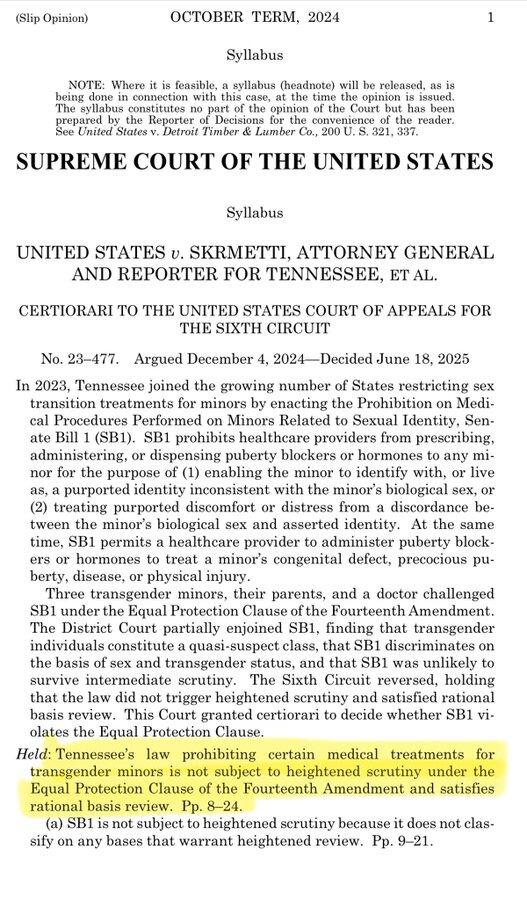


No comments:
Post a Comment