Fed officials, worried about jobs, muse on rate-cut prospects (Reuters) - Several Federal Reserve officials who spoke on Wednesday said labor market worries continue to animate their belief that rate cuts still lie ahead for the central bank. “I've been clear that I think we should be cutting at the next meeting,” Federal Reserve Governor Christopher Waller said in an interview with CNBC, reiterating the view he has held for some time and led him to dissent at the late July Fed meeting in favor of an easing. "You want to get ahead of having the labor market go down because usually when the labor market turns bad, it turns bad fast," he said. He added that a rate cut at the September 16-17 Federal Open Market Committee meeting would not put monetary policy on a pre-set course of lowering borrowing costs and data will drive what the central bank does. But, “I would say over the next three to six months, we could see multiple cuts coming in.” Atlanta Fed President Raphael Bostic also reiterated his view that a rate cut is in the cards although he did not say how soon it might happen. He wrote in an essay that "today, I judge policy to be marginally restrictive." He added, "while price stability remains the primary concern, the labor market is slowing enough that some easing in policy—probably on the order of 25 basis points—will be appropriate over the remainder of this year." And in a hometown speech, Minneapolis Fed leader Neel Kashkari said with the neutral fed funds rate around 3%, “that suggests that interest rates have some room to come down gently over the next couple of years." The official also declined to say when he believes the Fed should cut rates given the uncertainties created by trade policy. The Fed’s meeting later this month is viewed by investors as a lock for a quarter percentage point cut in what is now a 4.25% to 4.5% federal funds interest rate target range. The market’s confidence is rooted in comments made by Fed Chair Jerome Powell late last month at the Kansas City Fed’s Jackson Hole, Wyoming research conference when he said, “with policy in restrictive territory, the baseline outlook and the shifting balance of risks may warrant adjusting our policy stance.” In weighing a rate cut, Fed officials are trying to balance their legally mandated mission of keeping inflation low and the job market as strong as it can be without creating price pressures. Many Fed officials, as well as many private sector economists, are concerned inflation is too high and likely to get higher in response to President Donald Trump’s huge increase in import taxes. Kashkari noted because of these factors, "we're getting into a tricky position" for Fed policy. The Budget Lab at Yale analysis group in a new report cited mounting evidence that tariffs are boosting goods prices, estimating that “61-80% of the new 2025 tariffs were passed through to consumer core goods prices, roughly in the middle of prior studies around consumer price pass-through.” Meanwhile, the Fed's Beige Book anecdotal survey of conditions across the U.S. found tariff-related price increases were pervasive.. "While some firms reported passing through their entire cost increases to customers, some firms in nearly all districts described at least some hesitancy in raising prices, citing customer price sensitivity, lack of pricing power, and fear of losing business," the Fed report said. At the same time, a wide range of data indicates the labor market is weakening, and that is driving some at the Fed to focus more on the jobs side of their mandate. St. Louis Fed President Alberto Musalem, in an appearance before the Peterson Institute for International Economics, said “I've been revising my assessment of downside risks for the labor markets slightly higher as I've seen some deterioration in some of the underlying full employment numbers, and I've been revising my assessment of the risk of persistent above-target inflation slightly lower, in part because the pass-through so far of tariffs on inflation has been low.” The officials’ worry about the labor market was to some degree backed up by a government report released on Wednesday that showed moderate hiring and a declining number of job openings. The Job Openings and Labor Turnover Survey, or JOLTS report, showed openings dropped 176,000 to 7.181 million by the last day of July, a lower rate than economists had expected. Musalem, however, offered few clues about the outlook for rates beyond saying monetary policy is currently in the right place given current economic performance. He also said in his speech he expects some moderate deterioration in the job market, with inflation pressures undergoing a short-run bump from tariffs before easing back to 2% in the latter part of 2026. Waller, and to some extent Musalem, see tariffs as largely a temporary factor that will pass through the economy and, once done, will allow price pressures to ease back to the target.
100% Loan Losses Loom as Fed Shrinks Balance Sheet- Banks on the Brink - (20+ minute video interview, no transcript) The Fed is playing God again. Chris Whalen, chairman of Whelan Global Advisors, warns that the central bank’s reckless experimentation—low rates, QE, and now rapid balance sheet reduction—is rattling the financial system. Liquidity is vanishing, money markets are jittery, and banks are bracing for losses. Commercial real estate and apartment loans are already seeing 100% defaults when trouble hits. Investors beware: volatility is baked in. Whalen urges caution and opportunism—treasuries, preferred stocks, reliable dividend payers, and gold at the core. The Fed may have stopped asking permission, but your portfolio shouldn’t pay the price.
How The US Will Force Yields Lower Across The Curve -- We were already set to get a lot of economic data, especially on the labor front, compressed into a short week, and now we have to digest a court ruling on tariffs. A federal appeals court ruled against (many/some/all?) tariffs imposed using an emergency law. The tariffs will remain in place while the case proceeds. It may go back to the lower court for another round, while also being pursued up to the Supreme Court. Nothing is “final” yet. We discussed a couple of weeks ago that tariff rebate claims were trading at 25 cents on the dollar. Presumably, those are trading moderately higher after this ruling, but to a large degree, this news, which hit after the close on a long weekend, should be at least partially priced in. Given that, we won’t dwell on this issue, for now, and will try and have some fun with the almost universal view that U.S. yield curves will steepen and the long end is very vulnerable to a spike higher in yields. It is worth highlighting that the equity narratives highlighted in last weekend’s No Lonesome Doves continued to work this week. There is a lot of debate over whether Fed independence will be compromised or not? That goes hand in hand with whether or not we will have “unnecessary” or “politicized” rate cuts? For anyone answering “yes” to both questions, the natural conclusion is that we get rate cuts, but yield curves steepen and long end yields likely rise, possibly by a lot (yes, we mentioned that once already, but it seemed worth mentioning again). As discussed on Bloomberg TV this week, we think that might be too simplistic. That people aren’t thinking “out of the box” enough and may well be underestimating this admin on their plans for yields. Since the risk that this pattern repeats itself is so obvious, it seems obvious (at least to the T-Report) that someone in D.C. is trying to figure out a strategy so that it doesn’t happen again.What little I know about charting this stuff is: We are back to a pretty normal level of inflation for rents. If the annual line is continuing to decline, the recent monthly numbers are lower still. The Cleveland metric is below the almost 4% change in shelter inflation in CPI. Now, we wouldn’t normally quibble over a 1% or so difference in the course of a year, but since shelter is such a large component it is keeping inflation both stubbornly and inaccurately high. If you want to attack inflation fears, start by attacking the data itself and highlighting this large component which virtually everyone agrees it is being overstated. If you can combat some of the inflation fears, it should reduce the power of the bond vigilantes and the arguments of those who say it is a “political” decision to cut with inflation high. This gets to the heart of the problem. These are our current calculations of the Fed holdings of Treasuries by maturity (ignoring T-Bills, floaters, and TIPS). The Fed balance sheet is skewed to the shorter maturities. The Fed owns $2 trillion of bonds maturing in less than 7 years versus “only” $1 trillion of bonds maturing 15 years or more. Let’s “imagine” that the Fed starts an “aggressive” Operation Twist. Selling bonds that mature in 3 years or less (most anchored by Fed Funds) would create about $1.2 trillion of purchasing power. If they only bought bonds 20 years or longer, that would almost triple their portfolio size. Interestingly, “only” $2 trillion of bonds maturing 20 years or longer are outside of Fed control, so that would be 50% of the float! When you start thinking about what percentage of that is locked up in not available for sale accounts, it would be IMMENSE buying power. That is extreme, but we start to get a sense of what can be done. T-bills will be “anchored” by Fed Funds. So, the Treasury Department, if it doesn’t like where yields are (even with Operation Twist), could scale back issuance of longer-dated bonds even further, creating favorable supply and demand dynamics.
Economy adds anemic 22,000 jobs in August — The Bureau of Labor Statistics reported that the economy added 22,000 jobs in August, an anemic growth rate that could pave the way for the Federal Reserve to lower interest rates during their next meeting later this month. The Bureau of Labor Statistics reported that the economy added 22,000 jobs in August, raising the unemployment rate to 4.3% and providing additional cover for the Federal Reserve to lower interest rates in September.
DOJ Opens Grand Jury Criminal Investigation Fed Governor Lisa Cook Over Mortgage Fraud Allegations The Department of Justice has opened a criminal investigation into Federal Reserve governor Lisa Cook - and has issued multiple subpoenas as part of the inquiry into whether she committed mortgage fraud, according to the Wall Street Journal, citing 'officials familiar with the matter.'The probe - for which a grand jury has been assembled, will begin by looking at Cook's properties in Ann Arbor, Michigan and Atlanta. It comes on the heels of two criminal investigations from Federal Housing Finance Agency director Bill Pulte, who has been dropping receipts for weeks with evidence that Cook committed fraud - including claiming two properties as her "primary residence" - as well as claiming that a rented out third property was her 'second home' - all things that would qualify her for better rates and tax treatment. Pulte accused Cook of misleading banks on multiple mortgage applications to receive favorable lending terms, such as lower interest rates, typically given to a buyer who intends to occupy the home they purchase. A judge is considering Cook’s request for an emergency order stopping her from being removed from the Fed board while the case proceeds. The Fed’s next meeting is set to begin Sept. 16. –WSJ Last Thursday, Cook filed a lawsuit against the Trump administration after President Donald Trump fired her that Monday 'for cause.' Among the excuses contained in the lawsuit for alleged mortgage fraud was a possible clerical error. Except, Cook described herself in her 2023 nomination hearing as having "significant experience in banking and finance, as is evidenced by my service on the board of directors of the Federal Reserve Bank of Chicago and of a Community Development Financial Institution in Michigan, in addition to my employment at an investment bank and a large commercial bank." What's more, the Federal Reserve Act allows the president to fire Fed governors 'for cause' - which the Trump administration claims applies. In a Tuesday court filing, Cook's lawyers said she "did not ever commit mortgage fraud."Pulte shot down any notion that the fed wasn't political in a Thursday appearance on CNBC, saying "I don't believe for the last 4 years that the Fed has been independent."
US Justice Department opens criminal mortgage fraud probe into Fed Governor Cook (Reuters) - The U.S. Justice Department has launched a criminal mortgage fraud probe into Federal Reserve Governor Lisa Cook and has issued grand jury subpoenas out of both Georgia and Michigan, according to documents seen by Reuters and a source familiar with the matter. The investigation, which followed a criminal referral from Federal Housing Finance Agency Director Bill Pulte, is being conducted by Ed Martin, who was tapped by Attorney General Pam Bondi as a special assistant U.S. attorney to assist with mortgage fraud investigations involving public officials, along with the U.S. Attorneys' offices in the Northern District of Georgia and the Eastern District of Michigan, according to the person, who spoke anonymously since the matter is not public. Sign up here. Pulte, who was appointed by Trump, has accused Cook of committing fraud by listing more than one property as a primary residence when she applied for mortgages, potentially to secure lower interest rates. Cook owns properties in Michigan, Georgia and Massachusetts. Trump terminated Cook over Pulte's allegations, prompting her to file a lawsuit challenging his effort to oust her. Cook's lawyer, prominent Washington attorney Abbe Lowell, said the Justice Department was scrambling to invent new justifications for Trump's overreach in firing the Fed governor. "He wants cover, and they are providing it. The questions over how Governor Cook described her properties from time to time, which we have started to address in the pending case and will continue to do so, are not fraud, but it takes nothing for this DOJ to undertake a new politicized investigation, and they appear to have just done it again," Lowell said. The case, which will likely end up before the U.S. Supreme Court, has ramifications for the Fed's ability to set interest rate policy without regard to politicians' wishes, widely seen as critical to any central bank's ability to keep inflation under control. Trump has demanded that the U.S. central bank cut rates immediately and aggressively, berating Fed Chair Jerome Powell for his stewardship of monetary policy. The central bank is expected to deliver a rate cut at its September 16-17 meeting. In one of her recent legal filings challenging Trump's actions, Cook said she listed mortgages on three properties on forms submitted to the White House and U.S. Senate in the vetting process for her appointment to the Fed in 2022. Any inconsistencies were known when she was confirmed and cannot give Trump grounds to fire her now. Mortgages obtained for primary residences and second homes can come with cheaper financing than those for investment properties, which have a higher default rate and are typically subject to tighter underwriting by lenders. The rates that Cook obtained on her mortgages were higher than the prevailing national averages at the time. While it is not known when Cook locked in her mortgages, borrowers typically fix their rate a month or two before the purchase. Cook is the third public official to be targeted in a criminal investigation over mortgage fraud allegations. Martin, who also presides over the "Weaponization Working Group" and serves as pardon attorney, is also pursuing criminal probes into Democratic U.S. Senator Adam Schiff as well as New York Attorney General Letitia "Tish" James. There are also grand juries convened in those two cases, which started prior to Martin's new appointment as a special assistant U.S. attorney, according to the source and documents seen by Reuters. Although the Justice Department is reviewing all three mortgage cases involving Schiff, James and Cook, proving criminal liability will be difficult, a person familiar with the matter told Reuters. One challenge is that in many instances, even if a person wrongfully claims a home to be a primary residence, the mortgage company is often aware of all the facts and does not believe the home is being used as such. Mortgage fraud, the person added, is about duping a bank into providing better terms for a loan.
Fed Governor Lisa Cook did not commit mortgage fraud: lawyer --Federal Reserve Board Governor Lisa Cook "did not ever commit mortgage fraud," her lawyer Abbe Lowell said Tuesday in a new court filing bolstering arguments why a judge should temporarily block President Donald Trump from firing her. Lowell argued in the same filing that any of Cook's statements that she made on mortgage applications — which Trump has cited as the reason for her termination — do not give the president legal cause to remove her. Lowell said multiple federal government entities received her mortgage details before the Senate first confirmed her nomination to the Fed in May 2022. The same information was disclosed to the White House prior to her appointment by former President Joe Biden, Lowell wrote. "The Government has long known about the alleged facial inconsistencies in Governor Cook's financial documents," he wrote. Because of that fact, the mortgage applications "likely cannot constitute a legitimate basis" for Trump to fire her, the attorney argued. He called Trump's purported reason for removing Cook a "mere pretext," saying that the president's true goal is getting the Fed to lower interest rates. "The public record is replete with [Trump's] comments demanding that the Board, including Governor Cook and its other members, lower interest rates or face consequences in 2025." Lowell's filing came hours after nearly 600 economists signed an open letter warning that her potential firing threatens the Fed's independence and erodes trust in a key pillar of the U.S. financial system. Trump moved to terminate Cook last week. He said in a letter that she was being removed after Federal Housing Finance Agency Director Bill Pulte accused her of having committed "mortgage fraud." Cook quickly sued to block her firing. Pulte initially accused Cook of claiming two properties, one in Michigan and one in Georgia, as her primary residence. He later made similar claims about Cook's mortgage for a condominium in Cambridge, Massachusetts. But Lowell said in Tuesday's filing that Cook listed the Michigan address as her "primary residence" and the Georgia address as her "2nd home" in a questionnaire previously submitted to the government. He also said that a separate questionnaire that she submitted shows the Georgia address listed as her "present" residence and the Michigan one as her "present" residence and "current permanent residence." That questionnaire also called the Cambridge home Cook's "present residence," as well as "a second home and rental property," the filing said. The public financial disclosure report that Cook filed as a Fed nominee listed mortgage designations "for each of the relevant properties," Lowell said. "If those are facial contradictions, as the Government and President claim, they certainly existed in the materials that Governor Cook provided as part of her Presidential vetting and Senate Confirmation process," Lowell wrote. He said senators or White House officials "could have inquired of her about any alleged 'facial inconsistencies'" at the time, but did not. In their public letter to Trump and Congress on Tuesday defending Cook, the group of economists said, "Good economic policy requires credible monetary institutions. Credible monetary institutions, in turn, require the independence of the Federal Reserve." "We stand with Governor Cook and with the institutional safeguards that have long underpinned American economic strength," they added. The 593 signatories include Nobel laureates Joseph Stiglitz, Claudia Goldin, Alvin Roth, Paul Milgrom and Paul Romer; multiple former Federal Reserve economists; and Christina Romer and Jared Bernstein, who led the U.S. Council of Economic Advisers under Presidents Barack Obama and Biden, respectively. The economists noted that the Federal Reserve Act, which Congress passed in 1913, designed the Fed to be independent and "insulated from day-to-day politics."
GOP senators not in rush to consider Lisa Cook replacement on Fed until case resolved -Two Republican senators said Wednesday that they will not consider a possible replacement for Federal Reserve Board Governor Lisa Cook until her lawsuit challenging her firing by President Donald Trump is resolved. "She is still in the position, she has not had due process yet," Sen. Mike Rounds, R-S.D., told CNBC. Rounds, a member of the Senate Banking, Housing and Urban Affairs committee, refused to say whether he would back a replacement for Cook in committee, noting that it is hypothetical at this point. "I don't get to make the decision on what comes up before the committee, so at this point, it's hypothetical," he said. "She is still a member of the board, and you know the president most certainly has the right to try to influence and to lobby, but at this stage of the game, there's no change in her status." Sen. Thom Tillis, a North Carolina Republican member of the Banking committee, said that he is "not going to consider anybody until that's been adjudicated.""I'm going to leave it to the courts to decide whether or not it's legal," Tillis told Politico."But if in fact it is to be for cause, it's dubious whether or not — even if these events are as they've been described — [they're] a basis for cause," he continued."If it's a move to really kind of create a partisan divide in the Fed, then I'm against it on that basis."As members of the Senate Banking Committee, Tillis and Rounds have important sway over Trump's Federal Reserve picks. Republicans have a narrow majority on the committee, so they will need unanimous support to advance the president's eventual pick for the central bank role.Trump in an unprecedented move last week said he was firing Cook, who was appointed by former President Joe Biden, over allegations of mortgage fraud, claims that her lawyer has sincedenied.Cook promptly sued over Trump's bid to remove her, setting up a legal battle that could ultimately be decided by the Supreme Court.A court hearing on the matter ended without resolution last week, leaving the future of Cook's position unclear.
Key filings in Fed independence suit due Thursday - Federal Reserve Gov. Lisa Cook's attorneys filed additional briefs in her case against President Trump over his moves to oust her from her seat on the Fed board, and the judge overseeing the case has scheduled final briefs to be due Sept. 4. Federal Reserve Gov. Lisa Cook's attorneys filed additional motions in her suit against President Donald Trump over his attempt to oust her from the central bank last week. A judge overseeing the case set a Thursday deadline for final briefs.
Fed's Musalem: 'Accountable' central bank independence is key — A member of the Federal Reserve's interest rate-setting committee emphasized the importance of the central bank's independence amid a looming challenge from the Trump administration. Federal Reserve Bank of St. Louis President Alberto G. Musalem said central bank autonomy leads to lower inflation and stable employment numbers. His comments come amid the Trump administration's attempt to remove a Fed board member for cause.
Trump's Fed Pick Stephen Miran Commits To Central Bank Independence -Stephen Miran, President Donald Trump’s nominee to temporarily serve on the Federal Reserve Board of Governors, committed to preserving the central bank’s independence in testy exchanges with senators.Trump announced his nomination of Miran, the current head of the White House’s Council of Economic Advisers, early last month to temporarily fill the seat vacated by Adriana Kugler.Appearing before the Senate Banking Committee for his confirmation hearing, Miran expressed the necessity for monetary policy independence as lawmakers centered their questions on the Federal Reserve’s autonomy.“In my view, the most important job of the central bank is to prevent depressions and hyperinflations. Independence of monetary policy is a critical element for its success,” he said in his opening remarks on Sept. 4.“I will act independently as the Federal Reserve always does,” Miran told senators, adding that he welcomes listening to a diverse array of opinions “to challenge my own views and interrogate them.”Democratic senators, including Sen. Elizabeth Warren (D-Mass.), were unconvinced, stating that Miran would serve as a proxy for the president and erode Fed independence.Accentuating her point, Warren asked Miran whether he thought Trump had lost the 2020 presidential election and if he believed the Bureau of Labor Statistics’ July jobs numbers had been manipulated.Miran replied that President Joe Biden “was certified by Congress” and that the federal agency has struggled with deteriorating data quality.“Dr. Miran, you have made clear that you will do or say whatever Donald Trump wants you to do or say,” Warren, the top Democrat on the committee, said.“That may work in a political position, but it takes an axe to Fed independence, and will make life far more expensive for Americans.”Sen. Andy Kim (D-N.J.) questioned whether administration officials, “formally or informally,” had asked Miran to vote to lower interest rates. “No,” Miran answered. Miran is likely to be confirmed as Republicans control the Senate Banking Committee and hold 53 seats in the upper chamber. All Senate GOP lawmakers voted to confirm Miran, who served in the president’s first term, to chair the president’s key economic advisory group.
Fed nominee Miran tells Senate panel he's 'not at all' Trump's puppet (Reuters) - Stephen Miran, President Donald Trump's pick to fill an open seat at the Federal Reserve, on Thursday parried dozens of questions from lawmakers about whether he will make interest-rate decisions independently of presidential pressure, with Republicans seeking to use the exchanges to affirm Miran's promise of political neutrality and Democrats expressing their skepticism. The Senate Banking Committee hearing on Miran's nomination comes as Trump steps up efforts, including an unprecedented attempt to remove a sitting Fed governor, to exert control over the central bank. The Fed's ability to manage inflation effectively is widely seen as requiring freedom from political influence over interest-rate decisions. Fed policymakers are expected to cut rates by a quarter percentage point when they next meet, on September 16-17. That's far less than the several percentage points Trump says he wants, and Republicans have signaled they will use their majority in Congress to try to get Miran confirmed in time to participate. Miran would have one vote of 12 on rate setting at the Fed. "I think the president has had a series of excellent calls on monetary policy,” Miran said at the two-hour-and-20 minute hearing in which he repeatedly promised to preserve the Fed's independence and make decisions based on his own analysis and what's best for the economy's long-term stewardship. "That said, I'm always happy to hear views from every source possible...to challenge my own views and interrogate them," he said. Senator Elizabeth Warren of Massachusetts, the top Democrat on the Senate Banking Committee, was not reassured, saying Miran's joining the Fed would "take an axe" to the central bank's independence and pressing her point with questions to Miran over whether he believed Trump lost the 2020 presidential election and if he agreed with the president that recent jobs numbers showing a drop in monthly job gains were rigged. Miran repeated his view that he was concerned with "data quality" at the Bureau of Labor Statistics, and on Trump's 2020 loss said only, "Joe Biden was certified by Congress as the President of the United States." Other Democratic Senators were equally pointed as they grilled Miran, who would occupy a seat unexpectedly vacated last month by Fed Governor Adriana Kugler, serving a term that ends January 31. Miran made it clear he planned to take an unpaid leave of absence from his current job as chair of the president's Council of Economic Advisors and would resign only if he was renominated to a longer Fed term. He later told reporters he has not spoken with anyone at the White House about that possibility. "For you to suggest that the president would somehow welcome you back with open arms at the Council of Economic Advisors should you vote in a way that is opposed by the president of the United States is just not credible," Democratic Senator Chris Van Hollen of Maryland said, citing Trump social media posts threatening to fire Fed Chair Jerome Powell for not cutting interest rates and urging the Fed Board to overrule him. Miran said he viewed such posts as an "exhortation" for Fed policymakers to "vote their own views." Powell and the majority of Fed policymakers have held rates steady all year out of concern that Trump's high tariffs could reignite inflation. Miran told Senators he believes tariffs are not inflationary, and expects Trump's border-tightening efforts, which reduce what he said has been excess demand for housing from immigrants, to be "deflationary." "Has anyone in the administration asked you to commit, formally or informally to vote to lower interest rates?" asked New Jersey Democratic Senator Andy Kim. "No," Miran said. Republicans for their part signaled their general support for Miran. Senator John Kennedy, a Louisiana Republican, asked Miran to respond to Warren's charges that he would be manipulated by the president. "Are you a Donald Trump puppet?" Kennedy asked. "Not at all," Miran responded. "We are going to hold you to that," Kennedy said. Others raised criticism frequently leveled at the Fed by Republicans during the Biden administration. "I find it particularly rich that the Federal Reserve's independence is suddenly a big issue from a party that's long sought to systematically inject its ideology in the work of the central bank," said Senator Bill Hagerty, a Tennessee Republican. Democrats do not have the numbers to stop or even slow the current nomination process, the next step for which would be a vote by the Republican-dominated banking committee to send Miran's nomination for approval by the full U.S. Senate.
Trump Fed nominee won't resign from White House - Stephen Miran, chairman of the Council of Economic Advisers and nominee to serve on the Federal Reserve Board of Governors, will take unpaid leave from and might seek to return to President Trump's Council of Economic Advisers, he said, raising conflict of interest questions in his nomination hearing for a seat on the Federal Reserve Board.
Fed's Beige Book: "Little or no change in economic activity" -- Beige Book - August 2025: - Most of the twelve Federal Reserve Districts reported little or no change in economic activity since the prior Beige Book period—the four Districts that differed reported modest growth. Across Districts, contacts reported flat to declining consumer spending because, for many households, wages were failing to keep up with rising prices. Contacts frequently cited economic uncertainty and tariffs as negative factors. New York reported that "consumers were being squeezed by rising costs of insurance, utilities, and other expenses." Contacts observed the following responses to the consumer pullback. Retail and hospitality sectors offered deals and promotions to help price-sensitive consumers stretch their dollars—supporting steady demand from domestic leisure tourists but not offsetting falling demand from international visitors. The auto sector noted flat to slightly higher sales, while consumer demand increased for parts and services to repair older vehicles. Manufacturing firms reported shifting to local supply chains where feasible and often using automation to cut costs. The push to deploy AI partly explains the surge of data center construction—a rare strength in commercial real estate noted by the Philadelphia, Cleveland, and Chicago Districts. Atlanta and Kansas City reported that data centers had increased energy demand in their Districts. Overall, sentiment was mixed among the Districts. Most firms either reported little to no change in optimism or expressed differing expectations about the direction of change from their contacts.- Eleven Districts described little or no net change in overall employment levels, while one District described a modest decline. Seven Districts noted that firms were hesitant to hire workers because of weaker demand or uncertainty. Moreover, contacts in two Districts reported an increase in layoffs, while contacts in multiple Districts reported reducing headcounts through attrition—encouraged, at times, by return-to-office policies and facilitated, at times, by greater automation, including new AI tools. In turn, most Districts mentioned an increase in the number of people looking for jobs. However, half of the Districts noted that contacts reported a reduction in the availability of immigrant labor, with New York, Richmond, St. Louis, and San Francisco highlighting its impact on the construction industry. Half of the Districts described modest growth in wages, while most of the others reported moderate growth. Two Districts noted little or no change in wages.
- Ten Districts characterized price growth as moderate or modest. The other two Districts described strong input price growth that outpaced moderate or modest selling price growth. Nearly all Districts noted tariff-related price increases, with contacts from many Districts reporting that tariffs were especially impactful on the prices of inputs. Contacts in multiple Districts also reported rising prices for insurance, utilities, and technology services. While some firms reported passing through their entire cost increases to customers, some firms in nearly all Districts described at least some hesitancy in raising prices, citing customer price sensitivity, lack of pricing power, and fear of losing business. In some cases, as highlighted by Cleveland and Minneapolis, firms reported being under pressure to lower prices because of competition, despite facing increased input costs. Most Districts reported that their firms were expecting price increases to continue in the months ahead, with three of those Districts noting that the pace of price increases was expected to rise further.
Q3 GDP Tracking - From BofA: [O]ur 3Q GDP tracking has moved up a tenth to 1.6%. Also, our 2Q GDP tracking is down a tenth to 3.2% from the second estiamte of 2Q GDP by the BEA. [September 5th comment] From Goldman: We lowered our Q3 GDP tracking estimate by 0.1pp to +1.6% (quarter-over-quarter annualized). We left our Q3 domestic final sales estimate unchanged at +0.7%. [September 4th estimate] And from the Atlanta Fed: The GDPNow model estimate for real GDP growth (seasonally adjusted annual rate) in the third quarter of 2025 is 3.0 percent on September 4, unchanged from September 2 after rounding. After recent releases from the US Bureau of Economic Analysis, the US Census Bureau, and the Institute for Supply Management, increases in the nowcasts of real personal consumption expenditures growth and real gross private domestic investment growth from 1.7 percent and 5.3 percent, respectively, to 2.1 percent and 6.0 percent, were more than offset by a decline in the nowcast in the contribution on net exports to GDP growth from 0.69 percentage points to 0.28 percentage points. [September 4th estimate]
Why Did Mr. Trump Say before the Employment Release “the real numbers”…”will be in a year from now on”? -by Menzie Chinn - [source] Answer: Because, by virtue of the Executive Office of the President getting the release numbers the night before, he knew the numbers were going to be pretty bad (+22K < +75K Bloomberg consensus). (By the way, if I as a EOP staff member gave away market moving news before the official release, I would’ve been fired, and prosecuted. Just sayin’).
GOP leaders face rocky September with slimmer House majority - House GOP leaders are staring down a politically fraught and legislatively jam-packed September as lawmakers return to Washington — all while their tiny majority is set to get even slimmer. Speaker Mike Johnson (R-La.) must contend with a Sept. 30 government funding deadline amid disputes among Republicans on the structure and length of a stopgap and as Democrats have the power to force a shutdown. Calls for more disclosures about convicted sex offender Jeffrey Epstein, which thwarted leadership’s plans ahead of the August recess, are set to come back to the forefront. And GOP lawmakers are planning to press their leaders on hot-button issues like stock trading, while contending with demands from President Trump on crime and beyond. Adding to the pressure are two special elections in September that almost certainly will add two Democrats to the chamber in seats open due to the deaths of Reps. Gerry Connolly (D-Va.) and Raúl Grijalva (D-Ariz.). Virginia’s special election is Sept. 9, and Arizona’s is Sept. 23. That will give Republicans less breathing room on party-line votes, being able to afford just two GOP defections rather than three, assuming all members are present and voting. In a majority that includes lawmakers who routinely oppose continuing resolutions (CRs) to extend government funding when there is no time left for the regular appropriations process — like Rep. Thomas Massie (R-Ky.) — having even one fewer vote could complicate the GOP strategy on a funding stopgap. The last GOP-designed CR in March was sent to the Senate after every Democrat and Massie voted no, leaving Senate Minority Leader Chuck Schumer (D-N.Y.) to make the call on whether to force a government shutdown, which he ultimately opted against. Putting that kind of pressure on Senate Democrats only works, though, if House Republicans are unified. “Time is ticking, and I think that’s the biggest challenge,” said Rep. Stephanie Bice (R-Okla.), who sits on the House Appropriations Committee. “We spent the first seven months of this Congress focused on the ‘big, beautiful bill,’ which is necessary and incredibly important, and glad we were able to get that done. But now we’ve put ourselves in a position where we’re racing against the clock to get an appropriations package done. … It’s going to be a very busy four weeks.” Republicans will also need near-unanimous support on a vote to authorize a subcommittee to investigate the Jan. 6 Capitol attack and the previous Democratic-led investigation into Jan. 6. That panel, set to be led by Rep. Barry Loudermilk (R-Ga.), was announced more than seven months ago but was never formally established as Republicans hashed out disputes about its legislative jurisdictions. A slimmer majority could also have implications for Trump’s authority over Washington’s police force. His takeover of the Metropolitan Police Department, initiated in mid-August, needs Congressional approval to last beyond 30 days, though it is unclear whether Republicans will move to do so. Lawmakers will also contend with Trump saying he wants $2 billion from Congress to fund his plan to “beautify” Washington — a sum that could invite scorn from fiscal hawks. The city is facing a shortfall after Congress effectively cut its budget by $1 billion earlier this year in a federal spending bill. It’s not just pressures from Trump that leaders will face. A slimmer majority also helps Republicans willing to team up with Democrats in hopes of forcing votes on other hot-button issues through discharge petitions. The rarely-successful procedural gambit lets members circumvent leadership to force floor consideration of legislation if 218 members — a majority of the House — sign on. Massie and Rep. Ro Khanna (D-Calif.) are planning a discharge petition to force consideration of their bill requiring the Trump administration to publicly release the so-called Epstein files. They have enough Republican cosponsors on the measure to reach the 218-signaure threshold if every Democrat signs on. The duo will bring the Epstein issue to the forefront in the first days of Congress’ return with a press conference featuring Epstein survivors — though the environment on the GOP side may not be as tumultuous as in July in wake of the House Oversight and Government Reform Committee issuing subpoenas for Epstein-related documents and testimony. But Massie told The Hill of the Epstein issue this month: “I don’t think this is going to go away.” Stock trading is another issue set to see a discharge petition and bipartisan pressure. Rep. Anna Paulina Luna (R-Fla.), who brought a successful discharge petition on proxy voting for new parents earlier this year before the effort was later quashed by leadership, has also pledged to bring another one to ban individual stock trading by members of Congress. Rep. Chip Roy (R-Texas) is among those pushing for another stock trading ban bill — but as of now, he is seeking to have it go through the committee process rather than force it straight to the floor. “There’s a group of us on a bipartisan basis who are saying, look, time is now,” Roy said Thursday on CNBC. “I told Republican leadership I was going to give them the benefit of the doubt to get through the ‘big, beautiful bill’ and to make sure we can move forward and advance the president’s agenda.” Luna also told Joe Rogan on his podcast this month she was planning a discharge petition to bring a vote on term limits for members of Congress, an idea that is less likely to get majority support.
GOP Senate leaders tackle funding, nominee confirmations - Senate GOP leaders are staring down a lengthy to-do list of priorities that will force them into a delicate balancing act, including funding the government and changing the rules to expeditiously confirm President Trump’s nominees. The upper chamber reconvenes on Tuesday following the month-long August break and is set to hit the ground running with only weeks between their return and a potential government shutdown. But amid bipartisan priorities including government funding and getting the National Defense Authorization Act (NDAA) ready for prime time, Senate Majority Leader John Thune (R-S.D.) will also be forced to juggle a series of thorny political items. Those are headlined by the GOP’s effort to change the rules to confirm more of President Trump’s nominees, chaos at the Centers for Disease Control and Prevention and the White House decision to issue a “pocket rescission,” which tossed a major wrench into the funding wars of the coming weeks. “He’s going to have a full plate,” one Senate Republican told The Hill. Democratic leaders on Thursday called on Thune and Speaker Mike Johnson (R-La.) to hold a “four corners” meeting immediately when Congress returns, which will be exactly four weeks before the funding deadline. Republicans in March were able to back Democrats into a corner to pass a government funding package for the remainder of the fiscal year, but the minority party has vowed that there will be no repeat this time around. “The Sept. 30th funding deadline will be upon us shortly. It is therefore imperative that we immediately meet upon our return to Congress next week to discuss the need to avert a painful, unnecessary lapse in government funding and to address the healthcare crisis Republicans have triggered in America,” Senate Minority Leader Chuck Schumer (D-N.Y.) and House Minority Leader Hakeem Jeffries (D-N.Y.) wrote. But any hopes for progress took a major hit late last week when the White House announced an attempt to claw back $4.9 billion in foreign aid funds without congressional approval, drawing the ire of Democrats and appropriators and increasing the chances of a shutdown. Such a move had not been made in nearly a half-century, and it is expected to face legal challenges. It also comes two months after GOP lawmakers approved the first rescissions package worth $9 billion that targeted global aid programs and the Corporation for Public Broadcasting. “I was feeling good about where we were [on a spending deal]. I don’t feel good after this morning,” one Senate GOP aide told The Hill shortly after the rescissions package was revealed. Schumer wasted little time lambasting the move, arguing that Trump and GOP lawmakers don’t have “any plan to avoid a painful and entirely unnecessary shutdown.” He added that Thune and Johnson have “repeatedly refused” to meet with Democrats to discuss a “bipartisan path forward.” “In fact, it seems Republicans are eager to inflict further pain on the American people, raising their health care costs, compromising essential services and further damaging our national security,” the Democratic leader said. “[I]f Republicans are insistent on going it alone, Democrats won’t be party to their destruction.” Both sides are expecting to pass a stopgap spending bill in order to keep the government’s lights on as both chambers still have a ways to go before wrapping up work on a full-year funding package. Senators passed only three of the 12 annual appropriations bills so far in one of their final actions before recess. The House has passed two. And the chambers’ bills differ sharply.
Congress races to avoid government shutdown as partisan standoff deepens --Congressional lawmakers are already trading blame over the looming government shutdown, foreshadowing what will likely be a bitter partisan dispute over the next several weeks, as funding hangs in the balance. Lawmakers returned to Capitol Hill this week as the threat of a shutdown at the end of the month intensified, and the familiar partisan fault lines reappeared. "The House Republicans are committed to keeping the government, and unfortunately, it seems like not all Democrats agree with that, and they're beginning to apply their government to shut down pressure," House Speaker Mike Johnson, R-La., told reporters on Wednesday. "If the government shuts down, it'll be because congressional Democrats rejected common sense solutions to fund the government," he said. Government funding is set to expire in less than four weeks, and lawmakers are divided over how to keep the government afloat, even on a short-term basis. They will likely consider a stopgap measure to keep funding stable at federal agencies, but even that could face hurdles in the Republicans' razor-thin conference. To pass a stopgap measure in the Senate before Sept. 30, the date that funding is set to expire, GOP leaders will need Democratic support to clear the chamber's 60-vote threshold. But that will likely be difficult, as Democrats— eager to put the majority party on defense as the 2026 midterm elections near — appear willing to hold the line and spar with their Republican counterparts over marquee pieces of President Donald Trump's agenda. Senate Minority Leader Chuck Schumer, D-N.Y., voted with Republicans in March to avert a shutdown, a decision that drew strong backlash from his party. Schumer likely wants to avoid that this time around. Like Johnson, the senior senator from New York has tried to put the onus for preventing a government shutdown on his colleagues in the other party. "The only way to avoid a shutdown is to work in a bipartisan way, with a bill that can get both Republican and Democratic votes in the Senate," he wrote in a letter to his colleagues on Tuesday. "However, as we near the funding deadline, Republicans are once again threatening to go-at-it-alone – heading our country towards a shutdown," he said.
House and Senate set for battle over defense budget -The House and Senate are headed for a tussle over the annual, must-pass defense spending bill as the upper chamber’s version stands at odds with the budget passed by the House and a proposal from the Trump administration. The Republican-led Senate Appropriations Committee last month approved nearly $853 billion for the Defense Department for fiscal 2026, a bill that allocates $21.7 billion more than President Trump requested earlier this year. The top-line increase, which includes a significant bump in munitions, pay raises for troops and support for Ukraine, puts the chamber on a collision course with the House, which wrote its version of the defense spending bill before the administration released its budget and before the final version of the reconciliation bill passed. Sen. Mitch McConnell (R-Ky.), who chairs the Appropriations panel’s defense subcommittee and crafted the major rewrite of Trump’s defense budget, previewed the fight to come when he remarked the administration has “underestimated the level of challenge that we have.” The Senate bill “underscores that we cannot seriously address these challenges while artificially constraining our resources,” McConnell said July 31 during a Senate Appropriations markup. “We can’t build a Golden Dome, or restock our munitions, or bring back American shipbuilding without sustained increased investments in all of our national defense. And we can’t treat reconciliation like a cure-all.” The legislation boosts aid for Ukraine, Taiwan and NATO’s eastern border; ramps up shipbuilding; funds a 3.8 percent troop pay raise; and puts billions of dollars toward rebuilding U.S. missile stockpiles — depleted by shipments of weapons for Ukraine’s fight against Russia and conflicts in the Middle East. The House version largely followed the administration’s flat numbers and went with a lower defense spending top line of $831.5 billion, sticking to the broad aspects of the administration’s budget request that were available at the time. It does not include aid for Ukraine and has significant antidiversity and anti-abortion language, as well as other items that are nonstarters for Democrats, making it a tough lift in the Senate. The House passed its defense spending bill almost entirely along party lines in a close 221-209 vote on July 18. The Senate’s version is a much broader rewrite of the administration’s budget that has strong bipartisan support. It made it out of the Appropriations Committee in a 26-3 vote. Democrats on the House and Senate Appropriations panels have also been critical of the Pentagon for not sending its budget sooner — administration officials did not formally unveil a proposed defense budget until late June, well past the early February deadline — and splitting it up between regular appropriations and reconciliation. The latter issue, they said, has created unnecessary confusion and may put the military’s most important weapons programs at risk, given that it’s unclear where the money might come from for certain systems. The reconciliation bill that cleared Congress last month included more than $150 billion for defense priorities. “The fact is we did not have the president’s plan for his defense priorities when this bill was written,” Rep. Betty McCollum (D-Minn.), ranking member on the Appropriations subcommittee for defense spending, said. “That makes this bill an incomplete product.” One of the biggest fights on the horizon will likely be the issue of Ukraine aid. The Senate’s bill includes $800 million for the Ukraine Security Assistance Initiative, under which the U.S. provides funds to buy weapons for Kyiv, and $225 million for the Baltic Security Initiative. That fund largely helps support Ukraine in its war against Russia. McConnell, a Russia hawk and part of the old guard of Republicans, has backed support for Ukraine throughout Russia’s invasion of the country, which began in February 2022. He has also expressed frustration with the administration for repeatedly halting shipments of weapons for Kyiv and not notifying lawmakers who authorized the shipments. “Shutting off engagement with Ukraine would undermine our military’s efforts to prepare for the modern battlefield,” McConnell said last week. The issue has been bipartisan, with two other members of the Appropriations Committee, Sens. Lisa Murkowski (R-Alaska) and Jeanne Shaheen (D-N.H.), introducing a separate bill last week that would provide Ukraine $54.6 billion over two years.
Republicans secure massive water, environment earmarks - When Congress failed to pass bipartisan spending bills for the current fiscal year, lawmakers went back to their states and districts empty-handed, with no earmarked funding to show off for local projects.Now, members are making up for lost time, loading up fiscal 2026 appropriations bills with billions of dollars in old and new earmarks — directed at everything from water infrastructure projects to research centers, airport upgrades and energy efficient housing.Senior House and Senate Republicans are dominating the earmark bonanza for the third consecutive year, leading all lawmakers in earmarked dollars and notching major wins for water projects, according to an analysis by POLITICO’s E&E News. While Democrats have secured thousands of earmarks, they are receiving a much smaller portion of the overall funding. Former Senate Majority Leader Mitch McConnell (R-Ky.), the most senior member of the Senate Appropriations Committee, is the top earmark winner by far, on track to come away with more than half a billion dollars for Kentucky.Rep. Chuck Fleischmann (R-Tenn.), chair of the Energy and Water Development Appropriations Subcommittee, is once again in first place among all House members thanks to a massive earmark for a beleaguered lock and dam project.Fiscal 2026 earmarks stand to benefit vulnerable members ahead of next year’s midterm elections, and they could present an outsize advantage for fiscally conservative Republicans, who will be able to campaign on the dollars they secured for local initiatives while simultaneously touting cuts they fought for in the broader funding negotiations.House Republicans, for example, have included hundreds of millions of dollars in earmarks for clean water and drinking water programs in their Interior-Environment bill despite proposing to slash that spending in the same bill.Earmarks are also taking on new significance this year. Amid the Trump administration’s unprecedented efforts to withhold funds from states and nonprofits, earmarks could help fill in the gaps, injecting new funding into both Democratic priorities that the administration has targeted and major projects with bipartisan support.The House and Senate have not yet released all of their spending bills, meaning more earmarks are coming. And the more than 8,000 earmarks included in the fiscal 2026 bills unveiled so far are not yet final; they could change during bicameral government funding negotiations in the coming weeks or months.
US suspends visas for most Palestinian passport holders: Reports --The Trump administration has suspended approval for most types of visitor visas for Palestinian passport holders, according to a State Department cable reported by multiple media outlets.The internal memo, dated Aug. 18, instructed U.S. embassies and consulates to reject nonimmigrant visas to “all otherwise eligible Palestinian Authority passport holders” who are using that passport to apply for a visa, multiple media outlets reported.The sweeping new policy — which the State Department said was “effective immediately” — reportedly applies to visas for tourists, university students, businesspeople and individuals seeking medical treatment.The new policy extends beyond the recently announced restrictions on visitor visas for Palestinians from Gaza. The latest policy would affect Palestinians seeking to enter the U.S. from the West Bank or the Palestinian diaspora, according to The New York Times, which was first to report on the policy shift.In a statement to The Hill, a State Department spokesperson said, “The Trump administration is taking concrete steps in compliance with U.S. law and our national security in regards to announced visa restrictions and revocations for PA passport holders.”
Trump Says He's Done a Lot for Israel, Including Bombing Iran - President Trump said in an interview published on Tuesday that no one has done more for the state of Israel than himself and cited his recent airstrikes on Iranian nuclear facilities as an example.“So, Israel is amazing, because, you know, I have good support from Israel,” the president told the Daily Caller. “Look, nobody has done more for Israel than I have, including the recent attacks with Iran, wiping that thing out. We, that plane, wiped them out like nobody ever saw before.”Trump made the comments when asked if he was worried about the growing skepticism among young Republicans when it comes to the US relationship with Israel, and he noted the Israel lobby’s control over Congress, saying it has waned in recent years.“But when, if you go back 20 years. I mean, I will tell you, Israel had the strongest lobby in Congress of anything or body, or of any company or corporation or state that I’ve ever seen. Israel was the strongest. Today, it doesn’t have that strong a lobby. It’s amazing,” Trump said. “There was a time where you couldn’t speak bad, if you wanted to be a politician, you couldn’t speak badly. But today, you have, you know, AOC plus three, and you have all these lunatics, and they’ve really, they’ve changed it,” he added. The criticism of Israel among a small number of members of Congress is no longer limited to Democrats, as Rep. Marjorie Taylor Greene (R-GA), who is considered a strong supporter of President Trump, has recently come out strongly against Israel’s campaign in Gaza and became the first Republican in Congress to label it a genocide. Rep. Thomas Massie (R-KY) is also known for his opposition to US aid to Israel and the pro-Israel lobby group AIPAC. “Israel, you would understand this very much, Israel was the strongest lobby I’ve ever seen. They had total control over Congress, and now they don’t, you know, I’m a little surprised to see that,” Trump said.The president, who is strongly backing Israel’s genocidal assault in Gaza, said the military campaign is not good for Israel’s public image. “They may be winning the war, but they’re not winning the world of public relations, you know, and it is hurting them. But Israel was the strongest lobby 15 years ago that there has ever been, and now it’s, it’s been hurt, especially in Congress,” he said.Trump made similar comments while on the campaign trail last year, both about the Israel lobby and Israel’s public image being damaged by the destruction of Gaza. “Some 15 years ago, Israel had the strongest lobby. If you were a politician, you couldn’t say anything bad about Israel, that would be like the end of your political career. Today, it’s almost the opposite,” he told Israel Hayom in March 2024.
Report: Rubio Signals US Won't Oppose Israeli Annexation of the Occupied West Bank - Israeli officials have told Axios that US Secretary of State Marco Rubio has signaled in private meetings that the US won’t oppose Israel if it moves to formally annex parts of the Israeli-occupied West Bank, something Israeli officials are considering doing in response to Western countries planning to recognize a Palestinian state. US Ambassador to Israel Mike Huckabee previously told Axios that the Trump administration doesn’t yet have an official position on the possibility of annexing territory in the West Bank, but he has also made clear the administration won’t oppose the expansion of illegal Jewish settlements, which amounts to the de facto annexation of the territory they’re built on. Huckabee has also previously suggested that Palestinians in the West Bank could be moved to and that a Palestinian state could be carved out of a Muslim country. Israeli Finance Minister Bezalel Smotrich, a West Bank settler himself, proposed a plan on Wednesday for Israel to annex 82% of the Palestinian territory. He said in a statement that the plan aims for “maximum territory and minimum Arab population.”According to a map Smotrich released, Israel would officially annex the vast majority of the West Bank while leaving six Palestinian population centers as islands that would be separated. The six cities include Ramallah, Nablus, Jenin, Tulkarem, Jericho, and Hebron.Smotrich said that the Palestinians in the six islands would initially remain under the Palestinian Authority (PA), but then later form local administrations to prevent any sort of unified Palestinian entity in the West Bank. Smotrich called on Israeli Prime Minister Benjamin Netanyahu to go through with the annexation. “And you, Mr. Prime Minister, will enter the nation’s history books for generations as a great leader who knew how to seize the moment, take advantage of the opportunity, and save Israel once and for all from the idea of dividing the land and the existential threat euphemistically called a ‘Palestinian state,’” he said. The UAE warned on Wednesday that the Israeli annexation of the West Bank could undermine the Abraham Accords, under which the UAE normalized relations with Israel in 2020. “We call on the Israeli government to suspend these plans. Extremists, of any kind, cannot be allowed to dictate the region’s trajectory. Peace requires courage, persistence, and a refusal to let violence define our choices,” Lana Nusseibeh, a UAE official, told Reuters.
Post-war plan reportedly sees the U.S. administering Gaza for at least a decade --A post-war plan for Gaza is circulating within President Donald Trump's administration that would see the U.S. administer the war-torn enclave for at least a decade, the relocation of Gaza's population and its rebuilding as a tourist resort and manufacturing hub, the Washington Post reported on Sunday. The Washington Post said that according to a 38-page prospectus it had seen, Gaza's 2 million population would at least temporarily leave either through "voluntary" departures to another country or into restricted areas within the territory during reconstruction. Reuters previously reported there is a proposal to build large-scale camps called "Humanitarian Transit Areas" inside — and possibly outside — Gaza to house the Palestinian population. That plan carried the name of the U.S.-backed Gaza Humanitarian Foundation, or GHF, a controversial U.S.-backed aid group. Anyone who owns land would be offered a "digital token" in exchange for rights to redevelop their property, the Post reported, adding that each Palestinian who left would be provided with $5,000 in cash and subsidies to cover four years of rent. They would also be provided with a year of food, it added. The Post said the plan is called the "Gaza Reconstitution, Economic Acceleration and Transformation Trust, or GREAT Trust," and was developed by the GHF. GHF coordinates with the Israeli military and uses private U.S. security and logistics companies to get food aid into Gaza. It is favored by the Trump administration and Israel to carry out humanitarian efforts in Gaza as opposed to the U.N.-led system, which Israel says lets militants divert aid. In early August, the U.N. said more than 1,000 people have been killed trying to receive aid in Gaza since the GHF began operating in May 2025, most of them shot by Israeli forces operating near GHF sites. The White House and State Department did not immediately respond to a request for comment, but the plan to rebuild Gaza appears to fall in line with previous comments made by Trump. On Feb. 4, Trump first publicly said that the U.S. should "take over" the war-battered enclave and rebuild it as "the Riviera of the Middle East" after resettling the Palestinian population elsewhere. Trump's comments angered many Palestinians and humanitarian groups about the possible forced relocation from Gaza. Israeli forces pounded the suburbs of Gaza City overnight from the air and ground, destroying homes and driving more families out of the area as Prime Minister Benjamin Netanyahu's security cabinet was set on Sunday to discuss a plan to seize the city. The Israeli military has gradually escalated its operations around Gaza City over the past three weeks. On Friday it ended temporary pauses in the area that had allowed for aid deliveries, designating it a "dangerous combat zone." On Sunday, the head of the World Food Programme said Israel's designation would impact food access and put humanitarian aid workers in danger. "It's going to limit the amount of food that they have access to," WFP executive director Cindy McCain said on CBS News' "Face the Nation" program. A report released earlier this month by the global hunger monitor, Integrated Food Security Phase Classification (IPC), said that approximately 514,000 people — nearly a quarter of Gaza's population — are facing famine conditions in Gaza City and surrounding areas. Israel has dismissed the IPC's findings as false and biased, saying it had based its survey on partial data largely provided by Hamas, which did not take into account a recent influx of food.
Palestinian American Mediator Says He Gave Hamas a US Proposal for Permanent Gaza Ceasefire - Palestinian American businessman Bishara Bahbah, who has been involved in Gaza ceasefire negotiations, has said that he passed to Hamas a US proposal for a deal that would involve the release of all remaining Israeli captives in Gaza and an end to Israel’s genocidal war on the Strip. Bahbah said that he passed the offer to Hamas before President Trump said in a post on Truth Social on Wednesday that Hamas must “give back all 20 Hostages,” a reference to the remaining Israelis held in Gaza who are believed to be alive.Bahbah said that Hamas was initially skeptical of the US proposal, but after Trump’s post, the group released a statement that reiterated its willingness to release all Israeli hostages as part of a comprehensive deal that would involve a permanent ceasefire and an Israeli withdrawal from Gaza.“When [Hamas] saw the president’s tweet, they were convinced that this was official,” Bahbah told Al Arabiya on Wednesday evening, according toDrop Site News. “Hamas’s reaction was almost immediate: They agreed to this deal. They wanted a comprehensive deal—let’s hand over all the hostages and receive a certain number of Palestinian prisoners in return, and at the same time, the war should end.”Israeli Prime Minister Benjamin Netanyahu dismissed Hamas’s statement as “more spin” and Bahbah acknowledged that a deal was unlikely unless the US put pressure on Israel. “What I know is that the American side has increased its involvement in this process. And naturally, it all comes back to the kind and amount of pressure on Israel to strike any deal. Without American pressure, nothing will happen,” he said.“What’s on the table now is an American offer. Is America ready to clash with Israel to implement this American vision, or not? I don’t know. The president wants to end the war in Gaza. President Trump wants to end the war in Gaza,” Bahbah added. Asked how US envoy Steve Witkoff responded to Hamas’s statement, Bahbah said, “The response was: ‘This is a positive thing, let’s finish the process.'” So far, there’s no sign that the Trump administration is willing to put pressure on Israel to end the genocidal war, as Trump has provided public support for Israel’s recent escalation and continues to provide military aid, which Israel relies on to sustain military operations. The details of the US proposal for a comprehensive deal remain unclear. Hamas has said it is willing to give up governance to an “independent national administration of technocrats.” Hamas has previously rejected Israeli demands to disarm, saying that will happen only if a Palestinian state is formed and a viable Palestinian force can replace its military wing.
‘Trump Zone’ Would See Southern Lebanon Occupied, Depopulated -- The more information we get about the “Trump economic zone” proposal in southern Lebanon, the worse it seems for the people who live there. The latest reports reveal theplan to totally depopulate the south of the country, to place the whole area under US military control, and to grant Israel to right to build “permanent” bases in what are currently Lebanese towns and villages.The plan first appeared a little over a week ago, with the US presenting it as their proposal while Israel maintains they came up with the idea. The broad strokes are that it is meant to replace border villages with Lebanese government-run industrial zones.But the plan would involve no less than 27 villages being depopulated, spanning the Israel-Lebanon border from Naqoura to Marjayoun. Among those, Israel is demanding it be granted permission to construct permanent military sites within 14 of the former villages. The plan would involve the absolute destruction of Odaisseh, Kfar Kela, Houla, Markaba, and Ayta al-Shaab. Israel wants rights to occupy those militarily as well as Khiam, Ramiya, Yaroun, Aitaroun, Alma al-Shaab, Al-Dhayra, Marwahin, Maroun El-Ras, and Blida.Underpinning the plan would be 1,500 to 2,000 US troops occupying the Trump Zone, which will be meant to “assure” Israeli settlers in northern Israel. It is unclear from the reports if these will be US military personnel or simply American military contractors. Either way though, Lebanon would be ceding all sovereign authority over the south of their country.The economic aspect of the zone is to create state-run industry in the south, which US officials have suggested would provide jobs even though nobody would be allowed to live there anyway. They have tapped Saudi Arabia and Qatar to bankroll this scheme.Though presented as mainly about harming Hezbollah, the Trump Zone is depopulating not just Shi’ite villages, but also Sunni towns in the west like al-Bustan and even Christian-heavy towns like Rmesh. Lebanon is known being split among Sunni, Shi’ite and Christian populations, and none of them are spared in this plan.
US sanctions Iraqi oil network accused of covertly smuggling Iranian oil -- The Trump administration sanctioned an Iraqi oil network Tuesday that it accused of covertly working to sell Iranian oil on the international market. The Treasury Department announced sanctions on Iraqi-Kittian dual national Waleed al-Samarra’i and a network of ships and companies it said he owns and uses to smuggle Iranian oil. The agency said in a statement that al-Sarmarra'i seeks to conceal the oil's true origin by blending it with Iranian oil and marketing it as solely Iraqi. The scheme has produced hundreds of millions of dollars in revenue for the businessman and the Iranian government, it alleged in a statement. “Iraq cannot become a safe haven for terrorists, which is why the United States is working to counter Iran’s influence in the country,” said Treasury Secretary Scott Bessent. “By targeting Iran’s oil revenue stream, Treasury will further degrade the regime’s ability to carry out attacks against the United States and its allies. We remain committed to an oil supply free from Iran and will continue our efforts to disrupt the ongoing attempts by Tehran to evade U.S. sanctions.” The Treasury Department said al-Samarra’i is based in the United Arab Emirates (UAE), and sanctioned him, as well as two UAE-based companies -- Babylon Navigation DMCC (Babylon) and Galaxy Oil FZ LLC (Galaxy Oil). Nine Liberia-flagged ships operated by Babylon to blend the oil at sea and at Iraqi ports are also being blacklisted, as are five Marshall Islands-based shell companies, according to the Treasury Department.
US considers banning Iranians from shopping at Costco during UN meeting | The Hill (AP) — The Trump administration already has denied visas for Palestinian leader Mahmoud Abbas and his large delegation to attend a high-level U.N. meeting this month and is now considering ramping up restrictions on several other delegations that would severely limit their ability to travel outside New York City. Potential travel and other restrictions could soon be imposed on the delegations from Iran, Sudan, Zimbabwe and, perhaps surprisingly, Brazil, which has held a traditional place of honor during the high-level leaders gathering at the U.N. General Assembly that begins Sept. 22, according to an internal State Department memo seen by The Associated Press. While the potential restrictions are still under consideration and the circumstances could change, the proposals would be another step in the Trump administration’s crackdown on visas, including a wide-ranging review of those already holding legal permissions to come to the U.S. and those seeking entry to head to the U.N. meeting. The movements of Iranian diplomats are severely limited in New York, but one proposal being floated would bar them from shopping at big, members-only wholesale stores like Costco and Sam’s Club without first receiving the express permission of the State Department. Such stores have been a favorite of Iranian diplomats posted to and visiting New York because they are able to buy large quantities of products not available in economically isolated Iran for relatively cheap prices and send them home. It was not immediately clear if or when the proposed shopping ban for Iran would take effect, but the memo said the State Department also was looking at drafting rules that would allow it to impose terms and conditions on memberships in wholesale clubs by all foreign diplomats in the U.S. For Brazil, it was not clear if any potential visa restrictions affect Luiz Inácio Lula da Silva or lower-level members of the country’s delegation to the high-level U.N. gathering.
US Africa Command Launches Two More Airstrikes Against al-Shabaab in Somalia - US Africa Command announced on Monday that its forces launched two separate airstrikes against al-Shabaab in different parts of Somalia on August 30 as the Trump administration continues its heavy bombing campaign in the country.In one press release, AFRICOM said it launched a strike in the Shabelle Region of Somalia, approximately 31 miles southwest of Mogadishu. In the other release, the command said it conducted a strike in Jubaland, the southernmost region of Somalia, about 25 miles northeast of the port city of Kismayo.AFRICOM provided no details about the strikes, except to say they targeted al-Shabaab in coordination with the US-backed government. “Specific details about units and assets will not be released to ensure continued operations security,” the command said.According to Garowe Online, heavy airstrikes against al-Shabaab were also reported over the weekend on the border of the Middle Shabelle region and the Galgaduud, which is further north than the location of either of the strikes reported by AFRICOM. The report said dozens of fighters were killed in the attack and noted that the strikes were likely launched by AFRICOM, but so far, it hasn’t been confirmed.Based on the airstrikes that have been confirmed by AFRICOM, the US has launched at least 71 airstrikes in Somalia this year, significantly more than the previous annual record of 63, which President Trump set back in 2019.,Besides the air war against al-Shabaab, the US has also been engaged in heavy airstrikes against the small ISIS affiliate in Somalia’s northeastern Puntland region, where the US is backing local security forces. In August, the US launched a total of nine airstrikes in Puntland during a two-week campaign against the ISIS militants in a remote mountain range.
Trump says 11 'terrorists' killed in strike on 'drug vessel' in Caribbean -- President Trump said on Tuesday that the U.S. military “kinetic” strike took out 11 “terrorists” on a “drug vessel” in the Caribbean after departing Venezuela. The strike, which took place on Tuesday morning, allegedly hit a boat with members of the Tren de Aragua, a transnational gang from Venezuela, a group designated as a foreign terrorist organization by the U.S. government, according to the president. “Earlier this morning, on my Orders, U.S. Military Forces conducted a kinetic strike against positively identified Tren de Aragua Narcoterrorists in the SOUTHCOM area of responsibility,” Trump said in a post on Truth Social. “TDA is a designated Foreign Terrorist Organization, operating under the control of Nicolas Maduro, responsible for mass murder, drug trafficking, sex trafficking, and acts of violence and terror across the United States and Western Hemisphere,” the president added in the post where he shared a 29-second video of the strike. The strike took place while the boat was in international waters and was transporting “illegal” narcotics. It was en route to the U.S. No member of the U.S. forces was injured in the strike, Trump said. “Please let this serve as notice to anybody even thinking about bringing drugs into the United States of America,” Trump said. “BEWARE!” Trump mentioned the strike earlier at White House on Tuesday, saying the U.S. “literally shot out a boat, a drug-carrying boat, a lot of drugs in that boat.” “We have a lot of drugs pouring into our country, coming in for a long time. And these came out of Venezuela. And coming out very heavily from Venezuela. A lot of things are coming out of Venezuela. So we took it out,” the president said. Rubio confirmed the military’s engagement on social platform X, writing that the “lethal” strike was launched in the southern Caribbean against a “drug vessel which had departed from Venezuela and was being operated by a designated narco-terrorist organization.” A senior U.S. defense official, speaking on condition of anonymity, confirmed to The Hill on Tuesday that the U.S. military conducted a “precision strike” against the vessel and that more information will be “made available at a later time.” The strike on the boat comes as the administration has bolstered its maritime force in the Caribbean to mitigate the threats from Latin American drug cartels. The U.S. deployed at least seven ships, a nuclear-powered submarine and more than 4,500 Marines near Venezuela in recent days. The deployment was slammed by Venezuelan President Nicolás Maduro, who called it “an extravagant, unjustifiable, immoral and absolutely criminal and bloody threat.” “In the face of this maximum military pressure, we have declared maximum preparedness for the defense of Venezuela,” Maduro said at a press conference on Monday. The administration has not signaled that it is preparing a land invasion in Venezuela. Maduro has ordered some 15,000 troops to the border of Colombia, its neighbor, to combat drug trafficking. The administration has billed the deployment of ships and personnel as an anti-drug trafficking operation, which has gotten backing from Guyana, Venezuela’s neighbor. Trump has accused the Latin American drug cartels of bolstering the flow of fentanyl and other drugs into the U.S. The White House press secretary Karoline Leavitt previously said that Trump is “prepared to use every element of American power to stop drugs from flooding into our country and to bring those responsible to justice.” The USS Gravely and the USS Jason Dunham, two Aegis guided-missile destroyers, are already in the Caribbean, a U.S. defense official told The Associated Press. Maduro warned Monday that the administration’s operation in Venezuela will “stain” Trump’s “hands with blood.”
Trump Claims US Strike on Boat Near Venezuela Targeted Tren de Aragua Gang - President Trump claimed in a post on Truth Social that a US military strike on a boat near Venezuela targeted Tren de Aragua (TDA), a Venezuelan gang that the Trump administration recently designated as a terrorist organization. The post came after Secretary of State Marco Rubio said the US conducted a strike against a boat that had departed Venezuela.“Earlier this morning, on my Orders, US Military Forces conducted a kinetic strike against positively identified Tren de Aragua Narcoterrorists in the SOUTHCOM area of responsibility,” the president said.Trump posted a video of the strike and claimed that it killed 11 “terrorists,” though no evidence has been provided to back up his claims. “No US Forces were harmed in this strike. Please let this serve as notice to anybody even thinking about bringing drugs into the United States of America,” Trump said.The president also claimed that TDA is “operating under the control” of Venezuelan President Nicolas Maduro, but that contradicts a recently declassified US intelligence memo that said it was unlikely that Maduro’s government cooperates with or directs TDA. Video of the strike released by Trump. The memo from the Office of the Director of Intelligence, dated April 7, 2025, said that some members of the Venezuelan government may tolerate or cooperate with TDA, but Maduro and his top officials view the group as a threat. “The Maduro regime probably does not have a policy of cooperating with TDA and is not directing TDA movement to and operations in the United States,” the memo states.Trump said the strike hit the boat while it was operating in international waters. He also claimed that the boat was carrying drugs and heading to the US, which contradicts earlier comments from Rubio, who told reporters that the drugs that were allegedly carried on the boat were likely headed toward Trinidad and Tobago or “some other country in the Caribbean.” Rep. Carlos Gimenez (R-FL) claimed in a post on X that the US had sunk a boat belonging to the “Cartel of the Suns,” a term used to describe a network of Venezuelan government and military officials allegedly involved in drug trafficking, but does not actually exist as an organization.The US has also designated the Cartel of the Sons as a terrorist organization and claims Maduro is its leader, which he and other Latin American leaders deny. The strike on the boat comes after the US has deployed at least nine warships toward Venezuela, which is seen as a push toward another regime change effort against Maduro.Rubio was a staunch supporter of the first regime change effort when he was a senator, and according to a report from Axios, he is largely driving Trump’s current Venezuela policy. Rubio recently announced that the bounty on Maduro’s head was increased to $50 million, and the Trump administration has designated several cartels, including the so-called Cartel of the Suns, as “Specially Designated Global Terrorists.”
Sen. Rand Paul Criticizes the Trump Administration's Bombing of Boat Near Venezuela - Sen. Rand Paul (R-KY) on Thursday criticized the Trump administration’s decision to bomb a boat near Venezuela over claims that it was carrying drugs, an action that was taken without providing any evidence. “It’s hard to have any sympathy for drug dealers trying to import product into our country,” Paul said in an appearance on Newsmax. “But at the same time, I guess, you might ask the question, ‘Where does it end? Are we the world’s policemen?” The Kentucky senator said that US authorities wouldn’t bomb a boat if it were off the coast of the US and suspected of running drugs. “We all assume these people were bad people and drug dealers, but if they were caught off the coast of Miami, we would stop the boat. If they don’t shoot at us, we don’t shoot at them,” he said.Paul said that the “reason we have trials and we don’t automatically assume guilt is what if we make a mistake and they happen to be people fleeing the Venezuelan dictator?”He added that in the US, even the “worst people” accused of terrible crimes are entitled to a trial.President Trump claimed that the strike on the boat killed 11 people who were members of the Venezuelan gang Tren de Aragua, a Venezuelan gang the US government has labeled “narcoterrorists.” Secretary of Defense Pete Hegseth and other US officials have said more strikes are coming and arenot ruling out the possibility of pursuing regime change in Venezuela, which may be the real purpose of the deployment of multiple US Navy warships to the Southern Caribbean.Venezuelan President Nicolas Maduro has denied the US accusations that he’s involved in drug trafficking and is vowing to fight if the US attacks his country. Other Venezuelan officials have downplayed the US strike on the boat, claiming that the video Trump released purporting to show the bombing may have been a fake, AI-made video.
Trump’s strike on ‘narco-terrorist’ boat raises questions of legal powers - The Trump administration has offered few details about a U.S. military strike on a boat in the Caribbean Sea that it has asserted killed 11 Venezuelan drug traffickers, fueling questions as to whether it violated maritime law or human rights conventions. President Trump, who announced Tuesday that American forces destroyed a vessel from Venezuela allegedly carrying illegal narcotics, claimed the boat was bound for the U.S. and operated by the Tren de Aragua cartel, which the U.S. has designated as a Foreign Terrorist Organization. Trump has shared a video appearing to show drone footage of a boat on the water exploding and then on fire, but the Pentagon has not released any specifics about the strike, including how it was carried out and how much and what kind of drugs were on board. Nor has the administration said what legal authority officials relied upon to justify the move — an unprecedented and significant escalation by the White House against Latin American drug cartels, given that narcotic runners are typically rounded up by the Coast Guard instead of being fired upon by U.S. aircraft. Experts have accused the administration of violating international law. “These extrajudicial killings are a clear violation of international law,” Vincent Warren, executive director of the Center for Constitutional Rights, said in a statement to The Hill. “If there are no consequences, we should be extremely concerned about what comes next — will this administration begin executing alleged gang members or drug dealers at home without any judicial process?” On Thursday, the administration was set to provide to Congress its rationale for the strike, a legal deadline to send a report to House Speaker Mike Johnson (R-La.) detailing its reasons for the attack. The administration so far has suggested the president’s authority to defend the U.S. is sufficient in justifying carrying out the strike, the same rationale used for the Pentagon’s months-long bombing campaign of Houthi targets in Yemen earlier this spring. Ahead of the report, Defense Secretary Pete Hegseth on Wednesday alluded to this rationale. “President Trump has shown whether it’s the southwest border, whether it’s the Houthis in freedom of navigation, whether it’s Midnight Hammer in Iran, that the precise application of American power can have incredible impacts and reshape dynamics around the world and in the region,” Hegseth said on “Fox & Friends,” referring to the U.S. strikes on three Iranian nuclear sites in June. “This is a deadly, serious mission for us, and it won’t stop with just this strike. Anyone else trafficking in the waters who we know is a designated narco-terrorist will face the same fate,” he added.
Hegseth Doesn't Rule Out Regime Change in Venezuela, Suggests More US Strikes on Boats Are Coming - Secretary of Defense Pete Hegseth on Wednesday didn’t rule out the possibility of the US military pursuing regime change in Venezuela and suggested more US strikes on boats in the region were coming.Hegseth made the comments in an interview on Fox News on Wednesday morning, the day after the US bombed a boat in the Southern Caribbean that it claimed without evidence was carrying drugs, marking the first US kinetic military action in the name of combating drug trafficking, though the real purpose of the attack may be part of a new push to oust Venezuelan President Nicolas Maduro.“We have assets in the air, assets in the water, assets on ships because this is a deadly serious mission for us, and it won’t stop … with just this strike,”Hegseth said. “Anyone else trafficking in those waters who we know is a designated narco-terrorist will face the same fate.”When asked if the goal was regime change in Venezuela, Hegseth said that was a “presidential decision” and added that “we’re prepared with every asset that the American military has.”Brandan P. Buck, a historian and Foreign Policy Research Fellow at the Cato Institute, told Antiwar.com that it was unlikely the Trump administration would have much success trying to combat drug trafficking with military strikes.“The US military’s strike on an alleged drug trafficking boat is a significant escalation in the long and failed war on drugs. It is unclear if the administration’s goal of deterring drug trafficking through lethal force will be achieved, but such a strike is unlikely to succeed in this way,” Buck said. “As long as the United States remains a multi-billion-dollar drug market, criminal organizations will continue to take risks for massive profits. One strike on one drug-running boat is unlikely to change that calculus.” Buck also noted that it was unclear what the administration’s real goal is. “The strike also raises alarming questions about its true near- and long-term objectives. It is plausible that the Trump Administration is using the strike as a trial balloon for expanded military action against cartels throughout the region, or against the Maduro regime in Venezuela,” he said. “Either would present troubling questions about executive authority to authorize military action in a post-Global War on Terror world and significantly raise the likelihood of plunging the US into another prolonged war,” Buck added.
Venezuela's Maduro Says If the US Attacks, He Will Declare the Country a 'Republic in Arms' ---Venezuelan President Nicolas Maduro held a press conference on Monday where he addressed the deployment of US warships off Venezuela’s coast and warned that if the US attacked, he would declare his country a “republic in arms” and engage in an “armed struggle.”According to Newsweek, the US has deployed nine warships, including three guided-missile destroyers, three amphibious assault ships, and one nuclear-powered fast attack submarine, toward Venezuela. The stated purpose of the deployment is to combat drug cartels, but there’s no evidence to support the US claim that Maduro is a cartel leader, signaling the real purpose is another regime change effort in Venezuela.The Trump administration claims that Maduro is the leader of the Cartel of the Suns, a term used to describe a network of Venezuelan government and military officials allegedly involved in drug trafficking, but it does not actually exist as an organization. Maduro and other Latin American leaders, including Colombian President Gustavo Petro, have denied the US claims.Maduropointed out the involvement of Secretary of State Marco Rubio, who was astaunch supporter of the failed coup attempt against the Venezuelan leader during President Trump’s first term in office, and recently announced the bounty on Maduro’s head was increased to $50 million. “President Trump must be careful because Marco Rubio wants to drag him into a war against South America and stain the Trump name with blood,” he said.In response to the US deployments, Maduro has deployed troops to the coast and the Colombian border, ordered additional naval patrols, and mobilized a pro-government militia he says has millions of members. “If Venezuela is attacked, we will resort to armed struggle to defend our national territory,” he said. “We would declare ourselves a republic in arms to guarantee our country’s peace, sovereignty, and development.”Axios reported on Friday that the US is closer to an armed conflict with Venezuela than ever before and that advisors close to President Trump “aren’t entirely sure whether the gunboat diplomacy is a drug trafficking operation with undertones of regime change, or a Caracas coup operation masquerading as drug enforcement.”One official claimed it was about drug trafficking, saying the purpose was “105% about narco-terrorism, but if Maduro winds up no longer in power, no one will be crying.” Another official had a different view, suggesting it could be “Noriega part 2,” referring to the 1989 US invasion of Panama that led to the ouster of Manuel Noriega.“The president has asked for a menu of options. And ultimately, this is the president’s decision about what to do next, but Maduro should be s***ting bricks,” the official added. A third official said that leaving Maduro in power would be like “making Jeffrey Epstein the head of a daycare.”
Trump Again Suggests He Could Back European Troops in Ukraine With Air Power as Part of a Security Guarantee - President Trump suggested in an interview with the Daily Caller published on Tuesday that he would be willing to back a European troop deployment in Ukraine as part of a security guarantee for a potential future peace deal, an arrangement Russia has made clear it would never accept. Trump was asked if he was considering using US troops for security guarantees, and he said “no,” but made clear he was open to the idea of using US air power, something he has previously suggested.When asked if he would use US planes for the security guarantees, Trump said, “Maybe we’ll do something. Look, I’d like to see something get solved. They’re not our soldiers, but there are, five to 7,000, mostly young people, being killed every single week. If I could stop that and have a plane flying around the air every once in a while, it’s going to be mostly the Europeans, but we, we’d help them. They, you know, they sort of need it, and we’d help them if we could get something done.”The insistence from European officials on sending troops to Ukraine could be what ends up sinking the peace process. Russia has said that it must be involved in talks on security guarantees for Ukraine, but European leaders continue to discuss the idea with Ukrainian officials without Russian involvement.Trump was asked how his support for the potential security guarantees squares with an “America First” foreign policy and pointed to the fact that NATO countries are now purchasing US weapons for Ukraine, although a recent deal that will arm Ukraine with long-range cruise missiles will be partially funded by US military aid. “Look, we were spending hundreds of billions of dollars in that war. Now we sell equipment to NATO. I got them to go from two to five. Nobody thought that was, and pay. We sell equipment to NATO. We don’t sell it to Ukraine. We sell it to NATO. They pay for the equipment. We’re not spending any money on the war,” Trump said. He again expressed support for backing a security guarantee that involves European troops in Ukraine. “And other than that, look, if I don’t think it can be settled without a security guarantee of some kind, and we’re not going to have boots on the ground or anything else. But if we can help Europe, and you know, they’ll, they’ll be out there,” he said.
Von der Leyen Says Europe Is Drawing Up 'Precise' Plans for US-Backed Troop Deployment to Ukraine - European Commission President Ursula von der Leyen has told the Financial Times that European countries are drawing up “pretty precise plans” for the potential deployment of troops to Ukraine as part of a future peace deal, an arrangement Russia has made clear it would never accept. Despite Moscow’s repeated objections to the deployment of troops from NATO countries to Ukraine, European leaders continue to push the idea and say they have the support of President Trump. Von der Leyen said European capitals were working on “a multinational troop [deployment] and the backstop of the Americans.”“President Trump reassured us that there will be [an] American presence as part of the backstop,” she said. “That was very clear and repeatedly affirmed.” Trump has said that he wouldn’t send US troops to Ukraine, but has suggested he could back European troops on the ground with air power. “We’re willing to help them with things, especially, probably, if you talk about by air, because no one has the kind of stuff we have, really, they don’t,” the president said after hosting European leaders at the White House nearly two weeks ago.The insistence on sending European troops to Ukraine could ultimately undermine the peace process. Russia has said that it must be involved in any talks about future security guarantees for Ukraine, but Ukraine’s Western backers continue to discuss the plans among themselves and with Ukrainian President Volodymyr Zelensky.Axios reported on Saturday that White House officials believe the US’s European allies are attempting to undermine the chances for a peace deal in Ukraine by pushing Zelensky to hold out for unrealistic territorial concessions from Russia. The report did not mention the discussions about security guarantees for Ukraine.“The Europeans don’t get to prolong this war and backdoor unreasonable expectations, while also expecting America to bear the cost,” a top White House official told Axios. “If Europe wants to escalate this war, that will be up to them. But they will be hopelessly snatching defeat from the jaws of victory.”
Trump Offers To Send More Troops to Poland - President Trump on Wednesday hosted Poland’s new president, Karol Nawrocki, at the White House and assured him that the US will maintain a robust military presence in Poland and even offered to send more troops to the country.“We’ll put more there if they want,” Trump told reporters when asked about the US troop presence in Poland. “They’ll be staying in Poland.”According to State Department numbers from January 2025, the US has about 10,000 troops in Poland on a rotational basis. The US significantly surged the number of troops it had deployed in Poland following the 2022 Russian invasion of Ukraine, and has maintained those levels.Before the Russian invasion, the US had about 5,500 troops in Poland under a deal signed in 2019 that increased the US rotational deployments by 1,000 troops. In 2023, the US formally established its first permanent military base in Poland, known as the US Army V Corps Headquarters Forward Command Post.The command post was first established in 2020 but didn’t become officially permanent until 2023, marking the first permanent US military presence on NATO’s so-called “Eastern Flank.” Under the 1997 NATO-Russia Founding Act, NATO agreed not to establish a permanent military presence east of the German border.
NATO Commander Urges More Arms Makers To Test Their Weapons in Ukraine - Alexus Grynkewich, a US Air Force general who serves as NATO’s Supreme Allied Commander Europe, is urging more weapons makers to test their military equipment on the battlefield in Ukraine as the war continues to rage.“Those few that have tried it have either learned a lot, or they’ve decided to go home because they can’t compete in that environment. But that is going to be the environment that we face,” Grynkewich said last week while speaking virtually to an industry group in Washington, according to Defense One.Brave1, a Ukrainian government-backed tech firm, recently launched a program for foreign defense contractors to apply to test weapons technology on the battlefield and has received dozens of applications. Since the start of the proxy war, Ukrainian officials have urged Western arms makers to send weapons into the war by framing it as an opportunity to test the equipment against a near-peer competitorGrynkewich said that any companies looking to sell weapons to NATO countries should attend the upcoming Defense Tech Valley conference in Ukraine, which is put on by Brave 1 and will be held on September 16-17.“They’re bringing in dozens and dozens of companies from across Europe who have co-production or co-licensing agreements and partnerships with the Ukrainians. It’s an incredible opportunity to see what the modern battlefield looks like today, what it might look like tomorrow, and what we might need in the future,” the commander said.While President Trump has made a push for a peace deal in Ukraine, chances for an agreement seem slim, and his administration is also taking steps to pour more weapons into Ukraine, including the new NATO initiative that provides money from European countries to purchase US weapons for Ukraine, known as the Prioritized Ukraine Requirements List (PURL) initiative.
Trump to sign order renaming Department of Defense to 'Department of War' - President Trump is scheduled to sign an executive order Friday formally renaming the Department of Defense the Department of War, the White House confirmed.Trump had in recent days signaled the change was coming, pointing to the history behind the name and his belief that it better reflected the Pentagon’s offensive operations.Fox News first reported that Trump would sign an executive order Friday to alter the name. The order will also change the title of secretary of Defense to secretary of War. Defense Secretary Pete Hegseth posted the new moniker Thursday night on social platform X.The order also reportedly directs Hegseth to propose legislative actions to make the name change permanent, although Trump had previously indicated that he was not concerned with getting congressional approval.The Department of War was established by George Washington in 1789. It existed until 1947, when it was reorganized by then-President Harry Truman. It was renamed the Department of Defense in 1949.“Defense is a part of that,” Trump said last week. “But I have a feeling we’re going to be changing. Everybody likes that. We had an unbelievable history of victory when it was Department of War.”
Trump Accuses China of Conspiring With Russia and North Korea Against the US -- U.S. President Donald Trump said that Chinese President Xi Jinping is conspiring with Russia’s Vladimir Putin and North Korea’s Kim Jong Un against the United States as the three leaders put up a united front at a Beijing military parade in what observers see as a show of strength defying the West.“Please give my warmest regards to Vladimir Putin, and Kim Jong Un, as you conspire against The United States of America,” President Trump wrote on his Truth Social platform, referring to the Chinese leader and the leaders of Russia and North Korea.President Trump’s statement was posted as Xi, Putin, and Kim arrived together to attend the huge military parade in Beijing to mark the 80th anniversary of Japan’s surrender in World War II and China’s liberation from occupation.Since President Trump upended trade and tariff policies earlier this year, China has tried to pitch itself as a reliable trade partner, especially in Asia, where many countries were slapped with high U.S. tariffs due to their high trade surplus with America.The U.S. has singled out India, the world’s third-largest crude importer, as a target to pressure due to its continued purchases of Russian oil. After weeks of threats, the U.S. hiked from August 27 the tariff on imports of Indian goods to a massive 50%, with 25% of this due to India’s Russian oil purchases. India continues to buy Russian crude oil and even thawed relations with China at a summit that culminated with Wednesday’s parade. China’s Xi and Indian Prime Minister Narendra Modi vowed to be “partners, not rivals.”Analysts see Xi’s latest diplomatic efforts with Eurasian countries as a way to counter the U.S.-dominated global order.President Trump told the Scott Jennings radio show on Tuesday that he isn’t concerned about a Russia-China axis or China’s military might.“They would never use their military on us — believe me, that would be the worst thing they could ever do,”
Trump Accuses Xi, Putin, and Kim of 'Conspiring Against the US' at Military Parade - As Chinese President Xi Jinping hosted more than 20 world leaders in Beijing for a military parade commemorating the 80th anniversary of the end of World War II, President Trump accused the Chinese leader, along with Russian President Vladimir Putin and North Korean Leader Kim Jong-un, of “conspiring” against the US.“The big question to be answered is whether or not President Xi of China will mention the massive amount of support and ‘blood’ that The United States of America gave to China in order to help it to secure its FREEDOM from a very unfriendly foreign invader,” Trump wrote on Truth Social on Tuesday night.“Many Americans died in China’s quest for Victory and Glory. I hope that they are rightfully Honored and Remembered for their Bravery and Sacrifice! May President Xi and the wonderful people of China have a great and lasting day of celebration. Please give my warmest regards to Vladimir Putin, and Kim Jong Un, as you conspire against The United States of America,” he added.Photos from the parade show Xi, Putin, and Kim talking together and also walking with a large group of other world leaders and foreign officials, including Iranian President Masoud Peseshkian, Belarusian President Alexander Lukashenko, Uzbek President Shavkat Mirziyoyev, Kazakh President Kassym-Jomar Tokayev, Mongolian President Ukhnaagiin Khürelsükh, Slovak Prime Minister Robert Fico, and several others.According to The South China Morning Post, the event marked the first time the leaders of Russia, China, and North Korea gathered together since Mao Zedong, Kim’s grandfather Kim Il-sung, and Soviet leader Nikita Khrushchev watched another military parade in Beijing in 1959.The parade featured more than 10,000 Chinese soldiers, over 100 aircraft, and hundreds of weapons. During his speech, which comes amid growing tensions with the US amid the trade war and a US military buildup in the Asia Pacific, Xi said the world was facing “critical” choices.“Today, humanity is faced with the choice of peace or war, dialogue or confrontation, win-win or zero-sum,” he said, using language Chinese officials often use to criticize US policies.Xi delivered a similar message at a Shanghai Cooperation Organization (SCO) summit in Tianjin, China, a few days earlier, where he warned of “hegemonic bullying.” During that meeting, Xi huddled briefly with Putin and Indian President Narendra Modi.
US To Deploy Controversial Typhon Missile System to Japan for First Time - The US Army announced on Friday that it will be deploying the controversial Typhon missile system to Japan for drills in September, a move strongly condemned by Russia and China. The Typhon, also known as Mid-Range Capability, is a land-based missile launcher that can fire nuclear-capable Tomahawk missiles, which have a range exceeding 1,000 miles, and SM-6 missiles, which can hit targets up to 290 miles away. The missile system would have been banned under the Intermediate Nuclear Forces (INF) Treaty, a treaty with Russia that the US withdrew from in 2019.According to Stars and Stripes, the Typhon is being deployed to a US Intermediate Nuclear Forces (INF) Marine Corps Air Station Iwakuni, about 25 miles southeast of Hiroshima, which puts mainland China and parts of eastern Russia in range if the system is armed with Typhons.The drills for which the Typhon is being deployed will be held from September 11 to September 25, but that doesn’t mean the missile system will return to the US at the conclusion of the exercises. A Typhon that the US deployed to the Philippines for drills in April 2024 remains in the country to this day, and there is talk of the US potentially sending another one.“China always opposes the United States deploying the Typhon Mid-Range Capability missile system in Asian countries,” Chinese Foreign Ministry spokesman Guo Jiakun said on Friday in response to the news about the Typhon deployment to Japan.“We urge Japan to take a hard look at its history of aggression, follow the path of peaceful development, act prudently in military and security areas, and refrain from further losing the trust of its Asian neighbours and the international community,” Guo added.Russian Foreign Ministry spokeswoman Maria Zakharova said Moscow viewed the deployment as “another destabilising step as part of Washington’s course toward ramping up the potential of ground-based shorter and intermediate-range missiles.” She added that deploying Typhons “in regions near Russia poses a direct strategic threat to Russia” and noted Japan’s “accelerated militarization” in cooperation with the US.Russia recently announced that it is no longer bound by a self-imposed moratorium on the deployment of missile systems that were previously banned by the INF Treaty. The US has previously deployed a Typhon system to Denmark for drills and plans a long-term deployment of a Typhon or another system with a similar range in Germany by 2026.
Donald Trump defends India tariffs as Narendra Modi meets with Vladimir Putin --President Trump stood by the steep tariffs he imposed on India as a penalty for buying Russian oil, as Indian Prime Minister Narendra Modi met with Russian President Vladimir Putin on Monday in a display of deepening ties with the Kremlin. In a post on his Truth Social platform, Trump reiterated his concerns about what he characterized as a trade imbalance, calling the relationship between the U.S. and India “a totally one sided disaster!” “What few people understand is that we do very little business with India, but they do a tremendous amount of business with us. In other words, they sell us massive amounts of goods, their biggest ‘client,’ but we sell them very little – Until now a totally one sided relationship, and it has been for many decades,” Trump wrote in his post Monday morning. “The reason is that India has charged us, until now, such high Tariffs, the most of any country, that our businesses are unable to sell into India. It has been a totally one sided disaster!” he continued. “Also, India buys most of its oil and military products from Russia, very little from the U.S.” The import tax on Indian goods increased to 50 percent on Wednesday, after the implementation of Trump’s additional 25 percent tariff imposed as a penalty for oil purchases that Trump argues are helping fuel Moscow’s war efforts in Ukraine.. India already faced a 25 percent “reciprocal” tariff on exports to the U.S. India has defended buying Russian oil, which it has described as financially necessary to meet the energy needs in its populous country. “They have now offered to cut their Tariffs to nothing, but it’s getting late. They should have done so years ago. Just some simple facts for people to ponder!!!” Trump said in his post. Some analysts have said Trump’s steep tariffs and his souring attitude toward Modi have inadvertently led India to seek closer ties with Russia and China. Modi met with Chinese President Xi Jinping on Sunday. Just after Trump announced he would increase the tariff on New Delhi to 50 percent, Modi said that he held a “very good and detailed conversation” with “my friend” Putin. On Monday, Putin and Modi met on the sidelines of the Shanghai Cooperation Organization in the port city of Tianjin, China, where discussions focused on regional stability, bilateral trade and energy cooperation. In remarks at the start of their talks, Modi called his partnership with Moscow “special and privileged,” and Putin addressed Modi as a “dear friend” and praised the relationship as special, friendly and trusting. “Russia and India have maintained special relations for decades. Friendly, trusting. This is the foundation for the development of our relations in the future,” Putin said. “These relations are absolutely nonpartisan in nature, supported by the overwhelming majority of the peoples of our countries.”
Modi Tells Putin India and Russia Should Deepen Cooperation in 'All Sectors' Despite US Pressure - Indian Prime Minister Narendra Modi met with Russian President Vladimir Putin on the sidelines of the Shanghai Cooperation Organization (SCO) summit in Tianjin, China, on Monday, and told the Russian leader that New Delhi and Moscow should deepen cooperation in “all sectors.”The comments from Modi are the latest sign that tariffs and other pressure from the US won’t impact India’s import of Russian oil and its trade relationship with Russia in general. In a post on X, Modi shared a photo of himself and Putin in a vehicle en route to their meeting, and said conversations with the Russian leader were always “insightful.”After the meeting, Modi described the talks as “excellent” and said they discussed “ways to deepen bilateral cooperation in all spheres, including trade, fertilizers, space, security, and culture.”Over in Washington, President Trump, who recently imposed 50% tariffs on India over its purchase of Russian oil and other trade issues, took shots at India in a post on Truth Social.“What few people understand is that we do very little business with India, but they do a tremendous amount of business with us. In other words, they sell us massive amounts of goods, their biggest ‘client,’ but we sell them very little – Until now a totally one sided relationship, and it has been for many decades,” the president said.“The reason is that India has charged us, until now, such high Tariffs, the most of any country, that our businesses are unable to sell into India. It has been a totally one sided disaster! Also, India buys most of its oil and military products from Russia, very little from the US,” the president added.In Tianjin, Chinese President Xi Jinping delivered remarks in which he criticized “bullying” practices, an apparent reference to US sanctions and other economic pressures. Xi, Modi, and Putin briefly huddled together at the summit, and the 10 SCO member states called out the US by name in a joint declaration that condemned the recent US-Israeli war on Iran, which is an SCO member.The statement said that the SCO states “strongly condemn the June 2025 Israeli and US military aggression on Iran targeting civilian nuclear infrastructure, causing casualties (and) violation of international law and UN Charter principles.” They also strongly condemned “acts causing civilian casualties and humanitarian disasters in Gaza.”
Trump: Looks Like We Lost India and Russia to China - President Donald Trump posted on his Truth Social account that India and Russia are now firmly tied to China and have drifted away from the US orbit. Trump also demanded that Europe end Russian oil imports and place pressure on China. “Looks like we’ve lost India and Russia to deepest, darkest, China. May they have a long and prosperous future together!” Trump wrote on Friday. The post is a response to a trilateral meeting between Chinese President Xi, Russian President Putin, and Indian Prime Minister Modi. Xi is hosting about 20 world leaders in China to mark the 80th anniversary of the end of WWII. North Korean Supreme Leader Kim Jong-un also attended the event. On Tuesday, Trump accused Xi, Putin, and Kim of “conspiring” against the US. While Trump has presented the Chinese summit as a gathering of world leaders against the US, Beijing planned to invite the American President to attend the event. Additionally, the Kremlin said it was possible for Putin to meet with Trump during the celebration. The Chinese Foreign Ministry dismissed Trump’s conspiracy accusation, explaining that Beijing’s diplomatic relationships are not aimed at third countries. Chinese Foreign Ministry spokesperson Guo Jiakun said, “China’s development of diplomatic relations with any country has never been targeted at any third party.”In addition to the WWII celebrations, Beijing hosted a meeting of the Shanghai Cooperation Organisation.However, Trump appears to be prepared to force countries to choose between their relations with the US or Russia and China. On Thursday, he told Europeans to stop buying Russian oil and demanded that Europe place economic pressure on China over its trade with Russia amid the war in Ukraine. Additionally, Trump has started to place tariffs on India because of Delhi’s trade with Moscow. Putin and Modi met in China and agreed to advance the Russian and Indian trade relationship despite US pressure.
Trump asks Supreme Court to take tariff appeal - President Donald Trump on Wednesday night asked the Supreme Court to quickly accept and rule on an appeal seeking to overturn lower court decisions that found most of his tariffs are illegal.The request comes five days after the U.S. Court of Appeals for the Federal Circuit, in a 7-4 ruling, said that Trump overstepped his authority when he implemented the steep levies on virtually every country.That decision threw a central pillar of Trump's trade agenda into doubt. Trump is asking the Supreme Court to hear arguments on his appeal in early November and issue a final decision on the legality of the disputed tariffs soon afterward, according to filings obtained by NBC News from the plaintiffs in the case. Normally, the Supreme Court would take as long as early next summer to issue such a decision. Treasury Secretary Scott Bessent, in a declaration attached to Trump's request, said the appeals court ruling "gravely undermines the President's ability to conduct real-world diplomacy and his ability to protect the national security and economy of the United States," the filing noted. Filings by Trump also say that "delaying a ruling until June 2026 could result in a scenario in which $750 billion-$1 trillion in tariffs have already been collected, and unwinding them could cause significant disruption."
Trump trade adviser blasts tariff ruling, calling it 'weaponized partisan injustice' --President Donald Trump's trade adviser Peter Navarro said Sunday that "it will be the end of the United States" if the president's sweeping tariffs are ultimately blocked by the U.S. Supreme Court. Navarro's comments echoed Trump's own rhetoric as the president sharply criticized last week's 7-4 appeals court decision, which ruled that most of Trump's tariffs are illegal, placing a central tenet of the administration's economic agenda on shaky ground. The final ruling on the matter is likely to be decided by the U.S. Supreme Court. As the battle over Trump's tariffs intensifies, the president's advisers are casting the ultimate outcome as pivotal to the future of the country. "This was weaponized partisan injustice at its worst," Navarro said on Fox's "Sunday Morning Futures." "If we lose the case, President Trump is right. It will be the end of the United States," he said. Navarro also said that he feels "very optimistic" about the administration's arguments to the Supreme Court. "A very good dissent provides a road map for the Supreme Court. We feel very optimistic," Navarro said.
Bessent expects Supreme Court to uphold legality of Trump's tariffs but eyes Plan B - U.S. Treasury Secretary Scott Bessent on Monday expressed confidence that the Supreme Court will uphold President Donald Trump's use of a 1977 emergency powers law to impose sweeping tariffs on most trading partners, but said the administration has a backup plan if it does not.Bessent told Reuters he was preparing a legal brief for the U.S. solicitor general, who will oversee the government's appeal to the Supreme Court, that will underscore the urgency of addressing decades of trade imbalances and stopping the flow of deadly fentanyl into the United States.A divided U.S. appeals court ruled on Friday that most of Donald Trump's tariffs are illegal, undercutting the Republican president's use of the levies as a key economic policy tool. The court allowed the tariffs to remain in place through October 14 to give the Trump administration a chance to file an appeal with the Supreme Court.The 7-4 decision by the U.S. Court of Appeals for the Federal Circuit in Washington, D.C., addressed the legality of what Trump calls "reciprocal" tariffs imposed as part of his trade war in April, as well as a separate set of tariffs imposed in February against China, Canada and Mexico aimed at halting imports of fentanyl. The court's decision does not affect tariffs issued under other legal authority, such as Trump's tariffs on steel and aluminum imports.Trump justified both sets of tariffs - as well as more recent levies - under the 1977 International Emergency Economic Powers Act. IEEPA gives the president the power to address "unusual and extraordinary" threats during national emergencies."I'm confident the Supreme Court will uphold it - will uphold the president's authority to use IEEPA. And there are lots of other authorities that can be used - not as efficient, not as powerful," Bessent said. He spoke to Reuters during a visit to a diner in the Washington suburbs.One of those authorities, he added, could be Section 338 of the Smoot-Hawley Tariff Act of 1930, which allows the president to impose tariffs of up to 50% for five months against imports from countries that are found to discriminate against U.S. commerce.Bessent said the influx of deadly fentanyl, linked to some 70,000 deaths a year in the United States, was a legitimate reason to call an emergency."If this is not a national emergency, what is?" Bessent said, referring to thousands of drug overdoses linked to fentanyl. "When can you use IEEPA if not for fentanyl?"He said the brief, to be submitted Tuesday or Wednesday, would focus on the idea that U.S. trade deficits with other countries had been expanding for years and were reaching a tipping point that could lead to far greater consequences."We've had these trade deficits for years, but they keep getting bigger and bigger," he said. "We are approaching a tipping point ... so preventing a calamity is an emergency."Bessent noted that action by then-President George W. Bush on mortgages might have averted the global financial crisis of 2008-2009, which was triggered by excessive speculation on property values by both homeowners and financial institutions.Bessent played down the notion that Trump's tariffs were bringing countries like Russia, China and India closer together, dismissing a China-hosted gathering in Shanghai of 20 leaders from non-Western countries as "performative.""It happens every year for the Shanghai Cooperation Organization," he said. "It's more of the same. And look, these are bad actors ... India is fueling the Russian war machine, China is fueling the Russian war machine ... I think at a point we and the allies are going to step up."He said the U.S. was making headway in convincing Europe to join Washington's crackdown on India over its purchases of Russian oil through a 25% additional tariff, but did not comment on whether the U.S. would use similar pressure on China.China, he said, would struggle to find sufficient markets for its goods outside the United States, Europe, and other English-speaking countries. "They don't have a high enough per capita income in these other countries," he said.
Appeals court temporarily lifts Trump LA National Guard deployment limits - A federal appeals court panel on Thursday temporarily lifted a judge’s order that limited the operations of National Guard troops President Trump activated in Los Angeles. The terse order from the 9th U.S. Circuit Court of Appeals indicated it is only to provide the panel more time to rule on the administration’s request for an indefinite pause and does not reflect a decision on the merits of the case.U.S. District Judge Charles Breyer ruled Tuesday that the National Guard troops were violating the Posse Comitatus Act, an 1878 law that generally bars federal military troops from participating in civilian law enforcement. Breyer did not force the troops in Los Angeles to leave and permitted them to continue protecting federal property. But the judge limited the troops’ ability to go elsewhere to make arrests and conduct certain other operations. “The district court’s order impinges on the Commander in Chiefs supervision of military operations, countermands a military directive, and puts federal officers (and others) in harm’s way,” the government wrote in court filings. Trump deployed thousands of National Guard troops to Los Angeles in June as immigration protests erupted that turned violent at times. Most of the troops have since been sent home, though 300 remain.
Trump appeals ruling on National Guard LA deployment - President Donald Trump on Wednesday appealed a federal judge's ruling, which found that his deployment of National Guard troops and Marines to Los Angeles to engage in law enforcement activities was illegal.The appeal came a day after Judge Charles Breyer said that Trump's deployment of thousands of Guard troops and hundreds of Marines in June violated the Posse Comitatus Act, which generally bars U.S. military forces from engaging in domestic law enforcement actions.Breyer's ruling barred the 300 remaining Guard troops in Los Angeles from making arrests, searching locations, and conducting crowd control while they are stationed in Los Angeles.His ruling, which came in response to a lawsuit by California Gov. Gavin Newsom, also prohibits similar law enforcement duties by Guard troops or military forces anywhere else in the state..The judge had paused the enforcement of his decision in San Francisco federal court to give the Trump administration time to file an appeal of the ruling with the 9th Circuit U.S. Court of Appeals. The appeal comes as Trump is considering whether to deploy National Guard troops to Chicago and other cities, after having recently done so in Washington, D.C., to deal with what he claimed was rampant crime there.
1.2 million immigrants are gone from the US labor force under Trump, preliminary data shows - It’s tomato season and Lidia is harvesting on farms in California’s Central Valley. She is also anxious. Attention from U.S. Immigration and Customs Enforcement could upend her life more than 23 years after she illegally crossed the U.S.-Mexico border as a teenager. “The worry is they’ll pull you over when you’re driving and ask for your papers,” “We need to work. We need to feed our families and pay our rent.” Experts say President Donald Trump’s stepped-up immigration policies are impacting the nation’s labor force. More than 1.2 million immigrants disappeared from the labor force from January through the end of July, according to preliminary Census Bureau data analyzed by the Pew Research Center. That includes people who are in the country illegally as well as legal residents. Immigrants make up almost 20% of the U.S. workforce and that data shows 45% of workers in farming, fishing and forestry are immigrants, according to Pew senior researcher Stephanie Kramer. About 30% of all construction workers are immigrants and 24% of service workers are immigrants, she added. The loss in immigrant workers comes as the nation is seeing the first decline in the overall immigrant population after the number of people in the U.S. illegally reached an all-time high of 14 million in 2023. “It’s unclear how much of the decline we’ve seen since January is due to voluntary departures to pursue other opportunities or avoid deportation, removals, underreporting or other technical issues,” Kramer said. “However, we don’t believe that the preliminary numbers indicating net-negative migration are so far off that the decline isn’t real.” Trump campaigned on a promise to deport millions of immigrants working in the U.S. illegally. He has said he is focusing deportation efforts on “dangerous criminals,” but most people detained by ICE have no criminal convictions. At the same time, the number of illegal border crossings has plunged under his policies. Pia Orrenius, a labor economist at the Federal Reserve Bank of Dallas, said immigrants normally contribute at least 50% of job growth in the U.S. “The influx across the border from what we can tell is essentially stopped, and that’s where we were getting millions and millions of migrants over the last four years,” she said. “That has had a huge impact on the ability to create jobs.” Just across the border from Mexico in McAllen, Texas, corn and cotton fields are about ready for harvesting. Elizabeth Rodriguez worries there won’t be enough workers available for the gins and other machinery once the fields are cleared. Immigration enforcement actions at farms, businesses and construction sites brought everything to a standstill, said Rodriguez, director of farmworker advocacy for the National Farmworker Ministry. “In May, during the peak of our watermelon and cantaloupe season, it delayed it. A lot of crops did go to waste,” she said. In Ventura County, California, northwest of Los Angeles, Lisa Tate manages her family business that grows citrus fruits, avocados and coffee on eight ranches and 800 acres (323 hectares). Most of the men and women who work their farms are contractor-provided day laborers. There were days earlier this year when crews would be smaller. Tate is hesitant to place that blame on immigration policies. But the fear of ICE raids spread quickly. Dozens of area farmworkers were arrested late this spring. Construction sites in and around McAllen also “are completely dead,” Rodriguez said. “We have a large labor force that is undocumented,” she said. “We’ve seen ICE particularly targeting construction sites and attempting to target mechanic and repair shops.” The number of construction jobs are down in about half of U.S. metropolitan areas, according to an Associated General Contractors of America analysis of government employment data. The largest loss of 7,200 jobs was in the Riverside-San Bernardino-Ontario, California, area. The Los Angeles-Long Beach-Glendale area lost 6,200 jobs. “Construction employment has stalled or retreated in many areas for a variety of reasons,” said Ken Simonson, the association’s chief economist. “But contractors report they would hire more people if only they could find more qualified and willing workers and tougher immigration enforcement wasn’t disrupting labor supplies.” Kramer, with Pew, also warns about the potential impact on health care. She says immigrants make up about 43% of home health care aides. An estimated half of the 2 million long-term care workers who are members of SEIU 2015 in California are immigrants, said Arnulfo De La Cruz, the local’s president. “What’s going to happen when millions of Americans can no longer find a home care provider?” De La Cruz said. “What happens when immigrants aren’t in the field to pick our crops? Who’s going to staff our hospitals and nursing homes?”
Judge invalidates Trump admin’s Harvard funding freeze -- A federal judge invalidated the Trump administration’s freeze of $2.2 billion worth of federal grants to Harvard University, handing the school a major legal victory Wednesday. U.S. District Judge Allison Burroughs restored the funding after Harvard and employee groups sued, agreeing it ran afoul of constitutional free speech protections and federal law. “Defendants and the President are right to combat antisemitism and to use all lawful means to do so. Harvard was wrong to tolerate hateful behavior for as long as it did,” Burroughs wrote in her 84-page ruling. “The record here, however, does not reflect that fighting antisemitism was Defendants’ true aim in acting against Harvard and, even if it were, combatting antisemitism cannot be accomplished on the back of the First Amendment,” she continued. The Hill has reached out to Harvard and the White House for comment. The Trump administration paused the funding for Harvard back in April, alleging the university was in violation of civil rights laws due to inaction against antisemitism on campus. Harvard quickly sued, becoming the first university to fight the Trump administration in court over funding pauses. Wednesday’s decision isn’t the first time Burroughs has sided with the school in its months-long fight. The judge previously blocked Trump’s efforts to prohibit Harvard from enrolling international students, which the administration is actively appealing. The judge’s new ruling at turns criticizes the Ivy League school for its response to antisemitism, but the judge noted the school was now taking steps to address it. Burroughs framed her order as necessary to safeguard academic freedom and First Amendment free speech protections, “even if doing so risks the wrath of a government committed to its agenda no matter the cost.” “As pertains to this case, it is important to recognize and remember that if speech can be curtailed in the name of the Jewish people today, then just as easily the speech of the Jews (and anyone else) can be curtailed when the political winds change direction,” the judge wrote. The Justice Department primarily argued that the Obama-appointed judge had no authority to hear the case. Pointing to the Supreme Court’s recent green lights for the administration to terminate grants in other areas, the government contended the Harvard case must instead go before a court with jurisdiction over federal contract disputes. Burroughs rejected the argument while critiquing the Supreme Court, saying those recent decisions have “not been models of clarity” but that she was endeavoring to abide by them. It is unclear how the ruling will affect negotiations as the Trump administration went after Harvard on multiple fronts, such as attempting to take away the school’s ability to enroll foreign students and threats to end its tax-exempt and accreditation status. Harvard has been adamant on fighting the Trump administration on every front as higher education leaders cheered in the wings, seeing the Ivy League institution as the front line after schools such as Columbia University and Brown University struck deals with the federal government.
Judge voids $2.2 billion Harvard funding freeze by Trump administration -A federal judge on Wednesday ruled that the Trump administration's freeze of $2.2 billion in grant funds for Harvard University over concerns about antisemitism on campus and other issues was illegal, calling it "a targeted, ideologically-motivated assault on this country's premier universities." Judge Allison Burroughs agreed with Harvard's arguments that the administration imposed the funding freeze in retaliation for the Ivy League university's refusal to capitulate to demands for reforms that violated First Amendment protections under the Constitution. Burroughs' ruling in U.S. District Court in Massachusetts vacates freezing orders affecting Harvard and bars anyone in the Trump administration from enforcing those orders. The White House said it would appeal the decision. The Trump administration froze the grants to Harvard on April 14, hours after the university flatly rejected demands that it end its diversity, equity, and inclusion programs, and begin screening international students for ideological biases, including antisemitism. Burroughs said that the fact that the administration swiftly terminated Harvard's funding "was made before they learned anything about antisemitism on campus or what was being done in response, leads the Court to conclude that the sudden focus on antisemitism was, at best ... arbitrary and, at worst, pretextual." She also noted that the administration, in a letter in April, "specifically conditioned funding on agreeing to its ten terms, only one of which related to antisemitism." Six other terms, she noted, "related to ideological and pedagogical concerns, including who may lead and teach at Harvard, who may be admitted, and what may be taught." "A review of the administrative record makes it difficult to conclude anything other than that Defendants used antisemitism as a smokescreen for a targeted, ideologically-motivated assault on this country's premier universities, and did so in a way that runs afoul of the APA [Administrative Procedure Act], the First Amendment and Title VI." As a result of the freeze, work was ordered stopped "on a vast number of research projects across fields that are critical both nationally and worldwide," Burroughs wrote. The projects affected by the freeze include research on tuberculosis, NASA astronauts' radiation exposure, Lou Gehrig's disease, and a "predictive model to help [Veterans Administration] emergency room physicians decide whether suicidal veterans should be hospitalized," the judge wrote. "It is clear, even based solely on Harvard's own admissions, that Harvard has been plagued by antisemitism in recent years and could (and should) have done a better job of dealing with the issue," Burroughts wrote. "That said, there is, in reality, little connection between the research affected by the grant terminations and antisemitism," she wrote.
Ban on congressional stock ownership gains momentum with new bill -A ban on members of Congress and their families trading or owning stocks got new momentum Wednesday, after a bipartisan group of House members announced they had come to an agreement on a new bill. The Restore Trust in Congress Act combines several different proposals into one vehicle that supporters say will focus the debate and lead to passage. Rep. Seth Magaziner, D-R.I., one of the lead sponsors of the bill, said the fact that members of Congress are permitted to trade and own individual stocks makes "people go nuts, because it is crazy to the average person that this has been allowed to go on for so long." "We have reached a tipping point where the pressure from outside the building is becoming too much for leadership to deny," he said during a press conference at the Capitol on Wednesday. The bill's supporters span the political spectrum – they include hardline conservative Republicans like Rep. Chip Roy of Texas, who is also leading the bill, and Rep. Tim Burchett of Tennessee; moderate Republicans like Rep. Brian Fitzpatrick of Pennsylvania; and progressive Democratic Reps. Pramila Jayapal of Washington and Alexandria Ocasio-Cortez of New York The new bill would ban members of Congress, their spouses and dependent children from owning, buying or trading individual stocks and other banned assets while in office — even if those assets are held in a blind trust. It would also require lawmakers to sell any stocks, options, futures and commodities they own soon after being sworn into office. Any member who violates the ban would need to pay a fee equal to 10% of the value of the covered investment, and get rid of any profits from that investment. The measure doesn't include executive branch officials, including the president, unlike a bill from Sen. Josh Hawley, R-Mo., that was advanced by a committee in July but is unlikely to get a floor vote after it was criticized by President Donald Trump. House Speaker Mike Johnson, R-La., has expressed general support for a ban in the past, but not any specific bill. Rep. Anna Paulina Luna, R-Fla., said during the press conference Wednesday that if leadership didn't bring a bill to the floor by the end of the month, she would force a vote on it though a procedural maneuver that would require a simple majority of the House – 218 lawmakers – to back it. Despite the growing momentum in support of a ban, there's still significant opposition to it — the same opposition that has thwarted past attempts to enact limits on congressional stock trading beyond those contained in the 2012 STOCK Act. Sen. Ron Johnson, R-Wisc., was one of several lawmakers to argue during a July hearing that the measure would be a barrier that kept business owners and executives from running for public office. "We have we have too many career politicians. We don't have enough people who have experience in private sector," Johnson said. "This piece of legislation would be hugely discouraging to people from the private sector coming here and serving." But supporters of the ban said that those who wanted to serve needed to put the country's interests ahead of their own. "If you want to trade stocks go to Wall Street," Luna said Wednesday. "Don't go to Congress."
Ex-CDC directors condemn Robert F. Kennedy's changes --Former directors of the Centers for Disease Control and Prevention (CDC) on Monday rebuked Health and Human Services (HHS) Secretary Robert F. Kennedy Jr. for his leadership at the agency and for his decision to fire its director, Susan Monarez. In a New York Times op-ed, nine former CDC directors and acting directors — who have served under every administration since former President Carter — offered a warning about the changes Kennedy has made at the CDC, which they described as alarming. “What Health and Human Services Secretary Robert F. Kennedy Jr. has done to the C.D.C. and to our nation’s public health system over the past several months — culminating in his decision to fire Dr. Susan Monarez as C.D.C. director days ago — is unlike anything we have ever seen at the agency, and unlike anything our country has ever experienced,” they wrote in the piece. The former CDC leaders expressed concern about the “wide-ranging impact” of Kennedy’s decisions at the agency, from firing thousands of health workers to canceling investments in medical research, replacing experts on advisory committees and ending support for global vaccination programs. They expressed particular concern about Monarez’s ouster last week, which led to at least four other top CDC officials resigning from their posts, accusing the administration of weaponizing public health and applauding Monarez for standing up for science. “When Secretary Kennedy administered the oath of office to Dr. Monarez on July 31, he called her ‘a public health expert with unimpeachable scientific credentials.’ But when she refused weeks later to rubber-stamp his dangerous and unfounded vaccine recommendations or heed his demand to fire senior C.D.C. staff members, he decided she was expendable,” they wrote in the piece.“These are not typical requests from a health secretary to a C.D.C. director. Not even close,” they continued. “None of us would have agreed to the secretary’s demands, and we applaud Dr. Monarez for standing up for the agency and the health of our communities.”
Nine former CDC directors issue dire warning over Kennedy actions -- Reactions to the recent firing and resignations of top Centers for Disease Control and Prevention (CDC) leadership continued to reverberate over the Labor Day weekend, along with fallout linked to controversy over recent federal COVID vaccine policies.During the waning days of August, the White House fired newly confirmed CDC director Susan Monarez, PhD, after she refused to rubber-stamp vaccine directives from Health and Human Services (HHS) secretary Robert F. Kennedy, Jr. At the same time, four of the CDC’s top scientists resigned for similar reasons, prompting deep concerns from health leaders, medical groups, and lawmakers.The upheaval at the CDC came in the same week the Food and Drug Administration (FDA) cleared the updated COVID vaccines for use in the upcoming respiratory virus season, which came with narrowed indications and other policy changes that will make it for difficult for some groups to be vaccinated, including lower-risk adults and young children.On September 1, nine CDC directors who served under both Democrat and Republican administrations going back to 1977 published an opinion piece in the New York Times, writing that the upheaval at CDC under Kennedy’s leadership at HHS over the past several months is unlike anything the CDC or the county has experienced before. They referenced Kennedy’s promotion of unproven treatments and downplaying of vaccines during the measles outbreak, weakening of key programs including violence and injury prevention, and cancellation of vaccine contracts that leave the country unprepared against future pandemic threats. They also cited his reduced support for global vaccination efforts and appointing people who align with his dangerous and unscientific views.“We are worried about the wide-ranging impact that all these decisions will have on America’s health security,” the former CDC directors wrote, adding, “This is unacceptable, and it should alarm every American, regardless of political leanings.”Several lawmakers have called for Kennedy to resign or be fired, and some, including Sen Bill Cassidy, MD (R-LA), have called for a hearing before the Senate Health, Education, Labor and Pensions (HELP) committee to probe Kennedy’s actions. So far, no Senate HELP hearing has been scheduled, but Kennedy is slated to appear before the Senate Finance Committee on September 4 to discuss his Make America Healthy Again actions to date and plans for the future. It’s unclear if the group will demand answers regarding the Kennedy-led shake-up at the CDC. In related developments, fallout continues from the FDA’s more limited clearance of updated COVID vaccines, which has resulted in confusion, muddled messaging, and new obstacles for receiving the vaccine. For example, CVS—the nation’s largest pharmacy chain—said following the approval that it was holding off on offering the vaccine in 16 states due to rules limiting pharmacists from giving vaccines that don’t have recommendations from the CDC's Advisory Committee on Immunization Practices. CVS later said it could offer the vaccine in 13 of the 16 states if patients have a doctor’s prescription, which is also seen as a barrier to vaccination. In the wake of the FDA announcement and apparent barriers, some states are stepping forward with measures to ease access. On August 30 the New Mexico Department of Health issued a COVID-19 vaccine health order that directs the health department to work with the state pharmacy board to remove potential barriers and ensure access at New Mexico’s pharmacies. Colorado’s Governor Jared Polis also signaled that his state is exploring ways to ensure that people can get a COVID vaccine without a prescription.
Trump demands drugmakers ‘justify’ COVID treatment success -- President Trump on Monday demanded drugmakers “justify” the success of their treatments for COVID-19 amid turmoil in his administration over vaccines and other health issues. “It is very important that the Drug Companies justify the success of their various Covid Drugs. Many people think they are a miracle that saved Millions of lives. Others disagree!” the president said in a post on Truth Social. “With CDC being ripped apart over this question, I want the answer, and I want it NOW,” the president continued, referring to the Centers for Disease Control and Prevention. The president ousted the director of the CDC last week amid reports of a showdown between the embattled agency head and Health and Human Services Secretary Robert F. Kennedy Jr. over vaccines. “I have been shown information from Pfizer, and others, that is extraordinary, but they never seem to show those results to the public. Why not???” Trump wrote Monday. “They go off to the next ‘hunt’ and let everyone rip themselves apart, including Bobby Kennedy Jr. and CDC, trying to figure out the success or failure of the Drug Companies Covid work.” On Monday, former directors of the CDC rebuked Kennedy, who has a history of vaccine skepticism, over his leadership at the agency and his push to fire its director, Susan Monarez. Demetre Daskalakis, the former leader of the CDC’s National Center for Immunization and Respiratory Diseases, on Thursday said Kennedy had not been briefed by agency experts on measles, COVID-19 and the flu. “No one from my center has ever briefed him on any of those topics,” Daskalakis said on CNN. “Perhaps he has alternate experts that he may trust more than the experts at CDC that the rest of the world regards as the best scientists in the areas,” he added. Trump in his Monday social media post touted the effectiveness of Operation Warp Speed, the push during his first term to speed up vaccine development and distribution during the pandemic. And he said drugmakers “show me GREAT numbers and results, but they don’t seem to be showing them to many others.” “I want them to show them NOW, to CDC and the public, and clear up this MESS, one way or the other!!! I hope OPERATION WARP SPEED was as ‘BRILLIANT’ as many say it was. If not, we all want to know about it, and why???” he added.'You've Taken $855,000 From Pharmaceutical Companies": Kennedy Spars With Senators During Wild Testimony --Well that was actually pretty interesting. As Democrat Senators read prepared zingers to try and corner RFK Jr. over vaccines and other malarkey, Kennedy hit back with several very specific haymakers during the three-hour session - calling the Democratic lawmakers 'liars' - and even pointing out the Elizabeth Warren has taken nearly a million dollars from pharmaceutical companies. At the center of Thursday’s hearing was Kennedy’s surprise decision last week to fire CDC Director Susan Monarez, just a month after she took the job. The move plunged the agency into turmoil, prompting several senior officials to resign.Kennedy accused Monarez of lying in a Wall Street Journal op-ed published the same morning, in which she claimed she was removed for refusing to “rubber stamp” vaccine recommendations from Kennedy’s advisory committee.“We are the sickest country in the world, that’s why we have to fire people at CDC,” Kennedy said.Kennedy also defended his June purge of 17 members of the CDC’s vaccine advisory panel, known as ACIP, framing the move as an effort to “depoliticize” the committee. “I didn’t politicize ACIP, I depoliticized it,” he insisted.Kennedy also said that that leading medical organizations, including the American Academy of Pediatrics, were compromised because they accept pharmaceutical industry funding. That prompted an exasperated retort from Sen. Bernie Sanders (I-VT): “In your eyes, everybody but you is corrupt.” During one fiery exchange with Senator Elizabeth Warren, Kennedy said " know you've taken $855K from PHARMA COMPANIES, SENATOR!" Some Republican senators also sought to drive a wedge between Kennedy and President Trump, highlighting the former president’s past praise of Operation Warp Speed - the 2020 initiative to accelerate vaccine development. Sen. Bill Cassidy (R-LA) said Trump deserved a Nobel Prize for ramping up vaccine production and criticized Kennedy’s decision to cancel $500 million in federal grants for new mRNA vaccine research. “Canceling those contracts seems like a commentary upon what the president did in Operation Warp Speed,” Cassidy said.He warned that Kennedy’s limits on federal vaccine funding are already causing confusion for consumers, noting reports of pharmacies unable to provide COVID-19 boosters due to shifting Health and Human Services recommendations.“I would say effectively we’re denying people the vaccine,” Cassidy said.
In heated Senate committee meeting, RFK Jr says fired CDC chief lied about ouster -- "We are the sickest country in the world; that's why we had to fire people at the CDC. They did not do their job." Those were the words used by Health and Human Services Secretary Robert F. Kennedy Jr. to explain to the Senate Finance Committee today the recent turmoil at the Centers for Disease Control and Prevention (CDC), where thousands of people have either been fired and resigned. Among the fired is Susan Monarez, PhD, the director who was removed last week after engaging in a contentious back-and-forth with Kennedy about her role and tenure."I asked her, are you a trustworthy person? And she said 'no,' " Kennedy told Massachusetts Senator Elizabeth Warren when asked why he asked Monarez to resign last week. In an op-ed published today in The Wall Street Journal, Monarez said Kennedy had asked her to pre-approve vaccine recommendations from the CDC's Advisory Committee on Immunization Practices (ACIP) after Kennedy installed several notable anti-vaccine members"So you're saying she's lying," said Warren."She's lying," Kennedy said. Kennedy also told Oregon Senator Ron Wyden he never asked Monarez to pre-approve anything. Both Warren and Wyden, as well as Georgia Senator Raphael Warnock—all Democrats—during the hearing asked Kennedy to resign.In her op-ed, Monarez said Kennedy asked her to pre-approve ACIP decisions ahead of a planned September 18-19 meeting. "It is imperative that the panel's recommendations aren’t rubber-stamped but instead are rigorously and scientifically reviewed before being accepted or rejected," she wrote. "I was fired for holding that line."
Former NIH officials file whistleblower complaint Two former top officials with the National Institutes of Health (NIH) have filed whistleblower complaints, claiming they were removed from leadership positions over their objections to agency leadership's hostility toward vaccines, politicization of scientific research, and suspension of funding for clinical trials and foreign research.The complaints, first reported by the New York Times, were filed by Jeanne Marrazzo, MD, MPH, former director of NIH's National Institute of Allergy and Infectious Diseases, and Kathleen Neuzil, MD, MPH, former director of NIH's Fogarty International Center. Marrazzo and Neuzil were both removed from their positions and placed on involuntarily administrative leave in the spring.The complaints detail a series of meetings between Marrazzo, Neuzil, and Matthew Memoli, MD, who was named acting NIH director in January and is now principal deputy director of the agency under Jay Bhattacharya, MD, PhD, in which Memoli dismissed the importance of flu vaccines amid a record year for pediatric flu deaths and stated a belief that vaccines aren't necessary if children are healthy. Both Marrazzo and Neuzil voiced their objections to those positions."Dr. Memoli refused to make eye contact with either Drs. Marrazzo or Neuzil and dismissed their contributions," Marrazo's complaint states. "He repeated that there is nothing more important than making sure children are healthy to begin with and made clear that NIH should not focus on vaccines."In other meetings, Memoli and other NIH officials appointed by the Trump administration rejected Marrazzo and Neuzil's concerns about White House-directed suspension of funding for some ongoing clinical trials and defended plans to cut funding for foreign research and align future NIH funding with Trump administration priorities. One of Neuzil's specific concerns was the cessation of NIH funding for research projects in South Africa, where the agency has funded critical research into "high priority" diseases like HIV and tuberculosis."In short, the cessation of funds from NIH to South Africa has severely impeded important research and undermined the development of new life-saving medical interventions," Neuzil's complaint reads. The complaints argue that both Marrazzo and Neuzil have experienced illegal retaliation and that they are entitled to reinstatement.
Search warrant reveals what feds seized at John Bolton’s home - Federal agents who raided former national security adviser John Bolton’s home last month seized multiple computers and phones, a hard drive and a trove of documents including a “white binder labeled ‘statements and reflections to allied strikes,'” new court records revealed Thursday.Bolton, a vocal critic of President Trump, has not been charged with a crime and was not detained after FBI agents raided his house in Bethesda, Md., on Aug. 22. The search was reportedly related to Bolton’s handling of classified information as he penned his 2020 memoir “The Room Where It Happened” about his time in the first Trump administration.The new court filing outlines the items obtained by the Justice Department during its search of Bolton’s home and its efforts to keep the information confidential. Videos posted online showed agents in FBI jackets carrying multiple boxes outside Bolton’s home amid the search.According to the itemized list of materials collected during the raid, authorities took two iPhones that belonged to Bolton, folders containing documents that were labeled “Trump I-IV” and four boxes of printed daily activities. They also confiscated two USB drives, two laptops and a desktop computer.Bolton was Trump’s top national security adviser from April 2018 to September 2019, when the president fired him via social media without elaborating on disagreements that led to their fallout.Trump revoked Bolton’s security clearance at the start of his second administration in January. The president has maintained he did not know about the FBI search before it took place on Aug. 22. “He’s not a smart guy, but he could be a very unpatriotic guy,” Trump told reporters. “I know nothing about it — I just saw it this morning that they did a raid. In an op-ed that the Washington Examiner published after the raid, Bolton wrote that the second Trump administration was trying “to camouflage its disarray.” He compared the ordeal to Trump’s handling of the conflict between Ukraine and Russia. “Donald Trump’s Ukraine policy today is no more coherent than it was last Friday when his administration executed search warrants against my home and office,” Bolton wrote
Trump calls Epstein files distraction, victims want them released --President Donald Trump on Wednesday called demands that his administration release the Jeffrey Epstein files a distraction from his successes, as a group of victims of the notorious sex offender called for those documents to be publicly disclosed."This is a Democratic hoax that never ends," Trump told reporters at the White House when he was asked about the Epstein files.Despite Trump's claim, his fellow Republican, Rep. Thomas Massie of Kentucky, has been leading a renewed charge in Congress to force the release of documents about Epstein and his accomplice, Ghislaine Maxwell.Massie has filed a so-called discharge petition in the House of Representatives, which, if passed, would order the Department of Justice to release all documents related to Epstein. Massie and Rep. Ro Khanna, D-Calif., held a press conference on Wednesday on Capitol Hill with a group of victims of Epstein and Maxwell.
Mace leaves meeting with Epstein victims visibly upset - Rep. Nancy Mace (R-S.C.) left early from a House Oversight and Government Reform Committee meeting with victims of convicted sex offender Jeffrey Epstein on Tuesday, appearing visibly upset when she emerged from the committee room.Mace wiped tears from her face and averted reporters’ eyes as she walked past them, signaling she would not be taking questions.Mace, who’s spoken publicly about her experience as a sexual assault survivor, addressed her early departure in a post on social media shortly thereafter, saying she had a “full blown panic attack” when listening to victims recount their experiences.“Since it’s already being reported – Yes I left the Oversight briefing with Epstein victims early,” Mace wrote on the social platform X.“As a recent survivor (not 2 years in), I had a very difficult time listening to their stories,” she continued. “Full blown panic attack. Sweating. Hyperventilating. Shaking. I can’t breathe.”“I feel the immense pain of how hard all victims are fighting for themselves because we know absolutely no one will fight for us. GOD BLESS ALL SURVIVORS,” she added.Several Epstein accusers joined members of Congress for a closed-door meeting Tuesday, as the House Oversight Committee continues its investigation into the federal government’s handling of the Epstein case.Democrats called for a hearing with Epstein’s accusers, saying they have firsthand accounts that “may not be sufficiently represented in the Department of Justice’s records.” The Oversight Committee also subpoenaed the Justice Department for documents related to the case, which the department began turning over last month. Speaker Mike Johnson (R-La.) told reporters ahead of the meeting that it’s important to hear from the victims and to promise them transparency in the investigation.“Yes, it’s for us to hear from them, to express our deep sympathy for what they’ve been made to endure and ensure that we have been and always will be for maximum transparency, for justice to be brought for all those engaged in these evils and to ensure that happens as quickly as possible,” Johnson said Tuesday.
Senator probes Treasury on Epstein's banking relationships - Senate Finance Committee ranking member Ron Wyden, D-Ore., renewed his calls for the Treasury Department to release records related to the financing of Jeffrey Epstein's sex trafficking activities, after Secretary Scott Bessent said the agency was collecting such reports at a recent conference. Sen. Ron Wyden says Treasury is sitting on thousands of Epstein-related banking records including wire transfers, payments and suspicious activity reports that could expose the financial industry to scrutiny over its involvement in Epstein's sex-trafficking scheme.
Hackers issue ultimatum to Google after data breach warning -- Hackers have threatened to leak Google databases unless the company fires two employees, according to a post on Telegram.The post claiming to be from a hacking group called on the tech giant to fire Austin Larsen and Charles Carmakal, while also suspending Google Threat Intelligence Group investigations into the network. The group is claimed to be a network of hackers made up of members from other hacker communities, consisting of Scattered Spider, LapSus, and ShinyHunters. The group has branded itself Scattered LapSus Hunters in reference to this. Larsen and Carmakal both work in the Google Threat Intelligence Group. While the group did not provide any proof that they had access to any Google databases, and there have been no recent breaches of Google information, the news comes after Google said in August that ShinyHunters gained information from Salesforce, a third-party that provides some services to Google. Newsweek has approached Google for comment via email outside regular working hours. This is a developing story and will be updated.
China doubles down on practical AI as America spends billions and burns energy - America is throwing billions of dollars and burning through massive energy reserves in an arms race to dominate artificial intelligence before China gets there first. The goal for Washington is to build artificial general intelligence (AGI) powerful enough to outthink humans, and the Trump administration has said time and time again that AI will completely flip the global order as we inevitably descend into a dystopia. But China is not chasing that fantasy. You see, President Xi Jinping has ordered China’s tech companies like DeepSeek to stay grounded and build tools that work now. Xi wants software that helps farmers plant rice better and helps cops respond faster. Beijing’s endgame is intelligent systems that make life more efficient and can be exported everywhere, according to Xi. Xi hasn’t said much about AGI in years. Instead, he wants tech companies in China to develop “application-oriented” systems. Local government reports show Chinese language models similar to ChatGPT are grading school exams, improving weather accuracy, dispatching emergency teams, and giving farmers advice on crop rotation. At Tsinghua University in Beijing, doctors are now working alongside virtual AI colleagues that provide up-to-date medical insights. Robots are running textile checks and automotive production lines in “dark factories” without any human staff. The U.S. is building plenty of real-world tools too. Google’s Pixel phones translate speech on the spot. American consultants are using AI to write reports and decks. Other U.S. firms are working on AI for drug discovery and logistics. But Washington doesn’t manage this directly. In China, the state is deeply involved. In January, Beijing announced an $8.4 billion AI fund for startups. Since then, provinces, banks, and cities have created their own AI support programs under the national “AI+” campaign. On Tuesday, the cabinet outlined broader goals: use AI in science labs, industry, and education to support economic development through 2030. Unlike Silicon Valley, China is pushing open-source AI. Their models are free to download and modify, cutting down costs and helping local companies build faster. This tactic has started to ripple into the West, with some U.S. developers now also turning to open models. American companies OpenAI, Meta, and Google are still betting on AGI, believing that these machines could open up entire new sectors and give Washington massive advantages when another war breaks out. And the Wall Street Journal predicts artificial superintelligence could emerge by 2027, so to get there, companies are naturally rushing to stockpile chips, hire talent, and build massive data centers. A congressional committee has even proposed a full-scale “Manhattan Project” for AGI, saying its purpose is to guarantee U.S. leadership in the field. But OpenAI’s recent release of GPT-5, which was promised to be a big step toward AGI, fell flat last month after CEO Sam Altman admitted publicly that the launch was messy and even warned of a possible AI investment bubble. Eric Schmidt, former CEO of Google, and tech analyst Selina Xu wrote in The New York Times, “In being solely fixated on this objective, our nation risks falling behind China, which is far less concerned with creating AI powerful enough to surpass humans and much more focused on using the technology we have now.” In Xiong’an, a new city built south of Beijing, China is already embedding AI in everything. In February, local officials deployed an agricultural AI tool built by DeepSeek to help farmers choose crops, manage pests, and handle planting schedules. The city’s weather team uses it to improve forecasts. Police departments use it to analyze case data and decide how to react. Xiong’an’s 12345 hotline, a government help center that handles hundreds of thousands of calls daily, uses DeepSeek to sort and route messages. These aren’t pilot programs. They’re operational. China is also spending big on data centers. But unlike the sprawling U.S. facilities designed for AGI training, the ones in China are smaller and designed to support apps that already exist. U.S. restrictions on high-end chips are making it harder for China to train massive models. So they’re focusing on deployment instead. Still, China isn’t ignoring AGI completely. Alibaba and DeepSeek both say they have AGI goals. Analysts think Xi may be holding back on pushing AGI aggressively … at least for now.
Trump family’s World Liberty Financial token opens for trading -- The Trump family’s cryptocurrency venture World Liberty Financial has opened trading for its new digital currency, dubbed $WLFI, according to the company’s website. “Big day – @WorldLibertyFi just launched the $WLFI token. This isn’t some meme coin, it’s the governance backbone of a real ecosystem changing how money moves,” Donald Trump Jr., President Trump’s eldest son and a co-founder of World Liberty Financial, said in a social media post on Monday. Eric Trump, who also serves as co-founder of the venture, said in his own post on the social platform X that with the launch of the token, “we’re setting a new standard for financial freedom; built on trust, speed, and U.S. values.”“This is a huge moment for the future of money!” he added. Trading of the digital currency exploded on Monday, with roughly $1 billion in tokens trading hands within an hour, The Wall Street Journal reported, citing data site CoinMarketCap.The Trump family unveiled World Liberty Financial last year in the last few months of the president’s campaign, with the then-candidate coming out as a major proponent of the crypto industry.World Liberty Financial announced in March that it brought in $550 million via two sets of token sales.The Trump administration this year has issued a series of executive orders and regulatory shake-ups broadly heralded by the crypto industry, representing a major shift on digital currencies in Washington.The cryptocurrency lobby has quickly expanded its presence on Capitol Hill in recent months, according to disclosures filed in July, as lawmakers took their first swing at legislation to regulate digital currency.
Billionaire Crypto Investor Hits Out at Trump Family’s World Liberty Financial Firm - The New York Times -Hardly anyone has been a bigger supporter of President Trump’s cryptocurrency firm than Justin Sun, the Chinese-born crypto billionaire.Mr. Sun bought $75 million of the firm’s signature cryptocurrency. He joined Eric Trump onstage at a crypto event in Dubai, and he embraced the U.S. crypto market after the Securities and Exchange Commission paused a fraud lawsuit against him.But this week that relationship appeared to be fraying.Late Thursday, Mr. Sun hit out at the company, World Liberty Financial, posting on X that his stash of coins had been “unreasonably frozen” after analyst speculation that Mr. Sun was moving to sell them.“Unlock my tokens, and let’s move forward together,” Mr. Sun wrote.The episode added to a swirl of concerns over World Liberty. The company has profited from the crypto industry at the same time that the Trump administration rewrites crypto regulations, a blatant conflict of interest. And even as the company has preached financial freedom, it has engaged in practices that have alarmed some crypto entrepreneurs.The dust-up with Mr. Sun came at the end of a high-stakes week for World Liberty. On Monday, the firm allowed thousands of early investors to begin selling its cryptocurrency, $WLFI, on the open market, with disappointing results as the price crashed about 50 percent.Amid the market turmoil, analysts pointed to evidence on the public ledger of crypto transactions that Mr. Sun was moving some of his coins. In an apparent response, Mr. Sun wrote on X that the transfers were simply “tests” and that “no buying or selling was involved, so it could not possibly have any impact on the market.”It is not clear who made the decision to freeze Mr. Sun’s account. In the crypto world, traders are generally allowed to sell their coins, as long as they are not subject to so-called lockups sometimes imposed on early investors. A freeze is a rare step, usually taken in response to a law enforcement request.Mr. Sun and World Liberty did not immediately respond to requests for comment.But by Friday morning, Mr. Sun’s tone had shifted. He wrote on X that he would buy another $10 million of $WLFI, as well as $10 million in shares of a publicly traded company that the founders of World Liberty helped set up.World Liberty is one element of a vast array of crypto investments by the Trumps.Just days before the inauguration, Mr. Trump began selling a so-called memecoin that surged in value before plummeting. His sons are also involved in a Bitcoin venture, American Bitcoin.The public trading of the $WLFI coin, now worth about $0.18 per coin, was meant to be a marquee moment for the Trumps. The leaders of World Liberty had teased it for weeks, prompting speculation on social media that the price could surge to astonishing heights.But the dispute with Mr. Sun has cast a shadow.In his post on X, Mr. Sun said that the freezing of his coins undermined “sacred and inviolable” principles of the crypto world, violating the “legitimate rights of investors.”
‘Scam of all scams’: Crypto dev claims Trump-linked WLFI ‘stole’ his money --A crypto developer has accused World Liberty Financial (WLFI), a crypto project with ties to US President Donald Trump, of stealing his funds by refusing to unlock his tokens.In a Saturday post on X, Polygon DevRel Bruno Skvorc shared an email from WLFI’s compliance team, which flagged his wallet address as “high risk” due to blockchain exposure. The team said his tokens would not be released.“TLDR is, they stole my money,” Skvorc wrote. “And because it’s the @POTUS [The president of the United States] family, I can’t do anything about it. This is the new age mafia. There is no one to complain to, no one to argue with, no one to sue.”In response to another user, Skvorc claimed that he is one of six investors who were subject to 100% token lockups from the beginning. “It was not ‘high risk’ to accept money from this address, but it is high risk to unlock owed money into it,” he wrote.The incident sparked criticism of the compliance tools used by projects like WLFI. Onchain sleuth ZachXBT chimed in, explaining that automated tools often flag addresses as “high risk” for trivial or incorrect reasons, including interacting with DeFi contracts or exchanges.“I helped a team manually review addresses for a presale because popular compliance tools labeled them high risk due to unrelated activity several hops away,” ZachXBT said. “These tools are deeply flawed.”In Skvorc’s case, the flags were traced to a past transaction via crypto mixer Tornado Cash, indirect links to sanctioned entities like Garantex and Netex24, and a previous interaction with a now-blacklisted dashboard.Based in Croatia, Skvorc is a blockchain developer who worked onEthereum 2.0. He is also the founder of RMRK, a company integrating multi-resource NFTs into gaming metaverses. On Friday, Tron founder Justin Sun also revealed that his WLFI token allocation has been frozen. His wallet was blacklisted after blockchain trackers flagged a $9 million transaction, triggering accusations that he had started selling. In a post on X, Sun called the freeze “unreasonable” and urged World Liberty Financial to unlock his tokens. He said the decision went against the core values of blockchain and called tokens “sacred and inviolable.”
Deepfake Scams in Crypto: What You Need to Know - Deepfake scams are on the rise in cryptocurrency, and it's getting out of hand. With the impersonation of Ripple CEO Brad Garlinghouse making waves, investors need to stay alert. This article will delve into how these scams affect investor psychology, the current regulatory landscape, and what you can do to protect your investments.Scams involving deepfake technology prey on emotional triggers such as urgency and secrecy. They create a false sense of urgency, pushing investors to act without verifying any information. This rush often leads to impulsive decisions, such as moving funds using untraceable methods like cryptocurrency.Take the recent Garlinghouse deepfake scam, for example. Fraudsters crafted a convincing video of him, manipulating investor sentiment and convincing many that they were investing in a legitimate opportunity. The fallout? Immediate financial loss and a significant dent in trust in crypto, contributing to increased volatility and skepticism.Research suggests that as the realism of deepfake financial news rises, so does investor susceptibility. This "realism heuristic" complicates the ability to differentiate genuine information from malfeasance, consequently affecting investment decisions. In the long run, the psychological impact can leave lasting scars—anxiety, shame, and a general mistrust of digital financial platforms. While regulations are evolving, they are not yet sufficient to fully protect investors. The EU’s Markets in Crypto-Assets (MiCA) and the U.S. SEC's enforcement actions aim to combat fraud and enhance transparency. However, challenges abound, especially in decentralized finance (DeFi), where social engineering and governance attacks are harder to regulate.Proposed legislation like the NO FAKES Act in the U.S. seeks to curb unauthorized deepfake usage but lacks specific provisions for crypto fraud. Similarly, the EU’s AI Act mandates that AI-generated deepfake content be labeled, yet enforcing this across borders and decentralized platforms is complex.The decentralized and pseudonymous nature of many crypto transactions complicates the landscape, making it hard to prevent or trace scams. Although regulatory responses are ramping up, they currently lack the depth to protect investors from sophisticated deepfake scams.The deepfake scam targeting Ripple CEO Brad Garlinghouse serves as a glaring example. Fraudsters deceived investors with a deepfake video falsely showcasing Garlinghouse discussing XRP investment opportunities, leaving many confused and at risk of losing money.In response, Garlinghouse warned the XRP community that Ripple would never solicit investments through such means. He called for caution and vigilance, highlighting the importance of verification systems to combat impersonation fraud. To bolster security, Ripple has joined the Beacon network by TRM Labs, which aids in real-time fraud response. This underscores the need for companies to implement advanced verification systems to protect users from deepfake scams.
Senate Crypto Bill Clarifies Tokenized Stocks Will Remain Securities - The U.S. Senate has taken a major step toward resolving confusion in digital asset regulation. On September 5, 2025, senators updated their crypto market structure bill to explicitly state that tokenized stocks must remain classified as securities, not commodities. This change comes as part of the Responsible Financial Innovation Act of 2025, which aims to create clear rules for how digital assets are regulated in America. The bill addresses a key concern for companies working on blockchain-based financial products.Senator Cynthia Lummis (R-Wyoming), who leads the legislation, told CNBC that lawmakers want to get the bill “on the president’s desk before the end of the year.” This timeline shows how urgent Congress considers crypto regulation. Tokenized stocks are digital versions of traditional company shares that exist on blockchain networks. When a stock gets tokenized, it becomes a digital token that represents ownership in the same company. These tokens can be traded faster and sometimes in smaller pieces than regular stocks.The key question has been whether these digital versions should follow securities laws (like regular stocks) or commodity rules (like gold or oil). The Senate’s new language makes it clear: tokenized stocks stay under securities law.This decision keeps tokenized stocks compatible with existing broker systems, clearing houses, and trading platforms. Companies won’t need to build entirely new infrastructure to handle these digital assets.The crypto industry has been actively lobbying for this legislation. In August 2025, a coalition of 112 crypto companies sent a letter to Senate committees asking for clear protections for software developers and non-custodial service providers.Major companies like Coinbase, Kraken, Ripple, and venture capital firm a16z signed the letter. They warned that unclear regulations were driving talent overseas, with the U.S. share of blockchain developers falling from 25% in 2021 to 18% in 2025.The letter argued that outdated financial rules might wrongly classify these developers as financial intermediaries, even though they just write software code. This classification could force them to follow banking regulations that don’t make sense for software development.The legislation offers several advantages for traditional financial institutions looking to enter the tokenization space. Banks and financial holding companies would be explicitly allowed to engage in digital asset activities including custody, trading, lending, and payment services.The bill also creates a “Micro-Innovation Sandbox” that lets eligible firms test new products for up to two years under limited regulatory exemptions. This gives companies room to experiment without immediately facing full compliance requirements.Financial institutions have shown growing interest in tokenization because it can reduce costs, increase efficiency, and lower settlement risks. Major banks like Goldman Sachs, HSBC, and JPMorgan have already started pilot projects with tokenized assets.Asset management firms have also embraced the technology. BlackRock and Franklin Templeton have launched tokenized mutual funds, while Bitcoin and Ethereum exchange-traded funds have attracted billions in investor money.The Senate Banking Committee plans to vote on SEC-related provisions this month, while the Agriculture Committee will handle CFTC oversight matters in October. If both committees approve their sections, a full Senate vote could happen as early as November 2025.However, the bill still lacks Democratic support. Even if all Republican senators back the measure, at least seven Democrats would need to join them for passage. Senator Lummis indicated that bipartisan negotiations are ongoing, with lawmakers pairing up on specific issues to build consensus.The House of Representatives already passed its own version of crypto market structure legislation in July 2025. The two chambers will eventually need to reconcile their different approaches before sending final legislation to President Trump.
Why Commerce posted GDP data to nine blockchains --The U.S. Department of Commerce recently posted data about U.S. real gross domestic product (GDP) on multiple blockchains. The move is an effort to win over President Trump's confidence in the figures after unfavorable economic data published last month by another department led to the firing of the head of that bureau. The department is aiming to boost transparency and win Trump's trust after poor economic numbers last month led to a bureaucrat's firing.
New 'Sextortion' Spyware Snaps Webcam Photos Of People Watching Porn - If you're indulging in adult content online, you might want to slap some electrical tape over your webcam pronto, according to a new report from WIRED. Cybersecurity experts at Proofpoint, a battle-tested firm, just dropped a bombshell detailing a nasty new strain of “infostealer” malware called Stealerium. This open-source digital menace can hijack your webcam to snap photos, snoop on your browser for NSFW keywords, and capture screenshots of anything spicy - all of which could be weaponized for blackmail and extortion schemes that’ll leave victims reeling.“When it comes to infostealers, they typically are looking for whatever they can grab,” Proofpoint researcher Selena Larson told WIRED, exposing the chilling reality of this cyberthreat. “This adds another layer of privacy invasion and sensitive information that you definitely wouldn't want in the hands of a particular hacker.”“It’s gross,” Larson fumed. “I hate it.”WIRED has more: More hands-on sextortion methods are a common blackmail tactic among cybercriminals, and scam campaigns in which hackers claim to have obtained webcam pics of victims looking at pornography have also plagued inboxes in recent years—including some that even try to bolster their credibility with pictures of the victim's home pulled from Google Maps. But actual, automated webcam pics of users browsing porn is “pretty much unheard of,” says Proofpoint researcher Kyle Cucci. The only similar known example, he says, was a malware campaign that targeted French speaking users in 2019, discovered by the Slovakian cybersecurity firm ESET. Larson laid bare the sinister tactics of sextortion spyware, which preys on individuals for profit while flying under the radar. “For a hacker, it’s not like you’re taking down a multimillion-dollar company that is going to make waves and have a lot of follow-on impacts,” she said. “They’re trying to monetize people one at a time. And maybe people who might be ashamed about reporting something like this.” The malware’s creator, known as witchfindertr, identifies as a “malware analyst” based in London. To top it all off, Stealerium is freely available as an open-source tool on GitHub. Despite the rapid pace of innovation in cyberhacking tools, spyware-driven sextortion cases remain uncommon. In 2013, Cassidy Wolf, a 19-year-old Miss Teen USA, became a victim of sextortion involving spyware. Her former high school classmate, Jared James Abrahams, used malware to remotely control her webcam, capturing nude photos and videos without her knowledge. Abrahams then emailed Wolf, threatening to publish the compromising material unless she sent more explicit images or videos. Instead of complying, Wolf reported the threats to her mother, who contacted the police. The FBI investigated and found Abrahams had hacked into as many as 150 accounts, targeting multiple victims. Abrahams was arrested and sentenced to 18 months in federal prison for hacking and extortion.
Fintechs want Congress to preempt state privacy laws --Financial technology companies want lawmakers to preempt state privacy laws by amending the Gramm-Leach-Bliley Act, which prohibits the disclosure of information to any third party unless the consumer is provided notice and an opportunity to opt out. The American Fintech Council wants Congress to amend the Gramm-Leach-Bliley Act to preempt state privacy laws with both entity-level and data-level exemptions, as well as eliminating restrictions on the secondary use of data.
Fintechs move for open banking rule to go forward - The American Fintech Council urged a federal court to deny requests by banking groups to stay the Consumer Financial Protection Bureau's open banking rule compliance dates while litigation is ongoing.
- Fintechs are actively fighting to implement the CFPB's open banking rule
- The open banking rule is a central point of contention between fintechs and traditional banks
- The current litigation stems from the Trump administration's stance on the rule
Overview bullets generated by AI with editorial review.
Banks warn of risks as critical cyber law nears expiration -- A critical U.S. cybersecurity law sunsets Sept. 30, and banks say losing it would weaken defenses against hackers.
- What's at stake: If Congress fails to reauthorize CISA 2015, the legal protections banks use to share information about cyber threats will disappear.
- Supporting data: While many cybersecurity leaders support renewing the act, participation in one of the information sharing programs it enables fell from 304 in 2020 to 135 in 2022.
- Forward look: Multiple bipartisan efforts to renew (and reform) the bill are underway, most recently with a unanimous vote of support from a 25-person committee on Wednesday.
With the critical cybersecurity law set to expire on Sept. 30, 2025, financial industry groups are urging Congress to act swiftly to renew the Cybersecurity Information Sharing Act of 2015, or CISA 2015.
Letter to the editor Banks' opposition to national trust charters is disingenuous --Your recent article, As crypto trust applications grow, so do banks' objections (August 21), presents the bank trade associations' opposition to national trust charters as if it were rooted in rational policy concerns. Examined against existing statute, historical precedent, and current practice, however, these arguments read more like efforts to preserve incumbents' market positions than genuine concerns about stability or consumer protection. The arguments banking trade groups are raising against granting charters to digital asset firms are the same scare tactics they used against money market funds, online brokers and fintech lenders.
BankThink The debate over CBDCs overstates both their promise and their peril - Buried in the limited support of central bank digital currencies, or CBDCs, especially in developed markets, is a somewhat blinkered take on the concept: Not all CBDCs have the same objective. Noelle Acheson points out that central bank digital currencies are neither the threat nor the solution many seem to think. What matters is how the technology is applied.
How VersaBank's battling stablecoin deposit drain - Key Insight: VersaBank is planning an alternative to stablecoins. The Canadian institution plans a U.S. tokenized deposit, contending that it can help banks keep and grow deposits amid threats from fintech-issued cryptocurrency. Founder and President David Taylor is encouraging others to do the same.
U.S. Bancorp re-embraces bitcoin after end of Biden-era snag -The superregional bank, which pulled the plug on bitcoin custody services in 2022, is reintroducing those services following the demise of an unfavorable SEC rule.
BankThink We shouldn't let banks build roadblocks in the path of open banking - Rent-seeking banks looking to profit from their monopoly on access to customer data can't be allowed to stymie the development of open banking in the U.S., writes James McAndrews. America has an opportunity to organize its use of financial data in a way that enhances competition, innovation and consumer autonomy. The Consumer Financial Protection Bureau's Section 1033 rule — currently under revision — should aim to achieve these goals while addressing legitimate implementation concerns. The case for open banking is well established. Now, the focus must shift to how best to implement it. Rent-seeking banks looking to profit from their monopoly on access to customer data can't be allowed to stymie the development of open banking in the U.S.
Must-pass defense bill could mean fewer BSA reports -- A Republican-led effort to raise Bank Secrecy Act reporting thresholds gains momentum amid debanking rhetoric as lawmakers eye must-pass defense authorization as vehicle for financial regulatory reform.
Progressive lawmakers press banks on overdraft fees - Senate Democrats, led by Banking Committee ranking member Elizabeth Warren, D-Mass, wrote to a group of more than 20 banks seeking information on how Congress' nullification of the Consumer Financial Protection Bureau's overdraft fee rule will affect their businesses. Three lawmakers led by Senate Banking Committee ranking member Elizabeth Warren, D-Mass., are beginning to assess the impact that the Trump administration's posture toward the Consumer Financial Protection Bureau has had on overdraft fees.
CFPB's deregulatory agenda aims to rewrite Biden-era rules - The Consumer Financial Protection Bureau released a jam-packed rulemaking agenda for the year ahead.The Consumer Financial Protection Bureau has released a packed agenda centered on rewriting rules ranging from small business lending to open banking while rescinding several rules finalized under the Biden Administration last year. Thirteen years after a Democratic-controlled Congress created the CFPB to regulate mortgages and other consumer-finance products, the Supreme Court today will weigh a novel constitutional argument that the bureau's supporters say could leave it decimated.
BankThink As CFPB retreats, the new danger is a jumble of state-level mandates --As state-level regulators rush in to fill the gap left by a shrinking Consumer Financial Protection Bureau, bank products will have to comply with dozens of potentially conflicting state requirements, writes Patrick Brenner, of the Southwest Policy Institute.The Consumer Financial Protection Bureau is shrinking. After years of portraying itself as the top-dog financial regulator, the bureau has begun another round of workforce reductions. But fewer federal enforcers does not mean less regulation. In practice, it means something worse: the rise of 50 smaller regulators eager to fill the vacuum.As state-level regulators rush in to fill the gap left by a shrinking Consumer Financial Protection Bureau, bank products will have to comply with dozens of potentially conflicting state requirements.
Bessent: "We May Declare A National Housing Emergency In Fall" --Treasury Secretary Scott Bessent told the Washington Examiner on Labor Day that the Trump administration may declare a national housing emergency in the coming months to address the affordability crisis. Bessent's comments come just ahead of an expected interest-rate cut cycle, underscoring the administration's urgent effort to address the affordability crisis, which is set to be one of the key topics ahead of the 2026 midterms. Bessent joined the Washington Examiner for breakfast on Labor Day at McLean Family Restaurant on Monday. He told the outlet that President Trump plans to make "affordability" a critical pillar of America First's 2026 midterm election platform. "We may declare a national housing emergency in the fall," Bessent told the Washington Examiner. A toxic combination of elevated mortgage rates and record-high home prices has sparked one of the worst housing affordability crises in a generation, sidelining many working-class folks from homeownership. “We're trying to figure out what we can do, and we don't want to step into the business of states, counties, and municipal governments," Bessent noted, adding, "I think everything is on the table."The treasury secretary did not elaborate on specific actions Trump could take, but he did mention officials within the administration are analyzing ways to standardize local building and zoning codes and decrease closing costs. He added that the possibility of considering some tariff exemptions for housing materials will be considered.
Q2 Update: Delinquencies, Foreclosures and REO - Today, in the Calculated Risk Real Estate Newsletter: Q2 Update: Delinquencies, Foreclosures and REO - Even with the recent weakness in house prices, it is important to note that there will NOT be a surge in foreclosures that could lead to cascading house price declines (as happened following the housing bubble) for two key reasons: 1) mortgage lending has been solid, and 2) most homeowners have substantial equity in their homes.With substantial equity, and low mortgage rates (mostly at a fixed rates), few homeowners will have financial difficulties.But it is still important to track delinquencies and foreclosures.Here is some data on REOs through Q2 2025 … This graph shows the nominal dollar value of Residential REO for FDIC insured institutions based on the Q2 FDIC Quarterly Banking Profile released last week. Note: The FDIC reports the dollar value and not the total number of REOs. The dollar value of 1-4 family residential Real Estate Owned (REOs, foreclosure houses) was up 15% YOY from $766 million in Q2 2024 to $852 million in Q2 2025. This is still historically extremely low. Fannie Mae reported the number of REOs decreased to 4,666 at the end of Q2 2025, down 11% from 5,236 at the end of the previous quarter, and down 35% year-over-year from 7,179 in Q2 2024. Here is a graph of Fannie Real Estate Owned (REO). This is very low and well below the pre-pandemic levels. REOs are a lagging indicator. REOs increase when borrowers struggle financially and have little or no equity, so they can’t sell their homes - as happened after the housing bubble. That will not happen this time. Here is some data on delinquencies … It is important to note that loans in forbearance are counted as delinquent in the various surveys but not reported to the credit agencies.Here is a graph from the MBA’s National Delinquency Survey through Q2 2025. The percent of loans in the foreclosure process increased year-over-year from 0.43 percent in Q2 2024 to 0.48 percent in Q2 2025 (red) but remains historically low. From the MBA:
Compared to last quarter, the seasonally adjusted mortgage delinquency rate decreased for all loans outstanding. By stage, the 30-day delinquency rate decreased 4 basis points to 2.10 percent, the 60-day delinquency rate decreased 1 basis point to 0.72 percent, and the 90-day delinquency bucket decreased 6 basis points to 1.11 percent. ...
The delinquency rate includes loans that are at least one payment past due but does not include loans in the process of foreclosure. The percentage of loans in the foreclosure process at the end of the second quarter was 0.48 percent, down 1 basis point from the first quarter of 2025 and 5 basis points higher than one year ago.emphasis added
Both Fannie and Freddie release serious delinquency (90+ days) data monthly.This graph shows the recent decline in serious delinquencies. This is very low. These are mortgage loans that are "three monthly payments or more past due or in foreclosure". The pandemic related increase in serious delinquencies was very different from the increase in delinquencies following the housing bubble. Lending standards have been fairly solid over the last decade, and most of these homeowners have equity in their homes - and they have been able to restructure their loans once they were employed. And on foreclosures … ICE reported that active foreclosures are still very low but have increased recently. have decreased and are near the records. From ICE: ICE August Mortgage Monitor report
- Foreclosure activity remains low, even compared to the already low levels entering the COVID-19 pandemic
- Only 208K mortgages were in active foreclosure nationwide entering Q3, nearly 30% below the same month in 2019
- That said, activity is slowly trending higher with the number of loans in active foreclosure, foreclosure starts, and sales all rising year over year in each of the past four months
- The rise in active foreclosures (+12%) was primarily driven by FHA and VA loans, with foreclosures on conventional mortgages down 5% from the same time last year
- The number of VA loans in active foreclosure is up 61% from a year ago, when there was a moratorium on VA foreclosures
- Perhaps more noteworthy is the 30% rise in active foreclosures among FHA loans despite continuing loss mitigation programs
- FHA foreclosures will likely become a focal point in late 2025 and early 2026 as COVID-era loss mitigation provisions expire and are replaced with new, more restrictive workout options
The bottom line is there will likely be an increase in delinquencies and foreclosures, but there will not be a huge wave of foreclosures as happened following the housing bubble. The distressed sales during the housing bust led to cascading price declines, and that will not happen this time.
MBA: Mortgage Applications Decrease in Latest Weekly Survey - From the MBA: Mortgage Applications Decrease in Latest MBA Weekly Survey- Mortgage applications decreased 1.2 percent from one week earlier, according to data from the Mortgage Bankers Association’s (MBA) Weekly Mortgage Applications Survey for the week ending August 29, 2025. The Market Composite Index, a measure of mortgage loan application volume, decreased 1.2 percent on a seasonally adjusted basis from one week earlier. On an unadjusted basis, the Index decreased 3 percent compared with the previous week. The Refinance Index increased 1 percent from the previous week and was 20 percent higher than the same week one year ago. The seasonally adjusted Purchase Index decreased 3 percent from one week earlier. The unadjusted Purchase Index decreased 6 percent compared with the previous week and was 17 percent higher than the same week one year ago. “Mortgage rates declined last week, with the 30-year fixed rate decreasing to its lowest level since April to 6.64 percent. However, that was not enough to spark more application activity,” said Joel Kan, MBA’s Vice President and Deputy Chief Economist. “Refinance applications saw a small increase from the previous week, driven by FHA and VA refinance applications, but conventional refinances declined. The FHA rate is averaging about 30 basis points lower than the conventional rate in 2025, which has made those loans relatively more appealing to eligible borrowers. Purchase activity pulled back, after a four week run of increases, as slower homebuying activity led to declines in applications across the various loan types.” ... The average contract interest rate for 30-year fixed-rate mortgages with conforming loan balances ($806,500 or less) decreased to 6.64 percent from 6.69 percent, with points decreasing to 0.59 from 0.60 (including the origination fee) for 80 percent loan-to-value ratio (LTV) loans The first graph shows the MBA mortgage purchase index. According to the MBA, purchase activity is up 17% year-over-year unadjusted. Red is a four-week average (blue is weekly). Purchase application activity is still depressed, but above the lows of October 2023 and slightly above the lowest levels during the housing bust. The second graph shows the refinance index since 1990.The refinance index has increased from the bottom, but remains very low.
Housing September 1st Weekly Update: Inventory Down 0.1% Week-over-week; Down 10.3% from 2019 Levels --Altos reports that active single-family inventory was down 0.1% week-over-week. Inventory is now up 37.8% from the seasonal bottom in January. Usually, inventory is up about 21.5% from the seasonal low by this week in the year. So, 2025 saw a larger than normal increase in inventory.The first graph shows the seasonal pattern for active single-family inventory since 2015.The red line is for 2025. The black line is for 2019. Inventory was up 22.4% compared to the same week in 2024 (last week it was up 22.2%), and down 10.3% compared to the same week in 2019 (last week it was down 9.4%). Inventory started 2025 down 22% compared to 2019. Inventory has closed more than half of that gap, and it appears inventory will be close to 2019 levels at the end of 2025.This second inventory graph is courtesy of Altos Research. As of August 29th, inventory was at 861 thousand (7-day average), compared to 861 thousand the prior week. Mike Simonsen discusses this data and much more regularly on YouTube
Freddie Mac House Price Index Declined in July; Up 1.4% Year-over-Year -Today, in the Calculated Risk Real Estate Newsletter: Freddie Mac House Price Index Declined in July; Up 1.4% Year-over-Year A brief excerpt: Freddie Mac reported that its “National” Home Price Index (FMHPI) decreased -0.22% month-over-month (MoM) on a seasonally adjusted (SA) basis in July. On a year-over-year (YoY) basis, the National FMHPI was up 1.4% in July, down from up 1.8% YoY in June. The YoY increase peaked at 19.0% in July 2021, and for this cycle, bottomed at up 0.9% YoY in April 2023. ... As of July, 31 states and D.C. were below their previous peaks, Seasonally Adjusted. The largest seasonally adjusted declines from the recent peaks are in D.C. (-5.2), California (-3.3%), North Carolina (-2.9%), Maryland (-2.7%), and Florida (-2.5%). For cities (Core-based Statistical Areas, CBSA), 254 of the 384 CBSAs are below their previous peaks. Here are the 30 cities with the largest declines from the peak, seasonally adjusted. Punta Gorda has passed Austin as the worst performing city. Note that 4 of the 5 cities with the largest price declines are in Florida. And 11 of the 30 cities are in Florida. More cities (9) in California are now on the list.
Realtor.com Reports Median listing price was flat year over year --On a weekly basis, Realtor.com reports the year-over-year change in active inventory and new listings. On a monthly basis, they report total inventory. For July, Realtor.com reported inventory was up 24.8% YoY, but still down 13.4% compared to the 2017 to 2019 same month levels. Here is their weekly report: Weekly Housing Trends: Latest Data as of Aug. 23
• Active inventory climbed 20.3% year over year. The number of homes active on the market climbed 20.3% year over year, easing slightly compared to the previous week for the 10th consecutive week. Nevertheless, last week was the 94th consecutive week of annual gains in inventory. There were roughly 1.1 million homes for sale last week, marking the 17th week in a row over the million-listing threshold. Active inventory is growing significantly faster than new listings, an indication that more homes are sitting on the market for longer.
• New listings—a measure of sellers putting homes up for sale—rose 2.7% year over year. New listings rose 2.7% last week compared with the same period last year, a lower rate compared to the previous week, as the number of new listings remains below the spring and early summer norm. Homeowners are showing less urgency to list, as rising inventory and cautious buyer activity continue to temper the market.
• The median listing price was flat year over year. The median list price has been flat compared to the same week in 2024 for three weeks in a row. Meanwhile, the median list price per square foot, which accounts for changes in home size, also remained flat year over year, pausing its nearly two-year growth streak. The flattened trends in both price measurements suggest that we are entering a period of pricing stability, as buyers are squeezed by high mortgage rates and sellers are slow to adjust expectations.
Asking Rents Mostly Unchanged Year-over-year --Today, in the Real Estate Newsletter: Asking Rents Mostly Unchanged Year-over-year Brief excerpt: Another monthly update on rents. Tracking rents is important for understanding the dynamics of the housing market. Slower household formation and increased supply (more multi-family completions) has kept asking rents under pressure. More recently, immigration policy has become a negative for rentals.
- Apartment List: Asking Rent Growth -0.9% Year-over-year ... The national median rent dipped by 0.2% in August, and now stands at $1,400. This was the first month-over-month decline since January, and marks the beginning of the rental market’s off-season. It’s likely that we’ll continue to see further modest rent declines through the remainder of the year.
- Realtor.com: 24th Consecutive Month with Year-over-year Decline in Rents In July 2025, U.S. median rent recorded its 24th consecutive year-over-year decline, marking a two-year streak of downward momentum. Rent for 0-2 bedroom properties across the 50 largest metropolitan areas dropped by 2.5% compared with the previous year, with the median asking rent at $1,712—just $1 more than the prior month.
Construction Spending Decreased 0.1% in July - From the Census Bureau reported that overall construction spending decreased: Construction spending during July 2025 was estimated at a seasonally adjusted annual rate of $2,139.1 billion, 0.1 percent below the revised June estimate of $2,140.5 billion. The July figure is 2.8 percent below the July 2024 estimate of $2,200.7 billion Private spending decreased and public spending increased: Spending on private construction was at a seasonally adjusted annual rate of $1,623.3 billion, 0.2 percent below the revised June estimate of $1,626.3 billion....In July, the estimated seasonally adjusted annual rate of public construction spending was $515.8 billion, 0.3 percent above the revised June estimate of $514.3 billion. This graph shows private residential and nonresidential construction spending, and public spending, since 1993. Note: nominal dollars, not inflation adjusted. Private residential (red) spending is 9.4% below the peak in 2022. Private non-residential (blue) spending is 6.9% below the peak in December 2023. Public construction spending (orange) is at a new peak. The second graph shows the year-over-year change in construction spending. On a year-over-year basis, private residential construction spending is down 5.3%. Private non-residential spending is down 3.7% year-over-year. Public spending is up 3.4% year-over-year. This was below consensus expectations; however, spending for the previous two months was revised up slightly.
Update: Lumber Prices Up 11% YoY -This is something to watch again. Here is another update on lumber prices. NOTE: The CME group discontinued the Random Length Lumber Futures contract on May 16, 2023. I switched to a physically-delivered Lumber Futures contract that was started in August 2022. Unfortunately, this impacts long term price comparisons since the new contract was priced about 24% higher than the old random length contract for the period when both contracts were available. This graph shows CME random length framing futures through August 2022 (blue), and the new physically-delivered Lumber Futures (LBR) contract starting in August 2022 (Red). On August 29, 2025, LBR was at $548.50 per 1,000 board feet, up 11% from a year ago.There is somewhat of a seasonal demand for lumber, and lumber prices frequently peak in the first half of the year. The pickup in early 2018 was due to the Trump lumber tariffs in 2017. There were huge increases during the pandemic due to a combination of supply constraints and a pickup in housing starts.
Hotels: Occupancy Rate Decreased 0.8% Year-over-year - Hotel occupancy was weak over the summer months, likely due to less international tourism. The fall months are mostly domestic travel.From STR: U.S. hotel results for week ending 30 August:
The U.S. hotel industry reported mostly positive year-over-year comparisons, according to CoStar’s latest data through 30 August. ... 24-30 August 2025 (percentage change from comparable week in 2024):
• Occupancy: 63.4% (-0.8%)
• Average daily rate (ADR): US$155.87 (+1.0%)
• Revenue per available room (RevPAR): US$98.88 (+0.2%) The following graph shows the seasonal pattern for the hotel occupancy rate using the four-week average. The red line is for 2025, blue is the median, and dashed light blue is for 2024. Dashed purple is for 2018, the record year for hotel occupancy. The 4-week average of the occupancy rate is tracking behind last year and close to the median rate for the period 2000 through 2024 (Blue).The 4-week average will decrease seasonally until the Fall travel period.On a year-to-date basis, the only worse years for occupancy over the last 25 years were pandemic or recession years.
Las Vegas in July: Visitor Traffic Down 12% YoY - From the Las Vegas Visitor Authority: July 2025 Las Vegas Visitor Statistics Slower tourism trends of recent months continued in July as the destination saw a ‐12% YoY decline in visitation, hosting approximately 3.1M visitors. The convention segment saw a YoY increase of 10.7% for the month, reflecting in part a scheduling nuance of the World Market Center's summer show (38k attendees) which appeared in July's tally this year; last year the show straddled Jul and Aug and showed up in 2024's August tallies. Hotel occupancy of 76.1% (down ‐7.6 pts) and ADR of $155 (‐3.4% YoY) translated to monthly RevPAR of $118 (‐12.1% YoY). The first graph shows visitor traffic for 2019 (Black), 2020 (dark blue), 2021 (light blue), 2022 (light orange), 2023 (orange), 2024 (dark orange) and 2025 (red). Visitor traffic was down 12.0% compared to last July. Visitor traffic was down 16.2% compared to June 2019. Year-to-date (YTD) visitor traffic is down 8.8% compared to the same period in 2019. The second graph shows convention traffic.Convention traffic was up 10.7% compared to July 2024 and down 44.2% compared to July 2019. YTD convention traffic is down 13.2% compared to 2019.
Trade Deficit Increased to $78.3 Billion in July - The Census Bureau and the Bureau of Economic Analysis reported: The U.S. Census Bureau and the U.S. Bureau of Economic Analysis announced today that the goods and services deficit was $78.3 billion in July, up $19.2 billion from $59.1 billion in June, revised. July exports were $280.5 billion, $0.8 billion more than June exports. July imports were $358.8 billion, $20.0 billion more than June imports. Exports and imports increased in July. Exports were up 3.4% year-over-year; imports were up 2.6% year-over-year. Imports increased sharply earlier this year as importers rushed to beat tariffs. The second graph shows the U.S. trade deficit, with and without petroleum. The blue line is the total deficit, and the black line is the petroleum deficit, and the red line is the trade deficit ex-petroleum products. Note that net, exports of petroleum products are positive and have been increasing. The trade deficit with China decreased to $17.1 billion from $30.0 billion a year ago.
Light Vehicles Sales Decreased to 16.07 million SAAR in August -The BEA reported this morning that light vehicle sales were at 16.07 million in August on a seasonally adjusted annual rate basis (SAAR). This was down 2.9% from the sales rate in July, and up 6.2% from August 2024. This graph shows light vehicle sales since 2006 from the BEA (blue) through July (red). Vehicle sales were over 17 million SAAR in March and April as consumers rushed to "beat the tariffs".Then sales were depressed in May and June. Sales were boosted in August due to the termination of the EV credit at the end of September. The second graph shows light vehicle sales since the BEA started keeping data in 1967. Sales in August were at the consensus forecast of 16.1 million SAAR.
Heavy Truck Sales Decreased 16% YoY in August - This graph shows heavy truck sales since 1967 using data from the BEA. The dashed line is the August 2025 seasonally adjusted annual sales rate (SAAR) of 422 thousand. Note: "Heavy trucks - trucks more than 14,000 pounds gross vehicle weight."Heavy truck sales were at 422 thousand SAAR in August, down from 442 thousand in July, and down 15.7% from 501 thousand SAAR in August 2024.Year-to-date (NSA) sales are down 8.4% through August.Usually, heavy truck sales decline sharply prior to a recession, and sales have been soft recently.
ISM® Manufacturing index at 48.7% in August - The ISM manufacturing index indicated contraction. The PMI® was at 48.7% in August, up from 48.0% in July. The employment index was at 43.8%, up from 43.4% the previous month, and the new orders index was at 51.4%, up from 47.1%. From ISM: Manufacturing PMI® at 48.7% August 2025 ISM® Manufacturing PMI® Report - “The Manufacturing PMI® registered 48.7 percent in August, a 0.7-percentage point increase compared to the 48 percent recorded in July. The overall economy continued in expansion for the 64th month after one month of contraction in April 2020. (A Manufacturing PMI® above 42.3 percent, over a period of time, generally indicates an expansion of the overall economy.) The New Orders Index indicated growth in August following a six-month period of contraction; the figure of 51.4 percent is 4.3 percentage points higher than the 47.1 percent recorded in July. The August reading of the Production Index (47.8 percent) is 3.6 percentage points lower than July’s figure of 51.4 percent. The Prices Index remained in expansion (or ‘increasing’) territory, registering 63.7 percent, down 1.1 percentage points compared to the reading of 64.8 percent reported in July. The Backlog of Orders Index registered 44.7 percent, down 2.1 percentage points compared to the 46.8 percent recorded in July. The Employment Index registered 43.8 percent, up 0.4 percentage point from July’s figure of 43.4 percent. This suggests manufacturing contracted in August. This was at the consensus forecast, although employment was weak and prices very strong.
US Manufacturing Surveys Surged In August As New Orders Jumped - After tumbling in July, expectations for August's US Manufacturing surveys were optimistic (with both ISM and S&P Global both expected to tick higher, though the former expected to remain in contraction).
- S&P Global's US Manufacturing PMI rose dramatically from 49.8 in July to 53.0 in August (down very marginally from its preliminary print of 53.3) - the strongest in over three years
- ISM's US Manufacturing PMI rose from 48.0 in July to 48.7 in August (below the 49.0 expected)
And both of these increases in 'soft' survey data come as hard data has disappointed... Under the hood of the ISM data, we see prices falling significantly, nmew orders jumping, but employment remaining significantly weaker (as we suggested will happen)...“Purchasing managers reported that the US manufacturing was running hot over the summer," according to Chris Williamson, Chief Business Economist at S&P Global Market Intelligence.“The past three months have seen the strongest expansion of production since the first half of 2022, with the upturn gathering pace in August amid rising sales. Hiring also picked up again in August as factories took on more staff to meet an influx of new orders and an accumulation of uncompleted work for waiting customers."“The manufacturing sector is therefore on course to provide a boost to the US economy in the third quarter.But inflationary fears loom...“The upturn is in part being fueled by inventory building, with factories reporting a further jump in warehouse holdings in August due to concerns over future price rises and potential supply constraints. These concerns are being stoked by uncertainty over the impact of tariffs, fears which were underpinned by a further jump in prices paid for inputs by factories, linked overwhelmingly by purchasing managers to these tariffs. “Cost increases are being passed on to customers via widespread hikes to factory gate prices. The big question is the degree to which these price rises will then feed through to higher consumer price inflation in the coming months.”So S&P Global sees prices higher and hiring improving while ISM sees prices falling and employment still badly lagging... take your pick!!
ISM® Services Index Increased to 52% in August; Prices Paid Very High - The ISM® Services index was at 52.0%, up from 50.1% last month. The employment index increased to 46.5%, from 46.4%. Note: Above 50 indicates expansion, below 50 in contraction. From the Institute for Supply Management: Services PMI® at 52% August 2025 ISM® Services PMI® Report The Services PMI® indicated expansion at 52 percent, above the 50-percent breakeven point for the 13th time in the last 14 months. “In August, the Services PMI® registered 52 percent, 1.9 percentage points higher than the July figure of 50.1 percent and in expansion territory for the third month in a row. The Business Activity Index remained in expansion in August, registering 55 percent, 2.4 percentage points higher than the reading of 52.6 percent recorded in July. This index has not been in contraction territory since May 2020. The New Orders Index also remained in expansion in August, with a reading of 56 percent, up 5.7 percent from July’s figure of 50.3 percent. The Employment Index was in contraction territory for the third month in a row and the fifth time in the last six months; the reading of 46.5 percent is 0.1 percentage point higher than the 46.4 percent recorded in July.
“The Supplier Deliveries Index registered 50.3 percent, 0.7 percentage point lower than the 51 percent recorded in July and matching the June reading. This is the ninth consecutive month that the index has been in expansion territory, indicating slower supplier delivery performance. (Supplier Deliveries is the only ISM® PMI® Reports index that is inversed; a reading of above 50 percent indicates slower deliveries, which is typical as the economy improves and customer demand increases.) “The Prices Index registered 69.2 percent in August, a 0.7-percentage point decrease from July’s reading of 69.9 percent. The index has exceeded 60 percent for nine straight months, its longest such streak since 30 consecutive readings above 60 percent from October 2020 to March 2023. Employment was very weak for the 3rd consecutive month, and prices paid was high.
Weekly Initial Unemployment Claims Increase to 237,000 --The DOL reported: In the week ending August 30, the advance figure for seasonally adjusted initial claims was 237,000, an increase of 8,000 from the previous week's unrevised level of 229,000. The 4-week moving average was 231,000, an increase of 2,500 from the previous week's unrevised average of 228,500. The following graph shows the 4-week moving average of weekly claims since 1971. The dashed line on the graph is the current 4-week average. The four-week average of weekly unemployment claims increased to 231,000. The previous week was unrevised. Weekly claims were above the consensus forecast.
BLS: Job Openings Decreased to 7.2 million in July - From the BLS: Job Openings and Labor Turnover Summary The number of job openings was little changed at 7.2 million in July, the U.S. Bureau of Labor Statistics reported today. Over the month, both hires and total separations were unchanged at 5.3 million. Within separations, both quits (3.2 million) and layoffs and discharges (1.8 million) were unchanged. The following graph shows job openings (black line), hires (dark blue), Layoff, Discharges and other (red column), and Quits (light blue column) from the JOLTS. Note: The difference between JOLTS hires and separations is similar to the CES (payroll survey) net jobs headline numbers. This report is for July; the employment report this Friday will be for August. Note that hires (dark blue) and total separations (red and light blue columns stacked) are usually pretty close each month. This is a measure of labor market turnover. When the blue line is above the two stacked columns, the economy is adding net jobs - when it is below the columns, the economy is losing jobs. The spike in layoffs and discharges in March 2020 is labeled, but off the chart to better show the usual data. Jobs openings decreased in July to 7.18 million from 7.36 million in June. The number of job openings (black) were down 4% year-over-year. Quits were down 5% year-over-year. These are voluntary separations. (See light blue columns at bottom of graph for trend for "quits").
Unemployed workers outnumber available US jobs for first time since 2021 The number of job openings decreased by more in July than economists were expecting as the labor market recalibrates in response to President Trump’s trade war and immigration crackdown. Open jobs in the monthly JOLTS survey fell to a rounded 7.2 million, down from 7.4 million in June, the Labor Department reported Wednesday. Economic forecasts for the report ranged from 7.3 million to 7.5 million. The drop marks the first time unemployed Americans have outnumbered available jobs since 2021. There are currently 7.24 million jobseekers and 7.18 million open positions. “The July JOLTS report showed further signs of softening labor market conditions,” Nancy Vanden Houten, lead U.S. economist at Oxford Economics, wrote in a commentary. “The job openings-to-unemployed ratio fell below 1.0 for the first time since April 2021, signaling a loosening demand for workers.” Private sector openings decreased for the second month in a row, falling to 6.4 million in July from 6.5 million in June and 6.9 million in May. Job openings decreased in health care and social assistance by 181,000, in arts and entertainment by 62,000, and in mining and logging by 13,000. New hires increased slightly to 5.3 million, and the number of people quitting their jobs held steady at 3.2 million. The quits rate also held steady at 2.0, where it has remained since May as many workers have chosen to stay in their current roles amid greater labor market uncertainty. The latest job opening data follows a sour July employment report from the Labor Department that showed just 106,000 jobs being added to the economy across May, June and July. The economy needs between 80,000 and 100,000 new jobs per month to make up for regular attrition rates.
ADP: Private Employment Increased 54,000 in August --From ADP: ADP National Employment Report: Private Sector Employment Increased by 54,000 Jobs in August; Annual Pay was Up 4.4% “The year started with strong job growth, but that momentum has been whipsawed by uncertainty,” said Dr. Nela Richardson, chief economist, ADP. “A variety of things could explain the hiring slowdown, including labor shortages, skittish consumers, and AI disruptions.” This was below the consensus forecast of 72,000 jobs added. The BLS report will be released Friday, and the consensus is for 78,000 non-farm payroll jobs added in August.
August Employment Report: 22 thousand Jobs, 4.3% Unemployment Rate --From the BLS: Employment Situation Total nonfarm payroll employment changed little in August (+22,000) and has shown little change since April, the U.S. Bureau of Labor Statistics (BLS) reported today. The unemployment rate, at 4.3 percent, also changed little in August. A job gain in health care was partially offset by losses in federal government and in mining, quarrying, and oil and gas extraction. ... The change in total nonfarm payroll employment for June was revised down by 27,000, from +14,000 to -13,000, and the change for July was revised up by 6,000, from +73,000 to +79,000. With these revisions, employment in June and July combined is 21,000 lower than previously reported. The first graph shows the jobs added per month since January 2021.Total payrolls increased by 22 thousand in August. Private payrolls increased by 38 thousand, and public payrolls decreased 16 thousand (Federal payrolls decreased 15 thousand). Payrolls for June and July were revised down by 21 thousand, combined. The economy lost jobs in June.The second graph shows the year-over-year change in total non-farm employment since 1968. In August, the year-over-year change was 1.47 million jobs. Year-over-year employment growth is slowing. The third graph shows the employment population ratio and the participation rate. The Labor Force Participation Rate increased to 62.3% in August, from 62.2% in July. This is the percentage of the working age population in the labor force. The Employment-Population ratio was unchanged at 59.6% from 59.6% in July (blue line). I'll post the 25 to 54 age group employment-population ratio graph later. The fourth graph shows the unemployment rate. The unemployment rate was increased to 4.3% in August from 4.2% in July. This was below consensus expectations and June and July payrolls were revised down by 21,000 combined. A weak report.
August jobs report: “Recession Watch” as the leading indicators across the spectrum turn negative - Even before the utter chaos of the new Administration in Washington, my focus had been on whether the economy would have a “soft” or “hard” landing, i.e., recession. Last month I said that the report virtually screamed “Hard Landing!!!” If so, this month’s report added the sound of a crash with explosions. Almost everything about this report with the exception of the headline number indicated a recession is imminent or at least close. Below is my in depth synopsis.
- 22,000 jobs added. Private sector jobs increased 27,000. Government jobs declined -6,000. The three month average declined sharply to +29,000, well below the breakeven point necessary with any kind of population growth.
- The pattern of downward revisions to previous months continued. June was revised downward by -27,000 to a *decline* of -13,000, while July increased 6,000 to +79,000, for a net declined of -21,000.
- The alternate, and more volatile measure in the household report, rose by 288,000 jobs. On a YoY basis, this series increased 1,969,000 jobs, or an average of 164,000 monthly.
- The U3 unemployment rate rose 0.1% to 4.3%. Since the three month average is 4.2% vs. a low of 4.0% for the three month average in the past 12 months, or an increase of 0.2%, this means the “Sahm rule” is not in play.
- The U6 underemployment rate rose 0.2% to 8.1%, a new 3.5 year high.
- Further out on the spectrum, those who are not in the labor force but want a job now rose by 179,,000 to 6.354 million, its highest level since July 2021.
- the average manufacturing workweek, one of the 10 components of the Index of Leading Indicators, was fell -0.2 hours to 40.9 hours, and is down -0.7 hours from its 2021 peak of 41.6 hours.
- Manufacturing jobs decreased by -12,000, the fourth decline in a row. This series declined sharply in the second half of 2024 before stabilizing earlier this year. It is now at a 3+ year low.
- Truck driving, which had briefly rebounded earlier this year, declined another -900.
- Construction jobs fell -7,000.
- Residential construction jobs, which are even more leading, declined -900. This is the 5th decline in a row for this important series.
- Goods producing jobs as a whole declined -25,000. This is now the 4th decline in a row, which is very important because these jobs typically decline before any recession occurs. Further, on a YoY% basis, these jobs are now negative by -0.2%. Only three times in the past 70+ years - 1952, 1967, and 1984 - has this series been more negative YoY than this without it being during or shortly before a recession.
- Temporary jobs, which have declined by over -650,000 since late 2022, declined again this month, by -9,800, a new post-pandemic low.
- the number of people unemployed for 5 weeks or fewer rose 177,000 to 2,476,000, its highest level in 3.5 years.
- Average Hourly Earnings for Production and Nonsupervisory Personnel increased $.12, or +0.4%, to $31.46, for a YoY gain of +3.9%, close to its lowest YoY% gain in 4 years set last month. Nevertheless, this continues to be well above the 2.7% YoY inflation rate as of last month.
- The index of aggregate hours worked for non-managerial workers was unchanged, but is up 1.0% YoY, about average for the past two years.
- The index of aggregate payrolls for non-managerial workers rose 0.4%. It is now up 5.0% YoY, about average for the past 18 months.
- Professional and business employment declined another -17,000. These tend to be well-paying jobs. This is the fourth decline in a row, and is the lowest number in over 3 years. It is also lower YoY by -0.2%, which in the past 80+ years - until now - has almost *always* meant recession. This is vs. last spring when it was down -0.9% YoY.
- The employment population ratio was unchanged at 59.6%, vs. 61.1% in February 2020.
- The Labor Force Participation Rate increased +0.1% from last month’s 2.5 year low to 62.3% , vs. 63.4% in February 2020.
SUMMARY: This was probably the worst report, including last month’s, since the 2020 pandemic shutdown months. The *only* bright spots in addition to the positive headline number were the YoY increase in average hourly earnings and in real aggregate nonsupervisory payrolls, an excellent short leading indicator for continued economic growth, which likely another new all-time high once we find out about inflation last month.Everything else was negative: all of the leading indicators in the goods producing sector, plus temporary and professional jobs. In particular, residential construction jobs, typically one of the last shoes to drop in that sector before a recession begins, declined further. And more broadly, goods producing jobs as a whole continued their significant downward turn.Additionally, both unemployment and underemployment increased. Further out on the spectrum, once again those not in the labor force but who want a job increased to the highest level in 4 years. And the icing on the cake was the revised negative June payrolls number, the first negative print since 2020. Last month I concluded that “We are now a hair’s breadth away from ‘recession watch.’” Last month’s ISM reports confirmed that, but then they rebounded in August. But with this report, the “recession watch” is back on. In fact, depending on how other short leading reports come in later this month, it may need to be upgraded to a “recession warning.”
Comments on August Employment Report – Bill McBride - The headline jobs number in the August employment report was below expectations and June and July payrolls were revised down by 21,000 combined. A weak report. The participation rate increased, the employment population ratio was unchanged, and the unemployment rate was increased to 4.3%. Earlier: August Employment Report: 22 thousand Jobs, 4.3% Unemployment Rate. Since the overall participation rate is impacted by both cyclical (recession) and demographic (aging population, younger people staying in school) reasons, here is the employment-population ratio for the key working age group: 25 to 54 years old. The 25 to 54 years old participation rate increased in August to 83.7% from 83.4% in July.The 25 to 54 employment population ratio increased to 80.7% from 80.4% the previous month.Both are down from the recent peaks, but still near the highest level this millennium. The graph shows the nominal year-over-year change in "Average Hourly Earnings" for all private employees from the Current Employment Statistics (CES). There was a huge increase at the beginning of the pandemic as lower paid employees were let go, and then the pandemic related spike reversed a year later. Wage growth has trended down after peaking at 5.9% YoY in March 2022 and was at 3.7% YoY in August, down from 3.9% YoY in July. From the BLS report: "The number of people employed part time for economic reasons, at 4.7 million, changed little in August. These individuals would have preferred full-time employment but were working part time because their hours had been reduced or they were unable to find full-time jobs." The number of persons working part time for economic reasons increased in August to 4.75 million from 4.68 million in July. This is above the pre-pandemic levels. These workers are included in the alternate measure of labor underutilization (U-6) that increased to 8.1% from 7.9% in the previous month. This is down from the record high in April 2020 of 22.9% and up from the lowest level on record (seasonally adjusted) in December 2022 (6.6%). (This series started in 1994). This measure is above the 7.0% level in February 2020 (pre-pandemic). This graph shows the number of workers unemployed for 27 weeks or more. According to the BLS, there are 1.93 million workers who have been unemployed for more than 26 weeks and still want a job, up from 1.83 million the previous month. This is down from post-pandemic high of 4.171 million, and up from the recent low of 1.056 million. This is above pre-pandemic levels.The recent streak of positive job reports ended in May (Payrolls were negative in June). The recent streak finished in 2nd place of the longest job streaks in US history (since 1939). The headline jobs number in the August employment report was below expectations and June and July payrolls were revised down by 21,000 combined. The unemployment rate increased to 4.3%. This was a weak employment report.
Beyond the classroom basics: gun safety becomes part of Tennessee schools -- Tennessee kindergartners are starting school with lessons on more than letters, numbers and shapes. This year, they will also be taught firearm safety. The instruction is required for all grade levels under a 2024 law passed by the Tennessee General Assembly. The law directs the state’s education and safety departments, working with the fish and wildlife commission, to decide the earliest grade for instruction based on data about when children are most at risk of firearm-related injuries. Tennessee law allows adults 21 and older to carry handguns openly or concealed without a permit, and firearms are generally banned on school grounds except for law enforcement or authorized school officials. The state also has a “stand your ground” law that removes the duty to retreat before using deadly force in self-defense. Culturally, guns are widely owned in Tennessee and are often tied to hunting, sport and personal protection. Based on state statistics, Tennessee has one of the highest rates of gun ownership in the country, reflecting a strong tradition of individual rights and self-defense and its legislature typically favors expanding access to firearms over stricter regulation. Across the state, many school websites have added a tab for parents and students explaining the new policy, with links showing how firearm safety will be taught. Starting in the 2025-26 school year, all public schools and charter schools must provide yearly lessons through 12th grade. Students will learn how to safely store firearms, what to do if they find one and the importance of telling an adult immediately. The lessons must remain neutral on political topics and will not involve live firearms or ammunition. According to the Tennessee state government, each lesson is tailored to the students’ grade level and age, with schools and districts integrating the material. All lessons follow similar safety guidelines: stop, don’t touch, leave the area and tell an adult. The Washington Post reports, state educators say that beyond the guidelines provided by Tennessee agencies, there is little clarity on the rules or how compliance will be monitored. Parents or guardians are not able to opt out of the curriculum either, causing frustration for school officials. Rep. Jason Powell highlighted the absence of an opt-out provision for parents during debate over the law, noting that some students may face trauma if they have previously experienced school shootings.In 2023, the Tennessee Comptroller of the Treasury was tasked with investigating school shootings across the state at elementary, middle and high schools by lawmakers. Using national and local data from 1998 to 2023, the agency identified 63 incidents in which a gun was fired or brandished on school property, or a bullet struck school property, regardless of whether anyone was injured.In 2024, the Tennessee Department of Health released a report examining deaths of children aged 17 and younger in 2022. Of 952 child deaths that year, 855 met the criteria for review. Firearms were the leading non-medical cause, with 4.8 deaths per 100,000 children. Between 2018 and 2022, the rate of homicide among children rose 16%, and review teams determined that all of these deaths were preventable.A Johns Hopkins report shows gun deaths continue to rise in the U.S., with children among the most affected. In 2022, firearms killed 48,204 people, including a record 27,000 suicides. Among kids ages 1 to 17, gun deaths have more than doubled since 2013 and have been the leading cause of death since 2020. Black children and teens face the highest risk, with rates far exceeding those of white youth, and recent years have seen sharp increases in both homicides and suicides.So far in 2025, there has been one shooting at a Tennessee high school, killing one and injuring two other students. Outside Tennessee, aschool shooting in Minneapolis that killed two and injured dozens has renewed national debate over gun safety and calls for stronger gun laws.Other states, like Arkansas and Utah, are taking a similar approach, making sure kids get lessons in how to stay safe around guns from an early age.
Tennessee becomes first US state to introduce gun safety classes in schools: What children as young as five will be taught -- In Republican-run Tennessee, the new academic year is beginning with an unprecedented mandate: children as young as five will now take annual gun safety classes. According to Agence France-Presse (AFP), the state has become the first in the United States to pass such a law, requiring every public school student, from kindergarten through the end of high school, to undergo firearms education. The law, passed by the Tennessee legislature in 2024, comes into effect this fall, signaling how deeply America’s struggle with gun violence is shaping even the earliest stages of education. Inside the classroom: What five-year-olds will learn Guidelines issued by the Tennessee Department of Education, reveal what this pioneering course looks like in practice. For pupils between the ages of five and eight, lessons include distinguishing a toy gun from a real firearm and identifying basic parts such as the trigger, barrel, and muzzle. The curriculum also stresses behavior: Children are expected to “demonstrate a responsible attitude regarding firearms,” according to the Tennessee Department of Education guidelines cited by AFP. Teachers, however, are explicitly barred from using “live ammunition, live fire, or live firearms,” the guidelines state. What is left unsaid is how much time these classes will take or what teaching methods should be used — leaving educators with considerable discretion. Schools may invite local police officers or public health experts to help deliver sessions, according to the state’s guidance. Supporters frame the move as a practical response to a grim reality. Gun violence is now the leading cause of death among children and adolescents in the United States, public health officials say. As AFP reports, advocates argue that familiarizing students with safety protocols could help prevent accidents and prepare them for emergencies. Yet the announcement also arrives in a country still reeling from a wave of mass shootings. Just last week, a heavily armed attacker stormed a Catholic church attached to a school in Minneapolis, Minnesota, killing two children and injuring at least 14 others. Three adults were also wounded in the assault — another reminder of how pervasive the threat has become. For Tennessee’s youngest students, the school year will now include conversations about triggers and muzzles alongside reading and arithmetic. For teachers, it raises complex questions about training, capacity, and responsibility. And for policymakers, it offers a glimpse into how education systems are being reshaped by public health crises that extend far beyond the classroom. The United States, according to AFP, has the highest gun violence fatality rate of any developed nation. In that context, Tennessee’s move is both radical and revealing — a sign of how far the normalization of firearms has entered American life, even at the level of elementary education.
30 students taken to 7 hospitals after Mapleton Local Schools evacuated (WOIO) - Thirty students in the Mapleton Local School District were transported to local hospitals Friday. Ashland County Sheriff Kurt Schneider says the children are all expected to be OK. According to Schneider, more than two dozen students began to complain of illness earlier Friday. Deputies are still investigating what caused the students to fall ill. Students evacuated Mapleton Local School District Friday in Ashland County. That prompted multiple ambulances to respond, taking 30 students to seven hospitals. The high school and middle school buildings were also evacuated. The district says students are allowed to return for their belongings through 6 p.m. Friday. Mapleton Local Schools say Friday’s away game for football will go on as scheduled.
Charter school enrollment increases as district numbers fall: data -Charter school enrollment over the past six years has seen a steady increase, as traditional public schools experience a loss of students, according to new data from the National Alliance for Public Charter Schools. From the 2019-2020 school year to the 2024-2025 academic year, charter schools saw an increase of 14.69 percent, or more than 492,000 students, according to preliminary data from the group. For traditional public schools during this time, enrollment fell by 4.38 percent, or over 1.9 million students. Charter schools in 2025 hit their highest enrollment numbers ever at nearly 4 million students attending the institutions. Starlee Coleman, president and CEO of the National Alliance for Public Charter Schools, said the increase in charter school interest is the result of a combination of factors, including more interest in alternative school options, political factors and COVID-19 and differences between what charter and public schools can offer. “Why are parents choosing charter schools? It’s two things. One, is safety. Charter schools, overall, if you look just baseline statistics, charter schools are much safer than traditional district schools,” Coleman said. “And the second thing across the board, and across race, across income, across geography, is rigor. Charter schools offer much more rigorous content where parents feel like their children are going to come out of school prepared for college, for career, for the workforce, for their life after school, in a way that they just do not feel confident anymore in district schools,” she added. Enrollment rose across racial and ethnic lines for charter schools, with Hispanic enrollment in charter schools increasing the most over the last 6 years at 22.27 percent. The full report on charter school enrollment will come out in October, but the initial findings confirm the worst fears of public school districts already facing declining enrollment from falling birth rates and more school choice options.
Moms’ careers and personal time are hit hard by school drop-off demands, a poll finds (AP) — When Elizabeth Rivera’s phone would ring during the overnight shift, it was usually because the bus didn’t show up again and one of her three kids needed a ride to school. After leaving early from her job at a Houston-area Amazon warehouse several times, Rivera was devastated — but not surprised — when she was fired. “Right now, I’m kind of depressed about it,” said Rivera, 42. Rivera is far from the only parent forced to choose between their job and their kids’ education, according to a new poll conducted by The Associated Press-NORC Center for Public Affairs Research and HopSkipDrive, a company that relies on artificial intelligence and a network of drivers using their own vehicles to help school districts address transportation challenges. Most parents drive their children to school, the survey found, and those responsibilities can have a major impact. About one-third of parents say taking their kids to school has caused them to miss work, according to the poll. Roughly 3 in 10 say they’ve been prevented from seeking or taking work opportunities. And 11% say school transportation has even caused them to lose a job. Mothers are especially likely to say school transportation needs have interfered with their jobs and opportunities. The impact falls disproportionately on lower-income families. Around 4 in 10 parents with a household income below $100,000 a year said they’ve missed work due to pick-up needs, compared with around 3 in 10 parents with a household income of $100,000 or more. Meredyth Saieed and her two children, ages 7 and 10, used to live in a homeless shelter in North Carolina. Saieed said the kids’ father has been incarcerated since May. She had been working double shifts as a bartender and server at a French restaurant in Wilmington but lost that job due to repeatedly missing the dinner rush for pickups. “Sometimes when you’ve got kids and you don’t have a village, you’ve got to do what you’ve got to do,” said Saieed, 30. “As a mom, you just find a way around it.” The latest obstacle: a broken-down car. She couldn’t afford to repair it, so she sold it to a junk yard. She’s hoping this year the school will offer transportation that works better for her family. Although about half of parents living in rural areas and small towns say their kids still take a bus to school, that fell to about one-third of parents in urban areas. A separate AP-NORC/HopSkipDrive survey of school administrators found that nearly half said school bus driver shortages were a “major problem” in their district. Some school systems don’t offer bus service. In other cases, the available options don’t work for families. Mothers are most often the ones driving their children to and from school, with 68% saying they typically take on this task, compared with 57% of fathers. Most mothers, 55%, say they have missed work, have lost jobs or were kept from personal or professional opportunities because of school transportation needs, compared with 45% of dads.
School prepare for the worst as RFK Jr. reshapes the vaccine landscape - Schools already dealing with declining childhood vaccination rates are watching with alarm Health and Human Services (HHS) Secretary Robert F. Kennedy Jr.’s recent moves on public health. Leaders are putting plans in place to handle outbreaks in classrooms after the U.S. this year saw its largest measles outbreak in decades and the Centers for Disease Control and Prevention stopped recommending the COVID-19 vaccine for those under 18. Kennedy, meanwhile, has fired all 17 sitting members of CDC’s vaccine advisory panel and also moved to oust the CDC head and other top HHS experts.The states of Oregon, Washington and California announced on Wednesday that they are creating a public health partnership in an effort to spread the word about the safety and importance of vaccines. “The CDC has become a political tool that increasingly peddles ideology instead of science, ideology that will lead to severe health consequences. California, Oregon, and Washington will not allow the people of our states to be put at risk,” the states’ governors said in a joint statement. But some states are taking the opposite approach. Florida announced Wednesday it is looking to end all vaccine mandates in the state. “Every last one of them is wrong and drips with disdain and slavery,” said Joseph Ladapo, Florida’s surgeon general. School districts in the Sunshine State currently require vaccinations for polio, diphtheria, measles, rubella, pertussis, mumps, tetanus and other communicable diseases, similar to others around the country. “One, we’re going to see a continual reduction in childhood vaccination rates in the United States. Second, we’re going to see increasingly larger pockets of unvaccinated communities, including religious communities, in the United States, that will fan major outbreaks and spread quickly,” said Lawrence Gostin, distinguished professor of global health law at Georgetown University. “And thirdly, we’re going to see a clear divide between blue and red states … We’re going to see blue states really trying hard to vaccinate all school children, and red states taking vaccines off the list and creating large religious and conscientious exemptions that will blow a big hole through childhood vaccinations in their states,” he added. This year’s Texas-based measles outbreak, which involved a large number of unvaccinated individuals, hospitalized more than 100 people and left two children dead.Research released by Johns Hopkins University in June found that measles vaccination rates for children fell in almost 80 percent of U.S. counties after the COVID-19 pandemic.Recent data from the CDC shows the vaccinations rates for kindergarteners in the 2024-2025 school year continued to decline, with a dip to 92.1 percent for the diphtheria, tetanus, and acellular pertussis vaccine and to 92.5 percent for the measles, mumps and rubella vaccine and polio shot.
Florida Surgeon General Nukes ALL School Vaxx Mandates, Likens Them to Slavery -- In Florida, according to Surgeon General Dr. Joseph Ladapo — in what could perhaps prove a watershed win for human freedom that will, fingers-crossed, reverberate throughout the nation — the state will no longer be permitted to force-feed pharmaceutical products to children, against the objections of parents, as a prerequisite for attending publicly-run educational institutions. Via CNN: Florida will move to end all vaccine mandates in the state, Florida Surgeon General Dr. Joseph Ladapo announced Wednesday. The move would make Florida the first state to end a longstanding – and constitutionally upheld – practice of requiring certain vaccines for school students.The state health department will immediately move to end all non-statutory mandates in the state, Ladapo said at a news conference. Florida Gov. Ron DeSantis, who was also at the event, said state lawmakers would then look into developing a legislative package to end any remaining mandates. Ladapo said that every vaccine mandate “is wrong and drips with disdain and slavery.”” The typical legacy media outrage cycle ensued, focused on the “slavery” analogy.But good on Ladapo for upping the rhetorical ante. It’s been said many times, many ways, but bears repeating because it’s fundamental: no one forced to take an injection — even if we were to grant that it’s safe and effective for the sake of argument — in order perform basic functions in civil society like attend school or keep a job can be said to be free. As I responded to one pearl-clutching MHP (master of public health) demagogue on X, in a sane world these people would take the L, go home, and count their blessings that they’re not rotting under the prison for crimes against humanity — which they would be, if I were king.
Dr. Oz backs Florida's move to end school vax mandates --Mehmet Oz, the celebrity doctor who oversees Medicaid and Medicare for the Trump administration, on Wednesday threw his support behind Florida’s effort to end mandatory vaccinations in schools.In an interview on “The Story with Martha MacCallum,” the Fox News host asked Oz whether he agrees with officials who want to make Florida the first state in the nation to end childhood vaccine requirements and whether Oz would “recommend the same thing to your patients.”“I would definitely not have mandates for vaccinations,” the Centers for Medicare and Medicaid Services administrator told MacCallum.“This is a decision that a physician and a patient should be making together,” he continued. “The parents love their kids more than anybody else could love that kid, so why not let the parents play an active role in this?”Oz said doctors “shouldn’t feel pressure from the government to decide what to do with the vaccination schedule,” adding, “They should do what’s the best interest of the person in front of them, let’s say it’s a child, and what those parents desire. That’s how the system’s supposed to run.”
Melania Trump leads AI education task force meeting - First lady Melania Trump hosted several top technology leaders at the White House on Thursday for a meeting of an artificial intelligence (AI) education task force, as she increasingly takes up the mantle of AI-related issues. She was joined by Google CEO Sundar Pichai and IBM chairman and CEO Arvind Krishna, while OpenAI CEO Sam Altman was spotted in the audience. “I predict AI will represent the single largest growth category in our nation during this administration — and I won’t be surprised if AI becomes known as the greatest engine of progress in the history of the United States of America,” the first lady said Thursday. “But as leaders and parents, we must manage AI’s growth responsibly,” she added. “During this primitive stage, it is our duty to treat AI as we would our own children — empowering but with watchful guidance.” The task force meeting follows her announcement last week of a presidential AI challenge, urging students across the country to “unleash their imagination and showcase the spirit of American innovation.” She also helped usher the Take It Down Act through Congress earlier this year. The bill criminalized the publication of nonconsensual intimate images, including AI-generated deepfakes. President Trump is set to host tech moguls, including Altman, Pichai, Meta founder Mark Zuckerberg, Apple CEO Tim Cook and Microsoft founder Bill Gates, at the newly renovated Rose Garden later Thursday.
Parents wary as schools push AI in classrooms -Parents are losing trust in artificial intelligence (AI) in schools even as more districts look to adopt the technology. A recent PDK poll found parents are not comfortable with AI software getting personal information about their children such as grades, and that Americans overall frown upon AI usage for creating lesson plans. The distrust is a drop from previous years that schools will have to confront both as the Trump administration and the industry look to push AI in schools. “I think that parents are in a lot of different places with understanding what AI is, how it’s impacting schools or not and how it’s starting to show up uniquely for their own children. And we’re in a really different place this fall than even last fall,” said Bree Dusseault, principal and managing director at the Center on Reinventing Public Education. “I do think that this next school year is going to be a year of reckoning with AI,” Dusseault added. The PDK poll found almost 70 percent of parents do not want their students’ grades and other personal information put into AI software programs, while support for teachers using AI for lesson plans has fallen from 62 percent in 2024 to 49 percent this year. In 2024, 64 percent of parents supported AI for students practicing standardized testing and 65 percent supported the usage for tutoring. In 2025, those numbers dropped to 54 percent and 60 percent, respectively. “Parents probably had some direct experience and exposure to some of the output of how teachers utilize AI. … If I’m a parent of the student that required special education and I saw an IEP [Individualized Education Program] that had AI-generated content, and if that AI-generated content was not aligned with who my child is, or my child’s needs, that’s going to create a level of skepticism,” said D’Andre Weaver, vice president and chief learning officer at Digital Promise. Schools, meanwhile, are barreling ahead. Many that had originally banned AI platforms such as ChatGPT in classrooms are now putting teachers in training programs to learn about the technology.
Meta, OpenAI to adjust chatbots to better respond to teens in distress --OpenAI and Meta will adjust chatbot features to better respond to teens in crisis after multiple reports of the bots directing young users to harm themselves or others, according to the companies. “We recently introduced a real-time router that can choose between efficient chat models and reasoning models based on the conversation context,” OpenAI wrote in a Tuesday blog post. “We’ll soon begin to route some sensitive conversations — like when our system detects signs of acute distress — to a reasoning model, like GPT‑5-thinking, so it can provide more helpful and beneficial responses, regardless of which model a person first selected,” the company added. Earlier this year OpenAI formed the Expert Council on Well-Being and AI and our Global Physician Network to promote healthy interaction with large language models and said 250 physicians from across 60 countries have shared their input on current performance functions, the release noted. The new measures come after a 16-year-old in California died by suicide after conversing with OpenAI’s ChatGPT. His parents allege the platform encouraged him to take his life. The family’s attorney on Tuesday described the OpenAI announcement as “vague promises to do better” and “nothing more than OpenAI’s crisis management team trying to change the subject,” The Associated Press reported. They urged CEO Sam Altman to “unequivocally say that he believes ChatGPT is safe or immediately pull it from the market.” Similar instances of violent tendencies being encouraged by separate chatbots have been reported in Florida and Texas. Meta told TechCrunch it would update its policies to reflect more appropriate engagement with teens following a series of issues. The company said it would no longer allow teenage users to discuss self-harm, suicide, disordered eating, or potentially inappropriate romantic conversations with chatbots.
Binge gaming in kids associated with adverse mental, social and academic outcomes -A team of Hong Kong researchers has found that binge gaming correlates with poorer social, academic, and mental health outcomes in schoolchildren, with distinct patterns by gender. Internet gaming occupies a central place in much of youth culture, with prior work documenting recognition of internet gaming disorder (IGD) in DSM-5 as a condition for further study and as a formal diagnosis in ICD-11. East Asia has a high IGD prevalence, and surveys in Hong Kong identify adolescents as a key affected group, particularly boys. Evidence has linked prolonged play with depressive symptoms, anxiety, and sleep problems. In the study, "The roles of binge gaming in social, academic and mental health outcomes and gender differences: A school-based survey in Hong Kong," published in PLOS One, researchers conducted a cross-sectional school-based survey to examine the prevalence of binge gaming, associated social, academic, and mental health outcomes, and gender differences. The cohort included 2,592 primary and secondary students, 1,404 boys and 1,188 girls (mean age ~12), recruited from five primary and four secondary schools in Hong Kong. Completing a self-administered classroom questionnaire, students indicated whether they had played internet games for five or more consecutive hours in the past month. Responses included checklists for DSM-5 IGD symptoms over the prior 12 months. Results indicate an overall binge-gaming prevalence of 31.7%, with 38.3% in boys and 24.0% in girls. Boys were less likely than girls to report poor sleep quality (58.6% vs. 65.5%). No gender differences appeared in rates above mild thresholds for depression, anxiety, or stress. Among boys, adjusting for age and gaming time, binge gamers showed higher adjusted mean differences in IGD, depression, anxiety, stress, and poorer sleep quality than non-binge gamers. Among girls, binge gamers also showed higher IGD, depression, anxiety, stress, and loneliness, plus lower educational self-efficacy, sleep quality, and social support than non-binge gamers. Compared with non-binge gamers, non-gamers had lower depression, anxiety, stress, and loneliness and higher educational self-efficacy in girls; in boys, lower stress and loneliness and higher educational self-efficacy, with no significant differences for depression/anxiety Authors conclude that binge gaming may function as a behavioral indicator and potential risk factor for adverse social, academic, and health outcomes in school-age youth, with notable gender-specific features including greater loneliness and lower social support among female binge gamers.
Student challenging Idaho trans athlete ban withdraws case ahead of Supreme Court fight - A transgender college student challenging Idaho’s 2020 ban on transgender athletes notified the Supreme Court this week that she would drop her case, citing personal and academic challenges and intensifying “negative public scrutiny” tied to her involvement in it. Attorneys for Lindsay Hecox told the high court Tuesday that the Boise State University senior was withdrawing her case and requested the justices also vacate a ruling by the 9th U.S. Circuit Court of Appeals in her favor. The justices, who agreed in July to hear appeals from Republican leaders in Idaho and West Virginia defending their state bans on transgender athletes, have not yet said whether they will grant Hecox’s request. The Supreme Court would still have an opportunity to decide this term whether states may bar transgender students from competing on teams that match their gender identity because it is also reviewing the West Virginia case.A decision is expected by next summer and would answer the question of whether Title IX, the federal law against sex discrimination in schools, prohibits transgender students from competing on teams that match their gender identity, as Republican states and the Trump administration have argued. The Supreme Court’s decision stands to impact laws restricting transgender athletes’ participation in 27 states.Hecox first sued Idaho over its trans athlete ban as a freshman at Boise State in 2021. Since then, she “has faced significant challenges,” including her father’s death in 2022, that have affected her both personally and academically, her attorneys at the American Civil Liberties Union (ACLU) wrote in the Sept. 2 motion to dismiss her case. Hecox, now 24, is not expected to graduate before May 2026, her legal team said, and her continued involvement in the lawsuit would likely further distract her from her schoolwork. “From the beginning of this case, I have come under negative public scrutiny from certain quarters. I also have observed increased intolerance generally for people who are transgender and specifically for transgender women who participate in sports,” Hecox wrote in a declaration filed with the motion Tuesday. “I am afraid that if I continue my lawsuit, I will personally be subjected to harassment that will negatively impact my mental health, my safety, and my ability to graduate as soon as possible.”
OU plans to suspend 11 programs, merge 18 under SB1 - Ohio University announced Tuesday it will suspend admissions to 11 academic programs and merge 18 programs after a review required by the Advance Ohio Higher Education Act. The law, passed as Senate Bill 1 and in effect since June, requires undergraduate programs to average at least five graduates annually over the last three years. Thirty-six OU programs fell short of that threshold. Programs slated for suspension include several Bachelor of Arts degrees in the sciences, the Associate of Applied Science in aviation flight technology and the Bachelor of Fine Arts in interdisciplinary arts. Many have corresponding bachelor’s or minor programs that will remain available.Eighteen other programs, including African American Studies, French, Religious Studies and multiple music and geography degrees, will merge into broader parent programs if approved by the state. For example, OU’s six Bachelor of Music programs would consolidate into a single degree with multiple concentrations.However, the university requested waivers to continue offering seven programs, including economics, dance and music therapy, due to workforce demand or the programs’ “unique nature.” Current students will be able to complete their declared programs, and no immediate faculty impacts are expected. Ohio Department of Higher Education will review proposals before changes take effect.
Emory University halts DEI programs due to 'mandates' -- Emory University announced Wednesday it is ending all diversity, equity and inclusion (DEI) efforts, pointing at the federal government.Interim President Leah Ward Sears in a message to the community said the closure is due to “federal law and mandates” and that leaders will “promptly and carefully to discontinue current DEI offices and programs.” “We live in a time of changing expectations and new requirements, however. Federal laws and mandates have been implemented that require higher education institutions to alter fundamentally or even close offices and programs focused on DEI. The standards are clear, and we must act accordingly,” the president said. Sears said closing or reimagining these programs does not end the university’s “unwavering commitment to fairness, belonging, and opportunity for all.” Dozens of schools have closed their DEI programs in the past few years, either due to state law, pressure from the Trump administration or simply trying to avoid President Trump’s ire.She Couldn't Read Her Own Diploma: Why Public Schools Pass Students but Fail Society --A nineteen-year-old college student is suing her former high school for negligence because she graduated despite being unable to read or write. The student, Aleysha Ortiz, graduated from Hartford Public Schools in the spring of 2024 with honors.She earned a scholarship to attend the University of Connecticut, where she’s studying public policy. But while she was in high school, she had to use speech-to-text apps to help her read and write essays, and despite years of advocating for support for her literacy struggles, her school never addressed them.Her story is shocking, but unfortunately, it isn’t isolated. At 24 Illinois public schools, not a single student can read at grade level. Nationwide, 54 percent of the American adult population reads at or below a sixth grade level. Put a different way: only 46 percent of American adults gained even a middle-school level mastery of literacy—let alone high school or collegiate levels.In a first-world country where we spend nearly $16,000 per student per year to educate our children, that’s a horrifying statistic.Literacy is supposed to be the bedrock of a free and liberally educated society. As the Washington Post’s motto so aptly reminds us, “democracy dies in darkness.”Illiteracy is a form of darkness, and an illiterate populace is not one equipped to handle the demands of a world filled with forms and papers and words, let alone be the voting citizens of a democratic society.What Do Literacy Stats Actually Mean?Officially, the United States reports a basic literacy rate of 99 percent (which should perhaps be called into question, if students like Aleysha Ortiz can graduate with honors and still be illiterate).But “basic literacy” is a bit of a sales pitch. It sounds impressive, but in practice, “basic literacy skills” means a K-3 grade level of reading—things like Hop on Pop and Amelia Bedelia.“Functional literacy” is what actually matters: the ability to read and understand things like forms, instructions, job applications, and other forms of text you’ll encounter in your day-to-day life. It measures both technical reading skill and comprehension—your ability to decipher the words, and your ability to discern their meaning.An estimated 21 percent of American adults (~43 million Americans) are functionally illiterate, meaning they have difficulty reading and comprehending instructions and filling out forms. A functionally illiterate American adult is unable to complete tasks like reading job descriptions or filling out paperwork for Social Security and Medicaid.Perhaps worse still is the statistic that 54 percent of the American adult population reads at or below a sixth-grade level. Most of us don’t think about reading in terms of grade level, so this statistic feels intuitively bad but practically meaningless. What is a sixth-grade level?Books written at the sixth-grade level are intended (in both literacy and comprehension skills) for eleven- and twelve-year-olds. Think of books like A Wrinkle in Time, Percy Jackson and The Olympians, and The Giver.They’re good stories, but they don’t require the same vocabulary and mental acuity as making sense of a tax form. This is an excerpt from The Giver:
Trump defends Chinese students in US: ‘China’s paying us a lot of money right now’ -- President Trump defended saying he would allow 600,000 students from China into the U.S., despite backlash from some of his supporters who say the shift in his strict visa policies undermines his “America first” agenda. In an interview with The Daily Caller released Sunday, the president said China is paying America “a lot of money right now” and insisted that allowing Chinese students to attend U.S. universities is the “right thing to do.”“I have a very good relationship with President Xi. I think it’s very insulting to a country when you say you’re not going to take your students,” Trump said when asked whether his recent remarks were a negotiating tactic or something he thinks would benefit the United States.“You know, I get along with China,” Trump added. “China’s paying us a lot of money right now. They’re paying us hundreds of millions of dollars.”During a meeting with the president of South Korea last week, Trump stressed the importance of his relationship with China, telling reporters, “We’re going to allow their students to come in. We’re going to allow it. It’s very important — 600,000 students. It’s very important.” Trump’s comments marked a shift from earlier in the year, when Secretary of State Marco Rubio said he planned to “aggressively” revoke visas from Chinese students, particularly those “with connections to the Chinese Communist Party or studying in critical fields.” The administration has generally worked to curtail student visas, not expand them, as part of the president’s broader immigration crackdown.
Foreign students face murky visa conditions under Trump -- International students looking to study in the U.S. are getting very mixed signals from the Trump administration. Days after President Trump said it is “very important” to have Chinese students at American schools, prompting backlash from his MAGA base, his administration proposed a rule change capping a foreign student’s stay to four years to complete a degree and requiring special approval to stay longer. “For too long, past Administrations have allowed foreign students and other visa holders to remain in the U.S. virtually indefinitely, posing safety risks, costing untold amount of taxpayer dollars, and disadvantaging U.S. citizens,” a Department of Homeland Security (DHS) spokesperson said in the release. But hundreds of thousands of foreign students in the U.S. are graduate students, with a Ph.D. program taking as long as eight years in some cases. Experts worry the new approval won’t be a smooth process and would disrupt international students’ studies, causing them to seek universities in other countries despite the president looking for more students to come to the U.S. President Trump had already made sweeping student visa crackdowns a key part of his immigration policies, with the State Department announcing in August that more than 6,000 of such visas had been revoked since he returned to office. Foreign students are also dealing with new screening procedures that have many scrubbing their social media in fear. And now, in order to stay in the U.S. for a longer degree, they would have to apply to reauthorization through United States Citizenship and Immigration Services (USCIS).
DOJ challenges Illinois law providing in-state tuition to undocumented students - The Department of Justice filed a lawsuit against Illinois on Tuesday for providing in-state tuition and scholarships to immigrant students without permanent legal status. The complaint, filed in the Southern District of Illinois, alleges the state is in violation of federal law for allowing these benefits to go to undocumented students but not all U.S. citizens. “Under federal law, schools cannot provide benefits to illegal aliens that they do not provide to U.S. citizens,” said Attorney General Pam Bondi. “This Department of Justice has already filed multiple lawsuits to prevent U.S. students from being treated like second-class citizens — Illinois now joins the list of states where we are relentlessly fighting to vindicate federal law.” The Hill has reached out to Illinois’s attorney general for comment. Current law allows all Illinois students regardless of legal status to receive in-state tuition or scholarships at public universities. The DOJ already won a lawsuit in Texas on the issue, although the state chose not to fight back. Illinois marks the first Democratic state the DOJ is targeting over the issue, demonstrating the first real fight the federal government will have to block these students from in-state tuition.
University Of California Illegal Immigrant Hiring Ban Is "Discriminatory", Court Rules The University of California system is discriminating against illegal immigrant students by refusing to hire them for on-campus jobs, a state court ruled.However, immigration experts criticized the decision, with one calling it a “mockery of the law.”The ruling last month found the university system violated a state law which prohibits discrimination on the basis of immigration status. However, it did not require the universities to hire illegal immigrant students.“We conclude that the University’s employment policy facially discriminates based on immigration status and that, in light of applicable state law, the discriminatory policy cannot be justified by the University’s proffered reason,” the three-judge panel of the California Court of Appeals ruled.“Our writ does not require the University to take any specific action, let alone one that will necessarily place the University community at risk,” the opinion stated.“The option the University identifies—a declaratory judgment suit against the federal government—is one that remains available to it in response to this writ,” the judges wrote.“We merely require that the University not rely on litigation risk alone as the justification for its facially discriminatory policy.”The university argued it could not hire illegal immigrant students because it might invite legal action from the federal government. The Immigration Reform and Control Act of 1986 prohibits employers from hiring illegal immigrants.University of California Los Angeles’ Center for Immigration Law and Policy brought the lawsuit. The center previously has advocated for the University of California system to remove its prohibition on the hiring of illegal immigrants. Legal scholars Hiroshi Motomura and Ahilan Arulanantham argue the 1986 federal law does not specifically designate government entities as “employers.”Neither responded to an emailed request for comment on the ruling in the past week. In 2024, the UC system disbanded a task force created to study the legality of hiring illegal immigrants, as reported by The Daily Bruin. In 2024, Gov. Gavin Newsom also vetoed legislation to allow for the hiring of illegal immigrants, citing potential legal problems. The UC system also did not respond to a request for comment on Aug. 18. A former attorney for the Department of Homeland Security said the University of California system would likely win a federal case if it argued the 1986 law applies to it. This is a proposal the university system brought up during litigation. The court also did not say the university must hire illegal immigrant workers.“The court merely ruled that 1) UC’s policy of refusing to hire unauthorized aliens is discriminatory under California law,” George Fishman, now a senior legal fellow with the Center for Immigration Studies, told The College Fix via email. The court also ruled the university system “needs to reconsider its policy based on proper criteria” and the policy “cannot be justified by the University’s proffered reason.”
Northwestern University president resigns amid fights with Trump, GOP -- Northwestern University President Michael Schill announced Thursday he will resign from the post, ending a three-year tenure during which the school dealt with on-campus protests and fights with the Trump administration and GOP lawmakers.“As I reflect on the progress we have made and what lies ahead, I believe now is the right time for new leadership to guide Northwestern into its next chapter,” Schill said in a statement. “Therefore, I have decided, in consultation with the leadership of the Board of Trustees, that I will step down as President.”He is expected to remain in his role until the university, in Evanston, Ill., finds an interim president. Schill added he plans to return to teach at the Northwestern Pritzker School of Law following a sabbatical.“To me, the highest honor a person could have is being a member of our faculty and I look forward to nurturing our students and continuing to champion higher education, a cornerstone of American society that, despite its imperfections, is more important than ever to our nation’s future,” the school’s president said. Schill faced blowback from Republicans during a congressional hearing in 2024, who argued the institution was failing to tackle antisemitism during on-campus protests regarding Israel’s war with Hamas in the Gaza Strip. He has faced calls from the Anti-Defamation League to resign. The school has also been a target of the Trump administration as the White House froze about $790 million in federal funds in April, over allegations that the school was violating a civil rights law. Northwestern was also one of several schools accused by the administration of falling short on policies to combat rising antisemitism on campuses and not doing enough to protect Jewish students.
Judge invalidates Trump admin’s Harvard funding freeze -- A federal judge invalidated the Trump administration’s freeze of $2.2 billion worth of federal grants to Harvard University, handing the school a major legal victory Wednesday. U.S. District Judge Allison Burroughs restored the funding after Harvard and employee groups sued, agreeing it ran afoul of constitutional free speech protections and federal law. “Defendants and the President are right to combat antisemitism and to use all lawful means to do so. Harvard was wrong to tolerate hateful behavior for as long as it did,” Burroughs wrote in her 84-page ruling. “The record here, however, does not reflect that fighting antisemitism was Defendants’ true aim in acting against Harvard and, even if it were, combatting antisemitism cannot be accomplished on the back of the First Amendment,” she continued. The Hill has reached out to Harvard and the White House for comment. The Trump administration paused the funding for Harvard back in April, alleging the university was in violation of civil rights laws due to inaction against antisemitism on campus. Harvard quickly sued, becoming the first university to fight the Trump administration in court over funding pauses. Wednesday’s decision isn’t the first time Burroughs has sided with the school in its months-long fight. The judge previously blocked Trump’s efforts to prohibit Harvard from enrolling international students, which the administration is actively appealing. The judge’s new ruling at turns criticizes the Ivy League school for its response to antisemitism, but the judge noted the school was now taking steps to address it. Burroughs framed her order as necessary to safeguard academic freedom and First Amendment free speech protections, “even if doing so risks the wrath of a government committed to its agenda no matter the cost.” “As pertains to this case, it is important to recognize and remember that if speech can be curtailed in the name of the Jewish people today, then just as easily the speech of the Jews (and anyone else) can be curtailed when the political winds change direction,” the judge wrote. The Justice Department primarily argued that the Obama-appointed judge had no authority to hear the case. Pointing to the Supreme Court’s recent green lights for the administration to terminate grants in other areas, the government contended the Harvard case must instead go before a court with jurisdiction over federal contract disputes. Burroughs rejected the argument while critiquing the Supreme Court, saying those recent decisions have “not been models of clarity” but that she was endeavoring to abide by them. It is unclear how the ruling will affect negotiations as the Trump administration went after Harvard on multiple fronts, such as attempting to take away the school’s ability to enroll foreign students and threats to end its tax-exempt and accreditation status. Harvard has been adamant on fighting the Trump administration on every front as higher education leaders cheered in the wings, seeing the Ivy League institution as the front line after schools such as Columbia University and Brown University struck deals with the federal government.
Judge voids $2.2 billion Harvard funding freeze by Trump administration -A federal judge on Wednesday ruled that the Trump administration's freeze of $2.2 billion in grant funds for Harvard University over concerns about antisemitism on campus and other issues was illegal, calling it "a targeted, ideologically-motivated assault on this country's premier universities." Judge Allison Burroughs agreed with Harvard's arguments that the administration imposed the funding freeze in retaliation for the Ivy League university's refusal to capitulate to demands for reforms that violated First Amendment protections under the Constitution. Burroughs' ruling in U.S. District Court in Massachusetts vacates freezing orders affecting Harvard and bars anyone in the Trump administration from enforcing those orders. The White House said it would appeal the decision. The Trump administration froze the grants to Harvard on April 14, hours after the university flatly rejected demands that it end its diversity, equity, and inclusion programs, and begin screening international students for ideological biases, including antisemitism. Burroughs said that the fact that the administration swiftly terminated Harvard's funding "was made before they learned anything about antisemitism on campus or what was being done in response, leads the Court to conclude that the sudden focus on antisemitism was, at best ... arbitrary and, at worst, pretextual." She also noted that the administration, in a letter in April, "specifically conditioned funding on agreeing to its ten terms, only one of which related to antisemitism." Six other terms, she noted, "related to ideological and pedagogical concerns, including who may lead and teach at Harvard, who may be admitted, and what may be taught." "A review of the administrative record makes it difficult to conclude anything other than that Defendants used antisemitism as a smokescreen for a targeted, ideologically-motivated assault on this country's premier universities, and did so in a way that runs afoul of the APA [Administrative Procedure Act], the First Amendment and Title VI." As a result of the freeze, work was ordered stopped "on a vast number of research projects across fields that are critical both nationally and worldwide," Burroughs wrote. The projects affected by the freeze include research on tuberculosis, NASA astronauts' radiation exposure, Lou Gehrig's disease, and a "predictive model to help [Veterans Administration] emergency room physicians decide whether suicidal veterans should be hospitalized," the judge wrote. "It is clear, even based solely on Harvard's own admissions, that Harvard has been plagued by antisemitism in recent years and could (and should) have done a better job of dealing with the issue," Burroughts wrote. "That said, there is, in reality, little connection between the research affected by the grant terminations and antisemitism," she wrote.
Ohio sees rise in COVID-19 cases, health experts urge vaccinations (WCMH) — Local experts are concerned about the rise in COVID-19 numbers amid national vaccine recommendation changes. Earlier this week, the U.S. Health and Human Services Department rolled back recommendations on the COVID-19 vaccine. This comes as the CDC is now reporting Ohio is one of 24 states with a rise in cases of covid Dr. Ben Bring with OhioHealth notes this increase probably stems from newer variants that may be more infectious yet don’t cause as much severe illness. “One thing we are noticing, though, is a definite uptick in positive cases within the state of Ohio,” Bring said. “I just recently visited the CDC website; It showed that Ohio was one of the higher states of increased COVID-19 infections. So, we do know that our positivity rate is increasing.” Since August 28th, Ohio has seen over 200 hospitalizations due to COVID-19. Those being affected are mostly older adults with chronic medical conditions. But with immunizations at a five-year low for the state, some health officials are stressing the importance of being vaccinated. “I think the misinformation is rampant right now, and so I think what I would do is look to the experts,” Bring said. When it comes to various infectious diseases like COVID, the Flu, and RSV, Bring urges people to get their vaccines. He also hopes older adults get the COVID-19 booster shot if they haven’t already. “Before I went to medical school, I was a scientist first and so, you know, it’s really important to take data for what it actually is and to make sure we’re actually interpreting data correctly, and that the overwhelming data on these vaccines is that they are safe, they are effective, they’re going to reduce hospitalizations,” Bring said. “They’re going to reduce long-term morbidity and mortality in patients.” This spike in cases comes as we head into colder months, and Bring warns that if vaccine rates stay low and we see more cases of COVID or other viral illnesses, that could lead to our hospitals being strained. “A lot of E.R.s are in the red range, meaning they’re already at capacity. Some E.R.s get so busy, they get they go on diversion, meaning we have to start sending patients to other hospitals,” Bring said. “What happens during respiratory season, though, is as these E.R.s get overwhelmed, we run out of hospital beds, we run out of resources, we run out of doctors in space, too, to be able to care for people.”
New antiviral application for COVID-19 preventive drug submitted to FDA - Shionogi has submitted its new drug application (NDA) to the Food and Drug Administration (FDA) for the approval of its oral pill for COVID (ensitrelvir), the first antiviral drug for the prevention of COVID-19 following exposure to an infected person, according to a company news release today.Ensitrelvir, known as Xocova, is already approved for use in Japan. The drug is also available in Singapore and under review in Taiwan.The NDA is based on results of a phase 3 trial of the drug, which studied ensitrelvir as post-exposure prophylaxis (PEP). In that trial, ensitrelvir demonstrated a statistically significant reduction (67%) in the risk of COVID-19, in uninfected individuals treated after exposure, compared to placebo at day 10. Shionogi, based in Osaka, Japan, said that stopping viral replication after exposure is the best way to avoid potentially serious complications from COVID infections, and that current antivirals that target COVID-19 patients are administered after infection, when viral replication has already occurred. "If approved, ensitrelvir will be the first and only oral therapy to help protect people in the U.S. from COVID-19 following exposure," said Nathan McCutcheon, MBA, president and CEO of Shionogi, in thepress release.
Widely available nasal spray reduces risk of coronavirus infection by two-thirds, clinical study suggests -A research team at Saarland University has demonstrated in a clinical study that a widely used anti-allergy nasal spray containing the active ingredient azelastine can significantly reduce the risk of infection with the SARS-CoV-2 virus. The results of the placebo-controlled trial involving 450 healthy participants have now been published in JAMA Internal Medicine. The trial, led by Professor Robert Bals, Director of the Department of Internal Medicine V at Saarland University Medical Center and Professor of Internal Medicine at Saarland University, divided the 450 participants into two groups. The treatment group of 227 individuals used an azelastine nasal spray three times a day over a 56-day period. During that same period, the 223 participants in the control group used a placebo spray three times a day. Bals summarized the key finding as follows: "During the observation period, 2.2% of the participants in the azelastine group became infected with SARS-CoV-2; in the placebo group, it was 6.7%—three times as many." All infections were confirmed by PCR testing. In addition to showing a marked reduction in coronavirus infections, the azelastine group also displayed fewer symptomatic SARS-CoV-2 infections, a lower overall number of confirmed respiratory infections, and, unexpectedly, a reduced incidence of rhinovirus infections, another major cause of respiratory illness. In the treatment group, 1.8% developed a rhinovirus infection, compared to 6.3% in the placebo group—a proportion similar to that seen for SARS-CoV-2. Azelastine nasal spray has been available for decades as an over-the-counter treatment for hay fever. Previous in vitro studies on azelastine had already suggested antiviral effects against SARS-CoV-2 and other respiratory viruses. "This clinical trial is the first to demonstrate a protective effect in a real-world setting,"
Antihistamine nasal spray prevents COVID-19, study finds - Results from a single-center randomized controlled trialpublished yesterday in JAMA Internal Medicine show that azelastine, an antihistamine nasal spray used as a preventive measure, was associated with a 69% reduction of COVID-19 infection. Azelastine is a widely available over-the-counter treatment for seasonal allergies (hay fever). "This clinical trial is the first to demonstrate a protective effect in a real-world setting," said Robert Bals, MD, PhD, a professor at Saarland University in Germany and senior author of the study, in a university press release.The trial involved 450 participants who were divided into two groups: The treatment group (227) used an azelastine nasal spray three times a day over a 56-day period, while 223 participants in the control group used a placebo spray three times a day. The average age of participants was 33, and 66% were women.At the start of the trial, all participants, healthy adults from 18 to 65, showed no signs of an acute infection, and had negative SARS-CoV-2 rapid antigen test results.During the follow-up period 2.2% (5) of the participants in the azelastine group became infected with SARS-CoV-2 as determined by polymerase chain reaction (PCR), but in the placebo group, it was 6.7% (15).That translates to a 69% lower rate of COVID-19 (odds ratio, 0.31; 85% confidence interval, 0.11 to 0.87).Among those who did get COVID-19 infections, azelastine demonstrated an increase in mean time to infection (31.2 days vs 19.5 days in the placebo group), and a reduction of the overall number of PCR-confirmed symptomatic infections (21 of treated 227 participants compared to 49 of 223 participants).Azelastine also significantly reduced rhinovirus infections in the treatment group. During the 56-day follow up, 1.8% developed a rhinovirus infection in the treatment group, compared to 6.3% in the placebo group. "These results suggest that azelastine may provide meaningful protection against SARS-CoV-2 infection in a prophylactic setting," the authors wrote. "Data on the safety and effectiveness of 2 sprays of azelastine, 0.1%, nasal spray per nostril twice daily for the treatment of moderate to severe seasonal allergic rhinitis as well as the existence of azelastine, 0.15%, nasal spray formulations on the market support the safe use of this medicinal product for longer periods of time."
New COVID-19 vaccine boosters won't get rubber stamp, FDA commissioner says -- Food and Drug Administration (FDA) Commissioner Marty Makary says the agency will not overlook anything in developing new guidelines for updated COVID-19 vaccines. “A lot of people report vaccine injury,” Makary told “Elizabeth Vargas Reports” on Tuesday evening. “A lot of people report complications, including children who have died from the vaccine. So, we can’t just be blind.” COVID-19 vaccine guidelines continue to be a hot button as President Trump is calling for drug companies to justify the success of the medicine nearly five years after the pandemic. “I have been shown information from Pfizer, and others, that is extraordinary, but they never seem to show those results to the public. Why not???” Trump wrote in part on Truth Social earlier Tuesday. The president’s critics say the Centers for Disease Control and Prevention (CDC) is being ripped apart by the vaccine debate, even though most medical experts say the evidence is clear that the vaccines worked. Access to a COVID vaccine presently is more limited than it was four years ago. The FDA also recently narrowed its criteria for who qualifies for the vaccine. Now, Makary said, “we have an agreement … with the large vaccine makers that make the COVID vaccine that they will conduct a randomized control placebo trial and have those results back to us by May.” The new study, which will begin this winter, will hopefully provide answers to whether the benefits outweigh the risks of the vaccine moving forward. “That is the question,” Makary said. “Let’s blindfold ourselves and insist that everybody take this. Look at the last administration, rubber-stamping COVID boosters every year with no updated clinical trial.” “And we said, ‘We’re not going to keep going down this road.’ We don’t believe in COVID vaccine boosters forever unless we have evidence to support it,” the FDA chief continued. “We’re bringing back gold standard science and common sense.”
Metformin may reduce risk of long COVID by 36% in overweight or obese adults --A large UK target trial emulation analysis of data from the COVID-OUT trial suggests that early use of the type 2 diabetes drug metformin reduces the risk of long COVID by 36% at 1 year post-infection among overweight or obese adults.The study was conducted by University College London researchers based on data from a 2023 randomized phase 3 trial led by University of Minnesota investigators. That trial concluded that 14-day outpatient metformin treatment lowered the risk of persistent COVID-19 symptoms at 10 months by 63% in overweight or obese patients aged 30 to 85 years when given within 3 days of symptom onset.For the current study, the team mined primary-care data from the UK's Clinical Practice Research Datalink Aurum on 624,308 patients infected with SARS-CoV-2 from March 2020 to July 2023. In total, 2,976 patients with an average age of 50 years started metformin within 3 months after COVID-19 diagnosis. Patients were allowed to continue to take metformin throughout the study period."Beyond its glucose-lowering effects, metformin has anti-inflammatory properties," the study authors wrote. "These properties contribute to its protective effects against conditions such as cardiovascular disease, chronic kidney disease, and polycystic ovary syndrome." The results were published yesterday in Clinical Infectious Diseases. Sensitivity analyses showed that the findings of the complete case analysis were consistent with those of the main analysis (HR, 0.35). In addition, the negative-control outcome analysis, which used cancer events occurring 90 to 365 days after COVID-19 diagnosis, generated an HR of 1.13, which the researchers said further supports the robustness of their results. Replication of the analysis using a traditional cohort design yielded an HR of 0.34. "The absolute RD ranged from -11.25% to -13.30%, indicating a substantial reduction in PCC [post-COVID condition] risk," they wrote. "These findings emphasize the role of using metformin in early COVID-19 treatment plans for overweight/obesity individuals to help lower the risk of developing PCC." The authors cautioned that the findings may not apply to people with a healthy BMI. "Further randomized controlled trials are needed to confirm the causal relationship between metformin use and its efficacy in treating PCC in overweight/obesity individuals," they concluded.
US COVID levels may be peaking, CDC data show COVID-19 appears to be peaking in many parts of the country amid low respiratory illness activity overall, according to today's respiratory illness update from the Centers for Disease Control and Prevention. Nationally, the CDC's COVID-19 surveillance datashow test positivity for SARS-CoV-2 (the virus that causes COVID-19) is 10.8%, down from last week's peak of 11.6%. But the percentage of emergency departments visits diagnosed as COVID-19 rose slightly, from 1.5% to 1.6%, and are elevated in children ages 0 to 4 and 5 to 17 years. The hospitalization rate, a key indicator of severity, fell to 1.3 per 100,000 population, down from 2.1 the prior week, but remains elevated for patients age 65 and older. The percentage of all US deaths attributable to COVID rose from 0.5% to 0.6%.COVID wastewater levels, meanwhile, are moderate overall but very high and high in states across the West, South, and Southeast and generally low-to-moderate in the Midwest and Northeast. Flu and RSV levels are both very low but increasing. However, CDC's FluView report noted another flu-associated pediatric death from the week ending August 23, bringing the total for the 2024-25 season to 279. That's the most pediatric flu deaths reported in any non-pandemic flu season since 2004. Ninety percent of the reported pediatric flu deaths this season have occurred in children who were unvaccinated.
Amid COVID pandemic, toddlers showed resilience, less bad behavior, researchers say -- A study today in JAMA Network Open involving nearly 3,500 US toddlers suggests that they had fewer parent-reported behavioral problems amid than before the COVID-19 pandemic. New York University (NYU)–led researchers parsed data from the Environmental Influences on Child Health Outcomes (ECHO) cohort from nine sites from September 2009 to July 2023. Parents completed the 99-item Preschool Child Behavior Checklist, which asks about child anxiety, sadness, and aggression.A total of 3,438 children with an average age of 2.3 years (range, 18 to 39 months) were categorized into three groups: the prepandemic group, who were born and evaluated for behavioral problems before March 13, 2020 (1,323 children); the pandemic-assessed group, born before that date but assessed after (1,690); and the pandemic-born group, born and evaluated on or after that date (425).Just over half (51%) of participants were boys, 50.1% were Hispanic, 44.7% were White, and 16.2% were Black. Most mothers (52.3%) held a bachelor's degree or greater, and 51.2% had either no insurance or public insurance."The COVID-19 pandemic has profoundly impacted family dynamics and broader environmental spheres, which are crucial for children’s neurodevelopment," the researchers wrote. "Early childhood is a period of heightened brain plasticity and sensitivity to environmental influences, making the early social environment pivotal for children’s health and well-being."Both the pandemic-assessed and pandemic-born groups had slightly but significantly lower checklist scores for internalizing problems (eg, anxiety, sadness; 1.5 to 2 points) and externalizing problems (eg, aggression, hyperactivity; 1.7 to 3.2 points) than the prepandemic group. The link was stronger among pandemic-exposed toddlers whose mothers had less than a bachelor's degree."Although individual-level differences between prepandemic and pandemic-exposed groups may appear small, even modest shifts in group-level scores can signal meaningful changes in behavioral or emotional functioning, with significant public health implications, especially when sustained across large populations," the study authors wrote.In an ECHO news release, senior author Lauren Shuffrey, PhD, also of NYU, said, "These findings suggest that some families may have adapted in ways that buffered young children from behavioral challenges during the pandemic, highlighting the importance of identifying and strengthening those protective supports."
In the wake of COVID, Osterholm takes on 'The Big One' in new book - If you asked most Americans, they'd probably tell you that one global pandemic in a lifetime is one more than they wanted. They'd rather not think about the next one. But for Center for Infectious Disease Research and Policy (CIDRAP) Director Michael Osterholm, PhD, MPH, the mistakes that were made during the emergency phase of the COVID-19 pandemic, and the lessons learned, provide an opportunity to explore how a future pandemic caused by an even deadlier virus than SARS-CoV-2 could play out. In The Big One: How We Must Prepare for Future Deadly Pandemics, Osterholm and his co-author and longtime collaborator Mark Olshaker weave together two threads. One is an assessment of how the COVID-19 pandemic was handled by the US government and public health agencies like the Centers for Disease Control and Prevention and the World Health Organization. Osterholm says it's the culmination of a project that began early on in the pandemic, when he and Olshaker recognized that many mistakes were being made and they authored several op-eds that were critical of the federal response. "At that point, we realized we really needed to write a book about this pandemic when it finally ends, and what lessons should be learned," he says in an upcoming episode of the Osterholm Update podcast. Along the way, Osterholm and Olshaker address many of the most prominent controversies that have come to dominate the national discussion about the pandemic, from lockdowns and school closures to communications failures and the debates over masking and vaccine mandates. The aim was not just to highlight the mistakes or place blame, but to understand the lessons that can be drawn from those mistakes and then applied to the next pandemic. "Some of the problems we collectively encountered were structural, and not quick or easy to solve," Osterholm and Olshaker write. "But they all have to be addressed if we are to have a chance of triumphing in the microbe wars." The next pandemic is the focus of the other strand of the book, a "thought experiment" developed by Osterholm and Olshaker that traces the path of a hypothetical virus that originates in Somalia, soon jumps to a nearby refugee camp in Kenya, and then spreads like wildfire around the globe. The virus, eventually labeled SARS-CoV-3, combines the infectiousness of SARS-CoV-2 with the lethality of the original SARS virus (which caused a global outbreak in 2003) and Middle East respiratory syndrome (MERS) virus. "What would happen if you had a virus that had the capacity to infect like COVID, but the ability to kill like MERS or SARS?" asks Osterholm, who is also a Regents Professor and the McKnight Presidential Endowed Chair in Public Health at the University of Minnesota. "And believe it or not, we have now found viruses—in bats in caves in China—that have that construct. So this is not just science fiction; we actually know these viruses exist." The scenario describes the impact of the virus as it spreads and causes havoc around the globe, but it also delves into the response from US and global officials, the public reaction, and the role of the media. For many readers, it might feel like being transported back to early 2020.
Wisconsin measles outbreak grows as Ohio reports family cluster | CIDRAP -- In Wisconsin, health officials in Oconto County have confirmed 9 more measles cases, raising the state's outbreak total to 23. The outbreak in Oconto County, located in northeastern Wisconsin, began in early August. The Wisconsin Department of Health Services (WDHS) said in an August 29 update that two people have been hospitalized. "The ongoing investigation indicates that measles is spreading locally. At this time, the investigation has not identified locations in public settings for which a full list of exposed people cannot be obtained," the WDHS said.The state's measles dashboard reflects that all 23 of the confirmed case-patients are unvaccinated. The most affected group is children ages 5 to 17 years old (13 cases), followed by adults (7 cases). Elsewhere, the Zanesville-Muskingum County Health Department in Ohio on August 30 announced that it has identified three confirmed measles cases in children, all unvaccinated, the agency said in aFacebook post. All three are from the same family and are currently at home and are improving. Muskingum County, home to Zanesville, is located in east central Ohio.Health officials said they are working with the family and hospital to identify and follow up on any exposures and contacts.
US measles total climbs to 1,431 cases -In a weekly update, the US Centers for Disease Control and Prevention (CDC) today reported 23 more measles cases, lifting the country’s total to 1,431, the most since the country reached elimination status in 2000. For the first time, health officials divided out the cases confirmed in international visitors, which account for 18 of the national cases.The number of outbreaks remained the same, at 35, double the number for 2024. So far, 86% of cases are linked to outbreaks, compared to 69% last year. To date, 92% of patients were unvaccinated or have an unknown vaccination status. School-age kids are the most affected group, followed closely by adults ages 20 years and older.In a related development, the CDC yesterday announced the rescheduling of a Clinician Outreach and Communication Activity (COCA) call to update the situation with US measles cases. The call was originally scheduled for August 14 and is now slated for September 11.Following two measles cases in August, an outbreak in Colorado’s Mesa County has now grown to seven cases, according to Colorado Department of Public Health and Environment (CDPHE) measles dashboard. The CDPHE reported more potential measles exposures in the Grand Junction area for late August, which include the local hospital, a few restaurants, gas stations, and a music store. Elsewhere, health officials in Rains County, Texas, east of Dallas, yesterday announced a travel-related measles case in an adult resident. The patient remained isolated at home during the infectious period and has recovered, according to a statement from the Northeast Texas Public Health District posted on the county's web page.
New measles cases reported in Virginia, New Jersey -Health officials in New Jersey and Virginia yesterday reported new measles cases.The New Jersey Department of Health (NJDOH) alerted residents to a new measles case in a resident of Bergen County that's not linked to any previously reported cases in the state. It’s the tenth measles case recorded in the state this year.In Virginia, the Virginia Department of Health confirmed the state's fourth measles case this year is in a school-age student in the eastern region of the state who had recently traveled internationally. Health officials in both states say they are working with local officials to identify and notify people who may been exposed to measles by the two patients.In its weekly update yesterday, the Centers for Disease Control and Prevention said 1,431 confirmed measles cases have been reported in the United States since the beginning of the year. That's the highest number of cases reported since the country reached measles elimination status in 2000.
Florida plans to scrap kid vaccine mandates as HHS employees demand RFK Jr resignation -- In ongoing upheaval over antivaccine policies espoused by Health and Human Services (HHS) Secretary Robert F. Kennedy Jr., his allies in Florida today—in a national first—announced plans to scrap requirements for school-based vaccination.Meanwhile, more than 1,000 HHS employees today released a letter Kennedy resign. Florida currently requires several routine childhood vaccines for daycare and preschool, as well as for elementary and secondary public school students. At a briefing today, Florida Surgeon General Joseph Ladapo, MD, PhD, said the state would work to eliminate all vaccine mandates, NBC News reported. He said the mandates are wrong and "drip with disdain and slavery." He added that the Florida Department of Health will work with the Governor Ron DeSantis to unwind the policies that have been in place for many decades and are widely credited with lowering childhood illness. Ladapo's announcement came a DeSantis announced the establishment of a Florida Make America Healthy Again (MAHA) initiative that aligns with the federal MAHA efforts proposed by Kennedy. Ladapo is known for allowing parents of children with measles to decide if their unvaccinated children stay home from school during a school-based measles outbreak, which runs counter to well-accepted public health recommendations. Also, Ladapo has called for an end to the use of mRNA COVID vaccines.Today's announcement drew strong criticism from the public health community and comes as Kennedy's anti-vaccine measures are prompting the firing and resignations of top Centers for Disease Control and Prevention staff and drawing deep concerns from some lawmakers.
Papua New Guinea confirms its first human polio case --Health officials in Papua New Guinea have confirmed the island nation's first human case of paralytic poliomyelitis, the World Health Organization (WHO) said late last week. The case involves an unvaccinated 4-year-old boy from Morobe province who developed acute flaccid paralysis caused by circulating vaccine-derived poliovirus type 2 (cVDPV2). "This marks a pivotal moment in the country's polio response, confirming that the virus has transitioned from environmental detection to direct impact on children," the WHO said in a news release. To combat the spread, the country's National Department of Health launched a nationwide supplementary immunization campaign on August 11 targeting children under 10 years old with the novel oral polio vaccine (nOPV2). The first round of the campaign will continue to September 5, and a second round that will include nOPV2 and inactivated polio vaccine is scheduled from September 29 to October 17. Meanwhile, three other countries reported polio cases last week, according to the latest update from the Global Polio Eradication Initiative (GPEI). Among them is Yemen, which reported 25 cVDPV2 cases, 23 of which date back to 2024. GPEI says the increase in reported cases isn't linked to an increase in transmission but rather to retrospective testing associated with a recent release of previously collected specimens. Yemen has 187 reported cVDPV2 cases for 2024 and 29 for 2025. Chad also reported a cVDPV2 case, bringing its number of cases for the year to 15. Afghanistan reported one wild poliovirus type 1 case, bringing its total for the year to three cases.
Report describes N meningitidis conjunctivitis outbreak on US military base that sickened 41 - A study yesterday inMorbidity and Mortality Weekly Report describes an outbreak earlier this year of Neisseria meningitidisconjunctivitis of an unknown source among young military trainees living in dormitories on a Texas Air Force base. Officials at Joint Base San Antonio-Lackland led the investigation of 41 N meningitidis conjunctivitis cases, which are uncommon in adults with healthy immune systems, on the 11,800-trainee base from February to May. Eighty percent of patients reported a recent upper respiratory infection. The investigation also revealed 32 cases of Haemophilus conjunctivitis.All trainees had received the quadrivalent (four-strain) meningococcal vaccine soon after arrival for basic training. N meningitidis is an unusual bacterial cause of conjunctivitis (pink eye), the authors noted. "Bacterial conjunctivitis in adults involves direct inoculation into conjunctival membranes without entering the bloodstream or central nervous system," they wrote. "The estimated N. meningitisnasopharyngeal carriage rate (including encapsulated and unencapsulated strains) is as high as 5%-10% in some U.S. populations, with a peak prevalence of 23.7% in adults aged 19 years." "Because the average age of a military trainee includes this age, colonization with N. meningitidis is expected to be high," they added. Most patients' infections (85%) were in one eye. One patient was hospitalized and treated for periorbital cellulitis with intravenous antibiotics, while all other patients recovered after they were given topical antibiotics. Whole-genome sequencing of isolates from the first two patients suggested that the bacterium was unencapsulated, and the cases were related.
Wastewater surveillance tracks spread of antibiotic resistance from mass gatherings - Mass gatherings, such as major sports events and festivals, bring together people from different regions and countries. One associated risk of such large gatherings is the potential spread of antimicrobial resistance (AMR), a growing threat that undermines the effectiveness of treatments for infectious diseases. However, it is a threat hard to assess due to the lack of a suitable baseline. The COVID-19 pandemic border closures provided an opportunity to establish a baseline level for antimicrobial resistance genes (ARGs) and show the impact of mass gatherings once travel resumed. A study, led by Changzhi Wang, a Ph.D. student in Pei-Ying Hong's group at KAUST, indicates that mass gatherings contribute to the spread of specific ARGs into local wastewater systems. The work is published in the journal Nature Water. The researchers sampled wastewater from four wastewater treatment plants that usually received untreated sewage from mass gatherings, as well as the local community. They also obtained sewage samples from a control plant that does not receive any wastewater from mass gatherings. Sampling was carried out between July 2020 and August 2022, after borders were reopened. Using metagenomic analysis, the researchers investigated the relative abundance of ARGs, focusing on those conferring resistance to beta-lactam antibiotics, specifically metallo-beta-lactamase (MBL) and extended-spectrum beta-lactamase (ESBL). "We observed MBL/ESBL families in specific periods that were associated with mass gatherings," says Wang. "This is represented by a corresponding increase in the number of meropenem and ceftazidime-resistant colonies recovered from the sewage in the four treatment plants after the mass gatherings in 2022," he explains. Presence of blaPER in Shewanella isolates obtained from the different sewage samples. Credit: Nature Water (2025). DOI: 10.1038/s44221-025-00446-3 In contrast, at the control plant, the researchers could not isolate any of these meropenem or ceftazidime-resistant colonies. "We also detected a beta-lactamase gene (blaPER) in pathogenic bacteria during the peak period of mass gatherings, which reinforces the evidence that these gatherings could introduce new antimicrobial resistance genes to the local community," Wang concludes.
Fecal Fiasco: Labor Day Letdown As East Coast Beaches Close Due To Contamination - Some of the East Coast’s most popular beaches, stretching from Long Island all the way down to Florida, will be off-limits to swimmers this Labor Day weekend thanks to sky-high levels of fecal contamination, officials warned.On Long Island, Benjamin’s Beach in Bay Shore, a favorite summer spot along the Great South Bay, was slapped with a swimming ban earlier this week after Suffolk County officials found bacteria levels above acceptable safety limits.Health officials warned that swimming in poo water can result in gastrointestinal illness, rashes and infections of the eyes, ears, nose and throat, and urged residents to stay out of the water until testing shows it’s safe.Meanwhile, beaches from Crystal River, Fla., to Cape Cod, Mass., and Ogunquit, Maine, have also been slapped with advisories tied to bacteria linked to fecal matter, threatening to spoil swimmers’ holiday fun.The culprit? A nasty mix of urban runoff, sewage overflows and factory farm waste that’s been pushing dangerous pathogens straight into America’s waters, according to the nonprofit Environment America, the Daily News reports.The group’s latest report paints a disturbing picture: more than 60% of all U.S. beaches, and 54% along the East Coast, had potentially unsafe contamination levels last year. “In 2024, 1,930 of 3,187 beaches tested nationwide (61%) experienced at least one day when indicators of fecal contamination hit potentially unsafe levels — exceeding the EPA’s most protective standards,” the report warned.And if that wasn’t gross enough, Suffolk County officials are also telling locals to stay far away from Prestons Pond near Manorville, where a fresh bloom of toxic blue-green algae has made the water hazardous.Contact with the slime can cause rashes, nausea, vomiting, diarrhea and even trouble breathing, according to the New York State Department of Health.
DR Congo declares Ebola outbreak in Kasai province - The Democratic Republic of the Congo (DRC) health ministry today declared an Ebola virus outbreak in Kasai province in the south-central part of the country, where 28 suspected cases have been reported, 15 of them fatal, the World Health Organization (WHO) said today in a statement. Four healthcare workers are among the infected patients, which has been a hallmark of Ebola outbreaks. The virus is known to spread through blood and other infected body fluids. The outbreak area is remote and takes about a day's drive to reach from Tshikapa, the capital of Kasai province. There are few air links in the area.Cases have been reported in two health zones of Kasai province, Bulape and Mweka. Samples were tested on September 3 at the National Institute of Biomedical Research in Kinshasa and were positive for Ebola Zaire. The WHO said it has deployed a rapid response team to Kasai province to help with surveillance, case management, lab activities, and infection prevention and control in healthcare facilities. Provincial communication experts have been deployed to teach community members how to protect themselves. Also, the agency said it has deployed 2 tons of supplies, including personal protective equipment, mobile lab equipment, and medical supplies. At a ministry press briefing today, health officials said the Ebola virus sequence is different from the ones involved in Kasai province's earlier outbreak, according to coverage and translation of the even from FluTrackers, an infectious disease news message board. Health officials from Bulape Health Zone reported the suspected viral hemorrhagic fever cluster on August 28.Fifteen patients are male and 13 are female, Boum said. More than 50% of patients are 20 to 39 years old. All presented with fever, and 48% had hemorrhagic (bleeding) symptoms.
Dad's childhood passive smoking may confer lifelong poor lung health onto his kids - A father's exposure to passive smoking as a child may impair the lifelong lung function of his children, putting them at risk of COPD—a risk that is heightened further if they are childhood passive smokers themselves—finds research published online in the respiratory journal Thorax. The findings highlight the intergenerational harms of smoking, say the researchers, who urge fathers to intercept this harmful legacy by avoiding smoking around their children. Chronic obstructive pulmonary disease, more usually known by its acronym of COPD, includes chronic bronchitis and emphysema. Now the third leading cause of death around the world, COPD kills around 3 million people every year, say the researchers. Several factors throughout the lifespan may increase the risk of poor lung function and subsequent COPD, and attention is now beginning to focus on the potential role of intergenerational factors, they explain. While previously published research showed that passive smoking during a father's childhood may be linked to a heightened risk of asthma in his children by the time they are 7, it's not clear if compromised lung function may extend into middle age and beyond, they add. To explore this further, the researchers drew on 8022 child participants in the Tasmanian Longitudinal Health Study (TAHS), all of whom had tests to assess their lung function (spirometry).. Further check-ups ensued when those children were 13, 18, 43, 50 and 53. These included spirometry to assess two measures of lung function (FEV1 and FVC) as well as questionnaires on demographics and respiratory symptoms/disease. More than two-thirds of the fathers (nearly 69%) and more than half of their children (56.5%) had been exposed to passive smoking during their childhoods. Around half of the children (49%) had a history of active smoking by middle age, and just over 5% of them had developed COPD by this time point, as assessed by spirometry. After adjusting for potentially influential factors, including the father's lifetime history of asthma/wheeze and his age, his passive smoke exposure as a child was associated with 56% higher odds of below average FEV1, but not FVC, across the lifespan of his children. Similarly, fathers' childhood passive smoke exposure was also associated with a doubling in the odds of an early low-rapid decline in FEV1/FVC in their children. This was statistically significant even after adjusting for potentially influential factors. And paternal exposure to passive smoking as a child was also associated with a doubling in the risk of COPD by the age of 53 in his children, although this was no longer statistically significant after adjusting for potentially influential factors. But children whose fathers had been exposed to passive smoking as a child were twice as likely to have below average FEV1 if they, too, had been exposed to passive smoking during their childhood.
H5N1 avian flu strikes South Dakota turkey farm -Marking the first H5N1 avian flu detection at a US commercial poultry farm since early July, the US Department of Agriculture (USDA) Animal and Plant Health Inspection Service (APHIS) on August 28 confirmed an outbreak at a South Dakota turkey farm.The facility in Faulk County has 55,400 birds. The last detection at a commercial farm occurred in early July at a game bird facility in Lancaster County, Pennsylvania. Since then, there was a detection at a live-bird market in Los Angeles County and in backyard birds in St. Lawrence County, New York. Detections often drop off in warmer months, but sporadic detections in wild birds, dairy cows, domestic cats, and wildlife have continued over the summer.Meanwhile, the United Kingdom has been experiencing an early rise in H5N1 outbreaks in poultry, with a spate of detections that began in late July. The Department for Environment, Food, and Rural Affairs over the past few days reported two more, one at a facility in Devon and the other involving captive birds at a location near Somerset.
H5N1 detected in Texas dairy herd; researchers can't pinpoint source of California child's illness --After a month with no H5N1 avian flu detections in dairy cattle, the US Department of Agriculture (USDA) Animal and Plant Health Inspection Service (APHIS) today reported a positive test involving a herd from Texas, raising the nation's total since early 2024 to 1,079 infected herds in 17 states.The detection is Texas's first since May.Also, APHIS reported another H5N1 outbreak at a commercial turkey farm, the second recent detection in South Dakota. The new report involves a facility in Beadle County that houses 52,600 birds. Other outbreaks in turkeys over the past week occurred in flocks in Faulk County, South Dakota, and in Dickey County, North Dakota.In related news, investigators from California and their partners at the Centers for Disease Control and Prevention (CDC) yesterday published their investigation findings into one of two unexplained H5N1 infections in California children. They published the details in Morbidity and Mortality Weekly Report.The school-age child's symptoms included fever, muscle pain, abdominal pain, and conjunctivitis ("pink eye"). They began on December 13, 2024, lasting 1 week and involving two healthcare visits. The first visit was at a local emergency department, where staff collected a nasopharyngeal sample that tested positive for influenza A and was sent to the San Francisco Department of Public Health's lab as part of enhanced surveillance. Further subtyping identified H5N1 on January 9, and follow-up sequencing revealed that the virus belonged to the B3.13 genotype that had been circulating in dairy cattle, other mammals, poultry, and wild birds.No other family members had been sick, and polymerase chain reaction and serology testing of some of the child's close contacts revealed no evidence of human-to-human spread. A sample collected from the child on January 10 was still positive, but specimens collected 4 days after that were negative.The family lived in an urban environment and had a pet dog. A family member had bought raw poultry at a live-bird market more than 2 weeks before the child's symptoms began. It was cooked and eaten the same day. Investigators wrote that poultry wasn't the likely source, given that poultry-market testing was negative, the child wasn't exposed to raw poultry, and the parents weren't sick. The investigators said the child spent time outdoors at school and may have had environmental exposure to the virus.
FDA warns of H5N1 avian flu detection in raw cat food The US Food and Drug Administration (FDA) yesterday warned pet owners after tests found a link between H5N1 avian influenza samples from a sick cat in San Francisco County and a brand of raw cat food containing chicken.Cat illnesses and deaths from H5N1 have been linked before to raw food and raw milk consumption, which prompted earlier recalls from different companies.In a statement, the FDA said the San Francisco County Department of Health learned that a cat became ill with H5N1 after eating Rawr Raw Cat Food Chicken Eats and was euthanized. County officials tested a sample from an open container of the product collected by the cat owner, revealing H5N1.The product is sold in 2.5-pound resealable plastic bags in retail and online stores nationwide. The two lots have sell-by dates of September 18, 2026, and the brand’s 40-count 1-ounce slider product expires October 3, 2026. The company has a production facility based in Grass Valley, Calif. Whole-genome sequencing on samples from the cat and the food was performed by the US Department of Agriculture (USDA) National Veterinary Services Laboratory (NVSL). Earlier this week, the USDA posted a notification of a detection of H5N1 in a domestic cat from San Francico County with a collection date of July 13 and a detection date of August 29.FDA testing on samples from the same company but a different lot number were positive for influenza A, and sequencing on one of the samples was positive for H5N1.The FDA said it was concerned because testing of products from two different lots and the sample from the cat originated from a common contamination source and are related. Sequencing from all three samples were within the same cluster and involve a lineage detected in November and December 2024 that is no longer circulating.NVSL testing of all three samples found that they belong to the B3.13 H5N1 genotype that circulated in dairy cows, then spread to commercial poultry farms across several states. The same genotype has been detected in raw cat food before and was implicated in cat illnesses and deaths.So far, no human illnesses have been linked to exposure to H5N1-tainted cat food, the FDA said.
Record 2024–2025 honeybee colony losses reported across United States, over 60% lost in Texas - Beekeepers in Texas and across the United States reported unprecedented losses of managed honeybee colonies during the 2024–2025 season, with more than 60% of colonies in Texas lost between April 2024 and April 2025, according to Texas A&M AgriLife and national survey data. Nationwide, the annual loss rate reached 55.6%, the highest recorded since formal tracking began in 2010. Preliminary data comes from a joint survey by the Apiary Inspectors of America, Auburn University, and other collaborators. The U.S. Department of Agriculture (USDA) and Texas A&M AgriLife researchers attributed the majority of colony deaths to Varroa destructor mites. These parasitic mites have developed resistance to conventional acaricides, making management increasingly difficult. Once established in a hive, varroa mites spread viruses that weaken immune systems and lead to colony collapse. “They are an effective vector for viruses that cannot be treated,” said Garett Slater of Texas A&M AgriLife. Commercial apiaries reported rapid declines. Daniel Lennon of Honey Badger Trading Co. lost 24 hives in just 10 days, underscoring the severity of the crisis. Similar reports have been documented across multiple states. In addition to parasites, multiple stressors are affecting colonies. These include pesticide exposure, climate stress, habitat loss, and monocropping, which together weaken bee immunity and reduce forage availability. Nationally, over 1.6 million colonies were lost between June 2024 and March 2025, resulting in an estimated USD 600 million in economic damage from reduced honey production and pollination income. Agricultural industries dependent on pollination are experiencing cascading effects. California’s almond sector, which requires more than 2 million hives each spring, reported shortages of up to 500 000 colonies in early 2025. This disruption cost growers an estimated USD 428 million due to unfulfilled pollination contracts and reduced yields. The scale of losses reported in 2024–2025 surpasses the long-term annual average of 40–50% colony decline, raising concerns about long-term sustainability of managed pollination systems in the U.S.
The world’s worst bee parasite “Varroa destructor” detected in South Australia for the first time - The world’s worst honey bee parasite, the Varroa destructor, a parasitic mite, was detected in South Australia for the first time, authorities confirmed on September 3, 2025. The detection occurred in a managed hive from a Queensland consignment located near Pooginook in the Riverland region. South Australian authorities confirmed the state’s first detection of Varroa destructor on September 3. The Department of Primary Industries and Regions South Australia (PIRSA) said. AdelaideNow reported the consignment was intended for almond pollination. This marks South Australia as the fifth jurisdiction in Australia to confirm the presence of the parasite. It was first detected in New South Wales in 2022 and has since been found in Victoria, Queensland, and the Australian Capital Territory. The mite, commonly referred to as Varroa mite, attaches to adult honey bees and developing brood, feeding on their fat bodies and transmitting multiple viruses. This weakens colonies, reduces reproduction, and can lead to hive collapse if unmanaged. Authorities have ruled out eradication, adopting a national management framework implemented in 2023–2024. On September 19, 2023, the National Management Group determined eradication was no longer feasible, and a 24-month Transition to Management plan was endorsed in February 2024. PIRSA said local efforts will focus on containing spread, supporting beekeepers, and strengthening monitoring systems. Biosecurity notices were issued to operators with hives within 25 km (16 miles) of Pooginook since July 25, 2025. These operators must report to PIRSA for inspections. The department advised all South Australian beekeepers to inspect their colonies regularly and immediately report any suspected mite presence via the Exotic Plant Pest Hotline.
8,000 years of human activities have caused wild animals to shrink and domestic animals to grow -Humans have caused wild animals to shrink and domestic animals to grow, according to a new study out of the University of Montpellier in southern France. Researchers studied tens of thousands of animal bones from Mediterranean France covering the last 8,000 years to see how the size of both types of animals has changed over time. Scientists already know that human choices, such as selective breeding, influence the size of domestic animals, and that environmental factors also impact the size of both. However, little is known about how these two forces have influenced the size of wild and domestic animals over such a prolonged period. This latest research, published in the Proceedings of the National Academy of Sciences , fills a major gap in our knowledge. The scientists analyzed more than 225,000 bones from 311 archaeological sites in Mediterranean France. They took thousands of measurements of things like the length, width, and depth of bones and teeth from wild animals, such as foxes, rabbits and deer, as well as domestic ones, including goats, cattle, pigs, sheep and chickens. But the researchers didn't just focus on the bones. They also collected data on the climate, the types of plants growing in the area, the number of people living there and what they used the land for. And then, with some sophisticated statistical modeling, they were able to track key trends and drivers behind the change in animal size. The research team's findings reveal that for around 7,000 years, wild and domestic animals evolved along similar paths, growing and shrinking together in sync with their shared environment and human activity. However, all that changed around 1,000 years ago. Their body sizes began to diverge dramatically, especially during the Middle Ages. Domestic animals started to get much bigger as they were being actively bred for more meat and milk. At the same time, wild animals began to shrink in size as a direct result of human pressures, such as hunting and habitat loss. In other words, human activities replaced environmental factors as the main force shaping animal evolution. "Our results demonstrate that natural selection prevailed as an evolutionary force on domestic animal morphology until the last millennium," commented the researchers in their paper. "Body size is a sensitive indicator of systemic change, revealing both resilience and vulnerability within evolving human–animal–environment relationships." This study is more than a look at ancient bones. By providing a long-term historical record of how our actions have affected the animal kingdom, the findings can also help with modern-day conservation efforts.
Cities face double trouble: Extreme heat and air pollution mean increasing compound weather events - U.S. cities are facing a growing threat that goes beyond hot weather or hazy air. New research from the University of Oklahoma reveals that "compound events"—periods when heat wave conditions coincide with high air pollution levels—are becoming more frequent and intense in urban areas across the United States. According to the National Weather Service, extreme heat is the deadliest weather phenomenon facing the country, causing more deaths each year than any other weather hazard. Chenghao Wang, Ph.D., a professor at OU, has studied the combination of extreme heat and air pollution in urban environments. Findings for Wang and his Sustainable Urban Futures (SURF) Lab, published in sister studies focusing on separate pollution sources, reveal a country dealing with increasing heat stress and pollution, posing a significant threat to public health and urban sustainability. "Compound heat and air pollution episodes occur when extreme heat and high levels of pollution happen at the same time. They are an increasing threat to public health, especially for urban populations," said Wang. Overall, Wang and his team have found that U.S. cities are facing more frequent and intense overlaps of extreme heat with harmful air pollutants than surrounding rural areas. Results published in Urban Climate focused specifically on compound heat and ozone pollution. The study showed that while urban heat waves were more frequent, intense and longer-lasting than their rural counterparts, ozone levels were higher in rural environments. When heat and ozone events did occur together, 88.8% of cities saw higher cumulative heat and ozone intensities than rural areas.In the other study, published in Environmental Research, Wang and his team examined 23 years of heat and fine particulate matter pollution data, a span that gives them a broad look at trends that shorter-term studies could miss. "Fine particulate matter, or PM2.5, is small enough in size that it can penetrate deep into the respiratory system and enter the bloodstream, and exposure is associated with adverse health outcomes such as respiratory infections and cardiovascular diseases," said Jessica Leffel, an MS student in the School of Meteorology and SURF Lab, and the lead author of this work. When heat waves and PM2.5 episodes occurred together, nearly 98% of cities experienced more frequent and intense compound events, and more than half faced longer durations. The spatial patterns closely matched those of PM2.5 episodes, suggesting that air pollution plays a dominant role in driving these overlaps. PM2.5 pollution and compound event days have increased in recent years in the western U.S., driven in part by wildfire smoke. "Wildfire-related PM2.5 is often excluded from air quality assessments under the EPA's Exceptional Events Rule, which can hide the true health burden of these episodes," said Leffel. "Integrating wildfire-related PM2.5 into air quality evaluations could better align policy with public health risks."
Hurricane Lorena forms in the eastern Pacific, Tropical Storm Warning issued for Baja California - Hurricane Lorena formed in the eastern Pacific on September 3, 2025, as the 7th hurricane of the 2025 eastern Pacific hurricane season. Tropical storm warnings have been issued for parts of Baja California peninsula where the storm is expected to make a landfall later in the week. Tropical Storm Lorena strengthened into a hurricane on September 3, as it moved northwestward off the southern Baja California Peninsula. The system is expected to intensify further through tonight before weakening later this week. A Tropical Storm Warning has been issued for the west coast of Baja California Sur from Santa Fe to Cabo San Lazaro. Meanwhile, a Tropical Storm Watch is in effect from Cabo San Lazaro northward to Punta Abreojos, and from Cabo San Lucas northward to Santa Fe. As of 09:00 UTC (02:00 MST) on September 3, the center of Hurricane Lorena was located about 195 km (120 miles) south-southwest of Cabo San Lucas, Mexico, and 445 km (275 miles) south-southeast of Cabo San Lázaro, Mexico. Lorena is moving northwest at 22 km/h (14 mph). The estimated minimum central pressure is 990 hPa, and maximum sustained winds have increased to 120 km/h (75 mph) with higher gusts, making Lorena a Category 1 hurricane on the Saffir–Simpson scale. Hurricane-force winds extend outward up to 20 km (10 miles) from the center, while tropical-storm-force winds extend up to 95 km (60 miles). Satellite imagery and Cabo San Lucas radar show a developing eyewall with improving banding features. Dvorak estimates from TAFB and SAB supported an upgrade to hurricane status with initial intensity set at 120 km/h (75 mph). Lorena is forecast to continue northwestward along the west coast of Baja California Sur today before slowing and turning northward by late September 4. The system is expected to approach the Baja California Sur coast on the night of September 4 into September 5. There is uncertainty in track guidance. The GFS keeps Lorena stronger and deeper, steering it northeast into northwestern Mexico in 36–48 hours while the ECMWF and Canadian models show a weaker system shearing apart west of the peninsula. NHC’s forecast leans toward the GFS solution, bringing Lorena across Baja California Sur in 60–72 hours, but a track remaining offshore remains possible. Rapid intensification is possible through tonight, with peak winds near 155 km/h (100 mph) forecast in the next 24 hours. Cooler waters and increasing southwesterly shear should then cause weakening. Lorena is expected to drop back to tropical storm strength by September 5, with dissipation over northwestern Mexico or west of the Baja coast within 120 hours. Forecast track for Hurricane Lorena. Image credit: NHC Baja California Sur and southeastern Baja California could receive 125–250 mm (5–10 inches) of rain, with isolated amounts up to 380 mm (15 inches) through September 5. Southwestern Sonora may also experience heavy rainfall. These conditions bring a high risk of flash flooding and landslides, especially in mountainous areas.
Hurricane Kiko intensifies to a Category 4 in the Pacific Ocean, forecasters say (AP) — Hurricane Kiko intensified into a major hurricane in the Pacific Ocean on Wednesday at the same time Hurricane Lorena geared up to lash the coast of Mexico’s Baja California. Kiko surged to Category 4 on the Saffir-Simpson Hurricane Wind Scale with maximum sustained winds near 145 mph (233 kph), according to the Miami-based National Hurricane Center. It was centered about 1,560 miles (2,510 kilometers) east of Hilo, Hawaii, and was traveling west at 9 mph (15 kph). The wind scale ranges from 1 to 5, with hurricane categories 3 and above considered major hurricanes. Forecasters said Kiko could get even stronger in the next day or so, but that its intensity was likely to fluctuate after that. There were no watches or warnings associated with Kiko and no hazards affecting land. Meanwhile, Lorena was a Category 1 hurricane with maximum sustained winds near 85 mph (137 kph), though it was expected weaken and become a tropical storm on Thursday, the hurricane center said. Forecasters urged people on the Baja California peninsula and in northwestern Mexico to monitor the storm’s progress. Lorena was centered about 210 miles (338 kilometers) west of Cabo San Lucas, Mexico, and traveling northwest at 12 mph (19 kph). The forecast said rainfall totals could reach 15 inches (38 centimeters) in some places, and flash flooding and mudslides were possible. Ocean swells generated by Lorena could cause life-threatening rip currents in coastal areas. Tropical storm warnings and watches were in effect for much of Baja California and parts of northwestern Mexico. On the forecast track, the center of Lorena could move over land on Friday.
Droughts making air deadlier in Latin America, study finds -- When water is below normal levels in Latin America, it's not just farmers and consumers who suffer. A new study finds that air pollution spikes, and thousands of people die prematurely as a result. The paper, "Droughts Worsen Air Quality and Health by Shifting Power Generation", was published in Nature Communications, one of the world's leading scientific journals. The study shows that the culprit of increased air pollution isn't dust storms or wildfires, but something far more mundane: the way electricity is generated when the rain stops. Hydropower supplies about half of the electricity in Latin America and the Caribbean (LAC). The rest comes mostly from combustion plants fueled by coal, oil, gas, or biomass. Hydropower depends on steady river flows, which droughts can interrupt. When dams run dry, the region turns to its backup power sources, like fossil fuel and biomass plants, to fill the gap. These plants release fine particulate matter (PM₂.₅), tiny airborne particles that can lodge deep in the lungs and cause heart and respiratory diseases. Drawing on 20 years of monthly data from more than 3,000 power plants, the team tracked drought conditions in hydropower watersheds and PM₂.₅ levels around combustion plants. They found a clear pattern: When hydropower in a region is limited by drought, power generation moves to combustion plants, and PM₂.₅ levels near these plants rise on average by 0.83 micrograms per cubic meter (μg/m³), which is a large jump in places already well above the World Health Organization's guideline of 5 μg/m³. The study estimates that drought-related shifts to combustion power plants cause between 3,700 and 10,600 premature deaths each year in the region, translating to $4.2–12.2 billion dollars in annual economic losses. Over the 2000–2020 period, cumulative losses reached about $150 billion dollars. "The human toll is staggering. In Latin America, 443 million people live within 50 kilometers of a power plant, so these are heavily exposed population areas experiencing negative health impacts of this air pollution," said co-author Alejandro del Valle. "On top of that, four out of five combustion plants are located near communities with lower-than-average United Nations Human Development Index scores, meaning poorer and more vulnerable populations bear the brunt of the pollution."
Deforestation reduces rainfall by 74% and increases temperatures by 16% in Amazon during dry season, study says --Deforestation in the Brazilian Amazon is responsible for approximately 74.5% of the reduction in rainfall and 16.5% of the temperature increase in the biome during the dry season. For the first time, researchers have quantified the impact of vegetation loss and global climate change on the forest. A study led by scientists from the University of São Paulo (USP) in Brazil provides fundamental results to guide effective mitigation and adaptation strategies. These are the target themes of the United Nations Climate Conference (COP30), which is scheduled for November in the Amazonian metropolis of Belém. The results of the study are included in the latest issue of Nature Communications and will be featured on its cover. Using parametric statistical models, they unraveled the effects of forest loss and changes in temperature, precipitation, and greenhouse gas mixing rates. Rainfall decreased by approximately 21 mm per year during the dry season, with deforestation contributing to a 15.8 mm decrease. The maximum temperature increased by about 2.0 °C, of which 16.5% was attributed to forest loss and the remainder to global climate change. "Several scientific articles on the Amazon have already shown that the temperature is higher, that rainfall has decreased, and that the dry season has increased, but there was still no separation between the effect of climate change, caused mainly by pollution from countries in the Northern Hemisphere, and deforestation caused by Brazil itself. Through this study, we were able to separate and weigh each of these components, practically showing a kind of 'account payable,'" Research has shown that the impact of deforestation is most intense in the early stages. The greatest changes in the local climate occur when 10% to 40% of the forest is lost. "The effects of the changes, especially in temperature and precipitation, are much more significant in the first few percent of deforestation. In other words, we have to preserve the forest; that's very clear. We can't transform it into something else, such as pastureland. If there's any type of exploitation, it needs to be sustainable," As the largest and most biodiverse tropical forest in the world, the Amazon plays an important role in regulating the global climate. For example, it is responsible for the so-called "flying rivers"—invisible waterways that circulate through the atmosphere and supply other biomes, such as the Brazilian savanna-like biome, known as the Cerrado. Trees draw water from the soil through their roots, transport it to their leaves, and release it into the atmosphere as vapor.
How Amazon trees use recent rainfall in the dry season and support the production of their own rain- The Amazon is the world's largest tropical forest, home to unmatched biodiversity and one of the planet's longest rivers. Besides the Amazon River, the Amazon rainforest also features "flying rivers:" invisible streams of vapor that travel through the atmosphere, fueling rainfall both within the forest and far beyond its boundaries. The forests play a central role in this system. Much of the moisture that rises into the atmosphere comes from transpiration. Trees pull water from the soil through their roots, transport it to the leaves and release it as vapor. That vapor becomes rainfall—sometimes locally, sometimes hundreds of kilometers away. In the dry season when rain is scarce, up to 70% of rainfall in the Amazon comes from this moisture-recycling generated by the forest itself. This raises a key question: where do the trees find the water to keep the cycle going during the driest months? In our recent study published in Proceedings of the National Academy of Sciences, colleagues and I set out to answer this question. In 2021, during the peak of the dry-season, we conducted fieldwork in the Tapajós National Forest, in Pará state, Brazil on the traditional territory of the Mundurukú people. We worked across two contrasting sites: a hilltop forest with a deep water table (about 40 meters), and a valley forest near a stream where groundwater is much shallower. The results were surprising. Most water used for transpiration in the dry season did not come from deep reserves, but from shallow soil. In a year without extreme drought or floods, 69% of transpiration on the hill and 46% in the valley came from the top 50 centimeters of soil. Our research also found that water stored in the shallow soil had fallen on land recently, specifically during the dry season. In other words, the forest rapidly recycles the rain: it falls, infiltrates shallow soil, is absorbed by roots and is released back into the atmosphere, fueling new rainfall—right when the forest needs water most.Trees that are more resistant in preventing air blockages in their water transport system are able to keep drawing water from soil and releasing moisture into the atmosphere, even in the driest months.Drawing water from dry soil is like a tug-of-war, where water is the rope: the soil holds onto the water while the roots try to pull it free. The drier the soil, the stronger the pull required.Species with high embolism resistance can keep transpiring as soils dry, therefore they can rely on recently fallen rain in shallow soil. Less resistant species are more drought-sensitive and will rely more on deeper roots to reach stable reserves, or other strategies.
Fires force evacuations in Canada's far north -More than 1,000 residents of Canada's vast and remote far north are under evacuation orders as forest fires rage in the drought-stricken region. Canada is undergoing its second worst fire season in recent memory, with 8.3 million hectares (20.5 million acres) of forest—an area the size of Austria—scorched thus far. Fires are now threatening the towns of Fort Providence and Whati in the Northwest Territories, prompting the first evacuations this year in the enormous area, where some land and large islands straddle the Arctic Circle. Fire seasons have been longer than usual since 2022, said Mike Westwick, manager of wildfire prevention and mitigation for the territory. "It's stressful, mentally on people, it's stressful, physically on workers and people who may need to move locations and be away from home," he told AFP. Thousands of forest fires have raged across Canada since the spring. More than 650 blazes are currently active, and over 100 of those are uncontrolled, according to official data released Tuesday. Canada has increasingly been hit with extreme weather events, with scientists observing that northern regions are warming at a faster pace than other parts of the globe. 2023 remains the worst fire year on record for Canada, when nearly 18 million hectares (44.5 million acres) went up in smoke.
Northern lakes could face greatest ecological shifts as winters grow shorter and warmer -In the world's cold and snowy regions, shorter and warmer winters are one of the most conspicuous consequences of climate change. For freshwater lakes, this means later freezing, earlier thawing, and thinner ice. A new study,published in Ecology Letters, shows that the ecological impacts of these winter changes may be most dramatic in high-latitude lakes. "The ecology of ice-covered lakes is a bit of a black box for lake scientists," said Ted Ozersky, a University of Minnesota Duluth biologist who led the research. "For a long time, we assumed that nothing interesting happened under the ice, so few studies looked at what goes on in frozen lakes." But as ice cover declines, the winter ecology of lakes is gaining attention—and urgency. A key question scientists are now asking is: how will lakes respond to shorter, warmer winters and less ice?The new paper, authored by researchers from the United States, Norway and Canada, shows that changes in winter ice and snow conditions will have the greatest ecological impact on Arctic lakes, followed by those in boreal and temperate areas. The reason lies in a previously unrecognized interaction between the timing of incoming solar radiation and the seasonality of ice cover. At high latitudes, a larger share of the sun's annual light arrives while lakes are still frozen. For example, at 75°N, more than half the year's solar energy reaches Earth's surface during the lake ice-covered period. At 45°N, that figure is closer to 25%. As a result, even small changes in the duration or transparency of lake ice can dramatically alter how much light reaches the water column at high latitudes. "Here in northern Norway and in other Arctic regions, many lakes are still frozen well-into the midnight sun period, experiencing 24-hours of daylight," . "In these Arctic lakes, under-ice production can contribute substantially to lake food webs, which could be threatened by predicted increases in snow cover in some regions. On the other hand, loss of ice during a period with around-the-clock daylight could lead to increased open water productivity." The team combined models of incoming sunlight with realistic snow and ice cover scenarios across a range of latitudes. They also explored how light interacts with temperature in lakes at different latitudes. Because light and temperature are key drivers of biological productivity, understanding how these factors are changing is essential for predicting shifts in lake food webs and ecosystem functioning. Key findings from the study include:
- Light availability in high-latitude lakes is far more sensitive to changes in ice and snow conditions than in temperate lakes.
- Climate change is increasing the seasonal overlap of light and warmth, especially at high latitudes, thus enhancing the potential for plant growth and animal activity.
- As a result, high-latitude lakes may undergo more dramatic ecological shifts, including changes in productivity, food web dynamics and the timing of biological events.
Fishing monitor litigation continues with new appeal - The legal fight over on-board fishing monitors, which sparked the demise of a decades-old legal theory last year, is continuing on in federal appeals court. The New Civil Liberties Alliance is appealing a decision by the U.S. District Court for the District of Rhode Island, which found this summer — for a second time — that commercial fishing boat owners have to pay for monitors on their vessels to prevent over-fishing.The district court ruling in the Relentless Inc. v. Department of Commerce case came after the fishing industry, represented by the NCLA, successfully argued before the Supreme Court that courts should no longer defer to federal agencies’ reading of ambiguous laws under what is known as Chevron deference.Instead, the justices said, courts should apply their “best” reading of the statute.
For the first time in 40 Years, Panama's deep and cold ocean waters fail to emerge -The natural phenomenon of upwelling, which occurs annually in the Gulf of Panama, failed for the first time on record in 2025. A study led by scientists from the Smithsonian Tropical Research Institute (STRI) indicates that the weakening of the trade winds was the cause of this event. This finding highlights the climate's impact on fundamental oceanic processes and the coastal communities that depend on them. During the dry season in Central America (generally between December and April), northern trade winds generate upwelling events in the ocean waters of the Gulf of Panama. Upwelling is a process that allows cold, nutrient-rich waters from the depths of the ocean to rise to the surface. This dynamic supports highly productive fisheries and helps protect coral reefs from thermal stress. Thanks to this movement of water, the sea along Panama's Pacific beaches remains cooler during the "summer" vacation season. Scientists from STRI have studied this phenomenon and their records show that this seasonal upwelling, which occurs from January to April, has been a consistent and predictable feature of the gulf for at least 40 years. However, researchers recently recorded that in 2025, this vital oceanographic process did not occur for the first time. As a result, the typical drops in temperature and spikes in productivity during this time of year were diminished. In the recently published article in the journal PNAS, scientists suggest that a significant reduction in wind patterns was the cause of this unprecedented event, revealing how climate disruption can quickly alter fundamental oceanic processes that have sustained coastal fishing communities for thousands of years. Still, further research is needed to determine a more precise cause and its potential consequences for fisheries.
The ocean carbon sink is ailing: 10% drop in CO₂ absorption seen during record 2023 marine heat wave -Measurements analyzed by an international research team led by ETH Zurich show that the global ocean absorbed significantly less CO₂ than anticipated during the unprecedented marine heat wave in 2023. The world's oceans act as an important sink for carbon dioxide (CO₂). To date, they have absorbed around a quarter of human-induced CO₂ emissions from the atmosphere, thereby stabilizing the global climate system. Without this sink, the CO₂ concentration in the atmosphere would be much higher and global warming would have already significantly exceeded the 1.5-degree warming limit. At the same time, the ocean absorbs around 90% of the additional heat from the atmosphere. In the year 2023, the surface temperatures of the world's ocean rose sharply, topping record levels in various regions. The tropical Pacific was very warm due to a strong El Niño event, which reverses the currents in this ocean region so that warm surface water accumulates off the coast of South America and colder water no longer rises from deeper layers. At the same time, the ocean outside the tropics also warmed up exceptionally strongly, especially the North Atlantic. "This sudden warming of the ocean to new record temperatures is challenging for climate research—because to date it was unclear how the marine carbon sink would respond," An international research team has now investigated for the first time, based on oceanic CO₂ measurements from a global observation network, whether and how the extreme temperatures recorded two years ago impacted this sink. In their study published in Nature Climate Change, the researchers show that in 2023, the global ocean absorbed almost 1 billion tons, or about 10% less CO₂ than anticipated based on previous years. This corresponds to about half of the EU's total CO₂ emissions or more than 20 times those of Switzerland. "This is not good news," Gruber notes, "but the decline is smaller than feared." In fact, the decline did not really surprise the researchers. The fact that the global ocean absorbed less CO₂ in the record-hot year of 2023 was mainly due to the high sea surface temperatures in the extratropical regions of the northern hemisphere, especially in the North Atlantic. "The high temperatures reduced the solubility of CO₂, resulting in abnormal CO₂ outgassing and reducing the strength of the ocean carbon sink," as Müller outlines. Whether the ocean absorbs or releases CO₂, however, does not depend solely on temperature. If we consider only the reduced CO₂ solubility, the outgassing as a result of the high temperatures in 2023 should have been more than 10 times greater—this would have caused the global marine carbon sink to collapse almost completely. The study, however, shows that the sink decreased only moderately. According to the researchers, this is due to physical and biological processes in the ocean that counteract CO₂ outgassing and support the sink's strength. These processes reduce the concentration of dissolved inorganic carbon (DIC) in the surface layers.
Seaweed on sandy coastlines contributes to greenhouse gas emissions, study shows -A team of researchers from Monash University has made a discovery that could reshape our understanding of greenhouse gas emissions from coastal ecosystems. Published in Nature Geoscience, the study reveals sandy coastlines, which make up half the world's continental margins, are a previously overlooked source of methane. Principal investigator Professor Perran Cook said the research challenges the accepted role of coastal vegetation as carbon storage. "This new finding not only challenges a fundamental assumption in marine science, but calls into question what we thought we knew about the role of sandy coastline ecosystems in greenhouse gas production," Professor Cook said. "Our work contributes to the growing body of evidence that shows methane emissions from decaying biomass like seaweed may offset much of the carbon dioxide removal attributed to coastal ecosystems. "Understanding how much naturally occurring methane emissions are coming from coastal areas is also important for the climate models we rely on to understand the impacts of climate change and determine climate action." The research identified two new strains of methanogens, or methane-producing microbes, at field sites across Port Phillip Bay and Westernport Bay in Victoria, and in Denmark. These microbes metabolize compounds released from decaying seaweed and seagrass, producing methane as a byproduct. It was previously understood these microbes couldn't survive when exposed to oxygen in coastal ecosystems. The new research proves they are capable of rapid recovery and methane production following oxygen exposure. Professor Cook said several outbreaks of algal blooms, such as the occurrence that has plagued parts of coastal South Australia in 2025, may also enhance methane emissions where it is washed up on the beach. "With rising sea temperatures, species invasions and increasing nutrient pollution, we're seeing more frequent algal blooms and biomass accumulation on beaches," Professor Cook said. "This could lead to larger and more frequent pulses of methane to the atmosphere, which in turn contributes to rising sea temperatures."
Global map shows where ocean plastics pose greatest threats -As plastic pollution emerges as one of the planet's most pressing environmental threats, Tulane University scientists have published the first global assessment of where plastics pose the greatest ecological risks to marine ecosystems. The effort revealed that highest-risk areas aren't always the "garbage patches" where plastics visibly pile up but often places where plastics overlap with dense marine life and pollutants. That means even waters with relatively modest plastic levels can face severe ecological threats. The study, published in Nature Sustainability, goes beyond measuring where plastics accumulate. Instead, it maps worldwide "ecological risk hotspots" by evaluating four major pathways of harm for marine life: ingestion, entanglement, transport of toxic pollutants and the leaching of harmful chemicals as plastics break down. "Plastic pollution in the ocean is widely recognized as a global concern, but the ecological risks it poses remain poorly understood," said lead study author Yanxu Zhang, associate professor of Earth and Environmental Sciences at Tulane School of Science and Engineering. "We wanted to fill this knowledge gap by systematically assessing how plastics interact with marine life and ecosystems through multiple risk pathways." The team used newly developed computational methods to evaluate risk. By integrating global models of ocean plastics, marine species distribution and pollutant levels, they created a comprehensive new framework for assessing ecological threats. The findings highlight the need to prioritize cleanup and prevention not only in areas with visible plastic accumulation but also in regions where marine life is most vulnerable, Zhang said. High-risk zones include the mid-latitude North Pacific and North Atlantic oceans, parts of the North Indian Ocean and coastal East Asia. Nutrient-rich waters with abundant marine life drive risk in some cases, even when plastic levels are not the highest. Coastal areas near busy fishing grounds are particularly vulnerable to entanglement hazards from "ghost gear," the term for abandoned fishing gear in the water, such as gillnets, traps, fishing lines and trawl nets. The study also identified plastics' role as a "conveyor belt" for pollutants such as the neurotoxic methylmercury and so-called "forever chemicals" (PFOS), two contaminants that can build up in marine food webs and threaten human health. Elevated risks occur in regions where contaminated plastics are most likely to be ingested by marine organisms. "By mapping the global distribution of plastic-related ecological risks, we provide a scientific foundation to guide ocean cleanup priorities and policymaking," Zhang said. "This work comes at a crucial moment, as the world is negotiating a global plastic treaty, and we hope our results can help target interventions where they will have the greatest impact."
Over 1 000 killed after devastating landslide wipes out Tarasin village, Darfur, Sudan - A large landslide wiped out the village of Tarasin in Sudan’s Amo District and claimed at least 1 000 lives on August 31, 2025. The landslide was triggered by heavy rains through the last week of August, according to local authorities. At least 1 000 people have been reported dead following a devastating landslide in Sudan’s westerm Darfur region on August 31. According to news agencies, the Sudan Liberation Movement/Army (SLM/A) issued a statement late on Monday reporting the disaster in the Marra Mountains area of Darfur. According to the statement, the region had experienced heavy rains through the week. Officials reports indicate that the entire population of the village, estimated at over 1 000 people was wiped out. Only one person managed to survive. The village is located in the Amo District of Jabel Marra and was one of the most important areas for citrus production in Sudan. The SLM/A has appealed for humanitarian assistance from the United Nations and other regional and international organisations. In 2018, in the same area, the village of Turba experienced a similar tragedy, which claimed hundreds of lives. Civil war that broke out in April 2023 between the Sudanese army and the paramilitary Rapid Support Forces (RSF) has plunged the country into famine and has led to accusations of genocide in the western Darfur region. Most of the Darfur region, including the Marrah Mountains, has become mostly inaccessible for the U.N. and aid groups given crippling restrictions and fighting between Sudan’s military and the RSF. The Marrah Mountains are a rugged volcanic chain extending for 160 km (100 miles) southwest of el-Fasher, an epicenter of fighting between the military and the RSF. The area has turned into a hub for displaced families fleeing fighting in and around el-Fasher. The conflict has killed more than 40 000 people, forced more than 14 million to flee their homes and left some families eating grass in a desperate attempt to survive as famine swept parts of the country.
Over 620 killed, 1 500 injured after shallow M6.0 earthquake hits Hindu Kush, Afghanistan - Afghanistan’s Interior Ministry confirmed on September 1 that at least 622 people were killed and more than 1 500 injured following shallow M6.0 earthquake hit Afghanistan’s Hindu Kush region at 19:17 UTC (23:47 local time) on August 31, 2025. Entire villages were destroyed and access routes blocked by landslides and rain-triggered debris flows. The strong and shallow M6.0 earthquake struck the Hindu Kush region of eastern Afghanistan at 19:17 UTC (23:47 local time) on Sunday, August 31. The United States Geological Survey (USGS) reported a depth of 10 km (6 miles), while the European-Mediterranean Seismological Centre (EMSC) listed 8 km (5 miles). The epicenter was located near the boundary between Nangarhar and Kunar provinces, approximately 27 km (17 miles) east-northeast of Jalalabad. Afghanistan’s Interior Ministry reported early Monday morning at least 622 fatalities and over 1 500 injuries across affected regions. Kunar Province was the most severely impacted, with more than 500 dead and 1 000 injured across five districts. Nangarhar Province recorded at least 9 deaths and around 250 injuries, while approximately 80 people were injured in Laghman Province. Field reports indicate that entire villages were reduced to rubble. Damage was exacerbated by a series of aftershocks, at least 13, including two M5.2 events, and landslides triggered by both seismic shaking and ongoing heavy rainfall. Access to remote mountainous areas, especially in Kunar, has been severely hampered by blocked roads and collapsed infrastructure. Hours after the mainshock, Taliban spokesman Zabihullah Mujahid announced that local officials and volunteers had initiated rescue operations and distributed aid supplies. He also confirmed that, due to limited domestic resources, the Taliban government formally requested assistance from international humanitarian agencies. Helicopters have been deployed to evacuate injured individuals and deliver emergency supplies. According to Afghanistan’s Public Health Ministry, full assessment of casualties and damage remains incomplete due to the remoteness of the epicentral region and ongoing logistical challenges. Update September 2 and 11:18 UTC: The death toll has increased to over 1 400 and the number of injured to at least 3 500. However, thousands more are feared to be buried beneath collapsed buildings.
Long-duration M2.7 solar flare launches Earth-directed CME, impact expected late on September 1 - A long-duration solar flare measuring M2.7 at its peak erupted at 20:02 UTC on August 30, 2025. The eruption produced an asymmetric full halo coronal mass ejection (CME), with impact expected late on September 1 into September 2. A G3 – Strong geomagnetic storm watch is in effect. The event began at 19:11 UTC, peaked at 20:02 UTC, and ended at 20:41 UTC. The eruption originated from Active Region 4199 (Beta), located near the center of the solar disk. An asymmetric full halo CME was first observed in LASCO C3 imagery at approximately 20:30 UTC on August 30. Impact analysis suggest Earth-arrival after 20:00 UTC on September 1. As a result, NOAA Space Weather Prediction Center (SWPC) has issued a G2 – Moderate geomagnetic storm watch for September 1 and G3 – Strong for September 2. The primary area of potential impact is poleward of 50° geomagnetic latitude. Under G3 geomagnetic storm conditions, power systems may experience voltage irregularities, with possible false alarms on some protection devices. Spacecraft could be affected by surface charging, increased drag on low Earth-orbit satellites, and orientation difficulties. Satellite navigation systems (GPS) may be intermittently disrupted, with potential loss of lock and increased range errors. High frequency (HF) radio communications may also be intermittent while auroras could be visible as far south as Pennsylvania, Iowa, and Oregon.
Carbon Capture and Sequestration Hub is risky - Salem News - To the editor: I’ve lived in the Ohio River Valley for 70 years, in both Jefferson and Harrison Counties. For decades the residents of the Ohio Valley have been paying for the aftermath of extractive industries. That “beautiful clean coal” Trump refers to took lives, and left a legacy of mine shafts and acid mine run-off. Taxpayers continue to foot the bills to plug orphan oil and gas wells, and clean-up un-reclaimed strip mined lands. Recently, the Ohio River Valley was targeted to become a Carbon Capture and Sequestration (CCS) Hub. This CCS Hub will consist of a series of pipelines and Class VI injection wells that will theoretically allow industrial facilities to store carbon dioxide (CO2) permanently underground. However, this technology has proven to be unsuccessful, expensive, and dangerous. As usual, this hub comes with promises of jobs and economic development. Tenaska, the company who has received $55 million from the US Department of Energy to help build this hub, held an open-house in Cadiz, Ohio in July. However, there was no formal presentation and attendees left with more questions than answers. Proponents of carbon capture are reluctant to share details about this technology and instead claim the industry will bring “millions of jobs and billions of investment dollars.” A report by the Ohio River Valley Institute believes the number of jobs are being greatly exaggerated. The hub is expected to “permanently employ a total of four people, according to an economic impact study commissioned and sponsored by Tenaska and prepared by West Virginia University’s Bureau of Business and Economic Research.” Unlike enhanced oil recovery, an injection process that has been used for 40 years to recover residual oil in the western oil fields, carbon capture and sequestration is a relatively new process. Carbon dioxide will be captured from industrial sources, condensed to create a super critical fluid, and delivered by pipelines to Class VI injection wells. Federal legislation for CCS Class VI wells was established in 2010 and since then less than 30 wells nationally have received permits, and only two wells are operational. There are 12 Class VI well applications for Ohio, but no wells are in operation in the state. Additionally, no industries or power plants in Ohio have been retrofitted to capture carbon dioxide from their emissions, and no super critical state CO2 pipelines have been laid. Numerous peer-reviewed studies show there are safety hazards and environmental concerns to consider from the capture site (power plants, ethanol plants, ammonia plants, steel mills) to the Class VI injection wells. The toxic chemicals needed to sequester the CO2 gas include lye and ammonia, and these must be produced, transported, handled, and eventually disposed of in order to operate CCS at scale. These compounds threaten frontline communities. Some estimates say at least 900 miles of pipelines would be required to carry CO2 across the state from sources to the injection wells in eastern Ohio. Revisions to federal safety rules for CO2 written by the Pipeline Hazardous Materials Safety Administration are still in limbo. In Satartia, Mississippi, 45 people were injured from a pipeline rupture. Studies have shown that leaks in the Class VI wells will release the carbon dioxide back into the atmosphere, nullifying any potential gains in reducing carbon emissions. Leaks can also threaten groundwater as was the case in recent accidents at Archer Daniel Midland in Illinois. Environmental groups and lawmakers were concerned that the Mahomet Aquifer, the sole source aquifer for the region and drinking water source for over 1 million people might become acidic and undrinkable. “Once CO2 dissolves in water, it forms carbonic acid, which lowers the pH of the water, eroding and corroding rock and well equipment, and mobilizing toxic metals such as lead, arsenic, and mercury.” Ohio has over 36,000 orphan oil wells, which also adds to the risks of injecting high pressure CO2 into Ohio’s Appalachian counties. A recent explosion during an orphan well capping operation in the Wayne National Forest speaks to the inherit dangers of these old wells. Marietta College Professor Emeritus of Petroleum Engineering Ben Ebenhack said in a recent piece in the Marietta Times, “We don’t know where all these orphan wells are (some were plugged with wood) and believes they pose “safety hazards for new drilling operations.” The Marietta area is also dealing with brine wastewater from Class II wells infiltrating vertical oil and gas wells, as well as water wells in the Washington County area. How safe will our communities be if we start injecting 1000psi super critical carbon dioxide, a known asphyxiant, under over 80,000 acres of our region where mines, vertical oil wells, brine injection wells, and fracking wells exist? Seismicity within the proposed carbon dioxide storage space could be problematic. According to the Ohio Department of Natural Resources, Noble County in southeastern Ohio recorded over 70 earthquakes this year, second only to Washington County which recorded 76. “The presence of seismic activity, both natural and induced, is of great importance when evaluating CO2 sequestration potential. Extensive fault zones may provide leakage pathways along which CO2 could migrate,” according to a study published in Environmental Geosciences. CCS retrofits on power plants need significant amounts of water for cooling the additional equipment required to capture the CO2. They also will require up to 30 percent more energy. Taxpayers will be picking up the tab for costly retrofits to gas and coal power plants in the form of increased electricity bills. Taxpayers will also pay for the 45Q tax credits for carbon dioxide captured. The Inflation Reduction Act established rates per ton of CO2 sequestered at $85 per ton and the One Big Beautiful Bill kept these credits; even increasing some credits for CO2 used for enhanced oil recovery. The Trump administration is trying to roll back environmental regulations that address climate change at the same time they are pushing for tax credits to capture the same emissions causing climate change. According to the Geoengineering Monitor, after decades of research, “there is no evidence that CCS can address the causes of the climate crisis or significantly reduce greenhouse gas emissions” but it can put our communities at risk, leave us with the externalities, and cost taxpayers billions of dollars. Randi Pokladnik, PhD, Ohio Valley Environmental Advocates, Uhrichsville
Guest Opinion: Some information about carbon capture - Weirton Daily Times – by Randi Pokladnik - Recently, the Ohio River Valley was targeted to become a carbon capture and sequestration hub. This hub will consist of a series of pipelines and Class VI injection wells that will theoretically allow industrial facilities to store carbon dioxide permanently underground. However, this technology has proven to be unsuccessful, expensive and dangerous. As usual, this hub comes with promises of jobs and economic development. Tenaska, the company which has received $55 million from the U.S. Department of Energy to help build this hub, held an open-house in Cadiz in July. However, there was no formal presentation and attendees left with more questions than answers. Proponents of carbon capture are reluctant to share details about this technology and instead claim the industry will bring “millions of jobs and billions of investment dollars.” (see “Carbon capture can be an economic accelerator,” Aug. 23.). A report by the Ohio River Valley Institute believes the number of jobs are being greatly exaggerated. The hub is expected to “permanently employ a total of four people, according to an economic impact study commissioned and sponsored by Tenaska and prepared by West Virginia University’s Bureau of Business and Economic Research.” Unlike enhanced oil recovery, an injection process that has been used for 40 years to recover residual oil in the western oil fields, carbon capture and sequestration is a relatively new process. Carbon dioxide will be captured from industrial sources, condensed to create a super critical fluid and delivered by pipelines to Class VI injection wells. Federal legislation for CCS Class VI wells was established in 2010 and since then, fewer than 30 wells nationally have received permits, and only two wells are operational. There are 12 Class VI well applications for Ohio, but no wells are in operation in the state. Additionally, no industries or power plants in Ohio have been retrofitted to capture carbon dioxide from their emissions, and no super critical state CO2 pipelines have been laid. Numerous peer-reviewed studies show there are safety hazards and environmental concerns to consider from the capture site (power plants, ethanol plants, ammonia plants and steel mills) to the Class VI injection wells. The toxic chemicals needed to sequester the CO2 gas include lye and ammonia, and these must be produced, transported, handled and eventually disposed of in order to operate CCS at scale. These compounds threaten frontline communities. Some estimates say at least 900 miles of pipelines would be required to carry CO2 across the state from sources to the injection wells in Eastern Ohio. Revisions to federal safety rules for CO2, written by the Pipeline Hazardous Materials Safety Administration are still in limbo. In Satartia, Miss., 45 people were injured from a pipeline rupture. Studies have shown that leaks in the Class VI wells will release the carbon dioxide back into the atmosphere, nullifying any potential gains in reducing carbon emissions. Leaks can also threaten groundwater, as was the case in recent accidents at Archer Daniel Midland in Illinois. Environmental groups and lawmakers were concerned that the Mahomet Aquifer, the sole source aquifer for the region and drinking water source for more than 1 million people, might become acidic and undrinkable. “Once CO2 dissolves in water, it forms carbonic acid, which lowers the pH of the water, eroding and corroding rock and well equipment, and mobilizing toxic metals such as lead, arsenic and mercury.” Ohio has more than 36,000 orphan oil wells, which adds to the risks of injecting high pressure CO2 into Ohio’s Appalachian counties. A recent explosion during an orphan well capping operation in the Wayne National Forest speaks to the inherit dangers of these old wells. Ben Ebenhack, professor emeritus of petroleum engineering at Marietta College, said in a recent piece in the Marietta Times, “We don’t know where all these orphan wells are (some were plugged with wood)” and believes they pose “safety hazards for new drilling operations.” The Marietta area also is dealing with brine wastewater from Class II wells infiltrating vertical oil and gas wells, as well as water wells in the Washington County area. How safe will our communities be if we start injecting 1,000 psi super critical carbon dioxide, a known asphyxiant, under more than 80,000 acres of our region where mines, vertical oil wells, brine injection wells and fracking wells exist? Seismicity within the proposed carbon dioxide storage space could be problematic. According to the Ohio Department of Natural Resources, Noble County in Southeastern Ohio recorded more than 70 earthquakes this year, second only to Washington County which recorded 76. “The presence of seismic activity, natural and induced, is of great importance when evaluating CO2 sequestration potential. Extensive fault zones may provide leakage pathways along which CO2 could migrate,” according to a study published in Environmental Geosciences. CCS retrofits on power plants need significant amounts of water for cooling the additional equipment required to capture the CO2. They also will require up to 30 percent more energy. Taxpayers will be picking up the tab for costly retrofits to gas and coal power plants in the form of increased electricity bills. Taxpayers also will pay for the 45Q tax credits for carbon dioxide captured. The Inflation Reduction Act established rates per ton of CO2 sequestered at $85 per ton and the One Big Beautiful Bill kept these credits; even increasing some credits for CO2 used for enhanced oil recovery. The Trump administration is trying to roll back environmental regulations that address climate change at the same time they are pushing for tax credits to capture the same emissions causing climate change. According to the Geoengineering Monitor, after decades of research, “there is no evidence that CCS can address the causes of the climate crisis or significantly reduce greenhouse gas emissions” but it can put our communities at risk, leave us with the externalities and cost taxpayers billions of dollars. (Pokladnik, a Ph.D. in environmental studies, is a board member of the Ohio Valley Environmental Advocates)
The environmental toll of abandoning a shopping trolley -- New research from WMG at the University of Warwick has found that the carbon footprint of collecting and refurbishing abandoned trolleys adds up to the equivalent of flying from London to New York and back twice.
D.C. Circuit Allows EPA to Cancel $16B in Grants to Climate Grifters -- Marcellus Drilling News - Earlier this year, a video circulated on social media featuring a Biden EPA political appointee talking about “tossing gold bars off the Titanic,” intentionally rushing to get billions of tax dollars out of the agency before Inauguration Day. The EPA’s new sheriff, Lee Zeldin, located $20 billion of those gold bars sitting at a Citibank bank account (see EPA Discovers Illegal $20 Billion Transfer from Biden’s Final Days). The money was intended to fund radical anti-Trump efforts related to environmental issues. Zeldin canceled the grants, froze the account, and demanded the money be returned. The green grifters sued (seeGreedy Climate Grifters Squeal, Sue to Restore $20B EPA Slush Fund). The U.S. Court of Appeals for the District of Columbia (DC Circuit) has just ruled that Zeldin has the right to cancel the grants and recoup the money.
Don Jr. and Eric Trump are investors in a crypto company that calls climate change a threat -Donald Trump Jr. has long dismissed worries about climate change, brushing them off as “hysteria” and “fear mongering.” But one company in his business empire has warned investors about the potential dangers of a warming planet, writing that rising temperatures could pose “physical risks” that the company may not be prepared to counter. The climate disclosure by American Bitcoin, whose shares debuted Wednesday on Wall Street, is a stark reminder that companies are still concerned about the growing impacts of climate change — in spite of efforts by President Donald Trump and members of his family to downplay the problem. The company’s largest shareholders include Trump Jr., his younger brother Eric and two other leaders of the Trump Organization — the family’s real estate and licensing company. Eric Trump is both the Trump Organization’s CEO and American Bitcoin’s chief strategy officer.American Bitcoin’s June 30 prospectus for potential investors cautioned that “physical risks related to climate change” could harm its operations, noting that “the frequency and intensity of severe weather events are reportedly increasing as part of broader climate changes.” The company “cannot be certain that any plans it has will mitigate the impacts of such disasters or events,” it added.Besides citing risks from droughts, wildfires, floods, heat waves, hurricanes and winter storms, the filing added that “a lack of consistent climate legislation” and the potential costs of future climate regulations could harm the business’ bottom line. Tariffs were another concern for American Bitcoin, which relies on Chinese-made computers to earn bitcoins. Trump Jr.’s public pronouncements on climate change — like those of his father in the White House — have shown much less nuance. In January, Trump Jr. argued on X that the deadly blazes that raged through sections of Los Angeles had “nothing to do with climate change and everything to do with Democrat incompetence.” (One of the Trump administration’s science agencies partially contradicted that assertion in February.) Four months later, he touted conservative efforts to “push back against the left climate hysteria” in an episode of his “Triggered” podcast.Last year, in a post aimed at then-presidential hopeful Robert F. Kennedy Jr., the eldest Trump son lambasted “the globalist scheme of fear mongering over climate change to limit energy consumption, kill jobs and reduce the quality of life for normal people.”Eric Trump’s comments have been less bombastic, though he has defended his father’s promotion of fossil fuels — the main driver of human-created climate change — at the expense of wind and solar power. He told a Canadian cryptocurrency conference in May that the Trump administration’s rollback of environmental regulations on coal and natural gas “is going to fuel all the innovation that we’re talking about right now.”
Republicans secure massive water, environment earmarks - When Congress failed to pass bipartisan spending bills for the current fiscal year, lawmakers went back to their states and districts empty-handed, with no earmarked funding to show off for local projects.Now, members are making up for lost time, loading up fiscal 2026 appropriations bills with billions of dollars in old and new earmarks — directed at everything from water infrastructure projects to research centers, airport upgrades and energy efficient housing.Senior House and Senate Republicans are dominating the earmark bonanza for the third consecutive year, leading all lawmakers in earmarked dollars and notching major wins for water projects, according to an analysis by POLITICO’s E&E News. While Democrats have secured thousands of earmarks, they are receiving a much smaller portion of the overall funding. Former Senate Majority Leader Mitch McConnell (R-Ky.), the most senior member of the Senate Appropriations Committee, is the top earmark winner by far, on track to come away with more than half a billion dollars for Kentucky.Rep. Chuck Fleischmann (R-Tenn.), chair of the Energy and Water Development Appropriations Subcommittee, is once again in first place among all House members thanks to a massive earmark for a beleaguered lock and dam project.Fiscal 2026 earmarks stand to benefit vulnerable members ahead of next year’s midterm elections, and they could present an outsize advantage for fiscally conservative Republicans, who will be able to campaign on the dollars they secured for local initiatives while simultaneously touting cuts they fought for in the broader funding negotiations.House Republicans, for example, have included hundreds of millions of dollars in earmarks for clean water and drinking water programs in their Interior-Environment bill despite proposing to slash that spending in the same bill.Earmarks are also taking on new significance this year. Amid the Trump administration’s unprecedented efforts to withhold funds from states and nonprofits, earmarks could help fill in the gaps, injecting new funding into both Democratic priorities that the administration has targeted and major projects with bipartisan support.The House and Senate have not yet released all of their spending bills, meaning more earmarks are coming. And the more than 8,000 earmarks included in the fiscal 2026 bills unveiled so far are not yet final; they could change during bicameral government funding negotiations in the coming weeks or months.
Wind developer sues Trump admin over halted project --A wind energy developer sued the Trump administration over its efforts to block a major project that would provide power to Rhode Island and Connecticut.Revolution Wind, which is a joint venture between Ørsted and a consortium led by Skyborn Renewables, sued over a stop work order the Trump administration issued.The developer said its project, which would have the capacity to power more than 350,000 homes, was about 80 percent complete.It argued the stop work order “was issued without statutory authority, lacks any evidentiary basis, and is unlawful.” It also said in court it ignores “billions of dollars of investments” made based on the Biden administration’s approval of the project. It says it already spent or committed $5 billion and that canceling the project would cost another $1 billion. The Interior Department, which has the authority over offshore energy projects, declined to comment. The Trump administration has taken a hostile approach to offshore wind and has indicated it is also looking to halt projects near Maryland and Massachusetts.
Ørsted Secures $9.4 Billion to Navigate U.S. Offshore Wind Crisis -Danish offshore wind developer Ørsted won shareholder approval Friday for a $9.4-billion emergency rights issue, shoring up its balance sheet as U.S. projects face mounting political and operational setbacks. The move follows weeks of uncertainty triggered by President Donald Trump’s directive halting work on Equinor’s Empire Wind 2 project, a decision that also rippled into Ørsted’s nearby Sunrise Wind venture, according to Reuters.Two-thirds of the capital raised will be directed toward Sunrise Wind, where financing gaps emerged after co-investors withdrew. At the same time, Ørsted is fighting a stop-work order on the nearly completed Revolution Wind project. Court filings show the company and partners are already carrying costs of roughly 100 million Danish crowns ($15.7 million) per week on Revolution Wind, plus an additional 60–70 million crowns weekly on Sunrise Wind linked to vessel utilization.Ørsted and partner Skyborn have filed suit in U.S. federal court challenging the administration’s halt to the 704-megawatt Revolution Wind project, arguing the stop-work order unlawfully disrupts an almost completed facility and threatens billions in sunk investment. The companies are seeking an injunction to resume construction, warning that prolonged suspension will inflate costs and breach offtake contracts, and further strain their already weakened balance sheets.The rights issue and lawsuit come against a backdrop of weakening earnings expectations. Earlier this week, Ørsted cut its 2025 core profit outlook to between 24–27 billion crowns, down from 25–28 billion, citing poor summer wind speeds in Europe and commissioning delays at the Greater Changhua 2b project in Taiwan.Credit pressures have been intensifying. S&P Global last month downgraded Ørsted to BBB-, its lowest investment-grade rating, warning that persistent delays could erode the benefits of any equity injection within months. That warning helped set the stage for Friday’s decisive shareholder vote, which passed with broad support.Among the largest backers of the capital raise is Equinor, which holds a 10% stake in Ørsted and pledged to subscribe for up to 6 billion crowns (about $941 million) in new shares, as confirmed by The Wall Street Journal.
China Eases Rare Earths Export Restrictions on India Ahead of Modi Visit | OilPrice.com -In a move with far-reaching implications for global supply chains and global diplomacy, China has lifted its export restrictions on rare earths to India. The monumental decision also includes key commodities like fertilizers and tunnel boring machines, and follows high-level talks between Indian External Affairs Minister S. Jaishankar and Chinese Foreign Minister Wang Yi, who assured New Delhi that shipments of the previously restricted items had already resumed.Relations between India and China have not really been the best in recent years, but the Russian invasion of Ukraine and subsequent fallout have brought the two a bit closer. The curbs, imposed in 2024 amid escalating border tensions, had severely impacted India’s electronics, automotive and infrastructure sectors. Rare earth elements are critical to manufacturing modern products like electric vehicles, wind turbines, semiconductors and advanced electronics. However, China controls over 70% of global rare earth production and processing, making its export policies a significant geopolitical lever. India’s electronics industry, already strained by supply disruptions, welcomed the move. Industry leaders noted that companies producing wearables, EVs, and display technologies had faced acute shortages due to the curbs.Analysts caution that while the easing of restrictions on rare earths offers short-term relief, it does not eliminate India’s strategic dependence on Chinese supply chains. Beijing’s pattern of “calibrated concessions,” or toggling access rather than granting permanent stability, is seen by many as a tactic to maintain leverage.The timing of the announcement, which comes just ahead of Indian Prime Minister Narendra Modi’s expected visit to China for the Shanghai Cooperation Organization summit, suggests a diplomatic thaw. It also comes as India ramps up domestic exploration and production of its own rare earths, with the overarching aim of reducing long-term vulnerabilities. India has also launched initiatives to diversify its supply base, including opening rare earth mining to private players under the amended Mines and Minerals Act, exploring partnerships with Japan and South Korea for magnet production and accelerating domestic prospecting across over 1,200 sites.The impact of China lifting rare earth export curbs on India is more symbolic than direct as far as the United States is concerned. However, it does send a diplomatic signal. The U.S. remains subject to Chinese export controls for several key rare earth elements, including samarium, gadolinium, terbium, dysprosium, lutetium, scandium and yttrium. These elements are vital for things like defense systems, EV motors and advanced electronics. While China temporarily paused some curbsfor 28 U.S. entities in May of this year, the restrictions on rare earths remain intact. China’s selective easing for India but not the U.S. is a calculated diplomatic gesture. For starters, it reinforces Beijing’s ability to reward or punish based on geopolitical alignment. India’s recent balancing act between the West and Russia may have earned it this concession, while the U.S. continues to face friction over tech restrictions and tariffs.The move should come as a supply chain wake-up call for Washington, underscoring the ongoing urgency of diversifying rare earth supply chains. The 90-day pause granted to some U.S. firms is a narrow window to:
- Secure alternative sources (e.g., Australia, Canada, Africa)
- Invest in domestic processing and recycling
- Push for strategic stockpiling of critical minerals
Following the latest move between India-China, U.S. President Donald Trump reignited trade tensions with the latter country, declaring that the U.S. holds “incredible cards” and could “destroy” China’s economy if pushed. The remarks came during a bilateral meeting with South Korean President Lee Jae Myung, where Trump hinted at imposing tariffs as high as 200% on Chinese rare earth exports unless Beijing resumes shipments of critical magnets.The Bottom Line: China’s lifting of rare earth export curbs is a welcome development for Indian industry, but it also serves as a reminder of the strategic fragility embedded in global tech and energy supply chains. Whether this marks a genuine reset or a tactical pause remains to be seen.
Battery maker building $1.4B ‘gigafactory’ goes out of business -A company that planned to build a landmark $1.4 billion “gigafactory” for advanced batteries in North Carolina is shutting down operations, according to an internal memo distributed to employees.The move by Natron Energy is a blow for development of sodium-ion technology, which avoids some of the mining and flammability challenges associated with lithium-ion batteries. Last year, Natron announced its factory would provide the nation’s first gigawatt-scale production of sodium-ion batteries with support from Chevron, United Airlines and Inflation Reduction Act subsidies.“We appreciate our customers and partners support through our journey and this is not how we or anyone at Natron wanted this to end,” said the memo viewed by POLITICO’s E&E News. Natron added in that memo that it would discontinue operations on Wednesday because of financing challenges.“While a small team of Natron employees are being retained to shut down Natron in a safe and environmentally responsible manner, none of the commercial team will be retained,” the memo said. “We will not be in a position to deliver on any current or future orders.”
Water At Risk: What Is Your Township's Plan For A.I. Data Centers?- If you thought warehouses were a plague on the landscape, give your township a call and ask what the plan is for data centers. Because they’re on their way. Right now, Tobyhanna Township is considering changes to their zoning ordinance to allow data centers, and a property owner in the headwaters of the Swiftwater Creek hopes to attract one. That’s a big deal. Not because it means good jobs — it doesn’t. Except for upfront construction jobs, data centers need very few employees. It’s a big deal because a large data center can use 5,000,000 gallons of water a day. You read that right: five million gallons a day. Data centers need to keep all those hyper energy-hog computers cool. To do that, they use water, which evaporates away into the atmosphere and is lost to us. Whether the water for cooling is pumped directly out of the ground on-site or comes from Brodhead Creek Regional Authority, evaporating it depletes our watershed. So the big question is: what are they doing to conserve water? Specifically, will they use a closed-loop cooling system? Zero-water or closed-loop systems can drastically reduce or eliminate evaporation. Once the system is filled with water, it continually moves that water between the hot equipment and air chillers that suck out accumulated heat — without continually pulling in more fresh water. Big data centers also consume 200 to 500 acres of land. You may not really care much about the loss of forested land, natural habitat, bears, deer, fish, and bird life. But the risk to safe, abundant drinking water should make everyone sit up and take notice. Water is essential to life. And it belongs to all of us.
PA Senate Republicans Introduce Bill To Eliminate Need For Any State Permits, Any Public Review Of Permits Before Construction Of A.I. Data Centers, Related Power Plants -- On September 5, Senators Camera Bartolotta (R-Washington) and Patrick Stefano (R-Fayette) introduced Senate Bill 991 that would eliminate the need for any state permits before construction of A.I. data centers and related power plants.Under the bill, all a data center developer would have to submit to DEP before site construction begins is a simple notice with the location of the center, information on energy source and capacity of any power generation facility, electric transmission infrastructure and local zoning clearance (if any).An engineer must apply a seal to the information to certify (promise) that the basic information in the notice “meets or exceeds the standards required by all applicable laws and regulations to which the permit pertains.”The developer is not required to submit any permit applications with the notice.DEP is given three days to “confirm receipt” of the notice and issue a notice to proceed with site construction.“After receipt of the notice to proceed, the applicant may begin site preparation, brownfield rehabilitation, demolition work, storm water installation, earthmoving and other preparatory site work, excluding building construction of the data center or associated power generation facility.”Under phase 2 of the new process in the bill, data center developers must submit final designs and engineering plans for the center along with air quality permit applications (presumably for any power plants with the projects 60 days before construction begins.This information again must be sealed by an engineer promising that they meet or exceed standards in applicable laws.Within three days of receiving this information, DEP is required to “confirm receipt” of the information and must issue a notice to proceed with construction of the data center and power plant.There is no reference to Chapter 102 (erosion and sedimentation) or Chapter 105 (floodway and encroachments) or any other permit applications that need to be completed or approved by DEP for these huge projects.Public review is eliminated for any state permit applications before construction begins and not required for any information submitted under the bill.DEP is authorized to inspect the data center site after the confirming receipt of the initial notice, and may issue an order to cease all work until a violation is corrected.This accelerated permitting program would expire on December 31, 2040. Click Here for a copy of Senate Bill 991.The legislation was referred to the Senate Environmental Resources and Energy Committee for consideration.Sen. Gene Yaw (R-Lycoming) serves as Majority Chair of the Senate Environmental Resources & Energy Committee and can be contacted by calling 717-787-3280 or sending email to: gyaw@pasen.gov. Sen. Carolyn Comitta (D-Chester) serves as Minority Chair and can be contacted by calling 717-787-5709 or sending email to: senatorcomitta@pasenate.com. If you want an idea of what state permits and public reviews are eliminated by this legislation before construction begins on A.I. data centers and associated power plants, DEP provided a guide to need permit approvals at an August 11 Senate Republican Policy Committee hearing."Data center development in Pennsylvania typically requires a range of environmental authorizations from the Department of Environmental Protection to be compliant with state and federal laws and regulations. "These may include federal Clean Water Act Chapter 102 National Pollutant Discharge Elimination System (NPDES) permits for earth disturbance activities and postconstruction stormwater management (PCSM). "If the project involves stream crossings or wetland impacts, Chapter 105 Water Obstruction and Encroachment Permits are necessary. Pennsylvania Act 537 Sewage Facilities Planning is required to address sewage disposal needs and accommodate any proposed wastewater discharges."Depending on water use, developers may also need approvals or dockets from the Delaware River Basin Commission (DRBC) or Susquehanna River Basin Commission (SRBC) for water withdrawals. Discharges from sewage, wastewater, or cooling water also require NPDES permits."On-site non-community drinking water systems must comply with the Safe Drinking Water Act. Construction of wastewater or sewage treatment facilities may require Water Quality Management (WQM) permits, and Storage Tank site specific installation permits (SSIPs) are required for aboveground tanks. “In terms of air quality (AQ), facilities utilizing on site power generation and backup generators will need Air Quality Plan Approvals, Title V Operating Permits, or Minor Air Quality Plan Approvals, depending on the scale."Lastly, data center projects often involve coordination with multiple agencies, including the U.S. Army Corps of Engineers, U.S. Fish and Wildlife Service, the Pennsylvania Fish and Boat Commission, and our County Conservation Districts.”Under Senate Bill 991, none of these approvals would be required before construction begins on an A.I. data center and related power plants.DEP recommended a series of steps to smooth permitting of these facilities without abandoning the need for permits or public review.Click Here for a summary of DEP’s testimony.
House axes Biden-era land management plans in 3 states - The House voted Wednesday to strike down a trio of Biden-approved land use plans, arguing they were stifling oil drilling and coal mining.The votes rolled back plans in three states: Montana, Alaska and North Dakota, under the Congressional Review Act, a fast-track procedure that allows Congress to overturn recent administration actions. H.J. Res. 104, for Montana, passed 211-208; H.J. Res. 105, for North Dakota, passed 215-211; H.J. Res. 106, for Alaska, passed 215-210. All voting Democrats opposed the measures, with one Republican joining them on each — Brian Fitzpatrick of Pennsylvania.Under typical circumstances, the Congressional Review Act allows Congress and the president to undo recent regulations that have been sent to Congress for review, though under a strict timeline.
10 years after a mine spill turned a Colorado river yellow, basin awaits wider cleanup: 'Doing things right takes time' -Three million gallons of acidic mine drainage flooded into the Animas River basin 10 years ago, turning the southern Colorado river a mustard yellow and making international headlines. Caused by federal contractors working to treat pollution from the Gold King Mine, the accidental release of water laden with heavy metals prompted the creation of a Superfund site and a reckoning with lingering environmental harms from the area's mining legacy, including hundreds of abandoned mines high in the San Juan mountains.In the months after the spill, the EPA constructed a water treatment plant to clean the discharge from the Gold King mine. That plant continues to function today, treating between 300 and 500 gallons of water a minute before it flows into Cement Creek—a tributary to the Animas River. After intense community debate, the EPA in September 2016 created the Bonita Peak Superfund Site to tackle pollution from the Gold King Mine and 47 other historic mining sites in San Juan County around Silverton. The site covers about 140 square miles and includes abandoned mines and tunnels as well as piles of mining waste rock that leak heavy metals. A decade later, community members and Environmental Protection Agency staff are still grappling with the long-term cleanup of the area's mines and tailings piles. Forty-eight of them now make up the Bonita Peak Mining District Superfund site outside Silverton. They continue to leak heavy metals into local waterways and soils. "We're pleased that the EPA is at the point where, in the next 18 months, we're going to see some decisions made about how those sites are cleaned up," said Chara Ragland, the chair of the site's community advisory group. Studies have since shown that the Aug. 5, 2015, Gold King spill had little long-term environmental impact because the water already contained so many heavy metals from runoff and other mines. Locals hope the federal Superfund cleanup process will improve water quality in the Animas River basin so that it will be cleaner than before the Gold King incident. "Doing things right takes time, but we're committed to long-term results," EPA Regional Administrator Cyrus Western said in a statement last week. The Superfund process has been slow, but it is the only legal tool available to clean up abandoned mines, said Ty Churchwell, the community advisory group's secretary and the mining coordinator for Trout Unlimited. "For me, there's no use in complaining," Churchwell said. "I'd rather do a thorough job than rush a job and screw it up."
AI Breathes New Life into Old Coal Plants by Converting to NatGas --Marcellus Drilling News --New life is being breathed into old, shuttered coal-fired power plants. That’s the focus of an article appearing on the Fortune magazine website. The poster child for converting old coal-fired plants is none other than the former Homer City Generating Station in Indiana County, PA. It will be transformed into a more than 3,200-acre natural gas-powered data center campus, designed to meet the growing demand for artificial intelligence (AI) and high-performance computing (HPC). The new gas-fired plant in Homer City will be THE LARGEST gas-fired power plant in the country, capable of producing up to 4.5 gigawatts (4,500 MW) of electricity (see Largest Gas-Fired Power Plant in the U.S. Coming in Western Pa.). So, why repurpose old coal-fired plants that likely require extensive cleanup of nasty coal ash?
Dem NRC members warn they could be fired over safety decisions - Democratic members of the Nuclear Regulatory Commission told lawmakers Wednesday that it’s a possibility they could be fired by President Donald Trump at any moment for their regulatory decisions, while questioning recent White House executive orders to accelerate reactor design approvals. Also during the hearing, NRC Chair David Wright confirmed a meeting in which an administration official told NRC it would be expected to “rubber-stamp” any reactors approved by the Departments of Energy or Defense, according to reporting by POLITICO’s E&E News. Democratic appointee Matthew Marzano told senators during a Senate Environment and Public Works Committee oversight hearing that it was a “possibility” that he could be fired if he refuses to approve an administration-favored nuclear reactor design due to safety concerns. Bradley Crowell, the other Democratic commissioner, went even further. “I think on any given day, I could be fired by the administration for reasons unknown,” Crowell told lawmakers. The remarks highlighted concerns that administration actions are eroding NRC’s independence, which was designed to insulate safety decisions from industry and political pressure. Earlier this year, the White House removed Democratic Commissioner Christopher Hanson before his term expired, citing the president’s authority to dismiss executive branch officials. Crowell criticized Executive Order 14300 — a sweeping overhaul of NRC’s regulatory approval process — warning that parts of the order would undermine its own goal of accelerating reactor deployment. He said administration–led staff reductions at the agency would make it extremely difficult to meet aggressive licensing timelines while maintaining safety standards. “I worry that select elements of this EO and other executive orders will be counterproductive to achieving the goals of EO 14300 itself,” Crowell said. Both Crowell and Marzano cautioned that curtailing transparency and public engagement in reactor approvals could weaken public confidence in nuclear power. Wright didn’t answer directly on whether he would get fired if he made a decision the administration didn’t like, saying he would stand by the “right decision.” All of the commissioners, however, expressed optimism that the administration and the NRC would in the end work together to successfully and safely deploy new reactors. “While I have concerns, our shared goals across the government for a stable, safe and prosperous energy future give me optimism and measured confidence that we can stay on the high end of this slippery slope and the right side of history,” Crowell said. Wright said there were seven Department of Government Efficiency employees currently at NRC. Of those, he said one had experience at a nuclear plant and one, Adam Blake, did not have an NRC supervisor.
HB 399 to prevent fracking under state parks, Lake Erie - Athens Post - House Bill 399, sponsored by Ohio Democratic Reps. Tristan Rader and Christine Cockley proposed legislation that prevents the Ohio Department of Natural Resources from issuing permits to drill for oil and gas under state parks, as well as Lake Erie. HB 399 makes a specific point to include the prevention of fracking under Lake Erie. Rader added this stipulation as a precaution, stating the federal government is showing no respect for public and private lands, potentially resulting in drilling under Lake Erie.“If we don't protect our environment, our ecosystems, our biodiversity, we'll lose it forever,” Rader said. “And generations to come won't know what I knew as a kid, being able to explore these wonderful wild spaces in our state.”The bill comes after HB 507, signed into law in 2023, effectively required state agencies to lease oil and gas interest lands for fracking purposes. HB 507 allowed drilling for oil and gas to occur under Salt Fork State Park, Valley Run Wildlife Area and Zepernick Wildlife Area, according to The Associated Press. Save Ohio Parks, a social welfare organization dedicated to protecting public lands across Ohio from fracking, spoke out in support of the proposed HB 399.Board President Cathy Cowan Becker expressed her support of HB 399 but stated she would prefer to see it expanded, covering wildlife areas and all public lands.Becker mentioned the dangerous nature of fracking, claiming an accident occurs at an oil and gas operation in Ohio about every 1.5 days. She detailed recent incidents that occurred across the state, like the explosion in Guernsey County, featured in a January report from The Post.“If that happened right next to a state park, even 1,000 feet away, how would you evacuate Salt Fork? It's 20,000 acres,” Becker said. Once these fracking sites are depleted of available resources, the company overseeing the operation will typically pull resources out and move to a new site, according to an article by the U.S. Department of Agriculture. In doing this, the companies are leaving behind orphan wells that can pose future issues, according to a previous report by The .Rader cited these orphan wells, bringing up a recent explosion at a well in Washington County. The explosion injured six workers, causing four to need helicopter transport for treatment.“This is not a straightforward, safe, clean activity. This is activity that could end up damaging wildlife, damaging land,” Rader said.Another major concern with fracking opponents cite is the water supply and healthy drinking water. Fracking extracts oil and gas from underground by forcing water, sand and chemicals down into wells. Although the amount of water varies, the use per well ranges from 1.5 to 16 million gallons of water, according to the United States Geological Survey.Becker claims after the water is laced with toxic chemicals and pumped into the ground, the risk of this water leaking and harming local ecosystems and drinking water is high. In May 2024, ODNR shut down multiple injection sites in Athens County for danger posed to health and the environment, according to a previous report. The bill remains in the House, with Rader hopeful it will garner support, stating the bill has broad support from rank-and-file members across the state. The democratic congressman stated why the bill is important, even amidst a Republican controlled state.“We have to set that vision,” Rader said. “We have to lay out there where we need to be as a country and a state in order to have a chance to save these spaces before it's too late.”Becker also advocated for more transparency concerning ODNR’s management of fracking procedures, arguing state laws are tipped in favor of the fracking industry, she said.“The oil and gas lobby in Ohio gives a lot of money to a lot of different state legislators, and they lobby them constantly,” Becker said.As a result, Save Ohio Parks heavily supports HB 562, currently in the House Committee, which would require horizontal fracking well pad owners to disclose the chemicals used in their drilling procedures, some of which are argued to be cancer-causing.
Ohio fracking and poor waste management threaten our health, drinking water — and democracy - Melinda Zemper, Save Ohio Parks, Ohio Capital Journal - The chicks from Ohio’s fossil fuels-based energy policy have grown up quickly and are coming home to roost. In Washington County, Marietta area residents have been meeting with local city and county officials about concerns their drinking water could be contaminated by toxic, radioactive gas and oil wastewater brine migrating from nearby injection wells. And in much-fracked Harrison County, 3,000 Cadiz residents have been unable to drink local water off and on since June. One citizen complained of “slimy, oily crud” and a rainbow sheen in his and his parents’ tap and shower water. Two months after the June boil advisory was first lifted, the Ohio Environmental Protection Agency claimed water main breaks from recharging the system and turbulence in Tappan Lake — which provides water to Cadiz — were to blame. Yet at press time, water concerns continue. These issues should be of great concern to lawmakers and Ohioans. But the Ohio Department of Natural Resources, which mandates and monitors oil and gas fracking — along with storage management of its toxic, radioactive wastewater brine — just keeps fracking along.Public comments to frack three Ohio Department of Transportation rights-of-way are due by Sept. 8. If the Ohio River, and Ohio groundwater and aquifers become contaminated by toxic, radioactive oil and gas wastewater brine or PFAs, how do we make it drinkable again? Or can we? Texas and Pennsylvania are examples of what could be in store for Ohio water. The state of Texas has 2,870 cases of contaminated groundwater from gas and oil production and wastewater brine management, affecting half its water supply. In June, Coterra Energy, Inc. in Lenox Township, Pennsylvania was fined $299,000 and ordered to replace the water supply for 13 private residential homes. It’s located just a few miles from Dimock, Pa. Dimock was the focus of the 2010 award-winning documentary ‘Gasland,’ that showed residents setting fire to polluted water flowing from their kitchen faucets.Cabot Oil and Gas company was finally ordered in 2022 to pay $16 million to build a public water system to replace contaminated rural drinking supplies and pay residential water bills there for 75 years. But on the very same day that decision was announced, the Pennsylvania Department of Environmental Protection lifted a ban on fracking Dimock that had been in place since 2010. Ohio, with its many beautiful lakes, rivers, and streams, the Ohio River on our southern border and Lake Erie to the north, was supposed to be a climate oasis as the world heats to 1.5° Celsius and beyond. If we lose our drinking water, we’ll be refugees instead. The most recent state budget is so dripping with gas and oil that it makes the ODNR dependent on fracking leases for half of its future budget next year.This means ODNR must continue fracking public lands it’s supposed to protect in order to maintain staff and operations.All this despite the fact that wind and solar energy are cheaper than natural gas and the rest of the world is moving rapidly to renewables. If you want to drain a swamp, here is likely the largest one too few people are discussing: without the U.S. government’s annual subsidies, such as the$760 billion it gave the gas and oil industry in 2022, could fossil fuels even survive in a free market? The little chicks that fracking bore are maturing into demanding, cackling hens. But the eggs they’ve laid over the past 15 years haven’t been good for Ohio. We all need to talk more about fossil fuel fracking under public lands and energy in Ohio. We need to talk about their relationship to climate change and democracy, too. That conversation could help voters choose lawmakers based on issues, like dedication to good health, clean air, water and land, biodiversity, and a livable planet — instead of political party loyalty and fossil fuel industry spin.
Water pollution case could land at Supreme Court - POLITICO Pro -- A yearslong water pollution dispute between the state of Ohio and a natural gas pipeline developer may be one of the first environmental cases to be taken up by the Supreme Court at the start of its new term. Ohio Attorney General Dave Yost (R) is asking justices to back his efforts to sue the developer of the Rover pipeline, which spilled millions of gallons of diesel-laced fluid during construction in 2017 into Buckeye State waters. Yost’s bid to the high court comes after a state court blocked his efforts to sue Rover Pipeline — jointly owned by Energy Transfer and Blackstone Energy Transition Partners. The court could reach a decision on whether to grant the case as soon as the first week in October. Yost faces difficult odds; the justices only grant a small fraction of the petitions they receive each term.The company claims that Ohio could not pursue legal action because it missed a one-year statutory window to certify the project complied with state water quality standards under Section 401 of the Clean Water Act. The process allows a state to set specific requirements on a project ahead of construction so that it is in line with state water law. Since Ohio had waived that right, it could not now seek to enforce state water quality standards against the developer, the company argued.
Rumor: Antero Preparing to Sell Ohio Utica Upstream, Midstream - Marcellus Drilling News -- Wow! Here's a bombshell rumor. Antero Resources, the country’s fifth-largest natural gas producer and largest producer in West Virginia, is preparing to market its Ohio Utica assets, hoping to fetch $900 million to $1 billion. That's according to an exclusive report by Hart Energy, which spoke to "multiple sources" who requested anonymity. Antero owns 82,000 acres of leases in the Utica/Point Pleasant shale of eastern Ohio, in "the most prolific part of the play," according to the company's website.
Second PA Town Declares Disaster Emergency re EQT Frac-Out -- Marcellus Drilling News - Last week, MDN brought you the news that Freeport Township, located in Greene County, PA, declared a Disaster Emergency on June 23, 2025 (see Freeport Twp (PA) Declares Disaster Emergency re EQT Frac-Out). The emergency is related to a “frac-out” at the EQT Lumber well that happened three years ago, in July 2022 (see Possible Frac-Out Reported at EQT Well Site in Greene County, PA). Now comes word that a second township that neighbors Freeport, Springhill, has also officially declared a Disaster Emergency for the same reason. Springhill’s declaration happened on August 7.
PA DEP Reports Half of Eureka 16,000 Gal. Wastewater Leak Recovered -- Marcellus Drilling News - On Tuesday, the Pennsylvania Department of Environmental Protection (DEP) provided an update on the cleanup of the spill from the closed Eureka Resources frack wastewater treatment facility in Williamsport (Lycoming County), PA. On August 17, Eureka’s Second Street facility (one of the three previously operated by Eureka) leaked some of its stored untreated wastewater, which ended up in the nearby Susquehanna River via a storm drain (see ‘Black Goop’ Spills into Susquehanna River from Closed Eureka Plant). The leak, traced to a corroded tank fitting, was discovered by fishermen. On Tuesday, the DEP reported that roughly half (8,000 gallons) of the estimated 16,000-gallon spill had been recovered.
SHALE INSIGHT® 2025 to Spotlight the Appalachian Basin as the Hub of America's Energy, Tech Future -- 15th annual conference, hosted by the Marcellus Shale Coalition, returns to Erie Sept. 16-18 - -- Pennsylvania is fast becoming the epicenter of America's energy leadership and growth, and the 15th annual SHALE INSIGHT® Conference will bring together executives, policymakers, and technical experts from across Appalachia's natural gas industry to chart how the region is leveraging decades of innovation to drive the nation's economic and technological competitiveness. Coming on the heels of U.S. Senator Dave McCormick's Energy and Innovation Summit, which showcased nearly $100 billion in Pennsylvania energy and digital infrastructure investments, SHALE INSIGHT® 2025 will dive into what these commitments mean for continued shale development in Pennsylvania and the Appalachian Basin at large.Timely topics include grid reliability and power generation, the impact and opportunities from the rise of data centers and AI, infrastructure build-out and downstream use opportunities, among many others."Shale Insight unites the industry's top leaders and innovators at a time when Pennsylvania is driving advancements not only in natural gas development, but also in advanced manufacturing and in emerging technologies," said Jim Welty, president of the Marcellus Shale Coalition. "This year's conference will showcase how America's largest shale-gas basin is fueling growth and opportunity for our country and our allies abroad."Featured speakers include executives from Expand Energy, Southern Company Gas, EQT, Repsol, MPLX, PennEnergy Resources, and National Fuel Gas, as well as PHMSA's Acting Administrator, Ben Kochman, and PJM Interconnection's Asim Haque, Senior Vice President, Government and Member Services. In addition, United States Senator Dave McCormick will share thoughts on how Pennsylvania is emerging as America's energy and AI hub, while the American Gas Association will host a fireside chat about the role of Appalachia-produced natural gas in the utility sector in various regions of the country. Attendees will also benefit from learning about future energy innovations through both the Technology Showcase and the University Research Showcase. The Technology Showcase will provide insights into new advancements in AI, emissions management, mineral and next-generation systems, among others, while the University Research Showcase will feature projects on a range of topics from a dozen students and faculty from Penn State University, West Virginia University, The Ohio State University, Washington & Jefferson College, and Franklin University. Packed with keynote speakers, engaging breakout panels, a sold-out exhibition hall of operators, vendors, and service providers, and plentiful networking opportunities, SHALE INSIGHT® 2025 underscores how the Appalachian Basin is powering America's energy future while providing family-sustaining jobs, unparalleled economic opportunities, and energy security for America and our allies abroad.
19 New Shale Well Permits Issued for PA-OH-WV Aug 25 – 31 -- Marcellus Drilling News - For the week of August 25 – 31, the number of permits issued to drill new wells in the Marcellus/Utica decreased from the previous week. There were 19 new permits issued across the three M-U states last week, down from 30 issued two weeks ago. Pennsylvania issued just six new permits, with two going to CNX Resources in Greene County. Another two went to EQT (including Rice Drilling), also in Greene County. Seneca Resources and Formentera Operating both received a single permit in Cameron and Lycoming counties, respectively. BELMONT COUNTY | CAMERON COUNTY | CNX RESOURCES | EQT CORP | EXPAND ENERGY | FORMENTERA OPERATING | GREENE COUNTY (PA) |GRENADIER ENERGY | LYCOMING COUNTY | MONROE COUNTY | SENECA RESOURCES | WETZEL COUNTY
Deep Utica Wells Outperforming Marcellus Wells on ROR, Production -Marcellus Drilling News -- Some interesting comments about the "deep" Utica Shale in Pennsylvania were made during last week's Hart Energy DUG Appalachia event, held in Pittsburgh. Including this one, from Mike Hillebrand, CEO of Huntley & Huntley: "The deep Utica, watch out folks. The deep Utica will probably be the next up-and-coming deep shale play here in Pennsylvania." Hillebrand also broke some big news by announcing Huntley & Huntley, which recently completed the sale of its Olympus Energy subsidiary to EQT for $1.8 billion, is working on its next startup, which will focus on "deep Utica and Tier II Marcellus."
PennEnergy Co-Develops Marcellus with Shallower Burket Shale -The mighty Marcellus and Utica shales have carved their legends into Appalachia’s rock. But the shallower Burket Shale quietly lingered, overshadowed and often overlooked. Today, intrepid Appalachian producers like PennEnergy Resources are tapping into this third resource play with compelling results. The Upper Devonian Burket, also known as the Genesee or Geneseo Shale, has been tapped across many of the same regions in Pennsylvania and West Virginia where Marcellus development has occurred. “[The Burket] overlies the Marcellus and is incredibly economic,” said PennEnergy Resources President Ben Bates at Hart Energy’s DUG Appalachia Conference & Expo in Pittsburgh. EnCap-backed PennEnergy holds over 180,000 acres across Beaver, Butler and Armstrong counties, Pennsylvania, around 30 minutes north of Pittsburgh. PennEnergy is producing 600 MMcfe/d from around 450 wells, with about 30% of production and revenue stemming from NGLs. Over the next five years, PennEnergy plans to ramp production by 50% to around 900 MMcfe/d. “We’ll do that through the conversion of many of [our] 600 locations into PDP at about 25 wells a year,” Bates said. PennEnergy estimates it holds around 25 years of drilling inventory across the Marcellus and Upper Devonian formations. The Burket Shale is an organic-rich mudstone lying above the Tully Limestone and several meters above the Marcellus. The Burket on PennEnergy’s acreage is largely a wet-gas play, enhancing well economics through added liquids production and higher Btu content. “These wells are incredibly economic on their own,” Bates said. “But when co-developed with the Marcellus and shared infrastructure and pad space, these wells become an incredible opportunity to effectively double our wet gas inventory.” Bates said PennEnergy has experimented with sequencing its fracs between different formations. PennEnergy has historically fracked its Marcellus wells before the Upper Devonian targets. “What we found is that when you lead with the Upper Devonian frac, it creates this pressure barrier,” he said. “We didn’t have any breakthrough amongst the Tully that caused issues, but it was a pressure wave that contained that frac in the Marcellus.” The change in frac sequencing has shown a 15% uplift in the company’s well results, Bates said. “By containing that frac and really hyper-stimulating the Marcellus zone, we think we’ve really capitalized on that uplift,” he said. PennEnergy turned in line (TIL) eight wet gas wells during the third quarter. Results are early but “early indications are really positive.” The company is currently fracking its last pad of the year, and the 12 wet gas wells will turn to sales in the fourth quarter. The pad features some of the longest laterals PennEnergy has drilled in Appalachia. PennEnergy is also seeing strong results from its dry gas wells, where type curves are above 2.7 Bcf/1,000 lateral ft. The company TIL’d six dry gas wells in the second quarter that exceeded expectations by 115%. Around 80% of PennEnergy’s inventory breaks even at NYMEX pricing of $2.50/MMBtu or lower. “That gives us a lot of durability to go execute on this forecast even if prices do the thing we don’t like to talk about,” Bates said. EQT Corp. has also tapped the Burket/Genesee over the years in Washington and Greene counties, Pennsylvania. State records indicate EQT spud three Genesee wells in Washington County in early July, its first in the formation since September 2018. Other companies with wells landed in the Burket/Genesee in the past five years include Range Resources, STL Resources and Seneca Resources.
Range CEO Says More Pipes Urgently Needed in M-U to Grow Production -- Range Resources sunk the very first Marcellus well back in 2004. It was the beginning of the shale revolution in the northeast. Range CEO Dennis Degner spoke at the recent Hart Energy DUG Appalachia Conference in Pittsburgh (August 27th). He discussed driving sustainable growth in the Marcellus/Utica region. The number one way to do that? More pipelines. But what about the coming Constitution Pipeline that will flow another 660 MMcf/d of Marcellus molecules out of northeastern Pennsylvania into New York and beyond? R
Natural gas supplier eyes new Murrysville pipeline - Residents in Murrysville could see construction of a 4-mile natural gas pipeline in the municipality as part of an effort by Eastern Gas Transmission and Storage to boost its capacity to supply the fuel. The Appalachian Reliability Project could begin construction in March 2027, at an estimated cost of $239 million. It’s proposed to go online in the summer of 2028, pending approval by the Federal Energy Regulatory Commission. Eastern Gas Transmission and Storage (EGTS) said the project was prompted by an increased demand for natural gas in the region. The new pipeline and improvements at other EGTS sites are meant to allow the supplier to tap more of Western Pennsylvania’s natural gas for delivery through an interstate pipeline grid in Pennsylvania and Ohio. In particular, Cecil Township-based CNX is looking to increase the amount of gas it can send through the EGTS pipeline network. The region lacks capacity on days of peak demand for natural gas, EGTS states in its permit application. According to project documents, the new Murrysville pipeline would run southeast from EGTS’s J.B. Tonkin Compressor Station, at Mamont and Hills Church roads, to a point north of the community of White Valley. Measuring 30 inches in diameter, it would be underground beside existing EGTS lines. The company’s Delmont Metering & Regulation Station, off Route 22 in Salem, would get new pipe, meters, gas processing equipment and line heaters within the existing footprint of the Oakford Compressor Station located there. In Armstrong County, a Roaring Run Metering & Regulation Station is proposed — with an interconnect and taps on adjacent existing pipelines, for receipt of gas — near the village of Brownstown in Kiskiminetas Township. Other work would take place at sites in Greene County and in Ohio’s Monroe County. Some local officials have cited no concern about the Appalachian Reliability Project. Several politicians and organizations have actively supported it. Mac McKenna, vice president of Murrysville council, was among officials who went on a tour of EGTS property and part of the route of the proposed new pipeline in that municipality. “They told us how things were going to work." “Once we toured the things along Mamont (Road), they took us out to one of the locations where the pipeline was going. It was very wooded.” As for any complaints or concerns about the EGTS project, McKenna said, “I haven’t heard a word from any community members.” “We haven’t heard much from the community so far,” agreed Michael Nestico, Murrysville’s chief administrator. “Thus far, we’ve been supportive of their project. They’ve met with our administrative staff several times, and we haven’t had any immediate concerns.” Nestico submitted a July 25 letter on behalf of Murrysville, expressing support for the EGTS permit application. He cited the project’s “potential to strengthen regional energy infrastructure, support economic development, and enhance system reliability.” In response to a TribLive inquiry, EGTS said the new Murrysville gas line will serve as “a looping pipeline segment to connect J.B. Tonkin Station, located in Murrysville, with an existing pipeline upstream of an existing metering and regulation facility.” At the Tonkin site, EGTS intends to install a new 20,500-horsepower natural gas turbine-driven compressor, along with connecting pipes and valves. Compressors are needed to maintain pressure along a pipeline and keep natural gas flowing. They counteract such pipeline factors as distance, friction and elevation, which can slow the flow of gas. The new pipeline and multiple site improvements are meant to increase EGTS’s interstate gas transmission capacity by 550,000 dekatherms per day. The gas would be delivered to a Texas Eastern pipeline in Westmoreland County and to a Rockies Express pipeline in Monroe County, Ohio
EGTS Gives Tour to Murrysville Officials of Future Pipeline Path - Marcellus Drilling News --Eastern Gas Transmission and Storage (EGTS), a wholly owned subsidiary of Berkshire Hathaway Energy Company (Warren Buffett’s company), filed a new project with the Federal Energy Regulatory Commission (FERC) in July (see Eastern Gas Files with FERC to Expand Pipe Flows from PA to OH). The project, known as the Appalachian Reliability Project (ARP), is designed to transport more natural gas from Pennsylvania to Ohio. ARP will leverage the existing EGTS pipeline infrastructure while increasing its system capacity through pipeline additions and station upgrades, including the installation of four miles of new pipeline in the Municipality of Murrysville (in Westmoreland County). EGTS reps reached out to local officials and provided them with a tour of where the pipeline will go. Murrysville is supportive of the project.
Left Launches New Attack Against Potential Philly LNG Export Facility -- Marcellus Drilling News - In early 2024, we reported that Penn America Energy CEO Franc James, the potential builder of the proposed Penn LNG export facility in the Philadelphia area, said that he “pumped the brakes” on the project but that it wasn’t dead yet (see Penn LNG CEO Says Philly Export Project on Hold, “Not Dead Yet”). In June of this year, Reuters reported that James met with White House officials (at the White House) to discuss the Penn LNG project (see Philly LNG Project Owner Met with White House Officials This Week). Needless to say, that set off the radicalized left, which is actively pushing propaganda via favored outlets like Inside Climate News to try to block the project.
The Push to Enable Higher Appalachian Gas Flows Into North Carolina - After a decade of regulatory and legal challenges, Mountain Valley Pipeline (MVP) finally came into service in the middle of last year. The 2-Bcf/d pipeline — soon to be expanded to 2.5 Bcf/d via additional compression — was designed to ease natural gas takeaway constraints out of the Marcellus/Utica and help production there break past its current plateau near 36 Bcf/d, but bottlenecks on the massive Transco Pipeline have complicated matters. In today’s RBN blog, we look at efforts to unleash more Appalachian gas in the domestic market, focusing on the Southside Reliability Enhancement Project (SREP), which has enabled more gas to reach North Carolina. This is the fourth blog in our series about upstream and midstream developments in the Marcellu/Utica shale play. In Part 1, we discussed how the enormous production growth in the basin during the early years of the Shale Era stalled in the 2020s, averaging about 35 Bcf/d for the past five years. Appalachian production has been stymied not by challenges on the upstream side but by the lack of takeaway capacity in the region. Part 2discussed the various projects — proposed, under construction and already in service — to expand pipeline takeaway capacity through new lines and expansions of existing lines. Part 3 turned to the individual upstream companies and their near-term production plans as communicated to investors.Today, we are going to dive more deeply into what was discussed in Part 1, focusing on what has been accomplished since SREP (area of improvements indicated by green line in Figure 1 below) came into service in September 2024, including how much incremental gas is flowing out of Appalachia and where it is heading. Let’s start with a look at how flows on MVP have developed now that it has been online for more than a year. MVP (aqua line) started flowing gas in June 2024 and ramped up its outflows into Transco to 1 Bcf/d within its first month of service. Some of that gas was finding new egress to markets to the south while some of it was displacing natural gas that previously flowed in from farther north (more on that below). After plateauing for a time last summer, MVP’s ramp-up resumed in the fall and early winter. By the beginning of 2025, MVP had reached its full potential, pouring an average of 1.9 Bcf/d into Transco, according to data from Wood Mackenzie. While those volumes sagged in subsequent months, the cause was related to natural gas prices rather than a constraint on MVP’s ability to find supply or flow its molecules to Transco. Next, let’s look at why it happens that way.Williams’s Transco Pipeline (brown line), a nearly 10,000-mile system between the Gulf Coast and New York City, has been receiving ample supply out of the “dry Marcellus” in Northeast Pennsylvania since the Shale Revolution started. These molecules still feed the system’s flows to the Northeast year-round toward major markets like the Big Apple and New England. To supply Transco in the south, however, gas flowing southbound from Northeast Pennsylvania on Transco must increasingly compete with gas from Southwest Pennsylvania and northern West Virginia coming into Station 165 (black dot in Figure 1 above) on MVP. So, in cold-weather months, natural gas will be pulled north to serve heating demand while in warmer months, when less gas is needed up north, more gas from Northeast Pennsylvania will be priced to displace some of the gas coming in from MVP.We can see in Figure 2 below that gas from MVP (blue area in chart) now makes up the majority of southbound flows on Transco year-round. There were even weeks last winter when all outbound flows on Transco carried MVP-sourced molecules. But on most days that are not impacted by high demand for gas in the Northeast, we still see flows coming from the Northeast on Transco (orange area) heading into Station 165. We should note that the Northeast outflows being measured on Transco are all the gas flowing south over the Virginia-North Carolina state line, as modeled in RBN’s weekly NATGAS Appalachia report. Why can’t MVP flow all-out at the same time that Northeast Pennsylvania gas feeds the Transco system at the level it did prior to 2024? As we discussed in Bring it on Home, Transco has significant bottlenecks just south of where it receives MVP gas at Station 165 in south-central Virginia. Until those pinch-points are resolved, Appalachian gas production cannot rise to take full advantage of MVP’s additional offtake capacity year-round. This problem has been recognized by the owners of both Transco and MVP, and there are multiple plans to help resolve this, one of which has already entered service. When we look at southbound natural gas flows on Transco across the Virginia-North Carolina state line, things certainly changed after SREP entered service in December. For the first eight months of 2025 (orange line in Figure 4 below), every month saw more southbound gas cross the border than the similar month from the prior year (gray line), indicating that additional demand centers could now be tapped through the corridor. The outflow in February was only 146 MMcf/d higher than the prior year, but April’s outflow was a whopping 619 MMcf/d higher. Over the eight-month period, the increase has averaged 296 MMcf/d over the prior year. The first two-thirds of 2025 have seen the highest outflows of any year on record, averaging 1.85 Bcf/d, or just under 80% of Transco’s 2.4-Bcf/d southbound capacity at that point (dotted black line)That brings us to the question of where the incremental gas is going, and to what extent it is directly feeding meters where compression has been added. Well, it isn’t going to eastern North Carolina on the South Virginia Lateral just yet, as no deliveries are apparent in Northampton County, NC, this year. However, our flow analysis does show significant changes to pipelines on the main Transco system running from north to south through the center of North Carolina. This is especially evident in two locations. First, the flow of gas has shifted significantly where Transco connects with East Tennessee Natural Gas (purple line in Figure 3) in Rockingham County, not far south of Station 165. Second, two power plants in Rowan County have seen a major boost to gas flows.Transco received more gas than it delivered to East Tennessee during 11 of the 12 months of 2024 (blue bars in Figure 5 below), with only a miniscule net delivery in November. Once SREP was fully completed, a clear inflection point can be seen in the data. For seven of the first eight months of 2025 (orange bars), Transco has been a net supplier of gas to East Tennessee.So, we can surmise that a major change in how the East Tennessee Pipeline functions was brought about by the expanded capabilities on Transco, opening up new markets for Appalachian gas. East Tennessee has received 16 MMcf/d on average from Transco during the first eight months of this year, contrasting with the average of 36 MMcf/d that it sent to the Transco system in the same period of 2024 that contributed to the bottleneck.
FERC Reissues NESE Pipeline Project Certificate for NY, NJ -- Marcellus Drilling News - In May, pipeline giant Williams filed a 246-page request with the Federal Energy Regulatory Commission (FERC) to expedite the reissuance of a certificate for the Northeast Supply Enhancement (NESE) project, a billion-dollar-plus project designed to increase Transco pipeline capacity and flows of Marcellus gas heading into New York City and other northeastern markets (see Williams Files Request Asking FERC to Reissue NESE Cert in NY, NJ). Last Thursday, FERC did just that.
Enbridge Reaches FID on Algonquin Pipe Expansion in New England - Marcellus Drilling News - Coming out of left field, Enbridge (based in Canada, owner of significant Marcellus/Utica pipeline assets) announced yesterday that it had reached a final investment decision (FID) on two new pipeline projects, one of which will flow an additional 75 million cubic feet per day (MMcf/d) of Marcellus/Utica molecules through the Algonquin Gas Transmission pipeline throughout New England and the northeast. The project is called the Algonquin Reliable Affordable Resilient Enhancement (AGT Enhancement) project and is estimated to cost $300 million for "system upgrades within, or adjacent to, existing rights-of-way."
Sempra Eyes Mid-September Start for Port Arthur LNG Phase 2 Site Work ---Sempra Infrastructure is looking to start early site work for the second phase of Port Arthur LNG by the middle of September after recently securing additional offtake deals. At a Glance:
Sempra requests mobilization approval by Sept. 12
Phase 2 FID targeted by end of 3Q2025
Sempra inked 6 Mt/y in offtake agreements in August
FERC, DOE Actions Position Rio Grande and Commonwealth LNG for Near-term FIDs -- The chances of a wave of final investment decisions (FID) for LNG export projects this month have increased with a spate of key authorization decisions from federal regulators. At A Glance:
FERC delivers Rio Grande LNG final order
DOE authorizes Commonwealth LNG NFTA exports
Commonwealth awaiting pre-construction approvals
FID on Train 5 expected before Nov. 15
Cost estimate for now holds near $6.7B
SPA marks EQT’s second binding LNG deal
U.S. Hits All-Time High for LNG Exports in August – 9.33 Million MT --- Marcellus Drilling News - - In August 2025, the United States achieved a brand new record high in liquefied natural gas (LNG) exports, exporting 9.33 million metric tons—surpassing April’s previous record of 9.25 million and July’s 9.1 million—as plants returned from maintenance and Venture Global’s Plaquemines facility expanded output. Plaquemines, a 27.2 MTPA plant that began operations in December 2024, contributed 1.6 million tons, or 17% of the total, and is expected to be fully operational in September. Europe took 6.16 million tons (66%, up from 58% in July) amid lower storage levels, while exports to Asia fell to 1.47 million tons. Egypt imported 0.57 million tons, and Latin America’s imports dropped to 0.69 million tons, with 0.37 million tons unallocated.
US sets new record for LNG exports in August - US exports of liquefied natural gas (LNG) reached an all-time high in August as plants exited planned maintenance programs and Venture Global's Plaquemines facility continued to increase output, preliminary data from financial firm LSEG show. August exports totaled 9.33 million tonnes, beating the previous monthly record set in April of 9.25 million tonnes and higher than the 9.1 million tonnes exported in July, according to LSEG data. Plaquemines is the second-largest LNG plant in the US with a capacity of 27.2 million tonnes per annum (MTPA) and has increased production every month since it started up in December 2024, helping the country to remain the world's largest LNG exporter. Plaquemines sold 1.6 million tonnes in August, or 17 per cent of total US exports, LSEG data showed. Plaquemines is still under construction but is expected to produce from all its 18 plants in September, potentially increasing output further, according to regulatory filings. Natural gas storage levels have been lower in Europe this year compared with 2024, without the usual rush to stockpile the fuel before the upcoming winter period as lower Asian imports create breathing room for European traders and governments. With little or no arbitrage between European and Asian gas prices, Europe continues to be the biggest destination for US LNG exports with 6.16 million tonnes, or 66 per cent of the total. That's up from 5.25 million tonnes, or 58 per cent, sold to the continent in July, LSEG ship tracking data showed. European gas prices fell in August to $11.13 per million British thermal units (mmBtu) at the Dutch Title Transfer Facility (TTF), down from $11.56 per mmBtu in July, according to LSEG data. In August, gas prices were also lower in Asia, as the benchmark Japan Korea Marker fell to $11.63 per mmBtu from $12.18 per mmBtu in July, LSEG data showed. Exports to Asia declined slightly during August to 1.47 million tonnes, down from 1.8 million tonnes in July, according to LSEG data. Egypt has been facing falling natural gas production, declining as low as 3,485 million standard cubic meters in April 2025 compared with a peak of 6,133 million standard cubic meters in March 2021. In June, the country announced it would ramp up LNG imports to meet power demand. Egypt in August bought nine cargoes of LNG that totaled 0.57 million tonnes, or six per cent of total US LNG exports, compared with the 0.59 million tonnes it bought in July, LSEG ship tracking data showed. US LNG exports to Latin America fell in August to 0.69 million tonnes, or seven per cent of total US exports, down from 1.03 million tonnes in July. The region was well-supplied from Trinidad and Tobago as the Shell and BP-owned Atlantic LNG plant has been producing at higher rates since June, exporting 0.8 million tonnes in August, according to LSEG data. Shell's LNG Canada plant at Kitimat on Canada's West Coast continued to increase exports from its Train 1, with five shipments totaling 0.4 million tonnes in August, up from 0.3 million tonnes in July, LSEG data showed. Four percent of US LNG exports, or 0.37 million tonnes, that left US ports had no clear destinations listed, signaling they were available for orders, LSEG ship tracking data showed.
Five Things to Know About U.S. EIA LNG Export Data - Key insights on the natural gas market provided by NGI's price and data analysts. Data centers may be grabbing most of the headlines these days, but LNG remains a key, if not the key, driver behind expected demand for U.S. natural gas through the end of the decade. We estimate LNG represented 12.5% of total U.S. gas demand during the first half of 2025 and expect that figure to rise to 20% by 2030. As such, understanding more of what is included in these data and what they represent is vital. We at NGI recently did a deep dive behind government data and found the following: while data are available from both the U.S. Energy Information Administration (EIA) and the U.S. Department of Energy (DOE), they are slightly different. North America LNG Export Flow Tracker chart showing U.S. LNG deliveries as of September 5, 2025. Bar graph tracks daily exports from August 27 to September 5, ranging between 15.3 and 16.2 million dekatherms per day. U.S. LNG facility data highlights key terminals: Sabine Pass, LA at 4.41 Bcf/d (77% capacity), Cameron, LA at 2.03 Bcf/d (86%), Plaquemines, LA at 3.26 Bcf/d (83%), Freeport, TX at 1.96 Bcf/d (72%), and Corpus Christi, TX at 1.57 Bcf/d (57%). Smaller volumes reported at Calcasieu Pass, Elba Island, and Cove Point. Golden Pass shows zero utilization. Canada’s LNG Canada and Mexico’s Energia Costa Azul are listed with no volumes reported. U.S. total deliveries recorded at 15.68 Bcf/d, up 29,037 dekatherms from the prior day. Map inset displays LNG terminal locations across the Gulf Coast, Mid-Atlantic, Canada, and Mexico. Source: NGI, Wood Mackenzie, Pipeline EBBs.US natgas prices hold near 3-week high on demand forecast, rising oil futures —U.S. natural gas futures held near a three-week high on Tuesday on forecasts for higher demand this week than previously expected and a sharp increase in other energy futures. That lack of gas price movement came despite near-record output, ample supplies of gas in storage, a small decline in flows to liquefied natural gas export plants, and forecasts for milder weather and lower demand next week than previously expected. Front-month gas futures for October delivery on the New York Mercantile Exchange rose 1.2 cents, or 0.4%, to settle at $3.009 per million British thermal units, their highest close since August 7 for a second day in a row. U.S. markets were closed for the Labor Day holiday on Monday. That small gas price increase put the front-month up for a fifth day in a row for the first time since February. Oil futures rose after the U.S. imposed sanctions targeting Iran's oil revenue stream, and ahead of an OPEC+ meeting on Sunday in which analysts expect the group will not unwind remaining voluntary cuts. In the tropics, the U.S. National Hurricane Center projected a disturbance in the Atlantic Ocean near the Cape Verde Islands had a 70% chance of strengthening into a tropical cyclone as it heads west toward the Caribbean Islands over the next week. Financial firm LSEG said average gas output in the Lower 48 states fell to 107.6 billion cubic feet per day so far in September, down from a record monthly high of 108.3 bcfd in August. Record output has allowed energy companies to inject more gas into storage than usual this summer. Analysts said there was about 5% more gas in storage than normal for this time of year and expected that amount to grow in the coming weeks. Meteorologists forecast the weather will remain mostly near normal through September 17, which is about the same as previously expected. LSEG projected average gas demand in the Lower 48 states, including exports, would ease from 104.4 bcfd this week to 103.9 bcfd next week. The forecast for this week was higher than LSEG's outlook on Friday, while the forecast for next week was lower. The average amount of gas flowing to the eight big U.S. LNG export plants has slid to 15.6 bcfd so far in September, down from 15.8 bcfd in August. That compares with a monthly record high of 16.0 bcfd in April. On a daily basis, LNG export feedgas was on track to ease to 15.6 bcfd on Tuesday from an average of 15.8 bcfd last week due to decreases at a couple of plants, including Cheniere Energy's LNG 3.9-bcfd plant in Corpus Christi, Texas, and Cameron LNG's 2.0-bcfd plant in Louisiana. That decline in daily LNG feedgas came even though flows to Venture Global LNG's VG 3.2-bcfd Plaquemines plant in Louisiana were on track to rise to a record 3.3 bcfd on Tuesday. Berkshire Hathaway Energy's 0.8-bcfd Cove Point plant in Maryland is scheduled to shut around September 15 for about a month of planned annual autumn maintenance.
US natgas holds at 4-week high on recent declines in output — U.S. natural gas futures held near a four-week high on Thursday on recent declines in output. Front-month gas futures for October delivery on the New York Mercantile Exchange rose 1.0 cent, or 0.3%, to settle at $3.074 per million British thermal units, their highest close since August 6. The price rise, which pushed the contract into technically overbought territory for the first time since June, put the front-month up for a seventh day in a row for the first time since February. The contract has climbed about 14% over those seven days. A bigger-than-usual storage build, recent declines in flows to liquefied natural gas (LNG) export plants and forecasts for less demand next week than previously expected failed to materially move prices. The U.S. Energy Information Administration (EIA) said energy firms injected 55 billion cubic feet (bcf) of gas into storage during the week ended August 29. That was close to the 56-bcf build analysts forecast in a Reuters poll and compares with an increase of 16 bcf during the same week last year and an average build of 36 bcf over the past five years. In the tropics, the U.S. National Hurricane Center projected a disturbance in the central Atlantic Ocean had a 90% chance of strengthening into a tropical cyclone over the next week as it heads west toward the Caribbean Islands. Meteorologists at AccuWeather, meanwhile, said a lack of storms has allowed water temperatures in the Gulf of Mexico to surge to near record levels, increasing the risk of rapid intensification of a tropical storm or hurricane if it forms or enters the Gulf. Financial firm LSEG said average gas output in the Lower 48 states has fallen to 107.2 billion cubic feet per day so far in September, down from a record monthly high of 108.3 bcfd in August. On a daily basis, output was on track to drop even further to a preliminary eight-week low of 105.7 bcfd on Thursday. That figure compares with a daily record high of 109.6 bcfd on July 28. Preliminary data, however, is often revised later in the day. Meteorologists forecast the weather will remain mostly near normal through September 19, consistent with previous expectations. LSEG projected average gas demand in the Lower 48 states, including exports, would decline from 104.6 bcfd this week to 102.3 bcfd next week. The forecast for next week was lower than LSEG's outlook on Wednesday. The average amount of gas flowing to the eight big U.S. LNG export plants has slid to 15.6 bcfd so far in September, down from 15.8 bcfd in August. This month's figure compares with a monthly record high of 16.0 bcfd in April. On a daily basis, LNG export feedgas was on track to ease to 15.5 bcfd on Thursday, down from an average of 15.8 bcfd last week due to decreases at some plants, including Cheniere Energy's LNG 3.9-bcfd Corpus Christi facility in Texas and Venture Global LNG's VG 1.6-bcfd Calcasieu facility in Louisiana.
WhiteWater Unveils Its Latest Permian-to-Gulf Project: Eiger Express Pipeline - Crude oil production in the Permian may or may not have peaked — that’s TBD. What we do know is that even if the shale play’s oil output flatlines, the Permian will generate increasing volumes of natural gas (and NGLs) and virtually all of it will need to be piped to other markets, primarily the Gulf Coast to feed existing and planned LNG export terminals, gas-fired power plants and other large consumers. To keep pace with that undeniable need for more Permian-to-Gulf takeaway capacity, WhiteWater has announced plans, through its Matterhorn joint venture (JV), for yet another mountain-themed gas conduit to the coast. In today’s RBN blog, we discuss WhiteWater’s newly unveiled Eiger Express Pipeline. WhiteWater, with financial backing from I Squared Capital and FIC Partners Management, is a midstream powerhouse in Texas. It has developed a number of critically important gas pipelines, typically via JVs with other large midstreamers — a prime example being the 2.5-Bcf/d Matterhorn Express Pipeline, which is co-owned by WhiteWater (65%), ONEOK (15%), MPLX (10%) and Enbridge (10%). WhiteWater announced on August 25 that the company and its Matterhorn partners have made a final investment decision (FID) to build the 42-inch-diameter Eiger Express Pipeline (dashed dark-blue line in Figure 1 below). Eiger Express is 70% owned by the Matterhorn JV, with MPLX and ONEOK each holding 15% stakes incremental to their interests in the JV. Like Matterhorn Express (dark-green line), the new pipe will run from the Waha Hub in Pecos County, TX, to the Katy area west of Houston. It also will connect to the planned Traverse Pipeline (dashed magenta line) in Wharton County, TX. Supply for Eiger Express will be sourced from multiple connections in the Permian, including gas processing facilities in the Midland Basin, and from the Delaware Basin via the Agua Blanca Pipeline, a JV between WhiteWater, Enbridge and MPLX. (More on Agua Blanca later.)The 2.5-Bcf/d Eiger Express Pipeline is slated to begin commercial operation in the first half of 2028. Given the Permian’s frequently constrained natural gas landscape and rapidly rising gas-to-oil ratio (GOR; see Figure 2 below), the RBN Arrow Model anticipates that a new pipeline will be needed to provide incremental capacity and that the Permian-to-Katy corridor would be the most logical place for it to be developed. (More on that in a moment.)WhiteWater is, as we said, a top-tier midstream player in the region, and laser-focused on natural gas. It operates and holds ownership interests in a growing number of gas pipelines and other assets in Texas, New Mexico and Louisiana, including Whistler Pipeline (light-green line in Figure 1). Whistler, named after a snow-capped mountain and ski resort in British Columbia, came online as a 2-Bcf/d facility in July 2021; its capacity was expanded to 2.5 Bcf/d in September 2023.The Whistler Pipeline is one of several existing and planned pipelines that are now fully or partly owned by a WhiteWater-led JV with MPLX and Enbridge announced in March 2024. The JV itself — formally known as Whistler Pipeline LLC, or WPC — is 50.6% owned by WhiteWater, with MPLX holding a 30.4% stake and Enbridge owning the remaining 19%. To help make sense of gas flows in a two-state region with tens of thousands of miles of gas pipelines, RBN carved the region into pipeline “corridors” that can be used to assess changes in the region’s inflows, outflows and flows within each state via groups of pipes that serve similar markets from comparable supply sources. These pipeline corridors (green arrows in Figure 4 below) are aggregations of dozens of pipelines connecting key market hubs. There also are six more corridors that track volumes from LNG terminals, through which gas exits Texas and Louisiana in liquefied form on LNG carriers (dark-blue and light-blue arrows, respectively). The red arrows show gas exports to Mexico. The Arrow Model indicates that the new pipelines and pipeline expansions being planned — including the WPC JV’s recently expanded Traverse Pipeline project (new capacity, 2.5 Bcf/d) — will be sufficient to avoid major constraints through the late 2020s. It also suggests that at least 2 Bcf/d of new capacity along Corridor D (West Texas to the Texas Gulf Coast) will be needed by the early 2030s to move incremental volumes from the Permian to the Katy area. WhiteWater’s newly announced Eiger Express would appear to fill that need on the early side. The next question for the Arrow Model — and gas market players — is, what’s needed next? Two possibilities are Energy Transfer’s recently announced, 1.5-Bcf/d Transwestern expansion from West Texas to the Phoenix area and Tallgrass Energy’s proposed pipeline from the Permian to the Rockies Express (REX) pipeline. Notably, neither of these projects would bring Permian gas to the Gulf Coast.
By the Time I Get to Phoenix - Energy Transfer to Take Permian Gas West on Transwestern Expansion - Midstreamers developing natural gas takeaway capacity out of the Permian have understandably focused on pipelines to the Gulf Coast — and along the coast to LNG export terminals and other big gas consumers. But don’t forget the Desert Southwest, where demand for gas-fired power is soaring. Energy Transfer recently committed to building a 516-mile, 1.5-Bcf/d expansion to its Transwestern Pipeline system from West Texas to the Phoenix area, and hinted that it might double the project’s capacity due to the high level of interest. In today’s RBN blog, we discuss Energy Transfer’s aptly named Desert Southwest Project, what drove its quick progress to a final investment decision (FID), and what other westbound projects out of the Permian might still happen. RBN’s Arrow Model shows seven gas-pipeline corridors out of the Permian, four of them toward the Gulf Coast and the others to the Midcontinent, Central Mexico and the West. Of the roughly 19.3 Bcf/d of gas flowing out of the Permian this month, 67% (12.9 Bcf/d) is heading east toward the Gulf; only 13% (2.6 Bcf/d) is headed west toward Arizona and California. The vast majority of those westbound flows are on two pipeline systems: Energy Transfer’s Transwestern system (dark-blue lines in Figure 1 below), whose mainline takes a more northerly route through New Mexico and Arizona, and Kinder Morgan’s El Paso Natural Gas system (EPNG; light-purple lines), which has both northern and southern mainlines and more spurs and alternate pathways than you can shake a stick at. Both systems also pick up gas volumes from the San Juan Basin in northwestern New Mexico. Both systems also feed gas into other pipeline systems in Southern California, and EPNG feeds gas into pipelines in northwestern Mexico. Historically, both pipelines were driven by the very large loads in California, to the point that, at least on EPNG, the Desert Southwest shippers were simply known as “East of California.” The Transwestern and EPNG systems have each undergone a number of expansions over the past quarter-century, mostly — as you might expect — to help accommodate rising gas demand in fast-growing Arizona and Mexico and, to lesser degrees, New Mexico and California. But as we’ll get to next, those expansions — a couple of MMcf/d here and there — are nothing compared to what Energy Transfer and Kinder Morgan have each been pursuing the past couple of years, and what Energy Transfer recently committed to building.
Wary Of Gasoline Shortage, California Pauses Price-Gouging Penalty On Oil Companies California regulators fearing a dramatic drop in gasoline supply placed a five-year pause on Gov. Gavin Newsom’s penalty on oil industry profits Aug. 29.The decision is a blow to Newsom’s legislation aimed at penalizing the oil industry for allegedly driving up the state’s gas prices in 2022.California Energy Commission Vice Chair Siva Gunda said the state must shield motorists from price spikes at the pump even as it tries to transition to clean-energy fuel sources for transportation.The commission says the pause on its penalty program was needed to further study the industry.“We believe this additional time will increase industry confidence enough to secure investments in refinery maintenance and is therefore a prudent way to ensure employee safety and maintain a safe, reliable, affordable supply of fuel during this critical point in the transition to a carbon-free transportation system,” a spokesperson told The Epoch Times in an email Sept. 2. California drivers continue to pay the nation’s highest prices at the pump, with the cost exceeding the national average by more than a dollar per gallon, according to the federal Energy Information Administration. Fuel demand in the state has slowly dwindled since 2019 as more Californians switch to electric vehicles, but the decrease in demand is not fast enough to keep up with even sharper drops in the state’s fuel supply as refineries continue to leave.The state would need to increase overseas crude imports, possibly creating serious delays in fuel for consumers, which is what prompted staff to propose the regulatory pause, reported Drew Bohan, the energy commission’s executive director.The agency also hasn’t been able to prove Newsom’s claim that the oil industry was gouging. “The data at this point is just not sufficient to indicate that there’s ongoing market manipulation, or a structural failure, that would justify immediate regulatory intervention,” Bohan said. The decision sparked criticism from Consumer Watchdog, a California-based nonprofit that supported Newsom’s price-gouging law in 2023. “Gov. Newsom and the Energy Commission have abdicated their responsibility to protect consumers from price gouging,” the group’s president, Jamie Court, said in a statement. “By taking away the hammer of a penalty, the administration will leave consumers vulnerable to the same price spikes and profit spikes that struck in 2022. Gov. Newsom will be as much to blame as the oil refiners for the next price spikes because he left this job unfinished.”
Coast Guard responds to oil spill in Duluth Harbor; clean-up underway - The Coast Guard Marine Safety Unit (MSU) Duluth is responding to an oil spill that occurred in the Duluth Harbor. According to officials, the spill happened during a fuel transfer to a tank onboard a vessel around 11 a.m. Tuesday. Approximately 15 to 30 gallons of diesel oil was released. However, the cause of the spill is still under investigation. Immediately upon discovering the spill, the vessel initiated its response plan. Officials say the MSU is working closely with the affected vessel and local vacuum truck services to contain and clean up the spill. They added the source is secured. As of Wednesday morning, efforts are focused on containing and recovering the spilled oil with Coast Guard personnel on scene. The environmental impact of the spill is still being assessed. The port remains open and operational but officials request the public avoids the area until clean up is complete.
Where Will USA Oil Production Come From in 2025? | Rigzone --Total U.S. crude oil production, including lease condensate, is projected to average 13.41 million barrels per day this year in the U.S. Energy Information Administration’s (EIA) latest short term energy outlook (STEO) - but where will this oil come from? Well, in its latest STEO, which was released on August 12, the EIA forecast that 11.15 million barrels per day of the projected total figure of 13.41 million barrels per day will come from Lower 48 states, excluding the Gulf of America. Of this 11.15 million barrel per day figure, 6.53 million barrels per day will come from the Permian region, 1.18 million barrels per day will come from the Bakken region, 1.13 million barrels per day will come from the Eagle Ford region, 0.19 million barrels per day will come from the Appalachian region, 0.03 will come from the Haynesville region, and 2.09 million barrels per day will come from the rest of the Lower 48 states, the EIA projected in the STEO. The EIA expects the Federal Gulf of America to produce 1.83 million barrels per day of the total 2025 figure and Alaska to produce 0.43 million barrels per day of this year’s total U.S. crude oil production figure, the August STEO showed. The EIA’s latest STEO highlighted that total U.S. crude oil output, including lease condensate, averaged 13.21 million barrels per day in 2024. Lower 48 states, excluding the Gulf of America, produced 11.02 million barrels per day of that figure, the report pointed out. Of this 11.02 million barrel per day figure, 6.30 million barrels per day came from the Permian region, 1.23 million barrels per day came from the Bakken region, 1.16 million barrels per day came from the Eagle Ford region, 0.16 million barrels per day came from the Appalachia region, 0.03 million barrels per day came from the Haynesville region, and 2.15 million barrels per day came from the rest of the Lower 48 states, the EIA’s August STEO highlighted. The Federal Gulf of America provided 1.77 million barrels per day of the total 2024 U.S. crude oil production figure, and Alaska produced 0.42 million barrels per day, the EIA’s latest STEO showed. In its August STEO, the EIA projected that total U.S. crude oil output will average 13.39 million barrels per day in the third quarter of this year and 13.50 million barrels per day in the fourth quarter. This production came in at 13.28 million barrels per day in the first quarter and 13.46 million barrels per day in the second quarter, the EIA’s latest STEO highlighted. The EIA projected in the STEO that Lower 48 states, excluding the Gulf of America, will produce 11.16 million barrels per day in the third quarter and 11.20 million barrels per day in the fourth quarter. Production from this segment was 11.06 million barrels per day in the first quarter and 11.19 million barrels per day in the second quarter, the STEO pointed out. Federal Gulf of America production is forecast in the STEO to average 1.82 million barrels per day in the third quarter and 1.86 million barrels per day in the fourth quarter. Alaska output is projected to come in at 0.40 million barrels per day in the third quarter and 0.44 million barrels per day in the fourth quarter, in the STEO. The STEO showed that Federal Gulf of America production averaged 1.79 million barrels per day in the first quarter and 1.84 million barrels per day in the second quarter. It pointed out that Alaska production came in at 0.44 million barrels per day in the first quarter and 0.43 million barrels per day in the second quarter. The EIA’s August STEO outlined that its Federal Gulf of America production figures comprise crude oil production from U.S. Federal leases in the Gulf of America. It also highlighted that its Lower 48 states regional production figures are based on geographic regions and not geologic formations.
Canadian Export Projects Reach More Milestones as Momentum Grows – The LNG Canada export terminal in British Columbia (BC) has loaded its 10th cargo. The Shell-plc operated facility marked the milestone about two months after it entered service and loaded its first cargo at the end of June. Kpler vessel-tracking data showed the Petronas-controlled Puteri Sejinjang loaded the 10th cargo on Sept. 1. It is now headed for South Korea. The Mitsubishi Corp.-controlled Diamond Gas Victoria is floating near the facility and scheduled to arrive Saturday, according to Kpler. Both Petronas and Mitsubishi have stakes in the 14 million tons/year (Mt/y) facility, along with PetroChina Co. Ltd. and Korea Gas Corp. A second 14 Mt/y phase of the project is under consideration, but has not been sanctioned yet.
Amigo CEO Unfazed by China-Russia Deal as Guaymas LNG Backed by U.S, Mexico - - The CEO of Singapore’s LNG Alliance Pte. Ltd said his company is heading closer to a final investment decision (FID) on the Amigo LNG project set for Guaymas in Mexico’s Sonora state. Map showing the proposed Amigo LNG export facility near Guaymas, Sonora, Mexico, with operational and proposed natural gas pipelines, major import and export points, and NGI’s Mexico gas price index locations. The map highlights connections to the Waha Hub in Texas, key Mexican cities such as Ciudad Chihuahua, Hermosillo, and Torreón, and LNG facilities along Mexico’s Pacific Coast. At A Glance:Permian supply anchors Mexico export plan
Two-barge design targets easier maintenance
Honeywell provides automation, safety systems
Long-hidden methane leak in Darwin raises fresh doubts over Australia's climate action - Environment groups have called for federal intervention following revelations that an LNG export hub in Darwin has emitted large volumes of methane from an LNG storage tank since 2006.The ABC on Monday revealed years of failures to address the leak. State and federal authorities reportedly approvedSantos' controversial 25-year Barossa offshore gas project without requiring the leak to be repaired or replaced.The incident adds to serious doubts about whether Australia can meet its commitment to reduce emissions ofmethane, a highly potent greenhouse gas.The vital pledge will only be met if governments and industry prioritize climate action and human health over profits.The Darwin case demonstrates dangers of relying on industry to assess and manage risks to the climate and human health.The leak involved an enormous above-ground tank which contained highly processed methane derived from LNG (liquefied natural gas).According to the ABC, the leak was caused by a design flaw. The reports said the tank's original owner, ConocoPhillips, discovered the leak in 2006 and reported it to the Northern Territory's Environmental Protection Authority (EPA), describing the emissions as "minute." The tank held gas for the next 18 years. Two measurements using drone technology, in 2019 and 2020, reportedly indicated the leak was bigger than initially thought—up to 184 kilograms of methane was leaking per hour. This was not reported to the EPA until months later, according to the ABC. Gas giant Santos now operates the tank, which is now reportedly empty. But it's set to be filled again, as part of Santos' Barossa gas project. The ABC says state and federal regulators have not forced Santos to repair or replace the tank, adding: "They and the company say the leak is stable, and poses a moderate climate risk but no immediate threat to the public or the environment." Santos told the ABC regulatory approvals and an ongoing monitoring program were in place, and the company reports its greenhouse gas emissions annually.
Arctic LNG 2 Vessel Reaches China as U.S. Export Projects Grow — The Offtake --A look at the global natural gas and LNG markets by the numbers
- 9 Mt: U.S. LNG exports reached a new high in August as commissioning LNG terminals continued to ramp up to meet swelling spot demand. Terminals on the Gulf Coast shipped 9 million tons (Mt) during the month, 1.77 Mt more than the same period last year, according to Kpler data. August’s total eclipsed previous records set in February and March of this year.
- 3.6 Bcf/d: The countdown has started for the last of the liquefaction blocks at Plaquemines LNG to begin production. At the end of last month, FERC staff approved Venture Global Inc. to commission block 15 with nitrogen gas, a key move before production begins. The Federal Energy Regulatory Commission has granted Venture Global permission to introduce feed gas to block systems roughly two weeks after commissioning began with nitrogen, according to filing data and NGI calculations. The firm has yet to submit requests for commissioning of block 17, the last pair of trains still under construction at the 3.6 Bcf/d capacity project.
- 0.08 Mt: A vessel carrying LNG from the sanctioned Arctic LNG 2 facility in Russia has reportedly discharged volumes at a Chinese import facility for the first time. By mid-September, Kpler estimates vessels could deliver 0.08 Mt, or roughly one and a half cargoes, to Chinese terminals. Ships previously idled around the facility in the Arctic circle began moving toward Asia at the end of August, shortly after bilateral meetings between the United States and Russia in Alaska.
- 25 Mt/y: Another 25 Mt/y has been added to the backlog of projects seeking FERC approval after a pre-filing by Argent LNG LLC. After signing equipment contracts and a tentative offtake deal with Bangladesh Oil, Gas & Mineral Corp., aka Petrobangla, Argent is asking federal regulators to review plans for its 25 Mt/y capacity export project proposed for Port Fourchon, LA. The terminal is a part of 262.7 Mt/y in proposed export projects in various degrees of development that have not yet reached a final investment decision, according to NGI’s LNG Project Tracker.
Russia and China Ink Deal for Massive New Gas Pipeline -- Russia’s gas giant Gazprom on Tuesday signed an agreement with China’s state energy firm CNPC to build a second huge natural gas pipeline from Russia to China, Gazprom’s CEO Alexey Miller said. Russia bets on selling increased volumes of energy products to China after losing Europe as a key oil and gas export market following Putin’s war in Ukraine.Gazprom and CNPC signed today a “legally binding memorandum” on the construction of the Power of Siberia 2 gas pipeline from Russia to China via Mongolia, Russian media quoted Miller as telling reporters in Beijing. Power of Siberia 2 has been a topic of discussions between Russia and China for years but no progress has been made so far. Currently, Russia supplies pipeline gas to China via the Power of Siberia pipeline, one of the biggest projects recently completed by Gazprom and the first conduit for Russian gas to China. The Power of Siberia 2 pipeline is designed to ship gas from Russia’s Western Siberia Altai region to northeast China via Mongolia. An agreement on the Power of Siberia 2 has been elusive due to some sticking points, including the price at which Gazprom will deliver the gas.The memorandum signed on Tuesday doesn’t include details and issues such as prices or capacity commitments, so the key sticking points remain. “It should be understood that the project of the Power of Siberia 2 gas pipeline construction and the Soyuz Vostok gas pipeline construction, the transit gas pipeline via Mongolia and related gas transport facilities in China, it will now be the largest, having the greatest scale and the most capital-intensive project in the gas industry globally,” Russian news agencies quoted Miller as saying on Tuesday. Russia touted the project as the biggest ever in the global gas industry, while China has yet to confirm the deal, which is light on details.
Russia Remains India’s Top Oil Supplier Despite U.S. Pressure --Russia kept its number-one spot as the biggest crude oil supplier to India in July, despite U.S. pressure on India over its continued imports of Russian crude. Amid difficult U.S.-India trade talks, the Trump Administration has singled out India to punish as a buyer of Russian crude. After weeks of threats, the U.S. hiked from August 27 the tariff on imports of Indian goods to a massive 50%, with 25% of this due to India’s Russian oil purchases. The world’s third-largest crude oil importer, India, has significantly boosted Russian oil imports since 2022, when Russia’s oil was banned in the West. Russia currently accounts for about a third of India’s oil purchases, becoming the single largest crude supplier to India.The latest government data for July shows that buyers remained unfazed by the U.S. pressure—and Russia provided 31.4% of all crude imports into India, local media reported on Monday. The second-biggest oil supplier, Iraq, held a much lower share of Indian supply, at 17.1%, and the third-largest supplier, Saudi Arabia, held a 16.1% share of the Indian crude imports in July, according to the data. The value of India’s crude oil imports from Russia was $3.6 billion, with Iraqi and Saudi sales at about $2 billion each, the figures showed. U.S. officials have intensified pressure on India for its Russian oil imports. “India’s dependence on Russian crude is opportunistic and deeply corrosive of the world’s efforts to isolate Putin’s war economy,” the White House trade adviser Peter Navarro wrote in an op-ed published in the Financial Times in the middle of August. “India’s dependence on Russian crude is opportunistic and deeply corrosive of the world’s efforts to isolate Putin’s war economy,” Navarro wrote. Russia and India, however, have talked up their strategic partnership with high-level meetings and visits since the U.S. tariff threat, and have reiterated their strategic alliance and cooperation in the energy sector—a sign that India isn’t giving up on Russia’s cheap crude.
Indian Oil Minister Defends Russian Oil Imports | Rigzone -- India rebutted mounting US pressure to end crude imports from Russia, with Oil Minister Hardeep Puri arguing that the flows had helped to shield the global economy from a price spike, while also directly challenging blunt language used by White House adviser Peter Navarro. “India’s adherence to all international norms prevented a catastrophic $200 per barrel shock,” Puri said in a column in The Hindu newspaper on Monday. “Some critics allege that India has become a ‘laundromat’ for Russian oil. Nothing could be further from the truth.” Oil traders are focused on New Delhi’s buying after Washington doubled tariffs on many Indian imports to 50 percent to try to end the war in Ukraine. As part of the drive - which has not been matched by similar US action against China, another big importer - Treasury Secretary Scott Bessent accused the country’s wealthiest families of profiteering, and Navarro said the nation was fueling “the Russian war machine” and “nothing but a laundromat” for the Kremlin. “India has not broken rules,” Puri wrote, adding that its imports were compliant with a Group of Seven price-cap mechanism that was designed to limit Moscow’s revenues yet also keep crude flowing. “India has stabilized markets and kept global prices from spiraling.” Puri’s commentary came as Indian Prime Minister Narendra Modi met with Russian President Vladimir Putin at a regional summit in China on Monday. Conversations with Putin “are always insightful,” Modi said in a post on X on Monday as the pair exchanged views. Russia, which previously held a negligible share of India’s oil imports, has accounted for 37 percent of the world’s third largest oil consumer buys this year, according to Kpler data. India took advantage of a $20 a barrel discount on delivered basis after Europe halted purchases in the wake of the Ukraine war. However the discounts have narrowed to a tenth of that as sanctions tightened. India is unlikely to stop Russian imports unless a global ban is imposed, as the issue is morphing into a political decision on the nation’s freedom to choose rather than a purely economic one, analysts at CLSA including Vikash Kumar Jain said in a note last week. “The truth is that there is no substitute for the world’s second-largest producer supplying nearly 10 percent of global oil. Those who are pointing fingers ignore this fact,” Puri said.
India Saves $12.6 Billion on Oil Import Bill With Russian Crude -- India’s savings from discount Russian crude since 2022 have reached $12.6 billion, the Indian Express has calculated, although there could be much higher implied savings, the media outlet reported. The implied savings stem from the fact that India’s Russian oil ramp-up helped avoid a major international oil price hike following the events from February 2022, when Russian troops entered eastern Ukraine, and the European Union, the UK, the U.S., and Canada rushed to impose sanctions on Moscow, specifically targeting the energy industry. However, none of these countries would have enjoyed a Brent crude spike above $100 for more than a few months, and indeed none of them did enjoy the spike while it lasted. So it was made sure that prices would decline, including by redirecting the flow of Russian oil from the West to the East, notably to China and India. According to the Indian Express report, “This may be among the reasons why India has shown no signs of buckling under American pressure on the issue of oil imports from Russia.” The pressure has recently intensified, with the White House senior counselor for trade and manufacturing accusing India of “profiteering” from Russian oil imports. Peter Navarro also claimed that India was “nothing but a laundromat for the Kremlin”, referring to New Delhi importing cheap Russian oil and selling the refined fuels at higher prices in Europe and Asia. In a response this week, India’s oil minister noted that “Russian oil has never been sanctioned like Iranian or Venezuelan crude; it is under a G-7/European Union price cap system deliberately designed to keep oil flowing while capping revenues.” Hardeep Singh Puri added that “India's adherence to all international norms prevented a catastrophic $200 per barrel shock,” and that “there is no substitute for the world’s second-largest producer supplying nearly 10% of global oil.”
India Floods Europe With Diesel: Exports Double Ahead Of EU’s Russian Oil Ban -India’s diesel exports to Europe more than doubled in August as buyers rushed to secure cheaper supplies ahead of the European Union’s ban on fuels refined from Russian crude, set to take effect in January 2026, market analysts said. According to data from global analytics firm Kpler, India shipped around 242,000 barrels per day (bpd) of diesel to Europe in August, a figure more than twice that of the same month last year. On average, India’s diesel exports have jumped 124 Percent over the past 12 months, highlighting its growing role as a supplier to the continent. Analysts attribute the surge not only to the upcoming EU sanctions but also to supply disruptions caused by an unexpected maintenance shutdown at Shell’s Pernis refinery in the Netherlands. The approaching winter season has further boosted European demand for diesel imports. The EU’s latest sanctions package prohibits imports of refined products made from Russian crude—even if they are processed abroad, such as in India. This measure is expected to impact refiners like Reliance Industries and Nayara Energy, which have been among the biggest suppliers of diesel to Europe. In addition, the EU has tightened its oil price cap, lowering it from USD 60 to USD 47.6 per barrel, and introduced an automatic review mechanism to keep the cap consistently 15% below the six-month average market price of Urals crude. The aim is to add predictability for operators while maintaining downward pressure on Moscow’s energy revenues. The EU has also expanded its scrutiny of Russia’s “shadow fleet,” adding more merchant vessels to its sanctions list, though three LNG tankers were delisted after commitments they would no longer carry Russian fuels. Meanwhile, crude prices eased on Friday. Benchmark Brent crude slipped to USD 66.80 a barrel, while U.S. West Texas Intermediate (WTI) fell 0.36 percent to USD 63.25. Analysts said the drop followed expectations of increased output from the OPEC+ group and a rise in U.S. stockpiles.
Saudi Arabia and Iraq Suspend Oil Sales to Sanctioned Indian Refinery --Saudi Aramco and Iraq’s state oil marketing company SOMO have stopped selling crude oil to the Nayara Energy refinery in Vadinar, India, following the release of the European Union’s 18th sanction package on Russia, adopted last month.Reuters reported, citing unnamed sources, that the refinery, in which Russia’s Rosneft has a 49.13% stake, was running at 70-80% of capacity because buyers are in tight supply after the sanctions. As for crude supply, Nayara Energy is processing only Russian oil supplied by its part-owner, according to the Reuters report, which cited LSEG data.The Vadinar refinery has a capacity of 400,000 barrels daily and accounts for 8% of India’s total refining capacity. It is the second-largest refinery in the country. The latest European Union sanctions have been quite damaging for the facility with regard to exports. So the refinery has focused on the domestic market.In fact, as Natalia Katona reported for Oilprice in mid-August, exports were never the priority for the Nayara Energy refinery. It was oriented towards the local fuel market from the start, and in exports, it mostly sold jet fuel to the UK, which is not party to the EU sanctions and has not yet imposed any restrictions on the Rosneft-owned refinery.Even so, Bloomberg reported last month that Nayara Energy’s crude oil imports for the month were expected to drop to the lowest since it started operations, at an estimated 94,000 barrels daily. That compares with an average import rate of 366,000 barrels daily for the third quarter of last year. In its 18th sanction package, the EU expanded sanctions on entities doing business with Russian oil, including via asset freezes, travel bans, and bans on providing resources. The bloc sanctioned Russian and international companies managing shadow fleet vessels, traders of Russian crude oil, and specifically Nayara Energy, a major customer of the Russian oil industry, in the face of its co-owner, Rosneft.
Russian Black Sea terminal suspends operations after oil spill from tanker -Tanker operations were halted at part of the Caspian Pipeline Consortium (CPC) terminal in Russia following a minor oil spill. Crude leaked during a ship loading at the Novorossiysk facility in the Black Sea on 29 August, the consortium said, and loadings were suspended for an “indefinite period” at single point mooring 2. Crude loading at the CPC terminal in Russia. Read more Aframax cargoes axed as maintenance hits volumes at major Black Sea terminal The exact volume of the spill has not yet been ascertained. A clean-up operation began immediately, CPC said, while the cause is under investigation. The ship involved was not named. “All available resources were deployed to the affected area. Continuous environmental monitoring is being carried out, with samples taken regularly,” CPC said. It blamed “a marine breakaway coupling of a floating hose having been activated during tanker loading”. The containment and clean-up operation involved 13 tugs, four small boats, five oil skimmers and nine floating tanks. More than 1,000 metres of booms were deployed. The terminal is the outlet for Kazakhstan’s crude exports. The Russian state owns 24% of CPC. Chevron, Lukoil, Shell, ExxonMobil and Rosneft are also shareholders. Waste from the leak was delivered to the terminal for disposal. Sea surface and air environmental monitoring was continuously in progress during the operation and will continue, with samples taken at least twice daily, CPC added. Last month, aframax loadings were scrapped there as maintenance reduced export volumes. Traders told S&P Global Platts that the September programme at the terminal will comprise 46 suezmax cargoes, compared with 41 suezmax and 11 aframax stems in August. Some sources believe maintenance at the terminal could explain the lack of aframax cargoes in a shorter September programme.
Caspian Pipeline Consortium completes cleanup operation after spill - The Caspian Pipeline Consortium (CPC) said on Saturday that cleanup operations had been completed following an accident and oil spill at its Black Sea terminal. The spill had prompted the company, which handles more than one per cent of global oil, to suspend operations at two mooring points. A CPC statement said it had suspended the emergency operation after examining surface conditions near the site. The volume of the oil leak was being clarified and an investigation conducted into the causes of the accident. "The site of the oil spill was quickly localised, as was attested to by the relevant oversight bodies," it said. Collected waste was turned over to the terminal for further disposal. The CPC exports mainly from Kazakhstan via Russia and the Black Sea terminal. It normally deploys three mooring points, with one usually acting as a backup. CPC, whose shareholders include US majors Chevron and Exxon Mobil, said that one mooring point, SPM-1, had remained operational. CPC has been in the spotlight during Russia's conflict in Ukraine. The consortium closed all but one of its mooring points several times in 2022 due to damage severely cutting exports via the route. Its operations have been interrupted this year, including by a drone strike.
Türkiye boosts hydrocarbon drive with 55 drilling rigs, including new domestically built towers -Türkiye is stepping up its hydrocarbon exploration with 55 drilling rigs, including three domestically built towers, as part of efforts to expand local production and achieve energy independence. The Energy and Natural Resources Ministry said the country has been rapidly adding new technologies to its inventory to maximize the use of local energy resources and strengthen its energy independence strategy. In May 2021, drilling efforts in the Gabar Mountain, in the southeastern city of Sirnak, led to the discovery of 36 API gravity crude at the Sehit Esma Cevik-1 well. Production began in late 2022, and subsequent discoveries at the Sehit Aybuke Yalcin field reached 41 API gravity by April 2023. The Gabar field has since become Türkiye's most productive site, generating an estimated $2.3 billion annually while reducing crude imports. In an effort to increase production adn reduce foreign dependence, Türkiye is boosting its use of homegrown drilling technology. The domestically developed "Koca Yusuf TP1500" rig began operations in Gabar in April 2024. Two new locally manufactured towers, "Seyit Onbasi" and "Naim Suleymanoglu", were added to the fleet on Aug. 27, 2025. The Seyit Onbası rig is operating in the Atak-3 well in Sirnak's Silopi district, while the Naim Suleymanoglu rig is drilling at the Sehit Aybuke Yalcin-71 well in Gabar. Both towers, each with a height of 43.2 meters and a hook load capacity of 357 tons, are capable of drilling up to 5,000 meters. They operate with national drilling software, the ministry said. Türkiye's daily oil consumption is about 1 million barrels. Officials say rising domestic production, supported by local technology, will continue to reduce the country's reliance on imported energy.
Syria resumes heavy crude oil exports from Tartus port after years of suspension -- Syria resumed heavy crude oil exports from the Tartus terminal on the country’s western coast for the first time in years, the Energy Ministry said Monday. In a statement, the ministry said 600,000 barrels of heavy crude oil were exported on Monday from the Tartus terminal aboard the tanker Nissos Christiana for the benefit of B Serve Energy Company. The ministry described the shipment as part of government directives and state oil company plans "to strengthen Syria’s presence in foreign oil markets," saying further export operations are planned in the coming period. The statement hailed the move as an important step in revitalizing the oil sector and expanding cooperation with international companies. In June, Syria resumed exports of non-crude petroleum products from the Baniyas refinery in Tartus province, sending an initial shipment of 30,000 metric tons to international markets. Baniyas, about 35 km north of Tartus, is home to Syria’s largest refinery and a specialized oil port. Before Syria’s civil war in 2011, oil accounted for 20% of the country’s GDP, half of its exports, and more than 50% of state revenues. The country produced 390,000 barrels per day in 2010, but output fell sharply to around 40,000 bpd in 2023. During 14 years of unrest, Syria relied heavily on Iranian oil shipments for electricity generation, but supplies were cut after the ouster of Bashar al-Assad in December 2024. Assad, Syria’s leader for nearly 25 years, fled to Russia, ending the Ba'ath Party regime, which had been in power since 1963. A new transitional administration led by President Ahmad al-Sharaa was formed in January.
Korea Coast Guard apprehends oil-spill vessel off Busan - A vessel that spilled oil in the middle of the night in the sea off Busan and fled was apprehended after an investigation by the Korea Coast Guard. According to the Namha Korea Coast Guard on the 3rd, an oil tanker (23-ton class) spilled 50 liters of waste oil and fled around 11 p.m. on the 28th of last month near Busan Bridge in Yeongdo-gu, Busan. The coast guard, dispatched after receiving a citizen’s report, collected 11 samples of the spilled oil and samples from nearby vessels. The Namha Korea Coast Guard (KCG) applied the oil fingerprinting technique, which precisely compares the components of the two samples, to identify the vessel showing a similar pattern as the suspect. The captain apprehended by the coast guard admitted fault, stating, “The waste oil drum fell over during oil transfer operations, causing the oil to spill into the sea.” A Namha KCG official stated, “Dumping oil into the sea is a criminal act that seriously damages the marine environment,” and added, “We will actively utilize advanced analytical techniques to eradicate illegal pollution activities.”
Oil spill puts hundreds of hectares of farmland in Indonesia's South Sulawesi at risk– PT Vale Indonesia, Indonesia’s second-largest nickel producer, is under scrutiny following an oil pipeline leak in South Sulawesi that has contaminated rivers and farmland. The leak, detected on Tuesday in the village of Lioka in Towuti district, about 20 kilometers from Vale’s processing plant, has affected water sources and irrigation systems across five villages. Local agriculture officials estimate that at least 50 hectares of rice fields in Lioka have been damaged, with more land in Matompi and Timampu at risk, warning that the contamination could impact hundreds of ha of farmland if containment measures take too long. “There were indeed plans for the farmers to start working on their rice fields this week, but since the water is still contaminated, we have asked them to postpone,” said Mila Novitasari, an agricultural extension officer at East Luwu, was quoted as saying by news agency Antara on Wednesday. The South Sulawesi chapter of environmental NGO Walhi urged the government to impose strict legal penalties. “This is extraordinary environmental pollution in the category of a serious violation and should be prosecuted. The government must be brave and serious, indiscriminate against companies committing environmental pollution,” said Al Amin, Walhi’s executive director, as reported by Antara on Thursday. He warned that the consequences go far beyond technical failure, impacting vital resources for daily life. “You can imagine the impact, the river that has been used by the community and rice fields has become a source of polluted life,” he said. Walhi demanded that Vale’s environmental permit be revoked, along with its Green PROPER rating, an annual government award the miner consistently earned for exceeding environmental standards. “There is no mercy for PT Vale Indonesia, it must be strongly sanctioned by the state. Based on Law No. 32 of 2009 and the environmental cluster of the Job Creation Law, this company should be subject to heavier sanctions,” he said. South Sulawesi Governor Andi Sudirman Sulaiman has pressed Vale Indonesia to act swiftly and restore damaged areas, emphasizing the need for strict operational safety standards. “I have instructed the South Sulawesi Energy and Mineral Resources Agency to visit the site and ensure immediate measures are taken to minimize and mitigate the impact,” Sudirman told Antara on Tuesday. He urged Vale not to neglect environmental risks or community safety. In response, Vale said it was coordinating with local authorities, including the Disaster Management Agency, the Environmental Office, the police and the Indonesian Military, to handle the matter transparently. “We ask for your support as we work through this incident. This situation has strengthened the company’s commitment to crisis mitigation and to accelerating recovery efforts in the affected areas,” said Endra Kusuma, head of external relations at Vale Indonesia, in an official statement on Tuesday. The company confirmed that the leak was caused by ground movement that damaged an old water distribution pipeline used during former mining operations. The liquid seeped into nearby settlements, farmland and parts of the river. While no casualties have been reported, residents remain concerned as water sources are contaminated and crop failures are likely. To manage the impact, Vale has deployed oil booms, oil traps and containment barriers, while also conducting soil and water testing. The company has opened a complaint and information center for affected residents and pledged full environmental and social restoration. It said it had formed a team tasked with assessing the impact and ensure follow-up actions are accountable and measurable. “The safety of the community and environmental preservation are non-negotiable priorities. We are committed to handling this incident transparently and responsibly, with measurable actions and collaboration from all parties,” Vale’s director and chief sustainability & corporate affairs officer, Budiawansyah, said in a statement on Wednesday. .
Tanker and bulk carrier collide off Tanah Merah, oil sheens reported - As announced, the Master of Marine Dynamo reported that the incident occurred at approximately 9:25 AM local time on 1 September. Both vessels involved remain stable. However, light oil sheens have been observed in the vicinity of Marine Dynamo. According to the Master, Marine Gas Oil (MGO) used for the vessel’s propulsion which was stored in a service tank above the waterline spilled as a result of the collision. MGO, a light fuel similar to diesel, is expected to evaporate and degrade readily in the environment. Furthermore, one crew member from Marine Dynamo sustained minor bruises and sprains and is receiving treatment onboard. All crew members from both vessels are safe and accounted for. The Maritime and Port Authority of Singapore (MPA) has deployed patrol and spill response craft to assess the situation and assist in dispersing the oil sheens. Drones have also been deployed for aerial monitoring, as well as a navigational broadcast has been issued to alert nearby vessels. As stated, there is currently no impact on navigational safety and MPA will conduct an investigation into the incident.
EOG Resources and ADNOC Start Drilling at UAE Shale Play --Abu Dhabi’s oil and gas giant ADNOC has drilled some horizontal wells and tested oil to the surface at a shale play in the United Arab Emirates operated by EOG Resources, the chief executive of the U.S. shale giantsaid at a conference. In May, EOG Resources was awarded a new oil exploration concession for Unconventional Onshore Block 3 (UCO3) by Abu Dhabi. The concession area is nearly 900,000 acres, in an over-pressured, oil prone basin within the Al Dhafra region of Abu Dhabi. EOG holds 100% equity and operatorship and, in coordination with Abu Dhabi National Oil Company, will explore and appraise unconventional oil in the concession area, the U.S. oil and gas producer said.“Following a three year appraisal phase, EOG may enter into a production concession in which ADNOC has the option to participate. EOG currently expects to begin drilling in the second half of 2025 with no change to the company's 2025 capital plan,” it added.At the Barclays CEO Energy-Power Conference on Tuesday, EOG’s chief executive, Ezra Yacob, said that ADNOC had drilled and tested oil to the surface at the shale formation in the UAE.EOG is looking to develop shale resources in the UAE’s oil play, as well as a shale gas play in Bahrain, where the U.S. firm has signed a strategic exploration agreement with the national energy firm BAPCO.“We have captured abundant resource in both plays, and we’ve partnered with companies that we have very, very strong stakeholder alignment with,” Several countries with huge untapped shale resources have recently started to explore their unconventional oil and gas potential. Canada, Argentina, Algeria, China, and Saudi Arabia have ambitions to replicate the U.S. shale success. EOG’s know-how could help the UAE join the group of shale producers in a few years.
Iran Oil Exports Hit Record High Despite Sanctions and Conflict Iran’s crude oil and condensate exports have reached a new high over the past 12 months despite the imposition of 14 U.S. sanction packages totaling 465 measures, including the toughest oil-related restrictions since 2018. According to the Iranian Oil Ministry’s news service, oil exports remain a critical driver of the economy, accounting for 30 to 40 percent of government revenue and supporting infrastructure, industrial development, and social programs, while also serving as a key instrument of energy diplomacy.Independent trackers confirmed the increase. Data from Kpler showed shipments to China reached 1.81 million barrels per day in March, 22 percent higher than the 2024 average. The International Energy Agency reported exports averaging nearly 1.7 million barrels per day in the first half of 2025, while Vortexa recorded a peak of 1.8 million barrels per day in late June, coinciding with 12 days of armed conflict involving Iran.Officials attributed the rise to the resilience of the oil sector workforce and adaptive strategies under pressure. Oil Minister Mohsen Paknejad said in February that the industry continues to respond with increasingly sophisticated measures to counter tightening restrictions.
US sanctions Iraqi oil network accused of covertly smuggling Iranian oil -- The Trump administration sanctioned an Iraqi oil network Tuesday that it accused of covertly working to sell Iranian oil on the international market. The Treasury Department announced sanctions on Iraqi-Kittian dual national Waleed al-Samarra’i and a network of ships and companies it said he owns and uses to smuggle Iranian oil. The agency said in a statement that al-Sarmarra'i seeks to conceal the oil's true origin by blending it with Iranian oil and marketing it as solely Iraqi. The scheme has produced hundreds of millions of dollars in revenue for the businessman and the Iranian government, it alleged in a statement. “Iraq cannot become a safe haven for terrorists, which is why the United States is working to counter Iran’s influence in the country,” said Treasury Secretary Scott Bessent. “By targeting Iran’s oil revenue stream, Treasury will further degrade the regime’s ability to carry out attacks against the United States and its allies. We remain committed to an oil supply free from Iran and will continue our efforts to disrupt the ongoing attempts by Tehran to evade U.S. sanctions.” The Treasury Department said al-Samarra’i is based in the United Arab Emirates (UAE), and sanctioned him, as well as two UAE-based companies -- Babylon Navigation DMCC (Babylon) and Galaxy Oil FZ LLC (Galaxy Oil). Nine Liberia-flagged ships operated by Babylon to blend the oil at sea and at Iraqi ports are also being blacklisted, as are five Marshall Islands-based shell companies, according to the Treasury Department.
Saudi Arabia Leads OPEC Output Increase -- OPEC crude production rose by about 400,000 barrels per day (bpd) in August, reaching 28.55 million bpd, according to a Bloomberg survey published on Wednesday. Saudi Arabia accounted for just over half of the increase, restoring barrels previously curbed under voluntary cuts. The United Arab Emirates and Nigeria also contributed, while Libya managed modest gains as security conditions improved around key terminals. The production rise comes as OPEC+ ministers are preparing to meet this Sunday, with speculation building that the alliance could authorize an additional increase beyond the already-scheduled unwinding of voluntary reductions. Those rumors pressured prices earlier this week, with Brent slipping as traders digested reports of a potential supply ramp-up.The U.S. benchmark, West Texas Intermediate (WTI) was trading down at $63.00 per barrel following the release of the Bloomberg survey...The moves highlight market sensitivity to even modest shifts in OPEC output, particularly as inventories in the U.S. and Europe remain above seasonal averages.Internal dynamics within OPEC+ are also in focus. Kazakhstan boosted its August production by more than 2% compared to July, stretching beyond its quota, while Iraq continued to lift exports despite ongoing disputes with the Kurdistan Regional Government, demonstrating the challenge of maintaining compliance as prices incentivize members to bring additional barrels to market.With roughly 1.65 million bpd of voluntary curbs still on the books, according to OPEC+ agreements, the bloc retains a solid buffer of withheld supply.Saudi Arabia and Russia account for the bulk of these pledged reductions, while smaller portions are spread across Kuwait, the UAE, and Kazakhstan.The upcoming Sunday session will revisit how quickly those barrels might be reintroduced, and whether the pace should differ among members that have already been producing above target.
Oil Prices Drop Amid Oversupply Concerns and Geopolitical Tension -Oil prices fell after a monthly decline in August, as market participants focused on risks from oversupply and geopolitical tensions. Brent crude dropped toward $67 per barrel, while West Texas Intermediate (WTI) fell below $64 per barrel. The decline comes as Washington pressures India to halt imports of Russian oil by tightening secondary sanctions, coinciding with a regional summit in China where Indian Prime Minister Narendra Modi is set to meet Russian President Vladimir Putin today, Monday. Ahead of the meeting, New Delhi reaffirmed its commitment to its relationship with Russia, describing U.S. measures as “unfair, unjustified, and illogical.” Meanwhile, domestic refiners continued purchasing Russian crude, although some opportunistic deals for U.S. shipments were recorded. Global benchmark oil has fallen nearly 10% year-to-date, impacted by rising supply from the OPEC+ alliance and concerns that the U.S.-led trade war could curb energy demand. The producer coalition, which includes Russia, plans a virtual meeting on September 7 to discuss its next steps. The International Energy Agency (IEA) expects the market to face a record surplus next year. “The focus is now on the upcoming OPEC+ meeting, where the potential reintroduction of the remaining 1.65 million barrels per day in voluntary production cuts will be discussed. After the peak season, the pressure of excess supply in the oil market will become more evident.” In the United States, hedge funds have cut their long positions in U.S. crude to their lowest level in about 18 years amid economic policy uncertainty and growing concerns over supply surpluses. U.S. actions against India are part of a broader effort to end the war in Ukraine, although similar tariffs have not been imposed on China. Over the weekend, Peter Navarro, U.S. White House trade advisor, told Fox News Sunday: “New Delhi is fueling the Russian war machine… it’s just a money-laundering mechanism for the Kremlin.” Gao added: “If no additional geopolitical disruptions occur, downward pressure on prices is likely to increase.”.
Oil settles higher on weaker dollar and Russian supply disruptions (Reuters) - Global benchmark Brent crude oil settled 1% higher on Monday, as concerns mounted that intensifying airstrikes in Russia and Ukraine could lead to supply disruptions, and as a weaker dollar lent additional support. Brent crude futures settled up 67 cents, or 1%, at $68.15 a barrel. The U.S. benchmark, the West Texas Intermediate futures contract , was up 67 cents, or 1.1% at $64.68 by 2:15 p.m. ET. There will be no settlement for WTI futures on Monday due to Labor Day holiday in the U.S. Trading volume for both Brent and WTI was also muted due to that reason. Ukrainian President Volodymyr Zelenskiy on Sunday vowed to retaliate against Russian drone strikes on power facilities in his country's north and south, and ordered more strikes deep inside Russia. Three and a half years into the war, both Russia and Ukraine have intensified airstrikes in recent weeks, even as efforts are underway to resolve the crisis. Markets remain concerned about Russian oil flows, with weekly shipments from its ports dropping to a four-week low of 2.72 million barrels per day (bpd), according to tanker tracker data cited by ANZ analysts. Elsewhere, the U.S. labour market report this week will give a read on the economy's health and test investor confidence that interest rate cuts are coming soon, a view that has strengthened appetite for riskier assets such as commodities. Ahead of the data, the dollar was close to a five-week low on Monday, making oil less expensive for buyers using other currencies. Investors were also focused on Beijing, where Chinese President Xi Jinping, Russian counterpart Vladimir Putin and Indian Prime Minister Narendra Modi are attending a regional summit. China's manufacturing activity expanded at the quickest pace in August in five months, a private-sector survey showed on Monday. That helped lend support to oil and copper prices, SEB commodities analyst Bjarne Schieldrop said in a note to clients on Monday. Also on the radar was an OPEC+ meeting on September 7. "The next key fundamental question is whether OPEC+ oil producers will continue to raise the group's output targets beyond September, with a decision due within days," analyst Tim Evans said in the newsletter Evans on Energy. Coming out of the summer season, oil inventories should rise in the last quarter of 2025 and the first quarter of 2026, HSBC analysts said in a note, with a surplus of 1.6 million barrels per day in the fourth quarter. Higher OPEC+ supply and rising stockpiles could keep pressure on oil prices after both Brent and WTI registered their first monthly declines in four months in August, losing 6% or more. "Oil practitioners will continue to curb their enthusiasm,"
Oil Prices Rise Amid Escalating Russia-Ukraine Conflict -Oil prices rose in early Asian trading on Tuesday amid growing concerns over supply disruptions as the conflict between Russia and Ukraine intensifies. Brent crude climbed 40 cents, or 0.59%, to $68.55 per barrel by 01:49 GMT, while U.S. West Texas Intermediate (WTI) crude rose $1.05, or 1.64%, to $65.06 per barrel. Futures for WTI were not settled on Monday due to a U.S. holiday. Recent Ukrainian drone attacks have shut down facilities accounting for at least 17% of Russia’s oil processing capacity, equivalent to 1.1 million barrels per day, according to Reuters calculations. Ukrainian President Volodymyr Zelensky said Sunday that Ukraine plans further strikes deep inside Russia following weeks of attacks on Russian energy assets. After three and a half years of war, both Russia and Ukraine have intensified airstrikes in recent weeks. Russia has targeted Ukraine’s energy and transport systems, while Ukraine has attacked Russian refineries and pipelines. Daniel Hines, a commodities analyst at ANZ Bank, noted on Tuesday, “Ongoing risks to Russia’s energy infrastructure remain high. Ukraine struck more Russian oil refineries over the weekend as it intensified attacks on infrastructure.” Geopolitical tensions may also rise due to China’s vision for a “new world order.” President Xi Jinping on Monday presented a security and economic framework prioritizing the “Global South,” directly challenging the United States, during a summit with Russian and Indian leaders. China and India are Russia’s largest crude oil buyers, with Russia being the world’s second-largest oil exporter. While former U.S. President Trump imposed additional tariffs on India for purchasing Russian crude, no similar measures were applied to China. Investors are now awaiting an OPEC+ meeting on September 7 for any indications of further production increases from the group.
The U.S. Imposed Sanctions Targeting Iran’s Oil Revenue Stream --- The crude market posted an outside trading day on Tuesday following the long U.S. Labor Day holiday and ended the session sharply higher after the U.S. imposed sanctions targeting Iran’s oil revenue stream and ahead of the OPEC+ meeting on Sunday. The market posted a low of $63.66 during Monday’s shortened trading session. However, the market bounced off its low and rallied to a high of $66.03 early Tuesday morning. The market was well supported by expectations that OPEC+ producers will not unwind the remaining voluntary cuts at its meeting on Sunday. The market also remained supported by the geopolitical concerns over the lack in progress in ending the war in Ukraine. Ukrainian drone attacks have shut down facilities accounting for about 17% of Russia’s oil processing capacity or 1.1 million bpd. The oil market erased some of its losses only to trade back towards its high on the news that the U.S. sanctioned a network of shipping companies and vessels for smuggling Iranian crude disguised as Iraqi oil. The October WTI contract settled in a sideways trading range ahead of the close and ended the session up $1.58 at $65.59. The November Brent contract settled up 99 cents at $69.14. The product markets ended the session higher, with the heating oil market settling up 10.46 cents at $2.3744 and the RB market settling up 7.39 cents at $2.0428. Russian President Vladimir Putin said that Moscow had never opposed Ukraine’s potential membership of the European Union and that he thought it was possible to find a consensus on ensuring the security of both Russia and Ukraine. The U.S. Treasury Department on Tuesday sanctioned a network of shipping companies and vessels led by an Iraqi-Kittitian businessman for smuggling Iranian oil disguised as Iraqi oil. A senior Iranian official said the path to nuclear negotiations between Iran and the United States is not closed but added that U.S. demands for curbs on Iranian missiles are obstructing prospects for talks. Yemen’s Iran-aligned Houthis said that they had attacked a ship in the northern Red Sea with two drones and a missile over its connection to Israel. Saudi Aramco and Iraq’s state oil company SOMO have stopped selling crude oil to India’s Nayara Energy in the aftermath of sanctions imposed in July by the European Union on the Russian-backed refiner. According to sources and LSEG shipping data, the halt of supply from the two Gulf exporters means Nayara, majority-owned by Russian entities including oil major Rosneft, relied entirely on Russia for its crude oil imports in August. Citgo’s 175,500 bpd Corpus Christi refinery and Phillips 66’s 159,668 bpd Borger refinery reported operational issues late last week. In an environmental regulatory filing, Citgo said the fluid catalytic cracking unit No. 2 at the refinery’s East Plant experienced a sudden unplanned shutdown due to the loss of a control valve on Thursday. Citgo said the refinery’s electrostatic precipitators were turned off as part of the safety shutdown protocol, resulting in flaring and carbon monoxide emission for about an hour. Citgo also said that refinery workers responded to stabilize refinery process units. On Sunday, Phillips 66 reported an emissions event of more than four hours at its Borger refinery in the Texas Panhandle.
WTI Posts Biggest Gain Since July - Oil edged up by the most since late July as technical buying supported a rally driven by signs of enduring physical market tightness. West Texas Intermediate rose 2.5% to settle near $66 a barrel. Ukraine struck two oil refineries in Russia in a continued assault on energy infrastructure that has begun to hurt flows, pushing Moscow's crude-processing runs to the lowest since May 2022 last month. The conflict has contributed to unforeseen tightness in a market that was expected to be overwhelmed by OPEC crude at this time of year. Commodity trading advisers, meanwhile, were steadily buying throughout the session, helping push prices higher, according to Daniel Ghali, a commodity strategist at TD Securities. However, the algorithmically driven traders will sell both benchmarks in any scenario for prices over the coming week, indicating that crude's run may reverse soon, he said. Russian flows have been in the spotlight over the past few weeks amid US efforts to pressure Moscow to make peace in Ukraine by targeting India, a top importer of its crude. Treasury Secretary Scott Bessent said Washington would look at sanctions on Russia this week. Elsewhere, US stockpiles have remained low at the key storage hub of Cushing, Oklahoma. The wealth of bullish near-term factors — from the war in Ukraine to the US deploying naval forces off the coast of Venezuela — contributed to timespreads widening in their backwardated structures toward the end of last week. "Sentiment in the oil market is shifting from very negative to more neutral," said Arne Lohmann Rasmussen, chief analyst at A/S Global Risk Management. "The main support for oil prices is the geopolitical premium. No one believes anymore that a peace deal between Russia and Ukraine is imminent." The jolt of strength comes amid a bearish chapter for crude. US benchmark WTI has largely been confined between $62 and $66 a barrel since early August, with prices almost 10% lower this year. Investors turned the least bullish on crude in about 18 years last week amid widespread concerns that a push by OPEC+ to revive production will swell supplies just as the US-led trade war crimps demand. OPEC+ will hold a meeting this weekend to decide on output for October. Most market watchers expect that the group will opt to keep supplies steady. Oil Prices WTI for October delivery rose to settle at $65.59 a barrel in New York, up 2.5% from Friday's close. There was no settlement on Monday due to a US holiday Brent for November settlement gained 1.5% to $69.14 a barrel.
Oil slips below 1mth high; sanctions, OPEC+ in focus -- Oil prices edged lower in Asian trading on Wednesday but remained near one-month highs, supported by fresh United States sanctions and geopolitical tensions, while traders looked ahead to this weekend’s Petroleum Exporting Countries (OPEC+) meeting for supply signals. By 3:25 pm AEST (5:25 am GMT), Brent crude slipped 19 cents, or 0.3%, to US$68.95 a barrel, while U.S. West Texas Intermediate (WTI) crude fell 16 cents, or 0.2%, to US$65.43. Both benchmarks had gained 1.5% and 2.5% in the previous session, respectively. The U.S. Treasury announced new sanctions on a network of shipping firms and tankers operated by an Iraqi-Kittitian businessman accused of disguising Iranian oil shipments as Iraqi crude. Additionally, ANZ analysts pointed to further supply pressures from the Russia-Ukraine conflict. “Ukraine struck two oil refineries in Russia in a continued assault on energy infrastructure that has begun to impact trade flows. Russia’s crude processing runs have fallen to 5.09mb/d through the first 27 days of August, their lowest since May 2022,” they said. U.S. Treasury Secretary Scott Bessent also signalled that Washington would review potential penalties against Moscow this week. The focus now shifts to the 7 September OPEC+ meeting. Markets widely expect the cartel and its allies to keep production levels unchanged as they balance supply stability against fragile demand. Meanwhile, On Wednesday morning, Beijing staged its largest-ever military parade to mark the 80th anniversary of Japan’s defeat in World War Two, with Chinese President Xi Jinping taking centre stage alongside Russia’s Vladimir Putin and North Korea’s Kim Jong Un, following last week’s Shanghai Cooperation Organisation summit where China outlined its vision for a new global security and economic order in challenge to the U.S. Still, weak economic signals kept oil gains in check. U.S. manufacturing contracted for a sixth consecutive month in August, as President Donald Trump’s tariffs weighed on business confidence and activity, clouding the outlook for fuel demand.
Oil prices drop as OPEC+ weighs another output hike (Reuters) - Oil prices fell by more than 2% on Wednesday ahead of a weekend meeting of OPEC+ producers that is expected to consider another increase in production targets in October. Brent crude fell $1.6, or 2.31%, to $67.54 a barrel by 2:11 p.m. EDT (1811 GMT). U.S. West Texas Intermediate crude fell $1.68, or 2.56%, to $63.91 a barrel. Eight members of the Organization of the Petroleum Exporting Countries and allies - known as OPEC+ - will consider further raising oil production at a meeting on Sunday, two sources familiar with the discussions told Reuters, as the group seeks to regain market share. The prospect of OPEC+ raising oil production has increased ahead of the meeting, said Phil Flynn, senior analyst with Price Futures Group. Traders had expected the group to stay the course. Another boost would mean that OPEC+, which pumps about half of the world's oil, would be starting to unwind a second layer of output cuts of about 1.65 million barrels per day, or 1.6% of world demand, more than a year ahead of schedule. The group had already agreed to raise output targets by about 2.2 million bpd from April to September, in addition to a 300,000 bpd quota increase for the United Arab Emirates. "If output is raised in line with new quotas, we see the market moving into a sizeable surplus from September 2025 through 2026, with inventories building unless countered by renewed restraint," said Ole Hvalbye, an analyst at SEB bank. Actual increases from the group, however, have fallen short of its pledges as some members compensated for previous over-production and others struggled to raise output due to capacity constraints. Market participants now await government data on U.S. crude stockpiles, due on Thursday. U.S. crude stocks rose by 622,000 barrels in the week ended August 29, market sources said, citing American Petroleum Institute figures on Wednesday. Soft economic data, which tends to weigh on the demand outlook for oil, also pressured prices. U.S. Labor Department data showed on Wednesday that job openings, a measure of labor market demand, fell more than expected to 7.181 million in July. Economists polled by Reuters had expected 7.378 million. Earlier this week, U.S. manufacturing contracted for a sixth month. Meanwhile, parts of Nigeria's 650,000-bpd Dangote refinery were offline due to catalyst leaks and other issues, with repairs expected to take at least two weeks.
Oil prices tumble by 2% on news of OPEC+ supply boost - Oil took a hit on Wednesday after word broke that OPEC+ is weighing another production boost for October. Brent dropped by $1.54, closing at $67.60 a barrel, while U.S. West Texas Intermediate (WTI) fell $1.62, ending the day at $63.97. That’s a 2.23% and 2.47% decline, respectively. The timing? Just days before an online meeting on Sunday, where eight members of OPEC+ will decide whether to bump up output again, according to Reuters. Traders didn’t see this coming. The market had priced in a steady stance, but now there’s a real chance OPEC+ might change direction. The odds of a production hike “have gone up” ahead of the weekend. The cartel wants its market share back, and a fresh increase would fast-track plans to ease a major supply cut that was supposed to stay in place through 2026. This isn’t just a small tweak. The potential move on Sunday would mean OPEC+ starts unwinding the 1.65 million barrels per day (bpd) of extra cuts it had agreed to keep until the end of 2026. That number covers 1.6% of the world’s oil demand. If the group lifts quotas as expected, it’s jumping ahead by more than a year. See also Economists rally behind Lisa Cook, Fed's independence in open letter against Trump The bloc already approved a 2.2 million bpd increase from April through September. That was on top of a 300,000 bpd bonus quota for the UAE. At their last meeting in August, the eight core members also bumped production by 547,000 bpd for September, pushing the total increase this year to 2.5 million bpd, including the UAE’s allocation. But the reality hasn’t matched the promises. Some members are still offsetting previous overproduction, while others can’t hit their quotas due to technical or capacity problems. Ole Hvalbye, an analyst at SEB bank, warned: “If output is raised in line with new quotas, we see the market moving into a sizeable surplus from September 2025 through 2026, with inventories building unless countered by renewed restraint.” The group, which includes OPEC, Russia, and other partners, pumps about half of the world’s total oil. Until recently, it had been holding back barrels to keep prices from collapsing. That strategy could be reversed if Sunday’s decision goes through. But even as they talk about pumping more, the fact that actual output has lagged behind pledges has been helping support prices for now. The oil dump wasn’t just about OPEC+. There’s more hitting the demand side. U.S. job openings in July came in at 7.181 million, way below the expected 7.378 million, according to the Labor Department. Weak labor numbers raise concerns about consumption and economic momentum. Manufacturing’s also struggling, with U.S. factory activity shrinking for the sixth straight month, signaling more demand weakness ahead. The market is still waiting for inventory numbers from the American Petroleum Institute (API), expected to show a dip in crude, gasoline, and distillate stocks. A drop like that normally supports prices, but with this OPEC+ move looming, supply headlines are dominating demand ones. Over in Nigeria, things aren’t running smooth either. The massive 650,000 bpd Dangote refinery is facing downtime. A catalyst leak and other technical faults have taken parts of the plant offline. Fixes could take two weeks, putting a dent in local refining but not enough to balance what could come from OPEC+. That said, there’s still another 2 million bpd of group-wide cuts on the books. Those are separate from the 1.65 million being debated this weekend. Both layers were meant to run through the end of 2026, but the group now seems eager to move faster.
Oil prices slide as OPEC+ weighs new output hike --Oil prices extended losses during Thursday's Asian trade, falling for a second straight session as markets turned their attention to an upcoming OPEC+ meeting that could result in another increase in production quotas.By 3:25 pm AEST (5:25 am GMT), Brent crude dropped 46 cents, or 0.7%, to US$67.14 per barrel, while U.S. West Texas Intermediate (WTI) crude slipped 48 cents, or 0.8%, to $63.49. The declines follow a more than 2% slide in the previous session.Eight members of the Organization of the Petroleum Exporting Countries and their allies, collectively known as OPEC+, are set to meet on Sunday to discuss October output targets. Two sources familiar with the matter told Reuters that further production increases are under consideration as the group looks to consolidate market share.OPEC+ has already agreed to raise output targets by about 2.2 million barrels per day between April and September, alongside a 300,000 bpd quota boost for the United Arab Emirates.Traders are also watching U.S. crude inventory data expected later on Thursday, delayed by a public holiday earlier in the week. Industry figures from the American Petroleum Institute (API) showed crude stocks rising by 622,000 barrels in the week ended August 29, compared with analyst expectations for a 3.4 million barrel drawdown.
WTI Holds Losses After Big Surprise Crude Build - Oil prices continue to decline on concerns that OPEC+ will once again bolster supply at a meeting on Sunday, compounding fears of higher volumes later in the year. Russian Deputy Prime Minister Alexander Novak subsequently said OPEC+ will “look at the current situation as a whole” before making a decision.Several delegates from the group said it has yet to decide on how to proceed.Additionally, API reported a surprise (though small) build in crude inventories. API:
- Crude +622k (-3.4mm exp)
- Cushing
- Gasoline -4.57mm
- Distillates +3.68mm
DOE
- Crude +2.415mm (-3.4mm exp)
- Cushing +1.59mm - biggest build since Mar 2025
- Gasoline -3.795mm - biggest draw since Apr 2025
- Distillates +1.68mm
The official DOE data shows a very mixed bag with a big surprise crude build, large jump in stocks at the Cushing Hub and a big draw in gasoline stocks.... With the addition of 509k barrels to the SPR, total commercial crude stocks rose for the first time in 3 weeks...US Crude production remains near record highs despite the plunge in rig counts...Algorithmic traders also may have contributed to oil’s slide on Thursday. Trend-following commodity trading advisers have been steadily selling crude since reaching “buying exhaustion” at the $65-a-barrel level, “creating just a few ripples and weighing on prices,” according to Daniel Ghali, a commodity strategist at TD Securities.“We think a tidal wave is coming next,” Ghali said.“We expect that algos are now set to imminently sell a massive 40% of their maximum size.”WTI traded down to two week lows ahead of the official inventory and supply data...
The Oil Market Settled in Negative Territory on Thursday - The oil market on Thursday settled in negative territory on expectations that OPEC+ producers will increase their output targets at their meeting on Sunday and on an unexpected build in crude inventories. The oil market posted a high of $63.84 in overnight trading and continued on a downward trend. It breached a support line $63.73 and retraced more than 62% of its move from a low of $61.29 to a high of $66.03 as it sold off to a low of $62.72 on the expectations that OPEC+ will consider further increases to production in October at its meeting this weekend. The market began retracing some of its losses ahead of the release of the EIA’s weekly petroleum stocks report, which showed an unexpected build in crude stocks of over 2.4 million barrels on the week. The crude market later settled in a sideways trading range during the remainder of the session. The October WTI contract settled down 49 cents at $63.48 and the November Brent contract settled down 61 cents at $66.99. The product markets ended the session lower, with the heating oil market settling down 3.02 cents at $2.3307 and the RB market settling down 25 points at $2.0095. In a phone interview with CBS News, U.S. President Donald Trump said he remains committed to pursuing a peace agreement between Russia and Ukraine despite uncertainty over the prospect of face-to-face talks between Russia’s Vladimir Putin and Ukraine’s Volodymyr Zelenskiy. President Trump said he is unhappy with the carnage between Russia and Ukraine but will keep pushing for a peace agreement. Earlier on Wednesday, President Trump said he plans to hold talks about the war in Ukraine in the coming days. A White House official said Trump is expected to speak on the phone on Thursday with Ukraine’s President. Russia’s President stated on Wednesday he is ready to meet with Ukraine’s President if he came to Moscow but that any such meeting had to be well prepared and lead to tangible results. Ukraine’s Foreign Minister dismissed the suggestion of Moscow as a venue for such a meeting.French President Emmanuel Macron said twenty-six nations have pledged to provide postwar security guarantees to Ukraine, which will include an international force on land and sea and in the air after a summit meeting of Kyiv’s allies on Thursday. The French President said he, fellow European leaders and Ukrainian President Volodymyr Zelenskiy held a call with U.S. President Donald Trump after their summit and U.S. contributions to the guarantees would be finalized in the coming days.Goldman Sachs in a research note to clients said it sees “the current oversupply in oil markets intensifying” and is forecasting Brent prices reaching the low $50s in late 2026.Russian Deputy Prime Minister, Alexander Novak, said that there is no set agenda for the next OPEC+ meeting, but participants always review the current situation and forecasts. He said “Based on that, we decide issues on the spot.” On Wednesday, sources said eight OPEC+ members are expected to consider further raising oil production at a meeting on Sunday. According to a Reuters survey, OPEC’s oil output increased further in August to 27.84 million bpd, up 360,000 bpd from July’s revised total, with the United Arab Emirates and Saudi Arabia making the largest increases. Under an agreement by eight OPEC+ members covering August output, the five of them that are OPEC members, Algeria, Iraq, Kuwait, Saudi Arabia and the UAE, were to increase output by 416,000 bpd before the effect of compensation cuts totaling 178,000 bpd for Iraq, Kuwait and the UAE. According to the survey, the actual increase by the five was 310,000 bpd.
Oil prices slip on supply worries, set for weekly loss - Oil prices fell for a third straight session during Asian trade on Friday, setting the market on track for its first weekly decline in three weeks, as expectations of increased supply and a surprise build in United States crude inventories deepened concerns over weakening demand.By 3:30 pm AEST (5:30 am GMT), Brent crude futures were down 14 cents, or 0.2%, at $66.85 per barrel, while U.S. West Texas Intermediate (WTI) crude slipped 18 cents, or 0.3%, to $6.30 per barrel. For the week so far, Brent is down 1% and WTI has retreated 1.1%.“Crude oil remained under pressure amid concerns of rising OPEC+ supply,” ANZ research analysts wrote in a note on Friday. “Market expectations are growing that the group will continue to push more barrels into the market, in an effort to gain market share lost to U.S. shale producers in recent years.”Reuters reported earlier this week that eight members of the Organization of the Petroleum Exporting Countries and allies, including Russia – collectively known as OPEC+ – will consider raising production further in October at a meeting on Sunday, citing two sources familiar with the talks. Another increase would see OPEC+, which supplies about half of the world’s oil, begin unwinding a second layer of output cuts totalling 1.65 million barrels per day, equivalent to 1.6% of global demand, more than a year earlier than planned. Meanwhile, Data from the Energy Information Administration showed U.S. crude inventories rose by 2.42 million barrels last week as refineries prepared for seasonal maintenance, compared to market expectations of a 1.8 million-barrel draw.Despite oversupply concerns, geopolitical risks continue to loom over the market. A White House official said U.S. President Donald Trump told European leaders on Thursday that Europe must stop buying Russian oil. Any restrictions on Russian crude exports or disruptions to supply could push global prices higher.
Oil Slips 2% as Saudi Arabia Presses OPEC+ to Fast-Track Output Hike --Saudi Arabia is pushing OPEC+ to fast-track the group’s next oil production increase, moving up a supply hike originally scheduled for late 2026. The proposal, first reported by Bloomberg, would restore as much as 1.66 million barrels per day of output currently held back under voluntary cuts.The issue is set for debate during a video conference of OPEC+ ministers this weekend. Riyadh’s initiative comes after the alliance has already rolled back roughly 2.2 million bpd of reductions over the past five months, signaling a pivot from defending prices toward reclaiming market share.News of the Saudi move immediately pressured futures.Brent crude slipped 2.07% to $65.60 per barrel as of 10:04 a.m. ET on Friday, while the U.S. benchmark, West Texas Intermediate (WTI) was trading down 2.25% at $62.05. The benchmarks are heading for their first weekly decline in three weeks amid growing concern that additional supply will tip the market into surplus.The pressure was compounded by U.S. inventory data showing a 2.4-million-barrel build last week, defying expectations of a draw as refineries entered seasonal maintenance. Traders noted that stock builds in the United States could magnify the price impact of fresh OPEC+ volumes, particularly if demand growth slows into the fourth quarter.The Saudi proposal follows weeks of speculation that the group could reopen talks on accelerating the supply path. Earlier this week, both Brent and WTI fell by about 2% on expectations that more barrels could return by October if consensus forms within the alliance. The outcome of Sunday’s ministerial meeting will determine whether the remaining 1.66 million bpd is restored ahead of schedule, a decision that could reshape market balances through the end of the year.
Oil prices settle down more than 2% after weak US jobs report (Reuters) - Oil prices fell on Friday as a weak U.S. jobs report dimmed the outlook for energy demand, while swelling supplies may grow further after OPEC and allied producers meet over the weekend. Brent crude futures settled at $65.50 a barrel, down $1.49, or 2.22%. U.S. West Texas Intermediate crude finished at $61.87, down $1.61, or 2.54%. On Wednesday, Reuters reported that eight OPEC+ producers will consider raising production further at a meeting on Sunday. U.S. crude inventories rose 2.4 million barrels last week, rather than falling as analysts expected. "It's kind of a perfect storm," "It started falling with the OPEC story. The jobs report was not helpful. That suggests the market is weakening." U.S. nonfarm payrolls increased by only 22,000 jobs last month after rising by an upwardly revised 79,000 in July, the Labor Department's Bureau of Labor Statistics said in its closely watched employment report on Friday. Economists polled by Reuters had forecast payrolls rising by 75,000 positions after a previously reported 73,000 gain in July. The initial August job count has tended to exhibit a weak bias, with revisions subsequently showing strength. Estimates ranged from no jobs added to 144,000 positions created. The weak jobs report will put pressure on the U.S. Federal Reserve to cut interest rates, Flynn said. The jobs report "is a bad data point for the market," Expectations are growing that OPEC+, the Organization of the Petroleum Exporting Countries and allies like Russia, will decide at Sunday's meeting to push more barrels into the market to regain market share. "They always seem to aggravate what's going on in the market," he said about OPEC+, which pumps about half of the world's oil. The group would be starting to unwind a second layer of output cuts of about 1.65 million barrels per day, or 1.6% of world demand, more than a year ahead of schedule. "If the eight OPEC+ countries were to agree on another production increase, we believe this would place significant downward pressure on oil prices. After all, there is already a significant risk of a supply surplus," Commerzbank analysts said in a note. Supply risks still support the market. U.S. President Donald Trump told European leaders on Thursday that Europe must stop buying Russian oil, a White House official said. Any cuts to Russia's crude exports or other disruption to supplies could push global oil prices higher. "There remains the risk that Western powers could ramp up sanctions against Russia in an attempt to compel President Putin to the negotiating table," JP Morgan analysts said on Friday. Kilduff said the recent attendance of Russian President Vladimir Putin and Indian Prime Minister Narendra Modi at a parade in Beijing alongside Chinese President Xi Jinping pointed to defiance of Trump's demands and Russian oil supply remaining in the global supply chain.
Ukraine Drones Hit One of Russia’s Biggest Refineries - Ukraine attacked with drones Rosneft’s Ryazan refinery in Russia, again, the commander of Ukraine’s drone forces, Robert Brovdi, said on Friday, as eyewitnesses reported explosions, a fire, and thick smoke near the refinery in the region southeast of Moscow. The Ryazan refinery operated by oil giant Rosneft is one of the biggest crude processing plants in Russia with a capacity to process more than 260,000 barrels per day (bpd) of crude—or 5% of Russia’s refining capacity. Ukraine also attacked early on Friday an oil depot in the Luhansk region, which is occupied by Russia, the Ukrainian army said. The hit on the Ryazan refinery is one of several Rosneft has sustained at its facility this year, including a drone hit in August, when Ukraine intensified attacks against key energy infrastructure in Russia. Several refineries in Russia sustained damages during Ukrainian drone strikes last month. Ukraine also targeted in August Rosneft’s Saratov Refinery in the Volga region with the capacity to process 140,000 bpd of crude. The facility had to temporarilysuspend intake of crude and processing operations. A Lukoil refinery in the Russian city of Volgograd caught fire after being hit by Ukrainian drones in the middle of August. The Volgograd refinery is Lukoil’s second-biggest crude processing facility in Russia and a key fuel supplier to the southern federal district in the country. Over the past four weeks, Ukrainian drones have caused various degrees of damage at at least half a dozen refineries in Russia and at the fuel loading and gas processing complex at the Ust-Luga port on the Russian Baltic Sea. Repairs at the most seriously damaged unit at Ust-Luga could take up to six months, according to reports. Due to crippled domestic operating refining capacity, Russia is expected to sharply increase crude oil exports in the coming weeks.
Russia Gears Up For New Nuclear Missile Test -It's been a busy few weeks up on the windswept Russian archipelago of Novaya Zemlya: people, earthmoving trucks, shipping containers, temporary housing, heavy-lift aircraft, helicopters, cargo ships. The activity shows up in satellite imagery, aircraft hazard notifications, ship transponder trackers, and open-source intelligence reporting at a time when long Arctic days and good weather mean favorable conditions for building projects at the Pankovo test range and nearby air base.The betting money for close watchers of Russian weapons development is on another test of a trouble-plagued, nuclear-powered cruise missile called the Burevestnik."The operational sites for this system are almost complete. This is going to be an operational system pretty soon here," said Decker Eveleth, a researcher at the suburban Washington-based Center for Naval Analyses, who examined satellite imagery of the sites in July and August. "This may have been the final check before operational testing and evaluation.""They're clearly pretty far long," he said."I wouldn't be surprised if the test has already happened," said Pavel Podvig, a Geneva-based arms control researcher and expert on Russia's nuclear forces.The missile, dubbed Skyfall by NATO, has been under development for more than a decade now. It's one of several new systems Russian designers have focused on as the Kremlin pours money into weapons development as part of a not fully recognized arms race -- mainly against the United States.Others include the Sarmat international continental ballistic missile, a nuclear-powered, nuclear-tipped torpedo called Poseidon, and a hypersonic missile called Avangard.Russian President Vladimir Putin talked up many of the weapons elaborate public ceremonies in 2018 and 2019. Two of the new weapons, the Kinzhal and Tsirkon missiles, have been used in Ukraine. The Sarmat has also been tested, though last year it suffered a major mishap. The Burevestnik has drawn particular attention from arms control and intelligence experts, partly because of the technology but also its past failures.The missile is powered essentially by a small nuclear reactor built into the engine, theoretically enabling it to stay aloft for days.It "would carry a nuclear warhead; circle the globe at low altitude, avoid missile defenses, and dodge terrain; and drop the warhead at a difficult-to-predict location," according to a 2019 report by the Washington-based Nuclear Threat Initiative.
Israeli strike on Yemen's capital kills Houthi prime minister, others -- An Israeli strike on Yemen last week killed the prime minister of the Houthi-controlled government and several other officials, according to the Iran-backed rebel group. Ahmed al-Rahawi, the prime minister and most senior Houthi official, was killed in a Thursday Israeli attack in the Yemeni capital of Sanaa, the group said in a statement on Saturday. The Houthis, designated as a foreign terrorist organization by the U.S., added that colleagues of Rahawi were also killed or injured in the attack, although it is unclear how many. The assault came as the Houthis’ leadership gathered for a “routine” workshop to analyze its performance over the past year, the presidency said in a statement that was broadcast on Houthi-run TV.The Israeli Defense Forces (IDF) said Thursday that a “Houthi terrorist regime military target in Sanaa” was struck. “The Iranian-backed Houthi regime has targeted Israel, undermining regional stability and freedom of navigation,” the IDF said on social platform X. Despite killing al-Rahawi, the majority of the power lies with Abdul Malik al-Houthi, a politician and religious leader in Yemen.
Houthi Leader Vows Attacks on Israel Will Continue After Israeli Killing of Yemeni Prime Minister - The leader of Yemen’s Houthis, officially known as Ansar Allah, vowed on Sunday that the campaign against Israel that was launched in support of the Palestinians in Gaza would continue despite the Israeli assassination of the prime minister of the Houthi-led Yemeni government.“Yemen’s position towards the Palestinian people is firm and cannot be reversed. Our people say to the Palestinian people: We are with you and we support you,” Abdul Malik al-Houthi said in a speech where he offered condolences for the family of Prime Minister Ahmed al-Rahawi and other government ministers who were killed by August 28 Israeli airstrikes on the Yemeni capital of Sanaa. “The military path in targeting the Israeli enemy, whether with missiles, drones, or a naval blockade, is continuous and unwavering,” al-Houthi added, according to Al Mayadeen.Al-Rahawi was a civilian official who was not considered part of al-Houthi’s inner circle. He was tasked with running the day-to-day affairs in Sanaa and other areas of Houthi-controlled Yemen, which is where about 70% to 80% of Yemenis live, according tonumbers from the US State Department. The Houthis have been the governing authority in the area since 2014, when they first took power in Sanaa after ousting a US and Saudi-backed government, which a US-backed Saudi-UAE-led coalition attempted and failed to reinstall in a brutal war from 2015 to 2022.Mohammad al-Bukhaiti, a senior Ansar Allah official, suggested that the Houthis could escalate their attacks on Israel in response to the killing of al-Rahawi. “Targeting the government meeting is a crossing of red lines,” he said on Saturday. “The war has entered a new phase, and revenge must be taken; our actions will precede our words.” The Houthis are known for their resilience and did not back down in the face of a very heavy US bombing campaign that the Trump administration conducted from March 15 to May 6, which killed more than 250 civilians. The US gave up on trying to get the Houthis to stop their attacks on Israel and their blockade of Israeli shipping and agreed to a ceasefire with the group.Israeli Prime Minister Benjamin Netanyahu threatened to kill more senior Yemeni officials at a cabinet meeting on Sunday. “We are doing what no one else has done before us, and this is only the beginning of the strikes against the senior leadership in Sanaa,” he said, according to The New York Times. “We will get to them all.” The only thing that has gotten the Houthis to stop their attacks was the brief ceasefire in Gaza that started in January 2025 and ended when Israel restarted its genocidal war in March.
Yemen's Houthis claim ballistic missile attack on Israeli vessel in Red Sea --The Yemeni Houthi group said Monday that it had launched a ballistic missile attack on an Israeli vessel off the Red Sea coast. Military spokesman Yahya Saree said in a statement that a ballistic missile targeted Israeli oil tanker Scarlet Ray in the northern Red Sea. He said the ship was directly hit by the Houthi missile. There was no immediate comment from the Israeli army on the Houthi claim, or information about damage or injuries. The United Kingdom Maritime Trade Operations (UKMTO) reported a projectile attack earlier Monday on a Liberia-flagged, Israeli-owned tanker near Yanbu, Saudi Arabia. No injuries were reported, and the vessel continued its voyage, UKMTO said. Monday’s attack came days after Houthi Prime Minister Ahmed Ghalib Al-Rahawi and several ministers were killed in an Israeli strike on the Yemeni capital Sanaa on Thursday. Following the attack, the Houthi group vowed to continue its missile and drone strikes against Israeli targets in support of Palestinians in the Gaza Strip. Since November 2023, the Houthis have launched missile and drone strikes on Israeli targets and targeted commercial shipping in the Red Sea, Gulf of Aden and Arabian Sea in support of Palestinians in Gaza, where nearly 63,500 people have been killed in an Israeli genocidal war.
Houthis Detain 11 UN Staff, Calling Them 'Spies' For US & Israel - Last Saturday, Israel conducted its major airstrikes on Sanaa which killed the Houthi prime minister, Ahmed al-Rahawi, among other top officials in the Houthi government. The operation has been widely reported as constituting the biggest single loss of Houthi leadership. The following day, Sunday, Houthi militants stormed the offices of two United Nations agencies in the capital, specifically the World Food Programme (WFP) and the United Nations children’s agency (UNICEF), according to UN leadership and various international reports. These offices ere "entered by local security forces" and some WFP and UNICEF staff members were detained. This week it was confirmed that eleven of these UN staff members have still been in Houthi detention.A fresh statement from the Iran-aligned Shia militant group has accused the detained UN aid workers of being spies for the US and Israel."Those who were arrested from among the United Nations employees are accused of spying for the American and Israeli aggression," an official Houthi statement said. "Whoever has the accusations against them confirmed will be referred to trial."Yemeni security sources have further rounded up dozens of other people "on suspicion of collaborating with Israel" they recently told AFP. This has been a long-running problem, as other UN workers have already long been in detention in Yemen:The United Nations envoy to Yemen, Hans Grundberg, said in a statement: "I strongly condemn the new wave of arbitrary detentions of UN personnel today in Sanaa and Hodeida... as well as the forced entry into UN premises and seizure of UN property."He said that "at least 11 UN personnel were detained" and demanded that they be "immediately and unconditionally" released.The Houthis were already detaining 23 UN personnel, some since 2021 and 2023, he added. In January, the Huthi rebels detained eight UN workers.
Israel's Defense Minister Again Threatens to Unleash Biblical Plagues on Yemen - Israeli Defense Minister Israel Katz on Thursday repeated a threat to unleash biblical plagues on Yemen in response to Houthi attacks on Israel, which have continued following the Israeli assassination of the prime minister of the Sanaa-based government.“The Houthis are firing missiles at Israel again. A plague of darkness, a plague of the firstborn – we will complete all ten plagues,” Katz wrote on X, referring to plagues brought upon Egypt in the book of Exodus.Katz has previously used the “plague of darkness” in apparent reference to Israel’s strikes on Yemeni power plants and other energy infrastructure. He also referenced the “plague of the firstborn,” which resulted in the deaths of all firstborn males in Egypt in Exodus, when announcing the Israeli strikes that targeted Yemeni civilian leadership and killed Prime Minister Ahmed al-Rahawi.Yemen’s Houthis, officially known as Ansar Allah, announced another missile attack on Israel on Thursday and repeated their vow that the operations in support of the Palestinians in Gaza will continue until there’s a ceasefire and an end to the blockade on the Palestinian territory. “The suffering of our oppressed Palestinian people in Gaza makes it imperative for all peoples to take action and break all restrictions in fulfillment of their religious, moral, and humanitarian duty to end this unprecedented crime in our contemporary history. Everyone bears responsibility, and their duty will not be done until it is fulfilled,” said Houthi military spokesman Yahya Saree. “Yemenis will continue to support Gaza until the aggression against it stops and the siege is lifted.” Saree also said the missile targeted Israel’s Ben Gurion airport and claimed that it reached its target and that US and Israeli air defenses failed to intercept it. Much earlier in the day, the Israeli military said a missile fired from Yemen landed in an open area outside of Israeli territory, but it’s unclear if it was the same one announced by Saree. The IDF claimed later in the day that its forces intercepted two drones fired from Yemen.
Satellite Photos Show Major Construction at Site Tied to Israel's Secret Nuclear Weapons Program - Satellite images show construction work on a major new facility at the nuclear site near Dimona, Israel, the location of Israel’s secret nuclear weapons program, The Associated Press reported on Wednesday.Israel is believed to have somewhere between 90 and 300 nuclear warheads, but the real figure is unknown since both Israel and the US do not officially acknowledge that the nuclear stockpiles exist. Israel is not a signatory to the Non-Proliferation Treaty, and its secret weapons program is not subject to any international inspections.The ambiguity around Israel’s nuclear weapons program allows the US to provide military assistance without worrying about the Symington Amendment, a foreign assistance law that prohibits aid to countries that traffic in nuclear enrichment equipment or technology outside of international safeguards.The Dimona nuclear site in the Negev Desert, known formally as the Shimon Peres Negev Nuclear Research Center, has had a heavy water reactor operating there since the 1960s. “That heavy water reactor, experts say, provides Israel with the plutonium for its nuclear weapons as well as the isotope tritium. That isotope is used to boost and also miniaturize nuclear weapons down to fit onto missile warheads,” said AP reporter Jon Gambrell in a video report.Gambrell said that experts and AP’s own analysis of the satellite images “show that this project could be any number of things, including, what experts say, could be a new heavy water reactor that could allow Israel to potentially build more nuclear weapons or potentially service the ones they already have.”The report said that the heavy water reactor at Dimona has been operating far longer than similar reactors from the same era, suggesting it may need to be replaced or retrofitted soon.Daryl G. Kimball, the executive director of the Arms Control Association, told AP that if it is a new heavy water reactor, then Israel is “seeking to maintain the capability to produce spent fuel that they then can process to separate plutonium for more nuclear weapons, or they are building a facility to maintain their arsenal or build additional warheads.”The report comes a few months after Israel and the US launched a war on Iran under the pretext that Tehran may be moving toward developing a nuclear weapon, a claim thatlacked evidence. Amid the scrutiny of its civilian nuclear program, Iran has frequently pointed to the fact that Israel does actually have a secret nuclear weapons program, and that Israel is not an NPT signatory.
Israeli Attacks and Starvation Kill 95 More Palestinians in Gaza Over 24 Hours - Gaza’s Health Ministry said on Sunday that Israeli attacks killed at least 88 Palestinians and wounded 421 over the previous 24-hour period as US-backed Israeli attacks continue across the Strip and the Israeli military is moving to conquer Gaza City. On top of the violent deaths, at least seven Palestinians, including two children, starved to death amid the ongoing famine caused by the Israeli siege. The Health Ministry said on Telegram that the seven deaths have brought the “total number of deaths from malnutrition to 339, including 124 children.” The Israeli military continued its heavy air and ground attacks on Gaza City on Saturday and Sunday. Residents of the Sheikh Radwan neighborhood told Reuters that Israeli tank shelling and airstrikes forced some families to seek shelter in the western part of the city. Reuters also reported that at least 15 people, including five children, were killed by an Israeli bombing in the heart of Gaza City. The Israeli military claimed that one of its strikes in Gaza City killed Abu Obeida, the spokesman for Hamas’s military wing, the al-Qassam Brigades. So far, there has been no comment from Hamas regarding the claim. On Friday, Israeli soldiers in Gaza City’s Zeitoun neighborhood, which the IDF has reduced to rubble over the past few weeks, came under Hamas attack, and at least seven were wounded. Initial reports said that the al-Qassam Brigades may have taken some soldiers as prisoners, but the IDF later denied that was the case. While Israel’s attacks have been focused on Gaza City, the IDF has continued to target southern and central Gaza. According to Al Jazeera, at least four people were killed by Israeli strikes in Deir el-Balah, central Gaza. Israeli forces also continued to kill Palestinians attempting to get food. The Health Ministry said that it recorded the killing of 30 aid seekers and the injury of 166 over 24 hours. The ministry also said that its violent death toll since October 7, 2023, has reached 63,459, and the number of wounded has climbed to 160,256. Studies have found that the ministry’s numbers are likely a significant undercount.
Israeli Attacks and Starvation Kill 107 More Palestinians in Gaza Over 24 Hours - Gaza’s Health Ministry said on Monday that Israeli attacks killed 98 Palestinians and wounded 404 over the previous 24-hour period as relentless US-backed attacks continue amid a famine in the besieged Palestinian territory. On top of the violent deaths, the Health Ministry said that it recorded another nine starvation deaths, including three children, due to the Israeli siege. “This brings the total number of victims of famine and malnutrition to 348, including 127 children,” the ministry said.The Israeli military continued its heavy assault on Gaza City, where UN and US-backed hunger monitors have determined famine is taking place. Health officials told Reutersthat at least 19 people, including women and children, were killed by Israeli airstrikes on Gaza City on Monday. Palestinians mourn over the shrouded bodies of family members killed in an Israeli strike on a tent at Al-Shifa Hospital in Gaza City, on September 1, 2025. The Palestinian news agency WAFA reported that Israeli strikes on the Shati refugee camp west of Gaza City killed a pregnant woman and a child. Two boys were also reported killed by an Israeli attack on a tent on al-Nasr Street in the western part of the city. Gaza City residents told Reuters that the IDF sent explosive-laden armored vehicles into the Sheikh Radwan neighborhood and blew them up, destroying homes and forcing more families to flee. The Israeli military also dropped leaflets on Gaza City, telling residents to flee to the south, as the IDF’s goal is to forcibly displace the entire civilian population of the city, which is estimated to be about 1 million people.“People are confused, stay and die, or leave towards nowhere,” Sheikh Radwan resident Mohammad Abu Abdallah told Reuters. “It was a night of horror, explosions never stopped, and the drones never stopped hovering over the area. Many people quit their homes fearing for their lives, while others have no idea where to go.”While ordering civilians to flee to the south, the IDF also continues to bomb and shoot Palestinians in central and southern Gaza. According to WAFA, the Nasser Hospital in Khan Younis received 11 bodies of Palestinians killed by Israeli forces on Monday. The news agency said that at least nine Palestinians were killed while attempting to get aid.
Israeli Attacks and Starvation Kill 119 Palestinians in Gaza Over 24 Hours - Gaza’s Health Ministry said on Wednesday that Israeli forces killed at least 113 Palestinians and injured 304 over the previous 24-hour period as the Israeli military continues its heavy attacks on Gaza City and strikes elsewhere in the Strip.On top of the violent deaths, the Health Ministry said it recorded another six starvation deaths, including one child, due to the Israeli siege. Famine has been officially declaredby the UN and US-backed hunger monitors in the Gaza Governorate, which includes Gaza City.Israeli troops and tanks pushed further into the Gaza City neighborhood of Sheikh Radwan, destroying houses and tanks as part of their campaign to forcibly displace all of the civilians sheltering in the city.The grandmother of three-year-old Ibrahim al-Mabhuh, who survived an Israeli air strike on a house that killed his parents and two sisters, according to medics, holds him in Gaza City, September 3, 2025. REUTERS/Ebrahim Hajjaj“Sheikh Radwan is being burnt upside-down. The occupation destroyed houses, burnt tents, and drones played audio messages ordering people to leave the area,” Zakeya Sami, a 60-year-old mother of five, told Reuters. “If the takeover of Gaza City isn’t stopped, we might die, and we are not going to forgive anyone who stands and watches without doing anything to prevent our death.”Residents said the Israeli military dropped grenades on three schools in Sheikh Radwan, where displaced Palestinians were sheltering, setting tents on fire. 972 Magazine reported in July that the Israeli military regularly uses drones to drop grenades on civilians to enforce evacuation orders.Residents also told Reuters that the IDF is using explosive-laden armored vehicles to destroy homes in Sheikh Radwan. According to The Associated Press, Israeli attacks on Wednesday killed at least 15 people, including two children and four women, in Gaza City.The Israeli military is telling the civilians in Gaza City to flee to the south, but it also continues to bomb southern Gaza. According to Nasser Hospital in the southern city of Khan Younis, at least 16 Palestinians were killed, including 10 who were seeking aid, in the area. The Health Ministry said that it recorded the killing of 33 aid seekers over the 24-hour period.The ministry said that since October 7, 2023, its violent death toll has reached 63,746 martyrs, and the number of wounded has climbed to 161,245. Studies have found that the ministry’s numbers are likely a significant undercount.
World's Leading Genocide Scholars Association Says Israel Is Committing Genocide in Gaza - The world’s largest association of genocide scholars has concluded that Israel is committing genocide in Gaza, passing a resolution making the determination with the approval of 86% of its members who voted.The International Association of Genocide Scholars said in the resolution that Israel’s “policies and actions in Gaza meet the legal definition of genocide in Article II of the United Nations Convention for the Prevention and Punishment of the Crime of Genocide (1948).”IAGS President Melanie O’Brien said 28% of the group’s 500 members voted on the resolution, a rate that’s typical of the group’s resolutions.The resolution recognized that since the Hamas attack on October 7, 2023, the Israeli government has committed “systematic and widespread crimes against humanity, war crimes, and genocide, including indiscriminate and deliberate attacks against the civilians and civilian infrastructure.” Palestinian woman Soha Tafesh carries the body of her granddaughter Sarah Abu Daf, who was killed in an early morning Israeli strike on a house, according to medics, at a cemetery in Gaza City, August 13, 2025. Abu AlkasIt said that Israel’s actions against Palestinians have included “torture, arbitrary detention, and sexual and reproductive violence; deliberate attacks on medical professionals, humanitarian aid workers, and journalists; and the deliberate deprivation of food, water, medicine, and electricity essential to the survival of the population.”The resolution recognized Israeli officials making “statements of ‘intent to destroy’, characterizing Palestinians in Gaza as a whole as enemies and ‘human animals’ and stating the intention of inflicting ‘maximum damage’ on Gaza, ‘flattening Gaza,’ and turning Gaza into ‘hell.'” The conclusion of the IAGS aligns with many leading human rights organizations,including Israeli groups, and determinations that genocide and Holocaust scholars have reached individually. “People who are experts in the study of genocide can see this situation for what it is,” Melanie O’Brien, the president of the IAGS and a professor of international law at the University of Western Australia, told The Associated Press.Antiwar.com asked the State Department for a comment on the IAGS resolution and has yet to receive a reply. The US government has repeatedly denied that Israel is committing genocide in Gaza since US officials would be implicated due to Israel’s reliance on US military aid to conduct military operations. The IAGS resolution also noted Israeli Prime Minister Benjamin Netanyahu’s support for President Trump’s previous calls for the removal of Palestinians from Gaza. The resolution said it recognized that “Netanyahu has endorsed the current US President’s plan to forcibly expel all Palestinians from the Gaza Strip, with no right of return, in what Navi Pillay, head of the UN Commission of Inquiry on the Occupied Palestinian Territory, has said amounts to ethnic cleansing.”
Israeli Official Says Israel May Halt the Meager Aid Entering Northern Gaza Amid Famine - An Israeli official told The Associated Press on Saturday that Israel is planning to halt or slow the meager aid supplies that are entering Gaza City and other parts of northern Gaza as Israel is expanding its military offensive amid a famine in the area.The UN-backed Integrated Food Security Phase Classification (IPC) and the US-funded Famine Early Warning Systems Network (FEWS Net) have both determined that famine is taking place in the Gaza Governorate, which includes Gaza City. In the areas to the north of Gaza City, the hunger monitors say famine is likely occurring and may actually be worse, but they lack the data to make a formal declaration.The Israeli official speaking to the AP said that in the coming days, Israel would stop allowing aid drops over Gaza City and start limiting the number of trucks that can enter northern Gaza, steps that will ensure more people will starve to death. A day earlier, the Israeli military said it would stop so-called “humanitarian pauses” of its attacks in Gaza City and declared the entire city a “combat zone.”The IDF is trying to force the more than 1 million Palestinian civilians sheltering in Gaza City to southern Gaza as part of its plans to take over the city and raze it to the ground. The Israeli military estimates that just 10,000 Palestinians have fled Gaza City and headed south since it announced its plans to forcibly displace the civilian population and ramped up its bombing of the city.Palestinian civilians in Gaza City aren’t leaving for a number of reasons, including the fact that Israel continues to bomb southern Gaza, meaning there’s nowhere safe to go. Aid groups say that southern Gaza doesn’t have the capacity to absorb another mass displacement.Many sick and malnourished civilians don’t have the strength for another forced displacement, which would likely be a death sentence for people already struggling to survive. Palestinians also believe that once they leave Gaza City, they will never be able to return, as Israeli officials have made clear their ultimate goal is the ethnic cleansing of the Palestinian territory.
Humanitarian Flotilla Departs Spain in Biggest Attempt to Break the Israeli Blockade on Gaza - A humanitarian flotilla of about 20 boats carrying food, water, and medicine departed Barcelona, Spain, on Sunday in the biggest attempt yet to break the Israeli blockade on Gaza, as Palestinians in the besieged territory are starving to death every day.The boats are the first to head for Gaza under the Global Sumud Flotilla and are expected to be joined by dozens more as they make the voyage. According to The Associated Press, Saif Abukeshek, a spokesman for the group, said the total number of boats could reach 70, and they are expected to reach Gaza by September 14 or September 15.The flotilla marks the fourth attempt in 2025 to break the Israeli siege on Gaza, but it’s the first time this year that more than one boat will head to Gaza’s coast. The first boat to try to break the blockade this year, the Conscience, came under Israeli drone attack off the coast of Malta in May, halting its journey. In June, another boat, the Madleen, made it close to Gaza’s coast before being boarded and seized by Israeli forces and taken into an Israeli port. The third boat, the Hamdala, was also captured by Israeli forces, and the humanitarian aid it was carrying was seized when it attempted to break the blockade in late July. Back in 2010, Israeli forces raided six boats attempting to break the blockade on Gaza, and nine Turkish activists were killed on one of the vessels.Thousands of supporters gathered at the pier in Barcelona on Sunday to bid farewell to the flotilla. Greta Thunberg, the well-known Swedish activist, is on board one of the boats headed to Gaza and spoke to the press before the departure. She previously attempted to break the Israeli siege on the Madleen.“It has been very clear that Israel has been continuously violating international law by either attacking, unlawfully intercepting the boats in international waters, and continuously preventing the humanitarian aid from coming in,” Thunberg told the APon Saturday.The departure of the flotilla comes after the UN-backed Integrated Food Security Phase Classification (IPC) and the US-funded Famine Early Warning Systems Network (FEWS Net) confirmed that famine is taking place in the Gaza Governorate, which includes Gaza City, where the Israeli military is escalating its genocidal assault.
On Israel, Australia, And Racism - Caitlin Johnstone --Israeli journalist Gideon Levy has a new article in Haaretz titled “Most of Israel’s Protest Movement Only Cares About the Lives of the Gaza Hostages — Not of Palestinians” where he discusses his frustration and disgust with the massive disparity between the value his countrymen place on Israeli and Palestinian lives.“They worry about the lives of 20 hostages while ignoring the fact that their country kills 20 innocent people an hour on average,” Levy writes. “For them, humanity stops at the borders of nationality. They’ll leave no stone unturned to help any Israeli but avert their gaze with a lack of interest in the case of a Palestinian whose fate is often much worse. They are enraged at Benjamin Netanyahu’s cold-heartedness, but theirs is no less evident. When it comes to Palestinians, they exhibit the same evil and cold hearts.” “How can one be shocked at the sight of starving hostage Evyatar David and shrug or even rejoice at the killing taking place in lines for food?” askes Levy. “How can one be shocked at the murder of the Bibas family yet show no interest in the 1,000 babies and 19,000 children killed by the IDF, or in the 40,000 Gazan orphans? How can one lose sleep over Hamas tunnels and show no interest in what goes on at the Sde Teiman or Megiddo detention centers, to our shame? How is this possible?” And, of course, we know how it’s possible. It’s possible because of racism. It’s possible because Israelis see Palestinians as subhuman savages whose lives are worth far less than their own. Levy acknowledges this further down in his piece: “Viewing human beings — children, the disabled, the elderly, women, and other helpless people as dust, as people whose killing and starvation are legitimate, with their property worthless and their dignity non-existent — is tantamount to being Netanyahu, Ben-Gvir and Smotrich.“Opposing total evil, one must stand for total humanity, which is almost non-existent in Israel.”This is why I always dismiss anyone who tries to defend Israel by citing its widespread protests. They’re not protesting against the genocide, they’re protesting because of Israeli captives and Israeli casualties. It’s a shitty, racist society full of shitty, racist people. I’ve been thinking about racism more than usual today because of the discourse around anti-immigrant protests this weekend here in Melbourne and around Australia, which were both full of violent neo-Nazis and numerous Israeli flags.The Zionist institutions of Australia who’ve been shrieking their lungs out about pro-Palestine protests these last two years seem to be pretty chill about actual Nazis marching through their streets. All the ugliest things about Australia are also the ugliest things about Israel, and our ugly things happen to get along swimmingly with theirs. To be racist is to admit that you are a dull, vapid person. It’s an admission that you are so intellectually, emotionally and spiritually shallow that you can only enjoy and connect with other human beings in the most superficial of ways. There is no depth to you. There has been no growth in you. You are stunted. You have been wasting your time on this planet instead of maturing and expanding your connectedness with the gift of human life.If you have been growing and maturing, your ability to delight in other people isn’t limited by skin color, culture, language, national background, or religion. You understand that there are whole universes within us beyond those few superficial differences, and we are able to connect with each other on all those various levels in a limitless number of ways. You don’t fear and shun the differentness of others, you take immense enjoyment from it. If you have not been growing and maturing, you lack the ability to enjoy and connect with people who are different from you and your family. You are unaware of the universes within you and within others, so you believe your ability to welcome others into your neighborhood is limited to the most surface-level aspects of them like their skin color, their accent, the way they dress, or their religious beliefs. It’s all you understand about yourself, so it’s all you value in others.This is a symptom of a shallow, uninteresting life. Your mind is boring and superficial, because you set up all these walls around it to stop it from growing. Your heart is hardened and cloistered, because you set up barriers to keep people out. Your spirit is stagnant and impoverished, because you placed too many limitations on its natural outpouring. You’re still splashing around in the kiddie pool of the human condition.It’s a waste of a human lifetime to live like this. Open yourself up. Soften your heart. Broaden your mind. Make connections. Delight in the myriad manifestations with which humanity can show up. There is just as much dazzling beauty in other humans as there is in the natural world, and if you can’t see it that’s a defect in your own character. If you don’t learn to grow beyond those limitations, you cut yourself off from unfathomable depths of the human experience that you could instead be taking great joy in.Don’t waste your life on racism. Don’t waste your life on Islamophobia, homophobia, transphobia, or any of the other crude ways we cut ourselves off from the connectivity and appreciation that we are all capable of. Deepen your roots and grow into a mature human being.


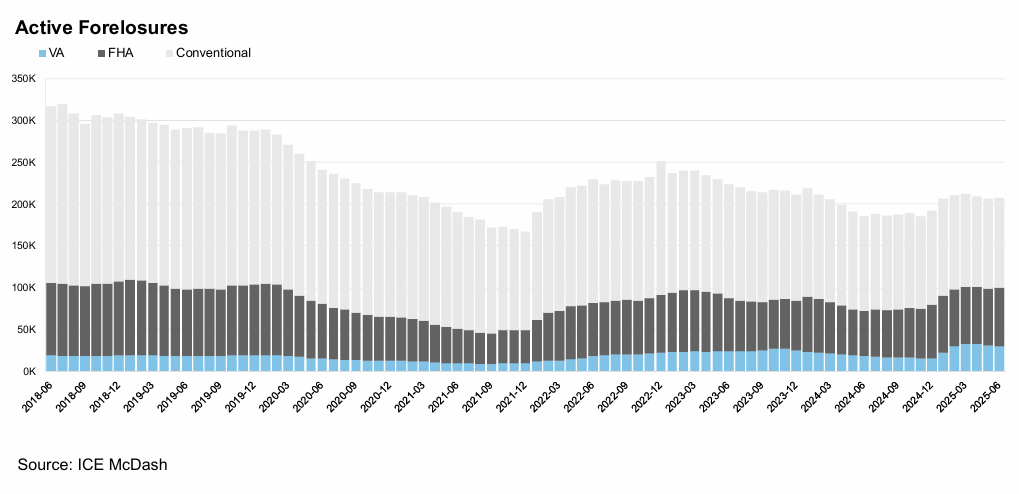


No comments:
Post a Comment