Why surging oil prices 'may bite the hands' of the Fed - As the conflict in Iran continues and engulfs an ever-widening swath of the Middle East, choking off transit through the critical Strait of Hormuz, oil prices continue to surge higher — forcing reevaluations of previous assumptions about US inflation and the Federal Reserve's path for interest rates. Treasury yields climbed and expectations for rate cuts pared back this week as traders digested the risk that higher crude prices could slow progress toward the Fed's 2% inflation goal. For policymakers, the question is: How much inflationary pressure does a sustained rise in oil prices create — and for how long? "As in 2022, war has proven to be 'inflationary,' as it is associated with negative supply shocks," Macquarie's Thierry Wizman said in a recent client note. "The 'dogs' of this war may bite the hands of central bankers, given that with the prospect of renewed inflation may come more hawkish monetary policy signals." The global economy depends heavily on energy flows from the Persian Gulf, locked behind the Strait of Hormuz. Roughly 20 million barrels per day of oil and about 10 billion cubic feet per day of liquefied natural gas (TTF=F) pass through the region, according to energy analysts. "We're starting to see both potential points of failure affecting the market right now," Clay Seigle, a senior fellow at the Center for Strategic and International Studies, said in comments on MS NOW, pointing to the ability of ships to transit the strait and the functionality of export terminals in the region. "This is sort of the perfect storm for an oil supply disruption," he added. Read more: What an extended war with Iran could mean for gas prices As of Wednesday, futures on Brent crude (BZ=F), the international pricing benchmark, had gained roughly 15% from Friday's closing price, while those on US benchmark West Texas Intermediate crude (CL=F) had picked up a slightly slimmer 14%. Goldman Sachs estimates that a sustained $10 per barrel increase in oil prices would trim roughly 0.1 percentage point from 2026 GDP growth if prices remain elevated through year-end, according to a recent client note, largely reflecting a hit to consumers' real disposable income. On inflation, the pass-through is more immediate. A sustained 10% increase in oil prices would likely boost core CPI by four basis points and headline CPI by 28 bps, Goldman said. In scenarios where oil prices remain elevated for several months, year-over-year headline inflation could temporarily climb back toward 3%.
Fed's Waller: Don't expect current oil price shock to have persistent impact on inflation - (Reuters) - Rising gas prices following the U.S. launch of airstrikes against Iran may be a shock to the consumer, but the global jump in oil is not likely to lead to persistent inflation or warrant a change in monetary policy, U.S. Federal Reserve Governor Christopher Waller said on Friday. "You're going to see a spike in gasoline prices. That's what American citizens are going to see when they go to the pump, and they're going to stare and be a little shocked," Waller said on Bloomberg Television. "If it's unwound in ... a couple of weeks or even two months, it's not going to be a big factor down the road." Oil prices have surged to nearly $90 a barrel versus $72 before President Donald Trump began an open-ended air assault on Iran to replace the country's hardline Islamist government. U.S. gas prices have risen around 10% from just under $3 a gallon to $3.32. Gas prices have traditionally had an outsized impact on U.S. consumer sentiment, but Waller said for the Fed the expectation is that the price shock will be relatively short-lived, unlike the oil disruptions of the 1970s that came in successive waves that never allowed prices to recover. "This is...more like a one-off event," Waller said of the current rise in oil prices. The ebbs and flows of oil prices, as well as some other commodity based products like food, are one reason the Fed focuses on "core" inflation that excludes those volatile items in trying to hit the 2% inflation target. Trump has put no timeline around the conflict. Shipping through the critical Strait of Hormuz has all but stopped, and some regional officials have warned of further price rises depending on the success of Iranian counterattacks and how long the conflict persists. Markets have become more skeptical about the likelihood of further Fed rate cuts. Waller said the main risk to the Fed's outlook is if the oil shock "becomes more permanent...Then it'll start bleeding through to other parts of the economy."
Fed's Bowman sets her sights on discount window reform — Federal Reserve Vice Chair for Supervision Michelle Bowman said in a speech Tuesday that the central bank is mulling changes to the central bank's discount window, which she said has been ineffective in its stated goals.
- Key Insight: Federal Reserve Vice Chair for Supervision Michelle Bowman said the discount window should serve as a credible and routine liquidity backstop for banks, not as a facility that is avoided because of stigma or regulatory consequences.
- Expert quote: "Some see tension between monetary policy implementation tools and regulatory objectives. In my mind, these goals should be compatible if we are modernizing the discount window to serve as an effective liquidity backstop, instead of a theoretical option." — Fed Vice Chair for Supervision Michelle Bowman.
- Forward look: Fed watchers say the discount window, which allows banks to borrow short-term liquidity against high-quality collateral, is outdated and ill-suited for modern liquidity crises.
Federal Reserve Vice Chair for Supervision Michelle Bowman said that the central bank is considering a "fundamental reform" of the discount window, including streamlining rules and processes across the Fed system.
Fed watchers say discount window revamp overdue — but tricky — Fed watchers say a proposed revamp of the discount window would be a welcome development, as the tool has both operational and reputational shortcomings that make banks reluctant to use it, even in times of stress.
- Key insight: Industry stakeholders say reducing operational barriers and concerns about stigma will be key to making the discount window a more viable funding source for banks going forward.
- Expert quote: "I think the problem with both the discount window and the liquidity rules as they stand right now is like what Churchill said: It's the worst system, except for all the others." — Graham Steele, former assistant secretary for financial institutions at the Treasury Department and an academic fellow at the Rock Center for Corporate Governance at Stanford Law School.
- What's at stake: The Fed's discount window has long been underused, in part because banks fear market backlash. Regulators are exploring changes that could reduce the stigma and make emergency borrowing more straightforward.
Industry stakeholders say the Federal Reserve's renewed focus on reforming the discount window — the central bank's 'lender of last resort' facility — is welcome. But replacing the system with one that works better is easier said than done.
TSA moves to center of shutdown drama as jittery lawmakers offer warnings for economy -Republican and Democratic senators are quietly mulling ways to limit the impact of a prolonged government shutdown on air travel and, by extension, the broader U.S. economy amid a stalemate on funding the Department of Homeland Security and the Transportation Security Administration (TSA). TSA officers are set to miss their first round of paychecks later this week, which has lawmakers in both parties bracing for rising absences at the agency and growing lines at airports around the country. Senate Majority Leader John Thune (R-S.D.) and other Republicans are now floating the idea of shifting some of the funding Congress allocated in the One Big Beautiful Bill Act last year for border security and immigration enforcement to airport security during the shutdown. Senate Democratic Whip Dick Durbin (Ill.) says he’s open to the idea of letting the Trump administration shift money that was allocated in the One Big Beautiful Bill Act for Immigration and Customs Enforcement (ICE) and Customs and Border Protection (CBP) to allow TSA agents to continue to get paid during an extended shutdown. “I’m open to the idea, but I want to see a good-faith effort by the Republicans in the Senate and the administration to deal with the ICE problem,” Durbin said, referring to ICE’s aggressive tactics in Minneapolis, which have sparked a national backlash. Democrats could be under increased pressure this week to reopen the Department of Homeland Security, even if Republicans don’t agree to their demands for ICE reform, as the military conflict in Iran could pose new domestic terrorism risks to the United States. Law enforcement officials are investigating whether the 53-year-old man who killed two people and injured 14 at a bar in Austin, Texas, may have been motivated by the Iran strikes. When pressed on the impact of the shutdown on homeland security during an interview with CBS’s “Face the Nation” Sunday, Sen. Chris Murphy (Conn.), the top Democrat on the Senate Homeland Security Appropriations Subcommittee, argued that the administration should “stop ICE from terrorizing our communities.” “I don’t have any obligation to fund the Department of Homeland Security that is violating the law every day, just like I don’t have any obligation to support this war that is illegal, as well,” Murphy said. Beyond concern over the heightened risk of domestic attacks motivated by the conflict in the Middle East, some Democrats are worried about the impact of a TSA shutdown on daily business activity. Sen. Jacky Rosen (D-Nev.) expressed her concerns that a reduction in TSA services will cut into air travel and reverberate throughout the economy. “You’re going to shut down trillions of dollars, you shut down our economy by shutting down our airspace,” she warned. “In every single state, travel — not just for tourism — for business, for convention, for our goods and services” has a substantial impact on the economy. “Every tax base in this country goes down,” she said, predicting a domino effect if people start to cut back on travel because of slowdowns at airports. Rosen has proposed funding the TSA and other critical functions of the Homeland Security Department separately from ICE and CBP.
DHS funding bill passes the House, with eroding Democratic support The House passed a Department of Homeland Security (DHS) funding bill Thursday, even as most Democrats defied Republican pressure to end the agency shutdown in light of the Iran conflict. The lower chamber voted 221-209 to pass the bill. Four Democrats joined Republicans in favor of the measure — fewer than those who voted for an almost identical bill in January. Reps. Henry Cuellar (Texas), Don Davis (N.C.), Jared Golden (Maine), Marie Gluesenkamp Perez (Wash.) voted with Republicans in favor of funding. The bill now heads to the Senate, where it will likely be dead on arrival as it will need some Democratic support to overcome a filibuster. Senate Democrats earlier Thursday blocked a DHS funding measure, with only one Democrat, Sen. John Fetterman (Pa.), voting in favor. The bill is largely identical to the one that passed the lower chamber in January, before the death of 37-year-old Minneapolis nurse and U.S. citizen Alex Pretti at the hands of immigration agents sparked outrage among Democrats. Democrats have been demanding that the White House reform its immigration enforcement tactics. The two sides have traded counterproposals, but both have dismissed the other’s as inadequate, leaving negotiations at a standstill.
Here's where things stand after the US and Israel attacked Iran - The United States and Israel targeted Iran in coordinated attacks over the weekend that killed Supreme Leader Ayatollah Ali Khamenei and dozens of other senior figures and kicked off a furious Iranian response that was expanding into a wider regional war.U.S. President Donald Trump said the campaign could take several weeks. Allies of the U.S. pledged to help stop Iran’s missile and drone strikes. The Lebanese militant group Hezbollah claimed strikes on Israel for the first time in more than a year, and Israel fired back.The first U.S. military deaths have been reported. Other deaths have been confirmed in Israel and Gulf nations, while Iran has said several hundred people have been killed there.With Khamenei’s death, the Islamic Republic must now choose a supreme leader for the first time since 1989. Trump has urged Iranians to seize the moment and overthrow the theocracy that cracked down on nationwide protests earlier this year. There was no sign that was happening.The attacks came two days after the latest U.S.-Iran talks aimed at putting controls on Tehran’s nuclear program. They echoed the events of last year, when talks were cut short by an Israeli attack that led to a 12-day war and U.S. bombing of Iranian nuclear sites. Washington has claimed that Iran was rebuilding its nuclear program in recent months. Iran has said it hasn’t enriched since June, but it has blocked inspectors with the U.N. nuclear watchdog from visiting the sites America bombed.The 86-year-old Khamenei was killed when his compound was bombed Saturday morning. Iran’s ballistic missile sites, navy headquarters and warships were attacked as well. Iran said strikes also targeted the Natanz nuclear enrichment site. Israel and the U.S. have not acknowledged strikes at the site, though Israel has said it is targeting the “leadership and nuclear infrastructure.” Khamenei had no designated successor. Iran has set up a three-member leadership council, and Foreign Minister Abbas Araghchi has said a new supreme leader would be chosen in “one or two days.” On the streets, there have been scattered celebrations over Khamenei’s death. Internet restrictions in Iran have complicated efforts to monitor what’s happening.In retaliation, Iran’s military has struck Israel, where several people have been killed. Iran has also targeted U.S. bases in the region. The U.S. military said four service members were killed, the first known U.S. casualties. Other Iranian strikes have killed a handful of people in Gulf nations including the United Arab Emirates and Kuwait, and hundreds of flights have been affected at some of the world’s busiest airports.The strikes came after the U.S. built up its biggest military presence in the region in decades. Israeli and U.S. authorities spent weeks tracking the movements of senior Iranian leaders. Trump has said the “heavy and pinpoint bombing” in Iran would continue through the week or longer. Israel has pledged “nonstop” strikes and at one point said 100 fighter jets were simultaneously striking targets in Tehran. During last year’s war, Israel pitched Trump a plan to kill Khamenei. Now they have.Israelis dashed to shelters for safety, but most of Iran’s attacks have been intercepted. Prime Minister Benjamin Netanyahu, under international criticism for the war in Gaza, is claiming a win for Israel’s security.But risk remains from Iranian-backed groups like the Houthi rebels in Yemen who have vowed to resume attacks on Red Sea shipping routes and on Israel.The current conflict is already far more intense than last year’s Israel-Iran war, where the U.S. inserted itself near the end by bombing Iranian nuclear sites and Iran responded with a calculated attack on a U.S. military base in Qatar.Now, hundreds of Iranian missile and drone strikes have sent people scrambling across Gulf nations that had previously been relatively insulated from the volatility in the region.The United Arab Emirates said Dubai’s main airport had been affected, and tourists and others flinched at the booms of interceptors. Saudi Arabia said it intercepted attacks, and summoned Iran’s ambassador. Top diplomats of six Gulf states said they had the “right to self-defense.” The Gulf state of Qatar said its air force shot down two Iranian bombers. Oil prices rose sharply when market trading began Sunday as traders bet that supply from the critical region would slow or stop. Attacks on and near the Strait of Hormuz, the world’s most critical oil chokepoint, are also raising concerns about supply.In response, eight countries that are part of the OPEC+ oil cartel said they would boost production of crude. And on Monday, the world was learning the first details about any effects on Iran’s nuclear program as the International Atomic Energy Agency’s Board of Governors met on the conflict.
World reacts to killing of Iran’s Khamenei by US, Israel forces - The killing of Iranian Supreme Leader Ali Khamenei in an attack by the United States and Israel has triggered sharp reactions across the world as leaders warn of escalation and regional instability. Iran said it has launched retaliatory strikes on Israel and US assets in Qatar, the United Arab Emirates (UAE), Kuwait, Bahrain, Jordan, Saudi Arabia, Iraq and Oman. Iran’s elite Islamic Revolutionary Guard Corps (IRGC) has pledged revenge, saying it has launched attacks on 27 bases in the Middle East where US troops are stationed. Several countries in the region have closed their airspace during the escalating exchange of attacks. A Gulf source told Al Jazeera that foreign ministers of the Gulf Cooperation Council (GCC) – comprising Bahrain, Kuwait, Oman, Qatar, Saudi Arabia and the UAE – will hold an emergency meeting by video conference on Sunday to discuss the Iran crisis. Top diplomats from the European Union’s 27 member states are also holding emergency talks after the United Nations Security Council met late on Saturday. President Masoud Pezeshkian on Sunday described the supreme leader’s killing on Saturday as an “open declaration of war against Muslims”, particularly the Shia. “This tragic event is the greatest trial facing the Islamic world today,” he said in a message offering condolences. Defence Minister Israel Katz congratulated Prime Minister Benjamin Netanyahu and the military for the strikes that killed Khamenei. “He who acted to destroy Israel – has been destroyed,” Katz said in a post on X. “Justice has been served, and the axis of evil has suffered a mortal blow.” He added that Israel would “continue to act with full force”. “Khamenei, one of the most evil people in History, is dead,” US President Donald Trump said on his Truth Social platform, warning Iran against retaliating further. “Iran just stated that they are going to hit very hard today, harder than they have ever been hit before,” Trump wrote. “They better not do that, however, because if they do, we will hit them with a force that has never been seen before!” President Vladimir Putin described Khamenei’s killing as a “cynical murder” that violated “all standards of human morality and international law”. “Please accept my deep condolences in connection with the assassination of the Supreme Leader of the Islamic Republic of Iran, Seyed Ali Khamenei, and members of his family,” said a message to Pezeshkian published on the Kremlin website. Putin added that in Russia, Khamenei will be “remembered as an outstanding statesman who made a huge personal contribution to the development of friendly Russian-Iranian relations and brought them to the level of a comprehensive strategic partnership”. Beijing said it “strongly condemns” the killing. It described the strike as “a serious violation of Iran’s sovereignty and security, a trampling on the aims and principles of the UN Charter and the basic norms of international relations”. “China firmly opposes and strongly condemns this,” the country’s Ministry of Foreign Affairs said while calling for the “immediate halting of military operations”. EU foreign policy chief Kaja Kallas described Khamenei’s death as “a defining moment in Iran’s history”. “What comes next is uncertain. But there is now an open path to a different Iran, one that its people may have greater freedom to shape,” she said on X.
Before Khamenei Killing, CIA Assessed He Would Likely Be Replaced by More Hardline Elements of the IRGC - Before the US and Israel launched a war against Iran on Saturday morning and killed Ayatollah Ali Khamenei, the CIA assessed that if the Iranian leader were killed, his rule would likely be replaced by “hardline” figures from Iran’s Islamic Revolutionary Guard Corps, Reuters has reported.The report said that the assessment was produced over the past two weeks as the US was building up its forces in the region and preparing to launch the war. The New York Times reported that the CIA had been tracking Khamenei for months and knew that he would be at his compound in Tehran meeting senior Iranian officials on Saturday morning, where he was hit by a joint US-Israeli strike. Since Khamenei’s death, the Iranian government has created a council, headed by Ayatollah Alireza Arafi, to govern the country until Iran’s “Assembly of Experts” chooses a new supreme leader. Killing Khamenei does not appear to have impacted Iran’s military operations as Iranian missiles and drones continue to hit targets across the region, including in Israel and countries hosting US military bases.During previous confrontations with the US, including the 12-Day War in June 2025 and when President Trump assassinated Gen. Qassem Soleimani, the head of the IRGC’s Quds Force, Iran’s response to the US attacks was minimal and more symbolic, as it provided notice ahead of time. But now, Iran has targeted multiple US bases, and there’s no sign Tehran is interested in de-escalation.According to an unconfirmed report from Israel’s Ynet, after killing Khamenei, President Trump sought a ceasefire, but the idea was rejected by Iran. Trita Parsi, executive vice president of the Quincy Institute, says that leadership in Tehran now believes that if it agrees to a ceasefire without inflicting enough costs on the US, the US and Israel will just attack again in the future.“Iran understands that many in the American security establishment had been convinced that Iran’s past restraint reflected weakness and an inability or unwillingness to face the US in a direct war,” Parsi wrote on X. “Tehran is now doing everything it can to demonstrate the opposite – despite the massive cost it itself will pay. Ironically, the assassination of Khamenei facilitated this shift.”
Marjorie Taylor Greene Calls Out Vance and Gabbard for Previous Opposition to War With Iran - Former US House Rep. Marjorie Taylor Greene on Sunday urged Vice President JD Vance and Director of National Intelligence Tulsi Gabbard to speak out against the US war against Iran, citing their previous opposition to a conflict with the Islamic Republic.“[Vance] and [Gabbard] you both need to speak out against the war in Iran. People are paying attention, very close attention. Silence won’t cut it. You were both on record repeatedly, publicly, and loudly against going to war with Iran,” Greene wrote on X.“Our friend, Charlie Kirk was adamantly against war with Iran. You cannot be silent. Americans are dying. You both know this is not what we campaigned for and this is 100% what we said would not happen. We said, I said, you said: NO MORE FOREIGN WARS AND NO MORE REGIME CHANGE. All we wanted was America FIRST. This is not it,” she added. During the first Trump administration, then-House Rep. Gabbard ran a presidential campaign and made “no more regime change wars” a major plank of her campaign. She was also harshly critical of President Trump’s escalations against Iran, which included the January 2020 killing of Iranian Gen. Qasem Soleimani. “This was very clearly an act of war by this president without any kind of authorization or declaration of war from Congress, clearly violating the Constitution,” Gabbard said at the time. Trump also launched the current war with Iran without any authorization from Congress.Amid the US and Israeli attacks on Iran, a clip of Vance warning against the idea of war with the Islamic Republic has resurfaced on X. “Our interest, I think, very much is in not going to war with Iran. It would be a huge distraction of resources. It would be massively expensive to our country,” he said while on the campaign trail in October 2024.Greene came out strongly against the US attacks on Iran hours after they began on Saturday and has cited Trump’s overseas interventions and support for Israel as it’s committing atrocities in Gaza as one of the reasons for her falling out with the president and recent resignation from Congress.
Three US fighter jets ‘mistakenly’ shot down over Kuwait -- Al Jazeera -- Three United States fighter jets were “mistakenly” shot down over Kuwait, the US military has said, amid Washington’s joint offensive with the Israeli military against Iran. Videos that emerged on Monday showed a US F-15E Strike Eagle fighter jet spinning and spiralling downwards with its tail on fire and smoke trailing behind it. Another video showed two pilots ejecting. They were later seen alive on the ground being helped by locals. US Central Command (CENTCOM), a US combat command whose area of responsibility includes the Middle East, said three US F-15E Strike Eagles had “mistakenly been shot down” by Kuwaiti air defences “during active combat”. “All six aircrew ejected safely, have been safely recovered, and are in stable condition. Kuwait has acknowledged this incident, and we are grateful for the efforts of the Kuwaiti defense forces and their support in this ongoing operation,” a CENTCOM statement published on X said. “The cause of the incident is under investigation. Additional information will be released as it becomes available,” it added. The Kuwaiti Ministry of Defence confirmed that several US aircraft had crashed and authorities were investigating the cause of the incident. A spokesperson said all pilots survived, were taken to hospital and were in stable condition. The ministry said it was coordinating with US forces. Loud bangs and sirens were also heard in Kuwait early on Monday with a witness quoted by the Reuters news agency saying smoke was seen rising from near the US embassy in Kuwait City. Videos showed rescue crews working at the scene. Kuwaiti authorities said drones had approached the capital. Air defences intercepted a majority of them near the Rumaithiya and Salwa neighbourhoods, the state-run Kuwait News Agency reported, quoting the director general of civil defence. Iran has hit a range of civilian and commercial areas across Gulf cities, widening the conflict’s impact on key regional aviation and economic hubs. Tehran said it would target US military assets in the region after the US-Israeli strikes on Iran continued for a third day. The top US general said from the Pentagon that it would take time for the US to achieve its military objectives. “This is not a single overnight operation. The military objectives that CENTCOM and the joint force have been tasked with will take some time to achieve and in some cases will be difficult and gritty work,” US General Dan Caine, chairman of the Joint Chiefs of Staff, told reporters. He added that the US continued to send additional troops to the Middle East, even after a massive military build-up. He made the comments a day after US President Donald Trump suggested the attacks on Iran could continue for four weeks. A fourth US service member on Monday died of injuries sustained in the US operation against Iran. During the same news conference with Caine, US Defense Secretary Pete Hegseth said military operations against Iran would not lead to an “endless war” although he acknowledged that the operation would not be completed overnight. Hegseth said the aim was to destroy Tehran’s missiles, navy and other security infrastructure. “This is not Iraq. This is not endless,” Hegseth said.
US jets shot down over Kuwait in 'apparent friendly fire incident', officials say - Three US fighter jets have been downed over Kuwait in "an apparent friendly fire incident" while flying in support of the US-Israeli hostilities with Iran, US Central Command (Centcom) says. The F-15 jets were "mistakenly shot down by Kuwaiti air defences", officials announced on Monday. All six crew ejected safely and have been recovered, they added. The cause of the incident is under investigation. There have been fresh attacks by both sides of the conflict on Monday, and Iran has denied Trump's suggestion that it is ready for fresh negotiations with the US. The death of a fourth US service member was also announced by Centcom on Monday. That person was wounded during Iran's initial attacks, and "eventually succumbed to their injuries", the officials said. The deaths of three Americans were previously announced on Sunday, similarly as a result of retaliatory Iranian attacks. Five others have been "seriously wounded", the US said. The names of those killed and injured have not yet been released. In announcing the joint US-Israeli operation against Iran on Saturday, President Trump warned that "the lives of American heroes may be lost, and we may have casualties. That often happens in war". Speaking on Monday at a White House event, Trump said the country grieves for the troops who died. "In their memory we continue this mission with ferocious, unyielding resolve to crush the threat this terrorist regime imposes on American people," he said. Trump called the decision to attack "our last, best chance to strike" and eliminate the "intolerable threats posed by this sick and sinister regime". In a succession of telephone interviews with reporters on Sunday, Trump said his country's joint strikes on Iran with Israel could last for about four weeks. He reiterated to the New York Times his view that further American casualties were possible. On Monday, he predicted that the US action was "substantially ahead" of its projected schedule, but that the US military has the "capability to go far longer".
US embassy in Riyadh struck by drones - The U.S. Embassy in Riyadh, Saudi Arabia, was struck by multiple drones on Monday following President Trump’s attacks on Iran. “The U.S. Embassy in Riyadh was subjected to an attack by two drones according to initial estimates, resulting in a limited fire and minor material damage to the building,” Saudi Arabia’s Ministry of Defense wrote in a post on the social platform X at 7:31 p.m. EST. One source told Fox News a third drone was allegedly en route. Strikes prompted the U.S. Mission to Saudi Arabia to issue a shelter in place notification for Jeddah, Riyadh and Dhahran. Officials also said they were limiting non-essential travel to any military installations in the region. In response to the attacks, President Trump told News Nation’s Kellie Meyer that he didn’t think the U.S. had “any necessity” for boots on the ground in Iran. He added that “you’ll be finding out very soon” who’s in control of Iran. The bombings launched by Tehran come after a weekend of strikes in Iran launched by both the U.S. and Israel.
US Embassy in Saudi Arabia damaged by drone strike as conflict widens with Iran- World markets were rattled as the fighting expanded across a region vital to energy supplies. Saudi Arabia said early Tuesday that the U.S. Embassy in Riyadh came under attack from two drones, causing a “limited fire” and minor damage. On Monday, the U.S. Embassy compound in Kuwait was struck. Saudi Arabia’s Ras Tanura oil refinery also came under attack from drones, but its defenses downed the aircraft, a military spokesman told the state-run Saudi Press Agency. The refinery has a capacity of over half a million barrels of crude oil a day. The refinery attack “marks a significant escalation, with Gulf energy infrastructure now squarely in Iran’s sights,” said Torbjorn Soltvedt, an analyst at the risk intelligence company Verisk Maplecroft. After two of its facilities were struck, QatarEnergy said it would stop producing liquefied natural gas indefinitely, taking one of the world’s top suppliers off the market. European natural gas prices surged by 40% in response. Several ships have been attacked in the Strait of Hormuz, the narrow mouth of the Persian Gulf through which a fifth of all oil traded passes and where Iran has threatened attacks. Reza Najafi, Iran’s ambassador to the International Atomic Energy Agency, told reporters that airstrikes targeted the Natanz nuclear enrichment site Sunday. “Their justification that Iran wants to develop nuclear weapons is simply a big lie,” he said. Israel and the U.S. have not acknowledged strikes at the site, which the U.S. bombed in the 12-day war between Iran and Israel in June. Israeli Prime Minister Benjamin Netanyahu said Iran was rebuilding “new sites, new places” underground for making atomic bombs in an interview broadcast late Monday on Fox News Channel’s Hannity. “We had to take the action now and we did,” said Netanyahu, who offered no evidence to support his claim. Satellite photos analyzed by The Associated Press showed limited activity at two nuclear sites in Iran before the war. Analysts said Tehran was likely assessing damage from the 2025 U.S. strikes and possibly salvaging what remained. The Iranian Red Crescent Society said the U.S.-Israeli operation has killed at least 555 people. In Israel, where several locations were hit by Iranian missiles, 11 people were killed. Israel’s retaliatory strikes against Hezbollah killed dozens of people in Lebanon. The U.S. military announced that two previously unaccounted for American service members have been confirmed dead, bringing the total to six. All six were Army soldiers and part of the same logistics unit in Kuwait, according to a U.S. official who was not authorized to comment publicly and spoke on condition of anonymity. Three people were reported killed in the United Arab Emirates, and one each in Kuwait and Bahrain. Iran’s top diplomat on Monday shared an aerial photo showing rows of graves that he said were for more than 160 girls killed during a U.S.-Israeli strike on an elementary school in Minab. “Their bodies were torn to shreds,” Abbas Araghchi, the country’s foreign minister, said on X. In Israel, three young siblings killed by an Iranian strike were being laid to rest at the Mount of Olives in Jerusalem on Monday night. The chaos of the conflict became apparent when the U.S. military said Kuwait had “mistakenly shot down” three American fighter jets while Iran was attacking it with aircraft, ballistic missiles and drones. U.S. Central Command said all six pilots ejected safely.
US urges Americans to ‘DEPART NOW’ from Middle Eastern countries - The United States is urging Americans to “DEPART NOW” from more than a dozen countries in the Middle East amid strikes on Iran. “The @SecRubio @StateDept urges Americans to DEPART NOW from the countries below using available commercial transportation, due to serious safety risks,” Mora Namdar, assistant secretary of State for consular affairs, wrote in a post on the social platform X. U.S. citizens were urged to leave Bahrain, Egypt, Iran, Iraq, Israel, the West Bank, Gaza, Jordan, Kuwait, Lebanon, Oman, Qatar, Saudi Arabia, Syria, the United Arab Emirates and Yemen for their safety. Those who need assistance with commercial departures are advised to call the State Department’s 24-hour hotline and enroll in their STEP program for security updates. Israel has traded strikes with Iran alongside the U.S., causing regional instability. In response to the assault, Tehran has launched targeted attacks on U.S. bases and assets in Saudi Arabia, Qatar, the United Arab Emirates, Bahrain, Jordan and Kuwait, causing some of the countries to close their airspace,, limiting flight departures. Lebanon was pulled into the crossfire as it faced a strike from Israel in response to attacks from Hezbollah, which is backed by Iran. Americans in the region have been sheltering in place within hotels, workplaces and residential homes, unsure of how and when they can return home. Some have shared frustrations with the State Department as the United Kingdom announced it is working to help hundreds of thousands of its people return home amid the closure of commercial airspace. “One of the small things that does matter to tens of thousands of people here as well as their families — it’s a little bit disheartening to hear that the U.K. government is arranging transport for the British citizens, whereas here as Americans we feel abandoned,” Maj. Gen. Randy Manner (Ret.) said during an appearance on CNN’s “News Central.”
Retired US general stuck in UAE: ‘As Americans we feel abandoned’ - A retired U.S. general stuck in the United Arab Emirates (UAE) on Monday said Americans in the region feel “abandoned” as access to airspace remains limited and airports close following military strikes in the region. “One of the small things that does matter to tens of thousands of people here as well as their families — it’s a little bit disheartening to hear that the U.K. government is arranging transport for the British citizens, whereas here as Americans we feel abandoned,” retired Maj. Gen. Randy Manner said during an appearance on CNN’s “News Central.” “The State Department is in survival mode because as we know the administration reduced their budget by almost half,” he added. The State Department did not immediately respond to The Hill’s request for comment on the matter. Secretary of State Marco Rubio canceled his scheduled trip to Israel this week amid the conflict with Tehran. State Department officials have encouraged Americans to reconsider travel to a host of Middle Eastern countries including Bahrain, Kuwait and Qatar by initiating a level three travel advisory, marking the destinations as dangerous because of serious risks to safety and security. Citizens in the UAE have been urged to exercise extreme caution given the threat of terrorism and missile or drone attacks. U.S. and Israeli strikes on Iran have complicated departure times for tourists and visitors in the region seeking to fly home. The UAE’s Abu Dhabi and Dubai airports have closed, throwing many passengers’ plans into flux. On Monday, just 16 flights were allowed to depart during a three-hour window, according to FlightRadar24. U.K. Prime Minister Keir Starmer said the country’s Foreign Office is drafting plans to evacuate 200,000 of his country’s people in the region. Officials have proposed evacuation by road and have considered transporting citizens to countries where airspace remains open, such as Saudi Arabia, according to The Guardian. President Trump said strikes in the region are expected to continue for the next “four to five weeks.”
Trump says more than 9,000 Americans have returned from Middle East since launch of Operation Epic Fury - More than 9,000 Americans have made a safe return back to the U.S. from the Middle East since the launch of strikes on Iran this past weekend, President Trump said on Tuesday. The U.S. and Israel launched attacks against the country as part of a joint operation, dubbed “Operation Epic Fury,” early Saturday morning, killing Iran’s supreme leader, Ayatollah Ali Khamenei. In a Truth Social post, the president urged U.S. citizens still in the region who are seeking to go back home to register with the State Department. “The Department will identify where you are, and provide travel options to you,” Trump continued. “We are already chartering flights, free of charge, and booking commercial options, which we expect will become increasingly available as time goes on.” The State Department previously authorized the departure of all nonemergency government workers and their families from Israel in an updated travel advisory on Friday, a day before the strikes launched. “In response to security incidents and without advance notice, the U.S. Embassy may further restrict or prohibit U.S. government employees and their family members from traveling to certain areas of Israel, the Old City of Jerusalem, and the West Bank,” the advisory stated. “Persons may wish to consider leaving Israel while commercial flights are available.” The State Department issued an urgent warning on Monday for Americans to leave the Middle East following retaliatory strikes from Iran. “The @SecRubio @StateDept urges Americans to DEPART NOW from the countries below using available commercial transportation, due to serious safety risks,” Mora Namdar, assistant secretary of State for consular affairs, wrote in a post on the social platform X. Secretary of State Marco Rubio said the department authorized a 24/7 task force to assist Americans in the region. In a video posted on the social platform X on Monday, the secretary directly addressed these affected U.S. citizens and shared resources available to them during the ongoing conflict. “To all American citizens in the Middle East: Your safety and security is our number one priority,” Rubio said. Americans hoping to connect with these resources must register with the Smart Traveler Enrollment Program at step.state.gov.
Trump: ‘I don’t care about polling’ showing Iran strikes unpopular - President Trump dismissed polls showing low approval among Americans for the U.S. military operation in Iran, saying public sentiment actually reflects otherwise. “I think that the polling is very good, but I don’t care about polling. I have to do the right thing. I have to do the right thing. This should have been done a long time ago,” Trump said in an interview with the New York Post published on Monday. “I don’t think the polling is low,” he told the outlet. “Look, whether polling is low or not, I think the polling is probably fine. But it’s not a question of polling. You cannot let Iran, who’s a nation that has been run by crazy people, have a nuclear weapon.” Several polls conducted since Saturday’s overnight strikes show that a majority of Americans disapprove of military intervention in Iran. Fifty-nine percent of surveyed Americans said they disapproved of the U.S. decision to take military action in Iran, while 41 percent said they approved, according to a CNN poll released on Monday. A separate Reuters/Ipsos poll released Sunday found that only 1 in 4 Americans approve of the strikes. The operation, which has been dubbed Operation Epic Fury, comes as Washington, in coordination with Israel, launched its first strikes on the country on Saturday, killing Iran’s Supreme Leader Ayatollah Ali Khamenei and a number of other senior Iranian officials. The conflict has now extended, with Iran launching retaliatory strikes toward Israel and Gulf states that host U.S. bases, including the United Arab Emirates, Kuwait, Saudi Arabia, Qatar and others.
Trump says Iran war could last weeks, US citizens in more than a dozen countries urged to leave -- Israel and the United States pounded Iran on Monday in a campaign that U.S. President Donald Trump said would likely take several weeks. Tehran and its allies hit back against Israel, Gulf states and targets critical to the world’s energy production.The intensity of the attacks, the killing of Iranian Supreme Leader Ayatollah Ali Khamenei and the lack of any apparent exit plan set the stage for a prolonged conflict with far-reaching consequences. Safe havens in the Mideast like Dubai have seen incoming fire; hundreds of thousands of airline passengers are stranded around the globe; oil prices shot up; and U.S. allies pledged to help stop Iranian missiles and drones. Trump said operations are likely to last four to five weeks but that he was prepared “to go far longer than that.”What to know:
- US death toll rises to 6 troops: The U.S. military announced on Monday that two previously unaccounted for service members have been confirmed dead, bringing the total American casualties during the operations against Iran up to six. The post did not state where the two service members were killed.
- Hegseth defends Iran operation: In his first public briefing since the attacks, U.S. Defense Secretary Pete Hegseth defended America’s decision to strike Iran, despite spending years blasting U.S. intervention in the Middle East. He said that Iranian officials spent weeks stalling during the recent rounds of U.S. negotiations as part of their plans to attack. He added that the strikes are designed to reduce Iran’s navy and end its nuclear and missile ambitions.
- Civilians in Lebanon flee their homes: The Iranian-backed Hezbollah militant group, based in Lebanon, fired missiles into Israel for the first time in more than a year. Israel responded by striking Beirut’s southern suburbs, killing more than two dozen people, according to Lebanon’s Health Ministry. The Lebanese government called Hezbollah’s actions illegal and demanded it hand over its weapons. Follow more news on the war with Iran.
Pentagon Personnel Injured by Iranian Drone Attack on Hotel in Bahrain - An Iranian drone attack on a hotel in Bahrain injured at least two US Department of War employees,The Washington Post reported on Monday, citing a State Department diplomatic cable.“Two US DOW personnel were injured,” the cable said. No other details were included in the cable, and it’s unclear whether the personnel were military or civilians.It’s also not clear what hotel the US personnel were in when the attack occurred, though the Crowne Plaza hotel, a luxury property in Bahrain’s capital Manama, was hit on Sunday morning.Iranian attacks have also hit hotels in the UAE, and Iran has claimed that it was targeting US military personnel who were evacuated from US bases. “We have started by attacking their military bases; they have evacuated the military bases, and they have gone to the hotels and have made human shields for themselves,” said Iranian Foreign Minister Abbas Araghchi.Iranian attacks have also hit residential buildings and airports in Gulf countries, and according to a count from Al Jazeera, at least six people have been killed in attacks on Bahrain, the UAE, Kuwait, and Oman. Sixteen people were also wounded in an attack on Doha, Qatar.
20 women volleyball players killed after US air strike hits Iran gym- Iran’s local television station Al Mayadeen reported that the United States launched an air strike targeting a gym in the city of Lamerd, in Fars province in southern Iran. The report said the attack killed 20 women volleyball players, amid escalating military conflict involving Iran, Israel and the United States. The International Volleyball Federation (FIVB) issued a statement saying it was shocked and deeply concerned by reports of the deaths of youth volleyball athletes as unrest in the Middle East intensifies. It expressed its deepest condolences to the victims’ families and to all those affected. Islamic Republic of Iran Broadcasting (IRIB) said children were inside the building when it was hit. Tasnim news agency reported that the strikes also hit at least four other sites in the city. Separately, Iran said the US-Israel air strikes had killed more than 200 people and injured nearly 750 nationwide, adding that 220 rescue teams had been deployed to assist those affected in impacted areas. Earlier, Iranian media reported at least 153 deaths, including children, after a strike hit a school in southern Iran, blaming the United States and Israel. The all-girls school is located in Minab, near a base belonging to the Islamic Revolutionary Guard Corps (IRGC), which has reportedly been targeted before.
Death toll from school bombing in southern Iran reportedly rises to 165 -- The death toll from a missile strike on a girls’ school in southern Iran has risen to 165, according to state media. The IRNA news agency also cited a local prosecutor as saying that 96 people had been wounded in Saturday’s strike in Minab. The strike on school appears to be the worst mass casualty event of the US-Israeli-led bombing campaign on Iran so far. Video and photographs of the aftermath, which have been verified as authentic and geolocated to the site, show hundreds of people gathered around the partially collapsed and smoking building, with rubble strewn across the street and men digging through it for victims. Screams can be heard in the background. In some of the images, schoolbags and textbooks are being pulled from the debris. Capt Tim Hawkins, the spokesperson for US Central Command, said the US was “aware of reports concerning civilian harm resulting from ongoing military operations. We take these reports seriously and are looking into them”. The school building appears to be adjacent to an Islamic Revolutionary Guards Corps barracks. Hossein Kermanpour, the spokesperson for Iran’s health ministry, said in a post on X that the bombing of the school was “the most bitter news” of the conflict so far. “God knows how many more children’s bodies they will pull from under the rubble.” Restrictions on international reporting in Iran mean the Guardian and other independent media outlets have not been able to access the site in Minab or independently verify the death toll. The Nobel peace prize laureate and girls’ education advocate Malala Yousafzai said in a statement: “They were girls who went to school to learn, with hopes and dreams for their future. Today, their lives were brutally cut short. “Justice and accountability must follow. All states and parties must uphold their obligations under international law to protect civilians and safeguard schools.”
If Westerners Could Wrap Their Minds Around What War Really Is - Caitlin Johnstone - Drop Site News has a new article out which includes incredibly disturbing witness accounts of the carnage from a double-tap airstrike by the US-Israel alliance on a densely populated part of Tehran. Here’s an excerpt:“We were sitting here around 8:00–8:30 p.m. and suddenly there was the noise and explosion. We got up and a few people ran away. We turned around to get our belongings and we saw that blood was spraying everywhere. Someone’s hand had fallen on the floor, a head had fallen on the floor,” said Shahin, a witness who had been at the cafe and asked to be identified by first name only. “There were scalps torn off, hands severed, a few people were laying here all cut up and two people were martyred.” …“One hit and it wasn’t that bad but when the second one hit, suddenly everything exploded. The windows all shattered. Whoever had hookahs were thrown to the floor,” Shahin said. “One of my friends whom I don’t know that well he was sitting here. His hookah was in his hands until the last moment. He was severed in half. Half of him was thrown to the side. I put him back together and placed him where he was. A piece of his brain was thrown here on the floor.” War is the worst thing in the world. Westerners talk about it like it’s a fucking video game, like “hurr durr, we just go in there and achieve our objectives and win,” when really war means shredding human bodies to bits.Children burning to death in front of their parents.People holding their own guts in their hands as their life slowly slips away. People getting trapped under rubble and dying excruciatingly slow deaths of suffocation or dehydration.People picking up pieces of their beloved family members. Westerners are able to hold this compartmentalized video game mentality about war because war isn’t something that happens to us. We’ve never had bombs dropped on our neighborhoods. We’ve never had the experience of seeing a severed hand on the ground after an explosion and trying to figure out who it belonged to. We’ve never had the experience of seeing our child’s shredded body after a blast and thinking about how we’d carefully helped them dress that precious body for school just hours before. We just see the movies. The propagandistic war documentaries. The sanitized news reports. It’s not real to us. It’s not personal. It’s just this cutesy Hollywood image of sexy Good Guys doing flips and spin-kicking evil Bad Guys off cliffs.You know this is true, because if it wasn’t then nobody would support US wars. If westerners had an actual, visceral understanding of what war really is and what it actually means, and if they could truly, deeply grasp that the people on the receiving end of those airstrikes are human beings just like them, there’s no way they’d support inflicting such nightmares upon their fellow man.Which is why everything in our civilization is aimed at hiding that reality from us. War is made to look heroic and glamorous. Middle easterners are framed as deranged subhuman savages. The flesh-and-bone consequences of western warmongering are hidden from public view as much as possible. They need to do this because the western empire depends on war. War is the glue that holds the empire together. They need the mass-scale bloodshed to continue, and they need the public to provide no resistance to the bloodshed. The empire cannot exist without war. Peace cannot exist without the removal of the empire.You watch these bespectacled pundits and pampered politicians babbling about war the way they’d talk about their plans to remodel their kitchen or take a trip to Paris, and you just know if actual war ever showed up on their doorstep they’d literally soil themselves. They’d never recover. They’d spend the rest of their lives in shock and trauma, because what they saw would have shaken them irreparably to their very core.It would impact them in this way because war is the worst thing in the world. Anyone with a functioning empathy center and a truth-based worldview would move mountains to prevent war from happening. And yet we are ruled by sociopaths who actively seek it out. War is the worst thing in the world, and we are ruled by the worst people in the world. The world will never know peace until we cease to allow such creatures to rule over us.
Lawmakers: Israeli plan to attack Iran dictated Trump’s decision on strikes - Senior lawmakers in both parties said Monday that the Trump administration’s decision to launch bombing and missile strikes across Iran this weekend was largely dictated by Israel’s plan to attack Iran with or without U.S. support. Senior administration officials told Republican and Democratic lawmakers at a classified briefing on Capitol Hill that the Israeli plan to strike Iran pushed the United States to take preemptive action to protect U.S. troops stationed at bases throughout the Middle East, whom the Pentagon believed would have been targeted by retaliatory strikes. Sen. Mark Warner (D-Va.), who serves as vice chair of the Senate Intelligence Committee attended the briefing, said the decision to initiate a massive military assault on another country because of pressure from a U.S. ally put the nation in “uncharted” territory. “This is still a war of choice that has been acknowledged by others that was dictated by Israel’s goals and timeline,” Warner told reporters at the briefing. Secretary of State Marco Rubio, Secretary of Defense Pete Hegseth, CIA Director John Ratcliffe and Chair of the Joint Chiefs of Staff Gen. Dan Caine provided the briefing to lawmakers Monday afternoon. Warner said he supports Israel, but he questioned the decision to put American lives at risk when an imminent threat may be directed at an ally instead of the United States itself. “Israel is a great ally of America. I stand firmly with Israel. But I believe at the end of the day when we are talking about putting American soldiers in harm’s way and we have American casualties and expectations of more, there needs to be the proof of an imminent threat to American interests. I still don’t think that standard has been met,” he said. Warner argued if the military operation against Iran “was being driven by imminent security threats from Iran against America, I think we would have had better planning.” Speaker Mike Johnson (R-La.), speaking to reporters after the briefing, said that President Trump faced a tough call on ordering strikes against Iran when it became clear that Israel would launch military operations, even without U.S. support, which would have put U.S. troops in the region in danger. “Israel was determined to act in their own defense here, with or without American support. Why? Because Israel faced what they deemed to be an existential threat. Iran was building missiles at a rapid clip to the point where our allies in the region could not keep up,” Johnson said. “Because Israel was determined to act with or without the U.S., our commander in chief and the administration and the officials [in the Cabinet] had a very difficult decision to make. They had to evaluate the threats to the U.S., to our troops, to our installations, to our assets in the region in beyond,” Johnson said. The Speaker said that senior Trump administration officials determined that “if Israel fired upon Iran” to destroy its weapons caches, then Iran “would have immediately retaliated against U.S. personnel and assets.” “If we had waited for all those eventualities to take place, the consequences of inaction on our part would have been devastating,” Johnson argued. “If Iran had begun to fire all of their missile arsenal, short- and mid-range missiles at our personnel and our assets and our installations, we would have suffered staggering losses,” he said. “If we had waited to respond before acting first, those losses would have been far greater than if we had done what we did,” he added. Rubio, speaking to reporters before the briefing, said the threat of Iranian retaliation against U.S. troops in response to an attack by Israel was a driving factor in the decision to launch U.S. strikes across Iran. “The second question I’ve been asked is ‘Why now?’ Well, there are two reasons why now. The first is it was abundantly clear that if Iran came under attack by anyone, the United States or Israel or anyone, they were going to respond and respond against the United States,” Rubio said. He said that Iran’s orders to retaliate against U.S. troops and installations had been delegated down to field commanders well before Israel and the United States launched the weekend’s strikes. “If we stood and waited for that attack to come first before we hit them, we would suffer much higher casualties,” he said.
Rubio Says the US Launched a War With Iran Because Israel Was Planning To Attack - Secretary of State Marco Rubio on Monday said that the US launched a war against Iran because Israel was planning to attack, an admission that Israeli Prime Minister Benjamin Netanyahu steered the US into the conflict.“It was abundantly clear that if Iran came under attack by anyone, the United States, Israel, or anyone, they were going to respond and respond against the United States,” Rubio told reporters. “If we stood and waited for that attack to come first, before we hit them, we would have suffered much higher casualties. And so the president made the very wise decision — we knew that there was going to be an Israeli action, we knew that that would precipitate an attack against American forces,” he said.Rubio’s comments align with reporting from The New York Times that said when Tucker Carlson recently met with President Trump and tried to convince him not to launch a war with Iran, the president said he had no choice but to join a strike that Israel would launch. The Times report said that Netanyahu was determined to ensure that the negotiations between the US and Iran wouldn’t get in the way of planning for a joint US-Israeli attack on the Islamic Republic.But Trump and his top officials tried to sell the war as being related to Iran’s nuclear program despite insisting that it was “obliterated” by the June 2025 US airstrikes on Iranian nuclear facilities. Vice President JD Vance even claimed that there was evidence Iran may be trying to build a nuclear weapon. Now that the war has started, the Trump administration is sending mixed messages about the goal. President Trump suggested in his first statement that he is pursuing regime change, and the initial round of US-Israeli attacks killed Iranian Supreme Leader Ayatollah Ali Khamenei, but Rubio said on Monday that the goal was aimed at eliminating the “threat” posed by Iran’s missiles.“The United States is conducting an operation to eliminate the threat of Iran’s short-range ballistic missiles and the threat posed by their navy, particularly to naval assets. That is what it is focused on doing right now, and it’s doing quite successfully,” he said. When asked for a timeline, Rubio said the war will last “as long as it takes” for the US to achieve its objectives.
‘Breathtaking’: Independent senator deplores Rubio’s explanation for Iran attacks - Sen. Angus King (I-Maine) on Tuesday called Secretary of State Marco Rubio’s explanation that the U.S. carried out a preemptive attack on Iran because Israel struck first “breathtaking” during a Senate hearing with a top official from the Pentagon. King and Sen. Jack Reed (D-R.I.), the Senate Armed Services Committee’s ranking member, pressed Under Secretary of Defense Elbridge Colby about Iran as he testified on the U.S. national defense strategy. King referred to Rubio’s briefing with members of Congress on Monday where he said Israel’s strike plan pushed the U.S. to take preemptive action against an “imminent threat.“ The senator, who caucuses with Democrats, read Rubio’s remarks in which the secretary of State said “We knew there was going to be an Israeli action. We knew that that would precipitate an attack against American forces, and we knew that if we didn’t preemptively go after them before they launched these attacks, we would suffer higher casualties.” “Have we now delegated the most solemn decision that can be made in our society, the decision to go to war, to another country?” King asked Colby. “That’s the implication, the breathtaking implication of Secretary Rubio’s statement.” King later added that Rubio “inadvertently told the truth” that Israeli Prime Minister Benjamin Netanyahu pushed for war with Iran. The Maine senator said he supports Israel but added that no one should drive the U.S.’s decision to go to war. Colby pushed back and said President Trump made the decision. “Well, he made the decision, but it appeared to be based upon the fact that Israel was going to strike,” King replied. Reed pressed Colby on the administration’s national defense strategy and the posture that the U.S. will “empower regional allies and partners to take primary responsibility for deferring and defending against Iran and its proxies.” “This national security strategy was published, by my count, about 39 days ago,” Reed said. “So, Secretary Colby, the military operations unfolding in the Middle East are completely contrary to the strategy the department has put forth. Why has the department abandoned the strategy after 39 days?” Colby pushed back, saying Israel and the Gulf allies “are really leaning in” by helping with military operations in Iran. “We obviously want allies and partners throughout to be able to take responsibility,” Colby said. “But, you know, we’re looking as a general — it’s not a kind of straightjacket, if you will.” Reed accused Trump of having “moved the goalposts” as it relates to the U.S. military objective in Iran and asked that if regime change was not part of the agenda, “why was the first objective in the campaign, the attack and death of [Ayatollah Ali] Khamenei and key leaders of the regime?”
Ted Cruz: ‘No indication’ that Iran was ‘close to getting nuclear weapons’ -Sen. Ted Cruz (R-Texas) on Sunday said there was “no indication” that Tehran was “close to getting nuclear weapons” after the United States struck several Iranian nuclear facilities in June, adding that he argued to President Trump that the time was right for a military strike to possibly effect regime change. “We launched targeted bombs at the end of the 12-day war, where we dropped the equivalent of about a third of a nuclear weapon on those underground facilities. Facilities like Fordow, built into the base of a mountain,” Cruz told Margaret Brennan on CBS’s “Face the Nation.”“We took them out last year,” Cruz said of Iran’s nuclear facilities. Cruz declared that U.S. forces used bunker-buster bombs, which Israel doesn’t have, to destroy what he called Iran’s “ongoing nuclear program” in June. “We took out the vast majority of that at the end of the 12-day war,” he said, referring to Operation Midnight Hammer, which Trump ordered last year. Cruz also said he was not aware of any intelligence about the progress that Iran made rebuilding its nuclear facilities since the U.S. strikes, adding that he urged Trump shortly before the attack to take advantage of what he and other experts saw as the Iranian regime’s historic weakness. “I don’t have present-day intelligence on what progress they had made toward rebuilding nuclear weapons since we bombed their facilities,” Cruz said on CBS. “I have no indication that they were anywhere close to getting nuclear weapons because our bombing was devastating.” Cruz, after speaking with Trump, last week predicted that U.S. strikes on Iran could happen in the next few days. “I said, ‘Listen, the regime has never been weaker. They are teetering,’” he said at the time during an interview with CNBC, predicting that the regimes in Iran, Venezuela and Cuba, which have all been long hostile to the United States, could soon be replaced. “We are at a moment … where in the next six months we could realistically see the regimes in Iran, Venezuela and Cuba all fall and we could see them replaced with governments that want to be friendly with America,” he said. “If that happened, that would be the biggest geopolitical shift since the fall of the Berlin Wall,” he said.
John Bolton says Hegseth needs ‘attitude adjustment’ after Iran briefing --John Bolton, President Trump’s former national security adviser, criticized Defense Secretary Pete Hegseth on Monday, accusing him of muddling the administration’s message regarding the goals of the weekend’s U.S. strikes against Iran. “Pete Hegseth needs to check with his boss on what the objective is,” Bolton told host Kate Bolduan on “CNN News Central.” During a Monday morning press conference, Hegseth said the objectives of the military operation are to “destroy Iranian offensive missiles, destroy Iranian missile production, destroy their navy and other security infrastructure, and they will never have nuclear weapons.” But in the wake of the initial U.S. and Israeli strikes Saturday, which resulted in the death of Iranian Supreme Leader Ayatollah Ali Khamenei and a slew of other political and military leaders, Trump urged Iranians to seize control of their country from the Islamic Republic. “When we are finished, take over your government. It will be yours to take; this will be probably your only chance for generations,” the president said. Trump also told CNN’s Jake Tapper on Monday that the “big wave” of U.S. strikes against Iran “hasn’t even happened.” Hegseth said Monday that “this is not a so-called regime change war,” but the “regime sure did change.” Bolton said the comments show the head of the Pentagon is not in lockstep with Trump. “If the big one is still to come, how does Hegseth explain that we’ve already changed the regime, which wasn’t our objective? I think the Pentagon top leadership, civilian top leadership, needs some attitude adjustment,” remarked Bolton, who also previously served as the U.S. ambassador to the United Nations during the administration of former President George W. Bush. “I think the military is doing fine, but I wonder about the civilian leadership.”
White House Exposes Tulsi’s Role in War She Claimed to Hate -Tulsi Gabbard, the Director of National Intelligence, was in the White House Situation Room as the U.S. and Israel bombed Iran—despite her previous, vehement opposition to such an operation. Gabbard was present alongside Vice President JD Vance, Energy Secretary Chris Wright, and Treasury Secretary Scott Bissent. Her presence was revealing in a photo posted by the White House.Critics quickly resurfaced Gabbard’s old posts and comments opposing war in Iran following the Saturday morning attacks.The DNI announced last March that there was no evidence to suggest that Iran was building a nuclear weapon, causing strife between her and the president. “The intelligence community continues to assess that Iran is not building a nuclear weapon and Supreme Leader Khomeini has not authorized the nuclear weapons program that he suspended in 2003,” Gabbard had said. The Daily Beast reached out to the Office of the Director of National Intelligence for comment. After Donald Trump declared her intelligence to be wrong, Gabbard reversed course and said that the Middle Eastern country could have a weapon built “within weeks to months.” “The dishonest media is intentionally taking my testimony out of context and spreading fake news as a way to manufacture division,” Gabbard wrote on X at the time. “America has intelligence that Iran is at the point that it can produce a nuclear weapon within weeks to months, if they decide to finalize the assembly.” Director of National Intelligence Tulsi Gabbard and CIA director John Ratcliffe join a meeting with U.S. President Donald Trump and his intelligence team in the Situation Room at the White House on June 21. / White House / via REUTERS She was then spotted in the Situation Room after the U.S. bombed nuclear facilities in Iran last June. The White House posted a photo of Gabbard next to CIA Director John Ratcliffe after the strikes. Gabbard, a lieutenant colonel in the U.S. Army Reserve who served in Iraq, took staunchly anti-war stances during her congressional career and her brief presidential run. In 2019, she told NPR that the United States needed to stop intervening in foreign countries.
Speaker Johnson pushes against war powers resolution: 'frightening' - Speaker Mike Johnson (R-La.) said passing a war powers resolution would strip President Trump of the authority to complete his military operation in Iran, warning that such a move would be a “frightening prospect.” Reps. Ro Khanna (D-Calif.) and Thomas Massie (R-Ky.) plan to force a vote on a war powers resolution this week that would require authorization from Congress before Trump can use military force against Iran again. The pair argued that the operation in Iran puts U.S. troops at risk and isn’t emblematic of an “America First” agenda. The resolution is expected to come to the floor on Thursday, a source told The Hill. “I think the idea that we would move a War Powers Act vote right now, I mean, it will be forced to the floor, but the idea that we would take the ability of our commander in chief, the president, take his authority away right now to finish this job, is a frightening prospect to me,” Johnson told reporters after a briefing on the operation. “It’s dangerous, and I am certainly hopeful, and I believe we do have the votes to put it down. That’s going to be a good thing for the country and our security and stability,” he added. The U.S. and Israel launched joint strikes against Iran on Saturday after weeks of threats from Trump, who had called for regime change in Tehran. Johnson wrote on the social platform X that Congress’s bipartisan “Gang of Eight” was “briefed in detail earlier this week that military action may become necessary to protect American troops and American citizens in Iran.” Trump told CNN on Monday morning that the “big wave” of the operation is yet to come. Asked how long the war will last, Trump said, “I don’t want to see it go on too long. I always thought it would be four weeks. And we’re a little ahead of schedule.” Johnson said on Monday that he believes the president “was acting well within his authority” when asked whether he thinks that at any point Congress would need to give congressional authorization. “It’s not a declaration of war. It’s not something that the president was required, because it’s defensive in nature and in design and in necessity, to come to Congress and get a vote first. And if they had briefed a larger group than the Gang of Eight, you know, there’s a real threat that that very sensitive intelligence that we had, you know, might have been leaked or something,” he said. “So, this is why the commander in chief of our armed forces has the latitude that any commander in chief, any president always has, because they have a set of information that is sensitive, timely and urgent, and they have to be able to act upon it. They did that.”
One early risk of Trump’s Iran strategy is emerging - -Oil prices jumped more than 10 percent Sunday night, underscoring the political risks of President Donald Trump’s military strikes against Iran. The main U.S. crude oil market opened at $75 per barrel in the first trading activity since the United States and Israel attacked Iran on Saturday, killing Iran's supreme leader Ayatollah Ali Khamenei and triggering retaliatory attacks on several oil tankers traversing the Strait of Hormuz, through which more than 20 percent of the world’s waterborne crude oil passes. Market analysts and geopolitical consultants are warning prices could remain high so long as hostilities around the Persian Gulf continue and quickly trickle down to gasoline prices at the pump — just as cost concerns take center stage in mid-term primary races. “Everyone in the region that’s participating in the war knows that the Achilles heel of Trump is high oil prices,” said Michelle Brouhard, head of policy and geopolitical risk for Kpler, a commodity analyst firm. Russian officials are also watching whether U.S. actions will drive up prices — to their benefit . “$100+ oil per barrel soon,” Kremlin envoy Kirill Dmitriev wrote on X on Saturday. The uptick in oil prices comes as Republicans face a political reality that slightly more Americans think that Democrats are the party most committed to cutting energy prices. The Trump administration shared a photo on social media Saturday of the White House situation room during the military strike that included Energy Secretary Chris Wright, a former oil executive, but beyond that has dismissed the risk of oil price shocks. “I’m not concerned. I’m concerned about people’s lives. I’m concerned about long term health for this country, that’s what I’m concerned about,” Trump told reporters Friday at an event in Texas touting “American Energy Dominance,” held just hours ahead of the strikes, when asked if he was concerned about oil prices. A quick end to hostilities would justify that confidence. Gregory Brew, a senior analyst at Eurasia Group, noted in an email that gas prices have already risen in recent weeks as the likelihood of an Iran conflict rose. He said he expected only a “short-lived” increase if the conflict ends within a few weeks. “De-escalation will bring a rapid fall in oil prices, as was the case in [Israel’s war with Iran last] June,” Brew said. “The cost to American consumers should decline well ahead of November mid-terms — unless, of course, this turns into a more protracted affair.”Republicans dismiss Iran conflict energy price concerns - Congressional Republicans are brushing aside the spiking energy prices triggered by U.S. and Israeli attacks on Iran over the weekend. Democrats, meanwhile, are escalating their election-year offensive on the issue. When the U.S. and Israel launched a wave of strikes on Iran, some Democrats warned about the energy price impacts. Those predictions have come to pass, with an uptick in global prices for natural gas and crude oil, and Democrats are pouncing. But Senate Majority Leader John Thune (R-S.D.), setting the tone for the GOP’s counter-messaging Monday, said he expected prices to return to prewar levels soon. “I think that there will be, hopefully, a cessation of this in the not-too-distant future, at which time my assumption is that that’ll stabilize a bit,” Thune said. “Anything that happens in the Middle East seems to set off an increase in oil prices.” Senate Minority Leader Chuck Schumer (D-N.Y.) brought up energy prices during his first floor speech following the attacks, saying Americans “don’t want a war that raises the price of gas at the pump.” Oil prices spiked by more than 6 percent Monday. Natural gas prices in the United States saw a more modest increase. It’s unclear where they will go from here. But with President Donald Trump warning of a conflict that could take weeks to resolve, Republicans face political peril during an election year focused on affordability. “Trump is raising prices at home while razing countries abroad,” Sen. Ed Markey (D-Mass.) posted on X. “In addition to untold casualties, Trump’s illegal war with Iran will lead to skyrocketing oil prices, and we know the Big Oil vultures are already circulating.”
Rubio: Trump administration has plan to calm oil markets - The Trump administration will unveil a plan on Tuesday to combat the rise in oil prices triggered by the U.S. military strikes against Iran, Secretary of State Marco Rubio said Monday. Rubio’s statement comes as U.S. oil futures prices jumped more than 6 percent on Monday after Iran retaliated by attacking energy infrastructure in the region. Those prices are likely to extend their rally on a news report that a senior official with Iran’s Revolutionary Guards said it had closed the Strait of Hormuz and warned it would attack ships trying to pass through it. The Strait of Hormuz is a vital choke point for more than 20 percent of the world’s waterborne crude and gas shipments from the Persian Gulf to global markets. Energy Secretary Chris Wright and Treasury Secretary Scott Bessent will carry out the program, Rubio told reporters before heading into an Iran war briefing with lawmakers. Rubio did not divulge what it would be.
US offering military support, insurance for Middle East oil and gas shipments - The White House will offer naval escorts and political risk insurance for oil and gas tankers traversing the Strait of Hormuz, President Donald Trump said Tuesday, in a bid to cool energy prices that have surged since Iran warned it would attack ships at the choke point. The announcement brought some immediate relief to the overheated crude oil market, curbing the rally that had added more than $10 a barrel of oil since the U.S. and Israel began launching strikes against Iran on Saturday. Still, energy markets remain nervous that key oil and gas assets in the Persian Gulf may be targeted by Tehran. “Effective IMMEDIATELY, I have ordered the United States Development Finance Corporation (DFC) to provide, at a very reasonable price, political risk insurance and guarantees for the Financial Security of ALL Maritime Trade, especially Energy, traveling through the Gulf,” Trump said in a Truth Social post. “This will be available to all Shipping Lines. If necessary, the United States Navy will begin escorting tankers through the Strait of Hormuz, as soon as possible.” “No matter what, the United States will ensure the FREE FLOW of ENERGY to the WORLD,” Trump continued, promising “more actions to come.”
Canadian PM Carney says US and Israel’s strikes on Iran mark ‘failure of the international order’Canadian Prime Minister Mark Carney on Tuesday lamented the “failure of the international order” that led to the ongoing U.S. and Israeli strikes on Iran. Carney said in Sydney, Australia, that his country “has long seen Iran as the principle source of instability and terror in the Middle East.” The Canadian prime minister noted, though, that despite “more than two decades of negotiations and diplomatic efforts, Iran has not dismantled its nuclear program, nor halted its enrichment activities.” “Canada stands with the Iranian people in their long and courageous struggle against the regime’s oppressive rule,” Carney added. “Which is why we support efforts to prevent Iran from obtaining a nuclear weapon and to prevent its regime from further threatening international peace and security. Because Canada is actively taking on the world as it is, not passively waiting for a world we wish to be. “We do, however, take this position with regret, because the current conflict is another example of the failure of the international order.” The U.S. and Israel began striking Iran on Saturday, killing Iranian Supreme Leader Ayatollah Ali Khamenei and a number of other top political and military leaders in the Middle Eastern country. Over 780 Iranians have been killed in the strikes as of 4:10 a.m. EST, according to the Iranian Red Crescent Society, and retaliation from Iran and its proxies has engulfed the region in conflict. The joint operations came after U.S. and Iranian negotiators, mediated by Oman, discussed curbing Iran’s nuclear program and ballistic missile development on Thursday. During his Tuesday speech, Carney noted that despite “decades of United Nations Security Council resolutions, the tireless work of the International Atomic Energy Agency, and a succession of sanctions and diplomatic frameworks, Iran’s nuclear threat remains.” The U.S. and Iran previously reached a deal to limit the latter’s nuclear program, in exchange for sanctions relief, with the 2015 Joint Comprehensive Plan of Action. But President Trump removed the U.S. from that agreement during his first term. Now that the conflict is underway, Carney called for a “rapid de-escalation of hostilities” and “commitment to a broader political solution.” “Now, the United States and Israel have acted without engaging the United Nations or consulting allies, including Canada,” he added. “Diplomatic engagement is essential to avoid a wider and deeper conflict. Innocent civilians must be protected, and all parties must commit to finding enduring agreements to end both nuclear proliferation and terrorist extremism.”
As Mideast conflict widens, US says attacks on Iran will last weeks and intensify (AP) — Israeli and U.S. airstrikes pounded Iran in an escalating campaign that U.S. President Donald Trump said Monday would likely take several weeks. Tehran and its allies retaliated across the region, striking Israel and a variety of targets inside Gulf states, including energy facilities in Qatar and the American Embassy in Saudi Arabia. The intensity of the attacks, the killing of Iranian Supreme Leader Ayatollah Ali Khamenei and the lack of any apparent exit plan set the stage for a prolonged conflict with far-reaching consequences. Places deemed safe havens in the Mideast like Dubai have seen incoming fire; energy prices shot up; and U.S. allies pledged to help stop Iranian missiles and drones.Trump said operations are likely to last four to five weeks but that he was prepared “to go far longer than that.”As the conflict spiraled, the State Department urged U.S. citizens to leave more than a dozen Middle Eastern countries due to safety risks.“The hardest hits are yet to come from the U.S. military,” Secretary of State Marco Rubio told reporters before briefing members of Congress about the Iran operation.Trump said the military campaign’s objectives are to destroy Iran’s missile capabilities, wipe out its navy, prevent it from obtaining a nuclear weapon and ensure that it cannot continue to support allied groups like Lebanon’s Hezbollah, which fired missiles at Israel on Monday. Iran has said it has not enriched uranium since June, though it has maintained its right to do so and says its nuclear program is peaceful.
US Calls Iranian Retaliatory Strikes "Unprovoked", And Other Notes - Caitlin Johnstone - The US-Israeli war on Iran rages on. Ayatollah Ali Khamenei has been killed. Iran has been hammering US military bases in the region with missiles and drones, and oil prices are already beginning to rise as the IRGC cuts off the Strait of Hormuz in retaliation for the attacks.US soldiers have already begun to die. US Central Command reports that three American service members were killed in combat, with five seriously wounded — and it should here be noted that “seriously wounded” can mean permanently brain damaged, comatose, or otherwise rendered severely handicapped for the rest of their lives.Trump said during an interview with The Daily Mail that he now expects this war to last “four weeks or so”, and that he expects US casualties to continue.I have said it before and I will say it again: every single American soldier who dies in this war was killed by Trump and Netanyahu. The US and Israeli governments bear sole responsibility for their deaths.At least 153 people were reportedly killed in a strike on an Iranian girls’ school in the opening wave of attacks. Most of the fatalities were girls between the ages of seven and twelve. Turns out “freeing Iranian women from the hijab” just meant killing girls before they’re old enough to start wearing one.There’ve been viral claims on social media that it was a misfired Iranian missile which struck the school and that the Iranian government has admitted to this — both of which were swiftly debunked.We’ve seen this play before. In October 2023 hasbarists were saturating the information ecosystem with claims that Gaza’s Al-Ahli Baptist hospital was hit by a misfired Palestinian rocket rather than by Israel. Israel has now bombed that very same hospital eight separate times, which tells you all you need to know. US Ambassador to the United Nations Mike Waltz used the word “unprovoked” to describe Iran’s retaliatory strikes on US military bases in the region, which is just plain hilarious.“Indiscriminate and unprovoked attacks by the Iranian regime today against our regional partners — Kuwait, the United Arab Emirates, Bahrain, Qatar, Jordan, and others — reinforce exactly why such actions are necessary,” Waltz told the UN.Only the United States could bomb a country, kill its leader, massacre its children, declare the intention to destroy its military and topple its government, and then call that country’s retaliation against US military bases “unprovoked”.
Trump and Hegseth Won't Rule Out Sending Troops to Iran for a Mission They Won't Define - President Trump said in an interview with The New York Post on Monday that he won’t rule out sending troops into Iran as the war the US and Israel launched against the Islamic Republic on Saturday morning continues to rage.“I don’t have the yips with respect to boots on the ground — like every president says, ‘There will be no boots on the ground.’ I don’t say it,” Trump told the paper. “I say ‘probably don’t need them,’ [or] ‘if they were necessary.'” Earlier in the day, US Secretary of War Pete Hegseth held a press briefing with Chairman of the Joint Chiefs of Staff Gen. Dan Caine, where he also refused to rule out sending troops into Iran and went on a tangent about how the US military doesn’t need to brief the American people on its plans. When asked if there were currently US “boots on the ground” in Iran, Hegseth said, “No, but we’re not going to go into the exercise of what we will or will not do. I think it’s one of those fallacies for a long time that this department or presidents or others should tell the American people this — and our and our enemies, by the way — here’s exactly what we’ll do.”Hegseth also contradicted Trump’s earlier remarks by saying it was not a “regime change war,” but he added that the “regime sure did change,” though the Iranian government remains intact despite the killing of Supreme Leader Ayatollah Ali Khamenei, which hasn’t slowed the Iranian military’s response.While insisting the US wouldn’t get into an open-ended conflict or “quagmire” in Iran, Hegseth did not directly answer when asked what the administration’s “exit strategy ” is, as neither he nor Trump has clearly defined the goal. “As far as time frame, I would never hang a time frame from our perspective. The commander-in-chief sets the tempo and terms of this fight,” he said.Trump previously estimated that the war could last four to five weeks, but said on Monday that the US has the capability to go “far longer” than that. Caine said during the briefing with Hegseth that the US was deploying more troops and fighter jets into the region. “This work is just beginning and will continue,” he said.
Next phase of Iran war ‘will be even more punishing,' Rubio says -Secretary of State Marco Rubio on Monday reiterated comments from President Donald Trump that a more intense offensive in the war with Iran was still to come. "I'm not going to give away the details of our tactical efforts, but the hardest hits are yet to come from the U.S. military. The next phase will be even more punishing on Iran than it is right now," Rubio said before entering a briefing with lawmakers on Capitol Hill, the first of a series of meetings between administration officials and members of Congress this week. In addition to the Monday briefing with Rubio, on Tuesday, Secretary of Defense Pete Hegseth, CIA Director John Ratcliffe and Joint Chiefs of Staff Chairman Dan Caine will hold an all-Congress briefing, the White House confirmed on Monday. Rubio told reporters "there absolutely was an imminent threat" from Iran. He did not give a clear timeline for the conflict, saying the U.S. "will do this as long as it takes to achieve" its objectives. "The world will be a safer place when we're done with this operation." Rubio said. Congress has been away from Washington since before the attacks overnight Saturday Eastern time. The Senate returned late Monday, and the House plans to reconvene on Tuesday. White House spokesperson Dylan Johnson on Monday said relevant congressional staffers had also been briefed. "Yesterday, the Department of War briefed the bipartisan staffs of several national security committees in both chambers for over 90 minutes on the military action in Iran," Johnson said in an email. Immediately after the attacks, which killed Iran's supreme leader, Ayatollah Ali Khamenei, bipartisan lawmakers called for briefings on the military action. Democrats, in particular, questioned the legality of the strikes, which were carried out without authorization from Congress.
Israeli-US Strikes Hit Media in Beirut, Hospitals in Iran as Civilian Toll Mounts Al Mayadeen’s correspondent confirmed that Israeli occupation forces carried out violent airstrikes at dawn targeting the headquarters of Al-Manar TV in Beirut’s Southern Suburb. The strikes also hit Al-Nour Radio and a building in the Haret Hreik area. Hours earlier, a building adjacent to Al Mayadeen’s headquarters in Jnah had been bombed. A residential building threatened by Israeli forces reportedly housed a library and several shops. The area has been subjected to multiple intense attacks throughout the day. A member of Iran’s parliamentary Health and Treatment Commission said five hospitals and medical centers have been damaged or destroyed in US and Israeli attacks. Fatemeh Mohammad Beigi stated that healthcare facilities were struck, injuring students and local residents. Several centers were evacuated due to fears of further bombardment. Iran’s Red Crescent Society reported that 555 people have been killed nationwide since the beginning of the attacks on February 28. Relief and rescue teams are operating across all provinces, with hospital beds reserved nationwide for emergency cases. Medical supply reserves remain under constant monitoring.Shervin Tabrizi, spokesperson for Iran’s emergency medical services, said an aerial strike severely damaged an emergency medical services center in Tehran. The facility was evacuated immediately, though several medical staff sustained minor injuries. Mohammad Esmaeil Tavakoli, head of Iran’s emergency medical services, was also wounded. Operations are continuing from an alternative location. The Director-General of the World Health Organization, Tedros Adhanom Ghebreyesus, expressed concern over reports that Gandhi Hospital in Tehran was damaged, stressing that health facilities are protected under international humanitarian law. The Public Prosecutor’s Office in Hormozgan Province announced that the death toll from the bombardment of a girls’ primary school in Minab has risen to 148 killed, with 95 wounded. In a separate strike, 20 female volleyball players were killed when a sports hall in Lamerd, Fars Province, was targeted. These incidents add to the mounting civilian toll since the renewed aggression began.
At Least Six US Troops Killed in Iran War as Trump Officials Tell Americans More Casualties Are Coming - US Central Command said on Monday that the number of US troops killed since the US and Israel launched a war against Iran has risen to six as senior US officials continue to warn that more American casualties are expected.“As of 4 pm ET, March 2, six US service members have been killed in action,” CENTCOM said in a statement. “US forces recently recovered the remains of two previously unaccounted for service members from a facility that was struck during Iran’s initial attacks in the region.” Earlier in the day, CENTCOM raised its initial death toll of three US troops to four, saying the “fourth service member, who was seriously wounded during Iran’s initial attacks, eventually succumbed to their injuries.”According to a report from CNN, the six soldiers were killed by a direct Iranian strike on a makeshift operations center at a civilian port in Kuwait on Sunday morning. A source told the outlet that the attack came quickly, with no warnings or alerts telling the troops to leave the building, which was described as a triple-wide trailer.There were dozens of people at the site of the strike, and it took time to recover all of the bodies. Another 18 US troops have been “seriously wounded” throughout the US military’s attacks on Iran, a CENTCOM spokesperson told CNN. US Secretary of War Pete Hegseth said on Monday that more Americans will be killed as the war goes on, echoing President Trump. “War is hell and always will be,” Hegseth said alongside Chairman of the Joint Chiefs of Staff Gen. Dan Caine, who also warned that he expects the US to “take additional losses.”
Death Toll in US-Israeli Attacks on Iran Rises to 787: Iranian Red Crescent - US and Israeli attacks on Iran that began on Saturday have killed at least 787 people, the Iranian Red Crescent Society (IRCS) said on Tuesday, as strikes continue to pound targets across the country.US Central Command said on Monday that it struck over 1,250 targets inside Iran, including Iranian Islamic Revolutionary Guard Corps (IRGC) sites, but the US-Israeli bombing campaign has also taken a huge toll on civilians.The Human Rights Activist News Agency, or HRANA, a US-based and US-funded NGO that’s very critical of the government, said on Monday that at least 742 civilians, including 175 children, have been killed by the US and Israeli attacks. The majority of the children were killed in a Saturday strike that hit an elementary school in Minab, southern Iran, a town near the coast of the Persian Gulf. Death tolls vary, but the IRCS said on Monday that at least 165 people were killed in the attack.Initial reports said all of the dead students were girls ages seven to 12, but photos from a funeral held for the students on Tuesday show that boys were killed as well. Iran’s PressTV reported that the building that was struck housed both a girls’ school and a boys’ school. PressTV also cited a local official who said that “among the martyrs are also educational staff and parents of the students.” According to Drop Site News, the bodies of 140 people who were killed have been identified, and they include 110 students. All 26 female teachers were killed, along with four parents of students.CENTCOM has said that it was “looking into” the reports of a massive number of child casualties at the school, which is near an IRGC base that was also struck in the initial wave of airstrikes.Other major civilian casualty incidents include the bombing of a sports hall on Saturday, whichkilled at least 18 civilians, and strikes on a popular market square in Tehran, which killed over 20 people.So far, CENTCOM has confirmed that six US troops have been killed by Iranian counterattacks. According to an Al Jazeera tally, at least 11 Israelis have been killed, and eight people have been killed in Gulf Arab states that are being hit by Iranian drones and missiles.
Trump Says US Has 'Virtually Unlimited' Munitions to Fight Wars 'Forever' - President Trump insisted in a post on Truth Social on Tuesday that the US has “unlimited” munitions to fight wars “forever,” an apparent response to the concern over the US depleting its air defenses and other types of munitions in its war with Iran and questions about how long the conflict will last.“The United States Munitions Stockpiles have, at the medium and upper medium grade, never been higher or better – As was stated to me today, we have a virtually unlimited supply of these weapons,” the president wrote. “Wars can be fought ‘forever,’ and very successfully, using just these supplies (which are better than other countries finest arms!)”Trump also acknowledged that the US may not have enough ‘higher end’ weapons but mentioned US stockpiles in other countries. “At the highest end, we have a good supply, but are not where we want to be. Much additional high grade weaponry is stored for us in outlying countries,” he said.The president’s post came as South Korean media is reporting that the US may take Patriot air defenses and a THAAD battery stationed in South Korea may be relocated to the Middle East. During the 12-Day War in June 2025, the US depleted about 20% of all of its THAAD interceptors, and Iran has been firing many more missiles and drones during the current war.Trump went on to put some of the blame on President Biden for pouring US military equipment into Ukraine, something Trump has continued, but to a lesser extent. “Sleepy Joe Biden spent all of his time, and our Country’s money, GIVING everything to P.T. Barnum (Zelenskyy!) of Ukraine – Hundreds of Billions of Dollars worth – And, while he gave so much of the super high end away (FREE!), he didn’t bother to replace it. Fortunately, I rebuilt the military in my first term, and continue to do so,” he said.The further depletion of US military stockpiles in the Iran war could serve to justify President Trump’s request for a $1.5 trillion budget for 2027, which would mark about a 50% increase over this year’s budget.
Pentagon Tells Congress It Won't Be Able To Intercept All Iranian Shahed Drones - Senior Trump administration officials told members of Congress during a closed-door briefing on Tuesday that Iran’s Shahed attack drones are a major threat to the US military and that not all of them will be intercepted by US air defenses, CNN has reported. The report said that Secretary of War Pete Hegseth and Chairman of the Joint Chiefs of Staff Gen. Dan Caine acknowledged that the Iranian drones are more difficult to deal with than anticipated. Sen. Christ Murphy (D-CT) said after the briefing that he was told more American troops will die. “They told us in that room that there are more Americans that are going to die, that they are not going to be able to stop these Iranian drones that are going to continue to fly into the Middle East,” Murphy told reporters. Since the US and Israel launched the war against Iran on Saturday, US Central Command has confirmed the deaths of six American soldiers, who were killed by an Iranian drone that hit a makeshift operations center in Kuwait. According to media reports, they had no notice or warning to evacuate before the drone struck. The CNN report said that the Shahed drones are difficult to intercept because they fly low and slow, making them better able to evade air defenses than ballistic missiles. The US has deployed its own version of Iran’s Shahed -136 drone in the Middle East and has been using them in the attacks on Iran.
Pentagon in Talks on Buying Ukrainian-Made Interceptors To Counter Iranian Drones - The Pentagon is in talks on purchasing Ukrainian-made interceptors to counter Iranian drones, the Financial Times has reported, as senior US officials have told Congress that US forces in the Middle East are having more trouble intercepting Iran’s drones than expected.The report said that at least one Gulf country was also in talks on acquiring Ukrainian-made drone interceptors as they been using advanced US Patriot missiles, which cost more than $4 million apiece. The Ukrainian systems are much cheaper and have been designed to counter the Russian version of Iran’s Shahed drones.One Ukrainian official said that the talks were “sensitive” but that it was “obvious that there is a surge in interest in the Ukrainian drone interceptors, which can intercept the Shahed for a very low cost.” The Ukrainian drone interceptors cost a few thousand dollars to stop one Iranian Shahed drone, which is estimated to cost about $30,000 each.Ukrainian President Volodymyr Zelensky said earlier this week that he has been in contact with Qatar and the UAE about the use of Ukraine’s anti-drone systems, though he expressed concern about Ukraine’s own stockpile.“Ukraine’s expertise in countering ‘Shahed’ drones is currently the most advanced in the world,” he said. “However, any such co-operation aimed at protecting our partners can only proceed without diminishing our own defence capabilities.”Ukraine’s anti-drone technology, which includes smaller drones and anti-drone guns, has struggled to intercept the Geran-3, a Russian-produced drone based on Iran’s Shahed-238 and powered by a jet engine.Secretary of Pete Hegseth and Chairman of the Joint Chiefs of Staff Dan Caine told lawmakers this week that US forces will not be able to intercept all of Iran’s drones and that more US casualties are expected.Since the US and Israel launched the war against Iran on Saturday, US Central Command has confirmed the deaths of six American soldiers, who were killed by an Iranian drone that hit a makeshift operations center in Kuwait. According to media reports, they had no notice or warning to evacuate before the drone struck.
Trump Considers Backing Kurdish Militants Against Iranian Government - President Trump is open to backing militant groups who are willing to fight the Iranian government, The Wall Street Journal reported on Tuesday. Among the groups Trump is considering supporting are Kurdish forces based in Iraq, who have thousands of troops along the Iran-Iraq border, an idea first raised by Israeli Prime Minister Benjamin Netanyahu during a White House meeting with the president, according to a US official speaking to Axios.“When he first came over and sat with Trump for hours, you would have thought Netanyahu had it all figured out,” the official said. “He had the successor planned out. He had the Kurds all figured out: Two sets of Kurdish groups here and there. This many people are going to rise up.”The Axios report said that Trump spoke with the leaders of the two main Kurdish factions in Iraq, which was confirmed by the Patriotic Union of Kurdistan (PUK), which is based in Iraqi Kurdistan, where the US maintains a military presence.The UK’s ITV News reported on Tuesday that “since last year, weapons have been smuggled into Western Iran to arm thousands of Kurdish volunteers. They are expected to begin a ground operation within days.” The outlet cited Kurdish sources who said the US and Israel have been asked to provide air support when the operations begin.CNN later reported that the CIA was working to arm Kurdish forces with the aim of fomenting a popular uprising in Iran.During the protests in Iran in January, reports said that Kurdish fighters from Iraq were entering Iran and clashing with Iranian forces. The Kurdistan Freedom Party, or PAK, a Kurdish Iranian separatist group mainly based in Iraq, was claiming that its armed wing was fighting against the Islamic Revolutionary Guard Corps (IRGC).
US Navy May Escort Tankers Through the Strait of Hormuz - President Trump said on Tuesday that the US would provide insurance and naval escorts for tankers transiting the Strait of Hormuz after Iran’s Islamic Revolutionary Guard Corps (IRGC) declared the waterway was closed, a response to the US and Israeli attack on Iran.“Effective IMMEDIATELY, I have ordered the United States Development Finance Corporation (DFC) to provide, at a very reasonable price, political risk insurance and guarantees for the Financial Security of ALL Maritime Trade, especially Energy, traveling through the Gulf. This will be available to all Shipping Lines,” Trump wrote on Truth Social.“If necessary, the United States Navy will begin escorting tankers through the Strait of Hormuz, as soon as possible. No matter what, the United States will ensure the FREE FLOW of ENERGY to the WORLD,” the president added.Oil shipments that transit the Strait of Hormuz account for about 31% of the world’s seaborne crude, and the waterway’s effective closure and the regional instability caused by the war have already driven up oil prices.Ebrahim Jabbari, an advisor to the commander of the IRGC, has warned that Iranian forces will attack any ship that tries to transit the Strait of Hormuz. “The strait is closed. If anyone tries to pass, the heroes of the Revolutionary Guard and the regular navy will set those ships ablaze,” Jabbari said.Several tankers have been hit by drones since the US and Israel launched the war, and leading maritime insurers have begun canceling war risk insurance coverage for ships operating in the Gulf.
US Embassies Say They Can't Help Evacuate Americans From the Middle East Despite Advisory to Leave - Multiple US embassies in the Middle East have told Americans they cannot facilitate evacuations, despite a State Department advisory for US citizens to leave more than a dozen countries in the region, Business Insider reported on Tuesday. “The US Embassy is not in a position at this time to evacuate or directly assist Americans in departing Israel,” the US Embassy in Jerusalem said in a post on X.Israel’s airspace has been closed since the US and Israel launched the war against Iran on Saturday, provoking Iranian missile and drone attacks across the region. US Ambassador to Israel Mike Huckabee said Americans who wanted to leave Israel could take shuttles set up by the Israeli government that are taking people to Taba, Egypt, but his embassy said that it couldn’t guarantee the safety of Americans who choose to take the shuttles. “The US Embassy cannot make any recommendation (for or against) the [Israeli] Ministry of Tourism’s shuttle,” the embassy said. “If you choose to avail yourself of this option to depart, the US government cannot guarantee your safety. The information is provided as a courtesy to those wishing to leave Israel.”The US Embassy in Doha said that Americans who wish to leave Qatar should “take advantage of commercial transportation options” and that those who choose to stay “should prepare contingency plans should the situation deteriorate,” but added that “these alternative plans should not rely on the US government for assisted departure or evacuation.”The State Department said on Tuesday that it would charter planes from the United Arab Emirates, Saudi Arabia, and Jordan and try to facilitate additional ground options for Americans in Israel.President Trump was asked why there wasn’t an evacuation plan already in place, and he said it was because “it all happened very quickly,” though he oversaw a major US military deployment to the region and had been threatening to bomb Iran for nearly two months.
President Trump Says He May Have 'Forced Israel's Hand' Into Iran War - Adding to the mixed messaging coming from the Trump administration regarding the war with Iran, President Trump suggested on Tuesday that he may have “forced Israel’s hand” when the conflict started.The president was responding to a question about Secretary of State Marco Rubio, who said on Monday that one reason why the US launched the war on Saturday was that Israel was planning to attack and that the US assessed Iran could respond with attacks. on US bases.Senior Trump officials said the same thing during classified briefings with members of Congress on Monday, which was confirmed by House Speaker Mike Johnson (R-LA) and other lawmakers. “Because Israel was determined to act with or without the US, our commander in chief and the administration and the officials [in the Cabinet] had a very difficult decision to make. They had to evaluate the threats to the US, to our troops, to our installations, to our assets in the region in beyond,” Johnson said.The narrative that Israel was ready to act alone has holes in it, considering Israel has relied on US air defenses to intercept Iranian missiles in previous conflicts, and POLITICO reported a few days before the war started that Trump officials thought it might be better for the “politics” if Israel attacked on its own at first, provoking Iranian attacks on US assets to justify US intervention. After Rubio’s comments drew significant backlash, the administration appears to be changing its story. In a post on X, White House Press Secretary Karoline Leavitt shared an article from the National Review titled “No, Marco Rubio Didn’t Claim That Israel Dragged Trump into War with Iran.”Speaking to reporters again on Tuesday, Rubio said that Israel’s plans to attack Iran were only related to the timing of when the war started and that the president had already made a decision to start the war to destroy Iran’s ballistic missile program.Trump claimed on Tuesday that he believed Iran “might attack first,” though Pentagon officials told congressional staff on Sunday that Iran wasn’t planning to attack US assets unless Israel attacked first.“Based on the way the negotiation was going, I think they were going to attack first. And I didn’t want that to happen. So, if anything, I might have forced Israel’s hand. But Israel was ready, and we were ready,” Trump told reporters in the Oval Office.
White House Says US Launched War With Iran Because Trump Had a 'Feeling' They Were Going to Attack - White House Press Secretary Karoline Leavitt said on Wednesday that the US launched the war with Iran because President Trump had a “feeling” that Iranian forces were going to attack first. Leavitt made the comments when pressed on the claims that there was an “imminent threat” facing the US that justified the joint US-Israeli attack on Iran. She listed a series of talking points about how Iran posed a “threat” to the US and said that the “president had a feeling, again, based on fact, that Iran was going to strike the United States, was going to strike our assets in the region, and he made a determination to launch Operation Epic Fury based on all of those reasons.” President Trump made similar comments a day earlier when he was asked about Secretary of State Marco Rubio, saying that one reason why the US launched the war was that Israel was planning to attack on its own and that the US assessed Iran could retaliate with attacks on US bases.The president denied the idea that the US attacked because of Israel’s plans, suggesting he may have “forced Israel’s hand” because he “thought” Iran was going to attack first, though Pentagon officials told Congress that there was no indication Iran was planning to strike the US or Israel without being attacked first. On Wednesday, Trump came up with a new reason for starting the war, making the clearly false claim that if he didn’t attack, Iran could have acquired a nuclear weapon within two weeks despite his insistence that the June 2025 airstrikes “obliterated” Iran’s nuclear program. “If we didn’t hit within two weeks, they would’ve had a nuclear weapon,” he said.
White House Expected To Ask Congress for Extra $50 Billion for Iran War - The White House is expected to ask Congress for an extra $50 billion in military spending to replenish stockpiles of weapons used in the Iran war and other recent Middle East conflicts, Reutershas reported.Sources told Reuters that Deputy Secretary of War Steve Feinberg has been leading the Pentagon effort to draft a supplemental military spending package that could be released as early as Friday. The $50 billion figure is preliminary and may change.House Speaker Mike Johnson said on Wednesday that Congress is waiting for the request and expressed support for passing it. “We’ll pass a supplemental when it’s appropriate and get it right,” he said. “We’re waiting on the White House and [the Pentagon] to let us know, but we have an open dialogue about it.”The Reuters report said the Trump administration plans to hold meetings on Friday with executives from Raytheon, Lockheed Martin, and other major weapons makers to discuss accelerating production to replenish weapons used in the war with Iran. The US has been burning through Tomahawk missiles and air defenses, including THAAD interceptors, Patriot missiles, and SM-3 missiles. The war with Iran, which shows no sign of slowing down, will likely be used by President Trump to further justify his desire for a $1.5 trillion military budget for 2027, about a 50% increase from this year’s budget, which was already at a record high of just over $1 trillion.
US Navy Submarine Uses Torpedo To Sink Iranian Warship Off the Coast of Sri Lanka - A US submarine sank an Iranian warship with a torpedo in the Indian Ocean off the coast of Sri Lanka, marking an escalation and widening of the US-Israeli war against Iran.Secretary of War Pete Hegseth confirmed during a press briefing that the US sank the vessel. “Yesterday, in the Indian Ocean … an American submarine sunk an Iranian warship that thought it was safe in international waters,” Hegseth said.“Instead, it was sunk by a torpedo. Quiet death. The first sinking of an enemy ship by a torpedo since World War II,” he added.nThe Iranian ship, the frigate IRIS Dena, had been making its way back from a visit to India, where it participated in an international naval exercise and visited the port of Visakhapatnam.The Sri Lankan navy responded to a distress call from the ship and so far has recovered 87 bodies and rescued 32 people out of the 180-person crew.Video of the US attack released by the Pentagon.
Hegseth Brags of 'Death and Destruction' as US and Israeli Airstrikes Massacre Civilians in Iran - Secretary of War Pete Hegseth on Wednesday boasted of the “death and destruction” the US military can rain down on Iran, as reports say that US and Israeli airstrikes have killed over 1,000 Iranian civilians in just four days.Hegseth said at a press briefing that the US and Israel should soon have “complete control of Iranian skies” and that it would mean “Iranian leaders looking up and seeing only US and Israeli airpower.”“Every minute of every day until we decide it’s over, and Iran will be able to do nothing about it. B-2s, B-52s, B1s, Predator drones, fighters controlling the skies, picking targets, death and destruction from the sky all day long,” he added.Hegseth said the war wasn’t meant to be a “fair fight” and mentioned that the administration has loosened the rules of engagement for the military. “Our war fighters have maximum authorities granted personally by the president and yours truly. Our rules of engagement are bold, precise, and designed to unleash American power, not shackle it. This was never meant to be a fair fight. And it is not a fair fight. We are punching them while they’re down, which is exactly how it should be,” he said. Hegseth said that in the attack on Iran, which he has dubbed “Operation Epic Fury,” the US military has “delivered twice the air power of ‘Shock and Awe’ in Iran in 2003,” referring to the massive bombing campaign that opened the US invasion of Iraq. Chairman of the Joint Chiefs of Staff Gen. Dan Caine said at the conference that the US has hit over 2,000 targets inside Iran so far. The Human Rights Activists News Agency, or HRANA, a US-based and US-funded NGO that’s very critical of the Iranian government, said on Tuesday night that at least 1,097 civilians have been killed and more than 5,000 have been wounded. Citing Iranian medical authorities, Al Jazeera also reported on Wednesday that over 1,000 civilians have been killed. The HRANA said that targets struck over the previous 24-hour period included several military bases, two medical centers, and one residential area. The worst known civilian massacre occurred on the first day of the bombing campaign, when amissile struck an elementary school in Minab, southern Iran, killing 165 people, mostly students. Hegseth was asked about the strike and whose munition struck the school and said the US military was “investigating” the matter. A map displayed during the briefing that showed areas the US had bombed showed that Minab was right in the middle of a strike zone.
The US War Machine Is Run By Deranged Armageddon Cultists -Caitlin Johnstone - Secretary of War Pete Hegseth gave one of his signature “I don’t have a small penis” tirades at the Pentagon on Wednesday, ranting and raving about the big, powerful, masculine war machinery that’s currently raining death and destruction upon the people of Iran. “We will fly all day, all night, day and night finding, fixing and finishing the missiles and defense industrial base of the Iranian military, finding and fixing their leaders and their military leaders, flying over Tehran, flying over Iran, flying over their capital, flying over the IRGC, Iranian leaders looking up and seeing only US and Israeli air power every minute of every day until we decide it’s over,” Hegseth bloviated, saying there will be “B-2s, B-52s, B-1s, Predator drones, fighters controlling the skies, picking targets, death and destruction from the sky all day long.” “This was never meant to be a fair fight, and it is not a fair fight. We are punching them while they’re down, which is exactly how it should be,” the War Secretary spouted. This would be the same Pete Hegseth who was mentioned in a recent article by Jonathan Larsen titled “U.S. Troops Were Told Iran War Is for ‘Armageddon,’ Return of Jesus”, which reports that US military commanders are telling American soldiers that they are on a mission from God to fulfill a biblical prophecy and bring about the end of the world.“Defense Secretary Pete Hegseth has enshrined evangelical Christianity at the uppermost levels of the U.S. military, airing monthly prayer meetings throughout the Pentagon,” Larsen reports, saying that “Last year, the Pentagon confirmed to me that Hegseth attends a weekly White House Bible study. It’s led by a preacher who says God commands America to support Israel.” Larsen reports that the Military Religious Freedom Foundation has been inundated with complaints from every branch of the US military that troops are being told by their leaders that President Trump has been “anointed by Jesus to light the signal fire in Iran to cause Armageddon and mark his return to Earth,” and similar statements.Then you’ve got House Speaker Mike Johnson spouting religious war rhetoric, claiming Iranians have been led to evil by a “misguided religion”.“The largest state sponsor of terrorism, Iran and its proxies, have killed more Americans than any other terrorist regime on Earth,” said Johnson on Wednesday. “They are dedicated to it. They have been, and they say the quiet parts out loud. They wanted to wipe Israel off the face of the Earth, and they’d like to take us out as well. We’re the great Satan in their analogy and their misguided religion.” So as if we didn’t have enough problems to deal with, it turns out the world is ruled by a nuclear-armed Armageddon cult.The US empire is the most evil, destructive and dangerous power structure on this planet. It is operated by psychopaths and guided by demented religious zealotry. These freaks wouldn’t be believable as villains in a children’s cartoon show.These are the people claiming to have the moral authority to decide who should be the leader of a sovereign nation on the other side of the planet. These are the powerful individuals whose choices are determining the path our species will take into the future.They are everything they accuse Iran of being. They are dangerous religious fanatics. They cannot be trusted with nuclear weapons. They are the tyrants.They are the monsters.This is unsustainable. These guys gotta go. The US empire must fall. Humanity depends on it.
'No to war’: Spain PM hits back over Trump’s threats to cut trade over military base access - Spanish Prime Minister Pedro Sanchez on Wednesday doubled down on his criticism of the U.S strikes against Iran, describing the escalating Middle East conflict as a "disaster."His comments come after U.S. President Donald Trump pledged to cut off trade with Madrid after Spain's government prevented two jointly operated bases in its territory from being used in the strikes. "Spain has been terrible," Trump said on Tuesday, during a White House news conference alongside German Chancellor Friedrich Merz. "We're going to cut off all trade with Spain. We don't want anything to do with Spain," he added.In a televised address on Wednesday morning, Sanchez said: "Very often great wars start with a chain of events spiralling out of control due to miscalculations, technical failures, and unforeseen circumstances. Therefore, we must learn from history and cannot play Russian roulette with the fate of millions," according to a CNBC translation. Sanchez warned of "repeating the mistakes of the past," drawing a comparison with the invasion of Iraq in the early 2000s, and summarized the government's position as: "No to war."Spain's socialist prime minister has emerged as one of the leading critics of the U.S. and Israeli strikes against Iran among leaders of EU nations.Trump's latest comments follow his condemnation of Madrid's refusal to meet the NATO defense spending target of 5% of GDP.
Trump Says He Must Have a Say in Picking Iran's New Leader - President Trump said in an interview with Axios on Thursday that he must have a say on who is chosen as Iran’s next leader following the killing of Iranian Supreme Leader Ayatollah Ali Khamenei, contradicting other administration officials who say the US’s goal is not regime change.Trump made clear to Axios reporter Brak Ravid that Khamenei’s son, Mojtaba Khamenei, who has reportedly emerged as a frontrunner to replace his father, wouldn’t be acceptable to the US. “They are wasting their time. Khamenei’s son is a lightweight. I have to be involved in the appointment, like with Delcy [Rodriguez] in Venezuela,” the president said, referring to Venezuelan Acting President Delcy Rodriguez. The US didn’t choose Rodriguez as Nicolas Maduro’s replacement, but she was the next in line as the vice president and has been willing to work with the US to stave off another attack. A much different dynamic is unfolding in Iran as the killing of Khamenei has not slowed Iran’s military response, and the country’s leadership shows no sign of backing down despite the massive US-Israeli bombing campaign, which has killed over 1,000 civilians.Trump said that he wouldn’t accept any leader who continues Khamenei’s policies because it would result in the US launching another war within five years. “Khamenei’s son is unacceptable to me. We want someone that will bring harmony and peace to Iran,” he said. Earlier this week, Trump said that all of the people he had in mind to replace Khamenei have been killed and acknowledged that in the end, Iran’s next leader could be “as bad” as Khamenei. “The worst case would be we do this, and then somebody takes over who’s as bad as the previous person,” he said. “That could happen. We don’t want that to happen. It would probably be the worst — you go through this and then in five years, you realize you put somebody in who was no better.”
Senate Fails To Advance Bill To Halt Trump's War on Iran - The Senate on Wednesday voted against advancing a War Powers Resolution aimed at halting further US military action against Iran without authorization from Congress amid the major US-Israeli bombing campaign in the country.The resolution, introduced by Senators Tim Kaine (D-VA) and Rand Paul (R-KY), failed in a vote of 47-53, with Paul being the only Republican to support the measure. Sen. John Fetterman (D-PA) was the only Democrat to oppose the bill, as he has come out strongly in favor of the war.The resolution was defeated even as the Trump administration is making it clear it intends to escalate the conflict and hasn’t ruled out the possibility of putting troops on the ground inside Iran. Kaine made the point that the vote will put US lawmakers on record on where they stand on the war.“Nobody gets to hide and give the president an easy pass or an end-run around the Constitution,” Kaine said. “Everybody’s got to declare whether they’re for this war or against it.”The House debated its own War Powers Resolution on Wednesday, but a vote isn’t expected until Thursday. “Under our Constitution, the power to initiate war rests solely with Congress,” Rep. Thomas Massie (R-KY), a co-sponsor of the bill, said on X. “Congress owes our service members a clearly defined mission, so that when they accomplish it, they can come home.”The House bill may have a better chance of passing since other Republicans have signaled they will join Massie in dissenting against President Trump on the war.“De facto war is still war, and not unprecedented. The Korean War was never authorized by Congress and they too pretended it wasn’t a war,” Rep. Warren Davidson (R-OH) wrote on X. “This passive approach is commonly cited as a laughable example of Constitutional avoidance and contributed to passage of the War Powers Act.”
Congress votes down resolutions to restrict war on Iran - In what has become a political ritual, both deeply degrading and entirely predictable, the Congress of the United States has refused to take any action to limit or bring to a halt the illegal and unconstitutional war launched by President Donald Trump against Iran.The Senate voted 53-47 Wednesday against taking up a resolution under the War Powers Act to require Trump to get congressional approval for the war. The House voted against a similar resolution Thursday by 219-212. Both votes were largely by party line, with one Republican senator and two Republican House members voting against Trump’s war, while one Democratic senator, John Fetterman of Pennsylvania, and four Democratic House members—Henry Cuellar of Texas, Jared Golden of Maine, Greg Landsman of Ohio and Juan Vargas of California—voting for the war.Even if the votes had gone the other way, there would have been no effect on the massive military violence unleashed on the Iranian people. Trump would veto the resolution, with no possibility of a two-thirds vote by both houses of Congress to override. All of those participating in the perfunctory debates and roll call votes were aware they were engaged in an exercise in political posturing.Moreover, if Trump complied with the provisions of the War Powers Act—a largely toothless measure enacted after the Vietnam War—this would result in a congressional vote to authorize the war, as in the Persian Gulf War of 1991, and the later wars in Afghanistan and Iraq. The war on Iran would continue, but with a congressional stamp of approval as well as orders from the White House.The Democratic leadership in the House and Senate made it clear from the beginning that they did not really oppose war with Iran, only objecting to Trump’s failure to consult with Congress and obtain authorization in advance. Virtually every Democrat who spoke in the debates began their remarks by denouncing the Iranian regime as evil, autocratic, terroristic and a threat to the United States—the very reasons given by Trump for launching the military action.Senator Tim Kaine, the lead Senate sponsor of the resolution, began his remarks by declaring that he prayed for the US troops—not the Iranian people targeted by massive bombing. He only criticized the hypocrisy of the Republicans, who opposed a war powers resolution on US air strikes against fishing boats in the Caribbean on the grounds that these were “pinpricks” that did not rise to the level of war. Now, with the Pentagon unleashing an aerial onslaught twice as intense as the “shock and awe” attack on Iraq, the Republicans again opposed a war powers resolution.In his closing remarks in the Senate debate, Minority Leader Chuck Schumer described the decision to go to war as haphazard and incompetent. Trump “bumbles America into another war” the American people did not want, he said. He cited the press briefing given by Secretary of War Pete Hegseth earlier in the day, not for its fascistic, Christian-nationalist language, but because he advanced “no plans, no strategy,” for what comes after the war.After noting the multiple, shifting explanations for the war offered by the Trump administration, Schumer concluded: “This is madness. Americans spent the last two decades fighting and dying in the Middle East. Suffering and anguish that scarred an entire generation.”
Pentagon Prepares for Possibility That Iran War Will Last Through September - The US military is preparing for the possibility that the US-Israeli war against Iran lasts until September of this year, according to a report from POLITICO, far beyond President Trump’s initial four-week timeline.The report said that US Central Command is asking the Pentagon to send more intelligence officers to its headquarters in Tampa, Florida, to support operations against Iran for at least 100 days, but likely through September.The news of the Pentagon preparing for a long war comes as US Secretary of War Pete Hegseth has said that the US is sending more forces to the Middle East and will be escalating its bombing campaign.“More bombers, fighters are arriving just today. And now with complete control of the skies, we will be using 500-pound, 1000-pound, and 2000-pound GPS-and-laser-guided precision gravity bombs, which we have a nearly unlimited stockpile,” Hegseth said on Wednesday.Hegseth has also declined to set a timeline on the war. “You can say four weeks, but it could be six, it could be eight, it could be three,” he said. “Ultimately, we set the pace and the tempo. The enemy is off balance, and we’re going to keep them off balance.”So far, more than 1,000 Iranian civilians have been killed by US-Israeli strikes, and at least six US soldiers have been killed by Iranian drone attacks. The Pentagon is working to get more missiles and air-defense munitions into the region, as its stockpiles have quickly dwindled after the first five days of war.The POLITICO report also detailed how the State Department was scrambling to get stranded Americans out of the Middle East as the administration had no evacuation plan despite a months-long military buildup in the region and Trump’s constant threats to bomb Iran.
The US Soldiers Killed In This War Were Not Heroes, And Other Notes - Caitlin Johnstone - The US soldiers who are getting killed in the war with Iran were not heroes. They did not die defending their country. They did not die fighting to protect Americans. They died advancing the geostrategic agendas of oligarchs and empire managers which benefit ordinary Americans in no way.It’s important not to valorize these people for two reasons. Firstly, it assists US military recruitment by falsely portraying these imperial stormtrooper careers as noble and heroic. Secondly, it falsely frames the war they died in as a righteous cause which is making the world a better place, rather than as a war of aggression against a nation that posed literally zero threat to their homeland.These are not harmless little white lies. They are extremely destructive propaganda narratives which facilitate acts of mass military slaughter on real human beings. Don’t assist the warmongers in circulating these lies. Don’t pretend they are true to help people feel nice feelings about the dead soldiers. People should not be feeling nice feelings about the dead soldiers. People should be angry and upset, and they should be demanding that this horrific war end immediately. Those soldiers did not die for any noble reason. They died for money, for power, and for Israel. They wasted their lives, and they died for stupid, unworthy reasons. Don’t let anyone claim otherwise.
Pummeled by airstrikes, Iran launches new wave of attacks against Israel and U.S. bases (AP) — Iran launched a new wave of attacks against Israel, American bases and countries around the region Thursday, while warning the U.S. would "bitterly regret" torpedoing an Iranian warship. Tehran's expanding retaliatory strikes came even as Israel and the U.S. hammered Iran for a sixth day. The war has escalated each day, affecting an additional 14 countries across the Middle East and beyond. On Thursday, Azerbaijan accused Iran of attacking it with drones — though Tehran denied that. A day earlier, the U.S. said it sank an Iranian frigate in the waters off Sri Lanka. Israel meanwhile issued a mass evacuation warning for all of Beirut's southern suburbs as the fighting escalated with Lebanon's Iran-allied Hezbollah militants. U.N. peacekeepers reported ground combat in southern Lebanon as more Israeli troops crossed the border. All the while, the U.S. and Israel have battered Iran with nationwide strikes, targeting their military capabilities leadership and nuclear program. Israeli and American leaders have also suggested that toppling the government was a goal — and Iranian Supreme Leader Ayatollah Ali Khamenei was killed when they launched the war Saturday. But the exact aims and timelines have repeatedly shifted, and the conflict increasingly appeared to be open-ended. Iran's attacks have targeted their Arab neighbors, disrupted oil supplies and snarled global air travel. The war has killed at least 1,230 people in Iran, more than 70 in Lebanon and around a dozen in Israel, according to officials in those countries. Six U.S. troops have been killed. Iranian Foreign Minister Abbas Araghchi accused the U.S. Navy of committing an "an atrocity at sea" for sinking the Iranian frigate IRIS Dena in the Indian Ocean earlier in the week, killing at least 87 people. "Mark my words: The U.S. will come to bitterly regret (the) precedent it has set," he said on social media. An Iranian cleric later called on state television for the shedding of both Israeli and "Trump's blood." The statement from Ayatollah Abdollah Javadi Amoli represented a rare call for violence by an ayatollah, one of the highest ranks within the clergy of Shiite Islam. There are dozens in Iran. Israel announced multiple incoming missile attacks and air sirens sounded in Tel Aviv and Jerusalem. The Israeli military said it carried out a wave of strikes on Iran's ballistic missile launch sites. Gulf countries also reported coming under fire. In Abu Dhabi, United Arab Emirates, a drone was shot down near the Al Dhafra Air Base, which hosts U.S. forces, and shrapnel fell to the ground, authorities said. Six people were wounded. Qatar evacuated residents near the U.S. Embassy in Doha as a temporary precaution and later reported a missile attack on the city. Saudi Arabia said it destroyed a drone in its province bordering Jordan. Azerbaijan's President Ilham Aliyev accused Iran of carrying out "a groundless act of terror and aggression" after a drone crashed Thursday near the airport in Nakhchivan, a region bordering Iran that is separated from the rest of the country by Armenia. Another drone fell near a school. Azerbaijan's Prosecutor General's office said four civilians, all airport workers, were wounded.
‘Nightmare scenarios’: Iran hits oil targets, testing Trump’s Teflon - Iran’s attack on two oil tankers and a refinery Thursday thrust the conflict into a deepening phase with stark implications for President Donald Trump’s standing at home as the risk of rising energy prices intensifies.With images of the damaged ships in vulnerable sea lanes, crude prices climbed to their highest levels since the United States and Israel initiated the war seven days ago. At home, gasoline prices rose to $3.26 on average, the highest level recorded in both of Trump’s presidencies.Iran’s move Thursday to hit energy targets, including an oil refinery in Bahrain, threatens to tip the war into a new phase in which vulnerable oil and gas sites are increasingly in the crosshairs, with economic ramifications worldwide, according to political observers. The potential for spiraling attacks by Iran on refineries, LNG hubs and tankers is making some Trump allies nervous.“That’s the thing about war, which is why you don’t usually start one sort of whimsically, because you never really know what the hell’s going to happen,” said a former Trump energy adviser who’s in contact with the White House and was granted anonymity to discuss private conversations. “If you’re not worried, you aren’t paying attention, because once you start firing rockets at people, there’s no telling what’s going to happen.”The attacks came as the White House urgently searched for ways to soothe concerns in the U.S. about rising energy prices, with chief of staff Susie Wiles pressuring Cabinet officials and industry leaders for solutions. The political risks to Trump and the Republican Party are punctuated by polling that shows large majorities of the public opposing the war against Iran ahead of midterm elections that promise to feature energy prices as a flashpoint. “The mother of all nightmare scenarios for the global oil market was this,” said Jason Bordoff, a top energy adviser in the Obama White House, referring to expanding attacks on infrastructure.
Araghchi Says Iran Is Ready To Face US Ground Troops and Doesn't Seek a Ceasefire - Iranian Foreign Minister Abbas Araghchi said on Thursday that Iran is ready to fight US ground troops amid indications that the Trump administration is preparing to send forces into the country.Araghchi was asked during an appearance on NBC News if Iran was afraid of a US ground invasion. “No, we are waiting for them,” he replied. “Because we are confident that we can confront them, and that will be a big disaster for them.”President Trump and his top officials have refused to rule out the idea of putting “boots on the ground” in Iran, and during the lead-up to the war,media reports said that the president was considering sending commandos into the country to launch raids against military sites.Araghchi also said Iran was not seeking a ceasefire despite the major US and Israeli airstrikes across the country, pointing to the fact that the US and Israel launched attacks during negotiations.“We are not asking for a ceasefire, and we don’t see any reason why we should negotiate with the US,” Araghchi said. “When we negotiated with them twice, and every time they attacked us in the middle of negotiations, so there is no request for a ceasefire by us.” Araghchi added that Israel requested a ceasefire during the 12-Day War in June 2025. “We didn’t ask for a ceasefire even last time. In previous time, it was Israel who asked for a ceasefire. They asked for an unconditional ceasefire after 12 days that we resisted against their aggression,” he said.
Iran’s foreign minister: If Trump ‘seeks escalation’ that’s ‘what he will get’ -Iranian Foreign Minister Abbas Araghchi on Saturday reupped his warning about retaliation against the U.S. as conflict in the Middle East persists after last week’s strikes.“If [President Trump] seeks escalation, it is precisely what our Powerful Armed Forces have long been prepared for, and what he will get,” Aragchi said in a statement shared on social platform X.“Responsibility for any intensification of Iran’s exercise of self-defense will lie squarely with the U.S. administration,” he added.The foreign minister previously said Iranian troops were “waiting” for the U.S. to launch a ground invasion in the country. “We are confident that we can confront them, and it will be a big disaster for them,” Araghchi told NBC News’s Tom Llamas on Thursday.Since the U.S. launched oint military strikes with Israel on Iran last Saturday, Trump has not ruled out ground operations. The president in a post on Truth Social said that Iran will be “hit very hard.” The country already lost its supreme leader, Ayatollah Ali Khamenei, during the initial operation. The Iranian military retaliated, launching counterstrikes on U.S. bases stationed in neighboring countries. Iranian drone strikes also killed six U.S. service members in Kuwait last weekend.
Trump says defense contractors agree to quadruple production of ‘exquisite class’ weapons --President Trump said major defense contractors have agreed to quadruple the production of “exquisite class” weaponry following a meeting Friday at the White House. “They have agreed to quadruple Production of the ‘Exquisite Class’ Weaponry in that we want to reach, as rapidly as possible, the highest levels of quantity. Expansion began three months prior to the meeting, and Plants and Production of many of these Weapons are already under way,” the president said in a post on Truth Social. The executives of BAE Systems, Boeing, Honeywell, L3Harris, Lockheed Martin, Northrop Grumman and Raytheon were at the meeting and another huddle was scheduled two months from now. The meeting about the high-tier, expensive munitions comes as the U.S. and Israel are continuing to wage their war against Iran, prompting retaliation from Tehran. The U.S. Central Command said in a Friday update that the military has struck more than 3,000 targets inside Iran since the conflict broke out. On Friday, Trump again addressed the concerns about the U.S.’s munition stockpiles as the military continues to shoot down incoming Iranian drones and missiles in the region. “We have a virtually unlimited supply of Medium and Upper Medium Grade Munitions, which we are using, as an example, in Iran, and recently used in Venezuela,” Trump wrote. “Regardless, however, we have also increased Orders at these levels.” Defense analysts have warned that the U.S. military has a finite number of interceptor stockpiles that cannot be replenished in short order as the war in the Middle East nears the end of its first week. “I think it is very concerning in terms of the strain that this could put on our interceptor capacity if we maintain this sustained tempo over time,” Joe Costa, the director of the Forward Defense program at the Atlantic Council, previously told The Hill, stating that the military is utilizing a significant amount of Terminal High Altitude Area Defense and Patriot interceptors, SM-2, SM-3 and SM-6 missiles and the Advanced Medium-Range Air-to-Air Missile.
Trump Says He Will Only Accept Iran’s Unconditional Surrender - President Donald Trump posted on Truth Social that the only deal he will make with Tehran is for Iran’s unconditional surrender. “There will be no deal with Iran except UNCONDITIONAL SURRENDER!” the President wrote on his social media account Friday. After that, and the selection of a GREAT & ACCEPTABLE Leader(s), we, and many of our wonderful and very brave allies and partners, will work tirelessly to bring Iran back from the brink of destruction, making it economically bigger, better, and stronger than ever before. IRAN WILL HAVE A GREAT FUTURE.”The statement from Trump suggests the goal for the war in Iran has moved beyond eliminating Iran’s nuclear program and military capabilities to regime change and nation-building. As a candidate, the President was a stalwart opponent of regime change wars and nation-building projects. While House Press Secretary Karoline Leavitt later appeared to walk back the President’s demands, saying that he will not require a formal surrender. “When he determines Iran no longer poses a threat to the US and Operation Epic Fury has been fully realized, then Iran will essentially be in a place of unconditional surrender, whether they say it themselves or not,” she explained to the press. Forcing a full surrender on Iran could require months of military operations and a ground invasion. Trump has made clear he is open to deploying military forces to Iran, and the Pentagon is preparing for the conflict to last through September. Tehran says it is uninterested in a ceasefire or further negotiations with the US. “We are not asking for a ceasefire. And we don’t see any reason why we should negotiate with the US. When we negotiated with [the US] twice, and every time they attacked us in the middle of negotiations,” Iranian Foreign Minister Abbas Araghchi told NBC News on Thursday. “There is no request for a ceasefire from us, there is no request for negotiations from us, we have never sent any messages.” He went on to say that Iran is prepared for a ground war with the US. Israel and the US attacked Iran on Saturday, and Iranian forces responded by striking Israel, US military bases, and other US allies in the region.
‘We’re powerless … and hoping nothing hits us’: trapped on a tanker as Iran war escalates --Thousands of seafarers are trapped on tankers in the Gulf after the strait of Hormuz was effectively closed to shipping by the escalating war on Iran. The Guardian spoke to a crew member on one of the stranded tankers that typically ferries vast quantities of oil from the Middle East to ports around the world. “When [Donald] Trump said Iran had 10 days to agree to his deal or bad things would happen, I did the math and thought we might get stuck here. And we did,” said the seafarer. From a cabin below deck, they explained how the crew watched explosions light up the sky as they loaded the vessel with crude oil at an industrial complex in the Gulf. Initially the crew were told to stop loading the oil, but hours later they were told to return and continue filling the tanker. “At the time we had no GPS, no communications, and we were sitting on more than a million barrels of floating oil,” said the crew member. “Now we’re at anchor off the coast of Dubai and it looks like we’re stuck here indefinitely. We’re powerless; just waiting and hoping that nothing hits us.” After war broke out on Saturday, Iran’s Revolutionary Guards said it would “set ablaze” any western tanker attempting to transit the strait, a body of water through which about a fifth of the world’s oil and liquefied natural gas passes on tankers. How shipping slowed to a stop through the strait of Hormuz Typically, about 100 tankers pass through the trade artery each day but marine traffic has evaporated as military aggression has increased and insurance costs have soared or cover has been withdrawn. About 200 tankers, which are not under sanctions are stranded in the strait, according to the maritime data firm Lloyd’s List, as well as on hundreds of other vessels, leaving thousands of crew effectively trapped in a war zone. The seafarer has been on the tanker for three months, and was due to head home to Europe once the vessel was loaded with crude and ready to depart for east Asia. In total there are more than 20 seafarers on board, including nationals from the Philippines and India. “We send messages every few hours to the tanker owner to report that we are OK. In response we have received generic messages about a mental health hotline. But that’s about that,” they said.
The big problem with Trump’s plans to open the Strait of Hormuz - Martín Izaguirre Salgado keeps a souvenir from his time working on a liquid petroleum gas tanker that came under fire in the Red Sea two years ago. Four missiles exploded so close to his ship that little pieces of shrapnel rained down on the deck. “I keep some of those pieces at home,” said Salgado, who has worked as a seafarer since 2021. For commercial seafarers like Salgado, there’s little President Donald Trump could say right now that would convince them to sail through the Strait of Hormuz. Trump has promised to provide government-backed insurance policies and naval escorts to keep ships moving. But threats from Iran to attack any ships in the region outweigh the promises of support. “As long as they keep firing rockets or drones to merchant vessels, this unsafe feeling will remain there,” he told CNN from a tanker in the Persian Gulf. Zero tankers transited the Strait of Hormuz Wednesday, a narrow channel just off Iran’s southern coast that’s normally packed with an armada of 60 or more ships carrying 20% of the world’s oil. The Gulf today is packed with tankers and other ships unable to get out, including Salgado’s, which is anchored off the coast of Iraq. Major ship lines Maersk and Hapag-Lloyd have stopped accepting most cargo destined for the Persian Gulf countries. Since fighting in Iran broke out over the weekend, maritime insurers have yanked war-related coverage for shipping companies. There are dangers that the entire global supply chain could be upended, raising costs for businesses and their customers. The effective shutdown has already sent oil prices surging above $80 to their highest level since August 2024. Trump’s plan is designed to give shipping companies assurances that they’d be able to move through the strait. But Gene Seroka, executive director of the Port of Los Angeles, said he doesn’t know of any shipping line that would take the risk. “I have no evidence that (those promises) can be carried through,” said Seroka, who previously worked for American President Lines in the Middle East. “I just don’t see how it is possible with all my years in this industry. And I don’t see how we put folks at even more risk and be live targets in the open seas.” Seroka said that after talking with shipping executives, it would take nothing short of a ceasefire to get commercial ships moving again. “I don’t see any appetite to move cargo and put crew and assets in harm’s way,” he added. First and foremost for shipping companies is concern for crew safety, said Sanne Manders, President of Flexport, a global shipping logistics company. But they also don’t want to put their physical cargo ships at risk, even with the promise of insurance. “These companies (want to ensure that) their vessels are safe because those are very expensive, right? It’s hundreds of millions of dollars, so they’re not going to put those assets at risk for, let’s say, a commercial transaction,” Manders said. There are also significant doubts there are enough Navy ships to escort commercial vessels, given that 60 or more tankers typically traverse the strait each day. “Naval escorts would help reduce the threat for the ships being protected,” said Jakob Larsen, chief safety and security officer for Danish shipping association BIMCO. “That said, providing protection for all tankers operating in areas currently threatened by Iran is unrealistic as this would require a very high number of warships and other military assets.”
Iran War: More on Systemic Impact of Strait of Hormuz Closure, US Inability to Intervene as Trump Team Doubles Down on Hare-Brained Schemes to Prevail via Force -by Yves Smith -The major development is that the US is doubling down even harder on its pretense that it will carry on the conflict as long as needed to overthrow the Iranian government, and has voiced the idea that it might go as long as 100 days, meaning into September.Our comparatively optimistic view is that it will last nowhere that long, not due to what many predict, the US and Israel becoming exhausted militarily, but a serious market swoon and potentially a full bore crisis. We anticipate that will start to happen when investors stop listening to the deranged patter from the Administration and digest the implications of a mere additional month of closure of the Strait of Hormuz, and the odds that it could go on well beyond that. And unlike the state of the kinetic war, where fog of war plus propaganda can keep them significantly in the dark, the state of tanker and other vessel movements through the Strait is highly visible. I am not one to engage in forecasts, but it seems inconceivable that investor denialism about the inability of the US and Israel to open the Strait of Hormuz in any reasonable time frame (never, but the “topple Iran” fantasy is still in play) and the considerable and compounding real economy consequences of that cannot hold beyond mid-April, and could start to take hold in a more serious way as soon as next week.We will turn later in this post to more information about the systemic impact of the Strait of Hormuz closure, including why energy supplies would not quickly go back to their pre-conflict level, which means a more durable impact than most investors seem to be considering now. We will also explain the Trump scheme to have the US provide or backstop war risk insurance is not even remotely achievable on any relevant time frame.Now to the kinetic war and related political developments.US and Israel fans were taking considerable cheer yesterday from the fact that Iran has slowed its tempo of missile attacks. That did not last long. The banner headline at Bloomberg later in the day:From the body of that account:Iran launched a fresh wave of missile and drone strikes across the Gulf on Thursday evening, with attacks reported in the United Arab Emirates, Bahrain, Qatar and Kuwait.Bahrain’s oil refinery was hit and set on fire, and there were reports of explosions near Abu Dhabi’s international airport. The UAE earlier warned Dubai residents of incoming projectiles, urging them to seek immediate shelter, before signaling the all clear about an hour later. Qatar also told residents to remain indoors, while the US said it’s suspending operations at its embassy in Kuwait.After a period when the intensity of Iran’s missile and drone attacks had waned, the latest assaults showed that Tehran still has the capability to hit targets across the region simultaneously. The attacks keep the pressure on the Gulf states’ air defenses and make it unlikely that airspace will reopen to commercial traffic anytime soon.With Iran continuing to thin US/Israel/Gulf State air defenses, it can do more damage with smaller attack waves as more of its missiles get through.This very recent TRT segment recaps the pounding on both sides. The reporter managed to film in Tel Aviv and show damage there as well as other fronts:Despite the fact that the US and Iran are continuing to exchange blows, with Tehran and other Iranian cities taking real damage while the situation in Israel is largely hidden due to the effective operation of military censors, the fury and desperation from the Administration are rising as the Iran government remains intact and continues to pound targets across the region. Trump is managing to reach even higher notes in his register of insanity with his demand that he participate in the selection of Iran’s next Supreme Leader. And if you thought I am being hyperbolic as depicting the Administration as more and more visibly unhinged, consider:No more rules and political correctness' - Hegseth stated that the US will do whatever it wants with Iran. 'If you think you've already seen something - just wait. The amount of military power we can project over Iran is many times greater than what we have now - Daniel Davis has given an good overview of the insanity of a ground campaign in Iran, even a limited Kurdish incursion scheme. He also contrasts that with the increasingly empty Administration escalatory talk as proof of the lack of a Plan B. We featured Davis’ earlier explanation of why the idea of a naval convoy to escort ships thought the Strait of Hormuz was simply asking form them to become easy targets for Iranian missiles and drones. To see how desperate the Administration is to keep up the fantasy that there is a path to victory, see the Fox clip with Keith Kellogg, starting at 18:23. Kellogg suggests that the US take an island in the Persian Gulf. I am not making that up. Needless to say, Davis takes that apart: At the very end, Davis shows footage of a US strike in Iran purported to have destroyed one of its underground bunkers. The size of the explosion is consistent with having hit something of value, at the very least munitions or fuel storage. Scott Ritter gave a long-form debunking of the idea that Kurdish or other irregular forces would be effective two days ago, with Nina at Dialogue Works. Starting at at roughy 37:00, he also covered a point that readers have made, that Turkiye would be extremely unhappy about this operation and would stomp on it.2 Max Blumenthal on Judge Napolitano describes the punishment inflicted on Tehran. The entire talk is valuable but one part explained the pathological hatred that Trump exhibited towards Iran at the State of the Union address. Blumenthal contends that the Israelis convinced Trump that Iran was behind the assassination attempt in Butler, Pennsylvania. Blumenthal also depicted the idea of sending in the Kurds as a vehicle for introducing US special forces, and that Netanyahu was particularly keen about getting US boots on the ground. As numbers increased, it would lead to casualties and deaths, leading to even firmer US commitment, such as the need for vengeance or the belief that only an eventual victory will legitimate their sacrifice.
Iran Is Morally Superior To The United States - Caitlin Johnstone - Iran is better than the United States. The United States is worse than Iran. This is true not because Iran is especially good, but because the United States is especially evil. Iran isn’t blanketing a major metropolis with military explosives, killing over a thousand people including hundreds of children. The United States is doing this with its partner in crime Israel. Iran isn’t continuously bombing and invading countries around the world, toppling governments, circling the globe with hundreds of military bases, targeting civilian populations with siege warfare and brandishing nuclear weapons at its enemies in the name of securing planetary domination. Only the United States is. The US empire is the single most murderous and tyrannical power structure on earth, by an extremely massive margin. No one else comes anywhere remotely close. Not Iran. Not anybody. Every government in the world is morally superior to the most evil government, and the most evil government is the United States. Whenever I say this I get US empire apologists going “We’re only the ones fighting the wars and dropping the bombs because we happen to be the ones with the power to do so!” But that’s false. The US isn’t the world’s most vicious government because it happens to be the most powerful, it’s the most powerful government because it’s the most vicious. It’s the power structure which was willing to do whatever it takes to rule the world, no matter how profoundly evil. Genocides. Starvation sanctions. Nuclear brinkmanship. Imperialist extraction. The deliberate creation of failed states and humanitarian catastrophes. Policies designed to keep entire regions in a continuous state of division and strife. The United States and the globe-spanning empire structured around it have inflicted depravities upon our species which cry out to the heavens for vengeance. If you could truly comprehend the scale of the suffering it has created over the years, even for a second, you would never stop screaming. Another objection I’ll encounter when I make these observations is “Well, I’d rather live in the US than Iran!” And it says so much about the western worldview that people think this is an argument. Sure it’s probably nicer to live in the United States than Iran, especially now, and certainly ever since the US has been deliberately strangling the Iranian economy with the explicitly stated goal of making its citizenry so miserable they wage a civil war against their government. But it’s so revealing that westerners see someone saying Iran is better than the United States and think it’s a statement about where they personally would prefer to live, because it shows how completely invisible US warmongering is in their worldview. Washington’s acts of mass military slaughter simply do not count as immoral or abusive behavior in their eyes, because they are being inflicted on foreigners overseas. So they automatically assume the comparison is asking which country would make your feelings feel nicer to live in as an individual. The fact that the US government happens to export the majority of its abusiveness to other countries outside its own borders doesn’t make it any less murderous and tyrannical, it just means the people bearing the brunt of its savagery happen to live in other places. Their lives don’t matter any less than American lives, and only a warped, American supremacist worldview would feel otherwise. The US government is quantifiably morally inferior to the Iranian government. It is quantifiably more tyrannical, more murderous, more destructive, and more megalomaniacal. It is the very last power structure on earth that should have any say in who leads Iran and how the Iranians ought to conduct their affairs. It is not morally qualified to be making those decisions.
US Launches Several Days of Airstrikes in Somalia - US forces launched airstrikes in Somalia from February 22 to February 26, US Africa Command has announced, as the Trump administration continues its record-breaking bombing campaign in the country.AFRICOM said in a press release that it conducted airstrikes on those days against the ISIS affiliate in Somalia’s northeastern Puntland region, about 43 miles southeast of the Gulf of Aden port city of Bossaso. The US has been supporting the local Puntland government in a fight against ISIS militants based in caves in a remote mountain region.AFRICOM offered no other details, and there have been no statements from the US-backed Puntland government about military operations in the area. “Specific details about units and assets will not be released to ensure continued operations security,” the command said.It’s unclear how many airstrikes AFRICOM launched from February 22 to February 26, but if one was conducted each day, it would bring the total number of US airstrikes in Somalia this year to 41. US airstrikes in Somalia this year have also targeted al-Shabaab, a group the US has been fighting since it first emerged following a 2006 US-backed Ethiopian invasion that ousted the Islamic Courts Union, a coalition that briefly held power in Mogadishu. The ISIS affiliate in Somalia started as an offshoot of al-Shabaab in 2015.
Trump says Cuba's next: Here’s how it could play out - America’s pressure campaign on Cuba is pushing the country to the breaking point, with President Trump and Republicans in Congress predicting the communist regime’s imminent fall. A major blackout across the western half of Cuba on Wednesday underscored the energy crisis exacerbated by Trump’s fuel blockade. Some analysts warn the Cuban government will exhaust all fuel reserves by mid- to late March, bringing the island to a complete standstill. Trump has tasked Secretary of State Marco Rubio to lead talks with Cuban officials and has floated a “friendly” takeover of the island. “They want to make a deal so badly, you have no idea,” Trump said at th e White House on Thursday, suggesting that major changes will be happening in a few weeks. What exactly Trump has in mind is not clear. However, his threats are resonating loudly across the Straits of Florida after Trump’s successful military operation to capture Nicolás Maduro in Venezuela and his ongoing war in Iran, which killed the country’s supreme leader. Latin American experts said Cuba’s leaders are likely considering a range of options that could secure their safety, along with economic reforms, cooperation on Trump’s regional priorities and scaling back ties with America’s adversaries. Rubio is reportedly holding talks with Raúl Guillermo Rodriguez Castro, the grandson of Raul Castro, the 94-year-old former president and de facto leader of the country. Raul Castro’s control over the Cuban military is viewed as the main power base on the island. Peter Brown, senior fellow for Western Hemisphere security and maritime affairs at the America First Policy Institute, said it would make sense if the Trump administration is floating secure exile and protections from prosecution for the Castros, or other major power brokers in Cuba. “Obviously I’m not in the room with Secretary Rubio, or the people who he’s meeting, but I would suspect that’s one of the elements of discussion,” Brown said, “what would be the circumstances under which a transition could take place, and what protections might be available to those departing from positions of power.”
Melania Trump outrages Democrats after presiding over UN Security Council - (news video) First Lady Melania Trump drew criticism after she presided over a UN Security Council meeting, becoming the first presidential spouse to gavel the council.
Judge again blocks Noem restrictions on lawmakers’ ICE facility visits - A federal judge again struck down a Department of Homeland Security (DHS) policy seeking to block lawmakers from making unannounced visits to immigration detention facilities. U.S. District Court Judge Jia Cobb on Monday found the latest iteration of an order from Secretary Kristi Noem requiring lawmakers to give seven days notice before visiting a facility also ran afoul of a prior appropriations law, which forbids funds from being used to bar impromptu congressional visits. Cobb in December had struck down a similar policy, prompting Noem to issue a new order in January, claiming that only funds from President Trump’s Big Beautiful Bill (OBBBA) would be used to enforce the policy at U.S. Immigration and Customs Enforcement facilities. Lawmakers had printed out Cobb’s ruling, bringing it in hand to visit an ICE facility, only to be turned away, prompting the latest chapter in the challenge. In her Monday ruling, Cobb found DHS had relied on prior funding in drafting its latest order. “The Parties’ arguments on this point raise complex questions regarding the technical details of DHS budgeting and the application of appropriations law that the Court finds difficult to resolve on this preliminary factual record. Luckily, the Court does not need to fully address those disputes to resolve the present motion, because Defendants’ proposed solution suffers from a fatal flaw: It assumes that OBBBA funds are available for all of the costs necessary to promulgate and enforce the policy,” she wrote. But the law, “does not allow Defendants to use OBBBA funds for at least some of the relevant expenditures here,” Cobb determined, including for the time spent in crafting the latest policy itself. The Department of Homeland Security swiftly appealed the ruling.
‘You failed at FEMA’: GOP senator rips Noem over disaster funds - North Carolina Sen. Thom Tillis accused Homeland Security Secretary Kristi Noem of violating federal law by restricting disaster aid in ways that he said has blocked hurricane recovery efforts in his state. Tillis, a Republican who is not seeking reelection this year, assailed Noem’s oversight of the Federal Emergency Management Agency at a Senate Judiciary Committee hearing Tuesday. “You failed at FEMA,” he said. As Noem began addressing one of his complaints, Tillis interrupted, saying, “No. You can finish after my 10 minutes are done, and I will hold the clock until I finish.” Tillis questioned Noem over a policy she imposed last year to review any FEMA expenditure of $100,000 or more, saying it was holding up disaster aid to North Carolina residents who are trying to rebuild from Hurricane Helene, in 2024, and two earlier hurricanes. “People are hurting in western North Carolina from the most significant storm they’ve ever experienced,” Tillis said, referring to Helene. “I have reason to believe you’re violating the law, either knowingly or unknowingly,” Tillis said after reading a federal law that he said prohibits a homeland security secretary “from restricting or diverting resources” from FEMA’s mission.
FEMA allots $5B in disaster aid — after Noem spending halt - The Federal Emergency Management Agency released more than $5 billion in disaster recovery money — shortly after the Trump administration said it was halting such funding.“This week, FEMA released over $5 billion in recovery funding for projects, some of which date back to disasters that happened more than 15 years ago,” a FEMA spokesperson told POLITICO.Four days earlier, Homeland Security Secretary Kristi Noem, whose department oversees the agency, announced that FEMA funding “will not move forward for ongoing or legacy disasters.”“FEMA has entered emergency operating status, and is scaling back to bare-minimum, life-saving operations only,” she added. Noem said she imposed the restrictions to preserve the agency’s budget for emergencies after funding for the Department of Homeland Security lapsed Feb. 14.FEMA has remained open during the partial DHS shutdown. But the release of $5 billion will drain a large portion of the agency’s reserves, raising the prospect that FEMA will struggle to respond to new disasters. “The Disaster Relief Fund has been drastically depleted,” the FEMA spokesperson said, blaming Democrats in Congress for the funding lapse. The Trump administration has been under pressure from states and their representatives in Congress to release disaster funds, which have been held up since Noem began reviewing all allocations of $100,000 or more. “Over the last year, we have heard directly from state and local leaders who represent American communities that have waited for years to receive funding for critical projects,” the FEMA spokesperson said. “That’s why Secretary Noem has broken through red tape and expedited funding requests.” FEMA reimburses states for most cleanup and repair costs after a disaster through a process that often takes years and keeps disasters active for as long as two decades. Noem’s reviews further slowed the reimbursements, prompting senators and governors to appeal personally to administration officials.“These resources should have gone out the door many months ago, but Secretary Noem has personally prevented disaster aid from reaching Americans trying to rebuild and recover. What a transparent political ploy— are disaster relief funds only going to get out when DHS is shut down?” Sen. Patty Murray of Washington, the top Democrat on the Senate Appropriations Committee, said in a statement. “It’s good that these funds are finally flowing, but communities nationwide have already paid an unacceptable toll because of Kristi Noem’s disastrous mismanagement of FEMA,” Murray added.DHS has not posted any information on its website about the $5 billion, in contrast to a Jan. 29 news release announcing $2.2 billion in disaster funding to 10 states and a Jan. 30 release announcing $480 million for disaster recovery in Florida. The website has been active since the partial DHS shutdown. The $5 billion comes out of FEMA’s dwindling Disaster Relief Fund. FEMA told Congress in late January that the fund had $7.1 billion. POLITICO’s E&E News reported Monday that the agency had told Congress last week the disaster fund had $9.6 billion. The restrictions Noem imposed Sunday mark the 11th time since 2003 that FEMA has suspended funding for long-term disaster recovery projects, such as rebuilding public facilities, based on budget constraints. FEMA typically has restricted spending when the disaster fund drops to roughly $3 billion.
Kristi Noem ousted from Homeland Security post amid recent turmoil - Kristi Noem, the former South Dakota congresswoman and governor who has led President Donald Trump’s Department of Homeland Security in his second term, was ousted from her position on Thursday. Trump announced on Truth Social that he will nominate Sen. Markwayne Mullin, R-Okla., to replace Noem, effective March 31. "The current Secretary, Kristi Noem, who has served us well, and has had numerous and spectacular results (especially on the Border!), will be moving to be Special Envoy for The Shield of the Americas, our new Security Initiative in the Western Hemisphere we are announcing on Saturday in Doral, Florida. I thank Kristi for her service at ‘Homeland.’" In her first official statement on X following her departure, Noem thanked Trump for her upcoming appointment. "Secretary [Marco] Rubio and Secretary of War [Pete Hegseth] are incredible leaders and I look forward to working with them closely to dismantle cartels that have poured drugs into our nation and killed our children and grandchildren." "The western hemisphere is absolutely critical for U.S. security. In this new role, I will be able to build on the partnerships and national security expertise, I forged over the last 13 months as Secretary of Homeland Security. We have made historic accomplishments at the Department of Homeland Security to make America safe again: we delivered the MOST secure border in American history, 3 million illegal aliens have left the U.S., we have located 145,000 children, FEMA delivered disaster relief at a 100% faster rate, we ushered in the golden age of travel, saved the American taxpayer $13 billion and revitalized the U.S. Coast Guard," she added. Trump said Mullin has done a "tremendous job" in Congress and cited his resume as a former undefeated MMA fighter. "As the only Native American in the Senate, Markwayne is a fantastic advocate for our incredible Tribal Communities. Markwayne will work tirelessly to Keep our Border Secure, Stop Migrant Crime, Murderers, and other Criminals from illegally entering our Country, End the Scourge of Illegal Drugs and, MAKE AMERICA SAFE AGAIN," Trump said. Mullin is the first Native American senator in decades, following Sen. Ben Nighthorse Campbell of Colorado. He appeared just as caught off guard by the announcement as the rest of Washington. After dashing to vote for DHS funding, which ultimately failed again, and then sneaking through the back of the Senate, he held court on the steps outside the upper chamber. When asked if he was headed to the White House to meet with Trump, he said he wasn’t sure. "I think I need to talk to my wife first," Mullin said. Mullin currently does not serve on the Senate Homeland Security and Governmental Affairs Committee, the panel that will be responsible for confirming him. But, he does have a strong relationship with Trump. "I've got to be honest with you, I wasn't expecting the call today, but I am super excited. And I'm more excited about just getting ready to get started," Mullin said. "There's a lot of work we can do to get our Homeland Security working, you know, working for the American people."
Trump fires Noem as DHS secretary, but war on immigrants continues. - Secretary of Homeland Security Kristi Noem was fired Thursday from her position as head of the department, which includes Immigration and Customs Enforcement (ICE) and Customs and Border Protection (CBP), the two major agencies implementing the Trump administration’s war against immigrants. Trump reportedly made the decision to fire Noem on Wednesday, after two days of disastrous testimony before Senate and House committees overseeing DHS. While the focus of those hearings was largely on Noem’s corruption and incompetence, these provided a pretext for carrying out a personnel shift that had been in preparation for more than a month. Noem was the official most closely associated with the invasion of Minneapolis by thousands of federal agents, which led to the murders of Renee Nicole Good and Alex Pretti in January. Noem made widely publicized denunciations of both victims, slandering the mother of three and the VA intensive care nurse as “domestic terrorists.” Five days after the murder of Alex Pretti, at the first cabinet meeting of the new year, Trump did not call on Noem as he went around the room asking each cabinet member to give a report on their department’s operations (invariably combined with repulsive bootlicking praise of Trump’s supposed brilliance and leadership). Trump “skipping” Noem while calling on every other cabinet official was widely reported as an indication that she was on her way out, as a means of defusing the massive popular revolt against Trump’s immigration gestapo methods, not only in Minnesota but nationally. The White House carried out a tactical shift, replacing Noem’s favorite thug, CBP commander Greg Bovino, by sending White House “border czar” Tom Homan to take charge in Minneapolis. Homan worked out a deal with Democratic Governor Tim Walz to have state and local police partner with ICE and continue arrests and detentions of immigrants with less open violence and intimidation. The corruption issue is significant but secondary compared to the determination of Trump, Stephen Miller and other White House fascists to continue the attack on immigrants unabated. Noem is a penny ante scam artist compared to Trump himself, whose family has netted billions from the first year of his second term. Her most flagrant offense was a $220 million public relations campaign featuring herself, urging undocumented immigrants to “self-deport.” Noem awarded the largest contract for the campaign to a company set up by the husband of her press spokeswoman, Tricia McLaughlin. The company was founded only 11 days before it received a government contract worth about $160 million. McLaughlin left the department last month, a departure which foreshadowed the ouster of Noem.
Sen. John Kennedy: Kristi Noem was 'dead as fried chicken' after $220M ad grilling Sen. John Kennedy (R-La.) on Friday said Homeland Security Secretary Kristi Noem was “dead as fried chicken” after he pressed her during a Senate hearing about a $220 million ad campaign not approved by President Trump, days before the president fired her. “I was stunned when Noem answered categorically that the president approved every single bit of it,” Kennedy said on Fox News. “Later that day, I got a call from President Trump. He was mad as a mamma wasp. He said, ‘Kennedy, I hope you understand that I had nothing to do with this.’ I said, ‘I do believe you, Mr. President.'” “He was not happy,” he added. “It was clear to me after that conversation that the secretary’s time at the department was limited. To be blunt, she was dead as fried chicken.” Kennedy said he “did my job as a senator” when asking Noem about the ad campaign. “The fact that she spent a quarter of a billion dollars putting ads out across America –– a quarter of a billion dollars –– in which she was prominently displayed,” the Louisiana Republican continued. “They looked a great deal like political ads. And I found that breathtaking, and when I see what I perceived to be spending porn, I don’t care who does it. I’m going to call it out.”
Watch video from Kristi Noem's controversial $220 million ad campaign - President Trump on Thursday fired Homeland Security Secretary Kristi Noem and announced he will replace her with Sen. Markwayne Mullin (R-Okla.), hours after the president reportedly said he did not approve a scrutinized $220 million ad campaign pushed by the secretary. The ad features Noem, donning a cowboy hat on horseback, moving out of a wooded clearing in the Black Hills of South Dakota, the state where she was formerly the governor. The secretary asks, “Why do I love these wide open spaces?” “They remind me of why our forefathers came here,” she continues. “Not just for its beauty, but for the freedom only America provides.” At this point, the camera faces Noem with Mount Rushmore in the background. The ad then features a montage of American iconography from the Wright brothers’ first flight to herds of buffalo, followed by images of the first assassination attempt on Trump in Butler, Pa., in 2024 before footage of his second inauguration. She notes that the administration defends the U.S. “vigorously” as scenes of border fencing is seen under construction and Trump is seen shaking hands with U.S. Customs and Border Protection (CBP) agents. The montage proceeds to show Homeland Security Department agents and federal officers, cut together with shots of Trump walking as officers salute him. “You cross the border illegally, we’ll find you,” Noem continues. “Break our laws, we’ll punish you. Harm American citizens, there will be consequences. But if you come here the right way, your American dream can be as big as these endless skies. From President Trump and me, welcome home.”
Corey Lewandowski out at DHS after rumored affair partner Kristi Noem is fired by Trump: report -Corey Lewandowski, a top adviser to Kristi Noem, is out at the Department of Homeland Security, according to MS NOW. Noem's scandal-ridden leadership of the agency came to an end Thursday, when President Donald Trump announced he was tapping Senator Markwayne Mullin to replace her, effective March 31. While Noem has recently faced increased scrutiny about her actions as DHS secretary — which culminated in two chaotic congressional hearings this week — questions about her relationship with Lewandowski have also followed her throughout her brief tenure. MS NOW reportedly confirmed Lewandowski’s departure Friday morning, following reports that he was expected to leave the agency alongside Noem. It has long been rumored that Noem and Lewandowski, who are both married to other people, have engaged in an affair. Last month, the Wall Street Journal reported that the pair had done little to hide their relationship inside the agency. They have both repeatedly denied engaging in an affair, an allegation which Noem has called a “disgusting lie.” In a statement to the Journal, a DHS spokesperson said the agency “doesn’t waste time with salacious, baseless gossip.” When asked at a House Judiciary Committee hearing if she ever had “sexual relations” with Lewandowski, Noem accused lawmakers of spreading “tabloid garbage.” “Mr. Chairman, I am shocked we are going down and peddling tabloid garbage in this committee today,” she said Wednesday, which was also attended by her husband Bryon Noem. Noem also described Lewandowski as a “special government employee who works for the White House” and said he’s an adviser with “no authority to be making any decisions.” This comes after The Daily Caller reported that there were factions in the White House who did not like Noem and Lewandowski. The tension appeared to stem from Lewandowski’s attempt to get Chris LaCivita and Susie Wiles fired from Trump’s 2024 campaign, a source familiar with the matter told the outlet. However, a different administration official pushed back on this claim, telling The Daily Caller that Noem and Lewandowski’s relationship with the White House has been “cordial and respectful.” Last month, Lewandowski was also reportedly accused of firing a pilot over a misplaced blanket while traveling with Noem. Two sources familiar with the incident told Reuters he entered the cockpit of a government jet and fired the pilot after it was discovered that Noem’s blanket was missing from the flight. In response to these claims, Lewandowski told Reuters the sources’ facts were wrong and said that there was "never a conversation in the cockpit when the flight was taking off." The pilot was later reinstated, Reuters reports.
FEMA's fate uncertain as Kristi Noem set to leave DHS-Questions about the future of the Federal Emergency Management Agency (FEMA) are reemerging because of Homeland Security Secretary Kristi Noem’s impending departure. Both Noem and President Trump have sought to dramatically reshape the nation’s disaster response agency. Among the most contentious changes so far are Noem’s policy of personally reviewing expenditures of over $100,000, with Democrats and Republicans alike decrying what they’ve described as holdups in getting important funds out the door. A recent lawsuit alleges that the Trump administration is taking steps to cut FEMA staff, including by not renewing employment for its Cadre of On-Call Response/Recovery Employees — though The Associated Press reported that cuts were halted during February’s winter storm. It’s unclear whether such policies will continue post-Noem. Meanwhile, prior to her exit at the end of the month, Trump’s FEMA Review Council, made up of various federal, state and local officials and co-chaired by Noem and Defense Secretary Pete Hegseth, may release its recommendations for how to reform the agency. The panel had been slated to release its recommendations in December, but that meeting was abruptly canceled and Trump later signed an executive order extending the council’s work until March 25. And while Noem could still be around to set the recommendations, it may be up to Trump’s pick to replace her, Sen. Markwayne Mullin (R-Okla.) to oversee their implementation. All-in-all, the shakeup means further uncertainty for an agency that helps Americans before, during and after disasters and has been in the administration’s crosshairs. For his part, Mullin, who comes from a particularly tornado-prone state, told NOTUS last year that FEMA “isn’t bad to work with, they’re just inefficient.” He said that Oklahoma agencies could manage disasters more efficiently because they “live and breathe that neighborhood.”
Committee approves farm bill after spat on pesticide liability -The House Agriculture Committee early Thursday approved a five-year farm bill with some bipartisan support after debates over pesticide regulations, solar energy and ethanol. The “Food, Farm and National Security Act,” H.R. 7567, fills gaps in farm, food and forestry programs left by last year’s One Big Beautiful Bill Act, which provided new money for land conservation and price supports for farmers. It comes as rural communities grapple with falling farm income, rising costs and uncertainty from the Trump administration’s cuts and planned reorganization at the Department of Agriculture.The vote was 34-17, with all Republicans and seven Democrats in favor after a marathon session that started Wednesday morning and ended shortly after midnight. The committee also deliberated for hours Tuesday. The last farm bill, from 2018, expired in 2023 and has been repeatedly extended.Democrats have been accusing the GOP of shutting them out of the drafting process, even though the majority included numerous bills backed by the other side.“Take the politics, take the Trump derangement syndrome out of it, plain and simple this is a great bill,” said committee Chair Glenn Thompson (R-Pa.).Ranking member Angie Craig (D-Minn.) said the bill was improved with some Democratic amendments but “does not meet the moment.”Pesticides have been a primary point of contention. The bill would shield manufacturers from litigation related to human health impacts as long as the chemicals are used according to federal law.It would bar states or localities from requiring pesticide labels to carry health warnings — or limit how the chemicals are used — that go beyond federal dictates. Republicans on the committee rejected a Democratic amendment to remove the language.The dispute, fed by the fight over the weed killer glyphosate’s alleged ties to cancer, has entangled the “Make America Healthy Again” movement, allied with Health Secretary Robert F. Kennedy Jr.’s past crusades against pesticides. Democrats seized on the political split, accusing Republicans of abandoning the MAHA cause.“We know there are health risks out there,” said Rep. Chellie Pingree (D-Maine). Broad protections for pesticides that may pose such risks, she said, “is extremely dangerous to human health.”But Rep. John Rose (R-Tenn.) said agriculture in his state can’t be sustained without the chemicals, which keep crop yields high and enable farmers to meet the nation’s food demands.Pingree said EPA faces challenges in updating scientific reviews that already lag by years in some cases, worsened by the Trump administration’s workforce reductions.
Merkley probes ‘chemical industry insiders’ at EPA - Sen. Jeff Merkley is scrutinizing conflicts of interest in EPA’s chemicals office and questioning how recent decisions align with the “Make America Healthy Again” agenda.In a letter sent to EPA Administrator Lee Zeldin on Thursday, the Oregon Democrat targets Trump administration decisions “to undermine pesticide and chemical decisions at the agency that will negatively impact public health” and the “chemical industry insiders” appointed to lead the Office of Chemical Safety and Pollution Prevention. Merkley said he was “cautiously optimistic” when the White House’s interagency MAHA Commission released its first report last May, which named corporate influence as one of the potential factors driving childhood chronic disease in the U.S. — despite top EPA leaders joining the agency from industry gigs. “Unfortunately, the past year of this administration’s decisions within [OCSPP] have revealed a great hypocrisy between what this administration claims to care about in the MAHA report and what is happening in practice under your leadership and behind closed doors,” Merkley wrote in the letter.
Alaska offshore oil safety regulator on leave after warning of staffing shortfall - A longtime Interior Department official is on leave after he warned that the agency that oversees oil rigs in the waters off Alaska was dangerously understaffed, according to two people familiar with the situation.Justin Miller, who has headed the Bureau of Safety and Environmental Enforcement’s Alaska office since 2022, went on leave just days after POLITICO reported he had publicly warned agency counterparts that his office lacked the staffing to oversee existing oil operations in Alaska — let alone a massive expansion being pushed by the Trump administration. It was not clear whether Miller had been placed on leave or had chosen to temporarily step away from his role, according to the two people, one current and one former Interior employee who were granted anonymity to describe internal agency dynamics.Other Interior officials were informed that Miller would be on an “extended leave” but were given no other details, according to the current employee.
Quick takes: 2 new ACIP members, stalled NIH funds, growing HIV stigma | CIDRAP
- Late last week US Health and Human Services (HHS) Secretary Robert F. Kennedy Jr. appointed two new members to the Centers for Disease Control and Prevention’s Advisory Committee on Immunization Practices (ACIP). Sean Downing, MD, and Angelina Farella, MD, both have experience in pediatrics. Downing practices in Sarasota, Florida, and Farella is a pediatrician in Webster, Texas.Farella gained some notoriety during the pandemic as a member of the right-wing medical group America’s Frontline Doctors. She made several television appearances calling for the removal of the COVID-19 vaccine, blamed it for 4,000 uncounted deaths in Texas, and advocated treating COVID-19 with vitamins. “These appointments strengthen ACIP with experienced clinicians who understand how immunization guidance matters for patients and families,” said CDC Acting Director Jay Bhattacharya, MD, PhD in an HHS statement.
- Despite Congress protecting funding streams for research scientists against the latest round of budget cuts, the US National Institutes of Health (NIH) has so far not received approval to spend any of the research funding allocated in a budget bill signed into law on February 3, according to a new report in Nature. The stall is because the White House Office of Management and Budget has been slow to authorize the release of funds. Until the new funds are released, the NIH can issue new research awards only using leftover money from funds approved by Congress last November. According to Nature, the agency has received about one-third of its US $47-billion budget from this measure.
- The Williams Institute at the UCLA School of Law finds that, in 2024, 43% of US adults held at least one stigmatizing belief about people living with HIV (PLWH), an increase from 31% in 2021. This study uses data from the nationally representative General Social Survey to assess HIV stigma. Heterosexual adults, conservatives, and those with lower education were most likely to express stigmatizing views on PLWH. Of note, 26% of those polled expressed blame-based stigma, while 31% expressed fear-based stigma.
Fed panel delays vote but ready to rumba over Trump’s ballroom - A federal commission stacked with President Donald Trump’s deputies will face a barrage of public opposition Thursday as it considers his plans for a $400 million White House ballroom. In a one-sided outpouring of sentiment, tens of thousands of people and myriad organizations have already urged the National Capital Planning Commission to reject or refine Trump’s oversized ballroom plans. More than 100 speakers are scheduled to voice their arguments at the commission’s Thursday afternoon hearing. Although a vote had been expected, commission Chair William Scharf said the large number of public speakers means the hearing will likely continue into Thursday night. The vote will also be pushed back, he said.“We’re going to take the time to deliberate and we’re going to have a final vote on April 2, at our next scheduled meeting,” Scharf said.In their written comments, prominent critics said the proposal for the 89,000-squarefoot addition to replace the demolished East Wing violates usual architectural practices when dealing with a building as important as the White House. Instead of adding to the White House, the ballroom will overshadow it, they argued.“The proposed design strays far from the most fundamental principle of historic preservation, which dictates that new additions to historic buildings should be deferential and should allow the primary structure’s significance to remain intact,” Rebecca Miller, executive director of the DC Preservation League, wrote in comments that she’s scheduled to reiterate Thursday. Architect Priya Jain, chair of the Heritage Conservation Committee of the Society of Architectural Historians, likewise said that the addition “overwhelms everything,” including the historic White House residence. A group of 29 architects signed a letter saying that “the scale and location of the proposed ballroom creates an extreme imbalance of the White House,” while some commenters were more visceral in their loathing of the project. “Please do whatever is within your power to stop and permanently prevent Trump from ruining our White House any further with the hideous ballroom,” a member of the public identified as Karen Centers urged commission members. Commission resistance appears unlikely. In addition to the control wielded by Trump’s appointees on the panel, a new commission staff report recommends approval of what is formally known as the East Wing Modernization Project. “Staff acknowledges the scale of the project,” the report states, while adding that it is “unlikely to change the main views of the Executive Mansion as the most recognized portion of the White House complex, particularly from the key locations to the north and south, where the public has views of the Mansion today.” The now-destroyed East Wing spanned about 15,000 square feet. Trump’s plans call for it to be replaced by a two-story building that would include a 22,000-square-foot ballroom with a 40-foot-high ceiling and a space capable of holding about 1,000 seats. The new building will also include a commercial kitchen, an office suite for the first lady and a movie theater. Trump has insisted that the project will be paid for with private donations.
Video shows Hillary Clinton erupt at GOP over unauthorized Boebert photo during Epstein deposition -- Former Secretary of State Hillary Clinton threatened to walk out of a deposition after Rep. Lauren Boebert (R-Colo.) shared a picture of her during testimony to the House Oversight Committee for their investigation into Jeffrey Epstein. As her attorney raised that a photo had been shared with conservative media, Clinton was visibly irritated. “I’m done with this. If you guys are doing that, I am done. You can hold me in contempt from now until the cows come home. This is just typical behavior,” said Clinton. Lawmakers are prohibited from sharing details about a closed-door deposition until videos or transcripts are otherwise released. Boebert, who is off camera but can be heard in the background, claimed that she took the photo before the deposition formally began. “It doesn’t matter. We all are abiding by the same rules,” Clinton fired back. “I will take that down,” Boebert said, apparently acknowledging the rules. Clinton and her husband initially resisted testifying, but later asked for a public hearing. The session quickly went off the record, suspending video recording. But at the return, Clinton’s attorney Cheryl Mills indicated that the Clinton team then pushed to allow reporters to enter the deposition room, though the request was denied. “We find it unacceptable, we find it unprofessional and we find it unfair,” Mills said of the shared photo. Chair James Comer (R-Ky.) can be heard saying that he admonished members and made clear that he found the behavior unacceptable. “I’ve advised my members that no photos or videos during the deposition can be released. I understand the posted photo was taken before the deposition started. That will not happen again,” he said. In an interview after the deposition, Boebert defended her actions to NewsNation’s Chris Cuomo. “There were Democrats and those at the minority party that were releasing information about the hearing throughout the day, topics that were discussed were being leaked to the media,” Boebert said. “And so there was a lot of things that were coming out of that room, but regardless, it was a photo.” After the deposition had resumed, ranking member Robert Garcia (D-Calif.) also criticized the leak. “It’s completely unacceptable that Oversight Republicans and its members in this moment chose to violate both committee rules and the agreement they negotiated directly with Secretary Clinton,” he said. “Now, the Clintons requested a public hearing specifically to avoid this exact situation.”
Epstein files: Howard Lutnick volunteers to testify to House committee - Commerce Secretary Howard Lutnick has voluntarily agreed to testify before the House Oversight Committee about his ties to infamous sex offender Jeffrey Epstein, Republican Rep. James Comer of Kentucky said Tuesday."I commend his demonstrated commitment to transparency and appreciate his willingness to engage with the Committee," Comer, the chairman of the oversight panel, said in an X post that confirmed an earlier Axios report. "I look forward to his testimony."Lutnick has not been accused of wrongdoing but has nevertheless faced mounting bipartisan pressure to explain connections that have recently emerged between him and Epstein, his former next-door neighbor.In Senate testimony last month when he appeared before the Senate Appropriations Committee, Lutnick admitted visiting Epstein's notorious private island with his family and nannies in 2012 — years after he previously claimed he had cut off contact with the late money manager.On Friday, Rep. Nancy Mace, R-S.C., called the Cabinet secretary to take questions from the House Oversight Committee in response to a photo that appeared to show Lutnick standing next to Epstein.That photo, which surfaced as part of the Department of Justice's release of millions of Epstein-related files, was reportedly removed from the DOJ website before being reposted.Mace, a member of the oversight panel, said in an X post Tuesday afternoon that she will subpoena Lutnick on Wednesday to appear before the committee."He has questions to answer about his relationship with Jeffrey Epstein," Mace said in the post, which included the photo of the two men and the text of an email appearing to show Lutnick's visit to Epstein's island being scheduled.Mace followed up on X, thanking Lutnick for agreeing to testify."I look forward to appearing before the committee. I have done nothing wrong, and I want to set the record straight," Lutnick told Axios. The White House told CNBC in a statement that Lutnick "continues to be a critical asset" for President Donald Trump, "having played a key role in securing major trade and investment deals."
Epstein files: Goldman Sachs lawyer Kathryn Ruemmler asked to testify - The House committee investigating the notorious sex offender Jeffrey Epstein has asked Goldman Sachs' top lawyer, Kathryn Ruemmler, to testify about her interactions with Epstein, her spokeswoman said Tuesday."Ms. Ruemmler welcomes the opportunity to appear before the Committee," said Jennifer Connelly, her spokeswoman."At the time she interacted with Jeffrey Epstein, she was a practicing criminal defense attorney and shared a client with him," Connelly said. "She has done nothing wrong and had no knowledge of any ongoing criminal activity on his part."The House Oversight Committee's request that Ruemmler voluntarily appear before the panel comes nearly three weeks after she said she would leave Goldman Sachs at the end of June.Ruemmler's announcement came after a wave of new media coverage focused on her often-friendly email exchanges with Epstein.
Justice Department publishes missing Epstein files involving uncorroborated claim about Trump -- The Justice Department on Thursday released additional Jeffrey Epstein files involving uncorroborated accusations made by a woman against President Donald Trump that the department said had been mistakenly withheld during an earlier review. The department said last week that it was working to determine if any records were improperly withheld after several news organizations reported that the massive tranche of records that had been made public didn't include some files documenting a series of interviews conducted in 2019 with a woman who made an allegation against Trump. The accuser was interviewed by the FBI four times as it sought to assess her account but a summary of only one of those interviews had been included in the publicly released files. On Thursday, the department said those files had been "incorrectly coded as duplicative," and therefore were inadvertently not published along with other investigative documents related to the disgraced financier, who killed himself while awaiting trial on sex trafficking charges in 2019. "As we have consistently done, if any member of the public reported concerns with information in the library, the Department would review, make any corrections, and republish online," the department said in a post on X. Trump has consistently denied any wrongdoing in connection with Epstein. The department noted in January that some of the documents contain "untrue and sensationalist claims against President Trump that were submitted to the FBI right before the 2020 election." The new disclosures come as Attorney General Pam Bondi faces continued turmoil over the department's handling of the files released under a law passed by Congress after months of public and political pressure. Five Republicans on the House Oversight Committee joined Democrats in voting Wednesday to subpoena Bondi, demanding that she answer questions under oath in a sign of mounting frustration among members of the president's own party. The Trump administration has faced constant political headaches since the rollout of the files began in December, with critics accusing the department of hiding certain documents or over-redacting files, or in some cases, not redacting enough. In some cases, the department inadvertently released nude photos showing the faces of potential victims as well as names, email addresses and other identifying information that was either unredacted or not fully obscured. Department officials have defended their handling of the files, saying they took pains to release the files as quickly as possible under the law while also protecting victims. Department officials have said errors were inevitable given the volume of the materials, the number of lawyers viewing the files and the speed at which the department had to release them. The department has said it's entitled to withhold records that exposed potential abuse victims, were duplicates or protected by legal privileges, or related to an ongoing criminal investigation. Some of the new records published Thursday pertained to a woman who contacted the FBI shortly after Epstein's 2019 arrest and claimed that a man named "Jeff" living in Hilton Head, South Carolina, had raped her there in the 1980s when she was around 13 years old. The woman told the agents she didn't know the man's identity at the time, but decades later concluded he was Jeffrey Epstein when a friend texted her his photo from a news story. In a follow-up interview a month later, the woman added a host of other claims, including that Epstein had schemed to have her mother sent to prison, beaten her, arranged sexual encounters with other men and once flew her to either New Jersey or New York, where she claimed to have bitten Donald Trump after he tried to sexually assault her. Agents spoke with the woman two more times, at one point asking her to provide more detail on her supposed interactions with Trump, but reported that she declined to answer additional questions and broke off contact. There's no indication that Epstein ever lived in South Carolina and it was unclear whether Trump and Epstein knew each other during the time period involved. The woman's report was one of a number of uncorroborated, sometimes fantastical, reports that federal agents received from members of the public alleging misconduct by Trump and other famous people in the months and years after Epstein's arrest.
Was Jeffrey Epstein Satoshi Nakamoto? Epstein Files Reveal ‘Bitcoin Founders’ Ties and Ripple (XRP), Stellar (XLM) Rivalries (Shocking!) - The Epstein Files show Jeffrey Epstein had financial and social proximity to parts of Bitcoin’s early institutional ecosystem (MIT Media Lab, Blockstream, investor circles) during a fragile period for Bitcoin’s funding and governance. Emails show Epstein was copied on discussions critical of Ripple (XRP) and Stellar (XLM) during early competitive tensions in crypto, reflecting awareness of investor and ideological conflicts, not orchestration. The revelations underscore long-standing issues in crypto: funding concentration during crises, governance legitimacy, regulatory uncertainty, and reputational risk. However, there is no evidence he was Satoshi Nakamoto, a Bitcoin founder, a core developer, or that he exercised technical or protocol control.When millions of pages of newly released records began circulating under what have become known as the Epstein Files, one pattern quietly stood out: Jeffrey Epstein’s repeated presence around early cryptocurrency institutions.Not as a coder.Not as a public evangelist. But as a donor, investor, correspondent, and private interlocutor, appearing at moments when Bitcoin’s future governance, funding, and legitimacy were unusually fragile.This has led some online commentators to pose an extreme question: Was Jeffrey Epstein connected to Bitcoin’s creators or even Satoshi Nakamoto himself?The documents do not support that conclusion.But they do support a narrower, more troubling reality: Epstein moved inside the same funding channels, academic labs, and elite networks that helped stabilize Bitcoin at a pivotal moment, while also expressing strong views about rival cryptocurrencies and future digital money systems. This article explains what the evidence actually shows.
Trump wants to move on data centers. Not so much Congress.- President Donald Trump is trying to manage the political risks of data centers. But congressional Republicans are far from settling on a strategy of their own.Lawmakers on both sides of the aisle have introduced legislation to make sure the proliferation of energy-hungry data centers don’t continue hiking electricity prices — and some are jockeying for leadership on the issue.Sens. Josh Hawley (R-Mo.) and Richard Blumenthal (D-Conn.) have one of the more aggressive bills. “Guaranteeing Rate Insulation from Data Centers (GRID) Act,” S. 3852, would mandate that all new data centers use their own power sources separate from the grid and would require all currently operating data centers to migrate off the grid within 10 years.“Voters are saying ‘We want some protections. We do not want to pay more in energy.’ I think that if we don’t get that message, I think that voters will make sure we get it,” Hawley said in an interview. “It’ll probably be unpleasant.”But a spokesperson for Senate Majority Leader John Thune (R-S.D.), who would ultimately be responsible for putting any data center bill to a vote, said there were no imminent plans to bring data center bills forward. House Speaker Mike Johnson’s (R-La.) office did not respond to request for comment.Three different Senate proposals have been referred to the Energy and Natural Resources Committee, where they have yet to receive a hearing or a markup. Ranking member Martin Heinrich (D-N.M.) said he would like to see action.“I would definitely welcome that, and this is one of those areas where [Chair] Mike Lee [R-Utah] and I have been somewhat aligned in the communications that we’ve signed together to say, ‘Do not do this development on the backs of ratepayers,'” Heinrich said.Lee’s office did not respond to request for comment, but he and Heinrich signed a joint letter to the Federal Energy Regulatory Commission last year supporting the White House’s push for faster data center connections to the grid. “I think that there are a lot of developers and hyperscalers that are really botching this out of the gate,” said Heinrich.President Donald Trump said the White House has negotiated deals with technology giants making them promise to pay for their own energy. Energy Secretary Chris Wright said “all of the brand-name hyperscalers” had agreed.“My bill is based on what the president talked about. It implements it, makes it permanent, makes it guaranteed, and it has bipartisan support. So I think we should do that,” Hawley said. Blumenthal cast doubt on the idea that technology companies would abide by a voluntary contract with the Trump administration. “The administration has shown that it vacillates and loses enthusiasm on so many topics, especially when Big Tech is the adversary or is adversarial. So I think our bill is absolutely necessary, and it meets a really strongly felt need on the part of consumers,” Blumenthal said. But both Hawley and Blumenthal were skeptical about their bill seeing action on the floor. The Democrat pointed to lobbying by Big Tech. “Let me be blunt — Big Tech has a lot of sway around here. And I expect they may say they’re for the idea, say they support the idea, but in fact work behind the scenes against it,” he said.
What to know about Trump’s AI deal - President Donald Trump’s newly released plan to shield voters from rising electricity costs tied to the data center boom faces a host of questions — most fundamentally: Does it have any chance of working?Reasons exist to doubt it will, especially given the pledge’s language is nonbinding. It also comes as a war in Iran spreads throughout the Middle East, with missiles and drones threatening to disrupt global supply chains by damaging energy infrastructure across the region. Here are four key things to know about the plan, as Trump and other Republicans face growing attacks from Democrats about the rising costs of energy. The “ratepayer protection pledge” signed by Google, Microsoft, Meta, Oracle, xAI, OpenAI and Amazon is meant to ensure residents don’t pay for the electricity used to power data centers. The companies agreed to build, provide or buy any power their data center infrastructure needs. By having tech companies front these costs, Trump said Wednesday, Americans will avoid increased energy prices — and in fact, these prices could drop “very substantially.”In turn, Trump said, the government will speed up the process for approving power plants, issuing permits within two to four weeks. However, states — not the federal government — are primarily responsible for approving the development of electricity generation. The companies also committed to hiring and training talent in the communities where these data centers reside, building on the tech lobby’s message that infrastructure will create jobs and promote economic growth. “We’re incredibly proud of the thousands of jobs Meta data centers are creating across the country, while our investments in small business and workforce training programs ensure Americans have the skills needed for the jobs of tomorrow,” Meta President Dina Powell McCormick said in a statement. While the administration has no official tools to enforce the pledge, the White House said it expects companies to voluntarily abide by the language to ensure approval of future projects.“All of these companies require lots of government approvals to build these very large facilities,” said a senior White House official, granted anonymity because they were not authorized to speculate publicly on the terms of the deals. “We’re not worried about people going rogue or cowboy on it.”Michael Kratsios, director of the White House Office of Science and Technology Policy, told reporters Wednesday that the companies will also voluntarily negotiate utility rates in states where they build data centers. The agreement is meant to ensure tech companies aren’t lowering rates to force the cost burden onto community members, but it won’t be enforced beyond the pledge.“We are challenging these companies to think bigger when it comes to data center construction by identifying ways this infrastructure can drive down overall electricity costs, strengthen grid resilience and create more American jobs,” Kratsios said.The voluntary nature of the pledge is a shift from Trump’s rhetoric during an event in Corpus Christi, Texas, last week, where he said the deal would be “mandatory.”The lack of any mandatory requirements was already a concern immediately after Trump unveiled the pledges during his State of the Union address last week. State and federal lawmakers on both sides of the aisle said they fear the effort won’t lead to meaningful change unless a judge can enforce it.
Claude hits No. 1 in the App Store as users drop Chat GPT over recent news -It’s not every day an AI app leapfrogs to No. 1 in the App Store — especially when it’s overtaking the category’s biggest name. But that’s exactly what happened when Anthropic’s Claude climbed to the top of Apple’s rankings, edging out ChatGPT. According to “Business Insider,” Claude’s downloads surged as criticism mounted over OpenAI’s deal with the so-called “Department of War.” The Trump administration previously contracted with Anthropic, but pushed the company out following Anthropic’s refusal to agree to demands for how its technology would be deployed throughout the government and military. ChatGPT’s parent company, OpenAI, was quick to step in and take Anthropic’s place. The backlash sparked a wave of social posts from users claiming they were deleting ChatGPT and switching to Claude instead. Anthropic hasn’t exactly positioned Claude as a protest app, but as concerns over AI governance, military contracts and corporate alignment grow louder, everyday users are voting with their thumbs and their downloads.AI competition has typically centered on model performance, features and pricing. But this isn’t about which chatbot writes better emails — it’s about how companies choose to deploy their technology.Consumer AI tools are no longer niche productivity experiments. They’re daily-use apps for millions of people. That means corporate decisions — especially those involving government or defense contracts — now resonate directly with a mainstream audience. Whether this shift in app ratings is a short-term protest bump or a longer-term loyalty change remains to be seen, but it does show that users are paying attention.
Google employees call for military limits on AI amid Iran strikes, Anthropic fallout - Tech workers at Google, OpenAI and some of their peers are circulating an array of letters calling for clearer limits on how their employers work with the military after the U.S. carried out strikes on Iran over the weekend and the Pentagon blacklisted AI models from Anthropic.One open letter, titled "We Will Not Be Divided," grew from a couple hundred names on Friday to almost 900 by Monday, with nearly 100 signatories from OpenAI and close to 800 from Google. The letter took aim at the Department of Defense's actions against Anthropic, which refused to allow its technology to be used for mass surveillance or fully autonomous weapons."They're trying to divide each company with fear that the other will give in," the letter reads. "That strategy only works if none of us know where the others stand. This letter serves to create shared understanding and solidarity in the face of this pressure from the Department of War."Combat operations began in Iran hours after the Trump administration's decision on Friday to block Anthropic and designate the company a "supply chain risk." While the U.S. government claimed the attack on Iran was necessary to neutralize "imminent threats" from the country's nuclear and missile programs, the actions appear to have pushed more tech workers to sign their names to various petitions.Tensions in tech have been escalating for months, largely due to the increased aggressiveness of federal immigration agents, including the killings of two American citizens in Minnesota early this year. Workers in the industry have demanded greater transparency regarding the work their employers do with the government, particularly when it comes to cloud and artificial intelligence contracts.For Google, the latest backlash comes as the company is reportedly in talks with the Pentagon over bringing its AI model Gemini onto a classified system, reviving a years-old internal fight over military AI.
Bybit intercepts $300 million in crypto scams using AI risk framework -- Bybit said it intercepted and recovered over $300 million in scam linked cryptocurrency withdrawals in Q4 2025 using an artificial intelligence driven risk control framework. The system flagged suspicious transactions across multiple risk tiers and helped prevent losses for thousands of users amid rising global crypto fraud. The crypto industry is marred by financial scam attempts. Bybit cited a 2025 report by Chainalysis, which stated that nearly $17 billion in cryptocurrency was lost globally to scams and fraud last year. This underscores the urgent need for proactive risk management across the digital asset ecosystem, the company said.
"A Watershed Milestone": Kraken Becomes First Crypto Firm To Gain Access To Fed's Payment System - Kraken has secured a Federal Reserve “master account,” giving its banking arm direct access to the Fed’s core payment systems and making it the first crypto firm to operate on the same rails as traditional financial institutions,Coindesk reported.The company said its unit, Kraken Financial, received approval for a Federal Reserve “master account,” the Wall Street Journal reports. The account allows direct access to Fedwire, a major interbank payment network that processes trillions in transfers a day, and will be able to move money on the same rails that banks and credit unions use. The firm also noted that the approval would enable them to handle transactions more quickly and seamlessly for big clients and professional traders, as it would have access to Fedwire.Pro-crypto Senator Cynthia Lummis described this as a “watershed milestone in the history of digital assets." That's because until now, Kraken had to rely on partner banks to send or receive U.S. dollars. Direct access changes that flow as the firm can now settle payments itself, which may speed up deposits and withdrawals for large traders and institutional clients.Kraken Financial operates under a Wyoming charter designed for crypto-focused banks. The Federal Reserve Bank of Kansas City oversaw the application.The approval is limited, however. Kraken will not receive the full set of services available to traditional banks as it won’t earn interest on reserves or be able to tap into the Fed’s emergency lending.Kraken, a cryptocurrency exchange founded in 2011, has been slowly moving towards an iniital public offering (IPO). Several of its rivals, including Gemini, Coinbase, and CoinDesk’s parent company Bullish have already made their public markets debut.Its parent company, Payward, has been on an acquisition spree, last month adding token management platform Magna to it. Last year, it acquired U.S. futures trading platform NinjaTrader for $1.5 billion and U.S.-licensed derivatives trading venue Small Exchange for $100 million.It also moved into the tokenization space with the acquisition of tokenized stock specialist Backed Finance, the issuer of xStocks.Meanwhile, it is worth noting that crypto firms such as Ripple and Anchorage, along with crypto-friendly Custodia Bank, have filed for a Fed master account. Custodia filed its application around the same time Kraken did, while Ripple filed its application last year.
Iran war prediction market bets draw heat: 'Insane this is legal' - Prediction markets are facing renewed scrutiny from federal lawmakers after wagers about the fate of Iranian leader Ayatollah Ali Khamenei, who was killed in the Saturday bombardment of Iran."It's insane this is legal," said Sen. Chris Murphy, D-Conn., in a post to X, referring to another post highlighting people who had made money on the invasion."People around Trump are profiting off war and death. I'm introducing legislation ASAP to ban this."Murphy's post replied to a tweet that said six "suspected insiders" made $1.2 million betting on a U.S. strike on Iran on the prediction site Polymarket.CNBC has reached out to Murphy's office for more details on his proposal.Murphy's criticism comes a week after six other Democratic senators, led by Adam Schiff of California, told the Commodity Futures Trading Commission they had serious concerns with prediction market contracts "that incentivize physical injury or death," saying the contracts "present dangerous national security risks."The letter pointed to recent contracts on Polymarket, including ones related to the possible explosion of a NASA spaceship launch, the fate of Venezuela's authoritarian leader, and Russia's invasion of Ukraine."Gambling on war and death doesn't just present national security risks, it also raises serious concerns about potential insider trading — presenting unscrupulous government officials with a chance to profit off the new war in Iran," Schiff said in apost on X on Monday."These contracts are immoral. @CFTC can and must ban them."Other lawmakers, too, have expressed concern about prediction markets after the invasion. Rep. Mike Levin, D-Calif., said on X that "[p]rediction markets cannot be a vehicle for profiting off advance knowledge of military action."
South Korean crypto firm accidentally sends out $44 billion in bitcoin - South Korean cryptocurrency exchange Bithumb said on Saturday it had accidentally given away more than $40 billion worth of bitcoins to customers as promotional rewards, triggering a sharp selloff on the exchange. Bithumb apologized for the mistake, which took place on Friday, and said it had recovered 99.7% of the 620,000 bitcoins, worth about $44 billion at current prices. It had restricted trading and withdrawals for the 695 affected customers within 35 minutes of the erroneous distribution on Friday. The exchange had planned to distribute small cash rewards of 2,000 Korean won ($1.40) or more to each user as part of a promotional event, but winners received at least 2,000 bitcoins each instead, media reports said. "We would like to make it clear that this incident is unrelated to external hacking or security breaches, and there are no problems with system security or customer asset management," Bithumb said in a statement. But South Korea's financial regulators, including the Financial Services Commission, said the incident "has exposed the vulnerabilities and risks of virtual assets." After an emergency meeting, the regulators said in a statement they would launch an on-site inspection of Bithumb and other crypto exchanges if irregularities are found during reviews of their internal control systems, as well as their holdings and operations of virtual assets. Bitcoin prices briefly slumped 17% to 81.1 million won on Friday evening on Bithumb, charts from the exchange show. It later recovered and last traded at 104.5 million won. Bithumb trails Upbit, a dominant player in the South Korean crypto space.
Prediction market 'gambling' needs state regulation, not feds, Mick Mulvaney says after Iran war bets - Buying contracts on prediction markets is just another word for "gambling," says former Trump White House Chief of Staff Mick Mulvaney, who is leading a coalition that wants state authorities, not a federal commodities agency, to regulate that growing industry."The simple answer is that it's gambling. It just is," Mulvaney told CNBC'sContessa Brewer, saying the burgeoning industry needs extra scrutiny following betting activity ahead of the Iran war."I buy a prediction contract, whatever that is, on the Lakers winning the basketball game. If you ask any ordinary human being if that's sports gambling, it absolutely is, they would think that it is," said the former South Carolina Republican congressman.Mulvaney, whose new coalition is called Gambling Is Not Investing, argued that theCommodity Futures Trading Commission is "set up to regulate markets," but it "is not set up to protect consumers," such as the ones buying contracts on prediction markets, which include Polymarket and Kalshi.The CTFC has argued that it should be the regulator of prediction markets, not state agencies."Look, I used to be a federal regulator," Mulvaney said. "I ran the Consumer Financial Protection Bureau. Have nothing but the highest respect for the CFTC, but they're not in the same business as regulating, say, sports gambling."Mulvaney also said recent contracts on prediction markets that paid off big for purchasers who predicted the U.S. would invade Iran should be investigated.He also suggested, as members of Congress have, that such activity represents a security risk for the U.S."If someone's trading in prediction markets on classified information, and our adversaries and our enemies are able to draw information about that ... regarding our plans as a nation, how do you address that?" Mulvaney asked. "If the Russians or the Chinese or the Iranians glean information from prediction markets that help them against us, how do you fix that?"Asked by Brewer who belongs to or funds his group, Mulvaney said, "We don't reveal who we are, who funds us. We're not required by law to do that.
Bitcoin’s ’Oldest’ 2009 Whale Sells $1.24B BTC as Price Falls — Is It Accurate? - One of Bitcoin’s earliest and largest holders has reportedly sold $1.24 billion in BTC. Santiment data shows wallets holding 10–10,000 BTC now control a nine-month low 68.04%. Bitcoin’s decline below $65,000 and continued distribution by whales have deepened concerns. A dramatic claim ricocheted across crypto X this week. One of Bitcoin’s oldest whales — a miner dating back to 2009 — had sold its entire $1.24 billion BTC stack as the price slipped below $65,000. The narrative was irresistible. An original “Satoshi-era” holder cashing out near a 50% drawdown from Bitcoin’s all-time high. A veteran exiting after surviving every market cycle. For some, it was proof that smart money was fleeing. For others, it was a warning of deeper pain ahead. But after reviewing the on-chain data and the viral post that fueled the panic, CCN found the claim to be misleading — and the evidence used to support it manipulated.The rumor began circulating after social media posts claimed that an early Bitcoin miner had transferred and sold approximately $1.24 billion worth of BTC.Jacob King, a crypto commentator known for his skepticism of Bitcoin on X, wrote: “One of the oldest recorded Bitcoin whales just sold his entire $1.24 billion BTC stack. The central piece of “evidence” was a screenshot allegedly pulled from Arkham Intelligence.The image appeared to show a wallet labeled “Satoshi Whale (1KFYo)” sending repeated batches of 40.646 BTC to Coinbase in rapid succession.However, after reverse engineering the claim and reviewing the original Arkham data, we found that the screenshot had been edited in a way that misrepresented the wallet’s identity and transaction context.The wallet in question was not a dormant 2009 miner suddenly cashing out.Original post claiming Satoshi-era wallet was dumping Bitcoin. Source: X. It was linked to Coinbase.Specifically, the address behavior was consistent with a Coinbase hot wallet — an operational wallet used by the exchange to process user deposits, withdrawals, and internal liquidity management.Hot wallets frequently move BTC in structured amounts for operational purposes.Transfers in fixed increments do not inherently signal liquidation by a single long-term holder.In other words, what was presented as a historic whale dumping billions was, in reality, routine exchange activity.
Bitcoin gets liquidity lifeline as US injects $3 billion into banking system amid oil price spike - Brent crude oil is trading like a geopolitical asset again, and that is forcing Bitcoin back into a macro test it has not fully resolved. For a third straight session, oil climbed as the widening US-Israel conflict with Iran revived fears of disruption in the Strait of Hormuz, the narrow maritime chokepoint that handles roughly a fifth of global oil consumption flows and significant LNG traffic.At the same time, the New York Fed conducted $3.0 billion in overnight repos backed by Treasury collateral on March 2, temporarily adding reserves to the banking system. Overnight reverse repos that day totaled $0.627 billion, producing a net effect of about +$2.373 billion in temporary reserve support. Those two developments, a renewed oil shock and a small but closely watched reserve injection, are colliding in Bitcoin. Data from CryptoSlate shows that the flagship digital asset was trading around $66,801 as of press time after a volatile stretch that saw it fall to as low as $63,000 before bouncing back toward $70,000. For crypto traders, the question is no longer just whether war lifts oil. It is whether higher energy costs keep inflation sticky enough to delay rate relief, or whether repeated liquidity support from the Fed begins to offset some of that pressure.The market is not reacting only to barrels. It is also reacting to the infrastructure that moves them.Reuters reported that insurers have been withdrawing coverage for vessels operating in the conflict zone, prompting some tankers and container ships to reroute or avoid the area. That matters because once insurers step back, the cost of disruption spreads beyond the value of the lost barrels themselves. As a result, delivery schedules become less reliable, freight costs rise, refining margins can widen, and regional shortages become more likely.In that environment, the war premium is not limited to raw supply. It extends into transport, insurance, and timing. Iran added to that premium on March 2 by declaring the Strait of Hormuz closed and threatening to attack ships attempting to pass through. Whether Tehran can fully enforce such a threat remains uncertain, but the market does not need certainty to react. It only needs to assign a higher probability to a disruptive outcome. So, even intermittent attacks, temporary rerouting, or higher insurance costs can keep crude prices elevated because the market starts to price not just missing barrels, but impaired movement. That is especially important because the conflict is arriving at a moment when many baseline forecasts had pointed to a relatively comfortable oil market.The US Energy Information Administration projected Brent would average about $58 a barrel in 2026 and $53 in 2027, based on rising inventories and stronger production. The International Energy Agency sketched a similar backdrop, with demand growth of about 850,000 barrels a day in 2026 against supply growth of around 2.4 million barrels a day.On paper, those figures suggest oversupply. In practice, oversupply does not erase chokepoint risk. The marginal barrel still has to move from producer to consumer, and the Strait of Hormuz remains one of the world’s most important transit points. A comfortable global balance sheet can still run into a logistical bottleneck if a key shipping artery is threatened.For context, Bernstein raised its 2026 Brent forecast from $65 to $80, while severe escalation scenarios could push prices as high as $150 a barrel if shipping constraints intensify.Against that backdrop, the Fed’s March 2 repo operation drew attention because it suggested that, even as inflation risks rise, policymakers remain attentive to funding conditions. The $3 billion overnight repo was not a policy shift. It was a routine money-market tool under Temporary Open Market Operations, designed to add reserves temporarily and help keep the federal funds rate within its target range of 3.50% to 3.75%.The reverse repo activity on the same day partly offset the reserve injection, leaving a net addition of about $2.373 billion.That scale is small relative to the Fed’s overall balance sheet and the banking system’s existing reserve levels. It is not quantitative easing, and it does not represent a broader effort to loosen monetary policy. However, it is market plumbing.Still, financial markets rarely respond only to absolute size. They also respond to pattern recognition. A single operation can be viewed as routine. A series of them can begin to suggest that liquidity conditions are becoming tight enough to require repeated intervention.That is where Bitcoin becomes difficult to classify.The flagship digital asset tends to trade through several narratives at once. It can behave like a hedge against fiat debasement, like ahigh-beta risk asset that suffers when real yields rise, and the dollar strengthens, or like a liquidity-sensitive instrument that benefits when central bank actions ease funding stress.At the moment, those narratives are pulling in different directions.Higher oil prices point toward firmer inflation and a potentially slower path to rate cuts. That usually weighs on speculative and duration-sensitive assets, including crypto.But if geopolitical stress pushes funding markets toward tighter conditions and the Fed responds by repeatedly smoothing those conditions, the liquidity backdrop could become somewhat more supportive for Bitcoin even without a formal easing cycle.
Crypto Influencer Sillytuna Loses $24M in Address Poisoning Scam — How It Happened - Crypto influencer sillytuna lost roughly $24 million in aEthUSDC after falling victim to a sophisticated address-poisoning scam. Attackers used fake look-alike wallet addresses and dust transactions to trick the victim into sending funds. The stolen assets were swapped into ETH and then DAI, while the victim says threats followed the attack and plans to leave crypto entirely. In crypto, the most devastating attacks often don’t involve broken code or stolen private keys — they exploit human habits. That reality played out dramatically this week when a well-known crypto influencer, Sillytuna, lost roughly $24 million in a sophisticated address-poisoning scam, according to blockchain security firms. The incident, which unfolded on March 5, highlights how increasingly common social-engineering attacks are targeting even experienced market participants. The victim says the situation escalated beyond digital theft, alleging real-world threats that prompted police involvement and ultimately led to a decision to leave the crypto industry entirely. How the $24 Million Attack Unfolded: Sillytuna, whose associated Ethereum address is 0xd2e8827d4b1c44f64d1fa01bfbc14dc8545eca41, became the latest high-profile victim of an address-poisoning attack. Blockchain security firms PeckShield and PaiDun flagged the incident shortly after it occurred, reporting that attackers used a carefully staged poisoning campaign before draining the wallet. The stolen funds consisted primarily of aEthUSDC, a bridged version of the USDC stablecoin. After the transfer, the attacker quickly swapped the tokens into ETH and later converted the proceeds into roughly $20 million in DAI. According to on-chain investigators, the funds now sit in two attacker-controlled wallets and have not yet passed through mixers. However, investigators observed the attacker bridging small portions of the assets to Arbitrum, suggesting preparations for further laundering. The scale of the loss makes it one of the largest known address-poisoning incidents in recent months. But what sets the case apart is the aftermath. Sillytuna, known online for market commentary and crypto trading discussions, warned followers about the risks and said the incident pushed them to step away from the industry entirely. Address poisoning — sometimes called a vanity address scam or copy-paste attack — is a form of social engineering that targets how users manage wallet addresses. Unlike traditional hacks, attackers do not need access to private keys or wallet credentials. Instead, they exploit how people copy addresses from transaction histories. The process typically unfolds in several stages.First, scammers generate look-alike wallet addresses using vanity address tools.These addresses mimic the beginning and end of legitimate addresses that the victim has interacted with before, such as exchange deposit wallets or trading partners. Because most wallets and blockchain explorers shorten addresses for readability — showing only the first and last few characters — the fake address can appear identical at a glance. Next, the attacker sends a small “dust” transaction to the victim’s wallet from the fake address. The transaction might contain only a few cents or even zero value. This step inserts the malicious address into the victim’s transaction history. Later, when the victim attempts to send funds and copies an address from previous transactions, they may accidentally select the poisoned address instead of the real one. The funds then go directly to the attacker.Security researchers say the tactic has become one of the most persistent phishing schemes in crypto.Studies tracking the phenomenon estimate that attackers launched more than 270 million poisoning attempts across Ethereum and BNB Chain, with at least 6,600 successful thefts totaling roughly $83.8 million.
Crypto billionaire Justin Sun settles US fraud case for US$10 million - Chinese cryptocurrency entrepreneur Justin Sun reached a US$10 million settlement to resolve a US Securities and Exchange Commission civil fraud case over his trading activity. Thursday’s settlement requires court approval, with the payment made by one of Sun’s companies. It came as President Donald Trump, a Republican, pushes to make the US a global hub for the cryptocurrency industry. Advertisement Sun and his companies did not admit or deny wrongdoing, the SEC said in a letter to US District Judge Edgardo Ramos in Manhattan. “I am pleased to confirm that the SEC has moved to dismiss all claims against me, Tron Foundation and BitTorrent Foundation,” Sun said in a statement posted on X. “Today’s resolution brings closure.” Advertisement An SEC spokesperson declined to comment. The SEC sued Sun and his companies Tron Foundation, BitTorrent Foundation and Rainberry in March 2023, claiming they schemed to illegally distribute the cryptocurrency assets tronix and bittorrent, artificially inflate trading volume, and conceal payments to celebrity endorsers.
True crime, fake romance: Inside one victim's fight with banks - An elderly man with dementia was systematically drained of $337,000 in a sophisticated, Cyprus-based "romance scam" that some banks failed to stop — and instead are retaining high-powered defense lawyers to litigate.
- Key Insight: Romance scams have proliferated in recent years, highlighting a systemic failure of financial institutions to protect vulnerable customers, including the elderly and those with intellectual disabilities.
- What's at Stake: In this case, two financial firms promptly refunded the money, but five major banks — including Goldman Sachs and JPMorganChase — are fighting the case in court.
- Supporting Data: Romance scams have exploded in recent years, with reported losses soaring to $1.4 billion in 2023, up from just $547 million in 2021.
Five major U.S. banks are engaging in costly litigation rather than reimburse fraud claims of a 72-year-old dementia patient who lost $337,000 in a romance scam. The victim's lawyer says banks are not abiding by the consumer protection process. A photo of the landing page for myspeicaldates.com, one of two Cyprus-based websites and five U.S. banks being sued by a dementia patient who was the victim of a romance scam that wiped out his life savings. Romance scams have exploded in recent years, and banks have taken different approaches to reimbursing victims.
BankThink What do banks owe victims of romance scams? --Romance scams put banks in a bad spot, as our Kate Berry writes. She recounts the story of one victim who lost almost $350,000 over the course of several years. The scammers systematically took the man's money, having him drain several bank accounts over the course of a few years. Romance scams and other "pig butchering" frauds are growing rapidly. Should banks refund the stolen money? Not all agree on the answer to that question.
BankThink Fincen is forcing banks to rethink some customer relationships - The Financial Crimes Enforcement Network's expectations of banks that file suspicious activity reports have changed. Some banking clients may soon discover that they are less appealing customers than they used to be. Despite widely known red flags, major institutions continued relationships with Jeffrey Epstein for years, with internal justifications reportedly grounded in projected profitability rather than the absence of risk.
OCC's GENIUS implementation draft rule keeps yield on the table - While the Office of the Comptroller of the Currency's recently published stablecoin rule bars stablecoin issuers from offering yield on holdings, there is enough wiggle room in the proposal — and unfinished business in Congress and the courts — for rewards to ultimately be accepted.
Ripple tweaks its tech for lurking stablecoin wave -The blockchain technology firm has added new processing tools for digital assets and traditional money, pitching itself as a destination for crypto-curious banks.
The origin story of stablecoins offers a hint to their future uses -Noelle Acheson points out that a wander through stablecoin history highlights an overlooked use case likely to be of interest to financial services providers.
Fed's Bowman views Kraken approval as 'pilot program -'Federal Reserve Vice Chair for Supervision Michelle Bowman said Thursday that granting Kraken Financial a limited master account with the central bank is "a bit of an experiment." Bowman played down the significance of Kraken Financial receiving a master account, saying the central bank is treating it as a pilot program.
- Key Insight: Fed Vice Chair for Supervision Michelle Bowman said that Kraken's limited purpose account is a test case to see how it performs.
- Expert Quote: "The Kraken account is only for one year. It's a limited purpose account for a very short period of time. I consider it kind of like a pilot to see how that functions over time." — Fed Vice Chair for Supervision Michelle Bowman.
- What's at stake: The Fed's approval of a master account for Kraken Financial comes as the central bank plans to introduce a "skinny" master account prototype by year's end.
BankThink Kraken and Morgan Stanley are playing in each other's backyards -The beams are crossing, the multiverses are converging, your peanut butter is in my chocolate. The crypto industry is inside the walls, and Wall Street is going inside crypto. This has, of course, been happening for some time now, but if you ever doubted the degree to which it's been happening two recent developments make it crystal clear. Morgan Stanley wants to get into crypto, and Kraken is getting inside the Fed. Plus Banco Santander faces a dilemma, and prediction markets make some questionable bets.
Zerohash is latest crypto firm to apply for a trust charter -Digital asset infrastructure provider Zerohash has announced its application for a national trust bank charter.
- Key insight: Zerohash is pursuing its own trust charter from federal regulators as the latest in a long line of crypto firms to do so.
- Expert quote: "Stablecoin infrastructure is edging closer to the mainstream of regulated finance." - DECTA CEO Scott Dawson
- Forward look: Expect additional crypto trust charter applications, and approvals, from the OCC in the coming weeks and months.
The digital asset company, currently partnered with firms like Morgan Stanley and One Pay, is seeking its own national trust bank charter from the OCC.
Oil prices may keep inflation elevated, bank economists say -- On the same day that the latest U.S. jobs report cast serious doubt on the health of the labor market, bank economists predicted that elevated inflation will persist through at least the middle of the year, driven partly by an anticipated surge in oil prices as a result of the war in the Middle East.
- Key insight: The top economists at 12 large and regional banks said inflation will persist for several more months, due partly to the Iran war, which is expected to push up oil prices.
- Supporting data: The panel predicted that inflation will peak at 2.8% during the second quarter before cooling off somewhat during the back half of the year and throughout 2027.
- Forward look: The outlook, which was published on the same day that the U.S. Labor Department shared its latest jobs report, calls for a 4.5% unemployment rate this summer.
Chief economists at large and regional banks predicted ongoing inflation, in part because of the anticipated surge in oil prices as a result of the Iran war. The forecast from the American Bankers Association's Economic Advisory Committee did not account for the disappointing U.S. jobs report on Friday.
Bankers say tariff uncertainty is the new normal --For bankers and their commercial clients, the only certainty regarding foreign trade these days is uncertainty. Companies that rely on imports had to be nimble amid the roller coaster of trade policy shifts following President Donald Trump's "Liberation Day" last year. Many firms had been light on their toes for even longer, because the pandemic scrambled global supply chains.
- Key insight: Banks' commercial clients have become accustomed to trade-related uncertainty amid President Trump's evolving statements on tariffs.
- Supporting data: A Supreme Court's ruling last month could lead to tariff refunds up to $175 billion, according to one model, but banks' commercial clients aren't counting on windfalls.
- Expert quote: "The one constant that I'm hearing from people around here is the unpredictability, the volatility of not knowing where we stand with tariffs. And it makes it hard to invest." — Pacific Valley Bank CEO Anker Fanoe.
Following a major Supreme Court ruling on tariffs, which drew a quick response from President Trump, banks and their commercial clients are expecting trade issues to remain in flux for the foreseeable future.
CFPB to get $134M from CashCall as 12-year legal saga ends -The Supreme Court slammed the door on CashCall's final appeal, cementing a massive win for the Consumer Financial Protection Bureau after a 12-year legal marathon.
Small businesses grow less hopeful for future: Fed study - Key measurements of small businesses' health remained stable in 2025, according to a new study by the 12 regional Federal Reserve banks. But those firms' optimism about the future reached its lowest point since 2020.
- Key Insight: The share of small businesses expecting to grow has fallen to its lowest level since 2020, according to a new study by the 12 regional Federal Reserve banks.
- Supporting Data: The study's measure of revenue expectations — the percentage of businesses expecting growth minus the percentage anticipating a decline — dropped from 39 in 2024 to 33 in 2025.
- Expert Quote: "There's still net optimism, but it would be a declining optimism," said Hal Martin, a policy economist at the Federal Reserve Bank of Cleveland.
SBA's new eligibility rules expected to funnel loans to nonbanks -New Trump administration rules that prevent non-U.S, citizens from accessing Small Business Administration loans will likely lead more borrowers to seek capital from nonbank lenders, according to industry experts.
- What's at stake: New eligibility rules that took effect Sunday bar lawful permanent residents from accessing SBA programs.
- Supporting data: Lending in the agency's flagship 7(a) loan guarantee program declined by 18% in the first five months of the 2026 fiscal year.
- Expert quote: "What I think it could do is add more volume for alternative small-business lenders." — Adam Benowitz, CEO of VOX Funding
As the Trump administration limits access to only U.S. citizens, volume in the Small Business Administration's flagship loan program is already trailing the 2025 pace. Experts predict that the tighter eligibility criteria will send more loans to nonbanks.
Housing bill moves forward with institutional housing ban — The Senate overwhelmingly voted to invoke cloture on a housing affordability package late Monday, clearing an important procedural hurdle but cutting a number of provisions favored by community banks.
- Key insight: The White House has indicated its support for the compromise legislative language now moving forward in the Senate. The House passed its own housing bill last month, which included a number of community bank-related riders.
- What's at stake: Legislative language related to brokered and custodial deposits, as well as other policy reforms aimed at aiding community banks, didn't make it into the new Senate bill.
- Forward look: It would be difficult — though not impossible — for those community bank provisions included in the House version to be included in the final law.
Sens. Tim Scott, R-S.C., and Elizabeth Warren, D-Mass., released new legislative language Monday night that includes a ban on institutional investors' purchase of single family homes and a temporary ban on the Federal Reserve issuing a Central Bank Digital Currency.
Services ISM Smashes Estimates, Prints At 56.1 Highest Since 2022, As Prices Paid Tumble -After the Manufacturing ISM print earlier this week came modestly stronger than expected (albeit with the Prices Paid component spiking and sending 10Y yields higher), some were expecting a similar improvement in today's Services ISM print. What they got instead, was a blowout number, and one suggesting that whatever weakness the US economy was in for much of the latter part of 2025, is now over. At 10:00am ET, the ISM Services print came out at 56.1, the highest print since July 2022, and was 2.3 higher than the 53.8 reported in January - the biggest monthly increase since Sept 2024 Economists expected a print of 53.5. Not only did the number come above the highest estimate, it was a six-sigma beat to the consensus estimate. The breakdown shows improvements across virtually every category (a decline in prices paid is actually a good thing, as it means less inflation/stagflation risk). Digging into the report we find that three demand indicators (the New Orders, Backlog of Orders and New Export Orders indexes) are in expansion, and the Customers’ Inventories Index remains in 'too low’ territory, contracting at a slightly slower rate. That said, a 'too low’ status for the Customers’ Inventories Index is usually considered positive for future production. Regarding output, the Production Index is in expansion for the fourth month in a row, and the Employment Index, though still in contraction, improved by 0.7- percentage points. However, 45% of panelists still indicate that managing head counts is the norm at their companies as opposed to hiring. Finally, inputs (defined as supplier deliveries, inventories, prices and imports) all increased since the previous month’s reading. The Supplier Deliveries Index indicated slower deliveries, Inventories Index contraction has slowed, and the Prices Index took a huge leap to 70.5 percent from 59 percent in January.
ADP Private Payrolls Jump To 63K, Stronger Than Expected And Highest Since November -Amid the ongoing double whammy of geopolitical and private credit shocks, with a little AI disruption thrown in every other days courtesy of Anthropic's human-displacing agents and smashing capex-lite sectors like a chatbot avalanche, the last thing the market needed is a negative job print signaling a recession has effectively arrived. It didn't get that, at least not yet, because while the February jobs report is still to come on Friday, moments ago ADP reported that private payrolls rose in February by 63K, up sharply from the 11K in January (downward revised from 22K) and above the 50K median forecast. The solid report comes just two before the the DOL is set to report February payrolls which are expected to grow by 58K, a drop from last month's 130K. A detailed breakdown of the job changes shows broad based job gains, with modest declines in manufacturing, trade/transportation and a bigger drop in professional/business services. Pay growth for job-stayers was unchanged in February at 4.5% year-over-year. For job-changers, annualized pay growth slowed to 6.3% from 6.6% the previous month. Commenting on the report, ADP chief economist Nela Richardson said that “we've seen an increase in hiring and pay gains remain solid, especially for job-stayers. But with hiring concentrated in only a few sectors, our data shows no widespread pay benefit from changing jobs. In fact, the pay premium for switching employers hit a record low in February.” The question now is whether ADP - which is notoriously uncorrelated with the BLS jobs report - is a leading indicator for a labor market recovery or if, as has been the case in recent years, we are about to see a very disappointing labor print in two days, restarting fears that the US economy is sliding into recession.
February Jobs: A Big, Unexpected Drop in Jobs – Jared Bernstein - The US job market shed 92,000 jobs last month, the unemployment rate ticked up slightly to 4.4%, and negative revisions reduced December and January’s gains by 69,000. December’s gains swung from +48,000 to -17,000. Of the last nine months of payroll data, five have recorded job losses. The average monthly gain over the past three months has been 6,000 for total employment and 18,000 for private employment. That’s below “breakeven,” meaning the number of jobs needed to prevent unemployment from rising, and dangerous close to stall speed. The payroll decline was a big miss relative to expectations, which were for around +50,000 jobs. It was partly—but only partly—driven down by a strike by nurses in CA, which the BLS said was primarily responsible for the loss of 37,000 jobs in physicians’ offices (these jobs should come back once the strike is settled). But the picture above and the ones below—unemployment and monthly payroll changes—are not pretty. On the right below, I see job growth that’s both choppy and slow. Part of that’s due to gov’t layoffs: down 10,000 in February; since peaking in October ‘24, federal gov’t jobs are down an unprecedented 330,000. But those are jobs too—good jobs, in many cases—and private sector employment has also notable slowed, down 86,000 last month, a big falloff from Jan’s +146K. On the left, I see unemployment slowly creeping up, as well as a shutdown month that begat an unprecedented (there’s that word again) break in the series (same with inflation data). I’ll briefly drill into the details in a moment, but here’s my overall take, and not just jobs but the bigger picture, which is important because one month’s data—especially these highly-revised jobs data—only reveals so much. The U.S. economy is in a fragile place. The job market is stuck in an unwelcoming, low-hire state, with too few opportunities for job seekers and new entrants. As best we can tell, this isn’t a function of collapsing economic growth, which looks pretty good. And at 4.4%, the jobless rate is a point above its low point from a few years ago, but still on the low side. Wage growth, at 3.8% over the past year, is handily beating inflation. So, what do you get when you’ve got decent GDP growth with weak job growth? You get faster productivity growth, which is also a positive development in a macro sense. But growth without jobs is recipe for weakening living standards and even greater affordability concerns. Add to that last point the fact that this AM’s national average gas price was $3.32, up $0.42 from a month ago, and you begin to get the picture. It’s a weird version of stagflation, with weak job (vs. GDP) growth and rising prices. And let’s not pull punches. Most of this fragility is policy driven. Trump chose to layoff hundreds of thousands of federal workers. He chose to carpet the globe with tariffs, and not just one-and-done, but at an uncertainty-generating on/off again cadence. He chose to go to war. He chose to ignore affordability concerns and push prices higher than they’d otherwise be. Economic counterfactuals are unknowable, but had he done none of the above and simply taken credit for the good economy he inherited, I’m confident we’d be in a better place. As I’ve long argued, policy matters, even if it can take a while to show up. Is this recessionary? Not yet. Layoffs remain low and growth appears solid, though that’s a rearview mirror observation (we learned this AM that retail sales fell slightly in Jan, but the “control” measure, which is the part that feeds into GDP, was up 0.3%). But there is not much buffer between where we are and a downturn. Like I said, the word I’d use to describe this economy right now, especially with the war on, is fragile. Okay, here are a few under-the-hood observations from the jobs report.
- —Both labor force participation and employment rates ticked down, a sign of weaker demand, but also noisy indicators on a monthly basis.
- —The Black unemployment rate is also noisy/jumpy but it ticked up to 7.7%, up from 6% a year ago.
- —Manufacturing employment, after a rare growth month in Jan (up 5,000) was down by 12,000 last month. Since peaking at around 12.9 million in early ‘23, it’s down by over 300,000.
- —While the overall jobless rate ticked up, the most comprehensive measure of labor-market slack (the U-6 rate) ticked down from 8.1% to 7.9% due to an almost 500K decline in involuntary part-time workers (again, a noisy, monthly number).
- —As noted, wage growth continues to outpace inflation.
- —Finally, one technical change in this month’s report—one we’ve been anticipating, and one that’s a bit more consequential than usual—is the updating of what the BLS calls their “pop controls.” That’s not a tool to get your dad to behave. It’s short for population controls, which is what they call the weights they use to weight up the sample in the Household Survey, the one from which we get the unemployment rate, so that it is representative of the underlying population. (The other survey is the Establishment Survey, wherein the Bureau asks employers about their payrolls. Note that you can’t find out who’s unemployed from that sampling frame.)
Using data from a recent Census population estimate, the Bureau updates the levels of key labor market variables, including employment, unemployment, and, of course, the population itself. This update is notable because it was widely believed, and now confirmed, that the levels in the HH Survey were upwardly biased as they hadn’t been adjusted to reflect the recent, large decline in immigration. The new weights took the Dec ‘25 population down by about 230,000 but they took the labor force down by an historically large 1.4 million. These changes lowered the participation and employment rates—both of which are good proxies for labor market health—by 0.4 and 0.5 tenths, respectively, which are large, negative revisions in this context. The unemployment rate, however, was largely unaffected, implying roughly equal proportional adjustments to its numerator (the number of unemployed) and denominator (the number in the labor force). That’s all for now, and while I’m always careful not to over-torque on one month’s jobs data, I don’t like what I’m seeing. Over the decades, one develops a feel for such things, and I don’t like where I fear we could be headed. I don’t like it one bit.
Unexpected job losses, rise in unemployment rate fan US labor market doubts (Reuters) - The U.S. economy unexpectedly lost jobs in February and the unemployment rate increased to 4.4%, potentially hinting at a deterioration in labor market conditions that could put the Federal Reserve in a difficult spot amid rising oil prices. The decline in nonfarm payrolls reported by the Labor Department in its closely watched employment report on Friday was the sixth since January 2025 and the second largest. Part of the drop in employment last month reflected a strike by healthcare workers and a winter storm that weighed on construction as well as leisure and hospitality payrolls. Economists also viewed the plunge as payback after a large increase in January payrolls that they said was flattered by an upgrade to the so-called birth-and-death model, which the government uses to estimate how many jobs were gained or lost because of companies opening or closing in a given month. Even accounting for those factors, economists said February's employment report challenged the U.S. central bank's narrative that the labor market was stabilizing. Economists saw a downside risk to the labor market from a prolonged war in the Middle East, which is driving up oil prices and causing stock market volatility. The labor market stumbled in 2025 amid what economists said was uncertainty stemming from President Donald Trump's sweeping tariffs, which he pursued under a law meant for use in national emergencies. Though the import duties were struck down by the U.S. Supreme Court, Trump responded to the ruling by imposing a 10% global tariff and later announced it would rise to 15%. "It's bad news whichever way you look at it," said Olu Sonola, head of U.S. economics, Fitch Ratings. "Add renewed tariff noise, higher energy prices and fresh inflationary impulses, the Fed is basically a deer in the headlights until these numbers settle into a sustainable, actionable trend." Nonfarm payrolls decreased by 92,000 jobs last month after a downwardly revised 126,000 increase in January, the Labor Department's Bureau of Labor Statistics said. Economists polled by Reuters had forecast payrolls advancing by 59,000 jobs after increasing by a previously reported 130,000 in January. Estimates ranged from a loss of 9,000 jobs to an increase of 125,000 positions. While some economists cautioned against putting too much emphasis on one month's report, the trend in job growth has weakened, with gains averaging only 6,000 per month in the three months through February from 50,000 in the three months through January. "This is going to make it harder for the Fed to sell the labor market stabilization narrative that's been used to justify patience on further rate cuts," Economists still expected the Fed to keep its benchmark overnight interest rate in the 3.50%-3.75% range at its March 17-18 meeting. But the odds of a June rate cut have increased. The decline in payrolls last month reported in the establishment survey was nearly across the board and was led by the healthcare sector, which shed 28,000 positions following a large increase of 77,000 in January. Employment at physicians' offices dropped by 37,000 jobs, mostly reflecting a strike by 31,000 healthcare workers at Kaiser Permanente and inclement weather.
32 Ohio High School Athletic Association student-athletes have name, image, or likeness deals - Of the 350,000 Ohio High School Athletic Association student-athletes, only 32 name, image, or likeness deals have been reported, according to OHSAA Executive Director Doug Ute. He recently testified as an interested party on a bill that would ban high school and middle school athletes from making NIL deals. Both people in favor of and those opposed to Ohio House Bill 661 spoke during Ohio House Education Committee Meetings this month. State Reps. Adam Bird, R-New Richmond, and Mike Odioso, R-Green Twp., introduced H.B. 661. Ohio is one of 45 states that allows high school athletes to have NIL deals. “Roughly half of those involve commission-based arrangements tied to promotional codes shared on social media platforms,” Ute said. “Of the remaining agreements, the vast majority consist of modest combinations of products and limited compensation, with a total value generally under $1,000. These opportunities allow students, who also happen to be athletes, to explore legitimate entrepreneurial opportunities within carefully established, education-based guardrails.” Ohio House Speaker Matt Huffman, R-Lima, said it’s a complex issue. “If a local business decides to pay all the kids who go to one high school in a city who want to play on this high school’s football team, I don’t know how ultimately you can control that,” he told reporters Wednesday. “You can put limits on that and attempt to enforce it, but it makes it even harder.”
Hundreds of Ohio State University students call on university to remove Wexner name from buildings • Ohio Capital Journal -- During a walkout Friday, hundreds of Ohio State University students, alumni, and community members called on the university to remove billionaire donor Les Wexner’s name from buildings because of his association with late sex offender Jeffrey Epstein.The Columbus Revolutionary Student Union organized the walkout on Ohio State’s oval outside of the Thompson Library.Wexner’s name is on three buildings at Ohio State: the Ohio State University Wexner Medical Center, the Wexner Center for the Arts, and the Les Wexner Football Complex at the Woody Hayes Athletic Center. Wexner, 88, is a major Ohio political donor and the billionaire founder of LBrands, which created Victoria’s Secret, Bath & Body Works and Abercrombie & Fitch.Wexner is listed as an alleged co-conspirator of convicted child sex offender and disgraced financier Jeffrey Epstein’s in a 2019 FBI document. He has denied any wrongdoing. Read Wexner’s full statement here.Wexner was deposed on Feb.18 by members of the U.S. House Committee on Oversight and Government Reform about his relationship with Epstein.The same FBI document listing Wexner as a co-conspirator says there is “limited evidence of his involvement.”Former Ohio State wrestler Mike DiSabato slammed Wexner’s association with Epstein.“We are talking about serial criminal pedophile sex traffickers,” he said. “(Wexner) can pay all the money he wants to pay, but he never played on the field that actually built these buildings.” Wexner — who graduated from Ohio State in 1959 — is the chair of the Wexner Medical Center Board, previously served on the Ohio State University Board of Trustees, including as the chairman, and was also a founding member of The Ohio State University Foundation. Ohio State University has received more 400 requests — including from Ohio state Sen. Bill DeMora, D-Columbus, and the Ohio Nurses Association — to remove Wexner’s name from university buildings as of Friday, Ohio State Spokesperson Chris Booker said. However, the university has yet to take any action. Nearly all of the name change requests at Ohio State were made in February as a result of the release of millions of files related to the Epstein investigation by the U.S. Department of Justice in January.
Students at San Diego State University protest war on Iran - On Tuesday March 3, approximately 100 students at San Diego State University demonstrated to express their opposition to the criminal war against Iran launched over the weekend by the United States and Israel in violation of international law. A section of the anti-war protest at San Diego State University, March 3, 2026. The demonstration drew participation from students in the vicinity, several student organizations, and interest from dozens of students who could be seen standing at the windows of buildings near where speeches were taking place. Protesters rallied and then marched across campus. Students wore keffiyehs, carried Palestinian flags and handmade anti-war signs reading “I am not dying for the Epstein class,” “No war on Iran” and “End American Imperialism.” The Trump regime has launched this war amid overwhelming popular opposition. Its outbreak is imparting renewed urgency to the reemergence of the student movement that began in 2023 against the genocide in Gaza and to the development of a mass anti-war movement rooted in the working class. The US military has murdered vast swaths of the Iranian leadership, and set the entire region ablaze. Trump and company have set into motion a vast and illegal war against peace, which has spiraled far beyond their control. More than 1,000 civilians have been killed in Iran since the criminal war began on February 28, including at least 180 children, according to Iranian health authorities and humanitarian organizations. The International Youth and Students for Social Equality (IYSSE), which has a club at San Diego State University, intervened in the demonstration, distributing the Socialist Equality Party’s statement “Stop the criminal US-Israeli war against Iran!” to hundreds of participants and students. The IYSSE interviewed Sean, a student who denounced the war: “I think the driving force is control, imperialism, I mean the Iranian government is one that is completely polarly unaligned with the US and the US wants control of that region, and wants to protect its ally Israel. It’s just an extension of other conflicts in the Middle East. It’s just an extension of the history of the conflict in Iraq and Afghanistan. And it threatens the lives of people everywhere. The ruling class doesn’t care what people think. It only moves to advance its own interests, and the only people that can stop it are the working class of people who actually provide the labor that fuels every aspect of life, including that war. So it takes people protesting, voting, but most importantly, like withholding their labor, because that is what drives the profit of the whole thing.”
Education Department data shows foreign contracts, gifts to US colleges topped $5B in 2025 — American colleges and universities received gifts and contracts worth more than $5.2 billion from foreign entities in 2025, according to the U.S. Department of Education, which also recently published summaries of foreign investment in U.S. higher education dating back to 1986. Qatar, the United Kingdom, China, Switzerland, Japan, Germany and Saudi Arabia marked the largest sources of reportable gifts and contracts to U.S. institutions in 2025, according to the agency, which released the latest funding disclosures this month. The department also made public roughly 40 years of data on a transparency dashboard that offers a snapshot of the foreign funding disclosures submitted by colleges and universities. The administration described the move as a transparency effort, but critics say it lacks key context. The dashboard shows cumulative data since 1986, when Congress amended the Higher Education Act of 1965 to mandate colleges and universities receiving federal financial assistance disclose any foreign gifts or contracts valued at or above $250,000 annually.The provision, known as Section 117, “came about due to concerns about malign actors trying to either use educational platforms to promote agendas that were not in the national interest or about getting access to American youth or about exerting influence on institutions,” said Rick Hess, senior fellow and director of education policy studies at the American Enterprise Institute, a right-leaning think tank.And while the Education Department this month heralded the dashboard as a major step toward transparency in foreign influence in U.S. education, the tool does not separate gifts and contracts by year, limiting its use to help the public spot trends or identify major gifts.Details about the gifts and contracts, such as what was given or what work was contracted, are not displayed on the dashboard.
Democrats push back against Trump anti-DEI funding cuts for minority-serving colleges — U.S. Senate Democrats threw a spotlight Thursday on President Donald Trump’s attempts to yank funds away from minority-serving institutions, as the administration tries to end diversity, equity and inclusion policies in schools.Hawaii U.S. Sen. Mazie Hirono hosted an unofficial hearing that gathered advocates, leaders, experts and students to sound the alarm on the consequences of cutting funding for the more than 800 MSIs, as they are known, that enroll millions of students of color. Many are from low-income households or are the first in their families to attend college.Hirono blasted the administration’s broader efforts to end DEI efforts in schools, as well as larger ongoing actions to axe the 46-year-old U.S. Department of Education. Trump “has been attacking these programs and is now working to illegally eliminate the programs entirely, not to mention they would like to eliminate the entire federal Department of Education,” she said. In September, the department decided to gut and reprogram $350 million in discretionary funds that support minority-serving institutions, over claims that the programs for Black, Asian, Indigenous and Hispanic students and more are “racially discriminatory.”Soon after, the department moved to redirect $495 million in additional funding to historically Black colleges and universities as well as tribal colleges.Adding fuel to the fire, the Justice Department issued an opinion in December finding several grant programs for minority-serving institutions to be “unconstitutional.” Education Secretary Linda McMahon concurred with that opinion, and the agency said later that month it was “currently evaluating the full impact” of the opinion on affected programs.
States limiting HIV drug access as federal funding plateaus - More than 20 states are actively reducing or considering cutting back on their funding of programs helping people access HIV medications, as federal funding fails to keep up with the costs, according to a new report.The report from the National Alliance of State and Territorial AIDS Directors (NASTAD) found that 23 states, including Washington D.C., are implementing or considering cost-containing measures of their AIDS Drug Assistance Programs (ADAP). This report was based on data from 44 states and territories.The report said the federal funding has remained unchanged for more than decade, while demand and costs are increasing.“Federal funding for ADAPs has remained relatively unchanged over the last decade, while client enrollment and healthcare costs, including prescription drug, insurance premium, and cost-sharing expenditures, have continued to increase,” the report stated. ADAPs are federally funded assistance programs that provide assistance in the form of medication and other HIV-related services to low-income, uninsured and underinsured individuals with HIV. Measures that states are implementing include lowering financial eligibility and bringing back waitlists or reducing their drug formularies, which dictate which drugs they cover. The report found 17 states and Washington, D.C. are actively seeking to constrain ADAP costs while the rest are still considering their options. As KFF noted, more than a decade of stagnant appropriations from Congress — set at $900.3 million since fiscal year 2014 — have effectively resulted in ADAPs having the same purchasing power as they did in 1999 due to inflation.The Trump administration’s budget request for fiscal year 2026 maintained ADAP funding but requested cuts to funding for other programs like dental care, education and training. “ADAPs may increasingly face budget pressures that could lead to additional such measures in the future. This could leave growing numbers of people with HIV ineligible for safety-net services, particularly if states further lower income eligibility limits or institute waiting lists,” KFF’s analysis read.
RNA vaccine funding cuts threaten decades of scientific progress -Federal investment in RNA vaccine research has supported nearly three decades of scientific work spanning infectious diseases, cancer, and vaccine development, but recent and proposed funding cuts threaten to stall that progress, according to a cross-sectional study published yesterday inJAMA Network Open. Led by a team at Northwestern University, researchers identified 178 active National Institutes of Health (NIH) grants related to RNA vaccines from 1997 through 2025. Together, the grants represented $1.65 billion in funding.Many grants focused on viral vaccines (42%), including those for COVID, HIV, and highly contagious tropical diseases, while substantial investment also supported RNA technology and cancer research. Overall, the grants produced 2,342 publications and nearly 150,000 citations, highlighting what the authors describe as clear clinical impact. “The grants we analyzed have resulted in strong scientific output,” the researchers write. “The clinical impact of this work was apparent, with 10% of publications classified as [sic] and 35% being cited in clinical trials or practice guidelines.” What’s more, 18 grants were awarded through the Small Business Innovation Research and Small Business Technology Transfer program, underscoring how RNA funding supports biotech entrepreneurship.“Our study showed that RNA technology could impact virtually every aspect of human health, from debilitating chronic diseases to conditions even thought incurable,” lead author Anirudha S. Chandrabhatla, MD, said in a UVA Health press release.In an accompanying commentary, Alyson Ann Kelvin, PhD, a veterinary medicine faculty member at the University of Calgary, and Angela Rasmussen, PhD, a virologist at the Vaccine and Infectious Disease Organization at the University of Saskatchewan, place the findings in the context of mounting political and public scrutiny of RNA technology. They note that, as antivaccine sentiment continues to rise, approximately $500 million in RNA vaccine funding has been targeted for cuts in 2025.The commentary highlights one notable accomplishment of NIH-supported RNA research—the rapid development and deployment of COVID-19 vaccines, most notably, those produced using mRNA technology. COVID vaccination is estimated to have saved millions of lives globally, with one study estimating 18 million lives saved in the first year of its rollout. COVID vaccination overall was also associated with a 60% reduction in the pandemic’s financial burden.Beyond COVID, the commentators emphasize the “flexible plug-and-play” nature of RNA technology, which can be adapted to emerging infectious diseases, drug resistance, shifting herd immunity, and even personalized cancer therapy. They point to cancer as a major frontier, noting the more than 2 million new US cancer diagnoses annually and the potential for relatively low-cost RNA vaccines to offset part of the roughly $200 billion annual financial burden of cancer care.Funding cuts have also affected work on RNA influenza vaccines, which could enable faster strain matching and potentially prevent thousands of flu-related hospitalizations and deaths. The setback comes during a particularly severe flu season, with the current vaccine poorly matched to the dominant circulating strain.
CIDRAP Op-Ed: The COVID vaccine myocarditis signal was real but is now resolved. ACIP's March agenda pretends otherwise. | CIDRAP -On March 18 and 19, the Advisory Committee on Immunization Practices (ACIP) will meet to discuss COVID-19 vaccine injuries, long COVID, and changes to the committee's recommendation methodology. Votes may be scheduled on all three items. Myocarditis following mRNA COVID-19 vaccination is real. It was identified early, investigated extensively, and used to guide clinical recommendations.The Centers for Disease Control and Prevention (CDC) operates the Vaccine Safety Datalink (VSD), an active surveillance network embedded in major US health systems covering millions of patients. Unlike passive reporting tools that collect unverified reports from the public, VSD tracks confirmed medical diagnoses in both vaccinated and unvaccinated populations, allowing researchers to distinguish a genuine safety signal from coincidence.During the COVID-19 pandemic, VSD detected elevated rates of myocarditis—inflammation of the heart muscle—within 7 days of mRNA vaccination in people aged 12 to 39. According to data presented by the CDC Immunization Safety Office at ACIP in June 2025, the rate peaked at approximately 38 cases per million doses after the second dose of the original vaccine in 2021-22, and approximately 25 per million after original monovalent booster doses. Even the first dose carried a small but statistically significant excess, at approximately six per million. Rates were highest in males aged 16 to 17 and rare in children under 12 or adults over 50.The system caught the signal. Regulators responded. Guidance was updated to space doses and to prefer the Pfizer formulation in younger males. The speed and transparency of public communication around the signal have been criticized. But the fact that there is a timeline to scrutinize at all is because the surveillance system produced the data. The answer to concerns about how findings were communicated is better communication, not a revision of the rules governing how those findings are weighed.During the same period, the virus itself was causing myocarditis at comparable or higher rates. A study of 5.1 million children in England found that, in unvaccinated adolescent boys, SARS-CoV-2 infection caused approximately 11 excess myocarditis cases per million, compared to nine excess per million after the second vaccine dose. Infection also caused something vaccination did not: multisystem inflammatory syndrome in children (MIS-C), a severe post-infectious condition that struck84 per million unvaccinated adolescents aged 12 to 17 and 137 per million children aged five to 11 years. Vaccination largely eliminated the risk of MIS-C.When vaccine-associated myocarditis did occur, it was typically mild and self-limiting. A French study tracking 4,635 hospitalized myocarditis patients found zero in-hospital deaths among post-vaccine cases. At 18 months, mortality was 0.2%, compared to 1.3% for both post-infection and conventional myocarditis. Canadian data showed intensive care unit rates under 7% for vaccine-associated cases versus 28% for unvaccinated patients. A US study of 333 patients under 30 found zero cardiac deaths and zero transplants, though some patients showed persistent MRI abnormalities warranting follow-up.Korean surveillance of adolescents found 89% of cases were mild, with no deaths.In 2021 and 2022, the risk-benefit calculus was clear: The virus was causing more myocarditis, more MIS-C, and more death than the vaccines designed to prevent it. But that comparison belongs to a specific moment in the pandemic.Population immunity in 2026 is fundamentally different from 2021. Circulating variants cause less severe disease. MIS-C has essentially disappeared. And the vaccines themselves have changed.VSD data tell a clear story. After bivalent (two-strain) vaccines in 2022-23, the myocarditis rate in 12- to 39-year-olds fell to approximately two per million doses. With the 2023-24 formulations, it was about five per million. With the 2024-25 formulations, approximately two per million.The background rate of myocarditis in this age-group—the rate expected in any population regardless of vaccination—is less than two per million. Current vaccines are at that level. Only the original monovalent (one-strain) doses and boosters ever showed a statistically significant excess. The bivalent and all subsequent formulations did not.These findings hold across countries and databases. A Danish study of more than 1 million adults found no indication of elevated myocarditis risk with JN.1-adapted vaccines. Two US studies evaluating XBB.1.5 vaccines found no signal [study 1, study 2]. On the broader question of mortality, an analysis presented at the same June 2025 ACIP meetingcompared post-vaccination death reporting rates to general population background mortality using data from the Vaccine Adverse Event Reporting System (VAERS) and the National Center for Health Statistics mortality database. Death reporting rates within 42 days of mRNA vaccination were consistently below expected background rates across every age-group, from six months through 65 years and older. The observed-to-expected ratio was less than one in every cohort. Separate VSD analyses confirmed no increased risk of all-cause mortality, cardiac mortality, or non-COVID mortality in the 28 days following vaccination, across both Pfizer and Moderna products, in populations aged 12 and older and in Medicare beneficiaries 65 and older.The surveillance system that was sensitive enough to detect six excess myocarditis cases per million doses is not detecting excess harm from the current vaccines.
Up to 56,000 people died from COVID-19 or RSV last year -- Respiratory syncytial virus (RSV) was associated with 190,000 to 350,000 hospitalizations from July 1, 2024, to June 30, 2025, as well as 10,000 to 23,000 deaths, according to data published last month by the Centers for Disease Control and Prevention (CDC). During the same time, COVID-19 was associated with an estimated 290,000 to 450,000 hospitalizations and 34,000 to 53,000 deaths. COVID-19 continues to peak twice a year, according to the CDC. About 18% of COVID-19 cases during this period were reported in August, with a smaller surge in early January, when nearly 7% of cases were reported. The highest COVID-19 hospitalization rates were in people age 75 and older, with 933 hospitalizations per 100,000 people; infants under six months, with 286 hospitalizations per 100,000 people; and adults age 65 to 74, with 274 hospitalizations per 100,000 people. All SARS-CoV-2 viruses sequenced during this time are descendants of the JN.1 variant, making last year the first season without a new dominant strain replacement since the beginning of the COVID-19 pandemic. The data were published February 19 in the CDC’s flagship publication, Morbidity and Mortality Weekly Report. Although most people with RSV develop symptoms similar to a cold, some can become very sick and die from the virus, which tends to spread in fall and winter. RSV-associated hospitalization rates were highest among babies under 1 year old, at a rate of 1,117 cases per 100,000 people, followed by children age 12 to 23 months (770 cases per 100,000 people) and adults age 75 or older (427 cases per 100,000). During this time period, the percentage of positive RSV tests peaked at 11% during the week ending December 21, 2024. RSV was reported at epidemic levels from November 9, 2024, to March 29, 2025.
Babies with COVID-19 develop more serious disease than those with RSV, US data reveal - Children under two years of age hospitalized for COVID-19 are more likely to die or become seriously ill than babies with respiratory syncytial virus (RSV), according to a study published this week in Open Forum Infectious Diseases. Babies can become sick and die from both respiratory viruses, even if they were healthy before becoming infected, according to the study, which was led by researchers from the US Centers for Disease Control and Prevention. In the study, 39% of babies admitted to an intensive care unit (ICU) because of COVID-19 needed to be put on a ventilator to breathe, compared with 16% of babies with RSV. Children hospitalized for COVID-19 also stayed in the hospital longer than those with RSV in the study, which included 33 hospitals in 28 states and was conducted from November 2023 to March 2024.In addition, babies hospitalized for COVID-19 were more likely than babies with RSV to receive vasoactive infusions—drugs given intravenously to manage blood pressure, heart rate, and cardiac output by widening or constricting blood vessels. They were also more likely to need extracorporeal membrane oxygenation, a temporary mechanical breathing and heart support used when standard treatments for those problems have already been tried. In the study, 2.9% of children with COVID-19 died, along with 0.4% of those with RSV. The 1,406 babies in the study arrived at the hospital with acute respiratory failure, a medical emergency in which the lungs cannot provide enough oxygen or remove carbon dioxide. All were hospitalized in the ICU for at least 24 hours. More than 89% of the babies had RSV, 7.5% had COVID-19, and 3.4% were infected with both viruses.Children hospitalized for RSV or both viruses were younger than those hospitalized with COVID-19. Twenty percent of babies with RSV had an underlying medical condition, compared with 44% of those with COVID-19.
Report: COVID survivors at nearly 5 times the risk for kidney failure - COVID-19 infection is a significant predictor of chronic kidney disease (CKD), acute kidney injury (AKI), end-stage renal disease (ESRD), and kidney failure, suggests a study by Penn State researchers published in Communications Medicine. The team analyzed the link between COVID-19 infection and new-onset kidney diseases and compared it with the association between influenza and these diseases using the records of more than 3 million people in 2020 and 2021. The study included 939,241 COVID-19 patients, 1.9 million people in the negative control group, and 199,071 flu patients. Median follow-up was 324 days.Roughly one in seven US adults has kidney disease, which impairs the organs’ ability to filter the blood, potentially leading to kidney failure, heart attack, or stroke over time. “Most people aren’t diagnosed until the disease has progressed to an advanced stage,” senior author Dijbril Ba, PhD, MPH, said in a Penn news release. “We need a better way to predict who is at risk, who is more likely to develop kidney disease so that we can detect and intervene earlier.” COVID-19 survivors were at 4.7 times the risk for kidney failure, 2.7 times the risk for AKI, 1.4 times the risk for CKD, 3.2 times the risk for ESRD, and 1.3 times the risk for glomerular (filtering unit) diseases, while influenza wasn’t associated with CKD, ESRD, or glomerular diseases. Time-specific analyses indicated that COVID-19 has stronger effects on AKI in the short term but stable long-term effects on CKD.The findings align with those of previous case reports and observational studies, the authors said. SARS-CoV-2 may target the kidneys because kidney cells express high levels of the primary protein receptors that the virus uses to infect cells. They also generate enzymes that facilitate viral entry into cells.
Prepandemic respiratory illness tied to increased risk of long COVID -Adults with prepandemic respiratory conditions, including asthma, bronchitis, and recurrent upper respiratory infections, are significantly more likely to develop long COVID after a mild-to-moderate COVID-19 infection, according to a large population-based case-control study published yesterday in BMC Infectious Diseases.The findings come as new data suggest that long-COVID prevalence in the United States may be gradually declining and recovery becoming more common, though millions remain affected.Using health care registry data from the Stockholm region, researchers from the Karolinska Institutet in Sweden identified 5,589 adults diagnosed as having long COVID in 2021 and matched them to 47,561 controls. Nearly 70% of long-COVID patients were women.When the researchers looked at participants’ prepandemic respiratory diagnoses, they found that those later diagnosed with long COVID had significantly higher odds of having had a documented respiratory disease in 2019, prior to SARS-CoV-2 circulation. Acute upper respiratory tract infections were more common among those who went on to develop long COVID (odds ratio [OR], 2.47 in men; 2.22 in women), as were asthma (OR, 1.76 in men; 1.95 in women) and bronchitis (OR, 2.15 in men; 2.71 in women). The study focused exclusively on non-hospitalized patients, underscoring how persistent symptoms can follow even mild infections. Because the 2019 data were collected before any possible exposure to COVID, they provide the clearest indication of pre-existing risk. “Our study shows that women and individuals with pre-pandemic respiratory conditions (year 2019), including asthma, had a higher risk of developing long COVID,” the authors conclude, adding that further research is needed to understand the underlying mechanisms that link pre-existing respiratory conditions to long COVID.At the population level, rates of long COVID appear to be declining, but the condition remains common. In a research letter published this week in JAMA Network Open, researchers led by a team at Yale New Haven Hospital analyzed national health data from 2022 to 2024 and estimated that 8.3% of US adults report having experienced long COVID.Among the 8.3%, 60% reported recovery over time in 2024—compared with 51% in 2020—with the prevalence of long COVID declining during the study period. Still, certain groups remain disproportionately affected. Female sex, age 35 to 64 years, and lower household income were consistently associated with higher odds of long COVID.
Many with long COVID remain on the job despite reduced ability to work - More than half of people in a cross-sectional study reporting on post-COVID condition (PCC) symptoms, or long COVID, in 2021 said their ability to work was poor, yet most were still working, suggesting a substantial burden of “presenteeism,” or reduced productivity while on the job. The study, led by researchers from Lund University in Lund, Sweden, drew on survey data from the Life After COVID-19 (LAC) in Sweden project and included 608 adults recruited via social media in October and November 2021. Participants self-reported symptoms lasting more than two months (meaning inclusion was not based on a specific set of symptoms), and 85% had not been hospitalized for COVID. The participants’ mean age was 47.3 years, and 87% were women. Using the Work Ability Score, which asked participants to rate their current ability to work compared with their lifetime best ability to work on a 0-to-10 scale, the researchers found that 51% of respondents fell in the “poor” range (0 to 5). Despite that, 70% said they were still working, and only 18% reported being on sick leave. Eighty-three percent experienced mental fatigue, and 86% experienced physical fatigue. Dizziness was reported by 83%, and 55% reported balance disturbances. Most respondents reported that they did not need extra help with everyday life tasks, and their physical strength was generally good. “In the present study, mental fatigue was the strongest associated factor with poor work ability,” note the authors. The finding is in line with previous studies that showed that fatigue is strongly associated with reduced work ability and delayed return to work. More than half of respondents said workplace adjustments were possible sometimes (29%) or often (26%), while 28% reported that no adjustments were possible. Most participants reported no or only one workplace accommodation. The most common adjustments were the ability to work from home, postpone work, or work at a slower pace. While there is limited evidence for how to treat fatigue in people with PCC, the authors note that mindfulness exercises and pulmonary rehabilitation are promising interventions. And because fatigue is common in the general population, especially among women, the researchers argue that special attention should be paid to the sex distribution when interpreting fatigue levels in people with long COVID.
CDC reports 11 more pediatric flu deaths - Eleven new pediatric flu deaths were reported this week, according to the latest update on US flu activity from the Centers for Disease Control and Prevention (CDC).A total of 90 children have died from flu-related complications this season, the CDC said in its weeklyFluView report. Approximately 85% of those deaths were in children who were not fully vaccinated against flu.Overall, seasonal flu activity remains elevated nationwide, with influenza A activity declining and influenza B activity, which typically picks up later in the season, varying by region. The percentage of outpatient visits for influenza-like illness dropped to 3.9% from 4.4% the previous week, while clinical lab positivity dropped from 17.9% to 15.8%. Although confirmed weekly hospitalizations for flu continue to drop, falling from 13,785 admissions last week to 10,763, the cumulative hospitalization total for the season is the third highest since the 2010-11 season. Flu-related deaths made up 0.7% of all US deaths, down from 0.8% the previous weekIn a season that has been classified to date as moderate severity, the CDC estimates there have been at least 26 million illnesses, 340,000 hospitalizations, and 21,000 deaths. In another respiratory virus update today, the CDC said the amount of acute respiratory illness causing people to seek health care is low overall. COVID-19 activity is decreasing nationally but remains elevated in some parts of the country, with high wastewater viral activity seen in the Upper Midwest and parts of the Northeast. Emergency department (ED) visits and hospitalizations for COVID are low and declining. But respiratory syncytial virus (RSV) activity—which started late this year—is rising, and higher levels may continue into April, the CDC said. ED visits are highest among infants and children under 4. Severity is not higher compared with recent seasons. The CDC also noted that respiratory infections caused by Mycoplasma pneumoniae remain elevated in some areas of the country, as indicated by ED visits and positive tests.
Public Health Alerts: Antibodies elicited by the 2025-2026 influenza vaccine | CIDRAP - In spite of fears of immune evasion by a widely circulating H3N2 influenza variant called subclade K, a Public Health Alerts report published today shows that the current flu vaccine produces antibodies that efficiently recognize subclade K in almost 40% of people. “Thus, the current seasonal influenza vaccine likely will be partially effective at preventing illness associated with H3N2 subclade K virus infections,” wrote the authors, from the University of Pennsylvania’s Perelman School of Medicine.The researchers analyzed blood sample from 76 people before and 27 to 30 days after they received a standard dose of egg-based 2025-26 flu vaccine (GSK’s Flulaval Trivalent). They used Hemagglutination inhibition (HAI) assays to measure immune response specific to both the H3N2 strain and subclade K before and after vaccination.“Antibody titers against both the 2025–2026 H3N2 vaccine strain and H3N2 subclade K virus increased in sera from most individuals following vaccination; however, antibody geometric mean titers were approximately twofold higher to the 2025–2026 H3N2 vaccine strain compared to the H3N2 subclade K virus after vaccination,” the authors noted.Before vaccination, 39% of participants (30 of 76) were seropositive (had an HAI titer of 40 or greater) against the 2025-26 H3N2 vaccine strain and 11% of participants (8 of 76) were seropositive against the H3N2 subclade K virus. After vaccination, those numbers rose to 71% and 39%, respectively.The results did not vary substantially by the age of the volunteer.The authors added, “These data suggest that H3N2 subclade K viruses are antigenically advanced compared to the 2025–2026 H3N2 vaccine strain; however, the antigenic differences that we observed in sera from some humans are not as large as previously reported in ferrets.”
US measles total approaches 1,300 infections - The US measles count climbed by 145 today, reaching 1,281 cases, the Centers for Disease Control and Prevention (CDC) said today in its weekly update, with cases in Texas now approaching 100. For all of last year US officials confirmed 2,258 infections, a number the nation appears on pace to surpass this year. The Pan American Health Organizationrecently announced it has pushed back its decision on whether the country loses its measles elimination status—which it gained in 2000—to November, after the midterm elections.The CDC said all but four of the 2026 cases are from 30 states and New York City, with the rest travel-related. With two new outbreaks confirmed this week, the nation now has 12 outbreaks this year. Of the 1,281 cases, 23% are in children younger than 5 years, and 77% involve children and young adults up to 19 years old. Cases in Texas have quietly reached 93, according to the CDC’s measles map. After the largest outbreak in the country last year, the Texas Department of State Health Services doesn’t appear to be recording numbers this year, only mentioning on its website an outbreak in its South Plains region. Media reports have focused on a 14-case outbreak at an immigrant detention center in El Paso that was recently confirmed by Immigration and Customs Enforcement (ICE), with 112 people quarantined.In an outbreak that began last year, cases in Utah grew from 319 to 358 this week, a 39-case increase, the Utah Department of Health & Human Services said. The agency confirmed 78 infections in the past three weeks.Yesterday, officials in Washington state confirmed 26 cases so far in 2026, more than double the 12 cases in 2025.South Carolina, meanwhile, today reported only one new case in the past few days and now has 991 in an outbreak that started in October. Arizona’s 2026 total also grew by one this week, to 56.Florida’s total increased by 10 to 124, according to media reports and CNN’s tracker, while the CDC map lists only 109, an increase of two cases.
CDC: Unvaccinated international traveler spread measles to 17 other travelers to, within US An unvaccinated adult who traveled from Europe to the United States while infectious with measles last year spread the virus to 17 other people, researchers from the US Centers for Disease Control and Prevention (CDC) write in The Journal of Infectious Diseases.For the report, published late last week, the researchers analyzed case samples and data from the CDC’s Port Health Activity Reporting System and health department investigations to describe subsequent contact-tracing efforts, environmental assessments, and laboratory testing. The team also reviewed flight records to pinpoint relative locations of the index and secondary case-patients at the arrival airport.In May 2025, the CDC was notified of an adult who flew commercially from Europe to Denver International Airport in Colorado, stayed overnight in a hotel, and then boarded another flight to North Dakota. The case-patient had a fever, persistent cough, cold-like symptoms, and conjunctivitis (“pink eye”) during travel, and his rash occurred one day after his domestic flight.Contact investigation identified 135 domestic travelers exposed to the index patient. Fifteen of them (13 adults, two children) were infected during the international (five) and domestic (three) flights and at the airport (seven). The virus then spread to two other people outside of their households, for a total of 17 infections. Ten of the 15 secondary case-patients had documented or self-reported receipt of at least one dose of a measles vaccine, while five were unvaccinated. Five case-patients (three unvaccinated, two who self-reported vaccination) were hospitalized. Of the two tertiary case-patients, one was confirmed to have received two vaccine doses and was exposed to a secondary case-patient who self-reported vaccination, while the other was unvaccinated and exposed to an unvaccinated secondary case-patient.
Legionella pneumonia tied to high death rates, especially in older patients with underlying conditions - A study in Clinical Infectious Diseases tiesLegionella links pneumonia to high 30-day death rates, especially in patients who are older or have underlying cirrhosis, a weakened immune system, or lymphopenia (low level of lymphocyte white blood cells). Investigators at Mayo Clinic in Phoenix and Rochester, Minnesota, mined the electronic health records of 344 adults diagnosed as having Legionella pneumonia from January 2019 to September 2025. The median patient age was 66.6 years, and 45.1% had an impaired immune system.Legionella species are aerobic, Gram-negative bacteria that are ubiquitous in natural fresh water and can multiply in settings such as building plumbing, cooling towers, and water features, the authors noted. “Human infection occurs primarily through inhalation or aspiration of aerosolized contaminated water,” they wrote.Most patients (94.2%) were hospitalized, 36.1% were admitted to the intensive care unit, 22.7% needed mechanical ventilation, and 1.5% received extracorporeal membrane oxygenation. Thirty- and 90-day death rates were 11.9% and 16.6%, respectively. A multivariable analysis linked cirrhosis at presentation to higher death rates, although the association was uncertain (odds ratio [OR], 10.2; 95% confidence interval, 2.15 to 48.3). Also, a weakened immune system (OR, 2.24), older age (OR, 1.03), and lymphopenia (OR, 2.09) were independently associated with higher death rates. Among patients who were positive for Legionella infection via polymerase chain reaction (PCR) or culture positive, urinary antigen testing was positive in only 25.6% of samples.Common symptoms were shortness of breath (61.1%), fever (53.2%), and/or cough, which was dry in 32.0% and productive in 24.7%. In total, 27.6% of patients reported gastrointestinal symptoms, while 11.9% reported noted changes in mentation.
US study shows rising prevalence of fungal infection -Analysis of a nationally representative sample of electronic health record (EHR) data shows aspergillosis diagnoses increased by more than 5% annually in the United States from 2013 through 2023, US researchers reported late last week in Open Forum Infectious Diseases.Aspergillosis is an infection caused by breathing in spores ofAspergillus, a common mold that’s ubiquitous indoors and outdoors. While most people don’t get sick from inhalingAspergillus, it can cause severe and deadly infections in people who have lung disease or are immune-compromised (such as cancer patients and organ transplant recipients), with an overall death rate of 20%. Recent data also raise concerns that rising resistance to antifungal medications is making treatment more difficult.Globally, there are an estimated 250,000 invasive aspergillosis and more than 3 million chronic pulmonary aspergillosis cases annually, but US trends are unclear because of the lack of surveillance for the disease. Previous studies of Aspergillus-associated infections in the United States have been limited to specific forms of the disease, inpatient populations, or high-risk groups, according to a team led by researchers from the University of California, Berkeley. Aspergillosis prevalence was highest in Rhode Island, which substantially exceeded the national average each year, and lowest in Utah. Diagnosis was higher among men than women (adjusted prevalence ratio [aPR], 1.37), adults aged 65 and older compared with adults aged 18 to 24 years (aPR, 4.95), and urban residents versus rural residents (rural aPR, 0.86). While White patients were more likely to be diagnosed as having aspergillosis in the years prior to the emergence of COVID-19, prevalence increased disproportionately among Hispanic or Latino groups and other racial minority groups after the onset of the COVID pandemic.
Analysis suggests rope squirrels are a natural reservoir of mpox virus --A report in Nature details a case of likely direct interspecies mpox virus (MPXV) transmission from a fire-footed rope squirrel to wild sooty mangabey monkeys in a Cote d’Ivoire national park in 2023.To investigate the outbreak among a group of sooty mangabeys, the team examined molecular evidence from rodents and wildlife carcasses from the area, as well as ecological and behavioral evidence. The researchers have been monitoring the health of chimpanzees, mangabeys, and other wildlife in the park for decades.“African rodents, especially squirrels, are suspected to be involved in MPXV emergence, but no evidence of a direct transmission to humans or non-human primates has been established,” the researchers, from Germany and Cote d’Ivoire, wrote.About one third of the mangabeys showed clinical signs of mpox infection, and four infants died. Genomic sequencing showed that the virus from an infected fire-footed rope squirrel that was found dead roughly two miles from the mangabey territory 12 weeks before the outbreak was nearly identical to the one that affected the mangabeys.“Our findings indicate that rope squirrels were the source of the MPXV outbreak in mangabeys,” the authors wrote. “Because squirrels and non-human primates are hunted, traded and consumed by humans in West and Central Africa, exposure to these animals probably represents risk for zoonotic transmission of MPXV.”
CDC Issues Travel Advisory for 32 Countries, Including Several in Europe, Over Spread of Paralyzing Disease - A travel alert has been issued warning Americans to take precautions against polio, which is spreading in Europe and elsewhere across the globe. The U.S. Centers for Disease Control issued a level 2 alert, cautioning travelers to "practice enhanced precautions” before visiting 32 countries. The agency is advising people to make sure they’re up to date on their polio vaccines, adding that people who plan to travel to the listed countries are eligible for a single-dose booster of the vaccine.The countries include European travel destinations like Spain, Finland, Germany, and Poland — as well as the U.K.As the CDC explains, polio‚ which is caused by the extremely contagious poliovirus, is “a crippling and potentially deadly disease that affects the nervous system.” It lives in the feces of an infected person, but can also be spread via eating or drinking food that’s been contaminated.Most people who contract polio do not exhibit symptoms — or if they do, they experience flu-like fevers, tiredness, nausea, headache, nasal congestion, and sore throat.In some cases, polio can lead to paralysis, as it did with U.S. President Franklin Delano Roosevelt, who needed a wheelchair after he contracted the disease.The CDC says that “vaccination has helped eliminate wild poliovirus in the United States." It’s a four-dose series of shots given throughout childhood. However, vaccination hesitancy is on the rise, contirbuting to the spread of these once-nearly eliminated diseases. Health and Human Services head Robert F. Kennedy Jr.'s lawyer and ally Aaron Siri petitioned the FDA in 2022 to revoke approval of the polio vaccine, which eradicated the disease in the US. And in January, Dr. Kirk Milhoan, a pediatric cardiologist who leads the Advisory Committee on Immunization Practices, suggested vaccinations against polio and other diseases should be optional. “If there is no choice, then informed consent is an illusion,” Dr. Milhoan told The New York Times. “Without consent it is medical battery.”The full list of countries where polio is spreading includes Afghanistan, Algeria, Angola, Benin, Burkina Faso, Cameroon, Central African Republic, Chad, Côte d'Ivoire, Democratic Republic of the Congo, Djibouti, Ethiopia, Finland, Gaza, Germany, Ghana, Guinea, Israel, Niger, Nigeria, Pakistan, Papua New Guinea, Poland, Senegal, Somalia, South Sudan, Spain, Sudan, Tanzania, United Kingdom, Yemen, and Zimbabwe.
GARDP to explore animal antibiotic as a potential superbug treatment The Global Antibiotic Research and Development Partnership (GARDP) is looking into the potential of an older antibiotic used exclusively in veterinary medicine to treat highly drug-resistant infections in people.GARDP said today that it has acquired all data and licensing rights for apramycin, an aminoglycoside antibiotic introduced in the early 1980s to treat gram-negative bacterial infections in animals. Bought from Swiss drugmaker Juvabis AG after it closed in 2025, the drug has shown potential for human use in preclinical trials. Apramycin is one of several therapies GARDP is evaluating for drug-resistant gram-negative bacteria, which are a significant driver of deaths caused by bacterial infections and are becoming increasingly resistant to antibiotics. Several gram-negative species have been targeted by the World Health Organizations as “priority pathogens” for antibiotic development. GARDP officials say apramycin’s distinct chemical structure enables it to evade the resistance mechanisms that undermine other aminoglycoside antibiotics. A phase 1 study to assess safety and pharmacokinetics is planned for 2027.“With this project, GARDP is reviving research into a promising antibiotic that had stalled in early-stage development,” Manica Balasegaram, MRCP, MSc, GARDP’s executive director, said in a news release. “Building on early research, GARDP’s studies will now evaluate whether apramycin could become an affordable and effective treatment for increasingly dangerous superbugs affecting people around the world.”
Spain confirms person with variant swine flu in Catalonia -Health authorities in Spain confirmed to the European Centre for Disease Prevention and Control (ECDC) a human case of variant H1N1 swine influenza (H1N1v). This marks the first case of H1N1v flu in Spain since 2024; since 2009, only four human cases of swine flu have been documented in Spain. No human-to-human transmission of H1N1v has ever been documented in Spain.The case was detected in Catalonia in February, the same region where the case in 2024 was detected. The patient had no flu symptoms.“The exposure to infected pigs represents the most common source of infection in humans,” according to an ECDC report. “Based on the information currently available, the likelihood of further transmission in human[s] of variant A(H1N1) linked to this event is assessed to be very low.” The person had no known contact with pigs or environmental exposures. Spanish authorities have warned the World Health Organization that the person may have contracted the virus from a human, according to Reuters.The patient remains asymptomatic, and all close contacts have tested negative for the virus.
The 'Great Texas Freeze' killed thousands of purple martins: Biologists worry recovery could take decades- Thousands of birds, including beloved purple martins, died in "The Great Texas Freeze" of 2021. A study published in Nature Ecology & Evolution led by biologists at the University of Massachusetts Amherst, reveals not only the extent of the die-off—up to 27% of the birds' breeding population in Texas and Louisiana—but that recovery may take decades, and that we can expect weather-driven mass mortality events, increasingly common in the era of global climate change, may increasingly wreak havoc on animal populations. For nine days in February 2021, two back-to-back deep-freezes gripped the Gulf Coast, dropping large loads of snow, sending temperatures plummeting, knocking out the Texas power grid and earning the nickname "The Great Texas Freeze." It also resulted in the death of thousands of purple martins, a beloved migratory bird that annually arrives from its South American wintering grounds to the Gulf Coast in early February, just as the temperatures dropped. Purple martins are one of the earliest arriving migratory birds to the U.S. Gulf Coast each year, with adults beginning to return in January and early February. But such an early arrival can make them especially susceptible to the historically rare winter storms that can sweep through the area. In the era of climate change, weather patterns are becoming more erratic and storms more violent and unpredictable. Yet, while it's obvious that major mortality events, such as The Great Texas Freeze, would have major effects on local species, it has been difficult for biologists to study such events in the past because of their unpredictability. Stager and her co-authors worked with the Purple Martin Conservation Association (PMCA), which was founded almost 40 years ago and has members across North America; and Louisiana State University's Museum of Natural History, which has one of the world's preeminent collections of birds from the southeastern U.S., to create a baseline historical scenario against which deaths associated with the Great Freeze could be compared. Storms killed adult purple martins at up to 52% of the breeding sites monitored by citizen scientists across Texas and Louisiana. Credit: PMCA"People in the Gulf States put up houses for the purple martins and look forward to their return every year," says Stager. "When they saw the returning birds dying, they reached out to the PMCA asking what to do." "The purple martin may be one of the most beloved and closely monitored backyard birds," says Joe Siegrist, president and CEO of the PMCA and one of the paper's co-authors. "When we recognized this unprecedented research opportunity, we were able to mobilize our army of martin lovers across Texas and Louisiana to increase monitoring of storm mortality and preserve samples for collection. Folks saddened by the loss of their birds were eager to turn this disaster into a contribution for the greater good of the species." With this unique trove of civilian-gathered data, the team discovered that the storms killed adult purple martins at up to 52% of the breeding sites monitored by citizen scientists across Texas and Louisiana. Those martins that survived the cold delayed their reproduction and hatched fewer chicks in spring 2021 than they would have in normal conditions. Furthermore, the effects continued to be felt long after the storm. During the 2022 migration season, martins arrived at their breeding grounds two weeks later than normal, and they differed genetically from those that had died the year before—in some ways, they were more like individuals from martin populations found further north.
Satellite images uncover new threat to emperor penguins during their annual molt The tall black-and-white residents of Antarctica, who waddle around its icy landscape, are in peril thanks to the rapidly warming global climate. Emperor penguins go through an annual transformation called catastrophic molting, during which they replace all of their feathers over a short period. This process begins in December and is usually completed before the end of February. During this time, the penguins depend on stable ice to stay warm and dry because the protective coat that normally makes them waterproof and cold-proof is still growing in. A recent study that examined satellite images of the areas to find where emperor penguins molt has discovered a new threat that leaves them vulnerable during this season. In 2023 and 2024, some of the ice platforms broke apart while the penguins were still in the middle of their molt, potentially forcing them into the freezing water before their new feathers were ready. After two seasons of poor ice, the researchers observed a drastic drop in the number of penguins that visited the spot in 2023 vs. 2025. They aren't sure if the birds moved to a safer location to molt, or perished. The findings are published in Communications Earth & Environment.
Amazon fish contaminated with toxic metals threaten riverine communities' health For riverside communities along the Amazon, fish is not a menu choice—it is a lifeline. Millions of people in the Brazilian Amazon depend on fish as their primary source of protein, consuming it daily in quantities far above the national average. When we began fieldwork across five municipalities in western Pará, we knew this reality well. What the data then showed us was that this dietary dependence comes with a health cost that standard food safety frameworks are not designed to capture. Our study, recently published in ACS Omega, measured concentrations of four potentially toxic elements—arsenic, cadmium, mercury, and lead—in six commercially important fish species collected from Faro, Juruti, Santarém, Porto Trombetas, and Itaituba. We then calculated the health risks for people who eat fish the way Amazonians actually eat it. Rather than purchasing fish from markets, as many previous studies have done, we went directly to fishing sites and collected specimens alongside local fishermen at the moment of capture. This gave us certainty about the origin of each sample—something market-purchased fish cannot provide. A total of 398 specimens from six species were sampled, spanning different positions in the food chain: a bottom feeder (Acari), an omnivore (Aracu), and four predatory species—Piranha, Pirarucu, Caparari, and Tucunaré. Among the four elements we measured, mercury was the most significant. In several carnivorous species, particularly Tucunaré (peacock bass) and Piranha, mercury concentrations exceeded Brazil's legal limits for human consumption. We calculated a Target Hazard Quotient (THQ)—a ratio for comparing actual ingestion against the safe reference dose established by the U.S. Environmental Protection Agency, where a value above 1 indicates potential health risk. The THQ—which represents noncarcinogenic risk—reached nearly 30 times above the tolerable threshold in some species. That figure needs context. Riverside communities in the Amazon consume roughly 462 grams of fish per person per day—nearly 20 times the national Brazilian average of 24 grams. When we applied the national consumption rate to our data, most risk values fell within acceptable limits. The gap between those two scenarios is the central finding of our study. Food safety standards built around average consumption patterns systematically underestimate the exposure of communities that depend on fish for survival.For cancer risk, arsenic was the primary driver. Under the local consumption scenario, 25% of samples exceeded the internationally accepted cancer risk threshold, with Acari and Pirarucu from Faro, Juruti, and Santarém showing the highest values. Arsenic is classified by the International Agency for Research on Cancer as a Group 1 carcinogen. The results reflect the region's overlapping environmental pressures. Illegal gold mining, which has intensified with the adoption of heavy machinery, releases mercury into the Tapajós River basin. Bauxite mining in Porto Trombetas and Juruti produces red mud—an alkaline waste rich in arsenic, cadmium, and lead—historically discharged into local waterways. Rapid agricultural expansion adds another layer: soybean cultivation grew from 25 hectares in 2001 to 122,000 hectares in 2024, driving deforestation that mobilizes naturally occurring mercury from Amazonian soils into rivers. Carnivorous fish accumulate these metals progressively through the food chain.
EPA's bid to toss fluoride ruling faces judges' skepticism - Government lawyers attempted to sway a panel of perplexed circuit court judges to overrule a landmark lower court decision that said federally recommended fluoride levels in drinking water cause “unreasonable risk” to children’s brain development. During oral arguments before the 9th U.S. Circuit Court of Appeals, Robert Stander, a Justice Department attorney appearing on behalf of EPA, didn’t challenge the science behind the September 2024 ruling. Stander argued instead that the U.S. District Court for the Northern District of California judge, Edward Chen, erred by allowing new scientific studies be introduced at all. The 2024 decision sent shockwaves as one of the rare instances of a judge ruling against agency science, and it just so happened to be brought under a yet-to-be tested provision under the Toxic Substances Control Act, which Congress overhauled in 2016. It also caught the attention of Health Secretary Robert F. Kennedy Jr., who elevated fluoride as a key issue part of his agenda to “Make America Healthy Again.” “EPA was very much doing its job, it’s just that the evidence didn’t even exist at the time EPA denied the petition,” Stander said. “This statute isn’t designed for this circumstance.”
Rising carbon dioxide levels now detected in human blood - Rising carbon dioxide levels are being detected within the human body, with new research warning a key blood marker for the gas could near its healthy limit within decades if current trends continue. The findings are especially relevant for children and adolescents, whose developing bodies will experience the longest cumulative exposure to rising atmospheric CO₂. In a study published in Air Quality, Atmosphere and Health, researchers from The Kids Research Institute Australia, Curtin University and The Australian National University (ANU) analyzed more than two decades of U.S. population data and found steady shifts in blood chemistry that closely track the rise in atmospheric CO₂. Using data from the U.S. National Health and Nutrition Examination Survey (NHANES), the team examined blood results from around 7,000 people every two years between 1999 and 2020. Average levels of serum bicarbonate—a marker closely linked to carbon dioxide in the body—have risen by approximately 7% since 1999. Over the same period, average calcium and phosphorus levels have declined. These changes mirror the rise in atmospheric CO₂, which has increased from about 369 parts per million (ppm) in 2000 to more than 420 ppm today. Author Associate Professor Alexander Larcombe said the findings suggest the human body may already be compensating for a changing atmosphere. "What we're seeing is a gradual shift in blood chemistry that mirrors the rise in atmospheric carbon dioxide which is driving climate change," A/Prof Larcombe said. Bicarbonate plays a central role in maintaining the body's acid–base balance. When CO₂ levels rise, the body retains more bicarbonate to stabilize blood pH. Over time, however, sustained compensation may carry physiological consequences. "If current trends continue, modeling indicates average bicarbonate levels could approach the upper limit of today's accepted healthy range within 50 years," A/Prof Larcombe said. "Calcium and phosphorus levels could also reach the lower end of their healthy ranges later this century." Humans evolved in an atmosphere containing roughly 280–300 ppm of CO₂. The average annual increase over the past decade has been about 2.6 ppm per year, with 2024 recording a 3.5 ppm rise. Fellow Author Dr. Phil Bierwirth, a retired environmental geoscientist who is affiliated with the ANU Emeritus Faculty, said while the study does not prove direct causation, the consistent, population-wide trends are difficult to ignore. "I actually think that what we are seeing is because our bodies are not adapting," Dr. Bierwirth said. "It appears we are adapted to a range of CO2 in the air that may now have been surpassed. "The normal range maintains a delicate balance between how much CO2 is in the air, our blood pH, our breathing rate and bicarbonate levels in the blood. "As CO2 in the air is now higher than humans have ever experienced, it appears to be building up in our bodies. Maybe we can never adapt such that it is vitally important to limit atmospheric levels of CO2."
Deadly soil fungal pathogen puts Australia's reptiles at risk of extinction - University of Queensland researchers say Australia's reptiles are at risk of extinction because a little understood fungus is infecting species throughout the environment. Associate Professor Celine Frere from UQ's School of Environment said Nannizziopsis barbatae caused fungal skin lesions and lethargy, leading to reptile starvation and eventual death. "N. barbatae has the potential to have the same impact as white-nose syndrome and chytridiomycosis that caused 100 species to become extinct," Dr. Frere said. "We need all layers of government to work together to find out more about this disease. "We don't know if it was introduced or has always been here and the impacts are becoming more severe because of climate change or habitat loss. "But animals are dying and there is no cure." UQ researchers have completed the first study identifying how the N. barbatae fungus was spread among a South East Queensland water dragon population. Findings from the study were published in Proceedings of the Royal Society B. It was first detected in the reptile population in 2013 and in 10 years, the rate of infection increased by 35%. Ph.D. candidate Sam Gallagher-Becker said the study found the water dragons were more likely to contract the fungal pathogen from a contaminated environment than from contact with infected individuals. "Nannizziopsis barbatae can exist in the environment without a host. "Determining the pathogen's ability for indirect transmission under natural conditions can help gauge the threat it poses to wildlife. "So far infected lizards have been reported in Brisbane, Perth and Dubbo." The fungus has been detected in soil at multiple locations in Brisbane but the rate of infection among the reptile population is unknown. The N. barbatae fungus has been found across South East Queensland, in central western New South Wales and in Perth. "Everywhere we have tested the soil for this fungus, it has been found," Dr. Frere said.
Microplastics and nanoplastics in urban air originate mainly from tire abrasion, research reveals Although plastic particles in the air are increasingly coming into focus, knowledge about their distribution and effects is still limited. Chemical analyses from Leipzig now provide details from Germany for the first time: Around 4% of the particulate matter consists of plastic. Around two-thirds of this comes from tire abrasion. Extrapolated, this means that people in a city like Leipzig inhale approximately 2.1 micrograms of plastic per day through the air, which increases the risk of death from cardiovascular disease by 9% and from lung cancer by 13%. These findings underscore the need to take global action against plastic pollution and to examine air quality and health at the regional level, write researchers from the Leibniz Institute for Tropospheric Research (TROPOS) and Carl von Ossietzky University of Oldenburg in the journal Communications Earth & Environment. Plastic particles in the air have become the focus of scientific attention in recent years because they have been detected even in uninhabited regions such as the polar regions and high mountains, and because they have the potential to disrupt ecological processes and affect human health. There are many possible sources of this type of air pollution, such as tire wear, brake wear, textile fibers, dust and urban surfaces. However, plastic that enters the oceans in large quantities via rivers can also later return to the air as microplastics and nanoplastics via sea spray. Nanoplastics are defined as all plastic particles smaller than one micrometer, while microplastics are defined as all particles between one micrometer and one millimeter. Although the amount of plastic is clearly increasing, too little is known about the risks posed by inhaled plastic particles. What is clear so far is that inhaled nanoplastics can enter the lungs and cause oxidative stress or inflammatory reactions that contribute to respiratory diseases. In addition, these particles can carry heavy metals, polycyclic aromatic hydrocarbons (PAHs) and other substances on their surface, which increase toxicity. The lack of knowledge about microplastics and nanoplastics is also one reason why neither the World Health Organization (WHO) nor the European Union currently has any recommendations or limit values for plastics in the air. While plastic pollution in the oceans is now part of the negotiations on a UN plastics agreement, the small plastic particles in the air have so far played hardly any role in the political discussion.
EPA Takes Action After Subcontractor Altered Measurements In Sampling For Groundwater Contamination Resulting From Norfolk Southern Train Derailment - On March 2, the U.S. Environmental Protection Agency sent a notice to Tetra Tech Inc. detailing the failure of its subcontractor—ALS Houston—to meet data quality standards in groundwater sampling conducted at the Norfolk Southern train derailment site in Ohio in the fall of 2025. Rigorous and ongoing validating analysis confirms there is no ongoing exposure to toxic chemicals from the derailment endangering the public health or environment in East Palestine.In September 2025, as part of this quality assurance and quality control process, EPA identified potential discrepancies in groundwater sampling data from the government’s contractor for 2-butoxyethanol, a colorless solvent used in household cleaners, paints, varnishes, and paint strippers.EPA found that the results analyzed by the government subcontractor, ALS Houston, showed the presence of 2-butoxyethanol that did not match the results from split sampling testing at other labs. Under EPA's oversight and after extensive confirmatory testing, in February 2026, EPA’s contractor, Tetra Tech, notified the agency that ALS Houston had in fact altered measurements—which resulted in the false sampling data—and as a result terminated two analysts for failure to follow standard operating procedures. Because of EPA’s investigation and quick action, none of the falsified data was used to make any health, safety, cleanup, or enforcement decisions at the site. Past and current data indicate there is no risk to groundwater from 2-butoxyethanol in East Palestine. Click Here for the EPA announcement.
Judge halts BLM-approved highway through Utah tortoise preserve - - A federal judge sided with conservation groups Sunday, blocking construction of a four-lane highway across Utah’s Red Cliffs National Conservation Area until the merits of a lawsuit challenging the project are decided. Judge Randolf Moss of the U.S. District Court for the District of Columbia issued a preliminary injunction that bars the Utah Department of Transportation from starting road construction in the conservation area and a preserve for the threatened Mojave Desert tortoise. Moss, an Obama appointee, agreed to “set an expedited schedule to resolve the case,” but he concluded that damage to the state from delaying the construction “will be, at most, marginal.” Moss’ order casts doubt on the “Northern Corridor” highway project six weeks after the Bureau of Land Management approved the 2-mile corridor across the Red Cliffs conservation area and the tortoise preserve.
Tornado leaves at least four dead and more than a dozen injured in southwest Michigan, United States – 5 YouTube videos --Severe storms and tornadoes struck southwest Michigan, United States, on March 6, 2026, killing at least four people and injuring more than a dozen in Branch and Cass counties. Homes were destroyed, trees uprooted, and power infrastructure damaged as emergency crews carried out search and rescue operations through the night. Severe storms and tornadoes moved across southwest Michigan on March 6, causing fatalities and widespread damage in Branch and Cass counties. Authorities continued response operations overnight as crews searched damaged areas and treated injured residents. In Branch County, three people were killed, and 12 were injured in the Union Lake area near Union City, according to the Branch County Sheriff’s Office. Three of the injured were hospitalized. Emergency responders conducted search and rescue operations through the night while medical teams treated injured residents. Part of the First Congregational United Church of Christ in Union City was damaged, although its nearly 150-year-old grand piano was spared. “There was only one person there at the time, and they are unharmed. While we are still assessing the damage, it appears to have struck the office side of the building, but missed the sanctuary (including the Steinway piano). The parsonage also appears to be in good shape. No one was home at the time,” the church said. In Cass County, one fatality and several injuries were reported after a tornado touched down near Edwardsburg on the afternoon of March 6. Cass County Emergency Manager Manny DeLaRosa said multiple large structures, including homes and pole barns, sustained damage ranging from major structural impacts to complete destruction. Cass County Sheriff Clint Roach reported several injuries in addition to the confirmed fatality, reported WZZM 13. Cass County Board Chair Jeremiah Jones issued the local state of emergency Friday evening, as local resources are being stretched to their limits, and the county may need additional assistance. Heavy rainfall on the evening of March 6 delayed some cleanup efforts, which are expected to continue on March 7. YouTube video YouTube video Widespread power outages were reported across the affected regions. Midwest Energy and Communications reported that 1 458 customers were without power at 21:00 local time (LT) on March 6. Michigan Governor Gretchen Whitmer activated the state’s Emergency Operations Center to assist local authorities and coordinate resources for the affected counties. State officials said the center would help monitor the evolving situation and support response efforts.
Warming El Nino may return later this year: UN - The warming El Niño weather phenomenon could return later this year as its cooling opposite La Niña fades away, the United Nations said Tuesday. The UN's World Meteorological Organization (WMO) said the recent, weak La Niña was expected to give way to neutral conditions, which could then swing into El Niño before the end of 2026. La Niña is a naturally occurring climate phenomenon that cools surface temperatures in the central and eastern equatorial Pacific Ocean. It brings changes in winds, pressure, and rainfall patterns. The WMO said there was a 60% chance of neutral conditions during the three-month window from March to May, with a 30% chance of La Niña conditions, and El Niño at a 10% probability. There is a 70% chance of neutral conditions during April-June. In May-July, the chance of neutral conditions drops back to 60%, with the chances of El Niño at 40%. "The WMO community will be carefully monitoring conditions in the coming months to inform decision-making," said Celeste Saulo, who heads the UN's weather and climate agency. "The most recent El Niño, in 2023-24, was one of the five strongest on record and it played a role in the record global temperatures we saw in 2024," the WMO secretary-general said. El Niño contributed to making 2023 the second-hottest year on record and 2024 the all-time high. The WMO underlined that naturally occurring climate events such as La Niña and El Niño take place against the backdrop of human-induced climate change, which is "increasing global temperatures in the long-term, exacerbating extreme weather and climate events, and impacting seasonal rainfall and temperature patterns."The US National Oceanic and Atmospheric Administration says there is a 50 to 60% chance of El Niño developing during the July-September period and beyond. "Seasonal forecasts for El Niño and La Niña help us avert millions of dollars in economic losses and are essential planning tools for climate-sensitive sectors like agriculture, health, energy, and water management," said Saulo. "They are also a key part of the climate intelligence provided by WMO to support humanitarian operations and disaster risk management, and thus save lives," she said. The WMO's latest Global Seasonal Climate update says there is a widespread global signal for above-average land surface temperatures for March to May. Rainfall predictions in the equatorial Pacific show a lingering La Niña-like pattern, but in other parts of the world the signal is more mixed, it says.
El Nino may return in 2026 and make planet even hotter - The warming El Niño weather phenomenon could form later this year, potentially pushing global temperatures to record heights.There is a 50% to 60% chance of El Niño developing during the July-September period and beyond, according to the US National Oceanic and Atmospheric Administration (NOAA). The World Meteorological Organization will issue an update on El Niño on Tuesday. El Niño and its cooler sister La Niña are two phases of a natural climate pattern across the tropical Pacific known as the El Niño-Southern Oscillation (ENSO). Peruvian and Ecuadoran fishermen coined the term El Niño ("the boy" or "the Christ Child") in the 19th century for the arrival of an unusually warm ocean current off the coast that reduced their catch just before Christmas. Scientists chose the name La Niña as the opposite of El Niño. Between the two events, there is a "neutral" phase. El Niño can weaken consistent trade winds that blow east to west across the tropical Pacific, influencing weather by affecting the movement of warm water across this vast ocean.This weakening warms the usually cooler central and eastern sides of the ocean, altering rainfall over the equatorial Pacific and wind patterns around the world.The extra heat at the surface of the Pacific releases energy into the atmosphere that can temporarily drive up global temperatures, which is why El Niño years are often among the warmest on record. "All else being equal, a typical El Niño event tends to cause a temporary increase in the global mean temperature on the order of 0.1C-0.2C," Nat Johnson, an NOAA meteorologist, told AFP. It typically results in drier conditions across southeast Asia, Australia, southern Africa, and northern Brazil, and wetter conditions in the Horn of Africa, the southern United States, Peru and Ecuador. The last El Niño occurred in 2023-2024, contributing to making 2023 the second highest year on record and 2024 the all-time high. Carlo Buontempo, director of the European Union's Copernicus Climate Change Service, told AFP in January that 2026 could be "another record-breaking year" if El Niño appears this year.However, El Niño's impact would be higher in 2027 than in 2026 if it develops in the second half of this year, said Tido Semmler, a climate scientist at Ireland's National Meteorological Service. "It takes time for the global atmosphere to react to the El Niño," he said. "Having said this, there is a risk of 2026 being the warmest year on record even without El Niño, due to the global warming trend," Semmler told AFP. "2027 would face an increased risk of getting a record warm year if El Niño developed in the second half of 2026," he added. La Niña did not stop 2025 from being the third hottest on record.
Data reveal a significant acceleration of global warming since 2015 - Global warming has accelerated since 2015, according to a new study by the Potsdam Institute for Climate Impact Research (PIK). After accounting for known natural influences on global temperature, the research team detected a statistically significant acceleration of the warming trend for the first time. Over the past 10 years, the estimated warming rate has been around 0.35°C per decade, depending on the dataset, compared with just under 0.2°C per decade on average from 1970 to 2015. This recent rate is higher than in any previous decade since the beginning of instrumental records in 1880. "We can now demonstrate a strong and statistically significant acceleration of global warming since around 2015," says Grant Foster, a US statistics expert and co-author of the study, which was published in Geophysical Research Letters. "We filter out known natural influences in the observational data, so that the 'noise' is reduced, making the underlying long-term warming signal more clearly visible," Foster added. Short-term natural fluctuations in global temperature caused by El Niño, volcanic eruptions, and solar cycles can mask changes in the long-term rate of warming. In their data analysis, which is based on measurement data, the researchers worked with five large, established global temperature data sets (NASA, NOAA, HadCRUT, Berkeley Earth, ERA5). "The adjusted data show an acceleration of global warming since 2015 with a statistical certainty of over 98%, consistent across all data sets examined and independent of the analysis method chosen," After correcting for the effects of El Niño and the solar maximum, 2023 and 2024, which were exceptionally warm years, become somewhat cooler, but remain the two warmest years since the beginning of instrumental records.
Another study confirms it: Global warming is speeding up - A growing collection of scientific studies is zeroing in on a startling conclusion: Global warming is speeding up. That means the planet is hurtling toward the Paris Agreement’s international climate targets at a growing clip, while consequences around the globe are accelerating.A study released Friday in the journal Geophysical Research Letters is the latest to hammer the point home. Global temperatures rose by 0.35 degree Celsius over the past 10 years, the research finds, compared with an average of 0.2 C each decade between 1970 and 2015.That makes the past decade the fastest warming 10-year span since record-keeping began in the 19th century.“We can now demonstrate a strong and statistically significant acceleration of global warming since around 2015,” said Grant Foster, a statistics expert and co-author of the paper, in a statement.Carbon emissions now more than double the planetary boundary, analysis finds -- Earth is not infinite. Pollution beyond certain levels threatens the climate and ecosystems. To prevent this, scientists have proposed planetary boundaries, defining the safe operating limits of the Earth system. A KAIST research team recalculated climate change and nitrogen pollution using the same standard and found that current carbon emissions already exceed the planet's sustainable limit by more than double. Professor Haewon McJeon of the Graduate School of Green Growth and Sustainability recalculated the carbon dioxide emission boundary using an annual emissions (flow) framework rather than the traditional cumulative carbon stock framework. The research results are published in Nature Sustainability.Until now, climate change has been evaluated based on how much CO₂ accumulates in the atmosphere (stock). In contrast, nitrogen and phosphorus pollution has been assessed based on how much is emitted each year (flow). Because these problems were measured using different metrics, it was difficult to fairly compare their relative severity.The research team therefore recalculated carbon emissions using the same annual emissions framework used for nitrogen pollution.Based on the condition of limiting the rise in global average temperature to within 1.5°C, the analysis showed that Earth's safe limit for annual CO₂ emissions is approximately 4–17 gigatons (Gt CO₂ per year). However, humanity's current annual emissions amount to about 37 gigatons (Gt CO₂ per year). This level exceeds Earth's safe operating space by more than twofold.
Why the Iran war could spur higher emissions - If Russia’s invasion of Ukraine is any guide, the U.S.-Israel attack on Iran could send global carbon dioxide emissions soaring. The burgeoning conflict in the Middle East has shut down shipments of liquefied natural gas from Qatar, which accounts for roughly one-fifth of global LNG supplies. The situation contains echoes of 2022 when Europe shut off Russian pipeline imports in retaliation for the invasion of Ukraine. Europe’s moves set off a global scramble for LNG cargoes, sent gas prices soaring from Amsterdam to Tokyo and led to a surge in coal generation.Whether an emissions spike occurs again this year remains to be seen. Gas prices in Europe and Asia surged after the U.S. and Israel launched their first strikes on Saturday, prompting some analysts to predict an uptick in global coal generation.But most observers said it is still too early to tell how the conflict could impact global energy markets. Much depends on the duration of the conflict and how long Qatari production remains shut in.
We may be underestimating the true carbon cost of northern wildfires -Wildfires in the northern boreal forests of Alaska, Canada, Scandinavia, and Russia may be more damaging to the climate than previously thought, a new UC Berkeley-led study suggests. That's because these fires don't just burn through trees; they can also penetrate deep into the carbon-rich layers of soil underneath many boreal forests, releasing carbon that has been accumulating for hundreds or even thousands of years. These carbon-rich soils, also known as peat, are primarily found in the far north, where the cold, wet climate prevents vegetation from fully decomposing and leads to a buildup of partially decayed organic matter over time.The study found that major models of wildfire carbon emissions—which are largely based on data from fires at lower latitudes, and use satellite images of visible flames to guide their estimates—are not properly accounting for the impact of fire on these underground carbon stores."Many of the fires that matter most for the climate don't look dramatic from space," said study lead author Johan Eckdahl, a postdoctoral scholar in Berkeley's Energy and Resources Group. "Peatlands and organic soils can smolder for weeks to years, releasing enormous amounts of ancient carbon." In the study, published in the journal Science Advances, Eckdahl and his co-authors reconstructed the carbon emissions from 324 wildfires that burned in Sweden in 2018. By combining detailed national forest datasets with field measurements, they were able to create a high-resolution "map" of wildfire emissions, showing how variations in local climate and ground conditions can impact the amount of carbon that is stored in a forest and released by wildfire.When they compared their detailed reconstructions with six of the most widely used global fire emissions models, the researchers found striking inaccuracies. Some regions showed large overestimates, while emissions from deep belowground carbon stores were dramatically underestimated.For example, the models overestimated carbon emissions in the county of Gävleborg, a region that experienced large, high-intensity wildfires in drier forests that were clearly visible by satellite.However, in the neighboring county of Dalarna, where low-intensity fires that were less noticeable by satellite burned into thick soil layers, the models underestimated carbon emissions by up to a factor of 14."Sweden is a very large country, but it's quite small compared to Siberia and Canada," Eckdahl said. "We may be severely underestimating the impact of the recent extreme fire seasons in these regions."
Permafrost is key to carbon storage. That makes northern wildfires even more dangerous - The devastating wildfires in northern Canada in recent years have climate consequences that go far beyond smoke and carbon dioxide released into the atmosphere, according to a new study co-authored by two NAU researchers. The study, which looked at the various effects of fire in northern Canada and Alaska, wasn't all bad news: The researchers found fires in Canada, when coupled with snowpack, have a net cooling effect. That cooling, however, isn't enough to outweigh the warming effects of permafrost carbon released into the atmosphere from fires in Alaska. The study, which NAU professor Scott Goetz called "the most comprehensive attempt to date to document the myriad factors that play a role in the influence of fire on the climate system," confirms what more localized research has found and reaffirms the need for land and fire managers to reconsider how wildland fires are managed. Researchers combined historical fire records, satellite and climate data with machine learning, then quantified and mapped the net long-term climate impacts from multiple sources for fires across Alaska and western Canada between 2001 and 2019. The results indicate that, on average, Alaskan fires contribute to climate warming, whereas fires in Canada generally have a climate-cooling effect. The findings are published in Nature Geoscience. "While the majority of northern forest fires in North America are currently exerting a climate-cooling influence, this is likely to change as northern forests continue to warm," Van Gerrevink said. "Continued warming is expected to reduce snow cover and shorten its duration, which may substantially alter the net climate impacts of future fires as it reduces the dominant cooling source from increased reflectivity from snow." Alaska and Canada have different biomes. Unlike Alaska, much of Canada was covered by glaciers, and it contains extensive areas of tundra, which burns less frequently than its boreal forests (also known as taiga). As a result, the fires in Canada, even in the record-breaking fire seasons of 2023 and 2025, didn't lead to significant permafrost thaw, though the smoke and environmental damage still was devastating. What's more, when the burned areas were covered in snow, more light was reflected off the snow instead of being absorbed by the ground, which led to a net cooling effect. In Alaska, there's more vulnerable permafrost, so when fires rip through the region and permafrost thaws, huge amounts of stored carbon are released into the atmosphere, leading to more climate warming. That's bad enough on its own, but it's potentially much worse. Mack said about 70% of the terrestrial Arctic is in Siberia and Eurasia, and it looks more like Alaska than it does Canada. That means if those areas burn, we're likely to see significant permafrost thaw and the resulting release of carbon into the atmosphere.
Burned permafrost peatlands release carbon for years after wildfires, researchers find In the face of climate change, permafrost peatland wildfires could play more of a role in the destructive cycle of global warming, University of Alberta research suggests. A study appearing in Geophysical Research Letters showed that after frozen peatlands burn, they can release large amounts of long‑stored carbon for several years—meaning as climate warming amps up, the frequency and severity of wildfires in Canada's northwestern boreal peatlands could turn them into long-term sources of greenhouse gas, says lead author Christopher Schulze, who conducted the work to earn a Ph.D. in water and land resources. "It could turn these ecosystems from carbon sinks, which absorb harmful greenhouse gas from the atmosphere, into carbon sources." The research presents the first multi‑year measurements of how burned permafrost peatlands behave, providing vital information to update climate impact models. "Without data on these post-fire emissions, there's a risk of underestimating the long‑term carbon losses from wildfire‑affected regions," he adds. "Updating models with these numbers is crucial, because if permafrost peatlands flip from carbon sinks to carbon sources, they can accelerate global warming." The researchers explored what happened to carbon exchange—the process of releasing carbon into the air versus absorbing it back into the ground—from frozen peatlands in Western Canada's Taiga Plains Ecozone in the first four years after they burned in 2019, compared with a similar peatland nearby that had burned in 2007. They also looked at how long it took for the areas to recover their previous function as carbon sinks. The analysis revealed that burned peatlands experienced large net carbon losses for several years after the fire, losing around 130 grams of carbon per square meter per year in the first four years. Emissions from fire-exposed, decomposing peat and less uptake of carbon dioxide by burned vegetation were driving factors. When combined, the initial combustion from wildfire and the subsequent 15 years of carbon release resulted in a total loss of 2.9 kilograms of carbon per square meter, with post-fire emissions alone accounting for almost 40% of that amount. Given that extreme wildfires in 2023 burned approximately 15,000 square kilometers of peatlands on the Taiga Plains, the study suggests they will release about two million tons of carbon as carbon dioxide in 2026—equivalent to per capita annual emissions of 500,000 Canadians.
Tracking the toxic metals left behind by wildfires - Between 2023 and 2025, more than 30 million hectares burned in Canada due to wildfires. The threat from increasingly frequent and intense wildfires goes beyond fire and smoke—the heat can also transform naturally occurring metals in soil into more toxic forms that could pose a threat to human health. Researcher Derek Peak and colleagues used the powerful X-ray beamlines at the Canadian Light Source (CLS) at the University of Saskatchewan (USask) to study how chromium can change into a toxic form, and how it interacts with iron in soils during fires. The interaction with iron is important because the two elements "tend to travel in the same circles" in nature, says Peak, a soil chemist in USask's Soil Science department. "This project was looking at fundamental mechanisms under controlled conditions so that we can start to predict or model the process better," he said. The CLS's SXRMB beamline was vital to this work, Peak says, because it is difficult to study the oxidation states of iron and chromium without ultrabright synchrotron light. The researchers heated both lab minerals and soils naturally rich in chromium and iron to see how they were transformed by the heat. In both cases benign chromium-3 turned into toxic chromium-6 at temperatures up to around 600oC—but then switched back into the safe form as the temperature rose to 800oC. Wildfires typically burn at temperatures ranging from 800°C and 1200°C. The team's findings, which show iron in soil controls when and how chromium becomes toxic during fires, are published in the journal Environmental Science & Technology. "Fires, depending on their temperature and severity, can oxidize and create chromium-6, but [the chromium] can also undergo a variety of reactions to re-reduce and return back into soils," said Peak. "Where it ends up and how toxic it is is going to be site- or fire-specific, and this research shows it couples with iron oxidation." Peak says their findings suggest it may be helpful to also focus on a soil's iron content after a wildfire, to confirm things are returning to normal; this is cheaper than monitoring chromium.
Acid rain from Ambae reaches four islands as Vanuatu readies emergency response -Ambae’s Manaro Voui volcano remained in minor eruption on March 6, 2026, as Vanuatu’s government approved emergency response measures after acid rain and ash impacts spread beyond the island. Authorities maintained Alert Level 3 and prepared evacuation plans in case activity escalates further, but said no mass evacuation had been ordered at this stage. Vanuatu’s Meteorology and Geo-Hazards Department maintained Volcanic Alert Level 3 over Ambae volcano as of March 6, with the official danger area remaining Danger Zone B, extending 3 km (1.8 miles) around the active vents inside Lake Voui. The activity prompted Vanuatu’s cabinet to convene an emergency meeting on March 6 as authorities assessed whether the ongoing activity could require a broader evacuation response. Prime Minister Jotham Napat said that activity at Manaro volcano is increasing, and Penama province is preparing evacuation plans for a possible eruption, Radio New Zealand reports. The National Disaster Management Office (NDMO) is monitoring activity, and authorities are urging residents to be ready to evacuate. The current activity at the volcano is characterized by sustained ash and volcanic gas emissions, elevated seismic unrest, continuing signs that magma is close to the surface, and production of acid rain – one of the most widespread and immediately damaging consequences of the current phase, with effects now extending well beyond Ambae itself. VMGD Director Levu Antfalo confirmed that acid rain had reached the islands of Santo, Malakula, Pentecost, and Ambrym, a significant geographic spread from the eruption source. Ambae lies approximately 310 km (190 miles) northwest of the capital Port Vila, but the reach of its acid rain output shows that the hazard footprint of the current eruption is not confined to the island’s resident population. Antfalo explained that sulfur dioxide emissions react with rainfall to produce sulfuric acid precipitation, which burns crops on contact and degrades any uncovered water supply, including wells, open drums, and rainwater tanks. “It burns their protein source, like vegetables,” Antfalo said, adding that rivers and freshwater sources are also being affected, with elevated acidity harming fish and prawns. Weekly activity reporting compiled by the Smithsonian Institution’s Global Volcanism Program for the period February 25–March 4, based on VMGD observations and satellite data, said seismicity remained high and was characterized by continuous volcanic tremor and volcano-seismic events. Gas-and-ash emissions continued through that period, and high sulfur dioxide output persisted in satellite observations.
Sun sets on the Sunlight glacier: Researchers document melting of Wyoming glacier-The glacier located near Sunlight Peak, Wyo., has been its icy self since the Yellowstone region's last major glaciation occurred some 20,000 years ago. The bulk of Sunlight's ice has remained ensconced in its northern Rocky Mountain keep for many thousands of years. But that is now changing, according to research from scientists at Washington University in St. Louis. According to a study published in a special issue of the Annals of Glaciology, the Sunlight glacier system is melting up to 50 centimeters a year, with between 5 and 20 meters of total ice left in place. This means some areas of the glacier could be ice-free within a decade or less. Other, thicker areas will keep ice through the century, and the surrounding permafrost could last a couple more centuries. The new estimates were determined by a multi-institution team led by Tyler Meng, a postdoctoral researcher at WashU. Meng noted that this research is the product of multiple generations of researchers observing and measuring the glacier, including crucial photos of the ice sheet snapped in 1960s by esteemed geologist Noel Potter Jr., a co-author on the paper. The team deployed geophysical instruments, processed satellite data, and developed new methodology to gather more than 100 years' worth of documentation about Sunlight's life—and its eventual death. Ice sheets shift and twitch with the seasons and centuries, melting and feeding the river systems and watersheds across the continent, including the Missouri River in St. Louis, for example. In the case of the Sunlight glacier, it's useful to document one glacier's fate and the impacts to natural and human ecosystems, Meng and Michaelides noted. But the research also stands as a template to help understand what may be happening to many other glacial systems around the world. "These features are more local than people think, and they do have measurable changes on the local environment," Michaelides said. Cultures have long developed around alpine life, including tourist industries flourishing to this day. The first photo of the Sunlight glacier included in the new study was taken by the U.S. Geological Survey in 1893. Scientists like Meng have been dutifully watching the glacier, measuring it and gathering data ever since. Late summer photographs of Sunlight Peak (west) and the Sulphur Creek basin (east) capture glacier views from similar perspectives during the late 19th century and the early 21st century. In this region of the Absaroka Mountains, "there will still be ground ice for centuries to come despite locked-in global warming," Meng said. But things won't stay frozen like that across the entire range. "In some of these areas where there's exposed ice, especially susceptible slopes, the ice has already completely disappeared. There are only a few decades for those areas of thinnest ice remaining." In addition to providing measurements and historical context, Meng's study demonstrates new methods to measure glacier systems by combining high-resolution photogrammetric surface measurements collected by drones and microwave remote sensing data collected by Synthetic Aperture Radar (SAR) imaging satellites. With this combined methodology, Meng and his team were able to derive surface velocity measurements of melt over time, which means more accurate estimates for how much time remains for icy regions all around the world.
Antarctica has lost 10 times the size of Greater Los Angeles in ice over 30 years, satellite data reveal - A comprehensive 30-year study led by University of California, Irvine glaciologists has produced a circumpolar ice grounding line migration map of Antarctica. An amalgamation of three decades of satellite data compiled and analyzed by the researchers revealed that while most of Antarctica remains remarkably stable, vulnerable sectors are losing grounded ice equivalent to the size of Greater Los Angeles every three years. The study, published in Proceedings of the National Academy of Sciences, shows that 77% of Antarctica's coastline has experienced no grounding line migration since 1996. However, concentrated retreat in West Antarctica, the Antarctic Peninsula and portions of East Antarctica has resulted in a loss of 12,820 square kilometers (nearly 5,000 square miles) of grounded ice—akin to roughly 10 cities the size of Greater Los Angeles—over the 30-year period. "The grounding line is where continental ice meets the ocean, and measuring the movement of grounding lines with satellite-based synthetic aperture radar has been our gold standard for documenting ice sheet stability," said lead author Eric Rignot, UC Irvine Distinguished Professor and Donald Bren Professor of Earth system science. "We've known it's critically important for 30 years, but this is the first time we've mapped it comprehensively across all of Antarctica over such a long time span." The ice sheet has been retreating from the grounding line at an average rate of 442 square kilometers per year. The most dramatic changes occurred in West Antarctica's Amundsen Sea and Getz sectors, where glaciers retreated 10 to about 40 kilometers. Pine Island Glacier retreated 33 kilometers, Thwaites Glacier 26 kilometers, and Smith Glacier an extraordinary 42 kilometers. "Where warm ocean water is pushed by winds to reach glaciers, that's where we see the big wounds in Antarctica," explained Rignot, who's also a senior research scientist at NASA's Jet Propulsion Laboratory. "It's like the balloon that's not punctured everywhere, but where it is punctured, it's punctured deep."
Coal is booming. Here’s what it means for climate pollution. - Falling coal consumption has led to lower U.S. climate pollution over the last two decades. Those days could be over, at least for now. Last year, carbon dioxide emissions from U.S. power plants increased 4 percent, according to a review of EPA data, as coal generation surged during President Donald Trump’s first year back in office. It marks the third-largest annual increase in power sector emissions over the last 20 years — and could foreshadow a future in which climate pollution is increasingly intractable. While most of the recent jump in coal generation is owed to seasonal factors, like a cold winter and higher natural gas prices, efforts by utilities and the Trump administration to delay or prevent plant closures could buoy coal generation. It comes after years of falling coal use has accounted for the vast majority of U.S. emissions reductions since 2005. The shift could have broad consequences for the environment. Climate advocates had hoped that rising electric vehicle sales would lead to a decline in transportation emissions, but those hopes have been largely dashed by the Trump administration’s moves to slash tax credits for EVs. Its plans to roll back fuel economy standards for new vehicles could also increase emissions. “There’s not really a lot of reasons to expect that decarbonization is just going to kind of happen on its own,” said Emily Grubert, a professor who studies climate policy at the University of Notre Dame. “I think the driver of emissions reductions has to be policy at this point because there’s really not something else that’s structurally going to happen on its own.” Coal generation increased 13 percent in 2025, according to data released by the U.S. Energy Information Administration last week. Those spikes have become rare. Coal has only posted annual increases in generation five times in the last 20 years — due to the fuel’s long-term economic challenges. The U.S. coal fleet is old, and utilities aren’t building new plants. Analysts said it is hard to imagine seeing a new coal facility being built. The fuel is relatively costly compared to its competitors and remains exposed to long-term regulatory risk from Washington. “I think it’s too early to overreact to a single year data point,” said Ben King, an emissions analyst at the Rhodium Group, an economic consulting firm. Renewable installations are expected to remain strong over the next two years, as companies race to finish projects in time to qualify for expiring federal tax credits. “The fundamentals are still solid for continued progress on emissions,” he said. But other analysts were less sanguine. The increase in coal generation offset what was otherwise a banner year for renewables. Solar generation grew 34 percent, while wind power was up 3 percent. Collectively, wind and solar generated more electricity (760 terrawatt-hours) than coal (737 TWh), EIA figures show. Gas generation, meanwhile, was down 3 percent. But renewable growth on its own is not enough to push emissions down at a time when electricity demand is growing, analysts say. Take the example of Texas, which installed an eye-popping 15 gigawatts of new solar, battery and wind capacity last year. (California, which ranked second nationally in renewable installations, installed 5 GW.) Texas solar generation surged as a result, jumping 41 percent in the Electric Reliability Council of Texas, the grid serving most of the state. Solar now ranks as ERCOT’s third-largest source of power, ahead of coal and behind gas and wind. Yet the solar boom was not enough to cover the growing demand for electricity in ERCOT, where demand grew nearly 5 percent over 2024 levels. The rising need for power fueled an 8 percent increase in coal generation. That led carbon emissions to rise 1 percent at Texas power plants, from 210 million tons to 213 million tons. “I think there’s been a lot of people that have been hopeful that the fact that wind and solar are pretty cheap means that a lot of the decarbonization just happens. But I don’t think that we’re really going to see that at the levels that would make a meaningful difference,” Grubert said. Coal has long been the main driver of U.S. emission reductions. Climate pollution from coal plants has fallen 61 percent between 2005 and 2025, driving a 36 percent drop in overall power sector emissions, according to EPA data. Greenhouse gases from most other sectors of the economy have been flat or have increased slightly over that period. Total U.S. emissions are down 18 percent over the last 20 years, according to a recent estimate by the Rhodium Group. The potential climate impacts of coal’s rebound were particularly stark in Indiana. The Hoosier state saw CO2 emissions from its power plants increase 8.5 million tons, the largest absolute increase of any state in the country, after coal generation leaped more than 20 percent last year, EPA figures show. Indiana is a national hub for data center construction. Many of the state’s utilities are looking to use gas generation to fulfill growing electricity demand from data centers in the long term, said Ben Inskeep, program director at the Citizens Action Council, a public interest group in the state. In the short term, they’re turning to coal, by postponing plans to retire power plants or by converting them to gas, he said.
Trump’s Iran strikes boost China’s energy edge - President Donald Trump’s strikes on Iran — and the tumult they’ve inflicted on oil and gas markets — could help America’s arch-adversary, China, strengthen its position as a clean energy powerhouse. As Chinese officials meet in Beijing this week to identify the country’s top policies for the next five years, China watchers expect the country to continue prioritizing building a new energy system centered on renewables — and events in Iran aren’t expected to change that calculus. “The country has definitely pulled all these triggers in the last few years to be prepared for a moment like this,” Ashish Sethia, managing director of BloombergNEF, an energy research firm, said in an email.China has poured huge amounts of money into expanding manufacturing and critical minerals mining to fuel its explosive growth in clean technologies. In the first half of last year, China added more wind and solar facilities than the rest of the world combined, with more than a third of the country’s economic growth in 2025 coming from green technologies like electric vehicles.. Those moves — along with measures to manage oil inventories and increase domestic natural gas production — have reduced China’s dependence on imported fossil fuels, helping to cushion it from the volatility in oil and gas markets stemming from the expanding conflict in the Middle East, according to analysts. Beijing remains the world’s largest importer of oil and gas, even as it dominates its competitors in the production of electric vehicles and wind and solar power. China got 13 percent of its imported oil from Iran last year. That makes it vulnerable to prolonged supply disruptions, analysts say. It also continues to build coal-fired power plants at a record pace. The volatility surrounding energy “is going to further underscore for Beijing the need for self-sufficiency,” said Joseph Webster, a senior fellow at the Atlantic Council’s Global Energy Center. That means bolstering their commitment to developing solar panels, batteries and electric vehicles, said Webster, who also thinks China’s coal use could increase.
Trump wants to move on data centers. Not so much Congress.- President Donald Trump is trying to manage the political risks of data centers. But congressional Republicans are far from settling on a strategy of their own.Lawmakers on both sides of the aisle have introduced legislation to make sure the proliferation of energy-hungry data centers don’t continue hiking electricity prices — and some are jockeying for leadership on the issue.Sens. Josh Hawley (R-Mo.) and Richard Blumenthal (D-Conn.) have one of the more aggressive bills. “Guaranteeing Rate Insulation from Data Centers (GRID) Act,” S. 3852, would mandate that all new data centers use their own power sources separate from the grid and would require all currently operating data centers to migrate off the grid within 10 years.“Voters are saying ‘We want some protections. We do not want to pay more in energy.’ I think that if we don’t get that message, I think that voters will make sure we get it,” Hawley said in an interview. “It’ll probably be unpleasant.”But a spokesperson for Senate Majority Leader John Thune (R-S.D.), who would ultimately be responsible for putting any data center bill to a vote, said there were no imminent plans to bring data center bills forward. House Speaker Mike Johnson’s (R-La.) office did not respond to request for comment.Three different Senate proposals have been referred to the Energy and Natural Resources Committee, where they have yet to receive a hearing or a markup. Ranking member Martin Heinrich (D-N.M.) said he would like to see action.“I would definitely welcome that, and this is one of those areas where [Chair] Mike Lee [R-Utah] and I have been somewhat aligned in the communications that we’ve signed together to say, ‘Do not do this development on the backs of ratepayers,'” Heinrich said.Lee’s office did not respond to request for comment, but he and Heinrich signed a joint letter to the Federal Energy Regulatory Commission last year supporting the White House’s push for faster data center connections to the grid. “I think that there are a lot of developers and hyperscalers that are really botching this out of the gate,” said Heinrich.President Donald Trump said the White House has negotiated deals with technology giants making them promise to pay for their own energy. Energy Secretary Chris Wright said “all of the brand-name hyperscalers” had agreed.“My bill is based on what the president talked about. It implements it, makes it permanent, makes it guaranteed, and it has bipartisan support. So I think we should do that,” Hawley said. Blumenthal cast doubt on the idea that technology companies would abide by a voluntary contract with the Trump administration. “The administration has shown that it vacillates and loses enthusiasm on so many topics, especially when Big Tech is the adversary or is adversarial. So I think our bill is absolutely necessary, and it meets a really strongly felt need on the part of consumers,” Blumenthal said. But both Hawley and Blumenthal were skeptical about their bill seeing action on the floor. The Democrat pointed to lobbying by Big Tech. “Let me be blunt — Big Tech has a lot of sway around here. And I expect they may say they’re for the idea, say they support the idea, but in fact work behind the scenes against it,” he said.
Former Coal Mine Owned by CNX Resources Marketed for AI Data Center - Marcellus Drilling News - A study by the Allegheny Conference on Community Development indicates that a proposed 500 to 700-megawatt hyperscale data center at the Zediker site in Washington County, PA, could generate $407 million for the local economy and create 2,364 jobs. Owned by CNX Resources Corp., the former coal mine is being marketed for generative AI facilities, leveraging nearby natural gas supplies and remediated mine gas to power the operation. While no official deal has been struck, the project is expected to yield $67.5 million in tax revenue, positioning the site as a transformative hub for high-tech investment and regional prosperity
Anti-Progress Food & Water Watch Seeks to Block AI Data Centers -- We won’t bore you with links to numerous stories we’ve written pointing out how the environmental left has pivoted from anti-fracking to anti-data center. We believe we were one of the first to make that observation (about a year ago). At any rate, one of the worst of the worst “environmental” organizations, Food & Water Watch (FWW), has all but abandoned its anti-fracking work to focus on opposing and blocking AI data centers. It’s absolutely, positively, anti-progress (not to mention anti-American). FWW’s latest campaign is aimed at convincing Congress and state legislatures (like Pennsylvania) to pass a three-year moratorium on building new data centers.
Some PA Republican Lawmakers Getting Sucked into Anti-Data Center -- Marcellus Drilling News -- Although there are legitimate concerns over data centers locating in populated communities (noise, water use, etc.), make no mistake: The anti-data center movement is nothing more than the anti-fracking movement in new clothes (see More Evidence that PA’s Anti-Frackers are Now Anti-Data Center). Unfortunately, some Republican lawmakers in Pennsylvania are getting sucked (and suckered) into supporting the anti-data center movement. They’re making a tragic mistake.
AI: Does not compute | Canary Media -Artificial intelligence’s bubblitude fizzes with circular transactions, risk concealment, and exotic real-estate debt finance. In a frenzy to build AI data centers, Big Tech recently borrowed and bonded more money in 11 weeks than in the previous three years combined. More than a thousand new data centers are under construction or planned nationwide. Though they don’t yet know how many of those facilities will eventually materialize, energy suppliers are using AI data centers’ ravenous appetite for electrons to justify vast new investments in gas and nuclear power plants and the revival of uneconomic coal plants, claiming that all are needed to win the AI arms race and keep the lights on. This trillion-dollar surge is transforming not only equity and capital markets but also the future U.S. power mix, locking in decisions that will shape energy affordability for decades. Smarter, cheaper, cleaner, less-risky options for powering data centers exist — if decision-makers choose them. To meet all the expected new electricity demand, the U.S. has rapidly proliferated its gas-fired capacity under development in 2025. For context, at the start of 2024, only 4 gigawatts of gas-fired power in the U.S. development pipeline were explicitly earmarked for powering data centers. Today, over 100 gigawatts are. And developers are proposing to invest over $400 billion to build more than 250 gigawatts of new U.S. gas-fired power plants — nearly tripling the gas power pipeline in a year, mostly driven by speculative AI projects subsidized by 37 heavily lobbied state governments. Some data centers are even being mandated as “critical defense facilities” to be built on federal land, alongside otherwise uneconomical nuclear plants exempted from strict Nuclear Regulatory Commission scrutiny, all at taxpayer expense. This is happening, ironically, in Texas — the nation’s free-enterprise leader in solar, wind, and batteries. These renewable resources totaled 97% of its 2025 capacity additions, while fossil fuels amounted to 3%, and nuclear 0%. But in the past two years, planned gas plants in Texas nearly quadrupled, to 80 gigawatts. Only China has more gas plants under development than Texas, and nearly half the Texas plants are meant to power data centers directly. We’ve seen this movie before. A quarter century ago, the coal industry warned that the Internet would overwhelm the grid without massive new coal capacity. Demand proved to be over tenfold lower. The dot-com bubble burst in 2000, permanently vaporizing $120 billion of electricity investments and embalming another $80 billion in infrastructure built long before it was needed. Today’s AI mania rhymes: Gas and nuclear vendors that can’t beat energy efficiency and renewables in competitive markets are leveraging hype into mandates and subsidies to rescue their losers. Yet capital markets increasingly fear that AI looks like a bubble set to pop. That’s because each new data center effectively bets against at least 10 plausible outcomes that make the investment unwise: Scaling large language models could fail to achieve superintelligence; customer revenue could disappoint; inaccuracy may persist; smaller and leaner models might keep outperforming giants; copyright infringements may have to be paid for; data centers may go on quadrupling their energy efficiency every year; and flexible interconnection might stretch existing grid assets to serve all new demand. Each new power plant also bets against the ways that data centers may access cheaper electricity, such as adding pop-up microgrids, colocating renewables and storage at idle gas plants, and buying efficiency, flexible load, storage, and clean supply from other customers. Betting against any one of these realities is risky. Betting against all of them strains credulity. Many utilities are already trimming projections toward reality. Regulators in data-center hot spots are scrambling to shield customers from accelerating and politically sensitive rate hikes — already up 16% in Illinois, 13% in Virginia, 12% in Ohio, and 6% nationwide. Meanwhile, actual data-center demand still barely shows up in national totals. U.S. weather-adjusted electricity use fell in 2023, then rose by 2% in 2024, about one-twentieth due to new data centers. Nearly all the growth comes instead from air conditioning, electrifying buildings and vehicles, and reshoring industry. These needs can all be more cheaply met by better efficiency, and by another vast and potent competitor to fossil fuels: renewables. Globally, data centers — roughly one-ninth of which are devoted to AI — use about 1.5% of today’s electricity. The International Energy Agency forecasts they’ll grow in this decade while renewable supplies grow 11 times more. Thus, solar and wind power, now swiftly displacing costlier fossil-fueled and nuclear power, dwarf the AI boom. Speed to market is paramount for AI developers, so many smart tech companies choose renewables to get their data centers built and running quickly and cheaply. However, other AI firms have rushed for gas power, and that stampede has doubled gas-plant costs and backlogged gas turbine deliveries to past 2030, to the point that two-thirds of gas-plant project proposals have no named turbine manufacturer. This jam has pushed about a fifth of projects to substitute off-grid gas power, often using adapted aircraft jet engines. These turbine generators are easily available but engineered to meet peak demand, so they’re inefficient, noisy, and dirty. Running them constantly to power data centers would quickly inflate electricity costs and magnify public health damages. U.S. data centers were already projected to cause more than $20 billion per year in asthma and cardiopulmonary disease costs by 2030. Communities will not welcome additional pollution, water stress, noise, and rate hikes. Gas markets magnify the financial risks of turning to gas to power data centers. New gas wells decline faster than old ones, while falling oil prices can make new drilling and refracking unattractive. At the same time, exuberant exports of liquefied American gas (and gas pipelined to Mexico) are pushing gas toward both global glut and domestic scarcity. The analysts at BloombergNEF predict that new gas-fired AI power could tip the 2025–30 U.S. gas surplus into a deficit, making volatile gas prices for heating, industry, and utilities spike. Indeed, BloombergNEF says wholesale gas futures for 2028–30 are unsustainably priced below production cost. And whatever the gas price, new gas-fired power plants are likely to become underutilized, subsidized assets that burden electricity customers long after today’s AI ebullience fades. While many data centers will be built, many won’t, and many won’t actually run at full tilt for decades to come — stranding gas plants and pipelines built to power them. Even as national policy reinforces a gas lock-in, power choices that can scale at AI speed already dominate actual markets. Renewables captured over 92% of the world’s new generating capacity in 2024 and (including storage) about 90% of U.S. additions in 2025, with 93% expected in 2026. They are far cheaper than gas power, keep getting cheaper, sell on constant-price contracts for decades, and finance like low-risk annuities. They’re virtually unlimited and deploy at industrial speed.
Japan eyes remote Pacific island for nuclear waste - Japan is looking into using a remote deserted Pacific island nearly 2,000 kilometers (1,250 miles) from Tokyo as a site for burying nuclear waste, officials said. Nuclear power is making a comeback worldwide, but finding permanent storage sites for spent fuel—which can be hazardous for many thousands of years—is a huge challenge. Japan is no exception as it pivots back toward "maximum use of nuclear power" in a safe manner, according to its energy policy, 15 years after the Fukushima disaster. The government wants to conduct a preliminary survey on Minamitorishima, Japan's easternmost island in the Pacific, to see if it is fit to host a facility. State-owned Minamitorishima, uninhabited by civilians and off-limits to tourists, has "some unexplored landmass capable of hosting a facility," industry minister Ryosei Akazawa told reporters Tuesday. The triangle-shaped island surrounded by coral atoll also has some "scientifically favorable traits", the minister said. A request was later submitted to a Tokyo municipality that administers the island to inspect its land conditions and volcanic activity through geological documents—the first of a three-part survey to select the ultimate disposal site. Probes were already conducted in three locations in two of Japan's main—and heavily populated—four islands, including two in Hokkaido and another in Kyushu. Minamitorishima, which is around 1.5 square kilometers (0.6 square miles), is reportedly the first candidate the central government picked at its own initiative. In January, Japan switched back on the world's biggest nuclear power plant in its central Niigata region for the first time since the Fukushima disaster in 2011. Finland has built the world's first deep geological repository for spent nuclear fuel, the Onkalo facility where waste is meant to be isolated 400 meters (1,300 feet) below ground.
Southeast Ohio officials seek ban on injecting fracking wastewater underground -- Nearly 3 billion gallons of oil and gas wastewater have been injected underground in southeastern Ohio — pumped deep beneath the feet of residents who say they’ve had little say in the process. “This is our town. These are our communities,” said Dee Arnold of Washington County for Safe Drinking Water. “We should have a say in what goes into our ground.” Especially when the U.S. Environmental Protection Agency says that wastewater is often radioactive. Officials from Marietta, Muskingum Township and nine water authorities delivered a letter to Gov. Mike DeWine on Thursday calling for a moratorium on new injection wells until the state studies their impact on groundwater. “We’re asking the governor not to forget us out here,” Muskingum Township Trustee Jay Huck said. “We are tired of being forgotten about.” Hydraulic fracturing, better known as fracking, dramatically increased oil and gas production in the Marcellus and Utica shale formations over the past 15 years. The drilling technique uses a high-pressure mix of water, sand and chemicals to crack underground shale and release oil and natural gas trapped inside. But more drilling means more waste. Each well produces salt and chemical-laden wastewater called brine that flows back from deep underground during the drilling process. According to the U.S. EPA, this wastewater can contain heavy metals and concentrated amounts of naturally occurring radioactive materials. Radioactivity varies depending on the geology of the rock formations where drilling occurs. Because of those contaminants, companies cannot dump brine on the ground or send it to most wastewater treatment plants. Federal and state laws require it be stored in specialized disposal wells.And much of the region’s brine ends up in Ohio. The Buckeye State has 232 active Class II injection wells, compared with 18 in Pennsylvania and 70 in West Virginia.“About 50% of the waste injected into Ohio is from out of state,” said Hillary Royster with Washington County for Safe Drinking Water.Washington County is a hotspot for injection wells in Ohio, and locals aren’t convinced that’s a good thing.There’s a fear that wastewater injected deep underground can migrate through old oil and gas wells and work its way into their farmfields and drinking water.In 2021, wastewater from injection wells linked to DeepRock Disposal Solutions migrated through underground pathways in Noble County, triggering a blowout that cost the state more than $1.2 million to contain.State records showed the brine traveled five miles from the injection site.“Want a full study of brine migration within Washington County,” Marietta City Council President Susan Vessels said.
EOG 2026 Utica Program: 3 Rigs, 3 Frac Crews, Drill 85 Wells -- Marcellus Drilling News - Last week, EOG Resources reported strong full-year 2025 results, earning $5.0 billion in net income and returning $4.7 billion in free cash flow to shareholders. For 2026, EOG announced a $6.5 billion capital plan targeting 13% total production growth and increased operational efficiency. A central component of this strategy is EOG’s Ohio Utica play, which the company has identified as a top priority alongside the Delaware Basin and Eagle Ford. Following its transformational Encino Energy acquisition last August, the company expects significantly higher activity in the Utica throughout 2026.
Ascent Resources to Boost Land Spending Nearly 40% in 2026 - Hart Energy - E&P . The company produced 2.15 Bcfe per day, representing a 4% year-over-year and maintaining its position as the largest natural gas producer in Ohio...
Europeans Visit Pittsburgh to Talk About Buying More U.S. LNG -- Marcellus Drilling News -- Marking the tenth anniversary of U.S. liquefied natural gas (LNG) exports, European Union (EU) and American officials convened in Pittsburgh on Friday for an all-day conference, “EU-U.S. LNG Cooperation 2.0,” which was held at the Heinz History Center. The purpose of the meeting was to reinforce a critical strategic energy partnership. Since the first shipment in 2016, and accelerated by Russia’s invasion of Ukraine, U.S. LNG has transformed European energy security by enabling a dramatic shift away from dependence on Russian gas. As Europe seeks to eliminate Russian gas entirely, the U.S. has become the world’s leading exporter
PA Republicans Propose More Drilling On and Under State-Owned Land --- Marcellus Drilling News -- During the Pennsylvania House Appropriations Committee hearing held on March 2, House Republicans advocated for expanded shale gas drilling on state forest lands and beneath state parks to bolster revenue. Department of Conservation and Natural Resources (DCNR) Secretary Cindy Adams Dunn, a radical leftist, noted that current drilling provides an average of $95 million annually but has already caused the “loss” of 30,000 acres of core forest land. Republican members suggested that revising the long-term leasing moratorium could generate an additional $250 million, which fell on deaf Democrat ears.
Anti-Fracking CROWD Lawsuit Against West Deer Gets Day in Court -- Marcellus Drilling News -- Olympus Energy (now owned by EQT) drills in the Greater Pittsburgh region, in Allegheny and Westmoreland counties. In 2021, Olympus applied to build a new well pad in a rural part of Allegheny County, in West Deer Township. So-called “concerned citizens” got amped up to oppose the project. They succeeded when town supervisors rejected the Dionysus well pad (see West Deer Township Denies Olympus Permit to Build Shale Pad). The “concerned citizens” then attempted to block a second well pad, the Leto pad, proposed by Olympus in another West Deer location (see West Deer Antis Try to Block 2nd Olympus Shale Well Pad). However, West Deer supervisors approved the Leto pad in June 2023, which set off the antis who threatened to sue (see West Deer Approves Olympus “Leto” Well Pad, Antis Pledge to Sue). They followed through with a lawsuit. The case was argued before the state’s Commonwealth Court yesterday.
WV Senate Bill 641 Modifies Oil & Gas Storage Tank Regulations -- Marcellus Drilling News - Inthe closing hours of the 2014 West Virginia legislative session, the legislature passed Senate Bill (SB) 373, the Aboveground Storage Tank Act (see Fate of 3 WV Laws that Impact Marcellus/Utica Drilling). The bill, which was signed into law, was in response to a chemical leak that affected the drinking water for 300,000 West Virginia residents. Even though the leak was not related to oil and gas drilling (it was related to coal mining), the new rules governing aboveground storage tanks for chemicals affect several industries, including the Marcellus/Utica (see Impact of WV’s New Chemical Tank Law on Marcellus Drillers). Over the years, several attempts have been made to relax the over-restrictive new rules for the oil and gas industry. Another attempt is underway in this year’s legislative session: Senate Bill (SB) 641, which passed the Senate yesterday and now sits with the House.
M-U Gas Begins Flowing Through WV’s Morgantown Connector Pipeline - Hope Gas is a Local Distribution Company (LDC, i.e., utility company) that provides gas service to approximately 140,000 residential, industrial, and commercial customers in 39 West Virginia counties. The company monitors and maintains over 7,000 miles of pipelines that safely deliver West Virginia natural gas to many homes and commercial and industrial sites. In September 2023, Hope Gas asked the West Virginia Public Service Commission for permission to build a new 30-mile pipeline in Monongalia County (see Hope Gas Seeks to Build 30-Mile Gas Pipe in Monongalia County, WV). Hope said the project, with an estimated price tag of $177 million, was necessary to meet the growing demand for natural gas in the Morgantown area and to ensure reliable service for existing customers. Good news! The pipeline has begun flowing.
Hope Gas Announces 30-Mile M-U Pipeline to WV Data Center Campus - Marcellus Drilling News - Yesterday, West Virginia Governor Pat Morrisey and utility company Hope Gas announced a $250 million investment to expand natural gas infrastructure in Mason County, West Virginia. The centerpiece is a 30-mile, 24-inch pipeline scheduled for construction between April and December 2026. This pipeline, dubbed the “Prosperity Line,” is designed to power major regional developments, including an initial 2 gigawatts (GW) of power generation at the AIPC Monarch Compute Campus, natural gas for Babcock and Wilcox projects, and extending natgas service to local homes and small businesses.
M-U NatGas Could Play Bigger Role as Middle East War Strains LNG -- Marcellus Drilling News - As the conflict with Iran and the halt in LNG production in Qatar triggered a 100% spike in European natural gas prices, U.S. liquefied natural gas (LNG) has solidified its role as a critical global energy stabilizer. Following the 2022 invasion of Ukraine, the U.S. became Europe’s primary supplier, a shift highlighted at a recent Pittsburgh energy conference. EQT CEO Toby Rice and other Pennsylvania producers argue that expanding Marcellus Shale exports is essential for allied security. Despite infrastructure bottlenecks, U.S. LNG exports are projected to grow significantly by 2030, offering a reliable alternative to volatile Middle Eastern and Russian energy supplies.
CNX Gains From Technological Development & Strategic Capital Investment - CNX Resources Corp. CNX has been gaining from technological development, systematic capital investment, strong volume growth, strategic cost management and a clean energy initiative that boosts performance. CNX focuses on the Appalachian Basin and plans to use new technologies to develop low-cost natural gas to meet the demand for clean energy in the region. The use of low-cost natural gas reduces emissions and makes it easily affordable to consumers. Commodity price volatility is effectively managed with a strong hedge strategy. The company is aimed at exporting Appalachian natural gas to other parts of the United States and the world, creating new growth opportunities. It intends to start production from 27 Marcellus wells and three deep Utica wells in 2026, which is expected to increase the company’s overall production volume. The company plans to invest $556-$586 million in the 2026-time frame. Most capital expenditures are expected to be allocated for drilling and completion activities, while the remaining fund is anticipated to be used for enhancing land holdings and expanding midstream infrastructure. The capital-intensive Oil and energy will benefit from the decline in the Fed rate to 3.5- 3.75%. In addition to CNX, other Oil and Gas - Exploration and Production, like Murphy Oil MUR, APA Corporation APA and Antero Resources AR, will see a drop in capital servicing expenses due to lower interest rates. MUR plans to invest $1.2-$1.3 billion in 2026. The company is aimed at allocating 75% of capital expenditure for development activities, 12% for exploration drilling initiatives and 6% for appraisal projects. APA intends to invest $2.1 billion in upstream capital in 2026, with $230M for GranMorgu and $70M for Suriname Block 58. AR expects to allocate approximately $1 billion in 2026 for its drilling and completion activities. CNX continues to expand its footprint through strategic acquisitions. In September 2025, the company announced the purchase of nearly 23,000 acres of Utica Shale oil-and-gas rights for $50 million beneath the Apex Energy footprint. The transaction adds strategic value by allowing CNX to use Apex’s existing infrastructure. This deal is expected to boost operational efficiency and increase production volume.
Positioning for the Energy S-Curve: CNX's Low-Carbon Infrastructure Bet - - The shift to a low-carbon economy is more than just replacing traditional fuels—it's about constructing a new foundation for a digital, decarbonized future. CNX Resources is positioning itself at the forefront of this transformation, redefining its assets as essential, low-carbon infrastructure rather than conventional fossil fuel sources. The company's approach centers on two main strategies: utilizing its established shale resources for their environmental benefits and integrating advanced technologies to address the rapidly growing energy needs of sectors like artificial intelligence. CNX's core focus is on producing premium, low-carbon products from its Marcellus and Utica shale holdings. The company is not simply selling natural gas; it is capturing and monetizing the environmental attributes generated during production. By developing markets for carbon credits, methane performance certificates, and emission reductions, CNX is transforming its operations into new revenue streams linked to sustainability. This innovative approach sets CNX apart in today's energy sector. One of the most immediate uses for CNX's infrastructure is supporting the digital economy. As demand for energy from artificial intelligence and data centers accelerates, CNX has introduced a unique solution: blending 15% ultra-negative carbon intensity remediated mine gas with 85% local shale gas to deliver net-zero electricity. This blend, verified through the company's Radical Transparency program, offers a dependable, flexible, and locally sourced alternative to an overburdened grid. CNX highlights its ability to quickly scale up to meet data center needs, enabling new projects to launch within 18 to 24 months. CNX's operational model is built on proprietary technology designed to cut both emissions and costs. Through its AutoSepSM Technologies joint venture with Deep Well Services, CNX has implemented an automated flowback system that virtually eliminates methane emissions during well completion. Additionally, the company is electrifying drilling rigs in partnership with Dynamis, reducing fuel use and on-site emissions. These advancements are not minor tweaks—they are fundamental to creating a scalable, lower-cost, and lower-impact production system. By leveraging its extensive shale resources, prioritizing environmental attributes, and deploying cutting-edge emission-reduction technologies, CNX is laying the groundwork for the next wave of growth—from AI-driven data centers to industrial decarbonization. The company is betting on the rapid adoption of foundational, low-carbon infrastructure, positioning itself to capture significant value as the market evolves. CNX’s vision extends beyond gas production to building a comprehensive, low-carbon infrastructure from the ground up. This ambitious goal requires substantial investment and proprietary technology to minimize emissions and costs, creating a scalable platform for the energy transition. Central to this effort is the AutoSepSM Technologies joint venture with Deep Well Services, which delivers an automated flowback system that eliminates methane emissions during well completions. CNX is also capturing waste heat from compressor stations to generate zero-emission power for its operations, turning what was once a byproduct into a valuable energy source and further shrinking its carbon footprint. To fund this technological build-out, CNX is making a significant capital commitment. In 2026, the company plans to invest $556–$586 million, primarily targeting drilling and completion activities. This investment aims to bring 27 Marcellus and three deep Utica wells online, boosting overall production. To support these initiatives, CNX recently completed a $500 million senior notes offering, ensuring the financial flexibility needed to execute its plans and advance its technology without being hindered by short-term cash flow fluctuations. In summary, CNX is taking a comprehensive approach to infrastructure development—deploying proprietary technology to reduce emissions, investing heavily to expand capacity, and securing additional funding to mitigate risks. This integrated strategy is how the next generation of energy infrastructure is being built.
Big Green Sues to Block Clean-Burning Gas Plant in Bartow County, GA - Marcellus Drilling News- Two radical environmental groups, the Southern Environmental Law Center and Sierra Club, have sued Georgia regulators over the approval of four clean-burning natural gas turbines at Georgia Power’s Plant Bowen. The radicals claim that the expansion at Bowen (in Taylorsville, Bartow County, Georgia) will release hundreds of tons of smog-forming volatile organic compounds (VOCs) and nitrogen oxides (NOx) annually, thereby worsening air quality in the Atlanta region (Taylorsville is about 40 miles from Atlanta as the crow flies). The lawsuit claims the Georgia Environmental Protection Division bypassed stricter permitting requirements intended for areas with high ozone levels. Typical lawfare tactic.
U.S. NGLs Hit Record 7.5 MMb/d Production on Ethane-Driven Gains - U.S. NGL production climbed to a record 7.5 MMb/d in 2025, up from 7.0 MMb/d in 2024, marking a new all-time high (left graph). The increase was led by ethane. Ethane production rose from 2.9 MMb/d in 2024 to 3.1 MMb/d in 2025 — an 8% year-over-year increase — compared with roughly 5% growth in other NGLs. As a result, ethane’s share of the NGL barrel moved up (right graph), reaching about 41.5% in 2025, continuing a multi-year climb from just under 38% in 2019. Most of the incremental barrels came from PADD 3, particularly the Texas Inland and New Mexico sub-PADDs — in other words, the Permian. Ultra-low and at times negative regional gas prices made maximum ethane recovery economically compelling. With gas takeaway constrained, producers had every incentive to strip out as much ethane as possible: recovering ethane reduces residue gas volumes that must compete for limited pipeline egress, while Y-grade NGL takeaway capacity has been far less constrained. The result was a sharp lift in ethane extraction and a new record for total U.S. NGL supply in 2025.
Surprise Propane Build Driven by PADD 3 as Exports Fall | RBN Energy The EIA reported total U.S. propane/propylene inventories increased by 819 Mbbl for the week ended February 27, a sharp contrast to industry expectations for a 1.3 MMbbl draw and the average draw of 1.9 MMbbl for the week. The build — largely driven by increases in PADD 3 — was the largest for this reporting week since our records began in 2011. Total inventories were 51% higher than the same period last year, with U.S. propane/propylene stocks now at 73.4 MMbbl, or 24.7 MMbbl (51%) above the same week in 2025, 13.3 MMbbl (22%) above the five-year maximum, and 26 MMbbl (55%) above the five-year average. PADD 3 propane inventories increased by 815 Mbbl for the week, bringing total regional stocks to 52.6 MMbbl. Inventories are 20.7 MMbbl (65%) higher than the same week in 2025 and 14.7 MMbbl (39%) above the five-year maximum. Stocks are also 23.4 MMbbl (80%) above the five-year average. Weekly exports of propane reported by the EIA were 1.6 MMb/d, down 353 Mb/d from the previous week and below the year-to-date average of 1.92 MMb/d. Reported exports were also below the four-week average of 1.87 MMb/d and the 2.25 MMb/d reported in the same week last year.
Born To Be Wild – U.S. Propane’s Wild Journey from Lab Discovery to Vital Consumer Fuel | RBN Energy --Today, U.S. propane is a $75 billion-a-year business involving a maze of natural gas processing plants and salt caverns connected to pipelines, fractionators, rail facilities, truck racks, retail tanks and export docks. But like many vital energy industries, the propane business began with a handful of scientists and entrepreneurs who experimented with something they didn’t really understand. Over decades of development, propane has powered Olympic kitchens, lifted hot-air balloons across the English Channel, and helped turn a quiet “mount” of southeastern Texas into the center of the global NGL universe. Along the way, propane attracted larger-than-life personalities and true “born to be wild” characters who pushed the business forward in unique ways. In today’s RBN blog, we’ll discuss the history of U.S. propane. We’ve spent a lot of time discussing how the propane industry works today, who does what, how molecules move, and why it matters for prices and reliability. In Part 1 of our recent series on the propane market, we walked through propane’s journey from wellhead to burner tip and looked at the major demand segments — industrial, petrochemical, commercial, residential and agricultural — and the roles that processing plants, refineries, wholesalers and retailers play along the way. We showed how propane produced at fractionators and refineries often makes its first stop in vast underground salt-cavern storage, then moves through a complex web of pipelines, railcars, and transport trucks before reaching an end user. In Part 2, we detailed the role of wholesalers, the companies that sell propane to retailers by aggregating supplies, operating logistics networks, trading physical volumes, and other supply functions. In Part 3, we outlined retailers’ roles and functions in the market. (For a more in-depth dive into the fascinating propane industry, check out our Propane Master Class Encore, now available online.) But none of this would be possible without the early discoveries of propane, dating back to the 1800s, when scientists, mostly chemists, were experimenting with a hydrocarbon gas they barely understood. Those experiments — and the messy trial-and-error that followed — laid the groundwork for the systems we might take for granted. Today, we’ll highlight the discoveries and adventures that shaped propane’s story and help explain why it plays the role it does in the world.
Judge Blocks Shell’s Effort to Revisit Venture Global LNG Contract Ruling -Shell plc’s gambit to overturn an arbitration decision in Venture Global Inc.’s favor has ended after the New York Supreme Court refused to hear its petition to vacate. At A Glance:
- Calcasieu Pass dispute affirmed
- Venture Global’s financial risk falls
- Discovery request denied by court
NY Court Blocks Shell’s Attempt to Overturn VG LNG Arbitration -- Marcellus Drilling News -- Venture Global’s Calcasieu Pass (CP) LNG export facility in Louisiana began operations in March 2022 (see Calcasieu Pass LNG Loads Inaugural Cargo; Sabine Pass LNG Expands). Typically, a new LNG facility will load and ship several (maybe two or three) cargoes to “work out the kinks” and ensure everything is working as advertised. Venture Global, using loopholes in its signed contracts, maintained that it was working out the kinks long after it began shipping. After *hundreds* of cargoes were shipped, CP’s customers were still not receiving their contracted (at lower prices) shipments. Shell, along with several other customers, sued (see Shell, Edison, BP File for Arbitration Against Venture Global LNG). Shell lost its arbitration case, but two months later, BP won its case. So, Shell appealed the case that was rejected in the New York County Supreme Court. And lost…
U.S. LNG Capacity Faces Test as 2 Wars Rage, Spot Market Poised for Chaos - U.S. LNG plants have a limited ability to fill supply gaps if war in the Middle East continues for a prolonged period, which is likely to strengthen competition for spot cargoes, according to industry experts.Chart comparing annual LNG exports from the United States and Qatar from 2008 to 2025, showing rapid growth in U.S. LNG shipments surpassing Qatar by 2025 at more than 100 million tons.At A Glance:Global buyers brace for tighter spot market
U.S. unlikely to offset Qatar disruptions
Maintenance season limits U.S. LNG flexibility
Cameron LNG Back Online Following Brief Outage Amid Global Supply Shock - Operations were ramping back up at Cameron LNG in Louisiana on Tuesday after the plant was briefly shut down on Monday afternoon. At A Glance:
- All three trains shut down Monday
- Feed gas nominations back to normal
- Vessel loading at terminal
Venture Global’s CP2 LNG Project Cost Climbs $4 Billion to $33.5 Billion -Venture Global says construction costs for its CP2 LNG export project in Louisiana have risen by $4 billion, pushing the total expected investment above $33 billion.(Reuters) — The anticipated construction cost for two phases of Venture Global's CP2 LNG liquified natural gas project has jumped by $4 billion, or just under 14%, the company said in an annual report released earlier this week.It cited design modifications, inflation and the potential impact of tariffs imposed by U.S. President Donald Trump,Venture Global is the second largest LNG exporter in the U.S. and was responsible for most of the output growth in the country last year. The company is currently constructing phase one of the 35 million metric tons per annum facility in Louisiana.
- Venture Global estimates the cost of building the plant at between $32.5 billion and $33.5 billion, up from a previous $28 billion to $29.5 billion.
- Venture Global imports modular plants from Italy then puts them together in the U.S.
- Venture Global did not immediately reply to a request for comment.
- As of December 31, 2025, the CP2 Project had 3.0 MMtpy of nameplate capacity that had not yet been sold under a long term contract, Venture Global said.
U.S. LNG Feed Gas Slips as Corpus Christi Maintenance, Cameron Issues Weigh on Flows A look at the global natural gas and LNG markets by the numbers, North America LNG Export Flow Tracker chart showing daily U.S. LNG feed gas volumes from Feb. 23 to March 4, 2026, ranging roughly between 16.9 and 19.1 Bcf/d, with detailed breakdown of deliveries and capacity utilization at major LNG export terminals including Sabine Pass, Corpus Christi, Freeport, Cameron, Calcasieu Pass and Plaquemines, plus a U.S. map marking facility locations and total deliveries to LNG export facilities of about 18.4 million dekatherms on March 4.
- 80,000 MMBtu/d: Feed gas nominations to Corpus Christi LNG could be limited through the end of the week during maintenance at a critical compressor station, according to Wood Mackenzie pipeline data. Activities at the Sinton Compressor Station on the Corpus Christi Pipeline (CCPL) are expected to limit deliveries by about 80,000 MMBtu/d at the height of restrictions. Nominations to the terminal have been falling since Sunday (March 1), reflecting past maintenance events at the facility.
- 19.2 Bcf/d: U.S. feed gas nominations to Gulf Coast terminals have pulled back slightly over the week as disruptions at Cameron LNG and an end of elevated nominations to Golden Pass in Texas cut into overall demand. However, Wood Mackenzie estimated nominations to average 19.2 Bcf/d over the next seven days, about 4 Bcf/d above the year ago period. Roughly 2 Bcf/d has been nominated to Golden Pass since late February during operational test, but flows have reduced to near 0% capacity as of the Tuesday evening cycle, according to pipeline data.
- 2.55 Mt: Despite a global call on LNG spot cargoes during QatarEnergy’s force majeure, U.S. LNG exports could be heading to a week/week decline. U.S. facilities are expected to ship 2.55 million tons (Mt) the week of March 2, according to predictive Kpler data. The week could post a 0.27 Mt week/week decline as maintenance events and shipping disruptions ripple through the market. Waning demand for U.S. LNG is driven by Asia, which is expected to see more than five additional cargoes from within the Pacific Basin during the week.
- $278,250/day: Demand for more shipping capacity and spot cargoes to Europe is triggering a shock in LNG vessel prices, especially for ships available to load U.S. LNG. The prompt average spot rate for vessels to Europe jumped $116,500 Wednesday to $278,250/day, according to Spark Commodities data. Rates for Asian shipping also rose by almost the same rate to $207,500/day. The U.S. arbitrage margin swung wildly Wednesday by around $3, briefly closing out from Asia before narrowing again to favor buyers in the Pacific, according to Spark Commodities data lead Qasim Afghan.
DOE Approves Export Expansion at Corpus Christi LNG -Marcellus Drilling News -- The U.S. Department of Energy (DOE) has granted non-FTA export authorization for Cheniere Energy’s Corpus Christi LNG expansion, specifically Mid-Scale Trains 8 and 9. This 3.28 MMTPA addition establishes the terminal as the second-largest U.S. LNG export project, with a total authorized capacity of 4.45 Bcf/d. Following a June 2025 investment decision, construction is proceeding alongside the Stage 3 Project, which successfully completed four trains in 2025. As the U.S. leads global LNG exports, Cheniere is already seeking further capacity increases through 2026. This authorization lasts until 2050, securing the facility’s long-term role in international energy markets. Marcellus/Utica molecules help feed this facility, so this is good news for our region!
Is a Glut Really Coming for LNG? Charif Souki Separates ‘Mythology From Reality’ for the U.S. Industry - Click here to listen to the latest episode of NGI’s Hub & Flow podcast in which NGI’s Christopher Lenton and Jacob Dick sit down with former Cheniere Energy Inc. CEO Charif Souki.
LNG Markets Face Extreme Volatility as Middle East War Intensifies, Supply Disruptions Indefinite - An intensifying war in the Middle East wreaked havoc in energy markets Tuesday, with natural gas bearing the worst of it, but analysts predicted supply disruptions could be short-lived despite American and Israeli claims that their attacks against Iran could last weeks or longer. Chart of European Union gas storage as of 01-Mar-2026, showing inventories at 343 TWh, 30.1% full, below prior year and five-year average, with historical storage trends from 2021-2026. At A Glance:Freight rates surge
Asia’s call for cargoes strengthens
Supply disruptions could be short
Construction crew hits natural gas pipeline in Jackson - A construction crew hit a gas line on Tuesday in Jackson on Cohea Street. According to an Atmos statement, the crew that hit the line was unrelated to Atmos Energy, but the pipeline is owned by Atmos. Atmos sent personnel to suspend natural gas service to this part of their system, inspect the line, and make necessary repairs. The Jackson Fire Department also supported the repair crew. The statement Atmos issued said, “The most common cause of outside natural gas leaks is digging or construction that disturbs natural gas pipelines. If you nick, scrape, or dent a natural gas pipeline, call 911 and then call Atmos Energy’s emergency number at 866-322-8667 so we can inspect the pipeline and make any needed repairs. Even minor damage can weaken a pipeline and lead to a future leak.”
Daily Natural Gas Market Update 3-4-26 - Spot month nat gas extended its rally Tuesday amid broad based bullish sentiment across the energy complex while near term forecasts indicated a return of colder temps across the Midwest and East Coast by mid March. April NG settled 9.4 cents higher at $3.054. While the eastern US will see widespread much above normal temps over the next 5 days, colder conditions will begin filtering into the Northern Plains, Upper and Great Lakes regions during the 6-14 day period. Over the coming week, heating demand is forecast to ease to seasonal lows around 18 BCF/d. However, stronger gas fired heating demand across the Upper Midwest and NE is expected to lift res/comm usage to more than 30 BCF/d by the middle of March. This week’s storage report covering the week ended Feb 27 is likely to be supportive following last week’s cold driven surge in demand. Total demand rose nearly 10 BCF/d week over week to more than 132 BCF/d, with res/comm usage accounting for 6.8 BCF/d of the increase. Power sector demand also increased by 1.8 BCF/d. Platts is calling for a draw of 125 BCF, which exceeds both the 5 yr avg pull of 96 BCF and last year’s pull of 106 BCF, and would reduce stocks to 1.893 TCF. LNG flows were revised lower for both Monday and Tuesday, to 16.9 BCF/d and 17.8 BCF/d respectively, amid an outage at Cameron LNG. Production there is rebounding, with total feedgas demand estimated at 18.5 BCF/d as of this morning. The terminal continues working toward full restoration. Prices are trading lower this morning as bearish fundamentals outweigh Middle East supply risks. Reports that Iran may be in talks to end the conflict have tempered risk sentiment, though longer dated contracts are not down as sharply, reflecting lingering concerns over protracted supply risks.
Natural gas price drops after Tuesday rally as traders eye EIA storage report, Cameron LNG restart - Natural gas futures in the U.S. pulled back Wednesday, retreating after Tuesday’s jump as traders zeroed in on the latest domestic weather signals and export numbers. By 12:53 p.m. ET, April gas had dropped 10.4 cents to $2.95 per mmBtu, down 3.41%. On the ETF front, BOIL tumbled 7.29%, while KOLD gained 7.21%. 1 The move is catching attention: traders have been working to bake a Middle East risk premium into a contract dominated by U.S. weather, storage, and bottleneck issues. If that premium even slightly unwinds, screens can flip in a hurry. April gas climbed 9.4 cents to finish at $3.054 on Tuesday, after touching $3.188 earlier in the session. Still, “bearish fundamentals outweigh Middle East supply risks,” noted Heather Wine, senior risk manager at StoneX, in a daily note. She flagged unseasonably warm weather across wide areas for the next five days, plus a dip in LNG feedgas flowing earlier in the week with the Cameron LNG outage. As for Thursday’s storage report, Wine expects numbers could remain supportive; Platts projects a 125 Bcf withdrawal for the week ending Feb. 27. 2 The price jolt has been felt more acutely overseas. Asia’s spot LNG benchmark for April delivery shot up 68.52% on Tuesday, landing at $25.393/mmBtu. Northwest Europe recorded its own jump, with April spot LNG climbing 57% to $15.479/mmBtu, according to Reuters, after the conflict disrupted shipments and forced a halt to Qatari output. “Front month arbs have increased significantly,” Spark Commodities analyst Qasim Afghan said, adding those arbitrage routes are now “open to Asia” from a number of export points. 3 The gap partly explains why U.S. gas prices have been so jumpy this week; just a few LNG headlines are enough to sway sentiment, despite the fact that U.S. export capacity can’t scale up in a hurry. Still, the underlying drivers remain weather and storage. Working gas in storage landed at 2,018 Bcf as of Feb. 20, per the latest U.S. government data—a weekly drop of 52 Bcf. Next update comes March 5. 4 The weekly natural gas storage data from the EIA is set for 10:30 a.m. Eastern every Thursday, unless holidays prompt a change, the agency’s release schedule shows. 5 Still, risks cut both ways here. If LNG feedgas demand snaps back, March turns colder, or storage withdrawals outpace forecasts, prices could rebound. On the flip side, more export hiccups or a stubbornly mild stretch would put pressure on the contract, possibly sending it sliding toward lows again. Traders are eyeing the Middle East for signs the turmoil lingers, keeping global LNG buyers scrambling for shipments. On the other hand, chatter about de-escalation keeps trimming that premium. The next trigger for U.S. gas comes with Thursday’s EIA storage report covering the week ended Feb. 27. After that, traders will be watching for new mid-March weather outlooks and looking for confirmation that Cameron’s outage is no longer weighing on the market.
US natgas prices climb 3% on big storage withdrawal, US-Iran war energy supply concerns (Reuters) - U.S. natural gas futures climbed about 3% on Thursday on a bigger-than-expected storage withdrawal, forecasts for higher demand this week than previously expected, and soaring global energy prices as the U.S.-Iran war escalated. Front-month gas futures for April delivery on the New York Mercantile Exchange rose 8.6 cents, or 2.9%, to settle at $3.003 per million British thermal units (mmBtu). Even though the shutdown of liquefied natural gas (LNG) export production in Qatar removed about 20% of global LNG supplies, prices in the U.S. have not reacted much because the country was already exporting all the LNG it could produce. So, no matter how high global gas prices go, the U.S. cannot export much more gas. U.S. gas is up about 6% so far this week versus 54% in Europe. The U.S. Energy Information Administration (EIA) said energy firms pulled 132 billion cubic feet (bcf) of gas out of storage during the week ended February 27. Analysts noted that was higher than usual for this time of year because homes and businesses cranked up their heaters last week as a winter storm dumped massive amounts of snow in the Northeast and other parts of the country. Last week's storage withdrawal was more than the 121-bcf decrease analysts forecast in a Reuters poll and compares with a drop of 106 bcf during the same week last year and a five-year (2021-2025) average decline of 96 bcf for the period. Average gas output in the Lower 48 states rose to 109.5 billion cubic feet per day (bcfd) so far in March, up from 109.2 bcfd in February, according to data from financial firm LSEG. That compares with a monthly record high of 110.6 bcfd in December 2025. LSEG projected average gas demand in the Lower 48 states, including exports, would drop from 124.0 bcfd this week to 111.9 bcfd next week. The forecast for this week was higher than LSEG's outlook on Wednesday, while its forecast for next week was lower. Average gas flows to the nine big U.S. LNG export plants slid to 18.0 bcfd so far in March, down from a record 18.7 bcfd in February. Gas flows to QatarEnergy/ExxonMobil's 2.4-bcfd Golden Pass export plant under construction in Texas were on track to fall to near zero on Wednesday and Thursday after averaging around 0.2 bcfd over the prior seven days. Energy analysts expect the plant to start producing its first LNG in coming weeks. In the Middle East, QatarEnergy halted LNG production and declared a force majeure due to the Iran war, causing gas prices around the world to soar. Qatar is one of the biggest LNG producers in the world along with the U.S. and Australia. Gas traded near $18 per mmBtu at the Dutch Title Transfer Facility (TTF) benchmark in Europe and near $15 at the Japan-Korea Marker (JKM) benchmark in Asia.
U.S. Natural Gas Futures Rise 6% on Demand Forecasts, Iran Supply Risks - U.S. natural gas futures climbed 6% to a three-week high as stronger demand forecasts and escalating Iran tensions pushed global energy prices higher. (Reuters) — U.S. natural gas futures climbed about 6% to a three-week high on March 6 on forecasts for more demand over the next two weeks than previously expected and on soaring global energy prices and supply concerns as the U.S.-Iran war escalated. Front-month gas futures for April delivery on the New York Mercantile Exchange rose 18.3 cents, or 6.1%, to settle at $3.186 per million British thermal units (MMBtu), their highest close since Feb. 13. Even though the shutdown of liquefied natural gas (LNG) export production in Qatar removed about 20% of global LNG supplies, prices in the U.S. have not reacted as much as elsewhere because the country was already exporting all the LNG it could produce. So, no matter how high global gas prices go, the U.S. cannot export much more gas. U.S. gas was up about 11% this week versus 54% in Europe. In the cash market, average prices at the Waha Hub in West Texas remained in negative territory for a record 21st day in a row, as pipeline constraints trapped gas in the nation's biggest oil-producing basin. In Arizona, meanwhile, next-day power prices at the Palo Verde hub fell to $3.45 per megawatt-hour (MWh), its lowest since hitting a record low of 35 cents in May 2024. That compares with averages of $24.26 per MWh so far in 2026, $34.82 in 2025, and $59.94 over the past five years (2021-2025). Average gas output in the U.S. Lower 48 states rose to 109.8 billion cubic feet per day (billion cubic feet per day) so far in March, up from 109.2 billion cubic feet per day in February, according to data from financial firm LSEG. That compares with a monthly record high of 110.6 billion cubic feet per day in December 2025. Energy analysts said mostly mild weather this week likely allowed energy firms to leave more gas in storage than usual, which should keep stockpiles about 2% below normal for the week ended March 6, the same as the week ended Feb. 27. Meteorologists forecast weather across the country will remain mostly warmer than normal through March 21, which should keep heating demand and the amount of gas energy firms need to pull from storage low in coming weeks. The weather, however, is still expected to be a little cooler in two weeks than next week. LSEG projected average gas demand in the Lower 48 states, including exports, would drop from 123.9 billion cubic feet per day this week to 113.0 billion cubic feet per day next week with milder weather before climbing to 120.9 billion cubic feet per day in two weeks with cooler weather. The forecast for next week was higher than LSEG's outlook on March 5. Average gas flows to the nine big U.S. LNG export plants slid to 18.1 billion cubic feet per day so far in March, down from a record 18.7 billion cubic feet per day in February. Gas traded near $18 per MMBtu at the Dutch Title Transfer Facility (TTF) benchmark in Europe and near $16 at the Japan-Korea Marker (JKM) benchmark in Asia.
U.S. Natural Gas Insulated as Global Markets Roiled by Conflict - Winter Storm Fern battered the U.S. gas market in late January, with 79 all-time spot price records set at NGI indexes, but so far the war in the Middle East has barely excited market bulls. Line chart titled “NGI’s Henry Hub Daily Spot Price vs Prompt JPN/KOR & TTF Futures Contract Settlement Prices” showing Henry Hub U.S. natural gas prices near $3/MMBtu from Feb. 27 to March 3, 2026, while global LNG benchmarks rise sharply, with Japan-Korea Marker (JKM) increasing from about $10.5 to nearly $16/MMBtu and Europe’s TTF climbing from roughly $11 to above $18/MMBtu, highlighting the widening price spread between U.S. natural gas and international LNG markets." At A Glance:
- U.S. LNG plants run near capacity
- Henry Hub hovers around $3/MMBtu
- Global benchmarks surge amid supply disruptions
Save Room – The Expanding Role of Natural Gas Storage in East Texas and West Louisiana | RBN Energy -New and expanded natural gas storage facilities near the Texas/Louisiana border are coming online and being planned, mostly in response to the ongoing buildout of LNG export capacity along the Gulf Coast and new gas pipelines to those terminals. In today’s RBN blog — the second in a series — we continue our look at existing and planned storage capacity between the Haynesville and Western Haynesville gas production areas and the LNG export meccas along the Sabine-Neches and Calcasieu ship channels, as well as storage near the Katy, TX, gas hub. As we said in Part 1, the infrastructure buildout along the border between the Lone Star and Bayou states is well underway. Planned liquefaction trains there with a combined capacity of 75 MMtpa (10 Bcf/d) have reached a final investment decision (FID), are under construction and will be starting up between now and 2031. These new LNG export facilities (blue-striped diamonds in Figure 1 below) will join three existing terminals (green diamonds) in the area — Sabine Pass LNG, Cameron LNG and Calcasieu Pass — that together have nearly 53 MMtpa (7 Bcf/d) of capacity. That means that within five years or so, terminals along the Sabine-Neches and Calcasieu waterways will receive as much as 17 Bcf/d of natural gas. This massive demand center is fed by pipelines delivering gas from several production areas, including the Permian, the Eagle Ford and the far-away Marcellus/Utica. But as LNG export demand ramps up, increasing volumes will come from the relatively close-by Haynesville (light-gray-shaded area in Figure 1 below) and, in all likelihood, from the emerging Western Haynesville, which is centered in East Texas’s Freestone, Leon, Limestone and Robertson counties (outlined in red). To help deliver these increasing volumes, new pipeline capacity has been — and continues to be — built between “the Haynesvilles” and the Sabine-Neches/Calcasieu region, and from the Permian to the Katy gas hub — and from there to the Texas/Louisiana border. (Solid lines in Figure 1 show some of the existing pipes and dashed lines show planned ones.)The gas needs of LNG export terminals and gas-fired power plants can vary widely — and sometimes suddenly. As we noted last time, pipelines can absorb many of these variations with linepack and other means, but balancing gas supply and demand in the region will require more gas storage facilities that can, for example, quickly receive large volumes of gas when an LNG train trips offline or quickly send out stored gas when demand for gas-fired generation spikes.In Part 1, we began our look at gas storage facilities in the region with descriptions of Caliche Storage’s Golden Triangle Storage (now in the midst of an expansion) and Spindletop Expansion Project; Trinity Gas Storage’s Bethel, TX, facility (also being expanded); and Energy Transfer’s Bethel Gas Storage (ditto) and Bammel facilities.Today, we continue that review, starting with NeuVentus, a portfolio company of Lotus Infrastructure Partners that is developing the Texas Reliability Underground Hub (TRU Hub; light-teal star in Figure 2 below). As we discussed in Wanna Be Startin’ Somethin’ last April, the project may eventually consist of as many as 12 salt caverns within the Moss Bluff salt dome in Liberty County, TX — a short drive from existing and planned LNG export terminals near the Texas/Louisiana state line.Last spring’s non-binding open season for up to 20 Bcf of firm gas storage capacity at TRU Hub’s first two caverns — each of which would have about 10 Bcf of working storage capacity —was oversubscribed. Since then, the company has been refining the final design and negotiating binding customer agreements.With the positive response to the open season, TRU Hub plans to build a pipeline header (dashed green line) that will interconnect with eight interstate and intrastate gas pipelines (dark-teal boxes). From south to north, they are Kinder Morgan’s Texas and Tejas pipelines, Texas Eastern Transmission (TETCO), Enterprise Channel, NGPL, the planned Mustang Express, Transco and the planned Trident Pipeline. Further north, there are a possible header extension (dashed orange line) and possible tie-ins (orange boxes) with the planned East Texas Rose and Blackfin pipelines and with Trunkline.Next up is Black Bayou Energy Hub (blue star in Figure 3 below), a planned salt cavern storage facility in Cameron Parish, LA — very much in the midst of the region’s existing and planned LNG export terminals (purple and brown dots). The project, which was approved by the Federal Energy Regulatory Commission (FERC) in October 2025, will consist of four new underground salt caverns with about 8.7 Bcf of working storage capacity each, or a total of 34.7 Bcf, with up to 1.6 Bcf/d of injection capacity and up to 2 Bcf/d of withdrawal capacity. Two caverns with a total of about 17.4 Bcf of capacity are expected to come online by Q4 2028, with the other two caverns to follow by Q4 2030. FERC has already approved a pair of 27-mile, 24-inch-diameter, bidirectional pipelines (parallel black lines) that will interconnect with at least 10 pipelines (green dots and text along parallel black lines), including (from south to north): Sabine Pipeline, Port Arthur Pipeline, Kinder Morgan Louisiana Pipeline (KMLP), Florida Gas Transmission (FGT), CP Express, Tennessee Gas Pipeline (TGP), TETCO, Golden Pass Pipeline, the Transco main line and Gulf Run.Our understanding is that Black Bayou has binding, long-term offtake commitments for over 95% of its certificated capacity, and plans to ask FERC to approve a lateral (single black line to east/northeast) to multiple interconnects in the Lake Charles, LA, area, including Creole Trail, Cameron Interstate Pipeline (CIP) and Woodside’s Line 200. Black Bayou expects to formally greenlight construction of the first four caverns after completing an ongoing capital raise, and is also actively pursuing further expansion.As we noted in Part 1, we’re also looking at gas storage near the Katy Hub because of all the gas flowing through that area on its way to LNG export terminals along the Sabine-Neches and Calcasieu waterways. Among the projects under development near Katy is Gulf Coast Midstream Partners’ 23-Bcf Freeport Energy Storage Hub (FRESH; green-outlined star in main map and blue circle in inset in Figure 4 below), which secured the Texas Railroad Commission’s approval in June 2025. Plans call for the simultaneous development of two salt caverns in Fort Bend County, TX, just north of Sweeny.Finally — for today — there’s Enbridge’s 22-Bcf Moss Bluff gas storage facility in Liberty County, TX, and 21-Bcf Egan facility in Acadia Parish, LA, which straddle the existing and planned LNG terminals along the Sabine-Neches and Calcasieu waterways and are connected to Enbridge’s TETCO system and several other pipelines. Enbridge announced in November 2025 that it had taken FID on a planned 7-Bcf expansion at Moss Bluff that will come online in 2028 and a 16-Bcf expansion at Egan that will start up in two phases in 2030 and 2033, respectively.Enbridge also has 41.5 Bcf of capacity across four salt caverns at its Tres Palacios gas storage site in Matagorda County, TX. A 62-mile header pipeline connects Tres Palacios to 11 interstate and intrastate pipelines; a link to the planned Mustang Express Pipeline is expected when that pipe and its Cougar Lateral (between the Tres Palacios header and Katy) come online in 2029-30.
Strong Earthquake Hits Louisiana; State’s Second Largest Quake Ever - According to USGS, a relatively strong earthquake struck Louisiana this morning, rattling people out of their beds and homes from what would be rated the second strongest quake to ever hit the state. At 5:30 am today, a magnitude 4.9 earthquake struck Red River Parish in the northwest corner of Louisiana from a depth of 5.0 km. The epicenter is south of Shreveport, Louisiana, and east of Tyler, Longview, and Nacogdoches, Texas. The strongest earthquake on record in Louisiana remains a magnitude 5.3 event that struck Grand Isle on February 6, 2006. Today’s earthquake was also the strongest to strike North America over the prior 24 hours. The area involved in today’s strong earthquake has been shaking quite a bit since December, with 8 earthquakes rated over 2.4 impacting he area. USGS reports that more than 1,190 people used the “Did you feel it?” reporting tool on their website to report they felt today’s earthquake. According to USGS, earthquakes with a magnitude of 2.0 or less are rarely felt or heard by people, but once they exceed 2.0 , more and more people can feel them. While damage is possible with magnitude 3.0 events or greater, significant damage and casualties usually don’t occur until the magnitude of a seismic event rises to a 5.5 or greater rated event. Each color dot reflects oil/gas production sites, many of which are fracking related, across Louisiana and nearby offshore waters. The Coushatta earthquakes are likely manmade. Louisiana does not regularly experience natural quakes due to its geology, but like in east Texas and Oklahoma it is believed an increase in shaking over recent years is due to the disposal of waste water generated from oil and gas extraction through injection into the ground. Beginning in 2009, Oklahoma experienced a surge in seismicity according to USGS. “This surge was so large that its rate of magnitude 3 and larger earthquakes exceeded California’s from 2014 through 2017,” writes USGS in a report analyzing the increase in seismicity here. “While these earthquakes have been induced by oil and gas related process, few of these earthquakes were induced by fracking. The largest earthquake known to be induced by hydraulic fracturing in Oklahoma was a M3.6 earthquakes in 2019. The largest known fracking induced earthquake in the United States was a M4.0 earthquake that occurred in Texas in 2018. The majority of earthquakes in Oklahoma are caused by the industrial practice known as “wastewater disposal”. Wastewater disposal is a separate process in which fluid waste from oil and gas production is injected deep underground far below ground water or drinking water aquifers. In Oklahoma over 90% of the wastewater that is injected is a byproduct of oil extraction process and not waste frack fluid.” According to USGS, this is not a seismically active part of the country. According to the Fractracker Alliance, though, the area of today’s activity is in an area rich of fracking and oil and gas production. Due to the strength of today’s earthquake, USGS says there could be more. They’ve released an aftershock forecast, computing the odds of at least one aftershock within the next week. Right now USGS forecasts a less than 1% chance of a magnitude 6.0 or greater earthquake, a 1% chance of a magnitude 5.0 or greater earthquake, an 11% chance of a magnitude 4.0 or greater earthquake, and a 41% chance of a magnitude 3.0 or greater earthquake. USGS also says there’s a 65% chance that a magnitude 3.0 or greater earthquake will strike here within the next year.
Oil spill near Port Fourchon releases thousands of gallons into the Gulf -- An offshore oil leak near Port Fourchon spilled thousands of gallons of crude oil into the Gulf last Friday. WWL Louisiana first learned of the incident from a viewer that claimed an oil spill near Port Fourchon was the reason the Audubon Aquarium Rescue postponed a turtle release event last Friday. A satellite photo from the National Oceanic and Atmospheric Administration taken on that day depicted a "sheen" in the general area. The Louisiana Offshore Oil Port (LOOP) said in a news release that the cause of the leak was an offshore mechanical failure. Approximately 12,600 gallons of crude oil were released into the Gulf. "We were able to isolate that whole system and stop the leak within minutes." said Wade Tornyos, director of planning for LOOP, LLC. "We have well over 250 people responding to it right now." According to a U.S. Coast Guard report to mariners published Wednesday, there has been a shoreline impact to barrier islands around the Houma Navigation Canal, mariners have been advised to travel slowly and avoid oil spots. LOOP said on Wednesday that a "substantial portion" of the oil had been recovered from the water and isolated barrier islands after the oil port deployed 32 response vessels. The oil port will continue to conduct offshore cleanup and monitor barrier islands for wildlife and shoreline impacts. LOOP said it is recovering the oil for its clients to potentially reuse the oil.
ULSD Futures Soar to 3-Year Highs as Iran War Drags -- Diesel prices soared to more than three-year highs Thursday morning on the back of a rally in European gasoil futures as more refiners in Asia were forced to scale back operations and cancel product exports as the Iran war hit crude deliveries from the Middle East. NYMEX ULSD futures' front month, April, peaked at $3.5755 gallon, the highest since the $3.5800 level it touched in January 2023. ICE gasoil for March soared to $1,130.25 tonne, the highest since October 2022. The rally in both came as tanker traffic through the Strait of Hormuz remained at a virtual standstill on the sixth day of a widening U.S.-Israeli conflict with Iran, cutting off some 5 million bpd of refined product supply. The Middle East has become a vital supplier of diesel to Europe after the European Union banned refined product imports from Russia in February 2023, a year after Moscow invaded Ukraine. Several refiners in Asia who are heavily dependent on Middle Eastern crude oil, meanwhile, have started to reduce crude throughput and cancel exports amid a lack of crude deliveries from the Persian Gulf, where some 14 million bpd of crude oil supply remained stranded. The 300,000-bpd capacity Mangalore refinery in India on Wednesday told clients it may not be able to fulfill export obligations, and the Chinese government advised major refineries to suspend product exports. Refiners in Indonesia and Japan have also started to cut runs, and refiners in Thailand were told to halt fuel exports. An escalating war added to supply risks. Iranian drones and missiles struck several U.S.-allied countries in the region over the week, dragging them into the conflict. On Wednesday, U.S. and Israeli officials said Kurdish militias from northern Iraq have started a ground offensive, although that claim was denied by both the semi-autonomous Kurdish government and Iranian state media. Iran's Revolutionary Guard on Thursday claimed to have struck a U.S. oil tanker in the Persian Gulf. At 8:40 a.m. EST, NYMEX WTI crude futures for April delivery were up $2.29 to trade near $76.95 bbl, and ICE Brent crude for May delivery advanced $1.89 to $83.29 bbl. Downstream, aside from ULSD, RBOB futures for April delivery soared as well, by $0.0769 to $2.5918 gallon. The U.S. Dollar Index strengthened by 0.245 points to 98.975 against a basket of foreign currencies.
Every Day I’m Shuffling – Changes at Houston, Corpus Christi Show How U.S. Crude Exports are Evolving | RBN Energy -Houston and Corpus Christi dominate U.S. crude oil exports, but the balance between the two hot spots is shifting, with Houston growing and closing in on Corpus Christi as export flows and terminal connectivity change. In Houston, Enterprise Products Partners could be set to extend its regional lead, and in Corpus Christi, Gibson Energy’s South Texas Gateway is fighting for the top spot after adding a connection to the Cactus II pipeline — critical for bringing more crude to the terminal. In today’s RBN blog, we’ll look at the shifts in crude flows and terminal activity in Houston, Corpus Christi and key overseas markets and how they have changed U.S. crude oil exports. Gulf Coast crude oil exports can swing significantly from week to week, but the underlying trend is clear: Corpus Christi (dark-blue layer in Figure 1 below) has consistently loaded the largest volumes each week in recent years. Houston (aqua layer) has held steady in second place for some time but has been narrowing the gap. Houston’s crude exports have climbed steadily, increasing from 0.7 MMb/d in 2022 to 1.2 MMb/d in 2025, a gain of 71%, while Corpus Christi volumes rose from 1.9 MMb/d to 2.25 MMb/d over the same period, up 18%. The gap between the two ports has continued to narrow in early 2026, with Houston averaging 1.3 MMb/d and Corpus Christi at 2.2 MMb/d the past several weeks. Total U.S. crude exports, including Beaumont (orange layer) and Louisiana (pink layer) are averaging 3.8 MMb/d so far in 2026, according to our Crude Voyager Report. To see how and why things have changed over the past few years and what might be ahead, let’s look at both markets, starting with Houston. A number of factors have impacted crude oil shipments from Houston, where the Enterprise Hydrocarbons Terminal (EHT) is the export leader. (Note that in the Houston area, Enterprise also operates the Seaway Texas City Terminal and the Seaway Freeport Terminal.) EHT exports rose from 375 Mb/d in 2022 to 597 Mb/d in 2025, an increase of 59%. EHT’s growth has been driven largely by crude pushing out of the Permian Basin, as we’ve regularly discussed in our Crude Oil Permian Report. For the past couple of years, Enterprise has had two major pipelines moving crude from the Permian to Houston — Midland to ECHO 1 (M2E-1; purple line in Figure 2 below) and Midland to ECHO 3 (M2E-3; dark orange line), which represents the company’s 29% undivided interest in the Wink to Webster Pipeline (W2W; orange line). W2W starts in Wink but Enterprise’s ownership begins at Midland. Together, these give Enterprise 1.07 MMb/d of crude takeaway capacity from the Permian to Houston. Now, things are slated to kick up another notch. A third pipeline, Midland to ECHO 2 (M2E-2, blue line in Figure 2), had been moving NGLs since December 2023 under the name Seminole Pipeline but has been officially returned to crude oil service (see The Boys Are Back in Town). In Enterprise’s quarterly earnings release on February 3, Co-CEO Jim Teague said the recent commissioning of the Bahia NGL Pipeline brings “the added benefit of our Seminole Pipeline’s conversion back to crude oil transportation service, lowering the operating costs on our Permian crude oil pipeline system through the return of cost-effective transportation capacity.” Other terminals contributing to Houston’s export growth since early 2024 have been (1) the Seabrook Logistics export terminal (light-blue bar segments in Figure 3), a joint venture (JV) of LBC Tank Terminals and Magellan Midstream Partners (now part of ONEOK); and (2) Texas International (dark-green bar segments), which started exporting crude in January 2024. (We must note there are changes at Texas International, namely that Platts recently stripped the terminal of its Brent eligibility. WTI Midland can still be loaded, but barrels shipped from the terminal will no longer factor into Dated Brent price formation, which could impact its export volumes.)Changes are also afoot a little farther down the Texas coast, where the Port of Corpus Christi has wrapped up its Channel Improvement Project. The work, aimed at supporting the growing presence of Very Large Crude Carriers (VLCCs), deepened the channel from 47 to 54 feet and widened it from 400 to 530 feet in most places. The first three phases — from the Gulf to the Chemical Turning Basin — expanded vessel access, enabling Enbridge Ingleside Energy Center (EIEC), Gibson Energy’s South Texas Gateway (STG), and the Sunoco and Valero terminals to handle larger cargoes, including the loading of up to 1.6 MMbbl onto VLCCs at EIEC and STG. The final leg, Phase 4, was completed in June 2025. Led by Callan Marine, it extended those benefits to the EPIC Marine, Pin Oak, Eagle Ford and Buckeye terminals along the Inner Harbor. In addition, the new Harbor Bridge, with 205 feet of vertical clearance (up from 138 feet), opened the Inner Harbor to deeper-draft vessels, solidifying Corpus Christi’s position at the center of Gulf Coast crude exports. [..] In addition to factors at the ports, exports have been influenced by several international developments. Canadian crude exports have been reshuffled dramatically in recent years. As shown in Figure 5 below, Gulf Coast re-exports of Canadian heavy crude climbed sharply starting in 2022, peaking near 350 Mb/d in late 2023. But everything changed in October 2024 thanks to two events — the ramp-up of the Trans Mountain Expansion (TMX) in Western Canada and China's related decision to stop buying Canadian heavy crude from the Gulf Coast. (TMX delivers crude oil from Canada’s oil sands in Alberta to an export terminal in British Columbia. The expansion took the Trans Mountain system’s capacity from 300 Mb/d to 890 Mb/d. China is the #1 destination for barrels moved on the expanded TMX.) TMX-driven re-exports did affect the Gulf Coast balance, but the impact was concentrated around Beaumont/Nederland.The differences in the Houston and Corpus Christi markets are also a factor. Corpus Christi is primarily an export market with limited local refining, while Houston is a large, integrated refining and export hub with significant storage and broad access to international markets. That makes Houston a good place to send your crude if you’re a shipper and are unsure about the economics of shipping to Asia. The tug-of-war between Houston and Corpus Christi is far from over. Corpus Christi retains the edge, anchored by VLCC-capable docks and deep Permian connectivity, but Houston is steadily gaining ground as pipeline expansions, terminal additions and ship-channel improvements enhance its flexibility. The return of M2E-2 to crude service will further boost Enterprise’s position, while STG’s Cactus II link strengthens its challenge to EIEC. Layer in shifting trade flows, TMX-driven adjustments and Europe’s pull on Aframaxes, and the Gulf Coast export map keeps evolving. In short, infrastructure optionality — not just dock capacity — will determine who wins the next round.
Where She Goes – For Gulf Coast Refined Products, It’s Down to Mexico by Truck, Rail, Ship and Pipe | RBN Energy - U.S. exports of gasoline, diesel and jet fuel to Mexico have been mostly rising the past 15 years as Mexican demand for refined products stabilized, the utilization of south-of-the-border refineries sagged, Covid hit and, most recently, Pemex — the state-owned oil and gas company — started bringing its new Dos Bocas refinery online. Over that same decade and a half, the Mexican government’s policy on the import-related roles of Pemex and private companies has zigged and zagged, complicating and ultimately slowing efforts to develop new midstream infrastructure. In today’s RBN blog, we’ll review Mexico’s refined product demand, production and imports from the U.S. — and discuss what likely lies ahead.Mexico is obviously a key trading partner in general, and has been the #1 source of total U.S. imports since 2023 (when it overtook China for that top spot) and in 2025 it also became the #1 recipient of total U.S. exports, ending (at least for now) Canada’s third-of-a-century run at the top of that heap. It will come as no surprise to our readers that energy — or more specifically, crude oil, natural gas, gasoline, diesel and jet fuel — is a major factor in all that U.S.-Mexico trade. Mexico still is shipping significant volumes of heavy crude to Gulf Coast refineries and the U.S. every day is moving billions of cubic feet of natural gas and hundreds of thousands of barrels of refined products south of the border — Mexico is by far the #1 destination for those products.We recently examined U.S.-to-Mexico natural gas exports (and the role of non-state pipeline companies) in our three-part blog series, Private Dancers. Today, we shift our attention to refined products. We’ll begin with a big-picture look at Mexico’s demand for gasoline, diesel and jet fuel; the highly variable output of Pemex’s refineries over the years; and the pace of Mexico’s refined product imports from the U.S. After that, we’ll discuss how gasoline, diesel and jet fuel make their way from Gulf Coast refineries to the Mexican market.Combined demand for gasoline, jet fuel, and diesel in Mexico rose by almost half in the first decade of the 21st century — from about 900 Mb/d in 2000 to 1.3 MMb/d in 2010 — due to a combination of population and economic gains. Demand growth has moderated since then, averaging 1.3 MMb/d in 2015 and just under 1.4 MMb/d in 2024 and 2025. (There was a sizable dip in 2020 — to just 1.1 MMb/d — due to Covid.) Over the same 2015-25 period, Mexican demand for gasoline (blue layer in Figure 1 below) increased from 807 Mb/d to 835 Mb/d, while diesel demand (green layer) grew from 421 Mb/d to 427 Mb/d and jet fuel demand (yellow layer) rose by one-third, from 74 Mb/d to 101 Mb/d.You might think that Pemex’s six legacy refineries (blue refinery icons to left in Figure 2 below), with a combined capacity of 1.6 MMb/d, would be able to meet a substantial portion of Mexico’s refined-product needs, but ... no. The fact is, while those refineries through the 2000s operated at relatively high utilization rates — approaching 80% most years — their performance declined precipitously in the 2010s due to a lack of investment, inadequate maintenance, and less-than-stellar management. By 2019, the refineries had a utilization rate of less than 40%. Yikes!Adding to the misery, the refined product (gasoline + jet fuel + diesel) yield of Pemex’s refineries has been hovering around 55%, compared to a yield of near 90% at their U.S. counterparts. Andrés Manuel López Obrador — aka AMLO — who served as Mexico’s president from December 2018 to October 2024, made increasing refinery utilization and refined product yields a high priority, and also initiated the plan to have Pemex build a seventh refinery: the 340-Mb/d Dos Bocas facility (blue refinery icon to far right in Figure 2 below) in Mexico’s Tabasco state, which (after significant delays and cost overruns in the billions) started coming online in mid-2024. (More on Dos Bocas later.) The sharp decline in the Pemex refineries’ utilization through the 2010s and their low refined-product yields left Mexico with little choice but to ramp up its imports from the U.S. (For simplicity’s sake, we’ll focus on gasoline and diesel, which together account for the vast majority of the imported volumes.) We should note that Mexico already had been importing at least some gasoline and diesel — from 2000 through 2009 it received an average of 139 Mb/d: 109 Mb/d of gasoline (teal bar segments in Figure 3 below) and 30 Mb/d of diesel (orange bar segments). Those volumes took off in the 2010s and hit a peak of 799 Mb/d (511 Mb/d of gasoline and 288 Mb/d of diesel) in 2018. From 2019 through 2024, U.S. gasoline-and-diesel exports to Mexico plateaued, averaging 741 Mb/d (463 Mb/d of gasoline and 278 Mb/d of diesel) over that period. While the ramp-up of the Dos Bocas refinery reduced those volumes materially in the first 11 months of 2025 to an average of 666 Mb/d (stacked bar to far right) — 447 Mb/d of gasoline and 219 Mb/d of diesel — they remain well short of the self-sufficiency levels AMLO and his successor, President Claudia Sheinbaum, have been promoting as major objectives. The plateauing of U.S. gasoline and diesel exports to Mexico is attributable to at least a couple of factors, one being Pemex’s ongoing efforts to improve utilization rates and refined product yields at its six legacy refineries and the other being the startup of the Dos Bocas refinery. RBN’s Refined Fuels Analytics practice (RFA) has estimated that the six refineries achieved a 2025 utilization rate north of 50% — not great by any means, but a significant improvement from a few years ago. Also, a new coker unit at Pemex’s 315-Mb/d Tula refinery in Hidalgo state is reportedly nearing completion and would help to increase that facility’s refined-product yield. We’ll caution, however, that the coker project has missed multiple previously targeted startup dates and the operating performance of Pemex’s three existing delayed cokers has been mediocre at best, so expectations of significant improvements at Tula should be tempered. As for Dos Bocas, while RFA expects it may take at least another year for the refinery to reach full and consistent operation, it is now at least producing meaningful volumes of gasoline and diesel and thereby trimming how much of those fuels Mexico needs to import from the U.S. Of course, as with Mexico’s legacy refineries, the ability to maintain consistent operations at Dos Bocas remains very uncertain and RFA is forecasting sub-industry-standard utilizations and yields at the plant as a result. That brings us to the matter of how gasoline, diesel and jet fuel produced at Pemex’s refineries or imported from the U.S. reaches its end users. As shown in Figure 2, most of Pemex’s production is transported by the company’s two pipeline systems (orange lines) to the company’s extensive set of storage-and-distribution terminals (gray tank icons). The larger southern system is centered around Mexico City and connects to the Salamanca, Tula, Minatitlan and Salina Cruz refineries. (Salina Cruz also serves much of western Mexico via marine movements.) The smaller northern system mostly serves northeastern Mexico, including the Monterrey industrial center in Nuevo Leon state, and connects to the Cadereyta and Madero refineries. From the terminals, virtually all of the refined products are delivered to service stations and other customers by tanker truck. The process for importing gasoline, diesel and jet fuel into Mexico from the U.S. is more complicated. The largest share of cross-border deliveries is by tanker truck, with the next-largest tranche moving by rail, most of it via unit trains on the Canadian Pacific Kansas City (CPKC) rail network. That network, formed by the 2023 merger of Canadian Pacific and Kansas City Southern, includes more than 3,000 miles of track in Mexico. Smaller railed volumes are transferred at the U.S.-Mexico border from Union Pacific and other U.S. railroads to Ferromex, which operates the largest railroad network in Mexico and which is co-owned by Grupo México (74%) and Union Pacific (26%). Additional volumes of U.S.-sourced refined products are piped to Mexico or shipped there by tanker. In an upcoming blog, we’ll examine these various approaches to transporting gasoline, diesel and jet fuel from the Gulf Coast to Mexico in more detail. We’ll also discuss the prospects for Pemex providing a larger share of Mexico’s refined-product needs as well as the long-term outlook for U.S. exports of gasoline, diesel and jet fuel to its southern neighbor.ONEOK Scale Helps Even Out Ups and Downs -Despite some headwinds in 2025, ONEOK was able to maintain its streak of 12 consecutive years of adjusted EBITDA growth. As shown in the slide below, lower crude prices (which resulted in reduced Bakken gas throughput) and a narrow RBOB to butane spread impacted earnings, as did delayed startups of connected third-party gas processing plants in the Permian. However, the company was able to make up for those shortcomings in other parts of the business. In particular, ONEOK was able to capitalize on the strong Waha to Katy natural gas price spread and Permian volume growth. Looking forward, there are a couple of major projects to note:
- The 150 MMcf/d Shadowfax gas processing plant, which was relocated to the Midland from North Texas will ramp up at the end of 1Q 2026. (For all you non-nerds out there, Shadowfax was the legendary Lord of Horses from Lord of the Rings that befriends Gandalf (pictured below). According to lore Shadowfax is a direct descendant of the horse that the Valar, Orome, rode across middle Earth.)
- Expansion of 110 MMcf/d of Delaware processing capacity across two unspecified existing processing plants, due online in 3Q 2026.
- The company's 300 MMcf/d Bighorn plant will come online in 2027.
- Finally, phase 1 of the Medford NGL fractionator rebuild is expected to ramp up in 4Q 2026 and will have capacity for 100 Mb/d. Phase 2 will add an additional 110 Mb/d of capacity in 1Q 2027.
BLM to help oil industry find new uses for wastewater - The Bureau of Land Management is instructing employees in the field to help companies find uses for oil field wastewater, such as for agriculture, beyond injecting it underground permanently. The new BLM policy is the latest step in a debate about what to do with the billions of gallons of wastewater produced every year. Decades of deep injection have resulted in earthquakes, geyser-like well blowouts and ground swelling. Some water managers in Texas worry that if the practice continues at the current rate, groundwater resources could get contaminated.The move comes as the Trump administration’s EPA is also working on a regulation to make it easier for companies to treat and reuse the water.The wastewater, often referred to as “produced water,” “salt water” or “brine,” comes up with oil and gas at well sites. The byproduct is many times saltier than seawater, often has chemicals added during drilling and fracking and can be radioactive.
South Bow Seeks Shipper Commitments to Restart Keystone XL Project South Bow has launched an open season seeking long-term shipper commitments as it evaluates reviving part of the Keystone XL pipeline, a move that could significantly boost Canadian crude exports to the United States. (Reuters) — Canadian pipeline operator South Bow said on March 5 it has launched a formal open season seeking binding long-term shipping commitments for a revival of part of the Keystone XL oil pipeline, a move that could boost Canada's crude exports to the United States by more than 12%. The open season, which runs until March 30, would solicit transportation commitments from Hardisty, Alberta, to U.S. delivery points. South Bow will then conduct a 60-day review of the results before deciding on next steps. The project would require an approval from the Trump administration. Additional pipeline links to U.S. refining hubs would need to be constructed if approval is granted. South Bow took over the Keystone XL pipeline following its spin-off from TC Energy. The pipeline was canceled in 2021 by then-President Joe Biden. The Canadian portion of the line is already built and holds all necessary Canadian regulatory permits. Shares of South Bow fell nearly 1% in after-hours trading. Separately, the company reported a decline in fourth-quarter adjusted core profit, weighed by lower throughput volumes on its operating Keystone Pipeline and the U.S. Gulf Coast segment of the Keystone Pipeline System. The company's throughput from the Keystone Pipeline came in at 594,000 barrels per day (bpd) for the quarter ended December 31, compared with 621,000 bpd a year earlier. Throughput on the U.S. Gulf Coast segment was 680,000 bpd, compared with 784,000 bpd a year earlier.
How Soon Is Now – Short-Term Priorities Emerge as Global Demand for Natural Gas Heats Up | RBN Energy --The world is hungry for more natural gas. The newly reintroduced Current Policies Scenario from the International Energy Agency (IEA) sees global demand rising from today’s 400 Bcf/d to about 475 Bcf/d by 2050, roughly in line with other notable forecasts from the likes of BP and ExxonMobil. OPEC is even more bullish, predicting demand will reach 540 Bcf/d by midcentury. And that doesn't even account the short-term pressures related to the military action against Iran. Any way you slice it, that’s a lot of natural gas. So, where will it come from and what are the biggest issues facing the market? Those are among the major questions addressed at RBN’s recent GasCon 2026 conference and the focus of today’s RBN blog. Warning: Today’s blog includes some blatant plugs for a newly available replay of our event in Houston. As we did at the conference, let’s start with a little background about where things stand today. Global natural gas production in 2024 was a little more than 400 Bcf/d, with the U.S. (green layer in left graph in Figure 1 below) accounting for about 110 Bcf/d, or more than one-quarter of total supplies. Canada’s 20 Bcf/d (red layer) put total North American production at about 130 Bcf/d. After the U.S., Russia (pink layer) is the next-biggest producer, with the rest supplied by Australia (yellow layer), Qatar (light-orange layer), and several other smaller producers within Other OCED (light-purple layer), Other OPEC (dark-orange layer) and others (blue layer). But these numbers don’t tell the whole story because some countries — notably the U.S., Russia, Qatar and Australia — produce substantially more gas than they consume. In 2024, U.S. demand for natural gas was 91 Bcf/d (orange bar section at left side of right graph), leaving 13 Bcf/d available for export (blue bar section), primarily as LNG. (The global market got a lot tighter on March 2 when Qatar halted LNG production after Iran struck two of its facilities in retaliation for U.S. and Israeli airstrikes.) Starting with Cheniere’s Sabine Pass, 10 North American liquefaction and export terminals have come online since 2016 that today consume about 19 Bcf/d of feedgas (blue layer in Figure 2 below), mostly centered on the U.S. Gulf Coast, with a lot more on the way. In addition to the expansions of existing terminals, eight more have taken a final investment decision (FID) and are under construction. Post-FID projects at new and existing terminals could take an additional 14 Bcf/d (orange layer) just five short years from now, rising to 15.7 Bcf/d not long after that. And there are a host of other developers that have thrown their hat in the ring and are working to secure the permits and offtake agreements necessary to push their projects across the finish line (red layer), which could bump feedgas demand past 40 Bcf/d or even 45 Bcf/d somewhere down the line. U.S. LNG has plenty of potential for future growth, but it’s no sure thing. Policy choices can have a major impact on project development and regulatory certainty is a key factor in the LNG industry’s prospects, Tala Goudarzi, a former Department of Energy (DOE) official, said during a fireside chat with RBN President and CEO David Braziel. Goudarzi, who served as Acting Assistant Secretary and Principal Deputy Assistant Secretary of the Office of Fossil Energy at the DOE, led initiatives that expanded U.S. LNG exports, including lifting the Biden administration’s pause on new LNG export approvals, which she said slowed the industry’s development. In the first of two panel discussions that highlighted the second half of the conference, executives from two natural gas producers and an analytics expert said they were hopeful that natural gas will remain available to meet growing demand, but logistical and infrastructure challenges will shape how smoothly they can get gas from areas like the prolific Permian Basin to where it’s needed, including LNG terminals in operation (solid orange diamond near Corpus Christi in Figure 3 below) or under development (striped diamonds along coast) and key trading hubs like Agua Dulce and Katy. All told, about 16 Bcf/d of pipeline capacity from the Permian to and along the coast is expected to be added by 2029. (Note: Solid lines in Figure 3 show pipelines that are operational. Dashed lines show pipelines in development.) “The question this panel is going to get at is: Will there be enough natural gas? And that depends on the price signals, the infrastructure buildout, and how quickly operators can respond,” said Anders Hyde, Director of Fundamental and Quantitative Analytics at Expand Energy, the nation’s largest natural gas producer. Also on the panel were James Pearson, Senior Consultant for Market Analysis at ConocoPhillips, and Brandon Myers, Head of Research at Novi Labs. Hyde and Pearson said they’re using better strategies and technology to slash costs for new wells, but there's no silver bullet — “I can’t point to one specific thing. … It’s a series of continuous improvements," Hyde said. Myers cautioned against putting too much stake in “dark horse gas plays” at this point, because many of them can be quite expensive and challenging to capture gas efficiently and effectively. Sital Mody, President of Natural Gas Pipelines at Kinder Morgan, said midstream developments will need to focus on three things in the coming years: unlocking supply, building new infrastructure (and debottlenecking problem areas), and increasing ways to reach the end-user market. If those challenges can be met, he said, big things are ahead. “When I take a step back and reflect on the natural gas industry, the one thing that comes to mind for me is all gas, no brakes,” he said. Danielle Bertoldi, a technical adviser at the Federal Energy Regulatory Commission (FERC), emphasized that better gas-electric coordination has become a much-bigger priority, a lesson learned the hard way during 2021’s Winter Storm Uri. “What used to be very siloed sectors, the electric sector and the gas sector … we’re at the point now where you can’t really differentiate between the two industries, you have to consider them together if you want to maintain reliability for the U.S. grid,” she said.Gas storage will become increasingly important for ensuring reliability and meeting supply-and-demand challenges, especially as U.S. LNG exports are poised to increase sharply in the next few years, Caliche Storage CEO Dave Marchese said. The U.S. saw a significant overbuild of natural gas storage in the early 2000s, but what for many years had been excess capacity is now being used and more capacity is needed, Marchese said. He said there are two main holdups to getting more facilities built — storage is more expensive to develop than it was a few years ago, and developers are looking for the long-term contracts (10 or 15 years) necessary to secure financing, a sharp departure from the cheaper and much shorter contracts required in previous years.
Alaska offshore oil safety regulator on leave after warning of staffing shortfall - A longtime Interior Department official is on leave after he warned that the agency that oversees oil rigs in the waters off Alaska was dangerously understaffed, according to two people familiar with the situation.Justin Miller, who has headed the Bureau of Safety and Environmental Enforcement’s Alaska office since 2022, went on leave just days after POLITICO reported he had publicly warned agency counterparts that his office lacked the staffing to oversee existing oil operations in Alaska — let alone a massive expansion being pushed by the Trump administration. It was not clear whether Miller had been placed on leave or had chosen to temporarily step away from his role, according to the two people, one current and one former Interior employee who were granted anonymity to describe internal agency dynamics.Other Interior officials were informed that Miller would be on an “extended leave” but were given no other details, according to the current employee.
Q4 2025 Earnings Calls: Tourmaline Oil - Montney Outperformance Plus LNG & Data Centers To Tighten Gas Markets | RBN Energy -Tourmaline Oil Corp.'s (TRMLF) 2025 fourth quarter earnings call took place on March 5, 2026, and provided several insights into operational trends and the supply and demand balance in the Western Canadian gas market. While regional prices remain weak, management focused on well performance, infrastructure expansion in northeast British Columbia, and how their portfolio is positioned to respond to tightening fundamentals across North America and global LNG markets. Production performance remains strong across the company's core Montney assets. Tourmaline reported record production in the fourth quarter of 2025 and again in January 2026, when output averaged roughly 685,000 boe per day before the Peace River High asset sale (see image below). Drilling programs continue to move toward longer laterals and updated completion designs. Average completed lateral length in northeast BC increased to about 8,400 feet, around 1,100 feet longer than in 2024. Management noted that they can drill wells but delay completions, which represent about 60% of total well cost, allowing them to manage when new production enters the market. They estimate breakeven gas prices around C$2.00/Mcf in the Alberta Deep Basin, and around C$1.40/Mcf in the BC Montney. Initial supply of LNG Canada comes from producers directly connected to the facility. As demand increases, additional gas is pulled from the Enbridge system through the Sunset West delivery point, and finally from the NGTL system through the Willow meter. Because the NGTL system feeds volumes last, the broader AECO market tends to see the impact later in the ramp up cycle. Tourmaline noted that flows at the Willow meter have strengthened over the past several weeks, suggesting LNG Canada is beginning to pull incremental supply from NGTL and tighten basin balances. Tourmaline continues to expand its exposure to global gas markets through LNG exports. The company currently has access to roughly 200 MMcf/d of LNG capacity, which is expected to grow to around 330 MMcf/d over the next several years. Tourmaline continues expanding its infrastructure footprint in northeast British Columbia. Two major processing projects remain on schedule: the Aitken gas plant, expected in Q4 2026, and the Groundbirch Manirias facility, expected in Q4 2027. The company has also completed a liquids hub near the Aitken complex, along with associated pipelines to integrate liquids handling across the region. Tourmaline plans to terminate discretionary deep cut processing contracts in the Alberta Deep Basin as they expire. Management indicated that ethane recovery economics remain persistently weak because abundant ethane content in Alberta gas means any price improvement quickly attracts additional recovery, keeping the market soft. Tourmaline also expanded its storage position through a long term agreement at AltaGas' Dimsdale facility in Alberta, described by management as a high deliverability reservoir. The agreement provides 6 Bcf of storage starting in April 2026, increasing to 10 Bcf by mid 2027. This summer the company expects to be able to inject approximately 67 MMcf/d into the facility, with that rate roughly tripling by the summer of 2027, making storage an increasingly meaningful tool for managing price exposure. Management quantified the potential demand from gas fired power generation and data center development, estimating that behind-the-fence co-location projects and on-grid data center developments could represent a minimum of 1.5 Bcf/d of incremental in-basin gas consumption by 2030. This would arrive ahead of any LNG Canada Phase 2 contribution. Overall, management's comments suggest that while pricing remains weak today, the combination of declining local supply growth, advancing LNG export ramp, normalizing West Coast demand, growing storage optionality, and emerging data center load point toward meaningfully tighter fundamentals over the medium term across Western Canada and connected export markets.
Cedar LNG Build Moves Ahead While Gas Supply Questions Loom Over Future Expansion --Construction progress of the Cedar LNG project and relaxing constraints in Western Canada is lifting outlooks for oilsands producers, according to Pembina Pipeline Corp. management, but future expansions still hinge on whether the basin can provide more natural gas supply. Map of Western Canada natural gas pipelines and LNG export facilities showing the Montney and Duvernay plays, major pipelines to the British Columbia coast, and LNG Canada, Cedar LNG, Ksi Lisims LNG, and other proposed or operating export terminals. At A Glance:Cedar LNG construction passes 35% milestone
WCSB gas supply key to expansion
LNG Canada ramp-up boosts basin sentiment
Sempra Axes Vista Pacifico LNG Plan, Cutting Mexico’s Proposed Export Capacity - Mexico’s potential LNG export buildout has shrunk by about 0.5 Bcf/d after Sempra ended development plans for its long-proposed Vista Pacifico project.Map of Sempra Infrastructure assets across North America showing LNG terminals, natural gas pipelines, clean power projects, and energy infrastructure in the United States and Mexico, including Cameron LNG, Port Arthur LNG, and Energia Costa Azul LNG.At A Glance:
Sempra, CFE terminate development agreement
Mexico loses 0.5 Bcf/d export capacity
Exit reduces Permian demand outlook
SEFE’s Landmark Argentine LNG Deal Bolsters Europe Energy Security -Germany’s Securing Energy for Europe (SEFE) signed a deal to buy up to 2 million tons/year (Mt/y) of LNG for eight years from Southern Energy SA in Argentina. The deal is Argentina’s first long-term LNG supply contract.Chart showing Europe LNG imports by region of origin from 2020–2025, highlighting the United States as the dominant supplier with imports rising sharply after 2022 to roughly 270 million tons, while smaller volumes come from the Russian Federation, Qatar, North Africa, Sub-Saharan Africa, EU & EEA, Latin America & Caribbean, the Middle East, Asia and other regions, according to NGI analysis of Kpler data. At A Glance:
Germany secures long-term Argentina LNG supply
Vaca Muerta shale drives production surge
Floating LNG vessels target 2027 startup
European HDDs fall sharply below normal
LNG flows favor Pacific markets
Weather divergence reshapes LNG flows
20% of World LNG Supplies Threatened by Strait of Hormuz Closing -- Marcellus Drilling News - Oil prices are surging following a functional closure of the Strait of Hormuz triggered by U.S. and Israeli military strikes on Iran over the weekend. While not a formal blockade, the halt in traffic—driven by insurance withdrawals and safety risks—threatens 15% of global oil and 20% of LNG supply. Analysts from Wood Mackenzie, J.P. Morgan, and Rystad Energy warn that Brent crude could jump by $20 per barrel immediately, potentially exceeding $100 (or even $200) per barrel if disruptions persist. Major shipping firms like Maersk and MSC have suspended transits and rerouted vessels as the industry reassesses geopolitical risks.
LNG Markets Face Extreme Volatility as Middle East War Intensifies, Supply Disruptions Indefinite --An intensifying war in the Middle East wreaked havoc in energy markets Tuesday, with natural gas bearing the worst of it, but analysts predicted supply disruptions could be short-lived despite American and Israeli claims that their attacks against Iran could last weeks or longer. Chart of European Union gas storage as of 01-Mar-2026, showing inventories at 343 TWh, 30.1% full, below prior year and five-year average, with historical storage trends from 2021-2026. At A Glance:Freight rates surge
Asia’s call for cargoes strengthens
Supply disruptions could be short
Qatar Shuts World’s Largest LNG Export Plant, Europe Gas Soars 85% -- Marcellus Drilling News - Although the Iran war has caused shipping, including oil shipping, to temporarily stop through the Strait of Hormuz, the bigger story is how the war currently is, and will continue to, affect the price of natural gas around the globe. Yesterday, QatarEnergy announced it is suspending production at the world’s largest LNG export facility following attacks by Iran. Qatar accounts for 20% of global LNG capacity, so its decision removes 20% of the market’s LNG supply for now. It represents the most significant market shock since Russia’s invasion of Ukraine in 2022. Dutch TTF Natural Gas Futures (the European benchmark, like our own Henry Hub) for April 2026 have surged 85% since Friday, trading near €59.62 following a 33.97% jump earlier today.
Qatar Braces for Lengthy Shutdown at Ras Laffan, Begins Leasing Idle LNG Tankers -- QatarEnergy’s CEO Saad Sherida Al-Kaabi told the Financial Times the country would not be able to restart LNG production at its shuttered Ras Laffan Industrial complex until the conflict raging in the Middle East ends completely. At that point, he said it could take weeks to resume production and begin normal deliveries again. He also said the company is examining damage to its LNG facilities. If the war stretches on, Al-Kaabi said all of the Persian Gulf’s energy exports could be halted, pushing oil as high as $150/bbl, which could “bring down economies of the world,” according to the report.
‘Nightmare Scenario’ in Middle East as Qatari LNG Output Remains Offline with No End in Sight --QatarEnergy’s decision this week to suspend LNG production after its infrastructure was attacked by Iran dealt a major blow to the global natural gas market, with practically no options to replace that supply and a slow process ahead for restarting output when the time comes. At A Glance:
Outage eliminates 3-4 daily cargoes
Ras Laffan restart could take a week
U.S. spot cargoes could fill small void
U.S. LNG Arb to Asia Strengthens Amid War as Competition With Europe Heats Up --Asian LNG prices were jolted higher Monday as the market weighed the impact of limited natural gas exports from Oman, Qatar and the United Arab Emirates in the coming weeks amid war in the Middle East. At A Glance:
- Asian spot, futures prices jump
- TTF saw strongest gains Monday
- TTF-JKM spread widens
Spot LNG Shipping Rates Surge, U.S. Arb Grows on Persian Gulf Security Fears -Daily spot rates for shipping LNG to the Atlantic and Pacific shot up by almost half Monday with higher rates seen ahead in the coming days as war in the Middle East shuffles global vessel traffic. Map of Arabian Peninsula maritime chokepoints highlighting Strait of Hormuz, Bab el-Mandeb, Suez Canal and SUMED pipeline, key routes for Middle East oil and LNG exports.At A Glance:
Atlantic LNG rates jump 43%
Qatar LNG output pause roils markets
Vessel attacks disrupt Gulf shipping
Natural gas prices soar as Middle East war raises global supply fears -A prolonged surge in natural gas prices triggered by the ongoing war in the Middle East risks denting European growth and hitting some Asian economies hard, analysts have warned.Global gas prices have soared this week amid fears of a lengthy disruption to energy flows through the Strait of Hormuz — a key shipping route running between Oman and Iran that handles about one-fifth of global LNG trade — as the Iran conflict escalates. Dutch Title Transfer Facility (TTF) futures, Europe's benchmark gas contract, rose 35% on Tuesday to more than 60 euros ($69.64) per megawatt-hour. On the week, prices are around 76% higher.The Northeast Asia LNG benchmark, the Japan-Korea-Marker (JKM), which captures deliveries to Japan, Korea, China and Taiwan, reached a one-year high, and was last seen around 43 euros ($49.83) per MWh. U.K. natural gas was also sharply higher.Qatar, one of the world's largest LNG producers, halted production on Monday following Iranian drone strikes at Ras Laffan Industrial City and Mesaieed Industrial City. Goldman Sachs estimated the pause will reduce near-term global LNG supply by about 19%. A senior Iranian Revolutionary Guard official later said the country had closed the Strait of Hormuz to all ships, and warned that any vessel attempting to pass through the channel would be attacked. The U.S., however, said the route remained open, according to a Fox News report. Europe and much of Asia are more heavily exposed to potential gas price shocks than the U.S., which benefits from both domestic shale and LNG production.Around 25% of Europe's total gas supply is LNG, according to Chris Wheaton, oil and gas analyst at Stifel. With roughly 20% of global LNG production sitting behind the Strait, a prolonged disruption could trigger a supply squeeze comparable to the 2022 shock following Russia's invasion of Ukraine, he said in a note."We are much more concerned about European gas prices than we are about oil prices," Wheaton said.
Russia weighs redirecting LNG exports from Europe to Asia-Pacific -Russia’s Deputy Prime Minister Alexander Novak said on Friday that he had discussed with domestic energy companies the possibility of redirecting Russian supplies of liquefied natural gas (LNG) from Europe to other markets, Interfax news agency and Izvestia newspaper reported.Earlier this week Russian President Vladimir Putin said that Russia could halt gas supplies to Europe right now amid a spike in energy prices triggered by the Iran crisis, pre-empting EU plans to stop Russian LNG imports by end-2026 and pipeline gas by September 30, 2027Novak said that Russian companies were considering opportunities to divert shipments to Asia-Pacific markets. Negotiations are already under way, he said, and in the near future supplies will be redirected from the European market to what he described as friendly countries.“Our companies are considering opportunities, without waiting for further restrictions from Europe, to conclude new long-term contracts with our partners and redirect some of the gas from Europe to other countries, including India, Thailand, the Philippines and the People’s Republic of China”, Novak said.
LNG Tankers Divert to Asia as Hormuz Disruptions Tighten Supply - LNG tankers are diverting toward Asia as buyers scramble for replacement cargoes following supply disruptions tied to the Middle East conflict and halted shipping through the Strait of Hormuz. (Reuters) — More tankers carrying liquefied natural gas are diverting towards Asia as buyers scramble for replacement cargoes after the Middle East war halted tanker traffic through the Strait of Hormuz and disrupted supplies from Qatar, the world's second-largest seller of the fuel. Map of the Strait of Hormuz. (Map Source: Global Energy Infrastructure.) Shiptracking data by analytics firms Kpler and LSEG show three LNG tankers diverting towards Asia so far. Carrying U.S. cargoes from the Plaquemines and Corpus Christi LNG terminals, respectively, the Simsimah and Clean Mistral tankers pivoted toward the South Atlantic on March 4 after heading northeast towards Europe. Earlier this week, the BW Brussels, carrying a Nigerian cargo from Bonny LNG, pivoted away from its initial Atlantic-bound course on March 3, and is now Asia-bound via the Cape of Good Hope. The price of the U.S. Henry Hub gas benchmark was $2.97 per million British thermal units on Thursday versus $17.01 per MMBtu for the European Title Transfer Facility (TTF) benchmark and $15.495 per MMBtu for the Japan-Korea Marker, the Asian benchmark. The higher European and Asian prices are more than enough to offset the cost of longer distances to move the cargoes to Asia. "Cargoes have started to be diverted to Asia, away from Europe in recent days, and the prevailing JKM-TTF spreads, averaging much above the U.S. shipping differentials, indicate flexible U.S. cargoes will likely start to come to Asia on stronger netbacks," said Energy Aspects analyst Kesher Sumeet. While some Asian buyers are delaying spot purchases or not awarding tenders due to elevated prices, others are paying up to secure cargoes. "Buyers from South Korea, India, Taiwan, Bangladesh, and Thailand have been seeking replacement spot cargoes, though many remain hesitant to award tenders due to high prices or a lack of offers," said Sumeet. "India and Bangladesh are reportedly securing spot cargoes above $20 per MMBtu, but the volumes awarded remain well below the levels impacted due to Qatari disruptions," he said, adding that Asian buyers will unlikely be able to replace all the lost Qatari cargoes for March and April. Bangladesh has secured two spot cargoes from Gunvor and Vitol at $28.28 per MMBtu and $23.08 per MMBtu, respectively. Additionally, a power utility in western Japan is seeking replacement cargoes after previously expecting deliveries from Qatar beginning in June 2026, while another major Japanese utility has been seeking prompt cargoes amid growing concerns that supply availability for late March and early April delivery may tighten, said Rystad Energy analyst Masanori Odaka. Cargo diversions could intensify competition between the Atlantic and Pacific basins. Asia takes more than 80% of Qatar's LNG exports, and Europe is increasingly relying on LNG to fill gas storage since the region halted most Russian pipeline gas imports after Moscow's full-scale invasion of Ukraine. While global front-month arbitrage was open to Asia earlier this week, the U.S. front-month arbitrage firmly pointed to Europe on Thursday, as high freight prices and a falling JKM-TTF spread make Europe more competitive, said Spark Commodities analyst Qasim Afghan.
Peru Pipeline Leak Halts Pluspetrol Gas Production, Disrupts LPG Supply --A pipeline rupture near Peru’s Camisea gas field forced Pluspetrol to suspend LPG production, cutting supply from a facility that provides roughly 70% of the country’s domestic demand. (Reuters) — Peru's Pluspetrol suspended liquefied petroleum gas (LPG) production following a pipeline rupture and leak in the country's Amazon region, the company said in a statement on March 4. The rupture of the pipeline, operated by Transportadora de Gas del Peru (TGP), occurred Sunday in the district of Megantoni, in the Cusco region, a few kilometers from the Camisea gas field where Pluspetrol extracts natural gas. The outage has cut off the flow of natural gas to Pluspetrol's fractionation plant in Pisco. The facility supplies approximately 70% of Peru's LPG consumption, according to company data. TGP said on March 2 it would implement temporary restrictions on gas supplies to industrial and electricity sector users while it repairs the leak. Pluspetrol said its Pisco and Malvinas plants "remain ready to resume full production capacity once TGP has restarted its natural gas and gas liquids pipeline transportation service." The company added that it is coordinating with national authorities and has made logistical resources available to TGP to resolve the situation. Peru's Ministry of Energy and Mines also declared a 14-day emergency for natural gas transportation on March 2, a move intended to prioritize domestic market supply.
Peru suspends gas exports after pipeline rupture sparks energy crisis - (Reuters) - Peru suspended natural gas exports as it grapples with its worst energy crisis in two decades following a pipeline rupture at the country's largest gas field, Energy and Mines Minister Angelo Alfaro said on Thursday. The halt follows a leak reported Sunday, which forced operator Transportadora de Gas del Peru (TGP) to shut down a section of the pipeline to isolate the damage. Alfaro, speaking to Congress, said this was the most serious energy crisis in the last two decades. "The reduction in the (gas) supply has been tremendous, brutal... only 10% is being delivered," he added. The Ministry of Energy and Mines had declared a 14-day emergency for the national pipeline network to prioritize supplies for residential, commercial, and essential services while repairs are underway. TGP also had implemented temporary restrictions on gas supplies to industrial and electricity sector users while it repairs the leak. Energy firm Pluspetrol suspended production of liquefied petroleum gas on Wednesday after the outage cut the flow of natural gas to its Pisco fractionation plant. The facility supplies approximately 70% of Peru's LPG consumption, according to company data.
QatarEnergy Declares Force Majeure As One-Fifth Of Global LNG Supply Goes Dark -Qatar’s long-standing image as the world’s most reliable LNG supplier abruptly ended on Wednesday after QatarEnergy halted LNG production and declared force majeure to customers, a major shock to global gas markets given that Qatar accounts for 20% of global LNG exports, with 80% of those volumes to Asia. "Further to the announcement by QatarEnergy to stop production of liquefied natural gas (LNG) and associated products, QatarEnergy has declared Force Majeure to its affected buyers," QatarEnergy wrote in a press release on Wednesday morning. Qatar’s LNG chief Saad Sherida Al-Kaabi is confronting the biggest energy shocks of his career after an Iranian drone strike earlier this week forced the shutdown of Ras Laffan, Qatar’s top LNG export hub, for the first time in three decades. The most immediate consequence is reputational. Wall Street analysts say the drone attack may permanently weaken Qatar’s ability to command premium gas pricing and long-term contract terms, as customers, especially in Asia, rethink their exposure to U.S. LNG in the calm warm waters of the Gulf of America. The duration of the shutdown at the world’s leading LNG exporter is not yet known, but restarting gas liquefaction after a full shutdown can take up to two weeks, with another two weeks needed to return to full capacity. In other words, the shutdown and the time required for liquefaction plants to return to full capacity could last a month or more. In terms of flows, Qatar’s LNG exports mostly go to Asia. The latest data shows more than 80% of Qatar’s LNG is shipped to China, India, Japan, and South Korea. Europe is also another large customer. At the start of the week, European gas (TTF) futures nearly doubled on LNG disruptions from the Gulf area due to the Strait of Hormuz being paralyzed. On Monday, Goldman analysts wrote (read report) that "significant upside risk to prices from a potential sustained disruption of LNG supply through the Strait of Hormuz. In a scenario where flows halt for one month, we think it is likely that TTF and JKM could approach 74 EUR/MWh ($25/mmBtu) -- 130% above current levels -- a threshold that triggered large natural gas demand responses during the 2022 European energy crisis." Vessel tracking website MarineTraffic said Wednesday morning that traffic in the critical waterway has collapsed by 90%. "Unlike several other vessel segments where movements have largely ceased, some tankers are still travelling east and west through the strait, with a number of voyages occurring under AIS blackouts," Kpler analyst Matt Wright wrote in a note. Tanker traffic through Strait of Hormuz down by 90% Analysis of vessel activity indicates tanker transits are now around 90% lower than last week. Matt Wright, Principal Freight Analyst at Kpler, explains: "Unlike several other vessel segments where movements have largely… pic.twitter.com/JIhFoAkQKO — MarineTraffic (@MarineTraffic) March 4, 2026 The Qatari LNG production halt has pushed TTF prices to €60/MWh (about $20), with JKM seeing a modest increase to $13.5/mmBtu. Although Qatar sends >70% of its exports to Asia, market reactions suggest Europe as the main concern. How much and how long prices rise depends on the extent and duration of disruptions; our revised forecasts assume disruptions could persist for next 1-2 weeks. Given a tight market, any disruption may cause widespread effects, leading to elevated prices in 2026. We raise TTF to €38 in 1Q26E, €37 in 2Q26E, and €35 on average for 2026E. JKM revised up to $14 in 1H26E and $13 in 2026E. US Henry Hub is less affected but rising US LNG demand may push prices up to $5.00 in 1Q26E, then down to $3.15 in 2Q26E, averaging $4 for 2026E. Longer-term forecasts unchanged (see Figure 1). How much gas has been impacted so far? Currently, nearly 140bcm of gas supply is either disrupted or at risk. 1) 118bcm from Middle Eastern LNG exports: Qatar accounts for 110bcm, and the UAE adds 8bcm, together representing 21% of total LNG flows. 2) 10bcm of gas exports from Israel to Egypt have been completely halted. 3) 10bcm of pipeline supply from Iran to Turkey is also at risk. Given the significant volumes involved, markets remain focused on the duration and impact of Qatar’s suspension. What are the alternatives? Spare capacity remains limited. The US could increase production in response to prices, but has little room for growth (Figure 15). We see Russian piped gas as the feasible option with capacity of >130bcm but faces political barriers (link). Short disruptions may be offset by later ramp-ups, but persistent supply issues may be hard to resolve without new capacity. Golden Pass start-up is near, yet the project will steadily boost output. It is too early to say the situation mirrors the 2022 energy crisis, yet we cannot dismiss the possibility of additional shocks. The previous supply shortfall was offset equally by reduced demand and increased LNG supply, but now there is little scope for such move. Are flows shifting? or stalling? how importers to react? Despite only 7% of Qatar's exports going to Europe, Europe faces more pressure due to low storage, limited alternatives, and potential for greater competition for spot cargos with Asia. Pre-disruption, EU storage was estimated at 26% by end-March. The ongoing disruption from Qatar throughout March could bring a loss of up to 1bcm. Given Qatar’s monthly exports to Asia (excl. China) reaching 4–5bcm, if these buyers enter the spot market, storage levels could drop further toward 20%. China is less vulnerable given its other fuel/supply options and natgas storage. We expected Europe to need an 8% y/y increase in LNG imports (see our Jan outlook), which may now be even more with Qatar and other disruptions, making the impact most pronounced. A wide range of outcome and prices; upside risks remain Uncertainty around Middle East tensions may cause significant volatility in prices, with risks skewed to the upside while conflicts persist. Iran's attacks on Qatari LNG/energy facilities could drive prices >€100 (or $30) if they escalate. With limited alternatives, prices may stay higher for longer in that case, with potential demand adjustments as situation develops. If US/Israeli operations conclude and Iran ceases attacks soon, risk premiums could drop quickly, lowering prices to ~€30s (or $10-11) as weather gets mild. The full note can be viewed here and is available to pro subs. Beyond Qatar, Iraq has shut in 460,000 barrels per day of production at the West Qurna 2 field and will likely be forced to cut more than 3 million bpd if the Strait of Hormuz remains paralyzed. President Trump has offered insurance and U.S. military escorts in an effort to unfreeze the critical maritime energy chokepoint. China's massive exposure to cheap energy from Iran and other Gulf nations has infuriated Beijing, and Foreign Minister Wang Yi said that his government will send a special envoy to the Middle East for mediation. China really needs the strait to remain open China, the world's biggest crude importer, sources about half of its seaborne imports - or 5.4 million bpd - from the Middle East. If the Strait of Hormuz stays disrupted for an extended period, China would take a meaningful energy and industrial hit, first through soaring energy prices, then through supply woes, and ultimately through an economic growth hit. It is increasingly clear that Beijing will do everything in its power to keep the strait open and pressure Tehran to avoid a prolonged shutdown. All of this comes before Trump heads to Beijing.
What to Know About Iran: How War in the Middle East is Roiling Natural Gas Markets -A disruption in vessel traffic through the Strait of Hormuz threatens to delay 21–25% of monthly global LNG supply.Table titled “Prompt Month Statistics – Previous 5 Trading Days” details Henry Hub futures, LNG feedgas, NBP and TTF futures, storage levels, global DES LNG prices and spark spreads for Feb. 23-27.After a series of retaliatory missile strikes threatened infrastructure in Qatar, the world’s second largest LNG exporting country paused operations at its Ras Laffen facility. Vessels leaving Oman and the United Arab Emirates have also signaled diversions or slowing as reports of attacks on commercial ships in the Gulf of Oman increase, according to Kpler ship tracking data. Combined, all three countries export an average of 8 million tons/month (Mt), or about 88 Mt/y, according to Kpler data. The majority of volumes head to China, India, Japan and South Korea. The amount of Middle East LNG heading to Asia has increased since Russia’s 2022 invasion of Ukraine as global markets have adjusted to Europe’s draw on spot cargoes from the United States and Africa.
Prolonged War in Middle East Could Send Natural Gas Prices Soaring Higher in Weeks Ahead --Global energy prices moved sharply higher on Monday and have the potential to skyrocket as there appears to be no end in sight to the war that broke out across the Middle East over the weekend. North America LNG Export Flow Tracker showing total U.S. LNG deliveries of 18.63 Bcf/d on March 2, 2026, compared with 18.55 Bcf/d the previous day, with individual export terminal volumes and capacity utilization rates for Sabine Pass, Corpus Christi, Freeport, Cameron, Calcasieu Pass, Plaquemines, Golden Pass, Elba Island and Cove Point, highlighting strong Gulf Coast export activity. At A Glance:
More U.S. forces head to middle east
TTF, JKM could hit $25
Europe seen most susceptible
Oil spill from cargo ship washes up on Thai tourist islands - An oil spill from a capsized cargo ship in the Indian Ocean is washing ashore on the pristine beaches of Thailand's most famous resort island, a lawmaker told AFP Friday. The Panama-flagged Sealloyd Arc sank off Phuket on February 7 while sailing for Chattogram in Bangladesh, Thai authorities said, spilling around 1,700 liters of oil. The coagulated residue has begun washing up on the island's Ya Nui Beach, as well as a smattering of smaller islands in Phuket province, local lawmaker Chalermpong Saengdee told AFP. The oil has tainted Koh Hey's Banana Beach -- a popular destination for island-hopping tourists seeking turquoise clear waters -- and is expected to keep spreading, he said. "It's very worrying because the incident happened two weeks ago, but the situation is not improving and it poses a threat to marine life and coastal reefs," he said. "We are also concerned it could affect Thailand's tourism and economy." The ship lies at a depth of about 60 meters (197 feet), making it difficult for divers to contain the leak, Chalermpong said. Footage on public broadcaster Thai PBS showed locals combing beaches with rakes and buckets to collect globs of the oil. While the Thai Navy has been using dispersants to treat the spillage, Chalermpong has called for government funding to salvage the wreck. Thailand suffered 130 oil spills affecting more than 23 provinces between 2017 and 2021, according to the Department of Marine and Coastal Resources. Environmental organizations warn oil spills cause severe and long-lasting damage to ecosystems -- coating wildlife, contaminating food sources and releasing toxic chemicals.
Analysts Warn of Largest Oil Supply Disruption in History | Rigzone - The war between the United States and Israel against Iran has the potential to be the largest oil supply disruption in history if oil flows via the narrow Strait of Hormuz remain low or come to a halt. That’s what was stated in an analysis piece sent to Rigzone by the S&P Global team late Monday. The analysis piece was penned by Jim Burkhard - who heads S&P Global Energy crude oil research - and the S&P Global Energy Crude Oil Markets team. “Initially, energy infrastructure had not been targeted by Iran, but that has changed with attacks on facilities in Saudi Arabia and Qatar,” the analysis piece noted. “This adds a critical further dimension to the shock wave hitting oil and gas markets,” it added. S&P Global Energy Commodities at Sea data shows that, on March 1, five oil tankers transited the Strait, the analysis highlighted. This compares with around 60 tankers per day recently, according to the analysis. In the first two months of this year 20.8 million barrels per day of crude oil and products was shipped via the Strait of Hormuz, with 82 percent going to Asian markets, the analysis noted, adding that about 18 percent of global LNG supply also transits the Strait as well. “The loss of a good part of this energy supply could fuel financial and economic shocks,” the piece warned. “If tankers halt transiting the Strait, as much as 15 million barrels per day of crude oil and products - most of which is crude oil - are at risk, with the precise amount dependent on the utilization of Saudi and Emirati pipelines that bypass the Strait of Hormuz,” the analysis added. “A supply disruption even at the mid-range of volumes at risk - seven to eight million barrels per day of crude and products - would be higher than the volume that was initially at risk when Russia invaded Ukraine or the volume cut off from the market following Iraq’s 1990 invasion of Kuwait,” it continued. The analysis highlighted that, before the outbreak of hostilities, the S&P Global Energy outlook expected global crude oil production to exceed demand by 1.4 million barrels per day in the first quarter of 2026 and by an average of one million barrels per day for the year overall. The analysis noted, however, that “the reduction in tanker traffic and the targeting of energy infrastructure have the potential for a shift - and possibly a historic one - from a surplus to a large deficit, which would mean prices high enough to ration scarce supplies and lower demand”. In the analysis, Burkhard pointed out that “the duration of the war is critical”. “If the reduction in tanker traffic continues for a week or so it will be historic. Beyond that it would be epochal for the oil market with prices rising to ration scarce supply and impacts in financial markets,” he warned. “While not certain, the risk is real. The potential impact on global oil supply and the world economy could be so significant that it is difficult to imagine a worst-case scenario - no tankers transiting the Strait of Hormuz - lasting more than a short while, but it could,” he continued. Daniel Yergin, Vice Chairman, S&P Global, said in the analysis piece, “key questions are how much supply will be lost, for how long, and how do major powers react?”. “That a scenario capable of causing the greatest oil supply upheaval in history is even under consideration is, by itself, alarming,” Yergin added. In a BMI report sent to Rigzone by the Fitch Group on Tuesday morning, analysts at BMI, a Fitch Solutions company, highlighted that, on February 28, the U.S. and Israel launched a large-scale military operation against Iran. “Initial developments point to a short-lived but expansive campaign, with the threat of further escalation in the coming weeks,” the analysts noted. “For global oil and gas markets, the conflict introduces risk through two primary channels: damage to physical infrastructure and disruption to transit in the Strait of Hormuz,” they added. In the report, the analysts noted that maritime traffic “has dropped sharply and at least three tankers have been attacked” in the Strait. “Ultimately, the magnitude and persistence of any price moves will hinge on the scale and duration of disruptions in the strait and the extent of any damage to infrastructure,” the analysts said. The BMI analysts stated in the report that, depending on how the conflict evolves, they see three pathways for crude, “broadly aligning with our Country Risk team’s three pathways for military escalation”. “Currently we are largely in our low case scenario, with certain spillovers into the mid case,” they said. In its low case scenario, BMI anticipates a “short-lived, large campaign, but with greater regional spillover, [and] partial/full Hormuz disruption”, the report showed. This scenario sees a settled oil price trading range of between $75 and $90 per barrel. BMI’s mid case scenario also anticipates a “short-lived, large campaign, but with greater regional spillover, [and] partial/full Hormuz disruption”, but this scenario projects a settled oil price trading range of between $90 and $110 per barrel, the report outlined. In this scenario, “direct tanker strikes, vessel seizures, swarm tactics or limited mine-laying force temporary pauses while lanes are assessed” and infrastructure outages “become more consequential”. Under BMI’s high case scenario, there is a “prolonged, large-scale campaign, greater regional spillover, [and] partial/full Hormuz disruption”. This case sees a settled trading range between $110 and $130 per barrel and warns of a risk of prices jumping over $130 per barrel. In this scenario, commercial transit of the Strait “becomes commercially non-viable even if not formally ‘closed’” and infrastructure sees “extensive and systemically significant outages”. In a separate BMI report sent to Rigzone by the Fitch Group on Tuesday, BMI analysts said they are maintaining their 2026 Brent crude forecast at $67 per barrel, “despite a stronger than expected price performance in Q1 and the outbreak of military hostilities between the U.S., Israel, and Iran”. “While the distribution of outcomes has widened materially and near-term upside risks have intensified, our analysts’ core view for a short-lived, albeit large, campaign is consistent with a brief spike in oil prices in March, followed by rapid retracement heading into Q2, as geopolitical risk premia fade and investor focus shifts back towards loose underlying fundamentals,” BMI analysts stated in that report. “This will limit the impact on prices from an annual average perspective,” they added. The analysts noted in that report that they are factoring in a trading range of around $75 to $90 per barrel in March, “bringing the Q1 average to around $71 per barrel”. “In Q2, we forecast a far lower average, at $63 per barrel,” they said. “This view makes several key assumptions, most notably a rapid normalization of transit through the Strait of Hormuz and no material lasting damage to Middle East Gulf export infrastructure,” they noted. “Stripping away conflict-related disruptions, the global oil market looks oversupplied for H1 and the loss of the geopolitical risk premia surrounding Iran would likely be the trigger for a sharp sell-off in Brent,” they continued. “Over H2, we expect a gradual recovery in prices, and a marked reduction in volatility, as oil demand continues to rise and economic momentum and market sentiment improve,” they stated. “That said, whereas the risks to our $67 per barrel average forecast were previously skewed to the downside, they now skew to the upside, given the potential for wider escalation and larger and longer-lasting conflict-related disruptions,” the analysts went on to state. Rigzone has contacted the White House, Israel’s Ministry of Foreign Affairs, and the Iranian Ministry of Foreign Affairs for comment on the S&P analysis piece and the BMI reports. At the time of writing, none of the above have responded to Rigzone.
Petronas Sees No Disruption from Mideast War for Now -Malaysian energy giant Petroliam Nasional Bhd. said it is closely monitoring the conflict in the Middle East even though it has seen no direct impact on its operations so far. "Petronas is closely monitoring the developments in parts of the Middle East with concern," the company said in an emailed response to queries on Tuesday. "At time of writing, there were no reports of any direct threats to Petronas personnel or assets, and operations continue as usual." Petronas has oil and gas exploration concessions in Abu Dhabi's Al Dhafra region, as well as long-term sales and purchase agreements with Abu Dhabi National Oil Co. for supply of liquefied natural gas. Iran's retaliation in the Middle East conflict has directly affected the UAE, triggering missile interceptions, airport disruptions and flight suspensions. Petronas said it will prioritize the well-being of those supporting its operations in the region while taking steps to safeguard its assets and ensure business continuity. The company said it is coordinating with authorities to assess the evolving situation and take precautionary measures.
Global Oil Prices Surge To Seven-Month High As US-Israel Strikes On Iran Spark Middle East Crisis | Sahara Reporters - Global oil markets were thrown into turmoil on Monday as crude prices surged sharply and stock markets across Asia, Europe and the United States slid following coordinated military strikes by the United States and Israel on Iran, and retaliatory missile attacks targeting Israeli territory and US military installations across the Middle East. The intensifying confrontation has disrupted global energy supply chains, rattled investors and triggered fresh fears of a broader regional war that could cripple oil exports from one of the world’s most critical energy corridors. West Texas Intermediate (WTI), the benchmark for US crude, rose steeply in early Monday trading. According to data from the CME Group, WTI was selling at $72.79 per barrel, marking an 8.6 percent increase from Friday’s trading price of approximately $67. Meanwhile, Brent crude, the global oil benchmark, climbed even higher. Al Jazeera reports that data from FactSet showed Brent trading at $79.41 per barrel, up 9 percent from Friday’s closing price of $72.87 while the surge pushed Brent to a seven-month high. Traders are increasingly betting that oil supplies from Iran and other Middle Eastern producers could slow dramatically or grind to a halt altogether. This followed statements from US President Donald Trump suggesting that military operations would continue until American objectives were achieved. Military strikes by the US and Israel showed no sign of easing, while Iran responded with missile barrages across the region. The exchange has heightened fears that neighboring countries could be drawn into the conflict, threatening broader instability in the oil-rich Gulf. At the centre of global concern is the Strait of Hormuz, a narrow but vital waterway through which roughly 20 percent of the world’s seaborne oil trade passes daily. The strait, bordered to the north by Iran, serves as the export artery for oil and gas shipments from Saudi Arabia, Kuwait, Iraq, Qatar, Bahrain, the United Arab Emirates and Iran itself. Although the waterway has not been formally blocked, marine tracking platforms revealed that oil tankers were piling up on both sides of the strait, either wary of potential attacks or unable to secure insurance coverage for transit through the high-risk zone. Two vessels traveling through the strait were reportedly attacked on Sunday, further escalating tensions. Jorge Leon, head of geopolitical analysis at Rystad Energy, told Reuters that the impact on oil markets was already severe. "The most immediate and tangible development affecting oil markets is the effective halt of traffic through the Strait of Hormuz, preventing 15 million barrels per day of crude oil from reaching markets,” Leon said. “Unless de-escalation signals emerge swiftly, we expect a significant upward repricing of oil.” The oil price spike is expected to have direct consequences for consumers worldwide. Higher crude prices typically translate into increased petrol prices at the pump and rising costs for transportation, food and essential goods, a worrying development at a time when many economies are still grappling with inflationary pressures. Iran previously demonstrated its ability to disrupt the strait. In mid-February, Tehran temporarily shut down sections of the passage for what it described as a military drill. That move alone caused oil prices to jump by approximately 6 percent in subsequent days. Now, with actual hostilities underway, markets fear a more prolonged disruption. In an attempt to stabilise supply, eight members of the Organization of the Petroleum Exporting Countries (OPEC+) announced on Sunday that they would boost oil production. The planned increase, originally scheduled before the outbreak of hostilities, will see output rise by 206,000 barrels per day in April, a figure that exceeded analysts’ expectations. The countries raising production include Saudi Arabia, Russia, Iraq, the United Arab Emirates, Kuwait, Kazakhstan, Algeria and Oman. However, analysts warn that the additional supply may not fully offset disruptions if the Strait of Hormuz becomes inaccessible. Stock markets across Asia reacted swiftly to the escalating conflict. Japan’s Nikkei index fell 1.3 percent on Monday as investors dumped equities amid rising geopolitical risk. China’s blue-chip stocks slipped by 0.1 percent, while MSCI’s broadest index of Asia-Pacific shares outside Japan dropped 1.2 percent. Iran exports approximately 1.6 million barrels of oil per day, with the majority destined for China. Any sustained disruption could force Beijing to seek alternative suppliers, potentially driving global energy prices even higher. Although analysts note that China maintains substantial strategic oil reserves and could increase imports from Russia, uncertainty remains high. In the Gulf region, the United Arab Emirates and Kuwait temporarily closed their stock markets, citing “exceptional circumstances.” As a net energy exporter, the United States stands to gain relatively from higher crude prices. Additionally, US Treasury bonds remain viewed as a safe-haven asset during times of global instability. The euro slipped 0.2 percent to $1.1787, reflecting investors’ flight to safety amid mounting uncertainty.
Oil Prices Surge as U.S.–Israel Strikes on Iran Disrupt Middle East Supply and Strait of Hormuz Shipping - The oil market surged as the U.S.-Israeli air war against Iran widened and looked set to last for weeks. U.S. and Israeli strikes on Iran and retaliation by Iran forced shutdowns of oil and gas facilities across the Middle East and disrupted shipping in the Strait of Hormuz, pushing the oil complex sharply higher. The oil market was also supported after Iran launched drone attacks against several Gulf countries in retaliation for the U.S.-Israeli attacks, forcing Saudi Arabia to shut down its 550,000 bpd Ras Tanura refinery. The crude market gapped higher from $67.83 to $75.00 and quickly extended its gains to over $8.30 as it posted a high of $75.33, a level not seen since June, on the opening after the U.S. and Israel preemptively struck Iran on Saturday. The oil market later partially backfilled its gap as it eased back to a low of $69.20. The market bounced off its low and settled in a sideways trading pattern from about $70 to $73.50 for much of the session as it continued to digest the developments in the Middle East. While, the crude market retraced more than 50% of its gain, the April WTI contract still settled up $4.21 at $71.23 and the May Brent contract settled up $4.87 at $77.74. The product markets ended the session sharply higher, with the heating oil market settling up 22.95 cents at $2.9004 and the RB market settling up 29.27 cents at $2.3706. OPEC+ agreed to a modest oil output increase of 206,000 bpd for April on Sunday just as the U.S.-Israeli war on Iran and Tehran’s retaliation disrupted oil flows from key members of the producer group in the Middle East. Saudi Arabia has been increasing oil production and exports in recent weeks by around 500,000 bpd in preparation for U.S. strikes on Iran. Sources stated that OPEC+ had debated options ranging from 137,000 bpd to 548,000 bpd. IIR Energy said U.S. oil refiners are expected to shut in about 930,000 bpd of capacity in the week ending March 6th, increasing available refining capacity by 367,000 bpd. Offline capacity is expected to fall to 830,000 bpd in the week ending March 13th. Valero Energy Corp reported maintenance activity at its 205,000 bpd Houston, Texas refinery that may require the use of its safety flare system. According to a filing with the Illinois Emergency Management Agency, an equipment malfunction on Sunday at ExxonMobil’s 264,000 bpd refinery in Joliet, Illinois resulted in flaring. According to Patrick De Haan, an analyst at retail price tracker GasBuddy, U.S. average retail gasoline prices are set to break above $3/gallon for the first time in more than three months as the conflict between the United States and Iran interrupts global oil flows. They were as low as $2.85/gallon in February.
Oil, gasoline prices jump amid Iran strikes, with future uncertain -The U.S.-Israel strikes on Iran have surged oil prices, and costs for consumers at the pump are expected to rise. The price of global benchmark Brent Crude oil was at about $77 per barrel as of Monday afternoon, up from about $71 a week ago and about $66 per barrel a month ago. U.S. gasoline prices were also up Monday following the weekend’s strikes, averaging about $3 per gallon nationwide, up 6 cents from a week ago and 12 cents from a month ago. Analysts say the war could push prices further up in the weeks and months ahead. Patrick De Haan, head of petroleum analysis at GasBuddy, said he expects gas prices to rise between 10 and 15 cents over the course of the next week or two. That could be on top of a general price rise that occurs in the spring amid more demand for gasoline. De Haan projected that “by the time prices peak, they could be 25 to 40 cents higher than today.” Tom Kloza, chief oil analyst for Gulf Oil, estimated that gas prices could peak at between $3.25 and $3.50 per gallon this spring. National average gasoline prices last spring were between $3.20 and $3.30 per gallon. The analysts also noted that prices for diesel could go up even more and worsen inflation because shipping will become more expensive. Kloza predicted diesel prices could soon be on par with where they were in 2022 after oil and oil product costs jumped in the wake of Russia’s invasion of Ukraine. “Diesel prices are … probably going to be back around $4 or higher here in the second quarter,” he said. “Those are stunning highs, comparable to what we saw in 2022.” De Haan similarly said, “Gasoline prices are going to go up, but diesel prices are going to go up far more noticeably.” “Inflation numbers are going to start heating up a bit if diesel is continuing to rally,” he added. On Saturday, the U.S. and Israel launched strikes against Iran, saying they killed Iranian Supreme Leader Ayatollah Ali Khamenei. The future of the conflict remains uncertain, with President Trump saying Monday that U.S. operations are projected for four to five weeks but adding “we have capability to go far longer than that.” Trump also told CNN the operation’s “big wave” has yet to take place. Meanwhile, in retaliation, Iran struck a Saudi oil refinery that De Haan described as “a big player in diesel markets globally.” Kloza said that much of the current price increases are related to apprehension from potential oil sellers rather than any change in the quantity of oil being produced. He added that Trump’s “big wave” comment may be particularly scary to traders. “Right now, with quotes like that, you’re just not going to have anybody willing to sell into the marketplace. I think they probably would be smart if they did, but it’s just too risky,” he said. De Haan said uncertainty about the status of the Strait of Hormuz could also put an actual constraint on supply. The equivalent of about 20 percent of the world’s oil consumption flows through this strait, located between Oman and Iran, each day. “Should you travel the Strait of Hormuz, there’s a lot of risk right now in doing so. You don’t want to be targeted by Iran,” he said. “Shippers may be seeing a very high jump on the price of insurance that they have to carry — just a lot of challenges,” he added. “It’s probably just a bit easier instead of navigating those challenges to just hold on for the time being.” Kloza, however, said he believes “we’re going to see tankers moving through the strait once things calm down a little bit.” But, he added, prices may come down again in time for November. “Those within the administration, I think they believe that they can get a handle on this, and they can, they can restore reasonable flows in time for the midterms,” Kloza said.Oil and gas prices surge as Iran war disrupts Middle Eastern output (Reuters) - Oil and gas prices surged on Monday following Israeli and U.S. strikes on Iran and retaliation by Tehran that forced shutdowns of oil and gas facilities across the region and disrupted shipping in the crucial Strait of Hormuz. A prolonged conflict in the Middle East could lead to a sustained rise in oil prices, fuelling inflation that could undermine global economic growth and push up U.S. retail gasoline prices as well. Brent crude futures rose as much as 13% to $82.37 a barrel, highest since January 2025, before settling up $4.87, or 6.7%, at $77.74 a barrel. The contract surged in post-close trading after Iran's Revolutionary Guards late Monday said they would set fire to any ship attempting to transit the Strait of Hormuz. U.S. West Texas Intermediate crude closed at $71.23, up $4.21, or 6.3%. The benchmark at one point gained more than 12% to $75.33, highest since June. The initial surge in oil prices was less dramatic than some analysts had predicted, but Iran's retaliatory attacks on other key energy-producing countries like Saudi Arabia and Qatar fanned fears that a longer, protracted back-and-forth would risk additional supply disruptions. "Key questions are how much supply will be lost, for how long, and how do major powers react?" On Monday, Saudi Arabia shut its biggest domestic oil refinery after a drone strike. Qatar halted production of liquefied natural gas and state-owned QatarEnergy was set to declare force majeure on LNG shipments. The widening Iran conflict also left 150 ships stranded at anchor around the Strait of Hormuz after a seafarer was killed and at least three tankers were damaged. On a typical day, ships carrying crude oil equal to about one-fifth of global demand sail through the Strait of Hormuz along with tankers hauling diesel, gasoline and other fuels to major Asian markets including China and India. The waterway is also the conduit for about 20% of the world’s liquefied natural gas. JPMorgan said a three- to four-week squeeze on Strait of Hormuz traffic could force Gulf producers to shut output and push Brent above $100. Kenny Zhu, research analyst at Global X, said the North American energy complex was well positioned to hedge against disruptions should there be any lasting impacts on global energy trade. The relatively muted response in U.S. natural gas markets versus European and Asian benchmarks illustrates that point. Front-month natural gas futures rose 10.1 cents, or 3.5%, to $2.96 per million British thermal units on Monday. However, the Dutch front-month contract at the TTF natural gas hub , the benchmark European price, settled up about 40% at 44.51 euros per megawatt hour (MWh) on the Intercontinental Exchange. Asian LNG prices jumped almost 39% on Monday with the S&P Global Energy Japan-Korea-Marker (JKM), widely used as an Asian LNG benchmark, at $15.068 per million British thermal units (mmBtu), Platts data showed. Global tensions have contributed to a 19% rally in Brent this year, while WTI has gained about 17%, even though the International Energy Agency and other analysts believe the market is well supplied, with extra output from producers such as the United States, Guyana and OPEC+ expected to outpace global demand this year. OPEC+ agreed on Sunday to raise oil output by 206,000 barrels per day in April. Every OPEC+ producer is essentially producing at capacity except for Saudi Arabia, RBC Capital analyst Helima Croft said. Globally, visible oil inventories stood at 7.827 million barrels, enough for 74 days of demand, which is near a historical median, Goldman Sachs wrote in a note. Average U.S. retail gasoline prices crossed $3 a gallon for the first time since November on Monday. Analysts expect the widening conflict to further increase prices in the coming days. U.S. ultra-low-sulfur diesel futures rose to a two-year high on Monday at $2.90, gaining about 9%, while gasoline futures rose about 4%. “While we do not know where these disruptions will end or how the conflict will ultimately resolve, the near-term result is likely to be heightened volatility in global energy markets and a potential rerouting of global oil and gas cargoes," said Global X's Zhu.
Asian Markets Slump, Oil Prices Rise as Iran War Fears Intensify - Asian markets slumped on Tuesday, while oil prices climbed higher, as investors fret about the widening war in Iran and the Middle East. US and Israeli attacks on the Islamic Republic have cut energy shipments through the Strait of Hormuz – about a fifth of global oil transits – creating fears of a new energy crisis that will ramp up inflation. The biggest market impact was felt in Korea, where the KOSPI index fell by more than 7.2%, while the Nikkei in Tokyo was also down by 3.1%. Analysts say market moves have been comparatively mild so far because there is still hope that the crisis might be limited to a few weeks and may not cause a major problem for the global economy. But analysts warned that the longer it goes on, the more painful it would be as supply chains are hit and prices surge. US President Donald Trump said the war, which began on Saturday (Feb 28) with a strike that killed Iran’s supreme leader Ayatollah Ali Khamenei, was going “substantially” ahead of schedule, although he warned that it could go on for more than four weeks. And for the first time, he also laid out objectives – destroying Iran’s missiles, navy and nuclear programme, and stopping its support for armed groups across the region. Notably, they did not include toppling the Islamic Republic. So far, there has been no end to hostilities in sight. The US embassy in Riyadh was hit by two drones, which caused a limited fire and some damage, according to a Reuters report which cited a Saudi defence ministry post on X. The US State Department, meanwhile, urged Americans to leave all of the Middle East from Egypt, and heading east. Iran has responded by unleashing missiles and drones across the Middle East, including at Saudi Arabia, Qatar and Dubai, while threatening explicitly to drive up global energy costs. That fiery rhetoric sent oil prices soaring nearly 14% on Monday before slightly easing, while European natural gas prices spiked almost 40% after Qatar’s state-run energy firm said it had halted liquefied natural gas production. Meanwhile, a general in Iran’s Revolutionary Guards threatened to “burn any ship” seeking to navigate the Strait of Hormuz. “We will also attack oil pipelines and will not allow a single drop of oil to leave the region. Oil price will reach $200 in the coming days,” he warned. Crude surged again on Tuesday, with Brent up more than 4% and back above $80 a barrel, and WTI climbing more than 3%. India, which is one of four Asian giants dependent on oil and gas from the Middle East, said it has started to ration gas supplies to industries after production in Qatar was shut down, Reuters reported. The Dutch TTF natural gas contract, considered the European benchmark, shot up more than 33%. The rise in energy costs could give most central bankers a headache as they look to bring down inflation while also cutting interest rates to support their economies. “A spike in energy prices creates a dilemma for central banks,” said Rodrigo Catril at National Australia Bank. “Stagflation makes central banks very uncomfortable, a longer-lasting energy shock is inflationary and at the same time it weakens growth.” Chris Weston at Pepperstone added: “With the Strait of Hormuz temporarily constrained, the longer the disruption persists, the greater the risk that additional facilities and infrastructure across the Gulf region may be forced offline.”
Oil Prices Leap Higher as Iraq Shuts Down Production At Giant Oil Fields Iraq has begun curtailing oil production at key southern fields, including Rumaila, while West Qurna 2 is also shutting in roughly 460,000 barrels per day, according to Iraqi oil officials. The cuts follow escalating regional tensions that have effectively stalled tanker traffic through the Strait of Hormuz. Iraqi authorities said disrupted navigation and a shortage of available tankers have pushed storage tanks in southern export terminals toward critical levels, forcing production reductions.Separately, a drone attack targeted the UAE port of Fujairah, the country’s largest oil export hub outside the Strait of Hormuz. The incident adds to mounting security risks for Gulf energy infrastructure, though there have been no confirmed reports of catastrophic structural damage at the port.The Strait of Hormuz handles roughly one fifth of global oil flows. Any sustained disruption materially tightens the seaborne crude market, particularly for Middle Eastern barrels bound for Asia. Oil prices have risen sharply as traders price in the growing geopolitical risk premium and the potential for broader supply interruptions across the Gulf. At 09:30 EST on Tuesday morning, Brent crude futures jumped to 7.99% to $83.95, while WTI futures jumped 8.75% to $77.46 per barrel.
Oil Prices Surge as Iran Threatens to Close Strait of Hormuz Amid Escalating U.S.–Israel Conflict - The crude market continued to surge on Tuesday after prices soared over 6.2% on Monday, as the U.S.-Israeli conflict with Iran widens, with Israel attacking Lebanon and Iran responding with strikes against energy infrastructure in Gulf countries and tankers in the Strait of Hormuz. Tankers and container ships are avoiding the waterway after insurers cancelled coverage for vessels and global oil and gas shipping rates soared. Concerns increased after a senior Iranian Revolutionary Guards official said the Strait of Hormuz is closed and warned that Iran will fire on any ship trying to pass the waterway. Meanwhile, United Arab Emirates authorities said they were dealing with a serious fire at Fujairah port and Iraq’s Kirkuk crude oil loadings at Turkey’s Ceyhan port were halted on Tuesday. Iraqi oil officials said Iraq may be forced to cut its oil output by more than 3 million bpd in a few days amid the closure of the Strait of Hormuz. Iraq has as of Tuesday decreased production from the Rumaila oil field by 700,000 bpd and cut 460,000 bpd from the West Qurna 2 field. The oil market posted a low of $70.41 on the opening and continued on its upward trend throughout the overnight session. It posted a high of $77.98 by mid-morning before it gave up some of its sharp gains amid news that Saudi Arabia was attempted to reroute some of its crude exports to the Red Sea to bypass the Strait of Hormuz and U.S. President Donald Trump announced that the U.S. would provide insurance to all maritime trade in the Gulf region. The April WTI contract settled up $3.33 at $74.56 and the May Brent contract settled up $3.66 at $81.40. The product markets ended sharply higher once again, with the heating oil market settling up 28.65 cents at $3.1869 and the RB market settling up 8.68 cents at $2.4574. Oman’s Foreign Minister, Badr Albusaidi, reaffirmed his country’s call for an immediate ceasefire in the conflict between Iran and the U.S. and Israel and a return to responsible regional diplomacy. The Gulf country had been mediating talks between Iran and the United States before the Israeli and U.S. airstrikes began on Saturday. Bloomberg News reported that the International Energy Agency is ready to aid in stabilization of the global oil market affected by the war in Iran, noting that member countries hold more than a billion barrels in emergency stockpiles. Bloomberg reported that diesel’s premium to crude oil increased to its highest level since the summer of 2023, as the conflict in the Middle East threatens global supplies. Benchmark diesel futures in Europe cost over $40/barrel more than crude earlier on Tuesday, the widest that premium or crack spread has been in 2 ½ years. The fuel’s premium to oil also increased in the U.S. and Asia. Janiv Shah, a vice president for commodity markets at Rystad Energy, said diesel deliveries to Europe from refineries in Asia that were taking crude from the Persian Gulf “are now severely at risk”. He added that “Persian Gulf volume flows to Europe are also risked.” Standard Chartered sees asymmetric upside risk to its forecasts if the Middle East conflict escalates further and impairs production from Iran or other regional producers. The bank raised its first-quarter 2026 Brent forecast to $74/barrel from $62/barrel, its second-quarter forecast to $67/barrel from $63/barrel, and its 2026 average forecast to $70/barrel from $63.50/barrel.
Oil prices jump nearly 5%, settle at highest since January 2025 on Middle East conflict - (Reuters) - Oil prices settled up 4.7% on Tuesday, the highest since January 2025, as U.S.-Israel battles with Iran intensified, disrupting energy shipments from the Middle East and stoking fears of a longer conflict. Brent futures settled up $3.66, or up 4.7%, at $81.40 a barrel, its highest settlement since January 2025. U.S. West Texas Intermediate crude settled up $3.33, or 4.7%, at $74.56, the highest settlement since June. Brent is up 12% since the conflict began on Saturday. Israeli and U.S. forces pounded targets across Iran on Tuesday, prompting Iranian retaliatory strikes around the Gulf as the conflict spread to Lebanon. Iraq, No. 2 crude producer in the Organization of the Petroleum Exporting Countries behind Saudi Arabia, cut production by nearly 1.5 million barrels a day. The cuts could more than double within days as the country runs out of storage space for crude it cannot export due to the crisis. Iran has responded with strikes against regional energy infrastructure and tankers in the Strait of Hormuz, through which a fifth of the world's oil and liquefied natural gas typically passes. Tankers and container ships are avoiding the strait after insurers cancelled coverage for vessels and global oil and gas shipping rates soared. Concerns increased after Iranian media reported on Monday that Iran will fire on any ship trying to pass through the strait. "Iran’s retaliation has been broader than its previous, mostly symbolic measures, and its approach has resulted in several regional flashpoints posing real risk to supply," analysts at Standard Chartered wrote in a note. President Donald Trump said U.S. and Israeli air attacks were projected to last four to five weeks but could go on longer. Trump said the U.S. was considering oil tanker insurance support.. Brent hit a session high of $85.12, its highest since July 2024. It pared gains after Trump said the war effort has eliminated many Iranian naval and air targets. "Just about everything has been knocked out," he said, predicting Tehran will eventually lose its capability to lob missiles. "Trump said Iran is not going to keep this fight up for longer...so the market is thinking there might be a quicker resolution than previously feared," said Phil Flynn, senior analyst with Price Futures Group. India and Indonesia said they were seeking alternative energy supplies. In China, some refineries were shutting or bringing maintenance plans forward. Since the attacks began, Qatar has stopped liquefied natural gas production, Israel has stopped production at some gas fields and Saudi Arabia shut its biggest refinery. Saudi oil giant Aramco is attempting to reroute some crude exports to the Red Sea to bypass the Strait of Hormuz where the risk of attacks has slowed shipping to a near halt, sources said. U.S. diesel futures jumped about 10% to their highest since October 2023. U.S. gasoline futures climbed nearly 4% to $2.46 a gallon, their highest since July 2024. Crack spreads , which measure refining profit margins, soared to their highest since 2023. In global natural gas markets, benchmark Dutch contracts, British gas prices and European and Asian LNG prices all jumped. The premium of Brent over WTI widened to nearly $8 a barrel, its highest since November 2022. Analysts have said that when this premium rises over $4, it can support U.S. crude exports. U.S. crude and distillate stocks rose while gasoline inventories fell last week, according to market sources, citing American Petroleum Institute figures on Tuesday. Crude stocks rose by 5.6 million in the week ended February 27, higher than the 2.3 million barrels analysts projected energy firms added to storage. ,
Oil Prices Rise As Iran Crisis Disrupts Middle East Supply - On Wednesday, oil prices crept up as the current war between the United States, Israel and Iran persisted in manipulating energy related movements along the Middle East yet the gains were curtailed by a move by Washington to possibly come up with naval support aimed at defending tanker traffic flow along the Strait of Hormuz. The Brent crude futures became higher 1.17 or 1.4 percent to be at 82.57 a barrel at 0408 GMT and the U.S. West Texas Intermediate (WTI) crude increased 72 cents, or approximately 1 percent, to 75.28 a barrel. Both benchmarks have risen approximately 5 percent during the last two trading periods according to Reuters with the growing geopolitical tensions. The price increase is after increasing disturbance in energy deliveries in the Gulf region. Earlier this week, Israeli and U.S. forces launched attacks targeting targets in Iran, which were retaliated by Tehran in attacks on shipping and energy infrastructure in the region that produces almost a third of all oil in the world. Iran has also targeted tankers going through the Strait of Hormuz which is among the most important energy routes in the world. Approximately a fifth of the global oil and liquefied natural gas passes through the tiny waterway and any form of interruption poses a significant threat to the energy markets of the world. Cargo transit via the strait has virtually grounded in the past few days as shipping corporations re-evaluated the risk of security and insurers recalled war-risk policies on all vessels transiting the strait. Analysts believe the geopolitics have taken over the historic market motives like inventory information, economic growth and OPEC production predictors. The normal price indicators such as inventory information, U.S. economic statistics or OPEC remarks have now evidently yielded place to geopolitics, according to Priyanka Sachdeva, senior market analyst at Phillip Nova. Physical export data in the Gulf, any verified tanker accidents, U.S. naval activity, and the tone of Iran are the pointers to consider in the near term, she added. The situation in the region is still very sensitive in energy markets. The second-largest oil producer in the Organization of the Petroleum Exporting Countries (OPEC) Iraq has already reduced the production by almost 1.5 million barrels per day, as a result of storage capacity constraints and absence of export routes, officials told Reuters. The nation threatened to close almost 3 million barrels per day of production in the course of days in case of export failure. The closures depict the pace at which the conflict is impacting the world supply chains. Analysts believe that a long-term disruption may move the oil prices to even greater heights as shipping channels will be blocked or the production facilities in the region will be shut down. In the past few days, oil prices increased by almost 10 percent due to the escalation of the conflict and the start of shipping disruptions in the Strait of Hormuz. Even though the supply continues to be a cause of concern, the positive trend concerning oil came to a halt when the United States President Donald Trump indicated that the United States might engage in measures to defend tanker traffic across the Gulf. Trump indicated that the U.S. Navy would escort any oil tankers passing through the Strait of Hormuz upon the need-be, and that the U.S. International Development Finance Corporation would issue political risk insurance and other financial guarantees to facilitate maritime commerce within the area. Energy analysts believe that the offer can be used to re-establish confidence in shipping routes, but its implementation can be long. According to ING analysts, although the move to have insurance guarantees is a great initiative, insurers have already started to cancel war-risk covers to ships passing through the strait. Such guarantees are promised as the insurers cancel the war risk cover on ships that are passing through the Strait of Hormuz. It is good news, and it is apparent that it cannot be achieved immediately. Naval escorts would come in handy, however, this would be a long process at least the bank said in a research note. In the meantime, countries and businesses are considering different supply policies. India and Indonesia are starting to find alternative energy supplies to cut on the reliance of Gulf supplies whereas some Chinese refineries are closing units or scheduling upkeep shutdowns in response to supply complications. The oil profits were also capped by the indications of increasing inventories of crude oil in the United States. According to market sources, the American Petroleum institute data indicated that in the past week U.S. crude stockpiles had increased by 5.6 million barrels which was much higher than an estimate of 2.3 million barrels as had been expected by the analysts. U.S. energy information administration official inventory numbers are to be released later Wednesday and may affect the short-run market trend. In the meantime, analysts explain that geopolitical events have been driving prices of oil dominating over normal supply-and-demand factors. The war has already caused a major volatility in the energy markets and traders project further price movements as markets adjust to the happenings in shipping security, production rates in the area and diplomatic processes to stabilize the Gulf. Oil markets will be very volatile to geopolitical indicators in the days ahead with the energy infrastructure being threatened and shipping routes being narrowed.
Gas and oil prices surge in Europe amid Iran conflict -- Energy prices in Europe are surging as the conflict in the Middle East disrupts supplies. The European benchmark Dutch TTF natural gas futures briefly jumped nearly 50 percent from Monday's close. They hit the upper-65-euro-per-megawatt-hour range at one point, the highest level since January 2023. Shipping through the Strait of Hormuz, a key channel for gas and oil transport, has been disrupted as the United States and Israel continue the conflict with Iran. Attacks on liquefied natural gas facilities in Qatar led to the suspension of LNG production at a state-run firm, adding to supply concerns. Crude oil prices are also spiking. The benchmark WTI futures rose to the upper-77-dollar-per-barrel range at one point on Tuesday. That's the highest level in about eight months. Brent crude oil futures in London briefly traded at the lower-85-dollar-per-barrel range, a 20-month peak.
Crude Stocks Rise 3.5 Million, Highest Since May 2025 -With oil flows passing through the Straits of Hormuz blocked indefinitely, markets were paying especially close attention to today's weekly DOE report on oil stocks, to see how much capacity the US has in case of a prolonged lockout. The result was satisfactory. The DOE reported the following weekly changes:
- Crude +3.475MM, more than the expected +3.00MM, and the highest since May 2025
- Gasoline -1.704MM, down to the lowest since Jan 9, 2026
- Distillates +429K, biggest increase since Jan 2026
- Cushing +1.6MM, rising to the highest since Aug 23, 2024.
Visually: Also notable: production dipped modestly by -6kbd to 13.696MMb/d, yet the total US output remains remarkable especially when considering the sharp drop in wells in recent years. Finally, while still relatively low, Cushing stocks continue to rise, and this week's 1.6 million barrel increase to 26.5 million pushes them to the highest since August 2024. Overall, this was a welcome report as it showed that not only is US oil production humming along, but US commercial stocks continue to increase and in a worst case scenario of prolonged Hormuz closure, the US can remain relatively energy independent, even if Asia and especially China and Korea scramble to find alternatives to Gulf energy.
Oil Prices Hold Firm as Strait of Hormuz Shipping Halt and Middle East Tensions Support Market -- The oil market ended the session slightly higher after posting an inside trading day. The market remained supported by widening tensions in the Middle East and the continuing halt in shipping through the Strait of Hormuz for a fifth day. The market traded to a high of $77.23 in overnight trading before it erased its gains and sold off to a low of $73.28 early in the morning. The market was pressured by a New York Times report stating that operatives from Iran’s Ministry of Intelligence signaled openness to the U.S. Central Intelligence Agency to talks on ending the war. The crude market later bounced off its low and once again retraced some of its losses ahead of the close. The April WTI contract settled up 10 cents at $74.66, while the May Brent contract settled unchanged at $81.40. The product markets continued to settle sharply higher, with the heating oil market settling up 10.69 cents at $3.2938 and the RB market settling up 5.75 cents at $2.5149. U.S. Energy Secretary, Chris Wright, said the U.S. Navy is currently focused on the Iran conflict and it will escort oil tankers through the Strait of Hormuz “as soon as it can”. Earlier, White House spokeswoman, Karoline Leavitt, said the Pentagon and the U.S. Energy Department are working on plans to secure the Strait of Hormuz to ensure safety for oil tankers amid the war on Iran. Meanwhile, U.S. Treasury Secretary Scott Bessent said that crude oil markets are well supplied amid the U.S.-Israeli war in Iran, and that the U.S. plans to make a series of additional announcements on the issue. He said “The crude markets are very well supplied. There are hundreds of millions of barrels on the water away from the Gulf. But more importantly, we have a series of announcements that we’re going to be making.” The U.S.-Iran war widened sharply on Wednesday after a U.S. submarine sank an Iranian warship off Sri Lanka, killing at least 80 people, and NATO air defenses destroyed an Iranian ballistic missile fired towards Turkey. The escalation came as the powerful son of Iran’s slain supreme leader emerged as a frontrunner to succeed him, suggesting Tehran was not about to buckle to pressure, five days after the United States and Israel launched a military campaign. The missile incident is the first time that Turkey has been drawn into the conflict, but U.S. Defense Secretary Pete Hegseth said there was no sense that it would trigger the Atlantic alliance’s collective defense clause. The Chairman of the Joint Chiefs of Staff General, Dan Caine, said that Iran was firing fewer missiles as the war progressed and added that U.S. strikes will now expand inland inside Iran. According to Reuters estimates, at least 200 ships, including oil and liquefied natural gas tankers as well as cargo ships, remained at anchor in open waters off the coast of major Gulf producers including Iraq, Saudi Arabia and Qatar. Hundreds of other vessels remained outside Hormuz unable to reach ports. IIR Energy said U.S. oil refiners are expected to shut in about 1.23 million bpd of capacity offline in the week ending March 6th, increasing available refining capacity by 68,000 bpd. Offline capacity is expected to fall to 1.18 million bpd in the week ending March 13th. Early Market Call – as of 8:35 AM EDT
Oil extends weekly gains as Iran conflict rages on, with Brent up about 15% -- Oil prices continued to extend their weekly gains on Thursday, as the war in the Middle East entered a sixth day with no signs of de-escalation, heightening fears of supply disruptions from the key crude-producing region. At 08:52 ET (13:52 GMT), Brent Oil Futures expiring in May advanced 2.3% to $83.28 per barrel and West Texas Intermediate (WTI) crude futures climbed 2.9% to $76.82 per barrel. The crude benchmarks are up 15% and 14.5%, respectively, for the week, with Brent trading just below its highest level since July 2024. Get premium commodity market insights with analyst comments on InvestingPro Middle East conflict, Strait of Hormuz concerns in focus The conflict in the Middle Eat, which began over the weekend when the U.S. and Israel launched coordinated strikes on Iran, has shown no signs of ending, with the U.S. sinking an Iranian warship near Sri Lanka in international waters, in a move that underscored the widening scope of the conflict. The U.S. Senate voted on Wednesday, largely along party lines, against a motion aimed at stopping the air campaign and requiring that military action be authorized by Congress. Meanwhile, Tehran rejected a report that suggested Iran’s Ministry of Intelligence had reached out to Washington to negotiate an end to the conflict, dismissing it as “pure falsehood” and accusing Western media of spreading misinformation, dampening hopes for a near-term diplomatic breakthrough. Supply concerns have intensified after Iran effectively closed the Strait of Hormuz, one of the world’s most important oil transit chokepoints through which roughly a fifth of global oil shipments pass. The disruption has already begun affecting regional producers. Reports showed that Iraq declared force majeure on some crude exports as shipments through the Strait of Hormuz were severely disrupted. Iraq is the second-largest crude producer in the Organization of the Petroleum Exporting Countries, and has cut output by nearly 1.5 million barrels a day for lack of storage and an export route, officials told Reuters. "Successfully blocking the Strait of Hormuz would leave significant upside to the market, potentially with Brent hitting $140/bbl, with supply losses unable to be offset," said analysts at ING, in a note. "However, a full and prolonged blockage of the strait would likely be unsuccessful, with any attempts to do so leading to a rapid response. Partial disruptions, which could include seizing or attacking tankers, would likely mean Brent spikes towards $100/bbl initially but settles in a largely $80-90/bbl range."
Oil Prices Surge as Strait of Hormuz Shipping Halt Forces Middle East Production Cuts -- The oil market rallied higher on Thursday after it posted an inside trading day on Wednesday as U.S.-Israeli conflict with Iran disrupts global oil supplies and shipping on the Strait of Hormuz has been halted. Iraq and Qatar have already shut in oil and gas production due to the shipping paralysis through the Strait of Hormuz. Iraq has shut down 1.5 million bpd of crude production because it is running out of storage for oil production, while Qatar has shut down its production of its liquefied natural gas for the same reason. Analysts noted that Kuwait and the UAE could be next to cut their supply as storage space runs out. The crude market posted a low of $78.53 in overnight trading and continued to rally higher throughout the session. It extended its gains to $7.5 as it rallied to a high of $82.16 ahead of the close. The April WTI contract settled up $6.35 at $81.01, while the May Brent contract settled up $4.01 at $85.41. The product markets were also well supported, with the RB market settling up 15.6 cents at $2.6709 and the heating oil market settling up 32.05 cents at $3.6143, a level not seen since November 2022, amid a lower supply outlook in the fuel markets. According to analysts, traders and sources, Kuwait and the United Arab Emirates are the Gulf oil producers who will be next to reduce output if they cannot export crude through the Strait of Hormuz due to the Iran crisis, as storage tanks fill up. Shipping through the Strait of Hormuz has ground to a near halt after Iranian hits on six vessels since the crisis started. Earlier this week, Iraqi oil officials said Iraq cut oil production by nearly 1.5 million bpd, and those cuts could widen to more than 3 million bpd within days as the country runs out of storage and cannot export crude due to the crisis. This week, analysts at JPMorgan said that Kuwait has about 18 days before output would need to be curtailed due to storage being used up, and the UAE 22 days if vessels are not re-routed, as estimated from the first day of the conflict. Two oil traders who deal in UAE crude said Abu Dhabi may need to lower production earlier than this if exports through the Strait do not resume. According to ship tracking data from Vortexa and Kpler that excludes some of the smallest tankers, around 300 oil tankers remained inside the Strait as vessel traffic in and out of the chokepoint nearly halted following the outbreak of war. According to the AAA, the national average cost of gasoline, has increased 27 cents since last week to $3.25/gallon. The Wall Street Journal reported that U.S. Treasury Secretary Scott Bessent is considering asking China to reduce oil purchases from U.S. adversaries like Russia and Iran. It reported that the U.S. Treasury Secretary may raise the issue in a meeting with his Chinese counterpart, Vice Premier He Lifeng, in Paris in mid-March, adding that they are planning to firm up a framework for the April summit between U.S. President Donald Trump and Chinese leader Xi Jinping.
Oil settles up around 5% on supply concerns as Iran conflict widens (Reuters) - Oil prices rallied on Thursday on growing disruption to global oil supplies caused by the U.S.-Israeli war with Iran, with U.S. futures prices rising faster than the international benchmark Brent futures as Washington said it may take action in the futures market to combat rising energy prices. U.S. West Texas Intermediate crude settled up $6.35, or 8.51%, to $81.01, its highest since July 2024. Brent crude settled up $4.01, or 4.93%, at $85.41 per barrel, a fifth session of gains. The divergence between the two benchmarks was most pronounced around 1500 ET. The two contracts typically trade in lockstep unless there is a specific change impacting supply or demand relevant to one of the benchmarks. The U.S. Treasury Department may take action in the oil futures market as part of measures to combat rising energy prices expected to be announced as soon as Thursday, a senior White House official said. President Donald Trump said on Thursday he was not concerned about rising U.S. gas prices driven by the widening Iran conflict, telling Reuters in an exclusive interview that the U.S. military operation was his priority. Trump also said that the United States wanted to be involved in choosing Iran's next leader. Iraq and Qatar have already shut in oil and gas production due to the shipping paralysis through the Strait of Hormuz. Iraq shut down nearly 1.5 million barrels per day of crude production because it is running out of storage for the oil it produces without oil tankers to take it away. Qatar has shut down its production of liquefied natural gas (LNG) for the same reason- LNG tankers cannot traverse the Hormuz shipping chokepoint. Kuwait and the UAE could be next to cut supply as storage space runs out, according to analysts, traders and sources. "There is no movement in the Strait of Hormuz so prices will grind higher, and with countries having to shut in production then we will be delayed even longer because it is not like you can just resume production at full strength, that will be a problem for a while," Around a fifth of global oil flows through the Strait. "... if this persists into next week, the eventual re-starting of production and re-vamping of shipping once the Strait is re-opened will also take time to get back online." Attacks on oil tankers continued on Thursday in the Gulf, as the Bahamas-flagged crude oil tanker Sonangol Namibe reported its hull was breached after a blast near Iraq's port of Khor al Zubair. Those attacks, along with Chinese measures to reduce fuel exports, pushed prices higher, said UBS analyst Giovanni Staunovo. The refined product market is also showing signs of stress due to missing Middle East exports, he added. Some oil refineries in the Middle East, China and India shut their crude units because of the conflict in the Middle East. As a result of a lower supply outlook in fuel markets, U.S. diesel futures jumped 10%, reaching just over $3.60 a gallon during the session. Around 300 oil tankers remained inside the Strait of Hormuz after vessel traffic in and out of the chokepoint nearly halted following the outbreak of war, according to ship tracking data from Vortexa and Kpler that excludes some of the smallest tankers.
Oil prices surge towards $150 as Qatar warns of Gulf export shutdown - Qatar’s Energy Minister gave a stark warning stating that the escalated tensions with Iran could force all Gulf energy producers to halt exports within a week. He warned of an increase in the price of crude oil to $150 per barrel as oil prices have skyrocketed to 22-month highs on Friday, March 6. West Texas Intermediate crude raised 4% ($84.12) while Brent experienced 2% increase ($87.12). This marks the steepest weekly gains in the market since Russia’s 2022 invasion of Ukraine. Following the blockade of the Strait of Hormuz, WTI alone soared 25% this week. While speaking with the Financial Times, Qatari Energy Minister Saad al-Kaabi warned that all Gulf exporters are in a state of force majeure if the war continues further. Qatar, for its part, had already suspended its liquefied natural gas production on Monday, which accounts for 20% of the world’s supply, after Iran retaliated against Israeli and US attacks by targeting Gulf countries. Kaabi said: “If this war continues for a few weeks, GDP growth around the world will be impacted.” “Everybody’s energy price is going to go higher. There will be shortages of some products and there will be a chain reaction of factories that can’t supple,” he added. Crude oil prices may surge to as high as $150 in two to three weeks if tankers cannot pass through the strait, said Kaabi, who also forecasts that prices for natural gas may rise to $40 for every million British thermal units.
Oil Prices Fall After US Waiver Allows India To Buy Russian Crude -The world oil prices fell on Friday when the United States declared a temporary waiver that would allow the Indian refiners to take in the Russian crude oil shipments that were currently stranded at sea and relieve panic over interruption of global energy supply amid the ongoing Middle East conflict. First trading on benchmark crude contracts was lower after the announcement of the U.S. Treasury. Brent crude in April contract was selling at 84.21 per barrel at the Intercontinental Exchange, declining 1.52 percent since the close of the last session. The U.S. standard West Texas Intermediate slumped further and went down 2.10 percent to 79.31 per barrel during the early trading. This fall has been preceded by an explosion of over 15 percent in oil prices during the last week as the United States, Israel and Iran scuffled. Reuters market data show that since the conflict has occurred the oil markets have been very sensitive to any geopolitical events and this is largely because of the threat of an oil supply disruption in the Strait of Hormuz, which is one of the most important routes of oil transportation in the world. Analysts indicated that the waiver alleviated fears of supply in the short term because it enabled the oil that is already at sea to be sold to customers before this tightened the world markets further. The U.S government ratified the move as a short term step towards stabilizing energy supply and avoiding an abrupt oil market shock to world oil markets. Scott Bessent stated that the waiver was meant to ensure that the oil supply chains were stable in the ongoing geopolitical crisis. In order to allow oil to continue flowing into the world market, the Treasury Department is issuing a 30-day waiver to Indian refiners which will allow them to buy Russian oil. He pointed out that the waiver could only affect the current situation with crude shipments already stranded on the sea and it would not bring lasting economic benefits to Russia. This is a deliberately short-term action that will not give much financial advantage to the Russian government since it will only allow transactions to be carried out with already stranded at sea oil. This announcement comes after previous warnings by Washington that any interference with the tanker routes via the Strait of Hormuz would pose a threat to world energy supplies in case the conflict escalated. The U.S officials have also indicated that in case of a worsening situation, navy escorts would be employed to safeguard the oil tankers that travel through the strategic corridor. India is a major importer of crude oil in the globe and this has exposed it to be too susceptible to any disturbance in global energy market. Almost 90 percent of the crude oil needs in the country are imported, with the Middle East and Russia being the major contributors of this imported quantity to maintain the domestic demand. Shipping data provided by Kpler indicated that in February Russia supplied 1.04 million barrels per day on average of crude oil to India, therefore, ranking it the largest supplier to India. Saudi Arabia was the second one with an approximate of 1 million barrels per day, and Iraq had around 980,000 barrels per day. Each day, India goes through approximately 5.5 million barrels of crude oil, which makes the need to have stable supply routes rather significant. Much of the Indian imports also pass via the Strait of Hormuz where tanker traffic is closely monitored owing to the growing military tensions within the region. The energy analysts have estimated that approximately 1.5 million to 2 million barrels of oil that are bound to India pass through the corridor every day. Oil Markets are still being affected by Geopolitical Risks. Although Friday saw a fall in the prices, the energy markets are volatile as the traders evaluate the effects that the current developments of military in the Middle East may have. The recent spike in crude prices was an expression of the concern that any interruption in the tanker traffic or oil production would restrict the supply in the world market at a time it already was experiencing high demand. Washington officials have indicated that military activities against Iran would one day stabilize the world energy markets by lowering the perceived security dangers to shipping routes. But analysts add that this is an ever-changing situation and may change easily based on events within the conflict. The diplomatic actions of key oil exporters and world powers are also under close monitoring by the market players since any repeat of the actions might take the prices even higher. In the meantime, the temporary waiver that will allow Indian refiners to acquire Russian crude oil is being quite helpful to oil markets because it will make sure that the oil that is already in transit will flow to consumers and stabilize the global supply in the short run.
Brent Hits $90, WTI in Pursuit in 6th Day of Iran War -- Brent crude crossed $90 bbl Friday with U.S. West Texas Intermediate crude not far behind, as the Iran war neared its first week, paralyzing about a fifth of global petroleum supplies. The soaring shortage of energy worldwide forced the U.S. to announce its first reprieve on Russian oil sanctions, allowing Indian refiners to access Russian oil already at sea. By 10 a.m. EST, ICE Brent crude for May delivery was up $5.19, or 6%, to $90.60 bbl after hitting a 2-1/2-year high of $91.89. The spread between April and May contracts widened to nearly $6. The global crude benchmark is up 23% since the close of Feb. 27, which marked the eve of the start of U.S.-Israeli airstrikes against Iran. NYMEX WTI crude futures for April delivery were up $6.69, or 8%, to $87.80 bbl after reaching $89.62 earlier, its highest since October 2023. For this month alone, the U.S. crude benchmark has risen 30%. The spread between the April and May contracts for this benchmark widened to nearly $4. The Brent-WTI spread narrowed significantly to a low of $2.27 bbl at Friday's peaks for both benchmarks from $5.46 at Friday's settlement. Refined oil prices rallied sharply too, with diesel hitting near 3-1/2-year peaks and gasoline approaching two-year highs. NYMEX ULSD futures' front month, April, rose $0.0805 gallon to $3.6948 after reaching $3.7485, a peak not seen since November 2022. RBOB futures for April delivery added $0.0315 to climb to $2.7024 gallon, after surging to $2.7333, a high since April 2024. The U.S. Treasury, via its Office of Foreign Assets Control, issued a General License 133 on Thursday, March 4, permitting the sale and delivery of Russian-origin petroleum products already loaded on vessels as of March 5. The reprieve was specifically for India, although it marked the first easing of Russian sanctions by the Trump administration after intensifying them months to try and deprive the Kremlin of oil money used to fund Moscow's occupation of Ukraine. U.S. and Israeli air raids, meanwhile, hit Iran's defense capabilities for a sixth straight day while Tehran has responded with a barrage of missiles and drones aimed at neighbors such as Saudi Arabia, Bahrain, Oman Kuwait, Qatar, and the UAE who are also U.S. allies.
Iran war sends US crude futures up 12% a barrel (Reuters) - U.S. crude futures climbed 12% on Friday due to disruptions to global oil supplies because of the expanding U.S.-Israeli war with Iran. Brent crude futures settled at $92.69 a barrel, up $7.28, or 8.52%. West Texas Intermediate crude (WTI) finished at $90.90 a barrel, up $9.89, or 12.21%. . In one week, WTI rose 35.63% and Brent climbed 27%, the biggest weekly gains since the COVID-19 pandemic in Spring 2020. For the second consecutive day, U.S. crude futures rose more than Brent futures as refiners worldwide scrambled to buy alternative crude to plug the gap left by disruption to Middle East supplies. "Refiners and trading houses are searching for alternative barrels, and the U.S. is the largest producer," said Giovanni Staunovo, an analyst with UBS. Several factors contributed to the divergence in gains between WTI and Brent on Friday, said Janiv Shah, vice president of oil analytics at Rystad Energy. High levels of refinery production due to favorable margins and strong arbs to Europe accounted for the split between the two contracts, Shah said. Qatar's energy minister told the Financial Times he expects all Gulf energy producers to shut down exports within weeks, a move he said could drive oil to $150 a barrel, according to an interview published on Friday. "The worst-case scenario is developing before our eyes," J "I think the forecasts of $100 a barrel all are to come to true." Oil started its steep rally after the U.S. and Israel launched strikes on Iran last Saturday, prompting Iran to stop tankers moving through the Strait of Hormuz. Oil supply equal to about 20% of world demand usually passes through this waterway each day. With the Strait now effectively closed for seven days, that means about 140 million barrels of oil - equal to about 1.4 days of global demand - has been unable to reach the market. The conflict has spread across the Middle East's key energy-producing areas, disrupting output and forcing shutdowns of refineries and liquefied natural gas plants. "Every day the Strait stays closed, prices will go higher," Staunovo said. "The belief in the market was that Trump might pull back at some point because he doesn't want to have high oil prices, but the longer that takes, the clearer it is how much is at risk." U.S. President Donald Trump told Reuters in an interview on Thursday that he was not concerned about rising U.S. gasoline prices linked to the conflict, saying "if they rise, they rise." The possibility that the U.S. Treasury Department might take action to combat rising energy costs briefly pushed prices down by more than 1% early on Friday. The Treasury on Thursday granted waivers for companies to buy sanctioned Russian oil. The first waivers went to Indian refiners, who have since bought millions of barrels of Russian crude
Oil surges 35% this week for biggest gain in futures trading history - U.S. crude oil on Friday posted its biggest weekly gain in futures trading history, as the escalating war in the Middle East has triggered a major disruption to global fuel supplies. West Texas Intermediate futures surged 12.21%, or $9.89, to close at $90.90 per barrel. Global benchmark Brent rallied 8.52%, or $7.28, to settle at $92.69 per barrel. U.S. crude soared 35.63% for the biggest weekly gain in the history of the futures contract dating back to 1983. Brent jumped about 28% for its biggest weekly gain since April 2020.President Donald Trump on Friday demanded unconditional surrender from Iran, raising fears of a prolonged war that could wreak havoc on the global oil and gas market. The war has already brought traffic in the Strait of Hormuz, a critical shipping route for energy supplies, to a near standstill.Qatar's energy minister, Saad al-Kaabi, told The Financial Times on Friday that crude prices could reach $150 per barrel in the coming weeks if oil tankers were unable to pass through the Strait.This could "bring down the economies of the world," Kaabi said. "Everybody that has not called for force majeure we expect will do so in the next few days that this continues," Kaabi told the FT. "All exporters in the Gulf region will have to call force majeure. If they don't, they are at some point going to pay the liability for that legally, and that's their choice." The Trump administration on Friday announced a $20 billioninsurance program for oil tankers in the Persian Gulf, though the measure did little to calm the crude market. Iraq has shut down 1.5 million barrels per day of production, two Iraqi officials told Reuters Tuesday. Kuwait has also started cutting production after running out of storage space, people familiar with the matter told The Wall Street Journal on Friday. "The market is shifting from pricing pure geopolitical risk to grappling with tangible operational disruption," Natasha Kaneva, head of global commodities research at JPMorgan, told clients in a Friday note.Production cuts could approach 6 million bpd by the end of next week if the Strait is not open to traffic, Kaneva said. JPMorgan expects the United Arab Emirates to show supply constraints next week.The average price for a gallon of regular gasoline jumped nearly 27 cents in the last week through Thursday to $3.25, according to data from U.S. travel organization AAAThe war between Iran and the U.S. entered its seventh day on Friday. In a press conference on Thursday, U.S. Defense Secretary Pete Hegseth said the U.S. had "only just begun to fight." "Iran is hoping that we cannot sustain this, which is a really bad miscalculation," he told reporters.
Tanker hit by explosion off Kuwait, causing oil spill as Middle East conflict intensifies – India TV - A tanker was hit by a "large explosion" in the waters off Kuwait, causing an oil spill, British maritime security agency United Kingdom Maritime Trade Operations (UKMTO) said Thursday. The UKMTO center, run by the British military, said the attack happened off the coast of Kuwait in the northern Persian Gulf near Mubarak Al-Kabeer, Kuwait. The vessel's master witnessed the blast before spotting a small craft fleeing the area near the Mubarak Al-Kabeer. "The Master of a tanker at anchor, reports witnessing and hearing a large explosion on the port side then seeing a small craft leave the vicinity," the UKMTO stated in a social media post on X. Maritime officials expressed concern over the environmental consequences of the subsequent leak. "There is oil in the water coming from a cargo tank which could have some environmental impact. The vessel has taken on water, there are no fires reported and the crew are safe and well. Authorities are investigating. Vessels are advised to transit with caution and report any suspicious activity to UKMTO," the agency added The UKMTO did not specify what caused the latest maritime incident, but Iran has previously used "limpet mines"—explosive devices that divers attach magnetically to a ship's hull—to target vessels in the region. These mines are designed to damage ships without necessarily sinking them and have been linked to several tanker attacks in past Gulf tensions. So far, most of the recent maritime security incidents have occurred around the Strait of Hormuz and the nearby Gulf of Oman—two crucial shipping lanes through which a large share of the world's oil and gas exports pass. Attacks or threats in these areas have raised concerns about disruptions to global energy supplies and commercial shipping. Oil prices have soared following Iranian attacks on traffic through the Strait of Hormuz, and global stock markets have been hammered over worries that the spike in oil prices may grind down the world economy. US stocks appeared steadier at Wednesday's opening. The war has killed more than 1,000 people in Iran, more than 50 in Lebanon, and around a dozen in Israel, according to officials in those countries. The United Nations says 100,000 people fled the Iranian capital in the war's first two days alone.
"Unknown Projectile" Strikes Container Ship In Strait Of Hormuz As Maritime Crisis Explodes - This morning has been very active on the maritime security front. The latest incident involves a container ship that was struck by a projectile while transiting the Strait of Hormuz.United Kingdom Maritime Trade Operations reports that a container ship about two nautical miles off Oman, transiting eastbound through the critical and narrow waterway, was "hit by an unknown projectile just above the waterline, causing a fire in the engine room.""The crew have now abandoned the vessel and all crew are accounted for with no reported injuries," the maritime security center wrote in an update on X.UKMTO's alert did not identify the container ship by name, but there are currently three transiting the paralyzed waterway. We suspect that the vessel hit was "Safeen Prestige," though there is no official confirmation. UBS analyst Cristian Nedelcu provided clients with a clearer picture of the logistical nightmare unfolding due to disruptions in the Strait of Hormuz: Rising uncertainty, however a potential prolonged disruption could push rates up. We note that since the . end of November, the EU logistics and shipping sector share prices were up on average ~18%, outperforming Stoxx 600 by ~5%. We believe this mainly reflects expectations for an improvement in the European and US economies in 2H 2026. In the context of the escalation in the Middle East, a potential prolonged and significant increase in oil prices could represent a headwind to demand raising question marks around global freight volume growth going forward.Nevertheless, we believe a potential prolonged disruption could also bring upwards pressure on ocean and air freight rates on some routes. We believe a scenario of continuous disruption in the Strait of Hormuz and Middle Eastern air space would bring upwards pressure to ocean and air freight rates touching Middle East and Asia-Europe, with potential for temporary incremental profits for ocean carriers, dedicated freighters operators (DHL Express), and increased complexity that could lead to some benefits for freight forwarders operating on these routes.
China in talks with Iran to allow safe oil and gas passage through Hormuz, sources say (Reuters) - China is in talks with Iran to allow crude oil and Qatari liquefied natural gas vessels safe passage through the Strait of Hormuz as the U.S.-Israeli war on Tehran intensifies, three diplomatic sources told Reuters.The war, which entered its sixth day on Thursday, has left the critical shipping passageway all-but shut, with countries around the world cut off from a fifth of global oil and liquefied natural gas supplies. China, which has friendly relations with Iran and relies heavily on Middle Eastern supplies, is unhappy about the Islamic Republic's move to paralyse shipping through the Strait and is pressing Tehran to allow safe passage for the vessels, according to the sources.The world's second-largest economy gets about 45% of its oil from the Strait. Ship tracking data showed a vessel called the Iron Maiden passed through the Strait overnight after changing its signalling to 'China-owner,' but far more sailings will be needed to calm global markets. Crude oil prices are up more than 15% since the conflict began amid production stoppages as Tehran attacks energy facilities in the Gulf as well as ships crossing the Strait. Its missiles have also reached as far afield as Cyprus, Azerbaijan and Turkey, destabilising global markets and prompting major economies to warn about inflation risks. Crude tanker transits through the strait fell to four vessels on March 1, the day after hostilities broke out, versus an average of 24 a day since January, Vortexa vessel-tracking data showed. Around 300 oil tankers remain inside the Strait, according to Vortexa and ship tracker Kpler. Sugar industry veteran Mike McDougall told Reuters that Middle East sugar executives say there are some ships transiting the Strait at the moment, all of which are either Chinese or Iranian-owned.Jamal Al-Ghurair, the managing director of Dubai-based Al Khaleej Sugar, told Reuters some ships carrying sugar are currently allowed to pass through the Strait while others are not, without giving further details. Iran's government said earlier in the week that no vessels belonging to the United States, Israel, European countries or their allies would be allowed to pass through the Strait of Hormuz, but the statement made no mention of China.
More Than 100 Reported Killed in Strike on Girls’ School in Iran. Here's What We Know | TIME - A strike on a girls' elementary school in the opening salvo of the U.S.-Israeli attack on Iran on Saturday killed more than 100 children, according to Iranian officials and teachers inside the country. The strike hit the school in Minab, a city in the Hormozgan province of southern Iran, on Saturday morning, the start of the school week in Iran, when children were in class. Shiva Amelirad, a Canada-based representative of the Coordinating Council of Iranian Teachers’ Trade Associations, a network of teachers’ unions in Iran, told TIME that at least 108 children had been killed in the attack, according to information she had received from sources in Minab. Read More: Did Trump Have the Legal Authority to Strike Iran? An Expert Explains “Due to the limited capacity of the hospital morgue, refrigerated vehicles have reportedly been used to store the bodies of the victims,” she said. TIME has not been able to independently confirm the casualty figures. Amelirad said a decision was made to close the school when U.S.-Israeli airstrikes began, “but the time between the announcement of the school’s closure and the moment of the explosion was very short, and many families had not yet arrived to pick up their children.” She said that in some cases, multiple children from the same family were killed in the explosion, and that some teachers were killed in the attack. The U.N. education agency, UNESCO, said in response to the attack that it was “deeply alarmed” by the impact of strikes on educational institutions. “Initial reports indicate that an attack on a girls' primary school in Minab, southern Iran, has resulted in the deaths of over 100 individuals, including numerous students. The killing of pupils in a place dedicated to learning constitutes a grave violation of the protection afforded to schools under international humanitarian law,” the agency said in a post on X.
Death toll from school bombing in southern Iran reportedly rises to 165 -- The death toll from a missile strike on a girls’ school in southern Iran has risen to 165, according to state media. The IRNA news agency also cited a local prosecutor as saying that 96 people had been wounded in Saturday’s strike in Minab. The strike on school appears to be the worst mass casualty event of the US-Israeli-led bombing campaign on Iran so far. Video and photographs of the aftermath, which have been verified as authentic and geolocated to the site, show hundreds of people gathered around the partially collapsed and smoking building, with rubble strewn across the street and men digging through it for victims. Screams can be heard in the background. In some of the images, schoolbags and textbooks are being pulled from the debris. Capt Tim Hawkins, the spokesperson for US Central Command, said the US was “aware of reports concerning civilian harm resulting from ongoing military operations. We take these reports seriously and are looking into them”. The school building appears to be adjacent to an Islamic Revolutionary Guards Corps barracks. Hossein Kermanpour, the spokesperson for Iran’s health ministry, said in a post on X that the bombing of the school was “the most bitter news” of the conflict so far. “God knows how many more children’s bodies they will pull from under the rubble.” Restrictions on international reporting in Iran mean the Guardian and other independent media outlets have not been able to access the site in Minab or independently verify the death toll. The Nobel peace prize laureate and girls’ education advocate Malala Yousafzai said in a statement: “They were girls who went to school to learn, with hopes and dreams for their future. Today, their lives were brutally cut short. “Justice and accountability must follow. All states and parties must uphold their obligations under international law to protect civilians and safeguard schools.”
Funerals Held for 168 Minab School Victims as 69 Students Remain Unidentified - Palestine Chronicle Funeral ceremonies were held on Tuesday for the bodies of 168 victims of the Shajareh Tayyebeh (Taiba Tree) Girls’ Elementary School in Minab, in Hormozgan province, southern Iran. On the first day of the US-Israeli aggression, Saturday, the school was bombed in what Iranian authorities described as a massacre. A total of 168 people were killed, most of them students, in addition to school staff and several parents. The attack also left 96 others wounded. The broader assault began early Saturday morning, when the United States and Israel launched coordinated strikes across multiple provinces in Iran. The attacks resulted in the killing of hundreds of Iranians, including senior political and military figures and Ali Khamenei. Iranian state media and officials said the school was struck while classes were in session, describing the attack as a direct hit on civilian infrastructure. Iranian authorities announced that out of the 168 students killed in the strike on the Minab school, the identities of 69 remain unconfirmed. Hossein Sadeghi, head of the Information and Public Relations Center at the Ministry of Education, told Tasnim News Agency that 99 victims have been fully identified and their names publicly released. He stated that the remaining 69 students are still unaccounted for in official records, with their identities yet to be definitively established. To complete the identification process, Sadeghi said families will need to provide DNA samples to allow forensic confirmation. The Minab strike formed part of a broader military offensive that targeted multiple civilian locations across the country and resulted in heavy civilian casualties, according to Iranian officials.Air Freight Rates To Spike As Iran War Escalates - The war launched by the United States and Israel against Iran on Saturday is already disrupting air cargo traffic in the Middle East, a key freight corridor between Asia and Europe where two of the world’s largest cargo airlines are based, and raising the potential for a rise in air freight rates. Airlines are suspending flights, rerouting traffic around the conflict zone and unable to use key transload hubs in Dubai, Abu Dhabi and Qatar because of retaliatory missile attacks by Iran. More scheduling changes are anticipated in the days ahead. Longer routes require more fuel, reducing the amount of cargo aircraft can carry so as not to exceed weight limits. Some airlines are expected to add refueling stops. “We are expecting some potentially significant move in rates, especially Asia-Europe, if the situation continues with large-scale flight cancellations,” said Neil Wilson, editor of global price reporting agency TAC Index, said in an email exchange. FedEx has suspended flights to and from Bahrain, Iran, Iraq, Israel, Jordan, Kuwait, Lebanon, Oman, Qatar, United Arab Emirates and Saudi Arabia. “The safety and well-being of our team members is our highest priority. As a result, pickup and delivery services in Bahrain, Kuwait, Iraq, Qatar and United Arab Emirates have been temporarily suspended until further notice. Shipments to and from other markets throughout the region may experience extended transit times,” the company said in a service alert. “We are closely monitoring the situation and will resume services as soon as it is safe to do so.” UPS has not announced any operational changes, but said in a statement provided to FreightWaves, “We are closely monitoring this fluid situation and using established contingency plans to manage our operations safely and efficiently.” Qatar Airways, which operates 29 Boeing 777 freighter aircraft and carries huge volumes of cargo on widebody passenger planes, has temporarily halted flights to, and from, Doha due to the closure of Qatar’s airspace. Qatar Airways Cargo offers shippers 13 tons of capacity per day.The airline warned customers to expect flight delays once the airspace re-opens and it resumes operations there. In the meantime, tendered cargo is being held at its hub and other stations around the world. Emirates Skycargo, the fourth-largest cargo airline by traffic, has similarly suspended flights through Dubai. It operates nearly a dozen Boeing 777 freighters and leases several crewed Boeing 747-400s from third-party carriers. The United Arab Emirates has closed its airspace and Dubai International Airport sustained minor damage to a passenger concourse from an Iranian attack, according to news accounts from the region.
War insurers cancel ship coverage as Iran conflict expands - Insurance companies that provide specialized maritime war coverage are canceling policies and preparing to increase rates as the risk of ships being destroyed or hijacked rises with the war in Iran expanding to the broader Middle East. The reaction by insurers highlights the unique way that companies that handle risk stemming from military conflicts adapt to the highly volatile market of war coverage. Insurance for war-related damage resembles flood insurance in the U.S. — both are excluded from standard property coverage because of the unpredictable nature of the risk, and are purchased as separate policies or riders. War policies include built-in protections for insurers from massive losses due to military strikes, terrorism or piracy. Policies generally include a seven-day cancellation notice that lets either party end coverage if the risk changes, the analytical firm Morningstar DBRS said in a report Monday.
Banking, payments services disrupted after Amazon UAE data centers hit in drone strikes - Apps and digital services in the United Arab Emirates are reporting outages following drone strikes on Amazon Web Services' data centers in the country.AWS said late Monday that two of its data centers in the UAE and a facility in Bahrain were damaged by drone strikes, taking the facilities offline. Consumer apps, including delivery and taxi platform Careem, and payments companies Alaan and Hubpay reported outages as a result of issues with AWS infrastructure in the country. Banking providers, including ADCB and Emirates NBD, alongside enterprise software providers like Snowflake , have also reported service disruptions. The U.S. and Israel launched joint strikes on Iran over weekend, killing the Islamic Republic's Supreme Leader Ayatollah Ali Khamenei and prompting waves of attacks by Tehran across the region. Military bases and critical infrastructure, including data centers and oil and gas production facilities, have also been targeted. The AWS Health Dashboard most recently reported that the disruption was "ongoing." "We continue to make progress on recovery efforts across multiple workstreams," the company posted on Tuesday at 8:14 a.m. PST. "We continue to strongly recommend that customers with workloads running in the Middle East take action now to migrate those workloads to alternate AWS Regions."
Middle East conflict poses fresh test to central banks as oil shock fuels inflation -Crude prices soared on Monday after the U.S. and Israel launched strikes on Iran over the weekend, killing Iranian Supreme Leader Ali Hosseini Khamenei. Tehran responded with missile attacks targeting multiple Gulf countries.Tanker traffic through the Strait of Hormuz, the world's most critical chokepoint for oil shipments, has effectively stalled as the threat of attacks from Iran deterred vessels from passing through the waterway.Brent crude prices extended four days of gains, rising 1.6% to $82.76 a barrel on Wednesday, hovering near the highest level since January 2025. TheU.S. West Texas Intermediate crude prices also rose for a third day to $75.48.Higher energy prices would ultimately filter through to consumer and producer prices, particularly for economies that rely heavily on Middle East oil imports, leaving central banks scrambling to reassess their interest rate trajectory. "The ongoing Iran conflict solidifies the case for many central banks to hold rates steady for now," a team of economists at Nomura said in a note on Sunday.As heightened tensions weigh on economic activity, policymakers are juggling a delicate task of balancing inflationary risk against slowing growth.The European Central Bank is caught in what ING economists called a "genuine dilemma," as an oil shock could push already sticky inflation higher while its growth outlook weakens under the strain of higher U.S. tariffs. They added that "to see a rate hike, the eurozone economy would have to show clear resilience."Europe imports nearly all of its oil and a significant share of its liquefied natural gas, raising the risk of a dual energy and trade shock, the bank said.ECB council member Pierre Wunsch said this week officials would avoid reacting hastily to any movements in energy prices. "If it lasts longer, if the increase in energy prices is higher, then we will have to run our models and see what happens," Wunsch said.
Iran death toll surges past 1,200 as Israel bombs two more schools - The death toll from the US-Israeli war on Iran surged past 1,200 on Thursday as two more schools were bombed in the city of Parand, southwest of Tehran—the third and fourth schools struck since the bombing campaign began six days ago. Iran’s Foundation of Martyrs and Veterans Affairs reported 1,230 people killed and more than 6,000 wounded. The Iranian Red Crescent Society reported that more than 3,600 civilian sites have been damaged, including 3,090 homes, 528 commercial centers, 13 medical facilities and nine Red Crescent centers. The World Health Organization has verified 13 attacks on health infrastructure in Iran, resulting in four healthcare worker deaths and 25 injuries. The Valiasr Burn Hospital in Tehran has been rendered inoperable. The two schools struck Thursday—the Shahid Bahonar Middle School and the Arian Pouya Elementary School, located across the street from one another—sustained blown-out windows, collapsed classroom walls and heavy structural damage, according to photos verified by the New York Times. Iranian authorities had closed schools after declaring a month of mourning for Supreme Leader Ali Khamenei, and there were no immediate reports of casualties. But the strikes underscore the pattern of devastation being inflicted on civilian infrastructure across the country. The schools in Parand are near a telecommunications tower, the type of facility that has been a frequent target throughout the campaign. The Times noted that intentional attacks on schools are considered war crimes under international law. The Parand strikes came less than a week after the deadliest single atrocity of the war: the bombing of the Shajareh Tayyebeh girls’ elementary school in Minab, which killed 168 people—most of them girls aged 7 to 12. BBC Verify’s analysis of satellite imagery and verified video revealed that both the school and the adjacent IRGC naval compound were hit in what munitions expert N.R. Jenzen Jones described as “multiple simultaneous or near-simultaneous strikes.” Video from the scene shows desperate families rushing through the wreckage, holding up bloodied schoolbags and books. Aerial footage captured three days later showed more than 100 graves freshly dug in rows at a nearby cemetery. Thousands of mourners filled the streets of Minab for the mass funeral, casting rose petals over the procession of coffins, some of them child-sized. Neither the United States nor Israel has accepted responsibility. According to the US-based Human Rights News Agency, at least 1,114 civilians have been killed since fighting began, among them 183 children. The devastation of Iranian society is accelerating. Iran’s Foreign Ministry said Thursday that 33 civilian sites have been hit, among them hospitals, schools, residential neighborhoods, the Tehran Grand Bazaar and the Golestan Palace complex, a UNESCO World Heritage Site. Strikes also damaged the Azadi Stadium, the country’s largest sporting venue. Tehran residents reported intensifying bombardment. “Today is worse than yesterday,” one resident told Al Jazeera by phone. “They are striking northern Tehran. We have nowhere to go. It is like a war zone.”
Lebanese PM Bans Hezbollah From Resisting Israel Militarily -Hezbollah historically has fit in an unusual position in Lebanese politics, being a substantial Shi’ite political party as well as a substantial Shi’ite militia that was centered on resisting Israeli military intervention on Lebanese territory. Those statuses are coming into focus again as Israel ramps up its latest war against Lebanon.Lebanese Prime Minister Nawaf Salam has announced a full ban on all military and security activityby the Hezbollah movement, citing major Israeli attacks across Lebanon and insisting that Hezbollah restrict itself entirely to the political sphere.Hezbollah launched rockets against Israel over the weekend, citing ongoing Israeli military activity against Lebanese territory as well as the assassination of Iranian leader Ayatollah Ali Khamenei. Whether Hezbollah can be expected with this new ban to simply not retaliate as the war further escalates remains to be seen, but that appears to be the intent.These were the first rockets fired by Hezbollah at Israel since the ceasefire went into effect in November of 2024. Israel, by contrast, fired over 1,000 distinct strikes at Lebanese territory since the agreement.Salam insisted that the decisions surrounding war rest solely with the Lebanese state, and ordered the Lebanese military to enforce his decision. He also presented this new ban as an opportunity to forcibly disarm Hezbollah “immediately and firmly.”Salam has long sought to disarm Hezbollah nationally, and while the group cooperated with disarmament in the south, under the terms of the 2024 ceasefire with Israel, they have rejected disarmament elsewhere in Lebanon, citing the ongoing military actions by Israel as something they need to be prepared to resist.Israel had also demanding that full disarmament for some time, but the latest indications are that it would no longer be sufficient to end the Israeli war at any rate, with Israeli officials reportedly now demanding that Lebanon declare all of Hezbollah a “terrorist group” and disband them entirely as both a militia and a political party.The threat is that Israel will attack the Lebanese international airport, their ports and other civilian infrastructure targets if the government doesn’t capitulate to these latest demands. It’s not clear what legal process exists whereby Salam could outlaw a political party on the basis of foreign military demands. It would also greatly complicate Lebanese politics if such a ban were possible, as Lebanese politics are split along sectarian lines, and Hezbollah’s bloc is one of only two meaningful Shi’ite political parties. The Amal Movement, the other party, is often aligned with Hezbollah on political issues and it’s not clear if the Israeli demand to ban Hezbollah from politics would grant Amal a de facto monopoly among Shi’ite voters, or presume them to be banned as well for being Hezbollah-adjacent.
Israel expands the war on Iran, ordering mass displacement in Lebanon - Within days of joining the US in an unprovoked and illegal bombardment of Iran, Israel has opened a second front, attacking Hezbollah in Lebanon, signalling the war’s transformation into a region-wide conflagration. Israeli jets have launched more than 250 strikes on Beirut’s southern suburbs, eastern Lebanon, and the southern coastal cities of Tyre and Sidon. At least 75 people have been killed, including Mohammed Raad, the head of Hezbollah’s parliamentary bloc, and some of Hezbollah’s senior commanders. There are more than 400 wounded. Smoke rises following an Israeli airstrike in the Dahiyeh area of Beirut, Thursday, March 5, 2026. [AP Photo/Hassan Ammar] According to World Health Organization Director-General Tedros Adhanom Ghebreyesus, three paramedics were killed and six injured in Tyre while rescuing people wounded in earlier explosions, in what appeared to be a “double-tap” strike by Israel. Israel claims its aim is to eradicate Hezbollah, an Islamist group allied with Tehran, and thereby eliminate Iran’s remaining influence in the Middle East. Hezbollah, backed by the Shi’ite Amal party and the impoverished Shi’ite masses, emerged in the 1980s as a mass movement amid the bloody convulsions of Lebanon’s civil war, fuelled by US interference and Israel’s brutal occupation of the south. The Zionist state has long sought to expand its borders, including up to the Litani River—encompassing roughly a quarter of Lebanon—under the guise of establishing a “demilitarised zone” in the south of the country. A Lebanon subordinate to Israel would also give Tel Aviv leverage over developments in Syria. Israeli officials have framed the latest aggression as retaliation for Hezbollah rocket fire into northern Israel early Monday—fire Hezbollah said was a response to the assassination of Iran’s Supreme Leader, Ayatollah Ali Khamenei, in Tehran on Saturday. But Israel’s Channel 12 reported that the government had already approved a strike on Lebanon the previous night, before any rockets were launched. According to this account, Israel waited for a token number of rockets to land to manufacture the necessary pretext for a full-scale assault. Officials have stated that Israel’s attacks “will only intensify in the coming days, regardless of what Hezbollah chooses to do.” A leaked embassy cable provides indirect evidence of Israel’s intentions. On the eve of the joint US-Israeli strikes on Iran, Israeli officials had told Washington that Hezbollah was rebuilding its military capabilities faster than the Lebanese Armed Forces (LAF) could degrade them and that neither Beirut nor Damascus could be trusted to contain the threat on Israel’s northern border. After Hezbollah fired a few rockets on Monday—the first time since the 2024 ceasefire—the Israel Defense Forces (IDF) instructed all residents south of the Litani River to evacuate to the north. This was far broader than any previous evacuation order, even during its 13-month war with Hezbollah in 2024, which displaced 300,000 people. Many of those targeted had already been displaced multiple times during earlier Israeli bombardments. On Tuesday, the IDF launched a ground invasion, deploying troops “deeper into southern Lebanon” and moving into at least nine towns, beyond the five positions Israel has occupied since the November 2024 ceasefire. The LAF withdrew from its border posts. The IDF described the renewed offensive as part of an “enhanced forward defence posture.” Defence Minister Israel Katz threatened on X, “Hezbollah will pay a heavy price for the firing toward Israel. Whoever follows in Khamenei’s path will soon find himself together with him in the depths of hell, along with all those eliminated from the axis of evil.” IDF Chief of Staff Eyal Zamir warned that the war would not end “before the threat from Lebanon is removed.” He vowed, “We will conclude the campaign when not only Iran is harmed, but Hezbollah also suffers a very heavy blow. We will continue to insist that Hezbollah be disarmed.” Over 100,000 IDF reserves have been called up for the planned operation. On Thursday, the IDF dramatically expanded its assault, issuing an unprecedented evacuation order for vast areas of Beirut, including Dahiyeh, a Hezbollah stronghold, and three other predominantly Shia suburbs. While in the past the IDF has ordered specific buildings to evacuate, this was the first time the Israeli military demanded that entire areas decamp. Furthermore, it dictated specific evacuation routes: residents of Bourj el-Barajneh and Hadath were told to move east toward Mount Lebanon on the Beirut–Damascus Road; residents of Haret Hreik and Shiyyah were told to move north toward Tripoli on the Beirut–Tripoli road or east toward Mount Lebanon via the Metn Expressway. “Save your lives and evacuate your homes immediately… We will notify you when it is safe to return to your homes,” warned IDF spokesperson Col. Avichay Adraee. “It is forbidden to move south.”
At Least 52 Killed, Including Hezbollah Intel Chief, In Israeli Attacks on Beirut and Southern Lebanon - Israel continued to pound Lebanon overnight Sunday and into Monday, with multiple attacks targeting the capital city of Beirut, particularly the Shi’ite suburb of Dahiyeh. The Lebanese Health Ministry reports that at least 52 people have been killed and 154 wounded in the strikes.Among the slain, according to the Israeli military, was Hussein Makled, who they identified as the head of Hezbollah’s intelligence headquarters. They said he was responsible for providing Hezbollah with information about Israel and the Israeli military.The IDF further claimed to have hit at least 70 Hezbollah “weapon depots and rocket launching sites” across Lebanon, and has issued evacuation warnings against multiple parts of Lebanon which they intended to attack. All told, Israel launched some 221 strikes since Monday morning. The evacuation orders and the attacks on densely populated cities have fueled panic and overwhelmed the Lebanese highway system as civilians attempt to flee from the areas which are being targeted in favor of other places which may well also be targeted as well but are not being imminently threatened publicly.Israel has issued evacuation orders for no less than 50 sites across southern and eastern Lebanon, leaving the ability of locals to find places that aren’t subject to imminent strike strained.Israeli DM Israel Katz has vowed to send Hezbollah leader Naim Qassem to “the depths of Hell” and IDF chief Eyal Zamir said that attacks on Lebanon would continue “until the threat from Lebanon is eliminated.”Since Israel has launched near daily attacks on Lebanon for months before this latest war on Hezbollah there is a dubious line between Israel being at war in Lebanon and just doing their normal attacks at any rate.
Israel Pounds Lebanese Capital After Hezbollah Takes Credit for Rocket Fire at Haifa - Israel is attacking the Lebanese capital city of Beirut this evening after Hezbollah reportedly took credit for rocket fire against the Israeli city of Haifa. Israeli warplanes have also hit multiple other sites across southern and eastern Lebanon today, including the Bekaa Valley and the Nabatieh District.Details about the extent of the damage in Beirut are still emerging, but media reported the strikes centered on the Dahiyeh suburb, the Shi’ite-dominated suburb in Beirut’s south. There have yet to be casualty figures out of Dahiyeh.There were, however, reports earlier in the day that as many as 10 people had been killed in Lebanon by the other Israeli strikes. Dozens were also reported wounded in those strikes, and reportedly, Hezbollah had confirmed they’d lost eight members to the strikes. Hezbollah was accused of firing three rockets at Israel earlier in the day, though apparently to no effect, with one intercepted and the other two being allowed to land in open areas. There similarly were no reported casualties from the Haifa attack.Hezbollah was said to have presented the rocket attacks both as revenge for the assassination of Iranian Supreme Leader Ayatollah Ali Khamenei and as a “warning” for Israel to withdraw its military from Lebanese territory. Israel has had troops inside Lebanon since a November 2024 ceasefire was reached, and has refused to withdraw since then.These attacks mark the first time Hezbollah has retaliated against Israel in well over a year, as while Israel often accuses Hezbollah of violations of the ceasefire by their very existence, this is the first cross-border rocket fire from Hezbollah since the ceasefire went into effect.Israel, by contrast, has attacked Lebanon on a virtually daily basis in recent months, and indeed when strikes were reported earlier this weekend it wasn’t clear if they were strictly related to the ongoing Iran War or were just part of the persistent Israeli escalation ongoing anyhow.
Eleven Killed as Israel Pounds Christian-Majority Area of Beirut - At least 11 more people have been killed today as Israel continues its airstrikes against Lebanon, with substantial focuses of the strikes being residential areas and a hotel in the Christian-majority part of the capital city of Beirut. The Comfort Hotel, in between Hamzieh and Baabda, was directly across the street from the Sacre Coeur Hospital, and adjacent to the Chaldean Christian Cathedral of St. Raphael. While the IDFissued a generalized statement about the attacks targeting “Hezbollah infrastructure,” they did not explain why they attacked a hotel next to a hospital and a cathedral. Though Israel has been carrying out near daily attacks on Lebanon for months now, the rate and intensity of the attacks has dramatically escalated since the beginning of the new war on Iran last weekend. Israeli planes returning from bombing runs on Iran reportedly just stop off in Lebanon to hit targets there since they’re in the area anyway. In addition to the attacks on Beirut, Israel’s military has issued an evacuation order that covers effectively the entire area south of the Litani River in Lebanon, an order issued as Israeli ground troops entered the border of Khiam. The Litani River winds through southern and eastern Lebanon, going from the Bekaa Valley down into southern Lebanon and eventually emptying into the Mediterranean north of Tyre. An evacuation of everything south of that will encompass some 250,000 people and multiple towns and cities.Lebanese officials reported some 83,000 civilians displaced by the war already, and that number seems like it’s going to grow exponentially with the new evacuation order and the ground invasion that has accompanied it.UNIFIL peacekeepers reported multiple Israeli incursions into towns and villages along the border, and since the evacuation order covers effectively the entire border area that the UNIFIL was meant to patrol, many of their peacekeepers are now reportedly confined to base.
Evacuations Soar as Israel Launches New Ground Invasion of Lebanon - A growing number of civilians are flooding out of towns and villages in southern Lebanon over the past 48 hours. Some 30,000 civilians were displaced already Monday, and the number is expected to grow markedly as Israeli troops launched a new ground invasion of the country.Israel had ordered evacuations in several locations in Lebanon Monday before airstrikes, and Tuesday the evacuations expanded to another 80 towns and villages in the south, which appear to be the first targets of the new ground incursion. Evacuations of parts of the city of Tyre were also reported.While more are being displaced by the war, some are using the conflict as a reason to attempt to return home, with thousands of Syrians who had fled to Lebanon during Syria’s assorted warscrossing back into Syria since it’s not being actively invaded by Israel.Throughout Monday and overnight, the attacks targeted the whole country, with multiple attacksreported against the capital city of Beirut. The Lebanese Health Ministry reported 52 killed on Monday, though they suggested it was only 40 in an update on Tuesday, with hundreds of others wounded.UNIFIL personnel confirmed that they’d seen small arms fire since the ground invasion began, but they do not appear to have been involved in the conflict directly, and so far Israel does not seem to be operating in the Bint Jbeil area, where UNIFIL Irish peacekeepers are positioned.Israel presented the invasion as targeting Hezbollah, as indeed they’ve presented their many attacks since the ceasefire of 2024 ended the last war. Prime Minister Benjamin Netanyahu said the troops were doing an “incredible job” in attacking Lebanon. Hezbollah, for their part, said they were ready for “open war.” Since the November 2024 ceasefire, Hezbollah had not fired a single rocket at Israel until this weekend, and while they withdrew from the area south of the Litani River, Hezbollah is believed to retain substantial capabilities elsewhere in the country. The Lebanese government, however, has formally banned Hezbollah from resisting Israel militarily, though the intention appears to be to ignore the ban since the ground invasion began. Israel appears unwilling to accept a ban on just military resistance at any rate, reportedly demanding that Lebanon also ban Hezbollah from existing as a political party with the threat Israel will attack the Beirut airport if they refuse.
Ordering Civilians Out of Beirut Suburbs, Israeli Minister Vows Area Will Look Like Gaza City of Khan Younis - Israel continues to escalate the attack on Lebanon today, with the first strikes against the country’s north being reported, and additional strikes against the Beirut suburb of Dahiyeh, which came with new rounds of evacuation orders.The Israeli military ordered tens of thousands of civilians out of Dahiyeh, and Finance Minister Bezalel Smotrich issued a video talking up the planned strikes against the suburb, vowing to turn Dahiyeh into Khan Younis, a city in the Gaza Strip which the Israeli military has more or less totally destroyed.The displaced from Dahiyeh are only a fraction of the number of people Israel is chasing out of their homes nationwide, with the current estimate of the displaced being in excess of 300,000 and rising all the time. Just two days ago, the evacuation orders effectively covered the entire south of the country, and with attacks growing in the north, the east, and around the capital city, it’s not clear where in Lebanon would not be subject to an Israeli strike at any given time.Targeting Dahiyeh is seen as symbolic among Israelis because the suburb is historically seen as a “Hezbollah stronghold” and has a substantial Shi’ite population. At the same time, Israel attacked a hotel in a Christian-majority suburb as well, so the escalation is going far beyond a specific focus on just Hezbollah, or even only Lebanon’s Shi’ite population.Israel launched the new war on Lebanon over the weekend, and the Lebanese Health Ministry reported today that, since Monday morning, Israeli strikes had killed 102 people and wounded some 638 others. The indications from Smotrich are that this is only the beginning.Of course, “new war” is something of a misnomer, because Israel was attacking Lebanon on a virtually daily basis during the state of ceasefire at any rate, and while this is a substantial further escalation, there is a case to be made that this is the same war, launched in 2024, that never really ended.With evacuation orders covering more and more of Lebanon, Human Rights Watch issued a statement warning that issuing such orders across broad swathes of the country “raises serious legal and humanitarian red flags” and may amount to a violation of the laws of war.
At Least 22 Killed in Pakistan During Protests Against US-Israeli Attacks on Iran - At least 22 people were killed in Pakistan on Sunday as Shia Muslims in the country held demonstrations against the US-Israeli attacks on Iran and the killing of Iranian Supreme Leader Ayatollah Ali Khamenei, as the war is causing turmoil across the region.According to Reuters, security personnel at the US consulate in Karachikilled 10 people who breached the outerwall of the US diplomatic facility.The New York Times reported that two more protesters were killed near the US embassy in Pakistan’s capital, Islamabad, and another 10 people died in the northern Gilgit-Baltistan region. Protests against the US attacks in Iran are also taking place in Baghdad, where Shia demonstrators have attempted to enter the Green Zone, where the US Embassy is located. “Their attempts had been thwarted so far, but they keep trying,” a security source told AFP. Pakistan shares a more than 560-mile border with Iran, and about 15% of the country’s population is Shia Muslim. The US and Israeli attacks on Iran came as Pakistani and Afghan forces have been exchanging strikes and clashing along the Pakistan-Afghanistan border, known as the Durand Line. Pakistani President Asif Ali Zardari said in a statement on Sunday that he expressed “profound sorrow over the martyrdom” of Khamenei and sent condolences to the Iranian people. “Pakistan stands with the Iranian nation in this moment of grief and shares in their loss,” he said.
Russia Says Ukrainian Drone Boat Blew Up Shadow LNG Tanker In Mediterranean- Times of Malta reports that the Russian-flagged LNG tanker Arctic Metagaz, identified as part of Russia's shadow fleet, suffered an explosion while transiting the Mediterranean Sea between Malta and Libya. Multiple sources told the local newspaper that Arctic Metagaz experienced a "series of explosions" and that it "was a case of deflagration; indications are that there was a huge explosion on board." В Средиземном море горит российский газовоз Arctic Metagaz https://t.co/TuVXeiWxG9 pic.twitter.com/bvjka1EL7jThe outlet cited the UK-based global security risk firm EOS Risk Group, which said the explosion is due to a "drone attack."In a separate report, Reuters also says the LNG tanker may have been hit by a drone, with Ukraine suspected of carrying out the operation.Reuters recently reported that three crude oil tankers have been damaged by blasts in the Mediterranean area, with the cause unknown.At least ten tankers have reportedly been hit by IRGC forces in the Strait of Hormuz, according to Iran's semi-official Mehr News. At the same time, the battlefield appears to be widening beyond the Gulf region. A Russian-flagged LNG tanker, Arctic Metagaz, carrying fuel from Russia's blacklisted Arctic LNG 2 project, was reportedly hit by Ukrainian drone boats in the Mediterranean.According to Bloomberg, "The tanker was likely en route to China, which has been the sole buyer of gas from sanctioned Russian export projects, according to ship-tracking data. The vessel was carrying cargo that originated from the Arctic LNG 2 project, which the U.S. sanctioned in 2023."Russia's Transport Ministry stated in a post on Telegram that the attack on the LNG tanker was "carried out from the Libyan coast by Ukrainian unmanned boats."Aerial footage circulating on X shows the severely damaged Arctic Metagaz.


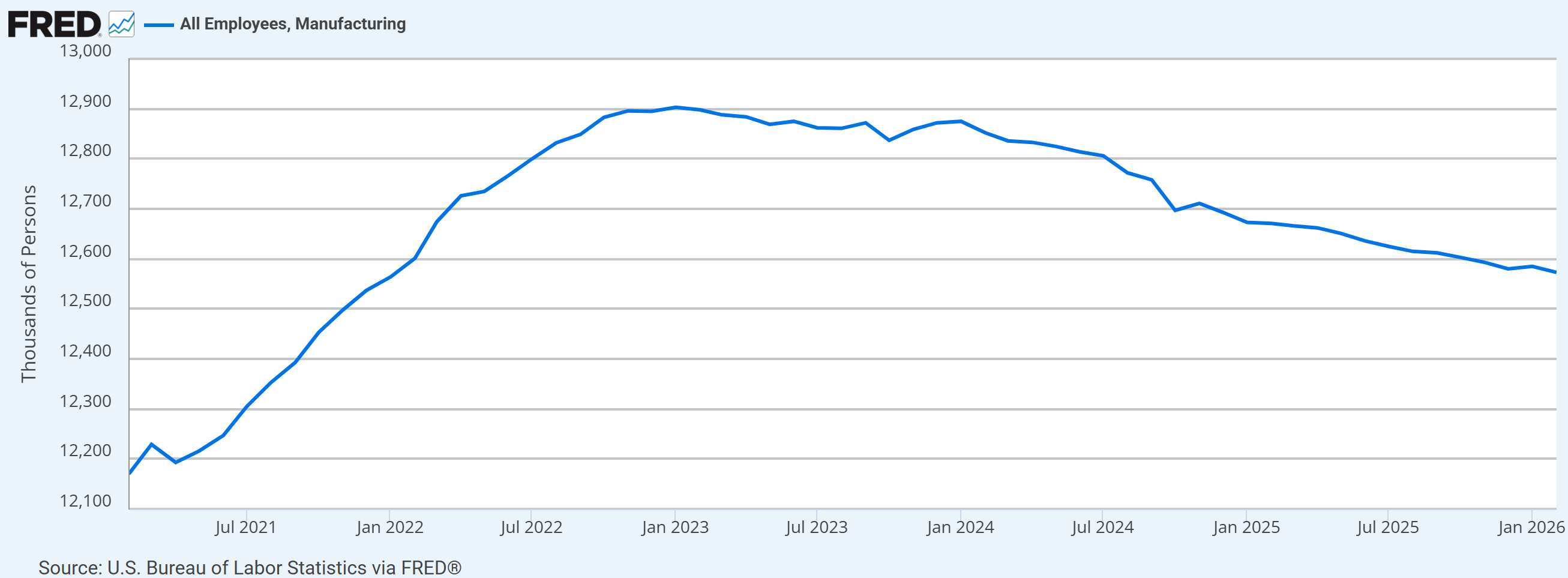


No comments:
Post a Comment