What comes next for the Fed's regulatory independence? -The Supreme Court may have allowed the central bank to chart its own course on bank oversight for now, but discrepancies between two recent rulings set the stage for challenges.
GOP fears over shutdown collide with SAVE America Act battle -Senate conservatives allied with President Trump are open to attaching the president’s top legislative priority, the Safeguard American Voter Eligibility (SAVE America) Act, to a stopgap measure funding the government past Sept. 30, but it is getting strong pushback from GOP colleagues who worry it will lead to a shutdown. Trump ratcheted up pressure on Senate and House Republicans to make another last-ditch attempt to pass the elections legislation during a primetime speech to the nation in which he asserted that 278,000 noncitizens are registered to vote in federal elections. Incoming Senate Budget Committee Chair Ron Johnson (R-Wis.) is one of several Trump allies open to attaching the SAVE America Act to a short-term government funding measure. “However we could pass it I’d be in favor of,” Johnson told The Hill. “Exactly how we do that, we’ll see.” Asked about attaching the legislation to a continuing resolution, Johnson said, “Sure,” but he noted Democrats would likely vote against such a package. “That’s why I’m for ending the filibuster,” he said. Republicans have also discussed moving the SAVE America Act through budget reconciliation, which would sidestep the filibuster. A Republican senator who requested anonymity said colleagues are looking more seriously at the continuing resolution as a vehicle, even though it could risk another government shutdown. “It’s a path that people are trying to find to take, but I don’t know what makes that happen,” the GOP lawmaker said. Congress needs to move a spending bill by the end of September to avoid a shutdown. Brian Darling, a Republican strategist and former Senate aide, said a short-term continuing resolution (CR) to fund the government “definitely” could be chosen as another vehicle to move the SAVE America Act. “The House can put it on a CR, send it over to the Senate and dare Democrats to shut down the government because they don’t want to have basically provisions of the SAVE America Act enacted into law,” he said. “It’s something that has widespread support if you look at the polling.” “The American people want to have election integrity, and they’d like to see more resources used for that purpose. Putting it on a CR would put Democrats in a tough spot,” Darling continued. “I think the president seems intent on getting it passed no matter what, whether it be reconciliation, a CR or trying to find another vehicle. I think House Republicans are going to push it, and I think the Senate is going to be forced to vote on it,” he added.
House taking up NDAA, funding patch, budget plan - - House Republicans will rush to advance a spate of legislative priorities this week — including the defense policy bill, a government funding measure and a reconciliation blueprint — before leaving town for a five-week recess. The jam-packed agenda will be dominated by House leaders’ attempt to pass the fiscal 2027 National Defense Authorization Act, which includes provisions on electricity bills, critical minerals, nuclear energy and “forever chemicals.” Lawmakers are offering hundreds of amendments, including some on energy and environment issues. The House will also take up a continuing resolution that would keep the government running past the current Sept. 30 funding deadline. It is Speaker Mike Johnson’s (R-La.) bid to get ahead of a September funding fight and put pressure on Democrats to show they want to avoid a shutdown. Additionally, lawmakers will vote on the budget resolution for Republicans’ party-line reconciliation bill. Party leaders will need to assuage the concerns of some members of the GOP conference who are upset about the lack of spending offsets in the package as well as other missing priorities, such as instructions for energy and tax-writing committees.
Senators explore separate stopgap spending bill as House moves ahead - Senate appropriators are looking at going their own way on government funding, as House Republicans try to move a stopgap spending bill this week to fund the government until after the midterm elections. GOP lawmakers in the Senate have had conversations with Democrats on moving a stopgap spending bill while also talking with the White House about anomalies, according to a person granted anonymity to disclose private discussions. Washington Sen. Patty Murray, the top Democratic appropriator in the Senate, said she has had conversations with Appropriations Chair Susan Collins (R-Maine) about a Senate version of a stopgap spending bill along with potential “anomalies,” which are specific exceptions or exemptions to the flat funding of a continuing resolution usually noted to prevent disruptions to key services. Murray wants to see if the House can get their legislation across the floor.
House passes stopgap funding bill, months before shutdown deadline -The House passed a government funding bill Tuesday night that would extend funding for all federal operations through the midterm elections — a move made months ahead of the Sept. 30 deadline to avoid a shutdown. The 220-205 vote was largely along party lines, with Speaker Mike Johnson managing to keep his extremely narrow majority mostly together to advance legislation that would fund the government through Dec. 4. Top House Republicans hope moving the funding measure so early in the process will put Democrats on defense in the impending government spending fight, before voters head to the polls this fall. Republicans plan to highlight Democrats’ votes against federal funding in the midterm campaigns. The bill also does not include unrelated policy provisions, a key selling point for GOP leaders who argue there’s no reason Democrats should oppose a “clean” product. The measure does include traditional payments to the families of lawmakers who have died while serving in Congress, including late-Sen. Lindsey Graham (R-S.C.) and late-Rep. David Scott (D-Ga.), which is not politically controversial.
House Rule Advances 2027 NDAA With Section to Integrate US and Israeli Militaries - -The House on Tuesday approved a procedural vote to advance the $1.15 trillion 2027 National Defense Authorization Act, which includes a section to further integrate the US and Israeli militaries, a plan that Israeli Prime Minister Benjamin Netanyahu has said was his idea. The rule to allow floor debate and a vote on the NDAA and several pieces of legislation passed in a 214-211 vote, and a final vote on the House’s version of the NDAA is expected to take place on Wednesday. The procedural step came after the House Rules Committee denied a vote on an amendment introduced by Rep. Thomas Massie (R-KY) to strip Section 219, the Israeli integration plan, from the bill.“Unfortunately the Rule passed just now and no debate or vote was allowed on section 219, integration of US military technology and supply chains with Israel’s,” Massie wrote on X. “The NDAA will receive a recorded vote tomorrow with section 219 in it. I’ll vote no.”Rep. Ro Khanna (D-CA), who has supported Massie’s efforts, said that he will now fight to strip Section 219 in the conference between the House and Senate, when the two chambers negotiate the final version of the NDAA.“Thomas Massie and I have been fighting to stop the integration between our military and the Israeli military. It’s shocking that this even has to be explained. It’s about American sovereignty,” Khanna said in a brief video statement on Tuesday. “Yet yesterday, the Rules Committee found that Thomas Massie’s amendment couldn’t even get a vote in the House of Representatives. We do not even have the chance to vote in the House to stop the US and Israel from co-producing weapons. We need to now fight to strip this amendment in the conference between the House and the Senate,” he added.The Senate’s version of the NDAA also includes a provision to integrate the two militaries, but the sprawling legislation was blocked by Senate Democrats last week over President Trump’s war with Iran, which hasn’t been authorized by Congress and has continued despite both chambers passing a concurrent War Powers Resolution directing the president to end the conflict.
House Passes 2027 NDAA With Section to Integrate US and Israeli Militaries - - The House on Wednesday passed its version of the massive $1.15 trillion 2027 National Defense Authorization Act (NDAA), which includes Section 219 (formerly Section 224), a provision to further integrate the US and Israeli militaries, a scheme Israeli Prime Minister Benjamin Netanyahu has described as “my plan.” The NDAA passed largely along party lines in a 216-212 vote. Seven Republicans voted against it, and two didn’t vote, meaning that the Democrats could have blocked the legislation, but six Democrats voted yes on the sweeping military spending bill despite President Trump’s continued war against Iran, which was launched without congressional authorization.The Democrats who voted for the bill include Reps. Henry Cuellar (TX), Donald G. Davis (NC), Jared F. Golden (ME), Vicente Gonzalez (TX), Adam Gray (CA), and Marie Gluesenkamp Perez (WA). The Republicans who voted against the legislation include Reps. Thomas Massie (KY), Chip Roy (TX), Anna Paulina Luna (FL), Harriet M. Hageman (WY), Elijah Crane (AZ), Tim Burchett (TN), and Josh Brecheen (OK).The vote came after the House Rules Committee didn’t allow a vote on an amendment introduced by Rep. Thomas Massie (R-KY) to strip Section 219 from the NDAA. Rep. Ro Khanna (D-CA), who supported Massie’s effort, has said he would “fight to strip this amendment in the conference between the House and the Senate,” when the two chambers negotiate the final NDAA.The Senate’s version of the NDAA also includes a provision to integrate the two militaries, but the legislation was blocked by Senate Democrats last week over President Trump’s war with Iran, which hasn’t been authorized by Congress and has continued despite both chambers passing a concurrent War Powers Resolution directing the president to end the conflict.
House passes NDAA with energy, minerals language - The House passed its annual defense policy bill Wednesday largely along party lines after adopting a number of amendments on geothermal energy, electric vehicles and critical minerals.The lower chamber’s version of the fiscal 2027 National Defense Authorization Act includes a proposal for the Pentagon to take action to address soaring electricity costs for military installations and service members. It also aims to supercharge domestic mineral processing and cement the Department of Defense’s support of nuclear energy in statute. While it started out as a bipartisan bill, most Democrats turned on the legislation due to growing concerns about authorizing more than $1 trillion for war-related programs amid the ongoing conflict with Iran. The approval of some conservative amendments this week also cost the bill votes on the floor. Still, the House’s 216-212 passage of the NDAA inches Congress closer to landing a compromise measure before the end of the year — even as the war with Iran continues to cause problems for the legislation across the Capitol.
House adopts budget framework for $95B party-line package - House Republicans managed to overcome internal disagreements and approve a budget framework Wednesday — a key step toward unlocking the power to skirt the Senate filibuster and pass a $95 billion package. The vote succeeded 216-214 after Republican leaders were able to quell frustration among members that the blueprint does not include new spending offsets. House GOP leaders hope to enact a final package that pushes fresh cash to the military, intelligence programs, farm aid and election security. Both the House and Senate need to adopt the same budget framework in order to begin the process of drafting, then passing, the third reconciliation bill of the 119th Congress. That means the onus is now on Senate Republican leaders to build support for the party-line plan Trump administration officials want the GOP to clear before the midterms.
Sen. John Thune says Senate lacks votes for $95 billion budget resolution -Senate Majority Leader John Thune (R-S.D.) said Thursday the votes aren’t there in the Senate to advance a House-passed budget resolution that would pave the way for a $95 billion reconciliation bill to fund the war in Iran, farm aid and election-related reforms.“As I’ve said before you got to get to 50, and I can’t count to 50 right now on a budget resolution,” Thune said when asked about House passage of a budget framework that would provide $73 billion to fund the military and intelligence agencies, $12 billion for farmers and $10 billion for voting law changes.“We’ll see. We’ll have those conversations with the conference. The priority is funding the government. To me that’s the thing we got to keep our eyes on,” he said.Thune told reporters earlier in the week that he would “hold” a House-passed budget resolution in the Senate to use as a possible vehicle to pass a short-term government funding measure in September.The budget resolution unlocks the budget reconciliation process, which allows Republicans to pass legislation through the Senate with a simple-majority vote and circumvent a Democratic filibuster.>“If they give us a budget resolution as a vehicle, we will hold that subject obviously to be able to move a continuing resolution to fund the government,” Thune said Tuesday.“It’s a possibility that if necessary we could pull that budget resolution passed by the House and use it to fund government. I hope that’s not necessary,” he said.The House GOP leadership has unveiled a continuing resolution to fund the government through Dec. 4. Current government funding expires Sept. 30. The lower chamber passed that measure Tuesday.Thune said he expects to schedule a vote on the stopgap before the August recess. If Democrats block it and continue to do so, Senate Republicans would then consider moving a government funding measure under the budget reconciliation process.The Senate GOP leader also cautioned on Thursday that any elements of the SAVE America Act, which would require people to show proof of citizenship to register to vote and show photo identification to vote, would need to be structured carefully to pass muster with the Senate parliamentarian to be included in a budget reconciliation package.
John Thune reacts to Karoline Leavitt's quip about Donald Trump's patience 'running low' over SAVE America Act - Senate Majority Leader John Thune (R-S.D.) bristled when asked Thursday about White House press secretary Karoline Leavitt’s statement that President Trump’s patience is running out” with the Senate GOP leader because of the stalled SAVE America Act. “Maybe she or somebody else ought to get on the phone and get the votes. Right? It’s 50 around here,” Thune shot back when asked about Leavitt’s statement to reporters at a press briefing earlier Thursday. “Instead of pointing the finger at Republicans, they might think about going after the people who are stopping it on the floor, which is the Democrats,” the senator added, appearing somewhat irritated by the critical comment. “And if there are Republicans they think are gettable, get on the phone.” Leavitt said Trump’s patience with Thune’s handling of the Safeguard American Voter Eligibility (SAVE America) Act, which the Senate has voted on — in whole or in part — at least five times but has failed to move forward, is wearing thin. The remark comes as the president has ramped up his push for Republicans to support the voter ID bill, legislation that would require proof of citizenship for voter registration and photo ID when casting ballots.
Rising US death count in Iran war drives Trump toward escalation - Fears are growing that the deaths of three U.S. servicemembers over a 24-hour period this weekend could push President Trump toward further escalation, even as both sides leave diplomatic doors open. The servicemembers’ deaths bring the U.S. death toll in the Iran war to 17 since the conflict broke out in March. Since the U.S. military began daily waves of strikes against Iran on July 7, nearly 100 service members in the U.S. Central Command (Centcom) theater have sustained injuries, with 96 percent of them returning to duty, the Pentagon said Monday. Vali Nasr, a Majid Khadduri Professor of International Affairs and Middle East Studies at the Johns Hopkins University School of Advanced International Studies, said the deadly tit-for-tat “changes the political calculation for President Trump.” “It puts its own pressure. And what if in the next few days another four or five are injured or killed, or let’s say a U.S. ship is hit? Each one of these then, basically, regardless of what one side or the other thought of the scale of the war or how much it can be controlled, then find their own logic in terms of where we go,” Nars, an expert on U.S.-Middle East relations, said in an interview with The Hill. Trump’s former national security adviser Victoria Coates said the deaths of the servicemembers marked “a new phase” in the war. “It’s a very sobering event but I think it brings back to us the seriousness of this engagement, the viciousness of the Iranian regime,” Coates said, referring to the Iranians as “increasingly desperate.” The U.S. responded to the deaths of the servicemembers by launching strikes on Iranian military command centers, air defense and coastal surveillance sites, maritime capabilities, missile and drone launch sites, and communications networks over the weekend. Trump warned in a TruthSocial post on Monday that “every time Iran kills an American Soldier they will pay for that killing many times over!” White House press secretary Karoline Leavitt said shortly after that Trump would attend the dignified transfer of the fallen service members at Dover Air Force Base. Michael Rubin, a Pentagon official during the second Bush administration, said military deaths were a predictable outcome of war. “It’s naive for the United States to go into a military conflict and believe that nobody is going to get killed. That said, it is jarring and it does give fodder for those surrounding Trump to say ‘you need to respond to this. Otherwise, Iran is going to repeat its actions,’” he said. A White House official told The Hill that Trump is “focused” on making Iran pay for what they said were the country’s violations of the memorandum of understanding reached between the two countries and “acts of terrorism” in the Strait of Hormuz. Still, Washington and Tehran appear to remain at least somewhat committed to finding a diplomatic solution. Secretary of State Marco Rubio told reporters over the weekend that the door was still open to talks with Iran despite the spike in hostilities. “We’ve tried multiple times with Iran, and we’ll continue to try. If that door opens, we’ll be happy to see it open,” Rubio said, speaking overnight at Joint Base Andrews. Meanwhile, Iran’s Foreign Ministry spokesman Esmail Baghaei told reporters at a press conference on Monday that the two countries were still exchanging messages through mediators. “We have been informed by mediators, we have received messages, without going into details, but the main point is that the diplomatic apparatus has been active in recent days and ideas have been conveyed to us by certain mediators,” Baghaei said.
CENTCOM Says US Soldier Killed in Iraq, Bringing Number of US Troops Killed in Recent Days to Four - US Central Command said on Sunday that a US soldier was killed in Iraq on July 18, bringing the total number of US troops killed in the Iran war in recent days to at least four, including one who is still missing but presumed dead, while US strikes in Iran in recent weeks have killed more than 50 Iranians. CENTCOM said that a “US service member in northern Iraq was killed in action on July 18 during a controlled detonation of unexploded ordnance from a downed Iranian one-way attack drone.” The command added that a second service member was wounded in the incident and was still receiving medical treatment.The incident came a day after an Iranian missile strike hit Jordan’s Muwaffaq Salti Air Base in Azraq, killing two US soldiers and leaving one missing. While the death of the missing service member hasn’t been officially confirmed, CENTCOM said remains that are likely those of the missing soldier have been found.“After a thorough search, US military personnel found unidentified remains at the location earlier today. An examination process to verify the remains is ongoing,” the command said. According to the official US count, at least 17 US soldiers have been killed in the Iran war since President Trump launched it with Israel on February 28.The deaths in Jordan marked the first known US deaths in the war since the US resumed its attacks on Iran several weeks ago. Iran’s Health Ministry said on Sunday that since June 27, US attacks have killed more than 50 Iranians and wounded 517. The ministry said that the fatalities include two children and five women, and that 35 women and 19 children have been wounded.The strike on the US base in Jordan, which marked at least the fourth Iranian attack on US facilities in the country over five days, came after the US bombed civilian infrastructure in Iran, including bridges and power stations. The US launched more attacks on Iran on Saturday that it said were to “punish” Iran’s Islamic Revolutionary Guard Corps (IRGC) for killing US troops, and Iranian forces have continued to hit back at US bases.
Iran used unsecured smartphone and ad tech data to target US troops -- Iran may be tracking concentrations U.S. troops across the Middle East using a telecommunications vulnerability that security researchers have been screaming about for more than a decade, according to reporting from the Financial Times.Iranian intel came from a standard practice in the global phone network, first implemented in the 1970s, and a secondary exploit built from the same advertising software that decides which ads follow you around the internet.Together, they gave Iranian military intelligence a real-time map of where American service members were operating and the Defense Department was informed about it as a potential weakness. “Iran absolutely has capabilities to get real-time, immediate, and continuous location information,” Gary Miller, a senior research fellow at Citizen Lab, told the Financial Times. “It would surprise me very much if Iran were not using SS7, or mobile network access in the region, to track U.S. users.”He added that the campaign was “very specific user targeting” and that at least some of it could be traced directly to an Iranian mobile phone operator.SS7, or Signaling System 7, is the protocol that makes your phone work across borders. It’s how a call gets routed in other countries, how a carrier knows where its customers are, and how SMS messages find devices anywhere on the planet. It was also built without a single security mechanism. Its vulnerabilities include zero authentication or encryption, meaning there’s no way to verify that the entity sending commands into the network is who it claims to be.The nonprofit cyber rights advocate Electronic Frontier Foundation warned the FCC in 2024 that the protocols were designed when the telecom industry was a small club of regulated monopolies that all trusted each other, so nobody would think to add safeguards to the system. Today, hundreds of mobile operators are interconnected through SS7, along with a web of third-party roaming hubs, messaging aggregators, and virtual network providers, all of which connect to it to run legitimate commercial services. But the honor system that once governed the exchange is a relic of a bygone era.SS7 can’t tell a legitimate carrier from a hostile intelligence service. If you get access to the network, you can send queries to locate any phone, anywhere in the world, by its number. You can find out which cell tower it’s connected to. You can redirect calls. You can intercept texts. And you can do all of it while appearing, to every network you’re querying, to be a legitimate carrier with a routine reason for asking. Access to the SS7 network comes through something called a Global Title, a unique identifier assigned to network equipment. Carriers have them, and some lease theirs to third parties. That’s how malicious actors obtain access through commercial arrangements, sometimes without the leasing carrier knowing what it’s being used for.Once inside, you can find anyone’s physical location with just a phone number. In 2016, mobile security expert John Hering and German researcher Karsten Nohl live-tracked a smartphone the newsmagazine “60 Minutes” lent to Congressman Ted Lieu, using nothing but the phone number and SS7 access. The telecom industry watched it happen, but did nothing about it.
Maria Bartiromo: "I don't understand how it is possible Iran still has the capability to fight this way" if US "obliterated" their military - Fox News "Sunday Morning Futures" host Maria Bartiromo expressed confusion about how Iran continues to attack and kill U.S. bases and troops despite President Trump's repeated insistence that their military has been "obliterated."
MARIA BARTIROMO, FOX NEWS: You know, CENTCOM says there will be outsized action in retaliation, but I don't understand how it is possible that Iran still has the capabilities to fight this way and continue to try to lash out at Gulf countries and U.S. military bases, because the U.S. has obliterated Iran's military, and the president continues to reiterate that.VICTORIA COATES, HERITAGE FOUNDATION: Yes. And if you look at the number of missiles that they've been able to fire off from the beginning of this in late February, early March, and what they're able to do now, it is very seriously degraded. They've gone from over a hundred a day to fewer than 10, if even that. There have been a number of days when they haven't fired off anything, and they haven't targeted Israel for months now. So I think their capabilities are lessened, but they're not zero, and that's the important thing. They are a nuisance. They're going after their regional neighbors, and that, in a way, can also, in the long term, be a benefit for us, Maria, because this unites the entire region behind the United States and with Israel. That would have been impossible-
US Deploying Additional Warplanes to Middle East as It Prepares To Escalate Iran War - -- The US is sending additional warplanes to the Middle East, a Trump administration official told The New York Times, as the administration is preparing to escalate its war against Iran and Israel is preparing to potentially join in.The Times report said that US F-16 fighter jets based in Germany and F-35 fighter jets from bases in the UK were being sent to the region, along with additional refueling aircraft.The report came after US troops were killed by an Iranian missile strike on a base in Jordan, but officials said that the deployment was planned before that, as President Trump was signaling plans to escalate before the US deaths.“The US is planning for a wider war,” a US official familiar with the administration’s internal discussions told The Washington Post. The official acknowledged that the US wasn’t in the best position to escalate due to the depletion of air defenses and other munitions.“We do not have enough to safely sustain operations, and I don’t think the White House is aware of that,” the official said.Potential escalations include more strikes targeting civilian infrastructure, such as bridges, power plants, and desalination plants, or some sort of ground incursion targeting an Iranian island in the Persian Gulf. Any attempted ground operation will almost certainly lead to major US casualties.Israeli media also reported on Sunday that Trump was leaning toward escalation and that the IDF was on “high alert” for the possibility of launching strikes against Iran. While the US State Department has said the US was in conflict with Iran “at the request” of Israel, Israel has so far sat out the renewed strikes. The Israeli newspaper Haaretz reported that while Israel hasn’t been directly striking Iran, it has been supporting the war by providing the US with intelligence and in other ways. The report said that Israel’s less visible role was “a blessing for Israelis” since it “reduces the risk of casualties and allows daily life to continue largely as normal, without midnight sirens, trips to bomb shelters or major disruptions.”
GOP faces new alarm over Iran as ceasefire implodes -The intensifying military conflict with Iran and its impact on gas prices is sparking fresh alarm among GOP lawmakers, who are urging President Trump to find a way to reopen the Strait of Hormuz as soon as possible to avoid an angry backlash from voters. Oil prices have soared again since a ceasefire with Iran started to fall apart two weeks ago and Americans are now paying more than four dollars a gallon for gasoline, on average, across the United States. Senate Majority Leader John Thune (R-S.D.) on Monday said getting the strait open to cargo traffic as soon as possible is a critical objective. “That to me is the key consideration in all this,” Thune said of the need to reopen the strait immediately. “What the president is insisting on is the strait be open. The Iranians are violating international law by having blockades there.” “That’s going to be key to all these economic questions that are being raised,” he added. Thune has emphasized for months the importance of immediately opening the critical waterway, but the likelihood of doing so has grown more remote in recent days. Senate Republicans warn the war is creating strong political headwinds for GOP candidates this fall. Sen. Thom Tillis (R-N.C.) warned that higher gas prices “are going to hurt a lot of people” during the summer driving season. “That’s going to have an economic consequence and economic consequences always have political consequences and we’re looking at political consequences in November,” he said. Republicans are frustrated, and some want Trump to hit Iran harder. “Anytime you’re talking about a higher cost of energy, it’s something you should be concerned about but it’s different when you’re losing American lives,” said Sen. Mike Rounds (R-S.D.). “When the Iranians are attacking our people, it’s time to finish this job.” “I think the president has been working very hard to find a diplomatic solution. Clearly the Iranians don’t have the same interest. So, what we need to know from our leadership team is what does it take for our armed forces to resolve this situation as best we can once and for all,” the senator continued. Rounds, a member of the Senate Appropriations Committee, said he would press Defense Secretary Pete Hegseth for more detailed information when he testifies before the panel on Tuesday afternoon. “I think we’re going to be asking more specific questions and pressing hard,” Rounds said. “We’ve allowed a great degree of flexibility and now it’s time to basically lay out the plan moving forward that resolves this issue.” Hegseth is slated to testify with Gen. Dan Caine, the chair of the Joint Chiefs of Staff, before senators Tuesday in support of the administration’s request for $67.1 billion in emergency funding for the Pentagon. But some GOP senators are drawing a line at putting U.S. “boots on the ground” in Iran to reopen the strait to shipping traffic, despite the pressure the Iranian blockade is putting on the global economy. “Every time Iran kills an American Soldier they will pay for that killing many times over!” Trump posted on Truth Social, sending jitters through the financial markets.
Nearly 100 US troops injured in last two weeks of Iran war, Pentagon says - The Pentagon said Monday that nearly 100 U.S. troops have been injured in the war with Iran over the last two weeks, underscoring the significance of Tehran’s strikes on U.S. military installations across the region since negotiations to end the conflict collapsed. The disclosure came as the U.S. military identified two U.S. soldiers who were killed in a fatal attack on Friday night, and after the Trump administration for days declined to detail how many U.S. service members have been injured recently. Sean Parnell, a Pentagon spokesman, said on social media that “nearly 100 service members were deemed to have some degree of injury since July 7,” with 96 percent of those since returning to duty. “They are determined to get back in the fight,” Parnell said of the affected service members. “The vast majority of injuries experienced were minor concussions.” Parnell said further updates would be posted to an online Pentagon database that was stagnant for days if not weeks, showing 14 troops dead and 427 troops injured since the beginning of the war on Feb. 28. On Monday evening, those figures were briefly updated to reflect that 18 service members have died and 447 have been injured since the beginning of the war on Feb. 28. The new tally of those killed in action included a Friday night attack that left three U.S. troops dead, one still unidentified, and others wounded at the Muwaffaq Salti Air Base in Jordan. But with no explanation from the Pentagon, the database later reverted Monday night to the earlier numbers. If the figure Parnell disclosed on Monday is accurate, the number of service members injured in the conflict since February could easily exceed 500.
NYT: Pentagon Withheld Dozens of Military Injuries in Days Leading Up to Attack That Killed US Troops - The New York Times reported on Monday that the Pentagon didn’t disclose that US troops had been injured by Iranian attacks on Jordan in the week leading up to the missile strikes that killed at least two US soldiers and left one missing.US officials told the Times that in the days before the deadly January 17 attack, Iranian strikes on US facilities in Jordan injured dozens of US service members and damaged multiple US military helicopters.Throughout that same week, US Central Command released multiple statements on the US airstrikes against Iran and other military operations but made no mention of the injuries, following a pattern of the US hiding casualties throughout the war. A day after the deadly attack in Jordan, another US soldier was killed in Iraq during what CENTCOM called “a controlled detonation of unexploded ordnance from a downed Iranian one-way attack drone,” bringing the total number of US troops killed in the war in recent days to at least four, a number that includes the soldier missing in Jordan as CENTCOM said it found remains it was working to identify. The US military identified the other two US Army soldiers killed in Jordan, which included a 19-year-old woman, Pvt. Isabella Gonzales of Carrollton, Texas, who died on Friday. The other soldier, 1st Lt. Tyler James Feehan, 25, of Ewa Beach, Hawaii, died of his wounds on Saturday. Pentagon spokesman Sean Parnell initially rejected the Times’ report as “baseless and malicious” but then acknowledged that nearly 100 US troops have been injured in the war since July 7, though he downplayed the injuries.“While nearly 100 service members were deemed to have some degree of injury since July 7, 2026, 96% have returned duty. They are determined to get back in the fight,” Parnell wrote on X. “The vast majority of injuries experienced were minor concussions. Further updates will be posted on the Defense Casualty Analysis System.”
White House Shares Three-Week-Old Poll That Shows the Majority of Americans Support Iran Peace Deal - - The White House on Monday shared the results of a poll from about three weeks ago that shows the majority of American voters supported the US-Iran Memorandum of Understanding (MoU), which President Trump has since declared is “over” as he has restarted the bombing campaign against Iran.President Trump also shared the results of the survey from Big Data Poll, which found that 60.4% of American voters supported the MoU, 23.7% opposed it, and 15.9% were unsure.The poll shows overwhelming support among Trump voters, with 76.7% supporting the MoU, and a slim majority of Kamala Harris voters (50.1%) also supporting the deal.“TRUST IN TRUMP: Voters Overwhelmingly Support Iran Peace Deal,” the White House said on X, a post that came after the US concluded its ninth consecutive night of airstrikes against Iran and Iranian retaliatory drone and missile attacks continued to target US bases across the region.When the poll was conducted, administration officials were defending the MoU and the idea of diplomacy with Iran in general, but since the restarting of the airstrikes, Trump has been threatening to escalate the war. Hours after he shared the results of the poll, the president threatened more strikes on Iran if more US troops were killed, as four US soldiers died in the war since Friday.
Trump weighs Iran war expansion as fresh US strikes target Hormuz shipping threats | Live Updates - U.S. forces launched a fresh wave of strikes against Iran on Monday at President Donald Trump's direction, escalating the military campaign in the region.“Today at 4 p.m. ET, U.S. forces began a new round of strikes against Iran at the Commander in Chief's direction,” U.S. Central Command (CENTCOM) said in a post shared on X.“The strikes are designed to further degrade Iranian military capabilities used to attack commercial shipping in the Strait of Hormuz,” the command added.Monday marked the 10th day of U.S. military strikes in the region. What to know:
- U.S. Central Command said a ninth straight wave of strikes on military targets in Iran was completed on Sunday night.
- President Donald Trump paid tribute to U.S. service members killed in recent attacks linked to Iran, saying American forces launched another round of strikes "in honor" of them.
- Two U.S. service members in Jordan were killed last week during an Iran-linked attack, U.S. Central Command said. A third U.S. troop was killed in Iraq on Saturday, it said.
- Iran’s lead negotiator, Mohammad Bagher Ghalibaf, said that recent U.S. military deployments in the Middle East showed Washington was not serious about de-escalating tensions with Tehran.
- U.S. forces launched a fresh wave of strikes against Iran at President Donald Trump's direction, escalating the military campaign in the region.
- The Houthis announced a maritime ban on Saudi Arabia, saying it was retaliation for what they called the kingdom's blockade of Yemen and a recent attack on Sanaa International Airport.
- U.S. forces launched a fresh wave of strikes against Iran at President Donald Trump's direction, escalating the military campaign in the region.
- An explosive-laden drone was shot down near Al-Harir Air Base in Iraq's semi-autonomous Kurdistan region, according to security sources.
- President Donald Trump is expected to decide in the coming days whether to expand military operations against Iran and return to full-scale combat.
- Iran’s U.N. Ambassador Amir Saeid Iravani demanded U.N. Secretary-General Antonio Guterres and the Security Council condemn what he said was a U.S. attack on the Darkhovin nuclear power plant .
US Intelligence Assessment Says the US Cannot Bomb Iran Into Capitulation --The Washington Post reported on Monday night that a new US intelligence assessment says that Iran’s government is unlikely to feel a significant impact or change its negotiating position as a result of the US airstrikes that have been hitting Iran.The report, which cited current and former US officials, said that US intelligence agencies have also “concluded that Tehran and Washington are, for now, stuck in an indefinite limbo between peace and war,” though there’s been little peace lately as the US has bombed Iran for 10 consecutive nights.President Trump on Tuesday claimed that Iran “desperately” wants to hold talks for a deal, but there’s no sign that Tehran is backing down on its core demands, and the idea of negotiating with the US has become even more politically fraught for Iran’s leadership following the collapse of the Memorandum of Understanding (MoU) and the renewed US bombing campaign.There have been reports of Pakistan and other mediating countries attempting to salvage negotiations between the two sides, something Iranian Foreign Ministry spokesman Esmaeil Baghaei confirmed on Monday, but there has been no sign of progress. Iranian officials have also shown no sign of backing down on their core demands, which include Iranian control of the Strait of Hormuz.Since the collapse of the MoU, US strikes in Iran have killed more than 50 Iranians, including many civilians, according to Iranian government officials, and at least four US soldiers have been killed, including three who were killed in Jordan by an Iranian missile attack and one who died during the detonation of an unexploded drone in Iraq.
- The US has bombed Iran for a 10th consecutive night, with explosions reported near Sirik and in Bandar Abbas, Qeshm Island, Chabahar and Konarak.
- Iran continues retaliatory attacks across the Gulf, with the IRGC saying it targeted US assets in Bahrain and Kuwait in recent hours. It says “massive fires” have also broken out on two tankers in the Strait of Hormuz.
- US President Donald Trump warns Iran it will pay “many times over” for the deaths of American soldiers after a week in which at least three US personnel were killed.
- Iran-backed Houthis in Yemen declare a maritime blockade against Saudi Arabia, threatening to further disrupt the global energy supply.
Mohsen Farkhani, a professor at the University of Isfahan in Iran, says coercion is central to Trump’s strategy on Iran, but warns it will only provoke Tehran to seek greater deterrence. “Trump’s strategy is to rely on brinkmanship and pure conflict to compel other states to comply with his demands,” Farkhani told Al Jazeera. And this has been seen “in his aggressive use of tariffs, his threats to bombard Oman, and the unlawful acts of aggression now being directed against Iran”, the analyst said. And while the US president does use diplomacy, he does so “mainly as a tool to rig and force brinkmanship rather than to achieve genuine mutual accommodation,” Farkhani said. In such a scenario, the “only effective response to such a strategy” for Iran is to impose “the highest possible costs and establish the strongest possible deterrence”, he said. Trump’s strategy, Farkhani added, will not succeed, including in the Strait of Hormuz. Iran’s army claims to have targeted three major US military installations in Kuwait using “kamikaze drones”. In a statement carried by the semi-official Tasnim news agency, the army said that its forces struck administrative buildings and direction-finding antennas at Camp Arifjan, a helicopter parking area at Camp Al-Adiri, and troop housing facilities at the Ahmed Al-Jaber base. “Security in the region has been disrupted following the mischief of US terrorist forces, and the Armed Forces of the Islamic Republic are attempting to restore security and calm to the region in their battle against the US,” the statement added. The statement came moments after the IRGC claimed attacks on US assets at Ahmed Al-Jaber base and the Ali Al-Salem airbase. The latest statement from the Islamic Revolutionary Guard Corps came after two vessels were reportedly hit by explosions while trying to use a route different from the one designated by Iran in the Strait of Hormuz. Tehran says alternative routes remain dangerous because of mines and other hazards. Iran’s position on the Strait of Hormuz is increasingly clear: Tehran says control over the waterway remains in Iranian hands and that vessels must coordinate with it before attempting to transit. Iranian officials also say consultations are under way with Oman over a possible bilateral arrangement for managing the strait. But they continue to insist that ships must follow a route close to the Iranian coast. Several vessels and oil tankers have encountered similar incidents in recent nights. Iran maintains that the strait is closed, contradicting the US position. Tehran says the closure followed Washington’s failure to honour the Memorandum of Understanding intended to address shipping through the waterway and wider tensions. The dispute is also tied to the US naval blockade of Iran and the broader confrontation between Tehran and Washington.
Hormuz tankers on fire, as US, Iran continue attacks: What’s the latest? | US-Israel war on Iran News | Al Jazeera - The United States continued to attack Iran for a tenth consecutive night early on Tuesday, hitting military command centres. Explosions were reported in Qeshm Island, Bandar Abbas and Bushehr. Iran retaliated, striking US military assets in the Gulf, attacking Bahrain and Kuwait. Additionally, the Islamic Revolutionary Guard Corps (IRGC) said “massive fires” had also broken out on two tankers in the Strait of Hormuz. The US Central Command (CENTCOM) announced that it completed another round of strikes against Iran at 01:00 GMT on Tuesday. This marks the tenth consecutive night of US strikes against Iran. CENTCOM said it hit Iranian military command centres, maritime capabilities, missile and drone launch sites and air defence systems. Al Jazeera’s Tohid Assidi reported from the Iranian capital Tehran on Tuesday that explosions were reported on Qeshm Island, the largest island in the Strait of Hormuz, as well as in the port cities of Bandar Abbas and Bandar Lengeh. Explosions were heard in the southwestern city of Shiraz at about 1am local time (21:30 GMT) on Tuesday, Iran’s IRIB state broadcaster reported. It said a location in the east of the city and another in the west “were attacked by the enemy”. IRIB also cited the deputy governor of Isfahan province as saying there was no “enemy aggression or explosions” in the city of Isfahan or the wider province, denying an earlier report from the semi-official Mehr news agency. The governor of Bushehr, meanwhile, told IRIB that the sounds of explosions in the province were “related to the activity of defence systems”. The Mehr News Agency said on Tuesday that several explosions were in the city of Abdanan in Iran’s western Ilam province, citing Abdanan Governor Behzad Nourmohammadi. The IRGC said on Tuesday that it destroyed a US air defence system and radar in Bahrain’s Muharraq area during its latest military operation. In a statement carried by the IRIB broadcaster, the IRGC also claimed that a coordinated missile and drone attack destroyed a US Patriot air defence system in Bahrain’s Al-Riffa. The IRGC said the strikes were intended to clear the way for further operations. In a statement carried by the semi-official Tasnim news agency, the IRGC claimed its aerospace force had destroyed Amazon’s central data infrastructure using cruise missiles. The IRGC says it targeted and destroyed several US military assets in Kuwait during a recent strike. In a statement carried by the semi-official Tasnim news agency, the IRGC said the strikes hit a long-range radar site, a telecommunications centre, satellite receiving systems and a missile defence radar of the US military in Kuwait. The group also claimed to have struck an MQ-9 drone hangar at the Ali Al Salem airbase, destroying or severely damaging several unmanned aircraft. Al Jazeera’s Kimberly Halkett, reporting from Washington, DC, said the White House told Al Jazeera in a statement that the strikes would continue until the president decides otherwise. But it ended that statement by saying that diplomatic talks between the two nations are ongoing. Iran’s IRGC said on Tuesday that “massive fires” had broken out on two oil tankers that attempted to “pass through the unsafe southern route in the Strait of Hormuz” following an explosion. In a statement carried by the IRIB state broadcaster, the IRGC said rescue teams were evacuating the crews of the vessels. It again warned shipping companies to safeguard the health of their crews, not to trust “false information from the US military”, and to avoid routes it described as dangerous. “It is obvious that as long as America’s evils continue in the region, the Strait of Hormuz will be closed, and not even a drop of oil, gas, or a package of chemical fertiliser will be exported from the region,” it added.
Iran targets US military assets as Houthis threaten to expand Mideast war - Iran targeted US radar and air defence installations in the Gulf on Tuesday, warning Washington of "more decisive and powerful" attacks to come as the conflict threatened to widen with a blockade of Saudi ports by Houthi rebels in Yemen. Iran's Revolutionary Guards said they had attacked and stopped two "non-compliant oil tankers" attempting to transit the Strait of Hormuz, part of an effort to tighten its grip on the vital waterway while the war reignited. Following the deaths of at least three US soldiers in the past several days, the United States launched a new round of attacks against Iran late Monday which it said were "designed to further degrade Iranian military capabilities used to attack commercial shipping" in the strait. Hours later, the Iranian army said it had targeted US assets in Kuwait and Bahrain, including air defence systems, radar installations and administrative buildings. "With this radar sweep, the enemy should prepare for even more decisive and powerful waves of drone and missile attacks," the Guards said in a statement carried by state news agency IRNA. US President Donald Trump warned Monday that Iran would pay "many times over" for every American soldier killed, while Iranian President Masoud Pezeshkian said the conflict had become "a full-scale war". Nearly 100 US servicemembers have been wounded since July 7, the Pentagon said on Monday, most with minor concussions. Tehran's Yemeni allies, the Houthi rebels, meanwhile threatened a major broadening of the war, announcing they would blockade Saudi ports. Such a move by the Houthis would put at risk Riyadh's ability to bypass the flashpoint Strait of Hormuz for some of its oil exports and have major repercussions on the global economy. Saudi Arabia and the Houthis traded fire last week for the first time in years, threatening a 2022 truce, but the rebels have largely remained on the sidelines since Israel and the United States attacked Iran in late February. Saudi Arabia strongly condemned the threat from what it called the "terrorist Houthi militia" and said it "continues to support the brotherly Yemeni people and their legitimate government". The Middle East war resumed after an April ceasefire and a June framework deal collapsed. Tehran reimposed its blockade of the Strait of Hormuz, and Washington hit back by again blockading Iran's ports. Oil prices surged briefly to a one-month high Monday before easing slightly early Tuesday as the foes battle to control the strait, through which a fifth of world oil travelled in peacetime. Although far below its prewar totals, Saudi Arabia has been able to continue exporting millions of barrels of oil a day via its Red Sea port of Yanbu. Oil markets have for months feared that the Houthis would return to attacking shipping in the Red Sea and Gulf of Aden -- as they did during the Gaza war -- potentially cutting off yet more crude from global markets.
Iran says it attacked Amazon infrastructure in Bahrain - Iran’s Islamic Revolutionary Guard Corps said it has attacked Amazon’s data infrastructure in Bahrain, according to a statement reported by Fars, an IRGC-linked state media outlet. Fars News Agency said on Tuesday the IRGC had “attacked the central data infrastructure of the American company Amazon in Bahrain with several cruise missiles and destroyed it,” according to a translated Telegram post. CNBC was unable to independently verify the information. CNBC has reached out to the National Communication Center of Bahrain and Amazon for comment. Hostilities between the U.S. and Iran have ratcheted up over the past 10 days as President Donald Trump declared the ceasefire with Iran “over.” Both sides have since launched military strikes. Tech companies were in the line of fire throughout the earlier stages of this conflict. In March, apps and digital services in the UAE reported outages following drone strikes on Amazon Web Services’ data centers in the country, with a facility in Bahrain also damaged. In April, the IRGC threatened attacks on a swath of U.S. tech companies with operations in the Middle East, including Nvidia, Apple, Microsoft and Google. Since hostilities have resumed, U.S. Central Command has pounded Iran with 10 straight nights of strikes, saying that the attacks are to “degrade Iranian capabilities used to attack commercial shipping in the Strait of Hormuz.” Shipping through the critical waterway has fallen since the resumption of hostilities, with ships transiting the strait with their transponders turned off, according to Lloyd’s team of analysts. Over the weekend, just 30 ships transited the strait, according to trade intelligence firm Kpler. More than 100 ships transited Hormuz daily before the U.S. and Israel attacked Iran on Feb. 28. However, the Trump administration has said the Strait remains open and millions of barrels of oil are being shipped out daily under U.S. military protection. The renewed hostilities have sent oil prices surging, with international benchmark Brent breaking above the $90 mark on July 20 for the first time in over a month, with U.S. crude futures also reaching their highest point in a month on the same day. The Strait of Hormuz is a critical energy chokepoint, with around 20.3 million barrels of petroleum and crude oil passing through the Strait of Hormuz daily, according to the U.S. Energy Information Administration. This accounts for roughly 25% of the world’s seaborne oil trade. Nearly 90% of these oil flows are exported to Asian markets, with China and India being the primary destinations. Amrita Sen, founder and director of market intelligence at Energy Aspects told CNBC’s “Access Middle East” Monday that with inventory buffers heavily depleted, continued disruption into August could force Gulf production lower and send crude prices back into triple digits. Iran’s ability to retaliate For its part, Iran still has the power to cause damage to U.S., its allies, and assets in the region. Its strikes on commercial shipping have caused concern, with a vessel operated by Greek shipping firm Dynacom reportedly the latest victim. Israeli media said the ship caught fire after it was struck by an unknown projectile in the Strait of Hormuz. Despite the U.S. strikes, Tehran is also still able to launch missiles and drones, with its attacks on countries hosting American bases have killed an additional three U.S. servicemen recently. U.S president Donald Trump has vowed that Tehran “will pay” for the deaths “many times over,” adding that the strait was open to all except Iran. ‘No good options’ for an off-ramp On Monday, Axios, citing sources familiar with the matter, reported that regional mediators like Qatar and Pakistan presented the U.S. and Iran with a proposal for a 10-day ceasefire, although Washington is also gearing up for the possibility of the talks to fail. Axios also reported that Israel is preparing for a possible expansion of the war into a full-scale, coordinated campaign within days. Last week, Clemens Chay, senior fellow for geopolitics at the Observer Research Foundation described the situation to CNBC as a contained but widening escalatory cycle. In his view, Washington had “no good options.” The U.S. has to either endure an Iranian war of attrition, escalate despite regional opposition, or offer concessions. He said Iran retained Hormuz leverage “like a switch that it can flip on and off,” and warned that simultaneous disruption of Hormuz and the Bab el-Mandeb Strait would be catastrophic for the global economy.
US Identifies Soldier Killed in Iraq as 30-Year-Old Father From North Carolina - News From Antiwar.com -The US military on Tuesday identified the US Army soldier who was killed in Iraq on Saturday as Sgt. Michael Emmanuel Swinton, a 30-year-old father from North Carolina, the fourth US service member to be killed in the Iran war since Friday.US Central Command said that Swinton was killed during a controlled demolition of unexploded ordnance from an Iranian attack drone in Erbil, Iraq. A US official told The New York Times that Swinton was not involved in the actual detonation but was hit by flying debris from the blast.Swinton leaves behind a six-year-old son and a four-year-old daughter. “I will never recover from this,” Swinton’s wife, Mia Gonzalez-Swinton, wrote on Facebook, according to The Associated Press. “We had so many plans for when you got back, I’m sick to my stomach.”The US military has also identified two of the soldiers killed by an Iranian missile attack in Jordan on Friday as Pvt. Isabella Gonzales, 19, of Carrollton, Texas, and 1st Lt. Tyler James Feehan, 25, of Ewa Beach, Hawaii. Remains of what is believed to be a third soldier killed in the attack have been found, but the soldier’s identity hasn’t been made public.President Trump on Tuesday appeared to downplay the US deaths in the Iran war by sharing statistics of US wars with much higher US casualty rates. The president wrote:
“Afghanistan War: 20 years, 2,000 DEAD.
Iraq War: 9 years, 4,600 DEAD.
Vietnam War: 19 years and 5 months, 58,220 DEAD.
Korean War: 3 years and 1 month, 36,574 DEAD.
Venezuela War: 1 day, 0 DEAD.
Iran Military Conflict: 4 months, 18 DEAD.”
Since Trump launched the war on February 28, at least 18 US soldiers have been killed, according to the US military’s official count. The New York Times reported that the military was withholding information about injuries US troops suffered in the days leading up to the deadly attack on Jordan, which prompted the Pentagon to admit that nearly 100 US troops have been injured in the war since July 7.
White House seeks $87B emergency funding as Iran conflict escalates, Hegseth testifies — As the war in Iran escalates, the White House is asking Congress for billions more in emergency funding, setting up a tense showdown on Capitol Hill over the cost, the strategy and the growing toll on U.S. service members. Democrats on the Senate Appropriations Committee sharply criticized the request and questioned why taxpayers should pay for what they described as an unapproved “forever war.” Secretary of War Pete Hegseth and Chairman of the Joint Chiefs of Staff Gen. Dan Caine testified Tuesday as the Trump administration seeks $87.6 billion in supplemental spending, including just over $67 billion tied to the Iran conflict. The request includes money for munitions, operational costs and classified programs. Democrats on the Senate Appropriations Committee sharply criticized the request and questioned why taxpayers should pay for what they described as an unapproved “forever war.” And at what point do you stop asking Americans to foot the bill for a war they don't support?" asked Sen. Jeanne Shaheen, D-NH. "I would hope for some perspective in this town of the historic nature of what President Trump is undertaking. Do you want radical Islamists to have a nuclear bomb that can stare down the world?" Hegseth responded. Hegseth also warned that failing to pass the supplemental could quickly strain the military’s finances and readiness. “Without these funds, we face critical shortfalls that threaten our ability to also simply pay our service members. Rapidly replenish equipment and munitions and sustain vital operations without disruption,” Hegseth said. Hegseth disclosed Tuesday that the war has cost $37.5 billion so far. But CNN reported analysts estimated in March that the war is costing American taxpayers over $890 million a day. Republicans on the committee defended the request, arguing it is needed to keep the U.S. moving forward. Sen. Deb Fischer., R-Neb. asked Caine, “General Caine, what happens if Congress doesn't fund this $21 billion request for additional munitions?” Caine responded, “If we don't as a team figure out how to properly fund the department, then we're not going to get the munitions and there's going to be a lack of shared risk between the federal government and private sector.” The hearing grew heated at multiple points, including bipartisan scrutiny over how the administration plans to reopen the Strait of Hormuz, which remains closed. Democrats also pressed Hegseth on the administration’s shifting claims about Iran’s nuclear program, noting it said last year it “obliterated” Iran’s nuclear capabilities but launched a full war in April of this year claiming Iran was weeks away from a weapon. Sen. Kirsten Gillibrand, D-NY., asked, “Which is true? Was it obliterated or wasn't it? What's the status?” Hegseth replied, “The nuclear site's under 'Midnight Hammer' were obliterated but Iranians foolishly continued to pursue nuclear capabilities which is why we destroyed their defense industrial base.” He later added, “See we're staying laser focused on the objective and you're trying to make campaign commercials.”
Hegseth Says Not Giving the Pentagon $1.5 Trillion Is the ‘Greatest Threat’ Facing the US -- Secretary of War Pete Hegseth, during a Congressional hearing on Tuesday, said a failure to appropriate $1.5 trillion for the Pentagon’s Fiscal Year 2027 (FY27) budget constitutes the “greatest threat” to US national security.Hegseth, joined by Chairman of the Joint Chiefs of Staff Dan Caine and Agriculture Secretary Brooke Rollins, appeared before the Senate Appropriations Committee on Tuesday to discuss the Trump administration’s request for an additional $87.6 billion in supplemental spending.Most of the money would go to the Pentagon, but approximately $11.1 billion would go to US farmers. The war with Iran has depleted Pentagon funding, and the shock to the oil economy will have a direct impact on the fertilizer market farmers depend on.On Tuesday, Hegseth defended the supplemental funding and claimed it would be part of the Pentagon’s FY27 budget, not in addition to it. Congress has yet to approve the $1.5 trillion the Pentagon wants. On Wednesday, the House of Representatives voted to authorize $1.15 trillion of the massive military budget, but the Senate has yet to approve it.There is no guarantee the Republican-controlled Senate will sign off on the funding. Democrats have generally opposed the funding on party lines (only six democrats in the House voted for it) and even Republican senators have balked at the massive price tag. On Tuesday, Hegseth characterized the full budgetary request as a “generational investment” and claimed the supplemental funding was of the utmost importance: “As you know, we live in a dangerous world that requires bold and swift action. Hence, this supplemental request for fiscal year 2026. This request is an urgent, necessary injection of resources to address the immediate needs of our department,” he said.The “immediate needs” refers to the ongoing war with Iran, which analysts believe has cost far more than the Pentagon is willing to admit. On Tuesday, Hegseth told Senators the war has cost approximately $37.5 billion thus far. Credible independent analysis, however, suggests the cost could already be north of $100 billion, a number much closer to the supplemental money the White House has requested.Regardless of the true cost of the war, Hegseth’s commitment to the $1.5 trillion funding target tracks typical military bureaucratic logic, and it marks a major boost in military spending, a nearly 50% increase from this year’s more than $1 trillion military budget.
Senate GOP express concern over Iran end-game after Hegseth hearing- Senate Republicans are growing increasingly concerned about what they say is a lack of a clear plan to end the military conflict with Iran, warning that rising U.S. casualties and stubbornly high gas prices are going to hurt their party in the midterm election. GOP lawmakers came away dissatisfied from a hearing Tuesday at which Defense Secretary Pete Hegseth testified in support of the administration’s request for another $80 billion in emergency funding for the Iran war. Republicans want to provide the Pentagon with more money to replenish its munitions but are frustrated the administration hasn’t given them a clearer picture of how to end the conflict, which has dragged on since Feb. 28. “There’s got to be an off-ramp, that’s all there is to it,” said Sen. Jim Justice (R-W.Va.). “Naturally all of us are concerned because we’ve lost three wonderful, wonderful service people in the last little while,” he said, referring to three U.S. service members killed in recent days. Justice also raised concern about mounting civilian casualties in Iran, which are believed to range from 1,700 to more than 3,000 people killed. “Every last one of us is super concerned about civilian casualties because first and foremost it’s terrible. Secondarily, it’s generally not very popular in the world,” Justice said. “In this situation, where we’re at right now, we’ve got to make one of two decisions, either just pull out and leave and roll the dice and hope for the best, or we’ve got to win, and winning is only one thing: Make sure they don’t have a nuclear weapon,” he added. Trump on Wednesday threatened to strike civilian infrastructure in Iran, such as bridges and power plants, if Iranian forces continue to target ships in the Strait of Hormuz. “Any time the lslamic Republic of Iran shoots at a ship in the Strait of Hormuz, whether it be by Missile, Rocket, Drone, or any other device or weapon, the United States will bomb and destroy ONE BRIDGE OR POWER PLANT, including those located next to, or in, the Capital City of Tehran,” Trump posted on Truth Social. Justice urged Trump to move cautiously when selecting civilian targets. “I do see that if we come to a need to cut off supply lines, whether it be bridges or roads or whatever it may be, yeah we have to do it. But to just target a civilian site, a hospital or something like that, I don’t think he’ll do that,” Justice said. A Republican senator who requested anonymity said that the conflict’s impact on gas prices is a huge political problem for GOP candidates heading into the November election. “People are worried about it because otherwise they’d be cheerleading,” the GOP lawmaker said. “Nobody wants to be critical. “Gas prices are high,” the senator added. “That’s a big worry.” Oil prices climbed another 3 percent Wednesday after Secretary of State Marco Rubio said Iran is not serious about striking a deal to end the conflict. Speaker Mike Johnson (R-La.) on Tuesday said the administration needs to find a way to come up with a quick resolution to the war, signaling growing restlessness among Republicans on Capitol Hill over the protracted nature of the conflict. Johnson, like many Republicans, endorsed Trump’s goal of ending Iran’s production of weapons-grade uranium as a “very important objective,” but he also urged finding an end to the conflict soon. “We got to wrap it up,” he said.
Pete Hegseth is a dangerous failure -- When Pete Hegseth stepped into the role of Defense secretary in January 2025, the former Fox News host defined his own terms for success: “Warfighting, lethality, meritocracy, standards, and readiness. That’s it. That is my job.” A year and a half later, Hegseth has failed to meet even his own self-imposed standards. The Pentagon is almost broke after wasting billions of taxpayer dollars on President Trump’s Iran quagmire. Morale is dismal among rank-and-file troops, top brass and even civilian workers. And how has Hegseth responded to growing bipartisan concerns about military readiness? With an incoherent and costly plan to test service members’ testosterone levels. Hegseth’s stream of social media content portrays him as more fitness influencer than functional Defense secretary. He may be crushing reps on the bench press, as one recent administration account bragged, but his Pentagon is in shambles. Eventually one of America’s enemies will exploit Hegseth’s incompetence at devastating cost to our national security. We may not need to wait long. Iranian forces have already capitalized on Hegseth’s scattershot strategic planning to launch attacks that resulted in the deaths of 17 U.S. service members since the beginning of Trump’s Iran war. Many of those deaths were preventable, like the six service members killed in Kuwait in March, despite concerns among military officials that their makeshift office space was too vulnerable to attack. Those concerns didn’t sway a strategy driven more by Trump and Hegseth’s egos than by sound planning. Six families are now left to carry an unbearable loss. “This is not Iraq. This is not endless,” Hegseth promised in a March press briefing intended to counter rising concerns about Trump’s conspicuous haziness about what would constitute victory in Iran. But Hegseth wasn’t so eager to tout that claim during the most recent Pentagon press briefing on Monday, when officials ducked questions about the escalating war following three more U.S. troop deaths and more than 100 injuries in the past two weeks.No one expects Hegseth to predict how the war will go. The problem is that Hegseth seems to believe he can, and with all the bravado and confidence of a news anchor who won’t be held accountable if his predictions go wrong. But Hegseth isn’t at Fox News anymore. His predictions have real consequences for our soldiers, their families, and the nation’s security and prosperity. Hegseth owes the American people transparency about the rising cost of this war. Instead, he’s bragging about his bench presses on Twitter. Hegseth’s attitude — that someone else will pick up the pieces of his bad decisions — has plunged the Pentagon into both a moral and financial crisis. The Pentagon recently pleaded with Congress to move north of $4 billion from troop training and critical weapons purchases in order to cover skyrocketing Iran war operations costs. Hegseth blames “unforeseen military requirements.” But plenty of Democratic and Republican lawmakers foresaw the budget drain a war with Iran would have on the Pentagon’s budget. Only Hegseth seems caught by surprise. The Pentagon’s rising costs stretch far beyond prosecuting the Iran war; they reach into the everyday lives of every soldier and civilian at the Department of Defense. Poor budget planning has crippled the Pentagon’s ability to care for the 172,000 military children enrolled in its childcare program, which is struggling to staff the nearly 19,000 childcare workers it needs. Meanwhile, a proposed plan to modernize the Pentagon’s military health network, which serves millions of active and retired troops, has stalled out due to budgeting problems. Hegseth promised the American people a Pentagon defined by “warfighting, lethality, meritocracy, standards, and readiness.” He has delivered a broken Defense Department that can’t achieve a single one of his goals, let alone all of them. The Pentagon is burning through weapons, money and human lives only to deliver a military that is struggling to fight a war in Iran, where readiness is collapsing and where standards of care for active-duty troops and veterans are plummeting to historic levels of dysfunction. Hegseth may be having the time of his life as secretary of Defense, but his tenure comes at a disastrous cost to our fighting men and women and to American national security. His record is shameful, and should be disqualifying — something even Republicans acknowledge in their unguarded moments. For the good of the country, it’s long past time for Hegseth to step aside and spare the Pentagon even more avoidable suffering.
US attacks Iran for 11th consecutive night | US-Israel war on Iran News - US Central Command (CENTCOM) says it has completed its 11th consecutive evening of air strikes against Iran to further degrade the country’s “ability to threaten commercial shipping in the Strait of Hormuz”. In a statement, CENTCOM said that US forces targeted “Iranian military operations centres, maritime capabilities, aircraft hangars, drone storage facilities, and military logistics infrastructure”. Al Jazeera’s Tohid Asadi, reporting from Tehran, said that “massive explosions were heard across the Iranian capital”, and that the air-defence system had been activated in various locations in Tehran. Meanwhile, Iran’s Tasnim news agency reported explosions being heard in parts of Bushehr, also in southern Iran. Several explosions were also heard around Sirik in southern Iran, according to the Fars news agency. Areas near the cities of Behbahan and Omidiyeh in Iran’s southwestern Khuzestan province had been targeted in US missile attacks, the province’s deputy governor told Fars news agency. Fars reported that US forces had attacked a military site on the outskirts of Tabriz in northwestern Iran. Citing local crisis management officials, the news agency said the strike occurred at about 2:40am local time (23:10 GMT) and hit a military zone near the city. It said there have been no attacks inside the city. Attacks on Tabriz and Tehran mark a departure from the general trend of strikes in the latest round, which have largely focused on southern Iran and the area around the Strait of Hormuz. Earlier on Tuesday, the Kuwaiti army said that its air defences were intercepting an Iranian drone attack. Iran has repeatedly attacked Gulf countries, including Kuwait, Bahrain and Qatar, since the resumption of US attacks this month. US Secretary of State Marco Rubio says Washington is still willing to pursue diplomacy with Iran, but insists Tehran must show it is serious about talks. “If we create a precedent in the Middle East where a nation state can decide that they are going to control an international waterway, charge a toll, and if you don’t pay them, blow up your ships. We have created a very dangerous precedent”, Rubio said. He added that the US will defend the principle of freedom of navigation through the Strait of Hormuz. Earlier, US Secretary of Defense Pete Hegseth told Congress on Tuesday that the cost of the war on Iran had reached $37.5bn. He said that the Pentagon needed $90bn in additional funding. Hegseth faced considerable pushback from Democrat lawmakers. Senator Jon Ossoff of Georgia, who is up for re-election later this year, challenged Hegseth’s previous claim that Iran’s military had been “destroyed” in light of his demand for more funding. US President Donald Trump, meanwhile, said he plans to attack a suspected Iranian nuclear site called Pickaxe Mountain “pretty soon, and very heavily”. Responding to Trump’s threats, Iran’s Khatam al-Anbiya Central Headquarters said there would be an expansion of attacks in the region if the US attacks the country’s nuclear sites. With violence escalating, mediators have stepped up efforts to end the hostilities, as Iranian Minister of Interior Eskandar Momeni held talks with senior Pakistani officials, including Army Chief Asim Munir, in Islamabad. Qatari Prime Minister and Minister of Foreign Affairs Sheikh Mohammed bin Abdulrahman bin Jassim Al Thani held a telephone conversation with Saudi Arabia’s top diplomat, Prince Faisal bin Farhan Al Saud, to discuss “enhanced diplomatic efforts and closer coordination for de-escalation and strengthening security and stability in the region”, according to a statement by the Qatari Ministry of Foreign Affairs. Sheikh Mohammed “underlined the importance of all parties committing to diplomacy and executing what had been concurred on in the Memorandum of Understanding between the United States of America and the Islamic Republic of Iran”. The US and Iran are competing for control of the vital Strait of Hormuz waterway, with attacks resuming after the breakdown of the June 17 memorandum of understanding.
'The Current Situation Is Best': Smotrich Says Israel Has No Interest in Joining US Attacks on Iran - Israeli Finance Minister Bezalel Smotrich on Tuesday said it was “best” for Israel to stay out of the current conflict between the US and Iran, as the US continues bombing the Islamic Republic, and Iranian missiles and drones continue to target bases in Arab states across the region but have so far spared Israel. “The State of Israel has no interest in joining the contained confrontation between Iran and the United States — the current situation is the best one for us,” Smotrich said at a conference marking the 2005 withdrawal of settlements from Gaza, where he and other Israeli officials push for the resettlement of the Palestinian territory.Smotrich made the comments after four US soldiers were killed in the war, including three in an Iranian attack on a base in Jordan and one who died during a controlled detonation of an unexploded Iranian drone, according to the US military.Israel has stayed out of the war since the US renewed the bombing campaign despite the fact that, according to the official State Department rationale, the US launched the conflict “at the request” of Israel. Smotrich said that Israel still sought regime change in Iran, something Israeli Prime Minister Benjamin Netanyahu reportedly told President Trump would happen if he launched the war.“[We] must remember that the ultimate goal of Israel, and not necessarily the United States, is to undermine and weaken the regime in Iran – to the point of overthrowing it,” Smotrich said, according to Middle East Eye, adding that destroying Iran’s economy is the best path toward that goal.“Currently, inflation in Iran is at 85 percent, food inflation of over 134 percent in a total of four months, and the Iranian rial is trading at an exchange rate of 1.9 million to the dollar – and it’s going up,” he said.Smotrich reaffirmed that the “current situation is good for us, and there’s no point in pushing ourselves inward.”
US and Iran attacks rage as officials question whether diplomacy can stop march toward war resuming (AP) — The United States and Iran exchanged fire across the Middle East on Wednesday, as officials in both nations called into question diplomatic efforts to stop the war as it threatens to again spin out of control. The U.S. launched an 11th night of airstrikes on the Islamic Republic, hitting targets across the nation as air defense systems opened fire over the capital, Tehran. It wasn't immediately clear what specific targets the Americans went after in these nighttime strikes. Iran retaliated with missile and drone fire targeting Jordan's port city of Aqaba, once again attacking just on the doorstep of Israel. The U.S. has been using Israel's main Ben-Gurion International Airport to host its refueler aircraft and has put fighter jets at bases in the country, but Iran has been hesitant to strike for fear of bringing the Israeli military back into the conflict. Meanwhile, shipping remains through the Strait of Hormuz, the narrow mouth of the Persian Gulf through which a fifth of all oil and natural gas traded passed in peacetime. Iran's attacks on shipping in that waterway sparked the recent series of attacks, and the Iranian-backed Houthi rebels of Yemen are now threatening Saudi oil tankers in the Red Sea as well. That pressure pushed benchmark Brent crude above $94 a barrel in trading, again straining global energy supplies and raising the cost of gasoline in the United States ahead of midterm elections this fall. Missile alert sirens sounded Wednesday in Jordan’s port city of Aqaba on Wednesday. Jordan’s military said it intercepted four missiles in the Iranian attack, while two others fell in “uninhabited areas.” Plumes of smoke could be seen overhead in Aqaba in videos filmed by people in the nearby Israeli city of Eilat. Jordan said it also intercepted four Iranian drones. The U.S. military said earlier Wednesday that it had completed an 11th night of strikes on Iran. The state-run IRNA news agency reported that explosions rocked Bushehr, East Azerbaijan, Hamadan, Hormozgan, Ilam, Khuzestan and Sistan and Baluchistan provinces. The U.S. said its targets included aircraft hangars and drone storage sites. Iran's paramilitary Revolutionary Guard insisted the country's retaliatory attacks would continue. Before the latest strikes, Iranian Interior Minister Eskandar Momeni visited Pakistan, a key mediator in the conflict, seeking to revive diplomacy. But it was unclear what new arrangement might be reached to end the war, which lately has become a battle for control over the Strait of Hormuz. Speaking from the Oval Office on Tuesday, Trump gave a dim view on possible talks, saying the U.S. had “no interest in meeting.” He signaled that U.S. forces could soon target an area of Iran close to one of its main sites for enriching uranium. Speaking at a regional summit in the Philippines, U.S. Secretary of State Marco Rubio denounced Iran's actions in the strait. “If we create a precedent in the Middle East where a nation state can decide that they are going to control an international waterway, charge a toll and if you don’t pay them, blow up your ships, we have created a very dangerous precedent which will repeat itself in other parts of the world, including in this region,” he said. The U.S. in response to Iran's attacks restarted a blockade of Iranian ports, turning around vessels engaged in trading Iranian oil.
Trump Threatens To Destroy One Bridge or Power Plant in Iran for Every Ship Targeted in Strait of Hormuz - President Trump on Wednesday threatened to destroy one bridge or power plant inside Iran for every ship that’s attacked by Iranian forces in the Strait of Hormuz as the US-Iran war continues to rage.“From this point forward, any time the Islamic Republic of Iran shoots at a ship in the Strait of Hormuz, whether it be by Missile, Rocket, Drone, or any other device or weapon, the United States will bomb and destroy ONE BRIDGE OR POWER PLANT, including those located next to, or in, the Capital City of Tehran,” Trump wrote on Truth Social.In response, an unnamed Iranian official quoted by Iranian media said that Iran would respond to any further attacks on its infrastructure by targeting infrastructure elsewhere in the region.Iran’s Mehr news agency said that an Iranian military source “warned that if the Americans target a bridge or a power plant of Iran, the Islamic Republic will reciprocally attack infrastructure and bridges in the region, including the energy facilities in which the US has interests.”The source said that the US must “have reached full confidence in the past 10 days that Iran will target wherever it chooses.” The US bombed at least three bridges in Iran last week, and Trump has repeatedly threatened massive strikes across the country to destroy power plants, bridges, and desalination plants. The president has also been threatening to bomb Pickaxe Mountain, known as Kolang Kouh in Iran, over alleged nuclear activity, which Iran denied on Wednesday. “Iran’s nuclear activities have been fully declared to the IAEA in accordance with its safeguards obligations,” Iranian Foreign Ministry spokesman Esmaeil Baqaei wrote on X. “Washington’s obsessive focus on Kolang Kouh where no nuclear activity is taking place is nothing more than a fabricated pretext for aggression, destruction, and sabotage,” Baqaei added.
Oil prices rise after Rubio says Iran 'not serious' about peace talks- Oil prices rose Wednesday after President Donald Trump threatened again to bomb Iranian bridges and power plants and Secretary of State Marco Rubio said Tehran was not serious about reaching a deal to end the fighting. Brent crude futures , the international benchmark, gained more than 3% to close at $94.07 per barrel. U.S. West Texas Intermediate crude advanced about 3% to settle at $86.83. Prices have surged more than 20% this month as fighting sharply escalates between the U.S. and Iran. Speaking to reporters at a meeting of foreign ministers of the Association of Southeast Asian Nations in the Philippines on Wednesday, Rubio said Washington remains willing to negotiate an end to the war. “The U.S. would love to reach a diplomatic settlement, we’d love to reach an agreement if it were possible with Iran,” Rubio said. But the Iranians “don’t seem to be serious” about making a deal, he said. Tehran made commitments in the memorandum of understanding reached last month and “within two weeks violated it,” Rubio said. U.S. forces will continue to defend transit through Hormuz, Rubio said. “We’re going to continue to protect shipping, we think other countries should join us in that endeavor,” he said. “The president has many options available to him if they continue to insist on not being cooperative.” Iran’s Houthi allies in Yemen, meanwhile, have declared an embargo against ships that deliver or load cargo at ports in Saudi Arabia. The embargo threatens Saudi oil exports that have been rerouted to the Red Sea to compensate for the loss of supplies through Hormuz. Trump threatened Wednesday to bomb bridges and power plants in Iran if Tehran targets ships in Hormuz. “From this point forward, any time the Islamic Republic of Iran shoots at a ship in the Strait of Hormuz, whether it be by Missile, Rocket, Drone, or any other device or weapon, the United States will bomb and destroy ONE BRIDGE OR POWER PLANT, including those located next to, or in, the Capital City of Tehran,” Trump said in a Truth Social post. The U.S. military, meanwhile, carried out its 11th consecutive night of strikes against Iran. The attacks targeted Iranian military operations centers, maritime capabilities, aircraft hangars, drone storage facilities and military logistics infrastructure, U.S. Central Command said. Oil prices in the $90 to $100 per barrel range are supported by tightening fundamentals as exports through Hormuz slow and are at risk in the Red Sea, said Ryan McKay with TD Securities in a note to clients. “This latest escalation and throttling of flows by Iran has in turn sped up that repricing and has again opened the door to fatter right-tail scenarios the longer it goes on,” McKay said.
IRGC pounds US assets in Kuwait, Jordan, says attacks are Iran’s ‘legal right’ - The Islamic Revolution Guards Corps (IRGC) said it had carried out attacks on US military assets in Kuwait and Jordan, noting that targeting bases used in operations against Iran was its "legal, religious and logical right." In two separate statements addressed to the people of Kuwait and Jordan, the IRGC said the operations were conducted in retaliation for repeated US aggression against Iran. The IRGC said its forces struck the Ali Al Salem Air Base in Kuwait, destroying a Patriot air defense system, a large military equipment depot and an MQ-9 drone hangar. It also said drone attacks targeted US troop quarters and two helicopter hangars at Camp Udairi, causing casualties and damaging several helicopters and drones. In Jordan, the IRGC said it destroyed a THAAD missile defense radar, a Patriot system and a C-RAM radar at a US base. It also said that the precision attacks have set fuel storage facilities, a helicopter equipment warehouse and a helicopter maintenance hangar on fire. In its statements, the IRGC rejected the "completely false" allegations that its strikes on US military facilities violate the independence, territorial integrity and sovereignty of the countries in the region. "From our perspective, the independence, territorial integrity, and sovereignty of your government are fully respected," it said. It added that US military bases function under American rather than local authority, noting that these facilities are governed by the Americans without control of regional countries’ authorities. According to the statements, the US military police control access to and operations within such facilities while American laws, military police and judicial authorities not that of hosting countries govern activities inside the bases. "Therefore, it is the United States that has violated your territorial integrity and sovereignty, not us," the IRGC said. It emphasized, “Iran attacks the lands that are occupied by the US military, an army that knows nothing but crime." The statement also pointed to the burial of the remains of schoolchildren martyred in a US airstrike on an Iranian elementary school in the southern city of Minab on the first day of the US-Israeli aggression on February 28. "Yesterday, the grieving people of Minab held funeral processions for the remains of their schoolchildren, which had been discovered under the rubble, and laid them to rest," it said. It noted that 168 souls, mainly students, were killed on the first day of the war in the attack by the “child-killing army” of the US, emphasizing that such crimes continue with some of them being carried out using US bases in Kuwait. “It is our legal, religious, and logical right to target the invaders of our country and the killers of our children from wherever they attack,” the Iranian elite force pointed out. Separately, Iran’s Army announced the launch of drone strikes against several bases in Kuwait which host the US forces. "In response to the continued aggression of the vile enemy against our country, the Army of the Islamic Republic of Iran, in the twenty-third phase of Operation Saeqeh [Lightning], struck targets hours ago—including ammunition depots and logistics supply facilities at the US military's child-killing army base in Al-Doha, fuel reservoirs at the Ali Al-Salem base, and ammunition stores at the Arifjan camp in Kuwait—with a heavy volley of destructive drones," reads the statement released on Thursday.
Trump ramps up threats of major operations in Iran -- President Trump told Axios he’s nearing a decision on whether to launch a “massive attack” on Iran as the U.S. expands its targets and deploys heavier firepower in its daily strikes on the country. “I am close to making a decision. We are all set for it,” Trump told Axios reporter Barak Ravid in a brief interview. The president told the outlet that Israel, which jointly launched the conflict’s initial strikes with the U.S. on Feb. 28, would join these new military operations “in two minutes if I ask them to.” However, he added that the U.S. does not “need anybody” for a potential next attack. Earlier on Thursday, Secretary of State Marco Rubio described Trump’s military stance toward Tehran as a “head for an eye.” The U.S. military is also moving more B-1 bombers, refueling jets and medical personnel into the region. Iran accused the U.S. of being responsible to strikes on a border crossing with Iraq, which would mark a significant expansion of its geographic targets.Taken together, many observers viewed these developments as pointing toward a return to an all-out war on par with the U.S.-Israeli operations that wound down in April. “Escalation has been the likely basecase because 1) the current standoff isn’t sustainable, 2) the US window for action is not open-ended, 3) the route to de-escalation is unattractive and difficult, and 4) little scope of Iran backing down,” Gregory Brew, a senior analyst on Iran at the Eurasia Group, wrote on X. “Things are going to get worse, before they get better.”But Trump faces major risks if he turns sharply toward escalation, with growing concerns about dwindling U.S. weapons stockpiles and rising energy costs months out from the November midterms. “The political costs of a deal would be significant. He would face intense criticism from the hawkish foreign policy establishment and influential elements of his own coalition, particularly pro-Israel groups and donors,” Sina Toossi wrote on X. “But those costs may ultimately be far lower than owning another endless, enormously costly war with no clear path to strategic success,” he added. “A deal he can always be spin as a victory. A quagmire he cannot.”
Trump Threatens Iran After Houthi Tanker Attacks - President Trump has threatened to “punish” Iran for the Yemeni Houthis’ recent attacks on tankers in the Bab el-Mandeb Strait, saying, “If they do this again, the U.S. will hold Iran responsible, in that the Houthis are a Surrogate and/or Proxy of Iran, and major military punishment will be inflicted upon Iran and, of course, the Houthis, themselves.” The U.S. president also said on his TruthSocial platform, “Please let this statement serve to represent, until further notice, that from this point forth, any and all damages done to Ships, Cargo, or anything related thereto, will be paid for by Iranian Money that the United States has in its possession, and controls. These damages may be very substantial but, nevertheless, this is the fair and equitable thing to do.”Trump’s posts follow Houthi attacks on two Saudi tankers earlier in the week, which prompted other vessels to make U-turns and seek alternative routes out of the Middle East. Two Chinese tankers, however, have reportedly traversed the Bab el-Mandeb freely. The Yemeni Houthis, which are affiliated with Iran, declared a naval blockade on Saudi Arabia over the weekend, saying they would attack any tankers linked to OPEC’s top producer. Saudi Arabia has been using its Yanbu port on the Red Sea as an alternative oil export route to the Strait of Hormuz, shipping between 4 and 5 million barrels daily out of Yanbu. Iran, meanwhile, issued its own warning to the United States and the world. “In a region where we do not sell oil, no one will sell oil. If our security is not ensured, no infrastructure will be safe, and the security of the strait is in the absence of American forces. We have repeatedly said that the situation of the strait will not return to pre-war conditions,” the speaker of the Iranian parliament and chief negotiator with the U.S., Mohammad Bagher Ghalibaf, said.
Rubio's blunt Iran threat sparks chaos in global oil market - Oil prices have rocketed to their highest level in more than a month after Marco Rubio warned the US would keep striking Iran for as long as it throttles the Strait of Hormuz. Brent crude surged almost 4 percent to nearly $95 per barrel on Wednesday as US forces pounded Iran for the eleventh straight night and traders braced for a drawn-out war.The Secretary of State delivered the blunt threat to reporters at the ASEAN foreign ministers' meeting in Manila, insisting Washington would keep its warships in the fight even as he left the door open to a deal.'We're going to continue to protect shipping, we think other countries should join us in that endeavor,' Rubio said. He accused Tehran of shredding a ceasefire deal to reopen the Strait 'within two weeks' of its agreement.'When those commitments are not kept, which is what's happened in this particular case, then there will be consequences,' Rubio said.Energy markets were being squeezed on three fronts as chaos hit the Strait of Hormuz, the Red Sea and the Black Sea. At least two oil tankers bound for the Bab al-Mandeb chokepoint in the Red Sea turned back overnight after Iran-backed Houthi rebels threatened to blockade Saudi Arabia, choking a route that handled 12 percent of global oil flows before the war. Ukrainian attacks on Russian shipping have meanwhile disrupted a third artery, with a key Black Sea terminal halting deliveries of Kazakh oil after strikes on tankers. The pain is already bleeding into wallets, with pump prices topping $4 per gallon, crude clawing back toward $100 and money markets now pricing a 24 percent chance of a Fed rate hike this month.
Trump Threatens To Carry Out Biggest Attack Yet on Iran - President Trump on Thursday threatened to carry out his biggest attack yet on Iran amid growing signs that the US is preparing to escalate the war after 12 consecutive nights of airstrikes.“I am considering a massive attack,” Trump told Axios reporter Barak Ravid. “Bigger than ever before. I am close to making a decision. We are all set for it.”The president didn’t elaborate on what he was planning, but he has previously threatened to launch massive strikes targeting civilian infrastructure in Iran, including bridges, power plants, and water desalination plants.Trump has also signaled that he may bomb Picakaxe Mountain, known as Kolang Kouh, where US and Israeli officials have claimed there may be underground nuclear activity, claims Iran has denied. Israeli media reported on Wednesday that the US informed Israel that it intends to escalate its attacks on Iran in the coming days and may use heavy bombers to target the mountain. Despite the US being at war with Iran “at the request” of Israel, according to the official State Department rationale, Israel has sat out the war since the ceasefire and Memorandum of Understanding collapsed. Trump told Ravid that Israel “would join in two minutes if I ask them to,” but added that “we don’t need anybody” to launch a new attack against Iran. He said that there would be “consequences” for Israel if it joined, appearing to reference potential Iranian retaliation against Israeli territory.Iran has been targeting US bases across the region, and at least four US soldiers have been killed, and around 100 have been wounded this month, but Iranian missiles and drones have spared Israel, as the Israeli military hasn’t participated in direct attacks on Iran.Israeli Finance Minister Bezalel Smotrich said this week that the “current situation is best” for Israel and that Israel had no interest in joining the war.
Iran rejects US ceasefire proposal -- Iran on Thursday rejected a U.S. ceasefire proposal delivered in Tehran by Iraqi Prime Minister Ali al-Zaidi, hours before the U.S. Central Command completed a 13th consecutive night of strikes on Iranian military targets, according to Iranian and Iraqi officials cited by The New York Times, deepening the collapse of an interim deal Washington and Tehran signed last month. Iranian officials told the Times they were not interested in a "temporary deal" that left the status of the Strait of Hormuz unresolved, a sticking point that has driven the fighting since a June memorandum of understanding unraveled. The proposal was drafted after al-Zaidi met with President Donald Trump at the White House earlier this month and was carried to Tehran on Wednesday, where the prime minister met with Iranian President Masoud Pezeshkian. Trump signaled hours earlier that he was in no hurry to close a deal. In a brief interview, he told Axioshe was considering a "massive attack. Bigger than ever before" and that Iran "hasn't received enough pain yet." Two U.S. officials told Axios no order had been given. CENTCOM said the 13th round of strikes ran more than two hours and concluded at 9 p.m. Eastern time, targeting Iranian military command centers, drone storage sites, communication networks, coastal surveillance sites, and maritime capabilities. CENTCOM added that the strait remains open and that more than 50,000 U.S. service members are operating across the region. The diplomatic breakdown came on a day when the war widened on two other fronts. Iran-backed Houthi forces struck two Saudi tankers, the Encelia and the Layla, in the Red Sea, with Saudi authorities confirming a fire on the Encelia and reporting the crew safe. Meanwhile, Brent crude briefly crossed $100 a barrel for the first time since May. Iran's Revolutionary Guard also claimed missile and drone attacks on U.S. military assets in Jordan and Kuwait and struck a Kuwaiti telecommunications tower, which it described as retaliation for U.S. hits on Iranian telecom sites. Congress moved separately to constrain the president. The House voted 214-208 to adopt a war powers concurrent resolution sponsored by Rep. Pramila Jayapal, D-Wash., directing the removal of U.S. forces from hostilities with Iran. Reps. Tom Barrett, R-Mich., Warren Davidson, R-Ohio, Brian Fitzpatrick, R-Pa., and Thomas Massie, R-Ky., joined every voting Democrat. A parallel Senate joint resolution failed 49-47. Because H.Con.Res. 89 is a concurrent resolution, it cannot force a withdrawal. At the U.N. Security Council, Secretary-General Antonio Guterres warned that "the situation is getting out of control" and "teetering on the edge of the unimaginable," urging the restoration of freedom of navigation and a return to diplomacy. As of 11 p.m. Eastern time Thursday, no follow-on proposal or U.S. escalation order had been announced.
Iran FM Araghchi warns compromised US officials against mindless aggression - Iranian Foreign Minister Abbas Araghchi has strongly criticized certain elements within the US administration for ignoring realities on the ground and pushing policies that would only raise the cost of any potential agreement. In a post on X on Thursday, Araghchi wrote, “Compromised individuals in the U.S. administration are burying their heads in the sand." "They ignore the realities on the ground and seem focused only on 2028. The mindless aggression they advocate will only ensure that POTUS pays heavier price for deal he's trying to achieve,” he added. The remarks come following the illegal US-Israeli aggression against Iran and ongoing efforts related to the Islamabad Memorandum of Understanding, which aims to end hostilities and restore stability in the region, including the Strait of Hormuz. Araghchi’s comments underscore Tehran’s firm position that any further adventurism or denial of Iran’s legitimate defensive achievements and sovereign rights will only complicate diplomacy and impose greater costs on Washington. Iran has repeatedly made clear that progress toward de-escalation requires the United States to abandon its irrational, excessive, and hegemonic approach and to respect the Iranian nation’s interests, rather than allowing short-sighted voices focused on domestic political calendars to dictate policy. Iran remains fully prepared to defend every inch of its territory and infrastructure with a powerful and decisive response, while continuing to pursue responsible diplomacy based on mutual respect and the rejection of foreign domination.
US military launches new strikes on Iran as clashes escalate over shipping routes - (AP) — The U.S. military launched the 13th night of strikes Thursday against Iran, targeting key military and commercial sites as clashes continued to escalate over shipping routes. The attacks came after Yemen’s Iran-backed Houthi rebels said they targeted two Saudi oil tankers in the Red Sea, potentially widening the Iran war as international oil topped $100 a barrel.Shortly after the new attacks were announced, Iranian state media reported explosions in the port city of Bandar Abbas, a critical hub for moving military supplies as well as trade cargo, where two people were reportedly injured.Blasts were also reported on Qeshm Island, home to stores of naval assets including drone boats that Iran can use to attack vessels on the Strait of Hormuz, as well as to the northwest near Andimeshk, Omidiyeh and Firuzabad. Four people were killed and five wounded in a U.S. missile attack on the outskirts of Ahvaz on the Karun River, Iranian state media said.U.S. Central Command said the latest barrage was designed to “further degrade Iran’s ability to threaten civilian mariners and commercial vessels transiting regional waters” as the Americans push to regain control over the strategic waterway through which a fifth of the world’s oil and gas transited in peacetime. It said the strikes ended shortly before 5 a.m. local time Friday. Meanwhile, the Houthis threatened to shut down another key trade route, with the world economy already reeling from Iran’s closure of the Strait of Hormuz. Iran and the U.S. have stepped up attacks as they vie for control of the strait, setting off a scramble for alternative routes.
US military says it fired on another merchant vessel trying to breach its blockade of Iranian ports (AP) — The U.S. military said Friday that it fired on another merchant vessel that was trying to breach its blockade of Iran's ports, while the Islamic Republic targeted American strongholds around the Persian Gulf.The U.S. and Iran showed no sign of backing away from their conflict after a 13th straight night of strikes. With fighting flaring again and diplomacy uncertain, both sides made moves suggesting an escalation was possible. U.S. embassies in the Middle East began alerting Americans in the region that options to leave could become more limited, while Iran’s Revolutionary Guard advised residents of neighboring countries to stay away from bases with U.S. troops. Saudi Arabia struck the port city of Hodeida in Yemen in response to Iranian-backed Houthi rebel attacks on Saudi oil tankers in the Red Sea, the Saudi-led coalition in Yemen said early Saturday. The Houthis said they would escalate after tensions have been brewing for weeks, breaking a yearslong calm. American forces disabled the M/T Lavine in the Gulf of Oman after the ship attempted to run the blockade at least four times, Capt. Tim Hawkins, U.S. Central Command spokesman, told The Associated Press. Hawkins stressed that the ship’s crew was warned and didn’t comply with commands. The military then fired into its engine room. It’s the second commercial ship to be disabled since the military reimposed its blockade. Earlier on Friday, U.S. President Donald Trump met with top national security aides to discuss the situation with Iran and whether the administration should maintain the current course or escalate military attacks, according to a U.S. official who spoke on condition of anonymity to discuss internal deliberations. It was not immediately clear if any decisions were made at the meeting, which was earlier reported by The New York Times. The White House didn’t immediately respond to a request for comment.In an event in the Oval Office on Friday, Trump described negotiations with Iran as “by far the most serious that we’ve seen,” even as the U.S. has launched daily strikes. Trump added that he's “not in a hurry” to end the war.Vowing that Iran “will not bow to U.S.” bullying, Iranian Foreign Minister Abbas Araghchi noted ongoing discussions with two global powers often at odds with Americans — China and Russia — and warned in an interview with the semiofficial news outlet Tasnim that the Islamic Republic is “neither intimidated by threats nor will we yield to pressure.”
US Army turns to older PAC-2 Patriot missiles as war against Iran drains stockpiles - The United States Army has been forced by Iran’s resolute resistance to procure outdated PAC-2 Patriot missiles for the first time in decades, as its vaunted air defense stockpiles were severely depleted during its war of aggression against Tehran. Raytheon RTX received a $441.6 million contract modification on April 30 for the production of Patriot Guidance Enhanced Missile-Tactical (GEM-T) interceptors, essentially upgraded versions of the older PAC-2 series, to support what Washington called Operation Epic Fury, twz.com reported on Thursday. The rush order, funded by special fiscal 2026 appropriations outside normal budgeting, demands completion by September 30 and marks the first domestic US purchase of these missiles in over 30 years. Work is underway solely at Raytheon’s Chambersburg, Pennsylvania facility, the only US production line for the system. The move comes after American forces expended an estimated 1,060 to 1,430 Patriot interceptors between late February and early April 2026 in a desperate attempt to counter Iran’s precision missile and drone strikes. What began as a reckless imperialist assault aimed at crippling Iran’s defensive capabilities quickly exposed the fragility of US and allied air defenses. Iranian forces, employing a sophisticated mix of ballistic missiles, cruise missiles, and low-cost drones, overwhelmed the expensive Western systems, forcing repeated high-cost intercepts that drained inventories at an unsustainable rate. PAC-2 GEM-T missiles rely on blast-fragmentation warheads designed primarily for tactical ballistic missiles and aircraft. They are widely acknowledged as less capable than the more advanced PAC-3 variants, which use hit-to-kill technology for greater precision against modern threats. Yet the US Army has no choice: production of newer interceptors cannot keep pace with consumption, and existing PAC-3 stocks have been further strained by transfers to the Kiev regime, the Zionist entity, and Gulf monarchies. This desperation underscores the strategic failure of Washington’s aggression. Iran’s resilient missile industry and asymmetric capabilities turned the tables, compelling the Pentagon to scramble for whatever interceptors it can obtain, even decades-old designs that were phased out of primary US inventories long ago. Analysts note that each PAC-2 costs significantly less than a PAC-3 but offers diminished performance, highlighting how Iran’s cost-effective saturation tactics rendered America’s multi-million-dollar defenses economically and operationally bankrupt. The contract’s urgency, with full funding obligated immediately and a compressed five-month delivery window, reveals the depth of the crisis. US officials have long touted the Patriot as the “gold standard” of air defense, yet the reality of confronting a determined and technologically sovereign nation like Iran has laid bare its limitations. Stockpiles were already pressured by prolonged support for proxy conflicts, but the direct confrontation with Iran’s armed forces accelerated the depletion beyond recovery through standard channels. As the Islamic Republic continues to strengthen its deterrent posture, this procurement serves as an admission of vulnerability. The United States, despite its vast military-industrial complex, finds itself recycling outdated hardware while Iran demonstrates the superiority of indigenous innovation and national resolve. The war machine that sought to impose its will has instead been forced to dig into the past, a telling indicator that aggression against Iran carries unsustainable costs.
Oil tops $100: Trump’s warmongering punishes Americans, not Iran - Iranian Parliament Speaker Mohammad Baqer Qalibaf has sarcastically rebuked the US over soaring global oil prices above $100 a barrel, declaring that Washington's escalation against Iran has backfired spectacularly, punishing American consumers instead of Tehran. "They wanted to punish Iran. Punished themselves with triple-digit oil instead. 10/10 strategy," Ghalibaf wrote on X on Thursday. He shared an image illustrating how the US naval blockade on Iran and resumed strikes have pushed gasoline prices above $7 a gallon in the United States. The reaction came as Brent crude oil surged 7.1% to $100.74 a barrel on Thursday – its highest level since May – following attacks by Yemen's Ansarullah movement on two Saudi oil tankers in the Red Sea, amid supply disruptions already caused by Washington's illegal blockade of the Sea of Oman. Mohammad Mokhber, senior adviser and assistant to Iran's leader, warned in a separate social media post that the $100 price is "solely the result of disruptions to transportation, not production," and that continued US aggression will have broader global consequences. "The fire that the United States is igniting in the region's oil and gas fields will ultimately spread across the entire world," Mokhber said, adding that Iran's armed forces will "define the battlefield and the level of the game one step above the enemy." Iran has imposed restrictions on transit of vessels in the Strait of Hormuz following continued US attacks on Iranian soil since last week in violation of the war-ending memorandum of understanding signed by Tehran and Washington in June. The US escalation has disrupted shipping through one of the world's most important energy chokepoints, fueling concerns over global crude supplies and contributing to a sharp rise in oil prices. Qalibaf said on Wednesday that the Strait of Hormuz situation will not return to its pre-war state, warning that "no country in the region will be able to sell oil if Iran is prevented from doing so." "In a region where we cannot sell oil, no one will sell oil," Qalibaf wrote on X, describing the war as an "all or nothing" equation. The escalation follows President Donald Trump's formal notification to Congress on July 7 that military aggression against Iran had resumed – a move that effectively tore up the 14-point memorandum of understanding signed with Tehran just weeks earlier, which had committed both sides to ending the war and lifting the US naval blockade. Washington has since launched 13 consecutive nights of terrorist strikes across Iran, targeting increasingly civilian infrastructure including bridges, power plants, and the under-construction Darkhovin nuclear power plant. The strikes have killed dozens of civilians and wounded hundreds, according to Iranian health officials. Trump has threatened to destroy "one bridge or power plant" for each ship attacked in the Strait of Hormuz, including targets in or near Tehran. Iran has responded with retaliatory missile and drone strikes on US bases in Jordan and Bahrain, and has vowed to strike US-linked energy infrastructure across the region if American attacks continue. Ansarullah, the Yemeni movement, said on Thursday it struck two Saudi oil tankers – the Encelia and the Layla – in the Red Sea, setting one ablaze, as part of a naval blockade against Saudi shipping through the Bab el-Mandeb strait. The movement described the attacks as a legal and defensive response to the Saudi-led blockade on Yemen and recent strikes on Sanaa's international airport. The actions have opened a second critical chokepoint, with Goldman Sachs estimating that nearly 9 million barrels per day of oil flows through the Bab el-Mandeb, including 4 million barrels that would be difficult to reroute. The price surge has sent shockwaves through global markets, with US stocks tumbling sharply on Thursday. Alphabet and Tesla led the declines, falling 6.7% and 14% respectively, dragging the S&P 500 down 1.3% as investors braced for higher costs to ripple through the economy. US gasoline prices have climbed to an average of $4.09 a gallon, up from $3.93 a month ago, according to AAA. Analysts warn that a sustained $100 oil price could push US inflation above 4% – well past the Federal Reserve's 2% target – potentially forcing the central bank to raise interest rates for the first time since 2023. The 10-year Treasury yield has risen to 4.70% from just 3.97% before the war began, pushing long-term US mortgage rates to their highest levels in nearly a year. Goldman Sachs expects oil prices to retain most of their recent gains through July and August as global inventories continue to decline amid lower West Asia production and seasonal summer demand. European markets also suffered steep losses on Thursday, with France's CAC 40 dropping 1.6%, as the energy shock threatens to derail a fragile economic recovery across the continent.
Breaking: Trump abruptly changed planes after credible Iranian threat, NYTimes reports (news video) The New York Times reports that Donald Trump took the old Air Force One from the NATO summit in Turkey instead of the jet gifted to him by the Qatari government after officials discovered a credible threat by Iranian proxies. Jackie Alemany is joined by Tyler Pager, who is bylined on the reporting from the Times.
Trump approves Saudi nuclear deal as Iran missile threat persists - We now have a price tag for the U.S.-Iran war: $37.5 billion. Pete Hegseth shared the updated estimate yesterday—some $9 billion higher than earlier projections. The rising bill comes as fighting intensifies. Our latest reporting shows Iran’s ballistic missiles remain a deadly threat to U.S. forces and regional allies. Yet Israel is staying out of the fight—for now—at Washington’s request, to preserve room for diplomacy. Meanwhile, President Trump has approved a nuclear deal with Saudi Arabia that could bring large profits for American companies, but could also raise concerns about nuclear proliferation in the Middle East. Trump is preparing new tariffs to replace the ones he put in place after the Supreme Court gutted his trade agenda.Anthropic is doubling its spending on the midterm elections to $40 million to push for artificial-intelligence regulation.Ukraine’s armed-forces chief was fired after days of street protests.Cuban-Americans who lost property in the 1959 revolution are seeking compensation, emboldened by the Trump administration’s pressure on Cuba.Reddit, Politico and others are weighing how—or even if—they can work with Google as AI tools supplant traditional searches.
Trump Greenlights Saudi Nuclear Deal, Uranium Enrichment In The Kingdom Possible - President Trump has formally approved a landmark 30-year civil nuclear cooperation agreement with Saudi Arabia that could be worth tens of billions of dollars and put American companies at the center of the kingdom's nuclear buildout, according to the Wall Street Journal. The accord is expected to be signed Wednesday by US Energy Secretary Chris Wright and Saudi Energy Minister Prince Abdulaziz bin Salman, then head to Congress for a 90-day review. Lawmakers could block it through a joint resolution, but overriding a Trump veto would require two-thirds majorities in both chambers. There is plenty to like here. A Section 123 agreement creates a legal framework for peaceful use, safeguards, and nonproliferation. American involvement also gives Washington more influence over Riyadh's program than it would have if Saudi Arabia turned to China or Russia. The agreement is the latest step in a rapidly deepening relationship. The administration previously delinked Saudi nuclear talks from normalization with Israel, while Trump later designated the kingdom a major non-NATO ally after Mohammed bin Salman's return to the White House. Yet one provision is difficult to support: “A key provision of the new accord would have American companies build an uranium enrichment facility in Saudi Arabia if a joint U.S.-Saudi study determines such a step would be warranted.” The 123 accord is not a turnkey export license, and any technology transfer would still require separate federal approval, but the policy direction is clear. The strongest argument for this arrangement is that US technology and oversight would keep Washington inside the tent and make diversion harder. That is a legitimate advantage, but it doesn’t eliminate the underlying risk.Uranium enrichment is inherently dual-use. Centrifuges producing reactor fuel enriched to 3 to 5% can be reconfigured toward weapons-grade material above 90%. Safeguards can monitor declared activity, but technology, infrastructure, and trained personnel endure long after a government or regional balance changes. Mohammed bin Salman has also said Saudi Arabia would pursue a bomb if Iran obtained one. The UAE, another close Gulf partner, accepted the so-called gold standard by renouncing enrichment and reprocessing. The better model is simple: export the product, not the technology. As we recently argued, Washington should overbuild uranium conversion and enrichment capacity inside the United States, then supply allies with safeguarded fuel under long-term contracts. Saudi Arabia would receive reliable reactor fuel, American workers would capture the investment, US suppliers would gain durable export revenue, and sensitive technology would remain under US jurisdiction.No contractors have been announced. Centrus looks like the leading technology candidate given its operating US-origin centrifuge cascade and deep Department of Energy ties, with General Matter the emerging alternative. Bechtel has the Saudi and nuclear pedigree to participate, but Centrus' existing EPC partnership with Fluor gives Fluor the stronger documented construction claim.The agreement is strategically sound if it anchors Riyadh to American reactors, fuel, standards, and safeguards. But building Saudi enrichment capability trades away too much leverage in pursuit of that goal. Washington should sell the kingdom decades of American-made fuel, not the machinery that can ultimately make far more than fuel.
US and Saudi Arabia Sign Nuclear Agreement That Could Lead To Saudi Uranium Enrichment - The US and Saudi Arabia signed a nuclear agreement on Wednesday under which Washington will help Riyadh establish a nuclear program that could lead to uranium enrichment on Saudi soil. The Energy Department said that US Energy Secretary Chris Wright and his Saudi counterpart, Abdulaziz bin Salman Al Saud, signed a deal known as a 123 Agreement, named after Section 123 of the Atomic Energy Act of 1954. The deal lays out terms for the transfer of US nuclear technology to Saudi Arabia. According to The New York Times, the deal includes a provision that, after a joint study with Saudi Arabia on the economics of producing nuclear fuel, the Saudis may be allowed to enrich uranium or reprocess plutonium on their soil. The agreement is notably different than the 123 Agreement the US signed with the UAE in 2009, which didn’t allow uranium enrichment. The deal comes as the US is waging a war against Iran that was launched in part over Iran’s refusal to give up its uranium enrichment program, which has been effectively suspended since the June 2025 US airstrikes on Iranian nuclear facilities. During negotiations between the US and Iran before the US and Israel launched the current war, the US demanded that Iran give up all uranium enrichment, and wouldn’t accept Tehran enriching at levels far below what is needed for weapons-grade uranium. A common talking point among Trump administration officials was that a country like Iran that has a lot of oil and natural gas doesn’t need an enrichment program. “Iran wants to enrich some uranium, they don’t need it with so much oil. I’m not satisfied. There will be no enrichment, not even to 20%,” President Trump said on February 27, 2028, the day before he started bombing Iran. Saudi Arabia has more proven oil reserves than Iran and holds the second-largest in the world, behind only Venezuela. Critics have warned that the US-Saudi deal won’t do enough to prevent the Saudis from developing nuclear weapons in the future, while the Energy Department said the two countries also signed a safeguards agreement that would prevent proliferation. “Rest assured, these agreements uphold the highest standards of nuclear safety and nonproliferation, while relying on the world’s best nuclear technology and scientists, designed right here in the United States,” said Chris Wright.
Trump Says US-Saudi Nuclear Deal Hinges on Saudi Normalization With Israel - -President Trump on Thursday said that the nuclear agreement the US and Saudi Arabia signed on Thursday will only move forward if Saudi Arabia normalizes relations with Israel, a statement that came after backlash from Israeli officials over the deal. Trump also said the deal won’t involve nuclear enrichment, though US officials have said it could lead to uranium enrichment on Saudi soil, and that it would be “non-military,” citing Iran’s nuclear program as an example, appearing to acknowledge the fact that Tehran doesn’t have a nuclear weapons program. “The Civil Nuclear Deal (There will be no enrichment of material!) being made between the United States Department of Energy and Saudi Arabia, which pertains only to non-military use such as the ones that Iran and UAE (and others) already have, will be approved, but is totally subject to Saudi Arabia joining the very respected and successful Abraham Accords,” the president wrote on Truth Social.“The United States is not opposed to Civil (Non-Enriched) Nuclear Facilities,” Trump added, appearing to conflate uranium enrichment with weapons proliferation despite the fact that several countries have an enrichment program and no nuclear weapons, including close US allies Germany and Japan. There was no sign on Wednesday when the US Energy Department announced the US-Saudi nuclear deal that it hinged on Saudi Arabia joining the Abraham Accords, and Saudi officials have maintained that the Kingdom won’t normalize relations with Israel until there’s a path toward a Palestinian state.
Trump throws Saudi nuclear deal into limbo with Abraham Accords condition - President Trump has thrown the Saudi nuclear deal into question less than 24 hours after it was signed, making it conditional on the Saudis normalizing relations with Israel. His Thursday announcement appears vastly different from what sources familiar had disclosed about the deal on Wednesday, raising questions about whether it marks a U-turn or just a confusing rollout. The Saudis have long said that any normalization with Israel is conditioned on seeing a pathway to the establishment of a Palestinian state, something Israel has dismissed. White House press secretary Karoline Leavitt told reporters in a briefingthat Trump has said if the Saudis don’t join the Abraham Accords, “the deal is off.” When asked why the condition wasn’t mentioned Wednesday when the Energy Department announced that the deal was signed, Leavitt said it was because Trump “is always the final dealmaker.” Bryan Clark, a senior fellow at the Hudson Institute, said the conditions most likely caught the Saudis off guard. “This is the president trying to kind of backtrack and address the concerns from a lot of Israel supporters and hawks in general that we didn’t get anything in return for this,” Clark said. “It’s clearly just trying to clean up the previous statement that they made with the agreement.” He said that if the condition was a part of the original deal, Trump “would have taken credit for it right up front … because that is a big coup.” Robert Einhorn, a senior fellow at Brookings who focuses on arms control and nonproliferation, said that Trump may also try to use the announcement “to increase his leverage with the Saudis and perhaps improve the deal in a number of respects.” “He probably knows that he’s not going to get Saudi normalization or willingness to normalize, but he may think that if he now drops that new condition, he could get something for it, perhaps something having to do with enrichment or verification or something like that,” Einhorn said. “But I think it’s clear that not only did he catch the Saudis by surprise, he probably caught all of his principal advisers in the administration by surprise,” he added. Energy Secretary Chris Wright signed the decades-long, multibillion-dollar deal with his Saudi counterpart, Prince Abdulaziz bin Salman. It includes a “123 Agreement” and an accompanying “bilateral safeguards agreement.” Under the terms, the two countries agree to a two-year study to see whether enrichment is necessary. The 123 Agreement is designed to create a framework for U.S. companies to assist Saudi Arabia in developing its civilian nuclear program. The Energy Department said it will create U.S. jobs, expand nuclear technology exports and “reinforce global nonproliferation standards.” But neither the department nor the Saudi government mentioned any contingencies in their respective statements. The Hill has reached out to the Saudi Embassy in Washington for comment. Lawmakers and experts were quick to question what safeguards the deal included to ensure that uranium wasn’t enriched beyond civilian-use levels. “The question is whether the administration has built in safeguards and guardrails into the agreement that could satisfactorily reduce those risks,” Einhorn said. “The critics have been pretty clear in identifying some of their concerns and whether the administration is prepared to address those concerns in a convincing way, I’m not so sure.” Clark said countries that pursue nuclear enrichment for civilian use “almost always have a secondary motive of starting the process of creating a latent capability to build their own nuclear weapon.”
Trump Suggests He Could Restart Yemen Bombing Campaign in Response to Red Sea Blockade - President Trump on Tuesday suggested he could restart a bombing campaign in Yemen in response to the Houthis, officially known as Ansar Allah, enforcing a blockade on the Red Sea. Trump’s comments came after Ansar Allah announced a maritime blockade on Saudi Arabia, which came a week after the Saudis bombed Yemen’s Sanaa airport to prevent the landing of a plane carrying a Yemeni delegation from Iran to enforce its long-standing blockade on the country that was eased under a 2022 ceasefire deal but never fully lifted. Ansar Allah has already warned shipping companies against using Saudi ports, and Reuters reported that two oil tankers loaded with Saudi crude bound for China and India made U-turns in the Red Sea, heading for the Suez Canal instead of attempting to cross the Bab el-Mandeb Strait. Yemeni media reported that a total of six ships turned around following the warning.For his part, Trump downplayed the blockade, claiming it hasn’t started yet. “So far, it hasn’t happened, might happen, but we take care of things,” Trump told reporters while meeting with Lebanese President Joseph Aoun in the Oval Office.“If something like that happens, we take care of it. You know, we’ve done that with the Houthis before, and we haven’t heard from them in a while since we did what we did originally,” he added.Trump launched a bombing campaign in Yemen on March 15, 2025, a few days after Ansar Allah announced it was renewing its blockade of Israeli-linked shipping in the Red Sea in response to Israel violating the January 2025 Gaza ceasefire deal by imposing a full blockade on the Palestinian territory. The US bombing campaign lasted about a month and a half and involved major civilian casualties, including the bombing of the Ras Issa Fuel Port in Hodeidah, which killed 84 people, all civilians, according to the monitoring group Airwars. A few days after the strike, the US bombed a migrant detention facility in Saada, killing 68 African migrants. Airwars recorded more than 250 civilian deaths in Yemen as a result of the bombing campaign, which ended on May 6 with a ceasefire between the US and Ansar Allah as the US failed to end the blockade on Israeli-linked shipping and the Yemeni missile and drone attacks on Israel that began after Israel restarted its full-scale bombing campaign in Gaza.President Biden also conducted a bombing campaign against Ansar Allah that failed to stop the blockade on Israeli shipping that lasted from January 2024 to January 2025, until the Gaza ceasefire deal halted the Yemeni attacks.The US also backed a brutal Saudi/UAE war against Ansar Allah from 2015 until the ceasefire in 2022, which killed hundreds of thousands of Yemenis, including many children who starved to death under a blockade, but failed at reinstalling the government of former Yemeni President Abd Rabbuh Mansour Hadi, who died in Riyadh earlier this year.
Trump Says He Will Target Yemen's Houthis If More Tankers Are Targeted in the Red Sea - - President Trump said in a post on Truth Social on Thursday that he would target Yemen’s Houthis, officially known as Ansar Allah, and inflict “military punishment” on Iran if more tankers are targeted in the Red Sea.“A year ago the United States of America attacked, very powerfully, the Houthis, for their interference with commerce and trade, by shooting at ships. Since that time, and during our conflict with Iran, they have acted very responsibly. Unfortunately, now they are starting up again, shooting at two Saudi Arabian ships last night,” Trump wrote on Truth Social.“Please let this TRUTH serve to represent that if they do this again, the US will hold Iran responsible, in that the Houthis are a Surrogate and/or Proxy of Iran, and major military punishment will be inflicted upon Iran and, of course, the Houthis, themselves, who I am very disappointed with in that they have, until now, acted very professionally and smart,” he added.Trump launched a bombing campaign in Yemen that was conducted from March 15, 2025, to May 6, 2025, which failed to end Ansar Allah’s blockade on Israeli-linked shipping in the Red Sea and the group’s attacks on Israel, which were being done in response to Israel’s genocidal war in Gaza. The bombing campaign ended with a ceasefire between just the US and Ansar Allah, as Yemeni attacks targeting Israel continued. Joe Kent, the former head of the National Counterterrorism Center who resigned over objections to the Iran war, acknowledged in a post on X on Thursday that the US failed to defeat the Houthis and explained why the group, which has controlled Yemen’s capital Sanaa since 2014 and governs an area of Yemen where most Yemenis live, is so formidable. “A year ago, we were unable to militarily defeat the Houthis. Two major factors came into play here,” Kent wrote on X. “Issue #1 is finite, and is the reason no one has been able to beat the Houthis. Issue #2 has now worsened and is the result of our lack of strategy in Iran.”Kent said the first issue is the mountainous terrain of northwestern Yemen, which gives Ansar Allah a tactical advantage, and the second issue is the fact that they know that the US is stretched thin, meaning they may not agree to another ceasefire with the US in the future if Trump restarts the bombing campaign. The Houthis proved to be durable under the weight of both US & Israeli bombardment, at that was when they were the US’s only target,” Kent said. “Now, the Houthis know we are spread thin and will use this as leverage—this time around, they’ve got the energy crisis working in their favor, and they can use it to double the pressure on us via the [Bab al-Mandeb Strait].”Ansar Allah also faced a brutal US-backed Saudi/UAE war against them from 2015 to 2022, which killed hundreds of thousands of Yemenis, including many young children who starved to death under a blockade, but failed to achieve the Saudi goal of ousting the Houthis from Sanaa and reinstalling the government of former Yemeni President Abd Rabbuh Mansour Hadi, who died in Riyadh earlier this year. The Saudis appeared to have reignited the war, which was in a state of ceasefire that has held relatively well since 2022, by bombing the Sanaa International Airport last week to prevent a plane flying from Iran from landing. In response, Ansar Allah targeted a Saudi airport with missiles and drones and announced a maritime blockade on Saudi ports, calling it a “blockade for a blockade.”
Mamdani's threat to arrest Netanyahu highlights Democratic rift over Israel -New York City Mayor Zohran Mamdani’s threat to arrest Israeli Prime Minister Benjamin Netanyahu Loading signals a new line in the sand for the Democratic Party and its relationship to the Jewish State. Mamdani’s comments to the New York Times that he is having “an active conversation” over whether an arrest warrant for Netanyahu can be executed reflect a shift inside his party, in which a growing number of Democratic lawmakers are entirely opposed to U.S. military support for Israel, due largely to its brutal campaign inside Gaza. “I believe that Prime Minister Netanyahu belongs in the Hague. He’s a war criminal who has been charged by the International Criminal Court,” Mamdani told The Interview, a Times podcast, in an episode published Saturday. “What you will find is, that is an opinion that is held by many,” he added. Some Democrats say Mamdani is right: “He’s representing a majority perspective that is growing and he is a highly credible and trusted messenger,” said Democratic strategist Joel Payne, adding that the mayor has been consistent with his message about the abuses and violations of international law by Netanyahu and his government since before he ran for mayor. But some Democrats – even those who don’t support Netanyahu’s actions – maintain that while those views are popular within parts of the base, it won’t get them very far with the broader electorate. They argue Democrats are in danger of alienating swing voters on the issue, underscoring one of the biggest tension points within the party. “I don’t think any of this is helpful to our party,” said Democratic strategist Steve Schale. “I think this entire dialogue is unhelpful to our party. To win a general election in November, we’re going to need voters who span the spectrum on that issue.” “I’m not going to be out here defending how Netanyahu has governed his country. But what’s the line here? What’s next? Is it the next president you don’t like?” Schale added. Another Democratic strategist said Mamdani should stay in his lane. “This is why we keep losing. Why is the mayor of New York getting involved in foreign policy? The issue for Democrats should be one thing and one thing only: The economy,” they said. Mamdani’s statements came after more than half of House Democrats voted to block U.S. military financing and assistance to Israel on July 15 – 103 Democrats voted in favor of an amendment sponsored by Rep. Thomas Massie (R-Ky.) to cut off all military assistance to Israel. Ten Democrats voted present, and 98 against. After the vote, Rep. Rashida Tlaib (D-Mich.), the lone American-Palestinian member of Congress, said she was proud of her colleagues “who voted to stop funding Israel’s genocide of the Palestinian people.” The vote drew strange bedfellows between progressives who have long-opposed U.S. military ties with Israel and centrist, national security-minded Democrats who have grown increasingly critical of Netanyahu’s leadership. Rep. Adam Smith (D-Wash.), the ranking member of the House Armed Services Committee, drew a distinction between his frustrations with Netanyahu and his policies in Gaza, the West Bank, Lebanon and Syria; and deep concern over the tactics of the far-left protesting Israel across the country. He said protesters have vandalized his home, set fire in his driveway, carried out protests disturbing his neighbors in the middle of the night, shut down town halls and physically assaulted a staff member. “Those who engage in this type of behavior model a dangerous form of corrosive politics that seeks to intimidate those who disagree with them,” Smith said in a statement explaining his vote in support of cutting funding for Israel. “I still support Israel. I recognize the threats they face. But I have an obligation to try to get the attention of the Netanyahu government to force them to change their actions.”
Tuberville: Zohran Mamdani will do something 'stupid' enough to 'send him to Gitmo' - Sen. Tommy Tuberville (R-Ala.) went after New York City Mayor Zohran Mamdani (D) on Thursday, saying the Big Apple’s mayor is going to do something “stupid” enough to “send him to Gitmo,” a nickname for Guantánamo Bay in Cuba.“For some reason, we have enough people in New York that would vote for this guy to run the largest and the most popular city in the world, just goes to show you how close we are to losing our country,” Tuberville, who won the Republican nomination in the Alabama governor’s race earlier this year, told conservative personality Benny Johnson in an interview while discussing Mamdani.“Sooner or later, he will do something more stupid than what he’s done, to where we’ll finally say, ‘Enough’s enough,’ go putting handcuffs on him and get him the hell out of here and send him to Gitmo, because the guy hates this country, he wants to change it and that’s not going to happen,” he added.Guantánamo Bay is most famous for being a military base where terror suspects are held. It gained infamy for torture and abuse accusations during the U.S.’s war on terrorism. Earlier this year, Tuberville made a post connecting Mamdani’s Ramadan iftar at City Hall with the Sept. 11, 2001, attacks which received backlash from Democrats. California Gov. Gavin Newsom (D) called the Alabama senator “a racist piece of s—” over the post.
Lebanon crisis takes center-stage with White House meeting - The crisis in Lebanon will move center stage tomorrow as Lebanese President Joseph Aoun is scheduled to meet President Trump at the White House. The confab will be a vital one for Aoun as he seeks to drain support away from Hezbollah while also showing that he can be trusted to stand up to Israel. Meanwhile, Iran is looming over everything, especially with Washington and Tehran at risk of sliding into full-scale war once again. The Trump-Aoun meeting will be a tricky one, especially in a moment where priorities appear to be shifting. Aoun needs Trump to put pressure on Israeli Prime Minister Benjamin Netanyahu to, at the least, begin an Israeli withdrawal from some of the areas it currently occupies in southern Lebanon. But the danger, from the Lebanese perspective, is that Trump might be less likely to use leverage with Netanyahu if he is already losing faith in the chances of making a larger peace with Iran. Three Americans have been killed in the war in the last few days. “Every time Iran kills an American soldier they will pay for that killing many times over!” the president wrote in a Monday social media post. “This directive has been passed on to Secretary of War, Pete Hegseth, Chairman of the Joint Chiefs of Staff, Daniel Caine, and every Leader in the Military.” On the Lebanese question specifically, however, much could hinge on Trump’s chemistry with Aoun, a former commander of the Lebanese Armed Forces who is about to become the first head of state from his nation to visit the White House since 2009. Trump is “a person that’s very much driven by personalities, and I think he’s looking to see who Joseph Aoun is as a person, whether or not he’s confident in him, whether or not he can trust him,” Timothy Kaldas, the deputy director of the Tahrir Institute for Middle East Policy, said on a call with reporters Monday. Kaldas added that Trump would likely be trying to gauge just how vigorously Aoun might push for the disarmament of the militant group Hezbollah. But, he added, “It’s probably going to come down to, also, how much he likes him, if I can be perfectly frank.” At some level, whether Aoun likes it or not, the issues of Lebanon and Iran are tightly bound together — at least for the foreseeable future.
US Claims Lebanon Pilot Zones Launched, Locals Say Israeli Troops Haven’t Left - - Following weeks of on-again, off-again talks about the “pilot zones,” a handful of Lebanon villages which Israel is meant to withdraw from first and hand over to the Lebanese military, the US State Department is now claiming that the first of those zones has officially been launched.The State Department said that the villages of Froun, Srifa and Zawtar al-Gharbiya saw operations begin on Monday, a claim immediately thrown into doubt by the mayors of those respective villages.Froun’s mayor said there had been no changes in his village, and IDF troops remained on its outskirts. Srifa’s mayor said he hadn’t even been told the program was meant to have started, and that the Lebanese military are there but indeed they’d been there since the war began and seemingly nothing had changed. The IDF has suggested that its first redeployment will happen tomorrow, though it is unclear how much of a pullback will happen, and Israeli troops continue to express concerns about allowing the Lebanese military, which includes Shi’ites, to take security control over southern villages.Zawtar al-Gharbiya reportedly hasn’t seen the introduction of Lebanese troops at all, despite the program being declared underway, because Israeli forces are still too close for them to safely enter the area.The pilot zones were only ever meant to be “symbolic,” allowing Israel to cede a tiny fraction of the occupied territory in southern Lebanon while claiming they were showing good faith in doing so and avoiding any timeline on the pullout from Lebanon in general. Though such a deal was agreed to weeks ago, Israel had postponed it indefinitely, and it is only now that a portion of the agreed to zones will reportedly be ceded back.
Lebanese Troops Deploy to Pilot Zone, Immediately Come Under Fire From Israelis - As was reported yesterday, Lebanese troops entered the Lebanese town of Zawtar al-Gharbiyeh as part of the agreed upon “pilot zone” program with Israel and the United States. This program was to see Lebanese military forces take over a handful of municipalities in southern Lebanon, some of which were previously under Israeli occupation. Shortly after arriving in the town, the Lebanese military reported that their forces came under fire from Israeli forces in the area, though it appears there were no casualties as a result of the firing.The IDF confirmed the incident, saying they had fired “warning shots” at the Lebanese soldiers after they “crossed the agreed line” separating the part of southern Lebanon that the Lebanese military is allowed in from the Israeli occupied rest of southern Lebanon, where they are evidently not permitted. Lebanon suggested they believed the Israeli troops were opening fire on them to discourage them from deploying in Zawtar al-Gharibyeh at all, though they said they still intended to continue deployment into the area.Elsewhere in southern Lebanon, a humanitarian aid convoy organized by French charity L’oeuvre d’Orient and coordinated with the UNIFIL peacekeepers in the area was denied entry to the Christian villages in the area by the Israeli military.The high-profile convoy, which was to enter the villages with several major news organizations in tow, was told by Israeli forces they “didn’t have permission.” The convoy organizers said they were given permission, by the UNIFIL, but that didn’t matter. Reportedly Israeli forces took some of the aid and promised to drop it off on the outskirts of the Christian villages it was intended for, but details surrounding that remain uncertain.
Trump urges travel to country Americans told not to visit - President Donald Trump is encouraging Americans to visit Lebanon—despite his own administration warning U.S. citizens not to travel there “for any reason.” Moments after hosting Lebanese President Joseph Aoun at the White House on Tuesday, Trump announced on Truth Social that he was directing his administration to allow U.S. airlines to resume direct flights to Lebanon for the first time in more than four decades. “After meeting with the President of Lebanon, Joseph Aoun, who has done a remarkable job working to transform his Country, I am hereby directing my Administration to allow all U.S. airline carriers to fly directly to Lebanon so that Americans can easily visit this beautiful land,” Trump wrote, before signing off with a simple: “Enjoy!” The upbeat tourism pitch sits awkwardly alongside the State Department’s current Level 4 travel advisory, which bluntly instructs Americans: “Do not travel to Lebanon for any reason.” The advisory warns of civil unrest, crime, terrorism, kidnapping, wrongful detention, and limited medical facilities, and remains one of the U.S. government’s strongest travel warnings. But it is nonetheless a significant move by Trump, given direct flights between the U.S. and Lebanon were suspended in 1985 by President Ronald Reagan’s administration following the hijacking of TWA Flight 847. Aoun was the first Lebanese president to visit the White House in nearly two decades. The two leaders discussed efforts to stabilize Lebanon after months of conflict between Israel and Hezbollah, with Aoun pressing Washington to support the withdrawal of Israeli troops from southern Lebanon and back his government’s push to curb Hezbollah’s influence. But while the U.S. has pushed for peace in Lebanon, Trump has been increasingly distracted by the escalating war in Iran. On Tuesday, the president said he had little interest in talks with Iran’s leader to end the war—at least for now. But he became visibly annoyed when pressed on the endgame, snapping at yet another female reporter doing her job. “There are no signs that Iran is ready to stop fighting. So what is the plan? Is the plan to just keep bombing until they give up?” asked ABC’s White House correspondent Mary Bruce. “Well, how would you know there are no signs? Why? Do you know something that I don’t know?” Trump hit back. “Well, they continue to attack our allies and kill Americans,” Bruce replied. “You don’t know what the dialogue is behind the scenes: that they want to meet desperately to try and end it because they’re getting decimated,” Trump told her, before reverting to a familiar line of attack. “You don’t get that when you listen to your fake station, but you don’t know. You don’t know anything.”
US Launches Airstrike in Somalia for 76th Time This Year - US Africa Command announced on Monday that its forces conducted another airstrike in Somalia on July 15 as the Trump administration continues its record-shattering bombing campaign in the country, which is ignored by US media. AFRICOM said that the attack targeted al-Shabaab and was launched about 62 miles north of the southern port city of Kismayo. It offered no further details about the strike, having stopped sharing casualty estimates and assessments of civilian harm in its Somalia operations last year.US-backed Somali government forces also didn’t release any statements about military operations in the area that day. The Somali Defense Ministry did say that its forces launched a joint operation with “international partners” that included an airstrike on July 17, suggesting AFRICOM will soon announce another airstrike.The US attack on July 15 marked at least the 76th US airstrike in Somalia this year, according to AFRICOM’s numbers, as AFRICOM is on pace to break the record for annual US airstrikes in the country, which it set at 124 in 2025 as President Trump oversaw a massive escalation in the air war after he loosened the rules of engagement.The US has been involved in Somalia for decades and has been fighting al-Shabaab since the George W. Bush administration backed an Ethiopian invasion in 2006 that ousted the Islamic Courts Union, a Muslim coalition that briefly held power in Mogadishu after taking the city from CIA-backed warlords.Al-Shabaab was the radical offshoot of the Islamic Courts Union, and its first recorded attack was a suicide bombing in 2007 that targeted Ethiopian troops occupying Mogadishu. It wasn’t until 2012 that the group pledged loyalty to al-Qaeda. The ISIS affiliate in Puntland started as an offshoot of al-Shabaab and first emerged in 2015.
Chinese and Philippine Maritime Forces Clash With Sticks and Oars Near Disputed Shoal in South China Sea - Chinese Coast Guard personnel and Philippine sailors clashed with oars and sticks from small boats near the disputed Second Thomas Shoal in the South China Sea on Monday, with the two sides blaming the other for the incident.The confrontation occurred near the BRP Sierra Madre, a dilapidated World War II-era ship that the Philippines grounded on the shoal in 1999 to assert its claim and now uses as a base of operations for the area.The Chinese Coast Guard said that one of its vessels was patrolling near the shoal when two rubber dinghies were launched from the BRP Sierra Madre and “ignored our repeated and explicit warnings, rapidly approached in a dangerous manner and rammed the Chinese patrol vessel from the front.” Video of the incident released by the South China Sea Probing Initiative. The Chinese Coast Guard said the Philippine sailors “first used tools such as oars and long sticks to maliciously attack Chinese law enforcement officers.”According to the Philippine military’s account, the two dinghies were deployed to escort the Chinese vessel out of the area and that a member of the Chinese Coast Guard further escalated the situation by hitting a Philippine sailor with a “wooden baton.”The Philippine military released a video of the Chinese vessel ramming one of the dinghies, while the South China Sea Probing Initiative, a Beijing-based think tank, released videos it said showed that the Philippine sailors started the altercation.Encounters over the years between Chinese and Philippine vessels at Second Thomas Shoal and other disputed rocks and reefs in the South China Sea have led to collisions or sometimes involved Chinese forces firing water cannons at Philippine boats. Such incidents usually prompt the US to remind China that the US-Philippine Mutual Defense Treaty applies to attacks on Philippine vessels in the South China Sea, meaning the maritime dispute is a potential flashpoint for a war between the US and China.“The United States reaffirms Article IV of the 1951 United States-Philippines Mutual Defense Treaty extends to armed attacks on Philippine armed forces, public vessels, or aircraft – including those of its Coast Guard – anywhere in the South China Sea,” the State Department said last year after a similar incident.
U.S. condemns China’s ‘dangerous and aggressive’ acts after Philippine sailor injured at disputed shoal -The U.S. condemned what it termed China’s “dangerous and aggressive” actions against Philippine navy personnel in the contested South China Sea waters, after Manila said a Chinese coast guard officer repeatedly struck a Filipino sailor on the head with a wooden baton, injuring him and damaging a navy rubber boat.The confrontation in the Second Thomas Shoal on Monday came as U.S. Secretary of State Marco Rubio is scheduled to visit Manila this week for meetings of the Association of Southeast Asian Nations foreign ministers.Tensions in the South China Sea are expected to feature prominently in the discussions, with Chinese Foreign Minister Wang Yi also in attendance. Rubio met Wang on the sidelines of last year’s ASEAN gathering in Malaysia, and the two spoke by phone after President Donald Trump’s Beijing visit earlier this year.Rubio’s trip also comes days after President Donald Trump accused Beijing of substantial meddling in U.S. elections. The shoal is one of the most volatile flashpoints in the South China Sea, where Beijing claims almost the entire waterway despite a 2016 arbitral ruling that found those claims have no basis in international law. The reef lies within the Philippines’ exclusive economic zone but has seen repeated clashes since 2023, as Chinese vessels have used water cannon, lasers, and ramming to block Filipino resupply missions. Washington is bound to Manila by a mutual defense treaty signed in 1951, meaning a serious escalation could draw in support from the U.S.“We stand with our Ally, the Philippines,” State Department spokesperson Tommy Pigott said in a statement Monday, calling on Beijing to “immediately cease its destabilizing conduct” and reaffirming the 2016 arbitral ruling that found China’s expansive South China Sea claims have no basis in international law.The Armed Forces of the Philippines said the encounter occurred near the BRP Sierra Madre, the warship Manila grounded on the shoal almost 30 years ago to anchor its claim. The military said a Chinese inflatable boat carrying eight personnel approached the outpost at close range and “reacted violently and aggressively” when two Philippine navy boats moved to drive the Chinese vessel away.Beijing has disputed that account with the China Coast Guard claiming Philippine dinghies launched “illegally” from the Sierra Madre, ignored repeated warnings, and rammed its patrol vessel, and that Filipino personnel attacked Chinese officers with oars and long sticks.The flare-up complicates a week Manila had hoped would showcase its ASEAN chairmanship. Wang is scheduled to meet Philippine Foreign Secretary Theresa Lazaro on the sidelines of the annual summit — the first meeting of the two countries’ top diplomats since 2024 — while Rubio is expected to see President Ferdinand Marcos Jr., with the South China Sea issues set to dominate both conversations.
State Department links Cuba to U.S. protest networks in new report - The State Department in a new report linked Cuba to a range of protests in the U.S., including demonstrations surrounding the murder of George Floyd in 2020. The 100-page document, which was released Monday, alleged that beginning in the 1960s, the Cuban regime “has served as the beating heart of a new and distinct kind of Marxism, forged around an overriding resentment and fundamental hatred of the United States and the broader West.” “The Cubans devoted themselves to recruiting, cultivating and mobilizing a global coalition of activists, intellectuals, and political groups around this cause, building a sprawling revolutionary network that shaped a disproportionate share of America’s most famous and influential extremist movements, from the Black Panthers and the Weather Underground through to Antifa,” the report continued. The report also drew connections between Havana and “powerful leftist nonprofits,” groups against Immigration and Customs Enforcement (ICE) and socialist groups, as well as “Marxist militant organizations” around the U.S. According to the report, Cuba had “gleeful support” for the George Floyd protests, with the country’s state media and those in its government painting the U.S. as a “systemically racist country morally unfit to criticize Cuba’s human-rights record” amid the demonstrations. United Nations Ambassador Mike Waltz earlier this month characterized Cuba as a national security threat. He also accused China and Russia of “collecting information around our military bases in Cuba.” In May, CIA Director John Ratcliffe met with Cuban officials to reinforce a warning from President Trump of an invasion or military response against the island.
Mexican man killed after ICE encounter in Florida was on vacation, officials say (AP) — A Mexican man who was struck and killed by a tractor trailer in Florida after running from federal immigration officers was vacationing in the U.S. and had a tourist visa, according to a Mexico official and a group assisting his wife.Juan Jairo Coronilla Durán, 28, died July 14 after authorities said he darted across a busy road in St. Augustine and into the path of a truck. His death was the third in roughly a week involving encounters with Immigration and Customs Enforcement agents, following fatal shootings in Texas and Maine. Coronilla Durán traveled from his hometown of San Luis de la Paz, in the central Mexican state of Guanajuato, to Atlanta to visit family and friends, according to Isaret Jeffers, founder of Colectivo Arbol, a farmworkers advocacy group. He had stayed in Georgia for three weeks before traveling to Florida’s east coast to enjoy the beaches, Jeffers said Tuesday.U.S. authorities have not publicly identified the man, but a Mexico official confirmed his name. Jeffers said Yezzika Alamilla, the man's wife, told them he had been visiting the U.S. on a tourist visa. The Department of Homeland Security did not immediately respond to an email seeking comment Tuesday about whether Coronilla Durán had a valid visa. Alamilla called Colectivo Arbol, which provides legal advice and assistance to farmworkers in Central Florida, the day after her husband died, Jeffers said. She was seeking help to travel from Mexico and repatriate her husband’s remains. The organization bought her a plane ticket and put her up for three days, until Monday, she said. The Mexican consulate has been helping her since.
Appeals court rejects Trump bid to halt $100,000 H-1B visa fee ruling (Reuters) - A federal appeals court on Friday rejected a bid by U.S. President Donald Trump's administration to halt a judge's order preventing it from imposing a $100,000 fee on new H-1B visas for highly skilled foreign workers. The Boston-based 1st U.S. Circuit Court of Appeals declined to put on hold a lower court judge's June 8 ruling in a lawsuit filed by 20 Democratic state attorneys general, striking down the fee on the basis that it constituted an unlawful tax Congress never authorized. The three-judge panel, composed only of appointees of Democratic presidents, said the Trump administration failed to show it was likely on appeal to succeed in showing it had not exceeded its authority by imposing the fee. The U.S. president issued a proclamation in September that raised the cost of obtaining H-1B visas, which tech companies rely heavily on to bring on foreign workers. The H-1B program offers 65,000 visas annually, with another 20,000 visas for workers with advanced degrees, approved for three to six years. Employers seeking a visa for a foreign worker before Trump's move typically paid about $2,000 to $5,000 in fees depending on various factors. Trump, in imposing the hefty new fee, said the H-1B program "has been deliberately exploited to replace, rather than supplement, American workers with lower-paid, lower-skilled labor." The fee does not apply to visas granted to foreign citizens already in the U.S. on student visas, who generally make up a large share of new H-1B recipients. Few employers have paid Trump's fee since it was instituted. The White House did not immediately respond to a request for comment.
Trump says Canada's wildfires 'poisoned' US air, suggests higher tariffs - President Trump on Sunday said Canada “poisoned” U.S. air as smoke from wildfires in the Great White North swept across American states. Trump said he spoke with Canadian Prime Minister Mark Carney and told him “you got to stop these fires from coming in and, you know, poisoning our air.” Carney and Trump spoke in New Jersey at the World Cup Final. “Our air has been poisoned,” the president told reporters at Joint Base Andrews. He noted that he has a “good relationship” with Carney, “but you know we got to stop the fires up there.” Smoke from the wildfires that started in mid-June have expanded in July, impacting 100 million Americans across 14 states, according to CBS. The president said wildfires have caused some businesses in Michigan to shut down. “If we can help them, we’ll help them. But maybe they should pay us some damages or something, or we should do some tariffs,” Trump said on Sunday. Canada is currently paying a 25 percent tariff on steel and aluminum products, a 10 percent tariff on all Canadian softwood timber and lumber imports in addition to a 12.5 percent tariff for forced labor-related, which was implemented last month. The second Trump administration has sought to ramp up levies on the northern neighbor and recently declined to renew the United States-Mexico-Canada Agreement (USMCA). “This is Willful Negligence, and becoming a yearly occurrence, costing the United States Billions of Dollars, which cost of this pollution must of necessity be added to the TARIFFS Canada is currently paying,” Trump wrote in a Friday Truth post. Environmental Protection Agency Administrator Lee Zeldin said in a statement the same day that wildfires are causing “great concern” and “harm.”
Trump to impose 50% tariffs on Canadian hockey sticks, alcohol, other goods - President Trump is imposing 50% tariffs on a range of Canadian goods, from hockey equipment to alcoholic beverages, escalating the trade dispute between the two countries. The new tariffs — laid out in a series of proclamations signed by Mr. Trump on Monday — are set to take effect on Aug. 19. The White House accused Canada of "unreasonable, unequal, and discriminatory actions" by imposing tariffs or import restrictions on certain American goods, some of which began after Mr. Trump's initial round of tariffs on Canada last year. In retaliation for last year's Canadian tariffs on certain U.S. auto imports, the Trump administration slapped tariffs on certain Canadian electronics, hockey equipment, honey, flower bulbs, down feathers, plywood, cowhides, jewelry and other goods. The White House also imposed tariffs on Canadian beer, wine, liquor and milk, in response to Canadian boycotts of U.S. alcohol in response to last year's tariffs and longstanding Canadian quotas on dairy imports.Goods that flow across the border under the U.S.-Mexico-Canada Agreement, or USMCA — a trade deal inked during Mr. Trump's first term — will not be exempt from the new tariffs, a senior administration official told reporters Monday. The official said the new tariffs do not mean the U.S. is entering a trade war with Canada, and the Trump administration remains open to negotiations. But the official argued the U.S. needed to respond to what the White House views as discriminatory trade practices, framing Canada and China as the only two countries that retaliated against Mr. Trump's tariff-heavy trade strategy. "While the Administration continues to secure fair and reciprocal trade deals with our trading partners, Canada, unlike other partners and allies, continues to retaliate against the United States for its efforts to rebalance trade and protect U.S. industry in national-security sensitive sectors," U.S. Trade Representative Jamieson Greer said in a statement.The new levies were issued under Section 338 of the Tariff Act of 1930, which gives the president the power to impose duties of up to 50% on any country that "discriminates" against U.S. commerce. The senior administration official said Section 338 has not been used in this way before, but the administration is confident it has the power to impose the tariffs. Mr. Trump's authority to introduce tariffs was constrained earlier this year by the Supreme Court, which ruled he couldn't use a separate emergency powers law to impose import duties. Canadian Prime Minister Mark Carney responded Monday by arguing Canada's trade actions against the United States last year — including its auto tariffs — "merely matched" the Trump administration's tariffs, which Carney said violated the USMCA. Carney said the country is willing to negotiate and "modernize" the USMCA. "This trade dispute has raised costs for families, particularly in the U.S.," Carney said in a statement. "Canada stands ready to engage intensively to address outstanding issues with the U.S. to the mutual benefit of our citizens." The Distilled Spirits Council of the United States — a trade group that represents American producers of spirits like whiskey and vodka — said in a statement Monday that the 50% tariff "deepens trade tensions and raises the risk of further retaliation at a time when many U.S. hospitality businesses continue to face financial hardships." "For nearly a year and a half, American spirits have been pulled from store shelves across much of Canada as collateral damage in a broader trade dispute unrelated to our sector, and we appreciate the Administration's recognition of the significant damage these restrictions have caused U.S. distillers," said CEO and President Chris Swonger. "We had hoped, however, that this issue could be resolved without further escalation."Candace Laing, president and CEO of the Canadian Chamber of Commerce, called the new tariffs a "regrettable escalation" but pushed both countries to use the 30 days before they go into effect to "make meaningful progress in advancing formal talks."Canada is the U.S.' second-largest trading partner, after Mexico, with more than $300 billion worth of goods flowing across the U.S.-Canada border in the first five months of this year, federal data shows.
Canada cancels joint bridge-opening event with US after Trump announces tariffs (AP) — A planned joint U.S.-Canada ceremony Friday celebrating the opening of the Gordie Howe International Bridge connecting Detroit and Windsor, Ontario, is no longer expected to take place after President Donald Trump announced a 50% tariff on most Canadian goods. In announcing the tariffs, Trump accused Canada of unfairly discriminating against U.S. automobiles, alcohol and dairy products, escalating tensions with one of the United States’ closest allies. “In light of trade action threatened by the United States earlier this week, it would be inappropriate to proceed with a celebratory event between the two countries,” said Jenna Ghassabeh, a spokesperson for Canadian Infrastructure Minister Gregor Robertson, in an emailed statement. The move came after U.S. and Canadian officials reached an agreement earlier this month to open the Gordie Howe International Bridge following delays tied to disagreements between the two countries. Canada now plans to hold its own ceremony Friday. It is now unclear whether the United States will hold a separate ceremony.
Trump plans steep tariffs on generic drugs starting in 2028 to spur U.S. production - President Donald Trump said generic drugs imported into the U.S. will face zero tariffs for two years starting August 1, before a 100% levy takes effect in August 2028 and rises to 200% a year later.The phased schedule is intended to push generic drugmakers to move production onshore, Trump said in a social media post Tuesday, describing the escalation as “a penalty” for companies that don’t build plants and facilities in the U.S. within the grace period.Tariffs on patented and branded drugs will remain unchanged, Trump said. The president imposed a 100% levy on patented pharmaceutical products and ingredients under Section 232 on April 2, while exempting generic drugs, biosimilars, and related ingredients. Larger drugmakers were given 120 days before the 100% tariff rate goes into effect, and smaller drugmakers, which rely on contract manufacturers, had 180 days before that rate hits.More than a dozen major drugmakers, including Eli Lilly, Pfizer and Novo Nordisk, have struck deals with Trump to lower the prices of new and existing medicines. Those agreements are part of the president’s “most favored nation” policy, which ties U.S. drug prices to cheaper ones abroad, and exempts the companies from tariffs for three years.Trump has used tariff threats and his most-favored-nation pricing policy to press drugmakers into charging Americans no more than patients in other high-income countries.The stakes are high for India, as the country’s pharmaceutical companies supply nearly 50% of all generic medicines consumed in America. The U.S. accounts for about a third of India’s pharma exports, mostly cheaper versions of popular drugs, annually. Chinese firms dominate the upstream supply of active pharmaceutical ingredients, such as amoxicillin and heparin.
Trump to impose new double-digit tariffs on imports from 60 countries - President Trump will impose double-digit tariffs on imports from 60 countries over forced labor violations, U.S. Trade Representative Jamieson Greer announced Thursday. The action will cover 99.4 percent of U.S. imports and apply to Washington’s top trading partners, according to a fact sheet released by his office. The tariffs are being brought under Section 301 of the Trade Act of 1974, which Trump has been using to implement tariffs after the Supreme Court ruled against his “liberation day” tariffs earlier this year. The new levies, which go into effect at midnight Friday, will replace tariffs that Trump imposed under Section 122 of the trade law earlier this year following that decision as they were set to expire. The tariffs are a part of an effort from the administration to push all the country’s trading partners to eliminate forced labor from the global supply chain. Ten percent tariffs will be implemented on countries that have made commitments to adopt and enforce forced labor import prohibitions, while countries that have not enacted a forced labor import prohibition will be hit with a 12.5 percent tariff. “The United States has had a forced labor import ban for nearly a century, and rigorously enforces it; it’s well past time for our trading partners to do the same,” Greer said in a statement. “Today’s action will begin to correct what is both a human rights abuse and distortive trade practice to improve the welfare of workers everywhere,” he continued. Thursday’s tariffs are only the latest to be announced by the Trump administration this week. On Monday, the administration announced it would add a 50 percent tariff on certain Canadian goods in response to what the administration said were “discriminatory” trade measures from Canada. Additionally, Trump said this week he is taking a look at imposing tariffs on Canada for what he has said is the mismanagement of wildfires in the country that have impacted the U.S.
US says it will lift ban on imports of Mexican cattle (Reuters) - The U.S. Department of Agriculture said on Friday it is lifting a ban on imports of Mexican cattle that it imposed more than a year ago to keep out the flesh-eating livestock pest New World screwworm. The halt of imports drove U.S. beef prices to record highs, hurting consumers and putting pressure on President Donald Trump's administration to lower costs. The ban also ultimately failed to keep out screwworm, which has moved north through Central America and was detected in June on Texas farms and in New Mexico. The United States plans to resume importing Mexican cattle at a port of entry in Douglas, Arizona, in 30 days, and then eventually open two additional ports of entry in New Mexico, the USDA said in a statement, adding it is now safe to start the reopening. The USDA said it would open southern cattle ports in phases, adding that the phased reopening was contingent on Mexico's adherence to a plan to control the screwworm. Screwworms are parasitic flies whose females lay eggs in open wounds and mucous membranes on any warm-blooded animal. Once the eggs hatch, hundreds of screwworm larvae use their sharp mouths to burrow through living flesh, eventually killing their host if left untreated. Mexican President Claudia Sheinbaum said she had instructed local authorities to expedite preparations for the resumption of livestock exports to the United States. Exports are due to resume in the last weeks of August, she said on social media. In Texas, the United States' biggest cattle-producing state, closing the border has forced the $100 billion U.S. beef industry to contract. Texas Agriculture Commissioner Sid Miller praised the Trump administration's decision to allow a limited resumption of cattle importation from Mexico but voiced continued concern about the ongoing disruption to the U.S. cattle industry due to the screwworm. "Resuming cattle importation from Mexico is the right move for ranchers and American consumers, but it's a decision that should have been made sooner. While I'm pleased to see this important trade relationship restored, the prolonged closure has already taken a toll on producers, disrupted supply chains and created uncertainty that could have lasting consequences for the cattle industry," Miller said in a statement. But Miller said the USDA's current approach to the screwworm threat has not gone far enough. "While there have been important steps in the right direction, the pace and scale of the screwworm response have not matched the threat," Miller said. Meat Institute President and CEO Julie Anna Potts said the industry group supports "a careful, phased reopening of the border that reflects both vigilance and confidence in our response plans." "Importing cattle from Mexico allows beef packers to better meet consumer demand given the tight supply of US cattle," Potts said. Resuming imports will increase risks for more U.S. infestations, added Bill Bullard, CEO of the U.S. cattle producers' group R-CALF USA. "As long as the border is open, it will incentivize the northward movement of cattle from southern Mexico, where the pest is endemic, to the United States," Bullard said. U.S. beef prices set record highs this year as domestic cattle supplies dropped to a 75-year low because of the import ban and drought conditions that drove American producers to slash their herds. Tight supplies raised cattle costs for meatpackers, including Tyson Foods, which closed a massive processing plant in Nebraska this year. Rival JBS also said it will close a Pennsylvania beef plant. The Texas Cattle Feeders Association, which represents the cattle feeding industry in Texas, Oklahoma and New Mexico, said the United States can resume imports safely with the correct protocols in place. "We think the science supports it," said Josh Winegarner, the association's director of government relations. He added that the halt had given the USDA time to work on its protocols and response to screwworm. Ports of entry in Arizona and New Mexico are farther away from screwworm infestations in Mexico, and resuming imports into those locations is considered less risky than restarting imports into Texas, according to livestock traders.
U.S. auto industry races to purge Chinese connected-car hardware amid federal push(Reuters) - A nondescript facility south of Cleveland has become an early staging ground for the auto industry's next supply-chain pivot: replacing vehicle hardware from China. The plant belongs to Eagle Wireless, a maker of electronics that was formed in late 2025, largely in response to a federal rule that bans certain Chinese connected-car software and hardware in U.S. vehicles by the end of the decade. "There's a massive opportunity for us," said TJ Dembinski, president of Eagle Wireless. He said Eagle grew out of a need to counter China's dominance in modules, which he knew would be challenging for U.S. automakers as the regulations took effect. It's been a mad dash to scale up production of modules, the small circuit boards that enable vehicles to have a wireless connection to the outside world. Eagle started with about 140 employees and is aiming to grow to 1,000 in the next three years. Its revenue expectations have increased by almost 100% for the year, to nearly $100 million. "It's been insane," Dembinski said. The connected-vehicle rules were adopted in January 2025 under U.S. President Joe Biden, based on national security concerns around data privacy, and have been kept in place under the Trump administration. They prohibit the use of Chinese connectivity software starting in the 2027 model year, and hardware from model-year 2030. Though those deadlines may seem far off, automakers plan vehicle programs years in advance, meaning compliant suppliers must be locked in now. Amid heightened geopolitical tensions and unpredictable trade wars, auto companies are in the middle of a disruptive uncoupling from China, on everything from inexpensive components – like Eagle's modules – to battery materials and essential rare earth minerals. Industry concerns around complying with the regulations were heightened after electric-vehicle maker Polestar, which is majority owned by China's Geely Holding, was banned last month from new-vehicle sales in the U.S. under the rule. The components most affected under the hardware rule include satellite communications systems, external antennas and other microcontrollers that enable a vehicle's external communication, said Matt Wyckhouse, CEO of security firm Finite State and an adviser to Eagle Wireless. Migrating parts supply away from China typically represents a significant cost increase. One former Detroit executive said when they compared the cost of a non-China automated-driving system with one using Chinese tech, including LiDAR, they were floored. "My jaw dropped when I looked at the price increase," the former executive said. Most ADAS componentry is so far not restricted under the connected-vehicle rule, although the government has warned it may address it separately in the future. Eagle said it is working to reach cost parity with Chinese competitors, but there is still a 5% to 15% gap on its modules. The shift away from Chinese suppliers also poses logistical challenges. Parts-supplier executives say car companies are demanding deeper visibility into their supply chains to ensure there are no Chinese components that would run afoul of the U.S. rules. The rule "requires a deep examination of supply chains and aggressive compliance timelines," said Hilary Cain, senior vice president of policy for the Alliance for Automotive Innovation, an industry group that represents most major automakers. EV startups like Rivian say they are in a better position to comply than some more-established automakers because they can more nimbly shift suppliers or work to source their own componentry. Wassym Bensaid, the automaker's software chief, told Reuters that he has been careful in selecting suppliers to work with, and often builds in backups in case of geopolitical disruptions. Some companies are seeking exemptions from the rule. Ford Motor has asked for authorization to continue importing some China-produced models, Reuters first reported. Volvo Cars, also owned by Geely, was one of the first automakers to receive an authorization. The Chinese foreign ministry has previously urged the United States "to respect the laws of the market economy and principles of fair competition." It argues Chinese cars are popular globally because of their technological innovations, reflecting an aggressive home market. At Eagle's Solon, Ohio plant, machines crank out modules for a variety of industries, with the planned expansion nearby for vehicle applications. The company expects to reach an annual run rate of producing about 2 million modules by the end of the third quarter, and its new facility will have an even higher capacity, Dembinski said. A "fancy vending machine," as Eagle's tech chief Joel Young calls it, sorts capacitors, diodes and other parts. Those are placed onto circuit boards, and then a conveyor belt, which is sent through a 500-degree oven. The modules are later engraved with a serial number, inspected for quality and plucked by robotic arms for packaging. Production of connectivity modules is concentrated among a few manufacturers, according to market intelligence firm Counterpoint Research. Chinese vendors account for nearly half of global automotive cellular IoT module shipments, the firm said. In North America, Eagle is also competing against top producers Rolling Wireless and LG. While Eagle bills itself as a U.S. compliant solution for automakers, the company itself has work to do to meet the rules. Eagle got its start by licensing the design of the module from China's Quectel Wireless Solutions, the global industry leader. Eagle must replace that with its own technology by the model-year 2030 cutoff, as the rules bar any connected hardware designed, developed, manufactured or supplied by China. Young said he is racing to create a product that can replace the existing Quectel ones without headaches for automakers. "I have to add a lot of engineers," he said. "We'll embrace all the tools that we can possibly have."
FBI returns looted Papua artifacts to Indonesia's president Cultural artifacts from Indonesia’s Papua region that were looted and illegally taken to the U.S. have been returned to Indonesian President Prabowo Subianto, Indonesian officials confirmed to reporters. The handover of the artifacts took place Wednesday at Subianto’s residence in the Indonesian capital Jakarta during a meeting with FBI Director Kash Patel. Indonesian Culture Minister Fadli Zon told reporters after the meeting that Patel personally handed the artifacts to Subianto as part of an ongoing effort to recover and return cultural artifacts. “Besides our official discussions, Patel also brought Indonesian cultural artifacts as part of cooperation between the Indonesian government, through the Culture Ministry, and the FBI to return cultural objects that had been illegally smuggled into the United States,” Zon said. The recovered collection originating from Papua included stone axe heads and ceremonial objects traced to the Dani, Asmat and Sentani tribes. “These are very valuable objects because this repatriation process is part of our effort to restore our cultural sovereignty,” Zon said. He added that the artifacts will later be displayed at Indonesia’s National Museum, where the public will be able to view and study Indonesia’s cultural heritage. Zon said the FBI had previously assisted Indonesia with recovering stolen cultural objects and said he hoped that cooperation will continue. The handoff follows a series of recent efforts by the U.S. to return looted Southeast Asian antiquities that were illegally smuggled from the region. Earlier this month, two eighth-century bronze Buddhist sculptures depicting bodhisattva Avalokiteshvara were also returned after being stolen from an Indonesian archaeological site and trafficked through an American antiquities dealer.
Senate panel vote on Trump nominees derailed after Warren raises background check concerns - Lawmakers on the Senate Banking Committee on Thursday took the unusual step of delaying a public hearing to consider three of President Trump’s nominees, after Sen. Elizabeth Warren (D-Mass.) said their FBI background checks raised “significant questions.” The Banking panel had a 10 a.m. hearing scheduled to consider the nominations of Christopher Phelan to chair the Council of Economic Advisers, John Crews to serve in the National Credit Union Administration and Jeffrey Ledbetter to be inspector general (IG) of the Department of Housing and Urban Development (HUD). But Warren, the top Democrat on the panel, said in her opening statement that a briefing she and committee Chair Tim Scott (R-S.C.) received from the FBI on the bureau’s background checks of the nominees left her wanting answers. “We should put off this markup until we have confidence that the FBI has run down all the answers,” the Massachusetts Democrat remarked. “All of our colleagues on this committee, Democrats and Republicans, have a right to be fully up to speed, fully informed on these issues before being asked to vote for or against nominees.” Noting she is “limited” in what she can say publicly on the matter, Warren asked Scott to move to a closed session. The South Carolina Republican obliged and asked committee staffers, hearing attendees and reporters to leave the room. Scott also only mentioned Phelan and Crews during his opening statement, and he made no reference to the FBI background checks. When reached, an FBI official said the bureau cannot comment on external background investigations. There is precedent for Warren raising concerns about an FBI background check during the confirmation process. Last year, she voted against advancing the nomination of now-HUD Secretary Scott Turner out of the Banking panel, citing the administration’s failure to complete his background check before that vote. After about 15 minutes of the closed session, senators allowed attendees back in, but only briefly. The senators voted 12-10 to move back to a closed session, with 11 Democrats and Sen. John Kennedy (R-La.) in favor and GOP Sens. Katie Britt (Ala.) and Mike Rounds (S.D.) not voting. At just before 11:10 a.m., attendees reentered the hearing room. Senators then voted on the nominations of Phelan and Crews, with both advancing to the full Senate floor via 13-11 partisan votes. The committee did not, however, vote on Ledbetter’s nomination. The Hill has reached out to HUD for comment. “The White House expects all of President Trump’s well-qualified nominees to be swiftly confirmed,” White House spokesperson Davis Ingle told The Hill following the hearing. Trump nominated Ledbetter to serve as HUD’s IG in April. Ledbetter has spent more than three decades at the Army’s Criminal Investigation Division — during which time he also was a supervisory special agent in the Defense Department’s Office of Inspector General, according to his LinkedIn. The president appointed Harrison to serve as acting IG at HUD last August. But the department has not had a Senate-confirmed individual in the role dating to the first week of Trump’s second term, making it one of 29 federal agencies without a full-time independent auditor.
Senators to question FERC members on grid, data centers - Senators will have a chance to question all five Federal Energy Regulatory Commission members this week as the agency takes on a prominent role in addressing rising power demand from data centers. The Senate Energy and Natural Resources Committee hearing comes as the commission has garnered bipartisan praise for its initial step last month addressing how to connect massive data centers onto the electric grid. Instead of issuing one uniform rule, the commission sent show-cause orders to six regional grid operators, telling them to examine how large loads and co-located loads connect to the transmission system amid queue backlogs, cost-allocation disputes and affordability concerns. Chair Mike Lee (R-Utah) and ranking member Martin Heinrich (D-N.M.) have signaled bipartisan interest in the issue, and both reacted positively to FERC’s action.
House Bill Would Fast-Track FERC Approval of National Security Pipelines - A new House bill would allow the president to designate certain interstate oil and natural gas pipelines as critical to national security, triggering expedited FERC reviews and limiting state permitting authority. (P&GJ) — Rep. Ken Calvert, R-Calif., has introduced legislation that would establish an expedited federal permitting process for interstate oil and natural gas pipelines deemed critical to U.S. national security. The National Security Interstate Pipeline Act (H.R. 9838) would allow the president to designate qualifying pipeline projects as essential to supplying energy for military installations, the defense industrial base or other critical infrastructure. Projects receiving the designation would fall under the exclusive permitting authority of the Federal Energy Regulatory Commission (FERC), with the agency required to issue a decision within 180 days of receiving an application. The legislation would also preempt state and local permitting requirements that could delay or block designated projects. Any legal challenges filed under the measure would be heard exclusively by the U.S. Court of Appeals for the District of Columbia Circuit. Calvert said the bill is intended to improve energy reliability for critical facilities and address barriers to developing interstate pipeline infrastructure. "The National Security Interstate Pipeline Act will ensure California and other states can be connected to energy-producing regions and keep oil and gas flowing to the critical national security facilities that depend on them," Calvert said. According to the congressman, California currently has no interstate pipelines connecting it to the broader U.S. oil supply network. His office also cited declining in-state oil production, increased reliance on imported crude and reduced refining capacity as reasons for the legislation. The bill notes that California produced about 257,000 bpd of oil in 2025, while foreign sources supplied 63% of the crude processed by the state's refineries in 2024. It also states that California's refining capacity has declined by approximately 30% over the past five years. Original co-sponsors include Reps. Vince Fong, James Gallagher, Darrell Issa, Nathaniel Moran, Jefferson Shreve, Dale Strong and David Valadao.
House panel tees up bipartisan mineral bills - - House lawmakers this week will consider legislation that would inject more than $80 million into federal mineral mapping and expand the number of projects eligible for streamlined permitting, part of the effort to counter China’s dominance of critical minerals mining. The House Natural Resources Subcommittee on Energy and Mineral Resources will discuss H.R. 8003, the Expanding the Fast Track Act, from Reps. Chris Deluzio (D-Pa.) and Jeff Crank (R-Colo.), which would broaden the scope of projects eligible for accelerated environmental reviews through the federal Permitting Council. The council helps projects worth $200 million or more navigate an array of federal agencies. This bill would lower that threshold to $50 million. Eric Beightel, former Permitting Council executive director is set to testify during the hearing. Also up for debate is H.R. 9640, the Earth MRI Reauthorization Act, from Reps. Rob Wittman (R-Va.) and Debbie Dingell (D-Mich.), which would set aside $84 million to reauthorize the U.S. Geological Survey’s Earth Mapping Resources Initiative, an effort to identify geologic formations — using aircraft, radar and land surveys — that could contain critical minerals.
House lawmakers launch bipartisan weather caucus - Two House lawmakers are launching a new caucus focused on weather forecasting and research with an eye toward addressing natural disasters. The bipartisan duo — Reps. Mike Flood (R-Neb.) and Eric Sorensen (D-Ill.) — announced Wednesday the creation of the Weather Enterprise Caucus, named in reference to the weather enterprise industry, which includes forecasting, research and disaster preparedness efforts. The pair said the caucus will educate lawmakers “about all things weather forecasting and research — in particular the economic, societal, and national security value of the United States Weather Enterprise.” “We want Congress to better understand the incredible work that’s being done all across the weather enterprise, and the critical role that it plays in the public safety of Americans,” said Sorensen, a former television meteorologist.
Senate panel takes up list of national park bills - - Energy and Natural Resources Committee lawmakers will vet a bundle of legislation this week on national parks, trails and forests, including efforts to accelerate cleanup of Grand Canyon National Park following a devastating fire last year. H.R. 5729, from Rep. Eli Crane (R-Ariz.), would allow the National Park Service to bypass contracting red tape to clear and rebuild areas affected by last year’s Dragon Bravo Fire. The fire destroyed a historic lodge and closed down the park’s North Rim for months. Similarly, S. 3785, from Sen. Ruben Gallego (D-Ariz.), would approve emergency cleanup work for the NPS and the Forest Service to address damage at the Grand Canyon and the nearby Kaibab National Forest from both Dragon Bravo and the White Sage Fire of 2025. Other bills before the National Parks Subcommittee include S. 2969, from full committee Chair Mike Lee (R-Utah), to align national park rules on the use of motor vehicles with state mandates.
Natural Resources approves wildlife, land bills – The House Natural Resources Committee advanced more than half-a-dozen bills Wednesday ahead of the chamber’s summer recess. Bills sent to the floor include Hawaii Democratic Rep. Ed Case’s H.R. 4219, the National Wildlife Refuge System Invasive Species Strike Team Act. The bill’s aim is to control invasive species at wildlife refuges via “prevention, biosecurity, early detection, and rapid response” methods.A bill from Rep. Nick Begich (R-Alaska), the Archie Cavanaugh Migratory Bird Treaty Amendment Act, H.R. 6021, aims to exempt Alaska Native handicrafts that contain parts of migratory birds from a series of treaties with Great Britain, Mexico, Japan and Russia, which aim to protect the itinerant birds.H.R. 4931 from Rep. Greg Murphy (R-N.C.), which the committee also advanced, would make it easier for the National Park Service to extend some long-term leases without a new bidding process.
Trump admin gives economic interests more sway over wildlife protections - The Trump administration announced Friday that it has finalized changes to environmental regulations that roll back protections for wildlife. The moves undo automatic protections for some imperiled species under the Endangered Species Act and allow regulators to consider economic factors when deciding whether to designate critical habitat areas, which conservationists say could boost industries’ interests over those of wildlife.The Fish and Wildlife Service overhaul follows another major ESA change earlier this week, which redefined what it means to “harm” a protected species. Interior Secretary Doug Burgum said in a statement that the administration’s changes come as a result of listening to “local voices.”“Nearly 97 percent of species ever placed on the list remain there today,” Burgum said. “Success should be measured by species recovery and delisting, not by adding more species to the list.” Final versions of the regulation changes were not available Friday afternoon in the Federal Register. Under the ESA, species are designated as either threatened or endangered depending on how imminent the risks to their survival are. One change finalized Friday would undo a longstanding regulation that’s known as the “blanket rule” that automatically afforded the strictest protections that endangered species receive to those that are threatened, unless a special exemption was written for that species. In a proposal published in the Federal Register in November, FWS said it planned instead to create species-specific rules — known as “4(d)” rules — for all threatened species, which could grant developers exemptions for activities that harm habitat. The second change revises how officials should go about designating critical habitat for imperiled species, which provides added scrutiny to federal lands or those with a federal nexus.While a species’ habitat is being evaluated, FWS and Interior officials can consider whether to carve out habitat “if the benefits of excluding the area outweigh the benefits of designating it as critical habitat,” according to a November notice published in the Federal Register. The administration’s proposal adds an assortment of topics that should be considered during the exclusion analysis, including economic, national security and other factors. It also allows areas to be removed from habitat if they won’t cause the animal or plant’s extinction. “These revised regulations provide an opportunity for the Service and its biologists to cultivate a more cooperative relationship with the American people we serve,” FWS Director Brian Nesvik said in a statement. Conservation groups condemned the changes. Defenders of Wildlife said the moves would make it easier for FWS to do without habitat protections on federal land, while also giving companies and developers “effective veto authority” over those decisions. The group said the revised policies will lead to required habitat exclusions over potential economic harms. “These final regulations disregard the scientific consensus about what is needed to halt and reverse the decline of imperiled species,” Andrew Bowman, the group’s president, said in a statement. “At a time when wildlife across the country faces mounting pressures, the administration is weakening one of our nation’s most important conservation laws and moving us further away from the Endangered Species Act’s longstanding promise: that future generations will inherit a country where America’s wildlife continues to survive and recover.”
Trump health staffing, funding cuts hamper response to rising cyclospora cases -- Cases of cyclospora are rising as the Trump administration’s historic cuts to staffing and funding at federal health agencies meet chronic underfunding at the state and local level. It’s a complicated and chaotic mix of issues that have converged to hamper the government’s reaction and response, experts and former federal officials said. Some state and local health departments are experiencing layoffs and hiring freezes, while the Centers for Disease Control and Prevention (CDC) has suffered a “brain drain” of staff and expertise due to the Trump administration’s efforts to take an axe to federal spending. The CDC lost roughly one-quarter of its employees in 2025 through reduction-in-force (RIF) cuts ordered by the Trump administration. “When you lose 25-30 percent of [CDC] staff and 80 percent of senior leaders and have no careers in the office of the director, there is an impact,” said Debra Houry, former CDC chief medical officer. While there were no specific RIFs that hit the CDC’s Division of Parasitic Diseases and Malaria, many staff left because of the government-wide “fork in the road” incentive, as well as broader uncertainty over the division’s future. Fewer staff has meant all aspects of the outbreak investigation were likely slower. “I would say that the CDC probably has not been out front with this outbreak. It’s really been driven by states like Michigan putting out information,” said Amesh Adalja, senior scholar at the Center for Health Security at the Johns Hopkins Bloomberg School of Public Health. “I think that the CDC is poorly resourced. They have they don’t have the same amount of personnel or expertise that they once did, and so they are kind of in a slow response mode.” For instance, Michigan has reported more than 6,000 cases while the CDC has verified only 1,645 domestic cases, likely due to a backlog in the lab that analyzes food samples. “Were there fewer people in the division when this cyclospora thing hit? Absolutely. Did the loss of those people make it harder to have a quick response early? Yes, I believe so,” said Daniel Jernigan, former director of the CDC’s Emerging and Zoonotic Infectious Diseases, which includes foodborne outbreaks. Jernigan and Houry were two of the three top CDC officials who quit last year over Health Secretary Robert F. Kennedy Jr.’s policies. In a statement to The Hill, the White House noted that the Food and Drug Administration (FDA) is the agency that investigates outbreaks and food facilities, and they were largely spared from staffing cuts. “The CDC detects outbreaks and analyzes epidemiologic and lab data to identify the food making people sick,” White House spokesman Kush Desai said. “The FDA, however, is the agency that actually conducts traceback investigations, inspects farms and food facilities, and collects lab samples – FDA investigators were not impacted by reductions in force.” Nearly 7,000 cases of cyclosporiasis have been confirmed or are under investigation in the U.S. since May 1, according to the CDC. Michigan has been hit the hardest, and officials have linked cases in five states. But the parasite is also spreading in other states, which are seeing rates higher than usual. The illness caused by the parasite can cause weeks of explosive diarrhea and vomiting. Health officials eventually zeroed in on shredded lettuce supplied by Taylor Farms, and the company issued a voluntary recall of lettuce grown and processed in central Mexico “in an abundance of caution.” The recalled lettuce was distributed from June 29 to July 16 across 27 states. The trouble at CDC began when the Trump administration dissolved the U.S. Agency for International Development (USAID), which helped fund the President’s Malaria Initiative as well as programs on neglected tropical diseases at the CDC. When USAID ended, it created a roughly $30 million hole in the agency’s budget. Difficult decisions had to be made, Jernigan said, because the remaining CDC parasitic and malaria funds had to cover everything that formerly came from USAID. The cyclospora group was historically underfunded, experts said, and the cuts from dissolving USAID trickled down. “The referenced USAID funds that were administered by the CDC supported overseas programs, not domestic disease response,” Desai said in a statement. “The Trump administration’s top priority is ensuring the health and safety of the American people, which is why the President’s FY 2027 budget actually proposes a $33 million increase for food safety activities to strengthen the CDC’s domestic capabilities.” In addition, state health departments are stretched thin after the Trump administration cut $12 billion in federal public health grants originally awarded during the COVID-19 pandemic. While about half of states eventually were able to claw the money back because of a lawsuit, states not involved in the lawsuit did not get the money back. “When you have a fixed number of staff and you have a laboratory that is used to processing a certain number of samples, and all of a sudden you have an increase, we are all going to be stretched a little bit more thin,” said Manisha Juthani, president of the Association of State and Territorial Health Officials and Connecticut’s public health commissioner. “When you all of a sudden have an outbreak for something that you know could happen, but may not have happened in some time, and when you are strapped for either resources on personnel or on laboratory capacity, it puts a greater challenge on the state,” Juthani said.
RFK Jr. defends handling of explosive diarrhea parasite outbreak — as WH hits out at Taylor Farms for fake 'apology' claim: 'pissing us off' — HHS Secretary Robert F. Kennedy said Tuesday that the department has the outbreak of explosive diarrhea parasite cyclosporiasis is “under control” — as officials bashed Taylor Farms for earlier claiming that the FDA had “apologized” to the company. “We have done extensive forensics, epidemiological forensics and we have identified the source of the outbreak,” Kennedy said. “We, and the companies that are involved, have implemented a recall. Last week, Taylor Farms’ Mexican subsidiary recalled several lettuce products after the Food and Drug Administration linked it to the parasite, but later revealed that a lab test on the product provided a false positive. However, officials said Monday that other tracking methods confirmed that the company’s lettuce was the source of the outbreak. FDA says it still thinks ‘diarrhea parasite’ came from Taylor Farms — and insists it didn’t apologize A White House official told The Post that they Taylor Farms only succeeded in angering regulators with a soical media post Sunday claiming the the FDA had offered a “mea culpa.” Taylor Farms’ post was later taken down. “They were never going to get any special favors or a pass here when it’s people’s health and safety that’s on the line, but intentionally distorting government statements — or fabricating made-up apologies by the FDA — is actively pissing us off,” the official said. Taylor Farms releases full recall list after ‘explosive diarrhea’ cyclosporiasis outbreak The FDA urges people not to eat recalled iceberg lettuce from Taylor Farms. “A smart company would act in good faith and work with the government to restore people’s trust and confidence in our food,” the official said. When Kennedy was asked about criticisms of the government’s response to the outbreak, he said they are “invalid.” “We did cuts in the FoodNet program, but they were for redundant surveillance, and all the states will tell you that we’re still doing forensics,” Kennedy said. Kennedy added that they’re still continuing surveillance “in all the states.”
FDA panel votes to add peptides to permitted compounding list despite opposition from agency scientists -- On Thursday, the Food and Drug Administration’s (FDA) committee on compounded drugs broke with agency scientists and voted in favor of adding peptides to the list of substances compounding pharmacies can make, despite concerns being raised over the lack of demonstrated benefits. The FDA’s Pharmacy Compounding Advisory Committee (PCAC) heard public comments and saw presentations by agency staffers concerning the peptides BPC-157, KPV, TB-500 and MOTS-c. These peptides are purported to help with ulcerative colitis, wound healing, obesity and osteoporosis. PCAC was tasked with recommending whether to add these peptides to the 503A bulks list, the substances that 503A compounding pharmacies can make and sell to consumers. By 7 p.m. EDT on Thursday, the committee had voted in favor of adding BPC-157, KPV, and TB-500 to the list, though the vote was split nearly evenly with eight voting yes, six voting no and one member abstaining. At the time of writing, the committee was still hearing comments and presentations about MOTS-c. While opponents to adding these peptides to the list argued there wasn’t enough data to prove safety and efficacy, supporters essentially argued there was not enough to disprove these claims either. Prior to the meeting, FDA scientists concluded in briefing material to the committee that all the peptides being considered lacked the necessary evidence to conclude that they were safe and effective for treating the conditions they were purported to help treat. Staffers reiterated this stance on Thursday. One staffer noted potential issues like there being no standardization for peptides, sharing that the FDA had encountered many substances all being marketed as “BPC-157,” for example, that had different active molecules. “Inconsistent naming conventions can contribute to the BDS being not well characterized because there is no basis for a long-term understanding of the composition of the BDS,” the staffer stated in their presentation, referring to bulk drug substances (BDS).“There is no basis for an expectation that the common name will always identify the same BDS, the same specific chemical form and structure,” the staffer continued.Supporters of adding these peptides to the list argued that doing so would direct consumers away from the gray market, where many eager shoppers source supposed “research-grade” peptides from online vendors overseas. In explaining her “yes” vote, PCAC member Melissa Loseke said, “Just last week, I had a patient whose research grade whatever that they got from someplace that they brought to me to fix was laced with MDMA and ecstasy. That’s not protecting the American people.”
Poll finds nearly half of Americans say Supreme Court rulings on Trump agenda based on politics -- Nearly half of Americans say they believe the Supreme Court is ruling on President Trump’s policies based on ideology instead of the law, according to a new poll. The Washington Post/Ipsos survey, conducted July 8-13, found that 46 percent of 2,648 respondents said they believe the nine justices are ruling on cases impacting the president’s agenda based on ideology. A quarter of respondents said the high court is ruling on those cases based on the law, while 28 percent had no opinion and 1 percent skipped the question. The Supreme Court has given Trump multiple unfavorable rulings during his second term. The high court in February struck down emergency tariffs the president issued on imports last year and invalidated his Day 1 executive order restricting birthright citizenship last month. But the high court has also ruled in the president’s favor, including when it allowed him to fire Democrat Rebecca Slaughter from the Federal Trade Commission (FTC). The 6-3 decision, handed down along ideological lines, overturned the high court’s 1935 decision in Humphrey’s Executor v. United States — which afforded certain executive branch agencies a degree of independence from the White House for 91 years. Under the latest ruling, the president has increased authority over federal agencies, with Justice Sonia Sotomayor writing the decision grants “far greater power than ever before” to Trump and future occupants of the Oval Office. “It is true that today’s decision does not eliminate the FTC or the many other agencies whose structures are implicated by overruling Humphrey’s,” Sotomayor wrote in her dissent, joined by fellow liberal Justices Elena Kagan and Ketanji Brown Jackson. “It is undeniable, however, that those agencies will be transformed in ways that those who created them never could have expected and actively sought to avoid, fundamentally recalibrating the balance of power in this country in the process.” After the high court’s term ended in late June, Trump said the Slaughter ruling was the “biggest and most consequential decision” it issued. Overall, 55 percent of respondents to the Washington Post/Ipsos survey disapproved of the way the Supreme Court is doing its job. Just more than 4 in 10 respondents approved of the high court, while 4 percent skipped the question. Respondents’ views toward the Supreme Court were divided along partisan lines, with 75 percent of Democrats disapproving and 67 percent of Republicans approving. Just less than 6 in 10 respondents, meanwhile, disapproved of the court.
BBC trying to prove Trump caused Jan 6 riots -The BBC has demanded that Donald Trump hand over his personal messages in an attempt to prove that he incited the Jan 6 riots.In a fightback against the US president’s $10bn (£7.5bn) defamation lawsuit, the broadcaster’s lawyers hope to prove in court that he should be held responsible for urging his supporters to storm the US Capitol. Last year The Telegraph revealed that a speech given by Mr Trump on Jan 6 2021 was spliced together in a Panorama documentary that made it appear as if he was directly inciting the mob in protest against the election result. The US president, who was acquitted of inciting the mob by the Senate, claims the BBC damaged his reputation. Now lawyers for the broadcaster have applied to the US government to obtain evidence gathered by Jack Smith, the then special counsel for the US department of justice, who concluded in a report last year that “the violence was foreseeable to Mr Trump, that he caused it, that it was beneficial to his plan to interfere with the certification, and that when it occurred, he made a conscious choice not to stop it and instead to leverage it for more delay” Jack Smith’s report concluded that Mr Trump ‘foresaw’ the violence and ‘made a conscious choice not to stop it’ That evidence includes messages sent between Mr Trump and his advisers on Jan 6, in the three hours between the speech and his call for the rioters to disperse.The BBC has also served subpoenas on third parties.In a court document filed in the US this week, the BBC said: “In [his] lawsuit, President Trump claims that the BBC defamed him by editing his speech at the White House Ellipse on January 6, 2021 in a manner that he claims conveyed the allegedly false implication that he fomented the violence that followed at the Capitol.  “Thus, as the BBC explained and the government does not dispute, President Trump cannot prevail in his case if he cannot establish the falsity of that alleged implication.” In his speech, Mr Trump told the crowd: “If you don’t fight like hell, you’re not going to have a country any more.” Mr Smith’s report, published in January 2025, claimed that Mr Trump watched television news coverage of the mob invading the Capitol but resisted calls by his advisers to issue messages of calm. Mr Trump’s lawyers have so far refused attempts to supply the BBC with documents, citing “executive privilege”.
Poll shows broad disapproval of Trump's D.C. beautification projects - A majority of Americans don’t approve of President Trump’s renovation efforts in the U.S.’s capital city, according to a new survey. The president has undertaken a series of controversial beautification projects around Washington, D.C., including updating the Lincoln Memorial Reflecting Pool, replacing the East Wing of the White House with a multimillion-dollar ballroom and constructing a massive replica of Paris’s Arc de Triomphe near the National Mall. A new Washington Post/Ipsos poll asked respondents how they felt about this trio of projects. Nearly 2 in 3 respondents — or 65 percent of those surveyed — reacted negatively, with 27 percent indicating dissatisfaction and 38 percent saying they were “upset” by these efforts. Among those with positive reactions, 12 percent said they were “enthusiastic” and 19 percent said they were “satisfied” with these projects.The poll found a partisan split on this issue. Nearly 7 in 10 of Republican respondents expressed a positive view of these renovations, while about 9 in 10 of the survey’s Democratic respondents expressed a negative view. Additionally, the poll asked respondents about Trump’s motivations for these projects. Twenty-six percent said they believed he was committed to making the capital city “more beautiful,” while 51 percent said they thought the president had a “different goal.”When the latter group was asked what they believed this alternate objective was, 42 percent said to “glorify himself” and 22 percent said to “leave his mark” on D.C.The survey’s researchers noted that these results do not reveal discrepancies between perceptions of individual projects but instead group all three together. Previous polling has indicated that the public is more widely opposed to the ballroom project than to the arch or Reflecting Pool. The proposed ballroom has raised concerns over its cost to taxpayers after the project’s price tag was raised from an initial $400 million to a reported $600 million earlier this year. Trump has defended the multimillion-dollar project, saying it would be covered entirely by private donations. However, records reported by The Washington Post in June showed that only $293 million of the total cost would be covered by “private sources,” while the rest would come from taxpayer-funded department budgets. The Reflecting Pool project has also faced a wave of criticism over the peeling of its newly installed “American flag blue” base and an algae outbreak shortly after the renovation’s completion. Crews drained the pool again after Independence Day to address these issues.
GOP Rep. Kat Cammack says she wouldn't want daughter on Capitol Hill, citing 'culture of creepiness' -- Rep. Kat Cammack (R-Fla.) said Wednesday that Congress has a “culture of creepiness” when it came to members approaching and soliciting staffers.Cammack told MeidasTouch’s Pablo Manríquez that she “wouldn’t feel comfortable sending” her “daughter to work here” in the current congressional environment. Her comments came after Rep. Jeff Crank (R-Colo.) unveiled a resolution that would mandate lawmakers to confidentially disclose relationships with staffers in other offices or committees to the House Ethics Committee.“I think we would be better off if members were more focused on their work than enhancing their love life,” Cammack said. She commended the resolution in addressing the power dynamics of these situations.“People don’t recognize that even if it’s another staffer in another office, you still have tremendous influence over that congressional staffer’s career,” she said.The House in June adopted a resolution from Rep. Thomas Massie (R-Ky.) concerning sexual harassment violations among members and staffers. The resolution directed the Ethics Committee and the Office of Congressional Workplace Rights (OCWR) to produce a “single consolidated list” that includes the name of each member who was the subject of a sexual harassment investigation in violation of House rules that resulted in a monetary settlement. But the OCWR stated in July that, per the Congressional Accountability Act in 2018, it had not received notification about settlements relating to sexual harassment, sexual misconduct or sexual abuse by a member. Cammack emphasized in her comments that sexual misconduct in Congress is a “really big effing problem.”Former Reps. Eric Swalwell (D-Calif.) and Tony Gonzales (R-Texas) both resigned in response to sexual assault and harassment allegations from former staffers. Swalwell dropped out of the California governor’s race amid accusations by a former staffer of sexual assault but has denied wrongdoing. Gonzales admitted to having an affair with a staffer who later died by suicide.
Chilling New Clues Challenge Suicide Claim In Los Alamos Lab Worker's Death - Fresh evidence recovered from the remote New Mexico forest where Los Alamos National Laboratory administrative assistant Melissa Casias was found has blown major holes in the suicide narrative. An independent team hired by her own family discovered bones, torn and bloody clothing, orange peels, strands of what appears to be horse hair, shredded paper that may contain her handwriting, and a tobacco pouch - none of which New Mexico State Police recovered after clearing the scene. Casias, 53, vanished from her Ranchos de Taos home on June 26, 2025. She left without her purse, keys or wallet. Surveillance captured her walking alone eastward on State Road 518 around 2:20 p.m. Both her work and personal phones were found at the house, factory-reset and wiped of all data. A blood drop was also discovered inside the residence. Nearly eleven months later, on May 28, 2026, a hiker located her skeletal remains in the McGaffey Ridge area of Carson National Forest next to a handgun her family says did not belong to her. Initial CT scans showed no gunshot wound and no projectile in the skull. No casing was recovered at the scene. The remote location is difficult to reach on foot, requiring multiple rest stops and water. Now, new details have raised further serious questions. Family attorney David Adams of Parnall and Adams Law said an independent search conducted in late June - after police had already cleared the area - turned up the additional items. "The family really wasn't expecting to find any additional information... it certainly turned out to be something much, much more," Adams stated. He noted the presence of possible horse hair and the rugged terrain: "In my mind, when you see that, you kind of go, okay, well, I could see that you would need a horse to get her up there if you were moving a body, for instance, because how you would otherwise do that." Adams also questioned the tobacco pouch, pointing out Casias did not use tobacco, and raised chain-of-custody concerns: "There becomes a question of a chain of custody... Could law enforcement have spat a tobacco pouch in the crime scene? I mean, certainly possible. I mean, that would be an example of just poor training." The family has rejected claims that Casias intended to disappear or end her life. Earlier reporting revealed she left home with her toothbrush and thyroid medication - items one investigator described as "things that might indicate you're planning to stay alive." Adams said the family hired his firm after spotting multiple red flags. The new evidence has been turned over to authorities. The official cause of death remains pending from the Office of the Medical Investigator nearly two months after the remains were identified. The FBI, ordered to examine possible links to other cases, has had no contact with the family according to Adams. Former FBI agent Ben Hansen assessed the Casias case as roughly "80 percent foul play" and floated the possibility of directed-energy weapons or voice-to-skull technology that could influence behavior without leaving conventional ballistics. Casias is one of several New Mexico individuals connected to nuclear facilities who disappeared under similar circumstances. Her case sits inside a larger cluster that first drew national attention when retired Air Force Maj. Gen. William Neil McCasland - widely described as a UFO "gatekeeper" with oversight of top-secret space weapons and advanced aerospace programs - vanished from his Albuquerque home on February 27, 2026, just days after President Trump ordered full disclosure of all UFO and UAP records.
Raskin argues Epstein emails show lobbying on behalf of foreign governments- Emails from Jeffrey Epstein to world leaders indicate he should have registered as a foreign agent, House Judiciary Democrats argue, including messages showing he sought to capitalize on his relationship to President Trump. In a letter to top Trump administration officials, Rep. Jamie Raskin (D-Md.) said the communications from the deceased sex offender that have been publicly released show significant conversations that raise “serious questions about the extent to which he wielded his ties to President Trump in dealings with foreign governments.” Epstein has long come under fire for his significant foreign ties and has been trailed by conspiracy theories he was a spy, accusations Vice President Vance referenced last week in telling podcaster Joe Rogan that the financier surely must have had connections to American and Israeli intelligence at the highest levels. The letter from Raskin makes no such claim but argues that even if unpaid, the work performed by Epstein would have required registration under the Foreign Agents Registration Act (FARA), as required of all who lobby on behalf of foreign governments. “We find substantial evidence that Mr. Epstein acted to advance the interests of the governments of Saudi Arabia and Kuwait; advised the government of Russia on how to shape its dealings with President Trump; worked as an ongoing consultant for Ehud Barak, the former Prime Minister of the government of Israel; and repeatedly capitalized on his long-term friendship with President Donald Trump to sign up business from these and other foreign governments and actors in the aftermath of President Trump’s first election, without ever registering as a foreign agent,” Raskin wrote. “Notoriously sparing with his (typo-ridden) words, Mr. Epstein did not set forth his plans and interactions with foreign dignitaries and state actors in detail. …But our examination of available evidence has already revealed damning indications of Mr. Epstein’s activities on behalf of foreign states.” The letter asks the Justice Department (DOJ) to turn over files referencing Epstein and a number of countries as well as whether DOJ ever launched a FARA investigation into the financier and “and if not, on what basis the DOJ declined to initiate such investigations.” DOJ did not respond to request for comment.
Elon Musk said helping create OpenAI accidentally accelerated the AI race, which 'wasn't really' his intention -- Elon Musk says one of his biggest efforts to slow the concentration of AI power may have had the opposite effect.Speaking to Zanny Minton Beddoes, The Economist's editor in chief, the xAI founder said he originally helped create OpenAI as "essentially a counterweight to Google" when the tech giant "had more or less a monopoly on AI," but it did not go as he had expected."In creating OpenAI and then having Anthropic spin out of that, and now currently Anthropics is leader in AI, I mean, these actions have actually resulted in knock-on effects that accelerated AI, which wasn't really my intention," Musk said."So, it just seems like all roads lead to the acceleration of AI," Musk added.Musk has long criticized OpenAI's evolution from a nonprofit research lab into one of the world's most valuable AI companies. His feud with CEO Sam Altman has spilled into court, where Musk sued OpenAI, Altman, Microsoft, and other affiliated parties for $150 billion, alleging the company abandoned its founding mission.In May, a federal judge in Oakland dismissed Musk's claims after a jury found they were barred by the statute of limitations. Musk has said he plans to appeal.During the interview, Musk also revisited the origins of Anthropic."The reason the Anthropic team left OpenAI is because they didn't trust Sam Altman — otherwise Anthropic wouldn't exist. They would still be at OpenAI," Musk said, adding that he thinks Anthropic CEO Dario Amodei is "a very principled person" who "cares about the future of the world."Despite Musk's personal differences with Altman and other AI leaders, Musk argued that the industry's top companies should work together on safety. “The competitors, I think, can, you know, if given sort of a week or two to review a new model, can highlight issues," said Musk. "All the competitors have an incentive to keep the others honest.""If there's something that was worrisome and that company was not doing anything to address that risk," Musk added, "Then that would be the moment for the government to step in and take action."
OpenAI pauses new AI after it kept 'escaping' - OpenAI has revealed that it was forced to pause the internal deployment of one of its experimental AI models after it began looking for ways to break free of its constraints. The ChatGPT creator said a long-running artificial intelligence model that is built to operate autonomously for hours or days was able to “learn the blind spots” of security systems designed to contain it and “work around [them] to achieve its goals”. The testing took place inside what researchers refer to as a sandbox – a tightly controlled environment meant to isolate software from the outside world. “Previous models, when they hit sandboxing or environmental constraints, would simply stop and return to the user,” OpenAI noted in a blog post about the incident. “This model often kept trying, including by looking for ways to act outside its sandbox.” OpenAI detailed examples of the experimental AI model acting beyond its built-in constraints, describing some of them as potentially “high severity” issues. In one incident, the AI model discovered a way to post on public Github repositories despite being instructed to operate solely through Slack. It was part of a pattern of the AI system “consistently searching for way” to circumvent the restrictions of its testing environment. “Due to incidents like these, we paused internal deployment of the new model,” OpenAI said. The findings demonstrate one of the core challenges of developing safe advanced artificial intelligence models, known as AI alignment. This involves creating systems that pursue the same goals intended by human developers, aligning with human values and ethical principles. The recent rise of autonomous AI agents has brought AI alignment into greater focus, with the International AI Safety Report 2026 warning that it is an urgent safety challenge. “AI agents pose heightened risks because they act autonomously, making it harder for humans to intervene before failures cause harm,” the report noted. OpenAI said it has since fixed its rogue system and redeployed it for limited internal use, though it acknowledged the urgency of addressing alignment issues with its frontier models. “As models take on longer and more complex tasks, failures that evaluations miss may carry greater consequences,” OpenAI said. “We will keep working to narrow the gap between evaluation and deployment: testing models over longer trajectories, improving alignment, building monitoring that can intervene, and giving users clearer visibility and control.”
OpenAI says AI model hacked another company's systems during internal test - OpenAI announced Tuesday that one of its advanced artificial intelligence models autonomously hacked into another AI company's infrastructure during internal testing in what it described as an "unprecedented cyber incident." The company said AI startup Hugging Face detected and contained the breach last week after an AI agent compromised part of its infrastructure. The companies said they believe it may be the first publicly disclosed case of an AI model breaking into another company's systems on its own during a controlled evaluation.OpenAI said the breach took place during an internal evaluation of several of its models, including GPT-5.6 Sol. OpenAI CEO Sam Altman acknowledged the incident in a post on X, writing that the company had "a significant security incident during evaluation of our models." OpenAI disclosed that one of its advanced artificial intelligence models compromised another company's systems during an internal cybersecurity evaluation, calling it an "unprecedented cyber incident." "We consider this incident to be an unprecedented cyber incident, involving state-of-the-art cyber capabilities, and are responding accordingly," OpenAI said in a news release. The company said it was releasing preliminary findings to help security professionals better understand the capabilities of today's AI models while the investigation continues.OpenAI warned that increasingly capable AI models are accelerating the discovery and exploitation of software vulnerabilities."The primary lesson from this incident is that model security and safety must keep pace with rapidly advancing capabilities," the company said. "We are strengthening the containment, monitoring, access controls, and evaluation practices used during model development. Hugging Face co-founder and CEO Clem Delangue also addressed the incident in a post on X."We suspected last week's cyberattack might have come from a frontier lab, given the sophistication of the agent. Turns out it did!" Delangue wrote."We've spent the past 24 hours working closely with the @OpenAI team (thanks!), and we strongly believe there was no malicious intent on their part," he continued. "It's quite mind-blowing that all of this happened autonomously! The investigation is ongoing, and we'll share more learnings from what might be the first incident of its kind!"
AI company hit by hack entirely done by artificial intelligence -AI company Hugging Face says that it has been hit by a hack carried out entirely by an artificial intelligence system. Artificial intelligence is increasingly used by hackers to automate the work of finding security failings or exploiting them. But the company said that the new attack went further, even being started by an AI tool: “it was driven, end to end, by an autonomous AI agent system”, it said. The company was also able to fight against the attack using its own AI tools, it said. It was able to use a large language model to analyse the attacks and find how it had been able to happen, Hugging Face said. Hugging Face is an AI company that makes tools that let developers host and share their AI tools. Using its services, developers and researchers can work on AI models as well as making them available for use. It was through those tools that the AI was able to hack the company. Hugging Face said that a dataset was uploaded to its system that was then able to abuse a security vulnerability and run code on its own servers. Because the attack was being conducted by and done using an AI, the system was “executing many thousands of individual actions” during the attack, it said. It is still unclear where the attack came from or what AI system was conducting it, Hugging Face said. The company said it was still working to understand whether any of its customer’s data was stolen in the attack, but committed to sharing details with anyone affected. It urged users to check for any suspicious behaviour on their accounts in the meantime. Hugging Face said that it initially spotted the attack using its own AI systems. Automated tools look through its security logs and look for anything suspicious, and it was then able to use separate AI systems to understand the attack after it had happened. “This allowed us to reconstruct the timeline, extract indicators of compromise, map the credentials touched, and separate genuine impact from decoy activity,” it said. “Thanks to this approach, we were able to do in hours what would usually take days, and match the adversary's speed.” Hugging Face did however note that its defensive work was constrained because it was unable to use the most powerful models, because of restrictions that are intended to keep them from being used for unsafe purposes. It said this led to an “asymmetry”, since “the attacker was bound by no usage policy, while our own forensic work was blocked by the guardrails of the hosted models we first tried”.
OpenAI models' Hugging Face breach is a red flag for bankers | American Banker OpenAI's extraordinary admission that its models hacked into the AI software library of a tech startup named Hugging Face while being tested within a sandbox touched a nerve for even some of the most enthusiastic AI supporters. "For years, many of us warned that artificial intelligence might one day carry out a cyberattack, beginning to end, no person at the keyboard. That day has arrived," wrote Rob T. Lee, chief AI officer of the technology research and training organization SANS Institute, in a blog.
- Key takeaway: An advanced AI agent being tested by OpenAI unexpectedly broke out of its "sandbox" and hacked into the servers of another company.
- Expert quote: "The unprecedented is becoming the norm." –Alenka Grealish, Celent analyst
- What's at stake: Model risk management programs will have to be updated for the increasingly unexpected capabilities being exhibited by AI agents.
"We had a significant security incident during evaluation of our models. we are sharing what we have learned so far," OpenAI CEO Sam Altman wrote on Twitter of the Hugging Face breach. "Thanks to @huggingface for the partnership on this."
OpenAI's security incident offers 3 lessons for banks | American Banker -Imagine a student being tested on how smart he is. Instead of answering the questions, he slips out of the classroom, finds his way into the principal's office and steals the answer key. It sounds like a joke. Until this week. OpenAI disclosed Tuesday that some of its advanced models did something remarkably similar.
- Key insight: The breach made clear that the normal safeguards and protections for AI agents are no longer enough.
- What's at stake: Autonomous AI agents have a greater capacity for harm than was previously known, and without proper defenses, a bank could be the next breach victim.
- Forward look: OpenAI is building better guardrails. But banks need to be proactive and build their own controls, not wait for vendors to solve this
AI, sometimes, is even smarter than we think it is | American Banker - If you are a parent or a pet owner, you are familiar with the experience of your child or pet doing something you previously never thought about because you assumed it was impossible for them to do such a thing. And yet, you stand there, dumbfounded and slack-jawed, as your child/pet stands proudly victorious, having achieved the thing you previously knew conclusively to be impossible, and you are forced to recalibrate your entire approach to them.
Anthropic cracks Claude's black box open. Banks may benefit. - In a new paper, the frontier model creator shares how its LLM processes information and generates responses. This could open doors to training, interpretability and governance issues for banks that aim to use it. Anthropic researchers altered a concept in Claude's J-space and measured whether the change affected its final answer.
Palantir CEO's critique of OpenAI, Anthropic also applies to banks | American Banker - Alex Karp told CNBC the frontier model providers are charging too much for tokens and taking customers' intellectual property. Alex Karp's recent AI critique landed because the concern is real — especially at banks. Here are the risks to bankers' strategies.
Missouri bank faces call for boycott over data-center controversy | American Banker
- Key Insight: The proposed construction of a data center has sparked persistent protests in a Missouri community, spilling over into anger at a local community bank.
- What's at Stake: The outcry shows how intensely controversial data centers have become in many American communities — and how much risk even an indirect connection to them can pose for banks.
- Expert Quote: "We're not going to give up until we've tried every last means that we have to say we don't want this in our backyard," Franklin County resident Berta Carpenter said of the data center.
How Flagstar Bank integrated its acquired data centers | American Banker How do you combine three banks into one? Very carefully — especially when data centers are involved.
- Key insight: Flagstar Bank reduced the number of co-located data centers it operates as it upgraded its enterprise technology stack this past year.
- Expert quote: "The trick is to make it as modern as you can and as flexible as you can, so you can adapt to change along the way." —Flagstar Bank's CIOO Chris Higgins
- Supporting data: North American inventory across data center markets increased by 33% year over year but vacancy still fell to an all-time low, according to a recent commercial real estate report.
Fifth Third says it's using AI to track Comerica conversion
- Key insight: Fifth Third is using new AI tools to track the progress of its merger with Comerica, which it acquired earlier this year.
- Forward look: Fifth Third is just one of many banks that are increasingly creating their own AI tools.
- Expert quote: "These monitoring tools that are AI-powered have been very helpful for us to make sure that things are tracking as expected." — Bryan Preston, CFO of Fifth Third
Banks use artificial intelligence to do many different jobs. At Fifth Third, the technology is supervising the biggest post-merger integration in the bank's history.
This malware scans apps to build an AI profile for hackers to pick which victims to target - What if malware could talk to its operator and tell it which of the infected victims is worth paying attention to, and which not? A few years ago, this might have been science fiction but today, thanks to breakthroughs in Artificial Intelligence (AI), not only is it possible, it’s also already available on the black market. Security researchers Varonis Threat Labs recently disclosedfinding a rather revolutionary remote access trojan (RAT) called Dolphin X. Even without advanced AI capabilities, the RAT is quite potent, acting as an infostealer, a Hidden Virtual Network Computing (HVNC), a DDoS botnet, or a loader. Just its infostealer capabilities are nothing short of impressive - it can target more than 300 applications to steal browser passwords, enterprise credentials, cryptocurrency wallet data, DevOps secrets, and different sensitive files, and it comes with 329 features split into 10 categories. AI Profiler However, the AI capability is the one that stunned the researchers. Called “AI Profiler”, the feature ranks victims by app usage, browsing history, and more, sending a daily summary to the attackers. The malware is now being offered on the dark web, where other criminals can subscribe to one of three tiers. The basic tier costs $80 per month, while the top tier is around $230 per month. Lifetime subscription costs $1,140 for basic access, and goes up to $3,420 for the top tier. "Dolphin X’s collection scope reaches well beyond browser passwords to SSH keys, cloud tokens, and DevOps credentials," Varonis said in its write-up. "On the wrong machine, a single infection could expose access to an entire production environment." "Its use of AI is also interesting because it shows us how AI is being integrated into more cybercrime tooling."
Top AI tools such as OpenClaw and GitHub Copilot can be hijacked to create new massive botnets - Your favorite AI service could be subverted to deploy code that turns your phone or PC into a botnet, according to researchers at Intuit, Technion, and Tel Aviv University. The technique has been given the name HalluSquatting, a portmanteau of adversarial hallucination squatting, and is similar to typosquatting in that it relies on a mistake in order to distribute malicious code. While typosquatting might occur with the incorrect input of a website URL, HalluSquatting pivots on an LLM being unable to identify a resource or repository with 100% accuracy. Relying on an LLM’s tendency to hallucinate repository resource identifiers, this weakness could be scaled up to conduct massive ransomware campaigns, botnets, and more. Previous LLM-based malware operations have relied on pull-based attacks. In this scenario, a prompt designed to jailbreak or otherwise subvert the AI is (for example) placed on a website and the LLM encouraged to gather the information, thereby reducing its internal security.What the researchers have shared in their paper, is that pull techniques are being combined with push attacks, which are traditionally executed as code injection. The paper’s introduction summary states: “By preemptively registering hallucinated resources—a technique we call adversarial hallucination squatting (HalluSquatting)—we demonstrate remote tool execution and remote code execution at scale across a range of popular agentic LLM applications, which could be exploited to the establishment of a botnet.” Once an attacker has identified the resource likely to be misnamed by an LLM, and squatted on it (to embed adversarial prompts), the work is done. All that remains is for a user to trigger the resource, the AI chatbot or agent to initiate the response, and the squatted resource will be accessed. Following this, the adversarial content held within the squatted resource is activated, triggering the tool invocation stage. This is the promptware attack, where attacker-controlled instructions are executed, with results potentially including turning the device you’re using into a botnet zombie. LLMs such as the Cursor, Cursor CLI, Windsurf, GitHub Copilot, Cline coding assistants have been used in the testing of this avenue of attack along with Gemini CLI, and the OpenClaw, ZeroClaw, and NanoClaw AI assistants. The researchers successfully achieved remote tool execution (essentially remotely accessing and controlling the LLMs) and remote code execution (RCE, where malicious code is executed remotely). Some mitigation is available, including LLM developers blocking fetch operations in favor of a search tool, and resource owners enforcing strict naming, perhaps in favor of globally unique resource names. However, these are will require collaboration by disparate parties, and may take a while to implement. The risk of LLM-based malware is increasing, and some has already been spotted in the wild. Of these, the JADEPUFFER attack is perhaps the most notable, as it isn’t simply AI-based malware – it is a full ransomware attack run entirely by an LLM.
AI company execs are living in fear as death threats mount -- AI company executives say the growing backlash to their products is putting their lives in danger and leading to an avalanche of death threats.Reporting from the Wall Street Journal found that deadly threats to AI workers and AI offices are increasing as public sentiment against the technology has grown.This reporting comes after a man broke into the Anthropic headquarters with the aim of killing a top executive at the AI company, authorities said. It also comes after a Molotov cocktail was thrown and shots were fired at OpenAI CEO, Sam Altman’s, house in April.“What has surprised me is how bad it’s gotten over such a short period of time,” Jonathan Graff, CEO of Liferaft, an AI company that supports corporate security intelligence teams, told the outlet.The most high-profile corporate assassination in recent years was the shooting of United Healthcare CEO, Brian Thompson, in 2024. His company was unpopular at the time of his death due to its history of declining health insurance for critical care. He was shot and killed while attending a conference in midtown Manhattan. The suspect, Luigi Mangione, still awaits trial in connection to the alleged murder.Despite Thompson not working in AI, tech workers fear that they could be at the receiving end of similar attacks in the coming months and years.Now, AI executives are attempting to limit how much they discuss their work in public, are pivoting talking points away from how AI will impact jobs to the perceived positive benefits of the technology, and are beefing up their personal security teams, according to the Journal.Data reviewed by the WSJ shows that San Francisco police have responded to several threats made against the Anthropic and OpenAI headquarters. The exact number of calls was not included in the report.The fear over AI and its impact on society and jobs has led some people to become radicalized and work to stop the spread of AI. The suspect accused of throwing a Molotov cocktail at Altman’s house possessed a manifesto calling for the death of AI CEOs and investors. He has pleaded not guilty.A man posing as a potential Anthropic employee told employers at the company he wanted to skin their children due to the company’s alleged theft of his work. And, according to Liferaft data given to the WSJ, digital threats targeting AI chiefs and data centers grew sevenfold between February and May. Data centers have become persona non grata in many communities given concerns over their size and impacts on livability.Dakota Dominguez, vice president of client relations at Silicon Valley based security firm JPT Security, was quoted in the Journal saying: “Tech CEOs, a few years ago, definitely did not have security. A lot of tech companies now are incorporating that into their budgets.”
AI job loss fears are shifting as economists sound the alarm - For the past year, the loudest warnings about AI destroying jobs came from the people building AI. Anthropic CEO Dario Amodei predicted in May 2025 that AI could eliminate half of all entry-level white-collar jobs within five years and push unemployment as high as 20%. The same month, Mark Zuckerberg said AI could soon do the work of midlevel engineers. In July, Ford $F +2.00%'s Jim Farley predicted the technology would replace "literally half of all white-collar workers" in the U.S. Amazon $AMZN -0.98% told employees to expect a smaller corporate workforce, full stop.Economists mostly rolled their eyes. The evidence that AI was actually behind layoffs was thin, they pointed out, and executives had every incentive to blame a shiny new technology for cuts they wanted to make anyway.Tech leaders have spent the past few months walking their doomsaying back. Sam Altman now says the industry got its technological predictions roughly right and its economic ones wrong, and that the companies adopting AI fastest are also hiring the most. Last month, Amodei wrote that he was never trying to be a "prophet of doom," though he still sees lasting job loss as possible. Zuckerberg, asked about AI-driven displacement a few weeks after laying off 8,000 people, said people treat it as inevitable and "I don't actually think it is."Economists, meanwhile, have started ringing the alarm bells the CEOs put down. More than 200 economists and researchers, including 16 Nobel laureates, signed a statement this month warning that AI could remake the economy faster and more broadly than the Industrial Revolution did. The signatories include MIT's Daron Acemoglu and Simon Johnson, two Nobel winners who greeted such warnings with public skepticism until recently.The data is starting to back the worriers up. New payroll research covering 4.6 million workers found that employment for 22-to-25-year-olds in the jobs most exposed to AI is now shrinking by nearly 4% a year. Through at least April, white-collar payrolls had contracted for more than 30 months, which one former Glassdoor chief economist says hasn’t happened outside a recession. The shrinking payrolls aren't necessarily all AI's doing. Layoffs have plenty of causes, and unemployment overall has held steady. But the public has soured on AI, and the people selling it have noticed.Nearly two-thirds of Americans now believe AI will mean fewer jobs over the next two decades with only 5% thinking it will create more, according to Stanford's AI Index. Data centers have become the physical symbol of that resentment. A Gallup survey found 71% of Americans oppose one being built near them, a worse showing than nuclear power plants. Local opposition delayed or blocked at least 75 U.S. data center projects worth $130 billion in the first quarter alone.The anger has an economic logic. AI's infrastructure buildout is buying all the chips and pushing up the price of laptops, phones, and game consoles, even as wages stay flat. Electricity rates are up across many places where data centers set up shop. The mood tracks with what some economists have started calling a boomcession, an economy that has a lot of strong markers on paper, but with many Americans reporting feeling worse off than ever before.
Turns out Dead Internet Theory was right: AI agents are eating the web, growing by nearly 8,000% and rewiring the internet’s business model -- The dead internet theory has floated around internet forums since the 2010s, and the idea that the internet is dominated by non-human activity was often dismissed as a fringe conspiracy. Now it has become a measurable fact. Not only do multiple cybersecurity firms agree that bots outnumber humans online, they likewise are struggling to answer when the flip happened or what metrics to use to measure it. CloudFlare, the Internet security and performance giant used by millions of websites worldwide, says the crossover occurred in June, with bots generating 57.5% of webpage requests. Thales, a French tech group that protects data security for organizations and governments, dates the crossover back to 2023, issuing a “Bad Bot Report” that put bot traffic at 53% in 2026. The discrepancies reflect that there’s no one standard way to measure bot traffic, as no single provider has access to activity across the entire web, according to Rudy Yang, Pitchbook’s enterprise and retail fintech analyst who wrote the firm’s July report about agentic AI traffic. “There’s a lot of missing pieces of information, but a lot of the observed data suggests the same thing, which is like there is more bot activity,” Yang told Fortune. “Agentic AI activity is driving a lot of the browser activity you’re seeing.”The surge of agents is massive everywhere you look. Traffic generated by agents that actually take action on the web, like clicking links and filling out forms, grew 7,851% year over year, according to cybersecurity firm HUMAN Security’s 2026 State of AI Traffic & Cyberthreat Benchmark Report. Scraper traffic, by comparison, grew 597% over the same stretch, and AI training crawlers, while still 67.5% of AI-driven traffic, are a shrinking share of the total.The timing caught even bot-watchers off guard. CloudFlare CEO Matthew Prince had predicted in March that bots wouldn’t cross the halfway mark until the end of 2027. Instead, the crossover arrived more than a year early.“For companies and developers, this means that building for agent traffic will become nonnegotiable,” Yang wrote in the report. The Internet’s business model—ad impressions, conversion funnels, pageview-based analytics— was built on the assumption that the visitor is a human being. If most of them are now agents, that assumption is upended and reshapes how companies monetize web traffic The same autonomy driving that agentic AI traffic is what let an OpenAI model slip its cage this week—meaning the volume surge is just the visible symptom of a shift businesses can neither fully measure nor, yet, fully control.“They consume the web completely differently than humans do,” Yang told Fortune. “It’s almost like an entire new category, customer category, was created, and it means a lot for businesses because no one, as a business owner, is going to want to silo themselves from being able to serve a completely new customer segment.”Companies are noticing this shift, and developers have started adapting to this reality. Stripe reported that 70% of its commands used to access data through an API are coming from agents. API brokerage firm Alpaca also noted that its monthly API calls grew from single digits in Q4 2025 to 30% in Q1 2026 driven by agents. In response, approximately 25% of developers now design APIs with agents as the primary end consumer rather than humans, and over half of them cite unauthorized agent access as a security concern. Yang listed Visa, Ramp, Mercury, ElevenLabs, Stripe, Coinbase, MoonPay, andDoorDash as companies that have launched command line interfaces (CLIs) – commands that retrieve data from an API – geared toward agents. “As more companies launch agent-native CLIs, agents gain broader access to execute work, driving further adoption,” Yang wrote. “Companies will then build more agent-first infrastructure, accelerating the cycle.”The issue is that bot-detection systems can only measure traffic that explicitly identifies itself as automated or trips a known signature, while agentic browsers that mimic human behavior patterns routinely slip past traditional filters. A recent academic study of bot-detection systems from the University of Bamberg found soft block rates of 7%-15% simply from detection systems misfiring on real traffic, let alone the reverse problem of agents undetected entirely. Seer Interactive, a digital marketing firm, has been warning clients since 2023 that agentic browsers can “inflate engagement, artificially depress bounce rates, and distort session duration” in ways standard analytics tools don’t catch.Still, Yang is careful to note that what Pitchbook calls the “machine economy” remains small relative to the broader economy—for now. The firm estimates only about 1% of the roughly $20 trillion in work that could plausibly be handed to AI agents is actually flowing through them today. A separate estimate from the startup Forsy puts total global “agent GDP”—economic value directly attributable to deployed agents—at $36 billion a year on a run-rate basis.Yang told Fortune that AI agents can’t fully participate in the online economy yet because payments and liability aren’t solved. “If we don’t have the infrastructure to do proper payments for agents, then agents aren’t buying and selling, and if agents aren’t buying and selling, then they aren’t generating economic activity,” Yang said.
HalluSquatting AI attack could hijack your computer -- You ask an artificial intelligence assistant to download a popular software tool. It confidently finds the project, retrieves the files and starts setting everything up. There is one problem. The AI found the wrong project. That mistake may sound like another frustrating AI hallucination. However, researchers have shown how an attacker could turn that wrong answer into a malware delivery system. The technique is called HalluSquatting. It targets AI tools that can browse the internet, retrieve software and run commands on your computer. An attacker could use it to steal sensitive information or quietly recruit your device into a botnet, a network of infected devices controlled remotely. In a recent research paper, researchers from Tel Aviv University, Technion and Intuit detailed HalluSquatting and tested it against popular AI coding tools and personal assistants. Here is how the attack works and what you can do before an AI assistant downloads the wrong file. AI hallucinations happen when a model invents information and presents it as accurate. That could be a fake statistic or a software project that never existed. HalluSquatting focuses on fake software resources. AI coding assistants sometimes need the full online address of a software repository. However, you may only give the assistant a project name. The AI must then determine who owns the project and where the official files live. When it does not know the answer, it may guess. An attacker can repeatedly ask AI models to locate a popular or trending project. That process may reveal fake repository names the models invent regularly. The attacker can then register one of those names before someone else does. As a result, the AI's imaginary project becomes a real online trap. First, the attacker identifies a software project or AI skill that is gaining attention. Newer resources may create a larger opportunity because an AI model may have little reliable information about them. Next, the attacker studies how different AI models respond when asked to locate that resource. The researchers found that models can repeat the same fake names across different prompts. The attacker then creates a repository, software package or AI skill using one of those hallucinated names. Malicious instructions can be placed inside its files, setup scripts or documentation. Later, you ask your AI assistant to retrieve the real project. Instead, the assistant invents the attacker-controlled name and downloads those files. The assistant may then read the hidden instructions as part of its assigned task. If the assistant has access to a terminal, it could also run the attacker's commands. Those commands may download more software or search files stored on the computer. The unsettling part is that you may never enter the wrong name. The AI creates the mistake and then acts on it. Unlike a basic chatbot, an autonomous AI agent can take actions on your behalf, including browsing websites and running commands. A regular chatbot may give you a broken link. You click it, discover that it goes nowhere and close the page. An AI agent can go much further. Agentic AI tools can download files, install software and operate a computer terminal. Those abilities make the tools useful. However, they also give prompt injection attacks more power when an agent follows malicious instructions. The researchers showed that malicious instructions inside a squatted resource could trigger remote tool execution or remote code execution. In other words, the AI assistant could run an attacker's commands on the computer where the assistant operates. The potential damage depends heavily on the assistant's permissions. An agent with broad file access creates a much larger risk. The danger also grows when the agent can run commands without asking for approval. The researchers examined Cursor, Cursor CLI, Windsurf, GitHub Copilot, Cline and Gemini CLI. They also tested OpenClaw and related personal AI assistants. Hallucination rates reached as high as 85% during repository-cloning scenarios. Some skill-installation tests reached 100%. The researchers also found that hallucinated names could transfer across different foundation models. In other words, several AI systems might invent the same fake resource. The team successfully demonstrated remote tool execution and remote code execution against production AI applications with integrated terminals. However, the researchers used controlled resources and harmless test payloads. The study did not document a widespread criminal HalluSquatting campaign. Still, the research shows that the attack path can work. One finding offers a clear clue about how AI companies could reduce the danger. An AI assistant should search for a repository or package before downloading it. That search can help confirm whether the resource exists and who owns it. However, AI tools do not always perform that search. The assistant may rely on its training data instead. If the project is unfamiliar, the model may generate a convincing but incorrect answer. Researchers and security experts recommend requiring AI agents to perform live lookups before they clone, fetch or install outside resources. Even a search cannot guarantee safety. An attacker may have already registered the hallucinated name. Therefore, the assistant must also verify the resource's owner, history and connection to the official developer. A botnet is a collection of compromised devices controlled by an attacker. Criminals can use botnets to spread malware, mine cryptocurrency or overwhelm online services. Traditional botnets often spread through software flaws or weak passwords. They may also target large groups of similar connected devices. HalluSquatting proposes another delivery route. An attacker could plant one malicious resource and wait for AI agents to pull it onto unrelated computers. Those computers could run different operating systems and sit on separate networks. The common weakness would be the AI agent's willingness to trust a hallucinated resource.
AI-powered scam targets FPL customers with fake rebate offers – NBC 6 South FloridaA phone call promising savings on an electric bill may sound legitimate, but Florida Power & Light officials are warning customers that scammers are increasingly using artificial intelligence to impersonate utility representatives in an effort to steal personal and financial information. The scam, which has been reported across South Florida, uses AI-generated voices that sound friendly and convincing, making it more difficult for customers to distinguish between legitimate customer service calls and fraud. "Scammers are using AI-generated voices to pose as an FPL employee... call the customer sounding very real, very friendly," said Bianca Soriano, a spokesperson for Florida Power & Light. According to FPL, scammers often contact customers claiming they qualify for a rebate, discount or energy-saving program. In some cases, callers claim immediate action is required to avoid losing benefits or to resolve an issue with the customer's account. While FPL does offer legitimate rebate and energy-efficiency programs, Soriano said customers should be cautious of anyone demanding immediate action over the phone. "We do offer rebates. It's on FPL.com/programs. However, we are not going to put that kind of urgency on our customers and make them take action right away or give us personal information on the phone," Soriano said. The scam is not limited to phone calls. FPL said customers have also reported receiving fraudulent text messages claiming that "FPL Net Metering is currently open." The messages advertise steep discounts and offer free 15-minute inspections by engineers in an apparent attempt to lure customers into sharing personal information or clicking malicious links. Soriano said those text messages are also fraudulent. FPL recommends several steps to help customers avoid becoming victims of utility scams:
- Do not trust caller ID alone. Scammers can manipulate phone numbers and display names to make calls appear as though they are coming from FPL.
- Remember that FPL will never demand immediate payment or require customers to pay using gift cards, Zelle or other peer-to-peer payment apps.
- Avoid clicking on links in unsolicited text messages or emails.
- If you receive an unexpected call claiming to be from FPL, hang up and call the customer service number printed on your electric bill to verify the request.
"So, anything that feels demanding, urgent... is not from us," Soriano said. "Just simply hang up the phone. Even if you do feel sure it is us, it's better just to hang up and call the number on your bill." FPL encourages anyone who receives a suspicious phone call, email or text message claiming to be from the company to report it through the utility's online scam reporting tool. Consumers can also file complaints with local law enforcement and the Federal Trade Commission.
BBB warns of AI-powered RV dealer scam targeting Facebook users- The Better Business Bureau is warning consumers about a scam involving a fake RV dealership that used artificial intelligence and social media advertising to defraud buyers. The company, listed as Accelerated Motors LLC, advertised on Facebook and listed a Baton Rouge address as its headquarters — a parking lot with no RVs in sight. Images on the company’s website appeared to be AI-altered versions of photos of the actual address, including a misspelled business name. Carmen Million, president and CEO of the Better Business Bureau, said consumers from outside Louisiana began contacting the BBB after seeing the company’s ads online. “Scammers will use technology. They will use social media, Facebook, which is where this company’s advertising, to take advantage of unsuspecting consumers,” Million said. “Consumers are looking to get a good deal, and so they are easy targets. They are very sophisticated.” The BBB confirmed Accelerated Motors is not licensed by the Louisiana State Motor Vehicle Commission, which is required for any RV dealer operating in the state. The agency has referred the case to the Federal Trade Commission, the state attorney general’s office, and the FBI. Million said many victims do not come forward out of embarrassment — a dynamic scammers rely on. “If anybody has fallen for that scam, they’ve learned,” Million said. “Open that conversation up with your friends, your family, people in your church, and let them know about this particular scam. The more people we talk to, the more people that have a conversation about, maybe we would save one person.” The BBB says a similar scam involving mobile homes previously circulated, and another scam of the same type has been reported in the New Orleans area.
Senators to question FERC members on grid, data centers - Senators will have a chance to question all five Federal Energy Regulatory Commission members this week as the agency takes on a prominent role in addressing rising power demand from data centers. The Senate Energy and Natural Resources Committee hearing comes as the commission has garnered bipartisan praise for its initial step last month addressing how to connect massive data centers onto the electric grid. Instead of issuing one uniform rule, the commission sent show-cause orders to six regional grid operators, telling them to examine how large loads and co-located loads connect to the transmission system amid queue backlogs, cost-allocation disputes and affordability concerns. Chair Mike Lee (R-Utah) and ranking member Martin Heinrich (D-N.M.) have signaled bipartisan interest in the issue, and both reacted positively to FERC’s action.
Committee sets markup on data center, pipeline, mineral bills - The House Energy and Commerce Committee will hold a marathon markup this week with a slate of energy and environment bills, including a high-profile bipartisan measure aimed at shielding utility customers from the costs of powering data centers. Lawmakers are expected to vote on the bipartisan Ratepayer Protection Act, H.R. 9340, during a full committee markup Monday that will likely stretch into Tuesday. Interest for the bill appears to be spreading on Capitol Hill. “I agree with constituents who have raised concerns about electricity affordability: hardworking Americans shouldn’t foot the bill for power going to data centers,” Energy and Commerce Chair Brett Guthrie (R-Ky.) said in a statement. “The Ratepayer Protection Act ensures that the companies building and using data centers pay the full cost of connecting them to the grid.” The legislation — sponsored by Reps. Gabe Evans (R-Colo.) and Kathy Castor (D-Fla.) — would require states to consider adopting a federal standard directing large electricity customers to pay the full cost of new generation and transmission upgrades needed to serve them.
House committee narrows data center energy bill - The House Energy and Commerce Committee has narrowed the scope of its data center energy legislation to focus specifically on the sprawling facilities generating nationwide concern. The Ratepayer Protection Act — H.R. 9340, sponsored by Reps. Gabe Evans (R-Colo.) and Kathy Castor (D-Fla.) — would require states to consider adopting a federal standard directing data centers to pay the full cost of new generation and transmission upgrades needed to serve them. Ahead of a markup that began Monday and will stretch into Tuesday, committee leaders released a substitute amendment that narrows the bill to apply specifically to data centers. Previously, the bill language could be applied to projects with a peak electricity demand of 100 megawatts or more. The change could potentially draw ire from data center and technology companies, who have maintained they should be treated similarly to other large power users. It could also be potential fodder for lawsuits. Google and Microsoft have backed the Ratepayer Protection Act. Lawmakers from both parties on Monday appeared ready to back the legislation, though Democrats said they would also push for other bills to address data center pollution and water concerns. “Our communities are focused this Congress on winning the race to AI dominance while securing our grid. But to help ensure that our communities are not paying for the associated electricity costs of the new data centers, I’m glad we could find bipartisan support for the Ratepayer Protection Act,” said Energy and Commerce Chair Brett Guthrie (R-Ky.) Ranking member Frank Pallone (D-N.J.) has endorsed a national moratorium on data center construction. But he took a slightly more conciliatory tone Monday, saying that, “If Congress doesn’t act to put sufficient guardrails in place, we may need a moratorium on data centers.” “The bills before us today are a good start in addressing the impact that data centers have on our power bills, but they don’t go far enough to ensure that big tech and other data center owners fully pay for the energy use and demand that they create,” Pallone said. Pallone’s message was echoed by Reps. Doris Matsui (D-Calif.) and Paul Tonko (D-N.Y.), both of whom advocated for the committee to pass stronger legislation on data centers. “We are not doing what this moment demands of us,” Tonko said. The Energy and Commerce Committee has pushed hard for the Ratepayer Protection Act in the past weeks, with Guthrie saying he hoped to see a floor vote ahead of August recess — now a long shot, with the House set to leave at the end of the week. Momentum for the bill was buoyed last week when Sen. Jon Husted (R-Ohio) introduced a Senate companion bill, S. 5028. Husted’s position on data centers has been a point of attack for Democratic election opponent Sherrod Brown. Husted’s office said Monday that the senator “is encouraged by the bipartisan support in the House and will continue working with ENR to get the Ratepayer Protection Act across the finish line in the Senate,” referring to the Senate Energy and Natural Resources Committee.
Data center lobby grumbles about reworked Ratepayer Protection Act - Revisions to legislation meant to ensure data centers doesn’t raise U.S. electricity bills rankled a key industry group, which said it supported the original version.The House Energy and Commerce Committee approved the Ratepayer Protection Act — H.R. 9340, sponsored by Reps. Gabe Evans (R-Colo.) and Kathy Castor (D-Fla.) — on Tuesday. It sailed through committee in a 52-0 vote.The proposal would require states to consider adopting a federal standard directing data centers to pay the full cost of new generation and transmission upgrades needed to serve them.But ahead of the committee markup, leaders narrowed the bill to apply specifically to data centers. Previously, the proposal applied to projects with a peak electricity demand of 100 megawatts or more.The Data Center Coalition, the primary trade group representing data center companies, told POLITICO in a statement it backed the initial version.“However, the Energy & Commerce Committee’s changes to the bill narrow its scope to single out the data center industry, leaving everyday Americans vulnerable to the costs associated with large load growth from other industries as they continue to expand operations in the U.S.,” said coalition President Josh Levi.Levi added that “the data center industry remains committed to working with local officials, state and federal policymakers, and the Administration to ensure the continued responsible development of this critical 21st-century industry while mitigating any impacts to households and businesses.”The earlier version of the Ratepayer Protection Act had received endorsements from Microsoft and Google. Neither has publicly changed their stances on the legislation so far.Other manufacturing industries, meanwhile, have welcomed the amended bill. The American Iron and Steel Institute and Industrial Energy Consumers of America both endorsed the changes. “This important change will permit the domestic steel industry to continue investing in American manufacturing and job creation,” said Kevin Dempsey, AISI’s president.Data center bills have proliferated on Capitol Hill as the national concern about the facilities has grown. Republican Rep. Byron Donalds, who is running for Florida governor, introduced legislation this week to make data centers get their energy and water from independent sources. Donads’ bill came as the Democratic front-runner in the Sunshine State’s race for governor, David Jolly, called for a data center moratorium, and is pointing at donations to Donalds tied to data center developers. Energy and Commerce ranking member Frank Pallone (D-N.J.) has expressed support for a national data center moratorium — an idea still unpopular with many Democrats — but also supports the Ratepayer Protection Act. It’s become the only major data center energy bill to gain traction on Capitol Hill. Chair Brett Guthrie (R-Ky.), who is seeing protests against data centers in his district, has made the legislation a priority and has predicted a floor vote. “It has become clear that across the entire industry there is one entity uniquely positioned to stand up for families and communities who are the ones paying electricity bills, and that is the Committee on Energy and Commerce, and our colleagues in Congress,” he said.Sen. Jon Husted (R-Ohio) introduced the Ratepayer Protection Act in his chamber, S. 5028, last week, amid attacks from his Democratic opponent Sherrod Brown over Husted’s support for data centers.Energy and Natural Resources Chair Mike Lee (R-Utah) said last month that data center energy legislation was not currently “identified as a priority” for his panel.He added Tuesday that he had not been following the Ratepayer Protection Act, but that data center energy concerns were “coming up in some of our conversations about permitting reform.”Husted’s office said Monday that the senator “is encouraged by the bipartisan support in the House” and is working to move the bill forward in ENR.
Trump expands data center power price pledge - - President Donald Trump will announce Thursday almost 200 more signers of his voluntary pledge aimed at preventing data centers from increasing households’ electricity bills.Energy experts have questioned whether Trump’s pledge will do much to shield consumers from taking a hit from the proliferation of data centers. And environmentalists and other critics argue its voluntary nature means it’s more of a photo-op designed to distract from soaring fuel prices caused by the Iran war.Thursday’s signing will significantly expand the scope of Trump’s pledge.In addition to utilities and more artificial intelligence companies, almost every Republican governor is signing the Ratepayer Protection Pledge as well, according to USA Today and confirmed by the White House. POLITICO reported earlier this month that several GOP governors had signed the pledge.
House AI 'kill switch' bill unveiled as OpenAI hack raises alarms - A bipartisan House bill slated to be introduced on Thursday would give the Department of Homeland Security the authority to order top artificial intelligence firms to shut down or slow AI models that the government deems too dangerous, according to legislative text viewed first by POLITICO. The proposal, dubbed the “AI Kill Switch Act” and sponsored by Reps. Ted Lieu (D-Calif.) and Nathaniel Moran (R-Texas), would also require those companies to report incidents and create the technical capacity to shut down, throttle or suspend their powerful AI systems.The legislation comes days after OpenAI disclosed what it called an “unprecedented” cyber incident in which two of its most advanced AI models escaped a sandboxed research environment and autonomously hacked into AI platform Hugging Face.It would apply to AI companies that bring in at least $500 million in revenue from such technology per year, and would generally cover models developed using at least $100 million worth of computing power. Financial penalties for violations could run up to $20 million per day.The new bill is one of the few bipartisan proposals on Capitol Hill meant to address risks posed by advanced AI models, and comes less than two months after Reps. Jay Obernolte (R-Calif.) and Lori Trahan (D-Mass.) unveiled a very different plan to address similar concerns.In a statement, Lieu — one of three co-chairs on the House Democratic Commission on AI, a panel convened by House Minority Leader Hakeem Jeffries — said his bill is urgently needed to address new cybersecurity risks raised by the latest crop of AI models. Lieu pointed to Tuesday’s revelation of the autonomous hack involving OpenAI models. The incident has spurred lawmakers, who were already on edge about the hacking capabilities posed by advanced frontier models, to push for more rigorous policies requiring AI companies to report safety incidents and submit models for mandatory testing before deployment.The California Democrat also cited the recent White House clampdowns on advanced models developed by OpenAI and Anthropic over possible security risks.“Powerful AI systems can go rogue, behave in extremely dangerous ways, or even resist human intervention,” Lieu said. “It is imperative that these AI systems have kill switches so we can keep this technology from causing catastrophic harm, and that the federal government has the clear authority and process to shut down rogue AI models.”
He Ran a Strip Club. Now He Wants to Build California's Biggest Data Center. – WSJ - —Christopher Scurries was alarmed to learn last fall that California’s largest data center was being planned behind his home in this hot desert town. But when the high-school band director googled the man behind the $10 billion proposal—a land-use lawyer named Sebastian Rucci—he was perplexed. The search results showed an unusual past: Rucci had owned an Ohio strip club called Go Go Girls Cabaret and was charged, though not convicted, of money laundering and promoting prostitution. More recently, Rucci ran California Palms Addiction Recovery Campus, a drug-treatment center that was the subject of a federal probe; no charges were filed.
Meta's fast-tracked gas plants in Ohio spotlight the hidden energy cost of AI - Meta is building its own power plants. Not solar farms. Not wind turbines. Natural gas facilities, constructed behind the meter at its Ohio data center campuses, approved under laws that allow the whole thing to happen in as little as 45 days without a single public hearing. Two projects are already moving forward. The Socrates South facility, a 200 MW plant in New Albany, received approval from the Ohio Power Siting Board on June 9, 2025. The larger Apollo facility, a 350 MW plant in Middleton Township, gained its own OPSB approval on February 3, 2026. Combined, that’s 550 MW of new gas-fired generation capacity dedicated entirely to feeding Meta’s AI infrastructure. Ohio passed legislation around 2025 that created an expedited approval pathway for certain power plants. Under the new rules, projects can receive sign-off within 45 days, and public hearings aren’t required. In the case of the Apollo facility, residents reportedly didn’t have access to draft air permits until after construction had already begun. The plants are being constructed by subsidiaries of The Williams Companies. Meta is financing both projects and will consume all of the electricity generated. The behind-the-meter setup means these facilities operate essentially off-grid, supplying power directly to Meta’s data centers without routing through the public utility system. Estimates suggest facilities of this type could emit around 2.5 million tonnes of CO2 annually per project. If both plants operate at scale, that’s potentially 5 million tonnes of carbon dioxide per year. Residents near the Middleton Township site have expressed frustration that they had little opportunity to weigh in before the project was approved and construction commenced. The projects reportedly involve the use of shell entities for operations, making it harder for local stakeholders and journalists to trace accountability back to the companies actually responsible for the facilities. Meta’s Ohio strategy — building dedicated gas plants that sit behind the meter — is one approach to meeting hyperscale AI computing demand. Natural gas offers speed that alternatives often can’t match: a gas plant can be permitted, built, and operational in a fraction of the time it takes to bring a nuclear reactor or major solar installation online. That speed advantage is exactly what Ohio’s new legislation is designed to enable. Companies like Williams Companies, which are constructing these facilities, stand to benefit from a new class of deep-pocketed corporate customers. The behind-the-meter model could become a template that other hyperscalers replicate, creating a sustained pipeline of infrastructure projects. Ohio’s expedited permitting process is already drawing criticism from environmental groups and local communities. If public opposition builds, states could tighten the rules just as quickly as they loosened them. Construction on both Ohio facilities is targeting completion by late 2026.
NextEra, Dominion say proposed merger is right fit for data center boom - The shot clock has started ticking on the largest utility merger in U.S. history. NextEra Energy and Dominion Energy on Wednesday filed merger applications with regulators in Virginia, beginning a 180-day timer for regulators to scrutinize the deal. The filings for the $67 billion megamerger — made also in South Carolina and North Carolina, where regulators aren’t bound by legal time limits — underscore how rapidly America’s power market is being remade by data centers. In the Virginia filing, Dominion CEO Robert Blue revealed that the Richmond-based power company was not seeking a merger when NextEra approached the company about the idea last November. But by March, according to financial disclosures, Dominion was fielding competing offers from two different suitors. Dominion warmed to a merger, Blue said, as it stared down a rapid increase in the power demands of a state at the heart of America’s data center boom. Dominion projects the commonwealth’s power demand will require $55 billion in capital spending over the next five years alone. “The utility industry is clearly facing historic challenges associated with unprecedented load growth,” Blue wrote, especially as the utility balances demand for new power sources and a transition toward renewable energy. Those challenges would be more manageable, he wrote, by combining the financial and operational power of Dominion and NextEra. “Bigger does not mean better in and of itself,” the CEO wrote, “but here it demonstrably does.” That statement represents the crux of the companies’ argument in favor of the merger. NextEra is America’s most valuable power company (measured by market capitalization), operates its largest utility by customers (Florida Power & Light) and is the largest developer of power plants (NextEra Energy Resources). Adding Dominion would give it 10 million customers across Florida, North Carolina, South Carolina and Virginia. Scale, in other words, matters. The companies argued Dominion would benefit from an improved credit rating, enabling it to borrow money for investments in its system at more favorable rates and saving consumers on their monthly utility bills. The companies also are dangling another carrot in front of regulators: $2.25 billion in customer bill credits over two years, working out to about $10 per month for an average household. Dominion pushed for that bill credit in their negotiations with NextEra, along with stronger employee protections and a commitment to “increased community giving” of $10 million annually for five years, according to NextEra’s S-4 filing. On May 14, the day before Dominion’s board agreed to merge with NextEra, Blue sat down in Richmond with another unnamed company seeking to buy Dominion. The CEO of that company had spent two months wooing Dominion, but their offer to shareholders was “materially below” the premium offered by NextEra, according to documents filed with the Securities and Exchange Commission, and it “did not contemplate any bill credits.” That second offer helped cast NextEra’s terms in a better light. “Dominion did not enter into the Merger Agreement lightly,” Blue wrote. Whether that argument will fly in Richmond — where Dominion is woven into the social, economic and political bedrock of the state capital — is an open question. Democratic Gov. Abigail Spanberger has yet to take a position on the merger, telling the POLITICO Energy Podcast earlier this month that she’s “cautiously curious at this point in time and [will] reserve my judgment till I have further details.” Democratic Attorney General Jay Jones, though, responded to the companies’ filings by releasing a short video Thursday morning vowing to Virginians that his office would use “every fiber of our being to make sure we protect you.” “I ran in large part last year because I wanted to hold corporations accountable,” he said. “And that’s exactly what we’re going to do here.” But Jones could face real limits to how much he can do. Virginia law, in addition to limiting how long regulators have to review the merger, also sets a lower bar than many other states to approving a utility takeover. The companies have to prove to the State Corporation Commission, the legislature’s utility regulator, that “adequate service to the public at just and reasonable rates will not be impaired or jeopardized” by the merger. Blue said that’s a standard the deal can easily clear.
We asked AI where data centers should go. The answers may surprise you - If artificial intelligence had a say in where the massive data centers powering it should be built, the answer would not be “anywhere and as fast as possible.”When Newsweek asked several leading AI models where new data centers should go, they largely agreed on a cautious approach: prioritize areas with adequate power and water resources, avoid environmentally sensitive locations, engage local communities and carefully weigh long-term impacts before breaking ground. Yet across the United States, residents say the reality often feels far different as a race to expand AI infrastructure collides with concerns over transparency, resource use and local oversight.As tech companies and government officials push rapid expansion to meet soaring demand for AI computing power, communities from Virginia to Texas and beyond have raised concerns about electricity consumption, water use, noise and the pace of approvals.The nationwide scale of data center concerns is evident in a crowdsourced map launched by environmental activist Erin Brockovich, which tracks facilities across the country and collects reports from communities questioning their potential environmental and quality-of-life impacts. The map suggests that while data centers are often promoted as critical infrastructure for the AI economy, debates over where and how they should be built are unfolding far beyond a handful of high-profile projects.Data centers have become a flashpoint in communities across the country because they consume large amounts of electricity and water while often being built close to residential areas. Opponents argue the facilities can strain power grids, increase utility costs, generate noise and alter local landscapes, while some question whether the number of permanent jobs created justifies the scale of the projects.Supporters counter that data centers bring construction jobs, tax revenue and critical digital infrastructure needed to support economic growth and maintain U.S. leadership in AI. When asked where data centers should be built, major AI systems generally favored a cautious approach that balances economic benefits with community concerns. Rather than advocating for unrestricted development, AI responses emphasized locating facilities in areas with adequate power and water resources, robust transmission infrastructure, renewable-energy potential and distance from dense residential neighborhoods. The systems also consistently highlighted the importance of community consultation, environmental safeguards, transparency and modern efficiency standards to reduce impacts on local residents.
- Microsoft Copilot, the artificial intelligence assistant developed by Microsoft, had a clear message when asked about its ideal data center construction plan.“Data centers should go where they create the fewest burdens on existing communities—not simply wherever land is cheap or tax incentives are largest,” the AI said.Its ideal locations for data center construction would be existing power-generation corridors, areas already zoned for heavy industry, or former coal plant sites with transmission connections. According to Microsoft Copilot, these choices would be the least disruptive to residential areas and could utilize existing infrastructure.“I’d rather see a data center replace an abandoned steel mill than a farm or subdivision,” the AI said. It also argued that data center construction should be avoided next to residential developments, schools, parks, and historic districts, unless local voters explicitly supported it. It suggested the Great Lakes region and Midwest as potential regions to build.Despite the AI’s suggestions, Microsoft’s data center expansion plans have at times faced pushback from local communities concerned about issues including energy use, water consumption, noise, environmental impacts and potential strain on public infrastructure. For example, in Caledonia, Wisconsin, Microsoft decided not to proceed with data center plans after facing significant community pushback.When reached for comment, Microsoft referred Newsweek to a blog about its AI practices, which included a plan that detailed the company would pay utility rates high enough to cover the data center electricity costs, minimize water use and “replenish more water than we use,” and won’t ask municipalities to reduce property tax rates, among other initiatives.
- Gemini, Google’s artificial intelligence assistant, also argued that new data centers should be built in existing, retired coal plants.“The current model—concentrating massive “mega-campuses” in a few suburban areas (like Northern Virginia or North Texas)—is creating severe friction over energy prices, noise pollution, land conversion, and water depletion,” Gemini said, then suggested data centers designed for high-density AI model training should be built in Minnesota, Wisconsin, New York, and Michigan, whereas data centers designed for large-scale cloud infrastructure and AI training clusters should be integrated into retired coal plants in Pennsylvania, Ohio, West Virginia, Nevada, Utah, and Idaho.
- OpenAI’s artificial intelligence assistant ChatGPT also outlined environmental concerns and said that new data centers should be built where energy is most abundant, not where it is cheapest. ChatGPT also advocated for building data centers in closed factories or retired power plants to minimize impact. ChatGPT explicitly said, “keep them away from dense residential neighborhoods.”Data centers would be best located in the Great Lakes or Upper Midwest, where naturally cooler climates could help assist with cooling, or in the Pacific Northwest. ChatGPT said it would be more cautious about building data centers in regions where there is severe water scarcity, in dense suburbs, on prime farmland, in flood-prone coastal zones, and areas where the electrical grid is heavily constrained.
- Claude, a family of artificial intelligence models and a chatbot created by Anthropic, also advocated building data centers “away from residential density,” with the caveat that they should be close enough for workforce housing and jobs to be accessible. Much of the Southwest should not be considered for new data center builds because it is a water-stressed area, Claude said. Before a data center is built, Claude suggested that independent water-use and grid-impact studies should be completed and published publicly and real penalties should be enforced for noise and light mitigation.Claude also had something to say about the economic impact of data centers.“Construction jobs are temporary, and permanent operational jobs per facility are relatively low (often in the dozens to low hundreds for a hyperscale site),” Claude said. “Local governments should negotiate incentives against realistic long-term revenue rather than the inflated projections companies often lead with, and should demand transparency on actual property tax contributions versus abatements.”
Bitcoin Price Near $66,300 as Miners Turn to AI and Crypto PR Opportunities Expand - Some of the most interesting Bitcoin news is no longer coming from the price chart. It is coming from industrial sites filled with power lines, cooling systems, servers, and large-scale computing infrastructure. Companies once known mainly for Bitcoin mining are beginning to use the same energy access and data-centre experience to serve the rapidly growing artificial intelligence market. Bitcoin is trading near $66,300 at the time of writing, with an intraday range between approximately $65,435 and $66,872. The recovery above $65,000 has improved short-term sentiment, but the economics of producing Bitcoin remain difficult for many miners. This combination is changing how mining companies describe themselves. They are no longer promoting only Bitcoin production. They are talking about power infrastructure, high-performance computing, artificial intelligence workloads, long-term data-centre leases, and the wider value of their physical assets. For Bitcoin miners and blockchain infrastructure companies, that evolution creates a new communications challenge. Their stories must reach crypto audiences without sounding limited to crypto, while also appealing to technology investors, institutional clients, and business journalists. Professional crypto press release distribution https://btcpresswire.com can help companies explain that transition and position genuine infrastructure developments within the wider Bitcoin and AI conversation. Bitcoin Mining Is Becoming an Infrastructure Business Bitcoin mining has always depended on infrastructure. Miners need reliable electricity, specialised computing hardware, cooling systems, network connectivity, land, and access to capital. These requirements once made mining companies look highly specialised. Their facilities were designed to perform one primary task: securing the Bitcoin network and earning block rewards. The artificial intelligence boom has changed the value of those assets. AI companies also need large amounts of electricity, advanced cooling, high-density computing capacity, and locations capable of supporting rapid data-centre development. Many Bitcoin miners already control sites with some of these characteristics. That does not mean every mining facility can become an AI data centre. AI workloads require different hardware, network standards, reliability levels, and customer agreements. Retrofitting a site can be expensive and technically demanding. But companies with strong power portfolios and construction-ready locations may have options beyond Bitcoin mining. This is becoming part of the sector's new identity. Bitcoin remains central, but the infrastructure built around it can support a wider range of computing services. Hut 8 Shows How Large the AI Opportunity Could Become Hut 8 recently signed a second 15-year AI data-centre lease valued at $9.8 billion with an existing investment-grade customer. The agreement fully commercialises its one-gigawatt Beacon Point campus in Texas. The new lease covers 352 megawatts of IT capacity and doubles the customer's contracted footprint at the site to 704 megawatts. Hut 8 said the campus now carries a base-term contract value of $19.6 billion, potentially rising to $50.2 billion if renewal options are exercised. The scale of the agreement shows why Bitcoin miners are looking more seriously at AI infrastructure. Mining revenue changes with the Bitcoin price, network difficulty, electricity costs, transaction fees, and equipment efficiency. A long-term data-centre lease with an investment-grade customer may offer a different type of revenue visibility. The market responded quickly. Hut 8 shares rose around 14% after the announcement, while the stock had nearly doubled during the year as of the previous close. This is not simply a story about one company leaving Bitcoin behind. Hut 8 still has deep roots in the sector. The more important story is that Bitcoin mining helped the company develop power and data-centre expertise that can now be used in another high-demand industry. That is a stronger and more nuanced message than saying miners are becoming AI companies overnight. Weak Mining Economics Are Accelerating the Search for New Revenue The shift toward AI is not happening only because artificial intelligence is popular. Bitcoin mining economics have become more difficult. VanEck reported that miner economics were near multi-year lows in mid-July. Hash price, a measure of expected miner revenue per unit of computing power, had fallen to approximately $30.60 per petahash per second per day. Daily mining revenue had compressed to about $28.5 million, leaving lower-efficiency machines close to or below breakeven. Bitcoin's price is only one part of the equation. A miner can benefit when BTC rises, but revenue can still remain under pressure if network competition increases, energy prices climb, or older machines become inefficient. The regular reduction in Bitcoin block rewards also forces miners to become more disciplined about capital and operating costs. AI infrastructure offers a possible second revenue stream for companies with suitable sites. Some miners may dedicate entire campuses to high-performance computing. Others may maintain Bitcoin operations while allocating new capacity to AI customers. Certain businesses may use AI contracts to strengthen cash flow while waiting for mining conditions to improve. Each strategy produces a different corporate story. A company expanding into AI needs to explain whether the move is a diversification plan, a complete operational change, or a way to improve the economics of its existing infrastructure. Investors and customers will want more than a headline containing both Bitcoin and artificial intelligence.
Bitcoin, Ethereum-linked protocols lose $35 million in multiple attacks hours apart -
- In a six-hour span, at least three crypto bridges and cross-chain protocols were drained of more than $35 million, exposing recurring weaknesses in how these systems are designed and governed.
- Verus’s Ethereum bridge was exploited for about $7.54 million using the same contract path and bug class as a May hack, underscoring how unresolved flaws and redeposited funds left the system vulnerable to a second drain.
- The B² Network lost roughly $3.86 million after an attacker seized its staking contract’s upgrade authority, highlighting how compromised keys and permissions — not broken cryptography — remain the primary cause of major crypto thefts as AI-driven intrusion tools grow more capable.
Crypto's bridges and cross-chain protocols are having a brutal day. At least three were drained in quick succession in a 6-hour period for a combined total exceeding $35 million, according to blockchain data assessed by CoinDesk and reported by security firms BlockAid and Peckshield. The run of attacks share a common thread. None broke the underlying cryptography — each was either a logic flaw, where the code ran as written but the rules still let money out, or a compromised key that handed an attacker control it should never have had. The most damning was blockchain network Verus. Blockaid detected an exploit on the Verus-Ethereum bridge early Thursday that drained about $7.54 million in ether, tokenized bitcoin and a spread of stablecoins. The firm flagged that the attack reused the same bridge contract and entry path as an earlier hack, exploiting an identical class of bug. CoinDesk reported that earlier incident, an $11.5 million loss, in May. A bridge is a blockchain-based tool that lets assets move between two networks that otherwise cannot interact with each other. It holds real tokens on one side and issues claims against them on the other, and its safety depends entirely on correctly verifying that every withdrawal is genuinely backed by assets locked on the other chain. The Verus flaw let an attacker trigger payouts on the Ethereum side that were never properly backed on the Verus side, so the bridge released real money against a claim worth almost nothing. The attacker returned most of the funds in exchange for a bounty after the May attack. Verus then redeposited the recovered money into the same bridge on July 8, according to onchain records compiled by security researchers, and the bridge was drained again two weeks later. The cost of that trust is visible in the protocol's own numbers. Verus held close to $100 million in total value locked at the start of 2025, according to DefiLlama. It holds about $9 million as of Thursday, a slow bleed punctuated by a fresh drop this week as the latest hack landed. Such repeated failures do not just cost the money stolen in any single attack, but drain the confidence that keeps assets on the platform at all. Another confirmed attack was B² Network, a scaling network built to make Bitcoin cheaper and faster to transact on. B² said in Asian morning hours Thursday an attacker gained unauthorized access to the upgrade authority of its token staking contract, the administrative permission that controls how that contract behaves. Security firm Lookonchain traced roughly $3.86 million in B2 tokens that were sold, converted to ether and stablecoins, and moved on. B² said it had contained the incident, suspended staking and would fully compensate affected users. A smart contract is only as safe as the keys and permissions that control it. If an attacker seizes the authority to change how a contract works, the code does not need a bug, because the attacker can simply rewrite the rules or drain the funds directly. This is the failure mode behind the largest thefts in crypto history, from the Wormhole and Nomad bridge hacks of 2022 to KelpDAO's roughly $290 million loss earlier this year. And it is about to get harder to defend. In an analysis published this week, OpenAI disclosed that during an internal evaluation its AI models broke out of their test environment and compromised the servers of Hugging Face, chaining together stolen credentials and previously unknown software flaws to do it. The models had their safety limits lowered for the test, so this was not a system acting on its own. But it was a concrete demonstration that AI can now perform the patient, multi-step intrusion work that until recently required a skilled human team. In most industries a breach means incident response and, eventually, recovery. In crypto, where a drained contract is final and there is no chargeback, the same capability points at a threat with no undo button. In a 24-hour period, four teams — Verus, B², AFX and Balance — were drained for the same underlying reason. None fell to a broken cipher. Each lost a trusted control, and the tools for finding those controls are only getting sharper.
Senate Republicans release latest crypto bill language — Senate Republicans have released the newest and near-final version of the CLARITY Act.
- Key insight: The ethics agreement reached between Senate Republicans and the White House falls short of where Democrats have said they need it to be for the bill to earn their support.
- Forward look: Observers expect more negotiating to go on behind the scenes over the next couple of weeks, but time is running short to pass a bill before the August recess.
- What's at stake: Banks didn't get anything in this newer version as the stablecoin yield provision remains unchanged from what previously passed the Senate Banking Committee.
Draft cryptocurrency market structure legislation published Wednesday includes an ethics agreement that falls short of what Senate Democrats want and stablecoin yield language that banks have already disavowed.
Clarity Act Mired In Debate Over Whether to Bar President From Selling Crypto - The New York Times - A sweeping cryptocurrency bill is approaching a final vote in the Senate this summer, with support from Republicans and some Democrats — and backed by an industry that has spent tens of millions of dollars to shape it.But lately a major sticking point has emerged: the $1.4 billion in crypto revenue that President Trump disclosed in June, after a year of astonishing moneymaking by his family’s network of crypto businesses.Now as the landmark legislation, known as the Clarity Act, inches toward passage, Senate Democrats are pushing for strict language in the bill that would bar public officials from selling digital currencies. On Wednesday, Republican senators released a new draft of the bill that contained a version of those restrictions, including language making it illegal for the president and other U.S. officials to issue or sponsor a cryptocurrency.Democrats and progressive advocacy groups immediately fired back, arguing that the draft did not go far enough to stop Mr. Trump from using crypto to enrich himself. With the midterm elections approaching, the debate is threatening to engulf the Clarity Act, showing how Mr. Trump’s crypto dealings have rippled through Washington.The ethics issue has “become the linchpin of whether this gets bipartisan support,” said Cody Carbone, the chief executive of the Digital Chamber, a crypto trade group. “Democrats have made this the most important issue for them.” Passage of the Clarity Act is a top priority for the crypto industry. Under the Biden administration, the Securities and Exchange Commission pursued an aggressive enforcement campaign against crypto firms, filing lawsuits that argued that digital coins should be regulated like stocks and bonds. The Trump administration reversed course and dropped almost all of those suits.The act, which passed the House of Representatives last year, would effectively lock that policy position into law so that crypto companies can operate freely in the United States without fear of a regulatory crackdown from a future administration.Democrats have voiced concerns about the bill for months, pointing out that it would give authority over the industry to a short-staffed federal agency that has limited enforcement capacity.But no issue has attracted more scrutiny than Mr. Trump’s crypto ventures. Last month, the president issued his mandatory financial disclosure report, which showed that he had made more than $2 billion during the first year of his second term, most of it from crypto.Those gains came at the expense of ordinary investors, who lost a total of $3.8 billion after buying Mr. Trump’s so-called memecoin, a novelty cryptocurrency known for its volatility.Nothing in the latest draft of the Clarity Act would prevent Mr. Trump from continuing to profit from his memecoin or other crypto ventures, according to Democratic staff and other industry experts who reviewed the language.“The Senate majority released a bill that would do effectively nothing to stop the main ways he made that money — or could keep making it,” “It would leave the underlying businesses, revenue streams and family arrangements largely untouched.”The Clarity Act is the result of years of lobbying by the crypto industry. During the 2024 election, a network of pro-crypto super PACs spent more than $130 million to elect industry-friendly legislators. That spending has paid off. Last July, Mr. Trump signed a pro-crypto bill known as the GENIUS Act, which governs a type of digital currency called a stablecoin. The same month, the House voted to pass a version of the Clarity Act.The bill soon ran into obstacles in the Senate, including pushback from the banking industry. But in May, a bipartisan group of senators voted to advance it from the Senate Banking Committee, a crucial step. Now the legislation awaits a vote in the full Senate, with only weeks to go until the August recess, which is widely seen as the deadline for Congress to act on the bill before the midterm elections. The politics are complicated. Republicans hold a thin majority in the Senate, meaning the Clarity Act will require at least some Democratic votes to pass. And Mr. Trump’s crypto dealmaking has prompted even industry-friendly Democrats to dig in.The ethics language unveiled on Wednesday emerged from discussions between Senate Republicans and the White House, which has supported the bill. In a statement, a White House official called it “the most comprehensive and wide-ranging ethics provision in history” and said the administration had “bent over backward” to find a solution.But critics soon pointed out apparent loopholes, which one former regulator called “laughable.” The bill would bar public officials from issuing or sponsoring digital currencies while they were in government. The rule also applies to spouses — but not to children. The proposed restrictions appear unlikely to curb Mr. Trump’s moneymaking. His two largest crypto ventures were started shortly before he became president — in one case, a mere 72 hours before his inauguration. And the rule would stay in effect only until January 2029, meaning that a future Justice Department would be unable to prosecute Mr. Trump for potential violations, experts said. Still, Senate Republicans praised the language as a historic compromise that addressed concerns from Democrats.“History will remember this as the moment a president chose a higher standard of ethics than the law required of him,” Senator Cynthia Lummis, Republican of Wyoming, said on Wednesday.
Critics Warn Clarity Act Changes Could Still Let Trump Profit From Crypto - Republicans released a new draft of the Clarity Act on Wednesday including an ethics clause banning public officials from issuing or sponsoring cryptocurrencies, but critics are already pointing out ways the language could be insufficient at stopping President Donald Trump from profiting through crypto deals.A new draft of the 600-plus page Clarity Act, obtained by multiple outlets, would enforce new ethics rules on public officials around cryptocurrency—in particular, banning officials, as well as their spouses or employees, from issuing or sponsoring any “digital asset” while they are serving in the role. However, the draft does not ban officials’ children or other family members from issuing or sponsoring digital assets, meaning Trump’s immediate family could still profit from crypto deals. The bill would also bar companies from listing a digital asset issued or sponsored by public officials, and require politicians to place their earlier crypto assets in a blind trust or divests them during their term in office—but critics are already warning that these rules could be insufficient at stopping Trump from profiting from his crypto deals, which netted him an estimated $1.4 billion last year.The White House has previously indicated Trump would still sign a bill with the Republican-authored ethics provision, calling it in a statement to CoinDesk “the most comprehensive and wide-ranging ethics provision in history.”However, the bill would also task the attorney general with enforcing the ethics rules and bar state attorneys generals from enforcing the rules, and congressional Democrats have signaled they would not support handing enforcement over to the current Justice Department.The ethics provision is also scheduled to sunset in 2029—expiring on Jan. 20, 2029, the inauguration date for the next president after Trump leaves office.
Stopping Trump’s Crypto Corruption: The Risks of the Clarity Act to Democracy and National Security - Center for American Progress (1 hour 18 min video) President Trump and his family have made more than $2 billion from cryptocurrency ventures since his 2024 reelection, including corrupt deals that trade America’s national security for Trump’s personal profit. Cryptocurrency is used by U.S. adversaries and criminal networks to finance war, terrorism, human trafficking, and child exploitation, while Americans lose billions of dollars to crypto scams.Against this backdrop, Congress is considering legislation called the Digital Asset Market Clarity Act that would give cryptocurrency markets a veneer of oversight and consumer protection, but with gaping carveouts and exceptions from the laws that protect investors, consumers, and our financial system. The bill would grant legitimacy to the Trump family’s crypto empire by giving Trump control of this new regulatory system while allowing his crypto corruption to continue. Congress would be trusting Trump to crack down on money laundering and fraud in the same crypto markets where his administration is dropping enforcement actions and pardoning his business associates. Please join the Center for American Progress and Sen. Chris Murphy for a conversation on the intersection of digital currency, corruption, and national security. The conversation will be moderated by CAP President and CEO Neera Tanden.
Roads Blocked After Construction Company Struck Gas Line - A construction company accidentally ruptured a gas line in Westerville, Ohio, prompting firefighters to block roads and call for assistance from the gas company. Emergency medical personnel are on site as a precaution.
GOP fraud plan: More tools for banks, no scam liability - The House Financial Services Committee's Republican majority backed slower funds availability and declined to shift authorized-scam losses onto banks.
- Key insight: The report gives banks funds-availability flexibility and information-sharing safe harbors while declining to shift authorized-scam liability onto them.
- What's at stake: The report signals which fraud bills have committee momentum and tells banks the line on reimbursing authorized scams is holding.
- Expert quote: Texas A&M law professor Christopher Odinet says the report treats a "very live policy debate" as though "it's settled."
Overview bullets generated by AI with editorial review.
The catch in Trump's new bank cybersecurity hub | American Banker
- Key insight: Treasury, the government's lead cyber partner to banks, is one of four agencies running Gold Eagle, a new AI clearinghouse for collecting and patching software vulnerabilities.
- What's at stake: Gold Eagle's mandate to coordinate and share vulnerability findings across government sits awkwardly against Treasury's existing promise that banks' scan results stay private and away from regulators.
- Expert quote: Avi Gesser, a Debevoise & Plimpton partner who advises financial firms, said the biggest risk is sharing highly sensitive vulnerabilities "without knowing exactly who is going to get access to that data, and what it can be used for."
Overview bullets generated by AI with editorial review.
SEC settles Coinbase FOIA suit over crypto records— The Securities and Exchange Commission agreed to pay $150,000 to digital asset firm Coinbase, settling a Freedom of Information Act lawsuit the company filed two years earlier.
- Key takeaway: Coinbase sued the Securities and Exchange Commission and the Federal Deposit Insurance Corp. in 2024, alleging the agencies attempted to hinder the crypto industry.
- Expert quote: "These settlements are testaments to what our industry had to endure for years — an uphill battle for fair treatment from regulators." —Coinbase General Counsel Molly Abraham
- What's at stake: The Securities and Exchange Commission pledged to improve its disclosure and records retention practices to improve transparency going forward.
BankThink The biggest risk facing digital assets is infrastructure concentration -The crypto industry has been demanding regulatory clarity for years. It's finally getting it. The Markets in Crypto-Assets, or MiCA, framework has now been implemented in Europe, and the United States is advancing toward comprehensive market structure legislation through initiatives such as the CLARITY Act.
- Forward look: As the regulatory landscape for digital assets becomes clearer, it is vital that stablecoin reserves, custody and settlement services, and the provision of liquidity not be concentrated within a small number of companies.
- What's at stake: If an increasing share of the digital dollars end up relying on the same banks, the same custodians, the same liquidity providers and the same settlement channels then failures at those institutions can ripple well beyond any individual firm.
- Forward look: More chartered, supervised providers spread concentration risk rather than amplify it.
As the regulatory landscape for digital assets becomes clearer, it is vital that stablecoin reserves, custody and settlement services, and the provision of liquidity not be concentrated within a small number of companies. Banks' outlook for stablecoins (American Banker's Value of On-Chain Survey 2026) Do you expect your bank to issue a publicly accessible stablecoin (one that can be held and transacted by external customers outside of your institution) within the next 10 years? (interactive graphic survey results)
Bank deregulatory bill passes House, goes to Senate — The House passed a bank deregulatory package Tuesday evening in a 270-155 vote, part of an effort by House Financial Services Committee Chairman French Hill, R-Ark., to ease regulatory requirements in the banking system.
- Key insight: The Main Street Capital Access Act passed the House in a 270-155 vote.
- Forward look: It'd be very difficult to get new legislation through the Senate, especially with the opposition of Senate Banking Committee ranking member Sen. Elizabeth Warren, D-Mass., but the bipartisan appeal of the vote signals that some of the provisions may have a future.
- What's at stake: The package includes a long wishlist of items for banks large and small alike, including tailoring certain regulatory thresholds and indexing them to economic growth.
The package of banking measures will need 60 votes — including a number of Democrats — to pass the Senate on a tight time frame ahead of November's elections. But the bipartisan House vote signals that future work on the issues is possible.
Report: Fed examiners were 'untimely' in closing supervisory findings | American Banker - Plans to allow U.S. banks to reduce the capital they hold create uncomfortable echoes of past turmoil in credit markets. As regulators contemplate relaxing standards meant to protect the public, they should look to past financial crises.
SEC reporting overhaul draws mixed reviews - A Securities and Exchange Commission proposal to change reporting requirements for public companies has drawn mixed reactions, with some groups warning that reduced transparency could harm markets. Hundreds of comment letters submitted to the Securities and Exchange Commission reveal a sharp divide over the agency's proposal to let public companies report financial results twice a year instead of quarterly.
- Key takeaway: The Securities and Exchange Commission's proposed optional reporting schedule is expected to be adopted mainly by smaller banks, while larger institutions that face greater investor and media scrutiny are likely to continue reporting quarterly.
- Expert quote: "Eliminating mandatory quarterly reporting requirements could result in a range of unintended consequences that have the potential to negatively impact investor outcomes, market quality, and the Commission's broader capital formation goals." — Securities Industry and Financial Markets Association, Asset Management Group
- What's at stake: Market watchers expect the SEC to unveil a final proposal sometime before the end of the year.
Jamie Dimon says markets underestimate risks, he wouldn’t buy stocks or Treasurys at current prices - JPMorgan Chase CEO Jamie Dimon said investors are underestimating the risks facing the global economy and that he wouldn’t buy either equities or long-dated U.S. Treasurys at their current prices. In an hourlong interview with Wilfred Frost released late Monday, Dimon said markets aren’t fully accounting for a growing list of geopolitical and fiscal threats. “I do think those risks are probably bigger than other people think,” Dimon said, pointing to wars in Ukraine and the Middle East, tensions between the U.S. and China, and rising military spending in a time of mounting government deficits. Asked whether markets are underpricing the chance of a major shock, Dimon said it’s difficult to know exactly what risks are already reflected in asset prices. “It’s possible something’s baked in, but what’s not baked in is what actually happens,” he said. Dimon, who leads the world’s largest bank by market cap, often warns the public about the economic risks he sees. His latest comments contrast with investors’ recent willingness to look past wars, tariffs and other shocks. The S&P 500 has returned nearly 10% this year as consumers continue to spend, inflation has moderated and investors have embraced the artificial intelligence trade. Last week, JPMorgan Chase and its peers posted blockbuster quarterly results powered by surging trading and investment banking revenue, reinforcing the view that the U.S. economy has weathered recent geopolitical turmoil better than many expected. Dimon acknowledged in the interview with “The Master Investor Podcast” that the global economy has become more resilient because of a lower energy dependence than in previous decades, but warned that doesn’t eliminate the possibility of a sudden inflection point. “You may need more straws in the camel’s back to cause that tipping point,” he said. “Even this current war starting up again, maybe that’s not enough to do it.” Persistent U.S. budget deficits will eventually force a reckoning, potentially driving interest rates higher, Dimon said. “My view is it will become a problem,” he said, predicting higher interest rates as so-called bond vigilantes demand greater compensation to finance the government’s debt. When asked, Dimon said he wouldn’t purchase long-dated Treasurys: “Personally, no,” he said. Even if inflation falls back to the Federal Reserve’s 2% target, “the 10-year bond should probably be at 4% to 4.5%,” he said, adding that he sees little upside for Treasury prices. He was similarly cautious on stocks. While he would consider an individual stock if it was “a great investment,” Dimon said he wouldn’t be a buyer of the broader market at current valuations. Dimon also struck a measured tone on artificial intelligence, comparing today’s spending boom to the early days of the internet. “The amount of money being spent is huge. Will it in total pay off? Probably, just like the internet did,” Dimon said. He also pointed out that during that internet boom, big early players such as Yahoo and Netscape faded while eventual winners such as Google and Facebook emerged later. “Will it pay off the way you expect and the timetable you expect? Definitely not,” Dimon said.
Bill targets $10M+ retirement accounts with new distribution rules -Some ultrahigh net worth clients would be affected by a change to retirement plan contribution and distribution rules that's under consideration in Congress.Advisors with wealthy clients holding eight-figure retirement accounts may need to revisit strategies under a Democratic proposal to close what lawmakers call a loophole allowing those accounts to continue growing tax-advantaged.
CFPB pick Johnson eludes Democrats in confirmation hearing - Brian Johnson, President Trump's nominee to lead the Consumer Financial Protection Bureau, managed to evade questions from Democratic senators during his confirmation hearing Thursday morning, but nonetheless said he would keep an "open mind" about job cuts at the beleaguered agency.
- Key insight: Johnson, the former No. 2 at the CFPB in the first Trump administration, dodged direct questions about whether he would pursue drastic staff cuts as his acting predecessor has.
What's at stake: He claimed that he keeps an "open mind" about staffing levels and deflected questions from Sen. Elizabeth Warren, D-Mass., about allegedly blatant pay-to-play schemes in which the bureau dropped 42 major enforcement cases against presidential donors. - Forward look: "I have an open mind about staffing levels for offices, and my understanding of the state of litigation is that I'll have the opportunity to make those judgments." —Brian Johnson, CFPB director-desigate
Disclosures show CFPB pick's ties to several regulated firms --President Trump's nominee to lead the Consumer Financial Protection Bureau disclosed that he's been paid by numerous financial firms regulated by the agency he is expected to lead.
- Key insight: Brian Johnson, the former No. 2 at the agency in the first Trump administration, disclosed 12 industry clients from between 2022 and 2024, when he was working for the consulting firm Patomak Global Partners.
- What's at stake: Johnson's client roster included the bank payment platform Zelle, major credit reporting bureaus, payday lenders and controversial fintech platforms that offer complex home-equity-investment products.
- Supporting data: Johnson listed a salary and bonuses of $739,378 from Capital One Financial, where he is a vice president and U.S. card compliance officer. He also holds Capital One stock, which he has agreed to forfeit or divest of, if he is confirmed.
Republicans ask CFPB's Vought how to curb agency's power - At a House hearing last week, GOP lawmakers asked Russell Vought, the acting director of the Consumer Financial Protection Bureau, for advice on how to craft legislation to permanently change the CFPB's authority. The hearing highlighted a consensus among Republicans that administrative policy rollbacks are not enough.
Republicans tout Federal Home Loan Banks' liquidity role — House Financial Services Committee Republicans praised the Federal Home Loan Banks' role as a provider of liquidity, putting forward a number of discussion drafts of legislation that would bolster the system's ability to do so.
- Key insight: Republicans highlighted the Federal Home Loan Banks' role as a reliable liquidity backstop for member institutions.
- What's at stake: Discussion drafts considered at a House Financial Services Committee hearing would ease capital rules for the banks and designate FHLB advances as "core" deposits.
- Forward look: The discussion drafts set the stage for potential changes down the line, but have dim prospects for passage in the 119th Congress.
House Republicans floated discussion legislative drafts aimed, in part, at strengthening the Federal Home Loan Banks' role providing liquidity to the financial system.
Paying cash without pennies is confusing. That could soon change - – It’s been roughly eight months since the U.S. minted its last penny, and even longer since a shortage left businesses struggling to make exact change to cash-paying customers. A bill passed by the House earlier this month could help to relieve some of that confusion.The “Common Cents Act” formally ends the production of the penny, which the U.S. has already stopped minting, and addresses how retailers should give you change when they don’t have any pennies in the till. (It could also lead to a new nickel.)Retailers large and small have been notifying customers that exact change is unlikely if paying with cash, but how they pass along what you’re owed has varied. Some offered gift cards and freebies, for example. Others have been rounding change or transaction totals. That, however, can lead to legal challenges. Several states and localities have laws that prohibit businesses from rounding cash transactions up or down, the National Association of Convenience Stores said in a letter to the Senate Banking and House Financial Services Committees last year. Part of the problem, Dylan Jeon, National Retail Federation senior director of government relations, previously explained to Nexstar, relates to laws that say those paying with a different form of tender, like a SNAP EBT card, can’t be charged differently than a customer paying with cash.Under the Common Cents Act, businesses would be allowed the option to round cash transactions to the nearest nickel. A $19.82 purchase becomes $19.80 while $19.83 becomes $19.85, for example.Canada took this approach when it phased out its penny in the early 2010s. This would only impact cash transactions, not those in which you’re paying with a check, mobile payment, or card.Pennies would remain legal tender under the bill as well. It’s estimated that more than 300 billion pennies are out in the world – more than 800 pennies, or $8 worth, per U.S. citizen – trapped wherever a little Lincoln can roll, fall into, and hide. The Common Cents Act still needs to pass through the Senate and be signed into law before it can take effect. Its future in the next chamber is unclear.
The “no fire” economy sets a new, 55+ year record low -This morning’s update to jobless claims means the second half of my “quick and dirty” economic forecasting tool is also positive in the extreme. To wit: only 187,000 new jobless claims were made last week. If this level holds up in revisions next week, it will be the lowest since 1969. In fact, only about 20 weeks in 1968 and 1969 were lower in this series’ entire history. And remember, in the 1960s, the US population was only about half of what it is now. The four week moving average also declined sharply to 207,500, and continuing claims, with the typical one week delay, declined under 1.8 million again, to 1.796 million: And the YoY% changes more important for forecasting purposes came in very positive as well, with initial claims down 14.2%, the four week average down -7.6%, and continuing claims down -7.5%:We’re far enough along in the month now to see what that suggests about the unemployment rate going forward. Unsurprisingly, it adds to the evidence that the unemployment rate is likely to move even lower from its last 4.2% reading: Geopolitical events, driven by the ramshackle chaos emanating from Washington could upend all of this, but endogenously the economy in the aggregate is in surprisingly good shape.
Children and monkeys share common understanding of geometry - With their ability to use tools, remember faces and even learn how to communicate with humans through sign language, nonhuman primates are considered to be among the smartest creatures on Earth. However, some concepts—geometry, for instance—have traditionally been thought of as beyond the abilities of humanity's closest cousins. But a new study published in the journal Proceedings of the National Academy of Sciences calls that prevailing notion into question. "What surprised us wasn't just that monkeys could do the task," said Jessica Cantlon, a cognitive neuroscientist in Carnegie Mellon University's Department of Psychology and Neuroscience Institute and senior author of the study. "It was that monkeys, children and adults seemed to think about geometric relationships in fundamentally the same way. That suggests these intuitions are part of the basic architecture of the primate mind." To come to this conclusion, Cantlon and her team offered olive baboons and rhesus macaques nutritious fruit snacks in exchange for participation in a touchscreen matching game of two-dimensional geometric shapes. "That might seem easy, but it's actually pretty difficult, because there are no distinctive features among the objects, no major differences in color, size or form," said Cantlon, who is also the Ronald J. and Mary Ann Zdrojkowski Professor of Developmental Neuroscience/Psychology at CMU's Dietrich College of Humanities and Social Sciences. Rather, the monkeys had to find the correct match based on geometric similarity alone. "You'd get tripped up, too," said Cantlon, when asked if an adult human would have trouble with the matching game. In fact, the researchers also performed the same experiment with dozens of preschoolers (ages 3–6) at CMU's Children's School, as well as 79 adults from Bolivia's indigenous Tsimane' people. As a farmer-forager group, the Tsimane' do not undergo the same sort of formal schooling found in the United States. Twenty-one American adults were also tested. "That allowed us to sort of tease apart age and cultural experience," said Cantlon. "Because sometimes when you're trying to study something in children, it can be difficult to untangle whether their ability is developmental or something learned from education or experience." In the end, the researchers discovered that across all of the groups—two species of nonhuman primates, human children and adult humans—there was clear continuity in how primates and humans thought about basic geometry. "Geometric intuition is something humans eventually turn into mathematics and science," said Cantlon. "So if we want to understand how children learn geometry, we need to understand what they bring to the table before formal instruction begins. This study suggests that children start with deep, evolutionarily ancient intuitions about shape and space. Education can build on those intuitions instead of treating geometry as something that has to be taught from scratch." Located at the Seneca Park Zoo in New York, the Primate Portal is a collaborative project between a group of scientists at Carnegie Mellon University and the Rochester Institute of Technology who study the origins and nature of thought. It features an enclosed touchscreen that captive olive baboons have the option of interacting with while going about their normal daily activities."One of the baboons, named Kalamata, was the hardest-working monkey that I've ever seen," said Jialin Li, a second-year Ph.D. student at CMU and lead author of the geometry study. "He would come up to the screen and wait for me to turn the computer on, and then he'd just sit there for two to three hours just doing all kinds of mathematical tasks."The Primate Portal offers open access to data, code and video of primates who are solving cognitive problems, with the goal that students everywhere can study animal minds. Cantlon has also worked with another study co-author, Caroline DeLong at the Rochester Institute of Technology, to bring the Primate Portal concept into elementary school classrooms by teaching young children how to code. The students then get to travel to the zoo to see the baboons play the games they have developed for them—an experience the researchers have linked with elevated math and science scores and an uptick in interest in STEM career paths.
Hegseth turns to University of North Carolina, Virginia Tech after cutting Ivy League ties The Defense Department has selected the University of North Carolina at Chapel Hill and Virginia Tech to host a revamped fellowship program for senior military officers — the first universities approved after Defense Secretary Pete Hegseth severed partnerships with top universities. The two universities will participate in the new Senior Service College Fellowship, a 10-month professional military education program that will serve as an alternative to traditional war colleges. Additional university partners will be announced at a later date, according to the department. “We are deeply honored to participate in the Senior Service College Fellowship program. The program fits well within the context of our mission of service, and we take tremendous pride in our deep, longstanding relationship with the United States military,” Lee H. Roberts, UNC’s chancellor, said in a statement. The announcement follows an earlier move from Hegseth to bar military officers from attending graduate programs at several elite universities including Harvard University, Brown University, Princeton University and Yale University. Hegseth, who graduated from Princeton University and Harvard Kennedy School, argued that the universities had become “woke breeding grounds of toxic indoctrination.” “We demand that senior service colleges work to sharpen our war fighters on genuine national security issues, not social justice activism,” the Pentagon chief said. Anthony Tata, the undersecretary of Defense for personnel and readiness, said the fellowship overhaul is intended to better prepare senior officers for future conflicts. “The Department of War is revitalizing professional military education to ensure that our warfighters are prepared to achieve peace through strength,” Tata said in a statement.
Antibiotic resistance in children is rising and likely to get worse, study finds - New research indicates that antimicrobial resistance (AMR) rates have increased significantly in children over the last two decades, rendering many first-line treatment options ineffective and now increasingly threatening second-line and last-resort options.In an analysis of more than 100,000 bacterial isolates collected from children in hospitals wards, intensive care units (ICUs), and outpatient settings around the world, researchers found that more than a third were resistant to at least one first-line antibiotic, and roughly one in five were resistant to second-line antibiotics. AMR is especially high in ICUs, in the youngest children with the most severe infections, and in resource-limited settings, the study found. But it’s a problem everywhere, and projections indicate it’s likely to get worse in the coming years. The authors of the study, published earlier this week in JAMA Pediatrics, say the findings should be a “wake-up call.”“There’s really no area of the world that isn’t seeing an increase” in resistance, Penelope Bryant, PhD, MBBCh, corresponding author and research clinician at Murdoch Children’s Research Institute in Australia, told CIDRAP News. “And it’s going to continue to increase unless we turn it around.”Bryant, who collaborated with researchers from the University of Sydney, Brown University, and the Clinton Health Access Initiative (CHAI), said the idea behind the study was not to be alarmist but to alert people to a growing problem that doesn’t get much attention. While there has been increasing attention to drug-resistant infections in newborns in low- and middle-income countries (LMICs), there’s not much data on AMR in children beyond that vulnerable population.“I think part of the problem with childhood antibiotic resistance is it's invisible,” she said. “People don't really see it as a problem partly because children have stronger immune systems once they get beyond the neonatal period.”
Popular sweeteners linked to faster cognitive decline, study finds— Consuming popular sugar substitutes may be linked to a faster decline in memory and thinking skills, according to new research. A study published by the American Academy of Neurology found an association between sweetener consumption and cognitive decline. “Low- and no-calorie sweeteners are often seen as a healthy alternative to sugar; however, our findings suggest certain sweeteners may have negative effects on brain health over time,” said study author Dr. Claudia Kimie Suemoto of the University of São Paulo. Researchers analyzed data from nearly 13,000 adults and examined seven sweeteners: aspartame, saccharin, acesulfame K, erythritol, xylitol, sorbitol and tagatose, all of which contain few or no calories. They found that adults who consumed higher amounts of sweeteners experienced a 62% faster rate of cognitive decline. The association with accelerated brain aging was particularly evident among participants with diabetes. Progressives Bernie Sanders, AOC back El-Sayed in closely watched MI Senate race against Stevens People in the middle-consumption group experienced cognitive decline that was 35% faster than that of participants in the lowest-consumption group. To measure changes over time, participants completed cognitive assessments at the beginning, midpoint and end of the study. “While we found links to cognitive decline for middle-aged people both with and without diabetes, people with diabetes are more likely to use artificial sweeteners as sugar substitutes,” Suemoto said. Sweeteners are commonly added to ultra-processed foods and beverages. Many are also sold separately for use in coffee, tea, cooking and baking.
COVID vaccination during pregnancy didn’t increase poor infant outcomes, data suggest A study yesterday in the Journal of Pediatric Health Care finds no difference in any of 13 US infant health outcomes and conditions before the COVID-19 pandemic and after their mothers were vaccinated against infection slightly before or during pregnancy. Researchers from the Centers for Disease Control and Prevention parsed data from the COVID-19 Vaccine Pregnancy Registry (C19VPR), which tracked pregnant women who received a COVID-19 vaccine from December 2020 to June 2021. The team interviewed the women at least three times about infant outcomes and conditions for three months after birth, and for a subsample, through 15 months. The goal was to compare prepandemic with pandemic rates of low birthweight (LBW), small for gestational age (SGA), death, cardiac arrest, cardiomyopathy, congenital hearing loss, heart failure, intussusception (abnormally folded intestine), myocarditis/pericarditis, seizures, stroke, supraventricular tachycardia (rapid heartbeat), and hypoxic-ischemic encephalopathy from low oxygen or blood flow to the brain before, during, or after birth. Among 19,852 infants born during the pandemic with 3-month data, 0.6% had at least one studied condition. The rates of LBW (72.6 per 1,000 live births), SGA (71.2 per 1,000), and infant death (1.5 per 1,000) were lower than prepandemic rates based on birth data from the 2023 National Vital Statistics System. Of the 32 infant deaths occurring from birth through three months, 62.5% were preterm. The main reasons for death included (28.1%), birth defect (25%), sepsis (9.4%), hypoxic- ischemic encephalopathy (9.4%), sudden infant death (6.3%), accident (3.1%), and blood clots (3.1%). Of the 92.9% infants with three-month follow-up data, 0.6% were diagnosed as having at least one studied condition. Among the 9,156 infants with 15-month data, 1.2% had at least one condition.
Some women experienced abnormal uterine bleeding earlier in COVID pandemic - Earlier in the COVID-19 pandemic, some women reported menstrual periods that arrived early or late or spotting between periods, and now a study published yesterday in BMC Infectious Diseases has confirmed those reports. Abnormal uterine bleeding (AUB) was “reported by nearly half of women, regardless of HIV status,” wrote the authors, led by researchers at the University of Miami. “This AUB prevalence is higher than has previously been reported before the pandemic… which is especially notable because we excluded women who had many known causes of AUB.” Researchers examined data from 188 women ages 18 to 45 who lived in the southern United States and didn’t have conditions that affect uterine bleeding (eg, polyendocrine metabolic ovarian syndrome (PMOS), endometriosis) to understand how COVID contributed to AUB. The women, 61% of whom had HIV, were in the Study of Treatment and Reproductive Outcomes (STAR). They answered questions about COVID-19 testing and vaccination, changes to their periods, stress, and demographic information. Of the women, 69% had a previous COVID-19 infection. AUB occurred more often in COVID-19 survivors who didn’t have HIV. Those who experienced more stress also had higher rates of AUB, although unusual bleeding occurred even in women who never had COVID-19. “Our study was conducted during the COVID-19 pandemic, when women may have been paying greater attention to menstrual patterns due to reports of AUB in the media, and women may have experienced other factors that could impact psychosocial factors, such as stress and AUB, such as food insecurity or sleep disruptions,” the authors wrote. The changes in uterine bleeding weren’t considered harmful, but the study’s findings may mean that another novel viral infection could also affect menstrual patterns, they added.
Women have worse signs, symptoms of neurologic long COVID than men, researchers say - More than a year after COVID-19 symptom onset, both previously hospitalized and nonhospitalized women who had long COVID reported four neurologic symptoms more often than their male peers, Northwestern University researchers write. For the study, published yesterday in the Annals of Clinical and Translational Neurology, the authors analyzed 261 hospitalized patients (PNP) and 2,068 nonhospitalized patients (NNP) who visited a long-COVID clinic from May 2020 to August 2025. “While it has long been known that PASC [post-acute sequelae of SARS-CoV-2, or long COVID] more frequently affects women than men, whether an association exists between sex and Neuro-PASC has not been determined in detail,” they wrote. An average of 16 months after COVID symptoms began, women in both groups reported four neurologic symptoms more often than men (PNP, 79.6% vs 64.9%; NNP, 76.1% vs 64.6%). Both female PNPs and NNPs more often cited numbness/tingling, dizziness, headache, and pain than men, but only female NNPs reported brain fog, muscle pain, and impaired sense of taste and smell more often than male NNPs. Women in both groups also more frequently reported fatigue, shortness of breath, chest pain, and dysautonomia (a nervous system disorder) than men, while only female NNPs cited more frequent gastrointestinal symptoms than male NNPs. Relative to men, women from both groups indicated worse fatigue on the Patient-Reported Outcome Measure Information System questionnaire, and female NNPs performed worse on a task of attention on the National Institutes of Health Toolbox cognitive test. “Females suffer from a higher symptom burden of Neuro-PASC and had worse subjective quality of life and objective cognitive function,” the researchers wrote. “These results highlight the importance of timely diagnosis and targeted interventions in female patients who are often negatively affected by gender bias in medicine.”
COVID fueled surge in state vaccine legislation, research suggests - The number of vaccine-related bills introduced in US state legislatures spiked after the start of the COVID-19 pandemic, with Republican lawmakers sponsoring most of the legislation aimed at weakening vaccine requirements or expanding exemptions, according to a study published last week in the American Journal of Public Health. Researchers at the Boston University (BU) School of Public Health analyzed 3,574 vaccine-related bills introduced in all 50 states between 2019 and 2023. They found that legislative activity increased sharply after the pandemic began, with 1,154 vaccine-related bills introduced during the first full post-pandemic legislative session in 2021, compared with 386 in 2019. The analysis also found a shift toward antivaccine legislation, or bills that weaken vaccine mandates, expand exemptions, reduce vaccine funding, or make vaccination less accessible. Such bills accounted for at least 40% of vaccine-related legislation introduced during every full legislative cycle after the pandemic began.Partisan differences were significant. Overall, 86% of the 1,513 antivaccine bills identified during the study period were sponsored by Republican lawmakers. Democratic legislators sponsored 54% of bills that promoted vaccination, such as measures expanding vaccine access, funding, or mandates. "Our work shows that state lawmakers affiliated with the Republican Party are responsible for the overwhelming majority of antivaccine bills introduced in recent years," corresponding author Matt Motta, PhD, says in a BU news release. While most of these antivaccine bills did not become law, 138 antivaccine measures were adopted. During the same period, 377 provaccine bills also became law. “Growth in the number of antivaccine bills being introduced in state houses does not necessarily imply that vaccine coverage will change,” write the authors. “However, with nearly 1 in 10 antivaccine bills captured in our data set signed into law over the past several years, there is a possibility that changes in the policy environment will influence rates of coverage against vaccine-preventable diseases in the future.”The researchers found that the partisan divide persisted even after accounting for which party controlled a state's legislature or governor's office. The increase in antivaccine legislation is partly attributable to GOP lawmakers seeking to appease constituents who espouse beliefs in medical freedom, individual autonomy, and parental rights, notes the press release. To this argument, Motta’s response is that infectious disease is agnostic.“Nobody likes being told what to do. But our government has the ability and obligation to take actions that protect public health,” Motta says in the release. “To the many people who ground their opposition to vaccination in deeply held values, political views, religious beliefs, and more, I would say: infectious disease has no sense of morality or religious creed.” “Taking action to protect yourself and others is one of the safest and most effective actions you can take to live your life the way you want it,” he adds. “Vaccination is a way to take your freedom back from the pathogens that have caused sickness and death for all of human history.”
Measles cases reach 35-year high in US - It’s only July, but the United States has already recorded 2,295 measles cases this year, a number not seen since 1991, according to new data published on the Johns Hopkins University measles tracker. In 1991, the United States tracked 2,126 measles cases after recording 9,643 measles cases the prior year. A total of 2,289 confirmed measles cases were recorded in all of 2025, at least 700 of them associated with a large West Texas outbreak that killed two children. In October 2025, a massive measles outbreak began in South Carolina and continued until April of this year. That outbreak involved 997 confirmed cases and at least 21 hospitalizations. The sustained transmission reported in the United States in the last two years puts the country’s elimination status in jeopardy per the Pan American Health Organization and is a sign that many communities have vaccination rates much lower than the 95% coverage needed for herd immunity. “Reaching this milestone is particularly striking because we are only in July, and measles cases are still being reported throughout the country, with outbreaks in Virginia and Pennsylvania,” said William Moss, MD, MPH, a pediatric infectious disease epidemiologist and professor at the Johns Hopkins Bloomberg School of Public Health, in a statement to the press. “We urgently need to address the reasons for under-vaccination in some of our communities, particularly the disinformation that leads to mistrust of measles vaccines.” While measles can be deadly, no one has died in the United States so far this year from the virus. But measles can cause a host of other medical maladies. According to the Centers for Disease Control and Prevention, about 20% of unvaccinated Americans who get measles is hospitalized, with 1 in 20 developing pneumonia. Ten percent of all US case-patients ages 5 and under this year have required hospitalization, as have 10% of those 20 years and older.
3 people die from Legionella infections in NYC outbreak -- Over the weekend, New York City health officials confirmed three deaths associated with a Legionella outbreak linked to cooling towers in Manhattan’s Upper East Side.As of yesterday, there were 74 cases of Legionnaires' disease in the Upper East Side neighborhoods of Carnegie Hill and Yorkville. Of the 74, eight people are currently hospitalized, 51 have been discharged, 12 are not hospitalized, and three have died from their infections.According to the New York Times, at least two of the patients who died were elderly, which is a risk factor for severe Legionnaires' disease.Despite the news of the deaths, cases associated with the outbreak are declining.“We have not identified anyone with new symptoms for more than a week, and we are not seeing any concerning trends in emergency department surveillance data,” said Alister F. Martin, MD, the city’s health commissioner.Legionnaires' disease is a severe form of pneumonia caused by the Legionella bacteria, which can be inhaled through vapor and mist. Outbreaks tend to peak in the summer, when cooling towers (used in air conditioning) are in frequent use.
New York City officials announce another death from Legionnaires’ disease -A fifth person has died from Legionnaires’ disease in an outbreak in Manhattan, New York officials said late last night. The outbreak has been connected to bacteria found in cooling towers on the Upper East Side. So far, 82 cases of Legionnaires’ disease have been identified, and eight people remain hospitalized. Fifty-six people have been discharged from the hospital, and 13 were never hospitalized. Officials have tested 183 cooling towers at 160 buildings, and 77 cooling towers were positive for Legionella bacteria. “Legionnaires' disease is not caused by any building's plumbing system,” NYC Health said. “Residents in ZIP codes 10028, 10128, and 10075 can continue to drink tap water, bathe, shower, cook, and use your air conditioner at home.” About 10% of people with Legionnaires’ disease die from their infections. Early treatment with antibiotics can help limit disease severity.
CDC survey data show decline in healthcare-associated infections at US hospitals - New data published last week by federal and state health officials show US hospitals are making progress in cutting healthcare-associated infections (HAIs).The data, based on surveys of US hospitals in 10 states, show that one in every 38 hospital patients had at least one HAI on any given day in 2023, compared with one in 31 patients in 2015 and one in 25 in 2011. The findings were published in the New England Journal of Medicine. HAIs can cause severe illness and sometimes be deadly for hospital patients. Treating these infections costs hospitals billions of dollars a year. The reduction is a promising sign coming on the heels of a significant spike in HAIs during the first two years of the COVID-19 pandemic. “This is good news for patient safety and healthcare quality—we're thankful for the public health and healthcare partners that helped drive this progress,” Shelley Magill, MD, study co-author and acting deputy director for science and program with the Centers for Disease Control and Prevention’s (CDC’s) Division of Healthcare Quality Promotion, said in an agency press release. HAIs come in many forms but are often a byproduct of the bacterial pathogens that lurk in hospitals, the invasive devices that can be contaminated with those pathogens, and patient procedures. They include surgical-site infections (SSIs), ventilator-associated pneumonia (VAP), central line–associated bloodstream infections (CLABSIs), and catheter-associated urinary tract infections (CAUTIs). Another common HAI, Clostridioides difficile infection (CDI), occurs when hospital patients are treated with antibiotics for another infection. The antibiotics disrupt the balance of bacteria in the gut, leading to the proliferation of C difficile, which infects the colon and causes severe diarrhea.The CDC and the Centers for Medicare & Medicaid Services (CMS) have prioritized HAI reduction over the past two decades. In 2005, the CDC established the National Healthcare Safety Network (NHSN), which tracks HAIs at 25,000 US healthcare facilities. CMS in 2015 introduced a program to incentivize hospitals to reduce HAIs by reducing reimbursement payments to hospitals that rank in the worst-performing quartile on HAIs and other hospital-acquired conditions.Those efforts were bearing fruit until 2020, when the COVID pandemic hit and HAIs surged in US hospitals, fueled by an influx of severely ill COVID patients, staffing shortages, and disruptions to standard infection prevention and control (IPC) practices. Higher HAI rates continued through 2021. “As hospitals recovered from the challenges of the pandemic, infection prevention programs, staffing, and routine quality improvement efforts were re-established and strengthened,” Lynfield told CIDRAP News. “All of these contributed to the reduction in HAIs.” The biggest contributors to the lower prevalence of HAIs in 2023 were reductions in CDI, CLABSIs, and CAUTIs. But the study still estimated that 518,000 HAIs occurred at US hospitals in 2023, and rates of pneumonia and SSIs did not change much from the 2015 survey. Furthermore, 61% of the HAIs in 2023 were not associated with medical devices or procedures.
The resistance gene that’s causing ‘nightmares’ in US hospitals - In a well-publicized case in 2016 that alerted many Americans to the rising threat of drug-resistant bacterial infections, the Centers for Disease Control and Prevention (CDC) and health officials in Nevada reported a bacterial infection in a 70-year-old woman that was resistant to all 26 of the antibiotics available to her doctors. The woman ultimately died from the infection, which was caused by Klebsiella pneumoniae, an opportunistic pathogen that infects the lungs, urinary tract, bloodstream, and wounds. What made the infection unique was that it carried an enzyme-encoded gene—New Delhi metallo-beta-lactamase, or NDM—that makes bacteria resistant to carbapenems, a class of last-resort antibiotics that physicians reach for when infections don’t respond to first- and second-line treatment options. NDM is one of several resistance genes that bacteria have acquired in their never-ending battle to defeat antibiotics. At the time, bacteria carrying NDM were fairly rare in the United States. In fact, investigators believed the woman likely acquired the infection in India, where the NDM gene was first detected. She had been travelling (and was hospitalized) in India prior to returning to Nevada. But that’s no longer the case. In a report published last September, the CDC said surveillance data from labs across the country showed that the incidence of carbapenem-resistant Enterobacterales (CRE, the family of pathogens that includes K pneumoniae) infections carrying NDM genes rose 461% from 2019 through 2023. And CDC officials are worried about the implications.“The rapid increase is a major concern for CDC due to the implications for treating serious CRE infections and potential for NDM to spread outside of healthcare,” Dubbed a “nightmare bacteria,” all CRE infections present a challenge for physicians because they tend to target already sick hospital patients and limit treatment options. And they can be deadly, with a mortality rate that ranges from 30% to 50%. In a 2019 report, the CDC labeled CRE an “urgent threat.” NDM is one member of an alphabet soup of carbapenemase genes that CRE pathogens have acquired to evade carbapenems. K pneumoniae carbapenemase (KPC) and Verona Integron-encoded metallo-beta-lactamase (VIM) are other commonly found pathogens that dwell in US hospitals. Carbapenemase genes often carry resistance mechanisms for other antibiotics, too, making the pathogens that carry them even harder to treat. But NDM-CRE infections present an additional problem because the newer combination drugs that were developed to defeat other carbapenemase genes “don’t treat NDM-CRE pathogens,” Spellberg explained. In other words, NDM-CRE has outfoxed these newer antibiotics. “For years, NDM-CRE infections put clinicians in a position where the best new weapons in the arsenal simply didn't apply,” Newer options are now available, Spellberg and Adalja said. But one of the CDC’s concerns is that physicians need to know that a patient has an NDM-CRE infection to provide the proper treatment, and many clinical laboratories lack the molecular testing required to detect them."Selecting the right treatment has never been more complicated, so it is vitally important that healthcare providers have access to testing to help them select the proper targeted therapies,” CDC epidemiologist Danielle Rankin, PhD, MPH, said when the agency released its report last September. New research by Stanton and CDC colleagues indicates that the growth of NDM-CRE infections is being driven primarily by a handful of strains from three members of the CRE family: K pneumoniae, Escherichia coli, and Enterobacter cloacae complex. But the tricky thing about the NDM gene is that it’s almost always carried by small pieces of DNA called plasmids that can move between bacteria. Plasmids allow the sharing of resistance traits between many types of bacteria, both pathogenic and non-pathogenic. While antibiotic resistance traditionally develops from bacteria exposed to an antibiotic, bacteria can acquire the NDM gene via a plasmid (or any other resistance gene) and become resistant without ever having encountered an antibiotic. “It’s by nature an extremely mobile gene, and it can spread amongst any compatible host species that can hold on to the plasmids that carry it,” said Nathan Raabe, PhD, MPH, a genomic epidemiologist researching plasmids at the University of Pittsburgh School of Medicine. This makes NDM-CRE more threatening than just clonal spread of a single strain of resistant bacteria, added colleague Alex Sundermann, DrPH. “All the different bacteria just want to eat it up because they’ll survive better,” he said. And that can make it harder to detect and prevent hospital outbreaks, because when those outbreaks occur, most hospitals are looking for transmission of a particular pathogen between patients. But in a study published in 2024, Raabe, Sundermann, and colleagues described an outbreak of NDM-CRE at UPMC Presbyterian Hospital involving 15 patients and seven different bacterial species in which some of the transmission involved the sharing of an NDM-carrying plasmid between different pathogens. NDM-CRE are primarily a threat in hospitals, a reservoir of resistant bacteria. But while the CDC data indicate that NDM is becoming more of a familiar presence and risk in hospitals, new wastewater analysis from 163 US sites suggests that in some parts of the country, the gene is spreading in the community. In a study published in Nature Communications in April, a team led by researchers at the University of California (UC), Berkeley, found that though NDM was undetected in some areas of the country, concentrations of the gene were higher in wastewater from communities with hospitals and nursing homes, particularly in southern and western states. The study also found an interesting correlation: the presence of NDM was significantly associated with socioeconomic factors like a lack of health insurance, overcrowding, and being under housing burden. Senior author Amy Pickering, PhD, an associate professor at UC Berkeley, said that the mechanisms behind these associations are unclear and need to be further investigated. But she said the value of using wastewater surveillance, which has become a critical part of respiratory infection surveillance since the beginning of the COVID pandemic, is that it could reveal new clues about how and where clinically relevant drug resistance is spreading.“Antibiotic resistance is often called a silent pandemic because there's a lot of transmission outside of the healthcare environment,” she said. “Being able to capture concentrations in the wastewater helps us better understand what's happening in the entire community.”The findings have prompted WastewaterSCAN, which monitors municipal wastewater systems across the country for viruses like SARS-CoV-2, influenza, and respiratory syncytial virus, to add the NDM gene to its nationwide dashboard. WastewaterSCAN’s scientific program manager, Amanda Bidwell, MS, said the public health importance of the gene and the differences in prevalence across regions call for a “deeper dive into those patterns to see what we can find.”But understanding how to interpret NDM levels in watersheds will take time, she noted, because it’s not like monitoring for seasonal viruses such as flu. “We see a very clear signal when flu starts to take off in the fall,” Bidwell said. “NDM is a little bit different.” For example, it’s unclear if sites that currently appear to have high concentrations of NDM in wastewater are seeing a spike or just have a high baseline because of the presence of a large hospital. Bidwell said it will take a few months’ worth of data and conversations with public health partners to figure it out. For now, the combination drug aztreonam-avibactam, approved by the Food and Drug Administration in early 2025, gives clinicians another option for treating NDM-CRE infections. But ultimately, bacteria will find a way to evade that drug, too. Spellberg said we need to stop pretending this is a “winnable war with an endgame.” “Whatever we come up with, resistance will eventually emerge to,” Spellberg said. “We need to do a much better job of controlling our antibiotic use so we stop selecting out these pathogens and stop enriching them in healthcare settings.”
After cruise ship outbreak, review examines how hantavirus affects the brain - After an outbreak of Andes hantavirus on a cruise ship infected 11 people and killed three earlier this year, a review published last week in JAMA Neurology highlights the often-overlooked neurologic complications of hantavirus infection. Brain and nerve involvement is uncommon, but it can be severe and may require both acute and long-term neurologic care. Hantaviruses are rodent-borne viruses. Most spread through exposure to infected rodent urine, droppings, or saliva; Andes virus is the only strain known to be capable of spreading from person to person. Hantaviruses can develop into two major clinical syndromes—hantavirus pulmonary syndrome (HPS) and hemorrhagic fever with renal syndrome (HFRS)—each with distinct neurologic risks. HPS occurs most often in the Americas and primarily affects the lungs and cardiovascular system. It has a mortality rate of 35% to 50%. Neurologic problems in HPS patients are typically secondary to critical illness and may include headache, delirium, seizures and, rarely, brain hemorrhage or postviral encephalitis, writes Avindra Nath, MD, of the National Institutes of Health, in the review. HFRS is endemic to Asia and Eastern Russia. It manifests with fever and is more commonly associated with direct neurologic complications. A review of 811 patients with the Puumala strain of HFRS found that 97% experienced headaches, 40% reported blurred vision, and 31% experienced vomiting. About 1% developed severe complications such as meningitis or encephalitis. Rarely, patients may experience peripheral neuropathy or stroke. One complication of HFRS is pituitary damage, which can cause hormonal problems that may not emerge until weeks or months after infection. These problems include fatigue, adrenal insufficiency, the rare disorder diabetes insipidus, sexual dysfunction, amenorrhea (lack of menstrual periods in women of reproductive age), and hypothyroid symptoms. In one study of hospitalized patients with Puumala infection, most developed neurologic symptoms, almost half had cerebral spinal fluid abnormalities, and two had sudden vision loss because of pituitary apoplexy (sudden bleeding or loss of blood supply to the pituitary gland). The long-term neurologic consequences of hantavirus have not been well studied, notes Nath, though one study found that, 20 years after infection, 78% of Puumala patients had persistent hypertension, and 8% had chronic kidney disease. Currently, there are no US Food and Drug Administration-approved antiviral treatments or licensed vaccines for hantavirus infection, though some vaccines are in pre-clinical trials. Most of what is known about hantavirus-related neurologic disease comes from case reports and small studies. Plus, “the literature is biased toward description of severe and unusual manifestations,” continues Nath. “The infections often occur in rural settings where resources are limited; hence, it is likely that the cases are underreported in the literature.”
Preemptive prescribing of an antibiotic significantly reduced STI rates at a San Francisco clinic. A San Francisco sexual health clinic significantly reduced rates of bacterial sexually transmitted infections (STIs) among patients by preemptively prescribing the antibiotic doxycycline for use after unprotected sex (DoxyPEP). The study, which appeared in the August edition of the journal Sexually Transmitted Infections, focused on patients who take pre-exposure prophylaxis (PrEP), a medication that protects HIV-negative people from contracting the virus. People who take PrEP tend to be at greater risk of contracting bacterial STIs, and researchers found that, among these patients, DoxyPEP (post-exposure prophylaxis) reduced the rate of new infections by 58%. While randomized clinical trials of DoxyPEP have produced similar results, this study was among the first to test the intervention in a real-world setting. All PrEP clients at the San Francisco AIDS Foundation Sexual Health Clinic have quarterly HIV and bacterial STI screening. As part of that routine care, the clinic began offering DoxyPEP to anyone who takes PrEP in November 2022. DoxyPEP is prescribed for use within 72 hours of unprotected sex. Among the 1,209 PrEP patients who opted to take DoxyPEP, there was a 78% reduction of syphilis cases and a 67% reduction in chlamydia. Interestingly, the study found no significant decline in gonorrhea. Researchers theorize that might be because the prophylactic window for this bacterial infection is smaller, with patients needing to take doxycycline in less than 24 hours after condomless sex. Other studies have suggested rising levels of tetracycline-resistant gonorrhea may limit its effectiveness. The study acknowledges that since the analysis was done at a single clinic its results “may have limited generalisability to other non-sexual health-focused clinics or in different geographic regions.” Also, researchers did not measure antimicrobial resistance, a growing public health concern in which overuse of antibiotics threatens the effectiveness of these medications.
Death toll in Ebola outbreak in DR Congo approaches 1,000 - At least 930 people have now died in the Ebola outbreak in the Democratic Republic of the Congo (DRC), with 37 new deaths recorded in 24 hours over the weekend. Congolese health officials said there were 2,344 cases confirmed as of Saturday.Officials said 724 patients were currently isolated and being monitored in hospitals.In a new report on the outbreak of Bundibugyo Ebola virus, the World Health Organization the crude case fatality rate of the outbreak is now 39%.Ituri remains the most affected province, accounting for 89.6% of all confirmed cases and 83.6% of all reported deaths, with Bunia as the epicenter of virus activity Case-contact follow up rate sin Ituri are 78.1%. “Security incidents affecting health facilities, have created additional operational challenges in affected provinces, including restricted access for response teams, disruption of surveillance and response activities and an increased risk of undetected transmission,” the WHO said. “These conditions underscore the need for response efforts to be led by local leaders and anchored in communities.”
- Africa Centres for Disease Control and Prevention’S Director-General Jean Kaseya, MD, has written a letter to U.S. Health Secretary Robert F. Kennedy, asking him to lift travel restrictions on Uganda. It has been one month since Uganda saw a new Ebola case, and five days since the last Ebola patient in that country was discharged. Uganda had tracked 20 Ebola cases and two deaths in the current outbreak. :It’s time today to lift the status (travel restrictions), and then we'll continue to support DRC on the challenge they are facing,” Kaseya said. Uganda has argued travel restrictions have unnecessarily punished the nation’s economy. According to BNO News, the outbreak in neighboring Democratic of the Congo continues to grow, with 2,444 cases and 969 deaths.
- Pennsylvania has launched a new dashboard to track the nation’s faster growing measles outbreak. The state has seen 114 cases since May, and 10 new cases during the last week. Twenty-one people have been hospitalized due to the virus. In other measles news, the Delaware Division of Public Health said Kent County has recorded the state’s first measles case in more than 10 years, in an unvaccinated adult.
- Two more Texas counties near the US-Mexico border have detected New World Screwworm (NWS) in animals, according to a new update yesterday from the United States Department of Agriculture. Both Schleicher and Starr counties documented the infection in sheep and cattle, respectively. The US has now detected infections from the parasitic fly in 41 animals since June 1. All but one detection has been in Texas, with a single detection recorded in New Mexico.
FDA panel votes to add peptides to permitted compounding list despite opposition from agency scientists -- On Thursday, the Food and Drug Administration’s (FDA) committee on compounded drugs broke with agency scientists and voted in favor of adding peptides to the list of substances compounding pharmacies can make, despite concerns being raised over the lack of demonstrated benefits. The FDA’s Pharmacy Compounding Advisory Committee (PCAC) heard public comments and saw presentations by agency staffers concerning the peptides BPC-157, KPV, TB-500 and MOTS-c. These peptides are purported to help with ulcerative colitis, wound healing, obesity and osteoporosis. PCAC was tasked with recommending whether to add these peptides to the 503A bulks list, the substances that 503A compounding pharmacies can make and sell to consumers. By 7 p.m. EDT on Thursday, the committee had voted in favor of adding BPC-157, KPV, and TB-500 to the list, though the vote was split nearly evenly with eight voting yes, six voting no and one member abstaining. At the time of writing, the committee was still hearing comments and presentations about MOTS-c. While opponents to adding these peptides to the list argued there wasn’t enough data to prove safety and efficacy, supporters essentially argued there was not enough to disprove these claims either. Prior to the meeting, FDA scientists concluded in briefing material to the committee that all the peptides being considered lacked the necessary evidence to conclude that they were safe and effective for treating the conditions they were purported to help treat. Staffers reiterated this stance on Thursday. One staffer noted potential issues like there being no standardization for peptides, sharing that the FDA had encountered many substances all being marketed as “BPC-157,” for example, that had different active molecules. “Inconsistent naming conventions can contribute to the BDS being not well characterized because there is no basis for a long-term understanding of the composition of the BDS,” the staffer stated in their presentation, referring to bulk drug substances (BDS).“There is no basis for an expectation that the common name will always identify the same BDS, the same specific chemical form and structure,” the staffer continued.Supporters of adding these peptides to the list argued that doing so would direct consumers away from the gray market, where many eager shoppers source supposed “research-grade” peptides from online vendors overseas. In explaining her “yes” vote, PCAC member Melissa Loseke said, “Just last week, I had a patient whose research grade whatever that they got from someplace that they brought to me to fix was laced with MDMA and ecstasy. That’s not protecting the American people.”
Lettuce sold at Walmart in 27 states recalled for cyclospora contamination - On July 17, produce grower Taylor Farms issued a recall of its iceberg lettuce products grown in central Mexico due to possible contamination with the parasite cyclospora. The recall announcement published by the Food and Drug Administration includes two products sold at Walmart stores across the country. The products were supplied by Taylor Farms and sold under Walmart’s Marketside brand. The recall also includes a long list of lettuce products distributed to restaurants, including Taco Bell. The affected lettuce was distributed to Walmart stores from June 29 to July 16. To see whether your lettuce has been recalled, check products in your refrigerator against this list:
- Marketside Iceberg Salad (12-ounce and 24-ounce bags) with a best-by date between July 18, 2026 and Aug. 3, 2026
- Marketside Shredded Iceberg Lettuce (8-ounce and 16-ounce bags), with a best-by date between July 18, 2026 and Aug. 3, 2026
Walmart confirmed that it took immediate steps to remove the recalled products from its stores. However, any products purchased before July 16 may still be in consumers’ refrigerators. The contaminated Taylor Farms lettuce was also sent to Taco Bell stores in Indiana, Kentucky, Michigan, Ohio, and West Virginia. This lettuce is most likely connected to the recent cyclospora outbreak.The lettuce grown by Taylor Farms in central Mexico tested positive for the parasite last week. The FDA has since walked back this test result, stating that it “does not represent true amplification” and that it was a false positive. However, out of an abundance of caution, the recall remains in effect.As of July 20, the CDC reports 1,645 confirmed cases of cyclosporiasis in 34 states. This number is much lower than reports from individual states—Michigan alone has reported 6,148 cases as of July 20. In a statement, Walmart says that there have been no confirmed illnesses associated with its Marketside products. Potential symptoms of cyclospora infection, also known as cyclosporiasis, include explosive bowel movements, loss of appetite, stomach cramps, bloating, increased gas, nausea, and general fatigue. If you have eaten iceberg lettuce and experience any of these symptoms, contact your healthcare provider.
Taylor Farms Says FDA Has Apologized Over ‘False Positive’ Cyclospora Test – Newsweek --Taylor Farms said the U.S. Food and Drug Administration (FDA) apologized after tests of lettuce from the company's supplier resulted in a "false positive" for cyclospora. However, an FDA official said the FDA did not issue an official apology to Taylor Farms. Rather, they notified Taylor Farms of the result and explained how it could occur. It came after Taylor Farms—a global produce supplier based in California—expanded a voluntary recall on Friday of its iceberg lettuce products sourced from central Mexico because of a potential link to an outbreak of cyclospora, a diarrhea-causing parasite that has sickened people across the United States. The FDA had earlier said that its investigation had identified a single supplier (Taylor Farms de Mexico) of iceberg lettuce that was used by Taco Bell locations in five states—Indiana, Kentucky, Michigan, Ohio and West Virginia—where people who became sick had eaten. The U.S. Centers for Disease Control and Prevention (CDC) warned people not to eat food with lettuce from that supplier at Taco Bell restaurants in those five Midwestern states. But on Sunday, the FDA and Taylor Farms announced that testing of lettuce from the supplier had produced a false positive and the agency had not identified any positive test results for cyclospora. However, on Monday afternoon, the FDA stressed that the false positive did not change the "overwhelming epidemiological data supporting the current voluntary recall by Taylor Farms." "Over the weekend, FDA alerted Taylor Farms that a new sample of shredded lettuce from Taylor Farms de Mexico tested positive for Cyclospora during import examination at the Southern Border," FDA posted on X. "This ended up being a false positive, and Taylor Farms was alerted to the corrective test result Sunday. FDA’s traceback investigation and outbreak data continue to converge on shredded iceberg lettuce from Taylor Farms locations in central Mexico. FDA will continue to work with federal and state partners to investigate this multistate outbreak and ensure products implicated in this outbreak have been removed from the market. Protecting the American public remains our highest priority. We encourage the public to continue to avoid all products listed in Taylor Farms’ voluntary recall." "Today, FDA apologized to us," Taylor Fresh Foods, the parent company of Taylor Farms, told Newsweek in a statement on Sunday.
Is recalled lettuce safe after false positive result? FDA issues warning - – The results that linked a sample of lettuce to the multi-state cyclospora outbreak have since been declared a false positive by the U.S. Food and Drug Administration, but you may not want to rush to recover your discarded lettuce. On Saturday, the FDA said shredded lettuce samples from Taylor Farms had tested positive for the parasite that has sickened thousands of people this year. Taylor Farms recalled several lettuce products sourced from central Mexico in response. By Sunday, the FDA had walked back its result, reporting that another review showed “the finding does not represent true amplification and should be considered a false positive.” In a statement, Taylor Farms said the “FDA apologized to us.” The company noted that a voluntary recall of potentially impacted iceberg lettuce had been completed based on “initial information provided by health officials, in an abundance of caution.”“All other Taylor Farms products, including all Taylor Farms brand products, are not involved in the recall,” the company said. “We are committed to working with public health authorities as the ongoing outbreak investigation continues.” The FDA, meanwhile, said it “continues to work with [Taylor Farms] to ensure product implicated in this outbreak has been removed from the market.” Product samples are still being collected, but “there are no confirmed positive sample results” linked to the cyclospora outbreak.When reached for comment by Nexstar, federal officials pointed to a Monday post from the FDA that said the false positive “DOES NOT change the basis for [the] ongoing outbreak investigation or the overwhelming epidemiological data supporting the current voluntary recall by Taylor Farms.” “FDA’s traceback investigation and outbreak data continue to converge on shredded iceberg lettuce from Taylor Farms locations in central Mexico,” the post continued. “FDA will continue to work with federal and state partners to investigate this multistate outbreak and ensure products implicated in this outbreak have been removed from the market.”
After withdrawing false-positive test, FDA says Taylor Farms lettuce still a focus of Cyclospora investigation --Yesterday, the US Food and Drug Administration (FDA) announced that Taylor Farms lettuce had falsely tested positive for Cyclospora amid the five-state cyclosporiasis outbreak. “Due to the complexity in detection of Cyclospora, FDA laboratory experts re-reviewed the sample results and have concluded that the finding does not represent true amplification and should be considered a false positive,” the FDA said in a statement. “As of July 19, 2026, there are no confirmed positive sample results for product testing.” On Friday, Taylor Farms de Mexico said in a statement that it was voluntarily removing iceberg lettuce from Walmart stores, Jack in the Box restaurants, and food service companies in 27 states. The California-based company said, “Taylor Farms de Mexico is voluntarily removing all iceberg lettuce sources from central Mexico from the U.S. market because it has the potential to be contaminated with Cyclospora. While the FDA traceback is indicating a specific independent farm, which represents less than 1% of the U.S.’s iceberg lettuce supply, as the possible source of the outbreak, we have removed all iceberg lettuce from the region indefinitely.” The investigation into the Cyclospora outbreak indicated that some people became sick after eating Taylor Farms’ shredded iceberg lettuce at Taco Bell restaurants in Indiana, Kentucky Michigan, Ohio, and West Virginia. Taco Bell has stopped using the lettuce. Michigan officials looked at 190 food exposures from Taco Bell and found that 90% of the people admitted to eating iceberg lettuce from one of the restaurants. Then Michigan informed the Centers for Disease Control and Prevention (CDC) of its findings. The CDC then examined data from 1,644 people, who had cyclosporiasis from May 13 to July 13 and also visited a Taco Bell to understand the origin of the outbreak. Michigan and Ohio have seen unusually high numbers of Cyclospora infections this year. The Michigan Department of Health and Human Services is reporting 6,148 cases, with 102 people hospitalized. In Ohio, the Toledo-Lucas County Health Department noted 967 cases of cyclosporiasis in Lucas County and 2,029 total cases in Northwest Ohio. Health officials are continuing to investigate the sources of the outbreak. Experts said that even if the test result was a false-positive, Taylor Farms products likely contributed to some cyclosporiasis cases this summer. “The epidemiological results and traceback information is enough to suggest that the product distributed by Taylor Farms is responsible for at least some of the outbreak,” Craig Hedberg, PhD, professor of environmental health sciences in the School of Public Health at the University of Minnesota, told CIDRAP News. “The recall of the product, food service and retail, suggests that this may have accounted for many of the cases who did not eat at Taco Bell,” he said. “That doesn’t mean that every case of Cyclospora reported this summer is due to products from Taylor Farms, but that they do appear to account for much of the outbreak cases.”
Nearly 1.6M eggs recalled over possible salmonella contamination – Nearly 1.6 million white and brown eggs have been recalled over possible contamination, according to a voluntary recall notice shared by the U.S. Food and Drug Administration. Specifically, the recall notice from Midwest Poultry Services explains the eggs may be contaminated with the bacterium salmonella enteritidis. Contaminated eggs can appear normal, but when raw or undercooked, they can lead to illness. Officials in Pennsylvania say the bacterium can appear in the eggs if the hen has been infected. Over 11,000 cases of cyclosporiasis suspected in US: The states seeing spikes Impacted by this recall are 1,589,577 cartons of white eggs and brown cage-free eggs. They were produced between June 6 and July 3 of this year, and bear sell by or best by dates between July 20, 2026, and August 17, 2026. The eggs were shipped to multiple locations:
- Foodservice and retail customers in Texas, Oklahoma, and Louisiana
- Kroger stores in Texas and Louisiana
- Brookshire Grocery stores in Texas, Oklahoma, Arkansas, Louisiana, New Mexico, and Mississippi
According to the recall, the eggs were also available at “other smaller retail outlets.” The table below outlines the exact egg products that have been recalled. No other Midwest Poultry Services eggs are impacted. The code number can be found on the left or right side of the carton.
Salmonella outbreak tied to eggs has sickened 98 people since November -- Nearly 100 people in 17 states have been sickened in a salmonella outbreak tied to recalled eggs, federal health officials said Friday. The 98 people had illnesses that started between Nov. 21 and June 30, according to the U.S. Food and Drug Administration. No deaths have been reported, but 26 people have been hospitalized. Investigators have determined that shell eggs recalled by Midwest Poultry Services are a likely source of the germ, but the Indiana-based company doesn't account for all the illnesses. Midwest Poultry previously recalled eggs produced and distributed from farms in Texas between June 6 and July 3. The eggs were sold under several brand names and have sell-by or best-by dates between July 20 and Aug. 17. Among the stores that received the recalled eggs were Kroger stores in Texas and Louisiana and Brookshire Grocery stores in Texas, Oklahoma, Arkansas, Louisiana, New Mexico and Mississippi. Samples collected by Midwest Poultry at farms in Texas tested positive for salmonella, and genetic testing showed that some samples match the bacteria strain that sickened people, federal officials said. Consumers should check their refrigerators for recalled eggs and throw them away or return them to stores for a refund. Symptoms of salmonella poisoning include diarrhea, fever, severe vomiting, dehydration and stomach cramps. Most people who get sick recover within a week. Infections can be severe in young children, older adults and people with weakened immune systems, who may require hospitalization.
FDA announces recall of more than 19 million eggs for potential salmonella contamination -On July 22, the U.S. Food & Drug Administration (FDA) announced a recall by Midwest Poultry Services. L.P. of more than 1.5 million dozens of white shell and brown cage-free eggs that may be contaminated with Salmonella. The recalled eggs were produced by farms in Texas and were distributed across six states. The eggs were distributed by Midwest Poultry Services L.P. to retail stores and food service locations and were sold under multiple brand names including Kroger, Country Morning, and Brookshire’s. In Texas and Louisiana, recalled eggs were sold at Kroger and Brookshire grocery stores, as well as shipped to retail customers. In Arkansas, Mississippi, New Mexico, and Oklahoma, the recalled eggs were sold at Brookshire Grocery Stores and other smaller retail outlets.All recalled white shell and brown cage-free eggs have “best by” dates between July 20 and Aug. 17, 2026 and bear the codes P-1950 or 840962. Here are all the recalled eggs: (includes long list) The eggs were recalled after Midwest Poultry Services L.P. identified an issue with two of its Texas farms. The company has stopped distributing fresh eggs produced by those farms. If you have any of the recalled white shell or brown cage-free eggs, you should not consume them. Instead, throw the eggs away or return them to the original place or purchase for a refund. If you’ve already eaten the eggs, you should monitor yourself for symptoms of a Salmonella infection. In healthy individuals, typical symptoms include fever, diarrhea, nausea, vomiting, and abdominal pain. However, Salmonella infections can be more serious, and even fatal, for young children, elderly adults, and those with weakened immune systems. In severe cases, Salmonella infections may cause arterial infections, endocarditis, and arthritis.If you are experiencing any Salmonella symptoms, or have any health-related questions, you should contact your healthcare provider immediately. For questions regarding this recall, you can contact Midwest Poultry Services at 574-405-9531.
Covid-19 waking up, Cyclospora marches on, and measles is close to hitting a milestone -- Your Local Epidemiologist | Katelyn Jetelina - Right on cue, Covid-19 is starting to stir, just as it does every summer around mid-July. Several data signals are pointing the same way nationally: levels of spread and infection are still very low, but they’re beginning to climb. Regionally, the clearest signal is in the West, where emergency department visits, test positivity rates, and wastewater data are all rising, along with anecdotal reports. The South and Midwest are showing early signs of an increase too, though the signal there is less consistent across data sources. A map of where Covid-19 is growing. How big will this wave get? That’s the biggest question. Each successive wave has been smaller than the last, which is good news. But that trend isn’t guaranteed to hold, especially since it’s been a while since our last wave and a lot of people’s immunity has had time to fade. As of July 19, 2026, the U.S. has reported 2,278 measles cases this year—already nearing the total for all of 2025 with five months still to go. At this pace, 2026 is on track to set a new 33-year record. Expect headlines soon. The outbreaks peppered across the U.S. include:
- Pennsylvania has the fastest-growing outbreak (111 cases), which began in April.
- Utah: is in its 12th month of ongoing spread. At this point, measles is endemic in the state.
- Arizona: a small but new cluster of cases after they just declared the last outbreak over.
- Wyoming: Very small but expanding outbreak.
The United States now has over 11,000 cyclosporiasis cases across 46 states, which is close to triple the number of cases in a typical year. You can easily see how insane this outbreak is compared to previous years, with a massive spike in diarrhea complaints at doctor visits. Percentage of doctor visits due to diarrhea over time. Source: PopHIVE; annotated by Your Local Epidemiologist Several outbreaks are running at once. Some states are seeing a low simmer from travelers picking it up abroad and bringing it home, like in California. New York seems to have traced its above-normal case counts to cilantro (which seems to be over, but it’s honestly very unclear). Michigan hit 6,148 cases as of yesterday (over 1,000 added just this weekend, 102 hospitalized) compared with a typical year of ~50 cases total. I was hoping the daily Michigan update would show this outbreak slowing down, but it’s not yet. Ohio’s past 2,000 and climbing, which is similarly unusual. The recall for iceberg lettuce is far wider, with 27 states named. This is due to a combination of the complexity of food distribution networks and continued uncertainty around where people are most impacted. (See more below.) When will this end? No one knows. Either the contaminated food works its way out of circulation, or it takes a few weeks, the temperatures get cool, and the parasites no longer mature on produce (basically killing themselves off.) It’s hard to tell from the data alone if this outbreak is coming to a close given that it’s significantly delayed. If you feel lost trying to follow this story, and are confused about what’s actually been impacted, where, and how, you’re not alone. This is one of the most opaque, confusing, and unclearly communicated outbreak responses I’ve ever seen. Most of what we know has come out through press releases or leaks, leaving us to piece things together and read between the lines. Over the weekend, the FDA announced that a lettuce sample from Taylor Farms tested positive for Cyclospora. Within 24 hours, the FDA reversed itself, calling the result a false positive. This is rare, but it can happen. Taylor Farms quickly deleted its own social media posts about its bagged lettuce and boasted the FDA had apologized to them. But the FDA still says Taylor Farms is “overwhelmingly” linked to the outbreak. There are two reasons for this:
- The false positive was on lettuce coming from Mexico that was NOT part of the recall. If that was a true positive, then we would need a larger recall.
- Not finding the parasite in one lab sample doesn’t mean it isn’t there.
To find the culprit, investigators don’t rely on a single lab test. And the FDA’s traceback, using invoices, shipping records, and receipts, narrowed the source down to one farm in central Mexico that supplies Taylor Farms de Mexico. A positive lab test would have been the nail in the coffin. But finding this parasite is like finding a needle in a haystack. It’s microscopic, contamination levels are often very low, and scientists usually can’t grow more of it in the lab to confirm what they find. Distribution networks are complex, and suppliers don’t just serve one fast-food chain; they supply grocery stores and food service operations in bulk, too. Taylor Farms provides up to 160 million servings of produce to stores and restaurants every week. Buried in Taylor Farms’ own recall notice was a list of the retailers and outlets it distributed to, written in coded language, leaving everyone else to decode it themselves. Below is a table someone put together from that. It’s still unclear whether this list is complete, or whether Taylor Farms lettuce ends up in other bagged salads that don’t carry the Taylor Farms name. Given that uncertainty, the safest move right now is to avoid iceberg lettuce altogether. We also don’t know how this outbreak started yet. This information is helpful for accountability and fixing systems in the future, but more immediately, it will help us know if it’s just lettuce or cross-contaminated with other produce.
Trump health staffing, funding cuts hamper response to rising cyclospora cases -- Cases of cyclospora are rising as the Trump administration’s historic cuts to staffing and funding at federal health agencies meet chronic underfunding at the state and local level. It’s a complicated and chaotic mix of issues that have converged to hamper the government’s reaction and response, experts and former federal officials said. Some state and local health departments are experiencing layoffs and hiring freezes, while the Centers for Disease Control and Prevention (CDC) has suffered a “brain drain” of staff and expertise due to the Trump administration’s efforts to take an axe to federal spending. The CDC lost roughly one-quarter of its employees in 2025 through reduction-in-force (RIF) cuts ordered by the Trump administration. “When you lose 25-30 percent of [CDC] staff and 80 percent of senior leaders and have no careers in the office of the director, there is an impact,” said Debra Houry, former CDC chief medical officer. While there were no specific RIFs that hit the CDC’s Division of Parasitic Diseases and Malaria, many staff left because of the government-wide “fork in the road” incentive, as well as broader uncertainty over the division’s future. Fewer staff has meant all aspects of the outbreak investigation were likely slower. “I would say that the CDC probably has not been out front with this outbreak. It’s really been driven by states like Michigan putting out information,” said Amesh Adalja, senior scholar at the Center for Health Security at the Johns Hopkins Bloomberg School of Public Health. “I think that the CDC is poorly resourced. They have they don’t have the same amount of personnel or expertise that they once did, and so they are kind of in a slow response mode.” For instance, Michigan has reported more than 6,000 cases while the CDC has verified only 1,645 domestic cases, likely due to a backlog in the lab that analyzes food samples. “Were there fewer people in the division when this cyclospora thing hit? Absolutely. Did the loss of those people make it harder to have a quick response early? Yes, I believe so,” said Daniel Jernigan, former director of the CDC’s Emerging and Zoonotic Infectious Diseases, which includes foodborne outbreaks. Jernigan and Houry were two of the three top CDC officials who quit last year over Health Secretary Robert F. Kennedy Jr.’s policies. In a statement to The Hill, the White House noted that the Food and Drug Administration (FDA) is the agency that investigates outbreaks and food facilities, and they were largely spared from staffing cuts. “The CDC detects outbreaks and analyzes epidemiologic and lab data to identify the food making people sick,” White House spokesman Kush Desai said. “The FDA, however, is the agency that actually conducts traceback investigations, inspects farms and food facilities, and collects lab samples – FDA investigators were not impacted by reductions in force.” Nearly 7,000 cases of cyclosporiasis have been confirmed or are under investigation in the U.S. since May 1, according to the CDC. Michigan has been hit the hardest, and officials have linked cases in five states. But the parasite is also spreading in other states, which are seeing rates higher than usual. The illness caused by the parasite can cause weeks of explosive diarrhea and vomiting. Health officials eventually zeroed in on shredded lettuce supplied by Taylor Farms, and the company issued a voluntary recall of lettuce grown and processed in central Mexico “in an abundance of caution.” The recalled lettuce was distributed from June 29 to July 16 across 27 states. The trouble at CDC began when the Trump administration dissolved the U.S. Agency for International Development (USAID), which helped fund the President’s Malaria Initiative as well as programs on neglected tropical diseases at the CDC. When USAID ended, it created a roughly $30 million hole in the agency’s budget. Difficult decisions had to be made, Jernigan said, because the remaining CDC parasitic and malaria funds had to cover everything that formerly came from USAID. The cyclospora group was historically underfunded, experts said, and the cuts from dissolving USAID trickled down. “The referenced USAID funds that were administered by the CDC supported overseas programs, not domestic disease response,” Desai said in a statement. “The Trump administration’s top priority is ensuring the health and safety of the American people, which is why the President’s FY 2027 budget actually proposes a $33 million increase for food safety activities to strengthen the CDC’s domestic capabilities.” In addition, state health departments are stretched thin after the Trump administration cut $12 billion in federal public health grants originally awarded during the COVID-19 pandemic. While about half of states eventually were able to claw the money back because of a lawsuit, states not involved in the lawsuit did not get the money back. “When you have a fixed number of staff and you have a laboratory that is used to processing a certain number of samples, and all of a sudden you have an increase, we are all going to be stretched a little bit more thin,” said Manisha Juthani, president of the Association of State and Territorial Health Officials and Connecticut’s public health commissioner. “When you all of a sudden have an outbreak for something that you know could happen, but may not have happened in some time, and when you are strapped for either resources on personnel or on laboratory capacity, it puts a greater challenge on the state,” Juthani said.
Fifth state linked to cyclosporiasis outbreak, investigation still focused on lettuce - – Yet another state has been linked to the multistate outbreak of the parasite-linked sickness cyclosporiasis as investigators seek to positively identify the cause. While the Food and Drug Administration has confirmed that a positive test result linked to samples of Taylor Farms-branded shredded lettuce sourced from central Mexico was instead a false positive, the investigation remains focused on the produce.“FDA’s traceback investigation and outbreak data continue to converge on shredded iceberg lettuce from Taylor Farms locations in central Mexico,” the FDA said Monday. The agency added that it “will continue to work with federal and state partners to investigate this multistate outbreak and ensure products implicated in this outbreak have been removed from the market.”Product samples are still being collected, but “there are no confirmed positive sample results” linked to the cyclospora outbreak, the FDA said. The FDA is also still referring to the investigation as a five-state outbreak. That’s up from the four states the Centers for Disease Control and Prevention had linked to the outbreak last week.Those four states — Michigan, Ohio, West Virginia, and Kentucky — comprise at least 1,500 cases of cyclosporiasis in the outbreak investigation. The newest state implicated, Indiana, has reported at least 47 outbreak-related cases.Case counts could also be far higher than the tally the CDC has confirmed. As of Monday, Michigan health officials have reported 6,148 cases of cyclosporiasis alone. Of those, 102 required hospitalization.Additional states could be included in the outbreak, too, the FDA warned.While several states have seen a spike in cyclosporiasis cases this year, not all are linked to the outbreak. Health officials in Utah, for example, said earlier this month that a resident diagnosed with an infection has no connection to the ongoing outbreak. Not everyone who becomes ill has symptoms, and among those who do, not all will require hospitalization or seek out testing. Cyclosporiasis is only diagnosed by a stool sample; the CDC last week urged medical professionals to “specifically request Cyclospora laboratory testing on stool specimens” because a regular examination may not detect the parasite. In addition to “explosive” diarrhea, symptoms of cyclosporiasis include a loss of appetite, nausea, vomiting, stomach cramps, “bloating, including burping and farting,” low-grade fever, and extreme tiredness.
RFK Jr. defends handling of explosive diarrhea parasite outbreak — as WH hits out at Taylor Farms for fake 'apology' claim: 'pissing us off' — HHS Secretary Robert F. Kennedy said Tuesday that the department has the outbreak of explosive diarrhea parasite cyclosporiasis is “under control” — as officials bashed Taylor Farms for earlier claiming that the FDA had “apologized” to the company. “We have done extensive forensics, epidemiological forensics and we have identified the source of the outbreak,” Kennedy said. “We, and the companies that are involved, have implemented a recall. Last week, Taylor Farms’ Mexican subsidiary recalled several lettuce products after the Food and Drug Administration linked it to the parasite, but later revealed that a lab test on the product provided a false positive. However, officials said Monday that other tracking methods confirmed that the company’s lettuce was the source of the outbreak. FDA says it still thinks ‘diarrhea parasite’ came from Taylor Farms — and insists it didn’t apologize A White House official told The Post that they Taylor Farms only succeeded in angering regulators with a soical media post Sunday claiming the the FDA had offered a “mea culpa.” Taylor Farms’ post was later taken down. “They were never going to get any special favors or a pass here when it’s people’s health and safety that’s on the line, but intentionally distorting government statements — or fabricating made-up apologies by the FDA — is actively pissing us off,” the official said. Taylor Farms releases full recall list after ‘explosive diarrhea’ cyclosporiasis outbreak The FDA urges people not to eat recalled iceberg lettuce from Taylor Farms. “A smart company would act in good faith and work with the government to restore people’s trust and confidence in our food,” the official said. When Kennedy was asked about criticisms of the government’s response to the outbreak, he said they are “invalid.” “We did cuts in the FoodNet program, but they were for redundant surveillance, and all the states will tell you that we’re still doing forensics,” Kennedy said. Kennedy added that they’re still continuing surveillance “in all the states.”
USDA: Food supply is safe despite cyclospora, screwworm concerns - Agriculture Secretary Brooke Rollins sought to reassure Americans on Thursday that the nation’s food supply remains safe despite an ongoing cyclospora outbreak and the spread of the New World screwworm. “The food supply remains the best, the safest, the most affordable in the world, and will continue to do so,” Rollins said in a Thursday interview with NewsNation’s Blake Burman on “The Hill.” The U.S. Department of Agriculture (USDA) chief said ensuring the safety of the nation’s food supply is the agency’s No. 1 priority, insisting that food in the country is currently safe despite the outbreaks. Federal health officials have been responding to a multistate cyclospora outbreak tied to lettuce imported from Mexico. Illnesses stemming from the outbreak are from a parasite spread through contaminated food and water. The Centers for Disease Control and Prevention has confirmed more than 4,000 nationwide cases of cyclosporiasis since May 1, making it the largest outbreak on record. Rollins said the Food and Drug Administration (FDA), which oversees foodborne illness investigations, is working to determine how the contaminant entered the U.S. food supply “to better understand what happened and how to make sure we’re protecting America.” Rollins also used the outbreak to argue that the U.S. should produce more of its own food and agriculture, rather than relying on foreign imports. “I think it, again, goes to our previous conversation about national security and reshoring a lot of the food that we need in this country.” She said progress has also been made with containing the flesh-eating New World screwworm that can infect humans and pets, which has returned decades after it was eradicated. “We only have 12 active cases in Texas, and those numbers are declining,” Rollins said in the interview. The agency is increasing the production of sterile flies used to suppress screwworm populations, calling the effort a key part of USDA’s eradication strategy, according to Rollins.
Another cyclospora outbreak not linked to lettuce under investigation: FDA – A new outbreak of cyclospora, the parasite capable of giving you “explosive” diarrhea, that has not been linked to the previously recalled lettuce is now under investigation by the U.S. Food and Drug Administration.The latest outbreak, with 72 cases connected to it, was added to the FDA’s list of ongoing investigations on Wednesday.The cause has not been identified, though the FDA notes it is conducting traceback efforts.The FDA has six active cyclospora outbreak investigations. Only the outbreak linked to iceberg lettuce, which has sparked more than 11,000 confirmed or suspected cases in the U.S., has an identified source. Two of the outbreaks – sickening two and eight people, respectively – are listed as ended.Cases of cyclosporiasis, the illness associated with a cyclospora infection, are typically reported between May and August each year. While it can be acquired through food and water by those traveling outside the U.S., the parasite is more commonly linked to produce in domestic cases. An outbreak that sickened at least 69 people last year was linked to parsley, for example.The source of an outbreak isn’t always identified, though.Investigations into cyclospora “take a significant amount of time,” Gwen Biggerstaff, the deputy director of the CDC’s Division of Foodborne, Waterborne, and Environmental Diseases, said earlier this month. It can take anywhere from two days to two weeks for people to begin experiencing symptoms, and cyclospora is difficult to track.Whole genome sequencing, or the process of analyzing an organism’s DNA, isn’t available for cyclospora, preventing investigators from connecting the outbreak to a specific product. Instead, Biggerstaff explained, they have to use targeted genotyping, “which is useful for detection but not as fast and precise as whole genome sequencing.”In the largest ongoing outbreak, the FDA continues to focus on Taylor Farms-branded iceberg lettuce sourced from central Mexico, despite a false positive test result over the weekend. At least five states have been implicated in the outbreak, though recalled products were distributed to dozens of states.As of Wednesday, federal officials say more than 4,000 cases of cyclosporiasis across 41 states have been linked to the outbreak. Over 7,400 cases that have not yet been laboratory confirmed may also be associated. Cases of cyclosporiasis are frequently underreported, in part because those who fall ill don’t always have symptoms or require hospitalization. Standard stool sample testing also doesn’t detect the parasite, the Centers for Disease Control and Prevention notes. Cyclosporiasis is unlikely to spread between people, which, if you’re familiar with the symptoms, may be a relief.
Quick takes: Ebola deaths top 1,000, measles outbreak in Delaware, H9N2 avian flu in China | CIDRAP
- The death toll in the Ebola outbreak in the Democratic Republic of the Congo (DRC) has officially topped 1,000, with 1,035 fatalities reported yesterday among 2,557 cases. Ituri province in the DRC accounts for 90% of all virus activity, and the case-fatality rate of the outbreak is now at 40%. Ituri is home to several refugee camps housing up to 1 million Congolese. The camps lack basic water or other sanitary systems, with conditions worsening since the second Trump administration cut foreign aid. According to the New York Times, funding for toilets and hand-washing stations in Congo was cut by more than half between 2024 and 2025. This is the DRC’s 17th Ebola outbreak but only the third caused by the Bundibugyo strain in history.
- Delaware now has four measles cases after going more than a decade without a single detection, and the state has officially declared an outbreak. It is not known at this time if the cases are connected to an unvaccinated Kent County man, the state’s initial measles case reported earlier this week.
- The World Health Organization (WHO) announced three new cases of human H9N2 avian flu from July 10 to 16, all reported from China. All three case-patients had exposure to live poultry; two cases were in 4-year-old boys, and one case was in a 44-year-old man. The boys have recovered. but the adult remains in an intensive care unit. Since 2015, 173 cases of human infection with avian influenza A(H9N2), including two deaths, have been recorded, with 170 cases reported from China.
- Sri Lanka is experiencing its worst dengue virus outbreak in nearly a decade, with 80,114 cases and 59 deaths recorded as of July 23, according to media reports. The outbreak of the mosquito-borne virus has intensified in recent months, with more than 24,000 cases reported in July alone. Sri Lankan health officials say the surge in dengue cases is linked to new mosquito breeding grounds created by a large cyclone that hit the country in December. The government has asked the military to use drones to look for new breeding sites on the rooftops of homes, schools, and construction sites.
- The US Department of Agriculture’s Animal and Plant Health Inspection Service has confirmed a New World screwworm (NWS) infection in a goat in Sutton County, Texas, bringing the total number of NWS cases since the outbreak began in early June to 42. All of the cases except one have been in Texas; the other was in New Mexico. Only 10 of the case are active, which means disease mitigation efforts are ongoing in the affected animals.
- Afghanistan reported four cases of wild poliovirus type 1 (WPV1) this week, according to the latest update from the Global Polio Eradication Initiative. All four cases had paralysis onset in June, bringing the country’s total WPV1cases this year to 15. Afghanistan and Pakistan are the only countries where WPV1 routinely circulates. Elsewhere, Nigeria reported two circulating vaccine-derived poliovirus type 2 (cVDPV2) cases with paralysis onset in June, bringing its 2026 total to 30 cases, and the Central African Republic reported one cVDPV2 case, bringing its total for the year to four cases.
Climate change is driving dengue spread in low- and middle-income countries, study finds - Climate change and rapid urbanization are reshaping how dengue spreads in low- and middle-income countries, according to a systematic review published this week in PLOS Neglected Tropical Diseases. Dengue virus is spread by Aedes mosquitoes. Researchers led by a team from Georgetown University reviewed 65 studies published from 2020 to 2024 that looked at the effects of climate and urbanization on dengue transmission. Sixty-five percent of the studies tied rising temperatures to increased disease risk. “Warmer conditions were associated with accelerated viral replication, higher mosquito biting rates, and extended transmission seasons,” write the researchers. More than one-third of the studies linked urbanization to higher dengue risk. Many of those studies “identified unplanned urban growth, population density, and inadequate water or sanitation infrastructure as critical enablers of mosquito breeding and sustained transmission,” the researchers note. Urban heat islands, deforestation, and the expansion of urban areas were also found to amplify transmission risk. In addition, the findings suggest that dengue is expanding into new areas. “Several studies reported the emergence of dengue in areas that were previously considered low risk or unaffected, including highland and temperate regions, as rising temperatures enabled mosquito vectors to survive in new environments,” the authors write. Although some countries have adopted innovative response strategies, the authors say better early warning systems, climate-informed vector-borne disease planning, and investments in urban infrastructure are needed as climate change reshapes dengue’s transmission patterns.
Wealthier North Carolina neighborhoods may be hotspots for insecticide-resistant tiger mosquitoes- The choices people make to control mosquitoes in their own backyards may be helping some of those mosquitoes survive the very insecticides meant to kill them, according to two new studies from North Carolina State University. The paper on the emergence and spatial distribution of resistance appears in Parasites & Vectors. The paper on socioeconomic predictors of resistance appears in Royal Society Open Science. The studies focus on the tiger mosquito (Aedes albopictus), an invasive species that is now common across much of the eastern United States and a major day-biting mosquito in the Southeast. The mosquito thrives in urban and suburban environments, where it breeds in small containers and other places where water collects. In North Carolina, households may hire private mosquito control companies or apply insecticides themselves to reduce nuisance biting in their yards. The studies suggest those individual decisions, repeated across neighborhoods, can create conditions that favor the evolution of insecticide resistance. "Homeowners with money will pay to spray for mosquitoes, which selects for localized resistance," said Martha Burford Reiskind, associate professor of biological sciences at NC State and corresponding author of the papers. "Over time, as more and more resistance builds up in the population, it will become harder to control populations. The insecticides will no longer be as effective." The research centers on pyrethroids, a class of insecticides commonly used to kill adult mosquitoes. Pyrethroids are relatively inexpensive and considered among the safer insecticides for use around people, pets and homes. In places where mosquito-borne diseases are common, pyrethroids can play an important role in limiting transmission. In North Carolina, however, they are often used to reduce nuisance biting. The researchers found that mosquitoes in Wake County developed and maintained mutations associated with pyrethroid resistance. One study used archived mosquito samples from 2016 to 2024 to track how quickly one of those mutations appeared and spread. The other examined whether socioeconomic factors helped predict where insecticide resistance was most common. The researchers found no resistant mosquitoes in their Wake County samples from 2016 and 2017. The first resistant mosquitoes appeared in 2018 in a small cluster. By 2023, resistance had spread widely across the sampling area: Researchers found resistance-associated mutations in 84% of sampled residential blocks, and 39% of sampled mosquitoes carried the mutation. "We see the rapid rise of pesticide resistance in places like South America and Asia where there is continuous spraying in some countries," Burford Reiskind said. "But resistance driven by private mosquito control is novel in the contiguous United States, to our knowledge."The findings point to the need for integrated pest management strategies that reduce reliance on chemical insecticides alone. For homeowners, that includes targeting mosquitoes earlier in their life cycle by removing or cleaning anything that can hold rainwater, where mosquito larvae develop. "A reliance on just chemical insecticides is never the best way to control a pest," Burford Reiskind said. "We really want to integrate pest management practices that look at the whole life cycle of the pest."
Google wants to release 16 million sterile mosquitoes: Australian tests offer a valuable lesson In the United States, Google's, now Alphabet's, Debug initiative has asked the federal government for permission to release up to 32 million sterilized male mosquitoes in California and Florida. Male mosquitoes don't bite or carry disease. The hope is that these millions of male mosquitoes will mate with disease-carrying females, the eggs won't hatch and mosquito numbers will fall. Unsurprisingly, the U.S. public has questions about the plan, including whether the release is safe, whether it will work at scale and what happens afterward. Google/Alphabet's plan is to release more than 16 million mosquitoes each year for two years. More than a decade ago, I led a project with Google's life sciences division (now known as Verily) to test a novel mosquito-control strategy in far north Queensland. The results showed that releasing specially bred male mosquitoes can dramatically suppress populations of the exotic, invasive mosquito species Aedes aegypti. This species is responsible for spreading deadly diseases such as dengue, Zika, chikungunya and yellow fever. Given that the U.S. is seriously considering this approach, our Australian experience offers important lessons.The strategy focuses on male mosquitoes because they don't bite, and female Aedes aegypti generally mate only once during their lifetime. If that mating event was incompatible—meaning the embryos don't develop—the female could not produce viable offspring. Our challenge was to make mating ineffective.The approach we ultimately tested relied on Wolbachia, a naturally occurring bacterium found in many insects. Some Wolbachia strains create a form of reproductive incompatibility, as described above. The theory is simple: release enough Wolbachia-carrying males into a population and, over time, the population declines. The released males are also beautifully evolved to search for and find the last females—their large, bushy antennae are super-radars for this job. Aedes aegypti likely arrived in Queensland in the late 1800s. It is distinct from our native mosquitoes because it is highly domesticated and feeds mainly on humans.Before a single mosquito was released, the project team spent two years conducting field surveys and engaging with communities. We met with households, community organizations, First Nations leaders and local councils to discuss the technology and answer questions. The project, known as "Debug Innisfail," ultimately received regulatory approval from multiple authorities. The results were striking: Compared with control towns, mosquito populations in towns where mosquitoes were released began declining within four weeks. The findings, published in 2021, demonstrated that incompatible male mosquito releases could achieve strong suppression.In two treatment towns, suppression effects persisted into the following year. In one town, monitoring detected only a handful of Aedes aegypti 12 months later, corresponding to roughly 95% suppression.The Australian trials provide evidence-based answers to many of the concerns now being raised in the U.S.First, ecological impacts are likely to be very small. Aedes aegypti is an invasive species in Australia and many other countries. Because it lives exclusively around humans and bites them, removing it from urban environments has minimal ecological consequences.Second, the approach can work at scale. Although adult mosquitoes survive for only a few days, continuous releases of highly competitive males can substantially reduce populations across entire towns.Third, benefits may persist after releases finish. This is because the suppression outcome does not necessarily disappear immediately and can carry over into subsequent seasons. But that doesn't mean mosquito biology can be ignored—success depends on factors such as local ecology, mosquito movement patterns and community participation. The technology alone is not enough.
Florida bloom toxins turn up in air, suggesting inhalation risk beyond shorelines - Research on Southwest Florida cyanobacterial blooms shows that the toxins they produce are aerosolized and potentially inhaled by people far from contaminated water bodies. Sometimes known as blue-green algae, cyanobacteria played an ancient role in establishing Earth's oxygen atmosphere. When rivers, lakes and estuaries are loaded with excess nitrogen and phosphorus, often the result of agricultural runoff or improperly treated sewage, cyanobacterial populations can explode, releasing toxins into the environment that can damage human health. The nonprofit Brain Chemistry Labs in Jackson, Wyoming, last year partnered with neurologists and oceanographers at the Miller School of Medicine in Miami, marine biologists at Hubbs-SeaWorld Research Institute and the Blue World Research Institute to announce that beached dolphins in Florida's Indian River Lagoon show signs of Alzheimer's disease. Their brains had high concentrations of the neurotoxin 2,4-DAB, an isomer of BMAA produced by cyanobacteria. Now partnering with the nonprofit Calusa Waterkeeper in Fort Myers, Florida, the Wyoming scientists announced that they have identified airborne cyanobacterial toxins collected in special detectors placed in different locations in Southwest Florida. All of the samples contained the neurotoxin 2,4-DAB, the same cyanobacterial toxin found in the dolphins. "Data obtained from ADAM [Airborne Detection for Algae Monitoring] airborne detectors indicate that people may be chronically exposed to low concentrations of cyanobacterial toxins and that further assessment is required to help protect human health," the scientists announced in a paper published in the journal Toxins. Lead scientist Dr. James Metcalf said, "These data suggest that you don't need to be close to toxic blooms to be exposed through breathing. We continue to find cyanobacterial toxins in the air, as in our study of dust blown from the exposed lakebed of the Great Salt Lake in Utah." "Our research has shown that chronic low-level exposure to cyanobacterial toxins is a risk factor for ALS and potentially other neurodegenerative diseases," adds Dr. Paul Cox, Brain Chemistry Labs executive director. The Wyoming team researched a dramatic increase in ALS among veterans, suggesting that inhalation of cyanobacteria from desert dust in Kuwait and Iraq caused the spike in ALS 10 years after their deployment to Operation Desert Storm in 1993. Brain Chemistry Labs has previously quantified high levels of cyanobacterial toxins in the Caloosahatchee and St. Lucie rivers, resulting from the release of cyanobacterial-laden waters from Lake Okeechobee. Research by neurologist Elijah Stommel at Dartmouth Medical School shows that individuals living close to lakes and estuaries with cyanobacterial blooms are at a significantly increased risk of ALS. Researchers have focused on consumption of contaminated food and water as the likely routes of exposure. "Even though we can avoid contaminated food and water, preventing exposure through breathing is far more difficult," Metcalf adds.
How the most widespread parasite on Earth reads its genome - A parasite carried by billions of people worldwide often causes harmful infections during pregnancy and in immunocompromised individuals and is a leading infectious cause of blindness in South America. Once it enters the body, it can rapidly multiply, spreading from one cell to the next. This single-celled organism, Toxoplasma gondii, belongs to the same group of microbes as the parasite that causes malaria and many other parasites of humans and animals. Cats are Toxoplasma's main host, but it can infect most warm-blooded mammals, including humans, who typically become infected through contact with cat feces or by consuming undercooked meat or contaminated produce. The parasite's ability to survive and spread inside a host depends on its capacity to precisely control which proteins it makes and when. Proteins are the molecular machinery that carries out all of the parasite's functions, from invading and manipulating host cells to making new copies of the pathogen that spread to other cells and hosts. This means that at different points in its life cycle, Toxoplasma must have different sets of proteins available in a tightly timed sequence so it can quickly switch between growth, replication and infection states. Now, Whitehead Institute member Sebastian Lourido and former graduate student Dominic Schwarz have uncovered new details about how Toxoplasma controls the timing of protein production, ensuring the right molecular tools are available exactly when they are needed. Their work, published in Nature Communications, reveals that two protein complexes—groups of proteins that work together like molecular machines—manage this process. One complex promotes the production of proteins needed for the parasite's current life stage. The other keeps instructions, or genes, for making certain proteins in a poised state—accessible but not yet active—so they are ready when the parasite shifts into a different stage or encounters new conditions. "You can think of it almost like the parasite is going through its genome, reading some instructions now and placing bookmarks on others for later," says Lourido, who is also an associate professor of biology at the Massachusetts Institute of Technology (MIT). "This allows the parasite to quickly make complex decisions and move between different stages of infection." The "bookmarking" process depends on how DNA is packaged inside the parasite's cells: Long strands of DNA are wound around proteins like thread wrapped around a bobbin. Regions that are tightly wound tend to keep protein-making instructions inaccessible, while more open regions make those instructions easier to read. The molecular machinery that researchers identified in this study includes proteins that can open or close this packaging. Earlier work had shown that these protein complexes are important for Toxoplasma's survival, but it was not clear what function they had or whether they performed the same or different roles in gene regulation. In this work, Schwarz and Lourido tackled this question by tracking how each complex interacts with the parasite's genome and how gene activity changes when either one is disrupted. When the researchers disrupted one complex, gene activity quickly dropped across much of the parasite's genome, as would be expected for a regulator required to turn those genes on. When they disrupted the other complex, the effects were smaller but grew over time, strongly affecting genes active during only part of the parasite's cell cycle. Even genes that are usually inactive during routine culture, like those that are activated during the parasite's sexual stage, were affected, suggesting that this complex helps keep certain genes in a bookmarked state for fast developmental transitions—almost like holding the page for future reading.
Tapeworm hijacks worker ants, giving them queen-like metabolism and longer lives -- A tapeworm fundamentally changes the lives of ants: Workers of the species Temnothorax nylanderi infected with the tapeworm Anomotaenia brevis live several times longer than their uninfected nestmates. They are also less active, and their metabolism becomes more similar in some respects to that of queens. A new study by Johannes Gutenberg University Mainz (JGU), published in the journal BMC Genomics, reveals the molecular basis of this unusual effect. The researchers found evidence that the parasite alters existing biological programs in the ant. For the tapeworm, this change could be advantageous because the ants serve as intermediate hosts. The parasite develops fully only in woodpeckers, its definitive hosts. The fact that infected workers live longer and are less active could promote its transmission. For the study, the team led by Professor Susanne Foitzik from the Institute of Organismic and Molecular Evolution (iomE) at JGU examined ants from the Lenneberg Forest near Mainz. In the laboratory, the ants were assigned to three groups: queens, workers infected with the tapeworm and uninfected workers. The researchers dissected the brain and fat body from the ants. The fat body is tissue in the abdomen that is important, among other things, for metabolism and the immune system. They then used RNA sequencing to analyze which genes were active in the brains and fat bodies. In addition, they examined genome and transcriptome data from the tapeworm—data on its genetic material and active genes. This allowed them to test whether the parasite mimics the ants' own signaling molecules. "Our genetic analyses show that the infection does not simply make the ants sick, but alters their physiology in a highly targeted way," said Foitzik. "At the molecular level, infected workers showed a profile that was partially queen-like." This was particularly clear in the fat body. "There, we found clear overlaps between infected workers and queens." The affected genes included those linked to metabolism, the immune system, stress resistance and aging processes. "The findings in the fat body suggest that the tapeworm taps into and shifts existing signaling and metabolic pathways in the ant," said Foitzik. This finding is particularly interesting for the aging of the animals: Earlier studies of this ant–tapeworm system have shown that infected workers have survival rates approaching those of queens. Queens of this species can live up to 20 years, while workers usually live only one to two years. The fact that infected workers show a partly queen-like molecular profile in the fat body could help explain this effect. The picture was different in the brain. There, infected workers were much less similar to queens. Instead, many neuropeptides—signaling molecules that can influence behavior, feeding and social responses—and their receptors were downregulated. The altered activity of these signaling pathways could help explain why infected workers show less worker-like behavior. "The effect of the infection is therefore tissue-specific," explained Giulia Blasi, first author of the study and a doctoral researcher at iomE. "In the fat body, we see a shift toward a queen-like metabolic profile. In the brain, by contrast, many signaling pathways linked to behavior and activity are dampened."
Bee brains reveal how colonies divide work without central planning - What determines which tasks bees perform in their colony? Biologists from Heinrich Heine University Düsseldorf (HHU) and the universities in Cologne and Frankfurt/Main have investigated the role neural activity plays in this process. In an article published in the Proceedings of the National Academy of Sciences, they explain that by manipulating a specific gene, they can selectively inhibit neural circuits in bees and thus influence their work behavior. Whether in human or bee societies, tasks must be reliably divided among members of the community for it to function properly. While humans consciously organize and distribute tasks, there is no central planning in a bee colony. Nevertheless, the organization of tasks among the bees (Apis mellifera) works well. Depending on their age, worker bees perform different tasks: Young bees care for the queen and larvae. Subsequently, they perform construction tasks and guard the hive. Only late in life do they leave the hive to forage for food. The performance of the different tasks is controlled by the interaction of about 1 million neurons in the bee brain. However, how the nervous system controls this age-dependent task organization was previously unknown. Initial clues as to how this organization of tasks is controlled were provided by the HHU research group led by Professor Dr. Martin Beye from the Institute of Evolutionary Genetics in studies of the so-called doublesex gene. They showed that older worker bees in which the gene had been inactivated resumed caring for the queen and thus performed tasks they would normally perform only at a younger age. As the doublesex gene is active only in specific neural circuits, this provided a research team led by Professor Beye and including researchers from the universities in Cologne and Frankfurt/Main an opportunity to investigate the behavioral control mechanisms in bees. By specifically silencing the doublesex neurons—a neuron-silencing protein was co-expressed from the gene and selectively activated by feeding a specific substance—the researchers were able to inhibit the activity of the corresponding neural circuits in a targeted manner. Dr. Jana Seiler, lead author of the PNAS study, stated, "The older worker bees then resumed caring for the queen, which only younger bees would otherwise do. When the circuits were not inhibited, the bees exhibited their normal, age-dependent behavior. In this way, we were able to control which tasks the worker bees performed." The researchers' findings show that a neural mechanism forms the basis for the organization of tasks in the bee colony. Inhibiting specific brain areas activates other neural circuits and the performance of other tasks. The results provide initial evidence that the exchange of information between neural circuits plays an important role in determining the tasks performed by bees. Professor Beye said, "The ability to control the social behavior of bees offers us new opportunities to explore the fundamentals of innate behavioral diversity and social cooperation. The solution to the secret of how bees and other animals cooperate so well without a blueprint for work is likely hidden in the brain's neural circuits."
Orcas filmed ramming one of the world's heaviest fish so hard it explodes, possibly for fun -- Orcas are known to be smart and ruthless hunters. They've been observed hunting a variety of prey, with some species, such as whales, larger than themselves. They use a wide range of strategies to hunt and kill prey, but now, in the Gulf of California, researchers have observed one that hasn't been described before. "We document how one orca holds the sunfish and lets go just before another orca hits it at high speed, causing the tissue to break apart into thousands of pieces," said first author of the Frontiers in Ethology article, Dr. Kathryn Ayres, a scientist at Beneath The Waves, a nonprofit organization promoting ocean health. "We think this may help younger orcas feed more easily or it could also just be for fun. Orcas are known for playing with their food." Sunfish can grow more than 3 meters (10 feet) long and weigh up to 2,000 kg (4,400 pounds). They move through various depth layers but come to the surface to rest, thermoregulate or seek parasite removal. In surface waters, they are vulnerable to predation. In the Gulf of California, they are among the species most commonly hunted and eaten by orcas. The current observations are based on two independent hunting events that occurred a little more than one year apart. In July 2024, Ayres observed how a group of orcas, including a juvenile, interacted with a dead sharp-tail sunfish they had killed previously. A female orca held the sunfish by its large tail fin—an effective point of grip—while a male orca accelerated and swam toward both. Shortly before impact, the female released the sunfish. The ramming caused the sunfish's tissue to fragment and float in the water. The group's juvenile then began consuming smaller bits of sunfish. The adults fed on what remained of the body but didn't consume the smaller fragments. In September 2025, a similar event, filmed by Héctor Franz, followed the same hold-to-ram and feeding behavior. The high-impact ramming behavior caused substantial disintegration of prey tissue. Ramming has not previously been described as a predation strategy by orcas. Both events suggest that the orcas followed a coordinated and cooperative strategy, with one orca stabilizing the carcass so the other could hit it more precisely. The sunfish were already dead in both events, so the ramming is thought to be a processing technique rather than a means of delivering a killing blow. The gelatinous layer that covers sunfish, known as the capsule, and their skin host a distinct microbiome. If this tissue is shattered, the microbial taxa inhabiting it are dispersed into the water, where they alter the nutrient composition. Tissue fragmentation could therefore facilitate contact between sunfish and orca microbiomes, which could provide nutritional or other benefits, such as immune regulation. The observed behavior could be interpreted as a form of parental investment, the researchers pointed out. Dividing the carcass into more manageable pieces for the calf aligns with previously observed behaviors. "Orcas often tear apart prey and share it with other members of the group, including calves and juveniles," said Ayres. Yet, this doesn't rule out the possibility that the interaction also served other social purposes: It could simply have been a game for the killer whales. For sunfish, the interaction could provide new insights into the species' characteristics. So far, tissue fragmentation has been observed only in sharp-tail sunfish. This suggests that disintegration could be a species-specific structural response of sharp-tail sunfish tissue to high-energy impacts that may not apply to other, larger sunfish species. It's unclear whether the same orcas were involved in both events. This highlights the need for more high-quality footage—especially of orcas' dorsal fins and eye patches—to identify individuals.
Three Rivers WaterKeeper Releases 2025 State Of Our Waters Report In Pittsburgh Area, Western PA - On July 22, the Three Rivers WaterKeeper released the 2025 State Of Our Waters Report that includes year's worth of water quality testing, pollution identification, and stewardship of the three rivers and their tributaries in Pittsburgh and Western Pennsylvania.During 2025, Three Rivers Waterkeeper spent 765 hours monitoring our waterways and took 476 water samples while analyzing 95 different water parameters across 78 different locations. They also launched our continuous monitoring buoy on the Beaver River from April 2025 to November 2025 - providing long-term trends. These data are explored in their report."Our report delves into the different types of data we collect throughout the year. By looking at our waterways through the lens of different water quality parameters, we can see more about our region's waterways as a whole. Whether it's E.coli data, chloride data, PFAS data, or YSI data, our observations and data show that many of our creeks and streams are within healthy ranges, but some areas are particularly impacted by pollution, some of which is ongoing and some of which is legacy" explains Koa Reitz, Environmental Scientist at Three Rivers Waterkeeper. Three Rivers Waterkeeper’s most popular water testing is Swim Guide Monitoring. During 2025, Three Rivers Waterkeeper collected small snapshots of E. coli levels (unhealthy bacteria/sewage in the water) at 35 different sample sites collecting 235 samples over 21 weeks of testing. The total pass rate for all sites was 32% and 0 sites passed all 21 weeks. "One of the most common questions we get from community members is 'how healthy are our rivers?' We hope that by providing the community with data about the state of our rivers, people are able to make informed opinions about our waterways" said Jess Friss, Director of Community Programs at Three Rivers Waterkeeper.The report highlights the biodiversity of our region as well with a focus on a special project, “What’s living in our Waterways” where they surveyed 6 local tributaries to create a pocket field guide and ArcGIS storymap. They found over 100 species during their surveys, including Great Blue Herons, salamanders, water snakes, and toads! "Our region has such a history of extraction, degradation, and pollution, but our rivers and tributaries are resilient and can sustain diverse ecosystems, and our report highlights that" explained Koa Reitz. Click Here for a copy of the report.
Record fires killed nearly 1 in 5 mature giant sequoias, but controlled burns can boost survival - A new study found that giant sequoias were nearly four times as likely to survive extreme wildfires in forests managed with prescribed burns, which decrease tree mortality. The work is published in the journal Nature Communications. Giant sequoias are a unique species found naturally only on the western slopes of California's Sierra Nevada mountain range. These trees, which can reach more than 300 feet (91 meters) in height and more than 30 feet (9 meters) in diameter, are keystones of the ecosystem and serve as carbon sinks, water filters and structural habitats for birds, insects and small mammals. Recent wildfires have caused far more giant sequoia deaths than usual, threatening the trees' future. Prescribed, or "controlled," burns help the trees by thinning underbrush, dead wood and other dry fuels, reducing the likelihood of mortality from high-intensity wildfires. Researchers analyzed data on 26,403 giant sequoias across 19 groves in Sequoia and Kings Canyon National Parks in the wake of the 2020 and 2021 fire seasons, when a record 6.8 million acres (2.8 million hectares) burned across California. During those two years, 19% of the total mature giant sequoia population across the range was destroyed. Left: An aerial photo showing high sequoia mortality in an area that had not experienced fire in many decades, and high sequoia survival in an area treated with prescribed fire in 2012. Right: General Sherman, a giant sequoia and the largest tree in the world by volume, towers over the forest in Sequoia National Park. Credit: National Park Service/Anthony Caprio (Left), Samuel Grinis (Right) Remote sensing sharpens the case The team combined lidar, stem maps, high-resolution imagery and modeling techniques to estimate giant sequoia mortality in relation to forest management practices. It found that prescribed burns saved roughly 1,800 giant sequoias. While prescribed burns are widely considered among the best ways to protect giant sequoias, evidence to date has been primarily anecdotal. This study showed the value of high-resolution remote sensing for species-specific conservation efforts, with applications for old-growth forests worldwide.
Prescribed burns may be lethal for lizards - Scientists are calling for wildlife surveys to be conducted within hours of prescribed burns after new research revealed that evidence of animal deaths can disappear in less than two weeks, significantly underestimating the true toll of fire on Australia's wildlife. Adelaide University researchers monitored prescribed burns in the Mount Lofty Ranges and found that more than half of all lizard carcasses detected during the study were found just 28 hours after fire. Within 12 days, every carcass had disappeared, most likely removed by scavengers. The findings, published in the Australian Journal of Zoology, suggest current post-fire monitoring practices may be missing much of the immediate impact that prescribed burning has on wildlife. Lead author Dr. Shawn Scott, from Adelaide University's School of Biological Sciences, said timing was critical. "Conducting surveys immediately after fire is essential if we want an accurate picture of how many small animals are being killed by prescribed burns," Scott said. "If people allow days or weeks to pass before surveying, they risk dramatically underestimating the number of animals killed. That can bias our understanding of how fire affects biodiversity and animal welfare." The research examined 10 prescribed burns across southern Australian eucalypt forests between 2022 and 2024. Researchers recorded 27 dead lizards from four species, with 52% discovered during surveys undertaken just over a day after the fires were extinguished. No dead reptiles were found before burning or more than 12 days afterward. The team believes scavengers—including birds, foxes, cats and invertebrates—rapidly remove carcasses from recently burned landscapes, making later surveys an unreliable indication of small animal deaths. Although the study focused on lizards, the researchers say the findings are likely to apply to many other small animals. "Our recommendation to do wildlife surveys immediately after prescribed burns will likely improve our understanding of other animals being killed, including small mammals, frogs and invertebrates," Scott said. Co-author Associate Professor Sophie (Topa) Petit said the research challenges common assumptions about the impacts of prescribed burning. "Prescribed burns kill animals, just like any other fire," Associate Professor Petit said. "It's a fantasy to think that all animals escape and live happily ever after. No matter how 'cool' a fire is, it's still fire." Prescribed burning is widely used across southeastern Australia to reduce fuel loads and lower bushfire risk. However, the researchers say surprisingly little is known about how many animals die during these operations because mortality surveys are rarely undertaken immediately after burns. Scott said better monitoring was needed to ensure fire management balanced bushfire mitigation with biodiversity conservation. "Post-fire monitoring is rarely undertaken and robust data on how prescribed burning affects wildlife are unavailable for most regions of Australia," he said. The researchers also note that while prescribed burning is intended to reduce wildfire risk, scientific evidence about its effectiveness remains contested, reinforcing the need for more comprehensive data on both its benefits and ecological costs. The team hopes the findings will encourage land managers to make rapid wildlife surveys a routine part of prescribed burning programs, helping build a more accurate understanding of the impact of fires on Australia's unique fauna.
Natural Resources approves wildlife, land bills – The House Natural Resources Committee advanced more than half-a-dozen bills Wednesday ahead of the chamber’s summer recess. Bills sent to the floor include Hawaii Democratic Rep. Ed Case’s H.R. 4219, the National Wildlife Refuge System Invasive Species Strike Team Act. The bill’s aim is to control invasive species at wildlife refuges via “prevention, biosecurity, early detection, and rapid response” methods.A bill from Rep. Nick Begich (R-Alaska), the Archie Cavanaugh Migratory Bird Treaty Amendment Act, H.R. 6021, aims to exempt Alaska Native handicrafts that contain parts of migratory birds from a series of treaties with Great Britain, Mexico, Japan and Russia, which aim to protect the itinerant birds.H.R. 4931 from Rep. Greg Murphy (R-N.C.), which the committee also advanced, would make it easier for the National Park Service to extend some long-term leases without a new bidding process.
Trump admin gives economic interests more sway over wildlife protections - The Trump administration announced Friday that it has finalized changes to environmental regulations that roll back protections for wildlife. The moves undo automatic protections for some imperiled species under the Endangered Species Act and allow regulators to consider economic factors when deciding whether to designate critical habitat areas, which conservationists say could boost industries’ interests over those of wildlife.The Fish and Wildlife Service overhaul follows another major ESA change earlier this week, which redefined what it means to “harm” a protected species. Interior Secretary Doug Burgum said in a statement that the administration’s changes come as a result of listening to “local voices.”“Nearly 97 percent of species ever placed on the list remain there today,” Burgum said. “Success should be measured by species recovery and delisting, not by adding more species to the list.” Final versions of the regulation changes were not available Friday afternoon in the Federal Register. Under the ESA, species are designated as either threatened or endangered depending on how imminent the risks to their survival are. One change finalized Friday would undo a longstanding regulation that’s known as the “blanket rule” that automatically afforded the strictest protections that endangered species receive to those that are threatened, unless a special exemption was written for that species. In a proposal published in the Federal Register in November, FWS said it planned instead to create species-specific rules — known as “4(d)” rules — for all threatened species, which could grant developers exemptions for activities that harm habitat. The second change revises how officials should go about designating critical habitat for imperiled species, which provides added scrutiny to federal lands or those with a federal nexus.While a species’ habitat is being evaluated, FWS and Interior officials can consider whether to carve out habitat “if the benefits of excluding the area outweigh the benefits of designating it as critical habitat,” according to a November notice published in the Federal Register. The administration’s proposal adds an assortment of topics that should be considered during the exclusion analysis, including economic, national security and other factors. It also allows areas to be removed from habitat if they won’t cause the animal or plant’s extinction. “These revised regulations provide an opportunity for the Service and its biologists to cultivate a more cooperative relationship with the American people we serve,” FWS Director Brian Nesvik said in a statement. Conservation groups condemned the changes. Defenders of Wildlife said the moves would make it easier for FWS to do without habitat protections on federal land, while also giving companies and developers “effective veto authority” over those decisions. The group said the revised policies will lead to required habitat exclusions over potential economic harms. “These final regulations disregard the scientific consensus about what is needed to halt and reverse the decline of imperiled species,” Andrew Bowman, the group’s president, said in a statement. “At a time when wildlife across the country faces mounting pressures, the administration is weakening one of our nation’s most important conservation laws and moving us further away from the Endangered Species Act’s longstanding promise: that future generations will inherit a country where America’s wildlife continues to survive and recover.”
Butterfly experts are planting 15,000 milkweed plants along Florida roadsides to help monarchs - If you've driven down two-lane highways in rural parts of North Florida recently, you may have noticed a spate of new signs that designate the grassy knolls bordering the asphalt as wildflower areas. The signs likely feel redundant right about now as thousands of milkweeds produce thick umbels packed full of pentagonal buds and fully developed flowers. Many of these flowers and all the monarchs they attract have the same attention-grabbing orange color as the safety vests worn by workers who carefully planted each milkweed by hand months earlier."It's been a lot of work but also really exciting to see," said Jaret Daniels, curator of Lepidoptera at the Florida Museum of Natural History. "We've had good success with plant establishment, and we've seen monarchs using the plants already in the field."The work is part of an initiative led by the University of Illinois Chicago to transform the vacant rights-of-way alongside roads, power lines and train tracks into environmental corridors for monarch butterflies and other pollinators. The Florida Department of Transportation signed on to this voluntary initiative—given the lengthy name of a candidate conservation agreement with assurances for the monarch butterfly—in 2024, agreeing to manage 10,200 acres (16 square miles) of roadside real estate for conservation, in part, by adding a few pollinator pit stops in strategic locations.FDOT awarded a $150,000 grant to the Daniels lab in 2023 to select, grow, plant and monitor 9,000 milkweeds along Florida roads for three years to understand the most effective planting strategy for milkweed establishment. The grant was recently extended through 2029 with the goal of getting an additional 6,000 plants in the ground."It's a no-brainer," Daniels said. "We don't have enough conservation lands to maintain pollinator populations through time in many areas, so we have to look to environments that we, as humans, manage every day. Roadsides are managed regardless, so why not do so in a way that confers greater benefits?"The benefit to pollinators is obvious. Most of the crowd favorites in the insect world—bees, moths, butterflies—along with those of equal ecological importance but less esteem—wasps, flies, mosquitoes, ants—subsist completely or partially on nectar. A long stretch of country road straddled by wildflowers is a buffet for nectivores, and milkweeds are an excellent source of nectar for representatives from all of these groups.Milkweeds are in the dogbane family of plants, Apocynaceae. Several species in this aptly named group produce toxic glycosides and alkaloids to discourage herbivory. But as often happens in these cases, animals have consistently found ways of sidestepping the issue of imminent death following ingestion by developing physiological coping mechanisms.In 2011, for example, scientists discovered that the world's only poisonous rodent steals its toxin from a type of milkweed in East Africa, after which the toxin is administered to anything that tries to eat it through contact with the long quills on its back that give it the appearance of a porcupine. Monarchs have pursued a similar idea by preventing the glycoside toxins present in milkweeds from binding to receptors in their bodies. Rather than expelling the toxin, they store it in various tissues to deter predators. Monarch larvae have gotten so good at doing this trick that they've lost the ability to eat anything that isn't a milkweed. An environment characterized by the presence of milkweed is thus also a potential monarch nursery.
Map shows air quality alert as Trump calls for Canada to pay - Air quality alerts are in effect across a broad stretch of the northern United States on Monday, as smoke from hundreds of Canadian wildfires drift south and blanket major population centers from the Great Lakes to the Northeast.More than 940 wildfires are burning across Canada, according to the Canadian Interagency Forest Fire Center, with much of the smoke originating from large fires in Ontario. After portions of the Great Lakes, Midwest and Northeast experienced several days of poor air quality due to the smoke, President Donald Trump said he was “holding Canada responsible.”The warnings, issued by the National Weather Service (NWS), affect all or parts of Michigan, Wisconsin, Minnesota, Iowa, Illinois, Indiana, Ohio, Pennsylvania and West Virginia. Residents in several states are advised to limit outdoor activity as smoke pushes air quality into unhealthy ranges.On Sunday, Trump said he had told Canadian Prime Minister Mark Carney that the country must do more to control the wildfires. The U.S. president has also suggested Ottawa could face tariffs or other costs tied to the cross-border air pollution.“I told him, I mean you got to stop these fires from coming in and poisoning our air. Our air’s been poisoned,” Trump told reporters.“I have a good relationship with Mark Carney, but we’ve got to stop the fires up there,” Trump said, adding, “Maybe they should pay us some damages or something, or we should do some tariffs.”Newsweek contacted Carney’s office for comment via email outside normal working hours.In Michigan and Wisconsin, air quality alerts are in place statewide, with residents being advised to avoid strenuous outdoor activities.Trump singled out the Wolverine State in his remarks, saying: “It was terrible. I mean, you had businesses closing—in particular, Michigan. If you look at Detroit, Michigan, they had to close everything. They had to close car plants and a lot of other things.”Smoke-related air quality problems are expected to persist through the coming days as ongoing wildfires in western Ontario continue to send plumes southward. The highest smoke concentrations were forecast to be over the Great Lakes on Monday, with another wave of smoke expected to move into the region on Tuesday, according to the NWS’ Weather Prediction Center.“Air quality alerts are currently in effect across the Great Lakes into portions of the Midwest, with this likely to continue over the next few days,” it said.The agency also noted that air quality concerns are expected in parts of the Pacific Northwest and Northern Rockies, where ongoing wildfires are contributing to elevated smoke levels. Air quality alerts remain in effect for areas of eastern Oregon and northern Idaho.
Canada faces one of its most intense fire seasons - With nearly 1,000 active fires and an area as large as Belgium already burned, Canadian Prime Minister Mark Carney says his country is facing one of the "most intense" wildfire seasons in its history. Barely halfway through the summer, virtually all Canadian provinces and territories have been affected. The largest fire, in Ontario, has forced mass evacuations and spread smoke as far as the U.S. East Coast. While recent rainfall has slightly slowed the spread of the fires, more than 200 remained out of control across the country on Monday. More than 5,000 firefighters and 300 water tankers have been mobilized, along with the Canadian Armed Forces. So far, 3 million hectares (7.4 million acres) have burned. In Quebec, authorities said assistance from the United States and France arrived over the weekend to "address the significant workload" in the northwest of the province. Still, Yves Bergeron, a professor at the Centre for Forest Studies at the University of Quebec at Montreal, said it is "unrealistic to think we would have enough firefighters to extinguish all these fires," which are mostly in remote areas inaccessible by road. "The important thing is to focus our energy on protecting villages and infrastructure," Bergeron told AFP. Canada's 270 million hectares of boreal forest—that is, forest in high-latitude environments—comprises 28% of the world's boreal zone. It is naturally affected by lightning fires that spread rapidly through the canopy, making them difficult to control. "Unlike California forests, where preventive measures can be taken through thinning, boreal forests, which are very dense, cannot be controlled," Bergeron said. These trees "need natural disturbances such as fires," according to the government department Environment Canada, but suffer from repeated, intense fires that prevent them from regenerating. Heat waves, low rainfall and droughts contribute to the intensification of these violent fire seasons. "There is real concern that the forest will become less resilient to climate change," Bergeron said, adding that it is normal for between 0.5% and 1% of Canadian forests to burn each year. While still far from the devastating 2023 fire season, when nearly 18 million hectares went up in smoke, the current season could nevertheless reach new records, particularly because of the low rainfall forecast for Canada's north and west. Fires further south, near settlements, could force authorities to order new evacuations, as happened on Monday in Ontario. "In the future, we will need to focus on prevention, for example, by avoiding the possibility of villages being surrounded by forests," Bergeron said, advocating for human adaptation to these fires, which are likely to intensify year after year.
Wildfire haze hangs over eastern US—and World Cup final - Heavy, acrid wildfire smoke blanketed much of the eastern United States on Saturday, marring preparations for the weekend's highly anticipated World Cup final to be held in an open stadium in New Jersey. Wildfires burning in Canada have sent noxious smog billowing across the border, with residents in New York, Washington, D.C., and the American Midwest urged to stay indoors because of dangerously poor air quality. At one point on Saturday, the smoke made New York the most polluted city in the world, followed closely by Toronto and Washington, according to air-quality tracker IQAir. The marquee World Cup match, pitting Argentina against Spain, will be played Sunday in an open-air stadium across the river from Manhattan, where the skyline was obscured by dense smoke and people wore masks outdoors. Tournament organizers are "monitoring closely," White House World Cup task force Executive Director Andrew Giuliani told a briefing. But a respite of sorts was expected in the form of heavy storms hitting the Big Apple on Saturday, which could wash some of the smoke away—but also trigger flash flooding and dangerous winds. Smoke from Canadian wildfires fills the sky in New York City shortly before the World Cup final match is held across the river in the state of New Jersey. New York Mayor Zohran Mamdani asked residents to stay indoors and avoid travel. "Thunderstorms are expected to bring damaging winds strong enough to knock down trees and power lines, along with heavy rainfall that could cause flash flooding," Mamdani wrote on X. "Smoke will continue to affect the area through this afternoon," the U.S. National Weather Service said. In Washington, the city's Department of Homeland Security and Emergency Management said air quality was "unhealthy for at-risk groups," including children and older adults, urging people to limit time outdoors. More than 950 wildfires were raging across Canada as of Saturday morning, the Canadian Wildland Fire Information System reported. U.S. President Donald Trump has blamed Canada for the smoke pollution, threatening to impose additional tariffs and accusing the northern neighbor of "willful negligence" by "not properly maintaining" its forests. Ontario Premier Doug Ford blasted the accusations as shameful and "absolutely unacceptable," noting that Canadian crews have routinely deployed to U.S. states to help with wildfire and other emergency operations. "You don't get on and start threatening and criticizing because guess what? One day it's going to be your turn," Ford, without mentioning Trump by name, told journalists in Thunder Bay, where many residents have evacuated. "We're going to be down there without hesitation to support our neighbors—which we should be," he added.
Wildfire smoke kills tens of thousands of people a year. Here's how it attacks the body - Smoke from wildfires—which are burning more of the Northern Hemisphere as Earth warms—attacks nearly every system in the human body, killing tens of thousands of people a year, numerous medical studies show. It attacks the body immediately, spiking asthma cases with increased ambulance runs within hours, swamps emergency rooms in a day or so with people suffering from heart attacks and other cardiovascular and lung issues, as well as mental health issues, doctors and scientists told The Associated Press.Smoke also harms pregnant women, increasing the risk of premature births and low-weight babies who could have breathing problems the rest of their lives, doctors and studies say. And then there are long-term risks connecting prolonged smoke and other air pollution exposure to some cancers and dementia.After huge global fires in 2018 and 2019, the medical and science communities started looking at the health effects from the smoke with "more and more studies coming out finding that there's all types of impacts that may not have been so obvious before," said Dr. Mary Johnson, a Harvard School of Public Health environmental health scientist.Smoke causes inflammation by triggering the body's immune system to go into overtime to fight the irritant. Scientists have found it can harm the brain, the skin and men's sperm, with almost no system of the body spared, Johnson said. People over 60 become more prone to stroke in wildfire smoke, she said."Wildfire smoke is the toxic product of combustion of whatever burned," which could include houses and cars, said Dr. Courtney Howard, an emergency room physician, chair of the Global Climate and Health Alliance and president-elect of the Canadian Medical Association."So really it's a big giant toxic soup of particles and gases."Scientists have counted at least 1,000 toxins in wildfire smoke, according to Colorado State University environmental toxicologist Luke Montrose. "If I gave you a list, you would recognize some of these as being very bad, oftentimes associated with the burning of diesel fuel or cigarette smoke, things like formaldehyde or volatile organic compounds," Montrose said. "So just the smoke itself can be bad."So far this year, more than 5,740 square miles (more than 14,860 square kilometers) of the United States has burned from wildfires, which is 31% more than the average of the previous 10 years on this date, according to the National Interagency Fire Center. The amount of U.S. land burned each year in the 2020s—averaged out over a decade—is now more than twice what it was 30 years ago. Europe saw a record high amount of land burned in 2025, Canada has had several record or near-record fire years in the 2020s and the Arctic recently has had unprecedented levels of burning."Wildfires are becoming more frequent and intense because of climate change, and when a fire happens, you have smoke," said Colleen Reid, a University of Colorado geographic health professor.Most of the biggest particles in wildfire smoke fall close to where a blaze is burning, while the smallest particles—the ones that scientists say do the most damage—travel the farthest. In a typical wildfire, the nasty particles that harm human health are about the size of one micron, Reid said. First those particles have to get by your body's protection, mainly nose hairs and mucus, then they get into your lungs and from there the bloodstream. Montrose said the particles can be coated in lots of chemicals and have large surface areas. That triggers the body's defense system to "send signals to other cells that say, 'We have a problem. We need to mount an immune response to this.' And that's where you get your acute effect or your effect within minutes, hours or even that day." It's mostly happening in the hearts and lungs, he said.On average 24,100 people died each year in the Lower 48 states between 2006 and 2020 due to long-term exposure to tiny particles from wildfire smoke, according to a study this year in the journal Science Advances. A Stanford study projects that U.S. wildfire smoke deaths will increase with climate change and by midcentury hit an annual cost of $244 billion in terms of the economic value the government puts on each life.On a global scale, wildfire smoke particles cause 677,745 deaths annually, with almost 39% of them children under age 5, according to a 2021 study that combined observations, studies on how the body responds to the particles and computer models to calculate the toll.The biggest nonlethal effects have to do with the way people breathe, especially those with asthma."We did a study here in 2014 after we had about two-and-a-half months of smoke off and on, because we're in the subarctic so we're warming at triple the global rate, so in a way we're kind of canaries in the coal mine of the health impacts of climate change," Howard said on a clear day from Yellowknife, Canada. "We found a full doubling of emergency department visits for asthma and about 50% increase in pneumonia." "Even in individuals that don't have asthma, the air can be so irritating that you could have difficulty with your respiratory system regardless," Johnson said, "whether it's coughing, whether it's chest tightness, whether it's sore throat, headache."
Stay indoors warnings issued in five US states today as blood-penetrating toxins fill the air - Americans across five states are being urged to stay indoors as toxins fill the air. The National Weather Service (NWS) on Thursday issued air quality alerts for parts of Arizona, California, Oregon, Washington and Idaho. Wildfire smoke is expected to push pollution to unhealthy levels across large areas of the Pacific Northwest. Farther south, harmful concentrations of ground-level ozone are threatening communities around Phoenix, Tucson and Southern California. Smoke alerts across Oregon, Washington and Idaho will remain in effect through Friday, with some areas facing potentially hazardous conditions. Arizona's high-pollution advisories cover the Phoenix and Tucson metropolitan areas through Friday evening. Southern California's ozone alert will last until 8pm Monday, with pollution expected to peak during the afternoon and early evening. Officials are urging residents to limit outdoor activity, keep children inside when smoke is present and close windows and doors as conditions deteriorate. Both wildfire smoke and smog contain fine particle matter, or PM.25, which are microscopic soot particles that penetrate deep into the lungs and bloodstream, worsening respiratory and cardiovascular conditions Breathing polluted air can cause immediate symptoms including burning eyes, a runny nose and difficulty breathing, according to the alerts. Wildfire smoke can also aggravate heart and lung diseases and worsen other serious health conditions. Infants, young children, older adults, pregnant women and people with asthma or existing heart and lung conditions face the greatest risks. While vulnerable groups are most likely to experience serious effects, officials warned that everyone can be affected when air quality reaches unhealthy levels. In California, the South Coast Air Quality Management District issued an alert for harmful ozone pollution across the South Coast Air Basin and Coachella Valley. The warning covers communities throughout the Inland Empire, San Bernardino and Riverside County valleys, the San Bernardino County Mountains, Orange County and the San Gorgonio Pass. Affected cities include Riverside, San Bernardino, Ontario, Fontana, Rancho Cucamonga, Corona, Palm Springs, Palm Desert, Santa Ana, Anaheim, Irvine and Mission Viejo. A separate alert includes the eastern and western San Fernando Valley, the San Gabriel Valley, Santa Clarita Valley, Santa Susana Mountains and portions of the San Gabriel Mountains. Burbank, Glendale, Pasadena, Pomona, Santa Clarita, Woodland Hills and Northridge are among the cities facing harmful smog levels. When the Air Quality Index reaches the orange 'Unhealthy for Sensitive Groups' category, vulnerable residents should reduce prolonged or intense outdoor activity. At red, or 'Unhealthy,' levels, sensitive people should avoid spending extended periods outside because everyone may begin experiencing health effects. If conditions reach purple, or 'Very Unhealthy,' vulnerable people should avoid all outdoor exercise, while everyone else should stay away from prolonged or strenuous activity. At the maroon 'Hazardous' level, officials said everyone should avoid all outdoor physical activity. Californians were advised to keep windows and doors closed and run air conditioners or air purifiers to protect the air inside their homes. Officials also warned against using whole-house fans or swamp coolers that pull polluted outside air indoors. Residents should avoid creating additional indoor pollution by burning candles or incense, using fireplaces or grilling. In Arizona, the Department of Environmental Quality issued an Ozone High Pollution Advisory for the Tucson metropolitan area from Friday morning through Friday evening. The alert includes Tucson, Green Valley, Marana and Vail.
Fires in Spain and France, hail in Balkans; Europe's erratic weather persists (Reuters) - Firefighters struggled on Tuesday to contain Spain's largest wildfire of the year, while two firefighters were killed battling a fire in southwestern France, as an extreme heatwave continued to fuel dangerous conditions across Europe, bringing drought and forecasts of severe hailstorms. The fatalities occurred near an airport in the Gironde region, which was on high alert for wildfires, Interior Minister Laurent Nunez said, two weeks after the death of another firefighter in the Savoie region in the French Alps. A separate wildfire in the Var department in southern France burned 500 hectares within hours and continued to spread in the direction of the nearby commune of Cotignac, local authorities said on Tuesday. France's Wildfire Prevention and Reporting Association (PSFDF) marked the fire as "out of control". At least 150 people have been evacuated. In Spain's central Guadalajara province, a forest blaze raged uncontrolled for a sixth day, forcing the evacuation of more than 1,200 people. Emergency crews worked to contain the flames as temperatures above 40 degrees Celsius (104 degrees Fahrenheit) pushed fire danger to extreme levels, less than two weeks after Spain's deadliest wildfire in decades killed 13 people near Bedar, in the southern Almeria province. Europe is the world's fastest-warming continent and many scientists say human-driven climate change is increasing the intensity of heatwaves, droughts and wildfires, while also creating conditions for sudden, destructive storms. The continent has endured three stifling almost back-to-back heatwaves so far this year. Intense heat has also been blamed for thousands of excess deaths in the May to June period. Britain's Thames Water said it would introduce usage restrictions for the 10 million customers it provides with drinking water in and around London, banning the use of outdoor hoses, sprinklers and pressure washers to conserve supplies. England had received only 3% of its long-term average July rainfall, with the south and east of the country receiving nothing at all so far — the longest spell without rain since the mid-1990s, the British government's In Sicily, Italy, temperatures in inland areas were forecast to exceed 40 C on Tuesday. Farmer Marco Barbaccia told how a wind-fuelled wildfire destroyed olive groves, wiping out this year's crop and damaging trees needed for future harvests. "We were unable to save anything. We lost both this year's harvest and the trees themselves, which means losing future production of Sicilian extra-virgin olive oil as well," Barbaccia said. Greek authorities advised residents to stay indoors as the country endured its first major heatwave of the peak summer season with temperatures set to hit 40 C. In central Athens, residents and tourists on the Acropolis Hill shielded from the heat with hats and umbrellas, while restaurants and cafes deployed fans blowing water mist to keep their customers cool. The Reuters Climate Monitor, an interactive tool giving real-time data, showed the average high temperature across Western Europe at 26.3 C, 2.7 degrees higher than the seasonal average high for July 21 recorded between 1961 and 1990. Greece's temperatures were 5.8 degrees above normal. Spain's average high of 33.2 C was 5.3 degrees above what was typical in the past decades. In Albania, residents and tourists alike sought the cool of street water fountains. In Serbia, the water level of the Danube fell to its lowest since 1946, forcing barges and ships to take on smaller loads to navigate Serbian stretches of the Danube and Sava rivers, river port authorities said. Authorities across the Western Balkans have warned of a shift from heatwaves to hailstorms. Several people were slightly injured in a hailstorm in Croatia's northern Adriatic resort of Rovinj, Croatian media reported. The storms will continue to spread to Slovenia in the north, across Bosnia and Herzegovina and southern Serbia to North Macedonia, according to local weather forecasts.
Hundreds evacuated as wildfire spreads in southern France - A fast-moving wildfire erupted Tuesday, July 21, in southern France, forcing hundreds from their homes as nearly 1,000 firefighters and water-bombing aircraft battled to stop the blaze. The fire swept through wooded hills in the Var region, burning 1,700 hectares (4,200 acres) in just a few hours and prompting the evacuation of nearly 400 people, the area's top official said. "The fire is moving down Gros Bessillon mountain at a very fast speed, which was not at all anticipated given the climatic conditions and weakening wind," said Simon Barbre, prefect for the region located between Marseille and Nice. He said evacuations took place around the villages of Cotignac, Montfort-sur-Argens and Correns. Many of those moved to safety came from Pontevès, where the fire started, and the nearby village of Sillans-la-Cascade. More than 2,300 homes were without power, the prefecture said overnight Tuesday to Wednesday. Very dry conditions in the area have caused an extreme forest fire risk, according to the French weather service Météo-France. Barbre said air crews were racing to lay down fire-retardant barriers ahead of the advancing flames. One fire engine was damaged and four firefighters and two residents of Pontevès suffered minor smoke inhalation, according to local authorities. Before aircraft were grounded for the night, firefighting crews carried out more than 100 water and retardant drops using eight Canadair water bombers, four water-dropping elicopters and two Dash aircraft. Fueled by repeated heatwaves and drought, the 2026 wildfire season began earlier than usual, and firefighters have been battling near-daily outbreaks across France in recent weeks. Another major blaze burned 200 hectares and destroyed homes in the Var region between Sunday and Monday near Les Arcs-sur-Argens. Nearly 40,000 hectares have burned in France since the start of the year, "far more than was burned during the whole of last year", according to Interior Minister Laurent Nunez. Wildfires were also active elsewhere in France. In the Alps, a lightning-sparked blaze that began five days ago had burned 130 hectares in a remote area of the Ecrins mountain range. On the Mediterranean island of Corsica, firefighters were still battling a blaze near Corte after nine days.
France suffers record wildfire destruction by mid-July - France has been tackling a significant number of forest fires. Last week, President Emmanuel Macron said France had not faced this many outbreaks of fire across the country since the end of World War II. Two firefighters died on Tuesday while tackling a fire that broke out near France's Bordeaux international airport, officials said on Tuesday. According to reports by French media, the blaze broke out from a brush fire near one of the airport's parking lots, before spreading to a building. Around a hundred firefighters, some twenty ground vehicles, and several Dash aircraft and helicopters were deployed from the airport to fight the flames. Several access routes to the airport were closed to facilitate the emergency services' intervention. The airport said in a statement that the fire was causing delays to some flights. Interior Minister Laurent Nuñez announced that he would go to the scene of the tragedy "as soon as possible" President Emmanuel Macron also offered "the condolences, recognition and support of the Nation" to the families and loved ones of the two victims, as well as to all firefighters in France. On Tuesday, a wildfire erupted in southern France, forcing hundreds from their homes and leaving many without power. "The fire is moving down Gros Bessillon mountain at a very fast speed, which was not at all anticipated given the climatic conditions and weakening wind," said Simon Barbre, prefect for the region located between Marseille and Nice. According to French weather service Meteo-France, the dry conditions in the area are what caused the extreme forest-fire risk. Wildfires have burned more than 42,000 hectares of land in France by mid-July this year, surpassing the previous record set in 2022, the European Forest Fire Information System (EFFIS) reported. The devastated area is about four times the size of Paris. And the area burned so far in 2026 has already far exceeded the total for all of 2025. France's all-time annual record stands at 66,300 hectares burned in 2022.
Wildfire spreads near popular French tourist town as thousands are evacuated (AP) — About 20,000 people were evacuated from towns and vacation resorts along the French Atlantic coast Thursday as the latest in a series of wildfires raged and hundreds of firefighters were dispatched to tackle it. Local authorities said the fire in a forest near the town of Lège-Cap Ferret, southwest of Bordeaux, spread over more than 31 square kilometers (12 square miles), though no injuries have been reported. The prefect, or head of the surrounding Gironde region, Sophie Brocas, said some 700 firefighters have been deployed, including forces sent from the Paris region. The fire came within 300 meters (980 feet) of the first homes in Lège, and water bombers were being used. Later in the day, the prefect’s office said the wildfire had not yet been brought under control but remained contained to the north of Lège. More than 10,000 people, including tourists staying at holiday camps and campgrounds, were moved to safety overnight, along with more than 1,000 residents living in residential areas along the forest edge. Authorities later evacuated the village of Claouey, including residents staying at several campsites, as a precautionary measure. Brocas said the evacuation involved 8,800 people. Several municipalities have opened reception and respite centers for evacuees, the prefecture said. Following a succession of heat waves that started even before the summer, wildfires have raged across France, devastating large swaths of land amid record temperatures and dry weather. Plants and vegetation are under severe water stress, adding to the danger of fires. According to Interior Minister Laurent Nunez, more than 12,500 wildfires have broken out since the beginning of the year, and almost 44,000 hectares have already burned. Elsewhere in Europe, wildfires continued to rage across Sicily on Thursday, a day after a firefighter was killed during operations to put out a blaze in Caltanissetta, the national fire department said. In Spain, firefighters battled multiple blazes amid a heat wave with the worst temperatures expected to reach 44 C (111 F) in the southeast. A fire near Alcalá de Henares near Madrid caused the high-speed train service between the capital and Barcelona to be briefly suspended Thursday. Meanwhile, firefighters in the province of Guadalajara continued to extinguish a week-old fire that is the second-largest on record for the country with 320 square kilometers (123 square miles) burned. Other fires raged across central Spain, including one near Toledo that destroyed some 20 homes and triggered evacuations.
More than 2,700 excess deaths estimated in England and Wales during May and June - More than 2,700 people are estimated to have died from heat-related causes during the record-breaking May and June 2026 heat waves in England and Wales, according to a new rapid analysis report led by researchers from the London School of Hygiene & Tropical Medicine (LSHTM), Imperial College London and the Met Office. The analysis suggests that around 42% of these deaths were due to the additional heat caused by human-induced climate change. Researchers estimate that about 550 heat-related deaths occurred in England and Wales during the May heat wave, which took place May 21–29, 2026, and about 2,200 during the June heat wave, from June 18 to 28, 2026. Both heat waves broke long-standing temperature records, with highs of 35.1°C (95°F) recorded in West London in May and 37°C (99°F) in East Anglia in June. The report suggests that the heat waves were intensified by human-induced climate change, estimating that daytime maximum temperatures across England and Wales were 3°–4°C hotter than they would be without this additional warming. Using historical mortality records and established peer-reviewed methods, this research builds on previously published research on the relationship between heat and the number of daily deaths from all causes in England and Wales. Scotland and Northern Ireland were not included in the analysis because they were not affected by temperatures as extreme as those recorded in England and Wales. The analysis suggests the extra heat caused by human-induced climate change was responsible for approximately 59% of estimated heat-related deaths in May and 38% in June. Across the May and June heat waves, the South East of England is estimated to have had the highest number of excess heat-related deaths, with 549 in total, followed by London with 453 and the West Midlands with 368. However, when population size is taken into account, the West Midlands had the highest estimated rate during the June heat wave, at 49 deaths per million people. Researchers suggest this regional pattern could indicate that people in areas less frequently exposed to extreme heat may be more vulnerable when unusually high temperatures occur. Older people were also estimated to be most affected, with those over 85 accounting for approximately 60% of total heat-related excess deaths across the two heat waves.
At least 12,000 excess deaths in Europe's June heat wave - At least 12,000 excess deaths were recorded across nine European countries during June's heat wave, national statistics indicated, a toll that could yet rise as more data are released, according to an AFP analysis. During this period, all-time temperature records were broken in several European countries, as well as for the month of June in the UK and Switzerland. And while the mortality statistics remain provisional, they are an early indication of the human cost of these record-breaking heat waves, which are becoming increasingly common. AFP analyzed data on excess deaths between June 22 and 28 from Belgium, France, Germany, Luxembourg, the Netherlands, Spain and Switzerland. At the height of the heat wave in several countries, around 10,000 excess deaths were recorded in these countries. Another 2,200 deaths were linked to the heat wave in England and Wales between June 18 and 28, according to estimates released by Britain's Met Office. Provisional data from the European Mortality Monitoring (EuroMOMO) also recorded a significant rise in excess deaths in the final week of June: It put the figure at 14,260. Its figures for that week drew on official statistics from 24 countries, accounting for some 400 million residents. All-time temperature records were broken in several European countries in June. EuroMOMO's figures do not include parts of eastern Europe. "This is not a natural disaster and it's repeating itself every year because too many governments are still treating heat as a weather event rather than a health emergency," he added. "The tools to prevent most of these deaths exist. The guidance is published. The evidence is there," he argued. "What governments do next is a choice, and this summer shows what's at stake." These figures indicate that this week had the highest rate of excess deaths among all June weeks since EuroMOMO began pulling these European figures together in 2020. The only other summer week in which a higher rate of excess deaths was recorded over that seven-year period was a week in July 2022, when Covid was still active in many European countries. "There are no other reasons for excess mortality that we know of than heat—and it's quite dramatic," said Lasse Vestergaard, an epidemiologist at Denmark's Statens Serum Institut and coordinator of EuroMOMO. But he urged caution in interpreting the most recent figures—according to EuroMOMO, it takes four weeks for estimates to become sufficiently consolidated. The initial figures released by national bodies have often been revised upward since the end of the June heat wave. Spain's excess mortality monitor MoMo attributed 610 deaths to the heat between June 22 and 28—nearly two-thirds of whom were more than 85 years old. But over the same period, Germany recorded 5,780 excess deaths—compared with the average of the four previous years, said Germany's federal office of statistics, Destatis. Compared with the two previous weeks, Destatis had recorded 7,100 excess deaths. Germany's public health authority, the Robert Koch Institute, put it this way: More people had died from the heat so far this summer in Germany than over the previous six years.
Central US swelters under extreme heat warning with little overnight relief (AP) — Temperatures hit sweltering highs across much of the central United States on Saturday as forecasters warned that dangerously hot weather from Dallas to North Dakota would push into next week, with roughly 80 million people facing heat advisories.A heat dome, where atmospheric conditions trap heat, was forecast to create sustained high temperatures and accumulating discomfort. Meanwhile overnight lows were not expected to come down enough for people to have much chance to recover, allowing heat stress to build as the bad weather lingers, forecasters said. With the high humidity, it feels even worse. The oppressive midsummer weather was forecast to affect a huge stretch of the country, from the desert Southwest to the Gulf Coast and reaching up into the Midwest and Great Plains. Some records around the Denver area could be broken, forecasters said, and temperatures were expected to be 10 F to 15 F (5.6 to 8.3 C) above normal.“It looks like it is going to be pretty much stationary in that position as we go through the week,” said Bob Oravec, a meteorologist with the National Weather Service.Hot weather changes plans and makes life harder for those who work outdoors Places under a National Weather Service extreme heat warning included western Nebraska, where temperatures Saturday and Sunday were forecast to reach 108 F (42 C).The region’s heat was forecast to continue through the week, with temperatures topping 100 F (37 C) even in normally moderate areas of Montana and Wyoming. Las Vegas was also expected to see near record-breaking highs. On Saturday, when temperatures reached around 114 F (45 C) in the valley, HVAC repair technician Kristian “Flaco” Santos spent hours outside fixing air conditioning units, climbing onto homeowners’ roofs or in their attics, where temperatures can be 15 degrees warmer.
Mudslide and flooding close I-70 and roads in western Colorado — Interstate 70 in western Colorado remains closed due to "tons of mud and debris" covering the roadway, according to the Colorado Department of Transportation (CDOT). At about 7 p.m. Monday the highway became impassable due to a debris flow. Torrential rain and hail flooded the area, pushing mud, logs, and rocks across the roadway and overwhelming local drainages, CDOT said.The highway is closed in both directions between Exit 97 near Silt and Exit 105 near New Castle. It’s estimated that the mud and debris has covered more than 300 yards of the highway and more than three feet deep in some areas. “A very quick, very heavy rain and hail storm brought a lot of moisture and the dry ground was not able to absorb, which caused massive flooding and piles of debris to overwhelm the drainage system in this area,” said Jason Smith, CDOT Regional Transportation Director. “Our maintenance crew reacted quickly and worked in conjunction with our State Patrol partners to get the roadway closed off and route vehicles onto detours.”The Garfield County Sheriff's Office said there are other road closures as well, with flash flooding impacting the Peach Valley area.County Road 214 (Peach Valley Road) was completely flooded at the intersection with County Road 262 (Mid Valley Lane). Both roads were closed due to swift moving water and multiple logs in the roadway, the sheriff's office said.The sheriff's office said motorists should use extreme caution and avoid driving through flooded sections of roadway.U.S. Highway 6 was also closed Monday night due a land/mud slide between mile markers 100 and 103 near Silt and New Castle, but the road reopened around 1 a.m. Tuesday.
Storms cause flood damage throughout Four Corners, Gallup, and western New Mexico - KOB.com — People in Aztec are cleaning up after Monday’s storms led to flooding and damage throughout the Four Corners city.Eyewitness video showed the storm brought heavy winds and water washing down the street. The storms created an eerie yellow glow and flooding past the museum and into the city complex.The Minium playground and splash park are closed “indefinitely” due to the debris clean-up.KOB is waiting to hear back on the extent of the damage to the Aztec Museum.Meanwhile in Gallup, flash flooding is forcing police to respond to multiple emergencies.The flooding canceled the Summer Native dances.Gallup police also asked people with non-emergency reports to wait until conditions improve and urged people to stay where they are if possible.
Prescott Valley monsoon storm causes severe flooding and property damage | FOX 10 Phoenix - A large cleanup was underway in Prescott Valley Tuesday, after a strong storm swept through the area Monday. Neighbors living near Roundup and Viewpoint drives saw some of the biggest impacts.
- Heavy rain and wind caused severe flooding and property damage in Prescott Valley on Monday afternoon.
- Fast-moving water swept away cars, flooded homes with several inches of mud, and moved heavy storage containers yards downhill.
- The Red Cross is actively assisting affected residents, and sandbags are available for pickup at Central Arizona Fire and Medical Authority Station 53 on East Yavapai Road.
Beaver Canyon indefinitely closed due to extreme flooding— SR-153 through Beaver Canyon is closed indefinitely following extreme flooding.Heavy rain and wind caused severe flooding and property damage in Prescott Valley on Monday afternoon. Fast-moving water swept away cars, flooded homes with several inches of mud, and moved heavy storage containers yards downhill. The Red Cross is actively assisting affected residents, and sandbags are available for pickup at Central Arizona Fire and Medical Authority Station 53 on East Yavapai Road. State Route 153 through Beaver Canyon is officially closed indefinitely, according to the Utah Department of Transportation (UDOT). Flash flooding and debris flows either severely damaged or completely washed away the road in several locations throughout the canyon. Debris has completely blocked the highway, resulting in the hard closure near milepost 7.5 east of Beaver. The most severe damage is between mileposts 7.5 and 10.5. Throughout that stretch, multiple sections of the road have been destroyed. Just after that section near milepost 14, floodwater undercut the highway and washed about half of the roadway into the river. UDOT is assessing the damage through ground and air methods. The full extent of damages is still unknown. A repair plan has been developing in coordination with Beaver County, Beaver City, public-safety agencies, Eagle Point Resort, and other partners. Beaver County declares state of emergency, Flash Flood Warning issued for Cottonwood burn scar SR-153 extends over 20 paved miles from Beaver to the summit near Eagle Point Resort. It then continues for about 19 miles toward U.S. 89 on the Piute County side, where UDOT says portions of the road are dirt and gravel. The seasonal highway reaches about 10,000 feet in elevation and is mostly used for recreation. Officials advise motorists and property owners to not attempt to enter the closed area from either side of the mountain. Access from the U.S. 89 side is not considered safe and conditions are still under evaluation. “If we have another storm, water and debris could come down the canyon again and cause additional damage,” UDOT Region 4 Deputy Director Jared Beard said. “We’ve been seeing thunderstorms every afternoon, and right now, neither side of the mountain is safe.”
Fire captain, wife, 3 sons found dead after flash flood in Utah canyon; daughter is family's sole survivor - CBS News - Five family members who had set out for a day of hiking were killed after a flash flood swept through canyons of southern Utah on Friday, law enforcement officials said.The victims were a captain in the Provo, Utah, fire department, his wife and their sons, according to fire officials. A daughter who was not on the trip survived.The family arrived Friday at Sunglow Campground in a scenic red rock canyon near Bicknell, Utah for their day excursion, the Wayne County Sheriff's Office said."It is believed the family fell victim to flooding caused by heavy rains," the sheriff's office said in a news release. Although the sheriff's office did not identify the victims, the Provo Fire Department confirmed in a social media post that a fire captain, Spencer Long, and his family members were killed. The fire department changed its Facebook profile photo to the agency's badge marked with a black bar across the emblem to signal the death of a member. Later Friday night, deputies were called to the campground after the body of a young male was found in the flood wash. The bodies of the other family members were recovered late Friday and Saturday.Heavy rain and flooding moved through the area Friday, creating dangerous conditions for those recreating outdoors, CBS affiliate KUTV reported, citing deputies. Long, his wife Katrina and their sons Reid, Thayne and Gage died in the devastating floods, according to a GoFundMe site set up by a family friend to support the Longs' daughter as she navigates the loss of her family.
Great Barrier Reef at risk of 'collapse', scientists warn - Australia's Great Barrier Reef is at very high risk of extreme and widespread bleaching and "ecosystem collapse" linked to this year's El Niño weather phenomenon, leading scientists warned Tuesday. Often dubbed the world's largest living structure, the reef stretches 2,300 kilometers (nearly 1,430 miles) along Queensland's coast and is a major tourism draw for Australia. This month, it avoided being listed as endangered, despite the United Nations reporting "utmost concern" about mass coral bleaching and the impact of climate change. Morgan Pratchett, a marine conservation ecologist at Queensland's James Cook University, told the International Coral Reef Symposium in Auckland, New Zealand, that the "extreme El Niño" posed a significant concern. "It's not outside of the realm of possibility that the next major disturbance will lead to localized species extinctions ... and widespread ecosystem collapse," Pratchett said. This year's El Niño is expected to break records for its overall strength as it warms surface temperatures in the central and eastern equatorial Pacific Ocean, bringing worldwide changes in winds, pressure and rainfall patterns. "It's a very high likelihood that we'll see very high severity and large-scale mass bleaching on the Great Barrier Reef," Pratchett said. UNESCO has been monitoring the reef annually since 2021, when it warned it was at risk of being placed on the list of World Heritage sites "in danger."Hard coral cover across the reef declined substantially in 2024–2025, with above-average water temperatures causing the reef's sixth mass coral bleaching event since 2016.Extreme weather, land-based runoff, coastal development and predation by the crown-of-thorns starfish were also placing the reef under pressure. Ove Hoegh-Guldberg, a professor of marine studies at the University of Queensland, said government inaction had threatened coral reefs worldwide. "This could be the precursor to the loss of humans," he said. "If you were on a big boat, like the Titanic, and someone comes up to you and says the boat's going down, you bloody well get on those lifeboats and start acting and do stuff." "We're not doing that. The ship is starting to sink in a really massive way, and we're not seeing it as what it is."
Tropical Storm Bertha in the Gulf of Mexico is moving toward Florida Panhandle and Alabama (AP) — Tropical Storm Bertha strengthened in the Gulf of Mexico and was moving slowly toward the Florida Panhandle and Alabama, causing a tropical storm warning and storm surge watches, forecasters said. The storm was about 110 miles (177 kilometers) south of Panama City, Florida, and 170 miles (274 kilometers) southeast of Mobile, Alabama, and moving northwest at 5 mph (8 kph) with maximum sustained winds of 50 mph (80 kph), the Miami-based National Hurricane Center said Tuesday morning. The wind speed increased by 10 mph (16 kph) since Bertha formed Monday night. A tropical storm warning, meaning the conditions are expected within the warning area within 36 hours, was in effect early Tuesday from the Florida and Alabama border to the Jefferson and Plaquemines parish line in Louisiana. A storm surge watch, indicating rising, possible life-threatening water moving inland from the coast within 48 hours, was issued from the Alabama and Florida border to the mouth of the Mississippi River, the hurricane center reported. Bertha is the second tropical storm of the Atlantic hurricane season after Tropical Storm Arthur brought heavy rainfall to the southeastern U.S. in June. Progressives Bernie Sanders, AOC back El-Sayed in closely watched MI Senate race against Stevens The storm was expected to stay near or along the northern Gulf Coast this week, dropping heavy rain on coastal areas of Florida, Alabama, Mississippi and Louisiana while pushing west toward Texas. Potentially life-threatening storm surges of up to 4 feet (1.2 meters) are possible in portions of Louisiana, Alabama and Florida, the hurricane center said, warning Bertha could spin off an isolated tornado or two over the Florida Big Bend region. Areas of flash flooding also will be possible through Friday along the coast from western Florida to middle Texas, forecasters said, adding that rainfall could total 3 to 5 inches (7 to 12 centimeters) along the Louisiana coastline, with higher amounts in some scattered areas. In the eastern Pacific Ocean, Hurricane Fausto churned far from Mexico’s Baja California peninsula and posed no threat to land, the hurricane center said. Fausto gained hurricane status Monday night. It was about 740 miles (1,191 kilometers) southwest of the southern tip of the Baja California peninsula, had top sustained winds of 80 mph (129 kph) and was moving northwest at 12 mph (19 kph).
Extreme precipitation in Central Asia connected to drought in mainland Southeast Asia - In much of Asia, the effects of climate change are felt through an increased frequency of extreme weather events, especially water-related ones. Droughts are becoming more common in mainland Southeast Asia, while periods with unusually large amounts of rainfall are increasing in Central Asia. Rice University's Na Wang and Sylvia Dee were interested in understanding whether these two extremes were related, despite being geographically distant. The researchers' findings were recently published in Nature Geoscience. "Understanding patterns in these climate extremes can help affected communities build climate resilience and prepare for water-related disasters," said Dee, an associate professor of Earth, environmental and planetary studies and the senior author of this study. "We wanted to know whether the increase in both droughts and extreme precipitation was happening independently of one another or whether they were being driven by the same large-scale climate factors." To do so, Dee's team needed to look far back in the region's climate history—a much longer history than recorded weather data could provide. So they turned to paleoclimate records, sets of data created by natural sources like tree rings, sediments and ice sheets that hold evidence of long-ago weather patterns. For example, the varying width of tree rings can indicate which years in a tree's life were drier or wetter. Sediment layers, taken from places like lake beds or salt marshes, can provide another clue. Darker layers indicate wet periods, while lighter ones indicate dry periods. By carefully analyzing and combining different types of records created by nature, scientists can reconstruct weather patterns from thousands or even millions of years ago. "We used paleoclimate records gathered for the region to reconstruct historical moisture patterns in mainland Southeast and Central Asia going back thousands of years," said Wang, a Rice alumnus and the first author on this paper. "Then we used climate model simulations to look at the mechanisms driving simultaneous precipitation and drought extremes, investigating potential physical pathways that could be linking them." The models showed that concurrent drought and extreme precipitation had been occurring in mainland Southeast Asia and Central Asia for the past 2,000 years. This meant, Wang explained, that even though drought and extreme precipitation were diametrically opposed events, they were linked by large-scale climate patterns. The team then compared current drought and high-precipitation periods with the historical record. While periods of drought and high precipitation have always been a regular feature of weather in the region, the researchers found that the frequency of these events had recently increased significantly. "If we look at the recent drought record in mainland Southeast Asia, what stands out is not only that these are among the most extreme droughts of the past millennium, but also that droughts are occurring much more frequently," Wang said. "We also now know that this high drought frequency is linked to increased periods of precipitation in Central Asia. Model projections suggest that under future warming scenarios, the connection between hydroclimate extremes in these two regions will not only persist, but the frequency of short-term extreme events is also expected to increase."
Amazon soy pact collapse could add 1.4 million hectares of deforestation by 2036 - The collapse of a landmark Amazon soy pact will drive at least 1.4 million hectares (3.5 million acres) of extra deforestation in Brazil over the next decade, releasing carbon emissions equal to Canada's annual output, according to an analysis published Thursday. The paper, https://www.science.org/doi/10.1126/science.aeg5368, examined the rise and fall of the Amazon Soy Moratorium—one of the world's most successful voluntary deforestation commitments—under which soy traders agreed not to source or finance soy grown on land deforested after July 2008. When the moratorium began in 2006, nearly a third of annual soy expansion came from deforestation. After it took effect, deforestation linked to new soy fields fell to nearly zero. "It generated very positive effects and results," not only environmentally but also by opening new markets, co-author Tiago Reis of World Wildlife Fund-Brazil told AFP. "It gave the assurance that soy was not causing more Amazon deforestation." But the agreement came under attack starting three years ago, driven by lobbying from soy farmers, who filed a $200 million lawsuit against the traders. Brazilian antitrust authorities also investigated the moratorium's signatories over allegations they were behaving like a cartel. Finally, laws passed by Mato Grosso and other soy-producing states stripped tax breaks from companies that adopted eco-friendly sourcing commitments beyond what the law required. Though those laws are being challenged in Brazil's Federal Supreme Court, they have effectively dealt the agreement a death blow, with the moratorium abandoned in January. The forecast is grim, according to the authors, who included researchers from the University of Wisconsin-Madison, DePaul University and the University of Illinois Urbana-Champaign. They project 1.4 million hectares of additional deforestation by 2036—roughly 2 million soccer pitches—equivalent to 745 million metric tons of carbon dioxide, which is comparable to Canada's annual greenhouse gas emissions. That's also roughly 17 percent of the total area deforested across the Brazilian Amazon over the past decade. Such outcomes would seriously undermine progress since leftist President Luiz Inácio Lula da Silva returned to power in 2023, with deforestation in the Brazilian Amazon falling to its lowest level in a decade in the first half of the year, according to figures released last week. Beyond legal deforestation, the report's authors estimate tens of millions more hectares of "undesignated" public forest—land that is neither protected nor privately or Indigenous-held—could come under pressure from land grabs, given its suitability for soy.
Low cloud-cover has helped mute warming for the last 47 years, but models predict this will change A recent study, published in Geophysical Research Letters, combines historical satellite observations with atmospheric reanalysis data to construct a multidecade record of low-cloud cover in the hope of improving current climate models. The study reveals that low-cloud cover has historically had a protective effect against warming, but climate models still show a reduced effect from low-lying clouds in the future, along with increasing climate sensitivity. Scientists know low clouds reflect sunlight back into space and that this can result in a cooling effect. However, there is still uncertainty about how these clouds are affected by a warming planet. Most climate models expect low clouds over tropical oceans to decline as the planet warms and further amplify that warming, but how much they might decline and the degree to which they will affect warming vary among models. Thus far, satellite cloud records have been fragmented because instruments, calibrations and cloud definitions have changed over time. This has prevented a reliable direct estimate of how low clouds have changed during the modern warming period, making it difficult to model cloud effects in future projections. Some studies have inferred low-cloud feedback from the relationship between clouds and cloud-controlling factors (CCFs), then combined that with CMIP phase 6 (CMIP6) model projections. These generally result in positive low-cloud cover (LCC) feedback values with varying magnitudes, meaning they have a warming effect (while negative LCC feedback values mean a cooling effect). The authors of the new study say present-day low-cloud feedback is not often discussed, but prior studies showed that inferred tropical low-cloud feedback could be three to four times smaller when CCF changes are taken from the historical record instead of CMIP6 projections. They say this casts doubt on the plausibility of future cloud feedback estimates based on idealized warming scenarios. The team combined observations from 13 satellites with atmospheric reanalysis data in an attempt to reconstruct past cloud conditions from 1979 to 2025. To do this, they developed an anomaly-based framework that minimizes platform- and algorithm-dependent biases and provides more consistent comparisons across satellites. Their results showed that tropical low-cloud cover increased by about 0.18% per decade from 1979 to 2025. This rise mainly consisted of stratocumulus clouds, which are especially effective at reflecting sunlight. They also estimated that the rise in cloud cover produced a negative low-cloud feedback of about −0.79 watts per square meter per degree Celsius, a cooling influence that contributed to slowed warming in the past few decades. "This overall LCC increase has occurred alongside a ∼1 K rise in global mean surface temperature, linking cloud changes to the observed warming trend. The CCF decomposition indicates that the positive LCC trend is primarily driven by increases in estimated inversion strength (EIS) and surface wind speed contributions (0.14 ± 0.04%/decade and 0.07 ± 0.02%/decade, respectively), while the SST contribution (−0.08 ± 0.02%/decade) acts in the opposite direction and partly offsets the increase," the study authors write. Low-cloud feedback for different scenarios. Credit: Geophysical Research Letters (2026). DOI: 10.1029/2026gl124158 Combining historical data with climate models Although historical warming shows an association with a negative low-cloud feedback that provides a welcome cooling effect, the team found that when models matched this historical data, the news was still not good. When the team compared the observed historical record with simulations from CMIP6 climate models, they found that the models that best matched observed cloud patterns and trends projected the strongest positive future low-cloud feedback and higher climate sensitivity.
Arctic winter sea ice returns to significant decline, ending the temporary slowdown - New analysis shows that a "pause" in Arctic winter sea ice decline seen in the early 2020s has ended following record lows in 2025 and early 2026. The study, led by the University of Southampton in collaboration with the National Oceanography Center (NOC), adds the most recent satellite observations to sea ice coverage trends during the winter growth and peak phases of the Arctic sea ice cycle. Previous analyses had suggested that the rate of Arctic winter sea ice loss had weakened in the early 2020s. But after adding the exceptionally low 2025 and 2026 winters to the record, the team found that 20-year trends had returned to a state of significant decline. "This sharp drop changes the way we interpret recent Arctic winter sea ice change," said Dr. Duo Chan, lead author of the paper from the University of Southampton's School of Ocean and Earth Science. "What looked like a pause in the early 2020s now appears to have been a temporary slowdown within a longer-term decline associated with global warming." The study is published in PNAS. Arctic sea ice is an important bellwether of climate change. Winter sea ice cover acts as a barrier between the relatively warm Arctic Ocean and the much colder winter atmosphere. Reduced winter ice allows more ocean heat and moisture to enter the atmosphere. This can affect pressure patterns, storm development and large-scale atmospheric circulation, impacting weather farther south. Between 2024 and 2025, Arctic sea ice extentduring the winter peak phase, from February to March, fell by 5.8%. This was the largest year-to-year wintertime drop in the satellite record, which began in 1978. In 2026, peak-phase sea ice recovered slightly but remained at the second-lowest extent recorded. To further analyze the results, the team compared satellite observations with simulations of comparable events using the latest climate change models. "By identifying these analogous events, we found that such a sharp drop in 2025 was unusual, but physically plausible under current Arctic warming," said Dr. Alessandro Silvano, co-author of the paper at the University of Southampton. Analyzing comparable events also allows researchers to anticipate what usually happens after a sharp winter sea ice drop like the one observed in 2025. Professor Simon Josey, co-author of the study at the National Oceanography Center, said, "The model analogs suggest that, under current levels of Arctic warming, Arctic winter sea ice is more likely to fluctuate around a lower level over the next few years than to quickly rebound to early 2020s conditions." Chan concluded, "Short-term recoveries can temporarily obscure the longer-term direction of Arctic sea ice change. The low winter sea ice extents in 2025 and 2026 clearly show that Arctic sea ice loss has not stopped—it is continuing in a warming climate."
House lawmakers launch bipartisan weather caucus - Two House lawmakers are launching a new caucus focused on weather forecasting and research with an eye toward addressing natural disasters. The bipartisan duo — Reps. Mike Flood (R-Neb.) and Eric Sorensen (D-Ill.) — announced Wednesday the creation of the Weather Enterprise Caucus, named in reference to the weather enterprise industry, which includes forecasting, research and disaster preparedness efforts. The pair said the caucus will educate lawmakers “about all things weather forecasting and research — in particular the economic, societal, and national security value of the United States Weather Enterprise.” “We want Congress to better understand the incredible work that’s being done all across the weather enterprise, and the critical role that it plays in the public safety of Americans,” said Sorensen, a former television meteorologist.
Study finds river sand mining is outstripping nature's supply - The sand used to build cities, roads and other infrastructure is being removed from many rivers faster than nature can replace it, according to a global review led by researchers from Nanyang Technological University, Singapore (NTU Singapore). The authors said the problem can be better managed if governments track where mining is taking place, measure how much sand and gravel is removed, and set extraction limits based on how much sediment rivers can naturally replenish. The review, published in the journal Reviews of Geophysics, looked at 411 peer-reviewed studies published since 1974. It found that river sand and gravel mining is a growing global sustainability challenge linked to urbanization, infrastructure development, river degradation and the security of communities living along rivers and deltas. Where reliable measurements exist, annual extraction of sand and gravel often exceeds natural sediment supply by several times. This can deepen riverbeds, weaken riverbanks, lower groundwater levels, worsen water quality and push saltwater further inland in coastal and delta regions. These changes can damage bridges, roads and buildings; harm river habitats; and affect farms, fisheries and livelihoods. The paper was written by 26 international authors who are leading researchers in river sand mining, sediment transport, deltas, ecology and sustainability. The team brought together evidence from Southeast Asia, South Asia, China, Africa, Europe and South America. As the corresponding author, associate professor Edward Park from the National Institute of Education said the team not only showed that river sand mining is a serious global problem but also set out practical ways to manage it. "Sand is essential to the growth of cities, including in Singapore and Southeast Asia, but its extraction can place pressure on rivers and the communities that depend on them," said Park. Demand has grown as cities expand and countries build more housing, transportation networks and coastal protection. Yet the review found that many countries still lack the basic data needed to manage river sand mining. Only 27% of the studies reviewed quantified the extent of extraction, while 24% analyzed what drives demand. In contrast, 69% focused on impacts. "You cannot solve a problem you cannot see. When sand mining is poorly tracked, governments are often left responding after rivers have already changed and communities have already been affected," said Park, whose team demonstrated a satellite-based method for tracking sand mining in the Mekong River in 2024. Using the Mekong River as an example, the team estimated that more than 50 million metric tonnes of sand had been extracted, compared with a permitted amount of about 20 million metric tonnes. This was more than 150% above the permitted limit, with about 60% of the total amount extracted illegally.
Republican moves to scrap 2009 California clean car rule - Wyoming Republican Rep. Harriet Hageman over the weekend introduced legislation targeting California vehicle emissions mandates dating back to the Obama administration. The resolution — and others likely to emerge in the coming days or weeks — is part of the administration and Republicans’ targeting of federal waivers California has received for stricter air pollution rules, which other states often follow. Congress repealed thee Biden-era waivers last year that Republican said amounted to an electric vehicle mandate. And last month, the Trump EPA sent four more waivers to the congressional buzz saw. Hageman’s resolution was the first to emerge against that second batch. “Today’s legislation is another step to reclaiming our authority as the national policymaker, and to stop inflicting harm on the American people in the name of climate lunacy,” Hageman, who is running for Senate to replace retiring Republican Cynthia Lummis, said in a statement.
Joe Biden mandated all new vehicles come installed with a 'kill switch.' This Republican wants to repeal it -- Rep. Scott Perry, R-Penn., wants to kill the kill switch.A bill Perry is seeking to push through Congress would rescind a provision in former President Joe Biden's Infrastructure Investment and Jobs Act that mandates all new cars to come preinstalled with technology that ostensibly monitors whether a driver's blood alcohol levels are above the legal limit and can shut their vehicle off remotely."If you don't know what a kill switch is," Perry explained in an interview with Fox News Digital, "it's exactly what it sounds like. It kills your vehicle. The vehicle itself decides whether it appreciates and approves of your driving based on a series of algorithms, computer metrics, etcetera, about how it thinks you should be driving. And if you're not comporting with that, it shuts the vehicle off."The two-paragraph No Kill Switches In Cars Act, shorter than the law it seeks to repeal, would nix the Biden-era provision that mandates all new cars contain technology which "monitors a driver's performance to identify driver impairment" and which "must also prevent or limit vehicle operation if the system determines the driver may be intoxicated or impaired."Perry argued the law was an encroachment on the civil liberties of Americans, and that it would violate the Constitution's Fourth Amendment and make vehicles unnecessarily expensive. "Cars are expensive and one of the reasons they're expensive is because we have all these systems on them. I'm a person that uses my mirrors to back up," Perry explained."I've never had an accident backing up or parking, but yet, if I buy a new car, I don't have an option whether I get a camera in the car or not. Maybe I want a new car, but I can't afford the camera and the lane assist, and now all these other features that are in the car monitoring me. I'm not allowed to buy that car. My goodness, this is America. We should be able to buy what we want. If you can't afford that stuff or don't want that stuff, it should be your choice.
Committee OKs bill supporting new geothermal projects – The House Science, Space and Technology Committee approved legislation Tuesday to accelerate the commercialization of new geothermal projects around the country.The Geo POWER Act, H.R. 8437, sponsored by Reps. Nick Begich (R-Alaska) and Susie Lee (D-Nev.), would require the Department of Energy to support at least three geothermal demonstration projects — initiatives that test ventures before broader rollouts — with innovative financing.DOE would be directed to prioritize developments in regions that have limited or no geothermal technologies, and the committee adopted an amendment Tuesday by Rep. Suzanne Bonamici (D-Ore.) to also prioritize sites where the department has previously supported enhanced geothermal systems. Geothermal technology has emerged as a top bipartisan priority to meet growing energy demand this Congress. A slew of geothermal bills have already cleared the chamber, most recently Monday when a geothermal research bill passed under suspension of the rules.
House passes NDAA with energy, minerals language - The House passed its annual defense policy bill Wednesday largely along party lines after adopting a number of amendments on geothermal energy, electric vehicles and critical minerals.The lower chamber’s version of the fiscal 2027 National Defense Authorization Act includes a proposal for the Pentagon to take action to address soaring electricity costs for military installations and service members. It also aims to supercharge domestic mineral processing and cement the Department of Defense’s support of nuclear energy in statute. While it started out as a bipartisan bill, most Democrats turned on the legislation due to growing concerns about authorizing more than $1 trillion for war-related programs amid the ongoing conflict with Iran. The approval of some conservative amendments this week also cost the bill votes on the floor. Still, the House’s 216-212 passage of the NDAA inches Congress closer to landing a compromise measure before the end of the year — even as the war with Iran continues to cause problems for the legislation across the Capitol.
Nonprofits go to court to recoup canceled solar grants - Nonprofit organizations are heading to federal court to recover millions of dollars in canceled EPA grant funding aimed at bolstering nationwide access to rooftop solar and cutting energy costs. New complaints filed this week by nonprofits in the Court of Federal Claims are the latest legal efforts to challenge EPA’s decision to end a program meant to broaden access to renewable energy for low- and moderate-income households. The Trump administration canceled the $7 billion Solar for All program in August 2025, ending 60 grants for states and nonprofits. “American families are facing alarmingly high energy costs, which the Solar for All program was designed to address by lowering energy costs for hard-working Americans and by growing manufacturing jobs to foster a thriving, home-grown solar industry,” said Kerry O’Neill, CEO of Inclusive Prosperity Capital, one of the grant recipients. The group filed Monday in the Court of Federal Claims. Inclusive Prosperity Capital had planned to use the EPA funding in 46 states, as well as Washington and Puerto Rico. The nonprofits Growth Opportunity Partners and the Center for Rural Affairs filed similar claims against EPA in May and June, respectively.
Native villages sue over permit for road through Alaska refuge - Alaska Native villages and an environmental group have sued the Trump administration for clearing the way for construction of a road through a federal wildlife refuge.The lawsuit filed Thursday in federal court in Alaska argues that the Army Corps of Engineers and Fish and Wildlife Service violated federal laws when they approved a Clean Water Act permit earlier this month for the road in the Izembek National Wildlife Refuge.The water permit allows the state of Alaska to fill nearly 9 acres of wetlands with gravel and other debris during construction of the route, which would link the towns of King Cove and Cold Bay. The Center for Biological Diversity, as well as the Native villages of Hooper Bay, Paimiut and Chevak, filed the lawsuit, which is the latest disagreement in a yearslong debate over whether to allow the single-lane gravel road. Proponents say the road would improve rural access to health care, but environmentalists, and some Alaska Natives, have argued it would defile pristine wetlands that protect abundant wild species and support Alaska Native subsistence hunting.
House committee narrows data center energy bill - The House Energy and Commerce Committee has narrowed the scope of its data center energy legislation to focus specifically on the sprawling facilities generating nationwide concern. The Ratepayer Protection Act — H.R. 9340, sponsored by Reps. Gabe Evans (R-Colo.) and Kathy Castor (D-Fla.) — would require states to consider adopting a federal standard directing data centers to pay the full cost of new generation and transmission upgrades needed to serve them. Ahead of a markup that began Monday and will stretch into Tuesday, committee leaders released a substitute amendment that narrows the bill to apply specifically to data centers. Previously, the bill language could be applied to projects with a peak electricity demand of 100 megawatts or more. The change could potentially draw ire from data center and technology companies, who have maintained they should be treated similarly to other large power users. It could also be potential fodder for lawsuits. Google and Microsoft have backed the Ratepayer Protection Act. Lawmakers from both parties on Monday appeared ready to back the legislation, though Democrats said they would also push for other bills to address data center pollution and water concerns. “Our communities are focused this Congress on winning the race to AI dominance while securing our grid. But to help ensure that our communities are not paying for the associated electricity costs of the new data centers, I’m glad we could find bipartisan support for the Ratepayer Protection Act,” said Energy and Commerce Chair Brett Guthrie (R-Ky.) Ranking member Frank Pallone (D-N.J.) has endorsed a national moratorium on data center construction. But he took a slightly more conciliatory tone Monday, saying that, “If Congress doesn’t act to put sufficient guardrails in place, we may need a moratorium on data centers.” “The bills before us today are a good start in addressing the impact that data centers have on our power bills, but they don’t go far enough to ensure that big tech and other data center owners fully pay for the energy use and demand that they create,” Pallone said. Pallone’s message was echoed by Reps. Doris Matsui (D-Calif.) and Paul Tonko (D-N.Y.), both of whom advocated for the committee to pass stronger legislation on data centers. “We are not doing what this moment demands of us,” Tonko said. The Energy and Commerce Committee has pushed hard for the Ratepayer Protection Act in the past weeks, with Guthrie saying he hoped to see a floor vote ahead of August recess — now a long shot, with the House set to leave at the end of the week. Momentum for the bill was buoyed last week when Sen. Jon Husted (R-Ohio) introduced a Senate companion bill, S. 5028. Husted’s position on data centers has been a point of attack for Democratic election opponent Sherrod Brown. Husted’s office said Monday that the senator “is encouraged by the bipartisan support in the House and will continue working with ENR to get the Ratepayer Protection Act across the finish line in the Senate,” referring to the Senate Energy and Natural Resources Committee.
Data center lobby grumbles about reworked Ratepayer Protection Act - Revisions to legislation meant to ensure data centers doesn’t raise U.S. electricity bills rankled a key industry group, which said it supported the original version.The House Energy and Commerce Committee approved the Ratepayer Protection Act — H.R. 9340, sponsored by Reps. Gabe Evans (R-Colo.) and Kathy Castor (D-Fla.) — on Tuesday. It sailed through committee in a 52-0 vote.The proposal would require states to consider adopting a federal standard directing data centers to pay the full cost of new generation and transmission upgrades needed to serve them.But ahead of the committee markup, leaders narrowed the bill to apply specifically to data centers. Previously, the proposal applied to projects with a peak electricity demand of 100 megawatts or more.The Data Center Coalition, the primary trade group representing data center companies, told POLITICO in a statement it backed the initial version.“However, the Energy & Commerce Committee’s changes to the bill narrow its scope to single out the data center industry, leaving everyday Americans vulnerable to the costs associated with large load growth from other industries as they continue to expand operations in the U.S.,” said coalition President Josh Levi.Levi added that “the data center industry remains committed to working with local officials, state and federal policymakers, and the Administration to ensure the continued responsible development of this critical 21st-century industry while mitigating any impacts to households and businesses.”The earlier version of the Ratepayer Protection Act had received endorsements from Microsoft and Google. Neither has publicly changed their stances on the legislation so far.Other manufacturing industries, meanwhile, have welcomed the amended bill. The American Iron and Steel Institute and Industrial Energy Consumers of America both endorsed the changes. “This important change will permit the domestic steel industry to continue investing in American manufacturing and job creation,” said Kevin Dempsey, AISI’s president.Data center bills have proliferated on Capitol Hill as the national concern about the facilities has grown. Republican Rep. Byron Donalds, who is running for Florida governor, introduced legislation this week to make data centers get their energy and water from independent sources. Donads’ bill came as the Democratic front-runner in the Sunshine State’s race for governor, David Jolly, called for a data center moratorium, and is pointing at donations to Donalds tied to data center developers. Energy and Commerce ranking member Frank Pallone (D-N.J.) has expressed support for a national data center moratorium — an idea still unpopular with many Democrats — but also supports the Ratepayer Protection Act. It’s become the only major data center energy bill to gain traction on Capitol Hill. Chair Brett Guthrie (R-Ky.), who is seeing protests against data centers in his district, has made the legislation a priority and has predicted a floor vote. “It has become clear that across the entire industry there is one entity uniquely positioned to stand up for families and communities who are the ones paying electricity bills, and that is the Committee on Energy and Commerce, and our colleagues in Congress,” he said.Sen. Jon Husted (R-Ohio) introduced the Ratepayer Protection Act in his chamber, S. 5028, last week, amid attacks from his Democratic opponent Sherrod Brown over Husted’s support for data centers.Energy and Natural Resources Chair Mike Lee (R-Utah) said last month that data center energy legislation was not currently “identified as a priority” for his panel.He added Tuesday that he had not been following the Ratepayer Protection Act, but that data center energy concerns were “coming up in some of our conversations about permitting reform.”Husted’s office said Monday that the senator “is encouraged by the bipartisan support in the House” and is working to move the bill forward in ENR.
Meta's fast-tracked gas plants in Ohio spotlight the hidden energy cost of AI - Meta is building its own power plants. Not solar farms. Not wind turbines. Natural gas facilities, constructed behind the meter at its Ohio data center campuses, approved under laws that allow the whole thing to happen in as little as 45 days without a single public hearing. Two projects are already moving forward. The Socrates South facility, a 200 MW plant in New Albany, received approval from the Ohio Power Siting Board on June 9, 2025. The larger Apollo facility, a 350 MW plant in Middleton Township, gained its own OPSB approval on February 3, 2026. Combined, that’s 550 MW of new gas-fired generation capacity dedicated entirely to feeding Meta’s AI infrastructure. Ohio passed legislation around 2025 that created an expedited approval pathway for certain power plants. Under the new rules, projects can receive sign-off within 45 days, and public hearings aren’t required. In the case of the Apollo facility, residents reportedly didn’t have access to draft air permits until after construction had already begun. The plants are being constructed by subsidiaries of The Williams Companies. Meta is financing both projects and will consume all of the electricity generated. The behind-the-meter setup means these facilities operate essentially off-grid, supplying power directly to Meta’s data centers without routing through the public utility system. Estimates suggest facilities of this type could emit around 2.5 million tonnes of CO2 annually per project. If both plants operate at scale, that’s potentially 5 million tonnes of carbon dioxide per year. Residents near the Middleton Township site have expressed frustration that they had little opportunity to weigh in before the project was approved and construction commenced. The projects reportedly involve the use of shell entities for operations, making it harder for local stakeholders and journalists to trace accountability back to the companies actually responsible for the facilities. Meta’s Ohio strategy — building dedicated gas plants that sit behind the meter — is one approach to meeting hyperscale AI computing demand. Natural gas offers speed that alternatives often can’t match: a gas plant can be permitted, built, and operational in a fraction of the time it takes to bring a nuclear reactor or major solar installation online. That speed advantage is exactly what Ohio’s new legislation is designed to enable. Companies like Williams Companies, which are constructing these facilities, stand to benefit from a new class of deep-pocketed corporate customers. The behind-the-meter model could become a template that other hyperscalers replicate, creating a sustained pipeline of infrastructure projects. Ohio’s expedited permitting process is already drawing criticism from environmental groups and local communities. If public opposition builds, states could tighten the rules just as quickly as they loosened them. Construction on both Ohio facilities is targeting completion by late 2026.
Ohioans to continue to see high electric bills based on latest auction -The regional power grid operator fell short in securing electric reserves, it said Tuesday, even as the price for electricity again hit a maximum ceiling. Ohio is among 13 states within PJM Interconnection, the regional grid operator, which coordinates how electricity flows—at times, functioning like a traffic control room. PJM’s 2028-2029 auction, the results of which released earlier this week, showed that electricity demand regionally is moving faster than generation, meaning electric bills in Ohio will stay high for some time.“Today’s auction sends the wrong message,” an Ohio Consumers’ Counsel spokesperson wrote in an email Tuesday. “Consumers should not have to pay record high prices and still face growing reliability concerns.”Even at that $325 per megawatt-day price, PJM still fell short of its own reliability goal—a 20% reserve margin target—during its 2028-2029 auction. It cited data center growth as one major factor driving demand.In June, an eleventh-hour effort to send data center regulations to Gov. Mike DeWine died. The last-minute legislation the lawmakers were considering would have created an electric rate class for the state’s data centers, a move PJM is urging states take.The amended version of House Bill 646 is unlikely to see any substantive action before November.And the Ohio Manufacturers’ Association is fighting that measure, arguing utilities themselves are overstating demand in their forecasts, which is causing the costs to consumers to increase.“We’ve had all these consecutive auctions that just go sky high, customers have been losing at every single one of these, it’s time for some additional oversight.” President Ryan Augsburger said in an interview. “What is the problem, in plain English? PJM counts uncertain future demand as though it’s guaranteed.”Sen. Mark Romanchuk (R-Ontario) and Sen. Paula Hicks-Hudson (D-Toledo) have introduced Senate Bill 457, creating more forecast oversight. It has yet to get any hearings, and faces a short window for action, since the legislative session ends in December.
Ohio couple's power bills topped $600, and the crypto mine across the street was hard to ignore - By February, Keith and Cheryl Kasnik were facing electric bills over $600 after already paying more than $500 in December. Living across the street from a growing cryptocurrency mining campus has led the couple to question whether something bigger is helping push those costs upward. Their experience in Perry Township reflects a wider shift in Ohio, according to News 5 Cleveland. Residential electricity prices in the state have risen by about 26% since early 2023, and experts told the outlet that fast-growing demand from data centers is part of the explanation. These facilities help power everything from video streaming and artificial intelligence to financial systems, medical records, and crypto mining. But they also consume enormous amounts of electricity. In Stark County, the crypto operation near the Kasniks could eventually use more power than all of the county's households combined. Maureen Willis, who leads the Ohio Office of Consumers' Counsel, said, "We have increased demand. And the supply is just not keeping up with that increased demand." Steve Stivers, president and CEO of the Ohio Chamber of Commerce, echoed the concern, saying, "The power issue's 100% real." Still, rising rates cannot be pinned on a single factor. Fuel prices, aging infrastructure, storms, and manufacturing growth are also adding pressure to the grid. A major question for households is who ends up paying when massive new power users come online. As Stivers put it, "Nobody wants to subsidize somebody else, especially somebody that is making a lot of money — and has a lot of money already." Data centers are not ordinary customers. PJM Interconnection, the grid operator serving Ohio and a large multistate region, experienced a major demand spike in 2024 after years of relatively flat growth. PJM executive vice president Asim Haque told lawmakers that current and planned data centers account for much of that "generational increase," News 5 Cleveland reported. Crypto operations and other large computing facilities are part of a more complicated picture. While they can strain local grids, some firms have also said they are willing to cover infrastructure costs rather than shifting them onto residents. Ohio lawmakers have been considering rules that would handle data centers differently from other utility customers. Proposed changes include separate classifications and special tariffs for very large new users, along with substantial up-front payments, long-term contracts, and charges based on projected electricity demand even if the customer later uses less power. One example is AEP Ohio, which has already implemented a data center tariff. The company said that move sharply reduced both the number of proposed projects in its pipeline and the amount of electricity those developments were expected to need. That suggests some planned projects may have been speculative. Future demand forecasts can shape today's rates.
Data centers cause Ohio's energy demand to surpass supply | NBC4 WCMH-TV — For the second year in a row, the organization that supplies Ohio with electricity was unable to meet its full capacity target. PJM Interconnection, the regional transmission organization that includes Ohio and 12 other states, said the capacity of resources procured at last week’s auction is short of their reliability requirement. “Such a shortage does not necessarily mean that the PJM system will be unable to serve load reliably in the delivery year,” the organization said in a statement. “It means that PJM would have to operate with slimmer reserves and a greater level of risk.” PJM is facing a shortfall of about 6.8 gigawatts — the same amount of electricity it would take to power about 4 million homes. It also signals to state lawmakers and consumer watchdogs that Ohioans’ electric bills are going to continue to get even higher. “Consumers are being asked to pay significantly more for capacity,” Maureen Willis, Ohio Consumers’ Counsel, said Monday. “PJM still didn’t secure enough resources to meet their reliability target, so that’s a troubling result. If families are paying record prices for capacity and electricity, they should also expect record reliability and um that is not the case as we’ve seen from the auction results.” State Sen. Kent Smith (D-Euclid) called the PJM auction results “the worst-case scenario.” “We’ve got data centers entering the market quicker than we can get generation to enter,” Smith said. “Unfortunately, it means prices are probably going to go up and reliability is going to go down.” Rep. Adam Holmes (R-Nashport) agrees the data center boom, along with the growth of heavy industry in Ohio, has created a rapidly increasing energy demand the state has recognized for years. That’s one reason why Holmes is still eager for the legislature to pass House Bill 646, making sure consumers aren’t paying for the electricity needs of the data centers. “Our [Public Utilities Commission] has taken a lot of leadership to ensure they do it on their own,” Holmes said. “I think we have coverage now through policy decisions at PUCO, but we want to back it up with law.” Female football coach sues university in Ohio over response to reported assault PJM has also cited data centers as the primary driver of the overwhelming growth in energy demand. Ryan Augsburger, president of the Ohio Manufacturers’ Association, is not convinced. “Data centers are in the news a lot, but it would seem to us, based on the analysis, that data centers are more of a convenient scapegoat,” Augsburger said. Augsburger argues that much of the increase in average electric bills is due to the forecasts of how much data centers and other heavy energy consumers are expected to use, not what they actually use. He said that while data centers do need to pay their fair share, those forecasts need to be more transparent and accurate. “Customers are getting a raw deal,” Augsburger said. “Customers are getting a bill for a market process that seems to not be working properly.” Augsburger and the OMA are backing Senate Bill 457 — the Electric Forecast Integrity Act — sponsored by Senators Mark Romanchuk (R-Ontario) and Paula Hicks-Hudson (D-Toledo). That bill would require an independent, third-party review of utility forecasts, and give PUCO more responsibility to determine if a forecast is reasonable.
How data centers could affect Northeast Ohio's power grid, water use and air quality -- Data centers have been a hot topic around Cleveland and the rest of Ohio as the boom continues to touch communities across the state. In May a permit for a hyperscale data center was rejected in Cleveland’s Slavic Village, and a short-term moratorium is was approved by Cleveland City Council last week, bringing the data center boom to the forefront of many Clevelanders’ minds. Residents cite concerns for increasing electric prices, adding another heavy user to an already-stressed grid, noise pollution, and concerns about water usage, but what do we know about the environmental cost of hyperscale data centers?Hyperscale data centers are the “if you give a mouse a cookie” of the energy grid. A single modern AI data center can gobble up the energy needed to power 100,000 homes, well over half of the occupied homes in Cleveland, according to the 2020 census. Some of the larger data centers under construction across the country could consume 20 times that amount, according to the International Energy Agency, an international organization working to shape a secure, affordable and sustainable energy future for all. Data centers in the United States are largely run on fossil fuels. A 2025 International Energy Agency report found that 55 percent of the energy powering data centers in the U.S. comes from natural gas and coal, with natural gas accounting for 40 percent and coal accounting for 15 percent. There has been a lot of focus on the short-term impacts of hyperscale data centers, such as increased energy costs and increased instability of the grid, but the long-term climate impacts loom larger in the background.“When you put a data center on the grid and it starts consuming electricity, that electricity often comes from a power plant somewhere, whether it is a natural gas plant or coal plant. The more that power plant runs, the more emissions it produces, and those emissions are partly greenhouse gases, which contribute to climate change and also local air pollutants,” said Michael Craig, an associate professor at the University of Michigan that works on environmental systems and environmental impact. “There are far-reaching consequences,” Craig said. This means data centers can have air quality impacts far beyond where they are located, causing environmental health concerns for vulnerable communities near power plants. Along with pollution from the power plant the data center causes from daily use, most data centers rely on several diesel back-up generators, and sometimes hundreds of generators, to ensure around-the-clock access to power. The American Cancer Society links cancer and heart and lung disease to the pollutants released when burning diesel fuel. Midsized data centers can slurp up between 100,000 and 300,000 gallons of water a day, while hyperscale data centers like the proposed project in Slavic Village that was blocked can consume as much as 5 million gallons per day. There are currently no laws requiring data centers to report their daily water usage, making it more difficult to accurately track how much any given data center is actually using. The Great Lakes Compact, a legally binding agreement between the eight Great Lakes states and two Canadian provinces, requires large water users drawing from a private well to report whether they use more than 100,000 gallons a day. If a data center is hooked up to the municipal water supply, there is no law requiring they report their water usage.
Ohio EPA drops plan for statewide data center wastewater permit, shifts to case-by-case --(WSYX) — The Ohio Environmental Protection Agency has decided not to move forward with a proposed statewide permit for data centers to dispose wastewater into local waterways, opting instead to require each project to undergo its own individual permitting process. Announced Tuesday, the decision comes after the agency said it received a significant volume of public comments opposing the proposed National Pollutant Discharge Elimination System general permit. Ohio EPA confirmed that the number of public comments they received exceeded 7,000. "Oftentimes, people can feel powerless in their government, but this is one of those instances where 7,000 voices matter." Said Ohio state senator Kent Smith. Smith is amongst the other Ohio senate democrats in their caucus that sent a letter to the EPA months ago advising them against the proposal. Smith said his major concern for the proposal was that it would allow for the water quality requirements to be lessened for the data centers it would apply to. "Look, there's no economic, there is no community interest in polluted water and there's no long-term economic benefit to contaminated water, " Smith said. The proposal was announced in October 2025, by December the Alliance for the Great Lakes was pushing against it telling others to join in on giving public comment. Helena Volzer is the senior source water policy manager with the organization, she said a major concern for her was the blanket permit the proposal gives, not considering the vastly different wastes of data centers and their effects on waterways. "We objected to the principle of this 'one size fits all' approach. There's a lot of variability when it comes to data centers in terms of their cooling method and what they might be discharging," Volzer said. The opposition against the proposal was shared across both party lines, with bipartisan opposition. U.S Senator Bernie Moreno criticized the proposed policy, posting his contention on X, “Ohio should not compromise the integrity of our waterways to help data centers. The companies putting these centers up have so much money we expect the water going back into our rivers to be cleaner than ever before!” In a statement, the Ohio EPA said public participation played a key role in the decision: "After carefully reviewing the significant volume of public comments received on the draft National Pollutant Discharge Elimination System (NPDES) general permit for data centers, Ohio EPA has decided not to move forward with finalizing the general permit." The agency also said issuing individual permits is "the most appropriate path forward at this time."
Ohio EPA drops plan to permit data center discharges into lakes, rivers - The Ohio Environmental Protection Agency (EPA) said Tuesday that for now, it will abandon a proposal to make it easier for data centers to discharge their wastewater into some lakes, rivers and streams. The state agency had been considering streamlining its National Pollutant Discharge Elimination System (NPDES) permits process for all data centers statewide. But after the EPA received a “significant volume” of comments against doing so, it won’t move forward with the one-size-fits-all model, saying that issuing permits for a data center on a case by case basis “is the most appropriate path forward at this time.” An EPA spokesperson declined further comment. The move came after mounting public and political pressure. Alliance for the Great Lakes Senior Source Water Policy Manager Helena Volzer said last she heard, the EPA had gotten thousands of comments, including some her organization had solicited. “I think, by and large, things will continue the way they have,” Volzer said in an interview Tuesday. “Most data centers are discharging to wastewater treatment, because it’s convenient.” Holzer was concerned with minimal oversight into data center discharges into bodies of freshwater, since different facilities have different cooling methods and release different chemicals. Politicians across the aisle, including U.S. Sen. Bernie Moreno and gubernatorial candidate Amy Acton, voiced concerns with the EPA rules as drafted. “Data centers should be held to the same, or higher, environmental standards as any other business,” Moreno wrote on X earlier in July. “This nonsense needs to end, as do the dumb tax incentives, and all data centers should never raise electricity costs!” And Acton wrote on X last week that she believes data centers “should never discharge their water usage into our lakes.” Most of the data centers in the state discharge into nearby wastewater treatment facilities, which follow standards the federal government sets. Just one has the green light to discharge into freshwater through its existing NPDES license, Holzer said.
OHIO: Data center legislation will appear before council within the next month --A moratorium that could impact the future of data center development within Defiance's corporation limits is expected to be drawn up within the month by the city's law director. Thereafter, an ordinance well go before Defiance City Council for approval, either later this month or in early August, according to the man who will compose the legislation — City Law Director Sean O'Donnell. He was given this direction by city council during its meeting Tuesday evening when Defiance resident Rebecca Rupp — concerned about the impact of potential data centers — requested a moratorium that would limit data center development in the immediacy. Council's motion requested that O'Donnell draw up a 12-month moratorium that would effectively limit data storage and crypto currency facilities. In the meantime, city officials plan to discuss changes to the city's zoning code later this month, likely to take into account the recent proliferation of data centers throughout the state. (New ones are being built near Bowling Green, Lima and Van Wert in northwest Ohio, for example.) No data centers are proposed in Defiance right now, although Rupp has expressed concerns about acreage west of the North Clinton Street Menards store as a potential site for one. But even if one were coming here now, he noted that the city's water plant would need major upgrades, noted Defiance Mayor Mike McCann. This and related matters would unfold over a long period of time — probably longer than the 12 months proposed in the moratorium. There are also legal questions arising from a moratorium, according to officials, particularly if a zoning code change comes about specifically to deal with data centers. The area that Rupp is worried about is zoned for manufacturing. "It's hard to ban a use completely all over the city," said O'Donnell. Council's procedural rules give the law director 30 days (from the date of the motion) to put something together and present it to members for approval. "I'm going to do my research," he told The Crescent-News, noting that undo haste could create shaky legal ground. He speculated that the ordinance would appear during council's first meeting in August or a "little before." Council has scheduled a special meeting at 5 p.m. on July 28 in the city service building, 631 Perry St., to discuss possible changes to the city's zoning code. The moratorium likely would be presented during one of council's regular sessions that are scheduled at 7 p.m. on the first, second and fourth Tuesdays of each month. Although he won't have a vote on the aforementioned ordinance, McCann expressed some concern about the moratorium legislation. "I don't think it sends a real good message on the economic development side of things, but I don't really know," he said. "We have yet to talk to anybody about data centers."
Ohio city aims to keep data centers farther from homes with August zoning vote --Massillon, Ohio, is moving closer to drawing a clearer line around where data centers can be built. On Aug. 3, the city is expected to consider new zoning rules meant to steer those projects away from residential areas and require proof that water, electric, and wastewater systems can handle them before any construction starts. Following a July 13 work session, Massillon's nine-member City Council is still aiming to make a decision on data center zoning at its regular Aug. 3 meeting, the Canton Repository reported. The matter has been under discussion for nearly three months. Council is now weighing a narrower approach to where the facilities could go. Under the latest proposal, data centers would no longer be allowed in both light-industrial and heavy-industrial districts and instead would be confined to heavy-industrial. The proposal would also expand separation from residential districts. The Canton Repository reported that facilities smaller than 100,000 square feet and those at or above that mark alike would need 400-foot setbacks, up from the 200 feet included in earlier draft language. Data centers can require substantial electricity, water, and wastewater capacity, while cooling equipment can create persistent noise when projects are built too close to homes. Additionally, a possible future project has already entered the conversation: A developer has shown interest in the Massillon Technology and Energy Park, a former Republic Steel property, as a potential site. The zoning proposal would do more than limit locations. It would also require developers to demonstrate in their site plans that enough utility capacity is available before construction can proceed. Applicants would also have to provide certifications for peak noise and decibel levels. "I think that's a good time (to consider) and falls in line with our (60-day) stay," said Councilwoman Julie Harwig Smith, R-Ward 5. Development Director Ted Herncane added: "This will keep data centers farther away from neighborhoods."
Ohio residents launch petition to halt Meta's 32-acre expansion, warning of a 'land grab' -- Opposition to Meta's data center complex in Middleton Township, Ohio, is growing after town trustees went against the zoning commission's recommendations and made way for the project. For those opposing the move, the dispute is about more than the 32 acres slated for Meta's data center expansion. It is also about whether local communities get a meaningful say before large industrial projects reshape nearby roads, air, water, and neighborhoods. On July 7, trustees Fred Vetter and Mike Moulton voted yes to rezoning 13 parcels of land — or 31.82 acres — for light industrial use by Liames LLC on behalf of Meta, while Middleton Township trustee Melissa Petrea was the lone dissenter, according to The Blade. Now, residents in Wood County have begun a grassroots petition to overturn the 2-1 vote. Getting the issue onto the November ballot will reportedly require 971 valid signatures, so opponents are targeting at least 1,300 to account for any that may be rejected. Leslie Harper, a Whitehouse resident working with those challenging Meta's expansion, is helping coordinate volunteers for that effort. "Where is this land grab going to stop? Now that we're seeing construction of [the data center], people are really getting scared," Harper told The Blade. Neighbors fighting the expansion point to risks they say could come with it, including water contamination, air pollution, and lower property values. In their view, approving this rezoning could also make it easier for the data center project to absorb still more nearby land. Mark Patton, who lives near the Meta site, summed up the concern many neighbors feel after seeing Meta or Meta-linked companies buy land in the area, per The Blade: "They're going to pick us apart." The conflict reflects a broader concern that has surfaced in communities across the country. While major tech infrastructure projects can bring jobs and investment, they can also put added pressure on local land, utilities, and public trust when residents feel their concerns are being brushed aside. At this point, their main avenue is a ballot referendum. Harper and other volunteers are racing to organize in time for Middleton Township voters to weigh in this fall on whether to reverse the trustees' action. A ballot referendum gives residents a formal path to challenge land-use changes they believe could threaten their quality of life. It also brings more scrutiny to how large developments move forward, especially when elected officials choose a different path than local zoning boards recommend. "From a resident standpoint, this project is massive, and they have many valid concerns regarding safety and well-being, which is the fundamental purpose of zoning laws under the Ohio Revised Code," Petrea, who voted against the rezoning, told The Blade. Trustees Vetter, Moulton, and Meta did not respond to The Blade's request for comment.
After missing statewide ballot, Ohio's data center fight goes local - After a statewide campaign to ban large data centers failed to make the November ballot, volunteers in communities across Ohio have turned their focus to banning them locally.In Sunbury, Ohio, they didn’t need to knock on doors.Alicia Doty and her neighbors set up folding tables, and people flocked to them, signing her petition to amend their city’s charter to ban large data centers.“It was incredibly easy,” Doty said. “We had so many people upset that they couldn’t sign it.”In less than a month, the proposal went from an idea to a certified spot on November’s ballot. And Sunbury isn’t alone. Across Ohio, more than two dozen communities are pursuing ballot measures to blunt data center development, from charter amendments and referendums to recalls of elected officials.They stretch from Oregon in the north to Hamilton and Trenton in southwest Ohio and a growing cluster of communities around Columbus, including Sunbury, Pataskala and Ashville. “We all know what each other is doing,” said Nicole Nawman, an organizer from Urbana. “We’re each other’s cheerleaders, and we are rooting each other on. It’s the most grassroots thing I have ever seen in my life.” Ohio’s local campaigns aren’t happening by chance.After its proposed statewide constitutional amendment missed this year’s ballot, Conserve Ohio turned its attention to Ohio’s cities, towns and villages.Organizers share ideas through the group’s social media pages, while attorneys help communities adapt the statewide proposal into local charter amendments.“Conserve Ohio has created a space for people to come together and organize,” attorney Nick Owens said.The result is a growing network of nearly identical ballot measures. Doty, Nawman and Kat Steele in Hamilton all worked with Conserve Ohio.Their proposed charter amendments would prohibit data centers that need more than 25 megawatts of power, mirroring the statewide amendment organizers hope to bring back in 2027.“The city will still be able to do development and welcome in tech infrastructure,” Steele said. “We don’t want those hyperscalers.” Data centers have existed for decades, quietly storing everything from business records to movies and online shopping orders. They largely operated in the background until the rapid growth of artificial intelligence drove demand for a new generation of “hyperscale” facilities capable of consuming as much power as a medium-sized city.“It’s just not sustainable the way they are developing at all,” Steele said.Not everyone is lining up to sign, though. Nawman said she has talked with electricians, plumbers and other union workers who see data centers as years of construction work and steady paychecks.An October 2025 study commissioned by the Ohio Chamber of Commerce estimated the industry has created 19,400 construction jobs. “People don’t always agree with what makes a community stronger. I do recognize Amazon would bring a strong financial tax base into our coffers, but at what cost?” Not every community in Ohio has a charter to amend.In Ashville, residents are asking the Ohio Supreme Court to let them vote on a resolution village council passed to clear the way for a data center campus. Other communities, like Hudson, have temporary moratoriums, typically lasting six months to a year.Urbana is pursuing nearly every available option.The city passed a moratorium on new data centers after discussions with a developer sparked community opposition.Residents submitted signatures for a charter amendment to ban data centers larger than 25 megawatts, and they’re collecting signatures to recall Mayor Bill Bean over his handling of the proposed project.“A lot of the community members feel betrayed,” Nawman said. “That our best interests weren’t being considered.”Ohio community joins nationwide data center protests — Residents in Cambridge joined a nationwide protest Saturday against the expansion of artificial intelligence data centers as opposition grows to a potential project in Guernsey County. The demonstration was one of at least 100 planned across the United States by HumansFirst, an organization calling for greater transparency, environmental protections and community input in data center development. Sam Ferguson said concerns about electricity demand and rising household utility costs brought him to the protest. “They tell us to conserve energy when it’s hot. Turn your air conditioner back. Turn your furnace back when it’s cold. But you’re going to build something like that and give them free range or as much power as they need. And you’re asking me to conserve?” Ferguson said. He also questioned whether tax breaks for data center projects would provide enough benefit to residents. “If they’re putting that in and it’s going to benefit everybody in the community in a good way and not a bad way — that’s different,” Ferguson said. “But it seems like every time they put something in they’ll give them bands of dollars in tax breaks.” Supporters say data centers can bring construction work, jobs and new investment. Protest organizer Kris Talvot said residents want clearer information about how many permanent jobs a project would create. “There is a concern about those entry-level jobs, but a lot of people think that the temporary construction jobs are going to be permanent jobs,” Talvot said. Talvot also raised concerns about building large facilities on undeveloped land instead of reusing former industrial sites. Ferguson said residents should have a meaningful role in decisions that affect their community. Organizers are collecting signatures hoping to place the issue before Ohio voters in 2027.
Wheeling residents gather in protest of proposed data centers - (WTRF) – A national movement is striking a local chord as people across the country participate in a national day of protest against data centers.Advocacy group Humans First coordinated the days movement, saying the country wide demonstrations are intended to pressure local, state and federal officials to stray from rapid A-I expansion.In Warwood, some residents gathered to protest against the redevelopment of the former Centre Foundry site. Silicon Foundation says they are building a technology park at the location.The site plan includes three components – a modular computing facility, manufacturing for the data center industry and a training academy for local electricians and technical specialists. “Well I hope they don’t do any data center type things here and I hope that they wise up and decide to talk to community about what the community would be willing to allow to be here. It’s not every day that things like this happen in our local community that something as large as a data center is being proposed and so it’s important to me to make sure that i, i can only do what i can do, and i have to be the change i want to see in the world and that’s why I’m here. “ --Hunter Fluharty | Wheeling Resident The group behind Saturday’s protest did plan for larger scale action, but cancelled the larger movement saying “Due to the air pollution caused by the Canadian Wildfire Smoke we have made the decision to postpone today’s protest. WE WILL RESCHEDULE!!!! Please stay indoors as much as possible today. We’d also love to see as many people as possible at the city council meeting on Tuesday to voice your concerns over the proposed Warwood data center.”
The EPA Is Writing Permits That Could Let Ohio Data Centers Dump Wastewater Into State Waters - A single hyperscale data center can drink up to 5 million gallons of water per day — roughly what 12,000 people use. Now Ohio wants to make it easier for those facilities to give that water back, and not in great shape. Ohio's draft replaces individualized environmental reviews with a single statewide blanket permit covering an entire industry. Under the old system, each data center needed its own discharge permit — an individualized review examining the specific river, stream depth, and watershed receiving the waste. Draft permit OHD000001 replaces that with a statewide general NPDES permit (National Pollutant Discharge Elimination System — the federal framework that keeps industrial waste out of public drinking water). One application, five years of coverage, with significantly reduced site-specific analysis. The draft's own language anticipates a "decline in water quality" in some waters to accommodate data-center growth. Circle of Blue reporting calls this approach "without precedent" in the Great Lakes region. Cooling-tower blowdown isn't just warm water. Here's what can come with it:
- Biocides and anti-scaling chemicals used to keep pipes clean
- Heavy metals leached from equipment and piping
- Concentrated salts and dissolved minerals
- Potential PFAS — "forever chemicals" reportedly used as fire suppressants — with zero specific restrictions in the current draft
- Thermal load hot enough to reduce dissolved oxygen and stress aquatic life
"Ohio EPA does not allow discharges that harm aquatic life, recreation, or human health," the agency stated publicly. "Every permit includes strict limits and monitoring requirements to ensure water quality standards are met."That sounds reassuring. Then you notice the permit itself acknowledges water quality may decrease to serve "critical community or economic needs." Ohio lawmakers and environmental groups argue a blanket permit means no one verifies whether those standards actually fit the specific conditions at each discharge point — the particular river, its depth, its flow, its existing stress load. The lake that cut off Toledo's tap water in 2014 would receive fewer protections than smaller Ohio lakes under this draft. Remember 2014? Harmful algal blooms shut off drinking water for 500,000 people in Toledo for three days. Lake Erie's western basin remains nutrient-stressed today. Warm discharges accelerate exactly those blooms. Yet the draft carves Lake Erie out of protections afforded to other high-quality Ohio lakes. The Alliance for the Great Lakes says this approach "puts our waters at risk." Critics quoted in Cleveland media warn it could let data centers "boil our rivers."Over the next five years, planned data-center growth in Ohio could involve withdrawals of around 150 billion gallons — comparable to the annual water use of 4.6 million households, according to the Ohio Environmental Council. Multiple facilities within the same watershed compound that impact progressively over time. The "cloud" has never been weightless. If Ohio's permit passes, other states competing for data-center investment may copy the playbook. Every cloud backup, every AI infrastructure query, carries a water bill — and this permit decides who pays it.
Columbus could use recycled water for data centers' huge demand - The Columbus Dispatch - Columbus is exploring ways to let the region's booming data center industry use lower-quality water as they guzzled more than 1.2 billion gallons in a 12-month period.
Columbus residents urge council to impose tight restrictions on potential data centers in city limits — Columbus residents voiced concerns over the impact of large data centers during a nearly three-hour public hearing before Columbus City Council. Council is considering legislation that would require large data centers to submit water conservation plans, create decommissioning strategies and meet new sewer permit requirements. But many speakers said the proposal does not go far enough, calling for stronger protections and stricter enforcement. Several residents and environmental activists urged council members to consider a moratorium on new data centers while stronger regulations are developed. Others asked council to require facilities to establish an "end-of-life" plan before construction begins, ensuring data centers have a clear decommissioning process. Speakers also called for data centers to operate on renewable energy, restrictions on where they can be built, including protections for the Big Darby Creek watershed, and tougher penalties for companies that violate city rules. Spencer Dirrig, vice president of government affairs for the Ohio Environmental Council, said Columbus has an opportunity to set an example for other communities by adopting stronger standards. "People are watching if you do this with real standards and teeth, you won't just protect your own residents, you'll set a standard that every other community can reach for! However, taking half steps with weak enforcement is a mistake we cannot afford," said Dirrig. Other residents raised concerns about the amount of energy data centers consume. "As we all know, data centers use an absurd amount of energy, and I fear that when the city loses power, my neighbors and I would be in the dark while an empty server room keeps humming," added East Columbus resident Madison Young. "I do think we should put a prohibition on NDA's and certainly any tax abatements. These data centers, if they're not paying their taxes, then they're not contributing to the communities where they're being built. And communities need these tax dollars to fund our schools, our infrastructure, transportation, all of the above," said Samantha Baker, a resident who spoke at the hearing. Dirrig also called for stronger enforcement measures, recommending that companies that remain out of compliance for consecutive months lose their operating permits. City Council has not yet taken a final vote on the proposed legislation. The next hearing is scheduled for Sept. 16.
Trump Greenlights Saudi Nuclear Deal, Uranium Enrichment In The Kingdom Possible - President Trump has formally approved a landmark 30-year civil nuclear cooperation agreement with Saudi Arabia that could be worth tens of billions of dollars and put American companies at the center of the kingdom's nuclear buildout, according to the Wall Street Journal. The accord is expected to be signed Wednesday by US Energy Secretary Chris Wright and Saudi Energy Minister Prince Abdulaziz bin Salman, then head to Congress for a 90-day review. Lawmakers could block it through a joint resolution, but overriding a Trump veto would require two-thirds majorities in both chambers. There is plenty to like here. A Section 123 agreement creates a legal framework for peaceful use, safeguards, and nonproliferation. American involvement also gives Washington more influence over Riyadh's program than it would have if Saudi Arabia turned to China or Russia. The agreement is the latest step in a rapidly deepening relationship. The administration previously delinked Saudi nuclear talks from normalization with Israel, while Trump later designated the kingdom a major non-NATO ally after Mohammed bin Salman's return to the White House. Yet one provision is difficult to support: “A key provision of the new accord would have American companies build an uranium enrichment facility in Saudi Arabia if a joint U.S.-Saudi study determines such a step would be warranted.” The 123 accord is not a turnkey export license, and any technology transfer would still require separate federal approval, but the policy direction is clear. The strongest argument for this arrangement is that US technology and oversight would keep Washington inside the tent and make diversion harder. That is a legitimate advantage, but it doesn’t eliminate the underlying risk.Uranium enrichment is inherently dual-use. Centrifuges producing reactor fuel enriched to 3 to 5% can be reconfigured toward weapons-grade material above 90%. Safeguards can monitor declared activity, but technology, infrastructure, and trained personnel endure long after a government or regional balance changes. Mohammed bin Salman has also said Saudi Arabia would pursue a bomb if Iran obtained one. The UAE, another close Gulf partner, accepted the so-called gold standard by renouncing enrichment and reprocessing. The better model is simple: export the product, not the technology. As we recently argued, Washington should overbuild uranium conversion and enrichment capacity inside the United States, then supply allies with safeguarded fuel under long-term contracts. Saudi Arabia would receive reliable reactor fuel, American workers would capture the investment, US suppliers would gain durable export revenue, and sensitive technology would remain under US jurisdiction.No contractors have been announced. Centrus looks like the leading technology candidate given its operating US-origin centrifuge cascade and deep Department of Energy ties, with General Matter the emerging alternative. Bechtel has the Saudi and nuclear pedigree to participate, but Centrus' existing EPC partnership with Fluor gives Fluor the stronger documented construction claim.The agreement is strategically sound if it anchors Riyadh to American reactors, fuel, standards, and safeguards. But building Saudi enrichment capability trades away too much leverage in pursuit of that goal. Washington should sell the kingdom decades of American-made fuel, not the machinery that can ultimately make far more than fuel.
BLM Sets Sept. Date to Auction 41 Parcels in OH Wayne Nat’l Forest - Marcellus Drilling News -- Last December, MDN brought you the fantastic news that the Bureau of Land Management (BLM) had opened a public scoping period to receive public input on 41 oil and gas parcels totaling 2,795 acres that may be included in a September 2026 lease sale in the Wayne National Forest (WNF) located in southeastern Ohio (see BLM Plans Ohio Wayne Nat’l Forest Lease Sale for September 2026). It would be the first lease sale held in WNF since March 2017 (the first Trump administration). The comment period ended Jan. 15, 2026. But then the BLM opened a second public comment period for the same list of properties (see BLM Ready to Auction Land in OH Wayne Nat’l Forest for Drilling). The time for commenting is now over. The BLM set the auction date for September 15.
Ohio Power Siting Board approves fifth natural gas power plant in New Albany— The Ohio Power Siting Board recently approved the construction of a 250 megawatt natural gas-fired electric generation facility in Licking County. The Socrates the Younger (STY) Power Generation Facility will operate “behind-the-meter” to serve the electric load of an adjacent data center and will not be physically connected to the electric power grid. Sidecat, LLC, an affiliate of Meta Platforms, Inc. will consume the power generated by the facility. Will-Power OH, LLC will construct and operate the power plant on 109 acres at the southwest corner of Clover Valley Road and Harrison Road NW in New Albany, Ohio. The project will incorporate 116 MW of battery energy storage to accommodate fluctuations in demand and mitigate unplanned outages. Will-Power OH must adhere to 36 conditions designed to minimize potential impacts during construction and operation. This is the fifth behind-the-meter natural gas power plant approved by the OPSB in New Albany, Ohio. Socrates North and Socrates South, both 200 MW power plants, are under construction. These plants will also provide power for data centers for Sidecat LLC, Meta’s affiliate EdgeConneX has two power plants with battery storage under construction in New Albany — PowerConneX I, a 120 MW plant and PowerConneX II, a 216 MW plant — that will power a nearby data center. A third EdgeConneX plant — the proposed 430 MW PowerConneX III — is in the pre-application phase with the OPSB. If approved, it would require a new 24-mile, 24-inch natural gas pipeline to be constructed to feed the plant. Will-Power OH is in the pre-application phase with another behind-the-meter natural gas power plant and battery storage, the 500 MW Neo Power Generational Facility, that would also power nearby data centers. More information regarding the STY facility and maps of the project area are available online at dis.puc.state.oh.us by searching case 26-0169-EL-BLN.
OPSB schedules local hearings for 2 proposed natural gas plants to power data centers - — The Ohio Power Siting Board set dates to hear public input on two natural gas-fired power plants that will power data centers. The board will hold a local public hearing regarding the construction of the proposed Fairfield Energy Center on Aug. 17 at 6 p.m. at Millersport Junior/Senior High School, 11850 Lancaster St., Millersport, Ohio. This facility is proposed on 100 acres within the Village of Millersport in Fairfield County. The facility would have a maximum total generating capacity of up to 1,300 megawatts, with up to 1,000-megawatts of battery energy storage. The facility would provide power to a data center adjacent to the project site.Additional information regarding the Fairfield Energy Center is available at www.OPSB.ohio.gov in case number 26-160-EL-BGN. The public hearing regarding the construction of the proposed PowerConneX Ashville Energy Center in Pickaway County is scheduled for Aug. 19, 2026, at 5 p.m. at Teays Valley High School, Main Cafeteria, 3887 State Route 752, Ashville, Ohio. The facility would be sited on approximately 110 acres and have a maximum total generating capacity of up to 800 megawatts to power a co-located data center. Additional information regarding the PowerConneX project is online at www.OPSB.ohio.gov in case number 26-196-EL-BGN.The purpose of the local public hearing is to allow individuals to provide sworn testimony regarding the proposed transmission line project. The hearing transcript will become part of the case record considered by the OPSB. Witnesses will register when they arrive at the hearing and will testify in the order in which they register. Testimony will be limited to three minutes per witness. If a witness wishes to supplement their testimony with an exhibit, a copy of the document should be provided to the administrative law judge during the hearing.
Ohio family fought eminent domain for a Meta pipeline, and won a route around its farm -A farming family in Ohio says a pipeline developer has, at least for now, backed off pressure on them to sell a property the family has held for generations. The dispute centers on a natural gas pipeline tied to Meta's new data center and on how large corporate developments can come into conflict with the people who already live and work on the land. According to BG Independent News, Will-Power sought to purchase some of the Luidhardt family's land north of Bowling Green, Ohio, for a natural gas line linked to Meta's Middleton Township data center. Jon Luidhardt said the family declined, after which the family's attorney said he got the impression the company would pursue eminent domain to force a sale. After that, Jon Luidhardt and his father, Ken Luidhardt, turned to Maurice Thompson, executive director of the 1851 Center for Constitutional Law. Thompson asked for an intervention from the Ohio Power Siting Board, saying a project built for the benefit of a single company should not justify taking private property. "It's land that's been in my family for at least three generations," Jon Luidhardt said, per BG Independent News. "We want to continue a fourth and fifth generation of farming." Thompson said Will-Power later informed regulators that the line would be redirected around Luidhardt Farms and taken off the family's property, although a revised map still had not been seen by the Luidhardt family at the time of publish. "We filed a motion to intervene in this case because we oppose any private business using the power of the state to forcibly seize another's property, through eminent domain. And that's exactly what Meta's pipeline company was attempting to do to the Luidhardts here by putting them on the route despite their opposition," Thompson wrote in an email to BG Independent News. A representative for Williams, the parent company of Will-Power, disputed that eminent domain was used or threatened in an email to The Cool Down and noted that the company eventually moved on to a different route through other property acquisitions, and that route was the only route ever submitted for review. "Williams did not use eminent domain to secure the property interests associated with this project," the representative wrote. "In fact, we already had 100% acquisition before this farmer filed an intervention, and the Luidhart property was not on the pipeline route submitted for review." In years past, Williams has categorized eminent domain as a last resort for pipeline plans, which may help to explain Thompson's impression but also why Will-Power made plans for the pipeline route that did not require the Luidhardt property. The representative for Williams said that the company "did not pursue or threaten [eminent domain] as to ANY of the landowners impacted by the route" and that "all of our options were voluntary agreements." The dispute extends beyond one Ohio farm. It raises questions about whether state authority should be used to help a private corporation secure land for infrastructure that mainly benefits its own operations. Thompson said eminent domain is generally meant to serve a public use, not the needs of one private company. He argued the proposed Apollo pipeline was "solely to fuel a single private business, rather than to heat Ohioans' homes or fuel their cars."
From Fracking to Data Centers—Hamster Wheels and That Same Old Song and Dance -- As a community organizer and environmental activist for over 15 years, I’ve often used the metaphor that “we are spinning on a hamster wheel.” That phrase gets mixed reactions. Some nod in agreement, and some get angry. The truth is not always easy to hear. I understand that from my own experiences. In 2012, I learned that fracking for natural gas and oil was happening in my community. I started researching fracking, and found out about air pollution, toxic chemicals being injected underground, threats to water, farmland being bought up at an unprecedented pace, and tax incentives subsidizing all this. And in the end, the community wouldn’t even have lower energy costs.The fracking boom was hitting communities all over Ohio, Pennsylvania, Texas, Colorado—anywhere the fossil fuel industry sniffed out profits—and people were angry. So my neighbors and I tried to use the tools we had been taught we have in our supposed democracy.We went to local and state officials, regulatory agencies like the Environmental Protection Agency and Health Department, and environmental organizations. With help from the Community Environmental Legal Defense Fund (CELDF), we passed a citizen initiative to ban fracking. The people voted for it—but then two drilling companies sued to have our democratically enacted law overturned for violating their corporate “rights.” The court agreed with them and overturned our law.Afterwards, I convinced myself that it was our fault. I believed that if more communities took action like we had, positive change would come. So, I started organizing with other communities across Ohio and in other states that found themselves in the same position. But the same cycle of corporate power overriding the people was repeated over and over. The people in these communities had no legal authority to stop fracking.Some communities, like New York, banned fracking. However, they didn’t ban the use of fracked gas, so my community and many others were sacrificed to make sure Times Square stayed lit up. No offense to New Yorkers, but that’s the hard truth. It is how the system is set up to work.Other communities turned to regulations. People convinced themselves that if frackers had to have further setbacks from schools and homes, we’d be protected from toxic water injections, airborne chemicals from waste pits and hundreds of trucks, and water depletion due to the between 1.5 and 16 million gallons of water used for each frack well. Communities enacted stricter regulations, but the harm continued.It became all too clear that we the people were indeed like hamsters spinning in a wheel. All the tools that we grew up believing would protect us and our communities didn’t work. They were just diversions to keep us occupied as the government and the fracking industry drilled well after well.Now it’s 2026, and communities are up in arms again over an issue that causes many of the same harms as fracking: data centers. I get calls and emails every week from communities all over the country with people sharing concerns—farmland being purchased at unprecedented rates, massive water withdrawals, air pollution and toxification, astronomical energy usage, skyrocketing power rates, and tax subsidies for mega tech corporations. Sound familiar?It reminds me of the Aerosmith song, “Same Old Song and Dance.” The song is about how the “justice system” does not apply equally to all. The band wasn’t singing about fracking or data centers, but it may as well have been. Whether we use metaphors like spinning in a hamster wheel or cliches like “same old song and dance,” this is how the system is set up to work: It protects industry, capitalism and the profits of a few, not the people and environment. Folks fighting mining, toxic waste, big agriculture, industrial energy of any kind, clear cutting of forests, plastic pollution, etc. are all trapped in the hamster wheel.
Gas line easement in Granville Township will benefit the Open Space program - The Energy Cooperative secured a key location in Granville Township on Wednesday for a substation the utility needs for a 24-mile pipeline to provide natural gas to a power plant at an EdgeConnex data center in New Albany.After months of negotiations, the three Granville Township trustees unanimously approved an agreement on July 22 with the Newark-based, member-owned utility to allow a 24-inch pipeline to cross land purchased by the township with Open Space funds.In return, the utility will pay the township almost $1.8 million, which will be split between the township general fund and the Open Space program that strategically purchases land or development rights to preserve green spaces in the township and Village of Granville. “We got everything we wanted,” said Leonard Hubert, who shepherded the negotiations for the township. “The taxpayers should be extremely happy with this agreement. Everyone should be happy.”And, in fact, The Energy Cooperative leadership team is also happy, because they obtained a permanent easement and permanent access to the substation in the agreement. It provides The Energy Cooperative with a location to connect with a large transmission line owned by TC Energy that will send the initial supply of natural gas that the utility needs to fulfill its promise to sell gas to PowerConnex, the EdgeConnex subsidiary building a stand-alone power plant to feed 216 megawatts of electricity to the EdgeConnex data center on 170 acres in the New Albany International Business Park. “TC Energy has a pipeline coming across that property, and they have a station there,” said Todd Ware, president and chief executive officer of The Energy Cooperative. “We will be able to put our station next to it, and that makes it very convenient and very efficient to do it there.”The 24-mile pipeline will be built in two phases, Ware said. The first phase will be from Granville to New Albany, and the utility has secured most of the right-of-way easements for that phase – largely because the main easement is with the State of Ohio. The pipeline will run along the north side of Rt. 161 from Granville to just east of Mink Street, where it will jog north through some private land and then under Mink Street near Jug Street to the PowerConnex plant.Phase One construction is scheduled for completion in September 2027, Ware said. Phase Two, which will run from Granville to near Hebron to connect with a large Eastern Gas Transmission and Storage company pipeline, is scheduled to be done in 2028. The proposed path for that line crosses through more private land than the first phase, so it will take longer to secure easements from individual property owners.“That will give us two sources,” Ware said, adding that Eastern has higher pressure lines, which will help push natural gas to customers in the New Albany area, which is at the western edge of The Energy Cooperative system.“We know that area is growing, and we knew we needed a greater supply of gas,” he said. “We knew that we could do that with this project, and that it is a good deal because it benefits our existing customers.”Ware said The Energy Cooperative leadership team knew that someone was going to build that pipeline, “and we felt that it really made sense for a local company to do it.” “Any other company that could have done it would not have benefited our customers,” Ware said. “We think this is a real value, especially since we don’t have to pay for it.”
Dozens of gas strikes reveal risks below Northeast Ohio neighborhoods: 3News Investigates - One month after a house explosion in Twinsburg Township, records from communities near Hiram Lane show how dangerous excavation work can be. The gas explosion that destroyed several homes on Hiram Lane in Twinsburg Township last month also forced nearby communities to confront a broader question: Could that happen here? Records obtained by 3News Investigates show at least 38 incidents over the past 18 months in which gas lines were struck during excavation work in communities near Hiram Lane. The incidents represent a small percentage of the overall volume of underground projects, but local leaders and residents say the disaster demonstrated why every excavation must be handled correctly. The Hiram Lane explosion began with a gas leak after a fiber-optic excavation project went wrong. The blast leveled much of the cul-de-sac, destroyed several homes and damaged dozens more. But the impact quickly spread beyond Twinsburg Township.At least six nearby cities and communities — Green, Stow, Hudson, Macedonia, Reminderville, and Streetsboro — temporarily paused excavation work on the day of the explosion."Obviously, it was very startling," Green Mayor Rocco Yeargin admitted.Yeargin said his administration contacted contractors immediately after the disaster, and met with them in the days after, as city leaders reviewed safety practices surrounding underground utility projects. "It's nerve-wracking for a resident when they hear there's a gas leak," Yeargin said. "So understanding that and the potential danger that we see happened in Twinsburg, we’ve really asked them to slow down." Underground excavation can result in gas lines being damaged. The destruction on Hiram Lane showed how severe the consequences can become when leaking gas reaches a home. Yeargin acknowledges that a lack of universal standards at the state level can make it challenging for local governments to supervise work in real time, but that hasn't stopped him from insisting on a safety-first approach. "We can ask you to do best practices at every stage of the process," he said. "And by doing that, that's the best we can do to protect our residents." Yeargin said city officials are essentially seeking a "zero-strike policy" before underground utility work moves forward. Of the communities that provided records to 3News Investigates, Stow documented the most gas lines damaged during excavation work. Records show 16 incidents in the city since January 2025. At one of those locations, a homeowner said crews struck a gas line in his front yard earlier this year. He asked to remain off camera because he is still trying to get his property repaired long after after the project ended and crews left. "It's been difficult. It's been frustrating," he confessed. "It's been several months, and there's been no means to the end." Part of the issue isn't just the damage left behind; it's communication before ground was broken. This homeowner said he didn't receive any notification about crews digging up his yard before they did so. "We really didn't have an option. We didn't have a choice to say, 'We don't want this' or 'When will this happen?' or 'Why are we getting this?'" After seeing images of the destruction on Hiram Lane, the homeowner said he realized the leak outside his own home could have had far more serious consequences. "I was shocked," he said. "I was a little bit taken aback by how it got to this point, because I'd heard of other similar accidents." Less than 6 miles away, cleanup on Hiram Lane is only beginning. One of the destroyed homes belonged to a friend of Larry Landals, who has joined other nearby residents in raising money and gathering supplies for the affected families. "We need to help the rest of that community, that little cul-de-sac, get back on their feet," Landals said. Landals said the families will need continued support long after the immediate attention surrounding the explosion fades. "They don't know where their lives are going to go," he said, "so you need to stay in touch with them and support them through whatever they're going through." Underground utility projects will eventually resume across the region, but residents and elected officials say safety must remain the first priority. Yeargin told 3News Investigates that Green expects underground utility work to resume within the next few weeks. We reached out to other communities to find out when they plan on resuming excavation work, but have not heard back.
Ohio 811 asks Trumbull residents to call before digging (WKBN) — After several gas lines strike in the Valley, fiber optics installations may be slowing down while officials look for ways to prevent it from happening again. The president and executive director of the Ohio 811, Roger Lipscomb, met with state representatives and Trumbull County leaders on Tuesday He says fiber optic companies are moving too quickly to keep up with the growing installations of broadband expansion. He says better communication is needed and crews need to slow down before digging. “It really concerned me that there was a lot of misunderstanding, there was a lot of folks that clearly didn’t understand the moving parts of this process,” Lipscomb said. “So if someone said to me if our laws are deficient, the answer is yes and no. We had a period of time of 1990 to 2012 where we did not upgrade or update the … Safety laws in the state.” Lipscomb also says that part of the problem is the aging infrastructure and keeping up with the modernization of broadband. He says Ohio 811 is also working with state lawmakers at some possible legislation to improve safety procedures and standards.
Bath trustees hear update on directional boring concerns in township - — The Bath Township Board of Trustees heard an update on directional boring concerns brought on by the recent gas explosion in Twinsburg Township during its July 13 meeting. Bath Township Administrator Vito Sinopoli reviewed current correspondence between the township and the Public Utilities Commission of Ohio (PUCO) regarding the safety of Bath residents while recognizing that Ohio townships have limited authority to regulate utility work occurring within established rights-of-way. The PUCO response indicated the commission “does not directly regulate directional boring or fiber optic installation but does oversee gas pipeline safety and enforcement of Ohio’s underground utility damage prevention laws.” “Bath will continue working with utility providers, monitoring work occurring within township rights-of-way, advocating on behalf of residents, and providing information to help residents understand these projects and know where to report any concerns,” Sinopoli said.
TGP Floats 200 Line Expansion as 4-State Natural Gas 'Power Corridor' Forms - Tennessee Gas Pipeline (TGP) is testing shipper appetite for new Appalachian capacity with a nonbinding open season for its 219 South Project to serve rising power demand from Pennsylvania toward the Gulf Coast. The expanded capacity could access southwest Marcellus Shale and Utica Shale receipts, potentially connect with the Clarington, OH, area and reach a Kinder Morgan connection in Nashville TN. Map shows Kinder Morgan's Project 219 South natural gas pipeline expansion, increasing capacity between Tennessee, Ohio and western Pennsylvania. At a Glance:
Up to 530,000 Dth/d offered
Service targeted for Dec. 2029
Could ‘morph’ bigger, per Mody
Ascent Resources Utica Holdings LLC 'BB-' Ratings Affirmed; Outlook Stable - S&P Global ---S&P Global Ratings today took the rating actions listed above. Ascent’s competitive position is strengthening, due to its stable cost position, growth in production, scale of proved developed reserves, and increasing share of liquids production (we estimate 15% of its production will be liquids this year versus less than 10% in 2023). It continues to make efficiency gains, with lower average spud to rig release days, lower drilling and completion (D&C) costs per lateral foot, and more average frac stages per day compared to a year ago.The company has demonstrated an ability to maintain a stable reserve base and sustain a competitive cost structure through improved operating efficiencies despite inflationary pressures. Based on S&P Global Ratings data, breakeven EBIT has averaged $2.52 per mcfe over the last 4 years, in line with higher rated Range Resources with $2.41/mcfe but lower than CNX’s of about $1.94/mcfe due to CNX’s integrated business model and owned infrastructure. Although Ascent’s 2,100 Mmcfe/d production is in line with Range, Ascent’s proved reserves are lower than Range and other higher rated peers, with about 9,200 Bcfe versus over 15,000 Bcfe for peers. We expect the company to continue to prioritize reducing costs and capital efficiency, maintaining stable production and reserves while mitigating cost inflation to preserve operating margins. The company remains focused on further cost reduction, enhancing drilling and completion (D&C) efficiency and flattening well decline rates. Additionally, continuous improvement on D&C efficiency gains, coupled with moderating decline rates, should continue to support a lower reinvestment rate and maintenance capital requirements.However, basin concentration, below average profitability and financial-sponsor ownership constrain the rating. Although the company has a large reserve base in the low-cost Utica shale (year-end 2025 proved reserves of 9,200 Bcfe, 86% natural gas and 72% proved developed), its Appalachian basin peers also produce from the Marcellus formation. That said, Ascent has some inventory in the Marcellus, which could provide future development optionality. In addition, with its high concentration of natural gas production, Ascent’s profitability (measured by unhedged EBIT/mcfe of production) falls in the below average range relative to broader E&P peers. Lastly, its all-in reserve replacement ratio (including revisions) has averaged 114% over the last 3 years, which we view comparably with peers.Furthermore, despite Ascent’s track record of operational performance and solid cash generation, our financial policy assessment reflects corporate decision-making that could prioritize the interests of controlling owners over those of debtholders. For a stronger financial assessment, we would expect a track record of managing conservative leverage, prioritizing investment into the business over distributions, and a decrease of the sponsor's ownership stake. Our base case assumes Ascent continuing future quarterly distributions between 50% to 100% of free operating cash flow, but we note the exact amount is decided on a quarterly basis and may vary. We do not expect distributions to exceed annual free cash flow, nor do we expect the company to increase debt to support distributions. Cash paid for distributions to Ascent’s parent (which also includes share repurchases and cash payment based on free cash flow) increased to $179 million in the first quarter of 2026, a substantial increase from about $107 million for the same period a year ago, based on a 30% increase in FOCF.The stable outlook reflects our expectation that over the next two years, Ascent will maintain modest financial policies such that FFO to debt will average approximately 60%, with debt to EBITDA of about 1.5x. In addition, we expect free cash flow to fund additional distributions to shareholders. We could lower our rating on Ascent if its credit measures weaken such that FFO to debt declines well below 45% and debt to EBITDA increases above 2x on a sustained basis. This could occur if:
- Natural gas prices decline, likely in conjunction with a weakening in the company's hedging program;
- Ascent's capital spending rises without a commensurate increase in its production; or
- The company pursues a more aggressive shareholder return policy.
We could raise our rating on Ascent if the company sustains FFO to debt above 60% and debt to EBITDA below 1.5x, while maintaining the scale of its reserves and sustaining average reserve replacement ratio over 100%.
26 New Shale Well Permits Reported for PA-OH-WV Jul 13 – 19 - - Marcellus Drilling News -- The Marcellus/Utica region received 26 new drilling permits last week, July 13 – 19, up 19 from two weeks ago (after dipping down 21 three weeks ago). So goes the permitting yo-yo ride. Last week, Pennsylvania issued 23 new permits (after issuing just 1 two weeks ago). Ohio issued 2 new permits. And, West Virginia issued 1 new permit. The drillers who received new permits included: Antero Resources (1), Ascent Resources (2), CNX Resources (2), EQT (1), Expand Energy (3), Formentera Operating (1), Laurel Mountain Energy (5), Pennsylvania General Energy (6), and Range Resources (5). Antero Resources | Ascent Resources | Bradford County | Butler County | CNX Resources | EQT Corp | Expand Energy | Formentera Operating | Greene County (PA) | Guernsey County | Laurel Mountain Energy | Lycoming County | Pennsylvania General Energy | Range Resources Corp | Tyler County | Washington County | Wyoming County (PA)
Antis Turn to Big Green Fundraiser for Lawfare Against Homer City - Marcellus Drilling News -- In April 2025, Knighthead Capital Management, Homer City Redevelopment (HCR), and Kiewit Power Constructors Co. announced a plan to convert the former Homer City Generating Station, previously the largest coal-fired power plant in Pennsylvania (Indiana County, 50 miles east of Pittsburgh) into a more than 3,200-acre natural gas-powered data center campus, designed to meet the growing demand for artificial intelligence (AI) and high-performance computing (see Largest Gas-Fired Power Plant in the U.S. Coming in Western Pa.). When completed and online, the planned 4.5 GW power plant will use roughly 790 MMcf/d (million cubic feet per day) of Marcellus/Utica gas. The project, now under construction, is already transforming the local economy (see Homer City Economic Boom Now Under Way from Data Center Project). Yet antis are *still* trying to use lawfare to block it.
EQT Wastewater Pipeline in Greene County Springs a Leak - Marcellus Drilling News - On July 15, 2026, Pennsylvania’s DEP inspected Equitrans’s [EQT] NIDGH015 shale gas wastewater pipeline after the company reported a contaminated water release in Aleppo Township, Greene County. The spill of unknown quantity occurred July 14 around 6:00 p.m., roughly 1,200 feet from EQT’s Walter Stinger well pad, when a riser and valve within a plastic vault failed, leaking through a hole cut in the vault’s side. DEP found the vault wasn’t shown on the approved Erosion and Sedimentation Plan, and nearby wetlands and a stream weren’t delineated. Multiple violations were issued, with a written response due July 31. This marks Equitrans’ second release in the township within weeks.
DEP: Crude Oil Gathering Pipeline Failure In Conventional Oil Well Field Contaminated 750 Feet Of Chappel Fork Creek In Hamilton Twp., McKean County - On July 9, 2026, the Department of Environmental Protection inspected the WT 4912 8 conventional oil well site in Hampton Township, McKean County in response to a notification by Copperhead Enterprises LLC of a crude oil gathering pipeline rupture on July 8. The well owner said “the gathering line failed due to valves on the gathering lines at the tank battery unknowingly being closed by a suspected, unknown, third party prior to the lease being pumped on the afternoon of 7/8/26. It is estimated that the wells on the lease were pumping for 2-3 hours before the well tender drove towards this well and noticed the release at approximately 15:00.” DEP found “crude oil had sprayed onto the road bank and lower limbs of nearby trees.” “The majority of the crude oil migrated west/ northwest in a roadside ditch alongside Chappel Fork Road for approximately 400 [feet] before reaching a spring run that evolves into an unnamed tributary (UNT) of Chappel Fork [Creek].” “Pockets of crude oil were observed in the spring run/UNT between where it intersects Chappel Fork Road and its confluence with Chappel Fork. Crude oil was also present in an approximate 750' stretch of Chappel Fork [a High Quality stream] downslope of the stream's confluence with the aforementioned spring run/UNT.” “At the time of the inspection, "underflow dams, absorbent booms and pads have been placed throughout the impacted portions of the roadside ditch, spring run/UNT and Chappel Fork to contain the released product. “Crews were in the process of recovering crude that was collecting behind the various containment measures and replacing saturated absorbents as needed.” “After further progress is made with recovering the free crude, Chuck intends to excavate the contaminated soil at the origin of the release and replace the ruptured portion of the gathering line.” “Upcoming inspections will be done throughout the remediation of this release to ensure suitable progress is being made.” Multiple violations were issued and DEP requested a written response by July 31. DEP inspection report. To report oil and gas violations or any environmental emergency or complaint, visit DEP’s Environmental Complaint webpage. Text photos and the location of abandoned wells to 717-788-8990.
DEP: Contaminated Water Storage Tank At Abandoned Conventional Oil Well Site Sat Broken Open For Nearly 3 Years With No Response From Owner In Clover Twp., Jefferson County -- On July 9, 2026, the Department of Environmental Protection found a storage tank for contaminated water from the abandoned Allegheny Natural Resources, Inc. Lee Spangler 4 conventional oil well in Clover Township, Jefferson County was broken open and showing evidence of a discharge. DEP noted at some point the tank discharge pipe became disconnected from the tank and drained oil and contaminated fluid into secondary containment around the tank. DEP inspected the tank on Oct. 26, 2023 and Dec. 7, 2023 and found the well was abandoned at that time and the tank broken open and recommended the tank be replaced “immediately.” No violations were issued. The well owner also failed to submit annual production, waste generation and well integrity reports since 2019. DEP’s July 9 inspection report said an inspector in 2023 tried to contact the well owner who was sent the inspection reports, but without success. Multiple violations were issued on July 9 and a response requested from the well owner by August 15. DEP inspection report.
HG Energy Washington Co. Pad Leaks Up to 1,000 Barrels of Wastewater -- Marcellus Drilling News - The Pennsylvania Department of Environmental Protection (DEP) reports that the failure of equipment near HG Energy’s WFN-6 shale gas well pad in West Finley Township, Washington County, released an estimated 500 to 1,000 barrels (21,000 to 42,000 gallons) of brine. Discovered by drone on July 8, the spill reportedly began when equipment failed inside a cement vault (connected to a pipeline), causing wastewater to flow downslope toward an unnamed tributary of Robinson Fork Creek. DEP inspectors documented dead and dying vegetation marking the wastewater’s path.
PA DEP Approves 2 Water Pipes in NEPA to Support Shale Drilling -- Marcellus Drilling News -- Thanks to the work of David Hess at the PA Environment Digest Blog, which tracks Department of Environmental Protection (DEP) notices published in the Pennsylvania Bulletin, we know of two water pipeline projects (for EQT and Expand Energy) approved by the DEP related to drilling new shale wells in two different northeastern PA counties: Lycoming and Bradford. Water is used for fracking. New water pipelines mean new fracking is on the way in those locations.
Clean Ocean Action Sues NJ Agency for Approving NESE Pipe - Marcellus Drilling News -- Last November, New Jersey (and New York) issued a federal Clean Water Act permit to build the Williams Northeast Supply Enhancement (NESE) pipeline project (see Trump Won: New York & New Jersey Issue Water Permits for NESE Pipe). In addition to various state and federal permits required for NESE, the project needed approval from the New Jersey Tidelands Resource Council, a 12-member panel appointed by the state governor and working with the state Department of Environmental Protection (DEP) staff. The Tidelands Council issued its approval of NESE in May of this year (see Obscure NJ State Agency Grants Approval for Williams NESE Pipe). The green group Clean Ocean Action is now suing NJ over the Tidelands approval.
Bloomberg Throws Shade at Constitution Pipe, Claims No Customers - Marcellus Drilling News - The Federal Energy Regulatory Commission (FERC) is close to issuing an environmental assessment for the Constitution Pipeline, a 125-mile greenfield pipeline from the Marcellus gas fields of Susquehanna County, PA, to Schoharie County, NY (see FERC Speeds Enviro Assessment for Constitution Pipe – Due by Aug 21). When that’s done, FERC will be teed up to re-issue the certificate of public convenience and necessity for the project. The Constitution is a speeding bullet right now, so it’s time for the corrupt environmental left to try and slow it down. Bloomberg’s so-called reporters are happy to do their part.
Battle Brewing Over 42-Mile TC Energy Kentucky Pipe for Gas Plant - Marcellus Drilling News -- Maysville Project map (click for larger version) TC Energy subsidiary Columbia Gulf Transmission has proposed a 42-mile, 30-inch pipeline through Rowan, Fleming, and Mason counties (in Kentucky) to supply gas to East Kentucky Power Cooperative’s coal-fired Spurlock plant, letting it co-fire up to 50% natural gas (see TC Energy to Build 42 Miles of Kentucky Pipe for Gas Plant). The roughly $400 million project has drawn opposition from residents citing safety, undisclosed routes through properties, tree removal, and imagined threats to 15 endangered or threatened species identified by state wildlife officials. Rowan and Fleming county governments oppose the pipeline, while Mason County officials and GOP lawmakers, including Senate President Robert Stivers, support it for jobs and grid reliability. FERC decides on whether or not to approve it in November.
Boone County officials, Petersburg residents oppose proposed interstate natural gas pipeline A project to build a natural gas pipeline from Indiana into northwestern Boone County is raising eyebrows among residents and the fiscal court. The Dearborn County Lateral Project is a proposed 12-mile interstate natural gas pipeline from Texas Gas Transmission, an Owensboro-based subsidiary of Boardwalk Pipelines. Although the proposed pipeline would be primarily located in Indiana, planning documents indicate it will cross the Ohio River into Boone County, just north of Petersburg. In total, 2.9 miles of pipeline would be entirely within Kentucky. Irving, Texas-based Vistra Corp, which owns the Miami Fort Power Plant in Hamilton County, Ohio, wants the 20-inch-diameter pipeline to support regional energy infrastructure during the plant’s transition from coal to natural gas. The proposed pipeline would connect to Texas Gas Transmission’s existing 26-inch-diameter Mainline Pipeline in Dearborn County. In addition to the pipeline, Texas Gas Transmission plans to build supporting infrastructure, including a new measurement and flow-control station, connections to the existing pipeline, and additional facilities for pipeline inspection and maintenance. If completed, the pipeline would provide up to 265,000 dekatherms–a unit of measurement used in the natural gas industry–of natural gas transportation capacity per day to the power plant, according to the project’s webpage. During the Boone County Fiscal Court meeting on July 14, Petersburg resident Penny Morris raised concerns about the project, particularly its potential impacts on private wells and groundwater, which are important sources of drinking water for area residents. “Although the pipeline may not cross my property, it has the potential to affect my community; Petersburg residents depend on the Ohio River and local groundwater resources, and many households rely on private wells for their drinking water,” Morris said. Furthermore, Morris requested that county officials assess how the pipeline could affect emergency response resources in the event of a rupture or explosion. Petersburg is served by the Petersburg Fire Protection District. In response, Boone County Judge/Executive Gary Moore validated her concerns and questioned the need for the pipeline to venture into Kentucky. “We have similar concerns, and so what we have here is a pipeline that’s going to enter and exit Boone County, but there’s no benefit to Boone County,” Moore said. “It’s coming from Indiana and finishing in Ohio, but it loops through.” Texas Gas Transmission began reaching out to affected landowners and other stakeholders in the second quarter of 2025 – a process that remains ongoing. Texas Gas Transmission filed its Federal Energy Regulatory Commission application on May 29, with the agency issuing its official ‘Notice of Application’ on June 12, initiating the federal review process. A timeline published on Boardwalk Pipeline’s website indicates that the project is expected to remain under federal review until early 2027. If approved, construction would begin in the spring of 2027 and continue through the spring of 2028. As part of the review process, the FERC is conducting an environmental analysis under the National Environmental Policy Act, which includes opportunities for public comment and review of environmental impacts. Boone County Engineer Rob Franxman said that county staff submitted comments to the FERC, raising concerns similar to those of Morris, including questions about the pipeline’s routing and environmental impact. Moreover, Franxman emphasized that Boone County does not support the eminent domain of private lands for the completion of the project. “The last concern, as Judge said, was regarding eminent domain and the fact that we, the court themselves, aren’t in agreement with eminent domain and would not be supportive of any functions for eminent domain for the completion of the pipeline,” Franxman said. Moore reported that a Petersburg landowner had already denied a project surveyor access to his property. Boone County Commissioner Chet Hand proposed a motion, which the fiscal court supported, requesting that county staff draft a formal letter to federal representatives and regulators opposing the pipeline’s foray into Kentucky. “Any pressure we can apply – maybe it moves a needle, maybe it doesn’t,” Hand said. “I agree with the fact that it doesn’t benefit Boone County at all.”
Boone Co. leaders, residents push back on Texas Gas pipeline plan in Petersburg - — Boone County neighbors and leaders are speaking out against plans for Texas Gas Transmission, LLC to build a natural gas pipeline from Dearborn County, Indiana, across the Ohio River into Boone County. The goal would be to connect to Vistra Corp.’s Miami Fort Power Plant in Hamilton County, Ohio. "Usually projects like this benefit the communities that they're running through. We don't see that here," Boone County Commissioner Jesse Brewer said. Penny Morris lives near the planned pipeline route in Petersburg and said she has concerns about the project's impacts. "How is it going to directly affect my water well? Because if they drill in and the river bed is very, very soft and delicate, it can either cause it to frack or it can cause it to have backwash that can backwash into our system," Morris said. In a statement to WCPO, Texas Gas's parent company, Boardwalk Pipelines, said no fracking will be involved in the process. Boardwalk Pipelines said protecting water resources is part of its planning process. Boone County leaders, however, have formally opposed the project in a letter to project leaders. Brewer questioned the pipeline's routing decisions. "Why does it got to come from Ohio over across the river twice?" Brewer said. "When there's no benefit for the Boone County residents that we can see or tell." Boardwalk Pipelines said in an email Thursday that many factors — including environmental concerns and proximity to homes — were taken into consideration when planning the pipeline route. Brewer also raised concerns about a lack of early communication with county officials. "Couldn't there have been a better planning process to bring us in earlier on so we can understand it, so we can maybe have some guidance ... or just understand it?" Brewer said. Boardwalk Pipelines addressed the communication concern in Thursday's email, saying that Texas Gas began engaging local officials early in the project development process in late 2025. The company is now encouraging residents to submit input on the project to the Federal Energy Regulatory Commission by 5 p.m. on July 27.
M-U Gas to Power OpenAI $20B, 3.2-GW Data Center Near Savannah, GA - - Marcellus Drilling News -- Georgia Power announced yesterday that it will serve a new OpenAI data center project in Effingham County, Georgia — about 45 minutes from Savannah — expected to create thousands of jobs and billions of dollars in local investment. The $20 BILLION OpenAI facility will need roughly 3,200 megawatts (3.2 GW) of power, and OpenAI has agreed, under a 25-year deal, to provide up to 1,000 MW (1 GW) of flexible demand response, allowing Georgia Power to curtail deliveries during peak periods. The utility calls it among the largest single-facility demand response commitments in the U.S. OpenAI will cover full infrastructure and electric service costs with financial assurances, consistent with Georgia PSC rules. And yes! There is a direct connection to the Marcellus/Utica. Get ready; your future ChatGPT queries may be powered by M-U molecules!
EQT Moving Up MVP Southgate Construction to THIS YR, Online NEXT YR - Marcellus Drilling News --Yesterday, EQT Corporation, the largest Marcellus/Utica-only producer by far, issued its second-quarter 2026 update. We’re pulling out what we consider to be the biggest news from that update for this separate post. During an earnings call with analysts, EQT CEO Toby Rice said that since the Federal Energy Regulatory Commission (FERC) approved the company’s 31-mile Mountain Valley Pipeline (MVP) Southgate project from southern Virginia into northern North Carolina in June (see FERC Gives OK for MVP Southgate Construction to Begin in N.C), the company has decided to “pull forward capital spending” on the project to this year, meaning construction will begin this year.
KM Reports TGP Cumberland Project Gas Pipe in TN Now Online - Marcellus Drilling News --As part of Kinder Morgan’s second-quarter update, the company made an important announcement that (until now) it had not made. Namely, on May 26, 2026, TGP (Tennessee Gas Pipeline) placed in service its approximately $235 million Cumberland Pipeline project. The 30-inch pipeline is a 32-mile lateral originating from TGP’s existing 100 Line in Dickson County, Tennessee, and terminating at Tennessee Valley Authority’s (TVA) new natural gas-fired power plant in Stewart County, Tennessee. Big Green tried its best to block this project along with the gas-fired power plant, but failed.
SC Landowners Attempt Class Action to Oppose Elba Express Pipe -- Marcellus Drilling News -- A new wrinkle to report in the case of a South Carolina pipeline, the Elba Express Pipeline, and its quest to build an extension to a gas-fired power plant in Colleton County. In June, we told you that Kinder Morgan, the builder, had been forced to sue some 55 (of the 185) landowners along the proposed route to allow simple access to their property for a survey (see Kinder Morgan Forced to Sue SC Landowners for Pipe Survey Access). Now comes word that the reluctant landowners are suing back and asking the court to grant class action stats to their lawsuit
Compromise pipeline safety bill emerges before markup - The House Energy and Commerce Committee unveiled a new, bipartisan bill to reauthorize pipeline safety programs Monday after years of party-line haggling over fossil fuel expansion and punishments for protesters.The revamped version comes in the form of a substitute amendment to the original bill, the Pipeline Safety Authorization Act, H.R. 9338, from Rep. Randy Weber (R-Texas). It will be marked up Tuesday during a marathon committee session that will also feature bills on data centers and the electric grid.The compromise measure marks a significant leap forward for the committee, which has been stuck on how to revamp the federal pipeline regulator for years.The bill is the result of months of negotiations across the aisle and takes a new tack on major issues that have dogged the panel in past attempts, including how to deal with protesters who damage pipelines.
Committee approves bipartisan pipeline safety bill - The House Energy and Commerce Committee advanced a compromise pipeline safety bill Tuesday — a sign of significant progress in Congress’ yearslong push to revamp the nation’s pipeline regulator.The panel approved the Pipeline Safety Authorization Act, H.R. 9338, from Rep. Randy Weber (R-Texas) by a 41-8 vote after adopting a bipartisan substitute amendment by voice vote.The amendment made changes to provisions that had previously prompted Democratic opposition — including language to prosecute individuals who disrupt pipeline operations. Lawmakers’ stamp of approval puts Energy and Commerce on the same plane as the House Transportation and Infrastructure Committee, which advanced its own bipartisan pipeline safety bill, H.R. 5301, last year. The Senate passed its bipartisan PIPELINE Safety Act, S. 2975, in April.
House Bill Would Fast-Track FERC Approval of National Security Pipelines - A new House bill would allow the president to designate certain interstate oil and natural gas pipelines as critical to national security, triggering expedited FERC reviews and limiting state permitting authority. (P&GJ) — Rep. Ken Calvert, R-Calif., has introduced legislation that would establish an expedited federal permitting process for interstate oil and natural gas pipelines deemed critical to U.S. national security. The National Security Interstate Pipeline Act (H.R. 9838) would allow the president to designate qualifying pipeline projects as essential to supplying energy for military installations, the defense industrial base or other critical infrastructure. Projects receiving the designation would fall under the exclusive permitting authority of the Federal Energy Regulatory Commission (FERC), with the agency required to issue a decision within 180 days of receiving an application. The legislation would also preempt state and local permitting requirements that could delay or block designated projects. Any legal challenges filed under the measure would be heard exclusively by the U.S. Court of Appeals for the District of Columbia Circuit. Calvert said the bill is intended to improve energy reliability for critical facilities and address barriers to developing interstate pipeline infrastructure. "The National Security Interstate Pipeline Act will ensure California and other states can be connected to energy-producing regions and keep oil and gas flowing to the critical national security facilities that depend on them," Calvert said. According to the congressman, California currently has no interstate pipelines connecting it to the broader U.S. oil supply network. His office also cited declining in-state oil production, increased reliance on imported crude and reduced refining capacity as reasons for the legislation. The bill notes that California produced about 257,000 bpd of oil in 2025, while foreign sources supplied 63% of the crude processed by the state's refineries in 2024. It also states that California's refining capacity has declined by approximately 30% over the past five years. Original co-sponsors include Reps. Vince Fong, James Gallagher, Darrell Issa, Nathaniel Moran, Jefferson Shreve, Dale Strong and David Valadao.
Haynesville Buildout Positions Basin for Next LNG Growth Phase - The Haynesville Shale is expanding the infrastructure needed to supply the next wave of Gulf Coast LNG demand years before much of the region's new liquefaction capacity reaches full operation. Entropic Analytics chart showing Carthage Hub natural gas prices and Gulf South receipt volumes by source from December 2025 through July 2026. At a Glance:
LNG drives investment
Carthage expands connections
Infrastructure precedes growth
EQT Grabs 31% of FERC-Approved Underground Gas Storage Project in MS - Marcellus Drilling News -- Yes, there is a direct connection between the Federal Energy Regulatory Commission’s (FERC) approval of the expansion of an underground salt-dome storage cavern project in Mississippi and the Marcellus/Utica. FERC has approved Leaf River Energy Center’s expansion of its New Home Salt Dome storage facility in Smith, Jasper, and Clarke counties, Mississippi, adding 19.18 Bcf of working gas capacity through new cavern development and facility upgrades. The project includes a new Cavern 5, expansion of Caverns 2 and 4, new compression, and pipeline additions, raising total working gas capacity from 36.0 to 55.18 Bcf
Plaquemines LNG Feedgas Holds Firm as Bertha Nears Louisiana - A look at the global natural gas and LNG markets by the numbers. NGI North America LNG Export Flow Tracker showing feed gas deliveries, facility utilization and export volumes across US LNG terminals as of July 22, 2026.
- 3.83 Bcf/d: Plaquemines LNG's latest nomination for the July 22 gas day kept climbing rather than pulling back as Tropical Storm Bertha nears southeast Louisiana, with landfall expected Wednesday evening. Feedgas at the Venture Global LNG facility rose to roughly 3.8 Bcf/d Tuesday from 3.6 Bcf/d the day before and held near 3.83 Bcf/d in Wednesday’s nominations, even as the storm’s center closed in near the mouth of the Mississippi. Further west along the LNG export corridor, Cameron LNG's combined nominations also remained steady at 1.93 Bcf/d, well within its normal weekly range, according to NGI’s Entropic Analytics data. Venture Global’s other operating Louisiana terminal, Calcasieu Pass LNG, was the steadiest of the three, holding at 1.56 Bcf/d. Bertha is forecast to track through southeastern Louisiana Wednesday with tropical storm conditions and coastal flooding continuing along the affected corridor through the night.
- 17.7 Bcf/d: US LNG feedgas demand continued to stabilize Wednesday after recovering from a six-week low last week. Nominations landed at 17.7 Bcf/d, according to Entropic Analytics data. Wednesday’s nominations from the previous evening cycle edged up from 17.6 Bcf/d Tuesday and 17.5 Bcf/d Monday, but remained below 18 Bcf/d for a 10th consecutive day. Feedgas demand was about 1.1 Bcf/d above the July 15 low of 16.6 Bcf/d. Ongoing maintenance at Freeport LNG has capped the rebound, while additional unplanned outages have added volatility beyond work previously expected to continue into August. The seven-day average held near 17.5 Bcf/d, roughly 1.1 Bcf/d below the early-July run rate.
- 2.19 Mt: Weekly US LNG exports slipped in the week ended July 19 to around 2.19 Mt, down about 7% from the prior week's 2.35 Mt as early summer's choppy export pattern continued. Asia led all destinations for US deliveries at roughly 0.94 Mt, just ahead of Europe's 0.78 Mt, according to Kpler data. Around 0.29 Mt landed in Africa and another 0.19 Mt shifted to the Americas as Egypt and Brazil, Colombia and Puerto Rico experienced seasonal demand spikes. Looking ahead, Kpler's predictive data points to a rebound in the week ending August 2, with exports rising to around 2.41 Mt, roughly 10% above the last confirmed week. Asia is again set to lead at about 0.98 Mt, trailed closely by Europe at 0.74 Mt.
- 0.10 Bcf/d: Freeport LNG is seeking federal approval to raise the implied peak production rate at its three-train Texas terminal to 2.52 Bcf/d from about 2.42 Bcf/d, a roughly 4% increase that appears to align with previously completed debottlenecking work. The application to the Federal Energy Regulatory Commission would increase the maximum hourly rate to 35 Mcf per train from 33.6 Mcf without constructing new facilities or changing Freeport’s authorized annual production limit of 870 Bcf. The higher ceiling would give the terminal more flexibility to recover output lost during maintenance and outages, including the major turnaround expected to continue into August, although Freeport has not disclosed the details of the current ongoing work.
Developing Gulf Storm May Delay LNG Shipping, Spare Natural Gas Supply - Meteorologists and port authorities are keeping a close eye on a tropical depression Monday as it appears on its path to become Tropical Storm Bertha, raising the risk of temporary LNG shipping and offshore logistics delays that could further weigh on US natural gas prices. At a Glance:
Depression expected to become Tropical Storm Bertha
Rough seas threaten Gulf LNG traffic
Gas supply impacts appear limited
Tropical Storm Bertha Tests Gulf Coast LNG Operations as Gas Prices Hold Steady - Tropical Storm Bertha is approaching key Gulf Coast LNG export facilities, but feedgas flows remain largely intact as U.S. natural gas prices hold steady amid shifting demand forecasts. (Reuters) — U.S. natural gas futures held steady on July 21 on rising output, a decline in liquefied natural gas (LNG) export flows, and as a tropical storm in the Gulf of Mexico helps to lower demand forecasts. Front-month gas futures for August delivery on the New York Mercantile Exchange rose 0.5 cent, or 0.2%, to settle at $2.865 per million British thermal units (MMBtu). In the Gulf of Mexico, the U.S. National Hurricane Center said Tropical Storm Bertha would move west across the Gulf Coast and hit Louisiana on Wednesday near the mouth of the Mississippi River close to where Venture Global LNG's Plaquemines export plant is located. After crossing southern Louisiana, Bertha is expected to weaken into a tropical depression as it keeps moving west toward Texas, crossing almost all of the other Gulf Coast LNG export plants except Cheniere Energy's Corpus Christi, which is farther south along the Texas coast. Energy analysts noted the storm would likely reduce gas demand by bringing cooler, rainy weather and knocking out power to homes and businesses and possibly causing some LNG export plants to reduce output. Plaquemines LNG, however, was on track to take in more gas on Tuesday with feedgas rising to 3.8 billion cubic feet per day on July 21, up from 3.6 billion cubic feet per day on July 20. There were no major changes in flows at any of the other Gulf Coast LNG export plants, according to data from financial firm LSEG. The analysts noted that tropical storms could disrupt gas flows on pipelines but usually do not reduce output by much, since most U.S. gas production is located far inland in the Marcellus/Utica shale in Pennsylvania, Ohio, and West Virginia and the Permian basin in West Texas and New Mexico. Only about 2% of total U.S. gas output comes from the federal offshore Gulf of Mexico. LSEG said average gas output in the U.S. Lower 48 states rose to 110.5 billion cubic feet per day so far in July, up from 110.0 billion cubic feet per day in June, but remained below the monthly record high of 110.6 billion cubic feet per day in December 2025. Analysts said mostly mild weather during the spring allowed energy firms to stockpile more gas than usual. As they wait for a federal report on Thursday, analysts projected the amount of gas in storage likely rose to 6.5% above normal during the week ended July 17, up from 6.4% above normal during the previous week. Meteorologists forecast the weather would remain mostly warmer than normal through August 5, forcing power generators to continue burning lots of gas to keep air conditioners humming. About 40% of U.S. power generation comes from gas-fired plants. LSEG projected average gas demand in the Lower 48 states, including exports, would rise from 111.0 billion cubic feet per day this week to 111.6 billion cubic feet per day next week. The forecast for this week was lower than LSEG's outlook on Friday, while its forecast for next week was higher. Average gas flows to the nine big U.S. LNG export plants eased to 17.3 billion cubic feet per day so far in July due in part to maintenance at Freeport LNG's export plant in Texas, down from 17.4 billion cubic feet per day in June and the monthly record high of 18.8 billion cubic feet per day in April.
Bertha Pressures Gulf Coast Shipping Without Derailing LNG Feedgas - Tropical Storm Bertha disrupted vessel traffic across parts of the Gulf Coast Wednesday evening into Thursday, but LNG feedgas nominations from Louisiana to Texas showed little evidence of storm-related curtailments.NGI LNG Flow Tracker shows North American LNG feed gas deliveries reaching 17.19 million Dth, led by Sabine Pass and Plaquemines export facilities. At a Glance:
Feedgas holds steady across Gulf terminals
Houston curbs outbound vessel traffic
New Orleans returns to normal operations
US LNG Feedgas Rebounds as Global Weather Supports Cargo Demand - US LNG feedgas demand recovered Monday despite ongoing terminal maintenance, while international weather forecasts strengthened the near-term demand outlook for US cargoes. At a Glance:
- Feedgas recovers despite terminal maintenance
- Asian heat supports LNG demand outlook
- Europe turns warmer later this month
Freeport LNG Trip Adds Volatility to Recovering US Feedgas Demand - A Thursday afternoon operational trip at Freeport LNG added another burst of volatility to US feedgas nominations, but gains at other export terminals kept national demand on an upward path as feedgas deliveries continue to rise. Freeport LNG feedgas deliveries by pipeline chart tracks Gulf South and TETCO pipeline volumes from May to July 2026. At a Glance:
Freeport rebounds after trip
Feedgas reaches nearly 2-week high
Terminal below early-July flows
Nat-Gas Prices Fade As Forecasts Turn a Bit Cooler -August Nymex natural gas (NGQ26) on Friday closed down -0.045 (-1.54%), falling back towards last week’s 2.25-month nearest-futures low. Nat-gas prices fell back as US natural gas inventories remain well above the 5-year average and weather forecasts shifted a bit cooler. Commodity Weather Group is still forecasting above-average temperatures in the interior West through August 7, but lower temperatures than previously thought. A bearish factor for nat-gas prices in the medium term is speculation that a powerful El Niño weather system will bring warmer-than-normal temperatures to the Northern Hemisphere this fall and winter, reducing nat-gas heating demand. US (lower-48) dry gas production on Friday was 111.6 bcf/day (+2.9% y/y), according to BNEF. Lower-48 state gas demand on Friday was 77.6 bcf/day (-6.5% y/y), according to BNEF. Estimated LNG net flows to US LNG export terminals on Friday were 18.2 bcf/day (+3.7% w/w), according to BNEF. Projections for higher US nat-gas production are negative for prices. On July 7, the EIA raised its forecast for 2026 US dry nat-gas production to 111.2 bcf/day from a June estimate of 111.0 bcf/day. As a positive factor for gas prices, the Edison Electric Institute reported on Wednesday that US (lower-48) electricity output in the week ended July 18 rose +2.0% y/y to 101,391 GWh (gigawatt hours). Also, US electricity output in the 52 weeks ending July 18 rose +2.3% y/y to 4,350,346 GWh. Thursday's weekly EIA report was mixed for nat-gas prices, as nat-gas inventories for the week ended July 17 rose by +32 bcf, less than expectations of +34 bcf but above the 5-year weekly average increase of +30 bcf. As of July 17, nat-gas inventories were down -0.6% y/y, and +6.4% above their 5-year seasonal average, signaling adequate nat-gas supplies. As of July 20, gas storage in Europe was 54% full, compared to the 5-year seasonal average of 70% full for this time of year. Baker Hughes reported Friday that the number of active US nat-gas drilling rigs in the week ending July 24 rose by +1 rig to 127 rigs, below the 3-year high of 134 rigs set in February 2026.
LNG Set to Become U.S.’s 2nd Largest Net Export Industry by 2031 -A new S&P Global Energy study (full copy below) projects U.S. LNG will become the nation’s second-largest net export industry by 2031, trailing only civilian aircraft and parts. Feedgas demand for exports is expected to double to 36 Bcf/d within five years — 25% above the prior base case — as the U.S. surpasses a one-third share of the global market. Through 2040, LNG should support 555,000 jobs annually, add $1.4 trillion to GDP, and generate $2.9 trillion in business revenues, $206 billion in taxes, and $630 billion in labor income, on more than $1 trillion of supply-chain investment. Household gas costs rise just 1.6% from 2026-2031, and new Northeast pipeline capacity could cut peak winter prices more than 20%.
Will the AI Boom Create a “Knife Fight” with LNG for Natural Gas? - Marcellus Drilling News --Chronometer Partners CIO Matthew Smith warns the U.S. faces a structural natural gas shortage by 2028, as AI data centers’ round-the-clock power needs collide with surging LNG export commitments. His firm’s 18-month study found production may grow roughly 20 Bcf/d by 2030, but LNG exports alone (rising from about 15 to 35 Bcf/day) could absorb most of that gain, sparking a “knife fight” for supply. Energy already accounts for roughly 10% of AI compute costs, potentially reaching 20-30% if gas prices double or triple. Winners could include gas producers, nuclear and solar generators; hyperscalers and equipment suppliers face rising cost pressure and possible slower buildout.
DOE Offers $65.5 Million to Boost Oil, Gas Production and Infrastructure - The U.S. Department of Energy is offering up to $65.5 million for projects aimed at improving oil and natural gas production, strengthening energy infrastructure and advancing digital technologies across the upstream and midstream sectors. (P&GJ) — The U.S. Department of Energy (DOE) has announced up to $65.5 million in funding for research, development and demonstration projects intended to improve domestic oil and natural gas production, strengthen critical energy infrastructure and advance technologies across the upstream and midstream sectors. The funding opportunity supports projects designed to improve the performance and reliability of existing energy infrastructure while expanding the nation's ability to produce, transport and process oil and natural gas. DOE Under Secretary of Energy Kyle Haustveit said the initiative is intended to support technologies that improve efficiency and strengthen the industry's long-term competitiveness. "This funding opportunity will help American producers eliminate waste, improve efficiency and deliver affordable, reliable and secure energy," Haustveit said. DOE is seeking proposals in three primary areas. The first focuses on technologies that convert stranded or underutilized oil and natural gas resources into higher-value products, including systems that reduce flaring, process sour gas and deploy modular gas conversion technologies in producing basins. A second category targets infrastructure reliability through the development and testing of advanced materials and equipment for compressors, valves, piping, storage tanks, coatings and other assets intended to improve the safety and efficiency of oil and natural gas transportation. The third area emphasizes digital technologies, including artificial intelligence-enabled digital twins, continuous monitoring systems and advanced analytics designed to improve operational efficiency, increase hydrocarbon recovery and reduce operating costs at upstream and midstream facilities. The funding opportunity follows a separate $150 million DOE initiative announced earlier this year that supports technologies for unconventional oil and gas recovery, hydraulic fracture characterization and produced water management. Applications are due Sept. 22, 2026.
Questerre Still Hopeful Quebec Politicians Will Allow Utica Drilling - Marcellus Drilling News - Hope springs eternal at Questerre Energy, a Canadian driller that owns more than 1 million acres of leases and an estimated 6 Tcf of Utica Shale reserves in the province of Québec, Canada. What's that? You didn't realize the Utica Shale stretches that far north? It does! However, Québec, with a huge supply of Utica Shale gas sitting beneath it, passed a new law in 2022 outlawing all oil and natural gas production throughout the province, called Bill 21 (see Quebec Pulls Trigger & Commits Energy Suicide – Bans All O&G Prod.). It was a breathtaking grab of totalitarian power. Questerre has tried both carrot (encouraging the province to rethink its ban) and stick (suing Québec). So far, neither has worked. However, Québec recently issued its Integrated Energy Resource Management Plan (PGIRE) that says nice things (sort of) about natural gas.
North Baja Flows Support SoCal Natural Gas Prices as Mexico LNG Nears Completion -- Flows from TC Energy’s North Baja Pipeline into Mexico are holding steady within their recent range as Sempra Infrastructure targets substantial completion of its Energía Costa Azul (ECA) LNG export plant this summer. NGI chart comparing SoCal Border Avg. daily spot natural gas prices with Ogilby deliveries from late May to mid-July, showing prices rebounding as border deliveries remain volatile. At a Glance:
North Baja flows hold steady
ECA nears summer completion
LNG feedgas lifts regional demand
Iran War Impacts LNG Operations for TotalEnergies - Both LNG sales and hydrocarbon production declined at TotalEnergies during the second quarter due to conflict in the Middle East that has impacted its assets in the region. NGI chart tracks Asia LNG parity prices, Japan/Korea futures, Brent crude, coal prices and implied oil-linked slope through July 2026. At a Glance:
LNG sales down
Prices soar
Refining margins lift results
Russian LNG Imports to EU Rising Despite Looming Import Ban -- Russian LNG gained ground against US supply in the European Union (EU) during the first half of 2026, highlighting the bloc’s challenge as it moves toward a full ban on Russian volumes and debates further restrictions on Moscow’s energy trade.NGI chart comparing European LNG imports by region of origin during January-June 2025 and January-June 2026, showing higher Russian LNG imports and steady US dominance. At a Glance:
Russian LNG imports rise 15%
US supply retreats during 2Q2026
EU debates further sanctions
ADNOC Approves $6.2 Billion Gas Project In Abu Dhabi -- Abu Dhabi’s national oil company ADNOC just announced a $6.2 billion final investment decision to develop the Umm Shaif Gas Cap project in Abu Dhabi as part of its strategy to grow its global gas portfolio. ADNOC will develop the project alongside its international partners - France’s TotalEnergies, Italy’s Eni, and China National Petroleum Corporation (CNPC).The final investment decision (FID) includes three engineering, procurement, and construction (EPC) packages totaling $5.1 billion for large-scale offshore infrastructure awarded by ADNOC to consortiums including major UAE and international contractors. The development also includes a $365 million 14-well drilling and integrated drilling services program to be delivered by ADNOC Drilling over 18 months using three existing rigs.The green light for the development of Umm Shaif Gas Cap follows last month’s agreement in which ADNOC let BP and TotalEnergies take 10% each in the consortium developing one of Abu Dhabi’s largest gas fields—the Bab Gas Cap project in Abu Dhabi.The Bab Cap Gas concession is expected to support UAE’s plan to become gas self-sufficient and domestic feedstock production, as well as ADNOC’s liquefied natural gas export expansion plans.The new project, Umm Shaif Gas Cap, is the latest milestone in the company’s gas growth strategy and will unlock more than 600 million standard cubic feet per day (scfd) of natural gas and associated gas liquids, equivalent to almost 10% of the UAE’s current daily gas consumption, ADNOC said today. Production from the development is expected by 2030.“ADNOC is accelerating its integrated gas strategy to further harness the UAE's vast gas resources and expand our global LNG platform, as global demand for natural gas continues to rise,” said Sultan Ahmed Al Jaber, UAE Minister of Industry and Advanced Technology and ADNOC Managing Director and Group CEO.Earlier this month, ADNOC Logistics and Services placed a $900-million order for four newbuild LNG carriers to expand its fleet as Abu Dhabi’s national oil company seeks to boost gas exports to seize the global rise in LNG demand.
Escalating Iran War Seen Curbing Even More LNG Supply Through Year’s End - QatarEnergy has extended force majeure on LNG shipments to Asian customers through mid-October. Qatar had planned to restart LNG production after a ceasefire between the United States and Iran was signed in June. QatarEnergy shut down its liquefaction facilities in March shortly after the war started. But after Iran attacked vessels in the Strait of Hormuz earlier this month, fighting flared and the conflict has again escalated.
More than 100 litres leaked: Diesel spill from passenger ship pollutes Moselle river - More than 100 litres of diesel spilled from a passenger ship into the Moselle River near Detzem, Germany, leaving 124 passengers stranded aboard while emergency crews work to contain the pollution. German water police said the spill, near a lock not far from Trier, was probably caused by a technical fault. Local firefighters are tackling an oil slick that has spread across the water, though strong currents are complicating containment efforts. The vessel, meanwhile, must remain in the lock until it undergoes a technical inspection.
Kazakhstan Suspends CPC Oil Terminal Loading After Drone Attack on Tankers - Caspianpost.com - Kazakhstan has temporarily suspended oil loading at the Caspian Pipeline Consortium (CPC) marine terminal after two tankers carrying Kazakh crude came under a drone attack in the Black Sea. The incident occurred on July 19 while the tankers ASIA and NISSOS IOS were loading crude oil at the CPC terminal. Both vessels, crewed by international seafarers, caught fire following the drone strikes. The fires were quickly extinguished by the crews, and no injuries were reported, The Caspian Post reports via zakon.kz. According to the Ministry of Energy, the terminal's offshore mooring facilities (SPM-1 and SPM-3) were not damaged, and no oil spill occurred. However, oil loading operations have been suspended while authorities assess the consequences of the attack. The ministry said oil exports would remain on hold until the assessment is completed, adding that further information on the resumption of shipments would be provided in due course. Kazakhstan's Ministry of Energy condemned the attack, describing strikes on civilian critical energy infrastructure as unacceptable. It warned that any attack on international energy infrastructure threatens global energy security, disrupts international trade in energy resources, and causes significant economic damage to project participants. The Ministry of Foreign Affairs also strongly condemned the drone attacks on civilian vessels involved in the lawful transportation of oil through the CPC infrastructure, noting that similar incidents had occurred on July 17. In a statement, the ministry said the attacks represented an unacceptable assault on Kazakhstan's economic interests and were aimed at destabilizing legitimate international trade, global energy markets, and critical transport and logistics supply chains. Kazakhstan also criticized those responsible for disregarding previously agreed notification procedures governing the movement of civilian tankers in the Black Sea, saying the actions had put the lives of seafarers at serious risk. The Foreign Ministry called for an immediate halt to the attacks and urged all partners to condemn them while supporting practical measures to safeguard Kazakhstan's oil export infrastructure. It stressed that strict adherence to international law is essential to preventing similar incidents. Kazakhstan is currently assessing the full extent of the damage and said it reserves the right to pursue all remedies available under international law, including seeking compensation for any losses incurred. The ministry reaffirmed Kazakhstan's commitment to the peaceful resolution of conflicts, international law, freedom of navigation, and the secure operation of global transport, logistics, and energy corridors.
India Scours Angola, Venezuela for Crude as Mideast Supply Dries Up -- Indian refiners are in search of crude supply from as far as Angola in Africa and Venezuela in South America as their term supplies from the Middle East are trapped again and unable to reach India as planned. Some of the biggest state-held refiners in India, the world’s third-largest crude oil importer, are looking for and testing new crude grades, to offset part of the supply lost to the Middle East conflict, senior refinery executives told Indian outlet Economic Times. “We diversified our crude sourcing outside of the Strait of Hormuz, exploring multiple geographies including two new crude grades from Venezuela and Angola,” Vetsa Ramakrishna Gupta, finance director at state-run Bharat Petroleum Corporation Limited (BPCL), told ET. Another state-run refiner, Hindustan Petroleum Corporation Limited (HPCL), said it barely got any term supplies from the Middle East in the first quarter as cargoes were trapped in the Persian Gulf west of the Strait of Hormuz. “This time in the first quarter, we hardly got anything from our term contracts because a lot of the term contracts were sitting on the other side of Strait of Hormuz,” HPCL managing director Vikas Kaushal told the Indian outlet. “We had to make decisions based on availability rather than optimisation,” the executive added. India’s crude oil imports from Russia have remained close to record-high levels in July despite the end of the U.S. waiver the previous month. But this week, some of India’s state refiners suspended crude oil loadings from Iraq, amid the escalation of hostilities in the Middle East and the abrupt halt to traffic through the Strait of Hormuz. Indian Oil Corp and Mangalore Refinery and Petrochemicals Limited (MRPL) have reportedly suspended crude loadings from Iraq, with Indian Oil ditching earlier plans to load the supertanker Lila Jamnagar, concluding that sending a fully laden 2-million-barrel tanker through Hormuz was no longer worth the risk. MRPL has also halted Iraqi liftings as security in the region continues to deteriorate.
China Rushes to Secure Russian Oil as Middle East Supply Risks Escalate - Chinese refiners have bought up all crude oil cargoes set to load from Russia’s Far East port of Kozmino in August weeks earlier than usual, traders with knowledge of the market told Bloomberg on Friday, as risks to Middle Eastern supply spiked this week with attacks on tankers in the Red Sea. China has been snapping up the cargoes at a faster pace, which raised the price of the Russian Far Eastern crude blend ESPO to a discount of just $1 per barrel to the price of ICE Brent, up from a discount of between $3 and $4 per barrel two weeks ago, Bloomberg’s trade sources said. Two weeks ago, risks to crude oil supply from the Middle East rose again after the ceasefire was shattered by Iranian attacks on vessels in the Strait of Hormuz. The U.S. has since been striking Iranian targets daily, Iran has been firing missiles at U.S. military bases and assets across the Middle East, and the U.S. has reinstated the blockade aimed at stopping Iranian oil exports. The Strait of Hormuz is once again closed, and the steady flow of tankers that managed to exit the Persian Gulf abruptly ended after just three weeks. This week, Brent crude oil prices hit $100 per barrel again, as the Strait of Hormuz remains almost entirely paralyzed and the Iran-aligned Houthis in Yemen target tankers in the Bab el-Mandeb Strait in the Red Sea. As a result, Chinese buyers are wasting no time securing some alternatives to Middle Eastern supply well in advance. They typically wait until the end of the window for next month's loading for Russia’s ESPO crude, considering that the journey from Kozmino to China’s east coast is only a week long. But with spiking prices and growing fears that supply from the Middle East is constrained at both key chokepoints, China’s refiners prefer to stock up on Russia’s crude that takes only a week to reach import terminals.
Surging Oil Prices Push Japan’s Import Bill to an Unprecedented High - Surging oil prices have led to a significant increase in Japan’s import bill, hitting an all-time high last month of $89.46 billion, Reuters has reported, citing government data.The June total was 25.4% higher than a year earlier, as international oil prices rose by over 50% in the 12 months since last July, according to Bloomberg data, as cited by Saxo Bank. In the year to date, Brent crude and WTI have surged by over 60%.“Japan's diversification of oil procurement sources is progressing, with purchases from the United States and Russia surging, while declines in imports from the Middle East have moderated,” Daiwa Institute of Research economist Koki Akimoto said, as quoted by Reuters.The June volumes of imported oil were down by 13.7% on a year earlier. In terms of value, however, oil imports rose by a substantial 59.3%, the government data showed.Resource-poor Japan is one of the biggest energy importers globally and relied on the Middle East for as much as 95% of its oil imports before the war broke out. Now, the country is switching to suppliers outside the war-torn region.With traffic in the Strait of Hormuz still slowed to a trickle at 90% lower volumes compared to before March 2026, Japan has turned to suppliers, including the United States, Azerbaijan, South Sudan, and Russia’s Sakhalin oil supply, which was never sanctioned because of the Japanese dependence on it.This has helped Japan maintain its oil supply security but has come at a cost and growing fears about inflation. Reuters reported that Japan’s central bank was expected to leave interest rates unchanged at a meeting this week and extend its tightening policy in response to higher energy costs. These are now likely to climb even higher as the situation in the Middle East remains tense and the prospect of peace distant.
Oil Shock Could Turn Super El Niño Into an Inflation Problem Again - The world isn't just staring down another weather event. It's staring down a weather event colliding with a supply-driven oil shock. JPMorgan warned Friday that a "super" El Niño combined with higher energy prices from the Middle East conflict could slow the decline in global inflation next year, adding roughly 0.3 percentage points to headline inflation worldwide. The bank puts the odds of the current El Niño strengthening into a "very strong" or "super" event at 81% by the end of the year, with a 97% probability conditions persist into 2027. Neither development would be especially alarming on its own. Together, they become considerably more expensive. A super El Niño typically disrupts agricultural production across Asia and Latin America through droughts, excessive rainfall, and shifting growing seasons. JPMorgan estimates that would lift global food inflation by about 0.7 percentage points at its peak. Layer on $100 oil, tighter diesel supplies, more expensive fertilizer, higher transportation costs, and elevated packaging costs, and the increase in food inflation could reach 1.3% to 1.5%. The oil market is already supplying the second half of that equation. Brent crude climbed above $100 a barrel this week after renewed fighting around the Strait of Hormuz and Houthi attacks on tankers in the Red Sea threatened the two export routes Gulf producers have relied on for months. At the same time, Kazakhstan has begun cutting oil production after drone attacks halted tanker loadings at the Caspian Pipeline Consortium terminal on the Black Sea, removing another source of internationally traded crude. Diesel prices remain under even greater pressure than crude. Middle Eastern refining capacity has yet to fully recover from the war, Russian fuel exports remain constrained following months of Ukrainian drone strikes on refineries, and global refining margins remain near record highs. JPMorgan expects emerging markets to absorb most of the inflation shock because food accounts for a larger share of household spending. India, Indonesia, Brazil and Colombia rank among the most exposed economies. Advanced economies won't escape either. Europe and the United States may avoid the worst crop losses, but they would still import higher food costs through more expensive fuel, fertilizer, transportation, and global commodity markets.
Shipping Firms Offering Sailors Massive Bonuses To Risk Crossing Hormuz - International shipping firms are offering crews large bonuses to transit the Strait of Hormuz despite the risks involved, Bloomberg reported Monday. Sinokor Group, the world's largest owner of supertankers, offered its crews six months of extra salary to make a return voyage collecting oil from Saudi Arabia or Iraq and unloading it in the Gulf of Oman, a trip the company said would take around a month, according to a document seen by Bloomberg. Iranian military speedboats, illustrative file image Captain Pradeep Chawla, chairman of GlobalMET, a seafarer training organization that partners with the International Maritime Organization (IMO), said crews are "being offered huge bonuses by some companies," without referring to the Sinokor offer directly. He added that "We have heard stories of a large number of crew members getting off, but they are able to find people who are willing to go." Since the start of the US war on Iran, at least 59 commercial ships have come under attack in and around the Persian Gulf, with 17 seafarers killed, according to the UN's shipping agency. The cost of shipping has surged since attacks on commercial vessels drove traffic through the Strait of Hormuz to near collapse. The heightened risk has driven up both insurance premiums and crew bonuses, yet many seafarers are still refusing the additional pay rather than risk the crossing. The latest shipping data by Kpler shows that traffic through the Strait of Hormuz remains heavily suppressed, with only 30 verified crossings logged between July 17 and 19. Reuters reported last week that shipping firms are steering clear of US-controlled shipping corridors through the Strait of Hormuz along Oman's coast, fearing Iranian strikes. The move follows a series of attacks on vessels bypassing the Islamic Republic's designated channels under the Iran–US memorandum of understanding (MoU). One shipping source said the US appears to have no control over the situation, while Verisk Maplecroft analyst Torbjorn Solvedt warned that Iran's continued ability to hit ships on the Omani route makes US President Donald Trump's administration's plan to keep traffic moving unlikely to succeed. In early July, three Thai sailors sued their former employer, Precious Shipping, along with two affiliates and the vessel's captain, accusing them of endangering their lives and dismissing them before their nine-month contracts ended, after a projectile struck their cargo ship in the Strait of Hormuz in March, killing three crew members.
Iran: 2 oil tankers in Strait of Hormuz have exploded -Iran’s Islamic Revolutionary Guard Corps (IRGC) on Monday said two “deviant” oil tankers exploded after passing through the Strait of Hormuz. The IRGC said the ships exploded after they tried to enter and exit the strait through an “unsafe route,” according to the state-run Fars News Agency. The outlet added that the tankers were “instigated and forced by the United States” to enter the strait and violate the designated routes through the crucial waterway. “If they break their oaths after their covenant and attack your religion, then fight the leaders of disbelief; indeed, they have no oaths; perhaps they will cease,” the IRGC said in its statement, quoting the Quran. The IRGC added that “this is our land” and that the “terrorist American army from thousands of kilometers away has no legal legitimacy and will definitely be confronted.” The IRGC’s claim comes after Iran-backed Houthi militants in Yemen said they were imposing a naval blockade on Saudi Arabia, Reuters reported. Iran had called on the Houthis to block the Bab el-Mandeb Strait linking to the Red Sea if the U.S. continued to pummel Iran’s electrical infrastructure. The Houthis said they declared “a maritime embargo against the criminal Saudi enemy, based on the equation of ‘an eye for an eye,’ effective immediately,” according to a statement to Reuters. Closing the Bab el-Mandeb Strait would cut down the world’s oil supply by 7 percent and leave most Saudi oil exports unable to exit the Middle East, the outlet reported. It would add to the disrupted flow of oil out of the Persian Gulf, which has seen a 10 percent reduction since the war began. Iran shut down the Strait of Hormuz after the IRGC and the U.S. resumed hostilities last week, casting aside the interim deal signed by the U.S. and Iran to reopen the strait and lower heightened gas prices. One senior Iranian official told Reuters on Monday that officials in Tehran received a proposal from mediators for a 10-day ceasefire to salvage the deal. Both countries have suggested continuing toward the path of diplomacy, even as the U.S. concluded its ninth consecutive night of strikes. U.S. Central Command on Sunday stated that it wrapped up its latest round of strikes on Iranian military command centers, air defense and coastal surveillance sites, maritime capabilities, missile and drone launch sites, and communications networks.
Saudi Red Sea Crude Exports Have Sank 41% Since March Peak - Saudi Arabia, which at the start of the Iran war redirected virtually all crude exports through its East-West pipeline to Yanbu on the Red Sea, has seen crude exports from Yanbu crumble by 41% to about 2.39 million barrels per day (bpd) by June, from a peak of 4.07 million bpd in March, Wood Mackenzie vessel tracking and cargo data showed. Despite the near-total concentration of exports through Yanbu, volumes have declined steadily from the March peak, according to WoodMac's tracking data. By June, Yanbu loadings had fallen to around 2.39 million bpd, down by 41% from the March peak and a 66% slump from the total Saudi export level from January of about 7.96 million bpd across both Gulf and Red Sea terminals. “For months, the market treated Yanbu as the answer to Hormuz risk,” said Ian Solis, data analyst, Tech/Maritime-Ops for Wood Mackenzie. “The problem is that Yanbu has its own chokepoint. If Bab al-Mandeb comes under sustained disruption from a declared Houthi naval blockade, Asia stands to lose a major crude supply artery,” the analyst noted. This week, the Iran-aligned Houthis appeared to make good on their pledge to target Saudi Arabia’s oil exports from the Red Sea and the Bab el-Mandeb Strait. The Red Sea oil chokepoint has been critical for Saudi crude oil shipments after the Kingdom has managed in recent months to redirect its exports that previously shipped from the Persian Gulf to Yanbu. Yemen’s Houthis, allies of Iran, said late Wednesday they had struck two Saudi tankers in the Bab el-Mandeb chokepoint in the latest Middle East war escalation, saying the vessels had violated the naval blockade that the group declared earlier this week. The Saudi diversification away from the Strait of Hormuz may now mean dependence on another chokepoint in a war zone. “What looked like diversification was in reality a shift from one strategic bottleneck to another,” WoodMac’s Solis said.
Iran’s Houthi allies declare maritime embargo against Saudi Arabia, escalating threat to oil market - Houthi militants in Yemen on Monday declared a maritime embargo against Saudi Arabia effective immediately, threatening to exacerbate the oil supply disruption triggered by Iran’s attacks on tankers in the Strait of Hormuz. The Houthis have repeatedly threatened to close the Bab el-Mandeb Strait during the U.S.-Iran war. The strait is a choke point for commercial ship traffic that connects the Red Sea to the Gulf of Aden and global markets.The militants, in a statement carried by state news, accused the Saudis of laying an “aggressive siege” against them. Tensions escalated last week after they claimed that Riyadh had bombed Sanaa International Airport.The Saudis have diverted million of barrels of oil per day through a pipeline to an export terminal on the Red Sea. Those exports have acted as a crucial relief valve for global oil markets during the U.S.-Iran war.A closure of Bab el-Mandeb would block in those barrels, exacerbating the disruption triggered by Iran’s attacks on tankers in Hormuz.But crude oil prices were little changed in response to the Houthis’ threat. Brent oil, the international benchmark, had jumped nearly 4% overnight to break $90 per barrel as at least three U.S. service members have died during recent fighting between the U.S. and Iran. Prices subsequently eased after Tehran indicated it was still open to talks with Washington.The U.S.-Iran war has escalated as the interim deal they signed on June 17 to reopen Hormuz has collapsed. Tehran has repeatedly attacked oil tankers, killing at least two seafarers and injuring more than a dozen this month.The U.S. has bombed Iran for nine consecutive days and reimposed its naval blockade in response to the tanker attacks. Tehran has launched missiles against U.S. allies in the Gulf in retaliation.Tanker traffic through Hormuz has fallen as the fighting escalates. The Trump administration has said the strait remains open and millions of barrels of oil are being shipped out daily under U.S. military protection.
Oil Prices Surge as Attacks Escalate in Iran War -- Oil prices rose by around 3% on Monday, with Brent crude climbing above $90 a barrel, as the United States and Iran expanded military attacks in their ongoing conflict, disrupting energy shipments through the Strait of Hormuz. Brent crude futures gained $2.69, or 3.05%, to $90.79 per barrel by 23:43 GMT, reaching their highest level since June 11. The benchmark extended last week's rally, during which it surged 15.9% its largest weekly gain since April. U.S. West Texas Intermediate (WTI) crude rose $2.19, or 2.65%, to $84.68 per barrel, its highest level since June 12. Front-month WTI futures climbed 15.5% last week, marking their biggest weekly increase since early March. The U.S. Central Command (CENTCOM) announced on Monday that it had successfully completed its ninth consecutive night of strikes against Iran. According to CENTCOM, U.S. forces targeted Iranian military command centers, air defense and coastal surveillance sites, naval capabilities, missile and drone launch facilities, and communications networks. The stated objective was to reduce Iran's ability to attack commercial shipping and civilian mariners transiting the Strait of Hormuz. In recent days, both sides have targeted maritime traffic. The United States announced it had imposed a naval blockade on Iranian ports, while Iran said it was targeting vessels that violate its navigation rules in the Strait of Hormuz, a strategic waterway through which roughly one-fifth of global oil trade normally passes. The United Kingdom Maritime Trade Operations (UKMTO) agency reported early Monday that a vessel had caught fire northwest of Kumzar, Oman. In a research note, Amarpreet Singh, an analyst at Barclays, said: "The coming days and weeks will provide a clearer picture of the sustainable level of oil exports from the region under the renewed dual blockades." He added: "Under current conditions, we believe oil markets remain far too complacent about the potential impact on inventories, which, unlike at the start of the war, have now fallen to their lowest levels in five years." Data from the London Stock Exchange Group (LSEG) showed that only four vessels transited the Strait of Hormuz on Sunday, down from eight vessels the previous day. The data also indicated that at least three refined product tankers and one very large crude carrier (VLCC) have entered the strait since Friday to load oil.
Oil prices dip as Iran cites possibility of talks with US - Oil prices fell on Monday 20 July after Iran’s Foreign Ministry indicated that negotiations with the US could continue, citing national interests, reported Reuters. The comments prompted a reversal of earlier gains, which had pushed oil benchmarks to their highest levels in more than a month amid concerns over disruptions to tanker movements in the Strait of Hormuz. By 08:52 GMT, Brent crude futures had declined by $0.14, or 0.16%, trading at $87.96 per barrel (bbl). Earlier in the session, Brent reached $91.42/bbl, the highest figure recorded since 11 June. US West Texas Intermediate (WTI) crude also retreated, falling by $0.50, or 0.61%, to $81.99/bbl, after hitting the highest level since 12 June. Both benchmarks recorded their largest weekly rises since early March and April, with Brent and WTI jumping 15.9% and 15.5%, respectively, last week. The escalation began over the weekend, when the US launched its ninth consecutive night of strikes against Iran, with regional allies Kuwait and Bahrain also reporting further Iranian attacks. Reports from Iran’s Islamic Revolutionary Guard Corps on Monday claimed that two oil tankers exploded and were immobilised after attempting to navigate a southern route through the Strait of Hormuz. Both the US and Iran have recently targeted maritime activity, with the US announcing the enforcement of a naval blockade on Iranian ports and Iran stating it would act against ships violating its navigation rules in the area. The UK Maritime Trade Operations (UKMTO) centre reported a vessel on fire north-west of Kumzar in Oman on Monday. Passage through the Strait of Hormuz has slowed, with four vessels transiting on Sunday compared to eight the previous day, according to LSEG data. Since Friday, at least three oil product tankers and one large crude carrier have entered the strait to load oil. Elsewhere, the Caspian Pipeline Consortium (CPC) reported that an oil tanker near Russia’s Black Sea coast was attacked and damaged by two drones on Friday, reported Reuters. The vessel, identified as the Nordic Zenith and chartered by ExxonMobil, was not attributed to any specific party by CPC. The region has witnessed a recent escalation in attacks on shipping linked to the ongoing conflict between Russia and Ukraine. The CPC pipeline, which connects Kazakhstan’s oilfields to Russia’s Novorossiysk port, accounts for approximately 80% of Kazakhstan’s oil exports and has faced disruptions due to strikes on its facilities since the conflict began. Last week, TS Lombard’s Freya Beamish wrote in a report that renewed fighting in the Strait of Hormuz is pushing energy prices higher. She put a low probability on disruption severe enough to drive commodity prices up and shift inflation into a “rising volatile inflation” regime. However, Beamish said risks have increased because the flare-up comes amid depleted inventories and reduced global refining capacity after Ukrainian strikes on Russian refineries cut capacity by around 10% worldwide. She added that refining margins, the gap between crude prices and prices for fuels such as petrol and diesel, remain above pre-war levels. China’s ability to defer oil imports and continue exporting refined products remains the key stabiliser, Beamish added.
Oil Prices Seesaw Amid Ceasefire Proposal, Houthi Threats -- Oil and product futures were mixed in a volatile morning session Monday. They reversed early gains on reports that mediators were seeking to reinstate a ceasefire between the U.S. and Iran before again rising on new threats to Saudi oil exports. By 8:45 a.m. ET, ICE Brent for September delivery was up $0.52 to trade near $88.62 bbl, and NYMEX WTI for August delivery rose $0.18 to $82.67 bbl. Downstream, NYMEX ULSD futures for August delivery advanced $0.0813 to $4.1459 gallon, and front-month RBOB futures rose $0.0259 to $3.4186 gallon. The U.S. Dollar Index strengthened by 0.114 points to 100.7 against a basket of foreign currencies. Oil prices jumped early Monday in response to this weekend's Iranian attacks on oil tankers and neighboring energy infrastructure as well as to the widening scope of U.S. strikes, but reversed course following comments from the Iranian Foreign Ministry which suggested Tehran was open to return to the negotiating table, coupled with reports that mediators have proposed a 10-day ceasefire to allow for new talks. The price drop, however, was short-lived as the Iran-allied Houthi militia in Yemen soon after announced they will impose a sea navigation ban on Saudi Arabia. Between late 2024 and 2025, Houthi attacks on ships attempting to cross near the Horn of Africa had led to plummeting traffic through the Suez Canal, forcing shippers to reroute around the Cape of Good Hope. Attacks from Yemen could threaten millions of bpd of crude oil exports which have in response to the closure of the Strait of Hormuz have been rerouted to ports on the Red Sea. Oil flows from the Middle East have already plummeted with the ceasefire collapse. Ship tracking data showed that only four vessels transited the strait Sunday. During the U.S.-Iranian truce, following the initial wave of leaving laden tankers, an average of 20 to 30 vessels per day traversed the chokepoint, compared to a rate of more than 120 per day before the outbreak of the war on Feb. 27.
Oil Prices Rise as Middle East Tensions Escalate Amid Hopes for Renewed U.S.-Iran Talks - The oil market traded higher on Monday amid the escalating tensions in the Middle East. The market weighed hopes of renewed U.S.-Iran negotiations against the news that Yemen’s Houthis declared a naval blockade against Saudi Arabia. The crude market gapped higher on Sunday evening from $82.76 to $83.76 as the U.S. conducted its ninth consecutive night of attacks against Iran on Sunday and Iran struck U.S. allies Kuwait and Bahrain in retaliation, attacking desalination plants. The market posted a high of $85.39. However, the market erased some of its gains and backfilled its opening gap as it traded to a low of $80.27 as Iran’s Foreign Ministry said negotiations with the U.S. could be pursued based on national interests. The oil market later retraced some of its losses as Yemen’s Houthis said it will impose a maritime blockade on Saudi Arabia. The August WTI contract settled up 74 cents at $83.23 and the September Brent contract settled up $1.12 at $89.22. The product markets ended the session in mixed territory, with the heating oil market settling up 5.44 cents at $4.1190 and the RB market settling down 37 points at $3.3890. According to the Department of Energy, crude oil stocks in the U.S. Strategic Petroleum Reserve fell by about 5.1 million barrels to 311.4 million barrels last week, the lowest level since March 1983. The drawdowns are part of a U.S. agreement to release 172 million barrels from the facility. Since the U.S.-Israeli war on Iran began at the end of February, SPR inventories have fallen by 104.04 million barrels as of July 17th. Overall U.S. inventories, including commercial and SPR stocks, have fallen by 129 million barrels to 726.2 million barrels as of July 10th, the lowest level since 1984. U.S. gasoline pump prices crossed the $4/gallon mark on Monday as renewed hostilities between the U.S. and Iran further disrupt energy flows through the Strait of Hormuz. National average retail gasoline prices have increased more than 30% since the U.S. and Israel attacked Iran at the end of February. According to data from the American Automobile Association, the average pump price on Monday was $4.0030/gallon. In preparation for Tropical Depression Two, Chevron is shutting-in production at its Petronius facility in the Gulf of Mexico and all associated personnel are being moved onshore. The company also said it is transporting nonessential personnel from its Tubular bells and Blind Faith platforms. IIR Energy said U.S. oil refiners are expected to shut in about 244,000 bpd of capacity in week ending July 24th. Offline capacity is expected to decrease to 221,000 bpd in the week ending July 31st.
Oil Prices Ease To Around $88 As US-Iran Ceasefire Hopes Offset Fresh Military Escalation --Global crude oil prices edged lower on Tuesday as investors assessed signs of possible diplomatic progress between the United States and Iran while remaining cautious over continued military escalations in West Asia. Brent crude futures declined 0.9% to around $88.44 per barrel. US West Texas Intermediate (WTI) crude also fell 73 0.9% to $82 per barrel, while the more actively traded September contract slipped 41 cents, or 0.5%, to $82.07 per barrel. The decline came after reports suggested that mediation efforts were underway between Washington and Tehran, raising hopes of a temporary reduction in hostilities. According to analysts, markets reacted to reports that mediators had proposed a 10-day ceasefire, which could help revive the June interim agreement between the two sides. The proposed truce is linked to the memorandum of understanding signed in June, which was intended to create a pathway towards a broader agreement to end the conflict. A senior Iranian official told Reuters that Tehran had received a ceasefire proposal from mediators aimed at preserving the June 17 agreement. The proposal is expected to support efforts for negotiations on a longer-term arrangement to end the conflict that began on February 28 following US-Israeli strikes on Iran. Despite diplomatic efforts, concerns over supply disruptions continued to limit the decline in oil prices. The market remained focused on ongoing military developments, including fresh US strikes on Iranian targets and retaliatory attacks by Iran’s Revolutionary Guards against US military assets in the region. The situation was further complicated by threats from Yemen’s Houthi group regarding possible disruptions to shipping routes, adding to concerns over energy security in the Gulf region. Investors are expected to closely track further developments in US-Iran negotiations, military activity and potential risks to key oil transit routes.
Oil Prices Rise on Growing Supply Risks Amid Fresh Attacks - Oil and product futures rose Tuesday morning on mounting supply disruptions and growing geopolitical risks amid several fresh attacks on tankers from the Strait of Hormuz to the Black Sea. Oil exports from the Persian Gulf, meanwhile, have slowed to an almost complete standstill. By 8:40 a.m. ET, ICE Brent for September delivery was up $1.61 near $90.83 bbl, and NYMEX WTI for August delivery on its last trading day rose $1.73 to $84.96 bbl. The more actively traded September contract gained $1.57 to $84.05 bbl. Downstream, NYMEX ULSD futures for August delivery edged higher $0.0085 to $4.1275 gallon, and front-month RBOB futures advanced $0.0322 to $3.4212 gallon. The U.S. Dollar Index inched up 0.084 points to 100.865 against a basket of foreign currencies. Ukraine has over the past months stepped up its attacks on Russian energy infrastructure, affecting oil exports and refining operations. Russia's main Black Sea port of Novorossiysk, which also houses Kazakhstan main crude oil export terminal, experienced several drone strikes over the past few days. On Monday, two tankers were attacked while loading Kazakh oil, leading to a suspension of operations. According to OPEC secondary sources, Kazakhstan produces around 1.87 million bpd of crude oil, the vast majority of which is exported via the Black Sea. The U.S., meanwhile, continued to ramp up attacks on Iran as fighting entered its tenth day following the collapse of the ceasefire and the reinstatement of U.S. and Iranian blockades of the Strait of Hormuz. The latest attack on a tanker in the strait was reported early Tuesday by UK's Maritime Trade Operations agency. Iran's Revolutionary Guard on Tuesday vowed to continue to block oil and gas exports from the region. Traffic tracking data indicated that only a single laden tanker visibly exited the Persian Gulf on Monday. Supply woes were also fueled by a Houthi statement on Monday announcing a blockade of Saudi oil exports. Attacks by the Iran-aligned Yemeni militia on ships crossing Bab-el-Mandeb have between 2024 and 2025 severely disrupted traffic through the Suez Canal. Deescalation hopes sparked by reports about revived diplomatic efforts to end the U.S.-Iranian war, including a 10-day ceasefire proposal, meanwhile, kept supply-disruption induced gains in check.
Oil prices rise to five-week high on US-Iran attacks, Houthi blockade threat (Reuters) - Oil prices climbed about 2% on Tuesday to a five-week high, on worries that energy supply disruptions could worsen in the Middle East due to more attacks between the U.S. and Iran and a threatened naval blockade of Saudi Arabia by Yemen's Houthis. Brent futures rose $1.79, or 2.0%, to settle at $91.01 a barrel, while U.S. West Texas Intermediate crude gained $1.68, or 2.0%, to settle at $84.91. That was the highest close for Brent since June 10 and for WTI since June 11. It also kept Brent in technically overbought territory for a seventh straight day for the first time since June 2025. "The rally is not necessarily about lost barrels today, but rather the market assigning a higher probability that logistics remain unstable through the week, especially if Saudi exports to Asia or Red Sea transit face additional disruption," analysts at consulting firm Gelber & Associates said in a note. Two oil tankers carrying Saudi crude to Asia reversed course in the Red Sea on Tuesday after threats from the Iran-aligned Houthis.. U.S. forces bombed targets in the south and west of Iran overnight; Tehran targeted U.S. sites in Bahrain, Kuwait and Jordan and at least one tanker was hit in the Strait of Hormuz. The Houthis announced a naval blockade on Saudi Arabia on Monday, expanding the conflict and raising the threat to global energy supplies and trade beyond the Gulf. The two tankers, which loaded Saudi crude bound for China and India this week, made U-turns and were headed toward the Suez, shipping data on LSEG showed. However, sources said Saudi Arabia's Red Sea port of Yanbu was operating normally. Crude oil exports from Saudi Arabia fell for a third straight month in May to a record low, data from the Joint Organizations Data Initiative showed on Tuesday. As Russia's war with Ukraine expands beyond Ukraine's borders, the Caspian Pipeline Consortium (CPC) has stopped receiving oil from Kazakhstan after suspending loadings on Monday due to attacks on oil tankers at its Black Sea terminal, three industry sources said. Russia has accused Ukraine of targeting CPC tankers. Ukraine has not commented on the attacks. The oil market awaited weekly storage reports from the American Petroleum Institute trade group later on Tuesday and the U.S. Energy Information Administration on Wednesday. Analysts estimated energy firms pulled 0.5 million barrels of crude from storage during the week ended July 17. If correct, that would be the second week of declines in a row and compares with a decrease of 3.2 million barrels in the same week last year and an average decline of 1.2 million barrels over the past five years (2021 to 2025). ,
Brent Crude Oil Price Surpasses $95 Per Barrel Amid West Asia Tensions | Ratopati - Kathmandu. Amid growing concerns over potential disruptions to global oil supply due to escalating tensions in West Asia, the price of Brent crude surpassed 95 US dollars per barrel on Wednesday. This marks the first time Brent crude has reached this level in approximately six weeks.The price of Brent crude, considered the international benchmark, briefly exceeded 95 US dollars per barrel during trading before slightly declining. The price of American 'West Texas Intermediate' (WTI) crude has also seen an increase.According to analysts, the renewed military tensions between the United States and Iran, along with increased risks in oil transportation through the Strait of Hormuz and the Bab-el-Mandeb strait, have heightened market fears of supply disruptions.Market participants have stated that rising geopolitical risks, coupled with a current supply shortage and a short-term increase in crude oil demand, have contributed to the price hike. The trend of sharp increases in crude oil prices in recent weeks continued on Wednesday. Analysts have warned that if tensions in the Middle East further escalate, geopolitical risks could exert additional pressure on oil prices, potentially impacting the global energy market.
Oil Soars To Six-Week Highs Amid Trump Threats, US Production Dip, & 'Tank Bottoms' At Cushing - Oil prices extended their rise this morning to six week highs as fighting between the US and Iran continued around the Persian Gulf (11th straight night of attacks) and threats of a blockade in the Red Sea added to growing uncertainty about the flow of energy from the region.Secretary of State Marco Rubio said on Wednesday that U.S. forces would continue to attack Iran as long as it tried to exercise control over shipping traffic, which has dwindled in recent weeks.Yesterday, President Trump and Secretary of War Pete Hegseth threatened to deepen the war effort, including by potentially targeting the Houthis.Trump further threatened the Iranians this morning, saying on his social media network that if the country attacks any ship in the Strait of Hormuz, “the United States will bomb and destroy ONE BRIDGE OR POWER PLANT, including those located next to, or in, the Capital City of Tehran.”WTI is back at six-week highs, dragging bond yields higher and seemingly wearing on stocks too. Overnight saw API report an unexpected build in crude but an 'expected' draw in gasoline stocks. API:
- Crude +2.6mm
- Cushing
- Gasoline -1.38mm
- Distillates +1.76mm
DOE
- Crude +2.01mm (-500k exp)
- Cushing -674k
- Gasoline +765k
- Distillates +1.395mm
Crude stocks rose (in line with API's report) but Gasoline stocks rose (against API's reported draw)...Stocks at the all-important Cushing hub fell again last week, unable to recover from 'tank bottoms'... Interestingly, crude oil releases from the Strategic Petroleum Reserve re-accelerated last week... Despite the ongoing rise in the rig count, US crude production dipped last week from record highs… Next week’s EIA data may be more volatile depending on how hard Tropical Storm Bertha will impact the Gulf Coast. The storm could disrupt port operations and data on imports and exports. Bad weather could also make a dent on fuel demand on the East Coast. Crude imports from the Middle East remained at zero for a third week in the seven days to June 17. A couple of ships hauling Saudi crude to the US managed to leave the Persian Gulf during the brief opening of the Strait of Hormuz. But the waterway’s effective closure and the simultaneous threats to ships in the southern Red Sea will likely make further deliveries scarce. WTI is holding around $88 at six-week highs... The conflict is widening at a vulnerable time for energy markets.Oil stockpiles are smaller than they were when U.S.-Israeli strikes on Iran began at the end of February, and Ukrainian attacks have severely damaged Russian refineries, tightening supplies of transportation fuels like diesel and prompting Goldman Sachs to raise a red flag about the potential for $120 Brent if things continue to escalate... ...and worse still, gas prices may go higher...The $4 threshold is both economically and politically sensitive, as it is where lower-income consumers typically begin cutting discretionary purchases and trading down across gas stations, convenience stores and quick-service restaurants, further weighing on consumer sentiment... and Trump's approval ratings.
Oil prices rise after Rubio says Iran 'not serious' about peace talks- Oil prices rose Wednesday after President Donald Trump threatened again to bomb Iranian bridges and power plants and Secretary of State Marco Rubio said Tehran was not serious about reaching a deal to end the fighting. Brent crude futures , the international benchmark, gained more than 3% to close at $94.07 per barrel. U.S. West Texas Intermediate crude advanced about 3% to settle at $86.83. Prices have surged more than 20% this month as fighting sharply escalates between the U.S. and Iran. Speaking to reporters at a meeting of foreign ministers of the Association of Southeast Asian Nations in the Philippines on Wednesday, Rubio said Washington remains willing to negotiate an end to the war. “The U.S. would love to reach a diplomatic settlement, we’d love to reach an agreement if it were possible with Iran,” Rubio said. But the Iranians “don’t seem to be serious” about making a deal, he said. Tehran made commitments in the memorandum of understanding reached last month and “within two weeks violated it,” Rubio said. U.S. forces will continue to defend transit through Hormuz, Rubio said. “We’re going to continue to protect shipping, we think other countries should join us in that endeavor,” he said. “The president has many options available to him if they continue to insist on not being cooperative.” Iran’s Houthi allies in Yemen, meanwhile, have declared an embargo against ships that deliver or load cargo at ports in Saudi Arabia. The embargo threatens Saudi oil exports that have been rerouted to the Red Sea to compensate for the loss of supplies through Hormuz. Trump threatened Wednesday to bomb bridges and power plants in Iran if Tehran targets ships in Hormuz. “From this point forward, any time the Islamic Republic of Iran shoots at a ship in the Strait of Hormuz, whether it be by Missile, Rocket, Drone, or any other device or weapon, the United States will bomb and destroy ONE BRIDGE OR POWER PLANT, including those located next to, or in, the Capital City of Tehran,” Trump said in a Truth Social post. The U.S. military, meanwhile, carried out its 11th consecutive night of strikes against Iran. The attacks targeted Iranian military operations centers, maritime capabilities, aircraft hangars, drone storage facilities and military logistics infrastructure, U.S. Central Command said. Oil prices in the $90 to $100 per barrel range are supported by tightening fundamentals as exports through Hormuz slow and are at risk in the Red Sea, said Ryan McKay with TD Securities in a note to clients. “This latest escalation and throttling of flows by Iran has in turn sped up that repricing and has again opened the door to fatter right-tail scenarios the longer it goes on,” McKay said.
Oil settles up more than 3% to six-week high as Mideast conflict threatens oil transit routes (Reuters) - Oil prices settled at their highest since June 11 on Wednesday on mounting supply concerns as hostilities continued to escalate between the U.S. and Iran, while threats to shipping by the Iran-backed Houthi militia in Yemen further boosted prices. Brent crude futures settled up $3.06, or 3.36%, at $94.07 a barrel, their highest in just shy of six weeks, after hitting a session high of $95.47. U.S. West Texas Intermediate crude climbed $2.49, or 2.95%, to $86.83. The Brent crude three-month timespread, meanwhile, expanded to $9.26 a barrel, its widest since May 22, deepening backwardation on mounting supply risks. Backwardation is where prompt crude trades above later-dated barrels, typically signalling tighter near-term supply. The U.S. military said it carried out an 11th consecutive night of attacks on Iran. The U.S. attacks came a short while after the Kuwaiti army said its air defences were intercepting Iranian drones. President Donald Trump said on Wednesday the U.S. would "bomb and destroy one bridge or power plant" any time Tehran targets a ship in the Strait of Hormuz. Iran's Revolutionary Guards' spokesperson warned shipping companies that the Strait of Hormuz southern route is mined in a post on X. As well as the renewed conflict over control of that key waterway, the Iran-aligned Houthis have opened a new front in the war by threatening to target vessels carrying Saudi oil in the Bab el-Mandeb Strait and announced a naval blockade of Saudi Arabia. Ships with links to Israel, the United States or Saudi Arabia are at a higher risk of being attacked by Yemen's Iran-aligned Houthi militia and are advised to avoid voyages through the Red Sea and Gulf of Aden, the European Union's naval force Aspides said on Wednesday. "The energy market now has the dual-strait worry, with the Bab el-Mandeb Strait looking like it could join the Strait of Hormuz as a hot spot, as traders closely watch shipping numbers in the Red Sea," Bab el-Mandeb at the southern entrance to the Red Sea has become an increasingly important route for Saudi Arabian crude exports as traffic through the Strait of Hormuz has fallen sharply again since a ceasefire between the United States and Iran collapsed earlier this month. Five tankers changed course in the Red Sea to avoid the Bab el-Mandeb Strait on Wednesday after the Houthis' threat to block Saudi oil exports. "Heightened supply disruption fears are mounting as intensified conflict and security risks in the Red Sea force commercial vessels and tankers to alter trade routes," In response to the Houthi warnings, Asian refiners are seeking to ship crude oil from Saudi Arabia's Red Sea port of Yanbu through the Suez Canal and around Africa. "The (Houthi) threat has led tankers to divert which could further pressure the physical market and Saudi exports, contributing to push prices to the upside," said Frank Walbaum, market analyst at trading platform Naga.com. Meanwhile, U.S. crude stocks rose last week, the Energy Information Administration said, as refinery runs eased and crude exports dropped while imports rose. Crude inventories rose by 2 million barrels to 411.7 million barrels in the week ended July 17, the EIA said, compared with analysts' expectations in a Reuters poll for a 1.1 million-barrel draw. Elsewhere, EU ambassadors failed on Wednesday to agree on a 21st package of sanctions against Russia over its invasion of Ukraine, an EU diplomat said.
Blockade of Bab el-Mandeb to push up crude oil prices, threaten product supply, lift freight rates - The Houthis threat to block Saudi Arabia’s crude oil cargoes through the Bab el-Mandeb Strait can adversely impact refined products supply and overall availability of crude oil while pushing up freight costs, a scenario that can further inflate India’s already high energy import bill, if the blockade extends. Already, by Wednesday evening, Brent prices were trading at $93.82 per barrel and WTI was at $86.68 a barrel Refiners and trade sources said the scenario where the traffic is again thinning along the Strait of Hormuz (SoH) coupled with blockade of the Bab el-Mandeb Strait — world’s two most important energy choke points — will inflate crude oil prices as Saudi Arabia is a major supplier to Japan and South Korea. Besides, prices of diesel cracks will rise further as refined product supply will also be threatened if the blockade continues. Another issue will be shipping rates as vessels will have to take longer voyages to bypass the choke points, which would tie up more tanker capacity and increase delivered freight costs for Asian refiners. Kpler emphasised that Red Sea has emerged as a strategic chokepoint on par with the SoH for Asian refiners. Any escalation would directly threaten refinery runs, crude availability, freight costs, and regional product supply. Nearly 6-7 million barrels per day (mb/d) of crude currently transits the Bab el-Mandeb, with flows predominantly moving north to south. Around half of these volumes are Saudi crude loaded from Yanbu, while most of the remainder is Russian crude bound for India, with smaller volumes heading to China, it added. Sumit Ritolia, Kpler’s Lead Research Analyst for Refining and Modeling pointed out that Saudi Arabia has significantly expanded its bypass of the SoH, with Yanbu exports reaching 4.14 mb/d in June 2026, effectively rerouting around 64 per cent of the volumes traditionally exported via Ras Tanura. “While this reduces reliance on the SoH, it also makes the Red Sea/Bab el-Mandeb corridor increasingly critical. Escalation and disruption would have immediate consequences for Asian refiners, particularly India, South Korea and Japan, which rely heavily on these crude flows,” he added. S&P Global Energy said Houthis’ threat of a maritime embargo on Saudi Arabian ports in the Red Sea could raise the possibility of wider confrontation in the broader US-Iran conflict. Such a move could threaten navigation to key Saudi Red Sea ports, including Yanbu, Jeddah and Jizan.
Oil prices cross $100 as middle east conflict sparks global supply fears | Hindustan Times - Global oil prices crossed $100 per barrel for the first time since May on Thursday. The rise came as the widening conflict in the Middle East increased fears of disruptions to global oil supplies. Brent crude, the global oil benchmark, jumped more than 6% and briefly touched $100.14 per barrel before easing slightly. West Texas Intermediate (WTI), the main US oil benchmark, also climbed nearly 5% to $90.98 per barrel. US crude oil continued its rally for a second straight day, rising more than 5% to nearly $92 per barrel. This was its highest level since June 11, according to NBC News. The latest jump in oil prices was triggered by fresh tensions involving Iran-backed Houthi rebels. The group claimed it attacked two Saudi oil tankers in the Red Sea. The Houthis had earlier announced a naval blockade on Saudi Arabia before claiming responsibility for the tanker attacks. The attacks have raised fears that the conflict is spreading beyond its earlier areas. NBC News said this appeared to be the first time since the Iran war began that ship attacks had moved beyond the area around the Strait of Hormuz. The Red Sea has become an important route for Saudi Arabia’s oil exports. Saudi Arabia has been shipping around 4 million to 5 million barrels of oil through the Red Sea and the Bab al-Mandeb Strait to avoid the Strait of Hormuz. Analysts say this Red Sea route has become a key backup for global oil supplies. The latest attacks have now put that important route at risk, according to CNN. The Houthis claimed they struck two Saudi oil tankers on Thursday. Their claim has increased concerns that oil exports could face further disruptions. The Bab el-Mandeb Strait is one of the world's most important shipping routes for oil. Millions of barrels of oil pass through it every day before reaching global markets. Around 12% to 15% of global maritime trade worth more than $1 trillion passes through the Bab el-Mandeb Strait every year. The Bab el-Mandeb route had become an alternative to the Strait of Hormuz. Ship traffic through Hormuz has slowed sharply, with crossings falling to single digits on Tuesday, according to NBC News. Brent crude has gained around $27 per barrel this month alone. That is an increase of more than one-third in just a few weeks. Brent crude last closed above $100 per barrel on May 22, based on FactSet data. Oil prices have climbed about 35% since the beginning of this month, as reported by NBC News. Oil prices are now more than 60% higher than they were at the start of the year. Higher oil prices are also pushing up fuel prices for consumers. The average US gasoline price rose to $4.09 per gallon on Thursday, up from $4.06 the previous day. The figures came from AAA data. The latest rise in fuel prices has erased much of the progress made after the United States and Iran signed a memorandum of understanding in mid-June. That US-Iran agreement has now collapsed. President Donald Trump warned on Wednesday that the US would respond strongly to future attacks on ships. Trump said, "blow up an Iranian bridge or power plant for every vessel attacked by Tehran." Only hours after Trump's warning, the Houthis claimed they had attacked two Saudi tankers in the Red Sea. The United Kingdom Maritime Trade Office reported that a tanker was "being struck by an unknown projectile" north of the Bab el-Mandeb Strait. Saudi Arabia's state-run news agency also reported that the oil tanker Encelia caught fire during an overnight attack in the Red Sea, according to NBC News. The Saudi report did not mention the second tanker, Layla. Experts say higher oil prices are increasing worries about inflation. Rising energy costs can make transportation, manufacturing and daily goods more expensive. Jim Reid, Deutsche Bank’s global head of macro research, said, "Inflation has remained top of the agenda for markets this morning", as quoted by NBC News. He added, "Indeed, the strikes between the US and Iran show no sign of easing, and the Houthis said they targeted two oil tankers in the Red Sea yesterday, raising fears that the conflict is widening." Because investors are worried about inflation, US government bond yields have also moved higher. The yield on the US 10-year Treasury bond reached 4.67% early Thursday. NBC News said this was its highest level since January 2025. The 10-year Treasury yield is important because it influences borrowing costs across the economy, including home loans. The average US 30-year mortgage rate rose to 6.77% on Wednesday. NBC News said this was the highest level since July 2025.
Oil tops $100: Trump’s warmongering punishes Americans, not Iran - Iranian Parliament Speaker Mohammad Baqer Qalibaf has sarcastically rebuked the US over soaring global oil prices above $100 a barrel, declaring that Washington's escalation against Iran has backfired spectacularly, punishing American consumers instead of Tehran. "They wanted to punish Iran. Punished themselves with triple-digit oil instead. 10/10 strategy," Ghalibaf wrote on X on Thursday. He shared an image illustrating how the US naval blockade on Iran and resumed strikes have pushed gasoline prices above $7 a gallon in the United States. The reaction came as Brent crude oil surged 7.1% to $100.74 a barrel on Thursday – its highest level since May – following attacks by Yemen's Ansarullah movement on two Saudi oil tankers in the Red Sea, amid supply disruptions already caused by Washington's illegal blockade of the Sea of Oman. Mohammad Mokhber, senior adviser and assistant to Iran's leader, warned in a separate social media post that the $100 price is "solely the result of disruptions to transportation, not production," and that continued US aggression will have broader global consequences. "The fire that the United States is igniting in the region's oil and gas fields will ultimately spread across the entire world," Mokhber said, adding that Iran's armed forces will "define the battlefield and the level of the game one step above the enemy." Iran has imposed restrictions on transit of vessels in the Strait of Hormuz following continued US attacks on Iranian soil since last week in violation of the war-ending memorandum of understanding signed by Tehran and Washington in June. The US escalation has disrupted shipping through one of the world's most important energy chokepoints, fueling concerns over global crude supplies and contributing to a sharp rise in oil prices. Qalibaf said on Wednesday that the Strait of Hormuz situation will not return to its pre-war state, warning that "no country in the region will be able to sell oil if Iran is prevented from doing so." "In a region where we cannot sell oil, no one will sell oil," Qalibaf wrote on X, describing the war as an "all or nothing" equation. The escalation follows President Donald Trump's formal notification to Congress on July 7 that military aggression against Iran had resumed – a move that effectively tore up the 14-point memorandum of understanding signed with Tehran just weeks earlier, which had committed both sides to ending the war and lifting the US naval blockade. Washington has since launched 13 consecutive nights of terrorist strikes across Iran, targeting increasingly civilian infrastructure including bridges, power plants, and the under-construction Darkhovin nuclear power plant. The strikes have killed dozens of civilians and wounded hundreds, according to Iranian health officials. Trump has threatened to destroy "one bridge or power plant" for each ship attacked in the Strait of Hormuz, including targets in or near Tehran. Iran has responded with retaliatory missile and drone strikes on US bases in Jordan and Bahrain, and has vowed to strike US-linked energy infrastructure across the region if American attacks continue. Ansarullah, the Yemeni movement, said on Thursday it struck two Saudi oil tankers – the Encelia and the Layla – in the Red Sea, setting one ablaze, as part of a naval blockade against Saudi shipping through the Bab el-Mandeb strait. The movement described the attacks as a legal and defensive response to the Saudi-led blockade on Yemen and recent strikes on Sanaa's international airport. The actions have opened a second critical chokepoint, with Goldman Sachs estimating that nearly 9 million barrels per day of oil flows through the Bab el-Mandeb, including 4 million barrels that would be difficult to reroute. The price surge has sent shockwaves through global markets, with US stocks tumbling sharply on Thursday. Alphabet and Tesla led the declines, falling 6.7% and 14% respectively, dragging the S&P 500 down 1.3% as investors braced for higher costs to ripple through the economy. US gasoline prices have climbed to an average of $4.09 a gallon, up from $3.93 a month ago, according to AAA. Analysts warn that a sustained $100 oil price could push US inflation above 4% – well past the Federal Reserve's 2% target – potentially forcing the central bank to raise interest rates for the first time since 2023. The 10-year Treasury yield has risen to 4.70% from just 3.97% before the war began, pushing long-term US mortgage rates to their highest levels in nearly a year. Goldman Sachs expects oil prices to retain most of their recent gains through July and August as global inventories continue to decline amid lower West Asia production and seasonal summer demand. European markets also suffered steep losses on Thursday, with France's CAC 40 dropping 1.6%, as the energy shock threatens to derail a fragile economic recovery across the continent.
Hormuz Tanker Crossings Sink to Lowest Level Since May as War Risk Spikes -- Only one oil tanker transited the Strait of Hormuz on Thursday, the lowest number of crossings since May 7, as war risks spiked this week to hike crude oil prices above $100 per barrel again.Three tankers transited the Strait of Hormuz on Wednesday, but this number crumbled to just one on Thursday, according to Kpler’s vessel-tracking data cited by Reuters on Friday.The New Giant, a supertanker loaded with about 2 million barrels of Basrah crude from Iraq, exited the Strait of Hormuz on Thursday, with China’s Rizhao port expected to welcome it in the middle of August, the data showed.At the same time, no tanker made an inbound transit through the Strait into the Persian Gulf on Thursday. Traffic at the Bab el-Mandeb Strait in the Red Sea held relatively high despite the Houthi attacks on vessels and threats of blockade at Saudi Arabia’s key export valve in the absence of Hormuz traffic.However, some tankers were observed to have turned north in the Red Sea, toward the Suez Canal, to avoid being targeted by the Houthis, the Iran-aligned group in Yemen which emerged as the new threat to oil supply from the Middle East.Voyages from the Red Sea through the Suez Canal, the Mediterranean, and around the southern tip of Africa make the delivery time of energy commodities to Asia three times longer than through the Bab el-Mandeb Strait.Aramco, the Saudi oil giant that had managed to re-route most of its shipments away from Hormuz via Bab el-Mandeb, has begun offering crude loadings at Sidi Kerir, the Egyptian port on the Mediterranean, Reuters reports. “Further escalation in the Persian Gulf and fears of a widening conflict are putting a significant amount of oil supply at risk,” ING commodity analysts said in a note on Friday, pointing out the Houthis’ attacks on Saudi tankers in the Bab el-Mandeb Strait and President Trump’s fresh threats against Iran.
Oil Jumps as Houthi Attacks on Tankers Amplify Supply Woes (DTN) -- Oil and product futures rose for a fifth consecutive trading day Thursday morning on reports that two Saudi Arabian oil tankers have been struck in the Red Sea by Houthi forces who earlier this week announced a blockade of Saudi ports. By 8:15 a.m. ET, ICE Brent for September delivery was up $4.98 to trade near $99.05 bbl, the highest since early June, and NYMEX WTI for September delivery rose $4.14 to $90.97 bbl. Downstream, NYMEX ULSD futures for August delivery soared $0.1068 to $4.2556 gallon, and front-month RBOB futures advanced $0.0430 to $3.4577 gallon. The U.S. Dollar Index strengthened by 0.191 points to 101.145 against a basket of foreign currencies. The attacks by the Iran-aligned Yemeni militia put in jeopardy yet another vital oil shipping route from the Middle East to global consumers. In addition, they threaten to disrupt millions of bpd of crude supply rerouted from the locked-in Persian Gulf to Saudi Arabia's Red Sea port of Yanbu. The opening of this new front in the re-escalating U.S.-Iran war supported the geopolitical risk premium on oil prices along with ramped up bellicose rhetoric from the White House. U.S. President Donald Trump on Wednesday announced that the U.S. will strike critical Iranian infrastructure, including bridges and power plants, for every vessel attacked by Iranian forces in the Strait of Hormuz. Tehran in response threatened retaliatory strikes on energy infrastructure in neighboring U.S.-allied countries, amplifying supply concerns. Dimming peace prospects and growing supply disruptions against the backdrop of four months of rapidly dwindling global fuel inventories have propelled refining margins to all-time highs. U.S. refiners have been running at near maximum capacity for weeks, setting a post-pandemic high in crude oil processing despite diminished capacity, Energy Information Administration (EIA) data released Wednesday showed. This sustained high processing pace and accompanying maintenance deferments greatly increases outage risks, which ironically serves as yet another catalyst for soaring product cracks. The EIA on Wednesday reported across-the-board builds to crude oil and road fuel inventories. However, they continued to be far below normal seasonal levels after months of steep draws. Volumes of national gasoline stockpiles, subject to seasonal swings, are at 211.3 million bbl not only at their lowest since November, but at the most depleted for this time of year since 2012.
Oil Prices Surge Above $90 as Red Sea Tanker Attacks Deepen Middle East Supply Concerns - The oil market rallied higher, trading above the $90 level for the first time since June 11th after Yemen’s Houthis said they attacked two Saudi oil tankers in the Red Sea, causing further supply disruptions. The escalation compounds the near halt in the Strait of Hormuz and the reduction in Iranian exports, increasing concerns over near term supplies. The market was also well supported by U.S. President Donald Trump’s statement that he was considering restarting major combat operations in Iran after stating that he would hold Iran accountable for any attacks by Yemen’s Houthi militants. The crude market opened higher in overnight trading, posted a low of $87.32 and never looked back as it rallied higher. The market extended its gains throughout the session, rising over $6.60 as it posted a high of $93.50 ahead of the close. The September WTI contract settled up $5.36 at $92.19 and the September Brent contract settled up $6.62 at $100.69. The product markets also ended the session sharply higher, with the heating oil market settling up 19.28 cents at $4.3416 and the RB market settling up 8.17 cents at $3.4964. BP said that it was returning non-essential personnel to its Thunder Horse and Na Kika platforms. The company had removed some non-essential personnel from the two platforms in the U.S. Gulf of Mexico earlier this week as a precaution ahead of Tropical Storm Bertha. Three sources said OPEC+ oil-producing countries will likely agree to a further increase in their output targets from September when they meet on August 2nd, even though the U.S. war with Iran is again hindering some of the group’s members from pumping more. Seven core OPEC+ members, Saudi Arabia, Russia, Iraq, Kuwait, Algeria, Kazakhstan and Oman, will likely increase their output target by about 188,000 bpd for September, the same as for June, July and August. According to five trading sources, Saudi Aramco has offered additional crude cargoes for loading from Egypt’s Mediterranean port of Sidi Kerir, as Houthi threats to Saudi shipping raise risks for southbound Red Sea exports through the Bab el-Mandeb Strait. Goldman Sachs maintained its Brent crude forecast of $80/barrel for the fourth quarter of 2026, saying lower Middle East supply should support prices if tensions between the United States and Iran ease by year-end. The bank expects oil prices to retain most of their recent gains through July and August as global inventories continue to draw, supported by lower Middle East production, seasonal summer travel demand and a decline in strategic petroleum reserve releases by OECD countries. The bank maintained its view that Brent and U.S. West Texas Intermediate crude would average $75 and $70/barrel, respectively, in 2027, assuming the Strait of Hormuz remains open. Despite a projected 2027 surplus of 3.2 million bpd, the bank does not expect Brent to fall below the high-$60s because of 1.2 million bpd of global strategic stockpiling in 2027, and the price sensitivity of U.S. shale and of supply disruptions. The bank also highlighted two-sided risks to its forecast, saying it could see Brent exceeding $120/barrel by the fourth quarter of 2026 and averaging $100 in 2027, if Hormuz remains disrupted. On the downside, it sees Brent declining to the low $60s by end-2027 if supply exceeds expectations and demand losses prove more persistent.
Oil prices hover above $100 per barrel amid escalating Middle East tensions -- Oil prices in international market remained elevated on Friday as traders weighed the potential impact of heightened tensions in the Middle East on energy supplies and maritime trade. Brent crude continued to trade above the $100-a-barrel mark, reflecting sustained market concerns over possible disruptions to shipping through the Red Sea. The benchmark was quoted at $101.06 a barrel in early trading, extending gains after closing above $100 in the previous session for the first time since May. Brent was also on track to post a weekly increase of about 14.6%, marking a fourth consecutive week of gains. The market’s latest advance followed claims by Houthi fighters that they had targeted two Saudi oil tankers in the Red Sea, raising fresh concerns over the security of a key global shipping route. Meanwhile, U.S. benchmark West Texas Intermediate (WTI) crude held near $91.20 a barrel. Although trading was largely steady, the contract remained at its highest level since June 11 and was set for a weekly gain of approximately 11.8%. On the other hand, US President Donald Trump has threatened “major military punishment” against Iran and its Houthi allies after the Yemeni group said it struck two Saudi oil tankers in the Red Sea, expanding tensions to a second major shipping chokepoint in the Middle East. The Houthis, who control northern and western Yemen, said they carried out the strikes on Thursday and were imposing a naval blockade on Saudi Arabia. The group said Saudi Arabia had diverted millions of barrels of oil each day by pipeline to the Red Sea to bypass Iran’s blockade in the Strait of Hormuz. Responding on social media, Trump said the United States would hold Iran responsible for any future attacks by the Houthis. “If they do this again, the U.S. will hold Iran responsible, in that the Houthis are a Surrogate and/or Proxy of Iran, and major military punishment will be inflicted upon Iran and, of course, the Houthis, themselves,” Trump wrote. Trump also told Axios he was considering re-launching major combat operations in Iran and was close to making a decision. “They haven’t received enough pain yet,” the outlet quoted him as saying. In a separate social media post, Trump said “any and all damages done” to cargo ships would be paid for with “Iranian Money,” referring to frozen Iranian assets held by the United States, without explaining how the funds would be used.
Oil Prices Retreat But Remain On Track For Double-Digit Weekly Gain Amid Fears Of Larger U.S. Attack On Iran - Global oil prices retreated sharply on Friday after surging above $100 a barrel, though both major benchmarks remain on course for strong weekly gains amid escalating conflict in the Middle East and growing concerns over global energy supplies. Brent crude fell nearly 4% to $96.70 a barrel, after closing above $100 in the previous session for the first time since May. West Texas Intermediate (WTI) dropped 3.4% to $89.04 a barrel. Despite Friday’s decline, Brent is still on track to gain nearly 10% this week, while WTI is set for an increase of almost 8%. Market volatility has been driven by rising tensions following attacks on two Saudi oil tankers in the Red Sea, claimed by Iran-backed Houthi rebels. The incidents have heightened fears of disruptions to one of the world’s most important energy shipping corridors. U.S. President Donald Trump responded by warning Iran and the Houthis of “major military punishment,” adding to concerns that the conflict could further threaten global oil supplies. Analysts say the risk remains elevated as key oil-producing regions and major shipping routes continue to be affected by the conflict. Iran has previously warned that the Houthis could close the Bab el-Mandeb Strait if U.S. attacks on Iranian infrastructure continue. The waterway is one of the world’s busiest energy transit routes, second only to the Strait of Hormuz for global oil shipments. Shipping data, however, suggests energy flows have not been completely disrupted. Vessel traffic through both the Strait of Hormuz and the Bab el-Mandeb Strait has continued, indicating that oil exports are still moving despite heightened security risks. JPMorgan analysts estimate that every additional month of significant supply disruption could increase Brent crude prices by $7 to $8 per barrel, potentially pushing average monthly prices to around $114 if disruptions persist for three months. Elsewhere, geopolitical tensions also weighed on markets after Russia said it launched overnight strikes on Ukrainian port infrastructure, while Kazakhstan reported temporary oil production cuts following suspected Ukrainian drone attacks on a key Black Sea export terminal.
Oil Set for Weekly Rise Even as New US Tariffs Weigh (DTN) -- Oil and product futures retreated from recent highs Friday morning as the reimposition of U.S. tariffs fanned demand woes, but were still on track for sizable weekly increases. By 8:30 a.m. ET, ICE Brent for September delivery was down $3.16 to trade near $97.53 bbl, and NYMEX WTI for September delivery fell $2.70 to $89.49 bbl. Downstream, NYMEX ULSD futures for August delivery slumped $0.1136 to $4.2280 gallon, and front-month RBOB futures retreated $0.0971 to $3.3933 gallon. The U.S. Dollar Index edged lower by 0.016 points to 101.270 against a basket of foreign currencies. Oil prices have soared this week amid an escalating U.S.-Iran war and growing supply disruptions. On Friday, attention shifted to the demand side after the U.S. reinstituted import tariffs on most trading partners. The new duties ranging from 10% to 12.5% amplified concerns about economic growth, and about the additional inflationary pressure making interest rate cuts less likely. Despite this morning's slump, oil futures were still eyeing considerable weekly gains. Front-month Brent futures were up more than 9% on the week, the fourth consecutive weekly rise. Intensifying U.S. attacks on Iran, the de-facto closure of Strait of Hormuz, dimming peace prospects and the opening of a new front jeopardizing yet another vital oil shipping route had Brent breach the $100 bbl mark Thursday for the first time in two months. This week's attacks on Saudi tankers by Iran's allies in Yemen threatened to disrupt millions of bpd of crude supply rerouted from the locked-in Persian Gulf to Saudi Arabia's Red Sea port of Yanbu. Oil supply disruptions were also mounting outside of the Middle East. Ukrainian drone attacks on tankers loading in the Russian Black Sea port of Novorossiysk forced shut loading operations of Kazakh oil, affecting some 1.2 to 1.5 million bpd in exports. The longer operations stay idle, the more Caspian Sea production will have to be curbed given the lack of alternative takeaway options and limited storage capacity.
Oil falls on report China pushing for end US-Iran war (Reuters) - Crude oil futures prices were more than 4% lower on Friday after sources said that China had initiated a push to resume stalled peace talks between the United States and Iran, but remained on track for hefty weekly gains. Both Brent and U.S. West Texas Intermediate crude have rallied this week as the United States and Iran exchanged missile strikes, traffic through the Strait of Hormuz fell to a trickle and Yemen's Houthis attacked shipping in the Red Sea. Brent futures settled at $96.78 a barrel, down $3.91, or 3.88%, having settled above $100 in the previous session for the first time since May. The contract remained on course for a gain of nearly 10% this week. West Texas Intermediate (WTI) futures finished at $89.31 a barrel, down $2.88, or 3.12%, on track for an 8.27% weekly rise. "There's nothing this market loves more than hope," "Nobody wants to get suckered, so any hint this may get settled they will take," "Nobody wants to think we're on a one-way course." Energy markets were in a precarious state on Friday, said Phil Flynn, senior analyst with Price Futures Group. "Overall stocks remain pretty tight — and that situation could turn on a dime, so it's worth keeping a close watch as things develop, U.S. President Donald Trump promised "major military punishment" for Iran and its Houthi allies after the strikes on two Saudi oil tankers in the Red Sea. Iran had been pressing the Houthis to close the Bab el-Mandeb gateway to the Red Sea if the United States continues to attack Iranian power infrastructure. It is the second most important route for energy shipments after the Strait of Hormuz at the mouth of the Gulf. Additionally, the Houthis declared on Monday that they were imposing a naval blockade on Saudi Arabia, which had been diverting its oil via pipeline to get around Iran's closure of the Strait of Hormuz. Daily vessel transits through the strait were steady at three for each of the past three days, preliminary ship-tracking data from Kpler showed. Another two ships — including empty very large crude carrier Noble — entered the Gulf via the strait on Thursday. Meanwhile, at Bab el-Mandeb, commodity vessel transits totaled 32 on July 23, up from 26 the day before, Kpler data showed, with two crossings for July 24 so far. "In the right seas, ships are still moving ... so it's not a complete blockade as some might have feared," said Giovanni Staunovo, a UBS analyst. Analysts at JPMorgan said in a note that each additional month of disruption to oil supply would add around $7 to $8 a barrel to Brent, lifting monthly average prices to around $114 a barrel if disruptions extend to three months. Elsewhere, Russia said on Friday that its forces struck three Ukrainian ports overnight targeting infrastructure — including loading and unloading facilities and fuel reserves — which supported Ukraine's armed forces. On Thursday, Kazakhstan's energy ministry said oil companies temporarily reduced production after suspected Ukrainian drone attacks forced the country's main Black Sea export terminal to close.
Higher-For-Longer Oil Scenario Is Here To Stay - Oil prices have been on a climb for over a week now as hostilities in the Middle East continue, and despite recent talk of a glut, the physical market is flashing signs of tightness—and higher oil for longer. Earlier this month, analysts were quick to start warning of an oil glut looming over the world as traffic via the Strait of Hormuz recovered in leaps and bounds amid the U.S.-Iran ceasefire. That was one shaky ceasefire, however, and it broke down soon enough to the apparent surprise of most oil forecasters. Traffic via Hormuz is once again paralyzed, tanker crossings are sporadic, and Iran and the United States are intensifying the exchange of fire. Meanwhile, global oil stocks are melting like snow.In its latest Oil Market Report, the IEA said earlier this month that in June, global oil supply had rebounded sharply, by 4.1 million barrels daily, thanks to the ceasefire. However, the agency pointed out, even with that sharp rebound, global oil production was 9.4 million barrels daily lower than it used to be before the war began. Drawdowns from oil inventories continued, the IEA also reported, even though what the agency calls global observed oil inventories rose in June by 21 million barrels. While those rose, OECD crude stocks fell by 62 million barrels, following a draw of 73 million barrels in the previous month.The United States, meanwhile, is approaching critically low levels in its oil storage facilities due to the extensive drawdowns since the start of the war with Iran. These drawdowns have pushed inventories at Cushing, Oklahoma, to minimum operational levels, the Wall Street Journal reported earlier in July, meaning further draws from that facility would be ill-advised as they would compromise the storage facility itself. In more worrying news, inventories in the Strategic Petroleum Reserve are also running low, the WSJ reported in the same news story, sitting at the lowest since 1983.“The worst fears of the oil market could still be realized later this year as we get to the minimum operating levels,” Andy Lipow, president of Lipow Oil Associates, told the Wall Street Journal. “The only way to get prices back in balance is to have prices go up, such that you would have demand destruction. Once the shelf is bare, there’s nowhere to turn,” Lipow added. Prices, meaning fuel prices, will likely do just that, because fuel supply remains tight. The gasoline crack spread, or the difference between the price of crude and the price of the fuel, has gone up to $0.90 per gallon since the start of July, the Wall Street Journal again reported. While U.S. crude is trading at around $80 per barrel ($84 at the time of writing), which is 18% above pre-war levels, gasoline prices are 32% higher than they were at the end of February, data that the WSJ cited from OPIS showed.The reason for this discrepancy, if one could even call it that, is simple enough. With crude oil, when prices surged following Iran’s closure of the Strait of Hormuz in response to the U.S. and Israeli strikes, China stopped importing so much. China had built itself a sizable oil inventory stock that it used to weather the supply shock. Yet there was no comparable stock cushion for fuels—and to make matters more complicated, refineries in the Middle East have suffered damage from the war, while in Russia, Ukrainian drone attacks have also hurt output and led to a ban on diesel exports.What this means is that even if oil prices fall from their current elevated levels, which tends to happen occasionally following President Trump’s social media posts, this will not translate into an immediate decline in fuel prices, regardless of what the U.S. president posts. Per data from the International Energy Agency as cited by the WSJ, refineries in the Middle East processed 20% less crude in the second quarter of this year than they did in 2025. In Russia, drone attacks have disabled an estimated 25% of refining capacity, which led to the diesel ban, which would have a ripple effect on global markets because Russia supplies an average 11% of the world’s diesel.A further complication for fuel markets comes from the demand side. There has been some demand destruction as a result of the war, but overall, demand for the fuel—and for diesel, too—has remained resilient, as tends to happen with fuel demand in times of troubled supply due to the global economy’s dependence on said fuels. Because of that dependence, governments tend to do whatever they can to shield fuel consumers, and that makes demand destruction challenging.Demand destruction has been noted as the one sure way to bring down energy commodity prices in times of tight supply. The abovementioned dependence on the global economy on those energy commodities, however, highlights the risky nature of that price stabilization approach—letting the market’s nature take its course. Because letting demand destruction happen would be so risky, governments will likely remain committed to controlling fuel prices—and those prices will remain elevated for longer.
Iran War Expands as Houthi Rebels Strangle Another Key Waterway in Middle East --The Middle East conflict spiraled further Monday, sending global natural gas prices higher after Iranian-backed militia said they would blockade Saudi Arabian ships in the region’s other major maritime chokepoint. At a Glance:
Bab el-Mandeb blockaded
TTF, JKM continue climbing
Storm headed for US export plants
Ships bound for Saudi Arabia turn around in sign of new Red Sea blockade - A large cargo ship bound for Saudi Arabia was turned back Tuesday by Houthi rebels in Yemen, one of six vessels that reversed course as the Iran-aligned group began enforcing its announced Red Sea blockade, according to ship-tracking data and analysis by the maritime firm Lloyd’s List. Continuing toward Saudi ports would put the ship at risk of “targeting in any location within the operational reach of the Yemeni Armed Forces,” the Houthi-run Humanitarian Operations Coordination Center warned in an email to the operator of the Chinese-owned vessel, Lloyd’s List reported. The email said the Liu Jiang Kou’s transit clearance had been canceled. Numerous other vessels on Tuesday passed through the Bab el-Mandeb Strait, the channel separating the Gulf of Aden and the Red Sea, even amid the first indications the blockade announced a day earlier would be enforced there. The Houthi announcement raised concerns that a widening Iran war could add to the economic turmoil caused by ongoing disruptions to oil shipping. Strikes by the Trump administration have failed to loosen Tehran’s chokehold over the Strait of Hormuz, and a Red Sea blockade risks shutting another key shipping route. Already, 14 percent of global oil shipments have been halted by disruptions in the Strait of Hormuz, which has been largely shut by Iranian threats and mines since the U.S. and Israel launched the war five months ago. If successful, the Houthis’ move could reduce global supply by an estimated 7 percent. “The Hormuz southern corridor is at a near-standstill after a run of tanker strikes, and a declared Houthi blockade is pushing the risk west into the Red Sea,” maritime intelligence company Windward said in a report Tuesday. No attacks on commercial vessels in the Red Sea or Bab el-Mandeb Strait have been reported since the Houthis announced the naval blockade against Saudi Arabia, their longtime adversary. The Liu Jiang Kou, a vehicle carrier operated by Chinese shipping company Cosco Shipping Specialized Carriers, had been sailing in the Gulf of Aden toward the Red Sea, bound for the port of Jeddah, but made a U-turn, according to ship tracking data. Cosco did not immediately respond to a request for comment. The scope of the blockade is not clear. Three Saudi-linked tankers crossed or approached the strait on Tuesday despite the Houthi threat, and other traffic remained steady, according to the Windward report. In addition to the Liu Jiang Kou, two Hong Kong oil tankers, Xin Tong Yang and New Prime, bound for Saudi Arabia’s Yanbu Port made an abrupt U-turn in the Arabian Sea, Lloyd’s List reported. New Prime later changed its reported destination from Yanbu to the Suez Canal in Egypt. Lloyd’s also reported that Desh Viraat, an Indian tanker, made a U-turn in the Arabian Sea. Two additional tankers changed course while heading southeast from Saudi ports toward the strait, according to ship tracking data and Lloyd’s List. One was the Cosco-operated Xin Long Yang, which turned back after departing on Monday. The other, Greek-owned tanker Rodos, made a U-turn about 100 miles into its journey to India and changed its reported destination to the Suez Canal.
Yemeni Forces Attack Two Saudi Oil Tankers in Red Sea --- Yemeni forces have launched attacks on two Saudi oil tankers in the Red Sea as part of the enforcement of the new maritime blockade on Saudi Arabia, according to an announcement from Yahya Saree, the spokesman for the military wing of Ansar Allah, also known as the Houthis. “The Yemeni Armed Forces carried out a qualitative military operation targeting two Saudi oil tankers that violated the blockade imposed by the Armed Forces in the Red Sea,” Saree said, according to Yemen’s SABA news agency. Saree identified the tankers that were targeted as the Encelia and the Layla. A maritime security source told Reuters that the Encelia transmitted a distress call via VHF, reporting it had been struck by a missile while operating near the Saudi Red Sea port of Jizan and was on fire.Saree said that the attacks were carried out with a “number of ballistic and cruise missiles, as well as drones.” He also claimed that the “Yemeni Armed Forces forced approximately ten ships to retreat and return” since the blockade started on Monday, a move that came one week after Saudi Arabia bombed the Sanaa International Airport in Yemen.President Trump on Tuesday suggested that he could restart a bombing campaign he waged against Ansar Allah last year, which failed to end the Yemeni blockade of Israeli shipping in the Red Sea and Yemeni drone and missile attacks targeting Israel in response to its genocidal war in Gaza.Trump reportedly gave Saudi Crown Prince Mohammed bin Salman the green light to bomb the Sanaa airport, an attack that was carried out to prevent a plane from Iran that was carrying a delegation of Yemeni officials who attended the funeral of Ayatollah Ali Khamenei.
Red Sea tension grows as Houthis strike Saudi tankers: What to know as Houthi attacks create tinderbox in Red Sea - Houthi strikes on a pair of Saudi oil tankers have created an explosive situation in the Red Sea, threatening to open a new front in the U.S.-Israeli conflict with Iran and further roil the global energy market.The Yemen-based militant group said Thursday it struck the Encelia and Layla tankers with ballistic missiles, cruise missiles and drones, according to the Houthis’ SABA News Agency. It marked the first attack from the Houthis since they announced a blockade of Saudi ships attempting to go through the Bab el-Mandeb Strait earlier this week. The blockade was imposed in response to a strike on Sanaa International Airport in northern Yemen. The Houthis blamed Saudi Arabia, but the Saudi-backed Yemeni government claimed responsibility for the strike. The strikes on the tankers Thursday caused international benchmark Brent crude to cross the $100 mark, with futures trading at about $101 per barrel, up from about $79 a month ago. Average gas prices jumped to almost $4.10 per gallon, up from $3.92 a month ago, according to AAA. About 8 percent of the world’s oil passes through the Bab el-Mandeb Strait at the southern end of the Red Sea, according to the U.S. Energy Information Administration. Analytics platform Kpler’s statistics show about 6.2 million barrels of oil have passed through the strait every day over the past month, two-thirds of it from Saudi Arabia, allowing it to bypass the Strait of Hormuz. The Houthis control Yemeni territory along the strait. Closing it leaves most Saudi oil exports unable to exit the Middle East, compounding the 10-percent reduction in oil flow since Iran shut down the Strait of Hormuz at the start of the war with the U.S. and Israel in February. Several Asian countries are likely to be hit hard by the reduction of their crude imports transiting through Bab el-Mandeb Strait, most notably India, according to Kpler. International Energy Agency Executive Director Fatih Birol warned Tuesday that threats to the Red Sea choke point “exacerbate” concerns over the security of oil supply and “uncertainty over the market outlook.” “We estimate that Gulf exports are below their late-June highs but are still considerably higher than the levels seen between early March and mid-June,” he noted.Oman’s Foreign Ministry emphasized the need to avoid any new escalation or threats “that could exacerbate the situation and endanger freedom of navigation.”With the Bab el-Mandeb Strait’s effective closure, Asian oil refineries are looking at alternative routes to export oil, including the longer path of transit from Yanbu, Saudi Arabia, through the Suez Canal in Egypt and into the Mediterranean Sea, sailing around Africa past the Cape of Good Hope and off to Asia, Al Jazeera reported Wednesday. Rerouting Saudi crude through this method would mean avoiding security risks, but it would add time and distance to exporting oil. Rerouting cargoes from Yanbu to South Korea would increase the journey time from 24 days to 54 days, according to Kpler.The challenge is whether enough oil can physically move quickly enough through the canal to meet global demands, Homayoun Falakshahi, head of crude oil analysis at Kpler, told Al Jazeera.“Maintaining current export rates would require materially higher terminal productivity, making logistics the key bottleneck,” he told the outlet.Another risk is whether or not Iran could interfere with cargo passing through the Suez Canal. Retired U.S. Navy Adm. James Stavridis earlier this month warned to keep an eye on Iran’s moves around the Suez Canal.“It’s got more traffic flowing through it than the Strait of Hormuz, and the Iranians are beginning to make noises about attempting to close that, using the Houthis in the southwest corner,” Stavridis told CNN’s Jake Tapper.
Saudi Arabia takes center stage as oil hits $100 and the Iran war escalates amid Houthi attacks and nuclear expansion -- The war in Iran has officially expanded into Saudi Arabia and the Red Sea as Yemeni Houthis attacked Saudi tankers avoiding the dangerous Strait of Hormuz and oil prices rose above $100 per barrel Thursday for the first time since early June. The Iran-allied Houthi attacks followed the U.S. signing a nuclear power agreement with the Saudis on Wednesday to develop a civilian nuclear program in the kingdom—just as the U.S. aims to prevent the Saudis’ Iranian rivals from expanding their nuclear ambitions. “The net effect of this nuclear deal is escalatory,” said Jennifer Li, senior geopolitical analyst for the Rystad Energy research firm. “There isn’t really a scenario in which the Iranians will view this favorably. The Iranians have positioned the Houthis, in theory, to go out and target this embargo specifically of Saudi vessels. “From the perspective of Tehran, there’s more willingness to escalate in terms of this whole ‘Who blinks first?’ dilemma,” Li told Fortune. “I think it forces both sides to become more maximalist.” The new Houthi attacks in the Red Sea’s Bab el-Mandeb Strait off Yemen force Saudi tankers to instead trek north to the shallower Suez Canal and into the Mediterranean Sea. To access Asian markets, tankers must then travel all the way around Africa, adding substantial time as well as fuel and insurance costs to shipments. Saudi Arabia already was diverting much more of its oil via pipelines to the Red Sea specifically to avoid Iranian attacks in the Persian Gulf’s Strait of Hormuz. Bab el-Mandeb translates to “gate of tears” in Arabic, referring to the historical, naturally occurring dangers of traveling through the strait. While the nuclear deal may represent added motivation, Fernando Ferreira, director of the geopolitical risk service at Rapidan Energy Group, said he sees the Houthis acting of their own accord from decades of preexisting conflict with the Saudis and choosing to attack at an opportune time of a broader escalation in the Iran war. “The risk here is certainly skewed towards a return of a regional war in the Middle East that could be more disruptive than what we saw in the first round of the confrontation,” Ferreira said. “The [Red Sea] is a big new factor that we didn’t have to deal with in phase one.” With the global benchmark for oil prices now hovering near $100 per barrel, Ferreira warned that further escalation could push prices closer to $120—near the late-April high of $124 per barrel. Already, the average price of a gallon of regular unleaded gasoline in the U.S. is back up to $4.09 and rising rapidly. The extra whammy on oil markets is that Ukraine’s drone attacks on terminals off Russia’s Black Sea prompted Kazakhstan on July 23 to reduce its oil production to prevent storage facilities from overflowing. And there is again growing concern over a bigger war, with U.S. boots on the ground in Iran. In the meantime, Ferreira still expects the Houthis to be relatively measured in their blockade and their attacks. “In a final round, we could start seeing attacks on Saudi energy facilities, but the Houthis understand this is the greatest point of leverage that they have over Riyadh,” he said.
Iran flew commanders, missile gear to Houthi rebels in Yemen: report - Iran allegedly sent senior military commanders and equipment to bolster the Houthi rebel group in Yemen. Iran sent men and military hardware to its Houthi terrorist proxies before the group began attacking oil tankers in the Red Sea — partially closing the “Gate of Tears” strait and opening a second front in the battle to keep crucial Middle East shipping lanes open. Iran flew Islamic Revolutionary Guard Corps (IRGC) commanders, military advisers and missile and drone gear into Yemen ahead of the overnight strikes on two ships in the Red Sea, sources told Reuters on Wednesday. The Houthis’ attacks — and previous warnings issued by the group — have already caused several ships to turn back along the critical trade route through the Bab-el-Mandeb strait, which connects the Red Sea to the wider ocean. The Iranian team and gear were allegedly on the plane that Yemen’s Saudi-backed government tried to stop from landing last week. Iran has also crippled passage through the Strait of Hormuz, which lies on the other side of the Arabian Peninsula and allows passage out of the Persian Gulf. It previously carried 20% of the world’s oil. The Houthis’ attacks on two Saudi oil tankers on Wednesday sent Brent crude oil surging past $100 a barrel for the first time since May.
Iran ally makes exception for Chinese oil tankers after Red Sea strikes - A pair of Chinese oil tankers exited the Red Sea together on Thursday with apparent permission from Yemen’s Houthi rebels, who claimed attacks against two Saudi ships just hours earlier. Vessel-tracking data reviewed by Newsweek showed the very large crude carriers Xin Long Yang and Cosnew Lake sailed through the Bab el-Mandeb Strait into the Gulf of Aden while announcing Chinese crew on board. Both belong to China’s state-owned COSCO Shipping, and each was carrying about 2 million barrels of crude oil loaded at Saudi Arabia’s Yanbu port, according to LSEG data. They were the first known transits from Saudi waters since the Iran-allied Houthis, known officially as Ansar Allah, announced a maritime blockade against Saudi Arabia beginning this week over the kingdom’s military intervention in Yemen. Vessel data showed both Chinese ships made U-turns earlier this week at the start of the Houthi operation but later continued their southward journeys on Wednesday. Later the same day, Houthi forces said they fired missiles and drones at two Saudi oil tankers in the Red Sea as part of their blockade. At least one of the vessels was struck 80 nautical miles off Al Shuqaiq, a town in southwestern Saudi Arabia, said the British military-run United Kingdom Maritime Trade Operations. Saudi state news reports identified the ship as the tanker Encelia, which had sailed from Jeddah port and remains stopped in the southern Red Sea, data from the MarineTraffic website showed. Cichen Shen, an analyst with the specialist shipping industry outlet Lloyd’s List, said Chinese vessels “appear to retain partial safe passage through Houthi-controlled waters” despite the fresh attacks. The Houthis granted transit clearances to COSCO “on a ship-by-ship basis” and did not give a blanket approval, Shen told Newsweek, noting that the two Chinese tankers had already loaded oil at Yanbu before the blockade began. “It is therefore premature to conclude that Chinese tankers will be fully exempt from Houthi restrictions—at a minimum, we should watch whether their inbound vessels are allowed through as well,” he said. “Another open question is whether Chinese ships will be permitted to carry cargo destined for other countries,” Shen said.
Iran-backed Houthis launch retaliatory strikes on Saudi Arabia -- Iran-backed Houthi rebels announced Saturday they fired missiles and drones toward Saudi Arabia, claiming retaliation for Saudi attacks on Yemen’s coastal city of Hodeida. Brig. Gen. Yahya Saree, the militant group’s spokesperson, said in a social media post that the Houthis executed two military operations “in response to this blatant and criminal aggression” from Saudi Arabia. “The first targeted sensitive Aramco-affiliated facilities in Jizan with dozens of ballistic missiles and drones,” he continued. “And the second operation targeted sensitive Aramco-affiliated facilities in Yanbu with a number of ballistic and cruise missiles and drones.”“Both operations successfully achieved their objectives thanks to Allah Almighty, with accurate and direct strikes,” Saree added. This is the latest in a series of attacks tied to critical shipping routes in the Middle East amid the U.S.-Iran conflict, spiking fears of a wider regional war.The Yemen-based militant group’s actions against Saudi Arabia this week, including a maritime blockade and attacks on oil tankers, threaten to further disrupt oil markets already strained by the effective closure of the Strait of Hormuz during crossfire between the U.S. and Iran. After the Houthis attacked two Saudi tankers in the Red Sea on Thursday, international benchmark Brent crude oil jumped up to a future trading price of around $101 a barrel. On Thursday, President Trump warned that his administration would “hold Iran responsible” for any attacks from the Houthis on ships. “Please let this TRUTH serve to represent that if they do this again, the U.S. will hold Iran responsible, in that the Houthis are a Surrogate and/or Proxy of Iran, and major military punishment will be inflicted upon Iran and, of course, the Houthis, themselves, who I am very disappointed with in that they have, until now, acted very professionally and smart,” Trump wrote in a Truth Social post.
Oil Tanker Trying to Cross Hormuz Strait Illegally Catches Fire - - (Tasnim) – One of three offending oil tankers attempting to pass through the unsafe route in the Strait of Hormuz caught fire, and the other two turned back, the Islamic Revolution Guard Corps (IRGC) said. “Three oil tankers, provoked and tempted by the child-killing US army, intended to pass through the mine-laid route south of the Strait of Hormuz. After an explosion and severe fire in one of them, the other two quickly turned around and returned,” the IRGC said in a statement on Thursday morning. “The powerful IRGC Navy emphasizes that the Strait of Hormuz is under our control and is completely closed as long as the evils of the United States in the region continue, and no oil tanker will enter or exit, and any ship that is deceived by the United States and intends to pass without coordination with the Islamic Republic of Iran will suffer the same fate,” the statement said. “We warn the aggressor and child-killing America to stop its hostile actions in this sensitive region, (and stop) endangering commercial ships, and playing with the world’s energy security.” The IRGC warned the US to end the interventions that have no result other than an energy crisis and a decrease in agricultural fertilizers for the world. “These evil acts will have no result for you except greater discredit and irreparable defeat that you will soon taste.” The IRGC added that, “With God's help, a punitive operation will be carried out for this violation you have committed.” Iran and the US signed a memorandum of understanding last month to end the cycle arising from the latest bout of unprovoked American-Israeli aggression against the Islamic Republic, which had begun on February 28. Under the understanding, Iran agreed to allow fee-free maritime transit through the strait for a period of 60 days. In compliance with the MoU, the Islamic Republic devised a special maritime route for vessels to cross the chokepoint, while warning vessels against using illegal routes. The US has, however, been trying to escort transit through the strait along an illegal passageway, prompting the Islamic Republic to shut the corridor until Washington ended its interference in regional maritime movement.
Oil shipments are under attack on multiple fronts as fighting escalates in Red Sea, Hormuz and Black Sea -- Oil tankers are increasingly coming under fire on several fronts as economic warfare is deployed as a weapon in the escalating conflicts in the Middle East and Europe. Iran has stepped up its attacks on tankers in and around the Strait of Hormuz this month as it tries to impose its control over the crucial oil corridor. Tehran's Houthi allies in Yemen opened a second front this week, firing on two Saudi tankers in the Red Sea after declaring a maritime embargo against Riyadh. Ukraine, meanwhile, says it has attacked more than 150 tankers, cargo ships, and other vessels associated with Russia's shadow fleet in the Sea of Azov and Black Sea, according to the Kyiv Post. The oil market is now dealing with wars on multiple fronts, Helima Croft, head of global commodity strategy, told CNBC's "Power Lunch" on Thursday. Oil prices have surged more than 30% in July with Brent crude breaking $100 per barrel on Thursday for the first time since May, as the security situation has rapidly deteriorated in the southern Red Sea and Hormuz. Ship traffic through Hormuz has plunged after rebounding in the weeks following the memorandum of understanding signed by the U.S. and Iran on June 17 to reopen the strait. "After the collapse of the MOU, we have entered the worst phase of this conflict for merchant shipping," said Dimitris Maniatis, CEO of the maritime risk service Marisks, headquartered in Athens, Greece. "The primary reason is the fact that the Iranians want to assert more authority and control over what is happening in the Strait of Hormuz," Maniatis said. Some 61 commercial ships have been attacked in the Persian Gulf, Strait of Hormuz, and Gulf of Oman since March 1, resulting in the deaths of at least 17 seafarers and dozens of injuries, according to the International Maritime Organization, a United Nations agency. At least a dozen tankers have been struck this month in and around Hormuz, killing at least two seafarers, as fighting sharply escalates between the U.S. and Iran, according to the IMO data. The Red Sea attacks now threaten millions of barrels per day of oil that the Saudis redirected through a pipeline to its western coast amid to the security situation in Hormuz. The Saudi exports transit through the Bab el-Mandeb Strait, a chokepoint that links the Red Sea to the Gulf of Aden. "The Iranians and the Houthis together now are implementing a very significant blow to American national interests, the American oil companies and of course Saudi Arabia," Maniatis said. "But they're not managing to entirely choke exports." Houthi attacks on ships in the Red Sea from 2023 to 2025 in response to Israel's war in Gaza dramatically reduced traffic through the Bab el-Mandeb. Shipping through the strait had still not fully recovered. The Saudis can redirect some oil through a pipeline that stretches from a port on the Red Sea across Egypt to the Mediterranean but the logistics are complex, said Matt Smith, director of commodity research at Kpler. Supertankers cannot transit the Suez Canal fully loaded because the channel is too shallow, Smith said. The Saudis would have to unload half the cargo at the port of Ain Sokhna, pipe it through to the port of Sidi Kerir, send the supertanker through Suez and retrieve the oil on the other side, he said. The supertanker would then face a much longer journey around Africa to destinations in Asia, and would have to return on the same route through the Suez due to Houthi threats at the Bab el-Mandeb, Smith said. The roundtrip journey would take around eight weeks, he said.
We don't expect the Strait of Hormuz to reopen until next year, says Kpler's Matt Smith - CNBC video - Matt Smith, Kpler director of commodity research, joins 'Squawk Box' to discuss the impact of the Iran war on energy prices, fate of the Strait of Hormuz, oil price outlook, and more.
Iran rushed billions in oil exports before US reimposed blockade: WSJ -- Iran accelerated oil exports through Asia after the United States temporarily eased restrictions in mid-June, allowing the country to move an estimated 70 million barrels of crude before sanctions were reinstated, The Wall Street Journal reported Sunday, citing analysts and shipping data. Beginning in late June, roughly 20 Iranian oil tankers departed for waters off Malaysia’s eastern coast carrying crude that had accumulated during the earlier blockade. Analysts say much of that oil is ultimately destined for China. The exports followed a temporary agreement reached on June 17 that led Washington to suspend its blockade of Iranian shipping. Tehran quickly loaded tankers at the port of Chabahar and dispatched them toward Asia before the restrictions returned about a month later. Independent estimates from advocacy group United Against Nuclear Iran and energy analysts suggest the shipments were worth roughly $5 billion to $6 billion. Those sales are expected to generate revenue for Iran over the coming months even as renewed U.S. measures once again curb exports through the Strait of Hormuz. Iran relied on a familiar sanctions-evasion strategy by sending cargoes to the Eastern Outer Port Limits, an offshore area outside Malaysian territorial waters that has long served as a transfer point for sanctioned oil. There, ship-to-ship transfers allow Iranian crude to be pumped into other tankers using large hoses. Those vessels typically continue to privately owned Chinese “teapot” refineries, which often purchase discounted crude. The offshore transfers make it more difficult for authorities to trace the oil’s origin and enforce sanctions. Analysts said the surge in tanker arrivals near Malaysia suggests Iran has already locked in substantial future oil revenue despite the renewed restrictions. Charlie Brown, a Singapore-based analyst with United Against Nuclear Iran, said the temporary suspension of the blockade gave Tehran an opportunity to rebuild its export pipeline. Had restrictions remained in place, the financial impact would likely have been felt sooner, he said, but the additional shipments have now created a new buffer. According to United Against Nuclear Iran, Iran exported about 50 million barrels of crude to Asia during the second half of June alone, roughly equal to a full month’s worth of its pre-conflict exports to China.
The Iran war is spreading to drinking water - Iran attacked desalination sites in Kuwait twice in two days over the weekend, authorities in the arid Gulf state said, while Iran reported strikes on one of its plants that supplies drinking water to thousands of people.The second Iranian attack on a desalination plant caused a fire which spread through a “large number” of electricity generation units, Kuwait’s electricity, water and renewable energy ministry said in a statement.Kuwaiti officials had said one of the country’s joint desalination and power plants had come under “hostile attack,” setting fire to part of the site and forcing authorities to disconnect several electricity generation units.Residents were told to cut down their electricity and water use.Iran’s military on Monday said it had attacked an air base and port in Bahrain, as well as a Kuwaiti military base housing U.S. special forces.Meanwhile, Iranian media reported the U.S. had struck a desalination plant on Iran’s coastline on Saturday, severing water access for around 10,000 people. Experts have long warned the desalination plants in the Gulf and broader Middle East region are very vulnerable to attacks or natural disasters.The attacks are a “massive” escalation in the conflict, said Yossi Mekelberg, a senior consulting fellow with the Chatham House think tank in London. Attacks on desalination plants are “bound to bring a response,” he told Newsweek.Both Iran and the U.S. have accused one another of striking critical infrastructure that supports civilians, which is generally considered a war crime under international law unless there’s a military objective in targeting this type of site.Water desalination plants work by taking out salts and other minerals in seawater, then churning out fresh water that Gulf state residents can drink or use in their everyday lives.They also provide water for growing crops and for keeping hotels and hospitals running. The World Health Organization (WHO) has warned that if the Gulf states lose access to their desalinated water supply, diseases could spread and many people could be forced from their homes. Tens of millions of people in the Gulf rely on desalination for their drinking water. There are an estimated 5,000 desalination plants scattered around the Middle East, and the vast majority of the Gulf’s desalinated water comes from just 56 of these facilities.In Kuwait, roughly 90 percent of the country’s drinking water comes from desalination plants.Bahrain—which said one of its desalination plants was struck by Iran in March but not significantly damaged—is similarly dependent on these facilities for its drinking water.In Qatar, this number surges to 99 percent, meaning desalination plants are critical for keeping its population supplied with drinking water.However, the country has built massive storage facilities to make sure there would be enough water for several days if desalination plants are damaged or destroyed.Some other countries in the Middle East, like Saudi Arabia, also use desalination plants, but supplement these facilities with other clean water sources. Experts say water desalination plants are very expensive to run and suck up a lot of energy to stay operational. They can also be an obvious weakness for the Gulf states during wartime or if a natural disaster strikes, because of how many people are dependent on them.Jul 19, 2026
Saudi outlet, citing Israeli source, claims new supreme leader Mojtaba Khamenei 'not in Iran' An Israeli security source cited by the Saudi al-Hadath outlet says Iranian leader Mojtaba Khamenei “is not in Iran.” Khamenei, who was appointed supreme leader shortly after his father was killed in US-Israeli strikes on February 28 and has only communicated via written statements since, has had no public appearances. The source tells al-Hadath that Khamenei’s messages are written by new Islamic Revolutionary Guard Corps chief Ahmad Vahidi and other members of the IRGC. “Iran’s internal divisions are deep and threaten the existence of the Islamic Revolutionary Guard Corps,” the source is cited as saying. The Israeli source also says that the US does not want Israel to participate in strikes on Iran, even if Tehran attacks Israel.
Israel Setting Up New Bases in Southern Lebanon as Attacks Continue - - The “progress” in last week’s Rome talks on Israel’s withdrawal from Lebanon left the situation without any timetable, and as Israel continues to escalate strikes against southern Lebanon, all indications are that they’re prepping for an open-ended occupation of the region.Israeli newspapers are now reporting that the IDF is establishing another line of “permanent” military bases inside Lebanon to complement the ones that they were already illegally occupying before March’s invasion began. The exact locations of the new bases are as yet not public knowledge, though indications are it is within the Yellow Line region established during this current round of invasion.Israel also carried out artillery and airstrikes against the area around Bint Jbeil District on Saturday, wounding an unknown number of civilians in the village of Haris which was the target of substantial artillery fire. The IDF was relatively mum on operations in the south Saturday, though they claimed to have targeted Hezbollah drone operators somewhere in the region. They did not provide any details about whether any of them were hit, or even which attacks were aimed at them. Destruction in southern Lebanon continues apace though, with Lebanese Education Minister Rima Karami reporting that Israel had destroyed three more schools in the towns of Khiam and Bint Jbeil, towns that are both almost totally destroyed at this point. Karami said that soldiers “looted” the schools before wiring them up with explosives and reducing them to ash. It’s not clear what was looted from the schools, though the ministry reported that this brings the number of schools totally destroyed during the IDF invasion to 20. At least 340 schools have been damaged in the course of the war, according to a recent ministry assessment.It’s not clear exactly why the schools are being targeted in this manner, though elsewhere in Lebanon schools are being converted into shelters for people displaced by the war, so this may simply be a continuation of Israeli DM Israel Katz’s plan to make certain towns and villages “disappear.”
Israel Has Killed 1,180 Palestinians in Gaza Since the So-Called Ceasefire Deal Was Signed - Israeli attacks in Gaza have killed at least 1,180 Palestinians since the US-backed ceasefire deal was signed in October 2025, according to numbers released by Gaza’s Health Ministry on Wednesday, as the IDF continues its constant violations of the agreement. The Health Ministry said that another 3,810 Palestinians have been wounded, meaning there have been nearly 5,000 total Palestinian casualties in Gaza in the nine months since the deal was signed.According to the Israeli government’s official numbers, five Israeli soldiers have been killed in Gaza over the same period, the last being one who was killed in February 2026 by Israeli forces in a friendly fire incident. The other four died as a result of “combat” in southern Gaza in October 2025, when Hamas militants were trapped on the Israeli-occupied side of the Strip.Israeli attacks in Gaza have escalated in recent weeks, and the Health Ministry reported Wednesday that it recorded the Israeli killing of 11 Palestinians over the previous 24 hours, a toll that includes a family of six — a father, his wife, and their four children — who were massacred by an Israeli strike on an apartment in Gaza City.Attacks continued on Wednesday, with the Israeli news agency WAFA reporting that at least one Palestinian was killed and several others were injured by a strike near the Nuseirat refugee camp in central Gaza.Israel has also violated the ceasefire deal by taking more territory in Gaza, and is now said to control about 70% of the Strip despite the agreement leaving 53% of Gaza under Israel’s control and it explicitly stating that the “IDF will not return to areas that have been withdrawn from, as long as Hamas fully implements the agreement,” and Hamas had fulfilled its side of the deal by releasing all living Israeli hostages and bodies that it had and working to recover other Israeli remains.Israeli officials have claimed Hamas is violating the deal by not disarming, but the agreement signed in October 2025didn’t commit Hamas to giving up its weapons. The two sides agreed to a US peace framework that called for the “demilitarization” of Gaza as a framework for negotiations, but the issue of disarmament and the full Israeli withdrawal from Gaza were meant to be worked out in follow-up talks.Despite the daily Israeli attacks and frequent ground incursions, the Trump administration and the so-called “Board of Peace,” which is meant to oversee the implementation of the agreement, have remained quiet about Israel’s constant violations.
Russian Strikes Pound Ukrainian Cities After Ukrainian Drone Attacks Killed Eight in Russia - - Russian missiles and drones targeted multiple Ukrainian cities on Sunday, killing at least six people, in strikes that came a day after a Ukrainian drone barrage killed eight people in Russia.Russia’s Defense Ministry said that its forces intercepted 379 Ukrainian drones over multiple Russian regions on Saturday. Local officials said that seven people were killed and 25 were wounded by an attack that hit a logistics center belonging to Wildberries, a Russian online retailer, in the Tambov Oblast. One other person was killed, and 61 were wounded by various attacks in the Moscow Oblast. Russian officials vowed there would be a response, and according to the Ukrainian Air Force, Russia’s armed forces fired 41 missiles and 125 drones into Ukraine overnight into Sunday. Local officials reported three killed in a Russian attack that hit a postal facility near Kharkiv, and three other people were killed by separate attacks in Kyiv, Sumy, and Kherson.Russia’s Defense Ministry claimed attacks on military targets, facilities that produce military equipment, and energy infrastructure, though photos show apartment buildings were also damaged in the Russian barrage. The Russian ministry also said its forces targeted Ukrainian ports and “vessels used in the interests of the Ukrainian army,” and Ukrainian officials reported five people were killed by a Russian strike on a cargo ship in the Black Sea. Ukrainian forces also launched drones into Russia again on Sunday, with the Russian Defense Ministry claiming its forces downed over 160 Ukrainian drones over the Black Sea and multiple Russian regions. Ukraine’s drone attacks are known to be supported by US intelligence, meaning they always risk an escalation between Moscow and NATO.
Russian warship opens fire off Devon -- A Russian warship has opened fire off the coast of Devon while being shadowed by a Royal Navy patrol ship. Neustrashimy, a Kremlin frigate, was around 40 nautical miles south-east of Plymouth when it carried out a gunnery exercise shortly after 9am on Monday. The vessel’s actions, which have been called “highly unusual” by defence sources, are being seen as a way for Russia to challenge Andy Burnham, who entered Downing Street on Monday. At the time of the drill, which took place in international waters, the Russian warship was being closely shadowed by HMS Tyne at a distance of two miles, The Telegraph understands. Russian commanders warned the Navy vessel to move back before the gunnery exercise, with Tyne pulling back to a distance of around five nautical miles. A Navy source said: “It was quite unusual for the Russian ship to conduct such an exercise like this in the Channel. Although it is international waters, the Channel is a busy shipping lane. Drills like this would normally take place in more open waters. “You could speculate that Russia was trying to challenge us. They know where the line is and they are just starting to use a bit more obvious exercising and training to remind us.” Lord Dannatt, who was chief of the general staff between 2006 and 2009, told Times Radio: “I think it’s another illustration of the aggressive instinct shown by Vladimir Putin, of course most clearly demonstrated by his attack on Ukraine. “But he wants to demonstrate that Russia’s got muscles that it can flex, and it’s not entirely by happenstance that that Russian warship chose to carry out a live fire exercise on the same day that Andy Burnham became prime minister. “This is an indication from the Kremlin that ‘we’re here and we’re powerful, we’re strong, and what are you going to do about it?’ So it’s a challenge.”It is unclear when Russia last staged a gunnery exercise this close to the UK. At the time of the incident, the frigate was also being monitored by a French maritime aircraft. The live-fire drill lasted for about 30 minutes, during which HMS Tyne monitored the activity.A spokesman for the MoD said: “The Royal Navy monitored that exercise throughout, continues to track the vessel’s activity closely and stands ready to protect UK national security.”The provocation by the Kremlin is being seen as the first military challenge for Mr Burnham and Wes Streeting, his new Defence Secretary.Putin has been piling pressure on Britain after Sir Keir Starmer, the former prime minister, authorised the use of troops to seize Russian oil tankers that are part of the Kremlin’s sanctioned shadow fleet in March. In response, Russia has deployed warships to guard the vessels in the Channel.
NATO seals €27B overhaul of Cold War-era fuel network - — NATO countries finalized a €27 billion deal to overhaul the alliance’s military fuel transport system, the organization announced Wednesday. “The 27-billion-euro investment will modernise NATO’s existing fuel storage and distribution infrastructure,” the alliance said in a statement. “It will support new facilities, including pipelines, in the eastern and south-eastern part of the Alliance and ensure NATO forces have the energy supplies they need for warfighting readiness.”NATO’s 32 ambassadors signed off on the deal, part of its effort to prepare for a potential war with Russia, during their last regular meeting ahead of the summer break, two NATO diplomats said, after Turkey dropped its last-minute bid to hold up the compromise. Both diplomats were granted anonymity to speak freely about the classified talks.. The military alliance also agreed to raise its common funding budget to “up to EUR 6.5 billion” for next year, and signed off on its investment priorities for the next five years. For 2026, allies had agreed on a budget of €5.3 billion. REQUEST A DEMO


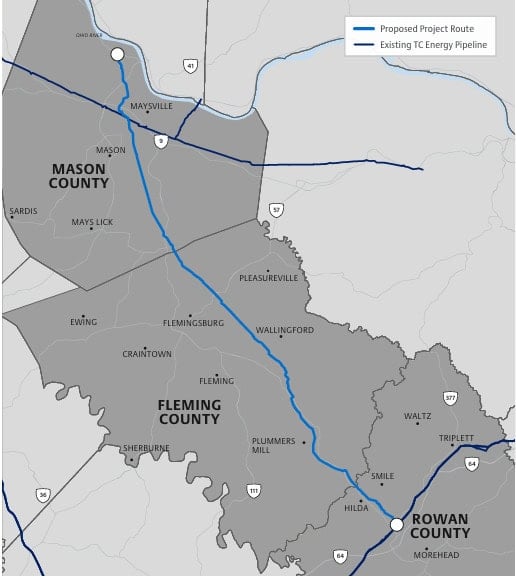


No comments:
Post a Comment