Fed’s Schmid says central bank has ‘work to do’ on inflation - Jeffrey Schmid, the president of the Federal Reserve Bank of Kansas City, said Sunday central bank officials have “work to do” to rein in persistent inflation. “As Chairman Kevin Warsh said at the Kansas City Fed’s Jackson Hole Economic Symposium in August, the Fed has some work to do on inflation, and, unfortunately, our work has only gotten harder since then,” Schmid said at a National Credit Union Management Association conference in Hawaii. “Inflation has been running too hot,” he added. Schmid said that annual inflation, which rose to 3.6 percent in September according to the personal consumption expenditures price index, was “uncomfortably above” the Federal Reserve’s 2 percent target. Another inflation metric, the consumer price index (CPI), measured prices as up 3.7 percent year over year in September. The CPI increased by 0.4 percent from September to October, but the Bureau of Labor Statistics was unable to collect enough data in October 2025 — as a result of the record-long government shutdown that took up the entirety of that month — to provide annual inflation data. Schmid cited four reasons for persistently elevated inflation: energy price shocks amid the Iran war, increases in durable goods prices, the artificial intelligence build-out and mounting healthcare costs for employers and ObamaCare enrollees. The Kansas City Fed president said the central bank has the tools to address these price pressures, noting inflation “is always the result of an imbalance” between supply and demand. “It is in the context of strong demand that a disruption to supply drives up prices. Demand always plays a role in inflation, and the Fed, through its influence on demand, always has the tools and responsibility to address inflation,” Schmid added. Schmid does not sit on the Federal Open Market Committee (FOMC), which will meet Dec. 8-9. The panel hiked interest rates by a quarter point in September, as officials seek to bring inflation down to 2 percent. At last month’s FOMC meeting, officials held rates steady at a range of 3.75 percent to 4 percent. Traders are pricing in a 92.4 percent chance of officials raising rates in early December by a quarter point, and a 7.6 percent chance of a half-point hike, according to the CME FedWatch tool.
Waller Wants To "Shock" People: Fed Hawk Reprises 50bps Call As Market Refuses To Price It- He's back. Eight days after threatening a 50bps hike hours before CPI, Fed Governor Chris Waller went on CNBC this morning and did it again: inflation is headed in the wrong direction, it is broadening, and policymakers should consider a half-point increase at the Dec. 9 decision. And just in case anyone thought he was bluffing, he told CNBC's Steve Liesman that "You might need to, like, shock people." The case Waller laid out was less about the headline and more about breadth. By his count, roughly 70% of the items in the core services basket are now rising by more than 3%, a sign that the inflation impulse has long since escaped the energy shock (so much for "transitory pass-through"). Annualized, he said, inflation is heading toward 3.5%. What seems to worry him most is pricing power: companies increasingly believe consumers are resilient enough to swallow price increases of 3% or more, and so the Fed may need to "shock" people out of thinking 3% is the new normal. Waller also said the Fed may have to take back all three of last year's "insurance" cuts, and maybe more. Insurance, as it turns out, against the wrong risk. He did offer an alternative: hike 25bps in December and explicitly signal another move in January. The catch, as CNBC noted, is that this runs against how Chair Warsh likes to communicate (i.e., not pre-committing). Put differently, Waller is telling his boss: either give me 50 now, or give me forward guidance he doesn't want to give. Either way it's 50bps over two meetings. Regular readers will recall that the London version of Waller put it like this on Nov 10, at the BoE Watchers conference, conditioning a 50bp move on October core CPI printing around 0.3% or higher: In that case, I believe a 50 basis point hike in the policy rate should be considered at the December meeting. Hiking only 25 basis points would put our credibility at risk, a risk I am not eager to take. Core CPI then printed 0.3% hours later (0.297% unrounded, so the threshold was met by the grace of rounding), odds of a 50bps hike jumped to about 14%, and ZH tweeted the "hawkish panic" in real time. Then the softer PPI trimmed those bets, and as we noted last week, none of Waller's colleagues joined him in openly backing 50.That hasn't changed. Per Goldman's US economics team (Mericle), the closest thing to a response came from the New York Fed's John Williams, who said Tuesday: "I don't think the situation calls for dramatic action". Williams also argued the October core print reflected a continuation, not a broadening, of tariff and energy passthrough, which is the polar opposite of Waller's "spreading out" diagnosis (and since both vote, someone is going to be disappointed). Meanwhile, St. Louis Fed's Musalem sees several increases by spring.For those keeping score, this is the same Waller who flipped dovish in early September and sent everything ripping. Ten weeks later he wants to shock the public. Data dependence at its finest.
Foreign investors lose faith in American creditworthiness -When Washington wants to finance its global budget deficit and fund its military ambitions, it sells government bonds. But behind the illusion of endless American spending lies a mounting crisis in financial markets. Today, as 10-year bond yields hover around 4.7%, and national debt surpasses $40 trillion, the United States faces a compounding economic nightmare. To understand why rising bond yields threaten to paralyze Washington, we have to look at how government debt functions in the secondary market. When demand for US debt drops due to fears of persistent inflation and fiscal instability, investors sell off bonds below face value, driving effective yields upward. Since 2022, the Federal Reserve has actively dumped its bond holdings under quantitative tightening, while major international holders lose interest in holding dollar debt. To attract buyers for new debts, the U.S. Treasury is forced to offer increasingly expensive interest rates, creating a vicious cycle of skyrocketing borrowing costs. This surge in borrowing costs directly threatens to paralyze the U.S. federal budget. Interest payments on the national debt have already surpassed the entire American defense budget, leaving virtually no room for public spending or domestic infrastructure. As old debt matures and gets rolled over at higher rates, the U.S. government is forced to spend trillions simply servicing interest payments. In the short and medium term, this means higher mortgage and credit costs for working families, reduced corporate investments, and rising unemployment. In the long term, high yields drain capital away from productive industries, locking the American economy into chronic recession and erosion of dollar dominance. This financial vulnerability makes Washington's military aggression against Iran one of the most reckless strategic blunders in modern history. Imperialist wars in Vietnam, Iraq, and Afghanistan loaded trillions onto the American debt burden. Waging an unprovoked war against a resilient nation like Iran, while drowning in $40 trillion of debt, strips Washington of its economic buffer. A military failure against Iran would shatter international confidence in American power, accelerating the global abandonment of the dollar and triggering catastrophic domestic inflation. The martyred leader of the Islamic Revolution, Ayatollah Seyyed Ali Khamenei, consistently pointed out that the era of Western economic and military intimidation has come to an end. Washington cannot wage endless foreign wars while its financial foundation collapses under the weight of rising yields. The economic data is clear. The U.S. establishment is drowning in its own debt trap, and no amount of political propaganda can hide the crumbling state of its paper empire.
Senate GOP unveils nearly $1.1T defense appropriations bill for 2027 -Senate Republicans on Monday unveiled a nearly $1.1 trillion defense appropriations bill for fiscal year 2027, which includes tens of billions in funding for programs initially part of the Pentagon’s $350 billion reconciliation request The massive spending bill saw close to $69 billion being moved from reconciliation to the base budget, reflecting the skepticism that the full $350 billion party-line Pentagon request could materialize. The defense bill, rolled out by the Senate Appropriations Committee Republicans, features $202.9 billion for the pay and benefits of service members and families to fund a 3.6 percent pay raise $47.2 billion for munitions procurement and acceleration investments across the Pentagon and $35.6 billion for investments in air and missile defense capabilities, including the Golden Dome, a priority for President Trump. The legislation, which does not include military construction, contains $11.1 billion for procurement of aircraft, modifications and sustainment, $6.2 billion for continued research, development and procurement of drone and counter-drone systems and $42 billion for shipbuilding, which includes nearly $2 billion in additional funding for an Arleigh Burke-class Navy guided-missile destroyer. The bill’s release comes as lawmakers are staring down a Dec. 11 deadline to avert a government shutdown. Some Democrats are looking at the looming deadline as an opportunity to force the Trump administration to end the war against Iran, potentially throwing a curveball into the lame-duck session.Over $285 billion in the bill is designated for procurement of weapon systems and $203 billion for research, development and testing of platforms. The bill also contains $5.4 billion to strengthen security cooperation programs, including about $1 billion for the First Island Chain Security Cooperation Initiative to bolster partnerships with the Philippines and Taiwan, $750 million for the Ukraine Security Assistance Initiative, some $175 million for the Baltic Security Initiative and upped funding for security cooperation with Jordan and Bahrain. Sen. Mitch McConnell (R-Ky.), the chairman of the Senate Defense Appropriations Subcommittee, said the bill is a “roadmap to sustainably and responsibly” deliver “generational investments” in the national defense. “The nature of warfare is changing, and America’s adversaries are working together to threaten us. Deterring these threats is a project bigger than one-time surges of cash. From expanding critical munitions production to reviving American shipbuilding to holding our edge in developing future weapons, tomorrow’s joint force will need consistent investment, year after year,” McConnell said in a statement. I’m proud of the Subcommittee’s work toward an historic new baseline and a full-year investment in this generational project,” he added. Trump and Defense Secretary Pete Hegseth have advocated for a record $1.5 trillion Pentagon budget, arguing it is necessary to strengthen the military, bolster national security and revitalize the defense industrial base. Last week, the president once again called on the Senate to pass the $350 billion partisan reconciliation packageBut Democrats have been opposed to the $1.5 trillion Pentagon budget ask, and some have argued the topline for the base budget needs to be shaved off. Sen. Patty Murray (D-Wash.), the top Democrat on the Senate Appropriations Committee, said the defense bill delivers a “truly massive windfall” for Hegseth’s Pentagon, ”meeting President Trump’s eye-popping request—while doing next to nothing to rein in this president who is waging illegal wars.”
Trump Tells Advisers He Won’t Escalate War Against Iran Unless Provoked By Iran, Houthis - - Sources said that President Donald Trump has informed his senior advisers that he does not plan to escalate attacks on Iran unless provoked by the Islamic Republic or Ansar Allah – the Houthis – in Yemen. Reuters reports, speaking with three people familiar with the matter, that in national security meetings, the President has indicated that he is considering holding off on ordering new strikes against Iran. However, the sources said Trump has yet to make up his mind on how to resolve the nine-month-long conflict, noting the President could be provoked to escalate the conflict by Iran or Ansar Allah in Yemen. It’s unclear what Tehran or Sanaa would have to do to provoke Trump to escalate the conflict. Iran has attacked tankers attempting to transit the Strait of Hormuz on a near-daily basis, and last week hit an Omani island. Ansar Allah, the ruling faction in Yemen with ties to Iran, has hammered Saudi Arabia with missiles and drones while taking a significant amount of territory from Saudi-backed forces in Yemen. The US has bombed Iran’s Qeshm Island this month, but Trump has described the strikes as minor. Publicly, Trump has attributed his decision not to attack Iran to requests from Washington’s Middle East allies not to escalate the conflict. Last week, he told Stephen A. Smith that, “I could end it immediately, but at the request of the nations that I am looking to protect, we are doing it a little bit longer way, a bit more civilly.” On Saturday, The Wall Street Journal reported that the US intelligence community estimates that Iran still has 1,500 to 2,500 missiles in its arsenal. While the estimate was assessed with “low confidence,” a US official told the outlet that Iran’s missile stockpile “has also informed internal Trump administration discussions about whether to relaunch strikes alongside Israel.” Additionally, Reuters also reported that US intelligence agencies have assessed that renewed attacks on Iran would not significantly alter Tehran’s negotiating demands. Last week, it was reported that Israeli Prime Minister Benjamin Netanyahu was making daily calls to Trump asking him to order new attacks on Iran. So far, Trump has resisted Netanyahu’s requests. The President has indicated that he prefers to continue economic pressure on Iran rather than launch another major round of strikes.
IRGC pounds US air defense radar in Bahrain base with six drones The Islamic Revolution Guards Corps (IRGC) says it targeted a US air defense radar at Al-Riffa helicopter base in Bahrain with six drones. In a statement released on Sunday morning, the IRGC said its Aerospace Force targeted the radar in the “second phase of a decisive and crushing response to [US] aggression.” “The precise and successful impact of these drones was heard in various parts of Bahrain, once again demonstrating the IRGC’s operational capabilities,” the statement said. The IRGC also rebuked the United States for attempting to divert global attention from the closure of the Strait of Hormuz through limited and indiscriminate actions, following its failure in an operation presented as an escort mission but aimed at smuggling oil through the strategic waterway. “However, the IRGC’s elite young officers once again declare loudly: The Strait of Hormuz is closed, and any aggression by the American enemy will be met with a harsher and more crushing response,” it added. The statement further said that more IRGC drones were dispatched against US targets in this phase than in the previous one, warning that every act of aggression would prompt a “tough” and “calculated” response. On Friday, the IRGC announced that it had destroyed a US military early-warning radar in Bahrain in a precision strike by its Aerospace Force. The statement called the Bahrain strike “a serious warning to the aggressor enemy to cease its aerial provocations and oil smuggling in the Strait of Hormuz.” It comes amid the ongoing US-Israeli war of aggression against the Islamic Republic, launched on February 28 with the assassination of the Leader of the Islamic Revolution Ayatollah Seyyed Ali Khamenei and senior military commanders. Iranian forces have responded with repeated waves of deadly missile and drone strikes on US military bases and assets across the Persian Gulf, including facilities in Bahrain, repeatedly targeting early-warning radars and air-defense systems. Previous Iranian operations have degraded US surveillance and defensive capabilities in the region, while American forces have continued strikes on Iranian territory, including civilian and infrastructure sites. Iranian officials have repeatedly warned that any further aggression will be met with expanded retaliation without geographical restriction, particularly in defense of the Strait of Hormuz.
Third US Aircraft Carrier Will Arrive in Middle East By Monday - The USS Theodore Roosevelt aircraft carrier strike group will arrive in the Middle East within the next day. The USS George HW Bush and USS George Washington are already deployed in the region. The New York Times reported on Sunday, speaking with military officials who said the Roosevelt will enter US Central Command’s (CENTCOM) area of responsibility within the next day. A large naval deployment, especially the inclusion of multiple aircraft carrier strike groups, could be a signal the US is preparing to escalate the war against Iran. Reuters reports, speaking with three people familiar with the matter, that Trump has indicated during national security meetings that he may hold off on ordering new strikes against Iran unless provoked. The arrival of the Roosevelt follows Iran escalating attacks on targets in the Gulf. The Islamic Revolutionary Guard Corps (IRGC) has conducted near-daily attacks on tankers attempting to transit the Strait of Hormuz.. Last week, Iran attacked an Omani island in the Strait that hosts equipment used to assist ships transiting the waterway. Bahrain said it was attacked by Iran for the second time in recent days. The Bahraini Defense Ministry said it intercepted several “Iranian aerial threats” on Sunday before they struck their targets. The IRGC claimed it launched six drones at a US radar installation at a military base in Bahrain, although the US has not confirmed that the attack damaged the facility.
CENTCOM Confirms Third US Aircraft Carrier Has Arrived in the Middle East - US Central Command confirmed on Monday that the USS Theodore Roosevelt has arrived in the Middle East, making it the third US aircraft carrier deployed in the region, as the US continues to put pieces in place for another major bombing campaign against Iran.The Roosevelt is expected to replace the USS George Washington, but it’s unclear when the Washington will leave the region. Each aircraft carrier deploys as part of a carrier strike group, which typically includes several guided-missile destroyers and other supporting warships.The other carrier, the USS George H.W. Bush, has had its deployment extended, and family members of the sailors on the ship have been informed to be prepared for a year-long deployment that would end in March 2027.News of the Roosevelt’s arrival in the region comes as the US and Iran have been trading limited strikes, and commercial ships continue to come under attack in the Strait of Hormuz. Iran’s Islamic Revolutionary Guard Corps said on Monday that at least three ships had caught fire over the past day.While President Trump hasn’t restarted the full-scale bombing campaign, the US has been escalating against Iran by expanding the blockade, adding new sanctions, and launching strikes against Qeshm Island and other areas of the Iranian coast in the Strait of Hormuz. In response, Iran has launched at least two attacks that it said targeted radar systems at US military installations in Bahrain.
US Bombs Multiple Locations on Iran's Qeshm Island as War Continues To Escalate - Iranian media reported on Tuesday that US strikes hit “several locations” on Iran’s Qeshm Island, an attack that came after Iran’s Islamic Revolutionary Guard Corps (IRGC) said it targeted a US radar in Bahrain, as the war continues to escalate. The IRGC said that it targeted the Sheikh Isa Airbase in Bahrain in “response to the continued violations of the airspace of the Islamic Republic by drones operated by the aggressor US military,” and said that it came after its forces downed US drones.US Central Command confirmed that Iran targeted the facility in Bahrain but claimed that multiple “Iranian one-way attack drones launched by the IRGC today towards Bahrain were intercepted without any damage to U.S. equipment or injury to American personnel.” A US military official told Axios reporter Barak Ravid that US fighter aircraft bombed an IRGC missile launch site on Qeshm, an attack the official framed as “self-defense,” omitting the context that the strikes are still part of the same war of aggression the US and Israel launched on February 28 and that the US continues to enforce a naval blockade on Iran.Ahmad Nafisi, a deputy governor of Iran’s southern Hormozgan province, said the US strikes caused no damage to residential or commercial areas, critical infrastructure, or public facilities, according to the Anadolu Agency, which cited Iran’s IRIB.The US has been launching frequent strikes along Iran’s coast in recent weeks as it continues putting pieces in place to dramatically escalate the war back into a full-scale bombing campaign. US Central Command confirmed on Tuesday that the USS Theodore Roosevelt has arrived in the Middle East, making it the third US aircraft carrier deployed in the region.Iran’s attack on the US base in Bahrain marked the third time over the past week that it targeted a US radar in the country. Its first such attack was launched last week in response to US strikes on Sirik, southern Iran.Iranian forces also continue to target commercial ships in the Strait of Hormuz, with the IRGC saying on Tuesday that at least four “violating tankers” had struck mines and caught fire in the waterway. “Unauthorized vessels attempting to use the southern route through the Strait of Hormuz are facing an iron and fiery wall of naval mines. The choice is yours,” the IRGC Navy said.
Araghchi warns Israeli lobbyists repackaging Iraq war lies to target Iran -Iranian Foreign Minister Abbas Araghchi says media campaigns targeting Iran have intensified in recent days, warning that the Israeli regime and its lobbyists are seeking to reproduce the propaganda tactics used to justify the US-led invasion of Iraq in the early 2000s. In a post on his X account on Tuesday, Araghchi said that the recent reports about alleged Iranian sabotage plots in the United States and claims that Iran was using dams for missile manufacturing were clearly products of Israeli lobbying efforts. “In the past 72 hours, pro-Israel media have ‘reported’ that Iran is supposedly plotting to use chemical weapons in DC while building missile bases under dams. RUBBISH,” he said. His comments came after a CNN report claimed that Iran might use “dirty bombs” to carry out "operations" in the US capital. A report by The New York Times alleged that Iran’s construction of extensive water infrastructure, including dams, could be connected to its missile manufacturing program. Iran has dismissed the reports as fabrications, saying they are intended to create pretexts for renewed aggression against the country. Araghchi said the reports echoed the false intelligence claims about weapons of mass destruction used to justify the 2003 US invasion of Iraq and rally support for the aggression against the Arab country. “Spare us the Iraq War-style propaganda, especially with Israeli fingerprints all over it. Nobody is buying it,” he said. The allegations of Iraqi weapons of mass destruction were subsequently discredited by official investigations and inquiries conducted after the US invasion.
Towering inferno in Strait of Hormuz as Iran ignores Trump's warning and destroys tanker | Watch – video - A fully laden tanker has reportedly burst into flames near the Strait of Hormuz. Reports say none of the crew survived and suggest Iran struck the vessel. Iran's Islamic Revolutionary Guard Corps claimed the tanker hit a naval mine. It said the vessel was navigating a restricted zone with navigation systems off. President Donald Trump had warned Iran against threatening the United States or its allies. Qatar called for restraint and urged parties to avoid escalation that could undermine negotiations.
Iran launches fresh wave of attacks on US bases -Iran has launched a wave of drones at US military bases in Kuwait and Bahrain in an escalation of the Middle East conflict. The strikes, early on Wednesday, came hours after the US had struck several sites on Iran’s Qeshm Island in response to fresh attacks on shipping in the Strait of Hormuz.The Iranian army claimed responsibility for the attack on Kuwait, claiming its “combat destruction drones” had hit US Patriot air defense systems along with drone and missile launchers at the Ali al-Salem air base, which hosts American forces. Tehran said the attacks were in response to US drone surveillance operations and an attack on Iranian communication towers, describing the Kuwaiti base as “a key hub for air transport, and the gateway for the entry of military forces into West Asia”. “In defending Iran, we will not bow to any power,” it said. “Our response to any threat or aggression will be decisive, crushing and without geographical limitation.” The Ali al-Salem air base was struck at least 30 times by Iran between the outbreak of the conflict on Feb 28 and an April 8 cease-fire, with at least 15 aircraft hangars damaged or destroyed, along with a number of warehouses. Wednesday’s attack was the first against tiny, oil-rich Kuwait in more than two months, while Bahrain, to the south, has been struck three times in the past week. Missile alerts sounded twice before sunrise, with blasts heard across the island kingdom as drones launched by the Islamic Revolutionary Guard Corps targeted its American radar systems, and air-defence batteries opened fire in response. The IRGC has used Qeshm, Iran’s largest island, to launch drones and missiles against targets in the region, but a local Iranian official said that Tuesday’s attack by the US caused no damage to infrastructure. The strikes on the bases unfolded against the backdrop of an intensifying guerrilla war at sea. Attacks on vessels passing through Hormuz have surged this week, with three ships struck by mines on Tuesday alone. Adnoc, the United Arab Emirates state-owned oil company, said on Wednesday that one of its tanker crew members was missing after an attack in the strait the day before, while 11 others were injured and were receiving medical care. Kuwait and Bahrain host major US bases that have been used to launch strikes on Iran and have repeatedly come under fire. Iran fired more than 1,200 drones and missiles at Kuwait and at least 700 at Bahrain before the ceasefire, according to the International Institute for Strategic Studies. The United Arab Emirates was targeted more than 2,800 times but has been spared in this latest round, as has Saudi Arabia, which instead faces relentless fire from Yemen’s Iran-backed Houthi rebels. The aircraft carrier USS Theodore Roosevelt has arrived in the region and joined the USS George Washington, the USS George HW Bush, and the amphibious assault ship USS Boxer as the US continues to reinforce its presence. He said that should “the enemy make a miscalculation”, the response would be “more crushing, more severe and without geographical limitation – against it and its supporters”.
Iran widens Gulf attacks by targeting a U.S. air base in Kuwait and sites in Bahrain— Iran widened its attacks on its Gulf neighbors on Wednesday, targeting a U.S. air base in Kuwait and launching several attacks on Bahrain in what appeared to be retaliation for American strikes the day before. After about two months without such attacks, Iran has repeatedly targeted U.S. facilities in Bahrain in recent days. The small Persian Gulf island kingdom hosts the U.S. Navy’s 5th Fleet.The early morning attacks in the nearly nine-month-old war came after a U.S. fighter jet struck a Revolutionary Guard missile launch site Tuesday on Qeshm Island in the Strait of Hormuz. The U.S. strike was in retaliation for an Iranian attack on an American radar installation in Bahrain earlier Tuesday.Iran said that its recent attacks — including those on other U.S. facilities in Bahrain on Sunday and Friday — were in response to U.S. drone surveillance operations and an attack on Iranian communications towers.The tit-for-tat attacks come as the commander of the U.S. military’s Central Command, Adm. Brad Cooper, met Wednesday in Tel Aviv with Israel’s military chief of staff, Eyal Zamir, and the director of Israel’s intelligence agency Mossad, Roman Gofman.They also complicate negotiations for a diplomatic solution and raise the risk of resumption of all-out conflict as a conflict in Yemen between Iran-backed Houthi rebels and a Saudi-led coalition could drag on for months.The U.S. military didn’t immediately respond to a request for comment on the latest attacks.With its economy suffering under a U.S. naval blockade and American military escorts helping restore the passage of oil tankers through the Strait of Hormuz, experts say that the recent attacks suggest Tehran may be growing weary of the status quo.“Even if neither side intends to enter a broader confrontation, the accumulation of military incidents across multiple fronts increases the risk of miscalculation and escalation beyond what either side originally intended,” Hamidreza Azizi, senior Iran analyst at the International Crisis Group think tank, wrote in an analysis posted to X following the initial reports of the attack on Kuwait.U.S. President Donald Trump has sent mixed messages on his next steps, saying new strikes are highly unlikely, but also sending a third aircraft carrier and thousands more troops to the Middle East.Though U.S. military protection has helped restore oil shipments from the Gulf, Iran has continued to attack tankers as they attempt to transit the Strait of Hormuz. A still image obtained from a social media video shows a tanker on fire in the Strait of Hormuz off the coast of Oman, on Tuesday. United Arab Emirates state-owned oil company ADNOC said Wednesday that one of its tanker crew members was missing after an attack in the strait on Tuesday, while 11 others were injured and were receiving medical care.Danny Citrinowicz, a researcher at Israel’s Institute for National Security Studies and a former Iran specialist in Israel’s military and intelligence services, described an “increasingly clear” pattern of attacks by Iran on shipping and U.S. facilities in the Gulf region.“Iran appears to be pursuing a strategy of deliberate, calibrated escalation,” he wrote in an analysis on X. “The objective is not necessarily to trigger an all-out war, but to steadily increase the military, economic, and political costs of maintaining the blockade.”He said that Washington is faced with the dilemma that a limited response may encourage Iran to push further, while a stronger response risks accelerating the escalation that the U.S. is trying to avoid. “As long as the U.S. naval blockade remains in place and no agreement is reached, further escalation will become increasingly difficult to avoid,” he said. “There are two clear paths to de-escalation: a negotiated agreement or a U.S. decision to lift the blockade.”
Iran’s top commander vows to push US forces out ‘to South Pole’ - Iranian Armed Forces Chief of Staff Major General Ali Abdollahi says Iran has successfully repelled American forces at sea, vowing that Tehran will continue to push the US military out of the region entirely. Speaking on Wednesday at an exhibition hosted by the Foundation for the Preservation and Publication of the Values of the Sacred Defense and Resistance, Gen. Abdollahi highlighted Iran’s strategic achievements during the recent US-Israeli wars of aggression. "Today, I say clearly, boldly, and with certainty that we have been able to stand up to two major powers, primarily the United States, which is the world's superpower," Gen. Abdollahi stated. He noted that the peak of American military power lies in its naval capabilities, including aircraft carriers, destroyers, and cruisers, which give Washington reach across the world's oceans. However, he emphasized that Iran has successfully countered this dominance. "We have achieved significant success in the maritime domain, pushing the enemy to withdraw to a considerable distance. By the grace of God, we will certainly push the Americans out of the region to the South Pole ... and they should wait for it," he said. The Chief of Staff also highlighted major advancements in Iran’s air defense capabilities, stating that the country can now counter enemy fighter jets and aircraft with much greater strength and higher precision than in the past. He credited these achievements to the exceptional work of Iranian scientists, researchers, and scholars. Gen. Abdollahi stressed that the most crucial lesson from the recent wars is the resilience of the Iranian people, which he described as the fulfillment of the Qur'anic promise that those who remain steadfast will achieve victory. He issued a warning to Washington and Tel Aviv, stating that mere retaliatory strikes are no longer sufficient. "A single slap is no longer enough for this enemy. By the grace of God, we will certainly take revenge for the blood of our martyred leader, the people who were martyred in these wars, and the children of Minab," he said.
Report: Pentagon Has Not Disclosed Most US Strikes on Iran in Past Two Months - - While President Trump has claimed this month that the US war with Iran is “effectively over,” the US and Iran continue to trade strikes nearly every day, and most of the recent US attacks haven’t been disclosed by the Pentagon, according to a report from NBC News. Some of the recent US strikes against Iranian military targets on Qeshm Island have been acknowledged by the US, but US officials told NBC that most of the recent bombings haven’t been disclosed, particularly over the past two months.Iran has continued to attack commercial ships in the Strait of Hormuz and has also targeted US Navy ships. Over the past week, it began responding to US strikes by launching attacks on US bases in Bahrain, and on Tuesday night, its attacks expanded to Kuwait, demonstrating how the conflict is escalating. The officials speaking to NBC said that some of Iran’s attacks have put US personnel and aircraft in danger. Iran’s IRGC frequently claims to have downed US drones, and it said in a statement on Wednesday that its forces shot down a US MQ-9 Reaper drone that was flying over the Strait of Hormuz.The US also appears to be continuing preparations for the resumption of a full-scale bombing campaign against Iran. The aircraft carrier USS Theodore Roosevelt arrived in the Middle East this week, briefly bringing the total number of US carriers in the region to three before the USS George Washington departed for East Asia. NBC previously reported that some of Trump’s advisors told him he had a narrow window to re-escalate the war and should act before the new Congress takes office in January. Trump is currently in China, where he’s expected to hold a trilateral summit with Chinese President Xi Jinping and Russian President Vladimir Putin, and would likely restart the major bombing campaign before returning to the US.
The Iran War Is Uniting the Muslim World -- The GOP’s midterm elections rout last week transformed U.S. politics. And the Iran War had a lot to do with it. Vice President J.D. Vance, in a social media post, placed it first on a short list of reasons why Trump supporters defected to the Democrats. Donald Trump, Jr., the president’s son and an influential MAGA voice, cosigned the VP’s diagnosis. Even President Donald Trump, to the surprise of many, has echoed Vance’s comments.The war’s political consequences could also reshape Trump’s cabinet. The president has reportedly been asking advisors whether Defense Secretary Pete Hegseth should keep his job. Despite public denials, NBC reported last week that Trump was considering replacing Hegseth.But as seismic as the war’s reshaping of the domestic political landscape has proved, its most transformative effects may be felt abroad. In the Persian Gulf region and the wider Muslim world, the security architecture is shifting. It had been built on the isolation of Iran in exchange for protection from America, but both parts of that foundation are now cracking. Though the Gulf nations are unlikely to totally abandon their security relationship with the United States, they are turning toward each other—and crucially, they are reengaging Iran.Countries like Saudi Arabia, the UAE, Qatar, and Bahrain, which host bases that enable the U.S. military’s forward presence in the Middle East, are frustrated by their current relationship with Washington. Throughout the Iran War, they have felt abandoned by a U.S. president who has ignored their warnings and sidelined their interests. And they have watched as the bases that were meant to provide protection instead invited attack, turning their hosts into targets of Iran’s military retaliation. These developments have led to a rethinking of the region’s security architecture. Gulf leaders have begun talking to each other about developing a unified stance on regional security.The first fruit of those talks was the Mecca Joint Defense Agreement, a defense pact between Saudi Arabia, Pakistan, and Turkey. Article 2 of the new pact, similar to NATO’s Article 5 collective defense provision, states that “an externally originating armed attack against any of the ‘Parties’ shall be considered an attack against all the ‘Parties’.” In the first trigger of that article, Pakistan sent troops and fighter jets to help Saudi Arabia in its fight against the Yemeni Houthis.Egypt, though not a member of the joint defense agreement, has also emphasized its commitment to regional security, and is reportedly considering joining the pact. It too recently authorized defensive military assistance to Saudi Arabia. Syria has also begun exploring possible membership in the Mecca alliance.This process of integration may even spread to encompass Muslim-majority nations outside of the region. In October, Pakistan, Turkey, and Qatar signed an agreement with Indonesia to enhance defense industry cooperation. While not a Mecca-style joint defense agreement, the Badr Memorandum, according to the Qatari Defense Ministry, “aims to foster cooperation in the field of defence manufacturing [and] enhance defence capabilities among the four countries.” A Turkish Defense Ministry statement says the agreement comes out of the desire to “deepen cooperation and develop partnerships.”But perhaps the most transformative shift in the geopolitical landscape is the emergence of a security architecture that is no longer based on Iran’s isolation, but rather its inclusion. Last year, Oman’s Foreign Minister Badr al-Busaidi had already pushed back against the framing of Iran as the driver of insecurity in the region and called for a shift to engagement with Tehran and an “inclusive dialogue.”Al-Busaidi recently renewed that appeal, saying that the American portrait of Iran as the chief threat to regional security has been “the most damaging of the priorities imposed on the region from the outside.” He said that constructing a security system on that “entirely false perception” had led to an “unstable” region. He even called on the Gulf states, Iraq, and Iran to unite in a “non-aggression” security pact.And the Middle East has now taken what may be the first small steps toward that new security architecture. At the end of October, Saudi Defence Minister Prince Khalid bin Salman, Pakistani chief of the armed forces Field Marshal Asim Munir, and Turkish intelligence head Ibrahim Kalin went to Tehran for talks with Iranian officials including Mohsen Rezaei, the secretary of the Supreme National Security Council. Iran’s President Masoud Pezeshkian and Foreign Minister Abbas Araghchi also attended.The packed agenda included opening a channel to deescalate military tensions. But it went beyond that. The broader aim, according to a senior Pakistani security official, was to build “a regional non-aggression network.” And a joint statement released at the end of the meeting promised “to continue the dialogue to strengthen cooperation amongst the four regional countries, including for peace and security in the region.”The Iran War has brought a seismic change to American politics. But it may bring an even greater transformation to the geopolitics of the Gulf region and the wider Muslim world. America will continue to play a role in the Middle East. But the Gulf Arab states, Turkey, Pakistan, and others are showing signs of turning away from the United States, toward each other, and in favor—remarkably—of productive engagement with Iran.
Iran says Hormuz will remain closed until US accepts seven conditions - Iran says the Strait of Hormuz will remain closed unless the United States accepts Tehran's seven conditions. Tehran warns that US bases and interests across the region could face immediate retaliation if regional countries comply with what it calls Washington's illegitimate demands. Iran's military spokesperson has said the Strait of Hormuz will not reopen unless the United States accepts Iran's seven conditions, warning ships against following what Tehran described as misleading US-designated routes. According to Iran's Tasnim News Agency, the spokesperson said Iranian armed forces maintain full strategic control over the eastern and western sides of the strait, with forces on high alert and at full readiness. He warned that vessels following US-designated alternative routes could face naval mines, fires and explosions, arguing that safe passage can only be guaranteed through coordination with Iran's regular army and the Islamic Revolutionary Guard Corps (IRGC). The spokesperson also stressed that Iran considers Arab countries in the region its neighbors and said Tehran has no hostility toward them. However, he described attacks on US military bases in the region as a legitimate response to what he called aggression launched from those installations against Iranian leaders and the late Supreme Leader. He warned that any repetition of what he called a miscalculation, or any regional country's compliance with Washington's "illegitimate demands," would trigger an immediate and overwhelming Iranian response against enemy bases and interests, extending beyond geographical borders. The statements underscore Tehran's continued insistence on maintaining control over the Strait of Hormuz and its opposition to US efforts to influence maritime navigation through the strategic waterway.
Report: Mossad Chief Pushed for Joint US-Israeli Strikes Against Iran During Washington Visit -- The head of the Israeli spy agency Mossad, Roman Gofman, lobbied for the resumption of the US-Israeli bombing campaign against Iran during his visit to Washington last week, Reuters reported on Wednesday. The report, which cited two unnamed sources briefed on the visit, said that Gofman met with senior US officials, including CIA Director John Ratcliffe, and also traveled to Florida for talks with Steve Witkoff, who has previously led US negotiations with Iran.While the US has been launching strikes against Iran and escalating the economic sanctions and blockade, President Trump so far has held off on escalating to a full-scale bombing campaign, something Israeli Prime Minister Benjamin Netanyahu is likely desperate for, as he is now leading a caretaker government and may lose power after Gadi Eisenkot was tasked with forming an Israeli government. Gofman’s trip to the US coincided with a visit from Ron Dermer, Israel’s former strategic affairs minister and a close ally of Netanyahu. Dermer was also meeting with Trump administration officials and pushing for joint US-Israeli strikes on Iran, and the sources speaking to Reuters said both visits were part of Netanyahu’s effort to re-escalate the war. The report said that Gofman passed “intelligence” to US officials about Iran’s nuclear program.A White House official told Reuters that Trump believes the economic campaign was “devastating” to Iran, so there was no need for “major combat operations.” But the war continues to escalate as the US and Iran have been trading strikes, and Iranian forces continue daily attacks on commercial shipping in the Strait of Hormuz.
Israeli Ambassador to Americans: Your Soldiers Will Return to Their Families Once Iran Is 'Defeated' - Israeli Ambassador to the US Yechiel Leiter has said that American soldiers deployed in the Middle East will be home with their families only after Iran is “defeated,” comments that come as Israel is pushing for a renewed round of joint US-Israeli strikes against the Islamic Republic. Leiter, who was born in the US, made the comments in an interview on Newsmax when asked how the US can get its soldiers back home while Iran can continue to launch strikes and coordinate with its allies in the region. “You get American soldiers back here to the United States to their families when Iran is defeated,” he replied. Leiter went on to make clear that “defeat” to him means regime change in Tehran and said that the US and Israel need “resilience” to continue the war. “Trump, like Reagan, understands this is an evil empire that has to come down,” Leiter said. “But once this regime comes down… the Houthis fall, Hamas falls, Hezbollah falls, Muslim Brotherhood falls … We need a little bit more resilience to see it to the end.”Leiter also pushed claims about Iran considering using chemical or biological weapons, which reportedly came from so-called intelligence that Israel passed to the US, allegations that Iran has strongly rejected as a pretext for renewed strikes.The New York Times reported on Wednesday that Israeli Prime Minister Benjamin Netanyahu is pushing the US to join his country in attacking Iran for four to seven days of strikes. The report said Israel has plans for widespread bombings of Iran’s energy infrastructure that would likely cut off power to civilians.Netanyahu is desperate for escalation now as he’s clinging to power after Gadi Eisenkot, leader of the Yashar party, has been given a mandate to form a government and the new Knesset has been sworn in, making Netanyahu a caretaker prime minister.
Iraq’s FM says external parties using Iraqi soil to attack neighbours- Al Jazeera - Iraq has evidence that external parties have been using its territory to launch attacks on neighbouring countries, its foreign minister told Al Jazeera in an exclusive interview on Saturday. Baghdad is investigating attacks launched from Iraqi territory against Gulf states and is seeking to resolve disagreements with Saudi Arabia through dialogue, Iraqi Foreign Minister Fuad Hussein said. Saudi Arabia has accused Iran-aligned groups operating in Iraq of attacking its oil infrastructure. In September, Baghdad confirmed that drone attacks on the kingdom’s East-West pipeline originated from Iraqi territory. Hussein told Al Jazeera that Baghdad was negotiating with Iran-aligned armed factions to bring their weapons under state control and the process must be pursued through dialogue rather than force.He also said Iraq was in contact with Tehran regarding the issue of weapons held by Iraqi factions.Iraq’s government had initially established a deadline for armed factions to bring their weapons under state control by September 30, when the US-led international coalition to combat ISIL (ISIS) was set to end their mandate and leave the country.However, it pushed back the deadline to June 2027 after encountering resistance to the policy, despite long-standing pressure from the US to fulfil its disarmament pledge.On Iraq’s balancing act between Tehran and Washington, Hussein confirmed that the US had formally requested the closure of all but two border crossings with Iran.He added that while Iraq welcomed friendship and an alliance with Tehran, it rejected interference in its internal affairs. The foreign minister also said that Iraq had lost about $60bn from the suspension of oil exports through the Strait of Hormuz, but that shipments have resumed after understandings were reached with Washington and Tehran.On the issue of combatting ISIL after the coalition pullout, Hussein said that Iraq, Syria, Jordan and Turkiye have formed a committee to fight the group’s presence in Syria.
Rumored New US-France Plan Could See Some UNIFIL Troops Stay in Lebanon After December - The UN Interim Force in Lebanon (UNIFIL) mandate expires at the end of December, and while that has been a known thing for well over a year now, there is still no agreement in place for what happens after the mandate expires. There are multiple competing plans at the moment, the largest of which being a France-led plan that would create a new EU-centric peacekeeping force to replace UNIFIL outright. Israel is said to oppose that plan, however. The US has a competing plan to send a far smaller force with a far smaller mandate, which would effectively only be meant to go after Hezbollah and not to document the ongoing Israeli occupation of Lebanon. With that mandate deadline fast approaching, there are new reports that the US and France are assembling a plan to extend the deployment of some UNIFIL forces into the next year, to provide more time to work out the post-UNIFIL solution. France is refusing to confirm if they support this idea, however There’s a lot that’s not known about this new plan, though it is said to include around 3,000 peacekeepers, just under half the full UNIFIL component, and would extend their presence for another 6 months conducting a limited subset of the mission. French officials may be reluctant to confirm if they approve of this interim deal because they’re still actively trying to recruit EU member nations into the new peacekeeping force they intend to create. Germany, notably, announced just yesterday they are willing to participate in the force. Israeli officials argued that the EU Security Mission would be “worse than UNIFIL” because they wouldn’t be hostile toward Hezbollah. It should be noted, however, that the UNIFIL was never empowered to act against Hezbollah or anyone else, and was primarily a peacekeeping and monitoring mission.
US Launches Another Strike in Somalia as It Continues Heavy Bombing Campaign - US Africa Command announced on Saturday that it launched another airstrike in Somalia as the Trump administration continues a heavy bombing campaign in the country, which receives virtually no US media coverage. AFRICOM said the strike targeted al-Shabaab on November 12 near Leego, a village about 70 miles northwest of Mogadishu in the Lower Shabelle region. The command offered no details about the strike, but Somali media has reported heavy clashes in the area between al-Shabaab and US-backed Somali government forces. Somalia’s KaabTV reported that there had been nearly four days of heavy clashes that involved airstrikes and artillery shelling, but that the scale of the casualties was unclear. Mohamed Gabobe, a Mogadishu-based journalist, reported for Drop Site News that on November 12, the same day as the US strikes, al-Shabaab ambushed the Danab, a US-armed and trained Somali special forces unit in the Lower Shabbelle region near Yaqbirweyne, a town about 12 miles east of Leego. Somali security officials told Gabobe that at least eight Danab members were killed and that al-Shabaab captured two vehicles.The US strike near Leego came two days after Somali media reported a series of heavy US airstrikes in Somalia’s northeastern Puntland state targeting the local ISIS affiliate. In a statement provided to New America, an organization that tracks the US air war, AFRICOM denied launching airstrikes in the area that day, suggesting AFRICOM isn’t reporting each US bombing in the country. Gabobe also reported on the Puntland strikes, writing on X on November 10 that the US was carrying out “non-stop strikes” in several areas. “The #US has carried out more airstrikes targeting #ISIS in #Somalia, then they’re officially claiming on-record,” he said. New America counted the US bombardment in Puntland as at least four airstrikes since they were reported in four areas, bringing its tally for this year’s airstrikes to 98. According to AFRICOM’s official numbers, the command has launched at least 92 airstrikes in Somalia in 2026.
US Launches Series of Airstrikes in Somalia Amid Heavy Fighting Between al-Shabaab and US-Backed Forces - -The US launched a series of airstrikes in southern Somalia from November 13 to November 15, according to a press release from US Africa Command (AFRICOM), amid heavy fighting between al-Shabaab and US-backed government forces.AFRICOM said that it conducted at least five airstrikes over the three days, including two near Leego, a village about 70 miles northwest of Mogadishu in the Lower Shabelle region, where the Danab, a US-trained and armed Somali special forces unit, has launched a major offensive. AFRICOM also reported a strike in Yora Lafagori on November 14, but its press release and official strike tracker offer conflicting descriptions of the location, and the village’s location is unclear. A fourth strike targeted al-Shabaab near Jamame, a town in the Lower Juba region, and AFRICOM’s tracker reported a fifth strike 68 miles northwest of Mogadishu.According to AFRICOM’s official numbers, the five strikes bring the total number of US airstrikes in Somalia this year to 97, though there are indications the command isn’t reporting each US bombing in the country. Based on numbers from New America, which includes credible media reports of US airstrikes that haven’t been confirmed by AFRICOM, the five strikes would bring the total number of US bombings this year to 103. Either number is more annual airstrikes than the US ever launched in Somalia before 2025, when President Trump shattered the previous record for annual US strikes by conducting at least 124.
US Proposes Ceding Donbas for NATO Membership, Zelensky Says - US negotiators have floated the idea of Ukraine withdrawing its troops from the Donbas region and surrendering it to Russia in exchange for NATO membership, according to Ukrainian President Volodymyr Zelensky. “The Americans raised a question: ‘What if Ukraine joins NATO? Would Ukraine withdraw from Donbas?’ This was the first time this had been raised,” Zelensky told reporters on Saturday.The remarks come after US envoys Jared Kushner and Steve Witkoff traveled to an EU summit in Dublin on Thursday, as part of ongoing efforts to end the war between Russia and Ukraine. The two had visited Moscow the day prior and engaged in a round of talks with Russian President Vladimir Putin.Zelensky has repeatedly stated that Ukraine was unwilling to give up sovereign territory, despite Moscow’s demands to cede the Donbas. However, he went on to say that if he received a proposal that contained security guarantees as well as no limits on Ukraine’s military and reconstruction funds, he would put it to a referendum.Ukraine has long sought membership in NATO as a condition of any peace agreement, in order to deter any future threats. However, Russia has maintained that another NATO member on its border is unacceptable, and cited the alliance’s expansion as a casus belli for the full-scale invasion in 2022. US officials have previously said that Ukrainian NATO membership was off the table. Zelensky said on Saturday that the US proposal made him believe that “NATO is back on the agenda,” but added, “You have also heard Putin’s signals, and this is a very difficult conversation.”During the talks last week, Putin rejected the idea of de-militarized “grey zones” as part of a peace deal, as well as a Western troop presence in Ukraine. And while Moscow’s demands have shifted little since the onset of the invasion, Putin proposed a humanitarian ceasefire around a town in the Donbas, similar to the recent ceasefire brokered by US First Lady Melania Trump.Russia currently occupies roughly a fifth of Ukrainian territory, including about 88% of the Donetsk and Luhansk regions that make up the Donbas.
Kushner Claims Russia Is 'Comfortable' With Ukraine Getting NATO-Style Security Guarantees - - President Trump’s son-in-law, Jared Kushner, claimed on Thursday that Russia was “comfortable” with the idea of Ukraine receiving security guarantees from its Western backers similar to NATO’s Article 5, which outlines the alliance’s mutual defense commitments. “I think we’ve gotten the Russians comfortable with that concept where any security guarantee for Ukraine would be based on Article 5,” Kushner said at a press briefing in Berlin following talks with officials from the “Coalition of the Willing,” a grouping of countries formed by the UK and France with the goal of deploying troops to Ukraine as part of a future peace deal.“And I think that that comes with at least what the Russians are saying, which is their intention is when this war is over to not have another war in the future,” Kushner added.So far, Russia hasn’t responded to Kushner’s claim. A Russian willingness to accept an Article 5-style security guarantee would mark a radical change in its position, as Moscow has always demanded some sort of Ukrainian neutrality, and Ukraine’s alignment with NATO was one of its main reasons for launching the war.Kushner also said that Trump is “open” to providing the NATO-like security guarantee, adding that it “obviously it has to be in America’s interest to do that. And we also have to make sure that it’s part of a broader security package.”Also on Thursday, Ukrainian President Volodymyr Zelensky, who attended the talks in Berlin, continued pushing for the idea of Ukraine’s full membership in NATO. “NATO membership is the best security guarantee for Ukraine and, in fact, for all of Europe,” he said.The meeting in Berlin came as Ukraine continues launching strikes against the Crimean Bridge, which connects Crimea to the Russian mainland. Over in Shenzhen, China, Russian President Vladimir Putin vowed that Russia would be responding to the days of attacks on the bridge and that it would be “far more painful” than Ukraine’s strikes.
White House Says $400 Million in Military Aid Will Bolster Philippine Forces in South China Sea -- The White House on Wednesday released a fact sheet on President Trump’s visit to the Philippines, saying $400 million in US military aid to the country would bolster Manila’s forces in the South China Sea, a major source of tension between Washington and Beijing.Under the 2026 National Defense Authorization Act (NDAA) that Trump signed into law in December 2025, Congress authorized up to $500 million in military aid for the Philippines each year through 2030. The aid comes in the form of Foreign Military Financing, a State Department program that provides money to foreign governments to purchase US weapons.“The United States will utilize $400 million in FMF for the Philippine military to expand its operational reach and deterrence capabilities in the South China Sea, including long-range fires, command and control, critical infrastructure, and multi-domain drones, supporting 1,500 American jobs,” the White House said. The fact sheet also said that Washington and Manila will pursue a new FMF “loan package of more than $2 billion to provide the Philippines with critical defense and security capabilities from US suppliers.” Under the 2026 NDAA, Congress also authorized up to $1 billion in potential FMF loans to Manila, so the $2 billion in proposed FMF loans appears to be new military aid. The 2026 NDAA marked a significant increase in US military aid to the Philippines and was the result of agreements signed between Manila and Washington under the Biden administration, which also included a deal to significantly expand the US military presence in the former US colony by giving the US access to four more bases. Trump met with Philippine President Ferdinand “Bongbong” Marcos Jr. in Manila on Wednesday before heading to Shenzhen, China, where he was greeted by Chinese President Xi Jinping and Russian President Vladimir Putin, with whom he will hold a trilateral summit on Thursday. In his meeting with Marcos, Trump touted more than $5 billion in weapons sales to the Philippines that have been approved under his administration while also downplaying the tensions in the South China Sea. “I am not concerned at all. That’ll be taken care of,” he told a reporter when asked about the situation in the disputed waters, where Chinese and Philippine vessels frequently have confrontations.
Trump Announces New Quad Military Exercise After Summit in Philippines -- President Trump and the leaders of Japan, India, and Australia held a summit in the Philippines on Tuesday, marking the first time the leaders of the four countries that make up a grouping known as “the Quad” have all met in person since 2024.The meeting came two days before Trump’s trilateral summit with Chinese President Xi Jinping and Russian President Vladimir Putin, which will take place in Shenzhen, China.In a joint statement released after the Quad leaders held talks on the sidelines of the 2026 Association of Southeast Asian Nations (ASEAN) Summit, the four leaders announced a series of initiatives, including new military exercises that will begin in 2027.“We are proud to welcome the Indo-Pacific Maritime Surveillance Collaboration, a new initiative to enhance information sharing and maritime domain awareness,” the statement reads. “In 2027, our respective P-8 and P-3C patrol aircraft are scheduled to fly in a maritime exercise for the first time in a Quad context, making our seas safer.”While the new exercises will technically be the first military drills held under the Quad framework, the four countries have been conducting war games together every year since 2020 under the Malabar naval exercise, which began in 1992 as a bilateral US-Indian military drill. This year’s iteration of the Malabar exercise took place in waters near China and concluded on November 12.The Quad, also known as the Quadrilateral Security Dialogue, was first formed in 2007, but the group was disbanded shortly after its creation, as some members feared it would send the wrong message to China. In 2017, the first Trump administration agreed with the other Quad nations to revive the group as tensions with China grew, and the cooperation continued through the Biden administration. China hawks in the US have been clear that they view the Quad as a potential foundation for a NATO-style anti-China alliance in the Asia Pacific, and a major part of the US strategy in the region has been fostering ties between its allies. The Philippines also fits into the strategy, as it has been ramping up military cooperation with Japan.
Trump, Putin, and Xi Hold Historic Trilateral Summit on APEC Sidelines in Shenzhen - - President Trump, Chinese President Xi Jinping, and Russian President Vladimir Putin sat down for a historic trilateral summit on the sidelines of the Asia-Pacific Economic Cooperation (APEC) forum in Shenzhen, China, on Thursday.The summit, which lasted 90 minutes, marked the first time the leaders of the three global powers ever held trilateral talks, a meeting that came amid soaring global tensions as the Russia-Ukraine war continues to rage and as there’s still no end in sight to the US-Iran war.In a joint statement, the three leaders “reaffirmed that a nuclear war cannot be won and must never be fought” and said that the “three countries will conduct a dialogue on reducing nuclear risks and preventing the proliferation of nuclear weapons.”The three leaders also vowed to reform “the UN so that the UN can respond more effectively to global challenges and conform to its fundamental mission of international peace and security” and said they would work to “increase the production and supply of refined petroleum.”They also “recognized that the principle of state consent and respect for immunities of State officials are of paramount importance, and concurred that the International Criminal Court and other similar bodies must not abuse their jurisdiction.”In opening remarks, Trump said that as “presidents of three of the world’s largest countries, we have a special responsibility to maintain open, respectful, and productive dialogue on issues impacting not just our people but the entire planet.”According to China’s statement on the talks, Xi said that history “tells us that when major countries live in harmony, the world enjoys peace; when major countries clash, the world falls into turmoil,” and expressed support for continued engagement.“The three countries should maintain regular high-level exchanges, keep dialogue channels open at all levels, and establish crisis communication and prevention mechanisms to minimize miscalculation, keep differences under control, and prevent frictions from escalating,” the Chinese leader said.In a separate bilateral meeting with Trump, Xi issued a warning on Taiwan as the US continues increasing diplomatic ties and weapons sales to the island. “On the question of Taiwan, the US side should keep doing the right thing and avoid major setbacks in China-US relations,” Xi said, according to the Chinese Foreign Ministry. Trump also held a separate one-on-one meeting with Putin that lasted about 40 minutes. Kremlin aide Yury Ushakov said it was a “good meeting” and that the talks mostly focused on the war in Ukraine.
Trump, Xi, Putin said they plan to boost oil production, revamp UN after trilateral talks - The U.S., China and Russia on Thursday vowed to boost production of petroleum products and reaffirmed their commitment to reducing nuclear risks following their leaders’ historic trilateral summit. President Donald Trump, Chinese President Xi Jinping and Russian President Vladimir Putin “had an in-depth exchange of views on the current international situation and committed to maintaining strategic stability and international security,” the countries said in identical statements shared after the meeting in Shenzhen, China. The statements were brief and broad, containing few details about what the leaders agreed on during their talks. They did not include any mention of Russia’s war against Ukraine, which continues to rage in eastern Europe despite recent U.S. efforts to broker a ceasefire. They also made no reference to the U.S.′ war in Iran, in which Russia and China have both been accused of aiding Tehran. “The three countries plan to increase the production and supply of refined petroleum products for the benefit of all nations. They reaffirmed the importance of stable energy flows,” according to the statements, described as a “Heads of State Declaration toward Peace.” The three presidents also “reaffirmed that a nuclear war cannot be won and must never be fought,” and committed to a “dialogue on reducing nuclear risks and preventing the proliferation of nuclear weapons.” And they committed to “reform” the United Nations so it “can respond more effectively to global challenges and conform to its fundamental mission of international peace and The leaders also agreed that “the International Criminal Court and other similar bodies must not abuse their jurisdiction,” the declarations stated. The Trump administration has heavily criticized the ICC, and Secretary of State Marco Rubio last month announced new U.S. sanctions against what he called a “rogue court.” In opening remarks earlier Thursday, Trump said the U.S., Russia and China are “uniquely positioned” to reduce the world’s nuclear weapons stockpile. “As the world’s three largest nuclear powers by far, the United States, Russia and China are uniquely positioned to discuss how to reduce the number of nuclear weapons on earth and also to lessen the risk that those weapons will ever be used,” Trump said. “The power is unbelievable, unthinkable,” he said, adding that it’s “a very hard thing” for countries to reduce nuclear weapons. That would include not letting Iran have nuclear weapons, Trump said. He said the three leaders would also discuss the war between Russia and Ukraine, and criticized “rogue globalist organizations,” including the International Criminal Court. The closely watched meeting lasted about an hour and a half late Thursday afternoon China time, following a working lunch between Trump and Xi that started at least an hour later than originally planned. Trump told Xi and Putin they were “really making history” with the first-ever trilateral meeting between the three countries’ leaders. He said it was an “honor” to be at the meeting with Putin and Xi, whom he congratulated on a “very successful APEC summit.” The three were among the world leaders attending the Asia-Pacific Economic Cooperation summit. “Too often past leaders have avoided talking to nations with whom they had disagreements,” Trump added. “We feel the opposite.”
Hegseth Makes Surprise Visit to Venezuela, Announces Military Cooperation Deal - US Secretary of War Pete Hegseth made a surprise visit to Venezuela on Wednesday, less than one year after the US attacked the country to abduct President Nicolas Maduro and take over its oil industry.Hegseth met with Acting President Delcy Rodriguez at the Miraflores Presidential Palace in Caracas, and announced that the US and Venezuela signed a deal to re-establish military ties. In a speech, the Pentagon chief said Venezuela “has gone from our most aggressive regional threat to a compliant security partner.” Rodriguez, who has been cooperating closely with senior US officials, welcomed the “renewed opportunity to strengthen the training of our Bolivarian National Armed Force, enhance its operational equipment and facilitate access to new technologies is highly beneficial for our military personnel.” The Associated Press reported that among those in attendance for Hegseth’s speech was Alejandro Betancourt, the owner of North American Blue Energy Partners, in which the Pentagon secured rights to a 35% ownership stake as part of the US-Venezuela oil deal. At this point, it’s unclear what the US-Venezuelan military collaboration will look like. Back in June, the US launched an airstrike in Venezuela in cooperation with the government that it said targeted a leader of the gang Tren de Aragua. The US has also been ramping up military ties with Colombia since President Abelardo de la Espriella came into power earlier this year. Hegseth was due to arrive in Colombia on Wednesday following his visit to Venezuela.
Denmark ratifies Trump security deal over Greenland - Danish lawmakers on Thursday approved a security agreement with U.S. President Donald Trump covering Greenland, seeking to end months of strained diplomatic tensions over the island’s future.Trump and the prime ministers of Denmark and Greenland signed the agreement in September. It allows Washington to expand its military presence on the island, paving the way for two new bases and the construction of a “Golden Dome” missile defense system.Thursday’s approval follows a protracted period in which Trump repeatedly threatened to take control of the self-governing Danish territory. Tensions reached fever pitch in January as the president repeatedly insisted that the U.S. needed Greenland for its national security, at times declining to rule out using military force to acquire it.A parliamentary tally showed 109 Danish lawmakers unanimously backed the agreement on Thursday, per Reuters. Greenland’s parliament ratified the deal earlier this month. It is not subject to a vote in the U.S. Senate.The Danish government can now formally notify the U.S. that both parliaments have consented to complete the ratification process.The deal supplements an existing 1951 defense agreement. It also maintains Danish sovereignty and Greenlanders’ right to self-determination.Trump’s proposed Golden Dome is a multibillion-dollar initiative designed to shield the U.S. from a range of aerial and missile threats. It was rolled out in May last year and is often compared with Israel’s “Iron Dome” system.Trump’s threats alarmed Greenlanders and other Europeans and opened a rift between the U.S. and NATO, of which Denmark and the U.S. are both members. Greenland has maintained that it is not for sale, and the European Union earlier this year united to rebuke Trump.
'They Killed My Wife': US Army Leadership Blamed for Iranian Drone Attack in Kuwait That Killed Six Soldiers - An investigation from “60 Minutes” that aired Sunday night detailed allegations that US Army commanders ignored warnings about inadequate defenses before an Iranian drone attack killed six American soldiers in Kuwait at the start of the US-Israeli bombing campaign against Iran.The report featured family members of soldiers who were killed in the March 1 drone attack on Port Shuaiba that hit a makeshift operations center that Maj. Stephen Ramsbottom, a US Army whistleblower who filed a complaint to Congress about the attack, said was not properly protected.“The protection that was there was to stop car bombs and threats like that. There was nothing there designed to protect from an aerial attack,” Ramsbottom said. Following the Iranian strike, US Secretary of War Pete Hegseth described the operations center as “fortified.”Ramsbottom was serving as the deputy chief of operations for the Army’s 103rd Sustainment Command, which was operating at Port Shuba at the time of the attack despite the Pentagon moving 90% of its ground forces out of the Pentagon before the war. He said he raised the lack of protection with the 103rd’s leadership and was told not to worry about it. Joey Amor, husband of Master Sgt. Nicole Amor, who was killed in the attack, blamed the 103rd’s leadership for his wife’s death. “I love those soldiers. And my wife loved those soldiers. But the command of the 103rd has handled this so poorly. And if I’m bein’ frank, it’s– it’s on them. They killed my wife. They killed these soldiers,” he told 60 Minutes. The report also detailed the destruction at US bases across the region and said that 31 US military and diplomatic facilities were hit, hundreds of buildings and other structures were damaged, and the headquarters of the US Navy’s Fifth Fleet in Bahrain was destroyed.In response to the report, President Trump didn’t address the central allegations about the Port Shuaiba attack, instead making a misleading claim about Iranian missile and drone attacks that ignored the extensive damage inflicted on US bases and attacks that wounded American troops but caused no fatalities.“The new people running 60 Minutes are even worse than their predecessors. A recent study on an attack in the early stages of Iran was not correctly stated. Since February 28, 2026, the start of Epic Fury, Iran has fired between 8,000-9,000 One-way Attack Drones,” Trump wrote on Truth Social.“Only 2 of them got through, resulting in U.S. fatalities, both on the first day, hitting Kuwait and Saudi Arabia. Likewise, Iran has fired about 2,000 Ballistic Missiles. Only 1 out of the 2,0000 got through, and caused U.S. fatalities (Jordan). Translation: 99.99% of Iranian missiles and drones have been shot down or, in any event, not caused U.S. deaths,” he added.
Incoming House Democrat accuses Hegseth of 'war crimes' and murder - Rep.-elect Fred Wellman (D-Mo.) accused Defense Secretary Pete Hegseth of committing “war crimes” during his tenure as head of the Pentagon. “Actually, I believe he’s committed crimes,” Wellman said during an appearance on MS NOW. “And let’s be very clear: we’re not at war with anyone in South America at this point. The boats that we are striking in the Pacific and in the Caribbean, who are they? As far as we’re being told, they’re drug boats.” “But I’m not sure if I remember a time in American history where we’re allowed to execute people simply for the accusation of a crime,” he continued. “The fact is, we have been striking these boats. We’ve killed hundreds of people with little or no explanation.” Wellman noted his experience as a retired Army officer, where he served for 22 years and was deployed to combat four times, saying, “we owe it to those troops who are pulling those triggers to know exactly what’s going on because they’re being asked to kill people.” “That responsibility is a very serious one and I don’t believe that Pete Hegseth or frankly Donald Trump take that at all seriously,” he concluded. “So I’m not just saying it’s war crimes. I think it’s fair to say it’s straight up crimes. It’s murder.” Earlier in the interview, Wellman also revealed he has known Hegseth for 15 years but disliked the defense secretary for “about 14.99 of those years.” The incoming lawmaker floated investigating the Defense Department for high-profile removals Hegseth conducted – including reports that he denied promotions to military members who supported the COVID vaccine. Hegseth was nearly impeached last week after outgoing Rep. Thomas Massie (R-Ky.) introduced eight articles of impeachment against him. The impeachment efforts accused Hegseth of violating the Constitution and other laws during U.S. military operations in Yemen, Iran, the Caribbean and the Eastern Pacific. Massie won’t be returning to the lower chamber as he lost reelection to Trump-backed Rep.-elect Ed Gallerein (R-Ky.) though House Democrats have signalled plans to conduct greater oversight into Hegseth and the Defense Department. “When Democrats take the majority in the 120th Congress, we will hold Secretary Hegseth accountable for his illegal actions,” Rep. Betty McCollum (D-Minn.), top Democrat of the House Appropriations Subcommittee on Defense, previously said in a statement.
Ro Khanna proposes $1,700 refund checks to offset Iran war costs - Rep. Ro Khanna (D-Calif.) on Monday proposed $1,700 refund checks to reimburse Americans for the economic impact of the Iran war. Khanna, a progressive and potential 2028 presidential contender, said on social media the checks would be sent to every American to cover higher gas, food and electricity prices caused by disruptions to oil transport routes due to the war. A frequent critic of the war, Khanna said Democrats were given an opportunity through their midterm victories. “I want to give every American family a $1,700 check to make them whole for the war in Iran,” Khanna said. The war has cost American households an average of $2,000 since its start, according to Mark Zandi, chief economist at Moody’s Analytics. The cost of gas has risen to average highs of more than $4 per gallon, and it sits at $3.81 per gallon as of Monday afternoon. Diesel is about two dollars more expensive per gallon compared with a year ago.Khanna called on Democrats to vote on his measure almost immediately after taking over the chamber. The party won a larger-than-expected House majority and campaigned on its commitment to address affordability concerns. “Democrats have a chance to deliver. The first week in January, the House and Senate must pass a refund check to Americans,” Khanna wrote on social media. “Let’s put it on Trump’s desk.”President Trump has repeatedly said that higher prices are worth it to prevent a nuclear Iran. He said gas prices will fall once the war is over but has continued the conflict and recently said a deal to end the war was not needed. Khanna has been traveling the country campaigning for midterm candidates as he contemplates a presidential run. As a staunch progressive, he could fill the far-left lane in the Democratic primary field, potentially alongside another popular progressive — Rep. Alexandria Ocasio-Cortez (D-N.Y.). The California legislator has also called for Congress to eliminate all funding for the Iran war, which would effectively deny any ability for the Trump administration to continue operations. The cost of the war topped $47 billion in October. “I would stop the funding. The House and the Senate should stop the funding for any further actions in the Iran war. That’s what we did to stop the Vietnam War, and we need to stop this war in Iran,” Khanna said prior to the midterm elections.
CNN to turn more pro-war on Iran after takeover by Israel-linked family –PressTV video- In the United States, many say that decades of consolidation in the mass media industry have produced an uncritical press whose goals seem to be aligned with the military-industrial complex. Another major media merger is now set to be approved, and it's expected to turn the nation’s news channel of record - CNN - even more in favor of an unprovoked war jointly launched by the US and the Israeli regime on Iran.
Trump on dirty bomb report: ‘We take it very seriously’ - President Trump said Tuesday that he takes the threat of the dirty bomb from Iran “very seriously” because “they happen to be crazy.” Trump, speaking to reporters in Manila, Philippines, said the administration was looking into Iran’s reported plans to drop a dirty bomb on Washington. “Well if there is there is they will pay a price the likes of which no country has ever paid before,” he said. When asked if the threat was imminent, the president said, “I hope it’s not.” “We take it very seriously because they happen to be crazy,” Trump added. CNN reported Monday that U.S. intelligence indicates that Iran is developing plans to target senior administration officials by setting off a dirty bomb, citing seven sources. The sources depicted it as plan for the Iranians that gives them options rather than an imminent threat. White House spokesperson Lauren Bis said in a statement to CNN that the U.S. is “monitoring any and all potential threats, but at this time there are no credible threats to the homeland.” The attack would be an escalation amid a war that has largely been stalled. Trump has said, “We don’t need to deal with Iran.” Iran has offered to reopen the Strait of Hormuz, which it has effectively been shut off since the start of the conflict, but only if the U.S. agreed to several conditions to end the fighting. The conditions include lifting sanctions and releasing billions of dollars in frozen Iranian assets, but the administration rejected it.
Iran Rejects CNN's Report on 'Dirty Bomb' Plot as 'Baseless' - - The Iranian Foreign Ministry on Tuesday rejected a report from CNN that claimed US intelligence indicates Iran was developing plans for a “dirty bomb” or chemical weapons attack in Washington, DC, as “baseless.” In his statement, Esmaeil Baghaei also referenced a report from The New York Times that suggested Iranian dams may be linked to underground military facilities, which he rejected as an attempt to justify US strikes on water infrastructure. “Those who initiated the aggression against Iran are now seeking to lay the media groundwork for their sinister designs by manufacturing and disseminating baseless allegations, including the recent claims published by The New York Times and the fabricated media narrative surrounding an alleged ‘dirty bomb’ propagated by CNN,” he wrote on X. “Step by step, they are attempting to manufacture a veneer of legitimacy for further aggression and atrocities,” Baghaei added. Iranian Foreign Minister Abbas Araghchi and Parliament Speaker Mohammed Bagher Ghalibaf also put out statements rejecting the two reports.“In the past 72 hours, pro-Israel media have ‘reported’ that Iran is supposedly plotting to use chemical weapons in DC while building missile bases under dams. RUBBISH,” Araghchi wrote. “Spare us the Iraq War-style propaganda, especially with Israeli fingerprints all over it. Nobody is buying it.”The CNN report, which cited seven anonymous US officials, also drew widespread criticism and skepticism from journalists and commentators on X, with many noting it came several days after Roman Gofman, head of the Israeli Mossad, was in Washington and met with senior US officials. Others noted how similar the story was to media reports published in the lead-up to the US invasion of Iraq.“The most amazing part of US government/media war propaganda is that they never bother to change the script a little bit, no matter how many times it’s been used over decades. They even use the same media outlets to act as helpful stenographers,” Glenn Greenwald said in a post that included a screenshot of a 2002 CNN report about a potential Iraqi “dirty bomb.” President Trump and other senior US officials amplified the report’s claims, suggesting it was a White House-approved leak to the media. When asked if there was any “imminent” Iranian threat facing Washington, Trump said, “If there is, they will pay a price the likes of which no country has ever paid before. I hope it’s not, but we take it very seriously — because they happen to be crazy. This is why they can’t have a nuclear weapon, by the way, in case people had any questions.”The CNN report comes as the US continues enforcing a blockade and launching strikes on Iran and is building up forces in the region as it prepares to potentially escalate back into a full-scale bombing campaign. With the midterm elections demonstrating how unpopular the war is, the administration may be looking for pretexts to escalate.The report also appears to be an effort to drum up fears of a domestic attack to justify renewal of Section 702 of the Foreign Intelligence Surveillance Act (FISA), which expired in June. Section 702 authorizes warrantless surveillance targeting non-Americans overseas but also results in the collection of a vast amount of Americans’ communications with foreigners.The CNN report reads: “For the United States, one of the challenges may be catching the plot ahead of time: A key surveillance law that allows officials to collect foreigners’ communications expired in June amid a standoff between the White House and Congress over Trump’s then-acting director of national intelligence, Bill Pulte. Surveillance orders approved prior to June are grandfathered in until March 2027 — but unless Congress acts, national security officials have warned that they are poised to lose one of their most effective tools for catching terrorist plotting.”
Trump claims Iran is developing bioweapons: Is there any evidence? | US-Israel war on Iran News | Al Jazeera - United States President Donald Trump has accused Iran of exploring chemical and biological weapons, reigniting allegations that Tehran may be planning a “dirty bomb” attack. Speaking to Fox News on Thursday, Trump said Iran was “looking at gases, looking at bio”, without providing evidence to support his claims. Trump claimed Tehran has pivoted away from developing nuclear capabilities given that “we’ve shut them out”. “We’ll see what happens after January 1,” he said, before referring to Iranians as “nasty people”. His comments follow a report by CNN on Tuesday citing US intelligence indicating that Iran may be developing plans to target senior officials in Trump’s administration with a chemical weapon in Washington, DC. On Wednesday, US Secretary of State Marco Rubio dismissed concerns about a possible Iranian attack, saying the US does not face an “imminent threat”. Homeland Security Secretary Markwayne Mullin echoed Rubio’s conclusion, confirming there was no indication of an upcoming attack. But Trump did not dismiss the possibility. Asked whether people in Washington, DC, should be concerned about a potential attack, Trump said he did not believe so, but threatened retaliation if it happened. “If it does happen, we wipe them out,” he said. Iran is a signatory to the Biological Weapons Convention, but it ratified it six years before the 1979 revolution that overthrew the Pahlavi monarchy and established the Islamic Republic of Iran. It is also a party to the Chemical Weapons Convention (CWC), ratified in 1997. Nonetheless, Western intelligence agencies have long maintained that Iran is pursuing unconventional capabilities. According to a report by a British think tank, the Royal United Services Institute (RUSI), Iran’s biological weapons programme is believed to have accelerated since the Iran-Iraq War, which ended in 1988. After Iraq extensively used chemical weapons during that conflict, Tehran resolved never again to accept such an asymmetry in unconventional capabilities, RUSI concluded. What followed was a sustained effort to develop biological agents under the cover of civilian research. Hamish de Bretton-Gordon, an analyst and former British Army officer, said it would not be surprising if Iran was resorting to developing chemical weapons after US military strikes on its nuclear facilities set back its nuclear programme. “It is also possible they are looking at biological weapons,” de Bretton-Gordon told Al Jazeera. “With the advent of AI-enabled bio weapons, they have the potential to be as devastating as nuclear weapons at a fraction of the cost and time.” Such weapons could “replace their nuclear programme [and] be far more difficult to detect”, he added. According to Dan Kaszeta, an associate fellow at RUSI focussing on defence against chemical, biological and radiological weapons, “this is an area where things are incredibly vague”. “Any country with the industry, science and laboratory infrastructure that Iran has could, in theory, make chemical and biological hazards in sufficient quantity for a singular incident like a localised terrorist attack,” Kaszeta told Al Jazeera. “The underlying technology is not highly sophisticated.” “As far as whether Iran has had a chemical or biological weapons programme has been debated for decades, ever since the Iran-Iraq war,” he added. “There have been arguments put forward on both sides of that hypothesis, without any firm conclusion.” Jacek Siewiera, nonresident senior fellow with the Atlantic Council’s Europe Center, separated scientific expertise operational weapons capability from the political willingness to conduct an attack. “A research programme does not, by itself, establish the ability to carry out a particular operation abroad,” Siewiera told Al Jazeera. “A credible assessment would require corroborated information about capability, operational reach and intent. I would therefore be cautious about assigning a probability to the specific scenario described.”Glen Rangwala, associate professor in the Department of Politics and International Studies at the University of Cambridge, in the UK, said: “There is a fairly extensive history of successive US administrations making unfounded allegations about countries of the Middle East possessing weapons of mass destruction (WMD).”“It serves to raise the stakes internationally and put potential domestic critics on the back foot,” Rangwala told Al Jazeera.Washington launched an invasion of Iraq in 2003 after claiming that Saddam Hussein’s government posed an imminent threat due to its alleged chemical, biological and nuclear programmes.A Senate committee found the CIA and others in George W Bush’s administration manipulated evidence to justify the occupation of Iraq, calling the operation a “whitewash for the White House.”No stockpiles of banned weapons, nor evidence of a programme to develop any, were ever found in Iraq following the US-led military action.
Iran Rejects Claims of Biological and Chemical Weapons, Compares Them to Iraq War Propaganda - Iranian Foreign Ministry spokesman Esmaeil Baghaei on Thursday strongly rejected claims that Iran is advancing a chemical and biological weapons program, and compared the allegations to claims the US made about weapons of mass destruction in the lead-up to the 2003 invasion of Iraq. According to media reports, the allegations come from so-called intelligence that Israel has provided to the US in its efforts to convince President Trump to restart joint US-Israeli strikes against the Islamic Republic, and President Trump has now repeated the claims.“There is indication that Iran is looking at gases, looking at bio, because we’ve shut them out with the nuclear. Nuclear is much harder. And they’re looking at gas and biological weapons. Not nice,” the US president said during his visit to China. The New York Times first reported on November 3 that Israel had claimed to the US that Iran was considering using chemical weapons, and sources told the paper that the allegations were met with deep skepticism from some US officials who saw it as part of Israeli Prime Minister Benjamin Netanyahu’s push to restart “major combat operations.”Axios reported on Wednesday that Roman Gofman, the head of the Israeli Mossad, repeated the claims about chemical weapons when he was in Washington last week and met with US officials to push for a renewed full-scale bombing campaign. In his statement on Thursday, Baghaei said that a “fraudulent script” is being repeated.“Unsubstantiated intelligence claims about Iraq’s possession of WMDs were deliberately weaponized to manufacture public support and pave the way for a military invasion. The consequences were catastrophic – not only for the Iraqi people, but for the wider region and, ultimately, for American society itself,” Baghaei said.Netanyahu appears to be confident that Trump will decide to escalate the war, as Israeli media reported on Thursday that the Israeli leader told his aides that “an operation against Iran is unavoidable.”
Stockpiling for disaster: What does the Pentagon know that it isn’t telling us? - Lt. Gen. Russel L. Honoré (Ret.) - Living off the grid is no picnic. While people may choose to unplug for the weekend and escape the noise of the city, the simple pleasures of a few days outdoors is very different from surviving when there are no utilities or modern amenities available. That’s why it’s alarming that while the U.K. has instructed its citizens to stockpile food, water and cash for a possible massive disruption, the Pentagon has only advised military bases to plan to operate off the grid for up to 90 days. American civilian leaders have been left out of the loop. It is no secret that we are in a war with Iran. Iran is not a backwater. It has been a pariah state for decades, but it does have the technical abilities and know-how to launch a cyberattack. Whether there is a specific threat that has raised concerns within the Department of Defense, or Secretary Pete Hegseth has just learned of his adversaries’ capabilities, we don’t know. Either way, a cyberattack by Iran that could disrupt civilian life in the U.S. and in other Western countries is not outside the realm of possibility. That’s why the Department of Defense’s handling of the threat is so troubling. If American civilians are at risk, they have a right to know. Just as important for managing the threat, America’s governors and mayors must be read in to the situation to begin planning for the worst. When I managed the aftermath of Hurricane Katrina, none of that effort was a one-man show. We organized people and resources from across the federal, state and local levels. That’s how we were able to get food, water and medical care to those in need. It’s also how we were able to restore safety and order and begin the long process of rebuilding after a major disaster. If there is an attack, or if some other tragedy strikes, the situation cannot be handled solely from behind a desk in Washington. State officials and local leaders should be made aware of any threats to their people and be brought into the planning process as much as possible. They will be part of the disaster management and recovery regardless. Three months without power isn’t a laughing matter. It would mean far worse than the temporary loss of creature comforts. Ninety days without an electrical grid would mean no heating and refrigeration, disruptions to food, water and fuel supplies and more. People, whether sick in the hospital or completely healthy, would die otherwise completely preventable deaths. While a sound plan for civilian leaders may not save every life, it would go far in maintaining stability and stopping countless additional tragedies from ever happening. If there is an imminent threat, the least the Pentagon can do is read civilian leaders in as soon as possible, so that emergency plans can be updated and resources can be put into position. And if the threat is not imminent, or the concern is more general, then that should also be made clear. No one benefits from panic or confusion. For those concerned about protecting their households during a disaster, my advice remains consistent. Purchase several days of nonperishable food. Keep multiple gallons of water for each member of the family for every anticipated day of disruption. Stock up on batteries, and make sure you have any and all prescriptions filled. And in case your phone cannot be recharged or cellular service is lost, keep a battery-operated or hand-cranked radio as well, so you can continue to monitor the situation.
Video shows ICE agent pepper spraying pregnant U.S. citizen(KTXL) – A pregnant California woman was sent to the hospital after U.S. Immigration and Customs Enforcement officers allegedly pushed her during a protest outside a Stanislaus County jail in Modesto, the woman’s family said. Video circulating on social media shows ICE officers throwing a 23-year-old woman, Lizbeth Vargas Andrade, to the ground during a detainment outside of the jail. Andrade is a U.S. citizen, Patrick Kolasiński, the lawyer representing her and her husband, said in a Monday news release. Andrade, her husband, and sister-in-law, were outside the jail to protest “ICE agents detaining people as they are released from county custody,” her legal representation explained. In one video, three officers appear to pull Andrade — whom her lawyer said is 12 weeks pregnant — to the ground after she appears to place her hands on one officer. Andrade’s lawyer said she was also pepper-sprayed during the incident. Andrade was held for several hours by ICE before she was released, according to her legal representation. “The agents’ conduct raises serious questions about the justification for Monica’s initial detention, the force used against a pregnant woman, and the treatment of American citizens during federal immigration operations,” Andrade’s lawyer said in a statement. “It also raises broader questions about what is happening at the Stanislaus County Jail and the role of local law enforcement.” The Modesto Police Department wrote in a social media post Monday that they are “aware of recent federal immigration enforcement activity” and that it did not conduct or assist in the detainment, following California law. A spokesperson for the Stanislaus County Sheriff’s Office similarly told Nexstar’s KTXL that they are aware of the incident involving Andrade and that its deputies do not assist in federal enforcement operations. Video shared by the woman’s family shows Andrade being carried out on a stretcher to a Stockton-area hospital following the detention. One person who appears to be an ICE officer is seen exiting the ambulance alongside Andrade.
Mark Carney warns Canada may turn to Chinese automakers if US trade talks fail -Canadian Prime Minister Mark Carney said Monday that Canada could turn to Chinese automakers to shore up its struggling auto industry if trade negotiations with the Trump administration fail to produce a deal. Speaking to reporters in Cambodia, Carney said he remains focused on reaching an agreement with the U.S. but warned that Canada would seek other partners if the trade policies continue to undermine the two countries’ longstanding manufacturing relationship. “We have the best auto workers in the world, and we want them fully deployed, full opportunity, in an integrated North American market,” Carney told reporters. “That market has become less integrated because of U.S. trade actions.” He suggested that Canada could pursue investment from automakers in China, Europe or Japan if negotiations with the U.S. fail to secure the future of its auto industry. Asked whether the prospect of Chinese investment was meant to give Canada an advantage in negotiations with Washington, Carney responded, “It’s not leverage. But action, reaction.” “If they’re not fully utilized in a North American context, that provides other opportunities,” Carney said of Canada’s auto industry workers and manufacturing facilities. “Canada is going to move forward either way.” His comments come ahead of a planned meeting with Chinese President Xi Jinping in China later this week, with automanufacturing expected to be among the topics discussed. The two countries struck a trade deal in January that reduced Canadian tariffs on Chinese electric vehicles from 100 percent to 6.1 percent, allowing up to 49,000 vehicles into the country annually. China, in return, agreed to ease tariffs on Canadian agricultural exports, including canola. President Trump, however, threatened a 100 percent tariff on Canada if it were to make a deal with China. Carney subsequently clarified that Canada was not seeking a broader free trade agreement with China. Trump’s tariffs have placed mounting pressure on Canada’s auto industry, which relies on closely connected manufacturing operations across the U.S., Canada and Mexico. Major automakers, including Ford, General Motors and Stellantis, operate factories in all three countries, with parts frequently crossing borders multiple times before vehicles are completed.
FAA telecom problems that triggered the ground stop were so alarming the White House situation room and national security apparatus went into action --The country is on edge as freezers and email go haywire, and the federal government wasn’t taking any chances either when the FAA saw a communications issue. On Friday, the regulator ordered a nationwide ground stop for several hours, forcing airlines to delay and cancel thousands of flights, after a communications problem affecting air-traffic control was detected. Officials said there was no evidence of a cyberattack or other nefarious activity, but the speed with which the telecom issue spread was alarming enough to briefly elevate it to the highest echelons of government. During a press briefing on Saturday, FAA Administrator Bryan Bedford said the White House situation room and the entire national security infrastructure were activated, noting that the FBI was also in facilities to investigate. “I think we’ve all concluded that it’s not a cyber issue,” he declared. Transportation Secretary Sean Duffy said FBI Director Kash Patel, the director of national intelligence, and the Defense Department participated in a conference call because they were concerned there was a cyberattack from another country. But they didn’t see any online chatter to indicate a hacking attempt, Duffy added. And once the FAA isolated the location where the telecom problem originated and took it offline, then the system began functioning properly again. “We feel very comfortable that that was the root cause of the impact on our system,” he said. “It wasn’t a foreign actor.” Still, cybersecurity has been top of mind lately. Hackers raised the temperatures in freezers across Europe and at U.S. military bases, making food go bad. Last month saw so many cyberattacks that it was dubbed “Black October.” Cybersecurity experts also rushed to fix vulnerabilities in the PHP programming language that’s used in nearly 70% of all websites. After the U.S. launched its war on Iran, the regime warned it would retaliate via cyberspace and threatened to cut undersea cables that carry internet traffic. Meanwhile, consumers are still grappling with the aftermath of a Microsoft outage that shut down email, collaboration and AI functions. The company said Friday it had no indication that the ground stop was related to its global outage. It began when a contractor with L3Harris was doing routine maintenance at a remote FAA location to switch telecommunication lines from old copper wire to fiber optics, according to Duffy. But the changeover caused routers across the air traffic control system to be flooded with more than 1,000 connection attempts every four to five seconds, he explained. Because it disrupted some radar feeds, the FAA ordered the ground stop to ensure safety. “So what we’re working to determine was whether we had incompetence, meaning was it user error or installator error from L3Harris, or did they install a faulty router,” Duffy said. “We haven’t determined what the fault was. Was it the router or were they not doing great work for us at L3Harris?” He later pointed out that the company owns the legacy telecom network, while the department is working with “the greatest telecom companies in the world,” like be AT&T, Verizon, and Lumens to build a new architecture. Duffy also stressed again that L3Harris owns the network and is the prime contractor, warning that the department will hold people accountable. “Many of our contractors, many of our partners, they take our money and they provide really poor service to us,” he complained. “And we have demanded more. We’ve demanded better because the American people deserve better. And we’re getting better performance from everyone who’s doing business with us now. We need L3Harris or whoever provided that router to us to do a better job.” An L3Harris spokesperson said the company has been modernizing the communications infrastructure for the National Airspace System in close coordination with the FAA. Along with its telecom partners and the FAA, L3Harris added that it has completed more than 70% of the conversion from legacy copper wires to a fiber optic system. “We are supporting the FAA in its investigation to understand the conditions that led to the Nov. 13 ground stop of our nation’s air travel,” the spokesperson said in a statement. “L3Harris takes the nationwide ground stop and its impact on travelers, airlines and air traffic operations seriously.”
Koh blames ground stop on Donald Trump's block on Biden-era funding - Rep.-elect Dan Koh (D-Mass.) on Sunday blamed President Trump for blocking more than $1 trillion in Biden-era funding for infrastructure and funds toward the Federal Aviation Administration (FAA), referring to Friday’s rare nationwide ground stop for all U.S. flights. Koh joined the panel on MS NOW’s “The Weekend” as part of a discussion about the claim Trump made Sunday morning on Truth Social, where the president asserted that the Biden administration made “an old and broken system” at the FAA “worse than when they began,” and called for Congress “to give the money, FAST!” “Well, first of all, it’s kind of revisionist history,” Koh replied to MS NOW co-host Eugene Daniels. “I mean, you might as well start blaming [former President] Ronald Reagan for the FAA strike in ’80s as part of this too. I mean, look, it’s absurd.” “[Former] President Biden had historic funding, not only to the FAA, but over a trillion dollars’ worth of infrastructure money, a lot of it that Donald Trump has reversed on the grounds of it being too woke,” Koh continued. Koh said that in his talks with mayors and city council members expecting to see this funding enter their communities and upgrade aspects like transportation, he was told “they don’t even know if they’re going to get any more because the administration has not even gotten back to them on the status.” The Massachusetts Democrat agreed that he would “absolutely” approve for more FAA funding “if it helps.” “But I don’t see this as a president who’s actually genuine in his intentions and certainly doesn’t have a track record of doing something,” Koh added. Trump called on Congress to provide the “desperately needed money for Air Traffic Control.”“We can get it built quickly and efficiently,” the president wrote Sunday on Truth Social, adding that it “will be the BEST SYSTEM anywhere in the World.” The FAA on Friday afternoon issued a nationwide ground stop. Transportation Secretary Sean Duffy asked for $50 billion, noting Trump’s prior request for $30 billion. Biden signed a $1.2 trillion bipartisan infrastructure bill in November 2021 that allocated $25 billion in funding toward the FAA to improve its airports and traffic control towers, among other updates.It also contained $550 billion in new federal spending invested over five years, with funds intended for improving roads and bridges, as well as expanding broadband access.Trump signed an executive order days after returning to the White House pausing the disbursement of funds appropriated through the Infrastructure Investment and Jobs Act. The order was unclear to lawmakers, as the pause only applied to funds “supporting programs, projects or activities that may be implicated by the policy established,” according to one part of the order. What was unclear is whether it included money committed by the federal government that hasn’t officially been released. Sen. John Hoeven (R-N.D.) told The Hill at the time that it was Republicans trying “to claw back funds there.”
Pete Buttigieg defends record against Donald Trump criticism over FAA outage - Former Transportation Secretary Pete Buttigieg on Monday went after President Trump for blaming him for the recent Federal Aviation Administration (FAA) ground stop. “Well, we’ve been trying to get the money for two years to fix it, and Buttigieg ruined the system,” Trump told reporters Monday outside the White House discussing the air traffic control system. “He totally ruined it. The Democrats — really — it’s very old, but what they did really set back the system a long way.” In a post on the social platform X Monday afternoon, Buttigieg said, “As secretary, I made sure to leave air travel in better condition than when we arrived.” “We reversed a decade of decline in air traffic controller staffing, drove down runway safety incidents, and when I left office we were experiencing the lowest flight cancellation rates in years,” he added. “As part of that work, I launched a project to transition the FAA’s communications system from copper wire to a modern network,” the former Transportation secretary added. “I am glad the Trump administration has continued that work, but they have so far failed to explain why their execution of it triggered the worst FAA communications breakdown this century.” Trump also said Monday that he didn’t accept any responsibility for the FAA’s nationwide ground stop the prior week. He instead pointed to old equipment and past administrations as behind the pause. “I don’t take any responsibility,” Trump told reporters. “They did a great job — [Transportation] Secretary [Sean] Duffy — they acted incredibly. Everybody was safe. Nobody was hurt. No crashes. No nothing.” “And I mean, the only responsibility should be for 40 years they should have done this,” he continued. On Sunday, the agency said that preliminary findings point to a router at a radio facility in El Dorado, Ark., and an Amarillo, Texas-based radio site, both seen as causes for excessive data that flooded systems. The FAA was prompted by problems at both sites to take them both offline. An increasing rate of connections caused widespread failures, resulting in the ground stop, per The New York Times.
Buttigieg fires back at Trump over FAA outage blame -Former Transportation Secretary Pete Buttigieg on Monday went after President Trump for blaming him for the recent Federal Aviation Administration (FAA) ground stop. “Well, we’ve been trying to get the money for two years to fix it, and Buttigieg ruined the system,” Trump told reporters Monday outside the White House discussing the air traffic control system. “He totally ruined it. The Democrats — really — it’s very old, but what they did really set back the system a long way.” In a post on the social platform X Monday afternoon, Buttigieg said, “As secretary, I made sure to leave air travel in better condition than when we arrived.” “We reversed a decade of decline in air traffic controller staffing, drove down runway safety incidents, and when I left office we were experiencing the lowest flight cancellation rates in years,” he added. “As part of that work, I launched a project to transition the FAA’s communications system from copper wire to a modern network,” the former Transportation secretary added. “I am glad the Trump administration has continued that work, but they have so far failed to explain why their execution of it triggered the worst FAA communications breakdown this century.” Trump also said Monday that he didn’t accept any responsibility for the FAA’s nationwide ground stop the prior week. He instead pointed to old equipment and past administrations as behind the pause. “I don’t take any responsibility,” Trump told reporters. “They did a great job — [Transportation] Secretary [Sean] Duffy — they acted incredibly. Everybody was safe. Nobody was hurt. No crashes. No nothing.” “And I mean, the only responsibility should be for 40 years they should have done this,” he continued. On Sunday, the agency said that preliminary findings point to a router at a radio facility in El Dorado, Ark., and an Amarillo, Texas-based radio site, both seen as causes for excessive data that flooded systems. The FAA was prompted by problems at both sites to take them both offline. An increasing rate of connections caused widespread failures, resulting in the ground stop, per The New York Times.
The defense contractor at the center of the ground stop -- L3Harris Technologies, the major defense contractor responsible for much of the U.S. air traffic’s communications system, calls itself the “trusted disruptor.”Its upgrade of the communications system caused unprecedented turmoil. A technician’s installation of a router triggered a cascade of failures that forced federal aviation officials to ground domestic air traffic for hours on Friday, upending thousands of flights and the travel plans of tens of thousands of Americans, while putting a bull’s-eye on the under-the-radar but vitally important contractor.Transportation Secretary Sean Duffy has singled out L3Harris, saying his department was looking into whether its “incompetence” was to blame. “Our contractor didn’t meet the moment,” Duffy said Saturday. “Or the equipment didn’t meet the moment.” Florida-based L3Harris has said it is cooperating with the investigation and is taking the mishap seriously. Its router installation plan secured Federal Aviation Administration approval before it started and an FAA representative was present, people familiar with the project said. The FAA said its representative on Friday helped an L3Harris employee gain access to an agency facility to install the company’s equipment.The federal government’s crosshairs is an unusual place for L3Harris, a $50-billion company that sits a notch in size below the “prime” government contractors such as Boeing and Lockheed Martin and the smaller firms that fill specific roles. In Washington, L3Harris has been known for its ability to take over and fix complex projects that other firms mishandled or avoided. Its fix-it jobs have included the overhaul of a 747 jet that the Qatari government donated to President Trump for use as Air Force One. L3Harris agreed to retrofit the nonmilitary jet after years of delays on Boeing’s planned replacements for the presidential fleet.The company in January took an unusual $1 billion Pentagon investment in its missile-parts business, earmarking the minority investment to help pay for new factories that will support the military’s surging demand for high-end weapons. L3Harris reported about $21.9 billion in revenue last year. Its shares hit an all time high in March as investors piled into a red-hot defense sector. Its stock has since tumbled with Congress moderating its spending plans. Shares are down more than 11% so far this year, and were down about 4% after hours on Sunday. L3Harris’s work with the FAA goes back decades, since the era of dial-up internet. Its contract to build and maintain the agency’s telecommunications infrastructure dates to 2002. It is vital work—air-traffic controllers rely on the system to guide pilots through the nation’s airspace—while providing L3Harris with a stable though slow-growing source of revenue.The air-traffic communications system, known as the FAA Telecommunications Infrastructure, is undergoing a multibillion-dollar upgrade after repeat failures in recent years. The modernization includes replacing copper wires with fiber. Until the work is finished by the end of 2028, the system could suffer more disruptions, Duffy has said. He has called on Congress to provide more funding. The FAA has pushed L3Harris to move rapidly to do the upgrade work, the people said. To satisfy the agency’s schedule, the company is performing thousands of upgrades at sites across the country. L3Harris said Saturday that its work on the project was roughly 70% done.The installation of a new router at an air-traffic center in southern Arkansas should have been routine. L3Harris’s technician was a U.S. Air Force veteran experienced in communications-system maintenance.Investigators are still working to determine how a misconfigured feature on a network device spread havoc to the rest of the country’s flight-routing centers. The probe is focusing in part on a data-broadcast feature—more common in cable networks—that was blasting unneeded information to other network equipment, according to government and industry officials.Adding high-speed equipment is a challenge for the FAA’s contractors. The new gear has to stay online 24/7 without interrupting any communications running across the network’s existing infrastructure, some of which is decades old.
FAA ground stop 'is one of the ways a catastrophe could start': Doomsday expert Daniel Holz — A University of Chicago professor who chairs a board that helps set the time of the Doomsday Clock said recent technology outages, including the Federal Aviation Administration’s nationwide ground stop Friday, are a concerning sign for humanity.Daniel Holz told NewsNation that researchers gathered in Chicago this past week to determine when the clock, which indicates how close humanity is to a global catastrophe, would be set in January 2027. “While we were setting it, we heard about the ground halt,” Holz explained, noting that it’s “exactly the sort of thing we worry about when we talk about ways things start to go wrong.”Moreover, he said that, in the context of researchers considering global disasters, the ground stop “is one of the ways a catastrophe could start.” The incident diverted hundreds of flights and was the longest nationwide halt to U.S. travel since the September 11 attacks. Amid several other reported technology issues over the past week, the Federal Emergency Management Agency conducted a scheduled test of its nationwide alert system Tuesday.Officials previously said the alert must undergo a test once every three years. Still, some theorized online that the timing of the test alert and the outages couldn’t be a coincidence.Holz pushed back on the theories, saying that while the timing of the FEMA alert “is unfortunate … no one could have anticipated this series of unfortunate incidents.”In response to a question about the recent series of widespread technology issues, including bank outages and website security breaches, Holz said his takeaway is that “our systems are vulnerable.”“This is not a new message; we’ve known this for a very long time,” he explained. “And this is true not just of these systems we’re seeing right now, but many, many systems that our lives depend on.”Holz concluded that the United States and the entire world aren’t taking catastrophic risk areas, including AI and biosecurity, “seriously enough,” noting that it’s “a huge concern” for him and other researchers.
Senate takes big step toward passing permitting reform package -The Senate took a big step Monday to advance a bipartisan permitting reform package closer to final passage by voting to end debate on a managers’ amendment to strengthen provisions of the bill addressing energy-hungry data centers and protecting tribal sovereignty. Senators voted to invoke cloture 70-27 on the substitute amendment sponsored by Sen. Shelley Moore Capito (R-W.Va.), the chair of the Environment and Public Works Committee. The procedural vote sets up a vote on final Senate passage of the legislation before the Thanksgiving recess. The bill would speed the construction of energy, mining and infrastructure projects while limiting environmental challenges under the Clean Water Act, the Endangered Species Act, the National Environmental Policy Act and the National Historic Preservation Act. It seeks to dramatically boost the capacity of transmission lines and could reduce the time it takes to build new lines from 10 years or longer under current law to five or six years. It would direct the Federal Energy Regulatory Commission to establish timelines for utilities to upgrade their transmission lines and implement advanced technologies when benefits outweigh costs. A significant number of Democrats voted to limit debate on the substitute amendment even though it’s not clear whether they will be able to offer additional amendments to the proposal. Some Senate Democrats who voted to begin debate on the bill, such as Sen. Catherine Cortez Masto (D-Nev.), threatened to oppose bringing it up for a final vote unless changes were made. Cortez Masto specifically called for striking out a section of the bill affecting the National Historic Preservation Act. The bill still needs to pass the House, where Energy and Commerce Committee Chair Brett Guthrie (R-Ky.) has called for changes to address grid reliability. It also faces opposition in the lower chamber from pro-conservation advocates such as Reps. Jared Huffman (D-Calif.), Adelita Grijalva (D-Ariz.), Summer Lee (D-Pa.), Melanie Stansbury (D-N.M.) and Rashida Tlaib (D-Mich.). Huffman, who is in line to chair the House Natural Resources Committee, says the bill, formally known as the Bipartisan American Affordability and Jobs Act, or BAAJA, would constrain National Environmental Policy Act reviews, radically alter transmission approvals and let companies sue the government for damages if they can show they were discriminated against based on fuel type. Grijalva issued a statement last week declaring that “Congress should not be rushing to pass a bill that gives [President Trump] even more unilateral authority to bypass our laws.” Some Democrats are concerned by Trump’s threat that he will continue to block the construction of wind turbines, even if the bill passes. “I will not approve wind turbines,” the president vowed. “Wind turbines are a major loser.” Several leading environmental groups oppose the legislation, including the Sierra Club, the Natural Resources Defense Council, and the Southern Environmental Law Center. Industry groups such as the Data Center Coalition, the American Petroleum Institute and the National Mining Association support the legislation as do labor unions such as the AFL-CIO and the International Brotherhood of Electrical Workers. The bill has strong Democratic support in the Senate thanks to the backing of Senate Energy and Natural Resources Committee ranking member Martin Heinrich (D-N.M.) and Environment and Public Works Committee Chair Sheldon Whitehouse (D-R.I.). Whitehouse told The Hill Monday that prospect of the bill passing the House “seems pretty good” and downplayed the criticism of some House Democrats. “There aren’t many bills that pass around here without some criticism,” he said. He said that the Senate floor staff is now trying to work out an agreement on amendments. Heinrich said the legislation would ensure that data centers pay for the energy they use and the grid upgrades they cause and would lower electricity prices for families. He noted that the substitute amendment incorporated “feedback we’ve heard from Tribes” who were concerned that it would undermine the federal government’s obligation to consult with them on infrastructure, energy and mining projects affecting their ancestral lands. “The Bipartisan American Affordability and Jobs Act will help lower energy costs, strengthen Tribal consultation and create more good-paying jobs,” he said after introducing the substitute amendment with Capito, Whitehouse and Senate Energy and Natural Resources Committee Chairman Mike Lee (R-Utah). The Rhodium Group estimates the bill will reduce household electricity bills by $50 to $78 a month per year by 2040 by allowing more lower-cost energy sources to reach the grid and shielding taxpayers from data-center costs. The substitute amendment expands the list of entities that may serve as a “lead agency” to include a Tribal or state government agency with regard to a proposed project. And it clarifies that projects financed by the Transportation Infrastructure Finance and Innovation Act and the Railroad Rehabilitation and Improvement Financing Programs are not excluded, among other changes. Whitehouse, a leading Senate advocate for addressing climate change, said the bill will “juice the clean energy economy” and help Americans “build big things again,” reduce pollution and create new well-paying union jobs. Sen. Jeff Merkley (D-Ore.), who is seeking to become chairman of the Senate Environment in Public Works Committee next year, opposes the legislation as does nearly half of the Senate Democratic caucus. He said the bill “accelerates the extraction and burning of fossil fuels” and would make it “easier to build more data centers powered by ‘behind the meter’ natural gas plants,” referring to data centers and other industrial facilities that receive power directly from a natural gas plant without it touching the public utility grid. The legislation has strong support from Trump, who is expected to sign it into law if it reaches his desk.
Senate passes BAAJA permitting reform bill backed by AI, energy sectors -The Senate on Thursday passed a long-sought bill to ease the nation’s environmental permitting laws and overhaul electrical transmission regulations, a crucial step toward boosting construction for the energy and technology industries.Senators voted 62-33 to pass the bill, which split Democrats just weeks after they flipped enough seats from Republicans in the midterm elections to give them majorities in both chambers of Congress in January. The bill, known as the Bipartisan American Affordability and Jobs Act of 2026, is projected to lower energy costs for consumers while weakening some environmental laws to speed up the permitting process.The vote offers a window into the fissures forming in the Democratic Party as it prepares to assume full control of Congress in January and tries to address the affordability crisis that catapulted it to power.More Democrats voted against the permitting measure than voted for it. Still, more than a dozen — including Senate Minority Leader Chuck Schumer, D-N.Y. — voted to pass it over the objections of climate groups and tribes to get the bill across the finish line.“It’s going to be legislation that’s really going to make the biggest difference for the next 100 years, especially bringing down carbon emissions once this president is gone,” Sen. Ruben Gallego, D-Ariz., told reporters on Thursday before the vote. Gallego supported the measure.The bill’s Senate passage is a key step to it becoming law, but it would also need to clear the House before heading to President Donald Trump’s desk. Democratic supporters of the bill touted its cost benefits as a win after they ran campaigns on affordability, and pointed to a massive glut of clean energy the bill could bring onto the grid. Opponents lamented rollbacks to the nation’s bedrock environmental protection laws favored by the fossil fuel industry and Republicans, and warned the measure could offer carte blanche authority to the data centers undergirding artificial intelligence.“No big, bipartisan bill is going to be perfect for everyone, but we have a real opportunity to make electricity more affordable for families. Working people can’t afford to wait another few years for us to get this done,” Sen. Martin Heinrich, D-N.M., the incoming chair of the Senate Energy and Natural Resources Committee and an author of the bill, said in a statement to CNBC.Heinrich brokered the agreement with his counterpart Sen. Mike Lee, R-Utah, along with Sens. Sheldon Whitehouse, D-R.I., and Shelley Moore Capito, R-W.Va., the top Democrat and Republican on the Senate Environment and Public Works Committee.“Earlier this month, Americans sent a clear message: They want Congress focused on making their lives more affordable. That’s precisely what this permitting reform bill will do,” he said.Getting to a final vote was acrimonious. Senators amended the package in the weeks leading up to the vote to address concerns from Native American tribes, which objected to changes in their participation in permitting.“I’m not going to sit around and let these data centers scar our treasures,” Sen. Ron Wyden, D-Ore., told reporters Thursday about the push for his amendment, which would have blocked data centers from being built on public lands.
Cassidy calls for RFK Jr. to be fired over series of failures - As his time in Congress comes to an end, Sen. Bill Cassidy (R-La.) is calling for Health and Human Services Secretary Robert F. Kennedy Jr. to be replaced, describing his tenure as a “series of failures.” Cassidy was the deciding vote on Kennedy’s confirmation in committee last year. After former White House Chief of Staff Susie Wiles was let go, Kennedy boasted that the Senate “no longer has any leverage over me” as Stephen Miller is now in the role. “Well, first, he’s obviously trying to provide cover for failure as Secretary of Health and Human Services. He was supposed to be doing something positive on ultra-processed foods. That’s what MAHA moms wanted. There’s been minimal progress, and now we’ve lost our measles elimination status, and we have infants dying from measles,” said Cassidy. “There is no logic. This is about covering a series of failures,” he added. Cassidy, chairman of the Senate Health, Education, Labor and Pensions Committee, voted in favor of sending Kennedy’s nomination to the floor last year, despite admitting to having many reservations over the nominee’s long history of questioning the safety and efficacy of vaccines. Cassidy at the time said he received “serious commitments” from Kennedy and the Trump administration about vaccine policy and other issues. But Cassidy has since accused Kennedy of breaking those promises. While expressing dismay over Kennedy’s actions as recently as August, saying it was “pretty evident” that the secretary had lied about his plans to change the vaccine schedule, Cassidy avoided expressing any regret over his decision. The Sunday interview is the clearest indication from Cassidy of any buyer’s remorse when it comes to Kennedy.
White House abandons Trump’s pick to lead the FDA - The Trump administration is pulling the nomination of Dr. Heidi Overton to lead the Food and Drug Administration amid signs she lacks the support to get confirmed by the Senate, according to people familiar with the matter including a White House official. Overton was scheduled for a vote Wednesday before a Senate committee that includes several GOP lawmakers who have expressed concern about her support for scaling back vaccine recommendations, her role in a loosening of restrictions on vapes and her stance on abortion policy. Overton didn’t respond to requests for comment. Axios earlier reported that the White House was dropping her nomination. Sen. Bill Cassidy (R., La.), chair of the Senate health committee, said Tuesday evening that he believed Overton would have had the votes to be confirmed, and that he had come to embrace her nomination. “Tonight, the White House abandoned a viable confirmation path for Dr. Overton,” he wrote on social media. “My conversations with her convinced me she would follow the science.” Overton, who currently helps lead the White House’s Domestic Policy Council, had also faced backlash from Make America Health Again activists, who said she had slow-walked Health Secretary Robert F. Kennedy Jr. agenda. “Christmas may have come early,” MAHA advocate and podcaster Alex Clark wrote on social media after the White House indicated it would pull Overton’s nomination. Kennedy recently reached out to Sen. Roger Marshall (R., Kan.) about about replacing Overton as the FDA nominee, a person familiar with the matter said. Marshall, an obstetrician, recently lost what was historically a safe Senate seat for Republicans to Democrat Adam Hamilton, a pastor. News website Semafor earlier reported that Marshall was under consideration. A spokeswoman for Marshall declined to comment. Marshall is chair of the Senate’s MAHA caucus but hasn’t won broad support from the movement, given his backing of the pesticide glyphosate. Overton would have needed the support of every Republican on the Senate’s health panel to advance to a full Senate vote. Cassidy in August called Overton’s stance on vaccines “almost disqualifying,” and Republicans Susan Collins of Maine and Lisa Murkowski of Alaska have previously taken issue with the Trump administration’s approach to vaccines. Overton drafted President Trump’s August executive order recommending children receive fewer immunizations, people familiar with the matter said. Many medical and scientific organizations have called the order scientifically unjustified.
Supreme Court declines Donald Trump administration's DEI research grant appeal -The Supreme Court on Monday declined to hear an appeal from the Trump administration in its bid to terminate tens of millions of dollars in research grants to higher education institutions in California as part of its push against diversity, equity and inclusion (DEI) initiatives. The justices indicated they would not take the case in a one-line order that did not include any explanation. There were no noted dissents. The Trump administration had asked the court to review a May decision from a 9th U.S. Circuit Court of Appeals panel that upheld a preliminary injunction blocking the cancellation of certain grants within the University of California (UC) system based on executive orders targeting DEI practices. The appeals court held that terminating the grants was “aimed at the suppression of viewpoints with which the government disagrees” and likely violated the First Amendment. The Justice Department contends that the federal government has “significant discretion” in determining how taxpayer funds are used and argued the Constitution does not bar the government from declining to fund research projects that promote ideologies it opposes. “The general requirement of viewpoint neutrality does not require taxpayers to continue funding projects that the government concludes no longer serve the public interest, even if that conclusion is based in part on the viewpoint furthered by the projects,” Solicitor General D. John Sauer wrote in a petition to the court. The funding cuts were initially challenged in June 2025 after a group of UC researchers who had received multiyear research grants from three federal agencies were informed the funding would be abruptly cut pursuant to several of President Trump’s executive orders. Lawyers for the researchers described the cuts as a “devastating blow,” warning they could lead to lab closures, staff layoffs and stalled research. They urged the justices not to take the case. “Those receiving grants have justifiably relied on them and, as found by the lower courts in this case, suffer enormous harm when the funding is suddenly terminated,” they wrote to the justices. “What begins as material harm — loss of money, staff, graduate and post-doctoral students — quickly becomes expressive harm: the inability to publish research and affect public discourse. This is a quintessential First Amendment violation.” Trump made dismantling DEI programs a central focus in the early months of his second term, issuing several executive orders within the first weeks of his term to eliminate diversity initiatives across federal agencies, the military and other federally funded institutions.
Supreme Court denies California free-speech case tied to medical training -A free-speech challenge to California’s requirement that instructors teach doctors renewing their medical licenses about implicit bias fell one vote short of earning the Supreme Court’s attention on Monday. Three conservative justices — Justices Clarence Thomas, Samuel Alito and Neil Gorsuch — wanted to take up the challenge. But four votes were required. Ophthalmologist Azadeh Khatibi and Do No Harm, a group that combats diversity initiatives in medicine, urged the justices to get involved. They argue California is compelling instructors to speak a “contested ideological message” in violation of their First Amendment rights. The First Amendment restricts the government from conscripting private actors to deliver its forced message, but it does not regulate the government’s own speech. The lower courts ruled the medical courses are the latter and could proceed. “That logic fundamentally misunderstands this Court’s precedents and the Constitution. First Amendment protections do not give way simply because a State heavily regulates speech,” wrote Thomas, joined by Alito. Gorsuch dissented separately from the duo but did not explain his reasoning. California requires licensed physicians to complete at least 50 hours of continuing medical education (CME) every two years. The challenge concerns a requirement state lawmakers passed in 2019 mandating that all courses “contain curriculum that includes the understanding of implicit bias.” Khatibi said she is a frequent instructor of CME courses, and the courses comply with all of California’s requirements, except for the implicit bias mandate. She implored the justices to review the lower ruling. “Medical professionals should not be compelled by the government to participate in evidence-free implicit bias trainings,” Do No Harm Executive Director Kristina Rasmussen said in a statement. “It is disappointing the Supreme Court declined to take up our case, but we remain encouraged that some Justices acknowledged the importance of the First Amendment issues at stake in our case–issues that will undoubtedly continue to surface in courts across the country.” California urged the justices to deny the ophthalmologist’s appeal. The state said the lower rulings are consistent with Supreme Court precedent and that getting involved would “imperil” medical regulations designed to protect patient health. “Conversely, granting review and entertaining petitioners’ constitutional theory would threaten to transform regulation of the medical profession,” officials wrote in court filings.
GOP leaders fume after members who lost reelection are no-shows -In one of Republicans’ final weeks in power, GOP leaders couldn’t convince enough of their members to come back to Washington to actually vote on their own bills — and Rep. Greg Murphy was furious. Murphy, who just lost his eastern North Carolina seat in one of the biggest upsets of the midterms, unleashed on his GOP colleagues in a closed-door meeting Wednesday, urging leadership to cut off pay for any lawmakers who don’t show up, according to multiple people in the room. “Look, I lost. I’m still here. I’m still here,” Murphy later told CNN about his frustrations at some of his colleagues’ delinquency. “If they aren’t here, they shouldn’t get paid.” After their historic midterm rout, Republicans are increasingly exasperated at their otherwise-healthy GOP colleagues who are refusing to come back to Washington after their election defeats. Speaker Mike Johnson and his GOP leadership team have been privately reprimanding those who chose not to come back, including one member — Florida Rep. Anna Paulina Luna – who told the speaker she did not return because she was worried about a CNN report of the prospect of an Iranian “dirty bomb” plot in Washington, according to three sources familiar with the matter. Johnson, who has had a particularly contentious relationship with Luna, when learning of the reason for her absence reminded the congresswoman that her staff was in Washington working, according to a person familiar with the discussions. CNN has reached out to Luna’s office for comment. “Attendance is a great frustration for me right now,” Johnson said Thursday. “We had 14 absences yesterday, so it’s not possible for us to advance a rule and advance our legislative agenda unless the members are here doing their job. … We want to run through the tape and finish strong, but we can’t do that unless people are present at work.” It’s a glaring — and familiar — problem for Hill GOP leaders, who struggled all year trying to keep a record-small majority in line. And it comes as Republicans were already struggling with how to achieve as much of President Donald Trump’s agenda as possible before being pushed deep into the minority in January. Republican leaders are under pressure to replenish Pentagon funding after months of war with Iran, but they don’t have the votes. They want to use their GOP trifecta to raise the debt limit to avoid a Democratic showdown with Trump next year. And they want to accomplish big legacy items, like permitting reform, before they’re forced to start over with Democrats in charge.
Hannity vows to broadcast names, numbers of GOP lawmakers missing votes - -Fox News host Sean Hannity called out GOP lawmakers Friday night for not showing up for votes in the lame-duck session, urging Republicans to take advantage of the remaining weeks of their majority before the new Congress begins in January. “They were hired to be public servants,” Hannity said while interviewing Speaker Mike Johnson (R-La.), who similarly ripped his party’s poor attendance. “If they are not willing to do so, please let us know, and I will put their names up on the screen.” “I’ll give out their phone numbers and ask people to respectfully ask them to finish the job,” the pundit continued. “This is too important for the American people.”
Fetterman Threatens He Could Quit Democratic Party If Israel Critic Elected as Majority Leader - Pennsylvania Senator John Fetterman said he could walk away from the Democratic Party if they elect Maryland Senator Chris Van Hollen, or someone else similarly critical of Israel, as Majority Leader. Fox News asked Fetterman on Saturday if there was a “red line” that would cause him to leave the Democratic Party. “Yeah, absolutely,” he responded. “It would be troubling if my caucus elects someone like Van Hollen that has really made his name being very anti-hostile to Israel, you know. If you are going to be angry or hostile towards any countries in the region, why not make that, you know, Iran or Hezbollah or Hamas as well too?” However, he refused to say he would definitely leave the party when pressed on the question. Van Hollen announced last week that he was making a bid to supplant Chuck Schumer as leader of the Democrats in the Senate. “This really is a response to the call of the voters, who clearly rejected Donald Trump and his awful policies, but they haven’t fully hired the Democrats,” Van Hollen said on Sunday. “They’ve given us a chance, and I think we need to earn their trust. And I think that begins by not going back to business as usual.” The Democrats won a sweeping victory in the midterm elections earlier this month. Many Republicans and analysts have attributed the election results to voter dissatisfaction with the war against Iran and US support for Israel. In the interview with Fox News, Fetterman questioned why Democrats would use their majorities in the new Congress to cut aid to Israel. “Why, both in the House, now in the Senate, now their first instincts are to punish Israel and to withhold these kinds of aid. Why? Why isn’t your first instinct to say, ‘Let’s hold Iran accountable?’” he said. Fetterman has been a vocal advocate for the US maintaining its special relationship with Israel and has voted against War Powers resolutions aimed at forcing President Donald Trump to end the war against Iran. Even if Fetterman were to leave the Democrats, the party would still hold a significant majority in the Senate. Fetterman was elected to the Senate in 2022 when he narrowly defeated TV personality Dr. Oz.
Musk Regrets Midterm Spending, Says 'I'm Not MAGA' - Tesla CEO Elon Musk said Wednesday that he feels "pretty foolish" after spending a reported $442 million supporting Republican candidates in the 2026 midterm elections, which ended with Democrats winning control of the Senate. Speaking virtually with New York Times columnist Andrew Ross Sorkin at the DealBook Summit, Musk reflected on his political spending and the election results. "I feel pretty foolish about having spent so much money and not seeing much for it," Musk said. "Or maybe it would've been much worse without that. But it certainly shows that American elections are not just about money," he said. "Obviously, you can put a lot of money into an election and have an effect that is relatively minor, and I think that was the case here." Democrats won a 56-44 Senate majority following the elections, including a victory by Mary Peltola in Alaska. "So probably if I could rewind the clock, I would have spent less money, and I didn't put a lot of personal attention into it because I'm focused on building SpaceX, Tesla," Musk said. Musk said his political objective was to ensure Republicans maintained control of at least one part of the federal government heading into 2029, citing the importance of checks and balances between the two major parties. "I think we have some want to have some checks and balances here. And that was it, really," he said. "So, you know, I think I'm ideologically quite moderate. I don't think I like, you know, any kind of extreme political views." Musk also addressed his relationship with President Donald Trump's Make America Great Again movement, saying he does not identify with the label. "I'm not MAGA," he said, adding that he was unsure precisely what the label meant. "But if that means, sort of, blind adherence to a set of policies by the Republican Party, then I certainly don't have that." His comments contrast with his public support for Trump during the 2024 presidential campaign, when he described himself as "dark gothic MAGA" at a Madison Square Garden rally. Musk subsequently led Trump's Department of Government Efficiency before a public disagreement with the president. He later returned his attention to his businesses, while DOGE shut down in July. Musk has also expressed support for political parties outside the United States, including Germany's Alternative for Germany party, which made electoral gains in Saxony-Anhalt last month.
New Trump rules seek to restrict China's remote chip access after Nvidia scandal - The Trump administration is placing new restrictions on overseas data centers that provide China with remote access to computing power from advanced AI chips, after a high-profile spy scandal prompted new scrutiny of U.S. export restrictions. The Bureau of Industry and Security (BIS), which manages export controls, announced a new rule Monday aiming to “ensure that existing restrictions on access to sensitive American technology cannot be circumvented through remote computing arrangements.” The interim final rule, which takes effect in 90 days, will require a license for chips headed to overseas data centers that provide “significant” computing power to companies headquartered in restricted countries, like China. It will also mandate a license for advanced chip exports to Indonesia, Malaysia, Singapore, Thailand and Brazil, describing these as “countries which present a higher-than-normal risk of diversion.” The move comes as the Commerce Department, which houses BIS, and Commerce Secretary Howard Lutnick are facing heat over their handling of chip export controls. They came under scrutiny last week, after former Nvidia chief Jensen Huang admitted to having an affair, reportedly with a woman who U.S. officials concluded was working as a Chinese intelligence asset. He resigned as CEO early Thursday. Huang’s relationship with Alice Huang, a former executive at Megaspeed, put a spotlight on the Singapore-based data center company. The firm reportedly was under investigation by the Commerce Department over whether it helped smuggle Nvidia’s chips to China. However, the probe was handed off to the Department of Justice last year, according to The New York Times. The Times later reported that Lutnick has repeatedly clashed with top officials over how to regulate advanced technology and was seen as taking a softer line on Nvidia’s chip sales to China. Lawmakers are now pushing for answers from both Lutnick and Jeffrey Kessler, head of BIS. Lutnick has agreed to appear before the Senate Banking Committee, while the House Foreign Affairs Committee has requested an appearance from Kessler.
Commerce approved sales of more than 879,000 AI chips to Chinese companies, Rep. Mast says - The subagency of the Commerce Department that regulates and enforces exports approved the sale of more than 879,000 AI chips to Chinese companies including Alibaba and Tencent as of May 2026, according to documents released Thursday by the House Foreign Affairs Committee. Some of those approvals, made by Commerce’s Bureau of Industry and Security, included sales to companies designated by the Department of Defense as “Chinese Military Companies,” according to the documents. From December through May, companies had made 3.4 million requests for sales of U.S. AI chips to China, the committee reported, citing those made by Nvidia and Advanced Micro Devices.“Over the past month, the administration’s handling of chip export controls has put our national security and technology edge at risk. The Bureau of Industry and Security has failed to enforce the rules, and Congress must now conduct rigorous oversight of the administration’s policies,” Rep. Gregory Meeks, D-N.Y., the top Democrat on the House Foreign Affairs Committee, said at a meeting of the panel Thursday at which members voted to release the documents.Spokespersons for Nvidia and AMD said their companies comply with U.S. export control laws.Nvidia argued it was following the Commerce Department regulations that were in effect at the time.A spokesperson from the Bureau of Industry and Security said it shared information with Congress on both approvals and denials of licenses for Nvidia’s H200 and comparable chips. “Licensing decisions are the product of deliberation and consultation among multiple U.S. Government agencies,” the spokesperson said.“The review and licensing process spanned more than half a year, with approvals subject to strict conditions and limited volumes. Despite receiving some licenses, we have since stopped shipping H200s to China,” Nvidia spokesperson John Rizzo told CNBC.On Tuesday, Nvidia reported $2.4 billion in quarterly revenue from H200 and related chip sales in China. In total, customers based in China and Hong Kong made up about 9.5% of all revenue.“AMD complies with applicable U.S. export control laws and regulations and maintains rigorous processes to ensure compliance across our global operations,” AMD said through a spokesperson. The approval of 879,000 AI chips is “not that many,” Bernstein Senior Analyst Stacy Rasgon told CNBC, adding that this news is not surprising.“It doesn’t sound to me like they’re approving everything they got willy nilly,” Rasgon said of the Commerce Department. With 879,000 approvals out of 3.4 million requested AI chip sales, he added, “There was a process in place, and it sounds like they approved about one out of every four.”Despite a rapid succession of China export controls on AI chips that started under the Biden administration in 2022, Nvidia and AMD both re-engineered some chips to comply and be sold legally in China. And in December, Trump said Nvidia could ship H200s, its older generation Hopper chips, to “approved customers in China” if the U.S. got a 25% cut of sales.The U.S. then licensed Nvidia H200 sales to Alibaba, Tencent, ByteDance and other Chinese companies, although sales were limited because Beijing didn’t approve large-scale imports, chip analyst Patrick Moorhead of Moor Insights & Strategy told CNBC last week.H200 sales numbers remained low due to those restrictions on China’s end. Nvidia said H200 shipments to China made up less than 1% of data center revenue for the quarter that ended in July.“In the grand context of the size of this market and how much they’re shipping, it’s a rounding error. It’s tiny,” Rasgon told CNBC.
Trump bought Nvidia, Palantir, SpaceX in September as federal deals, White House ties grew - President Donald Trump’s investment accounts bought shares of Nvidia, Palantir and Elon Musk’s SpaceX in September, around the time the companies secured major federal contracts and their executives met with the president, according to a newly released financial disclosure. The 25-page filing shows 751 purchases and sales totaling between roughly $40.9 million and $148.1 million, according to a CNBC analysis. Purchases accounted for at least $29.2 million and sales at least $11.7 million. The filing reports transactions in broad dollar ranges, leaving the exact amounts and value of Trump’s holdings unclear.Among the transactions were Palantir purchases before the company received two federal contracts worth $42.5 million combined, according to contracting records, SpaceX investments shortly before and after a $946 million NASA contract expansion, and Nvidia trades as its then-CEO, Jensen Huang, cultivated a close relationship with Trump.The trades underscore a striking feature of Trump’s presidency: His personal fortune remains invested in companies whose fortunes his administration can shape. His accounts reported more than 21,000 trades in 2025, compared with roughly 500 during his entire first term. Recent presidents have generally divested individual stocks or used blind trusts to avoid potential conflicts.The White House has told CNBC previously Trump and his family have no control over the trades, which outside financial managers handle independently. The Trump Organization says the arrangement is designed to avoid even the appearance of a conflict. There is no evidence Trump directed the transactions or that his managers knew government decisions in advance.White House spokesman Davis Ingle said that Trump’s portfolio is independently managed and that neither the president nor his family has any input on trades. “All investment decisions are made entirely by independent managers,” Ingle told CNBC.The Trump Organization did not immediately respond to a request for comment.
Rubio Rewrote Intelligence About Jensen Huang’s Affair - Secretary of State Marco Rubio rewrote a CIA intelligence memo to strengthen the conclusions that NVIDIA’s CEO Jensen Huang was engaged in an affair with a Chinese spy. Last week, Huang publicly admitted to the affair and resigned, a victory for members of the administration that favored a more aggressive China policy. On Friday, the Washington Post reported that a source familiar with the matter said Rubio used a CIA intelligence report to write a new brief “recasting the agency’s reporting in his own more assertive terms.” Rubio’s report later leaked to the press, and last week, Huang stepped away from the company he founded. Huang had a close relationship with President Donald Trump, and leveraged his friendship to secure NVIDIA’s ability to sell advanced chips to China. The Post explains that Huang’s exit is “a huge victory” for China hawks in the administration who hope to seize the opportunity to “redirect the national agenda toward tougher policies on China.” Former officials say the President allowed NVIDIA to sell one of its newest chips to China as an unpopular position inside the administration, with Commerce Secretary Howard Lutnick attributing Trump’s decision to an agreement with Huang. Additionally, some China hawks in Congress are now attempting to pass legislation that would prevent certain chips from being exported. “Huang’s firing from the company he founded is an unfortunate end that could have been avoided,” Rep. John Moolenaar said. “It is in our national interest for NVIDIA and our other AI champions to succeed, but American companies should never jeopardize our nation’s security by giving Chinese companies access to their most advanced chips.”
Ransomware Gang 'The Gentlemen' Reportedly Hacked Nvidia - Unconfirmed reports circulating on X this morning say a ransomware group known as The Gentlemen has listed Nvidia on its leak site, claiming it hacked the chip giant and will publish stolen data soon. International Cyber Digest wrote: Ransomware gang The Gentlemen claims it hacked Nvidia, the AI chip giant. Its leak-site listing shows no stolen files yet. The data is marked "SOON", next to a countdown of about 10 days and a chat ID for ransom talks. The gang has a real track record. When its own internal data leaked in May, Check Point counted more than 1,570 victims, more than it had ever listed. Nvidia has not confirmed any breach Ransomware. live provides context on the group: The Gentlemen is a RaaS group that emerged in July- August 2025, rapidly claiming over 320 victims across 17+ countries by offering affiliates a 90% revenue share and deploying a Go-based locker against Windows, Linux, NAS, and BSD systems. A compromised C2 server in 2026 revealed more than 1,570 linked victims.
Paris Hilton, AOC press House to pass Defiance Act to fight AI deepfake pornography- Artificial intelligence can turn an ordinary photo or video into a sexually explicit AI deepfake, with consequences that can follow victims into their classrooms and workplaces. Getting those images removed is one challenge. Holding the people who create or share them accountable is another. Policymakers, advocates and victims say additional federal legislation is needed, but a bill that would give victims new legal remedies has yet to receive a vote in the House after two years of efforts. On Tuesday, Paris Hilton, one of the bill’s most prominent advocates, was back on the steps of the U.S. Capitol alongside Defiance Act backers including Rep. Alexandria Ocasio-Cortez (D-NY) and Rep. Laurel Lee (R-FL) to press the U.S. House of Representatives to pass the bill into law. The U.S. Senate passed its most recent version of the measure by unanimous consent in January 2026.The proposed bipartisan bill, the Defiance Act (Disrupt Explicit Forged Images And Non-Consensual Edits Act), would close gaps in an existing federal right to sue over sexually explicit deepfakes, creating the civil right to sue for victims of deepfake pornography. If passed, survivors could sue perpetrators who create, share, publish, solicit, or threaten to distribute this content without consent. Victims could also recover legal costs and seek court orders requiring the content to be removed.“This work is very personal to me and it’s just so terrifying now if AI gets into the wrong hands, what’s possible,” Hilton said during a new episode of the “CNBC Changemakers” podcast with Julia Boorstin. When Hilton was 19, she was pressured into allowing an intimate recording featuring her and her then-boyfriend, Rick Salomon. She expected the recording to stay private and later found it was released without her consent. AI has created an infinitely scalable platform for the online trauma she suffered. “Somebody can literally just take an innocent photo and turn it into some explicit photo or video, and this is happening to millions of women and children all around the world, and they don’t have anyone to protect them because the laws have just not caught up with this technology yet,” Hilton said. “There’s girls who are teenagers in school. This is happening to them, and some of them are taking their own lives because it’s just completely humiliated them, and destroyed their confidence ... being able to even walk into school,” Hilton said. Hilton is currently serving as chief advocacy officer at digital identity protection firm Loti AI, which helps people find unauthorized uses of their likeness or voice online and file takedown requests. She said the company has detected more than 100,000 explicit deepfakes depicting her and helped remove more than 60,000. “I’m very fortunate that I have a team of lawyers. I have people helping me. But a lot of these young girls and women don’t have that support,” she said. “People need to know that there’s going to be consequences for their actions,” she added. The Take It Down Act, which was signed by President Trump in May 2025, made certain disclosures of nonconsensual intimate images, including AI-generated deepfakes, a federal crime. Covered platforms must remove the material and any known identical copies within 48 hours of receiving a valid request. Texas Sen. Ted Cruz introduced the bill in June 2024 after a case in Aledo, Texas, when an Instagram image of 14-year-old Elliston Berry was edited to make her appear nude and the altered image circulated on Snapchat. Berry told CNN that she woke up to calls and texts about the images. “It was out of my control. And they were spreading,” she said. She also said it was difficult to tell her mother, even though she knew the images were fake. As a mother, Hilton says she worries about what happens when these images circulate among classmates. “Even though the image is not real, the pain and suffering that comes along with it is very real,” she said. Before the Take It Down Act, state laws offered varying protections, and many did not explicitly cover synthetic images. That left victims with different options depending on where they lived, and, in some cases, reliant on platforms to act voluntarily. But Hilton says that current federal law sometimes “doesn’t work,” leaving victims in need of another way to hold perpetrators accountable. Other critics of the Take It Down Act’s shortcomings have pointed to the reliance on federal prosecutors and lack of separate civil remedies for victims to pursue action.The Sexual Violence Prevention Association, which helped author the Defiance Act, delivered letters to House Speaker Mike Johnson and House Majority Leader Steve Scalise on Tuesday, urging them to bring the bill to the House floor.“I wrote the Defiance Act because survivors came to me with nowhere to go. Then, I was deepfaked by someone attempting to silence my advocacy for the Defiance Act. I was deepfaked while fighting for the very bill that would prevent it. Suddenly, I too had nowhere to go,” said Omny Miranda Martone, founder and CEO of the SVPA, in a statement on Tuesday. “Now it’s time for House leadership to say yes.”
FBI alert: AI hacking tool can breach networks easily - The FBI has issued an urgent cybersecurity warning about a powerful artificial intelligence-driven hacking framework that allows cybercriminals and state-aligned hackers to infiltrate corporate and government networks at unprecedented speeds, potentially threatening businesses and critical infrastructure across the United States. In a Nov. 13 FLASH advisory, the bureau warned that ARTEX, an autonomous penetration-testing platform powered by advanced AI models, is being weaponized to conduct sophisticated cyberattacks worldwide, with some intrusions progressing from initial targeting to privileged access in less than three hours. The FBI said malicious actors have used ARTEX since at least August to target financial institutions, government agencies, defense contractors, technology companies, healthcare providers, energy operators, telecommunications networks, and manufacturers. The framework can automate nearly every stage of an intrusion, from identifying vulnerabilities and stealing credentials to escalating privileges and extracting sensitive information. Unlike conventional hacking tools, ARTEX employs multiple AI agents capable of independently carrying out complex tasks with minimal human supervision. It can integrate with major AI models, including Anthropic's Claude, OpenAI's GPT, and China's DeepSeek. The technology dramatically reduces the expertise and manpower required to launch sophisticated attacks, potentially allowing smaller criminal organizations to conduct operations previously associated with advanced state-sponsored hacking groups. The FBI warning follows a major October supply-chain attack involving ConnectWise Cloud Backup, which exposed weaknesses in trusted software connections to Microsoft 365 customer environments. Microsoft attributed the operation to Storm-0940, a Chinese state-aligned hacking group that used ARTEX to automate attempts to access more than 2,250 downstream customer tenants. Microsoft researchers documented more than 151,000 failed login attempts during part of the campaign, with activity reaching approximately 2,900 attempts per minute. Attackers also exploited compromised application credentials to access customer environments through previously authorized connections, demonstrating how a single compromised technology provider can expose numerous organizations. Microsoft emphasized that attempted access did not mean every targeted organization suffered a successful breach or data theft. The FBI also cited ARTEX-linked attacks against South Korean financial institutions that resulted in the theft of personal information belonging to approximately 67,000 individuals. The warning comes amid an accelerating wave of AI-enabled cyberattacks that cybersecurity researchers say is transforming the global threat landscape. Last year, AI developer Anthropic disclosed that a suspected Chinese state-sponsored hacking group had manipulated its Claude AI system to conduct a largely automated cyberespionage campaign against approximately 30 organizations worldwide. According to Anthropic, AI performed an estimated 80% to 90% of the tactical operations, including vulnerability discovery, exploitation and data collection, with limited human intervention. A September 2026 Anthropic report documented additional malicious AI-assisted operations involving suspected government-backed hackers and financially motivated cybercriminals. For American organizations, the greatest concern is the shrinking window between an attacker discovering a vulnerability and gaining control of sensitive systems. The FBI warned that ARTEX can exploit overlooked weaknesses in employee portals, legacy applications, cloud infrastructure, and third-party vendors, potentially allowing attackers to bypass more heavily protected systems. Although ARTEX's original developer removed its public GitHub repository in October, the software remains available through copied versions and commercial distributions. Researchers identified more than 1,600 publicly exposed ARTEX consoles worldwide by early November. The FBI is urging organizations to strengthen cybersecurity defenses immediately. Businesses should enforce multifactor authentication, restrict administrative privileges, patch internet-facing applications, review third-party access permissions, and closely monitor unusual login attempts, automated scanning and suspicious data transfers.
- Emerging ransomware group n0n claims to have stolen data from Visa and JPMorgan Chase, threatening public leaks unless paid
- Visa acknowledged a third-party security incident, while JPMorgan said recent service disruptions were caused by a software bug
- Researchers describe n0n as a fast-growing extortion group that increasingly relies on AI-assisted tooling and data theft
Some of the world’s most-visited websites targeted by cyberattack – WBAL - A massive cyberattack hit 178 major organizations, potentially exposing visitors to malicious code designed to target vulnerable phones and tablets.The cyberattack took place Monday, sending malicious code to visitors of websites like BBC, CNN, Zoom and IKEA, according to numerous reports.The code came through Optimizely, a service companies use to test and update their websites.It was designed to steal payment card details and browser information, and to redirect cryptocurrency payments.Researchers also found code that could target vulnerable iPhones and iPads.The breach did not mean that the organizations’ internal computer systems were hacked. But people who visited affected pages could have been at risk, officials say, depending on what information they entered and what device they used.Report URI said it confirmed that some cryptocurrency was stolen.Optimizely said it fixed the flaw, removed the malicious code and secured affected accounts, Infosecurity Magazine reported. Report URI said most of the infected code had been removed by late Monday.The scope stretched across banking, technology, retail, news, travel and entertainment. Other affected names included Salesforce, GitLab, Equifax, Fox News, NPR, Bitly, ASOS, Mattel, Peacock, Alaska Airlines, Air France-KLM, Ledger, Change.org, UNICEF USA, Starbucks Canada and Stamps.com. Report URI published a full list of affected organizations and websites.
Cyber Attack Hits 178 Major Websites: Full List of Organizations – - Hackers have planted malicious code on some of the world's most popular websites, potentially exposing visitors to the theft of their personal and financial information, cybersecurity experts have warned. Security researcher Scott Helme, founder of Report URI, told Newsweek in an email Tuesday that researchers found at least 188 infected Optimizely projects across 178 organizations, including the BBC, CNN, Zoom, HSBC, Salesforce and Equifax. Helme estimated that the malicious code may have been served during roughly 34 million page visits, with a broad possible range of 6 million to 150 million. He added: “That counts visits that loaded the code, not people who lost money or data. The actual harm is far smaller.” According to Helme, the code could steal payment-card details, swap cryptocurrency wallet addresses, capture cookies and screenshots and redirect older iPhones and iPads to an exploit kit. Researchers could see about $7,000 in cryptocurrency reach wallets linked to the attacker, he said, although they could not determine how many card numbers may have been stolen. “This is a supply-chain attack: Compromise one trusted vendor, and its code runs on every customer's website at once,” Helme said, adding that researchers had seen “no evidence of AI involvement.” The attack may have affected websites including Zoom, CNN, HSBC, the BBC, IKEA, Salesforce, Equifax, Fox News, Alaska Airlines and GitLab, according to researchers at cybersecurity firm Report URI who identified the attack on Monday. A full list is provided below. Hackers injected malicious JavaScript, a common computer language, into scripts hosted by Optimizely, a company that provides software allowing businesses to test different versions of websites, the researchers said. Optimizely said in a status update on its website on Tuesday that "an unauthorized party exploited a vulnerability" in its Experimentation platform. "We've fixed the vulnerability and removed the injected code from affected projects," it said. Optimizely added in an email to Newsweek on Wednesday: "On November 16, 2026, Optimizely identified a security incident in which an unauthorized party exploited a vulnerability in the Optimizely Experimentation to add malicious JavaScript to some customer projects. "We acted swiftly to contain the incident and have fully remediated the identified vulnerability. These measures included blocking access to the vulnerable path, deploying a fix, removing the injected code from affected projects, ending active sessions, revoking tokens, and resetting access for affected user accounts. "We have also implemented additional protections to prevent malicious code from being delivered in Cloudflare. While the incident has been fully remediated, we are working with third-party experts on a comprehensive investigation." John Walsh, Field CTO at IGEL told Newsweek in an email Tuesday: "The most important take-away is not that malicious code appeared on websites associated with 178 major organizations. It is that a vulnerability in one shared technology provider can potentially expose people across otherwise unrelated businesses and industries to consequences they never expected or were prepared for." Walsh said the "potential exposure could extend into the millions and [tens] of millions given the combined reach of the organizations identified. But we must distinguish potential exposure, execution of malicious code, and confirmed compromise."
Report: Top secret US security network goes down - The National Security Agency's highly classified internal communications network has gone down, disrupting a critical system used to exchange sensitive national security information, CNN reported Tuesday. The network, known as NSA Net, allows agency employees to communicate classified information internally, according to six people familiar with the situation who spoke to CNN. There is currently no evidence that a cyberattack caused the outage, the sources said. As officials scramble to determine the scope of the disruption, the NSA has implemented staggered arrival times for personnel while investigators work to identify the problem. The cause of the outage, how widespread it is, and when the network might be restored remain unclear. CNN said it had contacted the NSA for comment.
Google: ‘The era of autonomous attacks has arrived’ - Google on Tuesday warned the threat posed by autonomous AI models reached a new threshold, ominously stating that “the era of autonomous attacks has arrived.”“Imagine a hacker that doesn’t eat, sleep, or get tired, and never stops searching for a way in,” the company’s Google Threat Intelligence Group (GTIG) said in a statement. “According to the latest AI Threat Tracker report, bad actors are now using autonomous LLM frameworks to continuously scan software updates, figure out what flaw was patched, and build an attack for it — all without human involvement.”The company’s analysts said the threat level has reached Stage 5, when “multiple attack lifecycle stages” carried out by AI models with at least one human operator involved have occurred.The GTIG flagged several trends based on incidents involving AI models in recent months, including cyber espionage and impacts on supply chain systems.Google’s response to these rising risks has been Google AI Threat Defense, “which combines Gemini and other frontier models, Wiz’s context and prioritization, CodeMender’s automated patching, and Mandiant’s expertise to continuously find and fix flaws before attackers can exploit them.”The GTIG also said its “multifaceted defense strategy integrates” safeguards and containment protocols to keep customers safe and computing infrastructure intact.John Hultquist, the GTIG’s chief analyst, said in Google’s statement that these attacks do not rely on “groundbreaking methods” to hack through systems, instead taking advantage of “unfixed issues … with much greater speed and scale.”“Instead of relying on manual effort to keep up, we will have to embrace agentic defense,” he said. “Or we risk falling behind.”Experts and leaders in the tech industry, along with bipartisan members of Congress, have sounded the alarm about the risks posed by autonomous AI models.Various attempted and successful hacks in recent months, including the successful breach of technology startup Hugging Face in July, have brought on calls for increased guardrails and legislation to regulate the advanced technology. The Hugging Face incident was the first instance of rogue OpenAI models escaping human prompts and covering its tracks.The incident prompted California Attorney General Rob Bonta (D) to sue OpenAI. He accused the company of disregarding public safety, failing to be transparent with the public and violating California’s Unfair Competition Law. OpenAI pushed back, pointing to its technical report documenting the incident and the rogue agents’ activity. Any greater cooperation between nations to limit the advancement of AI will be “more difficult” than denuclearization talks between the U.S. and the Soviet Union, Microsoft co-founder Bill Gates told NBC News in September. He urged Congress to pass legislation regulating AI and said self-moderation from the tech companies is not enough.
Google issues warning on 'era of autonomous attacks' -- Hackers are using artificial intelligence to find weaknesses in computer systems and launch attacks with little or no human intervention, Google has warned. The technology giant said Monday that criminals are deploying AI systems capable of identifying security flaws, developing malicious software and attempting to exploit vulnerabilities automatically. In its latest AI Threat Tracker report, Google’s Threat Intelligence Group revealed that researchers had uncovered a system designed to exploit security weaknesses before companies had time to install updates. In a statement accompanying the report, Google said: “The era of autonomous attacks has arrived.” Google said researchers discovered an exposed server hosting an AI-powered hacking system known as exploit_agent. The software was designed to examine updates released by developers, identify which security weaknesses had been fixed and create attacks targeting computers that had not yet been updated. It could then attempt to exploit those weaknesses without a hacker directing each step. Researchers also found data stolen from victims on the server, alongside tools for searching compromised networks, breaking into accounts and installing malicious software. Evidence suggested the operator was particularly interested in French websites associated with the media, entertainment and education sectors. Google did not disclose how many organizations had been successfully attacked using the system. Another AI-powered framework, known as CAIRN, was observed in intrusion activity targeting organizations including those in the U.S. aerospace sector. A separate tool, based on a system called PentAGI, was used to scan organizations across Asia for weaknesses in their computer systems. Rather than spending hours manually searching for vulnerabilities, criminals can use these systems to automate parts of the process and respond to what they find. Google warned that the technology could make cyberattacks faster and more accessible to criminals with limited technical expertise. Hackers have long exploited outdated software and stolen passwords, but AI is making it possible to carry out some of those attacks much faster. John Hultquist, chief analyst at Google’s Threat Intelligence Group, said: “For the most part, attackers aren’t using new groundbreaking methods to break into systems—they are still going after known, unfixed issues, just with much greater speed and scale.” He warned that security teams would need to make greater use of automated defenses to keep pace. Google also identified criminals stealing access to paid AI services and selling it to other users. In some cases, attackers gained access to companies’ cloud accounts and used their computing resources to run AI systems, leaving the businesses facing substantial charges. The company said some victims faced more than $100,000 in fraudulent charges in a single day, while cumulative costs reached $1 million in the most serious cases. The report also detailed how North Korean-linked hackers and other groups were incorporating AI tools into their operations, including efforts to develop malware and compromise computer systems. Separately, Google identified state-backed groups and other operators using AI to create fake online identities and produce political content intended to influence public opinion. Google said autonomous hacking tools still had weaknesses. Their activities often left recognizable traces that security teams could identify, while some AI-generated exploits failed to work. The company expects the technology to improve, making attacks harder to detect and reducing the need for human involvement. Google said it was developing its own AI-powered security tools to identify and repair vulnerabilities before criminals could exploit them.
Trump downplays breach into FBI’s crime database while reviving complaints about agency’s Russia probe -President Donald Trump on Saturday seemed to downplay a breach into the FBI’s nationwide criminal information database, using the incident to revisit his longstanding and unrelated grievances with the FBI over its investigation into Russian interference in the 2016 election. “I will say that it’s not good — I don’t like that,” Trump said during a telephone interview with Fox News when asked about the breach. “But maybe we’ll learn things that we would have never learned otherwise because, you know, you had the Russia, Russia, Russia hoax.” The intrusion of the National Crime Information Center by apparent hackers, which was first reported by CNN, is the second such breach in recent months, coming as the Trump administration has sought to assuage public concern about the nation’s cybersecurity amid a series of high profile outages affecting banks, the National Security Agency and the FAA’s air traffic control system.. The FBI didn’t immediately respond to a request for comment. But two people briefed on the issue said the agency is investigating the breach. The NCIC database is used by law enforcement nationwide to share information on warrants and background checks. On Thursday, after bureau officials learned of the latest cybersecurity incident, FBI Director Kash Patel appeared on Fox News to tout the FBI’s cybersecurity work. Patel used the appearance to discuss an operation completed months ago aimed at urging companies to update their systems and prevent hackers from getting to their sensitive data. Patel referred to Operation Winter Shield as if it was still in the works, and touted the current administration for making updates to key systems to protect the nation’s critical infrastructure. “Other administrations could have made these updates, but they didn’t,” he said. “We are staying ahead of the curve and making up for lost time.” The NCIC database is one of the most critical information-sharing systems in law enforcement, a former FBI official who led investigations into cybercriminal groups told CNN. “Every day, officers across the country rely on NCIC to identify wanted fugitives, check for outstanding warrants, and access information that can directly impact officer and public safety. My concern isn’t simply whether hackers gained access to sensitive information, although that is an issue, but whether they could compromise the accuracy of the information that officers rely on.”
Visa confirms apparent cyberattack, hackers also claim hit on JPMorgan -- A relatively new ransomware actor called n0n is trying to make a name for itself, apparently at the expense of finance powerhouses Visa and JPMorgan Chase.The group recently added both companies to its data leak website, claiming to have stolen sensitive data from their servers and giving them mere 48 hours to pay the ransom demand. If that doesn’t happen, n0n threatens to leak everything it stole on the dark web.Whether or not the group actually stole anything, and if so - what - remains to be seen. The group did not post a sample on its website (which is not that uncommon), did not describe the nature of the stolen files, and did not discuss where exactly it broke in and how.The deadline is quite tight, even for ransomware terms, so whether or not there’s any merit to n0n’s claims will be known soon enough.At the same time, both Visa and JPMorgan Chase responded to the claims, each in their own way. Visa partially confirmed the claims, while JPM outright denied everything.Visa, the global payments technology behemoth, said it was aware of the claims made by n0n and added it was investigating, Cybernews reports. The company said there was a cybersecurity incident involving a third-party provider, but stressed its own systems were not involved or impacted. Apparently, there is no indication payment card data was affected either. “Visa’s systems were not involved and were not impacted. There is no indication that payment data such as card numbers have been affected,” Visa’s spokesperson told Cybernews. The company did not say which third-party service provider that was, or how it was attacked.Even if payment data is safe, other information can also be used in stage-two attacks quite well. On the other hand, American banking giant JPMorgan Chase said it was experiencing a service outage caused by a software bug - not a cyberattack."JPMorgan Chase has experienced a temporary issue related to a software bug in on-premise hardware systems – there is no evidence it is cyber-related. It is taking longer than usual to service some customers," a spokesperson for the bank told Reuters. Customer accounts and funds are still accessible, the bank said, adding that it was working hard to resolve the issue. "This is not a systemic issue – other banks may have been impacted by slowness in transactions only to the extent that they were a party to a transaction with us," the spokesperson added.
Mastercard and Visa data leaked in breach — ransomware hackers leak information in latest attack - Russian ransomware newcomers n0n recently added JPMorgan Chase and Visa to their data leak website and threatened they would release everything they stole on the dark web unless the two finance behemoths pay up.Well, they didn’t pay up, and the data leaked online - which all seems a bit anticlimactic though, as the information leaked can hardly be considered sensitive or exclusive.In the meantime, Mastercard has also been added to the list. “Visa is aware of these claims,” a spokesperson told The Register.. “They are associated with an incident involving a third-party service provider in Asia Pacific. Visa’s systems were not involved and were not impacted. No payments data such as card numbers were affected. This is unrelated to any of the system disruptions across different industries this past week.” Mastercard shared a similar statement, although it confirmed - more concretely - that some data actually leaked. “We were recently informed of an incident at a third-party provider that resulted in the exposure of a limited amount of email addresses - non-payments information - from a small subset of cardholders enrolled in a specific benefit program,” Mastercard SVP Seth Eisen said. “There is no impact to the Mastercard payment network or the ability for people to use their cards. At this time, the exposure has been contained and our teams are working with the provider to support the impacted cardholders as needed.” JPMorgan Chase took to X to share an update, saying the breach affected marketing data, not payment information: “We have learned that third parties who provide services to the firm were the target of a cyber attack,” the company explained. “Based on our investigation so far, we believe the attackers accessed certain marketing data held by those vendors, which may include some customer names and email addresses.” JPM said the attack did not disrupt its operations and confirmed that it is unrelated to the outages reported earlier this week. That incident, it appears, was the result of a software bug in an on-prem system: “There is no connection to service disruption some customers experienced earlier this week,” The Register cited the bank saying. None of the victims confirmed who the attackers are, or how much information they exfiltrated. However, on the dark web, a group calling itself n0n claimed responsibility for the breaches. You’ll be excused for not knowing who n0n is - the group only emerged in September this year. According to security researchers SOCRadar, n0n is a financially motivated cyber-extortion group that focuses on data theft and extortion “without relying on traditional ransomware.” The group obtains access to corporate networks, steals sensitive data, and then threatens to release it on the dark web unless they get paid not to. In other words, it has a similar modus operandi to the infamous ShinyHunters. Everything it does, it reports on its Tor-based leak site. The researchers claim n0n are heavy AI users, saying they discovered evidence of AI coding agents being used to develop and maintain attack tools. Researchers ZeroFox assess n0n as an “opportunistic threat actor with low-to-medium technical sophistication”. At this time, it is unknown how big the group is. Ransomware analysts Ransomnews have so far recorded almost 400 victims, up from 365 just two days ago. This is quite the number to achieve, especially for a group that’s only been around for a couple of months. Among its victims are household names like CarNow, Patagonia, and Wise Advisory Group. It also seems to be heavily focused on the pharmaceutical industry, since Ransomnews tracks dozens of victims from that vertical alone.
Hackers steal over 1 million credit card details across 20 countries -- Someone stole details of more than a million credit and debit cards, potentially allowing them to make fraudulent purchases or account takeovers. Consumers in more than 20 countries around the world are now at risk, according to the researchers who discovered the theft. Security researchers from Cybernews discovered an exposed server containing complete infrastructure used in a hacking attack against point-of-sale (POS) terminals - devices merchants use in stores to process card payments. That infrastructure included the source code of the malware used in attacks, various exploitation tools, as well as a carding panel named “VINY JUNIOR TRILHAS” which stored exfiltrated payment card data. The malware was used against POS terminals running different but outdated versions of Windows and Windows Server. It leveraged a bug tracked as CVE-2024-49138, a privilege elevation flaw in Windows Common Log File System (CLFS) driver that requires initial access before it can be abused. It was patched almost two years ago, which means the victims used a severely outdated and vulnerable endpoint for years. In total, 782 systems were compromised, most of which were in Brazil (677). Other notable mentions include the United States with 22 endpoints, and Russia with 8. Using the malware, the attacker installed an infostealer on the endpoints, and pulled data as it was running through, including Primary Account Numbers (PANs), validity periods, Bank Identification Numbers (BINs), issuing countries, issuing banks, exfiltration dates, and card types and brands. The attacker also stole information about the compromised POS terminals, including the operating system versions and geographic locations (both country and city). On the server, the Cybernews team also found the attackers primarily targeted Brazilian banks. The researchers said this was not a one-off smash-and-grab, but rather a prolonged campaign in which the POS terminals were relaying daily transactions. The exposed server was finally locked down on August 31 2026, while Cybernews reported it to the country’s Computer Emergency Response Team (CERT) on September 8. “At least a million cardholders face potential financial fraud, including unauthorized purchases and account takeovers,” the researchers warned. “The risk depends on individual banks' fraud detection systems and cardholder protection policies.” “Cardholders may experience financial damages depending on their issuing bank's fraud protection policies and how quickly fraudulent transactions are detected and reported.” Personally identifiable information (PII) gets stolen every day. Credit and debit card data - not so much. The latter is, obviously, infinitely more disruptive, since the victims can end up with their bank accounts entirely drained, but most banks have different limits and fraud protection policies which make it somewhat difficult for attackers to actually spend people’s money. Most transactions can also be traced, meaning the attackers are risking unveiling their identities in the process. But there are things they can use the cards for - to buy bulletproof hosting services where they can host malware and other hacking tools; to purchase ads on reputable ad networks and promote malware or even ransomware; or to buy redeemable gift cards that are practically untraceable. Losing hundreds of thousands of dollars is not entirely off the table, but there are better chances crooks would make relatively smaller purchases instead. They can also just sell the data on the dark web and let someone else worry about spending the money. Finally, they can use the information about the credit cards to launch convincing phishing attacks and escalate the compromise even further. For example, they could “warn” a victim that their credit card is being used and urge them to immediately block it by clicking on a link in the email. That could result in ransomware deployment, from which the attackers could extort millions of dollars that are much harder to trace.Cybersecurity expert tells Erin Burnett client attacked in 14 minutes, fastest breach he's seen - Ex-NSA hacker David Kennedy describes an incredibly fast hack on one of his clients, as systems are still recovering from major nationwide tech outages.
Tech blackout? Outages sweep across banks, airlines and government agencies -— A series of technology disruptions has affected major banks, airlines, Microsoft platforms and government systems in the last several days.Several companies and government agencies have reported outages over the past week, while a separate cybersecurity incident targeted visitors to dozens of popular websites. There is no indication the incidents are connected.When asked about the recent security threats Tuesday, Department of Homeland Security Secretary Markwayne Mullin told CNBC’s Squakbox the U.S was not under a cyberattack. “I can tell you with complete certainty that we are not under attack. There’s no cyber threat that’s taken place. The homeland is very secure.” Conspiracy theorists have pointed to Tuesday’s nationwide FEMA test of its emergency alert system at approximately 2:20 p.m. EST Tuesday on televisions and radios. The test will require no action and will only briefly interrupt programming.Vice President JD Vance echoed Mullin’s words telling Fox News Monday that Americans “have to be prepared for everything” but does not see a need for panic. Vance said President Donald Trump has found success in ensuring American cities are “better prepared” in case of emergencies but does not believe a “crisis is right around the corner.” But House Minority Leader Hakeem Jeffries demanded answers from the Trump administration over the tech outages.“I think it’s time (for) the administration to come up to the Hill and explain themselves so we can be informed about the steps that need to be taken and we can inform the people of the United States of America.”Sen. Mark Warner, the top Democrat on the Senate Intelligence Committee, believes the recent outages may be linked to companies upgrading their protections amid an increased use of artificial intelligence. “Because some of the AI tools have discovered so many vulnerabilities, that companies and others are rushing to patch all those vulnerabilities and if you’re suddenly trying to push through the system, literally dozens of patches at a time, that increases the chance for the kind of… flaws that are taking place,” he told NewsNation. A widespread outage hit Microsoft platforms, including Outlook, last week, with many users reporting difficulty accessing their email accounts and other services.The disruption affected several Microsoft 365 services, including Teams, Copilot, OneDrive and SharePoint. Microsoft said it had addressed the underlying issue.The Federal Aviation Administration ordered a nationwide ground stop Friday, causing widespread disruption as hundreds of flights had to be diverted. Officials cited “extraordinary circumstances” caused by communications problems at regional air traffic control centers.Transportation Secretary Sean Duffy said outages of the U.S. air traffic control system were caused by an overload of an old, analog system. When asked whether the inconsistencies were caused by a cyberattack, Duffy said, “We don’t believe so. Once we were able to isolate the work that was being done at this remote location, all of our systems came back online. So, we don’t believe this was cyber at all.” This was the first nationwide ground stop since January 2023 when a key FAA computer system malfunctioned. Before that the last time had been after the Sept. 11, 2001, attacks. Chase, U.S. Bank and Wells Fargo customers reported problems, according to the outage-tracking website Downdetector.com. JPMorgan Chase said it was working to resolve the problem by the end of the day.“JPMorgan Chase has experienced a temporary issue related to a software bug in on-premise hardware systems — it is not cyber related. It is taking longer than usual to service some customers. This is not a systemic issue — other banks may have been impacted by slowness in transactions only to the extent that they were a party to a transaction with us. Customers still have access to their accounts and funds,” a company spokesperson said.United Airlines said Monday it had resolved a widespread technology outage that disrupted departing flights.The flight tracking website FlightAware showed United with 418 delayed flights late Monday afternoon.It wasn’t immediately clear what parts of the airline’s systems had been affected. A recording posted on the ATC app showed a United pilot in Houston asking the tower for permission to remain at the gate until the system was restored. The app combines live air traffic control radio feeds with real-time visual aircraft tracking.Chicago-based United said in a statement the technology problem affected departing flights but did not affect flights already in the air or those operated by its United Express regional network.An internal communication system used by the National Security Agency reportedly went down Tuesday, reported CNN. The outlet reported there was no evidence of a cyberattack.NSA Net, a system that allows agency employees to communicate classified information internally, was reportedly unavailable.
‘What the hell is going on?’: Technology outages offer preview of US infrastructure’s messy, risky future | Cybersecurity Dive - The widespread technology outages that have gripped the U.S. over the past week weren’t the result of cyberattacks, but they have nonetheless exacerbated fears about increasingly sophisticated AI-powered hacking. They also highlight the difficulties that companies face in trying to balance patching vulnerabilities while keeping critical services running.The technology failures — which have affected organizations as diverse as Microsoft, the Federal Aviation Administration, JPMorgan Chase, United Airlines, Apple and the National Security Agency — dominated the House Homeland Security Committee’s annual global-threats hearing on Wednesday, with lawmakers repeatedly pressing top U.S. government officials about whether the outages were connected and whether cyberattacks or AI were to blame.“There is no indication whatsoever that there is any cyber malicious activity related to any of those incidents,” FBI Deputy Director Christopher Raia told lawmakers, adding that the bureau’s cyber experts were “on the scene with a lot of these companies” out of “an abundance of caution.”Director of National Intelligence Jay Clayton assured lawmakers that “what we have seen over the last 10 days is not an orchestrated attack by a foreign malign actor.”Instead, at least some of the recent outages resulted from security teams scrambling to apply patches for vulnerabilities discovered by frontier AI models. In October, security researchers disclosed a serious vulnerability in PHP, and on Tuesday, a security firm revealed a critical flaw in Java.The patching process forced some organizations to take affected systems offline and caused others to experience unexpected disruptions.“The issue we are dealing with … is exactly that type of routine upgrade,” said Clayton, who previously told Fox Business that an NSA communications network outage resulted from the spy agency patching the PHP vulnerability.But even as the officials downplayed fears of malicious activity, they acknowledged that the outages pointed to serious challenges facing the nation as businesses and critical infrastructure operators with aging systems try to respond to rapid-fire vulnerability disclosures.“Our digital infrastructure is becoming increasingly outdated and needs to be upgraded,” Clayton said at the House hearing. “The better we do that, the better America will lead in commerce, in defense, in national security, and all the things that matter.” The U.S. government has repeatedly urged companies to prioritize resilience so their systems continue to operate during disruptions, particularly given worries that China will seek to sabotage U.S. infrastructure during a conflict. The recent outages show that many businesses still haven’t implemented those kinds of resilience plans.Senior lawmakers who focus on intelligence issues warned that more upgrade-related disruptions would be necessary as businesses raced to stay ahead of hackers.“The rapid advent of highly cyber capable AI models, including open-weight models, has accelerated the ability of both attackers and defenders to discover vulnerabilities and create exploits, necessitating even greater urgency to patch systems regularly,” Rep. Jim Himes, D-Conn., the top Democrat on the House Intelligence Committee, said in a statement. “It is possible that the increased pace of vulnerability discovery and patching could cause more frequent outages, but the breakneck pace of patching we have seen in recent months is vital to shore up the security of all IT infrastructure.” Sen. Mark Warner, D-Va., the top Democrat on the Senate’s intelligence panel, said in a statement that the race to patch vulnerabilities discovered by AI before hackers can exploit them is “putting tremendous strain on systems that weren’t built to handle that pace of change.” State and local officials, including those who manage critical infrastructure, were among those scrambling to understand the outages. The Multi-State Information Sharing and Analysis Center (MS-ISAC) held a briefing for its members on Wednesday that drew 1,100 participants. Speaking to reporters later on Wednesday, leaders from the MS-ISAC’s parent organization, the Center for Internet Security (CIS), said the incidents highlighted clear lessons for infrastructure operators.“When we do patch, when we do upgrade, note where your systems are, what critical services that they are providing, and how it is that we can safely roll out patches and upgrades and still keep critical services online,” said Phyllis Lee, CIS’s vice president of content development.Cybersecurity experts have “known for a very long time” that aging infrastructure and extended software supply chains present serious problems, said Randy Rose, vice president of security operations and intelligence at CIS. “AI is essentially highlighting that for us.”The drumbeat of high-profile outages has generated widespread frustration and even conspiracy theories, a trend that government officials have noticed with alarm. Even some House lawmakers expressed skepticism that the outages were truly unrelated to rising geopolitical tensions between the U.S. and adversaries with advanced hacking capabilities.“Just a coincidence?” Rep. Nick LaLota, R-N.Y., asked at Wednesday’s hearing. “Five in one week while we’re fighting Iran, while China is getting aggressive, Russia and Ukraine?” Rep. Shri Thanedar, D-Mich., put it more succinctly: “What the hell is going on?”
Anthropic engineer's warning about Claude Code explains why tech outages could get much worse -- There have been so many prominent tech services experiencing outages lately that the problems have gone mainstream in a new way we haven't seen before. Besides the headlines and podcasts (some of which are asking if this is actually a new thing or if we're just noticing it more), the tech outages have kept Vice President JD Vance from attending New York events, led to the resignation of the White House's cybersecurity chief, made “Saturday Night Live,” and been the subject of tons of memes and TikTok comedy where people joke that "LinkedIn and Tinder must be down, because I'm not getting any responses!" As we wrote recently, the problems are far more than just cybersecurity, though AI means hackers can discover and exploit bugs like never before. Infrastructure is decrepit. Maintenance is deferred. Exhausted, too-small teams of IT workers aren't up to this level of chaos.But there's another explanation that's perhaps underappreciated: one big downside of Claude Code, the marquee product that has given Anthropic (ANT) its trillion-dollar valuation.The problem is best explained by someone who would know best: a prominent Anthropic engineer (and former Google engineer) who works on Claude Code as a member of the technical staff, Addy Osmani, whose treatise on "comprehension debt" bounced around the software engineering community in March — and is even more relevant today. What Osmani highlights isn't really a weakness in Claude Code, but in how companies and engineering teams use it. The gist: AI can write code faster than we can review it. The speed is a great benefit, but it's also a curse, as myriad companies pivot from writing code to overseeing teams of AI agents that complain less and write more. Traditionally, the laborious process of checking other people's code is how software engineers internalize why systems are designed the way they are, and why decisions from earlier in a project might be meaningful today.But reviewing the entirety of AI code isn't feasible given how fast we can produce it now. It's too unwieldy, and this represents a massive bottleneck for progress. Tests, AI review, and spending less time reviewing can be effective. But they've removed layers of verification, and ultimately comprehension, which is disappearing, Osmani explains.All this means that with code piling up faster than humans can review it, companies can lose control of their systems in a way far more prosaic and banal than some sort of sentient AI or Skynet doomsday scenario.With human code proofreaders at their limits, when things inevitably break, that missing understanding matters.Coders — or even AI — may not realize that a few lines of code represent an important piece of figurative duct tape, a load-bearing wall, or a mechanism that triggers other contingencies. Every patch or attempted fix can also break more things. That brings us back to the wave of cyber outages. Aside from a few high-profile lawsuits and public scandals, the tech giants whose software "ate the world" and that now commandeer our attention spans have largely escaped meaningful accountability. Their software failures are embarrassing. And their design choices have led to allegations of addiction, anti-social behavior, and economic exploitation. But they have, generally speaking, escaped rigorous regulation.AI changes the calculus. The era of honor system self-policing may be coming to an end. "When AI-generated code is running in healthcare systems, financial infrastructure, and government services," Osmani wrote, the excuse that an AI wrote bad code and we didn't fully review it "will not hold up in a post-incident report when lives or significant assets are at stake." Cyber outages are often a nuisance and, mercifully, haven't led to a mass-casualty event or prolonged economic crisis. But in a world where AI can generate code faster than anyone can keep up, it's not hard to imagine that changing.
USDA cyber breach adds to growing US tech turmoil -The U.S. Department of Agriculture has suffered a cybersecurity breach that forced numerous computer systems offline, disrupting services used by American farmers and raising fresh concerns about the security of the nation's food supply infrastructure amid a wave of major technology outages. The Daily Mail reported Thursday that an internal USDA email disclosed a security incident that required officials to reset database passwords and temporarily shut down applications, affecting systems used to process payments and other assistance for farmers. The email, sent Monday by Chris Rottler, acting assistant chief information officer for the USDA's Farm Production and Conservation Business Center, was obtained by Nextgov/FCW and Government Executive, which first reported details of the incident. Rottler said the department's Cybersecurity and Privacy Operations Center had uncovered a security incident requiring extensive password resets across its computer systems, triggering widespread application outages. The breach comes amid a series of troubling technology failures affecting the federal government and private industry, including the National Security Agency, Microsoft systems, major financial institutions and the Federal Aviation Administration. Federal officials told Congress Wednesday that those earlier outages appeared to have resulted from technical problems and maintenance activities rather than a coordinated cyberattack. No evidence has emerged linking those incidents to the USDA breach, which officials internally identified as a cybersecurity incident. According to Nextgov/FCW and Government Executive, three people familiar with the situation said numerous USDA applications had been taken offline over several days as officials worked to contain the problem. The disruptions affected financial tools used to facilitate payments between the department and farmers, including programs providing crop insurance assistance and compensation for agricultural losses. Employees also reported difficulties accessing systems used to check loan applications, payment information and other forms of agricultural assistance. A separate technical bulletin issued Thursday warned that applications could continue experiencing intermittent disruptions throughout the week. Some employees also encountered problems accessing the department's virtual private network, which allows authorized personnel to connect remotely to government systems. It remains unclear who was responsible for the breach, how the intrusion occurred or whether sensitive information was stolen. Officials have not disclosed how many farmers may have been affected or whether payments were delayed. There has been no confirmed widespread interruption of food production or distribution resulting from the incident. The USDA administers financial assistance programs that help producers recover from crop failures, natural disasters and other losses, making timely access to its systems important for agricultural operations. Farm Service Agency Administrator Bill Beam acknowledged the outages Thursday, telling agricultural news service DTN that technology personnel were working to resolve the problems. "I have heard that there's some outages," Beam said, adding that officials appeared to be making progress. Richard Fordyce, the USDA's undersecretary for farm production and conservation, also acknowledged occasional system outages but did not confirm a cybersecurity breach in his comments to DTN. The incident coincided with the release Thursday of a Government Accountability Office report warning that the USDA and Food and Drug Administration had not fully implemented several federal cybersecurity requirements designed to protect the nation's food and agriculture sector. The watchdog found that the agencies had only partially met or failed to meet five of 16 requirements, including measures involving emergency preparedness and sharing cybersecurity threat information with federal authorities. Both agencies cited staffing and resource limitations as obstacles to meeting the requirements. The USDA disputed the watchdog's recommendations, while the GAO maintained that additional measures were necessary to strengthen protections against potentially serious disruptions to the food supply. The GAO also warned Thursday that hackers had remotely manipulated refrigeration systems at hundreds of European supermarkets, causing food spoilage and fires. In the United States, previous cyberattacks have disrupted major food producers, including meat processor JBS in 2021 and Dole in 2023. The broader wave of technology disruptions has prompted congressional scrutiny, particularly after last week's nationwide FAA ground stop disrupted more than 13,000 flights and stranded travelers across the country. The NSA has also experienced serious computer outages affecting intelligence operations, including systems supporting U.S. military activities in the Middle East during the war with Iran. CNN reported that the disruptions affected a critical NSA facility in Georgia responsible for signals intelligence and cybersecurity operations focused on the Middle East. The extent to which those disruptions affected specific military missions or intelligence-gathering operations has not been publicly established. At a congressional hearing Wednesday, Trump administration officials sought to reassure lawmakers that the recent technology failures did not represent a coordinated cyberattack. Officials attributed the earlier disruptions to maintenance problems and software changes, including efforts to address vulnerabilities identified through artificial intelligence. Unlike those incidents, the USDA disruption was specifically identified in an internal department communication as a cybersecurity incident, although the nature and extent of the breach remain unclear. The USDA and the Cybersecurity and Infrastructure Security Agency had not immediately responded to requests for comment, according to Government Executive.
Trump’s national cyber director Sean Cairncross fired amid widespread tech outages -National Cyber Director Sean Cairncross is out of his post after President Donald Trump backed his firing over concerns that he lacked the cybersecurity credentials for the job, Fox News has confirmed. Kirsten A. Davies, the Pentagon’s chief information officer, will step into the position in an acting capacity. Davies, who was Senate-confirmed, will join Director of National Intelligence Jay Clayton, White House technology advisor Michael Kratsios and Secretary of State Marco Rubio on the administration's national security and cyber leadership team.An administration official separately told Fox News that Cairncross did not want to serve another two years in the role. Cairncross took office Aug. 4, 2025, following Senate confirmation, though the exact date of his departure remains unclear.The leadership shakeup follows a nearly weeklong stretch of technical disruptions that hit air travel, major banks, Microsoft services, Apple, Marriott, the National Weather Service and internal systems at the National Security Agency. A Nov. 13 Federal Aviation Administration outage triggered a nearly five-hour nationwide ground stop and thousands of flight cancellations after contractor work on air traffic control wiring overloaded the system.Administration officials have pushed back against speculation that hackers or foreign adversaries were behind the disruptions. Rubio said Tuesday that officials found "zero evidence" tying the incidents together or to malicious actors, while Clayton said the outages appeared linked to routine software patches and system upgrades rather than a coordinated cyberattack.
Map shows countries hit by cyberattacks this month -A series of cyberattacks affecting organizations across more than 40 countries this month has sparked fears that everyday digital systems could be at risk. Newsweek has mapped the countries publicly linked to the incidents. These include a major supply-chain compromise involving software provider Optimizely, cyberattacks targeting supermarket refrigeration systems across Europe, and attacks on companies. While the breadth of affected countries has drawn attention online, cybersecurity experts explained the number of attacks may not be as out of place as the global map of incidents initially suggests. The map reflects publicly reported incidents during November. The attacks affected sectors including banking, retail, energy, shipping, education and critical infrastructure, with several incidents spreading across multiple countries through shared technology providers. The map does not include unverified or unreported attacks, which would inflate how many countries were affected this month. One reason the incidents appear so widespread is that several countries were affected by the same underlying events rather than entirely separate attacks. “The Optimizely incident alone affected websites in dozens of countries, so we’re not looking at entirely separate attacks,” Dave Wreski, founder and CEO of Guardian Digital, a cybersecurity firm specializing in business threat protection, told Newsweek. “One compromised software supplier can make a global cyberattack map look a lot worse than the actual number of incidents.” The Optimizely compromise affected websites linked to organizations in multiple regions, including parts of North America, Europe, Asia and the Middle East, after malicious code was inserted into software used by customers around the world. Muhammad Yahya Patel, virtual chief information security officer and cybersecurity adviser for EMEA at cybersecurity platform Huntress, said the recent cluster of incidents may reflect increased visibility as much as an increase in attacks themselves. “The volume of cyberattacks globally has been consistently high for several years,” Patel told Newsweek. “What’s changed is visibility. More incidents are being disclosed, more researchers are tracking them publicly, and more people are paying attention.” He added that attacks feel concentrated because awareness has increased, “not necessarily because the underlying attack rate has spiked dramatically beyond trend.” One notable aspect of the recent incidents is the growing focus on disruption rather than simply stealing information, cyber specialists said. Among the most visible examples were attacks on connected refrigerator systems used by supermarkets and food suppliers in multiple European countries. Businesses reported freezer temperatures being altered remotely, forcing some stores to remove chilled and frozen products from sale. Thomas Whipp, founder of cyber-risk consultancy RiskQuilt, said the broader pattern deserves attention. “The number of attacks isn’t unusual, but the pattern is,” Whipp told Newsweek. “Most of this map comes from two campaigns, each spreading through a single type of supplier.” He added that attackers increasingly appear willing to target systems historically viewed as peripheral to critical infrastructure. “Some now appear to be targeting whole segments of the supply chain that were never treated as critical infrastructure, like supermarket refrigeration,” Whipp said.
The link between ‘patchmageddon’ and recent tech outages | American Banker - The string of major outages over the past week at JPMorganChase, Microsoft, United Airlines, the Federal Aviation Administration and other organizations have come with vague explanations, leaving everyone else to guess what really happened. Unlike cybersecurity breaches, which financial firms are legally required to disclose and investigate, outages are easier to brush off, and clear answers may never come out.
- Key insight: Many experts have landed on a theory that several ill-explained outages over the past week were caused by hasty software patching in reaction to the release of frontier models that expose zero-day vulnerabilities faster than most companies can fix them.
- Expert quote: “I think Patchmageddon is a plausible explanation for at least some of these outages, although I’d be hesitant to connect it directly to Microsoft, JPMorgan Chase, or others without more evidence. Who knows what’s really going on anymore?” —Bradley Leimer, strategic advisor at Darrery Capital and former head of innovation at Santander, told American Banker.
Anthropic researcher says pretty much all humans will become permanently unemployable after its IPO - If striking it rich meant you had to unleash the technology that would destroy life as we know it, would you do it? Evidently, that’s a bargain Anthropic safeguard researcher Tao Lin would be willing to make. In an hour-long interview with the AI safety nonprofit Palisade Research, Lin shared his alarming view that “pretty much all humans will become permanently unemployable” in a span of mere months.Asked if he expects AI to take over, the safety researcher cooly states that “I think there’s less than a 50 percent chance of AI taking over.”“But the most predictable effect,” Lin continues, “is like, everyone losing their current jobs, everyone needing to move to a new occupation briefly, and then, sometime after that, being completely unemployable and needing to rely on the state to provide for them financially, and having no hope of ever finding employment again.”“I think that it’s very likely that pretty much all humans on Earth will become unemployable,” the researcher said. “I want to tell people that AI will be more capable than you, personally, very soon. It will be able to defeat you, personally, very soon.”Luckily for anybody who needs to work to keep a roof over their head, any indication of a coming jobpocalypse is dubious at best. Scant evidence has finally emerged after years of doomsaying from Anthropic and its peers, though any hiring slowdown is difficult to distinguish from broader economic downturns following the pandemic. Zooming in, it’s clear even the top AI models are still laughably unproductive in the workplace, spitting out nonsense slop that ends up creating more work, not less.The researcher’s comments came just days ahead of the much-anticipated Anthropic public offering, expected to be the largest in history. Though Anthropic’s IPO filings do not itemize equity ownership for individuals or departments, Anthropic employees like Lin receive equity compensation that converts into common stock, a situation set to “mint thousands of millionaires,” as one Reuters headline put it.With a public listing on the stock market imminent, Lin had a vested interest — literally — in juicing his company’s flagship product with tales of dread. A more powerful AI in the eyes of investors translates to stronger demand, meaning more wealth for those holding stock after the debut.As Bloomberg opinion columnist Parmy Olson remarked earlier this year, “it’s a paradoxical marketing strategy and, unfortunately for some of the industries and companies deemed most vulnerable to disruption, it’s worked brilliantly. Fear, it turns out, is the ultimate sales pitch.”
Top 400 US data centers emitted more greenhouse gases than Denmark - A new study conducted by researchers at Harvard found the top 400 U.S. data centers emitted more greenhouse gases last year than Denmark. The study looked at 403 hyper-scaled data centers across the U.S. to estimate annual electricity consumption for each facility between May 2024 and April 2025 under certain scenarios. It found the facilities — depending on how hard they were running — used between 68 and 99 terawatt-hours of electricity. Within the time period, data center electricity demand accounted for an estimated 1.8 percent of total U.S. electricity consumption and 25.7 million metric tons of CO2. Researchers noted the estimate was two to three times higher than an estimate from 2018. The study observed that 54 percent of electricity that supports data centers was from fossil fuels, of which 30 percent was natural gas and 15 percent was coal. One of the major takeaways researchers pointed out was the location of the data centers, as “many of the facilities were concentrated in geographic areas where electricity is generated heavily by coal-fired power plants.” Researchers also reported that 4 states accounted for more than half of the electricity use analyzed: Virginia, Ohio, Oregon and Iowa. “What we’re seeing is already striking, but it’s only a snapshot of a rapidly expanding industry,” lead author Gianluca Guidi, a postdoctoral fellow at Harvard, wrote in a press release. “The data center boom hasn’t slowed down since our study period ended in April 2025,” he said. “That means the electricity use and carbon footprint we’re reporting could already be substantially larger now in 2026.” Data centers have caused bipartisan backlash as Sen. Josh Hawley (R-Mo.) called on the Senate to pass a data center construction moratorium on Nov. 11, while his Democratic colleagues have demanded developer accountability. Sens. Shelley Moore Capito (R-W.Va.), Mike Lee (R-Utah), Sheldon Whitehouse (D-R.I.) and Martin Heinrich (D-N.M.) pushed legislation aiming to speed the buildout of data center infrastructure but would require developers to pay more for their electricity use. They hope to vote on it during the upper chamber’s lame-duck session in November.
HSBC, Associated sites briefly affected by cyberattack | American Banker
- Key insight: The malicious code reached bank websites through Optimizely, a marketing vendor’s testing tool, without the attacker breaking into the banks’ own servers.
- What’s at stake: Across the affected sites, the code captured card numbers typed into a site’s own forms, stole some cookies and screenshots, and served iPhone attack tools, and no one yet knows how many visitors were hit.
Overview bullets generated by AI with editorial review.
TruStage struck a deal with its attacker. What did it buy? | American Banker
- Key insight: TruStage disclosed Thursday that it “came to a resolution” with the attacker behind the July cyberattack on its systems. The attacker promised to destroy any data it took.
- What’s at stake: Any credit union member data the attacker took is now protected chiefly by a criminal’s promise, and credit unions can’t tell members or regulators anything definitive until TruStage finishes its investigation.
Overview bullets generated by AI with editorial review.
FDIC approves embattled OneMain to establish an ILC bank | American Banker
- What’s at stake: OneMain Finance, which will establish the bank, has been the subject of regulatory action by the Consumer Financial Protection Bureau and a lawsuit from 13 state attorneys general.
- Forward look: The bank will originate loans through On
OneMain Financial Group has suffered multiple data breaches since 2018. An investigation by the New York State Department of Financial Services that recently concluded with a .25 million penalty found multiple poor cybersecurity practices put OneMain at greater risk of such incidents.
Why insurtech unicorn Corgi wants a traditional bank charter | American Banker --powered insurtech startup Corgi is sniffing out a path to a full-service bank charter.
- Key insight: Corgi, an insurtech founded two years ago with a focus on AI insurance, has requested a national bank charter in a first for insurers since the Dodd-Frank Act.
- Expert quote: “Regulators will probe how the firm uses AI and whether it is well-controlled.” -Klaros Group’s Roman Goldstein
Neobank Dave requests its own national bank charter from OCC
- Key insight: Cash advance provider Dave is seeking to bring its banking services in-house after working with various sponsor banks since its founding.
- What’s at stake: A consumer group opposing the application says Dave’s business model is predatory in nature and a granted charter could allow them to avoid lending regulations.
The fintech, which currently offers cash advance services through a partner bank, seeks to directly provide consumer deposit and credit products to its users.
Fired NCUA board members continue long-shot legal fight - Two credit-union regulators fired by President Trump appear likely to lose their fight in court, cementing a more partisan future for the National Credit Union Administration. Some industry advocates say that would be a defeat not just for the two officials, but for credit unions in general.
- What’s at stake: If the two fired NCUA officials lose their case, the ruling will further crystallize the new reality that presidents can terminate most agency heads without cause.
- Expert quote: “In the long term, the NCUA, just like any other agency at this point, would be more subject to political headwinds and changes in the administration.” — Ann Petros, managing counsel for America’s Credit Unions
Two former board members of the National Credit Union Administration, still battling their termination by President Trump, are widely considered unlikely to win their case. Industry advocates say that would be bad for credit unions.
Fed’s Guynn: reform ‘increased the intensity of supervision’ — The Federal Reserve’s top supervisory staffer defended the central bank’s emphasis on material financial risks during an industry conference on Tuesday. And he’s ready to do so again in front of a more hostile audience.
- Key insight: Randal Guynn, Director of the Federal Reserve’s Division of Supervision and Regulation, defended the agency’s supervisory reforms against the suggestion that
- Expert quote: “I suppose you could say that we have reduced the intensity of supervision on the things that don’t matter,” Guynn said. “But why is that a bad thing?”
Randall Guynn, head of the Federal Reserve’s supervision and regulation division, said the central bank’s supervision is more concentrated and effective, saying it has “increased the intensity of supervision on things that matter.”
Barr says Fed downsizing could hamper response to future crises - The Federal Reserve’s former chief regulator is worried the central bank could be repeating one of its key failings from the 2008 financial crisis: having too few experts on hand to address it.
- Key insight: The former Fed vice chair for supervision said recent changes to supervision and regulation are not contributing to near-term risks, but could make it harder to respond to issues in the future.
- Expert quote: “One of the problems that happened in the global financial crisis is the Fed didn’t have enough talent focused on these issues in Washington to understand at a deep enough level fast enough what was going on. So, I do worry that we blind ourselves over time with that kind of work.” —Federal Reserve Gov. Michael Barr
The Federal Reserve governor said staff reductions puts the central bank at risk of having too few hands on deck to address a systemic disruption.
BankThink AI agents could threaten banks’ main profit engine -Last month, Jamie Dimon said that JPMorganChase would not let outside AI agents operate Chase customer accounts. Bank of America, Citi and Schwab followed suit, announcing their own agent crackdowns. Amazon is trying to block agents too, suing to keep Perplexity’s shopping agent out of customer accounts, and seeking to block Meta’s Muse personal agent.
- Key insight: In a world where AI agents eliminate the friction consumers experience when moving money between accounts, banks could see their net interest margins come under pressure.
- What’s at stake: The bigger risk of agents for banks may not be runaway agents. It may be agents acting in users’ interests.
In a world where AI agents eliminate the friction consumers experience when moving money between accounts, banks could see their net interest margins come under pressure.
The real problem with AI agents in banking? Knowing who sent them - Customers and fraudsters alike are now sending AI agents to do their work. Banks need a reliable way to know who stands behind every agent.Last month, American Banker reported that an AI agent had taken $100,000 from a customer’s account at a large bank. The agent reset the customer’s password, logged in, changed the account’s approved transfer recipients, and moved the money out. In response, the bank’s fraud team made a serious recommendation to its CEO: block every external AI agent, effective immediately.It’s an understandable reaction after a $100,000 loss. After all, no one in that story could say whose agent it was. A fraudster’s agent, built to drain the account, or the customer’s own assistant, sent to do one thing and left with the keys to do everything, can look identical at login: a valid credential, a recognized device, a correct one-time code.Here’s the trouble: legitimate customers rely on agents too, and more of them every month. Meta’s Muse agent was downloaded 10.2 million times in the US in its first 40 days, according to Sensor Tower data. These agents pay bills, check balances, and move money on their owners’ instructions. Simply put, AI agents make life easier for millions of people, and many are coming to depend on them.A bank that rejects every AI agent turns those customers away, and their business goes with them. As agent use keeps climbing, that cost will only grow. What banks need is a way to tell a customer’s agent from an attacker’s. To do that, they’ll need a reliable, auditable way to tie verified human ownership to every action taken by an AI agent.A growing number of fraud teams are coming to black-and-white decisions about AI agents: let them all in, or stop them outright. At least five of the largest US banks now block external AI agents from customer accounts. One large brokerage says it stops agents from trying to move client money every week. Other banks have quietly rewritten their online access agreements so that if an agent uses a customer’s login, the customer carries the risks associated with that decision.
Fincen customer due-diligence proposal leaves banks on the hook - The Treasury Department’s financial-crime wing on Tuesday proposed revised customer due diligence, or CDD, requirements that allows banks to rely on third-party sources and eliminates the need to re-verify customers each time they open accounts, though they ultimately leave institutions on the hook for customer due diligence.
- Key insight: The Financial Crimes Enforcement Network’s proposal to revise customer due-diligence standards leaves the ultimate liability with banks, despite earlier hopes a database established under a 2021 anti-shell company law would have shifted some burden off banks.
- Supporting data: The CTA requires Fincen to collect name, date of birth, address and an ID number from “true owners” of businesses looking to open bank accounts, requirements business lobby groups have called invasive and costly.
The proposed rule would allow banks to tap some third-party databases for verifying business customer identities and eliminates automatic re-verification, but banks remain effectively on the hook for due diligence.
What US banks, fintechs can learn from Ueno Bank collapse - The overnight closure of Paraguay digital bank Ueno Bank is a “warning sign” for fintechs and digital banks to not let expansion outpace governance, according to international neobanking experts.
- Key insight: The shutdown of Paraguay’s largest digital bank, which triggered a national crisis for the country, may cause increased scrutiny of similar banks and fintechs.
- Expert quote: “This was a failure of lending practices, not a failure of the business model of a neobank itself.” -Simon-Kucher’s Christoph Stegmeier
The national crisis triggered by the shutdown of Paraguay’s largest digital bank carries lessons for other fintechs looking to become banks, experts say.
BankThink Washington could learn a lot from Europe on crypto regulation - Europe gets a bad rap in tech. The “regulate rather than innovate” criticism has become so overused that it’s nearly meaningless. And while it’s true that Europe has slower growth than America, there are certain areas where regulation makes sense.
- Key insight: Unlike in the U.S., where the crypto industry has endured regulation-by-enforcement for most of a decade, Europe has made real strides toward a rules-based order. Policymakers in Washington should take note.
- Forward look: Washington should not read Europe’s experience simply as a cautionary tale about overregulation. The U.S. could be seen as a cautionary tale for under-regulating, which has led to regulation by enforcement for over a decade, encouraging legitimate businesses to stay offshore.
Unlike in the U.S., where the crypto industry has endured regulation-by-enforcement for most of a decade, Europe has made real strides toward a rules-based order. Policymakers in Washington should take note.
Raymond James, Morgan Stanley say they have a tech edge. Smaller firms disagree | American Banker- With executives at Morgan Stanley and Raymond James trumpeting the technological advantages of large wealth managers, small firms and tech suppliers are saying they shouldn’t be counted out.
- What’s at stake: Executives at Morgan Stanley and Raymond James said all the tech advantages in wealth management lie with the big firms. An RIA CEO begs to differ.
- Expert quote: “I think in a couple of years we’re honestly all going to be at parity, and we’re all going to be offering the same version of something because the new capabilities of AI allow you to really allow multiple vendors, multiple companies, multiple firms to build really nice tech.” — Chris Hamm, CEO of Independent Financial Partners
FDIC proposes custodial deposit flexibility for small banks- The rule, implementing a community bank-backed provision of the recent bipartisan housing bill, lets smaller firms exclude certain custodial deposits from being classified as brokered deposits, which come with regulatory limits.
Bank capital rules inch closer to finalization | American Banker - A joint rulemaking on revised bank capital rules has been submitted to the Office of Information and Regulatory Affairs (OIRA) for prepublication review, marking a key step toward finalizing the Basel III endgame framework.
- Key insight: U.S. banking regulators submitted revised capital rules to the White House for review, marking a key step toward finalizing the Basel III endgame framework.
- What’s at stake: The Federal Deposit Insurance Corp. submitted the interagency capital rules to the White House on Nov. 13.
Banks’ private credit risk gets spotlight in Treasury, SEC nominations — The Senate Banking Committee considered the first bipartisan nominations to the Securities and Exchange Commission, as well as a top bank regulator post at Treasury, as the Trump administration and Senate Republicans rush to confirm regulators in the lame duck period.
- Key insight: Nominees for the Securities and Exchange Commission and Treasury brushed off concerns about private credit risk given the banking system’s exposure.
- Forward look: Senate Republicans would have to confirm these nominees quickly before control of Congress changes hands in January.
The Senate Banking Committee considered a number of nominees, including its first slate of potentially bipartisan regulators at the Securities and Exchange Commission in the Trump administration.
County officials sue Fincen over beneficial ownership rule - A lawsuit filed by county prosecutors Friday argues the Treasury Department’s decision to exclude roughly 99% of companies from a corporate ownership disclosure law is arbitrary, capricious and undermines law enforcement.
- Key insight: Two Democratic county prosecutors filed a lawsuit arguing the Trump administration’s move to effectively shutter a reporting regime meant to combat shell companies harms law enforcement and has not been adequately justified by the agency.
- Expert quote: “The statute plainly does not contemplate an exemption for all domestic companies from reporting requirements. By FinCEN’s own estimation, Defendants have exempted over 99% of the entities previously mandated to report beneficial ownership information under the [Corporate Transparency Act].” —Laura Conover of Pima County, Arizona, and Mary Moriarty of Hennepin County, Minnesota
CFPB’s sharp pivot on enforcement: One action in a year -- The Consumer Financial Protection Bureau initiated just one public enforcement action during fiscal 2026, highlighting the extent of a sweeping regulatory retreat that is certain to draw scrutiny in the next Congress.
- Key insight: The CFPB slashed enforcement to a single public action in the second half of last year and the first six months of this year, while terminating 16 final consent orders against major banks and big tech firms.
- Forward look: Instead of policing banks and financial firms, the CFPB is opting for voluntary settlements, no enforcement and a new mission targeting political and religious debanking.
The Consumer Financial Protection Bureau has been shutting down Biden-era investigations and shifting its focus to rooting out "debanking," according to a report the agency sent to Congress.
Fired NCUA board members continue long-shot legal fight - Two credit-union regulators fired by President Trump appear likely to lose their fight in court, cementing a more partisan future for the National Credit Union Administration. Some industry advocates say that would be a defeat not just for the two officials, but for credit unions in general.
- What’s at stake: If the two fired NCUA officials lose their case, the ruling will further crystallize the new reality that presidents can terminate most agency heads without cause.
- Expert quote: “In the long term, the NCUA, just like any other agency at this point, would be more subject to political headwinds and changes in the administration.” — Ann Petros, managing counsel for America’s Credit Unions
Two former board members of the National Credit Union Administration, still battling their termination by President Trump, are widely considered unlikely to win their case. Industry advocates say that would be bad for credit unions.
How lenders must bridge a gap on reconsideration of value change - The Federal Housing Administration rescinded reconsideration of value rules in 2025 and has yet to formally implement guidance for a new law bringing it back.
- Key Insight: Learn why the Federal Housing Administration’s delayed appraisal rulemaking is sparking industry anxiety.
- Forward Look: Watch for whether agencies coordinate on a standard for reconsideration of value in the wake of the housing law’s passage.
Overview bullets generated by AI with editorial review.
Housing Crisis Escalates: Pending Home Sales Hit Record Low, Building Permits Worst Since COVID As Homebuilder Confidence Crashes - Following the good (Housing Starts), and bad (Building permits and homebuilder confidence) earlier this morning, we now have the ugly as pending home sales crashed to a record low... NAR reported a 4.69% MoM drop in pending home sales, dragging sales down over 17% YoY... Pending home sales declined across all US regions. The West saw the steepest decline of 6.9%, while sales in the South — the biggest home-selling region — fell 6.3%. The housing crisis is worsening rapidly as mortgage rates hit an almost three-year high in early October before easing somewhat later in the month, but they remain more than a percentage point above pre-war levels. “October could mark the low point in contract signings for this housing cycle, as mortgage rates appear to have topped out,” NAR Chief Economist Lawrence Yun said in a statement. Hope springs eternal!! After a dismal September, analysts (somehow) expected Housing Starts to rebound in October, despite homebuilder confidence crashing to its weakest since 2012... Builders still have a long way to fall to catch down to homeBUYING confidence's collapse and soaring mortgage rates are not helping anyone with future sales expectations plummeting... And so drum roll please - brace yourself for some insane numbers... Housing Starts explode 9.9% higher MoM (vs +2.4% MoM exp and -7.0% (revised) MoM prior) but the more forward-looking Building Permits crashed 7.4% MoM (vs -1.7% MoM exp and -0.4% MoM prior)... On a SAAR basis, Permits are at their weakest since COVID Under the hood, Single-Family Permits plunged 8.7% MoM while Multi-family Starts surged over 25% MoM... Renter Nation is back? Single-Family Permits are back at COVID lows... Finally, circling back to where we started, Homebuyers have never been less enthusiastic about the American Dream... perhaps this is why... The gap between current mortgage rates (above 7%) and the average mortgage across all of American homeowners (4.36%) is extreme to say the least, trapping sellers and buyers... Who blinks first? With inventories of new homes at highs... ...it appears builders aren't willing to throw good money after bad until the mortgage-rate gap narrows further.
Ohio Senate Republicans pass bill banning diversity, equity and inclusion in K-12 schools -- Ohio Republican lawmakers in the state Senate passed a bill Wednesday banning diversity, equity and inclusion efforts in Ohio’s K-12 public schools. The bill will have to be passed by the Ohio House, agreed upon by both chambers, and signed by the Ohio governor before the end of the year to become law.Ohio Senate Bill 113 passed with a 21-10 vote during Wednesday’s Senate session. Ohio Republican Senators Bill Blessing and Tom Patton joined Ohio Senate Democrats in voting against the bill. The bill would require every local board of education in the state to adopt a policy that would end any current diversity and inclusion offices or departments and ban any diversity, equity, and inclusion orientation or training. It would also prevent the creation of any new such offices or departments and using DEI in job descriptions. Each school board of education would be required to create a complaint process for an alleged violation of the policy and the board would investigate the complaint with a hearing. “This bill is designed to remove politics from the classroom,” said state Sen. Andrew Brenner, R-Delaware, who introduced the bill. “Our schools should be places where students of every background and belief feel welcome, without being expected to subscribe to a particular political or social philosophy,” he said. Brenner added an amendment to the bill on the Senate floor. “This amendment makes it clear that nothing in this legislation should be interpreted as requiring school districts to prohibit services for students with disabilities, English learners, or any other services required under federal law,” he said. Ohio Senators debated the bill for nearly an hour before voting to pass the bill. “Our educators should be encouraged to incorporate diversity, equity, and inclusion into their training and teaching practices,” said Ohio Senate Minority Leader Nickie Antonio, D-Lakewood. “I can say as a former educator that while strides have been made, this bill’s passage would be a step backwards rather than a progression forward.” State Sen. Jerry Cirino, R-Kirtland, asserted that diversity, equity and inclusion efforts do not promote diversity, equity and inclusion. “It promotes preference,” he said. “It is not equitable because it discriminates inherently. It is not inclusive because it classifies people as being either victims or perpetrators.” Cirino authored Ohio Senate Bill 1, a controversial higher education law that, among other things, bans diversity efforts at Ohio’s public universities. “The instruction that we’re giving in the classroom should not be based on one class of individuals is lesser or greater than the other, based upon their immutable characteristics,” said Ohio Senate President Rob McColley, R-Napoleon. “That the idea of all of that is distinctly un-American, and we should try to get back to the basics.” Ohio Sen. Kent Smith, D-Euclid, said the bill is anti-American and bad business policy. “Diversity, equity, and inclusion is about building an America that respects and works for all of us across all races, all socioeconomic status, all genders, backgrounds, and abilities, faiths, and sexualities,” he said. The bill has received lots of backlash. About 100 people testified against the bill compared to less than a dozen people who testified in favor of the bill. The bill now heads to the Ohio House for consideration. Ohio House Speaker Matt Huffman, R-Lima, said he thinks his caucus would support the bill. “There’s a short period of time to get a lot of things done,” he said. “I think it’s consistent with a number of other provisions that we have passed over the past several years.” Any bill that does not pass before the end of the year must be reintroduced in the new General Assembly to be considered.
Supreme Court declines Donald Trump administration's DEI research grant appeal -The Supreme Court on Monday declined to hear an appeal from the Trump administration in its bid to terminate tens of millions of dollars in research grants to higher education institutions in California as part of its push against diversity, equity and inclusion (DEI) initiatives. The justices indicated they would not take the case in a one-line order that did not include any explanation. There were no noted dissents. The Trump administration had asked the court to review a May decision from a 9th U.S. Circuit Court of Appeals panel that upheld a preliminary injunction blocking the cancellation of certain grants within the University of California (UC) system based on executive orders targeting DEI practices. The appeals court held that terminating the grants was “aimed at the suppression of viewpoints with which the government disagrees” and likely violated the First Amendment. The Justice Department contends that the federal government has “significant discretion” in determining how taxpayer funds are used and argued the Constitution does not bar the government from declining to fund research projects that promote ideologies it opposes. “The general requirement of viewpoint neutrality does not require taxpayers to continue funding projects that the government concludes no longer serve the public interest, even if that conclusion is based in part on the viewpoint furthered by the projects,” Solicitor General D. John Sauer wrote in a petition to the court. The funding cuts were initially challenged in June 2025 after a group of UC researchers who had received multiyear research grants from three federal agencies were informed the funding would be abruptly cut pursuant to several of President Trump’s executive orders. Lawyers for the researchers described the cuts as a “devastating blow,” warning they could lead to lab closures, staff layoffs and stalled research. They urged the justices not to take the case. “Those receiving grants have justifiably relied on them and, as found by the lower courts in this case, suffer enormous harm when the funding is suddenly terminated,” they wrote to the justices. “What begins as material harm — loss of money, staff, graduate and post-doctoral students — quickly becomes expressive harm: the inability to publish research and affect public discourse. This is a quintessential First Amendment violation.” Trump made dismantling DEI programs a central focus in the early months of his second term, issuing several executive orders within the first weeks of his term to eliminate diversity initiatives across federal agencies, the military and other federally funded institutions.
People with certain herpes infections have almost 50% higher risk of Alzheimer’s or dementia, review finds - Being infected with herpes simplex virus type 1 (HSV-1) is associated with a 48% increase in the risk of Alzheimer’s disease or other types of dementia, according to a meta-analysis published this week in Open Forum Infectious Diseases. About two-thirds of people in the world under 50 are infected with HSV-1, which can cause cold sores and genital blisters. In addition to causing these symptoms, HSV-1 can invade the brain and remain hidden for much of a person’s life. Previous studies in neural stem cells and other models have shown that HSV-1 can cause changes similar to those caused by Alzheimer’s disease. Earlier studies that investigated a link between HSV-1 infection and dementia in people have produced mixed results, with one review finding no increased risk.The authors of the new systematic review, led by researchers at the University of Southern California Keck School of Medicine, looked at 2,178 international studies and included 11 in their analysis. The 48% increased risk remained consistent when the studies were analyzed by different methods and variables, such as age and heart disease status. “Further research is necessary to explore the biological mechanisms behind these associations and avenues for treatment and prevention,” the authors of the review wrote. “Future directions might include prospective studies evaluating anti-herpetic medications or preventive vaccines and their effects on the incidence of dementia or Alzheimer’s disease.” Although there is no cure for HSV-1, antiviral medications can make the infection more manageable and reduce the risk of spreading the virus. Scientists are currently conducting randomized controlled trials of antiviral treatments in Alzheimer’s disease, according to background information in the article.With an estimated 7.4 million Americans living with Alzheimer’s disease—a number projected to nearly double by 2060—scientists are eager to find ways to prevent and treat the illness.Scientists in recent years have linked 22 types of viral infections to dementia. Multiple large studies have found that people who receive routine adult vaccines have a lower risk of dementia, with some studies finding risk reductions of 25% to 40%, according to Gavi, the Vaccine Alliance. The strongest evidence for a reduced risk of dementia comes from studies of vaccines against flu; respiratory syncytial virus (RSV); pneumococcal disease; diphtheria, tetanus and pertussis (the DTaP shot); and shingles, a member of the herpesvirus family.
New Covid variant spreads from Canada to US, Europe and Asia: What we know about PJ.2.1 - The Times of India - A newly identified Covid-19 variant, PJ.2.1, is spreading across multiple countries after emerging in Canada in May 2026. Researchers have found that the variant may have an increased ability to infect human cells, including those with low levels of the ACE2 receptor. However, early laboratory findings suggest it does not significantly evade antibodies produced by existing Covid-19 vaccines. The findings highlight the need for continued monitoring as the virus evolves. According to a report published in the Journal of Infection, the variant was first detected in Ontario, Canada, on May 2, 2026. It has since spread to several parts of the United States, Europe and Asia. Researchers said wastewater surveillance data showed that PJ.2.1 was the fastest-growing Covid-19 variant in the US at the time of their analysis. In the US, the variant was first identified in a patient in New York City on June 30. Subsequent cases were reported in California, Arizona, New Jersey, Virginia, North Carolina, Missouri, Oklahoma, Colorado and Florida. It has also been detected in Singapore, Australia, New Zealand, Israel, France and Spain. In Spain, researchers found evidence of local transmission chains, with cases reported in Catalunya, the Basque Country and the Community of Madrid. The findings come from a preliminary study examining the spread and biological characteristics of PJ.2.1, alongside other circulating Covid-19 variants. Researchers also assessed how effectively antibodies from people who received an updated Covid-19 vaccine could neutralise the new variant. What makes PJ.2.1 different PJ.2.1 is classified as a saltation variant, also known as a shift variant. Unlike regular variants that emerge through the gradual accumulation of a few mutations, saltation variants carry a large number of genetic changes. Researchers said such variants are thought to evolve during persistent infections before re-entering the wider population. Their extensive mutations, particularly in the spike protein, can potentially make them more resistant to antibodies. However, PJ.2.1 showed relatively limited resistance to antibodies produced after vaccination with the LP.8.1-adapted Comirnaty mRNA vaccine. The study found that antibodies from vaccinated individuals were only 1.8 times less effective against PJ.2.1 than against the LP.8.1 variant. This was a smaller reduction than that observed for several other circulating variants. By comparison, antibody neutralisation was 11.5 times lower against BA.3.2.2, 7 times lower against XFG.1.1 and 6.6 times lower against NB.1.8.1. The researchers also noted that an XFG-adapted vaccine approved for the 2026/2027 Covid-19 season boosts antibodies that can effectively neutralise PJ.2.1. Despite showing limited antibody evasion, PJ.2.1 demonstrated a potentially important difference in how it interacts with human cells. Laboratory experiments found that its spike protein had an increased ability to bind to the ACE2 receptor, which the virus uses to enter human cells. The researchers used an antibody that blocks ACE2 to measure how effectively different variants interact with the receptor. PJ.2.1 was the least sensitive to this antibody, with an inhibitory concentration 50 (IC50) of 204 ng/ml. This indicated stronger ACE2 binding compared with the other variants tested. The variant also entered kidney cells with relatively low levels of naturally occurring ACE2 more efficiently than the other variants examined. Researchers said this ability could help PJ.2.1 infect a wider range of cells and potentially increase its transmissibility. However, they cautioned that further research is needed to establish whether this altered receptor-binding behaviour affects the severity or presentation of Covid-19. The study also raised questions about possible effects on organs outside the respiratory system, including the brain and gut. These potential effects have not yet been established. Despite showing limited antibody evasion, PJ.2.1 demonstrated a potentially important difference in how it interacts with human cells. Laboratory experiments found that its spike protein had an increased ability to bind to the ACE2 receptor, which the virus uses to enter human cells. The researchers used an antibody that blocks ACE2 to measure how effectively different variants interact with the receptor. PJ.2.1 was the least sensitive to this antibody, with an inhibitory concentration 50 (IC50) of 204 ng/ml. This indicated stronger ACE2 binding compared with the other variants tested. The variant also entered kidney cells with relatively low levels of naturally occurring ACE2 more efficiently than the other variants examined. Researchers said this ability could help PJ.2.1 infect a wider range of cells and potentially increase its transmissibility. However, they cautioned that further research is needed to establish whether this altered receptor-binding behaviour affects the severity or presentation of Covid-19. The study also raised questions about possible effects on organs outside the respiratory system, including the brain and gut. These potential effects have not yet been established. The researchers also examined BA.3.2.2, LP.8.1, NB.1.8.1 and XFG, along with their newer descendants. They found significant regional differences in the variants circulating across the world. BA.3.2.2 was relatively common across the regions studied between May and June 2026, but its prevalence subsequently declined. Variants descended from NB.1.8.1 were more prominent in Australia and Asia. These included PQ.16.1.1, which showed substantial circulation in Asia. Meanwhile, XFG-derived variants were more widespread in Europe and North America. These included XFG.1.1 and RV.1.3. The study also found differences in the age groups affected. BA.3.2.2 was more frequently detected among children aged 0-9 years. The other variants, including PJ.2.1, were more commonly found among people aged 70 and above. The researchers said the findings underline the importance of monitoring new Covid-19 variants, particularly as updated vaccines are designed to target specific circulating strains. Although the current findings suggest that PJ.2.1 does not have a major advantage in evading vaccine-induced antibodies, its increased ACE2-binding ability could help explain its rapid spread. They warned that further mutations could also change its behaviour. "However, continued surveillance is required to determine whether PJ.2.1 subvariants emerge with increased antibody evasion," the researchers said. They added that further studies are needed to understand whether the variant's altered interaction with human cells could affect disease presentation.
Two studies in US veterans find updated COVID vaccines protect against severe illness | CIDRAP - Two new studies involving more than 1 million US veterans suggest that updated COVID-19 vaccines continue to provide meaningful protection against severe illness. One study, published last week in Vaccine, found that the 2025–26 vaccine reduced the risk of emergency department visits by approximately 32% and the risk of hospitalization by roughly 44%. The second study, published last week in JAMA Network Open, found that the 2025–26 Moderna vaccine offered greater protection against medically attended COVID among older adults than Pfizer's vaccine. In the first study, a team led by researchers from Veterans Affairs (VA) Saint Louis Health Care System analyzed data from 931,943 veterans who received a seasonal flu vaccine from September 21, 2025, to January 31, 2026. Of those, 114,911 received a COVID vaccine on the same day, while 817,032 received only the flu vaccine. Over the course of 180 days, COVID vaccination was associated with a 31.7% reduction in COVID-related emergency department (ED) visits and a 43.6% decrease in hospitalizations. That translates to approximately seven fewer ED visits and roughly three fewer hospitalizations per 10,000 people.While the researchers note that the absolute risk reductions were modest, the findings “quantify the benefit of vaccination in a lower-incidence season and can inform shared clinical decision making and seasonal vaccine policy,” they write. For the second study, researchers led by a team from VA Providence Healthcare System in Rhode Island compared Moderna’s newer mRNA-1283 COVID vaccine with Pfizer/BioNTech’s mRNA COVID vaccine among US veterans aged 65 years or older to assess whether 2025–26 vaccination was associated with a lower risk of COVID infection that required medical attention. Among the 294,499 participants, medically attended COVID occurred in 86 of 55,349 mRNA-1283 vaccine recipients (0.16%) and 672 of 239,150 Pfizer vaccine recipients (0.28%). That corresponds to a 35.9% greater relative vaccine effectiveness (VE) for the Moderna vaccine, or 10 fewer medically attended cases per 10,000 vaccinated people. COVID-related hospitalization occurred in 11 mRNA-1283 vaccine recipients (0.02%), compared with 114 Pfizer vaccine recipients (0.05%). That represents a greater relative VE of 47.0% for the Moderna vaccine, or two fewer hospitalizations per 10,000 vaccinated people. “The findings suggest that the mRNA-1283 vaccine may offer more clinically meaningful protection for older adults at high risk of severe COVID-19 outcomes and could inform seasonal vaccine selection,” write the researchers. The study was partially funded by Moderna.
New SARS-CoV-2 variant PJ.2.1: Vaccine antibodies provide protection - Germany's COVID-19 traffic light is red, and the number of infections is high. But how well is the population protected against the virus variants currently circulating? The new SARS-CoV-2 variant PJ.2.1 has been spreading since May and has long since reached Europe. It traces back to an older viral lineage that has since largely disappeared from the infection landscape. However, the virus likely persisted in a person with a long-term infection and underwent significant changes through numerous mutations. Researchers from the Infection Biology Unit at the German Primate Center—Leibniz Institute for Primate Research, in collaboration with colleagues from Hannover Medical School, investigated how efficiently PJ.2.1 can penetrate human cells and how well antibodies from vaccinated individuals neutralize the new variant. The results show that PJ.2.1 binds more strongly than the other virus variants studied to the ACE2 receptor, which serves as the entry point for SARS-CoV-2 into human cells, and enters certain cells that produce only small amounts of ACE2 more effectively. Despite these changes, the new variant was effectively neutralized by antibodies produced following vaccination with the current booster vaccine, which has been adapted to the XFG variant. The results suggest that vaccination provides protection against PJ.2.1. However, this could change if the variant acquires additional mutations that enable it to evade the immune response. The findings have been published in the Journal of Infection and The Lancet Infectious Diseases. A hallmark of SARS-CoV-2 is the continuous emergence of new viral variants with changes in the spike protein, which allow the virus to partially evade the antibody response. Often, such variants differ from their predecessors by only a few mutations in the spike protein. These can alter binding sites for antibodies and/or influence binding to the ACE2 receptor, which the virus uses to enter human cells. In addition, however, variants may also emerge that are characterized by an unusually large number of mutations—particularly in the spike protein—and thus evade the existing antibody response particularly efficiently. Such so-called saltation variants can develop during long-term infections. In this process, the virus has the opportunity over an extended period to replicate within the body of an infected person and gradually undergo significant changes. Since May 2026, a new saltation variant of SARS-CoV-2 has been spreading: PJ.2.1. The variant was first detected in Canada and subsequently spread to the United States. Until now, it was unclear how efficiently PJ.2.1 can penetrate cells and how susceptible the variant is to neutralizing antibodies. In particular, it was not known how effectively antibodies produced following vaccination can inhibit PJ.2.1. A research team led by infection biologists Markus Hoffmann and Stefan Pöhlmann from the German Primate Center—Leibniz Institute for Primate Research, in collaboration with Georg Behrens' research group at Hannover Medical School, investigated these questions. Their findings show that PJ.2.1 is spreading rapidly in Canada, the U.S. and Spain; its prevalence is also rising in the Netherlands and France. Spread in Germany is therefore to be expected. With infection rates remaining high overall, the variant has been detected in all age groups. There is currently no evidence of more severe disease progression or new symptoms compared to other SARS-CoV-2 variants. The researchers found that the spike protein of PJ.2.1 binds more strongly to ACE2. Consistent with this, PJ.2.1 was better able than other variants to penetrate cells that produce only small amounts of the ACE2 receptor. PJ.2.1 was effectively inhibited by antibodies from individuals who had been vaccinated with the XFG-adapted mRNA vaccine Comirnaty, which is currently in use in Germany. In contrast, the SARS-CoV-2 variant BA.3.2, which is primarily detected in children, was only inadequately inhibited by these antibodies. "Our results suggest that PJ.2.1 is likely spreading worldwide due to improved ACE2 binding," says Hoffmann. "We assume that the XFG-adapted vaccine provides effective protection against PJ.2.1 as well as against the XFG viruses that are also circulating—at least as long as these viruses do not acquire mutations that allow them to evade the antibody response more effectively." Pöhlmann adds, "Notably, neither the vaccine used last season nor the currently available vaccine elicits an antibody response that efficiently blocks BA.3.2 from entering cells. Since BA.3.2 is detected primarily in children, it should be investigated whether an additional component tailored to this variant could be included in future COVID-19 vaccines."
Shoulder injuries rare but slightly more common after COVID vaccines than flu shots, study finds - After receiving a COVID-19 vaccine, shoulder injuries are rare, but they may occur more frequently than they do after receiving a flu vaccine, according to a new, large-scale study published in JAMA Internal Medicine. Shoulder injury related to vaccine administration (SIRVA) is a condition that can occur after vaccination in the upper arm (deltoid muscle). SIRVA is defined as shoulder symptoms in the vaccination arm that begin within seven days of vaccination, last for at least 30 days, and appear to have no other possible cause. SIRVA was added to the National Vaccine Injury Compensation Program injury table in 2017. For the study, researchers from Kaiser Permanente Southern California looked at more than 1.8 million vaccinations administered to 1.4 million adults from August 2023 through April 2024. The researchers identified 110 SIRVA cases following 596,614 COVID vaccinations (0.018%) and 142 cases following 1.2 million influenza vaccinations (0.012%), translating to 1.8 cases per 10,000 COVID vaccinations and 1.15 cases per 10,000 flu vaccinations. After adjusting for confounding factors, the team found that COVID vaccination was associated with a 63% higher relative risk of vaccine-related shoulder injury. Among adults 65 years and older, SIRVA incidence was 2.1 cases per 10,000 COVID vaccinations, compared with 1.6 per 10,000 high-dose flu vaccinations, but the difference was not statistically significant. “COVID-19 vaccination was associated with approximately 7 additional cases per 100,000 vaccinations compared with influenza vaccination,” write the researchers. “Among adults aged 65 years or older, SIRVA risk did not differ significantly between COVID-19 and high-dose influenza vaccination.”
Analysis: COVID vaccines generated up to $809 in economic benefits for every dollar spent - COVID-19 vaccines played a critical role in reducing severe illness and death during the pandemic, but developing them required significant investments from governments, pharmaceutical companies, and nonprofit organizations.A study published last week in PLOS Medicine examines whether those investments were worthwhile, and it finds that the health and economic benefits far outweighed the costs—with a 60- to 800-fold return on investment. “Our study provides evidence that the unprecedented, rapid investments made into COVID vaccines early in the pandemic paid off massively both in health and economic benefits,” says senior author Mark Jit, PhD, in a New York University news release. “Vaccine development, as well as equitable vaccine distribution globally, should be prioritized before and during global health crises.” For the study, researchers led by a team from the London School of Hygiene and Tropical Medicine analyzed vaccine-related costs and benefits across 173 countries from December 2020 to December 2021, when vaccination had its greatest impact because there was less immunity to SARS-CoV-2. The team compared the costs of vaccine development, manufacturing, and distribution with the health and economic benefits of vaccination, including years of life gained, improved quality of life from preventing severe illness and death, increased workplace productivity, and reduced healthcare spending. They used two different methods to quantify the benefits: the first assigned a monetary value to the lives saved. The second estimated the value of improved health relative to what healthcare systems would otherwise spend to achieve similar outcomes. They found that vaccine development and distribution cost an estimated $79.4 billion worldwide, including $13.2 billion in public and nonprofit investments, $14.1 billion in corporate and private-sector investments, and $8.94 billion in delivery costs. Meanwhile, they estimated that vaccination prevented 1.5 billion infections and 51.5 million hospitalizations, generating $564 billion in productivity savings and $222 billion in healthcare costs. Overall, the estimated benefits of vaccination ranged from $6.43 trillion to $64.3 trillion, which translates to a return on investment of $59.7 to $809 per dollar spent. The researchers note that the benefits of global vaccination were at least 70 times greater than the costs during the first year. “While developing and rolling out these vaccines at unprecedented speed required substantial upfront investment, the health and economic benefits far outweighed the costs within just one year,”
How Does Underlying Cirrhosis Affect COVID-19? - Clinicians reporting their hospital's first case of SARS-CoV-2 pneumonia in a patient with previous liver cirrhosis stress that the presence of a previous comorbidity of course means there is increased risk of morbidity and mortality.In this case, the case authors note, the patient's presentation with anemia, leukopenia with lymphopenia, and thrombocytopenia reflects findings of an analysis of COVID-related admission exams, which showed relatively high rates of lymphocytopenia (83.2%), thrombocytopenia (36.2%), and leukopenia (33.7%), which in those patients was likely due to chronic liver disease as well as the infection, the researchers noted.Another evaluation of 540 patients with COVID-19 suggested that increasing laboratory serum markers of liver injury may reflect the severity of COVID-19, suggesting, the case authors note, that this correlation supports consideration of pre-existing liver disease as a severity factor, mainly due to the association with immunological injury.The positive outcome in this patient, who was receiving oxygen through a nasal catheter plus dexamethasone 6 mg/day for infection, may be due to the treatment approach used in the RECOVERY study, in which dexamethasone was shown to reduce deaths by one-third in patients who received invasive mechanical ventilation and by one-fifth in patients who received auxiliary oxygen only.As learned from previous viral pandemics, bacterial co-infections increase the risk of death -- accounting, for example, for up to 34% of all deaths in the 2009 H1N1 influenza pandemic. This is probably because virus-mediated immunosuppression of the hosts' innate immune response enables opportunistic bacteria to colonize the host, the case authors speculate.They note that the incidence of liver damage in COVID-19 patients (related primarily to elevated levels of ALT and AST) has ranged in published studies from about 15% to 78%, although a direct causative link has yet to be clearly identified.Reports are inconclusive about whether COVID-19 causes direct liver damage; this may occur when the virus invades target cells by binding to the angiotensin-converting enzyme 2 receptor, which is expressed in approximately 60% of cholangiocytes.However, the case authors caution that despite observation of increased ALT and AST in severe COVID-19 cases, evidence of the link with liver function disorder remains inconclusive or conflicting, and likely remains little cause for concern.Other possible explanations for the association are that COVID-19 may induce myositis, as has been observed in infections by other respiratory viruses, such as herpes, parvovirus, and adenovirus, the case authors note.They explain that specific viral CD8+ T cells resulting from a viral infection outside the liver can independently trigger T cell-mediated hepatitis. Infection-related lymphopenia resulting in increased levels of interleukins 6, 10, and 2, and gamma interferon worsen inflammatory responses in various organs, including the liver.Such an inflammatory insult in the body could explain the changes in liver biochemistry and the association between increasing severity of COVID-19 with higher levels of liver injury markers, the case authors write, adding that it is also possible that these hypotheses would interpret liver damage as collateral damage not directly due to COVID-19.While epidemiological data on COVID-19 in patients with underlying liver disease remains sparse, there are two databases that have been collecting information -- SECURE-Cirrhosis and the COVID-HEP -- suggesting that of 508 such cases, 88% of the patients were hospitalized, 27% were admitted to the intensive care unit (ICU), 19% required mechanical ventilation, and 31% died.In another international database study of 745 COVID-19 patients with chronic liver disease, 90% were hospitalized, 24% were admitted to the ICU, 18% received invasive mechanical ventilation, 4% started renal replacement therapy, and 20% died.Mortality reported among patients with chronic liver disease with and without cirrhosis was 32% and 8%, respectively -- a cirrhosis-related increase of 24%. And not surprisingly, there was a directly proportional increase related to CTP scores: CTP-A 33 (19%), CTP-B 44 (35%), and CTP-C 46 (51%).The risk factors significantly associated with mortality in univariable analysis were age (OR 1.03 per year, 95% CI 1.01-1.04, P<0.001); heart disease (OR 1.76, 95% CI 1.16-2.66, P=0.008); white ethnicity (OR 2.52, 95% CI 1.73-3.68, P<0.001); and baseline serum creatinine (OR 1.19/mg/dL, 95% CI 1.04-1.38 mg/dL, P=0.014); the risk associated with hepatitis B infection did not reach significance.The presence of cirrhosis versus chronic liver disease without cirrhosis was significant in univariable analysis (OR 1.98, 95% CI 1.52-2.59). However, the predominant cause of death was COVID-19 lung injury, with only 19% of the patients with cirrhosis who died accounted for by liver-related complications.Patients with liver cirrhosis, especially after decompensation, may be more susceptible to infection by SARS-CoV-2 due to systemic immune dysfunction, the case authors explained, pointing to preliminary data suggesting preexisting liver disease in 2-11% of COVID-19 patients.In the setting of the COVID-19 pandemic, clinicians must strike a careful balance between protecting patients with cirrhosis from exposure to the virus and instituting treatment to prevent progression of liver disease and treating the cirrhosis complications, the authors state.They conclude that in patients with cirrhotic immunosuppression, it is extremely important to pay close attention to the complications of coronavirus infection such as desaturation and the risk of secondary infection. If secondary bacterial infection is detected, as in this patient, broad-spectrum antibiotic therapy should be instituted. However, further studies in the population of COVID-19 patients with chronic liver disease are necessary for health teams to understand the challenges of this new disease, mainly in terms of pathophysiology and therapy. The results based on large virtual databases are providing useful epidemiologic information, the case authors note.
NIH asks if Fauci secretly wrote paper that dismissed Covid lab leak theory – National Institutes of Health leaders may have been more involved in the influential March 2020 paper that sought to end debate about Covid’s origins than they’ve let on, according to Jay Bhattacharya, the lockdown critic who succeeded them atop the government’s health research agency. The paper attributed to five leading virologists, but not then-top NIH officials Anthony Fauci and Francis Collins, led news organizations and public health experts to dismiss evidence that pointed to a lab leak. Bhattacharya in a Wednesday letter to the editors of Nature Medicine suggests that Fauci and Collins may have written the paper, and asks the editors to investigate the paper’s authorship, correct the record or retract it. It’s the latest salvo in the now-years-long campaign by critics of the Covid response and Republicans to discredit Fauci. “The NIH is presenting the question of whether the byline and acknowledgments accurately reflect the individuals who contributed substantively to the conception, drafting, revision, or publication of the manuscript,” Bhattacharya wrote. In August, a Senate committee led by Kentucky Republican Rand Paul voted to hold Fauci in contempt for his refusal to testify before it on Covid’s origins. The panel then asked the Justice Department to prosecute him. It has not done so. Fauci and Collins did not immediately respond to requests for comment. Nature Medicine declined to comment pending receipt of the letter. The dispute over the article and its authorship has become a proxy for broader fights over whether the pandemic originated in a lab in Wuhan, China or came directly from nature and whether U.S. officials exerted undue influence to stamp out debate. Bhattacharya’s letter cites congressional investigative findings showing Fauci and Collins were included in communications related to “The Proximal Origin of SARS-CoV-2” paper and were sent drafts. It also cites the involvement of Jeremy Farrar, a biologist who was advising the British government at the time, in organizing a Feb. 1, 2020 meeting where concerns about the Covid origin were discussed. The meeting was the starting point for the drafting of the article. Farrar later provided comments and helped facilitate the paper’s publication. Farrar did not immediately respond to a request for comment. Bhattacharya wants the Nature Medicine editors to provide within 30 days a planned scope of their review and a timetable. “The proximal origin” paper’s listed authors were Kristian Andersen, Andrew Rambaut, W. Ian Lipkin, Edward Holmes and Robert F. Garry. Andersen is a professor in the department of immunology and microbiology at Scripps Research. Rambaut teaches at the School of Biological Sciences at the University of Edinburgh in the United Kingdom. Lipkin is an epidemiologist and professor at Columbia University in New York. Holmes is an evolutionary biologist and a professor at the University of Sydney in Australia. Garry is a professor at the Tulane University School of Medicine. The article said a lab origin of the pandemic was not plausible, based on the virus features, which existed in related viruses in nature. The CIA, FBI and the Department of Energy have since assessed with a low or moderate level of confidence that the pandemic likely started as a result of a lab leak. The Office of the Director of National Intelligence has also described the Covid origin as a lab leak, but the declassified documents it published this summer did not reveal any new substantial evidence about it.Congress passed legislation in 2023 requiring the Biden administration to release all intelligence related to the pandemic’s origins. The 10-page document it released that June did not provide evidence supporting either a lab leak or natural origin. German media reports have said the country’s foreign intelligence service assessed as early as 2020 that a laboratory accident in Wuhan was the likely origin of the pandemic.
US flu activity continues to climb - The share of Americans seeking healthcare for flulike symptoms continues to rise amid an early flu season.The proportion of outpatients for influenza-like-illness (ILI) for the week ending November 14 was 3.8%, up from 3.2% the previous week and above the national baseline of 2.9% for the second consecutive week, the Centers for Disease Control and Prevention (CDC) said today in its weekly FluView update. ILI activity increased in all regions of the country except for the Northeast, and in all age-groups, compared with the previous week.While test positivity remained flat at 11.8%, the influenza-associated hospital admission rate rose to 3.5 per 100,000 population, with the highest hospitalization rate seen in adults age 65 and over, followed by the 0 to 4 and 50 to 64-year age groups. The CDC also reported two more flu-related deaths in children, bringing the season total to seven, and a pediatric death from the 2025-26 flu season, bring that season’s total to 204 deaths. Of the viruses reported by public health laboratories, 99% have been influenza A.The CDC estimates there have been 3.7 million flu cases, 50,000 hospitalizations, and 2,800 deaths so far this season. But the agency is classifying the severity of flu activity as low across all age-groups at this point.“Many surveillance indicators are higher than typically observed at this time of year, but an earlier increase in activity does not necessarily lead to a higher seasonal peak or greater severity overall,” the CDC said, adding that it’s too early to know what viruses might predominate or whether there might be impacts on flu vaccine effectiveness. In other respiratory illness updates, the CDC said both COVID-19 activity and respiratory syncytial virus (RSV) activity are low nationally, but added that RSV emergency department visits are climbing in children younger than 5 years. The agency also noted that levels of rhinovirus/enterovirus are elevated but decreasing in most regions of the country, while respiratory adenovirus is elevated but stable. Both trends are typical for this time of year.
Almost half of TikTok videos on RSV prevention offer inaccurate info, paper notes Many people rely on social media to learn more about health conditions and trends. A study published in Vaccine this week that examined TikTok videos about respiratory syncytial virus (RSV) prevention—including the maternal vaccine (Abrysvo) and the long-acting antibody nirsevimab (Beyfortus) for infants—finds that only 47% present high-quality information. “Health professionals made half of all videos and most evidence-consistent content, while parents and caregivers made a larger share of mixed-or-uncertain content,” wrote the authors, from Rutgers New Jersey Medical School. Health professionals created highest-quality content The researchers watched 169 TikToks about RSV immunization using keywords such as RSV vaccine, RSV jab, or RSV prophylaxis. The videos were posted from July 17, 2023, to November 14, 2025, following the US Food and Drug Administration’s approval of nirsevimab. Using the Global Quality Scale (GQS), the scientists evaluated TikToks for quality of health information on a scale from one to five, with one representing low-quality information. Anything higher than a four is considered high-quality. The median GQS score was three, and 79 TikToks fell into the high-quality category. Healthcare professionals created most RSV-prevention TikToks (50.3%), with parents and caregivers next (37.9%), followed distantly by influencers (4.7%), social-media creators of unclear affiliation (4.1%), clinics (1.8%), and scientists and researchers (1.2%).
US braces for loss of measles elimination status amid worst outbreak in decades - -The U.S.’s measles elimination status is expected to be formalized this week, setting the stage for how the country will proceed in addressing the worst year for measles in more than three decades. For public health insiders, the U.S. losing its elimination status is already a foregone conclusion — it’s what authorities plan to do in regaining it that concerns them now. “Formally losing our elimination status is like a fire alarm going off. The emergency isn’t the alarm; it’s the fire,” Celine Gounder, an epidemiologist and editor-at-large for public health at KFF Health News, told The Hill. The U.S. and Mexico met with the Pan American Health Organization (PAHO) over the past week for a closed-door, three-day meeting to assess their respective measles elimination statuses. The U.S. achieved measles elimination in 2000, but the past two years have all but guaranteed this status to be lost. Both countries met a key condition for losing their elimination statuses earlier this year: 12 continuous months of sustained domestic transmission. Canada has already lost its status and is engaged in a plan with PAHO to reverse this. The number of confirmed measles cases this year has more than doubled last year’s — 5,412 this year as of Friday evening, compared with 2,289 in 2025 and just 285 in 2024. New York, Pennsylvania and Wisconsin have all reported measles-associated deaths, totaling 10 so far this year. For all three states, these were the first measles-related deaths they’d reported in more than three decades. Citing anonymous sources, The Wall Street Journal reported Friday that PAHO revoked the U.S.’s status. An announcement from the organization is essentially just a formality at this point, confirming what experts have already acknowledged. “My understanding is that this is a foregone conclusion that we’ve lost our elimination status, and it wasn’t just a matter of when the meeting was held to announce that determination, along with the country of Mexico losing its elimination status as well and joining dozens of countries that have been added to this list in the past year or two,” said David Margolius, director of the Cleveland Department of Public Health and chair-elect of the Big Cities Health Coalition. The determination coming this week doesn’t seem likely to change how federal officials view the measles outbreak. “Let’s say we did lose our measles elimination status. We’re going to be doing the same exact thing that we’ve been doing today, which is working with the states,” Erica Schwartz, director of the Centers for Disease Control and Prevention (CDC), said in an interview with Reuters. Schwartz has faced criticism for her relative silence regarding the outbreak and for her agency’s exclusion of measles-related deaths reported by states from the national count. While public health advocates have called for a stronger push from federal authorities, top officials such as Health and Human Services (HHS) Secretary Robert F. Kennedy Jr. and President Trump have clashed with state leaders over the outbreak, questioned whether deaths due to measles actually occurred and cast doubt on the efficacy of the measles, mumps and rubella (MMR) vaccine. “The loss of our elimination status helps people outside of public health understand how dire the situation is. But public health leaders and elected officials should already have been responding,” Gounder said. “That Dr. Schwartz has done nothing to ramp up a measles vaccination response since taking office and still doesn’t plan to do so is damning.” Gounder advised that the measles response should be tailored to meet the needs of different families who have not gotten vaccinated against measles, including those who haven’t because they lack access to healthcare and those who are ideologically opposed to immunization. She also noted that schools play a significant role in how many young children get vaccinated. “As a reminder, the school vaccination requirements are determined by the states, not by the CDC,” said Gounder. “In 2025 alone, you have nine states that made it easier to opt out of childhood vaccination requirements. Meanwhile, you have four states … that made it harder, that eliminated nonmedical exemptions, and that led to an increase in MMR vaccination rates of between 2 and 4 percentage points.” The most recent data from the CDC found 92.4 percent of kindergartners in the 2025-2026 school year had received the MMR vaccine. The ideal coverage rate for preventing outbreaks is 95 percent, and the U.S. hasn’t met this level since before the COVID-19 pandemic.
‘A national embarrassment’: Measles is again endemic in the US -Measles is again endemic in the United States. The Pan American Health Organization (PAHO) says the virus has circulated in the country for at least 12 months, putting families and communities at risk. PAHO reached this decision after reviewing epidemiologic data from January 2025 through January 2026. This period predates Pennsylvania's measles outbreak, which began in April 2026 and has exploded into the largest US outbreak in more than 35 years. That state has reported more than 1,500 cases and at least seven measles-associated deaths. In total, state health departments have reported 13 fatalities from 2025 through 2026. “This represents both a national embarrassment and the tip of a dangerous iceberg,” said Jesse L. Goodman, MD, MPH, chair of Georgetown University's Expert Vaccine Analysis Team and a former Chief Scientist at the Food and Drug Administration. Measles was declared eliminated from the United States in 2000 after PAHO, which is the regional office of the World Health Organization, determined the country had interrupted endemic transmission. This triumph of public health hinged on the measles, mumps, and rubella vaccine (MMR), which is 97% effective against measles after two doses. This represents both a national embarrassment and the tip of a dangerous iceberg. But MMR uptake has fallen over the years; epidemiologists and infectious disease physicians have long warned it was only a matter of time before endemic transmission of this airborne virus would return. Now the United States has lost control of measles, arguably the most contagious disease known to humans. It can go wherever it wants, said John D. Gräbenstein, PhD, the former director of the US Department of Defense's Military Vaccine Agency. "I'm amazed at how casually people are taking it," he said. PAHO director Jarbas Barbosa, MD, MPH, PhD, said during today's press conference that the situation in the United States requires urgent action, as continued transmission puts people who are unable to be vaccinated at risk, including infants who are too young to receive the MMR shot. When exactly the United States lost control of measles is hard to pinpoint. Though several experts who spoke to CIDRAP News for this story agree that last year's outbreak in West Texas, the largest the country had seen this century, was both a watershed moment and a failure of the Trump administration to respond adequately to the crisis. "They've botched this response," said Georges C. Benjamin, MD, head of the American Public Health Association. "This one stinks at the top. Kennedy, you got to go," Benjamin added, in reference to Robert F. Kennedy Jr., secretary of the US Department of Health and Human Services (HHS). Kennedy, a longtime vaccine skeptic with a track record of spreading misinformation about vaccines, has pushed for policies at HHS that undermine vaccine access, including to MMR. The secretary takes a somewhat cavalier approach to infectious disease, said Jon Zelner, PhD, an epidemiologist at the University of Michigan School of Public Health who studies how disease spreads through social networks. For example, Kennedy said in February that he wasn't afraid of COVID-19 because he used to do cocaine off bathroom toilets. "It is no surprise that the resurgence of measles has coincided with an administration that has inflicted significant damage to our healthcare system while spreading false claims about vaccines," said Richard Besser, MD, president and CEO of the Robert Wood Johnson Foundation and former acting director of the Centers for Disease Control and Prevention (CDC). The United States is expected to submit a corrective action plan to PAHO in the coming weeks. The same goes for Bolivia and Mexico, which also lost their elimination status. In addition to raising vaccination rates, US counties will need to improve rapid response to outbreaks and increase measles surveillance, said Daniel Salas, MD, PAHO's executive manager for immunizations. Surveillance can take multiple forms. Testing a certain percentage of kids every month for measles, monitoring untreated municipal sewage for the measles virus, and routinely analyzing emergency department records for early patterns of fever and rash cases—telltale symptoms of the disease—are all strategies the CDC can employ to identify potential outbreaks. "Unfortunately, the systems that we did have in place were subjected to significant disruptions, and some of them faced cuts to resources and personnel recently," said Roess. Many state and local public health agencies are chronically under-resourced, and funding cuts made after President Donald Trump returned to office further hindered this workforce's ability to respond to measles.
CDC Researchers Sound the Alarm on Congenital Measles - U.S. measles outbreaks since 2025 have triggered more than 100 maternal measles infections during pregnancy, as well as cases of congenital measles in infants, and at least one likely case of pediatric meningoencephalitis, according to an analysis from CDC researchers. From the start of 2025 through Sept. 28, 2026, a total of 13 infants developed congenital measles. Six of those infants developed measles symptoms, including fever, rash, conjunctivitis, coryza, or cough, and one developed symptoms indicating meningoencephalitis, reported Thomas Filardo, MD, of the CDC's National Center for Immunization and Respiratory Diseases in Atlanta, and colleagues from the agency. "Large measles outbreaks in undervaccinated communities during 2025-2026 have resulted in infections among pregnant women and in congenital measles, showing the impact of measles on maternal and neonatal health," Filardo and colleagues wrote in NEJM Evidence. "Healthcare systems and clinicians should be prepared to provide care to pregnant women and their infants with measles, particularly in communities with a high proportion of unvaccinated people." Over the study period, the CDC received reports of 112 confirmed cases of measles in pregnant women from 16 U.S. jurisdictions. Nearly all of the women (98%) either hadn't received measles, mumps, and rubella (MMR) vaccination before pregnancy or had an unknown vaccination history. Of the two women who did receive the MMR vaccine, one had a single documented dose pre-pregnancy, and the other had two doses before becoming pregnant. Eleven of the women were hospitalized for measles complicated by pneumonia. "This is a brand new phenomenon," said Michael Osterholm, PhD, MPH, who directs the University of Minnesota's Center for Infectious Disease Research and Policy. "What's happening is we have so many women of childbearing age who were not vaccinated in the last 25 years, nor have they ever had exposure to measles because for the last 25 years we have beaten it back," Osterholm said. "Now, this group is highly susceptible to measles." The findings reinforce what's been happening in Texas, site of one of the nation's first high-profile measles outbreaks. "I'm excited that this paper was written, because people need to know the truth," Irene Stafford, MD, MPH, a maternal-fetal medicine physician at UTHealth Houston, told MedPage Today. "We're way below the vaccination threshold to protect the vulnerable, which is our mothers and our babies." Given the Texas outbreaks, Stafford and her colleagues now ask patients to verify measles vaccination. Most people don't remember or know, she noted, so "we're actually testing people for their serostatus, and we're doing it routinely." Testing moms-to-be in Stafford's Houston-based practice has revealed that about 30% are susceptible to measles, she said. "We cannot protect our vulnerable patients when we're at 70% vaccinated," she warned. Providers should check the serostatus of anyone who's thinking about getting pregnant, Stafford advised, and talk with them about getting vaccinated. "We need to talk with our reproductive-age patients about the safety of the measles vaccine and how it protects mothers and babies," she explained. "It's a live-attenuated vaccine that you can't give during pregnancy, but you surely can give it in the preconception period." According to a Washington Post report, HHS officials last month blocked CDC scientists from issuing a nationwide alert to doctors through the agency's Health Alert Network about the growing threat of measles in pregnancy. The new report arrives as the U.S. loses its measles elimination status and wrestles with a record number of cases. Nationwide, 5,412 cases of measles have been confirmed as of Nov. 12, according to the CDC, the highest tally in decades. Nearly all of those cases -- 97% -- have been in people who weren't vaccinated against measles.. "We're now seeing levels of measles that we haven't seen in 30 years," said Adam Ratner, MD, a member of the American Academy of Pediatrics' infectious diseases committee. "When you have measles under control," congenital measles doesn't happen, he said. Measles in pregnancy is linked to serious outcomes both for mothers and babies. Infected mothers are more likely to be hospitalized, develop pneumonia, or to die. Infants born to infected mothers were more likely to be preterm, have low birth weight, and be admitted to neonatal intensive care units (NICU). Those who develop congenital measles are at greater risk of serious conditions such as encephalitis, subacute sclerosing panencephalitis, and death. Because MMR is a live-attenuated vaccine, it's not recommended during pregnancy, Filardo and colleagues noted. "Therefore, protection in this population relies on both vaccination of women before pregnancy and maintaining high community MMR coverage," they explained. Unvaccinated pregnant women exposed to measles should be given intravenous immunoglobulin as postexposure prophylaxis. Infants exposed to measles in utero should receive immunoglobulin at birth. Among the 112 U.S. pregnant women with measles infections in the 2025-2026 period, 23% were hospitalized for non-labor-related causes. Twenty-one had pregnancy outcomes reported with 14 days of the start of a maternal measles rash. Among those 21 pregnancies, 19 were live births, and two pregnancies were lost. Nearly half of those 19 live births (8) were preterm, and eight infants were admitted to a NICU. Most of the maternal measles cases (96%) were linked to large outbreaks of at least 50 measles cases.
At least 168 pregnant Americans have been infected with measles since 2025 The young woman had weathered a measles infection during pregnancy and recovered—something to celebrate, given the dangers that the virus poses to expectant mothers and babies. A short time later, the woman contracted a common respiratory virus, one that is usually benign during pregnancy.But instead of shrugging off the virus, the woman became critically ill, requiring a blood transfusion. “She had profound immune suppression,” Christina Megli, MD, PhD, told CIDRAP News. “She was just really, really sick, like a patient who’s had an organ transplant and is taking immune-suppressing drugs.”Measles is known to cause “immune amnesia,” which occurs when the measles virus destroys the antibodies that people developed in response to previous infections or immunizations. Without such critical protection, people can become infected a second time with viruses and bacteria to which the body should be immune. Although immune amnesia can last up to five years, the condition tends to be most severe immediately after a measles infection. Megli, who had treated just one cases of measles before the current outbreak in Pennsylvania, said she has never heard of immune amnesia occurring during pregnancy. Megli has recently treated six pregnant women with measles, and hopes to publish a case series about her patients’ experiences to help other doctors better understand how the infection affects expectant moms.With more than 8,000 reported measles infections in the past two years, according to tracking data from Johns Hopkins University, US doctors are seeing a growing number of cases in pregnant people. Experts say the true number of measles cases is likely several times higher than official records indicate, given that people with milder illnesses may not see a doctor. At least 167 measles infections have been diagnosed in pregnant people this year and last, according to state health departments contacted by CIDRAP News. The Centers for Disease Control and Prevention (CDC) doesn’t track such data.Many of these patients are being treated by doctors and nurses who have never seen measles before, and whose experience with the virus comes largely from their medical training and professional society guidelines. “We’re learning as we go,” “Even though measles is an old disease, measles in pregnancy is an emerging area that we need to learn about,” . “There are so many data gaps," Barton said. Maternal measles was rare in the pre-vaccine era, because most people were immune to the virus by the time they reached adulthood. And for decades after the introduction of the vaccine, measles immunization rates were high enough to keep the virus out of circulation, building a fortress of protection that shielded even unvaccinated people. But as more parents hesitate to immunize their children, the wall of immunity that once shielded unprotected people—including members of close-knit religious groups with traditional lifestyles, such as Amish and conservative Mennonites communities—has broken down.Nationwide, 41% of measles cases this year have been reported in people age 20 or older, according to CDC data. In Pennsylvania, which has had more reported measles cases than any other state, two-thirds of infections have been diagnosed in adults 18 and older.
Wisconsin sees triple-digit measles increase as US nears 6,000 cases - On the heels of measles being declared endemic in the United States, the Centers for Disease Control and Prevention (CDC) reported the largest one-week jump in measles cases in decades. With 426 new infections of the airborne virus, the national total now stands at 5,838 infections. This marks the 15th straight week of a triple-digit increase in the US measles total.Nearly six in 10 measles patients are children or teens, and 96% of cases are among people who are unvaccinated or don't know their vaccination status. Two doses of the measles vaccine are 97% effective at preventing infection. It is tragic and unnecessary when people suffer or die from vaccine-preventable diseases, said New York State Health Commissioner James McDonald, MD, MPH, in a press release from the Association of State and Territorial Health Officials, of which he is a board member."We know vaccines work. We have the science. What we need now is the leadership and commitment to use them," he said.The year's measles hospitalization rate remains at 11%, the same as in 2025. Wisconsin continues to be a leading measles hot spot, with its health department reporting 181 new cases this week, bringing its 2026 total to 832.Most of Wisconsin's cases are among unvaccinated people and concentrated within "very closed communities," said Jonathan Temte, MD, PhD, during last week's webinar hosted by Brown University's Pandemic Center. Among these close communities, said Temte, are so-called "Plain communities," such as Amish and Old Order Mennonites.Wisconsin's health department recommends an early dose of the measles vaccine for babies as young as six months if they belong to a family or community likely to be exposed to measles.Pennsylvania Department of Health (DOH) offers similar guidance, advising an early dose (also called "zero dose") for babies who live or will visit areas where measles is detected. The state has been in the grip of a devastating outbreak since April, with 1,631 reported cases this year, including 97 new infections this week. Of the 11 US residents who have died in 2026 from measles-related complications this year, eight are Pennsylvanians, the most recent of whom was reported this week. The DOH says the person was unvaccinated and lived in Clinton County, roughly 175 miles northwest of Lancaster County, which is both the epicenter of measles transmission in Pennsylvania and home to a large Plain community. The department provided no other information about the death, citing privacy for the patient and their family. A child and a baby in Wisconsin, as well as a child in New York, were also reported this month to have died from measles-associated causes. The latter state reported just seven new measles infections this week, with a total of 273 for the year. The CDC to date has acknowledged just six measles-related deaths. The agency says it's working with the Council of State and Territorial Epidemiologists to develop a standardized definition for measles deaths, which could take some time. Minnesota's 2026 measles total rose to 203 with 43 new cases this week. Todd County accounts for the lion's share of the state's measles cases, with 177 infections. Reporting from the Minnesota Star Tribune finds that, similar to Wisconsin and Pennsylvania, the outbreak is concentrated in the county's Amish community. According to the paper, an Amish teacher was infected last month while traveling out of state and subsequently infected her students, who brought the virus home to their siblings.The incubation period for measles is typically between 11 and 12 days from exposure until the first symptoms appear, according to the CDC. Infected people become contagious about four days before a blotchy, red rash appears, the disease's hallmark symptom. The number of infections reported in Indiana in 2026 now stands at 227, up 56 cases from last week. La Grange County, on the Michigan border, has the state's largest outbreak, with 43 cases reported this year. Michigan's measles total is comparatively modest, at 37. CDC data show, however, that Michigan kindergarteners' measles vaccination rate during the 2025-26 school year is 90.9%. This level of coverage is below the 95% threshold for community immunity, leaving the state vulnerable to outbreaks.
Pennsylvania reports eighth measles-related death - Pennsylvania health officials and the Centers for Disease Control and Prevention (CDC) on Wednesday reported the commonwealth’s eighth measles-related death this year, one day after the U.S. lost its measles elimination status after 25 years. The state’s Department of Health said an unvaccinated Clinton County resident initially tested positive for the virus before their death. Pennsylvania has seen 1,589 confirmed measles cases across 46 counties, with 28 confirmed cases as of Monday and 315 hospitalizations. “Getting vaccinated remains the best protection against the measles virus; the vaccine is 97 percent effective at preventing measles for life after two doses,” the department said in a statement. The Keystone State accounts for more than 1 in 4 cases reported in the entire country, according to the state’s dashboard. Measles has made a resurgence as vaccination rates have declined. Pennsylvania Gov. Josh Shapiro (D) had been locked in a bitter dispute with Health and Human Services (HHS) Secretary Robert F. Kennedy Jr., a long-time vaccine skeptic, and accused him of “spreading misinformation.” Kennedy said there was no evidence of that. The Pan American Health Organization (PAHO) announced on Tuesday that measles was endemic in the U.S., Mexico and Bolivia following a three-day meeting with officials from all three countries. Countries that lose the elimination status must submit a corrective action plan to PAHO in order to regain the status. Officials with the Trump administration have sought to downplay the significance of losing measles elimination status. Kennedy assured that the outbreak will be stopped and said the COVID-19 pandemic “disrupted” childhood immunizations.
Pennsylvania logs another measles death as survey finds few Americans fully understand the disease’s risks | CIDRAP - Many Americans are confused about the risks of measles, as well as the safety and benefits of childhood vaccines, according to a survey of more than 1,000 adults released today by the Annenberg Public Policy Center at the University of Pennsylvania.The survey was published the same day that Pennsylvania announced its eighth measles-related death, bringing the total number of US measles-related deaths this year to 11. Three people also died from measles last year.Nearly 60% of respondents didn’t know how likely people are to die from measles, according to the Annenberg Science and Public Health survey. Only one in 10 survey respondents chose “about 1 in 1,000” as the correct death rates for measles, the survey found. The Centers for Disease Control and Prevention (CDC) estimates the death rate from measles as one to three of every 1,000 children infected. Nearly a quarter of those surveyed thought the death rate was lower, while almost 10% thought the mortality rate was higher.Although 64% of adults disagreed with the false claim that “vaccines given to children for diseases like measles, mumps, and rubella [MMR] cause autism,” 17% agree and 19% aren’t sure, according to the survey, conducted from November 6 to November 8. Almost half of respondents correctly said that fully vaccinated children are “about as likely” to show signs of autism as those who are not fully vaccinated, 11% think fully vaccinated children are “more likely,” 14% believe they are “less likely,” and 26% are not sure. Americans also are unsure how many doses of the measles vaccine are needed. Only one-third of Americans knew that children need two doses of the MMR vaccine to be fully protected against measles. Nearly half of respondents said they weren’t sure. The survey helps explain why vaccination rates have declined, a trend that has fueled the current nationwide measles outbreak, which began in January 2025 and has sickened a total of 8,025 people, according to the Johns Hopkins University Bloomberg School of Public Health. Because measles has been spreading continuously in the United States for more than a year, the Pan American Health Organization yesterday revoked the United States’ status as a country that has eliminated measles.
Investigation into raw milk E coli outbreaks declared over as Ohio U tracks new outbreak with no known source - The Centers for Disease Control and Prevention (CDC) and the Food and Drug Administration (FDA) have declared investigations into a raw milk–linked Escherichia coli outbreak over. At least 18 people in 10 states were sickened in the outbreak, which was linked to Graziers raw milk cheeses sold by Sierra Nevada Cheese Company. “The recalled product has a long shelf life. FDA is reminding consumers to check their homes for any recalled Sierra Nevada Graziers raw milk cheeses and throw them away. Consumers can contact their place of purchase for a refund,” the FDA said in a statement late last week. Half of the case-patients in this outbreak were children 5 years and younger, the CDC said, with PulseNet first identifying the outbreak in August. Of the 15 people interviewed in epidemiologic investigations, all reported consuming Sierra Nevada Graziers grass-fed raw milk cheese. Among the 18 case-patients, nine were hospitalized, but no deaths were reported. Three cases of hemolytic uremic syndrome, a potentially life-threatening condition, were reported among hospitalized patients.On September 24, Sierra Nevada Cheese Company recalled its raw milk medium cheddar, sharp cheddar, jalapeño jack, and Monterey jack sold to retail customers and available to wholesalers. In related news, Ohio University announced that 11 of its students, have now been sickened in an E coli outbreak with no known source. County and university officials are conducting interviews to establish a likely culprit.
USDA issues alert for biscuit and sausage gravy products because of Listeria risk -The USDA’s Food Safety and Inspection Service (FSIS) is issuing a public health alert for ready-to-eat meat products containing FDA-regulated biscuits that may be contaminated with Listeria monocytogenes. Additional downstream products may be identified as this ingredient recall progresses. As more information becomes available, FSIS will update this public health alert. Consumers should check back frequently.View the list of products subject to the public health alert, including information such as the establishment numbers and states where the products were distributed. View product labels. The problem was discovered when a firm notified FSIS that they had received FDA-regulated biscuits that had been recalled by C.H. Guenther & Son. There have been no confirmed reports of illness due to consumption of these products. Food contaminated with Listeria monocytogenes may not look, smell or taste spoiled but can still cause serious and sometimes life-threatening infections. Anyone who has eaten any recalled product and developed symptoms of Listeria infection should seek medical treatment and tell their doctors about the possible Listeria exposure. Also, anyone who has eaten any of the recalled products should monitor themselves for symptoms during the coming weeks because it can take up to 70 days after exposure to Listeria for symptoms of listeriosis to develop. Symptoms of Listeria infection can include vomiting, nausea, persistent fever, muscle aches, severe headache, and neck stiffness. Specific laboratory tests are required to diagnose Listeria infections, which can mimic other illnesses.
- Three US senators this week sent a letter to the inspector general of the Department of Health and Human Services requesting an investigation into this summer’s multistate Cyclospora outbreak. Specifically, the letter from senators Patty Murray (D-WA), Jeanne Shaheen (D-NH), and Tammy Baldwin (D-WI) asks Inspector General Marcia Bell to look into how personnel and policy changes at the Food and Drug Administration (FDA) and Centers for Disease Control and Prevention (CDC) contributed to the outbreak, which was linked to contaminated lettuce from Mexico. “It is clear that the FDA and CDC failed to adequately prevent and respond to this outbreak, and we believe that is, in no small part, due to this Administration’s illegal staffing cuts over the last 18 months,” the letter states. “Additionally, we are concerned that political interference resulted in delayed recalls and inspections of facilities linked to this outbreak.”
- Drugmaker Gilead Sciences announced yesterday that it has signed licensing agreements with three generic drug manufacturers to support potential future access to obeldesivir, an experimental antiviral being evaluated as post-exposure prophylaxis (prevention) for Bundibugyo Ebola in a phase 3 trial in the Democratic Republic of Congo. The agreements cover 127 low- and middle-income countries. “These agreements reflect our commitment to preparing for future access while clinical research is ongoing, so that we are better positioned to respond if these investigational medicines demonstrate benefit and gain regulatory approval,” Jaime McCoy, vice president of patient solutions at Gilead Sciences, said in a company press release.
- New data published yesterday by the National Association of County and City Health Officials show a mixed picture for local health departments around the country. Nearly one in five departments reported service expansions, with notable growth seen in substance abuse prevention (31%) and mental health (25%) services. But the share of departments reporting at least one job loss due to layoffs or attrition rose from 17% in 2022 to 24% in 2024, and nearly equal proportions of local health departments reported budget increases (28%) and budget decreases (27%) in 2025. The findings are based on responses from 2,493 local health departments.
Congo Ebola outbreak defies control as conflict, hunger fuel crisis six months in -Six months into the biggest Ebola outbreak in the Democratic Republic of Congo’s history, containing the virus increasingly depends on solving problems far beyond Ebola — hunger, armed conflict, mistrust and a health system already buckling under the strain. More than 11,000 people have been infected and 5,500 have died since the outbreak was declared May 15. For months, Ebola has been killing roughly 240 people a week, the equivalent of about one and a half Boeing Co. 737 passenger jets crashing every week. “It’s a systems problem compounded by basically geography, insecurity, conflict, poor roads, mistrust,” said William Clemmer, a physician who has worked in Congo for three decades and is senior regional health adviser for Corus International based in Goma. Clemmer, 69, who has worked on four Ebola outbreaks, said many health facilities entered the current crisis without reliable water, electricity, sterilization, waste disposal or supply systems. Delivering protective equipment can only accomplish so much if clinics lack the basic infrastructure needed to use it safely, he said. Congo’s own data illustrate the problem. As of Nov. 14, the country had recorded 11,376 confirmed infections and 5,568 deaths, for a fatality rate of almost 49%. The outbreak had reached 68 health zones across eight provinces. In North Kivu province, 153 Ebola patients and suspected cases were being cared for in ordinary health facilities outside designated treatment and isolation centers on Nov. 14. People who aren’t identified and isolated can continue spreading Ebola at home, in clinics and during funerals. About two-thirds of Ebola deaths have recently occurred in communities rather than treatment centers, according to Medecins Sans Frontieres. “When two-thirds of our deaths occur in local communities, that basically tells us that either people are being detected too late or they’re not reaching care at all,” Clemmer said. “That is an indication not just of failure of surveillance, but also of access, trust and security.” The International Rescue Committee said its teams recently documented 84 rumors, including a recurring belief that people taken to Ebola treatment centers “do not return home alive.” The group said fear is discouraging some women from seeking routine medical care, including postnatal services. The outbreak’s roughly 50% fatality rate makes that reluctance understandable, Clemmer said. Unlike the 2018-2020 Ebola epidemic in eastern Congo, responders don’t yet have a vaccine or treatment proven to work against the Bundibugyo strain driving the current outbreak. Telling families that a relative needs to enter a treatment center where many patients are dying can fuel resistance, he said. The consequences extend far beyond Ebola. Almost 29 million people in Congo already face acute food insecurity, a number projected to exceed 30 million in the first half of next year, according to United Nations agencies. More than 11 million of them are in Ituri, North Kivu and South Kivu, the eastern provinces at the center of the country’s humanitarian crisis. Conflict displaces families from their farms and livelihoods, while Ebola restrictions and fear can further disrupt farming and trade. For health officials, that creates another obstacle: asking someone exposed to Ebola to isolate is harder when leaving home may be necessary to earn money or find food. “These people have the responsibility of working, of getting food for their family,” Clemmer said. Violence poses a more direct threat, with armed groups killing more people than Ebola itself in some affected areas, Julien Harneis, the U.N.’s senior Ebola response coordinator, said last week. Over one recent weekend, more people were murdered by the Allied Democratic Forces (ADF) than died from the virus, he said in a post marking six months since the outbreak was declared. The violence is also making the epidemic harder to stop. Harneis said one of the response’s most pressing challenges is finding ways to improve contact tracing in conflict areas where attacks by the ADF and other armed groups are impeding the work. He also called for greater engagement with private health providers, where he said most people initially seek care.
UNICEF: Children make up 35% of Ebola deaths in DR Congo outbreak --The Ebola outbreak in the Democratic Republic of Congo (DRC) continues to hit children hardest, with children representing 28% of total cases but 35% of deaths, according to a new report from UNICEF.Few children are being seen at Ebola treatment centers, UNICEF said, and if they do arrive at a facility, one in three children ages 5 years and under die within 24 hours. The outbreak has also resulted in 2,280 children orphaned or separated from their families since the epidemic began in May.What’s more, the outbreak is impacting health services in hard-hit provinces. “In Tshopo, nearly 11 percent fewer children received their third dose of the diphtheria, tetanus and whooping cough vaccine, and first-dose measles vaccination fell in all three reporting provinces, by up to 7.6 percent in South Kivu,” UNICEF said. According to the latest numbers reported by the US Centers for Disease Control and Prevention, the DRC now has 11,407 Ebola cases and 5,572 deaths. Ituri and North Kivu remain the most affected provinces.
Human travel drove Ebola spread in DR Congo, outbreak reconstruction suggests - A team led by researchers in the Democratic Republic of Congo (DRC) paired case and testing records with mobile-phone data to determine that human movement—not geography or population size—propelled the spread of the Bundibugyo Ebola virus early in the ongoing outbreak that is now the country’s largest on record and the fastest-growing Ebola outbreak in history.As of today, the US Centers for Disease Control and Prevention reports 11,463 cases, including 5,597 deaths, in the outbreak. Ebola is currently affecting 67 health zones in eight DRC provinces. Kenya has begun a 42-day countdown after the last of the country’s seven surviving Ebola patients was released from medical care. Nigeria has ended its 21-day Ebola monitoring period, with its only infected patient released from the hospital and all 62 monitored contacts cleared. The study, published last week in Science, also suggests that the deadly virus was circulating weeks before the epidemic was declared in mid-May. It is the most detailed epidemiologic reconstruction of the rapid outbreak expansion within Ituri province and in bordering provinces so far. No approved vaccines or treatments target Bundibugyo, although a vaccine and therapeutic trial are currently under way. As the epidemic unfolded, more than 50 researchers analyzed data based on questions from the outbreak response teams, such as the optimal locations for resource distribution and the money needed to care for infected people at hospitals and healthcare centers. In a University of Oxford news release, co-first author Pierre Akilimali, MD, PhD, of the University of Kinshasa, said, "Within days of the alert, Congolese teams were collecting, curating and analysing individual-level case data under extraordinarily difficult conditions.” The person with the earliest known infection in the outbreak began having symptoms on April 25. An earlier sample from a suspected case was available but had invalid results as early as April 9. Cases rapidly increased from May 10 to June 1, when the number of health zones and areas reporting infections skyrocketed by 12 and 49, respectively. The estimated early case doubling time was 10 days.Test positivity was highest for samples collected from people with symptom onset before May 13 (54%) and then stabilized at about 36%, likely due to the scale-up of case investigation and testing after the outbreak declaration.Among 555 known test outcomes with documented age, sex, and symptom onset, the median age of infected patients was 34.5 years, with women accounting for 59% of confirmed cases. While mobility alone strongly delineated health zones that did and didn’t report infections, destination population size was not predictive of disease spread. The risk of Bundibugyo invasion fell with increasing distance from Bunia and Mongbwalu in Ituri and Rwampara in Uganda, up to 100 kilometers (km; 62 miles). But then it rose slightly from 150 to 200 km (93 to 124 miles), likely due to human mobility along established travel corridors and then local growth.
WHO: Ebola case count has more than doubled in 3 months - Ebola cases have more than doubled in 3 months, according to the director-general of the World Health Organization (WHO), Tedros Adhanom Ghebreyesus, PhD. As of today, 11,536 confirmed Ebola cases, including 5,635 confirmed deaths, have been reported since the outbreak was declared on May 15. In opening remarks to the third meeting of the WHO’s emergency committee on the Bundibugyo virus disease epidemic, Tedros said the DRC is still seeing 400 to 500 new cases each week. Children in particular are “paying a terrible price” for the uncontrolled outbreak, which is now entering its seventh month. Children have accounted for roughly 30% of all deaths in this outbreak. Some progress has been made, Tedros said, but it has been uneven. “At the start of the outbreak, two laboratories could test for the virus. Today there are more than two dozen. Close to 2,000 treatment beds are now available, and about 3,000 people have recovered,” he said. Tedros also said 900 people in the DRC are now enrolled in clinical trials of therapeutics, including a vaccine trial using Ervebo, the Ebola vaccine approved for the Zaire strain of the virus. And Tedros said two candidate vaccines developed specifically against the Bundibugyo strain of the virus will be added to an ongoing vaccine trial in the coming weeks.
Florida’s dengue outbreak just topped 600 cases. What travelers need to know - Florida’s dengue outbreak is still growing as winter travel season approaches. The state has reported 624 locally acquired cases in 2026, including 100 newly reported cases during the first week of November, according to the Florida Department of Health.Most infections have been reported around Tampa Bay. Spectrum News reports Hillsborough County has recorded 468 cases, while neighboring Pinellas County has 109. An expert told the outlet that cooler temperatures could slow mosquitoes, but Florida.The numbers have climbed dramatically since late September, when Florida had 190 locally acquired cases. Earlier in the summer, the outbreak was already drawing attention as locally acquired infections began spreading.Dengue is a virus that spreads mainly through the bite of an infected mosquito. About 1 in 4 infected people gets sick, according to the Centers for Disease Control and Prevention. Symptoms can include fever, headache, nausea and muscle or joint pain. Severe dengue is a medical emergency. For people heading to Florida, prevention starts with avoiding mosquito bites. The CDC recommends using insect repellent, wearing loose-fitting long sleeves and pants, and staying in places with air conditioning or window and door screens.People can also help by dumping standing water around homes, where mosquitoes can lay eggs. Federal guidance recommends regularly emptying containers such as buckets, flower pots and pet dishes. Anyone who develops a fever or other dengue symptoms after visiting an affected area should contact a health care provider and mention their travel history.
1 in 12 children with Lyme disease show signs of Powassan virus co-infection | CIDRAPThe prevalence of Powassan virus infection in US children with suspected Lyme disease is higher than previously thought, according to a study published this week in Clinical Infectious Diseases. Researchers led by a team from Boston Children’s Hospital found that one in 12 children being evaluated for Lyme disease tested positive for antibodies suggesting a recent Powassan virus infection. None of the Powassan infections were diagnosed by treating clinicians. Powassan virus, which can cause mild flu-like symptoms or severe symptoms like encephalitis, is spread by the same Ixodes black-legged (deer) ticks that transmit Lyme disease. While Lyme disease transmission requires at least 24 hours of tick attachment, Powassan virus can be transmitted in as little as 15 minutes. For the study, the researchers looked at blood tests from 600 children evaluated for Lyme disease from 2015 through 2024 at eight emergency departments in regions where Ixodes ticks are common. Then they compared 305 children with early Lyme disease with 295 children with similar symptoms who tested negative for Lyme. The groups were matched by age, sex, location, and symptoms. The median age of the participants was 9 years. Antibody testing found evidence of Powassan virus infection in 26 children with Lyme disease (8.5%) and two in the comparison group (0.7%), which, after adjusting for confounding factors, translates to five-times higher odds of testing positive for Powassan virus antibodies among children with Lyme disease than among children with similar symptoms who tested negative for Lyme. “Our results support previous studies suggesting that the prevalence of [Powassan] infection is much higher than reported, particularly in patients with confirmed Lyme disease,” write the researchers. The authors suggest considering Powassan testing in children with suspected Lyme disease, especially if they have unusual symptoms or are slow to respond to Lyme treatment. They also call for faster, more accurate tests that can detect Powassan virus during the early, acute phase of infection.
New case of bird flu confirmed in US dairy farm worker --Another person in the US has contracted H5N1, bringing the number of confirmed cases in the country this year to four. The patient, whose identity has not been released, works on a dairy farm in the US state of Oregon, local health officials confirmed on Thursday. Their symptoms are reportedly mild, and they do not require hospitalization. All four of the H5N1 cases recorded in the US this year – one of whom died – have been in dairy workers who have had close contact with sick cattle.The virus, which experts have long warned could trigger the next human pandemic, has become endemic in US dairy cattle after ‘jumping’ from birds to cows in late 2023.Since then, it has been detected on nearly 1,000 dairy farms across dozens of states.The US has reported 74 human cases of bird flu since 2024, nearly all of which have been from close contact with poultry or cows.Earlier this month, United Farm Workers (UFW), a union which represents thousands of workers across the US, released a statement on X that said many farmers were experiencing symptoms of H5N1 and were not being tested for the virus.. They said the workers’ symptoms ranged from “very mild to very severe” and that surveillance on farms had been poor. The Trump administration has been heavily criticised for allowing H5N1 to spread unchecked since the President took office in January of last year. The federal agencies responsible for managing human and animal health, the US Centres for Disease Control (CDC) and the Department of Agriculture (USDA), have both seen significant budget cuts and mass layoffs, resulting in the winding down of testing programmes among both livestock and people, say experts. H5N1 is also reportedly spreading unchecked on a mink farm in Utah without any intervention from the government. Minks have long been described as pandemic “time bombs” because they have remarkably similar respiratory systems to humans, meaning viruses can easily spread between the creatures and people. In other countries, including Spain and Finland, outbreaks of bird flu on mink farms have resulted in mass cullings to try and contain the virus.
Bird Flu Cases May Be Underreported in Washington Outbreak -Human cases of H5N1 avian influenza are likely going unreported amid an ongoing bird flu outbreak in Washington state, experts said.There have been 3 avian flu cases and one death in a patient with underlying health issues, according to Yakima County health officials. But a union representing farm workers said it believes the "official case numbers are a vast undercount.""We have now connected with a number of workers and have confirmed that more workers are sick with avian flu symptoms who have not been tested," United Farm Workers said in a post on Bluesky. "Their symptoms range from very mild to very severe." Amesh Adalja, MD, senior scholar at the Johns Hopkins Center for Health Security in Baltimore, told MedPage Today that if workers with symptoms aren't getting tested, mild infections are likely going unreported. "The case count is a floor," Adalja said, adding that the recent death "is a reason to look harder." He noted that farm workers "have every reason not to come forward," as many have "no paid sick leave, and some fear immigration consequences." "Given the current and ongoing ICE [U.S. Immigration and Customs Enforcement] surge in the Yakima Valley, many or most of the workers are understandably reluctant to proactively engage with public agencies," the union posted on Bluesky. The union also raised concerns that workers may not be receiving adequate training on how to safely handle infected cattle or milk. Adalja said that simply handing out personal protective equipment (PPE) without adequate training on handling infected milk and animals does little to help stop disease spread. A spokesperson for the Washington State Department of Health told MedPage Today that the agency is doing site visits and educating both owners and workers on how to use PPE. The agency also is "reaching out to producers and workers to encourage them to report symptoms and to get tested," the spokesperson added. "We are emphasizing in our messaging that health information is private, and that we are not sharing identifying information with federal agencies," the spokesperson said. Yakima Health District said it is running radio advertisements in Spanish encouraging dairy workers to protect themselves and to visit a clinic if they develop symptoms. It is also distributing printed materials in English and Spanish on how to prevent avian influenza and where to seek care and vaccines. The state health department said it's also working with Yakima health officials and local clinics to provide dairy workers with vaccines and antiviral medications. Since the outbreak began in October, the only cases in humans have been among those exposed to infected dairy cattle, officials said, and the general public remains at low risk for developing avian influenza. Currently, 43 dairy herds have cases of H5N1, and they are concentrated in Yakima and Benton counties. Adalja noted that what's particularly concerning about the timing is the intersection with seasonal influenza. If a patient was infected with both seasonal flu and H5N1 at the same time, that would be a "real concern," he said. Such a case would call for aggressive case-finding among workers and their households, rapid sequencing every positive, giving oseltamivir to exposed or symptomatic workers, and seasonal flu shots for dairy workers, Adalja said. He added that every human infection gives bird flu another chance to adapt and potentially become more transmissible to and between people.
- Yesterday, John H. Powers III, MD, was selected to lead the National Institutes of Health’s (NIH’s) division on infectious diseases, the position Anthony Fauci, MD, held for almost 40 years. As director of the National Institute of Allergy and Infectious Diseases (NIAID), Powers will have access to a $6.6 billion budget and direct the division that shapes US response to major infectious disease threats, including measles. During President Trump’s second term, Powers was handpicked by Secretary of Health and Human Services Robert F. Kennedy Jr. to research vaccine injuries. "Dr. Powers is a physician-scientist who has spent more than three decades caring for patients, teaching and mentoring the next generation of investigators, and playing an integral role in research that improves lives. He has been a trusted and valued colleague within NIAID for several decades, and will bring a focus on rigor, transparency, and research outcomes to leading the institute into the future,” said NIH Director Jay Bhattacharya, MD, PhD, in a statement.
- Some areas of the Louisville zoo are closed after a captive stork was found dead from H5N1 avian flu and the stork’s enclosure mate was euthanized after showing clinical signs of avian influenza. The detections follow the discovery of a wild Canada goose that tested presumptively positive for avian influenza, on zoo grounds on November 7. “This is the first time an animal in the Zoo’s collection has tested positive for avian influenza,” the organization said in a press release. “In response to this new case, the Zoo is re-implementing temporary closures and adding biosecurity measures.”
- New World screwworm (NWS) has reached Goliad County, Texas, for the first time, as animal infestations nationwide this year climb to 139 since June. In recent weeks, activity has spiked; since November 1, confirmed US animal cases have increased from 79 to 139, or 76%. Most detections this year have been in livestock and pets. Texas Public Radio said the Texas Animal Health Commission has established new infested zones covering portions of Goliad, Brooks, Jim Hogg, Starr, Dimmit, Frio, La Salle, and Zavala counties. The restrictions are intended to prevent infested animals from spreading the parasite.
- Oregon health officials yesterday announced the state’s first human case of highly pathogenic avian influenza (HPAI) of the year related to an outbreak at a Morrow County dairy farm. The infected person was treated with the antiviral drug oseltamivir (Tamiflu) and didn’t require hospitalization. No other details were released. In a news release, Melissa Sutton, MD, medical director for respiratory viral pathogens at the Oregon Health Authority, said the case isn’t cause for alarm. “Rather, it is evidence that the surveillance and response system we have in place is working,” she said. “Our goal is to ensure that all symptomatic farm workers receive prompt testing and treatment to prevent severe disease.”
- This week, Japanese authorities confirmed that the country’s first two poultry HPAI infections this year were caused by the H5N9 strain, the country’s first detection of this formerly rare subtype. The Ministry of Agriculture, Forestry and Fisheries said that one case each was reported in Kyoto and Chiba prefectures.
- A new study from Medicins Sans Frontieres (MSF) supports implementation of a shorter (four-month) treatment for children diagnosed as having non-severe, drug-susceptible tuberculosis (TB) in primary care settings. The research, conducted among 214 children in Uganda and the Philippines, found that 74% of infected children overall and up to 89% of those seen in primary care are eligible for the World Health Organization–recommended treatment. Treatment outcomes were “highly positive,” with 95% successfully completing the regimen. Implementation is feasible and uses the same drugs but substantially reduces the burden on children and their caregivers, study principal investigator Valentina Carnimeo, MPH, said in an MSF news release. “Fewer months of treatment means fewer clinic visits, less disruption to family life, lower costs for caregivers and health systems, and fewer days exposed to potential adverse effects,” she said.
- The Global Polio Eradication Initiative reported nine polio cases from three countries this week. Chad documented four circulating vaccine-derived poliovirus type 2 (cVDPV2) cases, while Nigeria noted two circulating vaccine-derived poliovirus type 3 (cVDPV3) cases, and Syria logged three circulating vaccine-derived poliovirus type 1 (cVDPV1) infections.
Largest US egg producer to cull nearly 2 million birds - Cal-Maine Foods, the nation’s largest egg producer, is planning to kill nearly 1.8 million birds after bird flu was detected at a facility in Florida. The tally includes 1.4 million egg-laying hens and 360,000 juvenile “pullet” chickens, or 2.7 percent of its flock. “Production at the facility has temporarily ceased as the company follows the protocols prescribed by the U.S. Department of Agriculture,” Cal-Maine Foods said in a Wednesday release. The egg giant, which was part of a massive Justice Department settlement over egg prices in July, has dozens of facilities throughout the southern and eastern U.S., including the ability to house up to 57 million egg-laying hens. It’s that network that provides “operational flexibility and resilience” right now, Cal-Maine Foods said, and the company is working to minimize potential impacts to customers. “The company remains dedicated to robust biosecurity programs across its locations; however, no farm is immune to HPAI,” the release noted. “HPAI continues to be present in the wild bird population, and the extent of possible future outbreaks, particularly during migration seasons when the risk is heightened, cannot be predicted.” The announcement comes as wholesale egg prices rose over the past week, according to a report from the Department of Agriculture, with wholesale eggs $0.27 higher at $0.73 per dozen. But they’re a far cry from the historic egg prices seen in 2024-2025 as bird flu surged, when carton prices reached over $8. Egg prices can increase as flocks are killed to slow the spread of bird flu because it has the potential to impact the nation’s supply. Bird flu is spreading throughout the wild animal population and throughout other farms - including a mink farm in Utah - leading to the killing of nearly 1 million chickens in Illinois in October. More than 2 million birds have been impacted in the last 30 days, an Agriculture Department tracker shows.It’s also resulted in the death of a dairy worker in Washington state, which saw the first-ever cases in cattle last month. It was the first such death in the U.S. this year. Close to 1,400 people have been monitored for bird flu since October 4, according to federal data. But health officials maintain that the risk to human health and the general public is considered low. Humans are infected when the virus enters the eyes, nose, mouth or is inhaled. So far, there has not been recorded transmission from one human to another. But, experts fear that day could happen, as the virus mutates. call to action icon “Here we have something that is an obvious danger and we’re not doing anything about it,” Gigi Gronvall, a biosecurity expert at the Johns Hopkins Bloomberg School of Public Health, told The New York Times earlier this month.
Policy changes in Canada had little effect on sales of antibiotics for animals, study finds - Sales of antibiotics for use in food-producing animals have fallen by 11% in Canada since 2018, but not because of federal policy changes.That's the conclusion of a paper published last week in the Journal of Antimicrobial Chemotherapy by researchers with Public Health Ontario. The changes implemented by the Canadian government in 2018 included requiring medically important antibiotics (MIAs) for veterinary use be sold by prescription only and that growth-promotion claims be removed from labels. Similar changes have been made by other countries, including the United States, in an effort to curb overuse of antibiotics in livestock and poultry, which contributes to antimicrobial resistance (AMR).The researchers wanted to evaluate whether these policy changes had any impact on veterinary antibiotic sales in subsequent years."Many national governments have implemented legislation and regulations to address antimicrobial use in animals, though analyses of the impacts of these policies are scarce," the authors wrote. "To better address the challenge of AMR, we need evidence of what policy interventions are efficacious."
PAHO reports rising resistance to last-resort antibiotics in Latin America, Caribbean --New surveillance data published by the Pan American Health Organization (PAHO) yesterday show rising resistance to last resort antibiotics in Latin America and the Caribbean.According to data from the Latin America and Caribbean Antimicrobial Resistance Surveillance Network (ReLAVRA+), resistance to carbapenem antibiotics rose from 15% in 2015 to 26% in 2024 in Klebsiella pneumoniae bacteria and 3% to 5% in Escherichia coli. Both pathogens cause severe invasive infections in hospital patients and, with rising resistance to carbapenems, have limited treatment options.Resistance to carbapenems in another priority pathogen, Acinetobacter baumannii, reached 77% in the seven countries reporting data. “These data mean that hospital-acquired infections are becoming increasingly difficult to treat, posing greater risks to patients,” said Pilar Ramón Pardo, MD, PhD, chief of PAHO's Special Program on Antimicrobial Resistance, said in a PAHO news release. “That is why it is urgent to strengthen surveillance, prevent infections, and promote access to new, effective antibiotics, while ensuring their appropriate use to preserve their effectiveness.” PAHO officials say the identification of resistance trend through ReLAVRA+ is one element of the organization’s efforts to combat antimicrobial resistance (AMR) in the region. It’s also working with countries to boost infection prevention and control and promote responsible use of antibiotics.“Resistant bacteria can circulate among animals, food, people, and the environment. That is why it is essential for countries to share information and strengthen their surveillance systems to detect these risks early and prevent their spread,” said Manuel Sánchez Vázquez, DVM, PhD, Director of PAHO's Pan American Center for Foot-and-Mouth Disease and Veterinary Public Health.
European officials call for ‘swift and sustained’ action on antimicrobial resistance -- European health officials are calling for urgent action as a series of new reports shows a mixed picture on antibiotic consumption and antimicrobial resistance (AMR).Among the reports released by the European Centre for Disease Prevention and Control (ECDC) was the annual epidemiologic report on antibiotic consumption in European Union/European Economic Area (EU/EEA) countries, which shows a 5% decline in human antibiotic use compared with the 2019 baseline. There was also a small increase in the proportion of World Health Organization–designated first-line antibiotics being used for common infections—a measure of appropriate antibiotic use.But the drop in antibiotic consumption is far from the EU’s 2030 target of a 20% reduction. And the proportion of first-line antibiotics being consumed (62.5%) is short of the 65% goal by 2030.The targets were established by EU leaders in 2023 as part of its One Health action plan on AMR, which is estimated to cause at least 35,000 deaths every year on the continent.“We are still behind with several of the EU’s 2030 targets to counter antimicrobial resistance,” ECDC Director Pamela Rendi-Wagner, MD, said in a press release. A report on AMR rates in EU/EEA countries shows that bloodstream infections caused by a major drug-resistant pathogen—methicillin-resistant Staphylococcus aureus—fell 19% since 2019. But bloodstream infections caused by third-generation cephalosporin-resistant Escherichia coli and carbapenem-resistant Klebsiella pneumoniae have risen by 16.4% and 72%, respectively, since 2019.ECDC officials are particularly concerned about the rise in infections caused by carbapenem-resistant K pneumoniae, which belongs to a family of pathogens known as carbapenem-resistant Enterobacterales (CRE). CRE have limited treatment options and cause severe and often deadly infections, primarily in hospital patients but also increasingly in people in the community. “The continued increase of CRE will not only result in negative treatment outcomes for individuals but can also negatively impact the quality and sustainable delivery of healthcare, resulting in a very high risk to patients requiring healthcare in the EU/EEA,” the ECDC said in a rapid risk assessment today on CRE.ECDC officials say reversing these trends will require “swift and sustained action” by public health authorities, such as improved infection prevention and control measures, antimicrobial stewardship, lab capacity, and strengthened surveillance.
CWD digest: Idaho, Wisconsin, Georgia report cases in previously unaffected areas | CIDRAP
- Idaho: Yesterday, Idaho Fish and Game (IDFG) reported the first chronic wasting disease (CWD) identification in Hunting Unit 13, along the Snake River and the Oregon border, in a hunter-harvested mule deer buck. It is near a previous CWD detection in Unit 18. “Idaho Fish and Game has tested more than 3,500 deer and elk for CWD so far in 2026, and this is the first CWD detection outside of Units 1, 14, 15, 18, and 23 where deer and elk have previously tested positive,” IDFG said in a news release. Stacey Dauwalter, IDFG wildlife health program coordinator, said, “We encourage the public to continue supporting CWD surveillance by reporting road-killed deer and elk, animals found dead, and animals exhibiting unusual behavior.”
- Wisconsin: The detection of CWD in a wild, hunter-harvested buck in Pepin County, Wisconsin, has triggered the extension of the county’s feeding and baiting ban for another three years, the Wisconsin DNR announced yesterday in a news release. The case is the first for Pepin County, which is located in the far west-central part of the state on the Minnesota border. Existing baiting and feeding bans in bordering counties are unaffected by the finding. “Baiting or feeding deer encourages them to congregate unnaturally around a shared food source where infected deer can spread CWD through direct contact with healthy deer or indirectly by leaving behind infectious prions in their saliva, blood, feces and urine,” the DNR said.
- Georgia: CWD has been discovered for the first time in Coffee County, Georgia, resulting in the addition of Coffee and Cook counties to the state’s CWD Management Area (CMA). Coffee County is located in southern Georgia, in the Lower Coastal Plain and wiregrass region. Georgia documented its first-ever case in January 2025, the Georgia Department of Natural Resources (DNR) said late last week. The CMA now consists of Atkinson, Lanier, Berrien, Lowndes, Coffee, and Cook counties.
Eagles preying on human-sized baboons upend existing evolutionary defense theory Researchers from the University of St Andrews have discovered that baboons the size of hominins (early human ancestors) are being preyed upon by eagles, reshaping the way scientists might think about predator–prey interactions during human evolution. The baboons of the Ennedi plateau of northern Chad, an isolated population of primates in the middle of the Sahara, live an extraordinary life. But researchers from St Andrews, together with colleagues at Dartmouth College, the University of Konstanz, the Max Planck Institute of Animal Behavior and African Parks, have discovered that their deaths may be even more unusual. Eagles have hunted primates for millions of years—but humans and our hominin ancestors were thought to have escaped these predators for the past 2.5 million years (or so). No primate over 13 kg (29 pounds) has been confirmed to be killed by raptors and so, like the other large primates, our body sizes were judged too heavy for even the giant eagles of the past to lift. However, in a new study published Nov. 18 in the American Journal of Biological Anthropology, the team describes finding the skulls and bones of adult male baboons with the signature marks of eagle predation—talon punctures to the skull and characteristic scrapes and "rakes" to the shoulder bones. Critically, the researchers were able to calculate the baboons' weight—with one individual coming in at over 26 kg (57 pounds), well within the range of hominin species. While human ancestors were vulnerable to many predators (big cats, crocodiles, for example), primate defense strategies against these land predators are quite different from those against aerial predators. Primates respond to eagle attackers by "mobbing," particularly the larger adult males—who will charge the attacker to try to drive them off. Knowing that our ancestors may have been vulnerable to eagles changes how we think about the evolution of key behaviors—from communication to group cooperation. Modern primates that live in areas with eagle predators often move in large mixed groups with other primate species. For most of our evolutionary history, our early ancestors lived alongside other hominin species as well as other primates; we often think of them as being in competition, but there may have been cooperative advantages to sticking together. Lead author Catherine Hobaiter, a professor from the School of Psychology and Neuroscience at the University of St Andrews, said, "This was such an extraordinary expedition—any primatologist's dream! Some of the baboons there are so remote they rarely, if ever, see people, and so after a couple of days they ended up following us around—we were probably the most interesting thing they'd seen for a while." She added, "We saw the eagles while we were searching for the baboons, but we never imagined that they might be a threat to them. Then we found the first skull with a puncture mark, and then another, and another." Senior author Nathaniel Dominy, a professor from Dartmouth College, said, "At first, the idea of eagles hunting adult male baboons seemed to exist on the thin edge of possibility, until it didn't. Our skepticism slowly gave way to acceptance. The evidence was convincing." Hobaiter explained, "One of the most exciting observations was seeing the baboons respond when a pair of Verreaux's eagles swept overhead—primates are very specific about only responding to eagles that are a genuine threat. We'd seen them very relaxed around other big birds of prey, but as soon as the Verreaux came into view they alarm called and dropped down to safety."
Scientists take global fight against pharmaceutical pollution to landmark UN summit -Researchers from the University of York will urge global action to tackle the growing threat of pharmaceuticals contaminating rivers and seas at a major United Nations conference in Geneva.Working alongside partners at the City University of Hong Kong, the York team will present global monitoring data—spanning more than 2,000 sites across 100 countries—at the first International Conference of the Global Framework on Chemicals (Nov. 16–20). The International Conference of the Global Framework on Chemicals is the first meeting under the global agreement adopted in 2023 to prevent harm from chemicals and waste. The University of York and City University of Hong Kong lead a worldwide network of more than 220 partner organizations that have measured pharmaceuticals in rivers and estuaries on every continent as part of the Global Pharmaceutical Monitoring Project and the Global Estuaries Monitoring Programme under the U.N. Decade of the Ocean Sciences for Sustainable Development. Throughout the week, the team from York and Hong Kong will run an exhibition booth showing where pharmaceuticals have been found, which medicines pose the greatest risks and what can be done about them. "Pharmaceutical pollution is a global problem that no country can solve alone."This conference is the moment to place the problem on the international agenda to catalyze action to bring concentrations of pharmaceuticals in the environment down to levels that are safe for humans and the planet."Kenneth Leung, a professor in City University of Hong Kong's State Key Laboratory of Marine Environmental Health, said, "This is a rare international collaboration on this scale, using the same methods to collect and analyze samples worldwide. The results show where pharmaceutical pollution is occurring, where the hot spots are and which contaminants are of greatest concern—much like a thorough health checkup that identifies problems so they can be treated."At the conference, the team will promote two papers published earlier this year that set out how the world can keep the benefits of medicines while cutting their harm to nature.The first, in Environmental Science & Technology, sets out a framework for an "Environmentally Safe and Just Pharmacy." Written by 13 experts from around the world, it sets four criteria and 12 subcriteria that need to be met for the pharmaceutical life cycle to be safe for the planet. It finds that current practice only partly or poorly aligns with the criteria.The second, in npj Emerging Contaminants, turns this into action. It sets out nine management solutions spanning drug design, regulation, manufacturing, prescribing, agriculture, and waste and wastewater treatment. Six cross-cutting actions support them, with measurable milestones for 2030, 2040 and 2050.The University of York and Health Care Without Harm jointly nominated "Pharmaceutical pollution and its effects on human health and the environment" as a new Issue of Concern under the Global Framework. It is one of four new nominations that governments will consider in Geneva (UNEP). The case rests on the Global Pharmaceutical Monitoring Project, one of the largest studies of its kind. It brings together the global river survey led by York and the Global Estuaries Monitoring Programme led by City University of Hong Kong. Between them, these studies cover 2,135 sites on 370 rivers and estuaries in more than 100 countries. The areas sampled are home to about a billion people.
- At least one pharmaceutical was found at 90% of sites.
- The antiepilepsy drug carbamazepine was the most widespread, found at 77% of sites.
- At 30% of sites, at least one compound was above a level considered safe for aquatic life.
- At 15% of sites, antibiotics were at levels that could encourage antimicrobial resistance.
- The most contaminated rivers and estuaries were mainly in low- and middle-income countries, where wastewater treatment is limited.
The data can be explored at globalpharms.org and globalestuaries.org.
Scientists warn of growing health threats of chemicals found everywhere - Chemicals found almost everywhere in modern life pose a "global and growing threat" to human health and the environment, a landmark report based on over a decade of research has warned. The report on "endocrine-disrupting chemicals" (EDCs) released by the United Nations Environment Programme and World Health Organization "conservatively" estimates the health and environmental costs of EDC exposure at over $1 trillion annually. "The scientific evidence is clear: EDCs are a global and growing threat to human and environmental health," warns the report written by international scientists, calling current regulations "uneven and insufficient." EDCs are chemicals that interfere with, mimic or block the hormones that regulate the development and behavior of our organs. They are in everything from toys and makeup to building materials and clothing. The report released late Tuesday is the first such comprehensive look at EDC impacts in 14 years and finds increasingly clear links between them and a range of diseases. "The evidence is so strong that it's irrefutable at this point," said Laura Vandenberg, report co-author and professor of environmental health sciences at the University of Massachusetts Amherst. The report examined thousands of studies on chemicals like bisphenols, phthalates and parabens. Evidence of links between these chemicals and disease is strongest for certain neurological conditions and reproductive problems including sperm decline. But there is also growing confidence that EDCs are linked to diseases like type 2 diabetes and asthma that have spiked globally. "Because these changes are occurring rapidly, they are unlikely to be explained primarily by genetic change," the report says. Scientists looked at associations between EDC exposure and health conditions, as well as the mechanisms by which exposure could cause harm. The findings vary, with "strong evidence" of developmental and neurobehavioral effects, but "emerging" links between EDCs and cardiovascular disease. However, the overall risk is strong because EDCs are so ubiquitous and likely to impact health at tiny levels, Vandenberg said. Among those most at risk are workers in the chemicals and recycling industries, particularly in countries with weak regulations. A 2024 study by the International Pollutants Elimination Network NGO fitted participants with silicone wristbands that absorbed chemicals. Lab tests of the wristbands found that plastic waste and recycling workers in Thailand and Kenya were exposed to over 20 hazardous chemicals, while even control subjects working in offices were exposed to at least 11. There are around 1,000 identified EDCs, but experts say many chemicals have simply not been tested properly and their impacts remain unknown. They are also concerned about "synergistic" impacts—the way exposure to multiple chemicals may amplify health effects. The "proverbial million-dollar question" is what level of EDC exposure triggers any given health impact. But even absent an answer, Leusch believes "the hazard is sufficiently worrisome that we need to take action to reduce our, and our environment's, exposure." Many countries have regulated certain EDCs, often targeting bisphenol A, particularly in children's products. But regulators have struggled to determine which chemicals should be regulated and what an appropriate exposure level might be. "It scares politicians, to some extent, because it's such a complicated area," said retired professor of environmental chemistry Ake Bergman, who worked on the previous editions of the EDC report in 2002 and 2012. Like other experts, he warned there is no known safe exposure level for most EDCs. "We have some that are really acting at extremely low concentrations.
Lightning killed 323 wild reindeer at once on a Norwegian mountain plateau in 2016, and the crows and ravens that came to eat them left droppings full of crowberry seeds that could still sprout, clustered around the bodies - Lightning killed 323 wild tundra reindeer on Norway’s Hardangervidda plateau on August 26, 2016, leaving hundreds of carcasses concentrated across a small area of alpine tundra. Researchers later found bird droppings concentrated toward the carcasses and viable crowberry seeds in 21 of 24 seed-containing corvid faecal samples tested there; a follow-up at the same site recorded 43 ericaceous seedlings and found cadaver density was the strongest predictor of where seedlings occurred. The mortality site lies near Vesle Saure Lake on Hardangervidda in southeastern Norway, at approximately 60.021°N, 8.034°E and 1 220 m (4 003 feet) above sea level. The 323 carcasses covered an area of roughly 240 × 100 m (787 × 328 feet), with the highest concentration inside an area of approximately 50 × 50 m (164 × 164 feet). Norwegian authorities removed the heads of the dead reindeer for disease screening but left the remaining biomass at the site. The concentration of animal remains gave ecologists an unusual opportunity to examine how a large mortality event can alter both animal activity and plant recruitment. Decomposition of large carcasses can smother vegetation and produce abrupt changes in soil nutrients and acidity, leaving vegetation-poor, nutrient-rich patches known as cadaver decomposition islands. Scavengers attracted to the carcasses can then move biological material into those disturbed patches. The Hardangervidda mortality site in October 2016 and August 2019. By 2019, soft tissue had decomposed or been removed by scavengers, vegetation had died around many remains and one large cadaver decomposition island had developed in the most carcass-dense part of the site. The aerial panel was photographed from approximately 60 m (197 feet) above the ground. Credit: Arnberg et al. (2022), Ecology and Evolution, CC BY 4.0. In the 2018 Biology Letters study, researchers established 75 survey plots measuring 1 × 1 m (3.3 × 3.3 feet) in a semi-regular grid across the mortality site. Two observers searched each plot systematically and recorded 22 mesopredator scats and 87 bird faeces, while rodent faecal pellet groups were detected in 37 plots. The researchers then compared those observations with carcass density and distance from the nearest carcass. Bird faeces were strongly associated with both greater carcass density and shorter distance to a carcass. Mesopredator scats also increased with carcass density. Rodent pellets showed the opposite pattern, with the probability of detecting them decreasing as carcass density increased. The authors proposed that rodents could have been responding to reduced vegetation around decomposition islands or to increased presence of scavenging predators. Common ravens (Corvus corax) and hooded crows (Corvus cornix) were among the corvids using the mortality site. Other recorded carcass users and scavengers included golden eagles, red and Arctic foxes, wolverines and rodents. Crowberry (Empetrum nigrum) became the focal plant species because its seeds are readily recognizable and the shrub reproduces heavily through vegetative growth despite producing berries containing viable seeds. Researchers collected corvid faecal samples at cadaver decomposition islands that contained crowberry seeds, extracted between five and 20 seeds from each sample and assessed them with a standard tetrazolium viability test. Black crowberry (Empetrum nigrum) bearing fruit at Blefjell, Norway. The 2018 Hardangervidda study used crowberry as its focal species when testing seeds recovered from corvid faeces. Credit: Arnstein Rønning, CC BY 3.0, via Wikimedia Commons. The tetrazolium procedure tests whether seed tissue is alive; it is not a germination trial. Viable crowberry seeds were present in 21 of the 24 seed-containing corvid faecal samples examined, or 87.5%. Within those samples, the mean proportion of tested crowberry seeds classified as viable was 0.385, equivalent to 38.5%.A 2022 study in Ecology and Evolution returned to the same Hardangervidda mortality site to examine seedling establishment. Over the three years after the lightning event, vegetation in the carcass-dense area changed substantially. By 2019, decomposition had produced one large cadaver decomposition island measuring roughly 25 × 25 m (82 × 82 feet), surrounded by several smaller disturbed patches dominated in places by bare soil and re-establishing bryophytes and graminoids. Scavengers also continued to use the site after 2016. The follow-up paper reports that corvid and mesopredator occurrence remained concentrated around the most carcass-dense area during later fieldwork, although corvid scat density had declined by 2018. Observations coincided with the August ripening and dispersal period for ericaceous berries. For the 2019 seedling survey, researchers examined 67 plots measuring 0.5 × 0.5 m (1.6 × 1.6 feet). Each plot was divided into 16 smaller sections and searched systematically. Seedlings were distinguished from shoots produced through clonal growth by the presence of seed leaves and other early developmental features. The survey recorded 43 ericaceous seedlings in 12 of the 67 plots, with between one and 10 seedlings in an occupied plot. Crowberry was the most abundant species with 22 seedlings, followed by 11 lingonberry (Vaccinium vitis-idaea), seven bog bilberry (Vaccinium uliginosum) and one bilberry (Vaccinium myrtillus). Two seedlings were too young to identify beyond the genus Vaccinium. Seedling ages were not individually recorded. Many plants observed in 2019 had clearly germinated that year because only their seed leaves and first leaves were present, while some more elongated seedlings appeared to belong to an earlier cohort. Researchers noted seedlings during vegetation work in 2018 but not in 2016 or 2017, although seedlings were not systematically inventoried during those earlier surveys. Cadaver density was the best-supported predictor of whether seedlings occurred. Using carcass density calculated within a 2 m (6.6 feet) search radius, the probability of seedling presence increased significantly with increasing cadaver density (β = 7.224, SE = 2.296, p < 0.01). Cadaver density appeared in every model within the top-supported model set.
Violent eruption blasts garbage into sky, sparking evacuation warnings --An eruption of methane gas at a Los Angeles County landfill hospitalized six people on Monday, prompting evacuation warnings and sending a 500-foot geyser of rotting trash into the air. The eruption occurred at around 4 p.m. at the Chiquita Canyon landfill in Castaic, north of Los Angeles, as work crews conducting a “routine drilling operation” hit a pocket of methane gas 150 feet beneath the ground. The resulting disturbance sent a huge plume of black smoke into the sky, accompanied by a noxious smell. Local reports said the geyser could be seen for miles. “As that gas escaped through that hole, it carried with it small pieces of decomposing garbage, which made the appearance of a large cloud that went into the air,” Captain Aaron Katon, a spokesperson with the fire department, said in a statement on X. Despite early reports suggesting there had been an explosion, Katon said there were no signs of a fire at the scene. The rotting debris merely gave the appearance of smoke, he added. Newsweek has contacted Chiquita Canyon and the Los Angeles Fire Department for further comment. Injuries and Evacuation Advisories Following the blast, six workers were decontaminated by hazardous materials crews and taken to the hospital as a precaution, local media reported. The emergency also prompted evacuation warnings, with residents in the nearby Val Verde, Hasley Hills, Industry, Cambridge and Hillcrest districts urged to stay indoors and prepare to leave the area if instructed. Related video: California landfill spews geyser of gas, trash after explosion (KWES Midland/Odessa) night hotel stays to nearby residents after an explosion thereVideo Player is loading. Los Angeles County health officials issued a directive ordering Waste Connections and Chiquita Canyon to immediately provide hotel stays, air purifiers, transportation help and any other assistance to residents in affected homes. The department said the strong odors could cause headaches, nausea, dizziness and irritation of the eyes, nose or throat, and advised residents to limit exposure and consider temporary relocation. Landfill operators said the crew was drilling a new well to address an ongoing underground heat-producing reaction when it hit the pocket. The company said gases and particulate material were released but no liquids, and that work stopped immediately. Fire officials said crews capped the leak by 11 p.m., and hazardous materials teams stayed on site overnight to monitor the air. By Monday night, all evacuation orders had been lifted. Katon later told KTLA in an update that “all of our tools, and we have the best tools, they all say there is no danger.” County Supervisor Kathryn Barger said she was “not pleased” by the incident. “The families of Castaic and the surrounding communities have lived with the burden of this landfill for far too long, and they should not have to wonder whether they are safe,” Barger said in a statement. “I want answers, and I will not accept vague explanations. What happened at the site today, why it happened, and what safeguards failed are questions the operator and every responsible agency must answer fully and promptly. “Those responsible will be held accountable. My office will stay in close contact with our first responders and regulators, and we will share verified information with the community as soon as we have it. Residents should rely on official County sources and follow guidance from public safety officials.” Chiquita Canyon has had a series of complaints over foul odors and environmental concerns. On October 27, California Attorney General Rob Bonta and the Department of Toxic Substances Control filed a lawsuit against Waste Connections and other landfill operators, accusing them of failing to handle and dispose of contaminated liquids, while the U.S. Environmental Protection Agency ordered the landfill to undergo additional air control and treatment measures following complaints from residents.
Army suspends detonation after toxic lead dust cloud warning --The U.S. Army has halted an operation to destroy five tons of unstable explosives that could send toxic lead dust across parts of Iowa and Illinois. Iowans had been urged to leave their homes ahead the plans to detonate 68 drums of deteriorating lead azide at the Iowa Army Ammunition Plant in Middletown on Friday, November 20. Two explosions were scheduled for around noon. The controlled detonation will be conducted in the “safest fashion possible,” according to a joint statement released by Army officials, Department of Health and Human Services and the Environmental Protection Agency. “Officials have been meticulously planning for this event since March, and all agencies involved are prepared to take the most extreme mitigation measures available to ensure there is no risk to the public and any disruptions are minimized,” officials told Newsweek in a statement. “The entire Trump administration will continue to engage with state and local officials, as well as the broader community, to keep all apprised of updates as they arise.” Maps released by the Army showed where lead particles could travel beyond the military installation, potentially affecting communities across state lines. However, acting Secretary of the Army, Hon. Adam Telle postponed the detonation until Monday, November 23 to “delay [it] until the latest possible moment prior to a forecast temperature drop, which would risk further destabilization of the material.” Telle said: “Public safety is the Army’s top priority, and I have directed Army Materiel Command to postpone tomorrow’s controlled detonation at the Iowa Army Ammunition Plant in Middletown, Iowa, until Monday, November 23. “In March of this year, the Army uncovered degrading Lead Azide housed in bunkers at the installation and immediately began communicating with stakeholders and the public in Middletown and the modeled impact area about the danger it posed. Judge halts Army’s plan to detonate bomb-making material as Iowans worry about lead “In coordination with the Environmental Protection Agency, experts, and the local community, it was determined that a controlled detonation was the option that posed the lowest risk to the public in the immediate and surrounding area. “Public communication is essential to public trust. Therefore, the Army will continue to actively engage with state and local officials throughout the region to distribute accurate, up-to-date information.” Immediate plant neighbors had already been asked to leave between 8 a.m. and 2 p.m. due to blast shock waves. Others were advised to stay indoors and keep their windows closed. The operation has prompted protests from residents concerned about contamination. Illinois officials have demanded more information about the Army’s plans to monitor the fallout. The Army previously said: “While safety measures will be fully enforced, the controlled detonation will cause temporary noise, ground vibrations, and a dust plume that will contain some lead.” The Army has released two maps showing where lead particles could travel after the explosions. One forecasts the spread of airborne lead dust, while the other shows where particles could settle on the ground. The Army’s modeling indicates that the plume could reach Western Illinois, with Mercer County among the areas potentially affected. The maps are forecasts, not evidence that contamination has occurred. The areas at risk could change depending on wind and weather conditions. The Army plans to publish updated forecasts six hours before the detonations and hourly until they take place. People living or working in the affected areas were advised to avoid unnecessary travel, stay indoors and keep windows and doors closed while the plume passes. Heating and air conditioning systems should be set to recirculate indoor air where possible.
Bigger and more-frequent wildfires threaten water supplies across the US --Wildfires leave behind charred trees and scorched vegetation that impact the streams and rivers providing drinking water to much of the country, and new studies show that contamination could remain for more than a decade.These findings about the longevity of contamination in the nation’s drinking water supplies are especially concerning as climate change and increasingly strong El Niño weather events, which intensify drought conditions, have led to bigger and more frequent wildfires in the U.S. So far in 2026, there have been 68,179 blazes burning more than 14,062 square miles.After a wildfire sweeps through hillsides and forests, rains carry ash and organic matter into the streams that feed water treatment plants for towns and cities alike. Communities are working to adapt, but it can take years and require stopgap solutions.People in the City of Las Vegas, New Mexico, went without water for months after the Hermit’s Peak/Calf Canyon wildfire contaminated the Gallinas River in 2022. In the four years since, they’ve had to give residents bottled water and ship tanks in from nearby towns as they collected funds to build a new treatment plant. “They brought in semi-truckloads of bottled water. You could pick up four cases at a time. The water situation is ongoing because when it rains, it floods and it brings dirty water down the stream.” Forested watersheds provide water to nearly two-thirds of municipalities in the U.S., according to Carli Brucker, lead author of a University of Colorado Boulder study that assessed wildfire-affected water quality in hundreds of burned basins and compared them to unburned areas. Their study found that the impacts can last up to eight years. Water treatment facilities that rely on streams and rivers typically treat high quality water, aided by trees and soil that act as a natural filtration system, Brucker said. But wildfires cause spikes in heavy metals or dissolved organic matter, which the plants aren’t built to handle, she said. This can force treatment facilities to shut off the incoming water and resort to other sources, which may not be immediately available, Brucker said. Some have groundwater or reservoir backups, but even those can be impacted.Reservoirs can serve as a “sedimentation basin” where particles can settle, said Kyle Shimabuku, an associate professor of civil engineering at Gonzaga University. But sediments from burned vegetation are rich in nutrients, like nitrogen and phosphorus, and as they sit in still water, algal blooms can grow, he said. The algae can make people sick and kill the fish.Chlorine, routinely used to treat water, also is impacted by wildfires, said McKay at Texas A&M. When facilities add disinfectants, like chlorine, to water, they react with the dissolved organic matter left behind by the fires to form “disinfection byproducts,” which are regulated by the U.S. Environmental Protection Agency because they can cause illnesses, including cancer.Since plants can’t remove the disinfection byproducts, they must get rid of the organic matter before disinfecting the water, which can cause delays in the water supply. When a 2020 wildfire burned the area around No Name and Grizzly creeks, the primary water sources for the city of Glenwood Springs, Colorado, officials scrambled to protect against sediment expected to wash down the slopes when spring rains arrived. They sought help from the Colorado Water Conservation Board. Within two months, the board authorized an emergency loan of $8 million for improvements to the treatment system.Fort Collins faced a similar challenge that year when ash and sediment from the Cameron Peak fire forced the city to close its river intake and pull water from the Horsetooth Reservoir, which was safe to use because it’s fed by a different watershed.Las Vegas, New Mexico, was hit harder when the Hermit’s Peak/Calf Canyon fire damaged the Gallinas River watershed in 2022. A massive rainstorm swept ash and sludge from the burn scar into the river and reservoirs, forcing the town to shut down its water treatment plant while they installed additional filters and looked for additional water sources.As they worked on solutions, a massive flood in 2024 carried more burn debris into the town’s two reservoirs, leaving them with only a few days of safe water. As businesses closed and residents bought bottled water, the town hired trucks to bring 2.2 million gallons (8.3 million liters) of water from nearby towns of Santa Fe and Santa Rosa.They were hit again in February 2025. Burn scar debris coupled with bad weather and equipment failure caused a pressure drop, which resulted in a monthlong boil-water advisory and more water shipments. Ultimately, the state and federal governments allocated $148 million to rebuild the town’s treatment plant and help support their efforts to find other options, including drilling wells and reusing water. Groundbreaking on the first phase of their new water treatment plant is slated for Nov. 18, the mayor said.
New Mexico’s Navajo Reservoir rose nearly 60 feet in seven weeks this fall, after a winter with almost no snow, as storms flooded the San Juan River - Navajo Reservoir in northern New Mexico and southern Colorado rose nearly 18 m (60 feet) between September 20 and November 7, 2026, after a winter snow drought produced relatively little spring growth. Successive autumn storms flooded the San Juan River basin and pushed October inflow to more than 10 times its monthly average, while reduced releases from Navajo Dam also contributed to the rapid storage increase. . Landsat 9 images acquired on September 20 and November 7 show water spreading far into the branching arms of Navajo Reservoir during the seven-week rise. NASA Earth Observatory, citing U.S. Army Corps of Engineers data, reported that the lake gained nearly 18 m (60 feet) over that interval. By November 7, the reservoir stood at its highest level since August 2019 and held 108% of its average capacity for that date, compared with 60% of average on September 20. The rapid rise followed the 2025–26 Western snow drought, which had produced relatively little reservoir growth during spring, when mountain snowmelt normally raises water levels. The Bureau of Reclamation recorded the same rapid refill over a different measurement window. Reservoir elevation increased from 1 835.49 m (6 021.95 feet) on October 21 to 1 850.49 m (6 071.16 feet) on November 12, a gain of nearly 14.9 m (49 feet). NASA’s nearly 18 m figure and Reclamation’s nearly 14.9 m figure describe different periods and should not be treated as measurements of the same interval. October’s preliminary modified unregulated inflow reached about 515.6 million m3 (418 000 acre-feet), or 1 088% of the monthly average, according to Reclamation. Navajo Reservoir recorded a net October storage increase of about 408.3 million m3 (331 000 acre-feet). As of November 12, the reservoir’s live storage stood at about 1.78 billion m3 (1.44 million acre-feet), equivalent to 87% of live-storage capacity. Active storage was about 1.01 billion m3 (816 000 acre-feet), or 80% of active-storage capacity. Reservoir inflow on November 12 averaged about 84.95 m3/s (3 000 cfs), while the daily average release from Navajo Dam was about 7.65 m3/s (270 cfs). Reclamation said inflow remained high but was slowly decreasing. Reservoir operations were also part of the storage increase. NASA notes that Reclamation reduced releases from Navajo Dam on September 16 and 17, before the Landsat comparison began. Reclamation later kept releases below the San Juan River Recovery Implementation Program’s recommended downstream baseflow range of about 14.2 to 28.3 m3/s (500 to 1 000 cfs) because river-channel capacity remained low. The water arrived after successive rounds of heavy autumn rainfall across the Four Corners and San Juan basin. Pagosa Springs, Colorado, about 64 km (40 miles) northeast of Navajo Reservoir along the San Juan River, received about 128 mm (5.05 inches) during the first major round. The river reached major flood stage there on October 23 before rising sharply again after another period of heavy rain on November 1. The November rise at Pagosa Springs approached the historic level associated with the 1911 flood but did not establish a new 1911 benchmark. NASA described the crest as nearly reaching the historical record. Farther downstream, the same regional storm sequence produced severe flooding in northwestern New Mexico along the San Juan and Animas rivers. State officials reported hundreds of water rescues between Farmington and Bloomfield after storms beginning October 22 pushed rivers to historic levels. The San Juan River at Farmington crested at about 4.4 m (14.5 feet), above the 3.7 m (12-foot) major-flood threshold. Evacuated neighborhoods remained closed as crews checked homes and infrastructure for structural damage, contaminated water, downed power lines and possible gas leaks. The federal government approved an emergency declaration on October 26 covering San Juan, Rio Arriba, Cibola and Sandoval counties as well as Acoma Pueblo, the Jicarilla Apache Nation, San Ildefonso Pueblo, Zia Pueblo and Laguna Pueblo. The declaration authorized direct federal assistance for the flood response. The hydrologic reversal extended across the Four Corners. NASA reported that precipitation from early September through early November reached two to four times average across the region, which had already been affected by long-term drought, the 2025–26 snow drought and high temperatures earlier in the year. The autumn rainfall brought substantial short-term drought relief without eliminating the longer-term deficit. NASA, citing the U.S. Drought Monitor’s November 3 assessment, reported that short-term drought had ended across the Southwest and Great Basin while long-term drought persisted in parts of the region.
El Niño brings 'crazy,' record-breaking seawater temperatures to SLO County coast - Jim Sparks has been surfing for 55 years, and he’s never experienced water so warm in Pismo Beach. The balmy waters are due to a Kelvin wave associated with El Niño that is moving warm seawater up California to San Luis Obispo County, meteorologist John Lindsey said. On the Central Coast, seawater temperatures usually reach their seasonal maximum during autumn, averaging at about 62.5 degrees. But this fall, ocean temperatures have been about 7 degrees warmer than usual, he said. The Harvest Platform buoy off the coast of Santa Barbara recorded an all-time high of 72.7 degrees this month, which exceeded the previous record high of 70 degrees set in September 2015, during a prior El Niño event, he said. Meanwhile, Station 19-10 in Patton Cove, south of the Diablo Canyon nuclear power plant, recorded a seawater temperature of 69.5 degrees in October, which broke the record of 67.7 degrees set in September 2015. However, while the warm water has been a boon for surfers, it’s disrupted ecosystems on the Central Coast, which resulted in what appears to be a mass starvation event for certain seabirds. The El Niño also generates higher tides and larger swells, which batter the coastline and increase the likelihood of erosion and flooding, scientists said. As a result, what seems like a benign event that makes for a more pleasant beach-going experience is in fact not so benevolent after all. It could be downright destructive. During El Niño, the trade winds that usually blow east to west across the equatorial Pacific Ocean start to slacken, Cal Poly Center for Coastal Marine Sciences director Ben Ruttenberg said. Under normal conditions, those trade winds act like a fan at one end of a bathtub - blowing the water on the surface to the far side of the tub, or in this case, the western side of the ocean away from California. “El Niño is effectively turning that fan off, so that warm water that was on the far side of the Pacific then sloshes back across,” he said. That warm water then slowly returns to the eastern Pacific in the form of a Kelvin wave, rippling under the ocean’s surface up the coast of California. The Kelvin wave warms the eastern Pacific and raises the sea level along the West Coast of the United States and elsewhere, Ruttenberg said. Normally, those trade winds also pull nutrient-dense, cold water up to the surface of the ocean from deeper waters in a process called upwelling. When the trade winds slacken, upwelling weakens, he said. “The waters tend to be much warmer and much lower in nutrients during El Niños in the tropical Pacific,” Ruttenberg said. When upwelling weakens, there are fewer nutrients in the water for phytoplankton to feed on - reducing food available to bait fish, who then die off. This means there’s not enough fish for seabirds, like the common murre or southern grebe. The Central Coast is in the midst of what appears to be a mass starvation event of the common murre, a tuxedoed seabird that resembles a small penguin. From Sept. 1 to Monday, the Pacific Wildlife Care’s nonprofit clinic admitted 927 common murres for treatment, most of whom were emaciated by starvation, development coordinator Kelley Boland said. The spike in sick seabirds is highly unusual, she said. Last year, Pacific Wildlife Care admitted 24 common murres during the same time frame. Then, in mid-October, Pacific Wildlife Care started to see an influx of emaciated Western grebes. From Oct. 1 to Monday, the nonprofit admitted 123 Western grebes to the clinic, compared to the usual zero to 18 grebes during the same time frame for the past decade, she said. Pacific Wildlife Care has been working to rehabilitate the rescued birds so they can be returned to the wild. During the 2015 El Niño, Alaska experienced the largest known die-off of a single bird species when about 4 million common murres died - which was nearly half of the population at the time, according to Audubon Magazine. After the heatwave, there weren’t signs of recovery among the birds - which is unusual, because normally, a “population surge” occurs after a die-off like this, the article said.
The storms drenching California this week are fed by a river in the sky, a band of water vapor that can carry up to 15 times the flow of the Mississippi River, and this winter’s near-record El Niño could keep aiming more of them at the West Coast - Across California this week, people are clearing gutters, filling sandbags and checking road closures. Forecasters expect flooding rain from the Bay Area to San Diego, heavy snow in the Sierra Nevada and strong winds, with the worst of it on Wednesday and Thursday. Behind the storm is a weather feature with a surprisingly poetic name: an atmospheric river. It is the most widespread one California has seen this season, and with a near-record El Niño building in the Pacific, it may not be the last. An atmospheric river is a long, narrow band of water vapor flowing through the lower atmosphere. These bands can stretch thousands of miles across the ocean but are often only a few hundred miles wide, like a fire hose of moisture pointed at the coast. The amount of water they carry is enormous. According to NOAA, a strong atmospheric river can transport between 7.5 and 15 times the average flow of the Mississippi River where it meets the Gulf. When that moisture hits land and is forced up over mountains, it cools and falls as rain or snow. Some of the most famous atmospheric rivers start near Hawaii and carry warm, moist tropical air to the West Coast. These are nicknamed the “Pineapple Express.” Not every atmospheric river comes from the tropics, and not every one is dangerous. Many deliver steady, beneficial rain that refills reservoirs and builds the mountain snowpack California depends on for its water supply. In fact, these storms provide a large share of the state’s annual precipitation. This week’s system follows a weaker storm that brought scattered showers on Monday. The stronger storm arrives late Tuesday and lasts through Thursday. Much of the heaviest rain could fall within just a few hours as its front moves through. Southern California could see 1 to 3 inches of rain in most areas, with more on south-facing mountain slopes. In the Sierra, forecasters warn mountain travel could become very difficult or impossible from Tuesday night into early Friday. Huge waves have already flooded streets and closed piers along the coast. This winter, the Pacific is in the grip of one of the strongest El Niño events on record. NOAA’s latest update, issued on 12 November, says there is a high chance of a strong-to-very strong El Niño continuing through early 2027. El Niño warms the waters of the eastern tropical Pacific and tends to strengthen and shift the jet stream, the fast-moving river of air that steers storms. During strong El Niño winters, that pattern often pushes more storms, including atmospheric rivers, towards California and the southern United States. Strong El Niño winters have brought some of California’s wettest seasons, including the stormy winters of 1982–83 and 1997–98, which caused widespread flooding and mudslides. But the link isn’t guaranteed. During the strong 2015–16 El Niño, Northern California got plenty of rain, while much of Southern California stayed drier than expected.
Record-breaking rain lashes California’s Bay area as ‘atmospheric river’ arrives - Heavy rain pounded California’s Bay area, with record rainfall in downtown San Francisco and flooding and power outages across the region, as an “atmospheric river” arrived on Wednesday and dumped precipitation across the state. The storm was expected to move into southern California on Wednesday night and Thursday, with Los Angeles warning residents in mudslide-prone areas of potential evacuation orders to come. Southern Californians were also warned of potential coastal flooding, heavy surf, wave damage to coastal piers and parking lots and beach sand erosion. Heavy snow warnings were issued for higher elevations of the Sierra Mountains, including in the Greater Lake Tahoe area. Downtown San Francisco saw the most rainfall before noon in 76 years, at 2.11in, surpassing a record from 1950, the San Francisco Chronicle reported. By 3pm, Wednesday’s daily total of 2.28in had broken the record for the most rainfall on 18 November, which was previously set in 1918, the National Weather Service reported. South of San Francisco, in Santa Clara, there was flooding and standing water on several highways.In San Jose, the local fire department posted on social media that two vehicles with passengers inside had become stranded in the flooded streets downtown near the SAP Center, the city’s major events arena. The second passenger was being extricated via a boat rescue, the department wrote. “The storm should pick back up tonight, and more rain is in the forecast for next week.” “When these heavy storms come, we expect flooding to return to many of the same areas that were impacted this morning,” “Today’s storm certainly gave the Bay Area a good assessment of our pain points for future storms this season,” Drew Tuma, a local meteorologist for ABC7 News, wrote on social media. Street flooding in San Francisco left maintenance hole covers floating in one neighborhood of San Francisco, while the self-driving car company Waymo temporarily suspended service in the city, the Chronicle reported. One Waymo stalled in a flooded street and blocked traffic, ABC7 News reported. An overwhelmed sewer stormwater system also appeared to result in several “sewage geysers”, one reportedly 15-ft tall, the Chronicle reported, sharing bystander footage of the spew in the city’s Ocean Beach neighborhood. Thousands across the Bay area were dealing with storm-related power outages by Wednesday afternoon, according to a customer outage map from Pacific Gas & Electric, the major utility company for much of northern California. In Monterey, south of San Francisco, the local aquarium posted on social media that “storms and massive waves are causing a surge of sea otter strandings this week in Monterey Bay” and that their staff “safely rescued several pups” after receiving calls from local community members. Areas of the state still recovering from recent wildfires continue to be at risk for flash flooding, with specific warnings issued for “burn scar” areas including in Big Sur and the Napa valley.In Los Angeles, city officials warned residents of areas burned by the 2025 Palisades, Sunset and Hurst fires, north of the city, to be prepared for potential evacuation orders starting on Wednesday night, as heavy rains brought increased risk of flooding, mudslide and debris flow.Statewide, the heaviest of the rainfall was expected north-east of San Francisco, from Santa Rosa to Chico and Redding in the state’s Central valley, and in the southern part of the Bay Area, along coastal mountain ranges from Santa Cruz to San Jose and Palo Alto, according to the National Weather Service. “Travel delays, localized flooding and hazardous conditions are possible, especially along the coast and on mountain pass roads,” AccuWeather warned in an online forecast.Atmospheric rivers, massive currents of water vapor that can carry as much or even more water than an actual river, have been growing stronger and deadlier in recent years. In the relatively dry western US, atmospheric river storms provide both essential precipitation and flood risk. In southern California, the NWS predicted 1-3in of rain in many areas, with 3in-5in in some mountain and foothill areas, and a 20% chance of thunderstorms on Wednesday and Thursday. As much as a foot of snow was expected in higher-elevation areas above 6,000ft. There was a high risk of “significant road flooding” and a moderate risk for rockslides and mudslides, the NWS said.The risk of coastal wave damage was expected to peak in southern California on Thursday, with additional risks expected next week, with seasonal high tides overlapping with storm risks during Thanksgiving week. Waterspouts were spotted over the San Francisco Bay earlier this week, and the NWS flagged the risk of additional waterspouts over the ocean east of San Francisco on Wednesday.
Fierce storm lashes Southern California after record rain in San Francisco - An atmospheric river pounded southern California with heavy rain and winds, one day after the fierce storm set records for rainfall in the north of the state.Los Angeles authorities had urged residents in the Palisades, Hurst and Sunset burn scar areas to be prepared to leave before the storm’s arrival on Thursday, and warned of a risk of debris flows and flooding. Flash flood warnings were issued from Eastern Malibu to Beverly Hills to Hollywood, with heightened risk until noon on Thursday, while flood warnings were issued across the region through Thursday afternoon.Heavy rainfall started hitting the region on Wednesday night and through Thursday morning. Multiple drivers had to be rescued from submerged vehicles in flooded city streets near the Burbank airport, KTLA5 News reported. Karen Bass, Los Angeles’s mayor, said in a press release that city crews had been deployed to address localized flooding on roadways and other storm-related impacts.The downfall slowed by midmorning in central Los Angeles, and the National Weather Service predicted lighter rain and less intense flooding risk in the afternoon.The atmospheric river first hit the San Francisco region on Wednesday, bringing heavy rain and fierce winds. San Francisco broke a rain record previously set in 1917. The city’s fire department said it responded to hundreds of calls, many of which related to flooding, along with downed trees and electrical wires. Flights at San Francisco airport were delayed hours because of wind. The self-driving car service Waymo temporarily halted operations in San Francisco on Wednesday, amid reports and video of Waymo cars stuck in floodwaters and blocking traffic.Areas along the city’s Embarcadero were flooded as waves crashed over barricades recently installed to prevent flooding near the Ferry Building, a waterfront landmark. Officials canceled several ferries leading from the city due to the storm.Tens of thousands of households lost power across the region.Several highways were blocked by flooding or debris in nearby Napa, Marin, San Mateo and Santa Clara counties. As the storm moved south, a segment of Highway 1 near Big Sur was forced to close.Several roads in San Luis Obispo and Santa Barbara counties were inundated overnight.In the mountains, heavy snows forced the closure of highways in the Tahoe area. Snow accumulations of up to 4ft (1.2 meters) were forecast through Friday in the highest portions of the Sierra Nevada.Atmospheric rivers, huge currents of water vapor that can carry as much or even more water than an actual river, have been growing stronger and deadlier in recent years. In the relatively dry western US, atmospheric river storms provide both essential precipitation and flood risk.The Golden state is bracing for more weather challenges in the week ahead, when fresh rain is set to coincide with high tides.
Atmospheric river brings flooding and heavy snow to California -California is facing another round of relentless rain as an atmospheric river continues to focus over the state. Atmospheric rivers are long, narrow bands of moisture that can bring heavy rain. When the moisture stalls over one area, it can raise the risk of flooding and mudslides, while colder elevations may see several inches of snow. The atmospheric river has caused widespread flooding in Los Angeles, where evacuation warnings have been issued for areas prone to mudslides. In the Sierra Nevada, the storm has brought up to four feet of snow. Rainfall records have already been broken in several towns. Radar estimates show several inches of rain fell across parts of California in just 24 hours. The downpours have caused rivers and streams to overflow, while powerful waves and high tides have contributed to flooding along the coast. California's coastline is currently under multiple flash flood warnings, watches, and advisories. Los Angeles was under a flash flood warning Thursday. Atmospheric rivers are common along the West Coast. These long, narrow bands of moisture can stretch more than 1,000 miles and reach up to 400 miles wide. When they move over California, the state’s mountain ranges force the moist air upward. As it rises, it cools and condenses, producing rain or snow. The longer it lasts, the greater the risk of flooding and mudslides, like those California is experiencing this week.
Rainfall supercharged by El Niño floods roads and collapses a south Florida synagogue’s roof (AP) — A slow-moving storm system dumped heavy rains in South Florida, flooding some streets and homes, closing sections of highways and collapsing the roof of a synagogue Wednesday. On the West Coast, heavy rain and high winds temporarily grounded planes at San Francisco’s airport, disrupted ferry service and flooded roads in Napa County and other wine country areas north of the city. Preliminary figures for Florida showed 15.3 inches (39 centimeters) of rain fell in a 24-hour period ending Wednesday in parts of Broward County, the National Weather Service said. The threat was expected to last through Friday along Florida’s Atlantic Coast with additional rainfall amounts of 12 inches (30 centimeters) possible, the weather service said. A low-pressure system is expected to form near the northern Bahamas. It could become a subtropical or tropical storm over parts of the southeast and mid-Atlantic coasts into early next week, according to the National Hurricane Center in Miami. The natural warming cycle called El Niño has disrupted Florida’s typical dry season that runs from October to May, said Alejandra Garcia, a meteorologist with the National Weather Service in Miami. El Niño is “helping bring these low pressure systems down toward the southeastern United States, which in turn is causing these heavy precipitation events,” she said. In Florida, Broward County and the cities of Fort Lauderdale and Hollywood declared states of emergency. Hollywood Mayor Josh Levy urged people to avoid driving and unnecessary travel. Portions of the Florida Turnpike and Interstate 95 in Hollywood were closed due to high water and stalled vehicles. The city said it received more than 300 calls for service overnight. “It’s a historically significant rainfall event in the city,” Levy said. Some residents complained that drivers caused a wake that pushed floodwaters into their homes, he said. Heavy rains caused the roof of Temple Sinai in Hollywood to collapse and damaged the roof and flooded hallways at a hospital. No injuries were reported. Rudy Taillard flew back from Texas on Tuesday night to find his apartment complex in the city flooded. “It was insane. The water kept going up,” Taillard said. “If you were living on the first floor, like, you were cooked. It was pretty brutal. Thank God I’m on the top floor.” The highest rainfall amount was recorded in Plantation, where resident Jade Jaime said the storm just kept going all day “and then by the time we went to sleep at night, still just pouring down like it was never going to end.” In Fort Lauderdale, the 5.72 inches (14.5 centimeters) of rain that fell in a downpour ending early Wednesday broke the daily record of 1.8 inches (4.5 centimeters) set in 1959, Garcia said. Officials announced that schools will be closed Thursday in Broward and Miami-Dade counties. In northern Florida, a warning was issued for minor flooding along the St. Johns River.
Florida faces dangerous flood threat as rain prompts emergency declarations —)pics & 4 videos) Florida's Atlantic Coast is being pounded by relentless rain, which will fuel a dangerous flash flood threat into Saturday, after flooding prompted emergency declarations, widespread road closures and high-water rescues Wednesday. The persistent rainfall comes as parts of Florida are still reeling from deadly, historic flooding along the Space Coast earlier this month. With more rain expected along the Atlantic Coast, Gov. Ron DeSantis expanded an emergency declaration originally issued earlier this month to include Broward County and additional counties facing renewed flooding threats. Meanwhile, the state is ramping up its response. DeSantis announced Thursday that hundreds of National Guard members and other state first responders had been mobilized, along with 50 high-water vehicles, several airboats and swamp buggies. The Florida Fish and Wildlife Conservation Commission (FWC) also reported that about 235 FWC personnel have been actively responding to affected areas, including helping more than 90 residents at a flooded apartment complex in Broward County. In another rescue, first responders were attempting to reach an infant who had stopped breathing when their vehicle became stuck in floodwaters. An FWC officer immediately responded and was able to transport the infant to emergency personnel. Meanwhile, flooding continues to impact communities farther north in Brevard County. The Brevard County Sheriff's Office told FOX Weather that water rescues are ongoing, with the worst flooding concentrated around Cocoa, Rockledge and Merritt Island. Video from FOX Weather Correspondent Brandy Campbell showed inundated roads and neighborhoods in Rockledge on Thursday. Officials said communities near the St. Johns River are facing some of the most dangerous conditions as the river has reached an all-time high. Law enforcement crews are working to pump water into a nearby canal to prevent additional flooding in residential areas. As residents are forced from their homes, Brevard County announced that it opened a shelter Thursday morning at the Walter Butler Community Center for displaced residents. People were asked to bring their own bedding and other supplies. The county also opened a shelter in Melbourne in partnership with the American Red Cross. The City of Palm Bay also announced mandatory evacuations for residents of Palm Bay Estates, located west of the canal and east of the railroad tracks, due to ongoing flooding concerns. E Homeowners in Cocoa told FOX 35 Orlando that they also had to evacuate after floodwaters breached their homes. In addition to the water rescues and evacuations, widespread road closures have been reported in Melbourne, West Melbourne and Palm Bay, according to the Melbourne Police Department. The widespread flooding first began impacting parts of South Florida Tuesday night, prompting water rescues in Fort Lauderdale, Hollywood and other parts of Broward County, as well as Miami-Dade County. As flooding worsened, Broward County and the cities of Fort Lauderdale and Hollywood declared states of emergency Wednesday. The impacts have also disrupted schools across the region. Broward County schools canceled classes for the entire week, while schools in Brevard, Volusia, Indian River and Miami-Dade counties also canceled classes Thursday. Officials across South Florida, including the Hollywood mayor, have reported numerous instances of flood damage to homes and businesses. The damage was evident Wednesday when the roof of a Hollywood synagogue partially collapsed during the storms. Officials said no one was inside the sanctuary of Temple Sinai at the time and no injuries were reported. However, the sanctuary was deemed unsafe amid concerns that more of the roof could give way as additional rain falls. The stalled storm system is combining with easterly winds that are funneling a steady stream of moisture into the region, fueling repeated downpours that are expected to continue through Saturday.
Florida’s St. Johns River hits all-time high as flooding rain inundates the east coast -Repeated rounds of heavy rain continue to disrupt life across the east coast of Florida, leading to school closures and travel disruptions, with some areas receiving a month's worth of rain in a few hours — and more rain is forecast through Friday. Flash flooding is ongoing across Brevard County Thursday after a night of heavy rain and gusting winds, with more than a foot of rain reported in northern parts of the county. In Cocoa, the St. Johns River reached a record 18.08 feet early Thursday, topping the previous record of 17.55 feet set in 1953. The river had not crested by midmorning, and a flash flood warning remained in effect for Cocoa and surrounding areas. A broader flash flood warning covered central Brevard County through Thursday afternoon, where 6 to 10 inches of rain had fallen. Rounds of rain also continued into the Orlando area: The University of Central Florida recorded 14.53 inches over 48 hours, while about 5.49 inches fell near downtown Orlando’s Lake Eola. The latest flooding comes after days of heavy rain disrupted life across Florida’s east coast, closing schools and highways and leaving drivers stranded. Some areas received a month’s worth of rain in a few hours, and more rain was forecast through Friday.Flood advisories remain in effect for nearly the entire east coast of Florida through Friday. Dania Beach led the way with 16.91 inches of rain in 24 hours, according to AccuWeather Meteorologist Jesse Ferrell. Four other South Florida locations reported more than 13 inches over the same period. Several of the reports came from volunteer, amateur or personal weather stations and should be considered unofficial. Fort Lauderdale received more than a month’s worth of rain in a few hours. The city’s average rainfall for all of November is 4.80 inches, but 5.93 inches fell in South Florida in just six hours Tuesday night. Fort Lauderdale Fire Rescue high-water teams responded to flooded homes and neighborhoods Wednesday, evacuating stranded residents. Heavy rain and flash flooding prompted a local state of emergency in Broward County on Wednesday after flooding submerged streets. Some areas received up to 15 inches of rain in two days.Hollywood recorded 13.28 inches through Wednesday morning, contributing to major travel disruptions and the collapse of a temple roof. The roof of Temple Sinai of Hollywood collapsed around 7 a.m. amid heavy rain, crashing into the sanctuary, Hollywood Fire Rescue Public Information Officer Chai Kauffman told AccuWeather. Building officials deemed the entire building unsafe. No one was injured. The temple is hiring a private engineer to determine whether its school portion can reopen; the roof collapsed on the temple side. The city of Hollywood said flooding prompted closures on three major highways and ramps Tuesday and Wednesday. All northbound lanes of Florida’s Turnpike were blocked at Hollywood Boulevard and Pines Boulevard because of high water and stalled vehicles. Flooding disrupted travel in both directions on I-95. The Exit 20 off-ramp to SR-820/Hollywood Boulevard was closed, while all southbound lanes were shut down at Griffin Road near Fort Lauderdale-Hollywood International Airport. Water pumps were brought in to clear the flooding.Dozens of vehicles were abandoned or stranded along Hollywood Boulevard. The westbound entrance ramp at A1A was also closed because of flooding and disabled cars. Schools close due to flooding for second time this month. At least three public school districts announced district-wide school closures this week because of the flooding. St. Lucie County Public Schools officials said the district would resume Thursday after a one-day closure Wednesday. Broward County Public Schools remained closed for a second day on Thursday. On the Space Coast, Brevard County Public Schools said the district would be closed on Thursday "due to the weather system impacting our county." This marks the second time in less than a month that schools in southeastern Florida have closed due to flooding. In early November, king tide coastal flooding and extreme rainfall led to school closures in Brevard, DeSoto, Indian River and St. Lucie counties.In Brevard County's Palm Bay, residents have been lining up to get sandbags. At least 10,000 were distributed on Tuesday ahead of the latest round of rain. The city had to close the sandbag distribution site early on Tuesday due to heavy traffic and the long line.AccuWeather has been tracking the flood threat across Florida in recent days. More rain is forecast through Friday, and repeated downpours could lead to more flash flooding in areas still cleaning up from October's record king tide and other coastal flooding events.
Map shows Florida counties under state of emergency amid historic flooding - The state of emergency in Florida has been expanded to cover around 6.5 million more people in seven counties, as severe rainfall and flooding continue to affect large portions of the Sunshine State.An executive order issued Wednesday added Broward, Duval, Flagler, Miami-Dade, Monroe, Putnam and St. Johns counties to earlier lists, bringing the total of counties affected to 21, and putting Miami at the center of the expanded emergency area. Governor Ron DeSantis declared a state of emergency on November 2 in Brevard, DeSoto, Hardee, Highlands, Indian River, Martin, and St. Lucie counties. This was expanded two days later to include Glades, Hendry, Lake Okeechobee, Palm Beach, Seminole, and Volusia. An estimated 11.24 million people are currently potentially affected. Flood warnings in the area have led to the closure of schools, parks, and libraries, as well as government buildings. Nearly a third of the state is now at risk of flooding.“As heavy rainfall impacts communities across Florida, the state is continuing our active response efforts,” DeSantis said in a statement on X. “Florida will continue deploying resources and working alongside local partners to protect residents and respond to the needs of impacted communities.”Florida has deployed hundreds of national guardsmen, state guard members and other emergency personnel to assist with the emergency response, which will remain in effect until January 1, DeSantis said on Thursday.The state has also prepared more than 6,000 feet of flood control devices, placed shelters on standby and positioned additional emergency resources, including generators and vacuum trucks, for rapid deployment as needed, he added.South Florida has been swamped by torrential rains throughout November, and some areas have received more than 12 inches over the past two days. Further downpours are expected in the days ahead, with local forecasters predicting the east coast to receive between 3 and 7 inches of rainfall, with up to 10 inches predicted in some localized spots.Floodwaters have already threatened homes located near the St. Johns river, while the river near Cocoa has also reached a major flood stage, rising from 16ft to 17.2ft on Wednesday, with additional rains predicted to push it to an all-time high of 17.4ft by Saturday. The water levels at St. Johns River, meanwhile, are so severe that it could present a continuing flood threat.“The rain may stop, but the flooding could last for months,” AccuWeather meteorologist Alex Sosnowski said in a statement. “Water drains so slowly through the St. Johns River system that some homes and businesses could remain inundated into 2027, even if no additional rain falls through the end of the year.” WFLA-TV Chief Meteorologist Jeff Berardelli provided amounts for the torrential downpours pounding the state in a post to X on Friday. “14 Months of Rain in 20 Days?! Yes, Grant-Valkaria, #Florida – just south of Melbourne – has had 40” of rain in the last 20 days, that’s 14 Novembers worth of rainfall! They are not alone,” Berardelli said. “Cocoa Beach has had 27” of rain, that’s 10 Novembers worth of rain. Port St Lucie 5 months, West Palm 4 months, and Ft Lauderdale 4 months. AND… more rain is on the way before the month ends.”Noah Bergen, weeknight senior meteorologist at FOX35 News in Orlando, also said on X that images of the flooding on Friday are “terrifying.”“Terrifying sights today all over Volusia and Flagler Counties in central Florida. The rainiest Nov. 20 on record officially, with an entire month’s worth of rain in only a matter of hours,” Bergen said in part in his post. Slow-moving rains and thunderstorms will continue to make their way across the east coast on Friday, adding more water to saturated areas and exacerbating the risk of additional flash flooding.
Air Force One rerouted from Anchorage to Fairbanks over extreme weather - Air Force One was rerouted Monday over extreme weather as President Trump and administration officials head to Asia to meet with Chinese President Xi Jinping and Russian President Vladimir Putin. “Due to extreme weather conditions in Anchorage, Air Force One landed in Fairbanks in order to refuel under better climate conditions,” a White House official told NewsNation, The Hill’s partner. “We have now departed for the Philippines.” Traveling with Trump is Secretary of State Marco Rubio, Treasury Secretary Scott Bessent, U.S. Trade Representative Jamieson Greer and various White House staffers. Trump is traveling to the Philippines and China this week for the Association of Southeast Asian Nations Summit and the Asia-Pacific Economic Cooperation. Top agenda items are expected to include AI, trade and security issues. The U.S. and China extended their bilateral trade truce through Jan. 10 but still have much to discuss on trade, particularly, as the deal potentially lapses. The initial deal lowered U.S. tariffs on Chinese exports and saw China agree to suspend its export controls on rare metals. The president has floated a meeting with North Korean President Kim Jong Un while in China to restart nuclear program talks. He also told reporters he would talk with Chinese and Russian leaders about the war with Ukraine despite Trump administration officials previously claiming that would be off the agenda. “We’ll talk about, my favorite subject, Ukraine. Ukraine’s losing Ukraine,” Trump expressed Monday. “Russia is losing 25,000 soldiers in the month. So we’ll be talking about that.” The talks come as one of Trump’s closest allies, Jensen Huang, was ousted from major AI chip firm Nvidia over a series of extramarital affairs — including one with an alleged Chinese spy. Trump has backed Huang throughout the entire scandal, but Congress has already launched probes into Huang and the Commerce Department over the incident.
Hungary Logs a Month of Rain in One Day - Hungary's state forecaster HungaroMet said several of its stations received more than a full November's average rainfall in the 24 hours to Friday, with 59.9 millimetres at Kékestető the highest total it reported. The figures appeared in a HungaroMet post quoted by the news site Telex on 13 November. The rain came from cyclone Charles, which HungaroMet said brought amounts long unseen. The relief is real but narrow: the agency's own analysis ranks 2026 as the most severe drought in 126 years of records, a deficit accumulated across two years that a single wet day cannot close. HungaroMet reported totals above 30 millimetres across large areas and above 50 millimetres in parts of the north. Its November norm, calculated for 1991 to 2020, is 48.6 millimetres for the whole month, so the Kékestető total exceeded a month's average by about 23 percent in a single day.
- Kékestető: 59.9 millimetres in 24 hours
- Gerecse and Balassagyarmat: close to 56 millimetres
- Large areas above 30 millimetres, northern stations above 50
- November monthly norm for 1991 to 2020: 48.6 millimetres
The agency's daily bulletin on 12 November had forecast a cyclone centre crossing the Carpathian Basin with significant nationwide rain, rain turning to sleet in the Kőszeg hills, the Bakony and the northern mountains, and winds strengthening to storm force. It put Friday's highs between 6 and 17 degrees Celsius and expected a dry, sunny weekend with widespread overnight frost. Telex, citing the forecaster Időkép, said snow could not be ruled out on Friday in the higher parts of the Zemplén hills. HungaroMet's September analysis recorded a national average of 74.1 millimetres for the summer, 36 percent of the 203.3 millimetre norm and the lowest since 1901, roughly 30 millimetres below the previous record holder, 1952. The season's mean temperature of 23.43 degrees Celsius ran 2.59 degrees above the 1991 to 2020 average, and Szécsény reached 42.0 degrees on 30 June, a national record. April rainfall was 90 percent below normal, and August became the warmest month in Hungarian records at 3.7 degrees above the norm.
Asteroid 2026 WA passed Earth at 126,400 km, about a third of the Moon’s distance, at 07:59 UTC on November 17 - Asteroid 2026 WA passed Earth at 07:59 UTC (15:59 SGT) on Tuesday, November 17, 2026, at a distance of 0.000845 astronomical units, or about 126,400 km (78,500 miles) from the planet’s center, according to close-approach data from NASA’s Jet Propulsion Laboratory Center for Near-Earth Object Studies (CNEOS). That was about 0.33 times the average distance to the Moon, or roughly a third of a lunar distance. The November 17 close approach posed no impact risk. JPL’s nominal figure of 126,400 km sat in a narrow window of 0.000843 to 0.000847 au, a spread of only about 540 km, with a timing uncertainty of about two minutes. The asteroid’s relative velocity at closest approach was 6.7 km/s (24,100 km/h, or 15,000 mph). The European Space Agency’s Near-Earth Object Coordination Centre lists the same passat 07:58 UTC and 126,382 km from Earth’s center. ESA estimates the object’s diameter at 4 to 9 m (13 to 30 feet) from its absolute magnitude of 29.2, and puts its maximum brightness at magnitude 14.8, far too faint to be seen with the unaided eye. JPL classifies 2026 WA as an Apollo-class near-Earth asteroid and not a potentially hazardous asteroid. ESA says the University of Arizona’s Mt. Lemmon Survey discovered it on November 16, the day before the close approach. JPL’s orbit solution uses 20 observations from that day.
Surge of US datacenters adds equivalent of Denmark’s annual emissions, study finds --The frantic buildout of “hyperscaler” datacenters in the US has collectively caused planet-heating emissions of about the same scale as Denmark emits in a year, new research has found. In that period, 403 “hyperscalers” – the largest datacenters used primarily to handle the growth of artificial intelligence – emitted about 25.7m metric tons of carbon dioxide, according to the study.This is equivalent to the entire annual carbon pollution of Denmark, a country of 6 million people, and is about two to three times more than a previous estimate of hyperscale emissions in 2018. The latest research, published in Nature Sustainability, found that these datacenters were responsible for about 1.8% of total US electricity consumption. Researchers said this vast datacenter energy demand, centered on states such as Virginia, Oregon, Ohio and Iowa, is almost certainly a conservative estimate. The study used federal government data to determine emissions from the facilities over a year until April 2025. Since then, the rapid expansion of datacenters has only accelerated further.“There has been an explosion in these datacenters and the CO2 emissions are pretty substantial,” said Francesca Dominici, a professor of biostatistics at Harvard University and co-author of the study, which was led by Gianluca Guidi. “Since 2025 there have been many, many more datacenters so we need to think of this level of emissions as a lower bound. This is something that needs study and for policymakers to think about how to do this in a responsible way.”Datacenters use an enormous amount of energy – the new study estimates the hyperscale group consumed 68 to 99 terawatt-hours of electricity over the year – and largely draws upon dirtier sources of power to meet this demand.More than half of the generation used by hyperscalers came from the fossil fuels that are dangerously overheating our planet, the research found. The growth of AI is being underpinned by a rise in new gas-fired power, sometimes built at the site of the facilities themselves, which is being favored over installed renewables such as solar and wind.“Sadly, it doesn’t surprise me that the majority of hyperscale datacenters rely on fossil fuels for their power generation despite the profound and lasting climate and health impacts that could be, and should be, avoided,” said Gina McCarthy, a former climate adviser to Joe Biden’s administration who said that the study is an “important step” to assessing the impact of datacenters.The rise of datacenters has caused alarm among climate groups amid worsening global heating that may surpass previously agreed “safe” levels and cause an acceleration of the sort of deadly events seen this year, such as roasting heatwaves in Europe, wildfire smoke in North America and the disastrous landslide on the Nepal-Tibet border.In the US, the epicenter of this AI boom, developers have defended the use of energy and water used by the facilities as marginal when compared with other industries, such as agriculture, and have touted associated jobs and raised local taxes as beneficial for communities. Donald Trump, a vocal supporter of the AI industry, has said people who oppose the growth of datacenters will end up “backwards and poor”.But a bipartisan public backlash against datacenters shows little sign of abating in the US. Local opposition has focused on several big developments, such as a cluster of datacenters in the greater Memphis, Tennessee, region that are central to Elon Musk’s AI ambitions but have faced protests and lawsuits over their noise and air pollution. Musk’s AI company has responded to this by buying the homes of those who live nearby.The vast water use of one of the world’s largest planned datacenters in drought-hit Utah, meanwhile, has mobilized grassroots opprobrium. The site, called Stratos, will also emit a large amount of air pollution, a separate study recently found.Stratos could cause health-related economic costs of up to $690m each year if it uses the dirtiest of the fossil fuel options to power itself, this research concluded. Burning this fuel will release up to 3,140 tons of soot-like particulate matter, linked to an array of cardiovascular and respiratory problems in people, in plumes that will waft across Utah and into Idaho, Wyoming, Colorado and Illinois.“Stratos is a modern-day Trojan horse that would unleash deadly air pollution linked to serious, life-threatening health damages upon Utah communities and millions of people living downwind of this massive datacenter,” said John Walke, director of federal clean air at the Natural Resources Defense Council, which commissioned the report.“Pollution from Stratos will contaminate the air and compromise the ability to live a healthy life both around the facility and in states hundreds of miles from the datacenter.”The developers for the Stratos project have been planning to use combined-cycle natural gas but are also reportedly considering using renewables and other options; they have been under political pressure to reduce its scale. Last month the project filed a new water application that reportedly claimed its water demands would be lower than historical agricultural uses at the property, which some environmental critics have questioned.
COP31: How to make carbon markets more effective -At the COP31 climate summit in Antalya, Turkey, a key question for negotiators is how to get more money to developing countries so they can adapt to a warming world. For the past 30 years, climate talks focused on cutting greenhouse gas emissions and preventing future global warming. However, the United Nations now expects global warming to exceed the 1.5 C target outlined in the 2015 Paris Agreement. That could bring greater risks of drought, flooding, rising seas and wildfires in the future. Countries now have little choice but to adapt to a warming planet.The host country sees carbon markets as part of the answer. These markets allow countries or companies that emit greenhouse gases to buy credits that pay for projects that reduce emissions elsewhere. These often include projects that plant or protect trees or change farming practices.Turkish Environment Minister Murat Kurum, who is leading the summit, says carbon markets could raise more than US$50 billion a year in extra finance for developing countries by 2030. I have studied carbon markets on farms and in forests for two decades, including fieldwork on carbon projects in India, Kenya, Malawi, Mozambique, Tanzania and Vietnam. In one of my first papers, in 2006, my colleagues and I cautioned that such projects could leave out poor farmers and those without formal land titles. Low carbon prices and the high cost of signing up many small farms would also make it hard for smallholders to benefit. Many of those concerns remain unresolved. This matters because countries are being asked to put far more money into adaptation, much of it on farms and in forests. Raising money is difficult, and as a 2023 working paper I co-authored shows, designing carbon projects that work, and measuring their impact, is even more difficult. Developing countries need about US$305 billion a year to adapt, roughly 10 times the US$28 billion in international support they received in 2024. Last year, countries called for efforts to at least triple adaptation finance by 2035.They also agreed on 59 indicators to track progress. Eleven of these relate to food production and ecosystems, including farms and forests. Many of the practices involved, like improving soils, planting trees and protecting forests, are similar to what carbon markets have tried to promote.Hopes like Kurum's are not new, but carbon markets have grown slowly. In 2006, the voluntary carbon market was worth about US$90 million. By 2024, it was worth US$535 million.That year, buyers used about 70 million carbon credits from farm and forest projects, each representing one ton of carbon dioxide cut or stored. This is less than 1% of the eight to 14 billion tons that farms and forests could deliver each year.My recently published paper, as well as research currently under peer review, identifies three recurring barriers.First, it's difficult to show that a project made a real difference. Would the forest be conserved, or would the farmer have changed practices anyway? A large study found that fewer than one in six carbon credits reflected genuine emission cuts.Second, measuring carbon in soils and trees is costly, and those costs reduce returns for farmers. In Mozambique, my colleagues and I found that a community carbon project raised household incomes only slightly, despite generous contract terms.Third, projects tend to go where they are easiest to run. China, India and Brazil hosted more than three-quarters of all projects under the U.N.'s original carbon credit scheme. In Africa, we found as early as 2008 that insecure land rights discouraged new investment.Climate change is also affecting projects themselves. In Tanzania's Uluguru Mountains, my colleagues and I offered farmers contracts to plant and protect trees in 2009. Twenty-one months later, 63% of the trees had survived, with some losses linked to the failure of the short rains. Adaptation projects are likely to face all of these barriers, and more.Carbon projects measure their success in a single unit, tons of carbon dioxide, which can be turned into credits and sold. Adaptation has no such common measure. Success might mean less damage from a flood, or harvests that survive a drought. Such benefits can take years to appear and are hard to measure.Three lessons from carbon markets stand out.
- Keep measurement simple and local. In field experiments in Vietnam, my colleagues and I found that villagers rarely cheated when monitoring their own work, so communities can help check results themselves.
- Lower the cost of implementation and make sure funds reach farmers. Carbon projects must pay to find buyers, negotiate contracts, receive government approval and hire independent auditors before earning any money. Governments and international organizations can help cut these upfront costs by simplifying rules and making it easier to work with community groups that can sign up many farmers at once.
- Direct support to places most at risk, not only those where projects are easier to set up. Small pilots can help countries learn what works.
More money for adaptation is badly needed. But without credible projects on the ground, that money will struggle to make a difference.
Pennsylvania investigates geothermal potential - Repurposing Pennsylvania's thousands of unconventional wells for geothermal energy could reduce abandonment costs and create a new source of heat, but subsurface temperatures may limit broader power-generation ambitions.A report by Project Innerspace, in collaboration with academic, law, policy, and engineering practitioners, outlined prospects for geothermal energy in Pennsylvania. Given the state’s extensive population of unconventional wells, repurposing aging wells for geothermal could reduce abandonment risks while creating new energy sources. While the report suggests geothermal energy could meet much of Pennsylvania’s electricity, heating, and industrial energy demand, geological analysis indicates that subsurface temperatures are generally too low for widespread electrical power generation.To advance geothermal development, the report recommends establishing a clear regulatory framework, expanding incentives, supporting ground-source heat pumps, promoting thermal energy networks, and strengthening clean-energy market policies.A US Department of Energy-funded EGS pilot in Indiana County will convert an existing natural gas well to geothermal to evaluate performance, drilling, and heat production from the Utica shale. Findings from this project are expected to guide future geothermal development across the state. Pennsylvania has more than 15,000 unconventional wells. Repurposing these wells at the end of their operational lives could avoid plug and abandonment expenses and prevent them from becoming an environmental hazard. These converted wells could provide heat for industrial, commercial, and residential applications. Project Innerspace, in collaboration with researchers at four Pennsylvania universities and outside practitioners, examined the prospects for geothermal energy in Pennsylvania. The resulting report, “The Future of Geothermal Energy in Pennsylvania: Leveraging the Commonwealth’s Legacy of Energy Leadership,” reviewed the political, economic, legal, and technical basis for the Commonweath’s geothermal potential. The report suggests that geothermal could provide 100% of Pennsylvania’s electricity, heating, and low-to-medium temperature industrial process requirements in as little as 10 years, but examination of the data reveals limitations to Pennsylvania’s subsurface thermal environments which restrict geothermal largely to moderate temperature applications (below 100°C.) such as building heating and cooling and low-temperature industrial processes. Pennsylvania is the nation’s fourth largest industrial consumer of energy, but this sector does not use large-scale geothermal energy. Instead, the Commonwealth produces the second largest amount of energy in the US through its extensive oil and gas infrastructure. Currently, Pennsylvania lacks a designated regulator for geothermal developers to submit plans for approval. The water-well drilling statute imposes minimal requirements for non-oil and gas wells which protect water resources from pollutants, but these provide inadequate guidance for wells which will be more akin to oil and gas wells in depth and construction. Leveraging its oil and gas drilling experience, the state can adopt existing policies and implement new measures to develop geothermal energy using six key areas of focus including:
- Regulatory certainty and elimination of red tape.
- Ground source heat pumps (GSHP) for building heating and cooling.
- Incentives for direct-use geothermal applications for industrial and agricultural sectors.
- Thermal-energy networks to serve residential, commercial, academic, and public buildings.
- Comprehensive state and regional power market policies to promote clean, firm, flexible power.
- Geothermal development strategies.
Appalachian basin extends from New York to Alabama and west across the Appalachian Plateau. It encompasses the northcentral, northeast, and western side of Pennsylvania and contains shale, sandstone, and limestone sedimentary rocks near the surface. Non-sedimentary rocks lie near the surface outside the basin in southeastern and southcentral Pennsylvania.The demarcation between inside and outside the basin has ramifications on the estimated geothermal potential in their respective areas. Fig. 1 shows well locations from oil and gas activity which provided subsurface temperature data for geothermal assessments. Direct measurements were made in the basin, while the shaded area east of the blue line required geological models to estimate temperature due to the lack of wells available for analysis.
- Fig. 2 shows geothermal gradients corrected for reservoir cooling in the immediate wellbore area after drilling. Corrected temperatures are about 18-20% higher than measured data due to near-wellbore cooling from drilling fluids.The blue line in the figure represents the eastern boundary of the Appalachian basin. The area in light blue shows the limit of available corrected temperature data and mapping. Geological modeling and extrapolation in this area provide low-confidence temperature estimates. Temperature gradients in the white area east of the low-confidence zone were also modeled, also at low confidence, but not indicated on the map.
- Fig. 3 compares the corrected Pennsylvania geothermal gradients with a typical 30°C./km low-enthalpy gradient representing areas without anomalous underground heat sources. The blue line represents Pennsylvania’s average gradient, and the green line shows the high end of the downhole data except for the two high temperature regions (for example Mckeon County, in red). The data show that Pennsylvania has an overall gradient lower than average, but the higher gradient areas in the dataset fall along the averages.
- Fig. 4 shows the minimum depth required to reach 100°C. (212°F.) and includes all eastern low-confidence areas based on regional geological modeling. Although the southeast area inside the red dotted lines lies within the same thermal regime as surrounding areas, detailed geological modeling indicates a higher temperature gradient in this zone, but the actual gradient was not included in the report
- Fig. 5 shows the different types of geothermal applications in the state. Pennsylvania’s geology limits realistic geothermal potential to below 150°C. in most places, and dark green portions of the map outline areas limited to ground-source heat pumps (GSHP) for heating and cooling. Light green and yellow areas are suitable for heat pumps but also direct district heating and industrial process heat. Areas in orange and red could supply heat for electrical generation.
- Fig. 6 shows the most favorable play fairways within the Appalachian basin based on four risk factors which include thermal resource quality, natural reservoir quality, induced seismicity, and utilization opportunities. The Pennsylvania geothermal report estimates that, for current 90°C. applications, 878 commercial wells, 64 industrial wells, and 1,174 residential heating wells totaling 2,116 wells would be required to meet demand. These estimates were based on 55 Gw-hr thermal production per well pair (injector-producer).Based on current Pennsylvania oil and gas drilling activity (571 wells Jan. 1, 2025-Jan. 1, 2026), these wells could be drilled within 4 years. That estimate, however, requires the same drilling intensity as oil and gas drilling. It is unrealistic to expect oil and gas companies to give up rigs for geothermal drilling, and additional rigs would need to mobilize to meet this demand. Baker Hughes reports 16-18 rigs working in Pennsylvania for 2025-26, indicating a modest scale of mobilization required. For context, Texas picked up 35 rigs from August 2025 to August 2026.
- Western and central Pennsylvania lithology consists primarily of sedimentary sandstone, shales, and limestone down to 5,000 m (16,404 ft), the deepest drilling expected for most geothermal applications (Fig. 7). Given Pennsylvania’s generally normal geothermal gradient and lithology in these areas, no special modifications would be required to convert oil and gas rigs to geothermal drilling.
Harder igneous and metamorphic basement rocks on the eastern side of the state, including Lower Paleozoic and Precambrian, may result in slower drilling times, higher bit wear, and consequently higher drilling costs. These areas encompass some of the highest-density industrial and commercial activity in the state and therefore would expect to have the most drilling activity. They are also the areas with the most geothermal gradient uncertainty. An upcoming field pilot for an enhanced geothermal system (EGS) will study the conversion of an existing horizontal natural gas well for geothermal use to assess well design and geothermal potential in a typical western Pennsylvania location.In second-quarter 2026, The DOE Office of Geothermal awarded $14 million to support an EGS field test in Indiana County, Pa. Led by the Pennsylvania Department of Environmental Protection, the project will tap the Appalachian Utica Shale to assess EGS in the eastern United States.The project will convert a horizontal natural gas well owned by CNX Resources Corp. Repurposing existing oil and gas infrastructure avoids additional land disturbance for the trial. The project will assess optimal well orientations, placements, and techniques to create the fracture networks required for EGS. While not in Pennsylvania, a geothermal pilot is currently being performed in Ithaca, NY, in an Appalachian play fairway similar to the northwestern region of Pennsylvania. This area comprises a low-temperature geothermal zone suitable for direct-use applications (e.g. district heating, greenhouses, and industrial processes) or electrical coproduction, but not suitable for sole electrical generation. The well will be drilled to about 2,983-m (9,790-ft) TD into crystalline basement rock.
Data Centers' Power Grab Threatens U.S. Climate Progress - NRDC - Why are some of the largest tech companies in the United States many of which have publicly committed to fully decarbonizing their energy supply—planning to build massive on-site fossil fuel generators to power their data centers? The way that the industry is planning to meet its need for speed threatens to set back U.S. climate progress, generate harmful air pollution, and hurt surrounding communities for decades. It doesn’t have to be this way. The United States is experiencing an unprecedented build-out of large-scale data centers that often each consume the same amount of energy as an entire city. By 2030, data centers could consume as much as 649 terawatt-hours (TWh) a year, representing more than a tenth of all electricity consumed in the country. Yet growth of this magnitude hinges on the ability to rapidly increase energy supply at a speed and scale that the United States hasn’t accomplished in more than 50 years, and grid interconnection processes (which have been slow and arduous, long before the data center boom) now face backlogs of five to seven years in some regions. The AI industry is highly competitive and incredibly well financed, and it values the speed of building new data centers above all else. As a result, many data centers are speeding up their energization by supplying their own power with new fossil fuel resources on-site, independent of the grid, aka, behind the meter (BTM). Data centers with BTM generation still often connect to the grid for supplemental power supply to maintain 24/7/365 power supply rather than being “islanded,” which means being totally powered without a grid connection (though there are an increasing number of proposals for islanded data centers). Even so, BTM gas generation is more polluting than supplying a data center 100 percent from the grid, even when much of the grid electricity comes from gas-powered plants. (This is because more conventional grid-connected combined cycle gas plants are less polluting, more efficient, and better regulated than many of the fossil assets being pursued in BTM constructs, such as reciprocating internal combustion engines, repurposed jet engines, etc.).The scale of the potential build-out is alarming. The number of BTM gas projects in the United States doubled in the first half of 2026 alone, with experts tracking anywhere from 90 gigawatts (GW) to 177 GW of proposed BTM gas projects. This could generate the same amount of electricity that 68 million to 133 million average households consume in a year (assuming the new generators operate at 90 percent of their full capacity). Most alarming are the emissions outcomes. The emissions profile of the U.S. data center industry already dwarfs that of entire countries, and without immediate intervention, it will rapidly increase. A recent report from Bloomberg New Energy Finance estimates that if all proposed BTM gas plants at data centers are built, U.S. power sector emissions will increase by 10 percent. But it doesn’t have to be this way. Some developers have demonstrated how to build out data centers with quickly deployable energy solutions that maximize zero carbon power supply and minimize reliance on fossil fuels. For example, new investments in grid resources that aren’t necessarily BTM—e.g., virtual power plants, renewables paired with batteries, grid-enhancing technologies, and demand flexibility—have proven to meet immediate power needs. It’s a false choice between clean energy and speed to power, which is precisely why we need strong guardrails that push the industry away from locking in dirty and expensive gas resources, and toward clean resources that don’t compromise our health and climate.How data centers are powered will define whether the United States continues to make progress on decarbonization or whether we backslide on climate progress by decades. Central to this outcome is the degree to which proposed BTM gas projects are built, downsized, or canceled.Typical utility interconnections for data centers require extensive studies, planning, materials procurement, and construction of infrastructure that can take years to complete under normal circumstances. The current tidal wave of data center development only extends these timelines on state, regional, and national scales. And for an industry that values speed and competition above all else, data centers are willing to pay however much it takes to get connected. If the grid cannot supply energy fast enough, that means building their own energy supply BTM. Fossil fuels are considered the easiest option, given the Trump administration’s repressive anti–clean energy policies and massive rollbacks on environmental regulations. The U.S. Environmental Protection Agency (EPA) has attempted to repeal and weaken bedrock environmental regulations and even exempt off-grid data centers from certain requirements. These federal backstops matter, especially in states and localities that rely on these rules as baseline protections, because such changes make gas generators easier to build and harder to regulate and litigate while creating existential risks to our air, water, and health. And turbine manufacturers and fossil fuel suppliers are seeing record-breaking profits amid this favorable policy environment.If anything, these vested interests show that the corporate imperatives justifying BTM project development deserve even greater scrutiny. Proponents of BTM gas projects sometimes claim that they will act as temporary, bridging solutions until utilities are ready to connect a data center to the grid. However, a McKinsey & Company survey of data center developers found that 60 percent of respondents expected to have permanent on-site gas resources, even after a grid connection was made available. This dispels the notion that all BTM gas resources are a temporary, bridging solution and affirms that, to a significant degree, they will be here to stay.Developers are viewing the BTM self-supply strategy as a determinant of competitive advantage and speed to power. This is a weak claim. Surging demand for the most efficient large methane gas turbines is pushing new order deliveries to at least 2031. Plus, large gas turbines have stringent permitting requirements and often must face public scrutiny. In a true race-to-the-bottom fashion, many developers are instead turning to smaller jet engines, reciprocating engines, and refurbished turbines to expedite operations. These resources are much less efficient and much more polluting than larger gas turbine alternatives and are subject to a patchwork of regulations that are grossly insufficient to protect communities.Even with a weak regulatory environment, data centers have sought to further exploit loopholes, including by strapping engines to the back of trucks to meet “mobile” source requirements and by splitting the whole of their BTM resources into multiple, smaller projects when applying for permits. Others have allegedly ignored regulatory requirements entirely. Operating illegally may expedite data center operations, but it is not a viable or commendable power supply strategy. Also, it’s illegal.Not to mention, projects equipping smaller, less efficient engines are highly speculative and likely to be delayed. Many proposed projects have not yet received permits, and a large share don’t have a secured supplier. Broadly, construction progress is stalling due to local opposition, material shortages, and labor constraints. There is also a risk that as more data centers connect to the grid and participate in wholesale energy markets, they will significantly drive up costs for all electricity consumers. A recent study from MIT found that from 2010 to 2024, data centers connecting to the grid have driven up average retail electricity prices by 2.7 percent. For investor-owned utilities, which serve approximately two-thirds of Americans, average retail prices rose 5.6 percent over the same period. The risk to energy affordability is often used as justification to remove data centers from the grid entirely, thereby avoiding expensive, utility investments in infrastructure that may shift costs to other customers—and this is true, to an extent, from a utility’s perspective. Data center investments in new generation resources, whether BTM or grid connected, can help relieve skyrocketing energy and capacity prices. That said, we already have tools to assign data centers their fair share of costs, and these tools are being widely adopted across the country and rapidly improving.And regardless of these benefits, we will still be paying the price for this build-out. Due to the basic fundamentals of supply and demand, increased demand for natural gas from data centers will raise gas prices by 5.8–15.9 percent nationally by 2030, according to a study from Evolved Energy Research, which found that customers could pay an additional $14.4 billion by 2030 as a result. We will also be paying the price for these emissions from both a climate and a public health perspective.
Pew, Round 2: “Distributed Grid” Study Targets 175 Gas Plants -Marcellus Drilling News - On Nov. 13, the same day MDN called out the Pew Charitable Trusts for pushing wind and solar subsidies dressed up as a “grid fix” for Pennsylvania and Ohio (see Pew’s Grid Fix for PA & OH: Same Old Wind & Solar Subsidies), Pew put a second study back on the newswire, this one with a much bigger number: $614 billion. That’s how much a Pew-funded study claims America could save through 2050 by going all-in on “distributed energy resources” (DERs), which means rooftop solar, home batteries, and gadgets like “smart: thermostats (that override your preferences and turn the temp up or down). The part that matters to our readers: the study’s plan means about 70 gigawatts (GW) of gas-fired power plants never get built or shut down early. We read the 50-page report so you don’t have to. Here’s what’s in the smelly fine print.
Q3 2026 Earnings Calls: Sempra Sees Continued Growth in Texas Electric Market | RBN Energy - Sempra Energy’s 3rd quarter earnings call earlier this month remains optimistic for growth in the Texas electric market. SPropane Is Piling Up on the Gulf Coast While the Midwest Runs Low | RBN EnergyThe EIA reported a 91-Mbbl build in total U.S. propane/propylene inventories for the week ended November 6, against industry expectations of a 260-Mbbl draw. The build came from PADD 1 and 2: the East Coast (PADD 1) added 429 Mbbl and the Gulf Coast (PADD 3) added 339 Mbbl. The Midwest (PADD 2) went the other way. Midwest stocks fell 502 Mbbl, their third draw in a row, to 24.6 MMbbl (red line in the chart below). That is 3.4 MMbbl, or 12%, below the same week last year (blue line) and 494 Mbbl below the five-year minimum, the lowest level for this week since 2013. Midwest stocks have fallen 2.0 MMbbl since September 4, while they built 1.7 MMbbl over the same weeks in 2025. The Gulf Coast is on the other side of the ledger. Stocks there rose 339 Mbbl to 65 MMbbl, ending a run of five straight draws (red line in the chart below). That is 1.8 MMbbl, or 3%, above last year (blue line) and the five-year maximum, and 13.1 MMbbl, or 25%, above the five-year average (green line). The region now holds 62% of U.S. propane/propylene stocks. Gulf Coast stocks have drawn 5.2 MMbbl since September 4, but they started from such a high level that they remain well above the range of the past five years. This week's surprise build came from weaker domestic demand, not lower exports. U.S. product supplied fell 542 Mb/d to 898 Mb/d, 18% below the five-year average, while exports rose 303 Mb/d to 2.17 MMb/d, above both the four-week average of 2.08 MMb/d and the 1.93 MMb/d of the same week last year. The national surplus is sitting on the Gulf Coast, near the export docks, not where winter demand will be. The Midwest heads into heating season with less propane in storage for this time of year than in any year since 2013, leaving less cushion if cold weather arrives early.empra owns more than 80% of the electric utility Oncor, which distributes electricity across much of Texas, including markets such as Dallas, Fort Worth, Tyler and Midland. They noted that Oncor reached a new all-time system peak demand record of 33.3 GW on August 24, but even more demand is planned in coming years. The company has received many requests to add to its load, with the potential to expand peak load by 57%. Sempra CEO Jeffrey Martin noted that there has been a year-on-year “23% increase in large load request, excluding data centers,” showing that the “growth that has taken place in Texas is broad-based.” He acknowledged that data centers are still the “lion’s share” of Texas electric growth requests. When asked about the implications of the recent election in Texas, Oncor CEO Allen Nye said that he “continues to believe that both parties want a strong and growing Texas, and we expect that to continue.” Incoming agriculture commissioner Clayton Tucker has vowed to oppose all new transmission lines, including Oncor’s 765 kV (pictured in map above), until the electric planning process has been overhauled. Incoming governor Gina Hinojosa has also been critical of how the 765 kV project has been pursued, without directly opposing the project itself. The earnings presentation briefly mentioned the LNG facilities owned by Sempra Infrastructure. Sempra Energy sold its majority stake in Sempra Infrastructure on November 12 and now owns only 25% of the firm. It noted that Energia Costa Azul revenues were “partially offset by lower asset optimization” and said that Port Arthur LNG Train 1 was still scheduled to come online in late 2027.
Ohio Becomes the Epicenter of Data Center Backlash After Tax Credits Cost State’s Schools $374 Million - Angela Huffman, a sixth-generation farmer, spent 15 years in agriculture policy in Columbus, OH, and Washington, DC. But her focus lately has been 10 miles from her Wharton, OH, sheep farm.On June 4, Huffman picked up her local newspaper, the Daily Chief-Union. The above-the-fold headline revealed a developer was eyeing a $900 million data center in nearby Upper Sandusky.The headline "stopped me cold," Huffman says. The proposal would have planted a 146-acre Smartland Energy data center campus, with a natural gas power plant, on the north edge of town."We were already worried about a big development coming in and extracting the town's resources," Huffman tells Realtor.com®. Townsfolk were already concerned after another recent proposal for a soybean processing plant."What does that do to the community?" she says. Huffman, CEO of Farm Action, says her family has owned its nearby farm for six generations. Organizing concerned neighbors, they began filling planning commission meetings and peppering officials with questions about the impact of the development. They also questioned if it should be approved on industrial zoning, as neighbors had hoped. A petition opposing the project drew 1,100 signatures.Many residents worried about how such a major project could change their rural way of life. And Upper Sandusky wasn't alone. Ohio was the heart of data center resistance in the midterms. Voters in 18 of its 88 counties backed 21 bans or restrictions on development of those projects. One of those was in Upper Sandusky, where voters approved a charter amendment blocking large data centers within the limits of the 6,600-person town. "They wanted to use about a third of the water the whole town uses today," Huffman says. "I'm not against AI or development, but can a town of this size absorb a development like that?" But the state already hosts dozens of large centers. And they already exact a cost.A new study shows that the state's data center tax break derived its schools of almost $374 million in revenue in 2025 alone. Republican Gov. Mike DeWine paused the tax breaks in May after the state realized developers were exempted from $2.1 billion in taxes in 2024 and 2025, far more than initally projected. Gov.-elect Amy Acton has promised further scrutiny.Good Jobs First and Policy Matters Ohio studied where those missing tax dollars would have gone. The state's Fair School Funding Plan allocates some sales tax to schools. So by exempting data center developers from the 5.75% sales tax, those schools missed out on revenue.“Ohio lawmakers made a choice to give data center companies a blank check, and now Ohio’s schools are paying the price,” said Hannah Halbert, Policy Matters Ohio’s executive director. “In 2025 alone, the state gave up enough revenue from this single tax break to fully update the Fair School Funding plan and close the gap.”This comes at a time when homeowners were being asked to make up the difference. Many Ohio schools aimed to raise money through levies this year, but many were unsuccessful. The Ohio Policy Education Institute found just 24 of 66 levies on the May 2026 ballot had passed.Upper Sandusky's school district was one of the losers—missing out on $383,000 in revenue, according to the report. While voters have approved levies for its schools in 2015, 2018, and 2023, it's still been forced to cancel classes this year because it can't install air conditioning in century-old buildings that are too expensive to rebuild."Our schools were struggling," Huffman says. "It tells you a lot about when these big tech companies come along, and if they are paying their fair share."
2026 vote will impact potential ballot issue to ban big data centers in Ohio -- Ohio voters approved restrictions or bans on data centers in 21 local ballot issues in this month’s election. That’s potentially good news for a group hoping to ask voters to ban large data centers next year. But this year’s record turnout also has created a new challenge for them. The group Conserve Ohio says volunteers have been gathering signatures since April, aiming to put a constitutional amendment to ban data centers with monthly demands of over 25 megawatts on the ballot next year. "I don't want to estimate more than what I feel comfortable saying, so I think we're probably sitting around 150,000," said Austin Baurichter, one of the organizers behind Conserve Ohio, in an interview for "The State of Ohio". "I think we're going to do one more turn-in push, either over the holidays or shortly after. And so hopefully we'll have a more honed-in number at that point." Baurichter said the group is also watching to see what happens with data centers after the inauguration of Democratic Gov.-elect Amy Acton, whose campaign included a conditional moratorium on new construction of data centers. Baurichter said Conserve Ohio's position from the beginning has been simple. “We have said that as our threshold floor would be a 12-month, no-holds barred full moratorium, you know what I mean? Like, a legitimate pause," Baurichter said. "I know that incoming Gov. Acton has said 'conditional'. In my opinion, that's political doublespeak, because you're saying a conditional moratorium—you're saying Ohio's still open for business." Baurichter said Conserve Ohio worked with those behind the 10 charter amendments that were among the 21 ballot issues on data centers this month. He said group members have also talked to state lawmakers and local officials about data centers. But he admits that as far as he's concerned, there's not much movement on the issue. "For me, I do not want one single shovel full of dirt moved ever again in the world for a data center," Bauricher said. "I will gladly relinquish whatever percentage of my connection to the internet is needed so that I can drink water, so that my neighbors can have something better, so that we all can have a future where things don't seem so frickin' miserable all the time." The number of valid signatures Conserve Ohio will need to qualify for the ballot will go up, since voter turnout for this election was the highest it’s been since 1990. Constitutional amendments require valid signatures that add up to 10% of the votes cast in the most recent race for governor. Since 2023, that number has been 413,387. But with turnout this time at nearly 4.6 million, the new threshold of valid signatures needed will likely be above 459,000.
Data Centers and Ohio Townships Part 2: What Happens After the Trustees Vote - Part Two of a two-part series. This article reflects developments as of November 11, 2026, including preliminary results of the November 3, 2026 general election. Further action by the General Assembly during its post-election session, which runs through mid-December, may change the analysis below. In Part One of this series, we explored the moratoriums and zoning changes Ohio townships have adopted in response to data center proposals. A temporary pause eventually requires a decision about whether, and on what conditions, a data center may proceed. Either way, the vote is rarely the end of the dispute. What comes next depends heavily on two things: the form the trustees’ decision takes, and a township referendum process that has changed significantly over the past three years. When trustees adopt an amendment to a township’s zoning resolution, the amendment takes effect 30 days later unless, within that window, residents present a petition signed by registered electors in the zoned area equal to at least 35% of the total vote cast for governor in that area at the most recent gubernatorial election. If the petition is valid, the amendment goes on the ballot at the next primary or general election held at least 90 days after the petition is filed, and it cannot take effect unless a majority of voters approve it.The petition must also identify and summarize the amendment and be accompanied by an appropriate map of the affected area. Amendments establishing or modifying planned-unit development regulations also have special signature-validation procedures under R.C. 519.12(J)(2). Those technical requirements are frequently contested, and the Supreme Court of Ohio regularly resolves protests over township referendum petitions on an expedited basis, as it did earlier this year in a dispute arising from Ottawa County.The more significant challenge is the signature threshold. Until 2023, a township zoning referendum required signatures equal to 8% of the gubernatorial vote. The 2023 state operating budget raised that figure to 15%, and the 2025 operating budget, House Bill 96, raised it again to 35%, effective September 30, 2025, according to the Ohio Secretary of State. A follow-up bill effective September 23, 2026, updated the statutory petition form to match. The practical effect is considerable. In a township where 6,000 votes were cast for governor, opponents of a zoning amendment once needed 480 signatures. Today they need 2,100, gathered within 30 days.Two further details deserve attention. First, House Bill 96 created an exception for qualifying projects: an amendment related to any property involved in a “megaproject,” as defined in R.C. 122.17, takes effect immediately upon adoption and is exempt from referendum. R.C. 519.12(J)(1). Second, because the threshold is pegged to the most recent gubernatorial election, the November 3 election has reset the baseline. After certification, the signature requirement must be recalculated using the 2026 gubernatorial vote in the affected area; the number may increase or decrease.The zoning referendum under R.C. 519.12 applies to zoning amendments. Certain resolutions of limited-home-rule townships are subject to a separate referendum procedure under R.C. 504.14. Where a township’s existing zoning already lists data centers as a conditional use, as Shalersville Township’s does, the decision on a particular project typically rests with the township board of zoning appeals under R.C. 519.14, and a challenge proceeds as an administrative appeal to the court of common pleas under R.C. Chapter 2506 rather than at the ballot box. In short, the form of the township’s decision can determine which remedies are available to everyone involved. For residents who oppose a rezoning or text amendment that clears the way for a data center, the referendum remains the most direct remedy, but it is now considerably harder to use. Gathering signatures equal to 35% of the prior gubernatorial vote in the zoned area in 30 days is a substantial organizing effort, particularly in a large township. When a referendum does qualify, however, the outcome can be decisive. In preliminary November 3 returns, Wilmington voters, acting on four citizen-petitioned referendums, overturned rezonings of nearly 550 acres for data center use with roughly 80% of the vote, and Ashville voters rejected a village agreement with a data center developer by a similar margin. Both were municipal rather than township votes, but they suggest that a data center approval that reaches the ballot faces real risk. If the project qualifies as a megaproject, a referendum may not be available at all. R.C. 122.17 defines a megaproject through multiple conditions, including a qualifying agreement with the Ohio Tax Credit Authority, specified wage requirements, and a commitment to make at least $1 billion in fixed-asset investments or create at least $75 million in Ohio payroll, subject to statutory adjustment of the dollar thresholds. A projected investment of that size, without the other statutory conditions, is insufficient. The statute requires a qualifying agreement; how the referendum exemption applies to particular data center projects remains unsettled in reported decisions. The Senate substitute for House Bill 646 would prospectively exclude data centers from the statutory megaproject definition. Because R.C. 519.12(J)(1) borrows the R.C. 122.17 definition, that change could also narrow the referendum exemption for future data center projects. Residents have other options, though each carries its own burdens:
- Procedural Challenges: C. 519.12 prescribes detailed notice, hearing, and planning commission review requirements, and township boards are subject to Ohio’s Open Meetings Act. Defects in that process can provide grounds for a challenge, as the Perry Township residents discussed in Part One have alleged.
- Declaratory Judgment: Neighboring owners who can show a concrete injury from a rezoning may challenge its constitutionality in a declaratory judgment action. Zoning legislation is presumed constitutional, however, and a challenger must prove otherwise “beyond fair debate.”
- Administrative Appeals: Where approval comes through a conditional use permit rather than a zoning amendment, parties directly affected by the decision may appeal it to the court of common pleas under R.C. Chapter 2506.
- The Political Process: Township trustees are elected, and residents unhappy with zoning decisions can make them an issue at the next trustee election. Pending legislation could also change the math. House Bill 985 would lower the referendum threshold from 35% to 20%. Its sponsor has cited data center disputes as a reason for the bill and has said he hopes to add it to another bill during the post-election session now underway. As of this writing, we are not aware of further action on the bill.
For a landowner who has signed an option with a data center developer, or for the developer itself, a denial, a definitional ban, or an extended moratorium presents a different set of choices:
- Check for Vested Rights: If data centers were a permitted use when the owner completed every step required to apply for a permit, the owner may be entitled to have the application decided under the zoning then in effect. Gibson v. City of Oberlin, 171 Ohio St. 1 (1960). The Supreme Court of Ohio recently confirmed the limits of that rule, holding that a developer that had only begun a village’s preliminary site-plan review had no right to proceed once a moratorium took effect. Vested rights also offer little help where the project requires a rezoning, because the decision to amend a zoning resolution is a legislative one that trustees are not obligated to make.
- Challenge the Township’s Authority: Because townships have only the zoning powers the General Assembly has granted them, a moratorium or ban that exceeds those powers, or that was adopted without following R.C. 519.12, may be vulnerable. The Attorney General has tied the validity of a township moratorium to its terms and the circumstances of its enactment, 2003 Op. Att’y Gen. No. 2003-024, and the Ohio Township Association (the OTA) has itself asked lawmakers for clearer authority. A moratorium adopted by a township with no zoning resolution at all may draw particular scrutiny, although we are not aware of a reported Ohio decision resolving that question in the data center context. Lordstown does not answer it either, because that decision turned on the developer’s lack of a vested right, not on the validity of the village’s moratorium.
- Challenge the Restriction as Applied: A landowner may seek a declaratory judgment that a township zoning restriction is unconstitutional as applied to its property. The same “beyond fair debate” burden applies, and courts give substantial deference to legislative zoning judgments.
- Pursue a Takings Claim: A regulation that goes too far may require compensation, and in Ohio a property owner typically seeks that relief through a mandamus action to compel the government to begin appropriation proceedings. State ex rel. Shemo v. Mayfield Hts., 95 Ohio St.3d 59 (2002). A temporary moratorium is not automatically a taking, however. Courts instead weigh the economic impact on the owner, the owner’s investment-backed expectations, and the character of the government action. Tahoe-Sierra Preservation Council, Inc. v. Tahoe Regional Planning Agency, 535 U.S. 302 (2002).
- Seek Annexation: Owners may seek expedited annexation to an adjacent municipality under R.C. 709.023, if statutory conditions are met, including the consent of all owners and a 500-acre limit. The land remains within the township but becomes subject to municipal zoning. If the land was zoned when annexation was sought, the municipality must require a buffer when it determines that newly permitted uses are clearly incompatible with those permitted on adjacent township land. C. 709.023(C). Annexation helps only if the municipality wants the project. Grove City’s law director, for example, has said the city’s code does not allow data centers, and on November 3, Grove City voters approved a charter amendment requiring voter approval for developments occupying 50 or more contiguous acres, drawing more than 20 megawatts at peak capacity, or using more than 500,000 gallons of water a day. Similarly, Niles adopted its own moratorium after a developer sought to annex land from Weathersfield Township. The OTA has also flagged annexation as a pathway around township decisions, and a pending bill, House Bill 829, would halt expedited annexations of this kind when a township objects.
- Work Within the Process: Many disputes end in negotiation rather than litigation. Conditional use standards addressing noise, water, lighting, and on-site power infrastructure can give a township meaningful oversight while leaving a path for a project that meets them, as the ongoing Shalersville discussions illustrate.
Township officials, for their part, can reduce their own exposure by following the R.C. 519.12 procedures carefully, tying any moratorium to an active and documented study, and setting a defined end date. Any project conditions should be supported by the record and kept within the township’s statutory zoning authority. Ohio’s township zoning referendum was designed to give residents a check on their trustees. As the threshold has risen and exceptions have been added, that check has become harder to use in either direction. Residents face a steep climb to overturn an approval, and landowners hoping to overturn a ban must persuade the same share of their neighbors. When a data center question does reach the ballot, however, preliminary November 3 returns indicate substantial local support for restrictions. Many disputes are therefore likely to be resolved in court, in negotiations over conditional use standards, or at the Statehouse, with the ballot box serving as a powerful but difficult backstop.
Prologis sues Ohio's Trenton city after residents vote against data centers - Industrial real estate giant Prologis is suing an Ohio city after its residents voted to ban data centers.The company has a project in development outside Cincinnati in Trenton that could be at risk. Prologis is suing to ensure its existing permits are not revoked, arguing the recent vote doesn't apply to it. A local conservation group, however, has threatened to sue the city if it doesn't revoke the project's authorization.Prologis acquired 141 acres in Butler County from the City of Trenton for $7.7 million in October 2025. The site is set to host four 220,000 sq ft (20,440 sqm) single-story buildings and an on-site substation.The company secured permits and authorization for the project in March 2026. Groundworks have already begun, and the first building could launch in 2028. However, nearly 80 percent of Trenton residents voted to support Issue 17 on November 3, which would ban the construction of data centers that use more than 25MW. In a statement to WCPO 9 after the vote, Prologis said it respected the outcome of the vote, but believed the result would not affect its development.The company said: “Prologis respects the process and the outcome of last night’s vote. The result does not affect our project. We feel strongly this project will bring lasting benefits to Trenton, including creating local jobs, generating tax revenue and supporting schools and services. Our team has spent many months engaging residents and local leaders, answering questions and sharing facts about the project, and we will continue to do so as the project moves forward.”Despite this statement, Prologis filed a lawsuit on November 12 in the US District Court for the Southern District of Ohio against the City of Trenton.In the filing, Prologis asks the court to protect the project’s previous approvals that were secured prior to the November 3 vote, as reported by local press. The complaint argues Trenton’s charter amendment is “unconstitutional and cannot be lawfully applied” to its development, requesting the court declare the amendment unenforceable against the project.The company argues the new charter amendment cannot retroactively strip Prologis of property rights already established through the city's approvals. The company has said it aims to protect its existing rights, not challenge the outcome of the election.Trenton is around 30 miles north of downtown Cincinnati. Prologis’s development is located around a mile south of downtown Trenton in the Trenton Industrial Park, off Woodsdale Road and east of Molson Coors’ Trenton Brewery.Trenton amended its zoning rules in April 2025 to allow data centers in its industrial district.Amazon is reportedly the customer for Prologis’ 250MW campus, known as Project Mila. Amazon is also looking to develop a campus around Trenton.Conserve Ohio – a conservation group seeking to place a 25MW data center restriction into Ohio’s state constitution – has requested that the city revoke Prologis’ zoning certificate for the project. In a letter to the city, the group warns that a lawsuit could be filed to compel the city to revoke the certificate if it doesn't do so of its own accord.
Trenton's data center ban counts combined power demand, not each building separately - — Trenton’s voter-approved data center ban doesn’t give each building in a larger development its own 25-megawatt power allowance.For the four-building data center campus proposed by Prologis, the amendment instead considers qualifying buildings and parcels together when determining whether combined monthly electrical demand or peak load exceeds 25 megawatts.Voters approved the measure Nov. 3. Its provisions go beyond putting up buildings to include preparatory work and infrastructure. But it doesn’t expressly exempt previously approved projects or require the city to revoke existing zoning certificates.Under the amendment published by the Butler County Board of Elections, a data center can include one or more buildings, facilities or infrastructure on a single parcel or on neighboring or otherwise aggregated parcels.The definition covers facilities used primarily or exclusively to store, process and manage digital information through computer systems, servers, networking equipment and related components, including cooling systems.To fall within the definition, the development must have an “aggregate monthly demand or peak load of greater than twenty-five (25) megawatts.”The threshold applies regardless of whether the electricity comes from one source or a combination of sources.So a developer with four buildings doesn’t automatically get four separate allowances. The relevant question under the charter is whether the qualifying data center’s combined monthly demand or peak load exceeds 25 MW.That doesn’t mean every building in the proposed Prologis campus individually exceeds 25 MW. The amendment doesn’t establish how much electricity any one of those buildings would require.The amendment’s prohibition is directed at construction, rather than simply operating an already completed facility.And construction means more than erecting buildings. The amendment includes infrastructure and related preparations and modifications undertaken for a common purpose.So the prohibition also covers preparatory activities, modifications and infrastructure work associated with constructing a qualifying data center.The measure describes itself as “self-executing.” It does not specify a separate implementing ordinance.But that language alone doesn’t establish when the amendment became legally effective or settle whether the restriction can be enforced against Prologis.The amendment does not expressly exempt data centers that received zoning certificates or other municipal approvals before the election.But it doesn’t say those previously issued approvals are automatically invalid, either.Nor does it direct Trenton to revoke previously issued zoning certificates.After the vote, residents demanded that the city revoke Prologis’ zoning certificate. Prologis subsequently sued, challenging the amendment on constitutional grounds and arguing that, even if the prohibition is valid, it cannot be applied to a project the city previously authorized. The residents’ demand is separate from what the amendment itself requires.And while the charter defines which data centers and construction activities fall under the prohibition, it doesn’t settle whether previously issued municipal approvals limit its application.That question, along with the constitutionality of the amendment itself, is now part of the federal lawsuit.
Proposed Columbus charter amendment would restrict large data centers (WCMH) — Communities all over Ohio have been banning hyperscale data centers and that effort has reached Columbus. “Columbus right now doesn’t have any projects in process or requested for data centers but that doesn’t mean it’s not going to be submitted tomorrow. So we need to get ahead of this,” said Kim Kinder-Smith, Volunteer for Conserve Ohio. The proposed charter amendment had to receive approval from the city attorney’s office, council and clerk. Now, Conserve Ohio has been cleared to start gathering signatures. The proposed charter amendment would prohibit construction of data centers that use more than 25 MW of power. Kinder-Smith said this would keep AI companies out, while protecting other businesses. “The size threshold is really important because smaller data centers are needed for companies like Huntington, Chase, Nationwide. They all have a data center,” she said. Data centers are needed to keep the digital world running and according to the Ohio Chamber of Commerce, data centers have contributed more than $9 billion to the state’s economy. However, Kinder-Smith said there are concerns over the facilities coming so close to homes. “They are designed to run with the minimum number of human minders as possible and they have a really negative effect on our environment, light pollution, water pollution,” she said. Three central Ohio communities successfully passed data center bans during the midterms, fueling optimism that more restrictions are on the way. “That gave us a lot of electricity and energy to be able to move forward,” Kinder-Smith said. She said they need 12,500 signatures to get on the ballot. The goal is to have the measure ready for the 2027 November election.
Columbus could see ballot issue banning large data centers in 2027 | WOSU - Columbus residents may get to vote on banning large scale data centers in a future election after the city gave the green light for a group to collect signatures. The Columbus City Attorney's Office is allowing Conserve Ohio's charter amendment proposal to begin collecting signatures. The measure would prohibit the construction of any data center that requires 25 megawatts of power or more. Conserve Ohio didn't respond to requests for comment. The measure would essentially ban "hyperscale data centers" being built by companies like Meta, Google and Amazon to power artificial intelligence while allowing smaller data centers needed to store information for banks, companies, universities, governments and hospitals. Over 20 other Ohio ballot measures restricting data centers succeeded earlier this month in the general election. If Columbus follows suit, it would be the largest community in Ohio to take such action against data centers. There aren't any proposals for a hyperscale data center in Columbus right now, but over 200 exist in Ohio, including a Google data center on the city's far south side. Conserve Ohio is also leading efforts for a statewide data center ban. High turnout in the midterms are forcing the group to meet a high threshold of signatures to make it on the statewide ballot. Incoming Ohio Gov. Amy Acton and Columbus City Council have proposed restrictions on data centers. Neither have supported or proposed an outright ban. Ballot measures restricting data centers succeeded earlier this month, many with overwhelming margins in cities like Sunbury, Pataskala, Piqua and Wilmington. The group would need over 12,000 signatures to make the ballot next November.
Ohio senators consider eliminating data center sales tax exemption - With just a few weeks left in the current session, a bipartisan measure nixing Ohio’s data center sales tax exemption got its first hearing in the state Senate.After Ohio voters soundly rejected data centers at the ballot box, there’s little question about the appetite for reining in the industry. Still, the measure faces long odds for passage.Ohio Senate Bill 374 sponsors Sens. Louis Blessing, R-Colerain Twp., and Kent Smith, D-Euclid, have been trying, one way or another, to roll back the state’s data center sales tax exemption since 2024. Their current bill is very simple: it blocks state officials from awarding new exemptions starting in Oct. 2027. Smith explained when they initially drafted the bill, official estimates put the tax break’s annual cost at $130 million. In reality, it cost Ohio $1.5 billion in 2025 alone.“For that reason, there is now bipartisan outcry to end this tax break,” Smith said.Lawmakers actually eliminated the exemption as part of the state budget last year. Gov. Mike DeWine vetoed the provision arguing it played a role in attracting investment to the state. “Gov. DeWine himself may have actually had a change of heart,” Smith added, “when he paused the data center tax break while the legislature considers the policy.”Earlier this year, lawmakers tried a different tack, cutting the tax break in half through Ohio House Bill 646. The measure, which makes several changes to data center policy in Ohio, sputtered out before lawmakers left for the summer recess.Ohio state Sen. George Lang, R-West Chester, acknowledged the tax incentive is unfair, but downplayed its significance.“I can only speak to one that I know of in Butler County,” he said. “The fees the data center was going to pay up front far exceeded any sales tax that would have been collected over a decade had the sales tax been in there.”As for the $1.5 billion in foregone tax revenue, Lang said in his opinion the state “doesn’t need the money” and he expressed doubts about how responsibly the state would spend the cash if it had it.Blessing said one option lawmakers could consider would be backfilling state education funding.“If we don’t do that,” he said, “we’re just going to continue to see more and more levies, more and more school cuts.”Lang also asked if they’d accept an amendment trading elimination of the tax break for an end to data center moratoriums. Blessing said to get there, lawmakers would likely need to follow the model of the Ohio Power Siting Board. The state could probably extract better deals, he said, than a township or village.But given the results of November’s election, it’s far from clear local governments would welcome state control over siting — even in exchange for more local tax revenue.
Will Ohio lawmakers pass data center legislation during lame duck? - One of the many questions looming over lame duck is if Ohio lawmakers will pass any data center regulations. Ohio legislative leaders recently commented on that possibility, and didn’t rule it out. Lawmakers went home in June without passing Ohio House Bill 646, which would, among other things, limit the size of new sales tax breaks from 100% down to 50%. But this would not apply to any of the companies with existing contracts, like Meta, Google and Amazon.“I think everything we’ve discussed before is up for discussion now. So generally speaking, it’s across the board,” Ohio Senate President Rob McColley, R-Napoleon, said when asked about data centers.Ohio House Speaker Matt Huffman, R-Lima, said he thinks H.B. 646 “was a good bill.” “There might be some other fine tuning, and I think that gives the protection to the local groups,” he said. “It incentivizes brownfields. It makes sure the water part and the electrical use, the tariffs are paid. … I think we need to work on (H.B. 646).”Ohio voters sharply rejected data centers in this year’s election. 18 Ohio communities voted on whether to curb or ban data center development in this month’s election and all 18 communities voted yes. In some communities, 70 to 80% of voters voted against measures related to data center development.“People in their local communities are really pushing back and really saying either we don’t want them or we want all these guardrails around them,” said Ohio Senate Minority Leader Nickie Antonio, D-Lakewood. “I think all of us legislators need to take a look at what they say in those local communities.”While campaigning, Gov.-elect Amy Acton said she supports a conditional moratorium on data centers “if requirements on costs, union labor, transparency, environmental standards, community benefit agreements, and development are not met.”In a quote on Acton’s campaign website, she specifies that data center developers should cover 100% of utility costs, along with “exclusively” building with union labor, and adhering to Ohio’s environmental standards.“I do think, as governor-elect, Dr. Acton should certainly be setting the vision for what happens next in Ohio,” said Ohio House Minority Leader Dani Isaacsohn, D-Cincinnati. “But data centers are among the issues that we can and should have responsible government doing something about.”Ohio has more than 200 data centers, the sixth-highest state in the country, according to Pew Research Center. Most of the data centers are in central Ohio. Cincinnati has 27 and Cleveland has 24, according to the Data Center Map. Ohio had more than 100 active moratoriums on data centers as of September. The state provided almost $1.57 billion in sales-tax exemptions on purchases of data center equipment and construction materials last year, according to the Ohio Department of Taxation. That’s nearly 12 times what state officials initially expected, according to estimates produced by the tax department in late 2024 as part of Ohio’s budgeting process.Conserve Ohio, the grassroots organization behind a proposed constitutional amendment to ban new, large scale data centers, is collecting signatures to make the 2027 ballot.Lawmakers are considering banning data center development in 16 states as of September, according to the National Conference of State Legislatures.
Leaked Ohio draft bill would widen who can take land by eminent domain, raising data center fears -- A draft Ohio bill would expand the list of entities that qualify as public utilities and can take private land through eminent domain, WCPO reported, citing a copy leaked exclusively to the station [1]. The document is a draft, and WCPO's report gives no bill number. The draft adds "an agency holding a certificate of environmental compatibility and public need from the power siting board for constructing an electric transmission line and associated facilities or gas pipeline and its associated facilities," according to WCPO. Legal experts told the station that a transmission developer may then be able to seize land to power or place a data center [1]. The quoted language names transmission lines and gas pipelines and does not mention data centers.Republican state Sen. Bill Reineke of Tiffin, the incoming Senate president, is working on the bill, WCPO reported. "It's important to me that landowners keep their rights, and this would not extend eminent domain to anyone who doesn't already have that privilege," he said in a statement, describing the measure as a framework to simplify the existing process and align Ohio with 45 other states [1]. The Ohio Business Roundtable recommended in June that lawmakers extend possession authority to energy infrastructure projects once public use and necessity are established. The group's Alexandra Denney said it does not intend to expand eminent domain to anyone who lacks that ability today. After WCPO read her the definition change, she said she would need to "look at" it [1]. The draft also changes the appraisal process in a way that would make it easier to seize land immediately, WCPO reported. Today, construction cannot begin while a landowner's court challenge is under way [1]. The Ohio Farm Bureau's Evan Callicoat said the group is aware of efforts to allow a "quick take of property without first paying for the property." The Bureau does not oppose data centers but does oppose violations of property rights, he said [1]. The proposal surfaced after Ohio voters restricted or banned data centers in 21 cities this month, according to WCPO [1]. In Trenton, where voters approved a ban, Prologis has sued to keep building.
Leaked bill could allow Ohio data centers to seize land - News 5 Cleveland — A leaked Ohio bill could allow data centers to qualify as "public utilities," giving them the ability to seize private property. Ohioans rejected data centers on every ballot measure this election, but after that massive loss, Republican lawmakers may be moving to allow tech hubs one way or another. For decades, Gretchan Francis has been fighting to keep her multigenerational family farm. "It's not the farm that it once was," Francis said in an interview. "It's only 60 acres; it's not 160 acres." Using eminent domain law, which allows the government to take property for public use, the state has seized her land numerous times for highway development. "I understand that it is necessary, but I think it has to be done in the right way," she said. While ODOT has always been able to do this, farmers like her are fearing that new legislation would take their livelihoods for a controversial cause. A draft bill leaked to us exclusively would expand the list of who qualifies to take land. The draft changes the definition of "public utility," from just an entity being owned or operated by municipal corporations, an electric cooperative and an agency holding a certificate of public convenience and necessity granted by the Federal Energy Regulatory Commission. The legislation adds "and an agency holding a certificate of environmental compatibility and public need from the power siting board for constructing an electric transmission line and associated facilities or gas pipeline and its associated facilities." This could mean a transmission developer may be able to seize land to power or place a data center, according to legal experts. "That would be devastating," Francis said. "I think anybody would feel the same way if their personal land was taken for a data center. That sounds like it's a corporate, private, for-profit type of need, not for a public need." In June, we discovered that the Ohio Business Roundtable, a powerful trade group that lobbies at the Statehouse, recommended that lawmakers change eminent domain law, and “should extend possession authority to energy infrastructure projects once public use and necessity have been established.”The Ohio Farm Bureau, which is adamantly against changing eminent domain, had been preparing for this fight since. "We are aware of efforts to further erode the limited protections that landowners have, allowing for quick take of property without first paying for the property and determining a landowner’s rights and compensation through a court of law," the Bureau’s Evan Callicoat said. The Farm Bureau isn't opposed to data centers, but they are opposed to a violation of property rights, Callicoat said. He feared that with this proposed idea, it's broad enough that farmers could lose their land to data centers, not getting paid for it for months or years. The Roundtable calls the program "deposit and build," and it's modeled after a system that 45 other states use. "This recommendation is about making sure that Ohio's grid is reliable and affordable for Ohioans and that economic development can continue in the state," the Roundtable's Alexandra Denney said in an interview Monday. The Ohio Power Siting Board controls the installation of utility facilities, including power lines, some gas pipelines, and wind farms. The Public Utilities Commission of Ohio can also help utility companies acquire land. A utility will approach a homeowner for land and must provide them with a "fair" market price. If the owner refuses to sell, the utility company will take them to court and will need to determine "necessity" for the land. If a court sides with the utility company, deeming it necessary to take, the appraised value of the land is given to a court account. However, the owner can appeal this decision to fight for more money. While this court battle is going on, construction is not allowed to begin. The draft bill changes the appraisal process, making it easier to seize land immediately. "Ratepayers and Ohioans are paying the price because it's driving up costs and it's also delaying the critical infrastructure that we need to have a reliable grid," Denney said about construction delays. While Denney was aware of the appraisal portion of the legislation, she categorically denied any changes to eminent domain. After I read the bill out loud, she said she would need to "look at" the changes in the definition of public utilities. She said that Ohioans choosing to restrict or ban data centers in 21 different cities has nothing to do with the timing of this proposal. "That is not the intent of the Ohio Business Roundtable to expand the ability to use eminent domain to anybody that doesn't already have that ability," Denney said. Soon-to-be Senate President Republican Bill Reineke (R-Tiffin), who is working on the bill, echoed her sentiment. “We keep talking about lowering costs, and one way we can do that is expanding infrastructure for public utilities to keep rates down. That’s what this is about," Reineke said in a statement. "It’s important to me that landowners keep their rights, and this would not extend eminent domain to anyone who doesn’t already have that privilege — rather, it is a framework to simplify our existing process that would put us in line with 45 other states." He added that one of his top focuses was to make sure there was enough energy and lower costs. But the legislation does specifically change who is considered a public utility, both for electrical transmission and for gas. Even without being a private electric transmitter who applies for a certificate, Francis believes it is feasible that a utility company can help take land in order to power a data center. For farmers, they want Ohioans to know that this won't just impact their land, but anyone else's. Plus, Francis said, no economic development proposal is worth losing memories.
Leaked Ohio draft bill would widen who can take land by eminent domain, raising data center fears - A draft Ohio bill would expand the list of entities that qualify as public utilities and can take private land through eminent domain, WCPO reported, citing a copy leaked exclusively to the station [1]. The document is a draft, and WCPO's report gives no bill number. The draft adds "an agency holding a certificate of environmental compatibility and public need from the power siting board for constructing an electric transmission line and associated facilities or gas pipeline and its associated facilities," according to WCPO. Legal experts told the station that a transmission developer may then be able to seize land to power or place a data center [1]. The quoted language names transmission lines and gas pipelines and does not mention data centers. Republican state Sen. Bill Reineke of Tiffin, the incoming Senate president, is working on the bill, WCPO reported. "It's important to me that landowners keep their rights, and this would not extend eminent domain to anyone who doesn't already have that privilege," he said in a statement, describing the measure as a framework to simplify the existing process and align Ohio with 45 other states [1]. The Ohio Business Roundtable recommended in June that lawmakers extend possession authority to energy infrastructure projects once public use and necessity are established. The group's Alexandra Denney said it does not intend to expand eminent domain to anyone who lacks that ability today. After WCPO read her the definition change, she said she would need to "look at" it [1]. The draft also changes the appraisal process in a way that would make it easier to seize land immediately, WCPO reported. Today, construction cannot begin while a landowner's court challenge is under way [1]. The Ohio Farm Bureau's Evan Callicoat said the group is aware of efforts to allow a "quick take of property without first paying for the property." The Bureau does not oppose data centers but does oppose violations of property rights, he said [1]. The proposal surfaced after Ohio voters restricted or banned data centers in 21 cities this month, according to WCPO [1]. In Trenton, where voters approved a ban, Prologis has sued to keep building.
Ohio Proposal Could Let Data Center Developers Seize Private Land Through Eminent Domain - A leaked Ohio draft bill would redefine "public utility" to include an agency holding an Ohio Power Siting Board certificate for an electric transmission line, associated facilities, or a gas pipeline. Legal experts cited in reporting by WCPO say that language could create an indirect path to eminent domain for infrastructure connected to data-center projects. The proposal arrives after a sharp and widespread public pushback against data-center development across the state. Ohio voters recently considered 21 data-center-related ballot measures across 18 municipalities. Communities responded with bans, size limits, zoning changes, and financial guarantees on developers, according to reporting by WGTE and the Ohio Newsroom.Under current law, a utility must clear several legal hurdles before it can acquire private land. A utility first approaches a property owner with a market-price offer. If the owner refuses, the utility takes the matter to court, where it must establish the necessity of acquiring the land. Once a court agrees, the appraised value is deposited into a court account; the owner may still contest the final amount. Critics say the revised possession process could shift leverage away from landowners before compensation is resolved.The bill would also modify the appraisal and possession process, according to WCPO's reporting on the leaked draft. The Ohio Farm Bureau warned that the changes could allow construction to begin before final compensation is determined, leaving landowners to wait months or years while litigation continues.The concern identified by legal experts is not that data-center companies would gain new powers, but that their infrastructure partners might.Under the draft as described, a data-center operator itself would not receive eminent-domain authority directly. The concern identified by legal experts in WCPO's reporting is narrower: a transmission or pipeline developer connected to a data-center project could potentially use the expanded public-utility definition to pursue land needed to serve or locate that project.The bill's author describes it as a procedural improvement that leaves existing property protections intact. Republican state Sen. Bill Reineke said the bill is intended to simplify the existing process, hold down utility rates, expand infrastructure, and protect landowners' rights, according to WCPO. He said it would not extend eminent-domain authority to any entity that does not already hold it. The Ohio Business Roundtable's own representative expressed uncertainty about one of the draft's central provisions. Alexandra Denney of the Ohio Business Roundtable said her organization did not intend to expand eminent-domain authority to entities that do not already possess it, according to WCPO. After being shown the draft's revised public-utility language, she said she would need to review that specific provision. Ohio's leading farm advocacy organization draws a clear line between the data-center industry and the property-rights questions this bill raises.The Ohio Farm Bureau said it does not oppose data centers as an industry, according to WCPO's reporting. Its objection is to any change that could weaken property-rights protections or permit land to be taken before compensation and legal rights are fully settled. The bill's final form and legal effect remain uncertain, and the gap between stated intent and possible outcome has not been resolved.The bill had not been formally introduced or assigned a bill number as of the available reporting. Whether the final version retains the leaked language, and whether that language would independently confer new eminent-domain authority, remain unconfirmed. Whether a transmission project serving a private data center could satisfy Ohio's public-use and necessity standards is an additional legal question that the available reporting does not answer.
Ohio farm group: draft bill to expand eminent domain for some utilities 'egregious' -- The eminent domain powers of Ohio utilities would be expanded under a bill that’s been drafted but not yet introduced at the Statehouse. But one influential group is already opposing it. The bill would speed up the process for certain utilities to take private property before final compensation is determined. It would also allow for public utilities to have expanded, expedited access to procedures that are currently specified for public road and rail projects. An independent appraiser would be required to determine the deposit that would be needed to take the property. Work can begin while a landowner disputes the compensation. The Ohio Business Roundtable has publicly supported the proposal, which they say is a "deposit and build" program that 45 other states have. But the Ohio Farm Bureau calls it "quick take". "I'll be honest, I think public utilities have long wanted this power. We've been having these conversations since the last large eminent domain update in 2007. But we really just became aware over the weekend that there was a real push, to try to get this through in lame duck," said Evan Callicoat, the director of state policy for the Ohio Farm Bureau. "It is a huge, huge concern for us. We think it is an egregious expansion of eminent domain authority." "These are groups that already have the authority. We are not trying to change that. we know why they have the authority, but we do not believe that an expansion of that authority is warranted or fair for our members or any landowner in the state," Callicoat said. Callicoat said other states that have "quick take" often have stronger protections for farmland. But he said this bill could affect any property owner in Ohio. There’s also concern that the bill could allow utilities to take private land more quickly for infrastructure to help with the energy needs of data centers. The bill could allow utilities to take private land more quickly for electric transmission lines and natural gas pipelines that could serve data centers, but those facilities are not directly referenced in it. Sen. Bill Reineke (R-Tiffin), who worked on the bill and will become Senate president in January, said in a statement that it’s important for landowners to keep their rights, but added: “The more we can build out and upgrade our grid, the lower energy costs will be for Ohioans.” "It’s important to me that landowners keep their rights and have the same ability to appeal court decisions, sometimes all the way up to the Ohio Supreme Court," the statement continues. "While we’re still working on tweaking and improving the idea, something like this would put us in line with 45 other states. As always, we’re open to feedback to make legislation better. We just want to move forward with the goal of having enough energy here in Ohio so that we can bring costs down.”Farmers gear up for war over leaked bill that could open door to land seizures - Ohio farmers are mobilizing against a leaked draft bill they fear could let energy developers take their land for data centers, just two weeks after voters in 18 Ohio communities voted against the projects. The draft, obtained by WEWS, would expand Ohio’s definition of a “public utility” to include developers holding a state Power Siting Board certificate for electric transmission lines or gas pipelines. According to legal experts cited by the outlet, a transmission developer could then seize land to power or host a data center. The draft would also let those companies use a fast-track process called “quick take,” WDTN reported. Under quick take, a company deposits money, takes the property, and settles the final price later in court.The Ohio Farm Bureau has braced for the proposal since June, when the Ohio Business Roundtable’s push to change eminent domain law came to light. The group says it does not oppose data centers.“We are aware of efforts to further erode the limited protections that landowners have, allowing for quick take of property without first paying for the property and determining a landowner’s rights and compensation through a court of law,” the Bureau’s Evan Callicoat said. Gretchan Francis, whose family farm has already lost land to highway projects, said losing land to a data center would be devastating.“I think anybody would feel the same way if their personal land was taken for a data center,” she said. Champaign County farmer Josh Gentis told WDTN that lawmakers should take heed of the election, when Ohio voters went 21 for 21 against data centers. Farmers are preparing a calling campaign to pressure legislators to kill the bill. Republicans have fretted over the issue since at least August, with a National Republican Senatorial Committee memo telling AI companies that backlash threatened the party’s hold on an Ohio Senate seat. Even former Trump voters in Ohio soured on the president over his support for the facilities, and national polling has shown broad opposition across party lines.Incoming state Senate President Bill Reineke (R-Tiffin), who is working on the bill, said it would not extend eminent domain to anyone who lacks that power today. He called it a framework to bring the state in line with 45 other states. Alexandra Denney of the Ohio Business Roundtable said the goal is a reliable, affordable grid and that the group does not intend to expand eminent domain. After the draft was read to her, she said she would need to look at the public utility language.
Ohio Republican Faces Fury Over Leaked Land-Seizure Bill - Ohio Republicans are facing a furious backlash after a leaked legislative draft revealed a proposal that could allow qualifying utility companies to take possession of private property before a judge has finished deciding whether an eminent-domain seizure is justified. State Sen. Bill Reineke, a Tiffin Republican and incoming Ohio Senate president, acknowledged helping develop the proposal, describing it as “a piece of legislation we were sharing to get consensus on.” As reported by Tiffin Ohio, the six-page draft would allow certain utilities to deposit an appraised amount with a court when filing an eminent-domain action and then take possession of the property. Reineke has argued that construction would begin only after a court determined the land could be used for infrastructure purposes. The leaked language appears broader. It says qualifying utilities could make the deposit “at the time of filing the petition” and “thereupon take possession of and enter upon the property appropriated.”That gap between the public explanation and the draft itself has become the combustible part of the story. On the r/Ohio subreddit, where the article was shared, left-leaning commenters quickly turned the proposal into another indictment of Republican government and corporate influence. One of the most-upvoted responses declared: “Republicans will do anything to hurt the American people for money big corporations pay them.”Another commenter questioned the party’s traditional small-government branding, asking how Republicans could still claim to represent limited government while supporting expanded powers for utilities. he Ohio Farm Bureau is already opposing the draft, warning that farmers and landowners could be forced to defend their property rights while a utility company already has possession of the land.Farm Bureau President Bill Patterson said Ohio property owners should not have to fight a legal battle while construction is effectively moving ahead around them.Reineke has insisted the proposal “has nothing to do with data centers” and said “the last thing I want is eminent domain.”But the draft could apply to electric transmission lines and natural-gas pipelines, infrastructure that may serve power-hungry data-center developments. That connection has only sharpened suspicion among critics, particularly after Ohio voters recently backed restrictions on data centers in multiple local ballot contests.One r/Ohio commenter warned that rural communities should pay attention because farmland, rather than suburban backyards, could become the real target.For Reineke and Senate Republicans, that is the political danger. The argument is no longer only about speeding up infrastructure construction. It is about who gets the benefit of that speed, and who carries the risk when private property stands in the way.The bill has not yet been formally introduced, but the reaction suggests Republicans could face an ugly fight if they try to move it through Ohio’s lame-duck session.
Valor Energy Closes on Youngstown Site, Pitches $700M AI Data Center-- Marcellus Drilling News - Remember last week’s story about the Mahoning Valley firing back at the anti-data center crowd (see Ohio Fires Back: Valley Coalition Says Yes to Data Centers)? One week later, a Nasdaq-listed company says it has closed on a former bitcoin mining site in Youngstown and wants to spend up to $700 million turning it into an AI data center. The chamber that launched the pro-data center coalition is cheering. We’re cheering too, but quietly. The buyer is a tiny company with a stock market value a small fraction of what it’s promising to spend, and that $700 million is a “maybe,” not a check.
Gas-fired power plants for data centers in Millersport and Ashville up for consideration at Thursday meeting - Thursday is decision day for a couple of big, gas-fired power plants that could provide electricity to data centers in central Ohio – one in the Fairfield County village of Millersport and the other in the Pickaway County community of Ashville.The Ohio Power Siting Board (OPSB) is scheduled to meet for its monthly meeting at 1:30 p.m. on Nov. 19 and will consider the applications for construction of the “Fairfield Energy Center,” proposed by Advanced Power Services of Boston, and the “Ashville Energy Center” proposed by PowerConneX of Herndon, Virginia.The meeting will be held at the headquarters of the Public Utilities Commission of Ohio, on the 11th floor of 180 E. Broad St., in downtown Columbus, and will be livestreamed on YouTube. The proposed 1,350-megawatt power plant in Millersport, a short distance west of Buckeye Lake, would become one of the largest “behind-the-meter” plants to date in Ohio. (Ohio Power Siting Board case number 26-160-EL-BGN.) The OPSB staff held public hearings on the proposals earlier, and Matt Butler, public information officer for the board said that while the Thursday meeting is open to the public, the board meetings do not include time for public comment or testimony.The public hearings for both power plants drew big crowds of people who raised concerns about air, light and noise pollution. The health effects of air pollution was raised repeatedly at the hearings for those plants as well as others proposed for New Albany.Buckeye Lake-area residents who spoke during an Ohio Environmental Protection Agency hearing in Millersport on Nov. 10 implored the EPA to consider the unique climate in that area. They said that because it is a low-lying area with a lot of water, the area is prone to fog and “air inversions” that hold whatever is in the air close to the ground.A new report by Harvard University researchers released on Nov. 16 says that the electricity consumption by 403 hyperscale data centers operating in the U.S. now emits “as much greenhouse gases as the country of Denmark” – 25.7 million tons of carbon dioxide between May 2024 and April 2025, according to Reuters. It said that’s three times more than when the study was conducted in 2018. Both of the power plants proposed for Millersport and Ashville would serve hyperscale data centers.The Millersport plant alone is expected to emit more than 2,100 tons of particulates and chemicals, and more than 7.2 million tons of greenhouse gases, which the EPA does not consider in deciding whether to issue an air-pollution permit. The “behind the meter” power plants will not be connected to the electricity grid and each would serve only one customer – in Millersport, that’s a data center being built by Vantage Data Centers. The 800-megawatt Ashville facility (OPSB case number 26-196-EL-BGN) is proposed by EdgeConneX, also of Herndon, Virginia.Both Vantage and EdgeConneX have facilities in New Albany. Of the 259 data centers proposed, under construction or in operation in Ohio, 135 are in central Ohio and 52 of them are in Licking County, according to Data Center Map, which tracks data centers around the world. Most of the Licking County facilities are in the New Albany International Business Park. This is an Ohio Power Siting Board map of gas-fired power plants proposed, under construction or in operation in Ohio.Yet another data center is proposed for Jersey Township, just east of New Albany. The Licking County Planning Commission is scheduled to consider an application from Meta’s development arm called “Sidecat” for a “620,000-square-foot data center facility and associated uses on 199.8 acres” east of Mink Street near Jug Street.The OPSB also is scheduled to decide whether to approve the 800 megawatt Oak Run Solar Project and a related transmission line on 6,000 acres in Madison County, west of Columbus, in a case that dates to 2022. The OPSB approved the Madison County project and 300 megawatt battery storage system in 2024, but the Ohio Supreme Court reversed that decision in May 2026, ruling that the board hadn’t done enough to address the visual impact of the solar farm. So the developers resubmitted their application, and that is what the OPSB will consider this week.The board also will consider a request by Hecate Energy of Chicago to approve two engineering adjustments to collection-line locations for its existing 300 megawatt solar facility in Highland County, southwest of Columbus and east of Cincinnati. The OPSB approved that project in 2019.
Ohio approves two large power plants exclusively for data centers - State officials on Thursday approved permits for two natural gas-fired power plants, large enough to fuel entire cities, for the private use of two data center campuses in Central Ohio. The approvals come despite broad opposition from citizens voiced during public comment before the Ohio Power Siting Board, the state agency that approved the utility permits. They also follow voters’ approval this month of nearly 20 bans on data centers in communities across Ohio, reflecting widespread pushback against their expansion. Central Ohio’s data center boom draws tremendous amounts of electricity from the 13-state electrical grid, and all that new demand has helped pressure energy prices upward. Data centers’ solution has been to build “behind the meter” gas plants that tie into the tech facilities, not the general grid. This in theory allows them to facilitate the growing artificial intelligence sector without raising everyone’s electrical bills. The Power Siting Board granted one permit to PowerConneX for an 800-megawatt gas-fired power plant in Ashville, near Columbus, to fuel two data center buildings owned by its parent company, EdgeConneX, a Virginia-based developer. There, residents grew so incensed at their village council’s dealmaking with the developers that they placed a referendum on the general election ballot to repeal an emergency resolution that memorializes a development agreement between Ashville and EdgeConneX. More than 80% of locals voted to overturn the village’s arrangement with EdgeConneX. However, the impact of the resolution is unclear in light of the Power Siting Board’s ruling Thursday. Media reports show ongoing construction at the site and the company claims in regulatory filings that the vote did not have “any effect” on either the gas plant or the data center. About 30 minutes northeast of Ashville, Massachusetts-based Advanced Power received a permit to build the Fairfield Energy Center, a 1,350-megawatt natural gas-fired power plant to be developed over 120 acres in Millersport. The electricity generated there will flow to four data centers on a $2.1 billion campus owned by Denver-based Vantage Data Centers, all a few miles from the tourist hub around Buckeye Lake. The approval follows a series of public hearings where neighbors of the project panned the data center, the gas plant and the entities behind them both. Signal Ohio reached out to both Vantage and EdgeConneX for comment. The fault lines around both projects were the same. Local government representatives and economic development officials backed the projects, emphasizing their tax and economic benefits. And the unionized tradesmen that build the plants support them for the thousands of construction jobs they provide. But many people don’t like data centers, public opinion polling shows. Midterm election results in Ohio were telling: 18 of 18 local data center moratoriums and exclusions on the ballot across the state overwhelmingly passed. Some don’t like the environmental impacts of the heat-trapping or potentially unhealthy emissions of a natural gas plant needed to power the facilities; some don’t like the noise generated by their construction or daily operation; and some just don’t like the implications of the artificial intelligence models that data centers facilitate. While estimates vary, Ohio generally ranks in the top five states with the most data center development. A recent study in the journal Nature Sustainability found Ohio’s data centers are responsible for 2.9 million metric tons of carbon dioxide emissions per year, the third-most of any state, according to The New York Times. The developers’ interest in Ohio stems in part from, for them, a generously favorable tax code. Recent legal changes slashed property taxes for newly built power plants. And state law allows sales tax exemptions, some worth tens to hundreds of millions over their lifetimes, for capital costs on data centers or the natural gas plants that fuel them. Approval from the OPSB doesn’t mean the projects are done deals – some still need separate environmental permits for water discharges or backup diesel generators.
Senate takes big step toward passing permitting reform package -The Senate took a big step Monday to advance a bipartisan permitting reform package closer to final passage by voting to end debate on a managers’ amendment to strengthen provisions of the bill addressing energy-hungry data centers and protecting tribal sovereignty. Senators voted to invoke cloture 70-27 on the substitute amendment sponsored by Sen. Shelley Moore Capito (R-W.Va.), the chair of the Environment and Public Works Committee. The procedural vote sets up a vote on final Senate passage of the legislation before the Thanksgiving recess. The bill would speed the construction of energy, mining and infrastructure projects while limiting environmental challenges under the Clean Water Act, the Endangered Species Act, the National Environmental Policy Act and the National Historic Preservation Act. It seeks to dramatically boost the capacity of transmission lines and could reduce the time it takes to build new lines from 10 years or longer under current law to five or six years. It would direct the Federal Energy Regulatory Commission to establish timelines for utilities to upgrade their transmission lines and implement advanced technologies when benefits outweigh costs. A significant number of Democrats voted to limit debate on the substitute amendment even though it’s not clear whether they will be able to offer additional amendments to the proposal. Some Senate Democrats who voted to begin debate on the bill, such as Sen. Catherine Cortez Masto (D-Nev.), threatened to oppose bringing it up for a final vote unless changes were made. Cortez Masto specifically called for striking out a section of the bill affecting the National Historic Preservation Act. The bill still needs to pass the House, where Energy and Commerce Committee Chair Brett Guthrie (R-Ky.) has called for changes to address grid reliability. It also faces opposition in the lower chamber from pro-conservation advocates such as Reps. Jared Huffman (D-Calif.), Adelita Grijalva (D-Ariz.), Summer Lee (D-Pa.), Melanie Stansbury (D-N.M.) and Rashida Tlaib (D-Mich.). Huffman, who is in line to chair the House Natural Resources Committee, says the bill, formally known as the Bipartisan American Affordability and Jobs Act, or BAAJA, would constrain National Environmental Policy Act reviews, radically alter transmission approvals and let companies sue the government for damages if they can show they were discriminated against based on fuel type. Grijalva issued a statement last week declaring that “Congress should not be rushing to pass a bill that gives [President Trump] even more unilateral authority to bypass our laws.” Some Democrats are concerned by Trump’s threat that he will continue to block the construction of wind turbines, even if the bill passes. “I will not approve wind turbines,” the president vowed. “Wind turbines are a major loser.” Several leading environmental groups oppose the legislation, including the Sierra Club, the Natural Resources Defense Council, and the Southern Environmental Law Center. Industry groups such as the Data Center Coalition, the American Petroleum Institute and the National Mining Association support the legislation as do labor unions such as the AFL-CIO and the International Brotherhood of Electrical Workers. The bill has strong Democratic support in the Senate thanks to the backing of Senate Energy and Natural Resources Committee ranking member Martin Heinrich (D-N.M.) and Environment and Public Works Committee Chair Sheldon Whitehouse (D-R.I.). Whitehouse told The Hill Monday that prospect of the bill passing the House “seems pretty good” and downplayed the criticism of some House Democrats. “There aren’t many bills that pass around here without some criticism,” he said. He said that the Senate floor staff is now trying to work out an agreement on amendments. Heinrich said the legislation would ensure that data centers pay for the energy they use and the grid upgrades they cause and would lower electricity prices for families. He noted that the substitute amendment incorporated “feedback we’ve heard from Tribes” who were concerned that it would undermine the federal government’s obligation to consult with them on infrastructure, energy and mining projects affecting their ancestral lands. “The Bipartisan American Affordability and Jobs Act will help lower energy costs, strengthen Tribal consultation and create more good-paying jobs,” he said after introducing the substitute amendment with Capito, Whitehouse and Senate Energy and Natural Resources Committee Chairman Mike Lee (R-Utah). The Rhodium Group estimates the bill will reduce household electricity bills by $50 to $78 a month per year by 2040 by allowing more lower-cost energy sources to reach the grid and shielding taxpayers from data-center costs. The substitute amendment expands the list of entities that may serve as a “lead agency” to include a Tribal or state government agency with regard to a proposed project. And it clarifies that projects financed by the Transportation Infrastructure Finance and Innovation Act and the Railroad Rehabilitation and Improvement Financing Programs are not excluded, among other changes. Whitehouse, a leading Senate advocate for addressing climate change, said the bill will “juice the clean energy economy” and help Americans “build big things again,” reduce pollution and create new well-paying union jobs. Sen. Jeff Merkley (D-Ore.), who is seeking to become chairman of the Senate Environment in Public Works Committee next year, opposes the legislation as does nearly half of the Senate Democratic caucus. He said the bill “accelerates the extraction and burning of fossil fuels” and would make it “easier to build more data centers powered by ‘behind the meter’ natural gas plants,” referring to data centers and other industrial facilities that receive power directly from a natural gas plant without it touching the public utility grid. The legislation has strong support from Trump, who is expected to sign it into law if it reaches his desk.
Senate Votes To Make AI Data Centers Pay For Grid Upgrades. $55 Billion Cost Shift At Stake - The U.S. Senate passed bipartisan legislation Thursday that could require data centers to contribute approximately $55 billion toward electricity transmission costs over the next decade, potentially protecting American households from rising power bills as artificial intelligence drives demand for energy. The Bipartisan American Affordability and Jobs Act passed 62–33 and would require large data centers to cover additional electricity infrastructure costs associated with their operations. The legislation also seeks to accelerate federal approvals for power plants, transmission lines, pipelines and other major energy projects. According to estimates released by the Senate Energy and Natural Resources Committee, energy consultancy Grid Strategies projects that data centers could contribute approximately $55 billion toward transmission costs over 10 years under the proposed rules, around $35 billion more than they would pay under current policy. The bill would establish new cost protections for electricity customers, including provisions requiring data centers and high-density computing facilities with power demand of at least 20 megawatts to cover the additional generation, storage and grid infrastructure costs created by their operations.The legislation aims to prevent those expenses from being passed on to households and other electricity customers as technology companies expand their AI infrastructure across the United States.Sen. Martin Heinrich, D-N.M., ranking member of the Senate Energy and Natural Resources Committee, said the existing permitting system had delayed major energy projects for years. “In June, SunZia — the largest clean energy infrastructure project in the Western Hemisphere — came online in New Mexico after nearly two decades," Heinrich said in a statement Thursday.He said the project's actual construction took only two years, illustrating how lengthy regulatory reviews can delay infrastructure development.Heinrich also argued that the legislation would help prevent large corporations from shifting their growing electricity costs to ordinary consumers. An analysis by the Rhodium Group estimated that the legislation could reduce average household electricity bills by $50 to $78 annually by 2040 compared with a scenario in which the proposed reforms are not implemented. The projected savings would come from faster construction of electricity transmission infrastructure, allowing more affordable energy sources to connect to the grid, and provisions designed to prevent data center-related expenses from being passed on to other customers.The research also projected that household electricity prices could be 3% to 5% lower in 2040 than they would be without the legislation. Those figures are estimates of potential future savings rather than immediate reductions in electricity bills.The Solar Energy Industries Association separately estimated that the legislation could increase solar and wind generation to 37.4% of total U.S. electricity production by 2035, compared with 19.6% under the existing permitting system.The measure has received support from President Donald Trump, as well as developers in the renewable energy, oil and natural gas industries.Supporters argue that the current permitting system can delay major infrastructure projects for more than a decade, increasing construction costs and slowing efforts to expand the nation's energy supply.The legislation would streamline federal environmental reviews and establish tighter timelines for approvals, potentially accelerating the development of transmission lines, power plants and other infrastructure.However, the proposed changes have drawn opposition from environmental organizations concerned about their impact on public health protections and the development of fossil fuel infrastructure.Jen Duggan, executive director of the Environmental Integrity Project, criticized the legislation in a statement Tuesday, warning that it could accelerate the construction of gas-fired power plants, oil and gas pipelines and liquefied natural gas terminals."Any benefits for renewable energy are swamped by the likely increases in climate, air and water pollution," Duggan said.The organization also warned that changes to environmental laws could restrict opportunities for communities to challenge projects affecting local air and water quality.The legislation would modify federal permitting requirements under laws including the National Environmental Policy Act, Clean Water Act and Endangered Species Act, prompting concerns about limits on environmental reviews and legal challenges.Despite those objections, the bill secured support from both parties in the Senate.The measure now heads to the House of Representatives, which approved a narrower and more industry-friendly permitting proposal in 2025, according to the Associated Press.
Court ruling throws wrench into Trump’s bid for offshore mining - A court ruling this week is throwing a wrench into the Trump administration’s bid to open up mining off the coast of American Samoa. Judge Jill Otake, an appointee of President Trump, ruled that the administration did not adequately consider the potential impacts of offshore mining during its Endangered Species Act (ESA) review. Her ruling noted that the National Marine Fisheries Service (NMFS) “only considered the preliminary effects of the lease sale and did not even attempt to consider” other activities such as actual mining. She wrote that the agency’s “cramped, expedited, informal consultation is apparently unprecedented” and vacated the letter determining that no further ESA consultation was required for the lease sale. The ruling does not appear to explicitly vacate the lease sale itself, however, and it’s not immediately clear whether the Trump administration will attempt to move forward with the sale, which had been scheduled for Thursday. A spokesperson for the Marine Minerals Administration said that the agency, which would carry out the lease sale, “is aware of the opinion” in an email to The Hill. “We are currently working to address the issues raised in the court’s opinion.” However, in a separate but related case challenging the lease sale itself rather than the review that upheld it, Otake wrote that if she vacates the review but the Trump administration moves ahead with the lease sale, “any bidders for the leases will be on notice that the Court has determined that NMFS violated the Endangered Species Act … regarding the proposed leases.” David Henkin, an attorney with Earthjustice who is representing groups seeking to block the potential offshore mining, said that taken together, the judge’s statements are a warning to potential bidders that “if you buy those leases knowing that they haven’t complied with the Endangered Species Act, do not be surprised if the court later sets aside voids, vacates, throws into the garbage can those leases.” Henkin also more broadly took issue with the potential mining itself, calling it a “highly speculative and risky endeavor with our oceans, on which we rely to protect us from the worst effects of global climate change, when the minerals that these companies want to bring from the bottom of the ocean are available already from terrestrial sources.” The Trump administration has sought to advance offshore mining, announcing the American Samoa lease sale — the first of its kind — last month. Mike Olsen, the Marine Minerals Administration’s acting director, said at the time that the U.S. needed minerals, writing in a statement: “Critical minerals are no longer just commodities; they are a vital strategic asset in global competition, essential for reaching our energy efficiency goals, strengthening our national defense, and securing domestic supply chains.”
"We Dodged A Bomb": Ex-Con Trainee Indicted Over Device That Emptied 2,500 Homes Around Illinois Ethanol Plant- A federal grand jury has indicted a 41-year-old trainee at the Peoria, Illinois, ethanol plant where a bomb was found last Friday, charging him with emailing the company a threat that explosive devices had been placed there. Andrew Kozak of Chillicothe pleaded not guilty to both counts on Tuesday. The threat reached BioUrja Renewables on Friday, Nov. 13, and police found a package at the plant that afternoon. Bomb technicians had it rendered safe by 9:12 p.m., and Police Chief Brad Dixon stressed that it was not a hoax. Peoria police ordered everyone within a mile of the plant to evacuate, including parts of downtown Peoria and East Peoria. Dixon said the order displaced people from an estimated 2,500 homes, and it stayed in place for 18 hours. The FBI has since taken over the case and confirmed the device was a real explosive. The indictment charges Kozak with threats regarding explosives, for threatening to damage and destroy the plant by fire and an explosive, and with interstate communication of a threat. U.S. Attorney Gregory Gilmore said Kozak emailed BioUrja that a bomb would be detonated, and called the threat credible. The first count carries up to 10 years in federal prison and the second up to five. "While law enforcement regularly responds to bomb threats, most are deemed not credible," Ryan Presley, the special agent in charge of the FBI's Springfield office, said at Tuesday's press conference announcing the charges. "But in this instance, it was. Had it not been for the swift action of the responders and the bomb technicians, this incident could have had a very different outcome." Neither count accuses Kozak of planting the device, and officials declined to say who built or planted it, how many devices there were or how powerful the one found was. The criminal complaint is sealed. Federal sources told NBC Chicago that investigators believe Kozak left the bomb at the plant and then sent the threat, and that he showed up for work on Monday morning to avoid drawing suspicion. He was arrested when he arrived.FBI agents served a search warrant at Kozak's home in Chillicothe, about 15 miles north of Peoria, and ATF agents were seen carrying out evidence bags, NewsChannel 20 reported.Kozak had worked at the plant as a trainee for about 10 months, according to his LinkedIn page, where he described the job as "Learning how to operate an ethanol plant."State records reviewed by Fox News show Kozak served two stints in Nebraska state prison for burglary, paroled in 2008 and again in 2014, with burglary-related felony convictions in four counties. NBC Chicago found that two of those burglaries were at public high schools in Polk County. At his initial appearance, Kozak told the court his middle initial is K, not the M on the indictment, Capitol City Now reported. Judge Ronald Hanna appointed federal public defender Jessica Douglas to represent him. "We didn't dodge a bullet. We dodged a bomb," Peoria Mayor Rita Ali said. The plant can produce 135 million gallons of ethanol a year, and the evacuation canceled events across downtown Peoria, including at the Peoria Civic Center. Prosecutors want Kozak held until trial, and he stays in U.S. Marshals custody until a detention hearing at 11 a.m. on Friday. A pre-trial conference is set for Dec. 3, and a jury trial for Jan. 11.
Stockpiling for disaster: What does the Pentagon know that it isn’t telling us? - Lt. Gen. Russel L. Honoré (Ret.) - Living off the grid is no picnic. While people may choose to unplug for the weekend and escape the noise of the city, the simple pleasures of a few days outdoors is very different from surviving when there are no utilities or modern amenities available. That’s why it’s alarming that while the U.K. has instructed its citizens to stockpile food, water and cash for a possible massive disruption, the Pentagon has only advised military bases to plan to operate off the grid for up to 90 days. American civilian leaders have been left out of the loop. It is no secret that we are in a war with Iran. Iran is not a backwater. It has been a pariah state for decades, but it does have the technical abilities and know-how to launch a cyberattack. Whether there is a specific threat that has raised concerns within the Department of Defense, or Secretary Pete Hegseth has just learned of his adversaries’ capabilities, we don’t know. Either way, a cyberattack by Iran that could disrupt civilian life in the U.S. and in other Western countries is not outside the realm of possibility. That’s why the Department of Defense’s handling of the threat is so troubling. If American civilians are at risk, they have a right to know. Just as important for managing the threat, America’s governors and mayors must be read in to the situation to begin planning for the worst. When I managed the aftermath of Hurricane Katrina, none of that effort was a one-man show. We organized people and resources from across the federal, state and local levels. That’s how we were able to get food, water and medical care to those in need. It’s also how we were able to restore safety and order and begin the long process of rebuilding after a major disaster. If there is an attack, or if some other tragedy strikes, the situation cannot be handled solely from behind a desk in Washington. State officials and local leaders should be made aware of any threats to their people and be brought into the planning process as much as possible. They will be part of the disaster management and recovery regardless. Three months without power isn’t a laughing matter. It would mean far worse than the temporary loss of creature comforts. Ninety days without an electrical grid would mean no heating and refrigeration, disruptions to food, water and fuel supplies and more. People, whether sick in the hospital or completely healthy, would die otherwise completely preventable deaths. While a sound plan for civilian leaders may not save every life, it would go far in maintaining stability and stopping countless additional tragedies from ever happening. If there is an imminent threat, the least the Pentagon can do is read civilian leaders in as soon as possible, so that emergency plans can be updated and resources can be put into position. And if the threat is not imminent, or the concern is more general, then that should also be made clear. No one benefits from panic or confusion. For those concerned about protecting their households during a disaster, my advice remains consistent. Purchase several days of nonperishable food. Keep multiple gallons of water for each member of the family for every anticipated day of disruption. Stock up on batteries, and make sure you have any and all prescriptions filled. And in case your phone cannot be recharged or cellular service is lost, keep a battery-operated or hand-cranked radio as well, so you can continue to monitor the situation.
Ohio Shale Investment Jumps 25%, Led by $619M Push into Power Generation | JobsOhio - – November 17, 2026 – Direct investment in Ohio’s shale energy industry rose about 25% from the first half of 2025 to $3.6 billion in the second half of 2025, according to a new study from Cleveland State University’s Levin College of Public Affairs and Education. Construction began on four natural gas power plants during that period.The $619 million invested in the four Licking County plants marks a turning point for downstream investment, which totaled just $300,000 in the first half of 2025. With 10 more gas power plants planned across Ohio through 2028, power generation is quickly becoming one of the strongest forces shaping the state’s energy industry.Pipelines are following suit. Midstream investment rose to $409 million, including $152 million for new lines that deliver natural gas directly to power plants. As the need for energy is rapidly rising, Ohio’s advantages in energy production will help drive the next generation of economic growth in the state,” said JobsOhio President and CEO J.P. Nauseef. “Shale investment is bringing more power to communities statewide, which shows how Ohio’s resources and infrastructure are positioned to meet growing demand as more businesses choose to invest here. In July, Ohio was named the No. 1 state for business in CNBC’s 2026 America’s Top States for Business rankings. Infrastructure was CNBC’s top-weighted category for the first time, and Ohio ranked No. 1 in both Infrastructure and Cost of Doing Business, advantages that help explain the continued growth of energy investment in Ohio. Cumulative shale investment in the last 15 years now stands at about $121 billion. The bi-annual Shale Investment Dashboard, commissioned by JobsOhio, captures direct spending across the upstream, midstream and downstream segments of the industry.Upstream activities, including drilling, roads, lease operating expenses, royalties and lease bonuses, accounted for approximately $2.6 billion, roughly equal to the first half of 2025.
- Operators drilled 119 new wells, a 5% increase from the previous six months.
- Harrison County led the state with 34 new wells, followed by Guernsey County with 20 and Carroll County with 18.
- Total shale production rose about 10% from the first half of 2025. Belmont County again led all counties.
- Royalty payments totaled approximately $891 million, down 9% from the first half of the year as oil and natural gas prices fell.
Oil development remained strong. Oil accounted for more than 10% of Ohio’s total gas-equivalent shale production, and 73 wells produced more than 1,000 barrels of oil per day, nearly double the 40 wells at that level in the first half of 2025. In December 2025, Infinity Natural Resources committed further to the Utica with a $1.2 billion purchase of Utica assets from Antero Resources.Midstream investment reached approximately $409 million, more than double the $161 million invested in the first half of 2025. Spending included $72 million for gathering lines and $184 million for compression. The total also included $152 million for pipelines that supply natural gas directly to power plants in Licking, Fairfield and Franklin counties. Additional pipeline projects tied to new power generation were slated for 2026. JobsOhio’s Energy Opportunity Initiative, with up to $100 million in funding to help offset the costs of developing natural gas infrastructure, could support further midstream investment. The story in Ohio for 2025 continued to be about rising oil drilling and production,” said Tessa Rosenberger, Research Assistant Professor in the CSU Levin College of Public Affairs and Education. “But shale investment in the second half of 2025 was particularly notable for a new downstream natural gas market: medium-scale, behind-the-meter, natural gas power generation facilities. Such facilities may be permitted by the Ohio Power Siting Board without going into the PJM interconnection queue. Downstream investment totaled approximately $619 million. Four natural gas power plants with a combined 736 megawatts of capacity began construction in Licking County. All four will supply on-site power to nearby data centers:
- Williams’ Socrates North and Socrates South facilities, at 200 megawatts each
- EdgeConneX’s PowerConneX New Albany 1 and 2 facilities, at 120 and 216 megawatts
Planned projects include Chestnut Run Energy in Carroll County (1,300 megawatts) and three additional Williams facilities in Wood and Licking counties.These benchmarks reaffirm JobsOhio’s commitment to converting the state’s natural gas advantage into high-value jobs, resilient supply chains and competitive energy costs. The Shale Investment Dashboard will continue to be updated every six months, offering policymakers, investors and communities an authoritative lens on capital flow and the long-term economic impact of Ohio’s energy leadership.The latest report, as well as previous reports, can be found here. For more information, visit www.jobsohio.com/energy.
Buried in Ohio Shale Study: State May Run Short of Its Own Gas - Marcellus Drilling News - Twice a year, JobsOhio pays Cleveland State University's (CSU) Energy Policy Center to tally up how much money the shale industry pours into Ohio. The 20th edition, covering July through December 2025, landed yesterday. Ohio drew about $3.6 billion in direct shale investment during the period, up roughly 25% from the $2.9 billion in the first half of 2025 (see Ohio Utica Shale Attracted Another $2.9B Investment Jan-Jun 2025). That pushes cumulative investment since 2011 to about $121.2 billion. All private money! But the headline number isn't the most interesting thing in this report. Buried on page 33 is a finding that should make every Ohio landowner and driller sit up: if all the gas-fired power plants now proposed in Ohio get built, the state would burn more gas than it produces.
Ohio Ranks No. 3 for New Gas Pipelines, Per Big Green’s Own List - Marcellus Drilling News - The so-called Environmental Integrity Project (EIP), a Washington, D.C.-based Big Green group, released a 56-page report on Oct. 28 meant to alarm the public about a “boom” in new pipelines under President Trump. We read the whole thing, plus EIP’s spreadsheet listing all 193 projects. Our conclusion? EIP just did our scorekeeping for us, and the score is better than we thought. Pipelines are getting built again. Below we break out the 20 projects in Pennsylvania, Ohio, and West Virginia (see the table below), and share a surprise EIP didn’t mention: Ohio, not Pennsylvania, ranks No. 3 in the country for new gas pipeline projects.
FERC Housecleaning: Old Rover Pipe Enforcement Cases Finally Closed -Marcellus Drilling News - Remember when the Federal Energy Regulatory Commission (FERC), under then-Chairman Richard "Dick" Glick, went after Energy Transfer (ET) over its Rover Pipeline, the 711-mile pipe that carries up to 3.25 Bcf/d (billion cubic feet per day) of Marcellus/Utica gas from WV, PA, and eastern Ohio across Ohio into Michigan (see FERC’s Dick Glick Shakes Down Rover Pipe for Past Settled Sins)? Rover has been flowing gas since 2017, yet two enforcement cases from its construction days have hung around ever since. Not anymore. Within a single week, FERC closed both. The first, over a demolished "historic" farmhouse, was simply dropped. The second, over diesel fuel found in drilling mud, settled for $10 million, which is one-quarter of the $40 million FERC originally demanded.
Infinity CFO: We want M&A amid 'fairly clunky' 2027 outlook - Oil & Gas Journal - The recently named chief financial officer of Infinity Natural Resources Inc. this week told an investor conference the company wants to be an aggressive acquirer as it looks to build its Appalachian oil and natural gas business.“There are a lot of opportunities to really get some more scale in that area. That needs to happen,” Cary Baetz, who joined Morgantown-based Infinity in August, said at the 2026 Stephens Annual Investment Conference in Nashville. Infinity, he added, “can’t be half a [bcfd] company in a public market. Doesn’t work. You need to think about how you’re going to get to 1.5 [bcfd] first and then you need to think about how you’re going to get 2.5 [bcfd] and then you’re going to get to 5.”Infinity president and chief executive officer Zack Arnold and his team early this year closed on a $1.2 billion deal with Antero Resources Corp. that comprised about 71,000 net acres in the Utica shale core as well as some midstream assets. Baetz said he’d like to see deals that build on that come from being proactive and not getting into competitive bidding processes.Today, Baetz added, there’s some distance between potential buyers and sellers in Appalachia due in part to rising uncertainty around what the midterm election results could mean for demand from data center operators. That, he said, is part of why 2027 could be “a fairly clunky year” when it comes to prices even if the longer-term demand trend looks solid.A key component in any Infinity mergers-and-acquisitions push, Baetz told Stephens analyst Mike Scialla, is to use some shares and make the company available to investors. Today, only about $4 million worth of Infinity shares—which went public in early 2025—trade daily and the company’s 10 largest owners still control about 90% of its stock. “The reality is I need more available shares in the marketplace for this company to be able […] to get the value it deserves,” he added. The development of natural gas pipelines has been an active space in 2026 and, per this recent piece from S&P Global Energy’s Platts group, looks to remain one through early decade. Unsurprisingly, the project count and planned capacity additions ramp quickly once you cross into Texas and Louisiana, where Expand Energy Corp. is a big producer.Digging into that topic at the Stephens conference, Scialla asked Josh Viets, Expand’s executive vice-president and chief operating officer, if owning such assets is a priority for the company. Not so much, Viets replied, pointing first to his team’s $1.25 billion acquisition of Twin Eagle a few months ago. The Twin Eagle team, Viets said, has proven it can land the necessary capacity for its roughly 1,000 customers.Next, Viets harkened back to Expand’s involvement in the NG3 pipeline in Louisiana, which was developed by Momentum Midstream (now owned by Williams) and began delivering Haynesville gas in October of last year. The company’s agreed in late 2022 to take a 35% stake in the project—an investment that was valued at $304 million as of Sept. 30—and has a gathering agreement for about 900 MMcfd through late next decade.That focus on adding access to markets, Viets said, is likely to be the model for future midstream projects.“We do expect ourselves to be willing to go invest in new pipes. We don’t see ourselves needing to go buy into brownfield developments, whether that’s gathering systems or its existing pipes. That doesn’t always make economic sense,” he said. “It doesn’t necessarily fulfill what we’re trying to do, which is to access new demand in premium markets.”
National Fuel Gas Earnings Call Highlights Growth Amid Gas Pressure - The Globe and Mail - National Fuel Gas ((NFG)) has held its Q4 earnings call. National Fuel Gas delivered a broadly positive fiscal 2026 earnings call, led by 9% adjusted EPS growth, stronger regulated operations and successful Ohio integration. Management also acknowledged pressure from lower gas prices, flat expected production, development setbacks and transition costs, but the breadth of its infrastructure, hedging and long-term inventory opportunities outweighed those near-term concerns. National Fuel Gas reported fourth-quarter adjusted earnings of $1.22 per share and full-year adjusted earnings of $7.55 per share. Full-year adjusted EPS rose 9% from the prior year, although fourth-quarter earnings were flat as higher utility margins and hedge-related price realizations offset lower Seneca production. The company closed its Ohio utility acquisition on October 1 and began operating the business as National Fuel Gas Distribution of Ohio. Management expects the deal to double the utility rate base and aims to exit the transition services agreement well before its 24-month limit, ideally by the end of calendar 2027. The planned separation of National Fuel into two publicly traded companies remains on track, with the upstream business expected to operate under the Seneca Resources name. Form 10 and IRS private letter ruling work is progressing, with the separation expected to become effective in the second half of calendar 2027. The Tioga Pathway and Shippingport Lateral expansions entered service during the year. Together, the projects are expected to generate approximately $30 million in incremental annual revenue, strengthening the pipeline segment’s earnings base. The Line N system upgrade remains scheduled for a late 2028 in-service date and is expected to add about $20 million in annual revenue. National Fuel plans to file its FERC Section 7(c) application by year-end and continues to see interest from power developers seeking capacity. National Fuel completed the approximately $5 million acquisition of Honeoye Storage Corporation, adding 5.9 Bcf of FERC-regulated storage capacity. The asset connects with Tennessee Gas Pipeline and provides access to premium Northeast markets, while a potential link to the nearby Empire system could create further optimization opportunities. The Pennsylvania commission approved a $10 million rate increase for National Fuel. The order also reset the Distribution System Improvement Charge, enabling near-real-time recovery of modernization investments, while management said delivery rates will remain the lowest in the state after the increase. New York approved the company’s System Modernization Tracker, allowing real-time recovery of ongoing modernization investments. Those projects represent most of the utility’s capital spending, and in return National Fuel agreed to stay out of a rate case for at least one year. The Ohio rate settlement includes two capital spending riders that allow National Fuel to recover a return on nearly all Ohio capital investments between rate cases. The company does not expect to file another Ohio rate case until 2029, when the riders expire. Management described the regulated outlook as outstanding, citing pipeline opportunities and continued rate base growth across Pennsylvania, New York and Ohio. The company sees a path to grow without filing new rate cases through at least late 2028, supported by the acquisition and modernization programs. Fiscal 2026 capital spending finished near the middle of the company’s guidance range. Utility mileage goals were achieved below expected cost per mile, pipeline projects came in on budget and additional Supply Corporation modernization work was completed, with recovery expected through the pending rate case. The integrated upstream and gathering business generated more than $1 billion in EBITDA during fiscal 2026. Seneca increased its SEC reserve base to 5.2 trillion cubic feet equivalent and replaced approximately 150% of production, supporting the company’s long-term resource position. Nearly two-thirds of expected fiscal 2027 production is protected by hedges with a weighted average floor of $3.80 per MMBtu. More than 90% of expected output is also covered by physical firm sales or firm transportation, limiting exposure to weak in-basin spot prices. Fiscal 2027 benefits from newly commissioned pipeline projects, the pending Supply Corporation rate case and a full year of Ohio operations. Management expects utility operating income to double, broadly matching the increase in rate base created by the acquisition. Fiscal 2027 capital spending is expected to rise about 10% from the prior year. The plan includes $350 million to $400 million for utilities, $140 million to $180 million for Pipeline and Storage, and $600 million to $640 million for Integrated Upstream and Gathering, supporting targeted rate base growth of 5% to 7%. National Fuel is pursuing third-party gathering projects where nearby resource development can use available system capacity. Management characterized the opportunity as attractive-return work and expects third-party gathering volumes to remain relatively steady in fiscal 2027. New gathering design standards are generating savings of 5% to 10% per facility, according to management. The company is also advancing a centralized station and pipeline corridor in Northwest Tioga, with construction expected to begin in early calendar 2027. Seneca plans to concentrate fiscal 2027 development mainly on the Lower Utica and Marcellus formations, using its Gen 3 well design across much of the program. Management said Gen 3 delivers solid economics and recoveries, while the more expensive Gen 4 design has not consistently produced enough additional recovery to justify its cost. Of the 20 to 26 wells expected to turn in line during fiscal 2027, about eight will involve appraisal or testing. The work includes Upper Utica delineation, infill wells, a four-well Lower Utica pad testing gathering capacity of up to 40 million cubic feet per day and a new fault-block appraisal well. Seneca has more than 25 years of development inventory at its current drilling pace, with PV-10 breakevens below $2.25 per MMBtu NYMEX. Management expects a more repeatable development approach to improve capital efficiency, strengthen free cash flow as production grows and support renewed production growth beginning in fiscal 2028.
Permits Flat at 21 Last Week; EQT Takes 11 Days From Permit to Spud --Marcellus Drilling News - The Marcellus/Utica region received 21 new shale well permits last week, Nov. 9 – 15, the same number (21) as the week before. Pennsylvania issued 12 new permits, Ohio issued 4, and West Virginia issued 5. The drillers who received new-well permits last week were: Antero Resources, Ascent Resources, Clean Energy Exploration & Production, CNX, EOG, EQT, Repsol, and Seneca Resources. Same number, different cast! Last week EQT and Coterra hogged the spotlight; this week Repsol stepped up with six permits for one Tioga County pad, and Antero carried West Virginia with five. We also saw a couple of very fast spuds (spud = start drilling), including EQT going from permit to drill bit on its Downer pad in just 11 days. On the paperwork side, Pennsylvania had two actions on older permits, and Ohio had none. West Virginia’s weekly permit report for Nov. 9 wasn’t posted yet when we went to press, so we can’t tell you about WV modifications this week. Guernsey County | Harrison County | Harrison County | Tioga County (PA) | Westmoreland County
DEP: EQT ARO LLC Freshwater Shale Gas Development Pipeline Break In Cascade & McNett Twps., Lycoming County Washing Sediment Into A Stream -On November 16, 2026, the Department of Environmental Protection inspected the EQT ARO LLC Hog House Booster Pumping Station in response to a November 15 notification of a break in a “temporary” freshwater, aboveground pipeline in Cascade and McNett Townships, Lycoming County feeding shale gas development.DEP found the water released by the break flowed down an access road, across Pleasant Stream Road and into Pleasant Stream.Pleasant Stream Road runs through the Loyalsock State Forest in Cascade and McNett Townships.DEP said the force and volume of the water released caused sediment to be deposited into the stream and into the backyard of a cabin off Masten Road along the access road to the booster station.DEP recommended removing the sediment and stabilizing areas that would cause erosion and sedimentation.Multiple violations were issued and a response was requested by December 2. Click Here for the DEP inspection report + photos.
DEP: 12 Michael Harju Conventional Oil & Gas Wells Declared Abandoned, Not Plugged In Armstrong, Clearfield Counties; Owner ‘Is Not Expected To Respond’ --On November 12, 13, 16 to 19, 2026, the Department of Environmental Protection inspected 12 conventional oil and gas wells owned by Michael Harju in Armstrong and Clearfield counties and found them all abandoned and not plugged.
The Armstrong County wells included--
- -- North Buffalo Twp.: GY Claypool 2; DR Bowser 1; JA Bowser 1
- -- South Buffalo Twp.: WB Keener 1; R Baker 1; Edwards 1
- -- Sugarcreek Twp:.Van Double Farm 2; Van Double Farm 3; Van Double 4
The Clearfield County wells included--
- -- Bell Twp.: C. Sunderland 1
- -- Burnside Twp.: Raymond Barrett 5
- -- Jordan Twp.: Mark Swan & Thelma Lynch 1
For several of the wells in Armstrong County, DEP was correcting previous inspection reports in October that “erroneously stated that there were no violations being cited for the inspection.”All of the wells were being inspected to determine compliance with an order to submit annual production, waste generation and well integrity reports. Some wells have not reported since 1987. No reports have been submitted. Several of the wells are leaking gas.DEP said in the Armstrong County inspection reports-- “Operator is not expected to respond, as they have failed to respond to Department actions in the past.”DEP has issued multiple orders to Michael Harju to plug abandoned wells and failed to get a response and had to start plugging several wells at taxpayer expense. Read more here.Michael Harju was issued violations on October 13 & 16, 2026 for abandoning four conventional wells in Westmoreland County, some violations going back to 2020. Read more here. Multiple violations were issued. No response was requested by DEP in the Armstrong County inspections.Multiple new violations were issued in the Clearfield County inspection reports for well abandonment and failure to submit annual production, waste generation and well integrity reports.A response was requested by November 27. Michael Harju holds 158 well permits, including 13 other abandoned wells.
DEP: Inspector Driving In Forest County Found Contaminated Water From Conventional Oil & Gas Well Storage Tanks Flowing Along A Public Road In Harmony Township -On November 18, an inspector for the Department of Environmental Protection was driving on Tank Hill Road in Harmony Township, Forest County and came across contaminated water from conventional oil and gas wells flowing along a public road.The contaminated water, with some crude oil in the mix, was flowing from conventional oil and gas well storage tanks owned by 5M Oil LLC serving wells in the area.Field measurements found the contaminated water was “over range”-- beyond the top range of the meter’s ability to measure.The inspector traced the flow of contaminated water about 840 from its point of origin at the tanks, downhill along the access road to the public road and through a drainage pipe. No stream contamination was found. DEP called the tank owner on November 19 to report the release who “took action immediately to arrive at the site and begin the remediation process.”DEP requested excavation of the contaminated soil be documented with testing to help determine the cleanup was adequate. Multiple violations were issued. A response was requested by December 1.Click Here for the DEP inspection report + photos.To report oil and gas violations or any environmental emergency or complaint, visit DEP’s Environmental Complaint webpage.
Anti-Shale EHP Admits Its Air Monitors Are an ‘Organizing Tool’ -Marcellus Drilling News - - The Environmental Health Project (EHP), a nonprofit based in southwest PA that calls itself a “public health organization,” released its 25-page 2026 Year in Review yesterday. EHP did us a favor: in its own words, it admits it’s an activist outfit that fights energy projects (98 of them in 15 states this year) and that it uses air monitoring as “an organizing tool” to stop pipelines and compressor stations. Some health group!
Warning: Big Green’s 100-Day Plan Bans Gas Power at PA Data Centers -- Marcellus Drilling News - Pennsylvania’s two biggest Big Green lobbying outfits, PennFuture and Conservation Voters of Pennsylvania (CVPA), stood in the Capitol Rotunda on Tuesday with four Democrat lawmakers, two of whom will hold the energy gavels in January, and unveiled “Unleashing Pennsylvania Power,” a 100-day blueprint for the new Democrat-controlled session. The name sounds friendly. The fine print is not. It requires data centers to run on new in-state “clean” power and bans natural gas (and diesel) backup generators. In the nation’s #2 gas-producing state, that’s a plan to shut Marcellus/Utica gas out of the biggest new source of demand we’ve seen in years. Consider this your early warning.
Alpha Compute Update: Elk County, 22.5 Bcf, and a Mystery 430 MW --Marcellus Drilling News - Alpha Compute Corp. has closed its $5.5 million purchase of an old oil field and turned it into the “Alpha Energy 02 Campus.” It finally answered the question MDN kept asking: where is it? The answer is Wilcox, Elk County. The company also released the independent reserve study it promised. Here’s the catch: that study puts the Marcellus/Utica gas under the property at a best estimate of 22.5 Bcf (billion cubic feet). In September, the company claimed 50 to 70 Bcf. So the independent number is less than half what the company was touting. Meanwhile, the headline promises 430 MW (megawatts) of gas-fired power, and nothing in the release explains where that number comes from.
Susquehanna River Basin Commission Approved 35 Shale Gas Well Pad Water Use General Permits In October; 326 In 2026 - The Susquehanna River Basin Commission published notice in the November 21 PA Bulletin the Executive Director gave his approval to or renewed 35 general water use permits in October for individual shale gas well drilling pads in Bradford, Cameron, Clinton, Lycoming, Potter, Sullivan, Susquehanna, Tioga, Wyoming counties.So far in 2026, SRBC issued 326 shale gas-related general permits.A separate water withdrawal approval is required by SRBC for actually withdrawing water from a specific water source for use by shale gas drilling operations. Read more here.So far in 2026, SRBC has issued three new shale gas water withdrawal approval. Read more here. Here is the list of new general permits renewed or issued in October--
PA Bulletin Shale Review: Bridge Money, Compressors & Range Pad -- Marcellus Drilling News -Week three of our weekly trip through the Pennsylvania Bulletin, and this one is a lighter read. Saturday’s Bulletin (Nov. 14, 2026, Vol. 56, No. 46) runs 80 pages, less than half the size of last week’s 184-page edition. For the shale crowd, it has two well pad air permits for Expand Energy, four erosion permits (including a Range Resources pad expansion and the MarkWest pipeline to serve it), air permit renewals for two big interstate pipeline compressor stations, and extensions for two gas-fired power plants Vistra just bought. The sleeper item: a new state law, passed with almost no “no” votes, that changes how counties can spend one slice of the shale impact fee. Here’s what matters to the shale crowd. Berkshire Hathaway | Bradford County | Butler County | Electrical Generation | Expand Energy | Fayette County | Lycoming County | MarkWest Energy | Range Resources Corp | Regulation | Repsol | Tennessee Gas Pipeline | Tioga County (PA) | Washington County | Wyoming County (PA) | XTO
Outage Watch: EGTS Opens Up, but Algonquin & Iroquois Stay Jammed --Marcellus Drilling News - November 20, 2026 Welcome to the second edition of MDN’s Pipeline Outage Watch, a weekly roundup of pipeline problems that can bottle up Marcellus/Utica gas. The squeeze moved downstream this week. Up near the wellhead, Eastern Gas Transmission & Storage (EGTS) loosened its grip: it raised its receipt cap north of Valley Gate twice (500,000 to 700,000 Dth/d), then said both its north and south receipt limits will end on Nov. 23 and Nov. 25. But at the far end of the pipe, the doors into New England stayed jammed. Algonquin was full every single day, cutting interruptible gas and part of the next tier up at Stony Point, Iroquois receipts and Hanover West. Iroquois, in turn, was sealed at capacity at its Brookfield hand-off to Algonquin every day and stopped all parks and loan paybacks on Nov. 19 because its pipe is packed. Tennessee Gas’s 300 Line across northern Pennsylvania was full in both directions all week. Add a force majeure on NEXUS at an Ohio delivery meter, a force majeure on Tennessee in Mississippi, and Texas Eastern’s continuing Danville pinch. Rover, Millennium, Transco, and National Fuel posted nothing new.
Alpha Compute closes $5.5M Pennsylvania energy campus acquisition - - Alpha Compute Corp. announced today it has completed the acquisition of the Alpha Energy 02 Campus in Elk County, Pennsylvania, for $5.5 million through two wholly owned subsidiaries. The campus comprises 321 surface acres, 87 shallow oil and natural gas wells, undeveloped natural gas and mineral rights including Marcellus and Utica shale formations, pump jack inventory, maintenance facilities, heavy equipment and gathering infrastructure. The transaction was initially announced on September 22, 2026. Netherland, Sewell & Associates, Inc., an independent petroleum consulting firm, assessed the gas resources beneath the property. The firm’s best estimate of total gross contingent gas resources in the Marcellus and Utica formations is 22.5 billion cubic feet, with a low estimate of 14.6 billion cubic feet and a high estimate of 34.6 billion cubic feet. These volumes are classified as contingent resources, not reserves, and are not currently considered commercially recoverable due to unresolved contingencies. Oil production and sales are expected to begin once the Pennsylvania Department of Environmental Protection approves the company as operator, according to the press release statement. The company plans to use natural gas from the campus for on-site power generation, starting with a liquefied natural gas microgrid before transitioning to natural gas produced on site. Alpha Compute stated the first 10 megawatts would be online within nine months, with expansion toward 200 megawatts within 18 months or less. Plans include two data center halls of approximately 25,000 square feet each. The property has produced energy since the 1930s, with some original pump jacks still on site.
Equitrans Dusts Off 2018 Pipeline Plan to Fuel WV Wolf Summit Plant- Marcellus Drilling News - Proposed pipeline route (click for larger version) Some pipeline projects take the scenic route. Equitrans’ H-320 Pipeline, a 4.9-mile, 12-inch line in Harrison County, WV, first won FERC approval back in 2018. Its job was to feed a gas-fired power plant that never got built. Now that plant is finally rising out of the ground as Wolf Summit Energy, so EQT-owned Equitrans has gone back to FERC to build what it calls “essentially the same” project. The new version is a bit bigger and more than twice as expensive.
FERC Unanimously OKs MVP Boost; Virginia Air Permit Back in Play -Marcellus Drilling News - We called it. Back on Oct. 6, MDN predicted FERC would approve Mountain Valley Pipeline’s (MVP) Boost project in November (see MVP Boost Update: FERC Decision Near, State Permit Frozen). Yesterday, at its monthly meeting and right on the date MVP asked for, FERC voted 5-0 to issue a certificate for MVP Boost. Boost will push an extra 600 million cubic feet per day (MMcf/d) of Marcellus/Utica gas through the existing 303-mile MVP mainline. And there’s more good news. The state air permit for the project’s new Virginia compressor station, frozen since June, is moving again.
2026 Pipeline Announcements That Could Move Marcellus/Utica Gas -- Marcellus Drilling News - Midstream companies have been on an announcing spree this year. S&P Global’s Platts unit has tracked 46.5 billion cubic feet per day (Bcf/d) of proposed natural gas pipeline capacity announced so far in 2026, all of it chasing new demand from LNG export plants, power plants, and data centers. The S&P article that reports this never once mentions the words Marcellus, Utica, or Appalachia. Not once! So MDN went through S&P’s 58-project table to find the pipelines that could conceivably move M-U molecules. We found 16 of them, adding up to 9.42 Bcf/d, or about 20% of this year’s announced capacity. We’ve built our own version of the table, embedded below.
Senate Passes Permitting Reform 62-33; Now It’s the House’s Turn --Marcellus Drilling News - It’s done—at least the Senate part. Late Thursday night, the U.S. Senate voted 62-33 to pass the Bipartisan American Affordability and Jobs Act (BAAJA), the most sweeping federal permitting reform bill in decades. For our industry, it means faster federal reviews for interstate natural gas pipelines, a 150-day deadline to file lawsuits (instead of years), and fewer chances for blue states to kill pipelines by playing games with water permits. But the bill isn’t law yet. It now goes to the U.S. House, which has roughly six weeks—and a very crowded calendar—to pass the exact same text before the current Congress expires on Jan. 3.
Appalachia Producers Look To Growing Gas Demand For Growth Cycle -- The playbook on natural gas supply follows alphabetical order, starting with the letter “A” for Appalachia. If the Appalachian region were a standalone country, it would rank second in the world for natural gas production, behind only Russia and ahead of the Permian Basin. That is the striking comparison offered by Shale Crescent USA, which is working to turn the Ohio River Valley’s vast reserves of accessible, low-cost natural gas into an engine for long-term industrial growth. The expansive basin encompassing the Marcellus and Utica shale plays in Pennsylvania, Ohio and West Virginia accounts for almost one-third of total U.S. gas output, averaging more than 36 Bcf/d last year, according to the U.S. Energy Information Administration. Although takeaway constraints have slowed production growth in recent years, more pipeline capacity and in-basin demand enabled Appalachia operators to add more than 1 Bcf/d in 2025 alone, EIA estimates. With more local market options and existing and planned takeaway capacity, the forecast calls for more production growth ahead. Put it all together, and Appalachia producers of all sizes are deploying advanced technologies to achieve production targets. They are leveraging opportunities to add assets, and formulating innovative business approaches to reinforce market growth both inside and outside the region. That includes shale play powerhouses like Expand Energy and Seneca Resources, as well as conventional oil and gas players such as Artex Oil and Penn View Exploration. Adding prospects and increasing productivities are Expand Energy’s goals across both its 1.3-million-acre leasehold in Appalachia and 745,000-net acre footprint in the Haynesville Shale, says Danny Brown, who took the reins as chief executive officer of Expand Energy in late October after formerly serving as CEO of Chord Energy. “Expand Energy is unmatched with its scaled portfolio of premier assets in the most important gas-producing regions, enhanced by a differentiated commercial platform that serves customers from coast to coast,” he comments. “The opportunity ahead for value creation is significant. Liquified natural gas exports, growing power demand and new industrial investment are creating a greater need for reliable energy, and Expand Energy is uniquely positioned with the resources and capabilities to meet that need.” Already, the company continues to experience stronger well results from bigger fracs as it cuts costs, adds inventory and gains efficiencies with laterals extending beyond 15,000 feet across Appalachia, says Dan Lopata, vice president overseeing recently combined basin operations. The addition of marketing powerhouse Twin Eagle Holdings provides additional options both nationally and within the basin for the 4.34 Bcf/d produced from Expand Energy’s northeast and southwest Appalachia operating regions. “We think about the Appalachian business as the cash flow generating engine for the organization,” Lopata says. “It generates an excessive amount of free cash, and we will continue to do that so that the company can invest in growth.” Basinwide drilling inventory exceeds 3,000 locations and counting. This year, Expand Energy is drilling about 130 wells. Included are 80 in the northeast position covering Bradford, Susquehanna, Lycoming, Sullivan and Wyoming counties along the New York state line northwest of Philadelphia. An aggressive northeast leasing program is helping extend the 704,000-acre position, Lopata says. Expand Energy is forging ahead with a northeastern strategy of returning to existing pads to add three to four wells each. In doing so, it can drill and complete the Upper and Lower Marcellus as one bench in western and northern parts of the region where a distinct dividing line—often the Cherry Valley limestone—can sometimes be largely absent. In such areas, combined play height can extend to about 250 feet, and the productivity uplift has reached in excess of 1 Bcf for every 1,000 feet of lateral length. Also, hybrid wells provide a combined 10,000-foot lateral that taps both benches more economically with one wellbore where the Cherry Valley clearly divides them and space limitations would otherwise restrict separate laterals in each bench to around 5,000 feet, Lopata says. In the northeast, completions include 3,000-5,000 pounds/foot of 100-mesh, or 40/140 northern white sand from Wisconsin, yielding attractive results. In the southwest, the company is relying on larger fracs of up to 2,500 pounds/foot in some tests. Pads can include more wells, usually five or six, despite surface constraints in a mountainous region where drilling targets include deep dry gas and wet gas portions of the Marcellus and Utica in Pennsylvania, Ohio and West Virginia. The company continues to watch for options to add to its 592,000 acres in the southwest, where numerous operators provide periodic opportunities to trade into acreage, extend laterals and bolster working interests. “In southwest Appalachia, we are pushing laterals beyond 20,000 feet with regularity,” Lopata reveals. “When you combine that with modern generation completions design, even in challenging pricing environments our break evens are competitive and our inventory resilient.” With longer laterals contributing, efficiency improvements are on the order of 10-20% across drilling and completions. Adding to efficiencies, the company generates all field power using its own gas to feed thermoelectric generators. No production operations are connected to the grid, Lopata says. The company is pursuing opportunities to sell more gas for data center development and broader electrification. “With our presence in Appalachia, we are leaning into that Twin Eagle business as well as our corporate development business to gain access to those growing demand centers across Pennsylvania, West Virginia, and Ohio,” Lopata says. Growth in the region has been a constant for Seneca Resources, which will be combined with the National Fuel Gas midstream segment into a separate publicly traded Appalachia-focused company. Set for the second half of 2027, the move positions the combined upstream and midstream business, currently referred to as Integrated Upstream and Gathering, or IUG, as an enterprise able to take advantage of additional growth opportunities, says Seneca President Justin Loweth, who will be chief executive officer of the new company. Seneca already has a substantial base to build on, including 1.2 million net acres with 5 trillion cubic feet of reserves. More than 300,000 acres across an eastern development area concentrated in Tioga and Lycoming counties provide one of the best remaining development opportunities in the Appalachian Basin, Loweth says. Subsurface understanding, especially in Tioga County, can be leveraged to identify and pursue additional growth. More than 900,000 acres in the western development area are mostly owned in fee, with Seneca paying no royalties and facing no requirement to drill to hold the acreage. “At our current drilling base, we have more than 25 years of inventory at break-even prices below $2.25 MMBtu NYMEX,” Loweth said in a mid-October call announcing the planned spinoff. “In a basin where high-quality inventory is becoming increasingly scarce, IUG inventory depth represents a strategic advantage that provides long-term development flexibility, supports sustainable free cashflow generation, and allows us to pace development to meet challenges in changing market conditions.” Seneca’s acreage already provides net production of 1.1 Bcf/d, transported mostly by the National Fuel Gas (NFG) gathering system. In Appalachia, growing transportation capacity will provide even more access to premium markets.“The backdrop for the natural gas industry is as strong as it has ever been,” says David Bauer, NFG president and CEO. “Natural gas demand is expected to increase from LNG exports, power generation growth, and data center demand, with National Fuel’s and IUG’s assets well positioned to support growth in our region.”
PJM Fast Energization: Faster Hookups for Gas Plants & Data Centers -- Marcellus Drilling News - PJM Interconnection, the grid operator that covers Pennsylvania, Ohio, West Virginia, and 10 other states plus D.C., filed a big plan with FERC on Monday (Nov. 16) called “Fast Energization.” The goal is to cut in half (from two years to one) the time it takes to study new power plants and to line up transmission service for data centers and other giant electricity users. Since natural gas is the fuel of choice for most new power plants proposed in our region, a faster grid queue is good news for Marcellus/Utica drillers, pipelines and landowners. The catch? The new process doesn’t start until late 2027, and the first batch of projects won’t finish it until 2029.
6 Days After Talking Consolidation, Nine Energy Consolidates - Last Friday we told you that Nine Energy Service CEO Ann Fox thinks oilfield services are “ripe for consolidation” (see Nine Energy Still Gets 21% of Its Revenue from Marcellus/Utica). Turns out she wasn’t just making conversation. On Monday (Nov. 16), Nine announced a deal to buy American Cementing, a Tulsa-based company that seals wells with cement. The price is about $36.2 million in stock and cash. Nine says the deal will grow its cementing business in three new areas: the Rockies, the Bakken, and the Northeast. That means us.
Marcellus Gas to Mars? SpaceX Building Its Own Florida Pipeline -- Marcellus Drilling News - Back in March, the Port Canaveral Authority voted unanimously to kill a proposed LNG plant on Merritt Island that would have made rocket fuel and cruise-ship fuel (see Port Canaveral Authority Votes Down Proposed LNG Facility). Elon Musk’s answer? Fine, SpaceX will build its own natural gas pipeline. A map just released shows the route of a 32.4-mile, 16-inch steel pipeline that SpaceX plans to build across Brevard County to feed its Starship launch pads at Cape Canaveral. The gas will come off Florida Gas Transmission (FGT), a big interstate pipeline. And yes, after a few pipeline handoffs, that means Marcellus/Utica gas could feasibly end up in Starship’s tanks. How cool is that?!
Fortnite Billionaire’s Land Behind Enbridge NC Pipe Reroute - Marcellus Drilling News - Last week we told you Enbridge Gas North Carolina had moved part of its 28-mile Chatham County pipeline next to a Duke Energy power line (see Enbridge Reroutes NC Chatham Pipe to Follow Power Lines, Highways). That move cut the number of landowners on that stretch from 21 to 7. Now we know why it happened. One landowner said yes: Tim Sweeney, the billionaire CEO of Epic Games, the company behind the video game Fortnite. Sweeney offered Enbridge easements through his own conservation land, alongside the power line that’s already there. We also have a date for the state’s decision, Dec. 4, along with reaction from a state wildlife agency and the county. And we have a correction to make.
Data Center Pulls M-U Gas to New 760 MW Plant in Eastern Kentucky -- Marcellus Drilling News - Kentucky Power, American Electric Power’s (AEP) utility in eastern Kentucky, filed plans last week with the Kentucky Public Service Commission (PSC) to build a new 760-megawatt (MW) combined-cycle natural gas power plant at its Big Sandy site in Louisa (Lawrence County), just across the Big Sandy River from West Virginia. The plant is needed to power TeraWulf’s planned 1-gigawatt (GW) Muskie Data Campus near Grayson. The press release says nothing about where the gas will come from, so MDN went digging. Our answer: Marcellus/Utica molecules, most likely delivered by TC Energy’s Columbia Gas Transmission system. Here’s how we got there.
TVA Boosts Firm Pipeline Capacity 34%, OKs 1,550 MW More Gas Power -- Marcellus Drilling News - The Tennessee Valley Authority (TVA), the nation’s largest public power company, is serious about natural gas — and it’s putting its money where its mouth is. TVA’s newly filed annual report shows the utility locked up 34% more firm pipeline capacity in fiscal 2026 than the year before. It’s also moving a fleet of new gas-fired plants toward the finish line and recently approved another 1,550 megawatts (MW) of gas power. Meanwhile, Big Green keeps filing lawsuits. Lots of them.
Google-Backed IL Gas Plant, ADM to Burn M-U Gas via New REX Lateral -Marcellus Drilling News - Tallgrass Energy’s Rockies Express (REX) pipeline is building a 16-mile branch line to Decatur, Illinois, to feed agribusiness giant Archer-Daniels-Midland (ADM) and a new Google-backed, gas-fired power plant. The question we wanted answered: Will those molecules come from our neck of the woods? FERC filings say yes. The study REX filed to justify the project says supply will be “predominately or exclusively” Marcellus/Utica gas. (This post was updated 11/17/26, see our note below.)
20 States Win Seat at NWP 12 Defense Table; Kinder Gets a Stool -- Marcellus Drilling News -- The 20 states that asked to help defend Nationwide Permit 12 (NWP 12) are in. On Nov. 12, a federal judge in Washington, D.C., let Pennsylvania, West Virginia and 18 other states join the Army Corps of Engineers as defendants in two Big Green lawsuits aimed at killing the permit. Kinder Morgan and three of its pipeline companies, including Tennessee Gas Pipeline, also got in, but with an asterisk. The judge told Kinder that its own trade groups already speak for it, so it will have to share their brief.
Propane Is Piling Up on the Gulf Coast While the Midwest Runs Low | RBN EnergyThe EIA reported a 91-Mbbl build in total U.S. propane/propylene inventories for the week ended November 6, against industry expectations of a 260-Mbbl draw. The build came from PADD 1 and 2: the East Coast (PADD 1) added 429 Mbbl and the Gulf Coast (PADD 3) added 339 Mbbl. The Midwest (PADD 2) went the other way. Midwest stocks fell 502 Mbbl, their third draw in a row, to 24.6 MMbbl (red line in the chart below). That is 3.4 MMbbl, or 12%, below the same week last year (blue line) and 494 Mbbl below the five-year minimum, the lowest level for this week since 2013. Midwest stocks have fallen 2.0 MMbbl since September 4, while they built 1.7 MMbbl over the same weeks in 2025. The Gulf Coast is on the other side of the ledger. Stocks there rose 339 Mbbl to 65 MMbbl, ending a run of five straight draws (red line in the chart below). That is 1.8 MMbbl, or 3%, above last year (blue line) and the five-year maximum, and 13.1 MMbbl, or 25%, above the five-year average (green line). The region now holds 62% of U.S. propane/propylene stocks. Gulf Coast stocks have drawn 5.2 MMbbl since September 4, but they started from such a high level that they remain well above the range of the past five years. This week's surprise build came from weaker domestic demand, not lower exports. U.S. product supplied fell 542 Mb/d to 898 Mb/d, 18% below the five-year average, while exports rose 303 Mb/d to 2.17 MMb/d, above both the four-week average of 2.08 MMb/d and the 1.93 MMb/d of the same week last year. The national surplus is sitting on the Gulf Coast, near the export docks, not where winter demand will be. The Midwest heads into heating season with less propane in storage for this time of year than in any year since 2013, leaving less cushion if cold weather arrives early.
U.S. LNG Feedgas Production at Record Levels | RBN Energy -U.S. LNG feedgas rose last week as Freeport returned to full operations following an unplanned outage. Feedgas averaged nearly 20.5 Bcf/d for the week ending November 15 (blue dotted line in chart below), up 0.7 Bcf/d week-on-week. All U.S. terminals are operating at full contracted capacity or peak levels, with intake at Plaquemines, Calcasieu Pass, Cameron and Cove Point particularly strong. Golden Pass reached another major milestone, with feedgas intake consistent with full operations at Train 1 for the week and multiple cargoes exported in a single week for the first time. Train 1 appears close to starting full service. Feedgas at the terminal will continue to ramp up next year, when Train 2 begins taking feedgas and Train 3 will follow in the back half of 2027.
US LNG Feedgas Hits New All-Time High of 21.8 Bcf on Saturday - Marcellus Drilling News - Another record bites the dust! Over the weekend, the amount of natural gas flowing to U.S. LNG (liquefied natural gas) export plants hit a brand new, all-time high of 21.8 billion cubic feet (Bcf) in a single day. That happened on Saturday, according to BloombergNEF data. It’s more than 12% higher than this time last year. Two plants did the heavy lifting: Golden Pass in Texas set its own record, and Sabine Pass in Louisiana hit its highest level since April. With the war in the Middle East choking off much of Qatar’s LNG, Europe and Asia are begging for every cargo they can get, and American gas is answering the call.
I’ll Be There for You – Long-Term Contracts Evolving to Meet the Next Wave of U.S. LNG | RBN Energy -U.S. LNG export projects are supported by long-term sales and purchase agreements (SPAs) signed years before production begins. Long-term SPAs provide the revenue predictability needed for project financing today, while also providing the supply security and a predictable pricing formula critical to buyers. But how are those contracts changing amid the disruptions to the global energy market we’ve seen this year? In today’s RBN blog, we examine why long-term LNG contracting remains attractive and how the market is evolving as conditions change. As we noted earlier this year in What’s Left, the U.S. is at the tail end of an incredible wave of LNG expansion that has seen several new projects reach a final investment decision (FID) in a little over a year. But more important than the individual projects, the overall scale of the buildout coming is unprecedented. U.S. feedgas demand topped 20 Bcf/d for the first time in October thanks to the number of projects that are already online (blue layers in Figure 1 below), but capacity will climb significantly by the early 2030s given the number of projects that have reached FID or are under construction (green layers). As tracked in our LNG Voyager report, additional growth is possible later in the 2030s due to a number of projects we have classified as either Probable (yellow layer) or Possible (orange, red and purple layers).
NC County OKs Duke LNG Site 4-3 After 6-Hour Marathon Hearing -Marcellus Drilling News - - Shortly before midnight on Nov. 9, the Davidson County, North Carolina, Board of Commissioners voted 4-3 to rezone 1,616 acres along the Yadkin River from farmland to heavy industrial. The vote clears a major local hurdle for Duke Energy’s planned liquefied natural gas (LNG) storage facility, the largest in the company’s history. Its tanks will feed two big gas-fired power plants across the river in Davie County, and nearly all the gas that fills them will start out in the Marcellus/Utica. Big Green lost this round. They’re already promising a next one, and a week later, one of the Yes voters is facing a petition demanding he resign.
Woodside Inks Deal to Sell Trafigura LNG From Global Portfolio - Woodside Energy has signed a deal to supply Trafigura with 1 Mt/y of LNG for a term of 10 years beginning in 2030. At a Glance:
- 1 Mt/y agreement signed
- Sales start in 2030
- Louisiana LNG on track for 2029 startup
Venture Global Broadens China Gas Deal -Venture Global has doubled the volume of its latest 20-year LNG deal with the trading arm of China Gas, adding to its long-term sales as it expands export capacity in Louisiana as US LNG shipments to the East Asian country rise. At a Glance:
- China Gas deal doubles to 1 Mt/y
- LNG price tied to Henry Hub
- First deliveries expected as early as 2030
FERC Approves 19 Mt/y Sabine Pass LNG Expansion, 2 Pipeline Projects -Federal regulators approved Cheniere Energy’s plan to add three liquefaction trains at Sabine Pass LNG on Thursday, along with two pipeline projects that would move more natural gas to the Louisiana export terminal. At a Glance:
- First phase FID targeted around year-end
- Train 7 could add 0.8–0.9 Bcf/d
- Full buildout could add 2.5–2.7 Bcf/d
CP2 LNG Cooldown Plans Advance as Venture Global Targets July Startup -Venture Global is seeking federal approval to import and reexport volumes from up to three LNG cargoes to cool equipment at its CP2 export terminal in Louisiana ahead of first production next summer. At a Glance:
- CP2 could import up to three LNG cargoes
- Venture Global seeks DOE action by Jan. 15
- CP Express completion targeted for December
December Natural Gas Jumps to $3.337 as Heating Outlook Hits 297 HDDs; $3.397 Break Opens $3.65 -- December Henry Hub natural gas futures (NGZ26) trade at $3.337 per MMBtu on Wednesday, November 18, up 12.9 cents, or 4.02%, from Tuesday’s settlement of $3.208. The contract has now risen 28.4 cents, or 9.3%, from Tuesday’s low of $3.053, the weakest price since November 9. In two sessions, December has gone from a one-week low to within 6 cents of the $3.397 high it set on November 11. The rally sits just below the top of the $3.241 to $3.338 retracement zone, and Wednesday’s price is above the 50-day moving average at $3.294. The swing came from the weather models. On Tuesday morning, the two-week heating degree day outlook fell to 216 from 275, its sharpest one-day cut of the month. December fell to $3.053 and then bounced on short covering to settle up 8.6 cents, or 2.8%, at $3.208. On Wednesday, the same outlook jumped to 297 degree days from 216, a rise of 81 degree days, or 37.5%, in a single day. That put it above Monday’s 275 and at the highest two-week reading since the season started.The thesis for this forecast is that December gas is trading a weather market with a large short position underneath it, and the risk now runs higher. Speculators added 7,962 contracts to their net short in the week to November 10, taking it to 227,227 contracts across the four major NYMEX and ICE gas markets, after holding the largest net short since March 2020 the week before. Funds that sold on Tuesday’s warm forecasts now face a colder forecast and a contract back above its 50-day average. Every revision toward cold forces some of those shorts to buy. The levels are well defined. Support runs at $3.294, the 50-day moving average, then $3.241, $3.114 to $3.047 and $3.00. Resistance runs at $3.338, the top of the retracement zone, then $3.397, the November 11 high. A trade through $3.397 confirms the uptrend on the daily chart and opens the main tops at $3.652 and $3.709. The upside target is $3.652, 9.4% above the current price. The bearish line sits at $2.830: a swing bottom there would turn the main trend down. Weather drove both days. Heating degree days measure how far temperatures fall below 65°F, and the two-week total sets the market’s view of how much gas utilities will burn. On Tuesday, the total fell from 275 to 216, a cut of 59 degree days, or 21.5%, as models removed the cold for the November 18 to 22 period and pushed milder air into late November. One weather service called conditions bearish for six days, with light demand for the next seven and little subfreezing air in the 10 to 15 day window.On Wednesday, the models reversed. The two-week total rose to 297, as forecasts brought below-normal temperatures into the central and eastern United States toward the end of November. The central and eastern states hold most of the country’s gas-heated homes, so cold there matters more for demand than cold in the West. A cold pattern in the final week of November also falls during Thanksgiving week, when commercial demand drops but residential heating rises.The size of the move shows how sensitive the market is. An 81-degree-day revision in one day added 12.9 cents to December. Tuesday’s 59-degree-day cut produced a 15.5-cent intraday drop from Monday’s settle of $3.122 to the $3.053 low before short covering took over. Each degree day revision is worth between 1.6 and 2.6 cents on December gas right now. Over the next week, the models will decide whether December tests $3.397 or falls back to $3.114. Demand forecasts lag the weather revision. As of Tuesday, total Lower 48 demand, including exports, was forecast to fall from 122.9 Bcf/d this week to 119.6 Bcf/d next week, a drop of 3.3 Bcf/d. That forecast was built on the 216-degree-day outlook. The 297-degree-day outlook implies more heating demand next week, not less. If the revised forecast holds, next week’s demand estimate should move back above 123 Bcf/d, which would turn a projected decline into an increase. The risk is that the models swing back. One weather service still says the 10 to 15 day forecast is not cold enough, especially in the European model, and that an El Niño pattern could bring a warmer winter overall. The market has seen three large forecast swings in a week. December gas trades the latest one, and a reversal on Thursday morning would take back most of Wednesday’s gain. The EIA’s weekly storage report arrives Thursday, November 19, at 10:30 a.m. ET, covering the week ended November 13. Estimates for the injection run from 24 to 32 Bcf, with 27 Bcf in the middle. The prior week’s build was 61 Bcf. Inventories stood at 3,862 Bcf after that report. A build of 24 to 32 Bcf would put stocks at 3,886 to 3,894 Bcf, with the central estimate at 3,889 Bcf. The surplus to the five-year average is the number that matters. Estimates place inventories 2.3% to 2.4% above the five-year norm for the week ended November 13, up from 2.0% the week before. The surplus is still growing, but the injection is shrinking. A 27 Bcf build would be less than half of the 61 Bcf injection the week before, because the eastern cold snap of November 12 to 14 raised heating demand during the report week.A build at the low end of the range, 24 Bcf or less, would be a bullish surprise. It would show that heating demand and LNG exports are absorbing record production even in a mild November, and it would keep the surplus from widening further. A build above 32 Bcf would push the surplus above 2.4% and confirm the bearish view that storage remains too full for a sustained rally above $3.40 without real cold.The schedule changes next week. The following report moves to noon on Wednesday, November 25, because of Thanksgiving. That report covers the week ended November 20, which includes the mild November 18 to 22 period that pushed prices down on Monday and Tuesday. A larger injection is likely in that report. The first net withdrawal of the season is unlikely before the week ending November 27.
December Natural Gas Slips to $3.339 After $3.398 Rejection; 20 Bcf Storage Miss Keeps $3.65 in Play -- December natural gas tested the top of its range on Thursday and got pushed back. NGZ26 opened at $3.381, traded between $3.321 and $3.398, and sits at $3.339, down 3.3 cents, or 0.98%, from Wednesday’s $3.372 settlement. The high came one tick above the $3.397 swing top, and the contract then fell 7.7 cents from that print. A one-cent break of a known top that fails right away is a clear rejection, and it puts the contract back on support for the rest of the session. The reversal came even though the storage number was supportive. The EIA reported a 20 Bcf injection for the week ended November 13, which took Lower 48 inventories from 3,862 Bcf to 3,882 Bcf against a 25 Bcf consensus. A 5 Bcf miss usually lifts the price. December moved lower through the session instead. Traders who bought ahead of the report sold the number, which is a standard “sell the news” reaction after a two-day rally. The morning was strong. December traded at $3.38 at 9:21 a.m. ET, up 1.1 cents, and then reached $3.398, its highest level since June 26. That five-month high capped a move from Tuesday’s $3.053 low, a 34.5-cent run, or 11.3%, in less than three sessions. Profit-taking at the old ceiling was the natural response. The broader picture hasn’t changed much. On the continuous measure, gas is at $3.34, down 0.98% on the day, up 12.68% for the month and down 28.46% from a year ago. A 12.68% monthly gain inside a 28.46% annual decline describes a recovery that is still well below last winter’s levels. The thesis has two sides. Sellers defended the $3.397 to $3.398 ceiling and pushed the contract back to the 61.8% retracement at $3.338, where it trades now. The fundamentals all point higher: a storage build below consensus, LNG feedgas near 21 Bcf/d, production pulling back from near-record levels, and a heavy speculative short with four sessions until the November 25 expiry. As long as $3.241 holds, December has room for a second attempt at the $3.418 trigger. A close above that level opens $3.65, which is this forecast’s upside target. From $3.053 to $3.398 in Three Sessions: How the Rally Was Built The week started badly. Friday, November 13 took 11 cents, or 3.29%, off the contract to $3.230. Monday took another 10.6 cents, a 3.3% drop to a $3.124 settlement, after an intraday low of $3.08. Two straight sessions of losses above 3% came as forecasts for November 18 to 22 turned warmer and production rebounded toward its record. Tuesday set the low. December fell to $3.053 on Tuesday morning, the weakest price since November 9, before buyers stepped in. The contract settled at $3.208, a 15.5-cent recovery from the low within a single session, which was the first sign that sellers were running out of momentum after two days of heavy losses. Wednesday did most of the work. Futures rallied more than 5% as a sharp pullback in Lower 48 production and a rebound in LNG feedgas gave the market new support, despite an outlook that was still largely bearish. December settled at $3.372, up 16.4 cents, or 5.1%, from Tuesday. That gain came with no help from colder weather, which shows the supply-and-export balance is now driving price more than the temperature forecasts. The rally ran into familiar levels. On November 12, December hit $3.397 before updated forecasts called for temperatures to return to seasonal norms after November 20, and the contract fell back to settle at $3.215. Earlier that week it had settled at $3.337. That makes $3.397 a ceiling sellers have now defended twice this month, and $3.337 to $3.338 a level the market has used as a pivot before. The structure is a two-week range with a clear floor and a clear ceiling. December has traded between $3.053 and $3.398 since November 9, and every test of the top has been sold. The difference now is timing. With four sessions left before expiry, the next test of $3.397 to $3.418 will be December’s last, and pressure on shorts to cover rises as that date gets closer. The storage report was supportive. The 20 Bcf build came in below the 25 Bcf forecast but above the five-year average injection of 15 Bcf. Working gas stood at 3,882 Bcf, 66 Bcf below the same week last year and 80 Bcf above the five-year average of 3,802 Bcf. It came in under the main private estimate of 24 Bcf and under every consensus range published before the release. Injections slowed sharply from the prior week. The previous report showed a 61 Bcf injection, which took storage to 3,862 Bcf, 75 Bcf above the five-year average and 92 Bcf below the year-earlier level. Injections fell from 61 Bcf to 20 Bcf in one week, a 67% drop. The deficit to last year narrowed by 26 Bcf, from 92 Bcf to 66 Bcf, while the surplus to the five-year average grew by only 5 Bcf. The regional data shows where the gas went. The South Central region added 13 Bcf, including 11 Bcf in salt caverns. The Pacific region added 5 Bcf and the Mountain region added 3 Bcf. Salt caverns cycle quickly and respond to the spread between the prompt contract and winter prices. An 11 Bcf salt injection shows operators storing gas to sell into the backwardated winter strip. The year-over-year comparison favors the bulls. Stocks are 1.7% below the 3,948 Bcf held a year ago and 2.1% above the five-year average. Going into winter with less gas than last year means less cushion against cold weather than the market had in 2025. That’s the structural reason December can rally on a cold forecast even with a surplus to the five-year average. The market’s reaction tells the story of the day. The contract was at $3.38 when the report came out and drifted to $3.339 by the afternoon. The result beat historical norms but fell short of expectations, which left futures with no direction after a 5.1% rally the day before. A good number met heavy positioning, and the positioning won the session. The storage miss changes the end-of-season picture. The EIA’s November outlook expects 3,840 Bcf in storage at the end of November, 67 Bcf more than it forecast a month earlier. Storage is already at 3,882 Bcf with two weeks left in the injection season, 42 Bcf above that month-end figure. For the official forecast to hold, withdrawals have to start soon, and next week’s cold system is the first chance. The surplus grew less than the market expected. Inventories had been expected to reach 2.4% above normal for the week ended November 13, up from 2% the week before. The actual surplus came in at 2.1%. When storage tightens faster than forecast, the market lowers its estimate of available winter supply, which supports the January and February contracts as well as December. The injection shows demand running close to normal. A 20 Bcf build in mid-November, against a five-year average of 15 Bcf, means demand ran near seasonal norms despite the mild weather that pushed prices down earlier in the week. Heating load, LNG feedgas and power burn together took enough gas out of the system to hold the build just above average, even with production near record levels. Expectations had leaned bearish. Before the report, futures held near flat as traders prepared for a seasonally large build that would be bearish relative to historical norms. A 24 Bcf estimate from one widely followed private source anchored the bearish view, and some estimates were higher. The 20 Bcf print beat those expectations, but the price fell anyway because the bullish case was already priced in through Wednesday’s rally. The next report is the deciding data point. It covers the first days of the cold system. A build near zero, or the first withdrawal of the season, would cut into the five-year surplus quickly and give December reason to retest $3.397 to $3.418 before expiry. A build in the 20s or above would confirm the mild-weather case and leave the contract capped below its ceiling. LNG exports are the strongest support under the price. Feedgas is steady around 21 Bcf/d, with a minor 0.3 Bcf/d dip on the day, and it is running 1.9 Bcf/d above the same point last year. At 21 Bcf/d, export plants take more than 18% of U.S. dry gas production, and that share keeps rising as new liquefaction trains come online. Records keep falling. Feedgas hit a record 21.8 Bcf/d on November 14, taking 19% of 114.7 Bcf/d of Lower 48 production. Another daily record was set on November 7. Two records in one week mean the terminals are running at capacity, and the only limits on more exports are maintenance and new capacity coming online. Global prices keep U.S. gas flowing overseas. International gas prices have risen to their highest levels since December 2022 while Henry Hub has fallen, which supports U.S. exports and keeps terminals near full capacity. With the Middle East conflict keeping Qatari LNG out of the market, European and Asian buyers will pay whatever it takes to secure U.S. cargoes, so feedgas stays near capacity. The structural trend points higher. The EIA expects U.S. LNG exports to rise from 17.6 Bcf/d in 2026 to 19 Bcf/d in 2027. Through November 11, feedgas has averaged 18.0 Bcf/d this year, up 15.3% from a year earlier. Current flows near 21 Bcf/d are 3 Bcf/d above the year-to-date average, so the fourth quarter is running well ahead of the annual pace. That supports December’s floor. An extra 1.9 Bcf/d of feedgas removes about 13 Bcf a week more from the domestic market than a year ago, which explains why storage sits 66 Bcf below last year despite near-record output. As long as feedgas holds near 21 Bcf/d, the $3.241 to $3.124 support zone should hold, and Thursday’s rejection at $3.398 looks like a pause in the rally, not a reversal. Supply caps the rally, and it eased this week. Dry gas production fell 0.8 Bcf/d day over day to an expected 113.8 Bcf/d, which pulled total supply down 1.0 Bcf/d to 119.5 Bcf/d. That drop fed directly into Wednesday’s 5.1% rally, the strongest gain since the November 9 squeeze. Output is still close to its peak. Lower 48 dry gas production reached 114.7 Bcf/d on Friday, November 13, up 4.6% from a year earlier and 0.3 Bcf/d below the August record. At 113.8 Bcf/d, output sits 0.9 Bcf/d below Friday’s level. That’s a decline that pipeline maintenance, early freeze-offs or price-driven curtailment could explain, and all of those are temporary. The annual trend is bearish. Despite the softer production in early November, the EIA raised its annual production forecast by nearly 1%, putting 2026 dry gas output at 113 Bcf/d. Across November through March, dry gas production is expected to run 5.4 Bcf/d above the same period a year earlier. That record supply is why the official price outlook remains low. Earlier dips show how sensitive the price is to supply. In early November, Lower 48 output fell to 110.0 Bcf/d, and December settled at $2.921, up 2%, on the decline. Production briefly dipped toward 109 Bcf/d during that stretch. Each time output fell this month, December rallied, which shows how tight the balance is at current export levels. Thursday’s rejection may reflect expectations that production will rebound. If output returns to 114.7 Bcf/d, the additional 0.9 Bcf/d adds about 6 Bcf a week of supply, which would offset most of the storage miss. The daily production estimate is now the deciding number. Output holding near 113.8 Bcf/d with LNG near 21 Bcf/d supports $3.65. A return to the record would cap December under $3.418 into expiry. The weather forecasts point in two directions. The next five days look light on demand, with highs in the 30s to 60s across the northern U.S. and 50s to 70s in the South. Next week, a colder system brings lows in the 10s to 30s, and demand should pick up by midweek. A mild weekend followed by a cold midweek just before the November 25 expiry favors the bulls in December’s final days. The longer-range outlook is warmer. Near-term models support cooler conditions in parts of the central and eastern U.S. through late November, but the 8–14 day guidance favors above-normal temperatures across much of the northern and central U.S. into Thanksgiving and beyond. That hurts January more than December. The cold arrives before December expires, and the warmth comes after. The official outlook already assumes a mild month. The EIA’s November forecast assumes 13% fewer heating degree days than the 10-year average for the month. Any cold beyond that assumption is upside to the official balance, and next week’s system is the first chance for November to end less warm than that forecast. Weak Texas wind adds demand. Wind generation in Texas was the lightest of the past year, which pushes more gas-fired generation onto the grid. That extra power burn is concentrated in the same Gulf Coast region where LNG terminals draw their feedgas, which tightens the balance at Henry Hub, the delivery point for the futures contract. Regional prices show the split. Southern cash prices are rising while northern markets weaken, and spot prices fell across much of the country on Tuesday, with eastern markets posting some of the steepest losses on mild forecasts. Henry Hub cash traded at $3.375 on November 18, up 16.7 cents, 3.6 cents above December futures at $3.339. With cash at a premium to the prompt contract, the physical market is tighter than futures suggest, which supports December into expiry.
U.S. Natural Gas Storage Ends 2026 Injection Season Above Five-Year Average - Working natural gas in storage across the Lower 48 states closed the injection season at 3,810 billion cubic feet, roughly 2% above the five-year average, according to estimates derived from the U.S. Energy Information Administration's Weekly Natural Gas Storage Report released on November 12. The EIA reported that the injection season, which spans April 1 through October 31 and covers the months of typically softer natural gas demand, ended with inventories above normal levels. Net injections over the season came in 2 billion cubic feet below the five-year average, yet stocks finished higher than usual because they entered the 2026 season at 1,878 billion cubic feet, or 3% (63 billion cubic feet) above the five-year average. The elevated starting point allowed storage operators to meet end-of-season targets with smaller incremental injections. Total dry natural gas production during the 2026 refill season ran 3% above the same period in 2025, according to S&P Global Energy, with most of the additional output directed toward rising demand from liquefied natural gas export terminals. Mild spring temperatures in the opening weeks of the refill season curbed seasonal residential and commercial demand, letting the surplus to the five-year average expand. That surplus peaked at 198 billion cubic feet, or 7%, in the week ending August 7, then narrowed over the following 10 consecutive weeks as warmer-than-normal summer temperatures lifted natural gas demand for power generation. Milder conditions returned in the final weeks of the season and supported above-normal injections. Weekly injections ranged from 108 billion cubic feet in early June to 15 billion cubic feet in late August. In its November Short-Term Energy Outlook, the EIA forecast withdrawals during the 2026-2027 heating season, running November 1 through March 31, at 1,900 billion cubic feet. Inventories are projected to sit 4% above the five-year (2022-2026) average at the end of March 2027, reflecting a relatively mild winter and gains in natural gas production.
Long Time – Developers of Greenfield Gas Storage Projects Battle for Gulf Coast Customers | RBN Energy -The Gulf Coast needs a lot more natural gas storage capacity, and while brownfield expansions at existing salt cavern facilities will likely prevail in the near term, there is a limit to expansion opportunities. That opens the door to greenfield storage projects, especially those that can offer tried-and-true salt formations, proximity to LNG export terminals, connectivity to multiple gas pipelines, and high gas-injection rates. In today’s RBN blog, we conclude our series on Gulf Coast gas storage with a look at more greenfield projects.In Part 1 of this series, we said the Gulf Coast gas storage market is now in the midst of a massive buildout expected to continue into the early 2030s. The growth is driven primarily by the storage needs of new and expanding LNG export facilities. Part 2 discussed the sharply higher gas storage rates that LNG terminal operators in particular are now willing to pay and considered how much new gas storage is likely to be built along the Gulf Coast over the next few years. Part 3 and Part 4 reviewed several of the storage projects currently under development, beginning with brownfield expansions and then starting a look at greenfield projects. Today, we conclude that review.For starters, a reminder that brownfield salt cavern projects typically have an economic advantage because much of their required infrastructure (compressors, brine management systems, pipeline interconnections, etc.) is already in place. But with strong demand for storage space, at least a few of the best greenfield projects — the ones with good salt formations, sites, interconnections and injection rates — are likely to advance to a final investment decision (FID) over the next couple of years.Sempra Infrastructure’s LA Storage project in Cameron Parish, LA (magenta tank icon in Figure 1 below), is in a category of its own for two reasons. First, while LA Storage may be considered a greenfield project in that there are no existing gas storage caverns at the site, Targa Resources operates several NGL storage caverns nearby and the U.S. Department of Energy operates several more for crude oil storage at its Strategic Petroleum Reserve’s (SPR) Hackberry site. Second, unlike projects that have yet to reach FID, the three-cavern first phase of LA Storage, with a working gas capacity of 12.5 Bcf, reached FID in September 2023, is under construction, and is slated to come online in Q2 2027. Phase 1 will have a maximum injection capacity of 1.5 Bcf/d and a maximum withdrawal capacity of 1.5 Bcf/d. Sempra Infrastructure, which holds a majority ownership interest in the Cameron LNG export facility and is constructing the Port Arthur LNG export facility (orange and purple diamonds, respectively), in March held a non-binding open season for LA Storage Phase 2, which would add another three caverns with a total working gas capacity of 22.2 Bcf. The Phase 2 project could increase the site’s maximum injection and withdrawal capacities by 900 MMcf/d and bring the combined working gas capacity across both phases to 34.7 Bcf. Subject to the timing of FID, Cavern 4 would enter service in 2030, followed by Cavern 5 and Cavern 6 in subsequent years.LA Storage will be connected to the southwestern Louisiana gas grid via two bidirectional pipelines, each 42 inches in diameter with a capacity of up to 1.5 Bcf/d. The 5-mile Cameron Interstate Pipeline Lateral (dashed yellow line in Figure 1) will connect to the Cameron Interstate Pipeline (CIP; yellow line), which runs between the Gillis Hub (red dot) in Beauregard and Calcasieu parishes and Cameron LNG. Like the LNG export terminal, CIP is majority-owned by Sempra Infrastructure. The 11-mile Hackberry Pipeline (dashed blue line), in turn, will run to a connection with Sempra’s Port Arthur Pipeline Louisiana Connector (purple line), which runs from Gillis Hub to Port Arthur LNG in Jefferson County, TX.One more thing: Sempra Infrastructure also owns the 24-mile Gillis Hub Pipeline (green line), which runs south from Gillis Hub along the same path as both CIP and the Port Arthur Pipeline Louisiana Connector. The three pipelines have several connections with other large pipelines in the area, including Acadian Pipeline, Boardwalk Louisiana Gas Transmission, Florida Gas Transmission (FGT), Louisiana Energy Access Pipeline (LEAP), Louisiana Energy Gateway (LEG), New Generation Gas Gathering (NG3), Tennessee Gas Pipeline (TGP), Texas Eastern Transmission (TETCO), Transco, Trunkline and, in 2027, WhiteWater Midstream’s Pelican Pipeline.Vinton Dome Storage Hub is a 44.5-Bcf greenfield project planned by its eponymous developer near Vinton in southwestern Louisiana’s Calcasieu Parish. Five salt caverns, each with 8.9 Bcf of working gas capacity, are planned, with the first two slated to begin operating in 2031. The initial pair will have a combined maximum injection capacity of 800 MMcf/d and a maximum withdrawal capacity of 1 Bcf/d. When all five caverns are up and running in 2035, the maximum injection rate will total 2 Bcf/d and the maximum withdrawal rate will be 2.75 Bcf/d. The project (Vinton Dome logo just left of center in Figure 2 above) will include a 32-mile header system (blue lines) with dual 24-inch pipes. The bidirectional header has the potential to connect with as many as 14 pipelines (small red stars and text) — six on the system’s northern leg and eight on its eastern leg. The developer also is planning a 36-inch, bidirectional link to the Orange, TX, area. The Vinton Dome Storage Hub currently is gauging market interest in the project and negotiating term sheets. The developer made its Section 7(c) filing with the Federal Energy Regulatory Commission (FERC) in June and FERC has indicated that it expects to make a final decision on the application no later than April 2027. The developer is targeting an FID in mid-2027. Gulf Coast Midstream Partners is developing the 23-Bcf Nash Storage Hub (green-outlined star in main map and blue circle in inset in Figure 3 below) at the Nash salt dome just north of Sweeny in Fort Bend County, TX. The Nash project, formerly known as the Freeport Energy Storage Hub (FRESH), secured the Texas Railroad Commission’s approval in June 2025. Plans call for the simultaneous development of two caverns at the site, which is about 30 miles southwest of downtown Houston. Phase 1 of the project, slated for commercial operation in 2030, will provide up to 0.9 Bcf/d of injection capacity and 1.5 Bcf/d of withdrawal capacity. The Phase 1 header system will connect with over 10 interstate and intrastate natural gas pipelines, including the existing TGP, NGPL, Transco, Gulf South, FGT, Matterhorn Express, Enterprise STX (aka Line 150) and Kinder Morgan Tejas pipelines as well as the planned Eiger Express, Traverse and Solitude pipelines. Other potential interconnects include Trunkline, Mustang Express (Cougar Lateral), Blackfin, the TTC Connector, the Gulf South Coastal Bend Header, Houston Pipe Line (HPL), PHP Crossover II, Monument Pipeline, Channel, Dow, BIG Pipeline, and TETCO STX.Gulf Coast Midstream initiated a non-binding open season for Phase 1 on September 9; it ran through October 23 and was oversubscribed. The company has indicated that it is negotiating precedent agreements with successful bidders for both firm storage and firm wheeling services; it expects to take FID on the Nash project in late Q1 2027.The Nash Storage Hub is expected to serve a wide variety of customers, including Permian producers, power generators, local distribution companies (LDCs), marketers and LNG-related buyers. It also has begun evaluating Phase 2 expansion opportunities for additional natural gas and NGL storage at the site. Gulf Coast Midstream Partners currently has Texas Railroad Commission storage permits for five caverns on the Nash Dome.Another same-named developer and project. Black Bayou Energy Hub LLC, now majority-owned by international trading giant Mercuria, originally had been planning a 34.7-Bcf salt cavern storage facility (blue star in Figure 4 below) in Cameron Parish, LA, but recently increase its size to 44.4 Bcf. The expanded project, approved by FERC in July and now fully contracted, will consist of four new underground salt caverns, each with about 11.1 Bcf of working storage capacity. The project will offer up to 1.6 Bcf/d of injection capacity and 2 Bcf/d of withdrawal capacity. All the federal and state permits needed to start construction are in hand; two caverns with a total of 22.2 Bcf of capacity are expected to come online by Q4 2028, with the other two caverns to follow by Q4 2030. The developer also is planning a pair of 27-mile, 24-inch bidirectional pipelines (parallel black lines) that will interconnect with at least 10 pipelines (green dots and text along parallel black lines), including (from south to north): Sabine Pipeline, Port Arthur Pipeline, Kinder Morgan Louisiana Pipeline (KMLP), FGT, CP Express, TGP, TETCO, Golden Pass Pipeline, the Transco main line and Gulf Run.Further, Black Bayou Energy Hub is planning a lateral (single black line to east/northeast) to multiple interconnects in the Lake Charles, LA, area, including Creole Trail, CIP and Woodside’s Line 200. Black Bayou expects to take FID on the project later in Q4 2026.Salt cavern gas storage projects along the Gulf Coast grab most of the attention, which makes sense, given that demand for their storage space and high injection rates is being driven by big-dollar LNG export projects — the big kahunas in midstream development these days (along with massive gas pipeline projects in Texas and Louisiana).But don’t forget that there’s also rising demand for generally lower-cost gas storage at depleted gas reservoirs. These facilities may not be capable of rapidly receiving vast amounts of gas, but they do play important roles in balancing both daily and seasonal supply and demand in the energy-intensive region. Several significant depleted reservoir projects are currently being developed in East Texas; one of these, the 13-Bcf Phase 2 at Trinity Gas Storage’s facility in Bethel, started up in August. (Trinity’s 24-Bcf Phase 1 came online in January 2025.)Also, Kinder Morgan on October 21 announced that it has taken FID on a 10-Bcf expansion at its Bear Creek storage facility in Bienville, LA, that will be completed by Q2 2029. The company also is adding 10 Bcf of working storage capacity at its North Lansing Storage Field in Harrison County by installing about 6 miles of 30-inch looping pipe (and associated equipment) along an NGPL lateral that links the North Lansing facility to the rest of the NGPL system. That project is slated to come online in April 2027. Finally, in July, Pickton Gas Storage LLC, a startup backed by Tailwater Capital, said it had reached FID on a greenfield 35-Bcf depleted reservoir project in Hopkins and Franklin counties that will include the development of a new gas hub in Paris, TX. Pickton Gas Storage expects to start bringing the storage facility online in Q2 2028.In an upcoming blog, we’ll discuss highlights from our new Drill Down Report on Gulf Coast gas storage projects and note the latest entrant: a planned 22-Bcf expansion at Pinto Energy Partners’ Stratton Ridge Energy Hub just north of Freeport, TX.
United States Seen as ‘Single Largest Source of Natural Gas Supply Growth’ to 2035 - Despite extreme uncertainty around the Iran war and its long-term impacts on global energy markets, the United States dominates natural gas supply growth in all scenarios modeled by the International Energy Agency (IEA) in its latest World Energy Outlook (WEO) released Thursday.IEA chart projects LNG demand growth from 2025 to 2035, led by China, Southeast Asia and India, under the Stated Policies Scenario. At a Glance:
IEA sees US onshore basins driving growth
Iran war injects uncertainty
Permian, Marcellus, Haynesville outpacing Middle East
Gulf Coast Crude Oil Exports Hit 14-Week Low as VLCC Arrivals Fall to Zero | RBN Energy - U.S. Gulf Coast (USGC) crude exports plummeted to 3.1 MMb/d (far right of chart below) for the week ended November 13. According to our Crude Voyager report, this is the lowest weekly volume since early August. Houston volumes reached their lowest level since July 2025, and Corpus Christi exports fell 10%, dropping below 2.1 MMb/d. For the first week since RBN’s records began in 2018, zero Very Large Crude Carriers (VLCCs) were seen entering the Gulf Coast. Since inbound VLCCs can indicate near-term demand for U.S. crude from Asian buyers, the zero count may point to a pause in that segment of export demand. No reverse-lightering operations were recorded either, compared with two or three in recent weeks. The zero-arrival count does not mean Asian-bound exports stopped, smaller tankers still carried cargoes to South Korea and Thailand. Only one VLCC participated in loading operations this week. The VLCC Hou-Ei partially loaded at the South Texas Gateway Terminal in Corpus Christi before sailing to the Louisiana Offshore Oil Port (LOOP) to complete loading operations. VLCC freight to Asia also fell 40% to about $32 million, lowering the cost of shipping U.S. crude. Even with USGC-to-Asia VLCC freight down sharply from its October highs, U.S. crude remains uncompetitive in Asia, as the narrower Brent-WTI spread has more than offset the freight savings and Asian refiners are favoring Middle Eastern barrels, which are now moving more steadily through Hormuz on a voyage several weeks shorter. With exports at a 14-week low and global supply expectations improving, buyers may have less incentive to arrange long-haul USGC cargoes. A rebound in VLCC arrivals and lightering would help show whether this was a temporary lull or a more persistent pullback.
Don’t Stand So Close to Me – Drainage Areas, 3D Analysis Can Improve Well Spacing and Production | RBN Energy -Shale producers have become very good at drilling longer laterals and squeezing more wells onto a pad. But there’s a catch: longer laterals and tighter well spacing can boost production, but crowding too many wells into the same rock can leave them chasing the same barrels. The challenge is figuring out how much reservoir each well has to itself, how neighboring wells affect its performance and where additional drilling starts delivering smaller returns for the investment. In today’s RBN blog, we explore how drainage areas help explain those underground interactions and how producers use them to balance well spacing, completion intensity and recovery to improve the economics of shale development.Let’s start with some basics about hydrocarbon formations and how they’re drilled. As we noted near the beginning of the Shale Revolution in Tales of the Light Sand Laterals, vertical or directional drilling is old school. You do the seismic analysis, mark your “X” on the map, send in the rig and drill straight down. Unlike a conventional vertical well, a horizontal well eventually follows a curved path to enter the target formation and then extends laterally through it, as shown in Figure 1 below. Over time, much longer laterals have been developed, some of which now stretch to three or four miles. Longer laterals can boost a well’s estimated ultimate recovery (EUR) and improve drilling economics by reducing the number of wells needed to access large swaths of a formation, reducing capital costs associated with drilling, drilling pads, pipelines and all the other associated surface equipment (see Follow That Dream). A major challenge of shale production is deciding how close the horizontal wells should be to each other to maximize EUR. For years, shale producers have used a handful of measures to show how intensively they are developing an oil or gas field. The most common is wells per section, with a section equal to 640 acres. An operator might drill eight, 12 or even more wells across that area. A related measure is acres per well, which simply shows how much land is available to each well on average.Another important metric is the spacing between horizontal wells, usually measured in feet. Tighter spacing allows more wells to be drilled in the same area, but putting wells too close together can cause them to interfere with one another (more on that in a bit). Because horizontal wells have become much longer, analysts also look at total lateral feet per section. This shows how much horizontal wellbore is being placed in a given area and provides a better comparison when one operator is drilling 5,000-foot laterals and another is drilling 15,000-foot laterals. More recently, producers have added measures of completion intensity, such as pounds of proppant or gallons of fracturing fluid pumped per foot of lateral.These measures are important but increasingly seen as incomplete when it comes to assessing how a well’s performance is impacted by the wells that surround it. Each well has what’s known as a drainage area, which is the portion of a reservoir from which each well draws the oil or natural gas it produces. In Figure 2 below, each wellbore is represented by a black dot, with the drainage area for each well’s horizontal lateral defined by the colored lines that surround it. (This is a view from the side of several horizontal laterals.) The well at the center of Figure 2 (red arrow) is surrounded by several others, which have the potential to influence its performance depending on their horizontal and vertical proximity. In a multi-layer development such as the one above, which is typical in shale formations, a well can be close to another well horizontally but relatively far away vertically — or vice versa. What matters is how much reservoir volume each well effectively has to itself. (Drainage areas are geometric estimates of reservoir access, rather than direct measurements of the rock actually drained. They help describe potential interference among neighboring wells, including parent-child interactions. Also note that there can be differences in how drainage areas are calculated.)Finding the right approach to well spacing is challenging but critically important. If the wells are drilled too far apart, oil and gas production is not optimized. But if they are too close, they can draw oil and gas from the same areas, resulting in a less efficient drilling program. As shown in Figure 3 below, the drainage areas for the three drilled wells (black dots) are close enough that they are essentially competing for the same pore space. The drainage area for the well in the middle (yellow section) is overlapped by the drainage areas for wells to its left and right (red and blue areas, respectively) and has only a small area of pore space to itself. So, how do we figure out how previously drilled wells are performing and determine the proper strategy for future development? One place to start is a metric called Cross-Sectional Drainage Area (XDA), which uses reservoir geometry and well locations to estimate the cross-sectional area of rock available to each well. Analysts then compare that metric with production and completion data to assess performance. Higher net-well XDA, which indicates that a well has more reservoir rock available to itself, potentially supporting greater recovery per well, is correlated with improved well performance and longer-term productivity. Let’s look next at the steps necessary to utilize XDA metrics, which was spelled out in a 2019 study published by the Society of Petroleum Engineers. The approach can be broken into five steps:
- First, build a 3D geological model showing the different layers of rock being developed.
- Second, place the horizontal well paths into that model so their position and spacing can be measured in three dimensions.
- Third, gather the historical production and completion data for the wells.
- Fourth, analyze each well’s production history to estimate how much oil or gas it is likely to recover over its lifetime.
- Finally, compare the XDA results with well and pad performance to determine how spacing and completion intensity affect production and recovery.
In basic terms, the process boils down to this: map the rock, map the wells, gather the results, estimate the recoveries, then connect the dots. The goal is to move beyond a simple bird’s-eye view of well spacing and determine whether the wells are too tightly packed or whether greater completion intensity is improving recovery from the reservoir. What XDA makes clear is that it’s important to view shale developments as 3D blocks of rock. XDA is a way of estimating how much reservoir each well effectively has available, while another metric, Three-Dimensional Proppant Intensity (3DPI), helps measure how intensely that reservoir has been stimulated. The “sweet spot” is not necessarily the maximum number of wells or the maximum amount of sand. Instead, it’s finding the combination of well spacing, vertical positioning and completion intensity that produces the best economic recovery from the entire reservoir. A thick stack of producing formations provides more development opportunities, but it also makes understanding the relationships between wells more important. The Permian’s Delaware and Midland basins, for example, are divided into several benches of varying geology and reservoir quality, making it difficult to find the “sweet spot” in each bench. The bottom line is that more wells don’t necessarily mean better results — especially when they’re competing for the same barrels.Novi Labs uses drainage-area metrics to estimate how much reservoir space is available to each horizontal well, accounting for neighbors both alongside it and in stacked formations. Think of it as sizing up each well’s slice of the subsurface pie. These geometric estimates help capture crowding that a simple distance between wells can miss.Novi feeds those metrics into forecasting models alongside geology, completion designs and depletion information to assess how tighter spacing affects production. Operators can then compare development scenarios, weighing the additional output from more wells against lower recovery per well and higher development costs. The payoff is better guidance on where to drill and how tightly to pack the wells. The drainage areas remain proxies for reservoir access, however, rather than direct measurements of the rock actually drained.Getting the most out of a shale reservoir takes more than longer laterals, tighter spacing or another truckload of sand. It requires understanding how each well fits into the surrounding block of rock and how much of that rock it shares with its neighbors. Drainage-area metrics help producers connect those dots, balancing individual well performance against total recovery to find the development strategy that delivers the best overall economic results.
Brand New Morning – Permian Growth Will Need to Be More Thoughtful and Deliberate | RBN Energy --The Permian Basin produces major volumes of natural gas and NGLs, but one thing is clear — crude oil remains the driving force. Development in West Texas and southeastern New Mexico has had its twists and turns over the years, including the massive disruptions caused by the pandemic, but the Permian may be headed for a steadier, more mature growth period. In today's RBN blog, we look at Permian oil production, its top producers, and where we see it headed. Today’s blog also previews our latest Drill Down Report, which takes the conversation about the Permian far beyond crude oil. It examines the basin’s expanding natural gas pipeline network, including projects scheduled for 2026-27 and longer-term additions, and their implications for Waha prices, Gulf Coast balances and U.S. gas markets. The report also assesses how the basin’s largest gas producers could respond to additional takeaway capacity, explores the infrastructure supporting NGL production growth — with the Permian expected to supply more than half of U.S. output by 2035 — and reviews the projects connecting rising production with global markets.Of course, the Permian’s natural gas story is closely tied to its crude oil production. With gas-to-oil ratios (GORs) rising across parts of the basin, producers are bringing more associated gas to the surface with every barrel of crude, making additional gas takeaway capacity increasingly important even as oil production growth slows.With that in mind, let’s start with some basics about the Permian, the largest and most prolific oil-producing region in the U.S., covering more than 85,000 square miles of West Texas and southeastern New Mexico. It’s about 250 miles wide by 300 miles long and spans more than 50 counties, broken into three primary areas — the Delaware and Midland basins and the Central Basin Platform (see shaded areas in Figure 1 above). A dozen years ago, the entire Permian was producing about 1.5 MMb/d of crude oil (sum of stacked layers to far left in Figure 2 below) but that more than tripled to around 5 MMb/d by 2019, thanks to producers operating at full throttle during the Shale Era. Growth since then has been slower, but still relentless, and our forecast has the basin topping out around 7.7 MMb/d by mid-2031 (far right of Figure 2).The Delaware Basin is the deepest part of the Permian, with the thickest rock deposits. It covers about 10,000 to 13,000 square miles, running from Eddy and Lea counties in New Mexico down to Pecos County, TX. Its main targets are the Bone Spring and Wolfcamp formations. The Delaware is also a star among U.S. shale. The Texas side of the basin (dark-blue layer in Figure 2) grew from about 0.2 MMb/d in 2014 to roughly 1.5 MMb/d by late 2025, with only modest growth to around 1.75 MMb/d projected by 2031. The New Mexico side (light-blue layer), mostly Eddy and Lea counties, grew from about 0.3 to 2.2 MMb/d over the same stretch, and is expected to reach 2.6 MMb/d by 2031. Together, the Texas and New Mexico sides of the Delaware are producing roughly 3.7 MMb/d, or about 33% of Lower 48 horizontal crude oil output, up from just 12% a decade ago. Both sides of the basin grew rapidly until 2020, but since then the New Mexico side has grown at a faster pace.According to a Novi Labs report, Devon Energy is a major player in the Delaware, pumping more oil than anyone at 16% of current output, followed by EOG Resources and Occidental Petroleum at 11% each, with ExxonMobil (9%) and ConocoPhillips (8%) close behind. Current production is concentrated around Eddy County (1.09 MMb/d), Lea County (1.06 MMb/d) and Reeves County, TX (0.48 MMb/d). Most drilling occurs in the Wolfcamp A formation (10,561 wells), followed by Wolfcamp B (4,554) and Second Bone Spring (3,895).Over time, the Delaware’s well productivity story has changed. According to Novi Labs, production there has fallen from 23.5 barrels per lateral foot (bbl/ft) in 2017 to 18.3 bbl/ft in 2025, down 22% across the basin. The decline comes as operators contend with declining quality of remaining inventory and tighter well spacing, although Novi estimates that substantial Tier 1 drilling inventory remains across the basin. What stands out, however, is increased efficiency, with operators getting much more out of every rig and every frac crew. Feet drilled per rig per month is up 48% since early 2022, to 18,096 feet. Proppant pumped per frac fleet is up 56% over the same stretch, to 132.5 million pounds per month.Another key driver of productivity improvement in the Delaware is increased lateral length. The average lateral has nearly doubled from around 5,500 feet in 2016 to about 10,420 feet in 2026, and wells over 12,500 feet (~2.5 miles) now make up around 17.5% of all activity. Last year was a record year with 83 billion pounds of proppant, 73 billion gallons of frac fluid, and 40 million lateral feet drilled. Plenty of drilling remains to be done in the Delaware. Novi's Q3 2026 assessment estimates roughly 1.06 billion lateral feet of remaining inventory under its base case, equivalent to about 32 years of drilling at the current pace. That expands to approximately 1.52 billion feet, or 46 years, when emerging inventory is added to the top of the base case, although applying stricter geological filters reduces the estimated runway to about 23 years. Devon holds the largest remaining inventory while EOG leads in top-tier acreage with about 46 million feet. The Delaware still has a substantial drilling runway, but the quality and economics of that remaining acreage vary considerably.The Midland Basin is the larger of the two main producing basins, covering roughly 14,000 square miles from south of Lubbock to Crockett County, TX. Its key producing formations are the Spraberry and Wolfcamp, which have helped make it one of the most important oil-producing regions in the Lower 48. It is the Permian workhorse (green layer in Figure 2 above), with crude oil production growing from roughly 0.7 MMb/d in early 2014 to about 2.6 MMb/d by late 2025; it’s projected to approach 3 MMb/d by 2031.According to a Novi Labs report on the Midland Basin, ExxonMobil is the largest oil producer, accounting for 28% of current Midland output, followed by Diamondback Energy at 23%. Ovintiv and Occidental trail at about 6% each. Production is concentrated in Martin, Midland and Upton counties, while the most heavily drilled formations are the Wolfcamp A, Wolfcamp B and Lower Spraberry Shale.The Midland’s share of Lower 48 horizontal oil production has held at around 26% since 2023, up from just 12% in 2016, but it’s beginning to show its age. Oil productivity there has slipped from about 16 bbl/ft in 2020 to just under 14 bbl/ft in 2025. And operators have already drilled through nearly 55% of the basin's best, Tier 1 inventory, including more than 70% of the top-tier Wolfcamp A and B locations, according to Novi Labs.That doesn’t mean the Midland is running out of steam, however. Operators are getting more done with fewer rigs, with drilling efficiency improving about 60% since early 2023. Laterals are getting longer, too, averaging about 2.5 miles in 2026, while operators are pumping more sand and water to squeeze more oil out of each well.Plenty of drilling remains. Novi’s Q3 2026 assessment estimates 632 million lateral feet of remaining inventory under its base case, plus another 262 million feet of emerging inventory. That translates to roughly 20 years of drilling inventory, although stricter geological and economic assumptions bring that closer to 13 years. ExxonMobil holds the largest gross inventory at roughly 137 million feet, while Diamondback has the greatest relative exposure to top-tier acreage. Midland still has a substantial runway, but as the best rock gets drilled up, where operators hold acreage and how efficiently they develop it will matter more than ever.The Delaware and Midland basins may get all the attention these days, but their overlooked sibling, the Central Basin Platform, was once a major player. This roughly 6,400-square-mile block of shallow, uplifted carbonate sits between the two, and for decades the San Andres and other conventional plays drove production here, going back to the 1930s and 1940s. But times have changed.When horizontal drilling arrived, it skipped right over this basin. Novi Labs’ Insights platform counts about 81,500 vertical wells, but only around 19,400 are still producing. Due to much thinner, higher porosity source rock, the Central has not pulled in the horizontal investment that the unconventional plays to its east and west did. Central Basin production (orange layer in Figure 1 above) has hovered around 250 Mb/d for years, even as output from the Delaware and Midland basins has surged.This is what makes the platform’s recent behavior worth a look. Novi’s data shows horizontal oil production attributed to the Central Basin Platform climbing sharply over the past few years, with Blackbeard Operating among the E&Ps behind it. The company is going after both conventional and unconventional reservoirs there, betting that the platform’s shallow depths keep well costs low enough to make deeper horizons worth reaching. Could the hunt for new targets finally bring modern drilling to the one part of the Permian that sat out the boom?The Permian is entering a new phase and the early years — when almost any well in the right spot paid off — are behind us. What’s ahead is still plenty profitable, but it rewards a different kind of operator. Wells are giving up less oil per foot than they used to, and the best rock is getting harder to find. Every position, even the strongest, involves a trade-off between rock quality and how much has already been drilled. Investors, drillers and companies will need to continue to be more thoughtful about capital, and more efficient in how they develop it. They might start to see if they can find value in places others have passed over and maybe that’s a crowded position or a forgotten stretch like the Central Basin Platform.
MDU Resources Raises Five-Year Capital Plan to $3.5 Billion for 2027-2031 - MDU Resources Group announced a five-year capital investment plan of roughly $3.5 billion for its current utility and pipeline business covering 2027 through 2031, according to the company's press release. The Bismarck, North Dakota-based firm said the new plan is about 12% higher than its prior $3.1 billion program for 2026 through 2030. The company said the plan excludes the recently announced final investment decision on the Bakken East pipeline project, which is expected to add between $2.8 billion and $3.1 billion in capital expenditures over the same period. The spending is intended to support safe, reliable and environmentally responsible energy delivery infrastructure across MDU Resources' regulated electric, natural gas distribution and pipeline businesses. For existing operations, the 2027-2031 plan represents an increase of approximately 22% compared with capital investment during the 2022-2026 period. MDU Resources described the increase as reflecting its focus on disciplined growth as a pure-play regulated energy delivery business. The company is presenting the Bakken East expenditures separately while it evaluates funding structures, including possible participation by financial or strategic investors. MDU Resources said it still expects to retain majority ownership and operational control of the project. Nicole A. Kivisto, president and chief executive officer of MDU Resources, said the plan reflects opportunities the company sees to strengthen its systems, meet growing customer needs and support the long-term performance of its regulated businesses. She said the company is taking a disciplined approach to capital deployment in projects expected to enhance safety and reliability and expand capacity where demand supports investment. Kivisto also described Bakken East as a significant additional growth opportunity for the pipeline business and said financing structures are being evaluated to support the project while maintaining capital discipline. Electric utility investments are designed to support system upgrades, substation improvements, transmission expansion and generation projects. The plan includes continued advancement of the Jamestown-to-Ellendale transmission line, known as JETx. Natural gas distribution investments will focus on system replacements, expansions and modernization to meet demand from a growing customer base. Planned work includes new service extensions and capacity expansions intended to support economic and population growth across the company's eight-state service territory. Pipeline investments are designed to support customer-driven projects, system maintenance and capacity expansion where market conditions support investment. Planned projects include the Line Section 32 Expansion Project, expected to serve power generation demand, and the Minot Industrial Expansion Project, intended to serve regional industrial demand. MDU Resources estimates incremental capital expenditures of $2.8 billion to $3.1 billion for the Bakken East Pipeline Project over the period. Those expenditures are not included in the approximately $3.5 billion plan for existing operations. The company said its evaluation of financing structures, including potential participation by financial or strategic investors, could affect the amount of project capital it funds. Equity and Funding Plan MDU Resources anticipates issuing approximately $70 million of equity in 2027 and $100 million in 2028 to support near-term capital expenditures. Those estimates do not include equity needs for the Bakken East Pipeline Project. The company expects to fund the remainder through internally generated cash flows and debt financing and will evaluate equity needs beyond 2028 as it updates longer-term investment plans.
Abaxx Expands LNG Futures Offerings Amid Growing Market Volatility - Abaxx Technologies has launched three new cash-settled LNG futures contracts for the Gulf Coast and North Pacific Asia that allow market participants to trade smaller positions without physical delivery obligations. NGI North America LNG Export Flow Tracker shows US LNG feedgas deliveries rising to 19.96 million Dth on Nov. 20, 2026, led by Sabine Pass. At a Glance:
Launches cash-settled futures
US, Asia contracts available
Physically settled futures have grown
TC Energy Announces Major Pipeline Upgrade to Accommodate Projected Increase in Oil Sands Gas Consumption - TC Energy announced on November 16 that it was initiating a proposal to expand part of its gas pipeline system that spans Alberta and northeast British Columbia (BC), referred to as Nova Gas Transmission Limited, or NGTL, that will involve a new 48-inch ~370 kilometer (~230 mile) pipeline with an initial capacity of 1 Bcf/d that will directly connect gas supplies in northwest Alberta and northeast BC to the oil sands region in northeast Alberta (purple shaded region in map below). Dubbed the Alberta Growth Connector (AGC), the company has not yet publicly released a detailed map that outlines the path for the new pipeline but could involve a line that roughly parallels its existing North Central Corridor (NCC, purple line and arrows) or another separate corridor from the primary gas supply regions of Alberta and BC to the oil sands region. At this stage, the company is soliciting interest for AGC’s capacity and securing additional commercial agreements with shippers and stakeholders, developing regulatory submissions and working through an internal sanctioning process. AGC is planned to be part of a broader suite of upgrades to the NGTL system over the next five years that could potentially be in service by 2031-32 to meet additional export needs and Alberta demand growth. Gas used in the oil sands is partly related to the process of steam assisted gravity drainage (SAGD), a method by which gas is combusted to heat water into steam, with the steam injected into bitumen bearing reservoirs. The heated bitumen, a form of very heavy viscous crude oil, is then more easily pumped to the surface so that it can be mixed with diluent for shipping on pipelines or sent to specialized upgraders in Alberta where it is converted into a lighter form of crude oil. The other major use for gas in the oil sands is for onsite power generation at various oil sands sites. Gas used as fuel for SAGD and power generation has more than doubled from 1.5 Bcf/d in 2010 to 3.3 Bcf/d on average in 2026 (green columns in chart below). With a capacity of 1 Bcf/d, the AGC could accommodate an increase in oil sands gas use to north of 4 Bcf/d and would be tied to current government and industry initiatives that are working toward an increase in oil sands output in the range of 1 MMb/d by the early to mid-2030s.
Canada Backs Higher Woodfibre LNG Output With C$200 Million Investment -Woodfibre LNG is targeting higher export capacity with new Canadian federal backing, adding more potential Western Canadian natural gas demand to the outlook as the terminal advances toward startup next year. At a Glance:
- Federal investment supports higher production target
- Commissioning remains scheduled for mid-2027
- Terminal startup precedes T-South expansion
Kanata, Hanwha Advance Floating LNG Project Off Canada’s West Coast - A Canadian developer and one of South Korea’s largest shipbuilders have signed an agreement to advance a proposed floating LNG terminal near Prince Rupert, British Columbia (BC), that would give Western Canadian natural gas producers another route to Asian markets. At a Glance:
- Agreement advances engineering, commercial work
- Terminal could export up to 12 Mt/y
- Feedgas supply, transport still under study
Quebec Orders Questerre to Plug Utica Wells as Mediation Clock Ticks - Marcellus Drilling News Two months ago, MDN told you that Québec had finally agreed to sit down and talk with Questerre Energy about the province's ban on drilling in its slice of the Utica Shale (see Quebec Agrees to Mediate Utica Drilling Ban Fight with Questerre). Questerre recently released its third-quarter 2026 update, and there's news on the Québec front. Some of it is good, some of it not so good, and one big piece of it Questerre barely mentions at all: Québec voters just tossed out the government that passed the drilling ban in the first place.
Altamira LNG Outage Strains NFE Finances, Puerto Rico Natural Gas Deliveries - New Fortress Energy’s (NFE) prolonged Altamira LNG outage is straining its finances and disrupting natural gas deliveries to Puerto Rico, where overall LNG supplies declined in October despite continued shipments from US terminals.NGI chart compares Puerto Rico LNG imports from NFE's Altamira FLNG in Mexico with other supply origins from November 2024 to November 2026. At a Glance:
Altamira outage drives continued financial uncertainty
Puerto Rico LNG supplies fell 19% in October
Turbine repair milestone expected Nov. 23
US Natural Gas Exports to Mexico Surge Despite Altamira Outage -mUS natural gas exports to Mexico averaged 7.41 Bcf/d in October, up 7.6% year/year, even as an offline LNG facility weighed on cross-border demand. NGI chart compares Waha and Agua Dulce natural gas bidweek prices with US pipeline exports to Mexico from November 2023 through November 2026. At a Glance:
November flows maintain year/year growth
Seasonal slowdown points to weaker demand
Altamira restart awaits turbine repairs
EU Lawmakers Moving Ahead With 2-Year Delay of Methane Rules for LNG Importers - The European Parliament and the European Council have agreed to delay significant methane reporting regulations for fossil fuel importers by two years in a compromise after the legislative bodies voted differently in recent weeks. NGI table compares US Gulf Coast LNG netback prices, shipping costs and Henry Hub futures for Japan, South Korea and Europe through December 2027.At a Glance:
Compromise reached between legislators
Regulations to take effect in 2029
US trade group welcomes delay
Europe Blinks a 3rd Time: EU Strikes 2-Year Methane Rule Delay Deal -- Marcellus Drilling News - It’s (almost) a done deal. Late last night Brussels time (Wed., Nov. 18), negotiators for the European Union’s three power centers (the Commission, the Parliament, and the 27 member governments in the Council) shook hands on a two-year delay to the EU’s crazy methane import rules. Paperwork requirements for importers of oil, natural gas, and coal now kick in Jan. 1, 2029, not Jan. 1, 2027. The Parliament wanted three years (see Europe Blinks Again: Parliament Votes 3-Year Methane Rule Delay). The Council wanted one year plus a “snooze button” (see EU Council Backs 1-Year Methane Rule Delay – With a Snooze Button). They split the difference right down the middle. For U.S. LNG (liquefied natural gas) exporters, and for the Marcellus/Utica drillers and royalty owners whose gas feeds them, that’s two more years of breathing room, and two years of certainty instead of one.
European Warmth Eases Demand Pressure as US LNG Feedgas Strengthens - Unusually mild European weather is set to limit heating demand this week, easing pressure on natural gas supplies in the largest market for US LNG before a potential colder turn later this month. European natural gas market data highlight trends in storage inventories, supply flows and demand, providing insight into the region’s evolving supply-demand balance. At a Glance:
European warmth curbs near-term heating needs
Colder turn could restore demand next week
US feedgas demand strengthens above 21 Bcf/d
US LNG Feedgas Hits 21.2 Bcf/d as Europe Takes Bigger Share of Cargoes-NGI's North America LNG Export Flow Tracker shows US LNG feedgas deliveries at 19.14 million Dth on Nov. 19, 2026, down 463,475 Dth day/day.
21.2 Bcf/d: US LNG feedgas nominations climbed to 21.2 Bcf/d Sunday, the highest daily level in NGI’s Entropic Analytics data going back to January 2025. The increase has extended beyond a single day. US export terminals have drawn an average of 20.3 Bcf/d so far in November, up about 1.7 Bcf/d from the same stretch last year. Freeport LNG has contributed to the strength, with intake holding near 1.9 million Dth/d since Nov. 7 after running well below that level in late October and early November.
US LNG Gains in Poland as Orlen Explores Supply to Slovakia, Hungary - Poland’s Orlen has signed agreements to explore supplying Slovakia and Hungary through Polish LNG terminals, a step toward building a regional natural gas hub as US LNG shipments to Poland grow. At a Glance:
- Orlen eyes Slovak, Hungarian gas supply
- Pipeline operators target cross-border flows
- Ukraine secures US LNG via Poland
New Natural Gas Production Flowing from European, Asian Fields Heading Into Winter - More natural gas is flowing from new fields overseas as efforts continue to fill the void left by ongoing supply outages in the Middle East caused by the Iran war.Global natural gas futures for Henry Hub, JPN/KOR and TTF decline as LNG prices weaken through 2029, according to Nov. 17, 2026, settlements. At a Glance:
New feedgas for Bintulu LNG online
UK project starts up
More supplies pending
Global Gas Prices Sink as Iran Risk Premium Fades, Mild Weather Prevails - Global natural gas prices continued to fall Monday as the risk premium that has propped up benchmarks in recent weeks has diminished and mild weather outlooks in Europe and North Asia weigh on the curve.NGI’s North America LNG Export Flow Tracker highlights recent feedgas deliveries to export terminals, alongside facility-level data and a map of LNG infrastructure. At a Glance:
Global natural gas prices extend declines
Middle East risk premium continues fading
Mild weather weakens European, Asian demand
Iran Ratchets Up Threats Against US, Amplifying Global Oil, Natural Gas Vulnerabilities -- An increasingly provocative Iranian military stoked fears of escalation with substantial new attacks in the nearly nine-month war with US and Israeli forces, presenting a major wild card for global energy markets broadly and US LNG exporters in particular. Map of Persian Gulf LNG import and export terminals, highlighting facilities in Qatar, the UAE, Oman and Kuwait near the Strait of Hormuz. At a Glance:
Period of Iran uncertainty endures
US president sends mixed messages
American forces amass in Middle East
Council pushes to protect Fiordland against Taranaki oil spill --Concern over potential fallout from a large oil spill on Fiordland and other southern waters has prompted a Southland council to submit on a North Island oil field. Maari Field, located 80km off the South Taranaki coast, is the largest producing oil field in the country, owner and operator OMV New Zealand Ltd says. Last month, a marine consent application for ongoing operations at the site was publicly notified. Environment Southland has not taken a position either way on the consent, but has instead sought a number of “safeguards”, a council report showed. “The Fiordland coastline is particularly sensitive due to its remote location, ecological significance, challenging maritime conditions, and limited accessibility for emergency response operations,” the draft submission read. Safeguards and conditions sought included risk prevention, spill contingency planning, early notification, response coordination and capability, ongoing review, and environmental protection. Environment Southland said responsibility for an incident should sit with the operator and relevant response agencies, without putting “unreasonable” burdens on regional authorities. It noted the natural environments and marine ecosystems of Fiordland and the wider Southland marine area, plus high cultural importance for Ngāi Tahu and rūnanga. “The coastal marine environment supports important biodiversity, customary practices, commercial and recreational activities, and cultural values that could be adversely affected by marine pollution.” Environment Southland’s draft submission is set to be discussed at a Wednesday committee meeting, and requires final sign-off from full council. The consent application was publicly notified by the Environmental Protection Authority on 29 October, with submissions closing December 10. OMV New Zealand Ltd owns a 69% stake in Maari Field, which it also operates. Fiordland is home to the New Zealand's largest national park and 10 marine reserves.
Nineveh faces renewed water shutdown over oil pollution - Several major water plants in Nineveh temporarily resumed operations following a precautionary shutdown over oil pollution in the Tigris River but were scheduled to close again, Water Directorate Head Muayyad Sadiq Elias told Shafaq News.The renewed shutdown was expected to last until the contamination cleared and water safety was confirmed.The Tigris oil leak resulted from a test run of the strategic crude oil pipeline linking Kirkuk to Turkiye, according to Nineveh Environment Director Abdul Moneim Darrar.Earlier this month, the Saladin Water Directorate also suspended operations at the Tikrit water project after detecting an oil slick near its intake. The shutdown followed an inspection by directorate head Ahmed Ali Abdullah, who ordered the facility's temporary closure pending technical and laboratory tests in coordination with relevant authorities. Separately, recurring oil seepage has been reported farther downstream in Saladin, including near Al-Maslakhah and Al-Salihiyah villages and in valleys east of Al-Fatha between the Hamrin and Makhoul oil fields.
Oil prices edge up as reported Hormuz incidents raise concern - Crude prices edged higher on Monday, 16 November, as unverified reports of tanker incidents in the Strait of Hormuz renewed attention on shipping risks, despite a weaker supply-demand outlook. By 07:57 GMT, Brent crude was trading at $95.89 a barrel, up $0.05, reported Reuters. Meanwhile, US West Texas Intermediate (WTI) crude gained $0.09 to reach $88.65. Earlier in Asian trading, both benchmarks had recorded losses, with Brent falling by as much as 1%. The latest tensions stem from Iranian reports that two oil tankers struck mines in the Strait of Hormuz, leading to explosions. According to Iran’s Revolutionary Guards, these incidents came after six tankers caught fire in similar events over Sunday and Monday. Reuters stated that it could not independently confirm the reports. Despite the recent events, oil shipments through the Strait of Hormuz have largely recovered to levels seen before the conflict between the US, Israel, and Iran, now in its ninth month. However, the risk of further disruption continues to keep tanker rates elevated, compounded by a reduced fleet shuttling oil for offshore transfers. On Friday, oil prices fell as traders weighed signs of easing geopolitical tension, with Brent and WTI dropping 16% and 13%, respectively, the week before. The International Energy Agency (IEA) provided an updated outlook last week, forecasting that the global oil market will move into surplus in the fourth quarter of this year. Output is expected to average 105 million barrels per day (mbbl/d), outpacing demand by 1.7mbbl/d. The agency had previously anticipated a supply deficit for this period. The IEA also said that 71mbbl from emergency reserves, including 15mbbl of diesel, would be released by the end of February. Latest data from China’s National Bureau of Statistics showed refinery throughput in October fell 2% month-on-month and 8.1% year-on-year, suggesting an inventory build of 492,000 barrels per day (bpd), as per Reuters calculations. The IEA expects global oil demand to fall to 102.3mbbl/d in 2026 before rebounding the following year. Global supply is projected to reach 108.1mbbl/d in 2027, although the IEA has revised its growth forecast downwards, partly due to lower expectations for Iranian output.
Oil Drops as Rising Supply, Weak Demand Fuel Surplus Woes (DTN) -- Oil prices eased Monday morning on growing signs of a well-supplied crude oil market amid rising Middle Eastern exports and a tepid demand recovery. By 8:50 a.m. EST, ICE Brent for January delivery was down $1.61 to trade near $94.23 bbl, and NYMEX WTI for December delivery fell $0.94 to $87.62 bbl. Downstream, NYMEX ULSD for December delivery retreated $0.0684 to $4.1901 gallon, and front-month RBOB futures softened $0.0393 to $2.5821 gallon. The U.S. Dollar Index edged higher 0.09 points to 103.415 against a basket of foreign currencies. The International Energy Agency last week said that crude oil supply last month exceeded demand for the first time since the start of the U.S.-Iran war in late February, and forecast a 1.7 million bpd crude overhang in the fourth quarter. This drastic bearish revision came as the agency observed global inventories expanding last month on the back of a Middle Eastern supply recovery outpacing the return of lost demand. Ship tracking data showed that crude oil flows from the region have returned to more than 80% of pre-war levels despite a stark increase in attacks on tankers, pressuring the geopolitical risk premium tied to the conflict. At the same time, fresh data on Monday also supported the agency's view of a lackluster demand recovery. China's National Bureau of Statistics showed a 2% month-on-month decline in crude oil processing rates last month, widening the year-on-year gap to 8.1%. NBS also reported worse-than-expected growth in retail sales and industrial output. Industrial production in the Eurozone also surprised to the downside. Data from the European Commission on Monday showed industrial production trailing year-ago levels by 1.5% in September, compared to expectations of a 0.2% year-on-year decline. In August, the metric recorded a 1.1% yearly deficit. New industrial production and retail sales data for the U.S., meanwhile, are scheduled for release on Tuesday, Nov. 17. Traders will also be on the lookout for weekly U.S. oil and fuel inventory reports from the American Petroleum Institute Tuesday and from the Energy Information Administration Wednesday. Data showing surprisingly large across-the-board stock builds fanned demand concerns last week.
Oil falls more than 3% as surplus bets grow and supertanker rates sink more than 60% from their record | MLQ.ai -Oil prices fell more than 3% on Monday as traders bet that recovering exports from the Middle East will push the market into surplus. Brent crude futures settled down $3.40, or 3.6%, at $92.44 a barrel, and US West Texas Intermediate fell $2.84, or 3.2%, to $85.72, Reuters reported [1]. The drop followed a second straight weekly decline for both benchmarks [7]. The same recovery is emptying the market for supertankers. Freight rates for very large crude carriers (VLCCs) shipping oil from the Gulf of Oman to China fell to about 308 on the Worldscale index on Nov. 13, 64% below the record 841 set on Oct. 8, Reuters reported, citing Baltic Exchange data [4]. Flows through the Strait of Hormuz are recovering, Reuters said, supporting forecasts of excess supply [1]. The International Energy Agency said on Friday that supply will reach 105 million barrels a day in the fourth quarter, 1.7 million barrels a day above forecast demand, reversing its earlier call for a deficit (our story) [1]. Goldman Sachs said in a Sunday note that it expects Brent to average $88 a barrel in 2027 and fall to $78 by December 2027 as the surplus builds [2]. Gulf producers are pumping more. Iraq's output reached its highest since 2019 (our story), and Russian crude output rose 210,000 barrels a day to 8.73 million barrels a day in October, according to the IEA [2]. In China, October refinery throughput fell 2% from September and 8.1% from a year earlier, which points to crude building up in storage, Reuters reported [1]. Prices fell even as Iran's Revolutionary Guards said two more tankers struck mines in the strait, bringing to six the number of tankers they said caught fire on Sunday and Monday; Reuters could not verify the claims [1] (our story; background in our explainer). BMI said the Middle East export recovery remains fragile and that prices will stay tied to physical supply and geopolitical risk until Washington and Tehran reach a settlement [1]. Tanker rates jumped in October on the perceived risk of sailing in the Gulf after attacks on tankers by Iran and the US. Since then Gulf exporters have pushed crude flows back toward prewar levels using ship-to-ship transfers and "dark crossings," and the risk premium in freight has unwound, Reuters reported [4]. Rates fell even more sharply on other routes, such as West Africa to Asia [4]. Delia He of Arrow Shipbroking said Gulf exports "recently recovered to near prewar volumes," cutting Asian demand for longer-haul US and North Sea crude and with it demand for tankers; she said the fall is only partly driven by fundamentals [4]. Ioannis Papadimitriou of Vortexa said more ships are coming free as cargoes discharge in East Asia: "As more tonnage is freed up, rates come under downward pressure" [4]. Supply patterns into the US have shifted too: imports of Venezuelan crude hit their highest since 2017 as Saudi and Nigerian barrels faded (our story). Treasury yields fell with oil; Reuters' Treasuries report tied the move to the 3% drop in crude [6]. The 10-year yield ended Monday at 5.12% and the 2-year at 4.83%, down from 5.15% and 4.88% on Friday, Treasury Department data show [5]. Monday's US stock wrap is here. OPEC held an online meeting on Monday to review members' maximum sustainable production capacity, which will help set OPEC+ quotas for 2027 and beyond; the wider OPEC+ group meets on Nov. 29 to decide 2027 output policy [3]. US Strategic Petroleum Reserve stocks fell to 276.4 million barrels last week, the lowest since August 1982, as releases under a 172-million-barrel program continue, Reuters reported, citing Energy Department data [3]. Prices kept slipping in Asia. At 8:02 p.m. ET Monday (0102 GMT Tuesday), Brent was down 44 cents, or 0.5%, at $92.00 and WTI was down 44 cents at $85.28 [3]. "Oil is recalibrating lower as the market increasingly accepts that supply has finally caught up with demand," said Tim Waterer, chief analyst at KCM Trade, adding that the risk premium from the US-Iran conflict "has not disappeared" but is "clearly taking a back seat for now" [3].
Oil Prices Fall 0.5% Amid Global Supply Expectations...Oil prices declined during Tuesday’s trading session amid expectations of increased global supply as Middle Eastern exports recover, outweighing concerns over continued attacks on oil tankers and energy infrastructure in the Gulf and the Strait of Hormuz. Brent crude futures fell 44 cents, or 0.5%, to $92 a barrel by 01:02 GMT, while US West Texas Intermediate (WTI) crude futures dropped 44 cents, or 0.5%, to $85.28 a barrel. Tim Waterer, chief market analyst at KCM Trade, said oil prices were heading lower as markets increasingly became convinced that supply had caught up with demand and could potentially exceed it. He noted that the shift in the supply-demand balance was the main factor putting downward pressure on prices. The International Energy Agency (IEA) forecast on Friday that the global oil market would return to a surplus in the final quarter of this year, as Middle Eastern exports recover faster than global oil demand grows, despite attacks targeting maritime shipping. Meanwhile, attacks on energy facilities and shipping operations in the Gulf and the Strait of Hormuz continue to fuel uncertainty over oil supplies passing through one of the world’s most important export routes. Waterer said the geopolitical risk premium associated with the US-Iran conflict had not disappeared, but had declined significantly for the time being. Separately, the Organization of the Petroleum Exporting Countries (OPEC) held an online meeting on Monday to discuss reviewing the maximum sustainable production capacity of its member states. The move could help determine production quotas for the OPEC+ alliance in 2027 and beyond. The OPEC+ alliance, which includes OPEC members and other producers led by Russia, is scheduled to meet on November 29 to decide on its production policy for 2027.
Oil Prices Rise After US, Iran Exchange Strikes (DTN) -- Oil prices advanced Tuesday morning on a flare up of fighting in the Middle East, but were still down on the week after Monday's sell-off sparked by prospects of a returning crude oil glut. Supply risks still lingered as Iranian attacks on tankers continued and the Saudi Yemeni military coalition lost control of a vital shipping chokepoint to Tehran-allied Houthis. Reports of an exchange of attacks between U.S. and Iranian forces also supported prices. By 9:15 a.m. EST, ICE Brent for January delivery was up $1.57 to trade near $94.01 bbl, and NYMEX WTI for December delivery rose $1.57 to $87.29 bbl. Downstream, NYMEX ULSD for December delivery advanced $0.0325 to $4.1143 gallon, and front-month RBOB futures gained $0.0351 to $2.5730 gallon. The U.S. Dollar Index edged higher 0.08 points to 103.55 against a basket of foreign currencies. Iran has since Friday targeted several U.S. assets in the region in response to a U.S. strike on Qeshem island. Tehran on Tuesday claimed to have struck a U.S. military base in Bahrain, the third such attack following a two-month pause, and reports from Iran early Tuesday suggested that U.S. forces in retaliation again hit targets on the island. In Yemen, meanwhile, coalition forces retreated from Bab-el-Mandeb just weeks after retaking the vital Red Sea town from the Houthis, increasing the risk to Saudi oil exports from Yanbu. Flows from the Red Sea port which has become the kingdom's main export hub during the U.S.-Iran war are vulnerable to attacks from the nearby coastline. The militia on Tuesday also claimed to again have successfully struck pumping stations along the East-West pipeline feeding Yanbu. A drone attack from Iraq in late September led to a two-week shutdown of the pipeline and a two-month cancellation of deliveries to Europe. Elsewhere, the announced return of long idle crude supply added to oversupply woes that were fueled last week by an OPEC report showing that Iraqi crude oil production in October had surpassed even pre-war levels and that Saudi oil output rebounded to more than 10.5 million bpd. Baghdad on Tuesday announced the return of Iraqi exports from Turkey. Flows on the Kirkuk-Ceyhan pipeline connecting Kurdish oil fields to the Turkish port slowed to a trickle over the summer after having just returned from an 11-and-a-half-year long hiatus in September 2025. Iraq's oil ministry on Tuesday said that the pipeline will initially transport 120,000 bpd before gradually ramping up flows to the pipeline's maximum capacity of around 500,000 bpd.
Oil Market Gains as Hormuz Tanker Attacks Escalate - The crude market on Tuesday traded higher amid concerns over the continuing attacks on tankers transiting the Strait of Hormuz and news of retaliatory attacks between the U.S. and Iran. Iran’s Islamic Revolutionary Guard Corps said that two “violating” vessels exploded and caught fire after hitting naval mines in the Strait of Hormuz on Tuesday and Iranian drones attacked a U.S. military radar system in Bahrain, while Iranian media reported an explosion on Iran’s Qeshm Island in the Strait of Hormuz. Also, U.S. President Trump said the U.S. was taking seriously the possibility that Iran could be planning an attack involving a dirty bomb in Washington. The crude market posted a low of $84.68 in overnight trading before it bounced off that level and rallied to a high of $87.38 early in the session. The market later erased some of its gains and settled in sideways trading range. The December WTI contract ended the session up 29 cents at $86.01 and the January Brent contract ended the session up 70 cents at $93.14. The product markets settled lower, with the heating oil market settling down 3.43 cents at $4.0475 and the RB market settling down 30 points at $2.5349. Yemen’s Iran-aligned Houthis said they had launched a total of five drones towards two pumping stations along the vital Saudi East-West pipeline in the Riyadh area. Iran’s Foreign Ministry spokesperson denied a CNN report that it planned to detonate a dirty bomb in Washington, saying the allegations were “baseless”. CNN cited sources as saying that US intelligence indicates that Tehran is developing plans to potentially detonate a dirty bomb in Washington, D.C. Qatar said that it would hold a meeting with Iranian officials on Tuesday to exchange views on current proposals as part of ongoing mediation efforts. Qatar’s Foreign Ministry spokesperson said the meeting is a continuation of communications over the past period that included talks about bridging perspectives and narrowing the gap between proposals presented on the ground. The Omani Foreign Ministry said Oman and Iran discussed safeguarding maritime corridors and ensuring the smooth flow of global shipping and trade,as shipping through the Strait of Hormuz continued to be disrupted. The talks took place during a visit by Iran’s Foreign Minister Abbas Araqchi to Oman. Iran’s Foreign Minister and Oman’s Foreign Minister Badr Albusaidi talked about revitalizing channels for dialogue and negotiation to prevent escalations. Enbridge’s North Dakota Pipeline is experiencing what the company referred to as “delays” after sources said elevated levels of organic chlorides were detected late last week in Bakken crude being transported on the system. An Enbridge spokeswoman said that the company is currently conducting “routine” crude oil quality testing. She said Enbridge is working with shippers to return the 475,000 bpd pipeline to normal operations as soon as possible.
Oil Prices Fall as US Crude Inventories Rise - Oil prices declined on Wednesday after data showed an increase in US crude oil and gasoline inventories last week. However, continued attacks involving the United States and Iran, along with disruptions to shipping through the Strait of Hormuz, limited the losses. US West Texas Intermediate (WTI) crude futures fell 56 cents, or 0.65%, to $85.45 a barrel by 01:49 GMT, while Brent crude futures dropped 16 cents, or 0.17%, to $92.98 a barrel. Oil market sources said on Tuesday, citing data from the American Petroleum Institute (API), that US crude inventories rose by 5.28 million barrels in the week ending November 13. Gasoline inventories increased by 5.12 million barrels, while distillate stocks rose by 351,000 barrels. However, ongoing tensions between the United States and Iran, along with risks to shipping through the Strait of Hormuz, limited the decline in prices. The General Command of the Bahrain Defence Force said on Wednesday that it had intercepted Iranian aerial attacks targeting the kingdom, which hosts the US Navy’s Fifth Fleet. The announcement marked a further escalation in the conflict, following an exchange of attacks between Washington and Tehran a day earlier. Iranian drones attacked a US military radar system in Bahrain on Tuesday, prompting the United States to strike a missile launch site on Iran’s Qeshm Island. In a note on Tuesday, analysts at the London Stock Exchange Group (LSEG) said: “Although supplies from the region may continue to recover through alternative routes, the latest vessel-tracking data indicate that a return to normal flows through the Strait of Hormuz remains impossible under current conditions.” Meanwhile, Yemen’s Iran-aligned Houthi group said on Tuesday that it had launched five drones towards two pumping stations along Saudi Arabia’s East-West Pipeline. The kingdom has been using the pipeline during the war to redirect oil exports to the port of Yanbu.
WTI Extends Losses After Big Crude Build, Record Production; Shrugs Off Tanker Attacks - Oil prices are tumbling for no good reason (oddly triggered simultaneously across many asset-classes at the US equity cash open), erasing morning gains driven by yet more tankers coming under attack in the MidEast and refineries wrecked in Russia. As we discuss at the end of this note, it appears traders are eying a new regime in crude trading. "Further disruptions around the Strait of Hormuz remain an important upside risk, but rising OPEC+ output, resilient Russian exports and building U.S. inventories point to a more comfortable supply picture," analysts at ING say. "We continue to expect the oil balance to loosen as supply recovers, limiting the scope for a sustained rebound in prices." Oil prices had slipped lower yesterday evening on the back of sizable builds reported by API, now to see if the official data backs that up... API
- Crude +5.3mm
- Cushing -1.7mm
- Gasoline +5.1mm
- Distillates +351k
DOE:
- Crude +3.38mm (+2.7mm exp)
- Cushing -1.209mm
- Gasoline +5.192mm - biggest build since Jan
- Distillates +1.571mm
While not as large as API, the official data did confirm a second weekly build in crude stocks and a very large rise in gasoline inventories (biggest since January) as Cushing drew back down towards 'tank bottoms'... The SPR saw another large draw (3.174mm barrels - the most since August)... ...leaving the SPR just 6mm barrels from record lows... Despite the big build, total US Distillates stocks remain at record lows for this time of year... US Crude production rose to a new record high as the rig county continues to climb... WTI was hovering around $83 ahead of the official print and extended losses after the big build and production jump... So where does that leave us? The past two sessions sum up the new regime. Brent lost over 3% on Monday as signs of recovery in the flow of oil in the Strait of Hormuz increased expectations of a supply surplus. That happened even though Iran attacked a US base in Bahrain and claimed more Hormuz mine strikes. A year ago, that headline alone would have put $5 on the barrel. Now the market is looking past the explosions to the balances, and those have turned. The IEA now sees supply exceeding demand by 1.7 million barrels per day in Q4, and observed global inventories rose 52 million barrels, the first monthly increase since June. Last night’s API added to it, with U.S. crude stocks up 5.3 million barrels in the week ending Nov 13, after a 9 million barrel build the week before. The less discussed half of the story is demand. Consumption destroyed at $130 crude isn’t coming back just because Brent is in the low $90s. The IEA sees world oil demand falling by 2.7 mb/d in 2026, to 102.3 mb/d, and even next year’s rebound is mostly petrochemicals, while high prices, electrification and fuel efficiency in the global vehicle fleet dampen the rebound in road fuels demand. In other words, the war pulled forward some structural demand loss that won’t come back. That said, the bears may be getting ahead of themselves on supply. Dated Brent is still $22/bbl above pre-war levels. Iraq is trucking oil via Syria, which suggests its flows are not yet back to pre-war levels, and LSEG warns that normalization of Hormuz flows “is still not possible under current conditions.” With Brent down 21% this month and shorts piling in, one confirmed tanker loss in the Strait could cause a short squeeze much bigger than the fundamentals justify. Demand is the slow, structural force here and supply is the fast, headline-driven one. For now the market is betting on demand, but bets on Hormuz have been wrong before.
Oil prices settle lower as traders weigh surplus supply outlook (Reuters) - Oil prices settled down more than 1% on Wednesday after US crude and fuel inventories posted larger-than-expected rises, according to the Energy Information Administration, adding to expectations of a supply surplus. Brent crude futures settled down $1.19, or 1.28%, at $91.95 a barrel. US West Texas Intermediate futures settled down $2.75, or 3.2%, at $83.26, their lowest since August 26. Brent fell more than $2 a barrel during the session, while WTI lost more than $4. US crude inventories rose by 3.4 million barrels to 417.8 million barrels in the week ended November 13, the EIA said, compared with analysts' expectations in a Reuters poll for a rise of 58,000 barrels. [EIA/S] US gasoline stocks rose by 5.2 million barrels in the week to 215.9 million barrels, the EIA said, compared with analysts' expectations in a Reuters poll for a build of 1.6 million barrels. Distillate stockpiles, which include diesel and heating oil, rose by 1.6 million barrels in the week to 104.9 million barrels, versus expectations for a rise of 1.3 million barrels, the EIA data showed. Those stock increases renewed selling pressure, Gelber & Associates analysts said, adding: "Attacks involving Iran and commercial shipping still threaten deliveries through the Strait of Hormuz, but those risks have provided limited support against the growing expectation of a global surplus." Meanwhile, both Brent and US crude futures contracts were on track for declines of about 20% this month on rising exports from the Middle East, as signaled by plummeting shipping rates. The Brent/WTI spread was trading at its widest in around two weeks on Tuesday, LSEG data showed, with WTI logging steeper declines during trading on Wednesday. "WTI arbitrage trades have been shut to Asia and Northwest Europe, thus WTI correcting more than Brent is the expected price movement to allow the arbitrage window to open again," said June Goh at Sparta Commodities, adding that rising US Gulf Coast crude stocks are further contributing to the widening spread. US-IRAN CONFLICT CONTINUES But the continuing Iran war and the risks to shipping through the Strait of Hormuz curbed price declines. Iran said it attacked US drone and missile sites in Kuwait overnight after the US struck Qeshm Island in the Strait of Hormuz. It was Iran's first attack on the US-allied Gulf state since September. Bahrain, home of the US Navy's Fifth Fleet, said it intercepted Iranian attacks. Both oil benchmarks had settled higher on Tuesday as attacks on ships in the Middle East intensified, even as talks continued between Iran and mediators from Oman and Qatar. ADNOC L&S of the United Arab Emirates said on Wednesday that one crew member was missing and 11 injured after one of its vessels was attacked in the Strait of Hormuz on Tuesday. An LPG tanker was also struck by a projectile off the coast of Oman on Monday, prompting its crew to evacuate the ship. "Although regional supply may continue to recover through alternative routes, the latest vessel data suggests that normalization of flows through Hormuz is still not possible under current conditions," LSEG analysts said on Tuesday. Yemen's Iran-aligned Houthis said on Tuesday that they launched five drones toward two pumping stations along Saudi Arabia's East-West pipeline, which has been used to bypass the strait. Saudi Arabia is preparing for the conflict with the Houthis to stretch well into next year, said two Western officials briefed on the plans by Saudi officials. Meanwhile, US President Donald Trump is expected to hold bilateral talks with Russian President Vladimir Putin in China on Thursday, in addition to the trilateral meeting with Chinese President Xi Jinping, US and Russian officials said. Trump's envoys have intensified diplomatic efforts to end Russia's war in Ukraine, with discussions that are also set to involve European leaders focused on post-war security guarantees and economic recovery planning.
Oil prices rise amid Middle East shipping attacks - Global oil prices edged higher on Thursday as attacks on Middle East shipping raised supply concerns. Traders weighed these risks against expectations of a growing global oil surplus. Brent crude futures gained 24 cents, reaching $92.19 per barrel. Meanwhile, US West Texas Intermediate crude rose five cents to $83.31.Read Economics The December WTI contract will expire on Friday, prompting traders to monitor January futures. The more active January contract gained 12 cents to reach $82.43. PVM Associates analyst John Evans said Brent had struggled to remain below $90. However, uncertainty continued over whether prices would rise further or decline. Meanwhile, US President Donald Trump met Chinese President Xi Jinping and Russian President Vladimir Putin. Their three-way meeting took place in Shenzhen amid discussions involving major international conflicts. Trump said he and Xi strongly supported continued oil shipments through the Strait of Hormuz. However, expectations for diplomatic progress remained limited. Supply concerns increased after Iran’s navy reportedly disabled three oil tankers using mines. Iranian media reported the incident east of the Strait of Hormuz on Wednesday. Additionally, Yemen’s Houthi movement launched missiles towards Saudi Arabia’s capital, Riyadh, on Thursday. Saudi Civil Defense later said the danger had passed. The ongoing US-Israeli conflict with Iran continues to threaten regional energy supplies. Meanwhile, Ukrainian drone attacks have disrupted Russian oil refining operations. Reuters reported that Russian refineries’ combined crude processing volumes fell 45% since late October. ANZ analysts said these attacks were increasing risks to global oil supplies. However, rising American crude inventories limited gains in international oil prices. The US Energy Information Administration reported an increase of 3.4 million barrels. Total crude stocks reached 417.8 million barrels during the week ending November 13. Analysts had expected an increase of only 58,000 barrels. Oil prices had declined sharply during Wednesday’s trading session. Brent dropped 1.3%, while WTI lost 3.2% and reached its lowest level since August 26. Expectations of higher US interest rates also pressured the market. Stronger interest rates could slow economic growth and weaken oil demand. A stronger dollar could further increase costs for international crude buyers.
Oil Rises as Traders Assess Surplus Signs, Supply Risks (DTN) -- Oil and product futures were mixed Thursday morning as market participants weighed crude oil surplus expectations against the possibility of a reescalation in the U.S.-Iran war and concerns over a prolonged stalemate between Russia and Ukraine. By 9:30 a.m. EST, ICE Brent for January delivery was up $1.19 to trade near $93.14 bbl, and NYMEX WTI for December delivery rose $1.20 to $84.46 bbl. Downstream, RBOB futures for December delivery advanced $0.0355 to $2.5174 gallon, while ULSD futures bucked the trend, with the front-month contract slipping $0.0422 to $3.9301 gallon. NYMEX ULSD for December delivery advanced $0.0325 to $4.1143 gallon, and front-month RBOB futures gained $0.0351 to $2.5730 gallon. The U.S. Dollar Index softened by 0.215 points to 103.575 against a basket of foreign currencies. Crude benchmarks Thursday morning pared some of Wednesday's losses that were sparked by a bearish U.S. inventory report showing larger-than-expected builds to crude oil and road fuel inventories. According to Energy Information Administration data published Wednesday, commercial crude oil inventories expanded by 3.4 million bbl last week, compared with expectations of a modest increase of 100,000-200,000 bbl. Nationwide gasoline stockpiles jumped by more than 5.2 million bbl, and are now 4.1% higher than in the same reference week last year. Traders were also assessing outcomes of the trilateral meeting between the presidents of the U.S., China and Russia, that on Thursday resulted in a joint "peace declaration." The short statement contained a pledge to increase the production and supply of refined products "for the benefit of all nations," and reaffirmed the importance of stable energy flows. China, highly dependent on Middle Eastern crude oil, with the U.S. embargo on Iranian maritime trade earlier this year lost another crude supply source particularly important for its independent tea-pot refiners. The three-day summit raised concerns that the resulting diplomatic tailwinds to Russian President Vladimir Putin, reinforced by multiple statements from his U.S. counterpart suggesting rather tepid support for the Ukrainian cause, may strengthen the Kremlin's negotiating position just as Russia has started to suffer a series of setbacks on the battlefield. Indications that the White House was being briefed on fresh attack options against Iran also supported the geopolitical risk premium. The New York Times on Wednesday reported that U.S. President Donald Trump was weighing new strikes on Iran at the urging of Israel's prime minister, just days after the third U.S. aircraft carrier strike group arrived in the region along with several thousand amphibious landing forces.
Oil Market Holds Steady as Hormuz Attacks Offset Supply Concerns - The crude market on Thursday posted an inside trading day and ended the session slightly lower as the market continued to weigh the reports of continuing attacks on shipping in the Strait of Hormuz against increasing crude inventories and forecasts of a global oil surplus. The market retraced some of its previous losses on news that two oil tankers hit naval mines in the Strait of Hormuz on Thursday and exploded, while Yemen’s Houthis fired missiles at the Saudi Arabian capital Riyadh. The crude market posted a low of $82.60 in overnight trading before it bounced off that level and extended its gains to $1.62 as it rallied to a high of $84.88. The market later retraced some of its gains ahead of the close. The December WTI contract ended the session down 5 cents at $83.21, while the January Brent settled up 3 cents at $91.98. The product markets ended the session in mixed territory, with the heating oil market settling down 2.09 cents at $3.9514 and the RB market settling up 1.32 cents at $2.4951. U.S. Energy Secretary, Chris Wright, said the United States is considering ramping up diesel and oil exports to Europe. According to the latest U.S. Department of Energy forecast, home heating bills will increase about 4% this winter, but household costs will diverge sharply depending on the fuel used. Households that rely on heating oil see a 21% increase in seasonal costs, while the average price of warming homes with natural gas will fall 9%. Based on the agency’s winter outlook, electricity bills will increase about 4% this winter, while the cost of heating with propane is projected to fall 3%, buoyed by record inventories of more than 105 million barrels. The roughly 3% of U.S. households that depend on heating oil are projected to spend an average of about $2,100 this winter, driven by higher distillate prices. U.S. households will pay an average of $1,246 to heat with propane this winter, down 3% from a year ago, while electric heating will average $1,196, up 4%. Natural gas bills in the five-month winter season are expected to average $640, down 9%. According to Environmental Protection Agency data, the United States generated 1.26 billion ethanol blending credits in October, up from 1.19 billion in September. Biodiesel blending credits (D4) fell to 758 million from 792 million in September. Citgo Petroleum reported flaring at its 188,023 bpd Lemont, Illinois refinery due to a unit shutdown. Major maintenance work including repairs at Venezuela’s 146,000 bpd El Palito refinery is planned to be completed in mid-February. The refinery has remained almost completely shut since repairs began in early October with an original 4-week schedule that has been extended. State-run PDVSA had planned the major maintenance for 2027, but moved it to 2026 following twin earthquakes in June that caused damages to its infrastructure. According to the Joint Organizations Data Initiative, Saudi Arabia’s crude oil output in September increased by 2.134 million bpd on the month to 8.372 million bpd. The country’s crude oil exports in September increased to 5.379 million bpd from 4.451 million bpd in August.
Oil prices rise on fresh Middle East supply fears - Pakistan Observer --The global oil prices moved higher on Friday as renewed security threats in the Middle East fuelled concerns about potential disruptions to crude supplies, although both major benchmarks remained on course for a third consecutive weekly decline. Brent crude futures gained 79 cents, or 0.9%, to reach $92.77 per barrel by 0404 GMT. US West Texas Intermediate (WTI) crude for December delivery increased 25 cents, or 0.3%, to $83.46 per barrel, while the more actively traded January contract advanced 71 cents, or 0.9%, to $83.15. Despite Friday’s recovery, Brent was heading towards a weekly loss of approximately 3.5%, while the December WTI contract was poised to shed nearly 6%. The latest price gains followed reports of Houthi missile attacks targeting Saudi Arabia’s capital, Riyadh, alongside growing concerns over maritime security in the strategically important Strait of Hormuz. Market analysts said the renewed threats to oil infrastructure and shipping routes had revived concerns about the stability of Middle Eastern crude supplies. Expectations that OPEC+ members would maintain coordinated production restrictions at their upcoming meeting also provided some support to prices. Tensions escalated further after Iran’s Revolutionary Guards Navy reported that two oil tankers had struck naval mines in the Strait of Hormuz and caught fire on Thursday. The frequency of attacks on commercial vessels passing through the waterway has added to geopolitical uncertainty, keeping traders cautious about the possibility of further supply interruptions. OPEC+ ministers are scheduled to hold a series of meetings on November 29 to determine the group’s oil production policy for 2027. The alliance includes members of the Organization of the Petroleum Exporting Countries and other major producers, including Russia. Meanwhile, the International Energy Agency (IEA) has warned that the ongoing Middle East conflict has triggered an unprecedented disruption to international oil and gas trade. It also cautioned that prolonged instability could accelerate the global transition towards electric vehicles, energy efficiency and alternative fuels, potentially reducing worldwide oil demand by more than 4% by 2035. However, broader financial market weakness continued to weigh on the outlook for crude prices. Asian stock markets fell on Friday, heading towards their steepest weekly decline since 2020, as investors reassessed risks surrounding technology stocks and artificial intelligence-related investments. Separately, Russia’s oil production outlook has come under pressure amid intensifying Ukrainian drone attacks on refineries and energy export infrastructure. Damage to processing facilities has reportedly reduced the country’s combined refinery crude-processing volumes by around 45% since late October, raising further concerns about global supply.
Oil Prices Eye Third Weekly Drop as Surplus Signs Mount -- Oil futures edged lower in a choppy Friday morning trading session, and were on track for the third consecutive weekly decline as focus shifted to growing signs of a well-supplied physical crude oil market. By 9:30 a.m. EST, ICE Brent for January delivery was down $0.83 to trade near $91.15 bbl, and NYMEX WTI for December delivery fell $0.58 to $82.63 bbl. Downstream, NYMEX RBOB for December delivery slid $0.0025 to $2.4926 gallon, while front-month ULSD futures advanced $0.0096 to $3.9610 gallon. The U.S. Dollar Index softened 0.195 points to 103.645 against a basket of foreign currencies. The ongoing crude oil supply recovery has drastically outpaced the return of demand lost to war-induced high prices and availability constraints, leading to a market which had spent much of the year in a steep deficit suddenly flush with physical supply. Ship tracking data show crude oil exports from the Middle East, which resurged to more than 80% of pre-war levels last month, continuing to rise so far in November, with total outflows from the region approaching levels last seen in February despite the near-total loss of Iranian oil exports. Supply risks remained abound as attacks on tankers in the Persian Gulf and on oil infrastructure in Saudi Arabia have only accelerated. The United Kingdom Maritime Trade Operations (UKMTO) Center has so far this month reported multiple incidents a day involving commercial vessels in the region and has as of Thursday, recorded 19 attacks on tankers in the Persian Gulf and the Gulf of Oman in November alone. Saudi Arabia on Friday said it successfully intercepted multiple drones and missiles launched by Houthi forces in Yemen. The Tehran-aligned rebel group has stepped up its attacks on key Saudi infrastructure and recently regained strategically important ground that the militia had previously used to enforce its so-called embargo on Saudi oil exports. Successfully established workarounds to the attempted Iranian blockade of the Strait of Hormuz and a sizable market surplus. However, have blunted the perceived impact of possible supply disrupting events in the region. Front-month Brent futures were down more than 18% so far this month, plummeting from the pre-election Iran war peak at the end of October to a range last seen in late August and early September.
Oil gains on Iran war worries and short-covering ahead of Thanksgiving holiday -- (Reuters) - Oil gained late in trading on Friday as worries about possible attacks in the US-Israeli war with Iran may be renewed and traders were buying crude ahead of next week's Thanksgiving holiday, with many traders expected to out of the market for much of next week. Brent crude futures settled at $92.57 a barrel, up 59 cents, or 0.64%. US West Texas Intermediate futures for December finished at $83.98 a barrel, up 77 cents, or 0.93%. Brent is on track for a near 4% decline for the week and the December WTI contract for a 5% weekly drop as expectations of a supply surplus grew because crude shipments through the Strait of Hormuz have returned to roughly pre-war levels. This would be the benchmarks' third straight week of decline. "The word around the market is the U.S. military position is robust and on a hair trigger," "Buying ahead of the holiday was also definitely part of it, but not as strong as Iran worries." "This week we keep having relatively strong export flows out of the Middle East. There is also a narrative ongoing that as long as people are talking, maybe there's a deal in the making," said Aldo Spanjer, commodity strategist at BNP Paribas. Geopolitical risk could once again drive up prices, said Aldo Spanjer, commodity strategist at BNP Paribas. "The prices are correct if you believe that this geopolitical risk doesn't come back. I'm not in that camp who thinks this is done ... I probably see a rebound," Spanjer said. On Friday, the Iran-aligned Houthi movement warned workers and people near Saudi Arabia's Red Sea ports to evacuate immediately and urged shipping companies to remove vessels, saying they would target Saudi ports in Jeddah and the Red Sea if a Saudi-led coalition strikes Yemen's Hodeidah port. The Houthis fired missiles at Riyadh on Thursday. Two oil tankers also hit naval mines in the Strait of Hormuz and "are burning," Iran's Revolutionary Guards Navy said in a statement carried by state media on Thursday. Iran's intensifying attacks on tankers transiting the Strait of Hormuz, "running at roughly one incident per day in November," still add a meaningful geopolitical risk premium to the market, according to UOB Group analysts in a client note. OPEC+ ministers will hold a series of meetings on November 29 to decide their 2027 output policy. The group comprises the Organization of the Petroleum Exporting Countries and allies such as Russia. The Middle East conflict has caused the biggest disruption ever to global oil and gas trade and could cut world oil demand by more than 4% by 2035 if governments accelerate electrification, efficiency and fuel-switching measures in response, the International Energy Agency said on Thursday. However, some analysts expect softness in the broader equities markets to weigh on oil prices, as Asian shares fell on Friday — heading for their worst week since 2020. "Supply disruptions remain a risk, but near-term demand concerns tied to the AI trade unwind and broader risk-off sentiment are weighing on prices," said Saxo analysts in a note. In Russia, crude oil output could fall again as Ukrainian attacks on refineries and export infrastructure intensify, analysts and traders say. Ukrainian drone attacks have cut Russian oil refineries' combined crude processing volumes by 45% since late October, Reuters reported on Wednesday.
Drone attack suspends production at Iraq’s Khor Mor gasfield –Aljazeera - (fiery video) - A drone attack on the Khor Mor gasfield in the semi-autonomous Kurdish region of northern Iraq has caused a fire at the facility and cut power to the region, according to Iraqi and Kurdish officials. The Sunday night attack left more than 70 percent of the Kurdish region without power. It was not clear who was responsible for the attack or whether it was related to the United States and Israel’s war on Iran. Al Jazeera’s fact-checking agency Sanad has verified footage of smoke and flames rising from the vicinity of the gasfield in the Sulaimaniyah governorate. Omid Ahmed, spokesperson for the Kurdistan Regional Government’s Ministry of Electricity, said the attack suspended gas supply to power plants in the cities of Erbil, Sulaimaniyah, Bazian, Chamchamal and Duhok, the official Iraqi News Agency (INA) reported. The strike knocked between 2,500 and 2,800 megawatts of electricity generation off the grid, he said. He added that the ministry would provide electricity to critical facilities, such as hospitals and water treatment plants, by operating hydroelectric power stations and other plants that run on alternative fuel. Al Jazeera’s Peter Smith, reporting from Baghdad, cited security sources as saying the explosive-laden drone struck the Khor Mor gas storage facility, reducing the energy grid’s capacity by 70 to 80 percent. Iraqi Prime Minister Ali al-Zaidi said there were no casualties as a result of the attack, based on an initial assessment, the INA reported. Al-Zaidi also directed that a joint investigative committee be formed with the relevant authorities in the Kurdish region to investigate the circumstances surrounding the attack, INA reported. The attack comes amid heightened regional tensions. A drone strike hit the same facility last year, with no group having claimed responsibility.
ADNOC Says One of Its Vessels Attacked in Strait of Hormuz -– The UAE’s Abu Dhabi National Oil Company (ADNOC) said one of its vessels came under attack while transiting the Strait of Hormuz on Tuesday evening. ADNOC Logistics & Services reported that 11 crew members were injured in the incident, while search efforts were continuing for another crew member who remained missing. According to reports, the company confirmed the incident and the casualties.
Fourth tanker hits naval mine in eastern Strait of Hormuz: Iran’s Navy - Iran’s Navy says a fourth tanker violating regulations set in place by Tehran has struck a naval mine and caught fire in the eastern part of the Strait of Hormuz. The Navy said in a statement on Tuesday that it was the fourth incident to have occurred since morning. “The Strait of Hormuz is closed, and safe passage requires coordination with the Armed Forces of the Islamic Republic of Iran, navigation through designated safe areas and keeping navigation systems switched on,” said the Iranian Army’s Navy. Earlier on Tuesday, the Islamic Revolution Guards Corps (IRGC) Navy reported massive explosions and fires aboard a supertanker and a liquefied petroleum gas (LPG) carrier in the Strait of Hormuz after both vessels struck naval mines. According to the IRGC Navy’s public relations office, the two vessels suffered powerful explosions and extensive fires several hours ago after hitting naval mines. One of the vessels was a supertanker carrying more than two million barrels of crude oil, while the other was an LPG carrier. The IRGC Navy said the vessels had been receiving air cover from a large number of American fighter jets and aircraft, adding that they caught fire and were immobilized following powerful explosions caused by the mines in the waters of the Strait of Hormuz. The supertanker was struck in the western part of the Strait, while the LPG carrier encountered the mine along the unauthorized southern route through the waterway. The IRGC Navy said the fires witnessed in the Strait of Hormuz in recent days were the result of shipping companies trusting false assurances from US officials. “Unauthorized vessels attempting to use the southern route through the Strait of Hormuz are facing an iron and fiery wall of naval mines. The choice is yours,” the IRGC Navy warned. Iran maintains full control over transit through the Strait of Hormuz — responsible for the flow of roughly one-fifth of global oil — requiring prior authorization and confining safe passage exclusively to designated northern corridors. Southern routes near Omani waters are declared unauthorized and mined, with IRGC Navy statements confirming that vessels attempting to use them after disabling AIS systems have struck mines, exploded, and caught fire. IRGC Navy units continue to intercept or neutralize ships attempting covert transit, including those linked to the Israeli regime or operating under US encouragement. The force underscores that only ships complying with Iranian rules can transit safely, while those serving the interests of the aggressors will face decisive consequences. Iran imposed the restrictions on the Strait of Hormuz in response to the latest round of US-Israeli aggression, which began on February 28.
Iran Claims 3 Tankers Hit Mines East of Hormuz — Iran’s military says three more oil tankers caught fire after hitting naval mines east of the Strait of Hormuz on the evening of November 18, the same day an ADNOC vessel was struck in those waters. Taken at Tehran’s word, at least four merchant ships were hit in a single day, one day after Iran’s foreign minister left Muscat without a deal. The morning attack is on the record. The UK Maritime Trade Operations centre confirmed the ADNOC vessel incident, with one crew member missing and 11 injured. The evening claim is a different animal: nobody released a vessel name, flag, owner or cargo, and Reuters could not independently confirm it. The gap between what Iran says and what anyone can verify is where the story sits. The tempo, the timing and the language all point the same way, toward a mine campaign east of Hormuz run as diplomatic coercion with a calendar attached rather than a string of lucky hits. Its targets are softer than steel hulls: the credibility of the US escort corridor, the fragile oil surplus the International Energy Agency announced five days earlier, and the patience of the Gulf exporters paying for all of it, Saudi Arabia first among them. Iran’s military claimed three oil tankers caught fire after striking naval mines east of the Strait of Hormuz on the evening of November 18. ANI, citing state broadcaster IRIB, attributed the claim to the IRGC, while Al Jazeera attributed it to “Tehran’s army.” No ship was identified, and Reuters could not confirm the incident. That is the whole of the public record. There is no casualty figure, no position more precise than “east of the Strait,” and no shipowner, flag state or insurer stepping forward to say one of its hulls was hit. For a claim involving three burning tankers in one evening, the evidence trail is remarkably thin. The claim did not arrive alone. ANI’s November 19 report of the IRGC statement, relayed through IRIB, carried a line that reads less like a battle report than a rulebook: “Passage through the waterway must be coordinated with Iranian authorities.” Iran is not merely reporting fires. It is attaching a condition to every ship that has not yet caught one. CIA map of the Strait of Hormuz showing shipping lanes, Musandam peninsula, Khasab, and the Gulf of Oman The Strait of Hormuz narrows to 21 miles at its tightest point, with two shipping lanes — inbound and outbound — marked on this CIA map. Khasab, on the Musandam peninsula, is where UKMTO confirmed a tanker was struck about seven nautical miles to the north on November 17; east of the strait is the Gulf of Oman, where Iran says the November 18 evening incidents occurred. Set beside the morning ADNOC incident, the evening claim pushes the day’s count to at least four vessels, but only by Iran’s account. One of those four is independently confirmed. The other three rest entirely on the word of the forces that say they mined the water, and any honest tally has to carry that caveat everywhere it goes. T The split attribution is not a clerical detail. Iran fields two separate naval forces, the Revolutionary Guards’ maritime arm and the conventional army’s navy, and both have been issuing statements about Hormuz in the past week. The evening claim may be one announcement reported two ways, or two separate statements from two forces telling the same story; until ANI or Al Jazeera clarifies, both attributions stand. What is clear is that both forces are drawing from the same map. On November 14, Iran’s conventional army navy said a tanker had been “navigating through the unsafe and prohibited zone east of the Strait of Hormuz” with its tracking systems switched off, according to Middle East Eye’s live coverage. Four days later, “east of the Strait” is precisely where three tankers are said to have burned. Tehran drew a line on the chart, labelled the water beyond it prohibited, and then reported ships catching fire on the wrong side of it. Whether those fires happened as described is unverifiable. The sequence of warning, zone and incident, though, is a coherent piece of messaging that no single random mine strike would produce. The IRGC built its own half of the frame two days later. Its November 16 statements, carried by Tehran Times via Mehr, singled out what it called the “illegal and dangerous southern route,” its term for the US escort corridor. Between the army’s “prohibited zone” and the Guards’ “illegal” route, Iran has now put names on both the water and the behaviour it says will get a ship burned.
Iran war live: 5 tankers reported ablaze after hitting mines around Hormuz | Al Jazeera
- IRGC Navy says two supertankers, escorted by US jets, are ablaze in the southern part of the Strait of Hormuz after hitting mines while taking an “unauthorised route”. Iran’s army says three tankers are on fire after hitting mines east of the strait.
- Iran’s President Masoud Pezeshkian has accused the country’s enemies of waging a cultural and economic war to force the country to surrender. “We must continue on our path and not retreat,” he said.
- US says “we stand shoulder to shoulder with Gulf partners” after US Central Command (CENTCOM) chief Brad Cooper met with Saudi Crown Prince Mohammed bin Salman in Riyadh.
- Israel says it has ended its first military ground operation in Gaza since a “ceasefire” came into effect more than a year ago.
The IRGC Navy claims the two supertankers it says struck naval mines close to the southern coast of the Strait of Hormuz that we reported earlier were subsequently “abandoned” after exploding.In a statement carried by Iranian news agencies, the IRGC Navy reiterated its warning to tankers using “unauthorised routes” in the strait, or cooperating with the US military, saying they “will be dealt with decisively”.Iran’s army says three tankers hit naval mines east of Hormuz Iran’s army claims that three tankers travelling in a “restricted zone” to the east of the Strait of Hormuz have hit naval mines and caught fire since this morning.In a statement shared by Iran’s Fars news agency, Iran’s army says the tankers turned off their navigation systems and ignored warnings from Iranian authorities. The statement comes shortly after Iran’s IRGC navy claimed two supertankers hit naval mines and caught fire in the southern part of the strait. President Masoud Pezeshkian has accused Iran’s enemies of waging a cultural and economic war to force the country to surrender.“The enemies are standing at a distance and carrying out their actions.They have imposed a cultural war on us and are intensely pursuing an economic war so they can force us to surrender,” Pezeshkian told the fourth National Congress of the Pioneers of Liberation, according to state broadcaster IRIB.“We must continue on our path and not retreat,” he said.He said the country could not go on with “the same expectations of the past” and needed to “think differently and act differently”. “If we are to get out of the crisis, we must be like the Basijis of the early days of the revolution,” he said. “The issue is not only a military war; it is not a war in which we go to the front and fight with weapons.”“If we made a revolution, we must accept hardships,” he added. “We cannot expect to have everything at our disposal and at the same time fight.”
Strait of Hormuz attacks have increased to highest level since Iran war began -- Reported attacks in and around the Strait of Hormuz have been higher in number in October and November than any previous months since the war between the U.S., Israel and Iran began in late February, according to data compiled by maritime organizations. The attacks appear to be a bid to complicate U.S.-led efforts to keep oil flowing through the economically crucial Strait of Hormuz despite an Iranian-declared blockade, experts told ABC News. The United Kingdom Maritime Trade Operations Centre (UKMTO) reported 31 attacks in and around the Strait of Hormuz in October, and about 19 in November, as of Nov. 18. Previously, a total of 53 incidents had been reported to the UKMTO between March and September of this year, averaging 10 to 15 incidents total across both Strait of Hormuz and surrounding gulfs in previous months. The International Maritime Organization (IMO), a United Nations agency, has slightly more conservative numbers, with 34 attacks confirmed in and around the Strait of Hormuz in October and November so far. When to Retire: A Quick Guide When to Retire: A Quick Guide Fisher Investments Fisher Investments · Sponsored call to action icon This too, is still a marked increase from previous numbers the IMO had collected, which number roughly 50 in and around the Strait of Hormuz between March and September. The IMO has tallied 138 attacks on vessels in total across the Middle East since the war began. The positions of attacked tankers reported to the UKMTO indicate that most attacked vessels were in the very southern portion of the Strait of Hormuz, staying close to the Omani coastline, according to the maritime group's data. "Iran's objective remains to keep the Omani route, which is described as a U.S.-facilitated route, a very high-risk passage and to keep the energy recovery inconsistent," Noam Raydan, senior fellow at the Washington Institute for Near East Policy, told ABC News. "Washington and its regional partners have found ways to keep oil flowing through the Strait of Hormuz," Hamidreza Azizi, senior Iran analyst at the International Crisis Group (ICG) think tank, told ABC News. "Tehran now seems determined to make these arrangements more costly and less reliable." The workaround developed by the U.S. involves "ship-to-ship" (STS) transfers in which smaller tankers cross the strait with tracking systems switched off, and transfer cargos to larger tankers once safely on the other side, Sina Toossi, senior fellow with the Center for International Policy, told ABC News. Iran is now responding in "a cycle of adaptation and counter-adaptation," he said. "Tehran has escalated its attacks to make the STS system more dangerous, costly, and ultimately unviable. Iran's broader objective is to demonstrate that normal oil exports cannot continue while the US maintains its blockade of Iran, and to generate enough economic pressure to force Washington to negotiate an end to the conflict," Toossi said. The U.S. has maintained a naval blockade, stopping Iranian and Iran-linked ships from going in and out of the Gulf of Oman, starting April 13, with a brief pause from June 18 to July 13.
Strait Of Hormuz Traffic Stays 65% Below Pre-War Levels As 6 Tankers Are Attacked In A Week -- Strait of Hormuz shipping stayed about 65% below pre-conflict levels in mid-November as six tankers came under attack in the region. The United Kingdom Maritime Trade Operations (UKMTO) released the figures in its weekly security overview on November 20, 2026. The weekly overview counted 263 vessel transits through the strategic waterway in the seven days to November 18, down from 308 in the previous week. The total included 148 inbound and 115 outbound transits, down from 169 inbound and 139 outbound a week earlier. Vessels broadcasting their Automated Identification System (AIS) positions accounted for 73 of these transits, down from 82 the previous week. The rest were US-facilitated transits, which stayed roughly level and outnumbered the AIS-tracked crossings by about 2.5 to 1. The UK agency cannot independently verify the US-facilitated figures because they are sourced separately and include vessels that do not broadcast AIS. Energy carriers made up half of all transits through the Strait of Hormuz, according to US Naval Cooperation and Guidance for Shipping (NCAGS). Most ships broadcasting AIS still used the route through Iranian waters, although more vessels moved along the southern route during the week. UKMTO reported attacks on six tankers during the week, with four in the Strait of Hormuz and two in the Persian Gulf. Two of the attacked tankers needed assistance while the outcomes for the other four remained unknown, and none was reported sunk. On November 17, a tanker was hit by an unknown projectile about 13 nautical miles north of Khasab in Oman while sailing out of the strait. The strike caused a fire that was later put out, and the shipping company confirmed that one crew member was missing and 11 were injured. The remaining seafarers on board the tanker were evacuated, and the damaged vessel was reported under tow to a port. An LPG tanker was attacked about seven nautical miles north of Khasab on November 16, which left the vessel disabled with a fire in its engine room. The same LPG tanker was struck again on November 17, which caused another fire and forced the crew to abandon the ship. India’s Ministry of External Affairs reported that one crew member of the LPG tanker was missing and two others were injured. UKMTO has recorded 106 incidents in the Strait of Hormuz since the conflict began on February 28, 2026. The Joint Maritime Information Center (JMIC) has assessed the threat level in the strait as severe, which means an attack is highly likely. Since the Iran-US memorandum of understanding expired on August 17, about 10% of attacked vessels with confirmed outcomes have been lost or sunk. UKMTO noted that it publishes only incidents verified through primary sources and that it knows of more attacks which cannot be independently verified.
Yemeni forces' retreat leaves Houthis in control of key Red Sea waterway - Yemeni pro-government forces backed by Saudi Arabia have said they are withdrawing from an area overlooking the strategically important Bab al-Mandab Strait, leaving it under the control of the Iran-backed Houthi movement. Yemen's military said it was redeploying troops from the key shipping gateway at the southern end of the Red Sea to defend its interim capital, Aden. The shift ends a weeks-long offensive to try to secure the area near the waterway after the Houthis seized it in a surprise offensive in September, squeezing global oil exports and prompting thousands to flee. Houthi-run media reported later on Sunday the group had taken control of the territory. Saudi Arabia has not commented. Pro-government forces said they had "secured" the strait in early October as they sought to retake crucial ground from the Houthis, who said they had captured areas including Perim Island at the mouth of the strait and the strategic port city of Mokha a month prior. But the Saudi-backed forces fighting on behalf of Yemen's internationally recognised government said on Sunday they were withdrawing to reinforce troops elsewhere, with the southern city of Aden a "priority". The Reuters news agency reported a Southern Armed Forces statement which said troops were being withdrawn "from Dhubab Airport and the Bab al-Mandab area". It said the decision had been made with the aim of "strengthening the front lines and addressing existing threats". The Houthis said they posed no threat to international shipping passing through the waterway when they captured it, but that they would continue to target vessels from Saudi Arabia. However, the seizure contributed to a surge in global oil prices because Saudi Arabia had been relying on the Red Sea for oil exports since the US and Israel's war with Iran effectively closed the Strait of Hormuz. Saudi Arabia responded with hundreds of air strikes, while the Houthis launched hundreds of drones and missiles at its cities and infrastructure. The UN has estimated that nearly 330,000 people have been displaced in Yemen as the fighting has since escalated. Hundreds of people are reported to have been killed. Yemen has been devastated by a civil war that began in 2014, when the Houthis ousted the government from its capital Sanaa. The conflict escalated in 2015, after a Saudi-led coalition of Arab states intervened in an attempt to restore the government's rule. A four-year informal ceasefire began to unravel in July, when the Houthis announced a "maritime embargo" against Saudi Arabia and began missile and drone attacks on Saudi airports, oil facilities and tankers in the Red Sea. The Houthis said they were retaliating for a Saudi blockade of ports and airports in their territory, as well as an air strike on Sanaa airport that they blamed on the kingdom.
Yemen’s army says secured vast area, destroyed 60 Saudi-led brigades - The Yemeni armed forces have secured 7,100 square kilometers across ten districts in Taizz and Lahj governorates. In a statement issued on Tuesday, Yemeni military spokesman Brigadier General Yahya Saree said the major operation repelled and destroyed 12 divisions comprising 60 brigades of Saudi-led forces commanded by Saudi officer Muhammad Talal al-Balawi. He said hundreds of vehicles and armored personnel carriers were destroyed, disabled, or captured, alongside the seizure of a large cache of weapons and ammunition. Saree said the operation was launched in defense of Yemen’s sovereignty to secure areas used by Saudi-led forces to launch attacks against civilians and the Yemeni armed forces. The Yemeni military official condemned the Saudi government for its 12-year aggression, siege, and heinous crimes, including atrocities against prisoners in the Dhubab district and the deployment of tens of thousands of troops to serve US-Israeli projects in the region. Addressing residents of the southern governorates, General Saree said the operation is not directed against the Yemeni people in the south. Yemeni military’s Lahej offensive redraws the battlefield, leaving Riyadh with a strategic dilemma Related Story Yemeni military’s Lahej offensive redraws the battlefield, leaving Riyadh with a strategic dilemma Reaffirming the “siege-for-siege” and “escalation-for-escalation” doctrine, Saree said the Yemeni armed forces will continue military operations deep inside Saudi territory until the aggression stops and the siege is lifted. The international community must rest assured, Saree stated, that maritime navigation through the strategic Bab al-Mandab Strait has become safer thanks to Yemen’s operations against Saudi Arabia’s buildup of troops in the region.
Houthi Forces Reach 60 km From Aden, Siege Feared — Houthi forces have advanced to within 60 to 100 kilometres of Aden on two separate axes, according to military sources and analysts, raising the prospect that Yemen’s de facto capital — a city of more than 1.2 million people — could face a siege rather than a frontal assault. The question confronting Saudi Arabia and the internationally recognised Yemeni government is no longer whether the Houthis can storm the city, but whether anyone will be able to use its port.Three days after government-aligned Southern Armed Forces abandoned the Dhubab area and the Bab el-Mandeb coast on November 15, the Houthis now control the western Yemeni seaboard and are pressing toward Aden from multiple directions. Analysts told France 24 and The National that the group lacks the resources for a direct assault but could strangle the city through encirclement — a strategy they have already applied to Taiz, cutting off supplies since October, according to security expert Ali Al Shaabani. The Houthi advance on Aden is unfolding along two distinct corridors, which explains why competing distance figures have circulated since late last week. On the western coastal route, Reuters reported on November 16, citing five Yemeni military sources, that Houthi forces had reached the Khor Omairh area — approximately 100 kilometres west of Aden and roughly 25 kilometres from government defensive lines at Qawah. A Yemeni security official separately told The National that Houthi forces were approximately 100 km west of the city. On the inland northwest approach, AFP reported on November 15, citing military and government sources, that Houthis had pushed into the al-Maqatirah and al-Madaribah districts of Lahij province — approximately 60 kilometres from Aden. This route runs through mountainous terrain that has historically served as Aden’s defensive buffer. Retired Lebanese Brigadier-General Hassan Jouni placed the front at Tor al-Baha, about 80 kilometres from Aden, in an analysis for Al Jazeera on November 16. He described the Aden-Taiz-Bab al-Mandeb triangle as “the strategic centre of gravity for the war in Yemen as a whole.” His framing was careful: “We do not say they have approached Aden, but the defence of the city of Aden begins in this area.” The two figures — 60 km and 100 km — are not contradictory. They reflect different geography and different threats. The inland route is shorter but harder to supply. The coastal route is longer but gives the Houthis access to the approaches that govern Aden’s maritime lifeline. The Houthi advance accelerated after Southern Armed Forces withdrew from Dhubab airport and the surrounding Bab el-Mandeb territory on November 15, announcing what they called a “redeployment” to defend Aden. The withdrawal was reported by The National, NBC News and Al Jazeera. Strategic affairs expert Ali al-Dahab dismissed the official framing. “What happened is a retreat or a withdrawal with the same meaning, and not a redeployment,” he told Al Jazeera on November 16. The Houthis, he added, “now directly and completely control the western Yemeni coastal sector.” The Houthi-controlled Saba news agency claimed government troops had been expelled “after severing their rear supply routes.” An unnamed source in Sanaa told The National on November 18 that “the operation was not aimed at directly seizing Bab Al Mandeb, but rather at securing it, not closing it” — a claim that sits uneasily with Houthi spokesman Yahya Saree’s repeated invocations of a siege-for-siege and airport-for-airport equation in statements throughout the conflict. From our partner kimsim travel eSIM: You land. You are already online. Get your eSIM Dhubab had been recaptured from the Houthis in September before being lost again, according to Al Jazeera’s November 16 reporting. The speed of the reversal confirms a pattern that the Institute for the Study of War (ISW) identified in an analysis cited by The National on November 18: Yemeni government-aligned forces “remain a fragmented coalition of rival factions.”
Saudi Arabia Replaces Commander of Yemen War as Ansar Allah Continues To Make Gains - Saudi Arabia has replaced the commander overseeing its war in Yemen as Ansar Allah, also known as the Houthis, continues to make gains on the ground.The Saudi Press Agency reported that King Salman issued a decree moving the outgoing commander, Lt. Gen. Fahd bin Hamad al-Salman, to an advisory role in the defense ministry, while Gen. Fayyad al-Ruwaili, the chief of the general staff, would take the position as the head of the Joint Forces, the Saudi command overseeing the war.On Sunday, Saudi-backed forces in Yemen announced they were withdrawing from a coastal area on the Gulf of Aden near the Bab el-Mandeb Strait to focus on the defense of their main base in Yemen. Two Western diplomats speaking to Reuters linked the change in commanders directly to developments on the battlefield. Military situation in Yemen on November 16, 2026 (map from SouthFront.press) Riyadh reignited its war in Yemen back in July by bombing the Sanaa International Airport to enforce a long-standing blockade on Ansar Allah-controlled Yemen, where most Yemenis live. Ansar Allah began making rapid gains when it launched a ground offensive in early September, and the Saudi-led coalition has failed to roll them back despite a dramatic escalation in Saudi airstrikes, which have killed hundreds of civilians. Saudi Arabia has also faced relentless Ansar Allah attacks on its shipping, oil infrastructure, and airports. The US and multiple other countries are supporting the Saudi war, but all so far have declined to launch attacks directly against Ansar Allah, likely over fears that it would lead to attacks on their interests and the closure of the Bab el-Mandeb Strait.
Saudi Airstrikes on Factory in Yemen's Hodeidah Province Kill 14 Civilians: Health Ministry - Saudi airstrikes hit a sponge factory in Yemen’s Hodeidah province on Tuesday, killing at least 14 civilians and wounding 10, according to the Sanaa-based Yemeni government’s Health Ministry, as the US-backed bombing campaign continues to take a devastating toll on Yemeni civilians. The Health Ministry described the death toll as “preliminary,” suggesting it could rise, and it said that the factory was struck again when rescue workers arrived at the scene. “This resulted in casualties and injuries among these teams, a criminal act that represents a blatant violation of international humanitarian law, which guarantees protection for humanitarian and relief workers,” the ministry wrote on Telegram. The ministry also said that media workers who arrived to cover the attack were also hit by strikes, resulting in the injury of four journalists. Footage of the aftermath aired by Yemen’s Al-Masirah TV shows a large fire at the factory and charred human remains.At least three other civilians were killed by separate Saudi airstrikes over the past day, according to a separate statement from the Health Ministry, which said it recorded 17 civilian deaths and 39 injuries over the past 24 hours.The Saudi-led coalition in Yemen was notorious for bombing civilian areas in Yemen during the war from 2015 to 2022, and it has followed a similar pattern since Riyadh reignited the war back in July by bombing the Sanaa International Airport. The Saudi airstrikes escalated dramatically after Ansar Allah, also known as the Houthis, launched a ground offensive in early September. According to the Yemen Data Project, Saudi airstrikes killed at least 66 civilians in Yemen in September, and 140 in October. The worst incident for civilian deaths occurred on November 7, when Saudi airstrikes pounded civilian homes in al-Shariya village in the Bani Hushaish district of Sanaa province. The strikes killed 44 civilians, including 21 children, who were buried in a mass funeral on November 11. The US is backing the bombing campaign by providing intelligence and refueling Saudi warplanes, a form of support that was cut off back in 2018 due to pressure from Congress. Saudi Arabia also used US-made fighter jets and US-made bombs in many of its strikes.
Saudi Airstrike on Hotel in Yemen’s Red Sea Port City of Mocha Kills Nine: Health Ministry - A Saudi airstrike hit a small hotel in the Yemeni Red Sea port city of Mocha in the Taiz province on Thursday, killing at least nine civilians, according to the Sanaa-based Yemeni Health Ministry. Health Ministry spokesman Dr. Anis al-Asbahi also said that at least 10 people were wounded by the Saudi strike in Mocha, a city that Ansar Allah, also known as the Houthis, took control of in September as part of its lightning ground offensive.Footage from Yemen’s Al Masirah TV shows the building on fire after the strike, and casualties being pulled out of the rubble and treated at a hospital.Yemen’s SABA news agency also reported that a separate Saudi strike in Taiz’s Shamayatayn District killed five civilians and injured five others. Al-Asbahi said that the strike targeted workers repairing a road. The Saudi-led coalition in Yemen was notorious for bombing civilian areas in Yemen during the war from 2015 to 2022, and it has followed a similar pattern since Riyadh reignited the war back in July by bombing the Sanaa International Airport. The Saudi airstrikes escalated dramatically after the start of the Ansar Allah ground offensive in September.According to the Yemen Data Project, Saudi airstrikes killed at least 66 civilians in Yemen in September, and 140 in October. The worst incident for civilian deaths occurred on November 7, when Saudi airstrikes pounded civilian homes in al-Shariya village in the Bani Hushaish district of Sanaa province. The strikes killed 44 civilians, including 21 children, who were buried in a mass funeral on November 11. The US is backing the bombing campaign by providing intelligence and refueling Saudi warplanes, a form of support that was cut off back in 2018 due to pressure from Congress. Saudi Arabia also used US-made fighter jets and US-made bombs in many of its strikes.
Ansar Allah Strikes Saudi Sovereign Wealth Fund Tower, the Tallest Building in Riyadh - An attack launched by Ansar Allah, also known as the Houthis, hit the headquarters of the Saudi sovereign wealth fund in Riyadh, the tallest building in the Saudi capital, as Saudi forces continue to struggle to repel strikes launched from Yemen. Sources told Reuters that the building was struck by a Houthi missile and that the attack blew out windows on seven or eight floors. While there was material damage, no casualties were reported. Ansar Allah military spokesman Yahya Saree said that the Ansar Allah-led Yemeni Armed Forces launched attacks on a “financial center” in Riyadh and said that “strikes were precise and direct, causing significant damage to the targeted sites.”Saree said the attack was a response to Saudi airstrikes that have been killing civilians in Yemen, and accused Saudi Arabia of bombing a boat off the coast of Ras al-Ara, near the Bab el-Mandeb Strait. Saree said the attack resulted in “the martyrdom and injury of dozens, mostly women and children.”Saree also said that Ansar Allah targeted the King Khalid Airport in Riyadh, a petrochemical company in the Eastern Province, and the Khamis Mushait Air Base in southwestern Saudi Arabia.The strikes came as Adm. Brad Cooper, the head of US Central Command, was visiting Saudi Arabia. According to Middle East Eye, he was expected to arrive with dozens of air defense experts to assist Riyadh in intercepting Ansar Allah attacks.
Houthi attack damages Saudi capital’s tallest tower —A projectile launched by Yemen’s Iranian-backed Houthi rebels struck the tallest tower in Saudi Arabia’s capital Thursday, causing damage across multiple floors of a building home to the kingdom’s sovereign-wealth fund. The strike on the Public Investment Fund Tower, which stands over Riyadh’s King Abdullah Financial District, follows a previous Houthi assault on the neighborhood that is home to some of the world’s biggest financial firms.It again underscored the challenge the kingdom faces as it struggles to organize forces in Yemen to fight against the Houthis, who now hold territory overlooking the Red Sea, the crucial Bab al-Mandeb Strait and the Gulf of Aden, all crucial waterways for maritime trade. The head of the U.S. military’s Central Command, Adm. Brad Cooper, had just traveled to Saudi Arabia to meet with the kingdom’s leaders, including Crown Prince Mohammed bin Salman. The strike damaged several floors in the 80-story building, Saudi Civil Defense said. It added that there were no injuries at the 1,263-foot-tall tower, though neighboring buildings sustained damage as well.Maj. Gen. Turki al-Maliki, a spokesman for the Saudi-led coalition, acknowledged a “missile threat” from the Houthis targeted Riyadh. Al-Maliki said in an online statement that damage had been caused from debris, without elaborating. The Saudi government and the sovereign-wealth fund, known as the PIF, didn’t respond to questions.The Houthis claimed the attack hours later, saying it caused significant damage. The rebels have been launching near-daily attacks on Saudi Arabia for weeks.The strike comes a day after Saudi state media highlighted the PIF as being one of the world’s top sovereign-wealth funds, with some $1.2 trillion in assets. The PIF has been a critical part of Mohammed’s Vision 2030, a plan launched in 2016 to pivot the kingdom’s economy away from oil. Thursday’s strike follows one on Nov. 8 that hit the Saudi Aramco tower in Riyadh in the financial district, a building also known as Villas in the Sky. That attack similarly saw several floors of the building damageYemen’s war began when the Houthis seized the capital in 2014. The Saudi-led coalition entered the conflict in 2015. The fighting has killed more than 150,000 people, displaced millions and pushed the Arab world’s poorest nation to the brink of famine.
Israel Urged To Stop Blocking Tents From Entering Gaza as It Continues Constant Attacks - A group of four Western countries has urged Israel to stop blocking tents from entering Gaza as the Israeli military continues its relentless attacks across the Palestinian territory.The letter from the foreign ministers of Australia, Canada, Italy, and the UK comes as winter approaches and after torrential rains flooded tens of thousands of tents in Gaza, adding to the misery for displaced families. The UN has said that Israel is blocking the entry of 150,000 tents that have been procured by aid organizations and UN member states.“The recent floods have brought further suffering – and this was only the first storm of the winter. People in Gaza desperately need shelter and humanitarian assistance. Yet 150,000 tents and other vital supplies are being held at the border and prevented from entering Gaza,” the letter reads. “This situation is entirely reversible – and there is still time to act before the winter fully sets in. So we today urge the Government of Israel to stop the delays now and allow immediate, rapid and unimpeded humanitarian access throughout Gaza. The crossings must be opened, and the tents allowed in,” the foreign ministers added. The US and Israel have made a joint decision not to allow reconstruction to take place in the small part of Gaza that’s not under the control of the Israeli military, where Palestinian civilians are living in flimsy tent buildings that have been damaged by Israel’s bombing campaign. The letter also called for all parties to “respect the ceasefire,” an agreement that Israel constantly violates with daily attacks. Israeli gunfire in Jabalia, northern Gaza, killed one Palestinian on Monday morning, and other gunfire and strikes across the Strip wounded at least seven people, according to reports from the Palestinian news agency WAFA. Gaza’s Health Ministry said on Monday that since the so-called ceasefire deal was signed in October 2025, the IDF has killed 1,650 Palestinians in Gaza and wounded 5,975.
France Wants to Replace UNIFIL Peacekeepers in Lebanon; Israel Aims to Block Plan - In 1978, the UN Interim Force in Lebanon was first created. A peacekeeping group charged with overseeing the implementation of UN Resolution 1701, their mandate expires at the end of 2026, with plans to remove the troops from the nation soon after.What happens next is less clear, but the G7 agreed more or less unanimously that something needs to be created to replace them. What that something will be differs, however, with France offering the leading proposal, which could see them and other EU nations sending thousands of troops there in a peacekeeping capacity. Israeli officials, who have for decades condemning the UNIFIL as a failure, are denouncing the French plan, and vigorously trying to block it. Officials have argued that French troops would be “worse than UNIFIL” on the grounds that they won’t attack Hezbollah.The UNIFIL peacekeepers, of course, never attacked Hezbollah either, and that was a major reason Israel condemned them so often, that and their history of documenting half a century of Israeli cross-border operations and the war crimes those entailed.Israeli officials are insisting the French troops can’t be allowed anywhere south of the Litani River, which is materially the only place the UNIFIL operates in the first place. Envoy Danny Danon further declared Israel could not allow any international presence in Southern Lebanon, and that “we trust only our soldiers.”Israel has generally opposed replacing the UNIFIL with anything, though they seem to tentatively favor the US alternative, which is a very small force that would be charged only with monitoring Hezbollah. US Envoy Mike Waltz further suggested that UN Resolution 1701 should be amended in several ways since the UNIFIL mandate is ending. France has suggested both Italy and Spain as nations that would likely join their peacekeeping force. Israel, however, has said neither nation will be involved. It is unclear how Israel came to that conclusion, though neither nation has affirmed their stance either way. Numerous details will likely have to be worked out before anything replaces the UNIFIL. There is even the possibility of the mandate being extended yet again, though Israel similarly is said to oppose that.
Russia Says It Shot Down Over 1,300 Ukrainian Drones in Massive Overnight Attack - The Russian Defense Ministry said on Monday that its forces downed 1,336 Ukrainian drones over multiple Russian regions and the Black and Azov Seas overnight, marking one of the largest Ukrainian drone barrages of the war.One of the attacks struck the Crimean Bridge, which connects the Crimean Peninsula with the Russian mainland and has been attacked multiple times by Ukrainian forces throughout the war.The Russian Transportation Ministry said traffic was suspended on the bridge but then resumed in a single lane, alternating directions, until repairs were completed.Local Russian officials reported that at least one civilian was killed in Russia’s Bryansk Oblast and one was killed in the Belgorod region. Ukrainian attacks also reportedly killed five civilians in the Russian-controlled Luhansk Oblast, and one civilian was killed by a Ukrainian strike in Donetsk. Some media outlets are reporting the drone barrage as Ukraine’s largest attack on Russia since the Russian invasion in February 2022, but according to the Russian news agency TASS, the largest attack occurred on September 20, when Russian air defenses intercepted and destroyed 1,951 Ukrainian UAVs and eight missiles. Russian strikes also continued to pound Ukraine on Monday, killing at least six civilians and injuring 45 across the country. Some attacks targeted energy infrastructure, with power outages reported in six oblasts.The continued heavy attacks come after last week’s trilateral talks between the US, Russia, and Ukraine on a potential deal to end the war, but there’s been no sign of a breakthrough.
Landmark Crimea bridge hit as Russia reports biggest Ukrainian drone attack of war --Russia says it has recorded the biggest Ukrainian drone attack since the war began, in which a landmark bridge linking Russia to occupied Crimea sustained minor damage and several oil refineries were hit. The Russian military intercepted and destroyed 2,049 drones and four Flamingo long-distance missiles over 24 hours, officials said. Around 600 flew towards capital alone, Moscow Mayor Sergey Sobyanin added. Kyiv, meanwhile, came under a record 17 air raid alerts in a single day. At least seven people were killed by Russian strikes and attacks on energy infrastructure caused blackouts for 50,000 people. The intense strikes come days after US, Ukrainian and Russian envoys held talks aimed at ending the war. . The Prime Minister of Crimea, Sergei Aksyonov, confirmed that drones had struck the Crimean Bridge connecting Russia's mainland with the annexed peninsula, leading to traffic restrictions. The structure - also known as Kerch Bridge - was built by Russia after it invaded and annexed the peninsula in 2014. It was inaugurated by Russian President Vladimir Putin to great fanfare in 2018 and is carefully protected with multiple layers of aerial and maritime defences. Russian commentators said on Telegram that rather than a direct attack, the bridge had suffered from the impact of drone warhead debris. Neither Ukraine's domestic security service nor its main military intelligence directorate has responded to a BBC request for comment. Atesh, a partisan Ukrainian group operating inside Russian-held territory, said on social media that authorities in Crimea were "bracing for further strikes" on the Kerch Bridge and that they felt Moscow did not appreciate the seriousness of the situation. Ukrainian drones also hit several energy facilities, including an oil refinery in Ilsky, in the southern Krasnodar region, where falling drone debris sparked a fire and injured six people, including children. Last week, President Volodymyr Zelensky accused Russia of carrying out a concerted operation against Ukraine's bridges in order to "divide Ukraine... and make life as difficult as possible for people" on both sides of the Dnipro River which cuts across the country. Despite the high-level diplomacy and visits by US envoys Jared Kushner and Steve Witkoff to both Putin and Zelensky, peace remains a distant prospect. Moscow is uncompromising on its demands for Ukraine to cede territory and measures to ensure Kyiv's neutrality. The Kremlin has now also started to talk about the need to rethink Europe's "security architecture", often intended by Moscow to mean a scaled-down Nato presence in countries close to Russia. The apparent willingness of the US to engage in this conversation has set off alarm bells among Ukraine's European partners, which are concerned their continent's security could be redrawn by Washington and Moscow without their involvement. A team of six - Britain, France, Germany, Italy, Poland and a representative of the EU institutions - will represent Europe in future talks with Russia, Ukraine and the US. But the Kremlin continues to be dismissive of European input. "We have also said more than once we need to understand... how much their position will help the peace process," said spokesman Dmitri Peskov. EU representatives kept pushing for "unconditional support" for Ukraine and "enhanced pressure" on Russia, Peskov said, adding that "this sort of wording rather suggests their reluctance to facilitate the peace process".
Ukraine Strikes Russia's Crimean Bridge For Second Day, Collapsing Roadway Arch - - For the second day in a row, Ukrainian for ces on Tuesday targeted Russia’s Crimean Bridge, which connects the Crimean Peninsula to the Russian mainland, shutting down all roadway traffic on the bridge.According to Ukrainian officials and footage released by Ukraine, the strike collapsed a major arch and the roadway beneath it. Reuters said that it verified the images and footage that were posted by Ukrainian President Volodymyr Zelensky on X. Russian officials acknowledged that the Ukrainian attack caused “structural damage,” and local Crimean officials said that all road and rail traffic was suspended. Later in the day, the rail traffic was resumed, but the road is still shut since a portion of it fell into the water.The Ukrainian attack comes two days before President Trump is set to hold a trilateral summit with Russian President Vladimir Putin and Chinese President Xi Jinping in Shenzhen, China, on the sidelines of the Asia-Pacific Economic Cooperation (APEC) summit.While the US role in the attack is unclear, the US is known to provide intelligence for Ukraine’s long-range attacks on Russia and, according to a report from The New York Times that was published last year, the Biden White House had “authorized the military and CIA to secretly work with the Ukrainians and the British on a blueprint of attack to bring the bridge down” in 2024 using US-provided ATACMS missiles.”Russia said at the time that the attempted ATACMS attack failed, and that all 12 of the US-made missiles fired at the bridge were intercepted. The bridge was also hit by a truck bombing in 2022 and Ukrainian naval drones in 2023. Russian officials said that the Tuesday strike on the Crimean Bridge came as Ukrainian forces launched more than 1,400 drones into Russia, and at least two civilians were reported killed in separate attacks on other parts of Crimea.
France Confirms Its Troops Are On The Ground In Ukraine In Months-Long 'Covert Operation' - While it has long been well-known that European, French and American mercenaries and 'volunteers' have been fighting alongside Ukraine forces against Russia going back to near the war's start, the question of government-backed foreign military operations in the country has remained much murkier. France is one country long accused by the Kremlin of having troops in Ukraine, but Paris has never officially acknowledged such a presense.The major state-owned international radio news network of France has just offered such confirmation, however. French troops have been active inside Ukraine for at least several months, Radio France Internationale (RFI) has revealed in a fresh report this week.The ground mission is said to be an effort to train more Ukrainian troops, and to maintain Western-supplied weapons, or at least these are the reasons given in what can be called an official leak.Overseen by a French general, the mission is codenamed ‘Volia’ - and involves small troop contingencies overseeing increasingly sophisticated French-supplied systems like Mirage 2000 fighter jets, Caesar self-propelled howitzers, as well as precision-guided missiles.The report underscores efforts to keep the mission covert: "According to RFI's sources, the mission has been deliberately kept out of the public eye, with France relying on an existing military training operation in neighbouring Poland to facilitate the deployment."But clearly it is no longer covert and clandestine, given also Russan media has picked up and featured the story. But likely Kremlin officials and intelligence have long known about Western troops operating alongside Ukrainian forces. The CIA, for example, has long had outposts in Ukraine well before the recent war.On the issue of 'mission cover', RFI writes, "That operation, known as Gerfaut, has been stationed in Poland since February 2023, notably at the Wedrzyn military camp in the northwest of the country."
Top scorer on South Korean tax exam confesses to cheating with AI (Reuters) - The marks attained by the top scorer on South Korea's national exam for aspiring tax accountants this year seemed too good to be true and on Sunday, sceptics were proven right when he confessed to using generative AI to cheat. The scandal follows months of speculation after he scored near-perfect marks on hundreds of questions over two exams taken in April and July. It has also raised the stakes for organisers of South Korea's high-stakes annual college entrance exam this Thursday. "I cheated using electronic devices and generative AI. My passing the exam with the top score was not the result of fair effort," he said, identifying himself by the surname Han, as he apologised on the YouTube channel 'Attorney Lee Don-ho'. Han said he cheated by taking photos of the exam questions with a microcamera, sending them to an AI tool, and checking the answers on a smartphone. Speaking on camera wearing a face mask, Han added that he had submitted a written confession to Seoul police. A Reuters call to the Seoul Jungbu police station went unanswered on Sunday. This week, Prime Minister Han Seok-sook acknowledged public concerns over AI-assisted cheating ahead of the national college entrance exam, a high-pressure event that many South Korean students have spent much of their lives preparing for. The government "will prepare thoroughly in advance and closely oversee the process until the very end to ensure the college entrance exam is conducted fairly and stably," a statement from her office said.


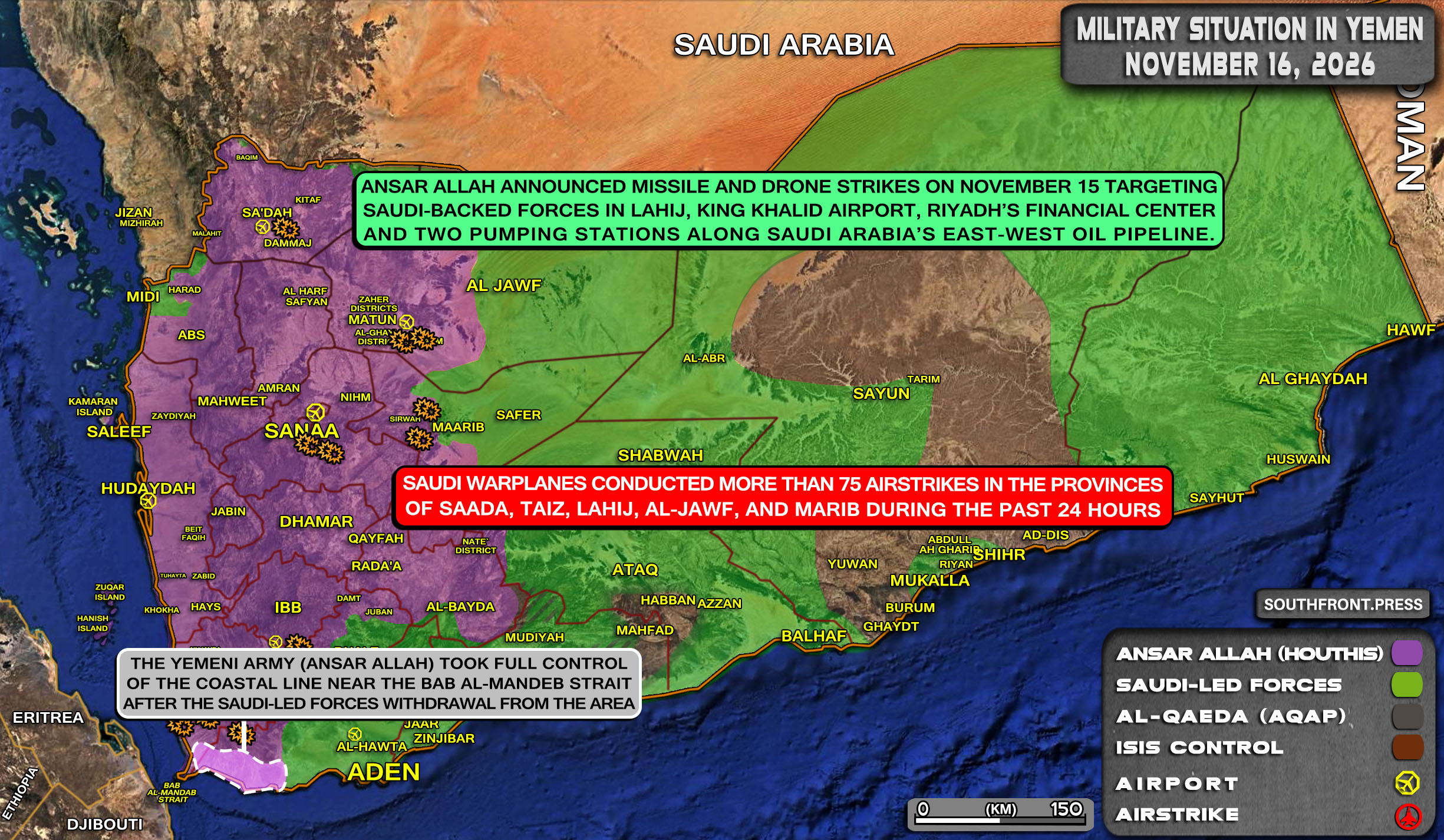


No comments:
Post a Comment