Fed’s Collins supports further rate cuts to protect labor market -- Federal Reserve Bank of Boston President Susan Collins expressed support for additional interest rate cuts this year, citing increased risks to the job market amid a more contained inflation outlook. Speaking at an event in Boston on Tuesday, Collins stated that "it seems prudent to normalize policy a bit further this year to support the labor market" given the current economic conditions. Collins emphasized that even with further rate cuts, monetary policy would remain "mildly restrictive," which she considers "appropriate for ensuring that inflation resumes its decline once tariff effects filter through the economy." Despite her support for easing, Collins stressed that policy is not predetermined. "I can envision scenarios where appropriate policy calls for holding rates steady later this year and into next, as we assess effects of the recent policy actions and get more information," she said. Looking ahead, Collins described her economic outlook as "relatively benign," anticipating continued growth, a small increase in unemployment, and inflation that should moderate next year as tariff impacts work through the economy. Nevertheless, she acknowledged ongoing uncertainty, noting she does "not rule out scenarios featuring higher and more persistent inflation, more adverse labor market developments, or both."
Fed's Powell signals quantitative tightening may end in coming months -- Federal Reserve Chair Jerome Powell indicated on Tuesday that the central bank’s balance sheet reduction program, known as quantitative tightening (QT), could be winding down soon. Speaking at a National Association for Business Economics event in Philadelphia, Powell said the Fed "may approach that point in coming months" when it will stop shrinking its balance sheet holdings. The Fed chair pointed to emerging signs of gradually tightening liquidity conditions in financial markets, including "a general firming of repo rates along with more noticeable but temporary pressures on selected dates." Powell emphasized that the central bank’s plan is to "stop balance sheet runoff when reserves are somewhat above the level we judge consistent with ample reserve conditions." The Fed is taking a "deliberately cautious approach" to avoid repeating the money market strains experienced in September 2019, Powell noted. He added that the central bank’s implementation framework, including the standing repo facility and discount window, will help "contain funding pressures and keep the federal funds rate within our target range" during the transition to lower reserve levels. The Federal Reserve has been reducing its balance sheet since 2022 as part of its broader monetary tightening campaign to combat inflation.
Powell on the End of QT (“We’re Not so Far Away but There’s a Ways to Go”), Shifting Assets to T-Bills, and Selling MBS - by Wolf Richter - Powell in his speech today discussed the Fed’s balance sheet, including:
- When QT might end: “In coming months,” he said in the speech; “We’re not so far away now, but there’s a ways to go,” he said in the Q&A.
- How the balance sheet’s composition might change: Shifting to short-term T-bills and getting rid of the MBS entirely, including by selling them.
- How doomsday would unfold if the Fed were forced to stop paying the banks interest on their reserve balances.
The Fed has been operating officially under the “ample reserves regime” since early 2020. Reserves represent liquidity that banks keep in their reserve accounts at the Fed to pay each other on a daily basis as part of the payments system; to have liquidity on hand to deal with large swings of liquidity as they occur; to earn risk-free interest; and boost their regulatory capital.“Reserves” are a liability on the Fed’s balance sheet (amounts it owes the banks). The Fed pays the banks interest on their reserve balances, at a rate that is one of the five policy rates the Fed set at the FOMC meetings. Reserves are key.When QT might end:“Our long-stated plan is to stop balance sheet runoff when reserves are somewhat above the level we judge consistent with ample reserve conditions,” he said in his prepared remarks.“We may approach that point in coming months,” he said. But then in the Q&A, he put the “coming months” into perspective:“We’re not so far away now, but there’s a ways to go.”Even after QT has ended, “reserve balances will continue to gradually decline as other Federal Reserve liabilities grow over time,” he said.When QT ends, total assets remain level, and so total liabilities remain level, but as the other liabilities increase based on external demand, reserves will shrink further.As assets remain level, while the economy grows, total assets as percent of GDP would decline further, which is a soft form of QT. The ratio has already declined from nearly 36% in 2022 to 21.6% currently. The ratio would continue to decline after QT ends, but more slowly. This also occurred from the end of 2014 through 2017 when total assets remained flat while the economy grew, and the ratio therefore declined. QT-1 was phased in at the very end of 2017 and ran through mid-2019, which accelerated the decline of the ratio.
Miran: China trade war further bolsters rate cuts -- Federal Reserve Governor Stephan Miran said the economic standoff with China could increase market volatility, further necessitating the central bank to move its policy stance to neutral.
BankThink: Powell may actually be "too late" when it comes to ending QT -The Federal Reserve's policies are pressuring banks' balance sheets. While Chairman Jerome Powell is talking about backing off quantitative tightening, he may be waiting too long, writes Jill Cetina, of Texas A&M. In 2008, the Federal Reserve embarked on quantitative easing, or QE. The goal of QE was to lower long-term interest rates, as further stimulus was needed to exit the global financial crisis. However, the solution to current problems often plants the seeds of future ones. The Federal Reserve's policies are pressuring banks' balance sheets. While Chairman Jerome Powell is talking about backing off quantitative tightening, he may be waiting too long.
Powell acknowledges Fed could have ended Covid-era QE sooner -- Federal Reserve Chair Jerome Powell acknowledged skepticism around the central banks large-scale asset purchases during the pandemic, noting the Fed likely "should have stopped" sooner, but fell short of admitting that the purchase of MBS' contributed to housing disparities.
Miran chastises Fed for wading into politics under Biden — Federal Reserve Gov. Stephen Miran said Thursday that the central bank's independence depends on its officers remaining apolitical, and that past efforts to study climate change and racial inequality undermine that independence. Speaking before an Institute for International Finance conference, Miran said that for the central bank to be perceived as independent, it must be seen as an apolitical actor, and that prior moves by the central bank have sent precisely the wrong signal. Miran said that the central bank's forays into examining climate change and racial justice under the prior administration politicized the Fed. He also argued that Fed officials should limit their comments on economic policies such as tariffs.
- Key insight: Federal Reserve Gov. Stephen Miran said Thursday that the central bank's independence relies on being "non-political," which in turn requires the central bank to not promote political priorities like climate change impacts or racial justice.
- Expert quote: "Critical to maintaining independence of the central bank is the central bank be viewed as an honest player and non-political. That means the central bank has to studiously and vigorously pursue not being involved in political issues at all." — Fed Gov. Stephen Miran
- What's at stake: President Donald Trump has been pressuring the central bank to lower interest rates for months, and Miran — who is on leave from his position as chair of the White House Council of Economic Advisers — is Trump's first pick to join the board in his second term.
BankThink The zombie idea of Federal Reserve independence keeps staggering along -The Fed hasn't been truly independent for 50 years, but the idea that it is keeps animating discussions about the central bank. True Fed independence will only arise under conditions of extensive reform, writes Ken Thomas.The long-dead concept of an independent Federal Reserve keeps rising, zombie-like, from its Constitution Avenue mausoleum, only to be put down again and again at the hands of presidents and overly political Fed chairs.The Fed hasn't been truly independent for 50 years, but the idea that it is keeps animating discussions about the central bank. True Fed independence will only arise under conditions of extensive reform.
Most Americans say taxing the rich is best way to reduce federal debt: Gallup --Raising income taxes for wealthy Americans is the most popular way of reducing the federal debt, according to the latest Gallup poll. The survey, conducted in September, asks Americans whether they support a range of methods aimed at reducing the federal debt, which has ballooned in recent years to more than $37 trillion.Only two proposals receive a majority support of U.S. adults: 63 percent back “increasing income tax rates for upper-income Americans,” and 54 percent support “increasing tax revenues by making major changes to the current federal tax code.” Among those who favor increasing taxes on the rich are 86 percent of Democrats, 62 percent of independents and 38 percent of Republicans. The parties are less polarized on making changes to the tax code, which is favored by 64 percent of Democrats, 54 percent of independents and 46 percent of Republicans. Most of the other proposals receive support from under half of U.S. adults but from a majority of Republicans. Forty-nine percent support “making significant changes to Medicaid and food assistance programs to reduce their cost,” including 75 percent of Republicans, 50 percent of independents and 22 percent of Democrats. But when asked the same question about Social Security and Medicare programs, only 39 percent of adults overall — including 56 percent of Republicans, 42 percent of independents and 18 percent of Democrats — support making changes to reduce their cost. Only 41 percent of Americans support imposing tariffs as a way to increase tax revenue to reduce the federal debt — a core feature of President Trump’s economic policy — while a staggering 89 percent of Republicans support the method, as well as 35 percent of independents but only 5 percent of Democrats. Forty-eight percent support “cutting spending for programs other than defense, Social Security and Medicare,” including 72 percent of Republicans, 47 percent of independents and 26 percent of Democrats — while “cutting defense spending” is supported by 42 percent of U.S. adults, including 63 percent of Democrats, 45 percent of independents and 13 percent of Republicans.
Government shutdown: Pressure growing on Johnson to call House back - House GOP leaders are facing increasing pressure to bring the chamber back to Washington amid a shutdown fight with no end in sight. A growing number of GOP lawmakers are voicing frustrations with their leadership for prolonging the House recess, warning that the optics surrounding that inactivity could backfire on the party to the benefit of Democrats. The rumbling is creating a headache for Speaker Mike Johnson (R-La.) and his leadership team, who have made canceling votes a central part of the Republicans’ shutdown strategy. In doing so, they’re betting that an empty House will pile pressure on Senate Democrats to drop their opposition to a GOP spending bill and help reopen the government. But as the shutdown drags on, neither side has given an inch, causing federal workers to receive diminished paychecks on Friday and threatening a similar pay squeeze on military personnel, who are at risk of missing their first scheduled paycheck next Wednesday. Those pressure points have only amplified the calls from within the GOP conference for Johnson to reconvene the chamber, if only to move legislation to ensure the troops are compensated. “Military pay should not be held hostage due to Washington’s dysfunction!” Rep. Jen Kiggans, a Virginia Republican who represents Norfolk’s massive naval base, wrote this week on the social platform X. Kiggans, who is the lead sponsor of legislation to pay the troops during the shutdown, urged Johnson and GOP leaders to pass her bill “immediately.” And she invoked a powerful advocate in President Trump, who has said Congress will “probably” pass legislation to prevent any delays in those payments. “The President has made it clear: we must pay our troops,” Kiggans said. She’s hardly alone. Rep. Marjorie Taylor Greene (R-Ga.) said this week that Johnson should bring the House back to Washington “for many reasons.” But the Georgia firebrand pointed specifically to the issue of health care premiums, which are expected to skyrocket at the end of the year, when enhanced subsidies under the Affordable Care Act (ACA) are scheduled to expire. Greene is the rare Republican urging GOP leaders to address the issue immediately to prevent patients from “just getting destroyed.” “Any serious Speaker of the House is going to build consensus within his conference behind a plan,” Greene told CNN. “It’s not something secret that gets worked on in a committee.”
Vance: ‘Deeper’ cuts ahead for federal workers - Vice President Vance warned on Sunday that cuts to the federal workforce will only get “deeper” as the government shutdown drags on. In an interview on Fox News’s “Sunday Morning Futures,” host Maria Bartiromo asked the vice president about President Trump describing the moment as an “opportunity” and about how significant the cuts would be. “The longer it goes on, Maria, the more significant they’re going to be,” Vance said. “If you remember, we went nine days before announcing any significant layoffs. “Again, the president of the United States wanted to reopen the government. He was trying to work with Democrats in order to make that happen. But the longer this goes on, the deeper the cuts are going to be,” he continued. Vance also said the cuts ahead are likely to be “painful,” but he blamed them on Democrats, who say they won’t agree to the GOP plan to reopen the government until they find a solution to the enhanced Affordable Care Act (ACA) subsidies, which are set to expire at the end of the year, causing insurance premiums to increase. “To be clear, some of these cuts are going to be painful,” Vance said. “This is not a situation that we relish. This is not something that we’re looking forward to, but the Democrats have dealt us a pretty difficult set of cards.” Hundreds of thousands of workers have been furloughed since the shutdown began at the beginning of the month, and the Trump administration, in a court filing on Friday, said more than 4,000 federal employees would soon be fired because of the shutdown.
Johnson: ‘We’re barreling toward one of the longest shutdowns in American history’ - Speaker Mike Johnson (R-La.) said Monday the government shutdown is on its way to being one of the longest in history unless Democrats accept the House-passed, GOP-crafted stopgap bill to reopen the government. “We’re barreling toward one of the longest shutdowns in American history, unless Democrats dropped their partisan demands and passed a clean, no-strings-attached budget to reopen the government and pay our federal workers,” Johnson said in a press conference on the 13th day of the government shutdown. Congressional leaders have been locked in a standoff over government funding as Democrats demand that Republicans make concessions on health care, notably Affordable Care Act tax credits that are expiring at the end of the year. Republican leaders have refused to negotiate on health care during a shutdown, arguing that that Democrats must accept the “clean” funding stopgap the House passed in September — and which has failed to advance in the Senate seven times. The shutdown, 13 days and counting, already marks one of the longest federal government funding lapses in modern history. The longest government shutdown, which was also the last time a federal funding lapse occurred, was from 2018 to 2019 during President Trump’s first term, lasting 35 days. Joe Rogan rips Trump Admin's deportation approach | RISING+ The second-longest shutdown under former President Clinton lasted 21 days, while funding lapses under former President Obama in 2013 and former President Carter in 1978 lasted 17 days. “Republicans are eager to return to the actual negotiating table to finish out full-year appropriations and do work on all the other matters before us, but we won’t negotiate in smoke-filled back rooms, and we won’t negotiate as hostages,” Johnson said Monday. The Speaker has kept the House in an extended recess during the shutdown, canceling weeks of previously scheduled votes as Republicans aim to pressure Senate Democrats into accepting their stopgap funding measure. Some Republicans have voiced discontent with that tactic, arguing that the chamber could work on measures like regular full-year appropriations bills and other legislation even during a shutdown. Johnson, though, defended the move. “You can poll individual House Republicans, maybe you should, and 98.7 percent of them will tell you that this is the right thing,” Johnson said.
Government shutdown set to barrel forward as GOP sets the stage for extended shutdown -Republicans and the Trump administration are bracing for a lengthy government shutdown, taking steps to alleviate any political pain that might boomerang on them while seeking to make life difficult for Democrats. The White House is taking steps to redistribute funds to ensure the military gets paychecks during the shutdown. Doing so in this way takes care of a constituency important to the GOP and Trump, but it deprives Democrats of a vote to fund the military. The White House also all but dared Democrats to push back on Trump’s maneuverings, a position Speaker Mike Johnson (R-La.) articulated Tuesday. “If the Democrats want to go to court and challenge troops being paid, bring it. OK,” he said during a press conference at the Capitol. DC Bureau: Shutdown to enter third week after Senate rejects bill to reopen government Federal law enforcement may be next, as the Office of Management and Budget on Tuesday indicated it is searching for ways to pay officers at the federal level. In addition, the White House has laid out plans to keep funding the Special Supplemental Nutrition Program for Women, Infants, and Children. White House press secretary Karoline Leavitt said it will use hundreds of millions of dollars from Section 32 tariff revenue to cover the nutrition program, which lawmakers consider vital because it covers 6 million participants per month. The moves almost ensure the shutdown impasse will blow past the 16-day shutdown in 2013. It increasingly looks like the fight could drag into November and challenge the longest shutdown on record — a 35-day lapse in funding that lasted from late 2018 to 2019 over President Trump’s insistence for border wall funding. “That’s what I’m thinking,” Sen. Shelley Moore Capito (R-W.Va.) said about the shutdown going on for the long haul. “I hope I’m wrong.” Capito called the dragging shutdown “disappointing” and reiterated the GOP’s call for Democrats to reopen the government and negotiate. “It’s so easy,” she said. Democrats insist they aren’t moving unless the GOP agrees to extend enhanced health care insurance subsidies that are set to expire at year’s end. Republicans have refused to engage in talks on any potential fix until the minority party allows the government to reopen.
Senate Republicans set up single vote to end government shutdown Tuesday -Senate Majority Leader John Thune (R-S.D.) has set up one vote Tuesday afternoon to reopen the government, giving Democrats only the opportunity to vote for or against a House-passed continuing resolution that has failed repeatedly on the Senate floor.The Senate is scheduled to convene at 3 p.m. EDT, and the vote is scheduled to start at 5:30 p.m.It will be the eighth time senators consider the House measure, which failed to advance on seven previous votes.It comes at a critical time as military personnel are due to receive their paychecks Wednesday.President Trump over the weekend directed Secretary of Defense Pete Hegseth to use “all available funds” to ensure troops get paid this week. Senate Democrats will not have the chance Tuesday to also vote on their alternative government funding measure, which would permanently extend enhanced health insurance premium subsidies and restore nearly $1 trillion in cuts to Medicaid. It will mark the first time that Democrats will not be able to vote for their own proposal to reopen the government before voting on the House GOP-drafted bill that funds government through Nov. 21.
Shutdown to enter third week after Senate rejects bill to reopen government -The Senate rejected a bill to reopen the government for the eighth time Tuesday, ensuring the shutdown will enter its third week with lawmakers nowhere close to finding a resolution. Senators voted 49-45 on the GOP’s House-passed continuing resolution, which would fund the government through late November. It needed 60 votes to advance. Sens. Catherine Cortez Masto (D-Nev.) and Sen. Angus King (I-Maine) voted with Republicans, as they have for nearly two weeks. Sen. John Fetterman (D-Pa.), who had voted in favor of the resolution every other time it has come to the floor was not present on Tuesday. Sen. Rand Paul (Ky.) was, once again, the lone GOP “no” vote. The vote comes as the two sides remain at a stalemate, with neither wanting to give any ground. “I guess Democrats are not going to be satisfied until military families and government workers are lining up at food banks or visiting payday lenders or simply charging necessary items like milk and bread on their credit cards to be repaid late,” Senate Majority Leader John Thune (R-S.D.) said on the floor before the vote, lambasting a report that Democrats are willing to allow the shutdown to go on for “several more weeks.” “But, hey, while military families and government workers may be deeply stressed, at least life is getting better every day for Senate Democrats,” he continued, referring to a comment Senate Minority Leader Chuck Schumer (D-N.Y.) made last week about Democrats’ political fortunes amid the impasse. Democrats have repeatedly called for any deal on government funding to include an extension of the enhanced Affordable Care Act (ACA) subsidies that are set to expire at year’s end. The GOP, meanwhile, has insisted any talks on those credits can only take place once the government reopens and have publicly pleaded for five additional Democrats to side with them to do so. That has not happened, though, leading Democrats to argue that the repeated failed votes being held by the majority party should be an impetus for the two sides to hammer out a deal on the subsidies. “That means, like it or not, the Republican leader needs to work with Democrats in a bipartisan way to reopen the government, just as we did when we passed 13 CR’s [continuing resolutions] when I was majority leader,” Schumer said. “The ACA premium crisis is not a fix-it-later issue, but rather a fix-it-now issue,” he continued. “Republicans may think they can dig in until the next Ice Age, but a fork in the road is coming their way whether they like it or not.” While there was little change in the numbers, the vote marked a slight change in GOP tactics. For the first time since the shutdown started, it was held without a companion vote on a Democratic proposal to end the shutdown. The failed vote also brings the shutdown closer to making history. Not only does it mean the impasse will continue into its third week, but it could become the second-longest shutdown in U.S. history on Friday.
Who will get hit hardest by expiring ACA health insurance subsidies? -- The fight over enhanced premium tax credits for the Affordable Care Act’s (ACA) marketplace drags on in Congress as crucial deadlines draw near and certain groups stand to be hit the hardest if an agreement to extend the subsidies doesn’t materialize. Estimates of how many will be impacted by expiring tax credits have ranged from 3 million to more than 4 million enrollees. Based on early projections, this subsection is likely to be younger. “Young adults would see the greatest increase in uninsurance,” said Matthew Buettgens, senior fellow in the health policy division at the Urban Institute. “These are people who are working and don’t have access to stable coverage through an employer.” The Urban Institute published an analysis last month that found uninsurance rates among adults aged 19 to 34 would rise by 25 percent, the largest increase across different age groups. Children would stand to be the least affected — a 14 percent increase in uninsurance rates — because of higher income eligibility through programs like Medicaid and the Children’s Health Insurance Program. While another provision of the ACA allows for young adults to remain on their parents’ health insurance plans until age 26, Buettgens notes that if doing so was a viable option for them, they wouldn’t have enrolled in the marketplace in the first place. Those who lose coverage because of expiring tax credits are unlikely to have their parents’ plans to fall back on. Between 2009 and 2023, the uninsurance rate among young adults fell from 31 percent to 13 percent. Rep. Marjorie Taylor-Greene (R-Ga.), who has spoken forcefully against allowing the subsidies to expire, said her adult children’s premiums will double next year if the issue is not addressed. Across different racial groups, Black, non-Hispanic people would see the largest increase in uninsurance rates, an estimated 30 percent, with white, non-Hispanic people following closely behind at 25 percent. Buettgens said this jump would be particularly noticeable in states that haven’t expanded Medicaid coverage through the ACA. The premium tax credits cover individuals who would otherwise have been covered by Medicaid expansion. The impact will be felt across all income brackets, with the Urban Institute projecting “lower Marketplace enrollment across all income categories in 2026 because of standard [premium tax credits] replacing enhanced [premium tax credits].” Among people who make 250 percent of the federal poverty level or lower, 23 percent are projected to lose coverage. People who make 400 percent or more than the federal poverty threshold will no longer be eligible for premium tax credits, and about 200,000 people, or 5 percent, within this bracket are projected to become uninsured. Those in the middle, making between 250 percent and 400 percent of the federal poverty level, will see the largest percent gain in uninsurance, projected at 26 percent. Not only will consumers be hit, but experts warn that hospitals will be further handicapped by the upcoming deadline. “Hospitals are already facing uncertainty regarding forthcoming cuts to Medicaid and stress on the Medicaid program. And so, this will just be another increase in the uninsured population, which means, ultimately, greater amounts of charity care and less patients with coverage,” Jeff Wurzburg, former attorney at the Department of Health and Human Services and health care regulatory attorney at Norton Rose Fulbright, told The Hill. Wurzburg noted that hospitals in red states are more likely to see the brunt of this, as they tend to have higher ACA enrollment rates. An analysis by the health policy nonprofit KFF found that most ACA market enrollees — 77 percent, or 18.7 million of the 24.3 million enrollees — live in states won by President Trump in the 2024 election
Johnson says he had ‘thoughtful’ talk with Greene amid her criticism of health care costs -- House Speaker Mike Johnson (R-La.) said Sunday that he and Rep. Marjorie Taylor Greene (R-Ga.) had a “thoughtful conversation” in recent days regarding the latter’s concerns over health care premiums. During an interview with Shannon Bream on Fox News Sunday, Johnson said he told Greene that “there are many Republicans in Congress that have been working around the clock on this.” The Louisiana Republican added that while Greene does not serve on any of the committees working on health care policy, he “offered to have her come into the room and be a part of that discussion, if indeed she wants to do that.” The Hill has reached out to Greene’s office asking for confirmation of the conservation, and its contents.Last Tuesday, Greene said on the social platform X that she is “disgusted” that premiums are set to increase significantly in January if subsidies under the Affordable Care Act (ACA) expire, despite her issues with the 2010 law. The ACA subsidies, first offered during the pandemic and extended by the 2022 Inflation Reduction Act, are set to expire at the end of this year unless Congress intervenes. If they expire, health care premiums will more than double for millions of ACA Marketplace enrollees, according to health care policy research group KFF.Greene added last week that “not a single Republican in leadership talked to us about this or has given us a plan to help Americans deal with their health insurance premiums DOUBLING!!!” On Capitol Hill, the Georgia Republican received pushback from Republicans and praise from Democrats. However, Johnson said Sunday that Republicans have “hundreds” of ideas to lower costs, expand access and improve the quality of health care.
Marjorie Taylor Greene's deepening split with GOP leaves Republicans exasperated - Rep. Marjorie Taylor Greene (R-Ga.) insists she hasn’t changed, but the conservative firebrand’s deepening splits with her party on everything from Jeffrey Epstein to health care subsidies are puzzling and exasperating her fellow Republicans. Greene forged her political identity in Congress as a fierce loyalist of President Trump, defending him and Jan. 6, 2021, protesters, and attacking Democrats at every turn. But with President Trump back in the White House, Greene has put herself on the opposite side of many of the president’s positions, and on somewhat of an island among Republicans. In a phone interview for this story, Greene said she’s not the one who has changed, pointing to her criticism of congressional Republicans and their lack of action on health care in her first 2020 campaign. “I am 100 percent the same person today as I was when I ran for Congress,” Greene said. Greene said it is “ridiculous” to suggest her positions have put her on an island in the GOP. “I’m actually representing what a lot of Americans fully support.” “My job title is not ‘cheerleader for Republicans in Congress.’ I’m not talking about the president. I’m talking about Republicans in Congress. And Republicans in Congress are the ones that need to come up with a plan to fix the health insurance,” she later added. Yet several of Greene’s House GOP colleagues and GOP sources told The Hill that they are more thrown off than ever by Greene’s positions, and wish she would take a different strategy to achieve her goals. “Whether it’s Gaza, whether it’s Epstein, or whether it’s now the ACA [Affordable Care Act] credits, she’s been 180 degrees opposite of Trump,” one House Republican vented. “In fact, she’s been more Biden than she has been Trump.” Greene over the summer dubbed Israel’s actions in Gaza a “genocide.” She was one of just four Republicans to sign on to a discharge petition to release files related to the sex offender Epstein, in defiance of White House wishes. Last week, she went against GOP leaders’ shutdown messaging by expressing alarm at the expiring ObamaCare tax credits that could double insurance premiums for millions, saying Republicans have no plan to address the issue. She racked up more breaks with Republicans and Trump in a media blitz over the last week — including a surprising critique of the Trump administration’s mass deportations, while noting her experience owning a construction company. “We have to do something about labor, and that needs to be a smarter plan than just rounding up every single person and deporting them just like that,” Greene said in an episode of “The Tim Dillon Show” podcast released over the weekend. “I’m going to get pushback on that, but I’m just living in reality from here on out.” In a switch from their pattern of villainizing Greene, Democrats are praising her health care stance. One press release from the Democratic Congressional Campaign Committee quoted a spokesperson simply saying: “Marjorie Taylor Greene is right.” House Minority Leader Hakeem Jeffries (D-N.Y.) featured a screenshot of her social media post in a press conference. Speaker Mike Johnson (R-La.) downplayed the significance of Greene’s concerns in a press conference last week. “Congresswoman Greene does not serve on the committees of jurisdiction that deal with that, those specialized issues, and she’s probably not read in on some of that,” Johnson said. Greene dismissed frustrations from her colleagues who had hoped and expected she would be more of a team player in the GOP trifecta. “That frustration with me only exists here in this political bubble,” Greene argued, pointing to calls to her office about her health care stance just that day: Out of 224 calls, 175 were supportive and 40 were against, she said.Vance says ACA tax credits fuel fraud --Vice President Vance said Sunday that subsidies offered under the Affordable Care Act (ACA) fuel waste and fraud in the insurance industry, as Republicans refuse Democratic demands to extend the tax credits ahead of open enrollment next month.“The tax credits go to some people deservedly. And we think the tax credits actually go to a lot of waste and fraud within the insurance industry. So we want to make sure that the tax credits go to the people who need them,” Vance told Margaret Brennan on CBS News’s “Face the Nation.” The tax credits, first offered during the pandemic and extended by the 2022 Inflation Reduction Act, expire at the end of this year. According to the health care policy research group KFF, premiums for millions of people will more than double next year if the subsidies are not extended. The impact could be felt even soon. With open enrollment for the ACA marketplace in most states scheduled to start Nov. 1, insurers are set to increase premiums unless Congress acts in the coming weeks.The vice president’s claims of waste and fraud echo conservative arguments regarding the subsidies. Last month, a group of 35 right-leaning organizations sent a letter to President Trump, urging him to allow the credits to expire. “Making the Biden COVID credits permanent would be tremendously expensive, increase premiums in the long-term, and encourage widespread fraud,” the letter said. Via authority granted by the ACA, the Department of Health and Human Services conducts fraud oversight through the Centers for Medicare and Medicaid Services (CMS). According to KFF, allegations of fraud in ACA enrollment have mostly centered on agents, brokers, web brokers and other third parties. From January 2024 through August 2024, CMS received more than 180,000 complaints of third-party entities fraudulently enrolling consumers in the Healthcare.gov marketplace, and 90,000 complaints regarding third parties switching consumers’ plans. In its Marketplace Integrity and Affordability report published in June, CMS said the “widespread availability of $0 premium plans created the incentive and opportunity for fraudulent and improper enrollments at scale, either by the enrollee’s own doing or by a third party without the enrollee’s knowledge.”While Republicans say they don’t want to see insurance premiums spike for millions of people who rely on ObamaCare, they have not put forward an alternate plan to deal with the coming cliff.House Speaker Mike Johnson (R-La.) on Monday sought to blame Democrats for putting a deadline on the subsidies in the first place.“The COVID-era ObamaCare subsidy that they’re all talking about that’s supposedly the issue of the day doesn’t expire until the end of December. And by the way, it is the Democrats who created that subsidy, who put the expiration date on it,” he told reporters at a press conference.“They put an end date on it because they knew it was supposed to be related to COVID, and it’s become a boondoggle.”
Senate rejects funding bill with no end in sight of government shutdown - The government shutdown stretched into its third week on Wednesday as Republican and Democratic senators continued to dig in their heels on dueling stopgap funding proposals.The Senate on Wednesday for the ninth time rejected a GOP-led short-term funding resolution. In a 51-44 vote, the Senate once again did not approve a stopgap bill, in which Republicans insist on a "clean" continuing resolution that would provide funds to reopen the government until at least Nov. 21.Democrats want any funding bill to extend enhanced Affordable Care Act subsidies that are set to run out at the end of this year. That and other provisions in the Democratic bill would cost an estimated $1 trillion.Wednesday's vote occurred days after the Trump administration said in a court filing that more than 4,000 federal employees received notifications that they were beinglaid off. White House budget director Russell Vought said Wednesday the total could be more than 10,000 job cuts. But shortly after Vought made that remark, a federal judge in San Francisco temporarily blocked the Trump administration from firing federal workers amid the shutdown.Trump administration officials blame the so-called reductions-in-force on Senate Democrats' refusal to vote for the Republican funding proposal. "Democrats are dug in 15 days into a government shutdown. Democrats show no sign that they're ready for it to end," Senate Majority Leader John Thune, R-S.D., said earlier on Wednesday on the chamber's floor. "Not even the prospect of military families going without a paycheck was enough for Democrats to reopen the government," Thune said."Nor are Democrats concerned about needy families uncertain about ... the future of nutrition assistance, or Americans in flood zones who are unable to update their insurance or close on a home in the midst of hurricane season," Thune said.Senate Minority Leader Chuck Schumer, D-N.Y., countered Thune's argument, saying that the government has been shut since Oct. 1 because Republicans "refuse to work with Democrats in a serious way to fix the health care crisis looming over the American people.""As we speak, families are receiving letters for their new health insurance rates, and more states, more states are opening their window shopping period for what health insurance will look like next year," Schumer said."With open enrollment around the corner, Republicans cannot continue to kick this can down the road. It's happening now. The health care crisis is now," Schumer said.Thune and other Republicans have said they are willing to discuss the question of extending ACA enhanced tax credits after the short-term funding is approved."We need five more Democrats to say enough is enough to put the American people ahead of the far left and to support this clean, nonpartisan continuing resolution sitting right there at the Senate desk, ready to be picked up and passed today," said Thune on Wednesday.On Wednesday, President Donald Trump issued a presidential memorandum directing Defense Secretary Pete Hegseth to use any remaining congressional funds to keep paying active-duty military personnel.
Judge pauses shutdown firings as Vought vows more to come (Bloomberg) — A federal judge ordered the Trump administration to pause plans to fire thousands of federal workers during the government shutdown, just moments after White House Budget Director Russell Vought said he expects layoffs to exceed more than 10,000 people. A federal judge in San Francisco ordered a temporary halt to reduction in force orders issued by the Office of Management and Budget during the government shutdown, while OMB Director Russell Vought has said he expects to lay off more than 10,000 federal workers.
Kristi Noem’s shutdown airport video may violate Hatch Act, Sen. Cantwell warns -- Democratic Sen. Maria Cantwell on Wednesday asked the U.S. Office of Special Counsel to investigate Department of Homeland SecuritySecretary Kristi Noem for "likely" violating the Hatch Act by making a video to be shown in airports blaming Democrats for the government shutdown.The Hatch Act bars federal employees, including Cabinet secretaries, from engaging in political activity while acting in their official role.Multiple major airports have refused to show Noem's video near passenger screening lines, including Seattle-Tacoma International Airport in Cantwell's home state of Washington, as well as airports in Chicago and New York.A number of airports specifically mentioned the video's potential violation of the Hatch Act in their decision. The Office of Special Counsel is responsible for investigating potential Hatch Act violations.In a letter to acting Special Counsel Jamieson Greer, Cantwell called out Noem for "airing a partisan video message — on televisions in public airports across the country — in which she erroneously blames 'Democrats in Congress' for the current government shutdown's impact on airport 'operations' and for Transportation Security Administration... employees 'working without pay.'""This message is not just false; it appears to violate the prohibitions contained in the Hatch Act," wrote Cantwell, who is a member of theSenate Committee on Commerce, Science and Transportation.Cantwell said recent reports indicate that DHS is using taxpayer dollars and federal assets to produce and air the video, in which Noem appears in her official capacity.The letter notes that Noem, in the video, stands in front of an American flag alongside the official insignia of Homeland Security."When viewed in its totality, Secretary Noem's video can only be reasonably interpreted as a partisan message intended to misleadingly malign the Trump Administration's political opponents, convince Americans to blame 'Democrats in Congress' for the ongoing government shutdown, and influence their future votes — all while omitting the fact that Republicans currently control the White House, U.S. Senate, and U.S. House of Representatives," Cantwell wrote."As the independent agency responsible for enforcing the Hatch Act, I urge you to investigate this matter immediately," she wrote Greer.
Republicans, John Thune dare Democrats to block defense spending bill during shutdown-- Senate Majority Leader John Thune (R-S.D.) has surprised Democrats by scheduling a vote Thursday on advancing the $852 billion defense appropriations bill amid the government shutdown. The defense measure in July passed out of the Appropriations Committee with strong Democratic support — 26 to 3 — but the political calculus has changed since then because of the government shutdown, which has now dragged into its third week. Thune pushed the annual National Defense Authorization Act through the Senate last week, and now he’s daring Democrats to block the defense appropriations bill as Republicans are putting a spotlight on how the shutdown is impacting national security. “Not even the prospect of military families going without a paycheck was enough to reopen the government,” Thune said on the Senate floor Wednesday, making reference to the Oct. 15 pay date for more than 1 million military service members. President Trump has directed Defense Secretary Pete Hegseth to use “all available funds” to ensure that troops didn’t miss their first paychecks during the shutdown. Thune on Tuesday filed cloture on a motion to proceed to the defense spending bill, setting up a key procedural vote for Thursday. He told reporters that he hopes to attach the Labor and Health and Human Services bill to the defense bill if Democrats agree to advance it later this week. “I think the goal is to see what the traffic will bear in terms of additional bills,” Thune said. “We would like to put together a package like we did last time on the floor, which will take consent. “If we can get on defense appropriations, which we’ll vote on tomorrow, then we can start that negotiation process.” Thune would need unanimous consent from all 100 senators to waive Senate Rule XVI, which prevents two or multiple appropriations bills from being packaged together on the floor. It was routine practice in past years to waive the rule but the prospects of doing so now are clouded by the partisan tensions inflamed by the shutdown. Democrats voted to pass the defense spending bill out of committee this summer, but they may block it on the floor this week. Sen. Dick Durbin (D-Ill.), a senior member of the Defense Appropriations Subcommittee, said Wednesday that he hadn’t yet made a public decision on how to vote on the measure. He said Thune’s decision to set up a vote on the bill “came as a surprise to us.” Asked how he would vote, he said “wait and see.”
Shutdown tensions high after Dems block Defense spending bill -- Senate Democrats voted Thursday to block the annual, full-year Defense spending bill, despite the measure passing out of committee with strong bipartisan support earlier this year. The vote is the latest sign of deteriorating bipartisan relations on Capitol Hill as the government shutdown drags into a third week. The Senate voted 50-44 against proceeding to the bill after Senate Democratic Leader Chuck Schumer (D-N.Y.) objected to considering the Defense spending bill without also voting on the annual Labor, Health and Human Services appropriations bill. It needed 60 votes to advance. “It’s always been unacceptable to Democrats to do the Defense bill without other bills that have so many things that are important to the American people in terms of health care, in terms of housing, in terms of safety,” Schumer told reporters before the vote. Sen. Mitch McConnell (R-Ky.), the chairman of the Senate Defense Appropriations Subcommittee, criticized Democratic colleagues for blocking a bill he said is critical to protecting national security. “Two weeks ago, when Democrats chose to take the federal government hostage for partisan priorities, I warned that there would be nothing to gain from their shutdown. Today, our colleagues’ refusal even to begin considering the overwhelmingly bipartisan defense appropriations bill is a sobering reminder that there is, however, much to lose,” he said in a statement. Senate Majority Leader John Thune (R-S.D.) threw a curveball into negotiations over ending the shutdown Wednesday when he teed up the full-year funding bill, surprising Democrats and daring them to vote against a measure that would allow military service members to be paid. Several centrist members of the Democratic caucus were on the fence about voting to proceed to the Defense bill while they were awaiting word on whether it would be paired with the Labor, Health and Human Services funding bill other non-defense appropriations bills. “I’m still trying to determine what the plan is. If the plan is to bring forth as a substitute the Senate [defense] bill and the Labor [Health and Human Services] bill, then yes. If the plan is to simply run [the defense bill] by itself, then the answer is no,” Sen. Angus King (Maine), an independent who caucuses with Democrats, said when asked whether he would vote to advance the defense measure. Sen. Mark Warner (D-Va.) also said before the vote that he was uncertain how he would vote until he knew more about how the Defense bill would be packaged with other bills. The $852 billion Defense appropriations bill passed out of committee with strong bipartisan support in July, advancing by a vote of 26-3. Thune framed Thursday’s vote as an important opportunity to pay more than a million military service members who are at risk of missing paychecks during an extended shutdown. “If we can’t reopen the entire government, we can at least make some progress toward securing paychecks for our troops and for defending our country,” he said on the Senate floor before the vote. The defense spending bill includes $193 billion in pay and benefits for service members and their families, and a 3.8 percent pay raise for all service members.
Sen. John Thune to force Democrats to vote on paying the troops during shutdown - Senate Majority Leader John Thune (R-S.D.) plans to force Democrats to vote next week on legislation to pay more than 1 million military service members during the government shutdown, doubling down on his strategy of highlighting the plight of military families, according to Senate GOP sources. Thune on Wednesday put a bill sponsored by Sen. Ron Johnson (R-Wis.) to pay members of the military during the shutdown on the Senate calendar, setting it up for a vote as soon as next week. President Trump has directed Secretary of Defense Pete Hegseth to use “all available funds” to make sure active-duty service members and their families don’t miss paychecks during the shutdown and Pentagon officials have identified $8 billion in unspent research, development and technology funds to cover troops’ pay during the early part of the shutdown. Johnson’s bill would ensure that service members continue to get paid once those unobligated funds identified by the administration run out. Thune told Politico in a hallway interview that the bill would give Democrats a “chance to vote to pay the military next week.” The GOP leader forced Democrats to vote Thursday on the $852 billion annual Defense appropriations bill, which Democrats blocked on a vote of 50 to 44. It needed 60 votes to advance. Thune slammed Democrats for blocking the bill which had passed out of the Appropriations Committee with strong bipartisan support in July. “Democrats just voted against the bill that would actually pay the troops. You have to ask the question, ‘Why?’ Mr. President,” Thune said on the floor after the vote. Thune, citing a recent news story, said Democrats blocked funding for the military because they didn’t want to relinquish their leverage during the shutdown. “I mean, who really cares, right, if the troops are paid as long as the Democrats are able to get what they want?” he said. Thursday’s vote on the defense bill caught Democrats by surprise and some centrist Democrats said they would have voted to proceed to the measure if they were guaranteed that it would be paired with the Labor, Health and Human Services appropriations bill, which funds some of their priorities. “It’s always been unacceptable to Democrats to do the defense bill without other bills that have so many things that are important to the American people in terms of health care, in terms of housing, in terms of safety,” Senate Democratic Leader Chuck Schumer (N.Y.) told reporters before Thursday’s vote.
When could the government shutdown end? Five key dates to watch -- The shutdown became one of the three longest in U.S. history on Friday, with lawmakers indicating they believe it will drag on and few signs emerging of progress toward reopening the government.That isn’t stopping questions about what could force lawmakers toward the negotiating table to figure out a resolution, especially with a number of potential pressure points front and center for lawmakers in the coming weeks. Here are some key dates to keep an eye on in the coming weeks that could force action.
- Oct. 24: Next paycheck for federal employees. Government employees — whether they are furloughed or working through the shutdown — are set to miss their first full paycheck on Oct. 24, raising the pressure on lawmakers to act. The federal workers also received only a partial paycheck earlier this month, putting an extensive strain on the more than 2 million such employees and their families. The issue is front of mind for some lawmakers, especially in states that feature a higher percentage of federal workers than others.
- Oct. 31: Next military paycheck. Trump administration officials sidestepped one landmine this week when they dug up $8 billion of unused research development funds from fiscal year 2025 in order to pay 1.3 million active duty service members, ensuring they didn’t miss their Oct. 15 paychecks.Whether they’re able to do it again come Halloween is another question. Lawmakers are already eyeing that date as they cast doubt on whether a similar move by the administration is possible. “That option is not going to be available in two weeks for their next paycheck,” House Armed Services Committee Chairman Mike Rogers (R-Ala.) told reporters on Friday. This is where Congress could step in, despite deciding against doing so ahead of the Oct. 15 payday for the armed forces.
- Oct. 31 and Nov. 5: Congressional staffer paychecks. These are lower on the totem pole in the eyes of lawmakers, but they nonetheless hit close to home as the staffers they work closely with each day are in the dark on when they will get paid again — and some might not receive a check for the foreseeable future. Senate aides are the first of the group to get hit as they will miss their first full paycheck on Monday, with lawmakers already missing a chance to avoid that. Notably, staffers in the two chambers are paid out differently. The Senate’s are paid twice monthly — on the fifth and 20th.House of Representatives aides are paid once per month, though, with that coming at the end of every month. That means that if House staffers don’t get paid at the end of October, they will not receive their next check until after Thanksgiving.
- Nov. 1: Affordable Care Act open enrollment. This is perhaps the most important date of any listed here. Health care is the driving force behind the entire shutdown, with Democrats intent to heap pressure on Republicans to come to the table on enhanced ObamaCare subsidies before open enrollment starts. Republicans argue that the enhanced credits don’t expire until the end of the year, but Democrats have made clear that they see the start of open enrollment, when Americans using the ObamaCare marketplaces will start shopping for 2026 coverage, as the key date.Absent congressional action, their premiums are set to increase precipitously.“The American people are facing one of the most devastating crises they have faced in terms of cost, and we still have not heard crickets out of any negotiation with [Speaker Mike Johnson] or with [Senate Majority Leader John Thune],” Senate Minority Leader Chuck Schumer (D-N.Y.) said at a press event on Thursday. “The Republicans are on the defensive, they keep changing their stories and changing their arguments, but we are on the side of the American people.”State exchanges and insurers are already sending notices out to enrollees explaining what’s coming down the line in the coming weeks and months. And state insurance officials are already saying it’s too late to alter the pricing before Nov. 1.
- Nov. 21: Week of Thanksgiving. Thanksgiving is more than a month away, but with no obvious off-ramps and early speculation that the shutdown could last several more weeks, the idea of it going until late November is not out of the question.That brings into play what could be a perfect storm for Americans: a shortage of TSA workers and continued problems on the air-traffic control front during Thanksgiving week — one of the two biggest travel stretches of the year. That is a nightmare for lawmakers on both sides of the aisle, who still remember the air-traffic control mayhem in early 2019 that forced Trump and members to reopen the government and bring to an end the 35-day shutdown, the longest in U.S. history.
Trump and Leaders of Egypt, Turkey, and Qatar Sign Document on Gaza Ceasefire - President Trump and the leaders of Egypt, Turkey, and Qatar signed a document on the Gaza ceasefire deal during a summit in Sharm el-Sheikh, Egypt, on Monday. “It’s going to hold up,” President Trump said as he signed the document. According to a release from the White House, the document was a declaration that stated the signatories welcomed the “implementation by all parties to the Trump Peace Agreement.” The declaration included several platitudes about committing to a peace deal, but it does not say how a long-term ceasefire will be implemented, as many details of the agreement still need to be worked out in negotiations between Israel and Hamas. “We support and stand behind President Trump’s sincere efforts to end the war in Gaza and bring lasting peace to the Middle East,” the declaration says. “Together, we will implement this agreement in a manner that ensures peace, security, stability, and opportunity for all peoples of the region, including both Palestinians and Israelis.”The signing ceremony came after Hamas released all 20 living Israeli captives and Israel freed nearly 2,000 Palestinians, including about 250 who were serving sentences and 1,700 who were captured in Gaza and held without charges.So far, Hamas has released four out of 28 of the bodies of Israelis who have died in captivity, and Israel is accusing the group of not fulfilling its commitments. Before the deal was signed, Hamas said that it may not be able to locate all of the bodies.While there are signs that Israel may restart its genocidal campaign, Trump’s message in Egypt and in his address to the Israeli Knesset earlier in the day was that the “war is over.”
Trump to Knesset: Israel has won ‘all that they can’ in military campaign - President Trump on Monday urged Israeli leaders to turn the page from warfare to peace, telling the Knesset that Israel had won “all that they can by force of arms” and expressing optimism about the region’s future. Trump addressed the Israeli Parliament during a visit to the Middle East to mark the release of hostages and the onset of the first stages of a peace plan to end the fighting in Gaza that has raged since October 2023. The president, who was greeted with a standing ovation, touted what he called “the historic dawn of a new Middle East,” and he urged leaders in Israel and elsewhere in the region to embrace peace and cooperation. “Israel, with our help, has won all that they can by force of arms. You’ve won. Now, it is time to translate these victories against terrorists on the battlefield into the ultimate prize of peace and prosperity for the entire Middle East. It’s about time you were able to enjoy the fruits of your labor,” Trump said in prepared remarks. Trump said he told Israeli Prime Minister Benjamin Netanyahu he would be remembered “far more” for accepting the peace agreement than had he “kept this thing going, going, going, kill, kill, kill.” “Together, we’ve shown that peace is not just a hope that we can dream about, it is a reality we can build upon — day by day, person by person, and nation by nation,” Trump said. “And because of that, the Middle East is finally ready to embrace its extraordinary potential.” Trump, who became the third U.S. president to address the Knesset, praised Israel’s resilience and strength following the Oct. 7, 2023 attacks, in which Hamas killed roughly 1,200 people and took more than 200 others hostage. Trump told the Knesset the “total focus of Gazans” should be on restoring stability and building economic prosperity in the territory. Trump’s proposal for the region calls for the establishment of a “board of peace” that would help oversee Gaza. Trump is named as the leader of the board.Trump’s remarks were briefly interrupted at one point by protests inside the Knesset. Two lawmakers were quickly escorted out. One of those lawmakers, Ayman Odeh, said he was removed for holding up a sign that read, “Recognize Palestine!” There are still questions about the long-term implementation of Trump’s peace plan, and U.S. officials have acknowledged Monday’s release of hostages and the initial withdrawal of Israeli forces from Gaza are early steps.
Trump Says Israel Has Used American Weapons 'Very Well' - President Trump told the Israeli Knesset on Monday that Israel has used US-supplied weapons “very well,” remarks that follow two years of Israeli bombardments in Gaza that have killed tens of thousands of women and children.“We make the best weapons in the world, and we’ve got a lot of them. And we’ve given a lot to Israel, frankly,” Trump said, drawing applause.The president said that Israeli Prime Minister Benjamin Netanyahu, whom he calls “Bibi,” would frequently call him asking for more weapons. Palestinian father Dawoud Sukar mourns as he holds the body of his son Saker, 3, who was killed in Israeli strikes on houses at Shati (Beach) refugee camp, amid an Israeli military operation, in Gaza City on September 23, 2025. “I mean, Bibi would call me so many times, can you get me this weapon that weapon? Some of them I never heard of, Bibi, but we would get them here, wouldn’t we? And they are the best,” he said.Trump went on to praise Israel’s use of US-provided weapons. “But you used them well. It also takes people that know how to use them, and you obviously used them very well, but so many that Israel became strong and powerful, which ultimately led to peace,” he added.Trump’s comments underscore Washington’s complicity in Israel’s genocidal campaign in the Gaza Strip, as Israel relied on US military aid to sustain its military operations.
Officials say food sites run by controversial US-Israeli-backed group in Gaza are being shut down (AP) — Food distribution sites run by the controversial U.S. and Israel backed Gaza Humanitarian Foundation are being shut down under the terms of the ceasefire deal, an Egyptian official and another official in the region told The Associated Press on Sunday. Multiple Palestinian witnesses said three of GHF’s distribution sites had been abandoned, in the southern area of Rafah and in the Netzarim area of central Gaza. Palestinians, aid workers and health officials have said the system forced aid-seekers to risk their lives to reach the sites by passing Israeli troops who opened fire to control crowds, killing hundreds. The Israeli military says it only fired warning shots. Hoda Goda, a Palestinian woman, said the site she often went to in Rafah was vacant and Palestinians tore down structures, taking wood and metal fences. Video circulating online showed people walking away with scrap metal from the site in the Netzarim area of central Gaza. Israeli troops pulled out of part of Netzarim on Friday under the terms of the ceasefire deal and are due to withdraw from parts of Rafah later. A third official, with knowledge of the situation, said the current plan was to rely on other aid agencies to supply Gaza. All three officials spoke on condition of anonymity because they were not authorized to discuss the deal’s provisions. A GHF spokesperson said there will be “tactical changes” to its operations and “temporary closures” of some sites over the next few days during the transfer of the hostages to Israel. “There is no change to our long-term plan,” the official said on condition of anonymity in accordance with the organization’s rules. The United Nations, which had opposed the GHF distribution, was gearing up to bring increased aid into the devastated territory after the ceasefire came into effect Friday. It said it has about 170,000 metric tons of food, medicine and other humanitarian aid ready to enter once Israel gives the green light. The Israeli military body in charge of humanitarian aid in Gaza, COGAT, said the amount of aid entering the Palestinian territory was expected to increase to around 600 trucks per day, as stipulated in the agreement. The U.N. humanitarian chief Tom Fletcher told the AP that trucks of aid began going into Gaza on Sunday, including cooking gas for the first time in months, but not yet at the scale they hope for in the days and weeks ahead. He said the U.N. has a plan for the next two months to restore basic medical and other services, bring in thousands of tons of food and nutritional supplies, fuel and remove rubble. “Much of Gaza is a wasteland,” Fletcher said. “But I’m absolutely determined that we will not fail. … We will strain every sinew to deliver for the people of Gaza.” He said the U.N. has the networks, the expertise and the experience to beat the famine that has taken hold in Gaza City.
US Says Hamas Is Not Violating Gaza Ceasefire Deal - Two senior US officials said on Wednesday that Hamas was not violating the Gaza ceasefire deal, pushing back on Israeli claims that the Palestinian group was in violation of the agreement because it didn’t immediately release all of the bodies of deceased Israeli hostages.Hamas said on Wednesday that it has released all the remains of Israeli captives that it could access and that the rest need to be recovered from the rubble. Before the ceasefire deal was signed, Israeli officials acknowledged that some of the bodies may not be found, and the agreement established a mechanism for information sharing on the process of retrieving the remains.“We’ve heard a lot of people saying, well, you know, Hamas violated the deal because not all the bodies have been returned. I think the understanding we had with them was we get all the live hostage hostages out, which they did honor that,” an adviser to President Trump told reporters.“And right now, we have a mechanism in place where we’re working closely with the mediators and with them to do our best to get as many bodies out as possible,” the official added.A second US adviser said that the 72-hour period Hamas had to release the living hostages wasn’t enough time to retrieve the bodies. “In a 72-hour ceasefire period, I think it would have been almost impossible for Hamas to mobilize, even if they knew where all the 28 bodies were, to mobilize and get them home,” the official said.
US Central Command Issues Warning To Hamas That Contradicts President Trump - US Central Command on Wednesday issued a statement urging Hamas to stop executing Palestinians in Gaza, contradicting earlier comments from President Trump.Hamas has carried out executions of alleged criminals and collaborators with Israel, which Trump expressed support for on Tuesday, saying the group was taking out gang members. “That’s OK, it’s a couple of very bad gangs,” the president said.Adm. Brad Cooper, commander of CENTCOM, said that the US military command was urging “Hamas to immediately suspend violence and shooting at innocent Palestinian civilians in Gaza – in both Hamas-held parts of Gaza and those secured by the IDF behind the yellow line.”According to Israeli media, Hamas has not carried out executions behind the so-called “yellow line,” the term being used for the line that IDF troops withdrew to when the ceasefire went into effect. The Israeli military has killed several Palestinians who the IDF claimed crossed the line, but that was not mentioned in Cooper’s statement.“This is an historic opportunity for peace. Hamas should seize it by fully standing down, strictly adhering to President Trump’s 20-point peace plan, and disarming without delay,” Cooper said. “We have conveyed our concerns to the mediators who agreed to work with us to enforce the peace and protect innocent Gaza civilians. We remain highly optimistic for the future of peace in the region.”CENTCOM has sent 200 US troops to Israel to monitor the Gaza ceasefire. The command has also been monitoring a ceasefire in Lebanon, which Israel has flagrantly violated by launching near-daily strikes and carrying out flights over Lebanese territory. While Trump has expressed support for Hamas’s current armed activity in Gaza, he has also warned that if the group doesn’t disarm itself voluntarily, it will be forced to, “perhaps violently.”
Trump: If Hamas Doesn't Disarm, 'We Will Disarm Them, Perhaps Violently' - President Trump on Tuesday said that Hamas will disarm and that if the group doesn’t do it voluntarily, “we” will force them, “perhaps violently,” suggesting a potential US role.“If they don’t disarm, we will disarm them, and it will happen quickly and perhaps violently,” the president told reporters. “But they will disarm.”When asked how he would disarm Hamas, the president said, “I don’t have to explain that to you … They know I’m not playing games.”Trump also expressed support for some of Hamas’s recent armed actions in Gaza since the ceasefire went into effect. The group has reasserted control over areas vacated by the Israeli military and has executed alleged collaborators and criminals. Israel had been arming gangs and militias in Gaza as part of its strategy against Hamas.“You know, they did take out a couple of gangs that were very bad. Very, very bad gangs, and they did take them out. And they killed a number of gang members, and that didn’t bother me much, to be honest with you. That’s OK, it’s a couple of very bad gangs,” Trump told reporters. A day earlier, Trump said that Hamas had received “approval” to conduct such operations. “You have close to two million people going back to buildings that have been demolished, and a lot of bad things can happen. So, we want it to be safe. I think it’s going to be fine. Who knows for sure,” he said.
Trump: Israel Could Resume Attacks in Gaza 'As Soon as I Say the Word' - President Trump said on Wednesday that the Israeli military could resume attacks in Gaza “as soon as I say the word” if Hamas doesn’t disarm.When asked by CNN what would happen if Hamas didn’t give up its weapons, Trump said, “I think about it. Israel will return to those streets as soon as I say the word. If Israel could go in and knock the crap out of them, they’d do that.”The president said that he had to hold Israel “back” and that he “had it out with Bibi,” referring to Israeli Prime Minister Benjamin Netanyahu, suggesting that Israel is eager to restart its genocidal campaign.Israel has killed at least 10 Palestinians in Gaza over the past two days and has imposed restrictions on aid in violation of the ceasefire deal, but it has not restarted the full-scale military operations it was conducting before the ceasefire went into effect.The Israeli government is claiming that Hamas has violated the deal by not returning all of the bodies of deceased Israeli hostages, but Israeli officialswere aware that it was possible that not all of the remains would be found and that it would take time to dig them out of the rubble. The ceasefire deal includes a mechanism for communication between Israel and Hamas as the bodies are being retrieved.While Trump has claimed Hamas has said it will disarm, Hamas officials have said that the group’s military wing will only hand over its weapons to a Palestinian state. Israeli Defense Minister Israel Katz said on Wednesday that he instructed the Israeli military to draw up plans to defeat Hamas. “If Hamas refuses to implement the agreement, Israel, in coordination with the US, will return to fighting and work to completely defeat Hamas, change the reality in Gaza, and achieve all the goals of the war,” he said.
‘Trump Threatens To 'Go in and Kill' Hamas Over Internal Clashes - President Trump on Thursday threatened that “we” would have to “go in and kill” Hamas in Gaza if the group continues killing alleged criminals and Israeli collaborators, reversing his previous support for Hamas’s armed action.“If Hamas continues to kill people in Gaza, which was not the Deal, we will have no choice but to go in and kill them. Thank you for your attention to this matter!” President Trump wrote on Truth Social.Over the weekend, dozens were killed in clashes between Hamas and other militias in Gaza, and some Palestinians were summarily executed. But it’s unclear if there have been any internal clashes or executions in Gaza in recent days, while Israeli forces have continued to kill Palestinians despite the ceasefire, something Trump hasn’t condemned.After the clashes, Hamas offered amnesty to members of armed groups and gave them until October 19 to surrender. According to a report from Sky News, at least three anti-Hamas militias that operate in areas of Gaza controlled by the Israeli military are refusing to disarm. Israel has armed gangs and militias as part of its strategy against Hamas, including a gang led by Yasser Abu Shabab, who is known for looting aid trucks. Some members of the Abu Shabab gang, which controls territory in southern Gaza under the watch of the IDF, have ties to ISIS. Trump’s comments on Thursday mark a departure from his support for Hamas’s activity in Gaza. He said earlier this week that Hamas had “approval” to reassert control of areas of Gaza to prevent crime and also said the people the group executed were gang members.
Trump Suggests One of His Biggest Donors Cares More About Israel Than the US - President Trump on Monday suggested that Miriam Adelson, one of his biggest donors during his 2024 campaign, “loves” Israel more than the United States, comments he made during an address to the Israeli Knesset in Jerusalem. “I’m gonna get her in trouble with this one, but I actually asked her once, ‘So, Miriam, I know you love Israel. What do you love more? Israel. The United States or Israel?’ She refused to answer. That might mean Israel,” the president said. Miriam’s late husband, Sheldon Adelson, was also a major contributor to Trump’s previous presidential campaigns, and Trump credited the couple for pro-Israel moves he made in his first administration, including recognizing the Israeli annexation of the Israeli-occupied Golan Heights. “Miriam and Sheldon would come into the office, they’d call me. I think they had more trips to the White House than anybody else I could think of. Look at her sitting there so innocently, she got $60 billion in the bank … and she loves Israel,” Trump said in his Knesset address, which Miriam attended. “Her husband was a very aggressive man, but I loved him, very supportive of me. And he’d call up, ‘Can I come over and see you?’ I say, ‘Sheldon, I’m the president of the United States, it doesn’t work that way. He’d come in and do good, though. But they were very responsible for so much, including getting me thinking about Golan Heights,” Trump added.
Report: Witkoff and Kushner Held Direct Meeting With Senior Hamas Officials in Egypt - US Middle East envoy Steve Witkoff and President Trump’s son-in-law, Jared Kushner, met directly with senior Hamas officials in Egypt on Wednesday to seal the Gaza ceasefire deal, Middle East Eyereported on Monday.Leading the Hamas officials was Khalil al-Hayya, the acting chair of Hamas’s political bureau, who Israel recently attempted to target in its airstrikes on Doha, Qatar. Al-Hayya’s son was killed in the attack, and according to MEE, Witkoff offered condolences and spoke of his own son, Andrew, who died at 22 of a drug overdose.Hamas sources told MEE that Witkoff requested the meeting after Hamas received written confirmation from the US that the ceasefire deal would definitively end Israel’s genocidal war. Hamas made a significant concession by agreeing that Israeli troops could stay inside Gaza after they released all the Israeli hostages, and is now relying on President Trump’s word that Israel won’t restart the bombing.Witkoff reportedly told the Hamas officials that since the death of his son, he has dedicated himself to ending “the suffering of others” and that it motivated him to work to end the conflict. Kushner followed up by saying they were there “as both Jewish and American when we say we are committed to ensuring this is the end of the war.”Axios also reported on the secret meeting, stating that it aimed to break a stalemate in negotiations and was necessary for Hamas to agree to the deal. However, the Hamas sources speaking to MEEsaid that the agreement was basically a done deal at that point, and the meeting was more of a courtesy and confidence-building measure.A source familiar with the meeting told Axios that Witkoff and Kushner “gave their word that this deal will be fully enforced,” and Hamas “believed it.”
Hamas Agreed To Same Gaza Deal More Than a Year Ago But Netanyahu and Biden Rejected It: Israeli Negotiator - Hamas agreed to the terms of the current Gaza ceasefire deal more than a year ago, but at the time, the potential agreement was rejected by both Israeli Prime Minister Benjamin Netanyahu and then-US President Joe Biden, according to an Israeli involved in the negotiations.“What we should also know is that this deal could have been done a long time ago. Hamas agreed to all the same terms in September 2024, as outlined in the ‘Three Weeks Deal’ that I had received in both written and voice messages, in Arabic and English,” Gershon Baskin wrote in The Times of Israel.“But at that point, the Israeli negotiators responded that ‘the Prime Minister did not agree to end the war.’ Even though the ‘Three Week Deal’ proposal landed on the desk of President Biden, his person in charge, Bret McGurk, refused to stray from the bad deal that he was negotiating,” he added. Baskin said that in October 2024, he met with members of the US negotiating team who told him they were “as frustrated as I was with their inability to convince Biden and Biden’s people to look seriously at the deal on the table.”Earlier this year, Michael Herzog, who served as the Israeli ambassador to the US during the Biden administration, said that Biden never put pressure on Israel to reach a ceasefire in Gaza. “God did the State of Israel a favor that Biden was the president during this period, because it could have been much worse,” Herzog said. “We fought for over a year, and the administration never came to us and said, ‘ceasefire now.’ It never did. And that’s not to be taken for granted.”The Biden administration also pushed the narrative that Hamas was the only impediment to a ceasefire deal when it was clear that Israel was blocking it. Baskin said that the Arab mediating countries, Qatar and Egypt, both conveyed to him that Israel was blocking an agreement.“That is the same message I received from the Egyptian intelligence – Hamas was ready for a deal to release all of the hostages, not to govern Gaza any longer, and to end the war. But Israel was not prepared to go ahead,” he said.
Trump says he might send Tomahawk missiles to Ukraine -President Trump said Sunday that he may send Tomahawk missiles to Ukraine if Russia doesn’t settle its ongoing war with the country. Speaking to reporters on Air Force One, the president said he may speak to Russian President Vladimir Putin before sending Ukraine the missiles, which can strike targets from over 1,000 miles away. “I may say that the Tomahawk is an incredible weapon, very offensive weapon. And honestly, Russia does not need that,” Trump said on what he would tell Putin. Trump also spoke with Ukrainian President Volodymyr Zelensky on Sunday. Zelensky told Fox News after their conversation that his country needs “long distance capabilities” and he and Trump are “working” on getting tomahawk missiles to Ukraine. Such a move would allow Ukraine to strike further into Russia. A Russian lawmaker said last week that if the Trump administration supplies Tomahawks to Ukraine, the country will shoot them down, bomb their sites and retaliate against the U.S., according to Reuters. The war, which began with Russia’s invasion of Ukraine in February 2022, approaches the four-year mark — despite the Trump administration’s attempts to broker a ceasefire. Overnight Saturday, Russia attacked Ukraine’s power grid, resulting in two injured, according to the Associated Press. Zelensky said on X Sunday that Moscow has launched over 3,100 drones, 1,360 glide bombs and 92 missiles. He also said that an aerial bomb killing a child in a church in Kostiantynivka on Saturday.
US Has Been Supporting Long-Range Ukrainian Drone Attacks Inside Russia for Months - The Trump administration has been providing Ukraine with intelligence to carry out long-range drone attacks against Russian energy infrastructure, the Financial Times reported on Sunday, citing multiple US and Ukrainian officials.The report said that the US intelligence helps Ukraine “shape route planning, altitude, timing and mission decisions, enabling Ukraine’s long-range, one-way attack drones to evade Russian air defenses.”A US official told the paper that Ukraine selects the target for the strike, then the US provides information on its vulnerabilities. However, other officials said the US has actually been setting out target priorities for the Ukrainian military, meaning the US is choosing what to strike.One of the FT’s sources described Ukraine’s drone force as the “instrument” the US is using to achieve the goal of undermining the Russian economy and pushing Russian President Vladimir Putin toward a settlement to end the war. The US has spent billions helping build up Ukraine’s drone program, an effort backed by the CIA.The report said that the US began supplying Ukraine with the intelligence following a July phone call between President Trump and Ukrainian President Volodymyr Zelensky, during which Trump reportedly asked if Ukraine could hit Moscow if the US provided longer-range weapons. In August and September, Ukrainian drone attacks on Russian energy infrastructure significantly escalated. US-backed attacks on Russian territory always risk a major escalation between Russia and NATO, and the FT report noted that the Biden administration refrained from supporting such strikes on Russian energy infrastructure. President Biden did support Ukrainian strikes on Russian border regions using ATACMS, US-provided missiles that have a range of about 190 miles.President Trump reportedly halted the ATACMS strikes, but The Wall Street Journal recently reportedthat he has now signed off on supporting long-range missile strikes inside Russia. His administration is considering supplying Ukraine with Tomahawk missiles, which are nuclear-capable and have a range of over 1,000 miles, though it remains unclear if it’s a realistic option since the Ukrainian military lacks a way to fire them.
Trump Says He Will Make 'Determination' on Whether Ukraine Can Launch an Offensive - President Trump said on Wednesday that he will make a “determination” on whether Ukraine can launch an offensive, something he will discuss with Ukrainian President Volodymyr Zelensky at the White House on Friday. “We’ll be talking about the war with him. They want to go offensive. I’ll make a determination on that. But they would like to go offensive, you know that, and we’ll have to make a determination,” the president told reporters in the Oval Office.A report published in The Wall Street Journal last month said that President Trump was made aware of Ukrainian plans for an offensive that would require US intelligence support. He learned of the plans before writing a post on Truth Social, where he claimed Ukraine could retake all of the territory Russia has captured since the invasion.US War Secretary Pete Hegseth warned on Wednesday that the US would “impose costs” on Russia if it doesn’t end the war. “If there is no path to peace in the short term, then the United States, along with our allies, will take steps necessary to impose costs on Russia for its continued aggression,” he said.The rhetoric from Trump and Hegseth suggests the Trump administration is preparing to abandon its efforts at reaching a peace deal and continue the proxy war indefinitely. The administration is also considering providing Ukraine with Tomahawk missiles, which are nuclear-capable and have a range of over 1,000 miles, which would make a significant escalation and increase the chances of the war turning into a direct confrontation between Russia and NATO. The US official said that other countries were offering to help retrieve the bodies and that the US was considering offering rewards to Palestinians in Gaza. There are about 10,000 Palestinians who have been reported missing in Gaza who are presumed dead under the rubble. “On top of all that debris is a lot of unexploded ordinance, and presumably, under that… there are many bodies,” the second US official said.
Trump: "Great Progress Made" Towards Peace In Putin Call, Gaza Deal Paves Way For Ukraine Truce - President Trump has just concluded his "lengthy" phone conversation with Russian President Vladimir Putin, after which he declared on Truth Social that "great progress was made" towards peace in the Ukraine conflict. He further called it "a very productive" conversation wherein Putin congratulated him on the "Great Accomplishment of Peace in the Middle East" - in reference to the Gaza peace deal. Importantly, Trump then emphasized, "I actually believe that the Success in the Middle East will help in our negotiation in attaining an end to the War with Russia/Ukraine." Trump signaled there will be a high level meeting between US and Russian officials, and eventually another direct Trump-Putin summit, which he said would eventually happen in Budapest Hungary. According to more from Trump's statement: We also spent a great deal of time talking about Trade between Russia and the United States when the War with Ukraine is over. At the conclusion of the call, we agreed that there will be a meeting of our High Level Advisors, next week. The United States’ initial meetings will be led by Secretary of State Marco Rubio, together with various other people, to be designated. A meeting location is to be determined. President Putin and I will then meet in an agreed upon location, Budapest, Hungary, to see if we can bring this “inglorious” War, between Russia and Ukraine, to an end. President Zelenskyy and I will be meeting tomorrow, in the Oval Office, where we will discuss my conversation with President Putin, and much more. I believe great progress was made with today’s telephone conversation. But the reality is Trump is still unwilling to pressure Kiev on making territorial concessions (at least publicly, and as far as we know), and there also needs to be more robust guarantees of never joining NATO. All the while Trump is said to be mulling Tomahawk missiles. The full note...
Trump says Modi assured him India will stop Russian oil purchases, but timeline unclear - U.S. President Donald Trump said Wednesday that Indian Prime Minister Narendra Modi told him New Delhi will stop buying oil from Russia, though the move will take time. "[Modi] assured me today that they will not be buying oil from Russia. That's a big stop." Trump said at the press briefing in the Oval Office. "Now we've got to get China to do the same thing." He added that Washington was unhappy with New Delhi's purchases of Russian crude because it allowed Moscow to continue waging its "ridiculous war" in Ukraine. However, the U.S. president also said that the halt will not be immediate, and there will be "a little bit of a process," without giving a clear timeline. India's external affairs ministry said Friday that the country's oil import decisions are driven by efforts to protect consumers by ensuring stable energy prices and securing supplies. The ministry's priority was to "safeguard the interests of the Indian consumer in a volatile energy scenario," External Affairs Ministry spokesperson Randhir Jaiswal said in a statement. He added that India's import policies are guided "entirely" by that goal. Jaiswal said that India has sought for years to expand energy trade with the U.S. "This has steadily progressed in the last decade," he said, adding that "the current Administration has shown interest in deepening energy cooperation with India. Discussions are ongoing." India's imports of Russian oil have been a sticking point in the relationship between Washington and New Delhi. Trump slapped additional tariffs of 25% on India back in August, raising the total levy to 50%, while India has called out the U.S. for its trade with Russia. "If India doesn't buy [Russian] oil, it makes [ending the war] much easier," Trump said. "They assured me within a short period of time, they will not be buying oil from Russia, and they will go back to Russia after the war is over."
India contradicts Trump on Russian oil pledge - A top Indian official cast doubt on President Donald Trump’s claim that Prime Minister Narendra Modi phoned to say his country would end its purchases of Russian oil. Randhir Jaiswal, spokesperson for India’s Ministry of Foreign Affairs, told reporters during a weekly media briefing Thursday that he was unaware of a conversation between Trump and Modi the previous day. He also said in a statement that “discussions are ongoing” about deepening energy cooperation with the United States but did not confirm Trump’s assertion that India is ending its purchases of Russian oil.“India is a significant importer of oil and gas. It has been our consistent priority to safeguard the interests of the Indian consumer in a volatile energy scenario,” Jaiswal said. “Our import policies are guided entirely by this objective.”Jaiswal’s remarks are in contrast to Trump’s unexpected announcement in the Oval Office on Wednesday that Modi had assured him “they will not be buying oil from Russia,” which the president hailed as “a big step.” India gets roughly one-third of its oil from Russia, its largest supplier. The Trump administration has asserted that Russia is using Indian oil purchases to finance its war with Ukraine.
US Launches 82nd Airstrike of the Year in Somalia - US Africa Command said in a press release that its forces launched another airstrike in Somalia’s northeastern Puntland region on October 11, as the Trump administration continues to bomb Somalia at a record pace, an air war that gains virtually no coverage in US media.AFRICOM said the strike targeted the ISIS affiliate in the Golis Mountains about 52 miles southeast of the Gulf of Aden port city of Bossaso. The command offered no additional details as it hasstopped sharing information about casualties and assessments of potential civilian harm since April.“Specific details about units and assets will not be released to ensure continued operations security,” AFRICOM said.The airstrike marked at least the 82nd time the US has bombed Somalia this year. The Trump administration has shattered the record for annual US airstrikes, surpassing the previous record of 63, which President Trump set in 2019. For context, President Biden launched a total of 51 airstrikes in Somalia throughout his four years in office, and President Obama launched 48 over eight years.
Trump Says He's Mulling Land Strikes On Venezuela, Confirms CIA Covert Ops - President Trump later in the day Wednesday verbalized that he's mulling a land operation or strikes in Venezuela following a New York Times report that same day which said he had authorized CIA covert operations targeting the Maduro government. "We are certainly looking at land now because we’ve got the sea under control. We’ve had a couple of days now where there isn’t a boat to be found," Trump told reporters inside the Oval Office when asked about the issue. Below is direct confirmation from the Commander-in-Chief: President Trump confirms reports that he authorized the CIA to conduct covert operations in Venezuela, marking a sharp escalation in US efforts to pressure President Nicolas Maduro’s regime https://t.co/oRfumD3eFupic.twitter.com/iZeME55qG7— Reuters (@Reuters) October 16, 2025"I authorized for two reasons, really. No. 1, they have emptied their prisons into the United States of America, they came in through the border," Trump said. "A lot of drugs coming in from Venezuela, and a lot of drugs come in through the sea.""But we’re going to stop them by land also," he added. The NYT report had made clear that the end goal would be overthrowing socialist strongman Nicolas Maduro.We should note that by this logic, the United States would be justified in invading Mexico and waging war against other regional countries as well.Congress has been missing in action and US Presidents have long pursued regime change in countries the US deems 'enemies' with or without the consent of the American people or its representatives.
President Trump Authorizes CIA To Conduct Lethal Covert Action in Venezuela - The Trump administration has authorized the CIA to take covert action inside Venezuela, including lethal operations, The New York Times reported on Wednesday, as the administration’s push toward regime change heats up.President Trump later confirmed that he authorized the covert action and said the US was considering attacks on Venezuelan territory. “We are certainly looking at land now, because we’ve got the sea very well under control,” he said.US officials told the Times that the authority allows the CIA to take action against Venezuelan President Nicolas Maduro or his government, either unilaterally or in conjunction with the US military. The report said it is not known whether the CIA is currently planning operations inside Venezuela or if the authority will be used for future plans.The US military has been drawing up plans to launch strikes on Venezuelan territory and potentially capture strategic ports and airfields, actions that would almost certainly lead to a full-blown war. The US military campaign in the region has so far involved a buildup of warships and about 10,000 US troops in the Caribbean and strikes on five boats that the US has claimed, without providing evidence, were running drugs.
US B-52 Bombers Fly Near Venezuela in Latest Provocation - US Air Force B-52 bombers flew over the Caribbean near the coast of Venezuela on Wednesday, a provocation that comes amid US threats of military action against Venezuelan territory.According to The War Zone, three B-52s with the call signs BUNNY01, BUNNY02, and BUNNY03 departed Barksdale Air Force Base in Louisiana on Wednesday morning and headed south.The bombers then turned east and flew into an area known as the Maiquetía Flight Information Region, airspace managed by Venezuela for air traffic control purposes, though it extends beyond the country’s territorial airspace.The flight comes as the US military has been conducting a military campaign in the southern Caribbean that has involved at least five airstrikes against boats the US has claimed, without providing evidence, were carrying drugs. The US has also deployed multiple warships to the region with a force of about 10,000 troops. While the Trump administration has framed the campaign as an effort to combat drug trafficking, US officials have been clear that the ultimate goal is ousting Venezuelan President Nicolas Maduro. President Trump has alsoauthorized the CIA to conduct lethal operations inside the country.
Maduro Offered the US Access To Venezuela's Oil and Mineral Resources To Avoid War - The government of Venezuelan President Nicolas Maduro had offered the US access to Venezuela’s oil, minerals, and other natural resources as part of a potential deal to avoid conflict, The New York Times reported on Friday.The report said talks on the potential deal went on for months despite the US increasing military pressure on Venezuela and bombing boats in the Caribbean, but they have ceased since President Trump recently ordered his special envoy, Ric Grenell, to halt diplomatic efforts with the Venezuelan government.Under the potential deal, Venezuela was willing to open up all existing and future oil and gold projects to US companies and give preferential contracts to US businesses. The report said Maduro was also willing to make other significant concessions concerning Venezuela’s relationship with other countries, including reversing the flow of Venezuelan oil exports from China to the US, and ending contracts with Chinese, Russian, and Iranian firms.Maduro’s government has also continued accepting US deportation flights despite the military tensions. According to ICE Flight Monitor, a group that tracks US deportation flights, since February, the US has deported more than 10,000 Venezuelans on 58 flights, including nine that landed since the US bombed its first alleged drug-running boat in the Caribbean on September 2.An official familiar with the issue told The Wall Street Journal last week that Venezuela remained “one of the best relationships” the US has had on deportations.The Trump administration has permitted some trade with Venezuela by reinstating Chevron’s license to pump oil in the country in July, but US officials seem determined to escalate. Multiple media reports have said the US is now considering launching direct airstrikes on Venezuelan territory and that the real US goal is regime change, though it’s being dressed up as a counter-narcotics operation.US officials have claimed Maduro is the leader of a cartel, allegations that have been strongly denied by the Venezuelan government. Venezuelan officials have pointed to data that shows the majority of the cocaine that is produced in Colombia doesn’t go through Venezuela. President Trump has framed the military campaign in the region as a response to overdose deaths in the US due to fentanyl, but fentanyl isn’t produced in Venezuela, and it does not go through the country on its way to the US.
US Bombs Another Boat Off the Coast of Venezuela, Trump Claims Six 'Narcoterrorists' Killed - The US military has bombed another boat off the coast of Venezuela, according to a statement from President Trump, who claimed, without providing evidence, that the vessel was carrying drugs.The president also claimed that the strike killed “six male narcoterrorists,” bringing the total number of people extrajudicially executed by the US military since the bombing campaign started on September 2 to 27. The Trump administration has not presented any evidence to Congress to back up its allegations that the boats it has been bombing were carrying drugs or that the victims were “narcoterrorists,” a term used to justify the killings.“Under my Standing Authorities as Commander-in-Chief, this morning, the Secretary of War, ordered a lethal kinetic strike on a vessel affiliated with a Designated Terrorist Organization (DTO) conducting narcotrafficking in the USSOUTHCOM area of responsibility — just off the Coast of Venezuela,” Trump wrote on Truth Social on Tuesday. Video of the strike released by Trump.“Intelligence confirmed the vessel was trafficking narcotics, was associated with illicit narcoterrorist networks, and was transiting along a known DTO route. The strike was conducted in International Waters, and six male narcoterrorists aboard the vessel were killed in the strike. No U.S. Forces were harmed. Thank you for your attention to this matter!!!!!!” he added.The president’s post included a video that appeared to show a boat that wasn’t moving getting struck with a missile, then exploding.
Report: At Least One US Strike on Boat in The Caribbean Targeted Colombians - At least one of the US military strikes on boats in the Caribbean over the past month and a half targeted Colombian nationals, CNN reported on Wednesday, citing two people briefed by the Pentagon. The report said that a US strike in the region on September 19 targeted a boat that left Colombia. In a statement on the bombing, which marked the third on a vessel in the region, Trump claimed without evidence that the boat was carrying drugs and that it killed three “narcoterrorists.” He said the attack was carried out in US Southern Command’s area of responsibility, which includes the Caribbean and most of South America.Notably, the September 19 strike was the only time Trump announced the bombing of a boat in the region and didn’t mention Venezuela. The CNN report said the boat was “suspected of carrying Colombians affiliated with Colombian terrorist organizations,” but the Pentagon was “unable to determine the individual identities of each person on the boats before they struck them.”The lack of identification suggests that the US War Department doesn’t have the evidence to back up its claims about who it is targeting in the Caribbean. According to a report from The Associated Press, the Pentagon hasn’t provided Congress with any hard evidence to support its allegations about the vessels it has been bombing.After the September 19 strike, Colombian President Gustavo Petro suggested that the strike may have targeted Colombians. “If the boat was sunk in the Dominican Republic, then it is possible that they were Colombians. This means that officials from the US and the Dominican Republic would be guilty of the murder of Colombian citizens,” he said.Petro also suggested that a fourth US strike on a boat in the region targeted Colombians, a claim the White House strongly rejected. “The United States looks forward to President Petro publicly retracting his baseless and reprehensible statement so that we can return to a productive dialogue on building a strong, prosperous future for the people of United States and Colombia,” a White House official said in response.
Report: US Bombs Another Boat in the Caribbean and There Are Survivors - The US launched another strike against a boat in the Caribbean on Thursday, and for the first time since the US began bombing vessels in the region, there are survivors, according to a report fromReuters.The report cited an unnamed US official, who did not offer any more details about the strike. So far, there’s been no official confirmation from the Pentagon or President Trump, who has announced previous attacks on vessels in the region in posts on Truth Social.The Thursday attack marks the sixth boat that the US has bombed since September 2. So far, the US has provided no evidence to back up its claims that the vessels were carrying drugs or that the 27 people extrajudicially executed were drug traffickers.While most of the strikes have targeted boats that left Venezuela, at least one hit a vessel that left Colombia and killed Colombian nationals, according to a report from CNN. It also appears that a strike the US launched on Tuesday killed two citizens of Trinidad and Tobago, and the family of one of the men says he was a fisherman who was not involved in drug trafficking and was attempting to return home from a visit to Venezuela.The Intercept has reported that while the US has been releasing videos of boats being hit by one missile strike, many of the attacks have required multiple strikes to sink the vessels and kill everyone onboard. In one of the attacks, a .50 caliber machine gun was used to sink the boat after it was hit by missiles.US officials have been clear that the real goal of the US military campaign in the Caribbean is to oust Venezuelan President Nicolas Maduro, and combating drug trafficking is just a pretext. A Pentagon official told The Hill that the US has 10,000 troops in the region, with the majority in Puerto Rico, along with eight warships and a submarine. According to The Washington Times, US military planners believe the force is enough to potentially capture strategic ports and airfields inside Venezuela.
Head of US Southern Command To Step Down Amid Strikes on Boats and Push Toward Venezuela Regime Change - The head of US Southern Command, the military commander overseeing US escalations in the Caribbean and the push toward an attempt at regime change in Venezuela, is stepping down, the Pentagon announced on Thursday.According to a statement from SOUTHCOM Commander Adm. Alvin Holsey, who served in the position for less than a year, he will be retiring on December 12, 2025, ending a 37-year military career.No reason was given for his resignation, but according to The New York Times, he had raised concerns about the US military mission in the Caribbean, which has involved a significant buildup of forces and the bombing of five boats that the Trump administration has claimed, without providing evidence, were carrying drugs.Secretary of War Pete Hegseth issued a statement on Holsey’s retirement and praised the admiral, but the Times report said that officials at the Pentagon and on Capitol Hill said the praise “masked real policy tensions concerning Venezuela that the admiral and his civilian boss were seeking to paper over.”Reuters also reported that a source said there had been tension between Holsey and Hegseth and questions about whether he would be fired in the days leading up to the announcement.The Trump administration has come under significant criticism for its bombing campaign against alleged drug-running boats since the operations amount to extrajudicial executions. The Pentagon has also provided Congress with no hard evidence to back up its claims about the strikes.US officials have also been clear that the real purpose of the military campaign is to oust Venezuelan President Nicolas Maduro. The administration has used drug trafficking as the pretext for the operations, pointing to the large number of overdose deaths in the US, but they are primarily caused by Fentanyl, which doesn’t come from Venezuela or travel through the country on its way to the US.
The U.S. has stepped in with an extraordinary bailout of Argentina. Here's what it means --The Treasury Department has extended a financial lifeline to Argentina in apparent hopes of heading off an emerging market financial crisis that could spread to U.S. shores. In a move that Treasury Secretary Scott Bessent announced Thursday on social media site X, the U.S. is providing a $20 billion currency swap line with Argentina's central bank — essentially exchanging stable U.S. dollars with volatile pesos. The move comes amid liquidity concerns in Argentina that threatened stability for the country as it faces key midterm elections. Providing the swap line "marks a pivotal moment for Argentina's financial stability," Diego Celedon, head of equity strategy for the region at JPMorgan Chase , said in a client note. "The U.S. support acts as a circuit breaker, halting the negative feedback loop that had threatened to deepen Argentina's economic strain." Economics, markets and politics There are equal parts economic and political stakes with the venture, which marks the first U.S. intervention of this nature since rescuing Mexico in 1995. While Argentina poses little systemic risk, it can still matter in terms of possible capital flight along with volatility in debt and commodity markets. That chance was deemed worth the risk of potential Argentinian default. "Overall, the American intervention has transformed Argentina's shortterm outlook, but the administration must now leverage its political capital to fully capitalize on this window of opportunity," Celedon wrote. The immediate market reaction was for the peso to appreciate sharply against the dollar Friday. However, an exchange-traded fund pegged to the country's industrial leaders, the Global X MSCI Argentina ETF, slumped Friday, indicating concerns that the American backstop may not be enough. "It's unclear why the Trump administration is providing a de facto bailout of the Argentinian peso when there is no significant financial or economic relationship between the two economies," said Joseph Brusuelas, chief economist at RSM. "It's entirely unclear to me that Argentina will not choose to devalue its peso after its election later this month," he added. "Therein lies one of the greater risks of providing $20 billion Treasury supported swap line to Buenos Aires." In addition to economic and market matters, the U.S. has a significant political stake in what's happening in Argentina. Oct. 26 elections will determine the fate of President Javier Milei's government, which has become an important ally for the U.S. in the region. With investors jittery over global growth and election-year uncertainty, the bailout shows Washington is committed to keeping credit markets calm at home. In his announcement of the deal, Bessent said it was in response to "a moment of acute illiquidity" and said the U.S. was in a unique position to help. He further mentioned the country's efforts at fiscal reform that "will generate significant dollar-denominated exports and foreign exchange reserves." Still, the country's shaky fiscal history generated caution that the U.S. essentially could be throwing good money after bad as Argentina has a long history of defaulting on its debts. "While the government is 'shut down,' the Treasury Department officially started its bailout of Argentina," Rohit Chopra, director of the Consumer Financial Protection Bureau, said in a statement. "We are now actively pumping dollars into Argentina in exchange for the country's plummeting peso, rather than helping people here at home."
Pete Hegseth changes Pentagon press policy -Starting on Wednesday, all but one media outlet that regularly covers the Department of Defense is set to lose access to the Pentagon. Defense Secretary Pete Hegseth demanded that reporters agree by 5 p.m. Tuesday to a new policy, under which they would need to pledge to not obtain or use any unauthorized material, even if the information is unclassified — or hand over their press badges in the next 24 hours. Media outlets say this is a violation of their First Amendment rights, and nearly every news outlet has refused to sign. The rejections mean that for the first time since the Eisenhower administration, no major U.S. television network or publication will have a permanent presence in the Pentagon. Reporters and editors, who have urged defense officials to reconsider the policy, say they will continue to cover the U.S. military with or without access to the building. But the rules mark a new chapter in how journalists will cover the armed forces. Every major television network, wire, publication and radio outlet has gone on the record in saying their reporters have refused to sign the policy, including ABC News, NBC News, CBS News, CNN, The Associated Press, Reuters, Bloomberg News, The New York Times, The Washington Post, The Wall Street Journal, The Guardian, The Atlantic, Financial Times, Politico, and NPR, among others. The Hill and its sister network NewsNation also have declined to sign. In a joint statement issued on Tuesday afternoon, each of the major broadcast networks said it would not sign the policy. “Today, we join virtually every other news organization in declining to agree to the Pentagon’s new requirements, which would restrict journalists’ ability to keep the nation and the world informed of important national security issues,” the statement read. “The policy is without precedent and threatens core journalistic protections.” Several right-leaning news organizations have balked at the policy, including Fox News, Washington Times and Newsmax, the latter of which has said it believes the requirements “are unnecessary and onerous.” The lone outlet that has agreed to the rule as of Tuesday evening is One America News Network, a far-right news and political commentary television channel and website that has frequently given favorable coverage to the administration. Under the new rules, journalists are technically not barred from investigating, reporting or publishing stories on the U.S. military using information deemed sensitive or unclassified, but they could be deemed a vague “security or safety risk” should they even ask Defense Department personnel for such information, according to the rules. The policy stipulates that when journalists receive and publish unsolicited classified or sensitive information from government sources, they are “generally” protected in doing so by the First Amendment. But “if you solicit the disclosure of such information or otherwise encourage [Defense Department] personnel to violate laws and policies concerning the disclosure of such information, such conduct may weigh in the consideration of whether you pose a security or safety risk.” The Pentagon describes solicitation as including calls for tips encouraging military personnel to share nonpublic information, as many reporters do via their publications or personal social media platforms.
Republican Rep. Jim Jordan says ICE agents ‘doing the Lord’s work’ - Rep. Jim Jordan (R-Ohio) said on Sunday that Immigration and Customs Enforcement (ICE) agents are “doing the Lord’s work” as the agency faces criticism over its tactics.“I think the ICE agents are doing the Lord’s work. They’re doing what the president promised the American people he was going to do when he ran for the job and was elected in a big way,” Jordan told CNN’s Dana Bash on “State of the Union.”“So, I think they’re doing their duty. What’s interesting is the pushback they’re getting in these sanctuary jurisdictions and these ICE-free zones, where many times they’re coming to — they’ve sent a detainer to the facility, and they will release the person to the streets, the bad guy to the streets, and won’t work with ICE at all.”In the first several months of his second term, President Trump’s administration has heavily cracked down on immigration, using tactics and methods that have drawn a lot of criticism from Democrats.On Wednesday, Department of Homeland Security Assistant Secretary Tricia McLaughlin supported an ICE officer who shot a pastor with a pepper ball in the wake of a video of the incident going viral.Videos of the late September incident, which spread widely this week on social media, featured the Rev. David Black of the First Presbyterian Church getting hit in the head by an officer outside an ICE processing facility in a suburb of Chicago. It resulted in anger toward federal officers who have been deployed to the Windy City by Trump.“What this clipped video doesn’t show is that these agitators were blocking an ICE vehicle from leaving the federal facility—impeding operations,” McLaughlin said on the social platform X.
Meta removes ICE-tracking Facebook page in Chicago at the request of the Justice Department --Meta has removed a Facebook page used to track the presence of immigration agents at the request of the Department of Justice, the company confirmed on Tuesday. Attorney General Pam Bondi said in a post on X that "following outreach" from the DOJ, Facebook removed a "large group page" that was being used to target ICE officials. Meta said in a statement that the group "was removed for violating our policies against coordinated harm." Meta is the latest tech company to restrict tools used to track ICE agents on its platform. Earlier this month, Apple and Google blocked downloads of phone apps that flag sightings of U.S. immigration agents, just hours after the Trump administration demanded that one particularly popular iPhone app be taken down. Bondi has said that such tracking puts Immigration and Customs Enforcement officers at risk. But users and developers of the apps say it's their First Amendment right to capture what ICE is doing in their neighborhoods — and maintain that most users turn to these platforms in an effort to protect their own safety as President Donald Trump steps up aggressive immigration enforcement across the country. While a Facebook group for ICE sightings in Chicago does appear to have been taken down, as of Tuesday evening, dozens of other groups, some with thousands of members, remained visible on Facebook.
Hegseth touts push to replace heavyset National Guard troops in Illinois - Defense Secretary Pete Hegseth is touting an effort by the Texas Military Department to remove an unknown number of the state’s National Guard troops deployed to Chicago after a photo of seemingly overweight service members arriving in Illinois went viral. “Standards are back at The [Department of War],” Hegseth posted to social media Monday alongside a story from Task & Purpose, which had reported on the troops’ replacement a day prior. Texas National Guard troops began arriving in Illinois last week after Texas Gov. Greg Abbott (R) sent an initial 200 service members to the state — an effort temporarily blocked by an appeals court. But it was a set of viral photos, taken by ABC News and showing the troops arriving south of Chicago, that quickly got the public’s attention. The photos showed several heavyset Guardsmen in military fatigues carrying rifles and duffle bags, drawing online derision for their overweight appearance. Many people pointed to Hegseth’s comments about fitness standards, made to the U.S. military’s top officers last month, in which he said he no longer wanted to see “fat troops” and “fat generals and admirals.” Seemingly in response to the photos, the National Guard Bureau released a statement Thursday declaring that all National Guard soldiers and airmen “are required to meet service-specific height, weight and physical fitness standards at all times.” “When mobilizing for active duty, members go through a validation process to ensure they meet those requirements,” according to the statement. “On the rare occasions when members are found not in compliance, they will not go on mission. They will be returned to their home station, and replacements who do meet standards will take their places.”
Pritzker: Stephen Miller ‘abusing the fact that Donald Trump has diminished capacity’ - Illinois Gov. JB Pritzker (D) claimed on Thursday that White House deputy chief of staff Stephen Miller is enabling President Trump amid his crackdown on immigrants without legal status in the U.S. “I do think he needs help,” Pritzker said of Trump to Tim Miller, the host of “The Bulwark” podcast. “And I don’t think anybody around him on a day-to-day basis wants to get him any help because they have more power based upon his diminished capacity.” Pritzker then brought up Miller, whom he said “clearly is the one pushing the tactics at [Department of Homeland Security], at [Customs and Border Protection], at [Immigration and Customs Enforcement (ICE)].” “He’s clearly the person that is aiming to have Donald Trump become an authoritarian leader,” Pritzker continued. “And I wish that, you know, people could at least recognize that Stephen Miller is bad for the country, and he is abusing the fact that Donald Trump has diminished capacity.” Miller has been a critical voice in enforcing Trump’s immigration policy. In May, he said that the administration set a goal of 3,000 federal immigration arrests a day. “President Trump is going to keep pushing to get that number up higher each and every single day so we can get all of the Biden illegals that were flooded into our country for four years out of our country,” Miller told Sean Hannity on Fox News at the time. With the National Guard’s deployment in Chicago and other parts of Illinois amid ICE raids, Pritzker has been particularly critical of Trump and administration officials defending the deployments. Last week, when Trump suggested Pritzker and Chicago Mayor Brandon Johnson (D) should go to jail, the governor replied, “Come and get me”
Naked bike riders protest Trump administration in Portland - Naked, or nearly naked, bike riders pedaled through the streets of Portland, Ore., Sunday donned in wacky accessories like an inflatable frog, to protest against the Trump administration’s attempt to deploy the National Guard to the city. Protesters, who usually gather night and day outside of Portland’s Immigration and Customs Enforcement facility, instead held an “emergency” edition of the city’s annual World Naked Bike Ride, which is usually held during the summer. A federal judge temporarily blocked the administration from deploying the National Guard to the city Oct. 5; the city is awaiting the ruling. U.S. District Judge Karin Immergut, a President Trump appointee, had previously granted Oregon officials their request for a restraining order against Trump ordering Defense Secretary Pete Hegseth to deploy Oregon National Guard troops to Portland. A day later, Trump said he was considering invoking the Insurrection Act to justify sending federal troops into Portland and avoid any legal hurdles. In recent months, Trump has ordered National Guard deployments in Los Angeles, Washington, D.C., and Memphis, Tenn. Efforts to deploy troops in Chicago and Portland are on hold amid legal challenges. On Monday, former President Obama criticized Trump for deploying the National Guard to cities across the country, saying that it was “politicization of the military.”
Trump admin warns of rising food prices -The Labor Department warned that the Trump administration’s mass deportation efforts could cause an uptick in food prices amid a decrease in labor and an increase in demand for fresh produce. The department wrote in an interim rule that the decline in immigrant labor will “exacerbate [an] already pressing mismatch in the agricultural labor market and deprive growers of a relatively cheaper labor supply on which they have become economically reliant.” “Despite rising wages, there is no indication that unemployed or marginally attached U.S. workers are entering the agricultural labor force in meaningful numbers,” it adds. “Without swift action, agricultural employers will be unable to maintain operations, and the nation’s food supply will be at risk.” The interim rule, which was first reported on by The American Prospect, suggests that unless the Labor Department “acts immediately to provide a source of stable and lawful labor, this threat will grow.” The department, in its Oct. 2 rule, proposed that pay be lowered for seasonal agricultural workers who hold H-2A visas. Through the visa, agriculture workers are sponsored for residency by growers for a year, but lack bargaining rights and must accept a minimum wage set by federal guidance that doesn’t create an “adverse effect” on U.S. workers. Almost 1 in 5 agricultural workers are on an H-2A visa, which is a nearly tenfold increase from 20 years ago, according to American Prospect.
China vows to stand firm against Trump’s tariff threat. He urges Beijing to be less confrontational (AP) — China signaled on Sunday that it would not back down in the face of a 100% tariff threat from President Donald Trump and urged the United States to resolve differences through negotiations instead of threats. Trump responded by taking a less confrontational approach without retreating from his demands, while his vice president seemed to warn Beijing not to react aggressively. “China’s stance is consistent,” the Commerce Ministry said in a statement posted online. “We do not want a tariff war but we are not afraid of one.” It was China’s first official comment on Trump’s threat to jack up the tax on imports from China by Nov. 1 in response to new Chinese restrictions on the export of rare earths, which are vital to a wide range of consumer and military products. Hours later, Trump used his Truth Social platform to send a message to Chinese leader Xi Jinping. “Don’t worry about China, it will all be fine!” the Republican president wrote. “Highly respected President Xi just had a bad moment. He doesn’t want Depression for his country, and neither do I. The U.S.A. wants to help China, not hurt it!!!” Trump may have had an eye toward to U.S. financial markets on the eve of the new business week. The stock market will be open Monday, though bond markets will close for the Columbus Day holiday. On Friday, the broad S&P 500 stock market index plunged 2.7%, its worst day in about six months after Trump’s tariff threat. The back and forth threatens to derail a possible meeting between Trump and Xi and end a truce in a trade war in which new tariffs from both sides briefly topped 100% in April. Vice President JD Vance said Trump was committed to protecting America’s economic livelihoods while making the U.S. more self-sufficient. He said the fact that China has “so much control over critical supply in the United States of America” is the definition of a national emergency and therefore justifies Trump’s move to impose tough tariffs. “It’s going to be delicate dance and a lot of it is going to depend on how the Chinese respond. If they respond in a highly aggressive manner, I guarantee you the president of the United States has far more cards than the People’s Republic of China,” Vance said on Fox News Channel’s “Sunday Morning Futures.” “If, however, they’re willing to be reasonable, then Donald Trump is always willing to be a reasonable negotiator. We’re going to find out a lot in the weeks to come about whether China wants to start a trade war with us or whether they actually want to be reasonable,” Vance continued. “I hope they choose the path of reason. The president of the United States is going to defend America regardless.”
Chinese airlines protest US plan to ban their flights over Russian airspace (AP) — China’s biggest state-owned air carriers have hit back at a U.S. proposal to bar them from flying over Russia when traveling to or from the U.S. The U.S. side has said such flights give Chinese airlines an unfair cost advantage over American carriers, which cannot cross through Russian airspace. Moscow closed Russian airspace to U.S. air carriers and most European airlines in 2022 in response to Western sanctions for Russia’s invasion of Ukraine. Air China, China Eastern and China Southern are among six Chinese airlines filing complaints over the order proposed last week to prohibit such flights by Chinese carriers. China Eastern said in its filing this week to the U.S. Department of Transport that the proposed ban would “harm the public interest” and “inconvenience travelers” from both China and the U.S. The additional flight time would result in higher costs and elevated air fares, which increases the burden on all travelers, it said. China Southern warned that a Russian airspace ban would adversely affect thousands of travelers. Air China said it estimates at least 4,400 passengers would be affected if the ban takes effect during the Thanksgiving and Christmas season. Last week, China’s foreign ministry spokesperson Guo Jiakun also hit back at the proposed ban, saying the move would be “punishing” passengers around the world. David Yu, an aviation industry expert at New York University Shanghai, said that U.S. carriers’ inability to fly over Russian airspace has increased flight paths for some U.S.-China routes by roughly two to three hours. Longer journeys require more fuel and pressure U.S. carriers’ profitability.
U.S. Modifies Fees on Chinese Vessels, Assessments Start Today -- The office of the U.S. Trade Representative (USTR) began assessing fees on vessels that are Chinese owned, operated or built on October 14. However, last Friday (October 10), the office announced changes to the fees. To recap, the order was originally set so that fees on vessels that were owned or operated by Chinese companies would have to pay a fee of $50 per net ton (ramping up to $140 per net ton by 2028). This would have applied to portions of the ethane and LPG fleet. However, in the announcement on October 10, the USTR modified the language such that an LPG or "Other Liquefied Gas Carrier" will be exempt from the fees if they are currently under or enter into a long-term charter agreement (defined as 20 years or more) on or before December 31, 2027. The order states that the vessel would then be considered "owned and operated by the charterer." By our reading, Chinese-chartered vessels would still be required to pay the fee. To put these fees in perspective: a typical Very Large Ethane Carrier has an average capacity of around 50,000 tons. That fee would be equal to $2.5 million at the start and would ramp up to $9 million by 2028. This is equal to about 7 c/gal of ethane today and a 25 c/gal in 2028. The non-TET ethane price averaged 28.6 c/gal last week. The second part of the initial order was that vessels built in China that were not owned or operated by Chinese companies pay a fee of $18 per net ton starting October 14 (which would ramp up to $33 per net ton by 2028). However, this rule exempts vessels arriving in ballast so it would have only a small impact on U.S. LPG and ethane, most of which arrive in ballast. The exception would be vessels arriving into the Northeastern U.S. with propane during the winter; however, getting a non-Chinese vessel for this delivery would not be difficult given the liquidity in the LPG shipping market. For those vessels having fees assessed, Friday's amendments also allow for a delay in the collection of the fees until December 10, 2025.
Trump takes aim at cooking oil imports from China as soybean sales sink - --President Donald Trump said Tuesday he’s considering blocking imports of cooking oil from China in response to the country cutting off all purchases of U.S. soybeans. “I believe that China purposefully not buying our Soybeans, and causing difficulty for our Soybean Farmers, is an Economically Hostile Act,” Trump wrote on Truth Social on Tuesday. “We are considering terminating business with China having to do with Cooking Oil, and other elements of Trade, as retribution. As an example, we can easily produce Cooking Oil ourselves, we don’t need to purchase it from China.” The post signals Trump’s latest attempt to try and reclaim leverage over his Chinese counterparts ahead of a Nov. 10 negotiating deadline between the two countries. He and Chinese leader Xi Jinping are expected to meet on the sidelines of the Asia-Pacific Economic Cooperation leaders summit in South Korea later this month. Trump on Friday also threatened placing a 100 percent tariff on all Chinese goods beginning Nov. 1, following China’s decision to restrict rare earth exports.Trump trade rep says 100% tariff on China depends on Beijing's next move - President Donald Trump could still slap China with 100% tariffs on Nov. 1 or sooner, depending on Beijing's next move in a dispute over rare earths, U.S. Trade Representative Jamieson Greer told CNBC Tuesday. "A lot depends on what the Chinese do," Greer told CNBC in an interview. "They are the ones who have chosen to make this major escalation." China announced sweeping restrictions on rare earth exports last week that would disrupt U.S. defense, technology, semiconductor and automobile industries if implemented. Trump retaliated with the threat of massive tariffs that would effectively shut down trade between the world's two largest economies. But the president appeared to dial back his rhetoric earlier this week, saying "it will all be fine" with China. "We can't have a situation where the Chinese keep this regime in place, where they want to have veto power over the world's high tech supply chains," the U.S. trade representative said. The restrictions took the White House by surprise ahead of an expected meeting between Trump and President Xi Jinping at the Asia-Pacific Economic Cooperation summit later this month in Seoul, South Korea. Trump and Xi are still scheduled to meet, Greer said, though he suggested those plans are subject to change depending on how the situation develops. "Whether it will go through or not, I don't want to precommit either ourselves or the Chinese," Greer said of the meeting. "But I think it makes sense for people to talk when they can." U.S. and Chinese officials at the senior staff level spoke as recently as Monday in Washington about the rare earth dispute, Greer said. "We think we'll be able to work through it," Greer said of the trade dispute. The U.S. stock market erased about $2 trillion in value on Friday in response to Trump's tariff threat against China. The White House watches the market, Greer said, but the administration is focused on building long-term economic success by bringing supply chains back to the U.S., and reducing dependence on China. "We want to make sure that the market is also responding to appropriate information," Greer said. "You've seen the market settle out this week as they realize that the president and his team, we want to work with the Chinese." Rare earths are critical minerals used to manufacture magnets, which are key inputs in U.S. weapons platforms, electric vehicles, the semiconductor industry and other applications. China controls about 60% of rare earth mining and more than 90% of refining worldwide, according to the International Energy Agency. The U.S. is dependent on China for roughly 70% of its rare earth imports, according to the U.S. Geological Survey.
Chaos following mass firings, rehirings at CDC --Late Friday night more than 1,000 employees of the Centers for Disease Control and Prevention (CDC) were sent an email saying they had been let go due to reduction-in-force (RIF) efforts at the end of the second week of the federal government shutdown.Some, however, were mistakenly fired and were rehired the next day, according to sources close to the situation.On social media sites and news sites, anonymous tipsters told reporters that included in the RIF firings were 70 disease detectives in the Epidemic Intelligence Service, the editors of Morbidity and Mortality Weekly Report (MMWR), the entire staff of the CDC's Washington, DC, office, and the official in charge of measles response.But by Saturday morning, the Department of Health and Human Services (HHS) had rehiredapproximately 700 of the 1,300 fired employees, including the editors of MMWR and Athalia Christie, MPH, the incident commander for the measles response. An HHS official told the media that some of the firings had been mistakenly made through a "coding error."The weekend whiplash has further damaged the CDC, which has already seen significant cuts since Robert F. Kennedy Jr. became HHS secretary. The agency has also been thrown into staffing turmoil after former director Susan Monarez, PhD, who held her position for less than a month, was fired after she clashed with Kennedy on vaccine policy.And it comes 2 months after a gunman fired hundreds of bullets at CDC buildings and killed a police officer.Monarez's ouster led several top-level CDC staff to leave in solidarity, including Demetre Daskalakis, MD, who wrote on X over the weekend that the firing and rehiring at the CDC were a "lethal injection" to the agency."Think about what it's like to be at CDC. It's like living with an abusive partner that attacks and then takes back some of the abuse," he wrote on X after the rehirings were announced. "That doesnt make the partner less abusive. Sending strength to CDC staff held hostage." Today Tina Tan, MD, president of the Infectious Diseases Society of America, in a statement decried the firings. "The unprecedented mass firing of more than 1,100 federal employees, and then rehiring of some, at the Department and Health and Human Services was a completely reckless act that may compromise the health of all Americans," she wrote. "The initial targeting of the Centers for Disease Control and Prevention's core functions and scientific leadership will cripple the agency that keeps our country safe by monitoring and preventing disease and saving lives in every community across the country."
Weekend chaos at the CDC - Katelyn Jetelina, Your Local Epidemiologist - This weekend was one for the books—though by now, it’s starting to feel like business as usual. Late-night firings. Mass confusion. Then a partial reversal. CDC has become a real-time experiment in how quickly a public health system can be dismantled before anyone realizes what’s been lost. Meanwhile, bird flu is back, and with federal data updates frozen by the shutdown, we’re piecing together a disease “weather report” from Google Trends and good intentions. On Friday, about 1,300 CDC employees received a surprising email: they were fired. No warning. No time to plan. Their badges were immediately deactivated. The justification was a “reduction in force”—a bureaucratic term now being used as a political pawn in the broader Congressional shutdown fight. This wasn’t the first wave. For months, CDC employees have endured mass layoffs, political interference, the firing of top scientific leaders, a lack of transparency, and fear and uncertainty. But this round struck at the agency’s core. Senior leaders, including the incident manager for the national measles response, were let go. The entire MMWR team—the scientific backbone that translates CDC data into outbreak reports and public guidance—gone. So were epidemic intelligence service officers, the nation’s “disease detectives” who detect and track emerging threats before they spread. It didn’t stop there. Cuts hit every corner of CDC’s operations:
- Data office: the infrastructure that collects, connects, and analyzes data nationwide.
- CFA INFORM: the “weather service” for infectious diseases.
- CDC Washington Office: the bridge between science and policy.
- Global Health Center: the front line that stops diseases abroad before they reach U.S. shores.
- Chronic Disease Policy and Comms: connecting science to action on diabetes and heart disease.
- Injury Prevention Policy and Comms: addressing gun violence, opioid overdoses, and suicide.
- Ethics teams, human resources, the CDC library (it’s hard to do science without access to scientific literature), and more.
Then came the whiplash. Within 24 hours, 700 employees were reinstated. The administration called it a “coding error.” Maybe. Or maybe it was a scramble to reverse a catastrophic mistake. It’s hard to know precisely who remains fired, but it seems to include staff from ethics, congressional outreach, health statistics, nutrition surveys, and all of human resources. Oh, also, the scientists who work on biodefense, such as weaponized pathogens, remain fired. For those keeping track, this now accounts for 1 in 3 CDC employees lost over the past few months. This doesn’t account for the 50% additional budget cuts coming in 2026. The U.S. is conducting an uncontrolled experiment to see what happens when a public health agency is gutted with immense speed and without a vision beyond destruction. We are getting increasingly close to system collapse. As often attributed to Amit Kalantri: “Systems fail when people with ability don’t have authority and people with authority don’t have ability.” The questions we’re testing are:
- How much trauma can the workforce absorb? Scientists have been holding the ship together after surviving mass layoffs, working under political interference, getting 500 bullets aimed at them, and mourning colleagues who lost jobs overnight. Public health employees are there for the mission (certainly not the pay), and it’s unclear how much longer that trumps trauma. Of course, cruelty is the point. In February, the OMB said, “When they wake up in the morning, we want them to not want to go to work, because they are increasingly viewed as the villains. We want their funding to be shut down… We want to put them in trauma.”
- How thin can CDC be stretched? One in three employees has now been lost—either fired or quit—within months. And this is before the 2026 budget, which will cut CDC by an additional 50%.
- How political will CDC become? The fewer career scientists who remain, the more political appointees fill the void. Each round of cuts makes the agency less independent and more beholden to politicians.
- What breaks first, and how will it be felt in American lives? The ultimate question haunting many in public health, including me.
New poll reflects broad American distrust in health agencies and their advice - Americans' trust in federal health agencies like the Centers for Disease Control and Prevention (CDC) and its childhood vaccine recommendations is declining, and more than twice as many people think the administration's policies have made the country less healthy as those who think they have made the nation healthier, according to the latest Axios/Ipsos American Health Index poll.The poll included 1,125 representative US adults and was conducted from October 10 through 13 by the Ipsos Knowledge Panel.The survey found that 54% of respondents trust the CDC, down from 60% in June and 66% in December 2024, before President Donald Trump took office. Trust in the Food and Drug Administration (FDA) likewise has ebbed, from 60% last December to 52% in the current poll.This increasing mistrust is primarily driven by Democrats, whose trust in these agencies has dropped since June. "There certainly is an erosion of trust, primarily driven by Democrats, but Republicans are not immune," said Mallory Newall, Ipsos vice president for US public affairs, in an Axios news release.Among all adults surveyed, 74% agree that parents should follow the CDC's child immunization schedules, down from 81% in March. The share who "strongly agree" has fallen from 51% to 39% over that period, "likely reflecting both shifts in trust toward the CDC as well as in attitudes about childhood vaccines," according to the Ipsos news release.Democrats are more than twice as likely as Republicans to strongly agree that parents should follow CDC vaccination schedules (59% vs 28%), with Independents at 36%. Most survey respondents (55%) said CDC guidance has no bearing on their decision about whether to get an updated COVID-19 vaccine.The proportion of adults who oppose vaccine mandates for public schools, meanwhile, has grown, from 19% in March to 26% in the current poll. Running counter to claims by the Make America Healthy Again (MAHA) movement, 41% of US adults say that healthcare policies enacted by Trump and Health and Human Services Secretary Robert F. Kennedy Jr. have made the country less healthy, compared with 19% who feel they've made Americans healthier. Thirty-six percent say they haven't made much impact.In March, 27% of Americans believed that Trump's and Kennedy's policies had made the nation healthier.This question also spotlighted a wide partisan divide. Three fourths of Democrats (75%) say the policies have made us less healthy, compared with 3% who say they have made us healthier. That compares with 42% of Republicans in the "healthier" camp and 13% in the "less healthy" camp. Forty percent of Independents say new US policies have made Americans less healthy.
Amid federal government chaos and cuts, governors create alliance to safeguard public health -As the US government shutdown continues, Democratic governors are setting up a nonpartisan, nonprofit public-health alliance to fill in gaps in pandemic preparedness, infectious-disease tracking, guideline writing, and vaccine stockpiling left by the Trump administration's funding cuts, the Wall Street Journal reports.The Governors Public Health Alliance, which represents about a third of the US population, says its creation was fomented by opposition to a series of funding and staffing cuts made by US Health and Human Services (HHS) Secretary Robert F. Kennedy Jr. They say the resulting public-health chasm is putting citizens at risk and pushing them to seek alternatives."In light of the assaults on science and medicine coming out of Washington, governors have to step up and lead," Gov. Kathy Hochul of (D-New York) told the Journal. "We really have no choice. The cost of inaction is just too high."Member states and territories are California, Colorado, Connecticut, Delaware, Guam, Hawaii, Illinois, Maryland, Massachusetts, New York, New Jersey, North Carolina, Oregon, Rhode Island, and Washington. The Governors Public Health Alliance is just the most recent—and thus far, the largest—move to safeguard citizens from the effects of the federal government's crumbling public health system. A growing number of healthcare providers, scientists, policymakers, and state leaders have stepped in to counter cuts to global and domestic health programs, dwindling public-health expertise at the Centers for Disease Control and Prevention (CDC), and misleading and dangerous federal health guidance on topics such as vaccines.The federal government sets policies and funds public-health programs, but most public-health authority resides with states, which decide, for example, which vaccinations children need to enroll in schools. Over 75% of CDC funding goes to state and local health departments.The Governors Public Health Alliance said it hopes to recruit more governors, especially Republicans, to the effort, which will be coordinated by the nonprofit GovAct and funded by philanthropy.Gov. Jared Polis (D-Colorado) said further federal public-health cuts may prompt more states to join the coalition. "I think many states will find that it's more efficient and cost effective" to work together, he said.In a news release this week, Democratic California Gov. Gavin Newsom said the state is "proud to help launch this new alliance because the American people deserve a public health system that puts science before politics. As extremists try to weaponize the CDC and spread misinformation, we're stepping up to coordinate across states, protect communities, and ensure decisions are driven by data, facts, and the health of the American people."In Hawaii, Democratic Gov. Josh Green, a physician, said that disease risks are growing. "We've had cases of measles and pertussis [whooping cough]," he said. "We normally don't have that."Green added that the United States is less prepared than ever for another pandemic. "It's not just the lack of infrastructure, it's also the lack of research" into, for instance, mRNA vaccines. An HHS spokesman told the Wall Street Journal that the agency will ensure that policy set by the CDC's Advisory Committee on Immunization Practices "is based on rigorous evidence and gold standard science, not the failed politics of the pandemic. Democrat-run states that pushed unscientific school lockdowns, toddler mask mandates, and draconian vaccine passports during the COVID era completely eroded the American people's trust in public health agencies."
Trump court filing reveals layoff plans at energy, enviro agencies - The Trump administration sent layoff notices to thousands of employees across the executive branch Friday, according to a document filed with a federal court. Nearly 200 Energy Department employees received layoff notices, and dozens of EPA employees were notified they could be laid off, according to the document filed with the U.S. District Court for the Northern District of California.The filing represents the Trump administration’s most detailed public accounting of its layoff plans across the federal workforce — a move the administration has blamed on the government shutdown. Critics of the administration contend that it is unlawfully using the shutdown as a pretext for layoffs. Unions have asked the California district court to issue a temporary restraining order to block the administration from using the funding lapse as an opportunity to pursue mass layoffs of government workers. About 187 employees at the Energy Department received layoff notices Friday, the court filing says. About 20 to 30 EPA employees received an “intent to RIF” notice telling them they may be affected by layoffs in the future, says the filing. “EPA has not made a final decision as to whether or when to issue RIF notices to some or all of those employees at some point going forward and is currently deliberating regarding those potential plans,” the court filing says, referring to the “reduction-in-force” process used to lay off federal workers. “EPA has not excepted employees to work on RIF-related activities,” the filing says.Other agencies that issued layoff notices Friday are the Commerce Department (about 315 employees), Education Department (about 466 employees), Department of Health and Human Services (between 1,100 and 1,200 employees), Department of Housing and Urban Development (about 442 employees), Department of Homeland Security (about 176 employees) and Department of Treasury (about 1,446 employees).The Interior Department was not included on the list of agencies where layoff notices were issued Friday. Layoffs could also come soon to other agencies, the Trump administration told the court.“Other Defendant agencies (in addition to some of those agencies identified above) are actively considering whether to conduct additional RIFs related to the ongoing lapse in appropriations,” the filing says. Other “preexisting” layoffs are also in progress at federal agencies, the administration wrote. Those were undertaken prior to the funding lapse and aren’t included in the numbers released Friday.
DOE staffers get notice of firings, reassignments - The Department of Energy informed staffers at multiple offices Friday that they’re likely to be fired or reassigned to another part of the department, federal employees told POLITICO’s E&E News. Staffers at the Office of Clean Energy Demonstrations and the Office of State and Community Energy Programs received the notices, according to federal employees who were granted anonymity to share sensitive personnel information. “SCEP will be undergoing a major reorganization and your position may be reassigned to another organization, transferred to another function, or abolished,” a notice sent to a SCEP staffer said. “While no determination has been made concerning your specific position, it is likely that your position will be significantly impacted when these programs, projects or activities cease.” The notice, which was reviewed by E&E News, said that SCEP “contains programs, projects or activities that are inconsistent with the administration’s priorities.”
Republicans urge DOE to spare green energy projects - Republicans are asking Energy Secretary Chris Wright not to block money for green energy projects in their states — and they may be in luck.The administration last week said it was canceling nearly $8 billion in grants for hundreds of projects. Another list making the rounds suggests many more cancellations.On the chopping block is $4.2 million for Project Tundra, a massive carbon capture and storage retrofit of a coal-fired power plant in North Dakota. North Dakota Republican Sen. Kevin Cramer said his staff contacted the Department of Energy about the money after they saw the list of potential cuts.“We determined it’s real — the authenticity of the list,” Cramer said Thursday. So his offices moved to secure the “restoration of those things and to include that one — that’s the big one for us.”The list circulating around Washington also includes the ARCH2 hydrogen hub in West Virginia, backed by Senate Environment and Public Works Chair Shelley Moore Capito (R-W.Va.).“DOE told me that the list is just a broad list; there’s no real intent to cancel all those projects,” Capito said. “But some may get canceled, so it’s still just unclear.”Last week, Office of Management and Budget Director Russ Vought touted the nearly $8 billion in cuts as affecting blue states. But Republican House districts are also being hit.Asked about concerns from Republicans about the additional project cuts, a DOE spokesperson said via email: “No determinations have been made other than what has been previously announced.”House Speaker Mike Johnson (R-La.), Sen. Bill Cassidy (R-La.) and Sen. John Cornyn (D-Texas) said last week they weren’t aware their states could lose $1 billion for projects to suck planet-warming carbon dioxide from the air.The speaker said, “I’ve been a little busy on the government shutdown.”Asked Friday whether he’s trying to save funding affecting his Minnesota district, House Republican Whip Tom Emmer blamed the Democrats and the shutdown for any cuts. “What’s happened is the White House has to make some very serious and difficult decisions about what’s essential and what’s not,” Emmer said. Democrats say the administration is using the shutdown as an excuse to pursue cuts and layoffs it already wanted to make. Wright has said the grant cuts were not because of the shutdown. The spokesperson said the department “continues to conduct an individualized and thorough review of financial awards made by the previous administration.”The DOE grant cuts have caused tension within the department and with the White House, according to reporting by POLITICO.Funding for Project Tundra is expected to move from the draft “terminate” list to the “modify” column, said a person familiar with the review, granted anonymity to discuss a sensitive matter.“It’s our utilities, it’s our coal, it’s our research institution, and it’s what allows coal to remain competitive in this carbon-restrained future that we’re creating,” Cramer said. The president has dismissed the need to reduce carbon emissions because of climate change.The senator said he would also speak with Interior Secretary Doug Burgum, the former North Dakota governor, about the project. “He knows that project very well,” Cramer said.
Texas county sues Trump admin over canceled solar grants - A Texas county is suing EPA over the agency’s cancellation of nearly $250 million in solar energy grants. The lawsuit filed Monday in the U.S. District Court for the District of Columbia argues that EPA broke the law when it terminated its $7 billion “Solar for All” program created under the Biden-era Inflation Reduction Act to help low-income communities access clean, affordable energy. Harris County, which encompasses Houston, had received a $249.7 million award — one of the largest in the nation — that was intended to fund local solar projects designed to lower utility bills for Texas families, reduce pollution from energy use and improve grid reliability. In canceling the Solar for All program, EPA referred to language in Congress’ repeal of a section of the Clean Air Act that established the Greenhouse Gas Reduction Fund, saying the change prevented the agency from administering funds and eliminated the program’s underlying appropriation. An agency spokesperson declined to comment, saying EPA does not comment on current or pending litigation.Harris County argued that only unobligated funds were repealed, not funds already obligated to them by Congress.County Commissioner Lesley Briones called the Trump administration’s funding cancellation “highly irresponsible” following an uptick in extreme weather events like deadly hurricanes and winter freezes that have knocked out power in Texas for days.“We’re the energy capital of the world, but we can’t keep our lights on,” Briones said. She added: “We need to be not only dominating in the traditional energy sense, which we have done for decades, but we need to be the global leader in energy transition.” Harris County’s lawsuit adds to a growing wave of litigation over EPA’s decision to scrap the Solar for All program. Earlier this month, environmental groups and labor unions raised similar claims against the Trump administration in federal court in Rhode Island.
Trump officials go all out to block carbon tax on shipping - - Countries are on the verge of approving global rules to curb shipping pollution — but the Trump administration hasn’t given up on throwing a wrench in the process.The International Maritime Organization is meeting this week and expected to sign off on a proposal that nations endorsed in April. The U.N. agency sets binding regulations for the global maritime industry, and the measure would ultimately put a tax on shipping emissions.Several Trump officials have called the proposal a “European-led neocolonial export of global climate regulations” and have sought to strong-arm nations into rejecting it by threatening tariffs and other trade barriers.Secretary of State Marco Rubio said in a post on the social media site X on Wednesday that the U.S. would be a “hard NO” on the IMO measures and called on other nations to stand alongside the U.S., linking to an op-ed in The Wall Street Journal on Tuesday that said the plan is an attempt by “climate-obsessed politicians to entrench their agenda before voters in democracies can kill it.”But with the measure still headed for passage, the U.S. is making a last-minute push to change the rules of adoption, according to nonprofit observers. Under the U.S. proposal, which would still require a vote, even if the measure passes at this week’s meeting, it wouldn’t be finalized unless enough countries reiterated their support in the coming months. “We are actively engaging with countries on the extremely flawed proposal, as well as exploring and preparing to act on remedies including tariffs, visa restrictions, and/or port levies,” a State Department spokesperson said in an email to POLITICO’s E&E News ahead of the meeting. “We will also be engaging our like-minded partners and allies to propose they take similar measures.” It’s the latest move by President Donald Trump to not just abandon U.S. efforts to combat rising temperatures but to try and coerce other countries to follow suit. The measure up for approval is known as the IMO Net-Zero Framework. It is part of the IMO’s efforts to zero out shipping emissions by around 2050 — a commitment the organization’s 176 member countries agreed to in 2023. The U.S. was among those countries, agreeing to the goal during the Biden administration.The framework — which 63 countries endorsed in April 2025 — would amend an international treaty known as MARPOL to enact a carbon intensity standard. That standard would get stricter over time, encouraging forcing industry to switch from polluting fossil fuels to lower-emission alternatives. Ships that don’t meet the standard would need to pay a fee, which would go to a fund aimed in part at helping industry make the transition.Among the countries that supported the proposal were Brazil and China. Saudi Arabia and several other Gulf oil nations voted against it.In a statement issued last week, Rubio, Energy Secretary Chris Wright and Transportation Secretary Sean Duffy said the proposal would be “disastrous” for industry and raise the price of goods for consumers. They threatened nations that vote for it with possible sanctions, “commercial penalties,” port fees and visa restrictions. This week’s vote is being closely watched as a measure of how successful the U.S. is in getting countries to bend to its will. If the U.S. fails, it may be forced to the negotiating table. If it succeeds, that could set a worrying precedent.
House Republican moves to erase Biden’s Alaska oil lease plan - An Alaska Republican has introduced legislation that would zero out a Biden administration plan that critics said restricted oil and gas drilling on the state’s North Slope.Rep. Nick Begich (R-Alaska) introduced the Congressional Review Act resolution, H.J. Res. 131, on Friday. It would strike down last year’s Bureau of Land Management plan outlining energy development in the state. Republicans say the Biden plan defied the 2017 Tax Cuts and Jobs Act, which required BLM to hold lease sales within 10 years of the law’s enactment in areas known to be rich with hydrocarbons. Begich’s office did not provide comment on Tuesday.The Congressional Review Act makes it easier for lawmakers to kill recent federal actions. In this case — as with a flurry of recent examples striking down Biden-era actions — the BLM never sent the plan to Congress as a “rule,” so the CRA clock never started.
House Republicans to release toxics law changes soon - House Republicans are barreling forward on amending the nation’s premier toxics law — with or without Democrats’ support. Senators are proceeding with more caution. A spokesperson for the House Energy and Commerce Committee, chaired by Brett Guthrie (R-Ky.), said “Republicans have been working for months to draft legislation that would reauthorize” EPA’s power to collect administrative fees for chemical reviews under the Toxic Substances Control Act. “We are continuing to meet with interested stakeholders and the minority with a goal of releasing the legislation in the coming weeks,” the spokesperson said. The 2016 TSCA overhaul that gave EPA significant new authorities over risky uses of new and existing industrial chemicals passed with overwhelming bipartisan support.
SNAP changes: Here’s who could lose benefits in November– States are warning SNAP recipients that their eligibility for food assistance could change as a November deadline to comply with the One Big Beautiful Bill approaches. The mega-bill, which passed into law over the summer, overhauls the Supplemental Nutrition Assistance Program (formerly known as the Food Stamp Program), which provides food assistance to more than 42 million. The changes are expected to squeeze some people out of the program as federal spending on the program is cut by an estimated $186 billion over the next decade. Several different provisions of the bill are set to be enforced starting in November. Here’s what to know about the changes. A big change to the program has to do with ABAWDs – or able-bodied adults without dependents. Put simply, able-bodied adults need to prove they are working at least 80 hours a month, pursuing an education, or in a training program to keep qualifying for SNAP. Without proof, they can only receive benefits for a maximum of three months. Before the One Big Beautiful Bill changes, there were several key exceptions to this work requirement. Before, it only applied to adults 18 to 54. Now, any able adults under 65 have to prove they are working to continue receiving benefits. Parents who were responsible for a dependent under 18 also used to be exempt from the work requirements, but now an exemption only applies to adults responsible for a dependent under the age of 14. Veterans, homeless individuals, and young adults transitioning out of foster care also all used to be exempt. Now, all these groups need to meet the work requirements in order to receive more than three months of assistance. On the other hand, there is a new exception to work requirements being put in place for “Indians, also referred to as Native Americans, Alaska Natives, Indigenous Peoples, and Tribal Members” as defined under the law.. While all of these changes were effective immediately when the law was enacted on July 4, the Food and Nutrition Service gave states 120 days to implement the changes. That deadline for full implementation expires on Nov. 1, 2025. In areas where it’s especially hard to find a job, the ABAWD work requirements may be waived. The One Big Beautiful Bill requires an area has over a 10% unemployment rate in order to qualify for a waiver. There are slightly different rules for Alaska and Hawaii. The One Big Beautiful Bill changes “non-citizen eligibility for SNAP,” including some groups of people in the country legally. Refugees, those who have been granted asylum, and human trafficking survivors will all be affected and lose benefits, says Oregon’s Department of Human Services, in a memo announcing the changes.The Food and Nutrition Service hasn’t released as many details about how this provision will be implemented, but says “further guidance is forthcoming.”Other provisions of the One Big Beautiful Bill will also result in cuts to who can receive food assistance and how much families qualify for, critics say. The law limits how annual cost-of-living adjustments are calculated, changes how utilities can be calculated toward households’ need, and eliminates funding for the SNAP Nutrition Education and Obesity Prevention Grant Program, which helped expand access to healthy food. Another big part of the bill forces states to shoulder more of the cost of administering SNAP. The cost used to be shared 50-50, but is now shifting to be 75% the states’ responsibility starting in the 2027 fiscal year.Some states, for the first time, would also have to pay a portion of the food benefits starting with the 2028 fiscal year. Under the legislation, the federal government would fully fund SNAP benefits only for states that make mistakes in fewer than 6% of their payments to people. Just seven states — Idaho, Nebraska, South Dakota, Utah, Vermont, Wisconsin and Wyoming — met that threshold last year, according to federal data. Nationwide, nearly 11% of SNAP payments had errors last year. Starting in 2028, states with error rates greater than 6% will have to cover between 5% and 15% of the cost of SNAP benefits. Those with higher error rates generally must pay more, but a Senate amendment delays the cost-share implementation to as late as 2030 for states with the highest mistake rates. As a result of the cost shift, the CBO assumes that some states would reduce or eliminate SNAP benefits for people.
Former Trump national security adviser John Bolton indicted on criminal charges -- A federal grand jury indicted former national security adviser John Bolton on Thursday, making him the third critic of President Donald Trump to face criminal charges in recent weeks. Bolton was indicted in federal court in Maryland, where he lives and where prosecutors have been investigating whether he improperly retained classified materials after his acrimonious departure from the first Trump administration. The indictment charges him with eight counts of transmission of national defense information and 10 counts of retention of national defense information. Asked about the indictment at a White House event Thursday, Trump said, “I didn’t know that,” and added, “He’s “a bad person.” “I think he’s a bad guy, yeah, he’s a bad guy. Too bad, but that’s the way it goes,” Trump said. The two other prominent Trump adversaries to face charges in recent weeks are former FBI Director James Comey and New York Attorney General Letitia James. “There is one tier of justice for all Americans,” Attorney General Pam Bondi said in a statement after Bolton was charged. “Anyone who abuses a position of power and jeopardizes our national security will be held accountable. No one is above the law. FBI Director Kash Patel said Bolton was charged after the bureau's "investigation revealed that John Bolton allegedly transmitted top secret information using personal online accounts and retained said documents in his house in direct violation of federal law.” Bolton denied any wrongdoing in a statement and said the indictment was politically motivated. "Donald Trump's retribution against me began then [during Trump's first administration], continued when he tried unsuccessfully to block the publication of my book, The Room Where It Happened, before the 2020 election, and became one of his rallying cries in his re- election campaign," Bolton said. "Now, I have become the latest target in weaponizing the Justice Department to charge those he deems to be his enemies with charges that were declined before or distort the facts." His lawyer, Abbe Lowell, said Bolton, who was U.S. ambassador to the United Nations during the George W. Bush administration, did not break the law. "The underlying facts in this case were investigated and resolved years ago. These charges stem from portions of Amb. Bolton’s personal diaries over his 45-year career — records that are unclassified, shared only with his immediate family, and known to the FBI as far back as 2021," Lowell said in a statement. "We look forward to proving once again that Amb. Bolton did not unlawfully share or store any information.” Two senior federal law enforcement sources told NBC News that Bolton is expected to surrender to authorities on Friday and then make an initial court appearance later in the day. Federal prosecutors and Bolton’s defense team have been hashing out details of the surrender since the indictment was announced late Thursday afternoon, the sources said. Both sources say that they expect the surrender to take place in the morning and that once the U.S. marshals have Bolton in custody, a time will be set for his appearance before Judge Theodore D. Chuang. The indictment alleges Bolton "abused his position" in the first Trump administration by "sharing more than a thousand pages of information about his day-to-day activities as the National Security Advisor including information relating to the national defense which was classified up to the TOP SECRET/SCI level-with two unauthorized individuals, namely Individuals 1 and 2." The two were relatives of Bolton's whom he would message and email the information to, although they did not have security clearances, the court filing said. Bolton, 76, "also unlawfully retained documents, writings, and notes relating to the national defense, including information classified up to the TOP SECRET/SCI level, in his home in Montgomery County, Maryland," the filing said. The Justice Department said in a news release that Bolton faces a maximum of 10 years in prison on each count if he is convicted but that any sentence handed down by a judge would be far less than that and in line with federal sentencing guidelines and other statutory factors. The FBI searched Bolton’s Maryland home and his Washington, D.C., office in August. Redacted search warrant applications showed law enforcement cited Bolton’s “2020 Book Pre-Publication Review” and the “Hack of Bolton AOL Account by Foreign Entity” as a basis for probable cause to search his residence and office. The foreign entity’s name was redacted in filings that were made public. The indictment says it was "a cyber actor believed to be associated with the Islamic Republic of Iran."
Wall Street Journal rips Donald Trump after John Bolton indictment - The Wall Street Journal is warning President Trump could go after more of his political enemies after former national security adviser John Bolton was indicted Thursday. The Journal, in an editorial published Thursday, called opposing Trump “a perilous business” and said “working for him can be equally as dangerous.” “There’s little doubt that the underlying motivation for this prosecution is retribution,” the newspaper wrote. “The President has targeted Mr. Bolton at least since 2020 when Mr. Trump called for his prosecution after Mr. Bolton wrote his book.” Federal prosecutors accused Bolton of sending more than a thousand pages of “diary-like entries” to two relatives and retained documents, writings and notes related to national defense. The indictment comes after former FBI Director James Comey and New York Attorney General Letitia James, both prominent opponents of Trump, were indicted by Lindsey Halligan, Trump’s former personal attorney whom he recently picked to become interim U.S. attorney in the Eastern District of Virginia. Trump criticized Bolton after federal agents raided his home and this week called him a “bad guy.” But the president said he had not reviewed the indictment against his former national security adviser. “Mr. Bolton will get his day in court, and we look forward to his defense. In our experience he is a patriot who would do nothing to compromise national security,” the Journal wrote. “He never leaked classified information to us. If Mr. Bolton had praised Mr. Trump in his book, it’s safe to say he wouldn’t have been indicted.
Extreme Leftist Democrat Crockett Claims Trump Had A Stroke And Cannot Function Unhinged low IQ individual Jasmine Crockett is spreading complete lies about President Trump’s health, claiming that he has suffered a stroke that has rendered him unable to carry out his duties in office. Trump received a full medical last week at Walter Reed and passed with flying colours, and then went on to fly to Israel and bring peace to the Middle East, before returning to the U.S. the same night in order to posthumously present Charlie Kirk the Presidential medal of Freedom. Despite this packed and hefty schedule, Crockett is all over social media claiming ‘medical professionals’ have told her Trump is mentally unfit.
'Shut Up!': Nancy Pelosi Snaps At Reporter Over Jan. 6 National Guard Accusation -Rep. Nancy Pelosi (D-CA) snapped at a reporter asking about her involvement in calling off the National Guard on Jan. 6, 2021. "Congresswoman Pelosi, are you at all concerned that the new January 6th committee will find you liable for that day?" asked LindellTV's Alison Steinberg. "Are you at all concerned about the new January 6th committee finding you liable for that day? Why did you refuse the National Guard on January 6th?" she continued. Pelosi whipped around and told Steinberg to 'SHUT UP!' "I did not refuse the National Guard. The president didn’t send it. Why are you coming here with Republican talking points as if you’re a serious journalist?" Pelosi shot back.
Supreme Court hears high-stakes arguments on use of race in redistricting - The Supreme Court will hear arguments on Wednesday in a blockbuster case over whether states can consider race in redistricting. The battle over Louisiana’s congressional map has brought the court to the verge of curtailing a central provision of the 1965 Voting Rights Act that has forced states to draw majority-minority districts. Justices will consider whether the practice complies with the 14th and 15th amendments, which were ratified after the Civil War to provide equal protection under the law and prohibit intentional racial discrimination in voting. “Our Constitution does not tolerate this abhorrent and incoherent system, and Louisiana wants no part of it,” Louisiana wrote in court filings. The Republican-led state begrudgingly added a second majority-Black congressional district to comply with Section 2 of the Voting Rights Act, after a lower court struck down a design with only one. The Supreme Court is hearing arguments about the map for a second time, now with higher stakes that could include reexamining decades-old precedents on the landmark law. It has led Louisiana to abandon defending its map. The state is now aligned with a group of “non-African American” voters who challenged its map and the Trump administration, all of whom contend the high court needs to rein in Section 2. It’s an argument they hope will land with the Supreme Court’s conservative justices, several of whom have signaled race-based redistricting may not be constitutional. Wednesday’s argument comes before the backdrop of the court’s blockbuster decision eliminating affirmative action in higher education. “Too often, Section 2 is deployed as a form of electoral race-based affirmative action to undo a State’s constitutional pursuit of political ends. That misuse of Section 2 is unconstitutional,” Solicitor General D. John Sauer wrote in court filings. The long-running legal battle over Louisiana’s map began after the 2020 census, when the state’s Republican-controlled Legislature overrode a former Democratic governor’s veto of a map with one majority-Black district. Black voters and civil rights groups sued. They claimed that the design diluted Black voters’ power at the polls. A three-judge panel agreed, and the Supreme Court temporarily let the map stay in place ahead of the 2022 midterms, before throwing out Louisiana’s appeal after deciding a separate redistricting case in Alabama. To avoid court-drawn boundaries, Republican leaders in the state took action. They passed a new map with a second majority-Black district. Self-described “non-African American” voters then challenged it, which a three-judge panel invalidated, sending the case back to the Supreme Court.
Former Justice Kennedy says SCOTUS has become ‘too personal and confrontational’ - Former Supreme Court Justice Anthony Kennedy thinks the high court’s opinions have become “too personal and confrontational.” “I’m actually somewhat concerned about the Court,” Kennedy said in an interview with CBS News published Sunday. “It’s a little bit too personal and confrontational, some of the opinions. I’m hoping that will settle down a little bit.”Kennedy, 89, retired from the Supreme Court in July 2018 and was succeeded by Justice Brett Kavanaugh. His memoir, “Life, Law & Liberty”, will be published on Tuesday by Simon & Schuster.Nominated by President Reagan, Kennedy was sworn in to the court in February 1988. His 30-year, 163-day tenure on the Supreme Court is the 15th-longest among the 116 justices to serve. Often a decisive vote on contentious issues, he co-authored the plurality opinion in the 1992 case Planned Parenthood of Southeastern Pennsylvania v. Casey, which reaffirmed the decision in Roe v. Wade. Kennedy also authored the majority opinion in the 2015 case Obergefell v. Hodges, which granted marriage rights to same-sex couples in the U.S., and ruled with the majority in the 2000 Bush v. Gore case. In June, Kennedy said he was “concerned about the tone of our political discourse” during a virtual legal reform. He added that judges treat others with decency and respect, and do not consider someone’s partisan affiliation in the courtroom. While speaking to CBS News, Kennedy reiterated those concerns and principles. “Yes, I’m concerned. Democracy presumes an open, rational, thoughtful, decent discussion where you respect the dignity of the person with whom you disagree. And if it doesn’t have that, then democracy as we know it is in danger,” he said.
Anti-Trump opposition leans into mockery to get under his skin - Opponents of President Trump — from street protesters to elected officeholders — are increasingly turning to a different tactic to try to push back on his agenda: humor and mockery. But there’s nothing light-hearted about their efforts. Instead, the satirical or absurdist pushback is aimed at undercutting Trump’s preferred self-image of strength and instead rendering him and his allies as fundamentally ludicrous. In recent days, Portland’s “Freedom Frog” — a protester dressed in a giant frog costume — has taunted Immigration and Customs Enforcement (ICE) officers in the city, drawing enormous social media attention and inspiring other costumed comrades, frogs and otherwise, to join him. Separately, dancing protesters have mocked ICE and other law enforcement personnel in part by adopting the sexually suggestive slogan “Arrest me, Daddy” and recording their efforts — a tactic that seems to be gaining steam on TikTok in particular. Among elected officials, Rep. Alexandria Ocasio-Cortez (D-N.Y.) this week took aim at White House deputy chief of staff Stephen Miller. Ocasio-Cortez said Miller “looks like he’s, like, [4 feet, 10 inches]” and further contended that the Trump aide exhibited “insecure masculinity.” More pointedly, the New York progressive congresswoman urged her supporters that one of the best ways to combat such figures was to “laugh at them.” This, in turn, led to a TV segment in which Fox News’s Laura Ingraham invited Miller to respond to Ocasio-Cortez’s taunts. He complained that Ocasio-Cortez was “a trainwreck”; said of her jibes about his height that “we knew that her brain didn’t work, now we know their eyes don’t work”; and asserted that he is, in fact, 5 feet 10 inches. Ocasio-Cortez, not to be outdone, then posted on social media the part of Miller’s Fox interview where her original comments were shown. “I cannot believe they aired this and made him listen to it live,” the Democrat wrote, adding a laughter emoji and concluding: “I am crying.” Amid all of this, California Gov. Gavin Newsom (D) has continued with his recent trend of aping Trump’s hyperbolic and self-praising style on social media.
California governor Gavin Newsom signs AI chatbot safety bill - California Gov. Gavin Newsom (D) vetoed a bill Monday that would have restricted children’s access to AI chatbots while signing another that places guardrails on how chatbots interact with kids and handle issues of suicide and self-harm. Newsom declined to approve A.B. 1064, which would have barred chatbot developers from making their products available to children unless they could ensure the chatbots would not engage in discussions about self-harm, suicide, disordered eating and other topics with kids. “While I strongly support the author’s goal of establishing necessary safeguards for the safe use of AI by minors, AB 1064 imposes such broad restrictions on the use of conversational AI tools that it may unintentionally lead to a total ban on the use of these products by minors,” the governor wrote in a message to state lawmakers. He pointed to his decision to sign S.B. 243 instead. The bill requires developers of “companion chatbots” to create protocols preventing their models from producing content about suicidal ideation, suicide or self-harm and directing users to crisis services if needed. It also requires chatbots to issue “clear and conspicuous” notifications that they are artificially generated if someone could reasonably be misled to believe they were interacting with another human. When interacting with children, chatbots must issue reminders every three hours that they are not human. Developers are also required to create systems preventing their chatbots from producing sexually explicit content in conversations with minors. “Emerging technology like chatbots and social media can inspire, educate, and connect – but without real guardrails, technology can also exploit, mislead, and endanger our kids,” Newsom said in a statement.
Microsoft pushes AI updates in Windows 11 as it ends support for Windows 10 - - Microsoft is encouraging people to talk to their laptops as it rolls out new artificial intelligence updates to Windows 11 and pushes users to phase out its predecessor, Windows 10. Microsoft ended free security support for Windows 10 this week, though millions of people still use personal computers running the older operating system. To entice people to upgrade, the software giant on Thursday announced new Windows 11 features, most of them further integrating the company’s AI chatbot, Copilot, into the experience of using a laptop. Among the features is a voice mode that enables users to dictate “Hey, Copilot” to start chatting with their computer instead of typing or clicking a touchpad. Microsoft first introduced Windows 10 a decade ago and launched its successor, Windows 11, in 2021. But many people around the world still are using Windows 10, particularly those with older computers that can’t upgrade to Windows 11. Consumer advocates have spent months petitioning Microsoft to extend technical support for an estimated hundreds of millions of devices that will no longer get automatic security fixes. “With the end of Windows 10, users face the choice between exposing themselves to cyberattacks or discarding their old computers and buying new ones,” said Brenna Stevens of the Oregon State Public Interest Research Group, which advocated on behalf of local repair shops, students and others. Microsoft has said people can pay extra for a year of extended security support through October 2026. Some users, including those in the European Union as well as U.S. users who can synchronize with Microsoft’s cloud service, will be able to get that extended support for free. But most people faced with unsupported devices are likely to either keep using them despite the vulnerabilities or throw them away, which “creates both a security problem and an environmental problem,” generating huge amounts of toxic electronic waste, said Nathan Proctor, who leads PIRG’s Right to Repair campaign. Both PIRG and Microsoft urge those who are replacing their computers to avoid sending their older models to the landfill. Those concerns were not a focus of Microsoft’s Windows 11 announcements Thursday. Instead, Yusuf Mehdi, an executive vice president and chief marketing officer for Microsoft’s consumer division, argued that conversing with a laptop will be “as transformative as the mouse and keyboard” in shaping the PC experience. Microsoft says all Windows 11 users will also now have access to Copilot Vision, an AI feature that can analyze and give feedback on the documents, video games and other activities happening on the screen. Mehdi acknowledged it could take some adjustment to get used to human-computer conversations in shared workspaces.
Waller: Policymakers 'must let the disruption occur' in AI --Federal Reserve Gov. Christopher Waller said Wednesday that breakthroughs in artificial intelligence will undoubtedly make life easier and lead to growth, but acknowledged that the technology's adoption will lead to short-term labor market disruptions. Waller said policymakers considering what rules to set for artificial intelligence "must let the disruption occur," arguing that the long-term economic benefits of leading globally on AI will far outweigh the short-term labor market disruptions the technology will bring
- Key insight: Federal Reserve Gov. Christopher Waller said policymakers must embrace AI and not be timid about the short-term labor market disruptions that the technology may engender.
- Expert quote: "For policymakers, we must let the disruption occur and trust that the long-run benefits will exceed any short-run costs." — Fed Gov. Christopher Waller
- Forward look: Waller said AI has the potential to "democratize expertise," allowing workers to access higher-order knowledge and tools that could lead to the next phase of sustained productivity growth.
OCC conditionally approves Erebor's de novo charter - The Office of the Comptroller of the Currency conditionally approved a charter application from Erebor Bank, a tech-backed startup serving crypto and high-worth clients. The conditional approval came with residency waivers for board directors and green-lights the bank's business model, which is aimed at serving tech companies and ultra-high net worth customers in the digital asset space.
Stripe's stablecoin wing vies for national trust charter from OCC --Bridge will join a number of digital asset firms vying for the coveted charter, seizing on the crypto-friendly environment in the second Trump term. Key insight: Bridge joins Circle, Ripple and Paxos in seeking a regulatory charter to serve customers
Fed Gov. Barr points to 'gaps' in GENIUS Act - Federal Reserve Governor Michael Barr said strong oversight mechanisms and consumer protections are needed for stablecoins to make them a more viable payment instrument.
Paxos mints, burns $300 trillion in PayPal stablecoin error --An internal error worth more than double the world's GDP highlights both the operational risks and the transparent, self-correcting nature of public blockchains.
- Key insight: The incident demonstrates that even regulated digital asset firms face immense operational risks, but public blockchains offer immediate transparency not always seen in traditional finance.
- What's at stake: The stability and trustworthiness of a major U.S. dollar-pegged stablecoin backed by a state-chartered financial institution.
- Expert quote: Omid Malekan: "Crypto is once again safer, even when [messing] up," arguing the public nature of the blockchain error is a feature, not a bug.
- Supporting data: The $300 trillion in mistakenly minted tokens is more than double the world's total GDP in 2024, as measured by the World Bank Group.
- Forward look: The error and its quick resolution will likely become a case study for regulators assessing the internal controls required for centralized stablecoin issuers.
Overview bullets generated by AI with editorial review
US seizes $15 billion in huge bust of cybercriminal group --Coordinated sanctions target two networks behind so-called pig butchering scams, human trafficking and money laundering for North Korean cybercrime groups.
- Key insight: The U.S. and U.K. took coordinated action against two vast criminal networks in Southeast Asia involved in human trafficking and financial fraud.
- What's at stake: Billions of dollars have been lost globally to Prince Group's "pig butchering" scams, which relied on forced labor from trafficked victims.
- Forward look: U.S. banks must now implement special due diligence measures to block any transactions involving the Cambodia-based Huione Group.
Overview bullets generated by AI with editorial review
DOJ seizes $15 billion in bitcoin from massive 'pig butchering' scam based in Cambodia -- The Department of Justice has seized about $15 billion worth of bitcoin held in cryptocurrency wallets owned by a man who oversaw a massive "pig butchering" fraud operation based in Cambodia, prosecutors said Tuesday. The seizure is the largest forfeiture action sought by the DOJ in history. An indictment charging the alleged pig butcher, Chen Zhi, with wire fraud conspiracy and money laundering conspiracy was unsealed Tuesday in federal court in Brooklyn, New York. Zhi, a 38-year-old Chinese-born emigre who is also known as "Vincent," remains at large, according to the U.S. Attorney's Office for the Eastern District of New York. Zhi faces up to 40 years in prison if convicted of the charges. He was identified in court filings as the founder and chairman of Prince Holding Group, a multinational business conglomerate based in Cambodia, which prosecutors said grew "in secret .... into one of Asia's largest transnational criminal organizations." The Prince Group allegedly operates 10 scam compounds in Cambodia.The Treasury Department, in parallel action on Tuesday, designated Prince Group as a transnational criminal organization and announced sanctions against the Zhi and more than 100 associated individuals and entities, for their roles in alleged illicit activity. Brooklyn U.S. Attorney Joseph Nocella said that Zhi "directed one of the largest investment fraud operations in history, fueling an illicit industry that is reaching epidemic proportions." "Prince Group's investment scams have caused billions of dollars in losses and untold misery to victims around the world, including here in New York, on the backs of individuals who have been trafficked and forced to work against their will," Nocella said. The Prince Group, which operates businesses in more than 30 countries, ran "forced-labor scam compounds across Cambodia," the U.S. Attorney's Office said in a press release. The documents detailed the completion of two particular facilities staffed with 1,250 mobile phones that controlled 76,000 accounts on a popular social media platform. "Individuals held against their will in the compounds engaged in cryptocurrency investment fraud schemes, known as 'pig butchering' scams, that stole billions of dollars from victims in the United States and around the world," the release said. The scams duped people contacted via social media and messaging applications online into transferring cryptocurrency into accounts controlled by the scheme with false promises that the crypto would be invested and produce profits, according to the office. "In reality, the funds were stolen from the victims and laundered for the benefit of the perpetrators," the release said. "The scam perpetrators often built relationships with their victims over time, earning their trust before stealing their funds." Prosecutors said that hundreds of people were trafficked and forced to work in the scam compounds, "often under the threat of violence." Zhi and a network of top executives in the Prince Group are accused of using political influence in multiple countries to protect their criminal enterprise and paid bribes to public officials to avoid actions by law enforcement authorities targeting the scheme, according to prosecutors.
Large banks lead the cryptocurrency pack, credit unions close behind -New research from American Banker finds that most are still hashing out plans for crypto and stablecoins, but a handful have already launched projects.The interest in cryptocurrency, stablecoins and other digital assets is growing across the banking industry. But new research from American Banker finds that only a small percentage of the market has made it out of the discussion phase. American Banker's On-Chain Finance survey was fielded online during August and September, 2025, among 142 employees of banks, credit unions or payments companies. All respondents are knowledgeable about their institution's plans for digital currencies, including cryptocurrencies and digital assets. Top findings from the report
- Few financial institutions offer stablecoins, with many still ironing out plans.
- Public cryptocurrencies were the top asset spurring digital-wallet rollouts.
- Digital asset transaction services are rare for now.
- Institutions were most likely to engage with public cryptocurrencies and stablecoinsas internal asset holdings.
Five challenges banks face when they consider crypto services -New research from American Banker finds that financial institutions are asking about ROI, infrastructure costs and compliance burdens.As banks and credit unions continue to wade deeper into the cryptocurrency and digital asset markets, leaders are questioning the best approaches for building these programs without running afoul of regulators. American Banker's On-Chain Finance survey was fielded online during August and September, 2025, among 142 employees of banks, credit unions or payments companies. All respondents are knowledgeable about their institution's plans for digital currencies, including cryptocurrencies and digital assets. Top findings from the report
- Most expect ROI for crypto programs to appear after 18 months.
- Outside partners are important for building digital asset tech infrastructure.
- FIs are approaching know your customer with in-house experts and existing protocols.
- For AML, using existing frameworks was the top strategy.
- Fraudulent transactions are shaping up to be a top worry for FIs in crypto.
Results from the report are highlighted below using interactive charts. Mouse over each section for more detail, click on the chart labels to show or hide sections and use the arrows to cycle between chart views. This item is the latest in a series diving into new data from American Banker, so check back for the latest updates.
BankThink 'Zero-knowledge' proofs could revolutionize banking compliance -- One of the paradoxes of banking and payments compliance is that the requirements are getting increasingly onerous, and yet financial crime persists. Meanwhile, the efforts to protect data from theft struggle to keep pace with the moving goalposts, and users rightfully worry about their privacy. Noelle Acheson looks at how zero-knowledge proofs are more than a new way of looking at financial compliance — they also change how we understand the ownership of knowledge.
Greens urge New Hampshire Republicans to kill crypto bill - New Hampshire environmentalists are lobbying state Republicans to kill legislation that would shield cryptocurrency miners from regulation.The “Blockchain Basic Laws,” or H.B. 639, would restrict state and local officials from imposing noise limits, special electricity rates or other “discriminatory” regulations on cryptocurrency mining operations. It would also create a special judicial docket for blockchain-related disputes.The bill passed the state House in April before stalling in the Senate, where the Commerce Committee deadlocked on the bill 3-3. The panel is expected to reconsider the bill on Oct. 30. Republicans control both chambers.Green groups, which criticize crypto’s heavy demand for energy and water, see a chance to torpedo the legislation by emphasizing to libertarian-leaning Republicans the importance of local control.
The GENIUS Act is spurring boom in crypto rewards - Credit cards that pay rewards in cryptocurrencies are nothing new, but the GENIUS Act has opened the door for new incentive programs.A more crypto-friendly government is driving wider uses for digital assets, and that includes incentive marketing.
- Key insights: Cryptocurrency and stablecoin rewards are gaining popularity following the passage of the GENIUS Act.
- What's at stake: As traditional, premium credit card rewards are being revamped by American Express and JPMorganChase, other payments companies are hoping to offer a different value proposition to borrowers through digital assets.
- Forward look: Fold, a Bitcoin financial services company, wants to integrate bitcoin into consumers' entire financial lives, Chairman, CEO and Founder Will Reeves told American Banker.
FDIC will allow private equity to bid for failed banks - Acting Federal Deposit Insurance Corp. Chair Travis Hill said the agency will open the bidding process for failed banks to private equity and other nonbanks, streamline resolution plans and revamp its bidding and funding models, reforms spurred by 2023's bank failures. Key insight: The Federal Deposit Insurance Corp. will let private equity and other nonbanks bid on failed banks to make resolutions faster and more competitive.
Blowback grows to deposit insurance reform, despite changes — Some small banks are continuing to push back against a bill that would raise deposit insurance limits for business accounts, even as the legislation, which has the support of a nationwide trade group for community banks, rolls ahead in Congress. Community banks and state banking groups are seeking structural reforms rather than a simple coverage increase.
- Key insight: Senators reduced proposed business account insurance limit from $20 million to $10 million, exempting banks under $10 billion of assets from costs.
- What's at stake: Critics warn that expanded coverage will concentrate deposits at larger institutions without addressing assessment fees following major bank failures.
- Forward look: The bill still has to go through a markup in the Senate and then the House.
Fed's Bowman: New stress test proposals coming soon (Bloomberg) — The Federal Reserve's top bank cop said she soon intends to unveil additional changes to stress tests, a move that Wall Street lenders are likely to cheer. Federal Reserve Vice Chair for Supervision Michelle Bowman said in a speech Tuesday that the central bank would unveil proposed revisions to its stress testing regime "in the next week or so."
Reforming the eSLR capital rule is good policy that's urgently needed --The enhanced Supplementary Leverage Ratio has for too long wrongly penalized low-risk market-making activity by U.S. banks. Targeted reforms come at a time when liquidity is about to be severely tested, writes Vivek Oberoi. In June, U.S. regulators proposed a targeted reform to the enhanced Supplementary Leverage Ratio, or eSLR — a post-crisis capital rule designed to ensure that banks maintain a minimum level of capital against their total exposures, regardless of risk. The proposed change would replace the flat 2% eSLR buffer for global systemically important banks, or GSIBs, with a sliding scale tied to each bank's systemic risk score. In practice, this reduces the leverage capital required for most GSIBs, particularly at the subsidiary level where market-making occurs. The enhanced Supplementary Leverage Ratio has for too long wrongly penalized low-risk market-making activity by U.S. banks. Targeted reforms come at a time when liquidity is about to be severely tested.
Regulators rescind Biden-era climate principles— Bank regulators are withdrawing a set of principles designed to mitigate climate-related financial risks at large banks.
- Key insight: Bank regulators are rescinding principles that toughened large banks' oversight of financial climate risk.
- Forward look: Expect the Trump administration to continue to pull back guidance and actions that address the issue.
- Expert quote: "Good riddance" — Fed Gov. Chris Waller.
Earlier in the day, Fed Gov. Stephen Miran chastised the Fed for wading into politics under the Biden administration, as he currently takes unpaid leave from President Donald Trump's top advisory council.
State treasurers try to torpedo Elon Musk’s pay package - Tesla CEO Elon Musk’s pay package is getting pushback from a big bloc of politically-minded shareholders: Democratic state and city treasurers. The officials — from seven states and New York City — manage pension funds that hold hundreds of millions of dollars of Tesla stock. They say the company’s proposal to award Musk with a unprecedented $1 trillion compensation plan is a bad deal. “We are concerned that the [Tesla] Board remains fixated on pleasing Mr. Musk, rather than responsibly addressing his many varied pursuits, at least some of which have come at the expense of Tesla shareholders,” the officials wrote in a letter earlier this month to shareholders. It is unclear how the letter will affect Tesla’s shareholder vote on Nov. 6. State pension funds are only a tiny fraction of Tesla’s enormous shareholder base, and most analysts expect the board’s package to be approved. But the fight highlights liberal animosity toward Musk, who founded the Department of Government Efficiency and until earlier this year ran President Donald Trump’s efforts to slash the federal workforce and dismantle agencies. Musk’s role in the Trump administration prompted boycotts and contributed to stagnation in Tesla’s electric car sales. Since then, Musk has repositioned Tesla as a maker of humanoid robots and robotaxis, but most of the company’s revenue still comes from making electric vehicles. The automaker faces challenging markets as competitors in Europe, China and the U.S. encroach on its sales. Laura Montoya, the state treasurer of New Mexico, said the Tesla stock is on her “caution list.” The state holds $143 million in Tesla stock in its sovereign wealth account, and another $75.5 million in its pension plans that provide retirement income for public employees. Montoya said she hasn’t decided whether the state should move away from Tesla stock, but she’s watching — and next month’s vote on Musk’s pay package could make a difference. “My responsibility is to the people of New Mexico, and our investments should align not just with the fiduciary performance but with New Mexico’s values,” said Montoya. The Democratic treasurers — from Nevada, Massachusetts, Vermont, New Mexico, Maryland, Connecticut, Colorado and New York City — want Tesla’s shareholders to unseat three board members they consider too close to Musk. They claim that several benchmarks the board set for Musk’s pay package are too vague and easy for Musk to meet. And they say that the enormous blocs of stock allocated to Musk dilute the value of existing shareholders’ stakes in the company. In April, when DOGE was at full steam and gutting of the U.S. Agency for International Development, a similar group of blue-state treasurers wrote to Tesla’s board chair, Robyn Denholm, asking whether Musk was spending enough time at Tesla and whether his compensation package was “aligned with shareholder value.” But the treasurers say the latest letter was with retirees, not DOGE, in mind. “It doesn’t have to do with his relationship with the president,” said Brooke Lierman, Maryland’s comptroller, who is vice chair of the board that oversees the state’s pension fund and its $175 million position in Tesla. “It has to do with the role of the CEO and his relationship with the stock.”
Warner: Directive to lay off CDFI staff likely came from OMB - — Sen. Mark Warner, D-Va., co-chair of the Community Development Finance Institutions caucus in Congress, said that he believes the order to lay off the entire staff of the Community Development Financial Institution Fund came from the Office of Management and Budget. Treasury laid off all of its Community Development Financial Institution Fund staff on Friday, with the reduction in force notices saying that the department plans on abolishing the fund.
- Key insight: Senate Banking Committee member Mark Warner, D-Va., said that the order likely came from the Office of Management and Budget, rather than Treasury.
- Forward look: Warner will pressure the Treasury to reinstate the fired workers, but how effective that pressure is will depend on how much Republican support Warner can muster for the cause.
- What's at stake: The outcome of the fight is a bellwether for how much the White House and OMB are willing to shut down programs that are statutorily mandated by Congress.
Pulte responds to Democrats on FHLBs, meeting transparency -A key Republican housing regulator's responses to an inquiry from Sen. Catherine Cortez Masto, D-Nev., on the status of several Federal Home Loan Bank reforms suggests few are likely to move forward. The housing agency director told Sen. Cortez Masto a Federal Home Loan Bank reform review is ongoing and took issue with Sen. Warren's inquiries about meeting transparency.
BankThink Tri-merge credit reporting is essential for lenders and borrowers -Allowing lenders to base mortgage decisions on single- or double-pull credit reporting would result in more risk to banks, and higher costs for borrowers, writes Dan Smith. Imagine applying for a mortgage only to be denied because key factors that could help you qualify were never considered. Or paying thousands more in interest on your first home when your on-time rent payments go unconsidered by lenders who pull credit reports lacking this tradeline information. This isn't a hypothetical scenario; it's the very real risk millions of Americans would face if some in the industry get their way. Allowing lenders to base mortgage decisions on single- or double-pull credit reporting would result in more risk to banks, and higher costs for borrowers.
BG City Schools closed today due to gas line being struck at high school/middle school campus - Bowling Green City Schools will be closed today (Monday, Oct. 13) due to a gas line being struck on the Bowling Green High School and Middle School campus this morning. For the safety of students and staff, no one is permitted on campus until the area is deemed safe. The school district’s transportation department is in the process of returning all secondary students who receive bus transportation to their homes. Because buses are being used to transport secondary students home, the district is unable to complete elementary student pick-up and transport to the elementary schools. As a result, school will be canceled district-wide.
Broken gas line shuts down Bowling Green City Schools, repair complete Monday afternoon (WTVG) - School officials canceled classes Bowling Green City Schools on Monday after a gas line was struck. Superintendent Ted Haselman made the announcement around 10:30 a.m. on Monday, saying a gas line on the high school and middle school campus was hit. Students there were immediately evacuated. Elementary student pick-up was cancelled as well, as the school buses were being used to return the middle and high schoolers home. An update Monday afternoon said the line has since been repaired and it’s now safe to return to campus. “The safety of our students and staff is our top priority,” Haselman said. “We appreciate the swift response of emergency personnel and the understanding of our families and community as we work to resolve this situation safely.”
Sixth Circuit Rules In Favor Of School Ban On "Let's Go Brandon" Sweatshirts by Joanthan Turley - We previously discussed the case of B.A. v. Tri County Area Schools, where two middle schoolers in Michigan were prevented from wearing “Let’s Go Brandon” sweatshirts. However, a divided panel on the United States Court of Appeals for the Sixth Circuit has ruled that the school district was within its authority to ban the sweatshirts. The decision, in my view, is wrong, and this could prove a viable case for Supreme Court review, assuming that the plaintiffs will not seek an en banc review.“Let’s Go Brandon!” has become a similarly unintended political battle cry not just against Biden but also against the bias of the media. It derives from an Oct. 2 interview with race-car driver Brandon Brown after he won his first NASCAR Xfinity Series race. During the interview, NBC reporter Kelli Stavast’s questions were drowned out by loud and clear chants of “F*** Joe Biden.” Stavast quickly and inexplicably declared, “You can hear the chants from the crowd, ‘Let’s go, Brandon!’”“Let’s Go Brandon!” instantly became a type of “Yankee Doodling” of the political and media establishment.In this case, an assistant principal (Andrew Buikema) and a teacher (Wendy Bradford) “ordered the boys to remove the sweatshirts” for allegedly breaking the school dress code. However, other students were allowed to don political apparel with other political causes, including “gay-pride-themed hoodies.” The district dress code states the following:“Students and parents have the right to determine a student’s dress, except when the school administration determines a student’s dress is in conflict with state policy, is a danger to the students’ health and safety, is obscene, is disruptive to the teaching and/or learning environment by calling undue attention to oneself. The dress code may be enforced by any staff member.” The district reserves the right to bar any clothing “with messages or illustrations that are lewd, indecent, vulgar, or profane, or that advertise any product or service not permitted by law to minors.”The funny thing about this action is that the slogan is not profane.To the contrary, it substitutes non-profane words for profane words. Nevertheless, “D.A.” was stopped in the hall by Buikema and told that his “Let’s Go Brandon” sweatshirt was equivalent to “the f–word.”Sixth Circuit Judge John Nalbandian was joined by Judge Karen Nelson Moore in holding that, under the “vulgarity exception,” the action was constitutional:“The Constitution doesn’t hamstring school administrators when they are trying to limit profanity and vulgarity in the classroom during school hours. Again, students do not “shed their constitutional rights to freedom of speech or expression at the schoolhouse gate.” But neither are school administrators powerless to prevent student speech that the administrators reasonably understand to be profane or vulgar. And so “the First Amendment gives a … student the classroom right to wear Tinker’s armband, but not Cohen’s jacket.” Schools are charged with teaching students the “fundamental values necessary to the maintenance of a democratic political system.” And avoiding “vulgar and offensive terms in public discourse” is one such value. After all, “[e]ven the most heated political discourse in a democratic society requires consideration for the personal sensibilities of the other participants and audiences.” …
California governor Gavin Newsom signs AI chatbot safety bill - California Gov. Gavin Newsom (D) vetoed a bill Monday that would have restricted children’s access to AI chatbots while signing another that places guardrails on how chatbots interact with kids and handle issues of suicide and self-harm. Newsom declined to approve A.B. 1064, which would have barred chatbot developers from making their products available to children unless they could ensure the chatbots would not engage in discussions about self-harm, suicide, disordered eating and other topics with kids. “While I strongly support the author’s goal of establishing necessary safeguards for the safe use of AI by minors, AB 1064 imposes such broad restrictions on the use of conversational AI tools that it may unintentionally lead to a total ban on the use of these products by minors,” the governor wrote in a message to state lawmakers. He pointed to his decision to sign S.B. 243 instead. The bill requires developers of “companion chatbots” to create protocols preventing their models from producing content about suicidal ideation, suicide or self-harm and directing users to crisis services if needed. It also requires chatbots to issue “clear and conspicuous” notifications that they are artificially generated if someone could reasonably be misled to believe they were interacting with another human. When interacting with children, chatbots must issue reminders every three hours that they are not human. Developers are also required to create systems preventing their chatbots from producing sexually explicit content in conversations with minors. “Emerging technology like chatbots and social media can inspire, educate, and connect – but without real guardrails, technology can also exploit, mislead, and endanger our kids,” Newsom said in a statement.
Viewpoint: We owe parents real data before we mess with kids' vaccination schedule -- Vaccine Integrity Project Viewpoints are authored by project staff and advisers -- In the United States, the childhood vaccination schedule has played a critical role in virtually eliminating life-threatening infectious diseases that once hospitalized and killed thousands of children each year. Now, however, the Center for Disease Control and Prevention’s Advisory Committee on Immunization Practices, which is led by vaccine skeptics handpicked by Secretary of Health and Human Services Robert F. Kennedy, Jr, has created a new working group to examine the schedule, and officials in Washington, DC, are floating changes to how and when children receive vaccines. Unfortunately, these conversations are largely untethered from scientific evidence. There are no data suggesting the current schedule is unsafe or ineffective. Instead, concerns are being raised based on subjective impressions that children receive “too many shots” too early, rather than basing recommendations on facts or clinical outcomes. If children follow the current schedule, which includes the flu shot, they will receive 11 different vaccines by age 10—not including the respiratory syncytial virus (RSV) monoclonal antibody immunization—reducing the severity of 15 different infections. Some of these vaccines require multiple doses to train the body to effectively prevent infection. Despite the increased number of diseases we’re able to vaccinate for today versus decades past, children are actually exposed to fewer immunogenic proteins and sugars—substances that help trigger immune responses—because vaccines today are “cleaner.” For example, the five routine vaccines given in 1960 exposed children to 3,217 immunogenic proteins and sugars, which are also called antigens. Vaccines today expose children to fewer than 170. Of note, the infant immune system handles thousands of new antigens daily from normal environmental exposure (far more than the antigens in all childhood vaccines combined). Implementing the proposed changes—such as eliminating combined vaccines or spacing out doses—could cause major disruptions to the vaccine supply chain, affecting both availability and access. Vaccine manufacturing is a complex, tightly regulated process. Altering what vaccines are produced, especially moving away from combination vaccines, could take months or even years to adjust to, during which supply would fall short of demand. The result? Missed or delayed vaccinations, putting children’s health at risk. Combination vaccines exist for a reason: They reduce the number of injections children receive. Any parent who’s brought an infant or toddler in for vaccines knows that fewer shots, along with fewer visits, are better. More appointments not only increase a child’s distress; increasing the number also raises the chances of missed visits, especially for families with limited flexibility in their schedules. This isn’t complicated. Combination vaccines mean fewer shots, fewer doctor’s visits, and less stress for both parents and children. So, if there’s no evidence that switching to single-antigen vaccines is safer—and if doing so would make vaccination harder, not easier—why are politicians pushing for this change? Parents are right to demand evidence for anything given to their children. But that standard should go both ways. Before we change a vaccine schedule that has saved millions of lives, we should demand clear, compelling evidence to justify it.
MIT rejects Trump’s deal for universities in win for education - There’s a reason we call higher education “the pursuit of truth” and not “the pursuit of politics.” But lately, it seems like some leaders in Washington want to rewrite that definition. The Trump administration recently sent nine universities a proposal called the Compact for Academic Excellence in Higher Education. Sounds inspiring, right? But the fine print tells another story. The deal would cap international student enrollment, freeze tuition, restrict gender definitions and — my personal favorite — ban anything that might “belittle” conservative ideas. In exchange, schools would get favorable treatment from the administration. Translation: Follow our rules, or lose funding. The Massachusetts Institute of Technology became the first university to say no. And in a time when silence can feel safer than truth, that “no” carries real weight. MIT’s president, Sally Kornbluth, wrote, “Fundamentally, the premise of the document is inconsistent with our core belief that scientific funding should be based on scientific merit alone.” The White House wasn’t happy. Spokeswoman Liz Huston fired back: “Any university that refuses this once-in-a-lifetime opportunity to transform higher education isn’t serving its students or their parents — they’re bowing to radical, left-wing bureaucrats.” But that line — like much of the Trump administration’s rhetoric on education — misses the point. The best science, the best research, the best learning happens when ideas are challenged, not censored. The compact was sent to eight other schools — including Brown, Penn, Dartmouth, Vanderbilt, the University of Virginia, USC, the University of Arizona and the University of Texas. And so far, only one of them — Texas — seems enthusiastic. Its board chair called the selection an “honor.” The rest? Mostly cautious statements or quiet resistance. Because they see the bigger picture: Trump’s emerging mafia state, in which there’s no guarantee that those bending the knee won’t be bullied again. Faculty groups and free speech advocates have been louder. Todd Wolfson, president of the American Association of University Professors, called the compact what it is: “a loyalty oath.” He said, “The ability to teach and study freely is the bedrock of American higher education. We applaud M.I.T. for standing up for academic freedom and institutional autonomy rejecting Trump’s ‘loyalty oath’ compact.”
Here are the colleges rejecting Trump’s funding compact -Multiple colleges are rejecting a compact the Trump administration sent to nine universities at the beginning of October that guaranteed funding advantages if the institutions agreed to certain policy changes. The 10-point memo, titled the “Compact for Academic Excellence in Higher Education,” gave a variety of sweeping demands from changes in hiring to admissions, altering campus culture and shrinking foreign student enrollment. So far, four universities — the Massachusetts Institute of Technology, Brown University, the University of Pennsylvania and the University of Southern California — have rejected the compact, which says schools must revise “government structures” in the institutions that stifle free speech and crack down on vandalism and disruptions to free speech activities. The Trump administration also wants universities to freeze their effective tuition rates for five years, post the earnings of students who graduated with certain majors and expand opportunities for service members. Additionally, a university could not have more than a 15 percent foreign student population if they sign the compact, and schools with an endowment higher than $2 billion would not be able to charge tuition for undergraduate students going into hard sciences. In exchange for these and other concessions, the universities would get priority in funding decisions. The Trump administration said the compact will be offered to other schools in the future. The administration initially offered the compact to nine schools: Vanderbilt University, Dartmouth College, the University of Pennsylvania, the University of Southern California, the Massachusetts Institute of Technology (MIT), the University of Texas at Austin, the University of Arizona, Brown University and the University of Virginia, a White House official said.
Weekend chaos at the CDC - Katelyn Jetelina, Your Local Epidemiologist - This weekend was one for the books—though by now, it’s starting to feel like business as usual. Late-night firings. Mass confusion. Then a partial reversal. CDC has become a real-time experiment in how quickly a public health system can be dismantled before anyone realizes what’s been lost. Meanwhile, bird flu is back, and with federal data updates frozen by the shutdown, we’re piecing together a disease “weather report” from Google Trends and good intentions. On Friday, about 1,300 CDC employees received a surprising email: they were fired. No warning. No time to plan. Their badges were immediately deactivated. The justification was a “reduction in force”—a bureaucratic term now being used as a political pawn in the broader Congressional shutdown fight. This wasn’t the first wave. For months, CDC employees have endured mass layoffs, political interference, the firing of top scientific leaders, a lack of transparency, and fear and uncertainty. But this round struck at the agency’s core. Senior leaders, including the incident manager for the national measles response, were let go. The entire MMWR team—the scientific backbone that translates CDC data into outbreak reports and public guidance—gone. So were epidemic intelligence service officers, the nation’s “disease detectives” who detect and track emerging threats before they spread. It didn’t stop there. Cuts hit every corner of CDC’s operations: Then came the whiplash. Within 24 hours, 700 employees were reinstated. The administration called it a “coding error.” Maybe. Or maybe it was a scramble to reverse a catastrophic mistake. It’s hard to know precisely who remains fired, but it seems to include staff from ethics, congressional outreach, health statistics, nutrition surveys, and all of human resources. Oh, also, the scientists who work on biodefense, such as weaponized pathogens, remain fired. For those keeping track, this now accounts for 1 in 3 CDC employees lost over the past few months. This doesn’t account for the 50% additional budget cuts coming in 2026. The U.S. is conducting an uncontrolled experiment to see what happens when a public health agency is gutted with immense speed and without a vision beyond destruction. We are getting increasingly close to system collapse. As often attributed to Amit Kalantri: “Systems fail when people with ability don’t have authority and people with authority don’t have ability.” […] After a relatively quiet spring and summer, our old friend H5N1 (bird flu) is back. USDA has seen an uptick in H5N1 detections in backyard flocks, commercial flocks, and wild birds. More than 4.4 million birds have been sick in the past month. This isn’t enough to impact egg prices yet, but it may soon. Overall, the health risk to the general public—and the risk of a pandemic—remains low. However, risk increases for anyone in close contact with infected or sick birds. Disease can be severe, as we saw in a few rare hospitalizations and deaths last year. So, as we move into this season:
- If you have a backyard flock, you should take precautions to reduce the risk of spreading disease. For tips on how to do this, check YLE’s deep dive.
- Bird feeders: Birds that gather at feeders (like cardinals, sparrows, and bluebirds) do not typically carry H5N1. The USDA does not recommend removing backyard bird feeders for H5N1 prevention unless you also care for poultry. The less contact between wild birds and poultry (by removing sources of food, water, and shelter), the better.
- Hunters are at high risk for H5N1, especially if they don’t use PPE while handling dead birds. A Washington study showed that 2% (4/194) of hunting dogs tested positive for H5N1.
- Domestic animals—cats and dogs—can get H5N1 if they contact (usually eat) a dead or sick bird or even its droppings. H5N1 can survive in bird droppings for up to 18 hours. Domestic animals can also get it from raw food, unpasteurized milk, and their humans. It’s very deadly to cats. (It doesn’t seem to be as dangerous to dogs.)
The government shutdown continues to stall federal data updates, including national flu, Covid-19, and RSV surveillance. So today we have a very fragmented picture. Still, we can piece together some insights by looking at alternative sources—like PopHIVE, which pulls from Google Trends and healthcare records—or by reviewing state-level data directly, as fellow epidemiologist Dr. Caitlin Rivers has been doing. The rough picture shows this:
- Covid-19 is still trending down. Source: PopHIVE
- Flu activity remains low, though it’s increased slightly in Texas, Oklahoma, and South Dakota.
- RSV in Southern states is growing, especially in Louisiana, South Carolina, Virginia, and Texas.
Viewpoint: We owe parents real data before we mess with kids' vaccination schedule -- Vaccine Integrity Project Viewpoints are authored by project staff and advisers -- In the United States, the childhood vaccination schedule has played a critical role in virtually eliminating life-threatening infectious diseases that once hospitalized and killed thousands of children each year. Now, however, the Center for Disease Control and Prevention’s Advisory Committee on Immunization Practices, which is led by vaccine skeptics handpicked by Secretary of Health and Human Services Robert F. Kennedy, Jr, has created a new working group to examine the schedule, and officials in Washington, DC, are floating changes to how and when children receive vaccines. Unfortunately, these conversations are largely untethered from scientific evidence. There are no data suggesting the current schedule is unsafe or ineffective. Instead, concerns are being raised based on subjective impressions that children receive “too many shots” too early, rather than basing recommendations on facts or clinical outcomes. If children follow the current schedule, which includes the flu shot, they will receive 11 different vaccines by age 10—not including the respiratory syncytial virus (RSV) monoclonal antibody immunization—reducing the severity of 15 different infections. Some of these vaccines require multiple doses to train the body to effectively prevent infection. Despite the increased number of diseases we’re able to vaccinate for today versus decades past, children are actually exposed to fewer immunogenic proteins and sugars—substances that help trigger immune responses—because vaccines today are “cleaner.” For example, the five routine vaccines given in 1960 exposed children to 3,217 immunogenic proteins and sugars, which are also called antigens. Vaccines today expose children to fewer than 170. Of note, the infant immune system handles thousands of new antigens daily from normal environmental exposure (far more than the antigens in all childhood vaccines combined). Implementing the proposed changes—such as eliminating combined vaccines or spacing out doses—could cause major disruptions to the vaccine supply chain, affecting both availability and access. Vaccine manufacturing is a complex, tightly regulated process. Altering what vaccines are produced, especially moving away from combination vaccines, could take months or even years to adjust to, during which supply would fall short of demand. The result? Missed or delayed vaccinations, putting children’s health at risk. Combination vaccines exist for a reason: They reduce the number of injections children receive. Any parent who’s brought an infant or toddler in for vaccines knows that fewer shots, along with fewer visits, are better. More appointments not only increase a child’s distress; increasing the number also raises the chances of missed visits, especially for families with limited flexibility in their schedules. This isn’t complicated. Combination vaccines mean fewer shots, fewer doctor’s visits, and less stress for both parents and children. So, if there’s no evidence that switching to single-antigen vaccines is safer—and if doing so would make vaccination harder, not easier—why are politicians pushing for this change? Parents are right to demand evidence for anything given to their children. But that standard should go both ways. Before we change a vaccine schedule that has saved millions of lives, we should demand clear, compelling evidence to justify it.
Data: Two doses of recombinant shingles vaccine effective, even in those who received live vaccine -Two doses of the recombinant herpes zoster (HZ; shingles) vaccine (RZV) are effective even for people who previously received the live vaccine (ZVL), per a study among US Medicare recipients published today in the Annals of Internal Medicine.Researchers from the University of North Carolina at Chapel Hill led the study, which estimated the 1-year effectiveness of RZV, which is marketed under the brand name Shingrix, in a 20% random sample of Medicare beneficiaries aged 65 and older who hadn't previously received it. The analysis used target trial emulation, accounting for previous receipt of ZVL and immunocompromised status (weakened immune system), in 2018 and 2019. The first analysis emulated 12 consecutive trials including 3.5 million people that estimated the vaccine effectiveness (VE) of one or more RZV doses versus none. The second analysis used the same methods to estimate the VE of two versus one RZV doses in 10 trials involving 146,000 people. The primary outcomes were shingles, HZ ophthalmicus (serious viral infection of the eye), and postherpetic neuralgia (severe pain along the path of a nerve). Shingles is caused by reactivation of latent varicella zoster (chickenpox) virus, primarily in adults aged 50 and older. Recombinant vaccines use a genetically engineered pathogen to produce a specific protein or antigen, leading to an immune response. "Live vaccines are contraindicated in persons with immunocompromising conditions, who are also at high risk for HZ," the investigators wrote. "In addition, immunogenicity studies suggest that ZVL-induced immunity is not durable beyond approximately 5 years. Furthermore, the Centers for Disease Control and Prevention (CDC) did not recommend a booster dose of ZVL."
Infants exposed to corticosteroids in utero may be at higher risk for infections through age 21 - Research published in JAMA Network Open suggests that youth exposed to corticosteroids in utero, whether born preterm or full-term, are at significantly higher risk for respiratory and nonrespiratory infections through 21 years of age. University of Edinburgh researchers led the study of 1.5 million mother-child pairs using data from the Consortium for the Study of Pregnancy Treatments study. Singletons born between 1997 and 2018 and 2006 and 2018 in Scotland and Finland, respectively, were followed until 2018. Outcomes were a first diagnosis of respiratory or nonrespiratory infection after birth-related hospital discharge. The average maternal age was 29.4 years, and the average gestational age at birth was 39.2 weeks. In total, 3.2% of participants were exposed to antenatal corticosteroids (ACS) (70.7% preterm, 29.3% full-term). "International guidelines recommend the use of antenatal corticosteroids (ACS) in pregnancies at risk of imminent preterm birth before 34 weeks’ gestation," the study authors noted. "However, whether ACS leads to long-term risk of infection from childhood to adulthood is unknown." ACS-exposed youth had more respiratory and nonrespiratory infections than their unexposed peers (incidence, 65.2 vs 39.8 and 30.0 vs 17.9 per 1,000 person-years, respectively). Overall, ACS-exposed children were at increased risk for respiratory infections (hazard ratio [HR], 1.19) compared with the unexposed. Relative to unexposed children, higher risks for respiratory and nonrespiratory infections were seen in exposed children born at 34 weeks 0 days to 36 weeks 6 days' gestation (adjusted hazard ratios [HRs], 1.10 and 1.19, respectively), 37 weeks 0 days to 38 weeks 6 days' gestation (adjusted HRs, 1.27 and 1.17), and 39 weeks 0 days to 41 weeks 6 days' gestation (adjusted HRs, 1.23 and 1.31). But exposed children born at 28 weeks 0 days to 31 weeks 6 days' gestation and 32 weeks 0 days to 33 weeks 6 days' gestation weren't at increased risk. "Overall, our findings suggest that ACS treatment should be used judiciously, given the potential long-term effects in otherwise healthy full-term and preterm children," the researchers concluded.
New poll reflects broad American distrust in health agencies and their advice - Americans' trust in federal health agencies like the Centers for Disease Control and Prevention (CDC) and its childhood vaccine recommendations is declining, and more than twice as many people think the administration's policies have made the country less healthy as those who think they have made the nation healthier, according to the latest Axios/Ipsos American Health Index poll.The poll included 1,125 representative US adults and was conducted from October 10 through 13 by the Ipsos Knowledge Panel.The survey found that 54% of respondents trust the CDC, down from 60% in June and 66% in December 2024, before President Donald Trump took office. Trust in the Food and Drug Administration (FDA) likewise has ebbed, from 60% last December to 52% in the current poll.This increasing mistrust is primarily driven by Democrats, whose trust in these agencies has dropped since June. "There certainly is an erosion of trust, primarily driven by Democrats, but Republicans are not immune," said Mallory Newall, Ipsos vice president for US public affairs, in an Axios news release.Among all adults surveyed, 74% agree that parents should follow the CDC's child immunization schedules, down from 81% in March. The share who "strongly agree" has fallen from 51% to 39% over that period, "likely reflecting both shifts in trust toward the CDC as well as in attitudes about childhood vaccines," according to the Ipsos news release.Democrats are more than twice as likely as Republicans to strongly agree that parents should follow CDC vaccination schedules (59% vs 28%), with Independents at 36%. Most survey respondents (55%) said CDC guidance has no bearing on their decision about whether to get an updated COVID-19 vaccine.The proportion of adults who oppose vaccine mandates for public schools, meanwhile, has grown, from 19% in March to 26% in the current poll. Running counter to claims by the Make America Healthy Again (MAHA) movement, 41% of US adults say that healthcare policies enacted by Trump and Health and Human Services Secretary Robert F. Kennedy Jr. have made the country less healthy, compared with 19% who feel they've made Americans healthier. Thirty-six percent say they haven't made much impact.In March, 27% of Americans believed that Trump's and Kennedy's policies had made the nation healthier.This question also spotlighted a wide partisan divide. Three fourths of Democrats (75%) say the policies have made us less healthy, compared with 3% who say they have made us healthier. That compares with 42% of Republicans in the "healthier" camp and 13% in the "less healthy" camp. Forty percent of Independents say new US policies have made Americans less healthy.
Amid federal government chaos and cuts, governors create alliance to safeguard public health -As the US government shutdown continues, Democratic governors are setting up a nonpartisan, nonprofit public-health alliance to fill in gaps in pandemic preparedness, infectious-disease tracking, guideline writing, and vaccine stockpiling left by the Trump administration's funding cuts, the Wall Street Journal reports.The Governors Public Health Alliance, which represents about a third of the US population, says its creation was fomented by opposition to a series of funding and staffing cuts made by US Health and Human Services (HHS) Secretary Robert F. Kennedy Jr. They say the resulting public-health chasm is putting citizens at risk and pushing them to seek alternatives."In light of the assaults on science and medicine coming out of Washington, governors have to step up and lead," Gov. Kathy Hochul of (D-New York) told the Journal. "We really have no choice. The cost of inaction is just too high."Member states and territories are California, Colorado, Connecticut, Delaware, Guam, Hawaii, Illinois, Maryland, Massachusetts, New York, New Jersey, North Carolina, Oregon, Rhode Island, and Washington. The Governors Public Health Alliance is just the most recent—and thus far, the largest—move to safeguard citizens from the effects of the federal government's crumbling public health system. A growing number of healthcare providers, scientists, policymakers, and state leaders have stepped in to counter cuts to global and domestic health programs, dwindling public-health expertise at the Centers for Disease Control and Prevention (CDC), and misleading and dangerous federal health guidance on topics such as vaccines.The federal government sets policies and funds public-health programs, but most public-health authority resides with states, which decide, for example, which vaccinations children need to enroll in schools. Over 75% of CDC funding goes to state and local health departments.The Governors Public Health Alliance said it hopes to recruit more governors, especially Republicans, to the effort, which will be coordinated by the nonprofit GovAct and funded by philanthropy.Gov. Jared Polis (D-Colorado) said further federal public-health cuts may prompt more states to join the coalition. "I think many states will find that it's more efficient and cost effective" to work together, he said.In a news release this week, Democratic California Gov. Gavin Newsom said the state is "proud to help launch this new alliance because the American people deserve a public health system that puts science before politics. As extremists try to weaponize the CDC and spread misinformation, we're stepping up to coordinate across states, protect communities, and ensure decisions are driven by data, facts, and the health of the American people."In Hawaii, Democratic Gov. Josh Green, a physician, said that disease risks are growing. "We've had cases of measles and pertussis [whooping cough]," he said. "We normally don't have that."Green added that the United States is less prepared than ever for another pandemic. "It's not just the lack of infrastructure, it's also the lack of research" into, for instance, mRNA vaccines. An HHS spokesman told the Wall Street Journal that the agency will ensure that policy set by the CDC's Advisory Committee on Immunization Practices "is based on rigorous evidence and gold standard science, not the failed politics of the pandemic. Democrat-run states that pushed unscientific school lockdowns, toddler mask mandates, and draconian vaccine passports during the COVID era completely eroded the American people's trust in public health agencies."
Study finds no link between mRNA COVID vaccines early in pregnancy and birth defects - mRNA COVID-19 vaccination in the first trimester of pregnancy isn't tied to an elevated risk of 75 major congenital malformations (MCMs) affecting 13 organ systems, supporting the safety of the vaccines in early pregnancy, French researchers write today in JAMA Network Open.The nationwide, population-based study was conducted using the comprehensive Mother-Child EPI-MERES Register, which included all live-born infants in France from pregnancies beginning in April 2021 to January 2022, with follow-up to December 2024.Of 527,564 infants, 24.7% were exposed to an mRNA COVID-19 vaccine during the first trimester of pregnancy. Exposure was considered receipt of one or more doses of mRNA vaccine early in pregnancy. MCM prevalence was 176.6 per 10,000 (2,302 infants) among exposed infants and 179.4 per 10,000 (7,128) in unexposed controls. No increased risk of MCMs was observed overall (weighted odds ratio [OR], 0.98), by organ system (range of weighted ORs, 0.84 for digestive system malformations to 1.20 for abdominal-wall abnormalities), or for any of the 75 individual MCMs. Four weighted ORs—three cardiovascular system MCMs and one urinary system MCM—were four times higher but weren't statistically significant. No cases of five MCMs were reported in the exposed or control groups, precluding risk estimation. Of the 64 remaining estimations, 17 were higher than 1.10, and 22 were less than 0.90, but none were statistically significant. When stratifying by age, social deprivation, and folic acid consumption, no underlying increased risk of any of the 13 organ system groups was found. Sensitivity and stratified analyses confirmed the results. When comparing the main exposure group with the three control subgroups (infants of mothers who received at least one vaccine dose in the second or third trimester, those whose mothers received one or more doses before conception, and those whose mothers were unvaccinated until the end of pregnancy), no increased risk of any MCMs grouped by organ system was observed. The stillbirth-rate analysis found that 556 stillbirths (0.4%) occurred after exposure to an mRNA COVID-19 vaccine during the first trimester of pregnancy, the same rate as in the control group (1,773 stillbirths [0.4%]). The risk ratio was 0.96, which shows it was not statistically significant. "Our study confirms the fetal safety of mRNA COVID-19 vaccines during pregnancy, showing no increased risk of MCMs and reassuring the millions of women worldwide who received these vaccines early in pregnancy," the authors wrote.
Report proposes new framework to prepare for future pandemics - Nearly 5 years after the COVID-19 pandemic exposed significant gaps in pandemic preparedness, a new report is calling for a "paradigm shift" in how the world prepares for the next pandemic. The report from the Global Preparedness Monitoring Board (GPMB), launched yesterday at the World Health Summit in Berlin, argues that despite advances in science and technology, the world remains highly vulnerable to future pandemics because of persistent inequities, mistrust, and underinvestment in preparedness. It urges governments, in a fragmented world marked by uncertainty and volatility, to work together to bolster health systems, establish a pandemic risk monitoring system, and strengthen cooperation across sectors and borders. The GPMB was established by the World Health Organization (WHO) and the World Bank in 2018 in the wake of the West Africa Ebola epidemic to monitor the world's preparedness for pandemics and other health crises. In its first report, released in September 2019, the members of the independent board said the world wasn't prepared to respond to a pandemic, and that proactive efforts were needed to detect and control potential infectious disease outbreaks. Five years later, the GPMB says that while countries are still grappling with the profound and far-reaching consequence of the COVID-19 pandemic, they are concerned that many are too eager to move on without fully absorbing the lessons of the pandemic. And without a plan for the next pandemic, they fear the world could be even more vulnerable than it was in 2019. "Pandemics are multidimensional shocks that demand coordinated, multisectoral responses," Joy Phumaphi, GPMB co-chair and former minister of health of Botswana, said in a WHO press release. "Although there will be other pandemics, they will be different from pandemics of the past, and our preparedness needs to keep up with these changes." The GPMB says one of the key lessons of COVID-19 is that societies need to look beyond the immediate disease prevention and containment efforts and anticipate the full range of impacts from a pandemic. Beyond the estimated 20 million deaths, those impacts have included trillions of dollars in economic losses and disruptions to social cohesion, mental health, and education that are still reverberating. "Pandemics are not just health crises, but social and economic quakes that deepen inequalities and erode trust," the report states. "In our increasingly volatile and uncertain world, real preparedness for pandemics and other health emergencies must be anchored in well-functioning and well financed primary health care systems," said Kolinda Grabar-Kitarović, GPMB co-chair and former president of Croatia, adding that robust healthcare systems are crucial for building the trust needed for effective health response. To foster better cooperation and improve global health security during future pandemics, the GPMB urges countries to ratify, implement, and finance the WHO Pandemic Agreement—which was adoptedby the World Health Assembly in May after 3 years of intense negotiation—and its annex on a Pathogen Access and Benefits Sharing System. Doing so, the group says, would help address the key gaps that undermined the COVID-19 response and establish "more structured and equitable mechanisms for international cooperation."
Japan sees early flu activity, with school closures - Japan is seeing early and severe influenza activity this season, with health officials declaring an influenza epidemic earlier this month after viral activity has shuttered more than 100 schools. Currently Okinawa and Tokyo are experiencing especially high infection rates.Japan typically reports increased influenza activity at the end of November; the current flu season is starting about 5 weeks early. So far officials have no released information on which virus strains are circulating. As of October 10, 6,013 cases of influenza virus have been recorded, and 287 people were hospitalized for their illnesses according to Nature. More than half of those hospitalized are children under the age of 14. Experts warned that infections in Japan could seed outbreaks in Asia and Europe in the coming weeks.
Protection from flu vaccine around 50% for Southern Hemisphere, data reveal --In a precursor to what we might expect in the coming flu season in the United States and across the Northern Hemisphere, a new study shows flu vaccine effectiveness (VE) to be around 50% for both clinic visits and hospital stays for influenza during the 2025 Southern Hemisphere flu season. The findings, which demonstrate that the vaccine cuts the rate of medical care for flu in half, were published recently in Morbidity and Mortality Weekly Report by researchers with the US Centers for Disease Control and Prevention (CDC), the Pan American Health Organization, and their collaborators in Southern Hemisphere nations. "CDC recommends that all eligible persons aged ≥6 months receive the seasonal influenza vaccine," the authors note. "The 2025–26 Northern Hemisphere seasonal influenza vaccine composition is the same as that used during the 2025 Southern Hemisphere influenza season and might be similarly effective if the same viruses circulate in the coming season." The investigators identified patients with influenza-like illness (ILI) in outpatient settings and those with severe acute respiratory infection (SARI) admitted to a hospital in one of eight countries: Argentina, Australia, Brazil, Chile, New Zealand, Paraguay, South Africa, and Uruguay. The patient data were collected in sentinel surveillance systems, which can alert scientists to disease trends. They used a test-negative case-control study design to estimate VE. Included in the study were 2,122 patients with ILI and 42,752 patients with SARI. Among them, 563 (26.5%) with ILI and 17,787 (41.6%) with SARI had influenza confirmed by polymerase chain reaction testing. Virus strain was influenza A in 82.4% of the ILI patients and 94.9% of the SARI patients. Overall, 21.3% of patients with ILI and 15.9% of patients with SARI had received a flu vaccine. Among patients with ILI, adjusted VE against influenza-associated outpatient illness with any influenza virus was 50.4% (95% confidence interval [CI], 33.2% to 63.2%). VE against any influenza A was 45.4%, against the H1N1 strain it was 53.3%, and against any influenza B virus it was 62.3%. Among patients in the priority vaccination groups, VE against influenza-associated outpatient illness with any influenza virus was 51.8% (95% CI, 27.9% to 67.7%). The 2025–26 Northern Hemisphere seasonal influenza vaccine composition is the same as that used during the 2025 Southern Hemisphere influenza season and might be similarly effective. Among patients with SARI, adjusted VE against influenza-associated hospitalization with any influenza virus was 49.7% (95% CI, 46,3% to 52.8%). VE was 46.1% against influenza A, 41.6% against H1N1, and 37.2% against the H3N2 strain, which is also an "A" strain. Adjusted VE against influenza B viruses was 77.6%. Among patients in the priority vaccination groups, VE against flu-related hospitalization with any influenza virus was 45.7% (95% CI, 41.8% to 49.3%). VE was 51.3% against hospitalization in young children, 51.9% among people with underlying conditions, and 37.7% in older adults (60 and older or 65 and older, depending on the country). Support for CDC recommendations "Findings from this evaluation suggest that the 2025 seasonal influenza vaccines reduced influenza-associated outpatient visits and hospitalization by an estimated one half in eight Southern Hemisphere countries," the authors conclude. "These estimates are similar to interim VE estimates from the 2024–25 Northern Hemisphere season against illness from any influenza virus in an outpatient (40%–56%) and hospital (34%–52%) setting."
HEPA purifiers not tied to less viral exposure in elementary classrooms, analysis finds - A secondary analysis of a randomized clinical trial of 200 US elementary-school classrooms concludes that portable high-efficiency particulate air (HEPA) purifiers were linked with a modest reduction in respiratory virus diversity but not less viral exposure. For the study, published late last week in JAMA Network Open, the researchers randomly assigned classrooms in a 1:1 ratio to receive either four active HEPA purifiers (109 classrooms) or four identical filterless sham HEPA units (91). The team collected week-long bioaerosol samples three times during the school year and measured levels of 19 respiratory viruses using digital droplet polymerase chain reaction (ddPCR). The primary outcome was high viral exposure (clustering of individual virus concentrations), and secondary outcomes were viral diversity (number of virus types) and individual virus levels. The median class size was 19 students, and the median grade was 3. Only 23.5% of classrooms had central heating, ventilation, and air-conditioning systems. While HEPA purifiers are effective at reducing fine and coarse particulate matter, their effectiveness against viral aerosols and droplets in clinical settings is unclear, because it depends on factors such as occupancy, ventilation, indoor climate, and occupant-specific characteristics such as age, the researchers said. "In addition, while low-cost sensors exist for some indoor pollutants, none exists for detection of viruses," they wrote. "Some studies propose using carbon dioxide (CO2) as a surrogate marker for viral exposure; however, most research on built-environment factors and viral exposures is model-based, lacking comprehensive epidemiologic evidence." Viruses were detected in 98.5% of 532 bioaerosol samples (median, 3 viruses per classroom). The most common virus was rhinovirus (89.5% of samples), followed by respiratory syncytial virus (RSV) B (23.9%) and RSV A (12.4%), and influenza A and B (17.7% and 14.3%, respectively). A total of 22.2% of air samples had higher average concentrations of most viruses, including coronavirus and influenza A. The use of HEPA purifiers wasn't tied to lower odds of high viral exposure (odds ratio [OR], 0.50) but was associated with a 32.8% decrease in viral diversity. But reduced viral diversity wasn't linked to fewer school absences. Environmental risk factors for viral exposure were low relative humidity, lower grade in school, winter season, and higher levels of coarse particulate matter. "We found that air samples from classrooms included in our study had an average of three different respiratory viruses per classroom, with some having as many as 13, including pathogens capable of causing serious disease such as respiratory syncytial virus (RSV) and influenza virus," corresponding author Peggy Lai, MD, MPH, of Massachusetts General Hospital, said in a Brigham and Women's Hospital news release. "Air purifiers did not reduce overall viral load in classrooms, suggesting that additional interventions may be needed in schools," she added. Lai highlighted the association between lower humidity and high viral exposure, which suggests that controlling humidity may help lower exposure to certain viruses."In addition to air filtration or better ventilation, maintaining classroom humidity between 40% and 60% may help lower viral exposures and improve comfort for students and teachers," she said. "While our study did not find that HEPA air purifiers reduced high viral exposure in classrooms, it's important to note that the trial was originally designed to measure other outcomes."
More measles in South Carolina as US nears 1,600 confirmed cases - A new update from the South Carolina Department of Health (SCDH) says the state's measles outbreak has grown by 5 cases, to 16 infections since July, including 12 cases that are part of an Upstate outbreak that has seen two schools send hundreds of unvaccinated kids home after exposure to the highly contagious virus. The cases come as the US total climbs to 1,596 confirmed infections. "The five new cases are the result of individuals who were exposed in previously identified school settings and have been quarantining at home," an SCDH press release stated. "While the five cases may appear as a large increase, the successful early quarantining as a result of the identified exposure is a successful public health outcome that shows how mitigation efforts (quarantining if exposed) can make a huge difference in preventing community spread." South Carolina officials said all new case-patients were in quarantine before they contracted the disease, so no additional exposures occurred with these new cases. Currently the number of students quarantining at home is 139 following further investigations into potential exposures. According to media reports, exposures were at two schools in Spartanburg County, Global Academy of South Carolina, and Fairforest Elementary School, which both have low vaccination rates among the student body. At the Global Academy of South Carolina, only 17% of students are up to date with measles vaccination. Meanwhile, the Centers for Disease Control and Prevention (CDC) updated its measles page today. As of October 14, 2025, the nation has recorded 1,596 confirmed cases so far this year, 33 more than last week. Eighty-six percent of cases have been part of 44 outbreaks recorded this year. Last year the country had 16 outbreaks involving 69% of the 285 cases seen in the United States.Sixty-six percent of cases are in children and young adults 19 years and younger, and 92% of case-patients are unvaccinated or have unknown vaccine status. Four percent of patients have had just one dose of measles, mumps, and rubella vaccine, and 4% have had two doses.In total, 197 (12%) of the 1,596 case-patients have been hospitalized, including 95 children ages 5 and under—6% of the total.
- Cases of pertussis (whooping cough) in Florida have risen by 81% this year, according to reporting byUSA Today. As of September 27, 1,295 pertussis cases had been reported to the Florida Department of Health, compared with 715 in all of 2024, and 63% of the 2025 cases are in children aged 0 to 9. Pediatricians in the state say the increase could represent a combination of waning immunity, gaps in vaccine coverage, and increasing community spread. The increase in pertussis cases is occurring amid a push by Florida Surgeon General Joseph Ladapo to repeal the state's vaccine requirements. Florida currently requires public school children to have at least four doses of the TDaP (tetanus, diphtheria, and pertussis) vaccine.
- Health officials in Madrid, Spain, say they have identified the first locally acquired case of clade 1b mpox, the more virulent form of the virus, according to Spanish news site La Vanguardia. The patient is a 49-year-old man who is in home isolation. Clade 1b was declared a Public Health Emergency of International Concern by the World Health Organization (WHO) in August 2024 because of its rapid spread and greater severity compared with the clade 2 virus, which circulated the globe in 2022. Although clade 1b is primarily causing outbreaks in Central Africa, at least 15 countries in Asia, Europe, and North America have confirmed clade 1b infections.
- The WHO said today that the Maldives has become the first country in the world to achieve "triple elimination" of mother-to-child transmission of hepatitis B, HIV, and syphilis. After achieving elimination of mother-to-child transmission of HIV and syphilis in 2019, the South Asian archipelago was just validated for eliminating mother-to-child transmission of hepatitis B. The WHO said the achievement was the result of building an integrated and comprehensive approach to maternal and child health. "This historic milestone provides hope and inspiration for countries everywhere working towards the same goal," WHO Director-General Tedros Adhanom Ghebreyesus, PhD, said in a press release.
First locally acquired US case of more severe clade 1 mpox identified in California -The first US case of locally acquired clade 1 mpox has been reported in Long Beach, California, according to city and state health authorities.The clade 1 case is the nation's first in a person with no recent travel history and the seventh clade 1 case in the country. The patient required hospitalization and is now isolating and recovering at home, the City of Long Beach news release said.Public health officials are reviewing the patient's potential source of exposure and conducting contact tracing. No other cases have been identified."While the overall risk of mpox clade I exposure to the public remains low, we are taking this very seriously and ensuring our community and health care partners remain vigilant so we can prevent any more cases," Long Beach Mayor Rex Richardson said in the release. "This underscores the importance of continued surveillance, early response, and vaccination." Historically, clade 1 is tied to more severe illness and has mainly been found in Central and East Africa. Clade 2, which usually causes mild illness, was linked to the large 2022-23 mpox outbreak in the United States and elsewhere that was spread primarily in men who have sex with men (MSM). Mpox symptoms can include rash or sores, fever, chills, sore throat, swollen lymph nodes, and body aches. The first US clade 1 detection was also in California, in November 2024. It, like the other five US clade 1 detections before the Long Beach case, involved travel outside of the country. Mpox spreads through direct contact with infectious sores or body fluids, sexual or intimate contact, and touching contaminated items such as clothing or bedding. The Centers for Disease Control and Prevention (CDC) recommends vaccination with Jynneos for people at high risk of exposure, including those who are gay or bisexual, MSM, transgender and non-binary people, those with weakened immune systems (eg, with HIV), people exposed to an infected person, those with occupational exposure, and those planning to travel to areas with ongoing outbreaks.
Los Angeles County documents 2nd case of locally acquired clade 1 mpox - Two days after the City of Long Beach, California, reported its first case of locally acquired clade 1 mpox, Los Angeles County Public Health has confirmed a second case.The county announced the detection yesterday, and it involves an adult with no recent travel to mpox-endemic areas. Like the first patient, the person has been released from the hospital and is recovering at home."This is the second clade I mpox case in LA County and the second in the nation without known travel to another country where clade I is typically found," the news release said, adding that enhanced surveillance and contact tracing are under way.Clade 1b mpox has been linked to outbreaks in Africa since September 2023. Clade 2 causes mild to moderate illness and has been circulating in the United States at low levels since 2022. So far this year, Los Angeles County has reported 118 cases of clade 2 mpox. Both clades can cause flu-like symptoms followed by a rash and can spread through close contact and sharing personal items. "The identification of cases of clade I mpox, which may cause more severe illness than the more common clade II, is concerning," Muntu Davis, MD, MPH, county health officer, said in the release. "Mpox continues to be spread largely through close, intimate contact with symptomatic people, mainly during sexual activity.""Early detection, testing and vaccination are vital to controlling the spread of this virus," he added. "Getting both doses of the Jynneos vaccine provides the best protection against mpox."
WHO: Antimicrobial resistance is widespread globally and increasing - New surveillance data presented today by the World Health Organization (WHO) show that bacterial infections around the world are becoming increasingly difficult to treat. And some regions are being hit harder than others.The latest report from the Global Antimicrobial Resistance and Use Surveillance System (GLASS), which includes data submitted by more than 100 countries, reveals that 1 in 6 laboratory-confirmed common bacterial infections were resistant to antibiotics in 2023. From 2018 through 2023, antibiotic resistance rose in more than 40% of the bug-drug combinations monitored, with an average annual increase of 5% to 15%.But resistance varies widely among regions. In the WHO's Southeast Asian and Eastern Mediterranean regions, an estimated 1 in 3 common bacterial infections are drug-resistant, compared with only 1 in 10 in Europe. In Africa, 1 in 5 are resistant to treatment. The problem is generally worse in low- and middle-income countries (LMICs) that have weak healthcare systems and limited surveillance capacity."These findings are deeply concerning," Yvan Hutin, MD, PhD, director of the WHO's antimicrobial resistance (AMR) department, said at a press briefing. "Antibiotic resistance is not only widespread and increasing, but it's also unevenly distributed across the globe."The WHO says the 2025 GLASS report is its most comprehensive assessment of AMR since it established the surveillance system in 2015. The 104 countries that submitted the data represent 70% of the world's population.The analysis covers more than 23 million bacterial infections and provides resistance prevalence estimates across 22 antibiotics used to treat urinary, bloodstream, gastrointestinal, and urogenital gonorrhea infections caused by eight bacterial pathogens (Acinetobacter spp, Escherichia coli, Klebsiella pneumoniae, Neisseria gonorrhoeae, non-typhoidal Salmonella spp, Shigella spp, Staphylococcus aureus, and Streptococcus pneumoniae).Median antibiotic resistance was most common in urinary tract (1 in 3) and bloodstream infections (1 in 6) and less so in gastrointestinal (1 in 15) and urogenital gonorrheal infections (1 in 125). In urinary tract infections caused by E coli and K pneumoniae, which are among the most common bacterial infections experienced by women worldwide, resistance to first-line antibiotics was typically higher than 30% in most countries."The effectiveness of first-choice treatments for common infections of the bloodstream, urinary tract, and gastrointestinal tract is increasingly compromised," the report states.As previous GLASS reports have documented, the most concerning increase in resistance is in gram-negative bacteria commonly found in bloodstream infections, which are among the most serious type of bacterial infection. For example, resistance to the first-line antibiotic treatment (third-generation cephalosporins) was found in 44.8% of E coli and 55.2% of K pneumoniae bloodstream infections. In Africa, resistance to third-generation cephalosporins exceeded 70% for both pathogens.
Locally acquired chikungunya reported in New York state, first US case in 6 years -- A woman from Long Island, New York, has the first case of locally acquired chikungunya documented in that state, according to New York officials. This also marks the first locally acquired case of the mosquito-borne illness in the United States since 2019. The Centers for Disease Control and Prevention, says officials have reported 88 confirmed or probable chikungunya cases in the United States this year, but all have been linked to travel. The woman sickened in New York state is a resident of Nassau County, and reported no international travel before she experienced symptom onset in early August, according to county health officials. It's likely she caught the virus from the Aedes albopictusmosquito, which is present in parts of downstate New York. "Mosquito bites are more than just a nuisance, they can sometimes spread illnesses that affect both people and animals," said County Commissioner of Health Irina Gelman, MD in the county press release. "While the 2025 mosquito season is essentially over with cooler weather in Nassau County, this case serves as a reminder to take precautions against mosquito bites during the season and when traveling to areas where mosquito-borne illnesses are present." Chikungunya is rarely fatal, but it can cause fever and sometimes severe joint pain.
- Los Angeles County Department of Public Health is investigating the year's first case of locally acquired dengue in a San Gabriel Valley resident. The patient, who became ill in late September and is recovering, reported no travel to areas endemic for the mosquito-borne infection. Last year was the first year LA reported local dengue, with 14 cases. The risk of widespread dengue virus transmission in Los Angeles County is low, officials said.
- The US National Emerging Special Pathogens Training and Education Center has announced a $37.5 million grant that will give $500,000 to as many as 75 healthcare facilities to become or maintain status as a Level 2 Special Pathogen Treatment Centers, which are designed to provide safe, high-quality care during high-consequence infectious disease outbreaks. The grant is funded by the Administration for Strategic Preparedness and Response.
- In an update today from the Africa Centre for Disease Control and Prevention (Africa CDC), officials said no new Ebola cases have been reported for 16 days, and mpox is down 65% from its peak. But Rift Valley fever (RVF) cases in people and animals are rising in Senegal and Mauritania and have killed at least 17 people, the World Organization for Animal Health (WOAH) said in a statement today. RVF is a viral hemorrhagic fever that affects mainly livestock but can also infect people. "These outbreaks appear to be linked to heavy rainfall and flooding in preceding months which have created favourable conditions for disease transmission," the WOAH statement said. "As RFV is a transboundary animal disease, regional cooperation will be essential to assess and manage the risk posed by these outbreaks."
Two new H9N2 avian flu cases reported in China - Hong Kong’s Centre for Health Protection (CHP) has reported two new H9N2 avian flu cases from mainland China. The detections raise the H9N2 total since April to 21 cases. One case was noted in a 2-year-old boy from Hunan Province, and the second case was in a 70-year-old woman from Jiangxi Province. Both patients experienced symptom onset at the end of September. Thirteen of the 21 cases reported in the past 6 months have been in children under age 7 years. All 21 cases in 2025 have been reported from mainland China, with the most (7) reported in Hunan province. In 2024, the country reported 11 total cases. H9N2 avian flu is known to circulate in poultry in China and other parts of Asia, and sporadic human infections have been reported, mainly in China. Infections are typically reported in children, who usually experience mild infections. Some infections, however, are severe.
Quick takes: H5N1 avian flu case in Cambodia, new polio cases in 4 nations | CIDRAP
- Cambodia yesterday announced its 16th H5N1 avian flu case of the year, the first since early August, according to a Cambodia Ministry of Health press release translated and posted today by Avian Flu Diary, an infectious disease news blog. The patient is a 3-year-old girl from Kampong Speu province who is in intensive care. Chickens and ducks in the patient's home and in neighboring houses had been sick and dying for roughly a week when the child became ill. The latest human cases in the country have involved a reassortant (2.3.2.1e) between an older H5N1 clade that has circulated in Cambodia since 2014 and the newer clade 2.3.4.4b virus that is circulating globally.
- The Global Polio Eradication Initiative (GPEI) reports 5 polio cases this week, 1 wild poliovirus type 1 (WPV1) case in Afghanistan and vaccine-derived cases in Nigeria (2), Angola (1), and Laos (1). With the latest case, which involved paralysis onset on September 19, Afghanistan now has 7 WPV 1 cases for the year, after confirming 25 for all of 2024. Nigeria's cases of circulating vaccine-derived poliovirus type 2 (cVDPV2) are now at 37 for the year, while Angola has 12. The case in Laos involves circulating vaccine-derived type 1 virus, its first of 2025. The GPEI also published an action plan on polio, which it calls "a comprehensive roadmap to streamline operations and sustain momentum toward a polio-free world in light of ongoing global reductions in development assistance."
US documents dozens of new avian flu cases in wild birds as PAHO notes human case -The US Department of Agriculture's Animal and Plant Health Inspection Service (APHIS) has reported dozens of new H5N1avian flu detections in wild waterfowl in several states, and the Pan American Health Organization (PAHO) has published an epidemiologic update tallying 76 human H5 cases, including 2 deaths, in five countries in the Americas in the past 4 years APHIS announced H5N1 identifications in several states, including mallard ducks in New Hampshire; black vultures in Indiana, Kentucky, Utah, and West Virginia; Canada geese and a turkey vulture in Utah; a bald eagle and mallard in Wisconsin; and an unidentified type of goose in Washington state.H5N1 was also found in four different species in Montana; green- and blue-winged teals and a mallard in Oregon; Canada geese in Arizona and Illinois; seven species in Minnesota; an unidentified type of duck in Texas; and green- and blue-winged teals in Wyoming.In its first avian flu update since May 15, PAHO noted one additional case of human H5 infection, in Mexico on October 2 (the neuraminidase, or "N" portion of the strain, has not yet been identified). Since 2022, 22 countries on three continents, including the Americas, have reported mammalian H5N1 outbreaks to the World Organization for Animal Health (WOAH). "In recent years, there has been an increase in the detection of A(H5N1) viruses in non-avian species worldwide, including terrestrial and marine mammals, both wild and domestic (companion and production)," the report said. Since 2022 and as of epidemiological week 41 of 2025, a total of 19 countries and territories in the Americas Region reported 5,063 outbreaks of avian influenza A(H5N1) to WOAH," PAHO added. "Historically, from early 2003 to August 25, 2025, 990 human cases of avian influenza A(H5N1) were reported to the World Health Organization (WHO), including 475 deaths (48% fatality rate), in 25 countries worldwide."
Three large turkey farms in Minnesota hit with H5N1 avian flu - Three large turkey farms in Minnesota have reported H5N1 avian flu among their poultry flocks, according to the latest updates from the US Department of Agriculture (USDA) Animal and Plant Health Inspection Service (APHIS). In Kandiyohi County, 30,400 birds were affected, while 92,000 turkeys were affected in Meeker County and 61,000 birds in Stearns County. All are in the south central part of the state. APHIS also noted several outbreaks in backyard flocks, most recently in Malheur County, Oregon, affecting 70 birds. Also reported are two Idaho backyard outbreaks in Gem and Madison counties, and a small backyard flock in Racine County, Wisconsin. Over the past 30 days, highly pathogenic avian flu has been confirmed in 47 flocks, including 28 commercial flocks and 19 in backyard locations. Over that period, more than 6.41 million birds were affected. Since the start of the US H5N1 outbreak in February 2022, the disease has led to the direct deaths or culling of 181.7 million poultry. In the past week, 4 commercial and 5 backyard locations were hit.
Portage County, Wisconsin, deer farm under quarantine after buck tests positive for CWD A Portage County, Wisconsin, deer farm is under quarantine after a 3-year-old buck tested positive for chronic wasting disease (CWD), the Wisconsin Department of Agriculture, Trade and Consumer Protection (DATCP) reported on October 10. The National Veterinary Services Laboratories in Ames, Iowa, confirmed the test result. The farm will remain under quarantine while veterinarians and other staff from DATCP and the US Department of Agriculture conduct an epidemiologic investigation.It is not the first case of CWD in Portage County, which is located in central Wisconsin, about 50 miles west of Green Bay. Both free-ranging and captive animals have previously tested positive in the county, which is surrounded by other CWD-positive counties.Spreads through body fluids, contaminated environments CWD is a fatal, neurodegenerative disease of cervids such as deer, elk, and moose. It is caused by infectious misfolded proteins called prions, which spread through body fluids and environmental contamination. CWD is a transmissible spongiform encephalopathy (TSE); other TSEs include scrapie in sheep, Creutzfeldt-Jakob disease in humans, and bovine spongiform encephalopathy ("mad cow" disease) in cattle. While CWD is not known to affect people, health authorities recommend against eating the meat of infected or sick cervids and urge caution when handling their carcasses.
Another Wyoming elk-hunting area reports CWD - Chronic wasting disease (CWD) has spread to another elk-hunting area in Wyoming, the state's game and fish department reports. An adult female elk in Elk Hunt Area 116 tested positive for the fatal neurologic infection, marking the area's first case. The hunting area, located in the Casper region in the northeast corner of Wyoming, 116 borders Elk Hunt Areas 117 and 129, which had detections in 2008 and 2020, respectively. Area 116 is part of the Black Hills Elk Herd, which includes hunting areas 115, 117, and 1, the latter of which has been CWD-positive since 2020. CWD, which spreads via infectious misfolded proteins called prions, affects cervids such as deer, elk, and moose. "Continued monitoring of CWD over time is important to help Game and Fish understand the potential impacts of the disease, as well as evaluate future management actions," the news release said. "Hunters can assist in data collection by submitting free samples for CWD testing when hunting in priority or mandatory CWD testing areas."
Prentiss County, Mississippi, confirms first CWD-positive deer - A hunter-harvested white-tailed buck in Prentiss County, Mississippi, has tested positive for chronic wasting disease (CWD), the county's first detection. In a news release, the Mississippi Department of Wildlife, Fisheries, and Parks (MDWFP) said the case was identified during this year's velvet season. Prentiss County is located in the northwest corner of the state and abuts four other affected counties. "Although it is a new positive case for the county, Prentiss County was already included in the North Mississippi CWD Management Zone," MDWFP wrote. "As a result, this detection does not require any changes to existing CWD management zones or regulations." A total of 447 deer in 18 counties have tested positive in the state since February 2018. "MDWFP encourages all hunters to submit deer for testing," the release said. CWD is a fatal neurodegenerative disease of cervids such as deer, elk, and moose. It is caused by infectious misfolded proteins called prions, which spread from animal to animal and through environmental contamination. Health authorities recommend against eating the meat of infected or sick cervids and advise taking precautions when handling their carcasses.
Wolves have returned to Denmark, and not everyone is happy about it -After centuries of near-extinction, Europe's wolves have made a remarkable comeback. Over the past decade, wolf populations have surged, increasing by nearly 60%. In 2022, more than 21,500 wolves were recorded across the continent.Countries that have long been wolf-free are now home to thriving packs. Germany, Italy, Poland, Spain and Romania each have more than 1,000 wolves. For scientists, this is a rare conservation success story: a large predator reclaiming landscapes dominated by human activity.Where we live in Denmark, the comeback has been more modest. Wolves disappeared from Danish forests in 1813, when they were hunted to extinction—remembered only in stories and fairytales. Then, in 2012, a lone male wolf crossed the border from Germany into Jutland, Denmark's peninsula bordering Germany. More followed. By 2017, Denmark celebrated its first confirmed breeding pack in more than 200 years.Today, Denmark's wolf population is estimated to be just over 40 wolves, with at least seven breeding pairs known to have produced cubs.Yet even this small number has sparked fierce debates over livestock and public safety in one of Europe's most intensively farmed countries, with views on wolves seeming to reflect wider political divides across Denmark. The EU recently downgraded the protection status of wolves, moving them from "strictly protected" to simply "protected." This change makes it easier for member states to authorize local culling.Earlier this spring, the Danish government announced that "problem wolves" can be legally shot if they repeatedly stray into towns or attack livestock behind secure fencing. And the first legal license to shoot a wolf guilty of several attacks was handed out in September.Experts have already suggested that mysteriously high mortality rates and "disappearing" wolves are most likely the result of illegal hunting. And it's feared by conservationists that quotas on wolf numbers could be introduced, as is the case in neighboring Sweden.
Wild honeybees now officially listed as endangered in the EU --.Across Europe, honeybee colonies still live in the wild, nesting in tree cavities and other natural spaces, just as their ancestors did for millions of years. Now, for the first time, these wild honeybee populations have been officially categorised as endangered within the European Union. That’s according to the latest update to the IUCN Red List, the world’s official database of species conservation statuses. The western honeybee has a long history with humans. People have kept honeybee colonies for thousands of years, dating back to the ancient Egyptians who kept them in rudimentary hives to harvest honey. But it’s modern beekeeping, with its mobile hives and commercial pollination, that has had the widest impact on the species. Because of that, today the western honeybee exists in two forms: the managed colonies kept in hives, and the wild ones that live independently of people. Both belong to the same species, Apis mellifera, but their lives and their prospects are radically different. Managed honeybees have faced widely reported crises since the 2000s, when beekeepers around the world started noticing alarming losses in their hives. Since then, scientists have been working with beekeepers to investigate the causes and reduce colony mortality. Because of this, the species as a whole is generally perceived as being under threat. But the reality is more complex than that. While it is true that managed colonies continue to suffer high losses, they are actively cared for by beekeepers and studied by researchers. The same cannot be said for their wild counterparts, which, until recently were relatively unstudied, especially in Europe. The gap in knowledge led several European researchers to start investigating honeybees living freely in the wild. Such colonies have now been documented throughout Ireland and the UK, in national parks in France, the forests of Germany, Switzerland, and Poland, up and down Italy, and even in cities such as Belgrade in Serbia. These now are under study to understand if they can form self-sustaining populations capable of living without human help.
Shutdown undermines FWS efforts to meet endangered species deadlines - The one-two punch of a shrinking staff and the federal government’s shutdown could stagger the Fish and Wildlife Service’s efforts to meet Endangered Species Act deadlines, aggravating a problem that has long dogged the agency.The service, for instance, was bound under a year-old court agreement to decide by Aug. 25 whether to list the Bornean earless monitor as threatened or endangered. The deadline came and went without FWS action on the lizard that inhabits a slice of Southeast Asia.Some FWS watchers expect to see more of the same as the shutdown drags on. “The agency is starved of the money and staff needed to meet those deadlines,” Jake Li, a former career FWS official who is now vice president of conservation policy at Defenders of Wildlife. “Long before the shutdown, FWS struggled with this problem daily, and now it’s amplified multifold.”
Lab tests explore effects of nitrogen fertilizer run-off on marine sponges - New research investigating whether nitrogen fertilizer run-off affects marine sponges suggests these animals have a high tolerance to nitrogen, but some species may be better able to cope than others. The study, led by researchers at Te Herenga Waka—Victoria University of Wellington, looked at the potential effects of nitrogen run-off on three sponge species found along Wellington's coast and four species from Lough Hyne in Ireland, a marine reserve in County Cork. The findings are published in the Journal of Experimental Marine Biology and Ecology. "Elevated levels of nitrogen flowing from rivers into coastal waters can adversely affect marine species. In both Aotearoa New Zealand and Ireland, sources of this nitrogen include agricultural run-off from animal urine and fertilizer applied to farmland," said Gabriela Wood, the study's lead author and a Ph.D. candidate at Te Herenga Waka. To test how the sponges might respond to this run-off, the seven species were exposed to seawater with different concentrations of nitrogen. The highest concentrations used in lab tests were set at levels that could be expected after large rainfall events. Results suggest most of the sponges were able to tolerate short-term increases in nitrogen, with survival rates above 95%. However, one species from Ireland, the Cliona celata, showed evidence of adverse effects at the highest nitrogen concentrations used. "The Cliona celata showed visible changes in color and significant changes in respiration rates, both indicators of stress. Two other species from Lough Hyne also showed changes in respiration rates," said Gabriela. Although survival rates remained high during the lab tests, outside the lab the sponges' survival could be hampered by secondary effects on the marine environment from increases in nitrogen concentrations. "Increasing nitrogen levels can lead to higher incidences of plankton blooms. We know these blooms can result in significant reductions in sponge communities," said Professor James Bell, a marine biologist at Te Herenga Waka and co-author of the study. More research was needed to track the long-term effects of nitrogen run-off on marine sponges and to investigate how other sponge species may be coping, he said. "There are more than 9,000 marine sponges worldwide but, despite their ecological importance, there's a lack of research to show how they are responding to nitrogen run-off."
Nanoplastics detected in farm animal cells: Study warns of possible human consequences --Scientists at the Research Institute for Farm Animal Biology (FBN) in Dummerstorf and the University of Udine have detected the uptake of nanoplastics in farm animal cell cultures. The results provide evidence of potential risks to animal health, meat production and also human food safety. Plastic bags, packaging, yogurt lids—items that are carelessly thrown away decompose over years into tiny plastic particles. They end up in soil, waterways and ultimately in our food chain. Although numerous studies have already shown that microplastics can harm marine animals, birds and insects, the effects of nanoplastics on livestock have hardly been researched to date.Unlike microplastics (1 µm–5 mm), there are currently few adequate methods for detecting nanoplastics (< 1 µm) in humans and animals. However, researchers assume that these small particles can also accumulate in tissue. In a joint study, researchers from the FBN and the University of Udine have demonstrated the uptake of nanoplastic particles made of polystyrene into cultured cells from cattle and pigs. This absorption led to changes that could impair the cell function and health of the animals in the long term."Since we still know far too little about nanoplastics and detection is difficult, our results are particularly important for better assessing the risks," explains Dr. Anja Baufeld from the Cell Physiology and Reproduction working group at the FBN. "When we saw that nanoplastics were entering the cells, we knew that this could have far-reaching consequences," Baufeld continues.The study examined granulosa cells from cattle, which play an important role in reproduction, and myoblasts from pigs, which are used to form muscle tissue. Even low concentrations led to microscopically visible accumulations. These could impair the fertility of the animals and their products. Farm animals are part of the human food chain. Direct health risks to consumers cannot be inferred at present. Nevertheless, the researchers urge for more detailed investigations into the long-term consequences of microplastics and nanoplastics."Our research shows that nanoplastics are not only an environmental problem, but could also have direct consequences for the health of farm animals. These initial findings highlight the importance of conducting more intensive research into plastic pollution in order to assess the potential risks to both animals and humans at an early stage," says Baufeld.The study is published in the journal Science of the Total Environment. It forms an important basis for better understanding the effects of nanoplastics on animals—and minimizing potential risks to the environment and humans.Dr. Baufeld has also investigated the effects of microplastics and nanoplastics in other studies, including a review of the potential risks to ruminants as an important component of the human diet and their effects on reproduction and animal health in general.
Plastic pollution disrupts recovery of threatened coral reefs -A University of Hawai'i at Mānoa graduate's new research reveals that plastic pollution poses a significant, unseen threat to endangered coral reefs. The study found that chemicals leaching from plastics disrupt the two most critical processes for reef survival—the reproduction of adult corals and the settling of their larvae.The work by Keiko Wilkins, who recently earned her PhD from the UH Mānoa Marine Biology Graduate Program, is among the first to demonstrate these hidden dangers, which may help explain why some reefs are failing to recover after mass–bleaching events."When people think of threats to coral reefs, microplastics are often unnoticed," said Wilkins. "Not only do corals eat microplastics, microplastic–associated chemicals may have hidden impacts. My research highlights this issue, urging us to see plastic pollution as a complex stressor to our reefs." Coral reefs in and around the world are vital ecosystems facing extreme pressure from climate change. Wilkins's work, conducted at the Kewalo Marine Laboratory, was published in two parts.The first study, appearing in Integrative and Comparative Biology (ICB), showed that plastic leachates—chemicals released from plastics into the water—significantly reduced fertilization rates in corals.The second study, published in Frontiers in Marine Science, demonstrated that these same chemicals negatively affected the ability of coral larvae to settle onto reefs, a step essential for replenishing coral populations."Keiko's research is timely and essential in supporting efforts at the protection of coral reefs and all who depend on them," said Bob Richmond, director of the Kewalo Marine Laboratory and Wilkins's advisor. "Her results provide proof of the unseen, damaging effects of plastic pollution and the need to urgently address this problem if we are to leave a legacy of vital coral reefs for future generations."Wilkins collected coral samples in protected areas, including the Papahānaumokuākea National Marine Sanctuary and the Hawaiian Islands Humpback Whale National Marine Sanctuary. She is now investigating how many microplastic particles are being ingested by corals in these regions.
Household dryers are significant sources of microfiber pollution, study finds -The fabrics that fill our homes, from natural cotton towels and bedsheets, to clothes produced with synthetic materials, produce microscopic fibers as they break down over time. Previous research has shown that household washers collect and release these microfibers into the environment, and now a new study uses citizen science to demonstrate how dryer vents also produce microfibers under normal household use.The research, published in Environmental Toxicology and Chemistry, estimates that household dryers are releasing more than 3,500 metric tons of microfibers each year in the U.S. alone (about 30 times the weight of the Statue of Liberty).DRI scientists partnered with the environmental nonprofit Keep Tahoe Blue to recruit volunteers from the Lake Tahoe region for the study. Volunteers installed a mesh catchment system on the outside of their home dryer vents for three weeks and reported information on the materials in each dryer load. The results demonstrated that household dryers are significant sources of both naturally-derived (for example, cotton) and synthetic microfibers, both of which can carry the chemicals and dyes used to treat them into the environment.Synthetic fabrics like polyester, nylon, and spandex break down into microplastics over time, and made up more than half of global fabric production in 2023. Both synthetic and natural fibers like cotton, wool, and silk can be treated with dyes, flame retardants, PFAS chemicals for water repellency, and formaldehyde for wrinkle-free fabrics. Scientists are still in the beginning stages of investigating the environmental and human health impacts of these chemicals, which include developmental and reproductive health effects.The washing and drying processes both produce microfibers, with washers introducing them into wastewater and dryers releasing them into the air. Most dryers in the U.S. are tumble dryers that vent hot air outside the building, and have no filter to catch microfibers after the lint filter. Other dryer types, such as condenser and heat pump dryers, are more common outside of the U.S. and may have different emissions.
Cinnamon recall: FDA warns 16 brands have elevated lead levels --The Food and Drug Administration (FDA) has expanded an existing recall for cinnamon that was found to contain elevated lead levels. Ground cinnamon from HAETAE, Roshni, Durra and Wise Wife have joined a dozen other brands that “may be unsafe” to consume, according to the most recent updates from the FDA. The elevated lead levels were discovered during state-level product testing, and the results were then verified by the FDA, according to the agency. An investigation into additional brands is underway, the FDA said.“The FDA is continuing to analyze cinnamon and review sample results received from state partners who have been continuously sampling ground cinnamon at retail for elevated levels of lead,” the alert reads. The recalled cinnamon brands currently include:
- HAETAE
- Roshni
- Wise Wife
- La Frontera
- Durra, sold in California and Michigan
- El Chilar, sold at El Torito Market
- Marcum, sold at Save-A-Lot Food Stores
- SWAD, sold at Patel Brothers
- Supreme Tradition, sold at Dollar Tree
- Compania Indillor Orientale, sold at Eurogrocery
- ALB Flavor, sold at Eurogrocery
- Shahzada, sold at Premium Supermarket
- Spice Class, sold at Fish World
- Jiva Organics, sold at Taj Supermarket in California
- Super Brand, sold at Asian Supermarket in Little Rock, Ark.
- Asli, sold at A&Y Global Market in Columbia, Mo.
Customers should refrain from purchasing the products named in the FDA’s notice. Those who already bought the recalled items are being instructed to dispose of them, as consuming the cinnamon could lead to elevated levels of lead in the blood, according to the FDA. The agency recommended all the brands voluntarily recall their products, but has not yet been able to reach Haitai Inc., which produces the HAETAE-brand cinnamon. As of September, no “illnesses or adverse events” had been reported in connection with the spice.
House Republicans to release toxics law changes soon - House Republicans are barreling forward on amending the nation’s premier toxics law — with or without Democrats’ support. Senators are proceeding with more caution. A spokesperson for the House Energy and Commerce Committee, chaired by Brett Guthrie (R-Ky.), said “Republicans have been working for months to draft legislation that would reauthorize” EPA’s power to collect administrative fees for chemical reviews under the Toxic Substances Control Act. “We are continuing to meet with interested stakeholders and the minority with a goal of releasing the legislation in the coming weeks,” the spokesperson said. The 2016 TSCA overhaul that gave EPA significant new authorities over risky uses of new and existing industrial chemicals passed with overwhelming bipartisan support.
Remnants of Priscilla trigger flash floods in New Mexico, U.S. - Remnants of post-tropical Priscilla struck the desert southwest of U.S. triggering significant floods across the region including parts of New Mexico between Friday and Saturday, October 10 and 11, 2025. Intense flooding swept away at least two vehicles and prompted rescues in the San Juan County. Remnant tropical moisture from former Tropical Storm Priscilla moved northward into the Desert Southwest on October 10, bringing along rain and flash floods to northwestern New Mexico, particularly in San Juan County. According to the National Weather Service (NWS) Albuquerque office, repeated rounds of tropical rain developed over western and central New Mexico through the weekend, with Flash Flood Warnings issued for several counties. The agency noted that intense bursts of rainfall over arid terrain led to rapid runoff, flooding normally dry washes and low crossings. While the rainfall totals were not significant, the low infiltration capacity of desert soil can cause quick run off and flash floods. The Navajo Dam recorded 32 mm (1.26 inches) of rainfall between October 10 and 11. Aztec 24 mm (0.95 inches), Farmington sites 18–22 mm (0.70–0.88 inches), and Bloomfield 20 mm (0.80 inches). San Juan County Fire and Rescue reported multiple incidents in which at least two vehicles were swept away, and crews assisted drivers who escaped or were rescued from arroyo flows. Satellite and radar imagery from the National Hurricane Center (NHC) and NOAA showed the remnants of Priscilla transporting deep tropical moisture into the region from the eastern Pacific. The system dissipated off the coast of Mexico earlier in the week but continued to funnel humid air northward, interacting with a stalled frontal boundary over the Four Corners region. The moisture plume extended across Arizona, southern Utah, and western Colorado, where additional flash flooding and localized river rises were reported. The NWS said the Animas and San Juan rivers reached near action stages in parts of the Four Corners region, with several flood advisories issued downstream in Colorado. Regional forecasts indicate that residual tropical moisture will continue to affect parts of the Southwest into early next week, though rainfall intensity is expected to decrease as the air mass dries.
Major flooding hits Pagosa Springs, Colorado - videos - Severe flooding struck Pagosa Springs, Archuleta County, Colorado, between October 10 and 12, 2025, as the remnants of Tropical Storm Priscilla delivered up to 160 mm (6.3 inches) of rain across the San Juan Mountains. The San Juan River recorded its third-highest crest since 1911, forcing evacuations, damaging about 90 homes, and closing sections of U.S. Highway 160. A local disaster emergency was declared, later expanded by the state, as additional rainfall remained in the forecast. According to the National Weather Service (NWS), up to 160 mm (6.3 inches) of precipitation fell at Wolf Creek Pass over 2.5 days, while Pagosa Springs Airport recorded about 79 mm (3.1 inches). The rapid runoff caused the San Juan River to overflow its banks late on Saturday, October 11, inundating low-lying neighborhoods near Hermosa Street, San Juan Street east of Hot Springs Boulevard, and adjacent areas. The river reached its third-highest crest on record since measurements began in 1911. Local authorities ordered mandatory evacuations Saturday evening and lifted them by Sunday morning, though a pre-evacuation notice remained in effect as conditions stayed unstable. The Town of Pagosa Springs and Archuleta County both declared local disaster emergencies to mobilize resources. Colorado Governor Jared Polis verbally activated the State Emergency Operations Plan, enabling statewide support. Officials reported roughly 90 homes damaged, at least two considered total losses, and several roads and bridges compromised. A boil-water advisory was issued for residents with private wells and septic systems along the San Juan River after a wastewater overflow and a water main break. U.S. Highway 160 across Wolf Creek Pass was closed due to flooding and debris, and reopened late Saturday after inspection by the Colorado Department of Transportation (CDOT) Lower sections of County Road 500 between mile marker 11 and Pagosa Junction remained closed because of persistent high water. Power outages were reported in several districts but service was restored within 24 hours. YouTube video In neighboring La Plata County, creeks near Vallecito Lake and the Los Pinos River overtopped levees, prompting the evacuation of nearly 400 homes. Multiple rural roads and culverts sustained erosion damage, and county officials issued their own emergency declaration. Meteorologists linked the event to deep tropical moisture drawn northward from Priscilla’s remnants, which interacted with a mid-latitude low-pressure system over the Four Corners region. The NWS forecast called for an additional 25–50 mm (1–2 inches) of rain through October 14, with isolated totals up to 100 mm (4 inches) in mountain areas. Flood watches for Archuleta and La Plata counties remain in effect until midnight Tuesday. Hydrologists warned that saturated soils and elevated river levels could sustain flood risk for several days, while authorities urged residents to stay alert for new evacuation notices and to avoid crossing flooded roadways.
Significant weekend flooding in Colorado heightens river levels in New Mexico-- The U.S. Southwest was bracing for another surge of rain from the remnants of a tropical storm after intense flooding in southern Colorado over the weekend caused some northwestern New Mexico rivers to rise. The San Juan River rose to one of its highest levels in history in Colorado, news outlets reported. The San Juan and Animas rivers were both running high in New Mexico, though below the flood stage, said meteorologist Brian Guyer of the National Weather Service's Albuquerque office. Guyer said Colorado's flooding also caused Navajo Reservoir — which stretches from southwestern Colorado into northwestern New Mexico — to rise 3 feet so far, with more to come. "That's a huge reservoir, so that's quite a bit of water," he said. Meteorologists expect more rainfall through late Tuesday, which will again cause heightened river levels — similar to or slightly above the weekend's jump, Guyer said. Flooding pummeled southwestern Colorado on Friday night and through the weekend, hitting Pagosa Springs and Vallecito the hardest, Colorado Public Radio reported Monday. The floodwaters prompted hundreds of evacuations in the region. From the area of Durango to Pagosa Springs, rainfall observations since Friday have ranged from about 3 to 5 inches, Guyer said, or "an entire month's worth of rain in the summer." The Animas River, as measured in Farmington, peaked at 8.26 feet over the weekend. The San Juan River, as measured in Shiprock, peaked at 11.62 feet. As the rain continues, spurred by the remnants of Tropical Storm Raymond, the Animas and San Juan River levels are predicted to remain below the flood stage, Guyer said. Minor flooding for the Animas River occurs when its level hits 10 feet; for the San Juan River, it's 15.5 feet. The forthcoming moisture will actually be "wonderful" for areas in New Mexico that were stricken with severe and exceptional drought throughout the summer, including the southwestern part of the state, Guyer said. However, if the reasonable worst-case scenario rainfall occurs — an unlikely scenario — some river points over northwestern New Mexico may experience minor flooding late Tuesday into Wednesday, according to the National Weather Service. Guyer cautioned people in the Four Corners area to be careful around the rivers and stay away from the riverbanks. "The riverbanks are unstable when the river levels are high, so they might look OK, but there's potential for the riverbank to let go, give way," Guyer said.
Nor’easter prompts New Jersey state of emergency, coastal flooding(AP) — A nor’easter churned its way up the East Coast on Sunday, washing out roads and prompting air travel delays as heavily populated areas of the Northeast braced for excessive rain, lashing winds and coastal flooding. “The greatest effects are going to be the coastal flooding potential, especially for areas from northeastern North Carolina northward to much of the New Jersey coast,” said meteorologist Bob Oravec with the National Weather Service in College Park, Maryland. Heavy rain also was forecast for southeast New England, the New York City area, and some has fallen in coastal sections farther down the coast, Oravec said. In North Carolina’s Outer Banks, an area that’s seen significant storm damage this season, ocean overwash was starting to come across Highway 12 at a motel near Buxton, the Dare County Sheriff’s Office posted online Sunday. The office urged travelers to be cautious and put property owners on alert as high tide approached. There were several road closures in Myrtle Beach, South Carolina, as heavy rain overwhelmed the city’s stormwater system. All of New Jersey has been under a state of emergency since Saturday night. It’s expected to last into Monday, authorizing the state’s emergency services personnel to be activated as necessary. On Long Island, Nassau County Executive Bruce Blakeman declared a state of emergency Sunday because of the chance high ocean waves may push water into bays and waterways. Parts of the state are forecast to experience moderate to major coastal flooding, inland flash flooding, winds up to 60 mph (97 kph), up to 5 inches (about 13 centimeters) of rain and high surf, potentially causing beach erosion. Some volunteers were putting sandbags at beaches. The National Weather Service placed New York City, Long Island and southern Westchester County under a coastal flood warning and wind advisory through at least Monday afternoon. Coastal areas of suburban Long Island could see flooding, with up to 3 inches (about 8 centimeters) of rain and lashing winds expected, the weather service said. Wind gusts of more than 30 mph (48 kph) were already being recorded in the region on Sunday morning.
State of Emergency declared in New York as powerful nor’easter moves up the east coast -- videos - A State of Emergency has been declared for New York City, Long Island, and Westchester County in New York on the evening of October 12, 2025, as a powerful nor’easter continues to bring severe weather to the U.S. East Coast. The system is tracking from the mid-Atlantic to the Northeast, threatening tens of millions with flash floods and heavy rainfall this week. New York Governor Kathy Hochul also declared a state of emergency for New York City, Long Island, and Westchester. “We’re ready to assist local partners as damaging winds and heavy rain move in, with the potential for flooding and power outages,” Hochul said. Because of the severe weather and the emergency declaration, New York City’s Columbus Day Parade was canceled. “Due to the Governor’s declaration of a State of Emergency on the evening of October 12 in response to the dangerous weather conditions brought on by the nor’easter, including high winds, heavy rain, and flooding in surrounding areas, we must cancel the 81st Annual Columbus Day Parade for the safety of all participants and viewers,” officials said in a statement. Officials added that the parade cannot be rescheduled and will next be held in 2026. Earlier, the storm brought heavy rainfall across the Southeast and the Carolinas on October 11, producing tropical-storm-force winds from North Carolina to the New Jersey shore. Wind gusts of up to 97 km/h (60 mph) were recorded along the East Coast. The persistent system continues to produce heavy surf, triggering 60–120 cm (2–4 feet) of coastal flooding in areas along the Outer Banks, which have been affected by multiple high-surf events in recent weeks. Several homes have collapsed as a result. North Carolina’s Highway 12 was closed early on October 12 as the Outer Banks continued to be battered by storms. Footage from the North Carolina Department of Transportation (NCDOT) cameras showed ocean water washing over the roadway and a truck stuck in the surf. Officials urged residents not to travel in the area. Motorists were trapped by widespread flooding across Georgetown County, South Carolina, on October 12, prompting multiple rescues. Emergency Services Director Brandon Ellis said parts of the county received more than 180 mm (7 inches) of rainfall through the weekend. Extremely high tides flooded Charleston, South Carolina, on October 11, forcing the closure of many streets in the downtown area. Acting New Jersey Governor Tahesha Way declared a state of emergency on October 10, authorizing state and local agencies to activate their emergency operation plans. In Virginia, the city of Norfolk sealed its 14 km (9 miles) floodwall ahead of coastal inundation. By October 12, gusting winds had pushed high tides into Norfolk’s East Ocean View neighborhood. Emergency officials urged residents to stay indoors and off roads. The National Weather Service (NWS) placed New York City, Long Island, and southern Westchester County under a coastal flood warning and wind advisory through the afternoon of October 13. Coastal areas of Long Island could experience flooding, with up to 8 cm (3 inches) of rain and strong winds expected, the NWS said.
Nor’easter leaves at least three dead as coastal flooding and high winds impact multiple states – 5 YouTube videos - A powerful nor’easter has continued to batter the U.S. East Coast since the weekend, bringing destructive winds, torrential rainfall, and widespread flooding from the Carolinas to New England. At least three people have died, including two in a plane crash in Massachusetts and one in New York. The storm has produced intense coastal flooding, strong winds, and heavy rainfall across several states since October 12. A 76-year-old woman was confirmed dead in Brooklyn on Sunday, October 12, after getting hit by a solar panel that broke off due to the high winds. The following day, two people died and one was injured when a fixed-wing Socata TBM-700 aircraft crashed onto the median of Interstate 195 in Dartmouth, Massachusetts, at approximately 08:15 LT (12:15 UTC) on October 13. According to the Massachusetts State Police (MSP), the plane had reportedly departed from New Bedford Regional Airport before crashing during strong winds. The National Transportation Safety Board (NTSB) has opened an investigation into the incident. One person on the ground was transported to a nearby hospital by a passing motorist. While the crash occurred during strong winds and severe weather, it remains unconfirmed whether it was directly associated with the storm. State police troopers assigned to the Bristol County State Police Detective Unit, Crime Services Section, and Field Services responded to the scene, along with crews from New Bedford and Fall River police, fire, and EMS. According to the Massachusetts Department of Transportation, I-195 had been closed westbound at Exit 19 in Dartmouth, but that closure has since expanded to both sides of the highway at Exit 22. YouTube video Nearly 254 mm (10 inches) of rainfall was reported in the Carolinas as the storm battered the region over the weekend. In South Carolina, Georgetown recorded 253 mm (9.96 inches) of rainfall through the weekend, while Myrtle Beach recorded 235.7 mm (9.28 inches), and Andrews recorded 221 mm (8.7 inches). Meanwhile, Cedar Island in North Carolina recorded 237.2 mm (9.34 inches) of rainfall, while Whiteville recorded 199.1 mm (7.84 inches). More than a dozen river gauge locations along the East Coast reached moderate flood stage during Monday afternoon’s high tide. A majority of these measurements were along the New Jersey coast, where a state of emergency is in effect. With high tide on Monday, communities along the Jersey shore reported major flooding and road closures. Water covered streets and threatened homes in Manasquan. YouTube video In Sea Bright, fire and rescue were responding to stranded drivers on Ocean Avenue. Sea Bright Deputy Fire Chief Charlie Rivera said crews were still actively responding to water rescues on Monday evening, with 24 people rescued so far. Water levels did not rise as high as expected in Atlantic City, New Jersey, but the area peaked just shy of moderate flood stage Monday afternoon. Boroughs on Long Beach Island flooded again on Monday. The Beach Haven Volunteer Fire Department reported that water breached the station on Sunday and Monday, rising high enough to cover the fire hydrants. A voluntary evacuation is in effect in Bowers Beach, Delaware. The Delaware National Guard has been activated to help with any storm-related issues in the state, the state’s Department of Emergency Management announced in a news release Sunday. Water levels climbed into minor flood stage there on Sunday afternoon and shut down Route 40 and Route 30 in both directions in and out of the city. Portions of both roads were closed again on Monday afternoon. The storm had caused significant coastal flooding across the southeast, including the Carolinas, earlier during the weekend. The flooding continues to worsen the ongoing beach erosion, which has caused at least nine beach houses to collapse since September 30.
Over 500 homes damaged as powerful microburst hits Tempe, Arizona - A powerful microburst struck Tempe, Arizona, around 13:00 LT (20:00 UTC) on October 13, 2025, as severe thunderstorms swept across the Phoenix metropolitan area. The event produced wind gusts up to 145 km/h (90 mph), uprooted trees, and damaged hundreds of structures. Over 130 residents were displaced, and estimates of customers without power at the storm’s peak ranged from 22 000 to over 34 000. Damage caused by a microburst in Tempe Arizona on October 13, 2025. Credit: NWS A supercell thunderstorm that developed over the Phoenix metropolitan area on October 13 produced a powerful microburst that caused widespread straight-line wind damage across Tempe and neighboring areas. The downburst path extended approximately 13–16 km (8–10 miles) in length and 5–8 km (3–5 miles) in width. Wind gusts during the event reached up to 145 km/h (90 mph), with most affected areas experiencing winds near 113 km/h (70 mph). The NWS confirmed the damage pattern was consistent with straight-line winds rather than tornadic circulation. The microburst dropped about 12 mm (0.5 inch) of rain in roughly 10 minutes, briefly flooding streets and low-lying areas. City officials reported that more than 550 residences, including apartment buildings and condos, were damaged, along with approximately 70 small businesses. At least 130 people were displaced due to structural impacts. The Tempe Fire Medical Rescue Department responded to 180 emergency calls in just three hours. At the storm’s height, various sources reported between 22 000 and 34 000 power outages. Utility crews from Salt River Project (SRP), Arizona Public Service (APS), and city services worked overnight to restore service and clear debris. The city opened a temporary shelter at the Escalante Multi-Generational Center (2150 E. Orange St.) for displaced residents. No fatalities have been confirmed, but authorities reported several minor injuries caused mainly by falling debris and broken glass.
Severe flooding leaves 28 dead across central and southeastern Mexico - videos - Severe flooding triggered by days of heavy rainfall has left at least 28 people dead and caused widespread damage across central and southeastern Mexico as of October 11, 2025. Officials warned that the number of victims could rise as emergency services continue to reach isolated areas. According to federal and state authorities, Hidalgo, Puebla, Veracruz, and Querétaro sustained the heaviest damage. In Hidalgo, 16 fatalities were confirmed after hillside collapses and flash floods destroyed homes and severed power lines. In Puebla, nine people died and 13 remain missing following multiple river overflows, while two fatalities were reported in Veracruz. Additional casualties were recorded in rural communities of Querétaro. The Secretariat of National Defense (SEDENA) and the National Civil Protection System (SINAPROC) deployed thousands of soldiers and emergency personnel to support evacuations, restore access, and deliver relief supplies. Rescue units focused on clearing debris, reopening roads, and restoring power to cut-off regions. The floods have caused widespread damage to homes, hospitals, and public infrastructure. Local rivers burst their banks after rainfall totals exceeded 250 mm (9.8 inches) in some locations within 48 hours, according to the National Meteorological Service (SMN). The SMN attributed the event to a stationary low-pressure system drawing moist air from the Gulf of Mexico. The SMN warned that additional rainfall is likely through the weekend, maintaining a high risk of renewed flooding and landslides in saturated areas. Civil protection authorities urged residents to follow evacuation advisories and avoid crossing flooded roads or riverbanks.
Over 120 dead and missing, 100 000 homes damaged as severe floods sweep through Mexico – 2 YouTube videos - By At least 64 people have died and 65 remain missing after days of torrential rain triggered severe flooding and landslides across several Mexican states, including Veracruz, Hidalgo, and Puebla. The events damaged nearly 100 000 homes, destroyed infrastructure, and prompted a large-scale rescue and relief operation involving the Mexican armed forces and civil protection units. Torrential rains over the past several days have caused widespread flooding and landslides across multiple regions of Mexico, killing at least 64 people and leaving 65 missing, as of October 14. Mexico’s Civil Protection agency said the heavy rains had killed 29 people in Veracruz state on the Gulf Coast as of October 13, and 21 people in Hidalgo state, north of Mexico City. At least 13 were killed in Puebla, east of Mexico City. One fatality was reported in the central state of Querétaro, where a child died in a landslide. The heavy rains were triggered by the remnants of Hurricane Priscilla and Tropical Storm Raymond, which interacted with a stationary moisture front over eastern Mexico. According to the national media, parts of Veracruz recorded up to 630 mm (25 inches) of rain between October 6 and 9. The worst hit regions included the states of Veracruz, Hidalgo, and Puebla, where overflowing rivers and saturated hillsides destroyed homes, bridges, and roads. In Veracruz, heavy rain triggered multiple fatal landslides in mountain municipalities such as Poza Rica and Atzalan. In Hidalgo, rivers overflowed and flooded sections of Tula and neighboring communities. Officials warned that additional slope failures are possible as saturated soils remain unstable. Authorities report that approximately 100 000 homes were damaged, and many mountainous communities remain cut off due to collapsed roads and damaged communication lines. Mexico’s Secretariat of National Defense (SEDENA) deployed more than 10 000 troops and civil protection teams under the DN-III-E emergency response plan to carry out evacuations, deliver aid, and restore access to isolated communities. Thousands of residents have been relocated to temporary shelters as water levels remain high in low-lying areas. Health authorities have issued alerts for possible outbreaks of dengue and other mosquito-borne diseases due to standing water and damaged sanitation systems. President Claudia Sheinbaum announced that the federal government will activate emergency funds for reconstruction and support to affected states. She stated that the national priority is restoring essential services and maintaining health and safety in flood-affected communities.
Widespread flooding continues across Nigeria as death toll rises to 238 - YouTube video - Heavy rainfall during Nigeria’s 2025 summer rainy season has affected 27 of the country’s 36 states, causing severe floods and river overflows that left at least 238 people dead and 826 injured. According to the National Emergency Management Agency (NEMA) and the European Commission’s Directorate-General for European Civil Protection and Humanitarian Aid Operations (DG ECHO), more than 135 000 people have been displaced and about 400 000 in total affected. The worst-hit states are Lagos, Adamawa, Akwa Ibom, Imo, Taraba, and Rivers, where over 47 000 houses and 60 000 ha (148 000 acres) of farmland have been destroyed or damaged. According to the European Commission’s Directorate-General for European Civil Protection and Humanitarian Aid Operations (DG ECHO) and the National Emergency Management Agency (NEMA), at least 238 people have died and 826 have been injured since the onset of the 2025 rainy season. More than 135 000 people have been displaced, with the total number of affected individuals approaching 400 000 nationwide. The rainy season in Nigeria typically lasts from June to October. In 2025, persistent high-intensity precipitation occurred across the southern and central regions, causing the rivers Niger, Benue, and Cross to exceed normal flow levels. This led to overbank flooding that submerged settlements and farmlands along their floodplains. The worst-impacted areas are Lagos, Adamawa, Akwa Ibom, Imo, Taraba, and Rivers states, where floodwaters inundated communities, washed away bridges, and damaged agricultural land. DG ECHO reports over 47 000 houses destroyed or damaged and more than 60 000 ha (148 000 acres) of farmland lost to floods and sedimentation. Staple crops, including rice, cassava, and maize, have been heavily affected, intensifying food-security pressures. Hydrological assessments from the Copernicus Emergency Management Service (CEMS) indicate that continuous heavy rainfall and river overflow remain the primary drivers of the disaster, with urban areas such as Lagos and Port Harcourt experiencing additional damage due to inadequate drainage and unplanned development in flood-prone zones. NEMA has deployed emergency response teams in cooperation with the Nigerian Red Cross Society and state-level disaster agencies. Evacuations are ongoing in riverine communities of Adamawa and Taraba, where floodwaters remain high. Relief operations focus on temporary shelter, food assistance, and medical support. Forecasts from the Nigeria Meteorological Agency (NiMet) and the CEMS Global Flood Awareness System (GloFAS) predict continued heavy rainfall during the next 48 hours over central and southern regions, maintaining a high risk of further flooding and river surges. The 2025 floods are among Nigeria’s most damaging in recent years, approaching the 2022 disaster that killed more than 600 people and displaced over 1 million.
Coastal villages inundated as powerful storm surge from Typhoon Halong remnants strikes Alaska - YouTube video - Rescue crews evacuated dozens of residents from the Yukon–Kuskokwim Delta as the remnants of Typhoon Halong battered western Alaska on October 12, 2025 with winds over 160 km/h (100 mph) and record coastal flooding. Multiple villages, including Kipnuk and Kwigillingok, reported homes swept from foundations and severe infrastructure damage. The extratropical remnants of Typhoon Halong impacted western Alaska on October 12, driving hurricane-force winds and a powerful storm surge into the Yukon–Kuskokwim Delta. Flooding from storm surge has been ongoing since last week. The Kotzebue Sound Tide Gauge surpassed major flood stage on Thursday, reaching 2.05 m (6.71 feet), more than 1.5 m (5 feet) above normal levels. According to the National Weather Service (NWS), gusts exceeded 160 km/h (100 mph) near the coast, while water levels rose about 2 m (6.6 feet) above mean higher high water — a record level for parts of the region. This storm, described by the National Weather Service as potentially the strongest to strike Alaska’s west coast since Typhoon Merbok in 2022, has caused significant damage to multiple villages, including in Kipnuk, Kwigillingok, and Napakiak. YouTube video The coastal villages of Kipnuk, Kwigillingok, Kongiganak, and Toksook Bay were hit by severe flooding that caused widespread damage. While over 30 people were reported missing earlier, many have been rescued, with only three people being unaccounted for as of 18:50 local time (LT) on October 12. In Kipnuk, at least 16 people were rescued after rising water surrounded homes. In Kwigillingok, 18 were evacuated by helicopter after their houses were lifted from their foundations.
Typhoon leaves flooded Alaska villages facing a storm recovery far tougher than most Americans will ever experience -- Remnants of a powerful typhoon swept into Western Alaska's Yukon-Kuskokwim Delta on Oct. 12, 2025, producing a storm surge that flooded villages as far as 60 miles up the river. The water pushed homes off their foundations and set some afloat with people inside, officials said. More than 50 people had to be rescued in Kipnuk and Kwigillingok, hundreds were displaced in the region, and at least one person died.Typhoon Halong was an unusual storm, likely fueled by the Pacific's near-record warm surface temperatures this fall. Its timing means recovery will be even more difficult than usual for these hard-hit communities, as Alaska meteorologist Rick Thoman of the University Alaska Fairbanks explains.Disasters in remote Alaska are not like disasters anywhere in the lower 48 states, he explains. While East Coast homeowners recovering from a nor'easter that flooded parts of New Jersey and other states the same weekend can run to Home Depot for supplies or drive to a hotel if their home floods, none of that exists in remote Native villages.Halong was an ex-typhoon, similar to Merbok in 2022, by the time it reached the delta. A week earlier, it had been a powerful typhoon east of Japan. The jet stream picked it up and carried it to the northeast, which is pretty common, and weather models did a pretty good job in forecasting its track into the Bering Sea. But as the storm approached Alaska, everything went sideways. Unlike Merbok, which was very well forecast by the global models, this one'sfinal track and intensity weren't clear until the storm was within 36 hours of crossing into Alaska waters. That's too late for evacuations in many places. There have not been any upper-air weather balloon observations at Saint Paul Island in the Bering Sea since late August or at Kotzebue since February. Bethel and Cold Bay are limited to one per day instead of two. At Nome, there were no weather balloons for two full days as the storm was moving toward the Bering Sea. The land in this part of western Alaska is very flat, so major storms can drive the ocean into the delta, and the water spreads out.Most of the land there is very close to sea level, in some places less than 10 feet above the high tide line. Permafrost is also thawing, land is subsiding, and sea-level rise is adding to the risk. For many people, there is literally nowhere to go. Even Bethel, the region's largest town, about 60 miles up the Kuskokwim River, saw flooding from Halong.These are very remote communities with no roads to cities.These villages are also small. They don't have extra housing or the resources to rapidly recover. The region was already recovering from major flooding in summer 2024. The only way to access them is by boat or plane. Right now, they have a lot of people with nowhere to live, and winter is closing in.
Scientists report growing problems with Pentagon weather data - The Defense Department may have retreated from a controversial plan this summer to stop sharing data from a popular weather satellite program. But some scientists say information from the Defense Meteorological Satellite Program has gotten spotty in the weeks since the Trump administration reversed course and kept alive a data-sharing agreement that helps NOAA with its hurricane forecasting. The reasons for the issues are still unclear. A Navy spokesperson told POLITICO’s E&E News by email that “when we are able to respond, we will do so” but did not answer questions about the DMSP data. NOAA, which makes the data available to users around the world, also did not immediately respond. An automatic response from a NOAA communications email address noted that the agency was “unable to respond to e-mails or voicemails that are not mission-critical” during the ongoing government shutdown. Meanwhile, the shutdown has left some users without data access at all over the past two weeks.
Landslide destroys hotel and shops along Jammu–Srinagar Highway - video - A large landslide occurred in the Narsoo–Samroli area of Udhampur district, Jammu and Kashmir, India, at about 11:30 LT on October 12. The event damaged or collapsed six commercial structures, including a recently opened hotel, a restaurant, and several shops situated along the Jammu–Srinagar National Highway. Among the affected establishments were Chenab Sweets and Restaurant and Amritsar Haveli. District officials reported that no loss of life occurred as occupants had been evacuated after earlier signs of slope instability. Local police and the district administration cordoned off the area and initiated relief and assessment operations immediately after the collapse. Preliminary observations indicate that recent rainfall and saturated cut slopes along the highway may have triggered the failure, though an official geotechnical assessment from the Geological Survey of India or the state disaster management authorities is still pending.
CO2 levels hit highest ever recorded, WMO says, warning of more extreme weather (Reuters) - Carbon dioxide levels in the atmosphere have reached the highest ever recorded, potentially further warming the planet and leading to more extreme climate events, a new report by the World Meteorological Organization found. From 2023 to 2024, the global average concentration of CO2 rose by 3.5 parts per million - the largest increase since modern measurements started in 1957, according to the report, published ahead of next month's United Nations Climate Change Conference in Brazil. . The burning of fossil fuels and an increase in wildfires, particularly in South America, drove the rise in CO2 levels over the last year, it said, stressing more needs to be done to reduce emissions. "The heat trapped by CO2 and other greenhouse gases is turbo-charging our climate and leading to more extreme weather," WMO Deputy Secretary-General Ko Barrett said. Concentrations of other important greenhouse gases, methane and nitrous oxide, also rose to record levels, increasing by 16% and 25% respectively against pre-industrial levels, while CO2 rose by 52%. "This gas (CO2) accumulates in the atmosphere. It has a very long lifetime ... every single molecule which is emitted in the atmosphere will have a global impact," Oksana Tarasova, WMO senior scientific officer, told a briefing in Geneva. About 50% of carbon emissions are soaked up by forests, land, and oceans, however, the ability of these so-called carbon sinks to absorb the gases is lessening, Tarasova said. "We rely on natural systems to help us offset our impacts, and those systems are so stressed that they start reducing their help," Tarasova said. Trees in the Amazon, for example, became stressed from rising temperatures and low rainfall during the periodic warming in the Eastern Pacific Ocean known as El Nino in 2023, and the onset of drought which continued into 2024, Tarasova stated. "If the tree is under stress, if it doesn't have water and has a very high temperature...it does not photosynthesize," she said.
CO2 levels in Earth's atmosphere jumped by a record amount in 2024 -- Atmospheric carbon dioxide levels jumped by a record amount in 2024 to push concentrations to their highest point since measurements began, the UN’s World Meteorological Organization (WMO) has reported. Between 2023 and 2024, the global average concentration of CO2 surged by 3.5 parts per million (ppm) to reach 423.9 ppm, the WMO has said. This is the largest increase since modern measurements started in 1957 and is well in excess of the 2022 to 2023 increase of 2.3 ppm. It marks the latest in a trend of accelerating annual increases, with growth rates tripling since the 1960s. The last time Earth experienced a comparable concentration of CO2 was 3 million to 5 million years ago. Excess CO2 in the atmosphere will have a warming effect on the planet for centuries to come, the WMO warns. “The heat trapped by CO2 and other greenhouse gases is turbocharging our climate and leading to more extreme weather,” Ko Barrett at the WMO said in a statement.Ongoing emissions from fossil fuels, alongside a surge in emissions from wildfires and a slump in the carbon uptake by the world’s lands and oceans, were the key drivers of last year’s record surge, according to the WMO. Researchers expected a slump in the uptake of carbon by oceans, forests and other ecosystems in 2024 due to the recent El Niño weather pattern, which pushed up global temperatures and dulled carbon absorption by driving heat, fires and drought in key regions like the Amazon. The amount of tropical forest lost in 2024 was double that of 2023, scientists noted earlier this year. “It is normal for some tropical lands to be drier and store less carbon during warm El Niño years such as 2024,” says Richard Allan at the University of Reading, UK. But there is concern that this dip in carbon uptake by the planet – particularly by the land – is part of a longer-term trend that could mean climate change is weakening the planet’s ability to soak up excess carbon. “There has been some suggestions that the land sink was particularly low in 2023 and 2024, even for El Niño years, and that there has been a worrying reduction over time, particularly in the northern hemisphere outside the tropics,” says Zeke Hausfather, a climate scientist at the Breakthrough Institute. “In short, there are worrying signs that the land sink in particular is declining, but it’s too early to know with confidence without another few years of data.” In the meantime, it is more urgent than ever for humanity to curb ongoing fossil fuel emissions, says Piers Forster at the University of Leeds, UK. “The biggest reason for the ongoing increase [in CO2 concentrations] is fossil fuel emissions being at a persistent all-time high and not yet coming down.”
Australia's rainforests are the first to switch from carbon sink to carbon source, study warns --The trunks and branches of trees in Australia's tropical rainforests—also known as woody biomass—have become a net source of carbon dioxide to the atmosphere, according to a new international study.According to the team behind the Naturestudy, which includes experts from The Australian National University (ANU), Australia's wet tropics are the first globally to show this response to climate change. The rising temperature, air dryness and droughts caused by human-driven climate change are likely the major culprits.Usually, tropical forests absorb more carbon than they release—what's known as a carbon sink. Woody biomass plays a key role in this process, alongside forest canopies and soils. But lead author Dr. Hannah Carle, from Western Sydney University, said the capacity of woody biomass to continue working as a carbon sink is at risk."Tropical forests are among the most carbon-rich ecosystems on the planet. We rely on them more than most people realize," "Forests help to curb the worst effects of climate change by absorbing some of the carbon dioxide released from burningfossil fuels. But our work shows this is under threat."The change our study describes is largely due to increased tree mortality driven by climate change, including increasingly extreme temperatures, atmospheric dryness and drought. Regrettably, the associated increase in carbon losses to the atmosphere has not been offset by increased tree growth. This is surprising because higher carbon dioxide levels should make it easier for plants to scavenge carbon dioxide from the air, leading to more tree growth and greater carbon sink capacity."The findings have significant implications for emissions reduction targets, which are partly based on the estimated capacity of forests to continue to absorb emissions and help mitigate climate change. "Current models may overestimate the capacity of tropical forests to help offset fossil fuel emissions," Dr. Carle said.
Some climate change ‘tipping points’ already being crossed, researchers warn - Some irreversible climate harms are already happening to the planet, researchers are warning ahead of this year’s global climate summit. In a new report, a group of researchers said that between 2023 and 2025, coral reefs saw their worst bleaching on record and that reefs’ estimated temperature “tipping point” has been crossed. Climate scientists often refer to “tipping points” as the level of warming at which irreversible damage occurs — as reefs can’t be revived and ice sheets can’t be re-formed, for example. For reefs, the report says that “even under the most optimistic emission scenarios … warm-water coral reefs are virtually certain … to tip.” The researchers said ice sheets are also on their way to “irreversible collapse, locking in long-term multi-metre sea level rise.” Their report also says Antarctic sea ice “may have a tipping point that could already be underway” although it describes this as “highly uncertain.” The report comes from an organization called Global Tipping Points, which is made up of 160 researchers from 23 countries. It’s led by Tim Lenton at the University of Exeter in the United Kingdom. The report is being published about a month before the start of COP30, this year’s global climate summit, which will take place in Brazil. “The time to act is now. United, we can reverse a dangerous trend toward a sequence of systems collapses in a domino effect. Let us build on and support each other to prevent a potentially devastating chain-reaction,” COP30 President André Aranha Corrêa do Lago said in a forward accompanying the report. The report’s release comes as the Trump administration has moved away from Biden-era policies aimed at combatting climate change and instead toward embracing planet-warming fossil fuels.
High-level eruption at Lewotobi volcano, Indonesia - A high-level eruption occurred at Lewotobi Laki-laki volcano on Flores Island, Indonesia, at 23:37 WITA (15:37 UTC) on October 14, 2025, producing an ash column rising to 13 700 m (44 500 feet) above sea level. The Darwin Volcanic Ash Advisory Center (VAAC) raised the Aviation Color Code to Red after Himawari-8 satellite imagery confirmed ash extending northwest at approximately 28 km/h (17 mph). According to the Darwin VAAC advisory issued at 16:40 UTC, volcanic ash from Lewotobi Laki-laki was observed at 13 700 m (44 500 feet) above sea level.. The advisory noted a dense ash plume drifting northwest at about 28 km/h (17 mph). Observations from MAGMA Indonesia (PVMBG) show multiple eruptive events during the day. The most significant occurred at 23:37 WITA (15:37 UTC), when a dense gray ash column rose approximately 9 000 m above the summit (10 584 m a.s.l.) and moved toward the southwest, west, and northwest. The event was recorded on seismographs with a maximum amplitude of 47.3 mm and a duration of 245 seconds. Earlier activity included an eruption at 00:39 WITA (16:39 UTC, October 13) that generated a 1 000 m (3 300 feet) high ash column moving to the southwest and west, and a seismic eruption event at 11:33 WITA (03:33 UTC) that produced no visible emissions but registered a strong signal of 44.4 mm amplitude lasting 409 seconds. The Aviation Color Code remains Red, the highest level.
Asteroid 2025 TP5 to fly past Earth at 0.2 LD on October 15 - A newly discovered asteroid designated 2025 TP2 will make a close approach to Earth at 20:08 UTC on October 15, 2025, passing at just of 0.25 lunar distances. Asteroid 2025 TP5 close approach to Earth on October 15, 2025. Credit: ESA/NEOCC, The Watchers The newly discovered asteroid designated 2025 TP2 will fly past Earth at a distance of 0.25 LD (0.00065 AU / 97 158 km / 60 371 miles) from the center of our planet at 20:08 UTC on October 15, 2025. This is the 125th known asteroid to fly past Earth since the start of the year and the 8th so far this month. 26 such objects flew past us during the month of September. 2025 TP2 was first observed at ATLAS-MLO, Mauna Loa, Hawaii, on October 13, 2025 — two days before its close approach to Earth. The object belongs to the Apollo group of asteroids and has an estimated diameter between 13 and 30 m (43 to 98 feet). This is comparable to the object that disintegrated over Chelyabinsk, Russia, on February 15, 2013, damaging more than 7 000 buildings and injuring about 1 500 people. At the time of its closest approach, 2025 TP2 is expected to travel at a relative velocity of about 8.37 km/s (5.2 mi/s) with respect to Earth. Shortly after that, at 09:25 UTC on October 16, it will pass the Moon at a distance of 0.00080 AU (119 640 km / 74 340 miles). According to data from NASA’s Center for Near-Earth Object Studies (CNEOS), 2025 TP2 follows a moderately elongated orbit with an eccentricity of 0.49, a semi-major axis of 1.89 AU, and an inclination of 1.47°. Its Earth Minimum Orbit Intersection Distance (MOID) is 0.000603 AU (90 200 km / 56 000 miles), placing it within the range of close-approaching near-Earth objects. The orbital period is approximately 2.6 years.
Multiple CMEs heading toward Earth, impacts expected between October 15 and 17 - Two coronal mass ejections (CMEs) launched from Active Region 4246 on October 13, 2025, are heading toward Earth and are expected to impact Earth over the next couple of days, according to NOAA’s Space Weather Prediction Center (SWPC). Model output indicates arrival around mid to late October 17, though forecasters note a possible earlier impact as both CMEs interact with earlier ejecta from the same region. Solar activity reached moderate levels on October 13 after Active Region 4246, positioned at N22W30, produced a sequence of M-class solar flares. The region expanded significantly, developing a beta-gamma-delta magnetic configuration with multiple new sunspots forming during the day. Three moderate flares were detected — an M1.9 at 05:26 UTC, an M2.7 at 09:19 UTC, and an M1.2 at 13:18 UTC. CMEs accompanied the M1.9 and M1.2 flares, with the latter associated with a 570 km/s Type II Radio emission. Modeling indicates an Earth arrival window around mid to late October 17, but SWPC noted that previous CMEs from the same region are expected to arrive between October 15 and 16. This may lead to an earlier-than-modeled arrival for the October 13 eruptions as the solar wind environment becomes preconditioned by earlier ejecta. Updated modeling efforts are underway to refine the forecast. “Not only do we have 4 solar storms on the way to Earth, but a gorgeous East limb eruption keeps us distracted while Region 4246 fires off yet another big eruption,” said space weather physicist Dr. Tamitha Skov. “Check out the huge tower of plasma at the end of this video jetting from Region 4246 just moments ago!” The geomagnetic field reached G1 – Minor levels early on October 13 and was mostly unsettled to active thereafter. Enhanced solar wind conditions are expected to persist through October 14, gradually waning before the next CME arrivals late on October 15–16. The impacts are forecast to cause active to G1 geomagnetic storm conditions. SWPC forecasts active levels on October 14, quieter intervals into October 15, and renewed disturbances late October 15 through October 16 as multiple CME fronts interact with Earth’s magnetosphere, causing minor storming. High-latitude regions could experience enhanced auroral activity and occasional shortwave communication disturbances as a result.
US threats cast doubt on shipping emissions deal -An ambitious plan by the UN's shipping agency to cut maritime emissions could be scuttled at the last minute after the United States threatened to impose sanctions on those supporting it.Already approved in April, members of the London-based International Maritime Organization (IMO) are set to formally adopt the Net Zero Framework (NZF) on Friday as part of talks opening Tuesday.The framework requires ships to progressively reduce their carbon emissions starting in 2028, and achieve complete decarbonization by 2050.But the United States on Friday threatened sanctions and other punitive actions against those who support it, potentially derailing the plans. Top US diplomat Marco Rubio, Energy Secretary Chris Wright and Transportation Secretary Sean Duffy said in a statement the administration of President Donald Trump "unequivocally rejects" the NZF proposal.They threatened a range of punishing actions against countries that vote in favor of the framework, from visa restrictions to blocking vessels registered in those countries from US ports and imposing commercial penalties.The NZF would require all ships to use a less carbon-intensive fuel mix or face financial penalties. In April a majority of members—63 states—voted in favor, including the European Union, Brazil, China, India and Japan.Sixteen states voted against the measure, including major oil producers Saudi Arabia, Russia and the United Arab Emirates.Pacific Island states abstained from the vote, deeming the proposals insufficient to meet decarbonization goals.The United States had withdrawn from negotiations, not commenting on the proposal until last week.Brussels reaffirmed on Monday the full support of European Union states for the proposal, as did Britain, when contacted by AFP. But US threats may affect "other countries more sensitive to US influence and vulnerable to these retaliations," a European source told AFP..The Philippines, which has the world's largest contingent of maritime workers and supported the NZF in April, would be particularly impacted by visa restrictions.Caribbean islands, economically dependent on US cruises, could also be affected by sanctions.
Trump officials go all out to block carbon tax on shipping - - Countries are on the verge of approving global rules to curb shipping pollution — but the Trump administration hasn’t given up on throwing a wrench in the process.The International Maritime Organization is meeting this week and expected to sign off on a proposal that nations endorsed in April. The U.N. agency sets binding regulations for the global maritime industry, and the measure would ultimately put a tax on shipping emissions.Several Trump officials have called the proposal a “European-led neocolonial export of global climate regulations” and have sought to strong-arm nations into rejecting it by threatening tariffs and other trade barriers.Secretary of State Marco Rubio said in a post on the social media site X on Wednesday that the U.S. would be a “hard NO” on the IMO measures and called on other nations to stand alongside the U.S., linking to an op-ed in The Wall Street Journal on Tuesday that said the plan is an attempt by “climate-obsessed politicians to entrench their agenda before voters in democracies can kill it.”But with the measure still headed for passage, the U.S. is making a last-minute push to change the rules of adoption, according to nonprofit observers. Under the U.S. proposal, which would still require a vote, even if the measure passes at this week’s meeting, it wouldn’t be finalized unless enough countries reiterated their support in the coming months. “We are actively engaging with countries on the extremely flawed proposal, as well as exploring and preparing to act on remedies including tariffs, visa restrictions, and/or port levies,” a State Department spokesperson said in an email to POLITICO’s E&E News ahead of the meeting. “We will also be engaging our like-minded partners and allies to propose they take similar measures.” It’s the latest move by President Donald Trump to not just abandon U.S. efforts to combat rising temperatures but to try and coerce other countries to follow suit. The measure up for approval is known as the IMO Net-Zero Framework. It is part of the IMO’s efforts to zero out shipping emissions by around 2050 — a commitment the organization’s 176 member countries agreed to in 2023. The U.S. was among those countries, agreeing to the goal during the Biden administration.The framework — which 63 countries endorsed in April 2025 — would amend an international treaty known as MARPOL to enact a carbon intensity standard. That standard would get stricter over time, encouraging forcing industry to switch from polluting fossil fuels to lower-emission alternatives. Ships that don’t meet the standard would need to pay a fee, which would go to a fund aimed in part at helping industry make the transition.Among the countries that supported the proposal were Brazil and China. Saudi Arabia and several other Gulf oil nations voted against it.In a statement issued last week, Rubio, Energy Secretary Chris Wright and Transportation Secretary Sean Duffy said the proposal would be “disastrous” for industry and raise the price of goods for consumers. They threatened nations that vote for it with possible sanctions, “commercial penalties,” port fees and visa restrictions. This week’s vote is being closely watched as a measure of how successful the U.S. is in getting countries to bend to its will. If the U.S. fails, it may be forced to the negotiating table. If it succeeds, that could set a worrying precedent.
Global Shipping Emissions Deal Sinks After Last-Minute Collapse -A decade-long effort to make the shipping industry the first to adopt binding international emissions targets has fallen apart—this time not over science or technology, but timing and cost. The breakdown leaves oil demand from marine fuels largely untouched for now, a relief to refiners and traders watching for signs of a forced pivot toward costly biofuels or ammonia blends. The International Maritime Organization (IMO) meeting in London this week was meant to finalize a framework first agreed in April, setting out how shipowners would transition to cleaner fuels starting in 2028. Instead, the session ended abruptly after a motion led by Saudi Arabia—to delay talks by a year—passed by a narrow margin. The result: no deal, and no clear path forward. The now-stalled framework would have required shipowners to gradually cut the carbon intensity of their fleets or face penalties, a move broadly welcomed by the industry as a way to create global consistency. The IMO had estimated that shipping emissions—about 3% of the global total—could climb by as much as 150% by mid-century without action. The agency has long been more comfortable writing rules about ballast water and bridge safety than carbon math, so pushing a climate mandate this far was already a stretch for the famously cautious body. Industry players had hoped a unified standard would bring predictability to long-term investment decisions. “Industry needs clarity to be able to make the investments,” said Thomas Kazakos, secretary-general of the International Chamber of Shipping, after the vote. Instead, the collapse leaves uncertainty hanging over a sector responsible for moving 90% of global goods—and which has struggled to decarbonize due to cost and fuel availability. The economics remain stubborn: marine diesel is still far cheaper and more energy-dense than emerging alternatives like ammonia or methanol. While environmental groups called the delay a blow to climate progress, many in the sector say the pause might allow time to refine the framework and ensure compliance mechanisms don’t create trade distortions or consumer price shocks. Still, with the next round of talks not scheduled until April, the original 2028 implementation timeline looks increasingly out of reach.
Carbon offsets have failed for 25 years, and most should be phased out -- Academics at the University of Oxford and the University of Pennsylvania have conducted the most comprehensive review of evidence on the effectiveness on carbon offsetting to date and concluded the practice is ineffective and riddled with "intractable" problems. The review is published in the Annual Review of Environment and Resources. Carbon offsets are projects that generate credits meant to represent the reduction, avoidance, or removal of greenhouse gas (GHG) emissions from the atmosphere. The first carbon offset was generated in 1989. The authors call for the phasing out of most credits except those generated by permanent carbon dioxide removal."We must stop expecting carbon offsetting to work at scale. We have assessed 25 years of evidence and almost everything up until this point has failed," says co-author Dr. Stephen Lezak, researcher at the Smith School of Enterprise and the Environment. "The present market failures are not due to a few bad apples but rather to systematic, deep-seated problems, which will not be resolved by incremental changes.""We hope our findings provide a moment of clarity ahead of COP30: These junk offsets—the ones not backed by permanent carbon removal and storage—are a dangerous distraction from the real solution to climate change, which is rapid and sustained emission reductions," says lead author Dr. Joseph Romm, Senior Research Fellow at the Penn Center for Science, Sustainability and the Media.The most severe issues uncovered by the research are nonadditionality (generating credits without reducing emissions), impermanence, leakage, double counting, "perverse incentives," and the "gameability" of crediting systems, where bad actors have been able to routinely circumvent even well-designed rules. Far from solving these problems, Article 6 of the Paris Agreement, which was finalized at COP29, simply restated "long-ignored tenets of carbon market development, with the specious expectation that this time the outcomes might differ significantly," the authors say."Despite efforts to implement safeguards, carbon offset projects continue to face documented cases of weak accountability, risking the perpetuation of neocolonial patterns of appropriation. While nature-based projects can deliver local benefits, these should be financed through mechanisms other than carbon credits, such as contribution claims where projects are financed while still ensuring that purchasing entities are responsible for reducing their own emissions," says co-author Amna Alshamsi, a doctoral researcher at the University of Sussex's School of Global Studies. Previous research has shown how offset programs routinely overestimate their climate impact, in many cases by as much as a factor of 10 or more.
Calif. governor vetoes autoworkers-backed bill to boost clean energy jobs - — Gov. Gavin Newsom on Monday vetoed a union-backed bill aimed at creating more clean energy jobs in California. SB 787 by state Sen. Jerry McNerney would have formalized partnerships between state agencies, labor and environmental groups to develop the state’s supply chain for the electric vehicle battery, offshore wind and heat pump industries. The bill would have required the California Energy Commission to create a senior counselor on industrial policy and clean energy development who would serve as the point of contact for companies siting production facilities in the state and consider policies to stimulate supply chains. The bill would have also required the CEC, the Governor’s Office of Business and Economic Development, Labor and Workforce Development Agency, California Public Utilities Commission, Department of General Services and Office of the Treasurer to enter into a memorandum of understanding to develop strategies for establishing clean-energy facilities in the state.
Republicans urge DOE to spare green energy projects - Republicans are asking Energy Secretary Chris Wright not to block money for green energy projects in their states — and they may be in luck.The administration last week said it was canceling nearly $8 billion in grants for hundreds of projects. Another list making the rounds suggests many more cancellations.On the chopping block is $4.2 million for Project Tundra, a massive carbon capture and storage retrofit of a coal-fired power plant in North Dakota. North Dakota Republican Sen. Kevin Cramer said his staff contacted the Department of Energy about the money after they saw the list of potential cuts.“We determined it’s real — the authenticity of the list,” Cramer said Thursday. So his offices moved to secure the “restoration of those things and to include that one — that’s the big one for us.”The list circulating around Washington also includes the ARCH2 hydrogen hub in West Virginia, backed by Senate Environment and Public Works Chair Shelley Moore Capito (R-W.Va.).“DOE told me that the list is just a broad list; there’s no real intent to cancel all those projects,” Capito said. “But some may get canceled, so it’s still just unclear.”Last week, Office of Management and Budget Director Russ Vought touted the nearly $8 billion in cuts as affecting blue states. But Republican House districts are also being hit.Asked about concerns from Republicans about the additional project cuts, a DOE spokesperson said via email: “No determinations have been made other than what has been previously announced.”House Speaker Mike Johnson (R-La.), Sen. Bill Cassidy (R-La.) and Sen. John Cornyn (D-Texas) said last week they weren’t aware their states could lose $1 billion for projects to suck planet-warming carbon dioxide from the air.The speaker said, “I’ve been a little busy on the government shutdown.”Asked Friday whether he’s trying to save funding affecting his Minnesota district, House Republican Whip Tom Emmer blamed the Democrats and the shutdown for any cuts. “What’s happened is the White House has to make some very serious and difficult decisions about what’s essential and what’s not,” Emmer said. Democrats say the administration is using the shutdown as an excuse to pursue cuts and layoffs it already wanted to make. Wright has said the grant cuts were not because of the shutdown. The spokesperson said the department “continues to conduct an individualized and thorough review of financial awards made by the previous administration.”The DOE grant cuts have caused tension within the department and with the White House, according to reporting by POLITICO.Funding for Project Tundra is expected to move from the draft “terminate” list to the “modify” column, said a person familiar with the review, granted anonymity to discuss a sensitive matter.“It’s our utilities, it’s our coal, it’s our research institution, and it’s what allows coal to remain competitive in this carbon-restrained future that we’re creating,” Cramer said. The president has dismissed the need to reduce carbon emissions because of climate change.The senator said he would also speak with Interior Secretary Doug Burgum, the former North Dakota governor, about the project. “He knows that project very well,” Cramer said.
Texas county sues Trump admin over canceled solar grants - A Texas county is suing EPA over the agency’s cancellation of nearly $250 million in solar energy grants. The lawsuit filed Monday in the U.S. District Court for the District of Columbia argues that EPA broke the law when it terminated its $7 billion “Solar for All” program created under the Biden-era Inflation Reduction Act to help low-income communities access clean, affordable energy. Harris County, which encompasses Houston, had received a $249.7 million award — one of the largest in the nation — that was intended to fund local solar projects designed to lower utility bills for Texas families, reduce pollution from energy use and improve grid reliability. In canceling the Solar for All program, EPA referred to language in Congress’ repeal of a section of the Clean Air Act that established the Greenhouse Gas Reduction Fund, saying the change prevented the agency from administering funds and eliminated the program’s underlying appropriation. An agency spokesperson declined to comment, saying EPA does not comment on current or pending litigation.Harris County argued that only unobligated funds were repealed, not funds already obligated to them by Congress.County Commissioner Lesley Briones called the Trump administration’s funding cancellation “highly irresponsible” following an uptick in extreme weather events like deadly hurricanes and winter freezes that have knocked out power in Texas for days.“We’re the energy capital of the world, but we can’t keep our lights on,” Briones said. She added: “We need to be not only dominating in the traditional energy sense, which we have done for decades, but we need to be the global leader in energy transition.” Harris County’s lawsuit adds to a growing wave of litigation over EPA’s decision to scrap the Solar for All program. Earlier this month, environmental groups and labor unions raised similar claims against the Trump administration in federal court in Rhode Island.Air Liquide Invests $50 Million to Upgrade Gulf Coast Hydrogen Pipeline Network - Air Liquide is investing $50 million to modernize its hydrogen pipeline network along the U.S. Gulf Coast, a strategic move backed by new long-term supply agreements with two of the region’s largest refineries. The company said the investment will enhance the capacity, flexibility, and reliability of its infrastructure, with the officials saying it would strengthen its position in the Gulf Coast, which hosts over 40% of the nation's refining capacity. The project includes reinforcing pipeline integrity, installing new state-of-the-art compressors, and upgrading distribution systems, with all upgraded assets to be connected to Air Liquide's underground hydrogen storage cavern at Spindletop, Texas, one of the world’s largest. This overhaul focuses on modernizing existing infrastructure rather than building new routes, a strategy intended to lower capital expenses, accelerate permitting, and minimize environmental disruption. The upgrades will support the high demand for hydrogen in refining and petrochemical processes, including hydrocracking and desulfurization. Company officials said the investment strengthens its position in the Gulf Coast, which hosts over 40% of the nation's refining capacity. The multi-year contracts with the two refiners are expected to provide predictable revenue streams while offering customers a stable, reliable supply insulated from market volatility. While the pipeline network currently transports hydrogen produced from fossil fuels, the modernization project is designed to make the system capable of handling low-carbon and green hydrogen in the future.
What DOE cuts mean for ‘clean’ hydrogen - By cutting funding for “clean” hydrogen hubs, the Department of Energy could crimp a major tool for both red and blue states to cut industrial emissions, analysts say. DOE announced this month that it is nixing $2.2 billion in funding for two hubs on the West Coast that aimed to make hydrogen using clean energy. The remaining five hubs could also lose funding, according to a list circulating among lobbyists, though DOE has said it hasn’t made any final decisions. The funding cuts, some of DOE’s biggest to date, would add uncertainty to the development of clean hydrogen. The hubs — located in both Republican- and Democratic-led districts — were a priority of the Biden administration and envisioned making “green” hydrogen with renewables or “blue” hydrogen with fossil fuels tied to carbon capture. Advertisement The hubs were “going to be a really big part of driving the domestic hydrogen industry and getting a lot of these demonstrations off the ground,” said Rachel Starr, senior U.S. policy manager for the Clean Air Task Force’s hydrogen and decarbonization transportation programs. The 2021 bipartisan infrastructure law allocated $7 billion to develop hubs around the country to produce and transport clean hydrogen — funding that is now in question. The aim was to lower emissions, including by using clean hydrogen for transportation fuel and to replace existing “gray” hydrogen (made from methane) in sectors such as oil refining and ammonia production. Frank Wolak, head of the Fuel Cell and Hydrogen Energy Association, said the hubs are “fundamental to building long-term hydrogen investments in the U.S.” The Clean Air Task Force estimates that cutting funding for the hubs would eliminate more than 330,000 expected jobs. Two hubs planned for Appalachia and the Gulf Coast are particularly important for the future of the U.S. industry, according to a report last week from research firm BloombergNEF. Those hubs would focus on creating blue hydrogen from natural gas with carbon capture. “Those projects would host most of the [U.S.] clean hydrogen production capacity forecast… to come online by 2030,” the report said. Whether DOE cuts the funding for the Appalachia and Gulf Coast hubs remains unclear. They are among the five on the list circulating Washington; all together, those hubs were awarded more than $4 billion under the Biden administration. According to federal data, roughly $170 million has been distributed to the seven hubs as part of a first phase of development. Some Republicans, such as Sen. Shelley Moore Capito (R-W.Va.), have been pushing to keep federal support for blue hydrogen hubs like the Appalachian initiative, known as ARCH2. DOE spokesperson Ben Dietderich said in a statement last week that “no determinations have been made other than what has been previously announced,” referring to the more than $7.5 billion in funding that DOE canceled earlier this month. Democrats say DOE’s move to cut that funding — including awards for the West Coast hydrogen hubs — is illegal. On Friday, 35 Democratic and independent senators sent a letter to Energy Secretary Chris Wright and budget director Russ Vought, emphasizing that the funds were appropriated by Congress and signed into law. “The Department must expend these funds and faithfully execute the law, including many programs that have strict requirements for the timing of fund expenditure, purposes, and contractual expectations,” the letter said. State officials and legal experts also say the move may run afoul of the law. But Wright has argued that the funding cuts are legal, telling CNN this month that projects have cancellation clauses “if they’re not in the interest of the taxpayers, if they’re not a good expenditure of the money.” DOE’s moves may pose the most risk to blue hydrogen, as green hydrogen is already facing significant headwinds. “We don’t see much green hydrogen being built in the U.S.,” said Martin Tengler, a hydrogen analyst at BloombergNEF. It’s a sharp turn from 2024, when forecasts showed U.S. green hydrogen growing from a base of near zero to more than one million metric tons of annual production by 2030. The Republican megalaw gave a lifeline to the hydrogen industry overall by allowing projects that begin construction by 2028 to qualify for a key tax credit known as 45V. But the same law’s roll back of clean energy incentives — plus high costs — have hindered green hydrogen. Such fuel is produced with machines called electrolyzers, which are powered by renewables. DOE’s cancellation of funding for the California and Pacific Northwest hubs “makes little difference to a sector that was already struggling in the region,” BloombergNEF said in its note this week. The two hubs had “virtually no projects” expected to come online anytime soon, Tengler said. Even prior to the hub cancellations, 90 percent of U.S. hydrogen production by 2030 was expected to be of the blue variety, not green, according to projections. Blue hydrogen uses existing natural gas infrastructure, can access federal tax credits for carbon capture and benefits from rising demand in Asia and Europe. Tengler said he expects the U.S. “to be a large supplier of blue ammonia made from blue hydrogen globally.” That is likely to anger some environmentalists who have questioned whether blue hydrogen is actually clean, considering its reliance on fossil fuels. The shift in the U.S. toward blue hydrogen comes as China is on track to dominate global production of green hydrogen. A report from the International Energy Agency in September found that China accounts for 65 percent of global capacity of green hydrogen that has been installed or reached financial closing. “Renewable hydrogen in China could become cost-competitive by the end of this decade due to low technology costs and cost of capital,” the report said.
DOE’s $8B kill list hits major grid projects - High on the list of this month’s Department of Energy grant funding cuts is money for five electricity transmission projects that would open new channels for Great Plains energy to flow into the central United States. The canceled $464 million federal award would have helped pay for the $1.8 billion cost of building power lines to connect two regional grids spanning much of middle America — a project meant to move wind power across state lines and eliminate bottlenecks that are contributing to rising electricity prices. Seen through the lens of President Donald Trump’s priorities, the power lines would appear to be just the kind of federally backed conduits for wind power that he and his closest advisers abhor. Seen through another lens, the canceled DOE grant threatens a grid expansion that should fit squarely inside the White House’s “energy dominance” agenda, grid officials say — bolstering infrastructure to move more electrons from all sources onto U.S. power grids. The decision to kill funding for the Minnesota-based effort to build the power lines comes after DOE in July stripped another giant electricity project of federal financial support: a $4.9 billion loan guarantee for the Grain Belt Express, a 780-mile, extra-high-voltage line that would bring massive amounts of wind power from Kansas to the eastern grid, PJM. In Minnesota, a planning process called the Joint Targeted Interconnection Queue is conceived as a first-of-a-kind partnership between two big regional grid operators: Midcontinent Independent System Operator and Southwest Power Pool. MISO runs the high-voltage grid in all or parts of 15 states from Minnesota to Louisiana, and SPP flanks MISO’s western border and delivers power from the Dakotas to Texas. Rather than investing in one or two supersized transmission projects, JTIQ planners pinpointed choke points that restrict power flows along the two systems’ common boundary and leave both grids less secure. The DOE grant would have shifted some of the upfront investment in new transmission to federal taxpayers. “Without these investments, Minnesota could face higher energy prices, slower infrastructure development, and increased burdens on low- and middle-income households — all while demand for clean, affordable energy continues to grow,” the Minnesota Department of Commerce protested after the White House lumped the grant cancellation in with $8 billion in cuts announced on Oct. 1. At the project’s beginning in 2020, planners assumed that wind and solar power would be the main beneficiaries of greater transmission capacity, documents show. It was primarily clean energy projects that were requesting entry onto regional grids, and the most expansive scenario envisioned the doubling of wind and solar output in the central U.S. So far, it’s unclear whether the funding reversal puts the entire project at risk. There is no public analysis from DOE explaining why this grant and more than 300 others on DOE’s list were killed, except for the broad-brush denunciations this month from DOE Secretary Chris Wright and Office of Management and Budget Director Russell Vought. “Nearly $8 billion in Green New Scam funding to fuel the Left’s climate agenda is being cancelled,” Vought celebrated on X. Wright concluded in a statement that the canceled projects “were not economically viable and would not provide a positive return on investment.” House Democrats, noting that projects in blue states had been singled out, shot back, “That is a pretext for cancellations that track political talking points, not facts.” In May, Wright released a memorandum outlining DOE’s criteria for reviewing projects. The canceled DOE projects, and those on a longer DOE target list not confirmed by the department with $23 billion in awards tentatively listed as “terminated,” stand as a test of how the Trump administration will address unprecedented pressures that are mounting on the nation’s aging, stressed power systems.
DOE finalizes $1.6B loan guarantee for transmission upgrades -The Department of Energy said Thursday it finalized a $1.6 billion loan guarantee with one of the nation’s largest utilities to upgrade 5,000 miles of high-voltage transmission across five states in the nation’s midsection. The award to Columbus, Ohio-based American Electric Power is the first authorized under DOE’s Energy Dominance Financing Program created by the One Big Beautiful Bill Act. The loan guarantee stems from billions of dollars in aid for grid projects hurried out the door in the final weeks of the Biden administration, some of which has been canceled under President Donald Trump. Energy Secretary Chris Wright told reporters during a press call on Thursday that terms of the loan guarantee didn’t change with the turnover in administration and that DOE closed on the loan only after “careful evaluation.” “We want to make sure, when we’re supplying American taxpayer money that it’s a credit-worthy borrower, that the American taxpayers will get paid back, and that the project brings meaningful benefits,” Wright said.
Energy Department offers $1.6 billion loan guarantee to upgrade transmission lines across Midwest(AP) — The Department of Energy said Thursday it has finalized a $1.6 billion loan guarantee to a subsidiary of one of the nation's largest power companies to upgrade nearly 5,000 miles of transmission lines across five states, mostly in the Midwest, for largely fossil fuel-run energy.AEP Transmission will upgrade power lines in Indiana, Michigan, Ohio, Oklahoma and West Virginia, primarily to enhance enhance grid reliability and capacity, the Energy Department said. The project by AEP Transmission, a subsidiary of Ohio-based American Electric Power, is meant to help meet surging electricity demand from data centers and artificial intelligence.AEP primarily produces electricity from coal, natural gas and nuclear power, along with renewable resources such as wind and hydroelectric power.Thursday's announcement deepens the Trump administration’s commitment to traditional, polluting energy sources even as it works to discourage the U.S. from clean energy use.The move comes as the Trump administration has moved to cancel $7.6 billion in grants that supported hundreds of clean energy projects in 16 states, all of which voted for Democrat Kamala Harris in last year’s presidential election. A total of 223 projects were terminated after a review determined they did not adequately advance the nation’s energy needs or were not economically viable, the Energy Department said.The cancellations include up to $1.2 billion for California’s hydrogen hub aimed at producing clean-burning hydrogen fuels to power ships and heavy-duty trucks. A hydrogen project costing up to $1 billion in the Pacific Northwest also was cancelled. The loan guarantee finalized Thursday is the first offered by the Trump administration under the recently renamed Energy Dominance Financing program created by the massive tax-and-spending law approved this summer by congressional Republicans and signed by President Donald Trump. Electric utilities that receive loans through the program must provide assurances to the government that financial benefits from the financing will be passed on to customers, the Energy Department said. The project and others being considered will help ensure that Americans "will have access to affordable, reliable and secure energy for decades to come,” Energy Secretary Chris Wright said in a statement. “The president has been clear: America must reverse course from the energy subtraction agenda of past administrations and strengthen our electrical grid,'' Wright said, adding that modernizing the grid and expanding transmission capacity "will help position the United States to win the AI race and grow our manufacturing base.” The upgrades supported by the federal financing will replace existing transmission lines in existing rights-of-way with new lines capable of carrying more energy, the power company said.
DOE closes $1.6B loan commitment for AEP transmission rebuild - Utility Dive - Dive Brief:
- The U.S. Department of Energy’s Loan Programs Office said Thursday it has closed a $1.6 billion loan guarantee to a subsidiary of American Electric Power to reconductor and rebuild around 5,000 miles of transmission lines across Indiana, Michigan, Ohio, Oklahoma, and West Virginia.
- The conditional loan commitment was announced in January as part of $23 billion in assistance DOE offered to eight utilities for investments in transmission, energy storage, grid modernization and gas pipelines.
- The Trump administration has been reviewing loan commitments and grants finalized in the waning days of the Biden administration, charging that many were rushed through with inadequate review. Energy Secretary Chris Wright said the AEP loan will bolster reliability and “ensure lower electricity costs across the Midwestern region of the United States.”
BG City Schools closed today due to gas line being struck at high school/middle school campus - Bowling Green City Schools will be closed today (Monday, Oct. 13) due to a gas line being struck on the Bowling Green High School and Middle School campus this morning. For the safety of students and staff, no one is permitted on campus until the area is deemed safe. The school district’s transportation department is in the process of returning all secondary students who receive bus transportation to their homes. Because buses are being used to transport secondary students home, the district is unable to complete elementary student pick-up and transport to the elementary schools. As a result, school will be canceled district-wide.
Broken gas line shuts down Bowling Green City Schools, repair complete Monday afternoon (WTVG) - School officials canceled classes Bowling Green City Schools on Monday after a gas line was struck. Superintendent Ted Haselman made the announcement around 10:30 a.m. on Monday, saying a gas line on the high school and middle school campus was hit. Students there were immediately evacuated. Elementary student pick-up was cancelled as well, as the school buses were being used to return the middle and high schoolers home. An update Monday afternoon said the line has since been repaired and it’s now safe to return to campus. “The safety of our students and staff is our top priority,” Haselman said. “We appreciate the swift response of emergency personnel and the understanding of our families and community as we work to resolve this situation safely.”
Ohio Bill Makes Major Changes to Law Governing O&G Wells - Marcellus Drilling News - Ohio Republican Senators have introduced Senate Bill (SB) 219, the first significant update to Ohio’s oil and gas laws since the Kasich administration more than a decade ago. SB 219, introduced by Sen. Al Landis, aims to reform Ohio’s orphaned oil and gas well program. The bill proposes establishing the Oil and Gas Resolution and Remediation Fund, funded by filing fees and penalties, to protect orphan well funds from being raided by the state legislature (as often happens now). The bill also streamlines notification procedures for abandoned wells, requiring only publication in a newspaper or on the ODNR website. Additionally, the bill accelerates drilling by eliminating the Ohio Department of Natural Resources’ (ODNR) discretion to deny expedited project reviews and by making road-use agreements with local governments voluntary and capped at three years.
OH Dems Propose Bill to Ban Fracking Under Lake Erie, State Parks - Marcellus Drilling News - Ohio Democrat House members have introduced a bill to solve a problem that doesn’t exist. House Bill (HB) 399 would ban fracking under Lake Erie (which has NEVER been proposed or even thought of), and ban fracking under state-owned parks, which is now happening. With respect to drilling under (not on) state-owned parks, when it happens, nobody knows it’s happening (see Drilling Begins Under Salt Fork State Park – “No Signs of Fracking”). There is no noise, no pollution, nothing. There *are no* impacts to the parks themselves as all drilling is done from adjacent properties. Yet the Dems want it banned. We have to ask, why? What possible reason is there to ban something that isn’t doing any harm yet brings revenue to the state?
INR Sees a Bright Future in the Utica Shale Despite EOG/Encino Deal - Marcellus Drilling News - Infinity Natural Resources (INR), headquartered in Morgantown, WV, focuses 100% on the Marcellus/Utica. The company went public earlier this year with a $265 million ($20/share) initial public offering, giving INR a $1.18 billion market capitalization (see INR IPO Does Better than Expected, Stock Trading Pops 10% Higher). An INR competitor in the Utica is EOG Resources, one of the largest oil and gas drillers in the U.S. (with international operations in several other countries) and a Fortune 500 company, which closed on the $5.6 billion purchase of Encino Energy in August, adding 675,000 net acres in the Utica and over 1,000 operating shale wells (see EOG Closes on $5.6B Purchase of Encino Assets in Ohio Utica). EOG now owns over 1 million acres with active drilling operations, including five rigs and three completion crews, working in the Ohio Utica. The EOG/Encino tie-up doesn't concern INR.
Ascent Resources Utica Holdings, LLC Announces Private Placement of Senior Notes-- Ascent Resources Utica Holdings, LLC (together with its subsidiaries, "Ascent" or the "Company") today announced that it has entered into a definitive note purchase agreement providing for a private placement of an additional $101.0 million in aggregate principal amount of its existing 5.875% senior unsecured notes due 2029 (the "Additional Notes"). The Additional Notes will be issued at a price of 99.26% of their principal amount, plus accrued and unpaid interest from September 1, 2025. Ascent intends to use the net proceeds from this private placement to pay down borrowings under its revolving credit facility. The Additional Notes are an add-on issuance to the $400.0 million aggregate principal amount of 5.875% senior unsecured notes due 2029 that were issued by Ascent on June 14, 2021 (the "Initial Notes" and together with the Additional Notes, the "2029 Notes"). The Additional Notes will form a single series with, have the same terms (other than the initial price and issue date), trade under the same CUSIP number as, and are expected to be fungible for trading purposes with, the Initial Notes. Following the completion of this private placement, the aggregate principal amount of the 2029 Notes outstanding will be $500.0 million. The private placement is expected to close on October 14, 2025, subject to customary closing conditions. The Additional Notes have not been and will not be registered under the Securities Act of 1933, as amended (the "Securities Act"), or any state or other jurisdiction's securities laws and may not be offered or sold in the United States absent registration or an applicable exemption from the registration requirements of the Securities Act and applicable state or other jurisdictions' securities laws. The Additional Notes, when issued, will be sold in reliance on the exemption from registration provided by Section 4(a)(2) of the Securities Act. Ascent is one of the largest private producers of natural gas in the United States and is focused on acquiring, developing, and operating natural gas and oil properties located in the Utica Shale in southern Ohio.
7 New Shale Well Permits Issued for PA-OH-WV Oct 6 – 12 - Marcellus Drilling News - For the week of October 6 – 12, the number of permits issued to drill new wells in the Marcellus/Utica dropped significantly from the previous week. There were only seven new permits issued across the three M-U states last week, down from 32 issued two weeks ago. The bottom fell out of the new permits issued. In fact, only one state, Pennsylvania, issued new permits last week. Both Ohio and West Virginia issued no new permits. Last week marked the third consecutive week with no new permits issued in WV. Is someone asleep at the switch in the Mountain State? BRADFORD COUNTY | EXPAND ENERGY | JKLM ENERGY | RANGE RESOURCES CORP | TIOGA COUNTY (PA) | WASHINGTON COUNTY
Company to begin repair of underground pipeline that leaked in Upper Makefield -- A three-phase “excavation and dig” project is to begin this week along Taylorsville Road in Upper Makefield Township in the cleanup of an underground pipeline leak that contaminated several residential water wells. Energy Transfer, owner and operator of the Sunoco jet fuel pipeline, said the project likely would run several weeks and include “mobilization, excavation and inspection.” According to the company, additional phases include “continued inspections, site preparations and demolitions” beginning Oct. 20; “mobilization and maintenance repairs during pipeline outage” Nov. 5-7, and “backfill, cleanup, restoration and demolition” Nov. 10-14. Energy Transfer recently ran several “tools” through the 14-inche pipeline. “The tool run identified a site for excavation to investigate the pipeline along Taylorsville Road,” said Energy Transfer. “The site was not flagged as an immediate concern and does not pose any threat to public safety.” Anomaly digs are a “routine part” of pipeline integrity designed to prevent potential issues, the company said.
Some Pennsylvania legislators are trying to silence local voices on fracking - by PennLive Letters to the Editor --A recent community meeting led by the Mountain Watershed Association discussed the proposal to place a gas well for fracking of the Utica Shale between Indian Creek & Laurel Ridge State Park. Although this was announced several months ago, it is still in very early stages. Environmental review, water impacts & other reports have to be completed before drilling can start. There was standing room only in this meeting room.I follow efforts in the Pennsylvania legislature to speed permitting of energy projects. HB502, would remove the opportunity for local residents to voice their concerns, because an appointed committee would grant permits without environmental review.HB502 did not move out of the House Environmental Resources Committee. However, with erroneous statements by energy leaders & elected officials that methane is a renewable resource, we expect other bills will trample personal rights of long time inhabitants of Pennsylvania to support rapid harvesting of fossil fuels. Already we have lost the ability to prohibit extraction of gas from under the land we inhabit if many of our neighbors accept this destructive process.The fastest path to producing more energy is to expand solar sources. This is being done faster, more cheaply & with many fewer adverse environmental effects around the world. [See Here Comes the Sun, by Bill McKibben, W.W. Norton & Co., 2025.]The only urgency about gas extraction is that there is still money to be made as demand for fossil fuels continues to decline. People who understand the dangers associated with fracking do not want to sacrifice their clean water, their health or their beautiful natural surroundings so multinational corporations profit. -- Dr. Barbara W. Brandom, of Concerned Health Professionals of Pennsylvania.
THE Delaware Riverkeeper Sues DRBC re NJ LNG Export Dock - Marcellus Drilling News - In September 2022, the Delaware River Basin Commission (DRBC), a dysfunctional, hot mess of an organization, voted to extend a permit to build a special LNG export dock along the shoreline of the Delaware River in New Jersey by an extra three years (see DRBC Gives LNG Export Dock in Dela. River Extra 3 Yrs to Build). That action sent the enviro-left, including THE Delaware Riverkeeper (Maya van Rossum), into apoplectic fits. Three years later (in September of this year), at the end of the original time extension, the five members of the DRBC voted unanimously to extend the deadline *another* five years (see DRBC Gives LNG Export Dock in Dela. River Extra 5 Yrs to Build). Van Rossum and the Riverkeeper gang have sued to block the time extension.
West Virginia well-plugging program may face funding gap - The biggest owner of U.S. oil and gas wells said Thursday it will create a $70 million fund to help plug its abandoned and inactive wells in West Virginia, drawing praise from the state and concern from environmental critics. Diversified Energy officials said they’ll use the money to pay a subsidiary to plug retired wells, and that the funds would go to the state of West Virginia if the company eventually folds. West Virginia Gov. Patrick Morrisey (R) and Diversified officials said it was the first agreement of its kind in the country — and that it is backed by a new type of oil and gas insurance. But environmental groups and landowners say Diversified has already faced legal issues for failing to plug wells and that the $70 million fund is not enough to plug the thousands of abandoned wells it owns in the state. “On the one hand, it’s nice to see some commitment of money,” said Adam Peltz, a director and senior attorney in the Environmental Defense Fund’s Energy Program. “But why aren’t they just plugging their wells?”
Who is Growing? U.S. Natural Gas Leaders - Visual Capitalist The following content is sponsored by Shale Crescent USA. A map of U.S. regions by their growth in natural gas production from 2008 to 2024.- Key Takeaways
- Shale Crescent USA leads U.S. natural gas leaders, adding 34 Bcf/d (351 Bcm/yr) since 2008—more than Texas, Louisiana, and the rest of the U.S. combined.
- Natural gas in the Shale Crescent USA has grown more than any other region of the world over the last 20 years.
- Each 1 Bcf/d (~10 Bcm/yr) serves about 5.5 million homes per day, highlighting industrial and consumer impact.
Gas production in different U.S. regions varies over time, but which region has had the highest growth in output in recent years?This map, created in partnership with Shale Crescent USA, shows where natural gas production growth from 2008 to 2024 is concentrated, using data from theEIA.Here is a table showing 2008–2024 growth in Billion Cubic Feet Per Day (Bcf/d) and Billion Cubic Meters Per Year (Bcm/yr) for each region.From 2008–2024, Shale Crescent USA (Ohio, West Virginia, Pennsylvania) grew by 34 Bcf/d (351 Bcm/yr), outpacing the Gulf Coast’s 16 Bcf/d (165 Bcm/yr) and the rest of the U.S. at 6 Bcf/d (62 Bcm/yr).Notably, the Shale Crescent’s growth exceeded Texas, Louisiana, and the rest of the U.S. combined. Additionally, 1 Bcf/d (~10 Bcm/yr) can supply roughly 5.5 million U.S. single-family homes per day, underscoring the scale of this surge.Shale Crescent USA’s remarkable growth stems from technological breakthroughs that unlocked vast energy resources within world-class rock formations. This region was the birthplace of the oil and gas industry more than150 years ago, and it remains a global leader. No other area on Earth has experienced greater growth over the past two decades.The Marcellus and Utica shale formations hold one of the largest, most prolific gas endowments in North America, giving gas producers a deep inventory of high-quality drilling locations.The second key driver is infrastructure and market access. As demand shifted toward gas-fired power—especially in the Northeast—new and expanded pipelines connected Marcellus/Utica volumes to nearby load centers and, increasingly, to the Midwest and Gulf Coast.Landmark projects such as Shell’s ethane cracker in Pennsylvania, Nucor’s steel plant in West Virginia, and Intel’s semiconductor facility in Ohio, along with a growing number of data centers and other energy-intensive users, are benefiting from this region’s reliable and affordable energy supply.
Mixed News for Southgate in Environmental Assessment - FERC's environmental assessment on MVP Southgate said the line would have minimal environmental impact, but an alternative would impact the environment even less, giving mixed news ahead of a final ruling. The Federal Energy Regulatory Commission (FERC) issued an environmental assessment Friday on the Southgate pipeline, which would receive 550 MMcf/d from the tailgate of Mountain Valley Pipeline (MVP). This assessment does not represent approval by the FERC but will be used to guide the approval decision. The environmental assessment concluded that Southgate would not “constitute a major federal action significantly affecting the quality of the human environment.” However, it also says that the alternative of approving only Transco’s Southeast Supply Enhancement (SSE) would reduce environmental effects, so the commission will have to determine whether market rationales justify the approval of both projects. Transco claimed in filings earlier this year that the 1.6-Bcf/d SSE would be sufficient to supply all the shippers on Southgate. MVP and several of its anchor shippers claim that supply diversity, higher minimum pressure, and alleviated constraints during extreme winter weather justify the approval of Southgate. Currently Mountain Valley Pipeline runs full in the winter (see purple line in graph below) but is less utilized in the spring and summer, as more gas south of Station 165 comes from legacy Transco pipe originating in Northeast Pennsylvania. Southgate and SSE are both designed to alleviate constraints south of Station 165, so MVP can run closer to capacity year-round.
Cove Point LNG Back Online After 22 Days of Maintenance -- Marcellus Drilling News - Each fall, typically in September/October, Cove Point LNG (along the shore of Maryland) shuts down for a few weeks for annual maintenance. According to a notice posted on the Berkshire Hathaway Energy Informational Postings website, reductions in flows to the Cove Point facility would happen between Monday, September 15, and Friday, October 10 (see Cove Point LNG Offline for Annual Maintenance Until Mid-October). Reuters reports that Cove Point came back online over the weekend, on Sunday, October 12. Read More
Louisiana Court Vacates Commonwealth LNG Permit, Orders Environmental Review -- A Louisiana district court has vacated a state permit for the Commonwealth LNG export project planned for Cameron Parish after finding that state authorities did not properly consider the environmental impacts. At A Glance:State agency faulted for missing impacts
Commonwealth requested federal extension
Environmental groups claim victory
Energy Transfer delays FID for Lake Charles LNG to 2026 – Bloomberg --Energy Transfer has pushed back its targeted final investment decision for the proposed Lake Charles liquefied natural gas export project in Louisiana to Q1 2026 from the end of this year, due to rising costs and the need for more time to finalize contracts, Bloomberg reported Wednesday.The company has planned for years to expand the existing LNG import terminal at Lake Charles into an export plant with a total capacity of 16.5 million metric tons/year. Chevron, China's ENN Energy, and South Korea's SK Gas Trading are among the companies that have signed long-term deals to buy LNG from Lake Charles.Earlier this month, Bloomberg reported that Energy Transfer (NYSE:ET) was nearing an agreement to sell LNG from Lake Charles to EIG Global Energy Partners subsidiary MidOcean Energy.
Venture Global’s CP LNG Loses Arbitration to BP, Owes Big Money - Marcellus Drilling News - Venture Global’s Calcasieu Pass (CP) LNG export facility in Louisiana began operations in March 2022 (see Calcasieu Pass LNG Loads Inaugural Cargo; Sabine Pass LNG Expands). Typically, a new LNG facility will load and ship several (maybe two or three) cargoes to “work out the kinks” and ensure everything is working as advertised. Venture Global, using loopholes in its signed contracts, maintained that they were working out the kinks long after it began shipping. After hundreds of cargoes were shipped, CP’s customers were still not receiving their contracted (at lower prices) shipments. Shell, along with several other customers, sued (see Shell, Edison, BP File for Arbitration Against Venture Global LNG). Last week, BP won its case against Venture Global.
Chevron Complains that VG’s Plaquemines LNG to Delay Startup - Marcellus Drilling News - Don’t say we didn’t warn them, because we did. Chevron is complaining that Venture Global is behaving like Venture Global—screwing over its contracted customers so it can make billions by selling LNG to uncontracted customers while pretending its LNG export facility isn’t commercially ready. We have to ask, what the heck did Chevron *think* would happen? Fool me once, shame on you. Fool me twice…
Pressure Mounts Against Venture Global to Start Commercial Service on Time at Plaquemines LNG - Federal regulators have granted Venture Global Inc. another 15 months to place Plaquemines LNG into commercial service, a possibility that has raised concerns among some offtakers that their contracted cargoes could again be delayed as they were from the company’s Calcasieu Pass export facility. Chart and map of Lower 48 LNG export facilities tracking daily natural gas feedstock flows to sites for market intelligence. At A Glance:
FERC granted 15 month service extension
Orlen, Chevron have filed to intervene
Venture Global affirms commitment to contracts
New $2.3 Billion Natural Gas Pipeline to Boost Texas LNG Exports -ARM Energy announced on Thursday, October 9, that it will move forward with a $2.3 billion natural gas pipeline in Southeast Texas, marking another major investment in the state’s booming liquid natural gas (LNG) sector. The Houston-based company and its financial partner, Pacific Investment Management Company (PIMCO), are backing the 236-mile Mustang Express pipeline projected to transport up to 2.5 billion cubic feet of natural gas daily from the Bay City area to the LNG export hub in Port Arthur. The pipeline consists of two main segments: a 55-mile line from Tres Palacios Storage to the Katy Hub and a 178-mile mainline from the Katy Hub to Port Arthur. "By linking two of the most prolific natural gas-producing regions in the U.S. directly to LNG export facilities in Texas, we are helping ensure a reliable supply of natural gas for liquefaction and export," ARM Energy CEO Zach Lee said in a statement. Much of the transported gas is intended for Sempra Infrastructure's $14 billion Port Arthur LNG Phase 2 project, which serves growing demand in European and Asian markets. With the construction of the Mustang Express scheduled for completion by early 2029, the project joins a growing list of new energy infrastructure in the region. Early this year, Kinder Morgan approved the construction of its 216-mile Trident Intrastate Pipeline, also connecting the Houston area to Port Arthur, partly to supply power to new data centres. In August, WhiteWater Midstream also gained approval for the 450-mile Eiger Express pipeline, designed to move gas from the Permian Basin to the Texas coast.
U.S. Feedgas Demand Continues to Rise | RBN Energy - U.S. LNG feedgas demand rose last week after Cove Point returned to full capacity, and the commissioning Plaquemines terminal continued to gain momentum. Feedgas demand was about 15.9 Bcf/d last week (see dotted blue line in chart below) up 0.2 Bcf/d week on week. Cove Point restarted on October 12 after being offline for 22 days for annual maintenance and is already operating at full capacity. Plaquemines has averaged 3.5 Bcf/d so far in October and the new terminal continues to receive FERC authorizations for additional equipment. Blocks 1-16 and 18 are now approved to take feedgas and produce LNG, while Block 17, the final block not yet taking feedgas, was approved to take nitrogen gas at the end of September. It remains unclear what Plaquemines’ typical long-term feedgas intake will look like, largely because of the capacity upsize FERC approved during commissioning. The liquefaction equipment has been consistently performing above its original design, and Venture Global requested an increase in its export capacity to 28 MMtpa, which would require roughly 4.1 Bcf/d of feedgas at peak output. The U.S. is likely headed for record feedgas demand this winter as new capacity ramps up and existing terminals reach peak seasonal production. For more insights on the U.S. LNG industry, check out the LNG Voyager Weekly Report.
U.S. Modifies Fees on Chinese Vessels, Assessments Start Today -- The office of the U.S. Trade Representative (USTR) began assessing fees on vessels that are Chinese owned, operated or built on October 14. However, last Friday (October 10), the office announced changes to the fees. To recap, the order was originally set so that fees on vessels that were owned or operated by Chinese companies would have to pay a fee of $50 per net ton (ramping up to $140 per net ton by 2028). This would have applied to portions of the ethane and LPG fleet. However, in the announcement on October 10, the USTR modified the language such that an LPG or "Other Liquefied Gas Carrier" will be exempt from the fees if they are currently under or enter into a long-term charter agreement (defined as 20 years or more) on or before December 31, 2027. The order states that the vessel would then be considered "owned and operated by the charterer." By our reading, Chinese-chartered vessels would still be required to pay the fee. To put these fees in perspective: a typical Very Large Ethane Carrier has an average capacity of around 50,000 tons. That fee would be equal to $2.5 million at the start and would ramp up to $9 million by 2028. This is equal to about 7 c/gal of ethane today and a 25 c/gal in 2028. The non-TET ethane price averaged 28.6 c/gal last week. The second part of the initial order was that vessels built in China that were not owned or operated by Chinese companies pay a fee of $18 per net ton starting October 14 (which would ramp up to $33 per net ton by 2028). However, this rule exempts vessels arriving in ballast so it would have only a small impact on U.S. LPG and ethane, most of which arrive in ballast. The exception would be vessels arriving into the Northeastern U.S. with propane during the winter; however, getting a non-Chinese vessel for this delivery would not be difficult given the liquidity in the LPG shipping market. For those vessels having fees assessed, Friday's amendments also allow for a delay in the collection of the fees until December 10, 2025.
LNG Industry Facing Regulatory Shock as U.S. Tightens Vessel Requirements -- Regulatory uncertainty for U.S. LNG exporters is building once again, but this time it could be more immediate and complicated than a pause on permitting, according to industry policy experts. At A Glance:U.S. institutes fees on foreign vessels
Shipping companies warn shutdown delays clarity
Experts see “problematic” uncertainty for U.S. LNG
NextDecade makes positive final investment decision on Rio Grande LNG Train 5 -- NextDecade rose post-market Thursday after saying it reached a positive final investment decision on Train 5 of its Rio Grande liquefied natural gas export project in Texas, slightly more than a month after moving forward with a fourth train at the export terminal. NextDecade also said the Train 5 FID came with a notice to proceed to Bechtel, the engineering, procurement and construction contractor for Rio Grande LNG. Train 5 is commercially supported by 4.5 million metric tons/year of 20-year LNG agreements with JERA, EQT Corp., and ConocoPhillips; the planned date of the first commercial delivery from Train 5 is anticipated in H1 2031. Train 5, which NextDecade expects will cost ~$6.7 billion to build, has expected LNG production capacity of ~6 million metric tons/year, bringing the total expected LNG production capacity under construction at Rio Grande LNG to ~30 million tons/year.
NextDecade’s $6.7B Rio Grande LNG Expansion Pushes U.S. Export Development into New Territory - NextDecade Corp. has reached a final investment decision (FID) on the fifth train at its Rio Grande LNG project under construction in South Texas, pushing U.S. export development further into record-breaking territory. At A Glance:
- NextDecade sanctions second Rio Grande expansion
- North American export capacity set to reach 30 Mt/y
- 2025 global LNG investments top $70 billion.
N. American LNG Exports on Track to DOUBLE by 2029, 28.7 Bcf/d -- Marcellus Drilling News - If all of the announced LNG export projects in North America get built (a big “if”), our LNG exports will double between 2024’s 11.4 Bcf/d and a projected 28.7 Bcf/d in 2029. Already in 2025, U.S. exports have grown to a capacity of 15.4 Bcf/d (the largest in the world), so we’re well on our way. A small portion of the total increase will come in Canada (2.5 Bcf/d) and Mexico (0.6 Bcf/d). The vast majority will come from new facilities along the U.S. Gulf Coast. The U.S. Energy Information Administration (EIA) has the details of the coming buildout in LNG exports…
US natgas prices ease to 2-week low on mild weather, ample supplies in storage — U.S. natural gas futures eased to a fresh two-week low on ample amounts of gas in storage and forecasts for mild weather through the end of October that should keep both heating and cooling demand low. Front-month gas futures for November delivery on the New York Mercantile Exchange fell 1.2 cents, or 0.4%, to settle at $3.016 per million British thermal units (mmBtu), their lowest close since September 26 for a second day in a row. That small decline came despite record feedgas flows to liquefied natural gas (LNG) export plants and higher gas demand over the next two weeks than previously expected. Looking forward, the market is showing signs that traders are not worried about having enough gas supplies in storage for the winter. The premium of futures for March over April 2026 (NGH26-J26) was on track to fall to a record low of around 8 cents per mmBtu. The industry calls the March-April spread the "widow-maker" because rapid price moves resulting from changing weather forecasts have forced some speculators out of business, including the Amaranth hedge fund, which lost more than $6 billion in 2006. Traders use the March-April and October-November (NGV26-X26) spreads to bet on winter weather forecasts and supply and demand. March is the last month of the winter-heating season when utilities pull gas out of storage, and October is the last month of the summer cooling season when utilities inject gas into storage. LSEG said average gas output in the Lower 48 states fell to 106.5 billion cubic feet per day so far in October, down from 107.4 bcfd in September and a record monthly high of 108.0 bcfd in August. LSEG projected average gas demand in the Lower 48 states, including exports, would rise from 100.0 bcfd this week to 101.3 bcfd next week. Those forecasts were higher than LSEG's outlook on Tuesday. The average amount of gas flowing to the eight big U.S. LNG export plants rose to 16.4 bcfd so far in October, up from 15.7 bcfd in September and a monthly record high of 16.0 bcfd in April. On a daily basis, LNG export feedgas was on track to reach a record of 17.4 bcfd on Wednesday, which would top the current daily record high of 17.3 bcfd on April 9, with gas flows to Venture Global LNG's VG 3.2-bcfd Plaquemines plant in Louisiana expected to hit an all-time high of 3.7 bcfd. LNG plants can pull in more gas than they can turn into LNG since they use some of the fuel to fuel equipment.
US natgas prices slide 3% to 2-week low on ample storage levels, mild forecasts — U.S. natural gas futures fell about 3% to a fresh two-week low on Thursday on a federal report showing an expected, near-normal storage build last week that leaves ample amounts of gas in storage, and forecasts for mild weather through the end of October that should keep both heating and cooling demand low. Front-month gas futures for November delivery on the New York Mercantile Exchange fell 7.8 cents, or 2.6%, to settle at $2.938 per million British thermal units (mmBtu), their lowest close since September 26 for a third day in a row. Traders noted that the price decline, which came despite a drop in output so far this month and record gas flows to liquefied natural gas export plants, also caused the front-month to settle below the psychological $3 per mmBtu level of technical support. The U.S. Energy Information Administration said energy firms injected 80 billion cubic feet (bcf) of gas into storage during the week ended October 10. That was in line with the 81-bcf build analysts forecast in a Reuters poll and compared with an increase of 77 bcf during the same week last year and an average build of 83 bcf over the past five years. LSEG said average gas output in the Lower 48 states fell to 106.5 billion cubic feet per day so far in October, down from 107.4 bcfd in September and a record monthly high of 108.0 bcfd in August. The average amount of gas flowing to the eight big U.S. LNG export plants rose to 16.4 bcfd so far in October, up from 15.7 bcfd in September and a monthly record high of 16.0 bcfd in April. One of the primary reasons LNG export feedgas was on track to hit an all-time high in October was the record amounts of gas flowing to Venture Global LNG's VG 3.2-bcfd Plaquemines plant in Louisiana, expected to reach 3.7 bcfd on Thursday, according to LSEG data. LNG plants can pull in more gas than they can turn into LNG since they use some of it to fuel equipment.
U.S. Natural Gas Prices Rise 2% on Lower Output, Record LNG Export Flows - U.S. natural gas prices rose 2% as domestic output eased and LNG export volumes neared record highs, underscoring strong global demand and solid midstream throughput despite mild autumn weather. (Reuters) — U.S. natural gas futures climbed about 2% on Friday on a decline in output so far this month and near-record amounts of gas flows to liquefied natural gas (LNG) export plants. Front-month gas futures for November delivery on the New York Mercantile Exchange rose 7.0 cents, or 2.4%, to settle at $3.008 per million British thermal units (MMBtu). On Oct. 16, the contract closed at its lowest level since Sept. 26 for a third day in a row. Despite the daily gain, the front-month declined about 3% this week after dropping about 7% last week. In the tropics, the U.S. National Hurricane Center projected a tropical wave in the central Atlantic Ocean had a 30% chance of strengthening into a tropical cyclone as it moves into the Caribbean Sea over the next week. The system is not expected to reach the U.S. mainland during that time. Even though storms can boost U.S. gas prices by cutting output along the U.S. Gulf Coast, they are more likely to reduce prices by shutting LNG export plants and knocking out power to homes and businesses. About 40% of the power generated in the U.S. comes from gas-fired plants. LSEG said average gas output in the Lower 48 states fell to 106.6 billion cubic feet per day so far in October, down from 107.4 Bcf/d in September and a record monthly high of 108.0 Bcf/d in August. Record output earlier this year allowed energy companies to inject more gas into storage than usual. There is currently about 4% more gas in storage than normal for this time of year. Meteorologists forecast the weather will remain mostly warmer than normal through November 1. That late-season warmth should reduce gas demand by cutting the amount of fuel used to heat homes and businesses by more than it boosts the amount of fuel that power generators burn to keep air conditioners humming. About 40% of the power produced in the U.S. comes from burning gas. LSEG projected average gas demand in the Lower 48 states, including exports, would rise from 100.1 Bcf/d this week to 100.6 Bcf/d next week and 103.0 Bcf/d in two weeks. The forecast for next week was lower than LSEG's outlook on Thursday. The average amount of gas flowing to the eight big U.S. LNG export plants rose to 16.4 Bcf/d so far in October, up from 15.7 Bcf/d in September and a monthly record high of 16.0 Bcf/d in April. Gas was trading around $11 per MMBtu at both the Dutch Title Transfer Facility benchmark in Europe and the Japan Korea Marker benchmark in Asia.
Natural Gas, LNG Power Shell and BP in 3Q, while ExxonMobil Sees Refining Rebound - Shell plc, the top global natural gas trader, expects to report stronger sequential production in the integrated gas division in the third quarter. At A Glance:Shell’s gas trading profits surge
Upstream output expands across key regions
ExxonMobil workforce cuts weigh
Stayin’ Alive – Battling Through Tough Times, E&Ps Continue Pursuit of Scale and Fresh Inventory -These are challenging times in the oil patch. Crude oil prices continue to sag, due largely to OPEC+ production increases. E&Ps are trimming their capex, share buybacks, and staff. Some worry that production in key basins may be peaking. And yet, upstream M&A activity continues unabated as producers seek to gain scale, expand into new plays — or double down on old ones — and replenish their inventory of top-tier well sites. In today’s RBN blog, we discuss four of the biggest deals announced in the past few weeks. It hasn’t been easy keeping up with all the buying, selling, swapping and other dealmaking in the upstream space. Used to be we would blog about M&A activity every few months, but lately we find ourselves returning to the topic much more frequently. It seems as if E&Ps of all stripes are keenly aware that this is a critical time in the evolution of the oil and gas industry, and that only the “best” producers — those with size, scope, and highly productive acreage — will survive (and maybe thrive in) the potentially even tougher times ahead. Last time, in We Are Never Ever Getting Back Together, we focused on the divestitures that a number of big acquirers have been making to reduce their M&A-related debt and fine-tune their portfolios. Today, we turn our attention to a quartet of recently announced, nine- or ten-digit acquisitions involving assets in a wide range of production areas: the Permian, Bakken, Anadarko and Uinta — and even California’s Kern County!
- Crescent Energy (stock symbol CRGY), already a leading player in the Eagle Ford and the Uinta, expects to close on the all-stock, $3.1 billion acquisition of Permian pure-play E&P Vital Energy by the end of this year. The deal, announced in late August, will give Crescent more oil-weighted production and a much stronger foothold in West Texas, where the company currently has only ~18,000 net acres in the Permian’s Central Platform. Vital (VTLE) will bring another 267,300 net acres in the Midland and Delaware basins (yellow areas in Figure 1 below), where the company expects to produce an average of ~138 Mboe/d (47% oil) in 2025. Crescent Energy estimates that it will produce about 258 Mboe/d this year (41% oil), ~173 Mboe/d of it in the Eagle Ford, ~23 Mboe/d in the Uinta, and most of the rest in the Rockies. The company said the Vital Energy acquisition will propel Crescent into the Top 10 among liquids-weighted, investor-owned producers (dark-blue bar on right side of Figure 2 below), among the likes of APA Corp. and Permian Resources (PR). Individually, Crescent and Vital are now considered SMID-cap (small-to-mid cap) E&Ps (medium-blue and light-blue bars, respectively, on left side of Figure 2).
- California Resources (CRC) on September 15 announced an agreement to acquire Berry Corp. (BRY) via an all-stock deal valued at $717 million, including the assumption of Berry’s debt. The transaction, which is expected to close in Q1 2026, builds on California Resources’ $2.1 billion purchase of Aera Energy — another California-focused E&P — in June 2024. The Aera deal vaulted the combined company past Chevron into the top spot among Golden State oil and gas producers; the Berry transaction would appear to complete California Resources’ consolidation efforts in a niche market. California Resources said the Berry Corp. acquisition “will add high-quality, oil-weighted, mostly conventional ... reserves and sustainable cash flow.” On a pro forma basis, the combined company would have produced about 161 Mboe/d (81% oil) in Q2 2025 and held ~652 MMboe of proved reserves as of year-end 2024. Figure 3 below shows the two companies’ highly complementary production assets in Kern County, near Bakersfield.
- Also on September 15, Chord Energy (CHRD), the largest producer in the Bakken since its $11 billion acquisition of Enerplus in May 2024, said it will purchase the remaining North Dakota production assets of ExxonMobil subsidiary XTO Energy for $550 million in cash in a deal expected to close by year’s end. The assets include 48,000 net acres (dark-blue areas in Figure 4 below) and 9 Mboe/d of production (78% oil), the vast majority of it in Dunn County and much of it within the Fort Berthold Indian Reservation (area outlined by dark-gray line). The XTO acreage being purchased is largely contiguous with Chord’s existing acreage (bright-green areas) and in some cases the deal will add to Chord’s working interest (WI; striped areas). Formed in July 2022 with the merger of Whiting Petroleum and Oasis Petroleum, Chord Energy in June 2023 acquired 62,000 net acres and 6 Mboe/d of production from XTO for $375 million. In Q2 2025, Chord produced 281 Mboe/d (56% oil). Chord Energy said the latest set of assets it is acquiring from XTO have breakeven economics in the $40s/bbl range and will “compete at the front end of Chord’s program.” The E&P noted that the contiguous nature of XTO’s drilling spacing units (DSUs) and proximity to Chord’s acreage “will facilitate 3- and 4-mile lateral development” — a fast-growing trend in western North Dakota.
- Diversified Energy (DEC), a U.K.-based company with a long history of growth through acquisition, on September 8 announced plans to expand its holdings in the Anadarko with the $550 million, stock-and-cash purchase of privately held Canvas Energy. The deal, which is expected to close in the next couple of months, will give Diversified an additional 241,000 net acres (orange areas in Figure 5 below) and 24 Mboe/d of production (30% oil), most of it in Oklahoma’s Major, Kingfisher and Canadian counties. Included in the transaction are more than 20 “high-quality wells” that have been turned to sales in the past 12 months. Working from its U.S. headquarters in Birmingham, AL, Diversified has increased its production 30-fold since its initial public offering (IPO) in 2017, primarily through the acquisition of low-risk, PDP (“proved developed producing”) assets that generate steady income and cash flow. In March, the company closed on the $1.3 billion purchase of Maverick Natural Resources. That deal gave Diversified a total of more than 900,000 net acres in the Anadarko and the Permian — including the bulk of what it now holds in Oklahoma — and 59 Mboe/d of production (34% oil). When the Canvas Energy acquisition closes, Diversified’s Sooner State holdings will top 1.6 million net acres.
Expect to see another upstream M&A blog by Turkey Day. We, like you, have seen published reports about a number of massive deals that may be in the works, including the possibility that Citadel, the hedge fund, will purchase Comstock Resources’ Haynesville assets in East Texas and northwestern Louisiana (leaving Comstock to focus on its promising Western Haynesville acreage). There’s also buzz that Japan’s LNG-focused JERA is in talks to purchase Haynesville production assets from a joint venture (JV) of GeoSouthern Energy and Williams Cos., and that someone is close to reaching a deal to buy Antero Resources’ assets in the Utica Shale. Stay tuned!
U.S. Crude Oil Stocks Jump As Refinery Activity Hits Eight-Month Low - U.S. crude inventories surged more than anticipated last week as refinery activity declined sharply to its lowest level in eight months, according to data from the Energy Information Administration (EIA) on Thursday. Crude stockpiles rose by 3.5 million barrels to 423.8 million barrels in the week ending October 10, significantly exceeding analysts’ Reuters poll forecast of a 288,000-barrel increase. At the Cushing, Oklahoma, delivery hub, crude inventories fell by 703,000 barrels, the EIA reported. Refinery crude runs decreased by 1.2 million barrels per day, leading utilization rates to drop 6.7 percentage points to 85.7%, the lowest since the week of February 14. Following the report, U.S. and Brent crude prices pared losses due to a drawdown in fuel inventories. West Texas Intermediate (WTI) crude was down 2 cents at $58.25 per barrel, while Brent crude futures fell 11 cents to $61.80 a barrel. “A modestly bearish report, with a large crude build being offset by a large distillate draw, but with implied oil demand considerably weaker than last week,” said UBS analyst Giovanni Staunovo. Distillate inventories, which include diesel and heating oil, declined by 4.5 million barrels to 117 million barrels, far exceeding the expected 294,000-barrel drop. U.S. gasoline stocks decreased by 267,000 barrels to 218.8 million barrels, compared with analysts’ forecast of a 75,000-barrel draw. Net U.S. crude imports fell by 1.75 million barrels per day to 1.06 million barrels per day, the EIA added.
Shutdown impacts may ripple through state oil oversight -As the federal government shutdown stretches into another week, the effects could soon start to trickle down to state offices that oversee oil and gas operations and pollution. State environmental quality departments may soon need to figure out new ways to pay some of their employees, whose salaries are often funded through EPA grants. Holly George, chief financial officer with the Oklahoma Corporation Commission, said it feels like gambling every time she logs on to her computer to see if she can still get to federal funds. “It’s kind of like watching your lottery number being drawn,” George said. “You’re just hoping you see all of them available, because when they’re not, it creates a shift. Any time we have to move funds or personnel around — that’s something we don’t like to do.”
Sable Offshore Seeks $347M in Damages from State - Sable Offshore is upping the ante in its fight against the California Coastal Commission. Earlier this year, the commission gave Sable three cease-and-desist orders, and an $18 million fine, for completing anomaly repair work on the old, corroded oil pipeline running through the Gaviota Coast without obtaining new permits or undergoing environmental review for the work.In the subsequent, ongoing lawsuit between the oil company and the commission, Sable officially quantified the monetary damages it claims it has suffered from the “unlawful delay of, and damages to, the restart of the Las Flores Pipeline System” due to the commission’s disciplinary actions. Sable is seeking damages in excess of $347 million. Said pipeline is the same one that became so corroded under its former owner, Plains All American, that it ruptured and caused the huge Refugio Oil Spill in 2015. Sable’s announcement comes on the heels of the Santa Barbara County District Attorney filing 21 criminal charges against Sable, claiming that Sable polluted waterways and caused other ecological harm when it dug up the Gaviota Coast to repair the damaged pipeline. Sable is also in the midst of continued litigation with the nonprofit group Environmental Defense Center, which is fighting Sable in court over fears of environmental catastrophe should Sable resume pumping oil through the once-ruptured pipeline. Repairing the pipeline is one crucial step in Sable’s attempted restart of oil production in Santa Barbara County, including facilities formerly owned by Exxon Mobil: three offshore platforms, onshore processing plant, and the ruptured pipeline. The Coastal Commission declined to comment on the matter at this time. Additionally, Sable announced that on September 29, it filed a declaratory judgement action against the State of California in Kern County. It is asking the court to confirm that certain provisions of Senate Bill 237 (SB 237) — Gavin Newsom’s fast-tracking oil development bill for Kern County — does not apply to the Las Flores Pipeline System. Although SB 237 — disapprovingly dubbed by some environmental groups as Newsom’s “Drill Bill” — is meant to ease environmental regulations hampering oil development in Kern County, it includes language that, for Sable, instead heightens the regulatory hurdles standing in its way.That includes language that prohibits Sable from restarting the old pipeline without implementing a specific hydrostatic testing program, as well as language stating that Sable would be required to secure a conditional development permit from the Coastal Commission to get a restart permit for the company’s plant, pipeline, and three offshore oil platforms. However, in response to the obstacles and delays to restarting the pipeline system, Sable is threatening to pursue the accelerated “Offshore Storage and Treating Vessel” strategy, which means transporting oil from the offshore platforms via barges in federal waters (and therefore free from state-based restraints). It was the technique used to process oil from the Santa Ynez Unit from 1981 to 1994, producing in that time frame “[more than] 160 million barrels of oil equivalent,” according to Sable.
Sable announces alternative plan to resume oil production -Sable Offshore announced its plans to secure federal permits for an Offshore Storage and Treating Vessel facility that would allow it to resume oil production in federal waters off California’s coast. This proposed system serves as an alternative to restarting operations in the Las Flores Pipeline System, which local environmental and legal organizations have yet to respond to. Sable’s alternative plan involves the Offshore Storage and Treating Vessel (OS&T) strategy, which would be utilized if there are “continued delays related to the [Las Flores Pipeline System]” and would allow for oil to be moved by shuttle tankers from the Santa Ynez Unit, part of the Las Flores Pipeline System, to “provide access to domestic and global markets.” According to Alex Katz, the executive director of the Environmental Defense Center (EDC), a legal nonprofit organization, Sable’s ambitions to restart oil transportation in the Las Flores Pipeline System would be akin to “inviting another environmental disaster on our coast.” Due to how recently Sable’s alternative plan was released, the EDC does not know much about it at present. However, Katz stated that it would involve bringing a floating processing station “about the length of three football fields” — approximately 1,080 feet long — into the Santa Barbara Channel. This would create a significant source of air pollution that could blow ashore to Santa Barbara and other Central Coast communities, and also presents the risk of a potential oil spill. In the same press release, Sable stated that it submitted a request to the California Office of the State Fire Marshal (OSFM) to seek formal approval to restart operations of the Las Flores Pipeline System, which has been shut down since a 2015 rupture spilled over 123,000 gallons of oil — one of the worst coastal spills in California history since the 1969 Santa Barbara oil spill. Sable emphasized that it has fulfilled all of the operational requirements to restart oil transportation through the Las Flores Pipeline System, which includes “anomaly repairs, safety valve installations, control room enhancements, and the production of all supporting documentation and analyses.” Despite Sable’s claim, the EDC is concerned with corrosion on the pipeline, which would make it susceptible to causing an oil spill. According to an Environmental Impact Report draft by the EDC, restarting the pipeline would likely result in a spill every two years, along with a major rupture every six years due to corrosion on the pipeline. “According to experts who have looked at this, the pipeline is not safe. Ten years ago, it was so corroded and was described [as] being like Swiss cheese,” Katz said. “It still does not have an effective system to prevent corrosion.” Katz also stated that the operations of the pipeline alone would become the largest source of greenhouse gas emissions and air pollution in Santa Barbara County (SBC). “Turning it back on creates this huge new source of greenhouse gas emissions and would make it impossible for Santa Barbara County to meet its climate goals,” Katz said. “But also the oil and gas that it produces, according to Dr. Paasha Mahdavi from UC Santa Barbara, would add about two and a half million tons of CO2 to the atmosphere every year at a time when the climate crisis is escalating every day.” Despite Sable’s ambitions to restart operations in the pipeline, they have faced various legal roadblocks that prevent them from doing so. The State of California Department of Justice filed a civil lawsuit against Sable on Oct. 3 for allegedly failing to apply for proper permits to discharge waste into waterways as it excavated pipelines for repairs. The California Coastal Commission (CCC) and Sable are currently in litigation, after the CCC filed a cease and desist against Sable for maintaining and repairing the pipelines without proper permits in November 2024. Sable has since received permits and continued its work. They announced on Oct. 6 that it requested to amend the lawsuit and seeks damages of up to $347 million from the CCC for “unlawful delay of, and damages to, the restart of the Las Flores Pipeline System.” In mid-September, the SBC District Attorney’s Office also charged Sable with 21 criminal charges after the corporation completed illegal repair work on the Las Flores Pipeline, violating various state codes. Additionally, the EDC has filed a lawsuit against the OSFM to challenge waivers that the OSFM issued to Sable in December 2024.
Trump officials back firm in fight over California offshore oil drilling after huge spill -- When the corroded pipeline burst in 2015, inky crude spread along the Southern California coast, becoming the state’s worst oil spill in decades.More than 140,000 gallons (3,300 barrels) of oil gushed out, blackening beaches for 150 miles (240 kilometers) from Santa Barbara to Los Angeles, polluting a biologically rich habitat for endangered whales and sea turtles, killing scores of pelicans, seals and dolphins, and decimating the fishing industry.Plains All American Pipeline in 2022 agreed to a $230 million settlement with fishers and coastal property owners without admitting liability. Federal inspectors found that the Houston-based company failed to quickly detect the rupture and responded too slowly. It faced an uphill battle to build a new pipeline.Three decades-old drilling platforms were subsequently shuttered, but another Texas-based fossil fuel company supported by the Trump administration purchased the operation and is intent on pumping oil through the pipeline again.Sable Offshore Corp., headquartered in Houston, is facing a slew of legal challenges but is determined to restart production, even if that means confining it to federal waters, where state regulators have virtually no say. California controls the 3 miles (5 kilometers) nearest to shore. The platforms are 5 to 9 miles (8 to 14 kilometers) offshore.The Trump administration has hailed Sable’s plans as the kind of project the president wants to increase U.S. energy production as the federal government removes regulatory barriers. President Donald Trump has directed Interior Secretary Doug Burgum to undo his predecessor’s ban on future offshore oil drilling on the East and West coasts.“This project risks another environmental disaster in California at a time when demand for oil is going down and the climate crisis is escalating,” said Alex Katz, executive director of Environmental Defense Center, the Santa Barbara group formed in response to a massive spill in 1969. The environmental organization is among several suing Sable. “Our concern is that there is no way to make this pipeline safe and that this company has proven that it cannot be trusted to operate safely, responsibly or even legally,” he said. Actor and activist Julia Louis-Dreyfus, who lives in the area, has implored officials to stop Sable, saying at a March protest: “I can smell a rat. And this project is a rat.” The California Coastal Commission fined Sable a record $18 million for ignoring cease-and-desist orders over repair work it says was done without permits. Sable said it has permits from the previous owner, Exxon Mobil, and sued the commission while work continued on the pipeline. In June, a state judge ordered it to stop while the case proceeds through the court. The judge on Wednesday denied Sable’s request to dismiss the cease-and-desist orders. Sable in a statement on the ruling vowed to appeal and find a way to restart the operation, citing plans to confine it to federal waters. “This fly-by-night oil company has repeatedly abused the public’s trust, racking up millions of dollars in fines and causing environmental damage along the treasured Gaviota Coast,” a state park south of Santa Barbara, said Joshua Smith, the commission’s spokesman.So far, Sable is undeterred. The California Attorney General’s office sued Sable this month, saying it illegally discharged waste into waterways, and disregarded state law requiring permits before work along the pipeline route that crosses sensitive wildlife habitat. “Sable placed profits over environmental protection in its rush to get oil on the market,” the agency said in its lawsuit. Last month, the Santa Barbara District Attorney filed felony criminal charges against Sable, also accusing it of polluting waterways and harming wildlife. Sable said it has fully cooperated with local and state agencies, including the California Department of Fish and Wildlife, and called the district attorney’s allegation “inflammatory and extremely misleading.” It said a biologist and state fire marshal officials oversaw the work, and no wildlife was harmed. The company is seeking $347 million for the delays, and says if the state blocks it from restarting the onshore pipeline system, it will use a floating facility that would keep its entire operation in federal waters and use tankers to transport the oil to markets outside California. In a filing with the U.S. Securities and Exchange Commission on Thursday, the company updated its plan to include the option.
House Republican moves to erase Biden’s Alaska oil lease plan - An Alaska Republican has introduced legislation that would zero out a Biden administration plan that critics said restricted oil and gas drilling on the state’s North Slope.Rep. Nick Begich (R-Alaska) introduced the Congressional Review Act resolution, H.J. Res. 131, on Friday. It would strike down last year’s Bureau of Land Management plan outlining energy development in the state. Republicans say the Biden plan defied the 2017 Tax Cuts and Jobs Act, which required BLM to hold lease sales within 10 years of the law’s enactment in areas known to be rich with hydrocarbons. Begich’s office did not provide comment on Tuesday.The Congressional Review Act makes it easier for lawmakers to kill recent federal actions. In this case — as with a flurry of recent examples striking down Biden-era actions — the BLM never sent the plan to Congress as a “rule,” so the CRA clock never started.
Alberta’s Crude Oil Production Slipped in August But Still Holds Year-to-Date Record -- Alberta’s crude oil output in August 2025 slipped to 4.23 MMb/d (height of stacked columns inside dashed rectangle in chart below), a record for the month, a small loss of 0.08 MMb/d versus July’s record, and 0.19 MMb/d greater than a year ago. The small monthly decline was driven almost exclusively by lower output of non-upgraded bitumen (green columns) to 2.23 MMb/d, a loss of 0.08 MMb/d versus July. Other production categories were largely unchanged month-on-month. Year-to-date average oil production for Alberta stands at a record 4.08 MMb/d (rightmost stacked columns in chart above), ahead of 2024’s full year average of 3.98 MMb/d. RBN is expecting that Alberta’s full year 2025 average oil output will rise 0.16 MMb/d over 2024 to 4.14 MMb/d as additional expansion work continues in the oil sands, primarily related to the production of non-upgraded bitumen.
TSB releases findings on Alberta pipeline rupture that caused explosion, wildfire | CBC News - A pipeline rupture that sparked a 2024 wildfire in west-central Alberta was caused by a crack, says a report released Thursday. The Transportation Safety Board of Canada (TSB) published its findings on the causes of the rupture of a natural gas pipeline near Edson, Alta., located about 200 kilometres west of Edmonton. The report says that at approximately 10:45 a.m. on April 16, 2024, a 36-inch pipeline transporting sweet natural gas ruptured around 36 kilometres northwest of Edson. The pipeline was owned by Nova Gas Transmission Ltd., a subsidiary of TC Energy Corp. An investigation determined that the pipeline rupture was caused by stress corrosion cracking resulting from a combination of soil conditions, the pipeline’s degraded protective coating and increased internal pressure. The report says soil testing at the location showed microbiological activity with the potential to corrode the pipeline’s steel, and that the pipe’s compromised external coating left its steel exposed to the external environment where corrosion could occur. The report says on the morning of the explosion, the pipeline’s pressure was increased to the highest operating level that the incident location had ever experienced, resulting in the crack fully rupturing. In a news release, the TSB said “the crack that led to the pipeline rupture was detected by a 2022 in-line inspection but was classified as non-reportable” by analysts. The report says a potential crack identified at the location of the rupture was downgraded to a non-reportable “metal loss” feature classification by a team of analysts with the inspection service provider Baker Hughes. As a result of the downgraded classification, the crack was not included in TC Energy’s inspection analysis process or risk assessment for the pipeline, says the TSB report. “The variability of human performance introduces the possibility that a pipeline crack may not be identified, resulting in a missed opportunity to manage it,” the TSB said in a news release. In a statement, TC Energy said it will work with its in-line inspection vendors to strengthen their process and improve integrity management practices. A Baker Hughes spokesperson said in a statement on Friday the company is taking the findings from the TSB report very seriously and will use it to improve its inspection technologies and services. The report also includes new details about the aftermath of the rupture, and the ensuing wildfire. It says following the rupture, the natural gas ignited, which resulted in an explosion that created a seven-metre-deep crater. The investigation noted that about 20 metres of the pipe was ejected due to the explosion, and the largest piece of debris was launched 200 metres away from the location of the rupture. The escaping natural gas from the rupture ignited and burned until the fire self-extinguished at 1:45 p.m. that day. The report says almost six million cubic metres of natural gas was released due to the rupture. The report says the incident then caused a wildfire that burned just over 60 hectares, but no injuries were reported. The ruptured section of the pipeline was replaced and then returned to service under a reduced operation pressure on May 27, 2024.
Panama Canal Working to Boost Access for LNG Transit as Traffic Poised to Grow -- The Panama Canal Authority (PCA) will offer more flexibility to book transit through the waterway for all shippers and ease passage for LNG carriers. Map showing the Panama Canal and Lock System connecting the Atlantic and Pacific oceans, highlighting Gatun, Pedro Miguel, and Miraflores locks, as well as Gatun Lake. Includes inset of old and new lock alignments near Panama City and Colón, sourced from the U.S. Energy Information Administration. At A Glance:
PCA shortens booking horizon for shippers
LNG carriers can gain earlier transit access
Higher water levels aiding operations
Vaca Muerta gas output keeps increasing
Eni brings FLNG expertise to Argentina
Colombia expanding LNG import capacity
Italy's top court blocks extradition of Ukrainian suspect in Nord Stream explosions' case(AP) — Italy’s top court has rejected the extradition to Germany of a Ukrainian man arrested on suspicion of setting off explosions that damaged Nord Stream gas pipelines between Russia and Germany in 2022, his lawyer said on Thursday.Italy’s Cassation Court on Wednesday annulled a previous decision by a Bologna appeals court, which had ordered the extradition to Germany of the 49-year-old suspect, Serhii Kuznietsov.The Italian top court has now demanded another panel of the same appeals court to reassess the case, said Kuznietsov's lawyer, Nicola Canestrini. Canestrini said the motivations of the Cassation court’s decision have not been filed yet and are expected in the coming weeks.“In the meantime, I will evaluate whether the conditions exist to request my client’s release, since the legal basis for detention has ceased to exist,” Canestrini added.The explosions ruptured the Nord Stream 1 pipeline, which carried Russian natural gas to Germany under the Baltic Sea until Russia cut off supplies at the end of August 2022. They also damaged the parallel Nord Stream 2 pipeline, which never entered service because Germany suspended its certification process shortly before Russia invaded Ukraine in February 2022.German prosecutors opened an investigation after the explosions and officials have pointed to an interest in clearing up what happened.Kuznietsov was detained on a European arrest warrant Aug. 21 at a campground near the Adriatic coastal city of Rimini, where he was vacationing with his family.During his first hearing confirming his detention, Kuznietsov denied any involvement in the explosions, saying he was in Ukraine where he was serving in the army as a captain at the time of the blasts.German prosecutors allege that Kuznietsov organized and carried out the detonation of at least four bombs between 14 and 27 kilograms (around 31 to 62 pounds) at a depth of 70 to 80 meters (230 feet to 263 feet) in the Baltic Sea near the Danish island of Bornholm on Sept. 26, 2022, according to the extradition papers. Polish authorities last month arrested another Ukrainian citizen who is suspected of involvement in the undersea explosions. The Warsaw District Court is expected to rule on his extradition on Friday, but the decision can be appealed. Prime Minister Donald Tusk said in early October that it was not “in the interest of Poland” to extradite the man.
Russia-China LNG Trade Unfazed by Sanctions on Chinese Terminal --Despite this week’s UK sanctions on the only Chinese terminal importing LNG from Russia’s Arctic LNG 2 project, a new cargo arrived in China from the Russian plant that is under sanctions from the United States and other Western countries. The Arctic Mulan tanker carrying fuel from Arctic LNG 2 arrived at the Beihai LNG import in China on Friday, vessel-tracking data compiled by Bloomberg showed. The cargo is the first Chinese import of sanctioned Russian LNG since the UK sanctioned on Wednesday seven specialized LNG tankers and the Chinese Beihai LNG terminal. Beihai has been importing LNG from Arctic LNG 2 – the severely disrupted flagship Russian LNG project, sanctioned by the UK in February 2024, and by the U.S. and the EU in the same year. At least another LNG cargo is en route to the Chinese terminal and is expected to arrive after November 13, when the wind-down period in the UK sanctions ends, per the tanker-tracking data monitored by Bloomberg. The continued Russia-China trade from Arctic LNG 2, which began this summer, suggests that Russia and China appear unfazed by sanctions on the project or the Chinese import terminal. China is estimated to have received at least ten LNG cargoes from Arctic LNG 2 as Beijing and Moscow appear bolder in defying U.S. and other Western sanctions on Russia’s energy exports. Arctic LNG 2, operated by Russian energy firm Novatek, had struggled for more than a year to find buyers after the Western sanctions were imposed last year. But the project roared back to life in August, in a sign that Russia is done waiting and is now sending off loaded LNG cargoes, which could be testing the Trump Administration’s willingness to sanction Russia’s LNG customers in China. All exports from Arctic LNG 2 have been shipped to China, after China stopped buying U.S. LNG amid the two countries’ trade spat.
Russia's Gazprom and Kazakhstan Sign Deal for Major Cross-border Natural Gas Pipeline - Russian energy giant Gazprom and the government of Kazakhstan have signed a memorandum of intent to construct a major new natural gas pipeline connecting the two nations to strengthen bilateral energy cooperation and address Kazakhstan’s increasing domestic demand. The agreement was finalized last Wednesday at the 14th St. Petersburg International Gas Forum (SPIGF) during a meeting between Gazprom Chairman Alexey Miller and Kazakh First Deputy Prime Minister Roman Sklyar. Gazprom announced that the memorandum establishes the framework for building a main gas pipeline from Russia to Kazakhstan, with the proposed infrastructure designed to have an initial transport capacity of 10 billion cubic meters per year. Already integrated into Russia’s federal transport infrastructure planning, following a decree signed by Prime Minister Mikhail Mishustin on Feb. 18, the pipeline project is intended to pass through several municipalities in Russia’s Tyumen region, which borders Kazakhstan’s North Kazakhstan region. In addition to the pipeline deal, the officials signed a document outlining the long-term processing of Kazakh gas at the modernized Orenburg Gas Processing Plant in Russia. This facility will handle gas from Kazakhstan's Karachaganak field, further deepening the nations' energy ties. The discussions underscored a commitment to expanding collaboration, particularly as Kazakhstan seeks to improve gas access in its northern and northeastern territories, which remain less connected to its national grid. Kazakhstan has been exploring various supply options, including new routes from Russia to key cities like Semey and Ust-Kamenogorsk. The hydrocarbon-rich country has also been holding talks with Turkey to explore boosting oil exports via the BTC pipeline. Looking to the future, both sides are also studying the feasibility of developing a much larger gas infrastructure capable of transporting up to 45 billion cubic meters per year. Under this long-term vision, 10 billion cubic meters would be reserved for domestic gasification within Kazakhstan, while the remaining 35 billion cubic meters would be exported to China.
Oil leak from OML 29 crude delivery line pollutes Bayelsa communities - An oil spill from an 8-inch crude delivery pipeline at Oil Mining Lease 29 (OML 29) has polluted Nembe communities around the Santa Barbara River in Bayelsa. The OML 29 asset is operated by Nembe Exploration and Production Company Limited, formerly Aiteo Eastern Exploration and Production Company Limited. The News Agency of Nigeria (NAN) reports that the leak at Tora area in Nembe occurred on October 1 discharging a yet to be ascertained volume of Crude stress into the Santa Barbara River and adjourning areas. According to a letter to the operator of OML 29 by the legal counsel to the Opu Nembe Kingdom signed by Mr Iniruo Wills, Managing Partner of Ntephe Smith and Wills, the spill has adversely impacted the people who depend on the Santa Barbara River. The letter sighted by a NAN Correspondent was in response to an invitation to a Joint Investigation Visit (JIV) to the spill site to ascertain the cause and volume of the spill. The oil firm had confirmed the oil spill in a letter Ref:NEPCo/HSE-JIV/2025/04 dated October 5, which proposed a JIV for October 6. The Nembe communities in a response to the letter kicked against the October 6 date and opted for October 9. “We remind you, as you are quite aware of already that the Community requires and deserves decent notice to assemble a competent JIV team, some of whom usually come from Lagos, Port Harcourt and/or Yenagoa, in order to ensure due diligence and avoid or countervail the perennial practice of manipulating the JIV process and suppressing critical information. “Please note that our clients demand a thorough and competent investigation of this spill, and adequate management (including swift post-spill assessment and remediation). “Beyond this spill, for the records, we demand on behalf of our clients again for a top-level engagement (Company, Community Technical Team, and Regulators) for a lasting overall framework to put a stop to this unbearable and continual burden.” the letter read in part.
Oil India shares gain on completion of pipeline project, agreement with NEEPCO - Oil India share price gained in the opening trade on October 14 following the company completed the Numaligarh–Siliguri product pipeline project and also signed a long-term agreement with NEEPCO.The company announced the upgradation of facilities of the Numaligarh–Siliguri Product Pipeline (NSPL), which aims to enhance the transportation capacity of the existing pipeline from 1.77 Million Metric Tonnes Per Annum (MMTPA) to 5.5 MMTPA, thereby strengthening company's midstream infrastructure to handle increased product flows from the Numaligarh refinery, company said in its exchange filing.This achievement supplements the successful execution of the ongoing Numaligarh Refinery Expansion Project by Numaligarh Refinery (NRL) which will increase the refinery capacity from 3.0 MMTPA to 9.0 MMTPA, it added.
Trump says Modi assured him India will stop Russian oil purchases, but timeline unclear - U.S. President Donald Trump said Wednesday that Indian Prime Minister Narendra Modi told him New Delhi will stop buying oil from Russia, though the move will take time. "[Modi] assured me today that they will not be buying oil from Russia. That's a big stop." Trump said at the press briefing in the Oval Office. "Now we've got to get China to do the same thing." He added that Washington was unhappy with New Delhi's purchases of Russian crude because it allowed Moscow to continue waging its "ridiculous war" in Ukraine. However, the U.S. president also said that the halt will not be immediate, and there will be "a little bit of a process," without giving a clear timeline. India's external affairs ministry said Friday that the country's oil import decisions are driven by efforts to protect consumers by ensuring stable energy prices and securing supplies. The ministry's priority was to "safeguard the interests of the Indian consumer in a volatile energy scenario," External Affairs Ministry spokesperson Randhir Jaiswal said in a statement. He added that India's import policies are guided "entirely" by that goal. Jaiswal said that India has sought for years to expand energy trade with the U.S. "This has steadily progressed in the last decade," he said, adding that "the current Administration has shown interest in deepening energy cooperation with India. Discussions are ongoing." India's imports of Russian oil have been a sticking point in the relationship between Washington and New Delhi. Trump slapped additional tariffs of 25% on India back in August, raising the total levy to 50%, while India has called out the U.S. for its trade with Russia. "If India doesn't buy [Russian] oil, it makes [ending the war] much easier," Trump said. "They assured me within a short period of time, they will not be buying oil from Russia, and they will go back to Russia after the war is over."
India contradicts Trump on Russian oil pledge - A top Indian official cast doubt on President Donald Trump’s claim that Prime Minister Narendra Modi phoned to say his country would end its purchases of Russian oil. Randhir Jaiswal, spokesperson for India’s Ministry of Foreign Affairs, told reporters during a weekly media briefing Thursday that he was unaware of a conversation between Trump and Modi the previous day. He also said in a statement that “discussions are ongoing” about deepening energy cooperation with the United States but did not confirm Trump’s assertion that India is ending its purchases of Russian oil.“India is a significant importer of oil and gas. It has been our consistent priority to safeguard the interests of the Indian consumer in a volatile energy scenario,” Jaiswal said. “Our import policies are guided entirely by this objective.”Jaiswal’s remarks are in contrast to Trump’s unexpected announcement in the Oval Office on Wednesday that Modi had assured him “they will not be buying oil from Russia,” which the president hailed as “a big step.” India gets roughly one-third of its oil from Russia, its largest supplier. The Trump administration has asserted that Russia is using Indian oil purchases to finance its war with Ukraine.
ADNOC begins shale drilling in joint block with EOG Resources -Reports have emerged that ADNOC, or the Abu Dhabi National Oil Company, has begun shale drilling in a joint block with American energy giant EOG Resources. The state-owned energy utility serves the region as a dependable source of energy generation and, at a recent event, outlined the operations taking place in not only the UAE but also in Bahrain. Despite the apparent stance that most of the nations of the world have taken towards decarbonization of the sector, oil remains a steadfast cornerstone of the energy industry and shows no signs of disappearing in the near future. ADNOC reports that progress on site is moving forward on schedule with zero interruptions. The global consensus that the energy sector needs to balance the need for reliable power with the need to integrate the renewable energy sector has not slowed down the progress that the Abu Dhabi National Oil Company has made in its efforts to drill for oil in the region. Oil remains a crucial form of energy generation that the world has relied on for decades and will continue to do so. The global community has made significant inroads inphasing out the dominance that the oil industry has over the energy sector by ensuring a transparent and beneficial environment that promotes the usage of renewable energy sources like wind, solar, and hydrogen. ADNOC has reported that it has begun the process of drilling horizontal wells and testing oil to the surface at a site operated by American energy giant EOG Resources. The announcement came from the company’s CEO and chairman, Ezra Yacob, at the Barclays CEO Energy-Power Conference in New York. In May of this year, EOG Resources, which predominantly operates in North America,was awarded the oil exploration concession for Unconventional Onshore Block 3. The site is an over-pressured, oil-prone basin covering 1393 square miles and is highly valued by the vast number of oil companies in the region. The company had planned to begin drilling operations with ADNOC to explore and appraise the site’s oil resources in the second half of the year. EOG stated at the time that the appraisal phase would take approximately three years. After that, the company would potentially enter a production phase in which ADNOC has the option to participate. Texas-based EOG Resources is aiming to expand its operations in the region following upstream activities in Trinidad and Tobago, the UAE, Bahrain, and Australia. The site in Bahrain is of particular importance, as noted by the company’s CEO in his speech to the attendees at the Barclays CEO Energy-Power Conference. “We have captured abundant resource at both plays, and we’ve partnered with companies that we have very, very strong stakeholder alignment with,” – EOG Resources’ chairman and CEO, Ezra Yacob when referring to the UAE and Bahrain shale exploration efforts.
Oil Prices Rebound After a Sharp Selloff - Oil prices rebounded in early Asian trading on Monday, recovering from sharp losses in the previous session as investors grew cautiously optimistic that potential talks between President Trump and President Xi could ease tensions between the world’s two largest economies and oil consumers. Brent was up 1.64% at $63.76, while WTI had risen 1.73% to $59.92. This rebound came after oil prices tumbled by more than 4% on Friday and hit their lowest level since early May.The rebound follows a week of heightened geopolitical and economic uncertainty. Last Thursday, China expanded its export controls on rare earths, a move widely interpreted as a counter to Washington’s trade measures. In response, Trump announced plans to impose 100% tariffs on all Chinese exports bound for the United States and to introduce new export controls on “any and all critical software” by November 1. The escalation rattled global markets and sent oil prices tumbling, but traders now appear to be betting that both sides will look for a diplomatic off-ramp at the upcoming APEC summit in South Korea, where the two leaders are expected to meet later this month.Goldman Sachs analysts noted that the key question for markets is whether the new trade measures are ultimately implemented or if they remain negotiating tactics ahead of talks. “The most likely scenario seems to be that both sides pull back on the most aggressive policies and that talks lead to a further—and possibly indefinite—extension of the tariff escalation pause reached in May,” the bank wrote in a note.Beyond the geopolitical headlines, Monday’s gains also reflect technical factors. Crude prices were deeply oversold after Friday’s selloff, prompting a wave of bargain-hunting among traders who viewed the drop as excessive. The bounce is more likely a sign investors are positioning for short-term stability rather than a sustained rally, with fundamentals still clouded by mixed signals from both demand and supply sides.OPEC+ continues to follow a cautious production strategy, gradually unwinding voluntary cuts to prevent renewed oversupply. The group’s restraint has helped steady the market in recent weeks, even as global demand growth remains uncertain. For now, oil markets remain delicately balanced between the hope of a diplomatic breakthrough and the risk of deeper economic fragmentation. If trade tensions ease and demand indicators stabilize, crude could find a firmer footing, but volatility will likely continue in the coming weeks.
Oil Prices Partially Rebound on Easing Trade Tensions - Oil prices rose on Monday, Oct. 13, morning trade after statements by U.S. President Donald Trump eased Sino-American trade war concerns. Futures plummeted to five-month lows on Friday after Trump announced an additional 100% tariff on imports from China.The front-month NYMEX WTI crude futures contract rose $0.57 to $59.47 bbl, and ICE Brent for December delivery gained $0.55 to $63.28 bbl.Downstream, November RBOB gasoline futures advanced $0.0144 to $1.8348 gallon, and front-month ULSD futures rose $0.0285 to $2.2329 gallon.The U.S. Dollar Index strengthened, up 0.248 points to 99.015 against a basket of foreign currencies.So far this year, the Trump administration has levied punitive trade tariffs averaging more than 50% on Chinese imports, while China, the world's second-largest oil crude oil importer, has responded with retaliatory tariffs averaging just over 30% on U.S. imported goods. After Trump signaled openness to a trade deal with China, oil prices clawed back about a quarter of Friday's losses.In their latest monthly oil market report published this morning, the Organization of Petroleum Exporting Countries again left their demand growth forecast for 2026 unchanged, and even raised the demand growth estimate for 2025 by 100,000 bpd to 1.3 million bpd. This puts OPEC at odds with forecasting agencies like the U.S. Energy Information Administration and the International Energy Agency, who have throughout the year grown increasingly pessimistic about oil demand growth.The report, however, revealed another significant production push last month, showing combined output from the 22-member strong Declaration of Cooperation, colloquially referred to as OPEC+, growing 630,000 bpd in September. Despite import embargos, sanctions and the G7 oil price cap, Russian production rose 148,000 bpd to 9.321 million bpd last month, but remained behind the targeted quota of 9.425 million bpd. IEA, meanwhile, sees global production growth from OPEC and non-OPEC members alike significantly outpace demand growth heading into 2026.
Oil settles higher as US, China try to de-escalate trade tensions (Reuters) - Oil prices rose on Monday after assurances that U.S. President Donald Trump will meet his Chinese counterpart Xi Jinping later in October, easing a flare-up in trade tensions between the world's top two economies that had pushed crude benchmarks to five-month lows on Friday. Brent crude futures settled 59 cents higher, or 0.9%, at $63.32 a barrel, and U.S. West Texas Intermediate crude futures also closed up 59 cents, or 1%, at $59.49 a barrel. Both contracts fell around 4% on Friday to settle at their lowest since May, after Trump threatened to cancel the meeting with Xi and to impose steep new tariffs on imports from China. However, U.S. Treasury Scott Bessent said on Monday that the meeting between the U.S. and Chinese leaders remains on track to be held in South Korea in late October, and noted substantial communications between the two sides over the weekend. "We have substantially de-escalated," Bessent said in an interview with Fox Business Network. The selloff in markets now looked to be capped by Washington and Beijing's willingness to negotiate, DBS analyst Suvro Sarkar said, adding the near-term outlook hinged on the eventual outcome of the trade talks. Oil prices tumbled in March and April at the height of trade tensions between the two countries. "Any reduction in international trade can only be bearish for oil," On the demand side, China's crude imports in September rose 3.9% from a year earlier to 11.5 million barrels per day, customs data showed. Meanwhile, the Organization of the Petroleum Exporting Countries kept its relatively high global oil demand growth forecasts unchanged for this year and next. In a monthly report on Monday, OPEC implied that the oil market will see a much smaller supply deficit in 2026 as the wider OPEC+ group pushes ahead with output increases. Meanwhile, prospects of peace in the Middle East limited gains in oil prices. Palestinian militant group Hamas freed the last 20 surviving Israeli hostages on Monday under a U.S.-brokered ceasefire deal. Trump proclaimed the "historic dawn of a new Middle East" after two years of war in Gaza. Still, traders want to see the peace hold before factoring it into their bets on oil prices, PVM analysts noted. "(Oil) market has been sceptical by voting with price as to any bullish influence on the recent outbreak of violence, it likewise too will wait for proof of a ceasefire that holds for more than just a couple of days," the PVM analysts said.
Oil falls more than 2% on IEA report of huge surplus in 2026 — Oil prices fell by more than 2% on Tuesday as the International Energy Agency (IEA) warned of a huge supply glut in 2026, and as trade tensions persisted between the US and China, the world's two biggest economies. Brent crude futures fell $1.38, or 2.2%, to $61.94 a barrel by 3.47pm GMT, while US West Texas Intermediate crude was down 2.1%, or $1.24, at $58.27. Both contracts were at a five-month low. In the previous session, Brent settled 0.9% higher, and US WTI closed up 1%. The IEA said the world oil market faces a surplus next year of as much as 4-million barrels per day as Opec+ producers and rivals lift output and demand remains sluggish. In its monthly report on Monday, Opec and allies including Russia took a less bearish view than the IEA, saying the oil market’s supply shortfall would shrink in 2026, as the wider Opec+ alliance proceeds with planned output increases. The Brent oil futures six-month spread traded at its smallest premium since early May, while the WTI spread was at its narrowest since January 2024. Narrowing backwardation, the market term for immediate deliveries fetching a premium over later deliveries, suggests investors are making less money from selling their oil in the spot market because near-term supply is perceived to be ample. “The latest tensions between the US and China will also be a pressure point on crude as China’s economy could be in question if tensions stay elevated,” said Dennis Kissler, senior vice-president of trading at BOK Financial. UBS analyst Giovanni Staunovo said a risk-off mood had taken hold as trade tensions weigh on sentiment and the IEA report was bearish. US treasury secretary Scott Bessent said on Monday that President Donald Trump remained committed to meeting Chinese President Xi Jinping in South Korea this month, as both countries try to defuse tensions over tariff threats and export controls. However, developments last week, such as Beijing’s expanded export controls on rare earths and Trump’s threats of 100% tariffs and software export curbs from November 1, have weighed on sentiment. Beijing also announced sanctions on Tuesday against five US-linked subsidiaries of South Korean shipbuilder Hanwha Ocean, while the US and China will begin charging additional port fees on ocean shipping firms.
Increased Trade Tension and a Bearish IEA Report - The oil market on Tuesday continued to trend lower and breached Friday’s trading range as increased trade tension between the U.S. and China and a bearish IEA report weigh on sentiment. While, U.S. Treasury Secretary Scott Bessent said that President Donald Trump remained committed to meeting China’s President Xi Jinping in South Korea this month, last week’s announcement of China’s export controls on rare earths and President Trump’s threats of 100% tariffs and software export curbs have pressured the markets. Also on Tuesday, China announced sanctions against five U.S.-linked subsidiaries of South Korean shipbuilder Hanwha Ocean, while the U.S. and China will begin charging additional port fees on ocean shipping firms. Meanwhile, the IEA said the world oil market faces a surplus next year of as much as 4 million bpd as OPEC+ producers and non-OPEC producers increase their output and demand remains low. The crude market posted a high of $59.82 before it erased Monday’s gains and sold off to a low of $57.68. The market later bounced off its low and traded back towards the $59.00 level ahead of the close. The November WTI contract settled down 79 cents at $58.70 and the December Brent contract settled down 93 cents at $62.39. The product markets ended the session lower, with the heating oil market settling down 5.21 cents at $2.1976 and the RB market settling down 1.52 cents at $1.8286. The IEA said world oil supply will increase more rapidly than previously expected this year and a surplus could expand in 2026 as OPEC+ members and other producers lift output and demand remains slow. It said supply will increase by 3 million bpd in 2025, up from a previous forecast of 2.7 million bpd. Next year it will increase by a further 2.4 million bpd. In the IEA’s view, supply is rising far faster than demand. The agency on Tuesday trimmed its forecast for world demand growth this year to 710,000 bpd, down 30,000 bpd from the previous forecast, citing a more challenging economic backdrop. Next year, the report implied that global supply may exceed demand by about 4 million bpd, due to growth from OPEC+ and producers outside the group such as the U.S., Canada, Brazil and Guyana, and a limited expansion in demand. That compares to about 3.3 million bpd last month.Vortexa reported Monday that crude oil stored on tankers that have been stationary for at least seven days rose by +8.9% w/w to 93.96 million bbl in the week ended October 10.Israel delayed aid into Gaza and kept the enclave’s border shut on Tuesday, while Hamas fighters demonstrated their grip by executing men in the street, darkening the outlook for U.S. President Donald Trump’s plan to end the war. Three Israeli officials said Israel had decided to restrict aid into the shattered Gaza Strip and delay plans to open the border crossing to Egypt at least through Wednesday, because Hamas had been too slow to turn over bodies of dead hostages. Meanwhile, Hamas has swiftly reclaimed the streets of Gaza’s urban areas, following the partial withdrawal of Israeli troops last week. The return of Hamas taking control of Gaza’s streets demonstrates the hurdles to progressing from the initial ceasefire to a permanent settlement that would prevent a new wave of fighting. A summit co-hosted by President Trump in Egypt on Monday ended with no public announcement of major progress towards establishing an international military force for Gaza, or a new governing body.
Oil settles down 1.5% on US-China trade tensions, IEA warning of glut (Reuters) - Oil prices fell on Tuesday, settling 1.5% lower as the International Energy Agency warned of a huge supply glut in 2026, and as trade tensionspersisted between the U.S. and China, the world's two biggest economies. Brent crude futures fell 93 cents, or 1.5%, to settle at $62.39 a barrel. U.S. West Texas Intermediate crude was down 1.3%, or 79 cents, at $58.70. Both contracts were at a five-month low. In the previous session, Brent settled 0.9% higher, and U.S. WTI closed up 1%. The world oil market faces an even bigger surplus next year of as much as 4 million barrels per day as OPEC+ producers and rivals lift output and demand remains sluggish, the International Energy Agency predicted. On Monday, a monthly report by he Organization of the Petroleum Exporting Countries, and allies including Russia was less bearish than the IEA's view. It said the oil market's supply shortfall would shrink in 2026, as the wider OPEC+ alliance proceeds with planned output increases. However, executives at oil majors and top trading houses said they expect global oil market to tighten in the medium to longer term, recovering from short-term weakness. "The latest tensions between the U.S. and China will also be a pressure point on crude as China’s economy could be in question if tensions stay elevated," s UBS analyst Giovanni Staunovo said a risk-off mood had taken hold as trade tensions weigh on sentiment and the IEA report was bearish. U.S. Treasury Secretary Scott Bessent said on Monday that President Donald Trumpremained committed to meeting Chinese President Xi Jinping in South Korea this month. Washington and Beijing seek to defuse tensions over tariff threats and export controls. Last week, however, China expanded export controls on rare earths and Trump threatened 100% tariffs and software export curbs from November 1. Beijing also announced sanctions on Tuesday against five U.S.-linked subsidiaries of South Korean shipbuilder Hanwha Ocean, while the U.S. and China will begin charging additional port fees on ocean shipping firms.The Brent oil futures six-month spread traded at its smallest premium since early May, while the WTI spread was at its narrowest since January 2024. Narrowing backwardation, the market term for immediate deliveries fetching a premium over later deliveries, suggests traders are making less money from selling oil in the spot market because near-term supply is perceived to be ample.
Oil Prices Fall Amid Expectations of Supply Surplus -- Oil prices fell in early trading on Wednesday, extending losses from the previous session, as investors assessed the International Energy Agency’s warning about a potential supply surplus next year, alongside ongoing U.S.-China trade tensions. Brent crude futures declined 12 cents, or 0.19%, to $62.27 per barrel by 00:21 GMT, while U.S. West Texas Intermediate (WTI) futures fell 10 cents, or 0.17%, to $58.60 per barrel. Both contracts had closed at their lowest levels in five months during the previous trading session. On Tuesday, the International Energy Agency said the global oil market could face a supply surplus of up to four million barrels per day next year — higher than previously expected — due to production increases by OPEC+ members and competitors, coupled with continued weak demand. Trade tensions between the United States and China escalated last week after Beijing tightened restrictions on exports of rare earth elements, and U.S. President Donald Trump threatened to impose 100% tariffs on Chinese goods and tighten software export controls starting November 1.
Oil Prices Edge Higher After Slump on Oversupply Signs - -- Oil prices edged higher Wednesday, Oct. 15, morning, rebounding from the drop of the prior session that had been pressured by signs of a market tilting significantly into oversupply. NYMEX-traded WTI crude for November delivery rose $0.45 to $59.15 bbl, and ICE Brent for December delivery gained $0.35 to $62.74 bbl. In oil products, November RBOB gasoline futures climbed $0.0088 to $1.8374 gallon. Front-month ULSD futures, however, bucked the trend, retreating by $0.0045 to $2.1931 gallon. The U.S. Dollar Index softened 0.170 points to 98.640 against a basket of foreign currencies. The International Energy Agency, in its monthly oil report published Tuesday, Oct. 14, raised its oversupply forecast for 2026 to an unprecedented 4 million bpd. That was 18% higher than what the IEA predicted in its September report. The agency has been steadily raising supply estimates in anticipation that growth in oil production will rapidly outpace demand. The IEA has highlighted global oil inventories at a four-year high in August, from an acceleration in stock builds driven by surging OPEC+ production, and the producer group's commitment since to ramp up output even further. The IEA's forecast of a record high oil glut came as Brent for March delivery and beyond, and WTI for February delivery and beyond, were both in contango -- a dynamic where contracts for nearby delivery traded at a discount to contracts scheduled farther out. Brent's six-month calendar spread traded at $0.25/bbl at Tuesday's close, the lowest since early May, while the 12-month spread flipped into contango for the first time since June, DTN data showed. The Energy Information Administration's Weekly Petroleum Status Report (WPSR), typically published on a Wednesday, is delayed until Thursday, Oct. 16, due to the Columbus Day federal holiday on Monday, Oct. 13. The American Petroleum Institute, which publishes its own oil supply-demand data on Tuesdays, ahead of the WPSR, has deferred its publication until later on Wednesday.
Oil prices hit 5-month low on US-China trade tensions, looming supply surplus (Reuters) - Oil prices eased on Wednesday to a five-month low on escalating U.S.-China trade tensions and the International Energy Agency's prediction of a supply surplus in 2026. Brent crude futures fell 48 cents, or 0.8%, to settle at $61.91 a barrel. U.S. West Texas Intermediate (WTI) futures fell 43 cents, or 0.7%, to settle at $58.27. Those were the lowest settlements for both benchmarks since May 7 for a second day in a row. Bank of America said Brent prices could slip below $50 a barrel if U.S.-China trade tensions intensify while OPEC+ production ramps up. The world's two largest oil consumers have renewed their trade war over the last week, with the U.S. and China imposing additional port fees on ships carrying cargo between them. The tit-for-tat moves could disrupt global freight flows. Last week, China announced it would increase rare earth export controls and U.S. President Donald Trump threatened to raise tariffs on Chinese goods to 100% and tighten software export curbs from November 1. On Wednesday, U.S. Treasury Secretary Scott Bessent insisted that Washington did not want to escalate the trade conflict, addingTrump is ready to meet Chinese President Xi Jinping in South Korea later this month. Deflationary pressures persisted in China, with both consumer and producer prices falling in September. A prolonged property market slump and trade tensions also weighed. Renewed pose a "material" downside risk to the economic outlook, making it more important that the U.S. Federal Reserve cut its benchmark interest rate, Fed Governor Stephen Miran said on Wednesday. Looser economic policies can boost economic growth and demand for oil. U.S. retail sales excluding motor vehicles and parts likely posted further gains in September, data from the Chicago Fed showed, though part of the rise probably reflected higher prices. On Tuesday, the IEA said the global oil market could face a surplus next year of up to 4 million barrels per day, wider than its previous forecast, as OPEC+ and others raise output and demand remains sluggish. OPEC+ includes the Organization of the Petroleum Exporting Countries (OPEC) and allies like Russia and Azerbaijan. Britain on Wednesday targeted Russia's two largest oil companies, Lukoil and Rosneft, and 51 shadow fleet tankers in what it described as a new bid to tighten energy sanctions and choke off Kremlin revenues. Russia was the second-biggest producer of crude oil in the world after the U.S. in 2024, according to U.S. energy data. Any increase in sanctions due to Moscow's war with Ukraine should keep more of that oil out of global markets. In Azerbaijan, oil output fell by 4.2% to 20.7 million metric tons in January-September from 21.6 million metric tons a year earlier, the energy ministry said on Wednesday. The American Petroleum Institute (API) trade group and the U.S. Energy Information Administration (EIA) are due to release weekly U.S. inventory data on Wednesday and Thursday, , a day later than usual due to the U.S. Columbus Day/Indigenous Peoples' Day holiday on Monday. Analysts forecast U.S. crude stockpiles rose by about 0.3 million barrels last week. If correct, that would be the first time energy firms added oil to storage for three weeks in a row since April.
Oil edges higher after Trump says India will halt buying Russian oil - Oil prices edged higher on Thursday after US President Donald Trump said that India would stop importing oil from Russia, a move that helped alleviate oversupply concerns and lifted market sentiment, despite lingering uncertainties over US-China trade tensions. Brent crude was trading at $62.39 per barrel at 11.05 a.m. local time (0805 GMT), up 0.24% from the previous close of $62.24. US benchmark West Texas Intermediate (WTI) also rose 0.29% to $58.50, compared to $58.33 in the prior session. The modest price increase occurred amid shifting supply expectations and renewed geopolitical uncertainty. The International Energy Agency (IEA) warned this week of a potential global oil supply surplus due to rising output from OPEC+ countries and the US. However, Trump's statement on India's planned move to halt Russian imports eased those fears. Trump said that while imports wouldn't stop immediately, the process would be completed "soon." He also urged China to follow India's lead. Meanwhile, traders remained cautious over the prospect of renewed US-China trade tensions. Last week, Trump announced a 100% tariff on Chinese goods effective Nov. 1 in response to Beijing's restrictions on rare earth exports. Though he later said trade tensions "will be resolved," markets remained wary. US Treasury Secretary Scott Bessent added to the uncertainty, stating that China "can't be trusted" and urging allies to reduce risks by diversifying sources. Oil prices also found additional support from expectations of a Fed rate cut at its October meeting. Fed Chair Jerome Powell's dovish tone earlier this week triggered a pullback in the dollar, providing support to oil. Prices, which had hit a five-month low earlier in the week, are now recovering modestly as easing oversupply fears and a weaker dollar boost investor confidence.
WTI Hovers Near 5 Month Lows After India Confusion, Record US Production - Oil prices are flat this morning (holding near five-month low) amid mixed signals on President Trump’s push to stop India’s purchases of Russian crude, his lengthy ongoing talks with President Putin, and a surprisingly large crude inventory build reported by API last night. India’s oil refiners said they expect to reduce - not stop - the purchase of Russian crude, a move that could squeeze global supply, following remarks by Trump that the South Asian nation would halt all buying. Bloomberg reports that Mangalore Refinery and Petrochemicals Ltd Managing Director Mundkur Shyamprasad Kamath told an analyst conference call Thursday that he was “confident” his company would continue buying Russian oil. “We are not trying to slow down or anything,” he said when asked how he sees US push to stop Russian oil buying. “For us it is business as usual, with respect to sourcing. We are sourcing those Russian barrels that is available today.” India has flip-flopped between defying the US and crimping Russian imports in response to pressure from Washington to cut back. The decisions India ultimately takes are vital for Moscow, which needs petrodollars to help fund its war in Ukraine. Still, the market is awaiting clarification on the situation from the government in New Delhi, which didn’t officially confirm or deny Trump’s remarks. Trump didn’t set out a timeline for India to wind down purchases of Russian oil, or give any indication of how Washington might enforce or scrutinize the shift, but said that the buying wouldn’t stop immediately. The development took some air out of the earlier rally, with traders newly assured that the halt to India’s imports of Moscow’s crude won’t be immediate. We will see shortly whether the official data confirms API's notable build. API
- Crude +7.36mm
- Cushing: -978k
- Gasoline: +3.0mm
- Distillate: -4.8mm
DOE
- Crude +3.524mm (+300k exp, +2.3mm whisper)
- Cushing: -703k
- Gasoline: -267k
- Distillate: +4.529mm - biggest draw since Jan
The official crude build of 3.52mm barrels was modest (and well below the huge 7.4mm barrel build reported by API). That is the 3rd weekly build in crude stocks in a row (and 3rd weekly draw in stocks at Cushing). Distillates inventories plunged by 4.53mm barrels - the biggest draw since January - perhaps affected by the El Segundo refinery fire. Graphics Source: Bloomberg. Including the 760k barrel addition to the SPR, last week saw one of the largest weekly builds in total US crude inventories of the year... US Crude production rose once again, to a new record high at 13.636mm b/d... WTI is testing back near 5-month lows... "Inventory builds have now eclipsed 2024 build pace by +220 (million barrels), with pressure pushing on the seaborne market. Nearly all regions are seemingly under selling pressure,"
Oil Prices Drop as Putin–Trump Talks Offset Early Market Gains - The crude oil market ended the session lower as news of Russia’s President Vladimir Putin agreeing to meet U.S. President Donald Trump to discuss ending the war in Ukraine offset the market’s early gains on the news of a potential halt to India’s Russian oil imports. On Wednesday, U.S. President Donald Trump said India’s Prime Minister Narenda Modi pledged to stop buying oil from its main supplier, Russia. There were reports that some refiners were preparing to cut Russian oil imports, even though India’s government did not confirm President Trump’s claims. The crude market was well supported by the news and retraced some of Wednesday’s losses, posting a high of $59.11. However, the market erased its gains and traded lower ahead of the release of the EIA’s weekly petroleum inventory report following the API report late Wednesday that showed a large build in crude stocks of 7.4 million barrels for the week ending October 10th. The market later breached Tuesday’s low of $57.68 and sold off to a low of $57.26 ahead of the close, in light of the EIA report showing a larger than expected build in crude stocks of 3.524 million barrels. The market was also pressured by the news of a meeting between President Trump and Russia’s President Vladimir Putin to discuss the end of the war in Ukraine following a phone conversation. The November WTI contract ended the session down 81 cents at $57.46 and the December Brent contract settled down 85 cents at $61.06. The product markets also ended the session lower, with the heating oil market settling down 2.13 cents at $2.1535 and the RB market settling down 2.27 cents at $1.8117. Kremlin spokesman Dmitry Peskov said that Russia relies on official public statements issued by New Delhi and Beijing regarding oil purchases after U.S. President Donald Trump said that India and China would stop buying Russian oil. India and China have not publicly confirmed President Trump’s assertion. Earlier, Russia’s Deputy Prime Minister, Alexander Novak, said Russia is confident its energy partnership with India will continue.U.S. Treasury Secretary, Scott Bessent, said that he told Japanese Finance Minister Katsunobu Kato that the Trump administration expects Japan to stop importing Russian energy.President Vladimir Putin said on Thursday that Russia will produce 510 million tons of oil in 2025, down 1% on the year. He said the volumes are in line with OPEC+ agreements which Russia continues to follow, fulfilling its obligations to balance the global oil market.Britain targeted Russia’s two largest oil companies, Lukoil and Rosneft, and 44 shadow fleet tankers on Wednesday in what it described as a new bid to tighten energy sanctions and cut Russia’s revenues that help sustain its war in Ukraine. Lukoil and Rosneft were designated under Britain’s Russia sanctions laws for what London described as their role in supporting the Russian government.The Climate Prediction Center issued its seasonal forecast, calling for warmer than normal conditions, from California, the southern Great Basin, the southern Rockies, the Southwest eastward to Texas, the Southeast and to the coastal mid-Atlantic.
Global Oil Prices Fall As Trump-Putin Summit Sparks Supply And Demand Speculation - Oil prices inched lower in early trade on Friday, setting the stage for a weekly loss, as markets weighed the impact of an unexpected diplomatic meeting between US President Donald Trump and Russian President Vladimir Putin. The two leaders are expected to meet in Hungary within the next fortnight to discuss possible measures to end the ongoing conflict in Ukraine, reported Reuters. Around 6 AM, Brent crude futures slipped 8 cents, or 0.13 per cent, to $60.98 a barrel, while US West Texas Intermediate (WTI) crude fell 9 cents, or 0.16 per cent, to $57.37. Both benchmarks were on track for weekly declines of around 3 per cent, pressured by renewed concerns of oversupply and weaker demand projections. The announcement of the Trump-Putin summit has added a fresh layer of uncertainty to oil trading sentiment. Analysts say that while the potential for peace talks could ease geopolitical tensions, it could also reduce the risk premium on crude, leading to softer prices. “Concerns of tighter supplies were eased after it was announced that Trump would be meeting with Putin to discuss ending the war in Ukraine,”. “Markets are now pricing in a potential resolution scenario, which could alter global trade flows.” The diplomatic development coincides with mounting pressure on India and China from Washington to scale down their imports of Russian crude. Meanwhile, Kyiv continues to lobby for additional US military aid, including long-range Tomahawk missiles, even as speculation builds around possible negotiations. Inventory Build-Up and Record US Output Weigh on Sentiment Further adding to downward pressure, data from the US Energy Information Administration (EIA) showed that domestic crude inventories rose by 3.5 million barrels last week to 423.8 million barrels, significantly higher than the 288,000-barrel increase forecast in a Reuters poll. The larger-than-expected build was attributed to reduced refining activity as several plants entered seasonal maintenance. In addition, US crude production climbed to 13.636 million barrels per day, its highest level on record, amplifying concerns about global oversupply. The figures underscored the International Energy Agency’s recent outlook that anticipates a growing supply surplus by 2026, driven by resilient US output and slowing demand in major economies. Despite geopolitical risk factors that typically buoy crude prices, both Brent and WTI benchmarks are now hovering near their lowest levels since early May. On Thursday, Brent settled 1.37 per cent lower, while WTI declined 1.39 per cent. Traders remain cautious as they await further clarity from the Trump-Putin talks. The market’s direction in the coming days is likely to hinge on how these diplomatic discussions unfold and whether they bring any concrete progress toward ending the Ukraine conflict.
Oil Prices Steady, on Track for Third Weekly Loss (DTN) -- Oil prices steadied Friday, Oct. 17, morning and were on track to their third consecutive weekly decline as oversupply woes outweighed geopolitical risks. Commercial U.S. crude oil inventories expanding to a five-week high added to bearish sentiment. The NYMEX WTI contract for November delivery rose $0.09 to $57.55 bbl, and ICE Brent for December delivery was up $0.06 to $61.12. November RBOB gasoline futures advanced $0.0167 to $1.8284 gallon, while front-month ULSD futures slipped $0.0005 to $2.1530 gallon. The U.S. Dollar Index edged higher by 0.098 points to 98.190 against a basket of foreign currencies. The U.S. Energy Information Administration on Thursday reported the third consecutive weekly build in commercial crude oil inventories for the week ending Oct. 10. At 423.8 million bbl, they were at their highest since early September, up 3.2 million bbl, or 0.8%, year-on-year. Total crude oil inventories including stocks in the Strategic Petroleum Reserve jumped to a four-month high, up 3.4% year-on-year. Gasoline inventories, meanwhile, declined by 300,000 bbl in the reviewed week, and distillate fuel oil stocks fell 4.5 million bbl, softening the blow of the reported crude oil build. Oil futures have slumped about 9% so far this month as oversupply concerns took center stage. On Tuesday, Oct. 14, the International Energy Agency released its latest oil market forecast, calling for a record 4 million bpd crude overhang in 2026, fueled by OPEC+ production hikes, non-OPEC supply growth and sluggish demand.
Oil set for weekly loss as global conflicts ease, signs of glut emerge (Reuters) - Oil prices managed small gains on Friday but were headed for a weekly loss of nearly 3% after the IEA forecast a growing glut and U.S. President Donald Trump and Russian President Vladimir Putin agreed to meet again to discuss Ukraine. Brent crude futures settled at $61.29 a barrel, up 23 cents, or 0.38%. U.S. West Texas Intermediate futures finished at $57.54 a barrel, up 8 cents, or 0.14%. Trump and Putin agreed on Thursday to another summit on the war in Ukraine, to be held in the next two weeks in Hungary. That comes on top of a cease-fire agreement ending, at least temporarily, the fighting in Gaza between Israel and Hamas. was headed to the White House on Friday to push for more military support, including U.S.-made long-range Tomahawk missiles, while Washington pressured India and China to stop buying Russian oil. "We've had the once-in-a-generation peace deal in the Middle East, Iran is neutralized and now Ukraine; an unprecedented amount of risk has come out of the market," This week's decline was also partly due to rising trade tensions between the U.S. and China, which added to concerns about an economic slowdown and lower energy demand. "It just demolishes confidence," said Jorge Montepeque, managing director at Onyx Capital Group, who expects the U.S. economy will quickly be affected. On Friday, a fire overnight at BP Plc's Whiting, Indiana, refinery was expected to affect only the Midwest market, Patrick DeHaan, head of petroleum analysis for GasBuddy, said the market around the Great Lakes was expected to jump. "Great Lakes spot gasoline prices spiking on the BP refinery fire overnight, could lead to prices cycling soon," DeHaan posted on X. "For now, wholesale prices pointing to about a 20 cent a gallon rise." Limiting crude prices was the International Energy Agency's outlook for a growing supply glut in 2026. The U.S. Energy Information Administration said on Thursday that U.S. crude inventories increased by 3.5 million barrels last week, to 423.8 million barrels, compared with analysts' expectations in a Reuters poll for a 288,000-barrel rise. The bigger-than-expected build in crude inventory was largely due to lower refining utilization as refineries go into autumn turnarounds. The data also showed a rise in U.S. production to 13.636 million barrels per day, the highest on record.
BofA Sees Oil Price Floor 'Likely Forming at $55' | Rigzone - A BofA Global Research report sent to Rigzone by the BofA team recently noted that BofA sees “a[n] [oil price] floor likely forming at $55 per barrel”. That report also revealed that the company is maintaining its Brent forecast of $61 per barrel in the fourth quarter of 2025 and $64 per barrel in the first half of 2026. The report went on to warn, however, that “if U.S.-China trade tensions escalate in the midst of the OPEC+ production ramp up, Brent could drop below $50 per barrel”. In the report, BofA said market participants have been “sick worried about a crude oil glut for almost a year now” and pointed out that front month Brent and WTI crude oil prices have come down by about 50 percent from their respective peaks of $128 per barrel and $124 per barrel in 2022. “Of course, weaker oil prices this year have a lot to do with OPEC+ agreeing to increase quotas within the Group of 8 by about four million barrels per day over 18 months starting in April 2025,” the report noted. “Oil markets have already been on a surplus for some time, although inventories across the OECD remain low because most excess barrels have gone into Chinese strategic storage,” it added. “Rapid strategic oil stockpiling in China and a looming surplus in 1H26 have resulted in an odd term structure in Brent: tight in the front, loose in the back,” it continued. “Yet, oil prices have come down quickly in recent days as China reimposed some limits on rare earth elements (REE), the U.S. threatened China with fresh tariffs, and Iran threw down the gauntlet by turning on transponders to show the world where its oil is going,” the report went on to state. BofA noted in its report that the current long-term contango of nearly $4 per barrel and near-term oil backwardation structure is an outlier and will not last. “In our estimates, only five percent of months in the last 20 years have featured a backwardated near-term curve with a contangoed long-term curve,” the report stated. “Today’s long-term contango of nearly $4 per barrel is a significant outlier compared to levels of near-term backwardation like those we see now,” it added. BofA said in the report that one of the better corners of the market to look for guidance is the intermediate step between production and commercial oil inventories. “Historically, shipping rates have tended to increase as crude barrels flow into the water,” the report highlighted. “We estimate that a rise in shipping costs today shows up in increased oil-on-water around 4-6 weeks later, and there are some signs that the going daily rate for oil vessels is rising,” it added. “With oil-on-water increasing counter seasonally and at a fast rate too, we note that onshore inventories also tend to build, although this process could take around 3 to 4 months,” it said. “Still, macro cyclical conditions matter for demand and the data shows rangebound activity. So, it does not point to a clear up or downside breakout for oil prices,” it pointed out. The BofA report stated that, with more oil on the water, both shipping costs and macro cyclical conditions will likely provide an early indication of where prices are heading. “But much of the surplus is still building up in China, a situation we expect to continue,” BofA noted in the report. “Oil balances could look cleaner by 2H26 thanks to fiscal and monetary policy easing and a relatively weak USD,” it added. “Beyond macro factors and the possibility that OPEC+ changes course on scheduled production increases, we believe ample storage capacity, relatively firm demand, and declining U.S. output should all come together to support oil prices somewhat below the current levels,” it continued. “Looking into 2026, we see U.S. crude oil production flatlining, while demand could improve if America moves forward with trade deals over the coming months. If so, Brent crude is unlikely to collapse to $40 per barrel despite surplus volumes over the coming quarters,” the BofA report went on to state. In a report sent to Rigzone by the Skandinaviska Enskilda Banken AB (SEB) team on Tuesday, SEB Chief Commodities Analyst Bjarne Schieldrop said, “we think OPEC(+) will trim/cut production as needed into 2026 to prevent a huge build-up in global oil stocks and a crash in prices but for now we are still heading lower - into the $50ies per barrel”. Rigzone has contacted OPEC for comment on the BofA and SEB reports. Rigzone has also contacted the White House, the U.S. Department of Energy, the State Council of the People’s Republic of China and the International Press Center of China’s Ministry of Foreign Affairs, and the Iranian Ministry of Foreign Affairs for comment on the BofA report. At the time of writing, none of the above have responded to Rigzone. In a report sent to Rigzone last Friday by the Macquarie team, Macquarie strategists, including Vikas Dwivedi, highlighted that “most market participants have very bearish balances for 4Q25 and 1Q26”. “However, price remains range-bound and structure remains backwardated, and crude price is not yet reflecting the large, broadly anticipated surpluses,” the strategists added. A BMI report sent to Rigzone by the Fitch Group on the same day revealed that BMI was forecasting that the Brent crude price will average $68 per barrel in 2025 and $67 per barrel in 2026. A report sent to Rigzone by the Standard Chartered team on October 8 showed that Standard Chartered was projecting that the ICE Brent nearby future crude oil price will average $61 per barrel this year and $78 per barrel next year. In its latest short term energy outlook (STEO), which was released on October 7, the U.S. Energy Information Administration (EIA) projected that the Brent crude spot price will average $68.64 per barrel in 2025 and $52.16 per barrel in 2026.
Citi Makes a Case for $50 Oil --Citigroup’s latest call for Brent crude to tumble toward $50 on a Russia-Ukraine de-escalation feels more like an echo chamber than a fresh forecast. Senior commodities strategist Eric Lee told Bloomberg Friday that easing geopolitical tensions could “precipitate a faster move” toward the bank’s bear-case scenario — never mind that Brent is already down roughly 18% this year to near $61, thanks to what some call a slow-building supply glut. But Citi’s tone has swung wildly over the past ten months. Back in January, the bank actually raised its 2025 forecast to $67 Brent and $63 WTI, citing “heightened, sustained geopolitical risks in Iran/Russia-Ukraine.” A few months later and Citi is now warning of a possible $50 collapse should those same risks evaporate. That’s not a shift in sentiment — it’s a 25% haircut wrapped in a new narrative. Earlier this month, Citi had already sounded a bearish note, cautioning that market players were questioning whether $60 could hold as a price floor amid rising global inventories. Vortexa data showed 1.2 billion barrels of crude sloshing around the seas — the most since 2016 — though China’s steady stockpiling has kept that glut from crashing prices outright. So, does a ceasefire really doom oil to $50? History says maybe not. Every few quarters, Citi rolls out a fresh bear case — often tethered to whichever headline feels most urgent. In practice, OPEC+ restraint, steady Chinese demand, and Western SPR refilling have consistently kept Brent above the big-scary-five-oh. If anything, the real question is whether Riyadh will blink first. A $50 Brent would gut shale’s economics and hand OPEC+ the steering wheel again. And while Washington may welcome cheaper barrels heading into an election cycle, Saudi Arabia’s patience for subsidizing U.S. policy goals has always been… limited. In short: Citi’s $50 thesis makes for a dramatic headline. Reality, as usual, trades higher.
Hamas reasserts power in Gaza with retribution campaign, clouding peace deal’s prospects - Hamas is carrying out a wave of retribution executions and asserting its control in areas of the Gaza Strip where Israel has withdrawn, highlighting the challenge facing President Trump to get the group to give up its arms and power as part of his 20-point plan for peace. Hamas has killed at least 33 people since the ceasefire went into effect last week, according to reporting from Reuters, with at least seven men dragged into Gaza City square on Monday. The men, their hands bound were forced onto their knees and shot from behind in public view of dozens of people, Reuters stated. Ghaith al-Omari, a senior fellow with the Washington Institute for Near East Policy and a former Palestinian negotiator, said that Hamas has a head start on reestablishing its control in Gaza, absent an international security force and apolitical governing body. “The longer the time passes, and the more that they [Hamas] establish themselves on the ground now in the security sphere, we’ll soon start seeing them also doing in the civilian sphere – they will start removing rubble and building a couple of schools, offering health care, all that kind of stuff – the harder it becomes to kind of dislodge them,” he said. Hamas’s actions showcase a difficult trade-off in the ceasefire put into place. By not demanding that Hamas first disarm and step down from power, President Trump secured on Monday the release of the remaining 20 living hostages who were held by Hamas for over two years. Work is ongoing to locate and transfer to Israel the bodies of 24 other hostages Hamas kidnapped during its Oct. 7, 2023 terrorist attack. Trump said from the White House on Tuesday that if Hamas refuses to disarm, “we will disarm them.” His peace plan says that if Hamas refuses to surrender completely, Israel can restart military operations in Gaza. When clearing an area from Hamas control, the deal allows Israel to hand over an area to an International Security Force (ISF) – though such forces are still being planned and do not exist at this point. The release of living and dead hostages is the first phase of a two-phase negotiation in the 20-point peace plan. The second phase requires negotiations for Hamas to disarm, renounce violence or choose exile from Gaza. Majed al-Ansari, senior advisor to Qatar’s prime minister and spokesperson for the Ministry of Foreign Affairs, told Fox News that phase two negotiations have started and mediating teams are “working around the clock.” “The challenges ahead are not going to be easy,” he said. A senior U.S. official told reporters in a briefing call on Oct. 9 that decommissioning arms, how a technocratic government would come in and run Gaza and how the Israeli army would redeploy are just some of the issues that must be resolved. Hamas has ruled out many of these line items in public, though a second senior U.S. official said to ignore those pronouncements. “I wouldn’t pay too much attention to public statements from anyone in the Middle East, that kind of drives reporters crazy, but it’s more about what people are saying privately and what they’re actually going to do,” the official said.
Officials say food sites run by controversial US-Israeli-backed group in Gaza are being shut down (AP) — Food distribution sites run by the controversial U.S. and Israel backed Gaza Humanitarian Foundation are being shut down under the terms of the ceasefire deal, an Egyptian official and another official in the region told The Associated Press on Sunday. Multiple Palestinian witnesses said three of GHF’s distribution sites had been abandoned, in the southern area of Rafah and in the Netzarim area of central Gaza. Palestinians, aid workers and health officials have said the system forced aid-seekers to risk their lives to reach the sites by passing Israeli troops who opened fire to control crowds, killing hundreds. The Israeli military says it only fired warning shots. Hoda Goda, a Palestinian woman, said the site she often went to in Rafah was vacant and Palestinians tore down structures, taking wood and metal fences. Video circulating online showed people walking away with scrap metal from the site in the Netzarim area of central Gaza. Israeli troops pulled out of part of Netzarim on Friday under the terms of the ceasefire deal and are due to withdraw from parts of Rafah later. A third official, with knowledge of the situation, said the current plan was to rely on other aid agencies to supply Gaza. All three officials spoke on condition of anonymity because they were not authorized to discuss the deal’s provisions. A GHF spokesperson said there will be “tactical changes” to its operations and “temporary closures” of some sites over the next few days during the transfer of the hostages to Israel. “There is no change to our long-term plan,” the official said on condition of anonymity in accordance with the organization’s rules. The United Nations, which had opposed the GHF distribution, was gearing up to bring increased aid into the devastated territory after the ceasefire came into effect Friday. It said it has about 170,000 metric tons of food, medicine and other humanitarian aid ready to enter once Israel gives the green light. The Israeli military body in charge of humanitarian aid in Gaza, COGAT, said the amount of aid entering the Palestinian territory was expected to increase to around 600 trucks per day, as stipulated in the agreement. The U.N. humanitarian chief Tom Fletcher told the AP that trucks of aid began going into Gaza on Sunday, including cooking gas for the first time in months, but not yet at the scale they hope for in the days and weeks ahead. He said the U.N. has a plan for the next two months to restore basic medical and other services, bring in thousands of tons of food and nutritional supplies, fuel and remove rubble. “Much of Gaza is a wasteland,” Fletcher said. “But I’m absolutely determined that we will not fail. … We will strain every sinew to deliver for the people of Gaza.” He said the U.N. has the networks, the expertise and the experience to beat the famine that has taken hold in Gaza City.
Gaza Government: Israeli enemy destroyed 1,160 mosques during genocide -The Director of the Government Media Office in the Gaza Strip, Ismail Al-Thawabta, confirmed today, Friday, that the Israeli enemy army targeted around 1,160 mosques — either completely or partially destroyed — out of a total of 1,244 mosques in the Strip during two years of the genocidal war. In a post on the “X” platform, monitored by the Yemeni News Agency (SABA), Al-Thawabta explained that 909 mosques were completely destroyed, leveled to the ground, and turned into rubble. He pointed out that another 251 mosques suffered severe partial damage that rendered them unusable, directly affecting the performance of religious rituals and congregational prayers.
11 Palestinians from one family, mostly children, martyred in Israeli massacre in Gaza -- Eleven Palestinian civilians, most of them children from the same family, were martyred on Friday evening in a new massacre committed by the Israeli occupation army in the Zaytoun neighborhood of Gaza City, marking a fresh violation of the ceasefire agreement. According to the Gaza Civil Defense, as reported by Al Araby TV, 11 members of the Shaaban family were killed while attempting to return to their home in Zaytoun, when an Israeli tank directly targeted their civilian vehicle. The Civil Defense added that the vehicle targeted by Israeli forces was carrying seven children, three women, and their guardian.
Europe In The Rare Earth Trap: Up To 4 Million German Jobs At Risk As Beijing Tightens - Rare earth elements have become geopolitical dynamite. According to a new analysis by consultancy McKinsey & Company, up to four million jobs in Germany are on the line if top supplier China imposes a permanent export ban. These critical minerals are indispensable to Germany’s high-tech economy: they’re used in precision sensors, specialized magnets, and control systems essential to engineering, defense, communications, and aerospace. Without them, a significant share of the country’s industrial value creation would grind to a halt. McKinsey’s analysis, cited by Handelsblatt, puts the risk in stark numbers: one million jobs in core technology sectors could be directly threatened if supply lines collapse. These industries generate about €150 billion in annual value added — the beating heart of German innovation and manufacturing. The fallout wouldn’t end there. A vast network of suppliers and consumer-oriented industries tied to those wages depends on stable supply chains and geopolitical calm. McKinsey estimates another three million jobs in downstream sectors and retail would be at risk if a trade war with China triggered a lasting supply cutoff. In a worst-case scenario, Germany faces a total of four million endangered jobs and an annual value-added loss of €370 billion — roughly 9% of its GDP. While this is a modeling scenario, it illustrates the brutal leverage of global resource politics. Germany’s industrial fragility is already visible. Since 2018, output in key sectors like mechanical engineering has collapsed by over 30%, with total industrial production down about a quarter. Roughly 250,000 well-paid industrial jobs have disappeared — and the slide shows no sign of stopping. A sudden cutoff of rare earth imports would collapse entire production lines within weeks. Germany is dangerously dependent on China, which controls around 70% of global rare earth production and about 90% of processing capacity. In 2024, 65% of Germany’s rare earth imports — 5,200 tons worth over €64 million — came directly from China. If Beijing turns off the tap, Europe’s high-tech supply chain will stall like an engine without fuel.


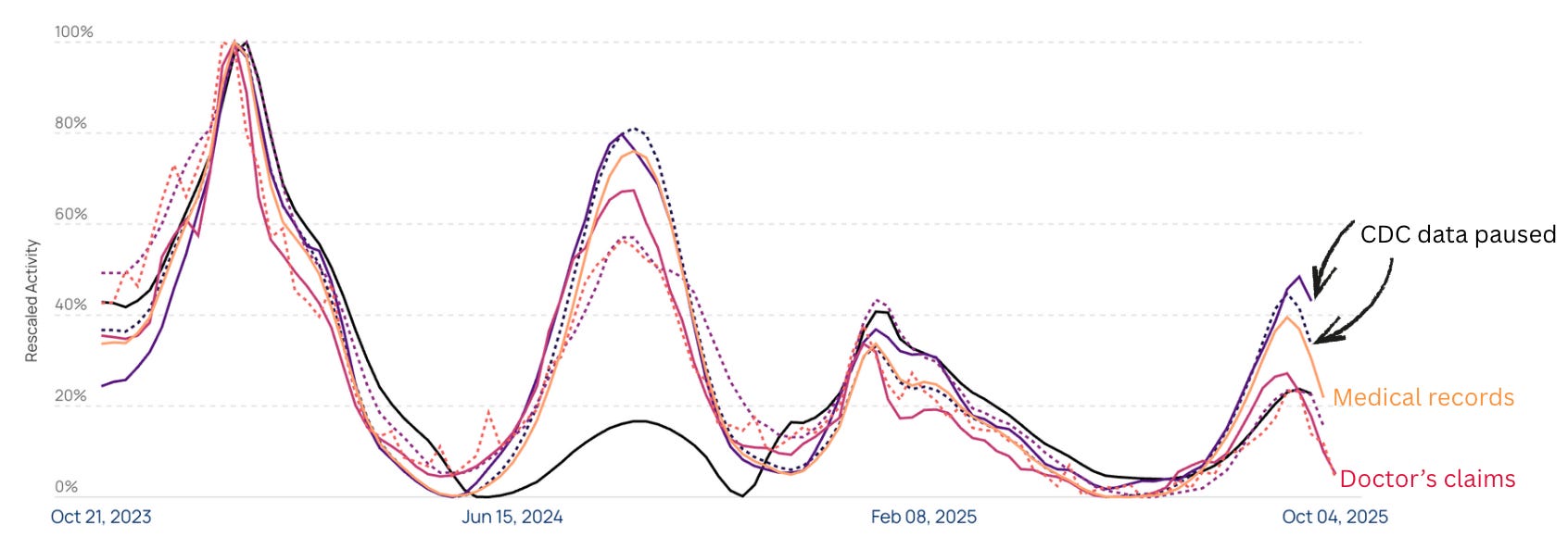
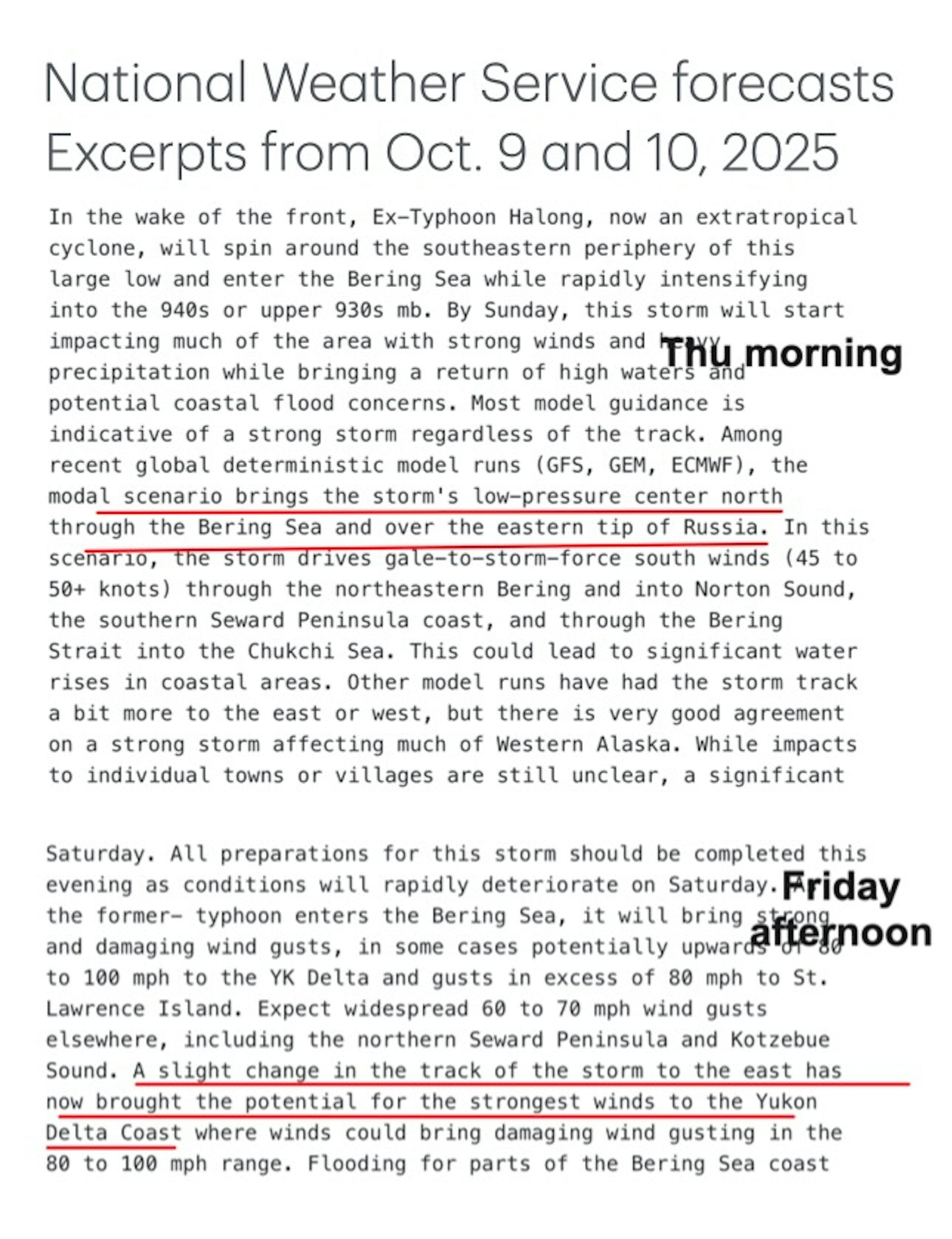


No comments:
Post a Comment