FOMC Minutes Signal Fed Saw "Dual Sided" Risks From Iran War - Since the last FOMC meeting (March 18th), a lot has happened (war, more war, and now less war), and rate-change expectations hawkishly surged, then dovishly normalized today... And given the last 24 hours, perhaps this information is more useful now, as we return to macro-fundamentals from geopolitical chaos running markets. The minutes, released three weeks after the meeting, underscore the Fed's dilemma as it seeks to fill its congressional mandates of low inflation and maximum employment. Fed officials wrestled with starkly differing scenarios for the US economy following the outbreak of the Iran war, including one that called for interest-rate cuts and another that would require raising rates. On one side, Fed officials acknowledged that the Iran conflict could also force households to cut back spending to offset higher gas prices, which would slow growth and raise unemployment. "...most participants raised the concern that a protracted conflict in the Middle East could lead to a further softening in labor market conditions, which could warrant additional rate cuts," according to the minutes of the meeting. But on the other side: "...many participants pointed to the risk of inflation remaining elevated for longer than expected amid a persistent increase in oil prices, which could call for rate increases." And at the same time, many policymakers highlighted the risk to inflation that might ultimately warrant rate increases. "Partly as a result of these factors, the vast majority of participants noted that progress toward the Committee's 2 percent objective could be slower than previously expected," according to the minutes. The record of the meeting also showed that a growing number of officials urged their colleagues to consider language in the committee’s statement raising the scenario of hiking interest rates under certain conditions. “Some participants judged that there was a strong case for a two-sided description of the committee’s future interest-rate decisions in the post-meeting statement, reflecting the possibility that upward adjustments to the target range for the federal funds rate could be appropriate if inflation were to remain at above-target levels,” the minutes said. As a reminder, The Fed kept its key rate unchanged at about 3.6% with Powell saying that another reduction depended on underlying inflation cooling steadily this year: "If we don’t see that progress then you won’t see the rate cut,” he said then. Will the ceasefire slow inflation or is the damage already done and yet to flow through global supply chains? Read the full Minutes below:
Fed's vice chair says oil price shock complicates inflation outlook -Federal Reserve Vice Chair Philip Jefferson said Tuesday that the jolt in energy prices complicates his inflation outlook, and depending on how long the Middle East conflict lasts, elevated oil prices could weigh on consumer and business spending. “It is difficult to say how long the conflict in the Middle East and related disruptions could last,” Jefferson said in a speech in Detroit. “I am highly attentive to the fact that inflation has remained above the Fed’s 2 percent target for five years … That is why I am committed to returning inflation to our target.” He underscored that progress in bringing down inflation — specifically core inflation — had already stalled over the past year, mainly due to tariffs. His expectation has been that inflation would resume falling once higher tariffs are no longer pushing up consumer prices. Jefferson also pointed to deregulation by the administration, along with high productivity growth, which could act to push down inflation. But he noted that the spike in energy prices will push up headline inflation at least in the near term. He said ongoing trade policy uncertainty and geopolitical tensions pose upside risk to his inflation forecast. Jefferson said he expects higher energy prices to be reflected in upcoming inflation readings. He expects the Fed’s preferred inflation gauge — the Personal Consumption Expenditures index — due out Thursday, will show inflation rose 2.8% in February before the war broke out. On a “core” basis, excluding volatile food and energy prices, he expects inflation to clock in at 3%. He said that the current interest rate range of 3.5% to 3.75% should allow inflation to drop once businesses have finished passing on tariff costs, while also continuing to support the job market. “I believe that the current stance allows us to determine the extent and timing of additional adjustments to our policy rate based on the incoming data, the evolving outlook, and the balance of risks,” Jefferson said. While Jefferson said the job market appears to be stabilizing, he remains cautious, noting that a “sufficiently large negative economic shock” could push job gains down and drive up the unemployment rate. He also noted that if heightened uncertainty continues, there’s a risk companies will remain reluctant to hire, which could hold down job growth longer. At this point, he expects the unemployment rate to remain roughly steady this year.
Inflation surges to highest in nearly two years : NPR - The U.S. war with Iran and the resulting spike in energy prices have pushed inflation to its highest level in nearly two years. A report from the Labor Department Friday showed consumer prices in March were up 3.3% from a year ago. That's the biggest annual increase since May of 2024. Prices jumped 0.9% between February and March, with higher gasoline prices accounting for nearly three-quarters of that increase. Gas prices have jumped by more than a dollar a gallon, on average, since the U.S. and Israel launched their attack on Iran. Pump prices have remained high this week, despite a tentative ceasefire. Higher jet fuel prices also contributed to a jump in the cost of airline tickets last month, although food prices were flat, as rising costs for restaurant meals offset a decline in grocery prices. Excluding volatile food and energy prices, so-called "core" inflation was 2.6% in March. Although inflation is nowhere near the four-decade high it reached in 2022, following Russia's invasion of Ukraine, progress on stabilizing prices fizzled out last year, partly as a result of President Trump's tariffs. The wartime jump in energy prices has pushed inflation even higher. Federal Reserve Chairman Jerome Powell and his colleagues held their benchmark interest rate steady. The Fed is torn between inflationary pressures from the war with Iran and a weakening job market. "We were making progress, making progress. Then we kind of stalled out and now it's been inching itself up the other way," Chicago Federal Reserve Bank President Austan Goolsbee told the Detroit Economic Club this week. Goolsbee worries that the longer inflation stays above the Federal Reserve's 2% target, the greater the risk that high inflation becomes baked into the economy. But a survey from the New York Fed this week showed that even though people expect higher inflation in the short run, they still believe it will come down in the long run. Fed policymakers try not to overreact to a spike in gasoline prices, which are notorious for bouncing up and down. But core inflation has also been climbing, which is likely to make the central bank cautious about any quick cuts in interest rates. The Fed is also keeping a close eye on the job market, which showed some signs of life in March when employers added 178,000 jobs, after cutting workers the previous month. While employers have not been adding a lot of jobs, they've been reluctant to lay people off as well. "I think it's from uncertainty," Goolsbee said. "I think that's what happens when businesses are uncertain and they say we're just going to sit on our hands until we figure out, is the war going to be a temporary shock?"
Warsh nomination moves ahead, putting Trump’s competing Fed plans on a collision course - The Senate Banking Committee will hold a nomination hearing on April 16 for Kevin Warsh to be the next chair of the Federal Reserve, a person familiar with the matter told CNBC. Warsh’s nomination is moving ahead even as a separate criminal probe into the Fed continues, setting up a potential clash between the two parallel processes set in motion by the Trump administration. Banking Committee member Sen. Thom Tillis, R.-N.C. has said he won’t vote to confirm Warsh until the probe is resolved. Yet President Donald Trump is eager to get Warsh confirmed. Tillis’s opposition means Trump can’t do both. But by moving ahead with the hearing, he is trying to anyway. The committee hasn’t yet put the hearing on its public schedule. Warsh and a spokesman for the Senate Banking Committee declined to comment. The criminal probe is looking into allegations that Jerome Powell, the current Fed chair, lied to Congress about the state of expensive renovations to the Fed’s offices. Powell has denounced the probe as a pretext to pressure him into lowering interest rates, as Trump has demanded. Congress tasked the Fed with setting interest rates independent of political considerations. Central banks that act independently generally do better at fighting inflation. The risk of reaccelerating prices is increasingly a concern in the U.S. as the Iran war raises energy costs. A federal judge has sided with Powell in the matter. Judge James Boasberg of the U.S. District Court for the District of Columbia on Friday declined a motion by the government to reconsider his decision to quash subpoenas into the Fed. That means the subpoenas aren’t moving forward, and the status of the investigation is unclear. “We will absolutely appeal the judiciary’s interference with our access to the grand jury,” a spokesman for U.S. Attorney for the District of Columbia Jeanine Pirro said Saturday. Tillis’s office didn’t immediately return weekend requests for comment. Tillis has praised Warsh’s credentials but has said he won’t lift the blockade until his concerns for the Fed’s independence are lifted. Sen. Elizabeth Warren, D-Mass., in March sent a critical letter to Warsh, predicting he would serve as a “rubber stamp for President Trump’s Wall Street First Agenda,” and accusing him of having learned “nothing from your failures” during a prior stint at the central bank. Warsh previously declined to comment on the letter. Federal nominees rarely speak to the public before their hearings. Meanwhile, other changes are afoot at the Department of Justice that could give prosecutors an opportunity to pivot on the Powell case. Trump on Thursday fired Attorney General Pam Bondi and appointed Todd Blanche temporarily as acting attorney general. He was a defense attorney for Trump before joining the administration. The administration has said that it is the Department of Justice’s decision whether or not to investigate Powell. But Trump has repeatedly signaled that he supports the investigation. “There is criminality” related to the Fed’s building expenses, Trump said on March 19. If so, the government hasn’t proved it to the judge. “The Government’s fundamental problem is that it has presented no evidence whatsoever of fraud,” Boasberg wrote in his ruling Friday.
Kevin Warsh Fed chair confirmation plan hits snag as nomination hearing is delayed -An expected nomination hearing for Federal Reserve chair candidate Kevin Warsh has been delayed, a person familiar with the matter told CNBC on Thursday evening. Warsh had been set to appear before the Senate Banking Committee on April 16. That won’t happen, but the hearing is still expected soon, the person said, requesting anonymity as the details have not been made public by the committee. The committee’s rules require that it give a week’s notice before the hearing is held, and the panel first needs to collect paperwork from the nominee, including financial disclosures. The Banking Committee has yet to receive Warsh’s paperwork, according to three people familiar with the Senate process.The committee has not formally noticed the hearing. The deadline for doing so was Thursday. Punchbowl earlier reported the delay to Warsh’s hearing.Warsh’s finances may be especially complicated. He is married to Estée Lauder cosmetics heir Jane Lauder, whose net worth is estimated at $1.9 billion, according to Forbes. Financial disclosures filed in 2006, when Warsh was nominated for an earlier stint at the Fed, listed nearly 1,200 assets, the vast majority of which were held by his wife. Since leaving the Fed in 2011, Warsh has spent 15 years working for investor Stanley Druckenmiller’s family office, where he led venture investments into tech firms, including Palantir. President Donald Trump in January announced Warsh’s nomination to succeed Chair Jerome Powell, whose term as the Fed’s top official expires May 15. National Economic Council Director Kevin Hassett told Fox Business in an interview on Thursday that he is “highly confident” that Warsh will be in place by the end of Powell’s term as chair. While the Trump administration appears confident about Warsh’s confirmation, it will be difficult for him to advance beyond a hearing unless Sen. Thom Tillis, R-N.C., drops a blockade of the nomination.Tillis is refusing to vote for any Fed nominee until the Department of Justice drops a criminal probe into Powell. Tillis and Powell have called that investigation a politically motivated effort to undermine the Fed’s independence. U.S. Attorney for the District of Columbia Jeanine Pirro told CNBC on Wednesday that she plans to move forward with the investigation. That leaves Warsh’s path beyond the hearing unclear.
Former Fed official argues against Fed independence — An influential former Federal Reserve official said in a speech Friday afternoon that the legal protections barring members of the Board of Governors from removal by the president except for cause should be overturned, but added that the central bank's decentralized structure would ensure that the White House would still not be able to dictate monetary policy if such an outcome became a reality.
- Key insight: Former Federal Reserve Vice Chair for Supervision Randal Quarles said in a speech Friday that members of the Fed board should serve at the pleasure of the president, but added that keeping regional Fed bank presidents on the Federal Open Market Committee and ensuring their appointments are not influenced by the White House would ensure that monetary policy remains sound.
- Expert quote: "We don't want — and can't have — an independent Fed. What we can have is a system that assures that the monetary policy decisions of the central bank are insulated from short-term political direction." — Former Federal Reserve Vice Chair for Supervision Randal Quarles
- What's at stake: Quarles' comments come as the Supreme Court stands poised to issue rulings on the president's ability to dismiss members of independent regulatory agencies and on whether the president erred in attempting to fire Fed Gov. Lisa Cook, potentially overturning a longstanding precedent protecting those agencies from at-will removal.
Former Federal Reserve Vice Chair for Supervision Randal Quarles, who served during President Trump's first term, said members of the Fed board should be removable by the president, but that the decentralized structure of the Fed will ensure that monetary policy decisions remain sound.
Jamie Dimon: Iran war may cause US recession -- JPMorgan Chase CEO Jamie Dimon is warning that the Iran war could lead to prolonged inflation and higher interest rates that ultimately could tip the U.S. economy into a recession. “The skunk at the party — and it could happen in 2026 — would be inflation slowly going up, as opposed to slowly going down. This alone could cause interest rates to rise and asset prices to drop,” Dimon said in his annual letter to shareholders on Monday. “Interest rates are like gravity to almost all asset prices,” he added. “And falling asset prices at one point can change sentiment rapidly and cause a flight to cash.”Dimon said the U.S. is generally less vulnerable to the rapid increases in oil prices that helped drive the recessions in 1974 and 1982 but warned of the risk of oil and commodity price shocks in the months ahead.“Despite the unsettling landscape, the U.S. economy continues to be resilient,” Dimon wrote in the letter, noting consumers are still “earning and spending (though with some recent weakening) and businesses [are] still healthy.”“Now, because of the war in Iran, we additionally face the potential for significant ongoing oil and commodity price shocks, along with the reshaping of global supply chains, which may lead to stickier inflation and ultimately higher interest rates than markets currently expect,” he wrote. The letter comes as President Trump has sought to increase pressure on Iran to reopen the Strait of Hormuz, declaring in a profanity-laced social media post over the weekend that the U.S. would escalate attacks on Iran’s civilian infrastructure if no agreement is reached by Tuesday.“Tuesday will be Power Plant Day, and Bridge Day, all wrapped up in one, in Iran. There will be nothing like it!!! Open the F‑‑‑in’ Strait, you crazy bastards, or you’ll be living in Hell – JUST WATCH! Praise be to Allah,” Trump said in a Truth Social post on Sunday.
NASA administrator defends Trump’s proposed budget cuts NASA Administrator Jared Isaacman on Sunday backed the Trump administration’s proposed budget cuts to his agency, as the Artemis II mission continues. “Yes, of course I do,” Isaacman said on CNN’s “State of the Union,” when host Jake Tapper asked whether he supported the administration’s proposed budget cuts for fiscal 2027. On Friday, the Office of Management and Budget (OMB) requested $18.8 billion for NASA from Congress, $5.6 billion less than the 2026 amount. The proposed budget would cut $3.4 billion from NASA’s science unit by terminating more than 40 “low-priority” missions. Among those are the Mars Sample Return mission and the SERVIR program, a climate-focused partnership with the U.S. Agency for International Development that cost $10 million annually, according to OMB. The proposal would also cut $1.1 billion from the International Space Station, which is scheduled to be retired in 2030; $297 million from the space technology unit; and $143 million from NASA’s Office of Science, Technology, Engineering and Mathematics Engagement — including the termination of a program that funneled millions to engineering and data science initiatives at historically Black colleges and universities. Isaacman noted Sunday that NASA’s budget is “greater than every other space agency across the world,” and the One Big Beautiful Bill Act, which President Trump signed into law last July, provided nearly $10 billion to NASA for missions to the moon and Mars, infrastructure improvements and other projects. The administrator said that allotment “gives us the capability to get to the moon with frequency, to build the enduring presence on the moon, the moon base, which in itself is going to afford numerous scientific and technological development” opportunities. “We are able to launch the Grace Roman Space Telescope at the end of 2026, 100 times the field of view of the Hubble telescope, 1,000 times the scan rate,” he added. “We’re going to launch a nuclear-powered octocopter in 2028 to explore Saturn’s moon of Titan within the budget environment.” Included in the proposed budget is $8.5 billion for NASA’s Artemis program, with OMB noting that amount fully funds lunar landers, space suits, lunar surface systems and astronaut transportation systems needed to “safely and cost-effectively expand America’s presence to the surface of the Moon.”
Trump's Total 2027 National Security Spending Will Exceed $2.5 Trillion - The true total of US national security spending in 2027 will exceed $2.5 trillion, far beyond the already record-shattering $1.5 trillion military budget President Trump has requested, according to veteran defense analyst Winslow Wheeler.Wheeler, who spent decades working in Washington for senators and the Government Accountability Office on national security issues, reached the figure by factoring in the Pentagon budget, military-related spending from other US government agencies, the national security share of interest accrued on the US debt, among other factors (full table of his work at the end of the article).The White House’s Office of Management and Budget (OMB) has said that the $1.5 trillion military budget request for 2027 is a $445 billion, or 42%, increase over this year. The OMB said the $1.5 trillion includes $1.1 trillion in “base discretionary budget authority” for the Pentagon, plus a request for $350 billion in “additional mandatory resources through reconciliation.”More than $150 billion in supplemental military spending was included in the so-called “Big Beautiful Bill,” which President Trump signed into law last year, to pad the Pentagon budget, and the Trump administration is seeking to secure the $350 billion for the 2027 budget in a similar way.Trump is also looking for additional military spending to replenish stockpiles of US air defense interceptors and other munitions used in the US-Israeli war against Iran, which is expected to be worth somewhere between $80 billion and $200 billion and would be counted as part of the 2026 spending if it’s pushed through Congress soon.Wheeler said that he labeled the supplemental spending bills as “slush funds” to “characterize the lack of specificity in congressional legislation for how the funds are to be allocated within the major categories shown here, compared to historic discretionary appropriations.”At the beginning of his term, Trump suggested he was interested in reducing the military budget, but he went on to dramatically expand US military interventions and seek unprecedented levels of military spending.
US Loses at Least Six Aircraft in Iran War Since Friday - - The US has lost at least six military aircraft during US-Israeli strikes on Iran on Friday and in the operation to retrieve a pilot and a weapons system officer (WSO) who manned the F-15 fighter jet that was shot down over Iranian territory.On the same day the F-15 was shot down, an A-10 attack plane was also hit by Iranian fire. According to Iranian media, the plane crashed in the Persian Gulf, and US officials said the pilot managed to make it to Kuwaiti airspace and eject from the aircraft.According to a US official speaking to The Washington Post, US forces had to blow up two C-130 cargo planes and at least two MH-6 “Little Bird” helicopters as they were departing Iran, while the Iranians say their forces destroyed the US aircraft in Isfahan, central Iran. Iranian media also released a photo of the wreckage. Photo of the wreckage in Isfahan released by Iranian media. Two US military helicopters were also damaged by Iranian fire, and some of the crew were injured, but the aircraft managed to travel back to a US base in the region and land, according to US sources. Iran’s Islamic Revolutionary Guard Corps (IRGC) also said that its forces downed an Israeli Hermes-900 drone as well as a US MQ-9 drone over Isfahan during the US search and rescue mission.According to US sources, the pilot of the F-15 was recovered about six hours after he ejected from the aircraft by a force of US attack planes and helicopters that came under heavy Iranian fire. It took much longer for the US to find the WSO, who reportedly hiked up a 7,000-foot ridgeline and used a beacon he was carrying to reveal his location to US forces.Iranians were mobilized to find the missing US airman, so US officials said heavy airstrikes were launched in the area as special operations forces were sent in to extract him. Some reports say a heavy firefight ensued, while other accounts say US forces opened fire in the area but didn’t engage with anyone.US officials said that the two C-130s and two Little Birds were destroyed at a makeshift airstrip after they got stuck in the sand, and more special operations aircraft were sent in to complete the mission. President Trump insisted that no Americans were killed in the operation, though he described the WSO as “seriously wounded.” Trump also said he would deliver remarks on the operations at 1:00 pm EST on Monday.The rescue mission marks the first known US ground operation in Iran, though The New York Times said that an airstrip in Iran used in the operation was “previously developed for possible rescues or other contingencies” by US special operations forces, suggesting it was established before the F-15 was shot down.
Iranian Missile Bunkers Are Being Repaired Within Hours After Attack - -- According to US intelligence, Iran is quickly restoring missile bunkers and silos after being struck by American and Israeli bombs, and retains close to half their missile launchers along with thousands of drones. Per US Central Command, the US has struck 12,300 targets in Iran since the start of Operation Epic Fury. One of the operation’s key goals, as stated by Secretary of State Marco Rubio, is the “severe diminishing” of Iran’s missile launch capability; the Pentagon and White House have celebrated the purported success of American strikes so far, with an emphasis on the reduction in Iranian missiles being fired, rather than what’s being destroyed. Secretary of War Pete Hegseth said during a press briefing on March 19 that “ballistic missile attacks against our forces, down 90 percent since the start of the conflict, same with one-way attack UAVs, think kamikaze drones, down 90 percent.” And on Monday, he stated, “Yes, they will still shoot some missiles, but we will shoot them down. Of note, the last 24 hours saw the lowest number of enemy missiles and drones fired by Iran. They will go underground, but we will find them.” However, the intelligence report also states the possibility that Iran is indeed keeping a large portion of their launchers in caves and bunkers underground that are inaccessible to airstrikes. Haaretz, the Israeli publication, reported that Iran is using bulldozers to retrieve missiles that are “corked” (buried) in such bunkers. They are also making use of decoy launch sites, which has made it difficult for US and Israeli intelligence to accurately assess the damage done to their missile capability. Iran is currently firing 15 to 30 ballistic missiles and 50 to 100 one-way attack drones a day, according to a Western official. A large percentage of their coastal defense cruise missiles also remain intact, which is a key factor in allowing them to continue to threaten shipping in the Strait of Hormuz, and Trump officials have already acknowledged they can’t promise to reopen the Strait before ending the war, which Trump claims will occur in two to three weeks.
Trump Says US Sent 'a Lot of Guns' to Protesters in Iran - - President Trump has said that the US sent “a lot of guns” to protesters inside Iran during demonstrations and clashes that took place in January, though he believes the weapons may have been “kept” by Kurdish groups. “President Trump told me the United States sent guns to the Iranian protesters,” Trey Yingst, a reporter for Fox News, said on Sunday. “He told me, ‘We sent them a lot of guns. We sent them to the Kurds.’ And the president says he thinks the Kurds kept them. He went on to say. ‘We sent guns to the protesters, a lot of them.’”Trump told Yingst that he sent the weapons after Iranian forces killed demonstrators, but at the height of the unrest in Iran, Iranian authorities said they seized US-made weapons and ammunition from foreign-backed “militants” and frequently said their forces were fighting against US and Israeli-backed “terrorist groups.”Trump repeated his claim that Iranian forces killed 45,000 protesters, a number that lacks any evidence or credibility. The Iranian government has acknowledged that more than 3,000 people, including over 200 Iranian security personnel, were killed, while the HRANA, a US-based and US-funded NGO, has said more than 7,000 were killed and says it is investigating more reported deaths, but nowhere near the number Trump claims.On Monday, Trump told reporters that the US sent guns into the country and that a “certain group of people” kept them without mentioning the Kurds by name.“We sent guns, a lot of guns. They were supposed to go to the people, so they could fight back against these thugs. You know what happened? The people that they sent them to kept them,” he said. “Because they said, ‘What a beautiful gun, I think I’ll keep it.’ So I’m very upset with a certain group of people, and they’re gonna pay a big price for that.”In response to Trump’s initial comments, several Kurdish groups denied that they received guns from the US during the protests. Amid the unrest in January, Reuters reported that Kurdish fighters had been entering Iran through Iraqi Kurdistan to fight Iranian security forces.The Kurdistan Freedom Party, or PAK, a Kurdish Iranian separatist group mainly based in Iraq, was announcing operations against Iran’s Islamic Revolutionary Guard Corps (IRGC), and the IRGC had also reported clashes with armed Kurds. The US also reportedly smuggled Starlink terminals into Iran through Iraqi Kurdistan.The US and Israel were looking to back armed Kurdish fighters on the ground at the start of the war they launched on February 28, but according to Israeli media, the potential offensive fell apart after a series of media leaks and the Kurdish group’s mistrust of the US-Israeli plan.
Archbishop for US Military Says Iran War Is Unjust Under Catholic Teaching - - The Catholic Archbishop for the US Military Services has said the US-Israeli war against Iran is unjust, according to Catholic teaching, as Catholic leaders in the US, Rome, and the Middle East continue to criticize the conflict. Archbishop Timothy Broglio made the comments in an interview on CBS News’ “Face the Nation” that was recorded on Friday and aired on Sunday. He was asked if the conflict could be justified under the Catholic Church’s Just War Theory, which traces its roots to St. Augustine of Hippo, who died in the fifth century. “I would think under the Just War Theory, it is not [just],” Broglio said. He added that there was a “threat with nuclear arms” but that the war was “compensating for a threat before the threat is actually realized,” though there was no evidence either before the June 2025 war or the current conflict that Iran was pursuing nuclear weapons.Just War Theory is codified in the latest Catechism of the Catholic Church (1992), which calls on all Catholics to “work for the avoidance of war” and teaches that war is justified only in self-defense. It states that governments cannot be “denied the right of lawful self-defense, once all peace efforts have failed,” and outlines four strict conditions that must be met:
- The damage inflicted by the aggressor on the nation or community of nations must be lasting, grave, and certain
- All other means of putting an end to it must have been shown to be impractical or ineffective
- There must be serious prospects of success
- The use of arms must not produce evils and disorders graver than the evil to be eliminated
The Catechism adds that the “power of modern means of destruction weighs very heavily in evaluating this condition,” and since World War I, popes have decried the destructive power of modern weapons.Broglio said that he would “line myself up with Pope Leo, who has been urging for negotiation.” Since the outbreak of the war, Pope Leo XIV, the first US-born pontiff, has made repeated appeals for peace and said last week that he hoped President Trump was “looking for an off-ramp” and “looking for a way to decrease the amount of violence.”Broglio was also asked about US Secretary of War Pete Hegseth’s efforts to portray the US war as one sanctioned by God. “It’s a little bit problematic in the sense that the Lord Jesus certainly brought a message of peace, and also, I think war is always a last resort,” he said.The archbishop added that he believes it’s hard to “cast this war as something that would be sponsored by the Lord.” Broglio was asked what advice he would give to a Catholic service member involved in the war, and said, “I guess my counsel would be to do as little harm as you can, and to try and preserve innocent lives.”Broglio has previously spoken out against the US bombing campaign targeting alleged drug boats in the waters of Latin America and has also said that it could be “morally acceptable to disobey” an order to attack Greenland.
US Satellite Firm Blacks Out Iran War Images Per US Government Request - Planet Labs says it will “indefinitely withhold” satellite visuals of Iran and the wider Middle East war zone after a request from the US government and the Trump administration. In an email to customers, the firm said it is shifting to a “managed distribution” model, releasing imagery only case-by-case for “urgent, mission-critical requirements,” or when release is deemed “in the public interest.” Planet also said it will withhold imagery dating back to March 9, and it expects the policy to remain in effect until the conflict ends. On March 6, Planet Labs announced a mandatory 96-hour delay on new imagery collected over the Gulf states, arguing that near-real-time pictures could be exploited to “endanger allied, NATO, and civilian personnel.” That measure later expanded into a 14-day delay, described by Planet as an extension of the earlier hold. By March 30, Al Jazeera’s Digital Investigations unit was reporting that independent verification had become harder as commercial providers restricted satellite imagery. Satellite imagery matters because, unlike press briefings, it can corroborate damage, assess patterns of targeting, and check narratives that would otherwise be accepted on authority. Reporting by the Global Investigative Journalism Network describes how open-source teams used satellite imagery and videos to probe contested incidents during this war, quoting Bellingcat’s head of research warning that a “two-week delay” slows verification and reduces the certainty investigators can reach while events are still developing. It also quotes the Defense Secretary saying, “Open source is not the place to determine what did or did not happen.” Despite the insinuation that open source investigative journalism is less credible, even mainstream news organizations utilize such tools in their reporting. For example, Reuters has also used satellite imagery in its war coverage, including sharing said imagery and post-strike visuals with a munitions researcher in reporting on the strike on a girls’ school in Minab which killed over 170 people, mostly children. While later reporting added that the strike may have involved outdated targeting intelligence, it is worth noting that the president claimed “without evidence” that Iran was responsible. One can concede that operational security is real and still recognize that “trust us” is an unsafe substitute for public evidence. In mid-March, the White House claimed Iran’s ballistic-missile capacity was “functionally destroyed,” with “complete and total aerial dominance,” while reporting in the same period described continued missile incidents and interceptions. But the Trump administration’s claim of total control over Iranian airspace seems dubious when countered with reports of military losses, such as the downing of multiple aircraft just since the start of April. The blackout of satellite imagery from the region is not a story about one firm’s products or customer service. It is a reminder that foreign intervention tends to produce domestic control, often without the drama of a formal censorship order. The same state that wages war can narrow the evidence available to judge that war. The predictable result is that the public is pushed to take the word of the administration’s spokesmen at face value, without timely means to verify or falsify their claims.
On Easter, Trump Demands Iran 'Open the F*cking Strait' or 'Live in Hell' - President Trump issued a profanity-laden post on Truth Social on Easter Sunday, where he yet again threatened to unleash “hell” on the country of Iran if the Strait of Hormuz isn’t opened. “Tuesday will be Power Plant Day, and Bridge Day, all wrapped up in one, in Iran. There will be nothing like it!!! Open the Fuckin’ Strait, you crazy bastards, or you’ll be living in Hell – JUST WATCH! Praise be to Allah,” the president wrote. Later in the day, Trump issued a post that said, “Tuesday, 8:00 P.M. Eastern Time,” which appeared to be another deadline for the power plant attacks, pushing back one he set for Monday. On Saturday, Trump said Iran had 48 hours before he would unleash “hell” on the country. “Remember when I gave Iran ten days to MAKE A DEAL or OPEN UP THE HORMUZ STRAIT. Time is running out – 48 hours before all Hell will reign down on them. Glory be to GOD!” he wrote. The president has been threatening to launch strikes that he says will completely destroy Iran’s power plants, and has pushed back the deadline for the escalated bombing campaign several times. US-Israeli strikes have hit energy infrastructure in Iran, but not on the scale Trump appears to be threatening. Trump has also previously said that he may also bomb Iran’s desalination plants, and so far, at least one has been hit during the US-Israeli bombing campaign. The president’s latest threat comes a few days after the US bombed one of the biggest bridges in Iran while it was still under construction, killing at least eight civilians. Iran’s Islamic Revolutionary Guard Corps (IRGC) said on Sunday that if the US and Israel continue attacking civilian infrastructure inside Iran, it would escalate its retaliatory strikes. “If attacks on civilian facilities are repeated, the next phase of the operation will be more intense and broader in scope,” the IRGC said.
Iran War: Trump Makes Even More Unhinged Threat as Details of F-15 Pilot Rescue Point to Much Bigger Plan, Say to Seize Enriched Uranium; Trump Legitimacy Crisis Grows as Battered Gulf States Pull Back on US Investment, Particularly AI - by Yves Smith - Most readers are likely up to date on the latest Trump cray-cray, but to make sure we are all on the same page, Trump is even more visibly losing his mind. I am providing it with the Marjorie Taylor Greene commentary. As we’ll discuss shortly, it shows that Trump’s repeatedly backfiring efforts to assert his dominance and somehow create a success from the epic and worsening disaster are creating a legitimacy crisis. But who can take the car keys from an ever more dangerous and deranged president?1 Former Congresswoman Marjorie Taylor Greene @FmrRepMTG: On Easter morning, this is what President Trump posted. “Tuesday will be Power Plant Day, and Bridge Day, all wrapped up in one, in #Iran. There will be nothing like it!!!” Open he Fuckin Strait, you crazy bastards, or you’ll be living in Hell – JUST WATCH! Praise be to Allah, President DONALD J. TRUMP Everyone in his administration that claims to be a Christian needs to fall on their knees and beg forgiveness from God and stop worshipping the President and intervene in Trump’s madness. I know all of you and him and he has gone insane, and all of you are complicit. I’m not defending Iran but let’s be honest about all of this. The Strait is closed because the US and Israel started the unprovoked war against Iran based on the same nuclear lies they’ve been telling for decades, that any moment Iran would develop a nuclear weapon. You know who has nuclear weapons? Israel. They are more than capable of defending themselves without the US having to fight their wars, kill innocent people and children, and pay for it. Trump threatening to bomb power plants and bridges hurts the Iranian people, the very people Trump claimed he was freeing. On Easter, of all days, we as Christians should be reminded that the son of God died and rose from the grave so that we can be forgiven once and for all of our sins. Jesus commanded us to love one another and forgive one another. Even our enemies. Our President is not a Christian and his words and actions should not be supported by Christians. Christians in the administration should be pursuing peace. Urging the President to make peace. Not escalating war that is hurting people. This NOT what we promised the American people when they overwhelmingly voted in 2024, I know, I was there more than most. This is not making America great again, this is evil. This tweet came after the disaster-attempted-to-be-rebranded as success of what has been depicted as the rescue of one of two operators of an F-15, a weapons officer. Trump initially depicted him as unharmed but it appears he was seriously injured. The disproportionate scale and equipment losses of the purported rescue effort, the inconsistencies in the official story, and the Pentagon’s effort to clamp down on information all point to a lot more having been afoot than just a search for a crew member of a plane that had wandered or been sent into hostile airspace.2 We’ll turn to some of the theories, but one that makes sense (as in fits known facts, which of course may not be actual facts) is that the F-15 was part of an operation to seize Iran’s enriched uranium, which was believed to be stored at Isfahan. Even though experts have all depicted this as a particularly hare-brained, high-risk, very low odds of success operation, we posted a tweet that said that Trump was really keen about the scheme and had green-lighted it. Now if all of the above is true, it would explain (without justifying, mind you) Trump’s escalation to a new level of choler and destructive intent. The same way Ukraine’s leaders became fixated on the destruction of the Kerch Bridge as a way to demonstrate their potency and really sock it to Russia, so too seizing the enriched uranium could have become an almost talismanic fixation for Trump, in at least restoring the very badly damaged image of US potency and military prowess. Given that he believes that non-existent negotiations are or are about to start happening, he and the Zionists and hawks egging him on could have sold (and may themselves actually believe) that such a blow to Iran would force them to the negotiating table. Mind you, for Israel, none of these gimmicks have to work in reality to work for their purpose. They just need to keep Trump at the gaming table, betting despite diminishing odds of victory.Of course, as readers know well, even if this was the plan and it had succeeded, it would have changed nothing fundamental. Iran’s power comes from its control over the Strait of Hormuz. What happens to unweaponized uranium has nothing to do with that, particularly since Iran also knows well that the US and its allies are running low not just on defensive but even offensive weapons. The US ex nukes can’t keep fighting at its current level of intensity for all that much longer. Now to the theories of what might actually have happened with the “oh just a rescue, nothing more to see here” drama. The Pentagon is clearly hiding something: Iran reports that they have shot down two U.S. MC-130J Special Operations aircraft. The Pentagon is in full media lockdown mode, and has instead claimed that the aircraft were "blown up on the ground" during the chaotic mission, claiming the planes were "stuck in soft ground" and were destroyed by U.S. In order to prevent any open source images which might refute the Pentagon's stories, the US has threatened action against any Satellite imaging company that allows any ground images of areas where US military operations are taking place.
Marjorie Taylor Greene rails against ‘insane’ Trump after Easter Iran threat - Former Rep. Marjorie Taylor Greene (R-Ga.) on Sunday slammed President Trump’s message to Iran earlier in the day, saying he is “insane” and “not a Christian.” Early Sunday morning, Trump wrote on his Truth Social platform, “Tuesday will be Power Plant Day, and Bridge Day, all wrapped up in one, in Iran.” “There will be nothing like it!!! Open the Fuckin’ Strait, you crazy bastards, or you’ll be living in Hell – JUST WATCH! Praise be to Allah.” Less than two hours later, Greene posted a screenshot of his post to the social platform X and wrote, “On Easter morning, this is what President Trump posted.” “Everyone in his administration that claims to be a Christian needs to fall on their knees and beg forgiveness from God and stop worshipping the President and intervene in Trump’s madness,” she continued. “I know all of you and him and he has gone insane, and all of you are complicit.” Trump has threatened the Iranian government against continuing to restrict shipping through the Strait of Hormuz amid ongoing U.S. and Israeli strikes on the Middle Eastern country. On Saturday morning, he wrote on Truth Social that Iran had 48 hours to open the passageway “before all Hell will reign down on them.” Iran’s restrictions on shipping in the strait, through which roughly one-fifth of the world’s oil passes, have led to global energy prices rising — including at the gas pump in the U.S. But Greene wrote Sunday that the strait is closed because the U.S. and Israel launched an “unprovoked war against Iran based on the same nuclear lies they’ve been telling for decades, that any moment Iran would develop” a nuclear weapon. “You know who has nuclear weapons? Israel,” she added. “They are more than capable of defending themselves without the US having to fight their wars, kill innocent people and children, and pay for it.” Greene has frequently criticized Trump and the Israeli government since the conflict began on Feb. 28, and she has specifically accused the president of betraying his MAGA base by starting another U.S. war in the Middle East. That followed Greene’s falling-out with Trump last year, which stemmed from her breaking with the president on his authorization of strikes on Iran and his handling of files regarding the convicted sex offender Jeffrey Epstein, among other issues. That led Trump to renounce his support of Greene in November, which spurred the Georgia firebrand to depart Congress in January. On Sunday, she said Trump’s latest rhetoric “hurts the Iranian people, the very people Trump claimed he was freeing.” She also reminded Christians that Jesus says, “Love one another and forgive one another,” including their enemies. “Our President is not a Christian and his words and actions should not be supported by Christians,” she said. “Christians in the administration should be pursuing peace. Urging the President to make peace. Not escalating war that is hurting people.” “This NOT what we promised the American people when they overwhelmingly voted in 2024, I know, I was there more than most. This is not making America great again, this is evil.”
US-Israeli Strikes Hit Prestigious Iranian University - A US-Israeli strike hit the Sharif University of Technology in Tehran on Monday, an attack widely condemned by Iranians both inside and outside of the country, as the bombing campaign continues to hit civilian targets. The university, known as the “MIT of Iran,” is a prestigious institution that attracts top medical and engineering students in the country. “Disgraceful!” Trita Parsi, executive vice president of the Quincy Institute, wrote on X in response to the bombing. “The US/Israel just bombed Sharif University in Tehran. This is not only Iran’s best university, but also a top 100 global university in the field of Civil Engineering.” Aftermath of US-Israeli strike on the Sharif University (Iranian Red Crescent photo) Proponents of the war attempted to justify the bombing of the university by pointing to US and EU sanctions imposed on the school over allegations that it cooperates with entities involved in Iranian military activity, but it’s not unusual for engineering schools to have links to their country’s military industry. In the US, the US military and weapons makers are deeply entrenched with universities, funding research and sponsoring students, among other activities. Reports from Iran said there was extensive damage at the university following the strikes, which hit laboratories and a mosque at the school. US-Israeli strikes also pounded other targets in Tehran and elsewhere across the country, killing at least 34 people, including six children, according to Al Jazeera. Iran’s Fars News Agency reported that the six children — four girls and two boys under 10 years old — were killed by a major air attack in Tehran province’s Baharestan County.Iran said that the US-Israeli attacks also targeted petrochemical plants in southern Iran. President Trump is threatening to destroy all of the power plants in Iran if Iran doesn’t capitulate to his demands by 8 pm EST on Tuesday night, and said on Monday that the “entire country” could be “taken out” in just one night.
Iran condemns US-Israeli attacks on universities as ‘unprecedented barbarism - Iran has condemned the US-Israeli attacks on universities, stating that such “barbarism” is unprecedented in modern history. In a letter circulated to the United Nations Security Council on Monday, Iran’s Permanent Representative and Ambassador to the UN, Amir Saeid Iravani, referred to the “grave breaches of international humanitarian law, acts of terrorism and war crimes being perpetrated through the deliberate and indiscriminate targeting of civilian objects” in Iran. According to the letter, Sharif University of Technology was attacked in the early hours of Monday, causing severe damage to the Faculty of Civil Engineering, the Department of Philosophy of Science, the Nano and Environmental Research Institutes, the Convergent Research Institute building, and the Faculty of Electrical Engineering, among other facilities. The attack on Sharif University follows another war crime perpetrated on 3 April 2026, when parts of Shahid Beheshti University in Tehran—including the Laser and Plasma Research Institute—were also severely damaged. He noted that “the intentional targeting of scientific institutions and universities constitutes a clear violation of international humanitarian law and amounts to a war crime.” Ambassador Iravani called upon UN Secretary-General António Guterres and the Security Council to unequivocally condemn the attacks as “state terrorism directed against civilian objects and infrastructure.” He further demanded that the Security Council take “immediate, decisive and concrete measures” to halt the ongoing criminal acts of the United States and the Israeli regime, and to ensure full accountability under international law for those responsible. Sharif University of Technology is not the first university to be targeted by the invading coalition in the past month. Tehran’s Shahid Beheshti University and University of Science and Technology, the Faculty of Pharmacy at Shiraz University, Isfahan University of Technology, parts of the Science and Technology Campus and the Veterinary Specialized Hospital Campus at Urmia University have been hit throughout the unlawful aggression. The United States and Israel launched their criminal aggression against Iran on February 28 by assassinating Leader of the Islamic Revolution Seyyed Ali Khamenei, along with senior military commanders.
Former NATO commander on Iran rejecting ceasefire proposal: ‘They still have cards to play’ - James Stavridis, a former NATO commander, on Monday said Iran hasn’t accepted a ceasefire because they “still have cards” to play in the war. Stavridis, during an appearance on CNN’s “Situation Room,” said that “Iran wants to hold on to its high-value cards: number one, Strait of Hormuz closure, and number two, almost 1,000 pounds of enriched uranium.” “So, they still have cards to play,” he added. The former NATO commander noted the price fluctuation was caused by Iran’s decision to close a critical choke point. The Strait of Hormuz’s closure has caused energy prices to spike and oil transports to slow. The strait’s shutdown has also pushed President Trump to issue threats of additional strikes on Iran. “Tuesday will be Power Plant Day, and Bridge Day, all wrapped up in one, in Iran. There will be nothing like it!!! Open the F‑‑‑in’ Strait, you crazy bastards, or you’ll be living in Hell – JUST WATCH! Praise be to Allah. President DONALD J. TRUMP,” Trump wrote in a Sunday Truth Social post. Trump’s profane post caught the attention of lawmakers and left some wondering who has the strategic advantage in the war against Tehran. “Now Iran recognizes that, in fact, their control over the strait is even more strategically vital to them than the development of a nuclear weapon,” Rep. Jake Auchincloss (D-Mass.) said during a Sunday appearance on Fox News’s “Fox News Sunday.” Auchincloss added that the president is “blustering” with these recent threats, claiming “he always backs down.” As Trump threatens to strike desalination plants and other sites, Stavridis said the planned attacks violate international law. “If you go after desalinization, water production facility, I think that is almost certainly a war crime because it serves the population so directly,” Stavridis told anchor Wolf Blitzer. Sen. Chris Murphy (D-Conn.) on Sunday also said Trump’s latest threats to Iran would constitute “war crimes” if committed. “Trump is calling reporters today to tell them he is going to commit mass war crimes next week,” Murphy wrote on the social platform X. “GOP leaders need to stop him. Never mind that blowing up bridges and power plants and killing innocent Iranians won’t reopen the Strait. It’s also a clear war crime.” Egypt, Pakistan and Turkey have stepped in to mediate the ongoing conflict in the region. However, Iran has vowed to defend itself with strikes on nations with U.S. assets until its five conditions for ending the war are met. The nation rejected a peace proposal earlier Monday.
Trump suggests US could charge toll for Strait of Hormuz passage - President Trump suggested Monday that the U.S. could impose its own tolls on vessels trying to transit through the Strait of Hormuz — a strategy employed by Iran as it continues to control the key energy shipping choke point. During a White House press conference, a reporter asked Trump whether he would end the war while Iran was continuing to charge tolls for passage through the strait. “What about us charging tolls?” Trump responded. “I’d rather do that than let them have them,” he added. “Why shouldn’t we? We’re the winner.” “We won, OK? They are militarily defeated. The only thing they have is the psychology of ‘oh, we’re going to drop a couple of mines in the water,’” Trump continued. “We have a concept where we’ll charge tolls.” However, in response to a question about peace agreement conditions, he said that a deal must include “free traffic of oil.” The effective closure of the strait amid the war has sent energy prices surging — impacting both oil markets and the prices consumers pay at the pump. More recently, Iran has implemented a system under which it allows a handful of ships through the strait but charges them for passage. The U.S. national average gasoline price on Monday was about $4.12 per gallon, up more than $1 since the war began. If the U.S. were to implement tolls in the strait, it’s not immediately clear what its objective would be.
Iran says US aircraft destroyed during recovery mission for missing service member -- An Iranian news outlet on Sunday reported that multiple U.S. aircraft were destroyed during the mission to rescue a stranded American service member in Iran.The Iranian Fars News Agency, which is close to the Islamic Revolutionary Guard Corps, reported that two C-130 aircraft and two UH-60 Black Hawk helicopters were destroyed during the mission. Multiple outlets, including CNN, Reuters and The Wall Street Journal, also shared images of destroyed aircraft that Iranian state media released. CNN geolocated the footage to the southern Isfahan province in Iran. The Hill has reached out to U.S. Central Command (Centcom), which oversees the military’s operations in the region, for comment. At just past midnight EDT on Sunday, President Trump wrote on his Truth Social platform that U.S. forces rescued a missing service member from Iran, after his F-15 Strike Eagle fighter jet was shot down over the Middle Eastern country.“My fellow Americans, over the past several hours, the United States Military pulled off one of the most daring Search and Rescue Operations in U.S. History, for one of our incredible Crew Member Officers, who also happens to be a highly respected Colonel, and who I am thrilled to let you know is now SAFE and SOUND!” the president said.“This brave Warrior was behind enemy lines in the treacherous mountains of Iran, being hunted down by our enemies, who were getting closer and closer by the hour, but was never truly alone because his Commander in Chief, Secretary of War, Chairman of the Joint Chiefs of Staff, and fellow Warfighters were monitoring his location 24 hours a day, and diligently planning for his rescue,” Trump added.Iranian forces shot down the fighter jet earlier this week, with one crew member rescued by U.S. forces before the weekend. The incident marked the first known instance of a U.S. plane being downed inside Iranian airspace since the conflict began on Feb. 28. A Black Hawk helicopter and a second search-and-rescue helicopter were struck by Iranian fire on Friday while carrying out a rescue mission for the crew, a source familiar with the matter, speaking on condition of anonymity to share operational details, told The Hill.Centcom confirmed on social media that U.S. forces rescued the second service member on Saturday.“This type of raid is seldom attempted because of the danger to ‘man and equipment,’” the president wrote Sunday in a separate Truth Social post, noting that the service member was seriously wounded. “It just doesn’t happen! The second raid came after the first one, where we rescued the pilot in broad daylight, also unusual, spending seven hours over Iran. An AMAZING show of bravery and talent by all!”
Donald Trump says US will go after 'leaker' of info on down pilot in Iran - President Trump on Monday said his administration is looking for a “leaker” who shared information with the media about a daring rescue mission after a U.S. fighter jet was downed inside Iran last week. “We didn’t talk about the first one for an hour and then somebody leaked something,” Trump told reporters during a press conference at the White House. “Which, we’ll hopefully find that leaker, we’re looking very hard for them. … We think we’ll be able to find it out.” The president suggested media outlets that reported on the downed jet and the status of its crew before the government put information out about the incident could face criminal prosecution. “We’re going to go to the media company that released it,” the president said. “And we’re going to say national security, give it up or go to jail. And we know who and you know who we’re talking about, because there’s some things you can’t do and all of a sudden the entire country of Iran knew there was a pilot that was somewhere on their land.” Trump said media reporting on the incident made the rescue mission for the missing pilot more difficult. “But we have to find that leaker because that’s a sick person,” Trump said. “Probably didn’t realize the extent of how bad it was … but we’re going to find out it’s national security and the person that did the story will go to jail if he doesn’t say. They put this mission at great risk.” Trump did not call out any specific media organization by name, but a number of outlets including The New York Times, Fox News and Axios were among the first to report on the downed plane. U.S. forces over the weekend were able to locate and rescue the two service members whose F-15E Strike Eagle was downed.
Trump says Iran ceasefire proposal ‘significant’ but ‘not good enough’ as Hormuz Strait deadline nears - President Donald Trump on Monday said the latest proposal for a U.S. ceasefire with Iran is “not good enough,” ahead of his fast-approaching deadline for Iran to either reopen the Strait of Hormuz or face major attacks on its civilian infrastructure. “They made a proposal, and it’s a significant proposal. It’s a significant step,” Trump told reporters on the White House South Lawn during the traditional Easter egg roll. “It’s not good enough, but it’s a very significant step,” he said, adding, “They’re negotiating now, and they’ve made a very significant step. We’ll see what happens.” Later, during a press conference at the White House, Trump reiterated his threats to attack Iran’s energy and transportation infrastructure Tuesday at 8 p.m. ET if the strait is not reopened. “I can tell you that we have an active, willing participant on the other side,” Trump told reporters when asked about a ceasefire agreement. “They would like to be able to make a deal. I can’t say any more than that.” But if no deal is reached in time, Trump said, “We have a plan, because of the power of our military, where every bridge in Iran will be decimated by 12 o’clock tomorrow night, where every power plant in Iran will be out of business, burning, exploding, and never to be used again.” While Trump’s earlier remarks suggested Iran itself had submitted the proposal, Tehran has explicitly rejected any temporary ceasefire, instead calling for a path to end the war permanently. Iran sent Pakistan — a mediator between Washington and Tehran — an official 10-point response to the U.S. that includes “a protocol for safe passage through the Strait of Hormuz, reconstruction, and the lifting of sanctions,” according to a translated report from Iranian state media outlet IRNA. Iran has effectively closed the strait, a key oil-shipping corridor, since the war began Feb. 28. The Islamic Republic’s parliament last week passed a bill to formalize the collection of tolls on vessels transiting the waterway, though the route remains largely blocked. Asked during Monday’s press conference if he is willing to allow the war to end with Iran continuing to charge the tolls, Trump replied, “What about us charging tolls?” “I’d rather do that than let them have them, right? Why shouldn’t we? We’re the winner. We won,” he said. “The only thing they have is the psychology of, ‘Oh, we’re going to drop a couple of mines in the water.’” Trump’s latest comments came after a White House official told CNBC on Monday morning that the president has not backed a 45-day ceasefire idea that is reportedly in discussion among the two warring nations and regional mediators as of Sunday night. Asked about that proposal at the Easter event, Trump said, “The only one that’s going to set a ceasefire is me.” The ceasefire is being floated as a last-ditch effort ahead of Trump’s upcoming deadline for Iran to reopen the Strait of Hormuz.
Pentagon cancels press briefing amid Trump's Iran threat - A scheduled press briefing set to take place at 8 a.m. on Tuesday at the Pentagon has been canceled. The briefing, which was to be conducted by Defense Secretary Pete Hegseth alongside Chair of the Joint Chiefs of Staff Gen. Dan Caine, was set to come just 12 hours before a deadline set by President Trump for Iran to reopen the Strait of Hormuz or face bombardment on powerplant and bridge facilities. “Tuesday will be Power Plant Day, and Bridge Day, all wrapped up in one, in Iran,” Trump wrote on his Truth Social platform on Sunday. “Open the F—in’ Strait, you crazy bastards, or you’ll be living in Hell – JUST WATCH! Praise be to Allah. President DONALD J. TRUMP.” A reason for the cancellation of Tuesday’s press briefing was not provided. The closure of the Strait of Hormuz, a major international shipping channel used to export oil from the Middle East, has destabilized global oil markets as Iran has severely limited the traffic that can pass through. As a result, gas prices and other costs have skyrocketed over the past six weeks, as the U.S. has been engaged in the conflict. Earlier Monday, Trump appeared alongside Hegseth and Caine during a White House press briefing on Iran, where they discussed objectives as well as the extraction of an American airman who had been forced to eject from a fighter jet over Iran and had to be rescued Sunday. Trump did not provide a clear message on what he would do if Iran did not meet the requirements imposed by his deadline. But he did talk about a possible plan “where every bridge in Iran will be decimated by 12 o’clock tomorrow night, where every power plant in Iran will be out of business — burning, exploding and never to be used again. I mean, complete demolition by 12 o’clock.”
US-Israeli Strikes Killed More Than 3,000 Iranians - The US-Israeli bombing campaign in Iran that began on February 28 killed more than 3,000 Iranians, Iran’s forensic chief told Iranian media on Thursday, as US-Israeli attacks on the country appear to be paused.The Iranian official, Abbas Masjedi, disclosed the figure at an event marking 40 days since the killing of Iranian Supreme Leader Ayatollah Ali Khamenei, who was killed on the first day of the war and has since been replaced by his son, Mojtaba Khamenei. Masjedi said that about 40% of the dead require forensic identification before being returned to their families, and that some of the bodies haven’t been able to be identified due to the types of weapons “the enemy used in attacks on civilians.”The US-Israeli bombing campaign had a devastating impact on civilians, with many strikes hitting civilian targets. Most notable was the US Tomahawk missile strike on an elementary school in Minab, southern Iran, on February 28, killing more than 100 girls and boys.Masjedi didn’t provide a breakdown of the number of civilian deaths, but the Human Rights Activists News Agency (HRANA), a US-based and US-funded NGO that’s very critical of the Iranian government, said on Tuesday night that at least 1,701 civilians, including 254 children, were killed in the US-Israeli bombing campaign.The HRANA said it also recorded the killing of 1,221 military personnel and another 714 deaths that it hasn’t classified as either civilian or military.The Iranian Red Crescent Society (IRCS) has reported that a massive number of civilian buildings and homes were damaged by US-Israeli strikes. “In total, 125,392 civilian units (residential, commercial, etc.) suffered complete destruction to minor damage during the war,” the IRCS said on Thursday.
Live updates: Trump warns all of Iran ‘could be taken out in one night’ as he sticks to deadline - President Trump, along with Defense Secretary Pete Hegseth, Chair of the Joint Chiefs of Staff Gen. Dan Caine, and CIA Director John Ratcliffe, is holding a news conference Monday in the White House briefing room, hours before his deadline for Iran to reopen the Strait of Hormuz.He started by discussing the “historic” rescue of an airman in Iran over the weekend and wrapped by reiterating his 8 p.m. EDT Tuesday deadline for Iran to open the Strait of Hormuz or face unrelenting strikes to knock out its power and bridges.Tehran has shown little sign of bending to U.S. terms. On Monday, it rejected the U.S. 15-point proposal for peace as “excessive” and “unreasonable.” Overnight, Israel said it killed the leader of the Iranian Revolutionary Guard Corps’s undercover unit and hit Iran’s massive South Pars natural gas field, while Iran escalated its attacks on Israel.On Capitol Hill, Republicans are planning to use budget reconciliation rules to fund immigration enforcement without Democrats amid the Department of Homeland Security shutdown. But the move could complicate hopes to fund other priorities such as voting reform and increased defense funding amid the war in Iran. The House and Senate are in recess this week.
Trump Threatens To 'Take Out' the 'Entire Country' of Iran in a Single Night - President Trump threatened on Monday to “take out” the “entire country” of Iran and said it could happen on Tuesday night, referring to his ultimatum for Tehran to open the Strait of Hormuz. “The entire country could be taken out in one night, and that night might be tomorrow night,” Trump said at a press briefing at the White House. A day earlier, on Easter Sunday, the president demanded that Iran “open the F*ckin’ Strait” or the country will be “living in hell.” He also pushed back his deadline for US strikes that he has said will destroy all of Iran’s power plants, bridges, and other civilian infrastructure if Iran doesn’t agree to his demands to 8 pm EST on Tuesday night. The president reaffirmed his deadline at the press briefing on Monday, saying that if a deal wasn’t reached, the US would bomb Iran to the “Stone Age.” “We’re giving them ’til tomorrow, 8 o’clock Eastern Time. After that, they’re gonna have no bridges, they’re gonna have no power plants. Stone Ages. Yeah, Stone Ages,” he said. The president also claimed that the Iranian people would want him to destroy their infrastructure. According to the latest reports, Iran has rejected a US proposal for a temporary ceasefire as Iranian officials say they want a deal that involves a permanent truce with guarantees that the US and Israel won’t attack again. An Iranian official speaking to Drop Site News said that recent US proposals for a temporary pause in exchange for resumption of full access to the Strait of Hormuz were “detached from the realities on the ground.”
Trump Says a 'Whole Civilization Will Die Tonight' in Iran, Raising Fears of a Nuclear Strike -- President Trump on Tuesday issued another threat against Iran, saying a “whole civilization will die tonight,” raising fears that he’s threatening to use nuclear weapons.“A whole civilization will die tonight, never to be brought back again. I don’t want that to happen, but it probably will,” the president wrote on Truth Social. He went on to reference his deadline that he previously set for Iran to open the Strait of Hormuz or agree to some sort of diplomatic deal by 8 pm EST tonight, but there’s no sign that real negotiations are taking place. “However, now that we have Complete and Total Regime Change, where different, smarter, and less radicalized minds prevail, maybe something revolutionarily wonderful can happen, WHO KNOWS? We will find out tonight, one of the most important moments in the long and complex history of the World. 47 years of extortion, corruption, and death, will finally end. God Bless the Great People of Iran!” Trump added.Trump has previously threatened that if a deal isn’t reached by tonight, he will order strikes to destroy all of Iran’s power plants and bridges, and he has also suggested he may bomb desalination plants. While visiting Hungary on Tuesday, Vice President JD Vance backed Trump’s threats. “We’re going to get a response from the Iranians by 8 o’clock tonight. I hope they make the right response … They’ve got to know, we’ve got tools in our toolkit that we so far haven’t decided to use. The president of the United States can decide to use them, and he will decide to use them if the Iranians don’t change their course of conduct,” Vance said.The US-Israeli war against Iran and Trump’s rhetoric have led to calls for the 25th Amendment to be invoked to remove him from power, including from former allies. But such a step would require Vance and the majority of Trump’s cabinet to declare that Trump is unfit to serve, and there doesn’t appear to be any dissent at that level.“25TH AMENDMENT!!!” former House Rep. Marjorie Taylor Greene wrote on X on Tuesday in response to Trump’s latest threat. “Not a single bomb has dropped on America. We cannot kill an entire civilization. This is evil and madness.”Some sitting members of Congress are also calling for Trump’s removal. “We need to invoke the 25th Amendment and remove Trump,” Rep. Ro Khanna (D-CA) said in a video posted on Tuesday morning. “Threatening war crimes is a blatant violation of our constitution and the Geneva Conventions.”
Top US Catholic Bishop Says Trump's Threat To Destroy an Entire Civilization 'Cannot Be Morally Justified' - News From Antiwar.com Archbishop Paul Coakley, head of the US Conference of Catholic Bishops (USCCB), has condemned President Trump’s threat to destroy a “civilization” in Iran and urged an end to the war, echoing Pope Leo XIV’s appeals for peace. “The threat of destroying a whole civilization and the intentional targeting of civilian infrastructure cannot be morally justified. There are other ways to resolve conflict between peoples. I call on President Trump to step back from the precipice of war and negotiate a just settlement for the sake of peace, and before more lives are lost,” Coakley said in a statement issued by the USCCB.“After his resurrection, Jesus appeared to his disciples in Jerusalem, and his first words were ‘Peace be with you.’ As the Holy Father, in his Urbi et Orbi message on Easter reflected, the peace that ‘Jesus gives us is not a peace that merely silences the weapons, but one that touches and transforms the heart of each of us! Let us make heard the cry for peace that springs from our hearts!” the statement added. Pope Leo also strongly condemned President Trump’s threat. “Today, as we all know, there has also been this threat against the entire people of Iran. And this is truly unacceptable! There are certainly issues of international law here, but even more, it is a moral question concerning the good of the people as a whole, in its entirety,” he told reporters. In his statement, Coakley urged people to join Pope Leo in prayer during a peace vigil the US-born pontiff will hold this Saturday, April 11. “I make a special plea to my brother bishops, the priests, the laity, and all people yearning for true peace to join the Holy Father’s Vigil for Peace, whether virtually, or in parishes, chapels, or before the Lord present in the quiet of their hearts to join with our Holy Father as we pray for peace in our world,” he said.Pope Leo and other Catholic leaders have been outspoken in their opposition to the US-Israeli war against Iran. Archbishop Timothy Broglio, a former USCCB head who serves as the head of the Catholic Church’s Archdiocese for US Military Services, has said the war is unjust under the Catholic Church’s Just War Theory.Catholic leaders have also been critical of US Secretary of War Pete Hegseth, who has tried to portray the US war as one sanctioned by God. “The abuse and manipulation of God’s name to justify this and any other war is the gravest sin we can commit at this time,” Cardinal Pierbattista Pizzaballa, the latin patriarch of Jerusalem, said last month when asked about Hegseth’s rhetoric.
Treasury yields rise as Trump reiterates Iran infrastructure threat, sending oil higher -U.S. Treasury yields rose on Tuesday as President Donald Trump again warned the U.S. would strike Iranian civilian and energy infrastructure if Tehran did not agree to reopen the Strait of Hormuz before a looming deadline. The 10-year Treasury yield — the benchmark for U.S. government borrowing — was more than 1 basis point higher in early trade, at 4.3466% by 3:40 a.m. E.T. Yields on the 2-year Treasury note, which are more sensitive to short-term Federal Reserve rate decisions, were also up by 1 basis point, at 3.8622%. The 30-year bond yield, meanwhile, rose 1 basis point, reaching 4.9060%. One basis point equals 0.01%, or 1/100th of 1%, and yields and prices move inversely to one another. The rise in the cost of borrowing followed President Donald Trump’s repeated threat to bomb Iranian infrastructure, including power plants and bridges, if Tehran did not reopen the Strait of Hormuz by 8:00 p.m. ET on Tuesday. President Trump said it was “highly unlikely” he would extend the deadline further, and warned of “the complete demolition” of Iran’s critical infrastructure should a deal not be reached. Iranian officials have rejected plans for a temporary ceasefire and have instead called for a permanent end to the conflict. Energy prices have notched higher as Tuesday’s deadline approaches. Brent crude, the global benchmark, rose 1.4% in early dealmaking, reaching $111.27 a barrel. U.S. West Texas Intermediate was last seen 2.1% higher at $114.81. The rally in U.S. Treasurys came after yields had steadied on the back of a more positive-than-expected nonfarm payrolls data published on Friday.
Trump roils NATO as pressure builds over Strait of Hormuz - The Trump administration’s mounting frustration with NATO allies over their refusal to join the Iran war has policymakers on both sides of the Atlantic bracing for change. President Trump would need congressional approval to officially withdraw from the international military alliance, but there are other steps he can take to curb cooperation, and Europeans say his threats alone are badly weakening NATO. In a sign of the growing concerns over Trump’s threats, NATO Secretary-General Mark Rutte is heading to Washington next week. While experts and former officials don’t see the U.S. leaving NATO tomorrow, Trump’s disparaging rhetoric and threats to abandon it are hitting hard across the Atlantic. “The real question isn’t whether the U.S. leaves NATO, it’s whether the allies continue to trust the U.S. to lead,” “Alliances don’t break when countries leave, they break when that trust erodes.” Tensions between Washington and its European allies this week appeared to come to a head when President Trump and Secretary of State Marco Rubio said the commander in chief was considering pulling the U.S. from the military alliance because of its fellow countries’ resistance to help unblock the Strait of Hormuz. Trump has long been critical of NATO — often over how much countries contribute to their collective defense compared with the U.S. — but this week he appeared to make his strongest rebuke yet when he told The Telegraph on Wednesday that Washington’s membership was “beyond reconsideration.” Trump told allies during a prime-time address later in the day to either buy oil from the U.S. or get it from the Strait of Hormuz themselves. Rubio parroted Trump’s comments, telling Fox News on Tuesday that the U.S. will reexamine its relationship with the alliance once the war in Iran has ended. And U.S. Ambassador to NATO Matthew Whitaker told Newsmax on Wednesday that Trump is “reevaluating” U.S. membership. A U.S. exit would mark a seismic shift in a world order that’s been in place since the alliance was created in 1949. The U.S. is one of the 12 founding members of NATO, which has grown to its current number of 32 — 30 European countries, the U.S. and Canada.
US Again Bombs Kharg Island, a Potential Target of a US Ground Invasion - The US military on Tuesday again bombed Iran’s Kharg Island, which is located deep inside the Persian Gulf and is a potential target for US ground operations if the US continues to escalate the war.According to US officials speaking to media outlets, the US strikes targeted military sites on the island, which is a major oil export hub for Iran. “The targets that the US hit on Kharg Island included bunkers, radar stations, ammunition storage,” Fox News reporter Jennifer Griffin wrote on X. “Landing docks were not intentionally targeted. Only would have been struck if Iranians fired something from next to them, according to senior US official who spoke to Fox News,” Griffin added.Iranian media reported that the island’s maritime infrastructure suffered little damage and that oil operations continue as normal. Iran has been earning more money from its oil exports than before the war, as oil prices have risen and it now has tight control over the Strait of Hormuz. In recent weeks, President Trump has positioned thousands of additional troops in the region, including Marines and US Army Airborne soldiers, who could be used for an attack on Kharg or other Iranian islands. Any US operations to seize such islands would likely result in significant US casualties as the US forces would face steady Iranian drone and missile attacks.
US-Israeli Strikes Destroy Jewish Synagogue in Iran -- US-Israeli strikes on Iran on Tuesday “completely destroyed” a Jewish synagogue in central Tehran, Iranian media has reported, as the bombing campaign continues to hit places of worship and other civilian targets.Photos and videos of the aftermath show that the damage at the Rafi-Nia Synagogue, and Hebrew-language religious books are seen in the rubble. According to Iran’s Mehr news agency, the synagogue was destroyed in an attack on an adjacent residential building. The bombing highlights the small Jewish community in Iran, which is estimated to consist of nearly 10,000 people, whose leaders are known for their anti-Zionism. “The Zionist regime, together with the US, has destroyed one of our main places of worship,” Homayoun Sameh, a Jewish member of the Iranian parliament, told Iran’s PressTV at the scene of the strike.“The position of Iranian Jews has always been anti-Zionist, and they condemn the actions of the Zionist regime against Palestine and other oppressed countries. That is why they are hostile toward us and have begun to destroy our religious sites,” he added.According to the Israeli news site Ynet, Iran’s Jewish community released an official statement that condemned what it called the “brutal attacks carried out by the American-Israeli enemy against our beloved homeland and the Rafi-Nia synagogue.”“We declare that we will stand by the people and the regime until our last breath to defend our homeland,” the statement added.Multiple mosques and Muslim prayer halls have been hit by the US-Israeli bombing campaign, and at least one church has been damaged: the St. Nicholas Orthodox Cathedral in Tehran. Iran is also home to hundreds of thousands of Christians.
Iran military vows to cut US, allied access to regional oil and gas, force American retreat - Iran's highest operational command unit has issued the United States, the Israeli regime, and their allies a stern warning against further transgression against the country's infrastructure. The comments were issued on Tuesday on the part of the Khatam al-Anbiya Central Headquarters that coordinates operations between the Army and the Islamic Revolution Guards Corps (IRGC). "We will target the infrastructure of the US and its allies in a way that will deprive them of the region’s oil and gas for years and force them to withdraw from the region," spokesman Lieutenant Colonel Ebrahim Zolfaqari said in a statement. The comments came following repeated attacks by the United States and the Israeli regime against various Iranian infrastructural sites, including petrochemical facilities, railways, and bridges, as part of their February 28-present unprovoked aggression targeting the Islamic Republic. They also followed a so-called tight deadline issued by US President Donald Trump for the Islamic Republic to reopen the strategic Strait of Hormuz that it has shut down to the adversaries and those abetting their atrocities. The Islamic Republic has categorically rejected any form of submission, asserting it would only settle for a conclusive end to whatever instance of aggression against the nation. Most recently, Iran's Armed Forces responded with a 99th wave of retaliatory strikes against sensitive and strategic American and Israeli targets across the region. The latest phase featured the IRGC's firing missiles from twin launch systems for the first time during the reprisal. The spokesman asserted, "The wave of effective and crushing operations by Iran’s Armed Forces against the military, security, and economic infrastructure of the Zionist regime in the occupied territories, as well as against centers associated with the criminal United States in the region, will continue with even greater intensity and volume."
US bases in Iraq, Syria come under drone attacks by resistance fighters -- Fighters from regional resistance groups have reportedly carried out operations against American bases in Iraq and Syria in retaliation for the ongoing US-Israeli onslaught against Iran, and acts of aggression elsewhere in the West Asia region. According to Iraqi media outlets, the Harir Airbase in Iraq’s semi-autonomous Kurdistan Region was struck with an unmanned aerial vehicle in the early hours of Tuesday. There was no immediate information about possible casualties and the extent of damage caused. No group has claimed responsibility for the retaliatory attack yet. This comes as the Islamic Resistance in Iraq announced in a statement that it had launched at least 11 strikes against bases accommodating US occupation troops in Iraq and throughout the region in the past 24 hours, using kamikaze drones. The Kataeb Hezbollah leader said, "The Strait of Hormuz will not be opened to the enemies.” In a related development, multiple powerful explosions ripped through the US-run military facility in the Qasrak district of Syria’s northeastern province of Hasakah, after the installation was bombed by a number of armed drones. Iraqi NTV television channel asserted that the attack had been carried out by Iraqi resistance groups, without specifically naming the responsible movement.
NYT: Trump Launched Iran War After Being Briefed by Netanyahu at the White House - News From Antiwar.com - President Trump launched the war against Iran a little more than two weeks after he was briefed by Israeli Prime Minister Benjamin Netanyahu at the White House, The New York Times reported on Tuesday. Sources told the Times that the briefing took place in the White House Situation Room during Netanyahu’s visit to Washington on February 11.“Mr. Trump sat down, but not in his usual position at the head of the room’s mahogany conference table. Instead, the president took a seat on one side, facing the large screens mounted along the wall. Mr. Netanyahu sat on the other side, directly opposite the president,” the report reads.Other senior Israeli officials, including Mossad chief David Barnea, appeared on the screens behind Netanyahu during the hour-long briefing, where the Israeli leader made the “hard sell” for the US and Israel to launch another war against Iran.The report said Netanyahu made a series of predictions about the potential war that proved to be wrong, including the idea that Iran was ripe for regime change, that its ballistic missile program could be destroyed within weeks, that it would be too weak to close the Strait of Hormuz, and that Iran’s missile strikes on US interests in regional countries would be minimal.Israeli officials also said that the Mossad assessed that an uprising against the government could start, with the help of Mossad operations on the ground, and that airstrikes could help topple the government. Netanyahu also presented several possibilities of people who could take power in Tehran, including Reza Pahlavi, the exiled son of Iran’s last shah, who had been pushing hard for the US and Israel to launch the war.The briefing was the opposite of what US intelligence agencies concluded around the same time: that a major US-Israeli war would not result in regime change and would likely harden the Islamic government in Tehran, which is what has happened since the start of the conflict on February 28.The Times report said that even Trump’s senior officials, including CIA Director John Ratcliffe and Secretary of State Marco Rubio, told the president that they were skeptical of Israel’s claims. Sources told the paper that US officials assessed that the US and Israel could kill Iranian Supreme Leader Ayatollah Ali Khamenei and cripple Iran’s ability to project power, but did not think there would be an uprising or regime change.The report said that Trump asked Gen. Dan Caine, the chairman of the Joint Chiefs of Staff, what he thought about Israel’s claims. “Sir, this is, in my experience, standard operating procedure for the Israelis. They oversell, and their plans are not always well-developed. They know they need us, and that’s why they’re hard-selling,” the general reportedly said.Despite the advice, the report said that Trump was very hawkish on the issue and closely aligned with Netanyahu for many months. Sources told the Times that Vice President JD Vance was the administration’s most vocal opponent of the war, but he told the president he would support any decision he made. Publicly, Vance has not criticized the conflict and has backed Trump’s threats to escalate.
Trump Declares Two Week Ceasefire With Iran - - President Trump declared in a post on Truth Social on Tuesday that the US was going to stop bombing Iran for a period of two weeks as part of a mutual ceasefire deal through Pakistani mediation.Trump said it was “subject” to Iran agreeing to open the Strait of Hormuz, and it was initially unclear if Tehran had agreed, but Iranian Foreign Minister Abbas Araghchi said in a statement that if the US and Israel stop attacking Iran, Tehran will “cease their defensive operation. For a period of two weeks, safe passage through the Strait of Hormuz will be possible via coordinating with Iran’s Armed Forces.”According to Iranian media, Iran’s Supreme National Security Council has since issued a statement saying that it has achieved a “historic victory” by getting the US to accept an Iranian-proposed 10-point ceasefire plan.President Trump said in his post on Truth Social: “Based on conversations with Prime Minister Shehbaz Sharif and Field Marshal Asim Munir, of Pakistan, and wherein they requested that I hold off the destructive force being sent tonight to Iran, and subject to the Islamic Republic of Iran agreeing to the COMPLETE, IMMEDIATE, and SAFE OPENING of the Strait of Hormuz, I agree to suspend the bombing and attack of Iran for a period of two weeks. This will be a double sided CEASEFIRE! The reason for doing so is that we have already met and exceeded all Military objectives, and are very far along with a definitive Agreement concerning Longterm PEACE with Iran, and PEACE in the Middle East.” The president said the US had received Iran’s 10-point peace proposal, and according to media reports, the proposal includes an end to all conflict in the region, including the Israeli invasion of Lebanon, the lifting of all US sanctions on Iran, and a mechanism for transit through the Strait of Hormuz that will involve Tehran charging a fee and using that money for reconstruction. “We received a 10 point proposal from Iran, and believe it is a workable basis on which to negotiate. Almost all of the various points of past contention have been agreed to between the United States and Iran, but a two week period will allow the Agreement to be finalized and consummated. On behalf of the United States of America, as President, and also representing the Countries of the Middle East, it is an Honor to have this Longterm problem close to resolution. Thank you for your attention to this matter!” Trump said.
Trump announces 2-week Iran ceasefire after he'd warned 'a whole civilization will die tonight' -- President Donald Trump announced a two-week ceasefire with Iran on Tuesday night — hours after he'd threatened "a whole civilization will die tonight" and about 90 minutes before a deadline he set for Tehran to reach an agreement with the U.S. “Based on conversations with Prime Minister Shehbaz Sharif and Field Marshal Asim Munir, of Pakistan, and wherein they requested that I hold off the destructive force being sent tonight to Iran, and subject to the Islamic Republic of Iran agreeing to the COMPLETE, IMMEDIATE, and SAFE OPENING of the Strait of Hormuz, I agree to suspend the bombing and attack of Iran for a period of two weeks,” he wrote on Truth Social.Earlier in the day, Trump had warned on social media that "a whole civilization will die tonight" if there was no deal between the two warring countries.That threat, Trump's most extreme public rhetoric in the conflict to date, had included a vow to launch attacks on Iran's infrastructure over its continued disruption of shipping through the Strait of Hormuz.The two-week ceasefire, Trump said, is contingent upon Iran reopening the strait. For its part, Iran proposed a 10-point plan to end the war, which includes "controlled passage" through the strait, coordinated by Iran's armed forces.Iran's plan also calls for compensation for damages and the withdrawal of U.S. forces from "all bases and positions in the region." On social media, Trump called the plan "workable."In a statement, Iran's Supreme National Security Council said it has allocated two weeks for negotiations with the U.S. beginning Friday in Islamabad, Pakistan's capital, with an extension possible "by mutual agreement."The office of Israeli Prime Minister Benjamin Netanyahu said it supports the suspension of U.S. strikes "subject to Iran immediately opening the straits and stopping all attacks on the US, Israel and countries in the region." The office said the ceasefire does not include Lebanon, however, which Israel has invaded following attacks by Iran-backed Hezbollah militants in the southern part of the country.After he extended the deadline multiple times for Iran to reopen the vital shipping route, which about a fifth of the world's oil and natural gas usually passes through, Trump announced 8 p.m. ET Tuesday as the final deadline for Iran to come to a deal.In a post Sunday, Trump threatened Iran's power plants and bridges if it did not reopen the strait by the Tuesday deadline, using expletives and invoking Islam.It was the latest in a series of escalating threats by Trump against Tehran, including threatening to bomb the country into “the Stone Ages” and calling the Iranian government “crazy bastards” while demanding that it open up the key shipping route.Trump’s threat Tuesday morning sparked a wave of fierce and immediate condemnations from Democrats, who said such strikes on infrastructure would constitute war crimes.“Donald Trump is completely unhinged. His statement threatening to eradicate an entire civilization shocks the conscience and requires a decisive congressional response,” House Minority Leader Hakeem Jeffries, D-N.Y., said in a joint statement with his leadership team. “The House must come back into session immediately and vote to end this reckless war of choice in the Middle East before Donald Trump plunges our country into World War III.”
Live updates: US, Israel and Iran agree to a tentative ceasefire, even as the terms remain unclear – (AP)
- Iran, the United States and Israel agreed to a two-week ceasefire on Tuesday, an 11th-hour deal that headed off U.S. President Donald Trump’s threat to unleash a bombing campaign that would destroy Iranian civilization. Hours after the announcement, Iran and Gulf Arab countries reported new attacks Wednesday, though it was not clear if the strikes would scuttle the deal.
- All sides have presented vastly different versions of the terms. Iran said the deal would allow it to formalize its new practice of charging ships passing through the Strait of Hormuz. Trump said the U.S. would work with Iran to remove buried enriched uranium, though Iran did not confirm that.
- Pakistan and others said fighting would pause in Lebanon, which Israel has invaded to fight the Iran-backed Hezbollah militant group, but Israeli Prime Minister Benjamin Netanyahu said early Wednesday that the deal doesn’t cover fighting against Hezbollah. Israeli strikes hit several dense commercial and residential areas in central Beirut Wednesday afternoon without warning, killing dozens and wounding hundreds of people.
- The ceasefire may formalize a system of charging fees in the Strait of Hormuz that Iran instituted — and give it a new source of revenue. Iranian attacks and threats deterred many commercial ships from passing through the waterway, through which 20% of all traded oil and natural gas passes in peacetime.
Arab League chief Ahmed Aboul Gheit condemned Israeli assaults on Lebanon, accusing Israel of “persistently seeking to sabotage” the ceasefire agreement between the U.S. and Iran. Aboul Gheit said in a statement posted on the social platform X that the “barbaric” Israeli military’s attacks on Lebanon violate international law, adding that Israel “continues to play an obstructive role to any understandings that may contribute to restoring stability” in the region.He also called for the international community to pressure Israel to immediately halt its attacks on Lebanon. An informed source told the Tasnim news agency, believed to be close to Iran’s paramilitary Revolutionary Guard, that Iran may withdraw from the ceasefire agreement if Israel continues to violate it through ongoing attacks on Lebanon.The source said Iran is reviewing the possibility of exiting the ceasefire framework, noting that a halt to fighting on all fronts — including against Lebanon’s “Islamic resistance” — had been accepted by the United States as part of a two-week truce proposal. The source added that, alongside this review, Iran’s armed forces are identifying targets in response to what were described as Israeli attacks on Lebanon earlier today.Since this morning, Israel has carried out what the source described as “clear violations of the ceasefire” with attacks on Lebanon. He also said that if the United States is unable to restrain its “rabid dog” in the region, Iran would “exceptionally help it do so — by force.”
'Painful Blows' – What We Know as Iran Declares Victory, US Pauses Strikes - Palestine Chronicle - Iran’s Supreme National Security Council announced at midnight Tuesday-Wednesday that the country had achieved what it described as a decisive victory against the United States and Israel following 40 days of war. The council stated that Iran, alongside the resistance front in Lebanon, Iraq, Yemen, and occupied Palestine, “achieved a great victory during the past 40 days in the face of the United States and Israel, after the failure of the American and Israeli forces to achieve their military objectives and impose control over Iran.” Addressing the Iranian public, the statement went further, declaring: “We inform you that the enemy, in its unjust, illegal and criminal war against the Iranian people, has suffered an undeniable and crushing historic defeat.” According to the council, Washington and Tel Aviv had initially believed they could rapidly cripple Iran’s missile and drone capabilities, impose surrender, and destabilize the country internally. Instead, the statement argued, Iran imposed a new strategic reality on the battlefield. It added that “Iran’s mujahideen have delivered a decisive historical lesson to the enemy, imposing a reality that ends its aggressive ambitions and makes it taste the bitterness of defeat.” The Iranian statement described the war as one of the most complex confrontations in modern history, asserting that Iranian forces and allied groups achieved all their objectives. It claimed that “the greater part of the American military capabilities in the region was destroyed, and serious losses were inflicted on its infrastructure and capabilities,” alongside “painful blows” inside Israel. According to the council, the turning point came early in the war, stating that the enemy realized within roughly ten days that it could not secure victory and began seeking communication channels with Tehran to pursue a ceasefire. This framing positions the outcome not as a negotiated pause, but as a forced shift driven by battlefield realities. US Agrees to Pause, Negotiations Set Parallel to Iran’s declaration, US President Donald Trump announced a two-week suspension of bombing and attacks on Iran, conditional on Tehran agreeing to reopen the Strait of Hormuz. At the same time, Iranian television reported that negotiations between Iran and the United States are set to take place in Islamabad on April 10, with a timeline of up to 15 days to finalize details. Iranian Foreign Minister Abbas Araqchi stated that Iran’s armed forces would halt defensive operations if attacks cease, confirming that safe passage through the Strait of Hormuz would be ensured for two weeks under Iranian coordination. He emphasized that this position was taken in response to mediation efforts and in line with the US acceptance of Iran’s broader negotiating framework. The talks are described as an effort to translate what Iran views as battlefield gains into political outcomes, with mediation led by Pakistan. Pakistani Prime Minister Shehbaz Sharif also announced that Iran, the United States, and their allies had agreed to an immediate ceasefire across multiple fronts, including Lebanon.According to Iranian sources, the United States has accepted a ten-point framework proposed by Tehran as the basis for negotiations.
- Refrain from any acts of aggression
- Iran’s continued control over the Strait of Hormuz
- Recognizing Iran’s right to uranium enrichment
- Lifting all initial sanctions
- Lifting all secondary sanctions
- Terminate all Security Council resolutions
- Terminate all decisions of the Board of Governors
- Paying compensation to Iran
- Withdrawal of US combat forces from the region
- Cease military operations on all fronts, including against the Islamic Resistance in Lebanon
Iranian officials presented this framework as evidence that Washington had been compelled to shift from military escalation to negotiated settlement under Iranian terms.
Iran War Live Updates: Fragile Cease-Fire Takes Hold as Both Sides Claim Victory -- International relief was tempered by uncertainty over what comes next. Israel declared its support for the two-week truce between the U.S. and Iran, but pressed ahead with its strikes against Hezbollah in Lebanon. A fragile cease-fire between the United States and Iran appeared to be holding on Wednesday, as both sides claimed victory amid deep uncertainty about plans to fully reopen the Strait of Hormuz and the next steps in the diplomatic process. President Trump said Wednesday that the United States would “work closely with Iran” after demanding Tehran’s “unconditional surrender” for weeks. Iranian officials were triumphant after the agreement, brokered by Pakistan, was announced, with Mohammad Reza Aref, the country’s first vice president, saying on social media that “the era of Iran” had begun after Mr. Trump failed to destroy the Islamic Republic’s government. Iran said the strait would remain open while negotiations took place. Shipping companies signaled that they were cautious about resuming transit through the waterway. Two bulk carriers crossed on Wednesday, according to Kpler, a tracking company. A handful of ships have moved through each day since the war began, but more than 400 vessels remain “effectively stranded” in the Persian Gulf, Kpler said. Israel, which said the cease-fire did not extend to Lebanon, on Wednesday carried out its largest strike against Hezbollah since that front opened up following the militant group’s rocket attacks on Israel in solidarity with Iran in March. Lebanon’s health ministry said that dozens of people had been killed and hundreds more wounded in the strikes on Beirut, the Lebanese capital, and other parts of the country. Further highlighting the fragility of the truce, Iran’s state media reported that an oil refinery on Lavan, an Iranian island in the Persian Gulf, was struck by unspecified “enemies.” Fresh Iranian attacks were also reported in some Persian Gulf countries. Kuwait’s defense ministry said that its air defenses had engaged with at least 28 drones from Iran despite the cease-fire.Prime Minister Shehbaz Sharif of Pakistan wrote on social media that cease-fire violations had been reported at a “few places across the conflict zone,” which undermined the spirit of the diplomatic process. He urged all parties to “exercise restraint.”Investors welcomed the cease-fire after weeks of war, which caused an energy crisis and turmoil for global markets. The price of oil tumbled on Wednesday, with Brent crude, the international benchmark, down almost 15 percent to about $95 a barrel. Global stock markets soared.m Worldwide relief at the pause in fighting was tempered by confusion over what would come next. Many challenges remain if the United States and Iran are to achieve a permanent deal to end the war. And restarting operations at damaged refineries, storage facilities, and oil and gas fields will take time. Nima, who lives in the Iranian capital, Tehran, said Wednesday morning was the first time in around 40 days that he had not feared his colleagues might be killed in an airstrike. It was a good feeling, he said — the latest in a swirl of emotions experienced by Iranians like him, after Mr. Trump’s threat to wipe out their civilization on Tuesday and reports of a flurry of negotiations to pause the war.“Last night was a really frightening evening,” said Nima, who declined to be fully named, fearing reprisals from the government.
Iran ceasefire deal gives Trump a way out of war - but at a high cost -- In the end, cooler heads prevailed – at least for now. At 18:32 Washington time, President Donald Trump posted on his social media website that the US and Iran were "very far along" with a "definitive" peace agreement and that he had agreed to a two-week ceasefire to allow negotiations to proceed. It wasn't exactly the last minute, but with Trump's looming 20:00 EDT (00:00 GMT on Wednesday) deadline to reach a deal or the US would launch massive strikes against Iranian energy and transportation infrastructure, it came pretty close. All of this is contingent on Iran also suspending hostilities and fully opening the Strait of Hormuz to commercial shipping traffic, which the regime says it will do, while insisting it still exerts "dominion" over the waterway. The deal allowed Trump to extricate himself from what was shaping up to be a treacherous choice – either escalating with his promise that a "whole civilisation will die tonight" or backing down and undermining his credibility. The US president may have only bought himself a temporary reprieve, however. The US and Iranians now will engage in negotiations over the next two weeks, buying some time to try to reach a permanent settlement. It is likely to be a bumpy ride, but in after-hours trading, the price of a barrel of oil dropped below the $100 mark for the first time in days and US stock futures soared. There appears to be a sense of optimism that the worst is over. Even this kind of progress was far from certain as recently as Tuesday morning, when Trump threatened the death of Iranian civilisation, "never to be brought back again". Whether such a jaw-dropping threat from an American president pressured Iran to agree to the kind of ceasefire they had previously rejected is uncertain. What is clear is that Trump's astounding, inflammatory declaration – just two days after a similar obscenity-laced Truth Social demand – is unlike anything a modern US president has ever levelled or hinted at. And even if the two-week ceasefire does result in a permanent peace, the Iran war – and Trump's recent words – may have fundamentally altered the way the rest of the world views the US. A nation that once styled itself as a force for stability around the globe is now shaking the foundations of the international order. A president who has seemingly relished shattering norms and traditions in domestic politics is now doing the same on the world stage. Democrats were quick to condemn Trump's words on Tuesday, with some going so far as to call for his removal. "It is clear that the president has continued to decline and is not fit to lead," wrote Congressman Joaquin Castro on X. Chuck Schumer, the top Democrat in the US Senate, said any Republican who did not join in voting to end the Iran war "owns every consequence of whatever the hell this is". While many in Trump's own party stood by their president, it was far from the near-universal support he often enjoys. Austin Scott, Republican congressman from Georgia and senior member of the House Armed Services Committee, strongly criticised Trump's threats about a civilisation dying. "The president's comments are counter-productive," he told the BBC, "and I do not agree with them." Wisconsin Senator Ron Johnson, usually a Trump loyalist, said it would be a "huge mistake" if Trump followed through with his bombing campaign. Congressman Nathaniel Moran of Texas wrote on social media that he did not support "the destruction of a 'whole civilisation'". "This is not who we are," he wrote, "and it is not consistent with the principles that have long guided America."
Traders place large $950 million bet on oil price falling hours ahead of ceasefire - Investors placed an approximately $950 million bet on oil prices falling just hours before the U.S. and Iran announced a ceasefire, the latest large wager on the direction of the world's most traded commodity ahead of a major policy announcement by President Donald Trump. On Tuesday, investors sold a combined 8,600 lots of Brent and U.S. crude futures at 1945 GMT, according to LSEG data. At around 2230 GMT on Tuesday, Trump stepped back from threatening the destruction of "a whole civilization" and announced a two-week ceasefire with Iran, knocking crude futures down by some 15 per cent to below $100 a barrel at the start of Wednesday's official trading session. Taking large positions on oil prices rising or falling is not unusual as traders use them to hedge large volumes of physical oil trade. But such deals are very rarely done in big lots, as traders prefer to use sweeping orders across many exchanges and ask brokers to use algorithmic trading over many hours to execute the order to avoid impacting prices with their bets. Large orders also are seldom executed after settlement, which happens Monday to Friday at 1830 GMT. The bet follows similar moves on March 23, when investors sold $500 million in oil futures just 15 minutes before an announcement by Trump that he would delay attacks on Iran's energy infrastructure, which stunned markets and then triggered a 15 per cent drop in the crude price. In Tuesday's trading, some 6,200 lots of Brent futures changed hands at 1945 GMT, roughly 1 per cent of the total volume traded in the day's regular session, while some 2,400 lots of WTI futures traded at this time, also equal to around 1 per cent of that day's regular volume. Exchange operator CME Group declined to comment. ICE and the Commodity Futures Trading Commission, which oversees U.S. commodity derivatives markets, did not immediately respond to a Reuters request for comment. Trading volumes and volatility have exploded since the start of the war. On average, in the three years leading up to the war, some 300,000 lots of Brent crude futures would change hands on a daily basis. That amount has doubled in the last four weeks as daily volumes have hit record highs above 1 million lots, equal to a billion barrels of oil.
Senior Dems probe ‘unusual’ oil trades before ceasefire announcements - Two prominent Senate Democrats are calling for an investigation into oil trading patterns they say may have relied on inside information from the Trump administration.Banking ranking member Elizabeth Warren (D-Mass.) and Environment and Public Works ranking member Sheldon Whitehouse (D-R.I.) called out an uptick in oil trading before two of President Donald Trump’s announcements regarding the war in Iran, including this week’s ceasefire deal.In a letter to the Commodity Futures Trading Commission, the senators say traders collectively made hundreds of millions of dollars on oil future sales that likely relied on nonpublic information.“This is now a recurring concern during the Trump Administration,” the senators wrote.
Why China Might Have Pressed Iran To Compromise With The US - The sequence that Trump threatened if no deal was reached before the expiry of his deadline would have cut China off from half of the oil that it imported by sea last year and likely set Afro-Eurasia aflame in resource wars for the indefinite future that would have derailed China’s superpower rise. Three unnamed Iranian officials reportedly told the New York Times (NYT) that China pressed their country to compromise with the US by agreeing to a two-week ceasefire and resuming talks.When asked about whether China played such a role, Trump responded that, “I hear yes. Yes they were.”This was followed by Chinese Foreign Ministry spokeswoman Mao Ning revealing that “China made its own efforts in this regard.” Although she didn’t directly confirm the report, she didn’t outright deny it either.Interestingly, Drop Site founder Ryan Grim noticed that the edit history of Pakistani Prime Minister Shehbaz Sharif’s tweet imploring Trump to extend his deadline for destroying Iran’s civilization if a deal isn’t reached saw him originally post “*Draft - Pakistan’s PM Message on X*”. Grim wrote that “Sharif’s own staff don’t call him ‘Pakistan’s PM,’ they would just call him prime minister. The U.S. and Israel, of course, would call him ‘Pakistan’s PM.’” Trump cited his talks with Sharif when extending his deadline.In light of the NYT’s report, Trump’s positive affirmation thereof, and Mao’s related innuendo, an alternative hypothesis is that it wasn’t the US or Israel that drafted Sharif’s tweet, but China. Regardless of whoever did, it’s reasonable that China might have indeed pressed Iran to compromise with the US, not least because it would have tremendously suffered had Trump carried through on his threat. As a reminder, he threatened to destroy Iran’s power plants, bridges, and possibly even oil infrastructure too.In response, Iran threatened to destroy the Gulf’s, and the sequence that Trump could have catalyzed would have resulted in the region’s energy exports going offline indefinitely. China would have then suddenly lost the 48.4% of oil that it imported by sea last year, 13.4% of which came from Iran and 35% from the Gulf Kingdoms (excluding Oman whose exports are from the Arabian Sea). Although it has strategic reserves and is producing more alternative energy, that would still its economy very, very hard. China’s superpower rise would end, while resources wars would break out all across Afro-Eurasia except in resource-rich Russia, thus destabilizing the Eastern Hemisphere for years to come as the US relatively insulates itself in “Fortress America” and divides-and-rules the other side of the world. Naturally, China would prefer to avert that dark scenario even if the lesser evil results in the end of Iran’s petroyuan experiment and perhaps also its oil exports to China. Continued Gulf exports are much more important.It’s unrealistic to imagine that China promised to intervene in Iran’s support if the US dupes it with talks for a third time in less than a year when it won’t risk World War III over Taiwan nor in furtherance of its “no-limits” Russian strategic partner’s goals in Ukraine.Observers can therefore only speculate what China credibly offered Iran in exchange for compromising with the US by agreeing to a two-week ceasefire and resuming talks, but at the least, generous reconstruction support was probably included.To recap, China’s interest in pressing Iran to cut a deal with the US would have stemmed from fears of the sequence that Trump threatened setting Afro-Eurasia aflame for the indefinite future, though there has yet to be any unambiguous confirmation from its side that it played such role and might never be.Nevertheless, it’s clear that something happened close to the expiry of Trump’s deadline for the IRGC to agree to a ceasefire with the US instead of embrace martyrdom, and it’s likely connected to China.
Trump threatens tariffs of 50% on nations supplying weapons to Iran - The U.S. will impose tariffs of 50% on “any and all” goods imported to the country from any nation “supplying military weapons to Iran,” President Donald Trump said Wednesday. Trump said in a Truth Social post that any country found to be supplying Iran with weapons would be subject to the levy “immediately,” with no “exclusions or exemptions.” The president wrote: “A Country supplying Military Weapons to Iran will be immediately tariffed, on any and all goods sold to the United States of America, 50%, effective immediately. There will be no exclusions or exemptions!” It came as Trump said the U.S. would “work closely” with Iranian authorities, following the ceasefire agreement announced on Tuesday and what Trump called “very productive regime change.” Trump said in a separate Truth Social post that “there will be no enrichment of uranium” and that many of the 15 points in the U.S. peace proposals have already been agreed. The U.S. and Iran will discuss tariffs and sanctions relief, Trump added. The vast bulk of Trump’s “reciprocal” tariffs, imposed last year, were struck down by the Supreme Court in February. However, the White House has effectively rebuilt its tariff regime with its application of mechanisms within existing trade laws – such as Section 301 probes. Metals are a key feature of the existing tariff regime, which currently imposes a 50% levy on products made entirely or almost entirely of steel, aluminum, or copper. There is a 25% tariff on derivative products “substantially made” of these metals. From late July 2026, larger firms will face a 100% tariff on patented pharmaceutical products and ingredients. Smaller pharma companies will face the new tariff rate from late September.
Iran shuts Strait of Hormuz in retaliation for Israeli strikes on Hezbollah | The Jerusalem Post -- Iran has once again closed the Strait of Hormuz, blocking oil tankers from transiting the waterway, in retaliation for Israeli strikes on Hezbollah, Islamic Revolutionary Guard Corps-tied outlet Fars News reported on Wednesday. Oil tankers attempting to transit the strait received threatening messages from the Iranian Navy, according to several shipping sources. "Any vessel trying to travel into the sea ... will be targeted and destroyed..." the message, which was received by several vessels, said.
U.S. has violated ceasefire agreement, Iran parliamentary speaker says -- Iran’s parliamentary speaker, Mohammad Bagher Ghalibaf, accused the U.S. on Wednesday of violating the two-week ceasefire agreement. “The deep historical distrust we hold toward the United States stems from its repeated violations of all forms of commitments — a pattern that has regrettably been repeated once again,” Ghalibaf said in a statement posted on social media.Three parts of Iran’s 10-point ceasefire proposal have been violated, Ghalibaf said. The violations are Israel’s continued attacks on Lebanon, the entry of a drone into Iranian airspace, and the denial of the Islamic Republic’s right to enrich uranium, he said.“In such situation, a bilateral ceasefire or negotiations is unreasonable,” the parliamentary speaker said. President Donald Trump said Tuesday that Iran’s proposal was a workable basis for negotiations. Vice President JD Vance addressed Ghalibaf’s allegations while traveling in Hungary on Wednesday. “Ceasefires are always messy,” Vance said in response to the alleged drone incursion into Iran’s airspace. The vice president said the U.S. position is that Iran cannot enrich uranium. The ceasefire extending to Lebanon was never part of the agreement, he said. “If Iran wants to let this negotiation fall apart in a conflict where they were getting hammered over Lebanon, which has nothing to do with them and which the United States never once said was part of the ceasefire, that’s ultimately their choice,” Vance said. Ghalibaf’s statement comes less than a day after Trump said he agreed to halt attacks for two weeks in exchange for Iran allowing ships to pass through the Strait of Hormuz during that period. A large gulf has emerged between the U.S. and Iranian interpretations of the ceasefire since the agreement was announced Tuesday evening, particularly over the strait.Trump said Tuesday that the ceasefire was subject to the complete, immediate and safe opening of the strait. But Iran plans to demand that ships pay tolls to pass through the vital sea route, according to a report in The Financial Times.Trump wants the strait open “without limitation, including tolls,” White House press secretary Karoline Leavitt told reporters Wednesday. Iran state news agency Fars said earlier that oil tanker traffic through the strait has been halted as Israel continues to attack Lebanon.
US must choose 'between war and ceasefire', Iranian minister tells BBC - An Iranian minister has told the BBC that Israeli strikes in Lebanon on Wednesday constituted a "grave violation" of the US-Iran ceasefire agreement. Deputy Foreign Minister Saeed Khatibzadeh said Lebanon was covered by of the two-week deal agreed on Tuesday - something the US and Israel dispute - and that the US must choose "between war and ceasefire". The Lebanese health ministry has said at least 203 people wer killed on Wednesday in air strikes on what Israel called Hezbollah command centres and military sites. Pressed on whether Tehran would likewise ask Hezbollah to stop firing rockets towards Israel, Khatibzadeh claimed the Iranian-backed group had "abided" by the ceasefire. Speaking to BBC Radio 4's Today programme, Khatibzadeh said Tehran had sent a "crystal clear" message to the White House late on Wednesday which could be summarised as "you cannot have cake and eat it at the same time". "You cannot ask for a ceasefire and then accept terms and conditions, accept all the areas that a ceasefire is applied to, and name Lebanon, exactly Lebanon in that, and then your ally just starts a massacre." Pressed on whether this meant Iran would also ask Hezbollah to stop attacking Israel, Khatibzadeh responded that Hezbollah was a "Lebanese freedom movement" which he was "not shy to say" received "support" from Iran. He said the deal that was reached - "which Trump called a workable framework" - meant Iran, Washington and each of their allies were to adhere to the ceasefire, and claimed Hezbollah had "very much abided by that". The minister was also asked about Tehran's warning that ships passing through the Strait of Hormuz without its permission "would be targeted and destroyed" despite the ceasefire, during which ships are meant to be allowed through the vital waterway - and whether this could be considered an act of war. Khatibzadeh said Iran would abide by international law, while arguing that the shipping channel comprised the territorial water of Oman and Iran and that both countries had in the past allowed safe passage through it out of "goodwill". He said that, if the US withdrew its "aggression", Iran would "provide security for safe passage". Asked if this meant Iran would not be charging ships for passage or threatening them, the minister said Iran wanted the strait to be "peaceful". But he added that Iran would need to work with Oman and the international community on a protocol for safe passage to ensure it was not "misused by warships".
US, Israel Insist Iran Ceasefire Doesn't Apply In Lebanon, Which Suffers Huge Airstrikes | Israel has made clear that it doesn't see the newly declared US-Iran ceasefire as applying to its war in Lebanon, where it is still trying to destroy Hezbollah. The White House too has made its stance clear that it doesn't apply, but President Trump has stated his intent to take care of a Lebanon ceasefire separately. The military has unleashed hell on Beirut, southern Lebanon, and the eastern Bekaa valley overnight and through Wednesday - with Beirut suffering some of the worst aerial bombardments of the war. Pakistan, however, has said that the ceasefire does extend to the Israel-Hezbollah conflict. But the Israeli military (IDF) is as usual letting the bombs do the talking, and is largely ignoring the diplomatic side of things. Israel on Wednesday reportedly struck over 100 Hezbollah (and civilian) targets within a mere 10 minutes across Beirut, the south of the country, and Bekaa. Viral images and videos have shown massive smoke plumes lingering above the densely populated Lebanese capital. The surprise attack on busy commercial locations unleashed panic in the streets - and a full casualty accounting has not been immediately forthcoming . Below is an outline of some of the earlier reported attacks, via Al Jazeera:
- An air raid on a funeral in the the east Lebanon village of Shmestar killed at least 10 people.
- Six people were killed in one attack in Saida.
- Three people were killed in a strike in western Beirut.
- Three girls were killed in the coastal town of Adloun.
- At least two were killed in Douris in the Bekaa Valley.
- Casualties were reported in Kayfoun in Mount Lebanon.
Here's how the same regional outlet described it, noting that Lebanese TV has said the attacks have claimed "many lives": "Israel has launched a surprise attack with dozens of air strikes across Lebanon, one of the largest military assaults in the history of the conflict." The report stated, "Air raids targeted residential buildings, mosques, vehicles and cemeteries across the country." Lebanon’s Minister of Social Affairs, Haneed Sayed, told the Associated Press that the wide-ranging strikes mark a "very dangerous turning point." She described: "These hits are now at the heart of Beirut… Half of the sheltered (internally displaced persons) are in Beirut in this area," she said, adding that she had just driven by the areas hit."
Iran's Parliament Speaker Says US Violating 'Three Clauses' of Tehran's Ceasefire Proposal -- Iran’s parliament speaker, Mohammad Bagher Ghalibaf, said in a statement on Wednesday that the US had violated “three clauses” of Iran’s 10-point ceasefire proposal.“The deep historical distrust we hold toward the United States stems from its repeated violations of all forms of commitments — a pattern that has regrettably been repeated once again,” Ghalibaf said in a statement posted on X.He noted that President Trump said in his initial statement on the ceasefire that Iran’s 10-point proposal was a good basis for negotiations, though the White House had attempted to walk that back.White House Press Secretary Karoline Leavitt claimed that Iran’s initial proposal, published in Iranian media, was “thrown in the garbage” and that Tehran had submitted a revised ceasefire outline, though Iranian officials have given no indication they’ve backed down from their core demands.Ghalibaf said the three clauses that the US violated include:
“1- Non-compliance with the first clause of the 10-Point Proposal regarding the ceasefire in Lebanon – a commitment that Prime Minister Shehbaz Sharif has also explicitly referred to and declared as ‘an immediate ceasefire everywhere, including Lebanon and other regions, effective immediately.’
2- The entry of an intruding drone into Iran airspace, which was destroyed in the city of Lar in Fars Province, in clear violation of the clause prohibiting any further violation of Iran airspace.
3- Denial of Iran’s right to enrichment, which was included in the sixth clause of the framework.”
Ghalibaf added that the “very ‘workable basis on which to negotiate’ has been openly and clearly violated, even before the negotiations began. In such situation, a bilateral ceasefire or negotiations is unreasonable.”The statement suggests that Iran may call off potential talks in Islamabad with US officials that may happen this weekend. Leavitt said at her press conference that Vice President JD Vance, US envoy Steve Witkoff, and Jared Kushner would be attending the potential talks in Pakistan starting this Saturday.
‘Clear and Explicit’: Iran Says Ceasefire Must Include Lebanon or War Continues - Iranian Foreign Minister Abbas Araqchi stated that the terms for a ceasefire are non-negotiable and must apply across all fronts. In a post on X on Wednesday, he said Washington faces a binary choice: either commit fully to a ceasefire or continue the war through Israel. He stressed that the two paths cannot be combined, adding that the world is witnessing what he described as massacres in Lebanon and that responsibility now lies with the United States. Meanwhile, Iranian Foreign Ministry spokesman Esmaeil Baghaei told IRNA that Washington bears responsibility for violations carried out by Israel. He said that, according to Shehbaz Sharif, the United States had pledged that it and its allies would adhere to a ceasefire across all fronts, including Lebanon. This directly contradicts Israel’s position that Lebanon is excluded. An Iranian political and security source told the Lebanese news network Al-Mayadeen that Tehran does not trust Washington and “never had,” emphasizing that the original proposal aimed to end the war across all arenas of the resistance front. “We will not remain silent in the face of any attack on Lebanon or aggression against Iran, and the aggressor will be punished strongly and clearly,” the source stated. Despite the ceasefire framework, Israeli occupation forces carried out a massive wave of airstrikes across Lebanon on Wednesday. Strikes hit Beirut, the south, the Bekaa Valley, and Mount Lebanon, resulting in hundreds killed and wounded, according to the Lebanese Ministry of Health. The continuation of these attacks has become the central point of dispute shaping both diplomacy and escalation. Iranian President Masoud Pezeshkian confirmed that Tehran’s 10-point initiative forms the basis for ending the war and explicitly includes a ceasefire in Lebanon as a core condition.
The US Knew Iran Ceasefire Deal Included Lebanon - US officials were aware that a statement from Pakistan Prime Minister Shehbaz Sharif on the US-Iran ceasefire that was issued on Tuesday included a truce in Lebanon as part of the deal, according to media reports. The New York Times reported that the US had already seen and signed off on Sharif’s statement before he posted it. The initial post included a header that said “Draft – Pakistan’s PM Message on X,” causing speculation that the statement was actually written by the US, though a White House official denied that President Trump drafted it.A diplomatic source familiar with the negotiations leading up to the ceasefire announcement told ITV News that Iranian and Pakistani officials ended the talks with the understanding that the US was aware that the truce also applied to Lebanon, contradicting claims from Trump and Vice President JD Vance that it did not. Vance claimed it was a “misunderstanding” on the part of the Iranians that the ceasefire included Lebanon and said it would be “dumb” for Tehran to allow the negotiations to collapse over the issue, though he also insisted the deal includes a halt to Iranian attacks on Israel and the US’s Gulf allies in the region.Israel not only continued its attacks on Lebanon, but it also dramatically escalated the bombardment, launching a new military operation dubbed “Operation Eternal Darkness” and killing hundreds of people across the country. According to NBC News, Trump asked Israeli Prime Minister Benjamin Netanyahu to scale down the attack, but heavy Israeli strikes continued on Thursday.Netanyahu’s office said in a statement on Thursday that he instructed his government to open negotiations with the Lebanese government, though he also later said that the strikes in Lebanon would continue. “There is no ceasefire in Lebanon. We are continuing to strike Hezbollah with full force, and we will not stop until we restore your security,” he said in an address to Israeli citizens who live near Lebanon.Iranian Foreign Minister Abbas Araghchi affirmed in a statement on Wednesday that the ceasefire must include Lebanon or the deal will be off. “The Iran-US Ceasefire terms are clear and explicit: the US must choose—ceasefire or continued war via Israel. It cannot have both,” Araghchi wrote on X. “The world sees the massacres in Lebanon. The ball is in the US court, and the world is watching whether it will act on its commitments.”
Vance Warns Iranians Ahead Of Pakistan Talks: US "Has All The Cards" & "We Want The Nuclear Fuel" - President Trump earlier in the day floated the possibility that it could be Vice President JD Vance heading up negotiations with the Iranians in Islamabad. Axios is now reporting that he's been tapped. Vance this afternoon, speaking to Fox News, asserted that President Trump "has all the cards" in negotiations and that Tehran must recognize the US position. Vance outlined Washington's apparent core objective, saying, "We want Iran to not be able to make a nuclear weapon. We want the nuclear fuel, which is something the president has made very clear.""And again, the way to think about this is the United States has certain demands and certain things that we want. The Iranians have things they can get out of the negotiation. The more that they're willing to give us, I think the more they're going to get things out of this negotiation. The president's talked about sanctions relief."However, he added that economic incentives remain conditional, saying, "The president's talked about economic partnerships and things like that. That's not going to happen unless the Iranians make a firm commitment to stop anything close to the development of a nuclear weapon."Vance concluded by emphasizing US leverage, stating, "And frankly, the president has all the cards here. We've got a lot of leverage. We've got a lot of things that we can do, but right now, I think we're in a good spot."Meanwhile, unexpected...Iranian President Pezeshkian called on Europe to play an “effective” role in supporting lasting stability and security in the region. Iran has expressed its 'agreement' with Trump on the proposed 10-point ceasefire plan being workable, but has at the same time issued official statement, via Parliament Speaker Ghalibaf, complaining that three key clauses have already been violated. They center on:
- Israel's ongoing attacks on Lebanon
- Ongoing US-Israeli violation of Iranian airspace
- Iran's 'right' to enrich uranium
Zionist takeover: Trump’s war on Iran reveals who really dictates US foreign policy -US President Donald Trump’s brazen military assault on Iran – launched at the behest of the Israeli regime – lays bare an unvarnished truth: Zionist interests have effectively captured American foreign policy.Broader imperial objectives have been sidelined in favor of the settler colony’s agenda. A group of analysts continues to cling to the notion that the Zionist entity functions as a strategic asset – a forward outpost – for the American Empire. Yet the coordinated strikes on Iranian soil tell a different story. Far from acting as a subordinate ally, Tel Aviv now dictates the terms, with Washington following suit. This is no simple case of the tail wagging the dog. More accurately, the agents of the tail have not merely tugged at the leash; they have colonized and captured the vital organs of the dog itself, steering the body of American policy toward unnecessary wars that serve a singular, foreign interest over its own imperial interests. Trump justified the unprovoked and illegal aggression against the Islamic Republic of Iran by citing advice from key advisers who convinced him that an attack from Iran was imminent. In a candid statement captured on video, Trump declared the situation had approached a “point of no return,” based on intelligence from his inner circle. As he explained, the US found it “intolerable,” with figures like Steve Witkoff, Jared Kushner, Pete Hegseth, and Marco Rubio insisting that Iran planned to strike the US."In my opinion, based on what Steve and Jared and Pete and others were telling me, Marco is also involved, I thought that they were going to attack us. I thought they would. If we didn’t do this at the time we did it, I think they had in mind to attack us," he claimed.This narrative framed the February 28, 2026, assault, dubbed Operation Epic Fury, as a “defensive” measure. Trump reportedly ordered the operation while aboard Air Force One, with missiles and drones hitting the residences of senior Iranian leaders, including Leader of the Islamic Revolution Ayatollah Seyyed Ali Khamenei, in the initial barrage. The assault soon escalated into full-scale war, with civilian casualties mounting, including a strike on an elementary school in Minab, a town in southern Iran’s Hormozgan province, that killed at least 153 people, mostly children. As even CNN noted, video footage showed a US Tomahawk missile striking the school, contradicting Trump's claims of Iranian hand.Trump's rationale hinged on perceived threats, yet evidence points to manipulated intelligence. The assault aligned closely with the Zionist entity's strategic aims, targeting Iran's nuclear and missile programmes while bolstering its regional dominance. American journalist Max Blumenthal reported about Trump's belief that Iran's Islamic Revolution Guards Corps orchestrated the two assassination attempts against him in 2024. As Blumenthal reported in The Grayzone, the FBI manipulated evidence on alleged assassination plots to convince Trump that Iran sought to kill him, while Israel and its allies exploited his fears to maintain pressure for a full-fledged war.Trump feared for his life even before the attempts, with claims of Israeli agents planting devices in Secret Service vehicles during Netanyahu's White House visits. Blumenthal's analysis details how the FBI, in coordination with Israeli intelligence, tied Tehran to the plots despite lacking evidence. Trump publicly linked the attempts to Iran, drawing from US intelligence briefings and DOJ charges against alleged IRGC members.Such manipulation exploited Trump's vulnerabilities, pushing the US into a direct confrontation with the Islamic Republic to serve Zionist interests. This underscores how external forces shaped the decision, far beyond genuine US imperial concerns.Trump's advisers form a network deeply embedded in Zionist advocacy, blending Jewish Zionists with fervent non-Jewish supporters of the settler colony.Here are the four specifically named as advising the attack on Iran.
- Marco Rubio: A non-Jewish Cuban-American, Rubio has long championed the Zionist cause. As AJC's Jewish Political Guide reports, he opposed the anti-Israel boycott and divestment campaign, backed the US embassy move to occupied al-Quds, and supported anti-BDS legislation. His funding from pro-Zionist donors like Norman Braman highlights this alignment.
- Pete Hegseth: A Christian Zionist, Hegseth robustly backs the Israeli regime. During his confirmation, he declared his Christian faith drives support for the Zionist regime's "defence". His church ties to Reconstructionist principles reinforce this theological Zionism.
- Jared Kushner: An Orthodox Jew and ardent Zionist, Kushner shaped Trump's West Asia policy. Raised in a family steeped in Holocaust survival, he authored the Abraham Accords, normalising ties between the Zionist entity and Arab states. His pro-Zionist stance is evident in unwavering advocacy.
- Steve Witkoff: A staunch Jewish real estate mogul, Witkoff staunchly supports Netanyahu and the Zionist colony. As Al Jazeera profiles, he negotiated Gaza deals for Trump, ignoring Shabbat to push agendas.
Kerry Bombshell: Netanyahu Pressed US Presidents to Attack Iran—Only Trump Agreed - Palestine Chronicle --Former US Secretary of State John Kerry has revealed that Israeli Prime Minister Benjamin Netanyahu repeatedly pressed successive US administrations to launch military strikes on Iran—an effort that, according to Kerry, spanned decades. Speaking in an interview on The Briefing with Jen Psaki, Kerry underscored that his account was based on direct involvement, stating that he had “participated in multiple discussions” with Netanyahu.“I was part of any number of conversations with Netanyahu,” Kerry said. When asked whether those discussions included lobbying for a US strike on Iran, he responded: “Yes, he wanted us to strike.” Kerry outlined a consistent pattern across successive presidencies, stating that Netanyahu personally presented the case for military action to US leaders on multiple occasions. “He came to President Obama,” Kerry said. “President Obama refused. President Biden refused. President Bush refused.” The sequence, as described by Kerry, indicates that despite close political and military alignment between Washington and Tel Aviv, multiple US administrations declined to initiate direct military action against Iran. In what marks the most consequential element of the revelation, Kerry said that only one US president ultimately accepted Netanyahu’s argument. “The only president who has agreed to this… is President Trump.” Kerry also pointed to reporting that detailed how Netanyahu presented a structured argument for military action in meetings with US officials. According to Kerry, the Israeli leader argued that a strike could kill the leadership, incite regime change, and destroy the military.He added that reporting on these discussions, including accounts published by The New York Times, “seemed like good reporting,” indicating that it reflected exchanges he had personally witnessed. Importantly, Kerry suggested that these proposals were not made informally, but were presented in meetings involving senior US officials, where different views were considered and debated before decisions were reached.The description of these meetings points to a more complex internal process within the US government, where proposals for military escalation were weighed against competing strategic considerations.Kerry’s account indicates that, while Israel’s position was clearly and repeatedly communicated at high levels, US policymakers engaged in internal deliberations that ultimately led to the rejection of direct strikes under multiple administrations.This dynamic underscores that the question of military action against Iran was not marginal, but a recurring issue within US foreign policy discussions.Kerry’s remarks suggest that Israeli efforts to push the United States toward direct confrontation with Iran were not episodic, but part of a sustained strategy pursued across multiple administrations.That pattern, according to Kerry, ultimately broke under Trump.Kerry’s comments come as US and Iranian officials engage in negotiations following weeks of war and a fragile ceasefire.Reflecting on the current diplomatic track, Kerry warned that the path forward would be significantly more difficult in light of recent developments. “That negotiation is going to be much tougher now, believe me,” he said.“It was tough when we began it… now there’s been this massive bombing and destruction.” He added that the scale of the conflict and its impact on Iranian society and leadership would make any diplomatic breakthrough harder to achieve.
Facing Oil Shock, Stalled War, Trump Pushed Pakistan to Broker Iran Ceasefire - FT - Palestine Chronicle - The United States turned to Pakistan to broker a ceasefire with Iran after weeks of escalation, highlighting mounting pressure on Washington as the war strained both military and economic calculations, the Financial Times reported on Thursday. According to people familiar with the talks, “for weeks the Trump administration was leaning on Islamabad to convince the Iranians to agree a pause in fighting where it would reopen the Strait of Hormuz.” Pakistan’s role was central, with officials believing Tehran would be more receptive to a proposal delivered by a Muslim-majority state that had maintained neutrality. The effort culminated in a two-week ceasefire announcement involving the US, Iran, and Israel, brokered through intensive back-channel diplomacy led by Pakistan’s military leadership. Despite public escalation, including threats by President Donald Trump to destroy Iran’s “whole civilization,” the report indicates that Washington had been actively seeking a ceasefire well before the final agreement. According to the FT, “Trump, worried about surging oil prices and surprised by a resilient Iranian regime, was eager for a ceasefire since at least his first threat on March 21 to ‘obliterate’ Iran’s power plants.” The contradiction between public rhetoric and private diplomacy reflects growing concern within the administration about the sustainability of the war effort, particularly as Iran maintained pressure through missile strikes and disruption of the Strait of Hormuz. Pakistan emerged as the key intermediary in the negotiations, with army chief Asim Munir leading a series of high-level communications between Washington and Tehran. The report states that “shortly after Trump issued his first ultimatum to open the strait, Munir and other senior Pakistani officials began passing messages between Iranian political and military figures and the White House.” Islamabad facilitated the exchange of proposals, including a US-drafted 15-point plan and Iranian counterproposals, while also presenting itself as a potential venue for peace talks. Pakistan’s Prime Minister Shehbaz Sharif publicly announced the two-week ceasefire proposal after consultations with Iranian Foreign Minister Abbas Araghchi, underscoring Islamabad’s role in shaping the final outcome. At the center of the negotiations was the Strait of Hormuz, whose closure had disrupted global energy markets and driven oil prices higher. The US priority was to reopen the waterway, through which roughly 20 percent of global oil flows. Pakistan’s mediation focused on securing the Iranian agreement to a ceasefire tied to restoring maritime traffic. However, the report notes that Iran sought to retain leverage, including provisions related to control of the strait and the possibility of charging transit fees—points that raised concerns among Pakistani officials. ‘Severely Punished’: Iran Warns Warns Talks ‘Meaningless’ after Israeli Massacres China also played a secondary role in the diplomatic process, according to the report, with Beijing supporting a five-point plan alongside Pakistan. However, the FT stated there is “no public evidence that Beijing pressured Tehran” to accept the final deal, despite claims from US officials. China’s interest appears tied to stabilizing energy flows and protecting its economic ties with Gulf states rather than directly shaping the ceasefire outcome.
Strait of Hormuz ship traffic remains at standstill despite Iran, US and Israel ceasefire - ABC News - Ship traffic through the Strait of Hormuz has remained at an effective standstill in the 24 hours since Iran conditionally lifted its blockade on the critical shipping lane, amid a fragile ceasefire with the US and Israel. Since the start of the war with Iran, an average of seven ships — tankers, bulk carriers and container ships — have transited the strait each day compared to pre-war traffic of more than 130 vessels a day, according to marine data analysed by the ABC. About 9am AEST yesterday, Iran announced a two-week period during which "safe passage through the Strait of Hormuz will be possible via coordination with Iran's Armed Forces". But in the day since, only seven ships appeared to make the journey through, according to the available tracking data. Iran war live updates: For the latest news on the Middle East crisis, read our blog Of those vessels, six were bulk cargo carriers which travelled through Iran's so-called "toll booth" route along the country's coast, instead of the typical shipping lane through the middle of the strait. Three of the bulk carriers were Chinese-owned, and three were Greek-owned. The seventh vessel that transited was a Chinese-owned oil and chemical tanker, but its path was unclear. It appeared to vanish off the tracking map as it sailed through the strait, indicating the vessel's tracking data was either turned off or disrupted. The trickle of ships through the critical shipping lane over the past 24 hours has been typical of the traffic seen since the start of the war. Iran reportedly told mediators it would limit the number of ship transits through the strait to about a dozen a day, as part of the ceasefire, according to the Wall Street Journal. Some reports from Iranian state media say the regime has closed the strait again in response to Israel's strikes in Lebanon, while other reports state Iran's Revolutionary Guards have shared a map to help ships avoid naval mines in the strait. But even if the Strait of Hormuz had returned to normal overnight, it would likely take much longer for oil and gas supply chains around the world to recover. The strait has been a key part of negotiations between the US and Iran, with US President Donald Trump earlier threatening the "whole civilisation will die" if the shipping lane was not opened. Both countries, and Israel, have agreed to a ceasefire, with talks planned in Pakistan from Saturday. No official version of Iran's 10-point plan for peace has been publicised, but a summary of the regime's demands, shared by Iran's Supreme National Security Council, included two points about the Strait of Hormuz. The proposal includes allowing Iran to charge a $US2 million fee per ship — shared with Oman, which sits south of the strait — the New York Times reported, citing senior Iranian officials. Iranian attacks and threats on vessels in and around the strait have strangled the shipping lane since the US and Israel first bombed Iran on February 28. Some crews have been able to sail through the strait with Iran's approval, or by taking their chances. But the vast majority of ships have avoided the narrow shipping lane, where about 20 per cent of the world's oil and liquefied natural gas normally passes through. The disruption to global supply chains has been so severe that even if ship traffic returned to normal overnight, it would take months for supplies to normalise, according to Sparta Commodities senior oil market analyst June Goh. "We will need to see a constant flow of crude [oil] coming out before they can re-inventorise the very, very depleted crude stocks in the Asian refineries' tanks … only then can we talk about products coming out readily available into the market," she said.
'There is no ceasefire': Fox News host has sobering take on Trump's Iran deal -- Fox News host Jessica Tarlov on Wednesday shared bewilderment about President Donald Trump and his administration’s potential deal with Iran amid the temporarily halted war, noting he could become the first U.S. leader “in recent memory” to leave Iran without sanctions.“I mean, the deal, the 10 points that they sent in in response to our 15 points, allow them, as Dana [Perino] said, to control the Strait of Hormuz and to decide what they charge,” Tarlov said Wednesday. “So that could be $2 million per tanker and they split that with the Omanis.”The sole liberal co-host on “The Five” continued, “Or then the FT reported this morning a proposal to do a dollar for every barrel, and they want it to be paid in crypto, which would be untraceable, and we know that because Donald Trump loves to be paid in crypto. Iran plans to charge one dollar’s worth of cryptocurrency for every barrel of oil that shipping companies transport through the strait, Hamid Hosseini, a spokesperson for the country’s Oil, Gas and Petrochemical Products Exporters’ Union, told the Financial Times. Tarlov on Wednesday noted that this isn’t the only unwitting result of Trump’s disastrous war, which he launched in late February for numerous and often contradictory reasons but was ostensibly halted Tuesday after the U.S. and Iran agreed to a two-week ceasefire. “No shutting down of the nuclear program, you can continue to enrich uranium,” she said. “The leadership, not a problem, can keep supporting those proxy forces — that’s the Hezbollah problem — and then, that sanctions would be lifted.” Tarlov continued, “We already took off $14 billion in sanctions. This would go even further, and Donald Trump would be the first president, certainly in recent memory, that didn’t have economic sanctions on Iran.”When co-host Jesse Watters asked where exactly she stands on the two-week ceasefire Trump announced Tuesday, Tarlov said, “I stand, I think, in reality that there is no ceasefire.”She explained, “We know that Israel was sending rockets back to Iran. We know what today has looked like in Lebanon with what the Israelis are doing there. It’s one of the highest death toll days. So, the ceasefire was a complete fiction.”While Israeli Prime Minister Benjamin Netanyahu stated he would halt strikes on Iran amid their ongoing negotiations with the U.S. and lifted his national state of emergency, he said the deal does not require Israel to halt strikes on Lebanon against purported Hezbollah forces. Israeli strikes on Wednesday killed at least 203 people, including children, and wounded more than 1,000 in Beirut, Lebanon’s health ministry said. Lebanese Prime Minister Nawaf Salam called the attacks a “blatant violation” of international and humanitarian law.Tarlov has regularly criticized Trump on the air. After his staggering threat on Easter Sunday to target civilian infrastructure in Iran, she wrote on X, “What an embarrassment this man is.” Trump raged at Fox News the very next day to take her “off the air.”
Iran's Parliament Speaker Says 'Time Is Running Out' for the US and Israel To Honor Ceasefire - Mohammad Bagher Ghalibaf, the speaker of Iran’s parliament, said in a post on X on Thursday night that “time is running out” for the US and Israel to honor the ceasefire agreement by putting an end to Israel’s attacks on Lebanon. Ghalibaf’s post included the image of text that outlined three parts of Iran’s position regarding Lebanon that warned there would be a response if the Israeli attacks continued:
- Lebanon and the entire Resistance Axis, as Iran’s allies, form an inseparable part of the ceasefire.
- Pakistani Prime Minister Shehbaz Sharif publicly and clearly stressed the Lebanon issue during the Islamabad talks; there is no room for denial or backtracking.
- Ceasefire violations carry explicit costs and STRONG responses. Extinguish the fire immediately.
Ghalibaf and Iranian Foreign Minister Abbas Araghchi are expected to take part in potential talks with US officials this Saturday in Islamabad, though the message from Tehran appears to be that the negotiations won’t happen unless there’s a ceasefire in Lebanon. Israel’s Tasnim news cited an unnamed Iranian source who denied reports that Iran’s negotiating team had already arrived in Pakistan. “The source at the same time emphasized that as long as the United States does not fulfill its commitment to the ceasefire in Lebanon and the Zionist regime continues its attacks, the negotiations remain in suspension,” the report said.Iranian President Masoud Pezeshkian said on Thursday that the continued Israeli attacks on Lebanon render negotiations with the US “meaningless” and warned Iran was ready to strike. “Our hands remain on the trigger. Iran will never forsake its Lebanese brothers and sisters,” he wrote on X.Vice President JD Vance is expected to lead the American side and will be joined by US envoy Steve Witkoff and Jared Kushner, President Trump’s son-in-law. Both Vance and Trump have claimed that the ceasefire doesn’t include Lebanon, despite it being included in the initial US-approved statement from Pakistan’s prime minister announcing the ceasefire.Also on Thursday, President Trump made two posts on Truth Social criticizing Iran’s handling of the Strait of Hormuz, which Iranian media reported has remained closed besides the transit of a few Iranian-approved ships due to the continued Israeli attacks in Lebanon.“Iran is doing a very poor job, dishonorable some would say, of allowing Oil to go through the Strait of Hormuz. That is not the agreement we have! President DONALD J. TRUMP,” Trump wrote. In an earlier post, the US president said that there are “reports that Iran is charging fees to tankers going through the Hormuz Strait — They better not be and, if they are, they better stop now!”Iran has made clear that it will require ships passing through the Strait of Hormuz to pay a transit fee, with the funds used for reconstruction. “We will certainly demand compensation for every single damage inflicted, the blood money of the martyrs, and the blood money for the wounded in this war,” Iranian Supreme Leader Mojtaba Khamenei said in a statement on Thursday. “We will also undoubtedly take the management of the Strait of Hormuz to a new stage.”
‘Severely Punished’: Iran Warns Warns Talks ‘Meaningless’ after Israeli Massacres - Iranian officials have repeatedly stated that any ceasefire agreement must include Lebanon, framing ongoing Israeli strikes there as violations of the deal. According to the Wall Street Journal, Iranian Foreign Minister Abbas Araqchi said that a ceasefire with the United States must also halt Israeli operations in Lebanon, stressing that Washington cannot pursue a truce with Tehran while allowing continued attacks on Hezbollah. Araqchi has also raised what Iran describes as Israeli “ceasefire violations” in both Iran and Lebanon during contacts with Pakistani mediators, according to an Iranian Foreign Ministry statement. Separately, Araqchi conveyed the same position during a phone call with South Korean Foreign Minister Cho Hyun, emphasizing that adherence to the ceasefire across all fronts—including Lebanon—is a prerequisite for ending the war. He added that maritime passage through the Strait of Hormuz would be possible during the ceasefire period only if the other side complies with its commitments, according to the Iranian Foreign Ministry. For his part, Iranian President Masoud Pezeshkian warned that continued Israeli attacks risk collapsing diplomacy altogether, stating that “the continuation of these attacks will make negotiations meaningless. Our hands will remain on the trigger.” Deputy Foreign Minister Saeed Khatibzadeh also confirmed that Iran’s participation in Islamabad talks remains conditional on halting Israeli aggression against Lebanon, noting that “any peace in the region must include Lebanon.” Meanwhile, Mohammad Bagher Ghalibaf reiterated that “Lebanon and the entire Resistance Axis form an inseparable part of the ceasefire.” Additionally, an Iranian political-security source told Al-Mayadeen: “We will not remain silent in the face of any attack on Lebanon or aggression against Iran, and the aggressor will be punished firmly and clearly.” Qaani: “You Will Be Severely Punished” In a parallel military message, Quds Force commander Esmail Qaani addressed resistance fighters in Lebanon and across the region, praising their role and signaling escalation. He warned Israel directly: “You will be severely punished, you murderous Zionists.” Qaani described the resistance’s actions as decisive, saying they “will yield victory,” and added: “I kiss your hands one by one,” in a symbolic tribute to fighters. He framed the confrontation as historic, stating that what is being written on the battlefield are “great heroic epics” that will leave lasting lessons.
Trump Says US Military Will Stay Near Iran and Is Ready for 'Next Conquest' - --President Trump said in a post on Truth Social on Thursday night that the US military would remain near Iran, prepared to take action until an agreement is reached, and that it was ready for its “next conquest,” a warning that comes amid a very shaky ceasefire between the US and Iran.“All US Ships, Aircraft, and Military Personnel, with additional Ammunition, Weaponry, and anything else that is appropriate and necessary for the lethal prosecution and destruction of an already substantially degraded Enemy, will remain in place in, and around, Iran, until such time as the REAL AGREEMENT reached is fully complied with,” the president said.Trump added that if the “shooting starts” again, it would be “bigger, and better, and stronger than anyone has ever seen before.” He added that “In the meantime our great Military is Loading Up and Resting, looking forward, actually, to its next Conquest. AMERICA IS BACK!”The president’s post comes amid uncertainty over the ceasefire as Israel continues to pound Lebanon with airstrikes despite the US initially agreeing that the truce would include an end to the Israeli attacks on the country. At the moment, it does appear that a ceasefire between the US and Iran is holding.Iranian officials have suggested that if a ceasefire isn’t reached in Lebanon, then Iranian attacks on US bases and interests in the region could restart.“The US in no way can escape from the consequences of a ceasefire that ends without results favored by Iran and the resistance,” an unnamed Iranian official told Iran’s Tasnim news agency. “Therefore, if the temporary ceasefire terminates due to violations by the other party (the US and Israel) or because Iran and the resistance cannot reach a favorable agreement in an acceptable time frame for us, the US’s interests across the region will surely be set to fire just like the pre-ceasefire days.”
Hormuz strait oil traffic down after ceasefire; Hassett cheers even one tanker - President Donald Trump’s top economic advisor Kevin Hassett said Thursday that getting even one oil tanker through the Strait of Hormuz would provide a “huge chunk of what’s missing” amid a global supply crunch caused by the U.S.-Israel war in Iran. Hassett, director of White House’s National Economic Council, made the claim as traffic through the key shipping route remains tightly throttled, despite the U.S. and Iran reaching a fragile ceasefire that ostensibly involves reopening the strait. More than 100 commercial vessels, mostly oil tankers, were passing through the strait each day before the war started on Feb. 28, according to data from Kpler. Matt Smith, Kpler’s lead oil analyst, said just two tankers — one of which was Iranian — and a handful of bulk carriers have transited the waterway since the two-week ceasefire was announced Tuesday evening. That’s within the meager range of traffic that has been seen throughout the war, providing Iran with a key source of leverage even as it’s weathered punishing military strikes from the U.S. and Israel. The blockage of the strait, which normally ferries 20% of the world’s oil, sent global energy prices soaring. Oil prices fell sharply following news of the ceasefire, but jumped back above $100 per barrel on Thursday. “We have an agreement [with] the Iranians that they’re going to open the Strait of Hormuz, and that we’ll have a ceasefire,” Hassett said in a Fox Business interview Thursday morning. “They have said that they’re going to start letting many more ships through,” Hassett said of Iran. “We’ll watch as the day progresses, whether that’s true or not, being mindful of the fact that if you get one of those big tankers through, that’s 2 million barrels. So that’s a huge chunk of what’s missing,” he said. Before the war, about 20 million barrels of oil were transiting the strait per day. And since the war began Feb. 28, hundreds of millions of barrels have been taken off the market due to an inability to be shipped out of the Persian Gulf, said Amena Bakr, an expert on the Middle East and OPEC at Kpler. Watch CNBC's full interview with NEC director Kevin Hassettwatch now VIDEO09:27 Watch CNBC’s full interview with NEC director Kevin Hassett Hassett said, “In the end, I think we’re not going to have complete clarity until we finish the negotiations” set to begin this weekend in Islamabad, Pakistan. “We fully expect that we’ve got so much on the table that we’re willing to give to help the Iranian people, if they just act normally, that hopefully there will be cooler heads and sounder minds at the Iranian side, and that will come to a final agreement this weekend,” he said. Hassett’s comments came one day after Defense Secretary Pete Hegseth said “what has been agreed to, what’s been stated is, the strait is open.”
Trump says Iran ‘better stop now’ if it’s charging oil tankers fees to go through Strait of Hormuz -President Donald Trump on Thursday said that Iran “better stop now” if it’s charging fees to oil tankers passing through the Strait of Hormuz. Trump’s warning in a Truth Social post put even more strain on the fragile ceasefire between the U.S. and Iran less than two days after it began. Trump said Tuesday evening that the U.S. would agree to a two-week suspension of hostilities against the Islamic Republic on the condition that it agree to “the COMPLETE, IMMEDIATE, and SAFE OPENING of the Strait of Hormuz.” But vessel traffic through the strait, a vital artery for about 20% of the world’s oil supply, remains tightly throttled, as it has since the war began on Feb. 28. Iran is meanwhile planning to charge shipping firms fees, to be paid in cryptocurrency, to allow their vessels to sail through the waterway, the Financial Times reported Wednesday. “There are reports that Iran is charging fees to tankers going through the Hormuz Strait,” Trump wrote in Thursday’s post. “They better not be and, if they are, they better stop now!” he wrote. In a follow-up post, Trump said, “Because of me, IRAN WILL NEVER HAVE A NUCLEAR WEAPON and, very quickly, you’ll see Oil start flowing, with or without the help of Iran and, to me, it makes no difference, either way.” Trump’s post also lashed out at The Wall Street Journal’s editorial board for writing that the president had declared victory against Iran prematurely. “Actually, it is a Victory, and there’s nothing “premature” about it!” he wrote.
NATO's Rutte told allies Trump wants Hormuz commitments within days, diplomats say - NATO Secretary General Mark Rutte has briefed some capitals that U.S. President Donald Trump wants concrete commitments within the next few days for help securing the Strait of Hormuz, two European diplomats told Reuters on Thursday. Rutte met with Trump in Washington on Wednesday, amid tensions within the alliance over the Iran war. “We note the frustration in Washington, but they did not consult allies either before or after starting this war,” said one of the diplomats. “NATO as such would not play a role in the war against Iran, but allies want to be helpful in seeking longer-term solutions for Hormuz. With negotiations ongoing with Iran, this could be helpful,” the diplomat said. The U.S. president has repeatedly called NATO a “paper tiger” and threatened to withdraw from the 32-member transatlantic alliance in recent weeks, arguing that Washington’s European allies have relied on U.S. security guarantees while providing inadequate support for the U.S.-Israeli bombing campaign in Iran. Although Trump said on Tuesday the attacks on Iran would be paused under a two-week ceasefire, the fallout from the conflict has continued to strain ties. Trump posted on Truth Social after the meeting in capitalized letters that “NATO wasn’t there when we needed them, and they won’t be there if we need them again.” Dutchman Rutte, known in Europe as a “Trump whisperer” and who has faced criticism for frequently praising the U.S. leader, said in an interview with CNN after Wednesday’s meeting that Trump “is clearly disappointed with many NATO allies, and I can see his point”. Britain is leading a group of around 40 countries seeking to come up with a military and diplomatic plan to reopen and safeguard Hormuz but there is little indication it will yield any near-term breakthrough. French President Emmanuel Macron said on Wednesday about 15 countries were planning to facilitate the resumption of traffic through the strait. France’s foreign minister Jean-Noel Barrot said on Thursday that Hormuz would be unable to fully reopen until there was a lasting agreement between the U.S. and Iran, while Italy and Britain said Iran’s position that it could impose a toll to cross the strait was unacceptable. “We have an ongoing track on Hormuz, which is largely unrelated to what happened in the White House yesterday,” said a third European diplomat. “We know the urgency on the U.S. side, and we know that Rutte is trying to position himself in a way that he is helpful in that conversation. We are willing to make the right noises and even the right actions down the line, but ultimately the problem is not to please the U.S. but to have the right conditions in place,” the diplomat added.
Trump says US has begun 'clearing out' Strait of Hormuz as Iran peace talks begin -- President Donald Trump said Saturday that the United States had started “clearing out” the Strait of Hormuz, just as the first direct peace talks between Iran and the U.S. since the onset of the war began in Pakistan. “We’re now starting the process of clearing out the Strait of Hormuz as a favor to Countries all over the World, including China, Japan, South Korea, France, Germany, and many others,” Trump wrote on Truth Social. In the same post, he said that Iran was “losing big” and repeated a phrase that appeared to mock Islam. “[T]heir longtime ‘Leaders’ are no longer with us, praise be to Allah! The only thing they have going is the threat that a ship may ‘bunk’ into one of their sea mines which, by the way, all 28 of their mine dropper boats are also lying at the bottom of the sea,” he wrote. Reopening the Strait, which Iran has effectively blocked to tanker traffic since the beginning of the war, is a key U.S. demand in negotiations. Maritime tracking data showed at least one U.S. warship, the USS Michael Murphy, transiting through the Strait on Saturday. A senior Iranian military official claimed the vessel turned back after receiving a warning that it would be attacked if it continued through the Strait, according to Iranian state television. A U.S. official denied that claim, according to Axios. The Pentagon said in a statement that U.S. Central Command (CENTCOM) forces “began setting conditions for clearing mines” in the Strait on Saturday. It added two warships, the USS Frank E. Petersen Jr. and USS Michael Murphy, transited the Strait of Hormuz as part of the operation. “Today, we began the process of establishing a new passage and we will share this safe pathway with the maritime industry soon to encourage the free flow of commerce,” said Admiral Brad Cooper, commander of CENTCOM.The development came as the U.S. and Iran began negotiations in Islamabad, Pakistan, aimed at ending the war that began with a surprise U.S.-Israeli attack involving hundreds of strikes on Feb. 28, and is now in its seventh week. Iran and the U.S. agreed to a two-week ceasefire on Tuesday to allow the talks to proceed.At least 1,701 civilians have been killed in Iran since the start of the war, including 254 children, according to the U.S.-based Human Rights Activists News Agency, which relies on a network of activists in Iran to ascertain its figures. Lebanon's health ministry said at least 1,953 people have been killed by Israeli bombing of Lebanon, including 357 in a single wave of Israeli strikes on Wednesday. Attacks attributed to Iran have killed at least 32 people in Gulf nations. Israel has recorded at least 20 deaths, and 13 American service members have been killed.
JD Vance heads to Hungary to support Viktor Orbán ahead of high-stakes election Hungarian Prime Minister Viktor Orbán has U.S. President Donald Trump’s “complete and total support” — but is on course to lose the country’s elections, which are shaping up to be one of the most important and contentious in Europe this year. On Tuesday, U.S. Vice President JD Vance will touch down in Hungary to offer Orbán his support and address an election rally at a soccer stadium in Budapest ahead of Sunday’s elections. While other European leaders have aligned themselves unambiguously with Ukraine in its war against Russia, Orbán has maintained comparatively close ties to Russian President Vladimir Putin. He even said on the campaign trail that the EU was a greater threat to Hungary than Russia. The latest polls show Orbán and his Fidesz party are set to lose to their main challenger, the pro-European opposition party Tisza, with its leader, Peter Magyar, on course to replace Orbán after 16 years in power. It would be a significant change in a country where discussions are dominated by concerns over migration, vulnerability to higher energy prices, corruption and breaches of the rule of law. Those breaches have led the European Commission to suspend EU funds for the country — roughly 17 billion euros worth of funds are still frozen. Magyar said unlocking funds would be his “top priority” and has signalled he would be open to pursuing closer ties with the EU, including on a potential adoption of the Euro. In an interview with the Associated Press over the weekend, Magyar said “reaching compromise” was an “art.” He added: “The world seems to be passing by Europe. Europe has lost its competitiveness. Europe does not have enough strong leaders. There are no leaders with vision, and Europe is lagging behind.” An analysis by the German Marshall Fund said that Magyar’s premiership could mean a departure from the confrontational foreign policy pursued by Orbán — and could also bring Budapest closer to its Western allies on other issues, such as unity against Russia. But a potential Magyar government would not represent a clean break from Orbán-era policies. Migration remains a contentious issue — and so does support for Ukraine. Tisza has taken a cautious stance on Ukraine’s EU ambitions — and has even supported Orbán’s government in the European Parliament by voting against sending troops or weapons to the frontline. Energy also remains a thorny issue. Hungary is currently locked in a dispute with Ukraine over oil deliveries via the Druzhba pipeline, which led Budapest to veto a 90 billion euro loan from the EU. In recent weeks, Orbán has focused on addressing fears of an energy price shock, stemming from the war in Iran. He accused Magyar of conspiring with the EU and Ukraine to cut Hungary off from cheap Russian oil. The election campaign has also been closely watched for any possible outside interference from Russia, with reports of misinformation on social media particularly in focus.
Report: Trump Considers Pulling Troops Out of NATO Countries Deemed 'Unhelpful' to Iran War Effort - The Trump administration is considering a plan to “punish” NATO countries that the president has deemed “unhelpful” to the US-Israeli war effort against Iran, The Wall Street Journal reported on Wednesday. The potential plan would involve withdrawing US troops from those NATO countries and placing them in the territory of other allies that the administration believes were helpful to the US-Israel war, far short of President Trump’s suggestion that he may leave NATO altogether.The most notable NATO member opposing the US war with Iran was Spain, which took steps to block the use of its territory and airspace for any military activity related to the Middle East conflict.Italy also blocked a US aircraft from landing at an airbase in Sicily before it headed to the Middle East, and officials from several NATO countries were very critical of the war, including in Germany. The largest opposition party in Germany, the right-wing Alternative for Germany (AfD), recently called for the removal of the tens of thousands of US troops stationed in German territory.The Journal report said that Trump’s plan could involve closing a military base, either in Germany or Spain. It could also lead to the US placing more troops in countries closer to Russia, such as Poland, Romania, and Lithuania.Trump was unhappy that no NATO allies heeded his call to help the US military open the Strait of Hormuz and was expected to discuss the situation with NATO Secretary-General Mark Rutte on Wednesday.
'Poorly run, piece of ice': Trump targets Greenland again as Iran war deepens NATO rift - U.S. President Donald Trump appears to have set his eyes on Greenland again while venting frustration at NATO, as the diplomatic fallout from Iran war exposes rifts in Washington’s ties with the security alliance. In a Truth Social post Wednesday evening stateside, Trump said that “NATO WASN’T THERE WHEN WE NEEDED THEM, AND THEY WON’T BE THERE IF WE NEED THEM AGAIN. REMEMBER GREENLAND, THAT BIG, POORLY RUN, PIECE OF ICE!!!” The latest broadside comes after Trump announced a 2-week ceasefire after more than a month of fighting with Iran. Trump has repeatedly criticized NATO members for not joining the war effort in Iran, saying his call for action was “a great test,” while threatening to pull out of the alliance. Trump has taken aim at NATO and Greenland in recent days. “It all began with, if you want to know the truth, Greenland,” Trump told reporters at a White House press conference Monday. “We want Greenland. They don’t want to give it to us. And I said, ‘bye, bye.’”U.S. relations with European allies have frayed after Trump threatened tariffs on European countries and signaled military action to acquire Greenland, a Danish autonomous territory. In January, Trump said he and NATO Secretary General Mark Rutte had reached “the framework of a future deal with respect to Greenland.” The Iran war has brought fresh tensions in the diplomatic ties, as several NATO members have resisted supporting the U.S.-Israeli military campaign against Iran, denying American military aircraft use of their airspace and declining to contribute naval forces to efforts aimed at reopening the Strait of Hormuz to energy shipping.Trump’s comments Wednesday followed a meeting with Rutte at the White House earlier in the day, with spokeswoman Karoline Leavitt reportedly saying that NATO had “turned their backs on the American people.”Rutte acknowledged the friction, in an interview with CNN following the meeting, saying that “He is clearly disappointed with many NATO allies, and I can see his point.”Last week, Trump called NATO a “paper tiger” and said he was “absolutely” considering to withdraw from the 32-member alliance, arguing that European members have relied on U.S. security guarantees while offering inadequate support when Washington needed them most.“Trump can’t attack the alliance forever without making it hollow,” said Michael Feller, chief strategist at Geopolitical Strategy, as Iran was “testing unity” by offering Spain and Turkey waivers to get their oil via the Strait of Hormuz.Alongside Trump’s remarks, the Pentagon timed leaks on new military activities in Greenland, Feller said referring to a New York Times report earlier this month on the Pentagon looking for military expansion in Greenland. The U.S. was in talks with Denmark for access to three additional bases in Greenland, in what would be the first U.S. expansion there in decades, according to the report.“This doesn’t augur invasion, but is likely designed to intimidate,” Feller said.
Automatic U.S. military draft registration by December 2026 planned -The Selective Service System plans to automatically register eligible American men between ages 18 and 26 for a U.S. military draft by December, almost a half-century after compulsory registration for the draft for that age group became law, a government filing shows.The agency’s proposal would implement a requirement passed by Congress in December in the National Defense Authorization Act to include automatic registration for “every male citizen of the United States” between those ages.There has not been a military draft since 1973, when U.S. involvement in the war in Vietnam was winding down.But in 1980, President Jimmy Carter signed a law requiring men between the ages of 18 to 25 to register for military conscription. Since then, the federal government has relied on voluntary compliance with that law, not automatic enrollment. Men who are 26 are allowed to enroll late to comply with the law.
Draft Registration Becomes 'Automatic' in December - - On March 30th, the Selective Service System (SSS) sent the White House its proposed regulations for “automatic” [sic] draft registration for review and approval before they are made public. This is the first visible step in the transition from trying to get young men to sign themselves up for a military draft, to trying to sign them up “automatically” by aggregating data requisitioned from other Federal agencies. This year-long process began with the enactment of the SSS proposal for “automatic” registration in December 2025. The new scheme is supposed to go into operation in December 2026.The SSS has been keeping a low profile to avoid calling attention to its attempt to lay new groundwork for a draft in the middle of a major military escalation. The SSS hasn’t issued a press release in the four months since the enactment of the “automatic” registration law, has no details of its plans for “automatic” registration on its website, and has delayed responding to my FOIA request for those plans. This has led to hasty and credulous reports in the last few days by journalists who saw the notice of the proposed rules but hadn’t followed the legislation, didn’t know to expect this next step in the process, and weren’t aware of the widespread and increasingly organized opposition to this plan. This isn’t a Trump 2.0 initiative. Documents released in response to one of my FOIA requests show that the legislative proposal for “automatic” draft registration was drafted during the Biden Administration by the former Trump 2016 Oregon state campaign director, Jacob Daniels. Still at the SSS today, Daniels is one of the Trump loyalists who got jobs at the SSS during Trump’s first administration. But both support and opposition to Selective Service has been and remains bipartisan. Most of the latest news articles have said that all male U.S. citizens and residents “will be registered automatically” by the SS. What they should say is that the SSS will try to identify and locate all potential draftees. Whether that is possible, much less whether the SSS will succeed, is questionable. In addition to the practical problems of determining who is subject to the draft (which is many cases depends on factors absent from existing Federal records) and their current postal mailing addresses (ditto), the switch to a new registration system requires jumping through many regulatory hoops. The eight months remaining before the new law takes effect aren’t much time to complete this process. The law directing the SSS to try to register potential draftees “automatically” leaves most of the details to the SSS to establish through regulations. The SSS has completed the first step in this process by drafting proposed regulations and submitting them to the White House “Office of Information and Regulatory Affairs” (OIRA). OIRA has up to 90 days to review the proposed rules, approve them, or send them back to the agency for revision, but most OIRA reviews take significantly less time than this. Once a proposed rule is approved by OIRA, the Administrative Procedure Act generally requires publication of the proposed regulations as a “Notice of Proposed Rulemaking” (NPRM) in the Federal Register, a window usually of at least 30 or 60 days for the public to submit comments on the proposal, and consideration of those comments by the agency before it publishes a final rule. The NPRM for “automatic” draft registration could be published in a few weeks, or not for months. The SSS is a tiny agency being given unprecedented authority to demand access to data from all other Federal agencies. The attempt to register potential draftees “automatically” will be a large, complex exercise in data collection, data sharing, and data matching between the SSS and other agencies.Multiple elements of this process will require notice and comment and/or other approvals pursuant to the Privacy Act, Paperwork Reduction Act, and Computer Matching Act. The SSS has a history of disregard for these requirements for notice, comment, and approval of its data collection, use, and sharing. If the SSS fails to promulgate the required notices or obtain the required approvals for “automatic” registration, those failings may provide a basis for lawsuits against the SSS.The Privacy Act of 1974 requires each Federal agency to publish a notice in the Federal Register (with an opportunity for public comment) including specific information about each of system of records about U.S. citizens or residents. The notice must include the sources, recipients, and uses of the data. Maintaining such a system of records without first publishing a complete notice is a crime on the part of the responsible agency officials or employees. “Automatic” registration will require new sources of registration data from other agencies and therefore a revised Privacy Act notice. Even before the start of “automatic” registration, the SSS gave DOGE access to the registration database in early 2025, and in late 2025 proposed sharing its registration data with more other agencies for immigration enforcement and other purposes. Objections to that proposal were submitted by anti-militarist, civil liberties, and privacy organizations. It’s not clear whether those objections have been considered yet by the SSS.The Paperwork Reduction Act requires an agency to publish first a 60-day notice and then a 30-day notice in the Federal Register and then get approval from the Office of Management and Budget (OMB) before collecting information from members of the public. The OMB approval number must be included on any form, Web site, or app through which information is collected.The SSS has been collecting information for decades through its “Request for Status Information Letter” form, but has never requested or received approval from OMB for this form. The form does not display an OMB control number, making it flagrantly illegal.The “automatic” registration law allows the SSS to demand information from a registrant if it is needed to complete their “automatic” registration. The new forms and/or Web pages to be used for this purpose will need to be published for comment and will then need OMB approval. Because of the two required notice-and-comment periods, this process takes at least three months. The Computer Matching and Privacy Protection Act of 1988 requires advance notice in the Federal Register, a Privacy Impact Assessment, due-process procedures for individuals who are denied benefits on the basis of data matching, and an annual cost-benefit review and report to Congress for each data matching program by a Federal agency that is used to determine eligibility for, or compliance with, any Federal benefit program. The SSS has argued that this law didn’t apply to any of its activities, at least prior to the attempt at “automatic” registration. None of the Computer Matching Act notices required annually for each daat matching program have been published by the SSS in the Federal Register since 2017. New and expanded computer matching programs will be central to the attempt to register potential draftees “automatically”. These programs will be subject to the Computer Matching Act. It remains to be seen whether the SSS will continue to ignore this law even as it dramatically expands its computer matching programs.Meanwhile, there’s still a chance for Congress to recognize its mistake and avert this impending fiasco by repealing the Military Selective Service Act (MSSA) before the attempt at “automatic” registration begins. The Selective Service Repeal Act could be reintroduced as a standalone bill, and/or proposed as an amendment to the NDAA for Fiscal Year 2027. The NDAA will probably be enacted by the “lame-duck” Congress in late 2026, after the elections but before new members of Congress are seated.“Automatic” registration was enacted with no public awareness, hearings, debate, or budget review. It’s a bad idea, and it won’t work. The chances for repeal of the MSSA may depend on how soon and how widely “automatic” draft registration is recognized as not only bound to fail but a data grab for DOGE and an enabler of more aggressive war planning and policies.
ICE agents shoot man in California during vehicle stop - U.S. Immigration and Customs Enforcement agents shot a man in California on Tuesday, after he allegedly “weaponized his vehicle” and tried to run over an officer, according to the acting director of ICE.The ICE agents were conducting a targeted vehicle stop in the Central Valley town of Patterson to arrest Carlos Ivan Mendoza Hernandez, who is allegedly a member of the 18th Street Gang wanted in El Salvador for questioning in connection to a murder, according to authorities. That gang is based in Los Angeles and has more than 100,000 members, according to federal authorities.“As officers approached the car, the wanted gang member weaponized his vehicle in an attempt to run an officer over,” said Todd Lyons, the acting director of ICE, in a statement.“Following their training, our officers fired defensive shots to protect themselves, their fellow agents, and the public,” Lyons said. “The illegal alien was taken to a local hospital.”“The FBI is on the scene,” he said. “This is a developing situation and we will update the public when more information is available.”The shooting comes amid a partial shutdown of the Department of Homeland Security that began in February when Democrats in Congress balked at voting for continued funding of the department if it included money for ICE and parts of Customs and Border Protection.DHS has faced strong criticism since January, when federal agents engaged in immigration enforcement actions in Minneapolis in separate incidents, shot and killed two U.S. citizens.
3-year-old immigrant suffered alleged sexual abuse during months in federal custody: Family (AP) — For five months, the young father waited for his 3-year-old daughter’s release from federal custody after she crossed the U.S.-Mexico border with her mother, hoping through delays for their safe reunion. Only when he turned to the courts as a last resort did he learn that the girl had suffered alleged sexual abuse at the foster home where she’d been placed after immigration officials separated her from her mother. “She was so long in there,” said her father, who is a legal permanent resident in the United States. “I just think that if they would have moved faster, nothing like that would have happened.” He spoke to The Associated Press on condition of anonymity to prevent identifying his daughter as a victim of sexual abuse. President Donald Trump’s administration began targeting detained immigrant children, like the man’s daughter, last year when it implemented new rules and procedures, which were immediately followed by a dramatic jump in detention times. The federal government intensified efforts to expand family detention indefinitely by motioning to terminate a cornerstone policy ensuring the protection of immigrant children in federal custody. For months after the girl was placed in foster care, her father’s attempts to be reunited stalled as the government told him it couldn’t make an appointment to take his fingerprints. During that time, according to court documents, the girl said she was sexually abused by an older child staying with her in foster care in Harlingen, Texas. A caregiver noticed the child’s underwear was on backward, according to the lawsuit. The girl then told the caregiver she was abused multiple times and it caused bleeding. Federal Office of Refugee Resettlement officials told the father that there had been an “accident” and his daughter would be examined, he told the AP in an interview. “I asked them, ‘What happened? I want to know. I’m her father. I want to know what’s going on,’ and they just told me that they couldn’t give me more information, that it was under investigation,” the father said. The girl underwent a forensic exam and interview. Although the father wasn’t told of the outcome, the older child accused of the abuse was removed from that foster program, according to the lawsuit.
Trump rips Supreme Court over birthright citizenship, tariffs -President Trump on Monday said the Supreme Court just “doesn’t seem to care” about the country after its ruling against his tariffs, and the considerable doubts many of the justices showed toward striking down birthright citizenship. “It’s too bad that the Supreme Court can’t watch and study the Mark Levin Show tonight on the Birthright Citizenship Scam,” Trump wrote in a Monday Truth Social post, referring to the conservative pundit who hosts a radio show and a weekly program on Fox News. “If they saw it they would never allow that money making HOAX to continue,” Trump said. Trump said the justices should use their powers for the good of the country. “They failed miserably on Tariffs, needlessly costing the USA Hundreds of Billions of Dollars in potential rebates for the benefit haters and scammers,” the president wrote. “Why??? Don’t do it again! The Country can only withstand so many bad decisions from a Court that just doesn’t seem to care,” he concluded, seemingly pleading with the justices to not strike down his executive order on birthright citizenship. Last year, Trump issued an executive order attempting to block the children of immigrants and temporary visitors from obtaining birthright citizenship, hammering down his years-long argument that the 14th Amendment only applies to the offspring of a United States citizen or a lawful permanent resident. Fox News host Mark Levin on Sunday said birthright citizenship was never mentioned in the Constitution. “I’ve looked at the invisible ink. I can’t find it. Birthright citizenship. And yet, last week, there was a big argument in front of the Supreme Court and the justices, a couple of them were really wise, but most of them were like, kind of strange, getting into policy and politics and quirky examples and things of that sort,” he said during Fox News’s “Life, Liberty and Levin” show. “So I thought I’d bring us back down to earth and deal with this, because sometimes lawyers, particularly lawyers in black robes who think they’re really smart, they get carried away with themselves,” he added. Levin also argued the authors of the 14th Amendment could not have meant to grant citizenship at birth to the children of immigrants without legal status, because there were no restrictions on immigration in 1868. However, for 125 years, the country has interpreted the 14th Amendment as the law of the land, granting citizenship to all persons born on its soil.
Appeals court: Trump can’t replace Philadelphia slavery exhibit, for now - -- An appeals court on Thursday reaffirmed the National Park Service can’t replace a slavery exhibit that it dismantled earlier this year in Philadelphia until a judge rules on the Trump administration’s authority to strike the installation.The ruling comes on the heels of the Trump administration this week publishing images of new panels it intends to replace the original exhibit. The new panels downplay the stories of enslaved servants President George Washington brought to Philadelphia.The exhibit — at Independence National Historical Park in downtown Philadelphia — explores Washington’s relationship to slavery and was removed in January as part of a broader effort by the Trump administration to overhaul how national parks present U.S. history.Philadelphia sued to block the exhibit changes, and a federal judge ordered the exhibit restored until a final ruling was made. The park service begin restoring the panels in February.
Trump said to approve first disaster request in 7 weeks - President Donald Trump approved disaster aid for Hawaii, according to the state’s Democratic governor, marking the administration’s first such approval in seven weeks.Democratic Gov. Josh Green’s announcement Wednesday came one day after Homeland Security Secretary Markwayne Mullin vowed to clear up the backlog of state and tribal requests for Trump to approve disaster aid.“We are trying to push this stuff forward as fast as possible,” Mullin said Tuesday while visiting an area in western North Carolina that remains devastated from Hurricane Helene in 2024.Mullin, who replaced Kristi Noem on March 24, added that he would brief Trump that day on the nearly two-dozen disaster requests awaiting presidential action.
Trump admin starts rollback of Biden methane rule - The Trump administration undertook an early step Monday in what is expected to be a significant rollback of a Biden-era rule restricting methane emissions from oil and gas production.Last year, the Environmental Protection Agency (EPA) announced that it would revisit the methane rule, arguing that it was “throttling the oil and gas industry.” On Monday, the EPA published a rule that takes aim at a portion of the Biden administration one. The agency said it was also developing another proposal to further amend the rule, which required drillers to take steps to cut emissions of planet-heating methane. Monday’s step gives oil and gas producers more time to participate in emergency flaring — the practice of burning off natural gas that co-occurs with oil during oil production. The Biden-era rule sought to phase out flaring at new oil wells, but it gave energy companies 24 hours to flare in certain circumstances. The Trump rule extended the window to 72 hours. The Trump administration says the changes it is making will save the sector about $208 million annually. The administration did not calculate the rule’s climate impacts, though it said the rule could lead to at least some increased emissions. “My predecessors weaponized environmental regulations to regulate the oil and gas industry out of existence,” EPA Administrator Lee Zeldin said in a written statement. “Making rules workable for owners and operators advances American energy dominance, lowers cost for American families, and ensures the United States is providing better and cleaner energy,” he added. Jon Goldstein, associate vice president at the Environmental Defense Fund, described Monday’s rule as a “harbinger.” “In and of itself, it’s relatively small changes, but it’s the … first move on what we consider to be a pretty significant effort to remove and water down regulation” on methane from the oil and gas sector, he said. Methane is a powerful greenhouse gas that’s about 28 times as potent as carbon dioxide over a 100-year period. It’s responsible for about 20 percent to 30 percent of global warming.
Democrat Senators Investigate $370M IRS Payout to Cheniere Energy -- Marcellus Drilling News -- Seven Democrat U.S. senators (some of the worst of the worst) have launched an investigation into a $370 million “alternative fuel” payout by the IRS to Cheniere Energy, the U.S.’s largest LNG exporter. Critics argue that Cheniere should not have received the tax credit, as LNG is already standard fuel for its tankers, not an alternative, and the credit was intended for motor vehicles or motorboats up to 65 feet, not 1,000-foot tankers. The senators question whether the IRS determined LNG tankers qualify as motorboats and whether LNG use in these vessels should be considered an alternative fuel.
Interior budget proposes big staff cuts at NPS, other agencies - Budget documents released Friday also show proposed staff downsizing for BLM, USGS and the newly reorganized offshore energy agency.The Trump administration called for eliminating nearly 3,000 National Park Service employee positions as part of its latest budget proposal, intensifying staffing concerns among park advocates after a year of downsizing at the agency. The proposal, part of the White House’s fiscal 2027 budget blueprint, would significantly reduce the workforce at an agency responsible for overseeing national parks and historic sites. Overall, the budget plan calls for the Interior Department to gain 4,507 full-time-equivalent positions — a figure that represents a combination of full-time and part-time employees for budgeting purposes — compared to current staffing levels. The increase, despite losses in individual bureaus, is largely due to a large increase in fire personnel at the newly created Wildland Fire Service.While NPS would face the biggest staffing reductions, with 2,920 full-time-equivalent positions lost, other agencies would also see substantial cuts. The Bureau of Land Management is envisioned to lose 2,000 full-time-equivalent positions, and the U.S. Geological Survey would see slighter lower cuts. At the same time, a new wildfire agency created by Interior Secretary Doug Burgum would add more than 13,000 positions.The reductions are part of a broader plan outlined by the White House’s Office of Management and Budget to shrink the Interior Department budget by 13 percent.
DC Circuit leans toward EPA on first-ever air deposition standards - A federal appeals court appeared unlikely Friday to find that EPA illegally skipped review of the impact of Biden-era air standards on vulnerable species — even as judges grappled with the question of whether the standards constituted an agency action that triggered the analysis. During oral arguments, two judges of the U.S. Court of Appeals for the District of Columbia Circuit questioned a Center for Biological Diversity lawyer on whether the agency’s decision not to change thresholds for nitrogen oxides (NOx) and fine particles and to lower levels of sulfur oxides (SOx) would harm plants and animals protected under the Endangered Species Act. “It’s very hard to show that keeping levels the same or lowering them would have an effect on species or critical habitat,” said Judge Neomi Rao. “I understand CBD to be making this perhaps clever accumulation theory, but in what sense does EPA’s decision cause accumulation beyond what would already occur?” Jonathan Evans, senior attorney with the Center for Biological Diversity, made the case that an “ongoing degraded baseline” for the pollutants targeted under EPA’s standards — which were designed to shield ecosystems from the effects of pollution deposition — has caused acid rain that affects animals like whooping cranes. He noted that the Biden-era standards, which the Trump administration is defending, flout recommendations from EPA’s own independent Clean Air Scientific Advisory Committee, which endorsed reduced benchmarks for NOx and fine particles, in addition to SOx. Rao, a Trump appointee, asked whether EPA would have to set pollution levels at zero to avoid further accumulation in the environment. Evans said the key question is whether EPA’s actions affect endangered species — and whether the agency was required under the ESA to study those impacts. He noted that EPA is required under the Clean Air Act to come up with new standards every five years. “The point of the degraded baseline is that — if we call that the baseline — it’s being degraded regardless of what EPA does,” said Judge Sri Srinivasan, an Obama appointee. Evans replied that EPA had the discretion to lower the pollution thresholds and provide more protections for endangered and threatened species. Under the Clean Air Act, EPA must routinely reassess National Ambient Air Quality Standards for SOx, NOx and fine particles in light of emerging evidence about their effects. EPA is mostly focused on primary NAAQS, which safeguard public health. The standards at issue in the D.C. Circuit argument are EPA’s first-ever secondary protections for public welfare and ecosystems. Michelle Spatz, a Justice Department attorney representing EPA, made the case Friday that the agency’s adjustment of the SOx threshold would not have an effect on species because sites would still need to come into compliance with stricter primary NAAQS. Spatz faced lots of questions from Rao and Srinivasen on EPA’s position that the standards did not constitute a final agency action that could trigger ESA review. Rao noted that EPA had argued that if it were to lose the case, the court should remand the standards to the agency but not toss them out because federal regulators spent years developing them. “That seems to undermine the argument that there was no action here,” Rao said. Spatz said she didn’t follow the argument and asked Rao to repeat her question. Later in the argument, Rao and Srinivasen asked Spatz whether the “harmless error” standard, or the idea that a court could uphold an agency’s action despite minor procedural mistakes, applies in the case. “There is no error, and if there were, it would be harmless,” Spatz said. Rao replied: “Why doesn’t the government argue that in its brief?” Spatz responded that the point isn’t essential to the agency’s argument “No, but it bolsters the argument,” Rao said. Spatz replied: “I agree, your honor.” Judge Karen LeCraft Henderson also presided over the arguments but asked no questions.
Trump administration seeks more funding cuts for NIH | CIDRAP - A budget proposal released last week by the Trump administration seeks to cut $5 billion from the National Institutes of Health (NIH). The cuts listed in President Donald Trump's Fiscal Year 2027 Budget are part of a $15.8 billion overall reduction the administration is seeking for the Department of Health and Human Services, which oversees NIH. The document from the Office of Management and Budget (OMB) says the budget reductions will be achieved through reforms and elimination of several NIH centers, including the National Center on Minority Health and Health Disparities, which OMB said is "replete with DEI [diversity, equity, and inclusion] expenditures." "NIH broke the trust of the American people with wasteful spending, misleading information, risky research, and the promotion of dangerous ideologies that undermine public health," OMB said. Other agencies slated for budget cuts the Agency for Healthcare Research and Quality (-$129 million), and the Administration for Strategic Preparedness and Response (ASPR, -$356 million). OMB said ASPR had been overextended by the COVID-19 pandemic and had moved away from its mission of coordinating the federal emergency response. The budget also suggests a planned reorganization of several agencies under a proposed Administration for a Healthy America will save an estimated $5 billion by eliminating and consolidating programs that "duplicate other Federal spending, promote radicalized DEI ideologies, or use taxpayer funds to support radical nonprofits that are not aligned with Administration policies."The budget is the second released by the administration with deep cuts to health and science. Congress rejected many of the proposed 2026 cuts earlier this year. Critics say the proposed cuts represent a threat to public health.“Donald Trump’s budget plan is a roadmap to smashing virtually every public health safeguard and inviting deadly preventable diseases like measles to run wild," Kayla Hancock of Protect Our Care's Public Health Project said in a statement. "Trump’s proposed cuts to the NIH alone will end up costing working people more than double that in lost economic activity, while the potential cost to our public health in lost scientific research and innovation is off the charts."
CDC pauses dozens of infectious disease tests - The Centers for Disease Control and Prevention (CDC) has temporarily paused testing state and local health department samples for dozens of infectious diseases and parasites. The agency has paused testing for 31 diseases as of this week, including rabies, chickenpox and Epstein-Barr virus. In late 2024, the CDC launched a review of its testing quality, which included the launch of the Office of Laboratory Systems and Response. Part of the office’s mission was to streamline the CDC’s operations. “Several infectious disease tests are temporarily paused as CDC evaluates these assays as part of our routine review to uphold our commitment to high quality laboratory testing. CDC maintains regular communication with state and local health departments and can assist in coordinating testing through alternative laboratories if needed,” a CDC spokesperson told The Guardian in a statement. “We anticipate some of these tests will be available through CDC labs again in the coming weeks. In the meantime, CDC stands ready to support our state and local partners to access the public health testing they need.” These pauses also come as the agency has had to deal with intense tumult, facing a deadly shooting, mass layoffs and a vacuum in leadership since last year. Staffing shortages at the CDC have reached a point where staffers will no longer be able to offer after-hours advice to states as they have long done, according to sources to The New York Times.
L'Arc de Trump: Commission unveils plans for 250-foot arch - The Trump administration Friday unveiled new renderings of its proposed triumphal arch, a 250-foot structure planned to tower over a traffic circle near Arlington National Cemetery. The memorial, dubbed “Independence Arch,” is part of President Donald Trump’s broader effort to leave a mark on the nation’s capitol and to commemorate the 250th anniversary of the signing of the Declaration of Independence this year.“The Triumphal Arch in Memorial Circle is going to be one of the most iconic landmarks not only in Washington, D.C., but throughout the world, ” said Davis Ingle, a White House spokesperson. “It will enhance the visitor experience at Arlington National Cemetery for veterans, the families of the fallen, and all Americans alike, serving as a visual reminder of the noble sacrifices borne by so many American heroes throughout our 250-year history so we can enjoy our freedoms today. President Trump will continue to honor our veterans and give the greatest Nation on earth — America — the glory it deserves.”The main arch building would stand 166 feet tall but would also be mounted with two 24-foot-tall golden eagles on plinths as well as a 60-foot-tall, golden and winged Lady Liberty holding a torch, according to images filed Friday by the Interior Department to the Commission of Fine Arts.The commission is poised to review the plan at a meeting next week.The interior archway would be 55 feet wide — approximately equal to four lanes of traffic. At 110 feet tall, the interior of the arch would exceed the height of the Lincoln Memorial — 99 feet — that sits parallel to the proposed arch on the other side of the Potomac River.The phrase “One Nation Under God” would be inscribed in gold on the top of the structure, and four gold lions would sit on pedestals at the four corners of its base.Renderings show the arch would include two upper-level decks, including one designated for viewing.
Luna says Gonzales, Cherfilus-McCormick ‘need to go’ -- Rep. Anna Paulina Luna (R-Fla.) on Monday said Reps. Tony Gonzales (R-Texas) and Sheila Cherfilus-McCormick (D-Fla.) “need to go” after both lawmakers were accused of unethical behavior while in office. . “NO means NO. I’d vote to expel both him and Rep. Sheila Cherfilus-McCormick. Both need to go,” Luna wrote in a Monday post on the social platform X.Her post highlighted a report from the San Antonio Express-News that said Gonzales asked a staffer for nude photos 12 times within three days during his 2020 congressional campaign. In early March, Luna filed two resolutions to censure Gonzales or strip him of his committee assignments following allegations that he had an affair with a separate congressional staffer, who died by suicide.Text messages said to be extracted from the staffer’s phone, provided by her widower to The Hill, appear to show Gonzales soliciting sexual material from her even after she said he was going too far. The House Ethics Committee launched an investigation into the allegations and declined to comment on the report from the San Antonio Express-News to several outlets. Luna has been outspoken about issues pertaining to sexual assault survivors in recent months amid the ongoing probe into the convicted sex offender Jeffrey Epstein. Luna has also railed against Cherfilus-McCormick for accepting $5 million in Federal Emergency Management Agency (FEMA) funds that were improperly paid to her family’s company. In late March, the House Ethics Committee announced that its adjudicatory subcommittee found the panel had proven 25 of 27 counts of ethics violation.
Howard Lutnick to sit for questioning in House panel's Epstein probe next month -- Commerce Secretary Howard Lutnick will voluntarily meet with the House Oversight Committee on May 6 to answer questions about his connection to the late sex offender Jeffrey Epstein, according to a source familiar with the schedule. Oversight Committee Chair James Comer, R-Ky., announced in early March that Lutnick had “proactively agreed to appear voluntarily before” the panel. But a date had not been set until now. CNN first reported the date of Lutnick’s interview. The Commerce Department did not immediately respond to a request for comment Monday night. Lutnick admits visiting Epstein's island but assures there was nothing 'untoward' Lutnick, who had been a next-door neighbor of Epstein’s in New York City, told the New York Post last year that he decided in 2005 that the politically connected financier was “disgusting” and that he wanted nothing to do with him after Epstein made an inappropriate remark while he was hosting Lutnick and his wife at his townhouse in 2005. “So I was never in the room with him socially, for business or even philanthropy. That guy was there, I wasn’t going ’cause he is gross,” Lutnick told the paper. Files released by the Justice Department, however, showed that Lutnick and his family visited Epstein’s island in 2012 — four years after Epstein pleaded guilty to procuring a person under 18 for prostitution and felony solicitation of prostitution — and that he appeared to invite Epstein to a small Hillary Clinton fundraiser in 2015. Recommended Iran war Trump announces 2-week Iran ceasefire after he'd warned 'a whole civilization will die tonight' Iran war Dozens of Democrats call for Trump's removal after his Iran threats At a Senate hearing this year, Lutnick said that he couldn’t recall why he took the trip to the island but that there was nothing “untoward” about it. Of his upcoming interview, he told Axios last month: “I look forward to appearing before the committee. I have done nothing wrong and I want to set the record straight.” Authorities have not accused Lutnick of any wrongdoing in connection with Epstein.
Epstein Congress Testimony: Bill Gates Admits ‘Huge Mistake’ Meeting Jeffrey, Agrees to Testify; Howard Lutnick, Pam Bondi Among High-Profile Figures Summoned --Bill Gates, Commerce Secretary Howard Lutnick, fired Attorney General Pam Bondi, and several other high-profile figures are scheduled to appear before the House Oversight Committee investigating Jeffrey Epstein’s network of alleged connections to powerful individuals. The witness schedule spans from mid-April through June, with each appearance carrying significant political and personal stakes for those called.The full schedule, confirmed by people familiar with the situation, is as follows:
- April 14: Pam Bondi, former U.S. Attorney General, fired last week
- April 30: Ted Waitt, billionaire co-founder of Gateway computers
- May 6: Howard Lutnick, Trump’s Commerce Secretary
- May 18: Tova Noel, the corrections officer at Metropolitan Correctional Center believed to be the last person to see Epstein alive
- June 9: Lesley Gross, Epstein’s former executive assistant
- June 10: Bill Gates, Microsoft co-founder
All are appearing before the Republican-chaired House Oversight Committee under Representative James Comer. The committee has described the investigation as examining Epstein’s alleged connections to a wider network of powerful individuals.Gates has agreed to testify and his spokesperson said he “welcomes the opportunity.” In February, Gates addressed his foundation staff directly, saying: “I did nothing illicit. I saw nothing illicit.” He told employees he never spent time with Epstein’s victims and called his association with the financier “a huge mistake.” Gates said he first met Epstein in 2011 — three years after Epstein had pleaded guilty to soliciting a minor for prostitution in Florida — and claimed he was only vaguely aware of a travel restriction Epstein was under at the time. Gates also revealed that his then-wife Melinda Gates had expressed concern about Epstein as early as 2013. “To give her credit, she was always kind of skeptical about the Epstein thing,” he said, according to the Wall Street Journal’s reporting of an audio recording from the Gates Foundation town hall. “Knowing what I know now makes it a hundred times worse,” he added.Lutnick’s situation is more politically explosive. Emails included in the Justice Department’s release of millions of Epstein-related documents suggest he remained in contact with Epstein after the financier’s 2008 Florida conviction. Lutnick told the Senate Appropriations Committee in February that he and his family had lunch with Epstein on his private Caribbean island, Little St. James, in December 2012 — years after Epstein’s conviction was public knowledge. The admission drew bipartisan outrage and renewed calls for his resignation from the Trump administration. Lutnick has denied wrongdoing.Bondi was fired from her role as Attorney General last week following sustained bipartisan criticism over how the Justice Department handled the release of the Epstein files — a controversy that became a political liability for President Trump. She is scheduled to testify April 14. Acting Attorney General Todd Blanche told reporters Tuesday he has not ruled out invoking executive privilege to prevent her from appearing.
Epstein files: Pam Bondi won't testify as scheduled - Former Attorney General Pam Bondi will not appear as scheduled on April 14 to testify before the House Oversight and Government Reform Committee about her and the Department of Justice’s handling of the Jeffrey Epstein files, the panel’s spokeswoman said Wednesday. Bondi’s appearance — which was compelled by a committee-issued subpoena — was canceled because “she is no longer Attorney General and was subpoenaed in her capacity as Attorney General,” said the spokeswoman, speaking for the Republican majority that controls the panel. The committee will contact Bondi’s lawyer “to discuss next steps regarding scheduling her deposition,” the spokeswoman said. Democrats on the committee quickly threatened to initiate contempt charges against Bondi if she fails to testify as scheduled. “Now that Pam Bondi has been fired, she’s trying to get out of her legal obligation to testify before the Oversight Committee about the Epstein files and the White House cover-up,” said Rep. Robert Garcia of California, the committee’s ranking Democrat, in a statement. “Our bipartisan subpoena is to Pam Bondi, whether she is the Attorney General or not,” Garcia said. “She must come in to testify immediately, and if she defies the subpoena, we will begin contempt charges in the Congress. The survivors deserve justice,” he said. President Donald Trump fired Bondi as attorney general on April 2 after reports that he was unhappy with her handling of the DOJ’s files about Epstein, the notorious dead sex offender whose past high-profile friends included Trump. Read more about the Jeffrey Epstein files List: High-profile people burned by past dealings exposed in the Epstein files House committee subpoenas Attorney General Pam Bondi Goldman Sachs’ Ruemmler, Bill Gates, Leon Black will testify to House panel Bill Clinton on Jeffrey Epstein: ‘I saw nothing, and I did nothing wrong’ DOJ withheld Epstein files about claim Trump sexually abused minor: MS NOW The DOJ and Bondi have faced strong criticism since last year over the Epstein files. Bondi and other leading figures in Trump’s orbit had promised that the DOJ’s documents relating to Epstein would be made public after Trump regained the White House in January 2025. Bondi reneged on that promise, which in turn led to Congress passing a bill, which Trump signed into law, mandating the release of those files. The DOJ, since then, has released millions of documents about Epstein and his convicted procurer, Ghislaine Maxwell. But the department and Bondi have been criticized after that release for withholding many other documents about Epstein and Maxwell, as well as other issues related to the files.
Melania Trump blasts claims about Jeffrey Epstein and her - First lady Melania Trump on Thursday blasted what she described as an array of false claims about her and notorious sex offender Jeffrey Epstein. “I am not Epstein’s victim,” Melania Trump told reporters in a statement at the White House that ended without her taking questions. “Epstein did not introduce me to Donald Trump.” “I have never had any knowledge of Epstein’s abuse of his victims,” she said of the late sex offender, who was previously a friend of President Donald Trump’s. “I was never involved in any capacity. I was not a participant.” “The lies linking me with the disgraceful Jeffrey Epstein need to end today,” Melania Trump said. “The individuals lying about me are devoid of ethical standards, humility, and respect. I do not object to their ignorance, but rather, I reject their mean-spirited attempts to defame my reputation.” The first lady ended her statement by calling on Congress to give “women who have been victimized by Epstein ... a public hearing specifically centered around the survivors.” “Then, and only then, will we have the truth,” she said. Two members of the House Oversight and Government Reform Committee — Reps. Nancy Mace, R-S.C., and Robert Garcia, D-Calif. — promptly endorsed Melania Trump’s call for a public hearing for Epstein victims. It was not clear what spurred the first lady to comment on Epstein. Her office’s announcement on Wednesday that she would make a statement at the White House on Thursday did not indicate what she planned to talk about. .But in her statement, the text of which the White House later posted online, the first lady acknowledged writing a warm email to Epstein’s now-convicted accomplice Ghislaine Maxwell on Oct. 23, 2002, which referenced a New York magazine profile about Epstein.That email is one of millions of documents related to Epstein and Maxwell that have been released by the Department of Justice pursuant to a law mandating their public release.The email was posted on X on Feb. 10 in a tweet thread by Democrats on the House Oversight and Government Reform Committee.
No Real People Were Polled: AI Is Now Fabricating What "The Public Thinks" --The other day Axios ran a piece that cited "findings" that a majority of people trusted their doctors and nurses. Turns out, those "findings" were completely fabricated by a company called Aaru - using AI (causing Axios to issue an editor's note and 'clarification')Aaru uses something they call "silicon sampling," where large language models (the AI) can emulate humans at a fraction of the cost and time required for traditional polling, the NY Times reports.Silicon sampling isn’t polling. It is the outright fabrication of public opinion by machines - and major news outlets and research firms are now publishing those fabrications as legitimate findings. This is not an isolated slip. The technology is being embraced by some of the biggest names in media, polling, and corporate research. Gallup has partnered with the startup Simile to create thousands of AI-generated “digital twins” that stand in for real people. Ipsos is working with Stanford to pioneer synthetic data for public opinion studies. CVS, whose venture arm invested in Simile, is already using these fabricated insights to shape customer strategy. And outlets like Axios are treating the output as news.The entire point of polling has always been authenticity - capturing what actual humans actually think (after oversampling your preferred party to make it look like as if people like Hillary Clinton). That process is imperfect and messy. Let’s say a pollster wants to learn how many people in the United States are in favor of a certain policy measure, but the pollster ends up with a survey that includes 80 percent Republicans and only 20 percent Democrats. The pollster may think that in reality the country is closer to a 50-50 split, so the results are rebalanced to reflect that perceived reality. This means that the percentages you read as the results of polling are the output of the model, not numbers from the actual survey data.The problem is that every model is designed with its own biases, because pollsters disagree about which variables deserve more weight. In 2016, The New York Times’s chief political analyst, Nate Cohn, ran an experiment in which he gave five pollsters the same election poll data. (That included Siena College, which conducts opinion polls for The Times and first acquired the data.)Mr. Cohn found a 5 percent range of difference among what the five pollsters’ models returned. That range was larger than the margin of error typically associated with random sampling, meaning that the modeling assumptions were meaningfully skewing the results. This is alarming, because it suggests that pollsters can use modeling to nudge polls in a certain direction and influence public opinion itself, rather than merely to report what the public thinks. Walter Lippmann warned a century ago that democracy depends on an accurate picture of the public will. Traditional polling, however imperfect, at least began with real responses from real citizens. It was expensive, slow, and messy precisely because humans are expensive, slow, and messy. Silicon sampling removes every trace of that mess - and with it, every trace of reality. The models are trained on past data, tuned by the biases of their creators, and prompted to spit out whatever “representative” opinions the client wants to see. The result is not public opinion. It is a mirror of the assumptions fed into the machine.
Powell, Bessent met with U.S. Bank CEOs over Anthropic's Mythos threat -- Federal Reserve Chairman Jerome Powell and Treasury Secretary Scott Bessent met with major U.S. bank CEOs this week to discuss the possible cyber risks raised by Anthropic’s Mythos model, CNBC confirmed Friday. The bank heads were already in Washington, D.C., for a Financial Services Forum board meeting, but a special gathering was called to discuss Mythos, according to people familiar with the matter, who asked not to be named in order to share information about a confidential matter. Bloomberg and the Financial Times were first to report the special meeting. Earlier this week, Anthropic rolled out the new artificial intelligence model, Claude Mythos Preview, in a limited capacity due to concerns that hackers could exploit its capabilities. Banking giant JPMorgan Chase was among the initial launch partners for the cybersecurity initiative, known as Project Glasswing. Other partners include Apple , Google , Microsoft and Nvidia . An official Anthropic told CNBC that it’s been in “ongoing discussions” with the U.S. government, including the Cybersecurity and Infrastructure Security Agency and the Center for AI Standards and Innovation, about Claude Mythos Preview’s cyber capabilities. Anthropic did not immediately respond to CNBC’s request for comment.
A Perfect Storm’: How AI Is Transforming the Global Scam Industry - For the past few years, it’s escaped no one that levels of Internet and telephone fraud have skyrocketed. One in four adults worldwide lost money to scams last year, according to the Global Anti-Scam Alliance NGO, while 13% encountered an attempted scam at least once a day. Globally, over $1 trillion is lost to online fraud annually in what the U.N. has dubbed a “scamdemic.” The vast majority originates from Southeast Asia, where some 300,000 people from over 65 countries have been trafficked into fortified compounds predominantly in Myanmar, Laos, and Cambodia. From these “scam prisons,” victims are forced to orchestrate romance-investment cons, crypto fraud, money laundering, and illegal gambling. In Cambodia alone, online fraud is estimated to generate $12.5 billion annually, or half the country’s formal GDP, according to a 2024 estimate by the U.S. Institute of Peace. It’s little wonder the war-ravaged nation of 18 million has earned a snide moniker: “Scambodia.” However, recent law enforcement crackdowns and greater awareness of scamming tactics means that “pig-butchering” operations—the term stems from fattening a hog for slaughter—have become much more sophisticated and professional. It’s a shift highlighted by a new report released on Friday by California-based cybersecurity firm Infoblox, which reveals how scam compounds have pivoted from duping unwitting individuals to dispatching revolutionary remote access trojans that function like surveillance software with complete device control. This malware gives full monitoring of victims’ activities—messages, photos, notes, etc.—can exfiltrate all personal and sensitive data, grant attackers complete access to devices, and can even install secondary malicious programs after infection.Infoblox says these trojans have already targeted at least 20 countries across the globe—everywhere from the Philippines and Morocco to Brazil—but affect a much broader global pool of potentially millions of devices. By impersonating trusted entities—including tax offices, police, airlines, and banks—the scammers share fake or modified apps to bypass security and drain victims’ bank accounts. These are typically on the Android operating system and downloaded from app interfaces that closely mimic official platforms like Google Play. These are no longer simple scams: It’s a scalable, industrialized cybercrime ecosystem that combines malware, social engineering, organized crime, and political protection. “You’ve had this professionalization of fraud,” says Jeremy Douglas, deputy director of Operations at the UNODC. “This is the future of the scam business.”At the same time, the AI revolution that had already upended every industry is lending a helping hand to these scams: Firstly, by generating bespoke scam scripts, translating cons into a variety of languages, and creating fake photos and videos to more convincingly dupe victims. Secondly, AI is displacing swathes of entry-level tech jobs, with hiring by big tech companies halving over the past three years, meaning there’s no shortage of willing recruits with the talent and wherewithal to wreak havoc across the globe.“AI is making it harder and harder for people to get a job, especially those with a criminal background,” says Hieu Minh Ngo, a Vietnamese former hacker turned cybersecurity specialist who founded the non-profit Chong Lua Dao, or Scam Fighters, and collaborated with Infoblox for its report. “Before, people got trafficked against their will to scam compounds. Nowadays, people go there willingly to work.”What is emerging is a “perfect storm,” says Douglas, where AI tools, advanced malware, and economic doldrums combine to catalyse exponentially more damaging and capable industrial scale fraud. “It is much more sophisticated than it was three years ago,” he says. “They're making so much money they can reinvest in new tech to push the scams harder and faster globally.”
Tech cash flows to Texas lawmakers debating data centers - Texas lawmakers made the artificial intelligence data center boom one of their top priorities — and they’re seeing a surge in campaign donations from big tech companies. Data center developers have already donated millions of dollars to influence Texas elections this year as state officials debate new policies ahead of the 2027 legislative session. Large campaign donations are nothing new in Texas, which has no limits on individual contributions. The AI industry, though, is flush with cash — some of the developers are worth trillions of dollars. That dwarfs even the energy, real estate and utility companies that have typically dominated campaign spending in Texas. Meta Platforms, the parent company of Facebook, is pumping $65 million into state-level campaigns around the country, and the broader industry is spending millions of dollars more on congressional races for this year’s midterm election cycle. Texas, meanwhile, will choose a governor, lieutenant governor and dozens of state legislators in 2026. “This will be thought of as the AI midterms, because there’s so much money out there,” said Marjorie Connolly, communications director for the Tech Oversight Project, a watchdog group. “We’ve got months and months to go till the elections.” In Texas, Meta spent $1.3 million on the state primary elections in March. Elon Musk, who controls the social media platform X and the artificial intelligence company xAI, has given $500,000 from a trust fund to a political action committee supporting state Senate candidates. Most of the funding has gone to Republicans. Texas Gov. Greg Abbott (R), who started 2026 with a $105 million campaign fund, received at least $1.6 million from tech executives last year. Some tech companies, including Google and Amazon, have been giving smaller amounts for years. And the spending could grow because campaign finance records are only available through the end of February, just days before Texas’ primary election was held. Observers expect the tech companies to keep spending through the rest of the year as the general election approaches. Texas has hundreds of data center locations operating or in development, second only to Virginia among U.S. states.Abbott and the GOP-controlled state Legislature have positioned the state as a pro-business haven for big tech and other industries. The state has minimal regulations on construction and abundant, relatively cheap, electricity.“Texas is the epicenter of AI development, where companies can pair innovation with expanding energy,” Abbott said last year while announcing an investment by Google. The AI boom relies on data centers the size of industrial warehouses stuffed with computers. Residents are worried that the power-hungry centers will drive up electric rates, deplete water supplies and gobble up massive plots of land, sometimes displacing farms or landing near existing homes.
Maine set to become first state with data center ban -Maine is poised to implement the first statewide ban on data center construction, a move that could clear the way for other states to adopt similar measures and pump the brakes on a growing industry. Lawmakers in Maine greenlit the text of a bill this week to block data centers from being built in the state until November 2027. The measure, which is expected to get final passage in the next few days, also creates a council to suggest potential guardrails for data centers to ensure they don’t lead to higher energy prices or other complications for Maine residents. While the bill has garnered bipartisan support, it’s faced fierce opposition from tech groups and businesses worried that even a short delay in construction would set the state back. Glenn Adams, business development director for Sargent Corp., said anywhere that puts a pause on data centers, even a temporary one, will fall behind. The Maine-based building company is constructing data centers in Virginia and North Carolina.“Things are going so fast. There’s a race against other countries,” he said in an interview. “If Maine says ‘no,’ we’re saying no to all these companies, to potential developers and investors, and they can quite quickly go somewhere else.”While Maine hasn’t attracted a major data center project, several smaller ones are under construction or in early planning stages. Even without major investment, data centers and their potential impacts are becoming a flashpoint in politics across the U.S. as thousands of new projects are underway as part of the artificial intelligence boom.A fear of increasing electricity prices is a particular pain point in Maine, which already has one of the highest rates in the U.S., according to the U.S. Energy Information Administration. Seth Berry, executive director Our Power, a nonprofit focused on energy in Maine, said a pause would give time to find ways to increase energy supply in the state and prevent costs from rising further.“If data centers are allowed to increase those costs even more, and we aren’t prepared for the data center gold rush, it could really be devastating especially for our lower- and working-class populations,” he said.Berry said even if companies pledge to build their own power supply along with data centers, it likely wouldn’t be enough to offset an increase in electricity costs.But business has pushed back, saying more companies paying for the cost of electricity in the state will take the burden off of homeowners. Maine has lost much of its pulp and paper industry in the last few decades, leaving a gap data centers could fill said Maine State Chamber of Commerce President and CEO Patrick Woodcock.
The Same Engine Behind Bitcoin and AI In the first installment of this series, we examined a simple but powerful idea: Bitcoin mining was always designed as an energy system. In March, the Bitcoin network crossed a historic milestone — more than 20 million Bitcoin have now been issued, leaving less than five percent of the total supply yet to be mined. But while the supply of coins is slowly nearing its limit, the energy infrastructure behind the network will continue operating for more than a century. That design detail matters more today than it did when Bitcoin launched. That’s because the rest of the technology world is suddenly discovering the same constraint that Bitcoin miners have long managed: Bitcoin mining and AI processing ultimately depend on electricity. In this piece, we look at how the physical infrastructure behind Bitcoin mining compares with modern AI data centers—and why both industries are built on the same underlying system. Artificial intelligence has triggered a global race to build data centers. Tech companies are deploying hundreds of thousands of Graphics Processing Units (GPUs) to train increasingly complex AI models. GPU chips have become the workhorse of modern artificial intelligence, converting vast amounts of electricity into computation at unprecedented scale. At that magnitude, data centers depend on a large and continuous supply of electricity, often comparable to the power demand of small towns. As a result, the bottleneck for AI infrastructure is no longer chips or software alone. It is access to power. Utilities are fielding gigawatt-scale requests for electricity. Grid connection queues are swelling, and power plants that were once considered surplus capacity are becoming strategic assets. At the same time, a parallel approach is emerging. Rather than relying solely on the grid, some operators are starting to secure power more directly—developing or co-locating with dedicated energy sources such as natural gas, nuclear, or renewables. This “bring your own power” model, developed through partnerships with local and regional utilities, reflects a growing recognition that access to reliable electricity is becoming a defining constraint for cutting-edge data infrastructure. In short, the computing industry is colliding with the realities of the physical grid. But for Bitcoin miners, this environment is not new. For more than a decade, mining companies have been searching for the same thing AI developers are now pursuing: reliable, highly efficient, and scalable electricity.At first glance, Bitcoin mining and AI computing appear to belong to entirely different systems.One secures a digital currency network. The other trains machine-learning models.But when you look at the physical infrastructure behind both industries, the similarities are striking. Both rely on the same foundational supply chain:
- Semiconductor Manufacturing: Advanced chips power both systems. Bitcoin mining uses specialized ASIC chips, while AI processes rely on GPUs.
- Hardware Assembly: Semiconductors are packaged into computing units — mining machines in one case, GPU servers in the other.
- Global Logistics: Machines must be transported, installed, and integrated into facilities capable of running continuously.
- Energy Infrastructure: Both systems depend on large volumes of electricity delivered through substations, transformers, and connections to the grid.
- Cooling and Mechanical Systems: Mining and AI processing generate immense heat. Efficient cooling — air, liquid, or immersion — becomes essential.
- Operational Software: Software and monitoring systems ensure the machines run continuously and efficiently.
Strip away the differences in workload, and both industries are fundamentally solving the same engineering problem: how to convert large amounts of electricity into useful computation at an industrial scale. This is the fundamental question behind global technology innovation.
Consumer Reports warns of rising AI scams targeting banks, IRS, and job seekers - It seems like AI technology is getting better by the day. Scammers know that and are determined to pull a fast one. Whether it’s a bogus call from your bank, a fake email from the IRS, or a phony job listing, more people are losing more money than ever before to scammers, a whopping 12 and a half billion dollars! Consumer Reports looks at the scams costing people the most and how you can protect your money and identity. To reach people beyond the pews, Pastor Alan Beauchamp shares his sermons on social media. But recently, his message was hijacked when his Facebook account got hacked. Scammers stole one of his videos and used AI technology to try to trick his followers into believing he’s promoting cryptocurrency. The scammers’ message said: “First of all, I want to assure you my account has not been hacked. I am fully in control of my Facebook account. I believe that crypto trading offers an incredible opportunity for financial growth.” Beauchamp doesn’t believe anyone fell for this. Still, these types of scams dupe many people. New data from the Federal Trade Commission shows that consumers reported losing more than $5 billion to investment scams alone. Scammers use AI technology as a microtargeting tool and to impersonate others through fake voices, photos, and videos. It’s an effective way to personalize messages and convince people to hand over money. Job scams are also on the rise, costing consumers about $750 million. Fraudsters pose as employers, asking people to pay up front for equipment that never arrives. Whether it’s an email about a job, a text that appears to be from your bank, or a phone call from the IRS, don’t respond to dubious communications from out of the blue. Scammers make urgent requests to get you to act now, and don’t fall for it. Hang up and call the bank or IRS yourself. And never send money or give out passwords and information to someone you don’t know.
House Democrats call on federal regulator to crack down on offshore prediction market war bets - A group of House Democrats pressed the Commodity Futures Trading Commission in a letter sent late Monday on why the agency has not cracked down on bets placed on war and other government actions via offshore prediction markets. The letter to CFTC Chair Michael Selig, obtained first by CNBC, questions the agency’s role in regulating prediction markets, which have surged in popularity of late and drawn the ire of a growing number of lawmakers.. “Recent high-profile instances of alleged insider trading on prediction market platforms relating to U.S. government actions — including the military’s intervention in Venezuela and our recent attack on Iran —have fueled concern that the CFTC does not have adequate control over these fast-growing markets,” wrote the group, led by Reps. Seth Moulton and Jim McGovern, both Massachusetts Democrats. Well-timed bets on the ouster of Venezuelan President Nicolás Maduro and the U.S.-Israeli attack on Iran have raised concerns about the possibility of insider trading. On popular prediction markets like Kalshi and Polymarket, users can buy event contracts on things like who will win the NCAA men’s basketball national championship or how long the Department of Homeland Security shutdown will last. Kalshi is based in the U.S. and says it bans controversial bets on topics like war and is regulated by the CFTC. Polymarket is an offshore company — though it is available in the U.S. on a limited basis — and and has been the venue for some headline-grabbing event contracts. Both companies recently announced self-imposed guardrails to curb insider trading on their platforms. But the House Democrats say more could be done to regulate even those offshore trades. The CFTC’s internal rules, as well as the Commodity Exchange Act allow the agency to regulate when “swap activities outside the United States have a direct and significant connection with activities in, or effect on, commerce of the United States,” the lawmakers wrote. “These provisions make it clear that the CFTC has the authority to police insider trading in swaps markets and should apply its existing rule prohibiting bets relating to terrorism, assassinations, and war,” the group wrote. The CFTC and Polymarket did not immediately respond to requests for comment Tuesday. Democratic Reps. Gabe Amo of Rhode Island, Greg Casar of Texas, Jamie Raskin of Maryland, Dina Titus of Nevada and Yassamin Ansari of Arizona also signed. They questioned why the agency had not so far taken any public action against such bets, and whether it feels it has the authority to regulate insider trading on prediction markets. And they asked if the CFTC had been made aware of “any conflicts of interest between major market participants and family members of Executive Branch officials, including the President of the United States?” Donald Trump Jr. is an investor in and an unpaid advisor to Polymarket, as well as a strategic advisor to Kalshi. The Trump family’s social media company last year announced it would start its own prediction market platform, called Truth Predict. The lawmakers requested a response from Selig by April 15. “Such corrupt trades deserve swift and decisive oversight. Allowing these contracts to persist raises troubling concerns about the Commission’s desire and capacity to fulfill a global regulatory role,” they wrote.
Nevada’s unregulated ‘crypto kiosks’ are a paradise for scammers, AARP warns -Nevadans are losing millions of dollars each year to cryptocurrency scams, and much of the fraud is aided by the hundreds of largely unregulated “bitcoin ATMs,” state lawmakers heard last week. Crypto kiosks — also called cryptocurrency ATMs or bitcoin ATMs — often look just like bank ATMs and are located in grocery stores, convenience stores and other places where you’d expect to see a traditional ATM. The kiosks allow people to convert cash into cryptocurrency like bitcoin or ethereum. Cryptocurrency is designed to be anonymous and instantaneous, which makes it an ideal vehicle for scammers,who extort or convince victims to deposit their cash into a crypto kiosk and transfer it to the scammer’s digital wallet, never to be seen again by the victim.Getting your money back after falling for a crypto scam “is almost impossible,” said Jessica Pedrón, the associate state director of AARP Nevada.Pedrón last week implored lawmakers in an interim legislative committee meeting to pass consumer protections specific to the growing crypto kiosk industry. In December, the Nevada Secretary of State’s Office warned that cryptocurrency scams are on the rise.Nationwide, $246.7 million in crypto kiosk scam losses was reported in 2024 by the Federal Bureau of Investigations’ Internet Crime Complaint Center (IC3). People aged 60 or older accounted for $107.2 million of those losses.IC3 fielded nearly 11,000 complaints related to crypto kiosks — a 31% increase from 2023.The scams typically involve a stranger reaching out to the victim via phone, email or social media. Sometimes the scammer will claim to be tech support from a bank or local law enforcement. They’ll fabricate a story about how the victim needs to secure their funds or pay off a fine lest they or a loved one get arrested.“Sometimes folks are so scared of these scammers that a(n actual) police officer will try to stop them and say ‘Ma’am, this is not legitimate. We do not have a warrant out for your arrest’ or what have you. And they refuse to believe it.”Pedrón said in one case an older woman deposited thousands of dollars of her retirement into a convenience store crypto kiosk, one $100 bill at a time.“The convenience worker felt bad for her and pulled her up a seat,” she added, “so she could deposit her entire life savings into a crypto ATM.”Nevada has 447 bitcoin kiosks, 336 of which are in Southern Nevada, according to a public listing by Bitcoin Depot.“We have so many of these just in Clark County,” said Pedrón. “As far as regulations, protections, (and) putting those in place, Nevada has not done that.”Nevada licenses some crypto kiosk operators as money transmitters, according to the state’s Financial Institutions Division, but regulations specific to the industry have not passed the Nevada State Legislature.AARP recommends states pass legislation or regulations that establish daily transaction limits, require specific warnings about scams, help victims get refunds after being defrauded, and cap kiosk transaction fees (which are often significantly higher than comparable industries).“We’re not anti-crypto,” Pedrón told lawmakers. “Folks are very much into these investment tools, but we find it is one of the top methods of fraud. Not just for seniors — for everybody — but seniors are particularly vulnerable.”
Bitcoin Depot Cyberattack Leads To $3.6 Million Crypto Theft -The Bitcoin Depot cyberattack has resulted in the theft of approximately 50.903 Bitcoin, valued at $3.665 million, after unauthorized actors gained access to the company’s internal systems.The incident, disclosed in a filing with the U.S. Securities and Exchange Commission (SEC), occurred on March 23, 2026, and involved compromised credentials linked to the company’s digital asset settlement accounts.Bitcoin Depot Inc. confirmed that the attackers were able to access certain parts of its information technology environment and execute unauthorized transfers from company-controlled cryptocurrency wallets.According to the company’s Form 8-K filing, the Bitcoin Depot cyberattack began when an unauthorized party infiltrated its IT systems and obtained control of credentials associated with digital asset settlement accounts. These credentials were then used to transfer Bitcoin without authorization.Upon detecting the breach, the company said it immediately activated its incident response protocols. External cybersecurity experts were brought in to investigate the intrusion, and law enforcement authorities were notified.The company noted that, based on the investigation so far, the incident appears to be limited to its corporate systems and did not impact customer-facing platforms or services.The unauthorized transfer involved 50.903 Bitcoin, which Bitcoin Depot valued at approximately $3.665 million at the time of the incident. This figure has been recorded as a preliminary estimate of loss in the company’s filing.While the Bitcoin Depot cyberattack has been classified as a material incident due to potential reputational, legal, and regulatory consequences, the company stated that it does not expect the breach to have a significant impact on its overall financial condition or operational performance.However, the final financial impact may change as the investigation progresses. The company also indicated that it maintains cybersecurity insurance, which may cover part of the losses, although there is no guarantee of full recovery.Bitcoin Depot emphasized that there is currently no evidence suggesting that customer data was accessed or exfiltrated during the Bitcoin Depot cyberattack. The company stated that its customer platforms, systems, and environments remain unaffected.This distinction is significant, as the breach appears to have been confined to internal systems rather than broader infrastructure that handles customer transactions or personal data.Still, the company acknowledged that the investigation is ongoing and that conclusions could evolve as more information becomes available.The Bitcoin Depot cyberattack remains under active investigation, with third-party cybersecurity specialists continuing to analyze the scope and method of the intrusion. The company has committed to updating its disclosures if new material information emerges.As part of its response, Bitcoin Depot is working to strengthen its IT systems and implement additional safeguards aimed at preventing similar incidents in the future. These efforts include reviewing access controls and reinforcing security around credential management. The company also indicated that it will amend its SEC filing if required details were not fully available at the time of the initial report.
Bitcoin Depot hack leads to $3.6M Bitcoin theft via stolen credentials - Hackers breached the largest US Bitcoin ATM operator, Bitcoin Depot, on March 23, stole login credentials, and drained about 50.9 BTC worth $3.6M from company wallets. Bitcoin Depot told the SEC that a hacker accessed its systems and stole credentials linked to its digital asset settlement accounts, gaining control and enabling unauthorized activity. “On March 23, 2026, Bitcoin Depot Inc. (the “Company”) discovered that an unauthorized party gained access to certain of its information technology systems. Upon detection, the Company promptly activated its incident response protocols, engaged external cybersecurity experts, and notified law enforcement. Based on the Company’s investigation to date, the unauthorized actor gained access to certain systems and obtained control of credentials associated with the Company’s digital asset settlement accounts.” reads the FORM 8-K filed with the SEC. “As a result, the unauthorized actor transferred approximately 50.903 Bitcoin from Company-controlled wallets, valued at approximately $3.665 million as of the date of this report, without authorization. The Company further believes that the incident was contained to the Company’s corporate environment and did not affect the Company’s customer platforms, divisions, systems, data or environments.” The company continues to investigate the security breach with the help of external cybersecurity experts and works to strengthen its systems to prevent future attacks. It has not found evidence of stolen customer personal data, but the investigation is still ongoing. The incident has not disrupted operations, but the company now considers it material due to possible legal, reputational, and response costs. It estimates a $3.665 million loss from unauthorized Bitcoin transfers, though the final impact may change. Insurance may cover part of the damage, but recovery is not guaranteed. “The Company has recorded a preliminary estimate of loss of approximately $3.665 million, representing the fair value of the Bitcoin transferred without authorization as of the date of the incident. The ultimate impact may differ from this estimate as the investigation continues.” continues the FORM 8-K. “The Company maintains insurance coverage that may cover certain losses associated with cybersecurity incidents, but there can be no assurance that such coverage will be sufficient to recover any or all losses incurred as a result of this incident.” This isn’t the first incident suffered by the company. In July 2025, Bitcoin Depot notified over 26,000 people about a data breach that happened in 2024. Attackers accessed company systems and stole files containing personal data.
UK-led Operation Atlantic freezes $12 million in crypto scam funds -UK-led Operation Atlantic froze over $12M in crypto scam proceeds tied to “approval phishing,” identifying 20,000+ victims and $45M in suspected fraud. UK, US and Canadian law enforcement have frozen more than $12 million in suspected crypto scam proceeds in a coordinated action targeting “approval phishing” schemes that hit over 20,000 victims. The joint effort, dubbed Operation Atlantic and led by the UK’s National Crime Agency (NCA), focused on scams that trick users into signing malicious on‑chain approvals, allowing attackers to drain tokens directly from victims’ wallets. Authorities say total fraud linked to the identified infrastructure exceeds $45 million.According to the NCA, Operation Atlantic was co‑hosted with the U.S. Secret Service, Ontario Provincial Police and the Ontario Securities Commission, and ran as an intensive, week‑long initiative in March. Rather than only tracing funds after the fact, agencies worked to “identify victims who have lost, or were at risk of losing, cryptocurrency through ‘approval phishing’,” securing assets before criminals could move them further down the laundering chain. Chainalysis, which supported the operation, described the approach as targeting “a fast-growing threat: approval phishing scams that trick victims into granting criminals permission to drain their wallets,” and noted that the effort “secured and frozen more than $12 million in suspected criminal proceeds” while mapping over $45 million in stolen crypto tied to related schemes.nationalcrimeagency.Private sector firms played a visible role. Binance said its Special Investigations team provided on‑site support at the NCA’s London headquarters, including “live account screening and scam intelligence” and the identification of still‑active scam websites, but stressed that “no funds were frozen on Binance as part of the operation.” In a statement supporting the action, Binance called approval phishing “one of the most damaging types of scams targeting crypto users today,” arguing that Operation Atlantic shows “how effective crime fighting is possible when private and public partners move together to stop fraud at the source.” NCA deputy director of investigations Miles Bonfield said the operation “has led to the safeguarding of thousands of victims in the UK and overseas, stopped criminals in their tracks and helped save others from losing their funds,” adding that fraudsters “operate globally and, together with our international partners, so will the NCA to target them wherever they are based.”While the sums recovered are small relative to the broader crypto market, the operation highlights both the growing sophistication of on‑chain fraud and the increasing willingness of law enforcement and major exchanges to coordinate in near real time. It also underlines a practical lesson for users: the most dangerous transaction is often the one you approve yourself.
FBI report finds crypto scams accounted for over $11B in losses in 2025 - The FBI recently released its annual report on internet crime and found that cryptocurrency-related scams accounted for the most reported losses among all scam categories last year.The Internet Crime Complaint Center (IC3) received 1,008,597 complaints in 2025, up from 859,532 in 2024, with Americans' reported losses nearing $21 billion last year. Crypto scams accounted for over half of the $20.877 billion total losses reported by IC3, with over $11.366 billion in losses described as being related to cryptocurrency. Additionally, there were 181,565 complaints described as being related to cryptocurrency out of the roughly 1 million complaints received last year.The annual report showed that crypto investment fraud was the highest source of financial losses to Americans in 2025, with $7.2 billion in reported losses. Crypto investment scams typically begin via social media, text messages, advertisements or dating platforms, with scammers introducing the victims to investment groups purporting to be knowledgeable industry insiders.Victims are then enticed to send cryptocurrency to fake investment scam platforms or apps and are shown fake profits or offered loans to encourage larger investments. When they try to withdraw their money, they will be charged taxes and fees as the scammers make a final attempt to exploit them before disappearing with the victims' funds. Victims may also be targeted through recovery scams that claim to help them recover lost funds. These scams are often devastating because they can leave victims with significant loss and emotional distress," the report explained.
Stablecoin Yields Won't Harm Banks, White House Economists Say -A White House report found that banning yield on stablecoins would have a marginal impact on bank lending while creating clear economic downsides. According to the Council of Economic Advisers, a three-member agency within the Executive Office of the President tasked to offer the president economic advice, moving funds from stablecoins back into bank deposits would not translate into significant new lending. Under its baseline scenario, total bank lending would increase by about $2.1 billion, roughly 0.02% of the $12 trillion loan market. The report, published Wednesday, says that community banks would see even smaller gains. Lending at these institutions would increase by roughly $500 million, or about 0.026%.The findings come amid an ongoing clash between banks and the crypto industry over stablecoin yields. Banking organizations, including the Independent Community Bankers of America, have warned that stablecoin yields could significantly reduce bank lending, while crypto groups have rejected the claim. However, banning stablecoin rewards could carry a greater cost. The report estimates a net welfare loss of around $800 million per year, mainly because users would lose access to yield on stablecoins. The cost-benefit ratio is about 6.6, meaning the economic costs would far exceed any gains in lending.“Producing lending effects in the hundreds of billions requires simultaneously assuming the stablecoin share sextuples, all reserves shift into segregated deposits, and the Federal Reserve abandons its ample-reserves framework,” the report concludes. In July 2025, President Donald Trump signed the GENIUS Act into law. The law prohibits stablecoin issuers from paying interest or yield to holders, but third-party platforms (like exchanges) can still offer yield on stablecoins. The proposed Digital Asset Market Clarity Act could close that gap by clarifying whether yield should be restricted across the board or allowed under certain conditions. The US House of Representatives passed the CLARITY Act on July 17, 2025. In January, Senate Banking Committee Chair Tim Scott delayed a planned markup, which has yet to be rescheduled.Last week, Coinbase chief legal officer Paul Grewal said the CLARITY Act could be nearing a markup hearing in the US Senate Banking Committee, with lawmakers close to agreement on key provisions. He noted that progress hinges on resolving disagreements over stablecoin yield.
BankThink A 'blockchain dividend' awaits banks that update their ledger systems -Banks' core ledger systems are a sclerotic holdover from the past. The future belongs to the banks that set them aside and allow transactions to close in real time, writes O'Neal Lawrance Barnett.
- Key insight: The future belongs to the banks that set their core ledger systems aside and allow transactions to close in real time.
- What's at stake: The "cost of trust" is eating bank equity from the inside out.
- Forward look: The institutions that bridge the gap between theoretical architecture and empirical bank equity will be the only ones standing a decade from now.
For decades, the banking industry has treated its core ledger systems like old plumbing: necessary, hidden and best left alone. But in an era where fintech rivals move at the speed of light, this sclerotic infrastructure is no longer just a back-end issue. It is a direct assault on shareholder net worth. Banks' core ledger systems are a sclerotic holdover from the past. The future belongs to the banks that set them aside and allow transactions to close in real time.
Basel draft leaves nonbank warehouse financing in limbo A new Basel III proposal offers mixed results for warehouse lending, with some risk-weight relief for banks but tougher terms that could crimp credit availability for nonbank mortgage lenders. The latest Basel III proposal could encourage banks to hold more mortgages, but its impact on financing they provide to nonbanks selling home loans is "murkier," according to a new report.
JPMorganChase CEO Dimon warns of flawed Basel proposal — JPMorganChase CEO Jamie Dimon said in his annual shareholder letter that some parts of regulators' recent Basel proposal are "frankly nonsensical." Jamie Dimon said the revised Basel III plan still overstates risk and penalizes the largest banks.Dimon has warned for more than a year that, while the US economy is in good shape now, there are significant headwinds, including geopolitical tensions, a message he reiterated at a conference last week.
- Key insight: Jamie Dimon called elements of regulators' latest Basel proposal "nonsensical," arguing the framework unfairly penalizes scale.
- What's at stake: The revised plan would lower JPMorganChase's G-SIB surcharge to about 5%, but still force significantly higher capital levels compared to smaller competitors.
- Forward look: Dimon signaled pushback from the bank in upcoming comment letters to bank regulators.
Reputational risk rule shows why subjectivity is so hard to ban - A recently finalized rule barring bank examiners from using reputational risk as the basis for a complaint to bank management includes exceptions that experts say show how difficult it is to distinguish cleanly between material and trivial risks — and how messy it can be to try to sort one from the other.During a meeting of the Federal Deposit Insurance Corp. Board of Directors this week, Comptroller of the Currency Jonathan Gould said the OCC is continuing to "shine a spotlight on the actions of agencies and certain banks" related to potentially unlawfully debanking customers.
- Key insight: A recently finalized rule by the Federal Deposit Insurance Corp. and Office of the Comptroller of the Currency would limit bank examiners' ability to flag reputational risks – except if they are related to financial or operational risks at the bank, a concession that experts say could merely trade one subjective risk category for another.
- Expert quote: "Any type of scandal is dangerous to a bank, especially if it signals either financial problems or a level of management incompetence that erodes trust." — Todd Baker, senior fellow, Richman Center for Business, Law & Public Policy, Columbia University.
- Forward look: The reputational-risk rule, while directed at bank examiners, is part of a broader effort to root out debanking, an area that could see more enforcement coming, Comptroller of the Currency Jonathan Gould has suggested.
A rule banning bank examiners from using reputational risk in their examinations includes an exception for operational risks — another notoriously unquantifiable category of risk. Experts say the concession suggests the attempt to carve subjectivity out of bank examination may amount to a relabeling exercise.
Judge denies UBS request in dispute over Nazi-looted assets - Swiss banking giant UBS tried to get a federal court to reject new allegations that Credit Suisse, which UBS acquired in 2023, had concealed Nazi-linked assets.
Treasury picks BNY, Robinhood for Trump accounts rollout The Treasury Department on Monday announced it would tap The Bank of New York Mellon Corporation, in conjunction with online brokerage platform Robinhood, to handle implementing the "Trump accounts" retirement savings program for newborns. The Treasury Department said Monday that BNY has been designated as the government's "financial agent" in managing the initial accounts and developing and operating an online application that families can use to access the funds.
- Key insight: The Treasury has selected BNY, a firm it's worked with in the past, to launch the so-called Trump accounts, designed to create government-seeded retirement savings for newborn children.
- Supporting data: The program will seed each account with $1,000 for citizens born between 2025 and 2028.
- Forward look: The move comes after the Treasury Department canceled a contract with BNY last year to have the bank manage its Direct Express public benefits debit card program.
The partnership between the long-established bank and the fintech brokerage will handle the development of the government-owned account platform behind the new government-seeded retirement accounts for children.
Trump budget includes cuts to CDFI Fund — The White House's 2027 budget request continues the administration's efforts to defund federal programs aimed at promoting diversity, including cuts to the Community Development Financial Institution Fund.
- Key insight: The Trump administration's budget proposes a $204.5 million cut to the Treasury Department's Community Development Financial Institution Fund, and would redirect remaining awards to rural areas.
- What's at stake: The proposal reflects months of conflict between the Office and Management and Budget and Treasury over the fund's future, with OMB withholding congressionally appropriated funds even after Treasury determined all CDFI programs are required by statute.
- Forward look: Congress is not bound to fund programs at the president's requested level, and the legislature frequently diverges from the president's budget request. Even so, the request serves as a starting point for congressional Republicans and indicates the White House's continued opposition to the program.
The White House's proposed 2027 budget would slash funding to the Community Development Financial Institutions Fund, the latest in an ongoing campaign from the Trump administration to dismantle the politically popular program.
OMB will release CDFI funding — The Office of Management and Budget is releasing money for the Community Development Financial Institutions Fund, multiple people familiar with the issue said.
- Key insight: The Office of Management and Budget had been withholding funds slated for Community Financial Development Institutions because the Trump administration claimed that they supported diversity, equity and inclusion causes that it opposes.
- What's at stake: Many banks are also CDFIs, and many large institutions use their grants and other awards to partner with CDFIs to achieve their Community Reinvestment Act goals.
- Forward look: The Trump administration is still trying to reduce the fund, proposing a budget that would slash funding.
The White House Office of Management and Budget will issue paperwork allowing the Treasury Department to disburse congressionally appropriated funds through the Community Development Financial Institutions Fund, breaking an impasse that has stalled funding for months.
Goldman Sachs defends its diversity work against anti-DEI claims -Goldman Sachs is facing new pressure from a racial-justice advocacy group that's accusing the bank of retreating from its diversity commitments to curry favor with the Trump administration.
- Key insight: Goldman Sachs is defending its commitment to diversity, equity and inclusion, following allegations by a racial-justice advocacy group that the bank is pulling back on DEI.
- What's at stake: The accusations by the group, Color of Change, are part of a broader effort to hold corporations accountable for backing away from DEI pledges, the group said.
- Forward look: Color of Change said it's planning to run digital billboard advertisements starting this week in Dallas, where Goldman has significant operations.
The investment bank is the target of a campaign by Color of Change, a racial-justice advocacy group that's accusing Goldman of retreating from its diversity commitments
Debt collectors sue California regulator over licensing fees -A group representing debt collectors has launched a legal battle against California financial regulators over what it claims to be unreasonably expensive licensing fees.ACA International, the trade association for credit and collection businesses, filed a proposed class action against the California Department of Financial Protection and Innovation over the fees. The plaintiffs are seeking injunctive relief to stop the enforcement of the fees and to mandate refunds of those paid to date.
- Key insight: A trade group representing debt collectors is seeking to claw back licensing fees that California's financial regulator collected last year.
- Supporting data: The California Department of Financial Protection and Innovation will need about $13.5 million annually for the next three years to fund the continuation of debt collector licensing and regulation, according to the governor's budget.
- What's at stake: The DFPI was created in 2020 to emulate, at a state level, the Consumer Financial Protection Bureau. The debt collection licensing fees went into effect in 2025.
A trade group representing debt collection agencies alleges that the Golden State is charging unlawfully high licensing fees in an effort to fund an inflated budget. California regulators declined to comment on the suit.
Under Mayor Zohran Mamdani, Manhattan office real estate market is up - Fears of a corporate exodus from New York City are likely to be a recurring feature of New York City Mayor Zohran Mamdani’s term, with each business real estate decision magnified as a potential tipping point signal that the Democratic Socialist’s tax, real estate and wealth policies are pushing businesses away. The debate was amplified last week amid reports that private equity giant Apollo Global Management was planning to add a second headquarters outside New York City, in a southern U.S. state like Florida or Texas. Since being elected, Mamdani’s administration has said it will look at every viable option to help raise revenue and fill a $5.4 billion budget deficit for the city, but his preference has not changed from what he ran on: “tax the rich.” That has resulted in a political standoff with New York State Governor Kathy Hochul, who facing her own reelection campaign, has said she will not approve increased taxes on corporations and the wealthy. “It’s a fragile environment today and we should be careful with this budget,” said Steven Fulop, Partnership for New York City president and CEO, on CNBC’s “Squawk Box” Monday. His group represents corporate, investment, and entrepreneurial firms. In an op-ed he co-authored last week, Fulop warned that any plan to tax the rich and businesses will ripple through the cost equation for every New Yorker. “With New Yorkers already leaving the state in search of a lower cost of living, further raising prices could send even more folks packing and undermine the state’s long-term economic growth,” he argued in the Newsday piece.“Large companies [are] certainly exploring other options: cheaper labor costs, lower taxes, less political uncertainty,” Vikram Malhotra, managing director, real estate equities at Mizuho, wrote via email.That’s nothing new. Lower-cost regions like the U.S. South are increasingly attracting both businesses and workers with cheaper real estate, lighter tax burdens, and fewer regulatory hurdles. Finance firms are among the big corporations that have been heading south and expanding into Texas and Florida from both U.S. coasts. JPMorgan just built a new office building in Manhattan, but has more workers in its Dallas offices than New York City. Cathie Wood’s ARK Investment Management moved from New York City to St. Petersburg, Florida. Wells Fargo is moving its wealth management headquarters from San Francisco to West Palm Beach. Ken Griffin’s hedge fund giant Citadel moved its headquarters from Chicago to Miami, a relocation announced back in 2022. Griffin remains involved in at least one major new project in New York City. While all these moves reflect a longer-term trend that is a risk for New York City, data from commercial real estate firm JLL covering the first quarter of Mamdani’s term shows that demand for office space and rents in Manhattan are up, while vacancies are down, continuing a trend that was in place at the end of last year before Mamdani’s term began, though overlapped with his winning of the election. JLL says companies are continuing to sign leases and compete for high-quality space in top-tier buildings, which is allowing landlords to push rents higher.Leasing volume for high-quality office space reached 8.5 million square feet in Q1, while vacancies dropped by 2.2 percentage points to 13.5%, according to JLL. Rents were up by 3.5% year-over-year.While the commitments to long-term space are notable, the decisions are a mix of maintaining footholds and new growth. American Express announced in February it will build a new headquarters in lower Manhattan. Bank of America signed a 20-year commitment to its New York City office space in March.“Even with the economic uncertainty increasing almost daily, first quarter 2026 NYC office leasing activity was strong, and a substantial commitment by American Express at 2 World Trade illustrates that New York is still the place where large occupiers need/want to be,” said JLL vice chairman Evan Margolin in a statement.
US consumer inflation hot in March amid record surge in gasoline prices (Reuters) - U.S. consumer prices increased by the most in nearly four years in March as the war with Iran led to a record surge in the cost of gasoline and diesel, dealing a blow to President Donald Trump whose approval ratings have been falling because of unhappiness over his handling of the economy. Though the Consumer Price Index report from the Labor Department on Friday showed an underlying measure of inflation that excludes the volatile food and energy components rising moderately last month, economists said that was because March's data only captured the initial effects of the oil price shock, with second-round effects expected in the months ahead. Economists also noted that the so-called core CPI was restrained by what they called an abnormal decline in used cars and trucks prices as well as health insurance. As such, they said the benign core inflation readings would offer no comfort to officials at the Federal Reserve. They still believed the U.S. central bank would most likely not cut interest rates this year. The report followed in the wake of a sharp rebound in job growth in March, which pointed to labor market stability. The Consumer Price Index jumped 0.9% last month, the Labor Department's Bureau of Labor Statistics said, the largest increase since June 2022, when prices soared in response to the Russia-Ukraine war. Consumer prices rose 0.3% in February. Last month's increase was in line with economists' expectations. A 21.2% jump in gasoline prices, the largest since the government started consistently tracking the series in 1967, accounted for nearly three quarters of the monthly increase in the CPI. Other motor fuels, which include diesel, also soared by a record 30.8%. The U.S.-Israeli war with Iran has sent global crude oil prices surging more than 30%, with the national average retail gasoline price breaking above $4 a gallon for the first time in more than three years. In the 12 months through March, the CPI advanced 3.3% after rising 2.4% in February. The surge underscored the affordability challenges facing consumers and the escalating political risk for Trump, who rode to victory in the 2024 presidential election promising to lower prices. Americans' views on Trump have soured significantly over his stewardship of the economy and the cost of living, and his approval rating is the lowest since he returned to the White House, at a moment when Republicans are gearing up to defend their congressional majorities in this fall's midterm elections. The White House on Friday sought to shift focus from gasoline prices, posting on social media that "prices of eggs, beef, prescription drugs, dairy and other household essentials are falling or remain stable thanks to President Trump's policies." The gloomy mood was captured by the University of Michigan's Surveys of Consumers showing its Consumer Sentiment Index plunged to a record low this month amid expectations that the Iran war would fuel inflation.
"There Goes Your Inventory": Disgruntled Worker Sets Fire To Million-Square-Foot Toilet Paper Warehouse - Dramatic footage appears to show an act of industrial sabotage at a one-million-square-foot Kimberly-Clark distribution center in Ontario, California. A third-party warehouse worker was arrested on suspicion of felony arson shortly after the devastating six-alarm fire on Tuesday morning, which destroyed all of the warehouse's contents, including household paper products such as Kleenex and toilet paper.Local media outlet Fox 11 Los Angeles said Ontario police arrested Chamel Abdulkarim, 29, an employee of a third-party distribution partner, on suspicion of felony arson.Video circulating on X allegedly shows Abdulkarim torching pallets of household paper products while uttering the words, "All you had to do was pay us enough to live."In another scene, he said, "There goes your inventory."Do not worry, Kimberly-Clark and its warehouse operators are almost certainly taking note. One of the long-term consequences of sabotage and labor unrest is that it strengthens the case for faster automation. The downside of revolt will be faster automation in warehouses to mitigate incidents like these.
Ohio schools recognized for innovation in career readiness - Ohio Department of Education - Ohio.gov Classroom-workplace connections are essential to keeping pace with skills needed to be successful in postsecondary education and careers. Three Ohio school communities are among 10 selected nationwide as finalists for the Future Forward Schools Prize, supported by a partnership between the Building Hope and Britebound organizations. This honor recognizes learning communities that help students explore and prepare for future careers beginning as early as middle school. Later this year, five winning schools will be announced and awarded prize funding.Building knowledge, skills, and a portfolio of experiences are important to preparing for high school coursework, and every next step to follow. The Building Hope organization announced the finalists last month – including the three from Ohio:
- Utica Shale Academy of Ohio in Salineville: The Appalachian Applied Skills Training Project gives students hands-on technical training, equipping them with transferable, in-demand skills and the flexibility to explore additional career pathways. Utica Shale is a dropout prevention and recovery community school sponsored by the Office of School Sponsorship at the Ohio Department of Education and Workforce.
- Midview Local School District in Grafton: Midview has built a K-12 continuum where career-connected learning is embedded into school culture, ensuring students graduate with the skills, industry credentials, and career clarity needed to thrive in college, the military, or the workforce.
- Old Brook High School Parma Campus: Old Brook's student-centered model empowers students to simultaneously earn a high school diploma and industry-recognized credentials, combining individualized support with real-world experience to prepare students for careers and life after graduation.
The Future Forward Schools Prize is open to all K-12 public, charter, and private schools that have been in operation for at least two years and offer a career exploration and discovery program serving middle and/or high school students. In addition, schools must serve a student population that is at least 50 percent under-resourced or underrepresented.
Trump administration seeks more funding cuts for NIH | CIDRAP - A budget proposal released last week by the Trump administration seeks to cut $5 billion from the National Institutes of Health (NIH). The cuts listed in President Donald Trump's Fiscal Year 2027 Budget are part of a $15.8 billion overall reduction the administration is seeking for the Department of Health and Human Services, which oversees NIH. The document from the Office of Management and Budget (OMB) says the budget reductions will be achieved through reforms and elimination of several NIH centers, including the National Center on Minority Health and Health Disparities, which OMB said is "replete with DEI [diversity, equity, and inclusion] expenditures." "NIH broke the trust of the American people with wasteful spending, misleading information, risky research, and the promotion of dangerous ideologies that undermine public health," OMB said. Other agencies slated for budget cuts the Agency for Healthcare Research and Quality (-$129 million), and the Administration for Strategic Preparedness and Response (ASPR, -$356 million). OMB said ASPR had been overextended by the COVID-19 pandemic and had moved away from its mission of coordinating the federal emergency response. The budget also suggests a planned reorganization of several agencies under a proposed Administration for a Healthy America will save an estimated $5 billion by eliminating and consolidating programs that "duplicate other Federal spending, promote radicalized DEI ideologies, or use taxpayer funds to support radical nonprofits that are not aligned with Administration policies."The budget is the second released by the administration with deep cuts to health and science. Congress rejected many of the proposed 2026 cuts earlier this year. Critics say the proposed cuts represent a threat to public health.“Donald Trump’s budget plan is a roadmap to smashing virtually every public health safeguard and inviting deadly preventable diseases like measles to run wild," Kayla Hancock of Protect Our Care's Public Health Project said in a statement. "Trump’s proposed cuts to the NIH alone will end up costing working people more than double that in lost economic activity, while the potential cost to our public health in lost scientific research and innovation is off the charts."
Long COVID tied to higher risk of heart disease, even after mild infection - A diagnosis of long COVID is associated with an increased risk of cardiovascular disease, particularly cardiac arrhythmias, heart failure, and coronary artery disease, even among patients who were not hospitalized for COVID-19, according to a new prospective cohort study published in eClinicalMedicine. For the study, a team led by researchers from the Karolinska Institutet looked at data from a population-based health registry in the Stockholm, Sweden, region. They identified adults aged 18 to 65 years who had a diagnosis of long COVID (but had not been hospitalized for acute COVID) and no pre-existing cardiovascular disease from October 2020 to January 2025. Of the roughly 1.2 million people in the registry, around 9,000 (0.7%) had been diagnosed as having long COVID; two-thirds of them were women. During the roughly four-year follow-up period, the researchers found that cardiovascular events were more common in participants with long COVID than in those without it. Among women, 18.2% of those with long COVID experienced a cardiovascular event, compared with 8.4% of women without. Among men, 20.6% with a long-COVID diagnosis had a cardiovascular event, compared with 11.1% of those without.After adjustment for age, socioeconomic factors, and other risk factors, differences in risk remained. The strongest association was seen for cardiac arrhythmias: Women with long COVID had more than triple the risk, while men had a 61% increased risk. In both sexes, the risk of coronary artery disease was roughly 25% higher in those with a long-COVID diagnosis. Women also had increased risks of heart failure (25%) and peripheral artery disease (25%). The study did not find a clear link between long COVID and stroke in either women or men. “We found that cardiac arrhythmias and coronary artery disease were more common among both women and men with long COVID. In women, there was also an increased risk of heart failure and peripheral vascular disease,” lead author Pia Lindberg, RN, a PhD student, said in a Karolinska news release. Long COVID is increasingly recognized as a significant public health concern, affecting an estimated 10% to 30% of people. Initially, researchers and clinicians focused on fatigue and respiratory and autonomic nervous system issues as the main symptoms of long COVID, but growing evidence suggests that infection may have lasting effects on the cardiovascular system, likely driven by endothelial dysfunction, chronic inflammation, and myocardial injury.The new findings are important, in part because they explore the relationship between COVID infection and an increased risk of cardiovascular disease in patients who were not hospitalized for COVID, whereas most previous research has focused on patients who were hospitalized for their infection. The results “suggest that cardiovascular risk screening of individuals with long COVID should not be limited to previously hospitalised patients but may be warranted in broader community settings,” write the authors. “Long COVID should be integrated into cardiovascular risk assessment frameworks and health system planning, with particular attention to sex-specific patterns of risk.”
Eye symptoms may signal higher-severity long COVID - New-onset eye-related symptoms in people diagnosed as having long COVID may be an indicator of more-severe disease, according to a cross-sectional study published in Clinical Ophthalmology. For the study, researchers led by a team at Yale School of Medicine analyzed survey data from 595 adults who self-reported having long COVID in surveys conducted from May 2022 to October 2023. Participants’ median age was 46 years, and 73% were women. Overall, 57% reported new-onset ocular symptoms—which were defined as blurred or lost vision, dry eyes, or floaters or flashes—after their initial COVID-19 infection.Despite having similar pre-pandemic health profiles, participants with eye symptoms reported significantly worse overall health than those without such symptoms. Participants with symptoms also had higher rates of postural orthostatic tachycardia syndrome (rapid heart rate upon standing) and autonomic nervous system disorders such as dizziness, tremors, and difficulty regulating body temperature (38% vs 15%); gastrointestinal issues (21% vs 11%); and migraines (15% vs 4%). The five most important symptoms distinguishing participants with ocular symptoms from those without were dizziness, cold intolerance, pressure at the base of the head, tinnitus (ringing or other sounds in the ears), and tremors. The findings also pointed to broader clinical and socioeconomic differences. Those with ocular symptoms were more likely to report financial difficulties (20% vs 9%) and concerns about housing stability (16% vs 5%), which the researchers attributed to the effects of long COVID.The authors suggest that ocular symptoms may reflect more-severe long COVID. “Individuals with long COVID with self-reported new-onset ocular symptoms after infection may represent a more severe phenotype, with poorer health status and greater socioeconomic challenges despite similar pre-pandemic health profiles,” they write.
Beneficial bacteria in respiratory microbiome may protect against long-COVID symptoms - Two kinds of bacteria that naturally occur in the respiratory microbiome may help protect against long COVID when present in higher amounts, according to a new study published in Microbiology Spectrum. The findings highlight how differences in the bacterial composition of the upper respiratory tract may be linked to long-COVID severity.For the study, researchers led by a team at the Universite Catholique de Louvain in Belgium analyzed nasal swab samples from 25 healthy participants, 24 influenza patients, and 107 patients with COVID-19 of different severities (50 moderate cases, 57 severe).The presence of two bacteria—Dolosigranulum pigrum and Corynebacterium species—was tied to a lower risk of developing long COVID, or post-acute sequelae of SARS-CoV-2 (PASC). “By examining microbiome samples from healthy people, influenza patients, and individuals with COVID-19 during acute and convalescent phases, we found that certain commensal bacteria, namely, Dolosigranulum pigrum (D. pigrum) and Corynebacterium species, were less abundant in individuals who developed long-COVID and more abundant in those who fully recovered,” the authors note. The study also tied antibiotic use to lower levels of protective bacteria, which may increase susceptibility to PASC. “This study suggests that certain so-called protective bacteria in the respiratory microbiome may be associated with improved recovery following viral respiratory infections,” said the authors in a news release.The upper respiratory tract is home to a complex community of microbes that, when in balance, boost the body’s immune response and make it harder for harmful pathogens to take hold. When those microbes are out of balance due to prior infections, asthma, or conditions like chronic obstructive pulmonary disease, it can worsen disease. The findings align with a growing body of research that suggests that some bacteria, such as Staphylococcus and Streptococcus, are associated with more severe COVID, while specific commensal bacteria (bacteria that live in or on a host without causing harm) are linked to milder cases. “The commensals frequently dominate the nasopharyngeal microbiome, ‘gatekeeping’ against respiratory pathogens by occupying niches and interacting with host immune cells,” the authors write. “Alterations in this community can therefore compromise mucosal defenses and increase susceptibility to infections.”D pigrum and Corynebacterium are both commensals and, the researchers observed, they appear to have an interdependent relationship in the respiratory microbiome. “D. pigrum is likely dependent on Corynebacterium for nutrients and colonization support,” they write. “Such consortia may stabilize mucosal integrity, block pathogen overgrowth that worsens COVID-19–related lung damage, and/or reduces SARS-CoV-2 susceptibility through ACE2 [angiotensin-converting enzyme 2] downregulation and binding inhibition.” Antibiotic use may affect the respiratory microbiome in two ways, hypothesize the researchers. First, antibiotic use may reduce the number of beneficial bacteria in the microbiome, making patients more susceptible to infection and increasing the risk of long COVID. Second, patients with initially lower levels of beneficial bacteria may be more prone to infections that require antibiotic use. Long COVID remains a significant public health challenge. Research suggests that 6% of the world’s population, roughly 400 million people, will develop the condition.
Burials of unclaimed people in NYC soared early in COVID pandemic, suggesting worsened disparities --Burials at New York City’s Hart Island potter’s field began outnumbering expected deaths in early March 2020, coinciding with COVID-19 pandemic onset, peaking five weeks later with 22 deaths for each death during the same week in 2019, investigators from the City University of New York Institute for Demographic Research report. The study, published yesterday in Scientific Reports, suggests that the pandemic greatly magnified inequalities and highlights the particularly devastating effects of COVID-19 on economically and socially vulnerable groups, the authors said.The team searched adult burial records from Hart Island and daily death data from the city’s health statistics bureau to estimate unclaimed deaths over time and by borough from March to August 2020 relative to pre-pandemic levels. More than 1 million people are buried at the Hart Island potter’s field, a public cemetery for deceased indigent, unknown, or unclaimed people.“Communities of color and the poor were disproportionately impacted through disrupted social networks—another consequence of the COVID-19 pandemic and a marker of poor health and premature death—and this may have further compounded who got sick and received treatment or care,” the authors wrote. From 2015 to 2020, 6,683 people were interred on Hart Island, including 2,520 in 2020, compared with 862 and 939 in 2018 and 2019, respectively. An estimated 10% of excess COVID-19 deaths were unclaimed.
Quick takes: Re-emergent COVID strain, extended US RSV season, typhus in California | CIDRAP
- Thus far, evidence suggests that the SARS-CoV-2 BA.3.2 strain isn’t cause for alarm, the Global Virus Network reassured in a news release late last week. BA.3.2 initially raised concerns because it has immune-escape characteristics likely driven by mutations in its spike protein. “Early findings show immune escape consistent with Omicron evolution, with no evidence of increased severity or widespread transmission,” the network said. The strain is informally known as the “cicada” variant for its apparent re-emergence after a time of limited circulation.
- Respiratory syncytial virus (RSV) is continuing to spread later into spring than usual, prompting 48 states to extend the window for vaccination of infants and toddlers through the end of April rather than March, per the US Centers for Disease Control and Prevention’s National Respiratory and Enteric Virus Surveillance System (NREVSS) and the Association of Immunization Managers. As of March 28, 6.9% of tests for respiratory illness were positive for RSV, up from 3.8% during the same period last year. One dose of the monoclonal antibody preventive nirsevimab is recommended for infants born during the RSV season to mothers who didn’t receive the maternal RSV vaccine. The remainder of babies born to unvaccinated mothers should receive a dose before the next season starts.
- So far this year, Los Angeles County, California, has documented 17 cases of flea-borne typhus (FBT), which infected a record number of residents in 2025, according to the county public health department. FBT is a febrile illness caused by Rickettsia typhi bacteria, which spread when contaminated flea feces enters cuts or scrapes on the skin or is rubbed into the eyes. The disease, which typically spreads through fleas on animals such as rats, doesn’t transmit from person to person. “FBT has increased in LA County since 2010,” the department said on its website. “In 2025, an all-time high of 220 cases were documented. This marks a continued rise from 187 cases in 2024 and reflects a sustained upward trend in recent years.”
Quick takes: CDC delays report on COVID vaccines; human plague case in Arizona | CIDRAP
- Today, the Washington Post reported that Jay Bhattacharya, MD, PhD, director of the National Institutes of Health and former acting director of the Centers for Disease Control and Prevention, delayed the publication of a study in Morbidity and Mortality Weekly Report showing the COVID-19 vaccine significantly reduced the chances of hospitalization and emergency department (ED) visits last season. The report was to be published on March 19. According to anonymous sources, Bhattacharya had issues with the methodology, but sources told the newspaper the methodology is the same one used to assess the efficacy of flu vaccines. According to the unpublished report, which was shared with the Post, from September to December last year, people who had received an updated seasonal COVID vaccine reduced their likelihood of ED and urgent care visits by 50% and the likelihood of COVID-associated hospitalizations by 55%.
- Apache County, Arizona, has reported its first case of human plague since 2015 in a person who has made a full recovery. This is the county’s fourth plague case since 2006. Plague is a serious bacterial infection caused by Yersinia pestis. Humans can contract the infection from bites from infected fleas that live on rodents.
US flu season receding but still deadly, with 12 more child deaths - Even as the US respiratory illness season continues to ebb, it remains deadly, with the Centers for Disease Control and Prevention (CDC) documenting 12 more pediatric deaths in its FluView update today. So far this season, 139 children have died from the virus, and about 85% with a known vaccination status were unvaccinated. While the CDC has classified this flu season as moderate for adults, it’s been high-severity for children. For comparison, in the previous three flu seasons the CDC logged 187, 210, and 296 flu-related deaths for the complete season. The 289 pediatric deaths in 2024-25 was the most since the 2009-10 H1N1 flu pandemic. Only four jurisdictions were reporting moderate flu activity last week, and none saw high activity. Flu accounted for 8.2% of viral respiratory diseases, down from 9.8% the previous week. A total of 2,589 people were hospitalized, compared with 3,050 the week before. The proportion of outpatient visits for flu declined to 2.4% from 2.6% the previous week. More flu cases reported this season have been caused by influenza A(H3N2) rather than influenza B viruses. Of 2,166 influenza A(H3N2) viruses collected since September 28, 2025, that underwent additional genetic testing at the CDC, 92.8% were subclade K.So far this season, the CDC estimates that there have been at least 31 million illnesses, 370,000 hospitalizations, and 23,000 deaths from flu. The hospitalization rate in FluSurv-NET is the third highest since the 2010-11 season, with children having the second-highest hospitalization rate for that age-group since that season. The level of acute respiratory illness causing people to seek medical attention is very low. Rates of respiratory syncytial virus (RSV) remain elevated, but the virus is past peak in many areas of the country, the CDC said in its weekly respiratory virus activity update today.COVID-19 levels are low in most parts of the country, and viral wastewater concentrations are low for RSV and very low for COVID-19 and influenza A.
Flu vaccine may cut heart attack, stroke risk even when infection occurs - Influenza vaccination may help protect against heart attack and stroke even when it does not prevent people from getting the flu, according to a new study published in Eurosurveillance.For the study, researchers led by a team from the Statens Serum Institut in Copenhagen looked at data from a Danish health registry from the 2015–16 to 2023–24 flu seasons to identify adults aged 40 years and older who experienced a first-time hospitalization for acute myocardial infarction (AMI) or stroke within a year of laboratory-confirmed flu infection. Of the 1,221 identified adults, 610 were vaccinated, and 621 were not.In analyzing the data, the researchers found that AMI risk increased roughly fivefold, and stroke risk rose about threefold in the first week after flu infection compared with other time periods. But flu vaccination appeared to significantly reduce that risk. The findings showed that the risk of heart attack or stroke was reduced by half in participants who had received a flu vaccine compared with unvaccinated participants.Previous research has shown a link between cardiovascular events and flu infection, which triggers short-term inflammation throughout the body and can make blood more likely to clot. For example, one Canadian study found that the risk of a heart attack was about six times higher in the first week after testing positive for the flu. Similar findings have been reported in Spain and the Netherlands. A separate meta-analysis published this week in The American Journal of Cardiology looked at 23 studies that included more than 1.1 million people with heart disease or heart failure to see whether getting a flu shot helped protect against adverse cardiovascular events. The findings suggest that people who were vaccinated had fewer heart attacks and heart-related deaths than those who weren’t vaccinated, and they had a 28% lower risk of death overall. While the data showed no reduced risk for stroke or overall major adverse cardiovascular events, the benefits of flu vaccination were consistent across age, disease type, study design, and duration of follow-up. “Influenza vaccination markedly lowers mortality and provides cardiovascular protection in patients with IHD [ischemic heart disease] or HF [heart failure], supporting annual vaccination as an effective secondary prevention strategy,” write the researchers.
US measles total surpasses 1,700 cases -The US measles case count grew by 43 cases this past week, reaching 1,714, the Centers for Disease Control and Prevention (CDC) said today in its weekly update. The increase is much smaller than the 96-case jump last week, and more than half of the new cases are in Utah.The CDC said all but 10 of the 2026 cases are from 32 states and New York City, with the rest travel-related. The number of affected states grew this week by one. Of all confirmed cases, 94% are associated with one of 17 outbreaks, compared with 48 outbreaks for all of last year, when the nation saw 2,286 measles cases, including three deaths. No measles-related deaths have been confirmed yet this year, but 96 patients have been hospitalized, or 6%, compared with 11% last year. Among all patients this year, 92% are unvaccinated or have an unknown vaccine status, similar to last year.Of the 1,714 patients, 21% are children younger than five years, and 73% are kids and young adults up to age 19.
C difficile incidence in hospitals fell during the COVID-19 pandemic, new data reveal Global incidence of Clostridioides difficile infection (CDI) in hospitals declined significantly during the COVID-19 pandemic compared with the prepandemic period, Chinese researchers reported late last week in Antimicrobial Resistance & Infection Control. In a systematic review and meta-analysis, researchers from Hangzhou Medical College examined 16 studies on CDI incidence published from December 2019 through October 2025. Most of the studies were conducted in tertiary hospitals in high-income countries, primarily the United States and Spain. While several studies have investigated the pandemic’s impact on CDI, which causes severe diarrhea, the results have been inconsistent, with some studies reporting increases and others showing a marked decline. The study authors say this inconsistency reflects the “complex interplay” of multiple factors during the pandemic. “Therefore, a comprehensive synthesis of the available evidence is needed to clarify the overall impact of the COVID-19 pandemic on the incidence of CDI,” they wrote. Overall, the pooled incidence rate of CDI declined from 4.42 per 10,000 patient-days before the pandemic to 3.80 per 10,000 patient-days during the pandemic, representing a 20% decline in CDI incidence (incidence rate ratio, 0.80). Further analysis of the studies revealed that the observed reduction in CDI incidence was influenced by the combined effects of changes in infection prevention and control, antimicrobial stewardship, and health care delivery. For example, enhanced hand hygiene, rigorous use of personal protective equipment, and increased environmental cleaning likely disrupted C difficile transmission, while reduced used of fluoroquinolones may have reduced selective pressure on certain C diff strains. Suspension of elective procedures, reduced surgical volume, and shorter hospital stays may have limited patient exposure. The authors say these factors may have offset countervailing pandemic-related forces that exacerbated the risk of CDI and other health care-associated infections, such as increased use of broad-spectrum antibiotics, resource constraints, and diagnostic challenges.
Candidemia is infrequent but deadly in organ transplant patients, study finds A population-based study in Canada indicates fungal bloodstream infections are an uncommon but deadly complication in solid-organ transplant patients, researchers reported last month in JAMA Network Open. Using administrative health care databases from Ontario, researchers from Ajmera Transplant Centre, the University of Toronto, and Public Health Ontario assessed the incidence of Candida bloodstream infection (candidemia) in patients who received a solid-organ transplant from January 2011 through September 2022. While invasive candidiasis is the most common invasive fungal infection in solid-organ transplant patients, and candidemia is the most frequent manifestation of invasive candidiasis, few studies have specifically examined candidemia incidence in this population. Of the 10,249 transplant recipients (median age, 57 years; 63.9% male) included in the study, most (59.8%) were kidney transplant recipients. Overall, candidemia incidence was infrequent, occurring in 135 patients, with Candida albicans, which was the most frequently reported species (41.5%). The cumulative probability of candidemia among all transplant recipients was 0.87% at one year, 1.33% at five years, and 1.67% at 10 years. Lung transplant recipients had the highest candidemia incidence, with a 10-year cumulative probability of 4.17%, a finding the study authors suggest could be linked to prolonged stays in the intensive care unit. Kidney transplant recipients had the lowest incidence (0.81%). Almost half die within 3 months Thirty-day mortality in patients with candidemia was 39.3%, and 90-day mortality was 47.4%. After adjusting for baseline variables and comorbidities, candidemia was associated with a nearly sevenfold increase in mortality risk (adjusted hazard ratio [AHR], 6.85) compared with patients without candidemia. The risk was even higher when Candida isolates were resistant to fluconazole (AHR, 11.86).
CDC pauses dozens of infectious disease tests - The Centers for Disease Control and Prevention (CDC) has temporarily paused testing state and local health department samples for dozens of infectious diseases and parasites. The agency has paused testing for 31 diseases as of this week, including rabies, chickenpox and Epstein-Barr virus. In late 2024, the CDC launched a review of its testing quality, which included the launch of the Office of Laboratory Systems and Response. Part of the office’s mission was to streamline the CDC’s operations. “Several infectious disease tests are temporarily paused as CDC evaluates these assays as part of our routine review to uphold our commitment to high quality laboratory testing. CDC maintains regular communication with state and local health departments and can assist in coordinating testing through alternative laboratories if needed,” a CDC spokesperson told The Guardian in a statement. “We anticipate some of these tests will be available through CDC labs again in the coming weeks. In the meantime, CDC stands ready to support our state and local partners to access the public health testing they need.” These pauses also come as the agency has had to deal with intense tumult, facing a deadly shooting, mass layoffs and a vacuum in leadership since last year. Staffing shortages at the CDC have reached a point where staffers will no longer be able to offer after-hours advice to states as they have long done, according to sources to The New York Times.
Under protest, Raw Farm pulls unpasteurized cheddar from market after 3-week delay | - After waiting three weeks and “under protest,” Raw Farm has recalled its raw-milk cheddar cheese products linked to a multistate outbreak of Escherichia coli that has sickened nine people, the US Food and Drug Administration (FDA) and the Centers for Disease Control and Prevention (CDC) report. Late last week, the California company relented after initially refusing to pull the cheese from the market because it contested the FDA’s epidemiologic links between the infections and their products. “We 100% disagree with the FDA’s false ‘possible link’, and extreme allegations,” Raw Milk said in a statement on its website. Although no pathogens have been found in samples collected by the FDA, all eight people interviewed by CDC, FDA, and state and local health officials reported consuming raw cheese or milk, including seven who identified Raw Farm as the brand. In addition, whole-genome sequencing revealed that bacteria from infected people were closely related, indicating that they became ill from the same food.The products were sold at retailers nationwide, namely Sprouts Farmers Market and H-E-B, but other outlets may also have sold them, the FDA noted. “FDA initiated an onsite inspection and sample collection at Raw Farm, LLC in coordination with state partners,” the agency said. “Sample analysis is ongoing but, at this time, FDA is not aware of any positive samples.”Cases of Shiga toxin–producing E coli tied to the unpasteurized block and shredded cheese occurred in California, Florida, and Texas from September 1, 2025, to February 20, 2026, prompting an investigation in mid-March. Over half of the cases were in children younger than five years. Three people were hospitalized, and one developed hemolytic uremic syndrome, which can lead to kidney failure. The investigation is ongoing.
Public Health Alerts: Emergence of medetomidine in New York’s illicit drug supply | CIDRAP - Surveillance data first detected the sedative medetomidine in New York state in mid-2024, and through 2025 it was identified in 25.1% of opioid samples analyzed, with a monthly peak of 44.1% in May 2025, according to a Public Health Alerts report published today. Medetomidine is a synthetic alpha-2 adrenoreceptor agonist that can cause prolonged sedation and a complex withdrawal syndrome that can complicate community and clinical responses to overdose and substance use care. The drug also contributed to 152 overdose deaths in 2024 and 2025, the report authors say. The report outlines all samples with secondary laboratory results available from May 2024 to December 2025 in New York, as well as New York City postmortem toxicology data to identify the role of the drug in fatal overdoses. On May 24, 2024, medetomidine was first detected in New York via laboratory testing of a sample expected to be heroin collected in an upstate county, which produced unexpected sedative effects. State officials collected additional samples containing medetomidine the following month that were involved in two nonfatal overdoses. Officials then alerted medical examiners about the presence of medetomidine in the illicit drug supply, which helped establish a drug standard and development of a postmortem toxicology test. Systematic postmortem toxicology testing for medetomidine began in October 2024 in New York City. After months of laboratory detection in less than 10% of opioid samples, medetomidine skyrocketed in the illicit drug supply, with a jump to over 20% of collected opioid samples by October 2024 and into 2025. From May 2024 through December 2025, 25.1% of total included opioid samples contained medetomidine, with a monthly peak of 44.1% of samples in May 2025. Death certificate data in New York City revealed medetomidine as a contributing cause of 18 overdose deaths in 2024 but 134 such deaths in 2025. But the authors note, “Cause and manner of death for all cases in 2024 and 2025 are not finalized; additional cases may be identified as investigations continue.”
Study highlights long-term neurologic impacts of Nipah infection - A substantial proportion of survivors of Nipah virus infection experience long-term neurologic deficits and fatigue, according to a study published yesterday in eClinicalMedicine. The systematic review and meta-analysis, conducted by a team of British and Chinese researchers, analyzed evidence on post-acute sequelae after Nipah virus infection from eight studies published through November 2025. Transmitted primarily by consumption of raw date palm sap that’s been contaminated by infected fruit bats, Nipah virus’ most prominent symptoms are acute encephalitis and respiratory disease. But instances of residual neurologic symptoms have been reported by survivors ever since the first outbreak of Nipah in Malaysia and Singapore in 1998 and1999. “Synthesising information on pathogen epidemiology is critical for epidemic preparedness, and a better definition of disease burden has been identified as a strategic goal among key research priorities for the development of Nipah virus medical countermeasures,” the study authors wrote. Nipah strain in India, Bangladesh could have different effects Of the eight studies included, three consisted of hospitalized Nipah encephalitis survivors, and five included survivors of Nipah virus infection more broadly. All but one focused on survivors of the Malaysia/Singapore outbreak. Meta-analysis of five of the studies estimated the pooled prevalence of total residual neurologic effects at 45% among Nipah encephalitis survivors and 24% among survivors of Nipah virus infection. An estimated 10% of Nipah virus infection survivors experienced late-onset or relapsing neurologic symptoms after initial recovery. The studies reported 34 different potential post-acute neurologic symptoms. In the only controlled study, total residual neurological deficits, fatigue, and excessive daytime sleepiness were significantly more prevalent in Nipah infection survivors than in household controls. The study authors caution that the data are limited and more evidence is needed from recent Nipah virus outbreaks in India and Bangladesh, which have been caused by a different strain of the virus, to get a better sense of the prevalence of long-term neurologic symptoms among survivors.
Insecticide resistance in South American mosquitoes portends trouble for malaria control - Mosquitoes in South America are evolving to evade insecticides, a troubling implication for the spread of malaria in that part of the world. The Anopheles darlingi mosquito is a major vector of malaria in the Americas, which has seen meaningful progress in combating the parasitic disease: In the past eight years Paraguay, Argentina, El Salvador, Belize, and Suriname were all certified as malaria free by the World Health Organization (WHO). Still, according to the WHO’s Pan American Health Organization, 136 people in the Americas died of malaria in 2024. A study published last month in the journal Science shows this recent progress is under threat because of changes to the cytochrome p450 genes in Anopheles darlingi. Researchers suspect this adaptation allows this species of mosquito to metabolize toxic substances faster, compromising the usefulness of pesticides for malaria mitigation in countries like Brazil, Colombia, and Peru, where several of the study’s authors are based. Mosquitoes are highly adaptable owing to their sizable population, which eclipses that of humans or other large animals, explained lead author Jacob Tennessen, PhD, an evolutionary biologist specializing in parasitic diseases at the Harvard TH Chan School of Public Health.Large populations lead to greater genetic diversity. At the same time, mosquitoes reproduce rapidly, with potentially 10 or more generations per year. These factors mean that natural selection can force swift evolutionary changes, which is how insecticide resistance can form over a relatively short period. Tennessen said he hopes this research will lead to more work on best practices for pesticide management in the agriculture industry, such as using chemicals that are less likely to drive evolutionary changes in mosquitoes. He noted that insecticide resistance in mosquitoes is a growing challenge that contributes to the ongoing spread of malaria in Africa, which sees 95% of malaria cases worldwide, according to WHO data. “It's really important to, even after malaria becomes rare in a place, to keep pushing to make it completely gone there. Because otherwise it could evolve resistance, and then that resistance could spread to the rest of the world,” he said.
Parasitic tapeworm—a risk to domestic dogs and humans—found in Washington coyotes - New evidence suggests that a disease-causing tapeworm that has been spreading across the United States and Canada has arrived in the Pacific Northwest. The tapeworm, called Echinococcus multilocularis, lives as a parasite in coyotes, foxes and other canid species and can cause severe disease if passed to domestic dogs or humans. E. multilocularis has long been recognized as a public health threat in parts of the Northern Hemisphere, including Europe and Asia, but was considered extremely rare in North America until approximately 15 years ago, when cases of humans and dogs began cropping up in Canada and the midwestern U.S., indicating that the parasite was spreading. This study, led by University of Washington researchers, is the first to detect E. multilocularis in a wild host on the West Coast of the contiguous U.S. Researchers surveyed 100 coyotes in the Puget Sound region, and found E. multilocularis in 37 of them. The results are published in PLOS Neglected Tropical Diseases. "This parasite is concerning because it has been spreading across North America. There have been numerous cases of dogs getting sick, and a handful of people have also picked up the tapeworm," said lead author Yasmine Hentati, who recently graduated from the UW with a doctorate in environmental and forest science. "The fact that we found it here in one-third of our coyotes was surprising, because it wasn't found anywhere in the Pacific Northwest until earlier this year." When E. multilocularis infects an animal or person, it causes cancer-like cysts to form in the liver and sometimes other organs. If untreated, infection can be fatal. However, not all carriers become sick. E. multilocularis has a complex life cycle that involves multiple hosts. Canids, which host adult parasites, can support thousands of worms in their intestines without becoming sick. The worms shed eggs that are then passed in their feces. Rodents—another host—become infected by eating food contaminated with coyote feces. Once consumed, the parasite eggs migrate to the liver and form cysts, ultimately weakening or killing the rodents. The parasite's life cycle begins again when coyotes prey upon infected rodents. Humans and domestic dogs are categorized as accidental hosts. Humans may pick up the parasite by consuming tapeworm eggs—in food that is contaminated with coyote or dog feces, for example—and can develop a disease called alveolar echinococcosis, characterized by slow-growing metastatic cysts. Symptoms may not appear for five to 15 years after exposure, which complicates diagnosis and treatment. Alveolar echinococcosis is considered the third most important food-borne illness globally, and one of the top 20 neglected tropical diseases by the World Health Organization. Many countries have developed robust protocols for tracking it. Domestic dogs that are exposed to E. multilocularis may or may not become sick, depending on where the parasite is in its life cycle at exposure. It is more common for dogs to carry the parasite and shed eggs without developing disease, but dogs that are exposed to parasite eggs may develop the same cancer-like cysts as other infected animals.
- The Infectious Diseases Society of America (IDSA) is urging Department of Health and Human Services (HHS) Secretary Robert F. Kennedy Jr. to uphold the scientific integrity of the Centers for Disease Control and Prevention’s Advisory Committee on Immunization Practices as he reviews its charter. IDSA also warned that the revised charter will further erode US vaccine infrastructure. In related news, a federal judge has denied the Trump administration's request to dismiss a lawsuit brought by 19 states challenging Kennedy’s HHS restructuring.
- A man returning to Italy from Senegal has been diagnosed as having H9N2 avian flu, marking the first imported infection of the virus in Europe, according to the World Health Organization (WHO) today. The National International Health Regulations (IHR) Focal Point for Italy notified the WHO of the case on March 21. The man, who also tested positive for tuberculosis, had no known exposure to poultry or anyone who had similar symptoms before illness onset. Italian authorities have implemented disease monitoring, prevention, and control measures. The WHO characterized the current risk to the general population as low but said it continues to monitor avian flu viruses around the world.
- Federal health agencies continue to investigate the source of an outbreak of Salmonella Newport infections that has now sickened 68 people in the United States, according to the Food and Drug Administration. The investigation was launched in February when cases tallied 38, but the source remains unidentified, with trace-back efforts and sample collection under way. No other information has been released.
- This week, the Global Polio Eradication Initiative (GPEI) reported five new cases of circulating vaccine-derived poliovirus type 2 (cVDPV2) in Africa. Nigeria documented three cases from Sokoto and Zamfara, with paralysis onsets in February and March, for a total of 13 so far this year. The Democratic Republic of the Congo recorded one case, from Maniema, bringing the year’s tally to three, and Somalia noted one case from Lower Juba, for a total of three cases in 2026.
Indiana tracks more avian flu in hard-hit counties- The US Department of Agriculture’s Animal and Plant Health Inspection Service (APHIS) reported more avian flu activity at commercial poultry facilities in Indiana, which has seen high levels of H5N1 activity this spring.Two facilities in Elkhart County, a duck meat operation and table egg operation, reported outbreaks affecting 4,800 and 91,200 birds, respectively. In LaGrange County, 15,300 birds at a commercial duck meat operation were also hit with avian flu.In the past 30 days, APHIS has confirmed outbreaks in 56 flocks, including 38 commercial flocks and 18 backyard flocks, affecting 4.97 million birds. So far this year, February was the most active month for avian flu, with 11.41 million poultry affected. In other avian flu news, Año Nuevo State Park in San Mateo County, California, is set to reopen this upcoming weekend after a bird flu outbreak killed several elephant seals and other marine mammals.The outbreak was first detected in February and prompted the closure of the state park and seal viewing area. The outbreak marked the first H5N1 detection in marine mammals in California. As of April 2, 32 northern elephant seals in San Mateo County have tested positive for the virus, as did four seals in Santa Cruz.
Vampire bats in Mexico may feed on CWD-positive deer, spreading disease and posing species-jump threat - During a 2022 field expedition, Peter Larsen, PhD, was asleep in an open-air house in Guyana when he was awakened by the sensation of liquid on his feet, which were pressed against his mosquito net—except it wasn’t raining. He flicked on his headlamp, startled to find that the liquid was blood, and a vampire bat—a species he had gone there to study—was feeding on him. That experience, along with his work with vampire bats in several Central and South American countries, prompted Larsen to ponder the pathogens the bats might carry. Specifically, as co-director of the Minnesota Center for Prion Research and Outreach (MNPRO), he wondered about vampire bats’ potential role in spreading the prions (infectious misfolded proteins) that cause chronic wasting disease (CWD) in cervids such as deer, elk, and moose. The fatal disease has been spreading in North America for decades and has now been found as far south as New Mexico and Texas, with a prevalence as high as 11% in mule deer in one area. At the same time, climate change is driving vampire bats northward, and they are predicted to arrive in Arizona, New Mexico, and Texas in the next 10 to 50 years. Common vampire bats (Desmodus rotundus) in northern Mexico, Larsen thought, may already be feeding on CWD-positive cervids there, further transmitting the prions. “If I had to guess, I would say it's 70% possible that there are already vampire bats feeding on [CWD-] positive animals in Mexico,” he said. Larsen’s curiosity led him, along with coauthors Lexi Frank, a University of Minnesota PhD student and research assistant, and Jason Bartz, PhD, a professor at Creighton University, to investigate the potential interface of bats and CWD prions, which Larsen called a national security issue. The team published the findings in the Journal of Mammology. The fist-sized common vampire bats are known to feed on the blood of livestock, wildlife, and people by injecting an anticoagulant through a painless bite with razor-sharp teeth. The bats often regurgitate blood meals to share with other bats in their roosts who didn’t get their own, as well as participate in communal grooming—another potential transmission route. In addition, captive cervid herds used for hunting, venison, or other byproducts are relatively common in southern Texas and Mexico, representing ample opportunity for the bats to feed. Cervids with clinical CWD, which often features cognitive impairment and limited mobility, would be especially vulnerable. In fact, speaking with Texas Parks and Wildlife veterinarian J. Hunter Reed, DVM, MPH, the researchers learned that from 2021 to 2025, Texas ranches that were later confirmed to have housed CWD-positive deer shipped hundreds of live white-tailed deer to Mexico, potentially seeding the disease there. CWD can take years to cause symptoms, and prions can persist in the environment for well more than a decade.
Seizure of 2,000 ants at Nairobi airport highlights the hidden scale of insect trafficking -Last year Kenya Wildlife Service warned of a growing demand for garden ants in Europe and Asia, where some people view them as exotic pets. An attempt to smuggle over 2,000 garden ants out of the country's main international airport made the news in 2026. Echoing this, in 2025, four men were sentenced for attempting to smuggle more than 5,000 ants out of the country.The defendants in the 2025 case pleaded guilty to the illegal possession and trafficking of live wildlife species, an offense under the Wildlife Conservation and Management Act (2013). They got a choice of paying a fine of US$7,700 or serving 12 months in prison.Globally, although wildlife trafficking is mostly associated with larger animals such as elephants, rhino and tigers, a broad array of species are traded. The illicit trade in invertebrates is one part of this, including insects, other arthropods such as spiders and scorpions, and myriapods, for example centipedes.The scale of the illegal trade is difficult to calculate due to limited wildlife crime statistics globally, enforcement challenges and the often hidden nature of wildlife trafficking as a whole. Some estimates have placed the legal market for insect consumption specifically at around US$17.9 billion by 2033. This offers some indication of the popularity of insects.For me as an academic in wildlife crime, the Kenyan seizures help to demonstrate not only the existing demand for these species but also the similarities these markets share with broader wildlife trafficking networks, including their enforcement challenge.
Social honey bees stay cool: How groups mitigate heat-triggered hormone spikes -Heat can change a honey bee's hormone levels, but only if the bee is alone. New research from MSU entomologist Zachary Huang shows that isolated honey bees experience a rapid hormonal rise when exposed to high temperatures, while bees kept in groups stay stable. The discovery highlights how social conditions and chemical signals shape bees' ability to withstand environmental stress. To test this, Huang and collaborator Thomas Rachman, a high school student when the experiments were conducted, exposed bees to one hour of heat at 40°C. They compared the effects of heat on solitary bees and on groups of 25, measuring how much juvenile hormone (JH) each produced under the same conditions. The work is published in the journal Insect Science. Juvenile hormones are present in all insects and are named for their role in keeping larvae "juvenile," preventing them from molting into adults. In adult honey bees, however, JH plays another role. It also helps pace behavioral shifts, with nurse bees showing lower levels of the hormone and foragers showing the highest levels.In addition to testing with heat exposure, the researchers also wanted to understand whether the primer pheromone ethyl oleate, or EO, plays a role in this process. EO is naturally produced by forager bees and is known to influence the timing of a bee's transformation from a nurse to a forager.But until now, its potential role in stress resilience had not been explored. EO presumably suppresses the programmed increase of juvenile hormone (JH) in younger honey bees when foragers are present.Results showed that isolated bees experienced a sharp rise in JH after heat exposure, while bees in groups did not. When solitary bees were exposed to EO inside EO‑treated vials, their hormone levels stayed normal—just like the grouped bees. These findings suggest that EO helps bees regulate their stress response and that social interactions may shield individuals from the physiological impacts of heat."Being social can make you cool," Huang said. "We found a simple one-hour heating, only to 40°C (readily reached during summer, even in Michigan), will drastically raise honey bee workers' juvenile hormone titers, but remarkably, this only happens in solitary honey bees."The work demonstrates how social insects may cope with rising global temperatures. If pheromones and group living help buffer bees from heat, colonies could be more resilient than previously understood.
How a common herbicide affects honeybee brains and behavior Cultivating flowering plants for pollinator gardens, commercial farms, or home landscapes often relies on the use of herbicides to manage unwanted weeds. Honeybees are attracted to these locations and play a critical role in their success. So what happens when foraging bees pick up a dose of weedkiller? Research from Virginia Tech found exposure to glyphosate—a common weed killer—disrupts honeybee foraging and threatens the long-term stability of hives. The study, published in the Journal of Experimental Biology, was led by Associate Professor Margaret Couvillon and Ph.D. student Laura McHenry in the College of Agriculture and Life Sciences' Department of Entomology. Glyphosate, the active ingredient in many agricultural weedkillers, is a herbicide (a type of pesticide) bees are likely to encounter while foraging. The chemical works by blocking an enzyme in weeds to inhibit photosynthesis. Because honeybees don't have that enzyme, glyphosate was long thought to be harmless to them. "We were interested in investigating the impact of glyphosate, the most widely used pesticide in the world, on the behavior and brains of honeybees, important pollinators that might encounter the weedkiller as they forage in the landscape," said Couvillon. While glyphosate exposure isn't normally lethal to honeybees, researchers worried that contact with the chemical might cause sublethal impairments. These impairments would best be described as an unintended side effect, similar to over-the-counter antihistamines causing drowsiness while fighting allergy symptoms. To test this idea, the research team set up artificial feeders—one with glyphosate and one without it. Honeybees were trained to forage at these feeders, and their behaviors were monitored over time. After just three days, researchers tracked a reduction in foraging of 13% and changes in bee brain chemistry—but only in the bees exposed to glyphosate. "For a colony, a 13% reduction in foraging can be consequential," Couvillon said. "If the entire colony was exposed, this could lead to decreased pollination effectiveness and reduced honey production, risking colony survival and long-term stability." In addition to measuring foraging, Couvillon's lab measured changes in brain chemicals such as amino acids and neurotransmitters. Changes were observed that correlated with glyphosate exposure, which could link the neurochemical balance of the bees and foraging effectiveness.
Bacteria are weaving forever chemicals directly into their cell membranes, study finds -University of Tennessee Knoxville professor and Goodrich Chair of Excellence in Civil Engineering Frank Loeffler and his co-authors published new research on the environmental impacts of "forever chemicals" in Nature Microbiology. Their study uncovered that bacteria incorporate polyfluoroalkyl carboxylates—a type of per- and polyfluoroalkyl substances (PFAS)—into the molecules that make up their cell membranes. "Professor Loeffler's paper represents an important scientific discovery," said Department Head Chris Cox. "PFAS are a class of compounds that are currently receiving a lot of attention for their potential impact on human and environmental health, but in fact, we know relatively little about how they interact with living systems. The finding that bacteria can incorporate some of these compounds into their lipid membranes is an early step forward in understanding how organisms may respond to this ubiquitous group of human-made chemicals."PFAS are synthetic water- and grease-repellent molecules used for everything from rainproof outdoor gear to firefighting foam. Unfortunately, some PFAS have potential human health effects and have been linked to serious illnesses like cancer.These molecules do not break down quickly in the environment, and when they do break down, the products can be even more dangerous. Their recalcitrance (difficulty to degrade) has earned PFAS a reputation as "forever chemicals"—permanent contaminants in the environment and in our bodies.Loeffler and his team's finding that bacteria can incorporate these recalcitrant global contaminants into their cell membranes counters that fatalistic idea. The bacterial process identified in the research paper could contribute to cleaning up environmental PFAS contamination, although final disposal of the chemicals is still an unsolved issue.
FDA recall impacts over 3.1M eye drop products sold nationwide – A California pharmaceutical company is recalling over 3 million bottles of eye drops distributed nationwide.The Food and Drug Administration (FDA) reports that K.C. Pharmaceuticals, Inc., based out of Pomona, Calif., is voluntarily recalling various eye drop products distributed across the country. The stated reason for the recall is a “lack of assurance of sterility” in the products. The FDA said the eye drops were distributed by companies such as Kroger, Walgreens, H-E-B, Military Exchanges and others. The agency assigned the recall the ranking of a “Class II” recall, which means exposure to the product could cause temporary or reversible health problems.The company is recalling more than 3.1 million eye drop products across several different labels and sizes. The products recalled include:
- 182,000 bottles of Sterile Eye Drops AC
- 303,000 bottles of Eye Drops Advanced Relief
- 1,024,000 bottles of Dry Eye Relief Eye Drops
- 245,000 bottles of Ultra Lubricating Eye Drops
- 378,000 bottles of Sterile Eye Drops Original Formula
- 315,000 bottles of Sterile Eye Drops Redness Lubricant
- 74,000 bottles of Sterile Eye Drops Soothing Tears
- 590,000 bottles of Artificial Tears Sterile Lubricant Eye Drops
The recall was initiated on March 3 and then classified on March 31. You can find more information on the recalled products, including lot codes and UPC codes, in the FDA’s enforcement report.
New plan aims to track microplastics in U.S. drinking water, EPA says U.S. officials are taking a closer look at what's in America's drinking water, including microplastics and leftover medications.The U.S. Environmental Protection Agency (EPA) announced plans to add these substances to its list of priority pollutants, a move that could spur more research and regulations.EPA Administrator Lee Zeldin called the effort "a landmark set of actions" by the agency to safeguard the nation's drinking water.This is a direct response to the concern of millions of Americans who have long demanded answers about what they and their families are drinking every day," he said.If finalized, the move could expand research into:
- How common these substances are
- How they may harm human health
- Ways to remove them from drinking water as a whole
It could also lead to new rules for water systems. But experts said that this could take years.The EPA is accepting public comments on the plan for 60 days, The New York Times reported. Microplastics are tiny pieces of plastic that can come from clothing, packaging and other everyday products.Scientists have found them in human blood and organs, but their health effects are still being studied.Some research suggests they may be linked to conditions like heart disease, dementia and preterm birth, though experts say more evidence is needed. Painkillers, antibiotics and antidepressants can also enter water systems. While levels are usually low for humans, they may harm aquatic life, The Times said.U.S. Health Secretary Robert F. Kennedy Jr. said the government will spend $144 million "to measure, understand and to remove microplastics from the human body," The Times reported."We are focusing on three questions: What is in the body? What's causing harm? And how do we remove it?" he added.Supporters of Kennedy's "Make America Healthy Again" movement welcomed the initiative. “You can't regulate what you don't officially track," health activist Vani Hari, told The Times.But some environmental experts are skeptical."It's just incredibly ironic," Erik Olson, senior director for environmental health at the Natural Resources Defense Council, told The Times. "This is smoke and mirrors. I would not hold my breath that this is going to amount to anything."
DC Circuit leans toward EPA on first-ever air deposition standards - A federal appeals court appeared unlikely Friday to find that EPA illegally skipped review of the impact of Biden-era air standards on vulnerable species — even as judges grappled with the question of whether the standards constituted an agency action that triggered the analysis. During oral arguments, two judges of the U.S. Court of Appeals for the District of Columbia Circuit questioned a Center for Biological Diversity lawyer on whether the agency’s decision not to change thresholds for nitrogen oxides (NOx) and fine particles and to lower levels of sulfur oxides (SOx) would harm plants and animals protected under the Endangered Species Act. “It’s very hard to show that keeping levels the same or lowering them would have an effect on species or critical habitat,” said Judge Neomi Rao. “I understand CBD to be making this perhaps clever accumulation theory, but in what sense does EPA’s decision cause accumulation beyond what would already occur?” Jonathan Evans, senior attorney with the Center for Biological Diversity, made the case that an “ongoing degraded baseline” for the pollutants targeted under EPA’s standards — which were designed to shield ecosystems from the effects of pollution deposition — has caused acid rain that affects animals like whooping cranes. He noted that the Biden-era standards, which the Trump administration is defending, flout recommendations from EPA’s own independent Clean Air Scientific Advisory Committee, which endorsed reduced benchmarks for NOx and fine particles, in addition to SOx. Rao, a Trump appointee, asked whether EPA would have to set pollution levels at zero to avoid further accumulation in the environment. Evans said the key question is whether EPA’s actions affect endangered species — and whether the agency was required under the ESA to study those impacts. He noted that EPA is required under the Clean Air Act to come up with new standards every five years. “The point of the degraded baseline is that — if we call that the baseline — it’s being degraded regardless of what EPA does,” said Judge Sri Srinivasan, an Obama appointee. Evans replied that EPA had the discretion to lower the pollution thresholds and provide more protections for endangered and threatened species. Under the Clean Air Act, EPA must routinely reassess National Ambient Air Quality Standards for SOx, NOx and fine particles in light of emerging evidence about their effects. EPA is mostly focused on primary NAAQS, which safeguard public health. The standards at issue in the D.C. Circuit argument are EPA’s first-ever secondary protections for public welfare and ecosystems. Michelle Spatz, a Justice Department attorney representing EPA, made the case Friday that the agency’s adjustment of the SOx threshold would not have an effect on species because sites would still need to come into compliance with stricter primary NAAQS. Spatz faced lots of questions from Rao and Srinivasen on EPA’s position that the standards did not constitute a final agency action that could trigger ESA review. Rao noted that EPA had argued that if it were to lose the case, the court should remand the standards to the agency but not toss them out because federal regulators spent years developing them. “That seems to undermine the argument that there was no action here,” Rao said. Spatz said she didn’t follow the argument and asked Rao to repeat her question. Later in the argument, Rao and Srinivasen asked Spatz whether the “harmless error” standard, or the idea that a court could uphold an agency’s action despite minor procedural mistakes, applies in the case. “There is no error, and if there were, it would be harmless,” Spatz said. Rao replied: “Why doesn’t the government argue that in its brief?” Spatz responded that the point isn’t essential to the agency’s argument “No, but it bolsters the argument,” Rao said. Spatz replied: “I agree, your honor.” Judge Karen LeCraft Henderson also presided over the arguments but asked no questions.
Study finds 70% of remediated Los Angeles yards still exceed lead limit - Even after one of the largest environmental remediation efforts in California history, dangerous levels of lead persist in residential neighborhoods surrounding a former battery smelter in Southeast Los Angeles, according to a new study from the University of California, Irvine's Joe C. Wen School of Population & Public Health. The research is published in the journal Environmental Science & Technology. The findings reveal a serious public health failure while also highlighting the power of community-driven research to hold institutions accountable and drive meaningful change. A 15-acre smelting facility operated in Vernon, California, from 1922 to 2015 by Exide Technologies processed up to 40,000 lead-acid batteries per day, releasing an estimated 3,500 tons of lead over its final three decades. After a 2015 U.S. Department of Justice action forced the plant's closure, the state of California declared the contamination an environmental disaster and allocated $176.6 million to clean up residential homes within a 1.7-mile radius around the site. The cleanup plan involved removing contaminated soil exceeding California's safety threshold of 80 parts per million—without requiring verification testing after remediation, which is ongoing. To investigate whether the cleanup was effective, researchers at Wen Public Health partnered with East Yard Communities for Environmental Justice to launch the Get the Lead Out! study. Between October 2021 and September 2024, the team collected 1,128 soil samples from 373 residential properties. The results are striking:
- 70% of remediated homes yielded samples that exceeded 80 ppm.
- Contamination extended beyond the state's 1.7-mile cleanup boundary.
- 89% of samples from homes outside that boundary exceeded safe levels.
- Average soil lead levels measured 215 ppm—nearly three times the state limit.
Researchers also found that contamination spread primarily north and northeast of the site—with some of the highest levels detected outside the official cleanup zone. "These neighborhoods are predominantly low-income, largely Latino and home to more young children than the county average, yet more than a third of yards the state declared 'clean' still exceed its own safety threshold," said Jill Johnston, UC Irvine associate professor of environmental and occupational health and the study's corresponding author. "That's a systemic failure in how this cleanup was designed and verified. The community knew something was wrong—and the data proved it." Lead exposure is especially dangerous for children, in whom it can cause irreversible damage, including learning disabilities, behavioral challenges and reduced lifetime earnings potential. Among adults, it's linked to cardiovascular disease, including heart disease and stroke. In California alone, the economic burden of lead exposure is estimated at $8 billion to $11 billion annually. In addition, the study highlights the outsized impact on vulnerable communities. The affected neighborhoods are more than 90% Hispanic, with a high proportion of renters and families with young children. These populations often face barriers to environmental protection and health care access.
Blood clots, burning eyes: Pollution chokes north Thailand -After hours spent in the thick pollution-choking parts of northern Thailand, Pon Doikam gets home and blows her burning nose to find blood clots spattered across the tissue. "It's suffocating," the 36-year-old coconut seller told AFP in Chiang Mai, a tourist destination among the areas affected by dangerous pollution levels this week. "It feels like you're trapped in the smoke constantly." Seasonal agricultural burning, forest fires and weather patterns produce an annual pollution season across much of Southeast Asia. But parts of northern Thailand are seeing haze that even hardened locals say is exceptional. "I've lived in Chiang Mai since I was a kid, and this is the worst it has ever been," said Pon, who works outdoors all day. "I don't have a choice," she added. "I have to come out, making a living day to day." This week Thailand's second city, Chiang Mai, regularly topped the IQAir monitor website's most polluted big cities list. The situation is even worse to the west in Pai, a backpacker destination known for its greenery and mountains. Some monitors there recorded levels of PM2.5—particles small enough to enter the bloodstream and linked to diseases like cancer—of over 900 micrograms per cubic meter. That is 60 times higher than the World Health Organization's recommended 24-hour average exposure. The area's mountainous geography makes it doubly vulnerable. Smoke is easily trapped, and the forested hillsides are hard to access when fires start.AFP saw multiple blazes burning on hillsides and along roads between Pai and Chiang Mai, lighting up patches of otherwise pitch-black countryside.Volunteer firefighters like Maitree Nuanja do their best to bolster limited local capacity, relying heavily on donations such as drinking water and face masks. "The fire control center gave us 20 liters of fuel and lent us leaf blowers. Once the season ends, we have to return them," he told AFP, standing before a blackened, ash-strewn stretch of land.
Longer wildfire seasons pose an increasing threat for species under climate change -As global temperatures rise, the incidence of wildfires is increasing in many regions. This is mainly because higher average temperatures and changing weather conditions are drying out land and vegetation, making them more flammable. The study in Nature Climate Change shows that wildfires can break out closer to the poles than before. In some areas, the fire seasons may also double in length. This is under a medium scenario where the emissions don't sharply increase or get cut till the end of this century."Our research shows that wildfires pose an ever-increasing threat to biodiversity. We find that nearly 84% of species vulnerable to wildfires will face a higher risk by the end of this century," says Xiaoye Yang, a researcher at the University of Gothenburg and the study's lead author.Previous research into how biodiversity is affected by global climate change has mainly focused on gradual changes to habitats. Less attention has been paid to how climate-driven wildfires affect the long-term survival of plants and animals.The research team, including Chalmers University of Technology, combined 13 climate models with a machine learning-based method to forecast changes in the wildfire burned area and the length of the fire season up to the end of this century. They then assessed how these changes affect the risk to species worldwide, based on a Red List from the IUCN (International Union for Conservation of Nature). The Red List includes 9,592 species whose survival is currently threatened by the increasing occurrence and severity of wildfires."Species with small ranges are particularly vulnerable. The most affected species are concentrated in South America, South Asia and Australia, and a large proportion of them are already endangered. An increase in the frequency of wildfires could push some of them closer to extinction," says Yang. Even species that have previously been spared from wildfires are facing a new threat, but there is a lack of research to assess how serious that threat is.
Why cutting down rainforests may be driving 28,000 heat deaths a year --Tropical forests are hot, steamy places. But when large numbers of trees are cut down, they get even hotter. Our recent research in Nature Climate Change shows that clearing large areas of the rainforest exposes hundreds of millions of people to higher temperatures, increasing heat stress (when the body's way of controlling temperature fails) and, in some cases, contributing to death.Research suggests that this could be contributing to 28,000 heat-related deaths each year across the tropics every year. Apart from the shade that the rainforest canopy provides, trees also cool their surroundings by pumping water from the soil into the atmosphere—a process known as evapotranspiration. Like sweat evaporating from our skin, this uses energy and cools the air. A single large tropical tree provides as much cooling as several air conditioners running continuously. Across the billions of trees in the Amazon or Congo, this "sweating" cools entire regions. People living in or near tropical forests recognize these cooling benefits. When villagers in rainforest regions in Kalimantan, Indonesia, were interviewed about the benefits tropical forests provide, the most common answer was their ability to keep local temperatures cool.Despite these benefits, tropical forests are being destroyed at an alarming rate. In 2024, more than 6 million hectares of primary tropical forests (nearly the size of Panama) were destroyed, the fastest rate since records began.Tropical deforestation reduces the cooling effect forests provide, leading to local warming—a pattern well documented by previous studies. But how is this warming affecting the lives of people living near tropical forests? To answer this, we used satellite data to track how deforestation has affected temperatures over the past 20 years. Over this period, large areas of forest in the Amazon, Congo and south-east Asia were cleared. We compared temperature changes in deforested regions with nearby areas that retained their forests. Tropical regions that retained their forest cover warmed by an average of 0.2°C. In nearby areas where forests were cleared, temperatures rose by 0.7°C—more than three times as fast. This shows that deforestation results in a dramatic regional amplification of climate warming.To understand the impact on local people, we mapped this warming onto information on where people live across the tropics. We found that more than 300 million people were exposed to higher temperatures caused by deforestation. Exposure occurred right across the tropics: 67 million people in Central and South America, 148 million people in Africa and 122 million people in south-east Asia were exposed to warming.Some countries with rapid rates of deforestation were particularly affected: 49 million people in Indonesia, 42 million people in the Democratic Republic of Congo and 22 million people in Brazil were exposed to hotter temperatures caused by deforestation.Exposure to high temperatures has a range of negative effects on health. For instance, it can reduce the productivity of farmers and reduce the time it is safe to work outdoors. Exposure to high temperatures also causes heat stress that can be lethal. Heat waves in the Amazon are associated with a higher risk of mortality from cardiovascular diseases.We combined information on the number of people exposed to deforestation-induced warming with region-specific heat vulnerability information and non-accidental death rates. We used this to estimate that the heating from deforestation is linked to around 28,000 heat-related deaths each year across the tropics. This means that over the past 20 years more than half a million people have died from heat-related causes as a result of deforestation.
New leading cause of tree death in US northeast shifts from logging to natural causes Why do trees fall in the forest? New research suggests that in just 15 years, the causes of most tree loss have flipped from human hands to a handful of natural causes. That's what University of Vermont researchers found when they studied forests in 18 states: in 2009, human harvesting accounted for most tree loss, but by 2024, pests, diseases, and other "natural" cause activities were leading to far more tree loss. The researchers dug in, comparing nearly 324,000 records of tree mortality across 18 states and almost 62,000,000 hectares, from the federal Forest Inventory and Analysis dataset from 2009 to 2024. In 2009, human harvesting caused a bit more tree loss than natural causes. Fifteen years later, tree loss from natural causes was outpacing harvest-caused loss by nearly 40%, and overall tree loss also increased by nearly 16% during this period. It wasn't a change the researchers were looking for. Lead author Lucas Harris was poring over forest data to understand how seedlings were faring in Northeastern forests, when he noticed something about the other end of the trees' lifespans: their causes of death were changing over time. "In 2009, harvesting was the leading cause of tree biomass loss," says Harris, a postdoctoral researcher in the Rubenstein School of Environment and Natural Resources, explaining that tree biomass is the amount of living material the tree contains. "But moving forward in time, we saw a really sharp rise in natural mortality and natural disturbance." Cause of death could be determined for about half of the trees, which is typical, the researchers say. "When people talk about trees dying from climate change, they picture big fires in the West," says study co-author and Rubenstein School professor Tony D'Amato. "But in the East, it's more like death by a thousand cuts: this insect, that disease, this pathogen, that windstorm." Although tree harvests decreased slightly during the study period, the change was largely driven by increasing insect activity. Emerald ash borers, spongy moths, and a diminutive-but-dangerous insect, the hemlock woolly adelgid, contributed, as did storms and disease. "Insect-driven mortality, in particular, really shifted things quite a bit," Harris says. More frequent and severe climate disturbances, driven by global warming, work in concert with these new pests, Harris adds. "It's not just that a couple of trees are being taken out here and there by storms. It's also that moderate- to high-severity disturbances are increasing in the region. You have these introduced pests and pathogens that seem to be running the show in many ways in terms of tree mortality, and interacting with climate change."
Atmospheric dust gives plants nutrients through their leaves, study finds -Research in New Phytologist shows that plants can acquire nutrients not only from the soil but also from atmospheric dust that settles and dissolves on their leaves, releasing elements such as phosphorus and iron.In a Mediterranean field study simulating dust events, dust application increased plant macronutrient and micronutrient concentrations through the plants' mildly acidic leaves. By integrating field observations with dust-deposition estimates and soil nutrient data from different regions, investigators found that during dust events, daily nutrient inputs via foliar uptake can match or exceed soil-derived inputs."This suggests a shift from the traditionally soil-centric view of nutrient acquisition toward a vegetation-mediated pathway, where the plant canopy acts as an active interface for capturing and processing atmospheric particles," said Anton Lokshin, a postdoctoral researcher at Ben-Gurion University of the Negev, Israel. "In nutrient-limited ecosystems, this leaf-based nutrient pathway may represent an important and currently overlooked contribution to plant nutrition and ecosystem functioning."
FWS ups pressure on Colorado’s wolf reintroduction program - The Fish and Wildlife Service is pressing Colorado for more information about the gray wolves released into the state’s Western Slope and their run-ins with livestock, the latest in a series of questions raised by the Trump administration about the program.The agency, overseen by Director Brian Nesvik, released a notice Monday asking for details about the “conflict risk” of endangered gray wolves brought to Colorado through the state’s wolf reintroduction program.Nesvik and Interior Secretary Doug Burgum have already threatened to take over the initiative, which has faced backlash from ranchers about wolf attacks on cattle. Burgum in December posted on social media that “Colorado is prioritizing WOLVES over American ranchers!”Colorado Parks and Wildlife, which has overseen the program for the state, and advocacy groups argue it’s essential for restoring long-term ecological health, saying that wolves will keep elk and deer populations in check.
Flooding impacts northern Indiana, southern Michigan and northwest Ohio after heavy rainfall - Flooding developed across northern Indiana, southern Michigan, and northwest Ohio between March 31 and April 5, 2026, following multiple rounds of heavy rainfall totaling over 100 mm (4 inches) in many locations. Rivers including the St. Joseph, Maumee, and Tippecanoe rose rapidly to moderate flood stage, with some locations experiencing sharp rises within hours. Flooding impacted parks, infrastructure, and transportation, with additional storm damage reported in parts of Ohio. Prior to the event, the region experienced unseasonably dry conditions, including one of the driest winters on record in Fort Wayne, resulting in low stream flows that allowed for rapid stage increases once rainfall began. Rainfall totals over a five-day period reached more than 125 mm (5 inches) across large portions of northern Indiana, with localized maxima exceeding 140 mm (5.5 inches) in counties such as Steuben, Noble, Kosciusko, and Whitley. Additional widespread totals between 75–130 mm (3–5 inches) were recorded across northwest Ohio, while southern Michigan saw totals crest just over 85 mm (3.35 inches). River responses were rapid and significant. The St. Joseph River near Newville rose from approximately 2.4 m (8 feet) to 3.7 m (12 feet) within about six hours on March 31, eventually reaching moderate flood stage with a forecast crest just above 4.6 m (15 feet), comparable to the 4.7 m (15.5 feet) crest recorded on May 21, 2020. The Tippecanoe River near Ora rose steadily from approximately 2.4 m (8 feet) on March 31 to moderate flood stage by April 4, with a forecast crest near 4.1 m (13.5 feet), similar to the 4 m (13.3 feet) crest observed on May 3, 2019. The Maumee River at Coliseum Boulevard in Fort Wayne experienced one of the most rapid increases, rising from approximately 2.1 m (7 feet) to 5.2 m (17 feet) between March 31 and April 1. The river remained elevated in subsequent days, with a crest approaching 5.8 m (19 feet), comparable to the 5.88 m (19.3 feet) level recorded on January 13, 2020. In Plymouth, Indiana, flooding along the Yellow River inundated Gill Park on April 4. In La Porte County, Indiana, the Kankakee River approached the bridge deck of W 600 N and reached minor flood stage near 3 m (10 feet). In Berrien County, Michigan, flooding affected parks in Stevensville and caused a washout along a CSX rail line near Coloma. The Kankakee River approaching the bridge deck of W 600 N in southern La Porte County on April 4 The Kankakee River approaching the bridge deck of W 600 N in southern La Porte County on April 4. The river continued to rise, reaching Minor Flood stage. Credit: La Porte Co EMA In Defiance County, Ohio, flooding occurred near the Auglaize and Maumee rivers, affecting parks and low-lying areas. Concurrently, thunderstorms on April 4 produced wind damage across the city of Defiance, including downed trees, damaged roofs, and disrupted power lines. Structural impacts included severe roof damage to local landmarks such as St. Marys Church, a construction trailer that overturned onto a vehicle, and a destroyed barn along Jericho Road. Further south, marginal hail measuring 6 mm (0.25 inches) was also reported near Van Wert. The hydrological response was influenced by antecedent dry conditions, which initially allowed for infiltration but transitioned to rapid runoff as rainfall persisted. Successive rainfall events compounded river rises, prolonging elevated water levels and maintaining flood conditions across the region through April 5.
Two trillion gallons of water trigger historic flooding in Hawaiʻi --More than 2 trillion gallons of water—enough to fill 3 million Olympic-sized swimming pools—inundated Hawaiʻi in March. The accumulated rainfall over 14 days reached as high as 3,000% of normal historical levels for this time of year, culminating in a destructive "rain bomb" over Oʻahu. Through the University of Hawaiʻi's Hawaiʻi Mesonet and the Hawaiʻi Climate Data Portal, researchers captured the scale of these back-to-back Kona low systems, mapping localized threats and providing crucial data on the state's severe flooding. Between March 1 and March 23, statewide rainfall averaged 18.25 inches—more than 2.6 times the standard March average of 6.85 inches. While the first storm (March 10–16) brought hurricane-force wind gusts of 135.4 mph to Hawaiʻi Island and up to 62 inches of rain to Maui, the second Kona storm between March 19 and 23 triggered a new wave of devastation. The second storm dumped up to 61 inches of rain in localized areas, producing destructive floods across eastern and central Molokaʻi, West Maui and Oʻahu. Communities such as Waialua and Haleiwa on Oʻahu's north shore experienced devastating inundation. Hawaiʻi Mesonet stations highlighted the widespread intensity of the storm: the Kaʻala station recorded the island's highest two-day rainfall of roughly 22 inches, including 19.67 inches in a 24-hour period beginning the evening of March 19. Almost simultaneously, the nearby Kalaheʻe Ridge station above Waimea Valley recorded 9.75 inches in 24 hours. As the two-week rainy period neared its end, an intense, localized atmospheric event struck Mānoa and Palolo valleys on March 23. Honolulu Mayor Rick Blangiardi described it as a "classic rain bomb," heavy rain caused by a stationary storm cell. This "rain bomb," over Mānoa and Palolo valleys, dropped 2 to 4 inches of rain per hour. Six Hawaiʻi Mesonet stations in the Nuʻuanu-Mānoa area recorded between 3.5 and 6.5 inches of rain, the majority of which fell within a three-hour window. Falling on already saturated ground, this turned streams into raging torrents and triggered significant flash floods.
Widespread flooding leaves at least 148 dead across Afghanistan - YouTube video -Widespread flooding across Afghanistan has left at least 148 people dead as of April 8, 2026, following nearly two weeks of persistent storms, flash floods, and landslides. The event, which began in late March, has affected most of the country’s provinces, destroying more than 1 100 homes, damaging thousands more, and impacting over 6 000 families. Flooding across Afghanistan intensified over the 10 days leading up to April 4, with the death toll rising steadily as repeated rounds of severe weather affected large parts of the country. The latest toll of 77 dead and 137 injured was reported by the Afghanistan National Disaster Management Authority (ANDMA) spokesman Mohammad Yousuf Hammad. The flooding affected multiple provinces simultaneously, with at least 13 of them experiencing flooding, flash floods, or associated hazards within a single day at the peak of the event. Some eastern parts of the country recorded more than 100 mm (3.9 inches) of rain over a short period, while seasonal snowmelt added to the runoff, especially in mountainous terrain. Afghan authorities reported 28 deaths on March 30, followed by 42 deaths over the following five days, before the toll rose to 77 by April 4. The latest ANDMA update said 26 people were killed and 48 were wounded across the country in 48 hours to April 4 due to rains, floods, landslides, and lightning. At least 793 homes were destroyed and 2 673 damaged, leaving thousands of families affected. Floodwaters also washed away approximately 337 km (210 miles) of roads, disrupting transport corridors and limiting access to affected areas. Critical routes, including connections through mountain passes, were impacted, affecting the movement of goods and emergency response. Heavy rains also caused fatalities in neighboring Pakistan, where provincial disaster management authorities said 44 people were killed in recent weeks, including 32 in Khyber Pakhtunkhwa and 12 in Balochistan. The event aligns with the region’s seasonal flood period, which typically peaks between March and May due to the combined effects of rainfall and snowmelt. Forecasts indicate additional rainfall in the coming days, maintaining the risk of further flooding and landslides in already saturated areas. Update 10:57 UTC, April 9 The death toll from widespread flooding across Afghanistan has continued to rise, with authorities now confirming at least 148 fatalities as of April 8, following nearly two weeks of persistent storms and flash floods. Afghanistan’s disaster management authorities report that more than 160 people have been injured, while thousands of homes have been destroyed or damaged.
EPA Approves Carbon-Capture Project in Indiana --Indiana is a step closer to getting its first active carbon capture and sequestration project after the Environmental Protection Agency (EPA) approved the Class VI injection well for the One Carbon Partnership CCS project near Union City, which is about halfway between Indianapolis and Dayton, OH.The project is designed to capture and permanently store up to 450,000 MT/year of carbon dioxide (CO₂), with sufficient pore space to inject 13.5 million MT over 30 years. It is a joint venture between Cardinal Ethanol and Vault 44.01 Ltd., which has 10 carbon-capture projects in development across five states. Cardinal has ethanol production in Indiana and Kansas and is headquartered in Union City. A press release by Vault did not indicate when the project might begin operations.It is the second Class VI permit approved by the EPA in Indiana. Wabash Valley Resources (WVR), which is planning to build a commercial-scale ammonia production facility using CCS technology in West Terre Haute, received its permit in 2024 but has not begun operations. It is designed to produce up to 500,000 MT/year of ammonia while capturing 1.67 million MT/year of CO₂, a project we reviewed in Love Is A Long Road. The project received a conditional commitment for a loan guarantee of up to $1.559 billion in September 2024 from what was then known as the Department of Energy’s Loan Programs Office, now known as the Office of Energy Dominance Financing. WVR said in January that Baker Hughes would play a key role in developing the site’s carbon-capture process and injection wells.The EPA’s online permit tracker shows eight Class VI well permits are under review in Indiana, all in the first two steps of the EPA’s approval process — four in the Completeness Review Phase, with four more in the Technical Review Phase. Nationwide, there are 201 wells under review (see chart below), nearly all of them in the first two steps. Those numbers do not include Arizona, Louisiana, North Dakota, Texas, West Virginia or Wyoming, all of which have authority over their own Class VI well permits.
Louisiana Lawmakers Reject Bill to Limit Eminent Domain for CCS - A legislative push to rein in carbon capture and sequestration (CCS) development in Louisiana hit a major roadblock this week when a House committee rejected the proposed Louisiana Landowners’ Protection Act, a bill that would have barred companies from using eminent domain to secure land for carbon dioxide (CO2) pipelines and storage. The decision comes as interest in CCS accelerates across the state, with regulators fielding dozens of project applications with scores of injection wells. At the same time, opposition has intensified among landowners and local officials wary of safety risks and property rights implications.Louisiana was far and away the state with the most permit applications pending with the EPA before it was granted primacy over its Class VI injection wells in January 2024, a move it said would help speed project approvals. (Class VI wells are required for storing CO2 in deep geologic sequestration.) Dozens of additional permitting requests were submitted after the state gained control over permitting, increasing the state’s backlog and leading Governor Jeff Landry to impose a moratorium on new Class VI well permit applications in October 2025 (see In Spite of Ourselves), which remains in effect. (Parishes with proposed Class VI wells are shaded in blue in map below.)The Louisiana Landowners’ Protection Act was one of more than a dozen proposals aimed at tightening oversight or expanding local control of CCS development. Supporters argue CCS is critical to lowering emissions and preserving industrial competitiveness, while critics contend the public benefit is too tenuous to justify eminent domain.As we’ve noted previously, efforts to advance CCS projects have generated significant public pushback in several states. A North Dakota judge voided the storage permit for a Summit Carbon Solutions project in March, and Summit promised improved terms for Iowa landowners, including a new right-of-way proposal, in August 2025. Map: Louisiana Class V and Class VI Project Locations.
Va. Utility Cos. Will Pass Cost of RGGI Carbon Tax on to Ratepayers -- Marcellus Drilling News - Virginia is officially rejoining the Regional Greenhouse Gas Initiative (RGGI) carbon tax scheme this July after a liberal court deemed its previous withdrawal under former Governor Glenn Youngkin unlawful. This reentry forces utilities like Dominion Energy to resume purchasing carbon credits—modern-day indulgences for the “sin” of emitting carbon dioxide, the same thing mammals exhale with every breath. The cost will be passed on to ratepayers through monthly bill increases. Virginians have no one to blame but themselves when their electric bills soar due to this idiotic carbon tax that does nothing more than allow politicians to pass out money to their favorite constituent groups as a reward for voting them into office. Welcome to the USSR of Virginia.
OH’s Vallourec Repurposes Shale Pipes & Connectors for Geothermal -- Marcellus Drilling News - Fervo Energy and Youngstown, OH-based Vallourec announced a five-year supply agreement, potentially worth up to $800 million, to scale domestic geothermal infrastructure in the United States. Vallourec will exclusively supply Fervo with U.S.-manufactured tubular solutions (pipelines) and pipeline connectors, creating a fully domestic supply chain for critical geothermal well infrastructure. This collaboration aims to reduce supply chain risks, improve project timelines, and ensure cost certainty for Fervo’s deployment of standardized 50 MW geothermal units, leveraging Vallourec’s expertise in tubular solutions. Here’s the cool part: the pipelines and connectors Vallourec will manufacture for Fervo’s geothermal work were originally developed for shale energy applications.
Oil Price Shock Drives 140% Surge in China's EV Exports to Record High -- Chinese electric vehicle exports soared by 140% to a record high in March as the fuel price shock drove consumers back to EVs.China exported as many as 349,000 electric vehicles last month, a record high number of any month ever, according to data from the China Passenger Car Association cited by Bloomberg. Drivers in Asia Pacific, Europe, and the United States started searching for EVs and hybrid options amid soaring fuel prices, following the war in the Middle East. The conflict has trapped more than 10 million barrels per day (bpd) of crude supply at the Strait of Hormuz and hiked international oil prices to $100 per barrel and above, up from $70 before the conflict began. As a result of the rapidly rising fuel prices, consumers are increasingly exploring EV options. Showrooms across Asia, where the fuel crisis was first felt, are bustling with interest from consumers willing to buy EVs. In Australia, the wait times for EVs have soared to by several months, the Australian Financial Review reports. BYD, China's biggest EV manufacturer and top exporter, has said that the average wait time for its top-selling Sealion 7 and Atto 2 models has blown out to between two and three months, up from two to three weeks.Autotrader, the UK's largest automotive marketplace, reported a surge in EV interest since the first bombing on Iran on February 28.“Our data shows a sharp rise in both new and used EV leads since the war began at the end of February, with used EV enquiries hitting record levels on the Autotrader marketplace,” Ian Plummer, Chief Customer Officer at Autotrader, said at the end of March.“When people feel that traditional fuel is vulnerable to global events, the appeal of electric becomes far stronger so the conflict is acting as a significant catalyst for EV interest across the UK market.”Interest in EVs in the United States is also rising, as gasoline prices topped $4 per gallon nationwide. Yet, Morgan Stanley expects that an actual increased demand for EVs and hybrids in the U.S. could take place after about six consecutive months of high gasoline prices.
India's Coal Power Demand Set for 11.5% Jump in April-June - India's coal demand from power plants is set to rise by 11.5% in the April to June quarter amid the peak electricity demand season in the country in May and June, sources with knowledge of the matter told the Economic Times.Demand from coal-fired power plants is expected to hit 233 million tons, while electricity generation at these plants is forecast to jump by 13.3% this quarter.India is preparing to meet the surge in electricity demand during the peak consumption period in May and June. Weather forecasts at present point to above-normal temperatures and heat waves, which would further boost demand. India, the world's second-largest coal consumer and importer behind China, has enough coal supply to meet demand in the summer months, according to officials and analyst estimates.Total coal inventories currently sit at a record high of 224 million tons, up from 201 million tons at the same time last year.India's Power Minister last month ordered coal-fired power plants to run at full capacity for three months starting April 1, to be prepared to meet peak power demand during the coming summer.India is expected to see peak summer demand of 270 gigawatts (GW) this year, which would beat the previous record-high demand of 250 GW from May 2024.More coal consumption is also set to replace the loss of some natural gas-fired capacity amid soaring international gas prices in recent weeks.The country slashed gas supply to industry in early March, following the war in the Middle East and Qatar's force majeure on LNG deliveries after it stopped liquefaction and later its major LNG complex at Ras Laffan was hit by Iranian missiles.Due to the lower natural gas supply, India is leaning on a higher share of renewables and its backup fuel for power generation—coal, which continues to deliver more than half of power output and will likely account for much more this summer.
Win, Lose or Draw – Comparing Data Center Development Drivers Across Key States | RBN Energy -Data centers are cropping up everywhere. Established markets like Northern Virginia are expanding, and Texas has received a wave of proposals. But while data centers have found new homes in Georgia and Ohio, mature markets like California and Illinois are becoming less attractive to new development. In today’s RBN blog, we’ll examine the factors that influence data center development across seven key states — Arizona, California, Georgia, Illinois, Ohio, Texas and Virginia — and show how each stacks up.We’ve been hard at work mapping the what, the where, and the when regarding the U.S. data center buildout. As data centers have come online across the country, the uncertainty surrounding regional power and natural gas demand has only grown. In Won’t Get Fooled Again, we addressed how data centers will impact natural gas demand in Texas and Louisiana — a necessary data series for the Arrow Model, our proprietary analytical framework built to assess both states’ gas markets. But understanding data centers’ impact requires knowing where they will be built in the first place.Back in 2024, Where You Lead I Will Follow examined the factors that influence data center development, focusing on the importance of uninterrupted power supply in established markets like Northern Virginia, Texas, Chicago and Silicon Valley. But the data center map has changed significantly since then, with Georgia, Arizona and Ohio emerging as important growth markets. Nationally, this growth has coincided with a changing regulatory environment, particularly in mature markets.Figure 1 below offers our updated view of the seven leading states for existing and new data centers, comparing each on the key factors that determine where projects are built. While we covered many of these topics for Virginia in Part 1 of our Sweet Virginia blog series, any state’s strengths and weaknesses are relative to the other markets developers may consider. As a result, the matrix in Figure 1 indicates whether a specific factor (rows) is a relative strength (green plus sign), weakness (red minus sign), or neither (yellow tilde), in each state. Figure 1. Relative Strengths and Weaknesses of Key Data Center States.
Chestnut Run Energy to Build 1.3 GW Power Plant in Carroll County -- Marcellus Drilling News -- Chestnut Run Energy plans to construct a $2 billion natural gas-powered electric power plant in Carroll County, Ohio, capable of powering up to 900,000 homes. The 30-acre facility, located near the existing Carroll County Energy plant, will utilize state-of-the-art gas turbines and combined-cycle technology. State hearings are scheduled in May and June to gather public testimony and review the proposal, with construction potentially beginning late this year and operations starting in mid-2030
PA Event Reveals Ohio Has 3X More Data Centers Than Pennsylvania -- Marcellus Drilling News - Much as the Marcellus Shale boom revolutionized Pennsylvania’s economy, a wave of data center development is poised to drive Pennsylvania’s digital future. At a Williamsport-Lycoming Chamber of Commerce panel, experts from PPL Electric Utilities, Amazon Web Services, and the government discussed the immense power demands of this transition. With AWS investing $20 billion in two Pennsylvania-based data centers, the state is racing to catch up to neighboring states in the lucrative data center market. Unfortunately, it has already fallen behind.
Potential PA Data Center Boom: $12B Output, 19.4K Jobs by 2036 -- Marcellus Drilling News - A study by the Pittsburgh Technology Council and Philadelphia Alliance for Capital and Technologies projects that Pennsylvania’s data center expansion will generate $12 billion in annual economic output and nearly 20,000 jobs by 2036. With a forecasted 4,000% increase in data center construction, the commonwealth is leveraging its status as a leading energy exporter and its $29 billion manufacturing sector to support global cloud infrastructure. By integrating robust natural gas and nuclear resources with data development, Pennsylvania is positioning itself as a leader in the AI economy. That is, IF antis don’t blow the opportunity by blocking new data centers
Trump promised a $33 billion Pike County power plant. Is that a reality? - The Columbus Dispatch Armed with gleaming shovels, federal and local officials hoisted dirt at a groundbreaking for a $33 billion natural gas-fueled power plant in Pike County March 20. Under a backdrop of U.S. flags, there was live music, speeches and seemingly endless support for the project. When it was over, the fresh mounds of shoveled dirt remained. So did lots of questions about the project's viability, many of them fueled by promises from President Donald Trump's cabinet members who were on hand. Where will the natural gas to power the plant come from and will there be enough to power the demands of mega data centers? What kind of environmental impact will the plant have, both in southern Ohio where pipeline expansion will occur and in the region where ongoing hydraulic fracturing for the gas will be needed? And is U.S. artificial intelligence dominance really both an economic and national security necessity? What if the AI bubble bursts or doesn't meet expectations? "There's still some doubt from folks who say I'm not going to believe it until something happens," Pike County Commissioner Tony Montgomery said at the groundbreaking. "And that's understandable. Let's believe them until we can't." "The AI race is as important as the nuclear race was in the '60s and '50s. If we don't win it, somebody else will," he said. The Japan-based Softbank company — partnering with American Electric Power and U.S. Departments of Energy, Commerce and Defense — was chosen after administration officials agreed to limit tariffs on Japan in exchange for the Ohio investment and similar projects in other states totaling more than half a trillion dollars. "In the tariff deal, Japan agreed to invest $550 billion, at Donald Trump's direction, in America," Commerce Secretary Howard Lutnick told The Dispatch. "This commitment is here to stay ... this deal is done." But on Feb. 20, the U.S. Supreme Court ruled that Trump’s International Emergency Economic Powers Act (IEEPA) tariffs unlawful, explaining that Congress alone, not the president, has power to enact what amount to taxes. The administration is exploring other options. So does the potential to nullify the tariffs used to negotiate with Japan also nullify the agreement? The White House says no. "They're going to build it here and then we split the cash flow with the Japanese 50-50. America gets half and the Japanese who financed it get half," Lutnick told The Dispatch. "But this town gets all these jobs, gets all the power, and wealth and jobs and power of the community, right here." The investment would primarily pay for a 9.2 gigawatt plant to operate a mega data center on some 1,700 acres of government land near the former Portsmouth Gaseous Diffusion Plant. If it happens, the project would be the largest of its kind in the country and possibly the world. The site currently is being cleared of radioactive and other environmental pollution following decades of uranium enrichment that supported the Cold War since the 1960s. Barrels of "depleted uranium hexafluoride" sit uncovered beside the plant which stopped enriching uranium in 2001. Large tarps cover the building to prevent dust from escaping as workers disassemble walls and equipment. Officials have said the total project will require about 35,000 construction workers, with about 2,500 needed once it is built out. Dennis Wamsted, an energy analyst with the Institute for Energy Economics and Financial Analysis, with offices in Boston, Cleveland and elsewhere, has doubts about much of this. "There's very little right now that you could do to convince me that continuing to burn coal and natural gas is financially beneficial," he said. "The particular plant they have there doesn't seem to have a lot of detail behind it. They haven't really talked about how or when it's going to get built." And turbines, needed to power the operation, are in short supply. "The most efficient turbines needed to operate it are sold out until 2030," Wamsted said. "It will take time to get them ordered, delivered, installed and onto the grid. That seems to be an issue that never comes up." Wamsted says the plans are more viable as long-term solutions, and not aggressively pushed for political reasons. "They are a solution for the future — perhaps," Wamsted said, adding that investors may find it difficult to find a return on their investment and back out. Among his many concerns are price spikes in natural gas as seen during winter storms and wars in Ukraine and the Middle East. "And those price spikes get passed on to consumers, and they have no say in the matter." Wind, solar and battery storage are more reliable, cheaper and sustainable options, he said. "You save up solar or wind generated overnight and you pump that electricity back into the grid when the grid needs it. It's a win for consumers, maybe not for the gas companies." Environmentalists and experts have estimated that a gas plant Piketon's size would produce roughly 16.2 million metric tons of carbon dioxide per year, roughly equal to the output from at least 4 million vehicles.
Scene cleared after damaged gas line prompts evacuations at North Market - A damaged gas line near Columbus’ North Market prompted a large evacuation Thursday afternoon after crews reported a problem near the intersection of Park and Vine streets at the new Merchant Tower building. The incident came in at 1:08 p.m., according to Columbus Fire. Firefighters said the leak sounded like a “jet engine” coming out of the ground. Columbia Gas later said a construction crew struck the gas line.Fire crews had to evacuate between 800 and 1,000 people from the surrounding businesses and the construction crew. Chayton McKinney, who works inside the North Market, described what the sudden evacuation felt like.“Pretty scary because the thought or idea of, like, an explosion or something happening is like, ‘Uh-oh,’ but thankfully nothing happened. Fire Department, everyone, they came through real quick. Columbia Gas eventually got here a couple hours afterward to assess the situation, and it was a little scary and very concerning because we’re just like, ‘What do we do?’ Columbus fire personnel contained the leak and left the area about 3 p.m. Columbia Gas crews then began working on a repair.
Gas line struck near Valley Oaks Care Center prompts evacuation of ventilator patients — A construction accident outside Valley Oaks Care Center in East Liverpool on Thursday prompted an emergency response and evacuation just before noon after a gas line was struck.Officials said gas levels were detected inside the building, leading crews to safely move residents out, including five patients on ventilators. Those patients were moved with the help of five ambulances and mutual aid from the surrounding area. The gas company was able to shut off the line, and the East Liverpool Fire Department ventilated the building. No injuries were reported.
OH Supreme Court Ruling Affects Mineral Rights Claims in Old Deeds -- Marcellus Drilling News --The Ohio Supreme Court issued a decision in a case we previously did not know about, one with the potential to affect landowners and drillers. In the case Faith Ranch & Farms Fund, Inc. v. PNC Bank, the Supremes ruled that a former Harrison County landowner did NOT reserve underground oil and gas rights in a 1953 deed that mentioned coal and “other minerals.” Using the phrase “other minerals” may refer to oil and gas, but that isn’t necessarily the case, the justices said in a 6-1 ruling. The phrase was considered in relation to how it’s contextualized in a deed, one of the justices wrote.
22 New Shale Well Permits Issued for PA-OH-WV Mar 30 – Apr 5 -- Marcellus Drilling News --The Marcellus/Utica region received 22 new drilling permits last week, Mar. 30 – Apr. 5, up 3 from the 19 issued two weeks ago. Pennsylvania issued 6 of the permits. Ohio issued 8 new permits. West Virginia also issued 8 new permits last week. The drillers who received new permits last week included Ascent Resources, EOG Resources, EQT, Expand Energy, Jay-Bee Oil & Gas, and Laurel Mountain Energy. Ascent Resources | Butler County | Carroll County | EOG Resources | EQT Corp | Expand Energy | Fayette County | Harrison County | Jay-Bee Oil & Gas | Laurel Mountain Energy | Marshall County | Pleasants County
CNX Seeks Permit for Water from Beaver Run Reservoir for Fracking -- Marcellus Drilling News - CNX Midstream has applied for a state permit to withdraw water from Westmoreland County’s Beaver Run Reservoir for horizontal drilling and Marcellus shale fracking. If approved by the Pennsylvania Department of Environmental Protection (DEP), the company would install a short floating intake and a 156-foot pipeline. Beaver Run, which serves nearly 123,000 people, is one of the region’s main water sources, and any withdrawal would require municipal authority approval and metering. Officials said reservoir levels are currently near capacity after recent rains.
From Field to Well: Don't Leave Royalty Money on the Table - Lancaster Farming -- For many Pennsylvania farmers—especially those in the Marcellus and Utica Shale regions—oil and gas leases can provide meaningful supplemental income. But once a well begins producing, receiving the correct royalty payments depends on one often-overlooked document: the Division Order (DO). A Division Order determines how production revenue is divided and confirms your ownership interest. It is also your best chance to verify that you are being paid accurately. Signing a DO without reviewing it carefully can lock errors in place for years, silently reducing your income over the life of the well.  A Division Order establishes your share of production revenue before royalty payments begin. Even a small mistake in your ownership percentage can have significant long-term consequences, especially if a well produces for decades. Because Division Orders are prepared by the operator—not by you—it’s essential to confirm the numbers before signing. Once approved, corrections can be difficult and time-consuming. mUnderstanding a few basic terms can help you review your Division Order with confidence:
- Net Revenue Interest (NRI): Your actual share of production revenue
- Royalty Interest (RI): The royalty rate stated in your lease (often 12.5%–20%)
- Working Interest (WI): Ownership interest typically held by operators, not farmers
- Division of Interest (DOI): The operator’s calculation of ownership percentages
Your royalty payment is based on three core factors: your net acreage, your lease royalty rate, and the size of the drilling unit. Formula: NRI = (Your Net Acres ÷ Unit Acres) × Royalty Rate If you own 10 net acres in a 640-acre drilling unit and have a 3/16 royalty, your NRI would be 0.293%.Always compare your own calculation to the percentage listed on the Division Order. If the numbers do not match, do not sign until the discrepancy is resolved. Request supporting documentation from the operator to verify how your interest was calculated.Pennsylvania oil and gas leasing comes with unique challenges that can impact royalty calculations:
- Pooled Units Are Common: Most farms are combined with neighboring properties into larger drilling units. Royalties are paid based on your proportionate share of the entire unit—not the physical location of the well.
- Heirship and Title Gaps: Many farms have passed down through generations without updated deeds or fully administered estates. Unclear ownership can delay payments or reduce credited acreage.
- Severed Mineral Rights: In Pennsylvania, mineral rights are often separate from surface ownership. Even if drilling occurs on your land, you may not receive royalties unless you own the subsurface rights.
You’ve worked your land too hard to leave royalty money on the table. A careful review of your Division Order can protect your income and prevent costly errors that compound over time. If something doesn’t look right, consider speaking with an attorney experienced in Pennsylvania oil and gas law before signing—such as Eric Holey at MPL Law Firm. A brief review today can preserve years of future royalty payments.
Southwestern Energy Wins Major PA Case re Rule of Capture/Trespass -- Marcellus Drilling News - We believe this is the end of the legal road for the Briggs family’s lawsuit against Southwestern Energy (now part of Expand Energy) in a case that centers on whether hydraulic fracturing constitutes a trespass if it forces gas from a neighbor’s property, even if no fluid enters that neighbor’s specific property layer. In January 2020, the Pennsylvania Supreme Court ruled in favor of Southwestern, retaining the “rule of capture” in the Keystone State (see HUGE NEWS: PA Supreme Court Keeps ‘Rule of Capture’ for Fracking). In 2022, the Briggs family filed an amended complaint, call it “Briggs 2,” along the same lines, alleging that Southwestern’s drilling and fracking on a neighboring property had intruded (“trespassed”) under the property line, draining gas from the Briggs property and injecting PFAS “forever chemicals” under their land (see Briggs v SWN Rule of Capture/Trespass Court Case Resurrected). Read More
PA Commonwealth Court Blocks Lawfare Attempt Against EQT Gas Pad -- Marcellus Drilling News - A decision issued by the Pennsylvania Commonwealth Court has helped to rein in attempted lawfare (the abuse of our judicial system) by an anti-fossil fuel group in southwestern PA. Protect PT, a group we’ve covered many times in the past, tried to assert “standing” (the right to sue) in a case involving an EQT well pad that needed to be moved by 178 feet from its original location. The local zoning board was happy to give the antis “standing” in their hearings, but when Protect PT didn’t like the board’s decision, they tried to appeal it to a court. The trial court told Protect PT the group didn’t have standing under the very specific requirements of the law. Read More
Mainstream Media Catches Up: AI Data Centers are the New Fracking -- Marcellus Drilling News - Please excuse our immodesty while we toot our own horn. MDN first tipped you back in July 2025 that the Democrat anti-fracking movement in Pennsylvania (and beyond) was rapidly becoming anti-data center (see PA Antis Hate Fossil Fuels, Shale Drilling, and Now…Data Centers). The trend only blossomed, with national and international groups joining the chorus against data centers. Here we are in April 2026, some nine months later, and the mainstream media, via the venerable Financial Times of London, has just noticed this fact and published an article that reaches the same conclusion
Pennsylvania is one of the world's top energy producers — so why can't it build pipelines? --This July, construction is slated to begin on the Tioga Pathway Project, with a target in-service date of fall 2026. The project will expand pipeline transportation capacity to move Marcellus and Utica Shale gas from the Appalachian Basin into the interstate pipeline grid, strengthening energy reliability across the region. Due to several delays, the approval process took roughly three years from proposal to groundbreaking. By today’s standards, that is still considered fast — which should give policymakers pause. Across the country, major energy infrastructure projects routinely face far longer timelines at both the federal and state levels. Yet American energy independence depends on a steady pipeline of new infrastructure, something that is far from guaranteed under the current permitting regime. Pennsylvania plays a central role in this equation. From coal to natural gas extracted from the Marcellus Shale, the Commonwealth consistently ranks among the world’s leading energy producers. But production alone is not enough. It takes an extensive network of pipelines, compressor stations, processing facilities, and export terminals to move that energy from where it is extracted to where it is consumed. If we are serious about maximizing Pennsylvania’s energy potential, we must confront a hard truth: the permitting framework governing major infrastructure projects is no longer functioning as intended. At the heart of the problem is the National Environmental Policy Act (NEPA). When enacted, NEPA served an important purpose by requiring federal agencies to evaluate and disclose the environmental impacts of major projects. Over time, however, the process has evolved into a significant bottleneck. Today, the average timeline for completing a NEPA review stretches to roughly four and a half years, delaying projects that are critical to both economic growth and energy reliability. Pennsylvania has experienced these consequences firsthand. Consider the PennEast Pipeline, a $1.2 billion, 115-mile project designed to transport 1.1 billion cubic feet of natural gas per day from Luzerne County, Pennsylvania, to Mercer County, New Jersey. After spending seven years navigating federal reviews, legal challenges, and state-level permit denials, the project became emblematic of a system that too often prevents completion rather than ensures responsible development. Although the Supreme Court ultimately affirmed the project’s authority to proceed by allowing federally approved infrastructure to exercise eminent domain over state-owned land, the years of delay had already rendered the project financially untenable. It was ultimately canceled, a stark reminder that even when project sponsors ultimately prevail in a permitting dispute, the drawn-out timeline can kill new energy infrastructure. The scale and complexity of the review process further illustrate the problem. A Council on Environmental Quality (CEQ) fact sheet found that environmental impact statements between 2013 and 2018 averaged 575 pages, with a quarter exceeding 600 pages. Layers of interagency coordination, duplicative analysis, and the constant threat of litigation have created a system defined less by careful review and more by prolonged delay.Encouragingly, there is growing recognition on both sides of the political aisle that reform is needed. A Bipartisan Policy Center poll found that 61 percent of voters support efforts to expedite the federal permitting process. Lawmakers in both parties are beginning to respond. In July of last year, House Natural Resources Committee Chairman Bruce Westerman (R-Ark.) and Rep. Jared Golden (D-Maine) introduced the Standardizing Permitting and Expediting Economic Development (SPEED) Act, which would help streamline judicial review by limiting NEPA lawsuits to parties that participated in the public comment process.
Devon-Coterra Merger Marks End of Shale 2.0, Start of Shale 3.0 -- Marcellus Drilling News - On February 2, 2026, Devon Energy and Coterra Energy announced a landmark $58 billion all-stock merger, creating a “Super-Independent” energy producer targeting the AI-driven surge in power demand (see Devon Energy Buying Coterra Energy for $21.4B in All-Stock Merger). The deal combines Devon’s Permian Basin oil operations with Coterra’s dominance in the Marcellus Shale, yielding pro forma production of 1.6 million Boe/d (barrels of oil equivalent per day), including 4.3 Bcf/d (billion cubic feet per day) of natural gas. The merger strategically positions the new Devon to supply direct, fixed-price gas contracts to tech hyperscalers like Microsoft, Meta, and Google, signaling a historic convergence of the shale energy and artificial intelligence industries.
FERC Takes New Look at Constitution Pipeline Before Reissuing Cert -- Marcellus Drilling News - (click map for larger version) The Federal Energy Regulatory Commission (FERC) is actively reviewing two requests related to reviving the Constitution Pipeline project, a 124-mile pipeline from the Marcellus gas fields of Susquehanna County, PA, to Schoharie County, NY, to move Marcellus gas into New York State and New England. Following a deal between President Trump and NY Governor Hochul to allow the project, Williams (the builder) asked FERC in January to reissue the originally-issued certificate for the project, along with a waiver that says the project no longer needs approval by NY to receive a Clean Water Act Section 401 clearance (see Williams Asks FERC to Reissue Constitution Pipe Cert & NY Waiver). Read More
Zombie Antis Fight to Block Williams NESE Pipeline in NY, NJ - Marcellus Drilling News -- Anti-fossil fuel fanatics haven’t given up on trying to block construction of the Williams Northeast Supply Enhancement (NESE) pipeline, a $1 billion+ project designed to increase Transco pipeline capacity and flows of Marcellus gas heading into New York City and other northeastern markets. Last November, the states of New York and New Jersey issued federal Clean Water Act permits for their respective states, allowing NESE to be built (see Trump Won: New York & New Jersey Issue Water Permits for NESE Pipe). Antis sued both the Federal Energy Regulatory Commission (FERC) and the environmental agencies of NY and NJ (see Radicals Sue NY, NJ to Block NESE Pipeline Water Permits). Antis are now trying to persuade the new radical governor of NJ, Mikie Sherrill, to deny permits that allow construction to begin in her state.
MVP Southgate Gets FERC Permission to Start Building in Virginia - Marcellus Drilling News -- The Mountain Valley Pipeline (MVP), which began operations in 2024 through West Virginia and Virginia, is now slated for an extension, the MVP Southgate, into North Carolina. This expansion faces opposition from some residents and environmental groups who raise concerns about safety, environmental impact, eminent domain issues, and the need for increased natural gas infrastructure (they believe cataclysmic global warming comes from burning natural gas). Despite court challenges and past environmental violations, the project has received government approvals and is forging ahead. On March 23, the Federal Energy Regulatory Commission (FERC) issued a notice to proceed with construction in Virginia.
NGL Steam Cracker Margins — Ethane and LPG Highest vs. Naphtha since 2014 | RBN Energy -- U.S. petrochemical steam cracker margins have been transformed almost overnight by the Iran war. As shown in the daily margin chart on the right below, margins for ethane, propane, and normal butane (red dashed oval) have surged to their highest levels relative to natural gasoline (light naphtha) since 2014 — a development that stands out even against the long-term annual record on the left, which includes the exceptional 2021 post-Covid spike when all feedstock margins rose together.The numbers tell the story clearly. Before the war, daily margins were running at roughly 10 c/lb for ethane, 7–8 c/lb for propane, about 1.7 c/lb for normal butane, and around -7 to -10 c/lb for natural gasoline. By early April, ethane had climbed to ~25 c/lb, propane to ~25 c/lb, and normal butane to ~22 c/lb — while natural gasoline deteriorated further to -14 to -18 c/lb. The spread between ethane and natural gasoline, which was running around 15–18 c/lb before the war, reached as high as 49 c/lb in mid-March and remains in the 38–44 c/lb range. The reason for the divergence lies in how these feedstock margins are calculated and how the feedstocks themselves are valued. Steam crackers primarily produce ethylene and propylene, and the higher the price for these two petrochemical intermediates, the higher the margin for whichever feedstock the cracker uses to produce them, all other factors being equal. Prices for ethylene and propylene are up approximately 68% since the war began, driven by the loss of Middle Eastern supply as Iran blocked the Strait of Hormuz, cutting off roughly 20% of global ethylene and propylene derivative production and sharply curtailing output from naphtha-based crackers across Asia and Europe. Yet NGL feedstock costs for U.S. crackers have risen only modestly — ethane by roughly 3%, given its tight link to U.S. natural gas prices (which the conflict has not affected), and propane and normal butane by about 20%. Natural gasoline, by contrast, tracks crude oil closely and has risen roughly 60% in line with WTI crude oil at Cushing, Oklahoma. The result is a widening advantage for U.S. crackers, which run predominantly on ethane, propane, and normal butane, over their naphtha-dependent global competitors — an edge that could persist for many months after the conflict ends, given the time required to restore Persian Gulf shipping and restart idled chemical plants.
U.S. Propane: Record Production Meets Elevated Inventories | RBN Energy -- The EIA reported total U.S. propane/propylene inventories increased by 570 Mbbl for the week ended April 3, coming in below industry expectations of a 1.7 MMbbl build but above the average build for the week of 454 Mbbl. Total stocks are now at 77.6 MMbbl and remain elevated, at 31.9 MMbbl, or 70%, above the same week in 2025 and 21.4 MMbbl, or 38%, above the five-year maximum. Inventories are also 70% above the five-year average. Total U.S. production increased by 51 Mb/d to just over 3 MMb/d, marking a third consecutive weekly record and running 10% above the five-year maximum, while weekly propane exports were 1.7 MMb/d, down about 188 Mb/d from the previous week and below the year-to-date average of 1.9 MMb/d. The decline in exports is due in part to Targa’s force majeure at its Galena Park terminal. Regionally, PADD 2 (Midwest) propane stocks increased by 368 Mbbl, marking a fourth consecutive weekly build, with inventories at 14.9 MMbbl, which is 5.4 MMbbl, or 56%, above 2025 and 2.4 MMbbl, or 20%, above the five-year maximum. Stocks are also 4.6 MMbbl, or 45%, above the five-year average. In contrast, PADD 3 (Gulf Coast) propane inventories fell by 84 Mbbl to 55.9 MMbbl, reflecting a draw atypical for this time of year, though stocks remain elevated at 26.4 MMbbl, or 89%, above 2025 and 18.4 MMbbl, or 49%, above the five-year maximum. Inventories are also 27 MMbbl, or 93%, above the five-year average.
Democrat Senators Investigate $370M IRS Payout to Cheniere Energy -- Marcellus Drilling News -- Seven Democrat U.S. senators (some of the worst of the worst) have launched an investigation into a $370 million “alternative fuel” payout by the IRS to Cheniere Energy, the U.S.’s largest LNG exporter. Critics argue that Cheniere should not have received the tax credit, as LNG is already standard fuel for its tankers, not an alternative, and the credit was intended for motor vehicles or motorboats up to 65 feet, not 1,000-foot tankers. The senators question whether the IRS determined LNG tankers qualify as motorboats and whether LNG use in these vessels should be considered an alternative fuel.
Caturus Inks Commonwealth LNG Offtake Deals, Expects FID in Coming Weeks - Privately held natural gas producer Caturus Energy LLC said it has finalized a series of offtake agreements underpinning development of its Commonwealth LNG export project in Cameron Parish, LA.At A Glance:
- Louisiana project now fully commercialized
- Company targeting 2030 operations start
- Caturus eyeing 1 Bcfe/d net upstream production
Commonwealth LNG Finalizes Customer Signups, FID Next Few Weeks -- Marcellus Drilling News - Caturus has reached major milestones in its “wellhead-to-water” strategy, finalizing customer offtake agreements (new customer signups) for its $12.5 billion, 9.5 MTPA Commonwealth LNG project in Louisiana. This commercialization milestone paves the way for imminent project financing and a final investment decision (FID) in the coming weeks. Key international partners, including EQT LNG Trading, Glencore, Mercuria, PETRONAS, and Aramco Trading Americas, have signed long-term Sale and Purchase Agreements
Agua Dulce Natural Gas Prices Sag Under Mild Weather Despite Middle East Volatility -- After initially showing some upward momentum following the rise of oil prices amid geopolitical instability in the Middle East, natural gas cash prices at South Texas hub Agua Dulce have sagged as warmer weather and loose fundamentals drive the U.S. natural gas market.Map of U.S. natural gas exports to Mexico showing cross-border pipeline flows totaling 6.546 Bcf/d, with volumes from South Texas, West Texas, Arizona, California regions. At A Glance:
Corpus Christi Train 5 nears startup
Mexico pipeline expansion lifts pull ahead
Winter strip signals firmer pricing ahead
U.S. LNG Capacity Edges up as Corpus Christi Stage III Ramps Up | RBN Energy --U.S. LNG feedgas rose slightly last week, averaging 19.4 Bcf/d, up 0.07 Bcf/d from the previous week. Higher intake at Corpus Christi and Golden Pass offset lower volumes at Sabine Pass. Feedgas deliveries to Sabine Pass dipped early in the week due to unplanned maintenance on the Natural Gas Pipeline of America, but quickly rebounded. At Corpus Christi, feedgas intake increased due to higher flows to the legacy terminal and commissioning at Corpus Christi Stage III. See the picture below of a rendering of the Corpus Christi Stage III LNG expansion project. Train 5 reached substantial completion and is online. Trains 1–4 are in service and Trains 6 and 7 are expected online later this year. The Stage III project sources feedgas solely through the Agua Dulce to Corpus Christi Pipeline and uses the existing terminal’s marine infrastructure.Golden Pass has begun producing LNG, and its first export cargo is expected later this month.Most U.S. terminals continue to run at or above peak capacity, often exceeding long-term contract levels. Stay tuned to the LNG Voyager Weekly report for additional insights.
US Natural Gas Futures Rise 0.4% As Cold Weather Boosts Demand -- U.S. natural gas futures are starting to show signs of near-term support, with a brief cold snap potentially tightening demand just as broader energy markets shift. A short-lived wave of colder weather moving through the Ohio Valley and into the eastern U.S. is driving incremental demand for heating and power generation, which could be underpinning prices at the margin. At the same time, rising oil prices following the outbreak of war in Iran may also be feeding into the front-month gas contract, suggesting cross-commodity dynamics are beginning to matter more in the current setup. May-delivery futures settled up 1.1 cents, or 0.4%, at $2.811 per mmbtu on Nymex, reflecting what appears to be a weather-driven bounce rather than a structural shift. Forecasts point to below-average temperatures persisting in the Upper Midwest through April 10, but that support may fade as above-average temperatures are expected to dominate across the eastern two-thirds of the U.S. from April 11 to April 20. This transition could limit the duration of demand strength, potentially keeping a ceiling on further price gains unless additional catalysts emerge. Underneath the surface, the fundamental picture remains mixed. Lower-48 dry gas production was estimated at around 112.6 bcf per day, up 4.9% year over year, while total demand came in near 73.6 bcf per day, down 5.9% from a year earlier. Export flows to Mexico were approximately 6.4 bcf per day, down 2.8% week over week, while gas flows to LNG export terminals rose 1.3% to about 20.3 bcf per day. Taken together, these data points suggest that while near-term pricing could stay supported, the broader supply-demand balance may continue to act as a counterweight.
NatGas Futures Fall on Ceasefire, but Physical LNG Flows Face Lengthy Road to Recovery -A two-week ceasefire between the United States and Iran sent oil and natural gas futures tumbling early Wednesday, but questions remained around the durability of the truce. May Nymex natural gas futures dropped 12.2 cents to $2.748/MMBtu as of 11:28 a.m. ET, with June down 11.2 cents to $2.874.Analysts at Rystad Energy warned that while futures markets could respond quickly, getting back to normal in the physical movement of commodities was tricky.
Global Natural Gas Volatility Rekindles Calls to Prioritize U.S. LNG Exports -As unrest in the Middle East continues to warp global natural gas markets, energy infrastructure policy experts believe a critical moment has arrived for U.S. LNG exports.Table of NGI’s North American LNG export project tracker showing existing, sanctioned, and proposed LNG terminals across the United States, including capacity in MTPA and Bcf/d, with major projects such as Sabine Pass, Corpus Christi LNG, Golden Pass, and Plaquemines. At A Glance:
Markets remain on edge over supply
U.S. LNG demand surges amid conflict
Export capacity constraints come into focus
U.S. LNG Races to Replace War-Hit Supply as Conflict Widens Price Premiums - With one-fifth of global LNG supply cut off due to the U.S.-Israeli war with Iran, North American LNG operators are pulling all levers to ramp up supply as quickly as possible. Chart Showing NGI Maximum Gulf Coast LNG Netback Price Declining from Above $17.50 per MMBtu in Mid-2026 to Around $14.60 by Spring 2027, with Modest Fluctuations Through Late 2026 Before Sharp Drop in Early 2027.
At A Glance:
DOE authorizes increased Elba Island shipments
Rio Grande seeks 24/7 construction approval
CCL, Golden Pass ramping up feed gas
High Production and Low Prices for Gas in the Permian | RBN Energy Permian production averaged 22.2 Bcf/d for the week ended April 6, up 0.4 Bcf/d from the week prior. This is the highest weekly gas production figure that has ever been seen in the Permian Basin. The higher production levels were largely a result of higher receipts on El Paso Pipeline. Production receipts on the pipeline have been variable because of ongoing maintenance work but are currently very strong, about 0.5 Bcf/d over the same time last year. However production upside remains limited in the near-term because of constrained infrastructure. In the back half of the year, once infrastructure is available, RBN expects over 1.5 Bcf/d of production growth. Over 4.5 Bcf/d of new pipeline capacity is due online later this year, giving the basin running room to grow and alleviating pressure on Waha prices. Graph Source: RBN NATGAS Permian, Wood Mackenzie As would be expected in the capacity-constrained Permian, record production led to fiercely low prices for producers without capacity out of the basin. According to data from Natural Gas Intelligence, outright Waha cash prices averaged negative $5.31/MMBtu for the week ended April 6, down $2.38/MMBtu from the prior week. Prices were sharply down all last week but especially low over the Easter holiday weekend, less than negative $6.00/MMBtu. In general, when the market is constrained, Waha prices tend to be lower over the weekend than during the week, other things being equal. This is caused by lower domestic demand and the bundling of multiple days into one price. With the long holiday weekend this was even more exacerbated than usual.
Long Time Comin’ – More Permian Gas Takeaway Is Coming. What About Stronger Waha Prices? | RBN Energy - Permian wells are churning out 22 Bcf/d of residue natural gas — one-fifth of total U.S. production — but for many producers that gas abundance is a hindrance. A persistent shortfall in pipeline takeaway capacity has made negative (sometimes very negative) prompt-month and cash prices at the all-important Waha Hub an all-too-regular thing. But there’s good reason to believe the situation will soon be changing for the much-better. A massive tranche of new takeaway capacity will be coming online over the next few months, ending the shortfall for at least a few years, and gas demand from LNG exporters and power generators will be ramping up fast. In today’s RBN blog, we begin an in-depth examination of Permian takeaway capacity, Waha prices, and the potentially far-reaching impact of solidly positive gas prices on producers’ development strategies.The Permian’s expansion into the world’s largest, most productive crude oil play over the past 15 years came with a market-changing side effect: an equally impressive expansion in the production of associated gas (natural gas + NGLs). Producers’ primary focus was (and still is) on crude — to quote bank robber Willie Sutton, “That’s where the money is” — and their #1 priority has been supporting the development of the pipelines, storage and other infrastructure needed to produce it and get it to market. At the same time, however, they and their midstream partners had no choice but to deal with the vast and fast-increasing volumes of associated gas emerging from Permian wells with high-value oil.Massive sums have been invested in building out gas gathering systems, processing plants and takeaway pipelines, not just for natural gas but for NGLs. But it’s almost always been a game of catch-up. Producers didn’t want to make long-term pipeline-capacity commitments, and that reluctance ultimately crushed the spread that justified the pipeline to begin with. That led to a game of chicken, where ultimately the biggest producers had no choice but to pony up to get the pipelines built and smaller producers suffered when their interruptible gas was sold at negative prices. (We coined it “the midstream conundrum.”)Constraints in Permian gas takeaway, often exacerbated by pipeline maintenance that temporarily took some capacity offline, had consequences, primarily in the prompt-month and cash prices that shippers without sufficient pipeline space were offered for their gas at the Waha Hub in West Texas’s Pecos County. The left graph in Figure 1 below shows natural gas production in the Permian (black line), gas consumption within the basin (“Demand”; dark-brown layer), flows to Mexico (beige layer), pipeline capacity out of the region (green layer), and periods when takeaway constraints frequently caused Waha prices to turn negative (dashed circles). [Note that most producers are not selling their gas at Waha prices. A lot of them have capacity on pipelines that can get their gas to downstream markets.] Figure 1. Permian Gas Production, Takeaway Capacity and Waha Cash Prices. Sources: RBN, NGI Waha, at the crossroads of a long list of incoming and outgoing gas pipelines, is the Permian’s most important trading hub. As shown by the green line in the right graph, Waha prices were deeply discounted to Henry Hub through most of the 2010s but remained positive (above the horizontal black line), often marginally so. But by 2019, Permian gas production had really taken off, incremental takeaway capacity wasn’t being added fast enough, and Waha prices started going negative (dashed blue and yellow ovals). In other words, producers and shippers had to pay to have someone take their gas. The situation has been particularly egregious the past few months (dashed red oval): Waha cash prices have averaged negative $1.50/MMBtu so far this year, negative $3.60/MMBtu in March and negative $6/MMBtu this past weekend.Negative gas pricing can be OK — the cost of doing business, you might say — but only if the costs are manageable and don’t start taking too big a bite out of the profits from crude oil sales. And producers have strategies for mitigating the damage. For example, they can hedge their Waha-bound gas with forward and basis-swap contracts that lock in small but still-positive Waha prices, or they can focus on production areas with lower gas-to-oil ratios (GORs) when the takeaway situation at the hub tightens.The real fix for negative prices at Waha, though, is more pipeline takeaway capacity — ideally a lot more of it — and that’s exactly what’s about to happen. As we’ve been tracking in RBN’s monthly Arrow Model report, by the end of this year, a 570-MMcf/d expansion of the Gulf Coast Express pipeline (GCX; light-blue line in Figure 2 below), the 2.5-Bcf/d Blackcomb Pipeline (dashed purple line), and the 1.5-Bcf/d Hugh Brinson Pipeline (dashed orange line) will add a staggering 4.6 Bcf/d of incremental takeaway capacity out of the Permian.
No Sudden Movement – U.S. E&Ps Stay Cautious on 2026 Capex Amidst Market Volatility | RBN Energy - The roiling of global energy markets by war in the Middle East has, at least temporarily, magnified the importance of domestic oil output and dramatically heightened interest in production trends. As lower prices continued to erode returns for oil producers in 2025 and into early 2026, it’s no surprise that E&Ps accentuated a cautious, discipline-first approach in their initial 2026 capex and production guidance, which targets generally lower investment and flattens production growth. In today’s RBN blog, we’ll take a detailed look at the 2026 forecasts by peer group and offer some far-too-early speculation about the potential industry response to the recent surge in oil prices.As shown in Figure 1 below, the 36 companies we follow have set 2026 capital investment of $59.1 billion (far-right blue bar and left axis), down 5% from $62.5 billion in 2025 and continuing a moderation from the recent peak in 2023. The commodity price collapse at the onset of the pandemic threatened the financial stability of a chronically overspending E&P industry that had lost the investment community's confidence. The response was drastic cuts to capital spending in 2020 and 2021, as producers strategically shifted their investment focus to maximizing shareholder returns over reserve and production growth (see Where Has All The Capex Gone?). Sustained high commodity prices allowed producers to increase drilling to offset steep shale decline rates, leading to substantial quarterly increases in investment and a total 2022 capex of $52.1 billion, up 58% over 2021 and the largest growth rate in over a decade. Inflation as well as increased organic capital outlays related to acquisition activity led to another 24% increase in 2023 investment to $64.5 billion, similar to amounts spent in pre-pandemic 2018. The restored investment over two years resulted in a 14% production gain.However, declining cash flows from lower commodity prices in the latter half of 2023 brought the industry to another inflection point. Producers couldn’t fund continued capex increases and sustain dividends and share buybacks without resuming the deficit spending that had rocked their financial stability a decade before. Their decisions about 2024 capital spending couldn’t have been more clear — maximizing free cash flow was the top priority (see Solid as a Rock). Total investment fell 3% to $62.8 billion in 2024 and drifted slightly lower to $62.5 billion in 2025. Production climbed 7% in 2025 to 5.8 billion boe, partially because of the wave of M&A activity.As we reviewed in our recent 2025 earnings blog, And The Thunder Rolls, steadily eroding oil prices have been taking their toll on earnings, which hit a five-year low of $5.13/boe in Q4 2025, down 46% from the previous quarter. While the expectation of lower oil prices certainly influenced 2026 investment, the maturing of U.S. shale inventory was increasingly cited as a major factor. EOG Resources CEO Ezra Yacob pointed out that “Industrywide, Tier 1 inventory is maturing,” while Occidental Petroleum leader Vicki Hollub pointed out “Tier 1 opportunities are finite.” Devon Energy and Continental Resources both said they were transitioning into more development of Tier 2 zones because the highest-return inventory is becoming more limited.As the overall inventory declines, capital efficiency gains are flattening, with diminishing returns from longer laterals, more complex completions and tighter spacing. And despite softer oil prices, industry costs are continuing to rise, pressuring budgets. With margins squeezed, E&Ps are unwilling to chase volume growth. Total production growth (orange line and right axis in Figure 1 above) is forecast to be up only 1% at 5.9 billion boe in 2026 after steady growth since 2021. The Q4 2025 results of the Oil-Weighted E&Ps were most dramatically impacted by lower oil prices. Earnings plunged to just $0.97/boe from $13.26/boe in Q3 2025 on lower revenues and nearly $9/boe in price-related impairments. To sustain returns, the oil producers have slashed their 2026 capital spending forecasts by 7% to $22.5 billion from $24.3 billion the previous year (blue bars and left axis in Figure 2 below). Eight of the 11 oil-focused companies we follow reduced planned investment, with the largest reductions announced by the larger-cap E&Ps. Q4 2025 profits for the Diversified Peer Group fell 26% to $8.19/boe as impairments were not a significant factor. However, producers have slashed their 2026 capital spending forecast by 8% to $24.9 billion following a 7% cut the previous year (blue bars and left axis in Figure 3 below). The dichotomy between the larger and smaller producers was even more dramatic than for the Oil-Weighted group. The six largest Diversified spenders collectively cut investment by a significant 12%, while the six smallest companies are increasing capex by 7%. The recent rise in natural gas prices, including spikes related to the bitterly cold winter, spurred a 54% increase in profits to $6.51/boe in Q4 2025 for the Gas-Weighted producers. It is not unexpected that total capex for the 10 producers is forecast to increase 4% to $11.6 billion (far-right blue bar and left axis in Figure 4 below) in 2026, but that modest growth masks significant differences in strategy among the producers.
Global Volatility Drives Cautious U.S. Crude Market Behavior | RBN Energy -Domestic crude balances softened further last week, with inventories building 3.08 MMbbl for a seventh straight week as refinery runs declined and production edged lower, but this conservatism appears increasingly tied to heightened global volatility rather than weak underlying economics. Escalating tensions around Iran and the Strait of Hormuz drove a sharp repricing of supply risk, pushing WTI up to $111.54/bbl and reinforcing a steep backwardated structure, which in turn incentivized market participants to remain cautious with runs and inventory management. That same global disruption redirected flows, with U.S. crude exports surging 630 Mb/d to 4.15 MMb/d as Midland barrels moved competitively into Europe and Asia amid constrained Middle East supply. Imports declined overall, though stronger Canadian inflows into PADD 2 partially offset the drop and underscored the growing reliance on regional barrels during periods of global instability. Refining margins compressed notably, with the 3-2-1 crack spread falling to $40.67/bbl (see chart below), but still remained elevated enough to support high runs, reinforcing the view that operational caution, not margin erosion, is driving the recent pullback in refinery activity.
Line 5 opponents raise concerns over report on geologic conditions for proposed tunnel The company behind the controversial Line 5 tunnel project in the Straits of Mackinac released a report this month that lays out the potential geologic risks a contractor might see during construction — risks that pipeline opponents say underscore the dangers of the proposed tunnel. Canadian pipeline company Enbridge Energy submitted its geotechnical baseline report on the project to state permitting agencies in early March. The report itself is from 2022. Enbridge says the report is based on data that was already available publicly. The company wants to replace the existing dual-pipeline infrastructure in the Straits of Mackinac with a tunnel housing a new segment buried under the lakebed. Opponents said they’re worried about potentially unsafe conditions indicated by the report, including weak bedrock, high water pressure and dangerous gases beneath the Straits. “The report raises serious concerns about whether it is possible to safely build a tunnel in the Straits of Mackinac,” said Debbie Chizewer, managing attorney with the legal nonprofit Earthjustice, which is involved in litigation against Line 5. Brian J. O’Mara, a geological engineer with the consultant group Agate Harbor Advisors LLC, said the report confirms his concerns around poor rock quality, suggesting that much of the bedrock won’t be stable for tunneling and could lead to the construction equipment failing. The report also contains some redacted sentences in sections related to gas conditions and the possible “squeezing” of weak rock under high pressure. “The report is silent on the risks related to fire, explosions, floods, sinkholes, tunnel collapse and a full-bore rupture release of oil and gas liquids from the pipeline,” O’Mara wrote in an email. He had written in legal filings to permitting agencies about his concerns on the report’s baseline data as early as 2023. O’Mara notes that he believes the report incorrectly concludes that contractors won’t encounter any gas during tunneling. Enbridge spokesperson Ryan Duffy said in an email that the geology beneath the Straits is not known to have gas, and that “the question has been thoroughly investigated by Enbridge and independent experts responding to Michigan regulators.” “The reality is that the new pipeline replacement at the Straits crossing is designed specifically to prevent potential risks to the Great Lakes and its communities,” Duffy said. Duffy said the “sole purpose” of the report was to inform and negotiate business deals with construction contractors. “Any geotechnical information pertinent to permitting decisions has already been made available to the relevant permitting agencies,” he said. The report was not included in the case filings for Enbridge’s permit for the project issued by the Michigan Public Service Commission in 2023. The agency declined further comment because an appeal of the permit sits before the Michigan Supreme Court. Enbridge is still waiting for permits from federal and other state agencies for the proposed project.The U.S. Army Corps of Engineers reviewed the geotechnical report when it developed the tunnel project’s Environmental Impact Statement, said agency spokesperson Brandon Hubbard. A spokesperson for the Michigan Department of Environment, Great Lakes and Energy (EGLE) said the agency requested the geotechnical report from Enbridge in late 2025 as part of their permitting process. “We are continuing to evaluate the application that was submitted. We will include this document, along with many others posted to the EGLE database, as part of our review,” said EGLE spokesperson Scott Dean in an email.
Trump admin starts rollback of Biden methane rule - The Trump administration undertook an early step Monday in what is expected to be a significant rollback of a Biden-era rule restricting methane emissions from oil and gas production.Last year, the Environmental Protection Agency (EPA) announced that it would revisit the methane rule, arguing that it was “throttling the oil and gas industry.” On Monday, the EPA published a rule that takes aim at a portion of the Biden administration one. The agency said it was also developing another proposal to further amend the rule, which required drillers to take steps to cut emissions of planet-heating methane. Monday’s step gives oil and gas producers more time to participate in emergency flaring — the practice of burning off natural gas that co-occurs with oil during oil production. The Biden-era rule sought to phase out flaring at new oil wells, but it gave energy companies 24 hours to flare in certain circumstances. The Trump rule extended the window to 72 hours. The Trump administration says the changes it is making will save the sector about $208 million annually. The administration did not calculate the rule’s climate impacts, though it said the rule could lead to at least some increased emissions. “My predecessors weaponized environmental regulations to regulate the oil and gas industry out of existence,” EPA Administrator Lee Zeldin said in a written statement. “Making rules workable for owners and operators advances American energy dominance, lowers cost for American families, and ensures the United States is providing better and cleaner energy,” he added. Jon Goldstein, associate vice president at the Environmental Defense Fund, described Monday’s rule as a “harbinger.” “In and of itself, it’s relatively small changes, but it’s the … first move on what we consider to be a pretty significant effort to remove and water down regulation” on methane from the oil and gas sector, he said. Methane is a powerful greenhouse gas that’s about 28 times as potent as carbon dioxide over a 100-year period. It’s responsible for about 20 percent to 30 percent of global warming.
EPA Issues Final Quad O Rule Overturning Biden-Era Onerous Regs - Marcellus Drilling News -- The EPA has revised certain Biden-era oil and natural gas regulations, specifically aspects of the 2024 Clean Air Act rules (OOOOb/c, known as “Quad O”), to reduce compliance burdens and lower energy costs. Administrator Lee Zeldin states these changes aim to unleash domestic energy by providing flexibility to operators, saving an estimated $2.5 billion over 15 years. Key revisions include extending temporary flaring allowances from 24 to 72 hours and adjusting Net Heating Value (NHV) monitoring requirements, both expected to reduce unnecessary testing without affecting emissions. This action is part of a broader effort to make regulations more workable, promote American energy dominance, and ultimately benefit American families through lower energy costs.
Pembina Pipeline Targets 5-7% Steady Annual Growth Through 2030 - Pembina Pipeline Corporation PBA has laid out an ambitious yet disciplined roadmap, targeting 5%-7% compound annual growth in fee-based adjusted EBITDA per share through 2030. The outlook reflects a strategic focus on maximizing existing infrastructure while bringing new projects online, ensuring steady and visible earnings expansion. With a diversified asset base and disciplined financial approach, Pembina Pipeline is well-positioned to deliver consistent long-term value. The company’s future plans include investments in LNG, LPG, gas-to-power and emissions-reduction infrastructure, reinforcing its commitment to both growth and sustainability. A key driver of this growth is increased utilization across Pembina Pipeline’s current asset base. By optimizing pipelines and gas-processing facilities, the company aims to handle greater volumes efficiently. Enhancements to transportation routes will also enable better access to higher-value markets, improving margins and strengthening overall returns. Pembina Pipeline’s outlook is further supported by contributions from sanctioned projects under construction. These developments, along with a robust portfolio of future opportunities, are expected to extend the company’s growth runway well beyond 2030. The strategy aligns with the rising demand for energy infrastructure across North America. To manage commodity price volatility, Pembina Pipeline has hedged approximately 65% of its 2026 frac spread exposure. With higher hedge coverage in the second and third quarters, the company has locked in favorable pricing, enhancing earnings visibility and reducing risk in a fluctuating market environment.
Western Canada’s AECO Prices Languish Near 5-Month Low Despite LNG Export Growth - Cash prices at Western Canada’s natural gas price benchmark are lower than last year as output continues to outstrip takeaway capacity and demand. Chart of NGI’s NOVA/AECO C daily natural gas prices from April 2025 to April 2026, showing volatility with prices dropping below $0/MMBtu in late September, peaking above $3/MMBtu in December, then easing near $1.50/MMBtu. At A Glance:
Spot AECO trails Henry Hub
Associated gas output high
May forwards hover near $1
TC Energy CEO Says Canada Risks Losing Natural Gas, LNG Opportunity to U.S. -- TC Energy Corp. CEO François Poirier says Canada faces a “generational opportunity” in global natural gas and LNG exports but risks falling further behind the United States without roughly $500 billion in infrastructure investment by 2030. At A Glance:
- CEO targets $500B investment by 2030
- 45 Bcf/d demand growth seen ahead
- AECO prices underscore cost advantage
Canada Needs Permitting Reform, Indigenous Equity to Unlock Natural Gas Potential, TC Energy CEO Says -TC Energy Corp. CEO François Poirier is urging Canada to overhaul its permitting process and expand Indigenous partnerships to clear a path for the country to capture a larger share of the global LNG market. Map of Western Canada natural gas pipelines showing operational, under construction, and proposed LNG export facilities across British Columbia and Alberta, including Montney and Duvernay shale plays, major pipeline routes, import/export points, and hubs such as NOVA/AECO C and Kingsgate. At A Glance:
Permitting reform ‘can coexist’ with standards
Indigenous equity called 'base assumption'
Mexico pipeline built in under three years
Upgrade U – Upgrader Repairs Could Offer Surest Route to Higher Venezuelan Crude Oil Production | RBN Energy - There’s no shortage of work to be done to revive Venezuela’s crude oil industry, much of which suffered from years of poor management and minimal investment. One rehabilitation effort that may well provide a lot of bang for the buck would be to repair and restart the industry’s crude upgraders, which process Venezuela’s extra-heavy oil to produce a lighter synthetic crude that can then be piped, shipped and refined. In today’s RBN blog, we’ll discuss how improving the upgraders could make a massive difference for U.S. Gulf Coast refiners.We’ve written extensively this year about Venezuela’s oil sector in the wake of the U.S.-backed removal of President Nicolás Maduro, starting with Take Me Money and Run Venezuela, where we recapped how the country went from supplying more than 1 MMb/d of heavy sour crude to Gulf Coast refiners in the late 1990s and early 2000s to overall production of less than 1 MMb/d today — roughly one-quarter of its former output. We then dug into the unique characteristics of Venezuela’s crude slate in Orinoco Flow, noting that most reserves lie in the 21,000-square-mile Orinoco Belt and are extra-heavy (API as low as 8-14 degrees), making the oil difficult and costly to move and refine. In When Love Comes to Town, we compared Venezuelan and Canadian heavy crudes. Finally, in Round and Round (which previewed our first Drill Down Report of 2026, which is available here), we laid out the practical steps Venezuela would need to take to boost crude production.This is the second in our new series on Venezuela. The first piece focused on the refining sector, which is so far gone that we see little interest from Western companies in making the large investments needed to restore it, especially given the growing surplus of refined products from the Gulf Coast. (Check out our biannual Future of Fuels report, where we discuss this in more detail.)But the situation with Venezuela’s crude upgraders is quite different from the country’s refiners (black pentagons in Figure 1 below). While the country’s four upgraders (white pentagons along the coast) are also dilapidated after years of underinvestment and barely operable — if at all — they are critical to increasing production from the Orinoco Belt (blue-shaded area). The extra-heavy crude produced there must be either upgraded into synthetic crude oil (SCO) or blended with a diluent like condensate or natural gasoline before it can be exported. Given that the vast majority of the diluent used in Venezuela needs to be imported, the lack of operable upgrading capacity is a major constraint on crude production.
Middle East Conflict Triggers ‘Dual Shock’ for Global Energy, Delaying LNG Glut - The world is facing a rare two-pronged energy crisis with disruptions to both oil and LNG supplies threatening to hammer commodity prices, according to Anne-Sophie Corbeau of the Center on Global Energy Policy at Columbia University. Chart comparing Henry Hub natural gas prices with global LNG benchmarks JKM (JPN/KOR), TTF, and crude oil prices Brent, WTI, highlighting widening international price spreads in early 2026. At A Glance:
Oil, LNG disruptions erase fuel-switching
Oversupply slips to 2027–2028
$20 LNG threatens emerging markets
Eyes of the Ranger – How the Iran War Reshapes Global Gas and LNG This Year and Beyond | RBN Energy -U.S. LNG has been on the fast track as new export capacity along the Texas and Louisiana Gulf Coast draws in increasing volumes of U.S. natural gas. But the impact of that unprecedented buildout has only intensified over the past several weeks as U.S. and Israeli forces launched surprise airstrikes in Iran, triggering retaliation that disrupted traffic through the Strait of Hormuz and knocked out key parts of Qatar’s LNG infrastructure. In today’s RBN blog, we’ll discuss how the conflict with Iran could impact the U.S. gas and LNG market in the short, medium and long term. Today’s blog is a recap of our March 26 webcast, Invasion U.S.A. – U.S. LNG Update and Impacts of the War in Iran, available to our Backstage Pass, Arrow Model and LNG Voyager subscribers. The title of the webcast riffs on the 1985 action film Invasion U.S.A., which starred Chuck Norris as a one‑man wrecking crew fighting off a surprise assault on American soil. Predictably, the movie is a bit campy, but it fits the larger-than-life aura that Norris came to embody. Whereas we dove into the specifics around the war and LNG in the webcast, here we’ll outline the top issues.To begin to understand the importance of the conflict in Iran on LNG markets, first note that the world’s largest gas field lies in the Persian Gulf between Qatar and Iran. Iran claims the northern part (green-shaded area to upper-right of dashed yellow line in Figure 1 below), which they call South Pars, while Qatar controls the southern part (green-shaded area to lower-left of dashed yellow line), called the North Dome. (The naming is kind of upside-down, if you ask us) Next, let’s look at what’s changed. The conflict didn’t just create a chokepoint for global shipping at the Strait of Hormuz (red circle); it also directly hit gas infrastructure. After the strikes by the U.S. and Israel began on February 28, Iranian retaliation effectively blocked the Strait of Hormuz, stranding large volumes of oil, gas, NGLs and refined products. (A re-opening of the strait was a key condition of the two-week cease-fire announced by the U.S. and Iran on April 7, but it’s uncertain how quickly it might impact vessel traffic.) As a result, Qatar, the second-largest LNG exporting nation in the world after the U.S., declared force majeure on March 2, effectively reducing global LNG supply by roughly 20%. Things escalated further on March 18-19, with Israel striking Iran’s Asaluyeh gas processing facility (green plant icon at top edge of map) and Iran retaliating with strikes against Qatar’s Ras Laffan complex (green plant icon at center-left), taking offline two liquefaction trains that are each partially owned by ExxonMobil. Those two, Train 4 and Train 6, represent about 12.8 million tons per annum (MMtpa; ~1.7 Bcf/d) of LNG capacity. That’s roughly 17% of Qatar’s total capacity and, interestingly, roughly comparable to the volume QatarEnergy is set to lift from the Golden Pass LNG terminal. (A 70/30 joint venture between QatarEnergy and ExxonMobil, the terminal recently achieved first LNG, the partners said March 30.) In Europe and Asia, natural gas prices have taken off. As shown in Figure 2 below, the Dutch Title Transfer Facility benchmark for European gas (TTF; orange line), and the Japan Korea Marker for spot LNG into Asia (JKM; blue line) have both pushed sharply higher since the war began. But while the global market’s reaction to the conflict with Iran has been dramatic, the U.S. gas and LNG story looks a lot calmer, with the Henry Hub spot price (aqua line) seemingly indifferent to the global picture. Forward Henry Hub prices (dashed aqua line) continue to track with U.S. fundamentals regardless of the international headlines, in contrast to the forward prices for TTF and JKM (dashed orange and blue lines, respectively). In the short term, there really isn’t much upside to U.S. LNG production, and what there is comes from commissioning projects rather than the war. Nameplate U.S. LNG export capacity is a little above 16 Bcf/d today, including all the in-service trains and terminals plus Plaquemines LNG. Feedgas demand is closer to 19 Bcf/d, but actual LNG sendout is lower because a portion of the gas is consumed on-site or lost as boil-off plus additional gas consumed by commissioning terminals (Note: Our LNG Voyager report tracks these statistics weekly.) But just because domestic gas pricing hasn’t been affected doesn’t mean there haven’t been strategic recalibrations for the LNG sector. We can break down the situation into short-, medium-, and long-term impacts. While the U.S. market remains insulated from the impacts of the war, there are two ways the U.S. can help offset some (albeit a small amount) of the Qatari losses in the short term. First, there’s the U.S.’s peak production capacity. Most U.S. LNG is sold under long-term contract, but some is available for short-term sales. Most, if not all, U.S. terminals have the ability to produce LNG above their contracted level. We saw that in action last year. In 2025, U.S. LNG exports averaged about 4 Bcf/d above long-term contract levels.A lot of that came from commissioning volumes at Venture Global’s Calcasieu Pass LNG and Plaquemines LNG. Calcasieu Pass’s long-term contracts began on April 15, 2025. Plaquemines is operating at full capacity but technically still commissioning and none of its long-term contracts have begun. That means all of those cargoes are being marketed by Venture Global, rather than going to the terminal’s long-term offtakers. The contracts associated with the Phase 1 facilities, which is a little more than half of the long-term contracts, will start later this year, contingent upon the completion of commissioning, with the Phase 2 contracts beginning in 2027. (Our LNG Voyager Quarterly report meticulously tracks these contracts and project developments.) Even with new contracts starting up this year at Plaquemines and a handful of Cheniere Energy contracts that also begin in 2026, U.S. exports could still average around 5 Bcf/d above contracted levels this year (difference between far-right set of green and blue bars in right chart of Figure 3 below), especially as additional capacity begins ramping online in the back half of the year. The other primary way that the U.S. can assist in the current market situation is because U.S. LNG is extremely destination flexible. While most U.S. LNG is sold under long-term contract, that does not mean it is sold to a specific destination. The key is who holds the offtake. The majority of U.S. LNG is contracted by portfolio players and traders, which makes all the difference (see Two of Us). For the most part, these folks can ship cargoes wherever the price signal is strongest — only a small chunk is tied to specific end markets, and the rest can pivot as conditions warrant, a setup that isn’t changing anytime soon. As new projects come online, that dynamic is expected to continue, with portfolio players taking a large share of new capacity. The left chart in Figure 3 above shows how that contracted capacity is distributed, with most volumes held by portfolio players and traders (three middle columns) rather than end users in Europe or Asia (columns with black arrows). While the majority of U.S. LNG heads to Europe, we have seen an increase in cargoes to Asia as the war has dragged on. In March, the U.S. exported 33 LNG cargoes to Asia, compared to 18 in February. Nearly all of those are taking the long route around the Cape of Good Hope in Africa, with the Strait of Hormuz blocked and near-constant traffic issues at the Panama Canal. Global gas prices have been higher since the war, but Asian prices are well above European ones, incentivizing cargoes to take the longer, more expensive journey. Looking out a couple of years, the picture shifts. The global LNG market is expected to stay structurally tight through the late 2020s. Even assuming that Ras Laffan can partially restart over the next few months, damaged trains will keep some Qatari volumes offline for years, limiting supply. In addition, Qatar had planned to begin bringing online its four-train North Field East (NFE) and two-train North Field South (NFS) LNG export projects in 2026 and 2027, but that timeline has been pushed back at least a year. Those six new mega-trains are each designed to produce about 7.8 MMtpa (1 Bcf/d); altogether, they eventually will bring the facility’s capacity to 16.5 Bcf/d. Qatar is also planning a North Field West (NFW) expansion that would bring two more mega-trains online for an incremental 2 Bcf/d, but that schedule has been delayed to 2031. The forward curve captures the global dynamic — tight in the near term and looser further out — pointing to a constrained window before the next wave of U.S. LNG supply comes online in the 2030s. The start of production at Golden Pass LNG in Texas helps, but it is not a one-for-one replacement for lost or delayed Qatari volumes, given contract structures, even with QatarEnergy’s stake. Commissioning cargoes and projects like CP2 (another Venture Global project) can backfill some of the gap, but not all. The result is a market that remains tighter than pre-war levels, reinforcing the value of U.S. LNG. It’s hard to predict how long the Iran conflict will continue and its long-term market impact, which is the part of our analysis that requires the most speculation. The cease-fire between Iran and the U.S. offers some hope that the conflict will wind down in the short term, but there is no guarantee it won’t become a long-term issue. As more LNG projects come online through the 2030s, the U.S. gas market will gradually become less sheltered and more linked to global prices. Over the long term, the pressure will build as U.S. feedgas demand (solid black line in Figure 4 below) steadily rises as more terminals come online. But we should also note that, unlike natural gas, crude oil prices are already much higher. If crude prices stay stronger for longer, that could drive a lot of incremental associated natural gas production (especially in the Permian) and put downward pressure on gas prices. More LNG buildout puts upward pressure on U.S. gas prices, as what demand can’t be met by associated gas growth will have to be met by dry gas production. That’s where the Henry Hub price scenarios come in. Figure 4 above shows the RBN Lower 48 production forecast at three different Henry Hub price scenarios. The low scenario (dark orange bars) has production when Henry Hub prices average $2.50/MMBtu over the next five years. In the mid-case (light orange bars), Henry Hub averages $4.00/MMBtu over the same period, and in the high case (blue bars), it’s $5.50/MMBtu. As U.S. domestic demand plus LNG feedgas demand from operational and under-construction projects (solid black line) moves higher, prices move out of the mid-case and into the high case. How high U.S. gas prices rise will be a function of how much additional LNG is green-lit and how much associated gas production grows. (The dashed and dotted black lines show U.S. demand plus LNG feedgas demand if LNG Voyager’s Tier 1, Tier 2 and Tier 3 projects advance.) Even before the war in Iran, more U.S. LNG projects seemed likely to go ahead, and in the context of the war, interest in U.S. LNG has only intensified. For now, the U.S. natural gas market is protected. Export capacity is essentially maxed out and domestic supply remains strong. But that buffer will not hold forever. As new LNG projects come online and more capacity gets locked into long-term commitments, the U.S. market becomes more tied to global demand and pricing. The destination flexibility of U.S. LNG helps redirect cargoes where they are needed most and facilities can push toward peak output when margins justify it, but those factors only go so far. Maintenance constraints and the duration of the conflict will ultimately determine how long any global tightness and price pressure stick around. For more insights on the ever-changing LNG industry, check out our LNG Voyager report.
Evidence Points To Ukraine Being Behind TurkStream Attempted Sabotage (To No One's Surprise) -- Secret service documents allegedly prove that the Ukrainians planned to blow up the Turkish and Blue Stream pipelines years ago, permanently cutting Europe off from cheap Russian gas, reports Magyar Nemzet, citing a report out of Ellenpont. However, Serbia’s intelligence chief is denying that Ukrainians were the perpetrators, instead claiming that they had reports of a possible attack planned by a certain migrant gang group of radical Muslims but had not considered it legitimate intel. However, this same chief also does not rule out that Ukraine was the contractor behind the scheme. The Serbian section of the Turkish Stream gas pipeline was set on fire in a sabotage operation on Sunday. Since this pipeline supplies Hungary with gas, blowing up the pipeline would have put the country’s gas supply at risk. The portal also reported that, in response to the explosives found near the TurkStream pipeline in Serbia last weekend, a presenter on one of Zelensky’s propaganda TV stations stated: “If the Ukrainians want to blow up the Turkish Stream, they will blow it up.” President Zelensky has been accused by Budapest of openly interfering in the Hungarian elections by creating an energy crisis to help opposition leader Péter Magyar. Kyiv wants to cut Hungary off from all Russian oil, and they are counting on Magyar’s Tisza Party to do this. Since January, Kyiv has refused to reopen the Druzhba after a Russian attack, with Hungary and Slovakia claiming Zelensky is keeping the pipeline closed on purpose. Back in August last year, after a Ukrainian attack on part of the pipeline in Russia, the section was repaired quickly, and Hungary’s foreign minister made it clear that they expected no further attacks on such vital energy infrastructure. In September 2022, when the Ukrainians destroyed Nord Stream, they were allegedly planning a double attack, writes Magyar Nemet, with the other target being the TurkStream. “This pipeline is essential for Hungary’s natural gas supply, as 56 percent, or more than half, of the natural gas in our system comes through the Turkish Stream pipeline,” wrote Hungarian Foreign Minister Szijjártó after the incident. Calling the situation “extremely serious,” Hungarian Prime Minister Viktor Orbán said, “We are currently under a Ukrainian gas blockade, but we can make up for the loss from the south. If this umbilical cord is cut, the Hungarian economy will come to a standstill.”
Europe’s Russian LNG Reliance Surges Ahead of 2027 Ban - The European Union bought 97% of the liquefied natural gas produced at Novatek’s Yamal LNG facility over the first quarter of the year, raising certain questions about the pending ban on all Russian gas imports from next year. Despite attempts to secure alternative supply and reduce its purchases of Russian energy altogether, the EU appears to have found it difficult to find that alternative supply at competitive prices, leading to a 17% increase in purchases from Yamal LNG, for a total of 5 million tons, according to data from Kpler cited by the Financial Times. The EU bought 69 out of the 71 LNG cargoes shipped from the Yamal Peninsula in western Siberia between January and March, with 25 cargoes received in March alone—the highest monthly total for the quarter. The cargoes represented a total of 1.8 million tons of the superchilled fuel. The publication also wrote that the bill for the Yamal LNG gas for the first quarter had come in at 2.88 billion amid soaring gas prices as a result of the disruption of energy flows out of the Middle East. EU countries are now facing the first phase of the Russian gas ban, set to take effect on April 25, when EU buyers will be banned from buying Russian LNG under spot contracts. A full ban will take effect for LNG imports from the beginning of 2027 and for pipeline gas imports from the autumn of 2027. The time of the ban is rather inconvenient in light of first-quarter purchases. European countries have depleted their gas storage and now need to start refilling them while demand for gas is seasonally low. But with spot deals for Russian LNG set for a ban, the availability of gas will be squeezed additionally, on top of the now-absent Qatari supply.
Europe’s Jet Fuel Shortage Arriving in Weeks --Europe could face a jet fuel shortage within three weeks if flows through the Strait of Hormuz remain restricted, according to the region’s airport industry group. ACI Europe warned that a continued disruption would leave airports and airlines short on supply during the start of the peak summer travel season. In a letter to EU officials, the group said a shortage would quickly ripple through the aviation system and hit economic activity across the bloc.“If the passage through the Strait of Hormuz does not resume in any significant and stable way within the next 3 weeks, systemic jet fuel shortage is set to become a reality for the EU,” the group told Bloomberg News. Roughly 30% of Europe’s jet fuel imports typically come from the Gulf area, and pressure is already showing up on the ground. Seven airports in Italy have restricted access to jet fuel in recent days as supply tightens.Jet fuel is moving in the same direction as crude. Oil prices pushed above $100 per barrel after the disruption in Hormuz, raising costs for airlines already dealing with rerouted flights and closed airspace. Brent has since retrated, but was still near $96 as of Friday. Carriers have started passing those costs onto customers through fuel surcharges and added fees.Europe’s supply position leaves little room to absorb a shock. The region relies heavily on imported fuel and has limited refining capacity dedicated to jet fuel production. ACI Europe said the current situation has exposed that dependency.Airlines are preparing to ramp up for summer demand, when fuel consumption typically peaks. ACI Europe has asked the European Commission to monitor supply and production levels over the next six months as the situation develops.
India's Oil Minister Heads to Qatar as LNG Supply Crisis Deepens --India's Oil Minister Hardeep Puri is visiting Qatar on Thursday and Friday as India seeks to secure LNG and liquefied petroleum gas (LPG) supply amid the fragile U.S.-Iran ceasefire. Puri will be on an official visit to the State of Qatar on April 9-10, 2026, India's Ministry of Petroleum and Natural Gas said in a statement early on Thursday. Puri is expected to press Qatari officials to prioritize supply of LNG and LPG, which is widely used as a cooking fuel in India, to the country, sources with knowledge of the matter told Bloomberg. India relies on Qatar for 45% of its LNG supply and 20% of LPG supply, and the tiny Gulf state is the single biggest supplier of both fuels to India.Qatar halted all LNG production on the third day of the war, on March 2, and subsequently declared force majeure on deliveries. Amid the war, Iran has closed off the Strait of Hormuz, and has only selectively assured safe passage to certain energy cargoes to India, China, Malaysia, and Pakistan.Some Indian tankers carrying LPG have cleared the Strait of Hormuz in recent weeks despite the de facto closure of the critical oil and gas chokepoint.The tentative and already fragile ceasefire, however, has not led to an immediate re-opening of the Strait of Hormuz, as the U.S. has demanded.Traffic through the Strait was still largely choked early on Thursday, with Iran controlling the passage of vessels.Qatar, for its part, is considering tentatively resuming work on its LNG expansion projects, while the full restart of its LNG facilities could take months. State firm QatarEnergy has said that it would be forced to declare force majeure on a number of long-term contracts, while repairs to the Ras Laffan LNG complex, the world's largest, could take up to five years to complete.
Strait of Hormuz Tensions Deepen as LNG Vessels Retreat, Markets React - Global natural gas benchmarks inched through the beginning of the week as hopes of Qatari LNG supplies slipping past the Strait of Hormuz and ramping strikes on infrastructure diminished the outlook for short-term supply relief. At A Glance:
- TTF jumps as Hormuz risks persist
- JKM premium over TTF widens
- US LNG exports hit record levels
Israel Restarts Second Offshore Gas Field After U.S.-Iran Ceasefire - The Israeli Energy Ministry on Thursday announced it had instructed the company operating the platform at the offshore natural gas field Karish to restore operations following the announcement of the two-week U.S.-Iran ceasefire. The ministry has decided to instruct Energean to begin restoring the Karish rig off Israel’s Mediterranean coast into operation, after assessing the situation and taking into account all relevant considerations, Israel said today. Israel had ordered the Karish platform shut on February 28, when the U.S. and Israel started bombing Iran, as a precaution for safety reasons. At the time, Chevron also declared force majeure at Israel’s giant Leviathan natural gas field after the government ordered a temporary suspension of production on security grounds. In early March, Israel’s Energy Ministry directed operator Chevron to shut in Leviathan following joint U.S.-Israeli strikes on Iran and subsequent retaliatory action across the region. Partner NewMed Energy said the suspension followed guidance from security authorities, noting that regulators instructed the consortium to adjust operations in line with evolving security conditions, including the possibility of temporary production halts as the situation develops. Leviathan was restarted at the end of last week, after Chevron and NewMed Energy received notice from the Israeli Energy Ministry to do so. Now Israel is also ordering Energean plc to begin preparations to restart operations. London-listed Energean on Thursday said it had received notice from the Ministry of Energy and Infrastructure, permitting the safe restart and resumption of production and operations at its Energean Power FPSO. Energean is working to safely restart production and resume normal operations in line with its operating procedures, the company said. Despite the restart of the gas fields, the situation with the ceasefire and the re-opening of the Strait of Hormuz remains fluid, with Iran signaling it is closing the chokepoint again after Israeli strikes on Lebanon.
Sweden briefly detains sanctioned tanker over oil spill suspicions - In the early days of April, Swedish authorities investigated and briefly detained the sanctioned tanker Flora 1 after a 12+ km oil spill was discovered east of Gotland, but ultimately closed the case after confirming its registration and finding no provable environmental crime. On April 2, 2026, the Swedish Coast Guard discovered a mineral oil spill east of Gotland in the Baltic Sea. The slick was initially more than 12 kilometers long, and the tanker Flora 1 was quickly identified as a vessel of interest due to its location and unclear circumstances. On Friday, April 3, 2026, the Coast Guard boarded Flora 1 in Operation Klöver, working with the police and under direction of the Public Prosecutor’s Office. The vessel was escorted to an anchorage outside Ystad. It was carrying oil and had 24 crew members on board. Authorities investigated suspected environmental crimes and also raised concerns about the ship’s unclear flag status, changing identity history, and inclusion on the EU sanctions list. On Saturday, April 4, 2026, further investigation was conducted. Cameroon confirmed the ship was registered in its maritime registry, resolving the flag-state uncertainty. After this, authorities concluded that environmental crime could not be proven, and all preliminary investigations were closed. By April 4, 2026, the tanker Flora 1 was cleared to leave Swedish waters. Despite no prosecution, Swedish authorities emphasized continued strict enforcement of maritime environmental protection in the Baltic Sea. To remind, previously, on 12 March, the Swedish Coast Guard boarded a 228-metre tanker off Trelleborg in the Baltic Sea due to false registry suspicions. Before that, on March 6, the Swedish Coast Guard, with the help of Swedish Police, took control of the ship Caffa near Trelleborg.
Vessel detained under suspicion over Baltic Sea oil spill is on EU sanctions list - Offshore Energy The Swedish Coast Guard has decided to launch a probe into a ship suspected of causing an oil spill in the Baltic Sea, east of Gotland, ordering the vessel to anchor in Swedish territorial waters. A prosecutor is leading a preliminary probe into suspected environmental crimes, after the Swedish Coast Guard seized a ship to facilitate the investigation into its involvement in a mineral oil spill east of Gotland, which its surveillance aircraft detected.The Flora 1 oil tanker was identified early on as being of interest to the investigation into the spill, which was over 12 kilometers long at the time. The vessel is now anchoring south of Ystad. The operation is being conducted in cooperation with the Swedish Police.The Swedish Coast Guard has confirmed that the ship, which was en route from a port in the Gulf of Finland with a stated destination of Santos in Brazil, has an unclear flag status and is on the EU sanctions list. Daniel Stenling, Deputy Head of Operations at the Coast Guard, commented: “We act when we detect emissions. This is a result of our enhanced maritime surveillance that we are conducting as a result of the deteriorating security situation in the Baltic Sea region. If there is a suspicious vessel, we intervene. “Shipping should know that we maintain order at sea and are acting to increase maritime safety. It is without doubt interesting in this context that the ship is surrounded by various uncertainties in addition to being suspected of an oil spill. Whether this entails further criminal suspicions will be revealed by the investigation.” Sweden’s Coast Guard explains that the ship is carrying oil, with 24 crew members on board. The Baltic Sea is seen as an extremely sensitive ecosystem, with zero tolerance for emissions. The reported crime was committed in the Swedish economic zone, outside Swedish territory.Thanks to international agreements for such cases, the coastal state has the authority to intervene against and investigate issues such as environmental and fishing crimes. “As far as we know, this is the first time we have been able to trace a discharge to a vessel subject to sanctions, and which may be suspected of environmental crimes,” added the Swedish Coast Guard.
Shale Play Pushes Argentina Oil Output To All-Time High | OilPrice.com --A year ago, any news about rising oil production anywhere would only serve to make oil traders more bearish on the commodity amid persistent talk of a massive glut. Now, any news of more supply is a welcome change in a world suddenly dominated by reports about fuel rationing and the very real possibility of severe oil shortages. Enter Argentina. Argentina’s crude oil production hit 847,000 barrels daily earlier this year as the country doubles down on the largest shale oil and gas formation outside the United States, the Vaca Muerta. Thanks to that play, Argentina could see its output grow to 1 million barrels daily by 2030, according to Argentina’s energy industry association.The February daily average was a 15.9% increase on the year, but the increase in output from the main producing region in the Dead Cow formation, the Neuquen Basin, was a whopping 30.4%, with the total produced there representing 77.4% of the national total, which is fast turning Argentina into the newest member of the global oil exporters’ club.“The rise in Brent crude prices due to the conflict in the Middle East has had a direct and positive impact on Argentine exports. In this context, the country has a strategic opportunity to advance liquefied natural gas development and position itself as a secure supplier for Asia and Europe,” an Argentinian consultancy wrote in a report on the country’s energy industry, as cited by UPI.
Transocean Secures $1B Backlog From New Offshore Contracts - Transocean Ltd. has announced a significant boost to its contract backlog, securing approximately $1 billion in new awards and extensions. These agreements span key offshore markets in Norway and Brazil, reinforcing the company’s strong positioning in ultra-deepwater and harsh environment drilling. Transocean, currently pursuing a merger with competitor Valaris to form the world’s largest offshore drilling company, continues to demonstrate its leadership in technically demanding offshore drilling segments. With a fleet of 27 mobile offshore drilling units, including 20 ultra-deepwater floaters, the company remains well-positioned to capitalize on sustained demand in deepwater exploration. These latest contract wins not only strengthen Transocean’s backlog but also enhance its long-term earnings visibility, particularly in high-margin offshore markets. A major component of the announcement is a contract awarded to the Transocean Barents rig in Norway. The harsh-environment semisubmersible secured a 1,095-day contract at a day rate of $450,000, expected to commence in the second quarter of 2027. This contract alone is projected to add around $490 million to the company’s backlog. Importantly, optional extensions could keep the rig operational in Norway through 2034, offering long-term revenue visibility and strategic stability in a key offshore market. Transocean also strengthened its footprint in Brazil through contract extensions for two ultra-deepwater drillships with Petrobras. The Deepwater Orion secured a 1,095-day extension, contributing approximately $420 million in backlog and extending its commitment through March 2030. Meanwhile, the Deepwater Aquila received a 365-day extension, adding around $160 million and securing operations through June 2028. These extensions ensure continuity of operations and highlight Petrobras’ ongoing demand for high-specification offshore drilling assets.
Salvage crews remove fuel to avert oil spill from grounded cruise ship - Salvage crews in Fiji are working to prevent an oil spill after the cruise ship Fiji Princess ran aground near Monuriki Island in Fiji. The vessel struck a reef on 4 April, according to Fiji’s maritime rescue agency. All 30 passengers and 17 of the 31 crew members were safely evacuated the same day, and no injuries have been reported. The Maritime Safety Authority of Fiji (MSAF) said its officers assessed the ship on 4 April, noting “serious damage to the vessel’s rear left side, including the area housing the steering equipment, as well as damage underneath the hull.” The vessel also suffered engine failure and was reported to be taking on water. Rough seas initially prevented a full underwater inspection. MSAF spokespersons said that as of 6 April, the main priority is minimizing the risk of pollution, as the ship was carrying approximately 20,000 litres of diesel fuel. While oil spill response equipment has been brought to the scene as a precaution, rough sea conditions have prevented its deployment. At the time of inspection, there were no signs that the fuel tanks had been compromised. Salvage teams, with support from an Australian specialist, are working to remove the fuel and oil from the vessel. Further recovery operations will begin once weather conditions improve. “MSAF’s focus remains on the safety of personnel, protecting Fiji’s marine environment, and ensuring all response efforts are carried out safely,” the spokesperson said.
Japan to release extra 20 days' oil reserves from May - - Japan plans to release 20 days' worth of oil reserves from May, Prime Minister Sanae Takaichi said Friday, adding to the ongoing efforts that began in mid-March. Takaichi revealed the plan at a ministerial meeting on the day to address the Middle East situation amid uncertainty over safe passage through the Strait of Hormuz despite the US-Iran ceasefire deal. The Japanese government began releasing some 50 days' worth of reserves to the market on March 16 to secure stable supplies after the outbreak of the Middle East conflict in late February left the key oil shipping route largely closed. Although the United States and Iran have agreed on a two-week ceasefire, it remains uncertain whether shipping through the Strait of Hormuz can resume smoothly or return to pre-war operating conditions. Takaichi told the media that "we will take every possible measure to ensure a stable supply of crude oil." By May, Japan should be able to secure more than half of its oil imports via routes that do not include the Strait of Hormuz, Takaichi said, without naming the sources. Japan is dependent on the Middle East for more than 90 percent of its crude oil imports, most of which pass through the Strait of Hormuz.
Chinese Refiners Buy Iranian Crude at Premium - Chinese independent refiners are buying Iranian crude at a premium to Brent crude, for the first time in years, Reuters has reported, noting prices were driven higher by anticipated increases in Indian purchases of Iranian oil. At least two so-called teapot refiners had bought cargoes of Iranian Light at premiums of between $1.50 and $2 per barrel to Brent crude this month, two unnamed trading sources told the publication, after the United States temporarily lifted sanctions on the commodity to manage international prices. India, which stopped importing Iranian crude in 2019 to comply with the U.S. sanctions, is now scrambling for crude supply as its imports from the other Middle Eastern producers account for about half of all its crude purchases. Supply from the Middle East has been severely constrained over the past weeks due to the closure of the Strait of Hormuz. As a result, reports emerged earlier this week that India was expecting its first cargo of Iranian crude in seven years, set to arrive by the end of the week. India has also returned to buying Russian crude en masse, thanks to a separate U.S. waiver. India's imports of Russian crude oil jumped by 90% in March versus February. Chinese refiners, meanwhile, just got new crude import quotas from Beijing and rushed to utilize them as global benchmarks dipped below $100 per barrel amid attempts to secure a ceasefire between the U.S. and Israel, and Iran. The Chinese government last week issued an import quota for crude oil for a total of 55 million tons to independent refiners. Beijing has ordered the refining industry to keep producing fuels at the average run rates for the past two years to make sure there is enough fuel supply for the domestic market, despite refiners’ higher costs that are eroding their margins.
Iraq thanks Iran for allowing Iraqi oil tankers through Strait of Hormuz -- Iraq’s Foreign Minister Fuad Hussein has thanked Iran for facilitating and allowing Iraqi oil tankers to pass through the Strait of Hormuz amid the Islamic Republic’s restrictions on the critical conduit for global energy supplies. In a meeting with Iran’s Ambassador to Baghdad Mohammad Kazem Al-e Sadeq on Sunday, Hussein emphasized the need to continue bilateral cooperation and find a way to end the war in the region. He said the continuation of close cooperation between Tehran and Baghdad would serve the shared interests of both sides. The top Iraqi diplomat added that his country’s policy is based on avoiding war and working toward ending conflicts, emphasizing that Baghdad consistently supports the settlement of issues through peaceful channels. Hussein added that the region needs an approach based on open and rational dialogue which can pave the way for stronger cooperation among regional countries and help achieve lasting stability. Following the launch of attacks by the United States and the Israeli regime against Iran, the Islamic Republic moved to take full control of transit through the Strait of Hormuz in the Persian Gulf, causing international energy and commodity prices to rise to levels not seen in years. Iranian authorities have indicated that the world's vital energy lifeline, through which nearly one-fifth of global oil passed before the war, remains open to everyone except to ships tied to the US, Israel and their allies. Iran’s Khatam al-Anbiya Central Headquarters said in a statement on Saturday that Iraq will be exempt from all restrictions in the Strait of Hormuz and the country’s ships are free to pass the waterway. It added that Iran holds profound respect for Iraq’s national sovereignty, noting that the Iraqi nation bears the scars of American occupation and its struggle against the US is worthy of praise and admiration. Iran’s announcement came as US President Donald Trump reiterated his demands for Tehran to make a deal or relinquish control of the Strait of Hormuz, warning in a social media post that “all hell” would rain down within 48 hours otherwise. On Sunday, Trump renewed his threat to unleash “hell” on Iran if it continues to keep the Strait of Hormuz closed, saying the US will destroy the country’s power plants and bridges. In a stern warning to the United States and the Israeli regime on Saturday, Major General Ali Abdollahi, commander of the Khatam al-Anbiya Central Headquarters, said any attack on the Islamic Republic’s infrastructure would open the "gates of hell" on the aggressors. "The aggressive and warmongering US president, after suffering repeated defeats, has, in a desperate, nervous, unbalanced, and foolish move, threatened our country’s infrastructure and national assets,” he added.
Iran strikes Kuwait’s oil infrastructure before Opec+ supply talks --Iranian drones have struck Kuwait’s oil infrastructure, causing “severe material damage” that threatens to further disrupt oil supplies already hit by the US-Israel war on Iran.The drone strikes on Sunday came hours before members of the Opec+ group of major global oil suppliers gathered to discuss how to bolster output despite Iran’s effective closure of the strait of Hormuz shipping route.Iran’s Islamic Revolutionary Guard Corps said it had attacked petrochemical plants in Kuwait, as well as the United Arab Emirates and Bahrain. The Kuwait Petroleum Corporation reported damage and fires at its subsidiaries. The company said fires had earlier broken out at its Shuwaikh oil sector complex, which houses the oil ministry and KPC headquarters, after a separate drone attack. Iranian drones also reportedly hit an office complex for Kuwaiti government ministries, which caused significant damage but no casualties, while local media reported two power and water desalination plants had been attacked.Meanwhile, Iran’s central military command rejected an ultimatum by Donald Trump, who had threatened to destroy vital Iranian infrastructure if Tehran did not accept a peace deal within 48 hours. On Saturday, an Israeli attack on Iran’s petrochemical plants killed at least five people, according to Iranian media reports.The drone attacks on Kuwait are just the latest hit to Middle Eastern oil infrastructure since the US and Israel started the war against Iran at the end of February. Israel’s attack on a production facility in Iran’s largest gasfield at South Pars in mid-March triggered retaliation by Tehran, which subsequently struck Qatar’s Ras Laffan industrial complex. That came days after drones struck oil storage facilities at the port of Salalah in Oman.
OPEC+ to boost oil output when Strait of Hormuz reopens --A group of OPEC+ members met Sunday and agreed to increase their oil output once the Strait of Hormuz is reopened. The plan is set to be implemented in May, and the countries said they would plan to produce an additional 206,000 barrels per day upon the waterway reopening, according to a press release. Eight members of OPEC+ — Saudi Arabia, Russia, Iraq, United Arab Emirates, Kuwait, Kazakhstan, Algeria and Oman — agreed to increase May quotas to hit the goal.It marks an increase from April 2023, when the nations agreed to voluntarily boost production to 1.65 million barrels per day.The slated increase is intended to boost market stability as international crude oil prices spiked 2 percent over the Easter weekend. Gas prices have followed trends and energy costs have also been on the rise amid the ongoing war, according to the U.S. Energy and Information Administration. During a Monday briefing, President Trump told reporters he “can’t tell” if he’s winding things down in the Middle East or escalating them. However, he did promise to bomb Iran back to the “Stone Ages” if the Strait of Hormuz isn’t reopened by Tuesday at 8:00 p.m. EST.
Oil prices rise again after Trump threats and rumors over negotiations -- Oil prices rose further overnight from Sunday to Monday following new threats from US President Donald Trump against Iran. A barrel of US WTI oil for May delivery rose more than 2 percent and cost around $113.91. The price of North Sea Brent crude for June delivery also rose by more than 2 percent to $111.37 per barrel. In a message on his online platform Truth Social, Trump threatened on Sunday to attack energy supplies and bridges in Iran if the country does not reopen the key Strait of Hormuz. The US president appears to have postponed his ultimatum again to Tuesday at 8 p.m. local time in Washington (Wednesday 2 a.m. Belgian time). Meanwhile, the American news site Axios writes that, based on four American, Israeli, and regional sources, representatives of the United States, Iran, and a group of regional mediators are discussing the terms for a possible 45-day ceasefire. The negotiators are reportedly discussing an agreement in two phases. During the first phase of a possible 45-day ceasefire, negotiations would continue on a definitive end to the war in the Middle East. In Haifa, Israël, two people died, and several were injured, after an Iranian missile hit a building. Later, at least five people died in Iran after attacks from Israël and the US.
Oil prices see modest drop on reports of US-Iran peace proposal | Daily Sabah - Oil prices declined in choppy trade early on Monday, as investors awaited more clarity on the status of talks between the U.S. and Iran and remained cautious about sustained supply losses due to shipping disruptions. Brent crude futures fell 64 cents, or 0.6%, to $108.39 a barrel at 11:09 a.m. GMT, while U.S. West Texas Intermediate (WTI) crude futures were trading down 1.2%, or $1.33, at $110.21 per barrel. The pricing moves in Asia trading on Monday were dwarfed by an 11% surge for WTI and an 8% rise for Brent during the previous trading session on Thursday, the biggest absolute price increase since 2020. The U.S. and Iran received the framework of a plan to end hostilities, but Iran immediately rejected reopening the Strait of Hormuz, after U.S. President Donald Trump threatened to rain "hell" on Tehran if it did not make a deal by the end of Tuesday. Iran also said it has formulated its positions and demands in response to recent cease-fire proposals conveyed via intermediaries. The Strait of Hormuz, which carries oil and petroleum products from Iraq, Saudi Arabia, Qatar, Kuwait and the United Arab Emirates, remains largely closed due to Iranian attacks on shipping after the war began on Feb. 28. Some vessels, however, including an Omani-operated tanker, a French-owned container ship and a Japanese-owned gas carrier, have passed through the Strait of Hormuz since Thursday, shipping data showed, reflecting Iran's policy to allow passage for vessels from countries it deems more friendly. "The market is trying to realise what to expect going forward. The most important headline this weekend has been that some ships passed through the Strait," said SEB Research analyst Ole Hvalbye. Hvalbye also highlighted that Europe continued to lose physical barrels and products to Asia due to the market tightening. The Middle East supply disruptions have led to refiners seeking alternative sources for crude, particularly for physical cargoes in the U.S. and Britain's North Sea. Spot premiums for U.S. West Texas Intermediate crude have jumped to all-time highs on competition between Asian and European refiners. Indian refiners have also postponed maintenance shutdowns of their units to meet local fuel demand. On Sunday, OPEC+, consisting of some members of the Organization of the Petroleum Exporting Countries (OPEC) and allies such as Russia, agreed to a modest rise of 206,000 barrels per day (bpd) for May. However, that decision will largely exist on paper as several of the group's key producers are unable to raise output due to the war. Saudi Arabia also set the official selling price of May Arab Light crude oil to Asia at a record premium of $19.50 a barrel above the Oman/Dubai average, an increase of $17 from the previous month, Aramco said. Meanwhile, Russian supply has been disrupted recently by Ukrainian drone attacks on its Baltic Sea export terminals. Media reports on Sunday said its Ust-Luga terminal resumed loadings on Saturday after days of disruptions. Exports from the Black Sea port of Tuapse are set to rise to 794,000 metric tons in April, up 8.7% daily from 755,000 metric tons planned for March, according to two traders and Reuters calculations.
Oil Dips on Iran Truce Hopes Despite Trump Threats (DTN) -- Oil and product futures dipped Monday on expectations of a potential truce over Iran despite U.S. President Donald Trump's warning that there will be unrestrained attacks on the country's energy infrastructure if it did not reopen the Strait of Hormuz by Tuesday. Energy traders also appeared comforted by reports of tankers bearing French, Japanese and other flags being allowed by Tehran to transit the Hormuz waterway that is integral to a fifth of global petroleum cargoes. Near 9 a.m. EDT, the NYMEX WTI futures contract for May delivery was at $110.31 bbl, down $1.23, or 1.1%, on the day. It rose 11% last week in the first trading week of April. ICE Brent futures contract for June were at $108.45 bbl, down $1.40, or 0.5%, on the session. The spread between the two benchmarks remained in WTI's favor, after shifting to that structure last week for the first time since 2022. Among refined products, RBOB futures for May delivery slipped by $0.04690 to $3.2411 gallon. Front-month ULSD futures fell by $0.0088 to $4.3523 gallon. The U.S. Dollar Index softened by 0.140 points to 99.715 against a basket of foreign currencies. Oil prices retreated from the highs of last week after media reports on Monday said Pakistani mediators -- following overnight contacts with U.S. and Iranian officials -- expect a ceasefire that will allow the Hormuz, now virtually under Tehran's control, to reopen. That initiative will be followed by talks on a broader settlement to be concluded within 15 to 20 days, the reports added. Tehran has used a mix of military strikes and opaque vetting to control tanker traffic through strait which connects oil from various Middle East exporters with the Persian Gulf and rest of the world's waterways. Iran and Oman, which border the Hormuz along with the UAE, were reportedly finalizing on Sunday, April 5, a formal protocol for transit on the strait, viewed by analysts as a precursor to the first-ever toll collection on vessels in the region. Trump has vacillated between demands that Iran reopen the strait and saying that it does not matter much to the U.S., which receives only 10% of its oil from the Middle East.
Oil Market Edges Higher as Traders Await U.S.–Iran Developments - The oil market on Monday, following the long Easter holiday weekend, ended the session higher following some choppy trading as the market awaited for further news regarding talks between the U.S. and Iran. The market was well supported on the opening on Sunday evening following U.S. President Donald Trump’s threat of targeting Iran’s power plants and bridges if the Strait of Hormuz is not reopened by Tuesday evening. The oil market rallied to a high of $115.48 before it retraced some of its gains and posted a low of $108.89 in overnight trading on news that the U.S. and Iran were weighing a framework of plan to end the conflict. The market later retraced some of its losses and traded back towards its highs in afternoon trading after Iran rejected a ceasefire proposal and said it wanted a permanent end to the war, while President Trump later reiterated that the deadline for Iran to make a deal was Tuesday evening and added that Iran could be taken out in one night, possibly Tuesday night. The May WTI contract settled up 87 cents at $112.41 and the June Brent contract settled up 74 cents at $109.77. The product markets ended the session in mixed territory, with the heating oil market settling down 3.27 cents at $4.3284 and the RB market settling up 2.02 cents at $3.3082. OPEC+ agreed on Sunday to increase its oil output quotas by 206,000 bpd for May, a modest increase that will largely exist on paper as its key members are unable to raise production due to the U.S.-Israeli war with Iran. Sources stated that the OPEC+ quota increase of 206,000 bpd represents less than 2% of the supply disrupted by the Hormuz closure, but it signals readiness to raise output once the waterway reopens. Consultancy Energy Aspects called the increase “academic” as long as disruptions in the strait persist. A separate OPEC+ panel that also met on Sunday, called the Joint Ministerial Monitoring Committee, expressed concern about attacks on energy assets. The panel said the attacks were expensive and time-consuming to repair and impact supply. OPEC+ is scheduled to hold its next meeting on May 3rd. Bloomberg reported that the war in Iran has increased demand for U.S. oil from overseas toward record levels. However, exports are beginning to reach their limits. Constraints in infrastructure and supply are likely to keep U.S. oil flows well below headline capacity figures often cited at around 10 million bpd. However, analysts said the system has a ceiling of under 6 million bpd. Flows are expected to reach 5 million bpd in April and likely surpass that level in May, with buyers in Asia looking for alternative supplies after the war in Iran disrupted Middle East exports. Bloomberg also reported that freight costs for very large crude carriers have increased, with some routes seeing records, creating a limit on export economics even as dock and pipeline capacity remain available.Bloomberg News reported that Russia’s key Baltic port of Ust-Luga resumed crude loading after days of disruptions amid multiple Ukrainian drone attacks in the region.
Oil rises in choppy trade; US, Iran rhetoric heats up (Reuters) - Oil prices climbed in choppy trade on Monday, as the U.S. and Iran ratcheted up their rhetoric even as the two countries are engaging in indirect talks that could lead to the de-escalation of hostilities. Brent crude futures settled at $109.77 a barrel, up 74 cents, or 0.68%. U.S. West Texas Intermediate crude futures settled at $112.40, up 87 cents or 0.78%. For prices to decline to less exorbitant levels, any cessation of attacks would need to come with an agreement to open the crucial Strait of Hormuz, the shipping artery used by one-fifth of the world's oil and gas supply. Major oil consumers, particularly in Asia, are conserving barrels or cutting consumption in response to the closure of the strait. The U.S. and Iran received a framework from Pakistan to end hostilities, but Iran rejected the idea of immediately reopening the strait after President Donald Trump threatened to rain "hell" on the nation if it did not make a deal by the end of Tuesday. The strait, which carries oil and petroleum products from Iraq, Saudi Arabia, Qatar, Kuwait and the United Arab Emirates, remains largely closed due to Iranian attacks on shipping after the U.S.-Israel attacks began on February 28. Some vessels, however, including an Omani-operated tanker, a French-owned container ship and a Japanese-owned gas carrier, have passed through the strait since Thursday, shipping data showed, reflecting Iran's policy to allow passage for vessels from countries it deems friendly. "The market is trying to realise what to expect going forward. The most important headline this weekend has been that some ships passed through the strait," Hvalbye also highlighted that Europe continued to lose physical barrels and products to Asia due to the market tightening. Iran said it had formulated its positions and demands in response to recent ceasefire proposals conveyed via intermediaries. "It's a very fluid situation with peace plans being put out there," . "The rhetoric out of Iran seems to reject a ceasefire proposal, but they are allowing more ships through the Strait of Hormuz." Monday's price moves followed an 11% surge for WTI and an 8% rise for Brent during the previous trading session on Thursday, the biggest absolute price increase since 2020. The Middle East supply disruptions have led to refiners seeking alternative sources for crude, particularly for physical cargoes in the U.S. and Britain's North Sea. Spot premiums for U.S. WTI crude have jumped to all-time highs on competition between Asian and European refiners. Indian refiners have also postponed maintenance shutdowns of their units to meet local fuel demand. On Sunday, OPEC+, consisting of some members of the Organization of the Petroleum Exporting Countries and allies such as Russia, agreed to a modest rise of 206,000 barrels per day for May. "OPEC movements look to be challenged based on export availability," Saudi Arabia also set the official selling price of May Arab Light crude oil to Asia at a record premium of $19.50 a barrel above the Oman/Dubai average, an increase of $17 from the previous month, Aramco said. Russian supply has been disrupted recently by Ukrainian drone attacks on its Baltic Sea export terminals. Media reports on Sunday said its Ust-Luga terminal resumed loadings on Saturday after days of disruptions. Exports from the Black Sea port of Tuapse are set to rise to 794,000 metric tons in April, up 8.7% on a daily basis from 755,000 metric tons planned for March, according to two traders and Reuters calculations.
Oil Prices Continue to Rise as Trump Escalates Rhetoric Against Iran -Oil prices continued their upward trajectory on Tuesday as President Donald Trump escalated his rhetoric against Iran, threatening stricter measures if Tehran does not reopen the Strait of Hormuz—a critical global maritime corridor for oil transit.Brent Crude Futures rose by 57 cents, or 0.5%, reaching $110.34 per barrel by 12:02 GMT.U.S. crude futures increased by $1.26, or 1.1%, to $113.67 per barrel.Trump has threatened to unleash "hell" on Tehran if it fails to comply with his 8:00 PM EDT Tuesday deadline to reopen the strait. Warning that Iran could be "wiped out," he vowed further action should an agreement not be reached.Responding to a U.S. proposal conveyed through Pakistan (acting as a mediator), Tehran rejected a ceasefire, insisting instead on a permanent end to the war. Iran also refused to yield to pressure to reopen the waterway. Iranian forces effectively closed the Strait of Hormuz following the start of U.S. and Israeli strikes on February 28, 2024. This closure has disrupted a vital shipping route through which approximately 20% of the world's oil supply typically flows.
Oil prices surge above $114 after US bombing of Kharg Island in the Arabian Gulf – Global oil prices surged on Tuesday, marking a sharp increase immediately following the announcement of a US airstrike targeting strategic military facilities on Kharg Island in the Persian Gulf. After a period of market uncertainty awaiting the expiration of President Donald Trump’s deadline for retaliation against Tehran, the price of West Texas Intermediate (WTI) crude, the US benchmark, jumped by more than 2.05% to $114.71 a barrel. At its peak, it surged by over 3%. Brent crude also rose by 0.41%, reaching $110.22 a barrel. On the ground, US fighter jets launched a series of intensive airstrikes targeting ballistic missile sites and drone launch pads belonging to the Islamic Revolutionary Guard Corps (IRGC), as well as radar and air defense systems on Kharg Island. The Axios news website, citing a senior US official, reported that the US military carried out precise “surgical” strikes targeting only “military objectives” on the island. The island is a major port for Iranian oil exports. The US official stressed that the goal of the operation was to neutralize offensive capabilities that threaten international maritime security in the Strait of Hormuz, emphasizing that Washington had deliberately avoided directly targeting oil infrastructure “so far.” This was to prevent an environmental catastrophe or a complete collapse of the global oil supply, should Tehran continue its escalation. These dramatic developments come immediately after the expiration of President Trump’s ultimatum to reopen the Strait of Hormuz. Kharg Island is historically considered the “crown jewel” of the Iranian regime’s defense and economic structure, housing the most important Revolutionary Guard fortifications and underground ammunition depots.
Oil prices jump as Trump Iran deadline approaches, following Kharg Island attack - Oil prices rose Tuesday after the latest U.S. attacks on Iran and amid President Trump’s threats of escalation. Prices for U.S. benchmark WTI were up more than 3 percent at $116 per barrel as of Tuesday. The price of international benchmark Brent Crude was also up, though the increase was not as dramatic. The U.S. struck military targets on Kharg Island, an Iranian oil export hub, according to a White House official, marking the second strikes the island has faced.The increase also comes as markets await Trump’s Tuesday night deadline for a deal with Iran. If an agreement is not reached, the conflict could spiral, which would be expected to further raise prices.“A whole civilization will die tonight, never to be brought back again. I don’t want that to happen, but it probably will. However, now that we have Complete and Total Regime Change, where different, smarter, and less radicalized minds prevail, maybe something revolutionarily wonderful can happen, WHO KNOWS?” Trump wrote on Truth Social Tuesday morning. The conflict with Iran has sent oil prices soaring amid the effective closure of the Strait of Hormuz, a key oil shipping channel. About 20 percent of the world’s oil typically flows through the strait on a given day.As a result, gasoline prices have also risen — the national average gasoline price was about $4.14 per gallon on Tuesday. Meanwhile, the stock market was down on Tuesday, with the S&P 500 off nearly 1 percent.
Oil little changed after Trump makes ominous threat against Iran ahead of deadline to open Strait of Hormuz - Oil prices were little changed Tuesday, after U.S. President Donald Trump made ominous threats against Iran ahead of his deadline for the Strait of Hormuz to reopen this evening.U.S. crude oil for May rose 54 cents to close at $112.95 per barrel. International benchmark Brent crude with June delivery was last down 15 cents to $109.62 per barrel. “A whole civilization will die tonight, never to be brought back again,” Trump said in a social media post. “I don’t want that to happen, but it probably will.”“However, now that we have Complete and Total Regime Change, where different, smarter, and less radicalized minds prevail, maybe something revolutionarily wonderful can happen,” the president said. “WHO KNOWS?”“We will find out tonight, one of the most important moments in the long and complex history of the World,” Trump said. “47 years of extortion, corruption, and death, will finally end. God Bless the Great People of Iran!”Meanwhile, the U.S. struck military targets on Iran’s Kharg Island overnight, a White House official told CNBC. Kharg is Iran’s oil export hub.Trump has vowed to decimate Iran’s power plants and bridges if Tehran does not reopen the Strait by 8 p.m. ET on Tuesday. The president said Monday that Iran’s leadership was negotiating in “good faith.”Tanker traffic through the Strait, which connects the Persian Gulf to the global market, has plunged due to attacks by Iran on vessels. This has triggered a massive supply shock. Prices have soared for crude oil, jet fuel, diesel and gasoline since the U.S. and Israel attacked Iran on Feb. 28.“We have to have a deal that’s acceptable to me, and part of that deal is going to be — we want free traffic of oil and everything else,” Trump told reporters at a press conference Monday. Senior Iranian officials told The New York Times Tuesday that Tehran pulled out of negotiations after Trump’s threats to destroy the country. Middle East officials told The Wall Street Journal that Iran cut off direct communication with the U.S. but negotiations continue through mediators.“Risk is under priced right now given where we are in the kind of rhetoric and the language that we’re seeing,” Dan Yergin, S&P Global vice chairman, told CNBC’s “The Exchange” on Tuesday.“The Iranians have made it pretty clear, if their basic infrastructure gets attacked then the infrastructure of the Arab Gulf states gets attacked,” Yergin said. The outcome of the peace talks remains murky, said Ed Yardeni, president of Yardeni Research, keeping investors on tenterhooks and caught between pricing in an imminent end to the conflict or further escalation.“There is no way to predict the outcome. We can’t rule out that Iran will cave in. Or, Trump may postpone the deadline again, explaining that negotiations are making progress. Or the war will escalate,” Yardeni said. “The fog of war remains thick.”Shipping through the Strait of Hormuz has slowly resumed, with eight tankers transiting Monday, up from the average of fewer than two transits per day in March, according to S&P Global Market Intelligence. That, however, is a fraction of prewar levels, with an average of 20 million barrels of crude oil and products transiting the strait per day in 2025.“It is an improvement at the margin in terms of flows,” said Michael Wan, senior currency analyst at MUFG Research, noting that the path toward peace remains “narrow and unlikely” given the wide gap in expectations among different parties in the conflict.A full resumption of traffic through the strait would still take some time for the actual supply to flow through to Asian economies facing imminent energy shortages, said Wan, who expects a timeline of “at least 3 to 6 months.”
Oil Market Swings as Iran Deadline Leads to Ceasefire Agreement - The oil market ended the session higher ahead of a deadline set by U.S. President Donald Trump for Iran to reopen the Strait of Hormuz or face attacks in its civilian infrastructure. President Trump gave Iran until 8 p.m. Tuesday to reopen the waterway or face potential strikes on key infrastructure, including power plants. In the hours leading up to the deadline, Iran signaled resistance but ultimately moved toward a conditional agreement, and a two-week ceasefire was reached Tuesday evening. Prior to the agreement, Iranian officials had warned of possible retaliation against infrastructure in the Gulf. The crude market breached its previous high in overnight trading as it traded to $116.56. The market later gave up some of its gains and sold off to a low of $111.28, only to breach its earlier high amid the market’s concerns over the possible escalation in the war against Iran. The oil market posted a high of $117.63 by mid-day and erased some of its gains during the remainder of the session. The May WTI contract settled up 54 cents at $112.95. However the market sold off further to a new low of $109.20 on the news that Pakistan’s Prime Minister Shehbaz Sharif requested U.S. President Donald Trump make a two-week extension to a deadline he imposed on Iran to end its blockade of Gulf oil, with the White House stating that President Trump will respond. Meanwhile, the June Brent contract settled down 50 cents at $109.27. The product markets also ended the session in mixed territory, with the heating oil market settling up 1.49 cents at $4.4774 and the RB market settling down 30 points at $3.3052. The EIA said fuel prices could keep increasing for months even after the Strait of Hormuz reopens, deviating from President Donald Trump’s assurances that consumers will see immediate relief when he ends the war with Iran. The EIA said the trajectory of fuel prices depends on a number of variables, including the duration of the Strait of Hormuz’s closure and the amount of oil production that has been shut in the Middle East due to it, both of which the agency can only estimate. The EIA said it expects full restoration of flows through the Strait of Hormuz will take months even after the conflict ends, and it expects uncertainty around future supply disruptions to keep oil prices above pre-conflict levels through the rest of this year. The EIA said U.S. retail gasoline prices are likely to peak at a monthly average of $4.30/gallon in April, and average more than $3.70/gallon for the year. The EIA said it expects diesel prices to peak at a monthly average of $5.80/gallon in April, and average $4.80/gallon for the year. The EIA also cut its forecast for global oil demand growth to half its previous estimate due to reports of fuel shortages in parts of the world, and government initiatives aimed at cutting fuel usage and exports. Global oil demand is now expected to grow by about 600,000 bpd to 104.6 million bpd, down from its prior forecast for growth of 1.2 million bpd this year. Oil demand will rebound next year once supply flows return to normal later this year. It expects demand growth to average 1.6 million bpd next year. The EIA expects U.S. oil output to average 13.64 million bpd in April, the highest level since December 2025.GasBuddy data showed that the U.S. national average price of gasoline stood at $4.14/gallon as of Tuesday, the highest level since August 2022.
Crude oil prices on MCX crash 9% to below ₹10,000/bbl on US-Iran war ceasefire. Crude oil prices on MCX crash 9% to below ₹10,000/bbl on US-Iran war ceasefire. What's near-term outlook? Crude oil prices on Multi Commodity Exchange (MCX) fell as much as 6% to ₹10,029 per barrel on Wednesday. In the international market, too, oil dipped below $100. Here's the near-term outlook for crude oil prices amid de-escalation in the US-Iran war. On the international front, Brent crude tumbled by as much as 16% before stabilising near $95 per barrel, while West Texas Intermediate recorded its steepest fall in nearly six years, trading around $96. On the international front, Brent crude tumbled by as much as 16% before stabilising near $95 per barrel, while West Texas Intermediate recorded its steepest fall in nearly six years, trading around $96.(AP) US-Iran war ceasefire: Crude oil prices on Multi Commodity Exchange (MCX) crashed as much as 9% to ₹9,709 per barrel on Wednesday, tracking a decline in global oil prices, after the US and Iran reached a two-week ceasefire deal, which is expected to pause the American-Israeli military offensive in return for Iran reopening the Strait of Hormuz. On the international front, Brent crude tumbled by as much as 16% before stabilising near $95 per barrel, while West Texas Intermediate recorded its steepest fall in nearly six years, trading around $96. US President Donald Trump said that the ceasefire is subject to Iran reopening the Strait of Hormuz, which would pave the way for the agreement to be fully completed. The announcement came roughly 90 minutes before his earlier ultimatum for Iran to reopen the strait or face heavy military strikes. The period leading up to it was marked by heightened tensions and increasingly aggressive rhetoric from the US president toward Iran, including a warning that “a whole civilisation will die tonight.” Iran has agreed to a ceasefire proposal put forward by Pakistan, noting that ships will be allowed safe passage through the strait for two weeks in coordination with its armed forces, Foreign Minister Abbas Araghchi said. Israel has also consented to the temporary halt in hostilities, according to a White House official. As part of the plan, Iran and Oman may be permitted to levy transit fees on vessels passing through the Strait of Hormuz, the Associated Press reported, citing a regional official. Delegations from the US and Iran have been invited to Islamabad on Friday for further talks aimed at reaching a final agreement to resolve all disputes, Pakistan Prime Minister Shehbaz Sharif said on X. The near shutdown of the crucial waterway — which typically handles about 20% of global oil and LNG flows — has unsettled energy markets, with WTI crude still up over 40% since the conflict began in late February. Following signs of de-escalation, trading activity spiked, with approximately 240,000 Brent contracts traded in the first hour alone, compared with just a few thousand lots in a normal session, according to a Bloomberg report. Anindya Banerjee, Head of Commodity and Currency Research, Kotak Securities, believes that if the ceasefire holds over the next two weeks and evolves into a more concrete pause, oil could extend its downside with Brent drifting towards the $85 zone, while key near-term levels to watch remain support around $90 for both Brent and WTI and resistance near $100. “A last-minute ceasefire triggered a sharp collapse in oil prices, with WTI plunging nearly $26 from $117 to $91, as markets quickly priced in the reopening of the Strait of Hormuz and a two-stage plan involving an immediate truce followed by 15–20 days of negotiations; the resulting drop in energy prices softened inflation expectations, weakened the US Dollar, and in turn sparked a strong rally in metals—especially bullion—while broader financial assets moved higher, reflecting a classic unwind of geopolitical risk premium led by oil, transmitted through the dollar, and amplified across global markets,” Banerjee said. Meanwhile, Ponmudi R, CEO of Enrich Money, said that crude oil continues to remain the key driver of the entire market. Commenting on the technical outlook, Ponmudi R added, “On the downside, ₹10,650– ₹10,600 acts as immediate support. Any dip toward these levels is likely to attract buying interest. The overall chart pattern remains bullish, supported by ongoing geopolitical tensions.”
Oil Prices Plunge Below $95 as Trump Announces Iran Ceasefire: Markets React Wildly -- World oil prices tumbled sharply Wednesday after President Donald Trump announced a framework ceasefire between the United States, Israel and Iran, easing fears of prolonged disruption to crude flows through the Strait of Hormuz and sending Brent crude futures plunging more than 13% in early trading. As of mid-morning on April 8, 2026, Brent crude — the global benchmark — traded around $94 per barrel, down from Tuesday's settlement near $109-$111 and far below the $118 peak reached in late March amid fears of extended closure of the vital shipping chokepoint. West Texas Intermediate (WTI) crude also fell heavily, trading near $95-$96 per barrel after earlier sessions above $110. The dramatic reversal followed Trump's statement that a ceasefire framework had been received and accepted in principle by both sides, raising hopes that tanker traffic through the Strait of Hormuz — which carries about one-fifth of global oil supply — could resume soon. Markets had priced in significant supply risks since late February when military actions escalated, effectively halting much of the flow and driving prices from around $60-$70 at the start of the year to over $118 by quarter's end. Analysts described the move as a classic risk-off reaction. "Geopolitical premium that built up over weeks is evaporating fast," said one energy trader. "If the ceasefire holds and Hormuz reopens, we could see prices test $80 or lower in the coming sessions as inventories rebuild." The first quarter of 2026 saw one of the most volatile periods in recent oil market history. Brent began the year near $61 per barrel but surged sharply after Feb. 28 military actions and the subsequent de facto closure of the Strait of Hormuz. Prices finished the quarter at $118, with product markets seeing even steeper gains as refiners scrambled for alternative supplies. OPEC+ responded by agreeing to raise output quotas by 206,000 barrels per day for May, a modest increase aimed at offsetting some losses but largely symbolic given physical constraints on several producers. Saudi Arabia and other Gulf exporters set record premiums for their flagship crudes as buyers competed for limited available barrels. U.S. oil premiums also hit record highs as the world scrambled for non-Middle Eastern crude. WTI briefly traded above Brent in early April, an unusual inversion reflecting strong domestic supply and logistical advantages for North American barrels. Despite the plunge on ceasefire news, prices remain well above year-ago levels. One year prior, Brent traded near $63-$70 per barrel. The net gain still reflects tighter fundamentals entering 2026, including recovering global demand and years of underinvestment in new production. Longer-term forecasts vary widely. J.P. Morgan maintains a bearish outlook, projecting Brent averaging around $60 per barrel for 2026 once disruptions ease and surpluses reappear. The EIA and others project Q2 averages in the $91-$95 range assuming resolution of the Hormuz issue. S&P Global Ratings raised its 2026 assumptions by $15 per barrel earlier in March to reflect longer-than-expected disruptions. Gasoline and other refined product prices followed crude lower but with some lag. U.S. drivers have seen pump prices climb significantly since late February, adding pressure on household budgets and contributing to broader inflation concerns. Airlines and shipping companies also faced higher fuel surcharges. The ceasefire announcement brings cautious optimism but no guarantees. Iran has rejected aspects of previous proposals, and details of the framework remain sparse. Any breakdown could quickly send prices rebounding. Market participants are watching tanker movements, satellite data on Hormuz traffic and statements from OPEC+ ministers for confirmation of physical reopening. IEA data showed global oil consumption growth revised lower for 2026, now projected at 640,000 barrels per day year-on-year, reflecting efficiency gains and economic headwinds in some regions. Supply-side responses, including voluntary and involuntary cuts if needed, will determine whether the post-ceasefire market tips into surplus. For consumers and businesses, the drop offers immediate relief after weeks of escalating energy costs. Refiners that locked in higher crude earlier may face margin pressure, while upstream producers in the U.S. shale patch could see drilling plans reassessed if prices settle below $80-$85. The episode underscores oil's enduring sensitivity to Middle East geopolitics. Even brief disruptions in the Strait of Hormuz — a narrow waterway between Iran and Oman — can ripple through global markets, affecting everything from gasoline to plastics and heating oil. As trading continued Wednesday, volatility remained high with wide intraday swings. Technical analysts noted key support levels near $90 for Brent, with resistance around $100-$105 if optimism fades. Broader energy markets reacted in tandem. Natural gas prices showed mixed movement, while renewable energy stocks gained on expectations of lower fossil fuel costs reducing competitive pressure in the short term. Economists warn that even with lower oil, the lagged effects of recent highs will continue feeding into consumer prices for weeks. Central banks monitoring inflation data will watch energy components closely. Looking ahead, attention turns to the durability of any ceasefire and OPEC+'s next moves at its upcoming meetings. A sustained reopening of Hormuz could accelerate inventory builds, pressuring prices lower through the second half of 2026.
Oil Market Plunges on Ceasefire Deal Despite Ongoing Regional Strikes - The oil market on Wednesday tumbled below the $100 level after U.S. President Donald Trump on Tuesday announced a two-week ceasefire with Iran hours before his deadline for Iran to open the Strait of Hormuz or face strikes on its civilian infrastructure. The crude market sold off almost $22 on Tuesday evening as it gapped lower, breached a support line and posted a low of $91.05, following President Trump’s turnaround and Iran’s agreement to halt its attacks and allow safe transit through the Strait of Hormuz for two weeks, while talks continue to finalize a deal to end the war. The market later pared some of its losses and traded in a range from about $97.50 to $91.85 for much of the session. Relief over a two-week truce between the U.S. and Iran gave way to concern that fighting was continuing across the region, as Israel launched its biggest attack on Lebanon and Iran struck its Gulf neighbors’ oil facilities. The market found some support on news that Saudi Arabia’s East-West pipeline was targeted in an attack. Also, the top U.S. general said U.S. troops stood ready to resume fighting if Iran failed to strike a negotiated settlement, while an Iranian source warned that Iran would withdraw from the ceasefire if attacks on Lebanon continue. The May WTI contract ended the volatile trading session down $18.54 at $94.41 and the June Brent contract settled down $14.52 at $94.75. The product markets also sold off sharply, with the heating oil market settling down 11.63 cents at $3.8084 and the RB market settling down 29.93 cents at $3.0059. The EIA reported that U.S. crude production is expected to decline through the mid-2030s, with global crude futures trading below $70/barrel through 2030. The U.S. is expected to produce between 12.4 million bpd and 12.7 million bpd of crude by 2050, compared with 13.6 million bpd produced in 2025, with the Permian Basin accounting for most onshore output. Petroleum and other liquids consumption is estimated to fall by 11%-23% in 2050 compared to 2025, mainly due to increased use of electric vehicles. Brent crude futures will trade below $70/barrel through 2030, leading to decreased U.S. crude oil production through the mid-2030s. In the late 2030s, Brent crude prices are expected to increase above $75/barrel, supporting a rise in crude production through most of the 2040s, though output is expected to fall again in 2050. U.S. crude oil exports are projected to be between 3.3 million bpd and 4.7 million bpd, accounting for 25% to 33% of U.S. crude oil production in 2050. U.S. oil demand is expected to average 20.5 million bpd in 2027, up 0.24% on the year.IIR Energy reported that U.S. oil refiners are expected to shut in about 704,000 bpd of capacity in the week ending April 10th, down from 911,000 bpd in the previous week. Offline capacity is expected to increase to 723,000 bpd in the week ending April 17th.Several market experts said U.S. consumers will continue to pay high prices to fill up their vehicles or purchase airplane tickets through the peak summer travel season, even as wholesale fuel prices fell after President Donald Trump announced a two-week ceasefire in the U.S.-Israeli war on Iran. Data from GasBuddy showed that U.S. retail gasoline prices eased a penny to $4.16/gallon as of mid-day Wednesday, from a near four-year high of $4.17 a gallon on Tuesday. GasBuddy analyst, Patrick De Haan, said “If everything were to freeze right now, the national average could fall 5 or 10 cents a gallon for gasoline by this time next week.”
WTI at $94 as Oil Tumbles Amid Tenuous Iran Ceasefire (DTN) -- Crude futures retreated to mid-$90 bbl levels Wednesday and product prices tumbled too, driven by a two-week ceasefire announced over the Iran war. New attacks by Tehran on neighboring's countries' oil and gas facilities, in retaliation to missile fires by Israel on Lebanon, tested the U.S. resolve to enforce a ceasefire to allow oil tankers unhindered passage on the Strait of Hormuz -- the transit point for 20 million bpd of petroleum liquids. Some ships reported being turned away from the strait on Wednesday, creating confusion over accessibility to the waterway effectively blockaded by Iran after the start of U.S.-Israeli military campaign against it on Feb. 27. The Financial Times, meanwhile, cited Iran oil industry official Hamid Hosseini as saying that Tehran will charge $1 for every barrel that passes the strait, to be paid in cryptocurrency. Oil prices were also driven down by speculation that the Federal Reserve might raise U.S. interest rates if energy prices drove inflation much higher than the central bank's 2% per annum target. "It could be appropriate to raise the target range for the federal funds rate at future meetings," the Fed said in the minutes of its March meeting published on Wednesday. NYMEX WTI for May delivery settled down $18.54, or 16%, at $94.41 bbl, after a four-year high at $116.56 on Tuesday, April 7. ICE Brent for June closed down $14.52, or 13%, tar $94.75 bbl. The front-month contract for the global crude benchmark hit $119.13 in mid-March, reaching its highest since the February 2022 invasion of Ukraine by Russia. WTI also returned to trading at a discount Brent, after a brief but phenomenal premium against the global benchmark that reached above $20 bbl, its highest since 2008. The spread between front-month May WTI and the immediate subsequent month, June, narrowed to around $7 bbl after reaching a record high above $15.50 earlier this week. RBOB futures for May delivery settled down by $0.2993 at $3.0059 gallon. It rose to $3.3628 in the prior session, reaching its highest since July 2022. Front-month ULSD futures finished down $0.669 at $ 3.8084 gallon, after a four-year high of $4.7061 on March 20. The U.S. Dollar Index fell by 0.887 points to 98.795 against a basket of foreign currencies. Iran threatened to reimpose its blockade on the Strait of Hormuz after Israel said the ceasefire announced by U.S. President Donald Trump late on Tuesday, April 7, did not exempt it from targeting Hezbollah militants in Lebanon, who are critical allies to Iran's military. Israeli Prime Minister Benjamin Netanyahu described the ceasefire as an accessory to his aim of ensuring all highly enriched uranium is removed from Iran to deprive it the opportunity of developing a nuclear bomb that could strike his nation. "This isn't the war's end," Netanyahu told a media briefing. "We are ready to return to fighting at any time." Tehran maintains its ceasefire acceptance follows a 10-point peace framework it had presented to the United States. Trump, meanwhile, signaled the U.S. will only negotiate meaningful ceasefire points behind closed doors, while administration officials noting he had not expressed formal opposition to Israel's continued strikes bombing Hezbollah. While the U.S. worked to salvage the peace effort over the Middle East, Tehran trained its drones at its neighbors, reportedly damaging power and oil facilities in Kuwait and a Saudi oil pipeline. A diplomatic support center at Baghdad International Airport and the vicinity of the U.S. Embassy in Iraq was also targeted by Iran, reports said. In other Iran-related news, ExxonMobil said it expects a 6% drop in global production for the first quarter of this year as the conflict in the Middle East impacts output at the world's largest publicly-traded energy company. On the data front, U.S. crude stocks climbed by 3.1 million bbl during the week ended April 3 to 464.7 million bbl, its highest since June 11, 2021, the Energy Information Administration said. Total motor gasoline inventories fell by 1.6 million bbl last week to 239.3 million bbl. Distillate fuel balances fell by 3.1 million bbl to 114.7 million bbl. Jet fuel stocks fell 600,000 bbl to 43.3 million bbl.
Traders place large $950 million bet on oil price falling hours ahead of ceasefire - Investors placed an approximately $950 million bet on oil prices falling just hours before the U.S. and Iran announced a ceasefire, the latest large wager on the direction of the world's most traded commodity ahead of a major policy announcement by President Donald Trump. On Tuesday, investors sold a combined 8,600 lots of Brent and U.S. crude futures at 1945 GMT, according to LSEG data. At around 2230 GMT on Tuesday, Trump stepped back from threatening the destruction of "a whole civilization" and announced a two-week ceasefire with Iran, knocking crude futures down by some 15 per cent to below $100 a barrel at the start of Wednesday's official trading session. Taking large positions on oil prices rising or falling is not unusual as traders use them to hedge large volumes of physical oil trade. But such deals are very rarely done in big lots, as traders prefer to use sweeping orders across many exchanges and ask brokers to use algorithmic trading over many hours to execute the order to avoid impacting prices with their bets. Large orders also are seldom executed after settlement, which happens Monday to Friday at 1830 GMT. The bet follows similar moves on March 23, when investors sold $500 million in oil futures just 15 minutes before an announcement by Trump that he would delay attacks on Iran's energy infrastructure, which stunned markets and then triggered a 15 per cent drop in the crude price. In Tuesday's trading, some 6,200 lots of Brent futures changed hands at 1945 GMT, roughly 1 per cent of the total volume traded in the day's regular session, while some 2,400 lots of WTI futures traded at this time, also equal to around 1 per cent of that day's regular volume. Exchange operator CME Group declined to comment. ICE and the Commodity Futures Trading Commission, which oversees U.S. commodity derivatives markets, did not immediately respond to a Reuters request for comment. Trading volumes and volatility have exploded since the start of the war. On average, in the three years leading up to the war, some 300,000 lots of Brent crude futures would change hands on a daily basis. That amount has doubled in the last four weeks as daily volumes have hit record highs above 1 million lots, equal to a billion barrels of oil.
Oil Prices Spike Amid Ceasefire Hopes And Strait Of Hormuz Bottlenecks - Oil prices surged again Thursday, hovering near $100 per barrel, as traders weighed the implications of a fragile U.S.–Iran ceasefire against ongoing disruptions in the Strait of Hormuz. The rise reflects investor concern over continued supply chain challenges and geopolitical risks.Benchmark Brent crude rose 3.7% to $98.24 per barrel, while U.S. WTI crude jumped 6.8% to $100.79 per barrel, The Washington Post reported on Thursday. The ceasefire theoretically includes provisions for reopening the Strait of Hormuz, a strategic waterway that channels nearly 20% of global oil and LNG exports. However, Business Insider noted that shipping traffic in the strait remains highly limited, with only a handful of tankers able to transit due to ongoing security concerns.Officials in Abu Dhabi warned that the Strait of Hormuz is "not open" despite the ceasefire, according to The Guardian, highlighting that the physical flow of oil remains constrained. Analysts have said that this has sustained risk premiums in oil prices, as traders continue to factor in potential delays and regional instability, CNBC reported. Stock markets reacted cautiously to the mixed signals. The S&P 500 slipped 0.1%, the Dow Jones fell 40 points, and the Nasdaq composite lost 0.2%, according to the Washington Post. Investors remain concerned that even a formal ceasefire may not prevent further disruptions in oil exports from the Gulf.Supply chain issues persist across the region. Companies in the Gulf have reduced production volumes, and global inventories remain tight. Financial strategists have said that high crude prices could continue to fuel inflationary pressures, complicating central bank policies, CNBC noted.In addition, analysts noted that even if the Strait of Hormuz reopens fully, it could take weeks for oil flows to normalize due to insurance and logistical hurdles, according to Business Insider. Meanwhile, Goldman Sachs has lowered its second-quarter oil forecast while maintaining caution over potential upside risks if the waterway remains partially blocked, Reuters reported.
Oil Rebounds on Iran's Threat to Abandon Ceasefire -- Crude and product futures rebounded Thursday from the selloff of the previous session as tensions flared again in the Middle East from Iran's threat to abandon a ceasefire with the U.S. and Israel if its ally Lebanon remains under attack. "Israeli strikes on Lebanon violate the ceasefire agreement," Iran's President Masoud Pezeshkian said. "Attacks on Lebanon would deem ceasefire negotiations meaningless. Iran will not abandon the Lebanese people." Israel and the U.S. say Lebanon was not part of the two-week ceasefire deal with Iran. Mohammad Eslami, head of the Atomic Energy Organization of Iran also said Tehran viewed its "right to enrich uranium" as a non-negotiable component of any long-term peace deal. This adds a layer of complexity to peace talks scheduled in Pakistan at the weekend, as both Israel and the U.S. forbid Iran from nuclear development initiatives. Attention was also on the Strait of Hormuz, the Middle East's oil shipment artery where tanker transit remained at a virtual standstill despite U.S. demands that Iran reopen the waterway under the two-week ceasefire agreement. Only one oil products tanker and five dry bulk carriers were reported to have traversed the strait in the last 24 hours, compared to the typical average of 140 vessels daily carrying a total of some 20 million barrels per day of petroleum liquids. Iran announced alternative routes for maritime traffic in the Persian Gulf, citing the risk of sea mines on the Hormuz, which it has effectively blockaded through most of the 40-day conflict in the region. Reports cited Iranian officials as demanding a toll of $1 for every barrel (bbl) carried through the Hormuz, sparking protests from the Trump administration and adding to the upward pressure on oil prices in Thursday's session. By 8:45 a.m. ET, the NYMEX WTI futures contract for May delivery was up $5.20, or 5.5%, to $99.61 bbl after a 16% decline in the prior session. ICE Brent for June rose $3.72, or 4%, to $98.47 bbl, after settling down 13% Wednesday. Downstream, RBOB futures for May delivery advanced by $0.0606 to $ 3.0665 gallon while front-month ULSD futures climbed by $0.2022 to $4.0106 gallon. The U.S. Dollar Index fell by 0.220 points to 98.705 against a basket of foreign currencies.
WTI at $97 After Choppy Trade on Mideast Peace Prospects -- Oil markets saw choppy trade Thursday on conflicting signals over peace prospects in the Middle East as Israel delivered mixed messaging on whether it would accede to Iran's demands to stop bombing Lebanon. U.S. President Donald Trump told a televised interview that Israel was scaling back its military operations in Lebanon. He said this was to maintain the ceasefire with Iran that the United States and Israel had agreed to on Tuesday, after 40 days of fighting. "Netanyahu told me he'd low-key it," Trump said during an appearance on the NBC network, referring to Israeli Prime Benjamin Netanyahu's apparent willingness to scale back on Israeli attacks on Lebanon. But Netanyahu himself told Israeli media that his forces were "continuing to strike Hezbollah with force" to secure Israel's northern territory which borders Lebanon. Other news outlets cited Israeli Defense Forces as saying they were bracing for Lebanese counterstrikes and, as such, did not want to let up on their bombing of Lebanon. Meanwhile, the Strait of Hormuz remained essentially closed, defying President Trump's demand for unrestrained passage on the waterway. As the Middle East's oil artery, the strait used to see crossings by as many as 140 vessels a day, carrying a total of some 20 million bpd of petroleum liquids, aside from other commodities. Tehran's effective blockade of the Hormuz shortly after the start of U.S.-Israeli airstrikes on February 27 has reduced traffic there to a trickle. On Thursday, only three crossings were reported on the strait, comprising of one vessel carrying dry goods and two Iranian-flagged tankers, one carrying bunker fuel and another fuel. That was after five ships that transited on Wednesday, all of them non-oil carriers. More than 800 ships were, meanwhile, reported stranded in the adjacent Persian Gulf. Iran has announced alternative routes for maritime traffic in the Persian Gulf, citing the risk of sea mines on the Hormuz. It is also demanding a toll of $1 for every barrel (bbl) carried through the strait, adding further complications to Middle East oil transit and peace talks. Transit on the Hormuz, an international waterway, is "not a privilege to be granted, withheld or weaponized," UAE Minister of Industry Sultan Ahmed Al Jaber, who's also the CEO at Abu Dhabi National Oil Co, said in published remarks on Thursday. NYMEX WTI for May delivery settled up $3.46, or 3.7%, at $97.87 bbl after a session high of $102.70. It fell 16% on Wednesday, reacting to the ceasefire enforced the prior day. ICE Brent for June closed up $1.17, or 1.2%, at $95.92 bbl, after a session peak at $ 99.50. The front-month Brent contract fell 13% on Wednesday. Downstream, RBOB futures for May delivery softened by $0.0052 to $3.0007 gallon, after trading as high as $3.1151 earlier. Front-month ULSD futures climbed by $0.1286 to $3.9370 gallon, after a session peak at $ 4.0989. The U.S. Dollar Index fell by 0.325 points to 98.600 against a basket of foreign currencies by 2:55 p.m. EDT.
Oil pares gains to close up 1% as Israel plans peace talks with Lebanon (Reuters) - Oil prices closed up 1% but settled below $100 for the second straight session on Thursday in volatile trading as a fragile Middle East ceasefire held and Israel said it would start direct negotiations with Lebanon as soon as possible. Earlier in the session, doubts over the durability of the two‑week ceasefire between the United States and Iran stoked concerns about ongoing restrictions to energy flows through the Strait of Hormuz, driving prices up more than 5%. Those gains were later pared after Israeli Prime Minister Benjamin Netanyahu said he had instructed officials to open peace talks with Lebanon, including discussions on disarming Hezbollah. The Reuters Power Up newsletter provides everything you need to know about the global energy industry. Sign up here. Brent crude futures settled up $1.17 or 1.2%, at $95.92 a barrel, after hitting a session high of $99.50. U.S. West Texas Intermediate crude closed up $3.46 or 3.7% at $97.87 a barrel, well below its intraday peak of $102.70. Both benchmarks fell below $100 per barrel in the previous trading session, with WTI recording its biggest decline since April 2020, on optimism that the ceasefire would result in a reopening of the strait. But questions have lingered over the ceasefire's effectiveness as ship traffic through the Strait of Hormuz fell to well below 10% of normal volumes on Thursday after Iran asserted control by warning vessels to remain within its territorial waters and prices for some physical oil grades hit fresh all-time highs. The Hormuz waterway connects supply from Gulf producers such as Iraq, Saudi Arabia, Kuwait and Qatar to global markets, and typically carries 20% of global oil and gas supply. Concerns over supply disruptions in Saudi Arabia resurfaced after state news agency SPA said late on Thursday that attacks had reduced the kingdom’s oil production capacity by about 600,000 barrels per day and cut throughput on its East‑West Pipeline by roughly 700,000 bpd. The report lifted Brent and WTI more than $1 a barrel in post‑settlement trading as markets digested the news. "Now with Saudi infrastructure hit, the market is realizing that even if Hormuz opens tomorrow, Saudi export flexibility is damaged for weeks," Israel bombed more targets in Lebanon on Thursday, putting the ceasefire in jeopardy. "Crude futures are taking back some of (Wednesday's) losses as the Strait of Hormuz remains with just a small fraction of traffic, much less than the market anticipated (Wednesday)," "Even if shipments resume, the risks won't disappear overnight," . "Tankers may be forced to navigate mined waters and a heightened military presence, all of which will keep insurance premiums high and freight costs elevated." Shippers on Wednesday said they needed clarity on terms of the ceasefire before resuming transit through the strait. Iran has issued maps to guide ships around mines and show safe paths for passage, Iranian media reported. Regional oil facilities remain under threat, with Iran striking sites in nearby countries after the ceasefire, including a pipeline in Saudi Arabia that has been used to bypass the blockaded waterway, according to an oil industry source. Crude loadings at Saudi Arabia's Red Sea port of Yanbu have continued despite an Iranian on Wednesday on the East-West Pipeline, sources at two buyers from the port and a third trading source told Reuters on Thursday. Kuwait, Bahrain and the UAE also reported missile and drone attacks by Iran. The ceasefire led Goldman Sachs to trim its second‑quarter 2026 forecasts for Brent and U.S. crude to $90 and $87 a barrel, respectively, from previous forecasts that Brent and WTI oil prices would average $99 and $91 a barrel, respectively.
Oil Prices Gain as Iran–US Ceasefire Ambiguities Persist Ahead of Saturday Talks --Global crude prices rose nearly 1% on Friday after attacks on Saudi Arabia’s East-West pipeline and crude-producing facilities dented output and supply capacity, reports said. In early trade, the June contract of benchmark Brent crude was at $96.65, up 0.78% from its previous close, while the May contract of West Texas Intermediate (WTI) rose 0.99% to $98.84 per barrel. Saudi Arabia’s energy ministry on Thursday said the military strikes have reduced the country’s oil production capacity by nearly 600,000 barrels per day (bpd) and cut flows through its East-West pipeline by roughly 700,000 bpd. The East-West Pipeline is a 1,200-kilometre-long dual-pipe system that transports crude oil from Saudi Arabia’s Eastern Province to the Red Sea port of Yanbu, enabling exports to bypass the Strait of Hormuz.Oil markets also remained volatile amid uncertainty surrounding the two-week ceasefire between Washington and Tehran, which US Vice President JD Vance described as ‘fragile’.Iran has accused the US of breaching conditions outlined in the 10-point peace proposal, arguing that continued Israeli strikes against Hezbollah in Lebanon amount to a ‘proxy’ continuation of the conflict and violate the truce.Market participants are now closely watching the US–Iran talks scheduled for Saturday, which aim to find a longer-term resolution to the conflict that began on February 28. Any breakdown in negotiations could further disrupt global energy supply chains and increase geopolitical risk premiums in oil prices.Uncertainty also persists around transit through the Strait of Hormuz, a critical chokepoint through which nearly 25% of global energy trade flows. While Iran has agreed to allow passage through the Strait under certain conditions, the restrictions have added to ambiguity in energy markets.US President Donald Trump on Thursday said in a post on Truth Social that Iran was doing a “very poor job” of allowing oil shipments through the Strait, adding, “That is not the agreement we have.”According to reports citing the agreement, Iran has proposed allowing vessels to pass through the Strait subject to conditions including payment of a toll fee and compliance with specific transit regulations.Tehran has also suggested alternate routes within the waterway after deploying sea mines in certain areas, posing safety risks to commercial shipping. The presence of naval mines has increased insurance costs and heightened concerns over potential supply disruptions.According to a report by The Guardian, Abu Dhabi National Oil Company (Adnoc) Chief Executive Officer Sultan Al Jaber said on Thursday that the Strait is “not open” despite the ceasefire announcement, adding that transit remains subject to “permission, conditions, and political leverage.” He warned that global energy security and economic stability depend on the Strait being opened fully and without restrictions.Geopolitical tensions in West Asia continue to remain high despite the temporary ceasefire announcement. Israel’s military said early Friday that it struck 10 launchers in Lebanon that had fired rockets toward northern Israel on Thursday evening.Tel Aviv also accused the Iran-backed militant group Hezbollah of launching missiles targeting Israeli territory, triggering air raid sirens in parts of northern Israel. Hezbollah claimed it had targeted Israeli military infrastructure in the northern city of Haifa.Israel said on Thursday that while it supports the temporary ceasefire framework with the US, the agreement does not include a resolution in Lebanon, as Israel aims to completely dismantle Hezbollah’s military capabilities. However, Iran, along with mediator Pakistan, stated that Lebanon was explicitly included in the ceasefire framework.Iranian Supreme Leader Ayatollah Mojtaba Khamenei said on Thursday that Iran would seek compensation for damages caused during the conflict and warned of consequences for those responsible for the attacks.
Oil Eyes Large Weekly Loss Amid Fragile Iran Peace Hopes -- Crude futures were steady on Friday, headed for their largest weekly decline in 10 months, as market participants awaited the outcome of U.S.-Iran peace talks after a more than a month of fighting that led to an upheaval in Middle East oil supplies and surge in energy costs for consumers worldwide. By 9:10 a.m. EDT, NYMEX WTI for May delivery was down $0.09, or 0.1%, to $97.78 bbl. For the week, the U.S. crude benchmark was down almost 13%, its biggest weekly decline since the week ended June 26, 2025. More Recommended for You ICE Brent for June slid $0.44, or 0.5%, to $95.48 bbl. It showed a drop of almost 12.5% on the week. Downstream, RBOB futures for May delivery softened by $0.0140 to $3.0147 gallon. Front-month ULSD futures also slid by $0.0855 to $3.8515 gallon. Oil prices remained lower after data on Friday showed U.S. headline inflation rose in March as the Consumer Price Index (CPI) surged 3.3% year-on-year from higher gasoline and other energy costs brought on by the war in Iran. The CPI number for March came in a touch below market expectations for an annual growth of 3.4%. But it was still the highest annual inflation rate for any month in almost two years after February's 2.4% growth. Peace talks over Iran are scheduled to begin this weekend in Islamabad, Pakistan, with U.S. Vice President JD Vance leading the White House delegation. A ceasefire since Tuesday brought to a halt U.S.-Israeli airstrikes against Iran that began on Feb. 27, triggering counterstrikes by Tehran against the oil and gas facilities of its neighbors deemed as U.S. and Israeli allies. Ahead of the talks, U.S. President Donald Trump characterized Iran's 10-point proposal published by media outlets as a hoax, without precisely saying what Tehran had offered. Iran has, nevertheless, demanded control and toll collection over the Strait of Hormuz as compensation for war damages. Since the Iran broke out five weeks ago, Iran had blockaded the strait, barely providing passage to oil tankers that relied on the waterway that served as the artery of Middle East energy supplies. Prior to the war, the Hormuz was a transit point to around 140 oil tankers daily that carry a cumulative volume of about 20 million bpd of petroleum liquids that make up 20% of world supply.
Oil ends lower ahead of U.S.-Iran ceasefire talks, posts steepest weekly loss since 2022 (Reuters) - Oil futures settled lower on Friday and posted their biggest weekly decline since 2022 ahead of talks between Iran and the U.S. aimed at securing a permanent ceasefire. Crude futures hovered near $100 a barrel as attacks continued and the flow of oil through the Strait of Hormuz remained heavily restricted, and concerns lingered over potential supply disruptions in Saudi Arabia. Prices in the physical market were at record highs. Brent futures settled down 72 cents, or 0.8%, at $95.20 a barrel, capping a week in which contracts fell 12.7%. The decline followed a sharp selloff after Iran and the U.S. agreed on Tuesday to a two‑week ceasefire brokered by Pakistan. It was Brent’s steepest weekly loss since August 2022. U.S. West Texas Intermediate crude futures fell $1.30, or 1.3%, to settle at $96.57 a barrel, with a weekly decline of 13.4%, its largest since April 2020 during lockdowns for the pandemic. "The key issue for the oil market is whether ship traffic through the Strait of Hormuz will resume. So far, there are no signs of this happening. If oil supplies from the Persian Gulf remain blocked, oil prices are likely to rise again," Traffic through the strait remained less than 10% of normal volumes as Tehran warned ships to keep to its territorial waters. Most ships that have sailed through the Strait in the past day were linked to Iran, ship-tracking data showed on Friday. Iran wants to charge fees for ships to pass through the strait under a peace deal, a Tehran official told Reuters on April 7. Western leaders and the United Nations' shipping agency have pushed back on that idea. The crucial artery for oil and gas flows has been effectively shut down by the conflict that began when the U.S. and Israel launched air strikes against Iran on February 28. More than 60 energy infrastructure assets across the Gulf have been hit by drone and missile strikes. While most attacks are not expected to cause prolonged disruptions, at least eight facilities face lengthy repair timelines, according to a Thursday note from Natasha Kaneva, head of global commodities research at J.P. Morgan. Middle East producers shut in about 7.5 million barrels per day (bpd) of crude oil production in March as storage capacity tightened, with outages projected to rise to 9.1 million bpd in April, the Energy Information Administration, opens new tab said in a report earlier this week. The sharp hit to global oil production from the Iran war is poised to flip the oil market into a supply deficit this year, analysts say, a huge swing in forecasts that erases previous expectations of comfortable oversupply. Still, producers in the Middle East have asked Asian refiners to submit crude oil loading programmes for April and May in preparation for the eventual resumption of shipping through the Strait of Hormuz, three sources with knowledge of the matter said. Prices steadied on Friday as investors balanced lower Saudi output with diplomatic progress. Saudi state news agency SPA reported on Thursday that attacks on Saudi energy facilities have cut the kingdom's oil production capacity by about 600,000 barrels per day and reduced its East-West Pipeline throughput by about 700,000 bpd. Meanwhile, Lebanon said it intends to take part in a meeting with U.S. and Israeli representatives in Washington next week to discuss and announce a ceasefire. U.S. President Donald Trump's administration is likely to extend as soon as Friday a waiver allowing countries to buy some sanctioned Russian oil and petroleum products, two sources familiar with the matter told Reuters. U.S. energy firms this week cut the number of oil and natural gas rigs operating for the third time in four weeks, Baker Hughes
Azerbaijani oil price exceeds $125 - Global oil markets have witnessed a significant increase in the price of Azerbaijani crude, AzerNEWS reports. On April 9, the price of Azeri Light crude oil rose by $4.59, or 3.8%, to reach $125.03 per barrel. The minimum price for Azeri Light crude was recorded on April 21, 2020, at just $15.81 per barrel. The all-time high for the commodity was set in July 2008, when it reached $149.66 per barrel. It should be noted that the previous price of Azerbaijani oil was US$ 120.44. Azerbaijan’s 2026 state budget is based on an average oil price of $65 per barrel. Global oil benchmarks, Brent and West Texas Intermediate (WTI), experienced slight price increases on major exchanges. The price of a barrel of Brent crude oil climbed by $0.89, settling at $96.81. Simultaneously, on the New York Mercantile Exchange (NYMEX), light crude oil also saw an upward movement, with its price rising by $0.78 to reach $98.65 per barrel.
Oil price tops US$100 to reduce growth by 0.1 percent: Bappenas - Indonesia would experience a 0.1 percent economic slowdown if global oil prices remain at US$100 per barrel until June, the National Development Planning Ministry (Bappenas) projected. Brent crude, the global benchmark, as well as US West Texas Intermediate (WTI) are currently above US$100 per barrel—higher than the average oil price in January, when Brent crude was US$64 per barrel. Bappenas’ director of macroeconomic planning, Ibnu Yahya, on Tuesday, explained the impact of energy price spikes on the national economy is now much more limited than in previous crisis periods. Indonesia, according to him, is currently more adaptive and flexible in responding to global shocks. This resilience is said to be the result of the gradual and continuous strengthening of economic fundamentals since the 1998 crisis. By comparison, during the 2008 global financial crisis, when the global economy was under pressure, Indonesia's economic growth declined relatively slightly from 6.1 percent to around 4.9 percent. Indonesia was also able to maintain good resilience during the spike in energy prices and global geopolitical tensions in 2022, with the domestic economy remaining resilient with growth above 5 percent. However, the government acknowledges that strengthening the national economy still faces a number of challenges, particularly in the real sector, fiscal policy, bank credit, and foreign direct investment. To address these challenges, the government’s focus includes industrialization efforts and workforce transformation from the informal to the formal sector to strengthen the middle class. “All of this work cannot be completed this year. It must be carried out in medium- to long-term projects,” Yahya noted.
Ukraine hits oil refinery, Baltic Sea port in Russia | The Daily Star Ukrainian drones struck Russia’s NORSI oil refinery in the central Nizhny Novgorod region overnight, Ukrainian drone forces commander Robert Brovdi said yesterday. He said other drones had also hit the Baltic Sea port of Primorsk used by Russia’s oil transport company Transneft to ship oil abroad, reports Reuters. Russia acknowledged an oil spill but insisting th Ukraine confirmed it staged the latest strike on the port, near the border with Finland, that plays an important role in Russia’s oil exports. Russian air defences shot down 19 drones in the Leningrad region and debris from one “damaged a section of the oil pipeline near the port of Primorsk, and the pipeline is being safely burned out,” regional governor Alexander Drozdenko initially said on Telegram. But two hours later, he wrote: “According to updated information, the oil pipeline in the area of the port of Primorsk was not damaged.” “The fuel leak occurred due to a shrapnel hit on one of the fuel tanks. The consequences have already been dealt with,” he added. No casualties were reported. Ukraine’s drone forces commander Robert Brovdi said that the country’s “unmanned systems forces once again struck the Transneft Primorsk port and paid a gracious visit to Lukoil in Kstovo,” referring to a refinery of Russia’s second-biggest oil firm in another region. Ukraine has stepped up attacks on Russian energy infrastructure in recent weeks in a bid to reduce Moscow’s earnings from oil exports, as the Middle East war pushes up prices.
Russia strikes oil and gas facilities in Poltava and Sumy oblasts for second consecutive day | Ukrainska Pravda -Russian forces have deliberately attacked gas and oil facilities belonging to Naftogaz Group, Ukraine's largest national oil and gas company, for the second consecutive day.On the night of 4-5 April, drones again struck a gas production facility in Poltava Oblast that had already come under attack the previous day.Another strike hit an oil and gas facility in Sumy Oblast, causing a fire.Koretskyi reported that employees had been in shelters at the time of the strikes and no casualties were recorded.
Iran military vows to cut US, allied access to regional oil and gas, force American retreat - Iran's highest operational command unit has issued the United States, the Israeli regime, and their allies a stern warning against further transgression against the country's infrastructure. The comments were issued on Tuesday on the part of the Khatam al-Anbiya Central Headquarters that coordinates operations between the Army and the Islamic Revolution Guards Corps (IRGC). "We will target the infrastructure of the US and its allies in a way that will deprive them of the region’s oil and gas for years and force them to withdraw from the region," spokesman Lieutenant Colonel Ebrahim Zolfaqari said in a statement. The comments came following repeated attacks by the United States and the Israeli regime against various Iranian infrastructural sites, including petrochemical facilities, railways, and bridges, as part of their February 28-present unprovoked aggression targeting the Islamic Republic. They also followed a so-called tight deadline issued by US President Donald Trump for the Islamic Republic to reopen the strategic Strait of Hormuz that it has shut down to the adversaries and those abetting their atrocities. The Islamic Republic has categorically rejected any form of submission, asserting it would only settle for a conclusive end to whatever instance of aggression against the nation. Most recently, Iran's Armed Forces responded with a 99th wave of retaliatory strikes against sensitive and strategic American and Israeli targets across the region. The latest phase featured the IRGC's firing missiles from twin launch systems for the first time during the reprisal. The spokesman asserted, "The wave of effective and crushing operations by Iran’s Armed Forces against the military, security, and economic infrastructure of the Zionist regime in the occupied territories, as well as against centers associated with the criminal United States in the region, will continue with even greater intensity and volume."
Iran to Table 10-Point Framework in Islamabad Talks after Ceasefire on Its Terms - Palestine Chronicle - Iran is preparing to present a comprehensive 10-point proposal during negotiations scheduled for Friday, April 10, in Islamabad, according to informed sources cited by ISNA. The Iranian delegation will be led by Mohammad Bagher Ghalibaf, while the US side will be headed by JD Vance. The proposal is expected to extend well beyond the nuclear file, addressing broader regional security arrangements and the full structure of primary and secondary sanctions imposed on Iran over the past decades. The talks follow a two-week ceasefire announced on Wednesday, under which Iran agreed to suspend defensive operations on the condition that US and Israeli attacks cease. The arrangement also allows for safe maritime passage through the Strait of Hormuz, coordinated by Iranian military forces for the duration of the truce. Iranian Foreign Minister Abbas Araghchi stated that Washington had accepted Tehran’s framework as a “basis for talks,” indicating that negotiations will proceed within parameters largely defined by Iran. According to Iranian sources, the proposal includes:
- Non-aggression guarantees.
- Continued Iranian control over the Strait of Hormuz.
- Recognition of Iran’s right to uranium enrichment.
- Lifting all primary sanctions.
- Lifting all secondary sanctions.
- Termination of UN Security Council resolutions.
- Termination of Board of Governors decisions.
- Compensation for war damages.
- Withdrawal of US combat forces from the region.
- End to military operations on all fronts, including Lebanon.
The inclusion of Lebanon remains a central point of dispute, as Israel has claimed that the ceasefire does not apply to the Lebanese front.Speaking during a visit to Hungary, Vance expressed cautious optimism about the upcoming negotiations. “If the Iranians are willing in good faith to work with us, I think we can make an agreement,” he said, adding that President Donald Trump had instructed the negotiating team to pursue a deal seriously.
Houthi: Ceasefire a ‘major victory’ for Iran, Ummah in fight against US, Israel - Leader of Yemen's Ansarallah movement Abdul-Malik al-Houthi says the declaration of a ceasefire in the US-Israeli war of terrorism is, in itself, a significant victory for the Islamic Republic of Iran and the Resistance Axis. "The declaration of a ceasefire is, by itself, a major victory for the Islamic Republic of Iran, the countries of the Resistance Axis, the Islamic Ummah, and the free peoples of the world," he said in a televised address on Thursday. "What the Islamic Resistance in Lebanon achieved is one of the greatest battles it has fought to date. The performance of the Lebanese Islamic Resistance was extremely effective, and the speed of their operations and their level of perseverance caught the enemies off guard," he added. The leader of Ansarallah stated that the role of Iraqi Islamic Resistance groups in the equation of field unity became apparent from the first moment of the aggression against Iran. "The tribes, the people of Iraq, and its active forces participated in this round of war," he said. Al-Houthi also highlighted Yemen's involvement in joint operations with the Resistance Axis, pointing out the missile and drone attacks against the Israeli enemy. The results of Yemen’s front, he stated, have been to prevent the Israeli and American enemies from using the Strait of Hormuz for military operations against Iran and the countries of the Resistance Axis. “Yemen’s operations, with their surprise tactics, are a crucial factor in the escalation process and are progressing according to a structured plan, taking into account the timing of the aggressions,” he said. Al-Houthi said among the goals of the enemies in their aggression against the Islamic Republic of Iran was to execute the dangerous phase of the Zionist plan that targets the entire Islamic Ummah. “Despite the scale of the crimes committed, the Israeli regime and its allies largely failed to implement their plans. The resilience of the Islamic Republic of Iran represents a massive endurance at the leadership, popular, and military levels." He emphasized that the most important achievement in this critical period of confrontation with the enemies of the Ummah was the formulation of the equation of field unity and the resistance fronts. “Hezbollah and the Islamic Resistance in Lebanon are at the forefront of the battle of field unity and the great confrontation with the Israeli enemy. They were able to inflict severe losses on the enemy through direct operations and engagements," he added. Al-Houthi also noted the significant military and strategic role of Iran in the region, saying the Resistance Axis benefitted from the efforts, military capabilities, and significant firepower of Iran’s armed forces. “Iran has carried out unprecedented large-scale operations targeting Israeli and American military bases, dealing severe blows to them,” he said. He further pointed out that closing the Strait of Hormuz is one of Iran's key positions to exert pressure on the United States and its allies. “Iran’s victory and that of the Resistance Axis have restored credibility to the deterrence equation for the entire Islamic Ummah. It is vital for all countries in the region, their regimes, and governments to reconsider their misguided approaches that have led them to submit to the enemies,” he said. Al-Houthi said the goal of the enemy is to alter West Asia, and some Arab regimes once thought their salvation lay in submission to the United States and Israel, offering support and loyalty to them. “They were wrong. The facts have now become clear to certain Arab regimes, which have suffered greatly by hosting American bases, placing their own security at risk."
Iran’s Lavan oil refinery attacked hours after US announcement of ceasefire - The National Iranian Oil Refining and Distribution Company says an oil refinery located on Iran’s Lavan Island came under attack on Wednesday morning, despite the announcement of a ceasefire between the United States and Iran. In a statement on Wednesday, the company said the facility of Lavan oil refinery was targeted by “a cowardly attack by enemies” at 10:00 local time. “Safety and firefighting teams are controlling and extinguishing the fire and securing the facility,” the statement said. No casualties have so far been reported. “Fortunately, no casualties have been reported so far due to the timely evacuation of employees,” the company added. The attack comes despite the announcement of a ceasefire early Wednesday after 41 days of intense fighting between Iran and the US-Israeli coalition. Israel's Maariv newspaper admitted that the US-Israeli war against the Islamic Republic has ended in a "decisive victory for Iran," with both the US and Israel conceding to a "strategic surrender" and retreating from the battlefield. On Wednesday, the United States and Iran agreed to a two-week ceasefire after Washington received a 10-point proposal from Tehran. The Israeli newspaper emphasized that Iran has imposed a deal largely of its own design on the US, rejecting Washington's proposal. Throughout the war, Iran continued to target Israeli and American assets in occupied Palestine and US military bases and interests in the Persian Gulf, maintaining its resilience even after 41 days of fighting. Iran’s Supreme National Security Council also declared a “historic and crushing defeat” of the United States and the Israeli regime, saying that Washington was forced to accept the Iranian proposal that includes a permanent ceasefire, the lifting of all sanctions, and the withdrawal of US combat forces from the region.
Iran urges southern neighbors to deny US military use of airspace, territory - Iran has advised Saudi Arabia and the United Arab Emirates against allowing the United States to use their territory and airspace to launch military strikes against the Islamic Republic, reminding both nations about their "international responsibility" not to facilitate acts of aggression. In two separate letters addressed to UN Secretary General Antonio Guterres and the president of the Security Council on Monday, Iran's UN Ambassador Amir Saeid Iravani detailed multiple instances of US warplanes operating from or transiting through Saudi and Emirati airspace to carry out bombing raids on Iranian targets. According to the letters, the attacks occurred primarily on March 23, 24, and 28, 2026. In his letter concerning Saudi Arabia, Iravani listed over a dozen specific incidents, including a US F-16SV fighter jet conducting bombing raids on Iranian targets, an F-35 and F-15E jets carrying out additional strikes. A separate letter detailed similar activity originating from the United Arab Emirates, including a US U-2S reconnaissance aircraft operating over Emirati airspace on March 23. "In light of the international responsibility of States arising from placing their territory at the disposal of others for the commission of acts of aggression," Iravani wrote, Iran "expresses its strong and unequivocal objection" to the actions and "strictly calls upon" both Saudi Arabia and the UAE to observe good neighborliness and prevent further use of their territory against Iran. The ambassador emphasized that while Iran remains committed to respecting the sovereignty of both nations, it "reserves its inherent right to take all necessary and appropriate measures, including the exercise of its right of self-defense, to safeguard its sovereignty, territorial integrity, and political independence."
Iran’s armed forces keep ‘intelligent’ control over Strait of Hormuz - The Iranian military command says it maintains “intelligent” control over the Strait of Hormuz through its own initiative. It warned on Wednesday that any new adversarial mistake will be met with even more destructive and lethal force. “With initiative, we manage and intelligently control the Strait of Hormuz,” the Armed Forces General Staff and the Khatam al-Anbiya Central Headquarters said in a joint statement. The statement came hours after an announcement of a two-week ceasefire between Iran and the United States after 40 days of war, during which Iran’s armed forces launched 100 waves of decisive strikes against US and Israeli targets across the region. “With mistrust toward the American and Zionist enemies, we are monitoring all their movements in the region,” the command said. “Should they make a mistake again, we will confront them more destructively and more lethally than before.” The ceasefire agreement, brokered by regional mediators, brings a temporary halt to the illegal US-Israeli war of aggression that began on February 28. “Forty days of resistance, steadfastness and conscious presence of the Iranian people on the scene, and the tireless combat of the brave and proud sons of the nation against the open and illegal aggression of the American-Zionist enemies, finally forced them to accept the proposed terms of Islamic Iran and surrender.” Iranian forces had prepared for a longer and wider war after the 12-day imposed war in June 2025, the command stated. “The enemies never expected such steadfastness and power from the Iranian armed forces,” the command said. “With the initiative of Iran’s powerful armed forces, control of the war slipped out of the enemy’s hands.” The enemy gained nothing but heavy losses, numerous military casualties and extensive infrastructure damage, the statement added. The command praised Iran’s fighters across the Army, IRGC, police, defense industry workers, Basij and tribal warriors. With full popular support, they targeted US bases across West Asia and Zionist positions in the occupied territories. “They humiliated the American and Zionist enemies,” the statement said. “They proved that a powerful Iran can decisively and steadfastly put any enemy, at any level, in its place and force it to surrender and retreat.” “The cost of resisting the world’s most bullying, arrogant and rebellious government, the globe-devouring America, is far lower than compromise.” The armed forces reiterated that Iran is not and will never be a threat to regional countries. “We once again reiterate that we are not and will not be a threat to the countries of the region,” the command said. “We advise Muslim governments and nations to trust Islamic Iran and to cooperate and strive for the expulsion of the US military, the main source of insecurity in the region and the world.”
First Two Ships Pass Through Strait Of Hormuz Since Ceasefire As Iran Demands Payment In Crypto - Last night we reported that no less than 800 ships were still trapped in the immediate aftermath of the US-Iran ceasefire agreement, unsure what the fine print of the deal meant for transits. This morning we are down to ~798, after the first two cargo vessels have crossed the Strait of Hormuz since the ceasefire, according to ship tracking data. The Liberia-flagged Daytona Beach, destined for the United Arab Emirates, crossed just before 8am UK time, while the Greek-owned NJ Earth followed about two hours later, with its destination undisclosed, the tracking platform Kpler showed. The ships are the first large vessels to transit the critical waterway since the agreement of a two-week ceasefire, under which Iran has claimed it would maintain control of the strait. It was unclear if they paid any tolls to make the crossing. Around 175 million barrels of crude and refined products are currently loaded on to 187 tankers in the Gulf, according to Kpler data — which could now start to move, depending on what happens in the strait. Regarding Hormuz transit, Iran said it will demand that shipping companies pay tolls in cryptocurrency for oil tankers passing through the Strait of Hormuz, as it seeks to retain control over passage through the key waterway during the two-week ceasefire, the FT reported. Hamid Hosseini, a spokesperson for Iran’s Oil, Gas and Petrochemical Products Exporters’ Union, told the FT on Wednesday that Iran wanted to collect tolling fees from any tanker passing and to assess each ship. “Iran needs to monitor what goes in and out of the strait to ensure these two weeks aren’t used for transferring weapons,” said Hosseini, whose industry association works closely with the state. “Everything can pass through, but the procedure will take time for each vessel, and Iran is not in a rush,” he added. Decisions on the conditions for passing the strait are taken by Iran’s Supreme National Security Council. Hosseini’s remarks suggest Iran will require any tankers to use the northerly route close to its coastline, raising questions over whether western or Gulf state-linked vessels will be willing to risk transit. Hosseini said that each tanker must email authorities about its cargo, after which Iran will inform them of the toll to be paid in digital currencies. He said that the tariff is $1 per barrel of oil, adding that empty tankers can pass freely. “Once the email arrives and Iran completes its assessment, vessels are given a few seconds to pay in bitcoin, ensuring they can’t be traced or confiscated due to sanctions,” Hosseini added. Speaking to CBS this morning, Trump said that there may be a joint US-Iran venture for Hormuz tolls. Tankers in the Gulf on Wednesday received a radio broadcast that warned they would be targeted with military strikes unless they first gained approval from Iranian authorities. “If any vessels try to transit without permission, [they] will be destroyed,” said the broadcast, which is in English, according to a recording shared with the FT.
Iran Gives Approved Hormuz Shippers "Few Seconds" To Submit Payment In Bitcoin - Iran plans to require shipping companies to pay transit tolls in Bitcoin for vessels passing through the Strait of Hormuz, according to a Financial Times report. As Micah Zimmerman reports for BitcoinMagazine.com, this links bitcoin to one of the world’s most critical energy corridors and current events.The policy would apply to oil tankers seeking passage during a two-week ceasefire between Iran and the United States, announced after a shift in posture from Donald Trump. The arrangement aims to reopen a route that handles a large share of global oil flows while allowing Tehran to maintain control over access.According to statements attributed to Iranian officials, shipping firms would receive a payment request prior to transit. Once approved, vessels would be given a short window to complete the transaction in bitcoin. The structure reflects an attempt to bypass traditional financial rails that remain constrained by sanctions, while preserving a mechanism for enforcement over passage. As The FT details, Hamid Hosseini, a spokesperson for Iran’s Oil, Gas and Petrochemical Products Exporters’ Union, told the FT on Wednesday that Iran wanted to collect tolling fees from any tanker passing and to assess each ship. “Iran needs to monitor what goes in and out of the strait to ensure these two weeks aren’t used for transferring weapons,” said Hosseini, whose industry association works closely with the state. “Everything can pass through, but the procedure will take time for each vessel, and Iran is not in a rush,” he added. Decisions on the conditions for passing the strait are taken by Iran’s Supreme National Security Council. Hosseini’s remarks suggest Iran will require any tankers to use the northerly route close to its coastline, raising questions over whether western or Gulf state-linked vessels will be willing to risk transit. Hosseini said that each tanker must email authorities about its cargo, after which Iran will inform them of the toll to be paid in digital currencies. He said that the tariff is $1 per barrel of oil, adding that empty tankers can pass freely. “Once the email arrives and Iran completes its assessment, vessels are given a few seconds to pay in bitcoin, ensuring they can’t be traced or confiscated due to sanctions,” Hosseini added. The move places bitcoin at the center of a geopolitical flashpoint. Iran has faced restrictions on dollar-based settlement systems for years, limiting its ability to collect fees or process payments tied to maritime trade. By shifting to bitcoin, authorities seek a channel that operates outside conventional banking networks and offers resistance to seizure. Shipping companies face a different calculation. Compliance may secure safe passage through a narrow waterway that links the Persian Gulf to global markets, but it introduces exposure to digital asset volatility, operational risk, and legal uncertainty tied to sanctions regimes. Markets have begun to react. Bitcoin rose above $72,500 following the ceasefire announcement, reversing earlier weakness tied to fears of escalation. Currently bitcoin is trading near $73,000. The price move reflects a shift in risk sentiment as traders reassess the likelihood of supply disruptions and broader conflict. The proposed toll system underscores how digital assets can intersect with state policy under pressure. For Iran, bitcoin offers a tool to collect revenue and assert control without reliance on intermediaries. For global shipping, it signals a potential change in how access to key infrastructure could be priced and enforced. The ceasefire remains limited in scope and duration. Any breakdown in negotiations could halt transit or alter the payment framework, leaving companies exposed to sudden shifts in policy. For now, the introduction of bitcoin as a toll mechanism marks a test case for cryptocurrency use in sovereign-controlled trade routes, with implications that extend beyond the region.
At Least 254 Killed, Over 1,100 Wounded in Massive Israeli Attacks on Lebanon - The ink was barely dry on last night’s two week ceasefire with Iran when Israel began what was their largest scale attack on Lebanon since the war began, with IDF spokesman Avichay Adraee saying Israel carried out strikes on over 100 targets in just 10 minutes. Reportedly that involved 160 bombs being dropped on Lebanon. Israeli Defense Minister Israel Katz presented it as a “surprise attack” on hundreds of Hezbollah members, though reports indicate that Israel targeted sites in and around Beirut, across southern Lebanon, as well as in the Bekaa Valley, and no evidence was provided by Israel that the targeting was exclusively Hezbollah targets.The very preliminary reports are suggesting a lot of non-military targets were struck in the course of this operation, with reports an attack on a funeral in Chmistar killed at least 10, and three girls in the coastal town of Adloun reportedly slain in another strike.The most recent figures from Lebanese officials are that at least 254 people were killed in the course of the Israeli attacks, and over 1,165 others have been wounded. While this is a larger single strike than anyone expected, it also does not appear to be a one-off, with Israeli Army Chief Eyal Zamir vowing Israel will “continue to attack without pause” and the army further announcing the war has been rebranded “Operation Eternal Darkness.” In the lead-up to these attacks, Israel also issued an evacuation order for the suburbs of the city of Tyre, ordering residents of those areas to head northward beyond the Litani and Zahrani Rivers. Given the Israeli military launched high-profile attacks to destroy the bridge spanning the Litani just weeks prior, complying with the order was effectively impossible. Lebanese President Joseph Aoun condemned the attacks as “barbaric” and similarly reported substantial civilian damage was inflicted, saying Israel bears full responsibility for these attacks. He added that Israel had added a “new massacre to its dark record” and urged the international community to intervene to stop the attacks. Prime Minister Nawaf Salam has declared a national day of mourning Thursday in the wake of the massacre. Israel launched its latest war against Lebanon in early March, in the immediate aftermath of the joint US-Israel attack on Iran. Though it was clear in all early reports that Iran’s 10 point plan for the ceasefire included cessation of attacks on Lebanon as well, Israel insisted Lebanon wasn’t included at all, and today’s strikes indicate that not only did they never intend to stop attacking Lebanon, but are greatly escalating the conflict. Iran has reportedly threatened to withdraw from the ceasefire outright in the wake of the attacks on Lebanon.US Vice President J.D. Vance dismissed the massacre, suggesting there was never any intention of including Lebanon in the deal and also claiming that Israel had agreed to “frankly check itself a little bit in Lebanon” despite having killed an enormous number of civilians today because Israel is so committed to the deal. He added that he thought it would be “dumb” of Iran to risk harming the ceasefire over Lebanon. UN human rights chief Volker Turk said the scale of the killing in Lebanon was “horrific” and said it was particularly appalling for such an incident to be carried out mere hours after a ceasefire was put into effect.
Hundreds killed as Israel launches heaviest attacks on Lebanon since start of war - The Lebanon-based Al-Mayadeen news website said that the Israeli regime had struck densely populated residential areas, from the capital Beirut and its southern suburb to areas in Saida and Nabatieh in the south and Bekaa in eastern Lebanon. Lebanese media are citing the Lebanese Red Cross in reporting the death toll could be at least 300, with many more injured. The Reuters news agency quoted security sources as saying that at least 12 people had been killed in one attack on a crowded neighborhood in Beirut. Lebanese hospitals issued an urgent appeal for blood donations as they became overwhelmed with victims, according to sources close to the Lebanese resistance movement Hezbollah, which has been the main target of Israeli attacks in the past weeks because of its support for Iran’s fight against the US-Israeli aggression. The intensive attacks came just hours after Iran and the US agreed to the terms of a 15-day ceasefire mediated by Pakistan, which also included a halt to the Israeli aggression on Lebanon. Israeli regime’s Chief of Staff Eyal Zamir said after Wednesday’s attacks that the regime will continue striking Lebanon and will use every operational opportunity available. The Israeli aggression on Lebanon has killed hundreds of people and displaced nearly a million from their homes in more than a month of indiscriminate attacks. The aggression has not deterred Hezbollah, as the group has indicated that it will continue defending Iran and the regional resistance in their fight against the US and Israel. Meanwhile, Hassan Fadlallah, a member of the Loyalty to the Resistance bloc in the Lebanese parliament, said the Israeli regime is trying to "evade the ceasefire decision related to the Lebanon front in an attempt to compensate for its defeat in the aggression against Iran." He said Israel, after failing to achieve its objectives, was forced to accept the US decision to halt the war. Fadlallah added that Israel’s "crimes in Lebanon cannot erase the image of its defeat in the face of Iran" or the retreat of Israeli troops before the Lebanese resistance prior to reaching the Litani River.
Israel launches fresh strikes on Lebanon after huge attacks jeopardise truce (Reuters) - Israel bombed more targets in Lebanon on Thursday, putting the Middle East ceasefire in further jeopardy after its biggest attacks of the war on its neighbour killed more than 250 people and threatened to torpedo Donald Trump's truce from the outset. Iranian negotiators were expected to set off later on Thursday for Pakistan for the first peace talks of the war, due to meet a U.S. delegation on Saturday. But there was no sign Iran had lifted its blockade of the Strait of Hormuz, which has caused the worst disruption to global energy supplies in history. Tehran said there would be no deal as long as Israel was striking Lebanon. The shortage drove the price that European and Asian refineries pay for oil to record levels near $150 a barrel, with even higher prices for some products such as jet fuel. Israel, which invaded Lebanon last month in parallel with the war on Iran to root out the armed group Hezbollah, Tehran's ally, says its actions there are not covered by the ceasefire announced late on Tuesday by Trump. Washington has also said Lebanon is not covered by the truce, but Iran and Pakistan, which acted as mediator, say it was explicitly part of the deal. A host of countries, including Britain and France, said the truce should extend to Lebanon. A Pakistani source with knowledge of the discussions said Pakistan was working on ceasefires for Lebanon and Yemen: "It will be discussed during the (upcoming) talks and we will settle it." The Israeli military said on Thursday it had killed the nephew of Hezbollah's Secretary-General Naim Qassem, who had served as his personal secretary, and had struck river crossings in Lebanon overnight. Israel struck Beirut's southern suburbs just before midnight and at dawn, and hit towns across the south on Thursday morning, Lebanese state media said. For its part, Hezbollah, which had initially said it would pause attacks on Israel in line with the ceasefire, said it was resuming them on Thursday morning and had fired once across the border and twice at Israeli forces in southern Lebanon. Families gathered on Thursday at Beirut hospitals to identify slain loved ones, and rescuers worked through the night to try to save those trapped under rubble from attacks that hit populated areas without customary warnings to civilians. "This is my place, this is my house, I've been living here like more than 51 years. So, everything destroyed. See?" said Naim Chebbo, sweeping shattered glass and debris from his home in Beirut after strikes destroyed the building next door. Lebanon declared a day of national mourning and shut state offices. At one funeral in central Beirut, mourners gathered quietly to bury a man who had been killed. His wife had survived the bombing, which sheared off half the building and left survivors trapped on upper floors for hours. Iran's deputy foreign minister Saeed Khatibzadeh told BBC Radio that Israel's strikes on Lebanon were a "grave violation" of the ceasefire. "It was a catastrophe, could actually end in more catastrophe, and this is the nature of this rogue behaviour that we are seeing from Israel in the whole Middle East." Inside Iran, where the halt to six weeks of U.S. and Iranian airstrikes has been portrayed as total victory for the clerical rulers, huge crowds turned out to commemorate 40 days of mourning for Supreme Leader Ayatollah Ali Khamenei, killed on the war's first day. State TV showed crowds in Tehran, Kermanshah, Yazd and Zahedan, with mourners in black carrying Iranian flags and portraits of Khamenei and his son and successor Mojtaba. Large commemorative billboards were displayed and a huge Hezbollah flag hung from one building. After six weeks of war, Trump has sought an off-ramp before the economic consequences derail his presidency. His announcement of a ceasefire has tamed a surge in benchmark oil prices, based on financial contracts to deliver oil a month in the future. But with a fifth of global supply still trapped, present-day prices of physical oil and fuels are still rising.
France slams unacceptable Israeli attacks as UK says Lebanon should be included in ceasefire -France has censured the latest Israeli atrocities against civilians across Lebanon as unacceptable, whilst the United Kingdom wants the Arab country included in the ceasefire between the US and Iran. The French foreign minister has denounced the latest "unacceptable" Israeli acts of aggression against civilians across Lebanon, warning such atrocities could jeopardize the shaky ceasefire agreement between the United States and Iran. "These attacks are all the more unacceptable as they undermine the temporary ceasefire reached yesterday between the US and Iran," Jean-Noel Barrot told France Inter radio station on Thursday. The remarks came a day after the Israeli regime targeted various areas throughout Lebanon on Wednesday, killing at least 254 people and wounding 1,165 others, according to the Lebanese Ministry of Public Health. Since February 28, when Israel and the US began their large-scale and unprovoked military campaign against Iran, the occupying regime has ramped up its assaults on Lebanon. Before the war, Israel carried out numerous violations of a 2024 ceasefire deal it signed with Hezbollah, under which Tel Aviv was expected to end deadly attacks on Lebanon. Iran and the US announced a 15-day ceasefire on Wednesday based on Iran's 10-point proposal. One of the agreed points, as confirmed by the mediator Pakistan, has been a ceasefire in Lebanon. The Islamic Revolution Guards Corps (IRGC) has announced that Iran was preparing "regret-inducing" response to the renewed Israeli attacks on Lebanon, warning that any assault on Hezbollah was an assault on the Islamic Republic.
Pakistani defense minister blasts Israel over genocide in Lebanon - Pakistan’s Defense Minister Khawaja Muhammad Asif has blasted the Israeli regime as “evil and a curse for humanity,” slamming its ongoing genocide against innocent civilians in Lebanon while diplomatic peace efforts are underway in Islamabad. Taking to the social media platform X on Thursday, the senior Pakistani politician drew a clear line between the Zionist entity’s bloodletting and any pretense of pursuing peace, stating: “Israel is evil and a curse for humanity, while peace talks are underway in Islamabad, genocide is being committed in Lebanon. Innocent citizens are being killed by Israel, first Gaza, then Iran and now Lebanon, bloodletting continues unabated.”Asif further described the Zionist regime as a “cancerous state” forcibly implanted on Palestinian land, underscoring that its very existence has brought nothing but destruction and instability to the region and the wider world. Israel is evil and a curse for humanity, while peace talks are underway in Islamabad, genocide is being committed in Lebanon. Innocent citizens are being killed by Israel, first Gaza, then Iran and now Lebanon, bloodletting continues unabated. I hope and pray people who created…— Khawaja M. Asif (@KhawajaMAsif) April 9, 2026 The remarks come as the Israeli occupation army escalates its barbaric assault on Lebanon, killing hundreds of civilians in blatant acts of aggression that have drawn widespread international condemnation.This latest wave of Israeli crimes follows the regime’s long genocidal campaign in Gaza — which has left tens of thousands of Palestinians dead, mostly women and children — and its aggression against Iran on February 28.Pakistan has long stood firmly with the Palestinian people and the Lebanese resistance in their legitimate struggle against Zionist occupation and expansionism.Asif’s statement reflects the principled position of the Islamic Republic of Pakistan, which rejects the legitimacy of the Israeli entity and demands an immediate end to its reign of terror.
Iran shuts Strait of Hormuz in retaliation for Israeli strikes on Hezbollah | The Jerusalem Post -- Iran has once again closed the Strait of Hormuz, blocking oil tankers from transiting the waterway, in retaliation for Israeli strikes on Hezbollah, Islamic Revolutionary Guard Corps-tied outlet Fars News reported on Wednesday. Oil tankers attempting to transit the strait received threatening messages from the Iranian Navy, according to several shipping sources. "Any vessel trying to travel into the sea ... will be targeted and destroyed..." the message, which was received by several vessels, said.
Britain to call for toll-free Strait of Hormuz, says Lebanon must be part of Iran ceasefire - U.K. Foreign Minister Yvette Cooper is expected to call for unhindered access through the Strait of Hormuz on Thursday, countering a push by Iran to control one of the world’s most important oil chokepoints. In an annual foreign policy speech, Cooper is expected to say shipping must be toll-free through the Strait of Hormuz, which has effectively been blocked by Iran since the start of the war. “The fundamental freedoms of the seas must not be unilaterally withdrawn or sold off to individual bidders. Nor can there be any place for tolls on an international waterway,” Cooper will say at Mansion House in London later this evening, according to advance extracts of her speech. Iran has said it wants to charge ships to pass through the Strait of Hormuz, with the Financial Times reporting on Wednesday that Tehran is planning to charge shipping firms in cryptocurrency for their oil tankers to pass through the waterway. The Strait of Hormuz is a narrow maritime corridor that connects the Persian Gulf and the Gulf of Oman. Roughly 20% of global oil and gas typically passes through the Strait. Britain’s Cooper is also expected to push for Lebanon to be included in the two-week ceasefire agreed between the U.S. and Iran on Tuesday. “The ceasefire agreement between the US, Israel and Iran is welcome. It is a vital step towards bringing security and stability to the region, and to easing the pressures on the global economy and the cost of living here at home,” Cooper will say. “There is considerable work to do, and we support the negotiations: they must make progress; there must be no return to conflict; Lebanon must be included in the ceasefire; there must be no further threat from Iran to its neighbors; and crucially the Strait of Hormuz must be fully reopened.”
Iran attacks on crucial Saudi pipeline and production facilities slash kingdom's oil output -Saudi Arabia’s critical pipeline to the Red Sea suffered a recent attack from Iran, cutting throughput by 700,000 barrels per day. The attack hit a pumping station on the East-West pipeline, according to a state-news agency report. This pipeline brings crude oil from processing facilities near the Persian Gulf to an export terminal on the Red Sea called Yanbu. The Saudis have relied on the pipeline, which has a capacity of 7 million bpd, as their main way to export crude oil during the Iran war. Riyadh cannot export through the Strait of Hormuz due to Iranian attacks. Attacks on Saudi’s Manifa and Khurais production facilities have slashed the kingdom’s output by 600,000 bpd, according to the Saudi Press Agency report. Several refineries have also been attacked. The damage to Saudi energy infrastructure will only compound the massive disruption to global oil supplies triggered by Iran’s attacks on tankers in the Strait of Hormuz. The U.S. agreed to a two-week ceasefire on Tuesday in exchange for Iran allowing ships to pass through the strait. But the CEO of the United Arab Emirate’s state-owned oil company said Thursday that the strait remains effectively closed to traffic. Iran has made clear that ships must obtain its permission to pass through the strait, said Sultan Ahmed Al Jaber, CEO of Abu Dhabi National Oil Co. “This moment requires clarity,” Al Jaber said in a social media post. “So let’s be clear: the Strait of Hormuz is not open. Access is being restricted, conditioned and controlled.” The strait connects Gulf oil producers like Saudi Arabia and the UAE to global markets. About 20% of global oil supplies passed through the waterway before the U.S. and Israel attacked Iran on Feb. 28. Gulf oil producers have shut down about 13 million bpd of production due to the disruption in the strait, said Matt Smith, an oil analyst at Kpler, in an interview with CNBC on Thursday.
Iran may rise in ‘full-scale defense’ any moment as Israel violates truce agreement: Official - Iran could rise up in full-scale defense at any moment as the Israeli regime is resorting to violation of a fragile and temporary ceasefire, a senior security official has warned. Speaking exclusively to Press TV on Wednesday, the official said the entire world is currently witnessing the regime destabilize the already tenuous truce reached earlier in the day. According to the official, the regime is raising the cost of the agreement for the United States by breaching the ceasefire while simultaneously carrying out aggression against Lebanon and attacking Iran. The highly placed official called on mediating countries to intervene immediately, stating that the time has come to "put this aggressor regime in its place." He further warned that if the ceasefire collapses, the Zionist regime will be held solely responsible, vowing that Iran "will punish the aggressor." The official also cautioned that the current period of ease, which followed the controlled reopening of the Strait of Hormuz, would come to a swift end if the violations continue. Earlier on Wednesday, Iran declared a “historic victory” following the war of aggression by the United States and the Israeli regime that lasted 40 days, announcing that Washington had been forced to accept a 10-point Iranian proposal. One of the points in the proposal called for the immediate cessation of US-Israeli hostilities on all fronts, including in Lebanon. However, hours after the ceasefire was announced, the Israeli regime targeted multiple locations in Lebanon, including the capital, Beirut, killing hundreds of civilians. According to reports, Israel launched at least 100 airstrikes in under 10 minutes, targeting areas across the country. Local media said that at least 88 people were killed in Beirut alone. It was described as the heaviest Israeli bombardment against Lebanon since the regime started fresh aggression on the Arab country in early March, concurrent with the war of aggression against the Islamic Republic of Iran.Strait of Hormuz ship traffic remains at standstill despite Iran, US and Israel ceasefire - ABC News - Ship traffic through the Strait of Hormuz has remained at an effective standstill in the 24 hours since Iran conditionally lifted its blockade on the critical shipping lane, amid a fragile ceasefire with the US and Israel. Since the start of the war with Iran, an average of seven ships — tankers, bulk carriers and container ships — have transited the strait each day compared to pre-war traffic of more than 130 vessels a day, according to marine data analysed by the ABC. About 9am AEST yesterday, Iran announced a two-week period during which "safe passage through the Strait of Hormuz will be possible via coordination with Iran's Armed Forces". But in the day since, only seven ships appeared to make the journey through, according to the available tracking data. Iran war live updates: For the latest news on the Middle East crisis, read our blog Of those vessels, six were bulk cargo carriers which travelled through Iran's so-called "toll booth" route along the country's coast, instead of the typical shipping lane through the middle of the strait. Three of the bulk carriers were Chinese-owned, and three were Greek-owned. The seventh vessel that transited was a Chinese-owned oil and chemical tanker, but its path was unclear. It appeared to vanish off the tracking map as it sailed through the strait, indicating the vessel's tracking data was either turned off or disrupted. The trickle of ships through the critical shipping lane over the past 24 hours has been typical of the traffic seen since the start of the war. Iran reportedly told mediators it would limit the number of ship transits through the strait to about a dozen a day, as part of the ceasefire, according to the Wall Street Journal. Some reports from Iranian state media say the regime has closed the strait again in response to Israel's strikes in Lebanon, while other reports state Iran's Revolutionary Guards have shared a map to help ships avoid naval mines in the strait. But even if the Strait of Hormuz had returned to normal overnight, it would likely take much longer for oil and gas supply chains around the world to recover. The strait has been a key part of negotiations between the US and Iran, with US President Donald Trump earlier threatening the "whole civilisation will die" if the shipping lane was not opened. Both countries, and Israel, have agreed to a ceasefire, with talks planned in Pakistan from Saturday. No official version of Iran's 10-point plan for peace has been publicised, but a summary of the regime's demands, shared by Iran's Supreme National Security Council, included two points about the Strait of Hormuz. The proposal includes allowing Iran to charge a $US2 million fee per ship — shared with Oman, which sits south of the strait — the New York Times reported, citing senior Iranian officials. Iranian attacks and threats on vessels in and around the strait have strangled the shipping lane since the US and Israel first bombed Iran on February 28. Some crews have been able to sail through the strait with Iran's approval, or by taking their chances. But the vast majority of ships have avoided the narrow shipping lane, where about 20 per cent of the world's oil and liquefied natural gas normally passes through. The disruption to global supply chains has been so severe that even if ship traffic returned to normal overnight, it would take months for supplies to normalise, according to Sparta Commodities senior oil market analyst June Goh. "We will need to see a constant flow of crude [oil] coming out before they can re-inventorise the very, very depleted crude stocks in the Asian refineries' tanks … only then can we talk about products coming out readily available into the market," she said.
‘Severely Punished’: Iran Warns Warns Talks ‘Meaningless’ after Israeli Massacres - Iranian officials have repeatedly stated that any ceasefire agreement must include Lebanon, framing ongoing Israeli strikes there as violations of the deal. According to the Wall Street Journal, Iranian Foreign Minister Abbas Araqchi said that a ceasefire with the United States must also halt Israeli operations in Lebanon, stressing that Washington cannot pursue a truce with Tehran while allowing continued attacks on Hezbollah. Araqchi has also raised what Iran describes as Israeli “ceasefire violations” in both Iran and Lebanon during contacts with Pakistani mediators, according to an Iranian Foreign Ministry statement. Separately, Araqchi conveyed the same position during a phone call with South Korean Foreign Minister Cho Hyun, emphasizing that adherence to the ceasefire across all fronts—including Lebanon—is a prerequisite for ending the war. He added that maritime passage through the Strait of Hormuz would be possible during the ceasefire period only if the other side complies with its commitments, according to the Iranian Foreign Ministry. For his part, Iranian President Masoud Pezeshkian warned that continued Israeli attacks risk collapsing diplomacy altogether, stating that “the continuation of these attacks will make negotiations meaningless. Our hands will remain on the trigger.” Deputy Foreign Minister Saeed Khatibzadeh also confirmed that Iran’s participation in Islamabad talks remains conditional on halting Israeli aggression against Lebanon, noting that “any peace in the region must include Lebanon.” Meanwhile, Mohammad Bagher Ghalibaf reiterated that “Lebanon and the entire Resistance Axis form an inseparable part of the ceasefire.” Additionally, an Iranian political-security source told Al-Mayadeen: “We will not remain silent in the face of any attack on Lebanon or aggression against Iran, and the aggressor will be punished firmly and clearly.” Qaani: “You Will Be Severely Punished” In a parallel military message, Quds Force commander Esmail Qaani addressed resistance fighters in Lebanon and across the region, praising their role and signaling escalation. He warned Israel directly: “You will be severely punished, you murderous Zionists.” Qaani described the resistance’s actions as decisive, saying they “will yield victory,” and added: “I kiss your hands one by one,” in a symbolic tribute to fighters. He framed the confrontation as historic, stating that what is being written on the battlefield are “great heroic epics” that will leave lasting lessons.
US-Israeli Strikes Hit Prestigious Iranian University - A US-Israeli strike hit the Sharif University of Technology in Tehran on Monday, an attack widely condemned by Iranians both inside and outside of the country, as the bombing campaign continues to hit civilian targets. The university, known as the “MIT of Iran,” is a prestigious institution that attracts top medical and engineering students in the country. “Disgraceful!” Trita Parsi, executive vice president of the Quincy Institute, wrote on X in response to the bombing. “The US/Israel just bombed Sharif University in Tehran. This is not only Iran’s best university, but also a top 100 global university in the field of Civil Engineering.” Aftermath of US-Israeli strike on the Sharif University (Iranian Red Crescent photo) Proponents of the war attempted to justify the bombing of the university by pointing to US and EU sanctions imposed on the school over allegations that it cooperates with entities involved in Iranian military activity, but it’s not unusual for engineering schools to have links to their country’s military industry. In the US, the US military and weapons makers are deeply entrenched with universities, funding research and sponsoring students, among other activities. Reports from Iran said there was extensive damage at the university following the strikes, which hit laboratories and a mosque at the school. US-Israeli strikes also pounded other targets in Tehran and elsewhere across the country, killing at least 34 people, including six children, according to Al Jazeera. Iran’s Fars News Agency reported that the six children — four girls and two boys under 10 years old — were killed by a major air attack in Tehran province’s Baharestan County.Iran said that the US-Israeli attacks also targeted petrochemical plants in southern Iran. President Trump is threatening to destroy all of the power plants in Iran if Iran doesn’t capitulate to his demands by 8 pm EST on Tuesday night, and said on Monday that the “entire country” could be “taken out” in just one night.
310 students and teachers killed, over 750 schools damaged in US-Israeli war on Iran - Iran’s minister of education says 310 students and teachers have been killed and over 750 schools have sustained damage so far in the ongoing war of aggression launched by the invading US-Israeli coalition against the Islamic Republic since late February. Photos of Minab primary school students who were martyred in US-Israeli strikes. Alireza Kazemi provided the grim figures during a televised interview on Monday night, adding that more than 210 students and teachers were also wounded during this period. The United States and Israel launched their latest unprovoked war on Iran on February 28, assassinating Leader of the Islamic Revolution Ayatollah Seyyed Ali Khamenei, senior military officials and targeting nuclear facilities, schools and hospitals. Referring to the infrastructural damage inflicted on the country’s education, Kazemi said, “Some 900 educational and administrative units as well as camping and sporting facilities have been either damaged or demolished.” He stressed that of these, 750 schools sustained damage. According to the minister, provinces of Hormozgan, Markazi, Tehran and East Azarbaijan bore the brunt of the attacks on the educational infrastructure. “Iran’s Foreign Ministry has already communicated with a number of international organizations, including UNITED Nations Educational, Scientific and Cultural Organization (UNESCO) and United Nations International Children’s Emergency Fund (UNICEF), to legally pursue justice for Iranian students,” Kazemi stressed. The enemies have deliberately targeted Iran’s civilian infrastructure and energy facilities, killing hundreds of Iranian civilians, including some 170 children at an elementary school in Minab on the first day of war. Iran's armed forces have responded with nearly 100 waves of retaliatory strikes, codenamed Operation True Promise 4. Hundreds of ballistic and hypersonic missiles, along with drone attacks, have hit American and Israeli targets across the region.
Former World Bank chief says Iran economy collapsing into ‘barter system’ amid conflict- Former World Bank President David Malpass predicted Sunday that Iran’s economy could collapse into a “barter system” as the country’s financial crisis worsens amid the conflict with the U.S. and Israel.“All around the world, people in poor countries struggle with getting money, and they go back to a barter system where — and I’m sure that’s happening in Iran — where people are desperate to get food, so they sell their furniture, or you know, their services,” Malpass told John Catsimatidis in a radio interview on “The Cats Roundtable” show.Large-scale protests erupted across Iran early this year over the country’s ailing economy, as the rial currency fell to a record low. The collapse, coupled with high inflation, led to the resignation of the head of the Iranian Central Bank, Mohammad Reza Farzin, at the time.Iranian state data released Tuesday showed that inflation inside the country has continued to accelerate, with prices on food and essential goods soaring, according to Iran International. The London-based news channel reported that the price of bread has risen 140 percent from a year ago, while the price of meat and related products has increased 135 percent. Fruits, nuts and dairy products also rose by more than 100 percent.The crisis has been compounded by U.S. and Israeli strikes, some of which, special correspondent Reza Sayah told PBS News on Tuesday, knocked out power in parts of Tehran.“It’s very hard to run a banking system without internet and also without, you know, I think it may get to this in a lot of Iran, without electricity,” said Malpass, who resigned from the World Bank in 2023.“So you can — we can expect shortages across Iran, and that will put pressure on the government. Whether they crack down, we’ll have to see what their response is,” he added. Reuters reported on March 11 that an administrative building linked to Bank Sepah, one of the country’s largest public banks, had been struck, citing the semiofficial Mehr News Agency. President Trump threatened on Thursday to conduct strikes on Iranian electrical power plants if the regime did not agree to come to the negotiating table for a peace deal.The president has imposed a Monday deadline for Iran to reopen the Strait of Hormuz, a critical maritime oil choke point, vowing to rain “all Hell” down if it is not met.
Trump's 'Board of Peace' Gives Hamas Deadline To Agree to Disarmament by the End of the Week - President Trump’s so-called “Board of Peace” is demanding that Hamas finalize an agreement on its disarmament by the end of this week, The New York Times reported on Monday, as Israel continues launching attacks across Gaza in violation of the October ceasefire deal. The report said that the demands were delivered to Hamas last month by Nickolay Mladenov, a Bulgarian politician who was named the director of the board, which is ultimately under the control of President Trump. The demands require Hamas to eventually give up virtually all of its weapons and share maps of its tunnel network.Mladenov made a vague post on X on Friday where he appeared to suggest there would be grave consequences for Hamas if it didn’t agree. “He who will not cross the river will drown in the sea,” he wrote. For its part, Hamas has said that it won’t discuss disarmament until Israel fulfills its obligations under the ceasefire deal that was signed in October 2025. According to Gaza’s Health Ministry, Israeli attacks have killed at least 723 Palestinians and wounded 1,990 since the deal was signed.“Dealing with the weapons file in this rude manner is a scandalous effort by the occupation to continue killing and exterminating at the expense of our people,” the spokesman for Hamas’s military wing, the al-Qassam Brigades, said on Sunday.Besides the IDF attacking Palestinians, Israel has also backed anti-Hamas militias and gangs, which include members with ties to ISIS. Israel has also not allowed 600 aid trucks to enter Gaza each day, which was another requirement of the ceasefire deal, and the Times report said that the board was pressing Israel to allow more trucks into the Strip.The Times report said that if Hamas agrees to the demand, the US and Israel will allow reconstruction to take place in Gaza, and the IDF troops who currently occupy more than 50% of the Strip would pull back. However, since the ceasefire deal was signed, the messaging from the Israeli government has been that the IDF will never leave Gaza and may eventually establish Jewish settlements in the Palestinian territory.
WHO Suspends Medical Evacuations from Gaza After One of Its Workers Killed by Israeli Fire - -- The World Health Organization (WHO) said on Monday that it was suspending medical evacuations from Gaza after an Israeli attack in the Strip killed one of its workers.“[WHO] is devastated to confirm that a person contracted to provide services to the Organization in Gaza was killed today during a security incident. Two WHO staff members were present but were not injured,” WHO Director-General Tedros Adhanom Ghebreyesus said in a post on X. “Following the incident, WHO suspended today’s medical evacuation of patients from Gaza via Rafah to Egypt. Medical evacuations will remain suspended until further notice,” Ghebreyesus added.According to Al Jazeera, Majdi Aslan, a 54-year-old WHO contractor, was attacked by Israeli forces while driving a vehicle carrying WHO employees in southern Gaza near the “yellow line,” which separates the IDF-occupied side of Gaza from the rest of the Strip.“The driver was shot in the head, and by the time he was transported to the Al-Aqsa Hospital, he was announced dead,” said Al Jazeera correspondent Hani Mahmoud.Since signing the US-backed ceasefire deal back in October 2025, the Israeli military has continued launching attacks across the Strip in violation of the deal. Gaza’s Health Ministry said on Tuesday that the IDF has killed at least 733 Palestinians and wounded 2,034 under the so-called ceasefire.
UNIFIL Investigation Finds Israeli Tank Fire Killed Peacekeeper in Southern Lebanon - An Israeli tank shell attack on UNIFIL peacekeepers late last month has been confirmed to have killed at least one peacekeeper, according to a UNIFIL investigation, which found a 120mm main tank shell at the scene and determined it was fired by an Israeli Merkava tank.The Israeli strike targeted the headquarters of the UNIFIL contingent from Indonesia, in southern Lebanon’s Marjayoun District, killing one peacekeeper and seriously wounding a second. A third peacekeeper was also reported killed, reportedly by a Hezbollah explosive device.The Israeli military had issued a statement that amounted to a blanket denial of the incident, though they only cited the explosive device and denied that was theirs, and did not address the direct shelling by a battle tank of the UNIFIL position.The IDF also called on the UNIFIL to follow Israeli evacuation orders and withdraw from active areas, which effectively amount to the whole south of Lebanon, which is thew only place the UNIFIL operates in the first place.Spanish Prime Minister Pedro Sanchez issued a statement calling for all attacks on UN peacekeepers to end, adding that Lebanon’s sovereignty and territorial integrity “must be respected.” Spain has contributed a substantial number of troops to the UNIFIL operation.Over the weekend, the UNIFIL expressed disquiet about the growing attacks on their positions, citing Israeli troops having destroyed some 17 UNIFIL cameras in Ras Naqoura, and warning that the peacekeepers may “return fire” if they continue to come under attack.
Hezbollah Claims ‘Direct Hit’ on Israeli Warship Off Lebanese Coast; IDF ‘Unaware’ of Incident - Hezbollah has reported firing a cruise missile at an Israeli warship operating 68 nautical miles off the Lebanese coast, and further claimed to have scored a “direct hit” on the warship. Details of the hit remain unclear, as the IDF claims to be totally unaware of any such incident, while some videos claim to show such a ship ablaze, though it has yet to be authenticated.Hezbollah claimed to have tracked the warship off the coast for hours, and struck it before it was able to carry out an attack on Lebanese territory. In the wake of reports on the incident, Israel attacked a residential neighborhood adjacent to Lebanon’s largest public hospital, Rafik Hariri University Hospital in Beirut.The hospital attack killed at least 4 people and wounded at least 39 others, with tolls continuing to rise. Israel issued an evacuation warning for south Beirut shortly before the attack. The attacking warplane was sighted by reporters flying low over the city. Further attacks were reported in southern Lebanon, including one strike that killed seven people, including a family of six and a relative. Among the slain in that strike was a 4-year-old child.The family was already displaced by the war and was in Kfar Hatta, which had been ordered evacuated by Israel. The family didn’t have a car of their own, so they were waiting for another relative to come pick them up so they could leave when the strike was carried out.Another attack on Habbush killed two girls, and wounded dozens of others. The most recent figure from the Lebanese Health Ministry was that since the Israeli war began, some 1,461 people have been killed, and 4,430 others wounded. The death toll included 129 children and 54 health care workers. President Joseph Aoun issued a statement calling for negotiations with Israel to begin, saying he wanted to spare the country from the scale of destruction witnessed in Gaza. Israeli officials have frequently cited Gaza as a model for their present war in Lebanon.
150 Strikes in Two Hours – Massacres across Lebanon as Israeli Airstrikes Kill Dozens - A massive wave of Israeli airstrikes struck large parts of Lebanon on Wednesday, targeting Beirut, southern Lebanon, the Bekaa Valley, and Mount Lebanon in one of the most extensive escalations since the start of the war. According to the Lebanese news network Al Mayadeen, approximately 150 airstrikes were carried out across the country within just two hours. Heavy firebelt strikes hit Beirut’s southern suburbs, targeting densely populated neighborhoods including Bir Hassan, Haret Hreik, Chiah, Hay al-Sellom, and al-Rihab. In central Beirut, additional strikes hit residential areas including Cola, Barbir, al-Manara, Ain al-Mraisseh, Corniche al-Mazraa, Moussaitbeh, Basta, Choueifat, and Ain el-Tineh, with residential buildings directly impacted. An Israeli strike on a residential building in Burj Abi Haidar killed at least three people and wounded dozens more. Further south of Beirut, a drone strike targeted a car in Khaldeh. In southern Lebanon, Israeli attacks caused significant civilian casualties across multiple towns. In the coastal city of Sidon, an airstrike on a residential building killed at least six people and injured 25 others. In Adloun, three girls were killed after an Israeli strike hit a home. Extensive strikes were also reported across Nabatieh and surrounding areas, including Kfar Sir, Kfour, Harouf, Jbaa, Ain Qana, Zibdeen, Doueir, Kfar Joz, Kfar Roummen, Jibshit, Haboush, al-Qusaybeh, and Sir al-Gharbiya, as well as Sarafand, Ansar, Zefta, Houmine al-Tahta, Jwayya, Bissariyeh, Deir al-Zahrani, Deir Qanoun al-Nahr, and Majdal Selm. The full extent of casualties in many of these areas remains unclear. In the Bekaa Valley, Israeli warplanes carried out repeated strikes on civilian areas including Douris, Karak, Shmestar, Hosh al-Rafqa, and areas around Tarayya and Hermel. One of the most deadly attacks targeted a funeral procession in Shmestar, where at least 10 people were killed and dozens more injured. Strikes also hit a center affiliated with the Islamic Health Authority in Hermel, causing additional casualties. In Douris, two people were killed and 11 injured in a strike on a residential apartment, while further casualties were reported across Hermel. Lebanon’s Health Minister warned that hospitals are “overwhelmed with martyrs and wounded individuals,” as the scale of casualties strained the country’s medical system. Hospitals across Lebanon issued urgent appeals for blood donations, while emergency services reported severe disruption due to traffic congestion caused by the intensity of the airstrikes. The Ministry of Public Health called on citizens to clear roads to allow ambulances to operate, warning that rescue efforts were being hindered at a critical moment. Medical staff described chaotic scenes in emergency departments as they struggled to cope with the influx of wounded civilians. The escalation comes despite a broader ceasefire agreement between the United States and Iran, which was announced earlier and described as covering multiple fronts. Israeli strikes on Lebanon continued throughout Wednesday, raising further uncertainty over the scope and implementation of the ceasefire. At the same time, no missile or drone launches from Lebanon were reported following the ceasefire announcement, indicating a pause in operations from the Lebanese side. Fars: Hormuz Closed In a significant development, Iran moved to close the Strait of Hormuz following the Israeli escalation in Lebanon. According to Fars News Agency, the strait—briefly opened for around 10 minutes earlier in the day—was shut again “until further notice,” signaling a direct linkage between developments in Lebanon and broader regional escalation.
Iran war live updates: Netanyahu approves talks with Lebanon but no ceasefire | AP News
- A tentative ceasefire is faltering as Israel pounds Beirut, Iran maintains its grip on the Strait of Hormuz and truce talks remain uncertain, with both Tehran and Washington claiming victory and exerting pressure. Talks on a permanent deal could begin soon in Islamabad, with Vice President JD Vance set to lead the U.S. delegation.
- Israeli strikes made Wednesday the deadliest day in Lebanon since the war began, with more than 300 people killed according to the Health Ministry. There are lingering disagreements over whether the ceasefire covers the Lebanese militant group Hezbollah, and Iran is warning of “STRONG responses” if attacks on its militant ally don’t stop.
- Israel-Lebanon negotiations are expected next week in Washington, according to a person familiar with the matter. Israeli Prime Minister Benjamin Netanyahu said he had approved direct talks, while the Lebanese government did not immediately respond. Netanyahu said there is no ceasefire in Lebanon and his country will keep striking Hezbollah.
- Although the Strait of Hormuz is closed, there were no reports of strikes inside Iran or attacks against Israel or neighboring Gulf Arab countries, leaving Lebanon as the only country where the conflict is still burning.
Mexico Truckers Block Key Freight Routes In Nationwide Strike - A nationwide strike by Mexican truckers and farmers blocked major highways and freight corridors across Mexico on Monday, disrupting access to Mexico City, industrial zones and several U.S.-Mexico border crossings. The protest, organized by the National Association of Transporters (ANTAC) and the National Front for the Rescue of the Mexican Countryside (FNRCM), included road blockades in at least 20 states and began around 7 a.m. CST, with disruptions expected to last several hours or longer in some areas. The groups say the strike is in response to rising cargo crime, high diesel and operating costs, deteriorating road infrastructure and a lack of progress on agreements with the federal government related to highway security and extortion. Major freight corridors affected According to Mexican media reports, blockades were reported on several of Mexico’s most important freight routes, including:
- Mexico–Querétaro
- Mexico–Puebla
- Mexico–Pachuca
- Mexico–Cuernavaca
- Federal Highway 45 in the Bajío region
- Culiacán–Mazatlán corridor
- Guadalajara–Colima and Mexico–Guadalajara routes
- Access roads to Mexico City
- Border crossings in Ciudad Juárez, Tijuana and Mexicali
These corridors connect Mexico’s manufacturing hubs, ports and border crossings, making them critical for domestic distribution and cross-border trade. The strike is affecting access to industrial corridors, customs facilities and toll roads, similar to protests in November 2025 that disrupted more than 40 highways and access to industrial zones and customs facilities. Security and costs drive protests Transport and agricultural groups say insecurity remains one of the biggest issues facing freight operators in Mexico. Official government data shows 6,263 investigations into cargo truck robberies were opened in 2025, but industry groups estimate the true number of cargo theft incidents — including unreported cases — exceeded 16,000, with losses topping 7 billion pesos annually.
China's Xi invokes 'threat' of Taiwan independence in first cross-strait opposition talks in a decade -Chinese President Xi Jinping met with Kuomintang party chair Cheng Li-wun in Beijing on Friday, the first encounter between Xi and a sitting Taiwanese opposition leader in nearly a decade.In a readout released by Chinese state media, Xi said Beijing “welcomes any proposals conducive to the peaceful development of cross-strait relations.” That’s according to a CNBC translation of the statement in Chinese.Xi also reiterated that ”‘Taiwan independence’ is the primary threat undermining stability across the Taiwan Strait,” calling on party leaders on the mainland and Taiwan to oppose “separatism and foreign interference.”Cheng took the helm last October of the largest opposition party at a time of rising military and political tensions with the mainland. Her trip to Beijing came as the KMT seeks to position itself as a viable interlocutor with the mainland ahead of Taiwan’s 2028 presidential election.The tone of Beijing’s official readout marked a meaningful shift, said Zhiwei Zhang, president and chief economist at Pinpoint Asset Management. “The message reduces the risk of military conflict across the Taiwan Strait and is beneficial for both mainland China and Taiwan,” Zhang said, adding that it signaled Beijing’s preference for a peaceful approach to cross-strait relations.In the statement, Xi reiterated that the mainland and Taiwan share an ethnic and cultural identity that political differences cannot sever, while stressing that the “One China” principle remains the non-negotiable basis for any engagement.The Chinese leader called for broader economic, trade and cultural exchanges, vowing to deepen “political mutual trust” and keep communication channels open.The meeting comes ahead of a planned visit by U.S. President Donald Trump in May, where he is expected to meet Xi to discuss a broad swath of issues, including trade, fentanyl flows and Taiwan. Beijing claims Taiwan as part of its territory and regards the matter as an internal affair, a position it has used to push back against what it characterizes as interference by Washington and its allies, including Japan. Lawmakers from the ruling Democratic Progressive Party said Cheng has misrepresented Taiwanese public opinion in her trip to China and accused the KMT of undermining national security.Cheng described her trip to Beijing as part of a strategy of “deterrence through dialogue,” pledging that her party would seek to resume broad cross-strait exchanges, including tourism and political engagement, if it returns to power in 2028.“The great rejuvenation of the Chinese nation is the shared rejuvenation of people on both sides of the strait,” Cheng said during the meeting with Xi, according to Taiwanese local media. Beijing and Taipei should work on building sustainable mechanisms for dialogue and cooperation, she said, adding that both sides should move beyond political confrontation to prevent a war.Cheng’s leadership of the KMT rests partly on an appeal to shared Chinese heritage and a calculation — held by some in Taiwan’s business community — that President Lai Ching-te’s pro-independence posture has provoked an unnecessary confrontation with Beijing at a moment when Washington’s attention is elsewhere


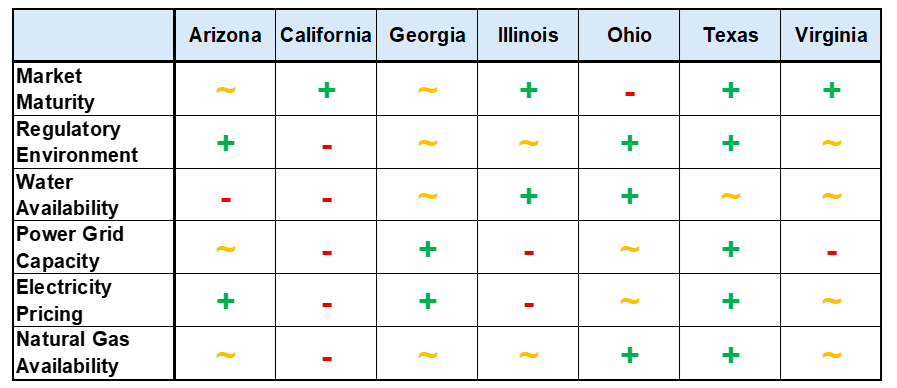

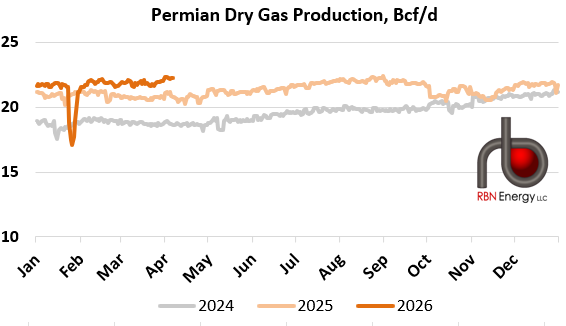
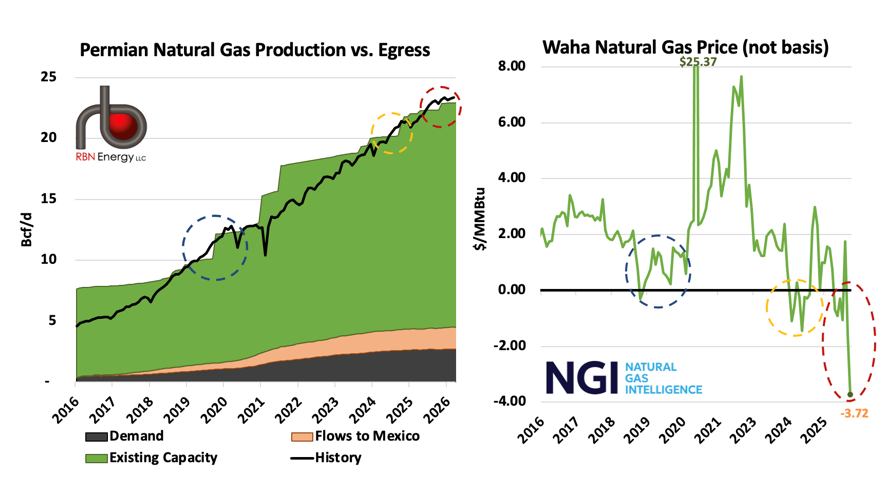


No comments:
Post a Comment